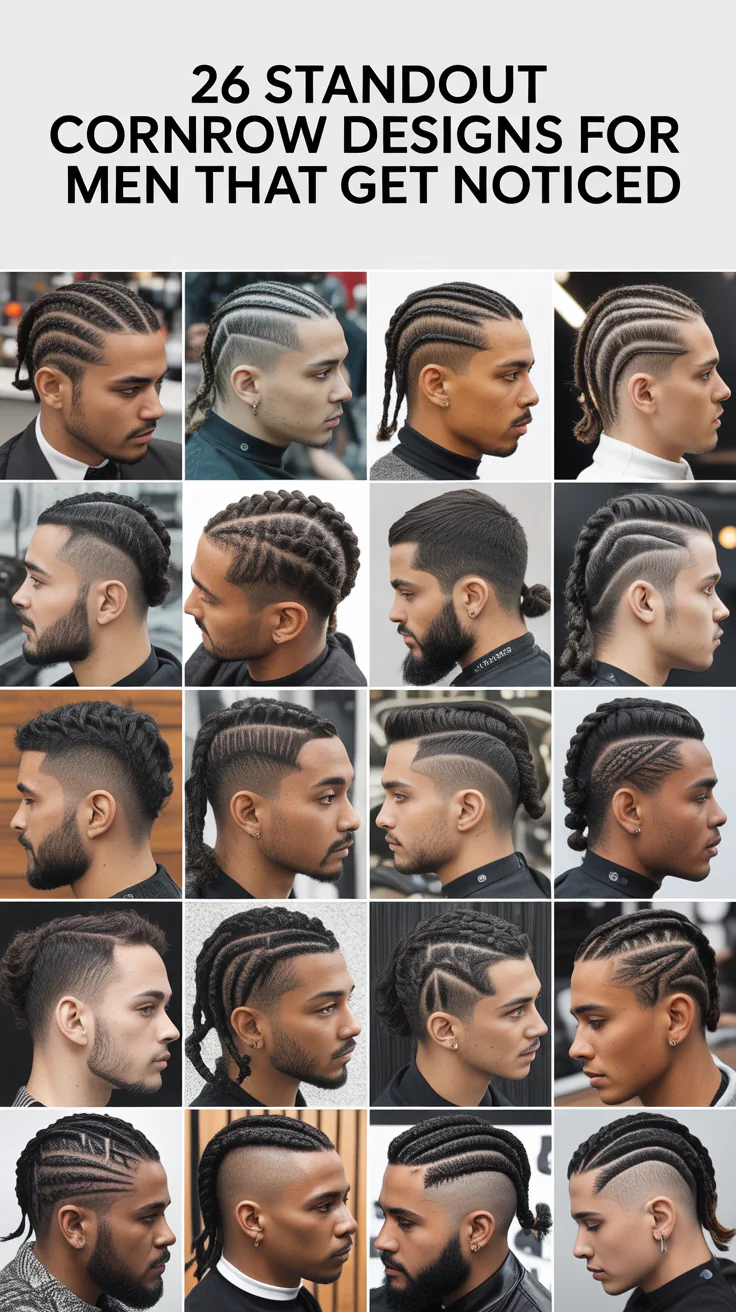
Cornrows have evolved from traditional African hairstyles into one of the most versatile and stylish grooming choices for modern men.
Whether you’re looking to make a bold statement at work, stand out at social events, or simply embrace a low-maintenance yet sharp look, cornrow designs offer endless possibilities that combine cultural heritage with contemporary fashion.
This comprehensive guide explores 26 standout cornrow designs for men that get noticed, covering everything from classic straight-back styles to intricate geometric patterns, creative color combinations, and maintenance tips that will keep your cornrows looking fresh for weeks.
You’ll discover styles suitable for different hair lengths, face shapes, and personal aesthetics, along with practical advice on choosing the right design, finding a skilled braider, and caring for your cornrows to maximize their lifespan and appearance.
Whether you’re a cornrow veteran or considering this style for the first time, these designs will inspire you to elevate your grooming game and express your unique personality through one of the most timeless yet trendsetting hairstyles available today.
1. Classic Straight-Back Cornrows
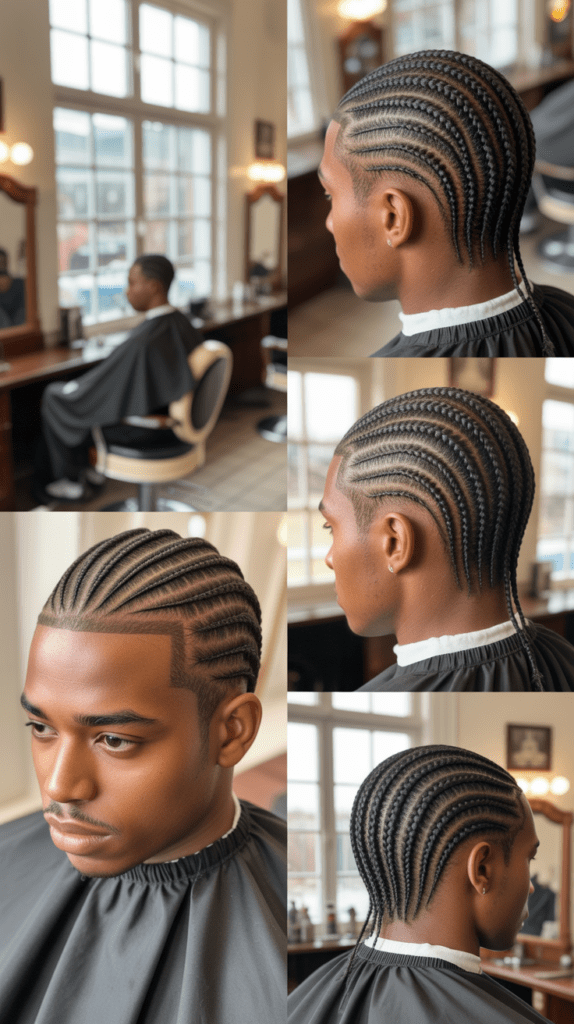
Straight-back cornrows remain the foundation of all cornrow designs and continue to be one of the most requested styles in barbershops worldwide.
This timeless design features parallel braids that run from the front hairline straight back to the nape of the neck, creating clean lines that emphasize facial structure and showcase precision braiding technique.
- The straight-back design works exceptionally well for men with oval or rectangular face shapes as it creates vertical lines that elongate the appearance of the face.
- This style typically requires 6 to 12 rows depending on the desired thickness and the density of your natural hair.
- Straight-back cornrows can last anywhere from 2 to 6 weeks with proper maintenance and nighttime care using a silk or satin durag.
- The clean, professional appearance makes this style appropriate for corporate environments while still maintaining cultural authenticity and personal style.
- Barbers recommend keeping the braids medium-thickness rather than too thin to prevent excessive tension on the hairline and reduce the risk of traction alopecia.
2. Curved Cornrow Patterns
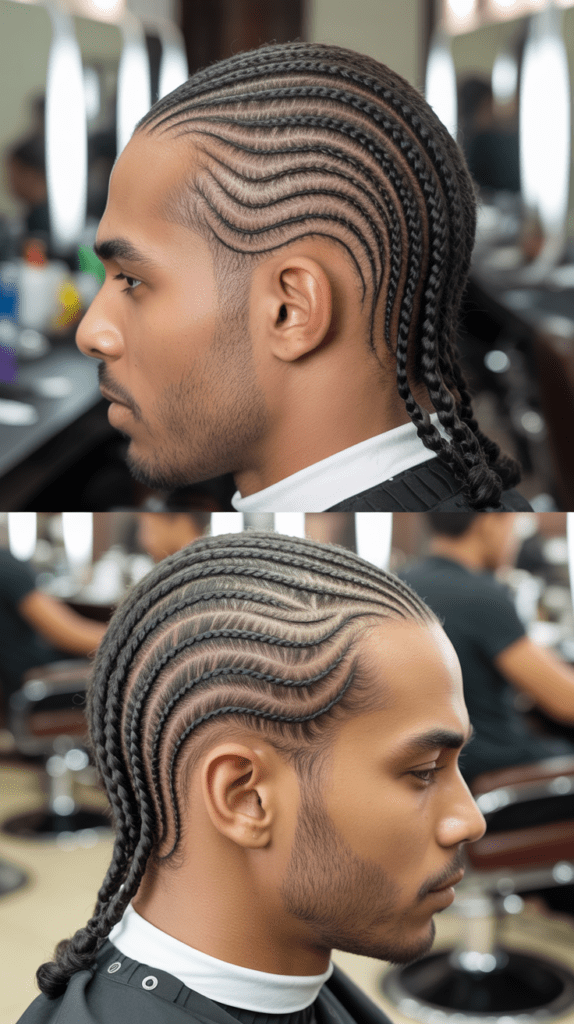
Curved cornrows add artistic flair to the traditional straight-back design by incorporating flowing, wave-like patterns that create visual movement and dimension.
These designs showcase a braider’s skill and allow for personalized customization that reflects individual style preferences.
- Curved patterns require a more experienced braider who can maintain consistent tension while creating smooth, flowing lines that follow the natural contours of the head.
- Popular curved designs include S-patterns, waves, and spirals that can be positioned symmetrically or asymmetrically for different aesthetic effects.
- These styles work particularly well for men with round or square face shapes as the curved lines soften angular features.
- The visual complexity of curved cornrows makes them excellent conversation starters and helps you stand out in professional or social settings.
- Maintenance for curved patterns is similar to straight-back styles, though touch-ups may be needed slightly sooner around the 3-4 week mark to maintain pattern definition.
3. Geometric Cornrow Designs
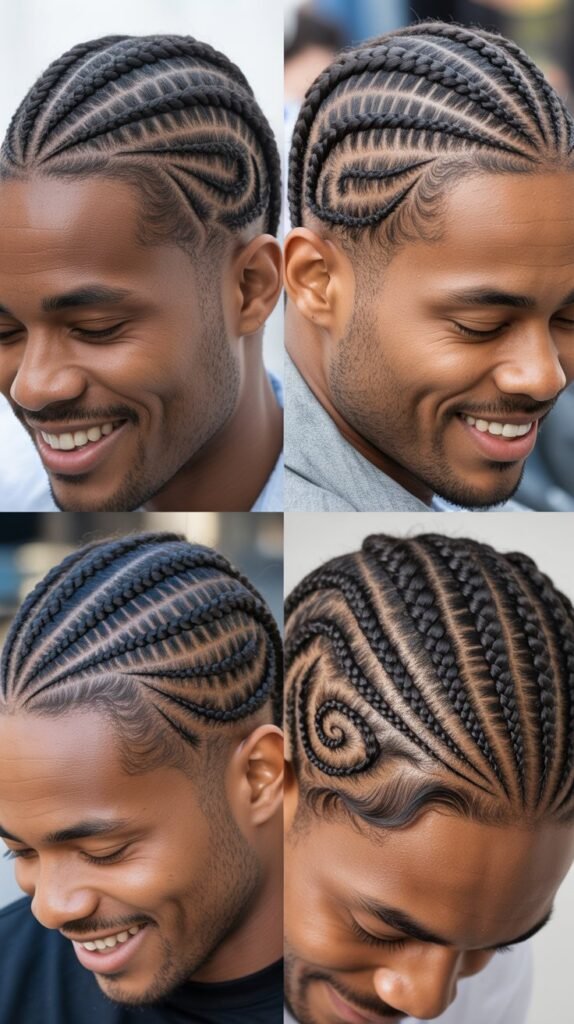
Geometric cornrow designs incorporate angles, triangles, diamonds, and other precise shapes that transform your scalp into a canvas for artistic expression.
These bold styles require exceptional braiding skill and demonstrate a commitment to standout personal grooming.
- Geometric patterns often combine different braid sizes and directions to create contrast and visual interest that catches attention from every angle.
- Popular geometric elements include chevron patterns, hexagons, star shapes, and maze-like designs that showcase technical braiding prowess.
- These intricate designs typically require 3-5 hours in the chair depending on complexity and are best suited for special occasions or when you want maximum visual impact.
- The sharp angles and precise lines of geometric cornrows complement men with strong facial features and work exceptionally well for those in creative industries.
- To preserve the clarity of geometric patterns, avoid excessive sweating and consider using a holding spray designed for braided styles.
4. Cornrows with Fade Combinations
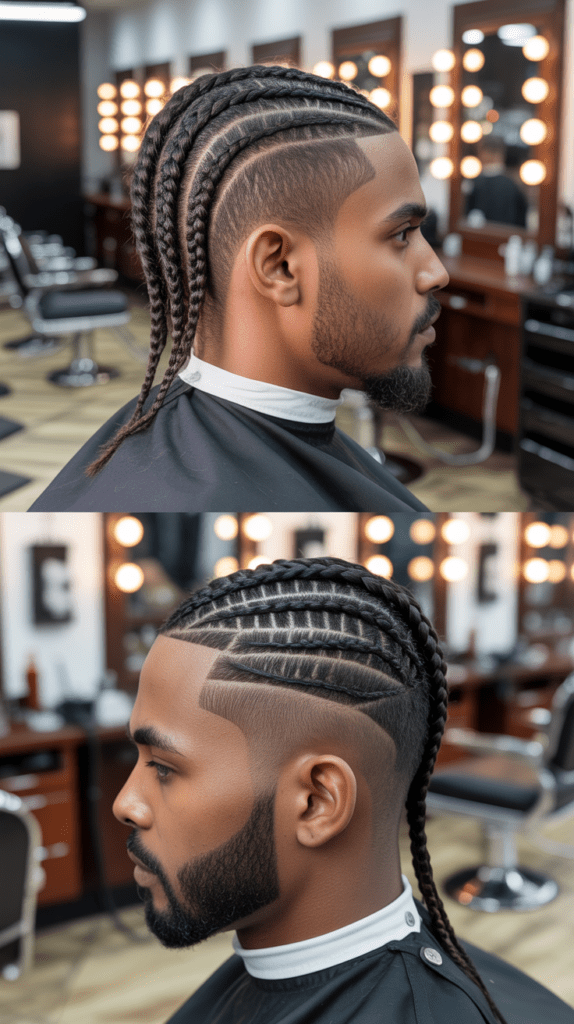
Combining cornrows with various fade techniques creates a contemporary hybrid style that merges traditional braiding with modern barbering.
This approach offers the best of both worlds by maintaining some length and texture on top while keeping the sides and back clean and tapered.
- The fade can be customized at different heights—low, mid, or high—depending on your face shape and how much contrast you want between the braided and faded sections.
- A skin fade (bald fade) creates the most dramatic contrast and makes the cornrow pattern on top appear more prominent and defined.
- This combination style requires visits to both a skilled braider and barber, or a professional who excels at both techniques.
- The fade portion typically needs maintenance every 1-2 weeks while the cornrows can last 3-4 weeks, making this a moderately high-maintenance style.
- Adding a crisp edge-up or lineup around the hairline and temples completes the polished appearance of this modern cornrow variation.
5. Mohawk Cornrow Style
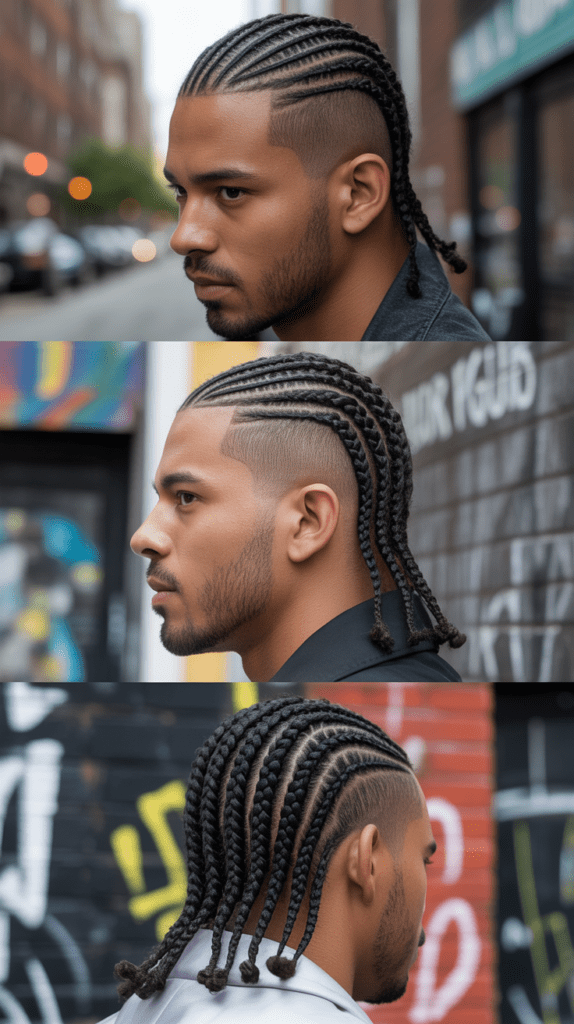
The mohawk cornrow style concentrates braids in a central strip running from the forehead to the back of the head while keeping the sides either faded, closely cropped, or featuring complementary smaller cornrows.
This edgy design appeals to men who want to make a bold statement without committing to a full head of braids.
- The central mohawk section can feature straight-back braids, curved patterns, or even geometric designs depending on your personal aesthetic preferences.
- Width variations allow for customization—a wider mohawk creates a bolder appearance while a narrower strip offers a more subtle interpretation of the style.
- This design works particularly well for men with longer hair on top as it provides sufficient length to create substantial braids that stand out against the shorter sides.
- The mohawk cornrow style is especially popular among athletes, musicians, and those in creative fields where expressive personal styling is encouraged.
- Maintenance is split between keeping the cornrows fresh and maintaining the fade or short sections on the sides through regular barbershop visits.
6. Feed-In Cornrows
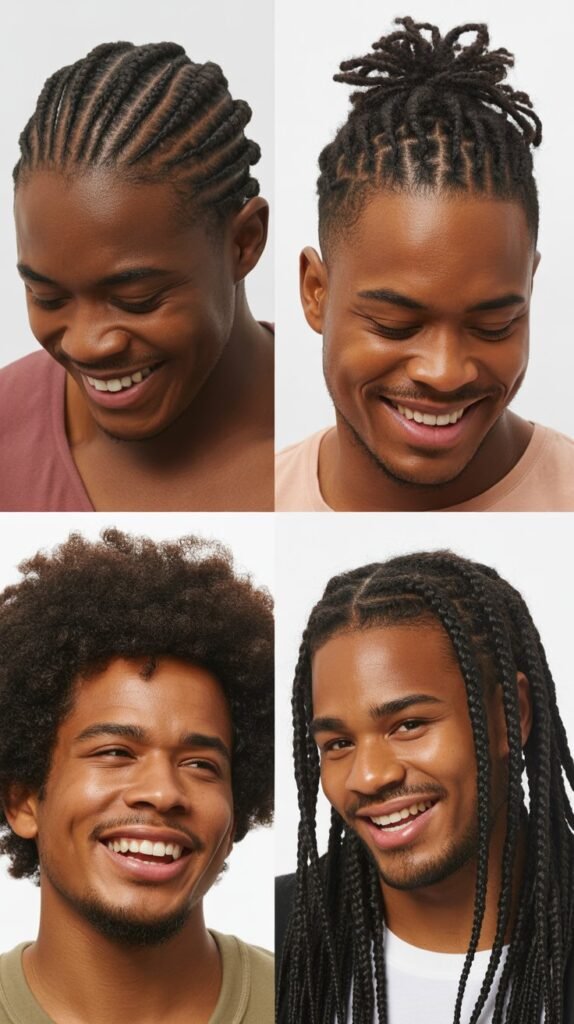
Feed-in cornrows (also called invisible cornrows) start extremely small at the hairline and gradually increase in thickness as hair is fed into the braid, creating a natural-looking finish that reduces tension on the edges.
This technique has become the gold standard for protective styling among men seeking both aesthetics and hair health.
- The gradual feed-in technique significantly reduces tension at the hairline, making it the healthiest cornrow option for men concerned about traction alopecia or receding hairlines.
- Feed-in cornrows create a more natural appearance compared to traditional cornrows that start thick from the hairline, making them suitable for professional environments.
- This method requires more time and skill from the braider but results in a longer-lasting style that maintains its fresh appearance for 4-6 weeks.
- The braiding pattern can still incorporate straight-back, curved, or geometric designs while using the feed-in technique for the foundational braid structure.
- Men with fine or thin hair particularly benefit from feed-in cornrows as the technique creates the illusion of fuller, thicker braids without damaging delicate hair.
7. Cornrows with Hair Design Patterns
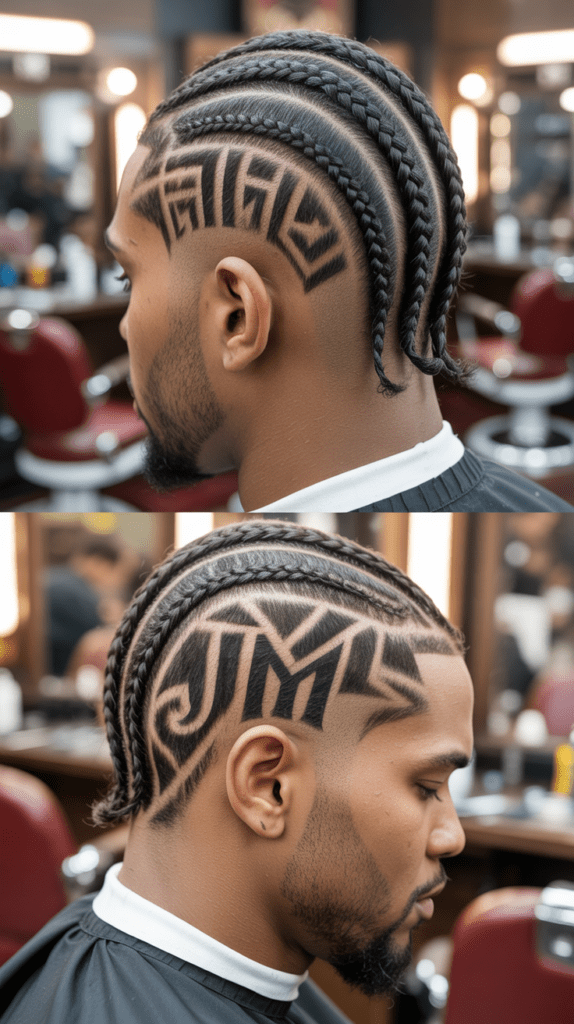
Incorporating shaved or trimmed designs into cornrow styles adds an extra dimension of creativity and personalization.
These patterns can include lines, symbols, letters, numbers, or artistic elements that complement the braided sections and showcase your unique identity.
- Hair design patterns are typically created on the faded or short sections surrounding the cornrows using clippers, trimmers, or razor techniques.
- Popular design elements include racing stripes, tribal patterns, brand logos, religious symbols, or personalized initials that hold special meaning.
- The contrast between the textured cornrows and smooth shaved designs creates visual interest and makes the overall style more memorable and distinctive.
- These designs require frequent maintenance as hair growth quickly blurs the sharp lines, typically necessitating touch-ups every 7-10 days.
- When planning combined cornrow and design patterns, consult with professionals experienced in both braiding and precision barbering to ensure cohesive execution.
8. Zig-Zag Cornrow Patterns
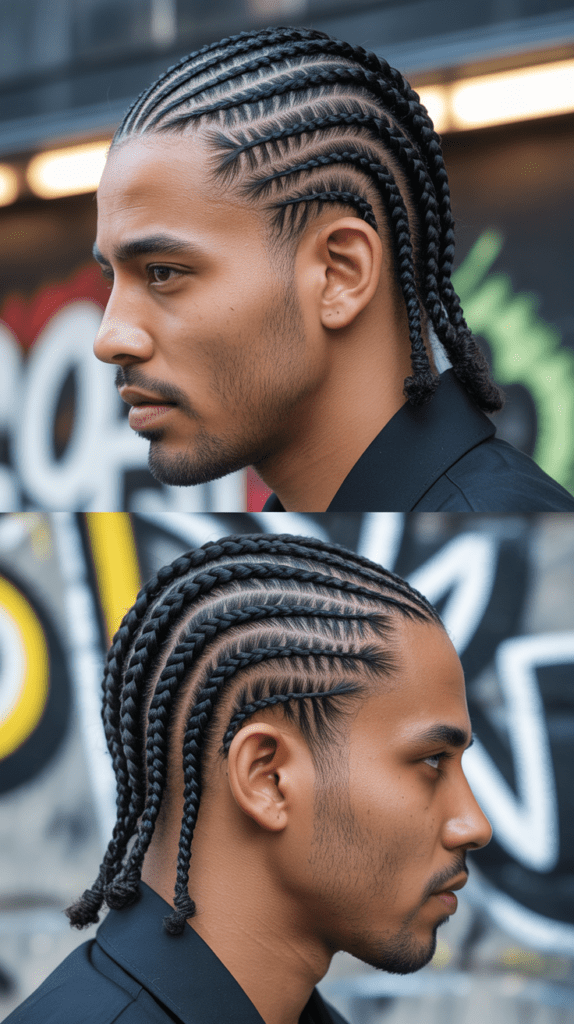
Zig-zag cornrows create dynamic visual movement through angular, lightning-bolt patterns that break away from traditional straight or curved designs.
This playful yet sophisticated style demonstrates technical braiding skill while adding personality to your appearance.
- The zig-zag pattern works best with medium to thick hair density as thinner hair may not provide enough volume to make the angular pattern prominent.
- Braiders can create subtle zig-zags for a more understated look or dramatic sharp angles for maximum visual impact depending on your style preferences.
- This pattern can be applied to the entire head or used as an accent feature alongside straight-back or curved cornrows for contrast.
- Zig-zag cornrows particularly complement men with oval or oblong face shapes as the horizontal elements add visual width and balance proportions.
- The angular nature of zig-zag patterns means they may lose definition slightly faster than straight-back styles, typically maintaining peak appearance for 2-4 weeks.
9. Tribal Cornrow Designs
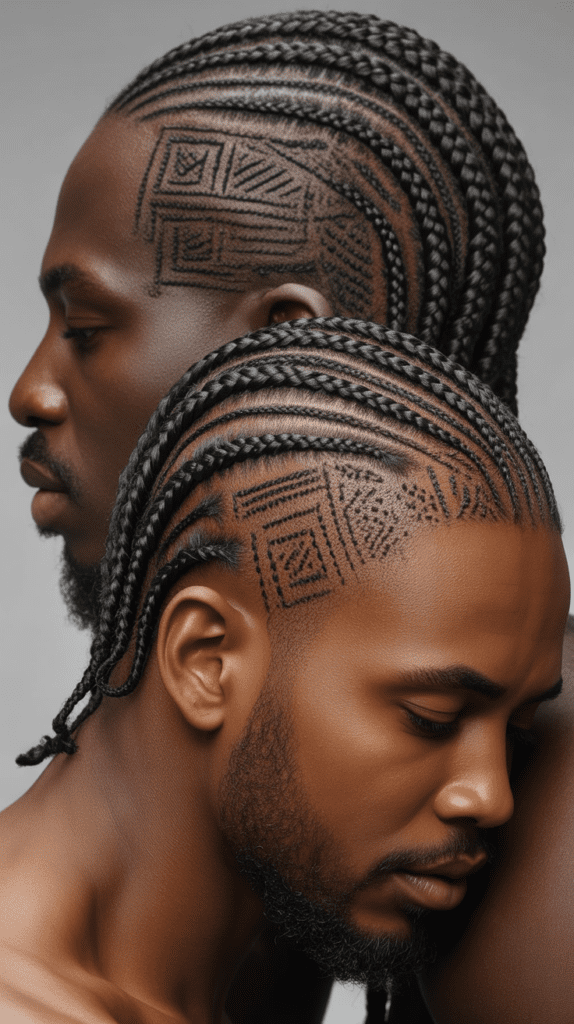
Tribal cornrow designs draw inspiration from traditional African braiding patterns and cultural symbolism, creating styles that honor heritage while making powerful contemporary fashion statements.
These designs often feature intricate patterns that tell stories or represent cultural connections.
- Authentic tribal designs may incorporate specific patterns associated with particular African regions or ethnic groups, offering opportunities to connect with ancestral heritage.
- These styles often combine multiple braiding techniques including different braid sizes, directional changes, and symbolic shapes that create layered meaning.
- Consulting with braiders familiar with African cultural hair traditions ensures respectful and accurate representation of tribal patterns rather than appropriation.
- Tribal cornrow designs work well for cultural celebrations, heritage events, or everyday wear for men who want to express pride in their roots.
- The complexity of authentic tribal patterns typically requires experienced braiders and extended session times of 4-6 hours depending on design intricacy.
10. Cornrows with Colored Extensions
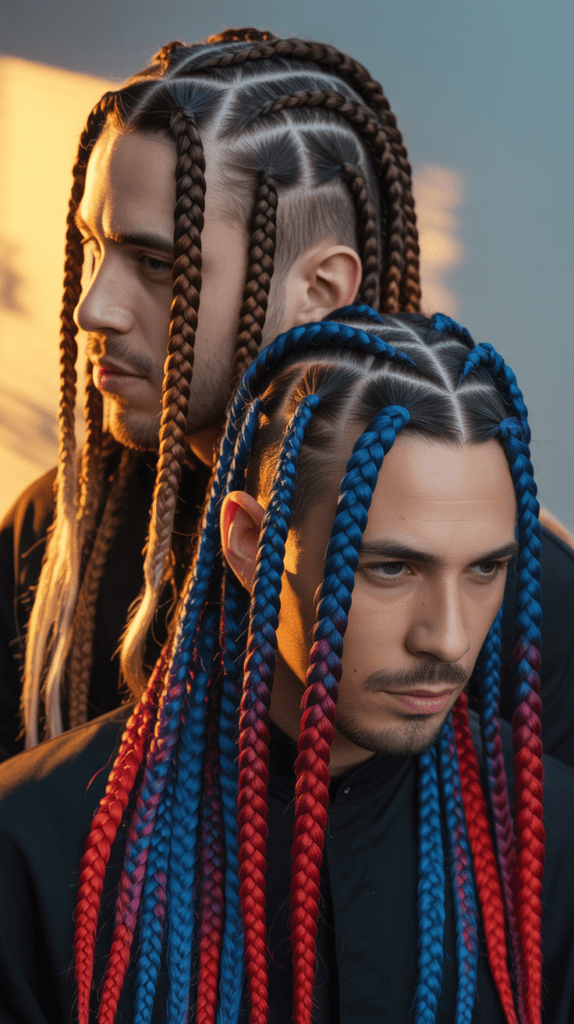
Adding colored extensions to cornrows creates stunning visual effects that allow for temporary color experimentation without permanently dyeing natural hair.
This option appeals to men who want to stand out with vibrant or subtle color accents that complement their overall style.
- Color options range from natural shades that blend seamlessly with your hair to bold fashion colors like blue, purple, red, or platinum blonde for maximum impact.
- Ombre effects where cornrows gradually transition from one color to another create sophisticated dimensional looks that work in both professional and casual settings.
- Colored extensions allow you to test how different hair colors complement your skin tone without the commitment or potential damage of chemical dyes.
- Synthetic colored hair is more affordable while human hair extensions offer more natural appearance and can be heat-styled if needed for specific looks.
- When choosing colored extensions, consider your workplace dress codes and lifestyle to ensure the color intensity matches your environment and personal brand.
11. Side-Part Cornrow Styles
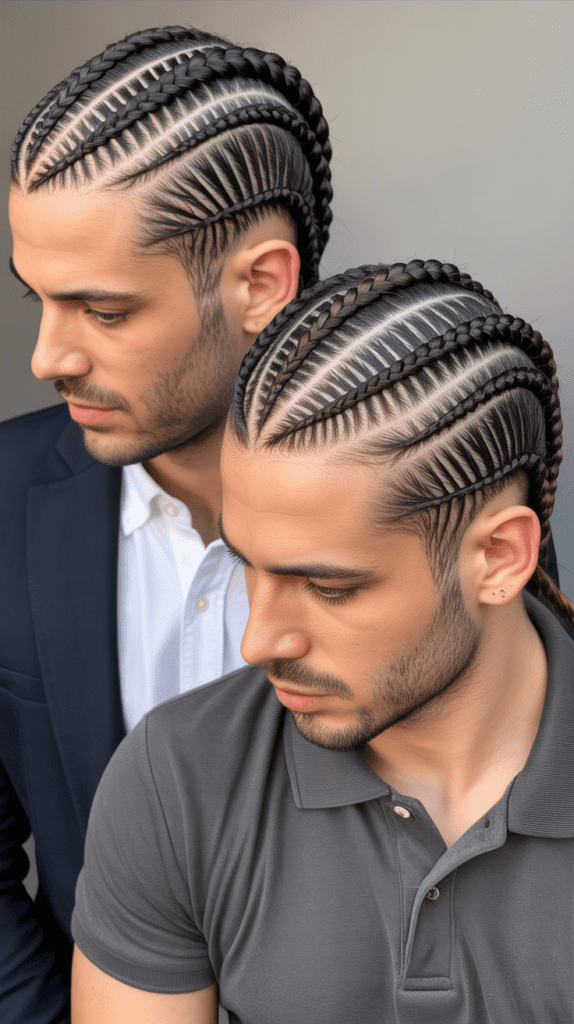
Side-part cornrow styles incorporate a defined part line that divides the head asymmetrically, creating visual interest through the contrast between different braiding directions and patterns.
This design adds sophistication while maintaining the clean lines characteristic of cornrow styles.
- The part can be created as a straight line, curved, or even designed with shaved patterns to make it more prominent and decorative.
- Side-part styles work particularly well for men with asymmetrical facial features as the offset design creates visual balance and draws attention to your best side.
- Braids on each side of the part can flow in opposite directions, parallel directions, or feature completely different patterns for creative contrast.
- This style translates well to professional environments as it maintains the neat appearance of cornrows while adding subtle personal flair through the parting design.
- The part line requires maintenance as hair growth can blur its definition, so plan for touch-ups around the 3-4 week mark to keep the style crisp.
12. Box Braids Combined with Cornrows
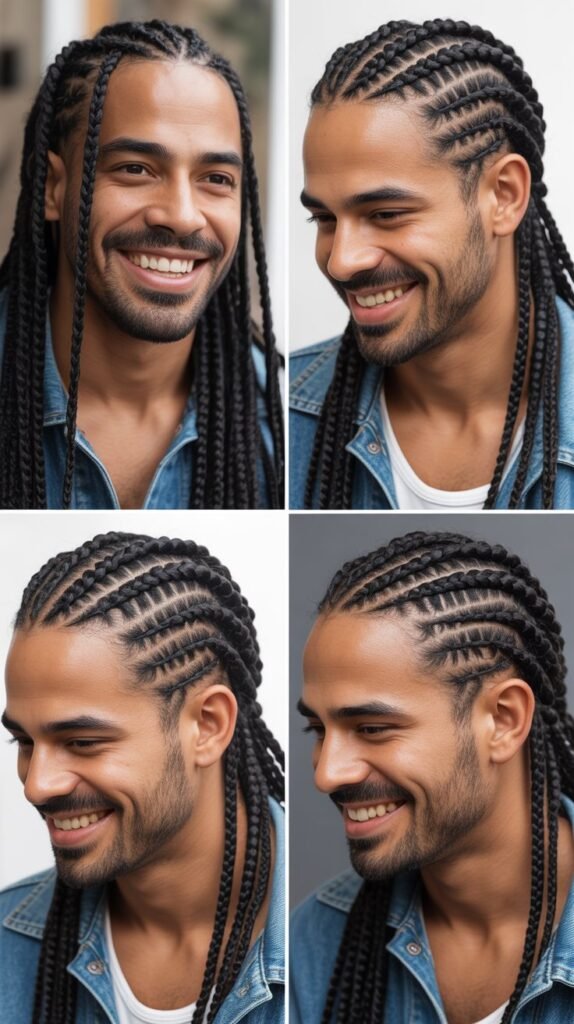
Combining cornrows at the scalp with box braids from the mid-length to ends creates a hybrid style that offers the security of cornrows close to the head with the movement and versatility of free-hanging braids.
This combination delivers both structure and flexibility in one protective style.
- The cornrow foundation typically covers the top and sides of the head while box braids extend from where the cornrows end, allowing for various styling options.
- This combination works well for men with longer hair who want the secure feeling of cornrows without braiding all the way to the ends.
- Box braid lengths can vary from shoulder-length to waist-length depending on whether natural hair or extensions are used and your personal style preferences.
- The loose box braids can be styled in ponytails, man buns, or worn completely down for different looks throughout the week without re-braiding.
- Maintenance involves both scalp care for the cornrowed sections and braid care for the box braids, including regular moisturizing and nighttime protection.
13. Cornrows with Undercut Designs
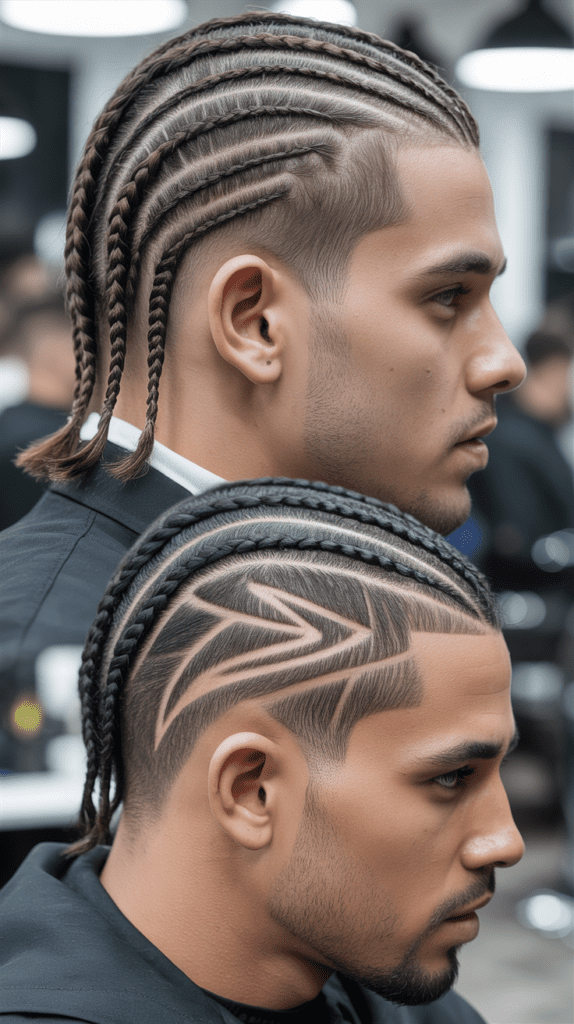
Pairing cornrows with undercut designs creates a striking contrast between the textured braided sections and dramatically shaved or closely trimmed sides and back.
This modern combination appeals to fashion-forward men who appreciate bold, statement-making hairstyles.
- The undercut can be as subtle as a closely trimmed section or as dramatic as a completely shaved side with intricate designs carved into the skin.
- This style offers maximum versatility as the cornrow pattern on top can be changed without affecting the undercut, and vice versa.
- Undercut designs require frequent maintenance every 5-7 days to keep lines sharp and prevent the shaved sections from growing too long and blurring the contrast.
- Men with thick, coarse hair particularly benefit from undercuts as removing bulk from the sides creates a more manageable and cooler style during warm weather.
- The dramatic contrast makes this style particularly popular in creative industries, entertainment, and urban fashion scenes where bold personal expression is celebrated.
14. Micro Cornrows
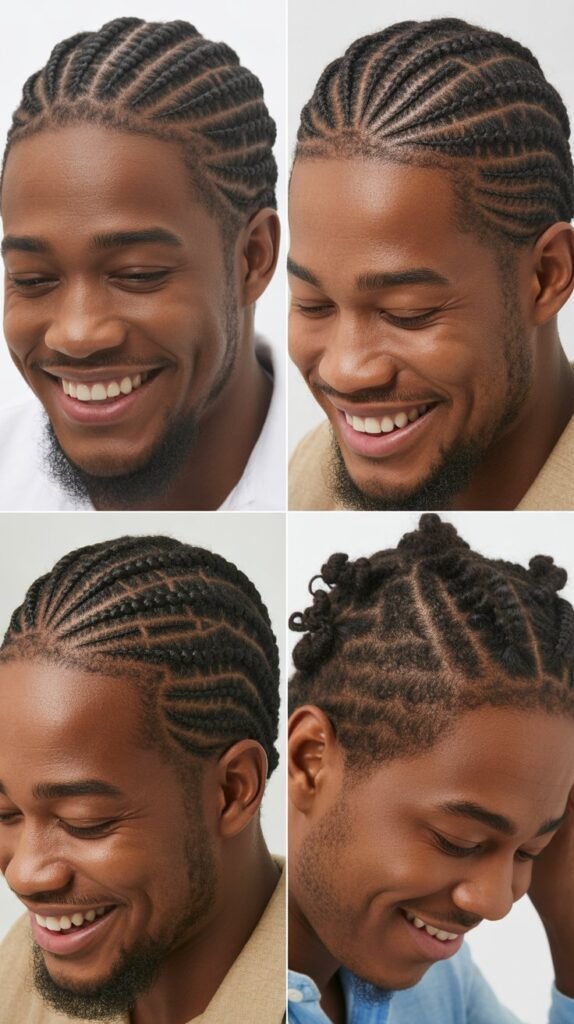
Micro cornrows feature extremely thin, delicate braids that create a refined, intricate appearance requiring exceptional braiding skill and patience.
This style appeals to men seeking a sophisticated, detailed look that showcases precision craftsmanship.
- Micro cornrows typically involve 20-40+ individual braids depending on head size and desired density, creating a fuller appearance than standard cornrows.
- The installation process can take 5-8 hours due to the meticulous nature of creating such thin, uniform braids throughout the entire head.
- These delicate braids tend to last longer than thicker cornrows, often maintaining their appearance for 5-6 weeks with proper care and minimal manipulation.
- Micro cornrows work exceptionally well for men with fine or thin hair as the numerous thin braids create the illusion of density and volume.
- The extended installation time and specialized skill required make micro cornrows a premium service with higher costs than standard cornrow styles.
15. Diagonal Cornrow Patterns
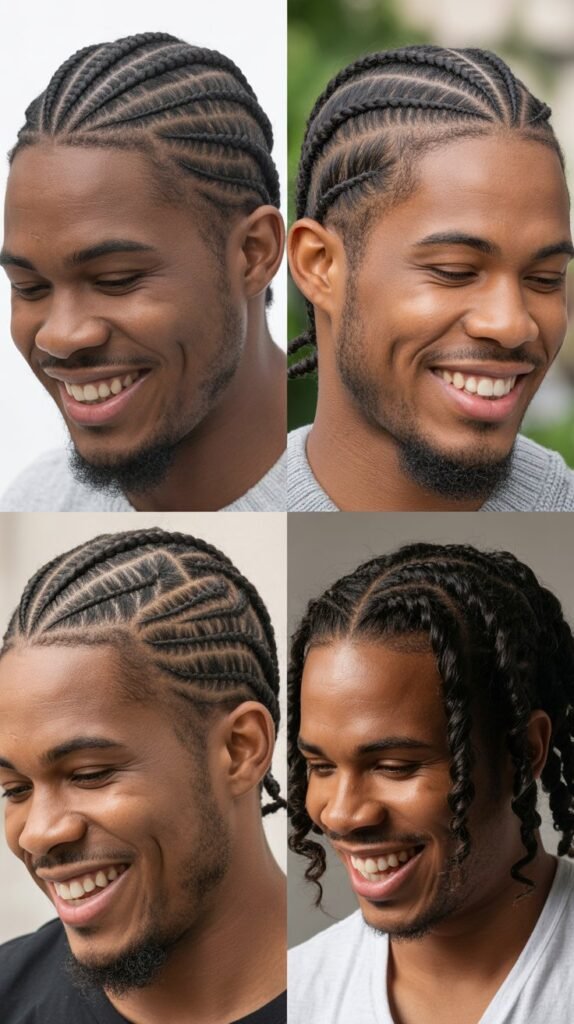
Diagonal cornrows run at angles across the head rather than straight back, creating dynamic directional flow that adds movement and visual interest.
This style breaks from traditional patterns while maintaining the clean, structured appearance characteristic of cornrow designs.
- Diagonal patterns can run from front to back at various angles, side to side, or even incorporate multiple diagonal directions that intersect for complex designs.
- The angled lines of diagonal cornrows can be used strategically to complement face shapes—upward angles add height while downward angles create width.
- This pattern works particularly well when combined with fade or undercut sides as the diagonal lines become more prominent against the shorter sections.
- Diagonal cornrows can create optical illusions that make the head appear longer, wider, or more symmetrical depending on the angle and direction chosen.
- Maintenance requirements are similar to straight-back cornrows, with the style typically maintaining its fresh appearance for 3-5 weeks with proper nighttime care.
16. Cornrows with Twists
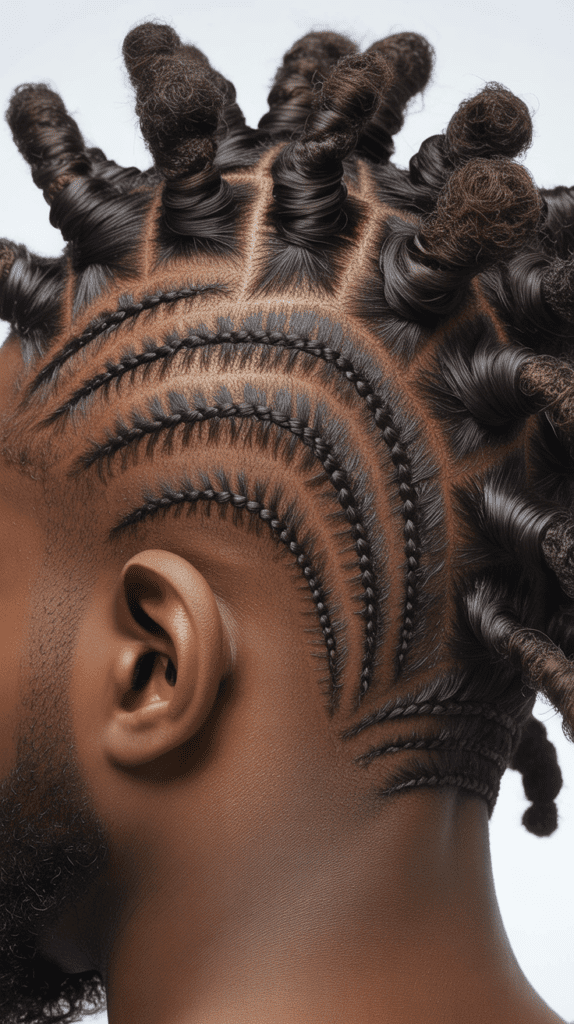
Combining cornrows with two-strand twists creates textural variety and visual interest by incorporating different braiding techniques in one cohesive style.
This hybrid approach offers the structured foundation of cornrows with the softer, more organic appearance of twists.
- Common combinations include cornrows on the sides with twists on top, cornrows in the back with twists in the front, or alternating rows of cornrows and twists throughout.
- Two-strand twists require less tension than cornrows, making them a healthier option for sections of the scalp that are sensitive or show signs of thinning.
- The textural contrast between the flat, tight cornrows and the more dimensional twists creates depth and makes the overall style more visually dynamic.
- This combination style works well for men transitioning from one style to another or those who can’t decide between cornrows and twists.
- Twists typically have a shorter lifespan than cornrows, so the entire style may need refreshing when the twisted sections begin to unravel around the 2-3 week mark.
17. High-Top Cornrow Designs
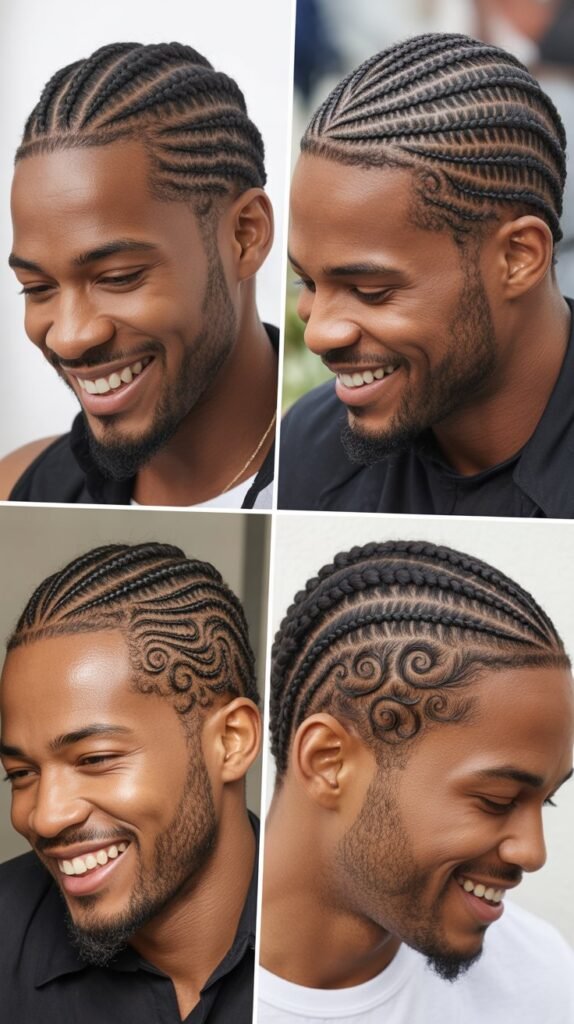
High-top cornrow designs feature cornrows on the sides and back while maintaining significant length and height on top of the head, often styled upward or shaped into a flat-top appearance.
This style pays homage to classic hip-hop aesthetics while allowing for modern customization.
- The high-top section can be left as an afro, picked out for volume, shaped into a geometric flat-top, or styled with product for various textured looks.
- Cornrows on the sides can flow upward toward the high-top, straight back, or in any creative pattern that complements the volume on top.
- This style works exceptionally well for men with naturally curly or coily hair textures that provide the necessary volume for the high-top section.
- Regular maintenance includes keeping the cornrowed sections fresh while trimming or shaping the high-top portion to maintain the desired silhouette.
- The high-top cornrow look is experiencing a resurgence in popularity thanks to its association with golden-age hip-hop and retro fashion trends.
18. Cornrows with Beads or Accessories
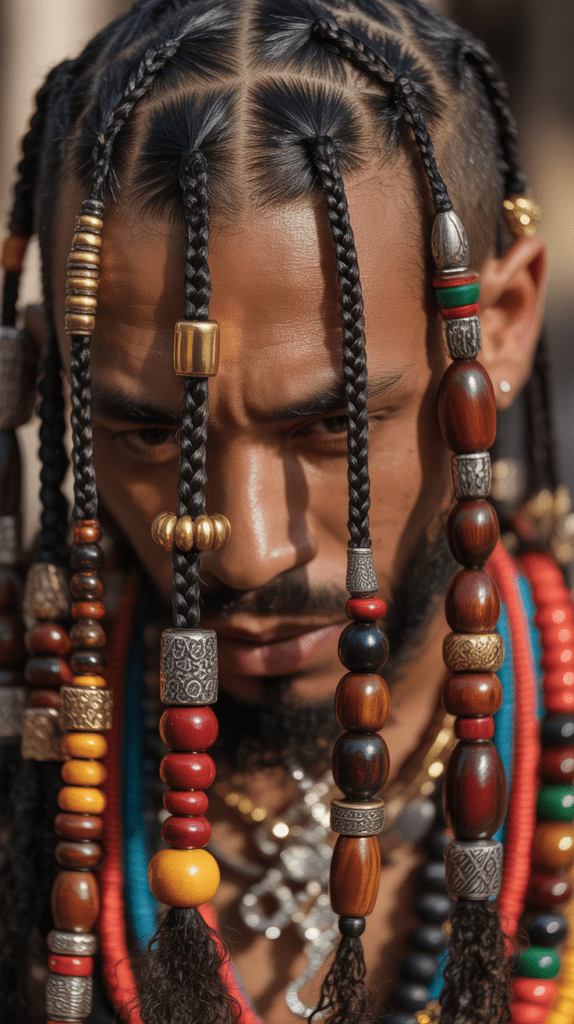
Adding beads, cuffs, threads, or other accessories to cornrows transforms a classic style into a personalized statement piece that reflects cultural heritage, personal values, or aesthetic preferences. These embellishments add color, sound, and visual interest to cornrow designs.
- Traditional wooden beads offer cultural authenticity and come in natural tones that complement all skin tones while honoring African heritage.
- Metal cuffs and rings in gold, silver, or copper finishes add contemporary edge and can be placed at strategic points along the braids for accent.
- Colored beads or threads allow you to coordinate your hairstyle with outfits, team colors, or special occasions for cohesive personal branding.
- The clicking sound of beads creates an auditory element that announces your presence and adds a unique sensory dimension to your personal style.
- When selecting accessories, ensure they’re not too heavy as excessive weight on braids can cause tension and potentially damage hair or hairline over time.
19. Freestyle Cornrow Designs
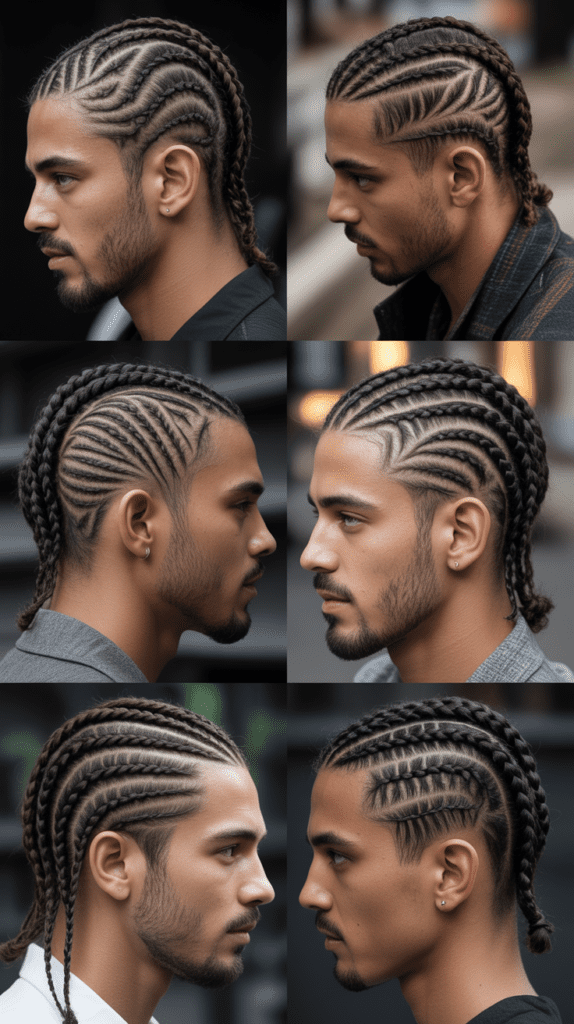
Freestyle cornrows abandon traditional patterns in favor of creative, artistic arrangements that might combine multiple techniques, directions, and designs in one unique style. This approach appeals to men who want truly one-of-a-kind hairstyles that showcase their individuality.
- Freestyle designs often emerge through collaboration between the client and braider, with the final pattern evolving organically during the braiding session.
- These styles might incorporate elements of geometric patterns, tribal designs, curved sections, and straight-back cornrows all within the same head for maximum visual complexity.
- Freestyle cornrows work particularly well for photoshoots, special events, or men in creative professions where unconventional appearance is an asset rather than a liability.
- The unique nature of freestyle designs means they’re difficult to replicate exactly, making each installation a truly original work of wearable art.
- Documentation through photos from multiple angles is essential if you want to recreate or reference a freestyle design in the future.
20. Cornrows with Temple Fades
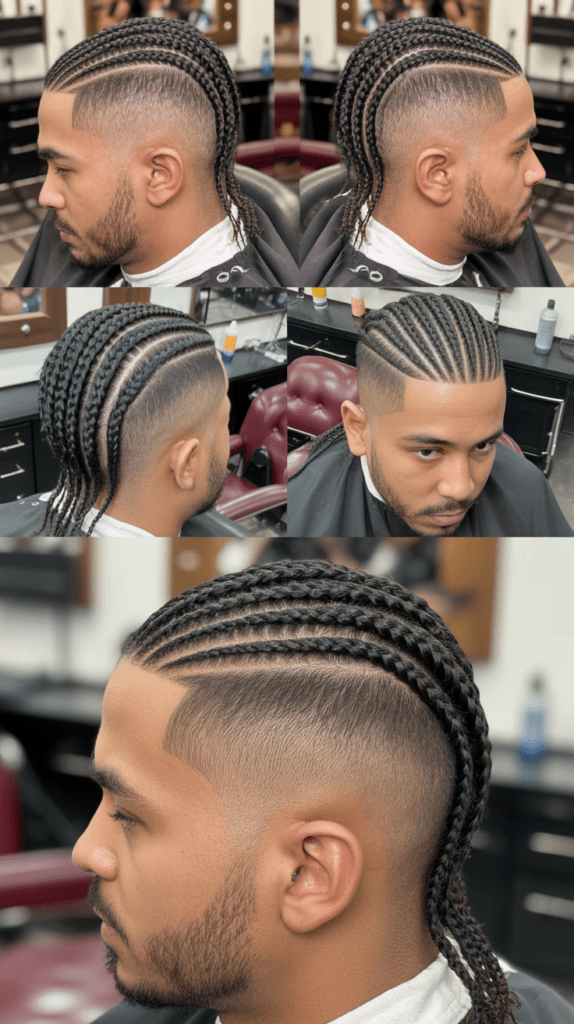
Temple fades (also called temp fades or Brooklyn fades) focus the fade specifically around the temple area while keeping length elsewhere, creating a distinctive look when combined with cornrows.
This targeted approach offers a sophisticated alternative to full head fades.
- The temple fade creates a curved or angled fade specifically around the temple and front hairline area while the sides and back may remain longer or cornrowed.
- This style works exceptionally well for men with strong temple recession or those who want to emphasize their facial structure without committing to a full fade.
- Temple fades require precision cutting and blending skills, so selecting an experienced barber familiar with this specific technique is essential for clean results.
- The cornrow pattern can start from where the temple fade ends, creating a seamless transition between the faded and braided sections.
- Maintenance frequency for temple fades is typically every 7-10 days to keep the fade sharp while the cornrows can last 3-4 weeks before needing reinstallation.
21. Stitch Braids Style
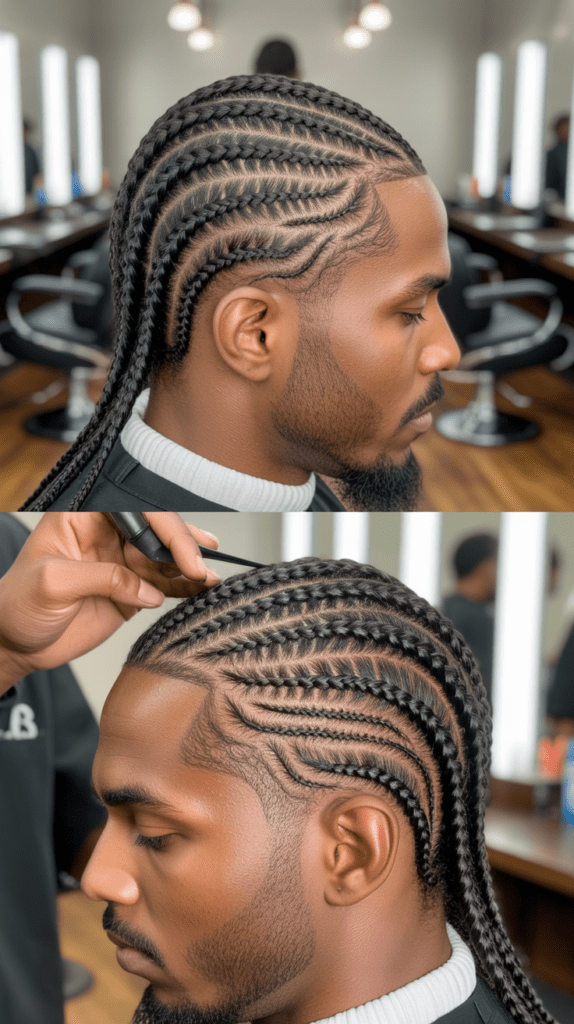
Stitch braids (also called stitch cornrows) feature a distinctive raised, rope-like appearance created by feeding hair into the braid with a specific under-over technique that creates visible stitching patterns.
This modern variation on traditional cornrows has gained popularity for its unique texture and dimensional look.
- The stitching effect creates a raised, dimensional appearance that stands out more prominently than flat traditional cornrows, offering enhanced visual impact.
- Stitch braids can be created in straight-back patterns, curved designs, or geometric arrangements just like traditional cornrows while maintaining the distinctive stitched texture.
- This technique requires additional skill and time compared to standard cornrows as the braider must maintain consistent tension while creating the raised stitching pattern.
- Stitch braids tend to be more durable than regular cornrows due to the secure stitching technique, often lasting 4-6 weeks with proper maintenance.
- The pronounced texture of stitch braids makes them particularly photogenic and popular on social media, helping them gain traction as a trendsetting style.
22. Asymmetrical Cornrow Designs
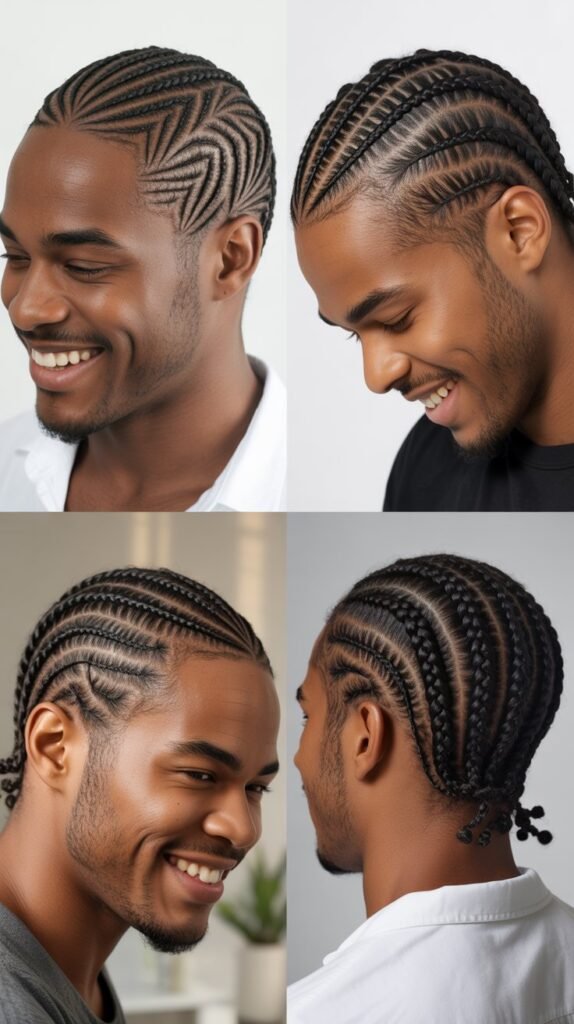
Asymmetrical cornrow designs intentionally create different patterns on each side of the head, breaking from traditional symmetry to produce avant-garde styles that challenge conventional grooming norms.
This bold approach appeals to men seeking to make distinctive fashion statements.
- One side might feature straight-back cornrows while the other showcases curved or geometric patterns, creating visual interest that reveals itself as you move.
- Asymmetrical designs can also incorporate different braid thicknesses, with thicker braids on one side and thinner micro cornrows on the other for textural contrast.
- This style particularly suits men with asymmetrical facial features as it can strategically balance proportions and draw attention to your preferred side.
- The unconventional nature of asymmetrical cornrows makes them especially popular in fashion, entertainment, and creative industries where innovative personal styling is valued.
- When planning asymmetrical designs, consider how the style looks from all angles including front, sides, and back to ensure the pattern works cohesively despite the intentional imbalance.
23. Cornrows with Natural Hair Length
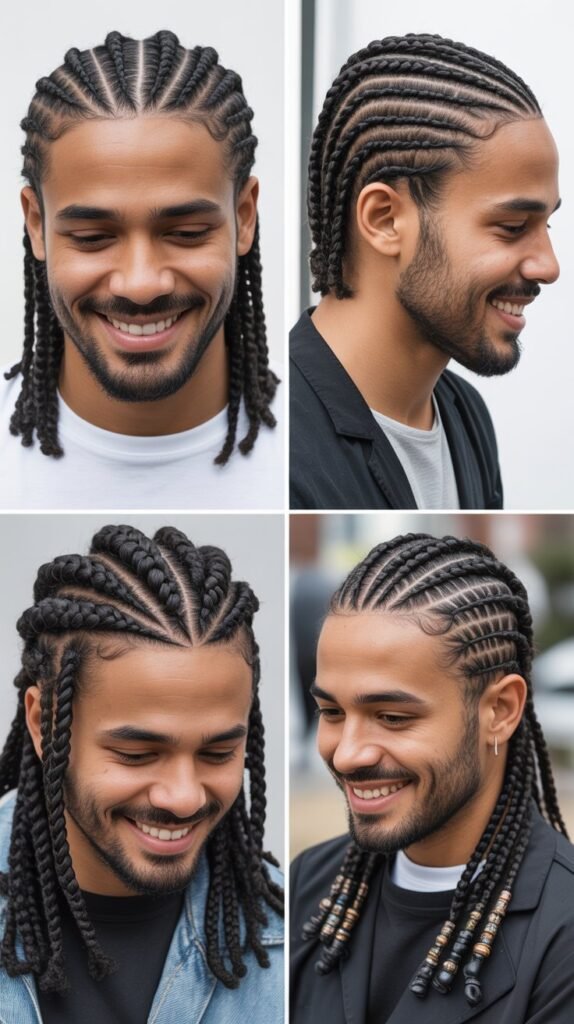
Wearing cornrows with your natural hair length without extensions creates a more organic, authentic look that allows your actual hair texture and length to determine the style outcome.
This approach appeals to men embracing their natural hair journey and preferring chemical-free, extension-free styling.
- Natural-length cornrows typically result in shorter, closer-to-the-scalp braids that offer a cleaner, more understated appearance compared to extension-enhanced styles.
- This approach is healthier for your hair as it eliminates the added weight and tension that extensions can create, reducing risk of traction alopecia.
- Men with shorter natural hair (2-4 inches) can still achieve cornrows, though the braids will be smaller and require skilled braiders experienced with shorter lengths.
- Natural cornrows typically need refreshing more frequently than extension-enhanced styles, usually every 2-3 weeks as new growth becomes more visible.
- The authentic texture and appearance of natural cornrows makes them appropriate for all settings including conservative professional environments where a more subtle look is preferred.
24. Curved Back Cornrows with Line-Up
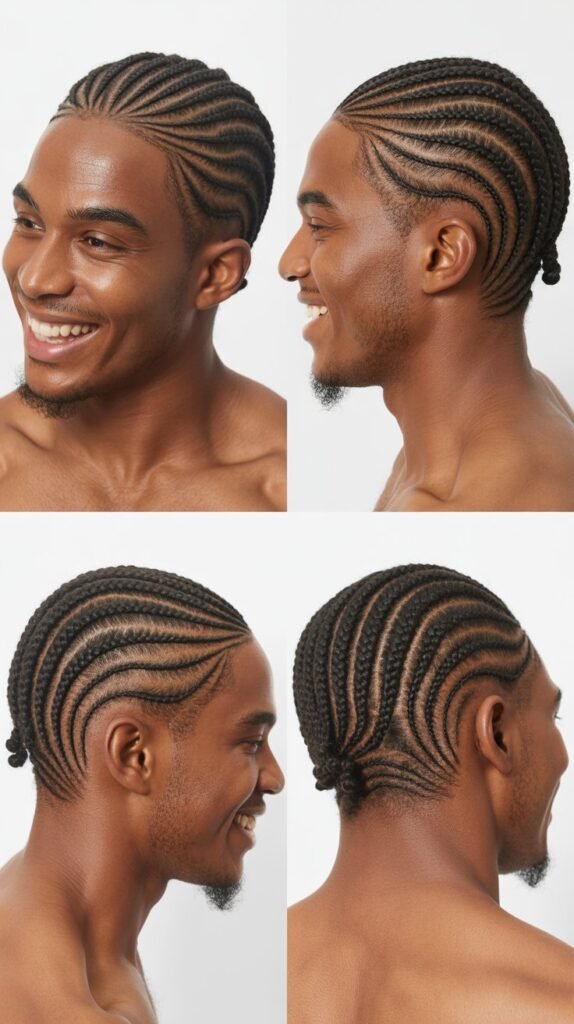
Curved back cornrows combined with a sharp line-up create a style that balances organic flow with precise edges, merging natural movement with contemporary grooming standards.
This combination delivers a polished yet relaxed aesthetic suitable for various occasions.
- The curved cornrow pattern follows the natural shape of the head while the line-up creates geometric precision around the hairline, temples, and sideburns.
- A crisp line-up frames the face and enhances facial features while the flowing cornrow pattern maintains softness and prevents an overly severe appearance.
- This combination requires coordination between braider and barber skills, though many professionals now offer both services in comprehensive grooming packages.
- The line-up typically needs maintenance every 7-10 days while the cornrows can last 3-4 weeks, creating a staggered maintenance schedule.
- Edge control products and regular moisturizing help maintain the sharp line-up while keeping the cornrowed sections healthy and frizz-free between salon visits.
25. Layered Cornrow Patterns
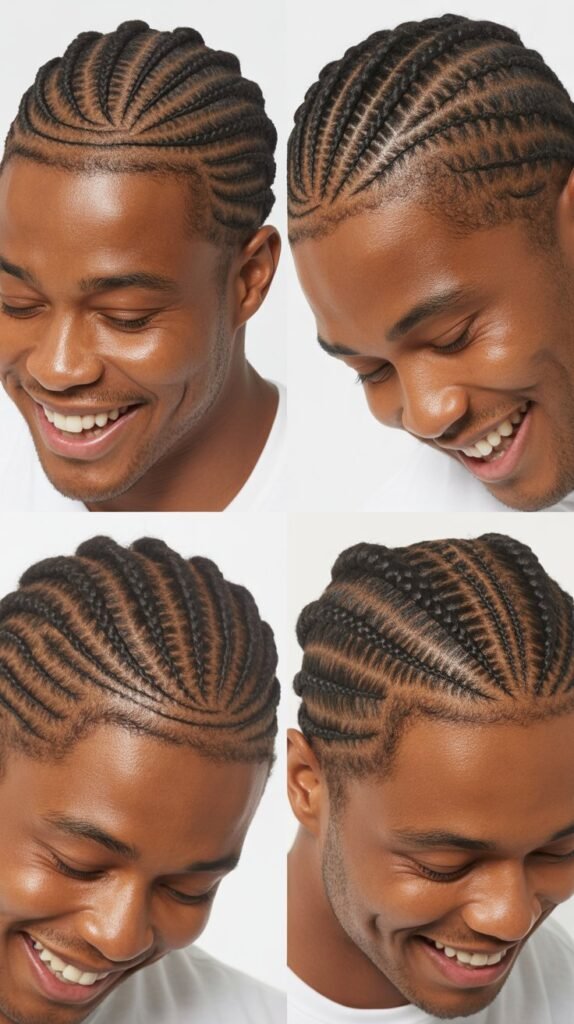
Layered cornrow patterns create depth through multiple levels of braids that overlap, intersect, or flow at different elevations.
This three-dimensional approach transforms cornrows from flat braids into sculptural designs that showcase advanced braiding artistry.
- Layering is achieved by braiding some rows that pass over others, creating an interwoven effect similar to basket weaving that adds visual complexity.
- This technique can incorporate braids of different thicknesses at various layers, with thinner braids layered over thicker foundation braids for textural variety.
- Layered designs require significantly more time and skill than standard cornrows, often taking 6-8 hours and commanding premium pricing for the artistry involved.
- The dimensional nature of layered cornrows makes them particularly striking under different lighting conditions as shadows and highlights reveal the depth.
- These intricate styles work best for special occasions, photoshoots, or when you want a conversation-starting hairstyle that demonstrates your commitment to personal grooming.
26. Protective Cornrow Styles for Hair Growth
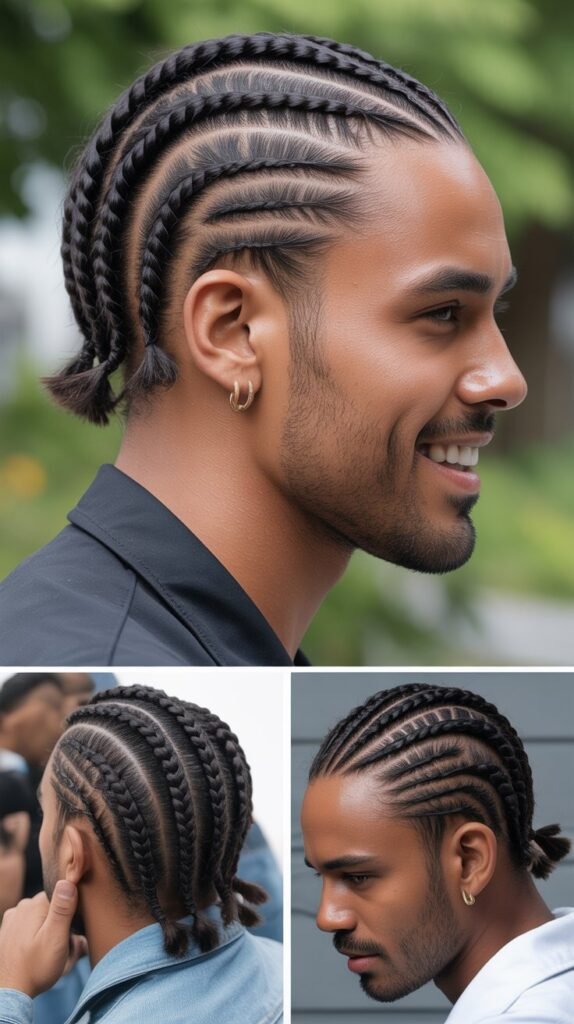
Protective cornrow styles prioritize hair health and growth by minimizing manipulation, reducing tension, and creating environments that allow natural hair to thrive.
These designs focus on function alongside aesthetics, appealing to men on natural hair journeys seeking length retention.
- Protective cornrows use feed-in techniques that minimize tension at the hairline and edges where hair is most vulnerable to traction damage and breakage.
- Braid thickness should be moderate rather than too thin (which creates tension) or too thick (which doesn’t adequately protect individual strands).
- Leaving braids in for no longer than 4-6 weeks prevents matting, allows for proper scalp cleansing, and ensures you can monitor hair health regularly.
- Regular moisturizing with water-based leave-in conditioners and oil blends keeps hair hydrated inside the braids and prevents the dryness that leads to breakage.
- Protective styles work best when alternated with breaks where hair is worn loose, cleansed thoroughly, and deep conditioned before reinstalling braids for the next cycle.
Maintenance Tips for Long-Lasting Cornrows
Proper maintenance is essential for keeping your cornrows looking fresh and protecting your natural hair health throughout the style’s lifespan.
- Wrap your hair nightly with a silk or satin durag to prevent frizz, maintain pattern definition, and reduce friction that causes premature unraveling.
- Cleanse your scalp weekly using a diluted shampoo applied with an applicator bottle or witch hazel on a cotton pad to remove buildup without disturbing braids.
- Moisturize your scalp every 2-3 days using lightweight oils like jojoba or grapeseed that won’t cause buildup or make braids look greasy.
- Avoid excessive manipulation, pulling, or styling that creates tension on the braids as this can lead to hair breakage and scalp irritation.
- Schedule maintenance appointments for edge touch-ups and new installations every 3-4 weeks to keep your style looking professionally maintained.
Choosing the Right Cornrow Style for Your Face Shape
Selecting cornrow patterns that complement your facial structure enhances your overall appearance and ensures your chosen style flatters your natural features.
| Face Shape | Recommended Cornrow Styles | Styles to Avoid |
|---|---|---|
| Oval | All styles work well; experiment freely | None specifically |
| Round | Vertical straight-back, mohawk styles | Horizontal curved patterns |
| Square | Curved patterns, diagonal designs | Straight horizontal lines |
| Rectangular | Curved patterns that add width | Vertical straight-back |
| Heart | Side-part styles, asymmetrical designs | Center-heavy mohawks |
- Oval face shapes are the most versatile and can successfully wear virtually any cornrow pattern from conservative to avant-garde designs.
- Round faces benefit from vertical lines that create the illusion of length, making straight-back cornrows and mohawk styles particularly flattering.
- Square faces are softened by curved patterns and diagonal designs that break up angular features and add movement rather than emphasizing straight lines.
- Rectangular or oblong faces gain visual width from curved patterns and side-part designs that create horizontal interest and balance facial proportions.
- Heart-shaped faces work well with side-part and asymmetrical styles that add volume and balance at the jawline rather than emphasizing the wider forehead.
Cost Considerations for Cornrow Styles
Understanding the financial investment required for different cornrow styles helps you budget appropriately and set realistic expectations for the braiding process.
- Basic straight-back cornrows typically range from $50-$100 depending on your location, braider’s experience, and whether extensions are included.
- Complex geometric or freestyle designs can cost $100-$300 or more due to the extended time, skill level, and artistry required for intricate patterns.
- Feed-in cornrows generally command 20-30% higher prices than traditional cornrows due to the specialized technique and additional time investment needed.
- Adding colored extensions, beads, or other accessories typically increases costs by $20-$75 depending on the materials and amount of customization requested.
- Urban areas with higher costs of living generally have more expensive braiding services while smaller markets may offer more competitive pricing structures.
- Building relationships with skilled braiders often leads to loyalty discounts, package deals, or priority booking that provides better value over time.
Conclusion
The 26 Standout Cornrow Designs for Men That Get Noticed offer a comprehensive range of options for every personality, lifestyle, and aesthetic preference, from timeless classics to cutting-edge contemporary styles. Whether you choose the professional elegance of straight-back cornrows, the artistic complexity of
geometric patterns, the cultural significance of tribal designs, or the modern edge of combination styles with fades and undercuts, cornrows provide an unmatched combination of style, versatility, and cultural connection.
By understanding the maintenance requirements, cost considerations, and face shape compatibility of different designs, you can make informed decisions that ensure your cornrow style not only looks exceptional but also supports your hair health and fits seamlessly into your lifestyle.
Remember that the best cornrow design is one that makes you feel confident, reflects your personality, and aligns with your grooming goals—so take inspiration from these standout styles and work with skilled professionals to create a look that truly gets noticed for all the right reasons.