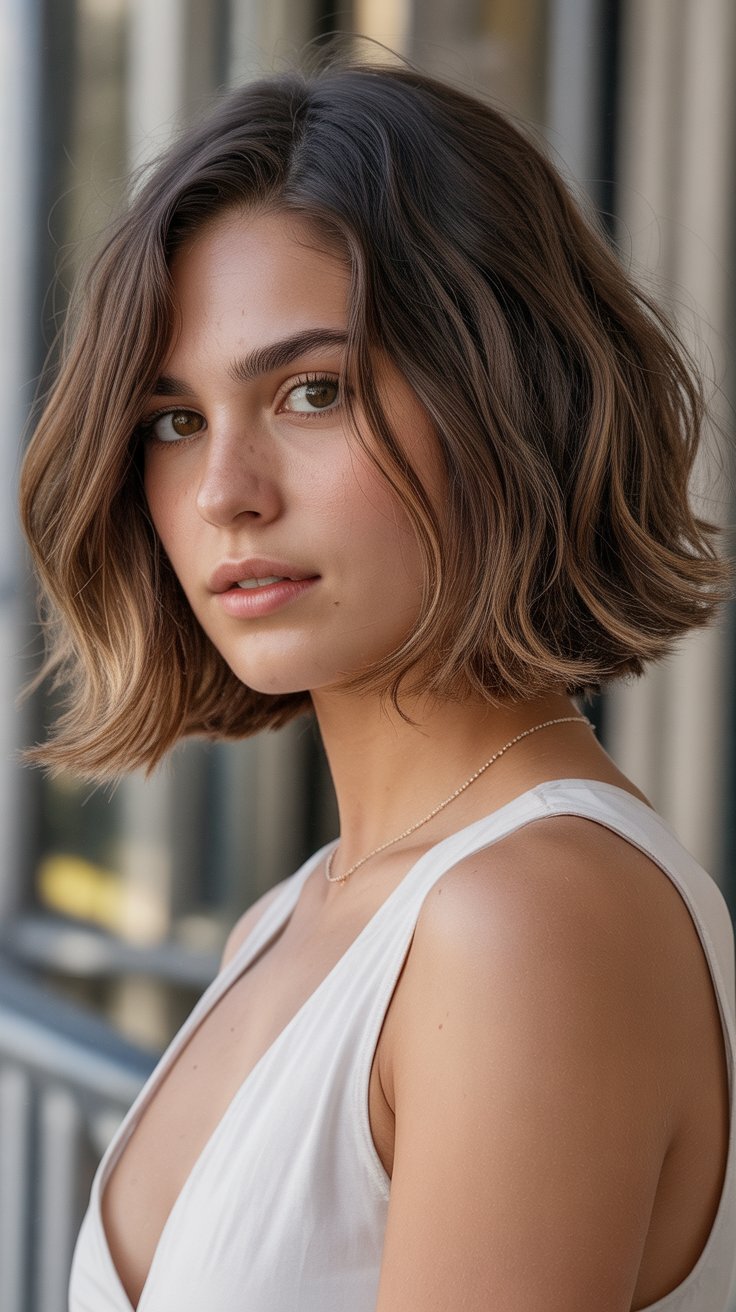
If you’ve been dreaming of fuller, more voluminous hair without committing to extensions or complex styling routines, the French bob might just be your perfect solution.
The 28 Best French Bob Haircuts for Fine Hair to Boost Fullness offers a comprehensive guide to transform thin, lifeless strands into a chic, bouncy masterpiece that exudes Parisian elegance.
This timeless cut has become the go-to choice for women with fine hair because of its strategic layers, precision cutting techniques, and versatile styling options that create the illusion of density and movement.
Throughout this article, you’ll discover the foundational principles of French bob styling, learn about face-flattering variations from blunt cuts to textured finishes, explore maintenance routines that preserve volume, and find expert recommendations on styling products and techniques.
Whether you’re considering a dramatic hair transformation or simply want to refresh your current look, these carefully curated French bob styles will provide you with practical inspiration and actionable advice to achieve that coveted fullness.
Each style has been selected specifically for its ability to maximize volume, enhance texture, and complement the unique characteristics of fine hair while maintaining that effortlessly chic aesthetic French women are famous for worldwide.
1. Classic Chin-Length French Bob with Blunt Ends
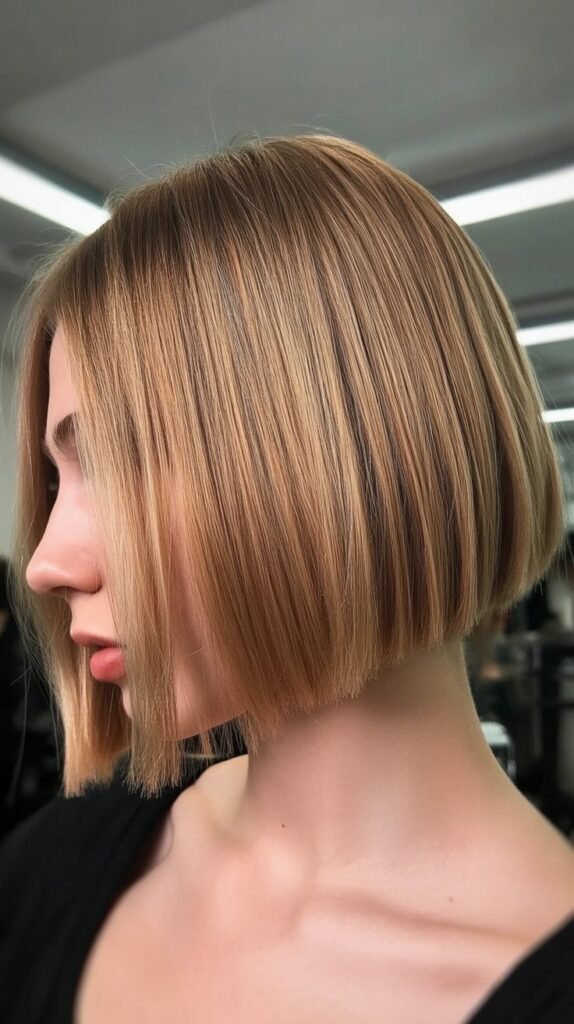
The classic chin-length French bob with blunt ends serves as the foundation for creating maximum fullness in fine hair through its precise, straight-across cutting technique that eliminates wispy ends and creates a solid, dense appearance.
- The blunt cutting technique removes all tapering and thinning from the hair ends, which prevents the stringy appearance commonly associated with fine hair textures.
- Positioning the length precisely at chin level creates a visual weight line that draws attention to the jawline while making the overall hair appear thicker and more substantial.
- This cut works exceptionally well for fine hair because the uniform length prevents any see-through sections that might reveal the scalp or create an uneven density.
- Stylists typically use razor-free scissors for this cut to maintain the maximum thickness at the ends without creating any feathering or softness that would diminish volume.
- The maintenance schedule for this style requires trims every 5-6 weeks to preserve the sharp, blunt line that’s essential for maintaining the fullness illusion.
- Styling this bob requires a medium-barrel round brush and a blow dryer to create slight inward movement at the ends while maintaining the blunt perimeter.
2. Textured French Bob with Choppy Layers
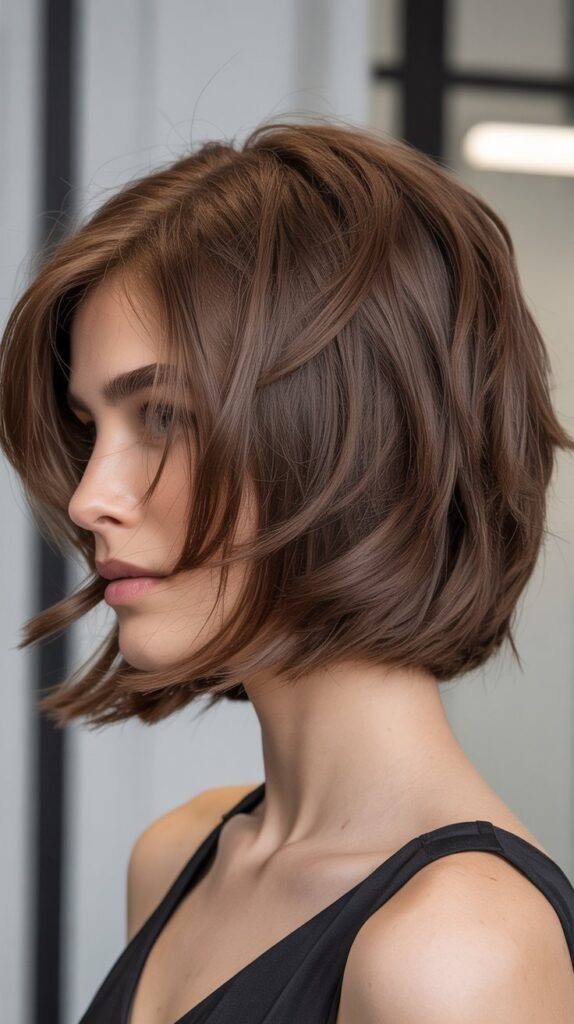
The textured French bob with choppy layers introduces strategic disconnection throughout the cut, creating movement and dimension that makes fine hair appear fuller through visual interest rather than actual density.
- Choppy layers are cut at varying lengths throughout the interior of the bob, creating separation and texture that prevents fine hair from lying flat against the scalp.
- The disconnected layering technique removes weight from specific sections while maintaining length in others, producing a fuller appearance through strategic volume placement.
- This cutting method works particularly well for fine hair because it creates the illusion of multiple hair densities working together rather than one thin, uniform layer.
- Point-cutting and slide-cutting techniques are employed to soften the edges of each layer while maintaining enough texture to prevent the hair from collapsing.
- Styling products like texturizing sprays and dry shampoos become essential for enhancing the piecey separation that makes this cut so effective for fine hair.
- The natural movement created by choppy layers means less daily styling is required, as the cut itself provides built-in volume and dimension.
- This style can be air-dried with minimal product for a casual, undone look or blow-dried with a diffuser to amplify the textured effect.
3. Graduated French Bob with Stacked Back
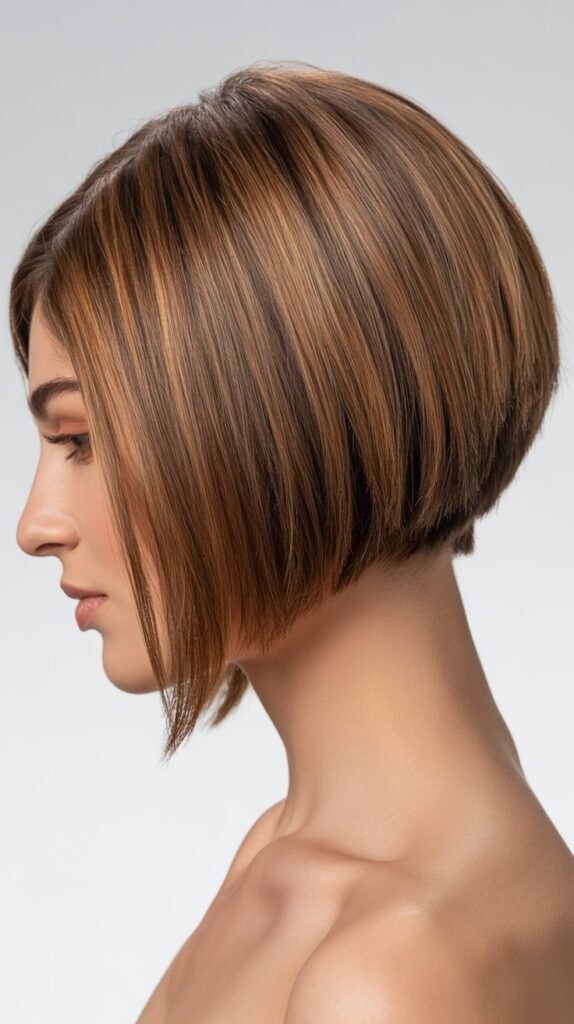
The graduated French bob with stacked back creates dramatic volume through an architectural cutting approach that builds shorter layers at the nape, gradually lengthening toward the front for maximum lift and fullness.
- The stacking technique involves cutting progressively shorter layers at the back of the head, creating a rounded, voluminous shape that physically lifts fine hair away from the scalp.
- This graduation creates a beautiful angle from back to front, with the shortest point at the nape and the longest strands framing the face around chin or jaw length.
- Fine hair benefits tremendously from this cut because the stacked layers provide structural support that prevents the hair from falling flat throughout the day.
- The weight distribution in a graduated bob naturally pushes hair forward and upward, creating movement and bounce that fine hair typically lacks.
- Maintenance requires regular trims every 4-5 weeks to preserve the stacked shape, as grown-out graduation loses its volumizing effect quickly.
- Styling involves blow-drying the back sections with a round brush, directing the hair up and over to emphasize the stacked graduation.
- This cut pairs exceptionally well with highlights or balayage techniques that further enhance the dimensional appearance of the stacked layers.
4. French Bob with Micro Bangs
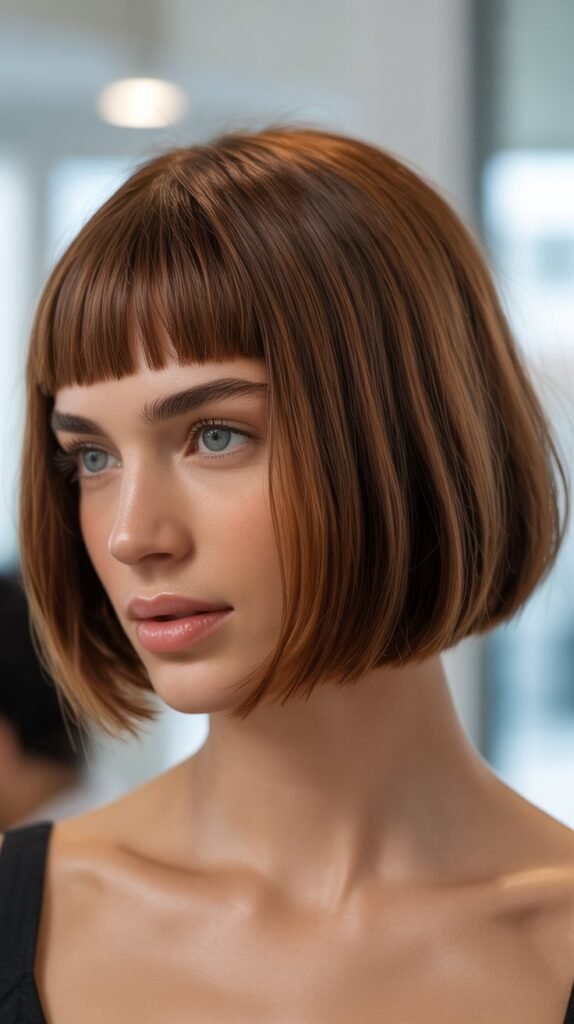
The French bob with micro bangs combines the volume-boosting properties of the bob cut with ultra-short fringe that draws attention upward while adding an edgy, fashion-forward element to fine hair.
- Micro bangs sit well above the eyebrows, typically at mid-forehead level, creating a striking focal point that distracts from any perceived thinness in the hair.
- The contrast between the short bangs and the fuller bob length creates visual interest and dimension that makes the overall hairstyle appear more voluminous.
- This style works particularly well for fine hair because the bangs require minimal hair, leaving maximum density for the bob portion of the cut.
- Styling micro bangs on fine hair is relatively simple—a small round brush and quick blow-dry keeps them lying flat and sleek against the forehead.
- The maintenance commitment is significant, requiring bang trims every 2-3 weeks to prevent them from growing into traditional fringe length.
- This bold style suits oval, heart-shaped, and diamond face shapes particularly well, as the micro bangs emphasize cheekbones and eyes.
- Pairing micro bangs with a textured or blunt bob creates different aesthetic effects, from ultra-modern to softly romantic depending on the bob’s finishing technique.
5. Layered French Bob with Face-Framing Pieces
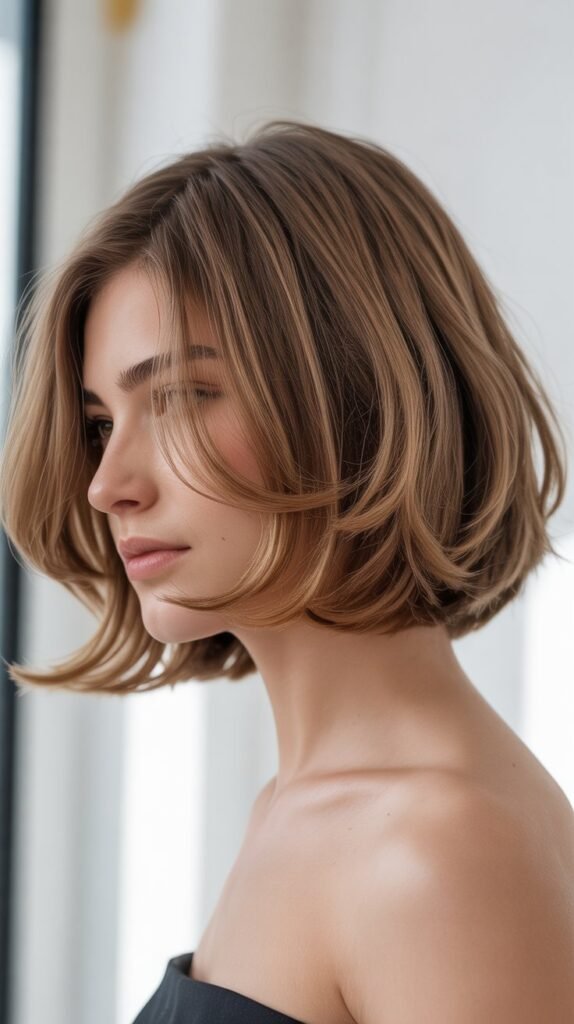
The layered French bob with face-framing pieces strategically places longer strands around the face while maintaining shorter layers throughout, creating a slimming effect that also enhances perceived hair volume.
- Face-framing layers are cut longer than the rest of the bob, typically extending to collarbone length, creating a flattering frame that draws attention to facial features.
- The interior layers of this cut are graduated to create lift at the crown while the longer pieces provide movement and softness around the face.
- This cutting technique benefits fine hair by distributing volume strategically—shorter layers add height while longer pieces add width and dimension.
- The contrast between interior and perimeter lengths creates the illusion of more hair because the eye perceives multiple length variations as greater density.
- Styling requires directing the face-framing pieces away from the face with a round brush during blow-drying to create soft, flattering movement.
- This versatile cut can be styled sleek and straight for professional settings or with loose waves for casual, romantic occasions.
- Color placement becomes particularly effective with this cut—babylights or face-framing highlights on the longer pieces enhance the dimensional effect.
6. Asymmetrical French Bob for Added Drama
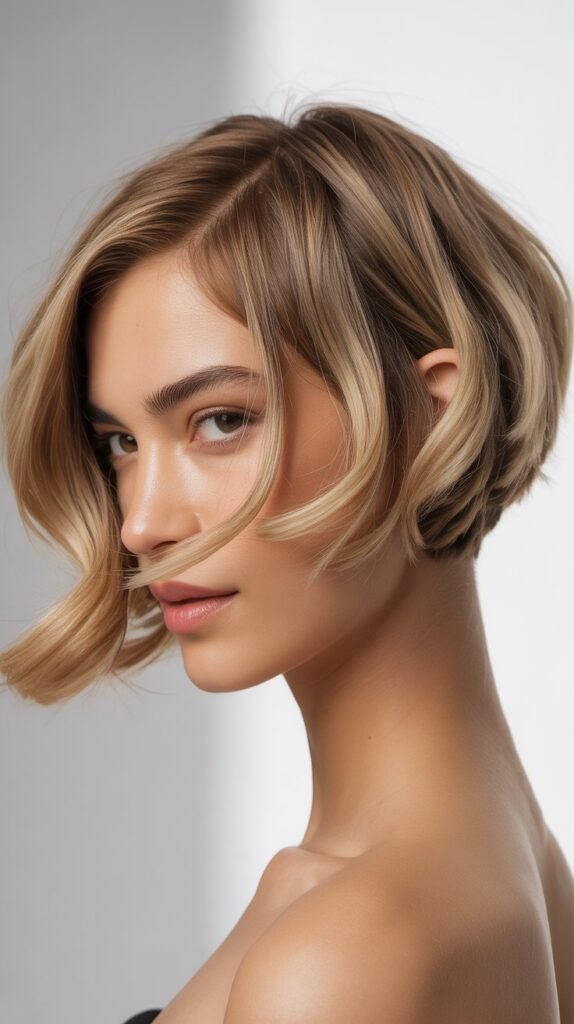
The asymmetrical French bob features intentionally uneven lengths on either side of the face, creating visual intrigue and movement that makes fine hair appear more dynamic and fuller through its unconventional silhouette.
- The asymmetry typically involves one side cut to ear length while the opposite side extends to chin or jaw length, creating a bold, fashion-forward appearance.
- This dramatic length difference draws the eye along the perimeter of the cut, creating visual movement that distracts from fine hair’s natural lack of density.
- Fine hair actually performs better with asymmetrical cuts because there’s less weight pulling the hair down, allowing the shorter side to maintain lift and volume.
- The longer side can be styled with waves or curls to add even more dimension, while the shorter side stays sleek to emphasize the contrast.
- Maintenance requires precision trimming every 4-6 weeks to preserve the specific length differential that makes the asymmetry effective.
- This cut works beautifully with side parts, as the part naturally emphasizes the length difference and creates additional volume at the root.
- Color blocking or two-toned coloring techniques pair exceptionally well with asymmetrical bobs, further enhancing the dramatic, voluminous effect.
7. Wavy French Bob with Sea Salt Texture
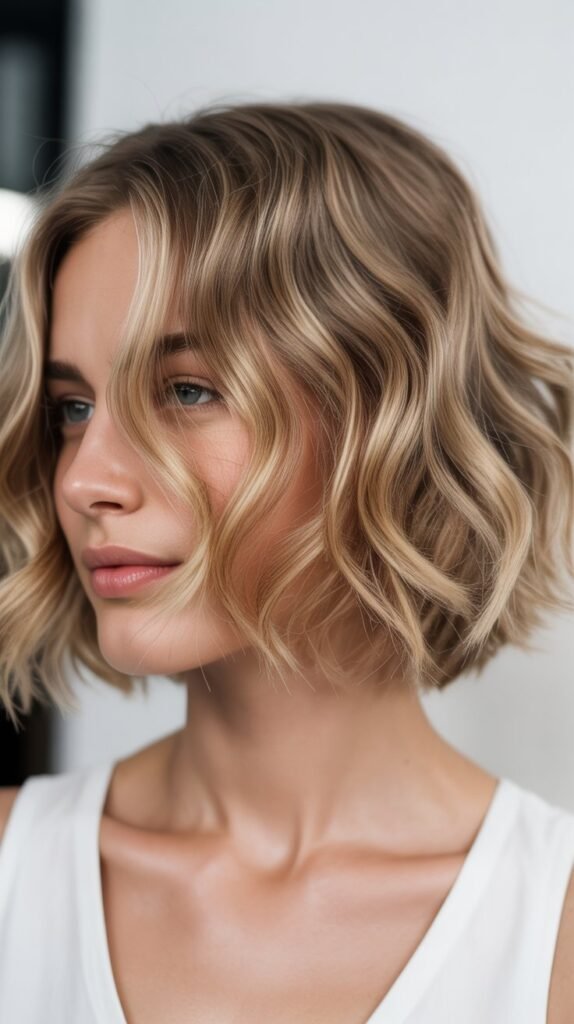
The wavy French bob with sea salt texture transforms fine, straight hair into a tousled, beachy style that creates the illusion of substantially more volume and thickness through enhanced texture and movement.
- Sea salt sprays and texturizing products are applied to damp hair and scrunched to create natural-looking bends and waves that add dimensional volume.
- The wave pattern breaks up the hair’s surface, preventing light from passing straight through fine strands and creating the appearance of greater density.
- This styling approach works exceptionally well on fine hair because the texture prevents strands from clumping together and appearing thin or stringy.
- Creating waves involves either air-drying with product, using a diffuser attachment, or employing a curling wand on larger sections for looser, more natural bends.
- The undone, imperfect nature of sea salt waves means fine hair doesn’t need to hold structured curls—the relaxed waves naturally complement fine textures.
- Refreshing this style between washes involves misting hair with water and sea salt spray, then scrunching to reactivate the texture without full restyling.
- This approach works for various bob lengths within the French bob family, from chin-skimming to shoulder-grazing variations.
8. Sleek French Bob with Middle Part
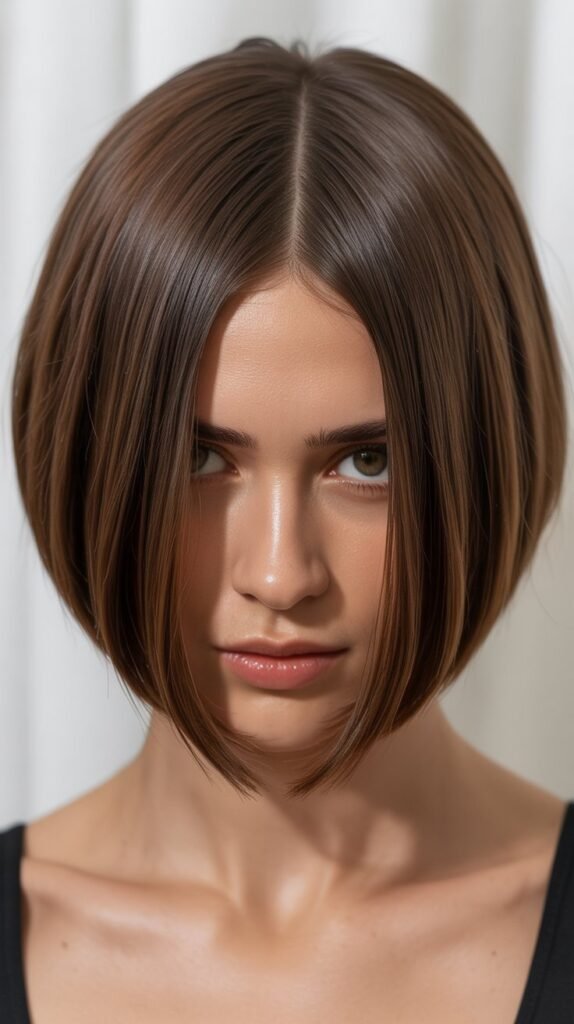
The sleek French bob with middle part creates symmetrical elegance while fine hair benefits from the smooth, polished finish that makes each strand visible and contributes to an overall appearance of healthy fullness.
- The middle part creates visual balance and symmetry, dividing fine hair evenly on both sides to maximize the appearance of density in each section.
- Sleek styling involves blow-drying with a paddle brush followed by flat iron passes to create a mirror-like shine that reflects light and appears healthier and fuller.
- This minimalist approach works particularly well for fine hair because it doesn’t require the hair to hold volume against gravity—instead, it embraces the natural fall.
- The blunt cutting technique is essential for this style, as any layering or texturing would prevent the hair from achieving the desired sleek, unified appearance.
- Smoothing serums and shine-enhancing products become crucial for this style, as they seal the hair cuticle and create reflective properties that enhance perceived thickness.
- Maintenance involves regular deep conditioning treatments to keep fine hair healthy enough to achieve the glossy finish without appearing greasy or weighed down.
- This sophisticated style transitions seamlessly from professional environments to evening events, making it a versatile choice for fine-haired individuals.
9. Curly French Bob with Defined Ringlets
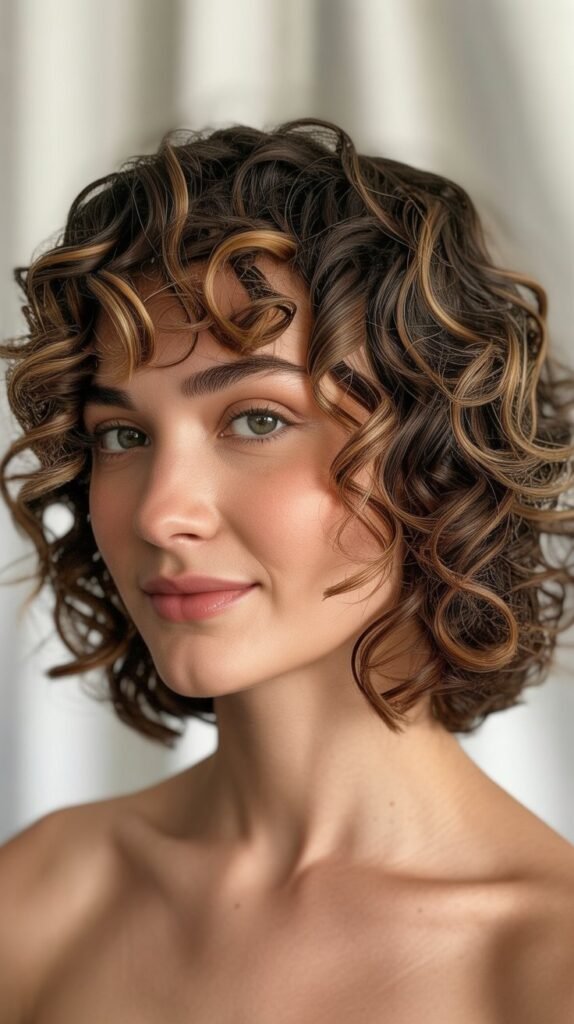
The curly French bob with defined ringlets maximizes volume through the hair’s natural curl pattern, with proper cutting and styling techniques that enhance springy texture and create abundant fullness for fine, curly hair.
- Curly French bobs are cut while hair is dry and in its natural curl pattern to ensure accurate length placement and prevent the dreaded triangle shape.
- Fine curly hair benefits from this cut because the shorter length reduces weight, allowing curls to spring up more dramatically and create greater volume.
- Defining individual curl clumps with curl creams and gels ensures each ringlet maintains its shape, preventing fine curly hair from appearing frizzy or undefined.
- The bob length prevents curls from being weighed down by their own length, a common problem with long, fine curly hair that appears flat at the roots.
- Diffusing curly bobs with the hair flipped upside down creates maximum root lift and allows curls to dry in their most voluminous position.
- Regular trims every 6-8 weeks remove damaged ends that can weigh down fine curls and maintain the rounded, full shape of the bob.
- This style typically requires minimal daily maintenance—refreshing with water and curl cream on non-wash days maintains the defined, voluminous appearance.
10. French Bob with Razored Ends
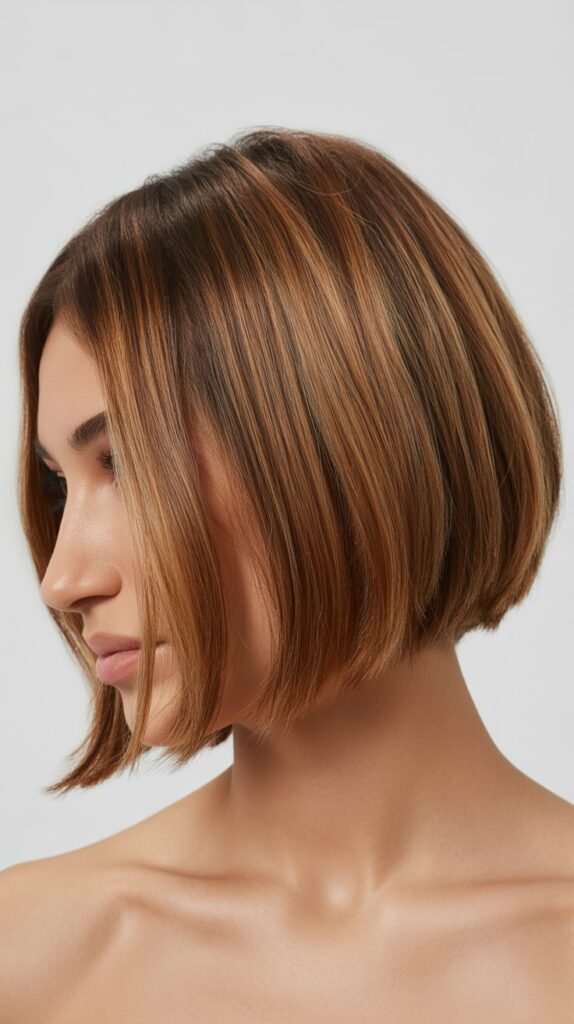
The French bob with razored ends utilizes specialized cutting techniques that create soft, feathered edges while maintaining enough density to provide the appearance of fullness in fine hair.
- Razor cutting involves using a straight razor to slice through hair at an angle, creating textured, varied ends that move more freely than blunt-cut hair.
- While traditionally razoring can thin hair too much, when done carefully on fine hair, it creates just enough texture to prevent the blunt line from appearing too heavy.
- The feathered ends created by razoring allow fine hair to blend seamlessly into itself, creating soft movement without visible demarcation lines.
- This technique works best when applied only to the bottom inch of the bob, preserving density through the mid-lengths while softening the perimeter.
- Styling razored bobs requires lightweight products that won’t weigh down the textured ends, such as mousse or volumizing sprays applied at the roots.
- The movement created by razored ends means fine hair appears to have more dimension and body, as the varied lengths catch light differently.
- Maintenance schedules can extend slightly longer than blunt bobs since the textured ends grow out less obviously than a precise blunt line.
11. Inverted French Bob with Shorter Back
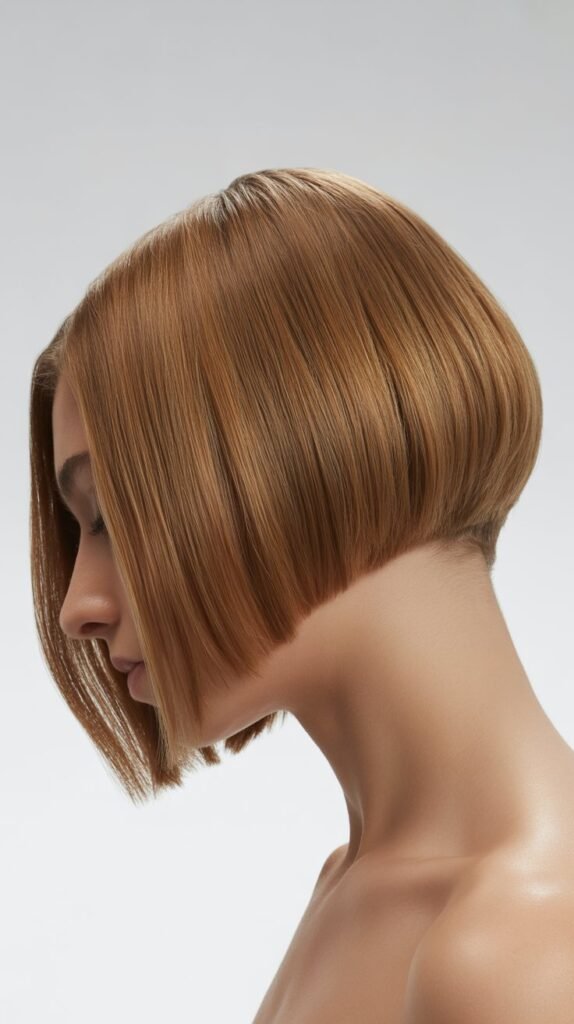
The inverted French bob with shorter back creates dramatic volume and lift through an extreme graduation that stacks height at the crown while longer front pieces frame and flatter the face.
- Inversion refers to the extreme angle created by cutting the back very short (often at or above the nape) while front pieces extend significantly longer toward the chin.
- This architectural cut creates built-in volume at the back of the head through stacking and graduation, eliminating the flat appearance common in fine hair.
- The dramatic angle from back to front creates visual interest and dimension, making the overall hairstyle appear more substantial and deliberately styled.
- Fine hair thrives with this cut because the shorter back sections naturally stand away from the head, creating height without requiring excessive styling products.
- The longer front pieces balance the shorter back, preventing the style from appearing too severe while providing face-framing softness.
- Blow-drying an inverted bob involves directing the back sections upward and forward with a round brush to emphasize the stacked graduation.
- Color techniques like darker roots and lighter ends enhance the inverted shape by creating shadow and dimension that emphasizes the cut’s architecture.
12. French Bob with Side-Swept Bangs
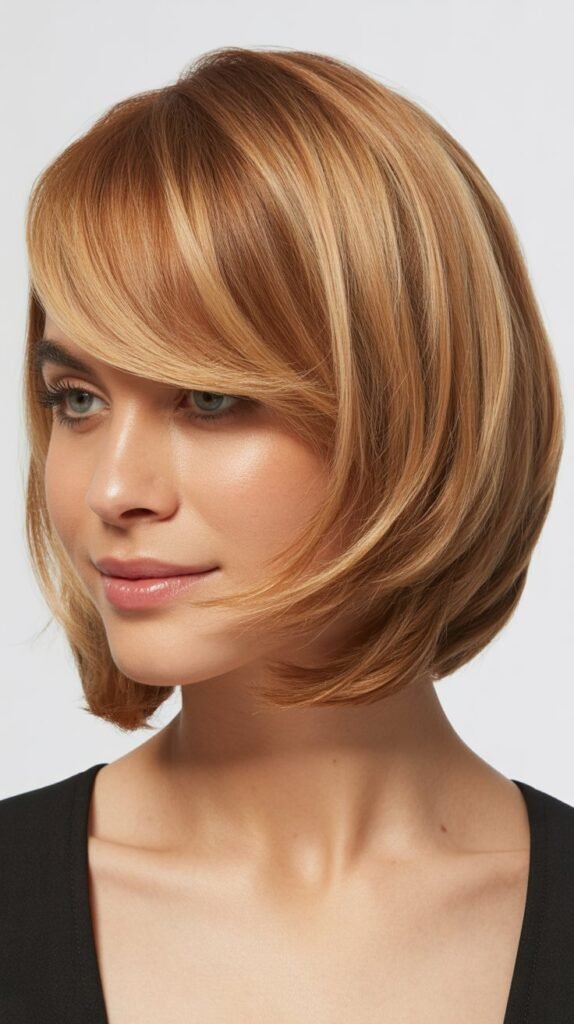
The French bob with side-swept bangs adds sophisticated softness to the classic cut while the diagonal line of the bangs creates visual height and fullness across the forehead and crown area.
- Side-swept bangs are cut longer on one side and gradually shorter on the other, creating a diagonal line that naturally falls across the forehead.
- This bang style is particularly flattering for fine hair because it doesn’t require the density that full, straight-across bangs demand to look substantial.
- The sweeping motion of the bangs creates movement that draws the eye upward and across, adding perceived volume to the entire hairstyle.
- Styling involves blow-drying the bangs in the desired direction with a round brush, creating lift at the root before smoothing them to one side.
- The versatility of side-swept bangs allows them to be styled more dramatically swept for evening looks or softly blended for casual, everyday wear.
- This style suits most face shapes, particularly round and square faces, as the diagonal line creates a slimming, lengthening effect.
- Maintenance requires bang trims every 3-4 weeks to maintain the appropriate length and prevent them from growing into the eyes.
13. Tousled French Bob with Lived-In Texture
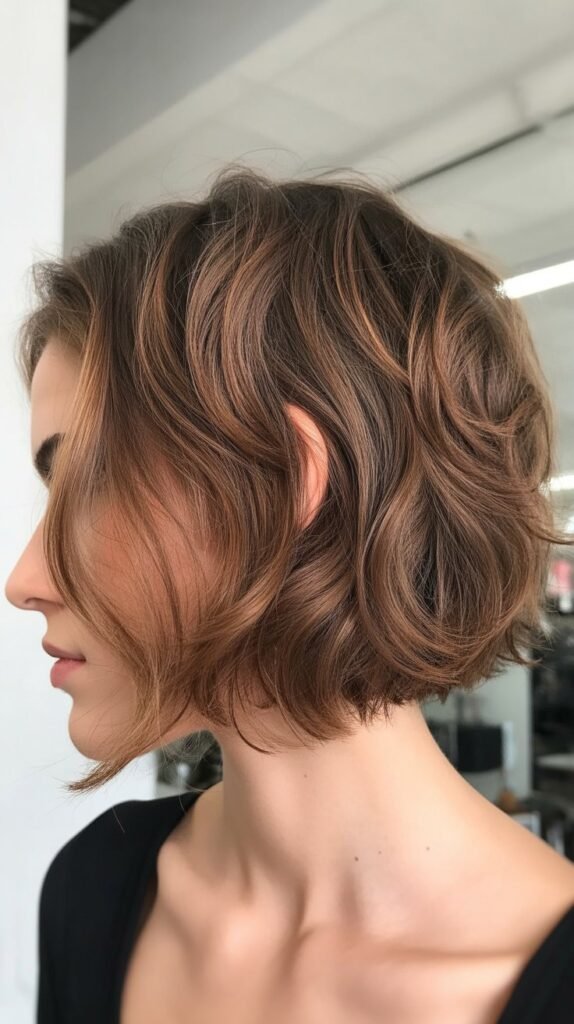
The tousled French bob with lived-in texture embraces an effortless, undone aesthetic that makes fine hair appear fuller through intentional messiness and strategically placed texture.
- Lived-in texture refers to a styling approach that creates the appearance of second or third-day hair, with natural separation and slight dishevelment.
- This approach benefits fine hair by breaking up uniformity—when strands separate and move independently, the hair appears to have more volume and dimension.
- Creating this texture involves applying dry texturizing spray or powder to roots and mid-lengths, then tousling with fingers to create separation.
- The deliberately imperfect nature means fine hair doesn’t need to maintain perfect structure, eliminating the pressure for hair to look freshly styled.
- Styling can involve loose waves created with a curling iron used on random sections rather than systematically throughout, adding to the lived-in appearance.
- This low-maintenance style actually improves over time between washes, as natural oils add to the piece-y, textured effect without appearing greasy.
- The tousled aesthetic pairs beautifully with the French bob length, creating an authentically Parisian, effortlessly chic appearance.
14. Precision French Bob with Sharp Lines
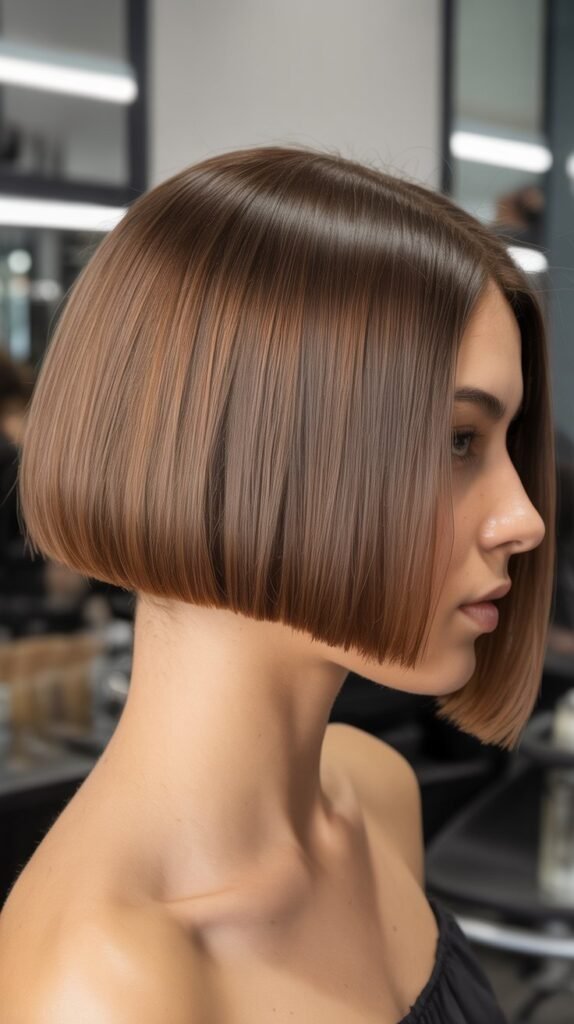
The precision French bob with sharp lines creates architectural sophistication through exact cutting techniques that produce clean edges and defined shapes that make fine hair appear intentionally styled and substantial.
- Precision cutting involves using specific angles, elevations, and cutting techniques to create exact, repeatable lines that form a deliberate geometric shape.
- The sharp perimeter line creates a visual weight that makes fine hair appear denser, as the eye perceives the solid line as substantial rather than wispy.
- This cutting approach requires exceptional technical skill, as even minor inconsistencies in the line become immediately visible in the finished cut.
- Fine hair showcases precision cutting beautifully because there’s less bulk to hide imperfections, allowing the clean lines to shine through clearly.
- Styling a precision bob involves blow-drying with tension to create smoothness, then often finishing with a flat iron to perfect the sharp, clean edges.
- This style makes a strong visual statement and suits individuals who appreciate structured, polished aesthetics in their personal style.
- Maintenance demands are high—precision bobs require trims every 4-5 weeks to maintain the exact lines that define the style.
15. French Bob with Hidden Layers
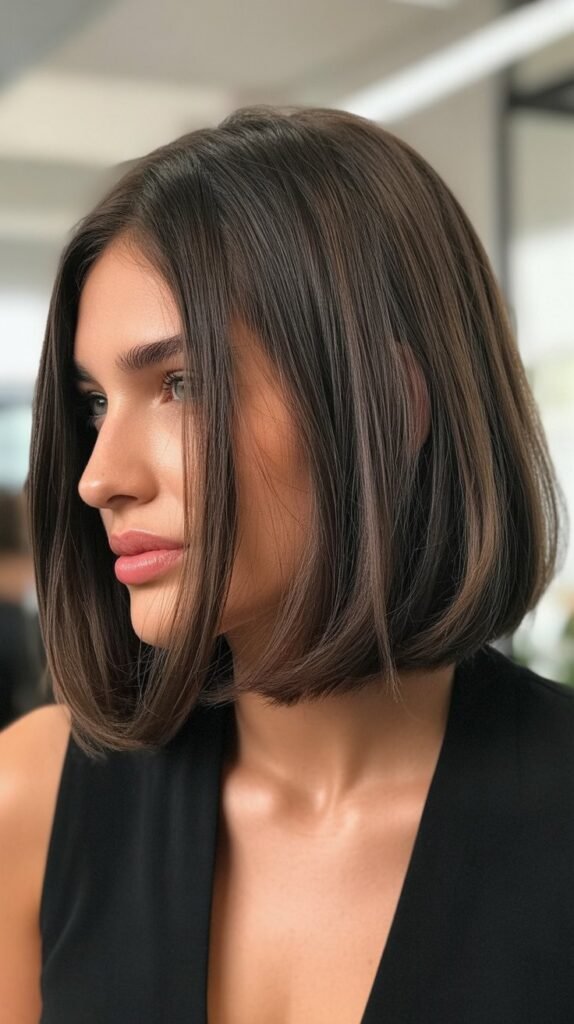
The French bob with hidden layers maintains a blunt appearance at the perimeter while interior layering creates movement and volume that makes fine hair appear fuller without sacrificing the classic bob silhouette.
- Hidden layers are cut into the interior of the bob while keeping the underneath and perimeter sections longer, creating internal movement without visible layering.
- This technique allows fine hair to maintain the appearance of a solid, blunt bob while benefiting from the volume-creating properties of layering.
- The interior layers reduce weight and create space between strands, preventing fine hair from lying flat and lifeless against the scalp.
- Point-cutting techniques are often used for hidden layers, creating soft texture within the hair’s interior that doesn’t disrupt the outer silhouette.
- When styled, the hidden layers create bounce and movement as the hair swings, revealing the internal structure without showing obvious layer lines.
- This approach provides the best of both worlds for fine hair—the fullness appearance of a blunt bob with the body-enhancing benefits of layering.
- Styling involves using volumizing mousse at the roots and blow-drying with a round brush to activate the hidden layers and create maximum lift.
16. French Bob with Balayage Highlights
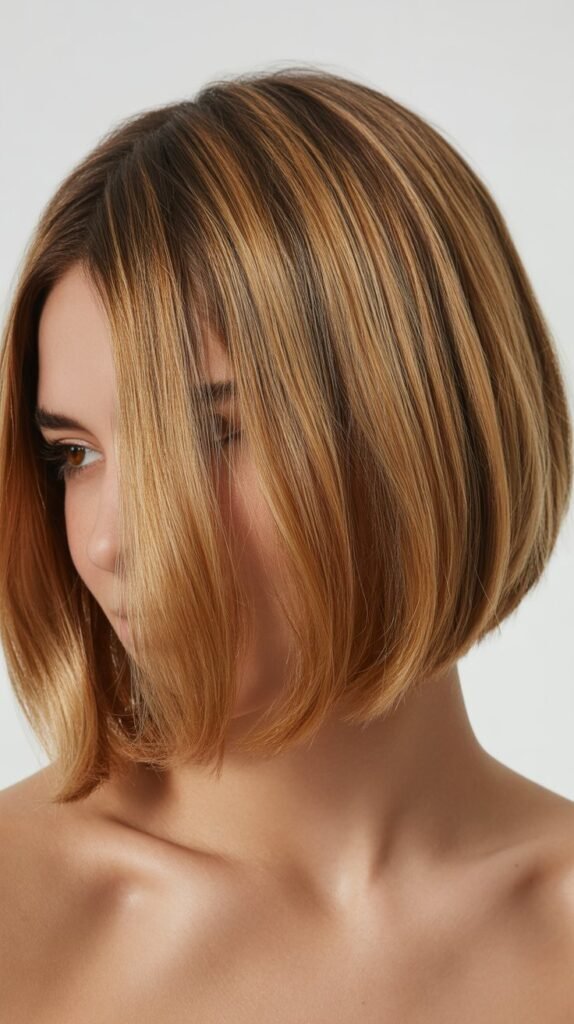
The French bob with balayage highlights enhances the cut’s dimension through hand-painted color that creates depth and visual texture, making fine hair appear fuller through strategic light placement.
- Balayage involves hand-painting highlights onto the hair in a sweeping motion, creating natural-looking dimension that mimics how sun naturally lightens hair.
- Strategic highlight placement around the face and through the crown area creates the illusion of more hair by adding visual depth and contrast.
- Fine hair benefits tremendously from balayage because the varied tones prevent the hair from appearing flat or one-dimensional under light.
- Lighter pieces strategically placed throughout the bob catch light and create the perception of movement and volume even when hair is stationary.
- The maintenance requirements for balayage are lower than traditional highlights, as the hand-painted application grows out more naturally without harsh demarcation lines.
- Color placement should be concentrated in areas where volume is most desired—typically around the face, crown, and through the ends of the bob.
- Toning balayage highlights to create complementary warm or cool shades enhances the dimensional effect and prevents fine hair from appearing brassy or flat.
17. Shaggy French Bob with Piecey Texture
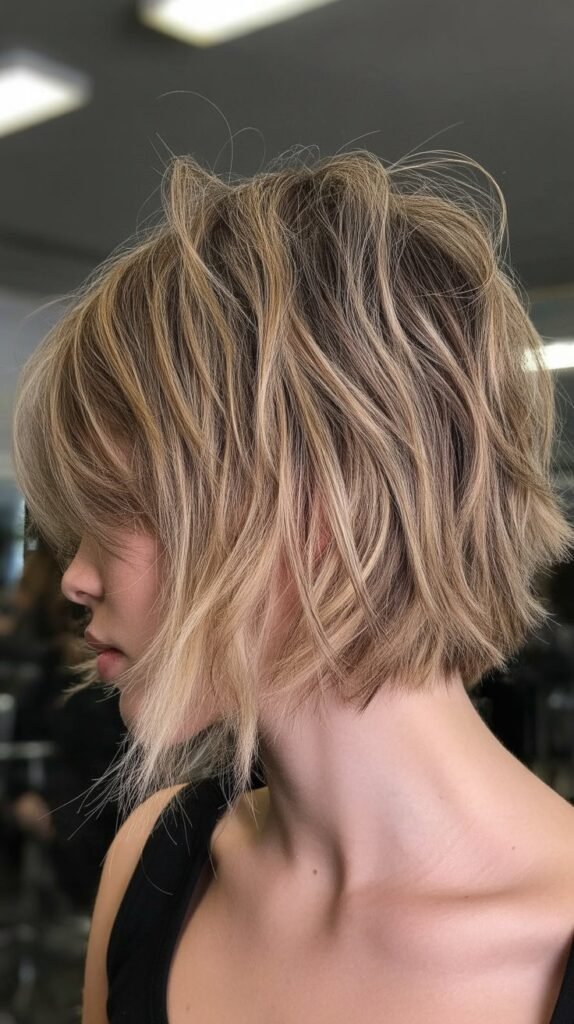
The shaggy French bob with piecey texture embraces intentional choppiness and separation to create a rock-and-roll inspired style that adds substantial visual volume to fine hair through deliberate disconnection.
- Shaggy cuts involve irregular layering throughout the hair, creating varied lengths that produce a deliberately messy, textured appearance.
- The piecey texture is achieved through point-cutting and razoring techniques that separate individual chunks of hair rather than creating smooth, blended layers.
- This approach works exceptionally well for fine hair because the separation prevents strands from clumping together and appearing thin.
- Styling involves applying texturizing products to enhance separation, then either air-drying for maximum texture or using a diffuser to set the pieces.
- The inherent messiness of shaggy bobs means fine hair doesn’t need to maintain structure or perfection, embracing natural movement and fall.
- This style has a youthful, edgy quality that suits casual lifestyles and individuals who prefer low-maintenance, wash-and-go styling routines.
- Regular trims every 6-8 weeks maintain the shaggy texture without allowing the cut to grow into an unintentional, undefined shape.
18. French Bob with Deep Side Part
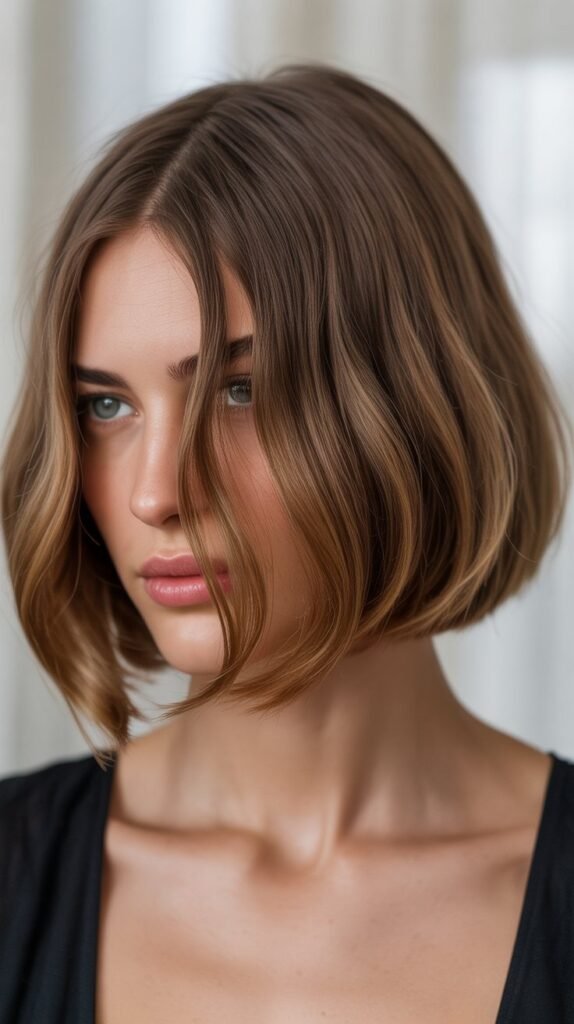
The French bob with deep side part creates dramatic asymmetry and volume through strategic part placement that builds height on one side while creating face-framing softness on the other.
- Deep side parts are positioned far to one side of the head, typically above the outer edge of one eyebrow, creating dramatic volume imbalance.
- The majority of hair falls to one side, creating concentrated density that makes fine hair appear much fuller on the heavier side.
- This parting technique lifts hair at the root on the heavier side, creating natural volume without requiring teasing or volumizing products.
- The smaller section on the opposite side can be styled sleek and tucked behind the ear, creating an elegant asymmetrical appearance.
- Fine hair holds deep side parts particularly well because there’s less weight pulling the hair back toward a centered position.
- Styling involves blow-drying the hair in the direction of the part with maximum tension to set the direction and create root lift.
- The deep side part works beautifully with both straight and wavy bob textures, adapting to various personal style preferences.
19. French Bob with Curtain Bangs
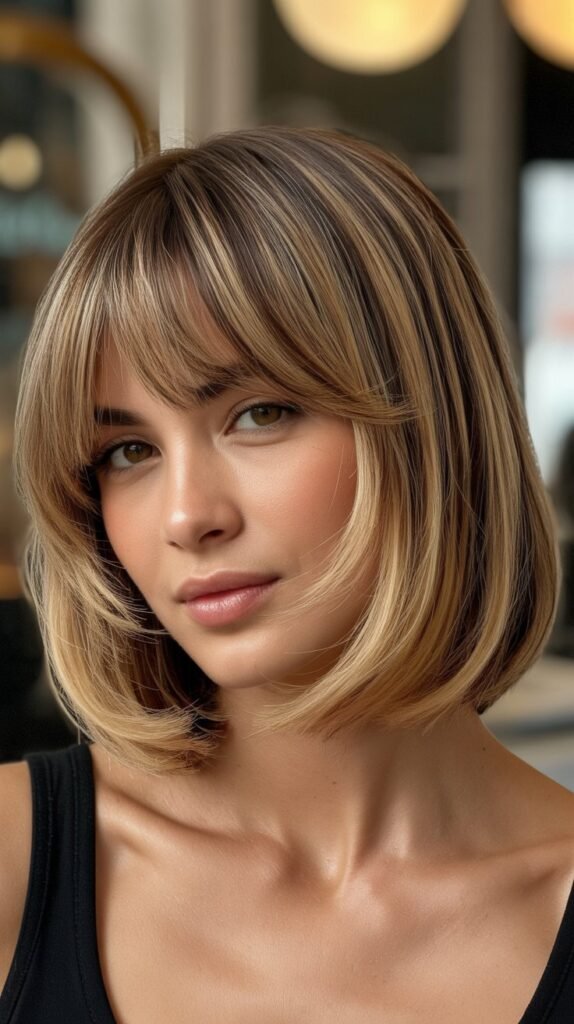
The French bob with curtain bangs combines the volume-boosting properties of the bob with face-framing fringe that parts in the center and sweeps to both sides, creating softness and fullness around the face.
- Curtain bangs are characterized by their center part and gradual lengthening from the center toward the sides, creating a curtain-like frame around the face.
- This bang style requires minimal hair density, making it ideal for fine hair that may not have enough thickness for full, blunt bangs.
- The parted, swept-back nature of curtain bangs creates vertical lines that elongate the face while adding softness and dimension around the forehead.
- Styling involves blow-drying the bangs away from the face using a round brush, creating lift at the root and gentle outward movement at the ends.
- Curtain bangs blend seamlessly into the bob length, creating cohesive movement rather than a distinct separation between bangs and the rest of the hair.
- This versatile bang style suits most face shapes and can be adjusted in length and thickness to complement individual features.
- Maintenance requires bang trims every 4-5 weeks to maintain the appropriate length that frames the eyes without obscuring vision.
20. Voluminous French Bob with Root Lift Techniques
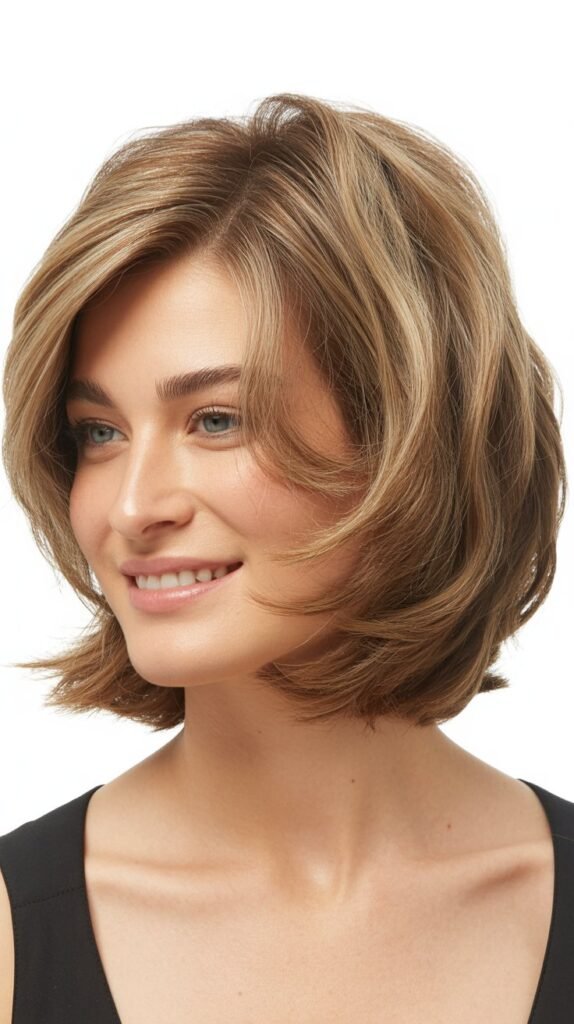
The voluminous French bob with root lift techniques focuses on styling methods that create maximum height at the scalp, making fine hair appear substantially fuller through strategic product application and drying methods.
- Root lift begins with mousse or volumizing spray applied directly to the scalp on damp hair, providing structure and hold from the very base of each strand.
- Blow-drying with the head flipped upside down allows gravity to assist in lifting hair away from the scalp, creating maximum volume throughout.
- Round brushes are inserted at the root and held with tension while heat is applied, then allowed to cool before releasing to set the lift.
- Velcro rollers can be used at the crown area after blow-drying, creating additional height in the area most visible and prone to flatness on fine hair.
- Teasing or backcombing at the roots provides temporary volume for special occasions, though this technique should be used sparingly to prevent damage.
- Volumizing powders or dry shampoos applied at the roots absorb oil and create texture that helps maintain lift throughout the day.
- This styling approach transforms fine hair dramatically, creating the appearance of density that naturally thick hair possesses without chemical treatments or extensions.
21. French Bob with Undercut Design
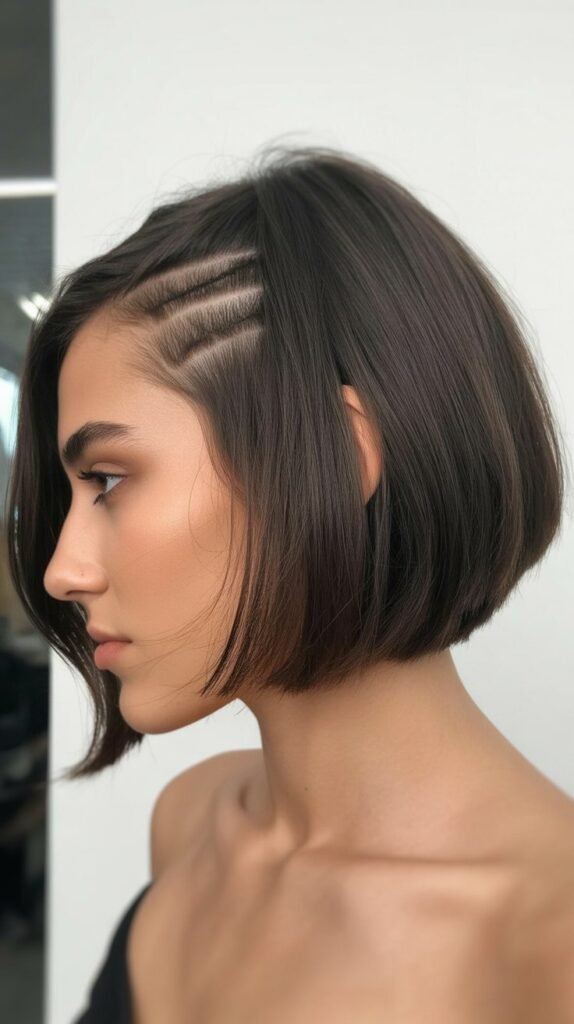
The French bob with undercut design incorporates shaved or very short hair beneath the bob’s visible sections, reducing weight and creating dramatic lift while offering the option for creative patterns or designs.
- Undercuts involve using clippers to shave the hair at the nape or sides very short, typically between 1/8 inch to 1/2 inch in length.
- Removing this bottom weight allows the remaining bob hair to lift dramatically, as there’s no longer heavy hair pulling it downward against the scalp.
- Fine hair particularly benefits from undercuts because the technique removes weight without removing visible density—the bob appears full while feeling lighter.
- The undercut can remain hidden beneath the bob for professional settings or revealed by tucking hair behind ears or styling it up for edgier occasions.
- Creative designs, patterns, or geometric shapes can be shaved into the undercut area, adding artistic expression to the functional volume-creating technique.
- Maintenance requires the undercut to be re-clipped every 3-4 weeks to maintain the short length and prevent it from growing out and losing its effect.
- This style represents a commitment, as growing out an undercut requires patience and often necessitates transitional styling during the grow-out period.
22. Soft French Bob with Rounded Edges
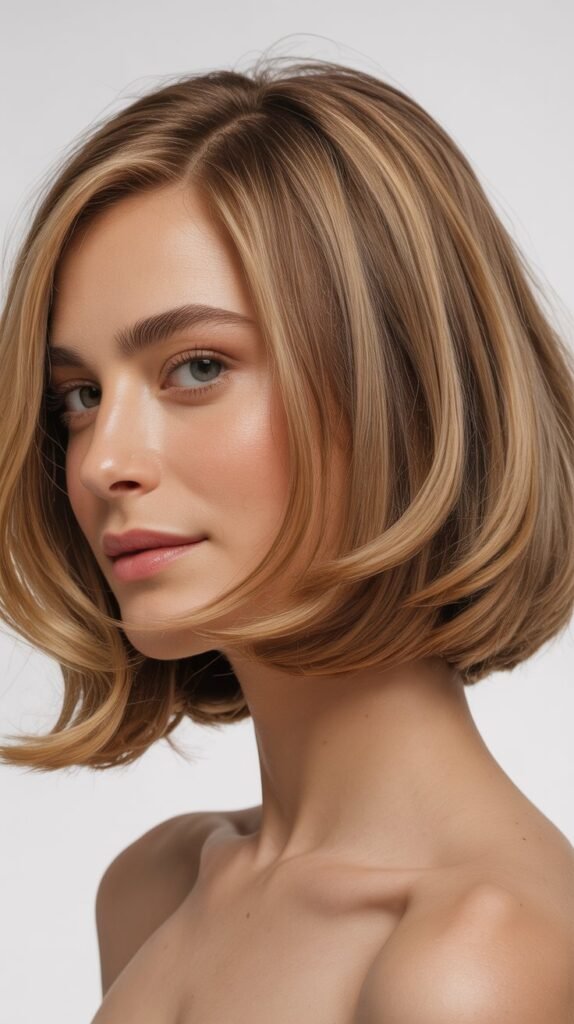
The soft French bob with rounded edges creates gentle, feminine fullness through curved cutting lines that produce a rounded silhouette which enhances the appearance of volume in fine hair.
- Rounded cutting involves creating a subtle curve in the bob’s perimeter, with slightly shorter hair at the back gradually lengthening as it moves toward the face.
- This curved shape creates the optical illusion of more hair because the eye perceives the rounded form as fuller and more substantial than a straight line.
- The gentle curve complements the natural roundness of the head, creating a harmonious shape that appears intentional and well-considered.
- Fine hair benefits from rounded edges because the curved shape prevents hair from hanging straight down, instead creating subtle outward movement that adds dimension.
- Styling involves using a large round brush during blow-drying to emphasize and enhance the natural curve built into the cut.
- This softer approach to the French bob suits individuals who prefer romantic, feminine aesthetics over edgy, geometric styles.
- The rounded perimeter grows out more gracefully than blunt lines, allowing slightly longer maintenance intervals between trims.
23. French Bob with Vintage Waves
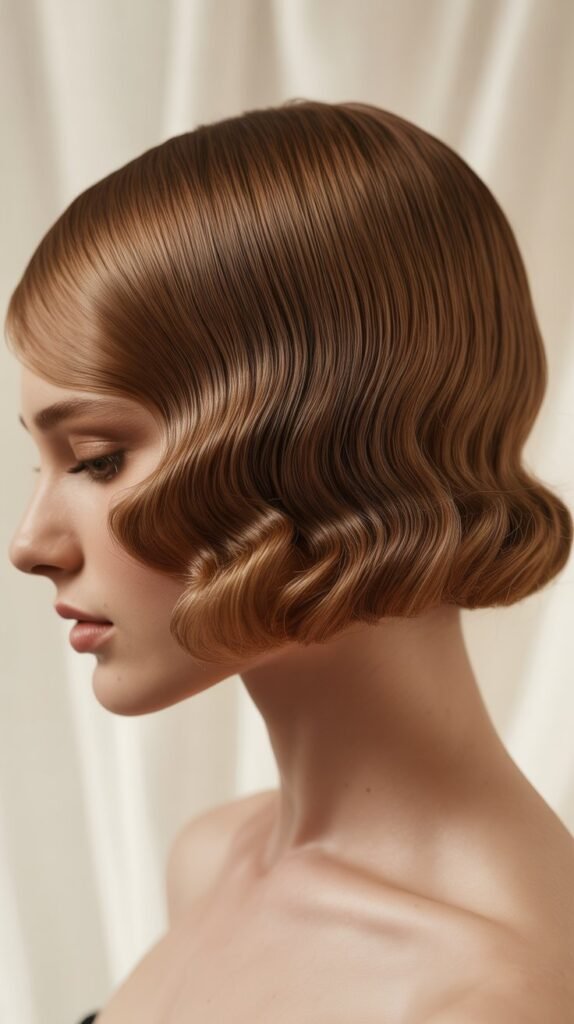
The French bob with vintage waves recreates classic 1920s and 1940s styling through structured S-shaped waves that add substantial volume and old-Hollywood glamour to fine hair.
- Vintage waves are characterized by structured, uniform S-shaped curves that create a sculptural, deliberate pattern throughout the hair.
- These waves add significant volume to fine hair because each curve creates space between the hair and the scalp, building dimension and fullness.
- Creating vintage waves involves either pin-curling damp hair and allowing it to dry completely or using a flat iron to create alternating S-curves through each section.
- Setting spray or mousse is essential for fine hair to hold the structured wave pattern without falling flat throughout the day or evening.
- This glamorous styling approach transforms a simple French bob into a red-carpet-worthy style perfect for formal events and special occasions.
- The waves can be brushed out slightly for a softer, more modern interpretation or left crisp and defined for authentic vintage appeal.
- Fine hair actually holds vintage waves better than thick hair because there’s less weight pulling the pattern downward and distorting the curves.
24. Choppy French Bob with Razor-Cut Texture
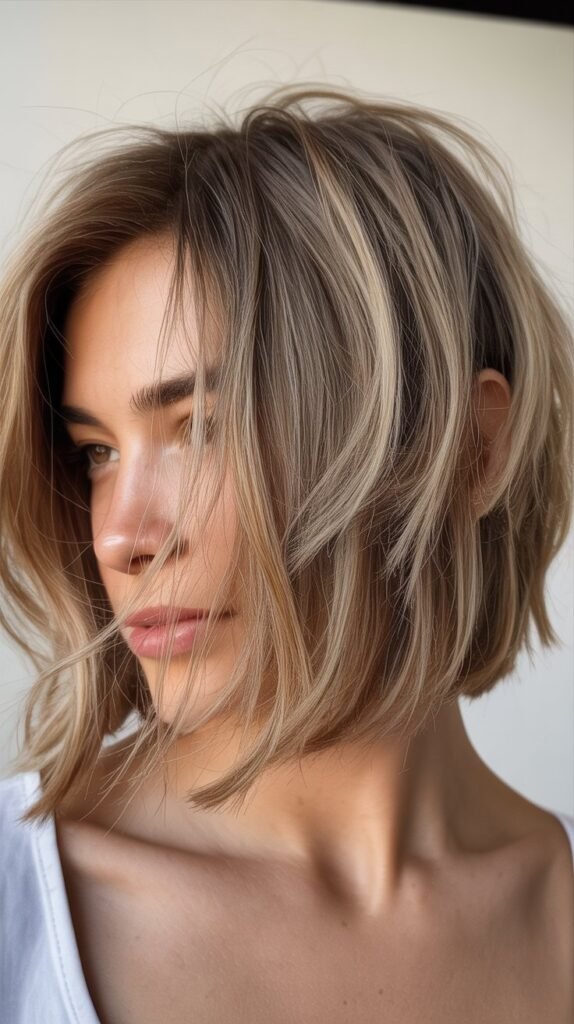
The choppy French bob with razor-cut texture uses aggressive razoring techniques throughout the cut to create extreme separation and movement that maximizes the appearance of volume in fine hair.
- Razor-cutting involves slicing through hair with a straight razor held at various angles, creating highly textured, irregular ends throughout the cut.
- This aggressive texturing technique creates substantial separation between individual pieces of hair, preventing fine strands from clumping together.
- The choppy, disconnected appearance adds visual interest and movement that makes hair appear more voluminous through dynamic texture rather than actual density.
- Styling products like pomades, waxes, or texture pastes enhance the piecey separation and allow for manipulation of individual chunks of hair.
- This edgy style suits individuals with alternative or fashion-forward personal aesthetics who appreciate bold, statement-making haircuts.
- The extreme texturing means fine hair requires less product to achieve definition, as the cut itself provides built-in separation and movement.
- Maintenance involves trimming every 5-7 weeks to preserve the intentional choppiness without allowing the cut to become overgrown and shapeless.
25. French Bob with Color Melting
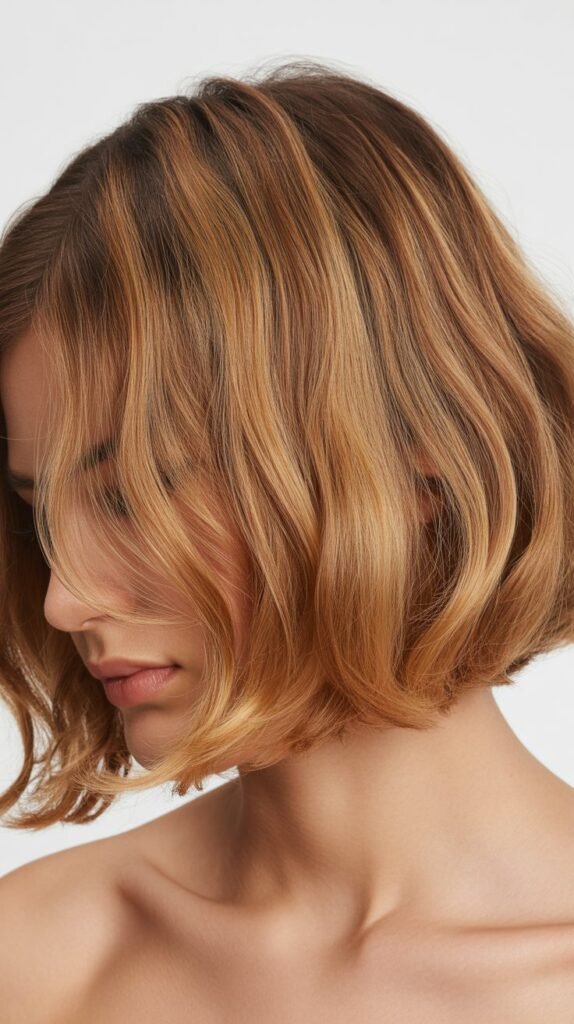
The French bob with color melting creates seamless color transitions from roots to ends, adding dimensional depth that makes fine hair appear substantially fuller through strategically placed tonal variations.
- Color melting involves blending multiple shades together without visible lines of demarcation, creating a gradient effect from darker roots to lighter ends.
- The tonal variation created by color melting adds depth and dimension that makes fine hair appear to have more texture and volume than single-process color.
- Strategically placing darker shades at the roots and lighter shades through mid-lengths and ends creates the illusion of shadow and depth that mimics naturally thick hair.
- Fine hair responds particularly well to color melting because the technique doesn’t require the hair to be heavily sectioned or precisely placed like traditional highlights.
- The seamless gradient grows out beautifully, requiring touch-ups only every 10-12 weeks rather than the frequent maintenance of traditional color techniques.
- Color melting can incorporate natural tones for subtle dimension or vivid fashion colors for dramatic, artistic expression depending on personal preference.
- Glossing treatments between color appointments maintain vibrancy and shine, ensuring the dimensional effect remains visible and enhances the perceived fullness.
26. French Bob with Flat Iron Curls
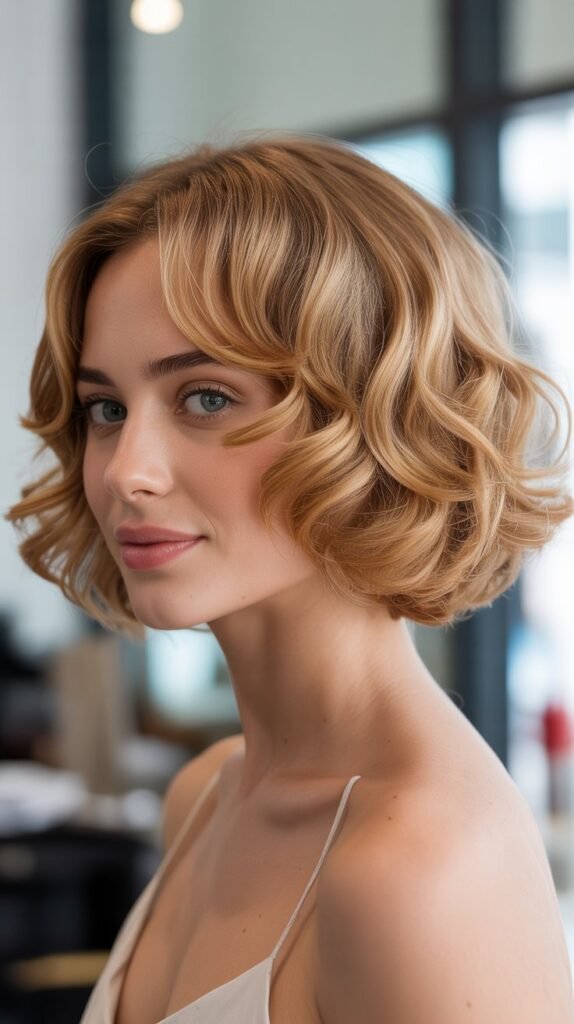
The French bob with flat iron curls creates voluminous waves using a straightening iron to form bends and curves that add substantial body and movement to fine hair.
- Flat iron curls are created by clamping hair in the straightener, rotating it 180-360 degrees, then pulling through to create a curved bend.
- This technique creates softer, more relaxed waves than traditional curling irons, which suits fine hair by adding volume without excessive structure that might fall flat.
- Varying the direction of rotation (toward and away from the face) creates natural-looking dimension and prevents a uniform, artificial appearance.
- Fine hair holds flat iron curls exceptionally well because the technique creates gentle bends rather than tight curls, requiring less structural hold.
- Heat protectant spray is essential before flat ironing to prevent damage while allowing the tool to reach the temperature necessary to create lasting curls.
- The resulting waves add significant volume throughout the bob length, transforming straight, potentially flat fine hair into a dimensional, full-bodied style.
- This versatile styling technique works for both casual, beachy looks and polished, formal occasions depending on curl size and finishing products.
27. French Bob with Crown Layering
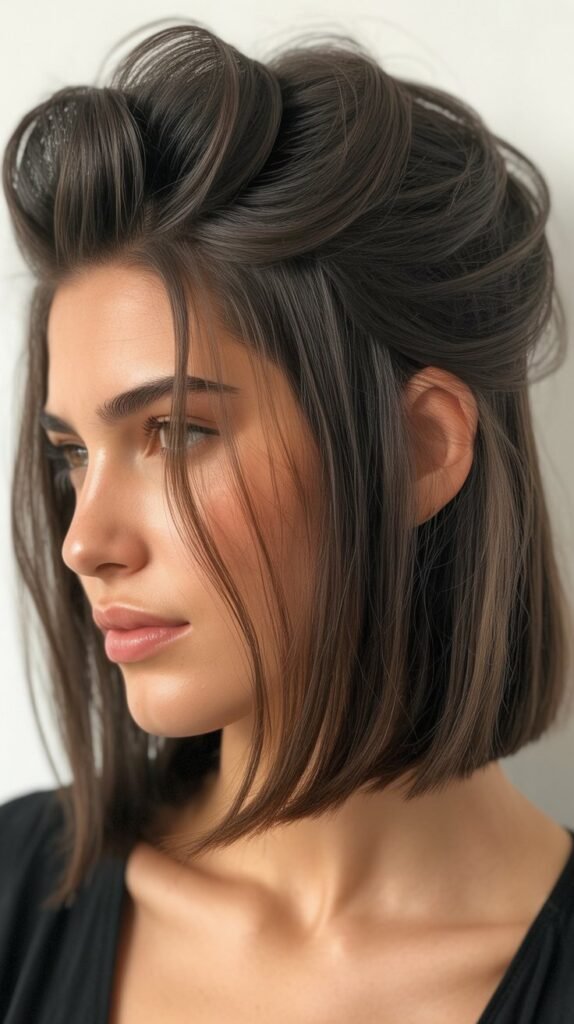
The French bob with crown layering focuses specifically on removing weight and adding height at the top of the head through strategic layering that creates lift where fine hair most needs volume.
- Crown layering involves cutting shorter layers specifically at the top and crown area of the head while maintaining length through the sides and back.
- These shorter layers naturally lift away from the scalp due to their reduced weight, creating height and fullness in the most visible area of the hairstyle.
- Fine hair particularly benefits from crown layering because this targeted approach creates volume where it’s most needed without removing density from other areas.
- The layers can be cut at various lengths—from subtle, barely noticeable graduation to dramatic, obvious layering depending on desired volume intensity.
- Styling involves blow-drying the crown area first with a round brush, directing hair upward and back to maximize the lift created by the layers.
- Volumizing powder or dry shampoo applied specifically at the crown enhances the layer’s natural lift and helps maintain height throughout the day.
- This approach creates lasting volume that doesn’t require constant touching up or restyling, as the cut itself provides the structural support for fullness.
28. French Bob with Lowlights for Depth
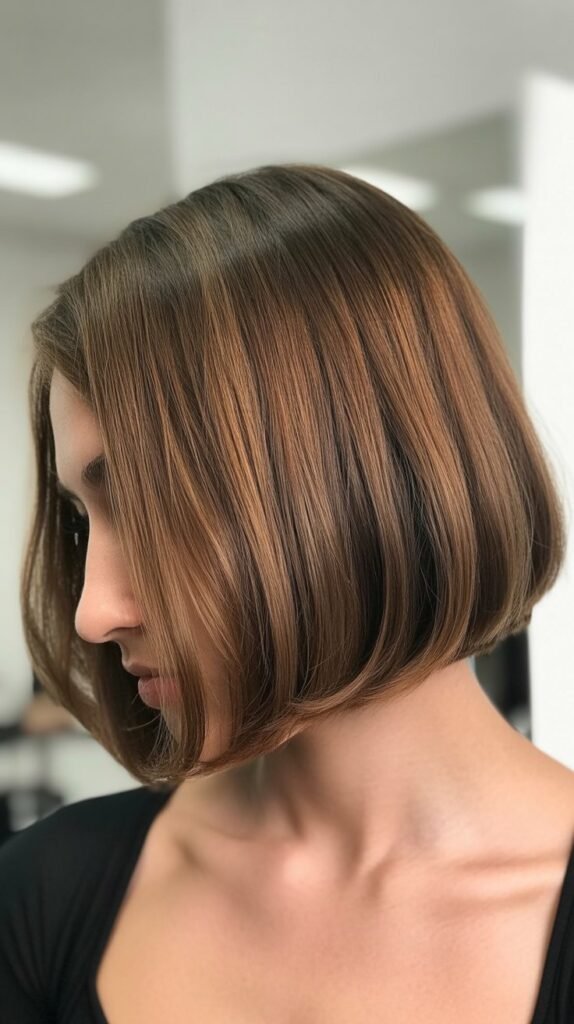
The French bob with lowlights for depth incorporates darker strands throughout the cut to create shadow dimension that makes fine hair appear thicker through strategic color placement that mimics natural depth.
- Lowlights involve adding darker color strands throughout the hair, typically one to three shades deeper than the base color, to create depth and dimension.
- The contrast between lighter base color and darker lowlights creates the visual perception of shadow and depth that naturally thick hair possesses.
- Strategic lowlight placement underneath and through the interior of the bob creates a dimensional effect that makes hair appear to have multiple layers even in blunt cuts.
- Fine hair benefits tremendously from lowlights because the darker strands create the illusion of density without requiring actual thickness.
- The placement of lowlights should concentrate on areas where shadow would naturally occur—underneath sections and through the interior of the cut.
- Maintenance requires color refreshing every 8-10 weeks to maintain the contrast between base color and lowlights that creates the dimensional effect.
- This subtle approach to color enhancement suits individuals who want to add fullness perception without dramatic, obvious color changes to their natural hair.
Styling Products Essential for Fine Hair French Bobs
- Volumizing mousse provides lightweight hold and body when applied to damp roots before blow-drying, creating lift without weight.
- Dry shampoo or volumizing powder absorbs oil at the roots while adding texture and grip that helps fine hair maintain volume throughout the day.
- Texturizing spray creates separation and piece-y definition in fine hair, preventing strands from clumping together and appearing thin.
- Heat protectant spray shields fine hair from thermal damage during styling while adding a light layer that can enhance body and shine.
- Lightweight hair oil or serum adds shine and controls flyaways on fine hair without the heavy coating that weighs down delicate strands.
- Flexible hold hairspray sets styles without creating crunchy texture, allowing fine hair to move naturally while maintaining volume and shape.
- Sea salt spray creates beachy texture and enhanced body in fine hair, particularly effective for creating the tousled, wavy bob variations.
Conclusion
The 28 Best French Bob Haircuts for Fine Hair to Boost Fullness provides you with an extensive collection of styles, techniques, and approaches to transform thin hair into a voluminous, beautifully shaped masterpiece.
From classic blunt cuts that create the illusion of density through precise lines to textured, choppy variations that add dimension through strategic layering, each style offers unique benefits for fine hair types seeking greater fullness.
The combination of expert cutting techniques, strategic color placement, and proper styling methods means that fine hair no longer needs to be a limitation but rather an opportunity to showcase these elegant, manageable bob variations.
Whether you’re drawn to the sleek sophistication of precision cuts, the effortless charm of tousled textures, or the dramatic impact of graduated and inverted shapes, there’s a French bob variation perfectly suited to your lifestyle, face shape, and personal aesthetic preferences.
By understanding the principles behind each cut—from how blunt lines create visual weight to how layering removes burden while adding movement—you can work confidently with your stylist to achieve the exact look that will make your fine hair appear its fullest and most beautiful.
Remember that maintenance, proper product selection, and styling techniques are equally important as the initial cut in preserving and enhancing the volume-boosting effects of your chosen French bob style, so invest time in learning the specific care requirements that will keep your hair looking salon-fresh between appointments.