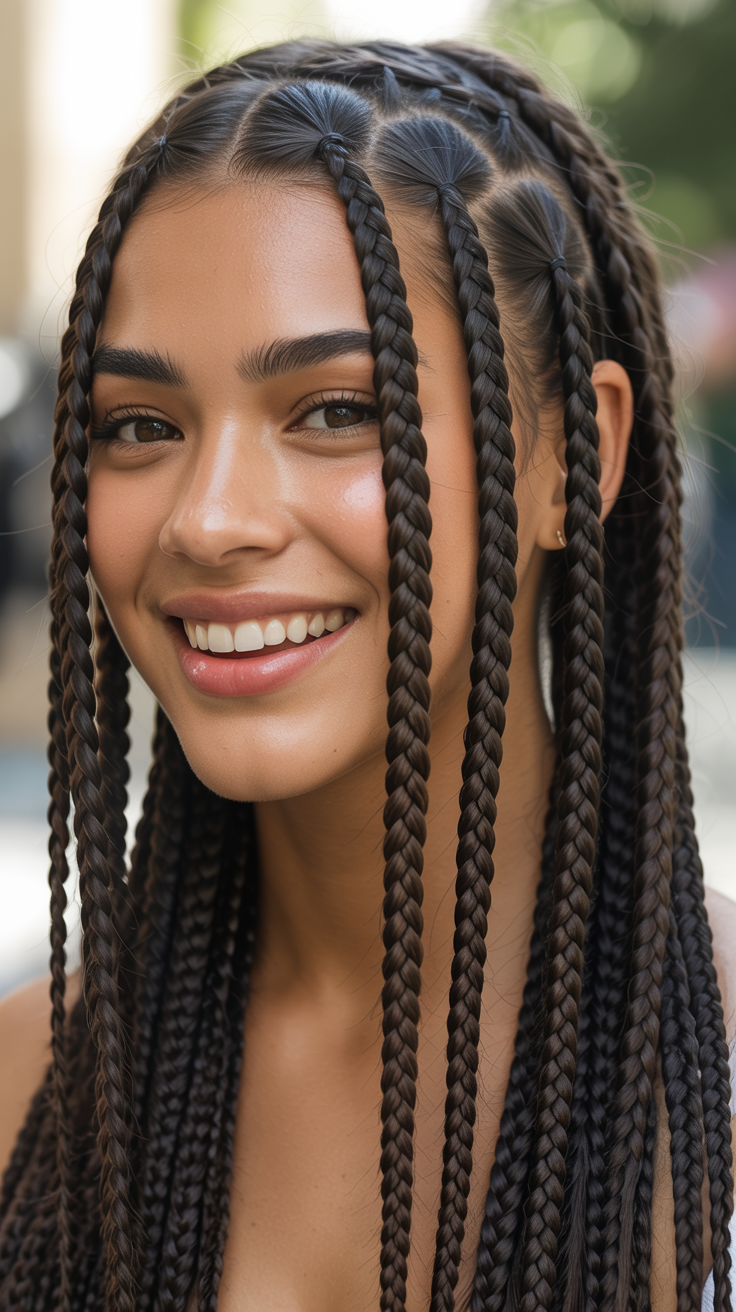
Straight hair offers a sleek canvas for creating stunning braided hairstyles that combine elegance with creativity.
Whether you’re looking for everyday styles or special occasion looks, this guide to 30 Cute Straight Braided Hairstyles Inspiration will transform how you approach your hair routine.
From classic three-strand braids to intricate patterns that turn heads, straight hair provides the perfect texture for crisp, defined braids that hold their shape beautifully throughout the day.
This comprehensive collection showcases versatile options suitable for all ages, skill levels, and occasions, ensuring you’ll find the perfect braided style to express your unique personality.
1. Classic Three-Strand Braid
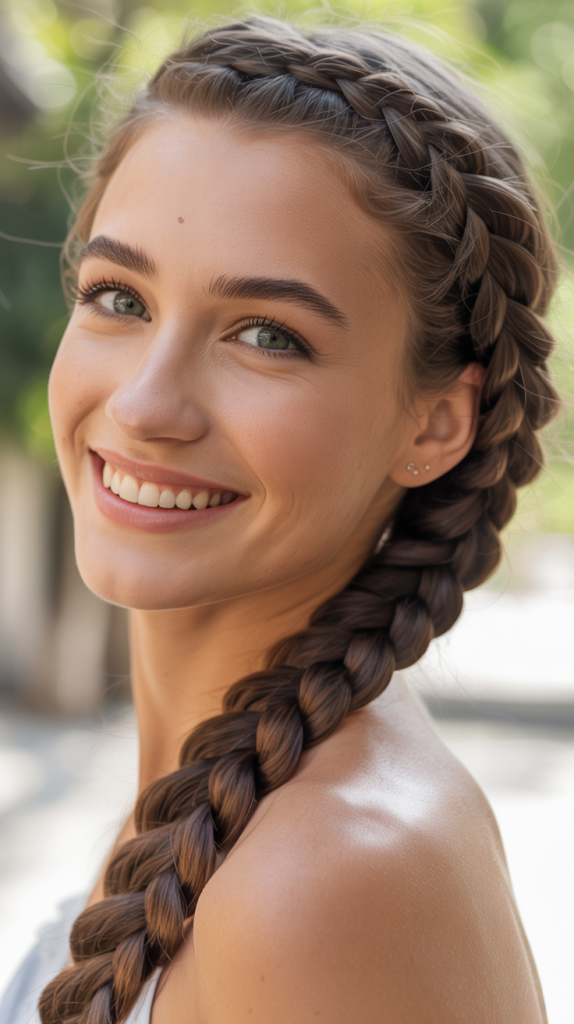
The classic three-strand braid remains timeless for good reason, serving as the foundation for countless hairstyling techniques.
This simple yet elegant style works beautifully on straight hair, creating clean lines and a polished appearance that suits any setting.
- The three-strand braid involves dividing hair into three equal sections and crossing them over each other in an alternating pattern.
- Straight hair allows each strand to remain distinct and visible, showcasing the intricate weaving pattern.
- This style can be worn loose for a casual look or tight for a more formal appearance.
- The braid can start at the crown, nape, or mid-length depending on your preferred aesthetic.
- Adding a ribbon or hair accessory at the base creates an instant style upgrade.
- This technique typically takes only 2-3 minutes to complete once mastered.
2. French Braid Elegance
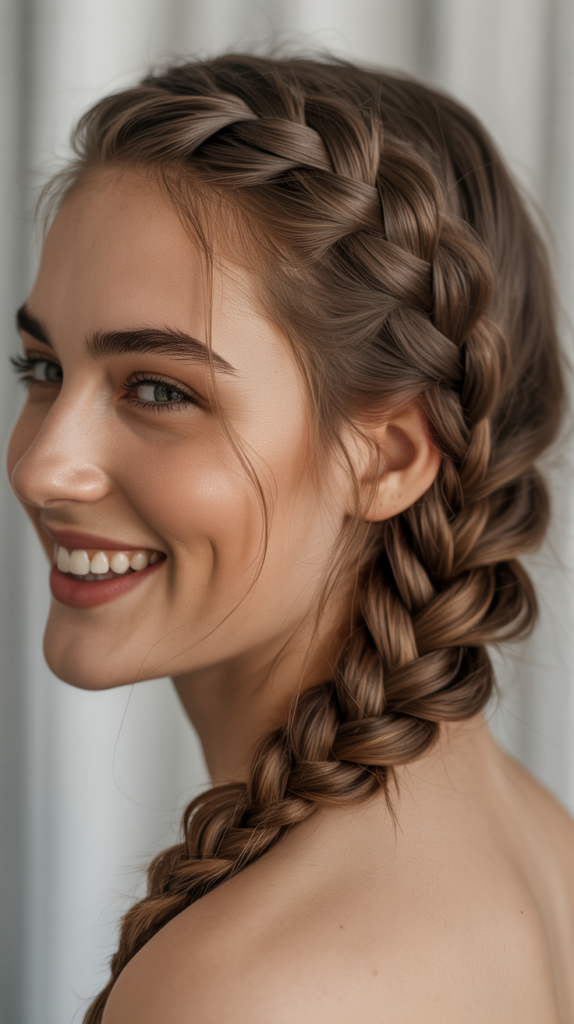
The French braid elevates the basic braid by incorporating hair gradually as you work down the head.
This technique creates a sophisticated look that keeps hair secure while displaying an intricate woven pattern along the scalp.
- French braiding begins at the top of the head by taking a small section and dividing it into three parts.
- As you braid, you continuously add small sections of hair from each side into the outer strands.
- The technique creates a raised, textured appearance that lies flat against the head.
- Straight hair makes the woven pattern particularly visible and defined.
- This style works exceptionally well for active lifestyles as it keeps hair completely secured.
- The French braid can be positioned centrally, diagonally, or even in multiple rows for varied looks.
- Using a texturizing spray before braiding helps maintain grip throughout the day.
3. Dutch Braid Drama
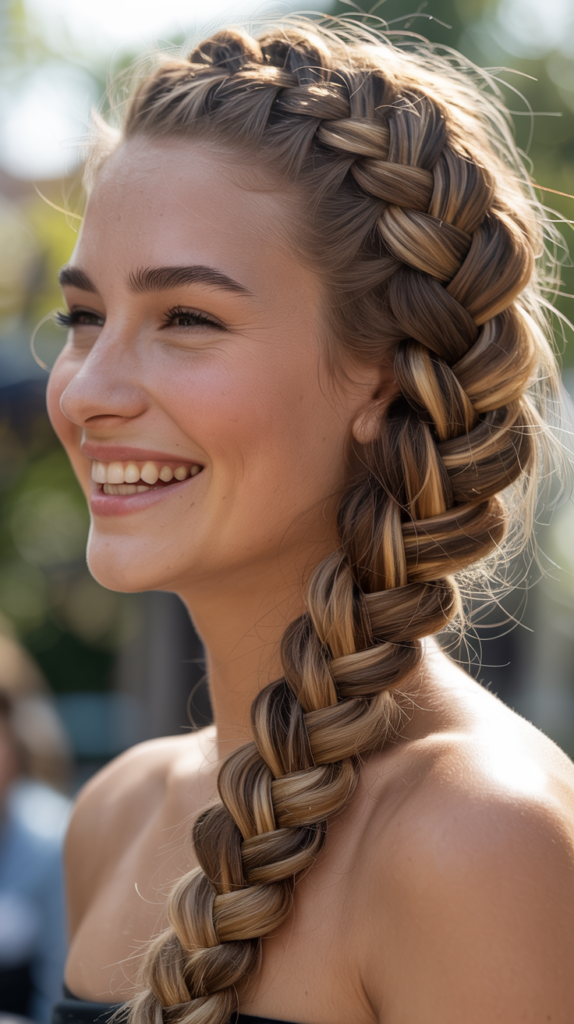
The Dutch braid, often called an inverted or reverse French braid, creates a raised, three-dimensional effect.
This bold style sits on top of the hair rather than blending into it, making a striking visual statement.
- Dutch braiding involves crossing strands under rather than over, creating the signature raised appearance.
- The technique begins similarly to French braiding but with the opposite crossing motion.
- This style adds immediate volume and dimension to straight hair.
- The contrasting texture makes the braid stand out dramatically against sleek straight hair.
- Single Dutch braids create a bold centerpiece, while double Dutch braids offer a sporty aesthetic.
- The raised nature of this braid makes it ideal for showcasing highlights or dimensional color.
- Securing the end with a clear elastic maintains the seamless appearance.
4. Fishtail Braid Finesse
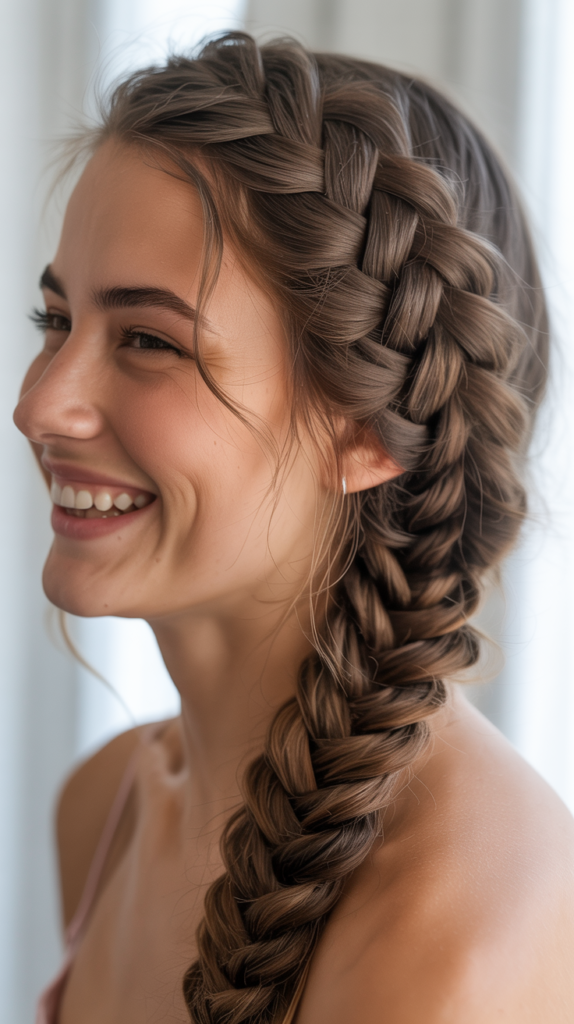
The fishtail braid creates an intricate, woven appearance that resembles fish scales.
Despite its complex look, this style uses only two sections of hair, making it surprisingly accessible for beginners.
- Fishtail braiding divides hair into two main sections instead of three.
- Small pieces from the outer edge of one section cross over to join the opposite section.
- The alternating pattern creates a distinctive herringbone texture.
- Straight hair showcases the detailed weaving pattern with exceptional clarity.
- This braid can be styled tight for definition or gently pulled apart for a softer, wider effect.
- The technique works beautifully for side braids, low ponytails, or full-length styles.
- Adding texture spray before braiding helps prevent slipping in very straight, silky hair.
5. Waterfall Braid Wonder
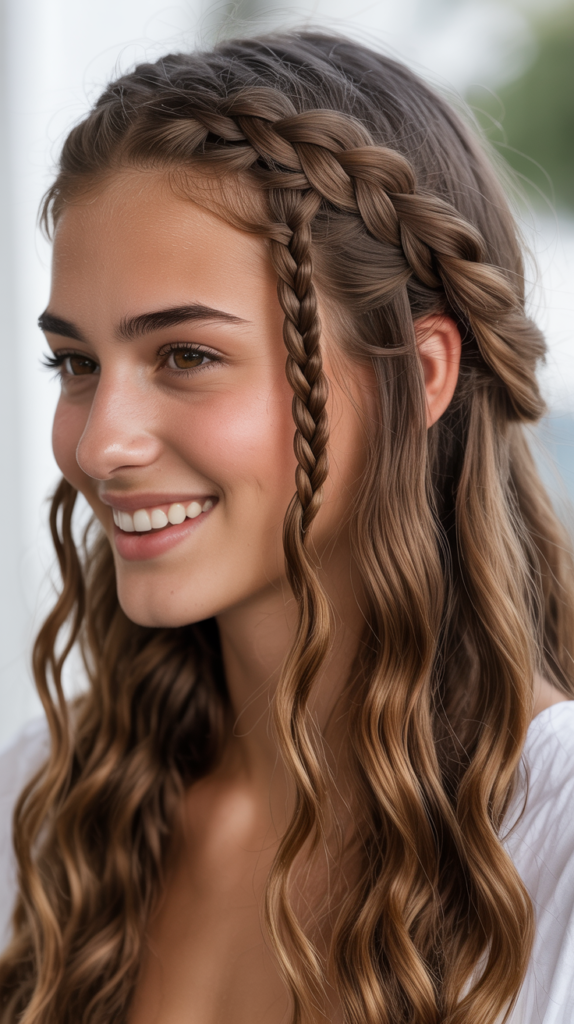
The waterfall braid incorporates a cascading effect where sections of hair flow through the braid like a waterfall. This romantic style combines braiding with loose, flowing hair for a dreamy aesthetic.
- The waterfall technique involves dropping sections of hair as you braid instead of carrying them through.
- New sections are picked up to replace the dropped strands, creating continuity in the braid.
- This style works horizontally across the head, typically from one side to the other.
- The cascading strands frame the face beautifully and add movement to straight hair.
- Straight hair allows the dropped sections to hang sleek and defined.
- This braid pairs exceptionally well with curled ends for added texture contrast.
- The style is perfect for weddings, proms, or romantic occasions.
6. Box Braids Beauty
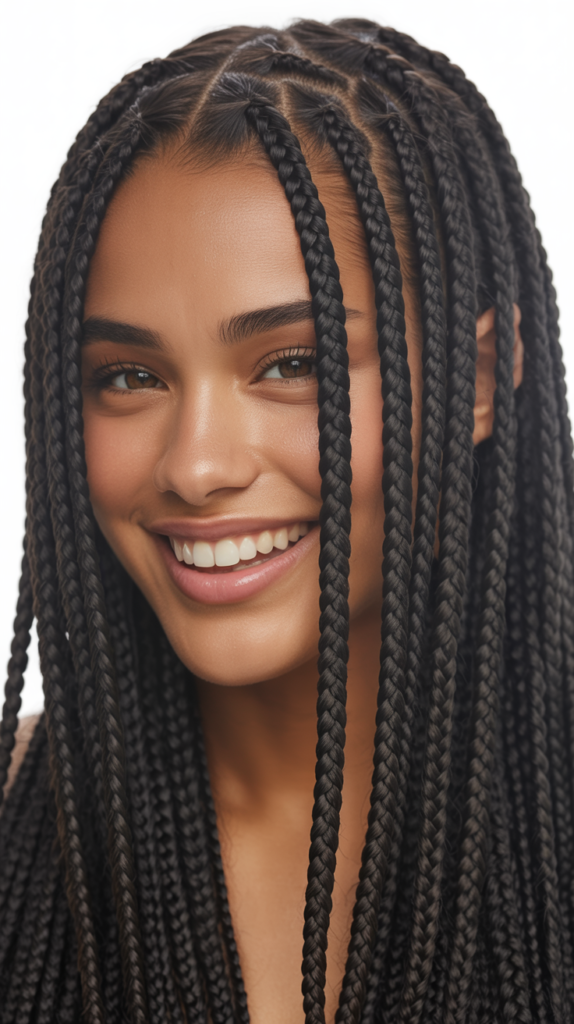
Box braids are individual plaits created by sectioning hair into small squares or boxes.
While traditionally associated with textured hair, this protective style adapts beautifully to straight hair with proper technique.
- Hair is sectioned into uniform square or rectangular parts before braiding.
- Each section is braided individually from root to tip.
- The geometric parting pattern is a signature feature of this style.
- Straight hair creates sleek, defined braids with a polished appearance.
- This style offers versatility in wearing hair down, up, or in various configurations.
- Box braids can be worn at natural length or extended with synthetic hair.
- The style typically lasts several weeks with proper maintenance and care.
7. Crown Braid Royalty
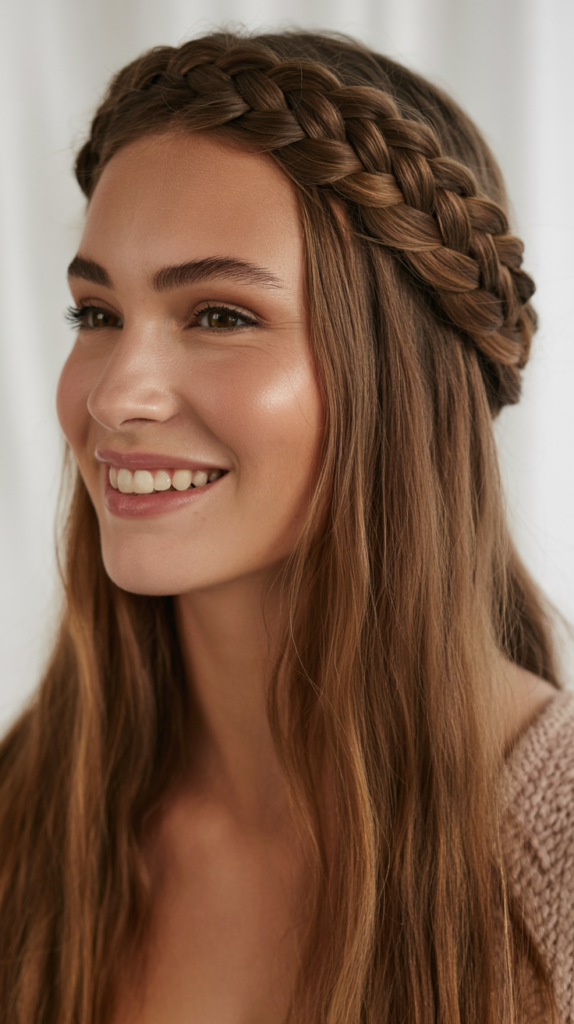
The crown braid encircles the head like a halo, creating a regal and elegant appearance.
This style pulls hair away from the face while maintaining a soft, romantic aesthetic.
- The crown braid can be created using Dutch, French, or standard braiding techniques.
- Hair is braided around the perimeter of the head, starting at one side and wrapping around.
- The braid ends are typically tucked and pinned to create a seamless circular appearance.
- Straight hair allows for smooth, even braiding that maintains its shape throughout the day.
- This style works beautifully for festivals, weddings, or everyday elegance.
- Adding small flowers or decorative pins enhances the romantic quality.
- The technique keeps hair completely off the face and neck, making it ideal for warm weather.
8. Side Braid Sophistication
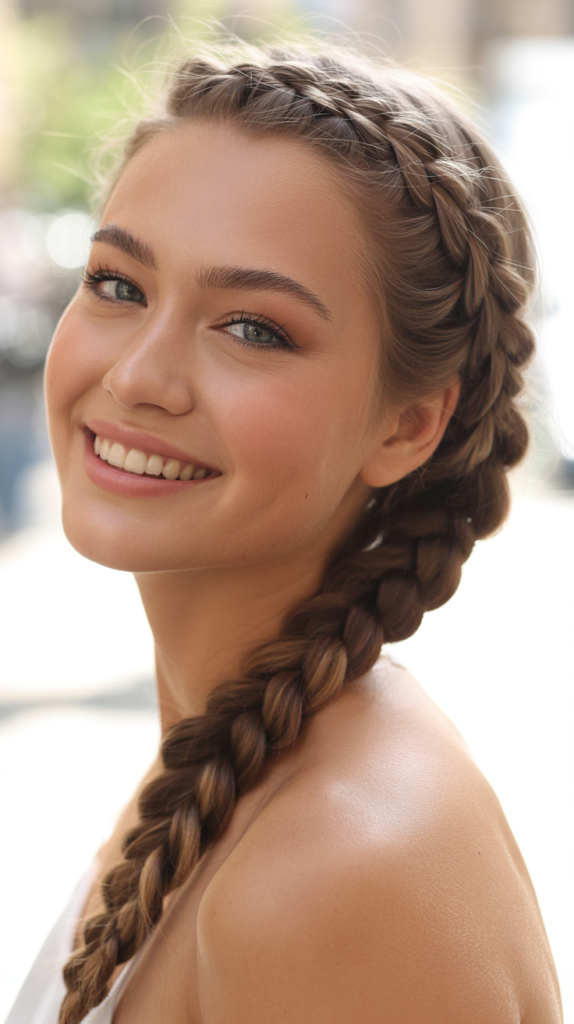
A side braid sweeps all hair to one side before braiding, creating an asymmetrical look that’s both casual and elegant.
This versatile style flatters most face shapes and works for various occasions.
- All hair is gathered to one side of the head before beginning the braiding process.
- The braid can start at ear level or higher depending on the desired effect.
- This style creates an asymmetrical focal point that draws attention.
- Straight hair falls smoothly to one side, creating clean lines.
- The braid can be tight and structured or loose and textured.
- Adding volume at the crown before braiding creates dimension.
- This style works exceptionally well for showcasing statement earrings.
9. Rope Braid Twist
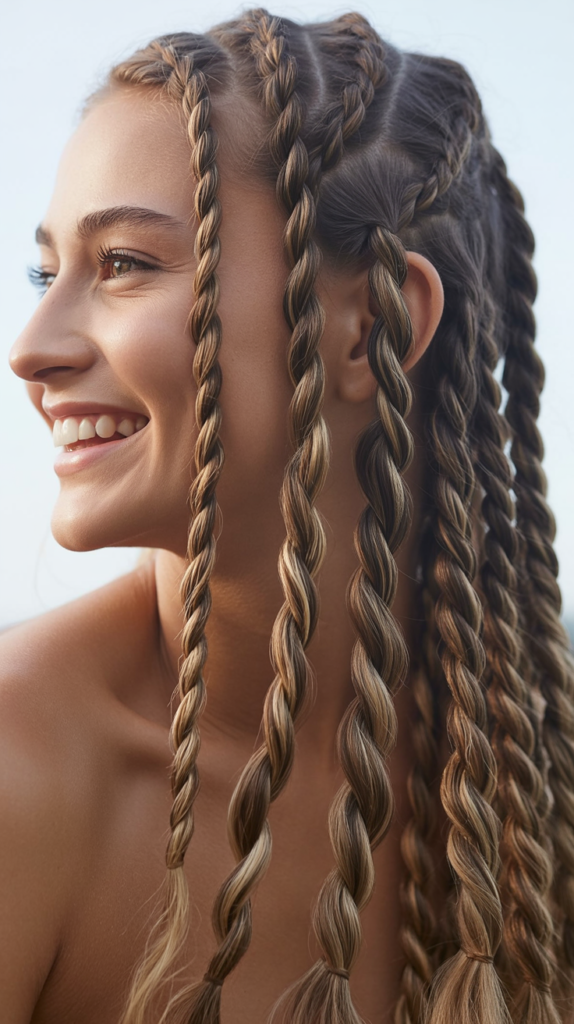
The rope braid uses a twisting technique rather than traditional weaving, creating a spiral effect.
This simple yet striking style offers a fresh alternative to conventional braids.
- Hair is divided into two sections that are twisted individually in the same direction.
- The two twisted sections are then wrapped around each other in the opposite direction.
- The counter-twisting motion creates tension that holds the braid secure.
- Straight hair displays the rope-like texture with excellent definition.
- This technique creates a thicker appearance than traditional three-strand braids.
- The style can be worn as a ponytail, side braid, or full-length down the back.
- Rope braids work particularly well for creating hair accessories or decorative elements.
10. Bubble Braid Fun
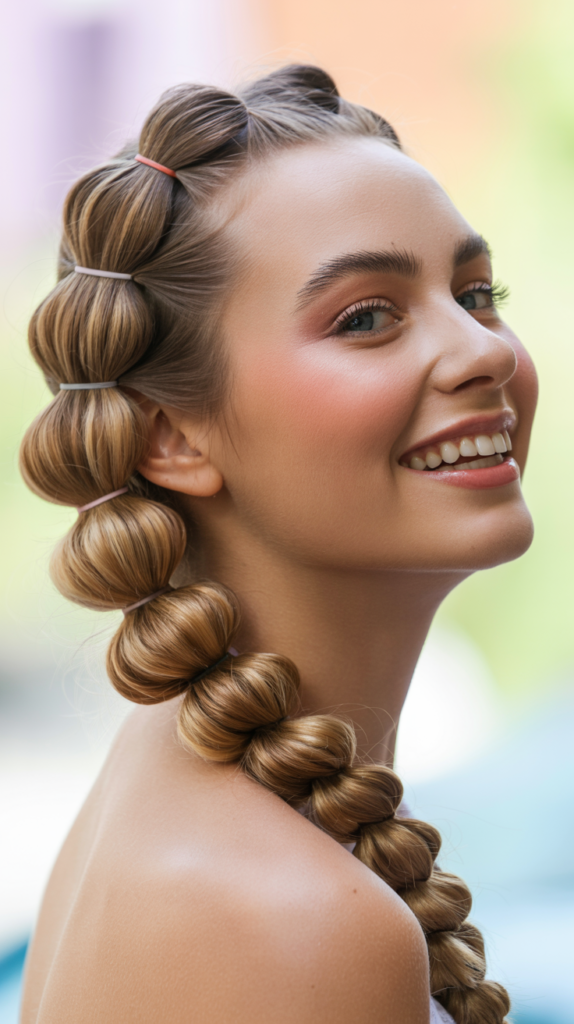
Bubble braids create a playful, dimensional look using elastic bands spaced along a ponytail.
This trendy style adds volume and texture without complex braiding techniques.
- A ponytail serves as the base for this style, secured with an elastic.
- Additional elastics are placed at regular intervals down the length of the ponytail.
- Hair between each elastic is gently pulled outward to create rounded “bubble” sections.
- Straight hair allows the bubbles to maintain distinct, defined shapes.
- Clear elastics create a seamless appearance while colored ones add playful contrast.
- This style adds instant volume to fine or straight hair.
- The technique is quick, easy, and perfect for casual or athletic activities.
11. Milkmaid Braid Charm
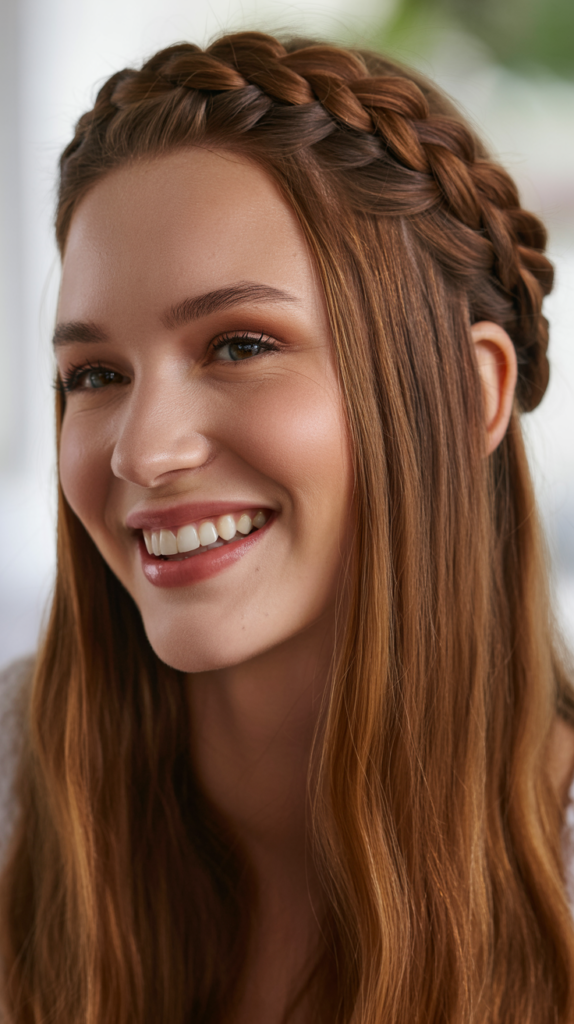
The milkmaid braid wraps around the head like a crown but uses two braids that cross over the top.
This pastoral style evokes vintage charm and romantic simplicity.
- Hair is parted down the middle and braided into two separate plaits.
- Each braid is lifted up and wrapped across the top of the head.
- The braids are secured with bobby pins, creating a crown-like appearance.
- Straight hair creates neat, defined braids that maintain their structure when pinned.
- This style works beautifully for round or oval face shapes.
- The technique completely secures hair while maintaining a soft, feminine look.
- Adding small flowers or decorative pins enhances the rustic charm.
12. Infinity Braid Innovation
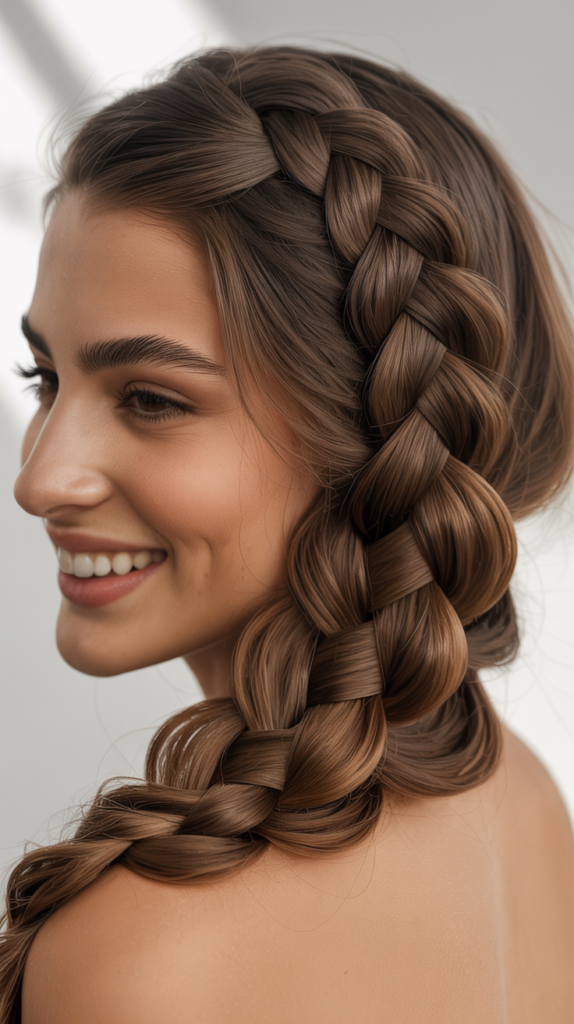
The infinity braid creates a figure-eight pattern that resembles the infinity symbol.
This intricate style combines multiple braiding techniques for a truly unique appearance.
- This advanced technique involves weaving strands in a figure-eight pattern.
- Four sections of hair are typically used instead of the traditional three.
- The crossing pattern creates dimensional loops that overlap beautifully.
- Straight hair showcases the intricate weaving with exceptional clarity.
- This style requires practice but creates stunning results.
- The infinity pattern can be incorporated into various braid styles as an accent.
- The technique works particularly well for special occasions requiring show-stopping hair.
13. Ladder Braid Layers
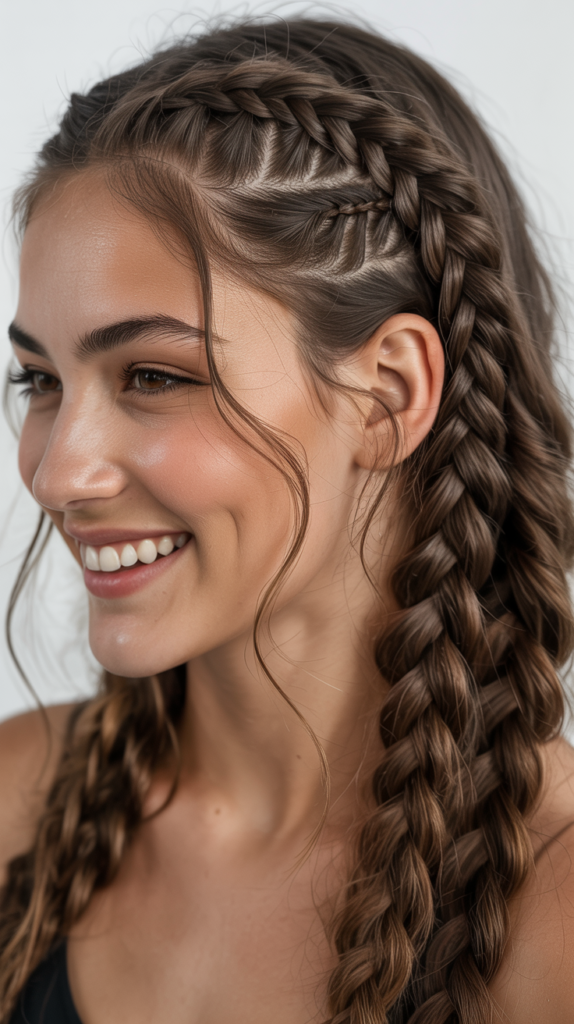
The ladder braid creates a layered effect with horizontal strands connecting vertical braids.
This architectural style adds geometric interest and complexity to straight hair.
- Two vertical braids are created parallel to each other.
- Horizontal strands are woven between the braids to create ladder-like rungs.
- The technique requires careful planning and sectioning.
- Straight hair displays the ladder structure with crisp definition.
- This style creates an eye-catching focal point along one side of the head.
- The geometric pattern appeals to those seeking modern, artistic hairstyles.
- The complexity makes this ideal for special events or creative photoshoots.
14. Pull-Through Braid Volume
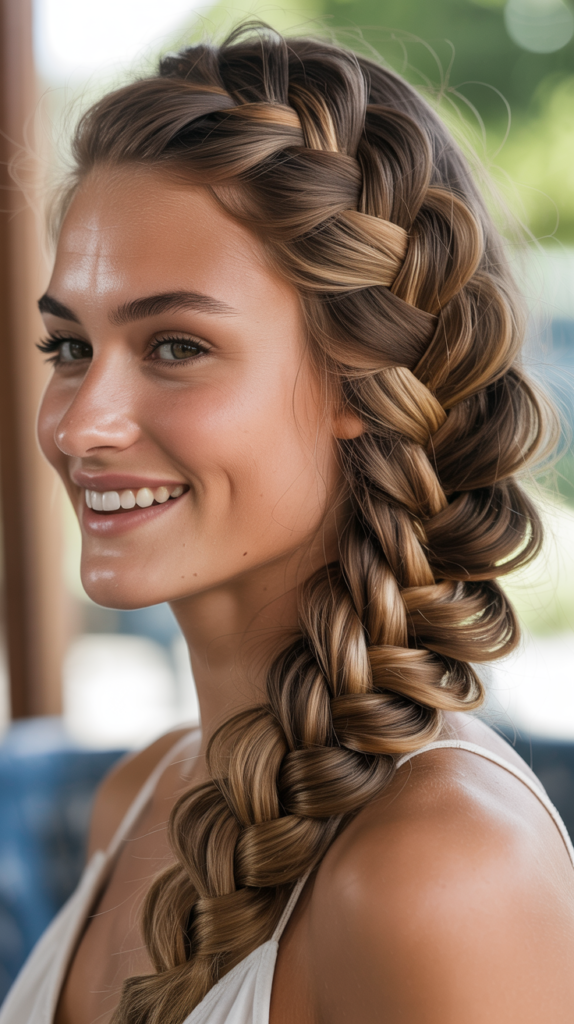
The pull-through braid creates the appearance of a complex braid using ponytails.
This technique adds significant volume and dimension without traditional braiding skills.
- Hair is secured in a series of ponytails stacked vertically.
- Each ponytail is split in half and pulled forward over the next ponytail.
- The sections are then incorporated into the following ponytail.
- This creates a thick, voluminous braid effect without actual braiding.
- Straight hair benefits from the added volume this technique provides.
- The style can be adjusted from sleek to voluminous by varying how much you pull apart sections.
- Clear elastics maintain the illusion of a seamless braid.
15. Four-Strand Braid Complexity
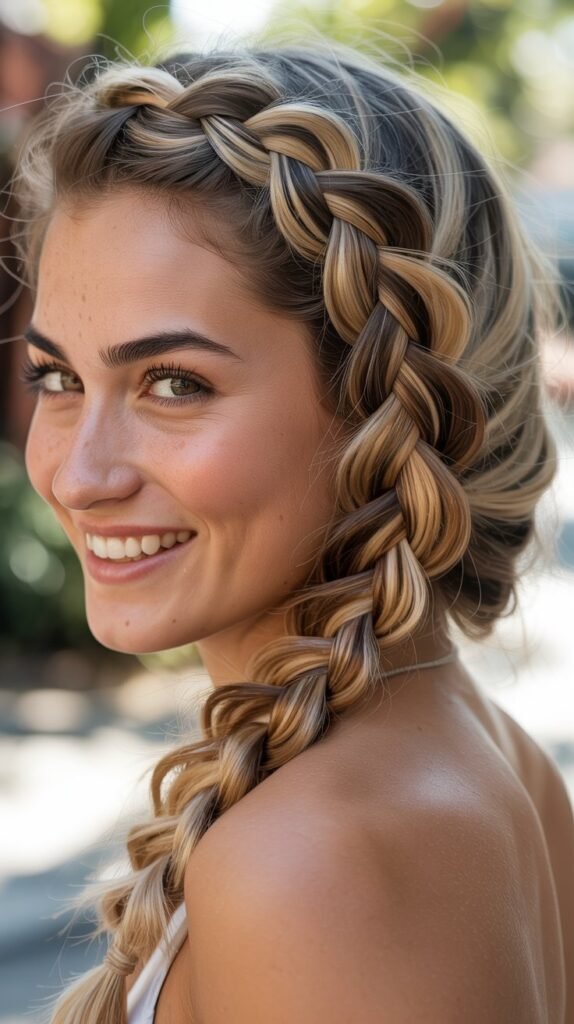
The four-strand braid adds extra dimension and intricacy by incorporating an additional strand.
This technique creates a more complex woven pattern than traditional three-strand braids.
- Hair is divided into four equal sections instead of three.
- The weaving pattern involves crossing outer strands over and under inner strands.
- Multiple crossing patterns exist, each creating slightly different textures.
- Straight hair allows each of the four strands to remain distinct and visible.
- This braid appears thicker and more substantial than three-strand versions.
- The technique requires concentration initially but becomes natural with practice.
- Adding a ribbon as one of the four strands creates beautiful color integration.
16. Snake Braid Sleekness
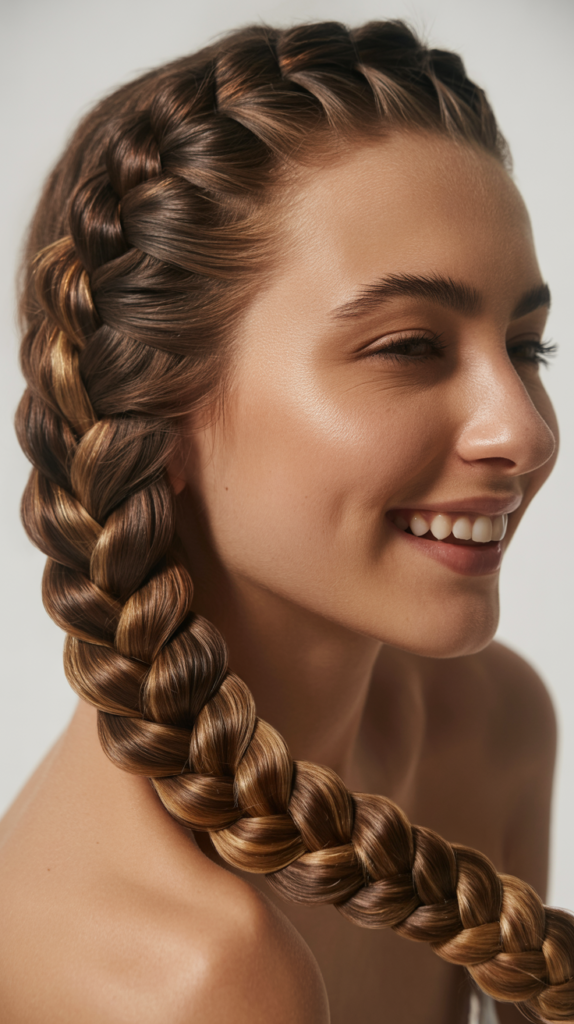
The snake braid creates a curved, serpentine pattern along the scalp.
This creative style combines cornrowing techniques with curved partings for a distinctive look.
- Hair is sectioned in a curved, wave-like pattern across the scalp.
- Each section is braided using cornrow technique, following the curved parting.
- The result resembles a snake or river winding across the head.
- Straight hair allows for precise parting and clean braid definition.
- This style showcases creativity and can be customized with various curve patterns.
- Multiple snake braids can be created for a more complex design.
- The technique keeps hair flat to the scalp, ideal for active lifestyles.
17. Accent Braid Subtlety
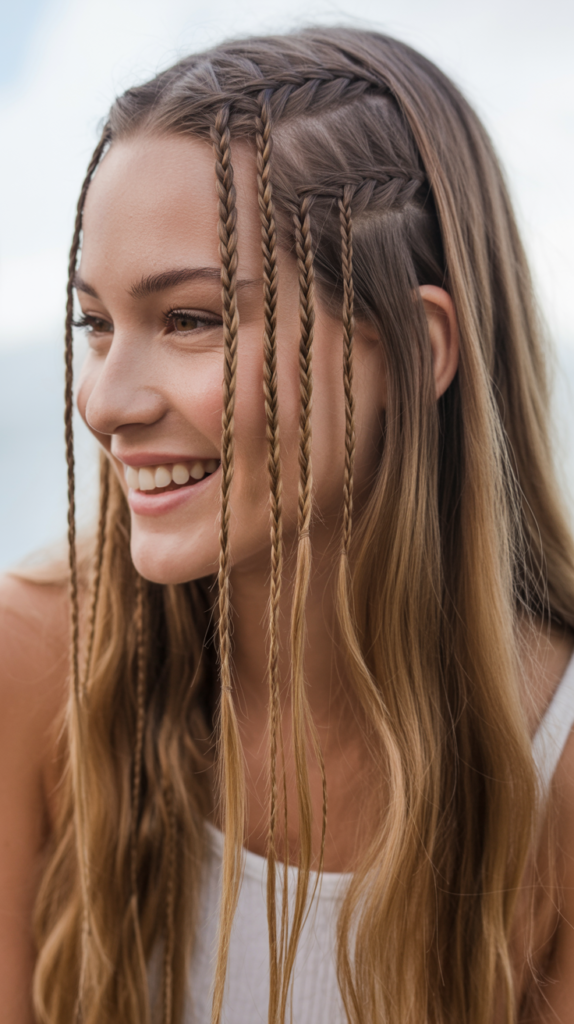
Accent braids are small, thin braids incorporated into otherwise loose hair.
These delicate details add texture and interest without fully braiding all the hair.
- Small sections of hair are selected strategically for braiding.
- The braids are typically thin, ranging from pencil to finger thickness.
- Surrounding hair remains loose, creating contrast between braided and unbraided sections.
- Straight hair allows accent braids to stand out against the smooth backdrop.
- These braids can be placed randomly or in intentional patterns.
- The style adds bohemian flair without the commitment of full braiding.
- Accent braids can remain in place for several days, adding lasting style.
18. Braided Ponytail Power
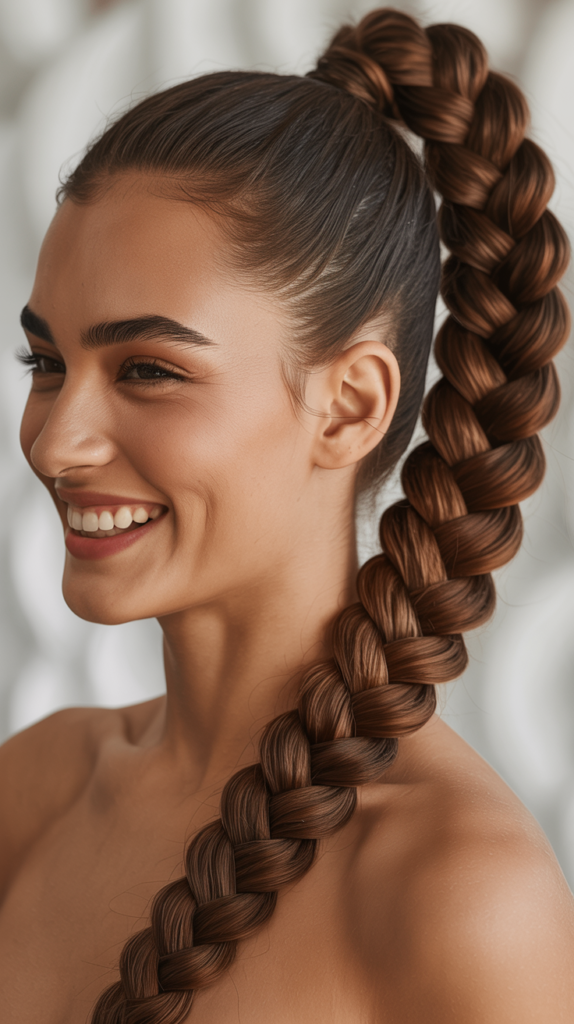
A braided ponytail combines the convenience of a ponytail with the elegance of braiding.
This versatile style works for athletic activities, professional settings, and casual outings.
- Hair is first secured into a ponytail at the desired height.
- The ponytail length is then braided using any preferred technique.
- This style keeps hair secure while adding visual interest.
- Straight hair creates a sleek ponytail base with a defined braid.
- The ponytail position can be varied from low to high for different effects.
- Adding texture to the ponytail before braiding increases grip and fullness.
- This style transitions seamlessly from gym to office to evening events.
19. Zigzag Braid Edge
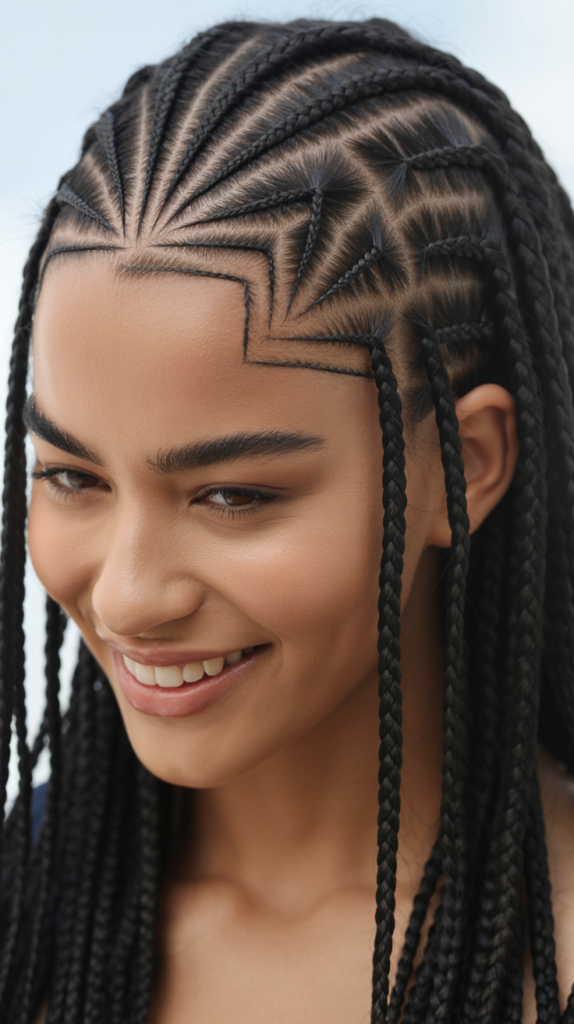
The zigzag braid features a creative parting pattern that adds geometric interest.
This style combines precise sectioning with traditional braiding for an artistic result.
- Hair is parted in a zigzag pattern rather than straight lines.
- Each section created by the zigzag is then braided separately.
- The contrasting parting pattern creates visual drama.
- Straight hair allows for crisp, clean parting lines.
- The style works particularly well with contrasting hair colors or highlights.
- This technique appeals to those seeking modern, edgy aesthetics.
- The geometric precision makes this ideal for fashion-forward occasions.
20. Twisted Crown Half-Up
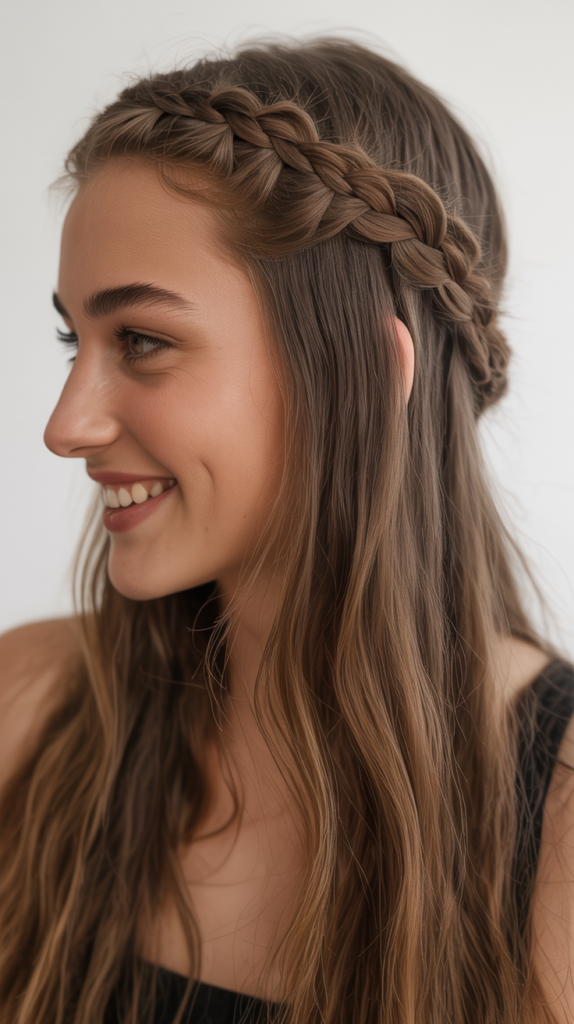
This style combines twisting and braiding techniques to create a crown effect while leaving the bottom half of hair loose.
It balances secured and flowing elements beautifully.
- The top section of hair is separated from the bottom.
- Hair from the temples is twisted or braided back toward the crown.
- The sections meet at the back and are secured together.
- Bottom hair remains loose and flowing.
- Straight hair creates contrast between the textured crown and sleek flowing hair.
- This style works excellently for weddings, proms, or romantic dates.
- Adding curls to the loose section enhances the dimensional effect.
21. Braided Headband Style
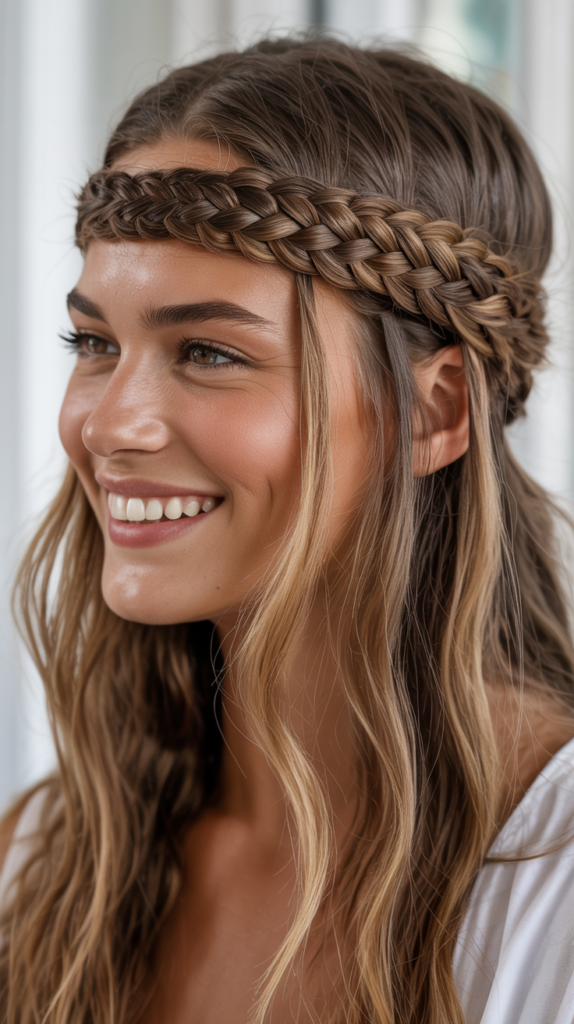
A braided headband uses a section of hair braided across the front to create a natural headband effect.
This practical style keeps hair off the face while adding decorative detail.
- A section of hair is taken from one side above the ear.
- This section is braided across the forehead to the opposite side.
- The braid is secured behind the ear with bobby pins.
- Remaining hair flows naturally behind the “headband.”
- Straight hair allows the braided headband to stand out distinctly.
- This style effectively manages bangs or face-framing layers.
- The technique provides a boho-chic aesthetic perfect for casual settings.
22. Diagonal Braid Direction
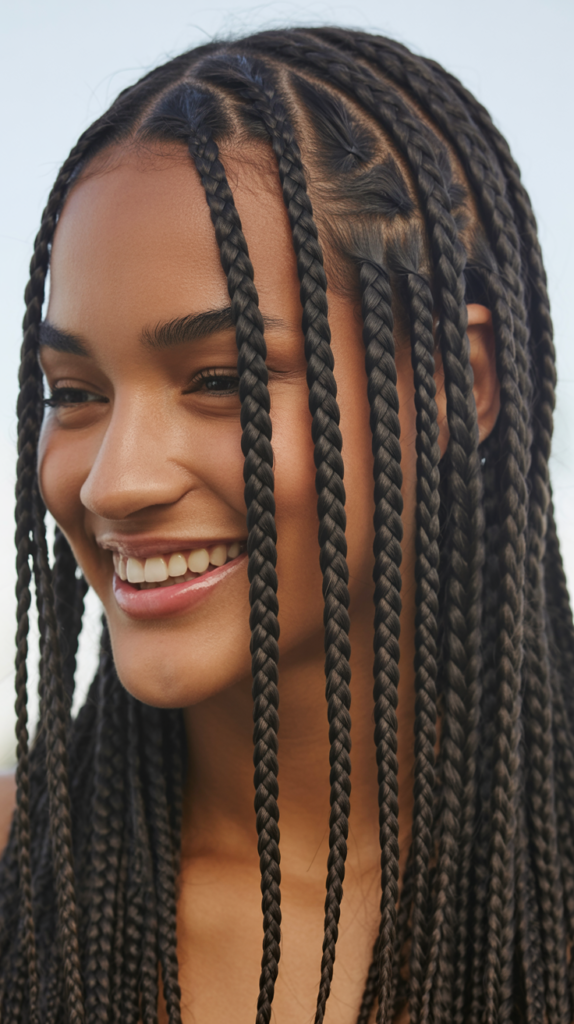
Diagonal braids travel across the head at an angle rather than straight down. This directional change creates dynamic visual interest and flattering angles.
- The braid starts at one side of the head and angles toward the opposite shoulder.
- French or Dutch braiding techniques work particularly well for this style.
- The diagonal angle creates a slimming, elongating effect.
- Straight hair showcases the directional flow clearly.
- This style adds asymmetry that draws the eye across the face.
- Multiple diagonal braids can be created for a more complex pattern.
- The technique works beautifully for adding movement to otherwise static straight hair.
23. Micro Braids Precision
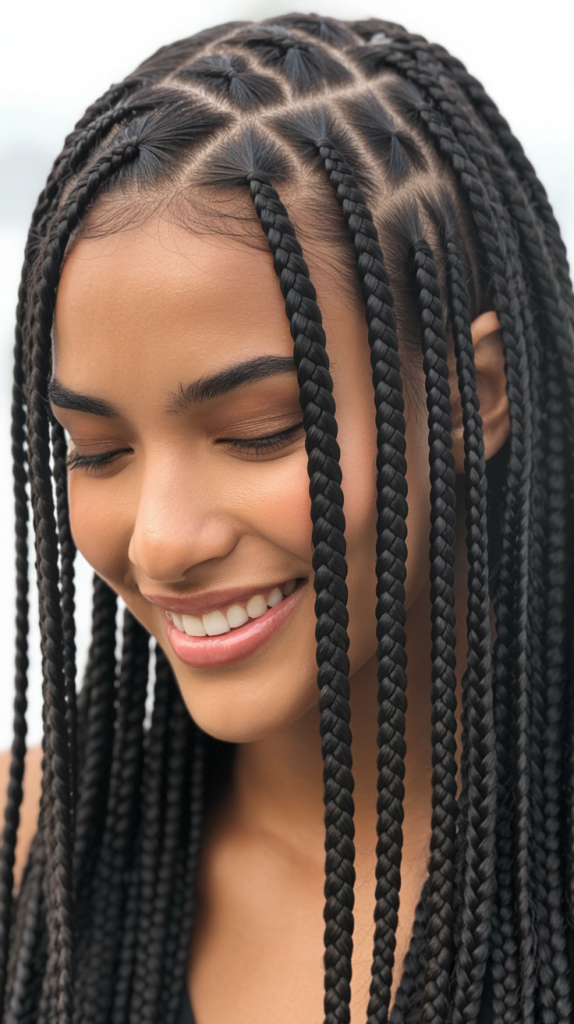
Micro braids are very thin, numerous braids that create texture throughout the hair. While time-intensive, they offer long-lasting style and incredible versatility.
- Hair is divided into very small sections, typically pencil-sized or smaller.
- Each tiny section is braided individually from root to tip.
- The result is hundreds of delicate braids creating overall texture.
- Straight hair allows micro braids to hang sleek and defined.
- This style can last several weeks with proper care.
- Micro braids can be worn loose, in ponytails, buns, or countless other configurations.
- The technique requires significant time investment but offers maximum styling versatility.
24. Wrapped Braid Detail
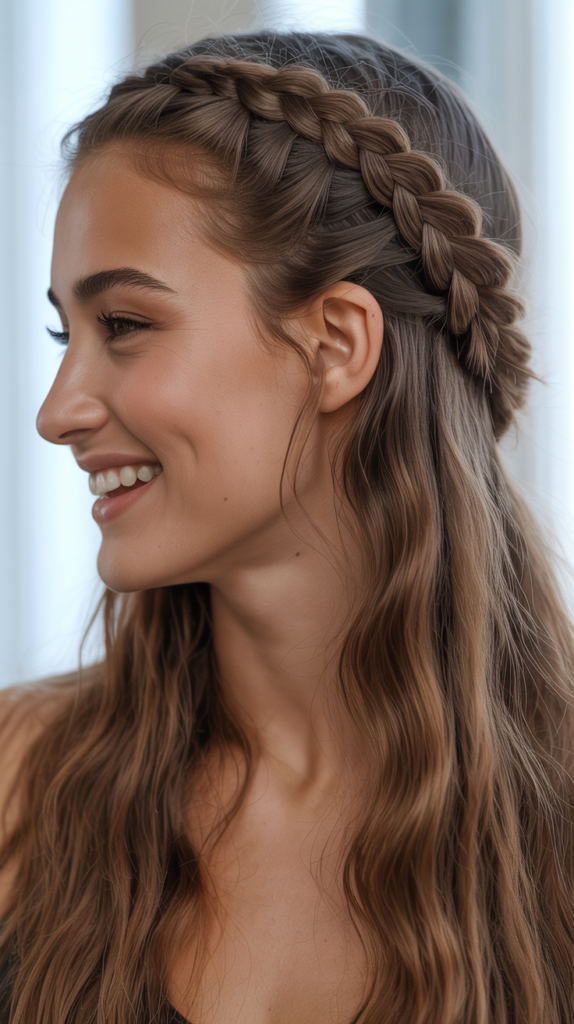
Wrapped braids incorporate thread, ribbon, or hair extensions wound around sections of the braid. This decorative technique adds color, texture, and visual interest.
- A base braid is created using any preferred technique.
- Embroidery thread, ribbon, or colored extensions are wrapped tightly around sections.
- The wrapping can be continuous or placed at intervals.
- Straight hair provides a smooth base for wrapping materials.
- This technique allows for customizable color without dyeing hair.
- Multiple colors can be incorporated for a vibrant, festival-ready look.
- The wrapped sections add textural contrast and dimensional interest.
25. Braided Bun Elegance
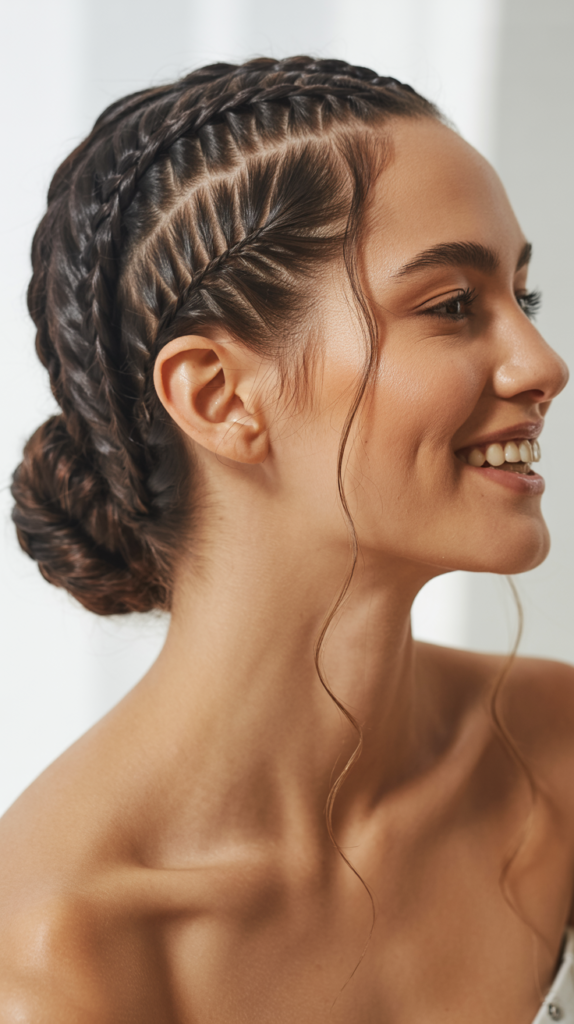
A braided bun combines braiding techniques with updo styling. This sophisticated style works beautifully for formal events, professional settings, or elegant everyday wear.
- Hair can be braided first and then wrapped into a bun, or gathered and then braided within the bun.
- The braid adds texture and visual interest to the otherwise simple bun.
- Straight hair creates clean lines and defined braid patterns.
- The style secures hair completely while maintaining elegance.
- Positioning can vary from low nape buns to high crown buns.
- Adding decorative pins or accessories elevates the formal appearance.
- This technique works particularly well for wedding guests, proms, or business events.
26. Feather Braid Softness
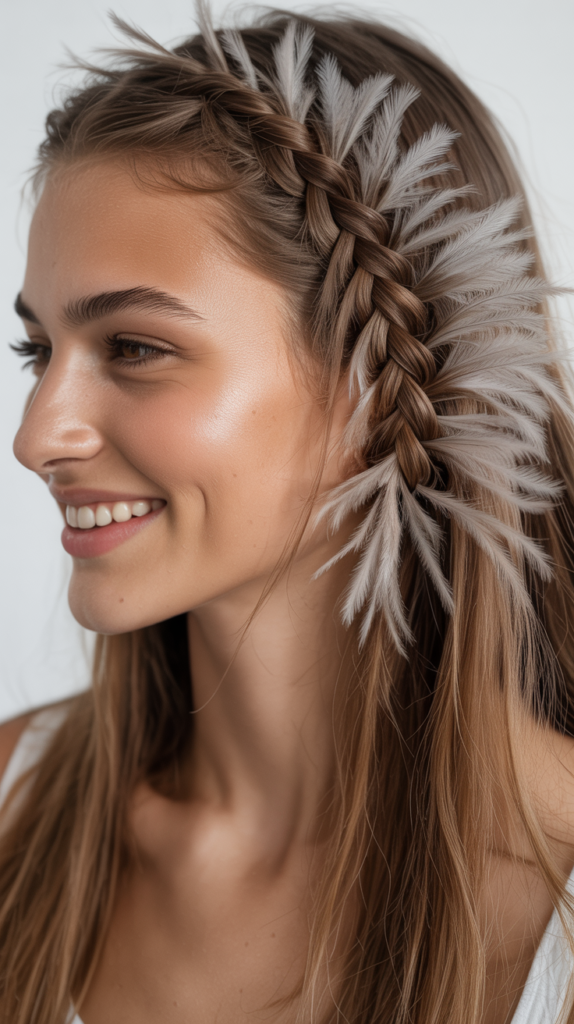
The feather braid creates a delicate, wispy effect by incorporating very thin sections. This romantic style evokes softness and ethereal beauty.
- Small, thin sections of hair are braided using a loose tension.
- Additional wisps are intentionally left out to create the feathery effect.
- The braid appears soft and slightly undone rather than tight and precise.
- Straight hair allows the fine sections to remain visible and delicate.
- This style works beautifully for romantic occasions or bohemian aesthetics.
- The technique can be applied to any braid type for a softer appearance.
- Finishing with light hairspray maintains the wispy texture without stiffness.
27. Stacked Braid Layers
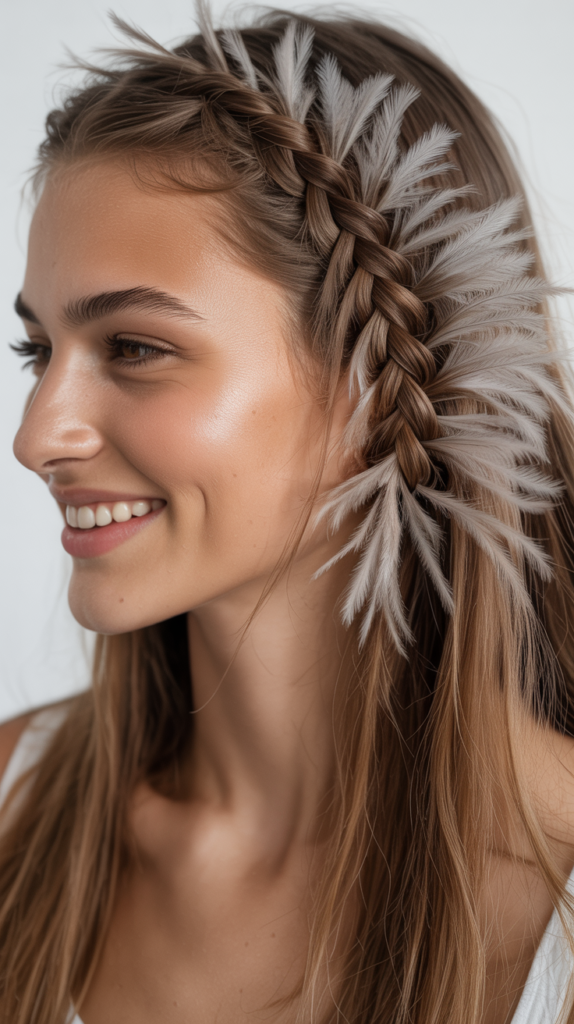
Stacked braids involve creating multiple braids at different levels that layer over each other. This dimensional technique adds depth and complexity to the hairstyle.
- Several braids are created at different sections of the head.
- The braids are positioned so they overlap or stack vertically.
- This creates a layered, three-dimensional appearance.
- Straight hair allows each braid layer to remain distinct and visible.
- The technique works particularly well for thick hair that benefits from sectioning.
- Different braid types can be mixed within the stacked design.
- This style showcases advanced braiding skills and creativity.
28. Heart-Shaped Braid Romance
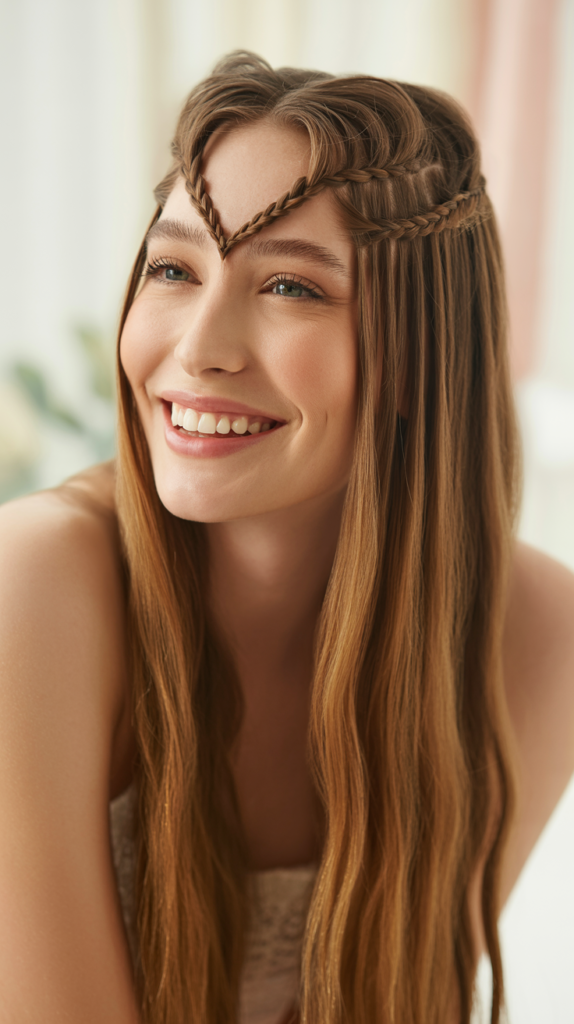
Heart-shaped braids create a romantic heart design using braiding and pinning techniques. This creative style is perfect for Valentine’s Day or expressing personal style.
- Two braids are created and shaped to form the outline of a heart.
- Careful pinning is required to maintain the heart shape.
- The design typically appears at the back of the head as a focal point.
- Straight hair allows for precise shaping and clean heart definition.
- This style works beautifully for romantic occasions or themed events.
- Additional decorations like small flowers or pins enhance the romantic effect.
- The technique requires patience but creates a truly memorable look.
29. Viking-Inspired Braids
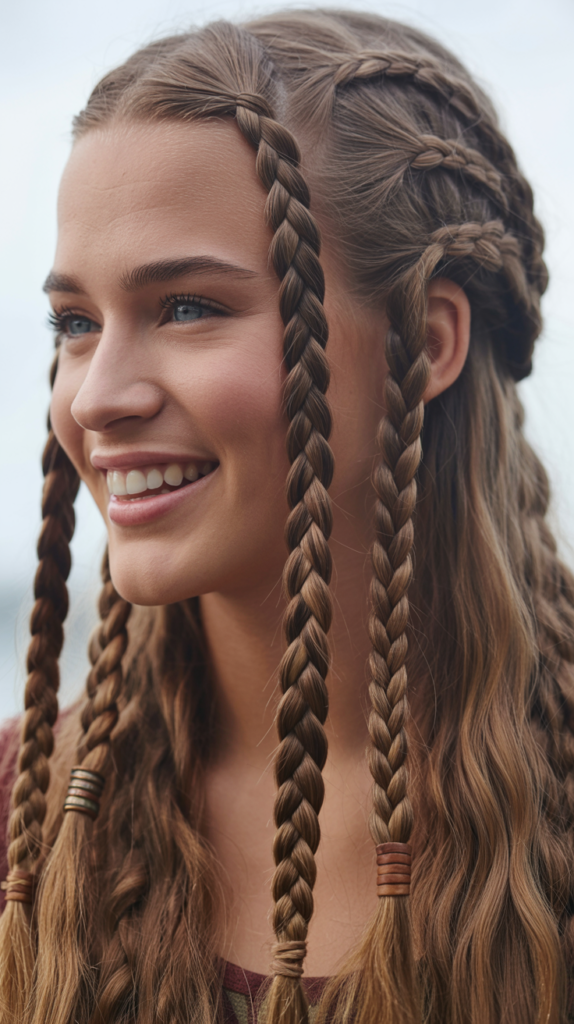
Viking-inspired braids incorporate multiple braiding techniques, often featuring mohawk-style central braids with shaved or pulled-back sides.
This bold style channels historical warrior aesthetics.
- The style typically features prominent braids down the center of the head.
- Sides may incorporate smaller braids, twists, or be styled smoothly back.
- Multiple braiding techniques are often combined in one style.
- Straight hair creates crisp, defined warrior-inspired braids.
- This aesthetic appeals to those seeking bold, statement hairstyles.
- The style works particularly well for festivals, concerts, or creative events.
- Additional elements like beads or metal rings enhance the Viking inspiration.
30. Asymmetrical Braid Innovation
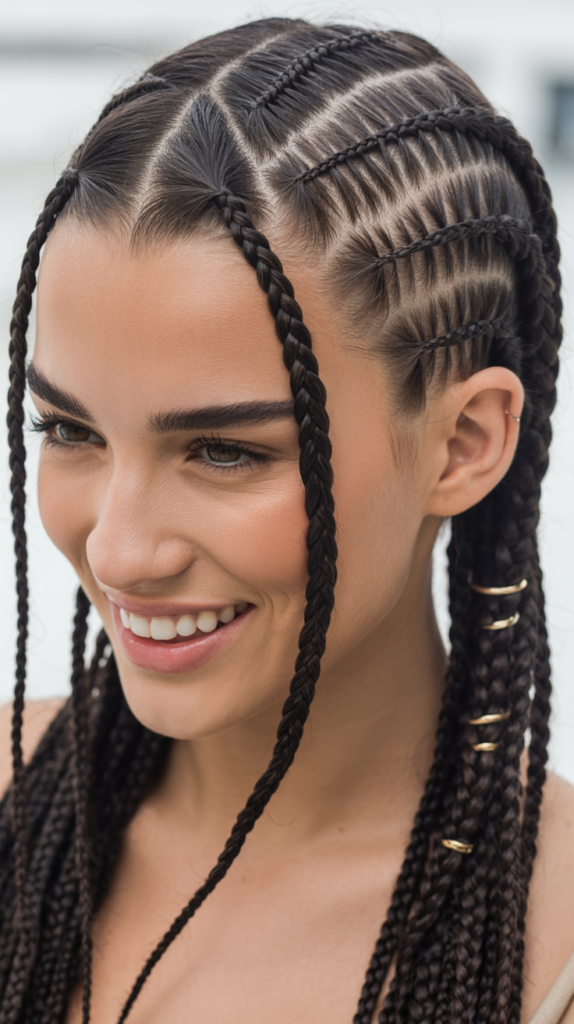
Asymmetrical braids intentionally create unbalanced designs for modern, artistic effect. This contemporary approach challenges traditional symmetry for fashion-forward results.
- Braids are positioned intentionally off-center or at varying angles.
- Different braid sizes or techniques may be mixed asymmetrically.
- The unbalanced design creates visual interest and contemporary edge.
- Straight hair allows the asymmetrical design to be clearly visible.
- This style appeals to fashion-conscious individuals seeking unique looks.
- The technique encourages creativity and personal interpretation.
- Asymmetrical designs work particularly well for editorial photoshoots or fashion events.
Conclusion
The versatility showcased in these 30 Cute Straight Braided Hairstyles Inspiration proves that straight hair provides an exceptional foundation for creative braiding.
From simple three-strand classics to intricate artistic designs, each style offers unique opportunities for self-expression and practical hair management.
Straight hair’s natural texture allows braids to maintain crisp definition and showcase intricate patterns with clarity.
Whether you’re preparing for a special occasion, seeking everyday convenience, or simply exploring new ways to style your hair, these braided options provide endless possibilities.
The techniques range from beginner-friendly to advanced, ensuring that everyone can find styles matching their skill level and personal aesthetic.
Embrace the art of braiding and discover how these timeless techniques can transform your straight hair into stunning, head-turning styles that reflect your individuality and creativity.