Finding the perfect hairstyle for boys with straight hair has never been more exciting than it is today.
Short straight hairstyles offer a world of versatility, combining effortless maintenance with sharp, modern aesthetics that suit boys of all ages—from toddlers taking their first steps to teenagers developing their personal style.
Whether you’re a parent seeking a practical yet stylish cut for your child or a young man looking to refresh your look, straight hair provides the ideal canvas for creating clean, polished styles that stand out in any setting.
The beauty of 30 Modern Short Straight Hairstyles for Boys lies in their adaptability—these cuts work equally well for school days, sports activities, formal occasions, and casual hangouts.
From timeless classics that have been refined over generations to cutting-edge contemporary styles that reflect today’s fashion-forward trends, this comprehensive guide explores the most sought-after short hairstyles specifically designed for straight hair textures.
Each style in this collection has been chosen for its ability to enhance facial features, suit different hair densities, and most importantly, make styling a breeze for busy mornings.
Get ready to discover haircuts that range from ultra-low maintenance buzz cuts to textured crops that add dimension and character, all carefully curated to help you find the perfect match that complements individual personality, lifestyle, and hair characteristics.
1. Classic Crew Cut
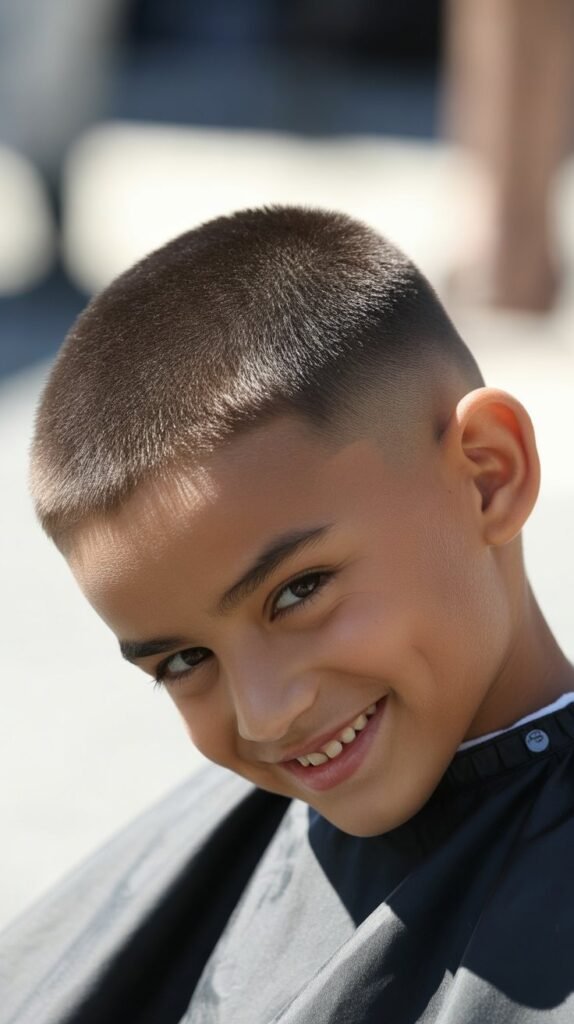
The crew cut stands as one of the most enduring and universally flattering hairstyles for boys with straight hair. This military-inspired cut delivers a clean, masculine appearance that parents love and boys find comfortable to wear.
- The crew cut features hair that gradually tapers from approximately 1-2 inches on top to shorter lengths on the sides and back.
- This style works exceptionally well for active boys who participate in sports, as it keeps hair completely off the face and neck.
- Maintenance requires minimal effort—simply wash and go, with optional styling product for a slightly polished finish.
- The cut suits virtually all face shapes, from round to oval to square, making it a safe choice for first-time haircuts.
- Barbers typically use clippers with various guard sizes to create the signature tapered effect that defines this classic style.
- Parents appreciate how the crew cut extends time between haircuts, typically lasting 4-6 weeks before needing a trim.
2. Textured Crop
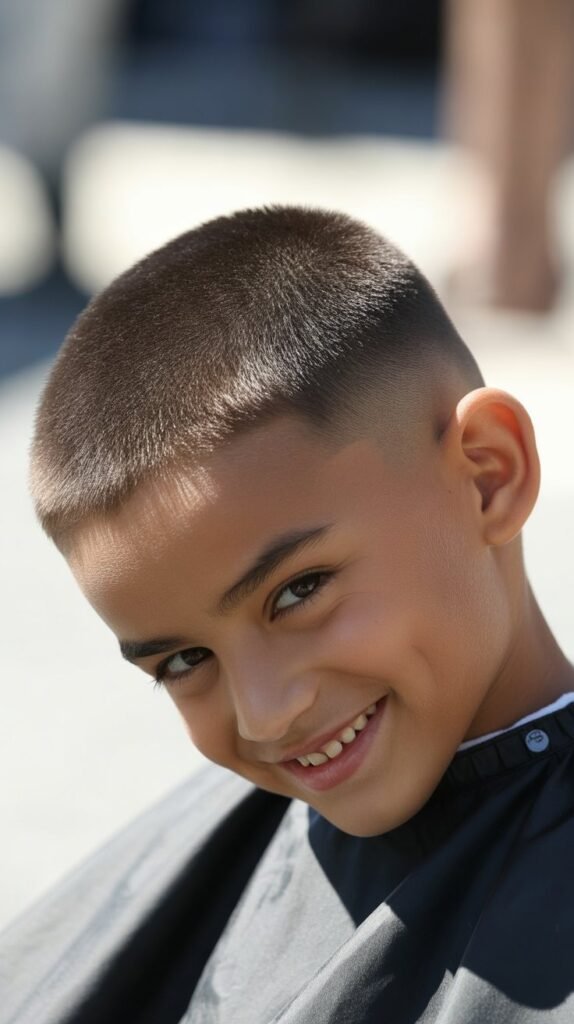
The textured crop brings a contemporary edge to short straight hairstyles, offering dimension and movement that elevates a simple cut into something special.
This style has become increasingly popular among fashion-conscious boys and teenagers.
- Stylists create this look by cutting the top hair into varied lengths, producing a deliberately uneven, choppy texture.
- The contrast between the textured top and the cleanly faded or tapered sides creates visual interest and modern appeal.
- Styling involves applying a small amount of matte clay or texturizing paste, then tousling the hair forward and upward.
- This cut works beautifully on boys with thicker straight hair, as the density allows the texture to truly shine.
- The textured crop offers versatility—wear it messy for casual days or style it more deliberately for formal occasions.
- Regular trims every 3-4 weeks help maintain the shape and prevent the style from growing out awkwardly.
3. Side Part Hairstyle
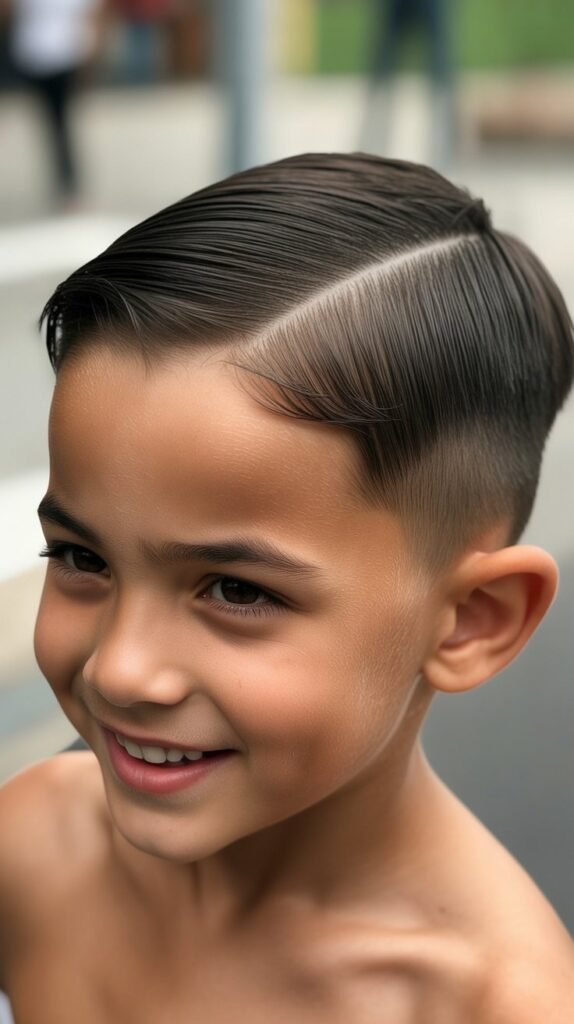
The side part represents timeless sophistication, bringing a polished, gentlemanly quality to boys’ hairstyles that works from elementary school through teenage years.
This classic style has experienced a major resurgence in recent years.
- Creating a side part involves sectioning the hair along a natural growth pattern, typically about an inch from the center of the head.
- The hair on top should be kept at 2-3 inches in length to allow for proper styling and hold throughout the day.
- A quality pomade or styling cream helps achieve the sleek, controlled look that characterizes this hairstyle.
- This style particularly complements boys with oval or rectangular face shapes, adding balance and structure.
- The side part works exceptionally well for formal events, school photos, and occasions requiring a more dressed-up appearance.
- Teaching boys to style their own side part builds grooming skills and encourages independence in personal care routines.
4. Buzz Cut
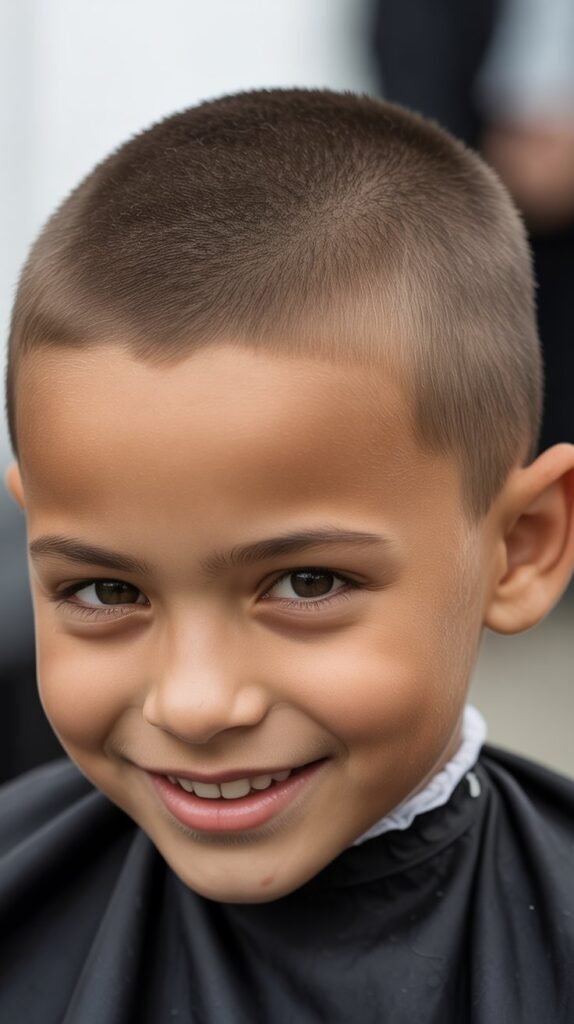
The buzz cut epitomizes simplicity and practicality, offering an ultra-low maintenance solution that keeps boys comfortable in all weather conditions.
This no-fuss style has remained consistently popular across generations.
- Achieved using electric clippers with a single guard size, typically ranging from #1 to #4 depending on desired length.
- This style proves ideal for summer months, preventing overheating and eliminating the need for any styling products.
- The buzz cut works particularly well for boys with thick, coarse straight hair that might otherwise be difficult to manage.
- Cost-effective maintenance makes this style appealing to budget-conscious families, as home clippers can maintain the look.
- Athletes especially favor buzz cuts for their complete absence of interference during sports and physical activities.
- The cut requires refreshing every 2-3 weeks to maintain its crisp, uniform appearance.
5. French Crop
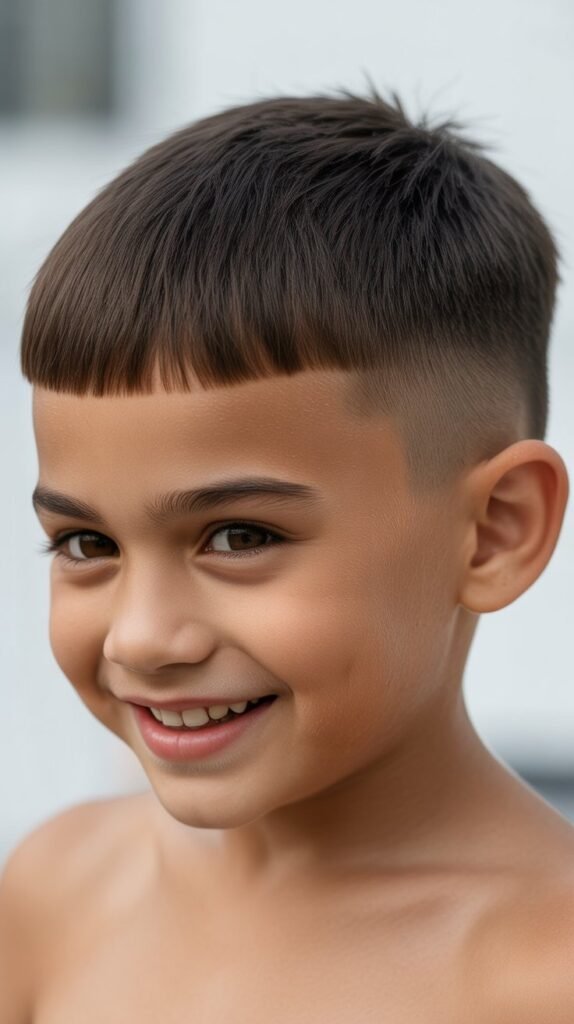
The French crop brings European flair to boys’ hairstyles, featuring a distinctive short fringe that creates a modern, edgy aesthetic. This style has gained tremendous popularity in contemporary barbershops worldwide.
- The defining characteristic is the horizontally cut fringe that sits just above the eyebrows, creating a strong horizontal line.
- Sides are typically faded or tapered short, creating dramatic contrast with the longer top section.
- This haircut works exceptionally well on straight hair, as the natural texture holds the fringe in its intended position.
- Styling requires minimal effort—usually just a small amount of matte paste worked through the top and fringe.
- The French crop suits boys with angular face shapes, as the horizontal fringe softens sharp features.
- This style makes a bold statement while remaining practical and easy to maintain for everyday wear.
6. Ivy League Cut
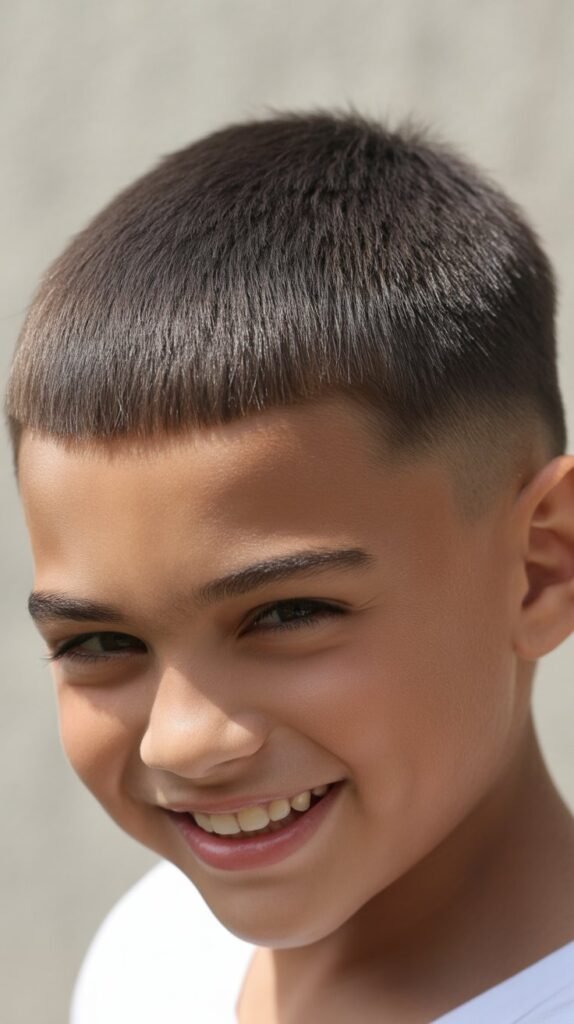
The Ivy League cut, also known as the Harvard Clip, offers a refined variation of the crew cut with slightly more length on top. This preppy style exudes intelligence and sophistication.
- The top section measures approximately 1.5-2.5 inches, providing enough length for a subtle side sweep or slight styling.
- This additional length distinguishes the Ivy League from a standard crew cut, offering more versatility in styling options.
- The style works beautifully for boys transitioning from childhood cuts to more mature, young-adult hairstyles.
- A lightweight pomade or cream helps achieve the characteristic side-swept appearance without looking overly styled.
- This cut flatters most face shapes and hair textures, making it an excellent all-purpose choice.
- The Ivy League requires slightly more frequent trims than a crew cut—approximately every 3-4 weeks—to maintain its shape.
7. Faux Hawk
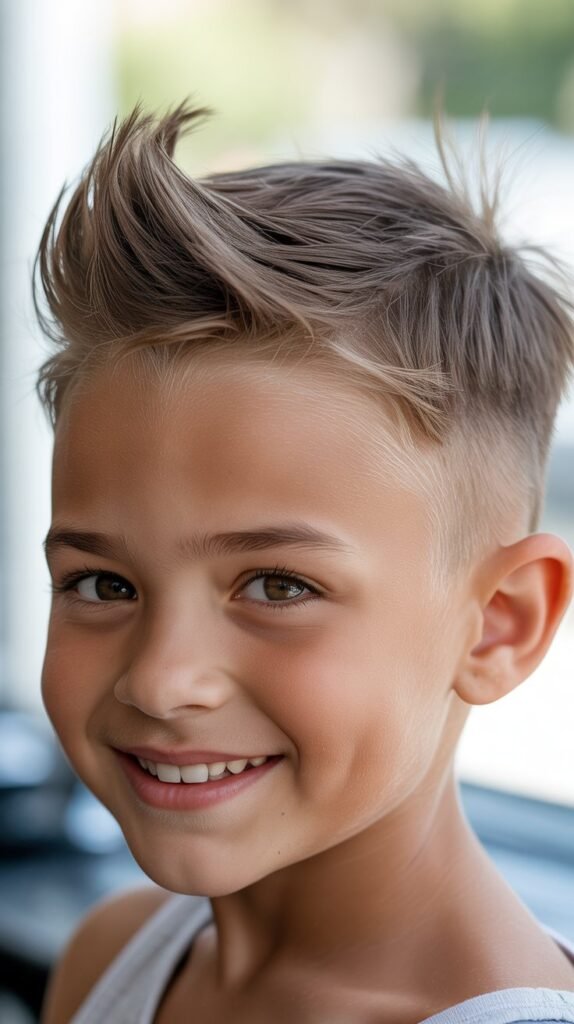
The faux hawk delivers an edgier, more rebellious aesthetic while remaining school-appropriate and parent-friendly. This style allows boys to express their personality through their hair.
- Creating a faux hawk involves leaving a strip of longer hair (2-3 inches) running from the forehead to the crown.
- The sides are cut significantly shorter, typically faded or buzzed, to emphasize the central mohawk-inspired section.
- Styling requires a strong-hold gel or pomade to sweep the longer hair toward the center and create upward height.
- This style works best on boys with thicker straight hair that can support the volume and hold throughout the day.
- The faux hawk offers a compromise between conventional cuts and more extreme styles, satisfying both parents and kids.
- Different styling techniques allow the faux hawk to be toned down for school or amped up for weekends and special events.
8. Caesar Cut
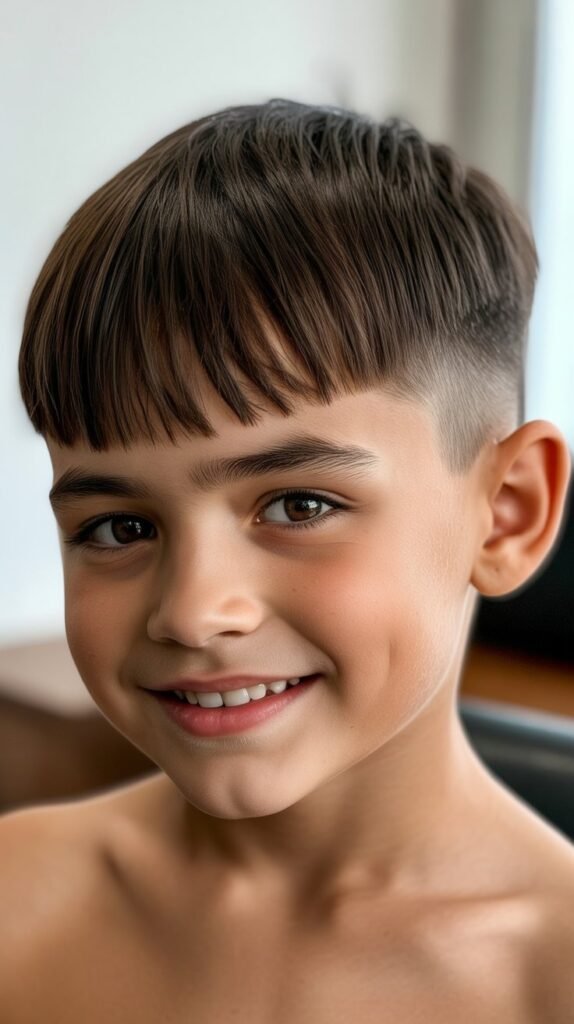
The Caesar cut takes inspiration from ancient Roman styles, featuring a short, horizontally cut fringe that creates a distinctive, timeless appearance. This classic style has been modernized for contemporary tastes.
- Named after Julius Caesar, this cut features hair of uniform length (typically 1-2 inches) all around the head.
- The defining characteristic is the short fringe that’s combed or brushed forward toward the forehead.
- This style particularly suits boys with straighter hair textures, as the hair naturally falls forward without requiring excessive styling.
- The Caesar cut works well for boys with receding hairlines or larger foreheads, as the forward fringe provides coverage.
- Minimal styling is required—simply towel dry and brush forward, with optional light product for added texture.
- This low-maintenance cut proves ideal for younger boys who haven’t yet developed consistent styling routines.
9. High and Tight
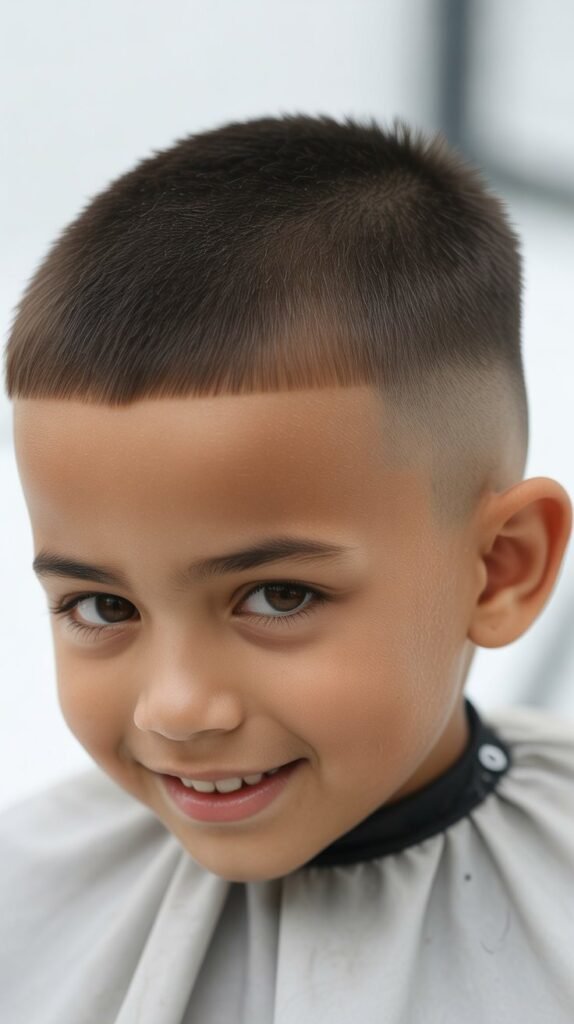
The high and tight delivers a bold, military-inspired look with dramatic contrast between the extremely short sides and the slightly longer top. This style makes a strong, confident statement.
- The sides and back are clipped very short (often with a #1 or #2 guard) or even shaved completely.
- The top section remains longer, typically 1-2 inches, creating a distinct “landing strip” effect.
- This high-contrast style requires precise barbering skills to achieve the clean, defined lines.
- Boys who prefer a masculine, no-nonsense appearance often gravitate toward this bold cut.
- The high and tight proves especially practical during hot weather, keeping the head cool while maintaining style.
- Regular maintenance every 2-3 weeks is essential to preserve the sharp contrast and clean lines.
10. Slicked Back Style
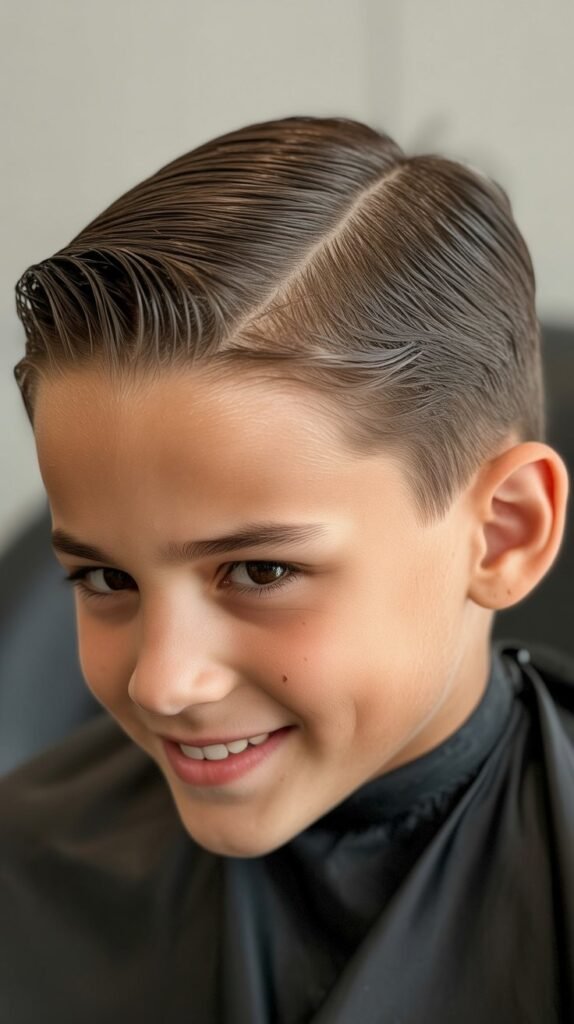
The slicked back style brings vintage Hollywood glamour to modern boys’ hairstyles, creating a sophisticated look that’s perfect for special occasions. This timeless aesthetic never goes out of fashion.
- This style requires hair length of at least 3-4 inches on top to achieve the proper backward sweep.
- A high-shine pomade or gel is essential for creating the sleek, controlled appearance characteristic of this look.
- The sides should be kept shorter than the top, typically tapered or faded, to maintain proportion and balance.
- Slicked back styles work exceptionally well for formal events, weddings, and occasions requiring a dressed-up appearance.
- This cut suits boys with thicker straight hair, as the density helps support the backward styling without falling flat.
- While the style appears formal, slight variations in styling can make it work for more casual settings too.
11. Spiky Hair
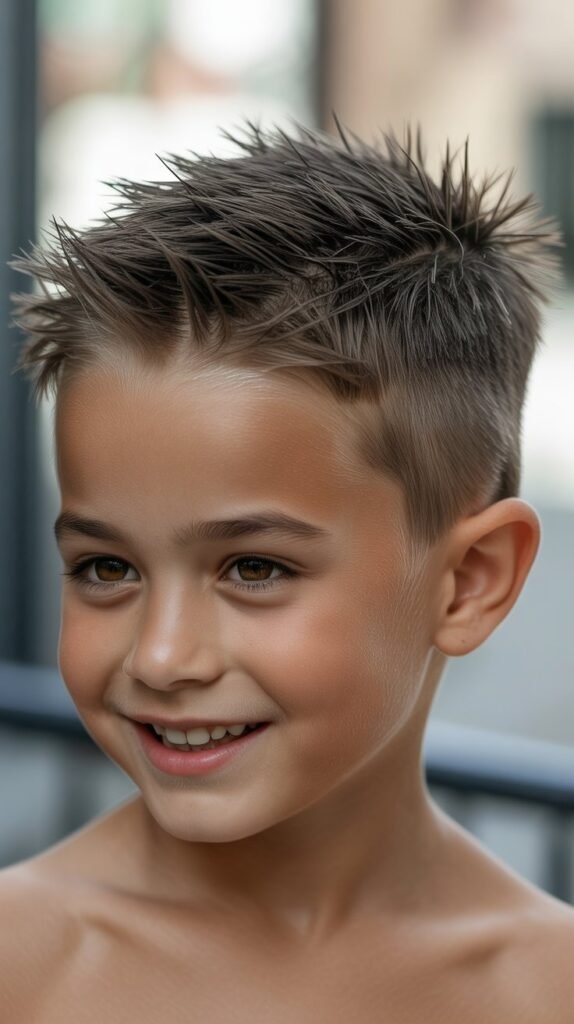
Spiky hair brings playful energy and youthful exuberance to boys’ hairstyles, allowing creative expression through varied spike heights and patterns. This fun style remains a perennial favorite among younger boys.
- Creating spikes requires hair length of approximately 1-2 inches on top, providing enough length to stand upright.
- A strong-hold gel or styling wax is necessary to achieve and maintain the spiky texture throughout the day.
- Stylists can create uniform spikes for a structured look or varied heights for a more natural, tousled appearance.
- This style works particularly well for boys with fine to medium straight hair, as thicker hair may be too heavy to spike effectively.
- Spiky hair offers excellent versatility—increase spike size for special events or tone it down for everyday wear.
- The cut requires regular trims every 3-4 weeks to prevent the hair from becoming too long to spike properly.
12. Comb Over Fade
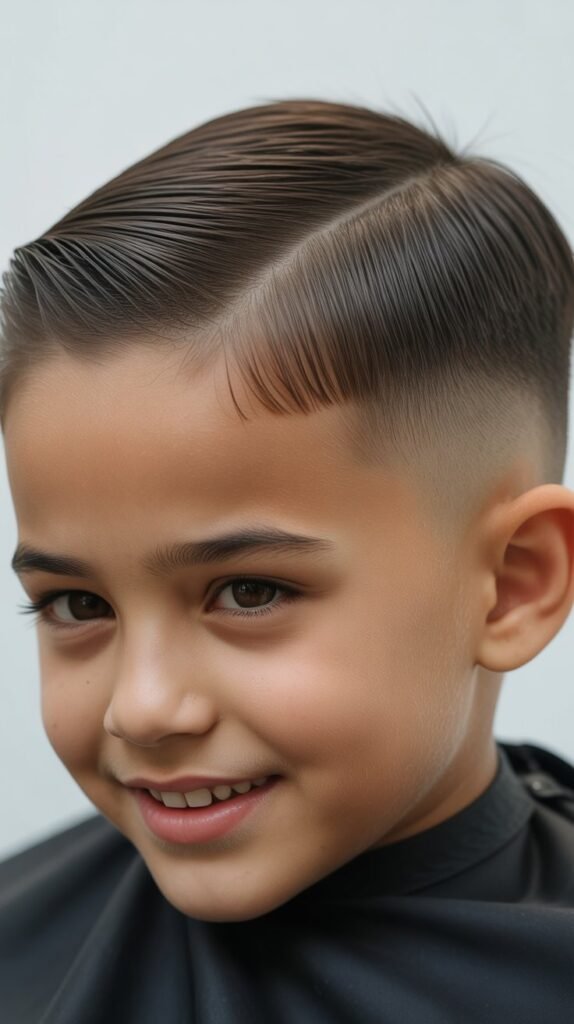
The comb over fade combines classic styling with modern barbering techniques, creating a sophisticated look that transitions beautifully from childhood through teenage years. This style offers impressive versatility.
- The style features longer hair on top (2-4 inches) combed to one side, while the sides feature a gradual fade.
- A defined part line, either natural or shaved, separates the longer top section from the faded sides.
- Styling involves applying pomade or cream and using a comb to sweep the hair across the top of the head.
- This cut flatters boys with various face shapes, as the directional styling can create balancing effects.
- The comb over fade works equally well in casual and formal settings, making it an excellent all-purpose choice.
- Different fade heights (low, mid, or high) allow for personalization while maintaining the core style concept.
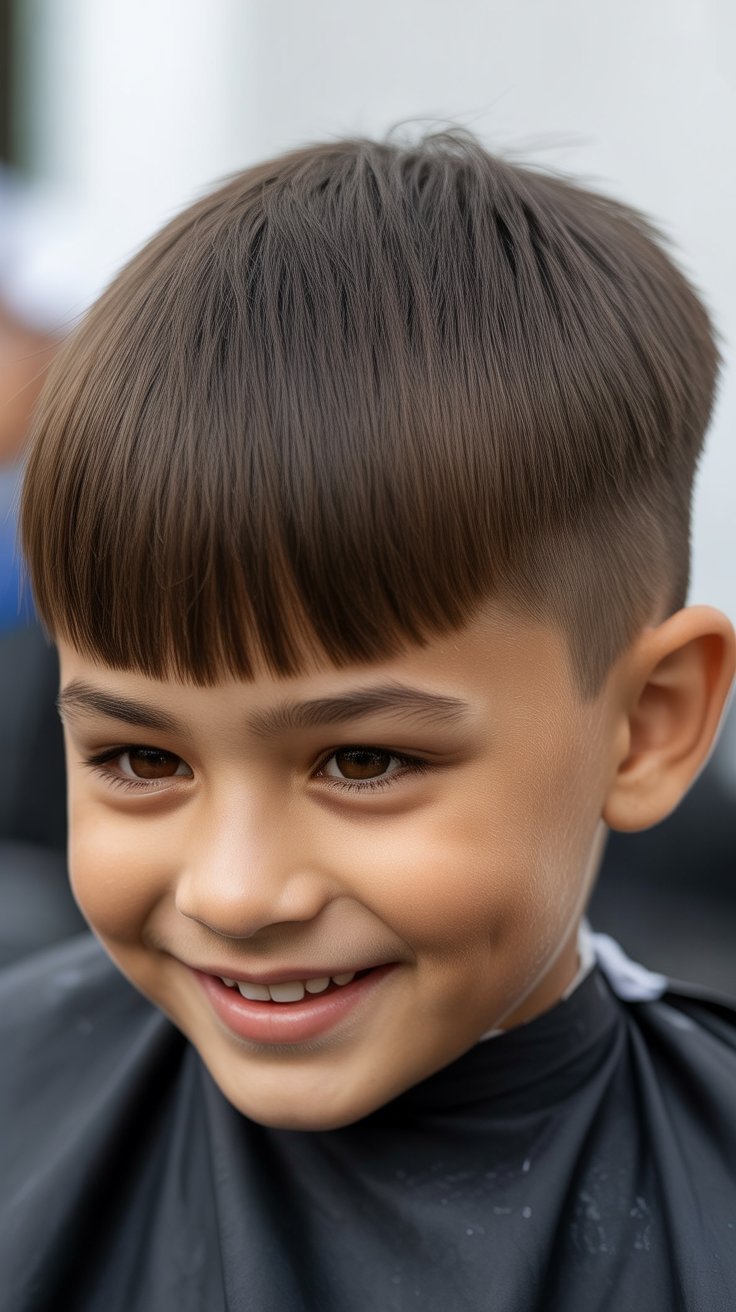
13. Blunt Fringe Cut
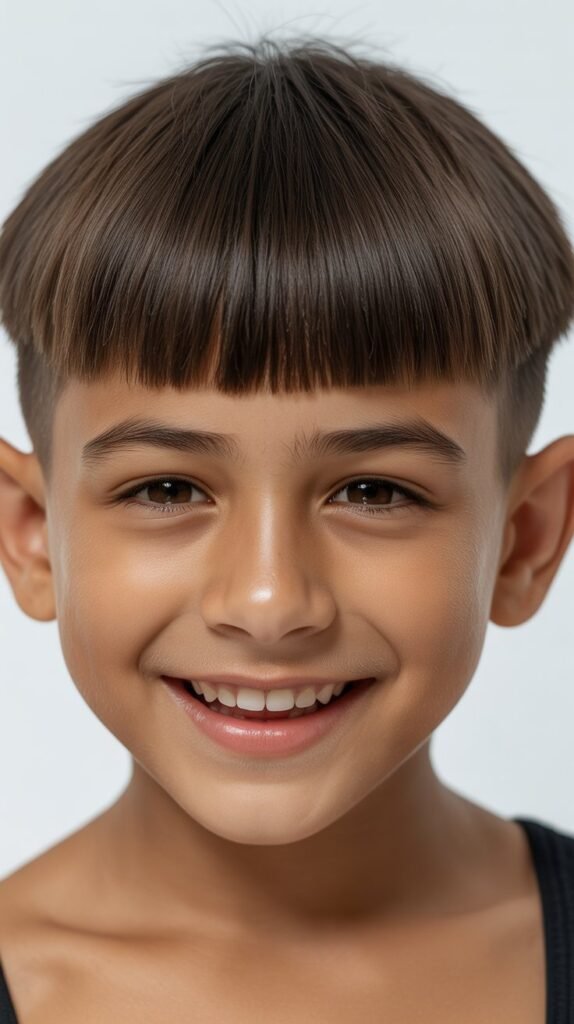
The blunt fringe cut features a straight, horizontal line across the forehead, creating a bold, contemporary look that makes a definite style statement. This cut has gained popularity through various fashion movements.
- The fringe is cut in a straight line, typically sitting just above the eyebrows or slightly lower.
- The sides and back are usually kept shorter to emphasize the dramatic fringe and prevent a heavy appearance.
- This style works best on boys with perfectly straight hair, as the natural texture supports the blunt, geometric line.
- Regular trimming of the fringe is essential—approximately every 2-3 weeks—to prevent it from obscuring vision.
- The blunt fringe can be styled straight down for maximum impact or swept slightly to the side for variation.
- This cut suits boys with confident personalities who enjoy standing out and making fashion-forward choices.
14. Short Pompadour
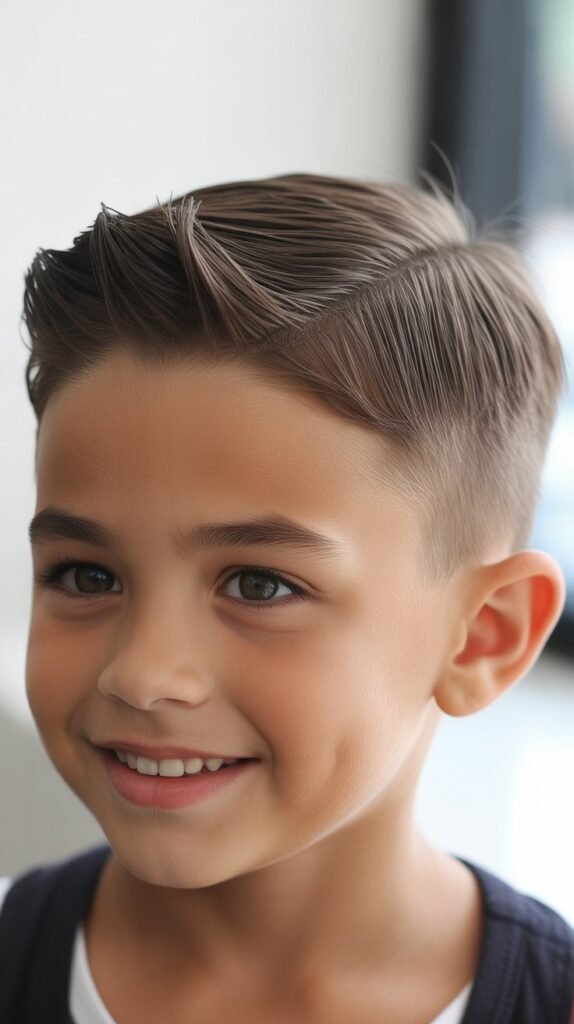
The short pompadour brings rockabilly cool to boys’ hairstyles, featuring height and volume in the front while maintaining practical short length. This retro-inspired style has been modernized for today’s youth.
- The pompadour requires approximately 2-3 inches of length on top to achieve the characteristic forward volume and height.
- Sides are typically faded or cut short to create contrast and emphasize the voluminous top section.
- Styling involves blow-drying the front section upward and backward while applying pomade for hold and shine.
- This style works best on boys with thicker straight hair that can support the volume without falling flat.
- The short pompadour offers a more age-appropriate and manageable version of the dramatic full pompadour.
- Daily styling takes practice but becomes quicker with routine—approximately 5-10 minutes for a polished look.
15. Messy Top with Fade
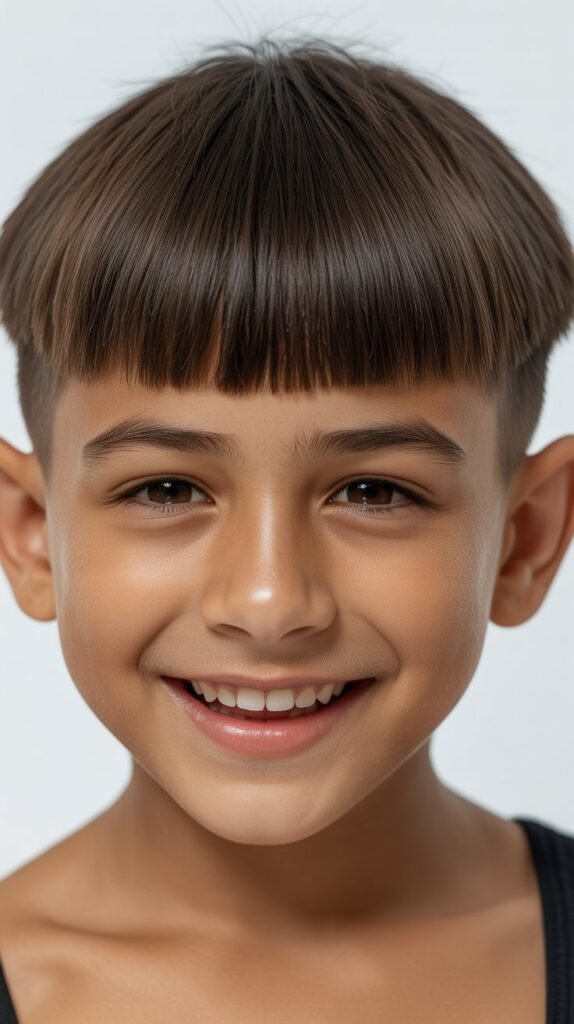
The messy top with fade embraces controlled chaos, combining deliberately tousled styling with clean, precise sides. This contemporary style perfectly balances casual and polished aesthetics.
- The top section is cut in layers of varying lengths (2-4 inches) to create natural texture and movement.
- A skin fade, low fade, or mid fade on the sides provides clean contrast to the deliberately messy top.
- Styling involves applying a matte paste or clay, then using fingers to create purposeful disorder in the top section.
- This versatile style works for boys who want to look put-together without appearing overly groomed or formal.
- The messy aesthetic is actually carefully constructed, requiring regular trims to maintain the proper layering and shape.
- Different products create varying levels of messiness, from slightly tousled to dramatically textured appearances.
16. Bowl Cut (Modern Version)
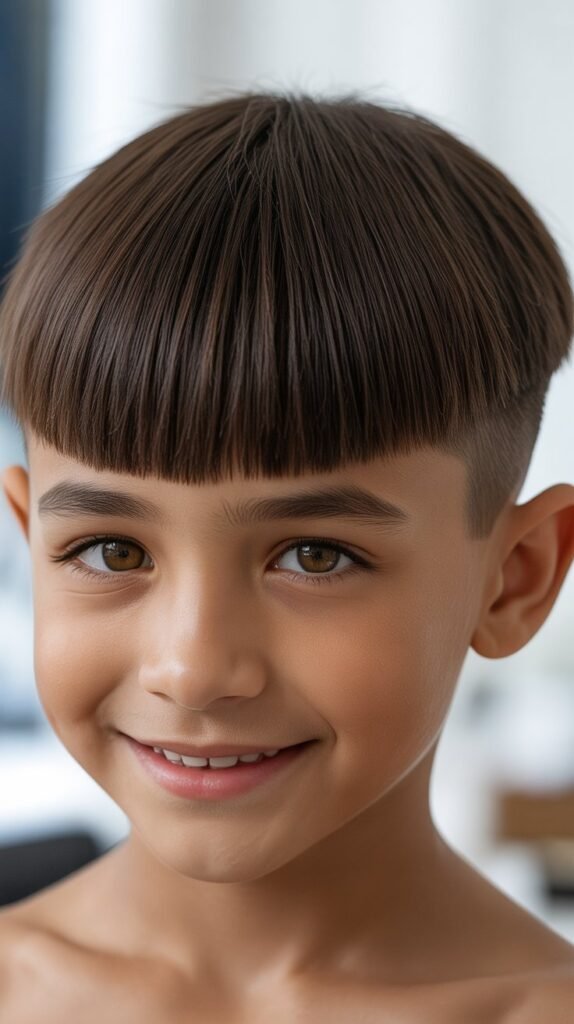
The modern bowl cut reimagines a classic childhood staple, updating it with contemporary techniques that create a fashion-forward rather than dated appearance. This style has experienced an unexpected revival.
- Unlike the traditional blunt bowl cut, the modern version features textured, piece-y ends for a softer look.
- The cut creates a rounded shape around the head while incorporating subtle layers and graduation.
- This style works exceptionally well on straight hair, which naturally falls into the intended rounded silhouette.
- Minimal styling is required—simply wash, towel dry, and allow the cut’s structure to create the shape.
- The modern bowl cut suits boys with fine to medium hair density and works best on younger children.
- Regular trims every 4-5 weeks maintain the rounded shape and prevent the style from becoming unbalanced.
17. Undercut Style
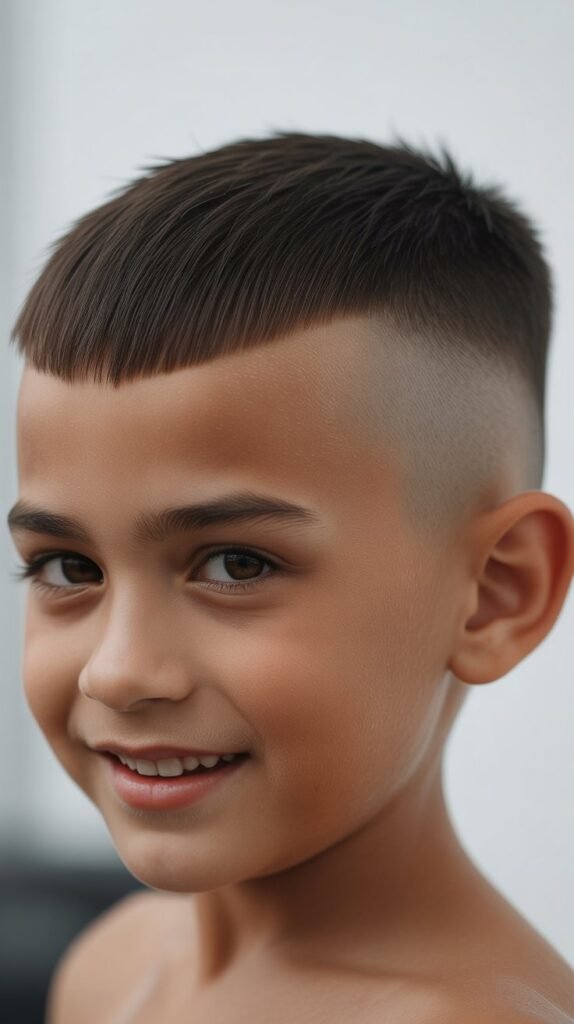
The undercut creates dramatic contrast through disconnection, featuring longer hair on top that sharply transitions to very short or shaved sides. This edgy style makes a bold fashion statement.
- The defining feature is the lack of gradual blending—the top section remains long while sides are cut very short.
- Top length typically ranges from 3-5 inches, providing enough hair for various styling options.
- This versatile cut allows the top to be styled slicked back, to the side, or forward depending on preference.
- The undercut works particularly well for boys with thick straight hair that can support various styling directions.
- Different disconnected lengths allow for personalization while maintaining the core undercut concept.
- Maintenance requires regular side trimming (every 2-3 weeks) while allowing the top to grow or maintain length.
18. Forward Brushed Style
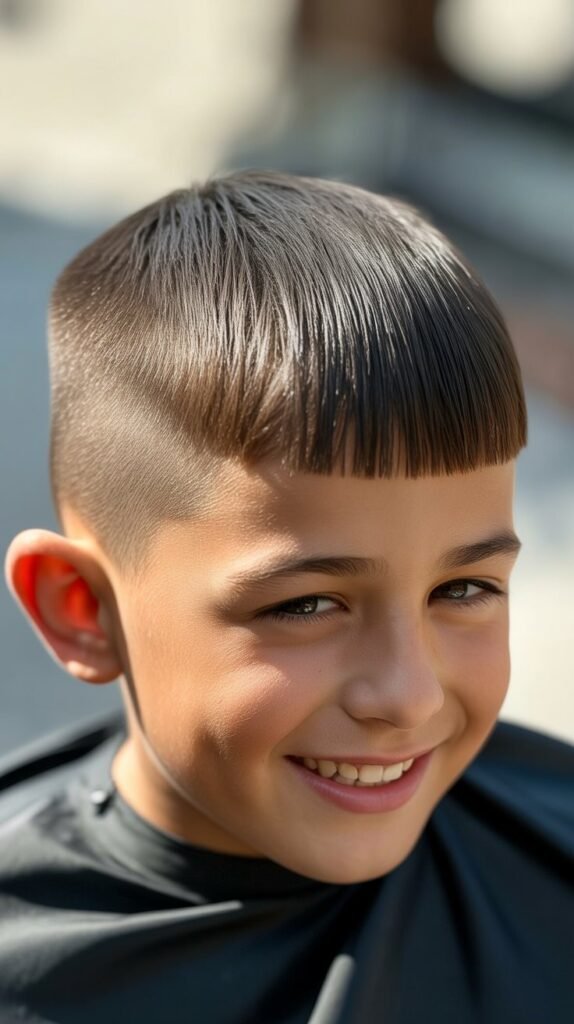
The forward brushed style features hair directed toward the face, creating a relaxed, effortlessly cool appearance. This European-inspired cut offers easy maintenance with stylish results.
- Hair on top measures approximately 2-3 inches, long enough to brush forward but short enough to remain practical.
- The sides are kept shorter, either tapered or faded, to prevent excessive bulk and maintain shape.
- Styling simply involves towel-drying and brushing or combing the hair forward toward the forehead.
- This style particularly suits boys with naturally straight hair that falls forward without requiring excessive product.
- The forward direction creates a youthful, approachable appearance that works well for various age groups.
- Minimal maintenance makes this an excellent choice for boys who prefer simple grooming routines.
19. Angular Fringe
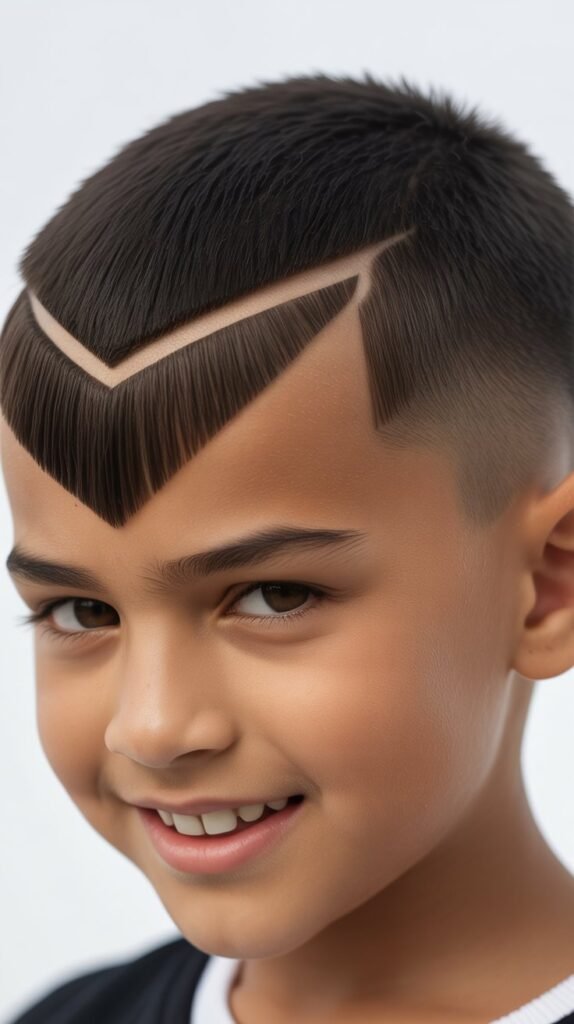
The angular fringe features a diagonal line across the forehead, adding geometric interest and contemporary edge to boys’ hairstyles. This style brings architectural precision to hair design.
- The fringe is cut at an angle, typically starting longer on one side and graduating to shorter on the other.
- This asymmetric element adds visual interest while maintaining the practical benefits of a fringed style.
- The angular cut works especially well on straight hair, where the precision of the line remains clearly visible.
- Sides are usually faded or cut short to emphasize the dramatic diagonal fringe.
- Styling requires minimal effort—the cut’s structure naturally creates the intended angular appearance.
- This bold style suits boys with confident personalities who appreciate unique, fashion-forward aesthetics.
20. Tapered Cut
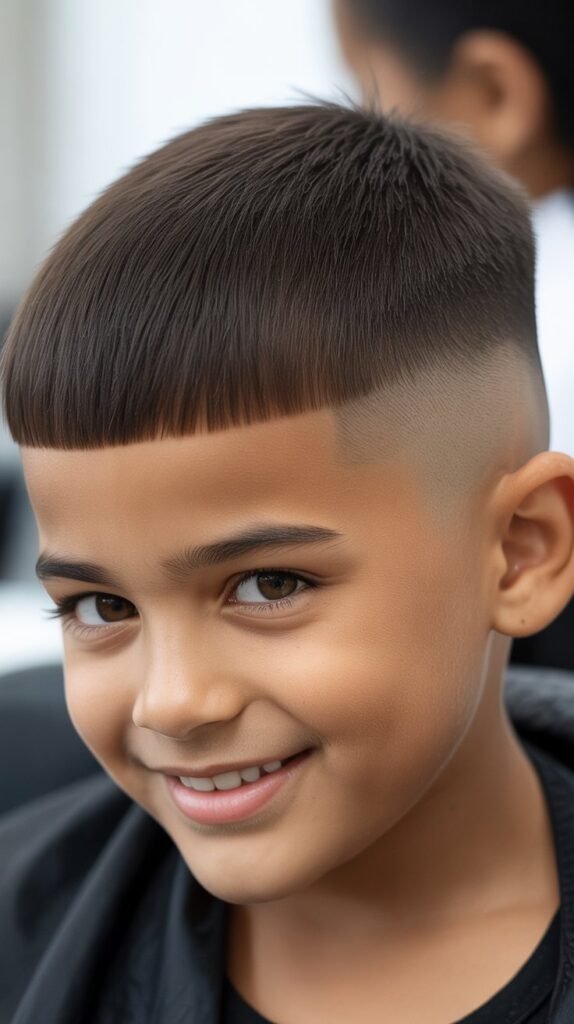
The tapered cut offers timeless versatility through gradual length reduction from top to sides, creating a clean, professional appearance. This fundamental cut serves as the foundation for numerous variations.
- The taper involves progressively shorter hair from the top (2-3 inches) down to the neckline and around the ears.
- Unlike a fade which uses clippers to blend, a taper typically uses scissors for a more gradual, subtle transition.
- This traditional technique creates a polished look that suits conservative environments like private schools or formal settings.
- The tapered cut works universally across all hair types, textures, and face shapes.
- Minimal styling is required, though a light pomade or cream can add polish for special occasions.
- This cut maintains its shape well between trims, typically lasting 4-6 weeks before requiring professional attention.
21. Short Quiff
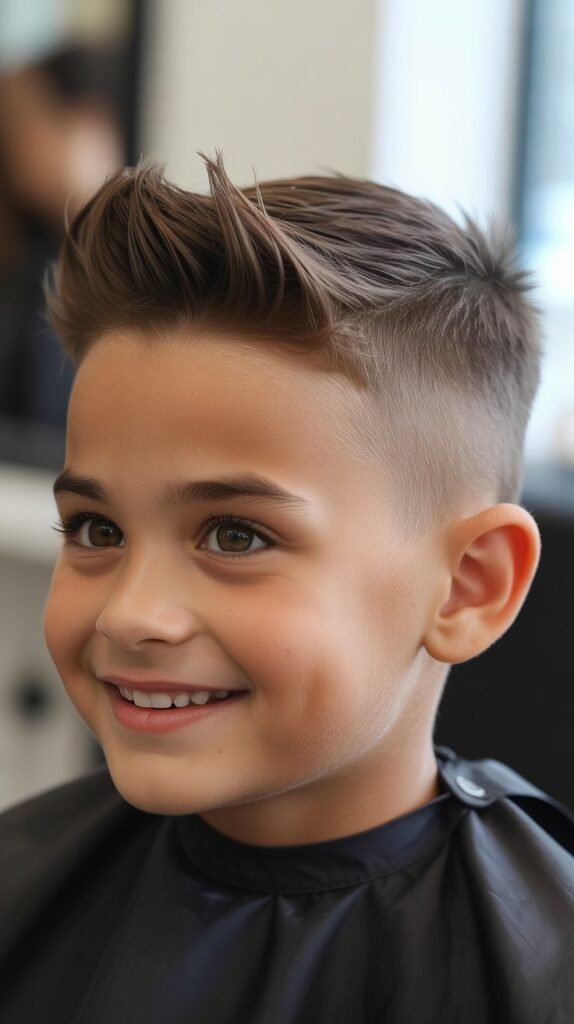
The short quiff combines volume in the front with practical short length, creating an elevated style that’s easier to maintain than a full quiff. This modified version suits active boys perfectly.
- The front section measures approximately 2-3 inches, providing enough length to create upward volume and height.
- Hair is styled forward and upward using a blow dryer and styling product to achieve the characteristic quiff shape.
- The sides and back are kept significantly shorter, either faded or tapered, to emphasize the voluminous front.
- This style works best on boys with medium to thick straight hair that can support volume without deflating.
- The short quiff offers a more age-appropriate and manageable alternative to the dramatic adult-style quiff.
- Styling time ranges from 5-10 minutes daily, making it practical for school-morning routines.
22. Butch Cut
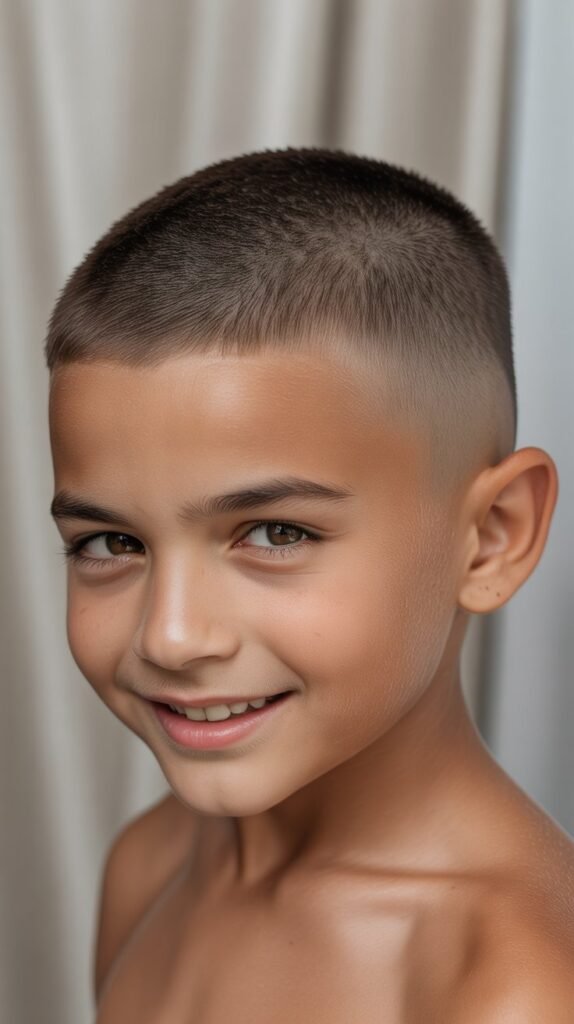
The butch cut provides a slightly longer alternative to the buzz cut, offering minimal maintenance while retaining more visible hair texture. This classic military-inspired style emphasizes practicality.
- Hair is cut to a uniform length of approximately 1/4 to 1/2 inch all over the head using clippers.
- The slightly longer length compared to a buzz cut makes the hair’s natural straight texture more apparent.
- This cut requires absolutely no styling—simply wash and go, making it ideal for busy families.
- The butch cut works particularly well during summer months and for boys involved in swimming or water sports.
- Cost-effective maintenance allows parents to use home clippers for touch-ups between professional cuts.
- This style suits boys of all ages and works across different face shapes and head structures.
23. Regulation Cut
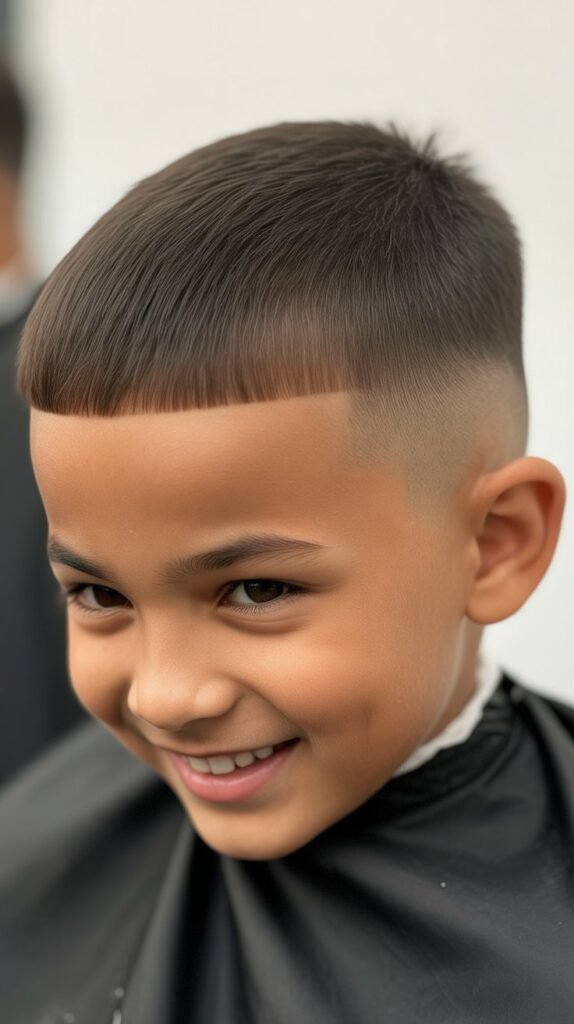
The regulation cut delivers clean precision through standardized length and conservative styling, meeting dress code requirements while maintaining style. This traditional cut remains relevant in modern contexts.
- The regulation cut typically features 1-2 inches on top with closely tapered or faded sides.
- This style adheres to most school and institutional dress codes while still providing styling options.
- Hair can be styled with a side part, brushed forward, or combed back depending on preference and occasion.
- The cut’s conservative nature makes it appropriate for formal events, school photos, and professional family occasions.
- Minimal maintenance and universal acceptance make this a practical choice for many families.
- Regular trims every 4-5 weeks maintain the regulation cut’s crisp, orderly appearance.
24. Choppy Layers
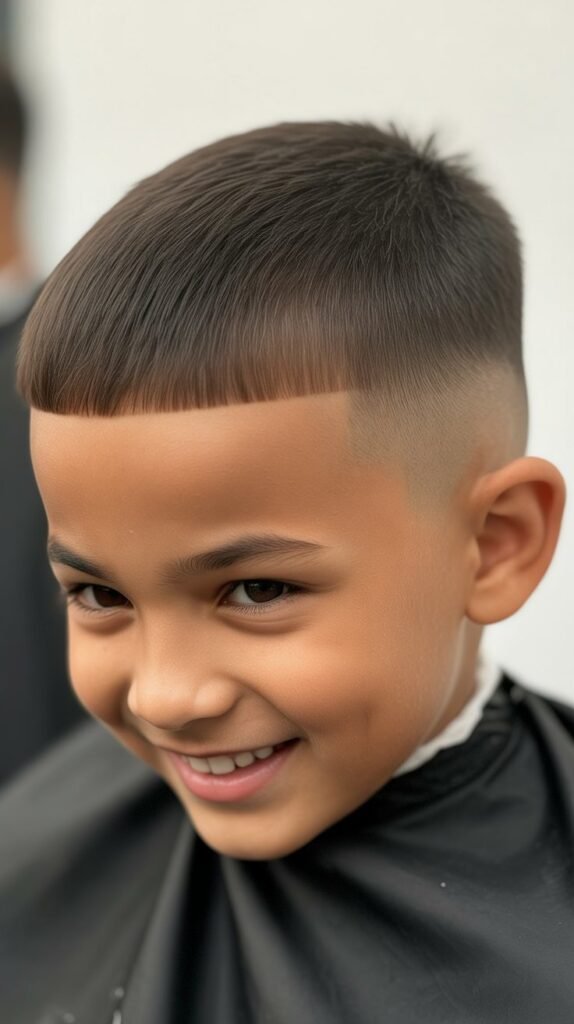
Choppy layers introduce deliberate texture and dimension through varied cutting techniques, creating contemporary interest in short straight hair.
- Stylists create this look by cutting the hair at different angles and lengths, producing intentional unevenness.
- The choppy texture works especially well on straight hair, where each individual layer remains clearly defined.
- This style typically features 2-4 inches of length on top with shorter, textured sides.
- Styling involves applying a small amount of texturizing product and tousling with fingers for deliberate messiness.
- Choppy layers suit boys who want a more artistic, fashion-forward appearance without high-maintenance styling.
- The cut requires professional skill to execute properly, ensuring the layers create texture rather than appearing accidental.
25. Flat Top
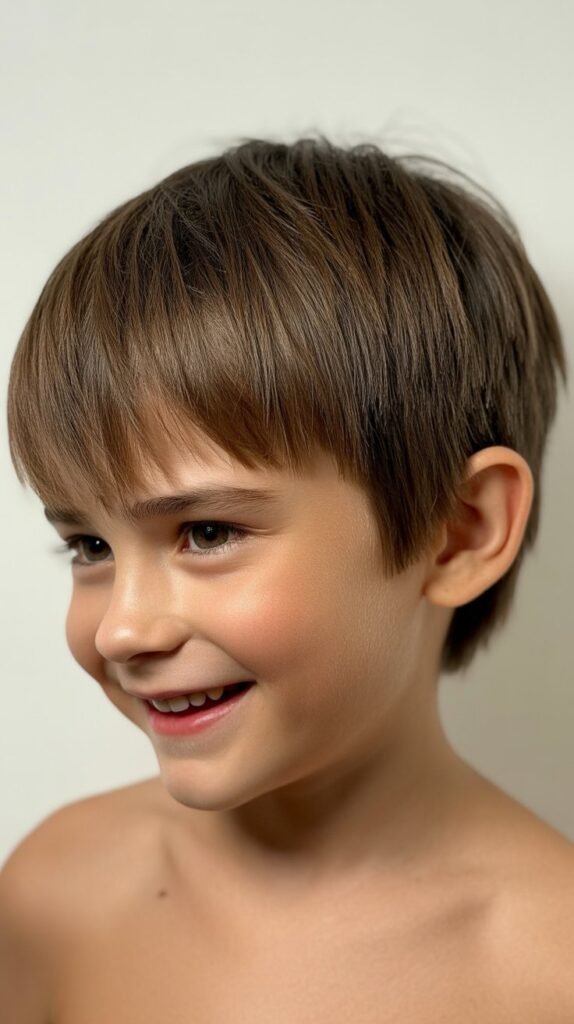
The flat top creates a distinctive horizontal surface on top of the head, standing as one of the most recognizable and iconic boys’ hairstyles. This bold geometric cut makes a strong visual statement.
- The top section is cut to approximately 1-2 inches and styled to stand completely vertical, forming a flat plane.
- Sides are faded very short to emphasize the dramatic flat surface and create strong geometric contrast.
- Achieving this style requires specific hair characteristics—thick, straight hair works best for maintaining the upright position.
- Styling involves using strong-hold gel or pomade and blow-drying the hair upward to create and maintain the flat surface.
- This retro-inspired style has experienced periodic revivals and appeals to boys who appreciate vintage aesthetics.
- Daily maintenance is essential, as the style requires consistent product application and styling to maintain its shape.
26. Disconnected Undercut
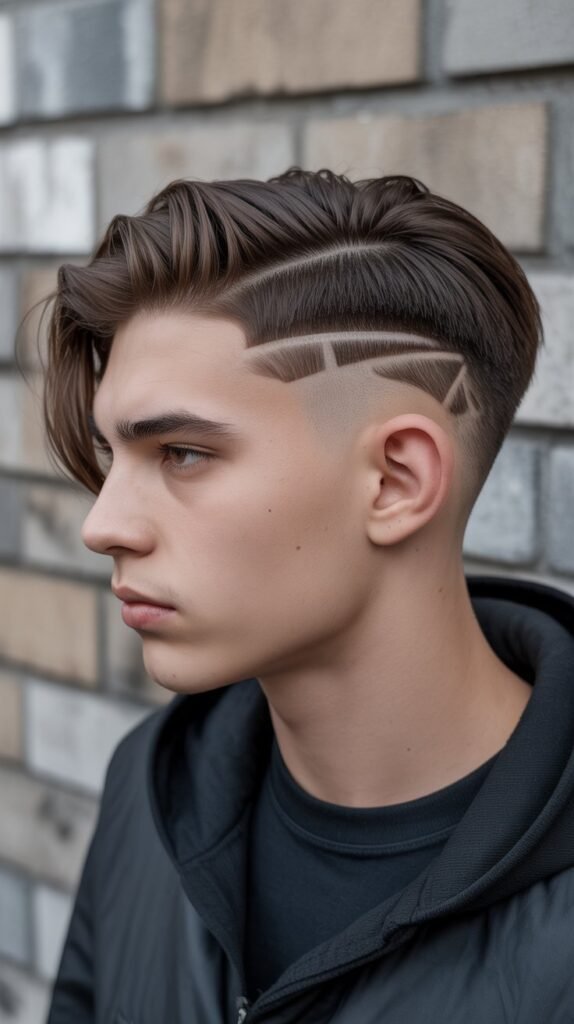
The disconnected undercut takes the traditional undercut concept further, creating even more dramatic contrast through complete separation between long top and shaved sides.
This contemporary style emphasizes bold differentiation.
- The disconnection refers to the visible line where long hair meets shaved or very short sides without any blending.
- Top length typically ranges from 4-6 inches, allowing for substantial styling versatility.
- This extreme contrast creates a fashion-forward, editorial look that’s popular in contemporary barbering.
- The disconnected undercut works best on boys with thick straight hair that can support various styling directions.
- Multiple styling options include slicking back, pushing to the side, or creating volume in the front section.
- Maintenance requires keeping sides freshly shaved every 2-3 weeks while managing the top length according to preference.
27. Wispy Fringe
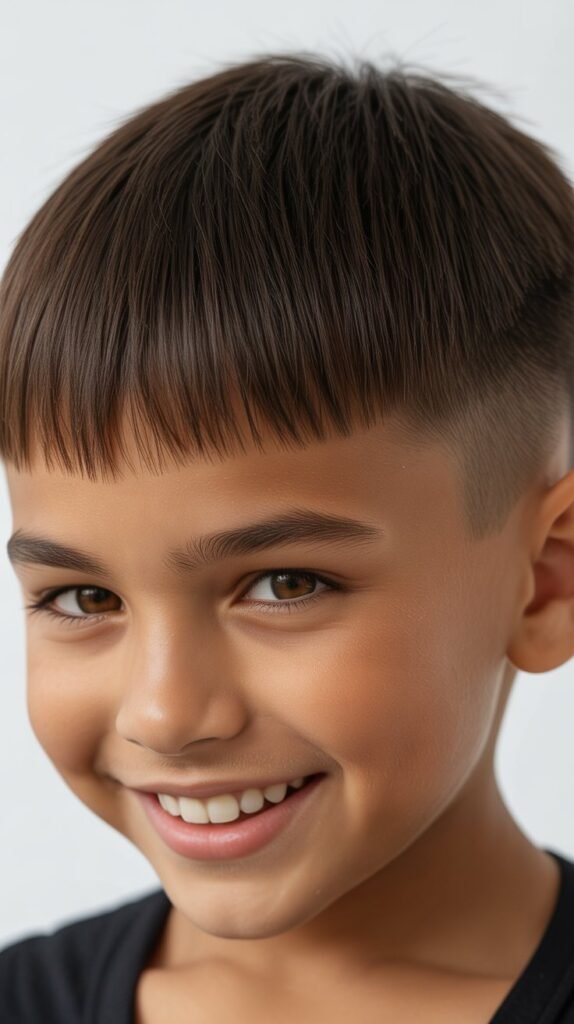
The wispy fringe features delicate, piece-y ends that create a soft, romantic quality rare in boys’ hairstyles. This gentle approach offers an alternative to blunt, harsh lines.
- The fringe is cut using point-cutting or razor techniques to create thin, separated ends rather than a solid line.
- This softer approach works beautifully on fine to medium straight hair, where the wispy texture appears most natural.
- The style typically features 2-3 inches of length in the fringe area with shorter, complementary sides.
- Minimal styling is required—the cut’s natural texture creates the intended wispy effect without heavy product use.
- This gentler aesthetic suits younger boys and creates a more approachable, softer appearance.
- Regular fringe trims every 2-3 weeks prevent the wispy ends from becoming too long and obscuring vision.
28. Military Fade
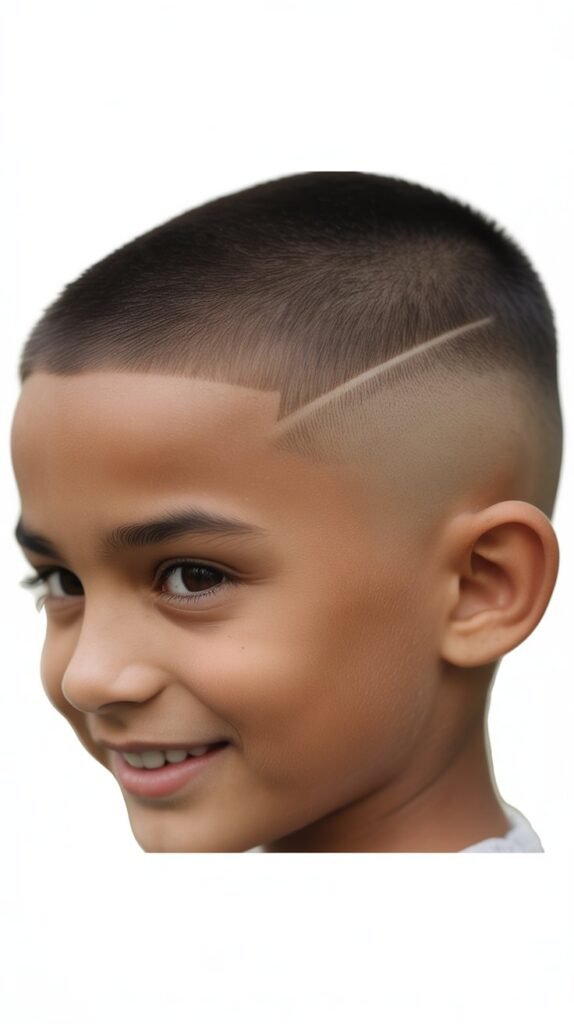
The military fade combines precision engineering with practical functionality, creating a sharp, disciplined appearance through expertly graduated sides. This technical cut demonstrates advanced barbering skill.
- The fade starts very high on the head, often just inches below the crown, creating maximum contrast.
- Sides transition from skin (completely bald) at the bottom to slightly longer hair as they meet the top section.
- The top section remains relatively short (1-2 inches), maintaining the overall conservative military aesthetic.
- This cut requires exceptional precision and is best executed by experienced barbers skilled in fade techniques.
- The military fade projects discipline, confidence, and attention to detail through its crisp execution.
- Frequent maintenance every 1-2 weeks is necessary to preserve the fade’s sharp definition and prevent grown-out appearance.
29. Side Swept with Low Fade
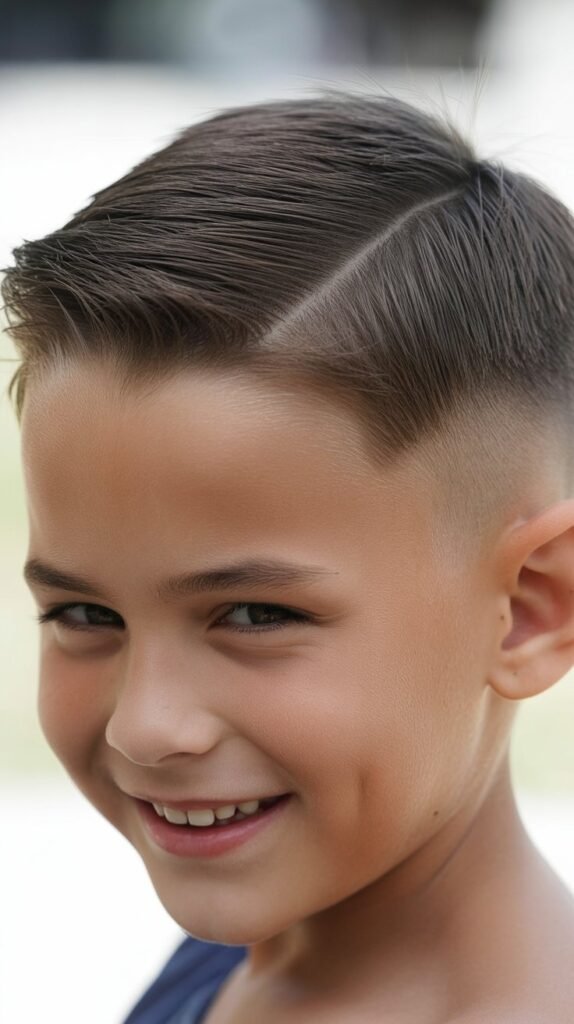
The side swept with low fade combines directional styling with subtle graduated sides, creating a balanced look that works for various occasions. This versatile cut bridges casual and formal aesthetics.
- The top section measures 3-4 inches, providing enough length to create a sweeping motion across the head.
- A low fade begins the gradation just above the ears, creating subtler contrast than high or mid fades.
- Styling involves applying lightweight product and combing or brushing the hair to one side in a natural arc.
- This style flatters boys with various face shapes, as the directional sweep can create visual balance.
- The side swept look transitions easily from school to sports to formal events with minimal adjustment.
- Moderate maintenance requires trims every 3-4 weeks to preserve both the fade and the top length balance.
30. Textured Fringe with Taper
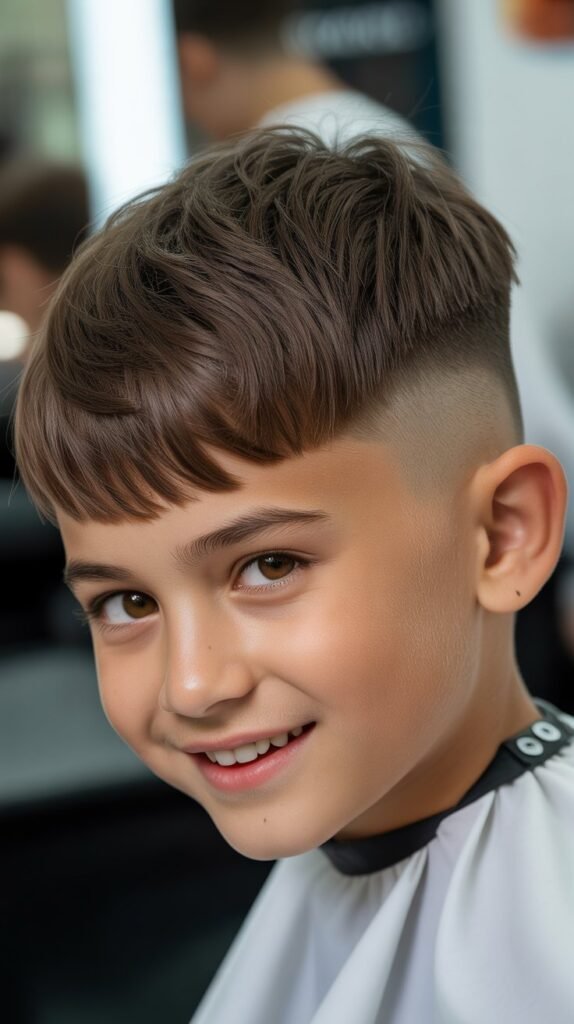
The textured fringe with taper brings together contemporary texture techniques with traditional tapering, creating a modern style that maintains classic sensibility.
This combination offers the best of both approaches.
- The fringe features 2-3 inches of choppy, textured length that falls naturally across the forehead.
- Sides are tapered using traditional scissor techniques rather than aggressive fading for a softer transition.
- Point-cutting or razor techniques create texture in the fringe, preventing it from appearing too heavy or blunt.
- This style works across various straight hair densities, from fine to thick, adapting to individual characteristics.
- Minimal styling is required daily—simply apply a small amount of texturizing product and tousle the fringe into place.
- The combination of modern texture and classic taper creates a timeless yet contemporary aesthetic that ages well.
External Resources for Further Guidance
For parents and young individuals seeking additional information about hair care and styling techniques, several authoritative resources provide valuable guidance:
The American Academy of Dermatology offers comprehensive information about proper hair and scalp care for children and teenagers, including recommendations for washing frequency, product selection, and maintaining healthy hair.
For understanding different hair cutting techniques and terminology when communicating with barbers, Healthline’s guide to men’s haircuts provides detailed explanations that help parents and boys articulate their desired styles clearly.
Conclusion
Exploring 30 Modern Short Straight Hairstyles for Boys reveals the incredible diversity and creativity available in contemporary hair styling for young males.
From the ultra-practical buzz cut that requires zero maintenance to the fashion-forward disconnected undercut that makes a bold statement, these hairstyles demonstrate that short straight hair offers far more versatility than many people realize.
Each style presented in this comprehensive guide serves different needs—whether prioritizing convenience for active lifestyles, creating polished appearances for formal occasions, or expressing individual personality through creative cuts.
The beauty of straight hair lies in its adaptability; it holds clean lines beautifully, responds well to various cutting techniques, and can be styled in countless ways with minimal effort.
Parents can feel confident knowing that most of these styles offer practical benefits like easy maintenance and weather-appropriate comfort, while boys and teenagers can express their developing sense of style through cuts that range from conservative to cutting-edge.
Remember that the best hairstyle is one that complements individual face shape, suits lifestyle requirements, matches hair characteristics, and most importantly, makes the wearer feel confident and comfortable.
Whether you choose a timeless classic like the crew cut or embrace contemporary trends like the textured crop, these 30 Modern Short Straight Hairstyles for Boys provide inspiration and guidance for finding the perfect cut that willRetry
This response paused because Claude reached its max length for a message. Hit continue to nudge Claude along.