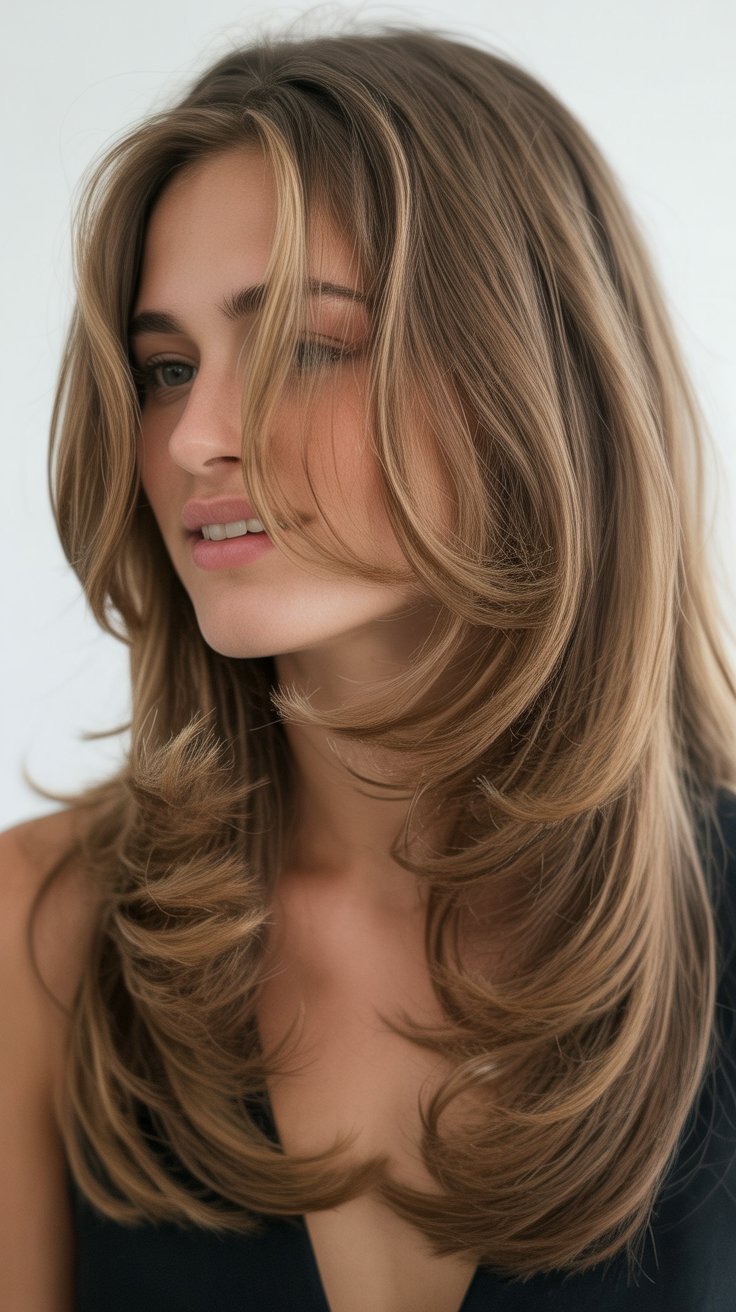
Long layered hair with face-framing front pieces has become one of the most sought-after hairstyles for women seeking versatility, movement, and dimension.
Whether you’re looking to soften your features, add volume to fine hair, or create a dramatic transformation, the right layered cut with strategic front pieces can work wonders.
The beauty of 31 Must-Try Long Layered Styles With Framing Front Pieces lies in their ability to flatter every face shape, hair texture, and personal style preference.
From subtle cascading layers to bold curtain bangs with dramatic framing, these styles offer endless possibilities for customization.
This comprehensive guide explores twenty-seven distinct approaches to long layered haircuts that incorporate face-framing elements, providing you with inspiration, styling techniques, and expert insights to help you discover your perfect look.
Each style has been carefully selected to showcase different cutting techniques, layer placements, and framing methods that can be adapted to suit your individual hair type and lifestyle needs.
1. Classic Curtain Bangs With Soft Layers
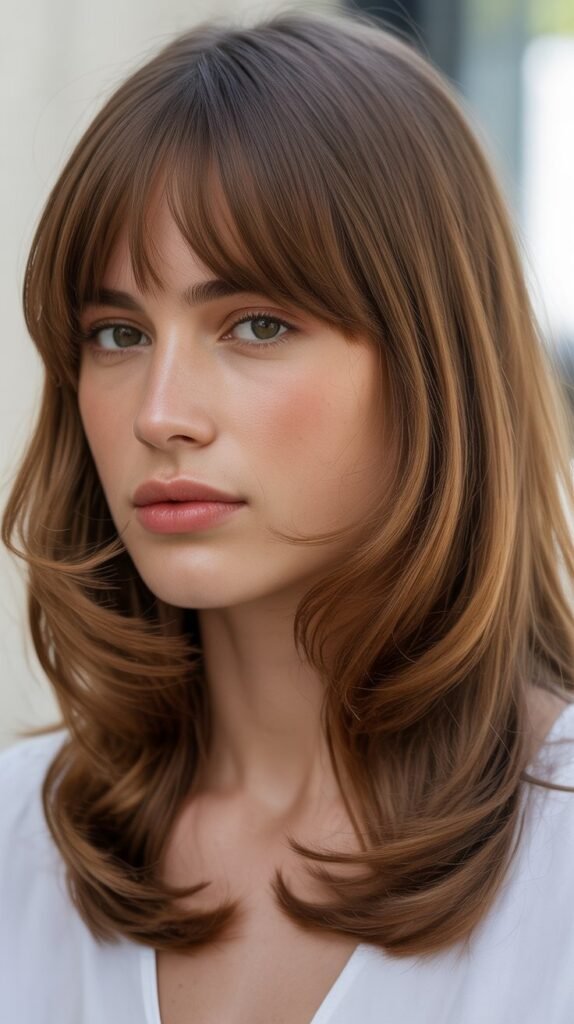
Curtain bangs paired with soft layers create a timeless, effortlessly chic appearance that suits nearly every face shape.
This style features center-parted bangs that gently frame the face while blending seamlessly into longer layers throughout the hair.
The result is a romantic, low-maintenance look that grows out gracefully without requiring frequent trims.
- The curtain bang technique involves cutting the front sections shorter at the center and gradually lengthening them as they move toward the sides
- This creates a sweeping effect that draws attention to the eyes while softening the overall facial structure
- Layers should be cut throughout the length, starting from approximately chin level and continuing downward
- The layering technique adds movement and prevents the hair from appearing heavy or flat
- For styling, use a round brush to blow-dry the bangs away from the face, creating the signature curtain effect
- Apply a lightweight texturizing spray to enhance the natural movement of the layers
- This style works particularly well for those with oval, heart-shaped, or round faces
- Regular trims every 8-10 weeks help maintain the shape and prevent the bangs from becoming too long
2. Feathered Face-Framing Layers
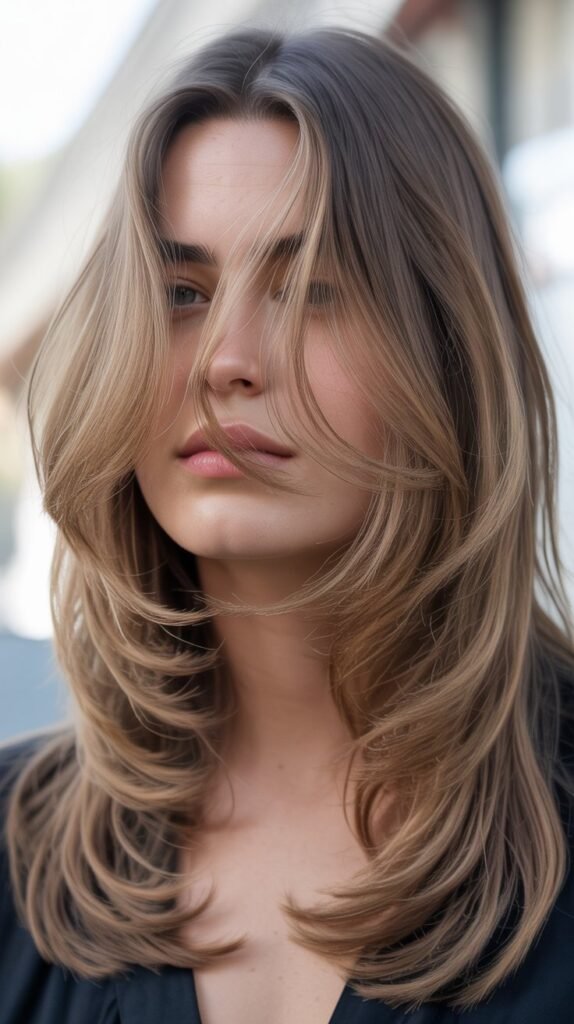
Feathered face-framing layers deliver a soft, wispy texture that adds incredible dimension and lightness to long hair.
This technique involves point-cutting the hair to create feathery ends that blend beautifully into the overall length.
The face-framing pieces are strategically cut to enhance your best features while adding movement throughout.
- Feathering is achieved through a specific cutting technique where scissors are pointed into the hair at an angle
- This creates soft, tapered ends rather than blunt lines, giving the hair a lighter appearance
- The face-framing sections should start around cheekbone level and gradually blend into longer layers
- This style is particularly beneficial for thick or heavy hair that needs texture and movement
- Use a texturizing razor or point-cutting shears to achieve the signature feathered effect
- When styling, apply a volumizing mousse to damp hair and blow-dry with a paddle brush
- Finish with a light-hold hairspray to maintain the feathery texture without weighing it down
- This cut grows out beautifully and requires minimal maintenance between salon visits
3. Blunt Ends With Strategic Face-Framing
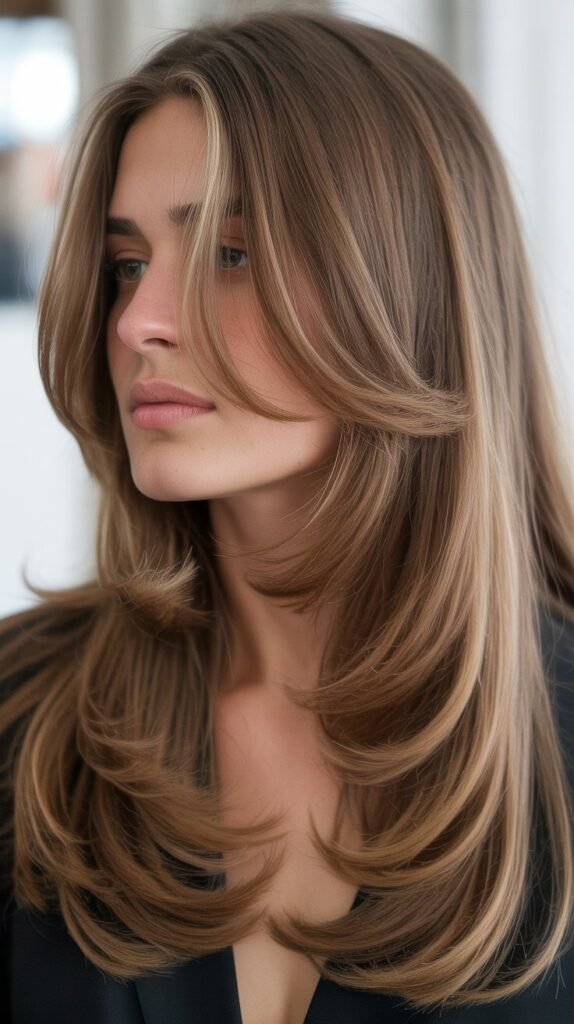
Combining blunt ends with strategic face-framing pieces creates a modern, polished look that offers both structure and softness.
While the overall length remains blunt and uniform, the shorter front pieces add dimension and draw focus to the face.
This style is perfect for those who want to maintain length while still enjoying the benefits of face-framing layers.
- The key to this style is maintaining a strong, blunt baseline while creating shorter, angled pieces around the face
- Face-framing sections should be cut at a diagonal angle, starting shorter near the face and lengthening as they move back
- This creates a framing effect without disrupting the overall blunt appearance of the hair
- The contrast between the blunt ends and softer face-framing pieces adds visual interest
- For styling, use a flat iron to create sleek, straight hair that emphasizes the clean lines
- Apply a shine serum or glossing spray to enhance the polished appearance
- This style works exceptionally well for those with naturally straight or slightly wavy hair
- Regular trims every 6-8 weeks help maintain the precision of the blunt cut
4. Long Shag With Wispy Bangs
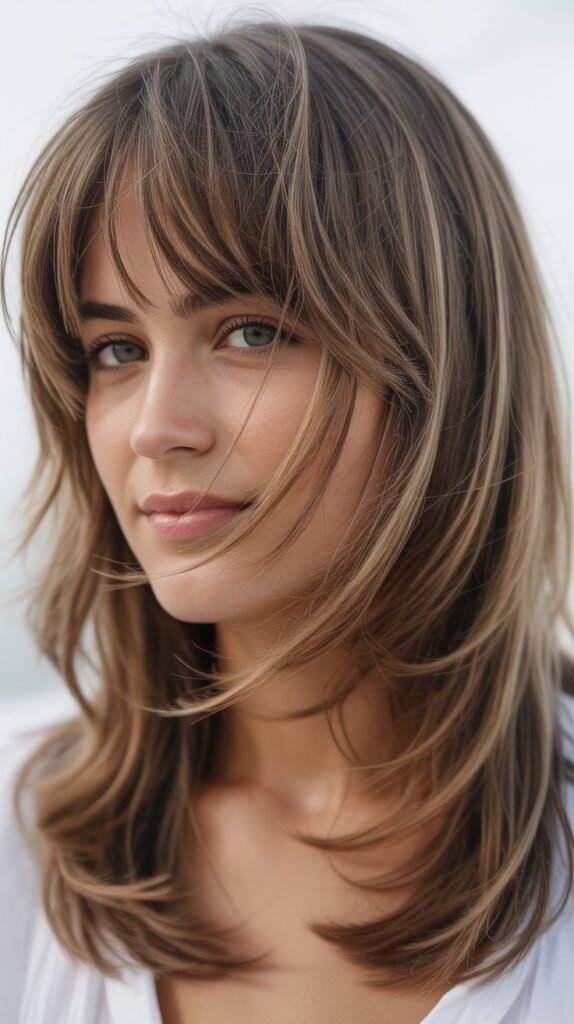
The long shag with wispy bangs brings a rock-and-roll edge to long layered hair while maintaining femininity through soft, face-framing elements.
This style features choppy layers throughout, creating texture and movement from root to tip.
The wispy bangs add a playful, youthful quality that perfectly complements the lived-in aesthetic of the shag cut.
- The shag cut incorporates multiple layers of varying lengths to create maximum texture and volume
- Layers should be cut throughout the crown, mid-lengths, and ends for a cohesive shaggy appearance
- Wispy bangs are achieved by point-cutting thin sections of hair to create a soft, broken-up fringe
- This style is ideal for adding volume to fine hair or removing weight from thick, heavy hair
- The face-framing pieces in a shag cut typically start at cheekbone level and blend into the longer layers
- Style with a sea salt spray or texturizing paste to enhance the piece-y, undone texture
- Use your fingers to scrunch and tousle the hair for an effortlessly cool finish
- This cut embraces natural texture and actually looks better with a slightly messy, lived-in appearance
5. Side-Swept Layers With Deep Side Part
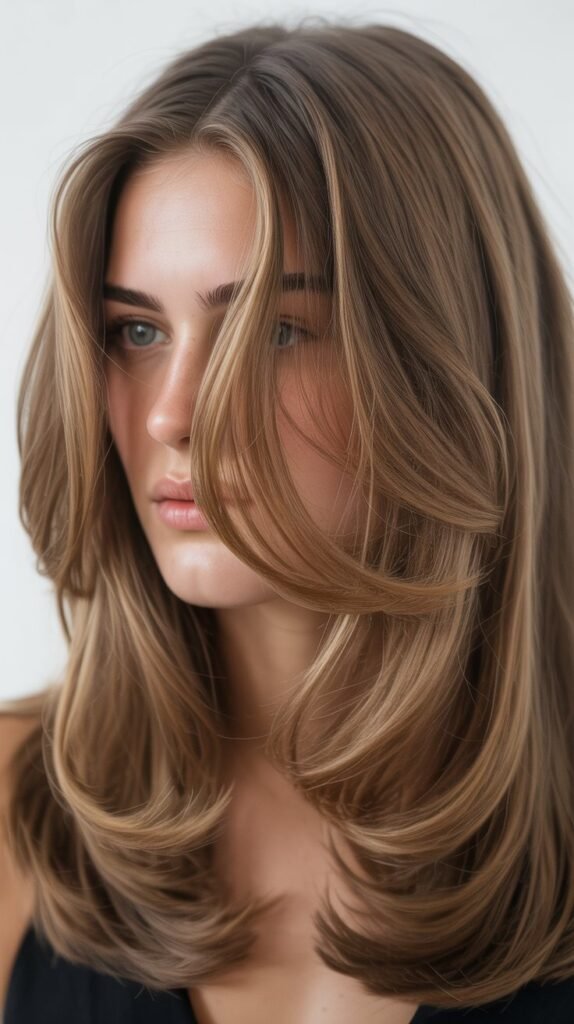
Side-swept layers with a deep side part create dramatic asymmetry that flatters the face while adding glamorous volume.
This style features longer layers that are swept to one side, with face-framing pieces cut to complement the directional flow.
The deep side part adds instant sophistication and can help balance facial features.
- Begin by creating a deep side part, typically positioned above one eyebrow
- Cut face-framing layers that follow the direction of the part, creating a sweeping effect
- The layers on the heavier side should be longer and more dramatic, while the opposite side remains closer to the face
- This asymmetrical approach creates dimension and draws the eye across the face
- When styling, use a large round brush to add volume at the roots on the heavier side
- Blow-dry the hair in the direction of the side part to enhance the sweeping movement
- Apply a volumizing powder at the roots for added lift and body
- This style is particularly flattering for those with square or angular face shapes, as it softens harsh lines
6. V-Shaped Layers With Face-Framing Highlights
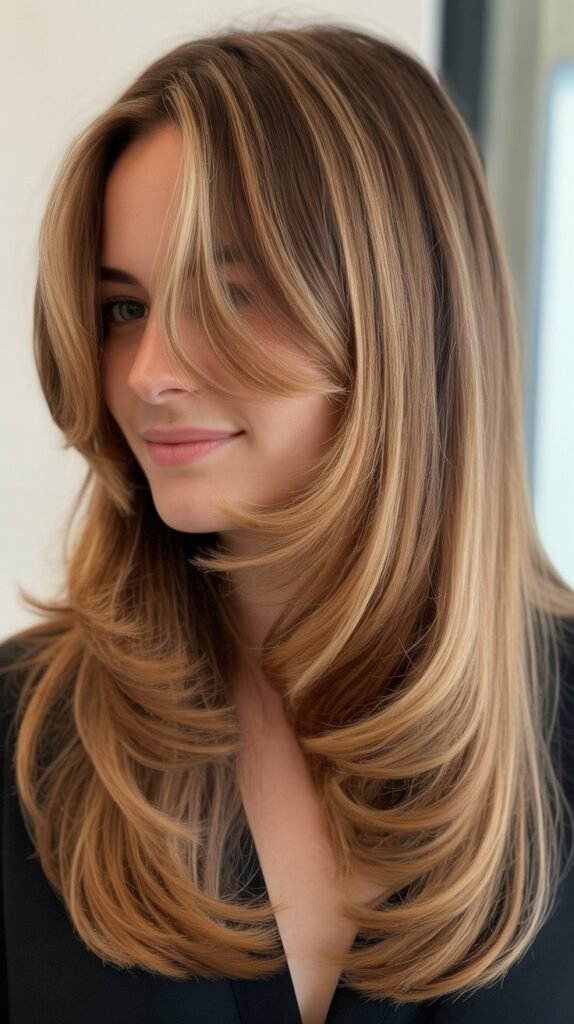
V-shaped layers combined with strategically placed face-framing highlights create a stunning dimensional effect that enhances both the cut and color.
The V-shape refers to the layering pattern where the front pieces are longer than the back, creating a dramatic V when viewed from behind.
Highlights around the face draw attention to the framing pieces and add luminosity.
- The V-shaped cut is achieved by creating a central point at the back where the hair is shortest
- Layers gradually lengthen as they move toward the front, with the longest pieces framing the face
- This creates a dramatic, eye-catching shape that adds movement and dimension
- Face-framing highlights should be placed around the hairline and through the front sections
- These lighter pieces catch the light and draw attention to the face-framing layers
- For styling, use a curling iron to add soft waves that enhance the V-shape and dimensional color
- Apply a shine spray to make the highlights pop and create a glossy finish
- This combination of cut and color creates a complete, cohesive look that requires minimal daily styling
7. Choppy Layers With Piecey Fringe
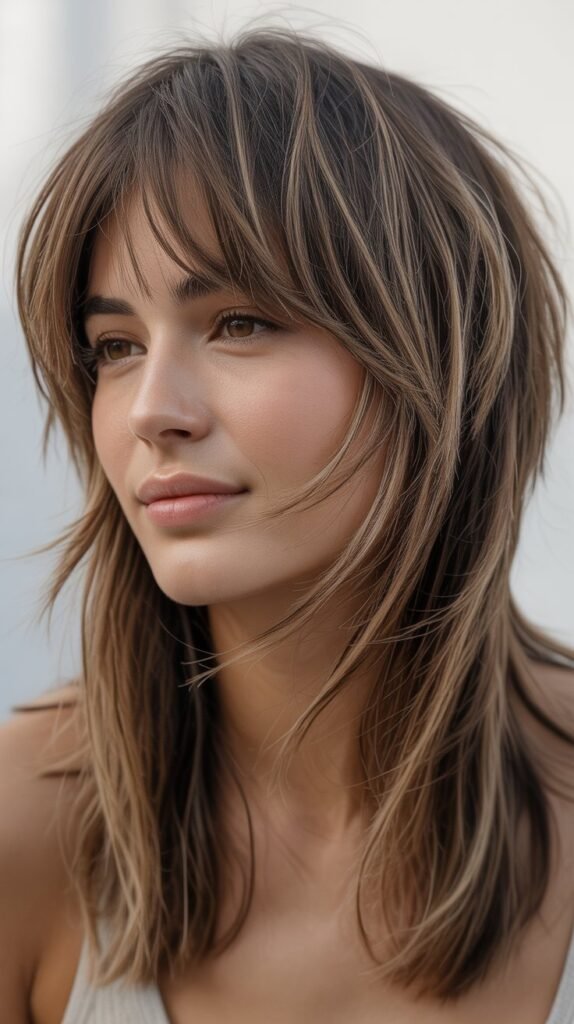
Choppy layers with a piecey fringe deliver an edgy, modern aesthetic that works beautifully with long hair.
This style features irregular, textured layers throughout the length, combined with a broken-up fringe that creates soft face-framing without the commitment of traditional bangs.
The choppy technique adds incredible movement and versatility.
- Choppy layers are created using a combination of point-cutting and slide-cutting techniques
- This produces uneven, textured ends that add dimension and prevent the hair from looking too uniform
- The piecey fringe is cut in irregular sections, creating separation and a broken-up appearance
- Unlike traditional blunt bangs, this fringe can be easily swept aside or incorporated into the rest of the hair
- Face-framing pieces should be cut at varying lengths to enhance the choppy aesthetic
- Style with a texturizing cream or clay to separate the pieces and emphasize the choppy texture
- This look works exceptionally well with air-dried, natural hair texture
- The piecey fringe requires minimal maintenance and grows out seamlessly into the front layers
8. Graduated Layers With Rounded Face-Framing
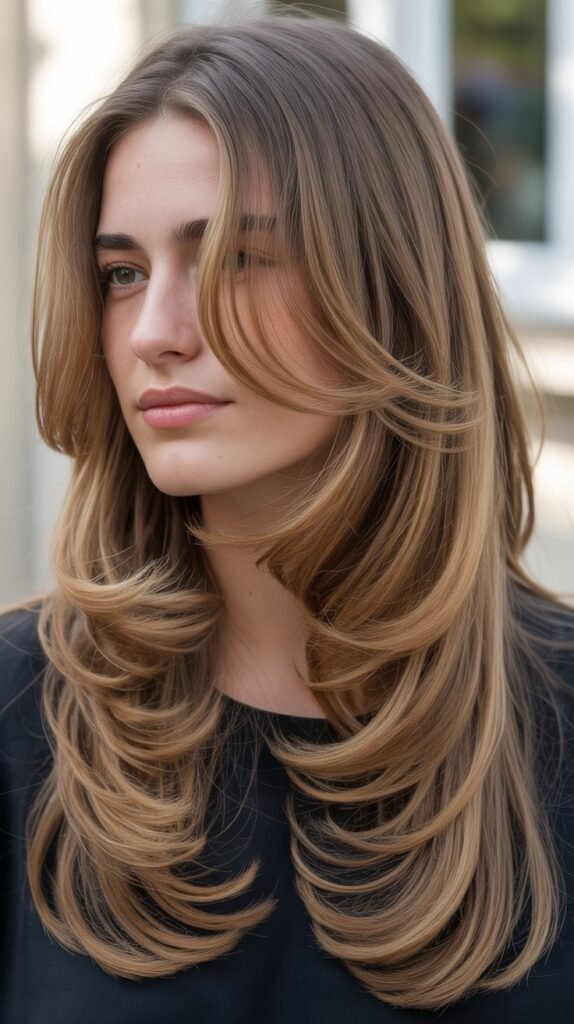
Graduated layers with rounded face-framing create a soft, feminine silhouette that gently curves around the face.
This technique involves cutting layers that gradually increase in length from the crown to the ends, with face-framing pieces that follow a rounded contour.
The result is a flattering, balanced look that adds volume and movement.
- Graduation refers to layers that are cut at increasing lengths, creating a stacked effect at the crown
- This technique adds volume to the upper portions of the hair while maintaining length at the bottom
- The face-framing pieces are cut in a curved line that follows the contour of the face
- This rounded approach softens angular features and creates a more gentle appearance
- When cutting, use a technique that creates seamless transitions between each layer length
- For styling, use a round brush to enhance the natural curve of the graduated layers
- Apply a lightweight mousse to add body and support the layered structure
- This style is particularly flattering for those with heart-shaped or diamond-shaped faces
9. Long Layers With Baby Bangs Transition
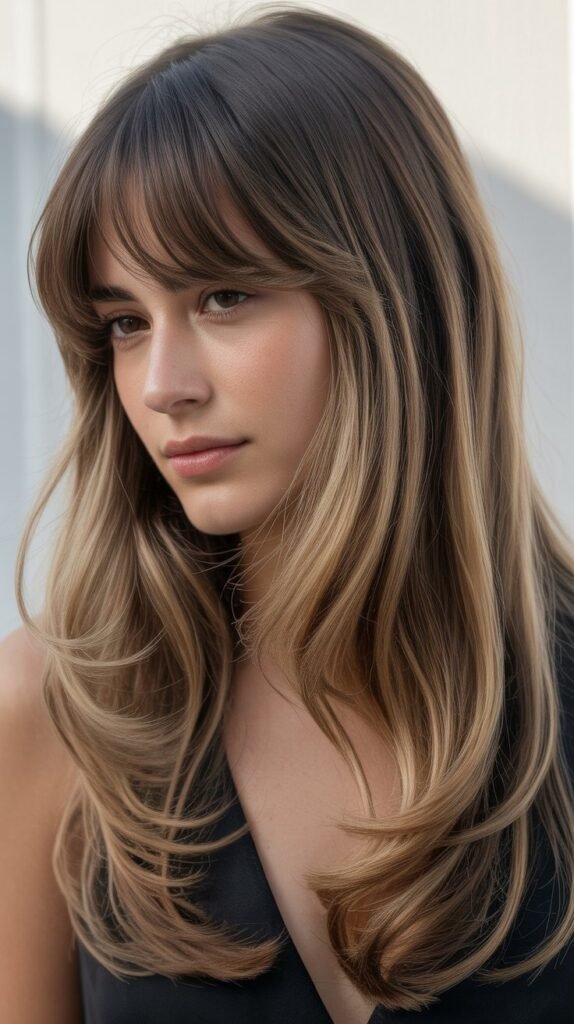
Long layers paired with a transitional baby bang area create an unexpected, fashion-forward look that offers versatility.
Rather than full baby bangs, this style features shorter wispy pieces in the bang area that blend into longer face-framing layers.
This allows you to enjoy the edgy aesthetic of baby bangs while maintaining the option to style them differently.
- Baby bangs typically fall above the eyebrows and create a bold, statement-making fringe
- In this transitional version, the baby bangs are cut with wispy, textured ends that blend more naturally
- Longer face-framing pieces start just below the baby bang area and gradually increase in length
- This creates a seamless transition from short to long without harsh lines
- The style offers flexibility, as the shorter pieces can be styled forward as bangs or swept into the longer layers
- Use a small round brush or flat iron to style the baby bang area
- Apply a light pomade or wax to separate the pieces and create texture
- This look requires more frequent trims to maintain the baby bang length, approximately every 4-6 weeks
10. Butterfly Layers With Center-Parted Face-Framing
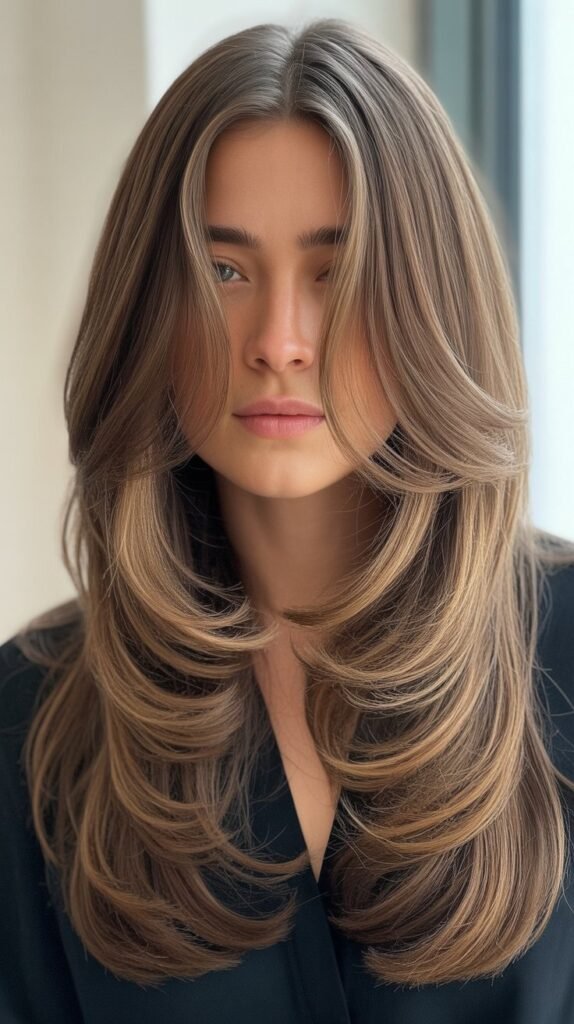
Butterfly layers with center-parted face-framing create a symmetrical, ethereal look reminiscent of butterfly wings.
This style features shorter layers concentrated around the crown and face, with longer pieces flowing down to create a cascading effect.
The center part and matching face-framing pieces on both sides enhance the balanced, harmonious appearance.
- Butterfly layers are characterized by shorter layers at the top that create volume and movement
- These shorter layers typically start around the crown or upper mid-length area
- The layers gradually lengthen as they move down, creating a cascading, wing-like effect
- Face-framing pieces are cut symmetrically on both sides, mirroring each other around a center part
- This symmetry enhances the butterfly appearance and creates balance in the overall look
- When styling, focus on adding volume to the shorter crown layers using a volumizing spray
- Use a curling iron to add soft bends to the layers, enhancing the butterfly wing effect
- This style works beautifully for those with fine to medium hair texture who want added volume
11. Diagonal Forward Layers
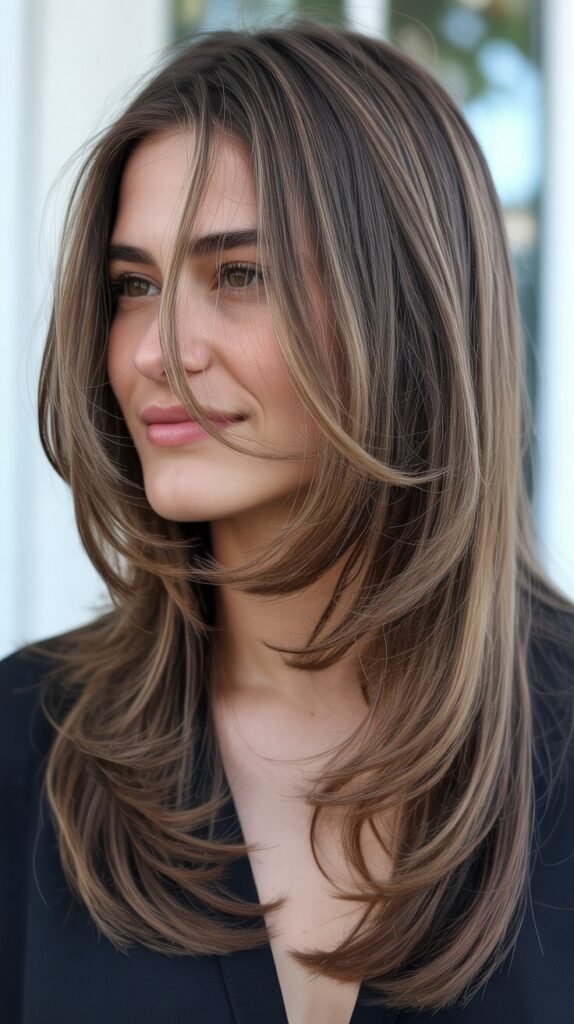
Diagonal forward layers create a striking, angular appearance where the hair is cut on a forward diagonal, making the front pieces significantly longer than the back.
This dramatic cutting technique produces maximum face-framing while maintaining substantial length in the front sections.
The result is a bold, contemporary look that frames the face beautifully.
- This cut is achieved by sectioning the hair and cutting each section at a forward diagonal angle
- The shortest point is typically at the back, with hair gradually lengthening as it moves toward the face
- Face-framing pieces can be several inches longer than the back length, creating dramatic contrast
- This technique creates natural face-framing without requiring separate shorter pieces
- The diagonal angle adds movement and prevents the hair from appearing flat or lifeless
- Style with a flat iron or large curling iron to emphasize the clean, diagonal lines
- This cut works exceptionally well for those with naturally straight or slightly wavy hair
- The dramatic difference in length between front and back makes this a statement-making style
12. Invisible Layers With Subtle Face-Framing
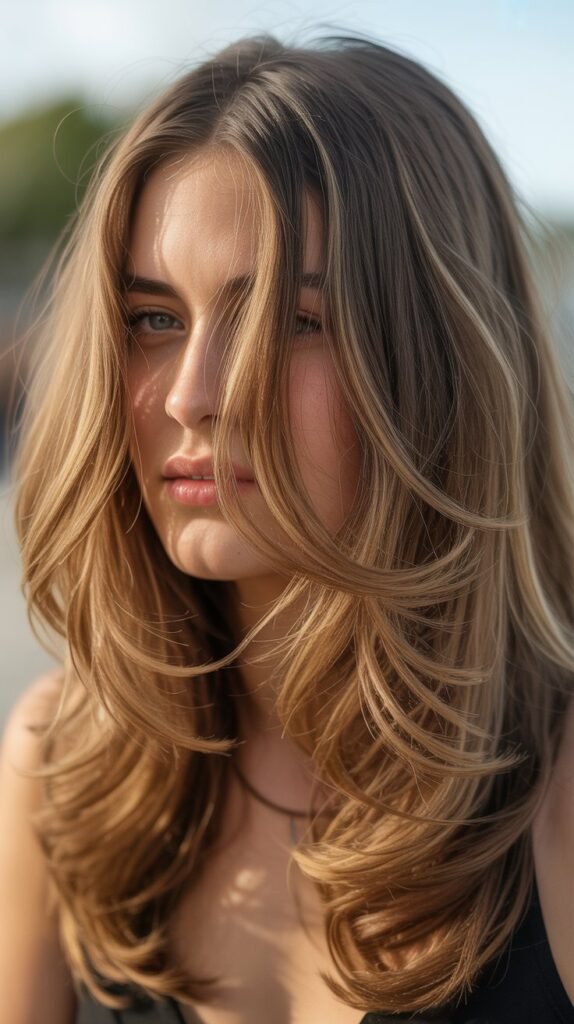
Invisible layers with subtle face-framing provide dimension and movement without obvious layering lines.
This technique creates the illusion of uniform length while strategically removing weight and adding texture throughout.
The face-framing pieces are cut to blend seamlessly, creating a natural, effortless appearance.
- Invisible layers are created using precision cutting techniques that remove weight without creating visible steps
- The layers are cut at very slight angles, creating gradual transitions that are nearly imperceptible
- Face-framing pieces are cut just slightly shorter than the surrounding hair, creating subtle definition
- This approach is ideal for those who want the benefits of layers without a dramatically layered appearance
- The technique works particularly well for maintaining the appearance of thick, full hair
- Style with a large round brush to enhance the natural movement created by the invisible layers
- Apply a lightweight oil or serum to add shine and emphasize the healthy appearance
- This cut requires an experienced stylist with excellent technical skills to execute properly
13. Razored Texture With Angled Framing Pieces
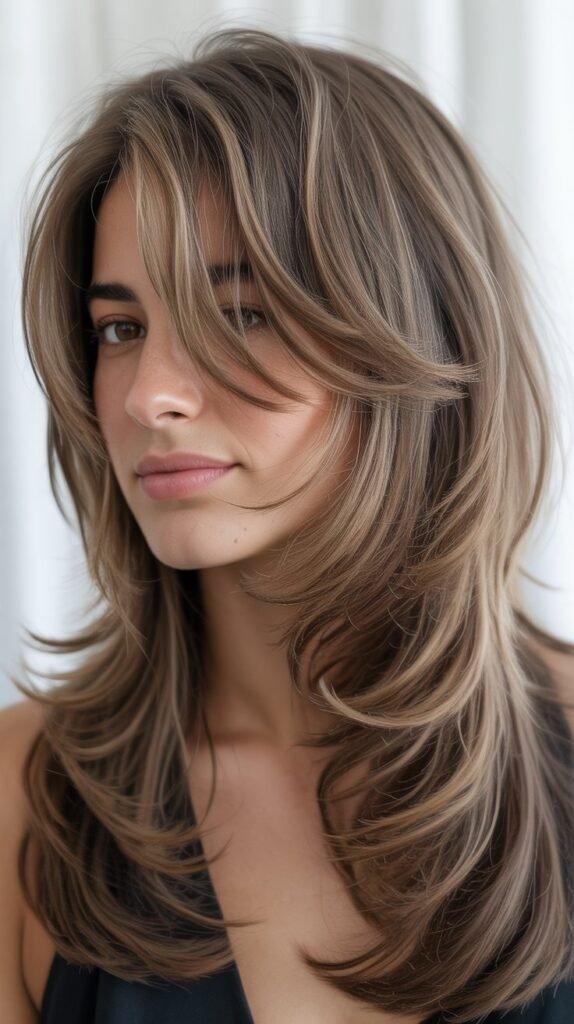
Razored texture with angled framing pieces creates an ultra-modern, edgy look with maximum movement and dimension.
Using a razor instead of traditional shears produces soft, tapered ends and removes weight throughout the hair.
The angled framing pieces are cut sharply to create bold face-framing that draws attention to the features.
- Razor cutting creates a different texture than scissor cutting, producing softer, more feathered ends
- The technique removes weight while maintaining length, perfect for thick or heavy hair
- Angled framing pieces are cut at a sharp diagonal, creating bold lines around the face
- These pieces typically start shorter near the cheekbones and angle downward
- The razor technique throughout the length creates natural texture and movement
- Style with a texturizing spray or salt spray to enhance the piecey, separated texture
- Use your fingers to tousle and shape the hair for a lived-in, effortless appearance
- Razor cuts typically require more frequent maintenance as the tapered ends can become split more easily
14. Long Layers With Swoopy Side Bangs
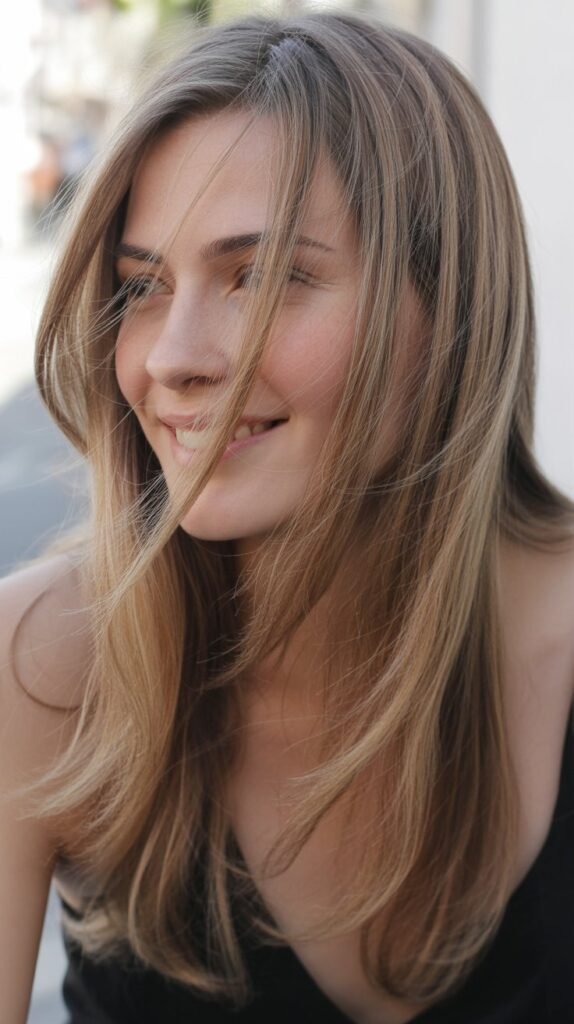
Long layers paired with swoopy side bangs create a romantic, face-flattering style with plenty of movement.
The side-swept bangs add softness and femininity while the long layers throughout provide body and dimension.
This classic combination works beautifully for various face shapes and hair textures.
- Swoopy side bangs are cut longer than traditional blunt bangs and are designed to be swept to one side
- These bangs typically start around eyebrow length and angle down toward the cheekbone
- Long layers throughout the rest of the hair should start below the chin and continue downward
- The combination creates a cohesive, flowing appearance with maximum face-framing
- When styling, use a round brush to blow-dry the bangs in the desired direction
- Create a slight curve or bend in the bangs for the signature swoopy appearance
- Apply a light-hold hairspray to keep the bangs in place without looking stiff
- This style is particularly flattering for those with round or square face shapes
15. Stacked Crown Layers With Long Face-Framing
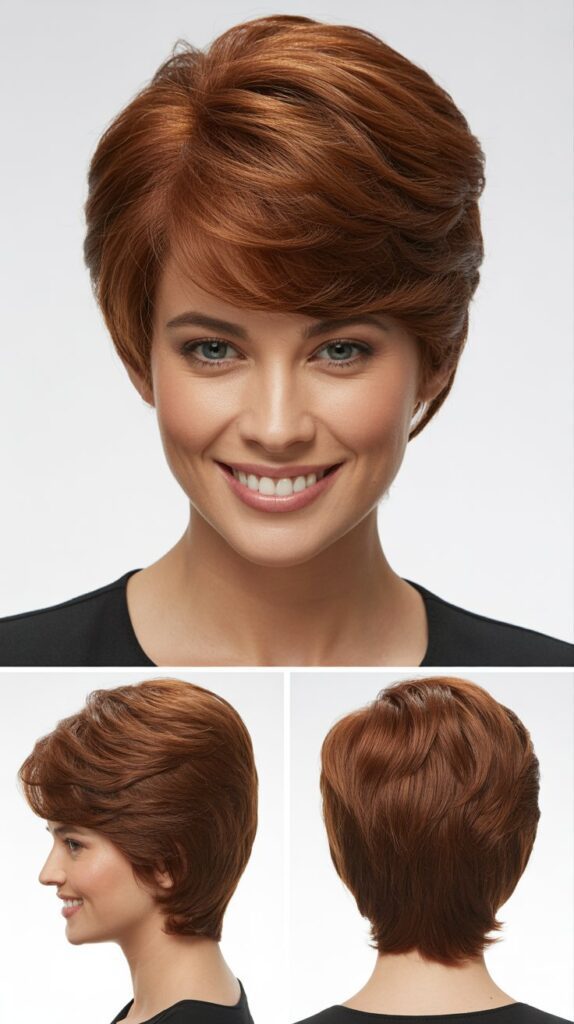
Stacked crown layers combined with long face-framing pieces create incredible volume at the top while maintaining length around the face.
This technique involves shorter, graduated layers concentrated at the crown that add height and fullness.
The longer face-framing sections balance the volume and draw attention to facial features.
- Stacked layers at the crown are cut progressively shorter, creating a layered, graduated effect
- This technique adds significant volume and lift to the upper portion of the hair
- The crown layers typically start around the top of the head and gradually lengthen
- Face-framing pieces remain longer, starting around chin length or below
- This contrast between short crown layers and long face-framing creates interesting dimension
- Style the crown area with a volumizing product and blow-dry with a round brush for maximum lift
- The face-framing pieces can be styled straight or with soft waves
- This cut is excellent for those with fine or flat hair who want added volume
16. Textured Ends With Micro Face-Framing
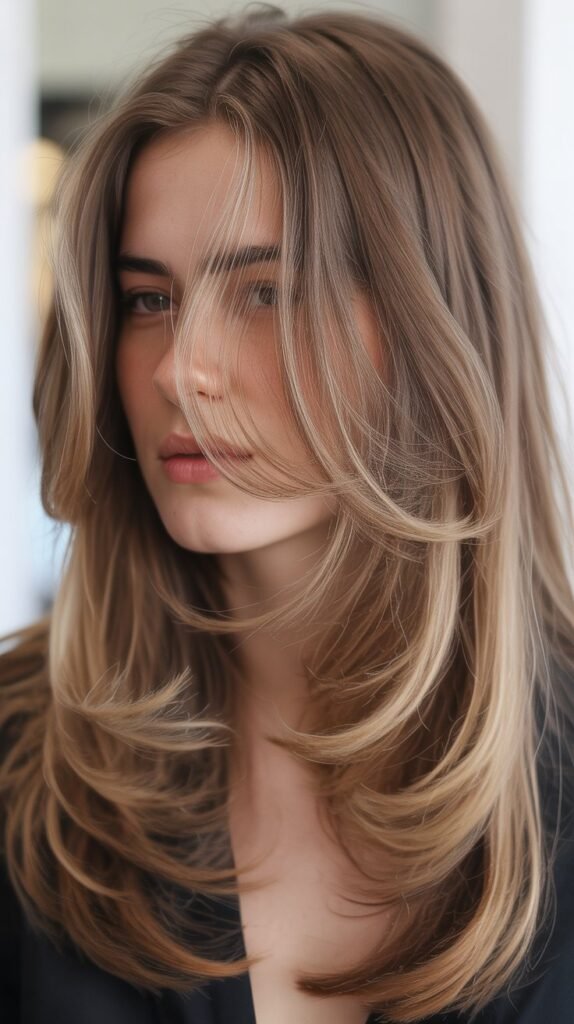
Textured ends with micro face-framing layers create subtle definition that enhances natural beauty without dramatic changes.
This style features point-cut or textured ends throughout the length, with very short, delicate layers around the face.
The micro layers add gentle framing without requiring a significant length commitment.
- Textured ends are created through point-cutting or notching techniques that soften the baseline
- This removes bulk and creates a lighter, airier appearance at the ends
- Micro face-framing layers are very short pieces, typically 1-2 inches in length, around the hairline
- These delicate layers add soft definition without creating obvious shorter pieces
- The micro layers blend quickly into the longer length as they grow out
- Style with a lightweight styling cream to enhance texture without weighing down the fine layers
- These subtle layers require minimal maintenance and work well with various styling approaches
- This option is perfect for those who want face-framing without committing to longer, more obvious layers
17. Waterfall Layers With Curved Face-Framing
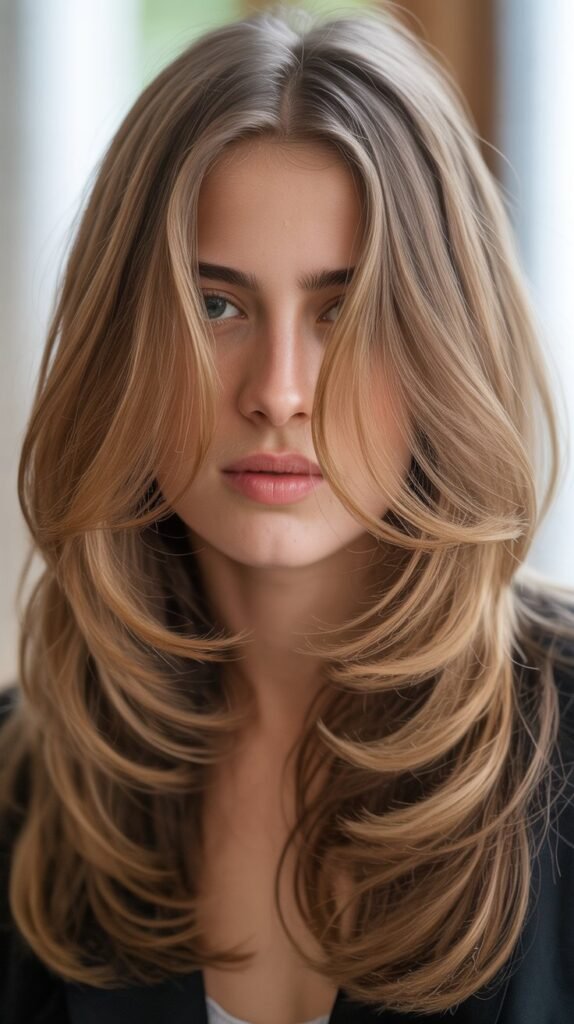
Waterfall layers with curved face-framing create a cascading, flowing effect that mimics water falling gracefully.
This technique involves cutting layers that flow seamlessly into each other, with no harsh lines or obvious separation.
The curved face-framing pieces follow the natural contours of the face for maximum flattery.
- Waterfall layers are cut to flow smoothly from one length to the next without visible demarcation
- This creates a gentle, cascading appearance similar to flowing water
- Each layer blends perfectly into the next, creating seamless transitions throughout
- Curved face-framing follows the natural shape of the face rather than straight diagonal lines
- This approach creates softer, more organic framing that appears natural and effortless
- When styling, use a curling iron to add soft waves that enhance the waterfall effect
- Apply a shine spray or gloss to emphasize the smooth, flowing appearance
- This style works beautifully for those who want dimension without harsh contrasts
18. Elongated Layers With Cheekbone-Grazing Pieces
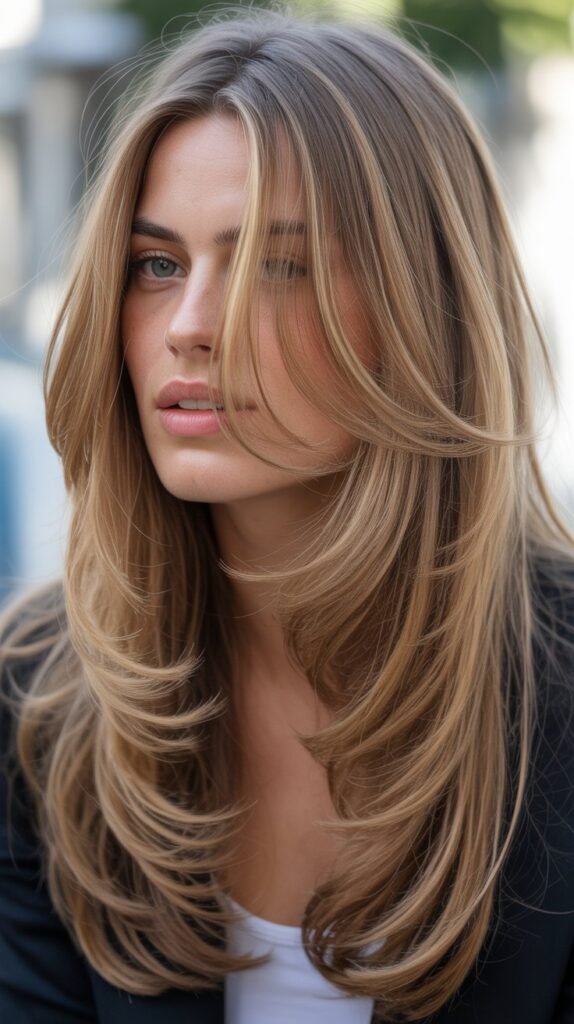
Elongated layers with cheekbone-grazing pieces create face-framing that highlights one of the most attractive areas of the face.
This style features longer layers throughout the length, with strategic pieces cut to fall exactly at cheekbone level.
The placement draws attention to the eyes and cheekbones while adding structure to the overall look.
- Elongated layers are longer, more stretched-out versions of traditional layers
- These layers start lower on the head and create gentle, subtle graduation
- The cheekbone-grazing pieces are cut to fall precisely at the cheekbone level
- This strategic placement creates a framing effect that draws the eye to the upper face
- The specific length flatters most face shapes by adding definition to the mid-face area
- Style with a flat iron or large barrel curling iron to keep the focus on the precision of the cut
- Apply a smoothing serum to create sleek, polished ends
- This cut requires careful maintenance to keep the face-framing pieces at the correct length
19. Graduated Face-Frame With Uniform Back
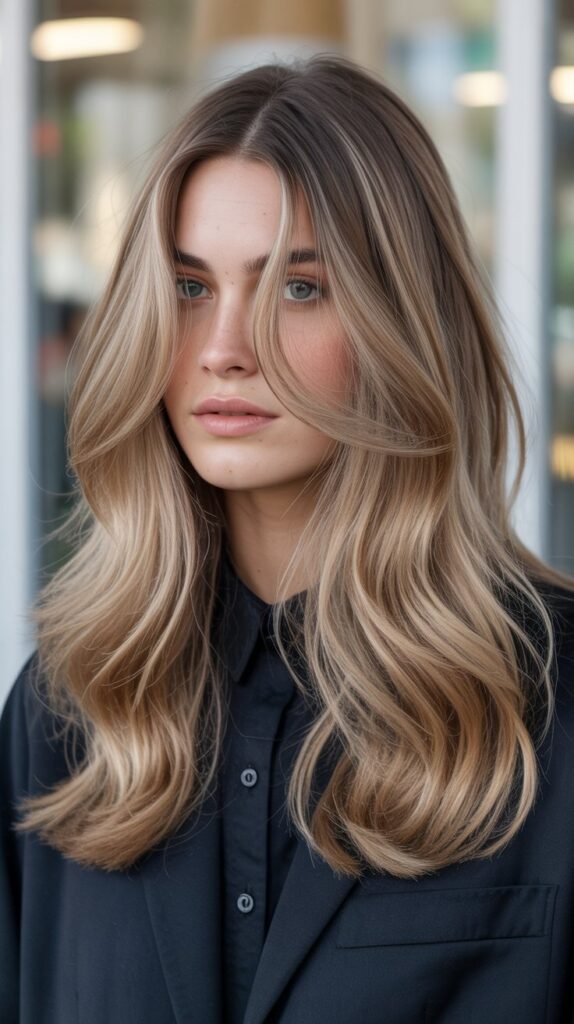
A graduated face-frame with uniform back length creates an interesting contrast between structured framing and consistent length.
The face-framing sections feature multiple graduating lengths that create dimension around the face, while the back remains one uniform length.
This combination offers the best of both worlds.
- The graduated face-frame features several distinct lengths that step down around the face
- These pieces typically start shorter at the front and gradually lengthen as they move back
- The back section is cut to one uniform length, maintaining a blunt appearance
- This contrast creates visual interest and allows for versatile styling options
- The front pieces can be styled with texture and movement while the back remains sleek
- Use different techniques on the front and back sections to emphasize the contrast
- Apply texturizing products to the face-framing pieces while keeping the back smooth and polished
- This style works well for those who want face-framing without losing length in the back
20. Soft Graduated Layers Throughout
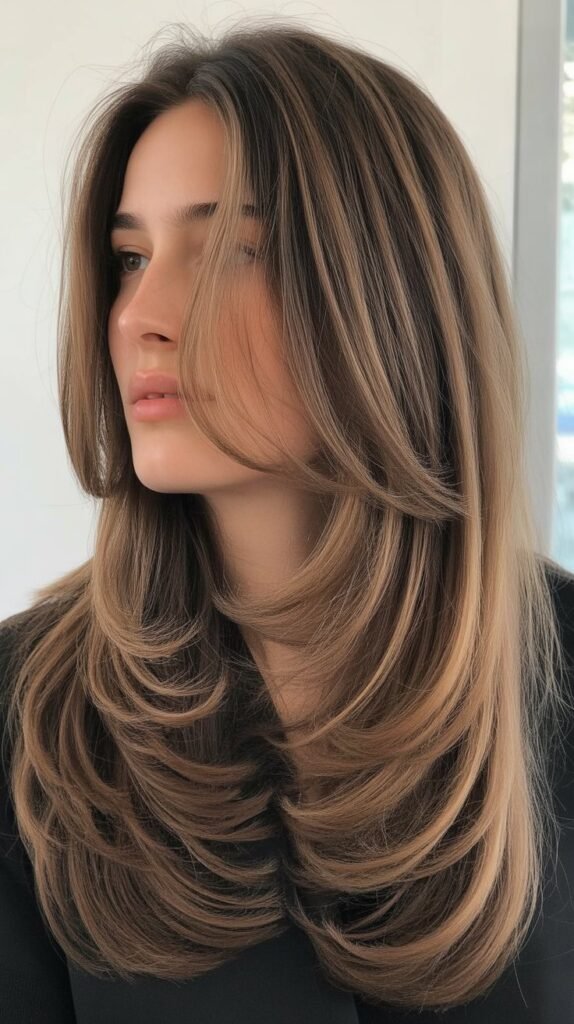
Soft graduated layers throughout the entire length create gentle dimension that enhances natural movement.
This comprehensive layering approach involves cutting layers that gradually increase in length from the crown to the ends, with face-framing pieces integrated seamlessly into the overall layered structure.
The result is cohesive, flowing hair with maximum movement.
- This technique involves creating layers throughout all sections of the hair, from top to bottom
- Each layer is cut slightly longer than the one above it, creating smooth graduation
- The face-framing pieces are integrated as part of the overall layering system rather than separate sections
- This creates a cohesive appearance where all elements flow together naturally
- The soft graduation prevents harsh lines or obvious layer placement
- Style with a large round brush or diffuser to enhance the natural movement of the layers
- This cut works beautifully with natural texture and doesn’t require extensive styling
- The comprehensive layering makes this style suitable for all hair types and textures
21. Asymmetrical Layers With Off-Center Framing
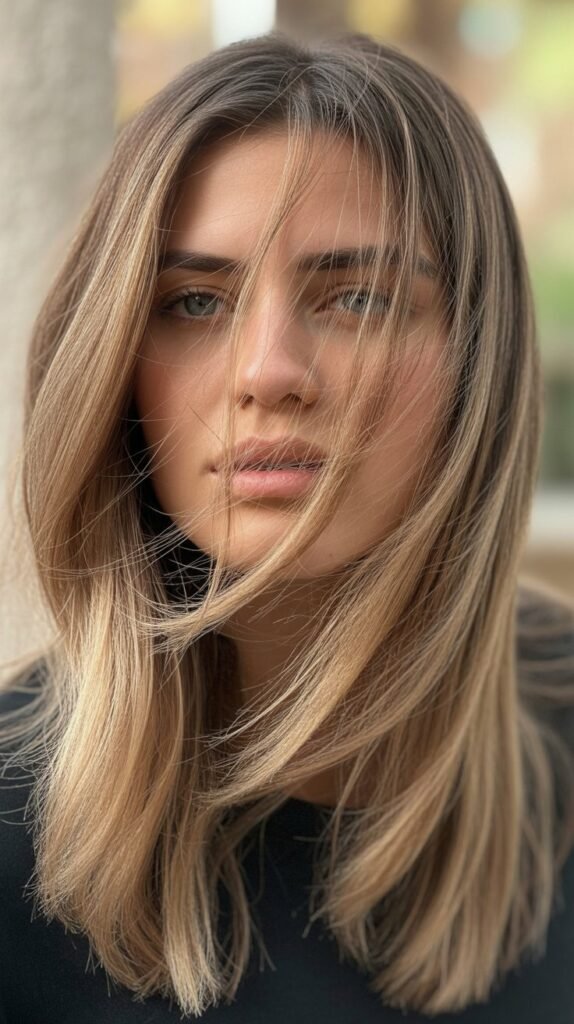
Asymmetrical layers with off-center framing create a bold, fashion-forward look that breaks traditional symmetry.
This style features layers cut at different lengths on each side, with face-framing pieces that don’t mirror each other.
The intentional imbalance creates visual interest and a unique, individualized appearance.
- Asymmetrical cutting involves creating different layer lengths on opposite sides of the head
- One side may feature shorter, more dramatic layers while the other remains longer
- Face-framing pieces are cut at different lengths on each side to enhance the asymmetry
- This intentional imbalance creates a modern, edgy aesthetic that stands out
- The off-center framing draws the eye and creates dynamic visual interest
- Style each side differently to emphasize the asymmetrical nature of the cut
- This style requires confidence and works well for those who enjoy unique, statement-making looks
- Regular trims are important to maintain the intentional asymmetry and prevent it from looking uneven
22. Wispy Layers With Feathered Framing
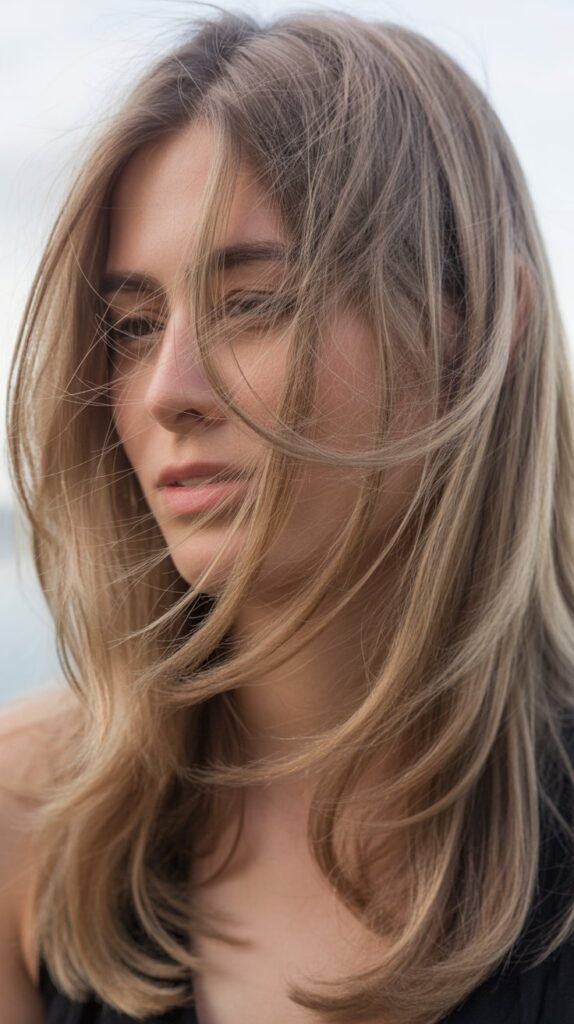
Wispy layers with feathered framing create an ultra-light, airy texture throughout the hair.
This technique combines soft, wispy layers throughout the length with feathered face-framing pieces that add delicate definition.
The overall effect is ethereal and romantic, perfect for those who prefer a softer aesthetic.
- Wispy layers are created using point-cutting and texturizing techniques that produce soft, fine ends
- These layers remove weight while creating an airy, floating appearance
- Feathered framing pieces are cut with a razor or texturizing shears to create soft, tapered ends
- The feathering technique blends the face-framing seamlessly into the rest of the hair
- This style is particularly effective for fine or thin hair that needs texture without bulk
- Style with lightweight products that won’t weigh down the delicate texture
- Use a diffuser or air-dry to maintain the wispy, natural appearance
- This cut creates a soft, romantic look that works beautifully for special occasions
23. Chunky Piece-y Layers With Bold Framing
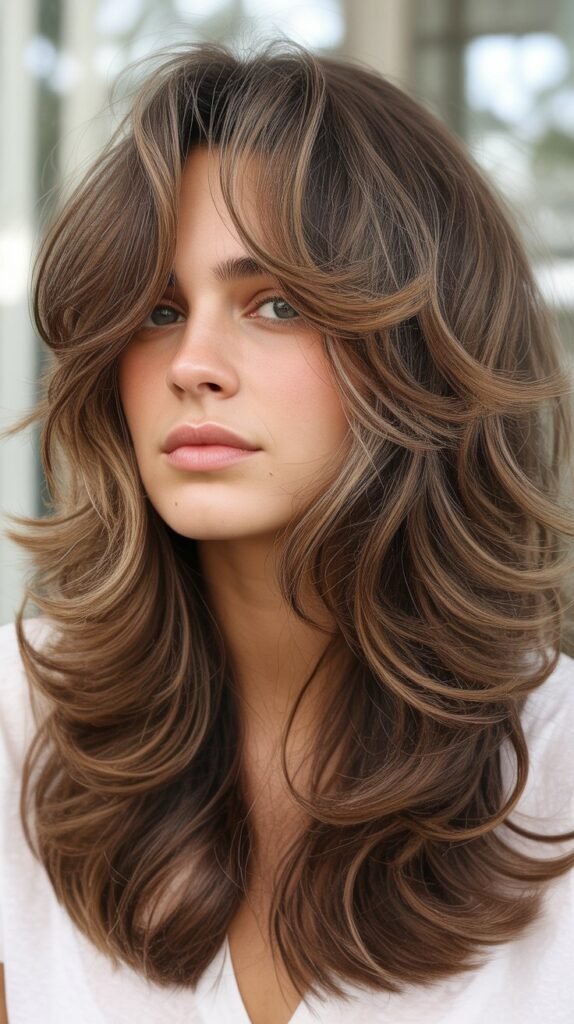
Chunky piece-y layers with bold framing create a striking, textured look with defined separation.
This style features thick sections of layered hair that create obvious, chunky pieces throughout.
The bold face-framing follows the same aesthetic with thicker, more defined sections that frame the face dramatically.
- Chunky layers are cut in thicker sections rather than the fine sections used in most layering techniques
- This creates visible, defined pieces that maintain their separation when styled
- The bold face-framing features thicker sections cut at strategic lengths around the face
- This approach works particularly well with highlighting or balayage that emphasizes the chunky pieces
- Style with texturizing paste or wax to enhance separation and definition
- Use your fingers to pull apart and define individual chunks
- This look is perfect for those who want an edgy, rock-and-roll aesthetic
- The chunky pieces require less precise styling and embrace a messy, undone appearance
24. Precision-Cut Layers With Geometric Framing
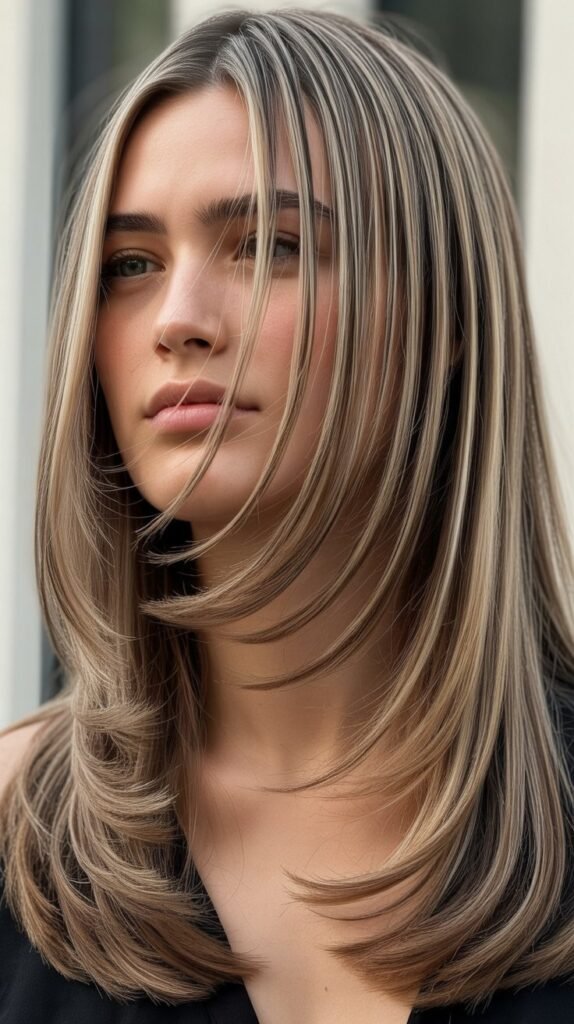
Precision-cut layers with geometric framing create a sharp, modern look with clean lines and intentional angles.
This technique involves cutting layers with mathematical precision, creating exact angles and lengths.
The geometric face-framing features sharp, defined lines that create bold framing around the face.
- Precision cutting requires expert technical skills and attention to exact measurements
- Layers are cut at specific angles using precise sectioning and cutting techniques
- Geometric framing features straight, sharp lines that create angular face-framing
- This approach creates a contemporary, high-fashion aesthetic
- The clean lines and sharp angles make this style a true statement piece
- Style with sleek, straight techniques using a flat iron to emphasize the precise lines
- Apply anti-frizz products to maintain the clean, polished appearance
- This cut requires regular maintenance to keep the geometric shapes sharp and defined
25. Bouncy Layered Ends With Curved Pieces
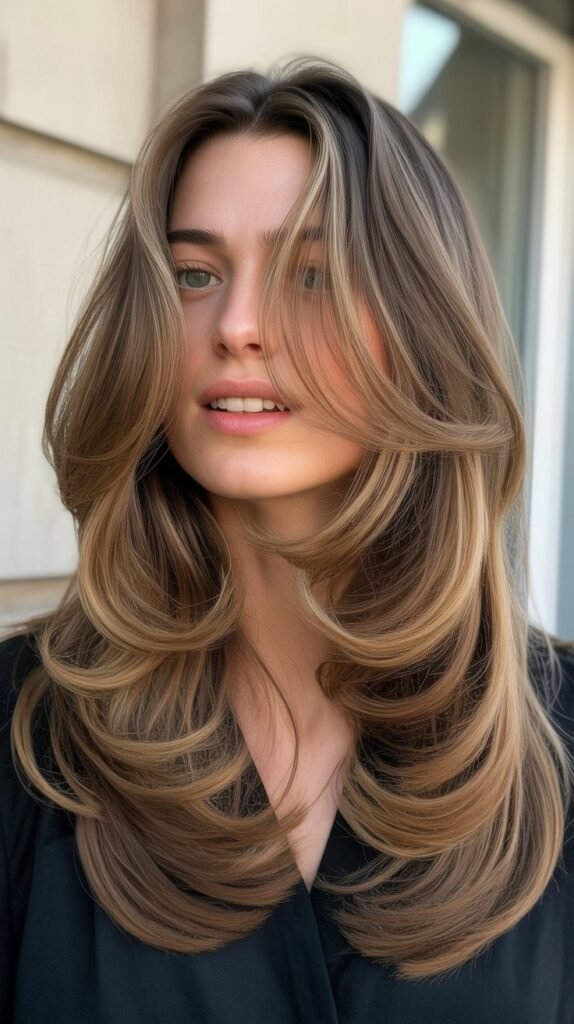
Bouncy layered ends with curved face-framing pieces create a youthful, energetic look full of movement.
This style features layers concentrated toward the ends of the hair that create natural bounce and body.
The curved face-framing pieces follow the contours of the face and enhance the overall buoyant appearance.
- Layers concentrated at the ends create natural curl and bounce in the lower portion of the hair
- This technique works particularly well for those with naturally wavy or curly hair
- The curved face-framing is cut to enhance the bouncy aesthetic
- These pieces follow the natural shape of the face and add to the overall lifted appearance
- When styling, use a diffuser or curling iron to enhance the natural bounce
- Apply volumizing products to maximize the bouncy effect
- This style creates a youthful, energetic appearance that’s perfect for active lifestyles
- The bouncy ends require minimal maintenance and often look best with natural texture
26. Slide-Cut Layers With Disconnected Framing
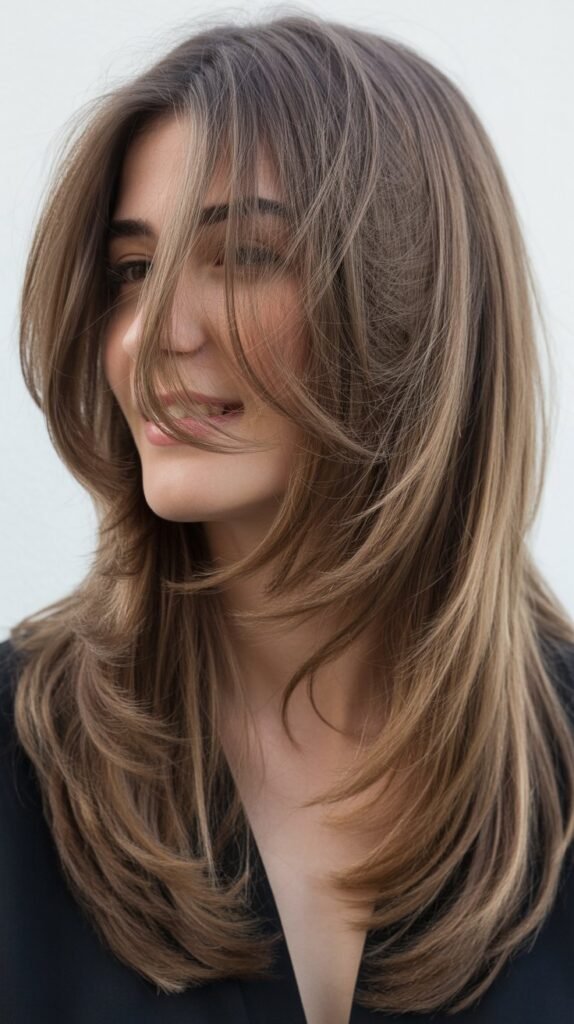
Slide-cut layers with disconnected framing create a modern, textured look with intentional separation between sections.
The slide-cutting technique produces soft, mobile layers throughout the length.
The disconnected face-framing features pieces that are cut separately from the main body of hair, creating defined, intentional framing.
- Slide-cutting involves moving the shears along the hair shaft while cutting, creating internal texture
- This technique produces layers that move independently and create natural separation
- Disconnected framing means the face-framing pieces are cut separately from surrounding hair
- There’s a visible gap or difference between the framing pieces and the rest of the hair
- This intentional disconnection creates bold, defined framing that stands out
- Style the disconnected pieces separately from the rest of the hair for emphasis
- Use texturizing products to enhance the separation and movement
- This modern cutting technique requires an experienced stylist familiar with advanced methods
27. Uniform Length With Face-Framing Only
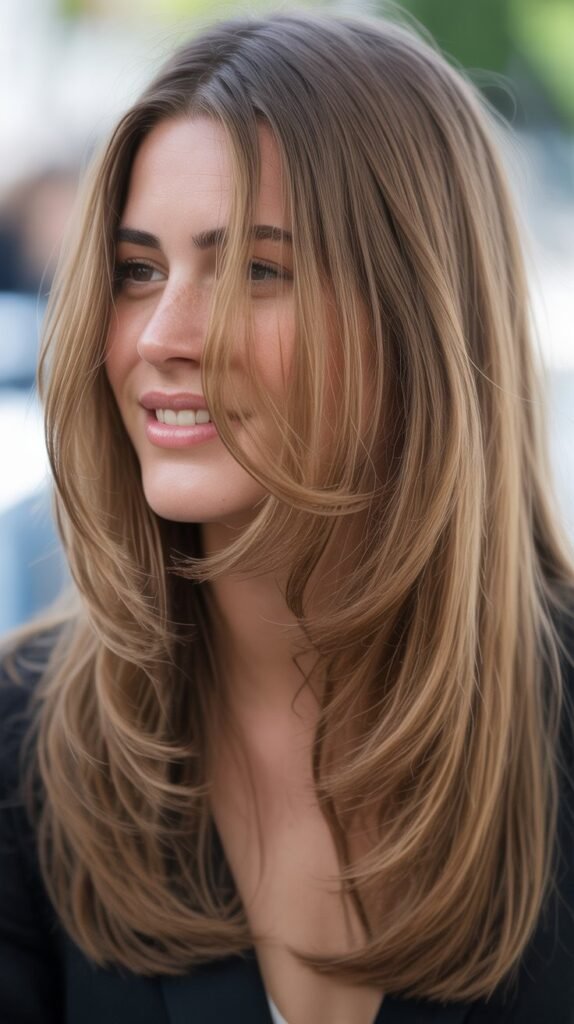
Uniform length with face-framing only maintains consistent length throughout while adding dimension solely through face-framing pieces.
This approach is perfect for those who want to keep their length intact while enjoying the benefits of face-framing layers.
The rest of the hair remains one length, creating a clean, classic look.
Conclusion
Long layered hairstyles with framing front pieces are a timeless choice for adding movement, shape, and softness to long hair.
These 31 must-try styles highlight how face-framing layers can enhance your natural features while keeping the length you love.
Easy to style and endlessly versatile, they work beautifully with straight, wavy, or curly textures.
Whether you’re refreshing your current look or going for a subtle transformation, long layered styles with front framing pieces offer effortless elegance and modern appeal.