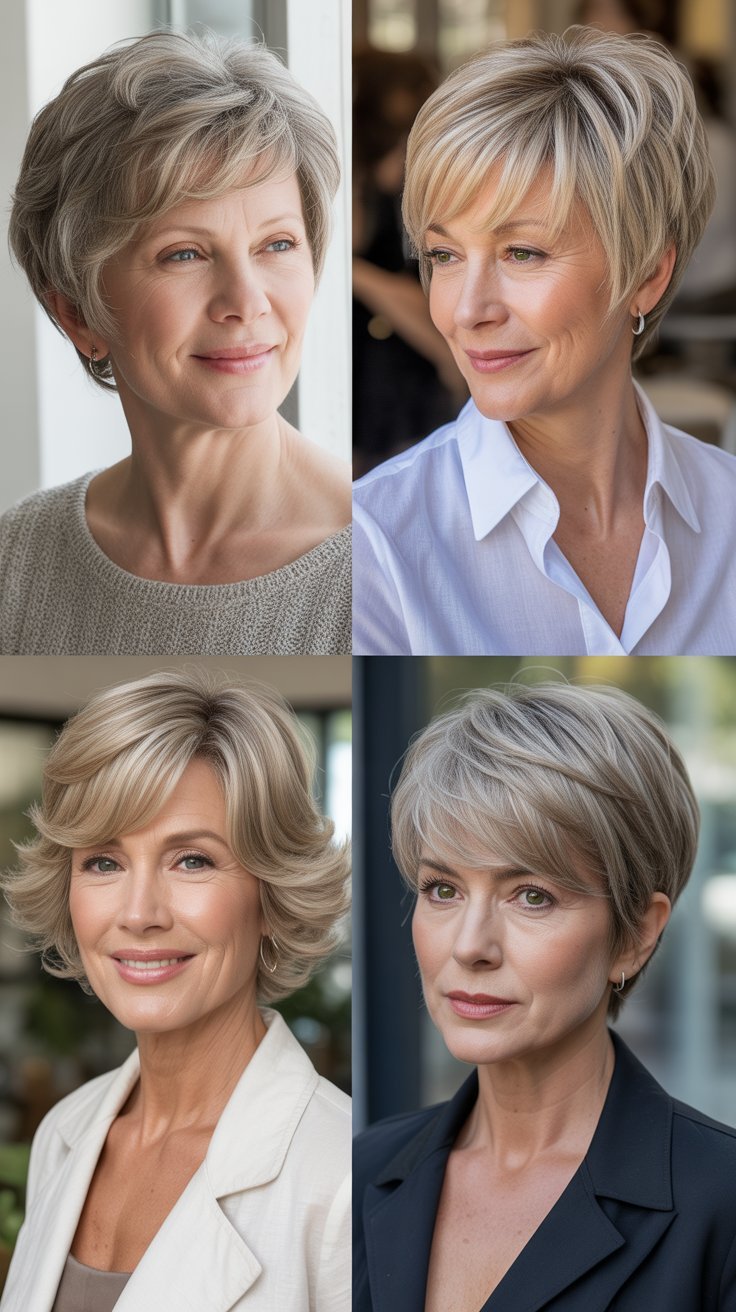
Finding the perfect hairstyle after 60 can feel like discovering a new version of yourself—confident, vibrant, and beautifully age-appropriate.
If you have fine hair, you might think your styling options are limited, but the truth is quite the opposite.
Short hairstyles for women over 60 with fine hair offer incredible versatility, easy maintenance, and the ability to add volume and texture where you need it most.
This comprehensive guide explores 33 fresh short hairstyles specifically designed to work with fine hair textures, helping you find styles that flatter your face shape, suit your lifestyle, and make you feel absolutely radiant.
From classic pixie cuts to textured bobs, layered crops to elegant silver styles, you’ll discover hairstyles that add body, movement, and sophistication to fine hair.
Whether you prefer low-maintenance wash-and-go styles or looks that allow for creative styling, this article covers everything you need to know about choosing, styling, and maintaining short hairstyles that elevate your personal style and celebrate this exciting chapter of life.
1. Classic Pixie Cut for Volume and Movement
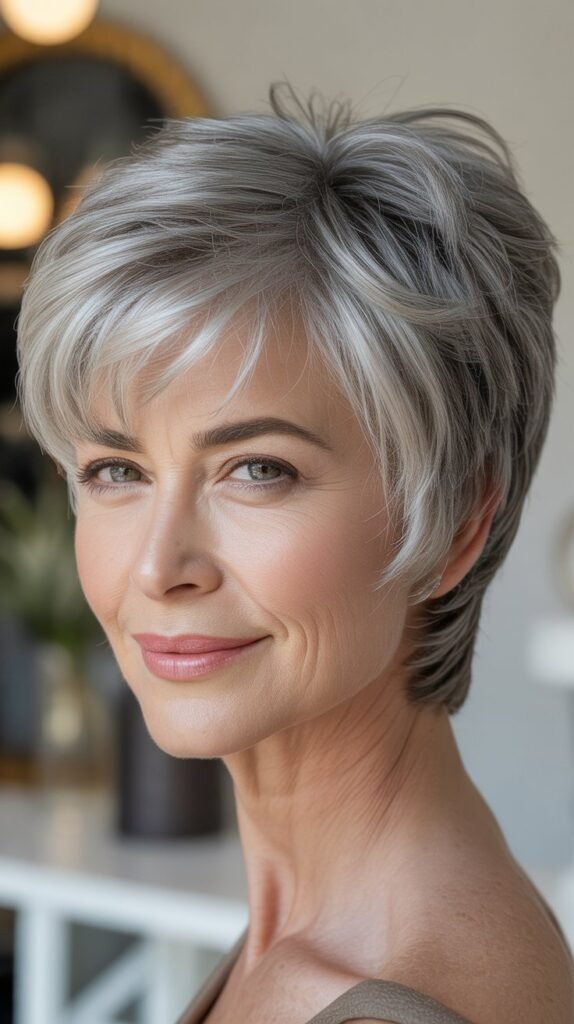
The classic pixie cut remains one of the most flattering and practical choices for women over 60 with fine hair because it creates the illusion of thickness and vitality.
- The pixie cut works exceptionally well for fine hair because shorter strands naturally stand up more easily, creating volume at the roots without requiring extensive styling products.
- Layers cut throughout the crown and sides add dimension and prevent the flat appearance that fine hair sometimes develops with longer styles.
- This style typically features slightly longer pieces on top (2-4 inches) with shorter, tapered sides and back, allowing for versatility in styling direction and texture.
- The pixie is remarkably low-maintenance, usually requiring only a quick blow-dry with fingers or a small round brush to achieve a polished look.
- Regular trims every 4-6 weeks help maintain the shape and prevent the style from looking grown-out or losing its structured appearance.
- For women with active lifestyles, the pixie offers freedom from daily styling routines while still looking put-together and intentional.
2. Textured Bob with Layers
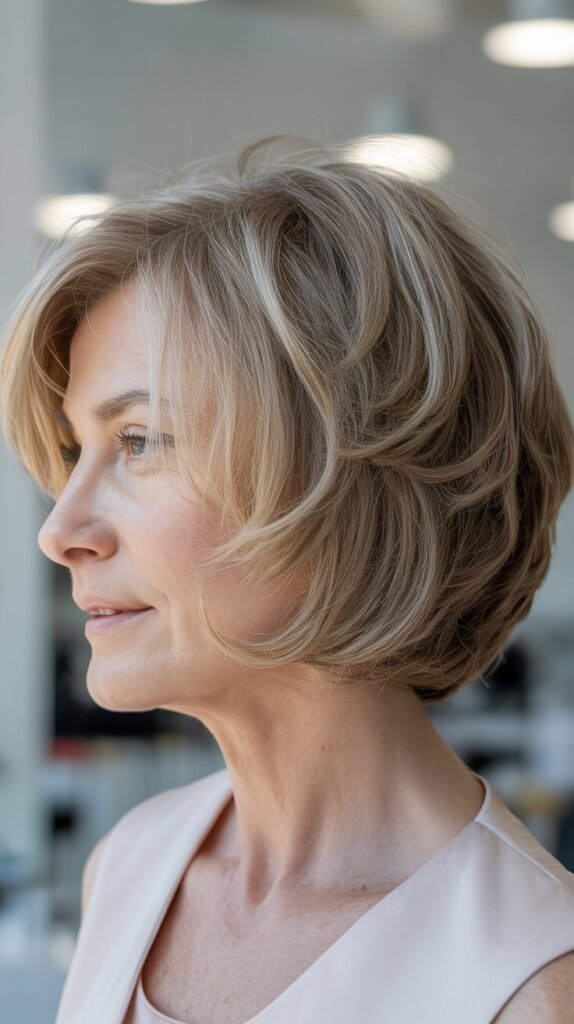
A textured bob with strategic layering transforms fine hair by creating depth, movement, and the appearance of fuller, healthier strands.
- Textured bobs typically fall between chin and shoulder length, with internal layers that remove weight while maintaining fullness at the perimeter.
- The layering technique involves cutting different lengths throughout the hair, which prevents fine strands from clumping together and looking limp.
- Point-cutting or razor-cutting the ends creates a softer, more modern finish that moves naturally rather than appearing blunt or heavy.
- This style works beautifully with natural texture, whether you have slight waves or straight hair, as the layers enhance whatever movement is already present.
- Styling can be as simple as blow-drying with a round brush or using a flat iron to create subtle bends and curves throughout.
- The textured bob offers enough length for styling variety—you can tuck it behind your ears, add a side part, or create volume at the crown depending on your mood.
3. Side-Swept Bangs with Short Cut
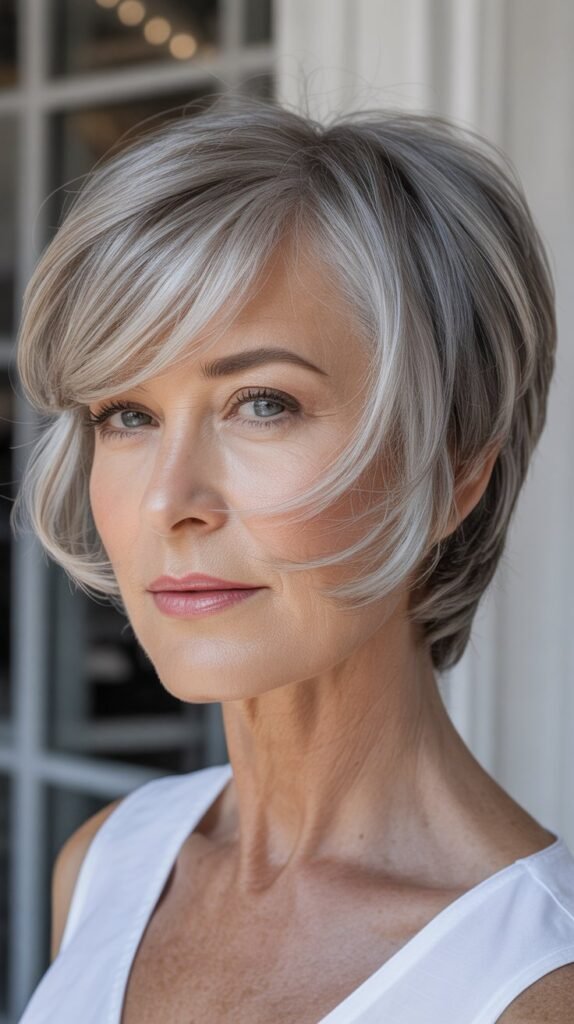
Side-swept bangs paired with a short cut soften facial features and draw attention to your eyes while adding contemporary style to any base haircut.
- Side-swept bangs work particularly well for women over 60 because they gently frame the face without the maintenance requirements of full, straight-across bangs.
- The angle of side bangs creates a diagonal line across the forehead that visually lifts facial features and adds asymmetrical interest.
- For fine hair, bangs should be cut with texture rather than a solid, heavy line to prevent them from separating or looking stringy.
- These bangs can be incorporated into pixie cuts, bobs, or cropped styles, making them a versatile addition to virtually any short hairstyle.
- Styling side-swept bangs typically involves blow-drying them in the desired direction with a round brush or simply using your fingers to guide them into place.
- The length can be customized to suit your preference—some women prefer bangs that barely graze the eyebrow, while others like them longer, sweeping across to the temple area.
4. Asymmetrical Bob for Modern Elegance
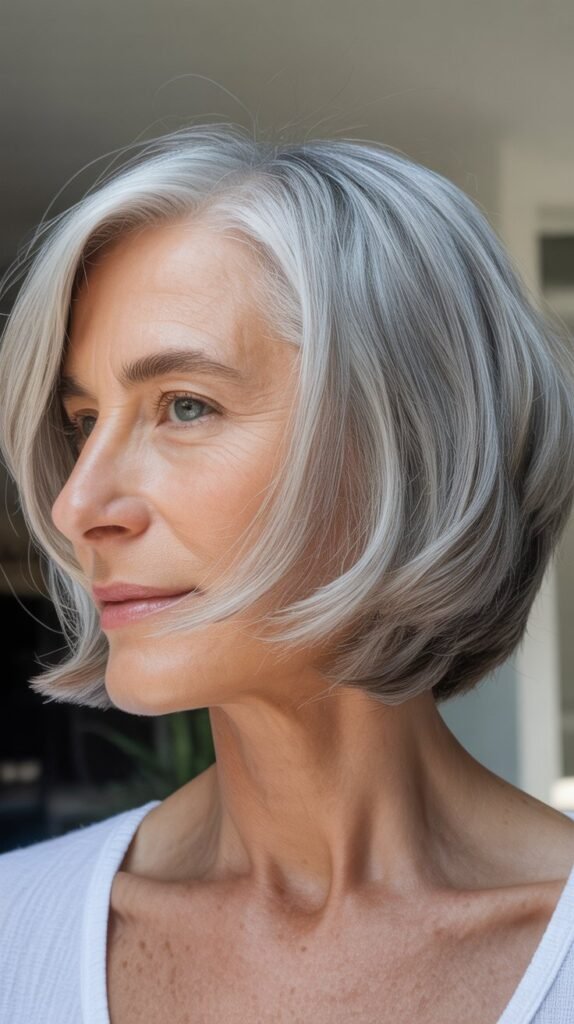
An asymmetrical bob brings contemporary sophistication to fine hair through its intentionally uneven lengths that create visual interest and dynamic movement.
- The defining characteristic of an asymmetrical bob is that one side is deliberately cut longer than the other, typically with a difference of 1-3 inches.
- This style creates a fashion-forward look that feels current and confident, perfect for women who want to express a bold, artistic sensibility.
- The longer side can be tucked behind the ear or left to swing forward, offering styling versatility and the ability to change your look throughout the day.
- For fine hair, the asymmetry adds the perception of volume because the eye is drawn to the interesting shape rather than focusing on hair density.
- Internal layering throughout both sides prevents the style from appearing flat while maintaining the distinct length difference that defines the look.
- This cut requires a skilled stylist who understands how to balance the asymmetry with your face shape and natural hair growth patterns.
5. Feathered Layers for Airy Texture
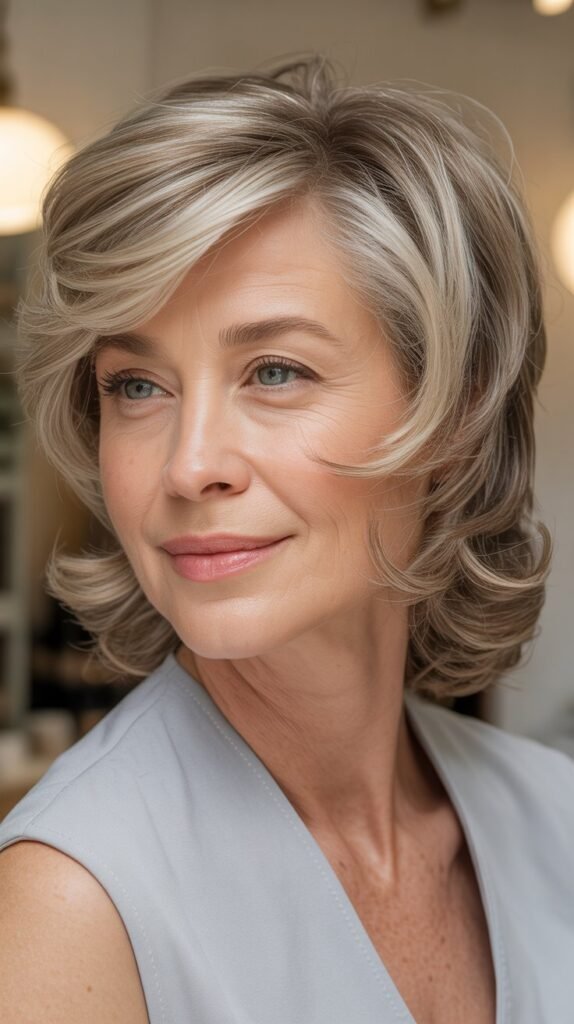
Feathered layers create soft, wispy ends that give fine hair an airy, lightweight quality while adding significant visual volume and movement.
- Feathering involves cutting layers with a technique that creates tapered, pointed ends rather than blunt lines, resulting in hair that moves and separates beautifully.
- This cutting method is particularly beneficial for fine hair because it prevents the heavy, weighed-down appearance that can occur with blunt cuts.
- The feathered ends catch light differently than solid cuts, creating the illusion of more hair and adding dimensional interest to the overall style.
- Styling feathered layers typically requires minimal effort—a blow-dryer and your fingers can achieve the desired separated, textured look.
- This technique can be applied to various short styles, from pixies to bobs, making it a versatile approach to cutting fine hair.
- Regular maintenance every 6-8 weeks helps keep the feathered ends looking fresh and prevents them from becoming too tapered or losing their shape.
6. Slicked-Back Pixie for Sophisticated Polish
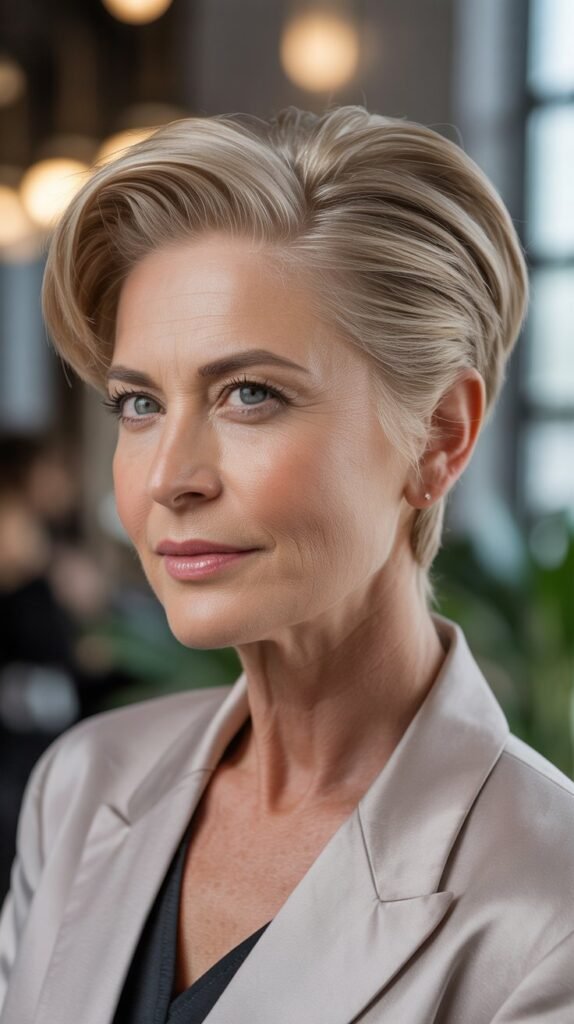
The slicked-back pixie offers a refined, elegant alternative to traditional pixie styling, perfect for formal occasions or women who prefer a more polished everyday look.
- This style involves using styling products like gel, pomade, or smoothing cream to direct all hair backward from the face, creating a streamlined silhouette.
- For fine hair, the slicked-back approach actually works advantageously because the hair lies smoothly against the head without appearing bulky or heavy.
- The look emphasizes facial features, particularly bone structure, making it an excellent choice for women with strong cheekbones or distinctive facial characteristics.
- Achieving this style requires applying product to damp hair and combing it backward with a fine-toothed comb, then allowing it to air dry or using low heat.
- The slicked-back pixie can be dressed up or down—it works equally well for business meetings, evening events, or casual weekend activities.
- For women with very fine hair, this style offers the benefit of looking intentionally sleek rather than accidentally flat, transforming a potential challenge into a deliberate style choice.
7. Choppy Crop for Edgy Appeal
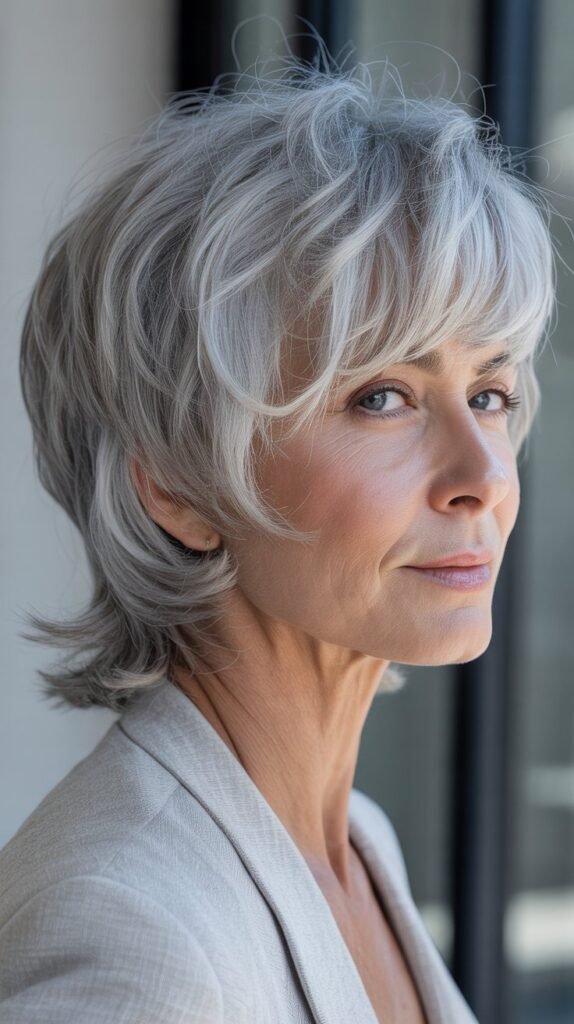
A choppy crop delivers contemporary edge and personality through deliberately uneven, textured pieces that create a youthful, energetic vibe.
- The choppy crop is characterized by varying lengths throughout the cut, with some pieces significantly shorter than others, creating an intentionally tousled appearance.
- This style challenges conventional ideas about age-appropriate hair, offering women over 60 an opportunity to express creativity and confidence.
- For fine hair, the choppy cutting technique adds the illusion of thickness because the varying lengths prevent strands from lying flat against each other.
- Styling involves using texturizing products like sea salt spray, texture paste, or dry shampoo to enhance separation between pieces.
- The choppy crop typically features very short sides and back with slightly longer, more textured pieces on top that can be styled forward, to the side, or straight up.
- This cut requires confidence to wear but rewards bold women with a distinctive, memorable look that stands out from more traditional short styles.
8. Rounded Bob with Soft Curves
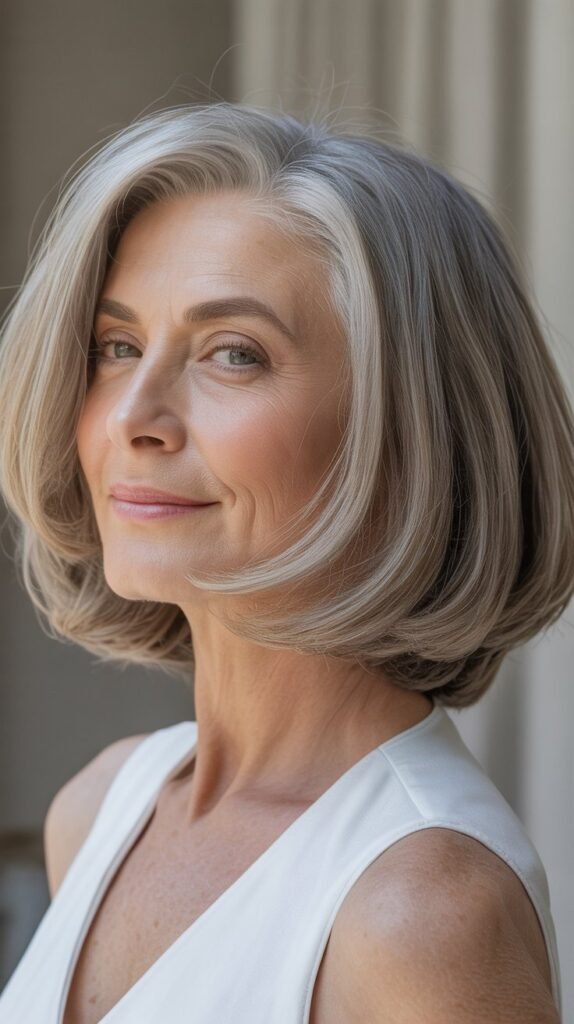
The rounded bob uses curved cutting lines to create a soft, feminine shape that adds fullness around the face and complements fine hair beautifully.
- Unlike angular bobs, the rounded version features a gentle, circular silhouette when viewed from the side, with the hair curving inward toward the neckline.
- This shape is achieved through specific cutting and often requires blow-drying with a round brush to direct hair inward and maintain the curved perimeter.
- The rounded bob works exceptionally well for oval, round, and heart-shaped faces, softening angular features and adding balance to facial proportions.
- For fine hair, the curved shape creates the appearance of density because the ends turn under rather than lying flat or pointing outward.
- Internal layers are typically kept minimal in rounded bobs to maintain the weight needed for the hair to curve naturally inward.
- This style offers a classic, timeless quality that never goes out of fashion while still looking fresh and contemporary when properly maintained.
9. Short Shag with Wispy Ends
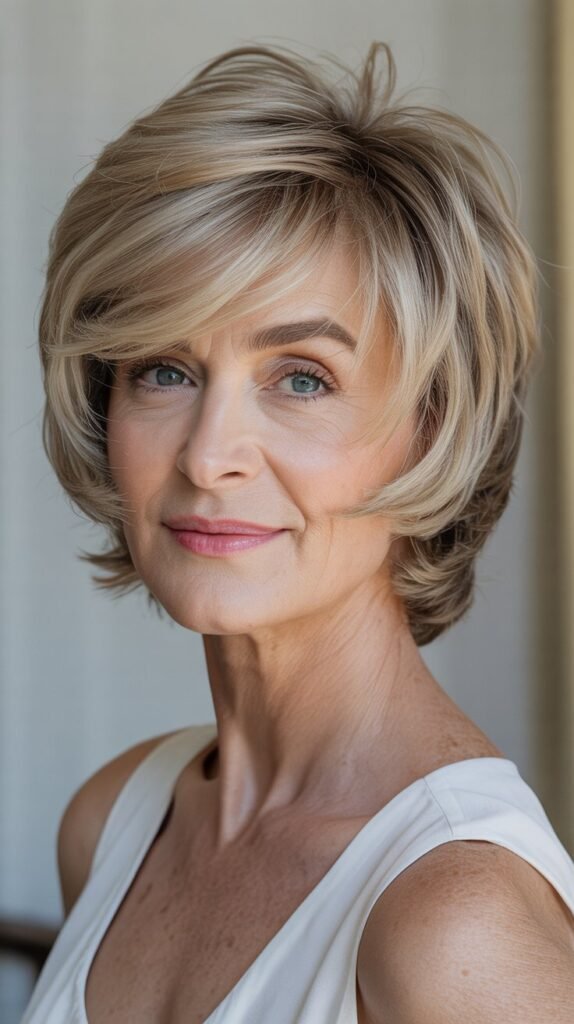
The short shag brings 1970s-inspired cool into the modern era with its layered, textured approach that’s perfect for adding body to fine hair.
- Shag cuts are defined by their heavily layered structure, with layers beginning high on the head and continuing throughout to create maximum movement and volume.
- The wispy ends characteristic of shag cuts are achieved through point-cutting or razor techniques that create soft, feathered tips rather than blunt lines.
- This style works beautifully for fine hair because the extensive layering removes weight, allowing each layer to lift and create the impression of fuller hair.
- Styling a short shag can be as simple as scrunching with mousse or texturizing spray and air-drying for a casual, effortless look.
- The shag’s inherent texture means it looks intentional even when slightly messy, making it ideal for low-maintenance styling routines.
- Modern shags can be customized with varying lengths—some women prefer a longer top with shorter sides, while others opt for more uniform layering throughout.
10. Tapered Cut with Longer Crown
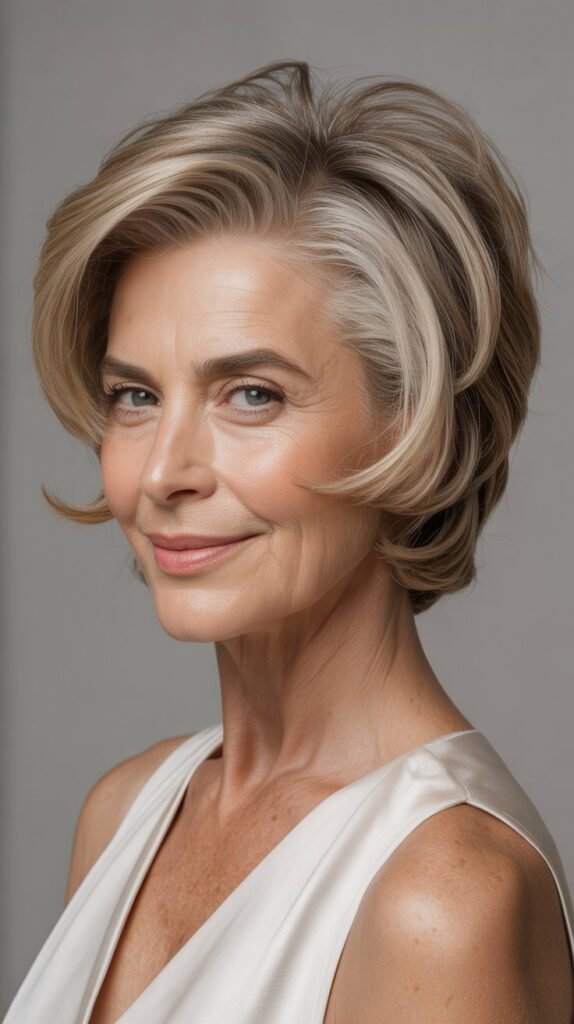
A tapered cut featuring a longer crown section creates beautiful vertical height that draws the eye upward and adds dimension to fine hair.
- This cut gradually decreases in length from the crown down to the nape and sides, creating a pyramid-like shape that emphasizes the top portion of the hairstyle.
- The longer crown area (typically 3-5 inches) provides ample hair for creating volume through blow-drying, while the tapered sides keep the style clean and structured.
- For fine hair, concentrating length at the crown means more hair is available in the most visible area, creating the appearance of overall fullness.
- The tapered sides and back can be cut with clippers or scissors, depending on how gradual or dramatic you want the transition from long to short.
- Styling focuses on lifting the crown area with a round brush during blow-drying or using volumizing products at the roots for added height.
- This cut offers excellent versatility—the crown can be styled smooth and sophisticated or textured and tousled depending on the occasion.
11. Platinum Blonde Pixie for Striking Impact
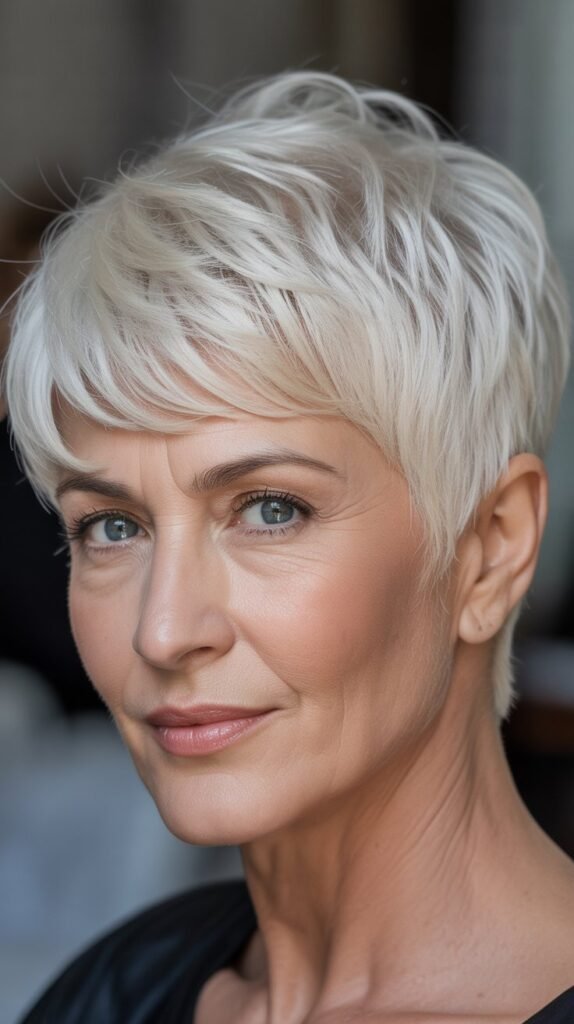
A platinum blonde pixie combines dramatic color with a classic cut to create a striking, fashion-forward look that commands attention and radiates confidence.
- Platinum blonde works particularly well on short hairstyles because the bold color becomes a defining feature of the overall look, elevating even simple cuts.
- For mature women, cool-toned platinum can actually be more flattering than warmer blonde shades because it complements the natural skin tone changes that occur with age.
- The light color creates the optical illusion of more hair by reflecting light, making fine strands appear fuller and more substantial.
- Maintaining platinum blonde requires commitment to regular toning treatments (every 4-6 weeks) to prevent unwanted yellow or brassy tones from developing.
- A quality purple shampoo used weekly helps maintain the cool, bright tone between salon visits and extends the life of professional color treatments.
- The combination of a short pixie cut with platinum color creates a bold, artistic statement that works beautifully for women with strong personal style.
12. Wavy Bob with Natural Texture
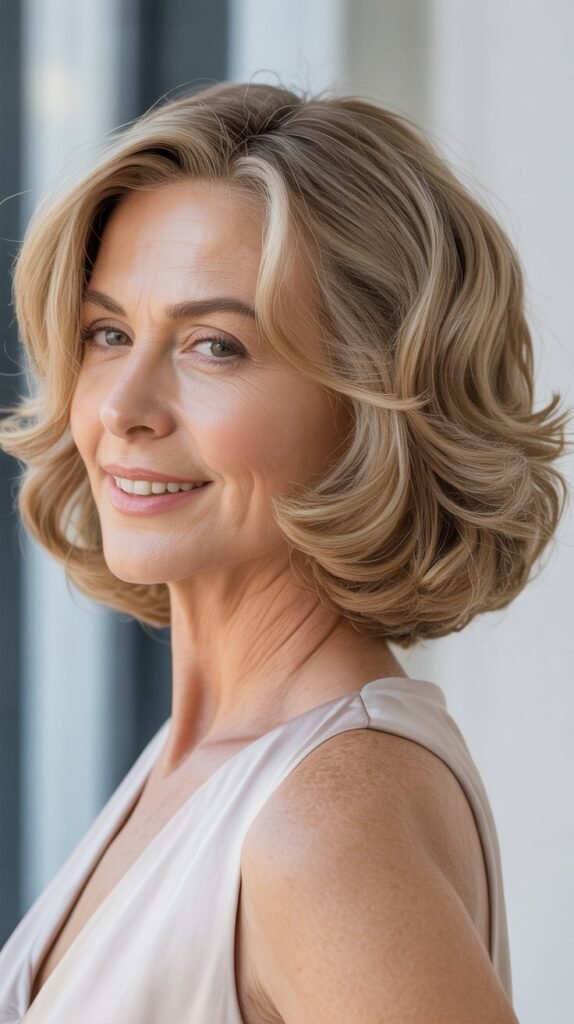
A wavy bob embraces natural texture rather than fighting against it, creating an effortlessly beautiful style that works with fine hair’s inherent movement.
- This style recognizes that many women have natural wave patterns in their hair that become more apparent with shorter lengths and proper cutting techniques.
- The key to a successful wavy bob for fine hair is cutting layers that enhance the wave pattern without removing so much hair that it appears thin.
- Styling involves using curl-enhancing products on damp hair, then either air-drying or diffusing to bring out the natural wave without creating frizz.
- The wavy bob typically falls between chin and shoulder length, with the waves adding visual interest and volume throughout.
- For women whose hair is naturally straight but who want waves, a curling iron or flat iron can create soft bends that last throughout the day.
- This style offers a relaxed, beachy aesthetic that’s perfect for casual lifestyles while still looking polished enough for professional settings.
13. Close-Cropped Cut for Minimalist Style
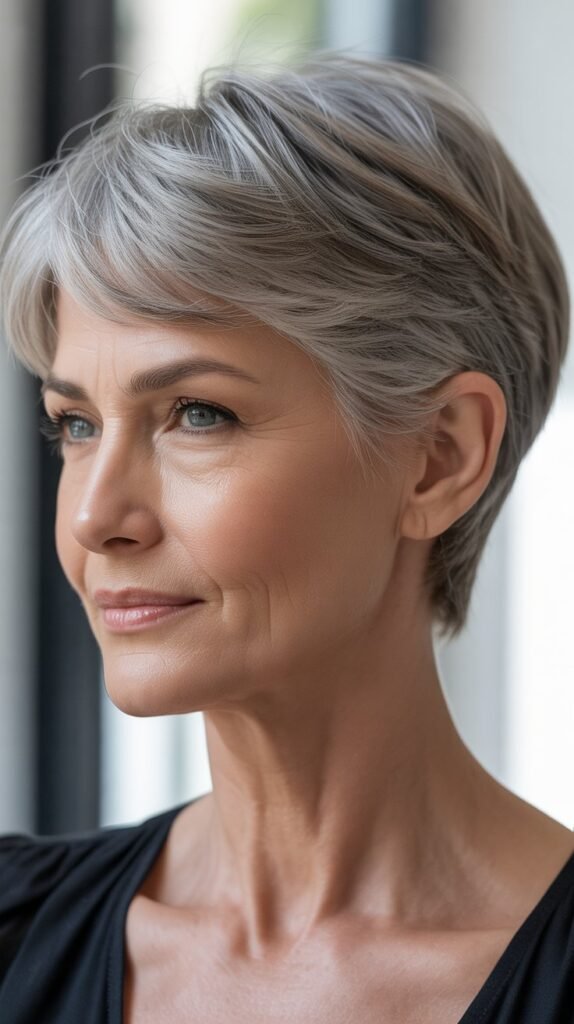
The close-cropped cut represents the ultimate in low-maintenance styling, featuring uniformly short hair (typically 1-2 inches) all over the head for a sleek, minimalist aesthetic.
- This ultra-short style eliminates most styling requirements—after washing, the hair dries quickly and naturally falls into place without requiring products or tools.
- Close-cropped cuts work surprisingly well for fine hair because the short length allows each strand to stand away from the scalp, creating the appearance of density.
- The style emphasizes facial features and head shape, making it important to work with a skilled stylist who can assess how the cut will complement your specific characteristics.
- Maintenance involves regular trims every 3-4 weeks to maintain the uniform length and prevent the cut from losing its clean, precise appearance.
- Despite its simplicity, the close-cropped cut can be surprisingly versatile—adding product can create texture and separation, while leaving it natural produces a soft, subtle look.
- This cut is particularly appealing for active women, those in warm climates, or anyone who values efficiency and simplicity in their daily routine.
14. Stacked Bob for Maximum Volume
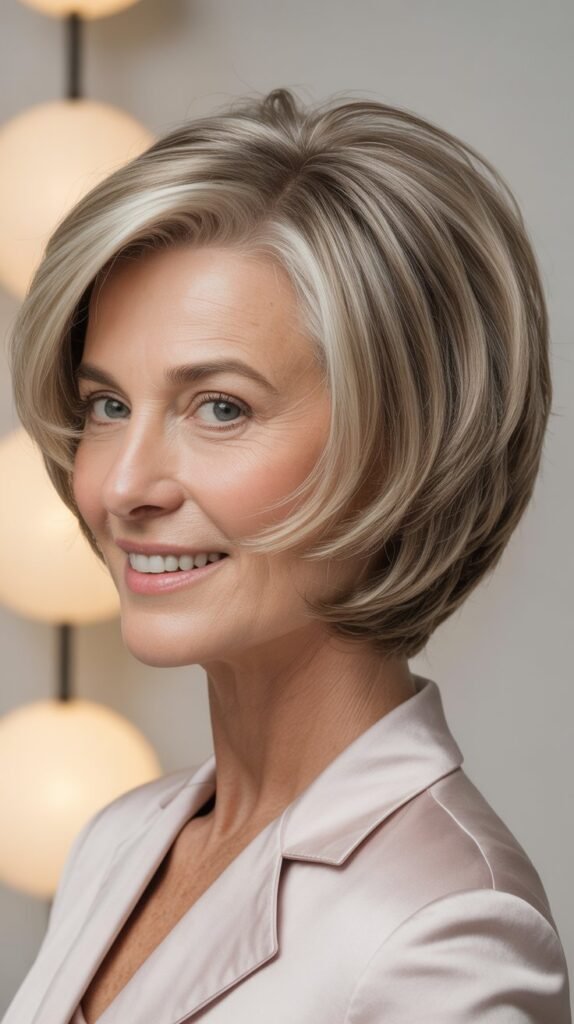
The stacked bob creates dramatic volume at the back of the head through graduated layers that build upon each other, offering exceptional fullness for fine hair.
- Stacking refers to the technique of cutting progressively shorter layers in the back, creating a rounded, voluminous shape that gives fine hair impressive body.
- The front sections typically remain longer (at or below chin length) while the back graduates from short at the nape to longer as it approaches the crown.
- This creates a dramatic difference between front and back lengths, with the stacked layers in back providing the foundation for significant volume.
- For women with fine hair, the stacked bob is particularly effective because the graduated layers prevent the back from appearing flat or lifeless.
- Styling requires blow-drying the back sections with a round brush, directing hair up and over to enhance the stacked shape and maximize volume.
- The stacked bob offers a bold, structured look that makes a statement while solving the common fine hair challenge of achieving fullness at the back of the head.
15. Tousled Crop with Piecey Texture
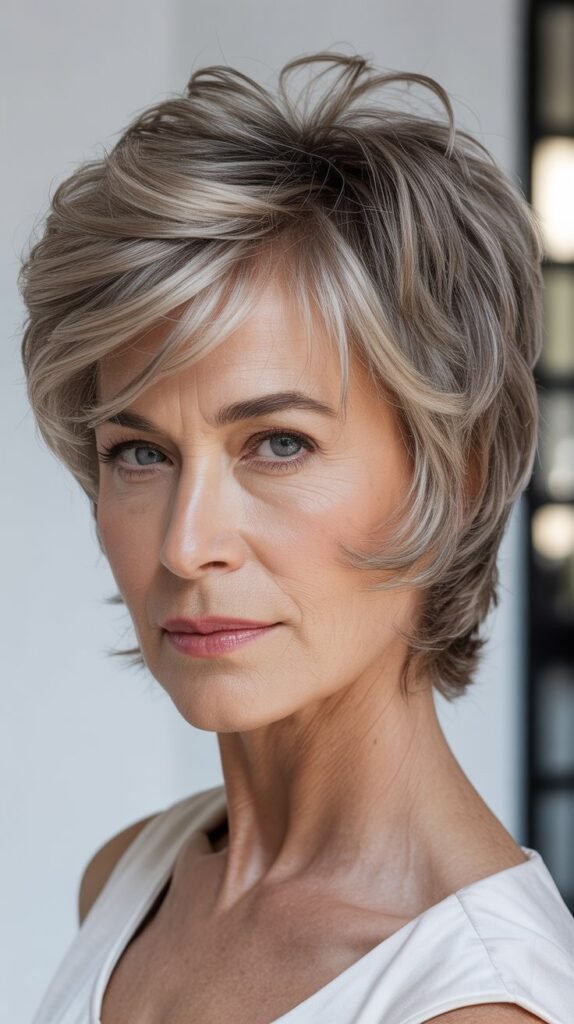
A tousled crop with piecey texture creates an intentionally undone look that’s both modern and forgiving, perfect for fine hair that benefits from textured styling.
- The tousled crop typically features short to medium-short length throughout with layers cut to create separation and prevent the hair from lying too smoothly.
- “Piecey” texture refers to styling that creates visible separation between sections of hair rather than blending everything together for a uniform appearance.
- This texture is achieved using products like pomade, wax, or texturizing cream applied to dry or nearly-dry hair, then manipulating individual pieces with fingers.
- For fine hair, the piecey approach is beneficial because it makes hair appear thicker—the eye perceives separated pieces as individual strands rather than thin hair.
- The tousled, slightly messy aesthetic means the style looks intentional even on days when you have minimal time for styling, offering built-in forgiveness for busy mornings.
- This cut requires confidence to wear because it embraces texture and movement rather than smooth perfection, rewarding bold women with a contemporary, youthful look.
16. Graduated Bob with Angled Perimeter
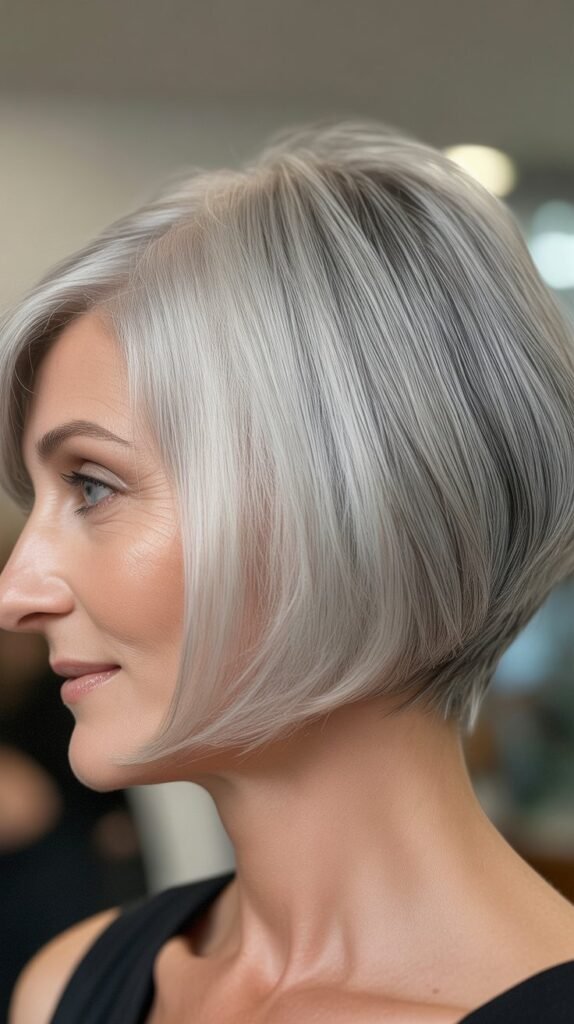
The graduated bob features an angled cutting line that creates a longer front and shorter back, adding architectural interest and solving fine hair challenges.
- Graduation refers to the technique of cutting internal layers shorter than the perimeter, creating stacked volume and preventing the hair from collapsing flat.
- The angled perimeter typically means the front pieces fall anywhere from chin to below-chin length while the back sits at or above the nape.
- This combination of graduation and angle creates a wedge-like shape when viewed from the side that’s both modern and flattering.
- For fine hair, the graduated cutting technique is particularly valuable because it concentrates volume where it’s most visible while removing weight in areas where it isn’t needed.
- The longer front pieces frame the face beautifully, drawing attention to your best features while the shorter back prevents the style from appearing heavy or dated.
- Styling typically involves blow-drying with a round brush, focusing on lifting the back sections to enhance the graduated layers and maintain the style’s distinctive shape.
17. Silver Gray Crop with Modern Appeal
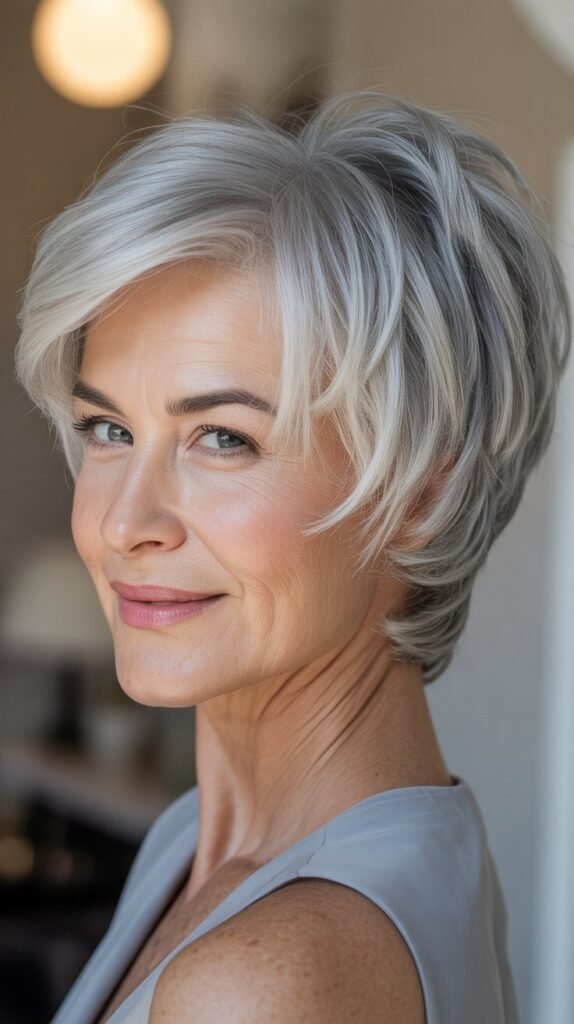
Embracing natural silver gray hair with a modern crop celebrates your authentic beauty while creating a sophisticated, fashion-forward look.
- Silver gray hair has become increasingly celebrated in fashion and beauty circles, transforming from something women felt they needed to hide into a desirable aesthetic choice.
- Short crops showcase silver gray hair beautifully because the healthy, well-maintained ends reflect light and display the hair’s natural dimensional tones.
- Modern silver gray hair often includes variations from bright white to darker charcoal tones, creating natural highlights and lowlights that add depth and interest.
- Maintaining vibrant silver gray requires using purple or blue-toned shampoos to prevent yellowing and keep the cool tones fresh and bright.
- The combination of short cropped length with silver gray color creates a contemporary, confident look that feels both age-appropriate and surprisingly youthful.
- Many women report feeling liberated when they stop coloring their hair and embrace their natural gray, finding the short crop to be the perfect complement to this authentic choice.
18. Layered Pixie with Side Part
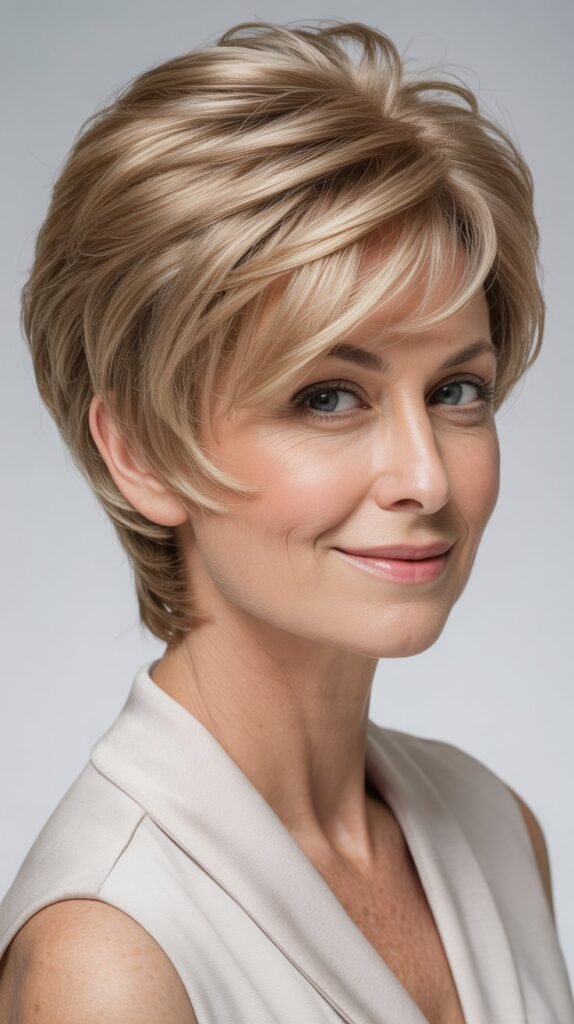
A layered pixie featuring a defined side part adds sophistication and styling versatility to this classic short cut while enhancing volume for fine hair.
- The side part creates an immediate asymmetry that’s visually interesting and allows for different styling approaches on each side of the head.
- Layering throughout a pixie cut prevents it from appearing flat or one-dimensional, with shorter layers at the crown lifting away from the scalp for natural volume.
- For fine hair, the combination of layers and a side part means hair naturally falls with more body on the heavier side while the shorter side remains sleek and close to the head.
- The side part can be placed anywhere from a subtle off-center position to a dramatic deep side part that sweeps most of the hair to one side.
- Styling involves blow-drying the hair in the direction of the part, using a round brush on the longer side to create volume and shape.
- This style offers daily versatility—you can switch the part to the opposite side for a completely different look or experiment with how far to the side you place it.
19. Curly Short Bob for Natural Volume
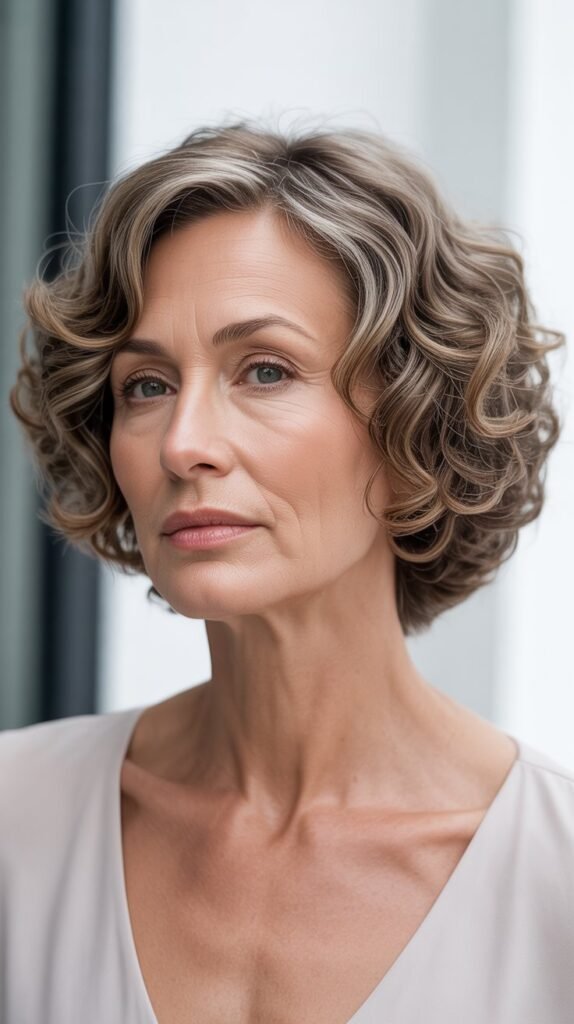
A curly short bob works with natural curl patterns to create organic volume and movement, offering women with textured hair a beautiful short option.
- For women whose fine hair also has natural curl or wave, a short bob can be transformative because the shorter length allows curls to bounce and spring without the weight of longer hair pulling them down.
- The bob length (typically chin to shoulder) is ideal for curly fine hair because it’s short enough to maintain volume but long enough to showcase the curl pattern.
- Layering in curly bobs must be done carefully—too many layers can remove needed weight and create a triangular shape, while strategic layering enhances curl definition.
- Styling curly fine hair involves using curl-enhancing products on wet hair, then either air-drying or diffusing with low heat to encourage curl formation without frizz.
- The key to success with curly fine hair is moisture—regular deep conditioning treatments help maintain curl definition and prevent the dryness that can make fine curls look frizzy.
- Curly short bobs offer built-in volume that straight fine hair must work harder to achieve, making this an excellent choice for women with naturally textured fine hair.
20. Blunt Cut Bob with No Layers
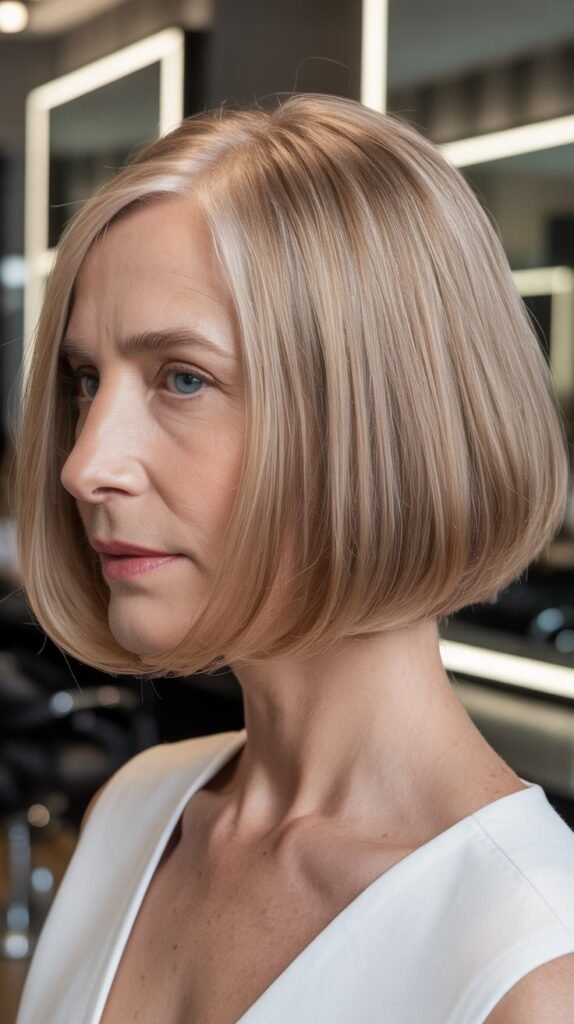
The blunt cut bob features a clean, even cutting line with no layering, creating a solid perimeter that can actually make fine hair appear thicker and more substantial.
- Contrary to popular belief, some fine hair actually looks fuller with a blunt cut because all the hair ends at the same point, creating a dense-looking perimeter.
- This cut works best for fine hair that’s also relatively straight or can be styled straight, as the impact comes from the uniform, solid edge.
- The length typically falls anywhere from jaw to shoulder, with the exactness of the cut line being the defining characteristic of the style.
- Blunt cuts require regular maintenance every 6-8 weeks because even slight unevenness in the perimeter becomes noticeable and detracts from the style’s clean aesthetic.
- Styling involves blow-drying with a paddle brush or using a flat iron to create smooth, straight hair that emphasizes the blunt cutting line.
- For women with very fine hair who struggle with layered cuts looking too thin at the ends, the blunt bob offers an excellent alternative that creates the appearance of density.
21. Undercut Pixie for Contemporary Edge
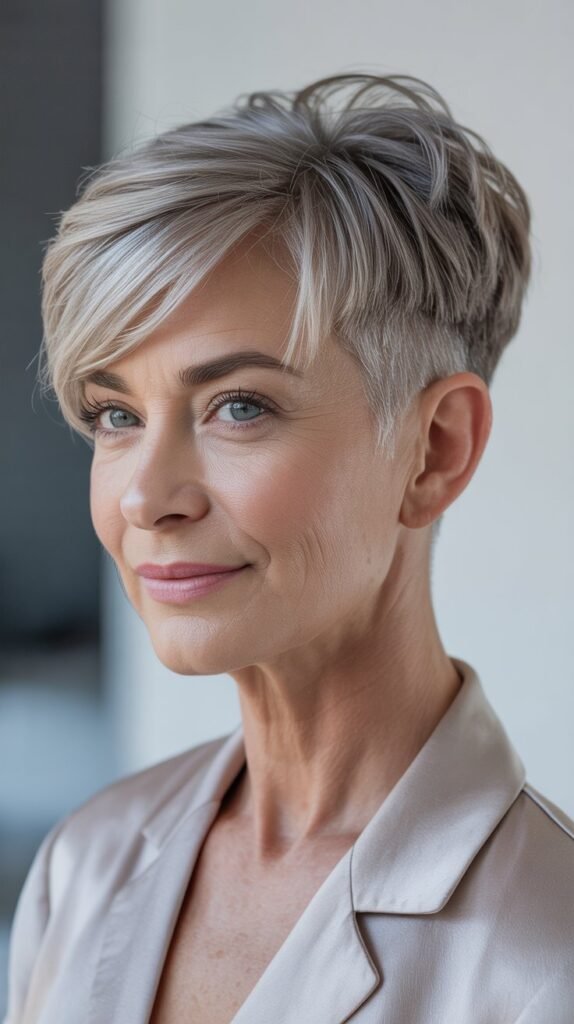
An undercut pixie features shaved or very short sides and back with longer hair on top, creating a bold, contemporary look with excellent contrast and dimension.
- The undercut involves using clippers to create very short (often 1/8 to 1/2 inch) hair on the sides and back, while leaving the top section significantly longer (2-5 inches).
- This dramatic contrast creates an edgy, fashion-forward aesthetic that challenges conventional expectations about age-appropriate hairstyles.
- For fine hair, the undercut is particularly effective because all the hair weight is concentrated on top where it’s most visible, making it easier to create and maintain volume.
- The longer top section can be styled in numerous ways—slicked back, spiked up, swept to the side, or left textured and tousled.
- Maintenance requirements include frequent trimming (every 3-4 weeks) of the undercut sections to keep them neat and maintain the contrast with the longer top.
- This style requires confidence and an adventurous spirit but rewards bold women with a distinctive, memorable look that’s surprisingly versatile in styling options.
22. Soft Layered Crop with Volume
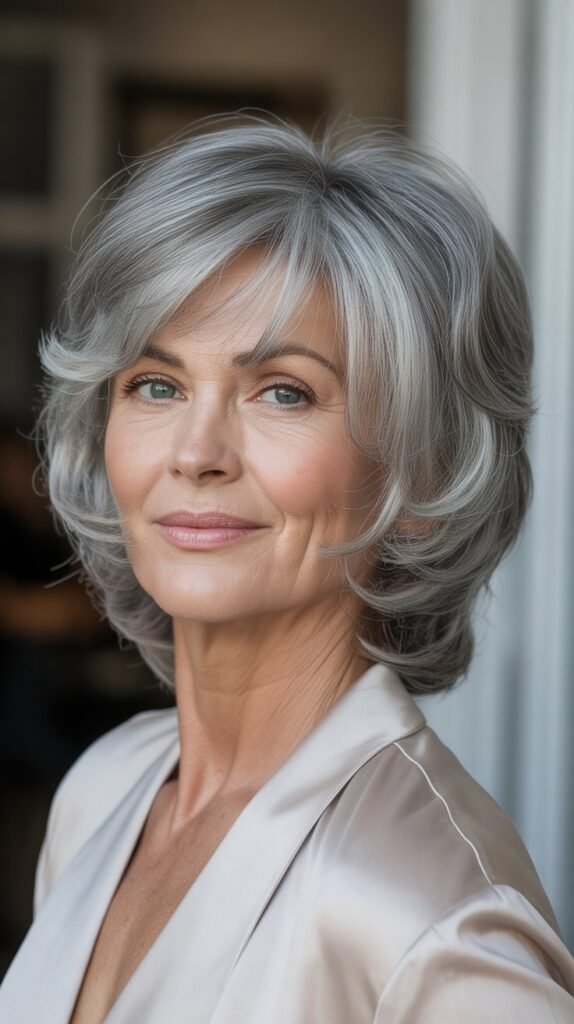
A soft layered crop uses gentle layering techniques to create volume without harsh lines, producing a feminine, approachable style perfect for fine hair.
- This cut differs from choppy or dramatic layering by creating subtle, blended layers that add volume while maintaining a soft, cohesive overall appearance.
- The layers typically begin at or near the crown and continue throughout the cut, with each layer only slightly shorter than the one below it for a gradual transition.
- For fine hair, soft layering removes just enough weight to allow the hair to lift at the roots without creating thin, wispy ends that can occur with aggressive layering.
- The volume is concentrated at the crown and top of the head, where it’s most noticeable and beneficial for balancing facial proportions.
- Styling requires minimal effort—a blow dryer with fingers or a small round brush quickly creates lift at the roots and directs the layers into place.
- This cut offers a middle ground between ultra-short crops and longer styles, typically ranging from 2-4 inches throughout with slightly more length on top.
23. Swept-Forward Pixie for Dramatic Flair
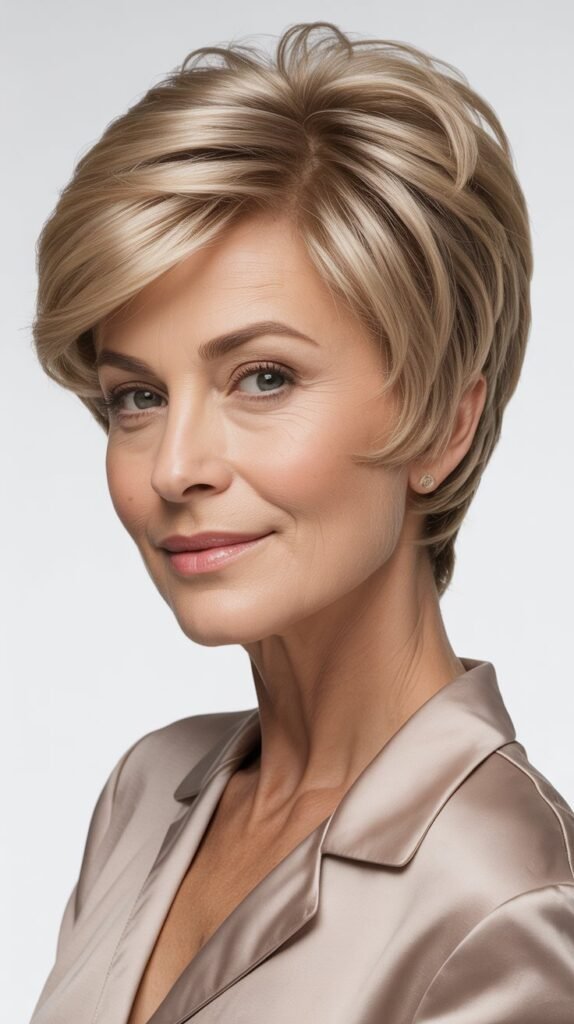
A swept-forward pixie directs all the hair toward the face rather than backward or to the side, creating a dramatic, fashion-forward interpretation of the classic pixie cut.
- This directional styling creates an avant-garde look that’s particularly popular in fashion and editorial contexts but can be adapted for everyday wear.
- The cut typically features longer sections at the front and crown that can be directed forward, while the sides and back remain short for contrast.
- For fine hair, sweeping everything forward concentrates volume in the most visible area and creates the impression of fullness in the fringe area.
- Styling involves applying product to damp hair and blow-drying with a brush or fingers, continuously directing the hair toward the forehead and face.
- The result is a distinctive look with hair creating a frame around the face, often with textured, piecey ends that add to the dramatic effect.
- This style works particularly well for women with strong, interesting facial features that can handle the emphasis created by hair moving toward rather than away from the face.
24. Wispy Bob with Thin Ends
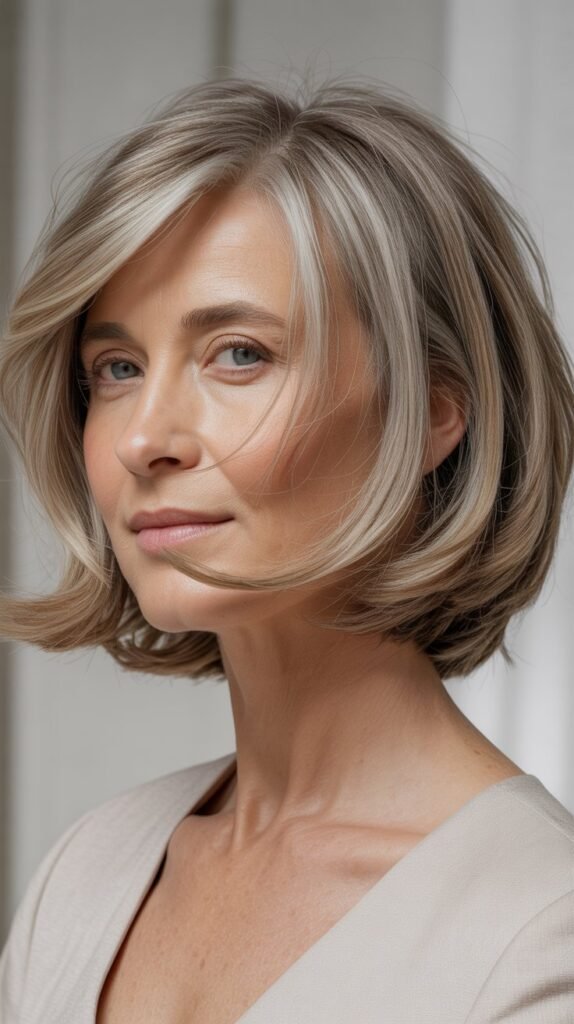
A wispy bob embraces the naturally thin ends that can occur with fine hair, turning a potential weakness into a deliberate style choice that looks intentional and modern.
- Rather than trying to create the appearance of thick hair throughout, the wispy bob uses texturizing techniques to create feather-light ends that move beautifully.
- The cut typically includes layers throughout but avoids removing so much weight that the ends become too sparse or straggly-looking.
- For fine hair, the wispy approach works with the hair’s natural characteristics rather than fighting against them, creating an effortless, organic aesthetic.
- Styling involves using lightweight products that enhance texture without weighing down the delicate ends—texturizing sprays and light mousses work particularly well.
- The wispy ends can be air-dried for a natural, undone look or lightly blown dry with fingers to maintain movement and softness.
- This style has an ethereal, romantic quality that’s especially beautiful on women who prefer softer, more feminine aesthetics over structured, sharp-lined cuts.
25. Cropped Cut with Textured Crown
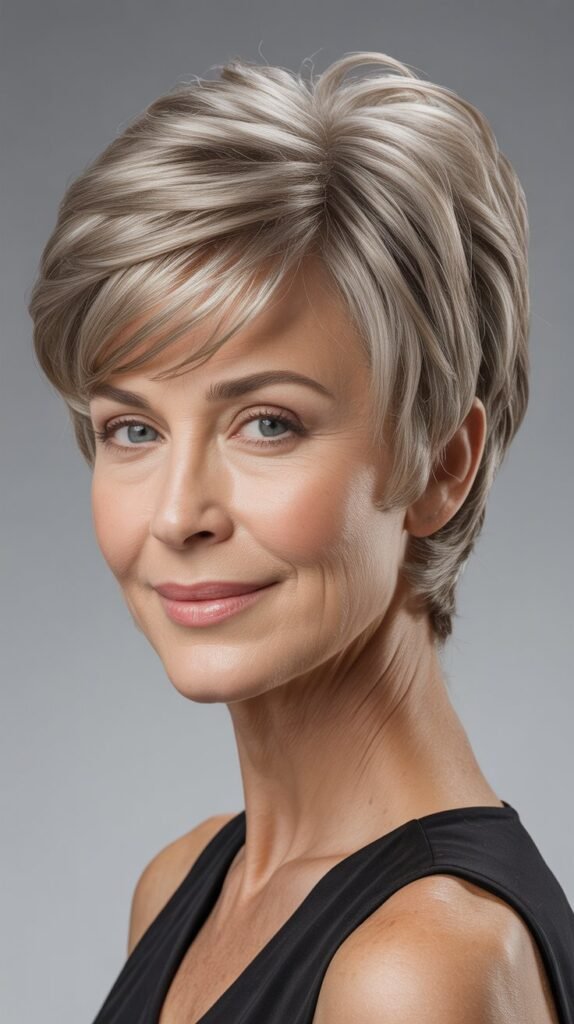
A cropped cut featuring a textured crown concentrates styling interest and volume at the top of the head, creating height and dimension for fine hair.
- This cut keeps the sides and back quite short while leaving 2-4 inches of length at the crown, creating a focal point that draws the eye upward.
- Texture at the crown is achieved through both cutting techniques (layers, point-cutting, or razoring) and styling products (texturizing sprays, pomades, or dry shampoo).
- For fine hair, concentrating length and volume at the crown is strategic because it creates the appearance of fuller hair where it’s most visible and impactful.
- The shorter sides and back keep the style looking clean and modern while preventing the hair from appearing flat overall.
- Styling involves directing attention to the crown during blow-drying, using a round brush or fingers to lift hair away from the scalp and create height.
- This cut offers versatility in crown styling—the textured top can be worn smooth, spiked, tousled, or swept in different directions depending on your mood and the occasion.
26. Graduated Layers Throughout
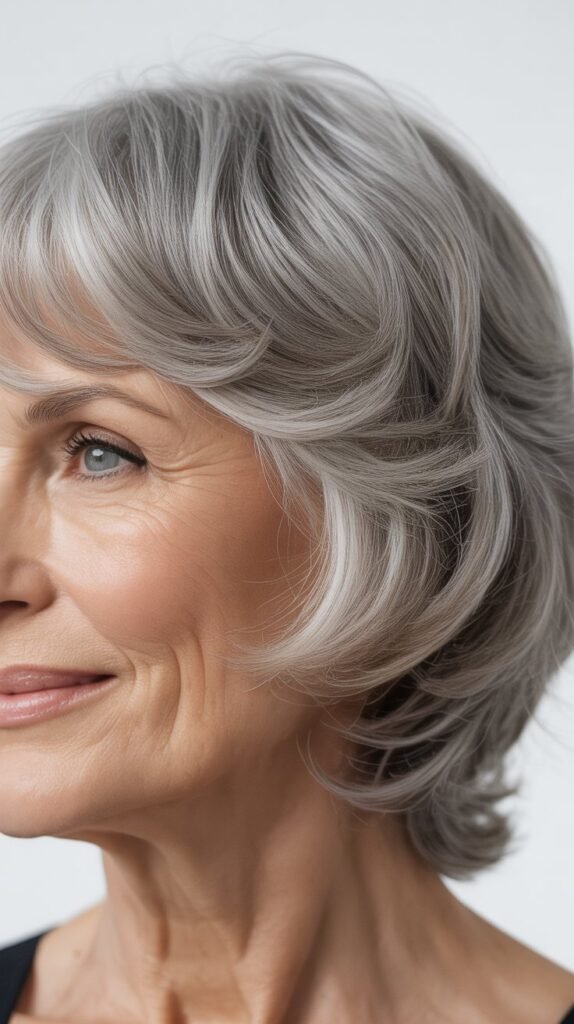
Graduated layers throughout a short cut create continuous volume and movement by stacking shorter layers over longer ones from crown to perimeter.
- Graduation means each layer is cut progressively shorter as you move toward the top of the head, creating a stacked effect that builds volume.
- This cutting technique is especially effective for fine hair because it removes weight from the underneath sections while maintaining fullness in the visible top layers.
- The graduated structure naturally lifts away from the scalp, creating the appearance of thickness and body without requiring extensive styling.
- Layers typically begin at the nape and continue upward, with each section slightly shorter than the one below, creating a subtle pyramid shape.
- Styling graduated layers involves blow-drying with a round brush, focusing on directing each layer up and over the one beneath it to enhance the built-in volume.
- This cutting approach can be applied to various short styles—pixies, crops, and bobs all benefit from graduated layering when working with fine hair.
27. Chin-Length Bob with Inward Curl
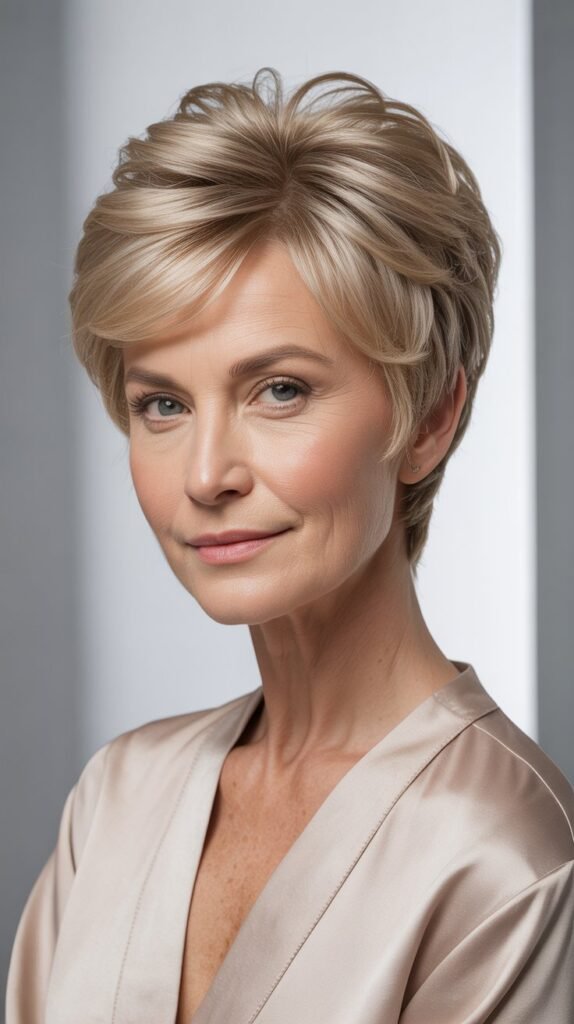
A chin-length bob styled with an inward curl at the ends creates a classic, polished look that’s flattering on most face shapes and adds body to fine hair.
- The inward curl is achieved by blow-drying with a round brush or using a curling iron to direct the ends under toward the neck and face.
- This styling creates a finished, put-together appearance that’s appropriate for professional settings while still remaining approachable and feminine.
- For fine hair, the inward curl helps the ends appear fuller because the hair curves under rather than lying flat or pointing outward, which can expose the scalp.
- The chin length is universally flattering because it creates a frame around the face without adding length that could weigh down fine hair.
- Internal layers can be added to prevent the bob from appearing too heavy, though they should be subtle to maintain the smooth, curved perimeter.
- Maintenance involves regular trims every 6-8 weeks to keep the length consistent and prevent the curl from appearing uneven as the hair grows.
28. Spiky Pixie for Bold Personality
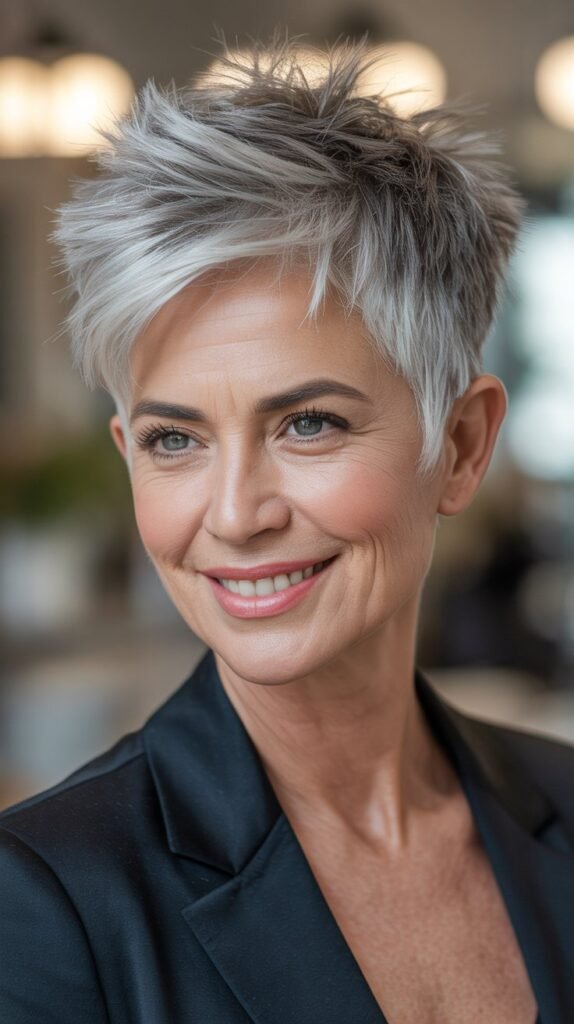
A spiky pixie uses texture and height to create an energetic, bold look that showcases confidence and personal style while working beautifully with fine hair.
- The spiky look involves styling hair upward and outward from the scalp using strong-hold products like gel, mousse, or styling paste.
- Short, choppy layers throughout the cut provide the foundation for creating spikes, with varying lengths allowing for dimension and interest in the textured styling.
- For fine hair, spiky styling is surprisingly effective because each strand can be manipulated into position and will hold without the weight that makes spiking difficult in thicker hair.
- The height created by spiky styling adds visual volume and makes the hair appear fuller than it would if styled flat against the head.
- Application involves distributing product through damp hair, then using fingers to pull sections upward and shape individual spikes or create overall textured lift.
- This style projects youthful energy and confidence, perfect for women who want their hair to reflect an active, vibrant personality.
29. Tapered Nape with Volume on
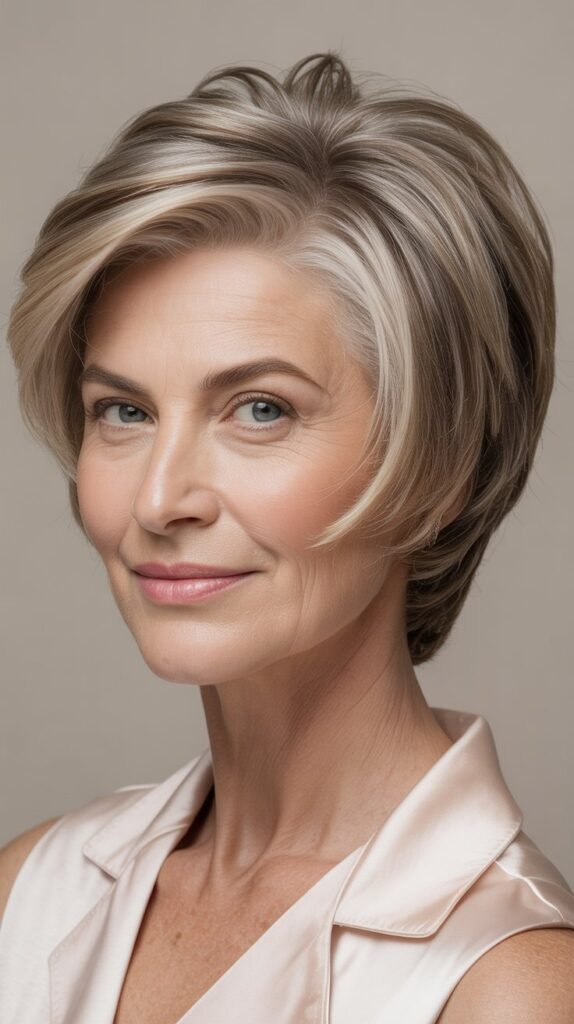
A cut featuring a tapered nape and volume on top creates beautiful proportion by keeping the neckline clean while maximizing fullness where it’s most visible.
- The tapered nape gradually decreases hair length from the occipital bone down to the hairline, creating a soft, feminine gradient rather than a harsh line.
- This technique keeps the neckline looking neat and shapely, particularly important for women who wear their hair short regularly and want the back view to appear polished.
- Volume on top is achieved through layering, proper cutting angles, and strategic styling that lifts hair away from the scalp at the crown.
- For fine hair, concentrating length and styling focus on top while keeping the nape short and tapered creates the illusion of overall fullness.
- The contrast between the tapered nape and fuller top adds dimension and visual interest that prevents the cut from appearing flat or one-dimensional.
- Maintenance requires attention to both sections—regular trimming of the tapered nape keeps it clean while proper styling maintains volume on top.
30. Razored Ends for Soft Movement
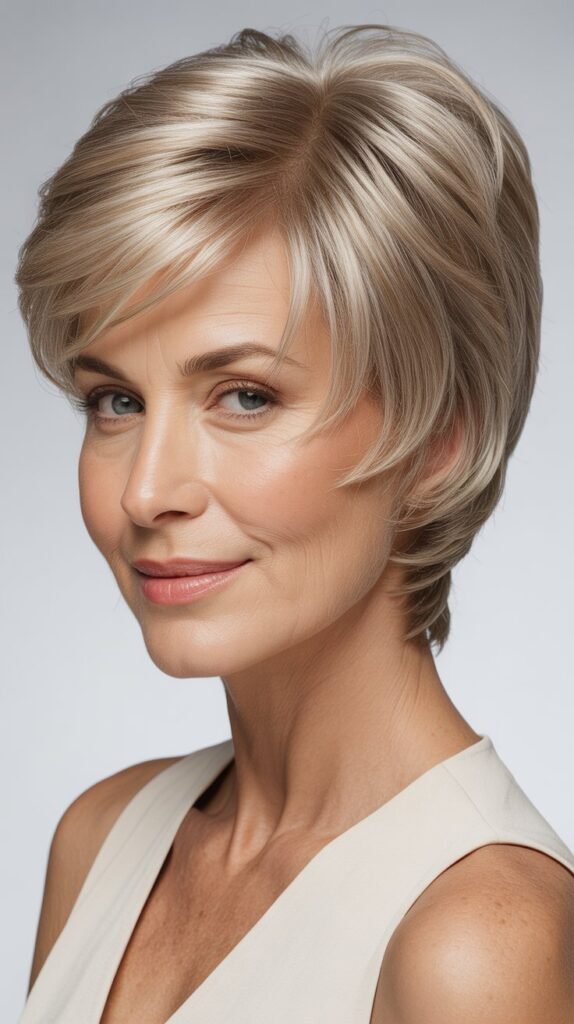
Using a razor to cut the ends creates soft, feathery tips that move beautifully and add an airy quality to fine hair.
- Razor cutting differs from scissor cutting by creating a tapered, pointed end on each hair strand rather than a blunt, even cut.
- These tapered ends move more freely and catch light differently, creating the illusion of more hair and adding softness to the overall style.
- For fine hair, razor cutting must be done carefully by an experienced stylist—too much razoring can make ends appear too thin, while the right amount adds perfect texture.
- The razored ends work particularly well in layered cuts, pixies, and bobs where movement and texture are desired over solid, structured lines.
- Styling razored ends typically requires minimal product—the textured ends naturally separate and move without heavy styling intervention.
- The result is a softer, more romantic version of short hair that feels less structured and more organic than blunt-cut styles.
31. Side Part Bob with One Side Tucked
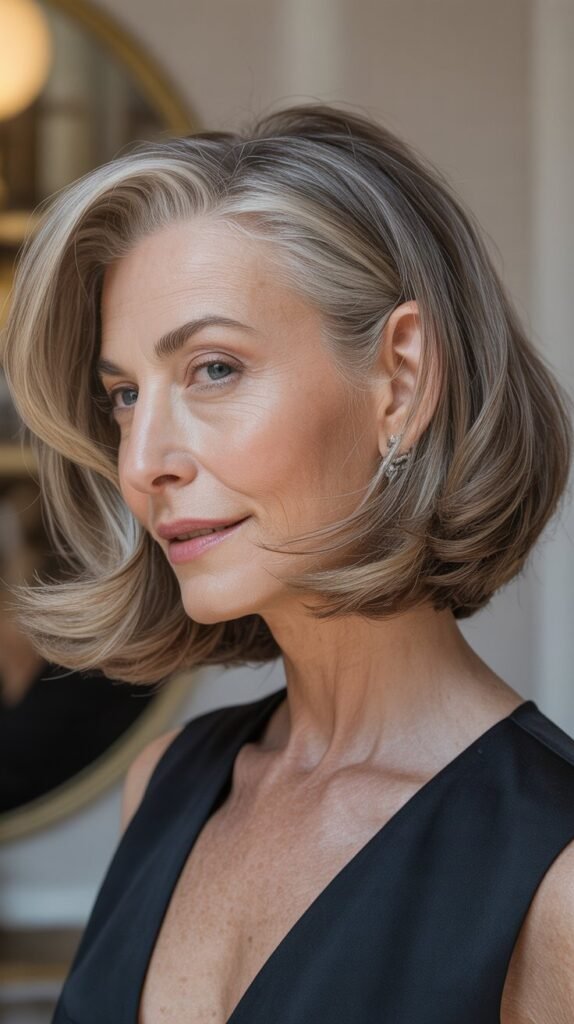
A side part bob styled with one side tucked behind the ear creates instant asymmetry and visual interest while offering a practical styling solution for fine hair.
- This styling approach takes a standard bob and transforms it through asymmetrical styling that emphasizes one side of the face while the other remains more concealed.
- The deep side part (placed far to one side of the head) creates volume on the heavier side where most of the hair falls.
- Tucking one side behind the ear adds practicality—it keeps hair out of the face while creating an intentional, styled appearance.
- For fine hair, this styling technique makes hair appear fuller on the visible side because all the bulk is concentrated in one area rather than distributed evenly.
- The look can be changed daily by alternating which side is tucked or by wearing both sides forward for a completely different appearance.
- This styling works with various bob lengths from jaw to shoulder, making it a versatile approach that requires no cutting, just different styling methods.
32. Layered Lob (Long Bob) Transitioning Shorter
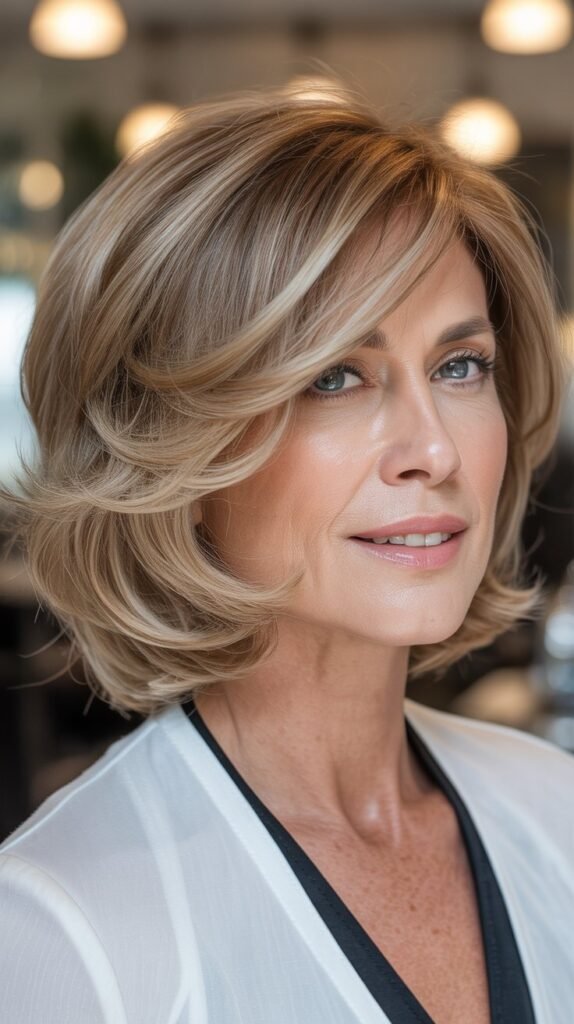
A layered lob provides a transitional length for women considering going shorter, offering the benefits of short hair while maintaining some length for versatility.
- The lob (long bob) typically falls between chin and shoulder length, offering a middle ground between traditional bobs and longer hair.
- Layers throughout the lob create movement and prevent fine hair from appearing limp or flat, particularly important at this length where weight can pull hair down.
- For women nervous about cutting their hair very short, the lob offers many of the maintenance and styling benefits of short hair while preserving some length.
- The layered structure allows for various styling options—wear it straight and sleek, add waves, create texture, or pull sections back for a different look.
- This length works well with fine hair because it’s short enough to maintain volume but long enough to create styling versatility that ultra-short cuts can’t offer.
- The lob can serve as a stepping stone to shorter styles, allowing women to adjust to having less hair before committing to a pixie or crop if desired.
33. Curled Under Ends with Smooth Crown
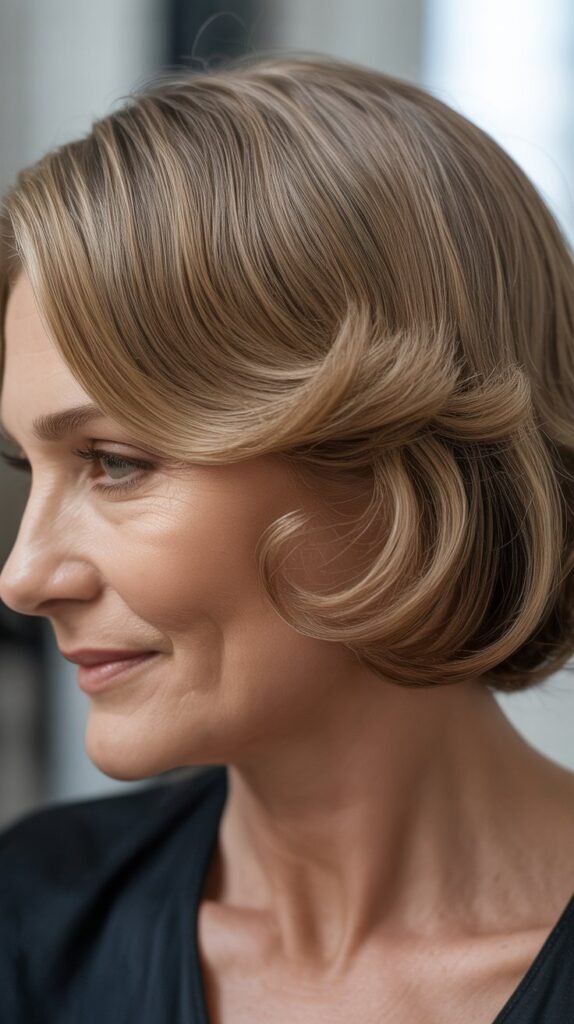
Styling that features smooth, sleek hair through the crown with ends curled under creates a sophisticated, polished look perfect for special occasions or professional settings.
- This styling approach combines two techniques—straightening or smoothing the top sections while curling the ends inward with a round brush or curling iron.
- The smooth crown prevents the hair from appearing frizzy or undefined while showcasing the hair’s shine and health.
- Curled-under ends add fullness at the perimeter and create a finished, intentional appearance that elevates the overall look.
- For fine hair, the smooth-to-curved styling makes hair appear thicker at the ends because the inward curve conceals the scalp and creates density at the perimeter.
- This styling requires more time and effort than wash-and-go approaches but rewards that investment with a elegant, refined appearance.
- The technique works best on bob lengths (chin to shoulder) where there’s enough hair to create a noticeable curl but not so much that the weight pulls the curl out.
Styling Tips for Fine Hair Over 60
Understanding how to style and maintain fine hair is as important as choosing the right cut for achieving beautiful, healthy-looking hair after 60.
- Choosing the right products is crucial for fine hair—heavy formulas weigh hair down while appropriate lightweight products add body without bulk.
- Volumizing shampoos and conditioners should be part of your regular routine, with conditioner applied only from mid-length to ends to avoid weighing down roots.
- Blow-drying technique matters significantly—using a round brush and directing airflow at the roots while lifting sections creates lasting volume that air-drying cannot achieve.
- Less is more with styling products on fine hair—start with a small amount and add more only if needed, as over-application causes limpness.
- Regular trims every 6-8 weeks prevent split ends and maintain the shape of your chosen style, keeping hair looking healthy and intentional.
- Sleeping on a silk or satin pillowcase reduces friction that can lead to breakage and helps maintain your style overnight without creating frizz or tangles.
Discovering the right short hairstyle among these 33 Fresh Short Hairstyles for Women Over 60 with Fine Hair to Elevate Your Style can transform not just your appearance but your entire outlook and confidence.
Each style presented here offers unique benefits specifically designed to work with fine hair’s characteristics rather than against them, creating volume, movement, and sophistication that celebrates this stage of life.
Whether you’re drawn to classic pixie cuts, modern asymmetrical bobs, bold platinum colors, or textured crops, there’s a style here that matches your personality, lifestyle, and hair goals.
The key is working with a skilled stylist who understands fine hair and can customize these cuts to complement your face shape and personal preferences.
Remember that the best hairstyle is one that makes you feel confident and beautiful while fitting seamlessly into your daily routine.
With the right cut, proper maintenance, and appropriate styling techniques, fine hair can look absolutely stunning at any age, proving that 60 and beyond can be the most stylish, confident years of your life.