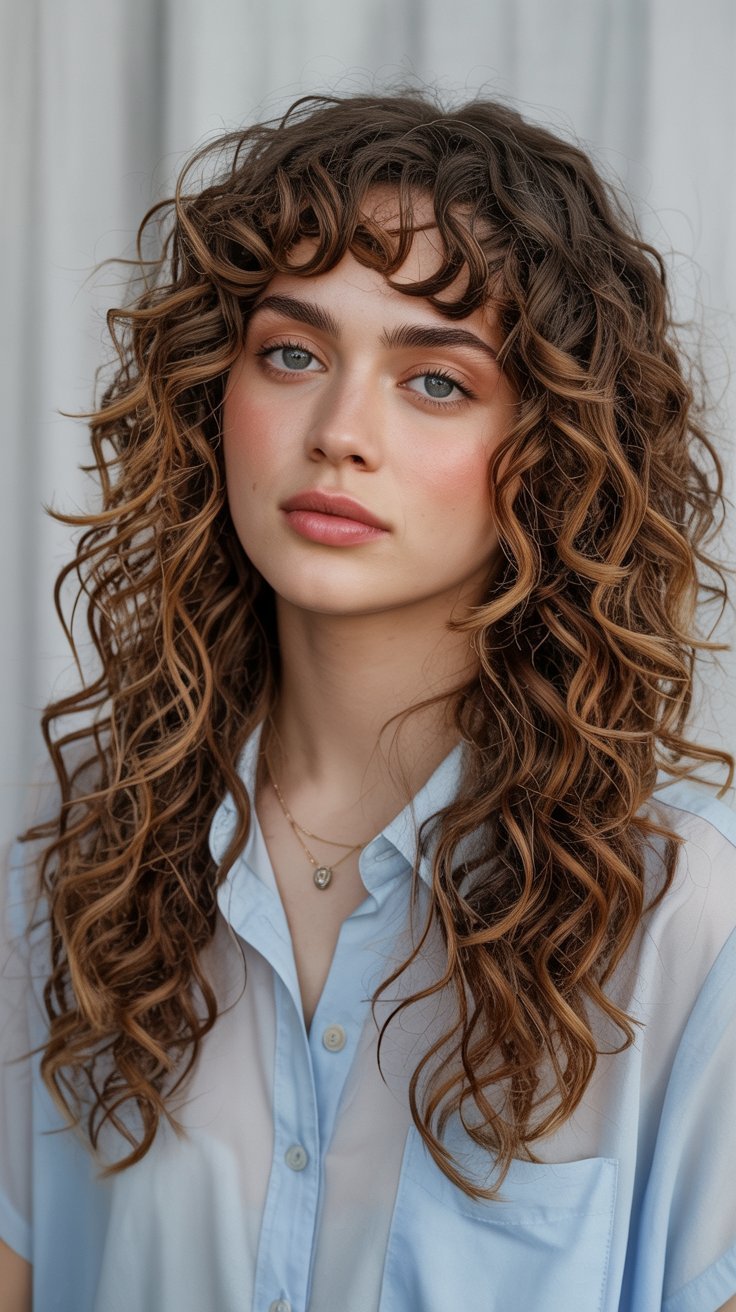
Long curly hair is a stunning canvas for endless styling possibilities, offering natural volume, texture, and movement that straight hair simply cannot replicate.
Whether you’re blessed with natural spirals or have embraced the curly hair journey, finding the perfect haircut can transform your locks from unruly to absolutely magnificent.
This comprehensive guide to 33 Gorgeous Long Curly Haircuts for Volume and Style explores the most flattering cuts, techniques, and styling approaches that celebrate your curls while maximizing volume and creating effortless elegance.
From classic layers to modern shag cuts, from face-framing pieces to dramatic V-shaped styles, you’ll discover professional insights on how to work with your curl pattern rather than against it.
Each haircut featured here is designed to enhance your natural texture, reduce bulk where needed, add dimension, and give you the confidence to embrace your curls fully.
Get ready to find your signature style that makes every day a good hair day.
1. Classic Long Layered Curls
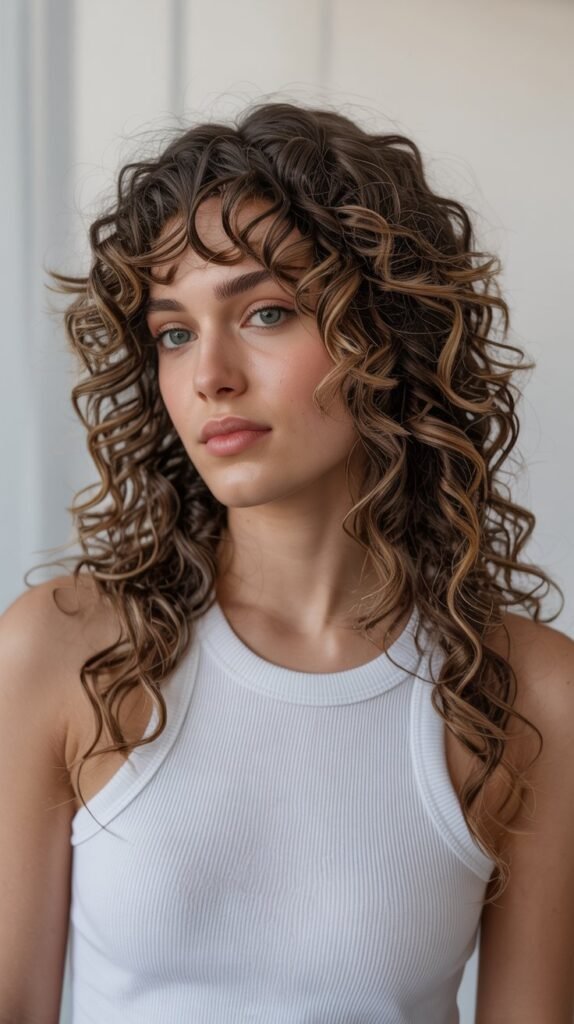
Long layered curls remain timeless for excellent reasons, as this cut works beautifully with virtually every curl pattern while providing essential movement and preventing the dreaded triangle shape.
Layers strategically placed throughout the length create dimension and allow curls to form their natural spiral pattern without weighing each other down.
- The foundation of this cut involves creating layers that start around chin or shoulder length and gradually extend to the longest point.
- Stylists typically use point-cutting or slide-cutting techniques to prevent blunt edges that can make curls appear boxy or heavy.
- This cut works exceptionally well for medium to thick hair density, as the layers remove weight while maintaining fullness.
- The beauty of layered curls lies in their versatility—you can wear them down, pull them into a ponytail, or create half-up styles with equal success.
- Regular trims every 8-12 weeks help maintain the shape and prevent split ends from traveling up the hair shaft.
- For best results, ask your stylist to cut your hair dry so they can see exactly how your curls fall naturally.
2. The Curly Shag Cut
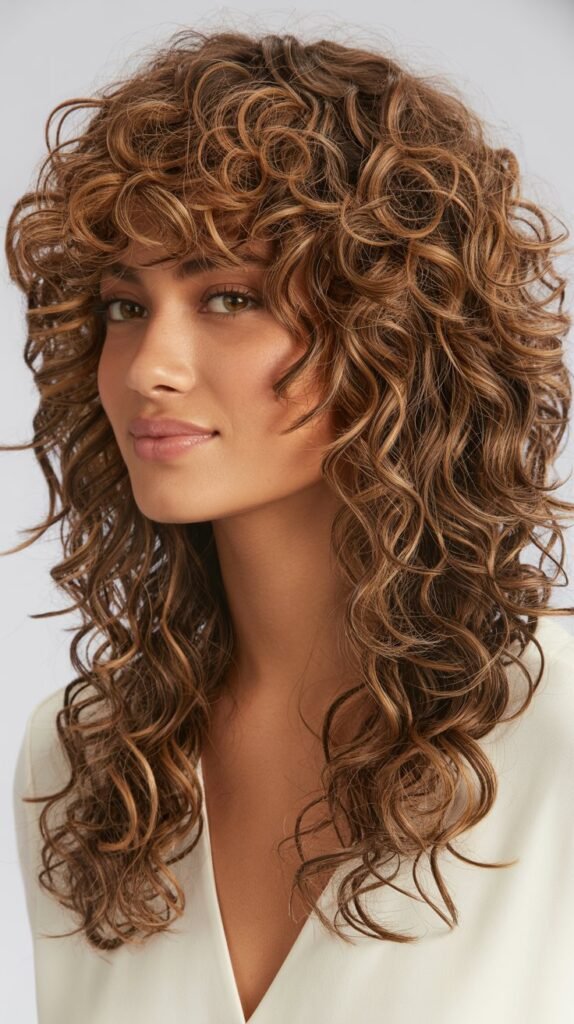
The modern curly shag brings a rock-and-roll edge to long hair, featuring choppy layers, wispy ends, and plenty of texture that creates an effortlessly cool aesthetic.
This cut has experienced a major revival and adapts beautifully to curly textures.
- The curly shag incorporates shorter layers around the crown and face, graduating to longer lengths at the back.
- This cut creates incredible volume at the roots while maintaining length for those who aren’t ready to go short.
- The shaggy texture works particularly well for fine to medium curly hair that needs an extra boost of fullness.
- Styling requires minimal effort—simply scrunch with a curl cream or mousse and allow to air dry for that perfectly undone look.
- The face-framing pieces in a shag cut can be customized to flatter different face shapes, with shorter pieces accentuating cheekbones.
- This cut embraces the natural chaos of curls rather than fighting against it, making it ideal for low-maintenance routines.
3. Long Curls with Curtain Bangs
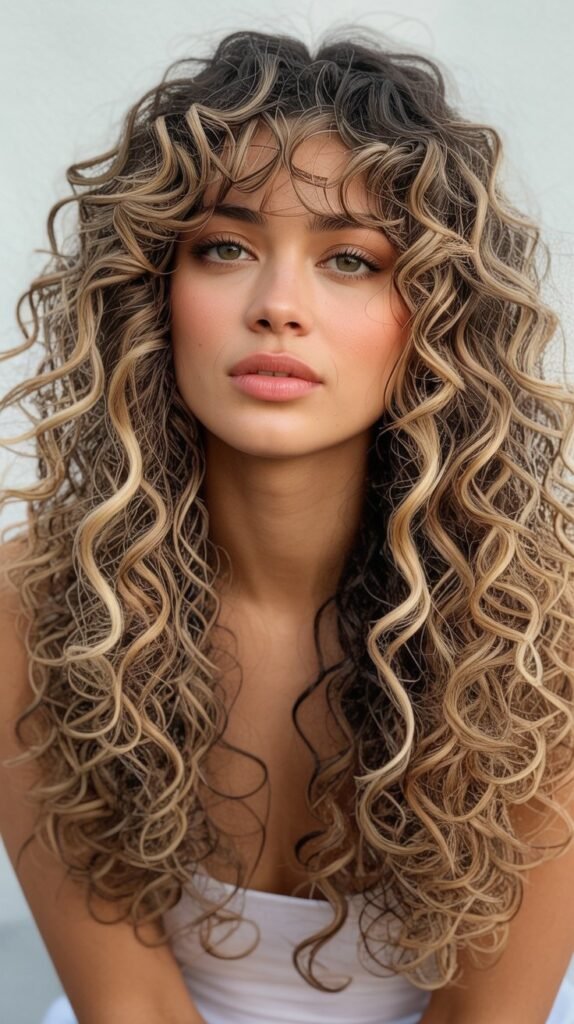
Curtain bangs paired with long curly hair create a soft, romantic frame for the face while the length maintains the drama and presence of your curls.
This combination offers the best of both worlds—a fresh change without sacrificing your hard-earned length.
- Curtain bangs for curly hair should be cut slightly longer than those for straight hair to account for shrinkage when curls form.
- The center part allows the bangs to sweep naturally to both sides, creating a flattering frame that suits oval, round, and heart-shaped faces.
- These bangs require some styling commitment—using a diffuser to direct them away from the face helps establish the curtain shape.
- The length of curtain bangs typically falls between the cheekbones and chin when curled, providing face-framing without overwhelming your features.
- This style works beautifully for those transitioning from no bangs to full bangs, as it offers a softer, more forgiving introduction to fringe.
- Regular bang trims every 4-6 weeks keep them at the optimal length and prevent them from becoming too heavy.
4. V-Shaped Long Curly Cut
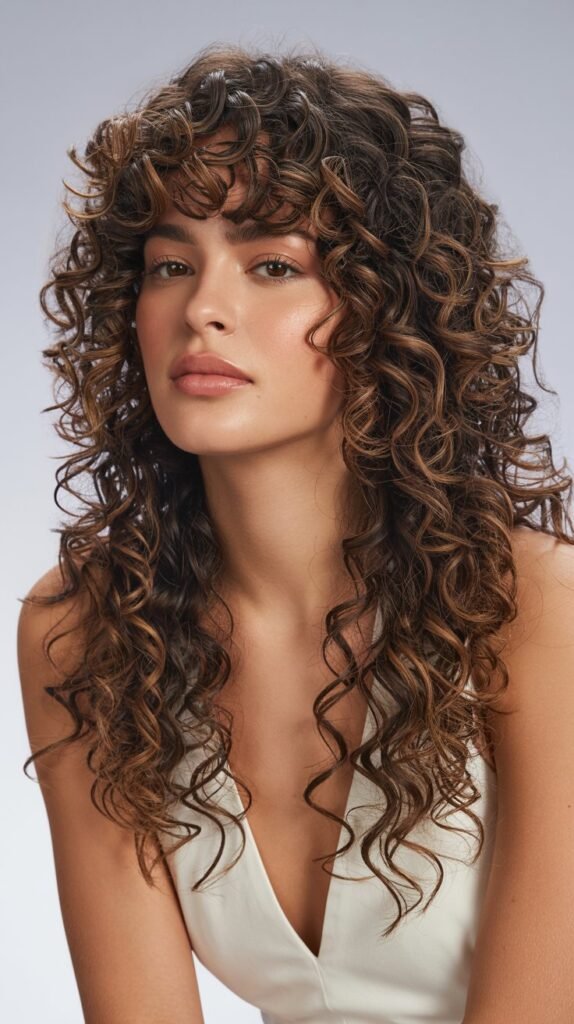
The V-shaped cut creates a dramatic silhouette where hair is longest in the center back and gradually shorter on the sides, producing a stunning visual effect that emphasizes length and creates a flattering shape.
This geometric approach to cutting curly hair delivers consistent, predictable results.
- The V-shape naturally elongates the torso and draws the eye downward, creating a lengthening effect on the body.
- This cut works exceptionally well for thick, dense curly hair as it removes bulk from the sides while preserving dramatic length in the back.
- The angle of the V can be customized from subtle to extreme, depending on personal preference and hair density.
- When styled, the V-shape creates a waterfall effect with curls cascading from the center point.
- This cut maintains significant length, making it perfect for those who want their hair long enough for updos and braids.
- The sides being shorter prevents overwhelming width, which is a common concern for those with voluminous curly hair.
5. Long Curly Bob (Lob)
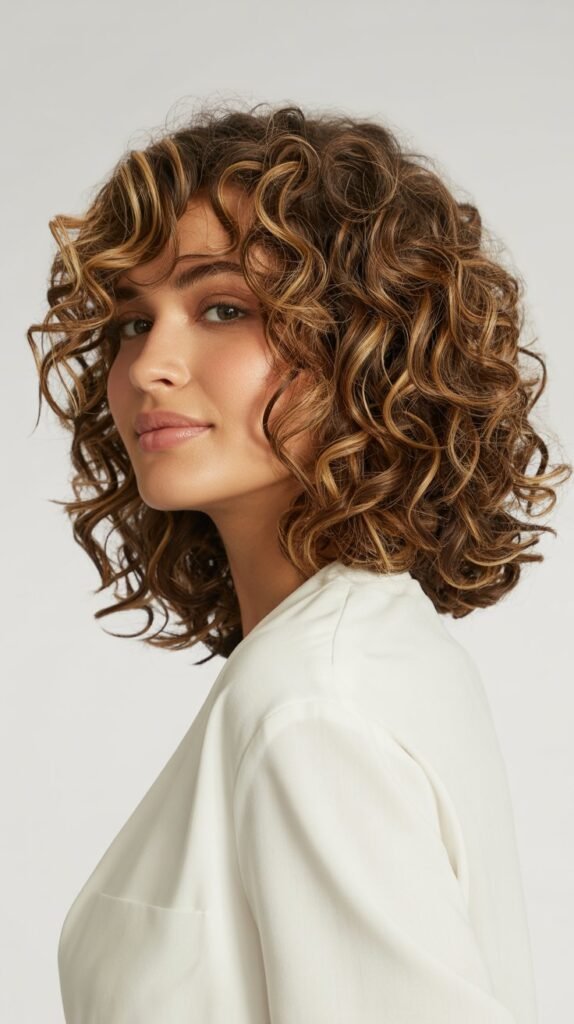
The long bob for curly hair hits anywhere from the collarbone to just below the shoulders, offering a fresh, modern length that’s easier to manage than very long hair while still providing styling versatility.
This cut has become incredibly popular for its flattering proportions.
- The curly lob removes significant weight, allowing curls to spring up with more bounce and definition than they might have at longer lengths.
- This length is particularly practical for active lifestyles, as it’s long enough to tie back but short enough to dry relatively quickly.
- The one-length lob creates a full, rounded silhouette that works beautifully with naturally voluminous curls.
- For those with very tight curls, this cut may appear shorter than intended due to shrinkage, so plan accordingly with your stylist.
- The lob length is incredibly versatile for styling—straighten it for a sleek look, or enhance the curls for a bouncy, romantic vibe.
- Adding subtle layers within the lob can prevent it from looking too heavy or triangular at the bottom.
6. Long Curls with Side-Swept Bangs
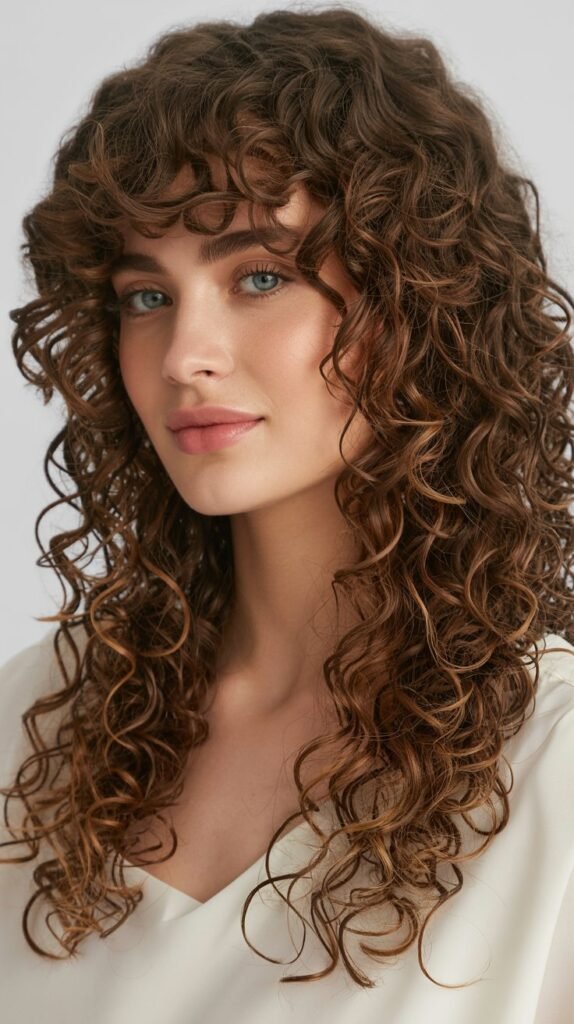
Side-swept bangs bring asymmetry and interest to long curly hair, drawing attention to the eyes while the sweeping motion softens angular features.
This classic styling technique never goes out of fashion and adapts well to curly textures.
- Side-swept bangs for curls should be cut at an angle, with the shortest point starting near the part and the longest point reaching toward the opposite eyebrow or temple.
- This bang style is more forgiving than straight-across bangs, as it blends more seamlessly with the rest of your hair if you decide to grow them out.
- The sweeping motion naturally directs attention to your best features while providing coverage for foreheads you might want to minimize.
- Styling requires blow-drying or diffusing the bangs to one side while they’re damp, then allowing them to set in that direction.
- This cut suits virtually all face shapes but is particularly flattering for square or rectangular faces as it softens strong jawlines.
- The bangs can be pinned back for a different look, offering versatility when you want your face completely exposed.
7. Layered Curls with Face-Framing Highlights
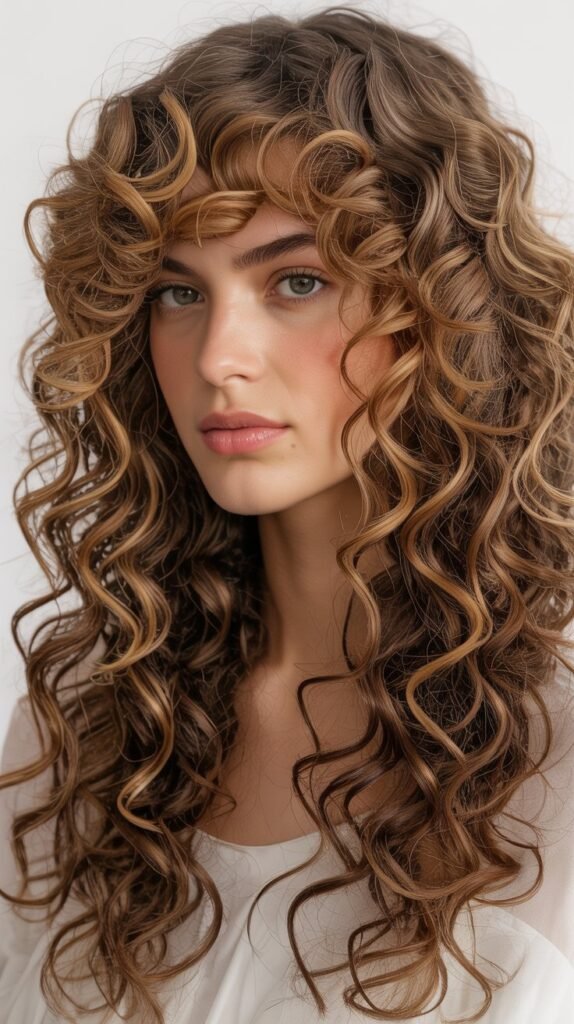
Combining strategic layers with face-framing highlights creates dimension that brings curly hair to life, making the cut more visible and adding depth that photographs beautifully.
This approach uses both cutting and coloring techniques to maximize impact.
- Face-framing highlights placed around the hairline and throughout the front sections draw attention forward and brighten the complexion.
- The contrast between base color and highlights makes individual curl clumps more visible, showcasing the haircut’s structure.
- Balayage or hand-painted highlighting techniques work best for curly hair, as they create a more natural, blended effect than traditional foil highlights.
- Lighter pieces strategically placed can make hair appear more voluminous by creating the illusion of depth and dimension.
- This combination requires both a skilled colorist and a curl specialist for optimal results.
- Maintaining highlighted curly hair requires proper hydration and protein treatments to keep curls bouncy and healthy.
8. The Curly Waterfall Cut
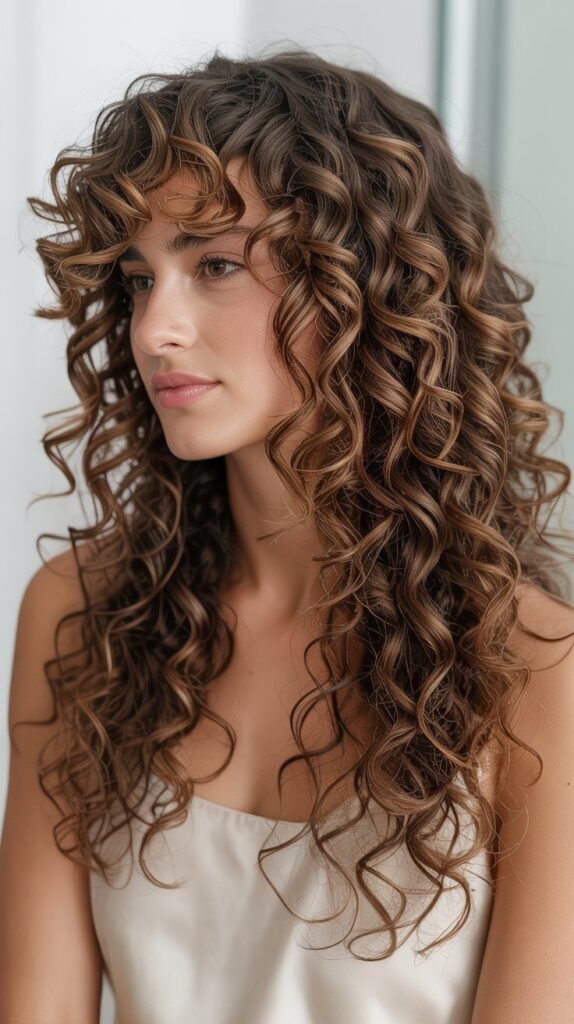
The waterfall cut features graduated layers that cascade down like a waterfall, with each layer distinctly visible and creating a rhythmic flow of curls from top to bottom.
This highly textured approach celebrates the natural movement of curls.
- This cut requires significant layering throughout the head, with each layer being noticeably shorter than the one below it.
- The waterfall effect is most dramatic on hair with well-defined curl patterns, as each layer of curls sits atop the next.
- This style works best for those with thick to very thick hair, as the aggressive layering can leave fine hair looking sparse.
- The cascading effect naturally creates volume at the crown and throughout the mid-lengths without requiring extensive styling.
- Maintaining this cut requires regular trims to preserve the distinct layer separation and prevent them from blending together.
- Styling is straightforward—apply product and diffuse or air dry, as the cut does most of the work in creating shape.
9. Long Curls with Micro Bangs
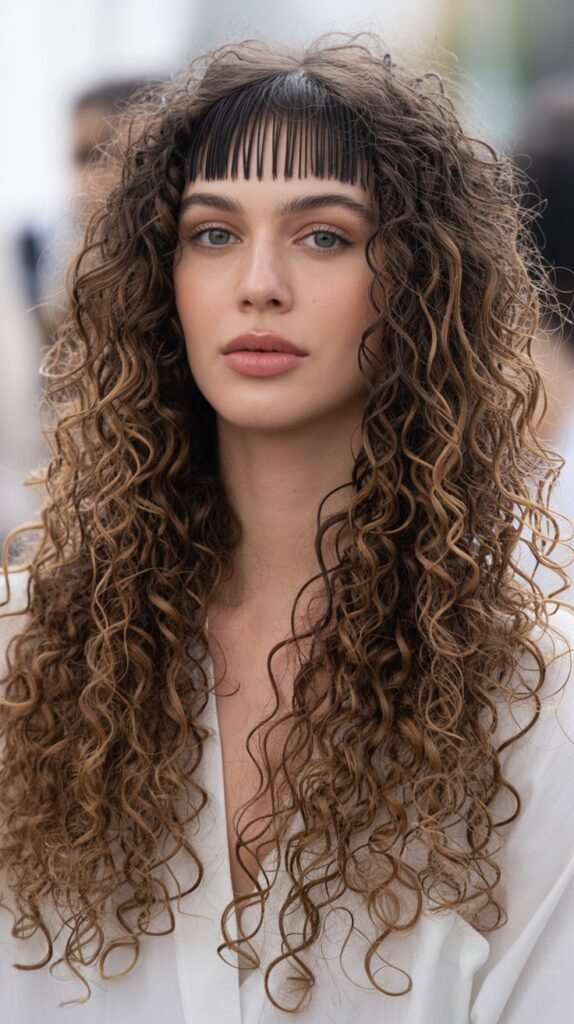
Micro bangs paired with long curly hair create a bold, fashion-forward statement that juxtaposes the dramatic length of curls with the edgy brevity of very short bangs.
This daring combination suits confident individuals ready to stand out.
- Micro bangs for curly hair typically sit well above the eyebrows and require straightening or heavy product to maintain their ultra-short length.
- This style creates a striking contrast that emphasizes facial features, particularly the eyes and eyebrows.
- The commitment level is high—micro bangs take months to grow out and require frequent maintenance to stay at the desired length.
- This cut works best on those with oval or heart-shaped faces, as the short bangs can make round faces appear wider.
- Styling requires dedication, as curly micro bangs left to their natural texture will spring up even shorter than cut.
- The combination of long curls with micro bangs has strong retro appeal, reminiscent of 1960s and 1970s fashion icons.
10. Curly Hair with Long Layers and Balayage
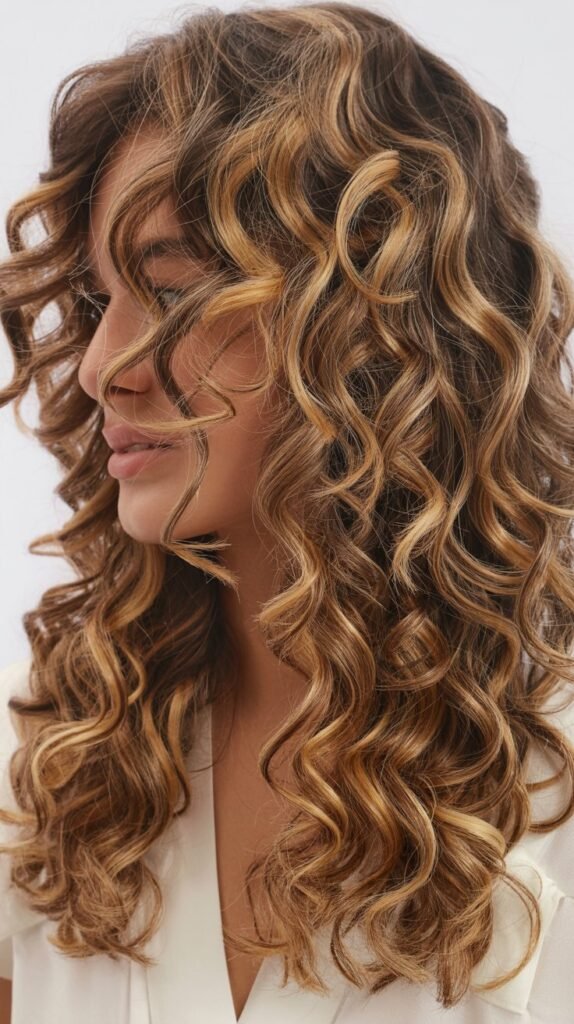
Long layers enhanced with balayage coloring create a sun-kissed, dimensional effect that makes each layer distinct while adding warmth and richness to curly hair.
This pairing represents one of the most requested combinations in modern salons.
- Balayage involves hand-painting color onto the hair, focusing on the mid-lengths and ends to create a natural, grown-out appearance.
- The technique works exceptionally well with layers, as the color placement can be customized to enhance the dimensional effect of the cut.
- Lighter ends draw the eye downward, emphasizing length while the darker roots provide depth and make hair appear thicker at the crown.
- This low-maintenance color approach requires touch-ups only every 3-4 months, making it ideal for busy lifestyles.
- The combination of movement from layers and color variation from balayage creates hair that looks alive and full of dimension.
- Proper toning and conditioning treatments keep balayaged curly hair looking fresh and prevent brassiness or dryness.
11. The Curly Mullet
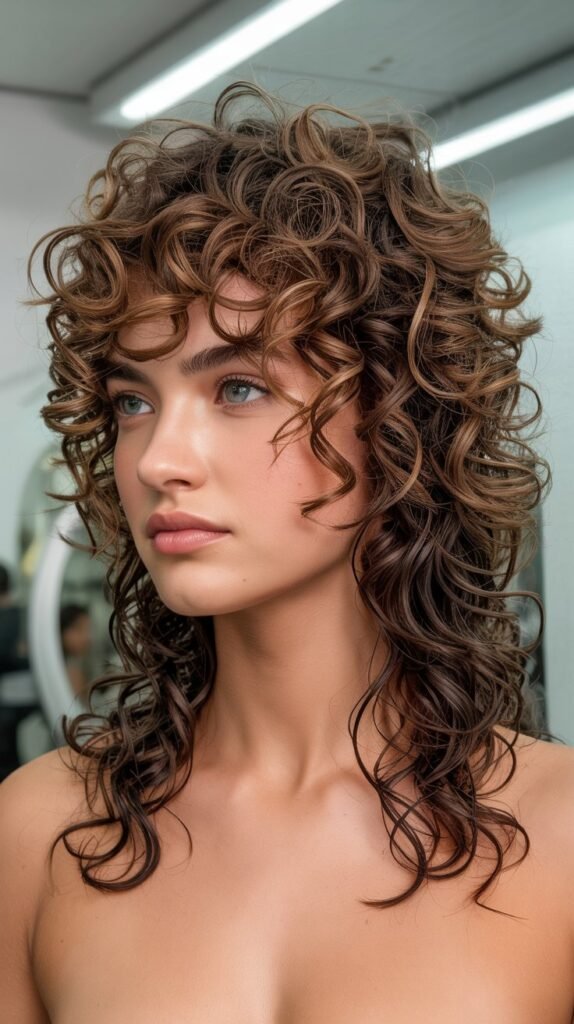
The modern curly mullet features shorter, textured layers on top and around the sides with noticeably longer length in the back, creating an edgy, contemporary style that’s gained significant popularity.
This bold cut makes a statement while remaining surprisingly wearable.
- Today’s curly mullet is more refined than its 1980s predecessor, with softer transitions and more blended layers.
- The top section can be cut relatively short for maximum volume and lift at the crown, creating height that balances the longer back.
- This cut works particularly well for those with naturally thick, voluminous curls that can support the dramatic shape.
- The mullet embraces curly hair’s natural tendency toward volume and texture rather than fighting it.
- Styling is relatively simple—scrunch product through the top section for definition while letting the back dry naturally for length.
- This cut suits oval, heart, and diamond face shapes particularly well, as it balances proportions and draws attention to cheekbones.
12. Long Curly Hair with Babylights
Babylights are ultra-fine highlights that mimic the natural, subtle dimension seen in children’s hair, and when applied to long curly hair, they create an incredibly natural, sun-kissed effect.
This delicate highlighting technique adds brightness without obvious color placement.
- The highlights are painted in extremely fine sections, sometimes as thin as a few strands, creating the most natural highlighting possible.
- Babylights work beautifully for those wanting to brighten their hair without committing to dramatic color changes.
- The subtle nature of babylights means they blend seamlessly as they grow out, requiring less frequent maintenance than traditional highlights.
- This technique can be applied throughout the hair or concentrated around the face for a brightening effect.
- The fine weaving required for babylights makes the process time-consuming, often taking 3-4 hours in the salon.
- For curly hair, babylights are best applied when hair is stretched or straightened to ensure even saturation and prevent patchiness.
13. Curly Hair with Feathered Layers
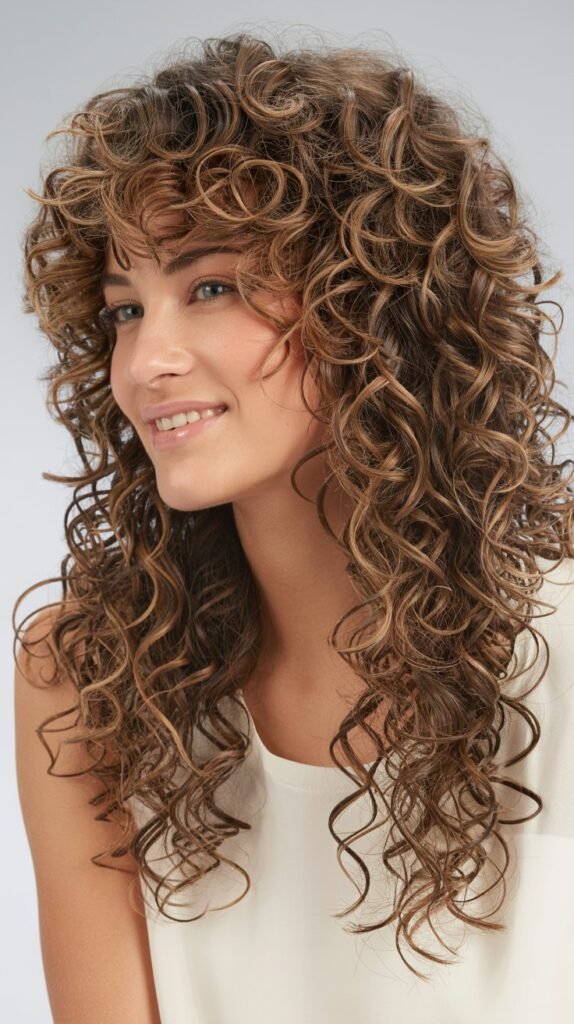
Feathered layers create soft, wispy ends that blend seamlessly into each other, producing a gentle, flowing effect that reduces bulk while maintaining fullness.
This cutting technique is particularly effective for creating movement in curly hair.
- Feathering involves using a razor or specialized cutting technique to create tapered, pointed ends rather than blunt cuts.
- This approach reduces weight without creating obvious steps or disconnected layers in the hair.
- The technique works exceptionally well for thick, dense curly hair that needs weight removal but must maintain a cohesive shape.
- Feathered layers allow curls to blend smoothly from one length to another, creating a seamless flow.
- The softer ends produced by feathering tend to curl more readily than blunt-cut ends, enhancing curl formation.
- Regular maintenance is essential, as feathered ends can become damaged more quickly and require trimming every 6-8 weeks.
14. Long Curls with an Undercut
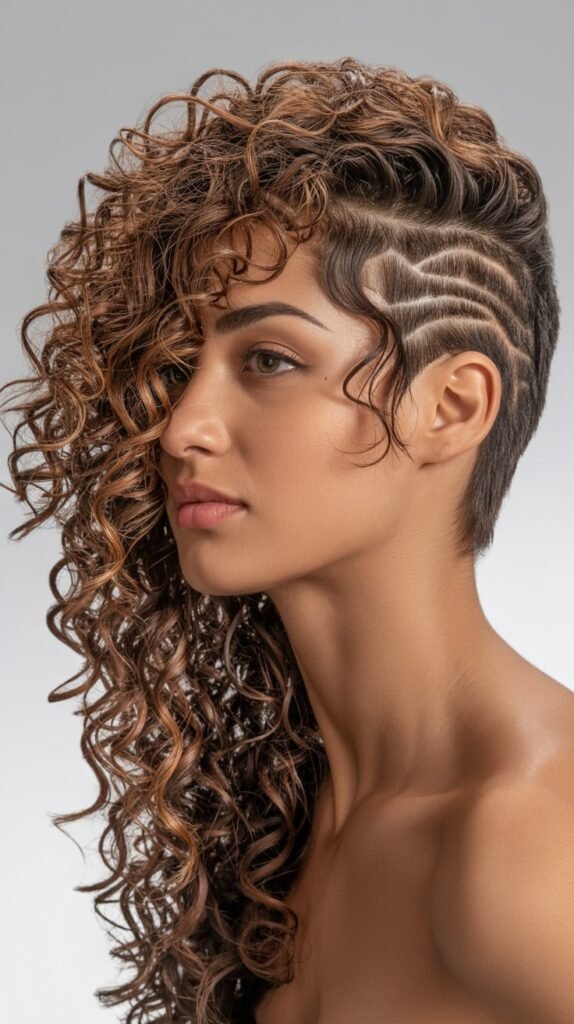
An undercut hidden beneath the top layers of long curly hair provides relief from heat and weight while maintaining the appearance of full, long curls when hair is worn down.
This practical yet edgy modification has become increasingly popular.
- The undercut typically involves shaving or closely cutting the nape area, sides, or a combination of both.
- When hair is worn down, the undercut remains completely hidden, providing a professional appearance when needed.
- This modification significantly reduces bulk for those with very thick hair, making styling and drying easier.
- The undercut provides welcome relief during hot weather while maintaining length for styling versatility.
- Maintenance requires touch-ups every 4-6 weeks to keep the shaved area neat and at the desired length.
- This option allows for creative expression with designs shaved into the undercut while keeping a conservative appearance when needed.
15. The Curly Piano Cut
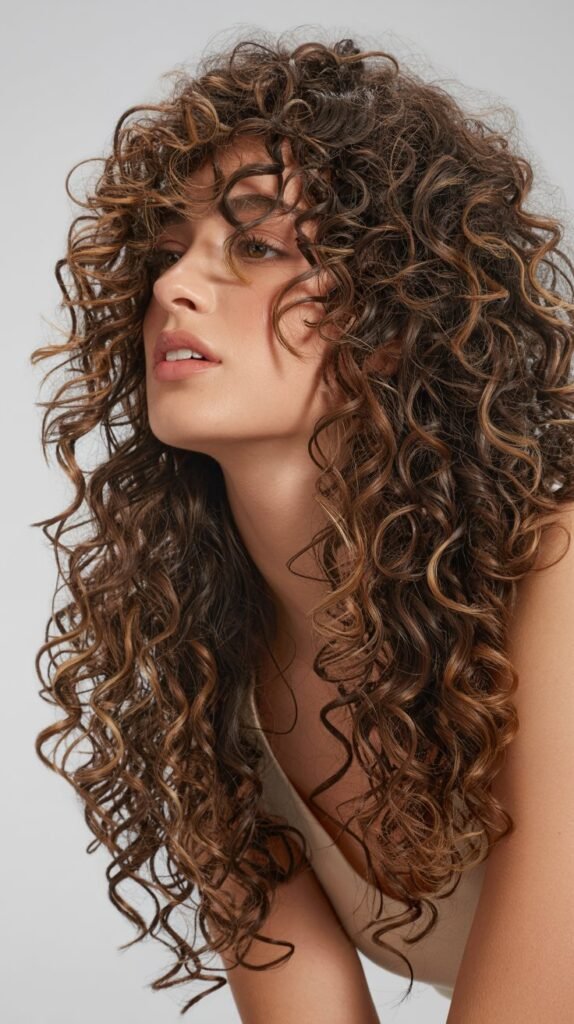
The piano cut features alternating sections of longer and shorter layers that create a striped or piano key-like effect when styled, producing a highly textured, dimensional look.
This artistic approach to layering creates visual interest and movement.
- This advanced cutting technique requires a skilled stylist familiar with curl patterns and how they’ll behave at different lengths.
- The alternating lengths create natural volume and prevent curly hair from looking too uniform or flat.
- This cut works best on individuals with consistent, well-defined curl patterns that will showcase the layering effect.
- The piano cut reduces bulk strategically while maintaining fullness throughout the head.
- Styling involves enhancing natural curl pattern with minimal manipulation to allow the cut’s structure to show through.
- This cut photographs beautifully and creates interesting movement when hair is in motion.
16. Long Curls with Wispy Ends
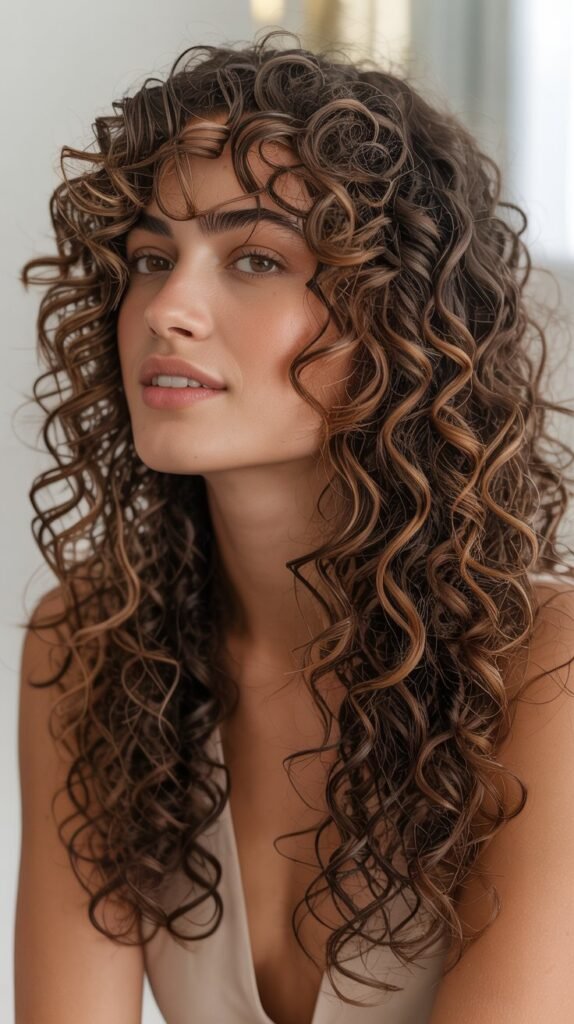
Wispy ends create a soft, romantic finish to long curly hair, preventing the harsh lines that can occur with blunt cuts while adding delicate texture.
This finishing technique makes hair appear lighter and more ethereal.
- Creating wispy ends involves point-cutting or using thinning shears to remove weight from the very tips of the hair.
- This technique prevents curly hair from looking bottom-heavy or triangular in shape.
- Wispy ends allow curls to form tighter spirals as there’s less weight pulling them straight.
- The technique is particularly beneficial for fine to medium textured curls that need to maintain body without excessive weight.
- Styling is effortless—the texture created by wispy ends naturally enhances curl formation.
- This finish requires more frequent trims to prevent split ends from compromising the delicate texture.
17. Curly Hair with Interior Layers
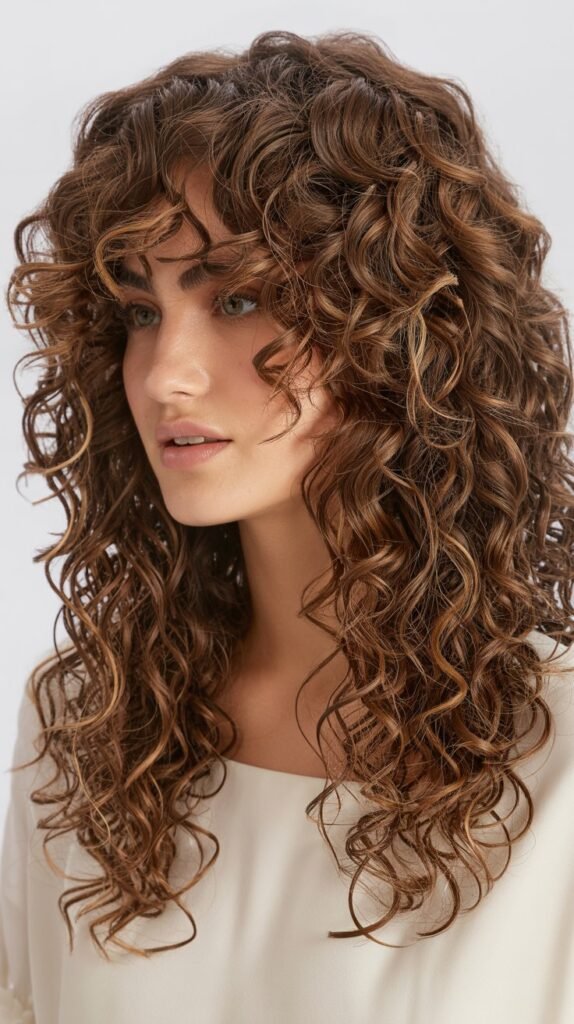
Interior layers are cut within the bulk of the hair rather than on the surface, removing weight from the inside while maintaining a smooth exterior shape.
This technique is invisible when hair is worn down but dramatically reduces bulk and improves curl formation.
- This cutting technique is essential for very thick or coarse curly hair that tends to become pyramid-shaped.
- Interior layers allow the outer curls to stack properly rather than being pushed outward by inner bulk.
- The technique improves curl definition because individual curl clumps have room to form without being compressed.
- Hair appears to have more movement and bounce after interior layering despite the exterior length remaining unchanged.
- This approach is ideal for those who want to maintain a one-length appearance while reducing weight.
- The cut typically lasts longer between appointments as the exterior shape remains consistent even as hair grows.
18. Long Curly Hair with Diagonal Layers
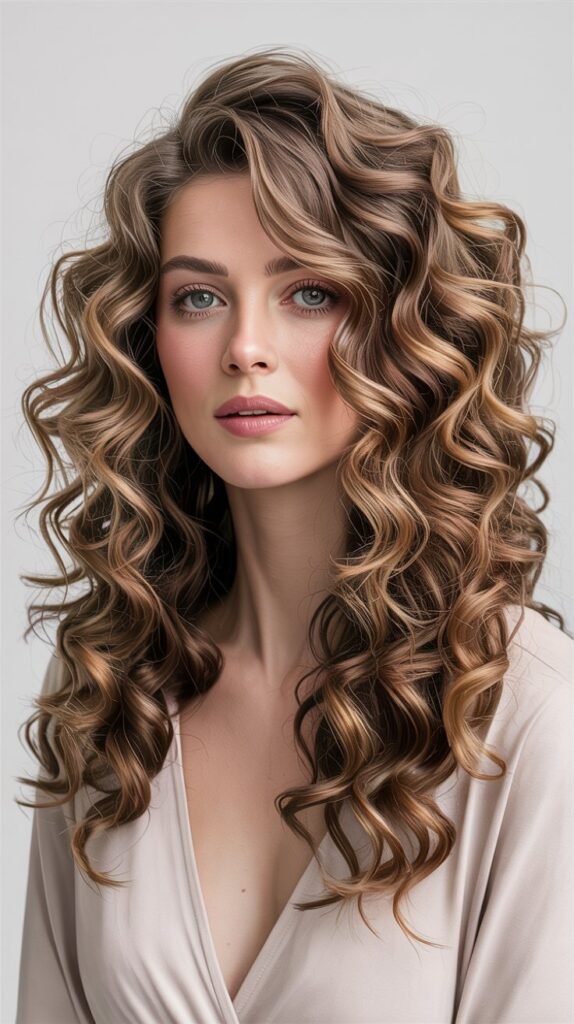
Diagonal layers are cut at an angle rather than straight across, creating a asymmetrical, dynamic shape that moves beautifully and adds visual interest.
This modern layering technique prevents curly hair from looking too symmetrical or predictable.
- The diagonal cutting angle creates natural movement as hair falls to one side rather than straight down.
- This technique flatters those who prefer side-parted hairstyles, as it enhances the natural sweep of hair.
- Diagonal layers can be subtle or dramatic depending on the angle and placement of cuts.
- The technique adds asymmetry that draws attention and creates a fashion-forward appearance.
- Styling involves enhancing the natural direction of the cut by diffusing or styling hair to follow the diagonal pattern.
- This cut looks particularly striking when hair is styled sleek or when individual curl clumps are well-defined.
19. The Curly Butterfly Cut
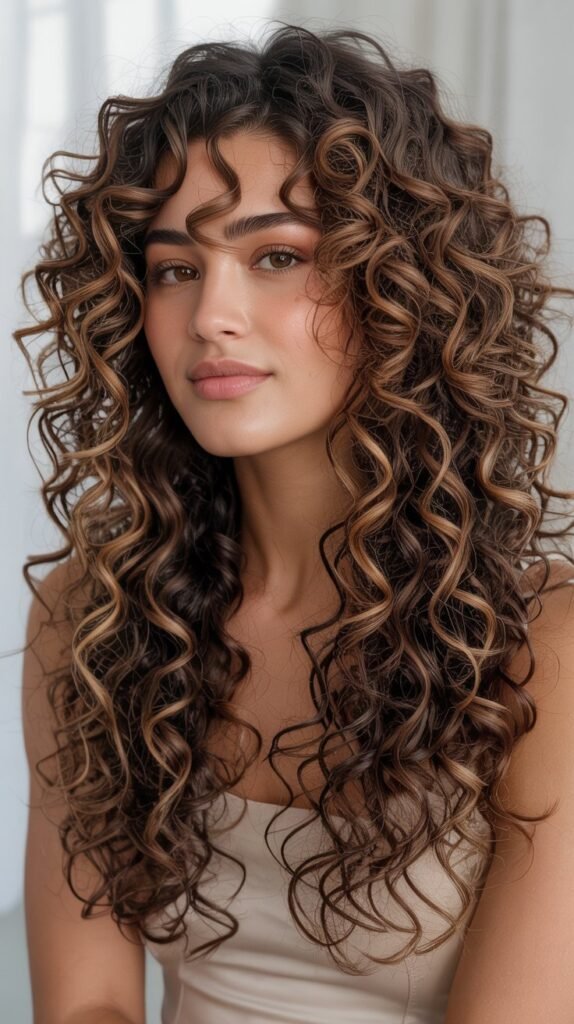
The butterfly cut features heavily layered hair with the shortest layers concentrated around the crown, creating a wing-like silhouette that resembles a butterfly when viewed from behind.
This voluminous cut has become a social media sensation.
- The butterfly cut creates maximum volume at the crown and around the face while maintaining significant length at the back.
- Short layers starting at the crown gradually extend to full length, creating the characteristic butterfly wing shape.
- This cut is ideal for those with fine to medium density curls that need significant volume amplification.
- The dramatic layering removes considerable weight, allowing curls to spring up with increased bounce.
- Styling requires diffusing or air-drying with the head upside down to maximize the voluminous butterfly effect.
- This trendy cut works best for those with naturally wavy to curly hair, as the shape is less visible on very tight curl patterns.
20. Long Curls with Money Pieces
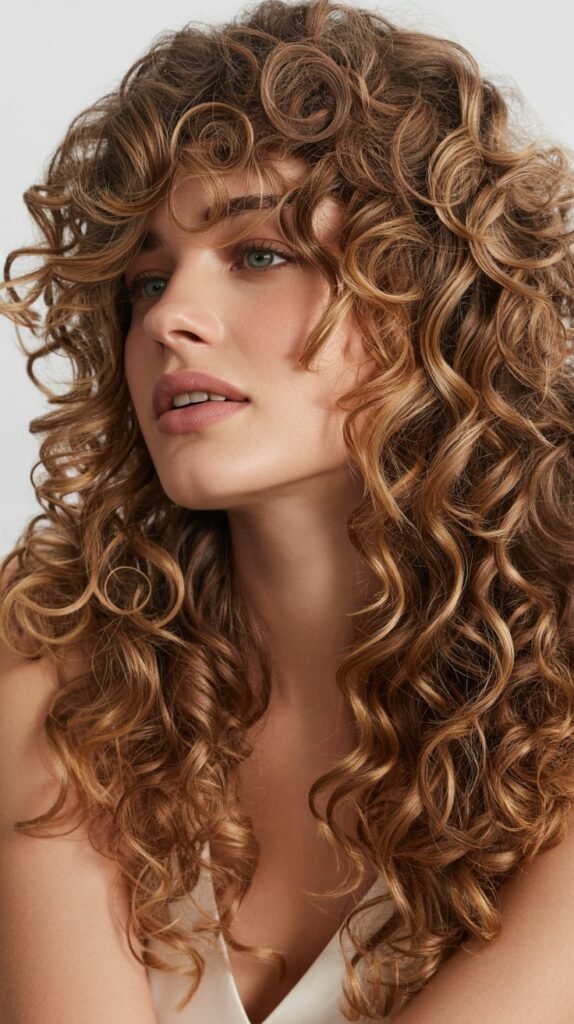
Money pieces are bold, face-framing highlights that brighten the hair directly around the face, creating a striking contrast that draws attention to facial features.
This high-impact coloring technique pairs beautifully with long curly hair.
- Money pieces typically involve bleaching or highlighting two thick sections of hair on either side of the face.
- The name comes from the high-value impact these strategic highlights provide—maximum effect with minimal color coverage.
- This technique works beautifully with curly hair as the curls catch light and showcase the color dimension.
- Money pieces can be as subtle or bold as desired, from honey blonde on brunettes to platinum on darker hair.
- The placement is versatile, ranging from starting at the roots for maximum impact to beginning at cheekbone level for subtlety.
- Maintenance requires touching up the lightened sections every 6-8 weeks to maintain vibrancy and blend regrowth.
21. Curly Hair with Slide Cut Layers
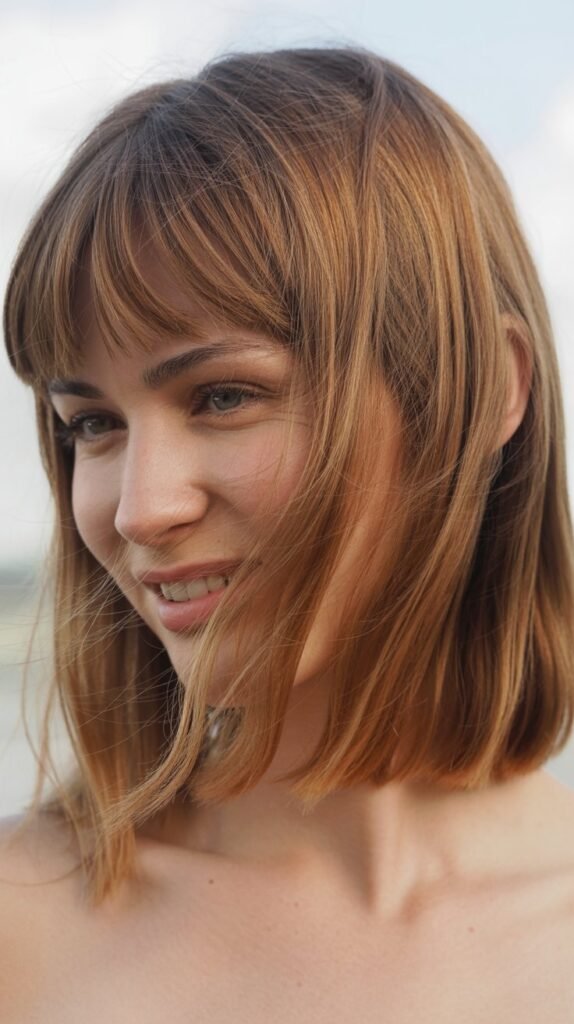
The slide cutting technique involves gliding scissors along the hair shaft while cutting, creating graduated layers with seamless blending.
This method is particularly effective for curly hair as it prevents harsh lines and maintains natural flow.
- Slide cutting must be performed on dry curly hair so the stylist can see exactly how curls will lay after cutting.
- This technique removes bulk while creating movement without obvious steps or disconnected layers.
- The method works for all curl types but is especially beneficial for wavy to loose curly patterns.
- Slide cut layers enhance natural curl formation by removing weight that pulls curls straight.
- The seamless blending means hair looks natural and uncontrived even when curls are at their most defined.
- This cutting method requires skill and experience, so seek out curl specialists trained in dry-cutting techniques.
22. Long Curls with Root Lift Layers
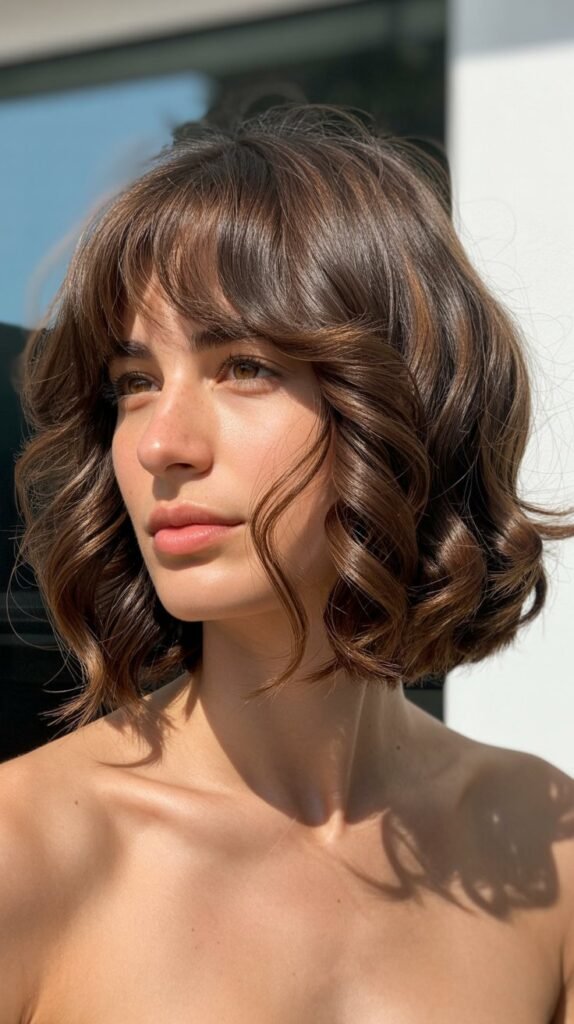
Root lift layers are strategically placed at the crown and around the hairline to create volume specifically where hair tends to fall flat.
These targeted layers address a common concern for those with long, heavy curls.
- These layers are cut shorter specifically at the root area, creating support that lifts the rest of the hair away from the scalp.
- The technique prevents the flat-top phenomenon that often occurs with long, heavy curly hair.
- Root lift layers are particularly beneficial for fine to medium texture curls that lack natural volume at the crown.
- The shorter pieces at the top create a foundation that longer layers can cascade over, producing dimension.
- Styling involves encouraging lift by diffusing at the roots or using clips while drying to set volume.
- These layers require maintenance every 6-8 weeks as they quickly lose their lifting ability as they grow longer.
23. Curly Hair with Ribbon Layers
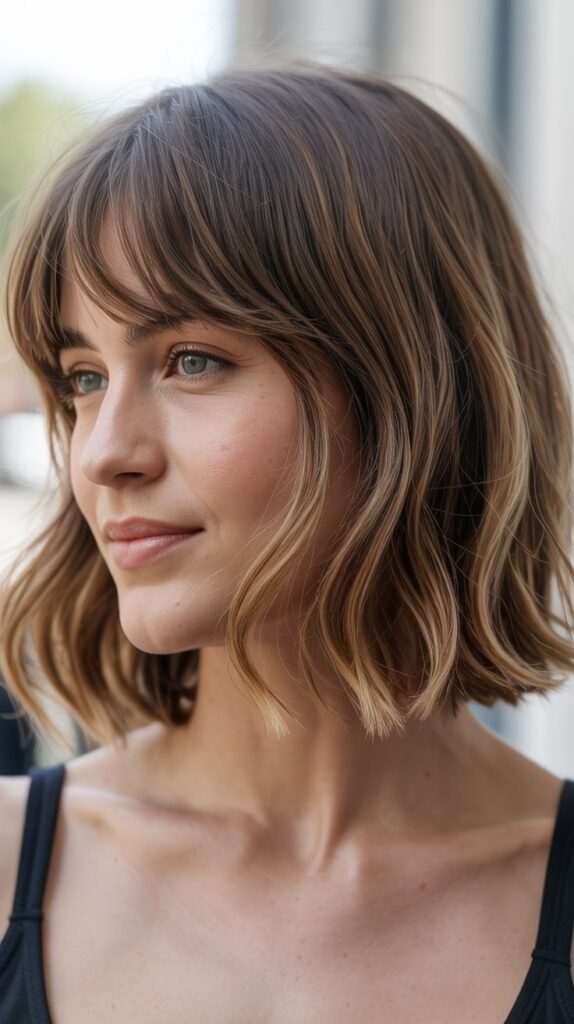
Ribbon layers create flowing, ribbon-like sections of hair at varying lengths that move independently, adding fluid movement and a whimsical quality to long curly hair.
This artistic approach emphasizes the flowing nature of curls.
- Ribbon layers are cut to create distinct sections that separate and flow independently rather than blending completely.
- This technique showcases individual curl clumps and celebrates the chaotic beauty of natural curls.
- The layering creates interesting movement as different sections of hair move at different rates and directions.
- Ribbon layers work best on naturally defined, well-moisturized curls that clump together predictably.
- Styling involves encouraging curl clumping with appropriate products and minimal manipulation.
- This cut photographs beautifully and creates hair that looks dynamic in both photos and real life.
24. Long Curls with Stacked Back Layers
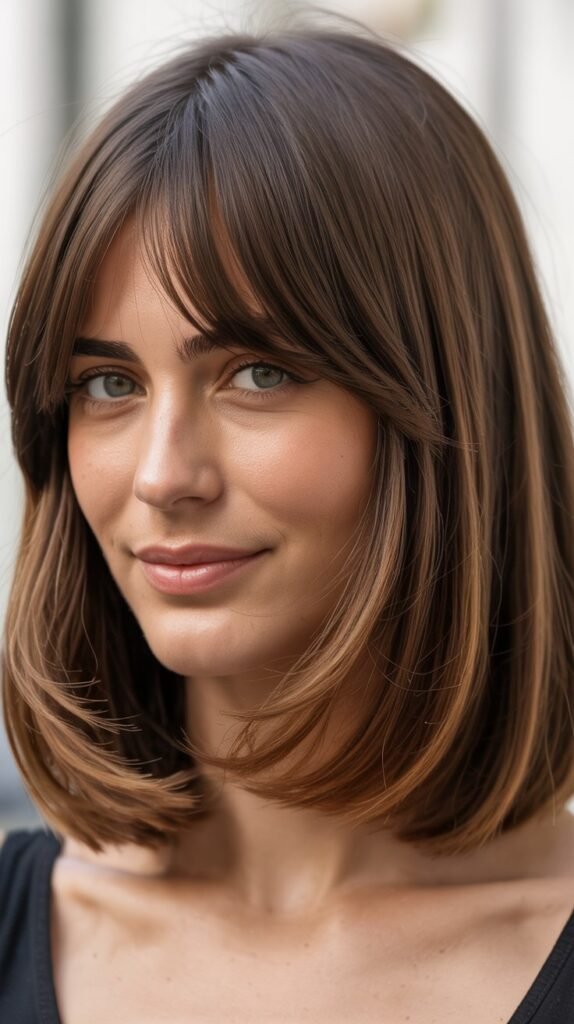
Stacked back layers concentrate layering at the back of the head, creating height and volume in the posterior while maintaining relative length on the sides and front.
This technique prevents flat, lifeless back sections.
- Stacking involves cutting layers that gradually decrease in length as they approach the crown, creating a rounded shape.
- This technique is essential for those whose hair falls flat at the back due to sleeping position or natural growth patterns.
- The stacked layers create support that prevents the dreaded flat-back appearance common in long curly hair.
- This cutting approach maintains length at the perimeter while removing weight and bulk from interior sections.
- Styling requires encouraging the lift by diffusing the back section or sleeping with hair in a pineapple position.
- The stacked effect becomes more pronounced as curls dry and spring up to their natural volume.
25. Curly Hair with Piece-y Layers
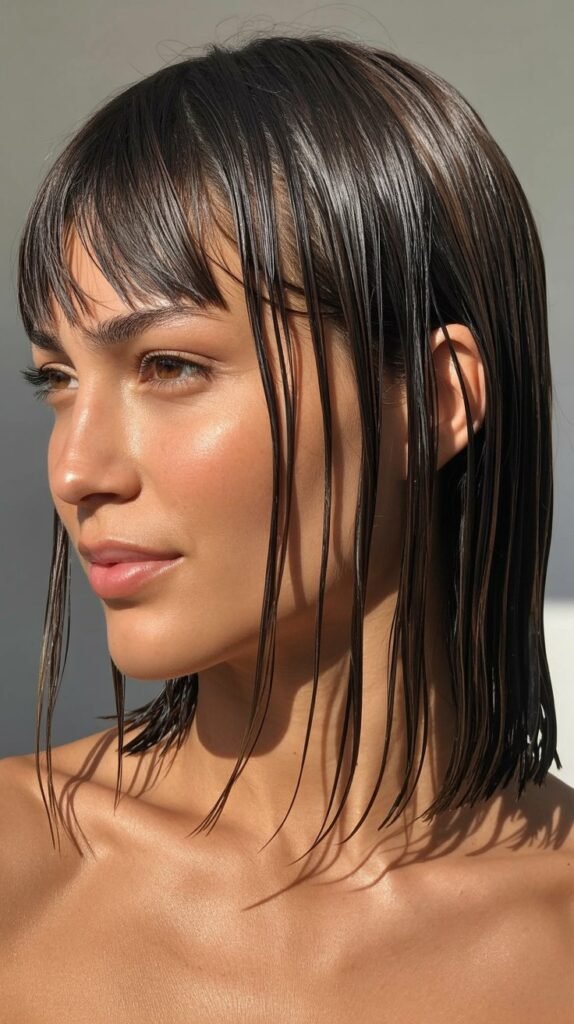
Piece-y layers are created using point-cutting and texturizing techniques to produce separated, defined sections of hair that create a modern, textured appearance.
This approach emphasizes individual curl definition rather than overall uniformity.
- Point-cutting at the ends creates texture that encourages curls to separate into distinct clumps rather than blending together.
- This technique creates a deliberately unpolished, naturally textured look that appears effortlessly stylish.
- Piece-y layers work exceptionally well for medium to loose curl patterns that naturally want to separate.
- The cutting technique reduces bulk while maintaining density, preventing hair from looking thin or sparse.
- Styling involves using products that encourage definition without creating crunch or stiffness.
- This modern approach suits those who want a less groomed, more organic curly hair aesthetic.
26. Long Curls with Disconnected Layers
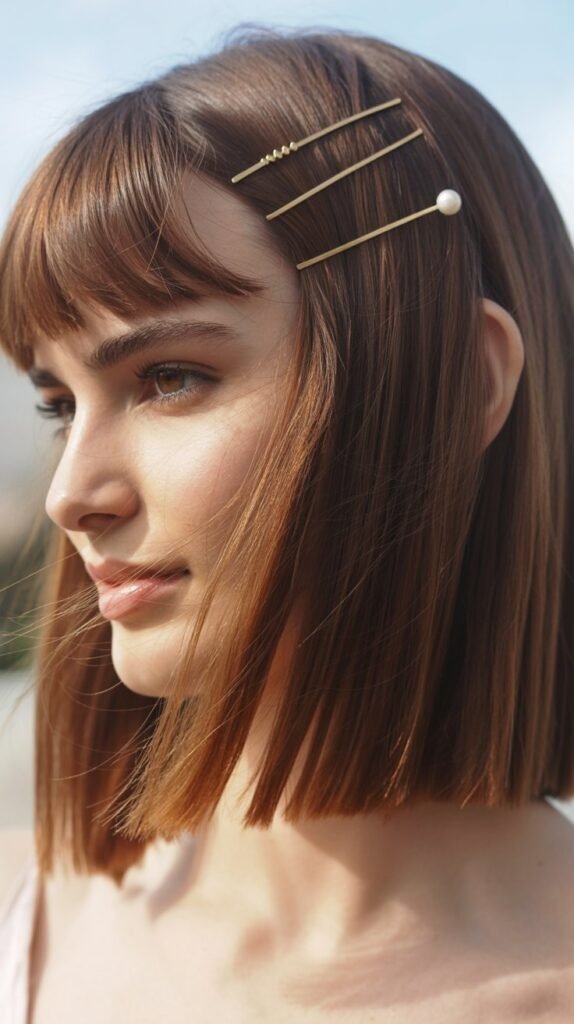
Disconnected layers feature intentional gaps between layer lengths, creating a choppy, modern effect that adds drama and interest.
Unlike blended layers, these deliberately show where one length ends and another begins.
- This edgy cutting technique creates obvious breaks between layer lengths for a bold, intentional appearance.
- Disconnected layers work best for those with thick hair, as the technique removes significant weight and bulk.
- The dramatic effect creates movement and interest while preventing curly hair from looking too polished or controlled.
- This cutting approach suits fashion-forward individuals comfortable with a less conventional aesthetic.
- Styling is minimal—the cut itself creates the shape and structure with little manipulation needed.
- The disconnected effect becomes more pronounced as hair grows, requiring maintenance every 8-10 weeks.
27. Curly Hair with Rounded Layers
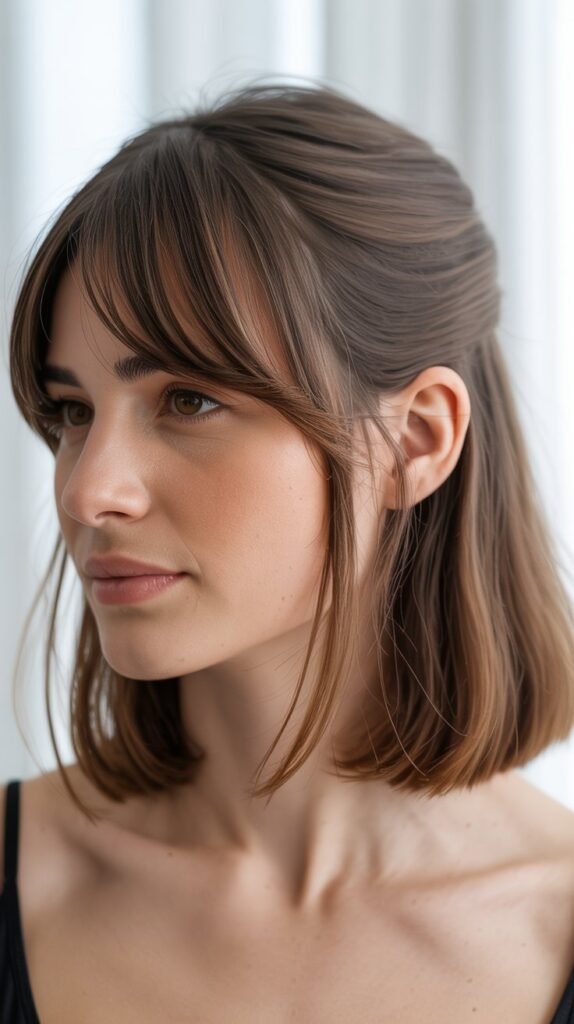
Rounded layers are cut to follow the natural curve of the head, creating a rounded, dimensional silhouette that flatters most face shapes and prevents angular or boxy appearances.
This classic approach to layering never goes out of style.
- The layering follows the contour of the head, with layers getting longer as they move toward the back and sides.
- This technique creates a universally flattering shape that adds width where needed and removes it where beneficial.
- Rounded layers prevent the pyramid or triangle shape that can plague curly hair when layers are too blended or absent.
- The cut works for all curl types and densities, though the effect is most visible on well-defined curl patterns.
- Styling is straightforward as the cut naturally creates the rounded shape—simply enhance curls and allow to dry.
- This timeless approach suits professional environments while remaining stylish and modern.
28. Long Curls with Face-Framing Layers
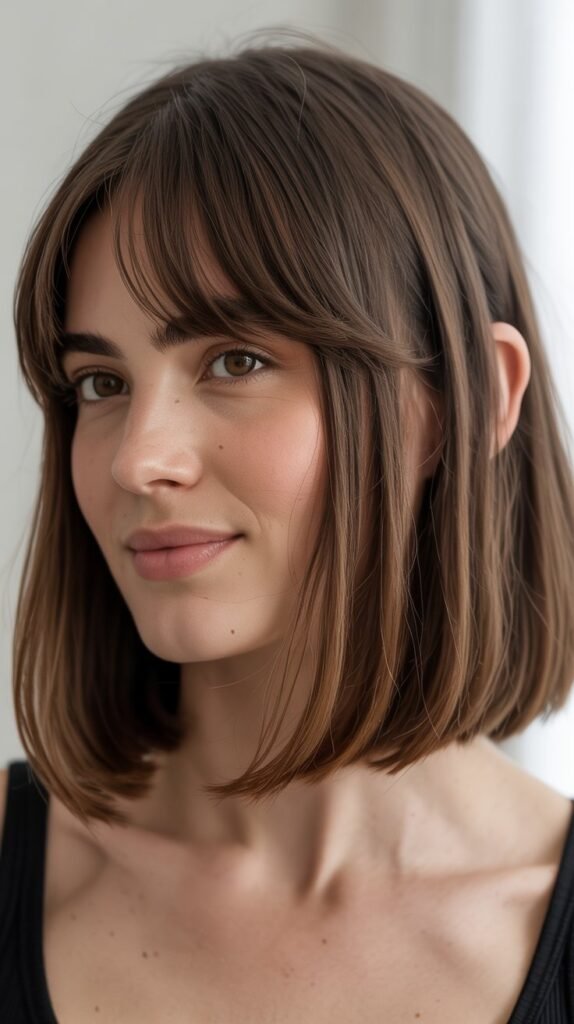
Face-framing layers concentrate shorter lengths around the front hairline and face, drawing attention to facial features while the back maintains full length.
This targeted layering creates flattering proportions without sacrificing overall length.
- Face-framing layers typically start around the cheekbones or chin and gradually blend into the longer length at the back.
- This technique brightens the face and draws attention to the eyes and cheekbones without committing to overall layering.
- The layers can be customized to address specific face shape concerns—longer for round faces, shorter for long faces.
- Face-framing pieces often require more styling attention than the rest of the hair to encourage them to curl away from the face.
- This approach is ideal for those who want the ease of one-length hair with strategic shaping around the face.
- The layers grow out gracefully and can easily be maintained or allowed to blend back into the overall length.
29. Curly Hair with Invisible Layers
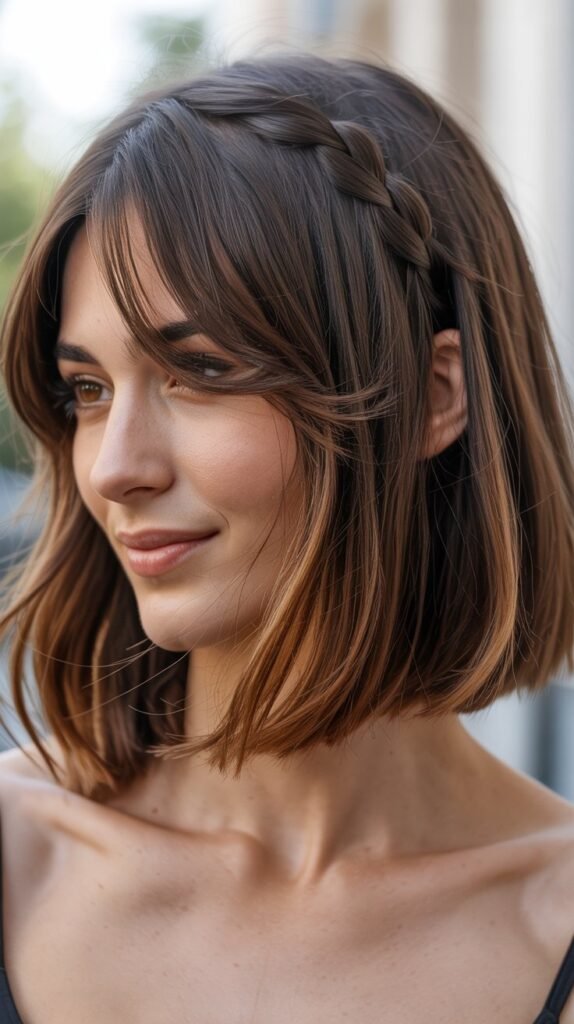
Invisible layers are cut to remove weight and create movement while remaining virtually undetectable, maintaining the appearance of one-length hair.
This technique is perfect for those wanting the benefits of layering without an obviously layered look.
- This cutting technique involves strategically removing weight from interior sections while keeping the perimeter length consistent.
- Invisible layers improve curl formation by reducing bulk without creating the stepped effect of traditional layering.
- The technique works beautifully for those who prefer a more classic, uniform appearance to their curls.
- Despite appearing to be one length, hair with invisible layers has more movement and less weight than truly unlavered hair.
- Styling is simplified as the hair maintains a cohesive shape that requires minimal direction or manipulation.
- This approach is ideal for professional settings where a polished, sophisticated appearance is desired.
30. Long Curls with Soft A-Line Shape
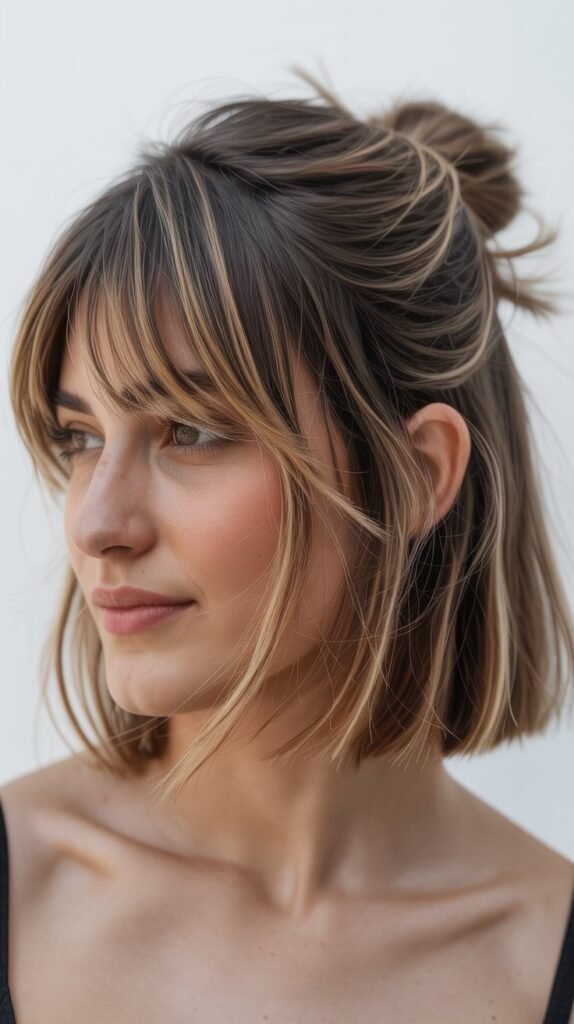
The soft A-line features hair that’s slightly shorter in the back graduating to longer in the front, creating a gentle forward angle that flatters most face shapes.
This subtle geometric shape works beautifully with long curly hair.
- The A-line shape naturally directs attention forward, framing the face and creating a flattering silhouette.
- For curly hair, the angle should be subtle to account for shrinkage and maintain balanced proportions.
- This cut creates natural movement as hair swings forward and the different lengths interact.
- The A-line works particularly well for those with heart or diamond face shapes, balancing proportions.
- Styling involves encouraging the forward movement of the hair with product application and diffusing direction.
- The shape remains visible even as hair grows, making it a low-maintenance option between cuts.
31. Curly Hair with Textured Crown Layers
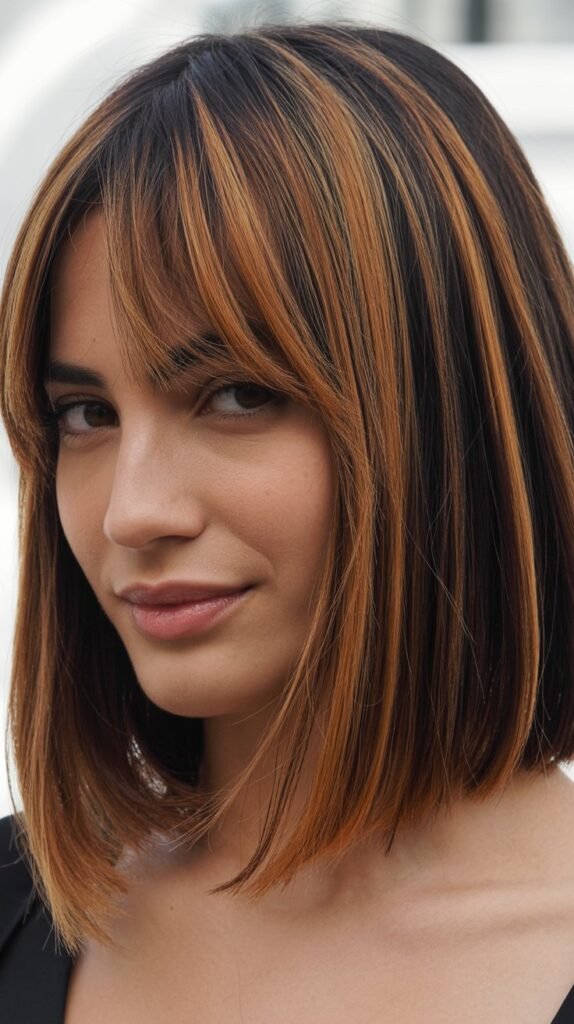
Textured crown layers focus on creating volume and movement specifically at the top of the head through strategic layering and texturizing techniques.
This addresses the common issue of flat crown areas in long curly hair.
- Crown texturizing removes weight from the top section, allowing curls to spring up and create natural lift.
- This technique is essential for those with fine to medium hair that lacks natural volume at the roots.
- The shorter crown layers create a foundation that supports the rest of the hair’s structure.
- Texturizing can be achieved through point-cutting, slide-cutting, or using texturizing shears on dry curls.
- Styling involves encouraging lift through diffusing upside down or using root-lifting products.
- The increased volume at the crown balances the overall silhouette and prevents the flat-top appearance.
32. Long Curls with Graduated Perimeter
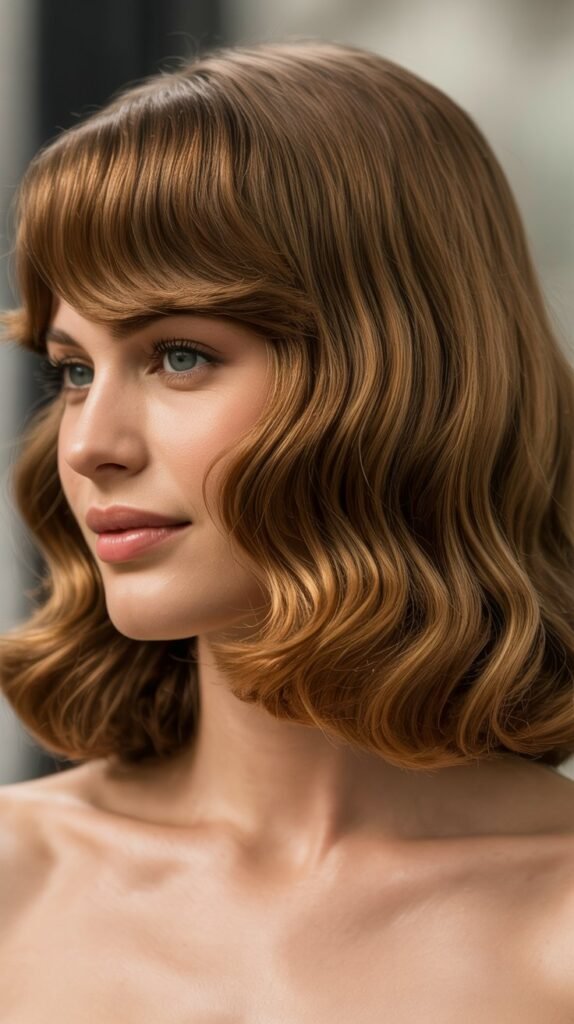
The graduated perimeter features hair cut at an angle around the entire hairline, creating a customized shape that can be tailored to complement individual features and curl patterns.
This precision cutting technique delivers consistent, professional results.
- Graduation involves cutting the hair at a specific angle relative to the head, creating either stacked fullness or sleek movement depending on the angle chosen.
- This technique provides structure to curly hair that might otherwise lack defined shape.
- The graduated perimeter can be cut at various angles—steep for more volume, shallow for elongation.
- This cutting approach works for all curl types and allows the stylist to customize the shape to the individual’s features.
- The precision of this cut creates clean lines and intentional shape rather than allowing curls to fall randomly.
- Maintenance is required every 8-10 weeks to preserve the graduated angle and prevent the shape from becoming overgrown.
33. Curly Hair with Long Bohemian Layers
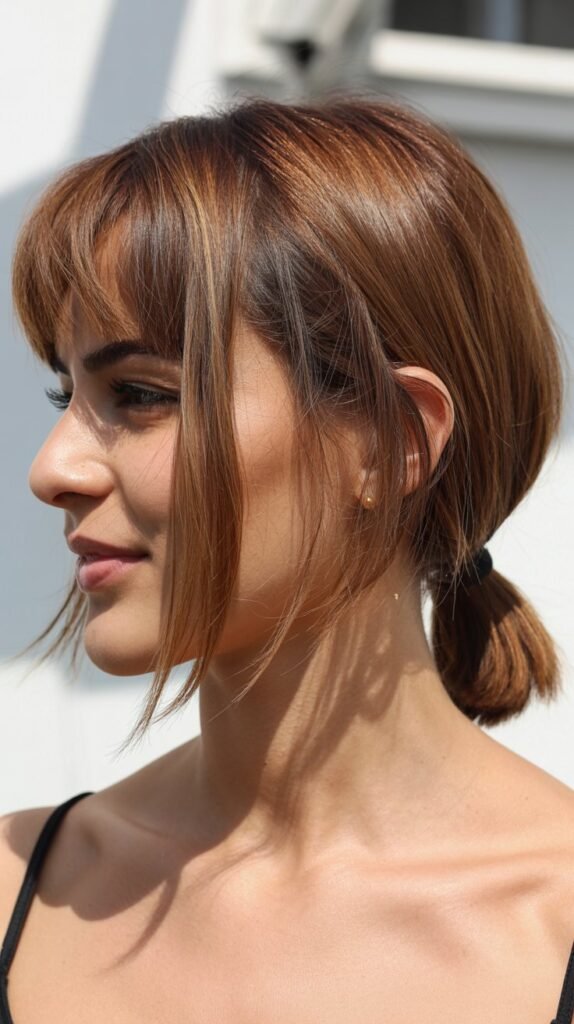
Bohemian layers create a relaxed, free-spirited aesthetic with varied lengths throughout that appear uncontrived and organic.
This laid-back approach to layering celebrates the natural, unstructured beauty of long curly hair.
- Bohemian layering involves creating varied lengths throughout the hair without following a specific geometric pattern.
- This approach embraces the natural chaos of curls, working with their unpredictable nature rather than imposing strict structure.
- The layers are typically longer and less aggressive than other cutting techniques, maintaining significant length throughout.
- This style works beautifully for those with naturally textured, well-moisturized curls that hold their pattern reliably.
- Styling is minimal and embraces the imperfect—simply apply product and allow hair to air dry naturally.
- The bohemian approach suits relaxed, artistic personalities and works well with natural, minimal makeup aesthetics.
- This cut is incredibly low-maintenance and can go 10-12 weeks between trims while still looking intentional.
- The varied lengths create natural movement and prevent the heavy, weighed-down appearance common in very long curly hair.
Curl Care and Maintenance Tips
Maintaining gorgeous long curly hair requires understanding your specific curl type and implementing appropriate care routines that preserve moisture, definition, and health.
- Deep conditioning treatments should be applied weekly to maintain moisture and prevent breakage in long curly hair.
- Trimming every 8-12 weeks prevents split ends from traveling up the hair shaft and maintains the haircut’s intended shape.
- Sleeping on silk or satin pillowcases reduces friction that causes frizz and breakage during the night.
- The “pineapple” technique—gathering hair loosely at the crown before bed—preserves curl definition overnight.
- Avoid brushing dry curls, as this disrupts the curl pattern and creates frizz; instead, detangle when wet with conditioner.
- The Curly Girl Method, which eliminates sulfates, silicones, and heat styling, has transformed curl care for millions.
- Regular protein treatments balance moisture and strengthen curls that have been chemically treated or are naturally porous.
- Diffusing should be done on low heat settings to prevent heat damage while encouraging curl formation.
Choosing the Right Stylist
Finding a curl specialist rather than a general hairstylist significantly impacts the success of your curly haircut and overall hair health.
- Look for stylists who specifically advertise curly hair expertise or DevaCurl, Ouidad, or Rezo Cut certifications.
- Ask to see before-and-after photos of curly clients with similar hair types to yours.
- A qualified curl specialist will cut your hair dry to see exactly how your curls fall naturally.
- During consultation, a good stylist will assess your curl pattern, density, porosity, and styling routine before making recommendations.
- Don’t be afraid to travel further to see a true curl specialist—the results are worth the extra effort.
- Read reviews from other curly-haired clients to understand the stylist’s approach and consistency.
- A curl expert will educate you about your hair type and provide personalized styling and product recommendations.
Styling Products for Long Curly Hair
The right product selection makes the difference between defined, bouncy curls and frizzy, undefined waves.
- Leave-in conditioners provide essential moisture and detangling for long curly hair that tangles easily.
- Curl creams offer definition and hold while maintaining softness and natural movement.
- Gels provide maximum hold and definition but should be “scrunched out” after drying to prevent crunchiness.
- Mousse adds volume and light hold, working particularly well for fine to medium textured curls.
- Oils seal in moisture and add shine but should be used sparingly on fine hair to avoid weighing down curls.
- Avoid products containing sulfates, which strip natural oils, and silicones, which build up on curly hair.
- The “cocktailing” method—combining multiple products—allows customization for your specific curl needs.
- Apply products to soaking wet hair using praying hands or scrunching motions for optimal distribution.
Long curly hair represents endless possibilities for self-expression, and the right haircut unlocks your curls’ full potential.
This comprehensive guide to 33 Gorgeous Long Curly Haircuts for Volume and Style has explored diverse cutting techniques, from classic layers to modern shag cuts, from dramatic V-shapes to trendy butterfly cuts, each designed to work with your natural texture rather than against it.
The key to success lies in understanding your unique curl pattern, finding a skilled curl specialist who can execute these techniques properly, and maintaining your hair with appropriate products and care routines.
Whether you prefer the romance of face-framing layers, the edge of an undercut, or the drama of disconnected layers, there’s a perfect cut waiting to transform your curls from a daily struggle into your most stunning feature.
Remember that healthy, well-maintained curls are the foundation of any great haircut—invest in quality products, protect your hair while sleeping, and embrace the natural beauty of your texture.
Your curly hair journey is uniquely yours, and with the right cut and care, every day truly can be a good hair day.
Take these ideas to your stylist, communicate your goals clearly, and prepare to fall in love with your curls all over again.