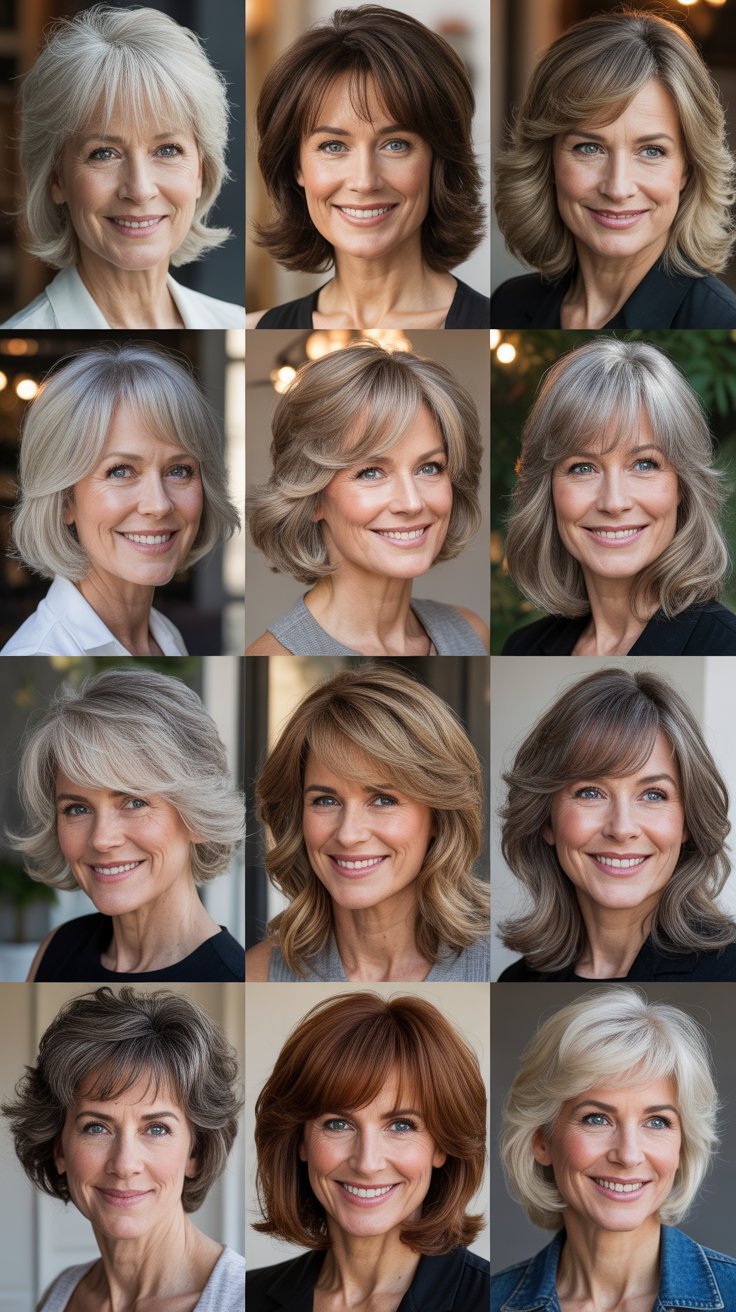
There comes a moment when you look in the mirror and wonder if a simple change could take years off your appearance without surgery or expensive treatments.
The answer might be softer than you think—literally hanging right in front of your eyes. Soft curtain bangs have emerged as the secret weapon for women over 50 who want to reclaim that radiant, youthful energy they thought was lost to time.
These face-framing layers work like magic, softening fine lines, highlighting your best features, and creating an effortlessly chic look that turns heads at any age.
This comprehensive guide to 34 Soft Curtain Bangs for Women Over 50 That Create a Youthful Glow will walk you through everything from understanding what makes curtain bangs perfect for mature hair to specific styles that complement different face shapes, hair textures, and personal styles.
You’ll discover why this trend has become the go-to choice for age-defying beauty, how to maintain your new look, and which variations will make you feel like the most confident version of yourself.
Whether you have thick hair, thin hair, straight strands, or natural waves, there’s a curtain bang style waiting to transform your appearance and boost your confidence in ways you never imagined possible.
1. Understanding Soft Curtain Bangs and Why They Work for Mature Beauty

Soft curtain bangs are gently parted in the middle and swept to the sides, creating a delicate frame around your face that mimics the graceful drape of theater curtains.
Unlike blunt, heavy bangs that can feel dated or overwhelming, these wispy layers offer versatility and movement that complement the natural changes in mature skin and facial structure.
- They strategically draw attention to your eyes, making them appear larger and more luminous while distracting from forehead lines or crow’s feet.
- The soft, feathered texture creates dimension that adds volume to thinning hair, a common concern for women experiencing age-related hair changes.
- Curtain bangs require minimal styling effort compared to other bang styles, making them perfect for busy women who want to look polished without spending hours in front of the mirror.
- The length flexibility allows customization—they can graze your cheekbones, sit at eyebrow level, or extend longer depending on what flatters your unique face shape.
- These bangs work harmoniously with various hair lengths, from short pixie cuts to long, flowing layers, providing endless styling possibilities.
- The gradual transition from shorter to longer hair creates a seamless, natural look that doesn’t scream “I just got bangs” but whispers “I’ve always been this effortlessly beautiful.”
- They soften angular features that may become more pronounced with age, creating a gentler, more approachable appearance.
2. Face Shape Analysis: Finding Your Perfect Curtain Bang Style
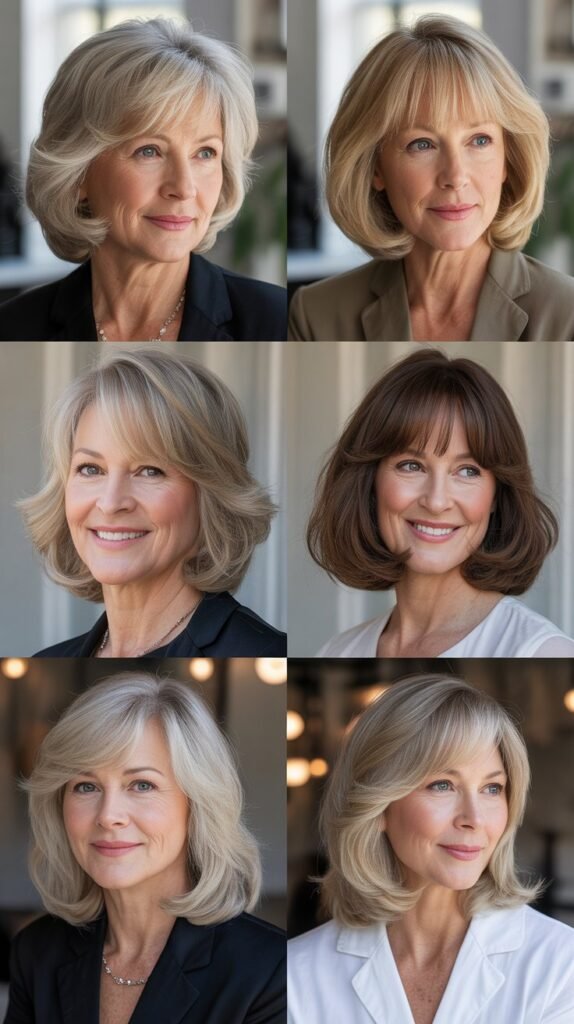
Understanding your face shape is the foundation for selecting curtain bangs that will genuinely enhance your features rather than work against them.
Each face shape has specific characteristics that respond differently to bang placement, length, and density.
Oval Face Shapes
- You have the most versatile canvas for curtain bangs since oval faces are naturally balanced and can accommodate nearly any bang style.
- Consider medium-length curtain bangs that hit just below the cheekbones to maintain your face’s natural proportions.
- Experiment with different densities—from wispy, barely-there bangs to fuller, more substantial fringe—all will work beautifully.
Round Face Shapes
- Opt for longer curtain bangs that extend past the cheekbones to create the illusion of length and angles.
- Keep the bangs lighter in density to avoid adding width to your face.
- Request layers that angle diagonally downward to draw the eye vertically rather than horizontally.
Square Face Shapes
- Soft, feathered curtain bangs are your best friend for softening strong jawlines and angular features.
- Choose bangs that start shorter at the center and gradually lengthen toward the sides to create curves that counterbalance straight lines.
- Avoid blunt edges or too much weight in the bangs, which can emphasize the squareness you’re trying to soften.
Heart Face Shapes
- Balance a wider forehead with fuller curtain bangs that provide more coverage at the top while remaining wispy and light.
- Keep the length at or just below the cheekbones to add width at the narrower part of your face.
- Ask for more texture and movement in the bangs to create visual interest that distracts from forehead width.
Long Face Shapes
- Shorter, fuller curtain bangs work wonders for breaking up the length of an elongated face.
- Request more horizontal volume in your bangs to create width that balances your face’s vertical proportions.
- Consider pairing your curtain bangs with side layers that hit at cheekbone level to further shorten the appearance of your face.
3. Curtain Bangs for Thin or Fine Hair: Creating the Illusion of Volume
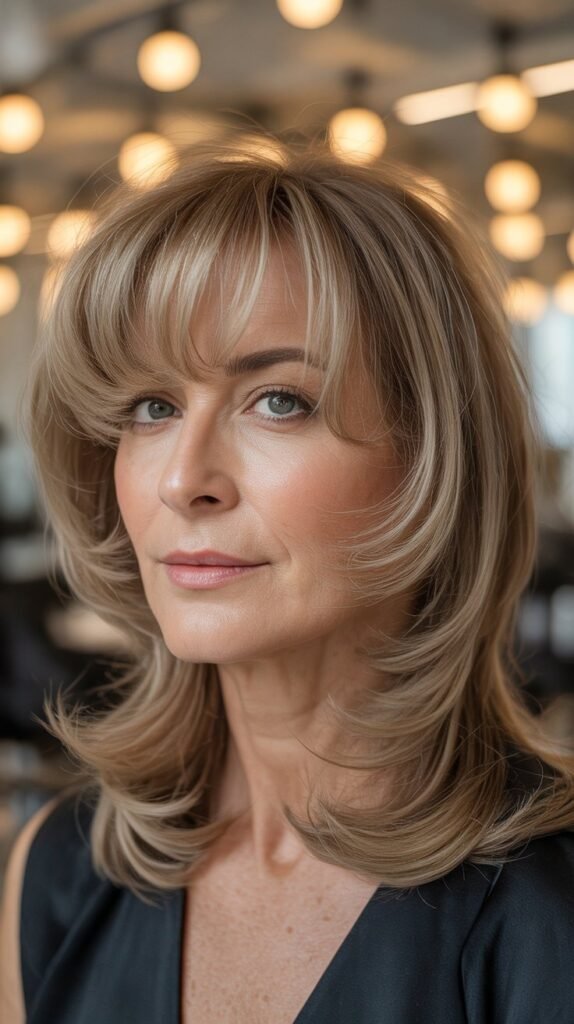
Thinning hair is one of the most common concerns for women over 50, but soft curtain bangs can actually work in your favor by strategically creating the appearance of fuller, more voluminous hair.
- Ask your stylist to cut wispy, textured layers rather than blunt lines, which can emphasize how sparse the hair appears.
- Keep the bangs slightly longer rather than short, as this allows gravity to work in your favor by creating natural separation and movement.
- Use a lightweight volumizing mousse at the roots before blow-drying to lift the hair without weighing it down.
- Consider getting subtle highlights or lowlights specifically in the bang area to create depth that mimics the shadows of fuller hair.
- Blow-dry your curtain bangs with a round brush, directing the hair up and away from your face before allowing it to fall naturally into place.
- Avoid over-washing your hair, as fine hair can become limp when stripped of natural oils that provide body and texture.
- Strategic layering throughout the rest of your hair creates a cohesive look where the bangs don’t appear isolated or out of place.
- Teasing the roots gently at the crown behind your bangs creates background volume that makes the entire top section appear fuller.
4. Thick Hair Curtain Bangs: Taming Volume While Maintaining Softness
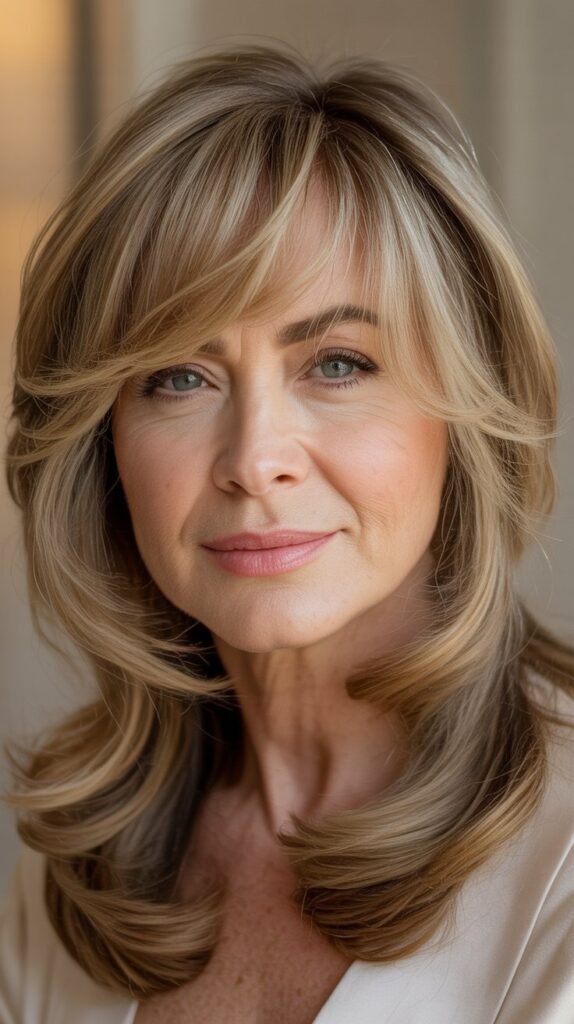
If you’re blessed with thick hair, curtain bangs can help balance your overall look while preventing the top-heavy appearance that sometimes comes with abundant hair.
- Request thinning shears or point-cutting techniques to remove bulk from your bangs without sacrificing the soft, feathered appearance.
- Keep the interior layers of your bangs shorter and lighter while maintaining slightly more length on the outer edges for structure.
- Use a smoothing serum or light oil to control frizz and flyaways that can make thick bangs appear chaotic rather than intentionally tousled.
- Blow-dry your bangs using the cool setting to smooth the cuticle and reduce excess volume that might make them look puffy.
- Schedule trims every 4-6 weeks to maintain the ideal length and prevent your bangs from becoming too heavy or overgrown.
- Consider incorporating face-framing layers throughout the rest of your hair to create a balanced, cohesive look where the bangs don’t appear disconnected.
- A flat iron on low heat can smooth particularly stubborn sections while maintaining the soft bend that gives curtain bangs their signature shape.
5. Curtain Bangs with Short Hair: Pixie Cuts and Bob Variations
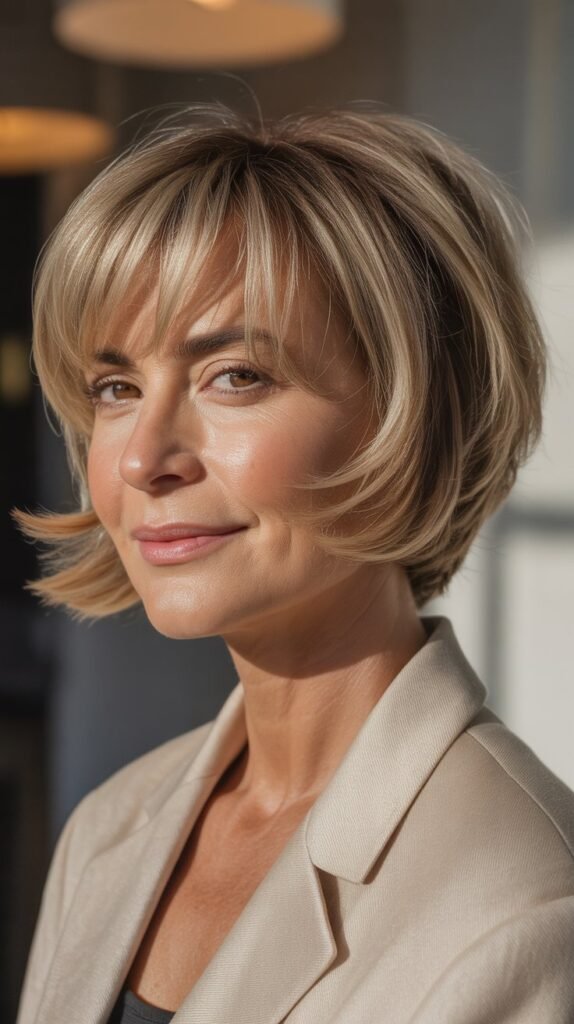
Short hair and curtain bangs create an incredibly chic, modern combination that feels both sophisticated and playful—perfect for women over 50 who want to make a bold yet refined statement.
Pixie Cut with Curtain Bangs
- Longer, piece-y curtain bangs soften the dramatic nature of a pixie cut while maintaining the style’s edgy, contemporary vibe.
- Keep the bangs long enough to tuck behind your ears when desired, offering versatility for different occasions.
- The contrast between short back-and-sides and longer bangs creates visual interest that draws attention to your facial features.
Classic Bob with Curtain Bangs
- A chin-length or shoulder-grazing bob pairs beautifully with curtain bangs that blend seamlessly into the overall length.
- Request layers throughout the bob to ensure the bangs don’t appear disconnected from the rest of your hairstyle.
- This combination creates a polished, professional look that works equally well in corporate environments and casual settings.
Textured Lob with Curtain Bangs
- The longer bob (lob) offers maximum versatility when paired with soft curtain bangs that can be styled multiple ways.
- Add beachy waves or loose curls for a relaxed, vacation-ready appearance that still feels age-appropriate and refined.
- The lob length hits at the sweet spot where you can still pull your hair into a small ponytail or bun while showcasing your beautiful bangs.
6. Curtain Bangs with Medium to Long Hair: Layered Luxury
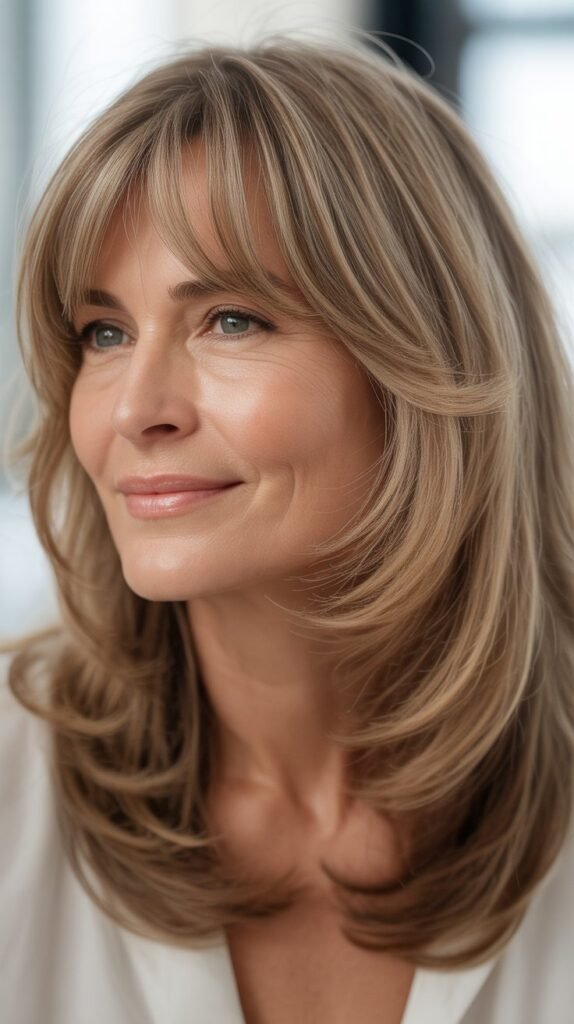
Medium to long hair provides the perfect canvas for dramatic, sweeping curtain bangs that create that coveted youthful glow through movement and dimension.
- Long layers throughout your hair create a seamless transition from your curtain bangs to the rest of your mane, avoiding the “wig-like” appearance of disconnected sections.
- Curtain bangs that start at eyebrow length and gradually blend into longer face-framing layers create the most flattering, natural-looking result.
- This combination offers incredible styling versatility—wear your hair down for maximum impact, pull it into a ponytail with face-framing pieces left out, or create an elegant updo with soft tendrils.
- Add loose waves or curls to enhance the romantic, feminine quality of curtain bangs while adding body and movement.
- Balayage or ombre coloring techniques work beautifully with this style, creating dimension that makes both your bangs and overall hair appear more voluminous.
- The longer hair length balances the face-framing bangs, preventing them from overpowering your features or appearing too trendy for mature beauty.
- Side parts work exceptionally well with medium to long curtain bangs, creating an asymmetrical, modern look that feels fresh without trying too hard.
7. Straight Hair Curtain Bangs: Sleek and Sophisticated Styling
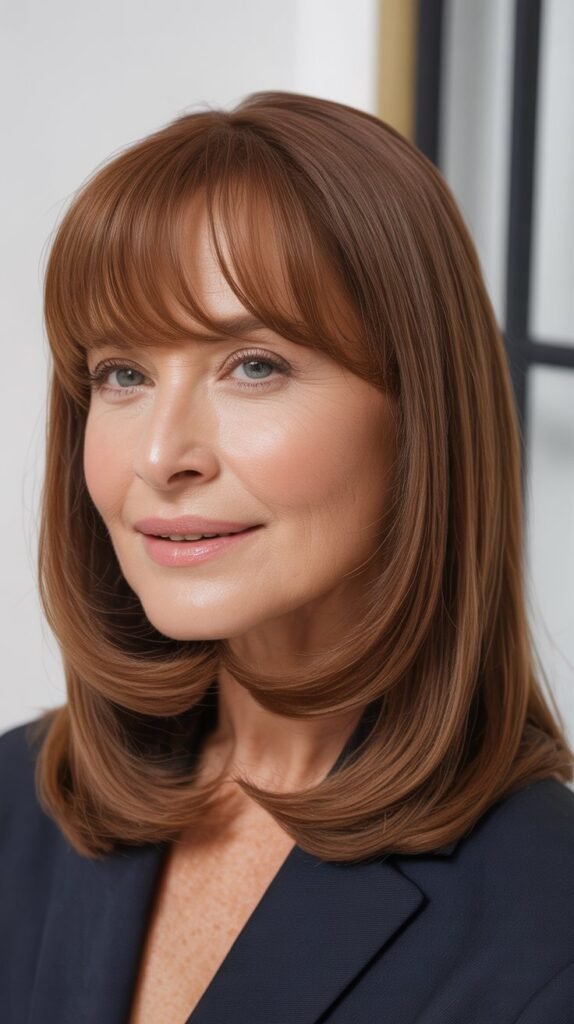
Naturally straight hair provides a smooth, polished canvas for curtain bangs that emphasize clean lines and modern elegance—a perfect choice for women who prefer a more refined, minimalist aesthetic.
- Use a high-quality flat iron on low to medium heat to create a subtle bend in your bangs rather than poker-straight fringe that can look severe.
- Apply a heat protectant spray before styling to prevent damage and maintain the healthy shine that makes straight hair so beautiful.
- A lightweight shine serum or oil distributed through the bangs adds luster without creating greasiness or weighing down the hair.
- Blow-dry your bangs using a round brush, rolling them gently away from your face to create the signature curtain effect.
- The middle part should be precise but not severe—use the tip of a rat-tail comb to create a clean line that serves as the foundation for your curtain sweep.
- Straight curtain bangs require less daily styling than curly or wavy versions, making them ideal for low-maintenance beauty routines.
- Regular trims every 3-4 weeks keep straight bangs looking intentional rather than overgrown, as even small amounts of extra length are more noticeable on straight hair.
8. Wavy Hair Curtain Bangs: Effortless Texture and Movement

Natural waves bring built-in texture and movement to curtain bangs, creating an effortlessly chic look that seems to style itself—perfect for women who want beautiful results without intensive daily maintenance.
- Embrace your natural wave pattern rather than fighting it—wavy curtain bangs look most beautiful when they move in harmony with the rest of your hair.
- Apply a curl-enhancing cream or mousse to damp bangs before air-drying or diffusing to define the wave pattern without creating crunch.
- Avoid brushing your bangs once they’re dry, as this disrupts the wave pattern and creates frizz; instead, use your fingers to gently separate and arrange pieces.
- A diffuser attachment on your blow dryer helps set the wave pattern while adding volume at the roots for a lifted, youthful appearance.
- Sea salt spray can enhance texture for a beachy, lived-in look, but use it sparingly to avoid drying out the hair.
- The unpredictable nature of wavy curtain bangs actually works in your favor, creating an authentic, natural appearance that looks effortless and age-appropriate.
- On second-day hair, lightly mist your bangs with water and scrunch to reactivate the wave pattern without washing and restyling completely.
9. Curly Hair Curtain Bangs: Embracing Natural Texture
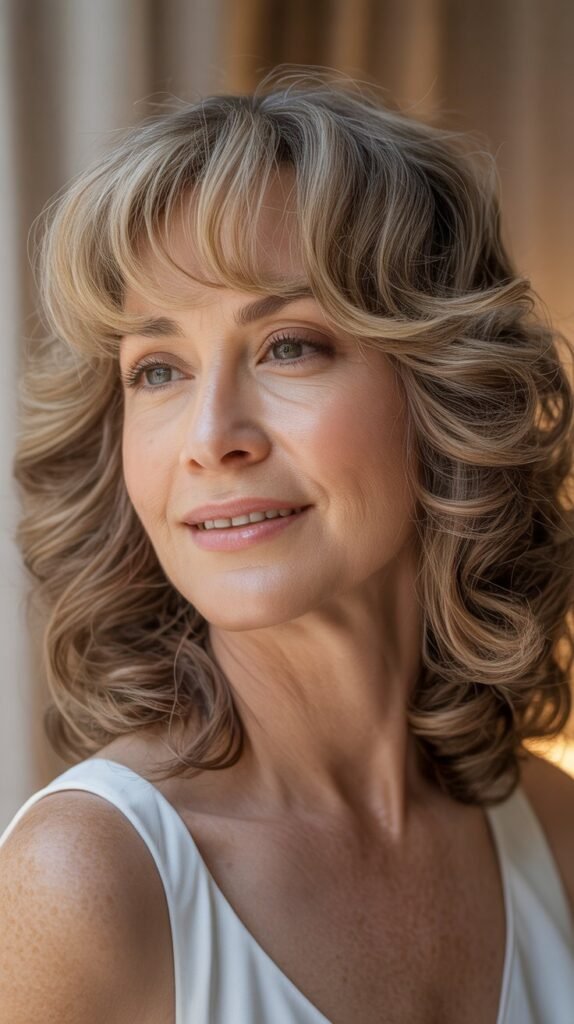
Curly hair brings a unique opportunity for curtain bangs that celebrate natural texture while creating a frame that enhances your features—though it requires specific cutting techniques to avoid the dreaded triangle shape.
- Find a stylist who specializes in curly hair cutting or is certified in techniques like DevaCut, which cuts curls dry and in their natural state.
- Curtain bangs on curly hair should be cut significantly longer than desired finished length, as curls spring up considerably when dry.
- Incorporate layers throughout the bang section to prevent a bulky, triangular shape that adds width rather than framing your face.
- Use a leave-in conditioner and curl-defining cream to maintain moisture and definition without weighing down the curls.
- Avoid cutting your curly bangs yourself—the springy nature of curls makes it nearly impossible to achieve even results without professional training.
- The beauty of curly curtain bangs lies in their individuality—each curl creates its own pattern, resulting in a unique, signature look.
- Refresh curls between washes using a spray bottle with water mixed with a small amount of leave-in conditioner, then scrunch and let air dry.
- Pin back sections when your curly bangs need a break, creating versatility while you decide if the style is right for you long-term.
10. Gray Hair and Silver Curtain Bangs: Celebrating Natural Color
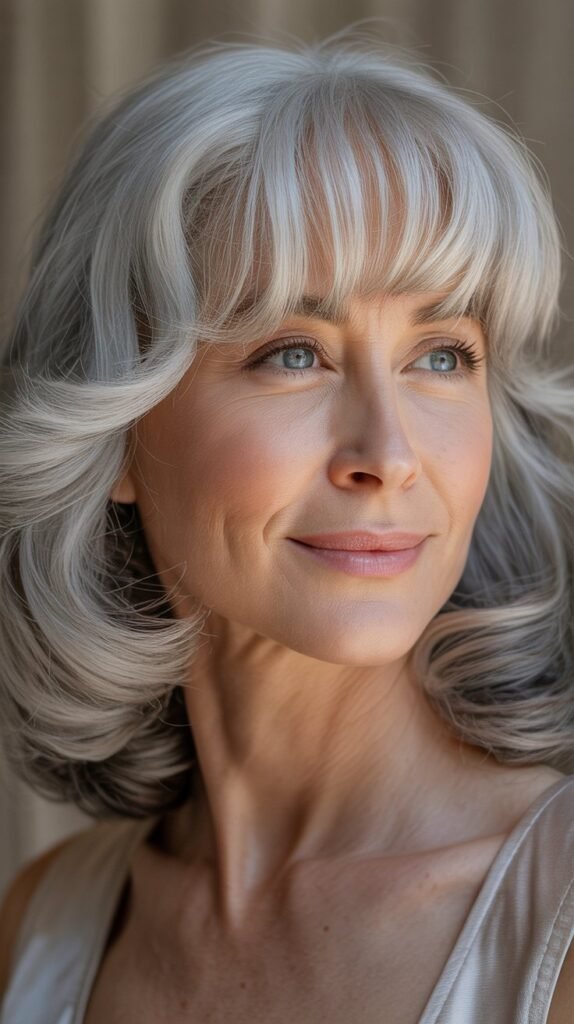
Embracing your natural gray or silver hair is a powerful choice, and soft curtain bangs enhance this decision by creating a modern, intentional look that celebrates rather than hides age.
- Gray and silver hair often has a coarser texture that holds curtain bangs beautifully without excessive product or heat styling.
- The cool tones of silver hair create stunning contrast with warm skin tones, and curtain bangs draw this contrast directly to your face.
- Use purple shampoo weekly to maintain the brightness of your gray or silver hair and prevent yellowing that can make the color look dull.
- Gray hair tends to be drier, so incorporate deep conditioning treatments and leave-in products to maintain softness and shine in your bangs.
- The sophisticated appearance of gray curtain bangs projects confidence and self-acceptance that resonates with authenticity.
- Pair your gray curtain bangs with bold lip colors like berry, plum, or classic red to create a striking, intentional beauty look.
- Consider subtle lowlights in darker gray shades to add dimension and depth to your curtain bangs, making them appear fuller and more textured.
11. Colored and Highlighted Curtain Bangs: Dimension Through Color
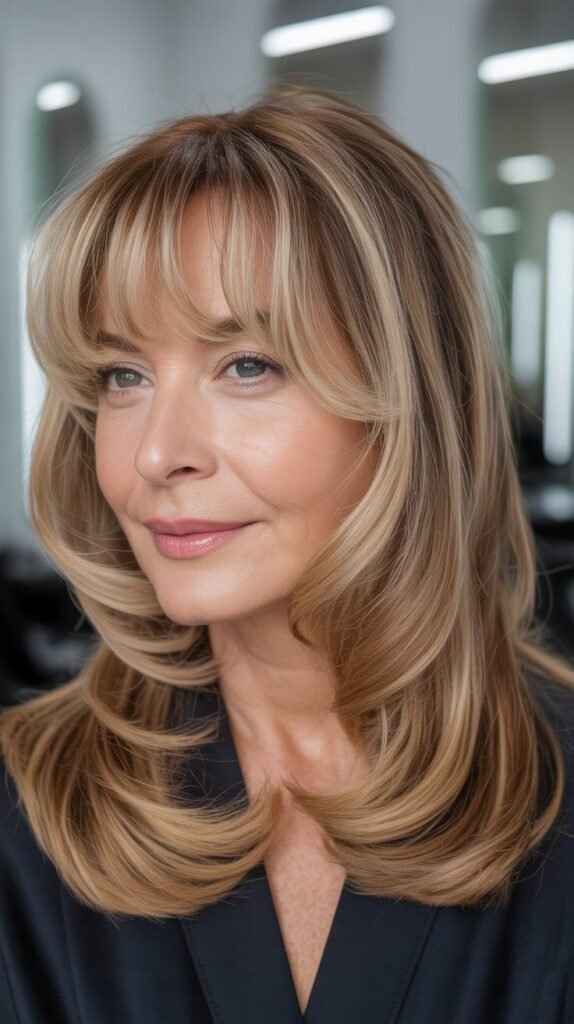
Strategic coloring and highlighting techniques can transform your curtain bangs from beautiful to absolutely stunning by adding depth, dimension, and the illusion of fuller, more voluminous hair.
- Face-framing highlights placed specifically in the curtain bang area brighten your complexion and draw light to your eyes.
- Balayage technique creates natural-looking dimension that mimics how hair lightens in the sun, adding depth without obvious color lines.
- Avoid single-process all-over color which can appear flat and one-dimensional, especially in the bang area where you want maximum visual interest.
- Lowlights strategically placed beneath your curtain bangs create shadows that make the lighter pieces appear more luminous by contrast.
- Warm tones like caramel, honey, and golden blonde are particularly flattering for women over 50, creating a soft, sun-kissed glow.
- Cool tones such as ash blonde or champagne work beautifully for those with cooler skin undertones and gray or silver hair.
- The transition between colors should be gradual in curtain bangs to maintain the soft, natural appearance that makes this style so appealing.
- Regular toning treatments keep colored curtain bangs looking fresh and prevent brassiness that ages your overall appearance.
12. Styling Tools and Products Essential for Perfect Curtain Bangs
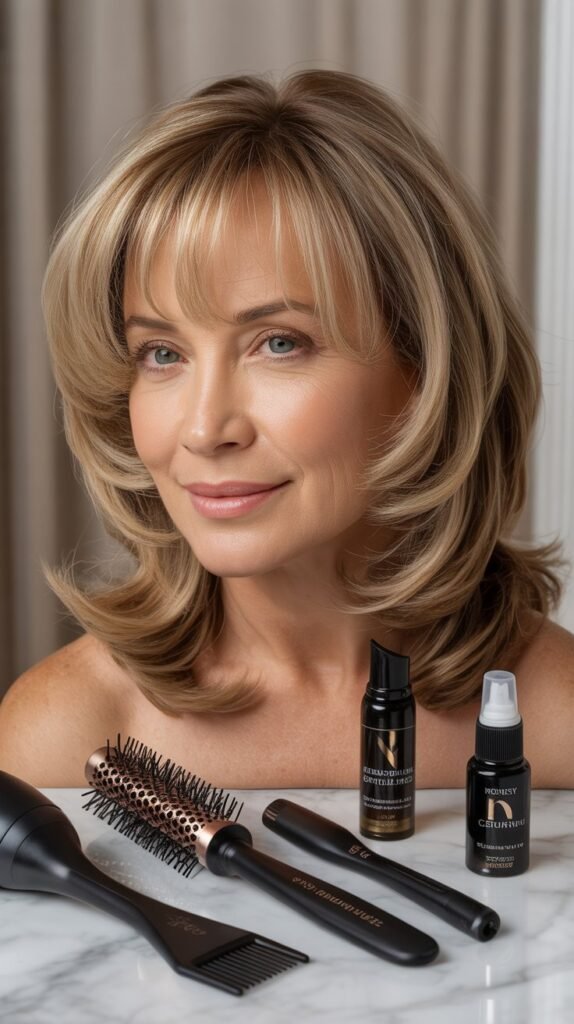
Having the right tools and products makes the difference between curtain bangs that look professionally styled and those that fall flat—literally and figuratively.
Essential Tools
- A medium-sized round brush (1.5 to 2 inches in diameter) creates the perfect amount of bend in your curtain bangs for that signature swept-to-the-side look.
- A high-quality flat iron with adjustable temperature allows you to smooth or add gentle waves without causing heat damage.
- Sectioning clips keep the rest of your hair out of the way while you focus on styling your bangs properly.
- A diffuser attachment for your blow dryer is essential if you have wavy or curly hair and want to enhance natural texture.
Must-Have Products
- Volumizing mousse applied to damp roots provides lift and body that lasts throughout the day without stiffness.
- Heat protectant spray is non-negotiable for anyone using heated tools, preventing damage that makes hair look aged and unhealthy.
- Lightweight texture spray adds grit and separation for that perfectly imperfect, lived-in look.
- Shine serum or hair oil (used sparingly) adds luster and controls flyaways without creating greasiness.
- Dry shampoo specifically for bangs absorbs oil between washes and adds volume when your bangs start to look flat.
- Flexible-hold hairspray sets your style without creating crunchy, helmet-like bangs that look dated.
13. Daily Styling Routine: Achieving the Perfect Curtain Bang Look
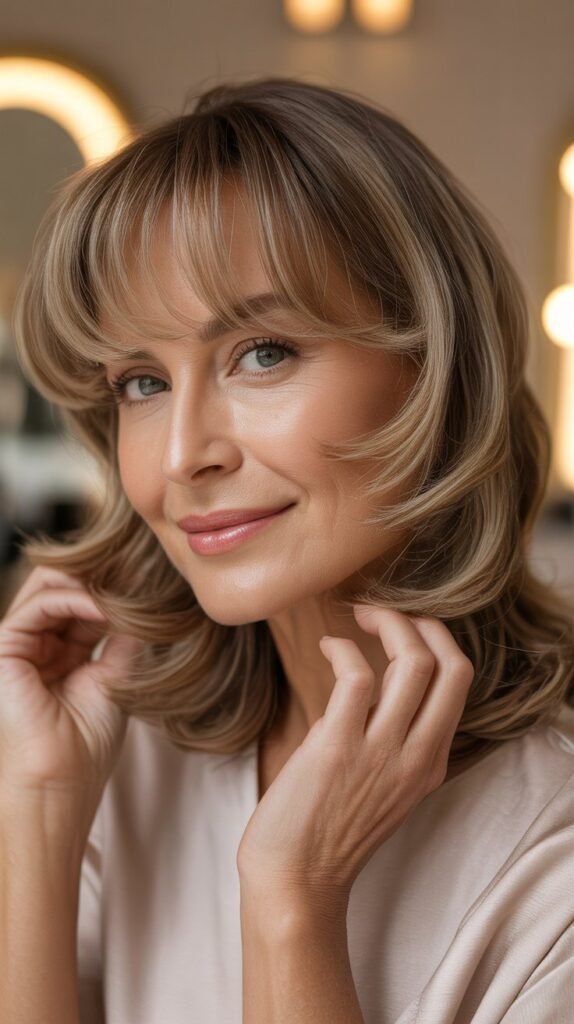
Establishing an efficient daily routine ensures your curtain bangs always look intentional and polished without consuming your entire morning.
- Start with clean, damp (not soaking wet) hair after gently towel-drying to remove excess moisture.
- Apply volumizing mousse to the roots of your bangs, distributing it evenly with your fingers.
- Use a spray bottle to dampen just your bangs on non-wash days, reviving the styling base without wetting your entire head.
- Blow-dry your bangs first while the rest of your hair is still damp, as this prevents the bangs from drying in random directions while you attend to the rest of your hair.
- Use your round brush to roll the bangs up and away from your face, directing heat from above while the hair is wrapped around the brush.
- Hold the brush in place for 5-10 seconds after removing heat, allowing the hair to cool in the desired shape and set the style.
- Release the hair and use your fingers to gently separate the curtain in the middle, allowing the bangs to fall naturally to each side.
- Finish with a light mist of flexible-hold hairspray held at least 12 inches away to avoid stiffness.
- For extra polish, run a flat iron through your bangs at a 45-degree angle, creating a soft bend rather than a harsh curl.
- Set your part with a small amount of gel or pomade if your hair tends to rebel against the middle separation.
14. Maintenance Schedule: Keeping Your Curtain Bangs Fresh
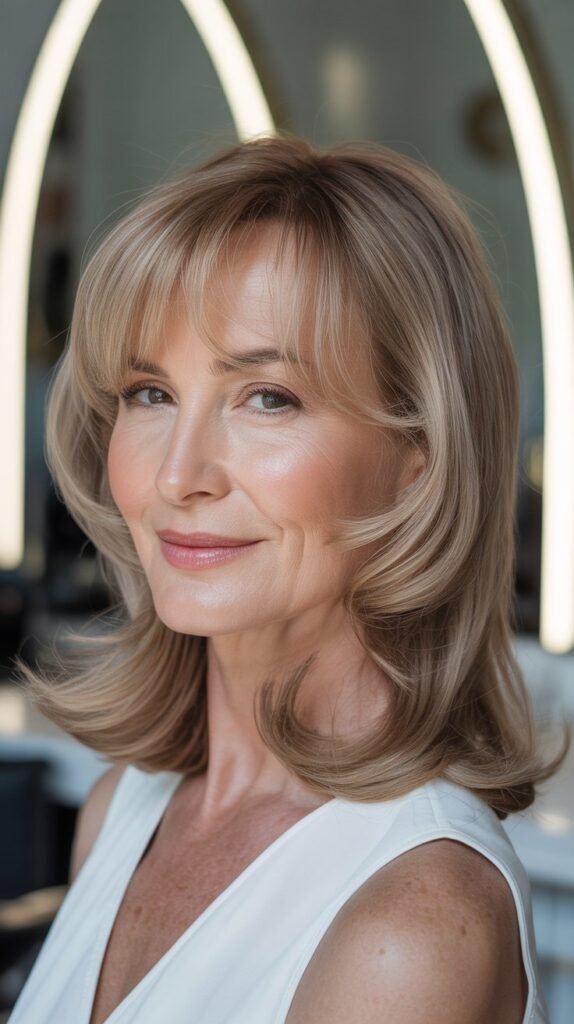
Unlike longer hair that can go months between trims, curtain bangs require consistent maintenance to stay at the perfect length and avoid the awkward growing-out phase.
- Schedule professional trims every 3-4 weeks to maintain the ideal length and prevent your bangs from entering the awkward “constantly in your eyes” phase.
- Learn to do minor trims yourself between salon visits using professional hair-cutting shears and proper technique (never regular scissors).
- Trim vertically, not horizontally, pointing the scissors upward and taking small snips to create texture rather than a blunt line.
- Trim when your bangs are completely dry and styled so you can see the true length and avoid cutting too much.
- Address split ends immediately by trimming just the damaged portions, preventing the splits from traveling up the hair shaft.
- Communicate with your stylist about your lifestyle and styling habits so they can cut your bangs at a length that works with your routine.
- Consider trimming your bangs slightly shorter just before vacations or busy periods when you know you won’t have time for regular maintenance.
- Don’t wait until your bangs are drastically overgrown to get them trimmed, as this often requires cutting them much shorter to reestablish the proper shape.
15. Curtain Bangs for Different Hair Densities

Understanding your hair’s natural density helps you work with your stylist to create curtain bangs that look balanced and proportionate to your overall hair texture and volume.
Low-Density (Fine, Sparse) Hair
- Request wispy, piece-y curtain bangs that create the illusion of more hair without revealing how much scalp shows through.
- Avoid cutting too much hair into your bangs, as this can make the rest of your hair appear even thinner.
- Strategic layering throughout creates cohesion so the bangs don’t look like a separate, disconnected section.
- Highlighting or lowlighting specifically in the bang area adds visual depth that mimics fuller hair.
Medium-Density Hair
- You have the most flexibility for curtain bang styles, as medium density accommodates both fuller and wispier variations.
- Experiment with different lengths and textures to find what best complements your face shape and personal style.
- This density holds style well without excessive products, making daily maintenance relatively simple.
High-Density (Thick) Hair
- Aggressive thinning techniques are essential to prevent your curtain bangs from looking like heavy, blunt fringe.
- Request internal layers within your bangs to remove weight while maintaining length on the outer edges.
- Point-cutting and razoring techniques create softness and movement that thick hair naturally resists.
- Your bangs may require slightly more frequent trims to prevent them from becoming bulky as they grow.
16. Seasonal Styling Adjustments for Curtain Bangs
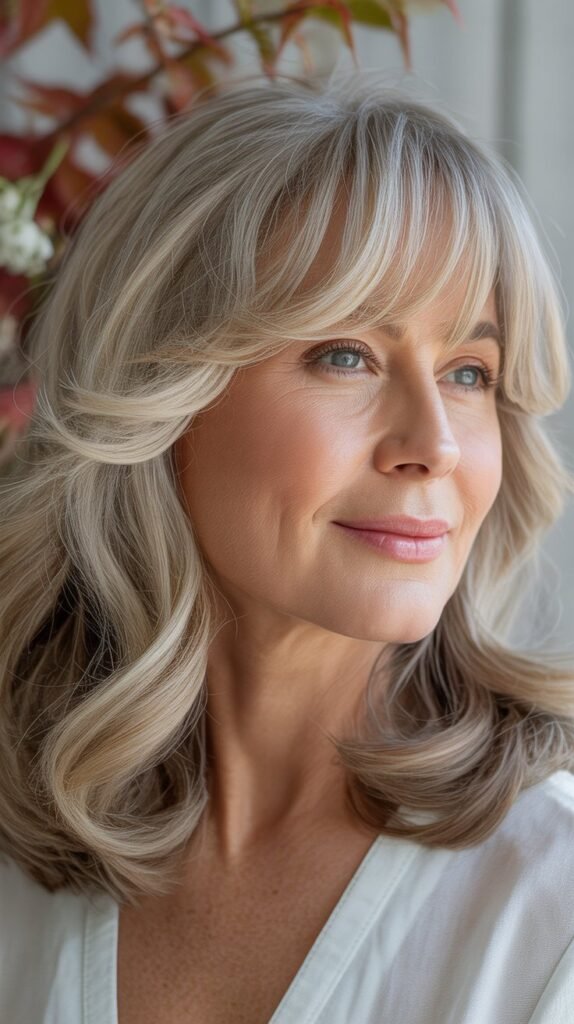
Different seasons bring unique challenges and opportunities for styling your curtain bangs, from humidity management to cold-weather static control.
Summer Styling Challenges
- Humidity is the enemy of perfectly styled curtain bangs, causing frizz and loss of definition.
- Anti-humidity products and serums create a protective barrier that helps maintain your style in muggy weather.
- Consider wearing your bangs slightly pulled back with small clips or pins when humidity is particularly oppressive.
- Lighter styling products work better in summer heat when heavier products can make hair look greasy.
Winter Styling Solutions
- Static electricity makes curtain bangs fly in every direction, requiring anti-static products and techniques.
- A small amount of hand lotion or hair oil rubbed between your palms and smoothed over bangs tames static.
- Hats and scarves can crush your carefully styled bangs, so carry a small round brush for quick touch-ups.
- Indoor heating creates dryness, making deep conditioning treatments essential for maintaining soft, manageable bangs.
Spring and Fall Transition Periods
- Unpredictable weather requires versatile styling options that can adapt to sudden temperature and humidity changes.
- Light layers of products allow you to add more if conditions worsen without starting over completely.
- These seasons are ideal for growing out or changing your curtain bang length as the moderate weather is forgiving of in-between stages.
17. Curtain Bangs with Glasses: Frames and Fringe That Complement
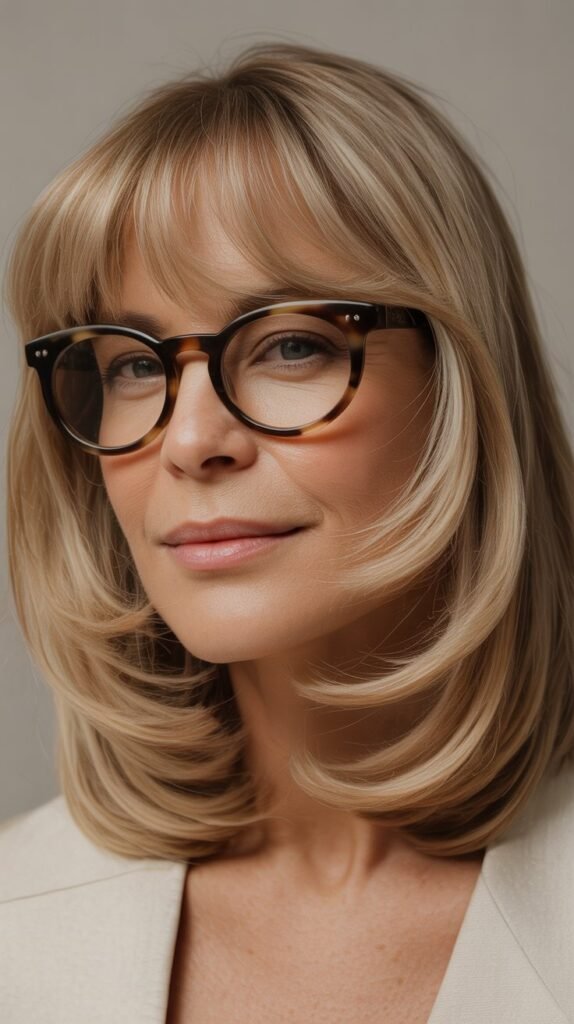
Wearing glasses with curtain bangs requires thoughtful consideration of frame size, shape, and placement to ensure both elements enhance rather than compete with each other.
- Larger frames pair beautifully with curtain bangs because they both draw attention to the eye area, creating a cohesive focal point.
- Keep your bangs slightly longer if you wear glasses, ensuring they don’t get caught on the frames or create bulk around the temples.
- Cat-eye and upswept frame shapes work particularly well with curtain bangs, as both create upward movement that lifts the face.
- Heavy, thick frames may overwhelm delicate curtain bangs, so balance bold glasses with slightly fuller bangs.
- Ensure your bangs fall outside your frames, not underneath where they’ll be constantly pushed into your eyes or stick out awkwardly.
- Progressive or bifocal lenses require specific considerations—discuss with your stylist how you hold your head when reading to ensure bangs don’t interfere with your vision.
- Clean your glasses more frequently as the oils from your curtain bangs can transfer to your lenses throughout the day.
- Consider how your glasses sit when pushed up on your head, as this shouldn’t disrupt the careful styling of your curtain bangs.
18. Transitioning from Blunt Bangs to Curtain Bangs
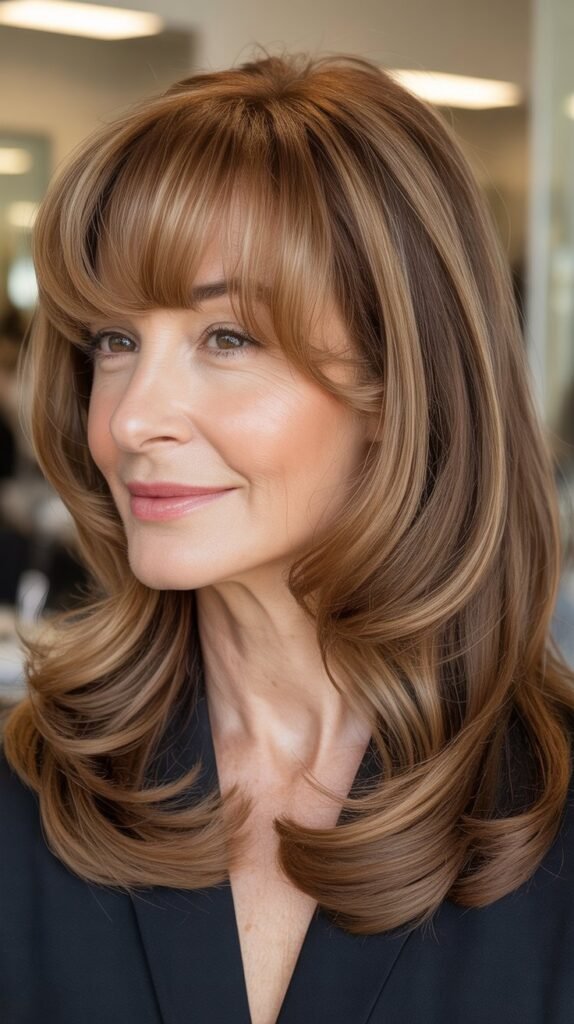
If you currently have straight-across, blunt bangs and want to transition to softer curtain bangs, the process requires patience and strategic cutting as your hair grows.
- Don’t try to cut curtain bangs from blunt bangs yourself—this transformation requires professional precision to avoid disastrous results.
- Your stylist will gradually add length to the outer sections while potentially shortening the middle, creating the signature curtain shape.
- The transition takes approximately 6-12 weeks depending on how much length difference exists between blunt bangs and your desired curtain style.
- Use styling techniques to create the illusion of curtain bangs during the awkward growing-out phase, including blow-drying bangs to the sides and using texture spray.
- Small hair clips or bobby pins can be strategically placed to hold hair in the curtain position while it grows to the proper length.
- Headbands and scarves disguise the in-between stage when your bangs are too long for blunt but too short for true curtains.
- Consider temporary extensions or clip-in bangs if you have an important event during the transition period and need immediate results.
19. Growing Out Curtain Bangs Gracefully
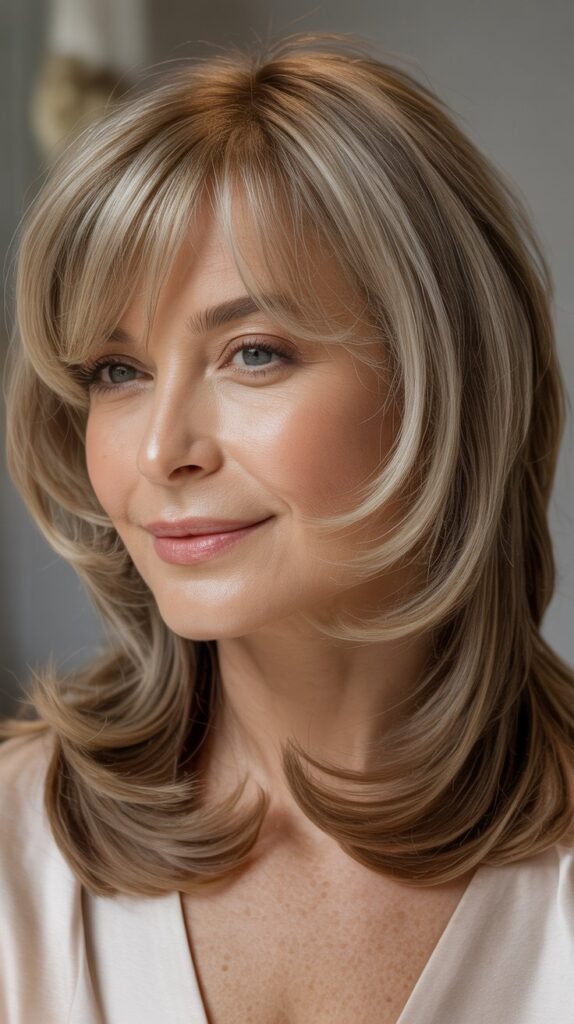
Sometimes curtain bangs aren’t the right fit, or you simply want a change—growing them out doesn’t have to mean months of awkward hairstyles and constant frustration.
- Be patient and resist the urge to constantly trim your bangs in attempts to “fix” the growing-out stage, as this only prolongs the process.
- Style your growing bangs to the side instead of parted in the middle, creating a deep side part that blends them into longer layers.
- Use small decorative pins, clips, or barrettes to secure growing bangs away from your face in a stylish, intentional way.
- Headbands become your best friend during the growing-out process, transforming awkward-length bangs into a polished accessory.
- Ask your stylist to gradually blend your bangs into face-framing layers so the transition appears intentional rather than accidental.
- Braid or twist your growing bangs into the hair at your temples, creating an interesting detail that hides the in-between length.
- Experiment with different partings—zigzag parts or off-center parts can disguise the fact that you’re growing out bangs.
- Use more styling products than usual to control the tendency of growing bangs to flip or stick out in random directions.
20. Curtain Bangs for Active Lifestyles and Workouts
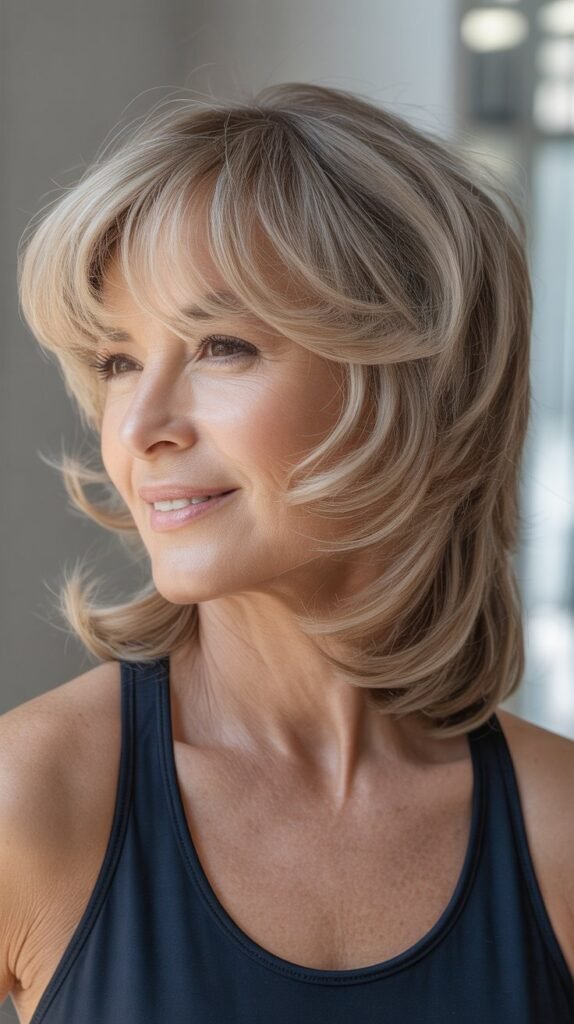
Maintaining beautiful curtain bangs while pursuing an active lifestyle requires specific strategies to manage sweat, movement, and frequent washing without sacrificing style.
- Secure your bangs with a thin, non-slip headband during workouts to keep them out of your face without causing dents or creases.
- Apply dry shampoo before your workout as a preventive measure, absorbing sweat before it makes your bangs limp and greasy.
- Pin your bangs back with small clips if you’re doing intense cardio or inverted poses in yoga where hair constantly falls in your face.
- Carry a small round brush and travel-size styling products in your gym bag for quick post-workout refreshes.
- Use a towel to blot (not rub) sweat from your bangs immediately after working out to prevent them from drying in strange positions.
- Consider washing just your bangs in the sink rather than your entire head if only the fringe is sweaty, saving time and reducing heat styling frequency.
- A quick blast of cool air from a blow dryer can revive flattened curtain bangs without requiring full restyling.
- Experiment with “sporty chic” hairstyles that incorporate your curtain bangs into pulled-back looks, like high ponytails with face-framing pieces left out.
21. Special Occasion Styling: Elevating Your Curtain Bangs
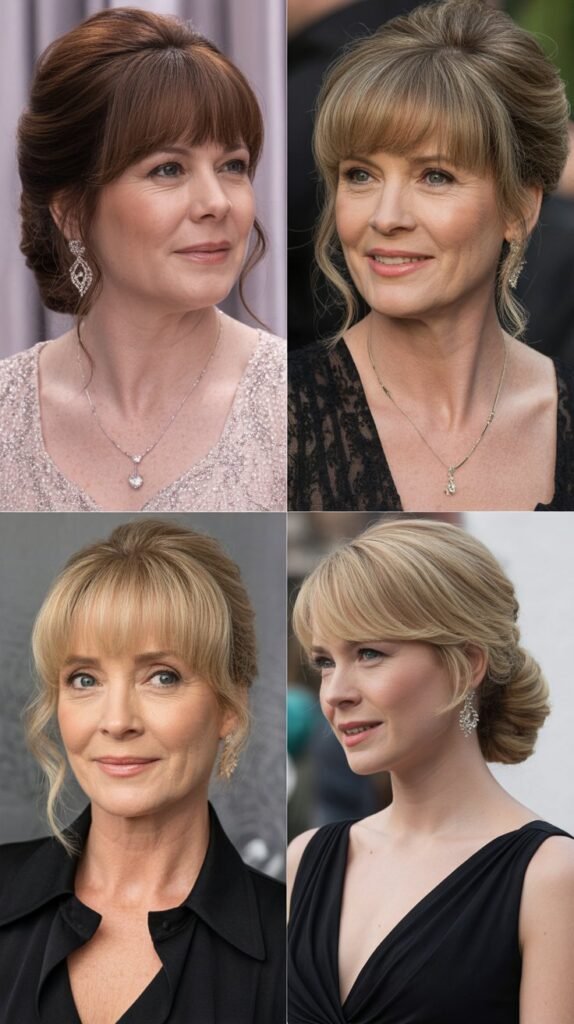
Transform your everyday curtain bangs into red-carpet-ready glamour with advanced styling techniques perfect for weddings, parties, and special events.
Elegant Updo with Curtain Bangs
- Pull your hair into a sophisticated chignon or twist while leaving your curtain bangs to frame your face beautifully.
- Use bobby pins that match your hair color to secure the updo invisibly, maintaining a polished appearance.
- Add extra volume to your bangs with teasing or volumizing powder for dramatic impact in photos.
Hollywood Waves with Curtain Bangs
- Create glamorous vintage-inspired waves throughout your hair while styling your curtain bangs with extra smoothness and shine.
- The contrast between structured waves and soft bangs creates visual interest and timeless elegance.
- Set the entire style with medium-hold hairspray to ensure it lasts through hours of celebration.
Sleek Low Ponytail with Face-Framing Bangs
- Straighten your hair completely for a modern, minimalist look that allows your curtain bangs to be the star.
- Wrap a small section of hair around the ponytail elastic for a polished finish.
- This style elongates your neck and highlights your facial features, perfect for formal events.
Romantic Half-Up Style
- Gather the top section of your hair into a soft twist or braid while leaving your curtain bangs and lower layers down.
- Add delicate accessories like pearl pins or small flowers for feminine charm.
- This versatile style works for both outdoor garden parties and formal evening events.
22. Budget-Friendly Curtain Bang Maintenance
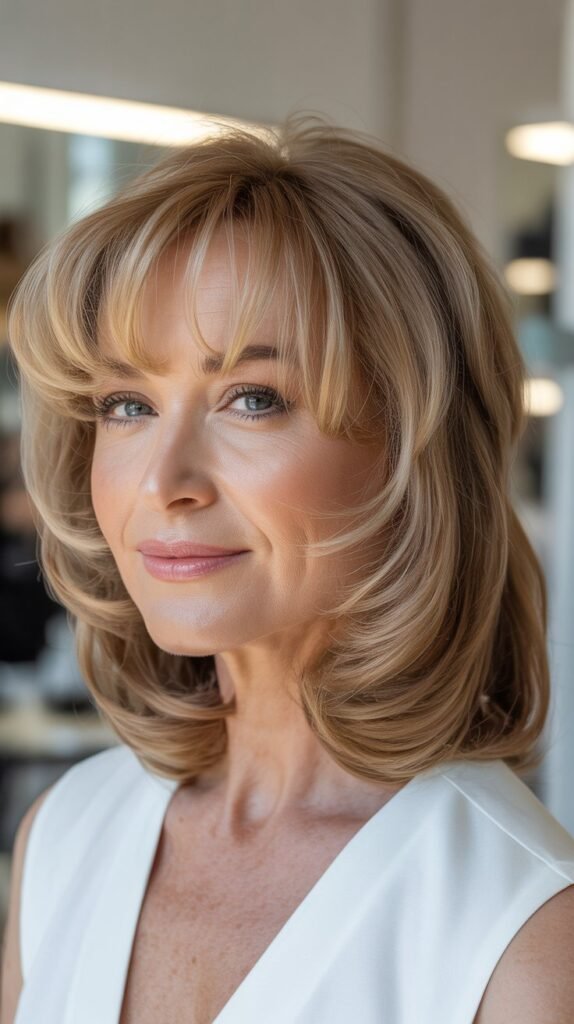
Maintaining gorgeous curtain bangs doesn’t require spending a fortune at high-end salons—these cost-effective strategies help you look amazing while respecting your budget.
- Learn to trim your own bangs between professional cuts, saving $20-40 per month while maintaining the perfect length.
- Invest in one pair of professional haircutting shears (around $20-30) that will last years and provide better results than regular scissors.
- Watch tutorial videos from professional stylists who demonstrate proper curtain bang trimming techniques for different hair types.
- Purchase drugstore versions of expensive styling products—many contain similar active ingredients at a fraction of the cost.
- Make your own volumizing spray by mixing water, sea salt, and a small amount of leave-in conditioner in a spray bottle.
- Extend time between washes with dry shampoo, reducing the frequency of heat styling and product application that depletes your supplies.
- Find a beauty school or training salon where supervised students provide quality haircuts and bang trims at significantly reduced prices.
- Take advantage of salon package deals and loyalty programs that offer discounts on frequent bang trims.
23. Common Curtain Bang Mistakes and How to Avoid Them
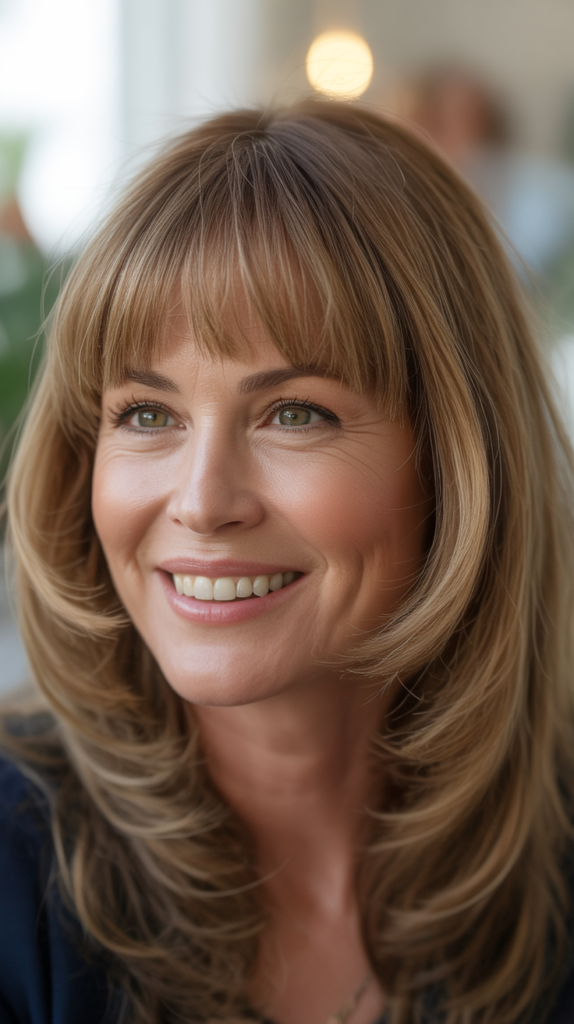
Even with the best intentions, certain missteps can sabotage your curtain bang journey—recognizing and avoiding these common errors ensures your bangs always look their best.
Cutting Them Too Short
- Curtain bangs that hit mid-forehead look more like traditional blunt bangs, losing the soft, face-framing quality that makes them flattering.
- Start longer than you think necessary—you can always cut more, but you can’t add length back.
- Remember that hair appears shorter when dry, so if trimming your own bangs, work with completely dry hair.
Making Them Too Heavy or Blunt
- Thick, blunt curtain bangs overwhelm your face rather than framing it delicately.
- Request point-cutting, razoring, or thinning techniques to create the signature feathered, piece-y texture.
- The edges should be soft and broken up, not straight across like traditional bangs.
Wrong Part Placement
- A part that’s too far to one side defeats the curtain effect and creates an imbalanced look.
- The part should be relatively centered, even if not perfectly centered, to allow equal draping on both sides.
- Your natural cowlick pattern may influence part placement—work with your hair’s natural growth rather than against it.
Over-Styling and Product Overload
- Too much product makes curtain bangs look greasy, crunchy, or unnaturally stiff, aging your overall appearance.
- Start with less product than you think necessary, adding more only if needed.
- Let your hair’s natural texture show through—over-styling creates an artificial, dated look.
Ignoring Your Face Shape
- Curtain bangs that don’t complement your specific face shape can emphasize rather than soften unflattering features.
- Consult with your stylist about customizing the length, density, and angle specifically for your facial proportions.
- What looks amazing on someone else may not translate to your unique features.
24. Professional Stylist Communication: Getting the Curtain Bangs You Want
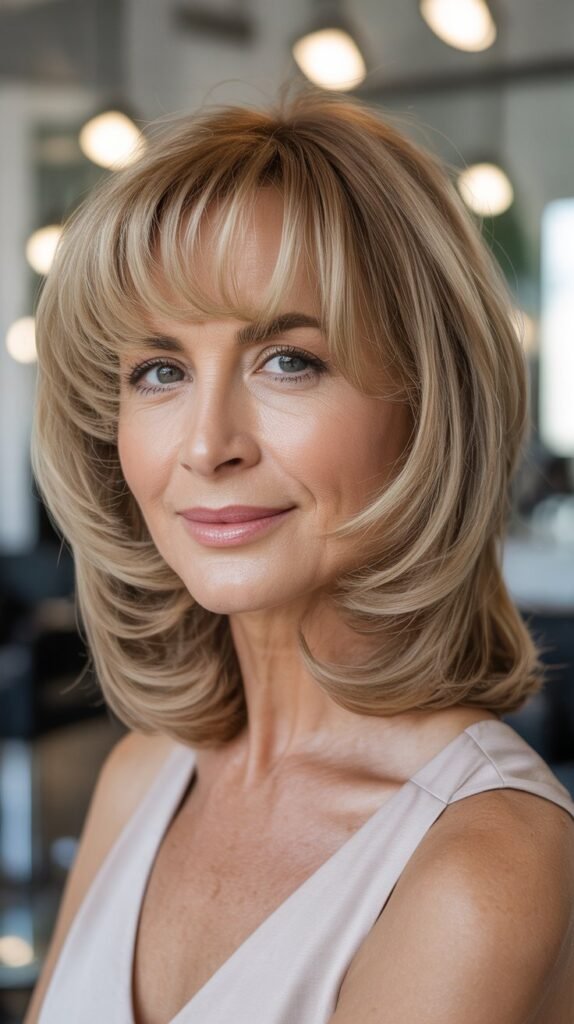
Effective communication with your hairstylist ensures you leave the salon with curtain bangs that match your vision rather than a disappointing approximation.
- Bring multiple reference photos showing curtain bangs from various angles, not just one perfectly styled Instagram shot.
- Explain your daily styling routine and time commitment so your stylist can cut bangs that work with your lifestyle.
- Discuss your hair’s natural texture, density, and growth patterns that might affect how your curtain bangs behave.
- Be honest about your skill level with styling tools—there’s no shame in requesting a lower-maintenance cut.
- Ask your stylist to show you how they style your new bangs before you leave the salon, and don’t hesitate to request a repeat demonstration.
- Establish realistic expectations by acknowledging that your hair may not behave exactly like the hair in reference photos.
- Request a “bang trim schedule” and book your next appointment before leaving to ensure consistent maintenance.
- If you’re uncertain about committing to curtain bangs, ask about trying clip-in or temporary options first.
- Speak up during the cutting process if you notice the stylist creating something different from what you discussed.
- Take notes or photos of the styling process and products used so you can replicate the look at home.
25. Curtain Bangs with Natural Texture: Embracing Your Hair’s Personality
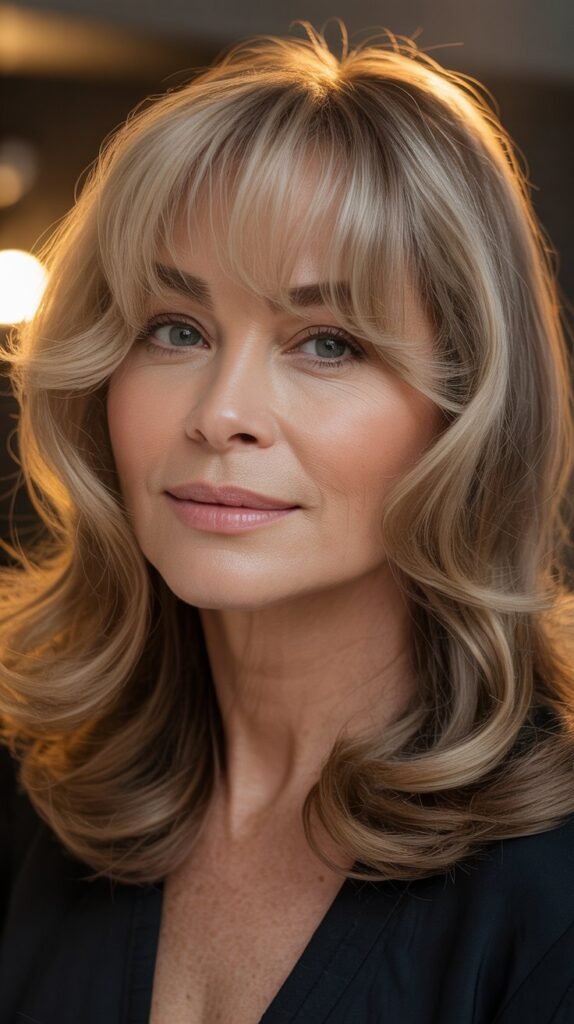
Your hair’s natural texture—whether straight, wavy, curly, or somewhere in between—should guide your curtain bang style rather than working against it.
- Fighting your natural texture creates unnecessary daily frustration and requires excessive heat styling that damages hair.
- Straight-haired women can embrace sleek, polished curtain bangs that require minimal product and styling time.
- Wavy-haired women should enhance their natural wave pattern in the bangs rather than straightening them daily.
- Curly-haired women need specialized cutting techniques that account for curl shrinkage and spring.
- Coily-haired women can work with textured bangs that celebrate natural curl patterns and don’t require heat straightening.
- Your curtain bangs should move and behave like the rest of your hair, creating a cohesive, authentic look.
- Seasonal humidity and weather changes will affect your bangs—accept this reality and develop styling adaptations rather than fighting it.
- The most beautiful curtain bangs enhance what you already have rather than trying to transform your hair into something it’s not.
26. Age-Appropriate Modern Trends: Keeping Your Look Current
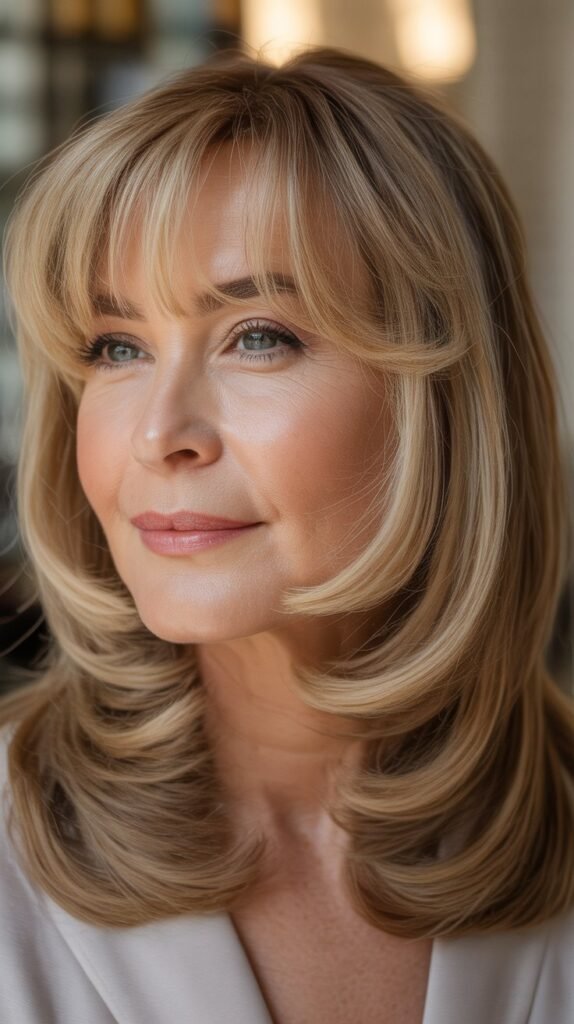
Staying current doesn’t mean copying trends meant for twenty-somethings—these modern curtain bang variations feel fresh and contemporary while remaining age-appropriate and sophisticated.
Curtain Bangs with Money Pieces
- Face-framing highlights (called “money pieces”) on either side of your curtain bangs create dimension and brightness that illuminates your complexion.
- This trend feels current without being costume-like, offering a subtle way to incorporate a popular style.
- The brightening effect draws attention to your eyes and creates the appearance of fuller, more voluminous bangs.
Textured, Piece-y Bangs
- Modern curtain bangs have intentional separation and texture rather than the smooth, feathered look of decades past.
- Use texture spray or paste to piece out individual strands, creating an effortlessly cool, undone appearance.
- This style feels young and current while remaining sophisticated enough for mature beauty.
Curtain Bangs with Hidden Rainbow Underlayers
- For the adventurous, hidden color underneath your curtain bangs (in subtle jewel tones like burgundy, sapphire, or emerald) adds personality.
- The color is only visible when you tuck your bangs behind your ears or when the wind blows, maintaining professional appropriateness.
- This playful detail shows you’re current and confident without overwhelming your overall sophisticated aesthetic.
Asymmetrical Curtain Bangs
- Instead of perfectly symmetrical curtains, one side is slightly longer than the other for an edgy, modern asymmetry.
- This variation feels intentional and fashion-forward while remaining wearable for everyday life.
- The asymmetry creates visual interest and prevents the style from feeling too precious or perfect.
27. Curtain Bangs for Professional and Corporate Environments
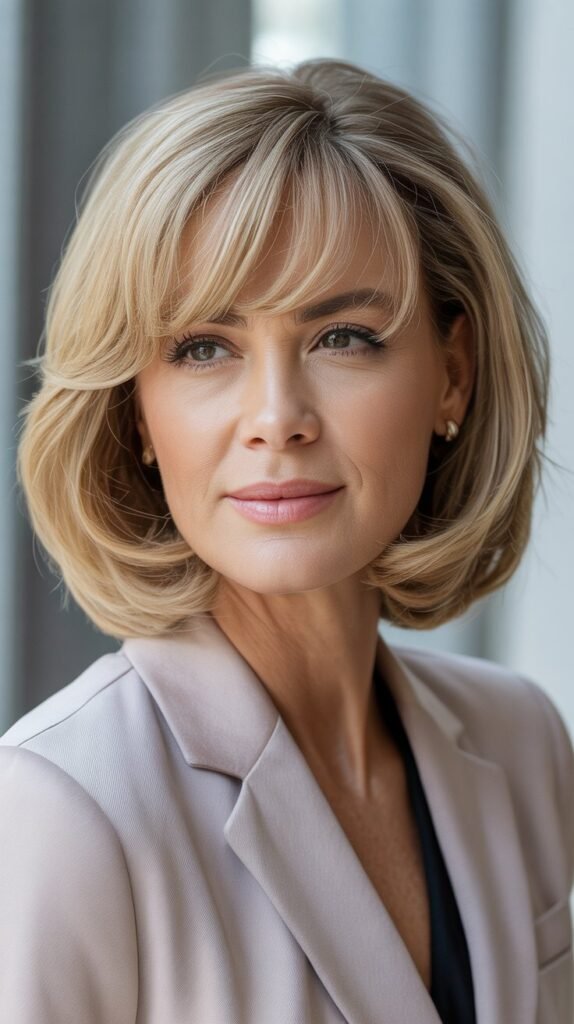
Looking polished and professional while sporting trendy curtain bangs requires finding the sweet spot between style and workplace appropriateness.
Conservative Corporate Settings
- Keep curtain bangs smooth and well-groomed, avoiding excessive texture or piece-y styling that might read as unkempt.
- Ensure bangs are at an appropriate length that doesn’t constantly fall into your eyes during presentations or meetings.
- Style with precision and polish, using light hairspray to keep everything in place throughout long workdays.
- Pair with professional hairstyles like low buns, sleek ponytails, or smooth blowouts for a cohesive, authoritative appearance.
Creative Professional Environments
- More textured, relaxed curtain bangs work well in creative industries where personal style is valued.
- Experiment with fun colors, highlights, or trendy styling techniques that showcase your creative personality.
- Balance edgier bang styles with otherwise professional grooming to maintain credibility and respect.
Healthcare and Service Industries
- Functional styling that stays out of your face is essential when you’re actively working with patients or clients.
- Use headbands, clips, or bobby pins to secure bangs when necessary while maintaining style when they’re released.
- Keep products minimal to avoid fragrance sensitivity concerns in healthcare environments.
- Ensure your curtain bangs don’t interfere with required headwear like surgical caps or safety equipment.
28. Curtain Bangs and Scalp Health: Maintaining a Healthy Foundation
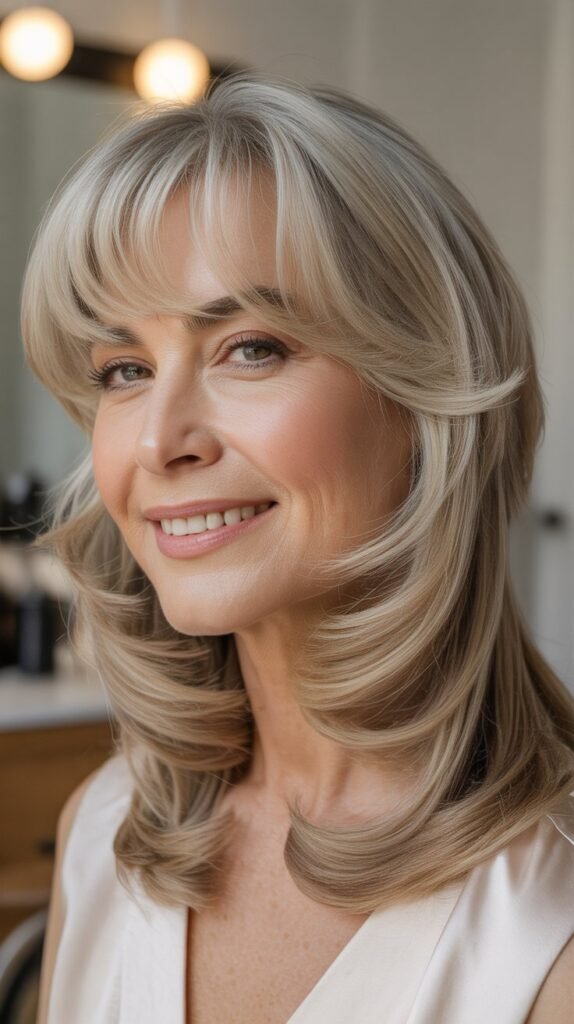
Beautiful curtain bangs grow from a healthy scalp—understanding the connection between scalp care and bang quality ensures long-term success with this style.
- The hairline where curtain bangs originate is particularly vulnerable to tension, breakage, and thinning from constant styling and manipulation.
- Regular scalp massages stimulate blood flow to hair follicles, promoting healthier, stronger hair growth in the bang area.
- Use a gentle clarifying shampoo weekly to remove product buildup that can clog follicles and impede healthy hair growth.
- Avoid excessive heat directly on the scalp when styling your curtain bangs, holding the dryer at least 6 inches away from your hairline.
- Consider scalp serums or treatments containing ingredients like biotin, caffeine, or minoxidil if you notice thinning at the hairline.
- Be gentle when brushing and styling your bangs—aggressive tugging and pulling can cause traction alopecia over time.
- Protect your hairline from sun damage with hats or leave-in conditioners containing SPF when spending extended time outdoors.
- Address dandruff or seborrheic dermatitis promptly, as these conditions can make styling curtain bangs frustrating and uncomfortable.
29. Curtain Bangs Through the Decades: What Changes After 50
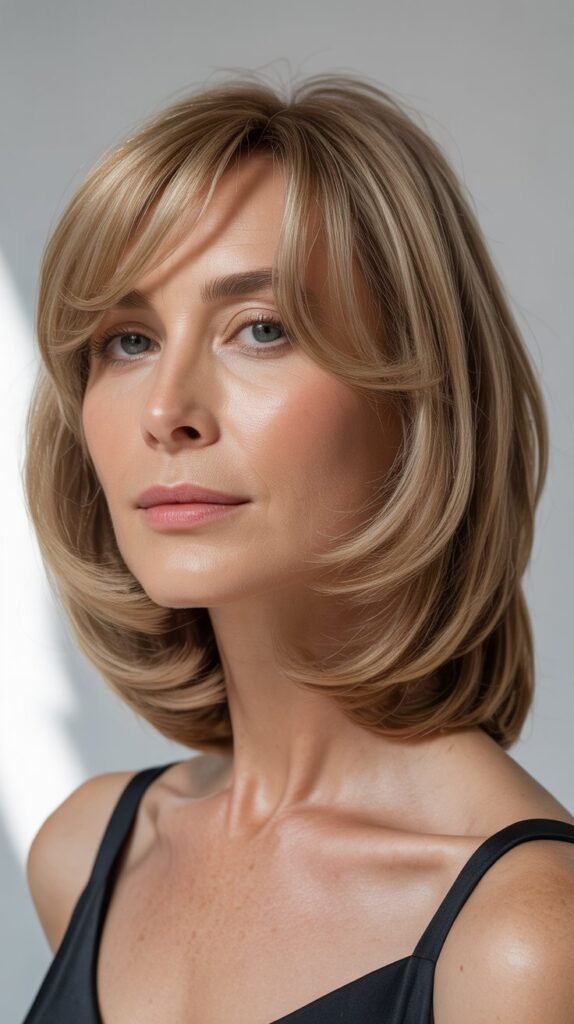
Your hair undergoes significant changes after 50, and understanding these transformations helps you adapt your curtain bang style for continued success.
Hormonal Changes and Hair Texture
- Menopause-related hormone fluctuations alter hair texture, often making it coarser, drier, or more resistant to styling.
- Your curtain bangs may require different products than what worked in your 30s or 40s to achieve the same results.
- Increased dryness necessitates more intensive conditioning treatments specifically for your bang area.
Hair Thinning and Density Loss
- Age-related thinning may require adjustments to your curtain bang density and cutting technique.
- Wispy, piece-y bangs often work better than fuller styles as hair naturally becomes sparser.
- Strategic coloring and highlighting becomes even more important for creating the illusion of volume.
Slower Hair Growth
- Hair grows more slowly with age, meaning the time between trims can potentially extend slightly.
- However, slower growth also means it takes longer to correct mistakes, so precision cutting becomes more crucial than ever.
- Plan ahead for special events, giving yourself extra time for growing or adjusting your curtain bangs.
Changing Personal Style
- Your personal aesthetic may evolve toward more refined, understated elegance rather than trendy experimentation.
- Your curtain bangs should mature with you, adapting to reflect your current lifestyle and self-image.
- What felt perfect at 50 might need subtle adjustments by 60 or 70—remain open to evolution.
30. Confidence and Psychology: How Curtain Bangs Impact Self-Image
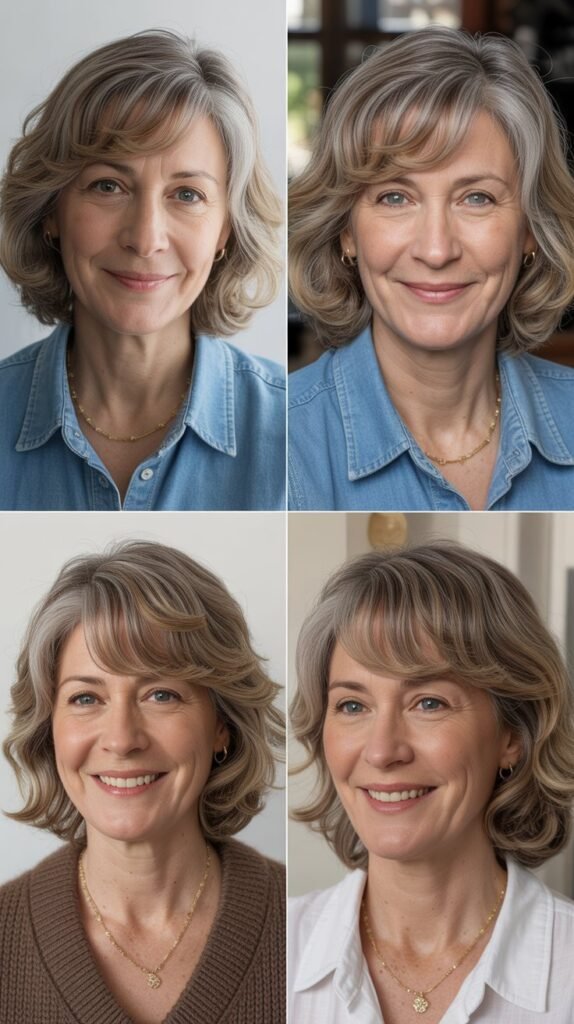
The decision to get curtain bangs goes beyond aesthetics—this style choice can significantly impact how you feel about yourself and how others perceive you.
- A successful hairstyle change creates a “fresh start” feeling that can boost mood and motivation in other life areas.
- Curtain bangs draw positive attention and compliments, providing external validation that reinforces positive self-image.
- The “youthful glow” effect isn’t just physical—feeling younger mentally and emotionally radiates outward in your demeanor and energy.
- Taking control of your appearance demonstrates self-care and sends a message that you value yourself enough to invest time and effort.
- Research shows that people who feel good about their appearance experience reduced anxiety and improved social interactions.
- The relatively low-commitment nature of curtain bangs (compared to drastic color changes or dramatic cuts) makes them a safe way to experiment and step outside your comfort zone.
- Seeing yourself differently in the mirror can shift your entire self-concept, opening possibilities for personal growth and reinvention.
- When you feel attractive, you carry yourself differently—posture improves, eye contact strengthens, and confidence becomes visible to others.
31. Celebrity Inspiration: Age-Appropriate Icons Rocking Curtain Bangs
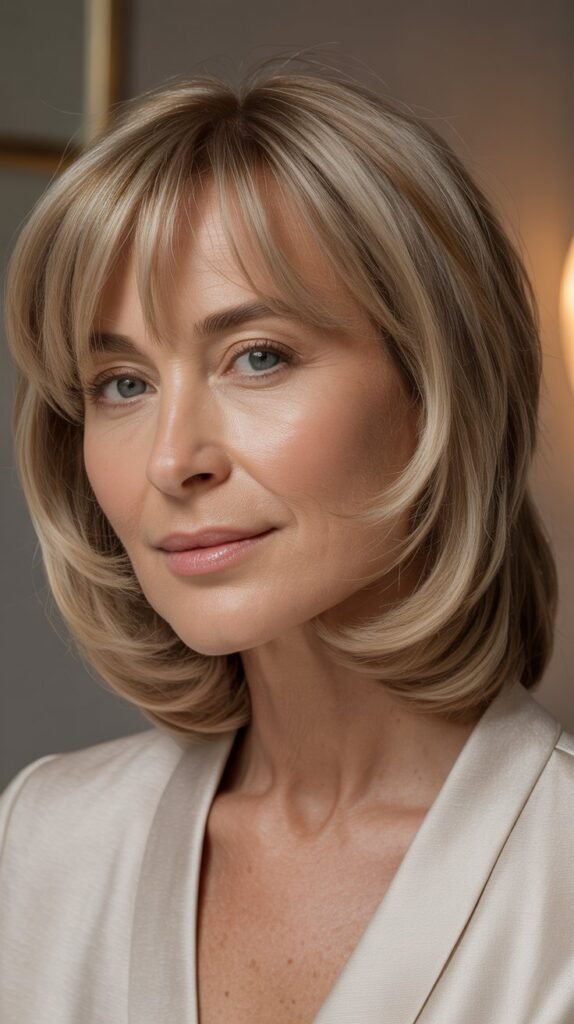
Drawing inspiration from stylish celebrities and public figures over 50 who’ve embraced curtain bangs provides realistic examples of this flattering style in action.
- Michelle Pfeiffer has demonstrated that curtain bangs maintain their appeal across decades, adapting her signature style as she ages.
- Jennifer Aniston frequently sports face-framing layers that function as curtain bangs, proving their timeless sophistication.
- Viola Davis has shown that curtain bangs work beautifully on natural Black hair when cut with proper technique.
- Julianne Moore’s approach to curtain bangs emphasizes embracing natural red hair color while using bangs to soften her features.
- Sandra Bullock demonstrates how curtain bangs can look fresh and modern without trying to appear younger than your actual age.
- These celebrities share a common approach—their curtain bangs look polished and intentional rather than trendy or age-inappropriate.
- Pay attention to how celebrity stylists adapt curtain bangs to different face shapes, hair textures, and personal style preferences.
- Use celebrity examples as conversation starters with your stylist, but remember that professional lighting, makeup, and styling teams create results that may not be fully replicable at home.
32. Troubleshooting Common Curtain Bang Problems

Even with perfect cutting and styling, curtain bangs sometimes misbehave—these solutions address the most common frustrations women encounter.
Greasy Bangs Between Washes
- Your forehead’s oil production naturally transfers to your bangs, making them appear dirty even when the rest of your hair looks fresh.
- Apply dry shampoo specifically to your bangs without washing your entire head, extending time between full washes.
- Use a translucent setting powder (yes, makeup) on your forehead to absorb oil before it transfers to your hair.
- Wash just your bangs in the sink using a small amount of shampoo, drying them quickly with a blow dryer.
Stubborn Cowlicks Disrupting the Curtain
- Work with your cowlick rather than fighting it—slight asymmetry in your curtain bangs looks natural and intentional.
- Use a stronger hold product like pomade or gel at the root of the cowlick to train it in your desired direction.
- Blow-dry against the cowlick’s natural growth pattern first, then release it to fall in the direction you want.
- Some cowlicks never fully cooperate—embrace the slight imperfection as part of your unique look.
Bangs Won’t Stay Parted in the Middle
- Your hair’s natural part may be off-center, making a perfectly centered curtain part feel unnatural.
- Slightly off-center curtain bangs still create the desired effect and look more authentic than forced symmetry.
- Use styling products with hold at the root to set your desired part, allowing it to dry completely before disturbing.
- Sleep with your bangs clipped in the correct position to train them over time to naturally fall where you want.
Bangs Growing at Different Rates
- Individual hairs have different growth cycles, causing some sections to appear longer than others between trims.
- Trim the longer pieces yourself between salon visits to maintain balance and proportion.
- This is completely normal—even the most meticulously cut bangs will develop uneven sections as they grow.
33. Curtain Bangs for Different Lifestyle Needs
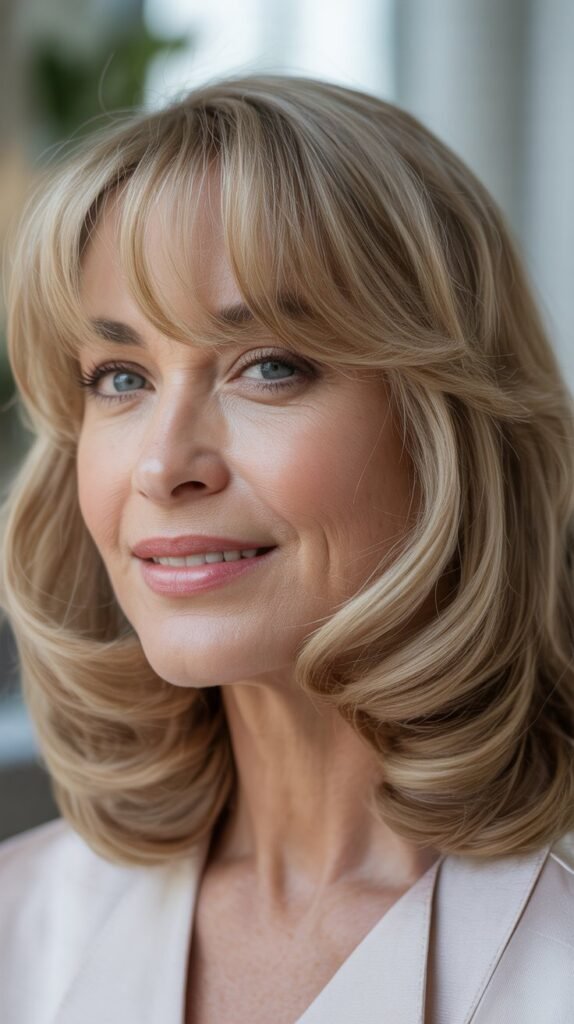
Your daily life and activities should inform your curtain bang style—what works for a retired artist differs dramatically from what suits an active grandmother who runs marathons.
Active and Athletic Lifestyles
- Shorter curtain bangs that don’t constantly fall in your face during physical activity are essential.
- Choose styles that look good pulled back with headbands or clips, not just when worn down.
- Low-maintenance cutting and minimal product requirements accommodate frequent washing and exposure to sweat.
Professional Career Focus
- Polished, reliable curtain bangs that hold their style throughout long workdays without constant touch-ups.
- Classic lengths and styling that convey authority and competence while still feeling current and attractive.
- Versatility for different professional situations—styles that work equally well for presentations and casual Friday.
Retired and Leisure-Oriented
- More experimental and fashion-forward options become possible when workplace considerations don’t apply.
- Longer, more romantic curtain bangs that require occasional maintenance but look beautiful for social occasions.
- Freedom to adapt styling based on daily activities without rigid consistency requirements.
Active Grandmother and Caregiver Roles
- Practical curtain bangs that won’t interfere with holding babies, bending down to play with grandchildren, or active caregiving tasks.
- Styles that look put-together with minimal daily effort, acknowledging that your time and energy focus elsewhere.
- Durability to withstand little hands touching and grabbing without falling apart or requiring immediate restyling.
34. The Future of Your Curtain Bangs: Long-Term Planning
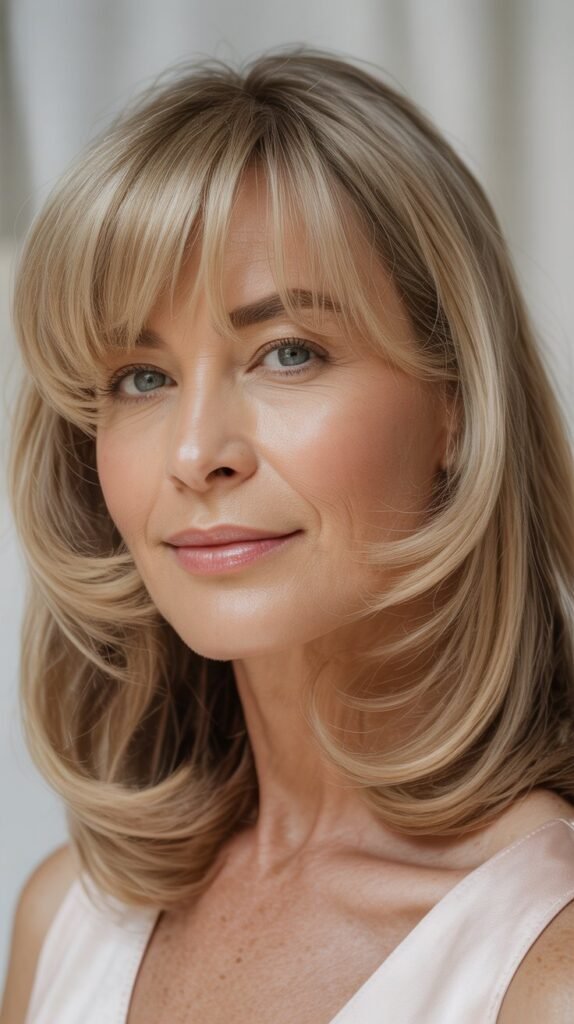
Thinking ahead about your curtain bang journey helps you make informed decisions about commitment, maintenance, and how this style fits into your overall hair goals.
Committing to Regular Maintenance
- Honest assessment of your willingness to schedule and attend regular trim appointments every 3-4 weeks determines long-term success.
- Consider the financial commitment of frequent professional maintenance when deciding if curtain bangs fit your budget and priorities.
- Learning self-trimming techniques reduces dependency on professional appointments while maintaining your desired look.
Adapting as You Age
- Your curtain bangs can evolve with you, becoming softer, wispier, or differently positioned as your face and hair change.
- Remain open to subtle adjustments recommended by your stylist as they notice changes in your hair’s behavior or facial proportions.
- What works perfectly at 52 might need modification at 62 or 72—flexibility ensures continued satisfaction.
Exit Strategy Planning
- Knowing you can grow out curtain bangs if they don’t work provides confidence to try the style without fear of permanent commitment.
- The growing-out process takes approximately 6-12 months depending on your hair’s growth rate and desired final length.
- Your stylist can incorporate growing bangs into new hairstyle designs that make the transition feel intentional rather than accidental.
Integration with Overall Hair Goals
- Consider how curtain bangs fit with other hair goals like growing length, transitioning to gray, or maintaining a specific color.
- Curtain bangs can support or complicate other hair objectives—discuss the big picture with your stylist.
- The right curtain bang style enhances your overall hair journey rather than creating conflict or additional challenges.
Conclusion
The journey through these 34 Soft Curtain Bangs for Women Over 50 That Create a Youthful Glow reveals that this isn’t just a hairstyle—it’s a transformative choice that radiates confidence, embraces your natural beauty, and celebrates exactly who you are at this moment in your life.
From understanding the technical aspects of face shapes and hair textures to mastering daily styling routines and troubleshooting common challenges, you now have the comprehensive knowledge to make informed decisions about whether curtain bangs belong in your beauty repertoire.
The power of this style lies not in hiding your age but in highlighting your best features, softening harsh lines, and creating that elusive youthful glow that comes from feeling attractive and confident in your own skin.
Whether you choose wispy, barely-there bangs or fuller, more dramatic curtains, whether you have fine hair requiring volume-building techniques or thick hair needing thinning and texture, there’s a perfect curtain bang variation waiting to frame your face beautifully.
The investment of time, maintenance, and occasional frustration during the learning curve pays dividends every time you catch your reflection and see a refreshed, rejuvenated version of yourself looking back.
Remember that the most successful curtain bangs aren’t those that slavishly follow trends or copy celebrity styles, but those that work harmoniously with your unique facial features, hair texture, lifestyle needs, and personal aesthetic.
Take the information you’ve gathered here, find a skilled stylist who understands mature hair, bring your inspiration photos and clear communication, and embark on your curtain bang journey with confidence and excitement for the transformation ahead.