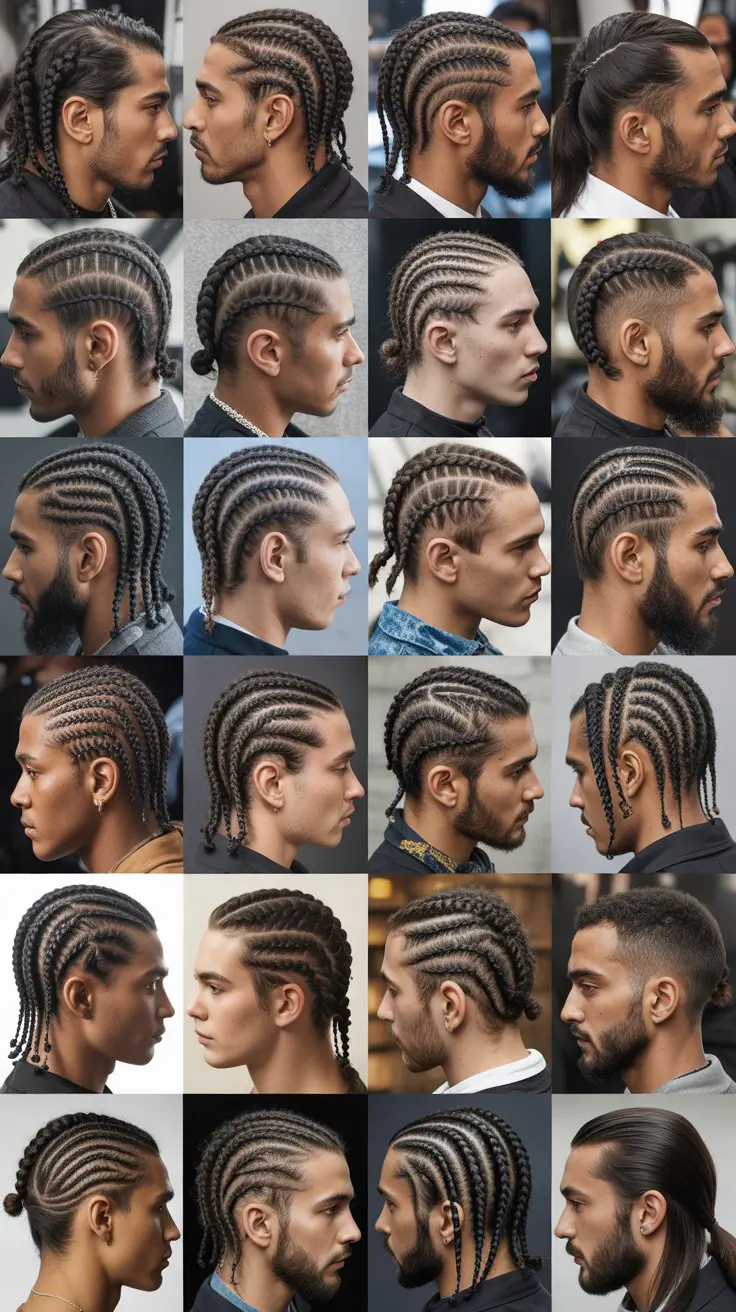
Long hair opens up a world of creative possibilities when it comes to cornrow styling, and men around the globe are embracing this ancient African art form to make bold, contemporary statements.
Whether you’re looking to protect your natural hair texture, experiment with geometric patterns, or simply stand out from the crowd, cornrows offer unmatched versatility and cultural richness.
This comprehensive guide explores 34 statement-making male cornrow hairstyles for long hair, covering everything from classic straight-back designs to intricate curved patterns, combined styles with braids and twists, maintenance tips, and styling inspiration for every occasion.
From professional settings to music festivals, these cornrow variations prove that long hair combined with precision braiding creates truly unforgettable looks that celebrate heritage while pushing style boundaries into exciting new territories.
1. Classic Straight-Back Cornrows
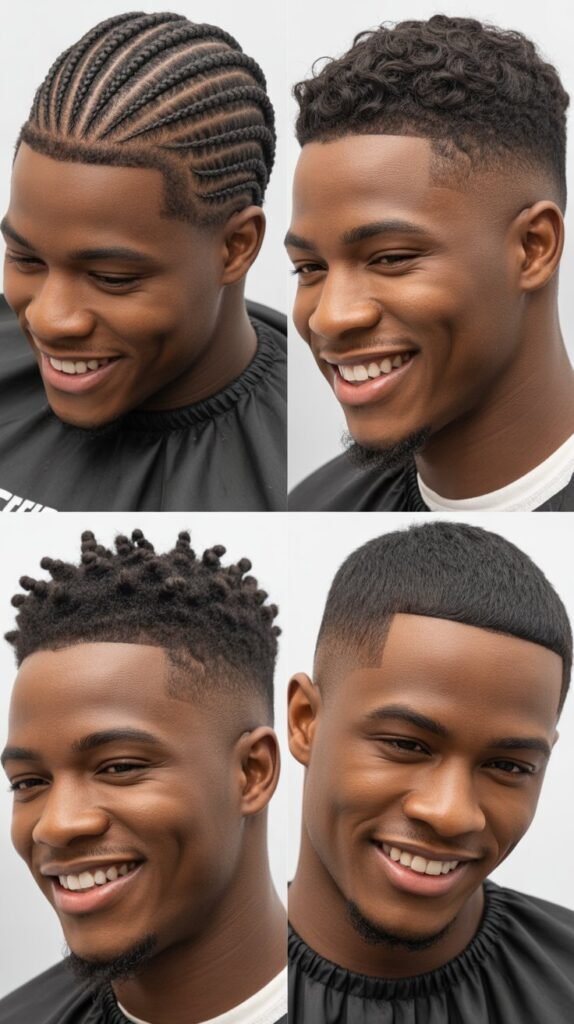
Straight-back cornrows remain the foundation of all cornrow styling and continue to dominate as a timeless choice for men with long hair.
- This style features parallel rows braided directly backward from the hairline to the nape of the neck, creating clean, uniform lines that highlight precision and symmetry.
- The number of cornrows can vary from thick, chunky rows (typically 6-10) to thinner, more numerous rows (15-25) depending on personal preference and hair density.
- Straight-back cornrows work exceptionally well for professional environments as they present a neat, organized appearance while still making a stylish statement.
- The length of your hair determines how far down your back or shoulders the cornrows extend, with longer hair creating more dramatic visual impact.
- This classic style typically lasts 2-4 weeks with proper care and nighttime protection using a silk or satin durag or bonnet.
- Maintenance involves regular moisturizing of the scalp with lightweight oils and keeping the hairline clean to prevent buildup.
2. Curved and Zigzag Patterns
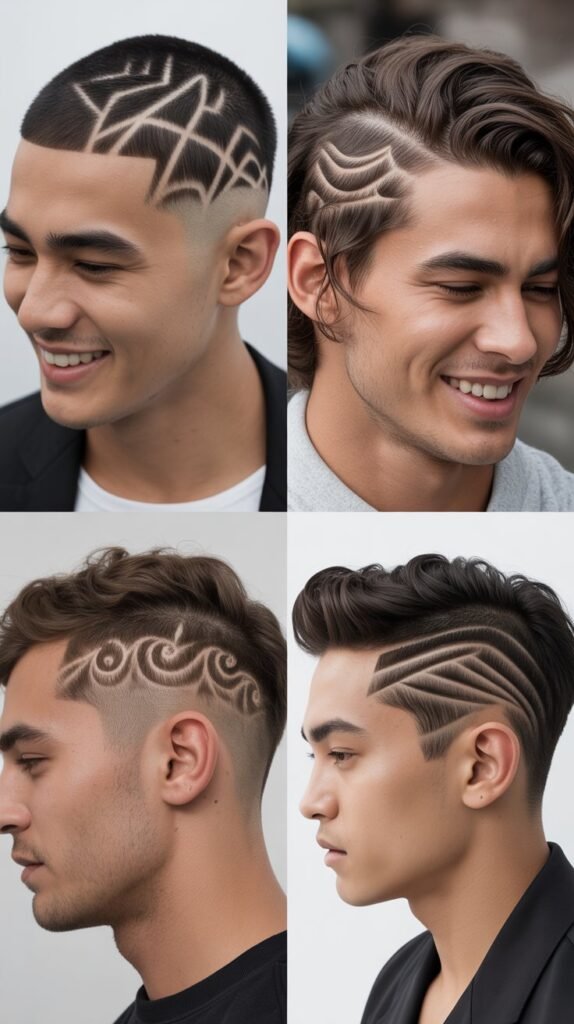
Moving beyond straight lines, curved and zigzag cornrow patterns add artistic flair and dimension to long hair styling.
- Curved patterns involve braiding cornrows in gentle arcs, S-curves, or wave formations that create flowing, organic designs across the scalp.
- Zigzag patterns feature sharp angular changes in direction, creating geometric designs that catch the eye and demonstrate exceptional braiding skill.
- These patterns require experienced braiders who can maintain consistent tension while changing direction to prevent uneven sections or premature loosening.
- Combining multiple curve patterns in one style creates depth and complexity that transforms the head into a canvas of intricate design.
- The longer your hair, the more pronounced these patterns become as they extend down the back, creating a cascading effect.
- Popular curve variations include spiral patterns that wrap around the head and layered waves that create three-dimensional visual effects.
3. Feed-In Cornrows for Natural-Looking Hairlines
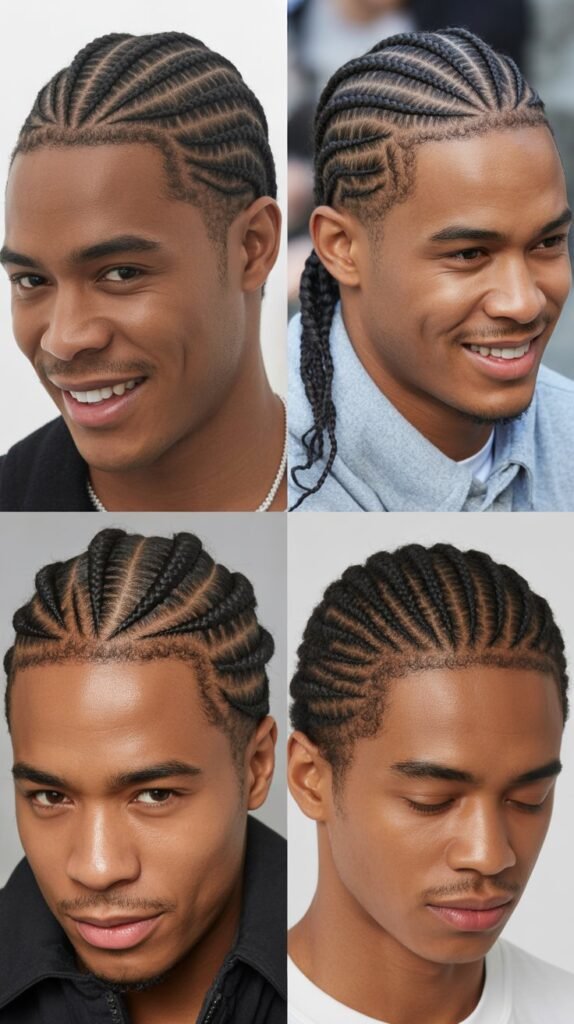
Feed-in cornrows (also called invisible cornrows) create the most natural-looking hairlines by gradually adding hair to the braid as you move backward.
- This technique starts with your natural hair at the front and gradually feeds in additional sections as the braid progresses, eliminating the bulky knot appearance typical of traditional cornrows.
- Feed-in cornrows place significantly less tension on the hairline, reducing the risk of traction alopecia and making them healthier for long-term wear.
- The result is cornrows that appear to grow naturally from the scalp without obvious starting points, creating a seamless, sophisticated appearance.
- This style works particularly well for men with receding hairlines or sensitive edges, as it doesn’t pull aggressively on vulnerable areas.
- Feed-in cornrows typically last 3-5 weeks and require a skilled braider who understands proper tensioning techniques.
- The gradual thickening creates a tapered effect that’s especially attractive when combined with long hair that hangs freely at the ends.
4. Cornrows with Free-Hanging Ends
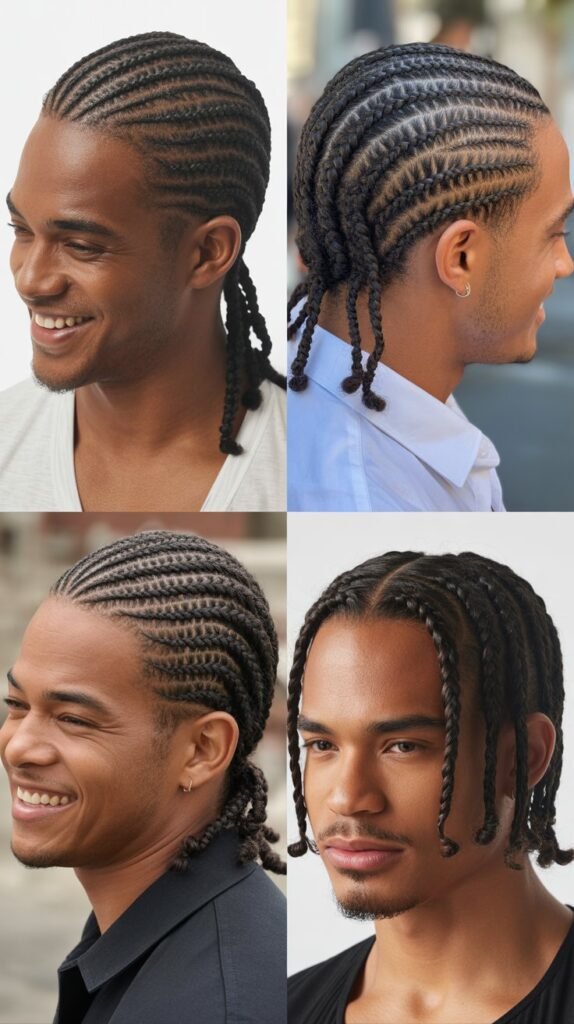
This hybrid style features cornrows on the scalp that transition into loose, flowing hair at a certain point, combining structure with freedom.
- Cornrows can be braided to any stopping point—mid-scalp, crown, or nape—before releasing the hair to hang freely, creating versatile styling options.
- This approach offers the protective benefits of cornrows while still showcasing the length and texture of natural hair.
- The transition point can be adorned with beads, cuffs, or thread wrapping to create a decorative accent that emphasizes where braiding ends and flowing hair begins.
- Men with wavy or curly hair create particularly striking effects as the texture contrast between sleek cornrows and voluminous loose ends adds dramatic dimension.
- This style provides easier access for moisturizing the loose ends while keeping the scalp area protected and manageable.
- The free-hanging portions can be styled in various ways—left natural, curled, straightened, or even put into ponytails or buns for different occasions.
5. Tribal and Geometric Designs
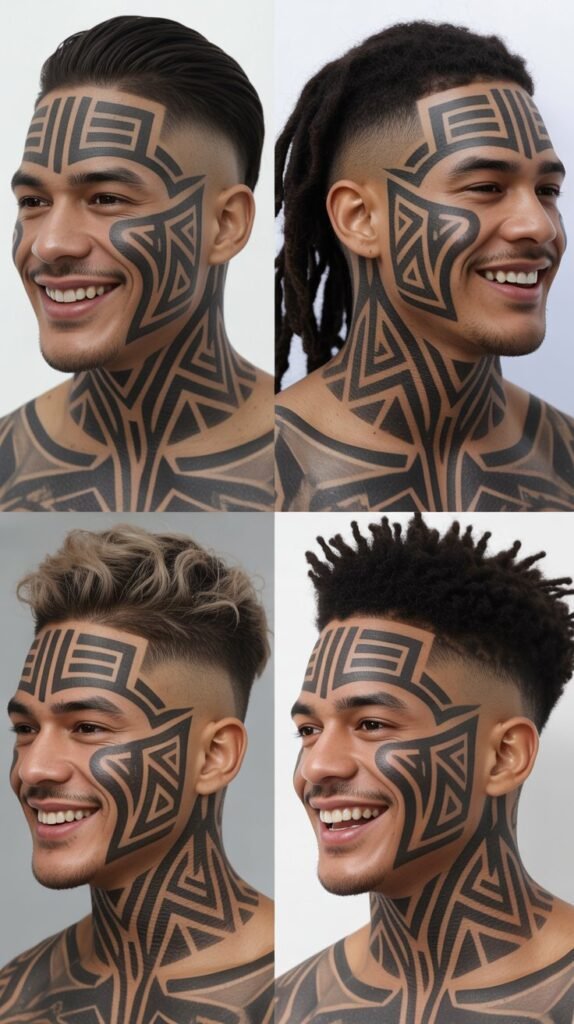
Tribal and geometric cornrow patterns draw inspiration from African heritage, creating complex designs that tell visual stories and showcase cultural pride.
- These designs often incorporate meaningful symbols, ancestral patterns, or modern geometric shapes that transform the head into artistic expression.
- Popular geometric elements include triangles, diamonds, hexagons, and parallel lines that create optical illusions and three-dimensional effects.
- Tribal patterns may reference specific African cultures, incorporating traditional motifs that carry historical significance and connect wearers to their roots.
- Creating these complex designs requires exceptional planning, precision, and hours of detailed work by master braiders who understand spatial relationships.
- The contrast between the designed sections and the long flowing hair creates a powerful visual statement that honors tradition while embracing contemporary style.
- Documenting your geometric design with photos is essential, as recreating the exact pattern requires clear reference points for future braiding sessions.
6. Cornrow Mohawk Styles
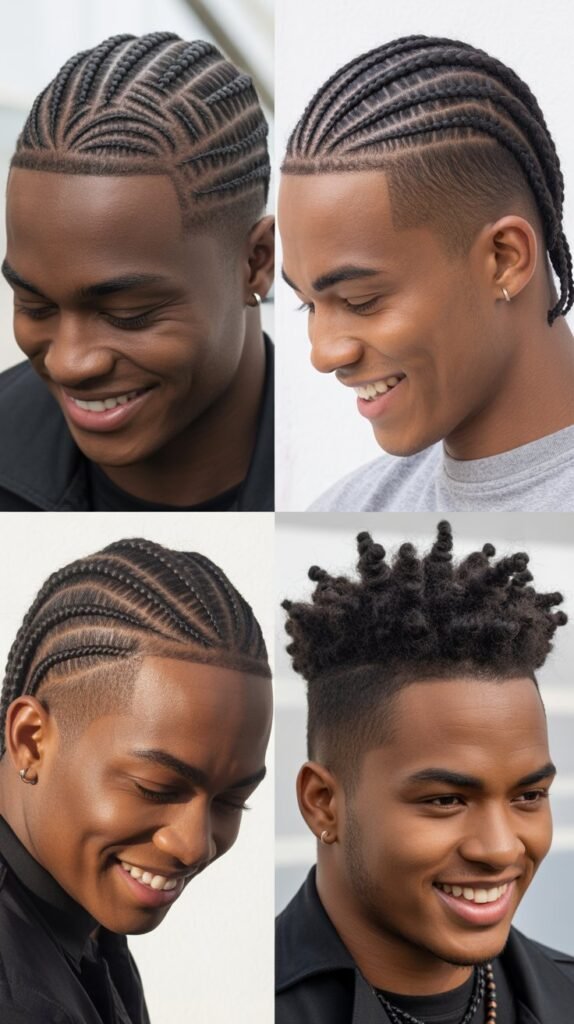
The cornrow mohawk combines edgy modern aesthetics with traditional braiding techniques, creating a bold statement perfect for men wanting dramatic impact.
- This style features cornrows braided toward a central strip running from front to back, with the center section either left higher, styled differently, or braided in contrasting patterns.
- The sides can feature thin, tight cornrows while the center showcases thicker braids, loose hair, or even twisted sections for maximum contrast.
- Cornrow mohawks work exceptionally well for men with very long hair, as the center section can hang dramatically or be styled upward for added height.
- The width of the mohawk strip can be customized—narrow for subtle effect or wide for bold, unmistakable presence.
- This style pairs excellently with faded or shaved sides for men who want a partially shaved look combined with protective styling on longer sections.
- Maintenance focuses on keeping the braided sides neat while allowing creative freedom with the center section’s styling options.
7. Side-Swept Cornrows
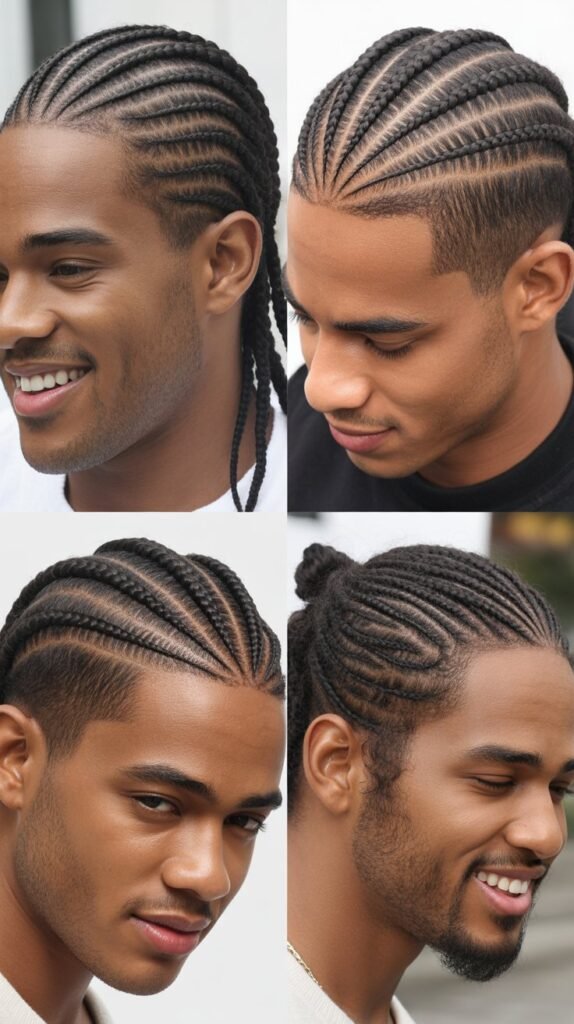
Side-swept cornrows create asymmetrical, fashion-forward looks by angling all braids toward one side of the head rather than straight back.
- All cornrows begin at various points on the scalp and angle toward one side, creating a sweeping motion that adds dynamic movement to the style.
- The gathered side creates volume and visual interest, while the opposite side showcases the clean, detailed braiding work along the scalp.
- This style works particularly well for men with long hair, as the side-gathered braids can be styled into a low ponytail, left hanging, or tucked behind the shoulder.
- Side-swept designs create the illusion of more hair density on the gathered side, making them ideal for men with thinner hair who want fuller appearance.
- The asymmetrical nature of this style adds an artistic, fashion-conscious element that stands out in both casual and formal settings.
- Consider alternating the swept direction between braiding sessions to prevent repetitive stress patterns on one side of the scalp.
8. Cornrows with Man Bun or Top Knot
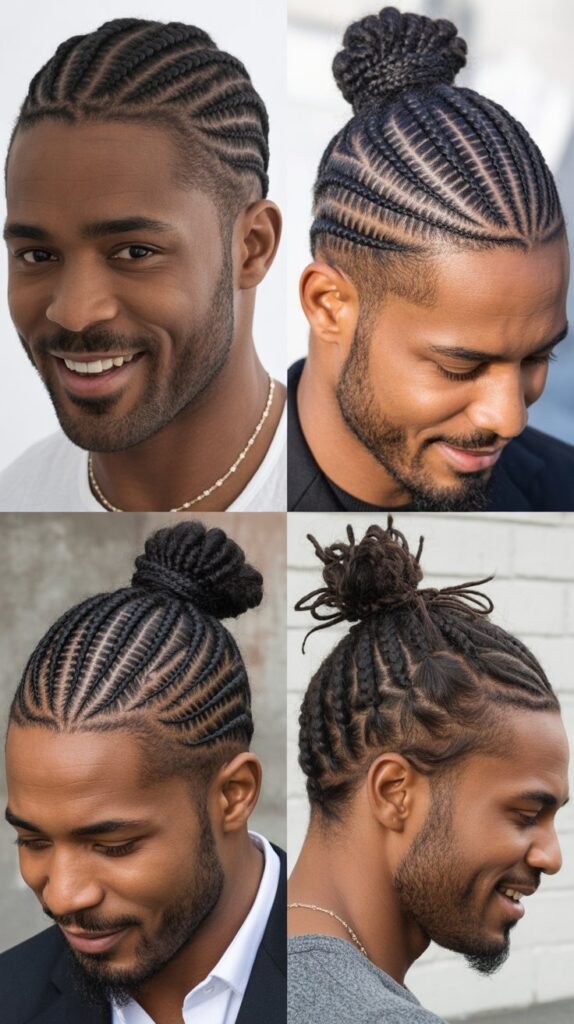
Combining cornrows with a man bun or top knot merges protective styling with trendy men’s hair fashion, creating versatile, practical looks.
- Cornrows are braided to converge at a collection point—typically the crown or upper back—where the remaining length is gathered into a bun or knot.
- This combination keeps hair secure and protected while creating a clean, masculine silhouette that works for active lifestyles and professional environments.
- The size and positioning of the bun can be adjusted based on hair length and personal style—high top knots for modern edge or low buns for refined sophistication.
- The cornrowed sections provide the structured foundation while the bun element adds softness and contemporary appeal.
- This style is particularly practical for men who work in physical jobs or play sports, as it keeps long hair completely secured and out of the way.
- The bun portion can be styled differently each day—tight and sleek, messy and textured, or wrapped with accessories—without disturbing the cornrow base.
9. Ombre and Highlighted Cornrows
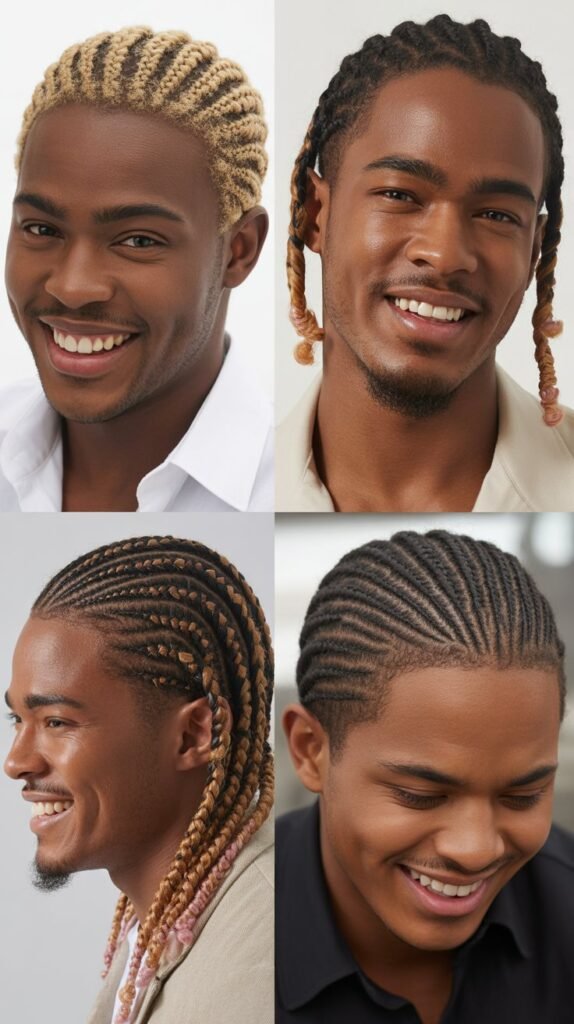
Adding color through ombre effects or highlights elevates cornrow styles from classic to contemporary, creating eye-catching dimension and visual interest.
- Ombre cornrows feature gradual color transitions—typically from natural dark roots to lighter, bleached, or colored ends—that emphasize length and create depth.
- Strategic highlights on select cornrows create dimension and make intricate patterns more visible, drawing attention to the braiding artistry.
- Popular color choices include natural tones (honey, caramel, auburn) for subtle enhancement or bold colors (platinum, blue, burgundy) for dramatic statements.
- Color application should be done by professionals who understand how chemical processing affects textured hair and can minimize damage.
- Colored cornrows require additional maintenance including color-safe moisturizers, protein treatments, and reduced sun exposure to prevent fading.
- The combination of precise geometric braiding and artistic color creates a truly unique style that reflects personal creativity and fashion awareness.
10. Braided Crown with Long Flowing Hair
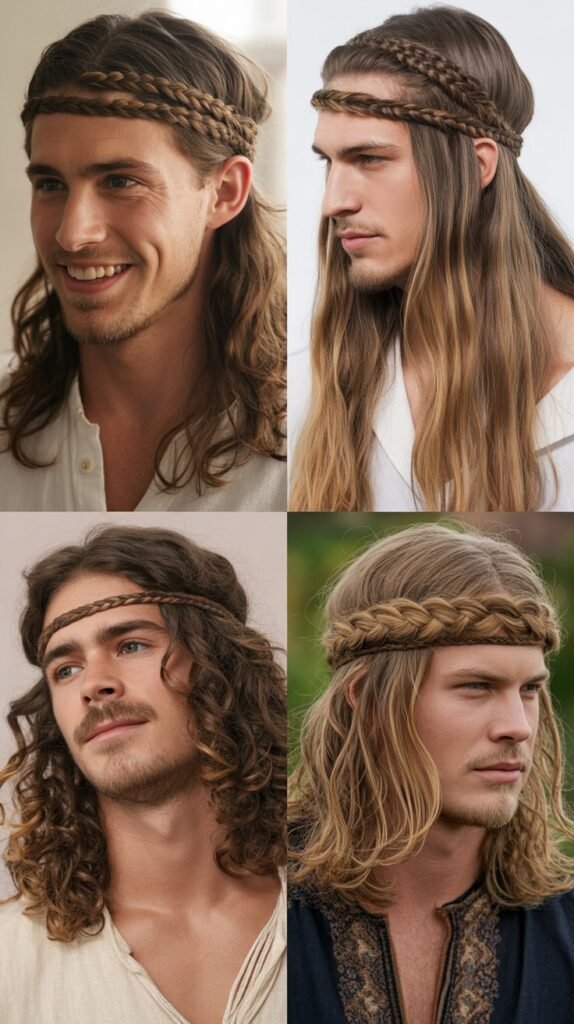
The braided crown style features cornrows that circle the head like a crown or halo, with long hair flowing freely from the center or back.
- Cornrows are braided in circular or curved patterns around the head’s perimeter, creating a crown effect that frames the face while leaving central hair free.
- This style perfectly balances structure and flow, combining the neat appearance of cornrows with the romantic appeal of loose, long hair.
- The crown pattern can be single-layered or multiple concentric circles, depending on hair density and desired complexity.
- This versatile style works equally well for casual days with loose flowing hair or formal occasions when the loose section is styled into elegant updos.
- The crown provides built-in headband functionality, keeping hair away from the face during activities while maintaining style integrity.
- Maintenance is simplified as the loose hair can be washed and conditioned more easily than fully braided styles while the crown provides lasting structure.
11. Micro Cornrows for Maximum Detail
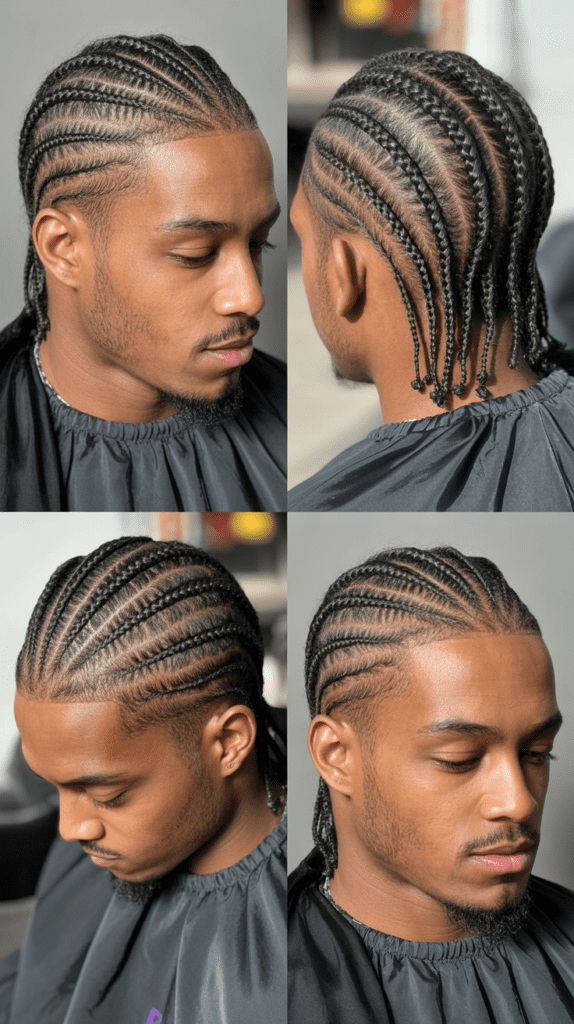
Micro cornrows feature extremely thin braids that create incredibly detailed patterns and showcase exceptional braiding precision.
- These ultra-thin cornrows typically range from pencil-width to even smaller, requiring 30-50+ individual braids to cover the entire head.
- Micro cornrows allow for the most intricate pattern creation, enabling complex designs that would be impossible with larger braids.
- The small size creates a smooth, almost painted appearance on the scalp, with the increased number of braids providing more texture and visual interest.
- This style requires significantly more time to install (often 6-10+ hours) and should only be performed by experienced braiders to ensure proper tension.
- Micro cornrows typically last longer than larger styles (4-6 weeks) due to the increased number of anchor points and smaller sections that resist frizzing.
- The trade-off for longevity and detail is the extended installation time and the importance of not over-tightening these delicate braids.
12. Chunky Cornrows for Bold Impact
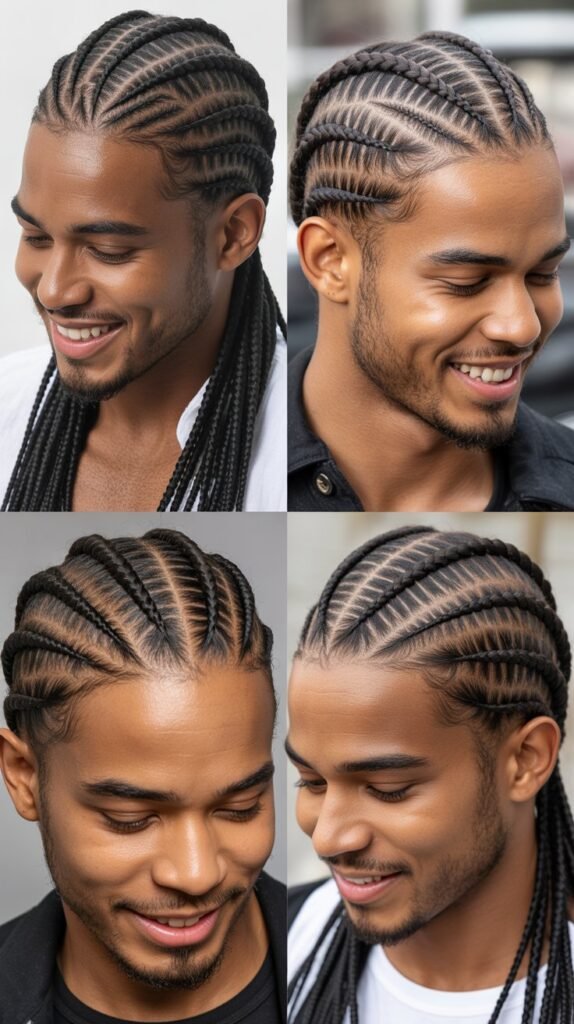
Chunky cornrows feature thick, substantial braids that create bold, dramatic looks with strong visual impact and reduced installation time.
- These larger cornrows typically use 4-12 braids total, with each braid being significantly wider and more prominent than standard styles.
- Chunky cornrows install much faster (1.5-3 hours) than finer styles, making them ideal for men who want impressive results without extended braiding sessions.
- The bold lines create strong geometric patterns that are easily visible and make powerful style statements without requiring intricate detail work.
- This approach works particularly well for men with very long, thick hair, as the substantial sections prevent the braids from becoming too heavy or causing tension.
- Chunky cornrows typically last 1-3 weeks, shorter than finer styles, but remain popular due to quick installation and dramatic appearance.
- The thickness requires extra attention to nighttime maintenance, as the larger braids can develop frizz more quickly without proper wrapping or covering.
13. Cornrows with Beads and Accessories
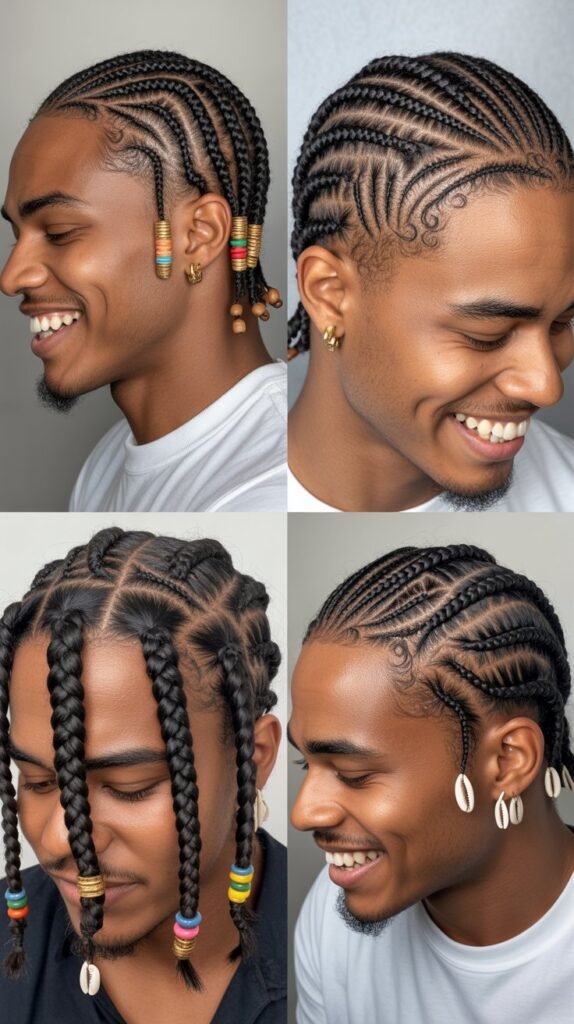
Adding beads, cuffs, thread wrapping, and other accessories transforms cornrows from simple protective styling into personalized artistic expressions.
- Beads can be added at the ends of cornrows, spaced throughout the length, or concentrated at specific points to create rhythm and visual interest.
- Popular accessories include wooden beads for natural aesthetics, metal cuffs for modern edge, and glass or plastic beads for color and shine.
- Thread wrapping involves tightly winding colored thread around sections of braids, creating solid color blocks or gradient effects that add vibrancy.
- Hair jewelry like rings, shells, cowries, and decorative pins can be incorporated to reflect cultural heritage or personal style preferences.
- Accessories should be lightweight to avoid pulling on braids and causing tension, especially when working with long hair where weight accumulates.
- The clicking sound of beads creates an auditory element that many find appealing, adding another sensory dimension to the style.
14. Diagonal Cornrow Patterns
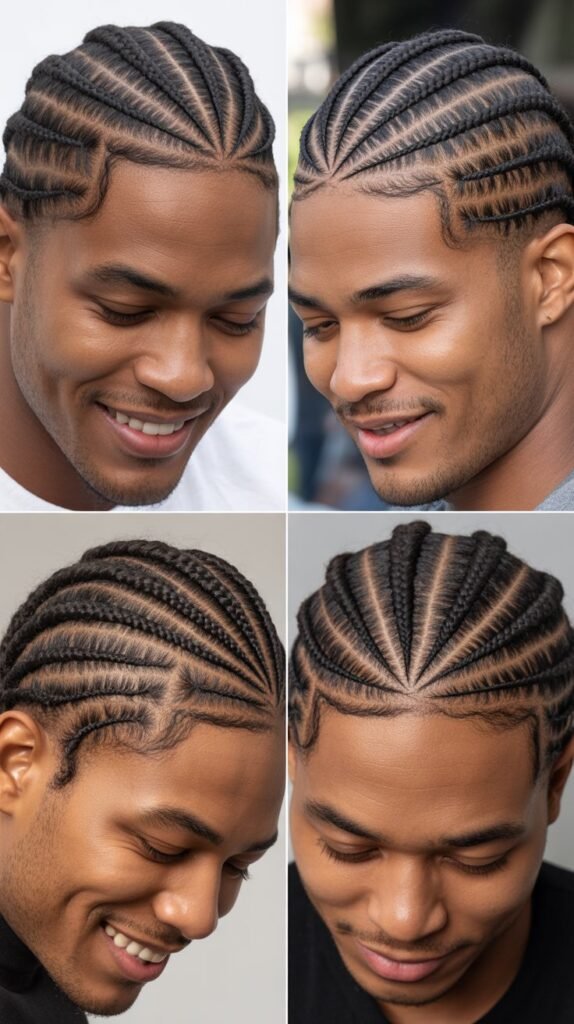
Diagonal cornrows create dynamic visual movement by braiding at angles across the head rather than in straight or curved lines.
- These cornrows run at angles from one side of the head to the opposite side, creating slanted lines that add motion and contemporary edge.
- Multiple diagonal directions can be combined, with some braids angling left-to-right while others go right-to-left, creating intersecting visual patterns.
- Diagonal patterns elongate or widen the appearance of the head depending on the angle, offering subtle facial framing benefits.
- This style works exceptionally well for men with angular facial features, as the diagonal lines complement and emphasize bone structure.
- The asymmetrical nature creates a fashion-forward appearance that stands out in creative industries and style-conscious settings.
- Diagonal braids can be uniform in size or varied, with thicker diagonals interspersed with thinner ones for added complexity.
15. Stitch Braids Technique
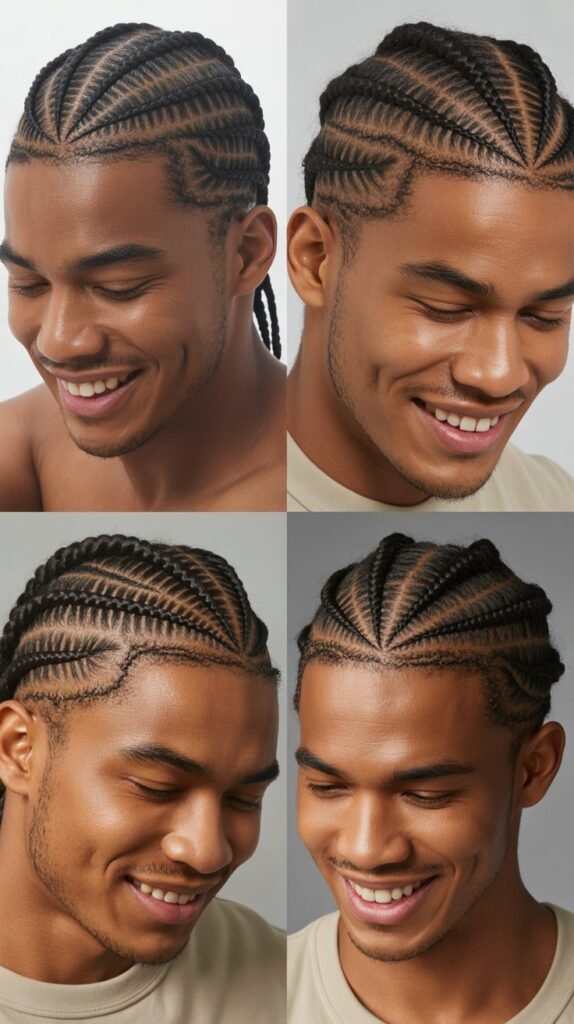
Stitch braids (also called feed-in stitch braids) create a distinctive woven appearance through a specific braiding technique that produces horizontal lines across each cornrow.
- This technique involves creating visible horizontal segments within each cornrow through a specific weaving method that pulls the hair at precise intervals.
- The resulting “stitched” appearance adds texture and dimension that makes cornrows more visually interesting and highlights the braider’s technical skill.
- Stitch braids are typically combined with feed-in techniques for natural-looking hairlines and gradual thickness that doesn’t stress the edges.
- The horizontal stitch lines catch light differently than standard cornrows, creating a subtle shimmer effect that enhances overall appearance.
- This advanced technique requires skilled braiders familiar with the specific hand movements and tension control needed to create even stitches.
- Stitch braids typically last 3-5 weeks and maintain their distinctive appearance throughout wear with proper nighttime protection and minimal manipulation.
16. Cornrows Transitioning to Box Braids
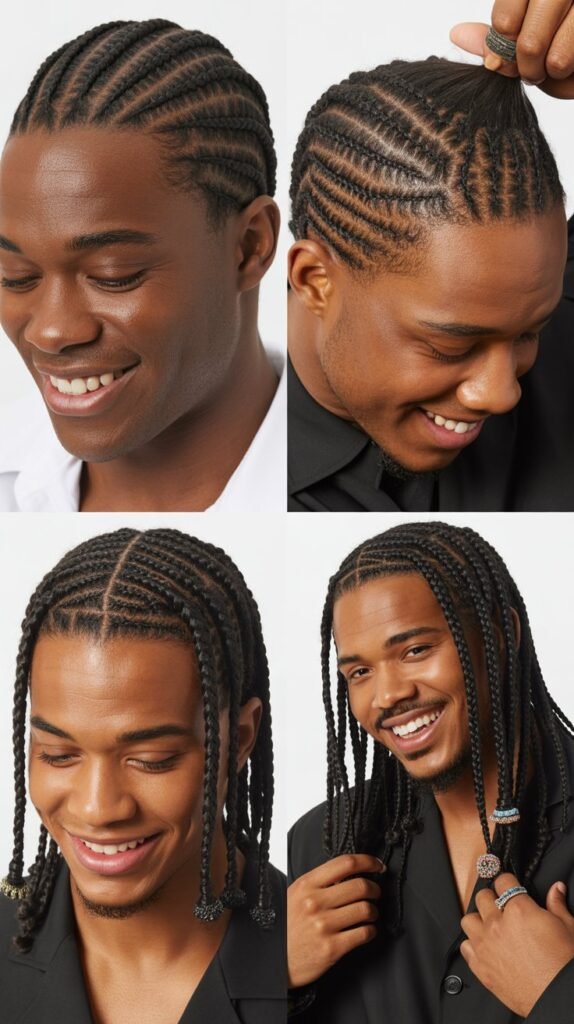
This hybrid style features cornrows on the scalp that seamlessly transition into individual box braids, combining two protective styling techniques.
- Cornrows are braided to a chosen point on the scalp, then each cornrow is divided into individual sections that continue as separate box braids.
- This combination provides the neat scalp appearance of cornrows with the versatility and movement of box braids in the hanging lengths.
- The transition point can be placed at the crown, mid-scalp, or nape depending on desired aesthetic and how much loose braid movement you want.
- Box braid portions can be left thick or split into thinner braids, allowing for customization of the overall style density and weight.
- This technique works beautifully with long hair, creating substantial length and volume in the box braid sections for maximum visual impact.
- Maintenance involves caring for both the cornrowed sections (keeping scalp clean and moisturized) and box braid lengths (preventing tangling and maintaining neatness).
17. Undercut with Top Cornrows
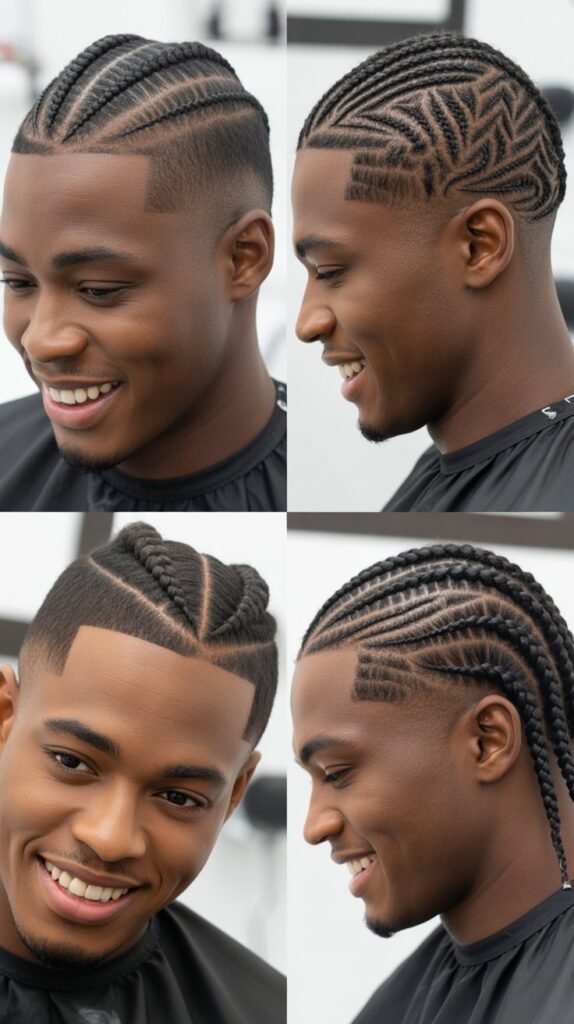
Combining an undercut with cornrows on the longer top section creates a modern fusion of contemporary barbering and traditional braiding.
- The sides and back are cut short or faded while the top section maintains length suitable for cornrowing, creating strong contrast and definition.
- This style offers the best of both worlds—low-maintenance shaved sections with protective styling on the hair you want to grow longer.
- The undercut emphasizes the cornrow patterns on top, making even simple straight-back braids appear more dramatic against the bare skin.
- Regular barber maintenance keeps the shaved sections clean while the cornrows can last several weeks, making this a practical hybrid approach.
- This style works particularly well for men in professional environments where very long hair might be challenging but styled long hair on top remains acceptable.
- The contrast between smooth shaved areas and textured braids creates architectural styling that emphasizes head shape and facial features.
18. Cornrows with Fade Designs
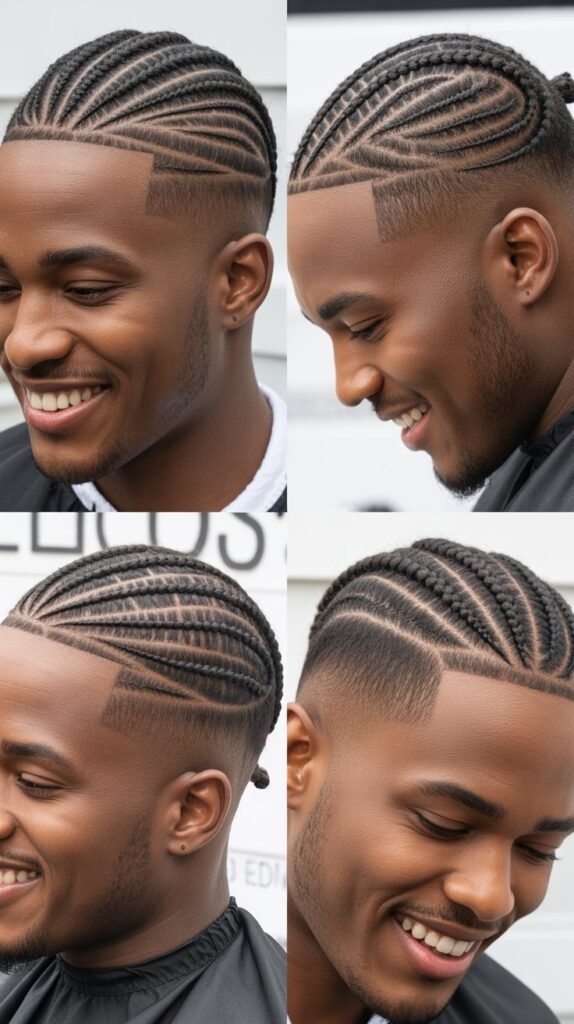
Incorporating artistic fade designs into the shaved or faded portions surrounding cornrows adds personalized artwork and contemporary flair.
- Professional barbers can create designs, logos, lines, or patterns in the faded sections that complement the cornrow patterns above.
- Popular fade designs include geometric lines that mirror cornrow directions, tribal symbols, brand logos, or completely custom artistic expressions.
- The temporary nature of fade designs (growing out within 1-2 weeks) allows for frequent style changes and seasonal variations without affecting the cornrows.
- This combination appeals to men who want edgy, attention-grabbing styles that showcase both barbering and braiding artistry.
- The contrast between the darker cornrows and the revealed skin art creates multidimensional styling that photographs exceptionally well.
- Coordination between barber and braider ensures the overall design is cohesive, with fade patterns that enhance rather than compete with braid patterns.
19. Ladder Braids Style
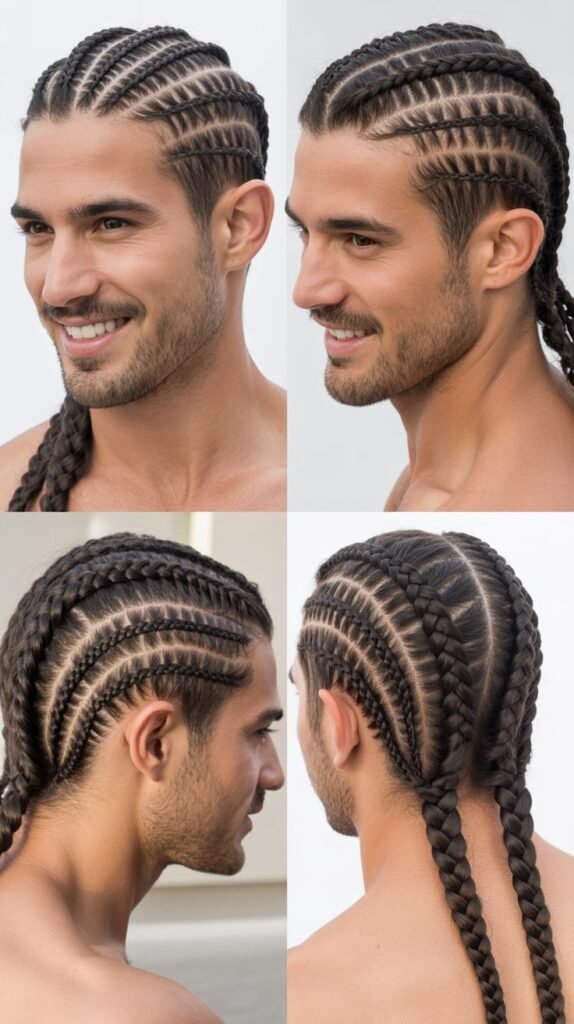
Ladder braids feature horizontal connections between parallel cornrows, creating a ladder-like appearance that adds structural interest to standard rows.
- Small sections of hair create horizontal bridges between adjacent cornrows at regular intervals, forming rungs that connect the vertical braid “rails.”
- This technique adds complexity and visual texture without requiring completely intricate patterns, making it a step up from basic straight-backs.
- Ladder braids showcase technical braiding skill while remaining professional and appropriate for various settings from casual to business environments.
- The horizontal connections help secure cornrows and can contribute to slightly longer style longevity as they provide additional anchor points.
- This style works best with medium-thick cornrows rather than very thin or very chunky braids, as the connection size needs to balance with the main braids.
- Ladder patterns can be uniform throughout or concentrated in specific areas like the crown or sides for asymmetric visual interest.
20. Cornrow Ponytail Combination
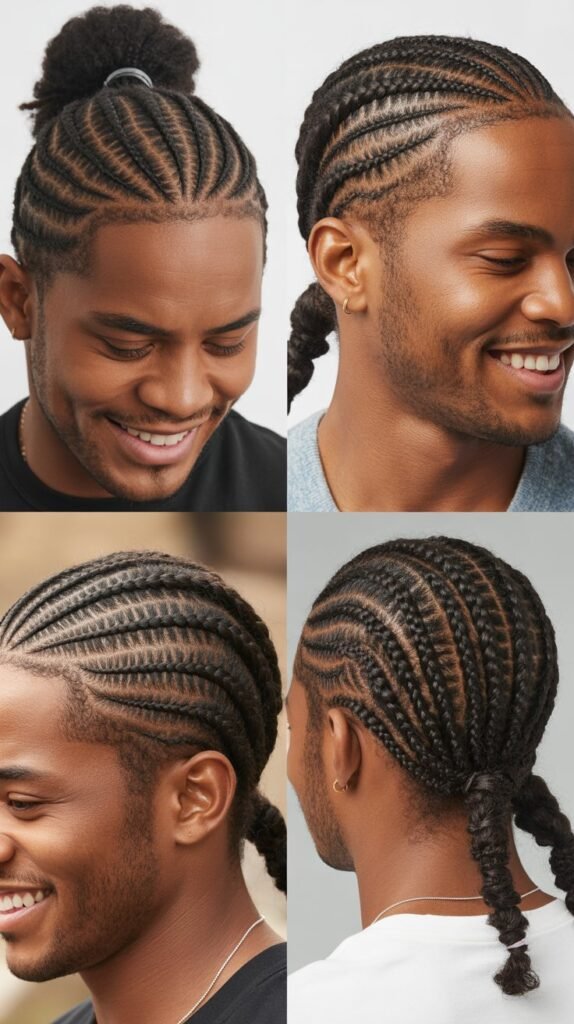
This practical style features cornrows braided toward a collection point where all hair is gathered into a ponytail, combining security with versatile styling.
- Cornrows can be directed toward any point—high crown, mid-back, or nape—where they’re gathered into a ponytail held with elastic or hair ties.
- This combination keeps the scalp neat and protected while allowing the length to be styled differently—sleek ponytail, curly ponytail, or wrapped tail.
- The convergence point creates a natural focal point that can be decorated with cuffs, wraps, or left simple for clean aesthetics.
- Men with very long hair benefit from this style as it manages significant length while preventing tangling and keeping hair secured during activities.
- The ponytail portion can be braided, twisted, or left loose depending on desired aesthetic and the day’s activities or dress code.
- This versatile approach allows you to wear hair down by simply removing the ponytail holder while keeping the cornrow base intact for days or weeks.