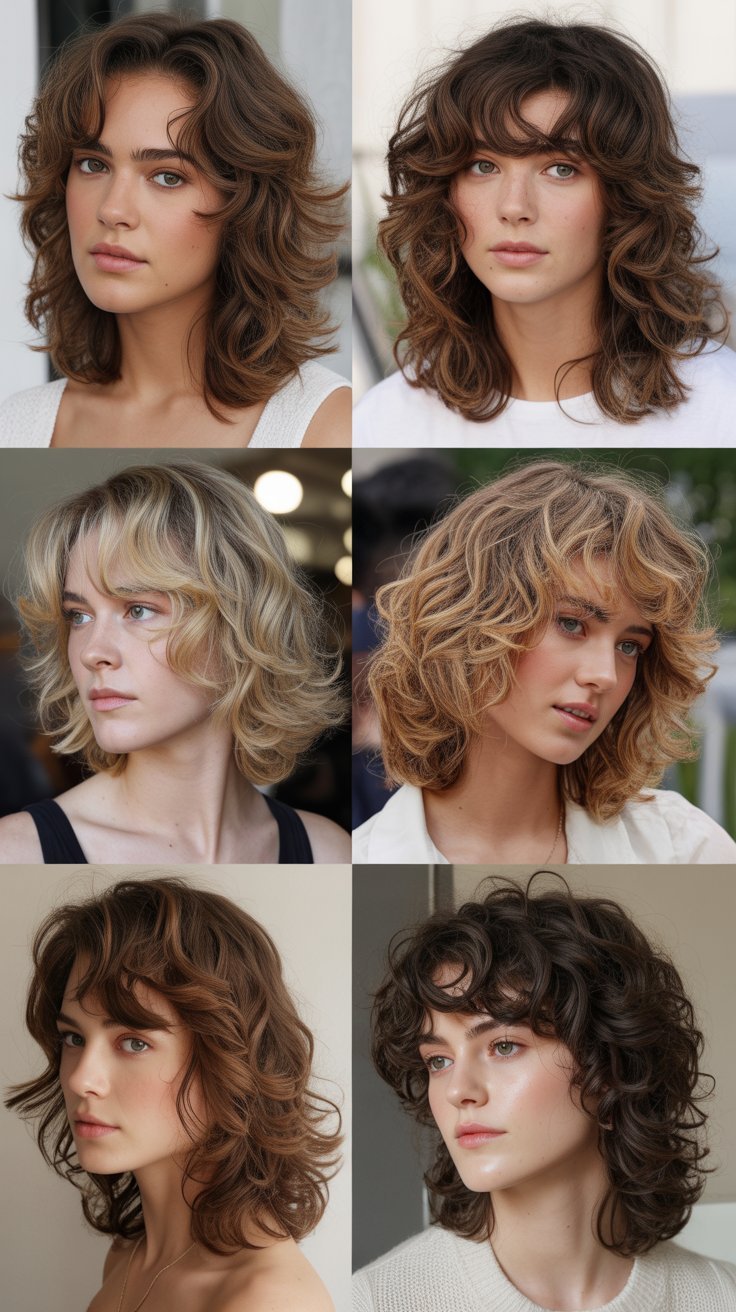
If you’re blessed with wavy, thick hair and looking for the perfect shoulder-length cut, you’ve landed in exactly the right place.
Managing thick, wavy hair can feel overwhelming, but the right layered haircut transforms your natural texture into your greatest style asset.
This comprehensive guide unveils 37 stunning shoulder-length layered haircuts specifically designed for wavy thick hair, each offering a unique way to reduce bulk, enhance movement, and showcase your gorgeous waves.
From face-framing layers to textured shags, from blunt cuts with internal layering to wispy feathered styles, you’ll discover cuts that work with your hair’s natural personality rather than against it.
Whether you prefer effortless beachy vibes, polished sophistication, or edgy modern looks, these carefully curated styles will inspire your next salon visit and help you finally fall in love with your thick, wavy hair.
1. Classic Face-Framing Layers
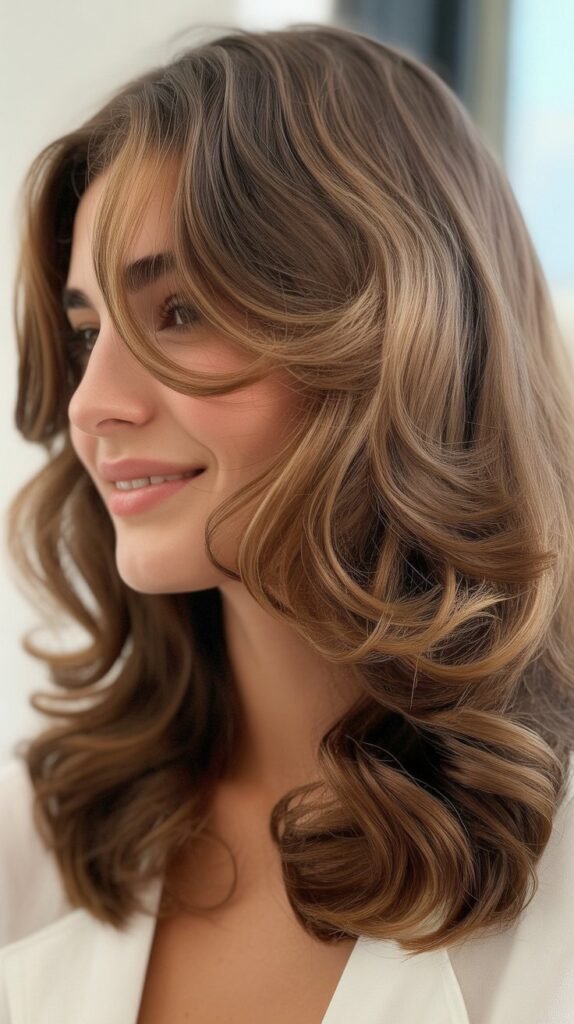
Face-framing layers remain timeless for thick wavy hair because they strategically remove weight while drawing attention to your best features.
This technique creates shorter pieces around your face that gradually blend into longer lengths, giving you dimension and movement without sacrificing overall length.
Why This Works for Thick Wavy Hair:
- The shorter front pieces reduce bulk around your face, preventing that heavy, overwhelming feeling
- Face-framing layers follow your natural wave pattern, enhancing texture rather than fighting it
- This cut creates an optical slimming effect that balances fuller hair with facial features
- The graduated lengths allow waves to stack beautifully, creating natural volume distribution
Styling Tips:
- Apply lightweight mousse to damp hair and scrunch upward to encourage wave formation
- Use a diffuser on low heat to dry, focusing on the roots for lift
- Finish with a texturizing spray on the face-framing pieces to separate and define them
- Avoid heavy oils near the front layers to prevent weighing down these delicate sections
2. Choppy Textured Lob
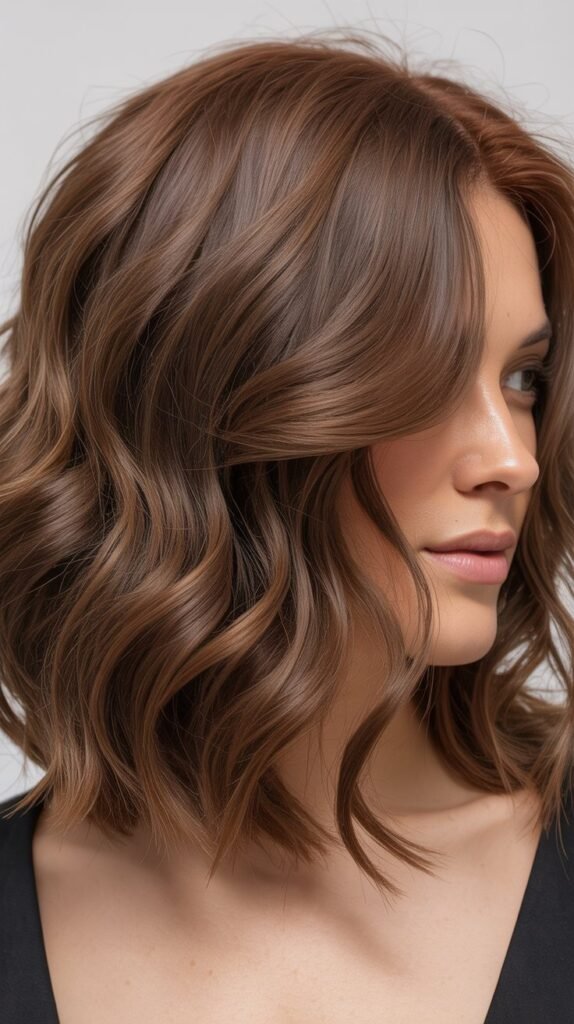
The choppy textured lob brings an edgy, modern twist to shoulder-length hair by incorporating irregular layers and razored ends.
This cutting technique is particularly effective for thick wavy hair as it breaks up density while creating that coveted lived-in, effortless appearance.
Key Characteristics:
- Razor cutting creates softer, more irregular edges than traditional shears
- The “choppy” effect comes from varied layer lengths throughout the cut
- This style sits perfectly at shoulder length, typically between collarbone and shoulder blade
- The texture disrupts uniform thickness, making hair appear more dynamic and less heavy
Maintenance Requirements:
- Schedule trims every 6-8 weeks to maintain the choppy texture and prevent blunt regrowth
- Invest in a quality texturizing spray or sea salt spray to enhance the piecey effect
- Consider adding highlights or balayage to further emphasize the textured layers
- Deep condition weekly since razored ends can be more prone to dryness
3. Shaggy Layers with Curtain Bangs
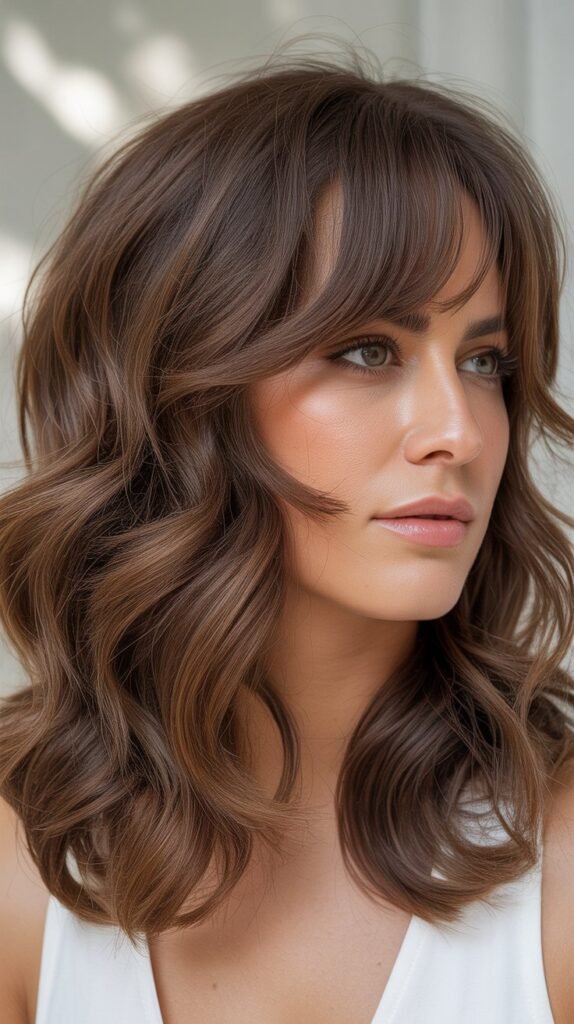
Combining shaggy layers with curtain bangs creates the ultimate bohemian-chic look for thick wavy hair.
This style features multiple layer levels throughout with face-framing curtain bangs that part down the middle, offering versatility and incredible movement.
The Shag-Curtain Bang Combination:
- Curtain bangs split naturally in the center, framing both sides of the face symmetrically
- Shaggy layers throughout remove substantial weight while maintaining fullness
- The connection between bangs and layers creates seamless flow and cohesion
- This cut works exceptionally well with natural wave patterns, requiring minimal styling
Who Should Try This:
- Those comfortable with regular bang maintenance (trims every 3-4 weeks)
- People seeking a more relaxed, carefree aesthetic
- Anyone wanting to soften angular facial features
- Individuals ready to embrace their natural texture with minimal heat styling
4. Long Layers with Minimal Graduation
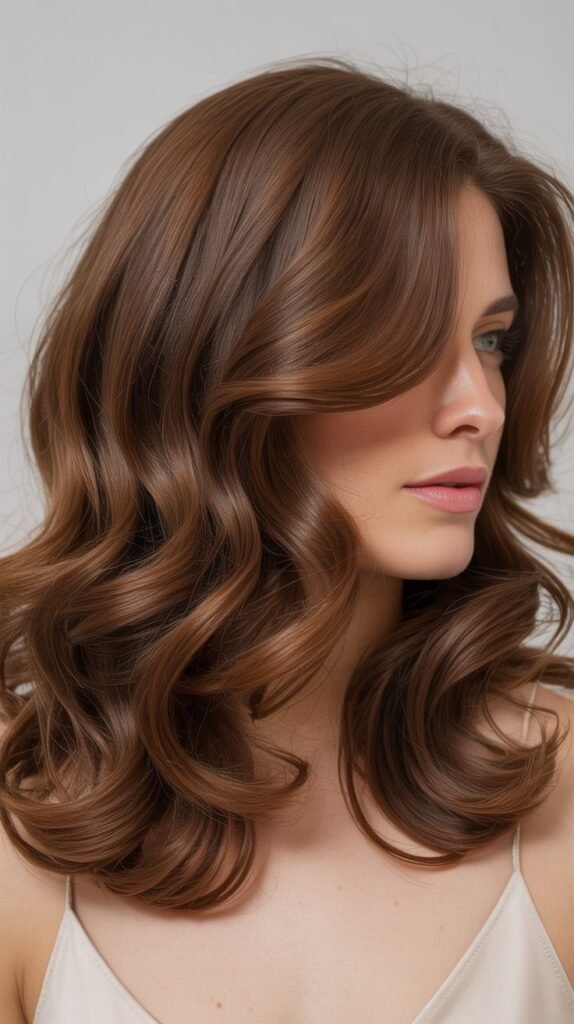
For those who want to keep maximum length while still enjoying layering benefits, long layers with minimal graduation offer the perfect compromise.
This conservative approach to layering removes just enough weight to enhance waves without creating dramatic length differences.
Understanding Minimal Graduation:
- Graduation refers to the angle difference between layer lengths
- Minimal graduation means layers are cut at subtle angles, creating gentle transitions
- The longest layer and shortest layer have only 2-3 inches difference
- This technique maintains density while improving manageability
Benefits for Conservative Cutters:
- The change is noticeable but not drastic, perfect for those hesitant about major transformations
- Hair still looks full and substantial, just more refined and moveable
- You retain the ability to pull hair into ponytails and updos without shorter pieces falling out
- This serves as an excellent starting point before committing to more dramatic layering
5. Heavily Layered Shag
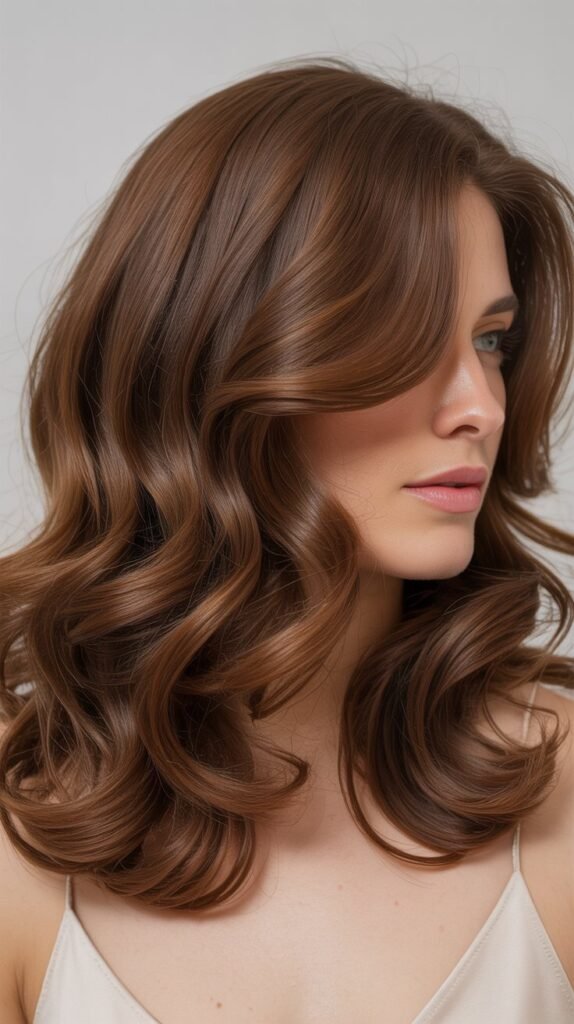
The heavily layered shag takes the opposite approach, incorporating maximum layers throughout for incredible texture and movement.
This bold cut is ideal for those with very thick wavy hair who struggle with excessive weight and volume.
Structural Elements:
- Layers begin near the crown and continue throughout the entire length
- Significant graduation creates distinct layer separation and visibility
- The shortest layers add volume at the crown while longest layers remain at shoulder length
- This creates a triangular or oval silhouette rather than a rounded shape
The Weight Removal Factor:
- Removes up to 40-50% of hair weight, dramatically improving manageability
- Each wave can form independently, creating spectacular texture and definition
- Drying time decreases significantly with less density
- Styling products penetrate more effectively through thinner sections
6. Blunt Cut with Internal Layers
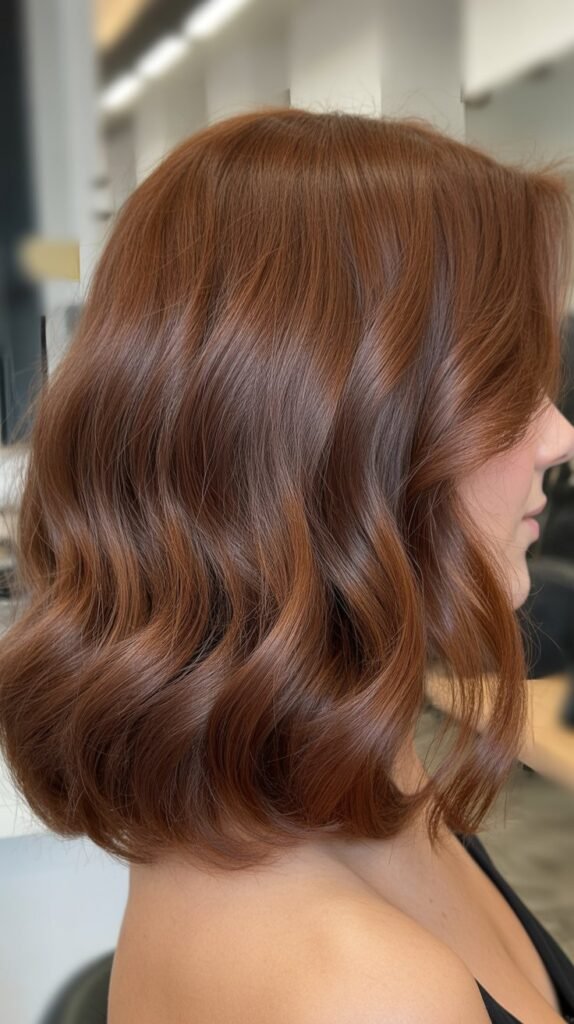
This sophisticated technique keeps the perimeter line blunt and solid while incorporating layers hidden within the interior.
The result is a polished, healthy-looking exterior with movement and reduced weight underneath.
The Hidden Layer Technique:
- The outermost layer remains uncut, creating a strong, defined perimeter
- Internal layers are cut progressively shorter as you move toward the scalp
- This removes bulk where you can’t see it while maintaining a fuller appearance
- The technique is sometimes called “invisible layers” or “internal graduation”
Styling Versatility:
- Straightened, this cut appears sleek and uniform with a solid edge
- Air-dried or diffused, internal layers allow waves to form with bounce and dimension
- The blunt perimeter prevents a thin, scraggly appearance at the ends
- This works beautifully for professional environments requiring polished looks
7. Feathered Layers
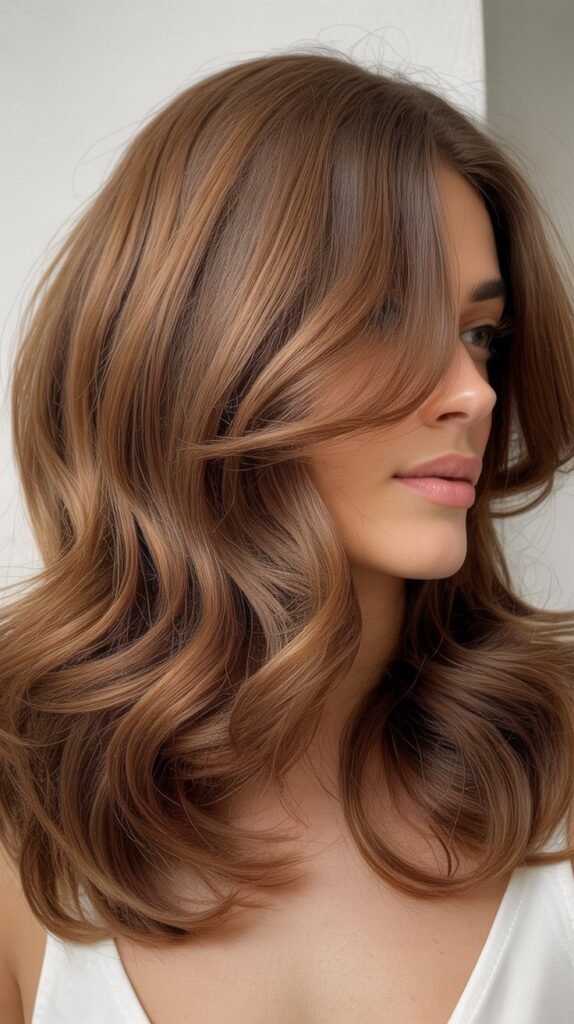
Feathered layers incorporate a specific cutting technique where hair is held perpendicular to the head and cut at an angle, creating soft, wispy ends that blend seamlessly.
This retro-inspired approach has been modernized for today’s thick wavy hair.
The Feathering Technique:
- Hair is point-cut or sliced at the ends to create feather-like softness
- Layers feather away from the face, creating an opening, flattering effect
- This technique reduces harsh lines and creates gentle transitions between lengths
- The result is softer, more romantic than choppy or blunt layering
Ideal Candidates:
- Those seeking to soften strong jawlines or angular face shapes
- People who prefer feminine, romantic aesthetics over edgy styles
- Anyone wanting their thick hair to look lighter and more ethereal
- Individuals with coarser hair textures that benefit from softened ends
8. V-Cut Layers
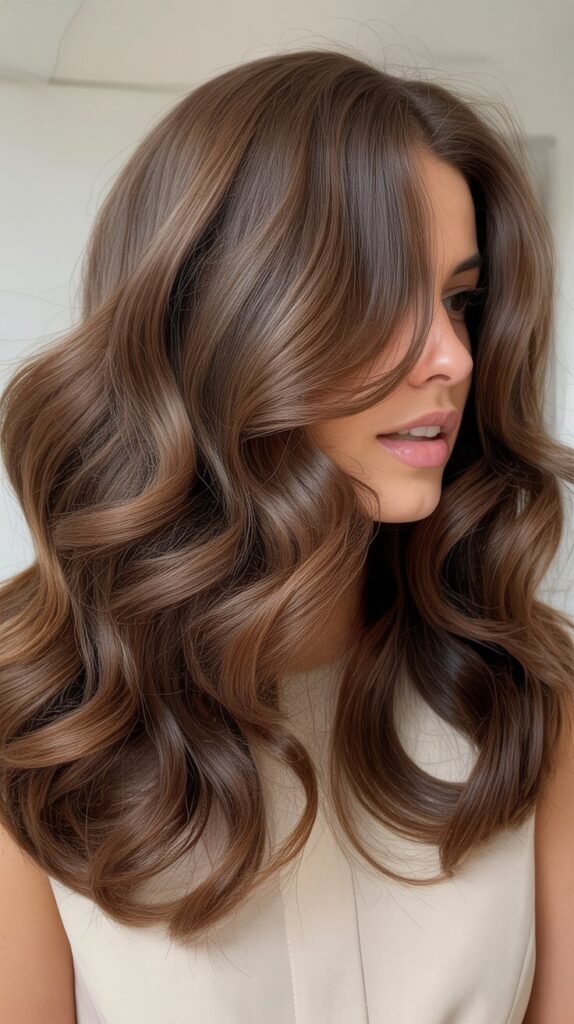
The V-cut creates a distinctive shape where hair is longest in the back center, gradually getting shorter toward the sides, forming a “V” when viewed from behind.
Combined with layers, this creates stunning dimension for thick wavy hair.
Shape and Structure:
- The center back serves as the longest point, typically at or just below shoulder length
- Hair gradually shortens by 1-3 inches as it moves toward the front sides
- Layers are incorporated throughout, following the V-shaped perimeter
- This creates a flattering frame around the face and neck
Visual Benefits:
- The V-shape elongates the neck and creates a slimming vertical line
- Thick hair appears more intentional and styled rather than simply heavy
- Waves cascade beautifully along the angled perimeter
- This cut photographs exceptionally well from all angles
9. Asymmetrical Layers
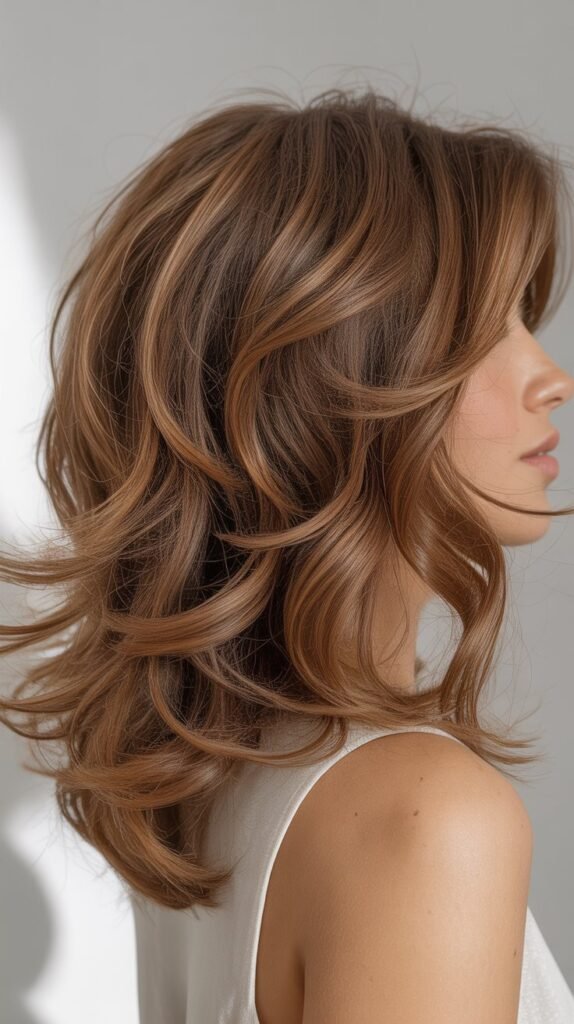
Asymmetrical layering breaks traditional symmetry by creating intentionally uneven lengths, typically with one side slightly shorter than the other.
This modern, artistic approach adds intrigue and edge to thick wavy hair.
Creating Intentional Asymmetry:
- One side is cut 1-3 inches shorter than the other, creating visible imbalance
- Layers on both sides follow their respective lengths, maintaining proportional graduation
- The asymmetry can be subtle for conservative wearers or dramatic for bold statements
- This works by creating visual interest and breaking predictable patterns
Styling Considerations:
- The shorter side is often tucked behind the ear, emphasizing the length difference
- Part hair on the side opposite the shorter section for maximum impact
- This cut requires commitment as growing out asymmetry takes time
- Regular maintenance is essential to keep the intentional unevenness looking sharp
10. Crown Layers for Volume
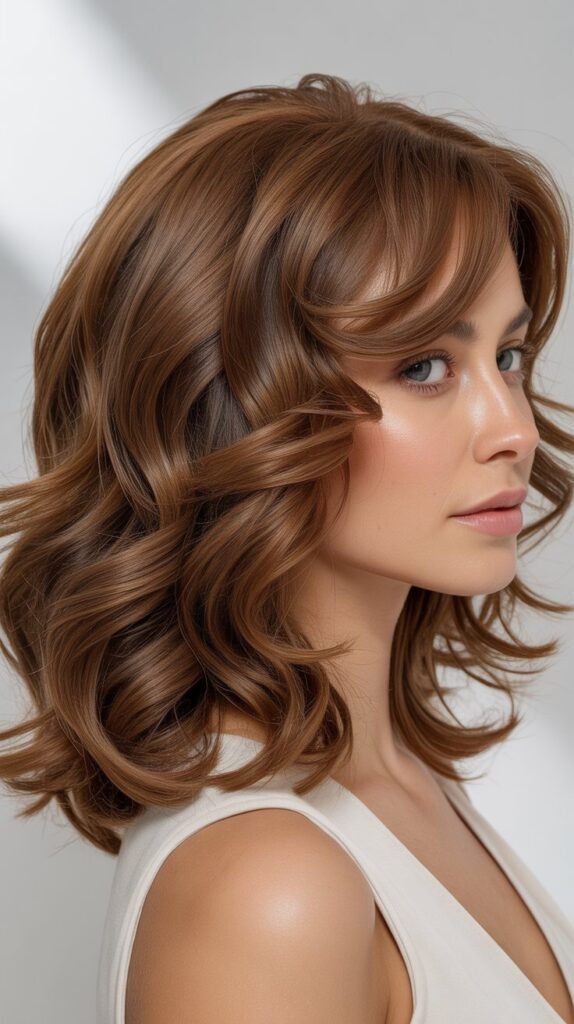
Crown layering focuses specifically on adding shorter layers at the top of the head to create lift and volume where thick wavy hair often falls flat.
The rest of the hair maintains longer lengths, preserving overall fullness.
Strategic Volume Placement:
- Layers are concentrated in the crown area, roughly the top 3-4 inches of the head
- These shorter pieces lift away from the scalp when dried, creating height
- The technique counteracts the natural weight that pulls roots flat
- Lower sections remain longer, maintaining density at mid-lengths and ends
Achieving Maximum Lift:
- Apply volumizing mousse specifically at the roots in the crown area
- Use a round brush while blow-drying to direct crown layers upward and outward
- Consider sleeping with dry hair in a loose topknot to preserve overnight volume
- Refresh crown volume between washes with dry shampoo applied at roots
11. Swoopy Side-Swept Layers
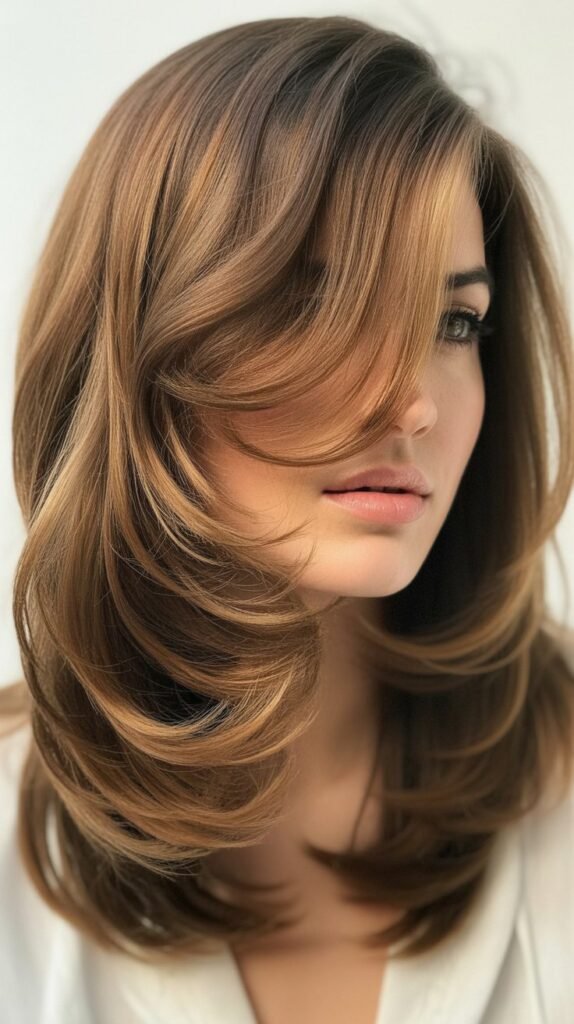
Swoopy side-swept layers create romantic movement by cutting layers that naturally fall to one side, incorporating longer pieces that sweep across the forehead and cheekbone. This flattering technique is particularly stunning on thick wavy hair.
The Swooping Effect:
- Layers are cut with the hair parted deeply to one side rather than centered
- The longest pieces sweep dramatically across the face from the deep part
- This creates an asymmetrical but fluid appearance with natural movement
- Waves follow the swooping direction, enhancing the dramatic effect
Face-Framing Benefits:
- Draws attention to eyes and creates mystery with partial face coverage
- Excellent for balancing round or square face shapes
- The sweeping motion creates the illusion of length and elegance
- Provides coverage if you’re self-conscious about forehead or temple areas
12. Razor-Cut Layers
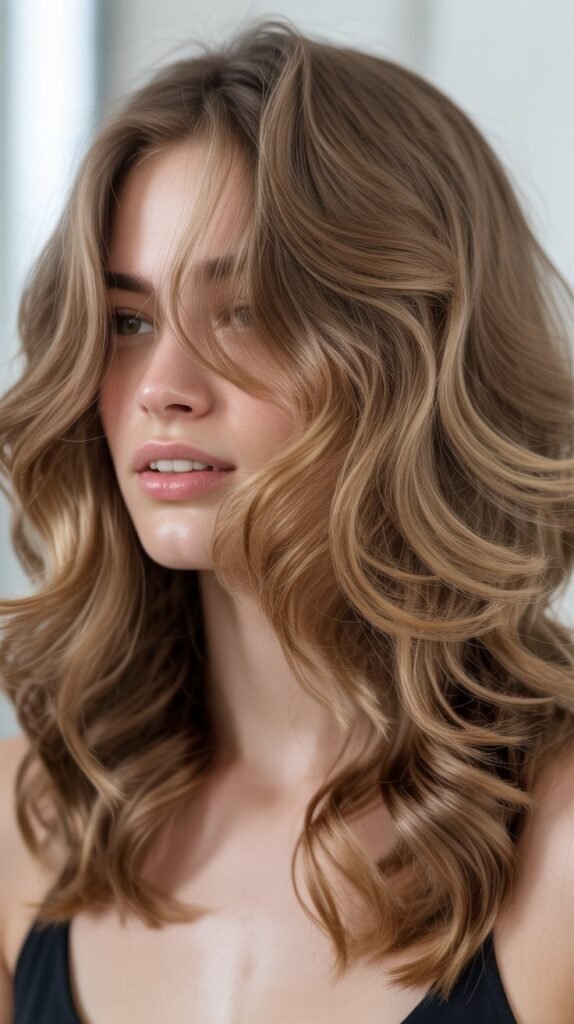
Razor cutting uses a straight razor instead of scissors to create layers, resulting in softer, more textured edges. This technique is particularly effective for thick wavy hair as it removes weight while creating natural movement.
Razor Cutting Advantages:
- The blade slides through hair at an angle, creating feathered, tapered ends
- Removes more weight than traditional scissors while maintaining length perception
- Creates softer transitions between layers, ideal for blending waves
- The textured ends enhance natural wave patterns and reduce bulk
Important Considerations:
- Requires a skilled stylist experienced in razor cutting techniques
- Not suitable for those with very dry or damaged hair as it can create frizz
- Razor-cut hair may require more frequent deep conditioning treatments
- The soft ends can lose definition over time, requiring regular refresh cuts
13. Stacked Layers in Back
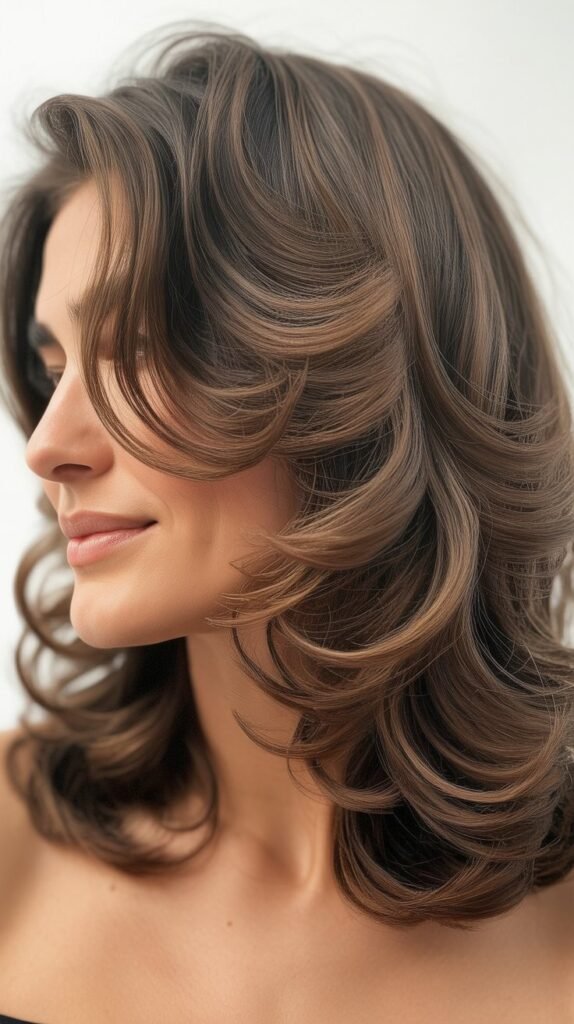
Stacked layers concentrate shorter layers at the back of the head, creating volume and lift in the crown and nape area. The front remains longer, offering a dramatic contrast that’s both practical and stylish for thick wavy hair.
Stacking Technique Explained:
- Multiple short layers are “stacked” on top of each other in the back section
- Each layer is slightly longer than the one above it, creating a graduated effect
- The front sections remain at shoulder length for framing and versatility
- This creates maximum volume at the back of the head
Practical Benefits:
- Prevents thick hair from lying flat against the head and neck
- Creates an attractive rounded shape when viewed from behind and sides
- Front length allows for easy styling versatility and face framing
- Particularly flattering for those with flatter head shapes seeking dimension
14. Piece-y Disconnected Layers
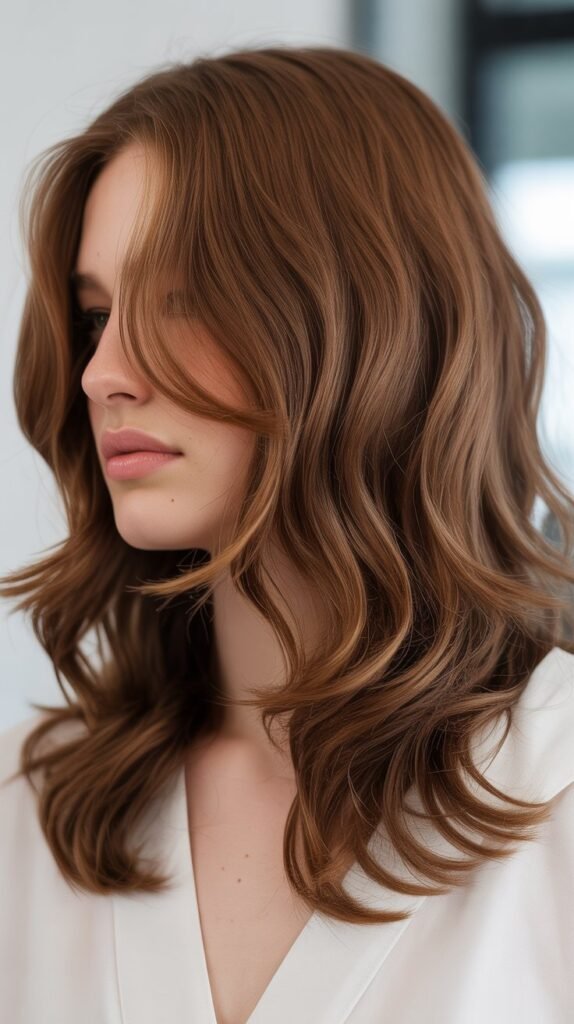
Disconnected layers intentionally create separation between layer lengths rather than smooth transitions, resulting in a piece-y, textured appearance. This edgy technique works beautifully with thick wavy hair’s natural volume.
Understanding Disconnection:
- Instead of gradual graduation, layers have noticeable gaps in length
- This creates distinct sections of hair that move independently
- The “piece-y” effect comes from these separated sections falling differently
- Thick hair has enough density to support this technique without appearing thin
Styling for Separation:
- Apply texturizing cream or pomade to mid-lengths and ends when damp
- Scrunch or twist individual sections while drying to encourage piece formation
- Avoid brushing after styling to maintain separation between disconnected layers
- Use finishing spray with texture for hold without stiffness
15. Graduated Bob with Long Layers
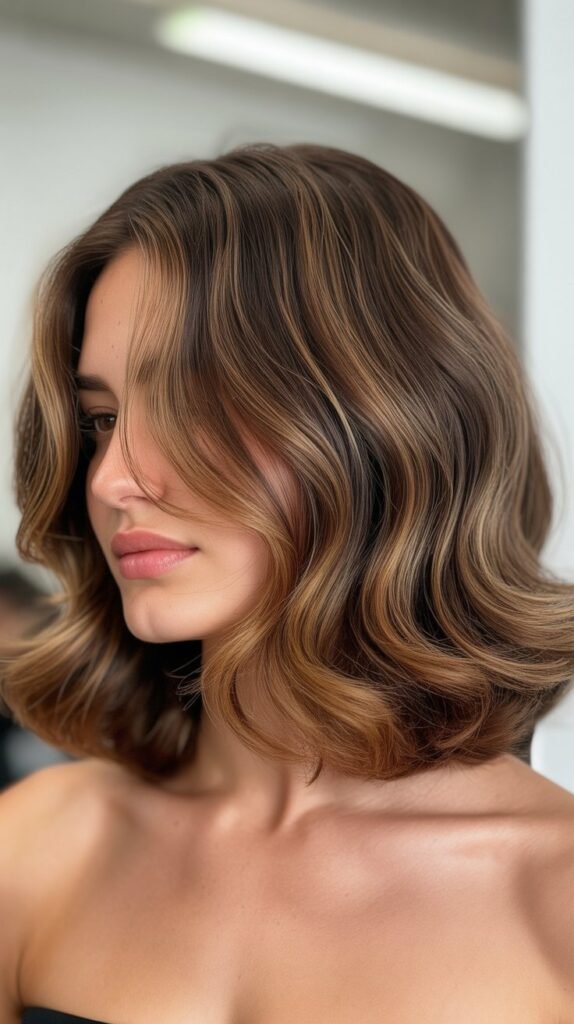
The graduated bob features shorter back sections that gradually lengthen toward the front, combined with long layers throughout for movement and dimension. This structured yet soft approach perfectly suits thick wavy hair.
Graduation Structure:
- The back sits at or just above shoulder length while front pieces extend 1-3 inches longer
- This creates a subtle angle when hair hangs naturally
- Long layers are incorporated throughout all sections for texture
- The combination of graduation and layering removes significant weight
Versatility Factor:
- Can be worn sleek and straight for sophisticated looks
- Natural wavy texture creates beautiful movement along the graduated angle
- Front pieces can be tucked behind ears or left forward for different effects
- The structure provides shape even on second or third-day hair
16. Soft Rounded Layers
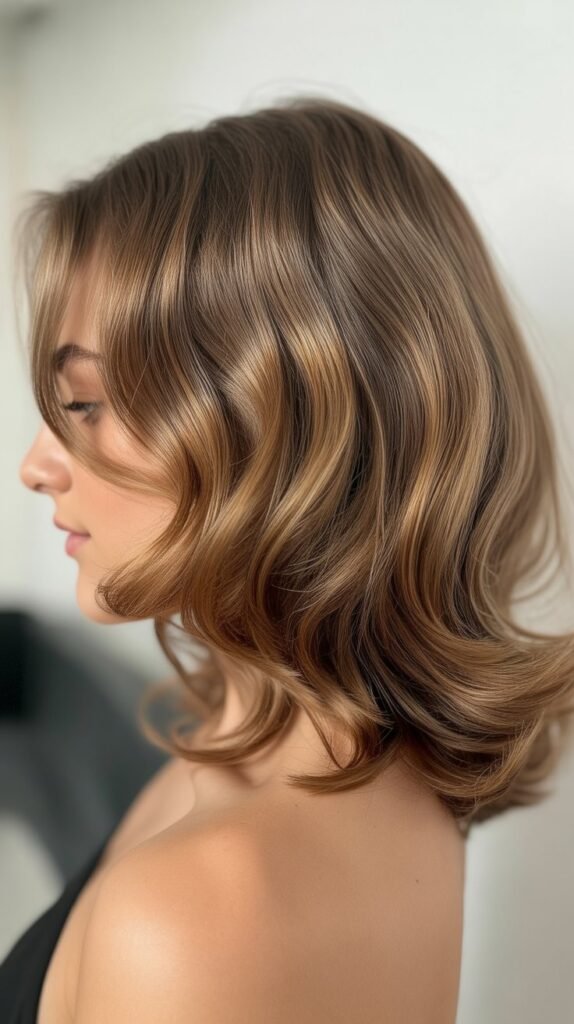
Soft rounded layers are cut in a curved pattern around the head, creating a gentle, feminine silhouette without harsh angles or edges. This classic technique flatters thick wavy hair by enhancing its natural fullness in a controlled way.
Creating the Rounded Shape:
- Layers follow the natural curve of the head rather than angular lines
- The overall shape resembles a soft oval or rounded rectangle
- No harsh demarcation lines exist between layers; everything blends smoothly
- This technique honors the natural volume of thick hair rather than fighting it
Who This Flatters:
- Those with round or heart-shaped faces seeking to echo facial curves
- People preferring classic, timeless styles over trendy cuts
- Anyone wanting their thick hair to look polished but natural
- Individuals who appreciate femininity and softness in their appearance
17. Textured Ends with Layering
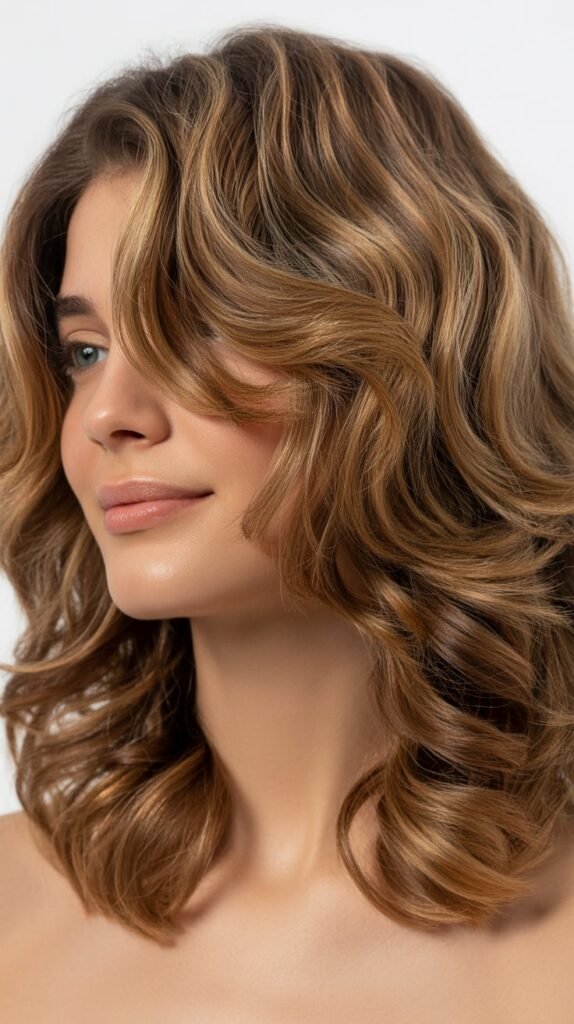
Focusing texture specifically at the ends while incorporating layers throughout creates a distinctive look where the perimeter has visible movement and separation. This works exceptionally well for thick wavy hair prone to blunt, heavy ends.
End Texturizing Methods:
- Point cutting creates small notches in the hair ends for separation
- Slide cutting removes weight while maintaining length perception
- Razoring softens ends and creates wispy texture
- These techniques are applied to the bottom 2-3 inches of hair
Visual Impact:
- Heavy blunt ends are replaced with airy, moveable texture
- Waves form more easily when ends aren’t weighed down
- The textured perimeter creates a modern, lived-in appearance
- Hair appears lighter and less overwhelming despite maintaining length
18. Layered Lob with Balayage
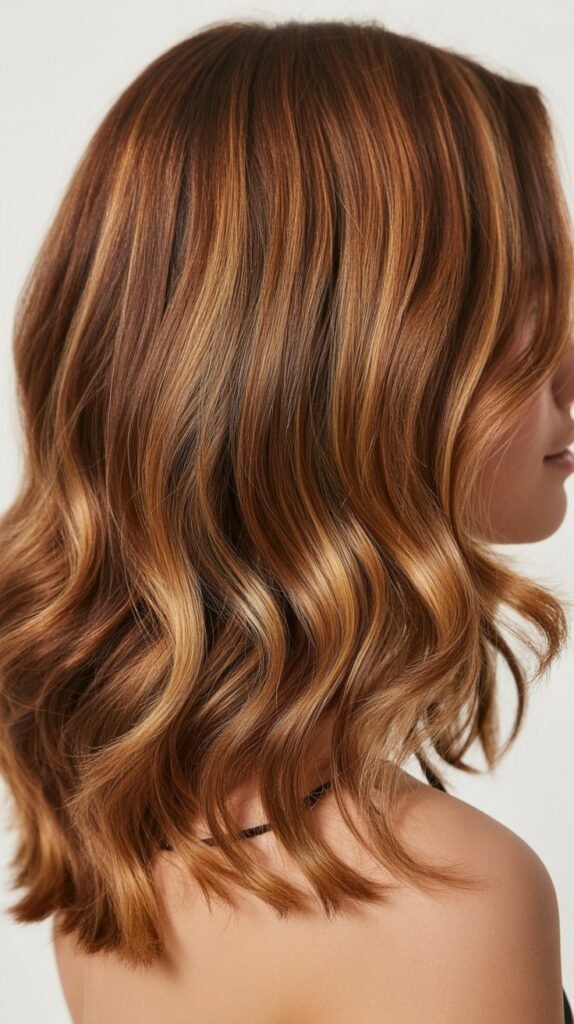
Combining a layered lob (long bob) with balayage coloring creates dimension through both cut and color. The layers provide physical texture while balayage highlights emphasize depth and movement in thick wavy hair.
The Cut-Color Synergy:
- Layers create surface area for color placement and variation
- Balayage highlights are hand-painted onto the hair for natural-looking dimension
- Lighter pieces on layered sections catch light and emphasize movement
- The combination makes thick hair appear more dynamic and multidimensional
Recommended Color Placement:
- Focus highlights around face-framing layers for brightening effects
- Add dimension to mid-lengths where layers create the most movement
- Consider lowlights in deeper layers for added depth
- Consult resources like Healthline’s hair coloring guide for color safety information
19. Wispy Layered Bangs with Shoulder Length
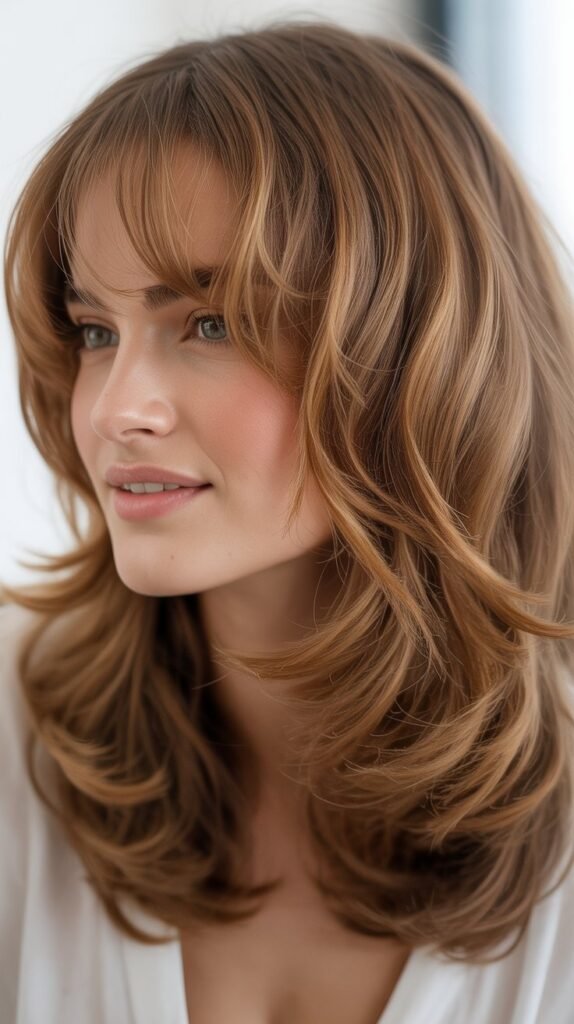
Incorporating wispy layered bangs with shoulder-length wavy hair creates a youthful, fresh appearance. The lightness of wispy bangs balances the fullness of thick wavy hair beautifully.
Wispy Bang Characteristics:
- Bangs are cut with texture rather than solid, creating see-through lightness
- Typically fall just below or at eyebrow level with irregular lengths
- Point cutting and razoring create the wispy, separated appearance
- These blend seamlessly with face-framing layers
Maintenance Reality:
- Wispy bangs require trimming every 3-4 weeks to maintain shape
- They’re easier to style than full, blunt bangs and more forgiving when growing out
- Use a small round brush and blow dryer to style, directing them slightly to the side
- Dry shampoo helps absorb oils and maintain texture between washes
20. Layered Shag with Micro Bangs
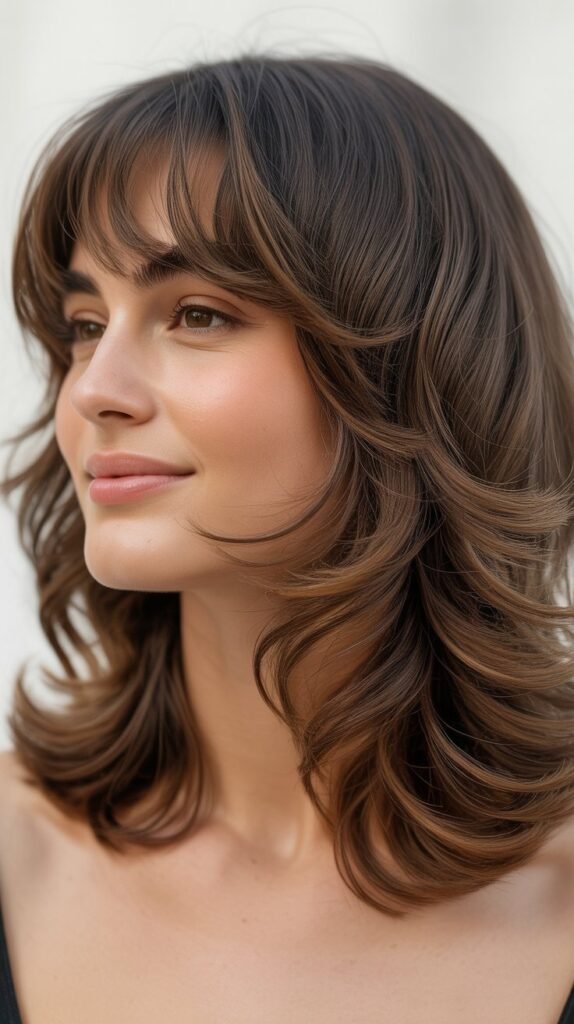
The daring combination of a layered shag with micro bangs (very short bangs that sit above the eyebrows) creates an edgy, fashion-forward look.
This bold style works surprisingly well with thick wavy hair when executed properly.
The Micro Bang Element:
- Micro bangs sit 1-2 inches above the eyebrows, creating dramatic impact
- They’re typically cut straight across or with slight texture
- This extreme bang length creates stark contrast with shoulder-length body
- The look requires confidence and commitment
Styling the Shag-Micro Combination:
- Keep micro bangs relatively straight while embracing wave texture in the rest
- The layered shag provides plenty of movement to balance the bold bang statement
- This cut is high-maintenance, requiring frequent bang trims and overall shape maintenance
- Consider this style carefully as micro bangs take 6-12 months to grow out
21. Long Layers with Curtain Fringe
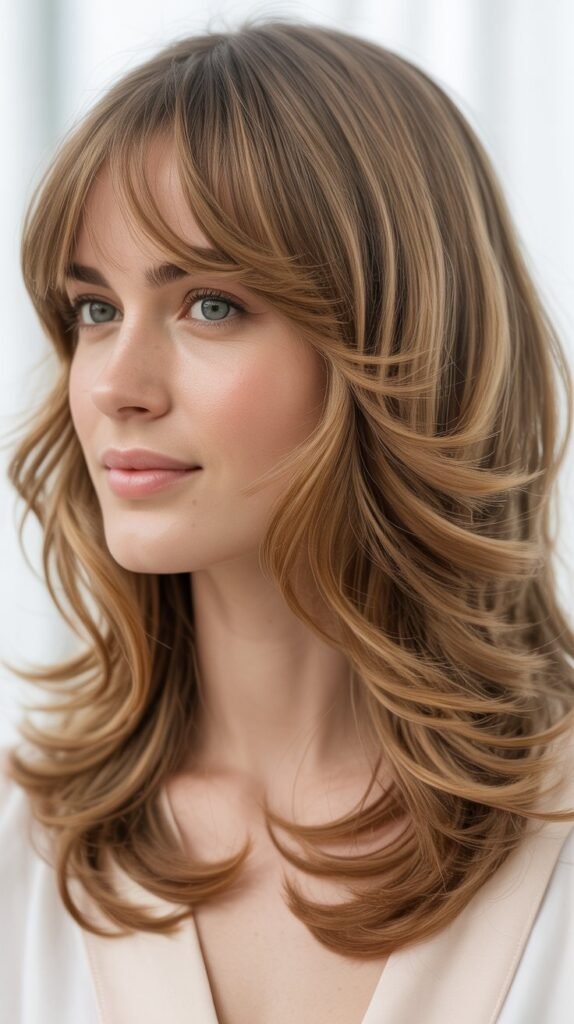
Long layers paired with curtain fringe creates an effortlessly cool, vintage-inspired look. The curtain fringe (longer bangs that part down the middle) works harmoniously with shoulder-length wavy hair.
Curtain Fringe Specifics:
- Fringe pieces are longest at the center part (around cheekbone length)
- They gradually shorten as they move toward the outer face
- This creates a curtain-like frame on both sides of the face
- Blends naturally with longer layers throughout
Why This Works:
- The longer fringe length is low-maintenance compared to traditional bangs
- It flatters virtually all face shapes by creating soft framing
- Thick wavy hair provides enough density to support substantial fringe sections
- Easy to grow out if you change your mind as it blends naturally with layers
22. Layered Cut with Razored Nape
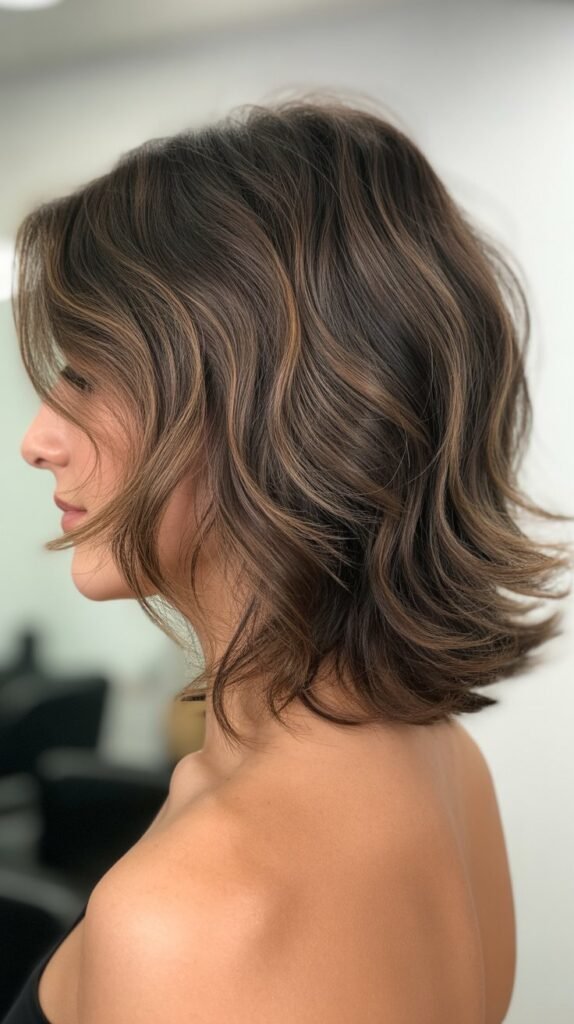
Adding a razored nape (the area where your neck meets your hairline) to a layered shoulder-length cut creates clean definition and removes excess weight in a problem area for thick hair.
Nape Razoring Benefits:
- Removes the bulk that often accumulates at the nape with thick hair
- Creates a clean, finished appearance when hair is worn up
- Prevents that “triangle” shape that thick hair can create at the neck
- The razored technique creates soft, tapered results rather than harsh lines
Practical Advantages:
- Makes wearing hair up or in ponytails more comfortable in hot weather
- Reduces styling time as there’s less dense hair to manage at the base
- Creates better shape when viewing the cut from behind
- Helps prevent neck breakage and matting in very thick hair
23. Choppy Layers with Side Part
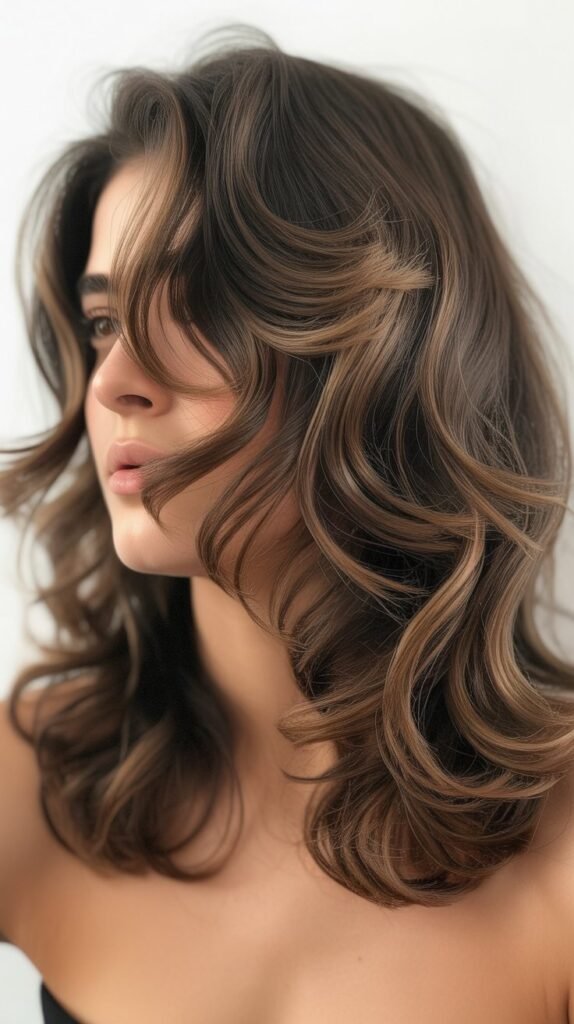
Combining choppy layers with a deep side part creates asymmetry and modern edge. The side part emphasizes the choppy texture by creating more volume on one side, perfect for thick wavy hair.
Side Part Dynamics:
- A deep side part (positioned 2-3 inches from center) creates automatic volume
- The heavier side provides drama and coverage
- The lighter side shows off face-framing layers and ear area
- This asymmetry complements the irregular nature of choppy layers
Styling Strategy:
- Create the part when hair is wet for maximum hold
- Apply volumizing product at the roots on the heavier side
- Use a flat iron or curling iron to emphasize piece-y separation in choppy layers
- Consider using a strong-hold hairspray to maintain the part throughout the day
24. Layered Flipped-Out Ends
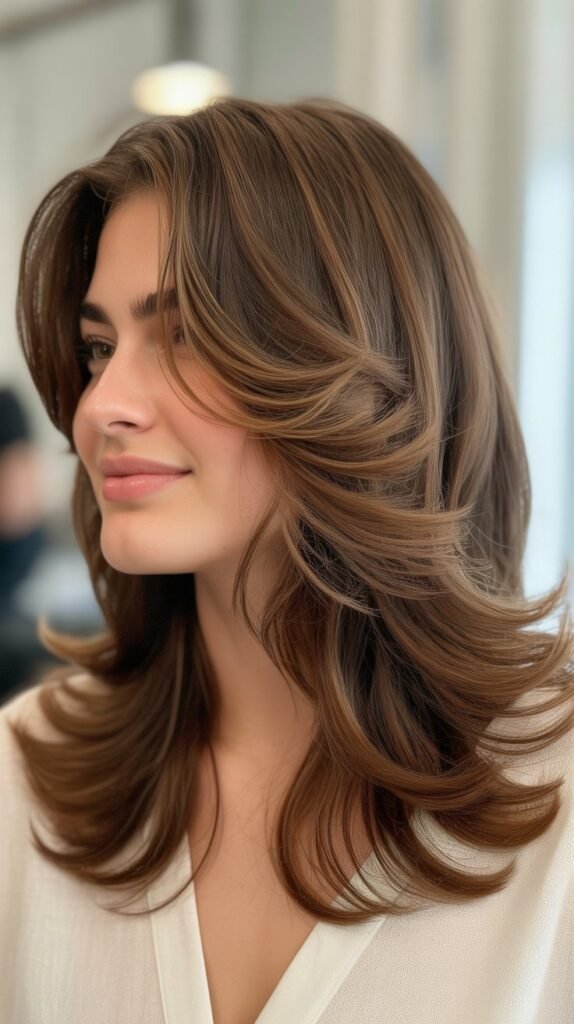
Styling shoulder-length layered hair with flipped-out ends creates a playful, retro-inspired look. The layers allow sections to flip outward naturally, especially effective with thick wavy hair’s volume.
Creating the Flip:
- Layers should end at or just above shoulder length for best flipping
- Use a round brush and blow dryer, rolling ends outward while drying
- A flat iron or curling iron can also be used to direct ends away from the face
- The flip works best when layers are all relatively similar length at the perimeter
When to Wear This Style:
- Perfect for fun, casual occasions or retro-themed events
- Creates a youthful, energetic vibe
- The flip adds width, so consider if this flatters your face shape
- Works well for those with fine to medium wave patterns rather than very tight waves
25. Layered Cut with Slicked-Back Styling
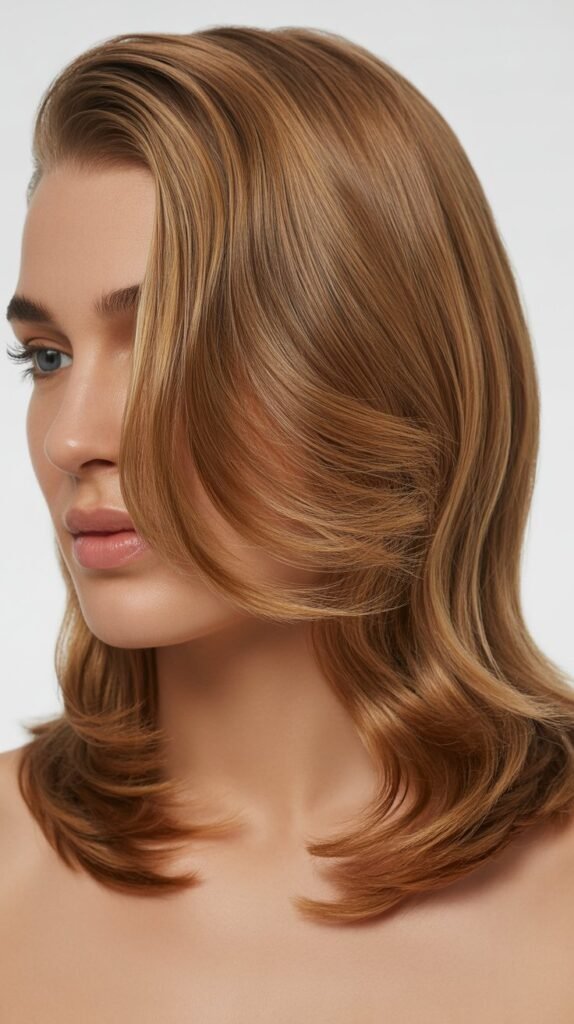
A layered shoulder-length cut styled slicked back creates a sophisticated, high-fashion look. The layers prevent the slicked style from appearing too severe, while thick wavy hair provides enough density to support the style.
Achieving the Slicked-Back Look:
- Apply strong-hold gel or pomade to damp hair, focusing on roots and front sections
- Use a fine-toothed comb to smooth hair straight back from the face
- The layered ends will still show movement and texture despite the smooth top
- This works for special occasions or professional settings requiring polish
Balancing Sleek and Texture:
- Keep the top and sides very smooth and controlled
- Allow the layered ends to maintain some wave and texture
- This creates an intentional juxtaposition between polished and natural
- Finish with high-shine spray for a fashion-forward glossy appearance
26. Messy Layered Waves
Embracing intentionally messy, tousled layers celebrates thick wavy hair’s natural texture. This undone look requires the right cut to appear effortlessly stylish rather than simply unkempt.
The “Messy” Formula:
- Multiple layer lengths throughout create natural irregularity
- Razoring or point cutting prevents uniform edges
- The key is controlled chaos—messiness with structure underneath
- Thick wavy hair provides the perfect density for this textured look
Styling for Perfectly Imperfect Results:
- Apply sea salt spray or texturizing spray to damp hair
- Scrunch hair while air drying or diffusing on low heat
- Avoid brushing or combing once dry to preserve the tousled effect
- Sleep with hair in a loose bun to enhance messiness for next-day styling
Lifestyle Considerations:
- This is one of the lowest-maintenance styles for thick wavy hair
- Perfect for active lifestyles, beach days, and casual environments
- The messy aesthetic means you don’t need perfect styling daily
- Visit sites like WebMD’s hair care section for tips on maintaining healthy hair with minimal styling
27. Layered Undercut
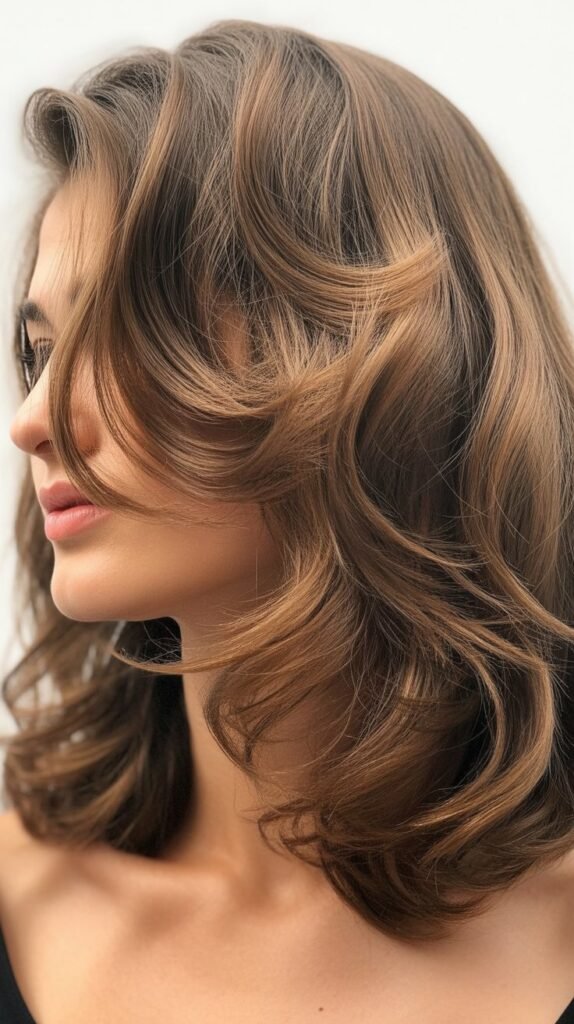
Combining shoulder-length layers on top with an undercut underneath creates dramatic contrast and significant weight removal. This edgy style works exceptionally well for very thick wavy hair that feels heavy and hot.
Undercut Structure:
- The underneath section (typically nape and lower sides) is shaved or cut very short
- Top layers remain shoulder-length and fully layered
- When hair is down, the undercut is hidden; when hair is up, it’s revealed
- This removes substantial weight while maintaining surface appearance
Practical Benefits:
- Dramatically reduces total hair volume and weight
- Makes styling easier with less hair to manage
- Provides cooling relief in hot weather
- Creates versatility between edgy (undercut shown) and conventional (undercut hidden) looks
Commitment Level:
- Undercuts require regular maintenance to keep the shaved section short
- Growing out an undercut takes 8-12 months and goes through awkward stages
- This is best for those confident in committing to the style long-term
- Consider starting with a small undercut before committing to a larger area
28. Soft Layered Waves with Middle Part
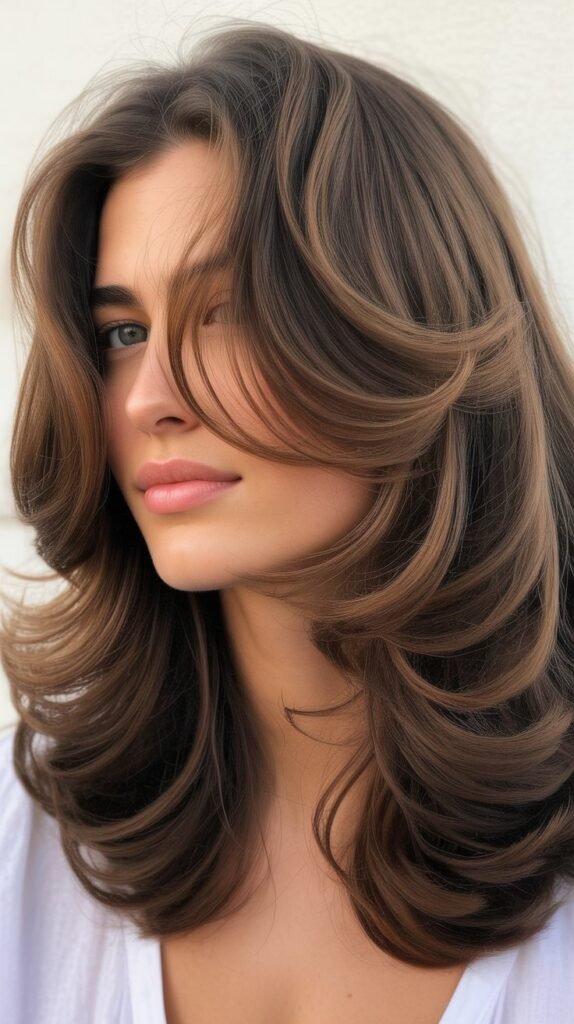
A middle part combined with soft, flowing layers creates a balanced, symmetrical look that highlights thick wavy hair’s natural beauty. This classic approach works for virtually all face shapes and occasions.
Middle Part Benefits:
- Creates perfect symmetry that’s universally flattering
- Allows hair to fall naturally without forced direction
- Highlights the layer structure equally on both sides
- Works well with thick wavy hair’s natural volume distribution
Styling for Symmetry:
- Create the middle part when hair is wet for best results
- Apply product evenly to both sides to maintain balance
- Diffuse or air dry without favoring one side
- Use a leave-in conditioner to define waves without weighing them down
29. Layered Lob with Tucked Styling
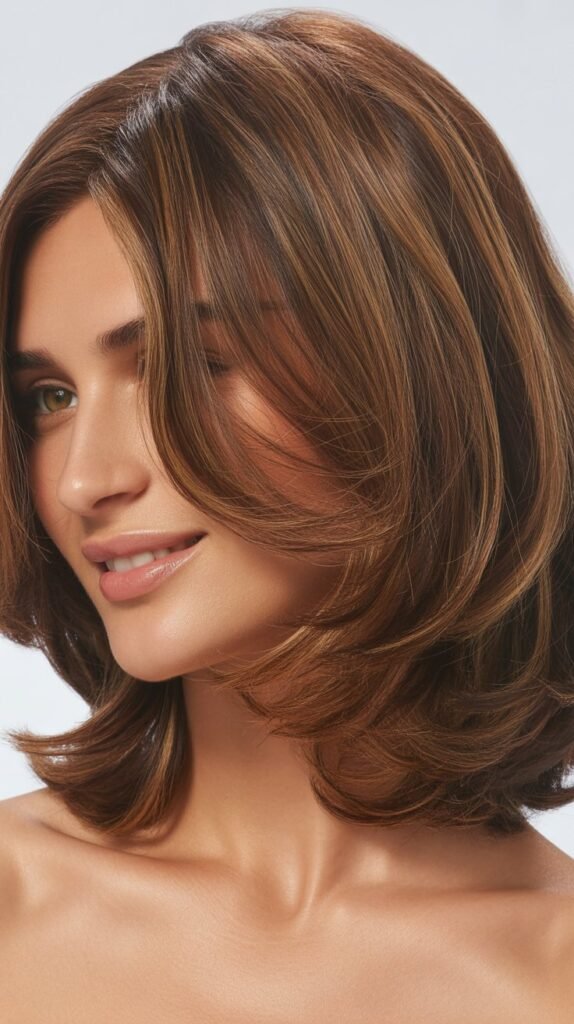
A layered lob (long bob) that’s styled with one or both sides tucked behind the ears creates an effortlessly chic look. The tucked styling showcases the layers while keeping hair off the face.
The Tucking Technique:
- Layers are designed to tuck smoothly behind ears without bulk
- The shorter layers around the face allow for easy tucking
- Thick hair provides enough substance to stay tucked without constant adjustment
- This creates an asymmetrical look even with a symmetrical cut
Versatility Through Tucking:
- Wear both sides down for full volume and drama
- Tuck one side for an asymmetrical, casual appearance
- Tuck both sides for maximum face exposure and sleek effect
- Use bobby pins or small clips if hair is too thick to stay tucked naturally
30. Layered Waves with Root Lift
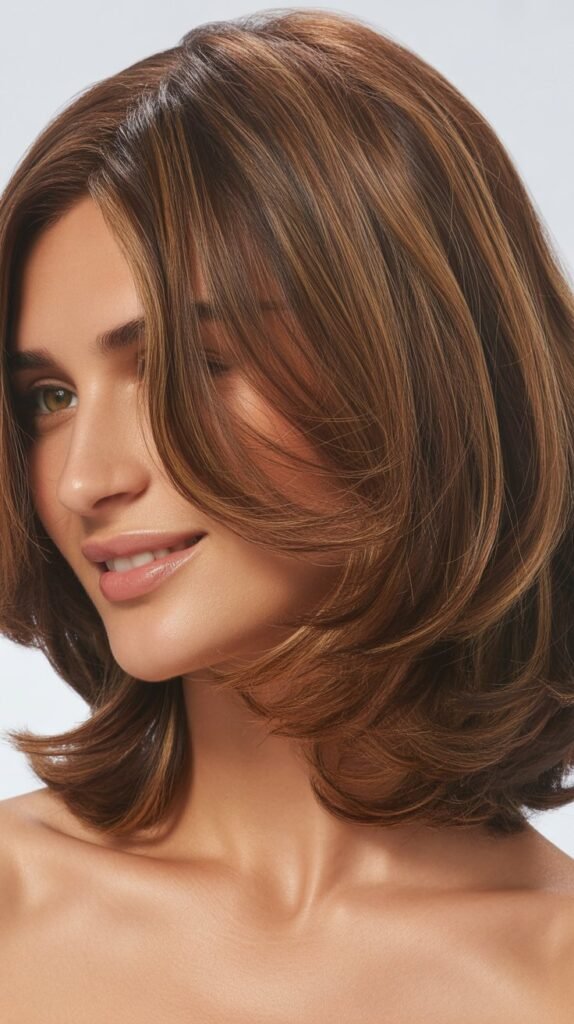
Focusing on root lift while maintaining layered waves throughout creates a voluminous, glamorous look perfect for thick wavy hair that tends to fall flat at the crown.
Achieving Maximum Root Lift:
- Apply volumizing mousse or spray specifically at the roots while hair is damp
- Use a round brush while blow-drying, pulling hair up and away from the scalp
- Consider using Velcro rollers at the crown for 10-15 minutes after drying
- Backcomb or tease roots gently for additional lift, then smooth the surface
Products That Help:
- Volumizing mousse provides hold at the roots
- Root lift spray creates instant volume when applied before drying
- Dry shampoo adds texture and grip at roots, preventing collapse
- Texturizing powder provides invisible lift without visible residue
31. Swoopy Layered Fringe
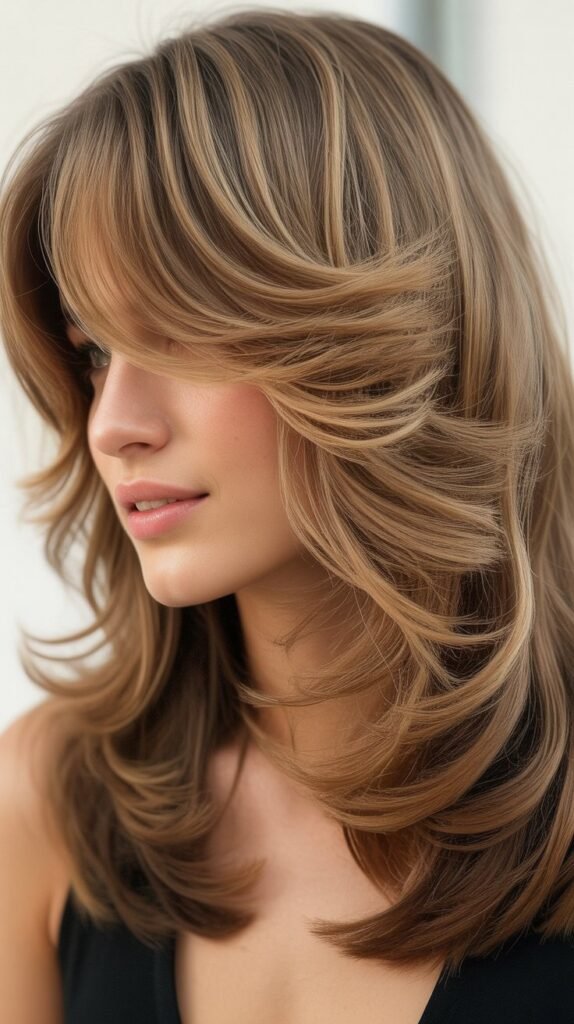
A swoopy layered fringe features longer bang pieces that sweep dramatically to one side, integrated with layers throughout shoulder-length hair. This creates movement and romance, particularly flattering for thick wavy hair.
Fringe Characteristics:
- The fringe is longest at one end (around eyebrow length) and gradually shortens
- It sweeps across the forehead in one direction, creating dynamic movement
- Layers in the fringe connect seamlessly with face-framing layers
- Thick wavy hair provides the perfect density for substantial fringe
Styling the Swoosh:
- Blow-dry fringe in the swooping direction with a round brush
- Use a flat iron to emphasize the smooth sweep if desired
- Apply lightweight styling cream to prevent frizz while maintaining softness
- The fringe naturally follows the swooping direction due to how it’s cut
32. Layered Cut with Finger Waves
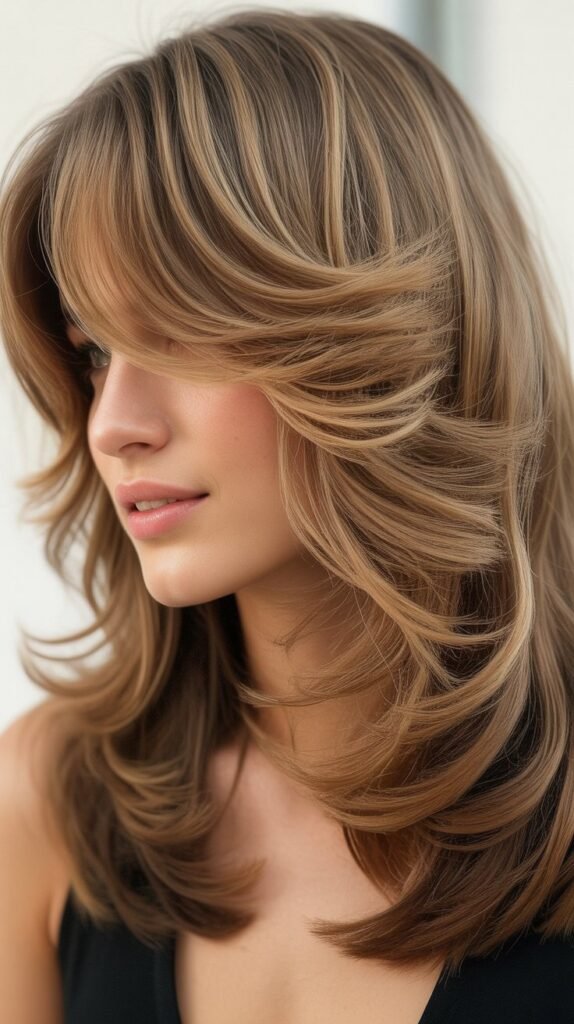
Styling a layered shoulder-length cut with finger waves creates a vintage Hollywood glamour look. The layers provide the necessary texture and movement for finger wave formation in thick wavy hair.
Finger Wave Technique:
- Finger waves are S-shaped wave patterns created by molding wet hair
- Layers allow these waves to stack and ripple rather than lying flat
- This technique works beautifully for special occasions and vintage-themed events
- Thick wavy hair holds finger waves well due to natural texture and density
Creating the Look:
- Apply strong-hold gel to wet hair, combing it smooth
- Use fingers and a comb to create S-shaped ridges throughout
- Set with clips until completely dry (2-4 hours)
- Finish with strong-hold hairspray to maintain the vintage style
33. Layered Shag with Full Bangs
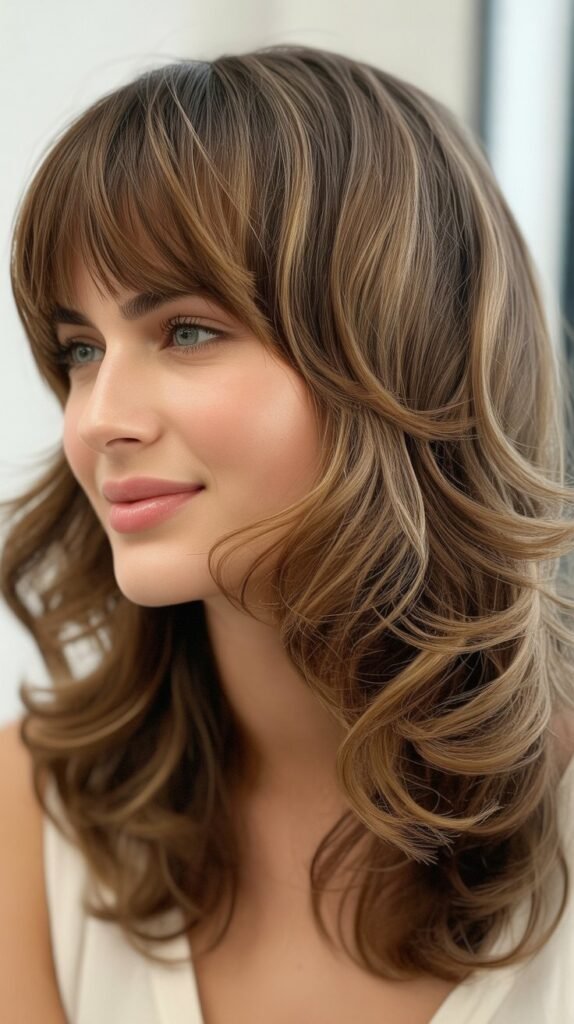
Combining a heavily layered shag with full, straight-across bangs creates a bold, statement-making look. The substantial bangs balance the textured, layered body, working well with thick wavy hair’s volume.
Full Bang Integration:
- Bangs are cut straight across the forehead, typically at eyebrow length
- They’re thick and substantial, cut from a triangular section of hair
- The full bangs contrast with the highly textured, layered body
- This creates an intentional juxtaposition between structured (bangs) and wild (shag)
Maintenance Requirements:
- Full bangs require trimming every 2-3 weeks to maintain proper length
- The shag portion needs regular maintenance to prevent overgrown, shapeless appearance
- Styling takes more time than lower-maintenance cuts
- Thick hair provides enough density to support substantial bangs without looking thin
34. Layered Hair with Wet Look Styling
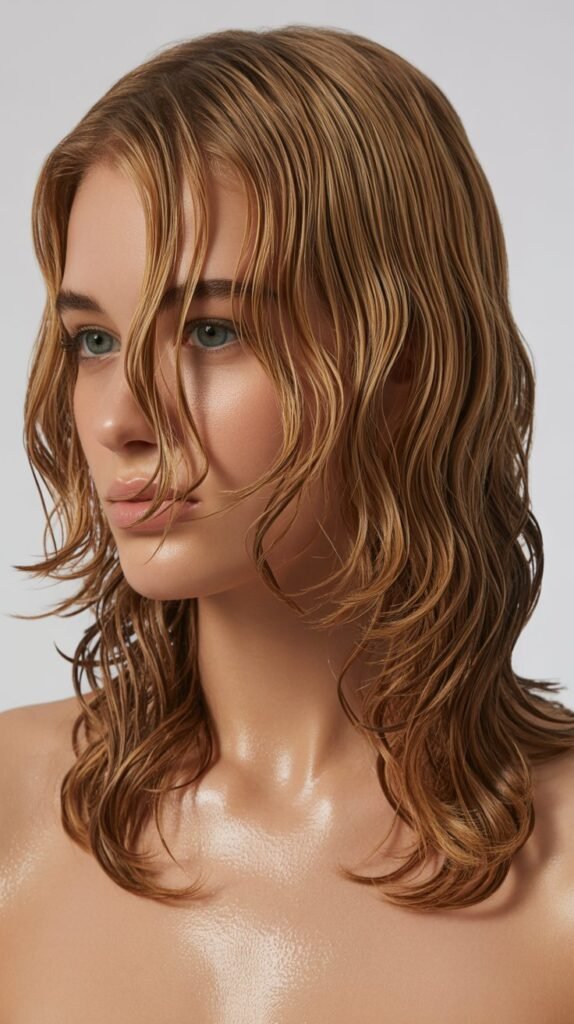
Styling layered shoulder-length wavy hair with a wet-look finish creates an ultra-modern, high-fashion appearance. The layers prevent the wet look from appearing too heavy or one-dimensional on thick hair.
Wet Look Application:
- Apply generous amounts of gel or wet-look styling cream to damp hair
- Comb or rake through to distribute evenly and create defined wave clumps
- Allow hair to air dry completely without touching
- The layers create dimension even within the wet, slicked appearance
When to Wear:
- Fashion-forward events, parties, or photo shoots
- This is typically a special occasion style rather than everyday wear
- The wet look reads as intentional and edgy, not undried hair
- Thick wavy hair creates beautiful defined clumps with this styling method
35. Layered Cut with Braided Crown
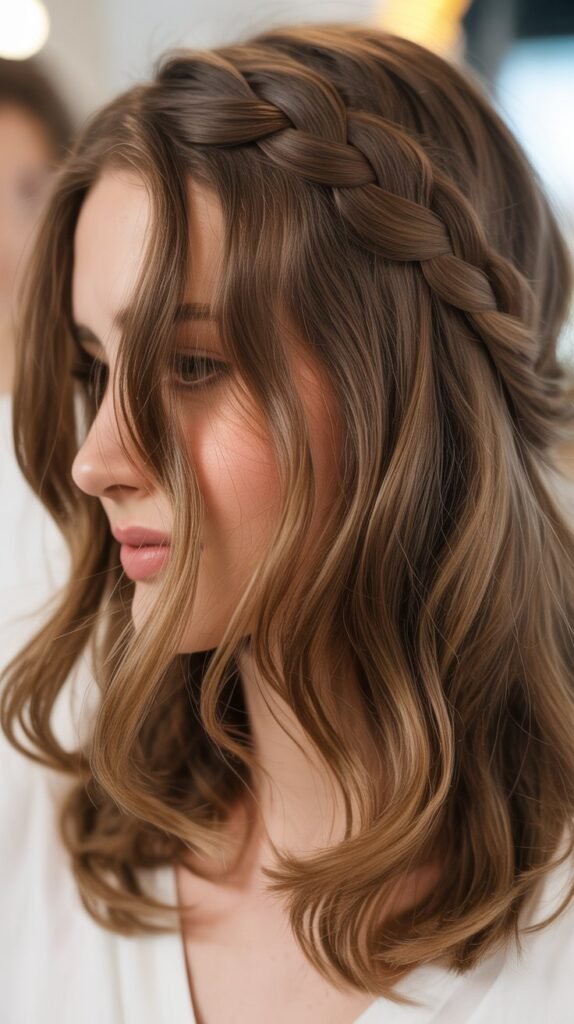
Incorporating a braided crown with layered shoulder-length wavy hair creates a romantic, bohemian look. The layers provide texture and volume in the loose hair while the braid adds intricate detail.
Creating the Braided Crown:
- Take a section of hair from each side of the head near the temples
- Braid each section (typically 2-3 inch sections)
- Bring braids across the top of the head like a crown, securing with pins
- The remaining layered hair flows freely, showcasing wave texture
Why This Works:
- Layers in the loose hair create beautiful volume and movement
- The braided crown removes hair from the face while leaving bulk down
- Thick wavy hair provides enough density for substantial braids
- This style works for casual days, festivals, or romantic occasions
36. Layered Hair with Twist-Back Sections
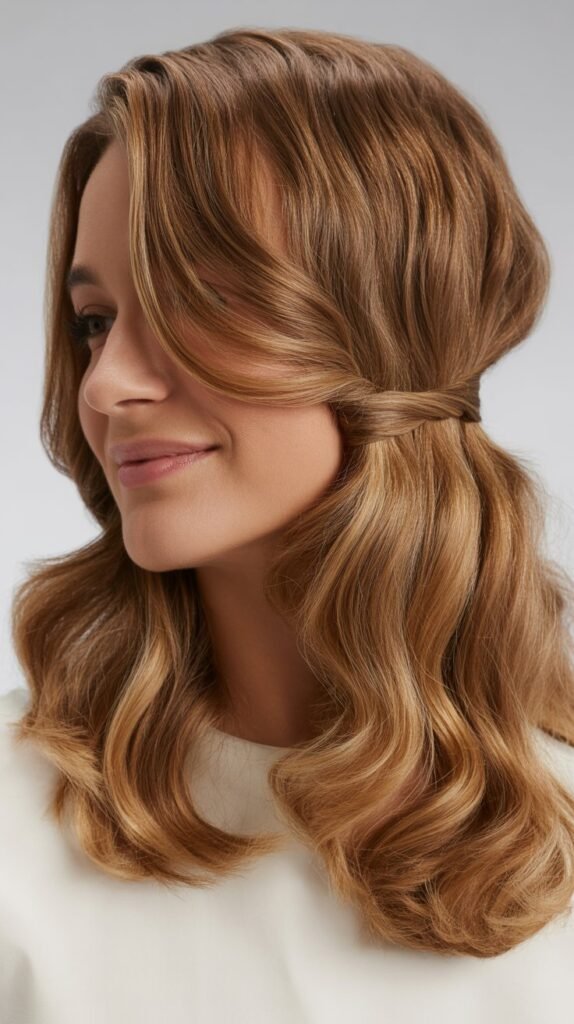
Styling layered hair with twist-back sections involves twisting small sections near the face and pinning them back, creating a half-up effect that showcases layers while keeping hair off the face.
The Twist-Back Method:
- Take 1-2 inch sections of hair from each side near the temples
- Twist each section backward toward the crown
- Secure with bobby pins or decorative clips where twists meet
- The layered hair below remains loose and flowing
Practical Styling:
- This keeps face-framing layers off the face while studying or working
- Creates a feminine, romantic appearance for dates or events
- The twists add visual interest to the crown area
- Thick wavy hair holds twists securely without excessive product
37. Layered Lob with Beachy Texture
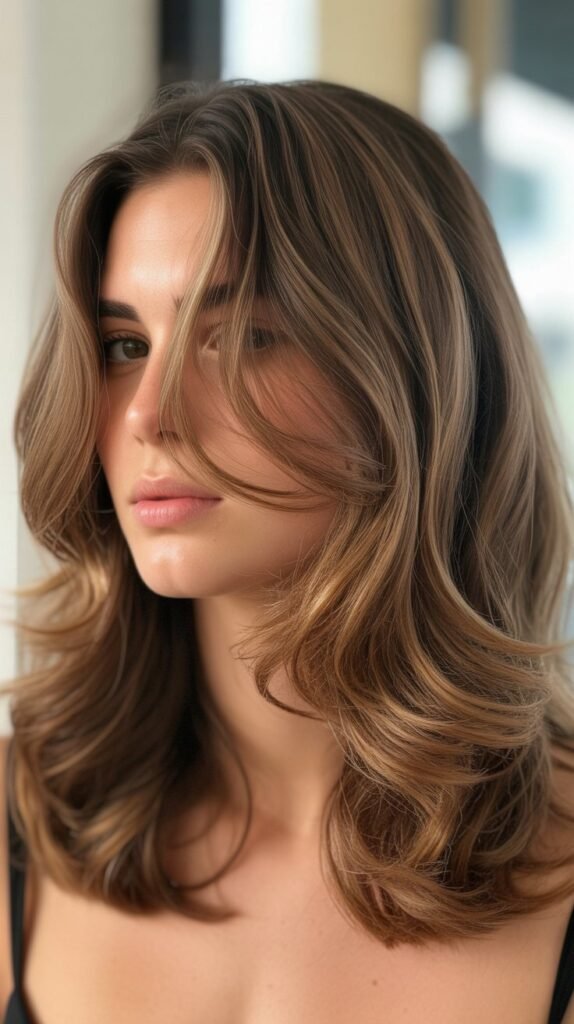
A layered lob styled with beachy texture creates the ultimate effortless, sun-kissed appearance. This is perhaps the most popular style for thick wavy hair as it celebrates natural texture while managing volume.
Beachy Texture Elements:
- Layers throughout create piecey, separated wave formation
- The texture appears slightly salt-dried, as if you’ve been at the beach
- Hair has volume and lift without appearing overly styled
- The finish is matte rather than shiny, enhancing the natural effect
Achieving Beach Waves:
- Apply sea salt spray or beach wave spray to damp hair
- Scrunch hair upward to encourage natural wave pattern
- Air dry or diffuse on low heat for enhanced texture
- Avoid brushing once dry; use fingers to separate waves gently
- Consider braiding damp hair overnight for effortless morning beach waves
Why This Is Ideal for Thick Wavy Hair:
- Works with your natural texture rather than against it
- Requires minimal styling tools and heat
- The slightly undone appearance means imperfection is part of the aesthetic
- Layers prevent thick hair from looking too heavy or triangular
- This style transitions easily from casual to semi-formal settings
Tips for Maintaining Layered Thick Wavy Hair
Regular Trim Schedule:
- Book haircuts every 6-8 weeks to maintain layer shape and remove split ends
- Layers lose their definition as they grow out, becoming less effective at managing bulk
- Regular trims prevent the need for dramatic reshaping later
- Communicate with your stylist about maintaining versus changing your cut
Product Selection:
- Choose lightweight products that won’t weigh down layers
- Avoid heavy oils and butters on upper layers; reserve these for ends only
- Invest in a quality leave-in conditioner to maintain moisture without heaviness
- Use clarifying shampoo monthly to remove buildup that can make layers look limp
Styling Techniques:
- Diffuse hair upside down to maximize volume in layered sections
- Scrunch products into hair rather than combing through to preserve wave pattern
- Sleep on a silk or satin pillowcase to reduce frizz in layered hair
- Refresh second-day hair by spritzing water on specific sections and re-scrunching
Professional Consultation:
- Bring reference photos showing the specific layer style you want
- Discuss your daily styling routine honestly so your stylist can customize the cut
- Ask for a styling demonstration during your appointment
- Don’t be afraid to speak up during the cut if something doesn’t feel right
Conclusion
Finding the perfect haircut for your thick, wavy hair doesn’t have to be overwhelming anymore.
These 37 Gorgeous Shoulder-Length Layered Haircuts for Wavy Thick Hair offer a comprehensive range of options, from subtle long layers to bold asymmetrical styles, ensuring there’s a perfect match for every personality, lifestyle, and face shape.
The key to success with thick wavy hair lies in strategic layering that removes weight while celebrating your natural texture, and shoulder length provides the ideal canvas for these transformative techniques.
Whether you gravitate toward the effortless beachy lob, the edgy choppy shag, or the romantic face-framing layers, remember that the best haircut is one that makes you feel confident and authentic while simplifying your daily routine.
Take these inspiration photos to your next salon appointment, communicate openly with your stylist about your hair goals and maintenance preferences, and prepare to fall in love with your thick, beautiful wavy hair in ways you never thought possible.