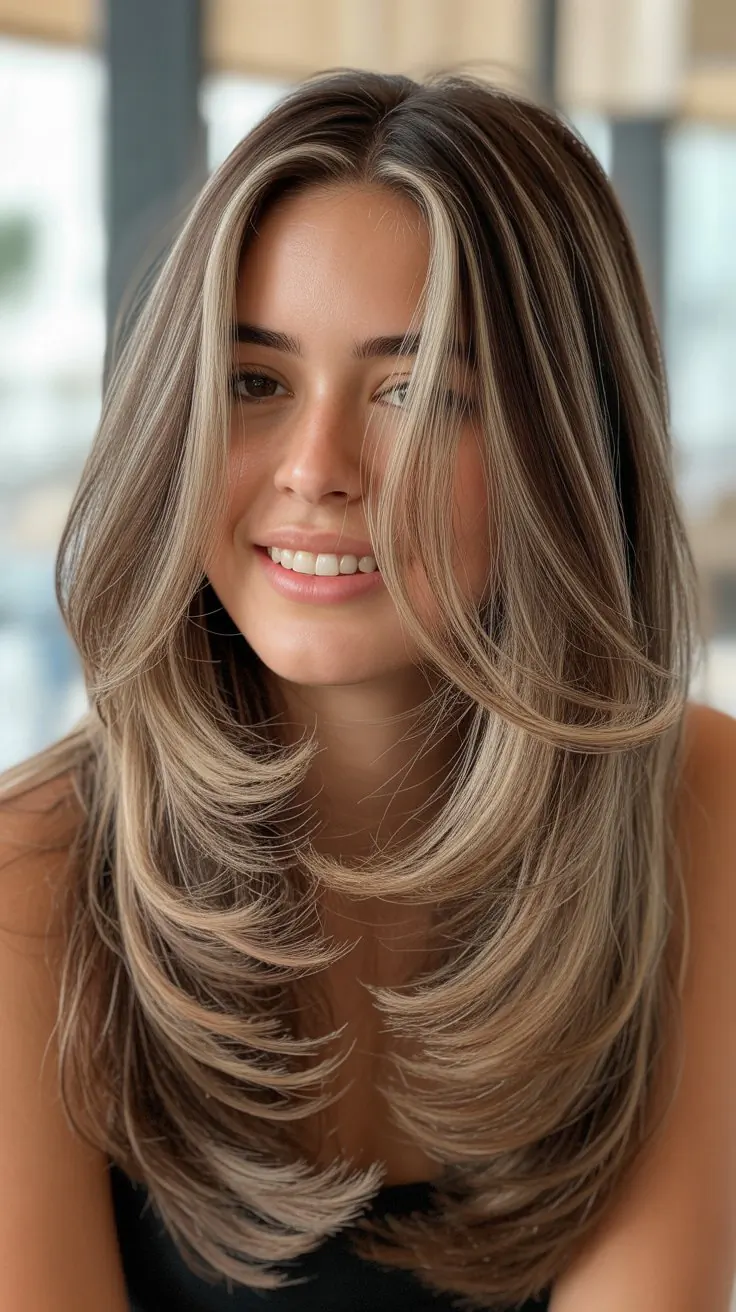
Long hair remains one of the most versatile and timeless beauty choices, but adding face-framing layers transforms it into something truly spectacular.
If you’ve been wondering how to add dimension, movement, and a flattering frame to your gorgeous locks, you’re in the right place.
This comprehensive guide to 43 Beautiful Long Hairstyles With Face-Framing Layers will walk you through everything from classic cuts to modern trends, helping you discover the perfect style that enhances your unique features.
Whether you have straight, wavy, curly, or textured hair, face-framing layers can revolutionize your look by adding softness around your face while maintaining your beloved length.
Throughout this article, you’ll explore various layering techniques, styling methods, maintenance tips, and specific cuts tailored to different face shapes and hair textures, ensuring you find inspiration that speaks directly to your personal style and beauty goals.
1. Classic Curtain Bangs With Long Layers
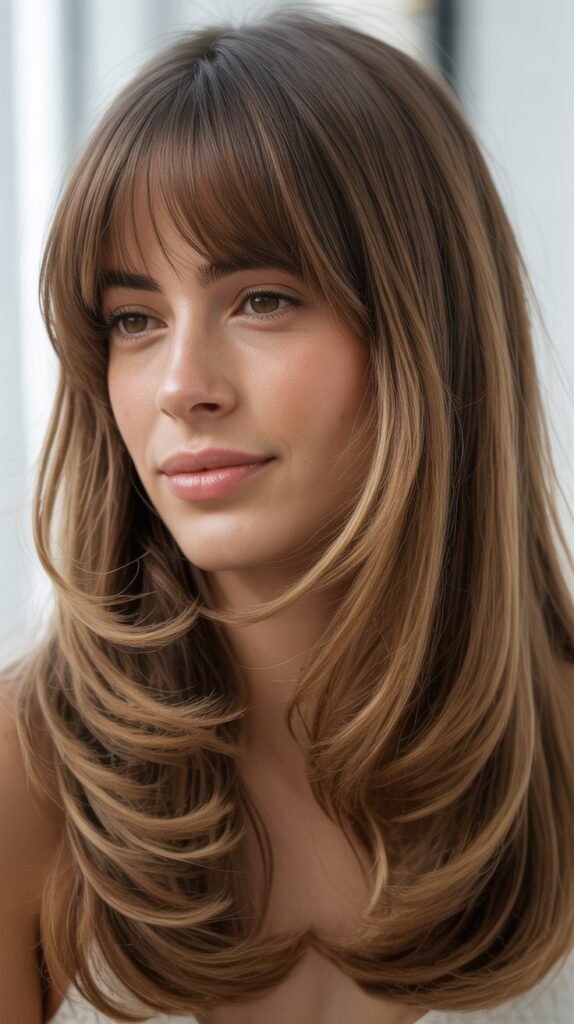
Curtain bangs paired with long layers create a soft, romantic look that flatters virtually every face shape. This timeless combination offers the perfect balance between vintage charm and modern sophistication.
- The curtain bang style parts naturally in the middle, creating a gentle frame that draws attention to your eyes and cheekbones.
- Long layers begin just below the chin and cascade downward, adding movement without sacrificing overall length.
- This style works beautifully for oval, round, and heart-shaped faces by creating vertical lines that elongate the appearance.
- The layers help remove bulk from thick hair while adding body to finer textures.
- Styling requires minimal effort—simply blow-dry with a round brush to create a soft curve away from your face.
- Regular trims every 8-10 weeks keep the curtain bangs at the optimal length and maintain the layered shape.
2. Feathered Face-Framing Layers
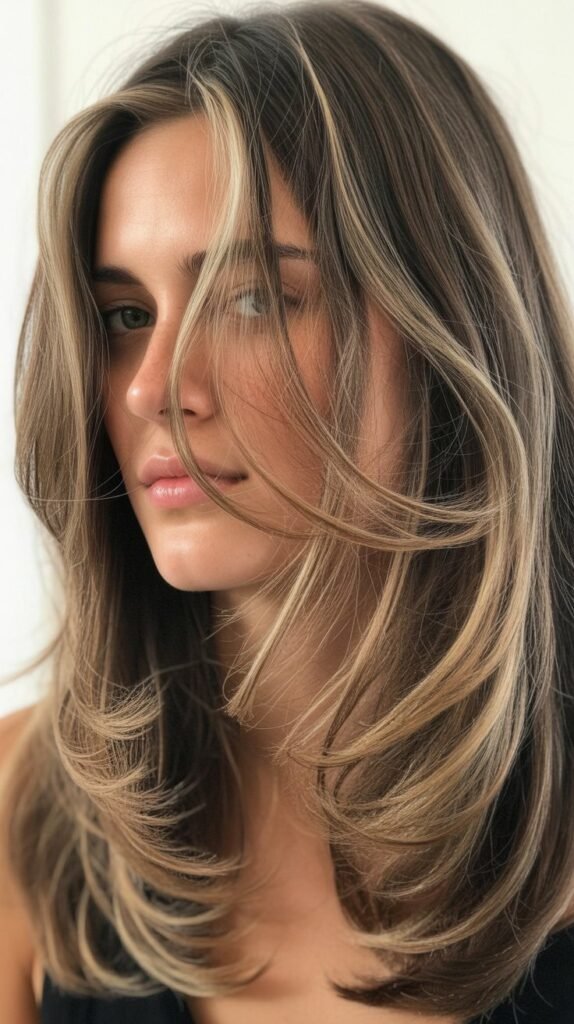
Feathered layers bring a lightweight, airy quality to long hair that creates incredible movement and dimension. This technique involves cutting the layers at an angle to create soft, wispy ends.
- Feathering creates a softer, less blunt edge compared to traditional layering techniques.
- The shortest layers typically start around the cheekbones, gradually lengthening as they move down.
- This approach works exceptionally well for fine to medium hair textures, adding the illusion of fullness.
- The feathered effect catches light beautifully, creating natural highlights and depth.
- Use a texturizing spray or mousse to enhance the feathered appearance when styling.
- This cut requires precision from your stylist to ensure the feathering looks intentional rather than choppy.
3. Side-Swept Bangs With Graduated Layers
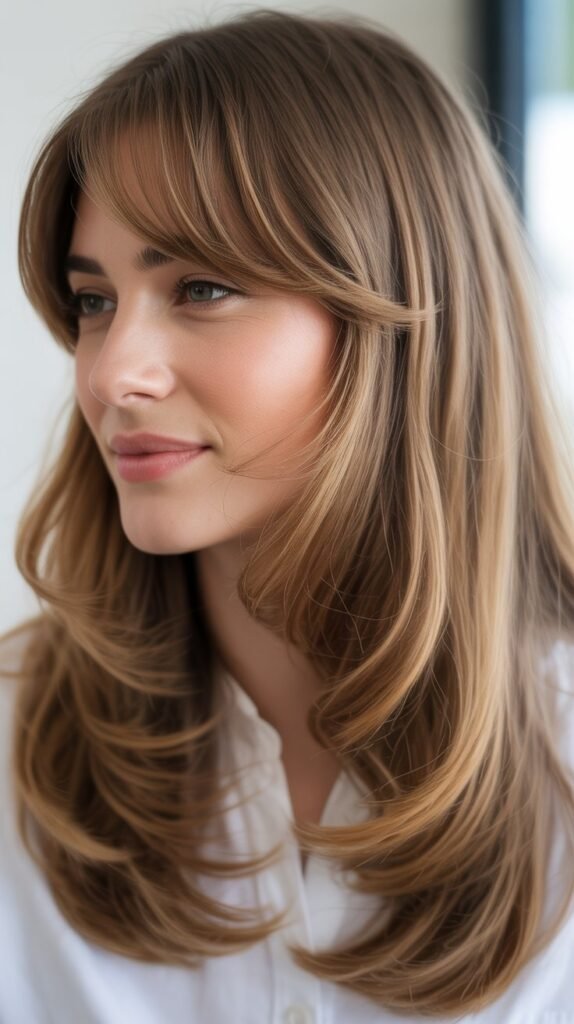
Side-swept bangs combined with graduated layers offer an asymmetrical elegance that adds instant sophistication to long hair. This style creates a diagonal line that flatters and softens angular features.
- Side-swept bangs can be customized in length from brow-grazing to cheekbone-length depending on your preference.
- Graduated layers mean each layer is progressively longer, creating a seamless blend from short to long.
- This style particularly flatters square and rectangular face shapes by softening strong jawlines.
- The asymmetry adds visual interest and can be styled to either side depending on your mood.
- Styling involves blow-drying the bangs to one side with a paddle brush or round brush for smoothness.
- The versatility allows you to pin the bangs back for a different look without losing the layered benefits.
4. Wispy Front Layers For Fine Hair
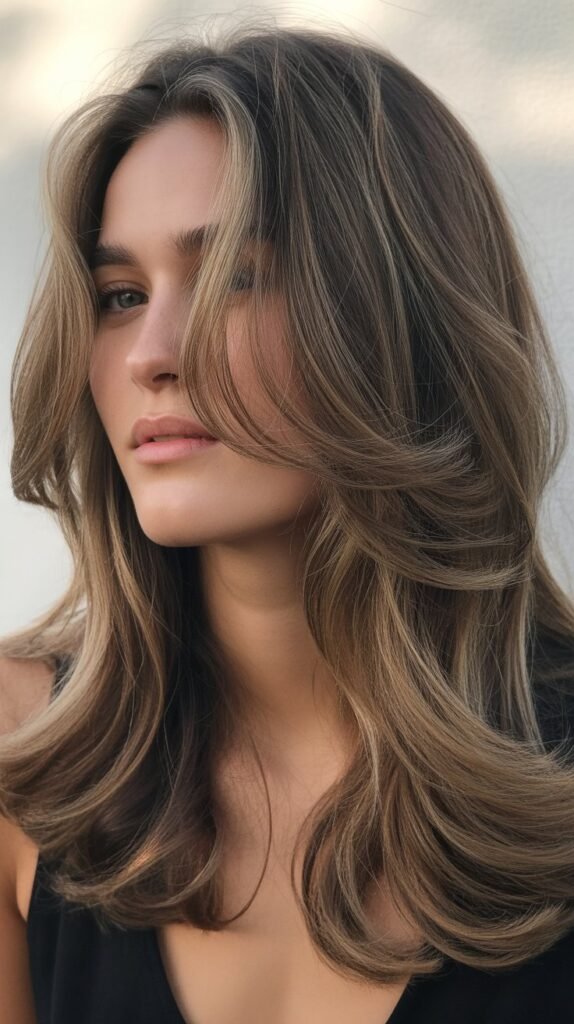
Wispy front layers are specifically designed to add body and movement to fine or thin hair without creating gaps or sparse-looking sections.
This delicate layering technique maintains density while creating frame.
- The key to wispy layers is cutting very thin sections at varied lengths around the face.
- These micro-layers create texture without removing too much hair, which is crucial for fine hair types.
- The wispy effect gives an effortless, lived-in appearance that doesn’t require extensive styling.
- Point-cutting or razor-cutting techniques are often used to achieve the soft, feathery ends.
- Lightweight styling products work best—avoid heavy creams or oils that can weigh down fine hair.
- This style maintains the appearance of fullness while still providing the face-framing benefits of layers.
5. Choppy Layered Shag
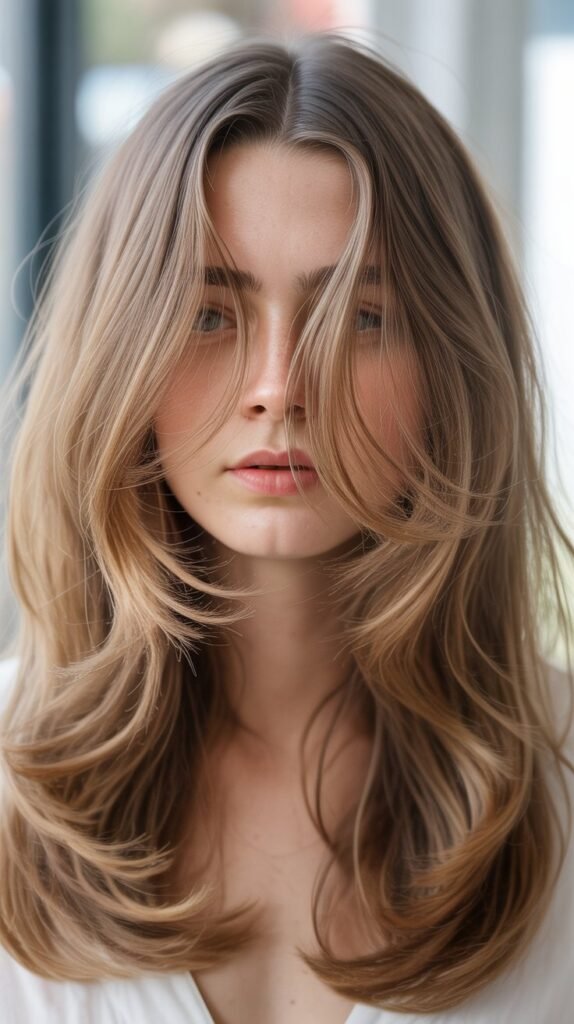
The choppy layered shag brings an edgy, rock-and-roll vibe to long hair with heavily textured, disconnected layers that create dramatic movement.
This bold style makes a statement while remaining incredibly wearable.
- Choppy layers are intentionally disconnected, creating more dramatic separation between sections.
- The face-framing layers in a shag typically start quite short, sometimes at eyebrow level, and extend outward.
- This style adds significant volume throughout the hair, making it ideal for those wanting a fuller appearance.
- The shag works beautifully with natural texture—waves and curls enhance the intentionally messy aesthetic.
- Sea salt spray and texturizing products are your best friends for achieving the perfect shaggy finish.
- Despite its undone appearance, the shag requires skilled cutting to avoid looking simply unkempt.
6. Blunt Cut With Subtle Face-Framing
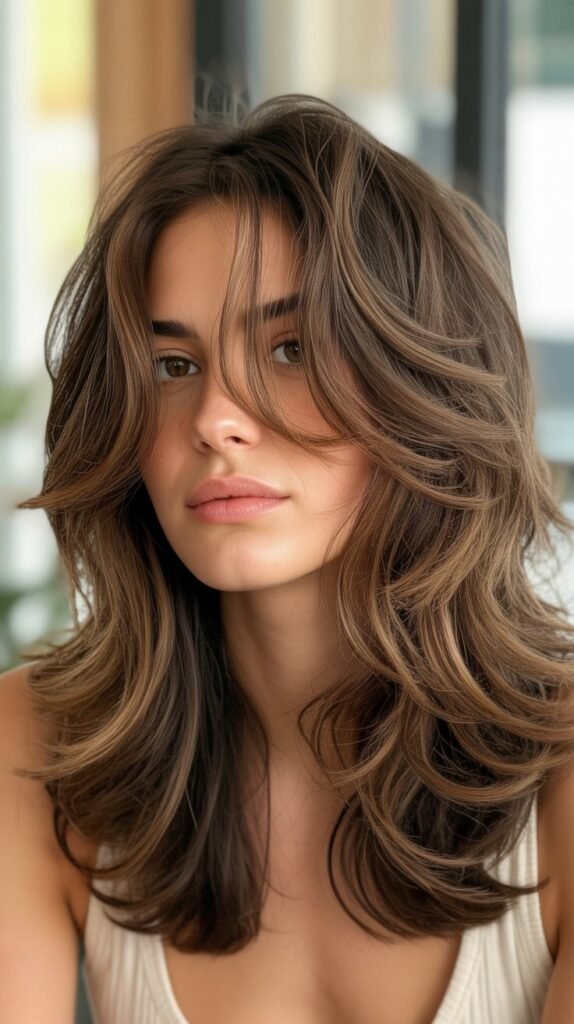
For those who love the drama of a blunt cut but want some softness around the face, this hybrid approach offers the best of both worlds.
Subtle face-framing layers add dimension without compromising the strong perimeter.
- The bulk of the hair maintains a blunt, one-length cut for a bold, modern appearance.
- Face-framing layers are added only around the front sections, starting near the chin or below.
- This technique creates a focal point that draws attention to your facial features.
- The blunt perimeter appears fuller and healthier, as there are no wispy ends throughout the length.
- This style suits those with thick hair who want to maintain weight and density.
- Minimal styling is required—the contrast between the layers and blunt cut creates natural interest.
7. Long Layers With Textured Ends
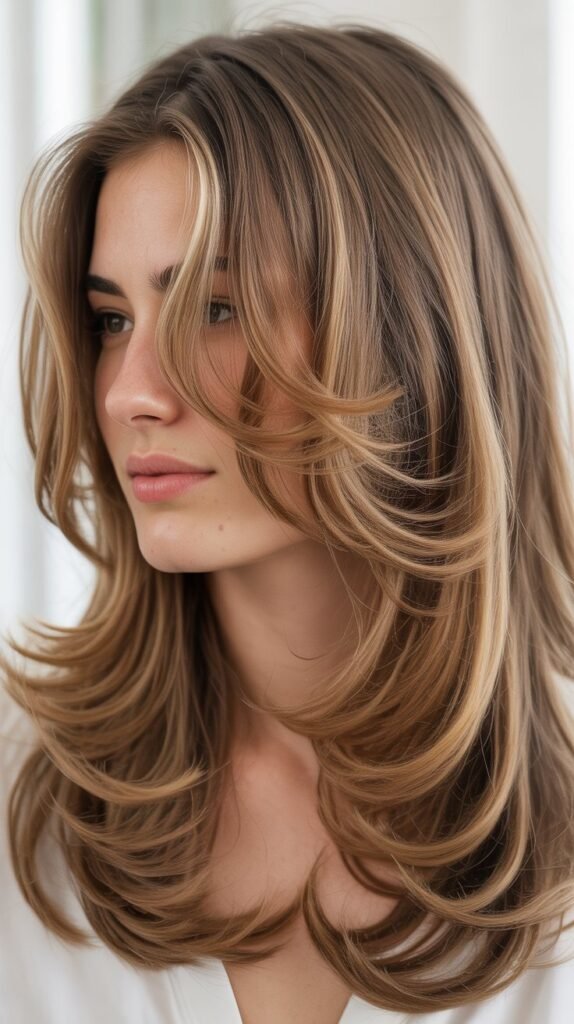
Long layers with textured ends create a beachy, effortless look that works for both casual and professional settings. The texture prevents the hair from looking too uniform or flat.
- Layers begin several inches from the scalp and continue down, with the shortest face-framing pieces starting around the collarbone.
- Texturizing the ends involves point-cutting or using thinning shears to create varied lengths at the tips.
- This prevents the layers from creating a triangular shape and instead promotes natural movement.
- The textured ends work particularly well with balayage or ombre coloring techniques.
- Air-drying with a curl cream or salt spray can achieve the textured finish without heat styling.
- This low-maintenance cut grows out gracefully, requiring fewer salon visits.
8. V-Cut Layers With Face-Framing
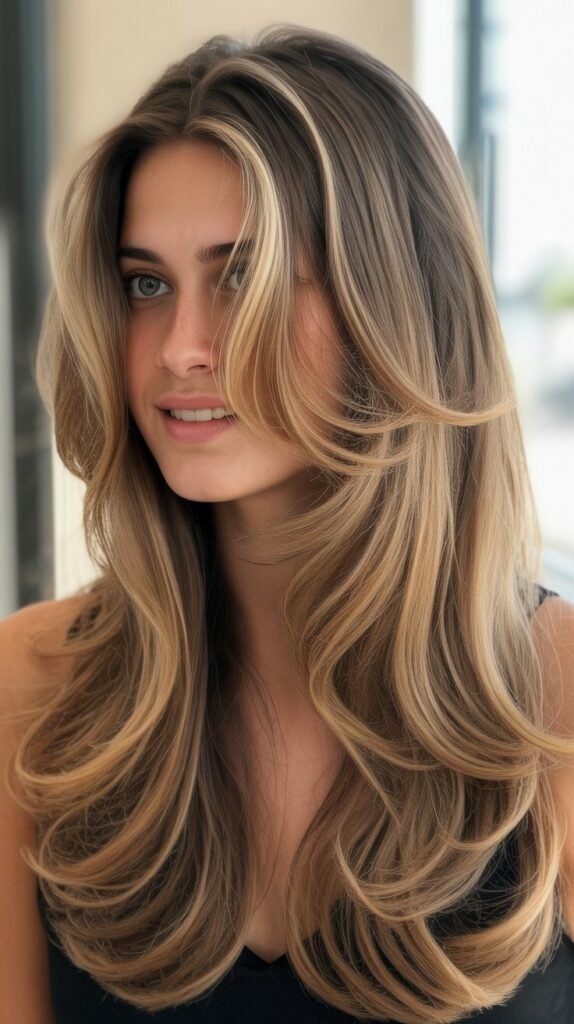
The V-cut creates a dramatic point at the back while face-framing layers add dimension in the front. This combination offers a unique silhouette that’s both striking and flattering.
- The V-cut is created by cutting the hair shorter in the center back and gradually longer toward the sides.
- Face-framing layers complement this by adding shorter pieces in the front that blend into the V-shape.
- This cut creates the illusion of incredible length while removing excess weight.
- The V-shape is particularly flattering when hair is worn straight or with loose waves.
- It works well for all hair types but is especially stunning on thick, healthy hair.
- The distinctive back view makes this cut a conversation starter while the face-framing keeps it practical.
9. Soft Graduated Bob-to-Long Transition
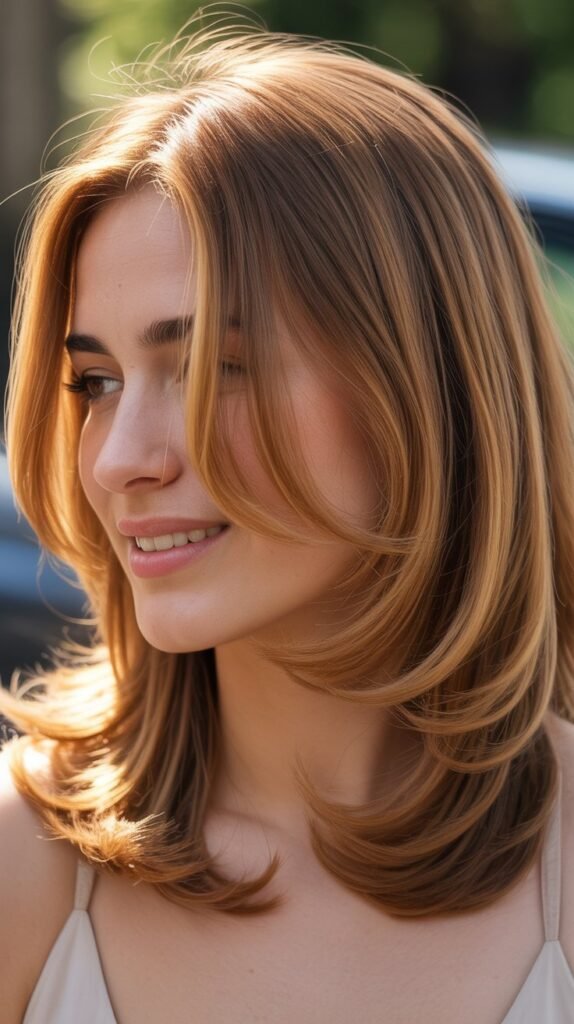
This style features shorter layers in the back that gradually lengthen toward the front, creating an elongated silhouette. The face-framing pieces become the longest sections, drawing the eye forward.
- The graduation creates natural lift at the crown, adding height and volume where it’s most flattering.
- Face-framing layers start at the front and are significantly longer than the back sections.
- This technique works beautifully for fine hair as it prevents the back from looking flat or lifeless.
- The angled appearance slims the face and creates an elegant profile.
- Styling involves blow-drying with tension to emphasize the sleek, angled shape.
- This cut bridges the gap between shoulder-length and long hair, offering versatility in styling options.
10. Razored Face-Framing Layers
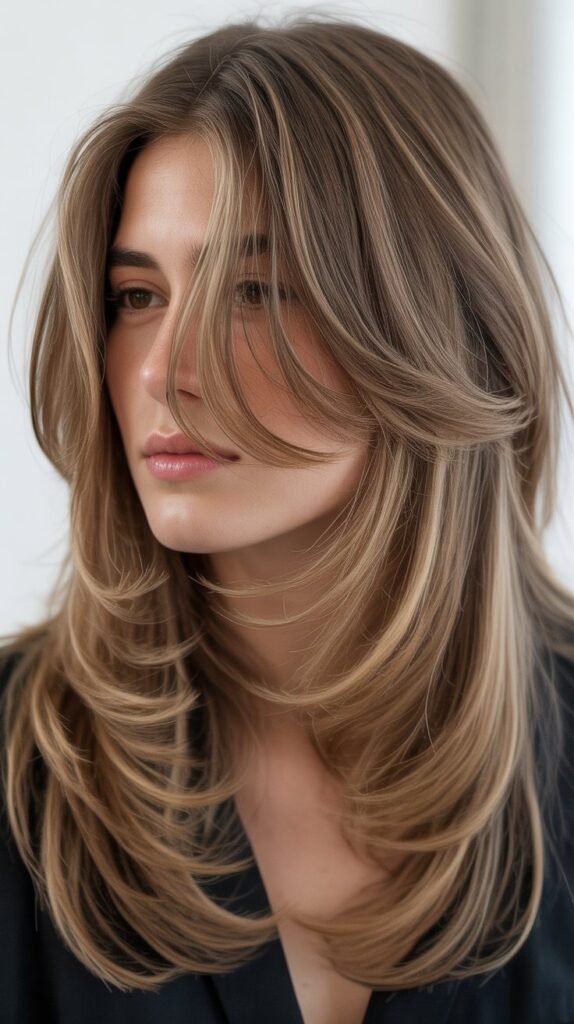
Razor-cut face-framing layers create an ultra-soft, lived-in texture that’s perfect for achieving an effortless, bohemian aesthetic. The razor technique produces a different quality than scissors.
- Razor cutting slices through the hair at an angle, creating softer, more tapered ends than traditional scissor cuts.
- This technique is particularly effective on thick or coarse hair, as it removes bulk without creating harsh lines.
- The face-framing layers have a wispy, almost shattered appearance that moves beautifully.
- Razored layers enhance natural texture—waves and curls look particularly gorgeous with this cut.
- The downside is that razored hair can sometimes split more easily, requiring diligent care with quality products.
- Deep conditioning treatments help maintain the health of razored ends.
11. Asymmetrical Face-Framing Layers
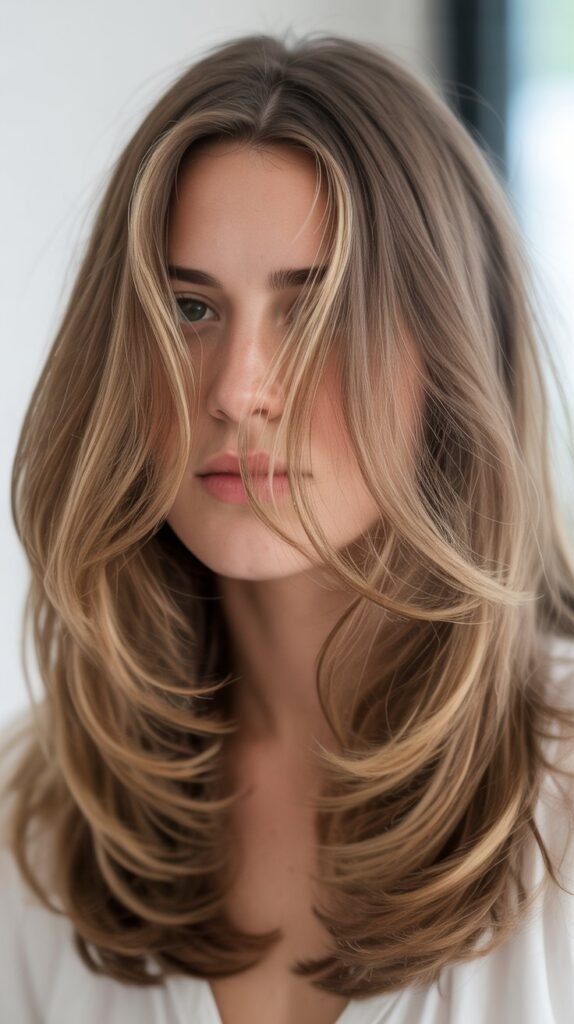
Asymmetrical face-framing layers bring an artistic, fashion-forward edge to long hair. This intentionally uneven approach creates visual intrigue while maintaining overall length.
- One side features shorter face-framing layers while the other side has longer layers, creating deliberate imbalance.
- This style makes a bold statement and works well for those with strong personal style.
- The asymmetry can be subtle or dramatic depending on the length difference between sides.
- It’s particularly flattering for those with asymmetrical facial features, as it can create visual balance.
- Styling flexibility allows you to emphasize either the shorter or longer side depending on your preference.
- This cut requires confidence to wear but offers a unique alternative to traditional symmetrical styles.
12. Layered Lob Length With Extended Pieces
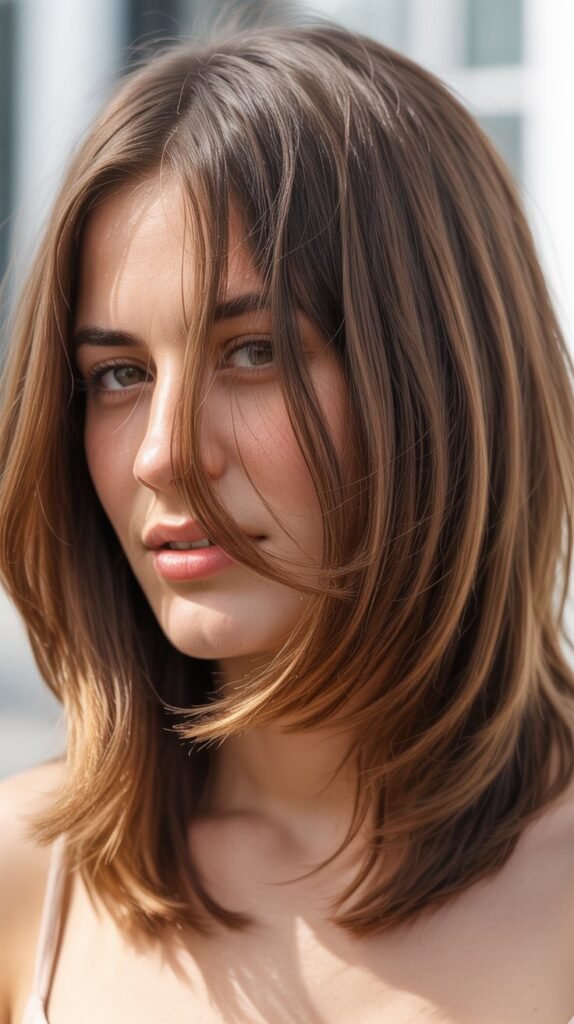
While technically a long bob, this style features extended face-framing pieces that reach beyond the typical lob length, creating a hybrid look that offers the best of both worlds.
- The bulk of the hair falls at collarbone to shoulder length, creating a fresh, modern appearance.
- Face-framing pieces extend several inches longer, sometimes reaching the chest area.
- This creates an interesting dimensional effect that adds sophistication to the casual lob cut.
- The extended pieces can be tucked behind the ears for a completely different look.
- This style works for all face shapes and offers easier maintenance than very long hair.
- It provides the option to tie the longer pieces back while leaving the lob section loose.
13. Invisible Layers With Face-Framing
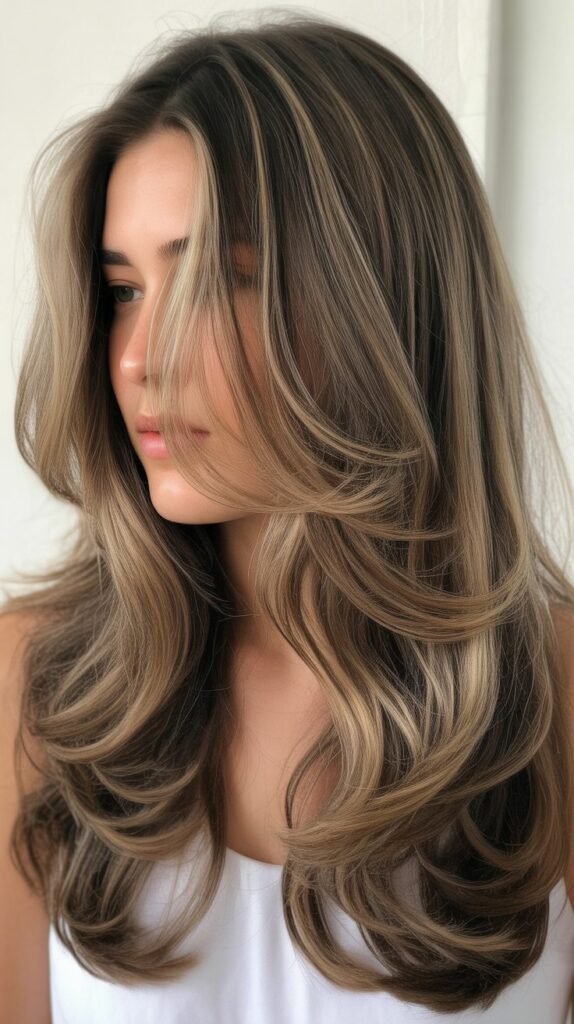
Invisible layers create movement and dimension without obvious demarcation lines, maintaining the appearance of one-length hair while adding subtle face-framing benefits.
- This technique involves cutting layers that blend so seamlessly that they’re virtually undetectable.
- The face-framing sections are cut to be just slightly shorter, creating gentle movement near the face.
- Invisible layers are perfect for those who want styling versatility without a dramatic layered appearance.
- The seamless blend means the hair can be worn up or down without showing obvious layer breaks.
- This cutting technique requires significant skill and precision from the stylist.
- It’s ideal for professional environments where subtle, polished looks are preferred.
14. Heavy Face-Framing With Minimal Internal Layers
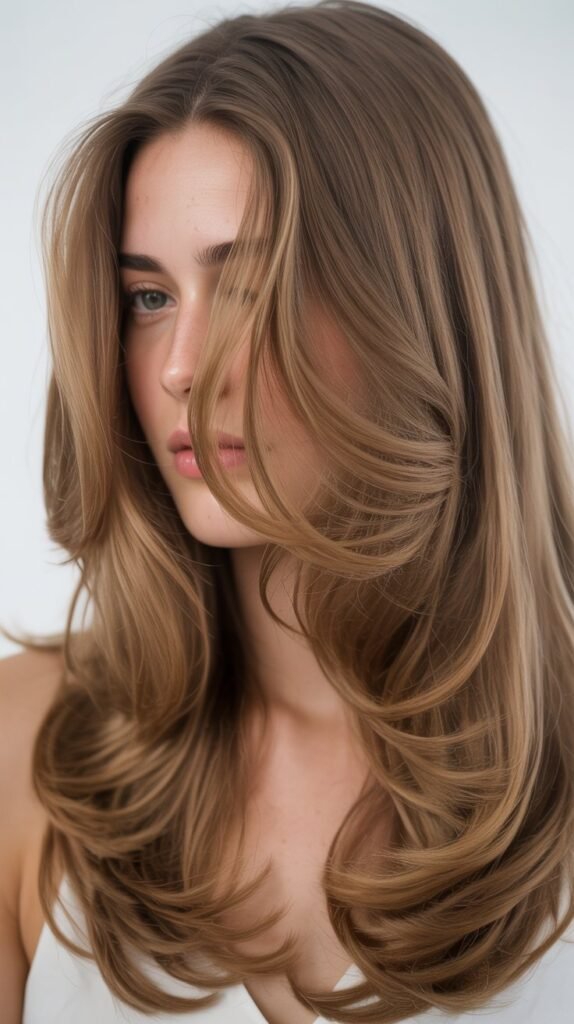
This approach focuses dramatic layering around the face while keeping the rest of the hair relatively one-length, creating a strong frame without removing length or density elsewhere.
- The face-framing layers are cut significantly shorter, sometimes starting at chin length or above.
- The remainder of the hair maintains its length and weight, creating a striking contrast.
- This style puts all the focus on framing and flattering the face without thinning the overall hair.
- It’s particularly effective for those with thick hair who want dimension without losing fullness.
- The dramatic face-framing can be styled forward for maximum impact or tucked back for variety.
- This cut photographs beautifully as it creates natural shadows and dimension around the face.
15. Butterfly Layers For Long Hair
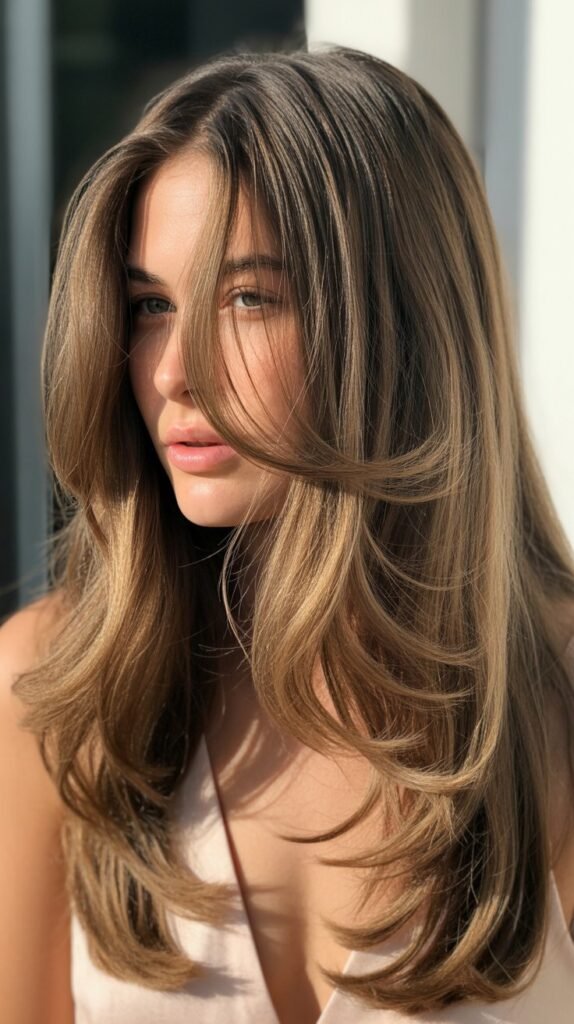
Butterfly layers create a distinctive shape with shorter crown layers that gradually lengthen, resembling butterfly wings when styled. This trendy cut adds incredible volume and movement.
- The shortest layers are concentrated at the crown, creating lift and volume at the top of the head.
- Face-framing layers blend seamlessly with the butterfly shape, adding dimension around the face.
- This cut creates a rounded, voluminous silhouette that’s very flattering for most face shapes.
- The butterfly effect is most visible when hair is blown out straight or worn with loose waves.
- It’s an excellent choice for fine or flat hair, as it builds natural body without requiring extensive styling.
- The trend originated on social media and has become increasingly popular for its flattering, face-lifting effect.
16. Money Piece With Layered Frame
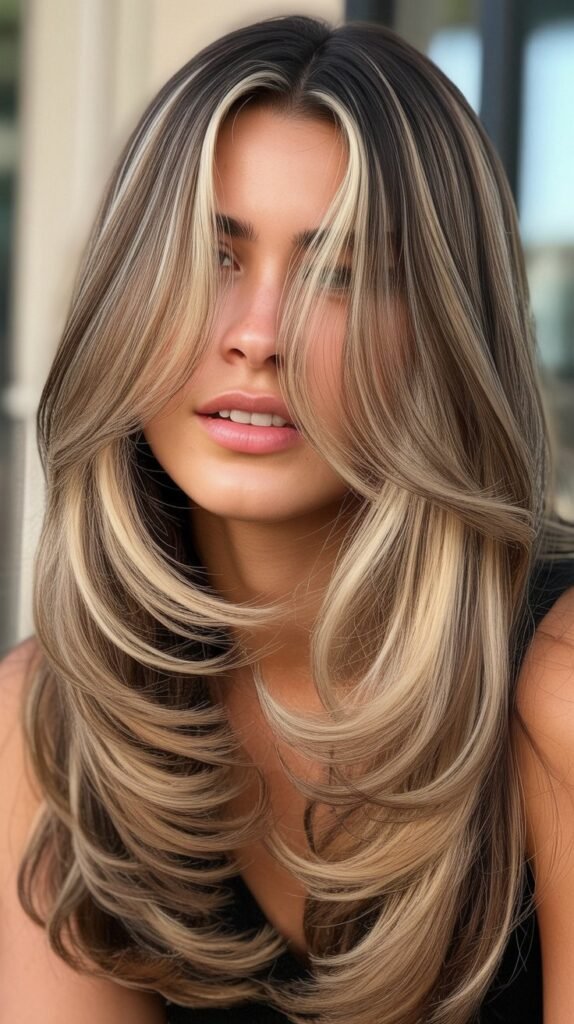
The money piece refers to two face-framing highlights combined with complementary layers. This dual approach creates both color and structural dimension around the face.
- Money piece highlights are typically two shades lighter than the base color, placed at the front hairline.
- The face-framing layers are cut to emphasize these highlights, making them even more noticeable.
- This combination brightens the face and creates a youthful, fresh appearance.
- The technique works with any base color—blondes, brunettes, and redheads can all incorporate money pieces.
- Layers should be cut after color application to ensure they showcase the highlights effectively.
- This style offers a low-commitment way to add dramatic face-framing without coloring all your hair.
17. Swoopy Face-Framing Layers
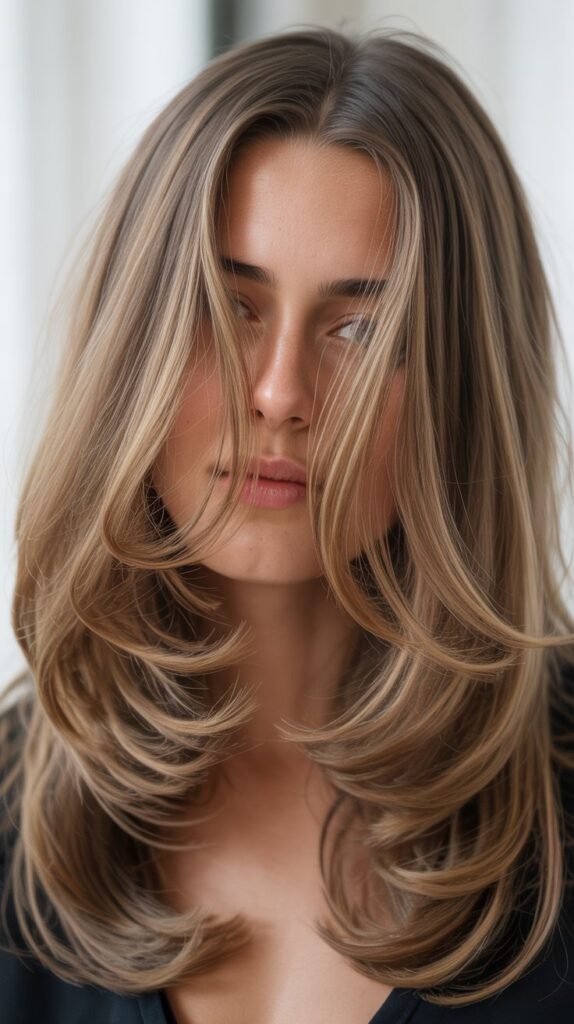
Swoopy layers are cut with extra length at the face, designed to be styled with dramatic curves that swoop away from or toward the face, creating elegant movement.
- These layers are typically cut longer than traditional face-framing layers, starting around chin to shoulder length.
- The extra length allows for styling with a round brush to create pronounced curves.
- Swoopy layers add a vintage, glamorous quality reminiscent of old Hollywood styling.
- They work particularly well for special occasions or when you want a more polished look.
- The swoops can be directed away from the face for an opening effect or toward the face for intimacy.
- This style requires some styling skill but creates a red-carpet-worthy finish.
18. Pixie-Inspired Face-Framing On Long Hair
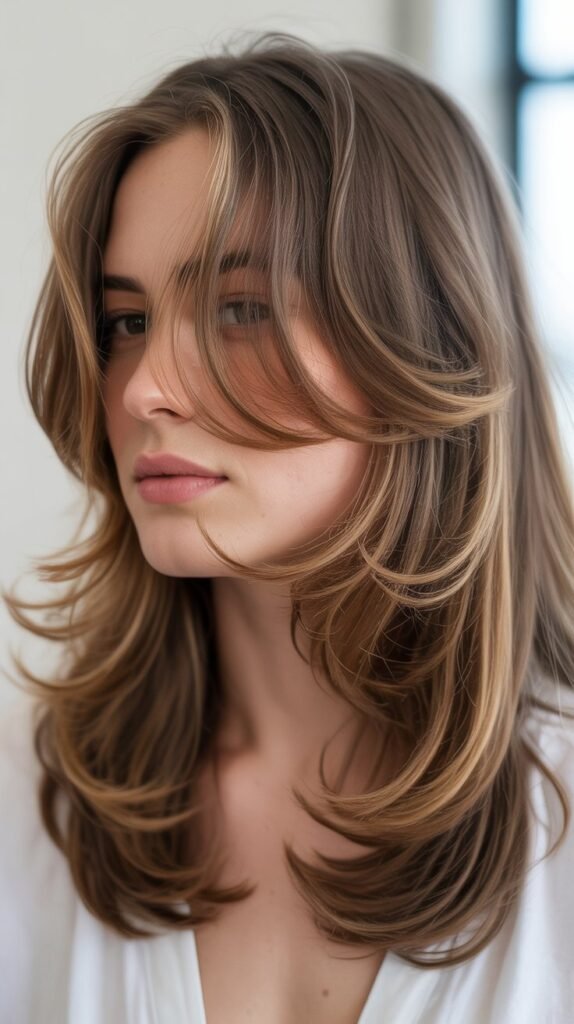
This unique approach incorporates very short, pixie-cut-inspired layers around the face while maintaining long hair in the back, creating an edgy, unexpected contrast.
- The face-framing layers are cut extremely short, sometimes only 2-3 inches long around the temples and cheeks.
- The back and sides maintain significant length, creating a mullet-adjacent silhouette.
- This bold style makes a strong fashion statement and suits those with adventurous style sensibilities.
- It combines the ease of short hair around the face with the femininity of long hair in back.
- Styling involves emphasizing the texture difference between the short and long sections.
- This cut grows out interestingly, evolving into a more traditional layered look over time.
19. Face-Framing Layers For Curly Hair
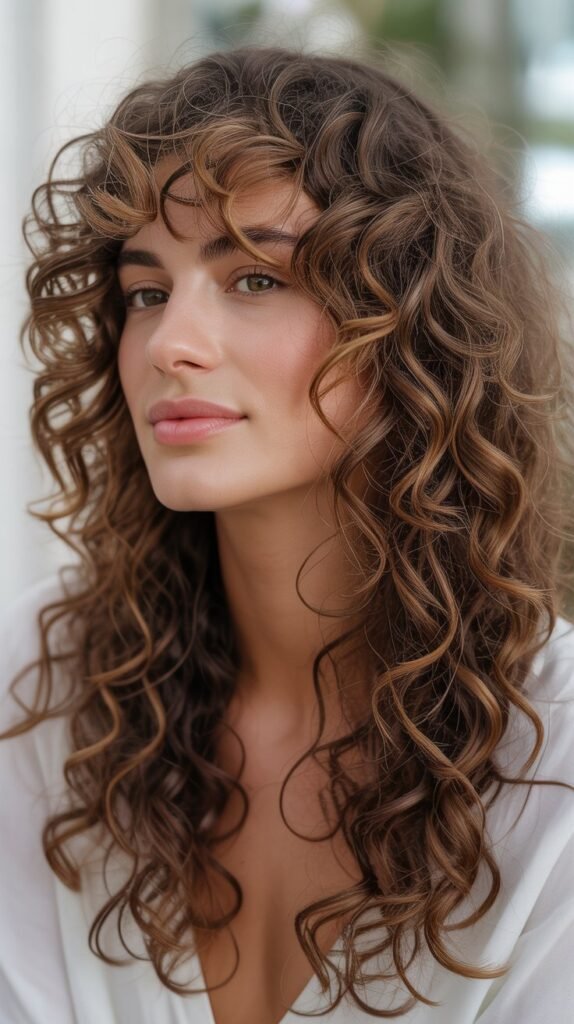
Curly hair requires specialized face-framing techniques that account for shrinkage and natural curl pattern. These layers enhance curls while creating flattering dimension around the face.
- Curly hair should be cut dry or on stretched hair to account for how curls spring up after cutting.
- Face-framing layers for curls are typically cut longer than for straight hair due to shrinkage.
- The layers help prevent the pyramid shape that can occur with one-length curly hair.
- Curl-specific cutting techniques like the DevaCut ensure each curl falls beautifully.
- Layers reduce bulk while maintaining the curl pattern’s integrity and bounce.
- The face-framing sections can be cut to start at the chin or below, depending on curl tightness.
20. Wavy Hair Face-Framing Layers
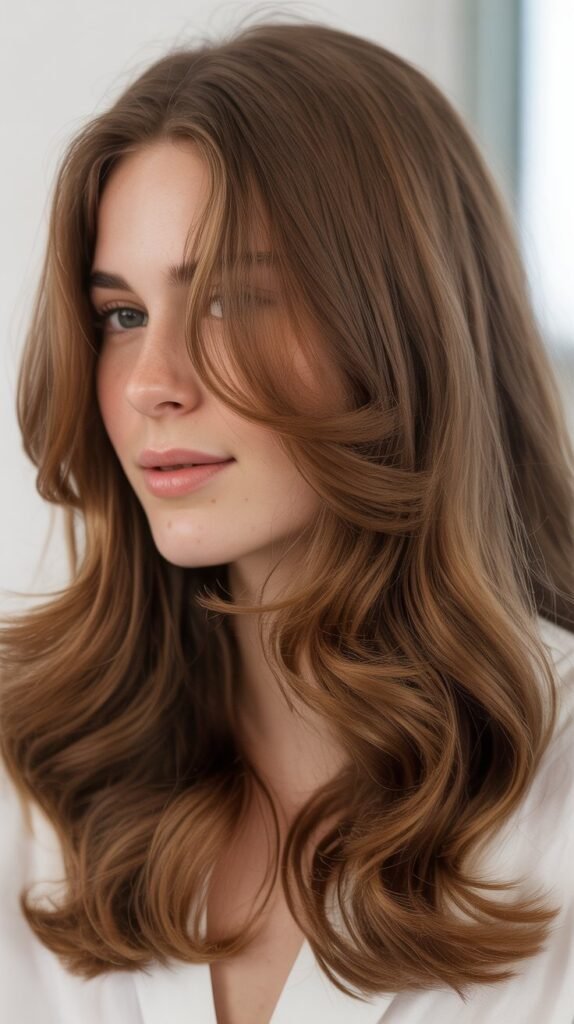
Wavy hair sits between straight and curly, requiring face-framing layers that enhance natural movement while adding structure. These layers bring out the best in wave patterns.
- Wavy hair benefits from layers that follow and enhance the natural S-curve pattern.
- Face-framing layers should be cut to allow waves to form naturally without disrupting the pattern.
- The layers add dimension that prevents wavy hair from looking heavy or triangular.
- This hair type can handle slightly shorter face-framing layers than curly hair due to less shrinkage.
- Styling with a diffuser or air-drying brings out the natural texture enhanced by the layers.
- Wave-enhancing products work synergistically with the layered cut to create definition.
21. Thick Hair Face-Framing Layers
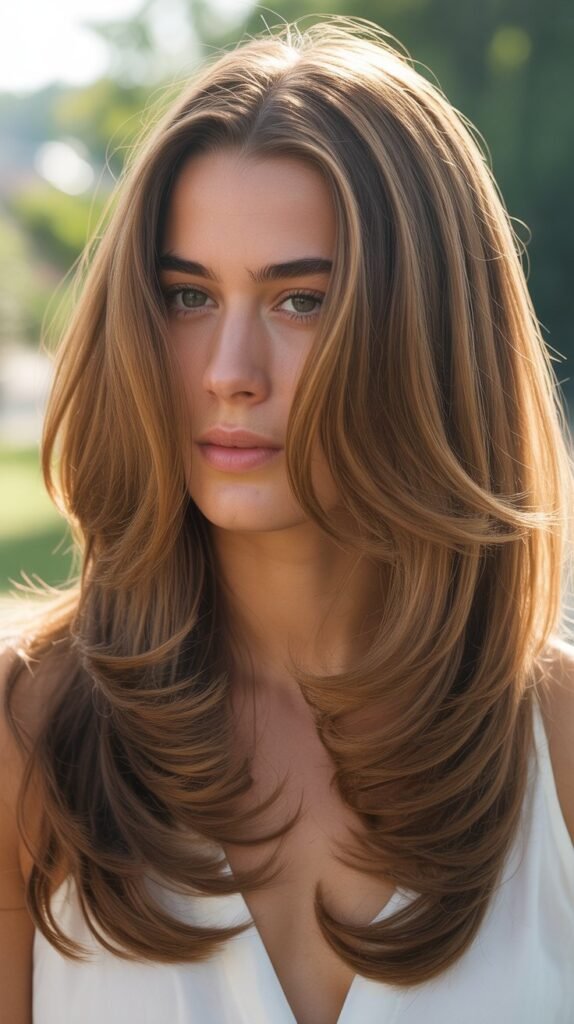
Thick hair requires strategic face-framing layers that remove bulk while maintaining fullness. These layers create movement without making the hair look thin or wispy.
- Internal layering through the bulk of thick hair is essential to prevent a heavy, shapeless appearance.
- Face-framing layers for thick hair can be more dramatic, as there’s plenty of density to work with.
- Point-cutting and texturizing techniques help soften the layers without creating harsh lines.
- The layers reduce drying time significantly by removing excess weight and density.
- Thick hair holds styles well, so face-framing layers maintain their shape throughout the day.
- Regular maintenance every 6-8 weeks prevents the layers from growing out into a bulky mass.
22. Thin Hair Face-Framing Layers
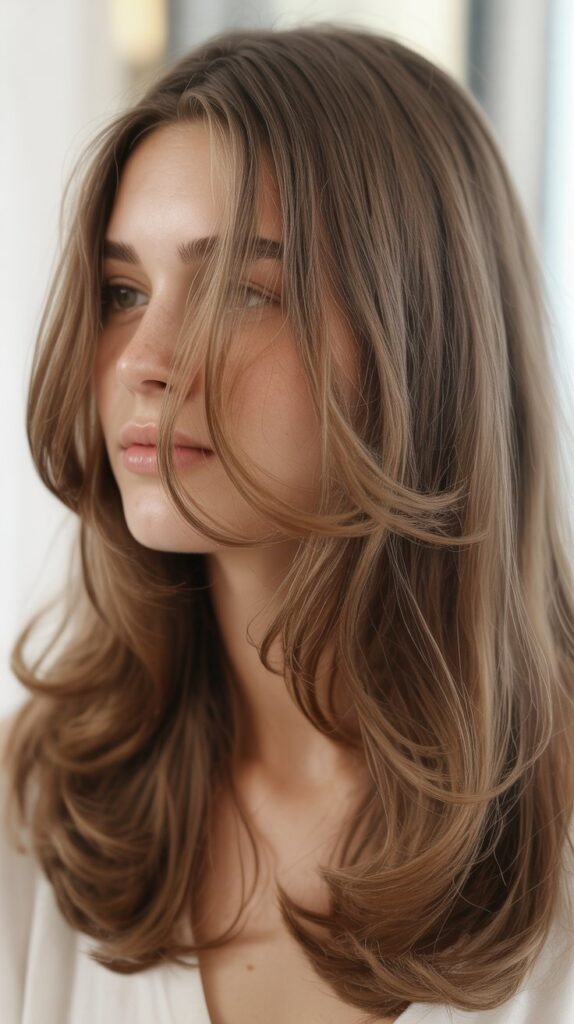
Thin hair requires careful face-framing to add dimension without creating gaps or sparse-looking sections. These delicate layers maximize the appearance of fullness.
- Layers for thin hair should be minimal and strategic, focusing on the face-framing area rather than throughout.
- The shortest layers should not be too short, as this can make thin hair look even sparser.
- Soft, gradual transitions between layers prevent obvious demarcation lines that highlight thinness.
- Blunt ends on the layers help maintain the appearance of density and health.
- Volumizing products and gentle teasing at the roots enhance the layered effect.
- Avoiding excessive layering throughout the length preserves the illusion of thickness.
23. Round Face-Framing Layers
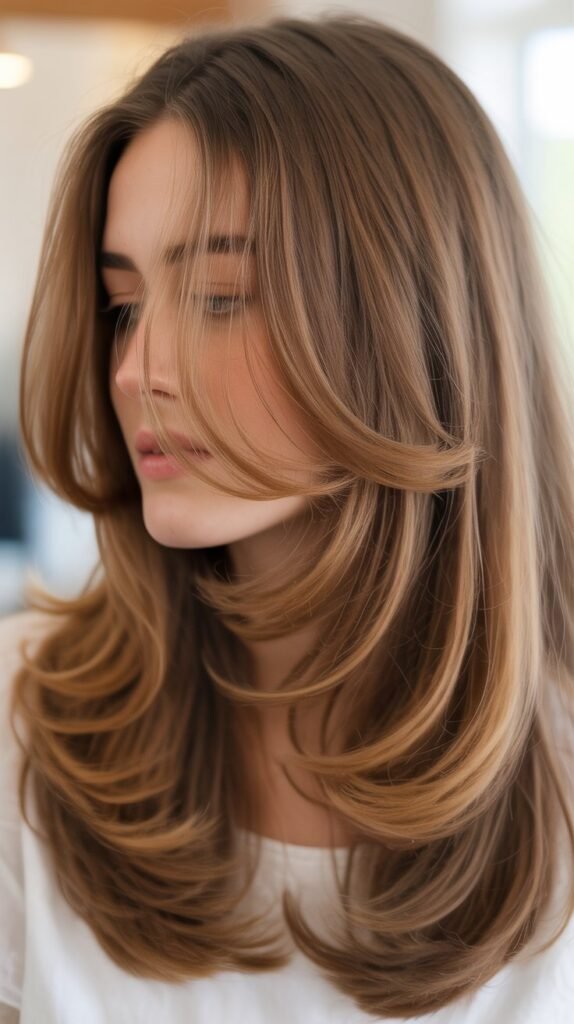
Face-framing layers for round faces should create the illusion of length and angles, elongating the face shape while adding flattering dimension.
- Layers should start below the chin to avoid widening the face at its fullest point.
- Angled or diagonal face-framing layers create vertical lines that elongate the appearance.
- Side-swept or curtain bangs work better than blunt bangs, which can emphasize roundness.
- Volume at the crown adds height, which visually lengthens the face shape.
- Layers that fall forward slightly help slim the cheeks and create shadows.
- Avoid layers that end at the widest part of the face, which can accentuate width.
24. Oval Face-Framing Layers
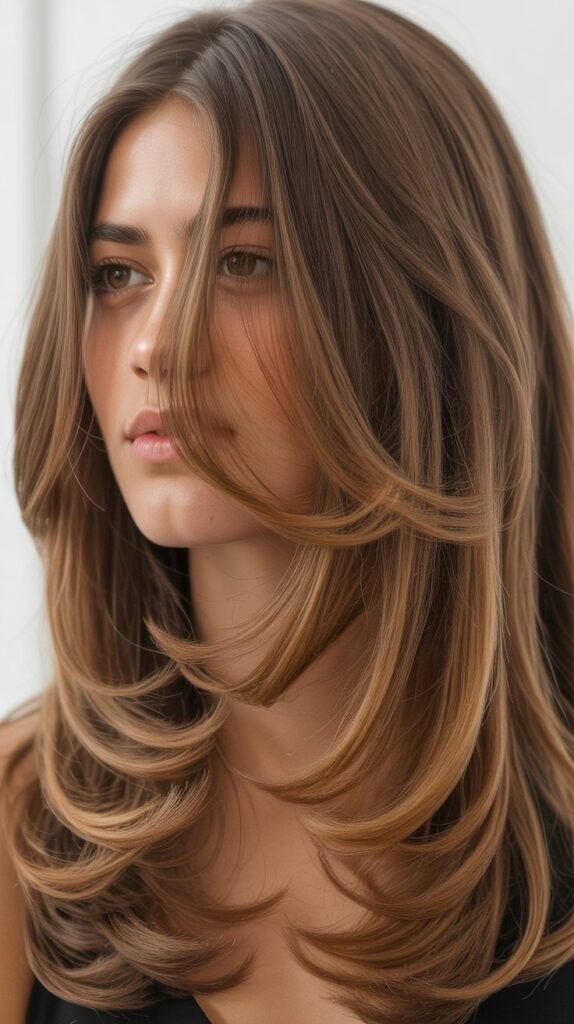
Oval faces are considered the most versatile face shape, and can wear virtually any face-framing layer style. The key is enhancing this balanced shape without disrupting its natural proportion.
- Oval faces can handle face-framing layers that start anywhere from the cheekbones to the collarbone.
- Both dramatic and subtle layering approaches work beautifully with oval face shapes.
- The natural balance of oval faces means layers can focus on personal style rather than corrective shaping.
- Experimentation is encouraged—try bold, choppy layers or soft, wispy frames with equal success.
- This face shape looks great with any bang style combined with face-framing layers.
- The versatility allows for seasonal changes and trend experimentation without concern for flattery.
25. Heart-Shaped Face-Framing Layers
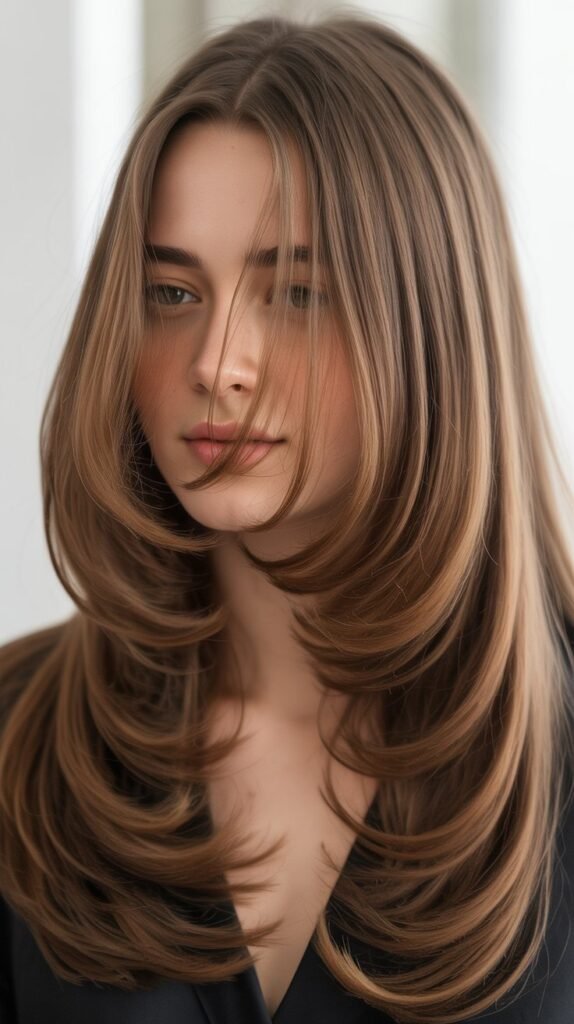
Heart-shaped faces benefit from face-framing layers that add width at the jawline while softening the forehead area, creating beautiful balance.
- Layers should be concentrated from the cheekbones down to add fullness where the face naturally narrows.
- Wispy, textured ends at jaw level create the illusion of width in the lower face.
- Side-swept bangs help minimize a wider forehead while drawing attention to the eyes.
- Face-framing layers that curve toward the face rather than away add softness to the pointed chin.
- Avoid excessive volume at the crown, which can make the forehead appear even wider.
- The goal is creating balance by adding dimension to the lower half of the face.
26. Square Face-Framing Layers
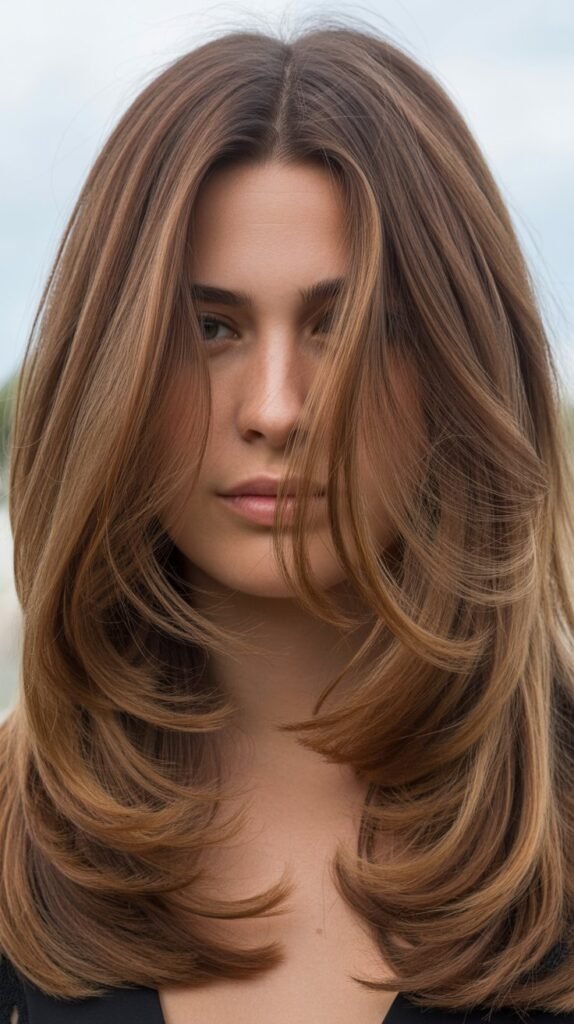
Square faces benefit from face-framing layers that soften angular jawlines and add curves to balance strong, straight features.
- Soft, curved layers work better than straight, blunt layers for square faces.
- Face-framing should start around the cheekbones and curve gently downward.
- Layers that add width at the temples help balance a strong jawline.
- Avoid layers that end exactly at the jawline, as this emphasizes the square shape.
- Side-swept elements and diagonal lines create softness and movement.
- Texturized, wispy ends prevent the layers from appearing too harsh or structured.
27. Long Face-Framing Layers
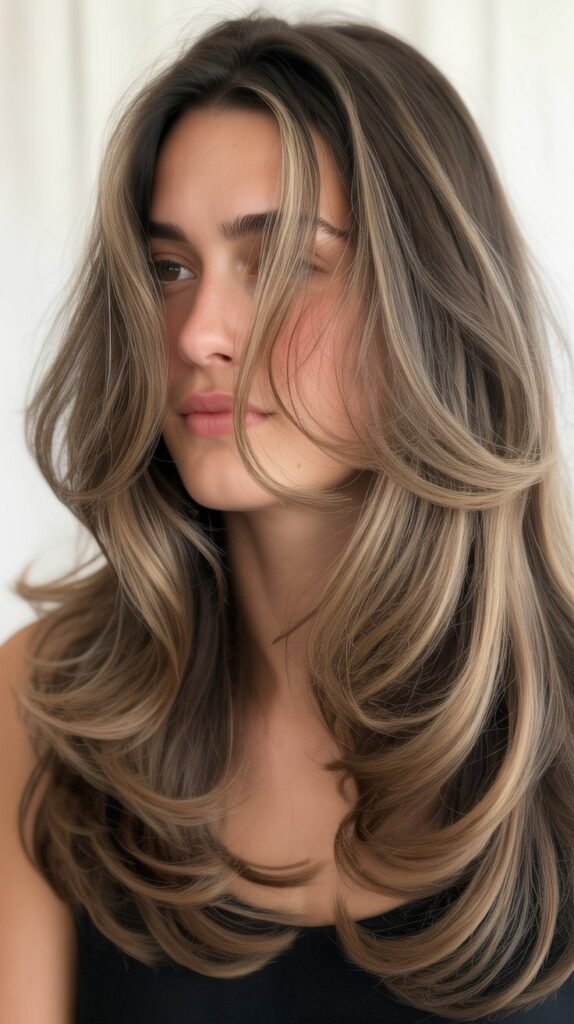
Long faces benefit from face-framing layers that add width and create horizontal emphasis, visually shortening the face’s appearance.
- Face-framing layers for long faces should start at cheekbone level or above.
- Creating fullness and volume at the sides adds width that balances length.
- Blunt or straight-across bangs work wonderfully with face-framing layers for long faces.
- Avoid overly long, stringy layers that emphasize vertical lines.
- Layers cut with some weight rather than wispy ends help create horizontal emphasis.
- Styling with waves or curls that add volume at the sides further balances proportions.
28. Diamond Face-Framing Layers
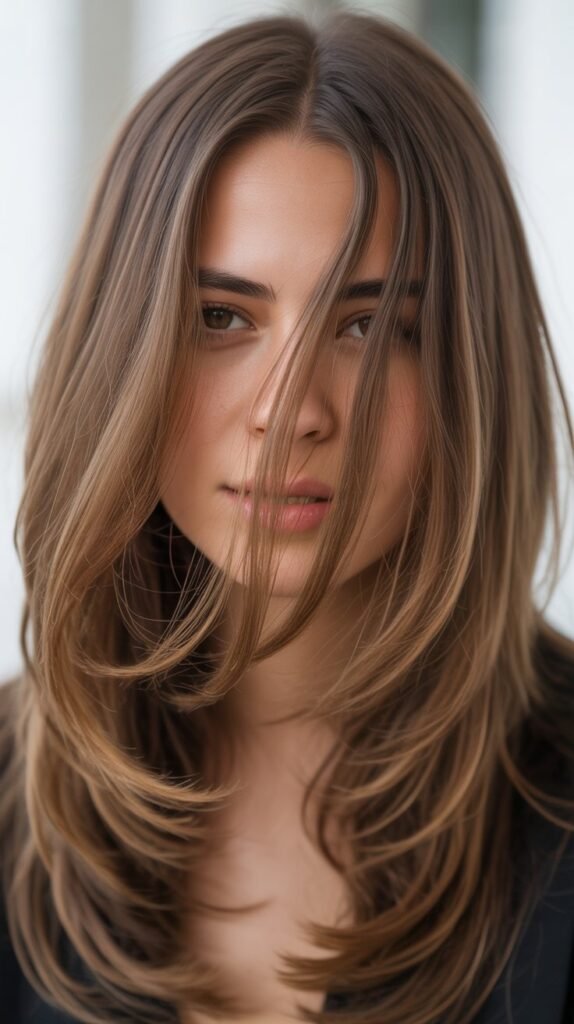
Diamond-shaped faces, with their narrow forehead and chin plus wide cheekbones, benefit from face-framing layers that add fullness at the forehead and jaw.
- Face-framing layers should add volume at the forehead area through wispy bangs or forward pieces.
- Layers at jaw level help balance the narrow chin characteristic of diamond faces.
- The widest point (cheekbones) should not be emphasized with blunt or heavy layers.
- Side-swept styles and diagonal lines work better than straight-across elements.
- Soft, textured layers create the illusion of width where the face is naturally narrower.
- The goal is creating balance by adding dimension to both upper and lower face areas.
29. Face-Framing Layers With Balayage
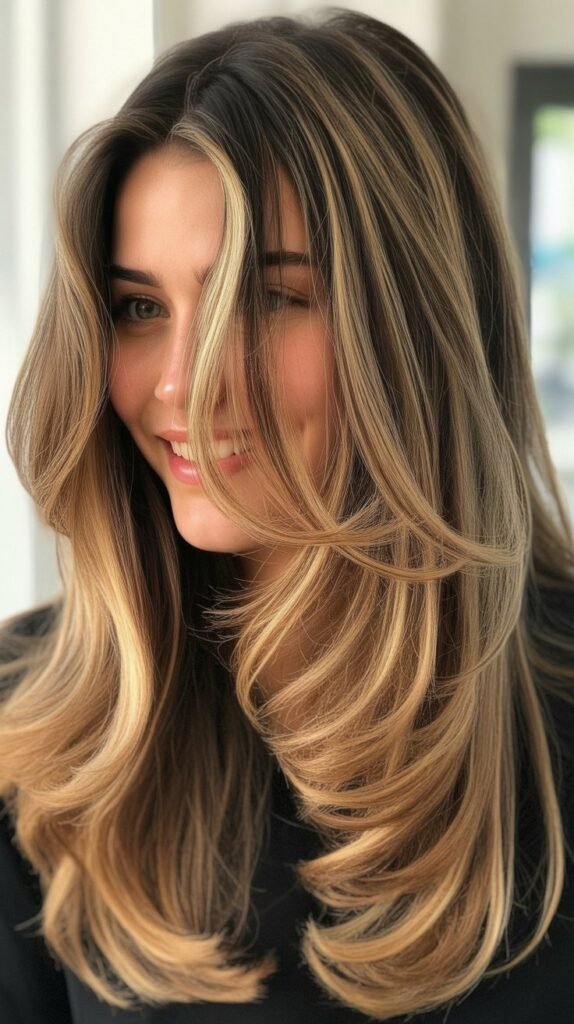
Combining face-framing layers with balayage highlights creates dimensional color and cut working together for maximum impact. This pairing enhances both elements beautifully.
- Balayage should be painted to emphasize the face-framing layers, with lighter pieces concentrated there.
- The dimension created by both techniques together adds incredible depth and interest.
- Face-framing highlights can be slightly lighter than the overall balayage for extra pop.
- The layers allow the balayage to move and catch light as you turn your head.
- This combination requires coordination between cutting and coloring for optimal results.
- Professional balayage application ensures the color enhances rather than competes with the layers.
30. Face-Framing Layers With Ombre
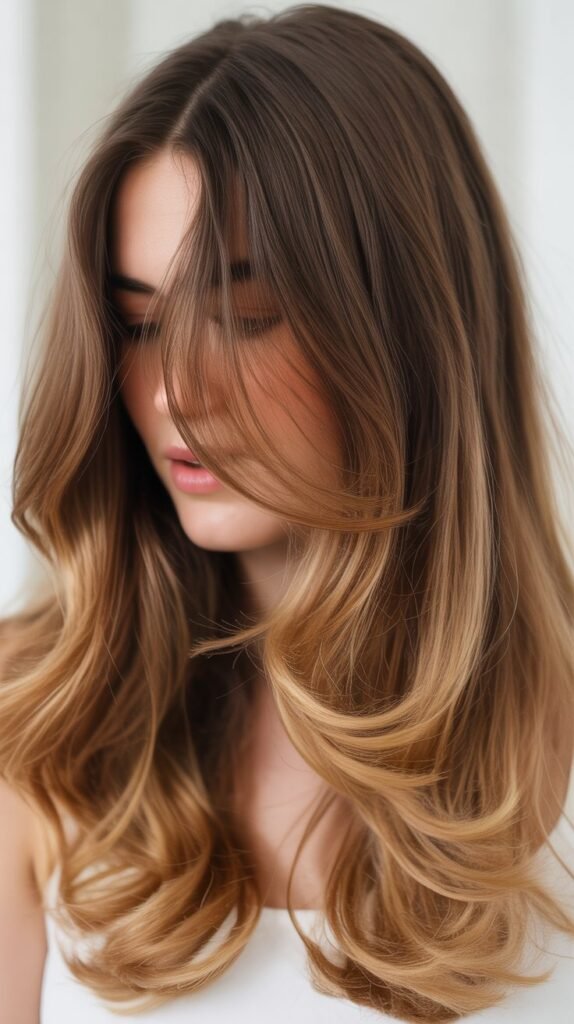
Ombre coloring combined with face-framing layers creates a dramatic effect where the lighter ends are showcased by the layered cut, adding movement to the color transition.
- Face-framing layers in different lengths show various stages of the ombre transition.
- The layers add movement that prevents ombre from looking flat or one-dimensional.
- Lighter pieces around the face brighten and frame while the darker roots add depth.
- The combination creates a sun-kissed, natural appearance enhanced by the dimension of layers.
- Styling with waves or curls shows off both the ombre and layers to maximum effect.
- The face-framing layers allow you to see more of the lighter ombre color near your face.
31. Face-Framing Layers For Straight Hair
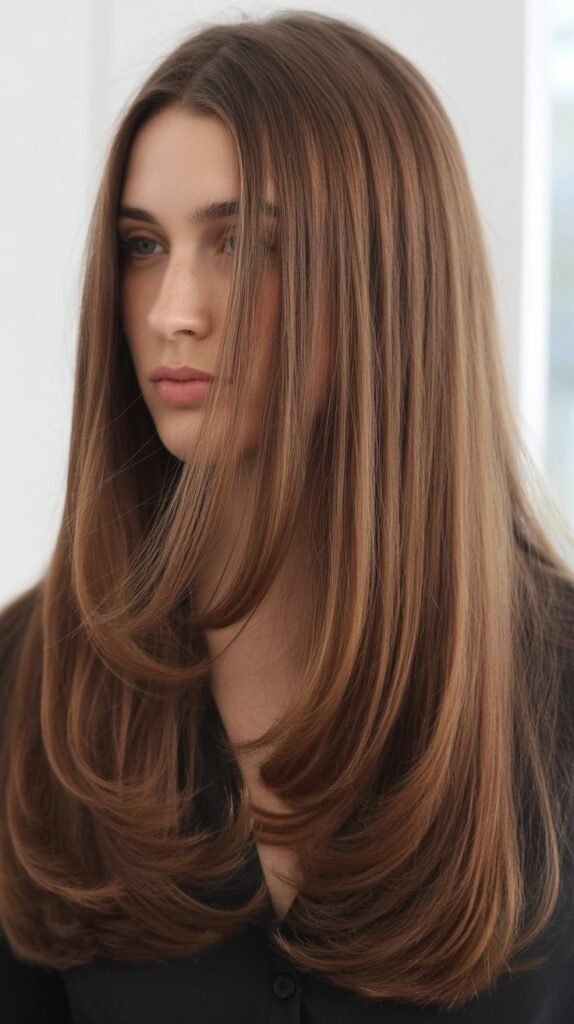
Straight hair showcases face-framing layers beautifully, as every line and angle is clearly visible. These layers add essential movement to hair that can otherwise appear flat.
- Straight hair requires precision cutting, as any unevenness is immediately visible.
- Face-framing layers on straight hair create clean, architectural lines that frame the face.
- Blow-drying straight with a paddle brush emphasizes the sleek, polished appearance of the layers.
- The layers prevent straight hair from looking heavy or limp by adding dimension.
- Subtle texturizing at the ends prevents the layers from looking too severe or harsh.
- Straight hair with layers photographs beautifully due to the crisp, defined lines.
32. Bohemian Face-Framing Layers
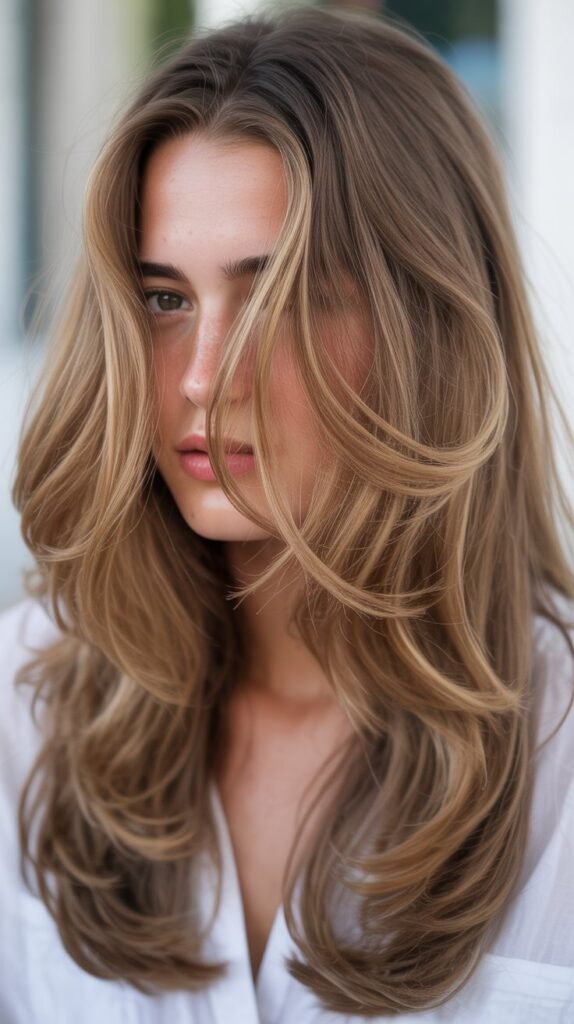
Bohemian-style face-framing layers create a free-spirited, effortless look with varied lengths and textured ends that embody a carefree aesthetic.
- Bohemian layers are less structured and more organic-looking than traditional layering.
- Face-framing pieces vary in length, creating an undone, lived-in appearance.
- The layers work beautifully with natural texture and air-dried styling methods.
- Braids, waves, and loose styling enhance the bohemian vibe of the layers.
- This approach suits those who prefer minimal styling and natural hair texture.
- The relaxed nature of bohemian layers means they grow out gracefully without strict maintenance schedules.
33. Sleek Face-Framing Layers
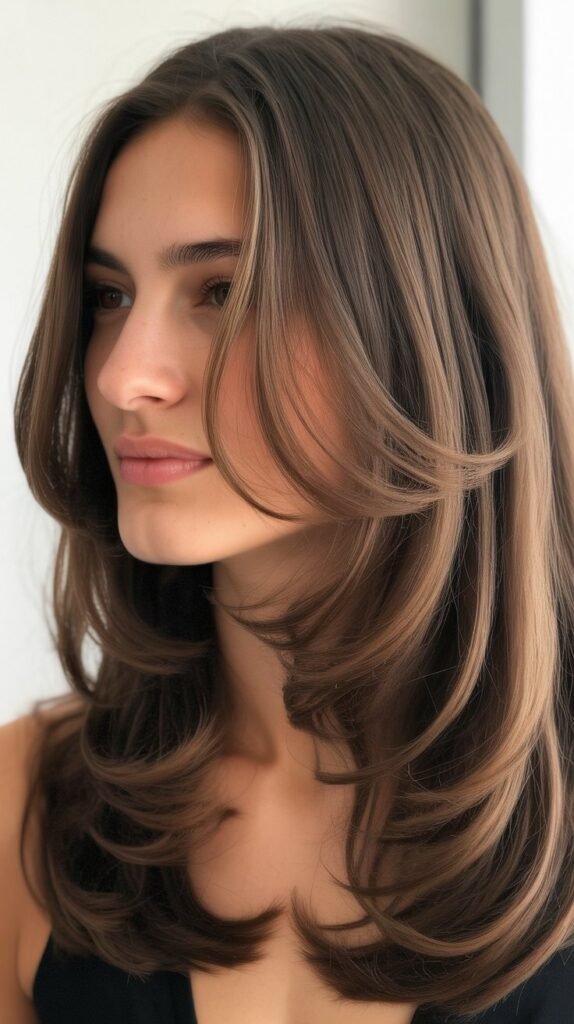
Sleek face-framing layers are cut with precision and styled smoothly for a polished, sophisticated appearance perfect for professional or formal settings.
- These layers are cut with sharp precision to create clean, defined lines.
- Blow-drying with a round brush and finishing with a flat iron creates the sleek appearance.
- Shine-enhancing products and serums emphasize the polished, glossy finish.
- The face-framing layers are styled with intentional curves that frame perfectly.
- This style works beautifully for business environments or special events.
- Regular trims maintain the crisp lines essential to the sleek aesthetic.
34. Tousled Face-Framing Layers
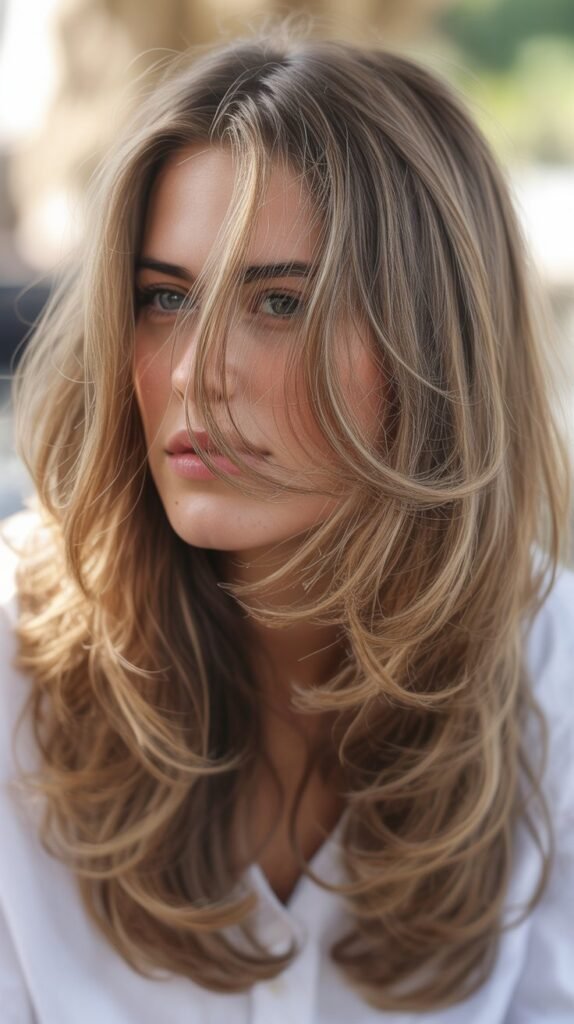
Tousled face-framing layers create a textured, slightly messy appearance that looks effortlessly cool and relaxed while still being intentionally styled.
- Texturizing products are essential for achieving the properly tousled look.
- The layers are cut to create separation and movement when styled with texture.
- Sea salt spray, dry texture spray, or mousse help create the piece-y, tousled effect.
- This style embraces imperfection and variation, making it low-maintenance yet stylish.
- Tousled layers work particularly well with second-day hair or after workouts.
- The intentionally undone appearance actually requires some styling skill to look good rather than messy.
35. Vintage-Inspired Face-Framing Layers
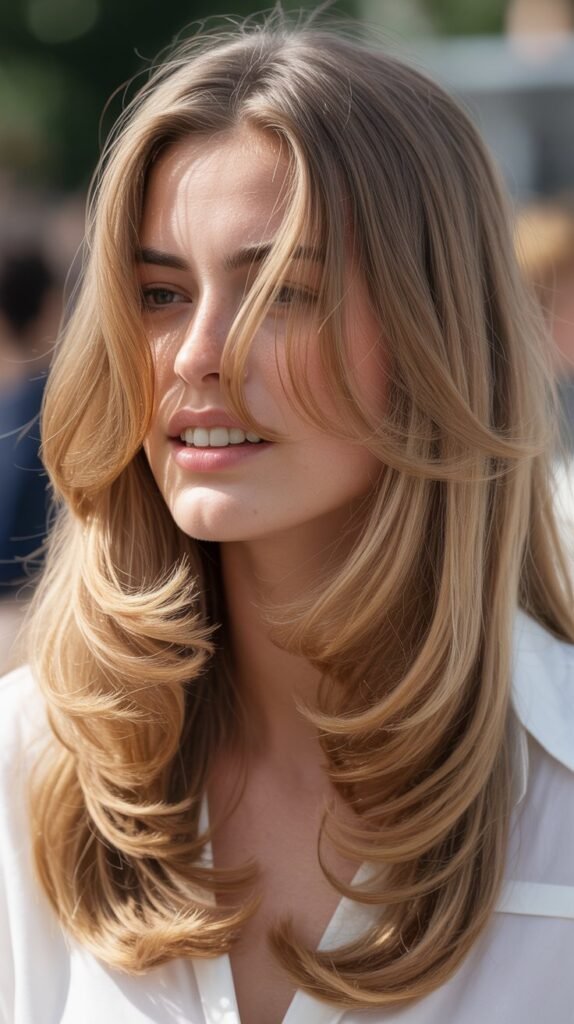
Vintage-inspired face-framing layers draw from classic Hollywood styling, creating glamorous, timeless looks with elegant curves and sophisticated movement.
- These layers are designed to accommodate vintage styling techniques like victory rolls or pin curls.
- Face-framing pieces are cut to create dramatic curves when styled with heated rollers or curling irons.
- The layers accommodate finger waves, rolls, and other vintage styling techniques beautifully.
- This aesthetic works wonderfully for themed events, photoshoots, or those who love retro fashion.
- Modern products make achieving vintage styles easier than in the original eras.
- The combination of classic cutting techniques with contemporary styling creates timeless elegance.
36. Edgy Face-Framing Layers
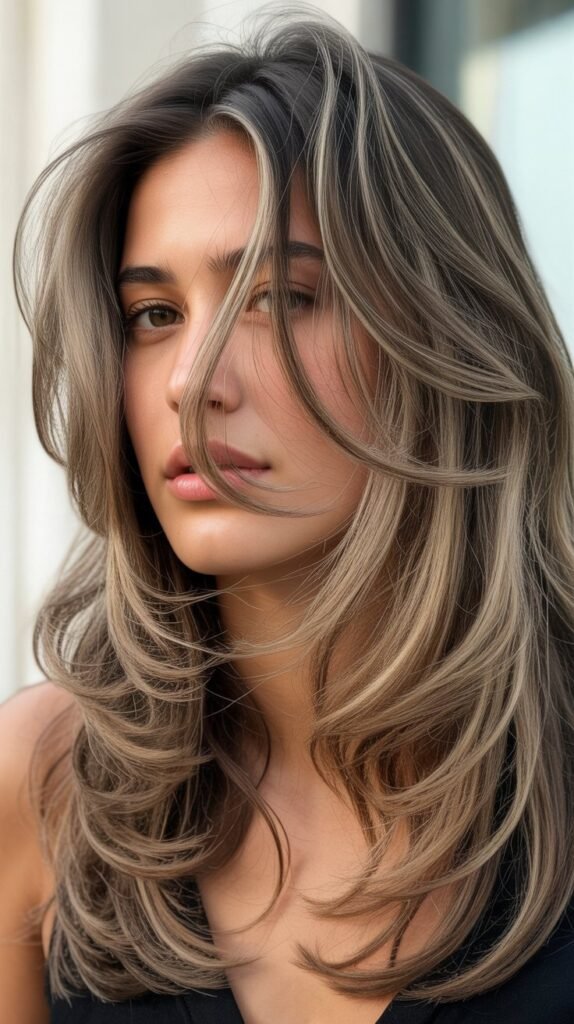
Edgy face-framing layers incorporate unconventional cutting techniques, dramatic length variations, and bold styling choices for fashion-forward individuals.
- Edgy layers often feature dramatic length differences between face-framing pieces and the rest of the hair.
- Choppy, razored, or disconnected techniques create intentional contrast and visual interest.
- This style suits those with strong personal style and confidence in unconventional looks.
- Bold colors, undercuts, or shaved sections can complement edgy face-framing layers.
- The layers make a statement and communicate individuality and fashion awareness.
- Styling involves emphasizing texture and separation rather than blending smoothly.
37. Romantic Face-Framing Layers
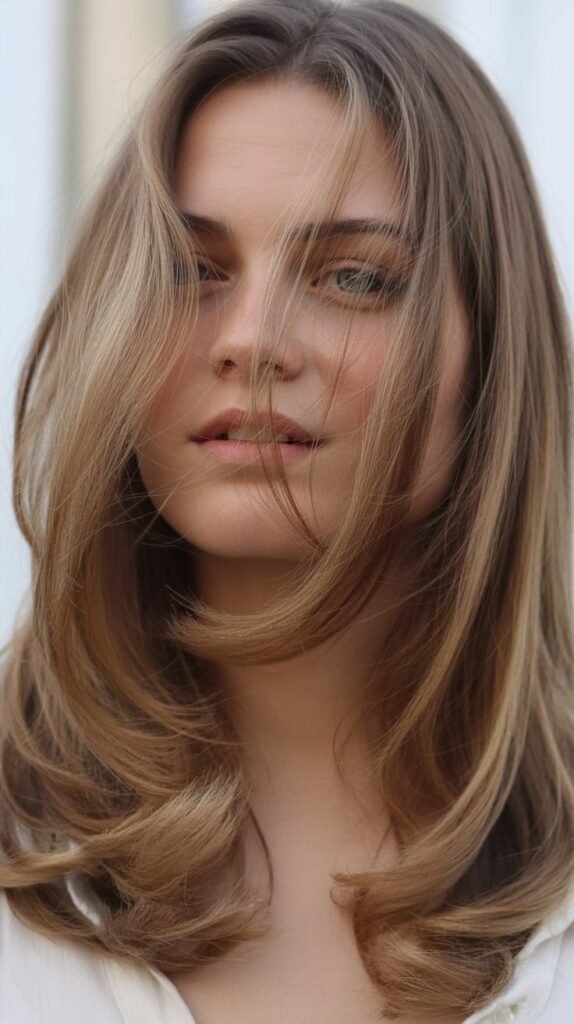
Romantic face-framing layers create soft, feminine looks with gentle curves and delicate movement that evoke timeless beauty and grace.
- These layers are cut with gentle, flowing transitions that create softness around the face.
- The face-framing pieces typically feature subtle curves rather than dramatic angles.
- Romantic layers work beautifully for weddings, dates, or any occasion requiring feminine elegance.
- Soft waves, loose curls, and flowing movement enhance the romantic aesthetic.
- The cutting technique avoids harsh lines in favor of seamless blending and gentle transitions.
- Flower accessories, braids, or half-up styles complement the romantic layered look.
38. Modern Face-Framing Layers
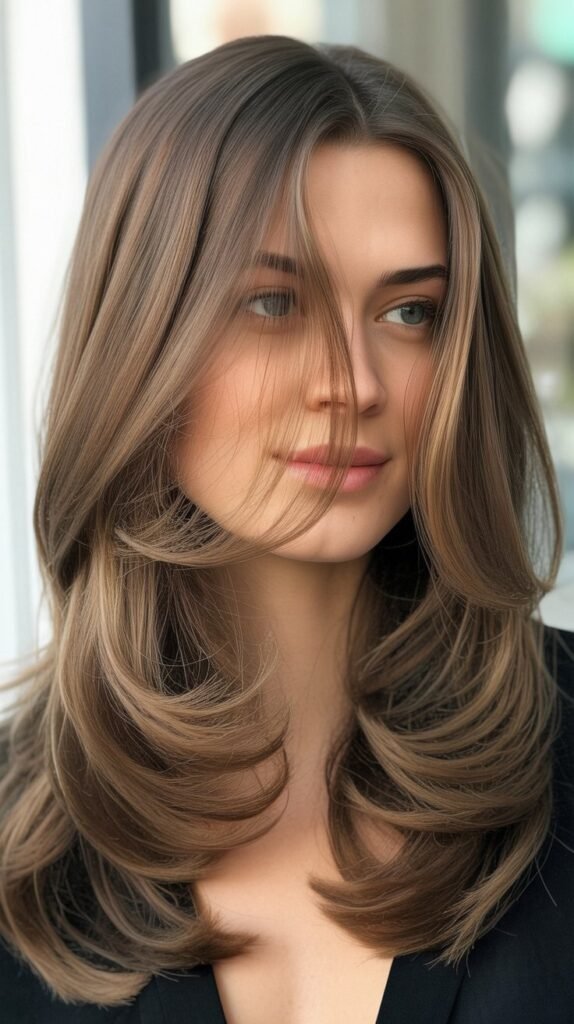
Modern face-framing layers incorporate current trends and cutting-edge techniques for a contemporary, fashion-forward appearance that reflects today’s aesthetic.
- Modern layers often combine multiple techniques—blunt elements, textured pieces, and varied lengths.
- Face-framing incorporates current trends like curtain bangs, money pieces, or butterfly layers.
- The approach is fresh and current, reflecting what’s popular in contemporary hair fashion.
- Social media trends influence modern layering techniques and styling approaches.
- This style suits those who enjoy staying current with beauty trends and experimenting with new looks.
- Regular updates keep the style fresh as trends evolve and change.
39. Natural Face-Framing Layers
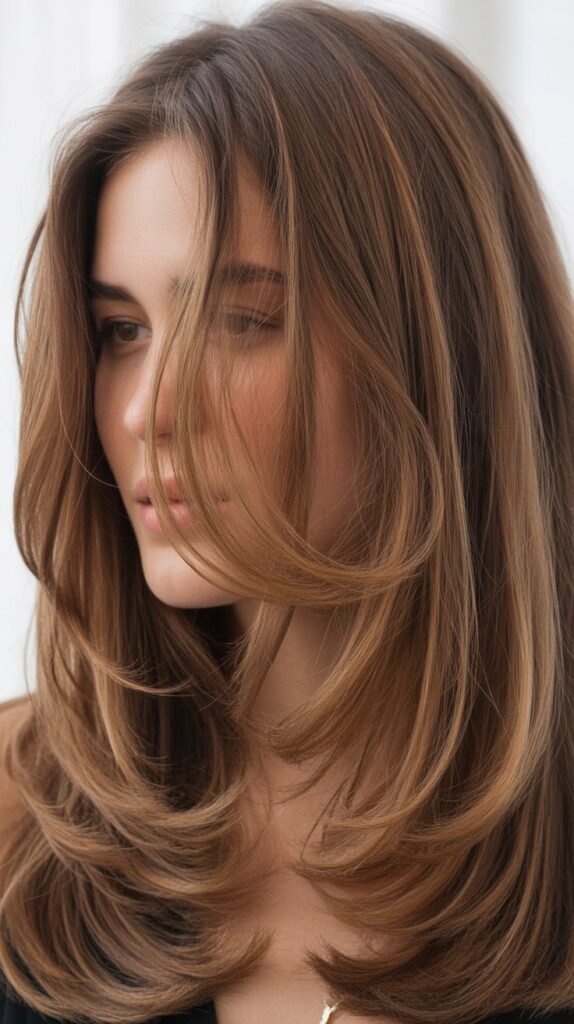
Natural face-framing layers work with your hair’s inherent texture and pattern, enhancing rather than fighting your natural characteristics for an authentic look.
- These layers are cut to complement your hair’s natural behavior rather than requiring extensive styling.
- The cutting technique considers natural growth patterns, cowlicks, and texture.
- Face-framing pieces are designed to fall naturally with minimal intervention or product.
- This approach is perfect for those who prefer wash-and-go simplicity.
- Embracing natural texture reduces heat damage and styling time significantly.
- The layers enhance whatever texture you naturally have rather than transforming it.
40. Dramatic Face-Framing Layers
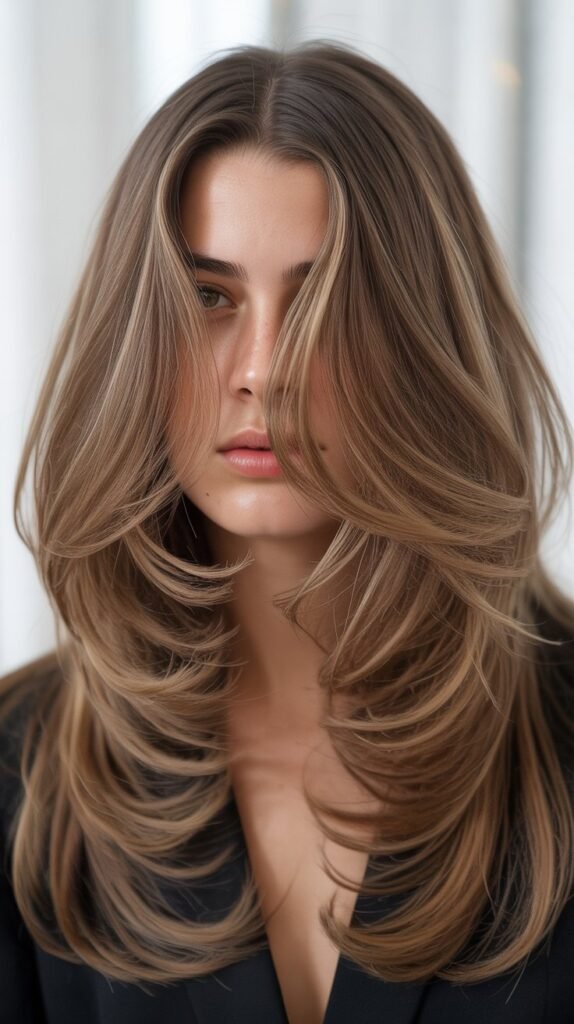
Dramatic face-framing layers feature bold length differences and striking contrasts that create high-impact visual interest and make a strong style statement.
- The shortest face-framing pieces may be 6-8 inches shorter than the longest lengths.
- This creates an unmistakable, eye-catching effect that draws attention.
- Dramatic layers work for those comfortable with bold, statement-making hairstyles.
- The contrast between lengths adds incredible dimension and movement.
- Styling can emphasize the drama with sleek finishes or enhance it with texture and waves.
- This approach transforms long hair from simple to spectacular with strategic cutting.
41. Minimalist Face-Framing Layers
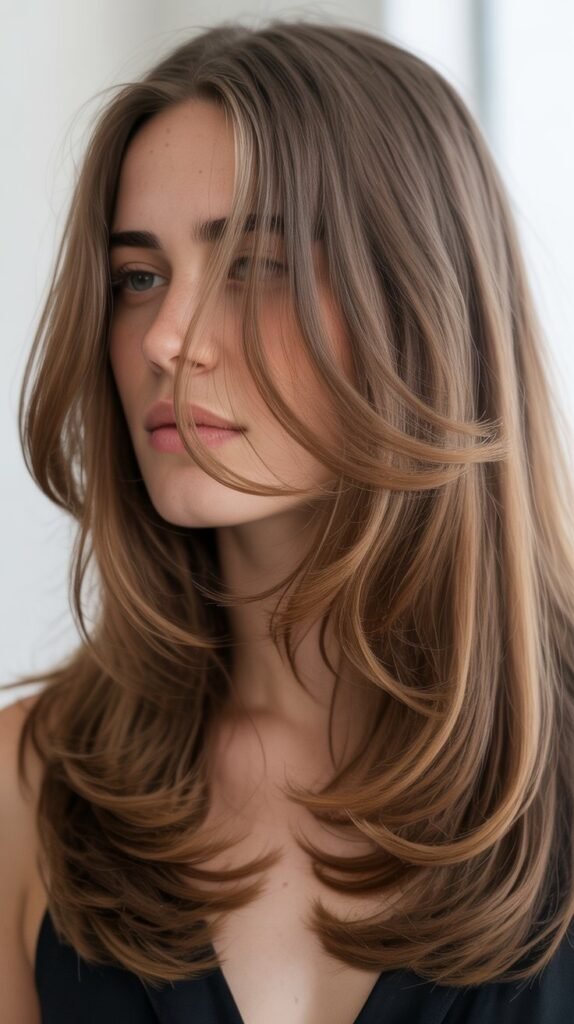
Minimalist face-framing layers provide subtle enhancement with barely-there cutting that adds just enough dimension without obvious layering.
- The layers are so subtle that most people won’t consciously notice them, but they create gentle movement.
- Face-framing pieces are only slightly shorter than the surrounding hair.
- This approach suits those who want natural enhancement without dramatic transformation.
- The minimalist aesthetic aligns with refined, understated personal style.
- Maintenance is minimal as the subtle layers grow out seamlessly.
- The result is polish and dimension without obvious styling or cutting.
42. Cascading Face-Framing Layers
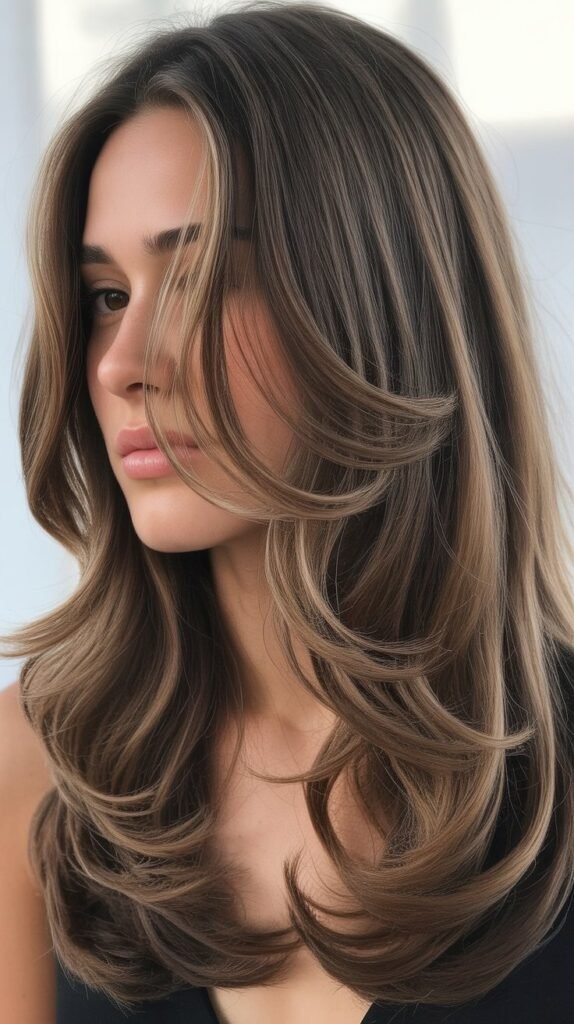
Cascading layers create a waterfall effect with multiple layer lengths flowing from the face-framing pieces through the rest of the hair for continuous movement.
- Multiple layer lengths are strategically placed to create seamless flow from short to long.
- The face-framing pieces begin the cascade, with subsequent layers increasing in length.
- This technique creates maximum movement throughout the entire hair length.
- Cascading layers work beautifully for all hair types and add incredible dimension.
- The flowing effect is enhanced by waves or curls that emphasize the layered structure.
- This approach prevents the hair from looking bottom-heavy or triangular.
43. Face-Framing Layers With Undercut
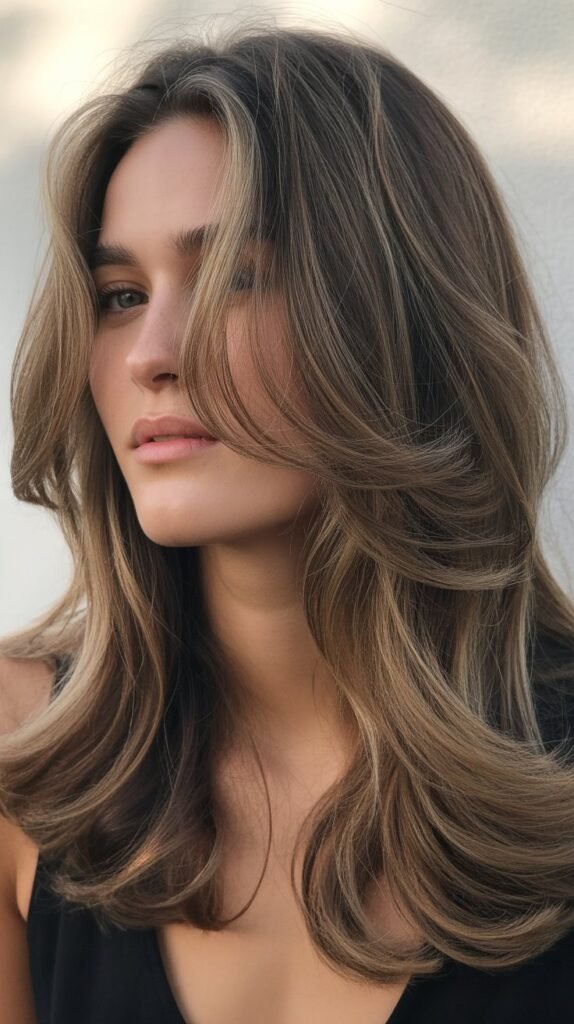
Combining face-framing layers with an undercut creates an unexpected contrast between the visible layered hair and hidden shaved sections underneath.
- The undercut removes bulk and weight from underneath while maintaining length on top.
- Face-framing layers on the visible hair create dimension while the undercut provides drama when revealed.
- This combination offers versatility—wear hair down to hide the undercut or up to show it.
- The undercut significantly reduces drying time and makes thick hair more manageable.
- It’s an edgy choice that allows for conservative appearance when needed but rebellion when desired.
- The face-framing layers soften the potentially harsh edge of the undercut for balanced aesthetics.
Maintenance Tips for Face-Framing Layers
Maintaining beautiful face-framing layers requires specific care and regular attention to keep them looking their best and prevent them from losing their shape.
| Maintenance Task | Recommended Frequency | Purpose |
|---|---|---|
| Professional Trims | Every 6-8 weeks | Maintain layer shape and remove split ends |
| Deep Conditioning | Weekly | Keep layers healthy and prevent breakage |
| Clarifying Treatment | Monthly | Remove product buildup that weighs down layers |
| Hair Masks | Bi-weekly | Nourish and strengthen layered sections |
| Heat Protection | Before every styling | Prevent damage to frequently styled face-framing pieces |
- Face-framing layers require more frequent trims than one-length hair to maintain their shape.
- The shortest layers grow out fastest and need attention to prevent losing the framing effect.
- Quality hair products specifically designed for your texture keep layers looking polished.
- Heat styling the face-framing pieces more frequently means they need extra protection and care.
- Regular deep conditioning prevents the ends of layers from becoming dry or damaged.
- Sleeping on silk pillowcases reduces friction that can disrupt the styled shape of face-framing layers.
- Avoid over-washing, which can strip natural oils that keep layers looking healthy and shiny.
Styling Products for Face-Framing Layers
The right styling products make the difference between face-framing layers that fall beautifully and those that fall flat or frizzy.
- Volumizing mousse adds body to fine hair with layers without weighing them down.
- Texturizing spray creates separation and piece-y definition in layered sections.
- Heat protectant spray is essential before blow-drying or using hot tools on face-framing pieces.
- Lightweight serum adds shine and smoothness to sleek, polished layered styles.
- Sea salt spray enhances natural texture and creates beachy waves in layered hair.
- Dry shampoo extends time between washes and adds volume at the roots of layered styles.
- Flexible hold hairspray maintains the shape of face-framing layers without stiffness.
- Curl cream defines waves and curls in naturally textured hair with layers.
Conclusion
The journey through these 43 Beautiful Long Hairstyles With Face-Framing Layers demonstrates that this versatile cutting technique offers endless possibilities for enhancing your natural beauty.
From classic curtain bangs to edgy asymmetrical cuts, from romantic soft waves to sleek modern styling, face-framing layers transform long hair into a personalized masterpiece that flatters your unique features and reflects your individual style.
Whether you have straight, wavy, curly, thick, or fine hair, there’s a face-framing layer approach that will work beautifully for your specific texture and needs.
The key to success lies in choosing a style that complements your face shape, working with a skilled stylist who understands layering techniques, and maintaining your cut with regular trims and appropriate hair care.
These face-framing layers not only add dimension and movement to your long locks but also provide the confidence boost that comes from knowing your hairstyle perfectly frames and enhances your most beautiful features.
With the comprehensive information provided about various styles, maintenance requirements, and styling techniques, you’re now equipped to have an informed conversation with your stylist and achieve the stunning face-framing layers you’ve been dreaming about.