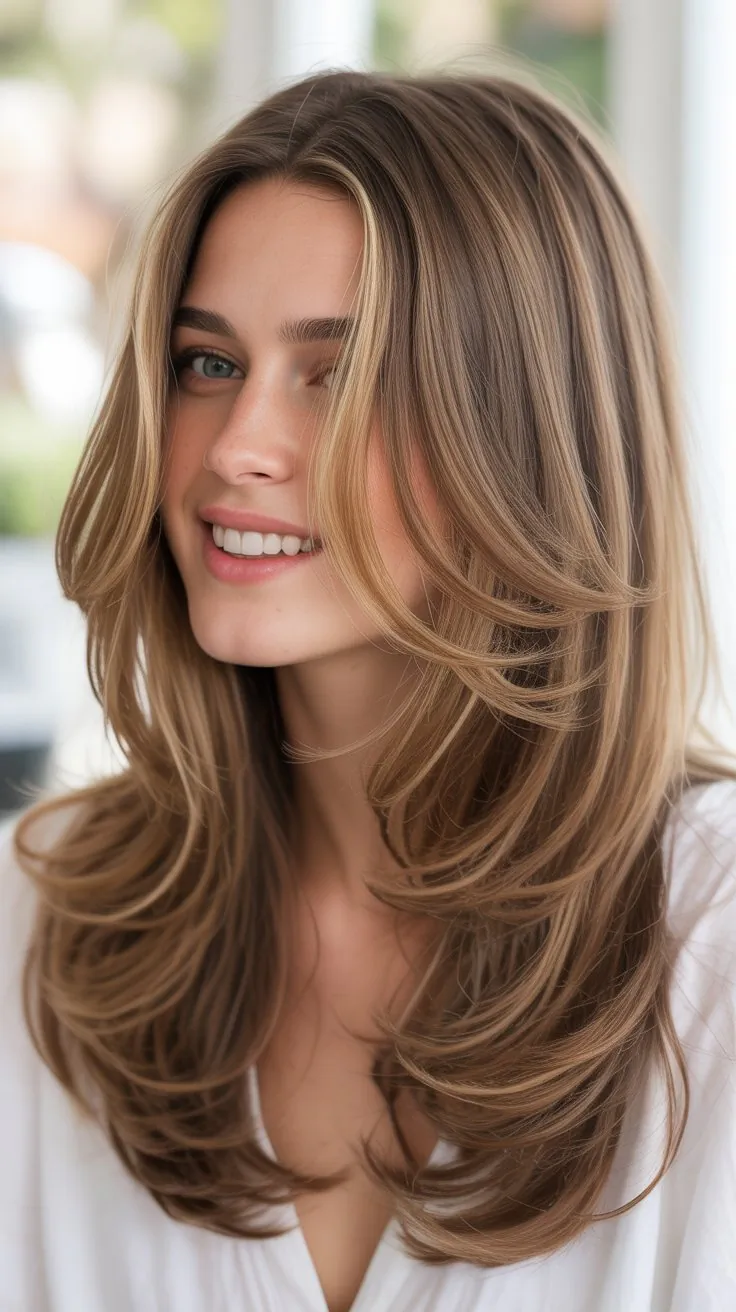
Long hair is beautiful, but it can sometimes feel heavy, lifeless, or lacking dimension.
The secret to revitalizing your lengthy locks lies in strategic layering techniques that add movement, volume, and personality to your style.
Whether you’re seeking subtle face-framing pieces or dramatic cascading layers, the right cut can completely transform your appearance without sacrificing length.
This comprehensive guide to 45 Long Layer Ideas That Instantly Transform Your Look will walk you through everything from classic styles to modern trends, helping you discover the perfect layered look for your face shape, hair texture, and personal aesthetic.
You’ll learn about various layering techniques, styling tips, maintenance advice, and how to communicate your vision to your stylist for the best results.
1. Face-Framing Layers
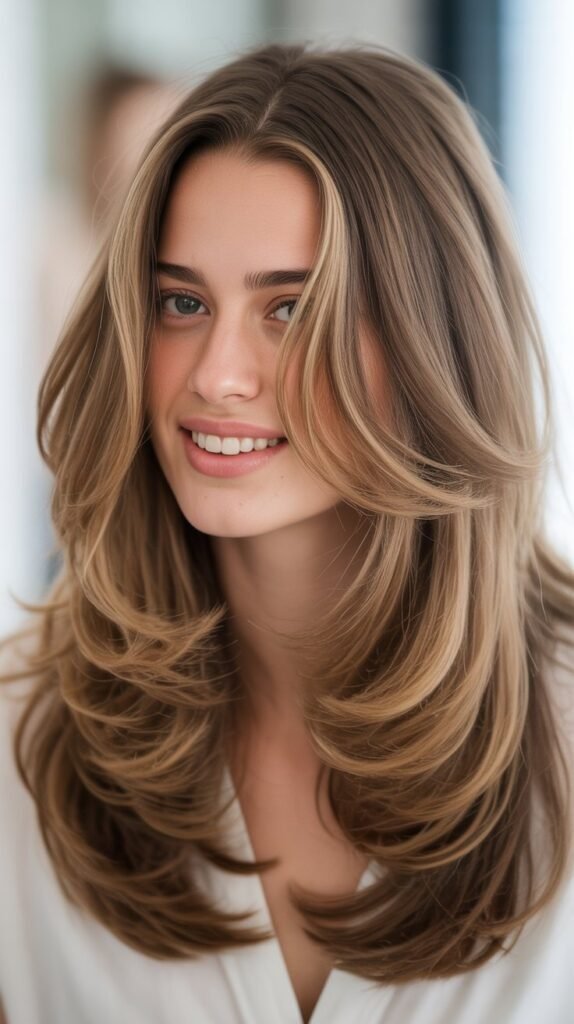
Face-framing layers are designed to highlight your best features by creating soft pieces that gently contour around your face.
These layers typically start around the cheekbones or chin and blend seamlessly into the rest of your hair, offering a flattering effect for nearly every face shape.
- Face-framing layers draw attention to your eyes and cheekbones while softening angular features
- These layers work exceptionally well for heart-shaped and square face shapes
- The shortest pieces typically start at chin length and gradually blend downward
- This style adds dimension without requiring layers throughout the entire length of your hair
- Face-framing layers can be styled straight for a sleek look or curled for added bounce
- Regular trims every 6-8 weeks help maintain the shape and prevent split ends
- This versatile cut works with all hair textures from fine to thick
2. Long V-Cut Layers
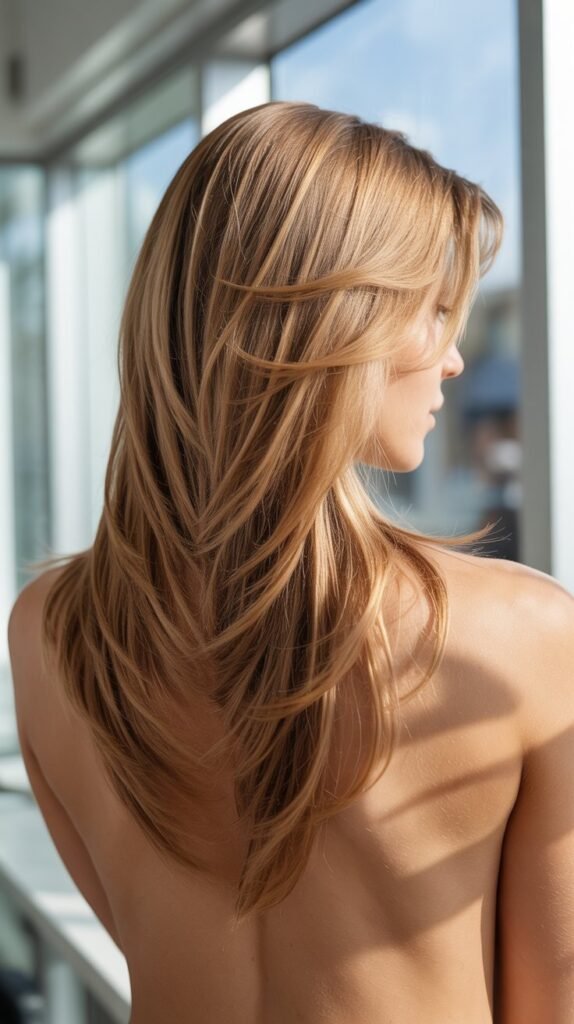
The V-cut creates a dramatic pointed shape at the back of your hair, with layers that gradually increase in length toward the center.
This creates a stunning visual effect when hair is viewed from behind and adds beautiful movement throughout.
- The V-cut creates a striking geometric shape that looks especially beautiful on straight to wavy hair
- This cut maintains maximum length in the center while creating shorter perimeter layers
- The angled shape adds natural movement and prevents hair from looking too blunt or boxy
- V-cut layers distribute weight evenly, making thick hair feel lighter
- This style showcases highlights and color dimension exceptionally well
- The pointed V-shape can be customized from subtle to dramatic based on preference
- Regular conditioning treatments help maintain the health of the tapered ends
3. Curtain Bangs with Long Layers
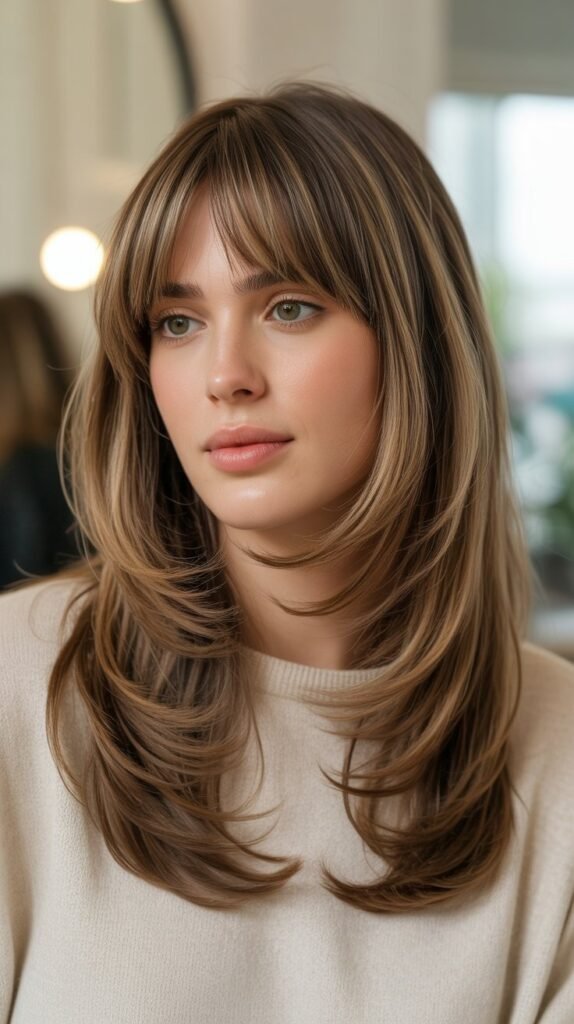
Curtain bangs paired with long layers create a effortlessly chic, bohemian-inspired look.
The bangs part down the middle and frame both sides of the face, while the layers add texture and volume throughout the length.
- Curtain bangs are parted in the middle and sweep to either side of the face
- These bangs typically reach cheekbone to chin length and blend into face-framing layers
- This style works beautifully for oval, round, and heart-shaped faces
- Curtain bangs require minimal styling and grow out gracefully
- The combination softens strong features while adding youthful dimension
- This look requires regular bang trims every 3-4 weeks to maintain shape
- A round brush and blow dryer help create the signature outward sweep
4. Feathered Long Layers
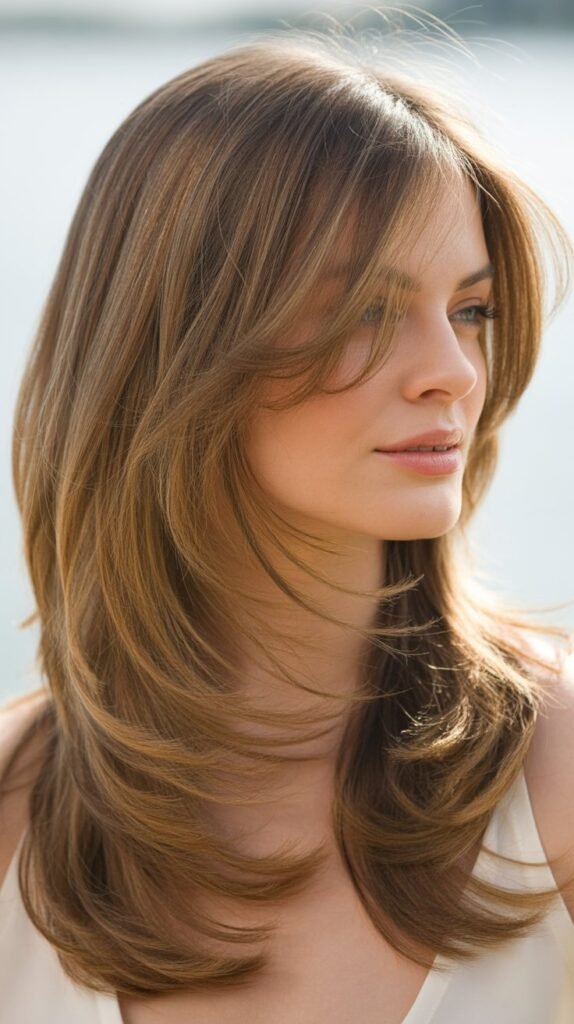
Feathered layers create soft, wispy ends that appear to flutter like feathers, adding incredible lightness and movement to long hair.
This technique involves cutting hair at varying angles to create texture and eliminate bulk.
- Feathering involves cutting hair at angles to create soft, tapered ends
- This technique reduces weight and bulk while maintaining overall length
- Feathered layers work exceptionally well for thick or coarse hair types
- The style creates beautiful movement when hair is tossed or blown by wind
- Point cutting and razor techniques are commonly used to achieve feathering
- Texturizing products enhance the feathered effect and add definition
- This cut requires less frequent maintenance than blunt styles
5. Long Shag Layers
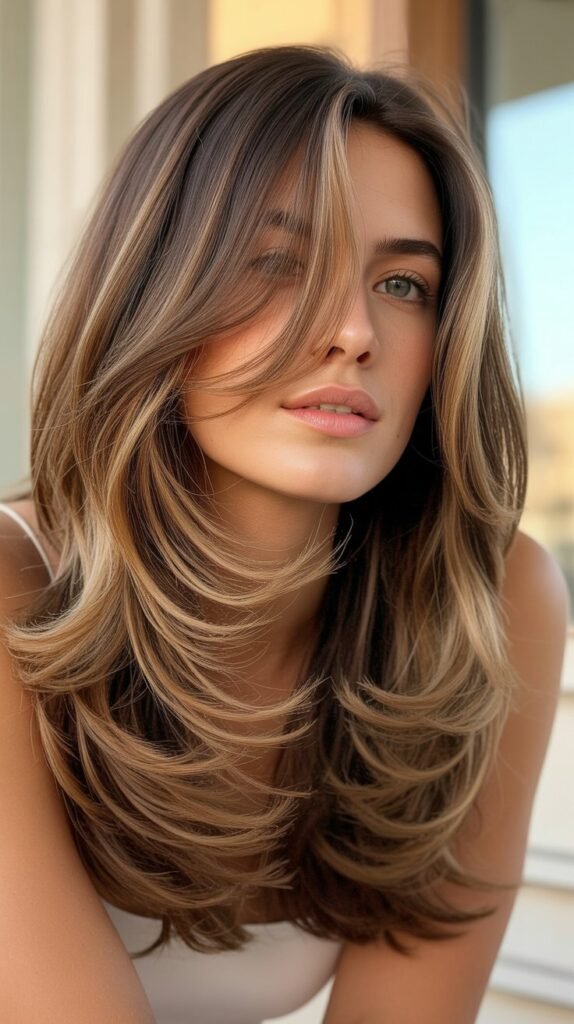
The long shag brings the retro 70s style into modern times with choppy, heavily layered hair that creates maximum volume and texture.
This edgy style features layers throughout the entire head, from crown to ends.
- The long shag features heavy layering from the crown down through the ends
- Choppy, textured pieces create volume at the roots and movement throughout
- This style works best for those seeking a more edgy, undone aesthetic
- Long shags suit most face shapes and add dimension to fine or medium hair
- The cut requires minimal styling and embraces natural texture
- Sea salt spray and texturizing products enhance the piece-y, lived-in look
- Regular trims every 8-10 weeks maintain the shag’s signature shape
6. Butterfly Layers
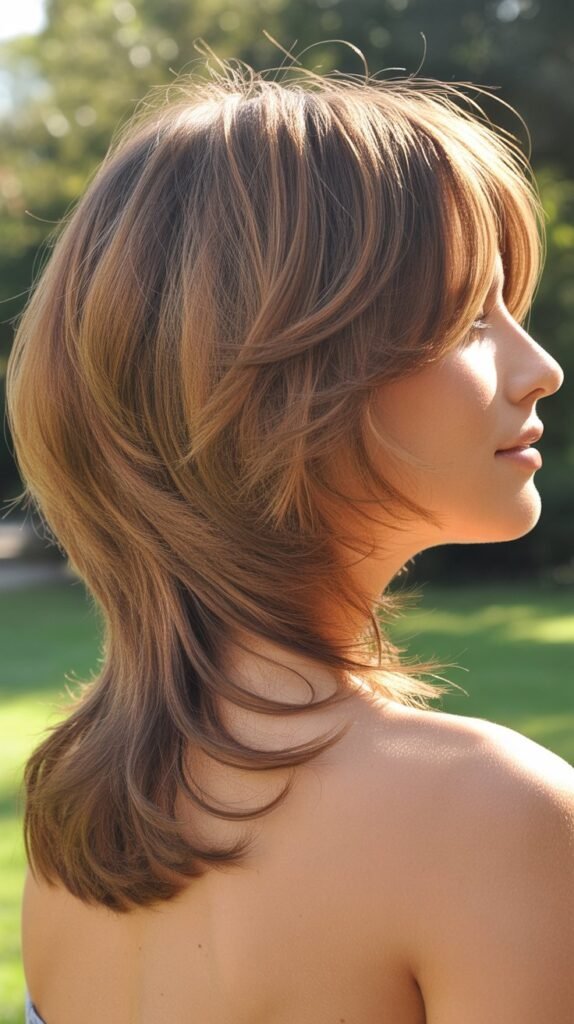
Butterfly layers create a distinctive shape with shorter layers concentrated around the crown and face, while maintaining longer length underneath.
The result resembles butterfly wings when styled with volume.
- Butterfly layers feature dramatic length variation between top and bottom sections
- The shorter upper layers create volume and lift at the crown
- Longer underneath layers maintain overall length and fullness
- This cut adds dimension to fine or flat hair without sacrificing length
- The style creates beautiful movement and a flattering silhouette
- Butterfly layers require blow-drying with a round brush for best results
- This technique works well with highlights to emphasize the layered dimension
7. Soft U-Shaped Layers
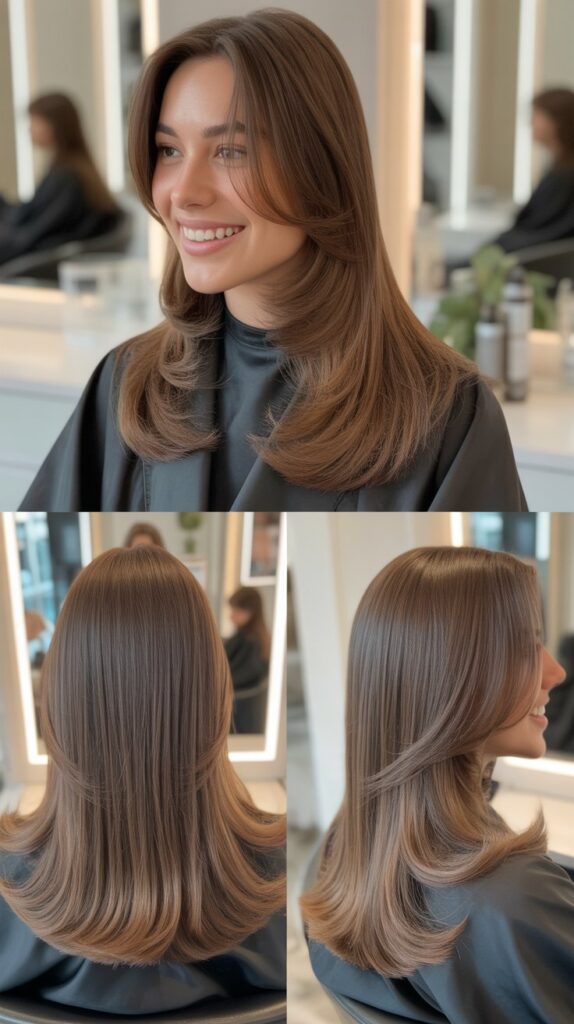
Unlike the dramatic V-cut, U-shaped layers create a gentle rounded curve at the ends of your hair.
This subtle shaping adds movement while maintaining a soft, romantic appearance.
- U-shaped layers create a soft, rounded perimeter rather than a pointed shape
- This cut maintains fullness at the ends while adding subtle dimension
- The rounded shape flatters most face shapes and hair types
- U-shaped layers are less dramatic than V-cuts, offering a more conservative option
- This style works beautifully for those who want movement without extreme layering
- The gentle curve creates a feminine, romantic silhouette
- Regular trims help maintain the rounded shape and hair health
8. Razored Long Layers
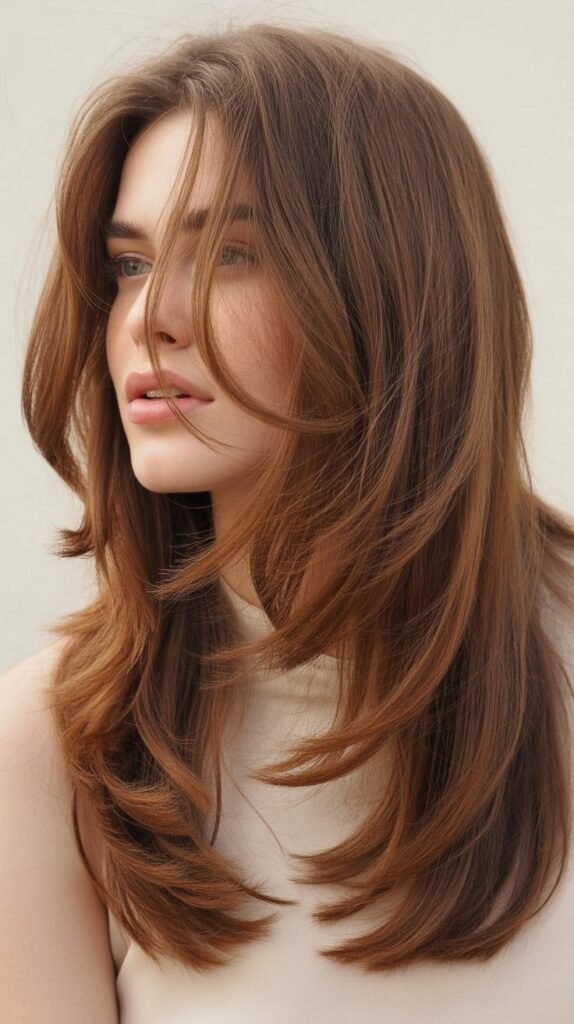
Razor cutting creates incredibly soft, blended layers with feathery ends.
This technique uses a razor blade instead of scissors to slice through hair, resulting in ultra-light, textured layers.
- Razor cutting produces softer, more diffused layers than scissor cutting
- This technique is ideal for thick or heavy hair that needs weight removed
- Razored layers create incredible movement and prevent a bulky appearance
- The method works best on straight to wavy hair textures
- Curly hair can become frizzy with razor cutting, so it’s generally not recommended
- Razored ends require deep conditioning to prevent dryness
- This cutting technique creates a lived-in, effortless appearance
9. Long Layers with Side-Swept Bangs
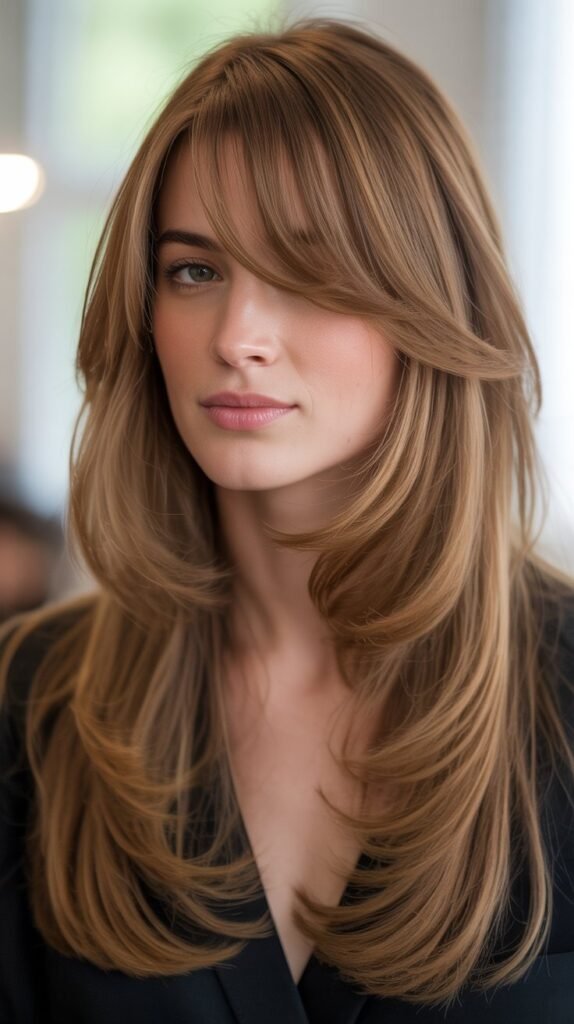
Side-swept bangs paired with long layers create an asymmetrical, face-flattering frame that adds instant sophistication.
The angled bangs blend seamlessly into longer layers for a cohesive look.
- Side-swept bangs angle across the forehead, typically covering one eyebrow
- These bangs help balance asymmetrical or angular face shapes
- The style creates a slimming effect by adding diagonal lines to the face
- Side-swept bangs require regular trims every 3-4 weeks
- This look works well for professional and casual settings alike
- A flat iron or round brush helps style the bangs to sweep smoothly
- The bangs can be pinned back when desired for versatility
10. Cascading Long Layers
Cascading layers create a waterfall effect with multiple distinct layer levels that flow beautifully down the length of your hair.
This dimensional cut adds incredible depth and movement.
- Cascading layers feature multiple clearly defined layer levels throughout the hair
- Each layer is distinct enough to create visible dimension and movement
- This technique works exceptionally well for thick hair that needs weight distribution
- The cascading effect is enhanced when hair is styled with waves or curls
- This cut requires more maintenance than simpler layering techniques
- Highlighting different layer levels emphasizes the cascading dimension
- Regular professional styling helps maximize the cascading effect
11. Invisible Layers
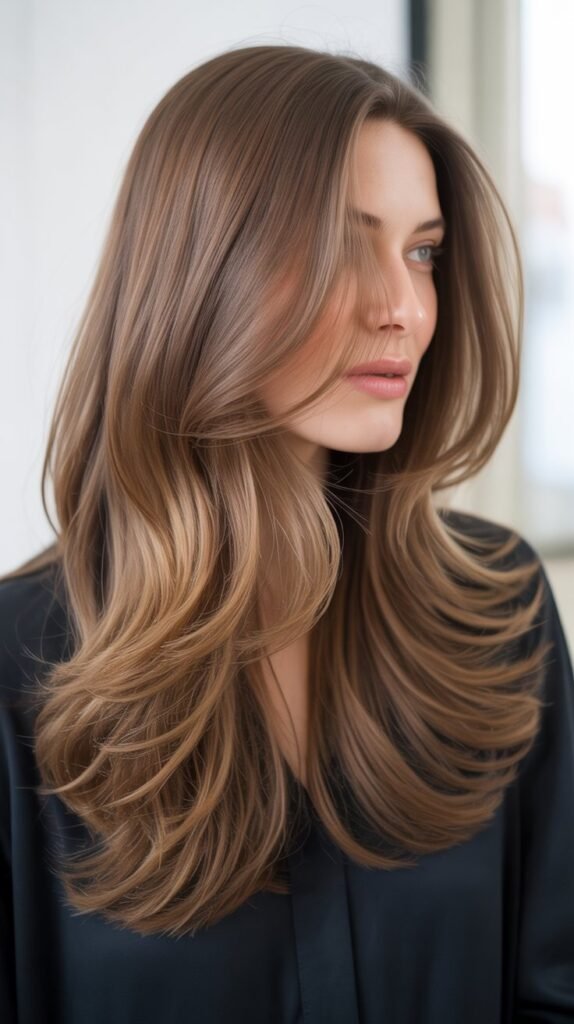
Invisible layers are subtle, seamlessly blended layers that add movement and reduce bulk without creating obvious layer lines.
This technique maintains a sleek appearance while eliminating weight.
- Invisible layers are cut to blend so seamlessly that layer lines aren’t visible
- This technique uses point cutting and texturizing to remove internal weight
- The result is lighter, more movable hair that maintains a uniform appearance
- Invisible layers work perfectly for those who want dimension without choppy layers
- This cut is ideal for professional settings requiring polished, conservative styles
- The seamless blending requires a skilled stylist with precision cutting abilities
- Minimal styling is needed to maintain the sleek, flowing appearance
12. Long Layers with Balayage
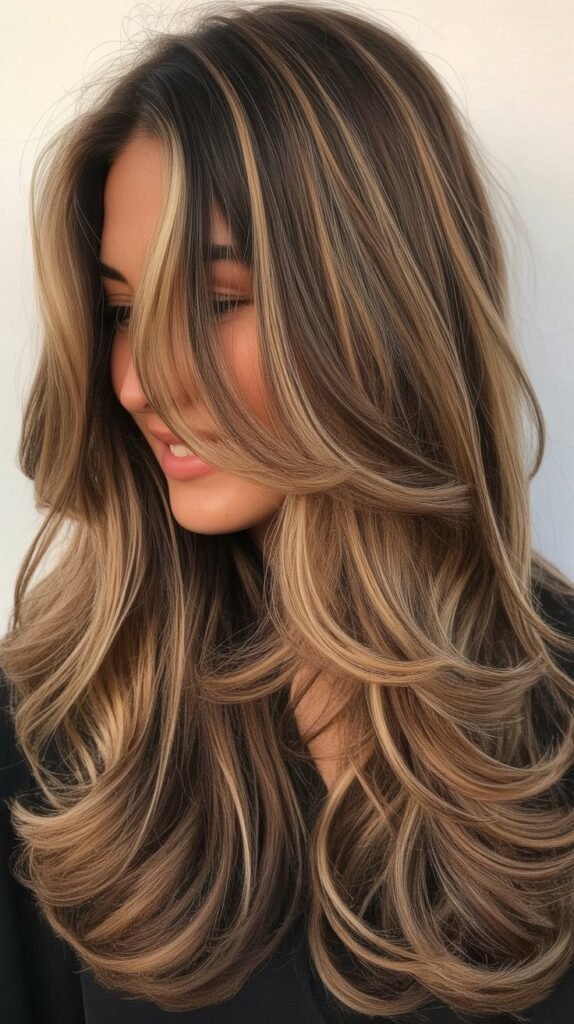
Combining long layers with balayage highlighting creates dimensional color that emphasizes the layered structure.
The hand-painted highlights naturally follow the hair’s movement, enhancing the cut.
- Balayage is a freehand painting technique that creates natural-looking highlights
- The color placement can be customized to emphasize specific layers
- Lighter pieces around the face brighten and frame facial features
- Balayage requires less maintenance than traditional highlights
- The combination of layers and dimension creates incredible depth
- This pairing works with any base color from blonde to black
- Regular toning treatments maintain the desired color balance
13. Textured Long Layers
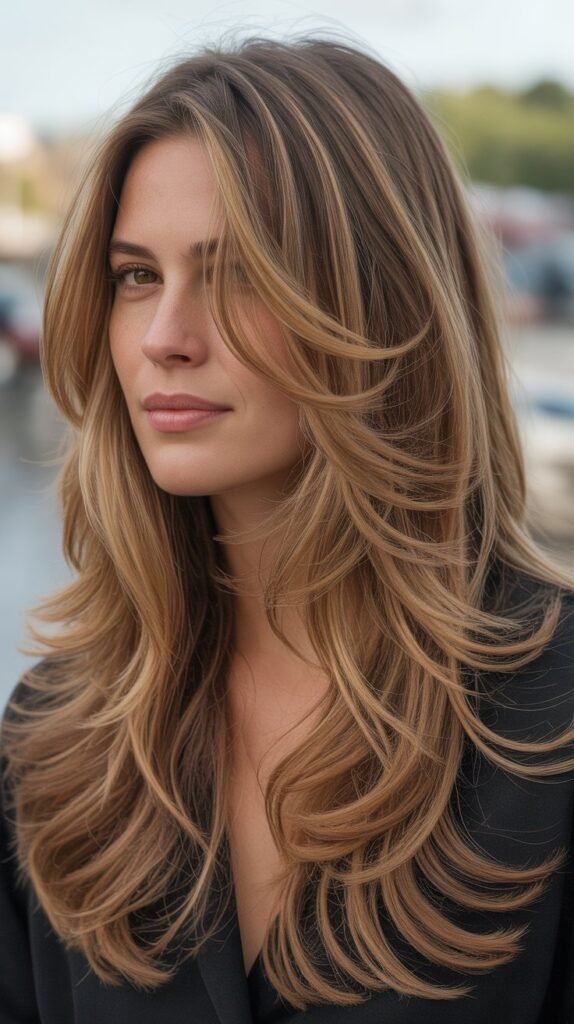
Textured layers incorporate various cutting techniques to create piece-y, separated ends with plenty of movement.
This modern approach adds interest and prevents hair from looking too uniform or blunt.
- Textured layers use point cutting, slicing, and notching techniques
- The varied cutting angles create separation and prevent hair from clumping
- This style adds volume and dimension to fine or medium hair
- Texturizing products like dry shampoo and sea salt spray enhance the effect
- The piece-y appearance creates a modern, editorial look
- This cut works well for those who prefer low-maintenance styling
- Regular texturizing treatments maintain the desired effect
14. Long Layers with Blunt Bangs
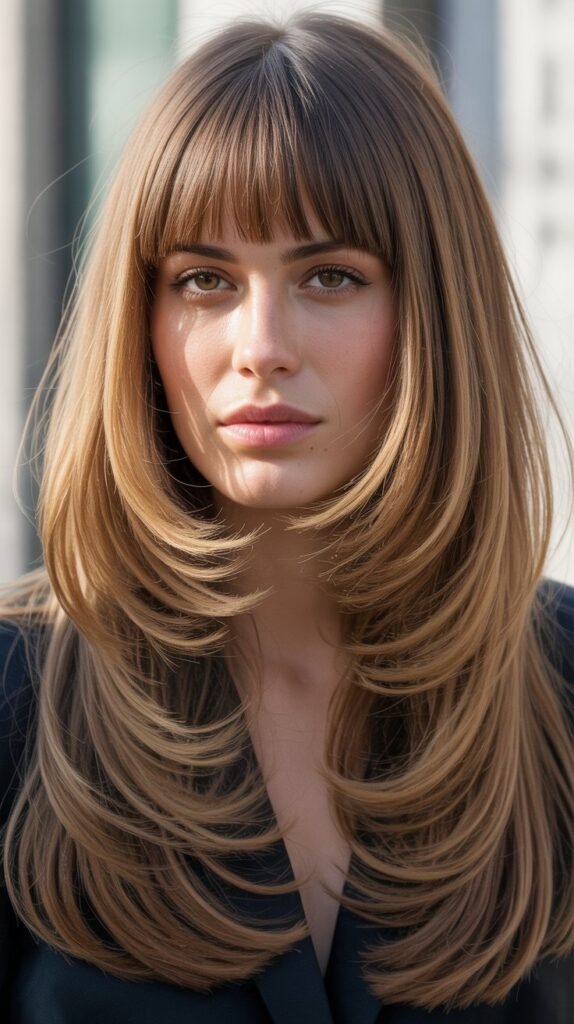
Pairing long layers with blunt-cut bangs creates a striking contrast between the straight fringe and flowing layers.
This bold combination adds drama and personality to your look.
- Blunt bangs are cut straight across the forehead, typically at or above eyebrow level
- The contrast between blunt bangs and soft layers creates visual interest
- This style makes a bold statement and frames the eyes dramatically
- Blunt bangs require frequent trims every 2-3 weeks to maintain length
- The combination works well for oval and heart-shaped faces
- Daily styling with a flat iron keeps bangs smooth and straight
- Bangs can be swept to the side or pinned back for versatility
15. Angled Long Layers
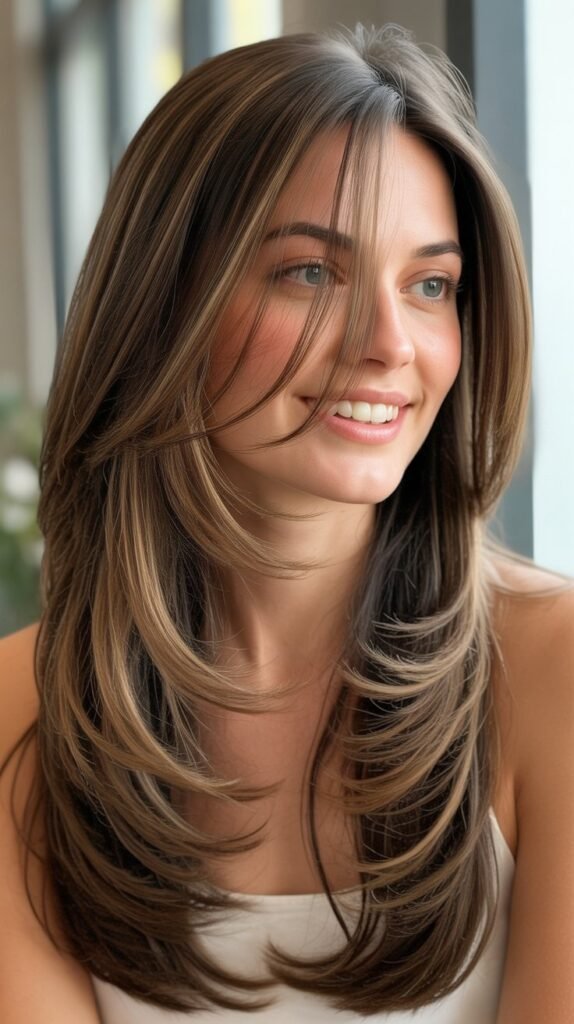
Angled layers are cut on a diagonal, creating longer pieces in front that gradually shorten toward the back.
This creates a forward-moving shape that frames the face beautifully.
- Angled layers are longer at the front and gradually shorten toward the back
- This creates a slimming, face-framing effect from all angles
- The diagonal lines add movement and prevent hair from looking too heavy
- Angled layers work particularly well for round or square face shapes
- The style is versatile and can be worn straight, wavy, or curled
- This cut maintains significant length while adding dimension
- The angled shape grows out gracefully between salon visits
16. Long Layered Bob
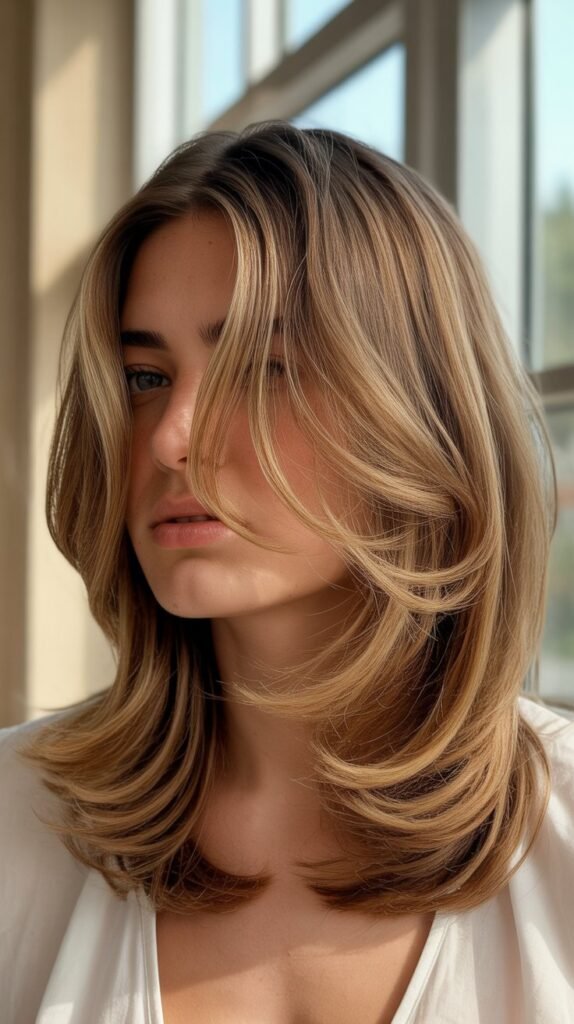
The long layered bob keeps hair between shoulder and mid-back length with layers that add volume and movement.
This versatile length is professional yet stylish.
- Long layered bobs typically fall between shoulders and mid-back
- Layers add body and prevent the style from looking too heavy or dated
- This length is highly versatile and appropriate for most settings
- The cut works well for transitioning from shorter to longer hair
- Long bobs can be styled sleek, wavy, or in updos
- Face-framing layers around the front add extra dimension
- Regular trims every 6-8 weeks maintain shape and health
17. Choppy Long Layers
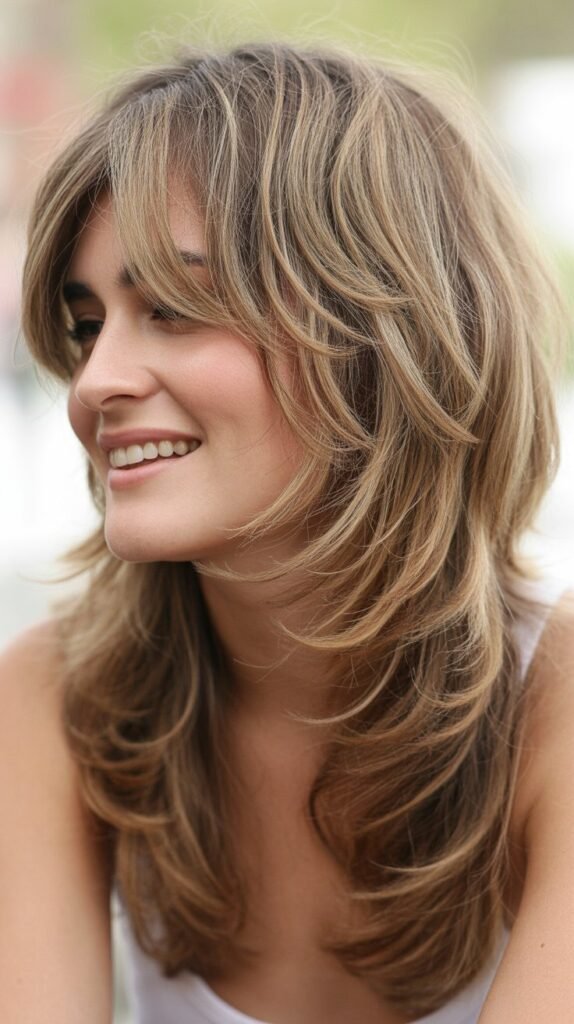
Choppy layers feature deliberately disconnected, uneven pieces that create an edgy, textured appearance.
This bold style adds significant movement and personality.
- Choppy layers are intentionally uneven and disconnected
- This creates maximum texture and movement throughout the hair
- The style works best for those seeking an edgy, alternative look
- Choppy layers add volume to fine hair and reduce bulk in thick hair
- Styling products like pomade and wax define the choppy texture
- This cut requires embracing natural texture and avoiding overly polished styles
- The disconnected pieces create a deliberately undone appearance
18. Long Layers with Money Pieces
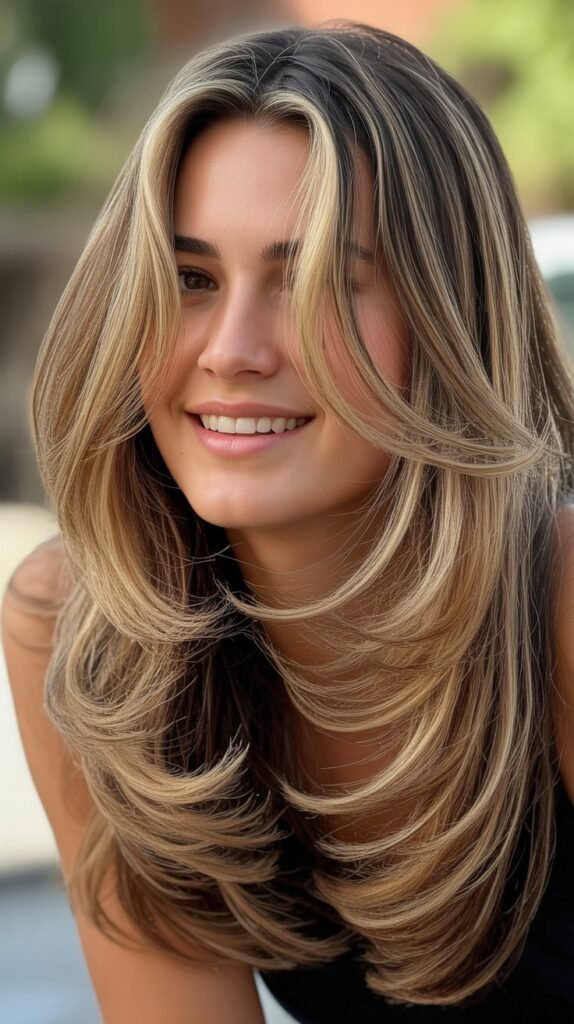
Money pieces are face-framing highlights that contrast with your base color, and when paired with long layers, they create a stunning dimensional effect that brightens your entire face.
- Money pieces are thick highlights placed along the hairline and face
- They create a brightening, face-framing effect that highlights features
- When combined with layers, the dimensional effect is enhanced
- Money pieces can be subtle or dramatically contrasting
- This technique works with any base color and face shape
- The highlights require regular toning to maintain vibrancy
- This combination creates an expensive, high-maintenance appearance
19. Long Layers with Micro Bangs
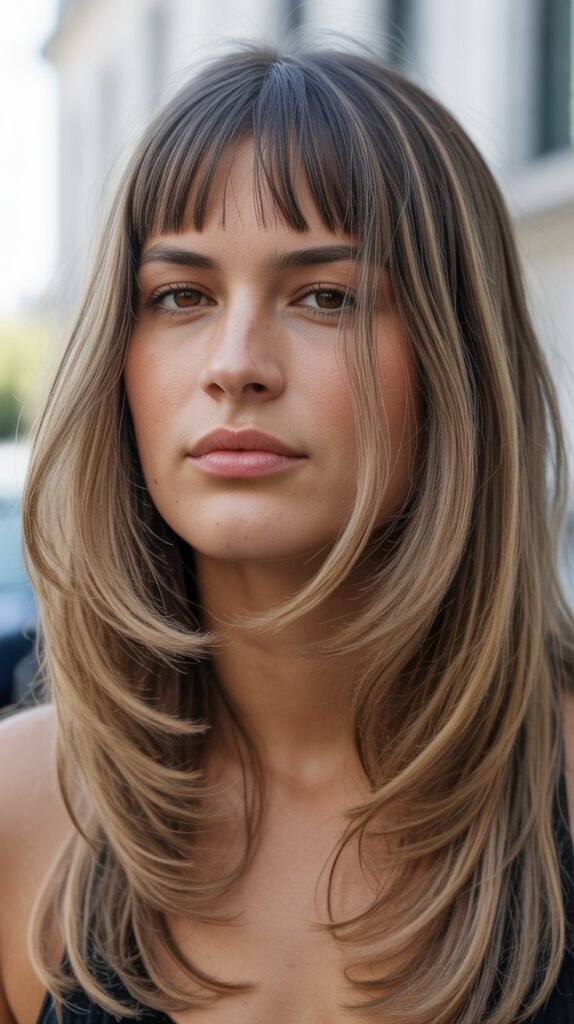
Micro bangs are ultra-short bangs that sit well above the eyebrows, creating a daring, fashion-forward look when paired with long flowing layers.
This bold contrast makes a serious style statement.
- Micro bangs are cut significantly shorter than traditional bangs
- They sit 1-2 inches above the eyebrows for a dramatic effect
- This bold style requires confidence and commitment
- The contrast between short bangs and long layers is striking
- Micro bangs work best for those with smaller foreheads
- Frequent trims every 2 weeks maintain the ultra-short length
- This style is ideal for those seeking a unique, fashion-forward appearance
20. Graduated Long Layers
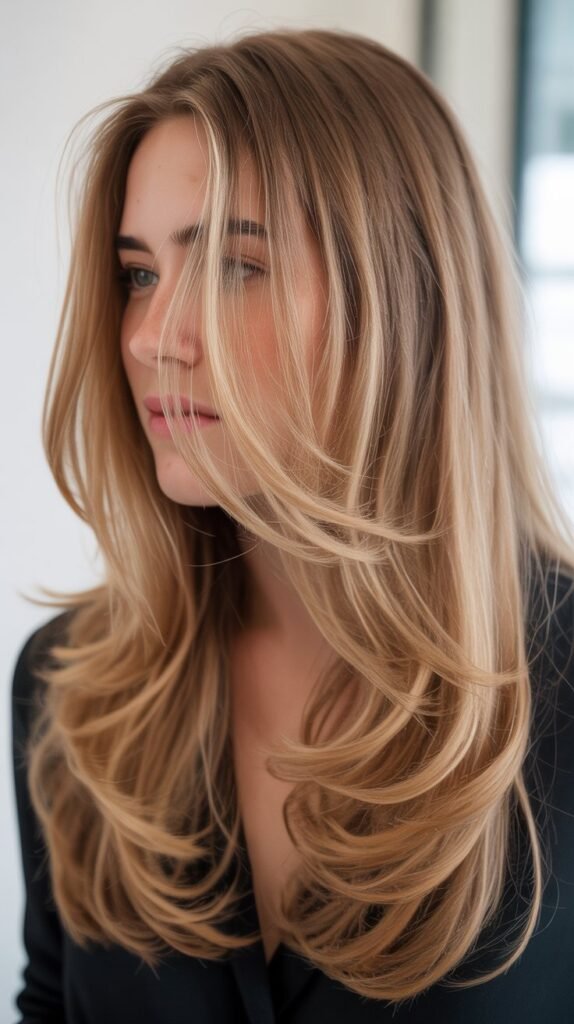
Graduated layers feature precise stacking that creates volume and lift at specific points while maintaining length.
The technical cutting creates a polished, salon-fresh appearance.
- Graduated layers are cut at specific angles to create intentional stacking
- This technique adds volume at the crown while maintaining length underneath
- The precise cutting creates a polished, structured appearance
- Graduated layers work well for fine to medium hair textures
- This style requires professional cutting skills for proper execution
- The stacked layers create lift that lasts between washes
- Regular maintenance every 6-8 weeks preserves the graduated shape
21. Long Layers with Peek-a-Boo Highlights
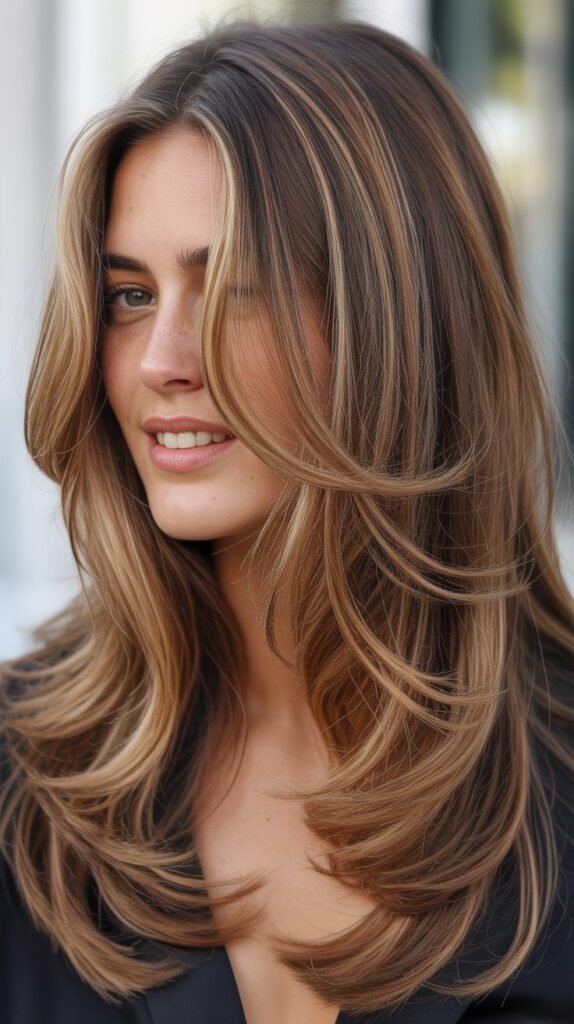
Peek-a-boo highlights are hidden color panels underneath the top layer of hair that reveal themselves with movement, creating a playful surprise element when paired with long layers.
- Peek-a-boo highlights are placed in the underlayers of hair
- They’re hidden when hair is down but visible when moved or styled up
- This technique allows for bold color without full commitment
- The surprise element adds playfulness and personality
- When combined with layers, the colors flash through beautifully
- Any color can be used for peek-a-boo panels
- This style maintains professionalism while offering hidden creativity
22. Long Layered Shag with Bangs
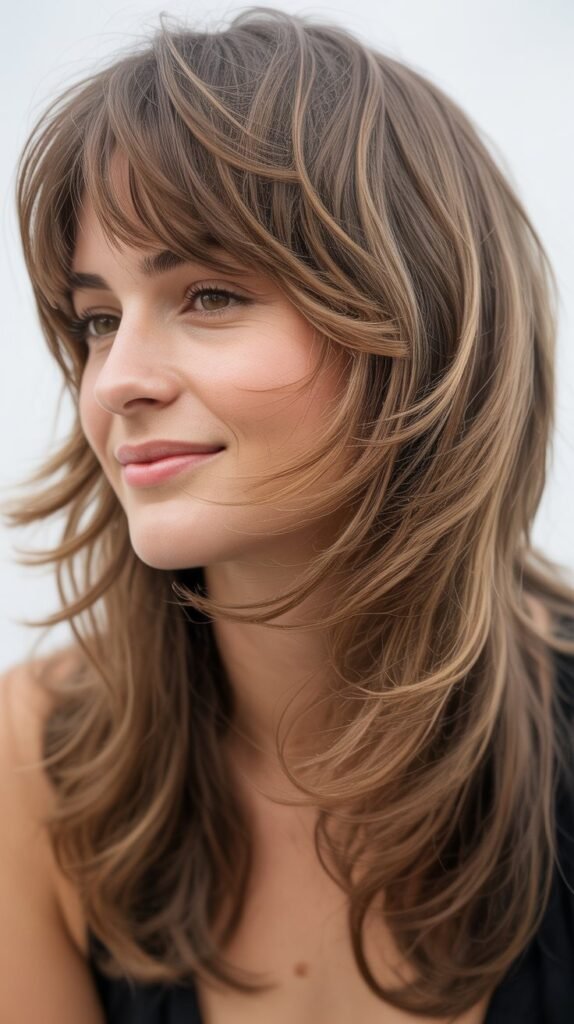
Combining a shag cut with bangs creates maximum texture and volume throughout, offering a retro-inspired yet modern appearance.
This style celebrates natural texture and movement.
- The shag features heavy layering from crown to ends
- Adding bangs completes the retro-inspired aesthetic
- This combination creates incredible volume and movement
- The style works well for naturally textured or wavy hair
- Minimal styling is required to achieve the lived-in look
- Texturizing spray and diffusing enhance natural texture
- Regular cuts maintain the shag’s signature choppy appearance
23. Slide-Cut Long Layers
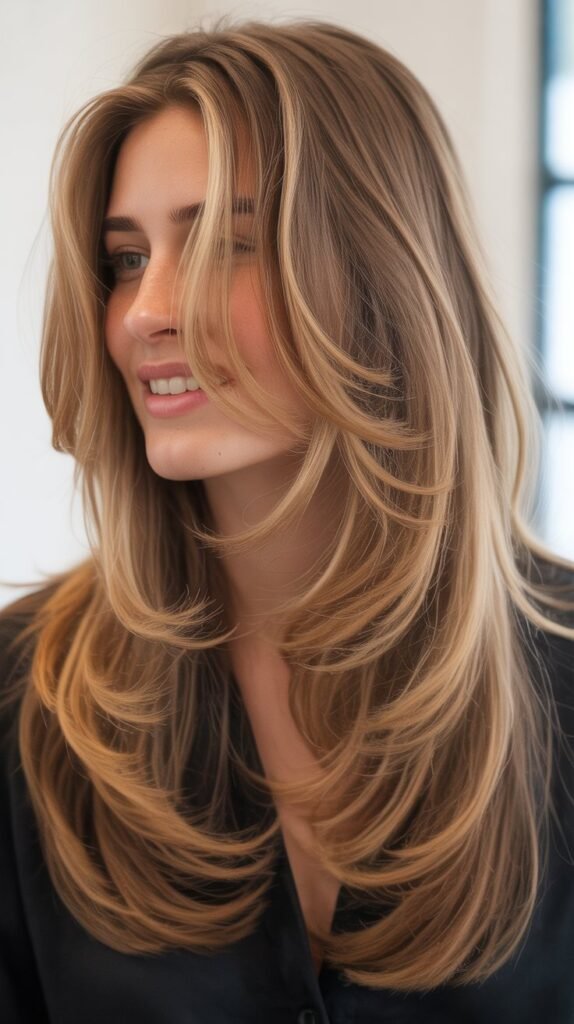
Slide cutting is a technique where scissors slide down the hair shaft while cutting, creating soft, seamless layers with incredible blending.
This produces ultra-natural movement.
- Slide cutting involves gliding scissors down the hair while cutting
- This creates softer, more natural-looking layers than traditional cutting
- The technique is ideal for removing weight while maintaining length
- Slide-cut layers blend seamlessly without obvious demarcation lines
- This method works well for all hair textures
- The soft layers create fluid, natural movement
- This technique requires an experienced stylist for best results
24. Long Layers with Root Shadow
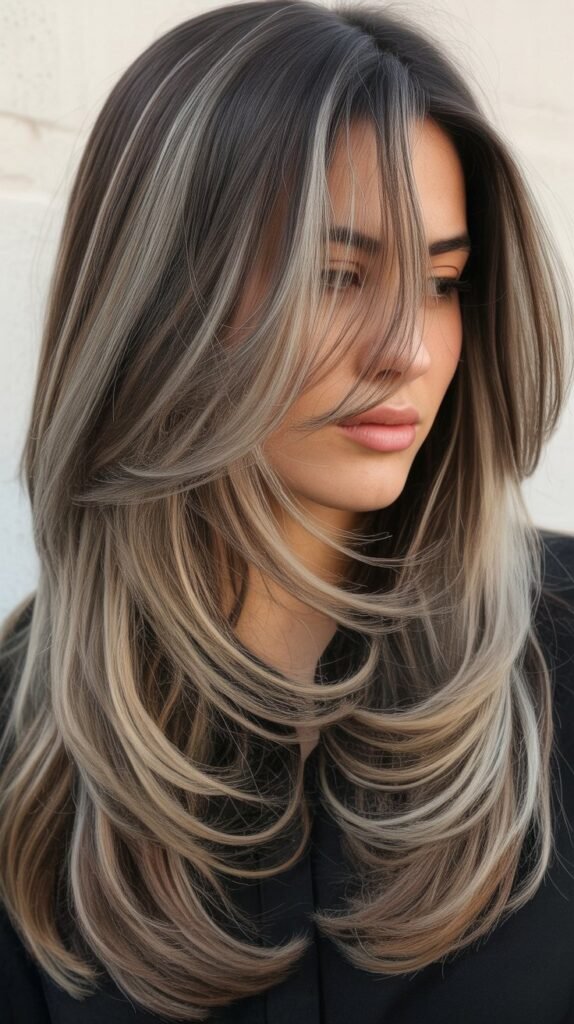
Root shadow is a coloring technique that keeps roots darker while lightening the ends, and when combined with long layers, it creates beautiful depth and dimension that emphasizes the layered structure.
- Root shadow intentionally keeps roots 2-3 shades darker than the rest
- This creates a natural, grown-out appearance without harsh lines
- When paired with layers, the color dimension is enhanced
- Root shadow reduces maintenance frequency between color appointments
- The darker roots add depth while lighter ends brighten the face
- This technique works with any color palette
- The layered structure showcases the gradual color transition
25. Long Layers with Wispy Ends
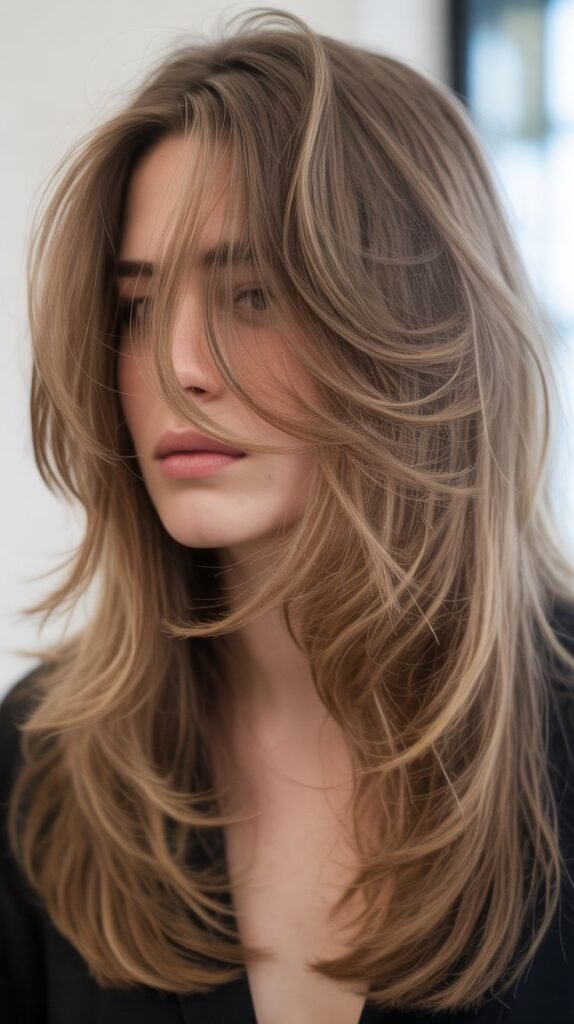
Wispy ends are created through point cutting and thinning techniques that produce delicate, feather-light tips.
This airy finish adds softness and femininity to long layers.
- Wispy ends are created through point cutting and texturizing
- The delicate tips add a soft, romantic quality to the style
- This finish prevents hair from looking too heavy or blunt
- Wispy ends work particularly well for fine to medium hair
- The technique reduces weight at the ends while maintaining length
- Regular conditioning prevents the thin ends from becoming damaged
- This style creates a youthful, effortless appearance
26. Long Layers with Highlights and Lowlights
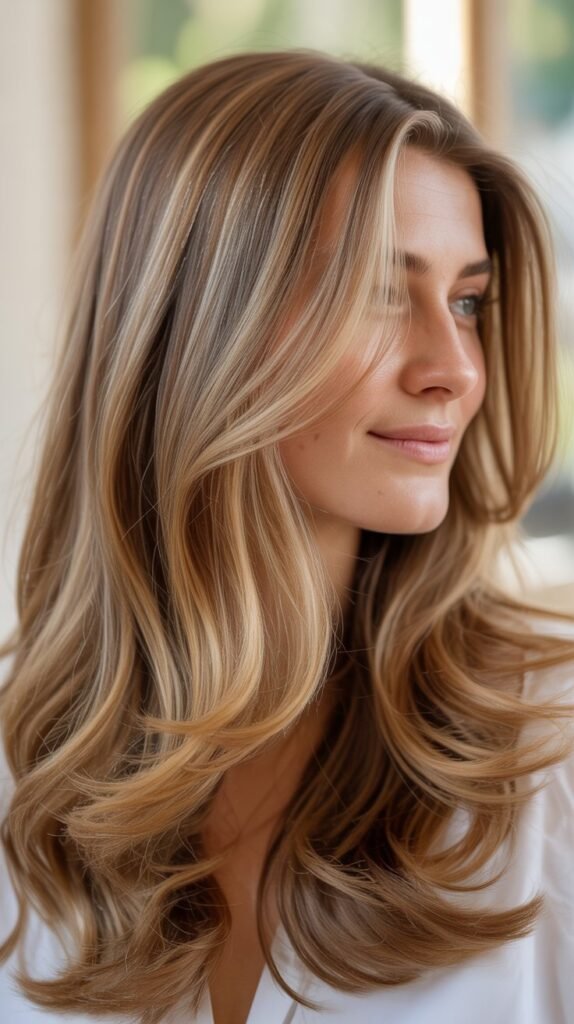
Combining highlights and lowlights with long layers creates multi-dimensional color that brings the layered structure to life, adding depth and visual interest throughout.
- Highlights are lighter pieces while lowlights are darker tones
- The combination creates natural-looking dimension
- Strategic placement emphasizes the layered structure
- This technique adds depth without full color commitment
- The dimensional color makes hair appear fuller and healthier
- Regular toning maintains color balance and vibrancy
- This approach works with any natural hair color
27. Disconnected Long Layers
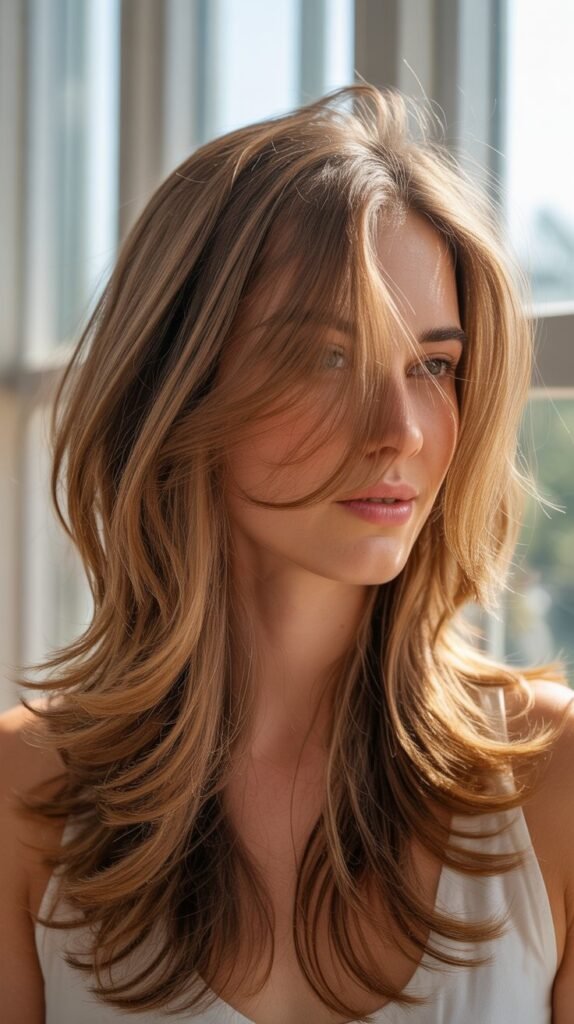
Disconnected layers feature noticeable gaps between layer lengths, creating a modern, edgy look with dramatic movement and texture.
This intentional separation adds visual interest.
- Disconnected layers have intentional gaps between length sections
- This creates a more dramatic, fashion-forward appearance
- The technique adds significant movement and texture
- Disconnected layers work well for thick or coarse hair
- The style requires confidence to embrace the edgy aesthetic
- Styling products enhance the separation between layers
- This cut makes a bold statement and shows personality
28. Long Layers with Face-Framing Lowlights
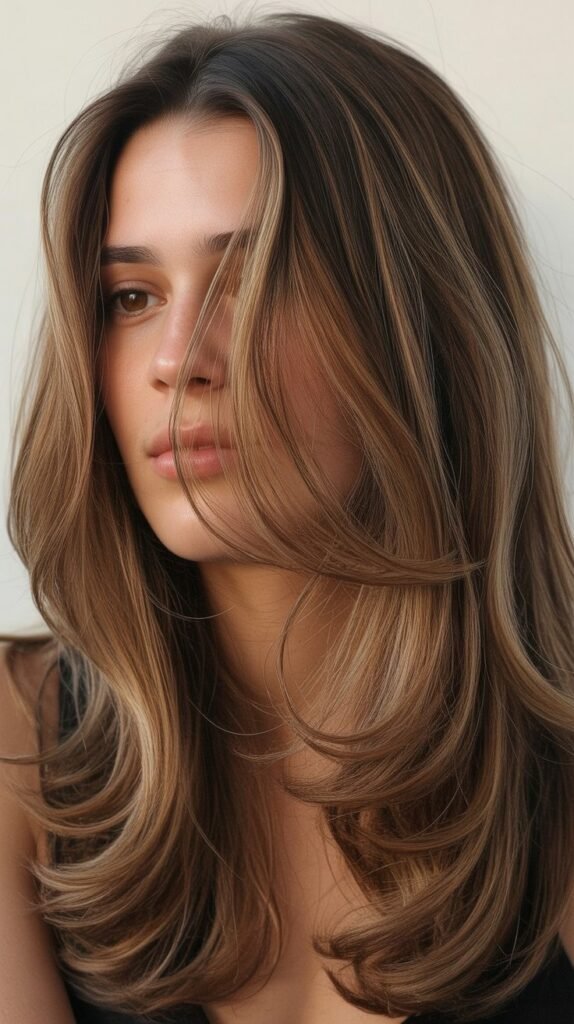
Face-framing lowlights are darker pieces around the face that add depth and contour, and when combined with long layers, they create a sculpting effect that enhances facial features.
- Face-framing lowlights are darker than the rest of the hair
- They create a contouring effect that defines facial structure
- When paired with layers, the dimensional effect is enhanced
- This technique adds depth and prevents the look from appearing flat
- Lowlights around the face create a slimming visual effect
- The darker pieces add sophistication and maturity to the style
- Regular toning prevents the lowlights from appearing brassy
29. Long Layers with Texture Spray Styling
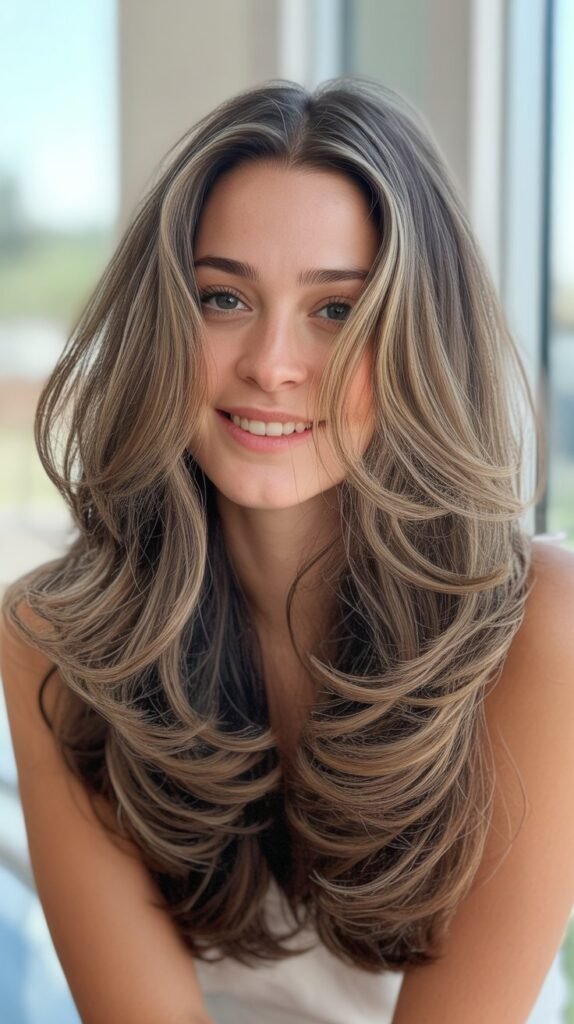
Long layers styled with texture spray create a beachy, lived-in appearance with piece-y separation and natural-looking volume.
This effortless styling approach enhances the layered cut.
- Texture spray adds grit and separation to enhance layers
- The product creates volume at the roots and definition at the ends
- This styling approach works best with layered cuts
- Texture spray enhances natural waves and creates beachy texture
- The effortless appearance is perfect for casual settings
- Application involves spraying throughout damp or dry hair
- This styling method reduces the need for heat tools
30. Long Curved Layers
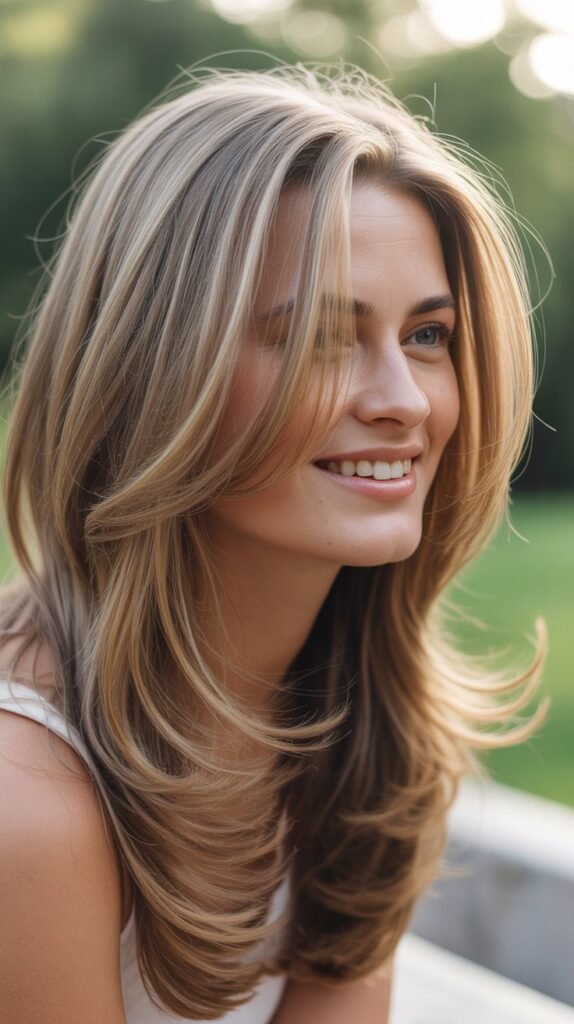
Curved layers follow the natural contours of the head, creating a rounded, feminine silhouette.
This technique adds movement while maintaining a soft, romantic appearance throughout.
- Curved layers are cut to follow the natural shape of the head
- This creates a soft, rounded appearance from all angles
- The technique is flattering for most face shapes
- Curved layers add volume without creating harsh lines
- This style maintains a feminine, romantic aesthetic
- The curved shape grows out gracefully
- Regular trims preserve the rounded silhouette
31. Long Layers with Ombré Color
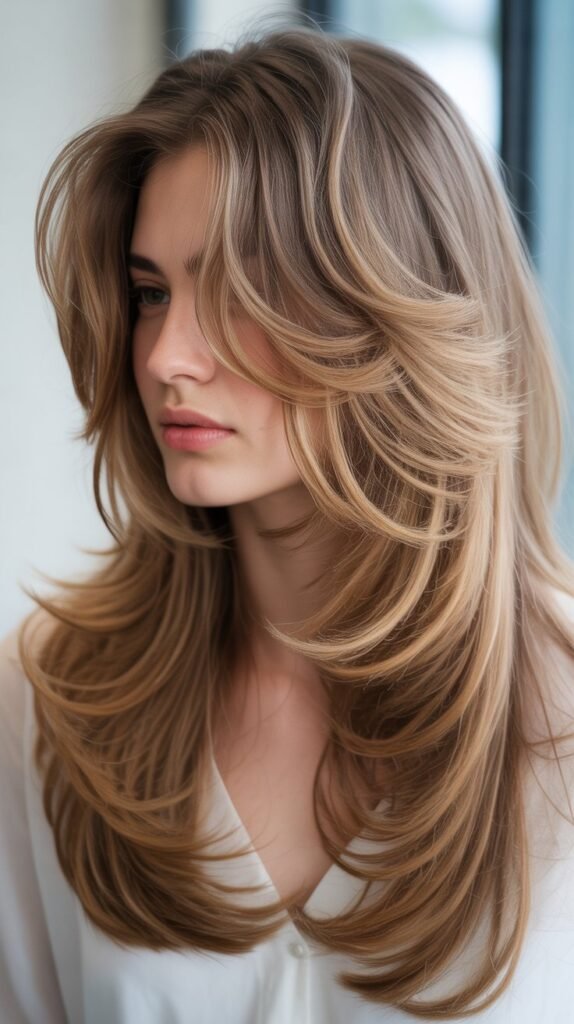
Ombré coloring features a gradual transition from dark roots to lighter ends, and when combined with long layers, it creates stunning dimensional color that emphasizes movement and depth.
- Ombré creates a gradual color transition from roots to ends
- The technique can be subtle or dramatically contrasting
- When paired with layers, the color dimension is maximized
- Ombré requires less maintenance than traditional highlights
- The lighter ends brighten the face and add dimension
- Various color combinations can be customized to preference
- The layered structure showcases the gradual color shift
32. Long Layers with Volume at the Crown
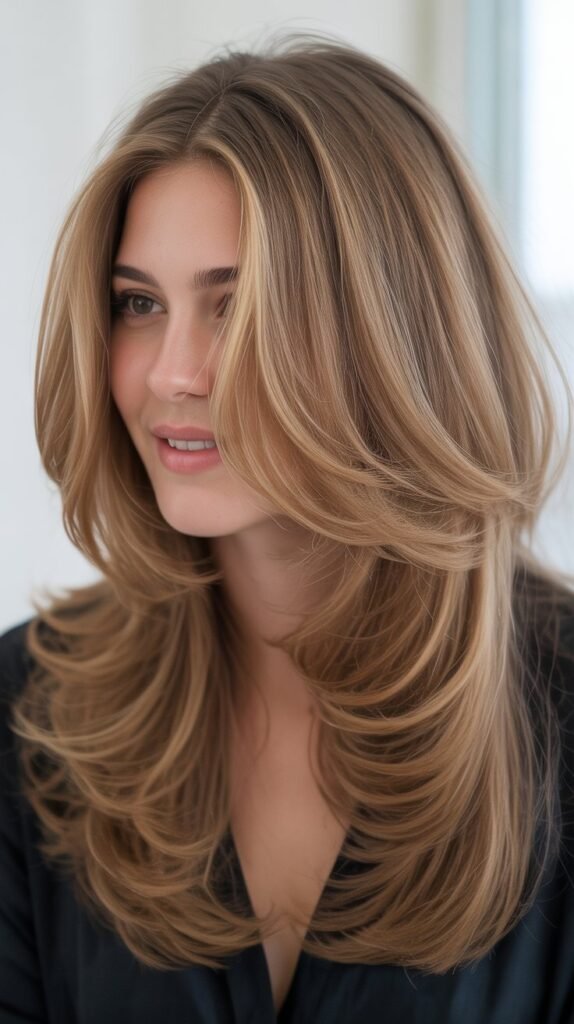
Long layers cut specifically to add volume at the crown create lift and fullness at the top while maintaining length underneath.
This addresses flat hair concerns while preserving overall length.
- Strategic layering at the crown creates natural lift
- Shorter layers on top add volume while underneath remains long
- This technique addresses flat hair without sacrificing length
- The volume at the crown creates a more youthful silhouette
- Blow-drying with a round brush maximizes crown lift
- This cut works well for fine or aging hair lacking volume
- Regular root-lifting products maintain the voluminous effect
33. Long Swooping Layers
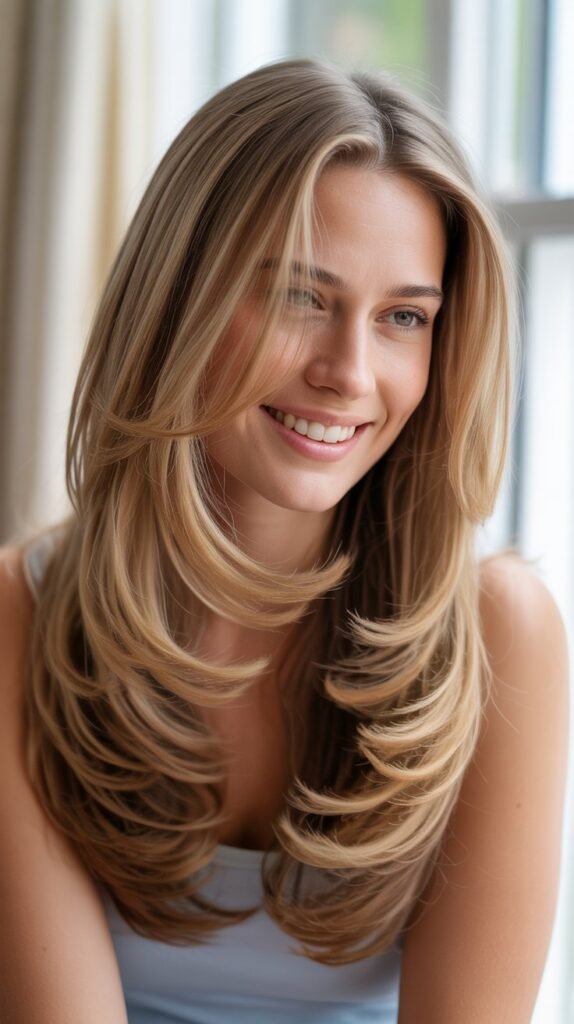
Swooping layers create dramatic curved movements throughout the hair, with each layer flowing gracefully into the next.
This romantic cut emphasizes femininity and movement.
- Swooping layers are cut in curved rather than straight lines
- This creates flowing, romantic movement throughout the hair
- The curved layers add softness and femininity
- This cut works beautifully when styled with waves or curls
- The swooping effect is visible from all angles
- This technique flatters most face shapes and hair textures
- The graceful movement creates an elegant appearance
34. Long Layers with Babylights
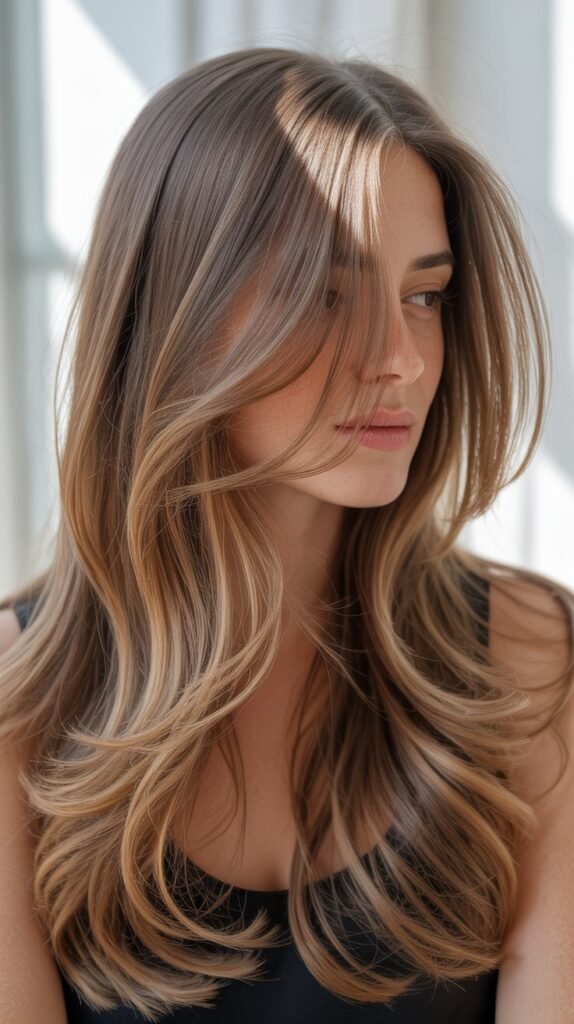
Babylights are ultra-fine, delicate highlights that mimic natural sun-lightened hair, and when combined with long layers, they create subtle dimension that enhances the layered structure beautifully.
- Babylights are extremely fine highlights that blend seamlessly
- They create natural-looking dimension like childhood sun-lightening
- When paired with layers, the subtle color enhances movement
- Babylights require precise application and skill
- The delicate highlights add brightness without obvious color placement
- This technique works with any base color
- Regular toning maintains the natural-looking effect
35. Long Layers with Internal Texturizing
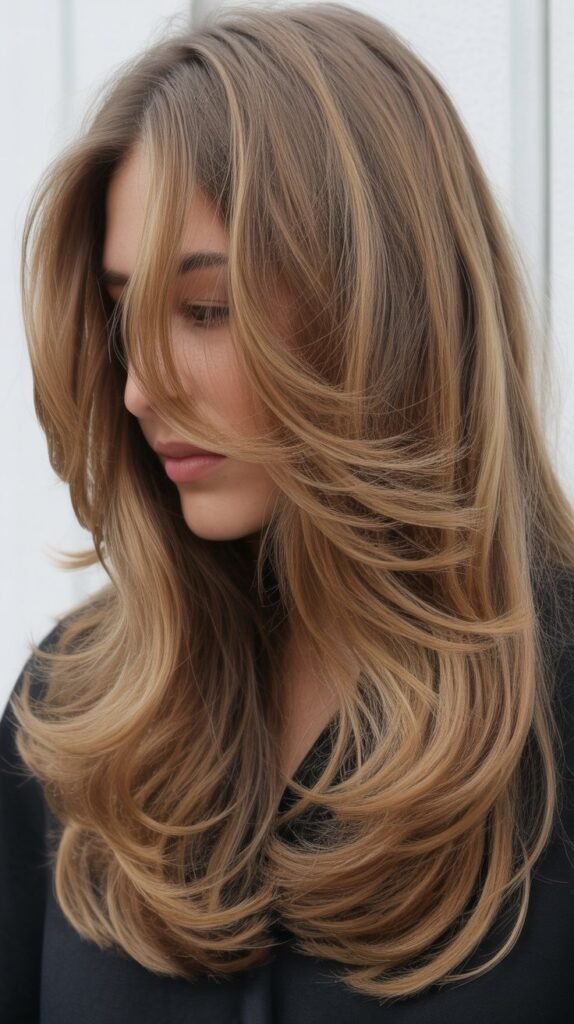
Internal texturizing removes weight from within the hair shaft without affecting the surface appearance, creating lighter, more movable long layers while maintaining a smooth exterior.
- Internal texturizing removes bulk from inside the hair
- The exterior remains smooth while the interior is lighter
- This technique reduces weight without visible choppiness
- Internal texturizing works exceptionally well for thick hair
- The hair becomes more manageable and easier to style
- The smooth surface maintains a polished appearance
- This method requires skilled cutting techniques
36. Long Layers with Braided Accents
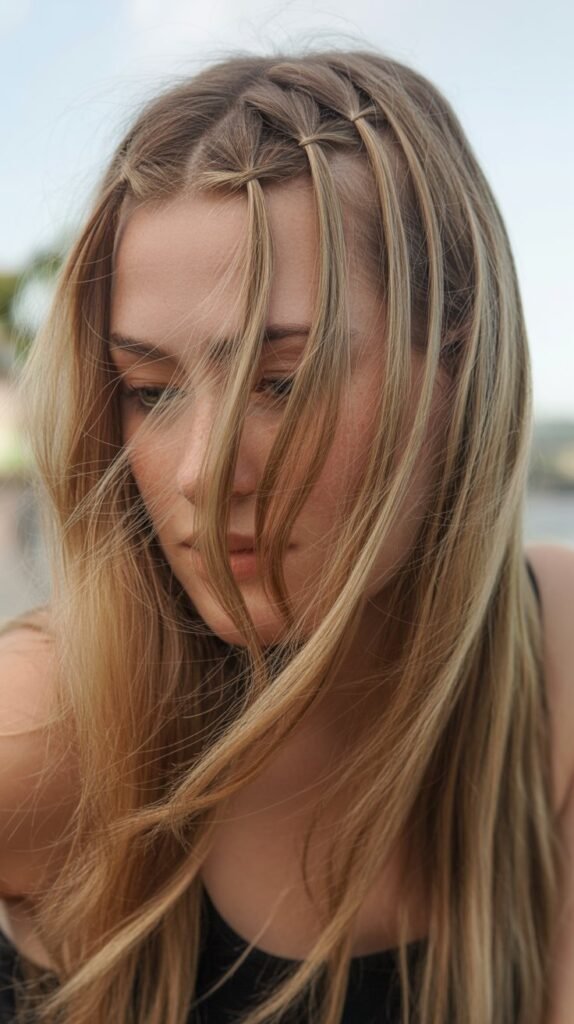
While the haircut itself features long layers, incorporating braided accents in styling showcases the layers beautifully while adding bohemian flair and visual interest to the overall look.
- Braids can be incorporated into long layers for added dimension
- Small accent braids showcase the layered structure
- This styling option adds bohemian, festival-inspired flair
- Braids prevent hair from falling flat while highlighting layers
- Various braid styles can be mixed with loose layers
- This approach works for casual and dressy occasions
- Braided accents require no permanent commitment
37. Long Layers with Blended Bangs
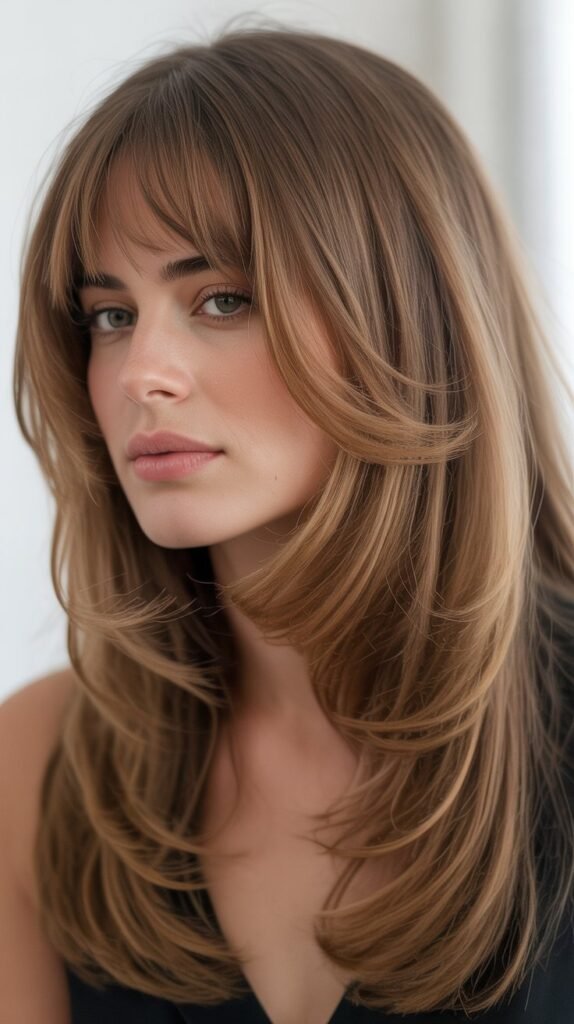
Blended bangs seamlessly integrate into the rest of the layers, creating a cohesive look where the fringe flows naturally into the longer pieces without harsh lines.
- Blended bangs integrate smoothly into face-framing layers
- There are no harsh lines between the bangs and longer pieces
- This creates a cohesive, natural appearance
- Blended bangs grow out more gracefully than blunt-cut fringe
- The seamless integration flatters most face shapes
- This style requires skilled cutting for proper blending
- Minimal styling is needed to maintain the natural flow
38. Long Layers with Beveled Ends
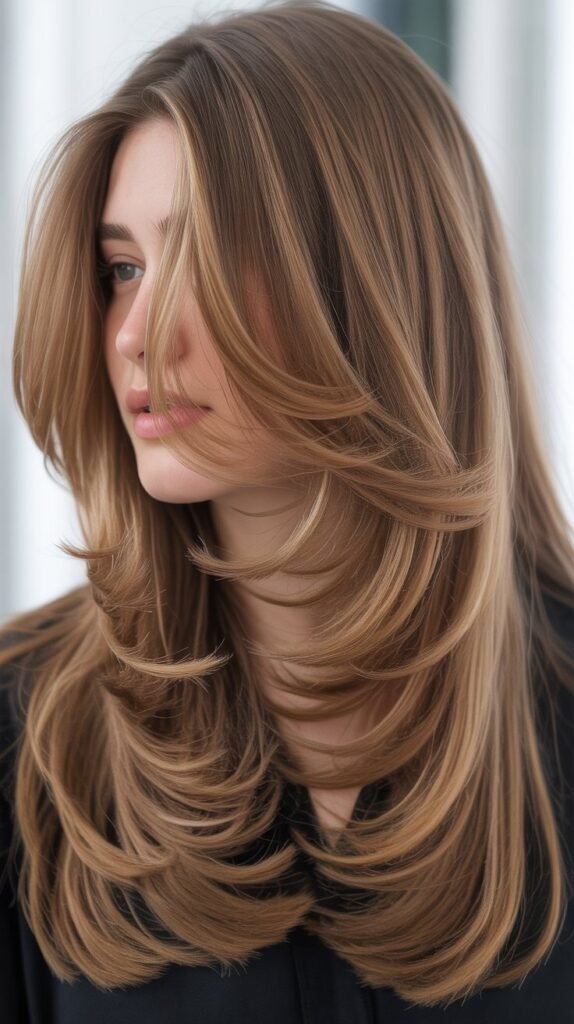
Beveled ends are cut at an angle rather than straight across, creating dimension and movement at the tips.
This technique adds interest while maintaining a polished appearance.
- Beveled ends are cut at an angle rather than blunt
- This creates dimension and prevents a heavy appearance
- The angled ends add subtle movement and interest
- Beveling works well for maintaining length while adding shape
- This technique creates a more polished look than heavily textured ends
- Regular trims maintain the beveled shape
- The angled ends catch light beautifully
39. Long Layers with Dimensional Foils
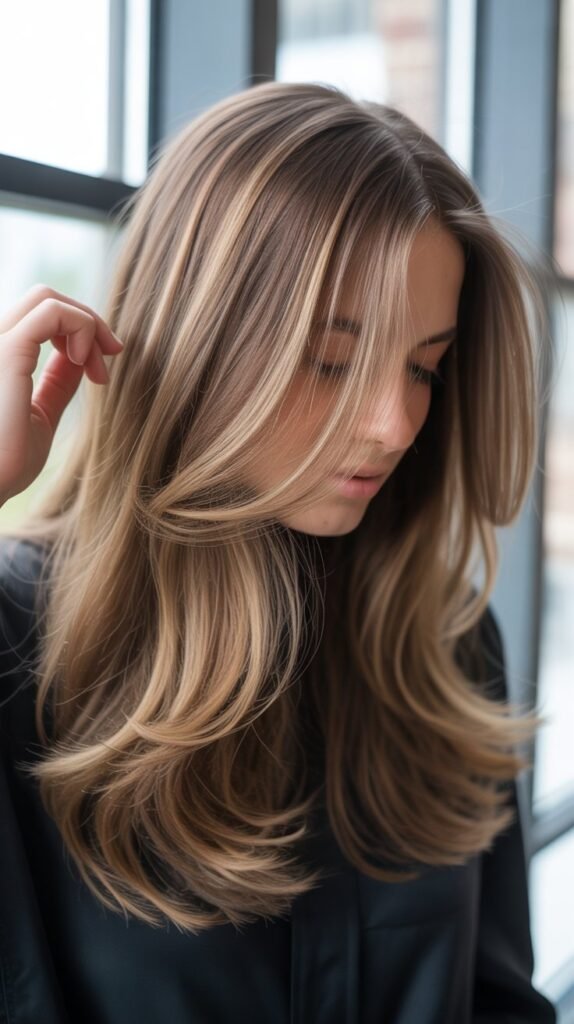
Foil highlighting creates precise color placement, and when combined with long layers, the dimensional color emphasizes each layer level, creating a stunning multi-tonal effect.
- Foil highlighting allows precise color placement
- Different layer levels can receive different tones
- This creates dimensional color that emphasizes the cut
- Foils produce more dramatic results than balayage
- The precise placement requires professional application
- Regular toning maintains color vibrancy
- This technique works with any color combination
40. Long Layers with Diffused Roots
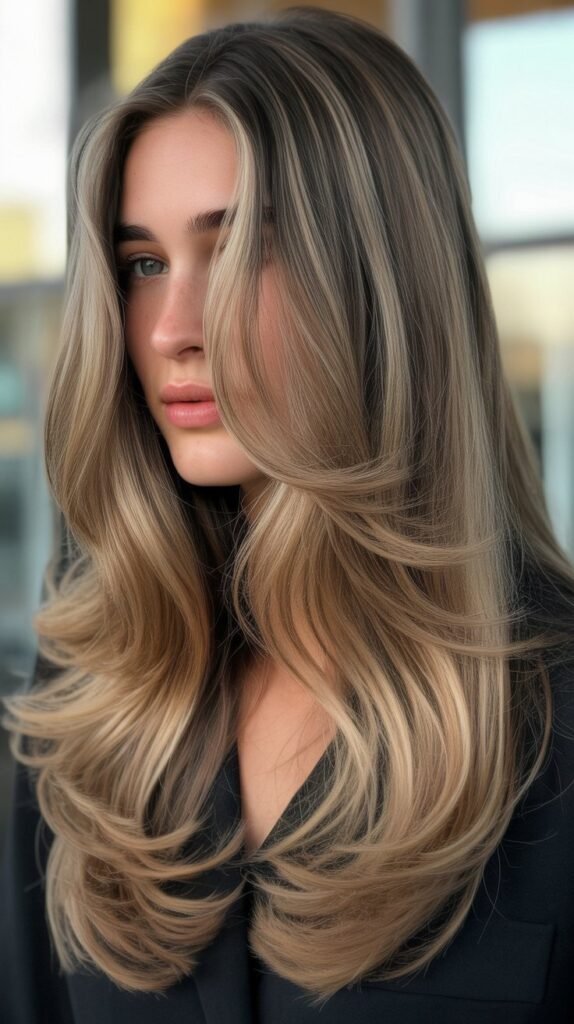
Diffused roots are softly blended rather than harsh, creating a natural grow-out appearance. When paired with long layers, this low-maintenance color approach keeps the focus on the layered structure.
- Diffused roots blend softly rather than creating harsh lines
- This low-maintenance approach extends time between color appointments
- When paired with layers, the soft root blend looks natural
- The technique works with any color combination
- Diffused roots add dimension at the roots
- This approach reduces the appearance of root growth
- Regular gloss treatments maintain overall color quality
41. Long Layers with Tousled Waves
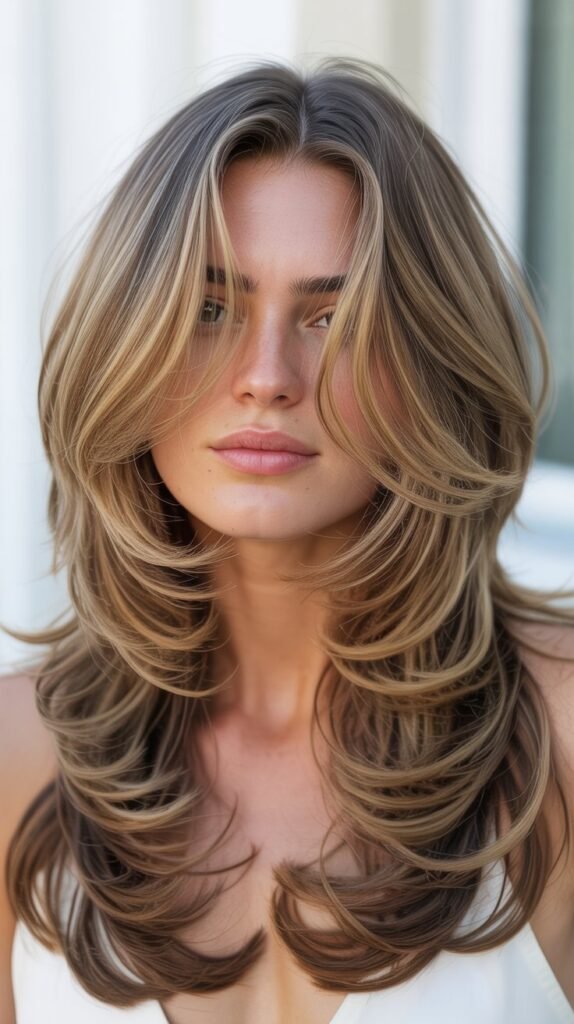
Styling long layers with tousled waves creates an effortlessly romantic appearance that maximizes the movement and dimension of the cut while maintaining a relaxed, accessible vibe.
- Tousled waves enhance the movement of long layers
- This styling creates an effortless, romantic appearance
- A curling iron or wand can create the wave pattern
- Leaving ends straight creates a modern tousled look
- Texturizing spray adds separation and definition
- This style works for casual and formal settings
- The imperfect waves celebrate natural texture
42. Long Layers with Tapered Perimeter
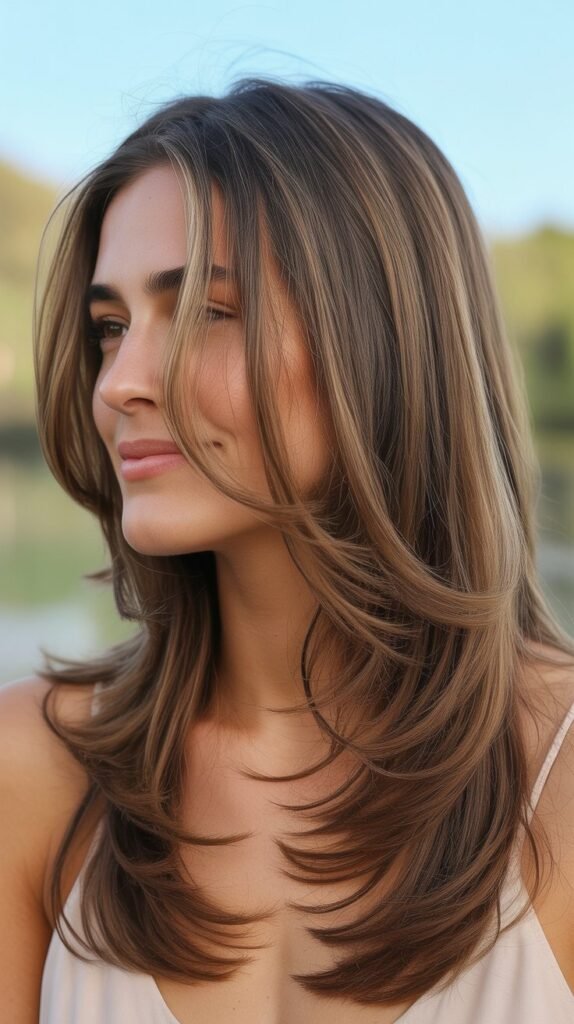
A tapered perimeter gradually thins toward the ends, creating an airy, lightweight finish. This technique prevents long layers from appearing heavy or blunt at the bottom.
- Tapered perimeter gradually thins the hair toward the ends
- This creates an airy, lightweight finish
- The technique prevents a bottom-heavy appearance
- Tapering works especially well for thick hair
- The thinned ends move freely and feel lighter
- This method maintains length while reducing weight
- Regular conditioning prevents the tapered ends from drying out
43. Long Layers with Dimensional Ribbons
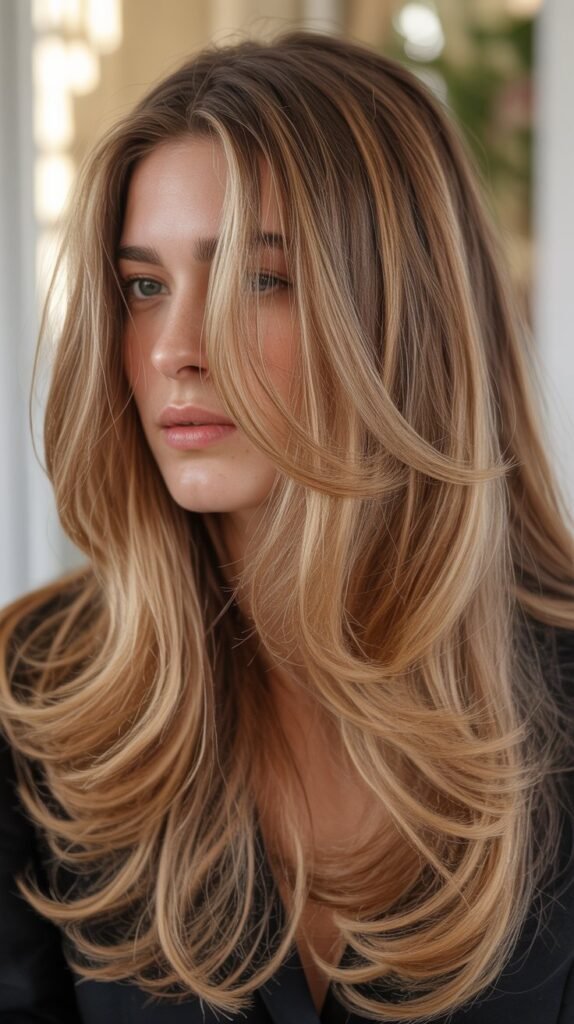
Dimensional ribbons are strategic color placements that follow the natural fall of layers, creating ribbon-like streaks of color that enhance movement and add visual interest throughout the hair.
- Dimensional ribbons are color placements that follow layer lines
- They create ribbon-like effects that move with the hair
- This technique emphasizes the layered structure
- Ribbons can be subtle or dramatically contrasting
- The color placement enhances natural movement
- Multiple tones can be used for added dimension
- This approach requires skilled color placement
- Regular maintenance keeps the ribbons vibrant and defined
44. Long Layers with Tucked Ends
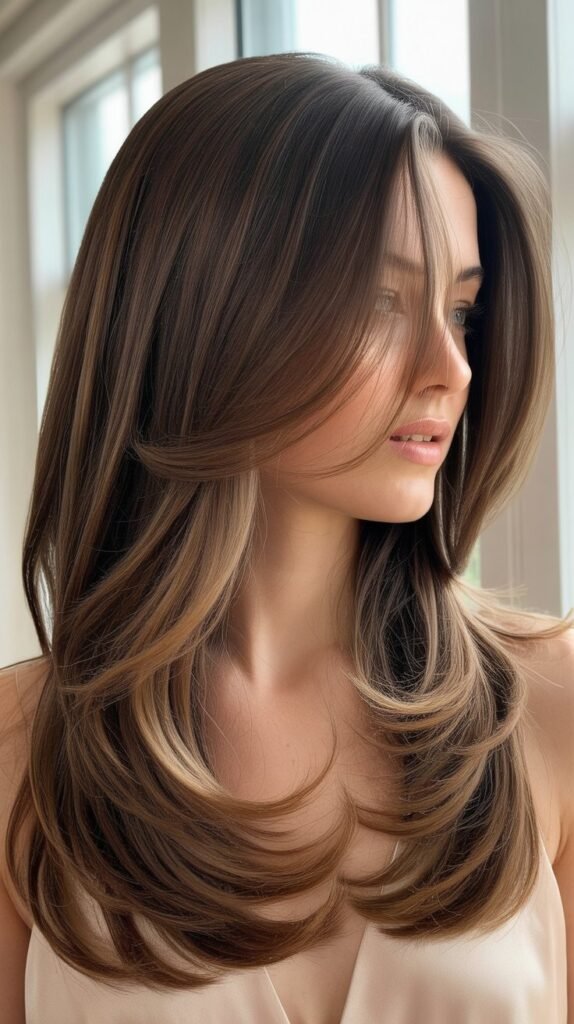
Long layers styled with ends tucked under create a polished, sophisticated appearance.
This styling technique showcases the layers while maintaining an elegant, controlled finish.
- Tucked ends are blow-dried or curled under rather than out
- This creates a polished, sophisticated silhouette
- The technique works well for professional settings
- Layers are still visible while maintaining control
- A round brush while blow-drying achieves this look
- The tucked ends create an elegant, refined appearance
- This styling flatters most face shapes
- The smooth finish looks intentional and well-groomed
45. Long Layers with Natural Air-Dry Texture
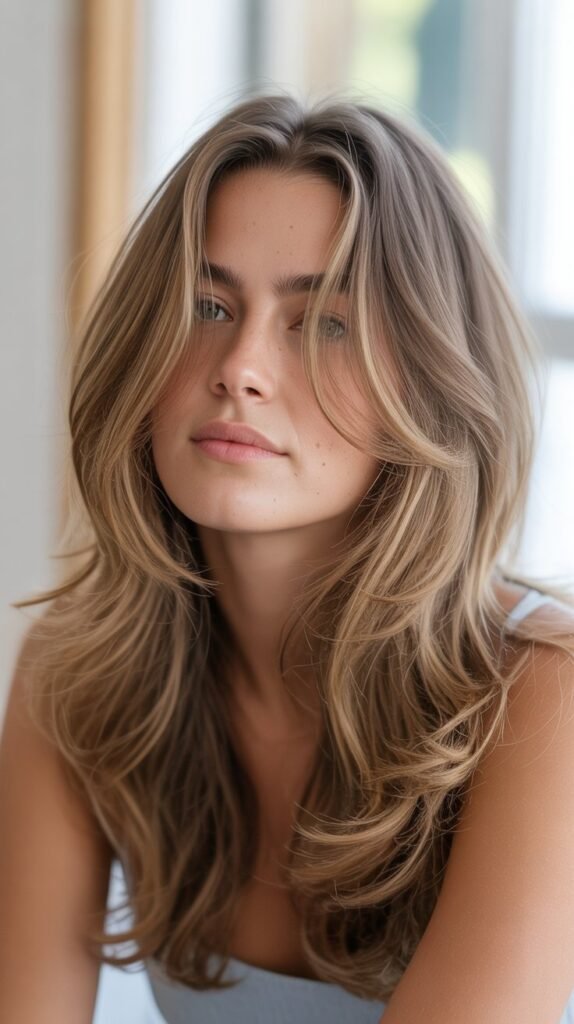
Embracing natural air-dry texture with long layers celebrates your hair’s authentic pattern while the strategic layering enhances whatever texture naturally occurs, from waves to curls to straight strands.
- Air-drying long layers embraces natural hair texture
- Strategic layering enhances whatever pattern naturally occurs
- This low-maintenance approach reduces heat damage
- Natural texture creates unique, personalized results
- Minimal product allows authentic texture to shine
- This method celebrates individuality and saves time
- The layers prevent air-dried hair from looking shapeless
- Leave-in conditioner enhances natural texture without weighing down
Maintenance Tips for Long Layers
| Maintenance Task | Frequency | Purpose |
|---|---|---|
| Trim appointments | Every 6-8 weeks | Maintain shape and remove split ends |
| Deep conditioning | Weekly | Keep layers healthy and prevent dryness |
| Clarifying shampoo | Monthly | Remove product buildup |
| Hair masks | Bi-weekly | Restore moisture and shine |
| Heat protectant | Before each heat styling | Prevent damage to layered ends |
| Regular brushing | Daily | Distribute natural oils and prevent tangles |
Styling Tools for Long Layers
The right tools can make all the difference when styling long layered hair.
Investing in quality equipment ensures your layers look their best while minimizing damage.
- Round brushes in various sizes create volume and smooth layers during blow-drying
- Paddle brushes detangle long layers gently without causing breakage
- Curling wands add texture and movement that emphasizes layered dimension
- Flat irons smooth and polish layers for sleek, straight styling
- Diffuser attachments enhance natural texture while minimizing frizz
- Wide-tooth combs gently detangle wet hair without disrupting layer structure
- Teasing brushes add targeted volume at the crown or throughout layers
- Quality blow dryers with ionic technology reduce frizz and drying time
Communicating with Your Stylist
Effective communication ensures you get the long layers you envision.
Bringing reference photos and using specific terminology helps your stylist understand your goals.
- Bring multiple photos showing the desired look from different angles
- Discuss your daily styling routine and time commitment honestly
- Explain your hair concerns such as flatness, bulk, or lack of movement
- Clarify whether you want subtle or dramatic layering
- Ask about face-framing versus all-over layers
- Discuss your preferred styling methods and tools
- Be honest about your hair texture and any previous chemical treatments
- Ask for styling tips and product recommendations specific to your cut
- Schedule a consultation before the cutting appointment if needed
- Don’t be afraid to ask questions throughout the cutting process
Product Recommendations for Long Layers
Using the right products enhances your long layers and keeps them looking healthy and styled.
Different layer styles benefit from specific product types.
- Volumizing mousse adds body to fine hair with layers
- Texturizing spray creates piece-y separation and beachy texture
- Heat protectant spray is essential before using hot tools on layers
- Smoothing serum tames frizz and adds shine to polished layers
- Dry shampoo extends time between washes and adds volume
- Leave-in conditioner keeps layered ends hydrated and healthy
- Styling cream defines texture without creating crunchiness
- Hair oil adds shine and nourishment to dry layered ends
- Root lift spray creates volume at the crown
- Finishing spray holds styles without stiffness
Face Shape Considerations
Different face shapes are flattered by specific layering techniques.
Understanding your face shape helps you choose the most flattering long layer style.
Oval Face Shape
- Most versatile face shape that suits nearly all layering styles
- Can experiment with everything from subtle to dramatic layers
- Both face-framing and all-over layers work beautifully
- Any bang style complements the balanced proportions
Round Face Shape
- Angled and face-framing layers create a slimming effect
- Longer layers that start below the chin elongate the face
- Avoid layers that end at the fullest part of the cheeks
- Side-swept bangs add asymmetry and length
Square Face Shape
- Soft, rounded layers soften angular features
- Face-framing layers that curve inward are especially flattering
- Avoid blunt, straight-across layers that emphasize angles
- Wispy, textured ends add softness
Heart Face Shape
- Layers that add width at the jawline balance a wider forehead
- Chin-length layers create flattering fullness
- Side-swept or curtain bangs balance proportions
- Avoid excessive volume at the crown
Long/Oblong Face Shape
- Layers that add width create balance
- Face-framing layers that curve outward add desired width
- Bangs shorten the appearance of the face
- Avoid long, straight layers that elongate further
Hair Texture Considerations
Your natural hair texture influences which long layer styles work best and how much maintenance they require.
Understanding your texture helps set realistic expectations.
Fine Hair
- Benefits from layers that add volume and movement
- Avoid over-layering which can make hair appear thin
- Texturizing techniques add dimension without removing too much hair
- Volumizing products and styling techniques maximize fullness
Medium Hair
- Most versatile texture that accommodates various layer styles
- Can handle more dramatic layering without looking thin
- Both subtle and heavy layering work well
- Requires moderate styling effort for best results
Thick Hair
- Benefits most from strategic layering to remove bulk
- Internal texturizing reduces weight while maintaining fullness
- Can accommodate heavy, dramatic layering
- Reduces styling time by making hair more manageable
Curly Hair
- Requires specialized layering techniques that work with curl pattern
- Dry cutting shows how layers will fall when curly
- Removing weight helps define curl shape
- Avoid razor cutting which can cause frizz
Wavy Hair
- Enhances natural wave pattern with proper layering
- Layers add definition and prevent a triangular shape
- Works well with air-drying and minimal styling
- Benefits from texturizing products that enhance waves
Conclusion
Transforming your long hair with the right layering technique can completely refresh your look without sacrificing the length you’ve worked hard to grow.
Throughout this comprehensive guide to 45 Long Layer Ideas That Instantly Transform Your Look, we’ve explored everything from classic face-framing layers to bold choppy styles, subtle invisible layers to dramatic cascading cuts.
Each technique offers unique benefits, whether you’re seeking volume, movement, dimension, or simply a fresh perspective on your lengthy locks.
The key to success lies in choosing layers that complement your face shape, work with your natural hair texture, and fit your lifestyle and styling commitment.
By communicating effectively with your stylist, maintaining your layers with regular trims and proper care, and using the right products and tools, you can ensure your long layers always look their absolute best.
Remember that hair is incredibly personal, and the perfect long layer style is one that makes you feel confident, beautiful, and authentically yourself.
Whether you opt for soft romantic waves or edgy textured pieces, the transformative power of well-executed long layers cannot be overstated—they breathe new life into hair that might otherwise feel heavy or monotonous, creating movement, dimension, and personality that truly allows your style to shine.