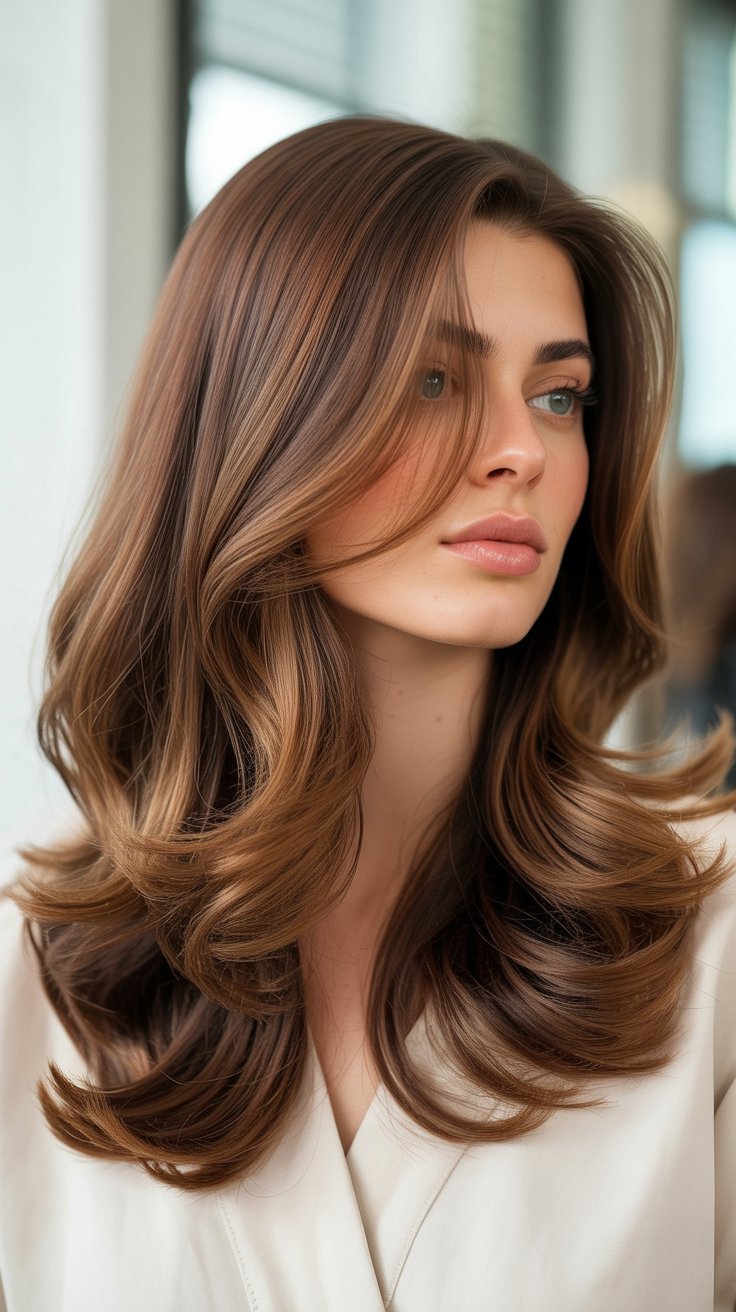
Finding the perfect haircut for thick wavy hair can transform your entire look and simplify your daily styling routine.
If you’ve been struggling with managing your voluminous waves or feel like your current style weighs you down, shoulder-length layered haircuts offer the ideal solution that balances beauty with practicality.
This comprehensive guide explores 49 Flattering Shoulder-Length Layered Haircuts for Thick Wavy Hair, showcasing styles that enhance your natural texture while reducing bulk and adding movement.
From face-framing layers to textured ends, you’ll discover cutting techniques that work specifically for your hair type, styling tips to maximize your waves, and expert advice on maintenance.
Whether you prefer a polished professional look or effortless beachy vibes, these carefully curated haircut ideas will help you embrace your thick wavy hair with confidence and style.
1. Classic Shoulder-Length Layers with Face-Framing
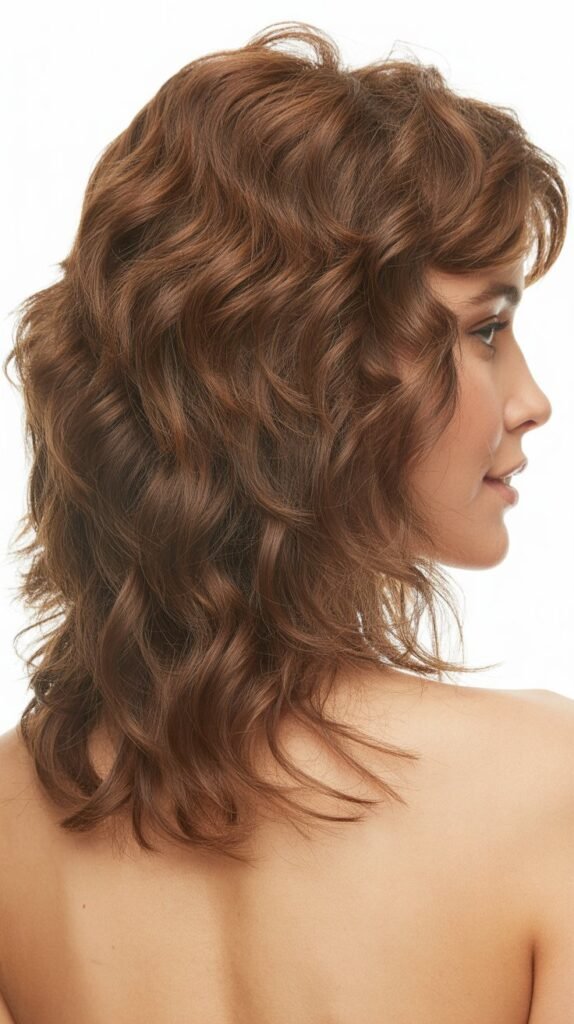
This timeless approach combines traditional layering techniques with strategic face-framing pieces that soften your features while managing thick wavy hair’s natural volume.
The classic shoulder-length layered cut creates dimension and removes weight without sacrificing the fullness that makes thick hair so enviable.
Key Features:
- The layers begin around chin level and gradually increase in length toward the shoulders, creating a cascading effect that enhances natural wave patterns.
- Face-framing pieces are cut shorter around the front, typically starting at cheekbone or jawline level to draw attention to your best features.
- This technique removes bulk from the interior sections while maintaining length at the perimeter, preventing the triangular shape that thick wavy hair often develops.
- The cut works exceptionally well for oval, round, and heart-shaped faces by creating vertical lines that elongate the appearance.
Styling Tips:
- Apply a volumizing mousse to damp hair and scrunch upward to enhance natural wave definition.
- Use a diffuser attachment on your blow dryer with low heat to dry without creating frizz.
- Finish with a lightweight texturizing spray for separation and movement throughout the day.
- For a sleeker look, use a large-barrel curling iron to smooth the face-framing layers while keeping the rest naturally wavy.
2. Textured Shag with Choppy Layers
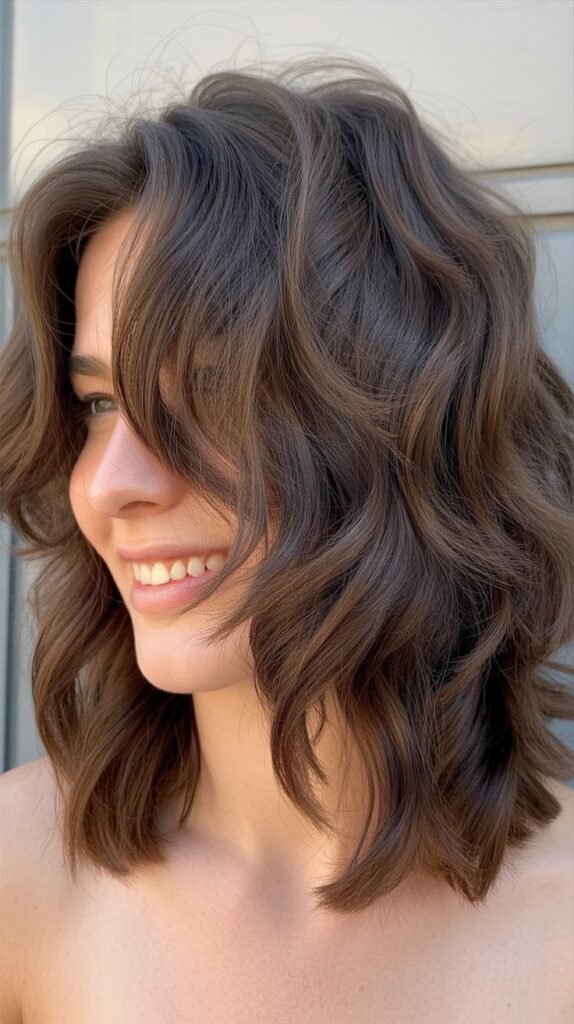
The modern shag brings an edgy, lived-in aesthetic to thick wavy hair through heavily textured, choppy layers that create incredible movement and reduce weight dramatically.
This rebellious style embraces imperfection and works beautifully for those who want a low-maintenance yet fashion-forward look.
Key Features:
- Choppy layers are cut at varying lengths throughout the hair, creating an intentionally uneven, piece-y texture that enhances waves.
- The shag typically includes shorter layers at the crown for volume and longer pieces toward the ends for a balanced silhouette.
- Point-cutting and slide-cutting techniques are used to create soft, feathered edges rather than blunt lines.
- This style particularly suits square and rectangular face shapes by softening angular jawlines with its textured framing.
Styling Approach:
- Work a sea salt spray through towel-dried hair to enhance natural texture and create that coveted beachy wave effect.
- Scrunch hair while air-drying or use a diffuser for faster results with maintained texture.
- Leave the style intentionally messy rather than over-styling, as the shag thrives on its undone appearance.
- Use a small amount of pomade or styling paste on the ends to define individual pieces and add separation.
3. Long Bob (Lob) with Graduated Layers
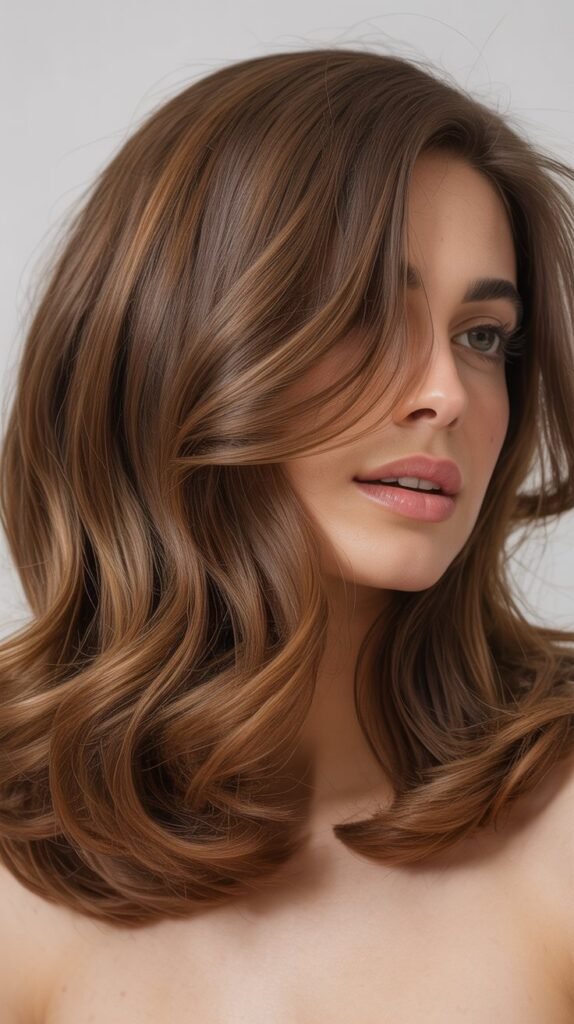
The long bob or “lob” has become a universally flattering choice that hits right at the collarbone, and when combined with graduated layers, it becomes perfect for managing thick wavy hair’s volume.
This sophisticated cut offers versatility for both professional and casual settings.
Key Features:
- The length typically falls between the chin and shoulders, with the back slightly shorter than the front for a subtle angle.
- Graduated layers are stacked in the back, creating volume at the crown while removing bulk from the nape area.
- The front sections remain longer, elongating the face and providing styling versatility.
- This cut suits virtually all face shapes and can be customized by adjusting the angle and layer placement.
Styling Variations:
- Straighten with a flat iron for a sleek, polished appearance suitable for professional environments.
- Enhance natural waves with a curling wand, wrapping random sections for an effortless texture.
- Pull the front sections back with clips or pins to create a half-up style that showcases the layered back.
- Add volumizing powder at the roots before styling to maximize the lift created by the graduated layers.
4. Butterfly Layers for Maximum Movement
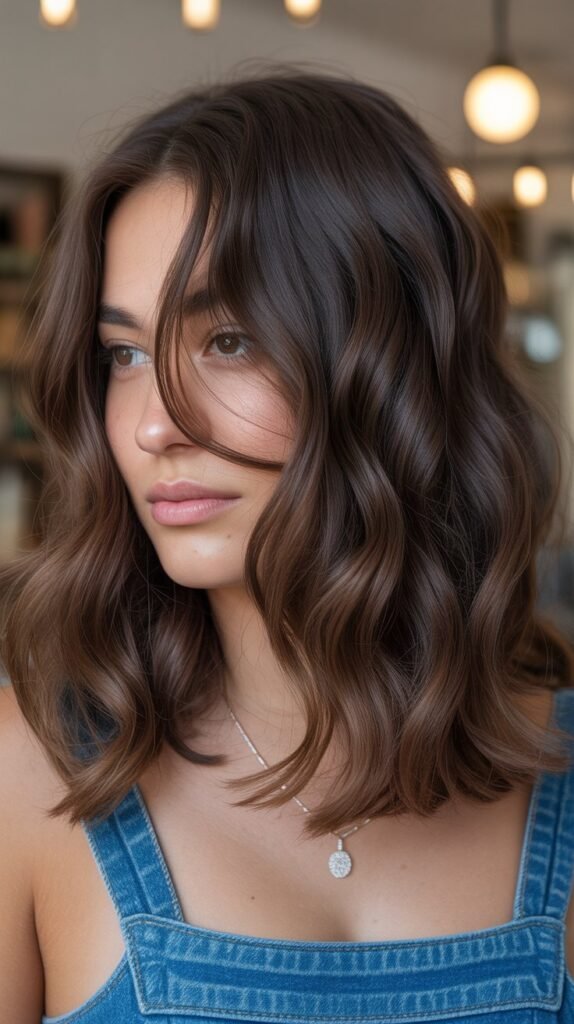
Butterfly layers create a distinctive shape that’s wider at the bottom and gradually tapers toward the crown, resembling butterfly wings when the hair moves.
This technique is specifically designed to manage thick wavy hair while creating beautiful, flowing movement.
Key Features:
- The layers are cut in a curved, U-shaped pattern rather than straight across, creating more length in the front and shorter pieces in the back.
- This technique preserves length while removing internal weight, allowing waves to form more defined patterns.
- The cut creates incredible movement when you turn your head, as the layers cascade and flow like butterfly wings.
- Works exceptionally well for those with very thick hair who want to maintain length but need bulk reduction.
Styling Methods:
- Apply a curl-enhancing cream to wet hair and scrunch to encourage wave formation throughout the layered sections.
- Blow-dry with a round brush at the crown for lift, then allow the ends to air-dry for natural wave definition.
- Use a curling iron on larger sections to create loose, romantic waves that showcase the butterfly layer shape.
- Flip your hair from side to side after styling to see the full effect of the flowing, dimensional layers.
5. Razor-Cut Layers for Softness
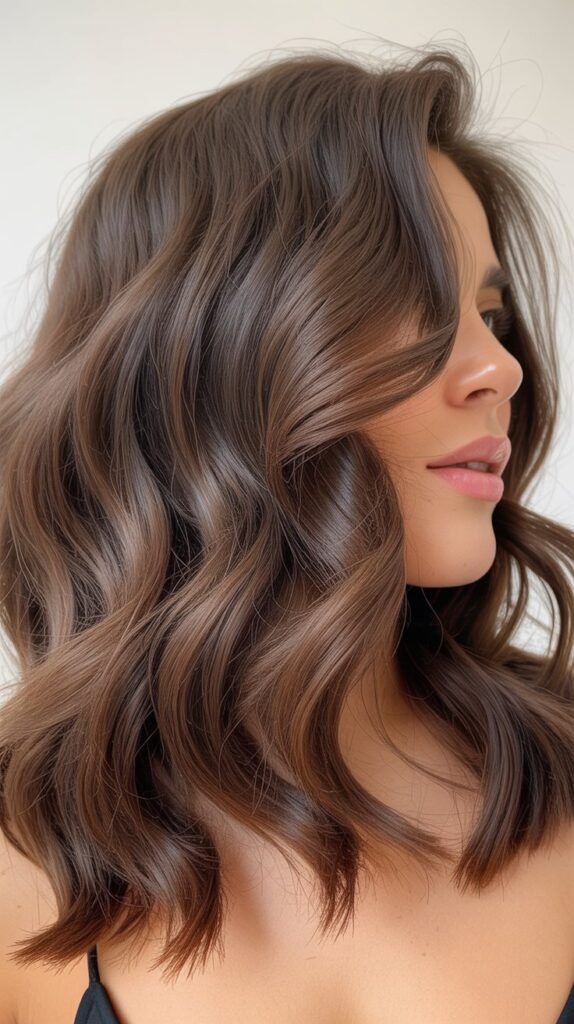
Razor-cutting creates incredibly soft, feathered edges that blend seamlessly into thick wavy hair, producing a lighter, more airy result than traditional scissor-cutting.
This technique is ideal for those who want maximum softness and natural-looking texture.
Key Features:
- A razor blade is used instead of scissors to slice through the hair, creating wispy, tapered ends rather than blunt lines.
- The technique naturally thins out thick hair while maintaining length, making waves appear more defined and separated.
- Razor-cut layers blend invisibly into one another, creating a cohesive, flowing appearance without harsh demarcation lines.
- This method works particularly well for those with coarse or wiry thick wavy hair that needs softening.
Styling Considerations:
- Use a hydrating leave-in conditioner to keep razor-cut ends moisturized and prevent frizz from developing.
- Avoid excessive heat styling, as razor-cut hair is more delicate at the ends than scissor-cut hair.
- Scrunch a lightweight styling cream into damp hair and allow it to air-dry for the softest, most natural appearance.
- Schedule regular trims every 6-8 weeks, as razor-cut ends can become fragile if neglected.
6. Curtain Bangs with Layered Ends
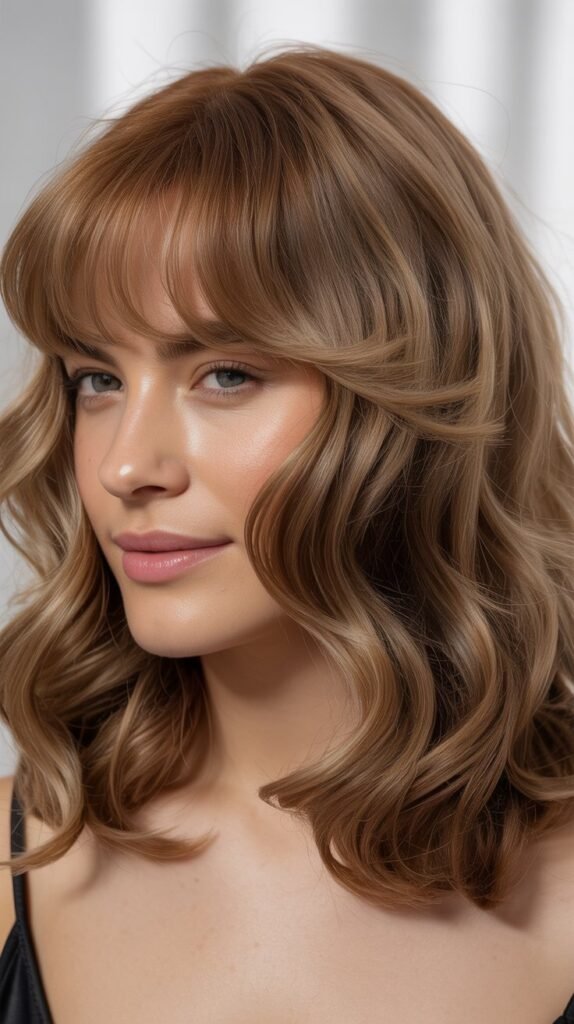
Curtain bangs paired with shoulder-length layers create a retro-inspired look that’s experiencing a major resurgence, perfectly suited for thick wavy hair that needs both style and manageability.
The face-framing bangs part down the middle and sweep to either side, complementing the layered body.
Key Features:
- Curtain bangs are cut in a soft arc that’s shorter in the center (around eyebrow length) and gradually longer at the sides.
- The bangs blend seamlessly into the face-framing layers, creating a cohesive, flowing design.
- Body layers begin at chin level and continue throughout, removing weight while maintaining thick hair’s natural fullness.
- This style particularly flatters long, oval, and diamond-shaped faces by adding width at the cheekbone area.
Styling Process:
- Blow-dry the bangs first with a round brush, pulling them away from your face and bending them outward at the ends.
- Apply a smoothing serum to the bang area to control any frizz while keeping the rest of the hair’s natural texture.
- Use your fingers to separate and position the bangs after drying, ensuring they fall naturally to frame your face.
- Refresh bangs between washes with dry shampoo and a quick blast of heat from a blow dryer with a brush.
7. Asymmetrical Layers with Angled Cut
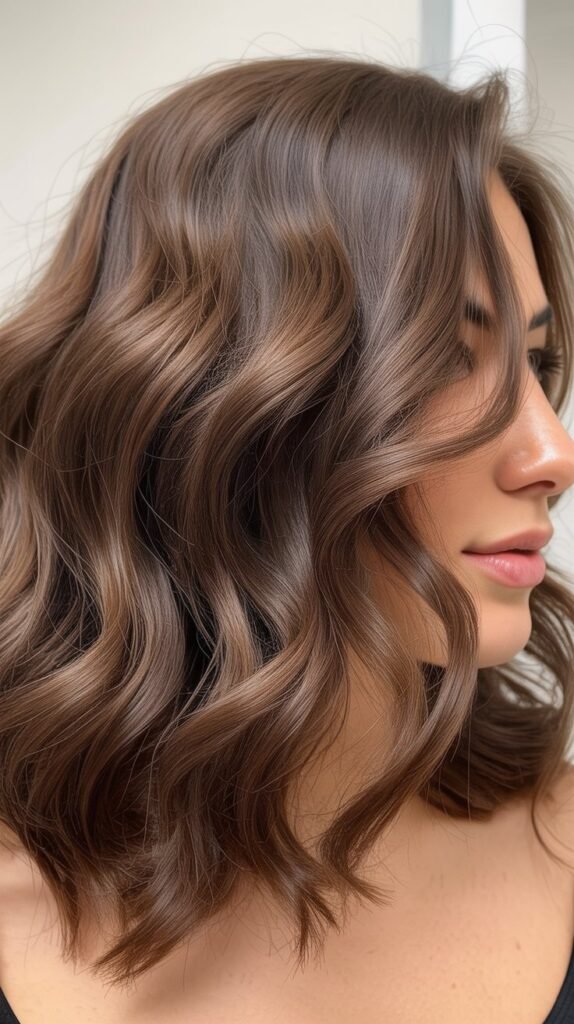
An asymmetrical approach adds modern edge to the classic shoulder-length layered cut by incorporating intentional unevenness that draws the eye and creates visual interest.
This bold style works beautifully with thick wavy hair’s natural volume.
Key Features:
- One side of the hair is cut noticeably longer than the other, typically with a 1-3 inch difference in length.
- Layers are distributed throughout both sides but may be more concentrated on the shorter side to enhance the asymmetry.
- The angle can be subtle for conservative tastes or dramatic for those wanting a statement-making look.
- This cut adds dimension and can help balance facial asymmetry or draw attention to your favorite features.
Styling Options:
- Emphasize the asymmetry by tucking the shorter side behind your ear while letting the longer side fall forward.
- Create deep side part to enhance the uneven appearance and add drama to the overall style.
- Straighten the hair for a sleek, geometric look that highlights the architectural nature of the cut.
- Or embrace your natural waves for a softer, more organic interpretation of the asymmetrical style.
8. V-Cut Layers for Tapered Shape
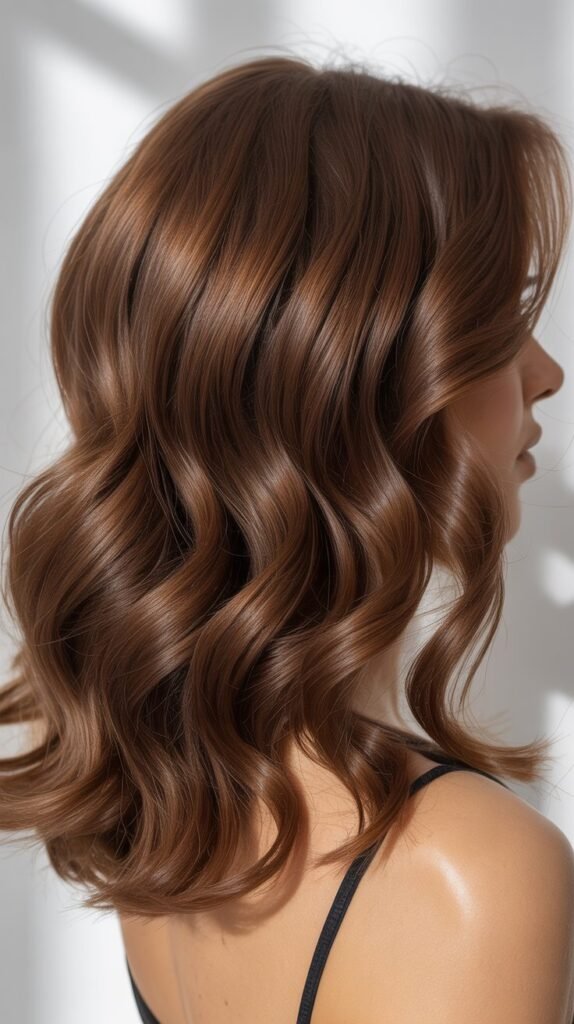
The V-cut creates a distinctive pointed shape at the back when hair is viewed from behind, with layers that gradually increase in length from the crown to the longest point at the center back.
This technique is excellent for thick wavy hair because it removes bulk while creating a flattering silhouette.
Key Features:
- The hair is cut in a V-shape at the back, with the center section being the longest point.
- Layers are incorporated throughout, following the V-shape pattern and creating a cascading effect.
- This cut naturally removes weight from the sides while maintaining length down the center, preventing the boxy appearance thick hair can develop.
- The V-shape enhances natural wave patterns by allowing curls to spiral and cascade in the pointed formation.
Styling Techniques:
- Apply curl-defining cream to wet hair and scrunch upward to encourage waves to form in the V-shape pattern.
- Dry with a diffuser attachment, focusing airflow downward along the V to enhance the shape.
- Use a curling wand on the bottom sections to create uniform waves that showcase the V-cut’s distinctive shape.
- Pull hair into a low ponytail occasionally to display the beautiful V-shape from the back view.
9. Wispy Layered Lob with Texture
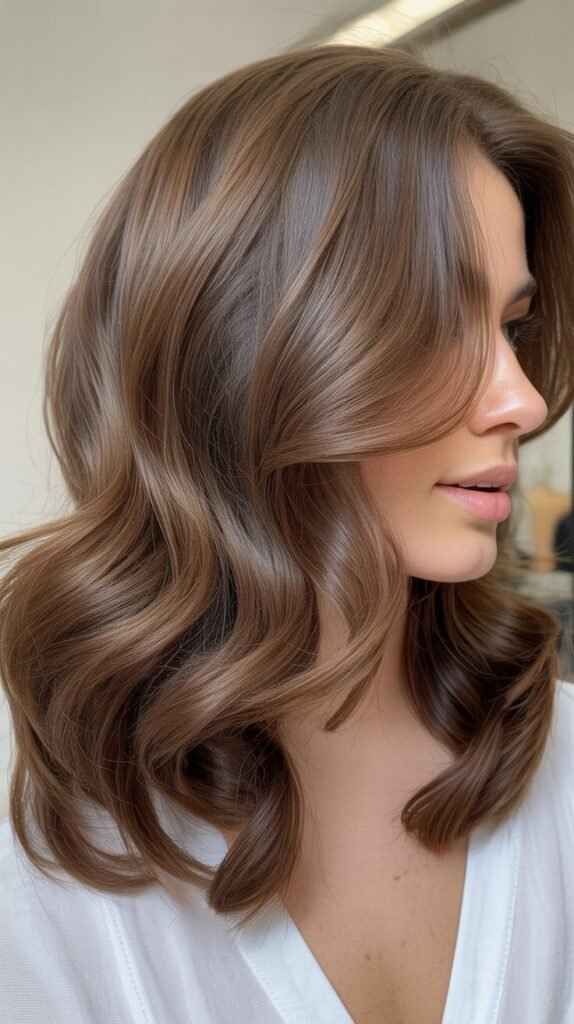
A wispy textured lob combines delicate, feather-light layers with strategic texturizing to create an ethereal, romantic look that tames thick wavy hair without making it appear heavy.
This feminine style is perfect for those who want a soft, dreamy aesthetic.
Key Features:
- Layers are cut with a combination of point-cutting and texturizing techniques to create soft, wispy ends throughout.
- The overall length sits at the collarbone, making it versatile for various styling options.
- Interior thinning removes bulk from thick hair while leaving the surface layers intact for a fuller appearance.
- The wispy texture prevents the blunt, heavy look that can occur with thick wavy hair at shoulder length.
Styling Approach:
- Use a lightweight mousse on damp hair to add body without weighing down the wispy layers.
- Air-dry when possible, scrunching hair periodically to enhance natural wave formation.
- If blow-drying, use a diffuser on low heat and avoid touching the hair too much to maintain the wispy texture.
- Finish with a flexible-hold hairspray that keeps texture without making hair stiff or crunchy.
10. Stacked Layers at the Crown
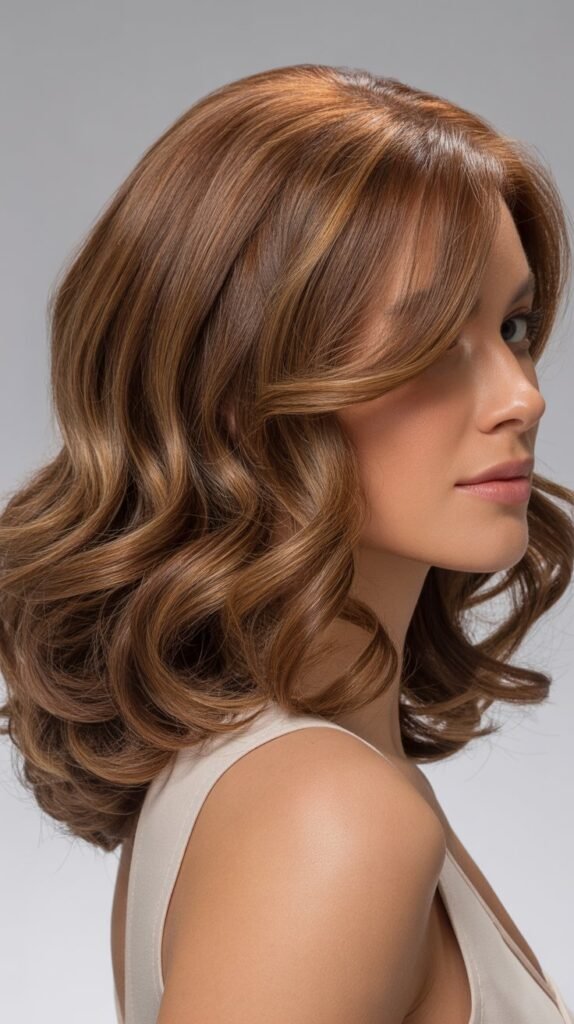
Strategic stacking of layers at the crown area creates lift and volume exactly where thick wavy hair often falls flat, while longer layers below provide balance and prevent a top-heavy appearance.
This technique addresses the common problem of heavy hair weighing itself down.
Key Features:
- Short layers are concentrated at the crown and gradually increase in length as they move toward the nape and sides.
- The stacking creates natural volume at the top of the head, eliminating the need for excessive teasing or backcombing.
- Longer perimeter layers balance the volume on top and provide weight at the bottom to prevent an unbalanced silhouette.
- This cut works wonderfully for those with round or square faces, as the crown volume creates a more oval appearance.
Styling Tips:
- Apply volumizing mousse or spray specifically at the crown area before drying.
- Flip your head upside down while blow-drying the crown sections to maximize lift.
- Use a round brush to pull the crown layers up and back while drying for directed volume.
- Tease very lightly at the roots of the crown layers if additional height is desired for special occasions.
11. Piece-y Layers with Defined Separation
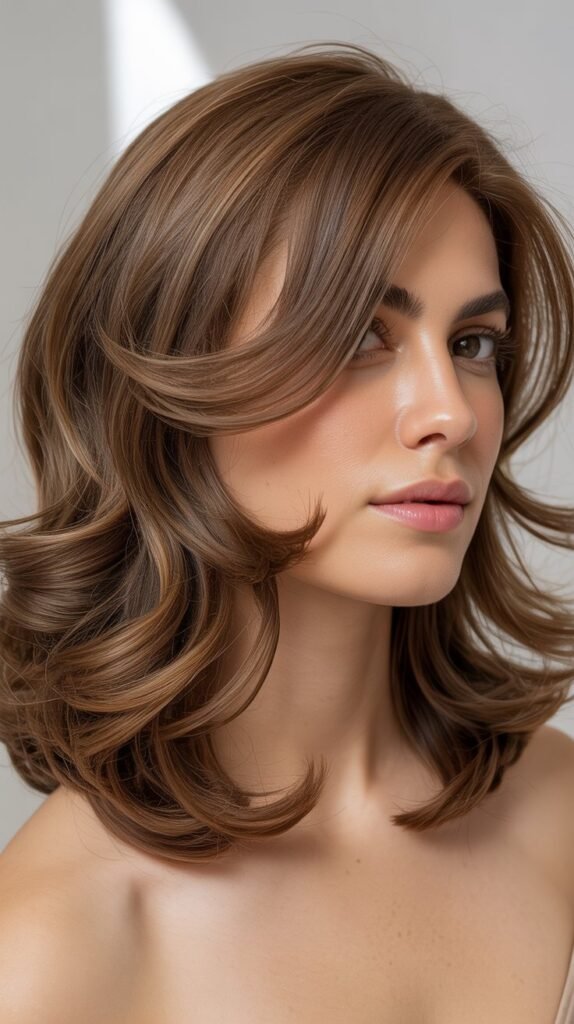
Piece-y layers are cut and styled to create distinct, separated sections rather than a uniform flowing appearance, giving thick wavy hair an intentionally textured, modern look.
This edgy approach is perfect for those who want their hair to make a statement.
Key Features:
- Layers are cut at varying lengths with significant difference between each layer to create separation.
- Texturizing and point-cutting techniques create choppy, piece-y ends that don’t blend smoothly.
- The intentional separation showcases individual wave patterns and creates visual interest throughout the hair.
- This style works particularly well for those with irregular or mixed wave patterns, as it embraces rather than fights the natural texture.
Styling Methods:
- Apply a strong-hold texturizing paste or pomade to damp hair, working it through the mid-lengths and ends.
- Use your fingers to twist and separate individual sections as the hair dries, creating defined pieces.
- Scrunch hair occasionally while air-drying or diffusing to maintain wave patterns within each piece.
- Finish by running a small amount of styling wax through random sections to enhance separation and add definition.
12. Soft Graduated Layers for Natural Flow
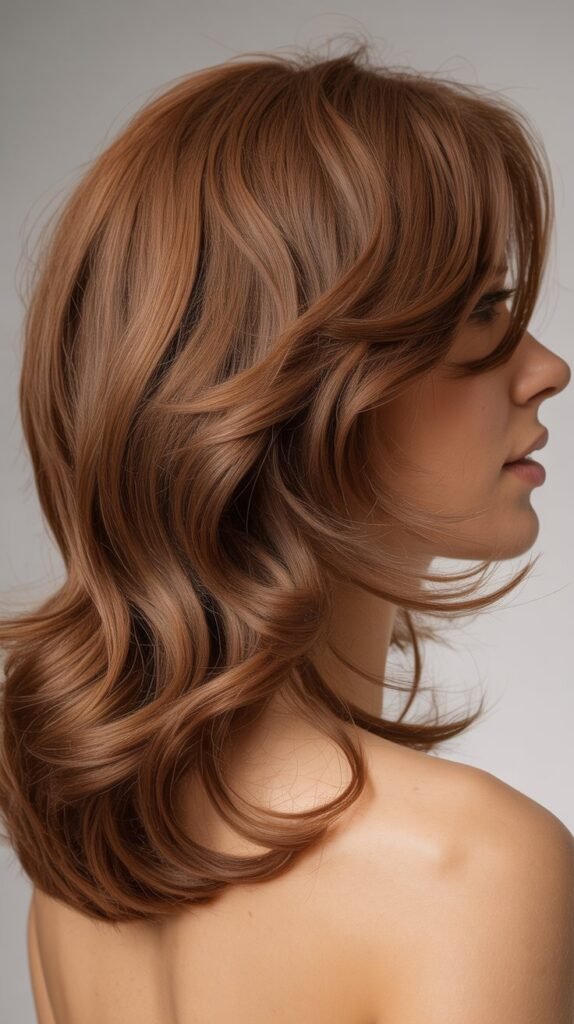
Soft graduated layers create a gentle, flowing effect that maintains thick wavy hair’s volume while adding shape and movement through subtle layering.
This approach is ideal for those who want a more conservative, naturally beautiful look.
Key Features:
- Layers are cut in gentle gradations with minimal difference in length between each layer for seamless blending.
- The graduation creates soft, flowing movement that enhances natural wave patterns without creating dramatic texture.
- This technique maintains maximum thickness while providing just enough layering to prevent a heavy, shapeless appearance.
- The soft graduation suits all face shapes and professional environments where conservative styling is preferred.
Styling Guidelines:
- Use a smoothing cream or oil on damp hair to enhance the natural flow and add shine.
- Blow-dry with a paddle brush for a sleeker look, or use a diffuser for enhanced natural waves.
- Avoid aggressive styling techniques; this cut thrives on gentle, natural styling that lets hair fall organically.
- Refresh between washes with a light mist of water and a small amount of leave-in conditioner, scrunching to revive waves.
13. Blunt Cut with Internal Layers
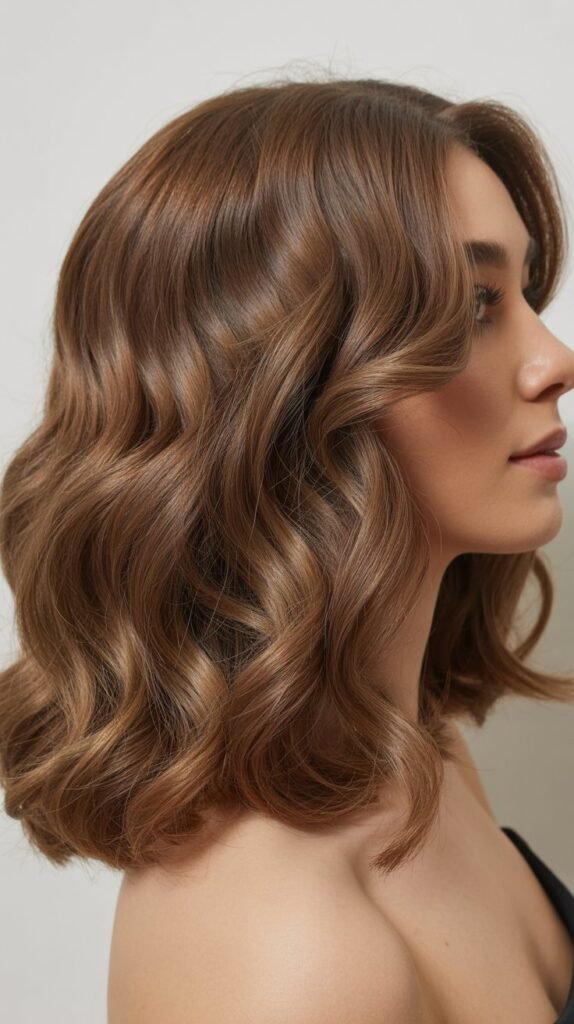
A blunt perimeter combined with internal layering offers the best of both worlds: the strong, defined line of a blunt cut with the movement and volume reduction that layers provide.
This sophisticated approach is perfect for thick wavy hair that needs structure.
Key Features:
- The outer perimeter of the hair is cut in a blunt, even line at shoulder length, creating a strong geometric shape.
- Internal layers are cut beneath the surface, removing bulk and weight without affecting the blunt exterior appearance.
- This technique maintains the thick, full appearance at the ends while preventing the interior from becoming too heavy.
- The blunt line provides a polished, intentional look while the internal layers allow natural waves to form without weighing down.
Styling Techniques:
- Apply a straightening balm if you want to emphasize the blunt line with sleek styling.
- Use a flat iron on the bottom inch to keep the perimeter crisp and defined while allowing natural waves above.
- Alternatively, embrace full natural waves throughout while maintaining the defined blunt edge at the bottom.
- This cut looks particularly striking when styled with a center part and symmetrical waves.
14. Feathered Layers for 70s-Inspired Volume
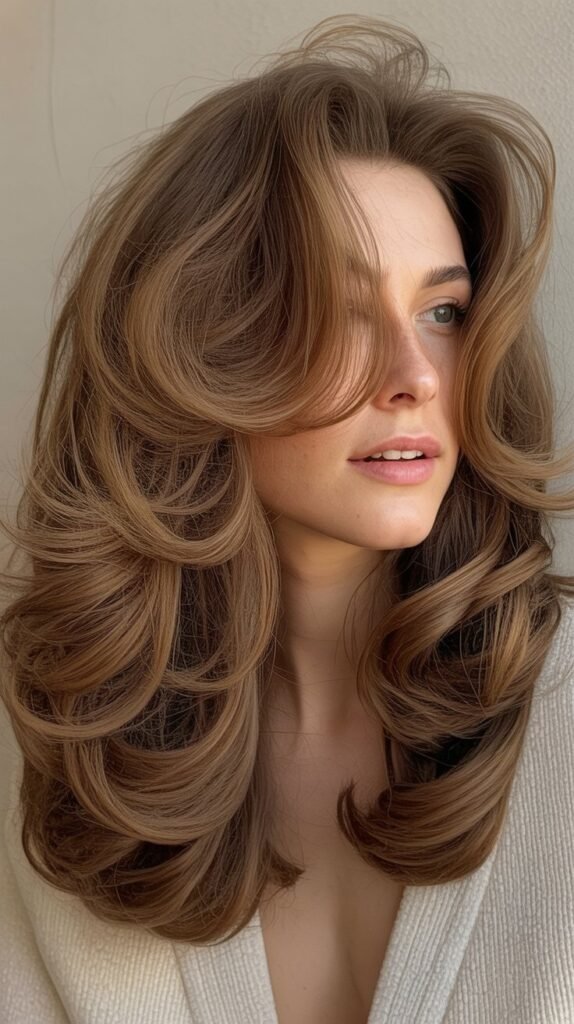
Feathered layers bring back the voluminous, glamorous aesthetic of 1970s hairstyles, adapted for modern thick wavy hair with techniques that create outward-flipping ends and maximum movement.
This retro-inspired look celebrates volume rather than fighting it.
Key Features:
- Layers are cut with a razor or specialized feathering technique to create soft, tapered ends that flip outward naturally.
- The layering is concentrated around the face and crown, creating maximum volume in these areas.
- Feathering removes weight from the ends, making them light enough to bend and flip rather than hanging straight.
- This style particularly suits those with square or rectangular face shapes, as the outward volume softens angular features.
Styling Process:
- Apply volumizing mousse throughout damp hair, focusing on the roots and mid-lengths.
- Blow-dry with a large round brush, wrapping sections around the brush and directing heat to create outward movement.
- Use the brush to flip the ends outward as you dry, creating the signature feathered appearance.
- Finish with a light-hold hairspray to maintain the volume and outward flip throughout the day.
15. Layered Collarbone Cut with Undone Texture
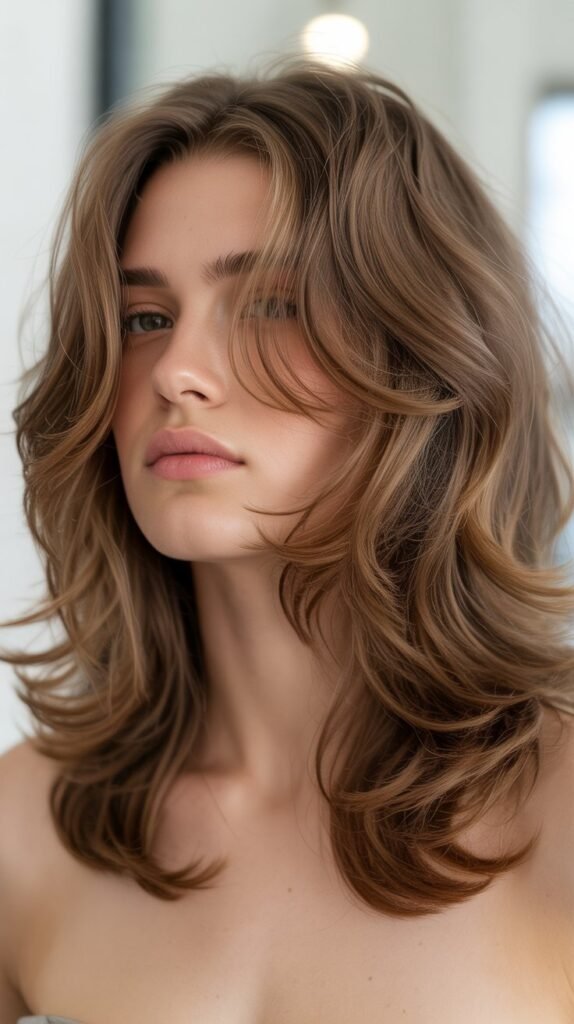
The collarbone cut hits at the perfect length to showcase thick wavy hair’s natural beauty, and when combined with undone, textured layers, it creates an effortlessly chic look.
This length is universally flattering and incredibly versatile.
Key Features:
- The cut ends precisely at the collarbone, a length that works with natural wave patterns rather than fighting them.
- Layers throughout create an intentionally undone, lived-in texture that looks effortless yet stylish.
- The length and layering combination prevents thick hair from appearing too heavy while maintaining fullness.
- This cut transitions easily from professional settings to casual environments with simple styling adjustments.
Styling Variations:
- Create the undone texture by applying sea salt spray to damp hair and scrunching as it air-dries.
- Sleep with hair in a loose bun and release in the morning for natural, effortless waves.
- Use a flat iron to create loose, irregular bends throughout rather than uniform curls.
- Refresh day-old waves with dry texture spray and light scrunching for renewed definition.
16. Heavily Layered Shag for Maximum Texture
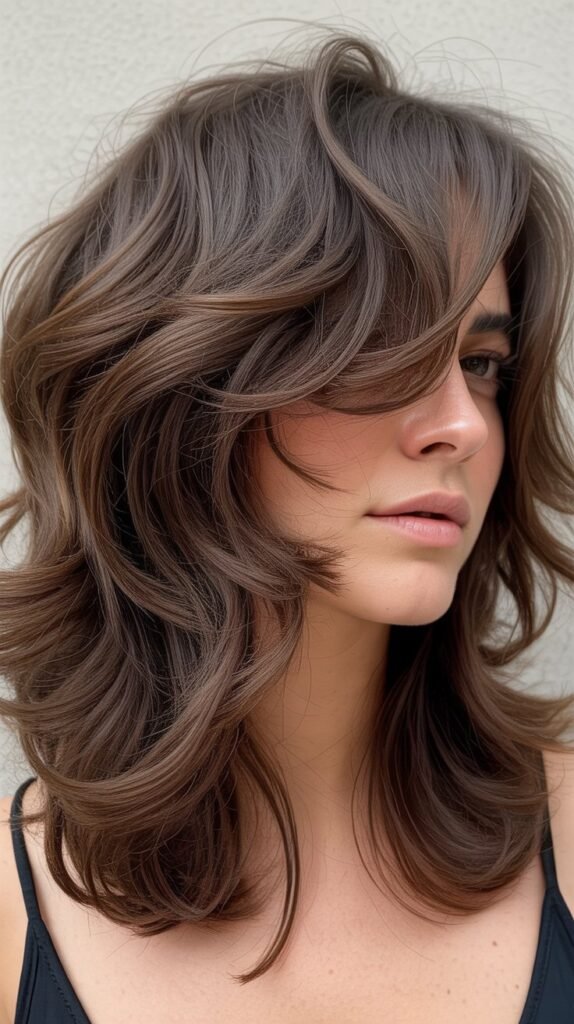
A heavily layered shag takes the texture-focused approach to its maximum potential, creating incredible movement and reducing bulk dramatically in thick wavy hair.
This bold style is for those who want their hair to be a defining feature of their look.
Key Features:
- Numerous layers cut at significantly different lengths create extreme texture and movement throughout.
- The heavy layering removes substantial weight from thick hair, making it more manageable and lighter on the head.
- Choppy, piece-y ends throughout add to the textured, intentionally messy aesthetic.
- This cut requires confidence to wear, as it makes a strong style statement and embraces imperfection.
Styling Approach:
- The beauty of heavily layered shags is their low-maintenance nature; minimal styling creates the best results.
- Apply a small amount of texturizing cream to damp hair and allow it to air-dry for natural, lived-in texture.
- Use your fingers to tousle and separate layers as they dry rather than using brushes or combs.
- Embrace the messy, undone appearance rather than trying to control or perfect the style.
17. Side-Swept Layers with Deep Part
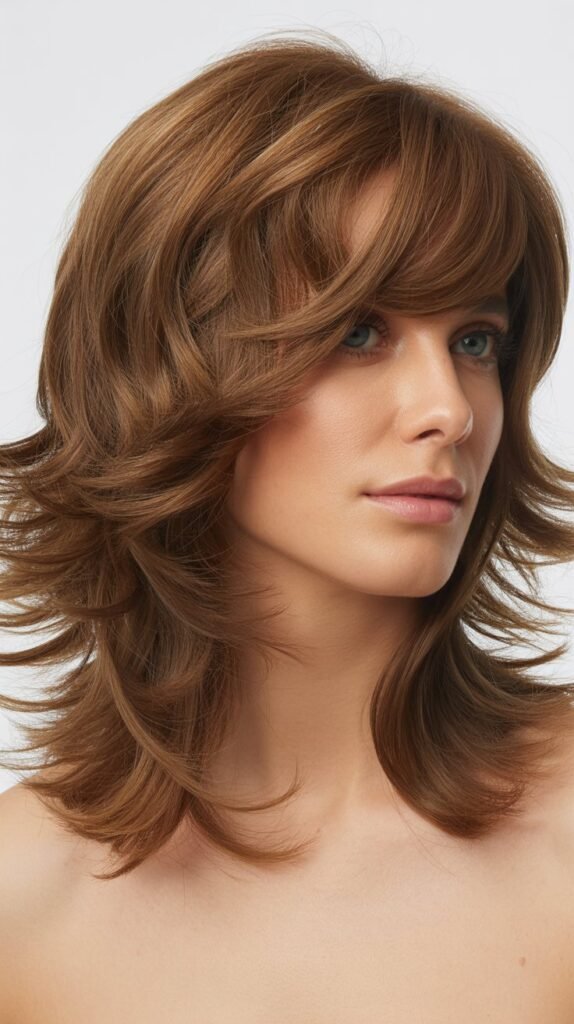
Side-swept layers combined with a dramatic deep side part create asymmetrical volume and glamorous styling opportunities perfect for thick wavy hair.
This Hollywood-inspired look adds instant sophistication to shoulder-length hair.
Key Features:
- A deep side part (positioned 1-2 inches from the center) creates dramatic volume on one side while keeping the other sleek.
- Layers are cut to enhance the side-swept styling, with longer layers that drape beautifully across the forehead.
- The asymmetrical parting balances facial features and can be used strategically to flatter different face shapes.
- This style works particularly well for formal events and occasions requiring a polished, glamorous appearance.
Styling Methods:
- Create the deep part while hair is wet to train it in the desired direction.
- Apply volumizing product to the heavier side and smoothing serum to the tucked side.
- Blow-dry the heavy side with a round brush, directing hair forward and across the face.
- Pin or tuck the lighter side behind the ear to emphasize the asymmetrical, glamorous look.
18. Layered Cut with Bangs at Various Lengths
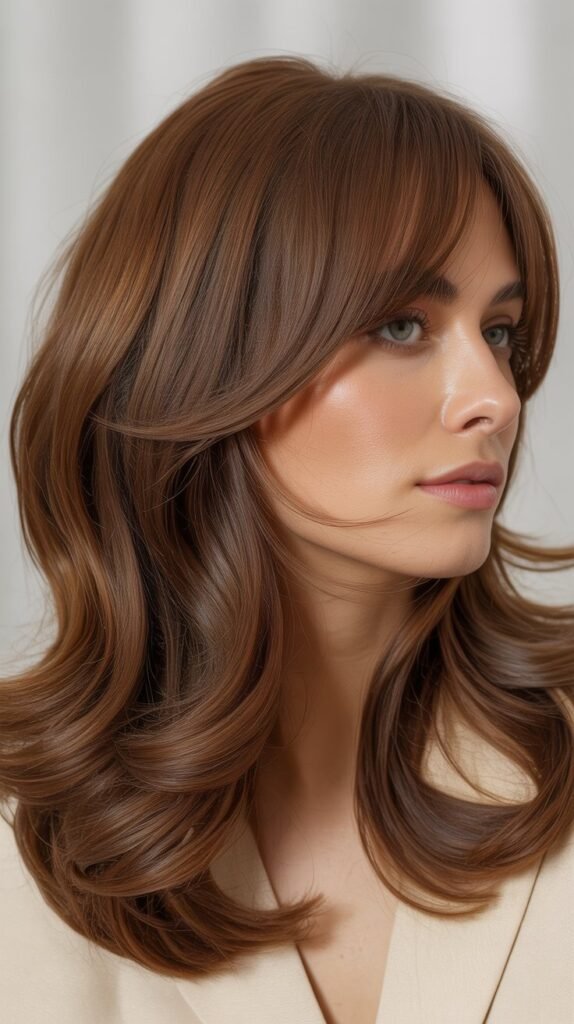
Incorporating bangs at different lengths with shoulder-length layers creates dimension and frames the face while managing thick wavy hair’s volume.
The variation in bang lengths adds interest and customization to suit individual preferences.
Key Features:
- Bangs can range from full, blunt styles to wispy, piece-y options depending on personal preference and face shape.
- The layers in the body of the hair are cut to blend seamlessly with the bangs, creating a cohesive look.
- Multiple bang length options (eyebrow-skimming, curtain-style, side-swept) can be incorporated with this layered base.
- The combination of bangs and layers effectively reduces thick hair’s bulk while adding stylish focal points.
Styling Considerations:
- Bangs require more frequent trimming than the rest of the hair, typically every 3-4 weeks to maintain the desired length.
- Blow-dry bangs first with a round brush to set their shape before styling the rest of the hair.
- Use a small amount of smoothing serum on bangs to control frizz while allowing natural texture in the rest of the hair.
- Experiment with different bang positions and styles to find what best flatters your face shape and features.
19. Disconnected Layers for Edgy Contrast
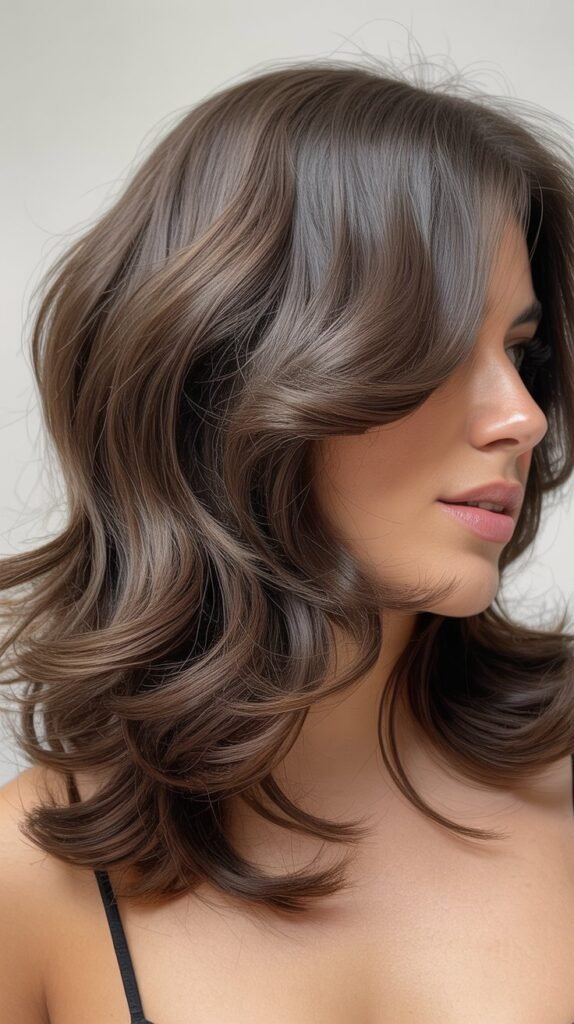
Disconnected layering creates intentional contrast between different sections of thick wavy hair by cutting layers that don’t blend seamlessly, resulting in a modern, edgy aesthetic.
This avant-garde approach is perfect for those wanting to make a fashion statement.
Key Features:
- Layers are cut with significant length differences and without traditional blending, creating visible separation between sections.
- The disconnection often occurs between the top layers and underneath sections, creating a two-tier effect.
- This technique is excellent for removing bulk from thick hair while maintaining interesting visual dimensions.
- The style has an intentionally unfinished, artistic quality that appeals to fashion-forward individuals.
Styling Techniques:
- Emphasize the disconnection by styling different sections with varying techniques (some straight, some wavy).
- Use texturizing products to enhance the separation between the disconnected layers.
- Consider using different styling methods on top versus bottom layers to accentuate the intentional disconnect.
- This cut looks particularly striking with multi-tonal color that highlights the different layers.
20. Rounded Layers for Soft Silhouette
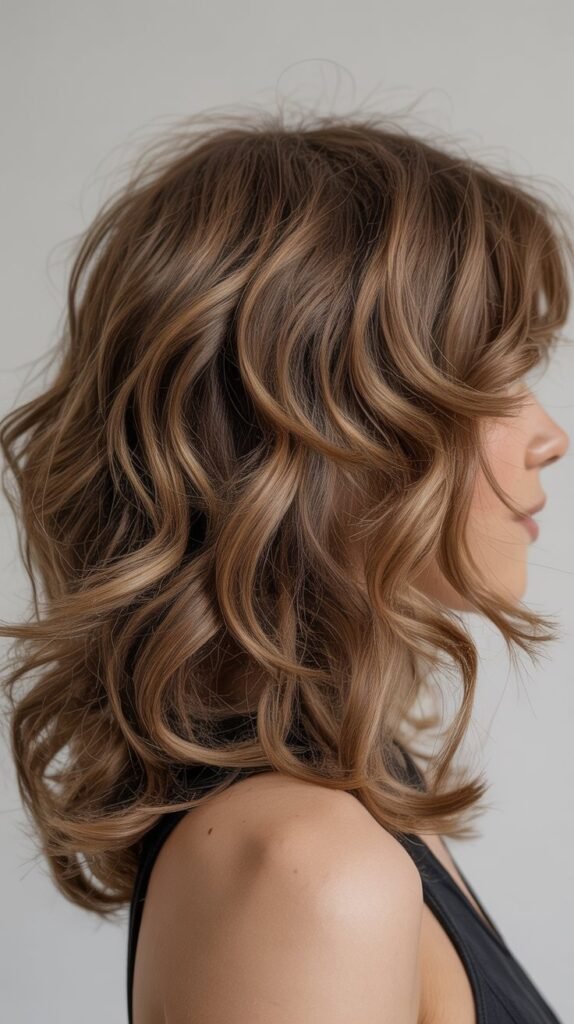
Rounded layering creates a soft, curved silhouette that follows the natural shape of the head while managing thick wavy hair’s volume.
This flattering approach avoids harsh lines and creates a feminine, polished appearance.
Key Features:
- Layers are cut in a curved, rounded shape that follows the contours of the head from all angles.
- The technique creates soft volume around the crown that gradually tapers toward the ends.
- Rounded layers prevent the triangular or boxy shapes that thick wavy hair often develops without proper cutting.
- This universally flattering approach suits all face shapes and styling preferences.
Styling Guidelines:
- Enhance the rounded shape by blow-drying with a round brush, following the curved cutting line.
- Use a diffuser with the nozzle directed downward to maintain the rounded silhouette while encouraging natural waves.
- Apply smoothing products to keep the surface sleek while allowing texture within the rounded shape.
- This cut looks beautiful both when styled smooth and when natural waves are embraced.
21. Face-Framing Layers with Longer Back
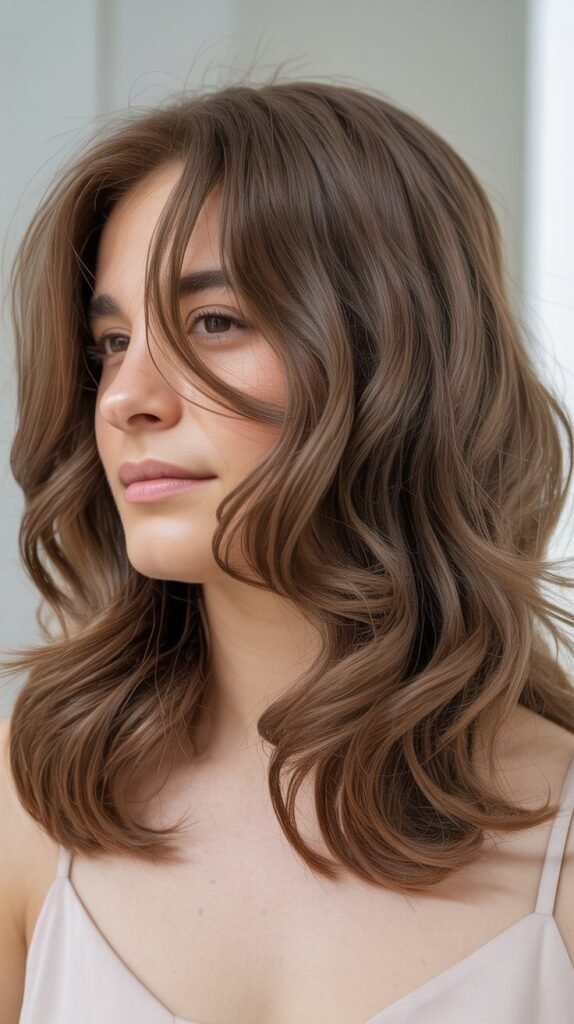
This strategic approach concentrates shorter layers around the face while maintaining longer length in the back, creating a flattering frame that draws attention to facial features while keeping versatile length for updos.
Perfect for thick wavy hair that needs dimension.
Key Features:
- Face-framing layers begin at cheekbone or chin level and gradually blend into longer back sections.
- The length difference between front and back can be subtle or dramatic depending on personal preference.
- This technique removes bulk from the front sections where it’s most noticeable while maintaining weight in the back.
- The longer back length provides options for ponytails, braids, and other styles while the front layers remain flattering when worn down.
Styling Options:
- Blow-dry the face-framing layers with a round brush, bending them away from or toward the face depending on your preference.
- Leave the back sections natural or enhance waves with a curling wand for textured styling.
- Pull the longer back hair into various updos while allowing the face-framing pieces to fall naturally.
- This cut offers incredible versatility for both polished and casual styling approaches.
22. Beveled Layers for Modern Edge
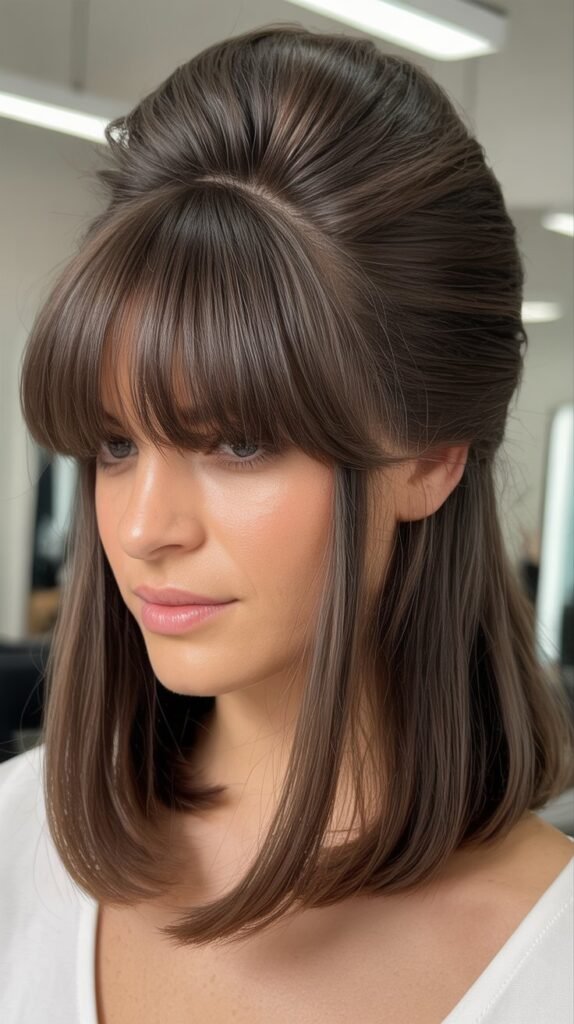
Beveled layering creates a sharp, modern edge through angled cutting that removes weight and adds geometric interest to thick wavy hair.
This contemporary technique offers a fresh take on traditional layering methods.
Key Features:
- Layers are cut at strategic angles rather than straight across, creating beveled edges throughout the hair.
- The angled cutting removes bulk while creating interesting visual lines when hair moves.
- Beveling works particularly well with thick hair’s natural volume, creating shape and structure.
- This technique can be subtle for conservative preferences or dramatic for those wanting a bold, architectural look.
Styling Approach:
- The beveled cut looks stunning when styled sleek and straight to showcase the geometric angles.
- Natural waves also complement beveled layers by adding softness that contrasts with the sharp cutting lines.
- Use a flat iron to create slight bends in the hair that follow the beveled cutting angles.
- Finish with a shine spray to highlight the dimensional beveled layers.
23. Crown-Focused Layers with Length Retention
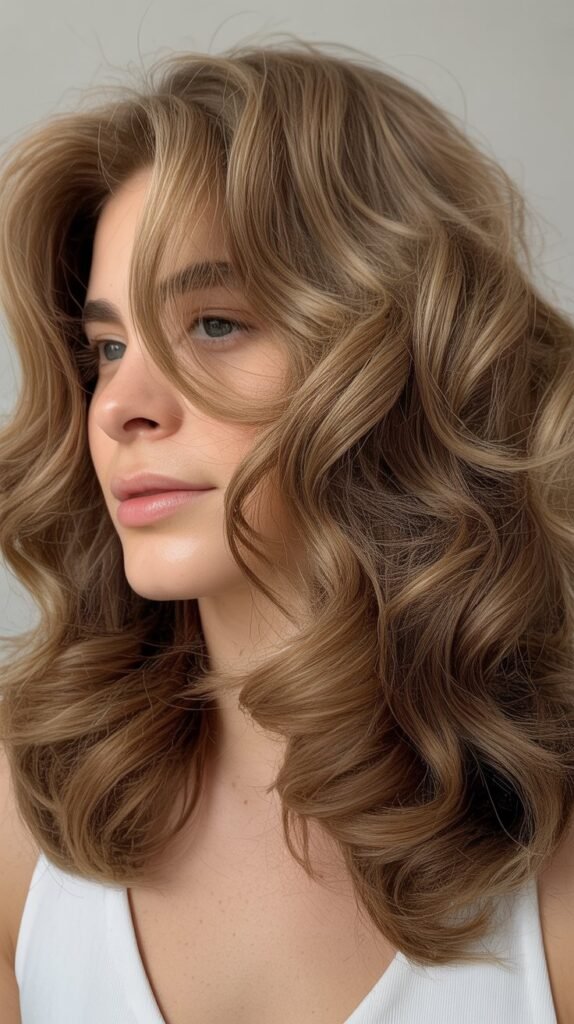
This approach concentrates layering at the crown and top sections while maintaining maximum length at the perimeter, perfect for those with thick wavy hair who want to reduce weight without sacrificing length.
The strategic placement creates lift where needed.
Key Features:
- Short to medium layers are cut specifically at the crown area to create volume and remove bulk from the heaviest section.
- Perimeter length remains intact, allowing for longer styling options and preventing the short-all-over look.
- The technique addresses the common issue of thick hair lying flat at the roots while being heavy at the ends.
- This cut maintains the ability to pull hair back into ponytails and buns without short layers falling out.
Styling Tips:
- Focus volumizing products at the crown where the shorter layers are located.
- Blow-dry the crown sections with a round brush to maximize lift and body in this area.
- Allow the longer perimeter sections to air-dry or diffuse naturally, embracing their wave pattern.
- Use bobby pins to secure any crown layers that tend to fall forward if desired.
24. Layered Lob with Tucked Styling
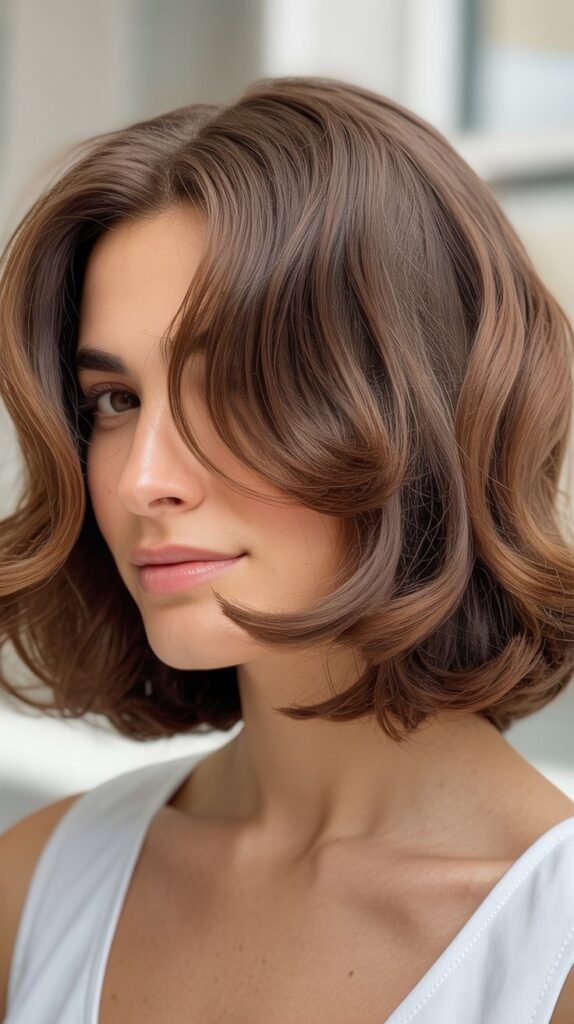
The tucked styling approach pairs beautifully with a layered lob, creating an asymmetrical look perfect for thick wavy hair.
One side is tucked behind the ear while the other falls forward, showcasing the layers in different ways.
Key Features:
- The lob length provides the perfect canvas for showcasing both tucked and untucked styling options.
- Layers throughout allow the tucked side to lie smoothly behind the ear while the forward side displays dimension.
- This styling approach works with the cut rather than against it, making thick wavy hair more manageable.
- The asymmetrical presentation adds visual interest and can be alternated to change your look daily.
Styling Methods:
- Apply smoothing serum to the side you’ll be tucking to help it lie flat behind the ear.
- Use volumizing product on the forward-falling side to enhance body and movement.
- Tuck one side behind the ear while the hair is still damp to train it in that direction.
- Secure with a bobby pin if needed, though the layered cut should hold the tuck naturally.
25. Invisible Layers for Subtle Dimension
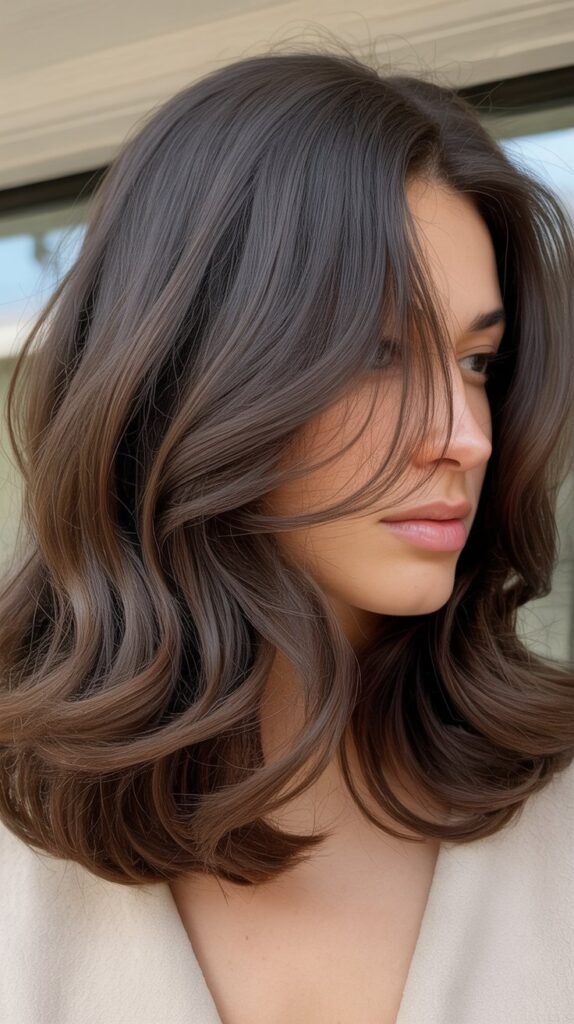
Invisible layering creates dimension and removes bulk from thick wavy hair without obvious layer lines, resulting in a seamless, natural appearance.
This technique is perfect for those who want the benefits of layers without a dramatically layered look.
Key Features:
- Layers are cut with minimal length variation and expertly blended to create dimension without visible demarcation lines.
- The technique uses interior thinning and strategic cutting to remove weight while maintaining the appearance of one-length hair.
- Invisible layers work beautifully with natural wave patterns, allowing them to form without the weight of unlayered thick hair.
- This approach suits professional environments and those preferring subtle, sophisticated styling.
Styling Considerations:
- The beauty of invisible layers is their ability to look great with minimal styling effort.
- Natural air-drying produces beautiful results as the hidden layers allow waves to form freely.
- Straightening creates a sleek, polished look without obvious layer steps.
- This cut maintains a fuller appearance at the ends while preventing top-heaviness.
26. Stacked Bob Layers for Back Volume
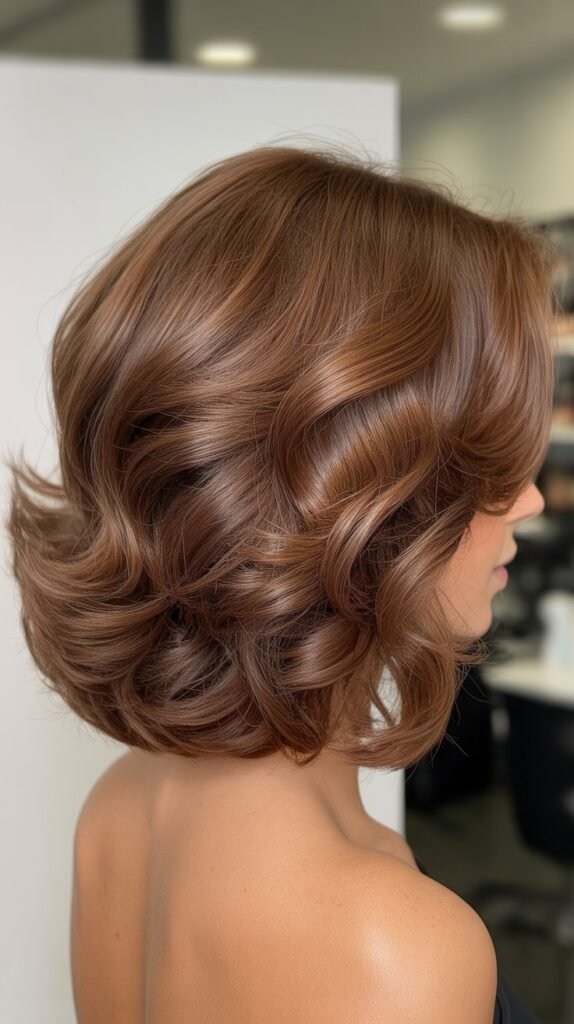
Stacked layering at the back of a shoulder-length bob creates dramatic volume and shape, perfect for thick wavy hair that needs structure and dimension.
This technique is particularly effective for creating a modern, eye-catching silhouette.
Key Features:
- Short layers are stacked in the back, creating a graduated, voluminous shape from the crown to the nape.
- The stacking removes significant bulk from thick hair while creating architectural volume.
- Front sections remain longer, maintaining versatility and face-framing length.
- The dramatic back creates interest from all angles and looks particularly striking from behind.
Styling Techniques:
- Use a round brush to direct the stacked back layers upward and outward while blow-drying.
- Apply volumizing powder at the roots of the back section for extra lift and texture.
- The front can be styled sleek or wavy depending on your preference, as the dramatic interest comes from the back.
- Consider showing off the stacked back with updos that showcase the graduated volume.
27. Long Layers Starting Below the Chin
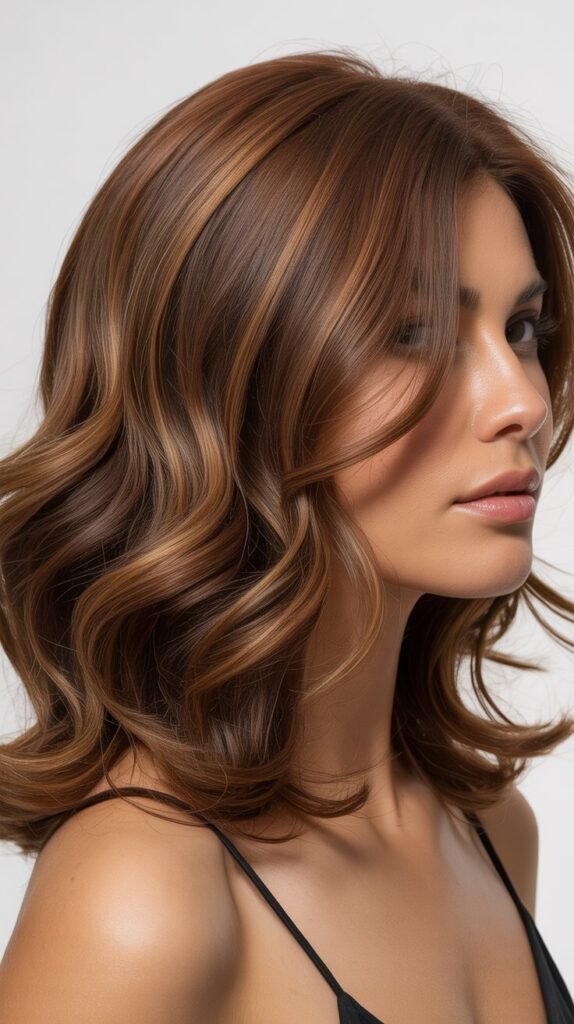
Long, sweeping layers that begin below the chin create elegant movement in thick wavy hair while maintaining substantial length throughout.
This conservative approach to layering suits those who prefer minimal cutting but still want dimension.
Key Features:
- The first layer begins at chin level or below, preserving length and fullness at the top.
- Subsequent layers are cut with gradual length increases, creating soft, flowing movement.
- This technique maintains thickness and volume throughout while preventing a blunt, heavy appearance at the ends.
- Long layers particularly suit those with very long thick wavy hair who want to maintain their length.
Styling Guidelines:
- Long layers look stunning when styled with large, loose waves that showcase the flowing dimension.
- Use a large-barrel curling iron to create soft bends that follow the long layer lines.
- Apply smoothing cream to enhance shine and definition of the long, layered waves.
- This cut requires minimal styling to look polished and beautiful, making it perfect for low-maintenance routines.
28. Textured Ends with Minimal Layering
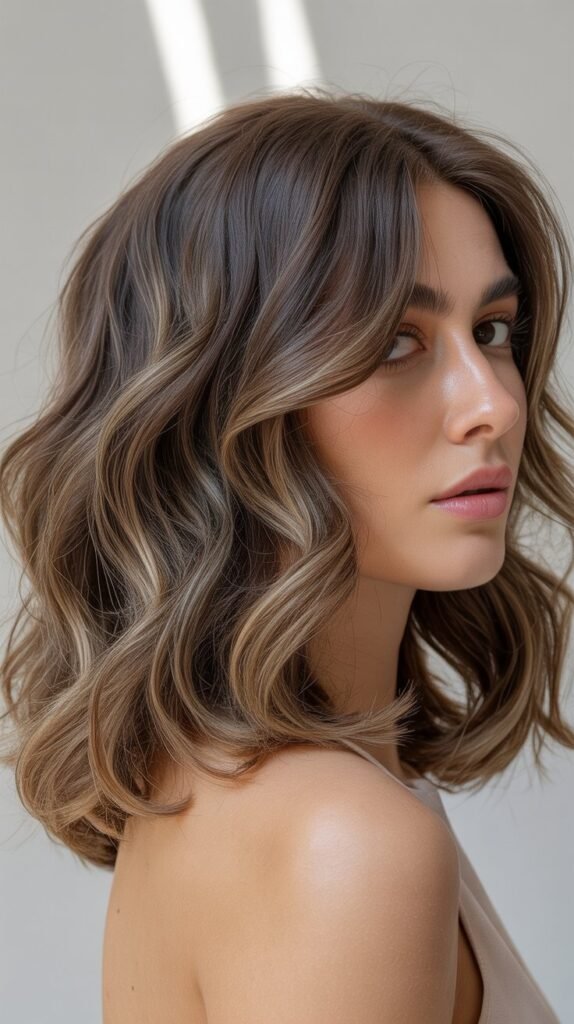
Focusing texture at the ends while keeping minimal layering throughout creates a modern look that maintains thick wavy hair’s fullness while adding interest where it’s most visible.
This approach balances weight retention with stylish detail.
Key Features:
- The body of the hair remains relatively one-length with just subtle internal layers for movement.
- Ends are heavily textured using point-cutting, razoring, or slide-cutting techniques.
- The textured ends prevent the blunt, heavy appearance that thick wavy hair can develop at shoulder length.
- This technique maintains maximum fullness throughout while creating visual interest at the perimeter.
Styling Methods:
- Apply texturizing spray specifically to the ends to enhance and define the textured cutting.
- Use a curling wand only on the textured ends to create piece-y, separated waves.
- Leave the body of the hair natural or smooth, allowing the textured ends to be the focal point.
- This cut looks particularly striking with balayage or ombré coloring that emphasizes the textured ends.
29. Layered Cut with Hidden Undercut
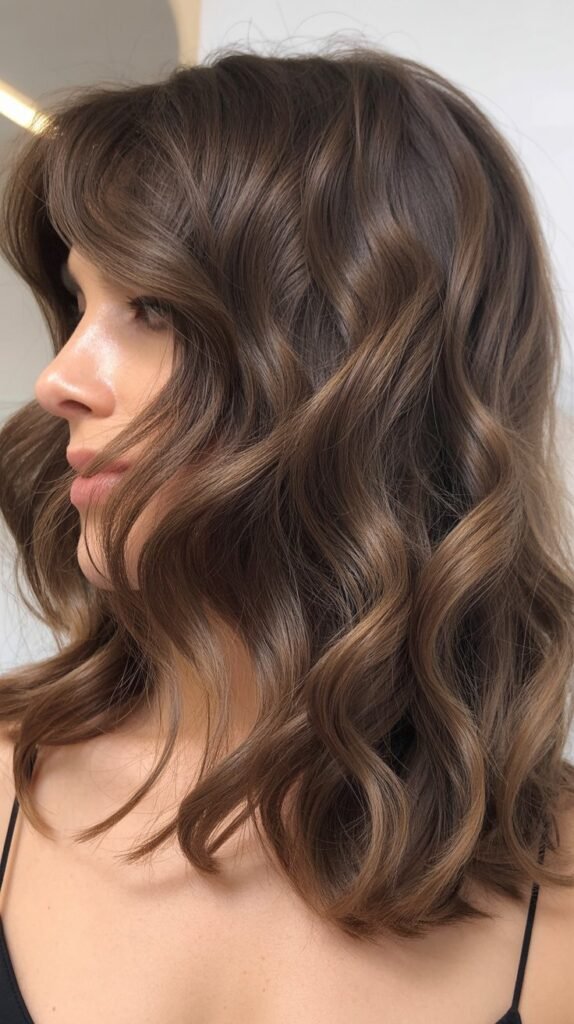
Combining visible layers with a hidden undercut creates a secret weapon for managing thick wavy hair’s volume.
The undercut removes bulk from the nape area while the layers provide surface dimension, and the undercut remains invisible when hair is worn down.
Key Features:
- A section of hair at the nape is cut very short or shaved, removing significant weight from the heaviest area.
- Layers are cut in the top sections to create a seamless appearance that completely hides the undercut.
- This technique dramatically reduces bulk and makes thick wavy hair more manageable while maintaining a full appearance.
- The hidden undercut can be revealed by pulling hair up, creating two distinct styling options.
Styling Variations:
- Wear hair down to completely hide the undercut while enjoying the lighter, more manageable feel.
- Pull hair into ponytails or buns to reveal the undercut, creating an edgy, unexpected detail.
- The reduced weight from the undercut makes natural air-drying more practical and faster.
- This cut requires regular maintenance every 4-6 weeks to keep the undercut at the desired length.
30. Bounce-Enhancing Layers for Spring
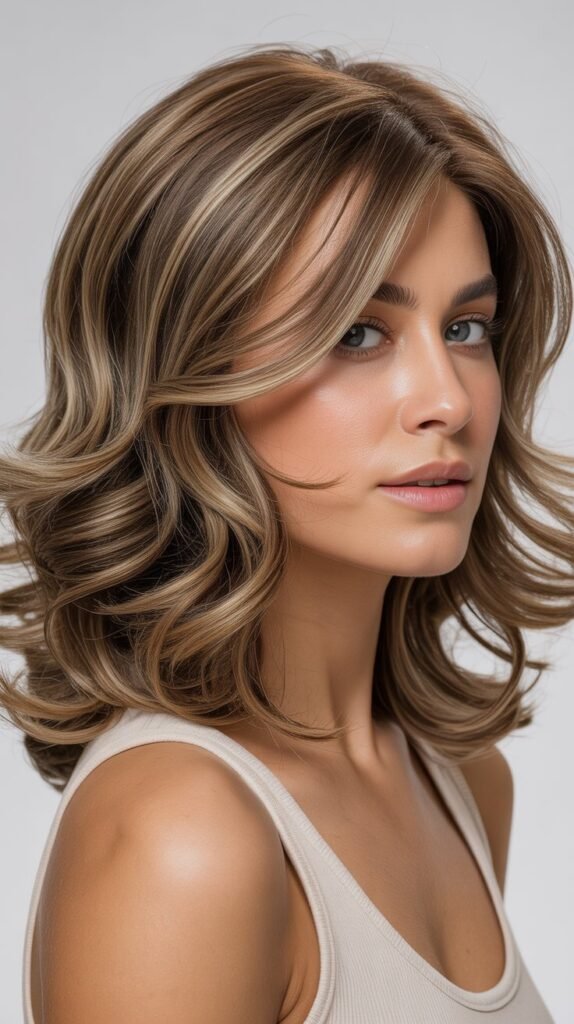
Bounce-enhancing layers are specifically cut to work with thick wavy hair’s natural springiness, creating maximum movement and vitality.
This energetic style celebrates waves rather than weighing them down.
Key Features:
- Layers are cut shorter than traditional approaches, allowing waves to spring up and create bouncy movement.
- The technique removes enough weight that hair can bounce freely without being weighed down by its own thickness.
- Cutting follows the natural wave pattern, enhancing rather than fighting the hair’s natural movement.
- This playful, youthful style works particularly well for those with naturally springy, elastic wave patterns.
Styling Approach:
- Enhance natural bounce with curl-defining products that provide hold without weighing hair down.
- Diffuse with your head flipped upside down to maximize volume and bouncy movement.
- Avoid heavy oils or serums that would reduce the springy, bouncy quality.
- Scrunch hair while drying to encourage waves to form their most defined, bouncy spirals.
31. Angled Layers for Face-Slimming Effect
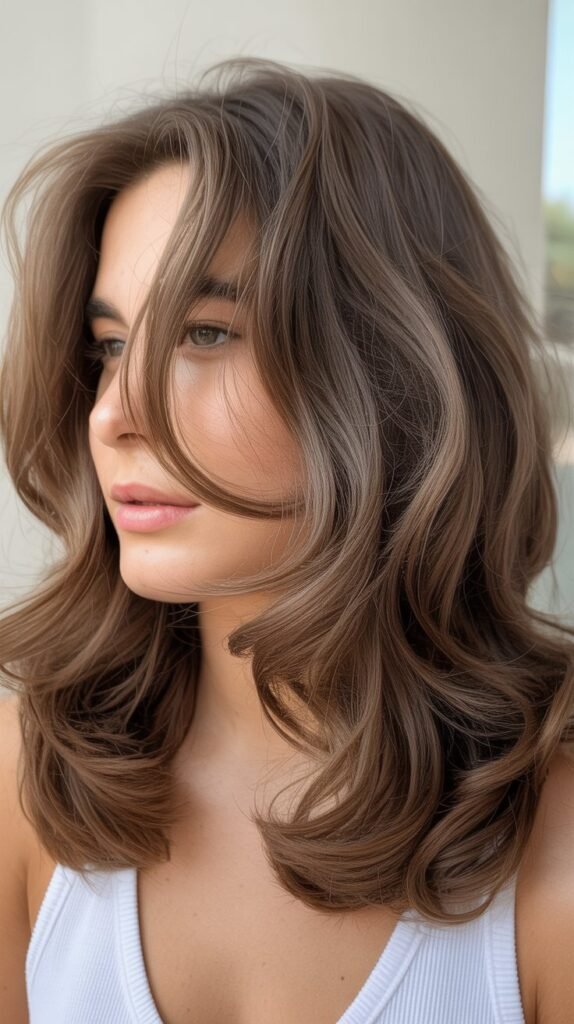
Strategically angled layers create a face-slimming effect perfect for those wanting to elongate their appearance while managing thick wavy hair.
The angle draws the eye vertically rather than horizontally, creating a lengthening visual effect.
Key Features:
- Layers are cut on a forward angle, with front pieces longer than back pieces at each layer level.
- The angling creates lines that point downward, drawing attention to the face’s vertical dimension.
- This technique particularly flatters round and square face shapes by adding length to the overall appearance.
- The angles work with thick wavy hair’s natural movement, creating flowing dimension.
Styling Tips:
- Style the angled layers to frame the face and emphasize the forward angle.
- Use a flat iron or curling wand to create slight bends that follow the angled cutting lines.
- Keep the crown area volumized to enhance the face-slimming vertical effect.
- Side parts work particularly well with angled layers, emphasizing the slimming angle.
32. Layer Combination: Short, Medium, and Long
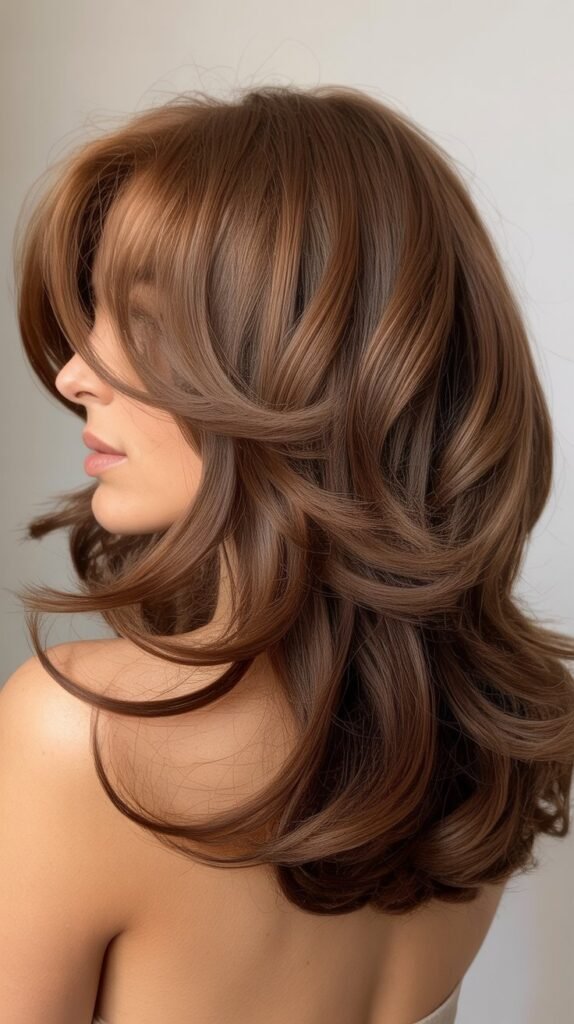
Incorporating three distinct layer lengths creates maximum dimension and movement in thick wavy hair.
This complex layering technique offers the most dramatic transformation for very thick hair that needs substantial bulk removal.
Key Features:
- Short layers at the crown (around ear-level) create volume and lift.
- Medium layers through the mid-section (chin to shoulder level) provide transitional movement.
- Long layers at the perimeter maintain length and fullness at the ends.
- The three-tier approach removes significant weight while maintaining a balanced, dimensional appearance.
Styling Complexity:
- Different layers can be styled with different techniques for maximum texture and interest.
- Short layers at the crown may air-dry quickly while longer layers need more time or diffusing.
- This cut provides numerous styling options, from sleek and smooth to highly textured.
- Consider using different product types on different layer lengths for customized results.
33. Swoopy Layers for Retro Glamour
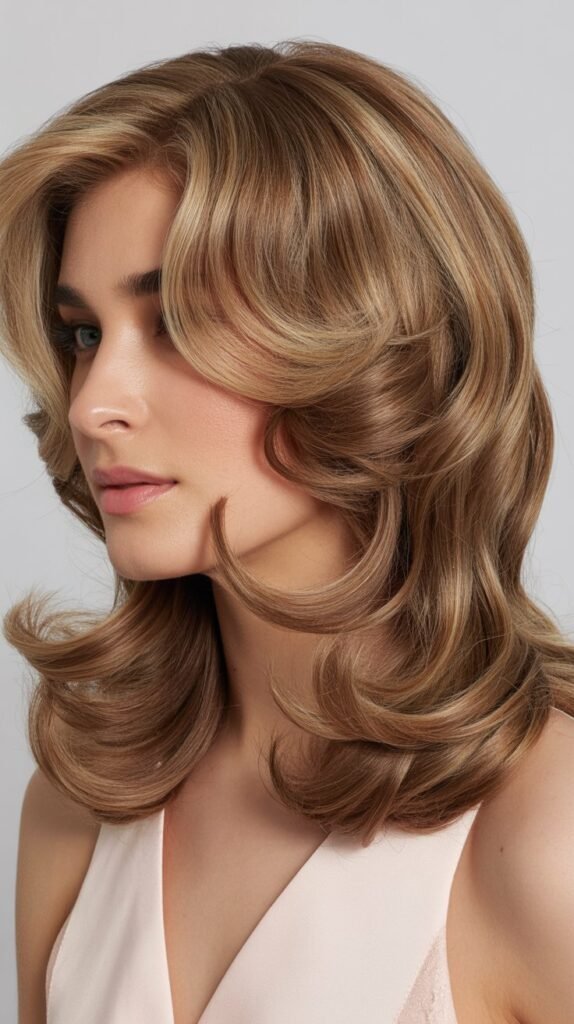
Swoopy layers create dramatic, curved movement reminiscent of vintage Hollywood glamour, perfect for thick wavy hair that can support bold styling.
These layers are cut to create intentional swooping movements when styled.
Key Features:
- Layers are cut with an emphasis on creating curved, swooping shapes rather than straight lines.
- The technique works with thick hair’s natural volume to create dramatic, retro-inspired movement.
- Swoopy layers typically focus around the face and front sections for maximum visual impact.
- This glamorous approach suits those who enjoy vintage-inspired styling and want hair that makes a statement.
Styling Process:
- Use large velcro rollers or a large-barrel curling iron to create the swooping curves.
- Blow-dry with a round brush, directing hair in swooping motions that emphasize the curved cutting.
- Set with a strong-hold hairspray to maintain the dramatic swooping shape throughout the day.
- This style looks particularly stunning for special events and occasions where glamorous hair is desired.
34. Modern Mullet Layers
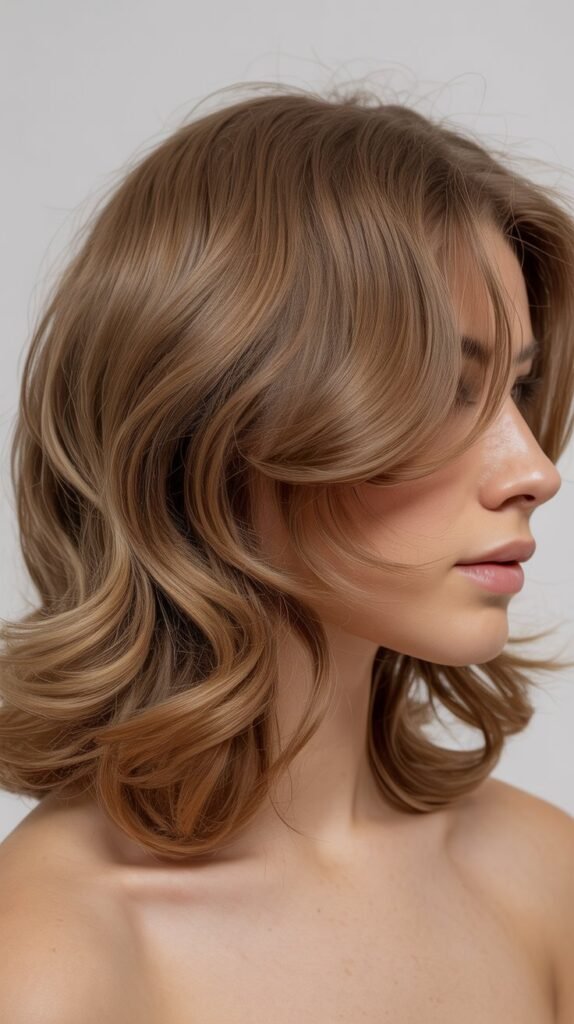
The modern mullet adaptation brings this controversial style into contemporary fashion with sophisticated layering that works beautifully for thick wavy hair.
Shorter front and sides pair with longer back sections for an edgy, fashion-forward look.
Key Features:
- Front and side sections are cut shorter (typically ear to chin length) while the back remains notably longer.
- Layers throughout blend the different lengths and create a cohesive, modern interpretation rather than the harsh disconnection of traditional mullets.
- The style works exceptionally well with thick wavy hair’s natural texture, creating interest in all sections.
- This bold choice suits those with confident personal style who enjoy being fashion-forward.
Styling Options:
- Embrace natural waves throughout for a relaxed, textured interpretation of the modern mullet.
- Style the front sleek and smooth while keeping the back textured for contrast.
- Use texturizing products to enhance the piece-y, lived-in quality that makes modern mullets work.
- This cut looks particularly striking with creative color techniques like highlights or vivid tones.
35. Waterfall Layers for Flowing Movement
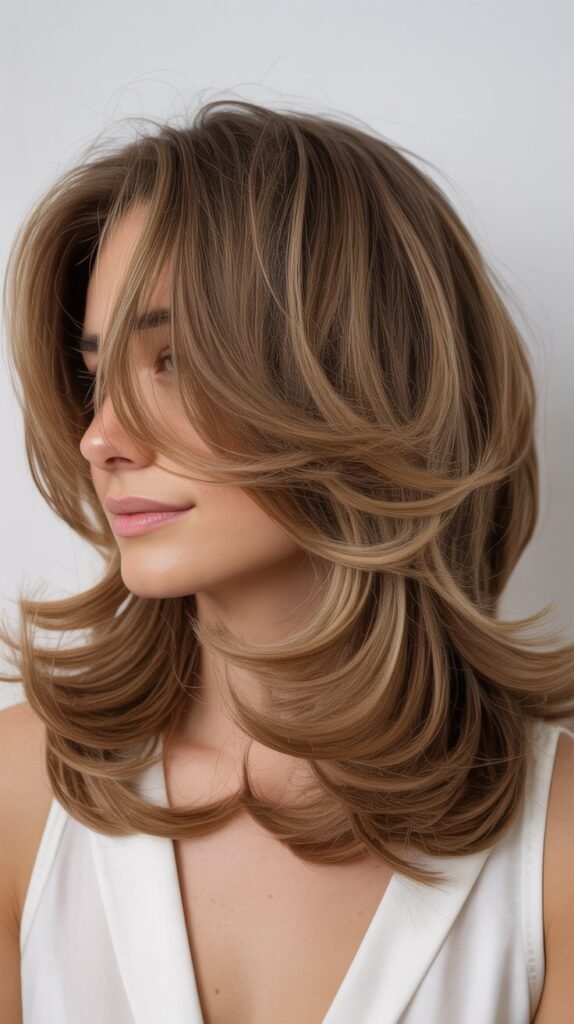
Waterfall layers create a cascading effect that flows downward like water, perfect for thick wavy hair that can support this dramatic layering technique.
Each layer falls gracefully into the next, creating seamless, flowing dimension.
Key Features:
- Layers are cut in a curved, cascading pattern that creates fluid, flowing movement throughout.
- The technique emphasizes vertical flow, elongating the overall appearance while removing bulk.
- Each layer seamlessly blends into the next, creating the waterfall effect without harsh demarcation lines.
- This romantic, feminine style works beautifully for those who want elegant, flowing hair.
Styling Techniques:
- Enhance the flowing quality by styling waves that follow the cascading layer lines.
- Use a curling wand to create soft, flowing waves that emphasize the waterfall movement.
- Apply lightweight styling products that won’t weigh down the flowing layers.
- Allow hair to dry naturally or with gentle diffusing to maintain the soft, flowing quality.
36. Point-Cut Layers for Soft Edges
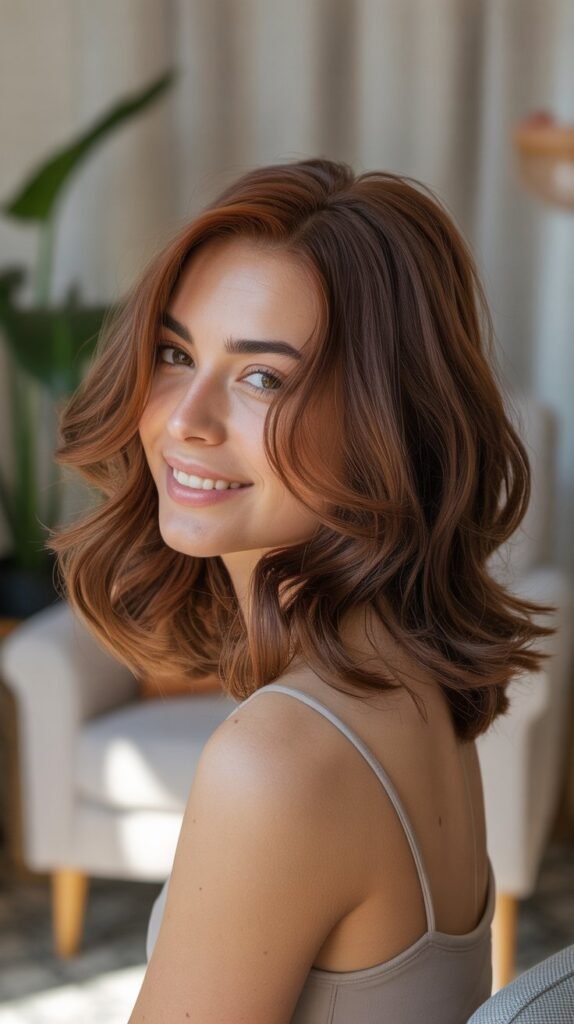
Point-cutting throughout creates incredibly soft, blended edges that remove harsh lines from thick wavy hair.
This meticulous cutting technique requires skilled execution but produces beautiful, natural-looking results.
Key Features:
- Scissors are positioned vertically and pointed into the hair rather than cutting straight across.
- The technique creates soft, feathered edges throughout all layers, blending seamlessly.
- Point-cutting naturally removes bulk while creating texture without obvious layer lines.
- This method works exceptionally well for thick wavy hair that needs softening and dimension.
Styling Considerations:
- Point-cut hair requires less styling to look polished, as the soft edges blend naturally.
- Natural air-drying produces beautiful results with minimal frizz or harsh lines.
- The soft edges created by point-cutting make thick wavy hair more manageable and flowing.
- This technique requires an experienced stylist who understands proper point-cutting methods.
37. Bold Contrast Layers
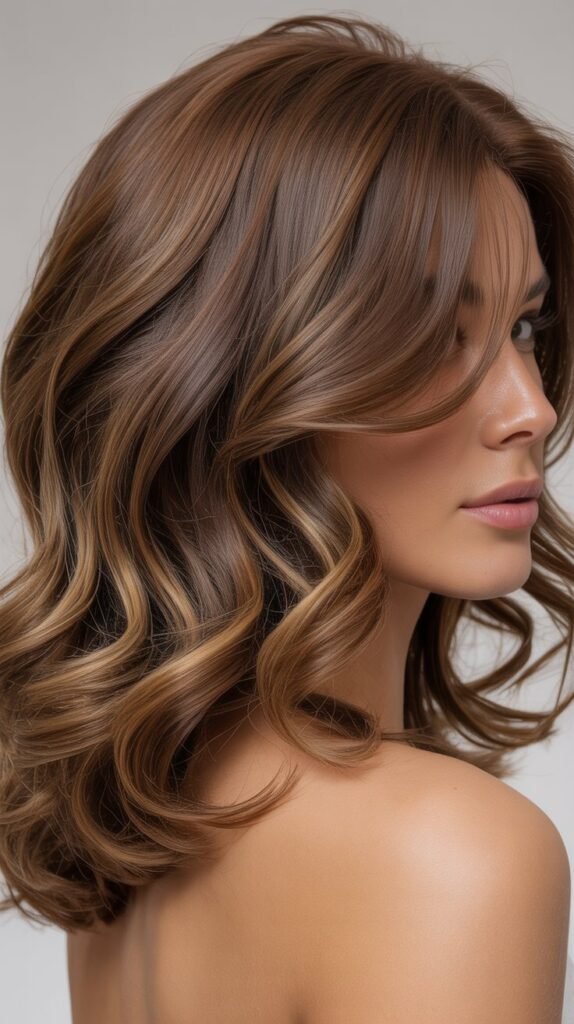
Bold contrast layering creates dramatic length differences between sections of thick wavy hair, producing an avant-garde look that celebrates dimension.
This fearless approach is perfect for those who want their hair to make a strong statement.
Key Features:
- Significant length differences between layers create visible, intentional contrast throughout.
- The bold approach removes substantial bulk while creating striking visual interest.
- Layers may vary by several inches in length, creating dramatic dimensional effects.
- This style suits those with adventurous personal style who appreciate artistic, unconventional looks.
Styling Methods:
- Emphasize the contrast by styling different layer lengths with varying techniques or textures.
- Use products that enhance separation and definition to make the bold contrast visible.
- This cut looks particularly striking with contrasting color techniques like highlights on certain layers.
- Embrace the dramatic, artistic nature of the cut rather than trying to blend or smooth the contrast.
38. Slide-Cut Layers for Seamless Blending
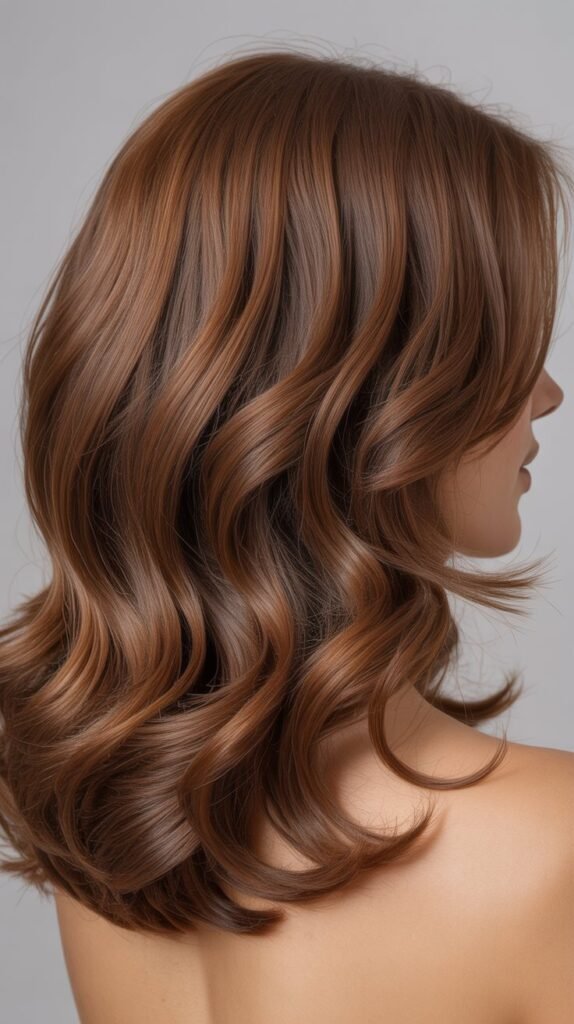
Slide-cutting creates the most seamless layer blending possible in thick wavy hair by using a sliding scissor technique that removes weight and creates soft transitions.
This advanced cutting method produces beautiful, natural-looking dimension.
Key Features:
- Scissors are closed while sliding down the hair shaft, removing weight and creating layers simultaneously.
- The technique produces invisible layer transitions with no harsh demarcation lines.
- Slide-cutting effectively thins thick hair while maintaining length and creating flowing movement.
- This method requires advanced technical skill and should only be performed by experienced stylists.
Styling Guidelines:
- The seamless blending allows for effortless styling with natural, flowing results.
- Both straight and wavy styling looks beautiful with slide-cut layers.
- Minimal product is needed, as the technique creates naturally blended, flowing hair.
- Regular maintenance is important to keep the seamless blending looking fresh.
39. Root-Focused Layers for Lift
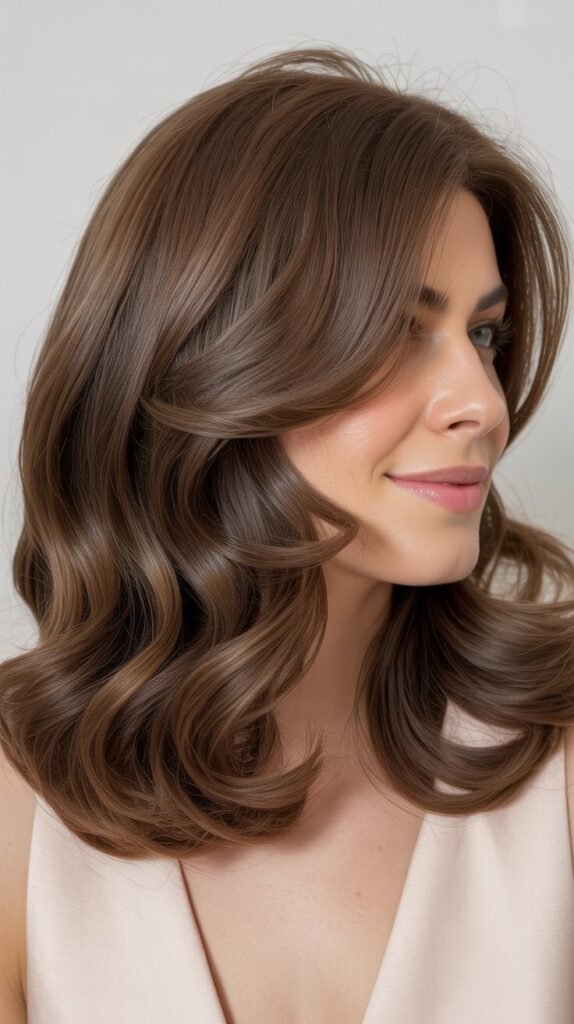
Concentrating layers specifically at the root area creates maximum lift and volume where thick wavy hair often falls flat.
This strategic approach addresses the specific challenge of heavy hair weighing itself down at the roots.
Key Features:
- Very short layers are cut close to the scalp at the crown and top areas to create lift.
- Longer layers throughout the mid-lengths and ends maintain length and styling versatility.
- The root-focused approach removes weight exactly where it causes flatness.
- This technique particularly benefits those with very thick, heavy wavy hair that lacks volume at the crown.
Styling Tips:
- Apply volumizing products directly at the roots where the short layers are located.
- Blow-dry the root area with a round brush or use a diffuser with your head flipped upside down.
- The short root layers will naturally create lift with minimal styling effort.
- Use dry shampoo or volumizing powder at the roots between washes to maintain lift.
40. Layered Midi Length for Classic Appeal
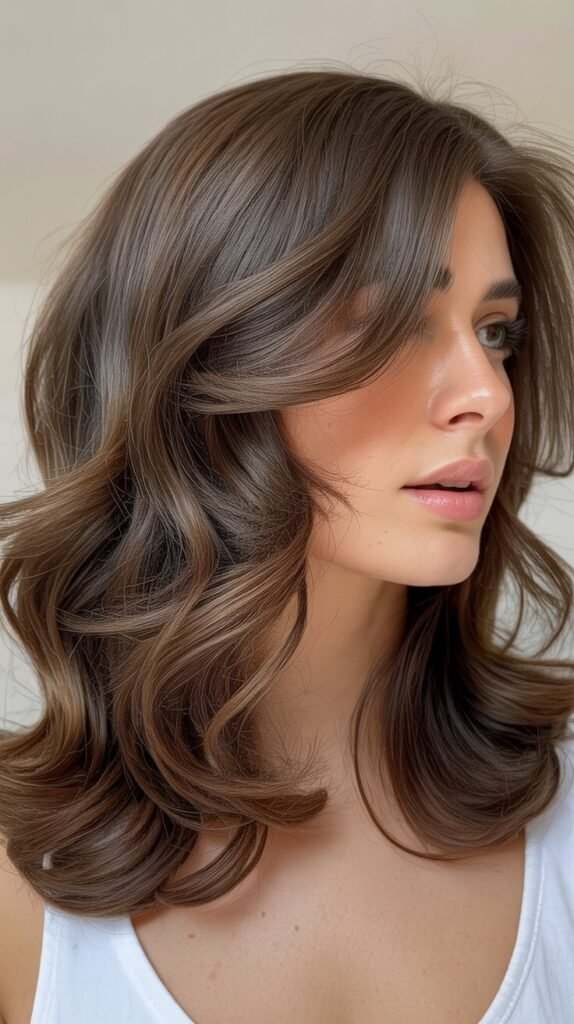
The midi length falls between shoulder and collarbone, and when combined with strategic layering, creates a classically beautiful look for thick wavy hair.
This versatile length works for virtually any occasion and lifestyle.
Key Features:
- The midi length provides enough weight to control thick wavy hair while remaining versatile and flattering.
- Layers throughout remove bulk and create movement without sacrificing the length’s sophistication.
- This length and layering combination suits professional environments while remaining stylish and current.
- The classic appeal of midi-length layered hair makes it a timeless choice that doesn’t follow fleeting trends.
Styling Versatility:
- Style sleek and straight for polished professional appearances.
- Enhance natural waves for casual, approachable styling.
- Pull into elegant updos for formal events, with layers adding dimension and interest.
- The length works beautifully with or without heat styling tools.
41. Choppy Midi Layers with Texture
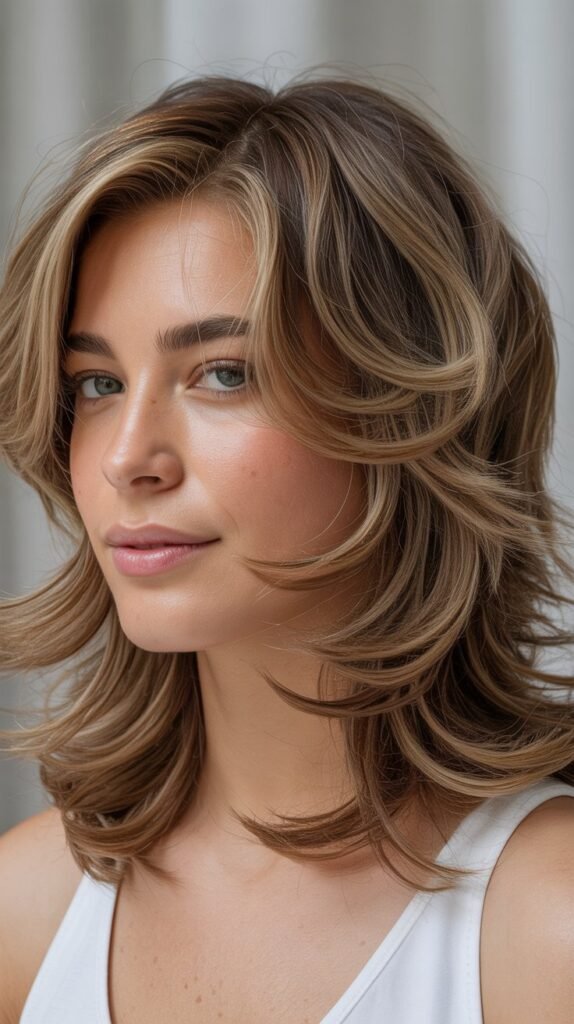
Combining the midi length with choppy, textured layers creates an edgier interpretation perfect for thick wavy hair that needs both length and dimension.
This modern approach adds personality while managing volume.
Key Features:
- Choppy cutting techniques create intentionally irregular, piece-y layers throughout the midi length.
- The texture removes significant bulk while creating an intentionally undone, modern aesthetic.
- Each layer has visible texture and separation rather than smooth blending.
- This style appeals to those wanting a more casual, fashion-forward interpretation of shoulder-length hair.
Styling Approach:
- Embrace the choppy texture with minimal styling and natural air-drying.
- Use texturizing products to enhance separation and define individual choppy pieces.
- Scrunch hair while drying to encourage waves that work with the choppy layering.
- This cut looks particularly great with lived-in, slightly messy styling rather than overly polished looks.
42. Dimensional Layers with Subtle Graduation
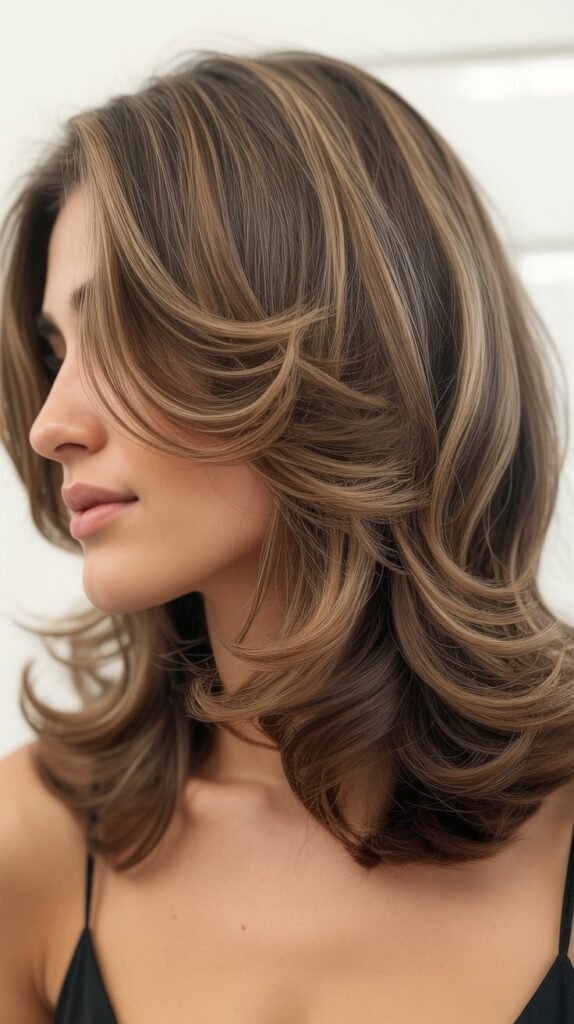
Subtle graduation combined with dimensional layering creates sophisticated depth in thick wavy hair without obvious layer lines.
This refined approach offers the benefits of layering while maintaining a polished, professional appearance.
Key Features:
- Layers are cut with gentle graduation that creates dimension without dramatic length differences.
- The subtle approach removes weight and adds movement while maintaining a cohesive, sophisticated appearance.
- Dimensional cutting considers the hair’s natural wave pattern and works with it rather than against it.
- This style particularly suits conservative professional environments and classic style preferences.
Styling Considerations:
- The subtle nature of the graduation makes styling straightforward and low-maintenance.
- Both sleek and natural wavy styling looks sophisticated with this cutting technique.
- Minimal product is needed to achieve polished results.
- The dimensional layers add interest without requiring complex styling techniques.
43. Reverse Layers for Unique Shape
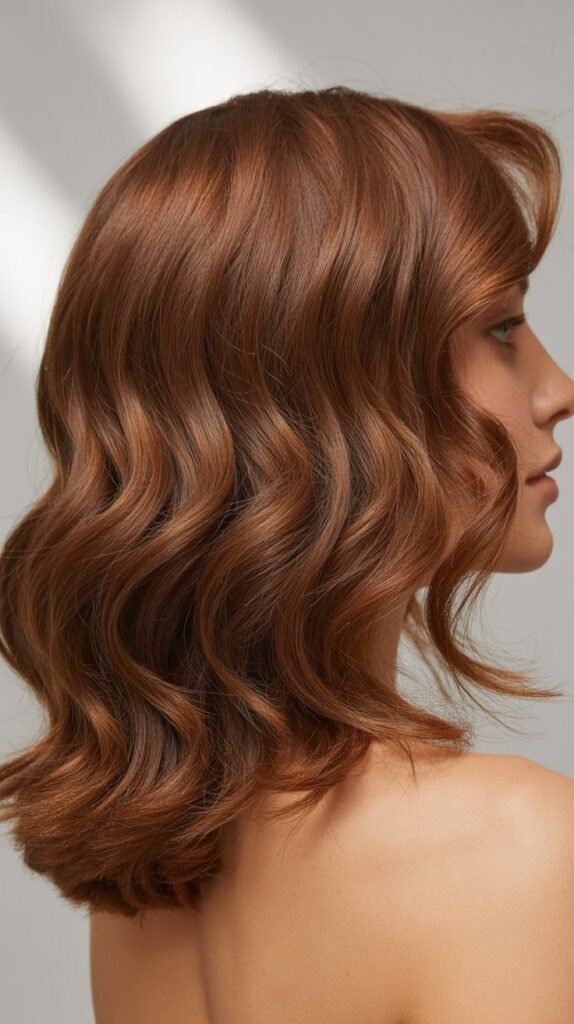
Reverse layering creates shorter lengths at the bottom and longer pieces on top, producing an unconventional shape perfect for those wanting something truly different for their thick wavy hair.
This avant-garde approach challenges traditional layering concepts.
Key Features:
- The cutting pattern is inverted from traditional layering, with the shortest pieces at the perimeter.
- Longer top layers create volume and body while shorter bottom layers reduce bulk at the ends.
- This unusual technique produces a distinctive shape that stands out from conventional haircuts.
- Reverse layering works surprisingly well with thick wavy hair by removing weight where it’s typically heaviest.
Styling Methods:
- The unique shape requires embracing rather than fighting the unconventional proportions.
- Natural styling often works best, allowing the distinctive shape to speak for itself.
- This cut looks particularly striking when styled with exaggerated volume at the crown.
- Consider this approach if you want genuinely unique hair that differs from typical shoulder-length cuts.
44. Micro Layers for Subtle Movement

Micro layering creates extremely subtle variation in length throughout thick wavy hair, producing movement and dimension without obvious layer lines.
This delicate approach offers refinement and sophistication.
Key Features:
- Layers differ by very small increments (less than an inch) creating barely perceptible length variation.
- The micro approach adds movement and reduces bulk while maintaining the appearance of one-length hair.
- This technique requires exceptional skill and precision from the stylist.
- Micro layers work beautifully for those wanting the benefits of layering without a visibly layered look.
Styling Guidelines:
- The subtle nature of micro layers makes styling effortless and natural-looking.
- Air-drying produces beautiful results as the micro layers create gentle, flowing movement.
- This cut maintains maximum thickness while preventing the heavy, shapeless appearance of unlayered thick hair.
- The refinement of micro layering suits sophisticated, understated personal styles.
45. Layered Cut with Peek-a-Boo Undercut
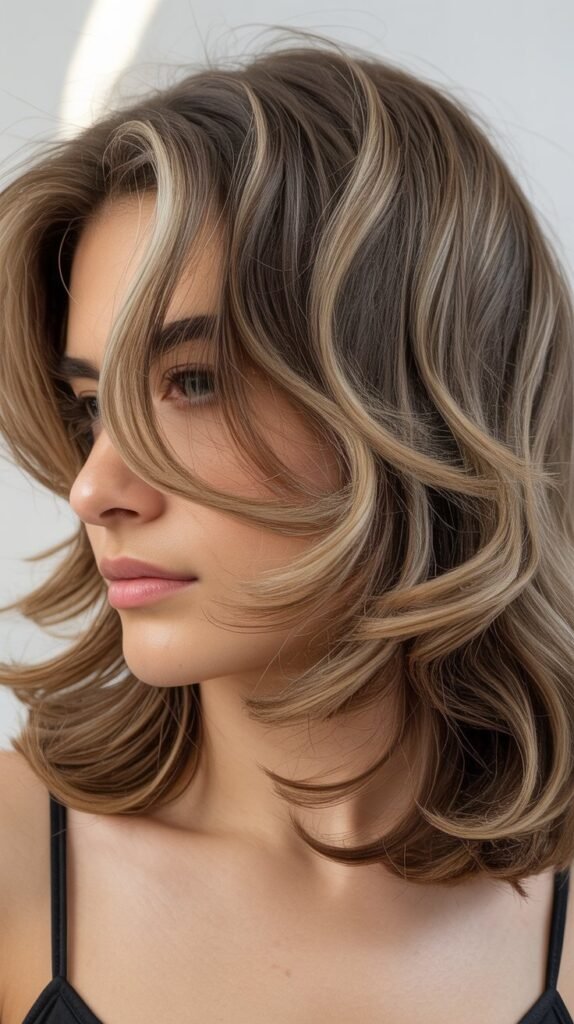
Combining surface layers with a peek-a-boo undercut creates hidden interest in thick wavy hair.
The undercut is strategically placed to occasionally reveal itself, adding an element of surprise to the overall look.
Key Features:
- An undercut section is placed where it can be revealed through movement or specific styling but remains hidden when hair is worn down normally.
- Surface layers create a beautiful, dimensional appearance while the hidden undercut removes significant bulk.
- The peek-a-boo element adds personality and edge without committing to a fully visible undercut.
- This technique offers two looks in one: conservative when hidden, edgy when revealed.
Styling Variations:
- Wear hair normally to keep the undercut completely hidden for professional or conservative settings.
- Style hair in certain ways (updos, side parts, braids) to reveal glimpses of the undercut.
- The hidden undercut makes thick wavy hair significantly more manageable without visible evidence.
- Creative coloring of the undercut section adds another dimension when revealed.
46. Soft Curl-Enhancing Layers
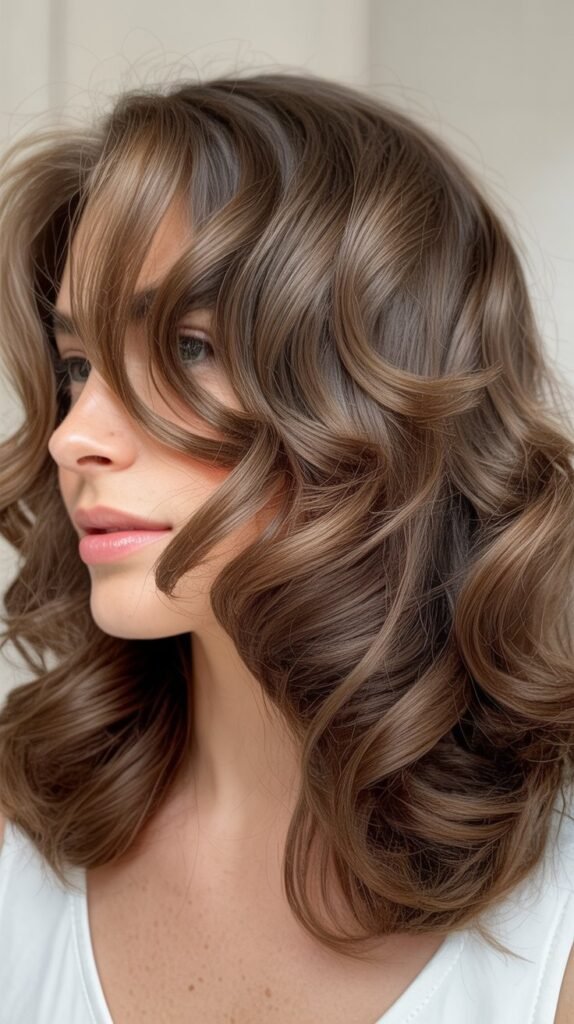
Layers specifically cut to enhance and define natural curl patterns work beautifully with thick wavy hair that has defined wave formations.
This specialized technique considers the hair’s specific curl pattern when determining layer placement.
Key Features:
- Layers are cut following the natural curl pattern rather than fighting against it.
- The technique enhances curl definition by removing weight that pulls curls straight.
- Each layer is positioned to allow curls to form their most defined spirals.
- This approach works best with consistently wavy or curly thick hair rather than mixed textures.
Styling Methods:
- Use curl-defining products that enhance rather than weigh down the natural curl pattern.
- Diffuse or air-dry to maintain the curl definition that the layering enhances.
- Avoid brushing or combing dry hair, as this disrupts the curl patterns the layers are designed to support.
- Regular deep conditioning maintains curl health and definition.
47. Layered Cut with Tapered Nape
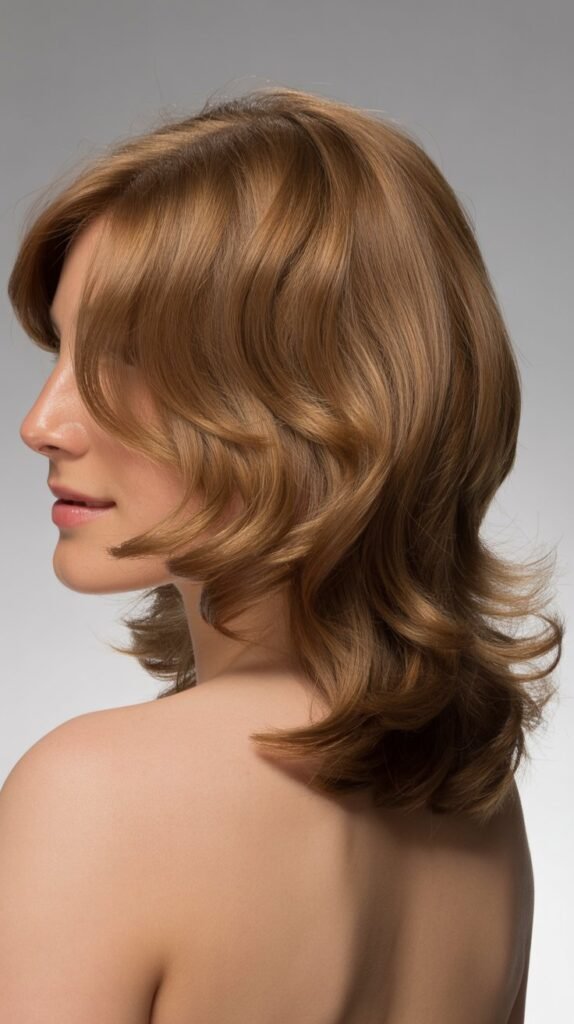
Tapering the nape area while maintaining layers throughout creates a refined, elegant shape for thick wavy hair.
The tapered nape removes bulk from the heaviest area while the layers provide surface dimension.
Key Features:
- The nape area is cut progressively shorter, creating a clean, tapered line at the back.
- Layers throughout the top and sides create movement and volume while the tapered nape provides structure.
- This combination produces a polished, finished appearance from all angles.
- The tapered nape is particularly beneficial for very thick hair that becomes bulky at the neck.
Styling Considerations:
- The tapered nape allows the back to lie flat and smooth against the neck for a refined appearance.
- Surface layers can be styled sleek or wavy depending on preference.
- This cut looks particularly polished when the nape is kept neat with regular trimming.
- The combination of layered surface and tapered nape creates a sophisticated, put-together look.
48. Messy Layered Shag with Movement
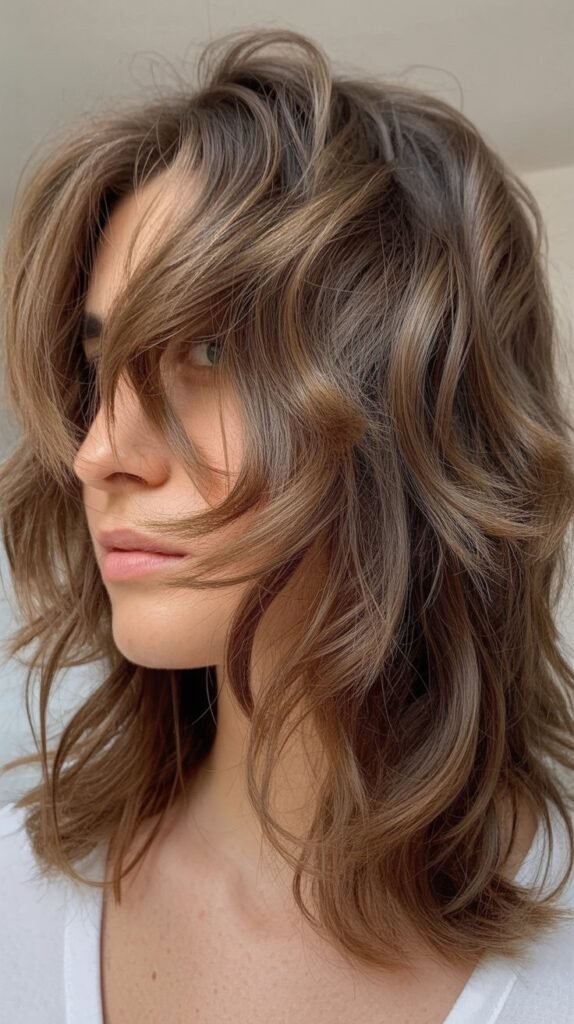
The intentionally messy layered shag celebrates imperfection and creates maximum movement in thick wavy hair.
This carefree style embraces texture and undone styling for an effortless, cool aesthetic.
Key Features:
- Multiple layers at varying lengths create intentional messiness and piece-y texture.
- The shag cutting technique removes significant weight while creating incredible movement.
- Intentionally uneven, choppy edges throughout add to the messy, lived-in appearance.
- This style works best for those comfortable with unconventional, fashion-forward looks.
Styling Philosophy:
- The messier the better—over-styling contradicts the intentionally undone aesthetic.
- Minimal product application and natural air-drying produce the best results.
- Embrace texture, separation, and even frizz as part of the intentional messy look.
- This cut thrives on looking like you didn’t try too hard, even though the cut itself is quite calculated.
49. Classic Layered Cut with Modern Updates
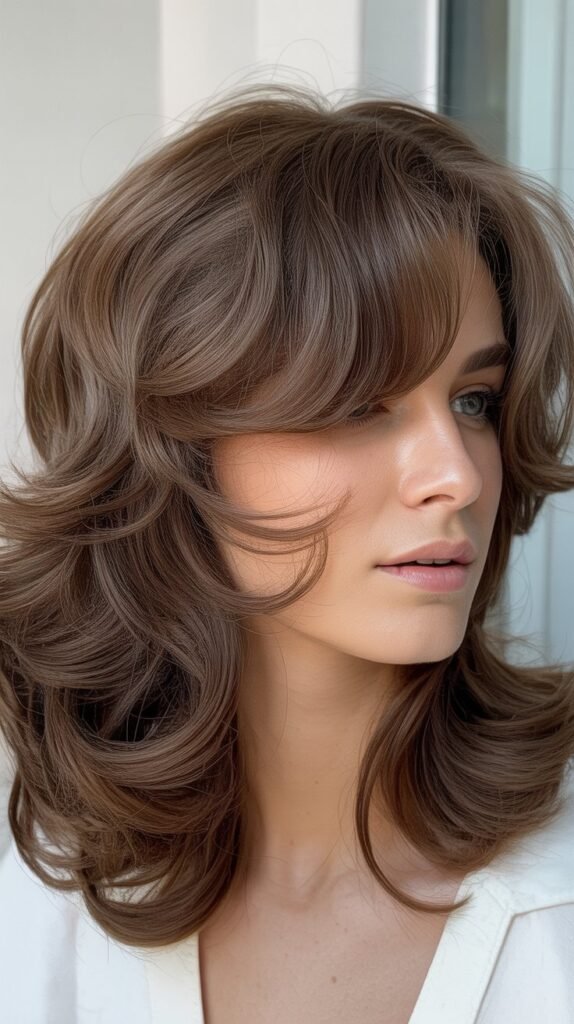
The final style combines timeless layering principles with contemporary cutting techniques, creating a versatile look for thick wavy hair that works across generations and style preferences.
This updated classic offers the best of traditional and modern approaches.
Key Features:
- Traditional layering provides the foundation, with layers distributed throughout for movement and dimension.
- Modern updates include texturizing techniques, face-framing elements, and strategic weight removal.
- The combination creates a contemporary look that maintains classic appeal and versatility.
- This approach suits anyone wanting a reliable, flattering cut that remains current and stylish.
Styling Versatility:
- Style sleek and polished for professional or formal occasions.
- Embrace natural texture for casual, everyday wear.
- Add waves with hot tools for special events and celebrations.
- The classic foundation ensures this cut never looks dated or too trendy.
Product Recommendations by Hair Goal
For Maximum Volume:
- Apply lightweight volumizing mousse to roots of damp hair before styling
- Use dry shampoo or volumizing powder at the crown between washes
- Finish with flexible-hold hairspray that doesn’t weigh down layers
For Frizz Control:
- Start with anti-frizz shampoo and conditioner formulated for thick hair
- Apply smoothing cream or serum to damp hair before styling
- Use a microfiber towel or t-shirt to dry hair instead of regular towels
For Wave Enhancement:
- Incorporate curl-defining products designed for wavy hair textures
- Use the “scrunching” technique while applying products and during drying
- Sleep with hair in a loose bun or pineapple to maintain wave pattern overnight
For Manageability:
- Choose lightweight products specifically formulated for thick hair
- Layer products strategically: lighter products at roots, heavier at ends
- Invest in quality styling tools like ionic blow dryers and diffuser attachments
Conclusion
Finding the perfect haircut transforms not just your appearance but your entire relationship with your hair, and these 49 Flattering Shoulder-Length Layered Haircuts for Thick Wavy Hair offer solutions for every style preference and lifestyle need.
Whether you’ve chosen the edgy texture of a modern shag, the sophisticated elegance of graduated layers, or the classic beauty of face-framing cuts, the right layering technique makes thick wavy hair beautifully manageable.
Remember that the best haircut works with your natural texture rather than against it, removes bulk strategically without sacrificing fullness, and fits seamlessly into your daily routine.
Consult with an experienced stylist who understands thick wavy hair’s unique characteristics, bring reference photos of your favorite styles from this guide, and don’t be afraid to request customizations that suit your specific face shape and personal style.
With the right layered shoulder-length cut, your thick wavy hair becomes your signature feature rather than a daily challenge, allowing you to embrace your natural texture with confidence and style.