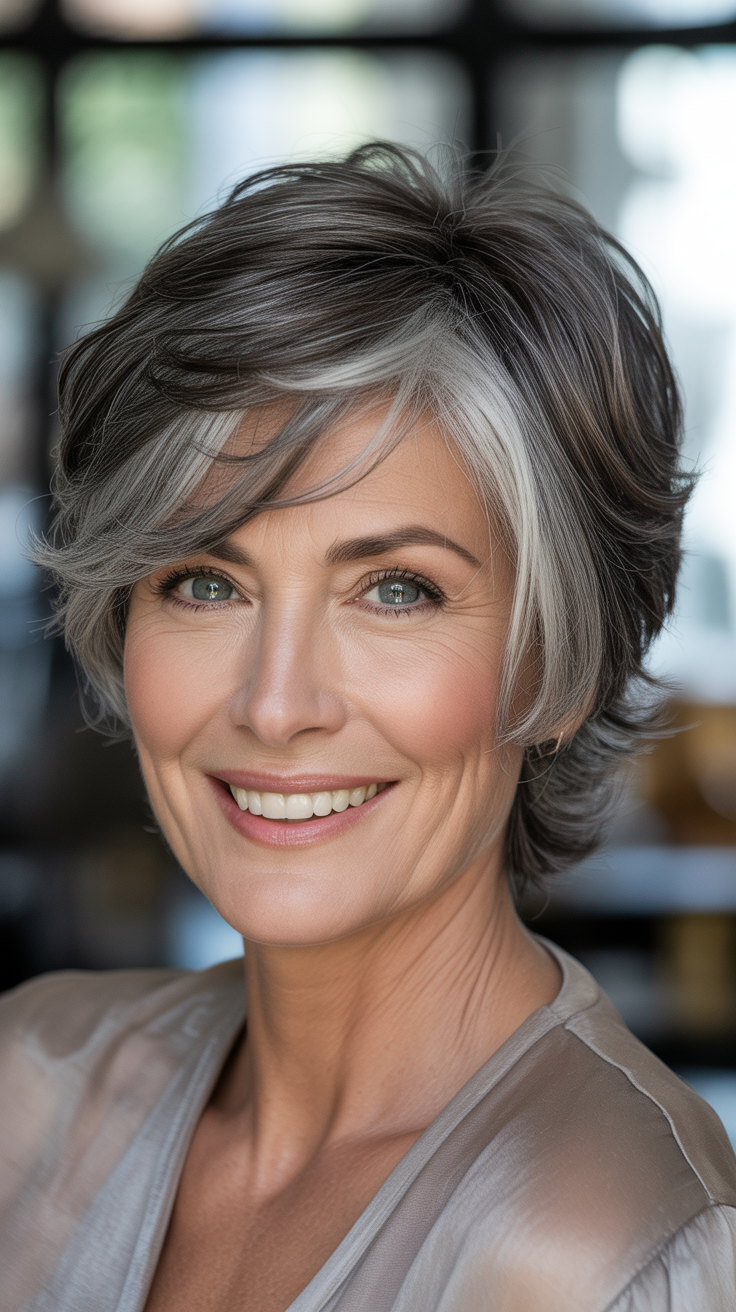
Embracing gray hair after 50 is no longer about letting nature take its course—it’s about taking control and creating a stunning, dimensional look that turns heads.
If you’re seeking ways to add depth, richness, and modern sophistication to your short gray hair, lowlights are the secret weapon that can transform your style from flat to fabulous.
This comprehensive guide explores over 55 Modern Short Gray Hair Lowlights Ideas for Women Over 50, offering everything from subtle shadow techniques to bold contrasting hues that complement your natural silver beautifully.
Whether you’re dealing with pure white hair that needs dimension, salt-and-pepper strands that need definition, or solid gray that looks one-dimensional, you’ll discover expert techniques, color combinations, maintenance tips, and styling strategies specifically designed for mature hair textures.
We’ll walk you through choosing the right lowlight shades for your skin tone, understanding which placement techniques work best with various short hairstyles, and learning how to maintain your lowlights without damaging your hair.
Get ready to discover how strategic lowlights can create the illusion of fuller, thicker hair while adding a youthful vibrancy that enhances your natural beauty and confidence.
1. Understanding Lowlights vs. Highlights for Gray Hair
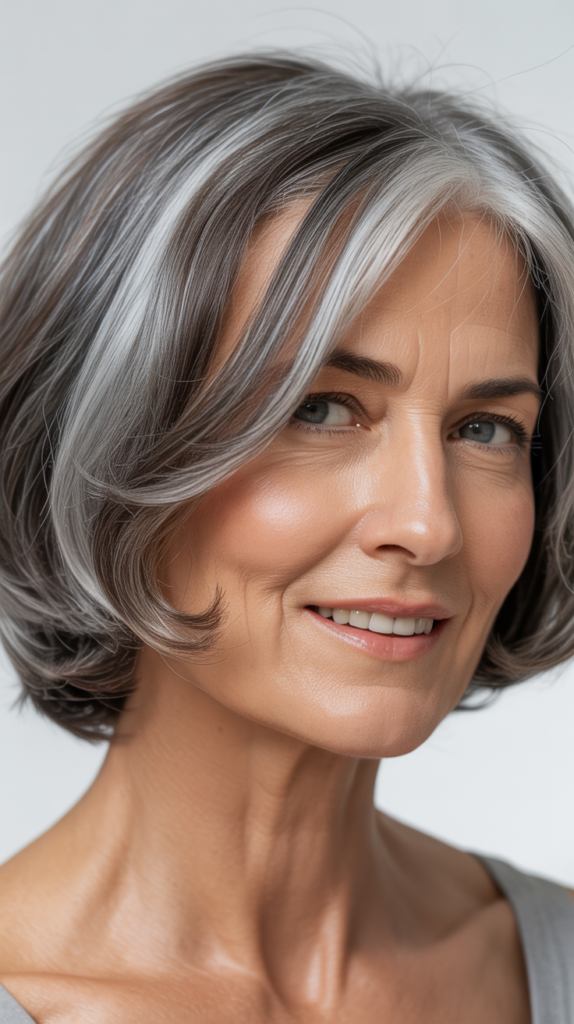
Before diving into specific lowlight ideas, it’s essential to understand what lowlights are and how they differ from highlights, especially when working with gray hair.
Lowlights involve adding darker tones to your hair, creating depth and dimension, while highlights add lighter shades to brighten your overall look.
- Lowlights are darker color strands strategically placed throughout your gray hair to create contrast and visual interest.
- Unlike highlights that lighten, lowlights deepen specific sections, making your gray hair appear richer and more textured.
- For women over 50 with gray hair, lowlights can reverse the flat, washed-out appearance that sometimes occurs with solid gray coverage.
- The technique works exceptionally well on short hair because the placement is more visible and creates immediate impact with less hair length.
- Lowlights can be customized to your exact gray tone, whether you have silver-white, charcoal gray, or salt-and-pepper coloring.
- The process is generally less damaging than highlighting because you’re depositing color rather than lifting it with bleach.
- When combined with your natural gray, lowlights create a multi-dimensional effect that catches light differently from various angles.
- This dimensional approach adds the illusion of volume and thickness, which is particularly beneficial for aging hair that may be thinning.
2. Cool-Toned Charcoal Lowlights for Silver Hair
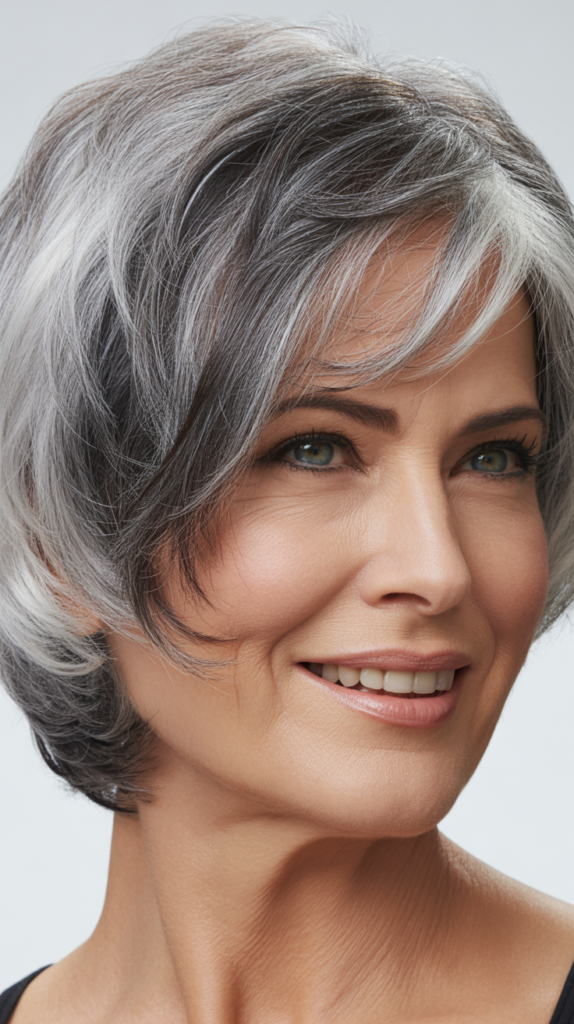
For women with predominantly silver or white-gray hair, cool-toned charcoal lowlights create striking contrast while maintaining a cohesive color story. This combination delivers a modern, edgy look that’s sophisticated rather than aging.
- Charcoal gray lowlights provide dramatic depth without introducing warm tones that might clash with cool silver bases.
- The contrast between bright silver and deep charcoal creates a “salt and shadow” effect that appears intentional and fashion-forward.
- This color combination works beautifully with fair to medium skin tones that have cool or neutral undertones.
- Short cuts like pixies, bobs, and cropped styles showcase charcoal lowlights exceptionally well because every strand is visible.
- The technique involves placing darker charcoal pieces strategically around the face to frame features and add definition.
- Charcoal lowlights can be concentrated at the nape and underneath layers to create a shadow root effect that’s easy to maintain.
- This approach requires minimal upkeep since your natural gray growth blends seamlessly with the existing color palette.
- For added dimension, colorists can use multiple shades of charcoal from light to deep for a gradated effect.
3. Warm Caramel and Honey Lowlights for Dimensional Gray
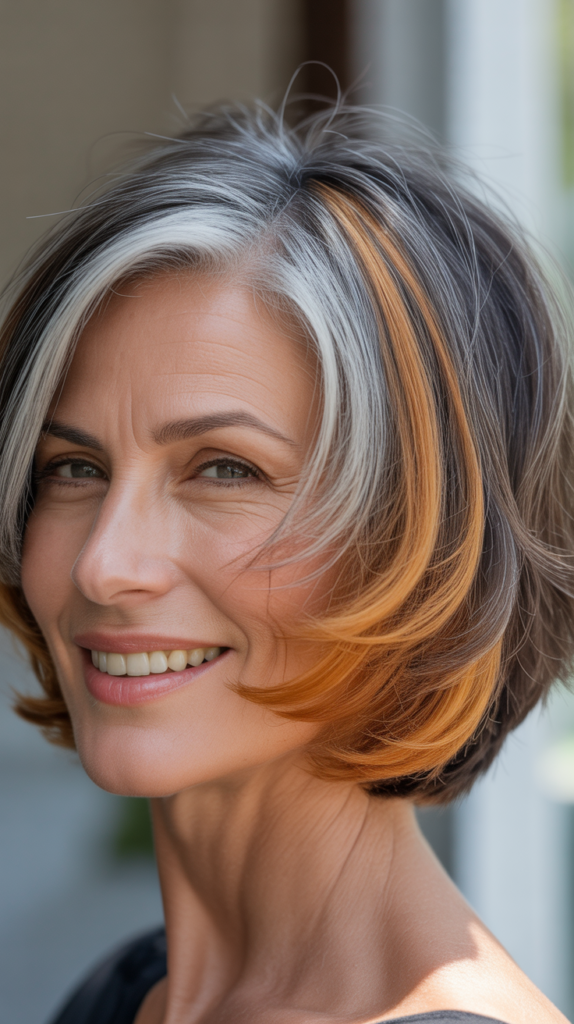
While gray hair tends toward cool tones, adding warm caramel or honey lowlights can create unexpected warmth that brightens your complexion and adds a sun-kissed glow. This approach works particularly well for women with warm or golden undertones in their skin.
- Warm-toned lowlights introduce golden and amber hues that complement gray hair while adding a youthful radiance.
- Caramel shades work especially well for women who previously had brown or auburn hair before going gray.
- The warmth from honey and caramel tones can soften the sometimes harsh appearance of pure gray or white hair.
- These lowlights should be applied sparingly to avoid overwhelming the gray base—think strategic ribbons rather than heavy coverage.
- The combination of cool gray and warm lowlights creates a neutral balance that flatters most skin tones.
- Placement around the face instantly brightens your complexion and draws attention to your features.
- This technique can make your gray hair appear more intentional and professionally styled rather than naturally occurring.
- Regular toning treatments help maintain the warm lowlights and prevent them from turning brassy or orange over time.
4. Ash Brown Lowlights for Soft Contrast
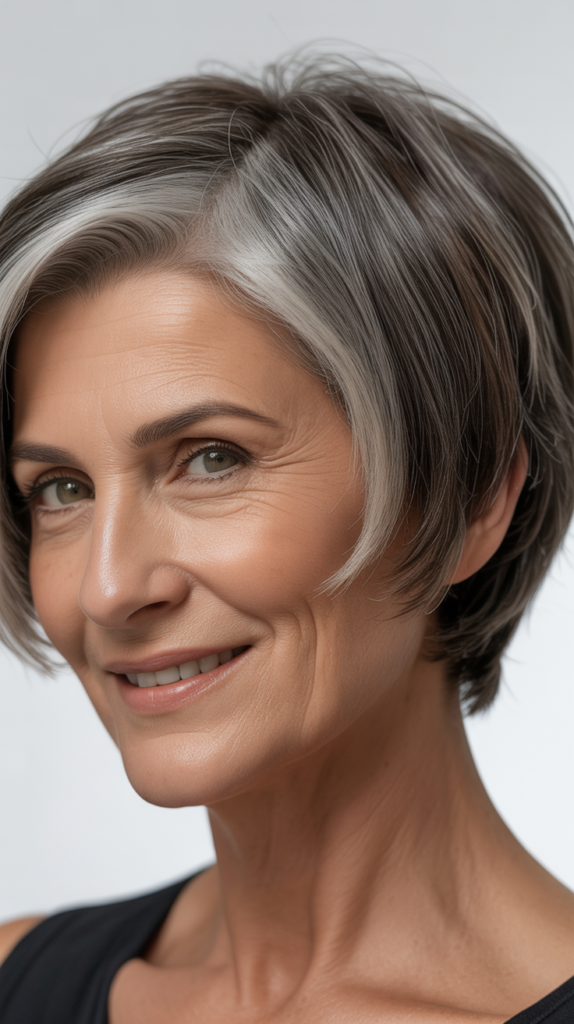
Ash brown lowlights offer a subtle, sophisticated approach to adding dimension without dramatic contrast. This option is perfect for women who want depth but prefer a more natural, understated enhancement to their gray hair.
- Ash brown contains cool undertones that harmonize beautifully with the natural cool base of gray hair.
- This shade provides gentle contrast without the stark difference created by darker charcoal or black lowlights.
- Women transitioning from brown hair to gray find ash brown lowlights help bridge the gap during the growing-out process.
- The subtle nature of ash brown makes regrowth less noticeable, extending time between salon appointments.
- Short hairstyles with layers benefit tremendously from ash brown lowlights as they emphasize texture and movement.
- This color choice works universally across skin tones, from fair to deep, making it a safe option for most women.
- Ash brown lowlights can be concentrated in specific areas like the underlayers for a peek-a-boo effect when hair moves.
- The technique adds enough dimension to prevent flat appearance while maintaining a refined, polished look appropriate for professional settings.
5. Platinum and Steel Gray Lowlights for Icy Elegance
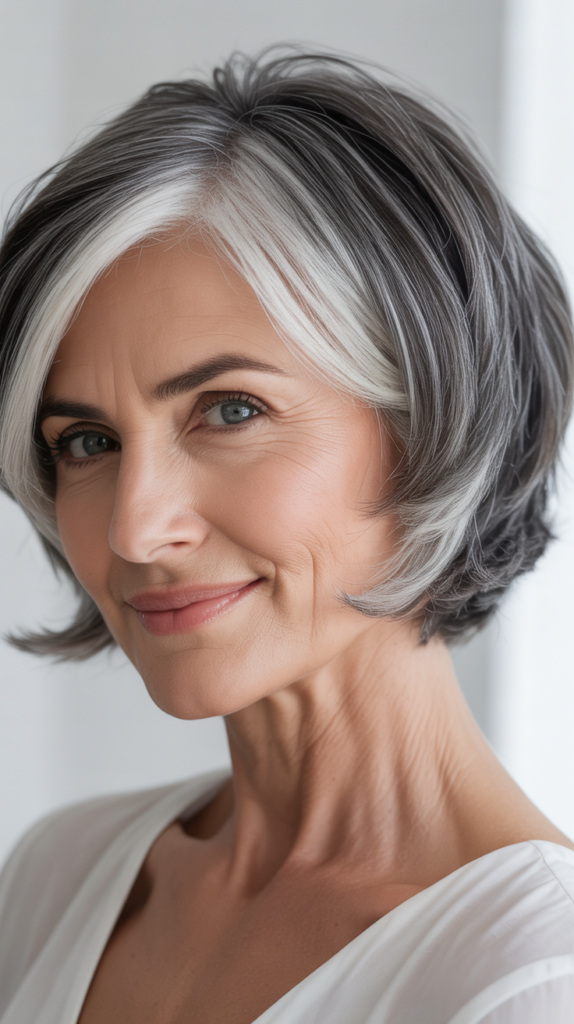
For women who embrace ultra-cool tones, combining platinum highlights with steel gray lowlights creates an icy, editorial-worthy look. This high-fashion approach celebrates gray hair as a style choice rather than an age indicator.
- Steel gray lowlights add depth to predominantly platinum or white-blonde gray hair without introducing warmth.
- This color palette creates a metallic, almost futuristic appearance that’s bold and confident.
- The icy combination works particularly well with very fair skin tones and cool undertones.
- Short, textured cuts like spiky pixies or asymmetrical bobs showcase this dimensional coloring dramatically.
- The contrast between bright platinum and deeper steel creates visual interest that compensates for thinner hair density.
- This approach requires commitment to maintenance, including regular purple or blue toning shampoos to prevent yellowing.
- Professional color correction appointments every 6-8 weeks help maintain the precise balance between platinum and steel tones.
- The look pairs beautifully with modern, minimalist fashion and contemporary styling for a cohesive, curated appearance.
6. Espresso Lowlights for Rich Depth
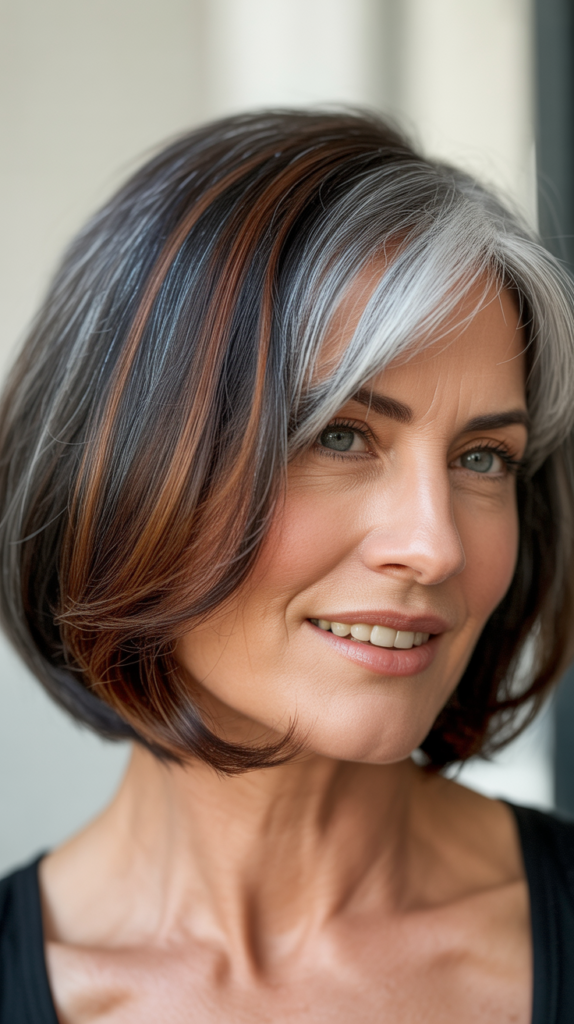
Deep espresso or coffee-brown lowlights create luxurious richness in gray hair, adding substantial depth that makes the overall color appear more complex and dimensional. This option suits women who want dramatic contrast and aren’t afraid of bold color choices.
- Espresso lowlights provide maximum contrast against light or medium gray bases, creating eye-catching dimension.
- The deep brown tones add warmth and richness that can make gray hair appear more vibrant and less dull.
- This dramatic approach works well for women with medium to deep skin tones who can carry stronger color contrasts.
- Short styles with movement and texture, such as shaggy bobs or layered pixies, display espresso lowlights beautifully.
- Strategic placement around the hairline and throughout the crown creates a framing effect that draws attention to facial features.
- The rich depth of espresso lowlights can make fine or thinning hair appear fuller and more substantial.
- Maintenance involves regular deep conditioning to keep both the gray and brown tones healthy and vibrant.
- As natural gray grows in, the contrast remains striking, making this a relatively low-maintenance option despite the bold color choice.
7. Lavender and Mauve Lowlights for Creative Expression
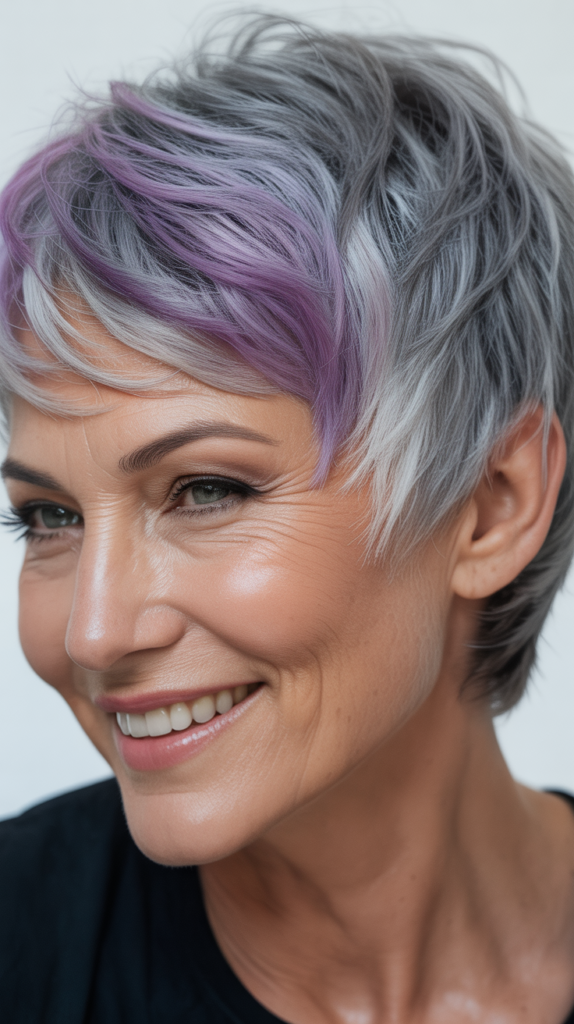
For women who want to embrace the trend of fashion colors while keeping their gray base, lavender and mauve lowlights offer a creative, modern twist. These purple-toned lowlights complement gray hair’s natural cool undertones while adding artistic flair.
- Lavender and mauve shades share the cool undertones of gray hair, creating a harmonious color relationship.
- These fashion-forward lowlights add personality and creativity without requiring full commitment to unconventional colors.
- The purple tones neutralize any unwanted yellow or brassy hues that sometimes appear in gray hair.
- Short haircuts allow for more visible placement of these creative lowlights, maximizing their visual impact.
- This approach works particularly well for women with artistic careers or those who enjoy expressing their personal style through hair.
- The intensity can be customized from barely-there whispers of color to more vibrant, noticeable purple tones.
- Purple lowlights require specific maintenance with color-safe, sulfate-free shampoos to prevent rapid fading.
- These tones photograph beautifully and create dimension that’s especially visible in natural outdoor lighting.
8. Shadow Root Technique with Lowlights
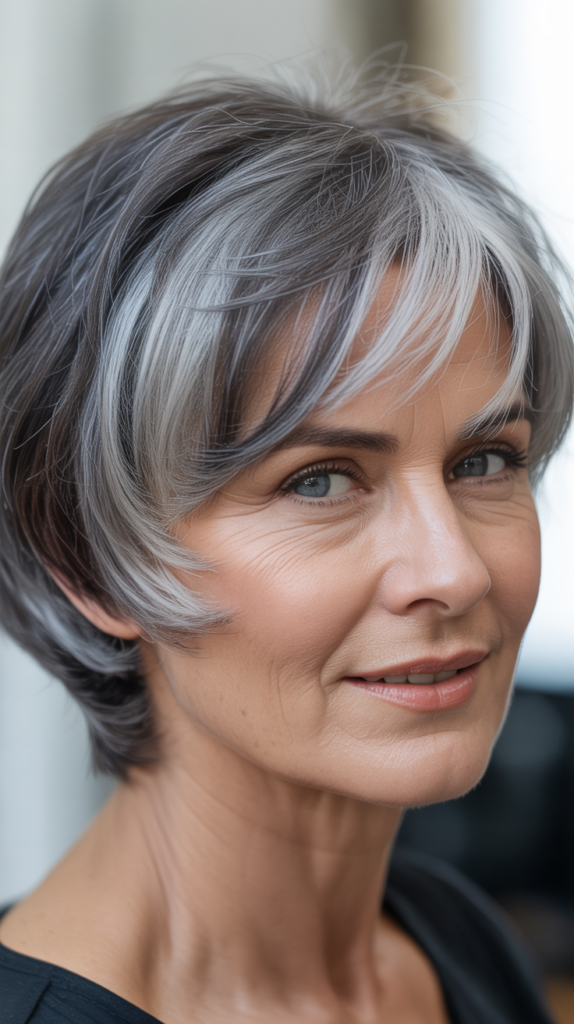
The shadow root technique involves concentrating darker lowlights at the roots and gradually transitioning to lighter gray through the mid-lengths and ends. This creates a natural-looking gradient that’s incredibly low-maintenance while adding depth and dimension.
- Shadow roots create the illusion of natural depth and prevent the flat, one-dimensional appearance of solid gray.
- This technique extends the time between color appointments since regrowth blends seamlessly with the darker root area.
- For short hair, the shadow root effect is concentrated in just the first inch or two, creating subtle dimensionality.
- The gradual transition from dark roots to lighter ends adds vertical dimension that can make hair appear longer.
- Colorists typically use shades 2-3 levels darker than the base gray for the root area to create natural-looking contrast.
- This approach works beautifully with textured short cuts where the dimensional roots peek through layers.
- The shadow root technique is perfect for busy women who want dimensional color without frequent maintenance commitments.
- When styled with products that enhance texture, the shadow roots become more visible and create additional depth.
9. Babylights and Micro-Lowlights for Natural Dimension
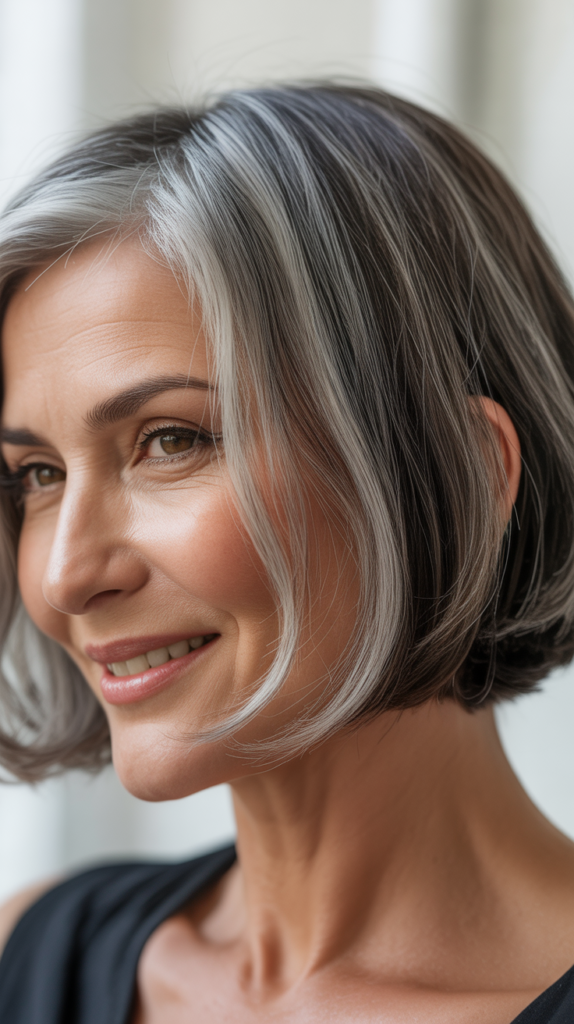
Babylights and micro-lowlights involve applying very fine, delicate strands of darker color throughout gray hair to create subtle, natural-looking dimension. This technique mimics the way children’s hair naturally has slight variations in tone.
- Micro-lowlights are extremely fine sections of darker color, sometimes only a few strands wide, creating soft dimension.
- This technique avoids harsh lines or obvious color placement, resulting in the most natural-looking enhancement.
- For short gray hair, babylights and micro-lowlights add movement and interest without overwhelming the style.
- The subtle nature of this approach makes it ideal for conservative professional environments or women preferring understated looks.
- Application requires precision and skill, so choosing an experienced colorist familiar with this technique is essential.
- The fine placement means color transitions are gradual and regrowth is virtually undetectable.
- Multiple shades can be used in the micro-lowlight application to create even more nuanced dimension.
- This technique is particularly flattering for women with fine hair texture as it adds perceived density without heaviness.
10. Face-Framing Lowlights for Definition
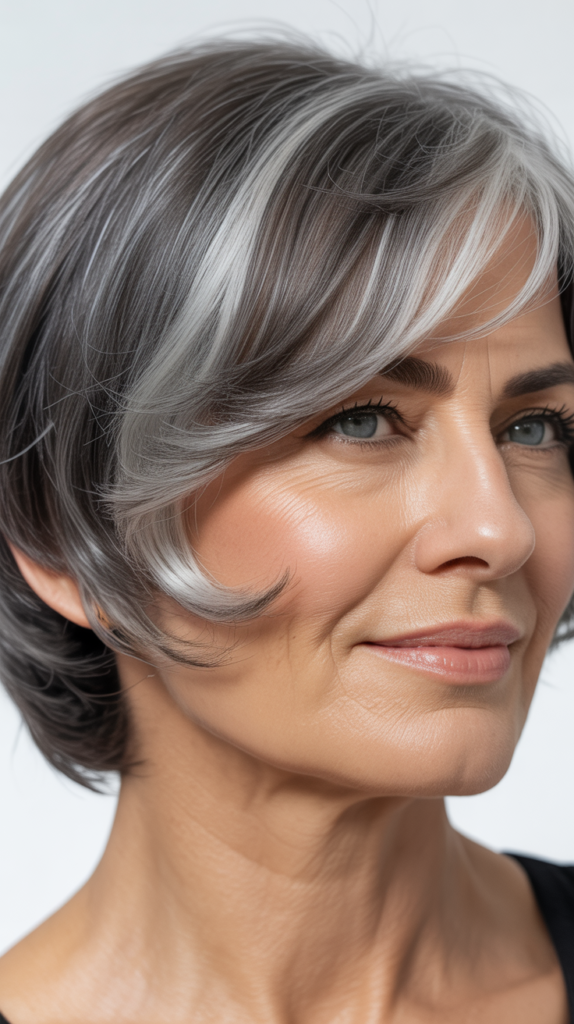
Strategic placement of lowlights specifically around the face creates definition and draws attention to your features while adding dimension where it’s most visible. This targeted approach maximizes impact without requiring all-over color application.
- Face-framing lowlights create contrast that defines and accentuates your facial features, acting like natural contouring.
- Darker pieces placed near the cheeks, temples, and jawline can create a slimming, flattering effect.
- This technique allows you to keep the majority of your natural gray while adding dimension only in high-visibility areas.
- Short haircuts benefit tremendously from face-framing lowlights since the front sections are always prominent.
- The placement can be customized based on your face shape to enhance your best features and minimize concerns.
- Face-framing lowlights require less maintenance than all-over color since only specific sections need touch-ups.
- The contrast created by darker front pieces makes your gray appear brighter and more luminous by comparison.
- This approach is cost-effective while still delivering significant visual impact and dimensional interest.
11. Mushroom Brown Lowlights for Trendy Dimension
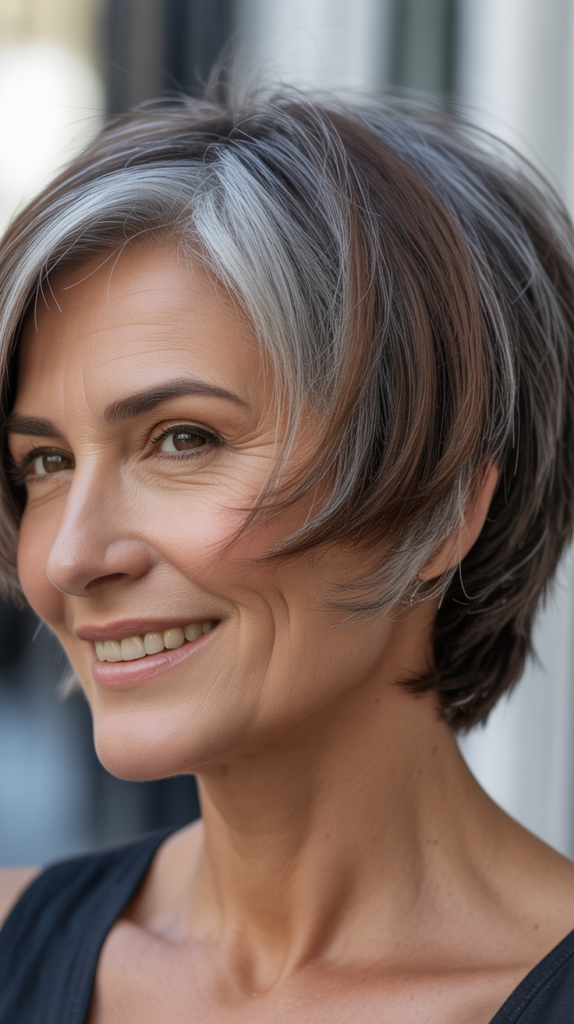
Mushroom brown—a cool-toned, grayish-brown shade—has become a trendy option for lowlights in gray hair. This modern color creates subtle dimension while staying within a neutral, sophisticated palette.
- Mushroom brown bridges the gap between gray and brown, offering dimension without stark contrast.
- The cool, slightly taupe quality of mushroom brown complements gray’s natural undertones perfectly.
- This trendy shade appears fashion-forward while remaining professional and appropriate for all settings.
- Short layered cuts showcase mushroom brown lowlights beautifully, especially when styled with texture and movement.
- The color works across a wide range of skin tones, from fair to medium-deep, making it universally flattering.
- Mushroom brown lowlights add depth without making hair appear darker overall, maintaining a light, airy quality.
- This shade photographs beautifully in various lighting conditions, always appearing dimensional and interesting.
- Minimal maintenance is required since mushroom brown fades gracefully and blends with gray regrowth naturally.
12. Balayage Lowlights for Painted Dimension
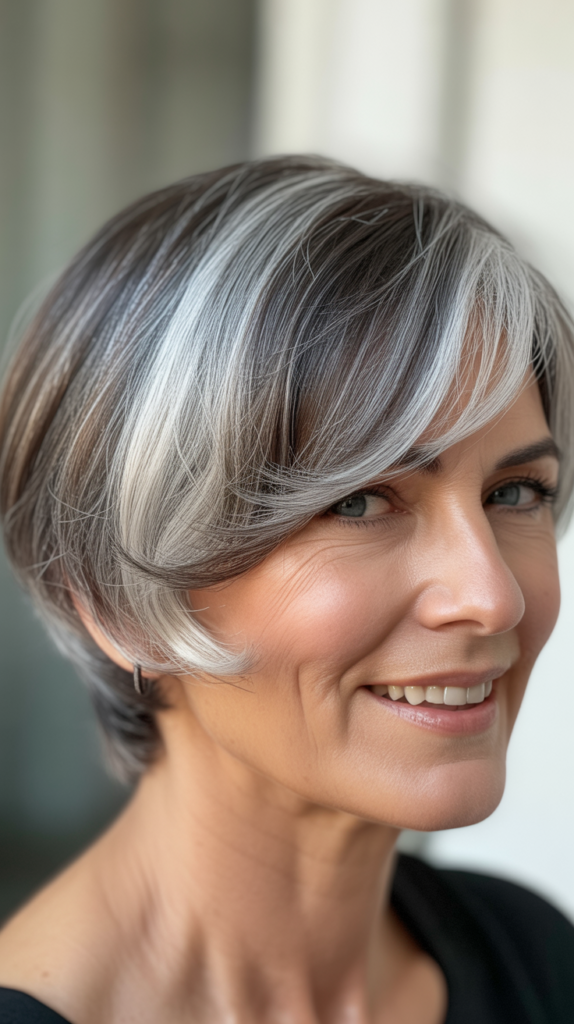
Balayage is a freehand painting technique that creates natural-looking, sun-kissed dimension. When adapted for lowlights on gray hair, it involves hand-painting darker shades in strategic areas for customized dimensional results.
- Balayage lowlights are painted onto the surface of the hair without using foils, creating soft, blended transitions.
- This technique allows for completely customized placement based on your specific haircut and desired dimensional effect.
- The freehand method creates irregular, natural-looking color placement that mimics how hair naturally darkens in certain areas.
- For short hair, balayage lowlights can emphasize the haircut’s structure, layers, and movement.
- The soft blending means no harsh demarcation lines as your natural gray grows out, extending time between appointments.
- Balayage lowlights can be concentrated in specific zones—underneath layers, around the face, or throughout the crown.
- This artistic approach requires a skilled colorist who understands how to place color to complement your unique features.
- The result is sophisticated, dimensional gray hair that looks naturally varied rather than uniformly colored.
13. Metallic Silver Lowlights for Modern Edge
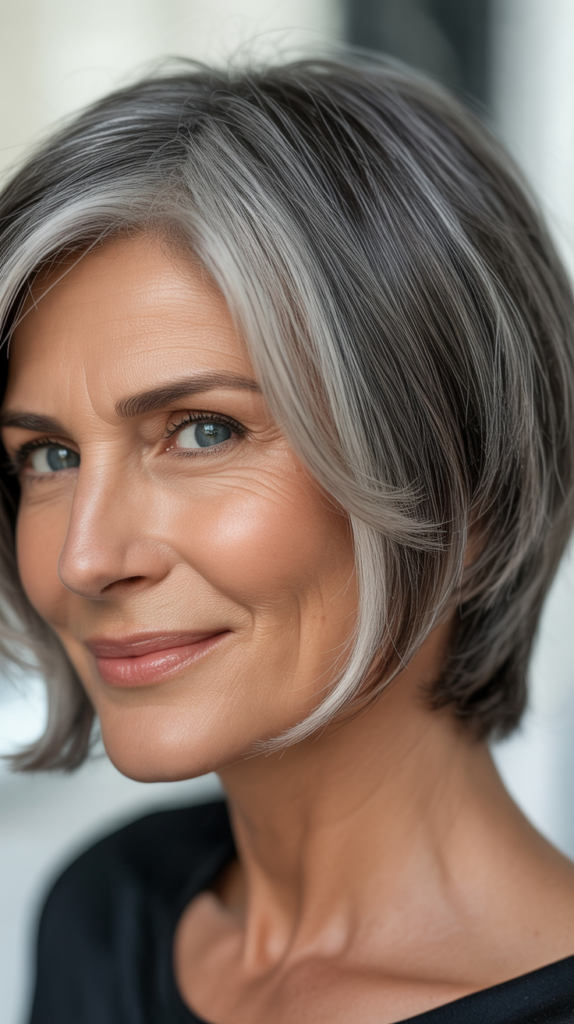
Metallic silver lowlights add a futuristic, edgy dimension to gray hair by introducing shimmering, reflective tones. This contemporary approach celebrates gray hair as a fashion statement rather than something to camouflage.
- Metallic silver contains light-reflecting particles that create shimmer and shine, adding luminosity to gray hair.
- These lowlights work best on very light gray or white-gray bases where the metallic quality is most visible.
- The futuristic appearance appeals to women who embrace gray hair as a bold style choice rather than accepting aging.
- Short, textured cuts with spiky or choppy layers showcase metallic silver lowlights with maximum impact.
- This approach requires quality hair products designed to enhance shine and maintain the metallic quality between salon visits.
- Metallic tones photograph dramatically, creating eye-catching dimension in photographs and videos.
- The technique combines traditional lowlight placement with specialty color formulas that contain pearls or metallics.
- Maintenance includes using products that prevent dullness and keep the metallic quality vibrant and reflective.
14. Tortoiseshell Lowlights for Warm Complexity
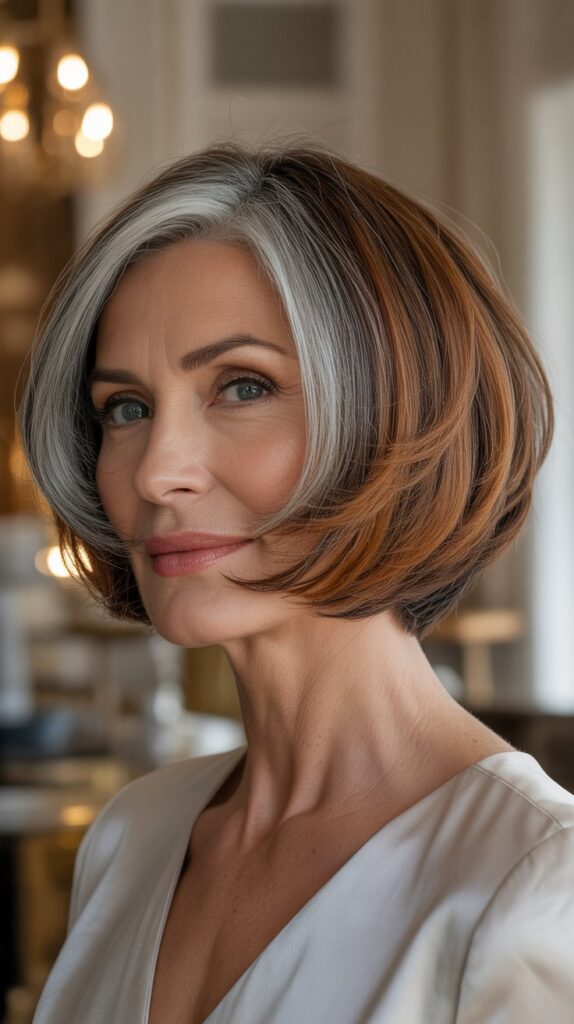
Inspired by the classic tortoiseshell pattern, this lowlight technique combines multiple shades of warm browns, ambers, and golds with your gray base. The result is rich, complex coloring with maximum dimensional interest.
- Tortoiseshell lowlights involve blending several warm shades together rather than using a single lowlight color.
- The technique creates an expensive, salon-professional look with unmatched depth and complexity.
- Warm tortoiseshell tones can significantly brighten your complexion and add a youthful glow to mature skin.
- This approach works particularly well for women who previously had warm-toned brown or red hair before going gray.
- Short hair with layers allows the various tortoiseshell shades to peek through and create visual interest from every angle.
- The multiple colors used in tortoiseshell lowlights create dimension that makes hair appear fuller and thicker.
- Strategic placement around the face delivers the most impact, framing features with warm, flattering tones.
- While more complex to apply initially, tortoiseshell lowlights grow out beautifully and require less frequent touch-ups.
15. Smoky Quartz Lowlights for Subtle Sophistication
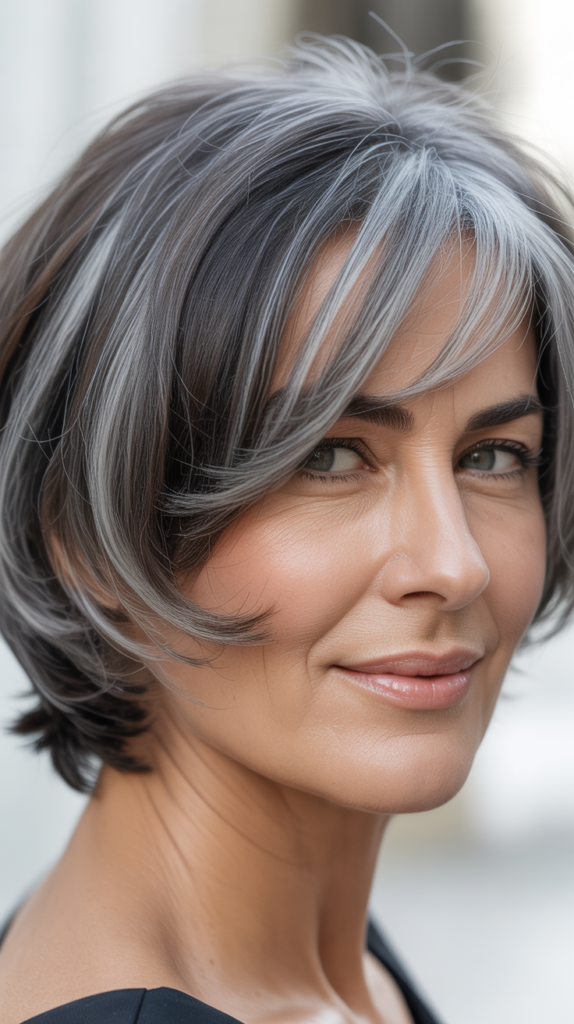
Smoky quartz—a muted, grayish-brown with purple undertones—creates understated lowlights that add dimension without dramatic contrast. This sophisticated choice appeals to women seeking elegant enhancement rather than bold transformation.
- Smoky quartz combines the coolness of gray with the depth of brown and subtle purple undertones for complex coloring.
- This multi-dimensional shade adds interest while remaining understated and appropriate for any professional setting.
- The purple undertones help neutralize any brassy or yellow tones that sometimes appear in gray hair.
- Short, polished styles like classic bobs or refined pixies showcase smoky quartz lowlights with sophisticated elegance.
- The muted quality of this shade makes transitions between salon appointments nearly seamless as natural gray grows in.
- Smoky quartz lowlights work beautifully across all skin tones, from fair to deep, making them universally flattering.
- The subtle dimensional effect creates movement and interest without drawing excessive attention or appearing trendy.
- This timeless choice remains stylish across seasons and years, representing a long-term color solution rather than a temporary trend.
16. Lowlights for Pixie Cuts: Maximizing Short Hair Impact
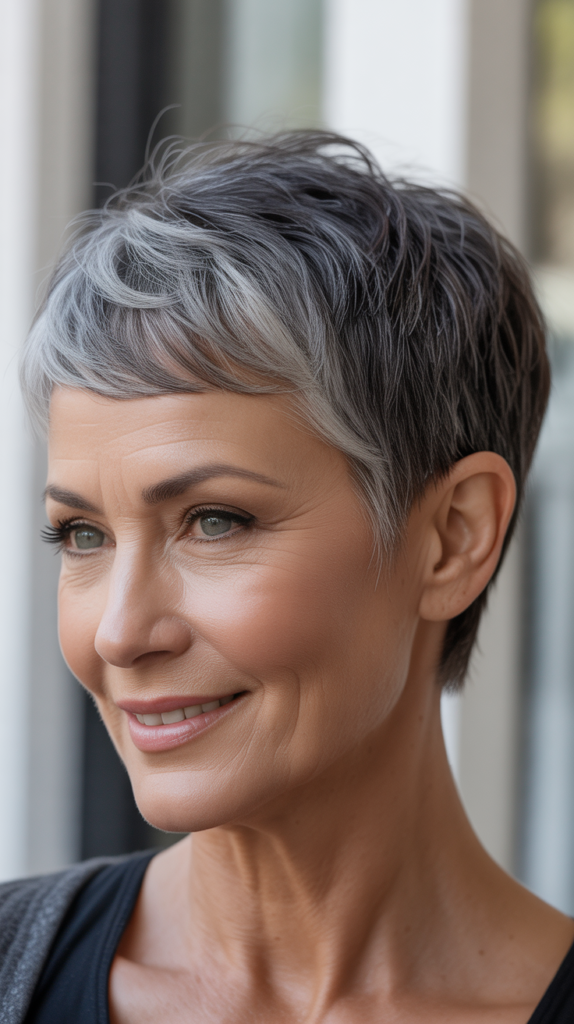
Pixie cuts, with their close-cropped nature and emphasis on facial features, benefit tremendously from strategic lowlight placement. The right approach can transform a simple pixie into a multi-dimensional statement.
- Pixie cuts have less hair overall, making each lowlight placement more visible and impactful.
- Concentrating lowlights on the longer sections—typically the top and front—creates dimension where it’s most noticeable.
- The sides and back of pixies can feature subtle lowlights that create depth without overwhelming the short length.
- Textured, choppy pixies showcase lowlights particularly well as the varied lengths catch light differently.
- Face-framing lowlights in pixie cuts draw attention to eyes, cheekbones, and the jawline, enhancing facial features.
- The short length means lowlights grow out quickly, but because pixies require frequent trims anyway, color can be refreshed regularly.
- Asymmetrical pixies benefit from strategic lowlight placement that emphasizes the longer side and creates balance.
- Bold contrast lowlights work exceptionally well on pixies, creating an edgy, fashion-forward appearance.
17. Lowlights for Bob Haircuts: Classic Dimensional Style
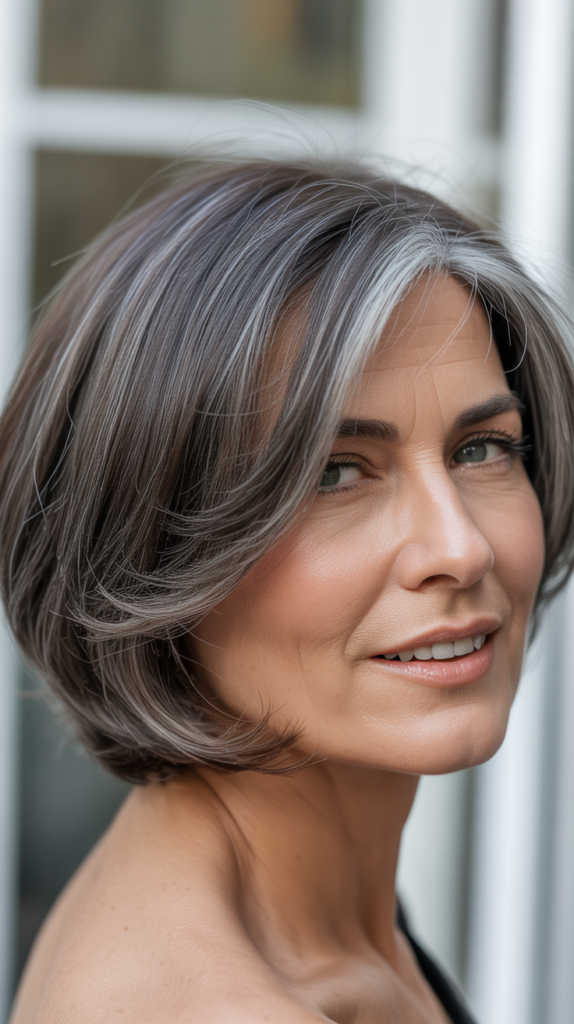
Bob haircuts, from chin-length to shoulder-grazing variations, provide the perfect canvas for dimensional lowlights. The classic nature of bobs pairs beautifully with thoughtfully placed darker tones.
- Bobs offer more length than pixies, allowing for greater variety in lowlight placement and technique.
- Layered bobs benefit from lowlights placed throughout the various lengths, creating movement and dimension.
- Blunt bobs showcase lowlights in clean, defined sections that create striking contrast and modern appeal.
- Angled bobs can use lowlights strategically to emphasize the angle and create visual interest from front to back.
- Lowlights placed underneath the top layer of a bob create a peek-a-boo effect that adds surprise and dimension.
- The length of bobs allows for balayage or ombré-style lowlight applications that gradually transition from roots to ends.
- Face-framing lowlights in bobs create beautiful contrast that draws attention to your features while maintaining classic elegance.
- Bobs with lowlights photograph beautifully, always appearing polished and professionally styled in photos.
18. Lowlights for Layered Crops: Emphasizing Texture
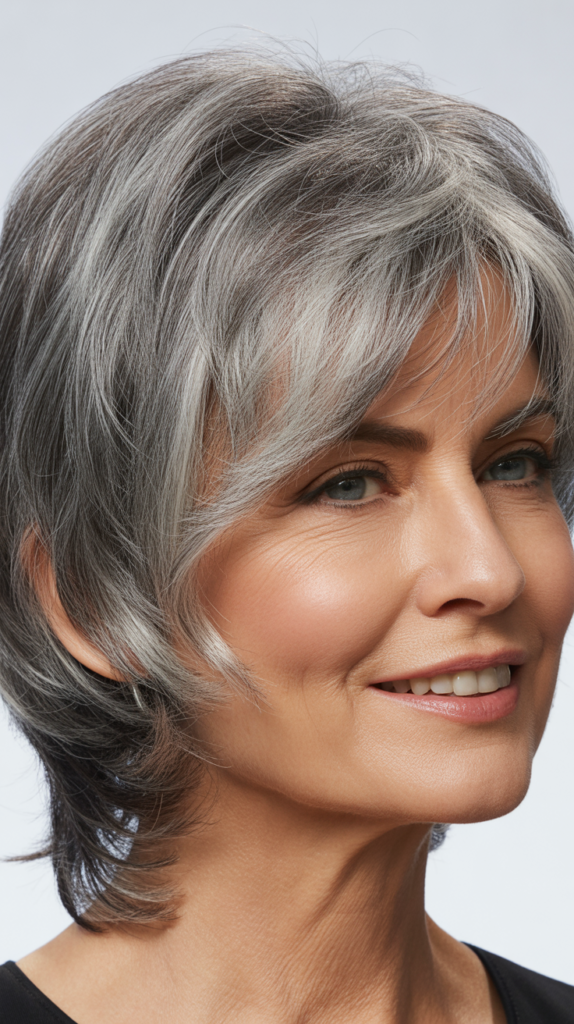
Layered crops combine short length with textured, choppy layers that create movement and dimension. Lowlights placed strategically throughout these layers emphasize texture and make the haircut appear even more dynamic.
- Lowlights in layered crops can be placed on specific layers to highlight the haircut’s architecture and structure.
- The choppy, textured nature of these cuts displays lowlights in irregular patterns that appear natural and unstructured.
- Darker lowlights on underneath layers create depth that makes the top layers appear lighter and more voluminous by contrast.
- Razor-cut crops with wispy ends showcase lowlights beautifully, with color visible through the feathered texture.
- Strategic lowlight placement can make thin or fine hair appear thicker by creating the illusion of shadow and depth.
- The movement inherent in layered crops means lowlights are revealed differently as hair moves, creating changing dimensional effects.
- Styling products that enhance texture—like texturizing sprays or light pomades—make lowlights even more visible and impactful.
- Layered crops with lowlights require minimal styling effort while always appearing dimensional and intentionally designed.
19. Seasonal Lowlight Adjustments: Adapting Your Color
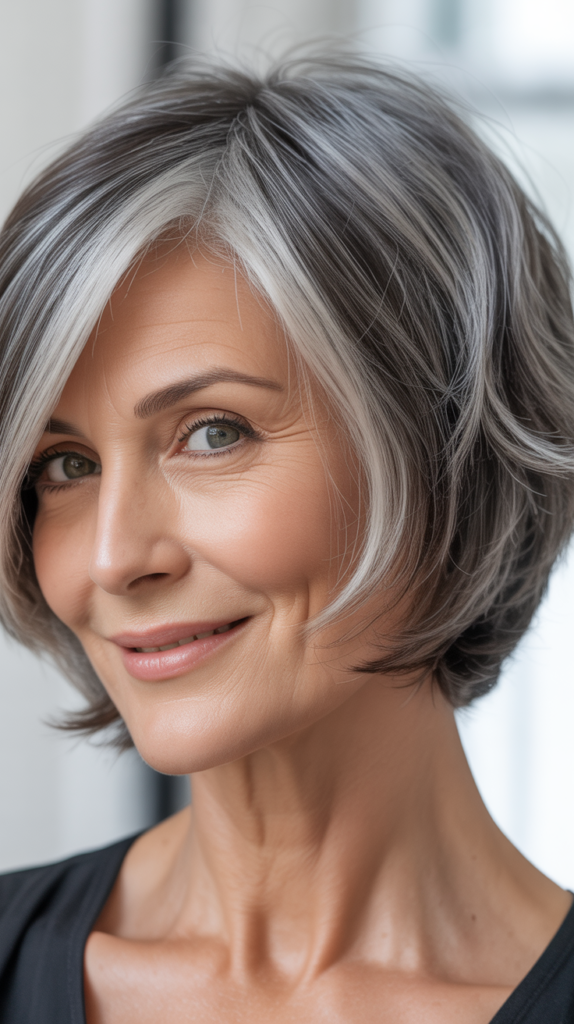
Just as fashion adapts to seasons, your lowlight color choices can shift throughout the year to complement seasonal changes in lighting, wardrobe, and overall aesthetic preferences.
- Winter lowlights can incorporate deeper, richer tones like espresso or burgundy that complement heavier, darker seasonal wardrobes.
- Spring welcomes lighter, brighter lowlights such as ash brown or mushroom tones that feel fresh and renewed.
- Summer lowlights might include sun-kissed caramel or honey tones that mimic natural sun lightening effects.
- Fall brings opportunities for warm tortoiseshell or auburn-influenced lowlights that echo autumn’s color palette.
- Seasonal adjustments don’t require complete color overhauls—subtle shifts in tone can create new dimensional effects.
- Winter’s indoor lighting makes deeper lowlights appear rich and luxurious, while summer’s bright sun showcases lighter tones beautifully.
- Coordinating your lowlights with seasonal fashion choices creates a cohesive, curated personal style.
- Discussing seasonal color plans with your colorist ensures your lowlights remain fresh and current throughout the year.
20. Maintenance Tips for Long-Lasting Lowlights
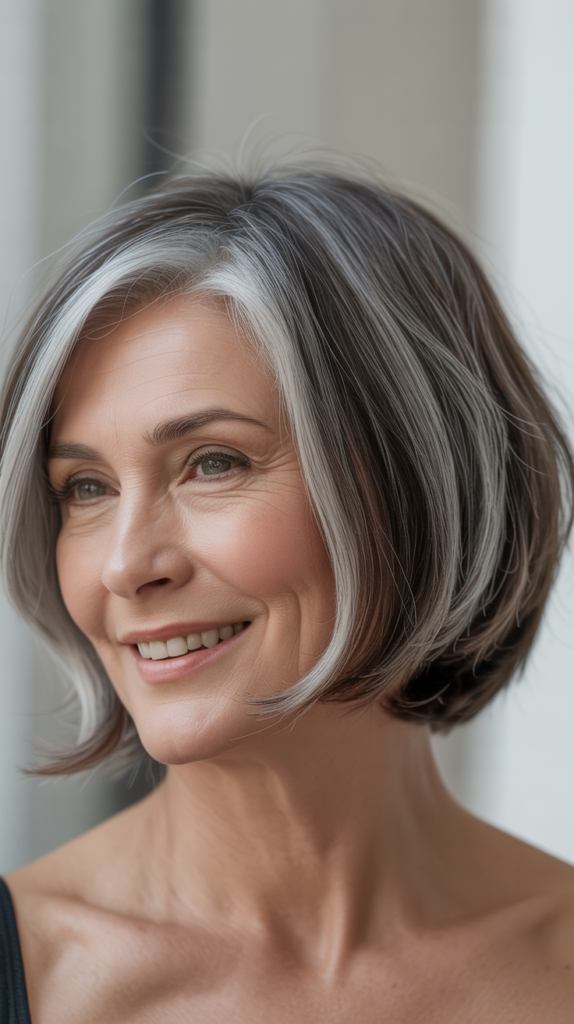
Proper maintenance ensures your lowlights remain vibrant, dimensional, and beautiful between salon appointments. Following specific care routines protects your color investment and keeps gray hair healthy.
- Use sulfate-free, color-safe shampoos specifically formulated for color-treated hair to prevent premature fading.
- Purple or blue-toning shampoos help neutralize unwanted warm or brassy tones in both gray hair and lowlights.
- Deep conditioning treatments once weekly keep both your natural gray and colored lowlights hydrated and healthy.
- Limit heat styling when possible, and always use heat protectant products before blow-drying or using hot tools.
- Schedule regular trims every 4-6 weeks to maintain your short haircut’s shape and remove any color-damaged ends.
- Protect your hair from UV damage by wearing hats or using UV-protectant hair products when spending time outdoors.
- Consider gloss treatments between full color appointments to refresh lowlights and add shine without full recoloring.
- Communicate with your stylist about any color fading or changes you notice so adjustments can be made at your next appointment.
21. Choosing Lowlight Shades Based on Skin Tone
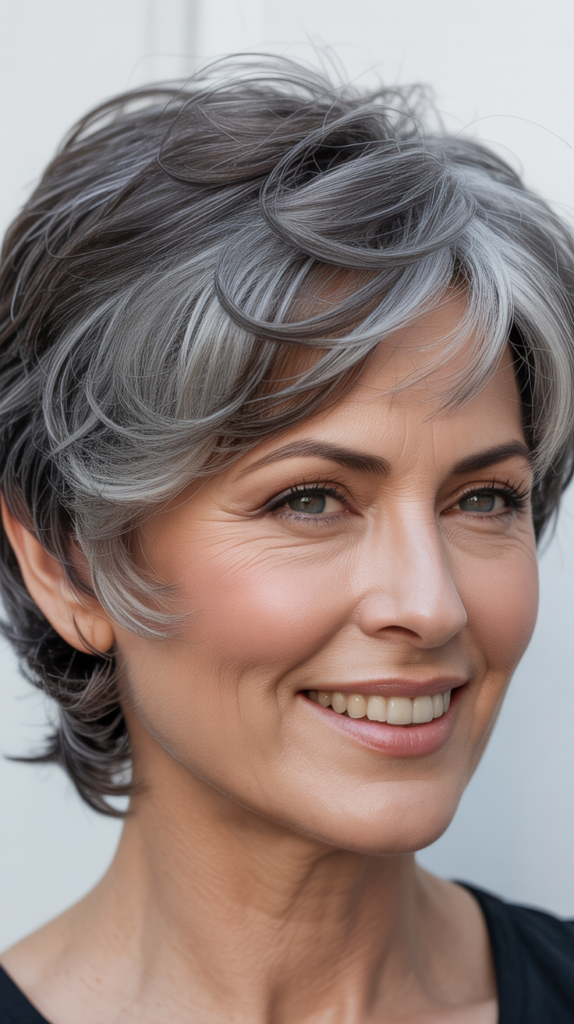
Selecting the right lowlight shades for your specific skin tone ensures the most flattering, harmonious results. Understanding your undertones helps guide color choices that enhance rather than clash with your complexion.
- Determine your undertone by examining wrist veins (blue/purple indicates cool, green indicates warm) or noting which jewelry flatters you (silver for cool, gold for warm).
- Cool undertones pair beautifully with ashy, neutral, or cool-toned lowlights that don’t introduce unwanted warmth.
- Warm undertones are enhanced by golden, amber, caramel, or copper-based lowlights that add radiance to the complexion.
- Neutral undertones offer the most flexibility, allowing you to choose from both warm and cool lowlight options.
- Fair skin can appear washed out with lowlights that are too dark, so opt for medium-depth shades with appropriate undertones.
- Deep skin tones can carry richer, more dramatic lowlight contrasts without overwhelming the overall appearance.
- When unsure, consult with a professional colorist who can assess your natural coloring and recommend complementary shades.
- Test small sections before committing to all-over lowlights to ensure you’re happy with how the chosen shade interacts with your skin tone.
22. DIY vs. Professional Lowlights: Making the Right Choice
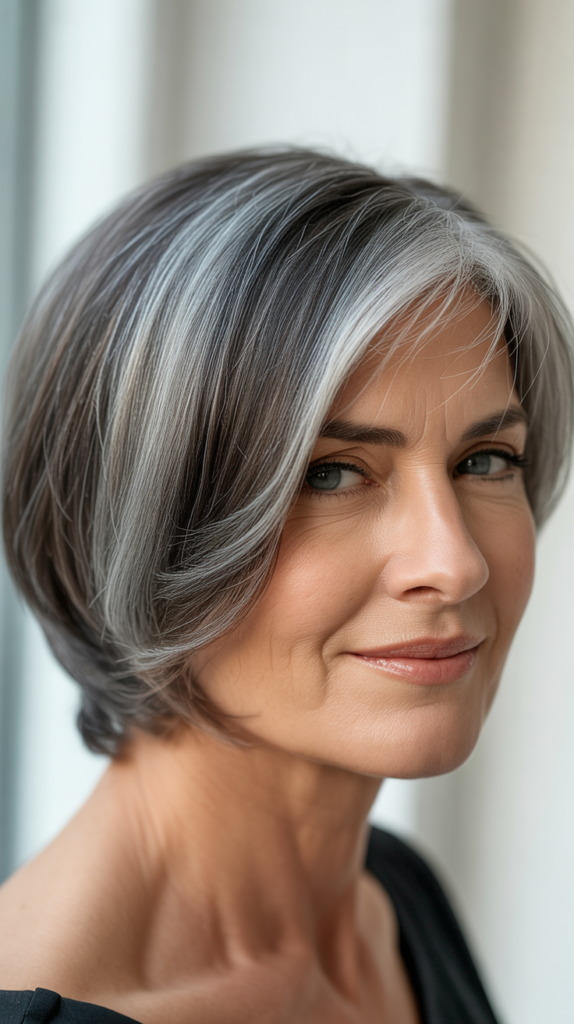
Deciding between attempting lowlights at home or visiting a professional salon involves weighing cost, skill requirements, and desired results. Understanding the pros and cons helps you make an informed decision.
- Professional colorists possess training, experience, and product knowledge that ensure optimal lowlight placement and color selection.
- Salon-quality color formulas often contain conditioning agents and better pigment quality than box dyes available for home use.
- Complex techniques like balayage, babylights, or tortoiseshell lowlights require professional expertise to execute properly.
- DIY lowlights can work for simple applications like single-shade, all-over lowlights if you have coloring experience and follow instructions carefully.
- Home coloring costs significantly less but carries risks of uneven application, unwanted tones, or hair damage from improper technique.
- Short hair makes DIY application more challenging since every section is visible and mistakes are harder to hide or correct.
- Professional colorists can customize formulas to match your specific gray shade, skin tone, and desired dimensional effect.
- Correction of DIY color mistakes often costs more at salons than the original professional service would have cost initially.
- If choosing DIY, select quality products specifically designed for gray hair and follow all instructions precisely.
- Consider booking a professional consultation even if planning DIY application—colorists can recommend suitable products and placement strategies.
23. Addressing Common Gray Hair Concerns with Lowlights
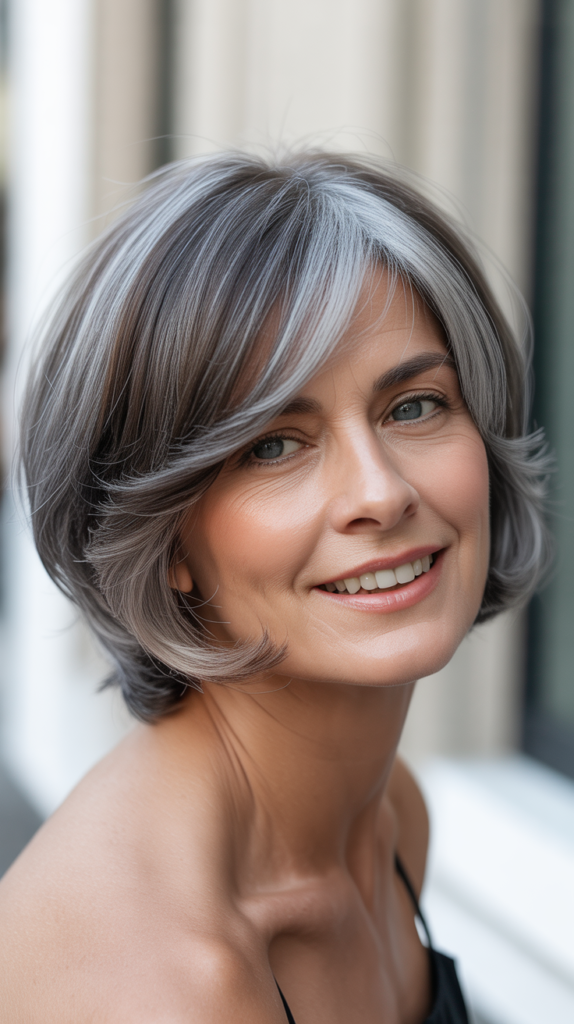
Gray hair often comes with specific concerns like texture changes, dryness, or unwanted yellowing. Strategic lowlight application can address many of these issues while adding dimensional beauty.
- Lowlights add depth that combats the flat, one-dimensional appearance some women experience as their hair turns completely gray.
- Yellowing or brassy tones in gray hair can be neutralized by lowlights with cool or purple undertones.
- The added dimension from lowlights creates the illusion of fuller, thicker hair, addressing concerns about thinning associated with aging.
- Coarse gray hair texture appears softer and more manageable when dimensional lowlights break up the solid color mass.
- Lowlights can camouflage uneven gray growth patterns where some sections gray faster than others.
- The contrast created by lowlights draws attention away from scalp visibility that sometimes occurs with thinning hair.
- Well-placed lowlights can correct previous color mistakes or undesired tones from earlier coloring attempts.
- Regular lowlight maintenance combined with proper hair care can improve overall hair health and appearance over time.
24. Combining Lowlights with Other Color Techniques
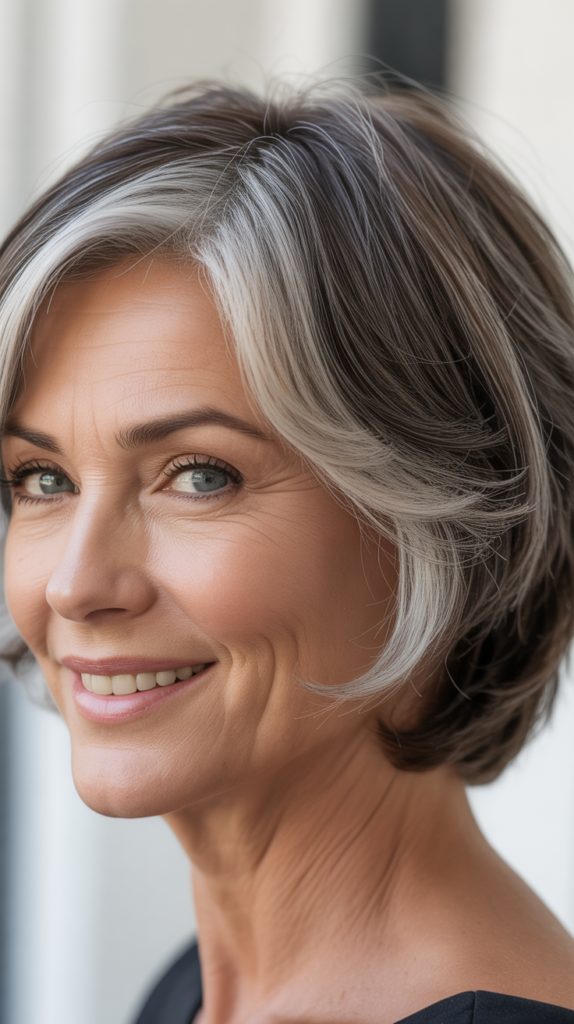
Lowlights don’t have to stand alone—combining them with highlights, glazes, or toning treatments creates even more sophisticated, multi-dimensional results for your gray hair.
- Combining subtle lowlights with soft highlights creates the most natural, multi-dimensional gray hair coloring possible.
- The interplay between darker lowlights and lighter highlights mimics natural hair’s dimensional qualities, appearing organic rather than colored.
- Gloss treatments applied over lowlights add shine and can slightly adjust tone without changing the dimensional placement.
- Root smudging techniques blend lowlights seamlessly with your natural gray growth for low-maintenance dimensional color.
- Lowlights paired with face-framing highlights create maximum contrast and dimension around your features.
- Toning treatments can unify lowlights and natural gray, ensuring all elements work together harmoniously.
- Layering multiple techniques requires professional expertise to avoid over-processing or creating muddy, undefined color.
- The combination approach allows for completely customized results tailored to your unique hair, skin tone, and style preferences.
25. Gray Hair Lowlights for Different Hair Textures
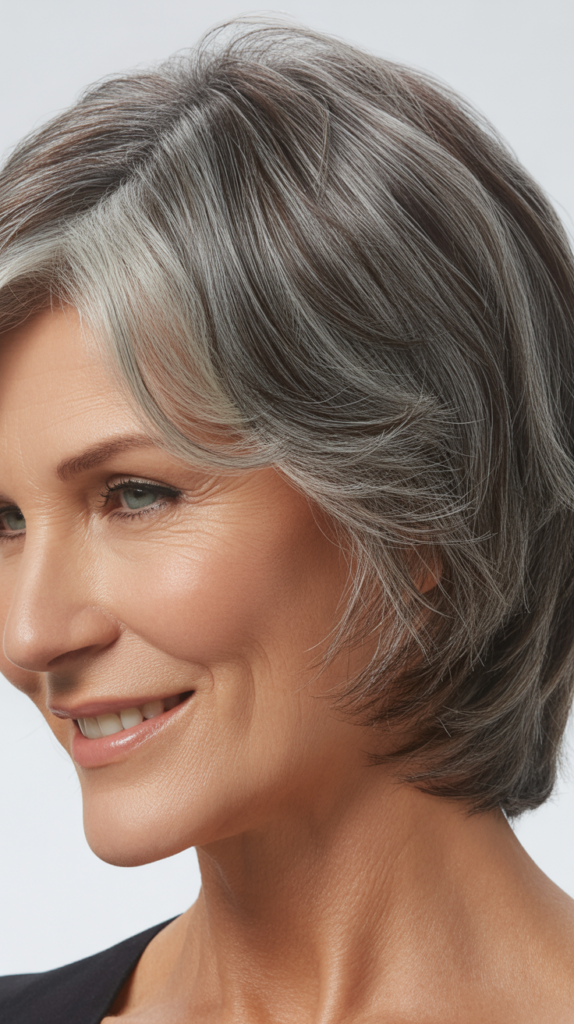
Hair texture—whether fine, medium, coarse, straight, wavy, or curly—affects how lowlights appear and should influence placement decisions and color choices for optimal results.
- Fine, straight hair displays lowlights with maximum clarity, making subtle placement and careful color selection crucial to avoid harsh contrast.
- Coarse, straight hair can handle bolder lowlight contrasts without appearing overdone or artificial.
- Wavy hair creates natural movement that reveals lowlights differently as hair shifts, making them appear more dimensional.
- Curly hair requires strategic lowlight placement on the outer curl layers where color is most visible when hair is styled.
- Fine-textured hair benefits from lowlights that create the illusion of density and fullness through strategic shadow placement.
- Thick, coarse hair may require more lowlight sections to achieve visible dimensional impact throughout the full hair mass.
- Straight hair shows color lines more distinctly, requiring expert blending techniques to avoid harsh demarcation.
- Textured hair (wavy or curly) naturally diffuses color placement, creating softer, more blended dimensional effects.
- Porous, coarse gray hair absorbs color differently and may require adjusted processing times for even results.
- Fine hair is more susceptible to damage, requiring gentler color formulas and careful application techniques.
26. Ombre and Gradient Lowlight Techniques for Short Hair
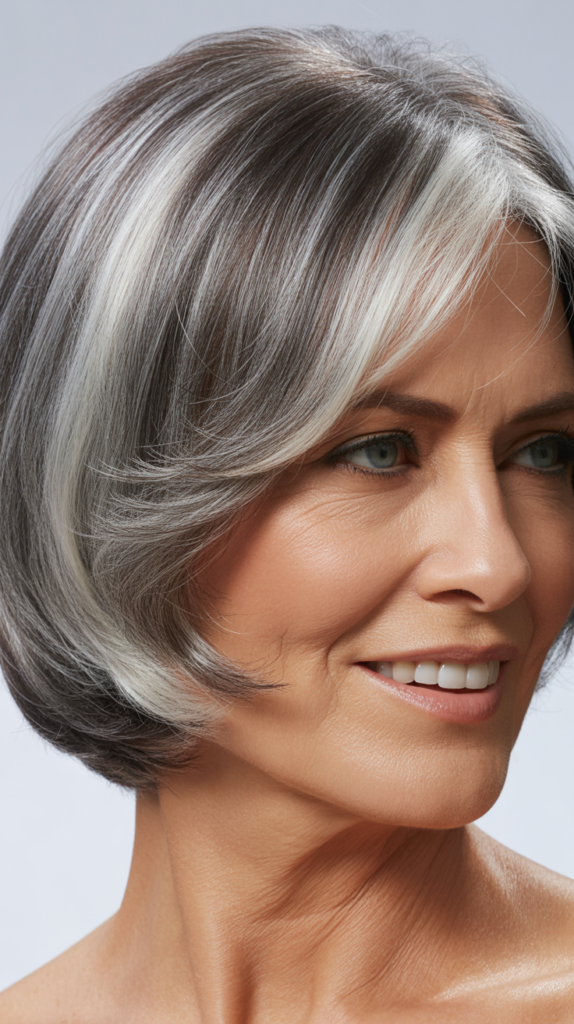
While ombre typically refers to a transition from dark roots to light ends, the technique can be adapted for short gray hair by creating gradual color transitions within limited length.
- Short hair ombre involves concentrated darker lowlights at the roots that gradually transition to lighter gray within just 2-3 inches.
- The gradient effect creates subtle dimension that adds interest without requiring traditional long-hair ombre length.
- This technique is particularly effective on pixies with longer tops or asymmetrical cuts with varied lengths.
- Reverse ombre places darker lowlights toward the ends rather than roots, creating unexpected dimensional interest.
- The gradual color transition means less obvious regrowth lines, extending time between salon maintenance appointments.
- Short bobs can showcase mini-ombre effects from nape to ends, creating a modern, fashion-forward dimensional look.
- Color placement follows the natural direction of hair growth and haircut lines for the most organic appearance.
- The technique works best with 2-3 complementary shades that blend seamlessly rather than contrasting dramatically.
27. Lowlights to Complement Different Face Shapes
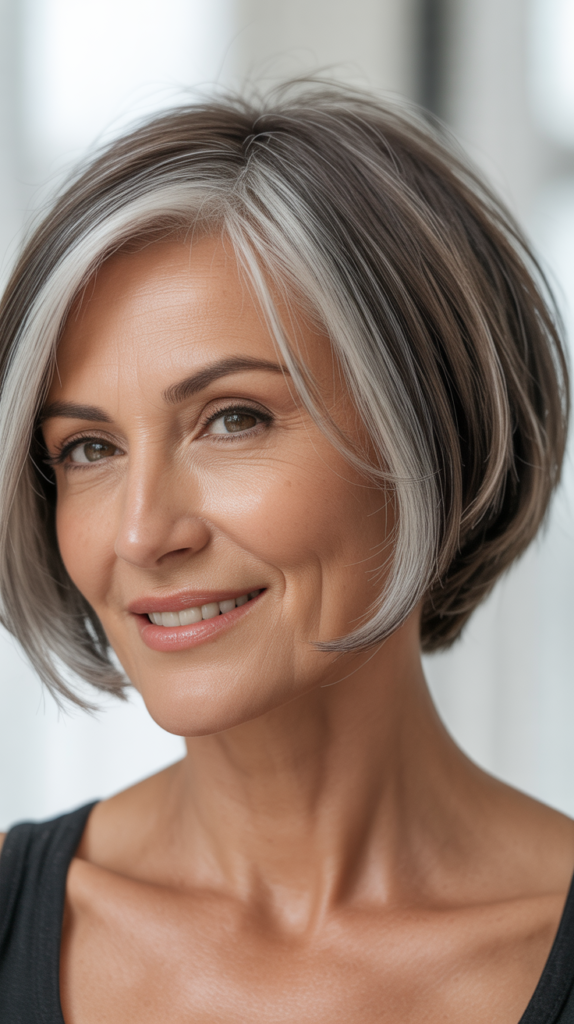
Strategic lowlight placement can enhance your face shape, creating balance and drawing attention to your best features while minimizing any concerns you might have about facial proportions.
- Round faces benefit from vertical lowlight placement along the sides that creates length and slims the appearance.
- Oval faces work well with virtually any lowlight pattern, offering maximum flexibility in placement choices.
- Square faces are softened by lowlights concentrated around the jawline and temples, creating curved visual lines.
- Heart-shaped faces benefit from lowlights that add width at the jawline while keeping the forehead area lighter.
- Long faces gain balance from horizontal lowlight placement that creates width and breaks up vertical length.
- Diamond-shaped faces look best with lowlights that frame the cheekbones and add fullness at the forehead and chin.
- Face-framing lowlights should be placed to contour and define your specific facial structure naturally.
- Consulting with your stylist about face-flattering lowlight placement ensures the most harmonious, balanced results.
28. Cost Considerations and Budgeting for Gray Hair Lowlights
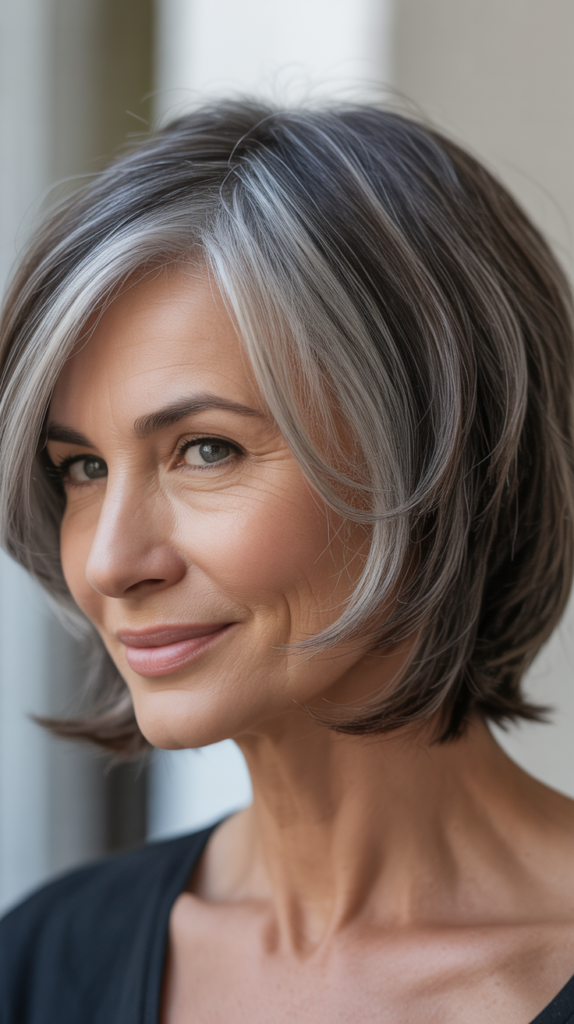
Understanding the financial investment required for lowlights—both initially and for ongoing maintenance—helps you plan appropriately and choose techniques that fit your budget.
- Costs vary significantly based on salon location, colorist experience level, and geographic region (urban areas typically cost more).
- Short hair generally requires less product and time than long hair, sometimes resulting in lower service costs.
- Low-maintenance techniques like balayage or shadow roots cost more initially but require less frequent touch-ups, potentially saving money long-term.
- Tipping your colorist typically adds 15-20% to your service cost and should be factored into budget planning.
- Home maintenance products (color-safe shampoo, conditioner, treatments) add $20-$50 monthly to your hair care budget.
- Some salons offer package deals or loyalty programs that reduce per-visit costs for regular clients.
- Consultation appointments are often free and allow you to get accurate pricing before committing to service.
- Discussing budget openly with your colorist helps them recommend techniques and maintenance schedules that fit your financial comfort zone.
29. Lowlight Trends for 2025 and Beyond
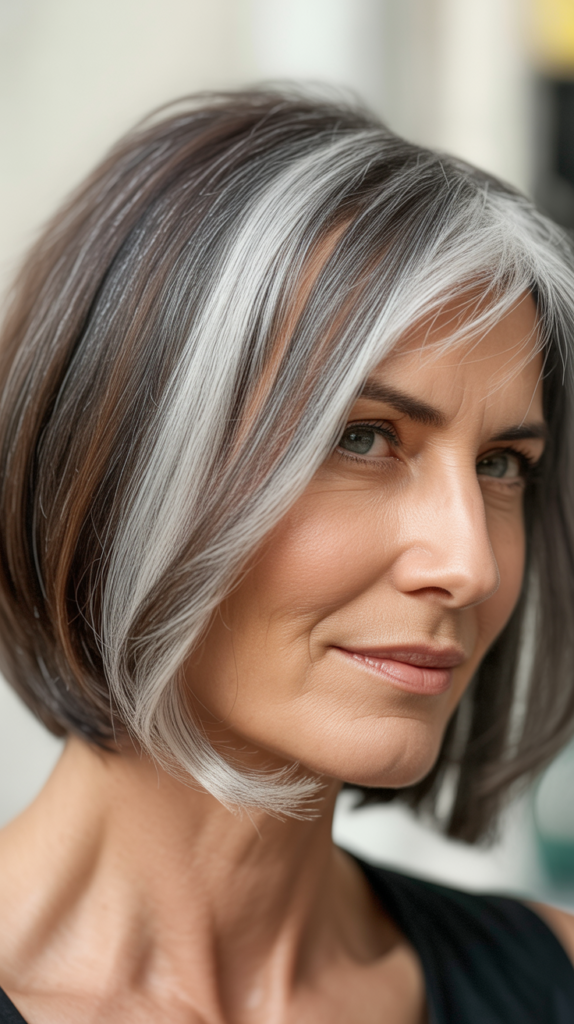
Staying current with color trends ensures your gray hair lowlights feel fresh and modern rather than dated. These emerging trends are shaping dimensional gray hair coloring.
- “Money piece” lowlights—darker sections framing the face only—create dramatic contrast with minimal commitment and maintenance.
- Color-blocked lowlights place solid sections of contrasting color for an artistic, editorial appearance.
- Lived-in color featuring deliberately grown-out lowlights embraces a more natural, undone aesthetic.
- Opal-inspired lowlights incorporate soft pastel undertones (pink, blue, purple) within gray for iridescent dimension.
- Chunky, visible lowlights are replacing the ultra-blended looks of previous years for a bolder, more intentional appearance.
- Monochromatic lowlights using multiple shades within the same color family create tonal dimension.
- Sustainable beauty trends favor low-maintenance lowlight techniques that require fewer salon visits and less chemical processing.
- Personalization over trends means choosing lowlights that express individual style rather than following prescriptive color rules.
- Gray celebration continues to grow, with lowlights used to enhance rather than hide natural silver tones.
- Cool-toned lowlights remain dominant, but warm-toned options are gaining popularity for their complexion-brightening effects.
30. Lowlights for Transitioning to Fully Gray Hair
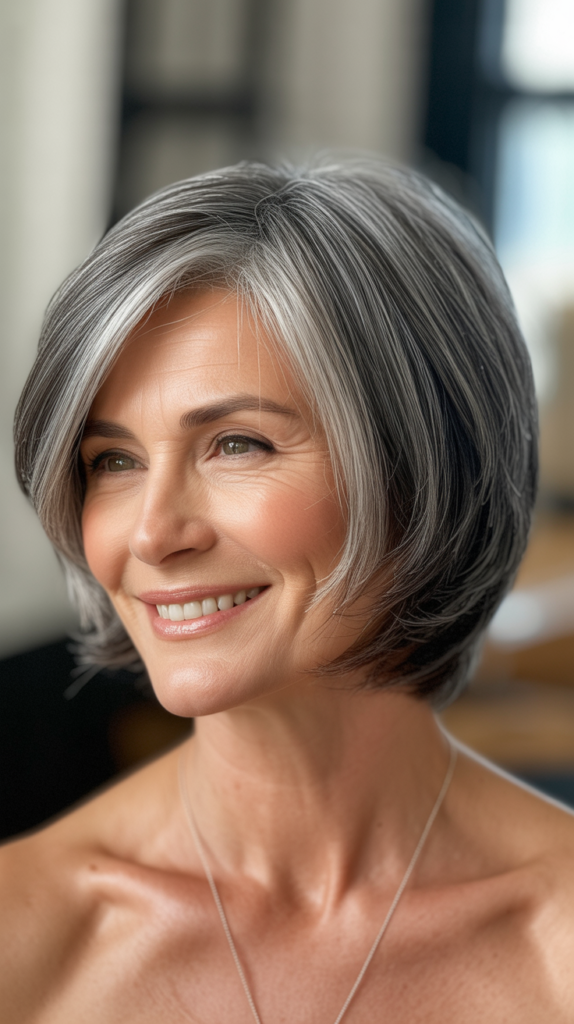
For women in the process of growing out their natural gray, lowlights can ease the transition by blending regrowth with previously colored hair and creating intentional dimensional style.
- Lowlights can match your emerging gray shade and be placed strategically to blend with natural regrowth.
- The technique camouflages the line of demarcation between colored hair and gray roots during the awkward growing-out phase.
- Reverse lowlights (darkening previously highlighted hair) help transition from blonde or light-colored hair to gray.
- Gradual lowlight adjustments over several appointments create a seamless transition rather than an abrupt color change.
- Strategic placement makes the growing-out process appear intentional and stylish rather than neglected or unkempt.
- Short haircuts accelerate the transition process since frequent trims quickly remove old colored hair.
- Lowlights can be adjusted at each appointment to match your increasing percentage of natural gray coverage.
- This approach allows you to test your commitment to gray hair gradually rather than making a dramatic overnight change.
- Many women find lowlight-assisted transitions boost confidence by maintaining polished appearance throughout the process.
- The final result is naturally dimensional gray hair enhanced by lowlights that complement your authentic silver tones.
31. Styling Products That Enhance Lowlighted Gray Hair
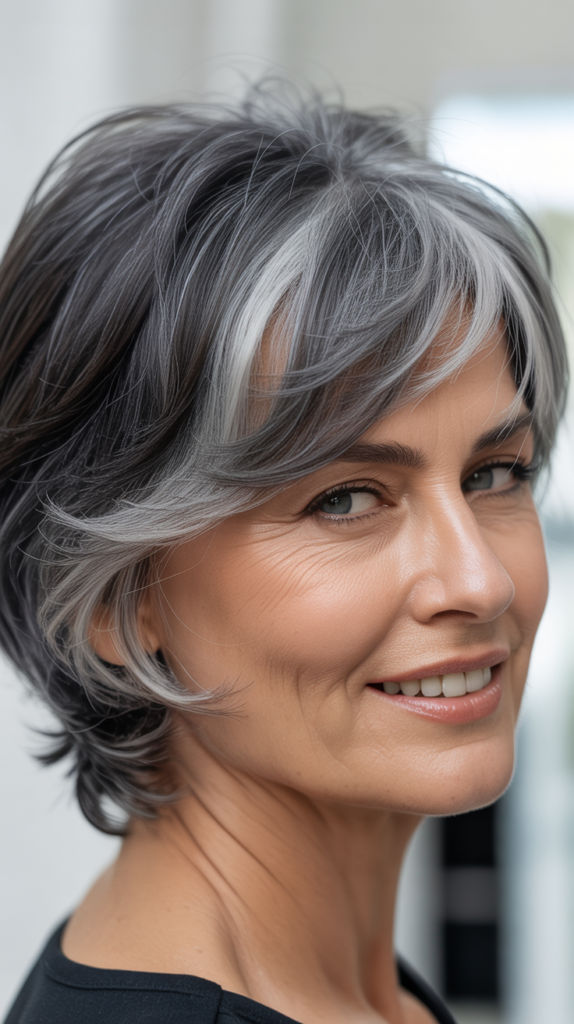
The right styling products make lowlights more visible, add shine, enhance dimension, and keep your short gray hair looking its absolute best between salon appointments.
- Glossing serums add shine that makes both gray hair and lowlights appear more vibrant and dimensional.
- Texturizing sprays enhance piece-y separation, making individual lowlight strands more visible and defined.
- Volumizing mousses lift hair at the roots, creating movement that reveals underlying lowlight placement.
- Purple-toning products neutralize brassiness in both gray hair and cool-toned lowlights between salon visits.
- Lightweight pomades or waxes can be used to define specific lowlighted sections and create textured, dimensional styles.
- Heat protectant sprays maintain color integrity and prevent fading caused by blow-drying and heat styling tools.
- Color-depositing conditioners refresh lowlight tones between full color appointments, extending vibrancy.
- Dry shampoos formulated for gray hair absorb oil without leaving white residue that could dull dimensional coloring.
- Finishing sprays with light-reflecting properties make lowlights catch and reflect light beautifully.
- Avoid heavy oils or products with silicones that can coat hair and hide dimensional color effects.
32. Lowlights for Active Lifestyles and Low-Maintenance Needs
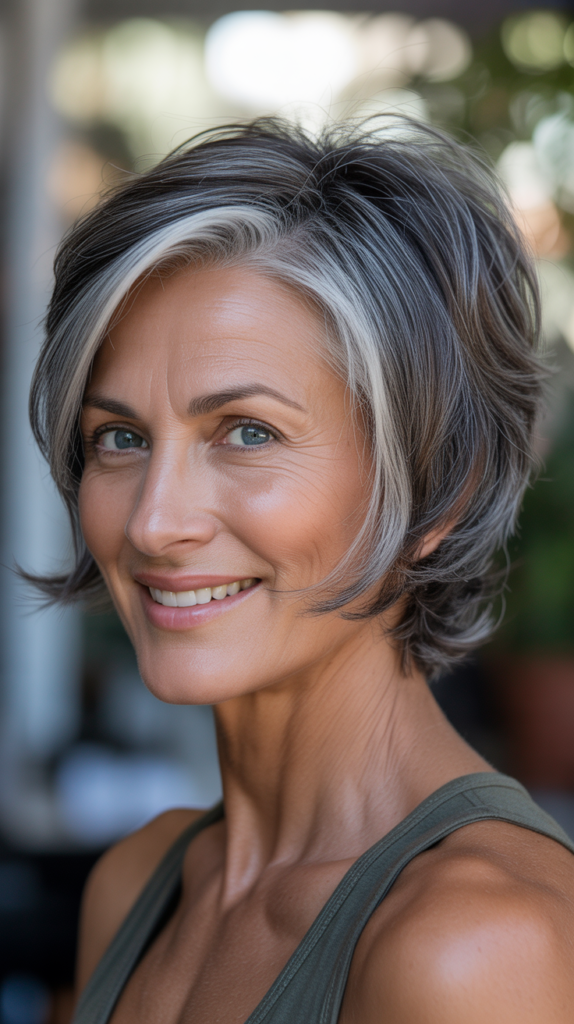
Women with busy schedules, active lifestyles, or minimal interest in extensive hair routines need lowlight solutions that look great with minimal effort and upkeep.
- Shadow root techniques and grown-out balayage lowlights require minimal touch-ups, ideal for busy schedules.
- Lowlights in shades close to your natural gray create seamless transitions that look intentional even when grown out.
- Short wash-and-go haircuts with strategic lowlights provide maximum style impact with minimal daily styling requirements.
- Chlorine-resistant color formulas protect lowlights for women who swim regularly for exercise or leisure.
- Sweat-resistant products maintain lowlight vibrancy for women with active fitness routines.
- Travel-friendly lowlight maintenance involves simple product routines that work without extensive tools or time.
- Dry-styling techniques (air-drying, minimal heat) preserve lowlights while accommodating rushed morning routines.
- Quarterly salon appointments for low-maintenance lowlight techniques fit easily into busy professional and personal schedules.
- Multi-dimensional lowlights in varied shades disguise any fading or regrowth better than single-shade applications.
- Realistic discussions with your colorist about lifestyle ensure you choose lowlight techniques compatible with your actual maintenance capacity.
33. Addressing Unwanted Tones in Gray Hair Through Lowlights
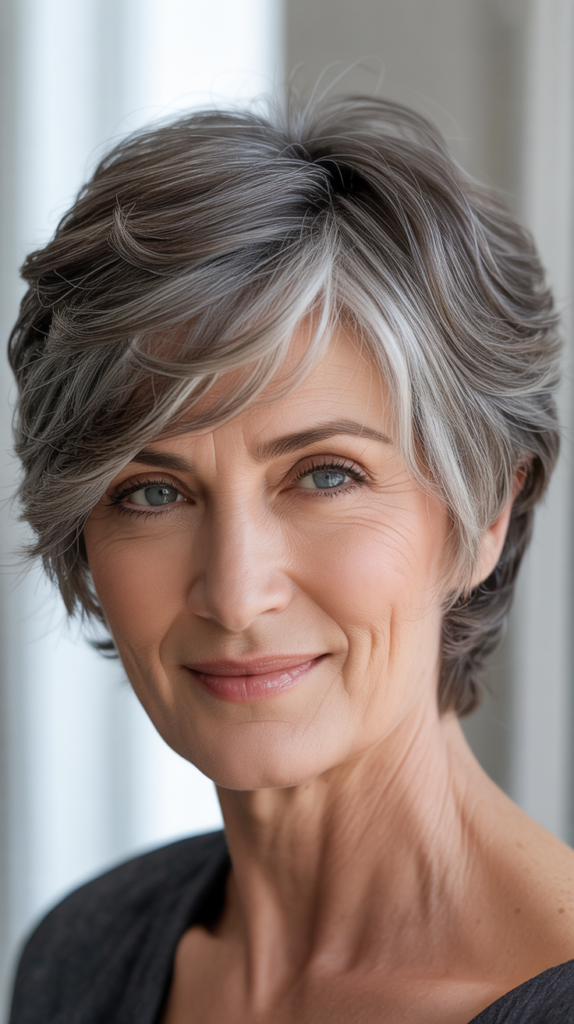
Gray hair can develop unwanted yellow, brassy, or green tones from various environmental factors. Strategic lowlight placement combined with proper toning can neutralize these issues.
- Yellow or brassy tones in gray hair are neutralized by cool-toned lowlights containing blue or violet undertones.
- Green tones (often from pool chlorine or mineral deposits) are corrected by warm-toned lowlights with red or copper bases.
- Purple or blue-toned lowlights specifically counteract unwanted warmth while adding dimensional depth.
- Environmental factors like hard water, pollution, and sun exposure can cause tonal shifts that lowlights help camouflage.
- Smoky quartz or mushroom brown lowlights neutralize warmth while adding natural-looking dimension.
- The dimensional nature of lowlights means even if some toning fades, the varied colors continue to create visual interest.
- Combining lowlights with professional toning treatments provides both immediate correction and long-term dimensional benefits.
- Medications, diet changes, and hormonal shifts can affect gray hair’s tone, making corrective lowlights necessary periodically.
- Regular maintenance with purple shampoo preserves both the cool tones in gray hair and in complementary lowlights.
- Discussing any tonal concerns during color consultations allows colorists to formulate corrective lowlight solutions.
34. Gray Hair Lowlights for Different Professional Settings
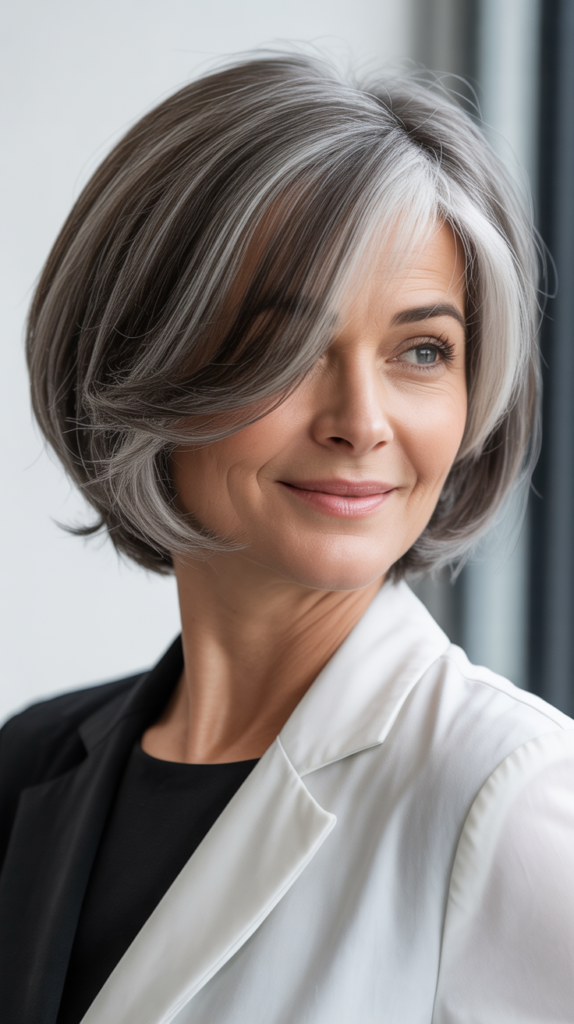
Professional environments vary in their cultural norms around hair color and style. Choosing appropriate lowlights ensures you look polished while fitting workplace expectations.
- Conservative corporate environments favor subtle, natural-looking lowlights in ash brown, mushroom, or soft charcoal shades.
- Creative industries allow for more experimental lowlight choices including fashion colors, bold contrasts, or trendy techniques.
- Medical and healthcare settings typically welcome professional dimensional coloring that appears neat and maintained.
- Education environments generally accept dimensional gray hair with lowlights that appear intentional and polished.
- Client-facing positions benefit from lowlights that enhance professionalism while expressing personal style within bounds.
- Remote work environments offer maximum flexibility in lowlight choices since video calls show less color detail than in-person.
- Some industries have specific guidelines about “natural” hair colors that may limit lowlight color choices.
- Well-maintained lowlights signal attention to personal grooming and professionalism regardless of industry.
- Discussing workplace considerations with your colorist helps identify lowlight options that balance personal expression with professional appropriateness.
- Confidence in your appearance, including dimensional gray hair, positively impacts professional presence and workplace interactions.
35. Correcting Lowlight Mistakes and Color Issues
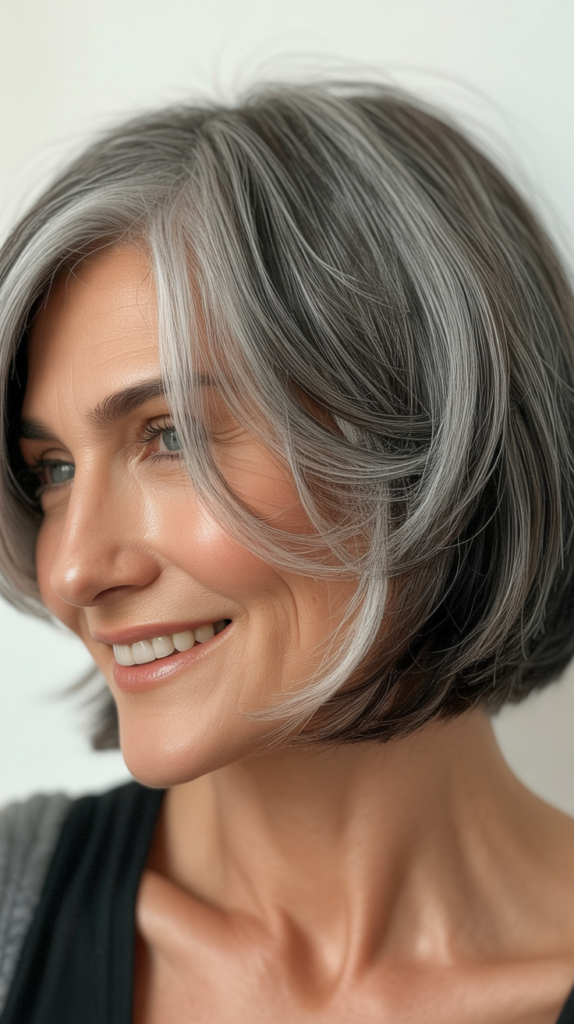
Even professional color services occasionally result in unwanted outcomes. Understanding correction options helps you address lowlight disappointments effectively.
- Too-dark lowlights can be lightened through color removal processes, though this may require multiple treatments to avoid damage.
- Overly warm or brassy lowlights are corrected with cool-toned glazes or toners that neutralize unwanted red or orange hues.
- Harsh, visible lines from poorly blended lowlights can be softened through balayage techniques that create gradient transitions.
- Uneven color distribution requires strategic additional lowlight placement to balance and create cohesive dimensional effects.
- Gray hair that appears muddy from too many lowlights benefits from strategic highlighting to reintroduce light and clarity.
- Professional color correction typically requires patience—multiple appointments may be necessary for optimal results without excessive damage.
- Bringing reference photos of your desired outcome helps colorists understand your vision and plan appropriate corrections.
- Deep conditioning treatments between correction appointments maintain hair health during the adjustment process.
- Honest communication with your original colorist often results in complimentary correction services if they caused the issue.
- Prevention is easier than correction—thorough consultations with experienced colorists minimize the likelihood of unsatisfactory results.
36. Lowlights and Hair Health: Maintaining Strong Gray Hair
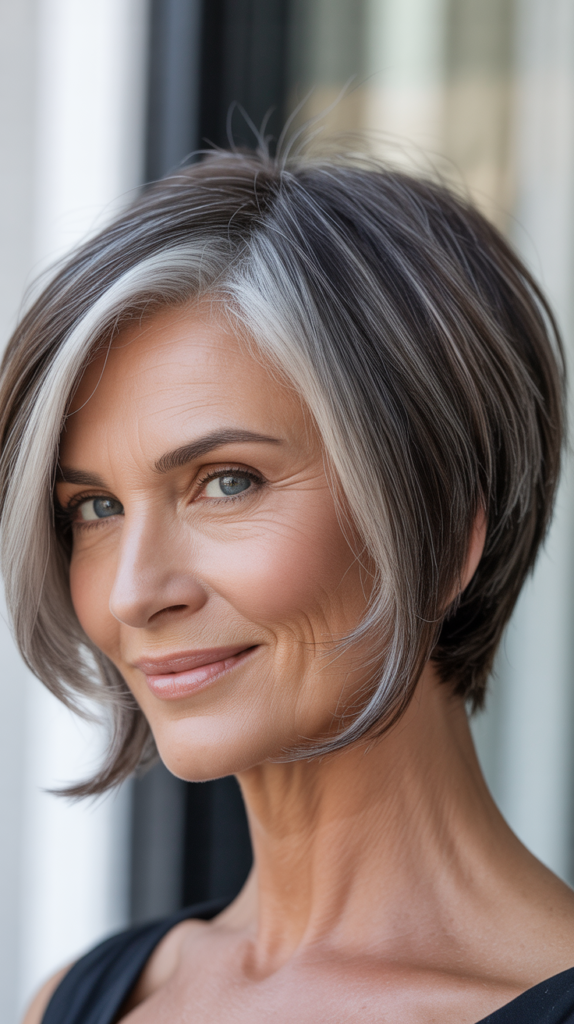
Color treatments impact hair health, making proper care essential for maintaining strong, beautiful gray hair with dimensional lowlights.
- Gray hair is often more fragile and porous than pigmented hair, requiring gentle color formulas and careful processing.
- Professional lowlight services use conditioning color formulas that deposit color while treating hair, unlike harsh box dyes.
- Protein treatments strengthen hair structure, particularly important for mature hair that may be thinning or becoming brittle.
- Deep conditioning masks once weekly replenish moisture lost during color processing and environmental exposure.
- Bond-building treatments (like Olaplex or similar) protect hair integrity during coloring and between appointments.
- Scalp health directly impacts hair health—regular scalp massages and appropriate cleansing maintain optimal growth conditions.
- Lower-commitment lowlight techniques (balayage, babylights) typically cause less overall damage than full-head foil applications.
- Spacing color appointments appropriately allows hair recovery time between chemical processes.
- Quality matters—professional salon products contain superior ingredients that protect hair better than drugstore alternatives.
- Biotin, collagen, and other hair-supporting supplements may improve overall hair health when taken consistently.
- Regular trims remove damaged ends, preventing breakage that can make lowlights appear less dimensional.
- UV protection products shield both color and hair structure from sun damage that causes fading and weakness.
37. Seasonal Hair Care for Lowlighted Gray Hair
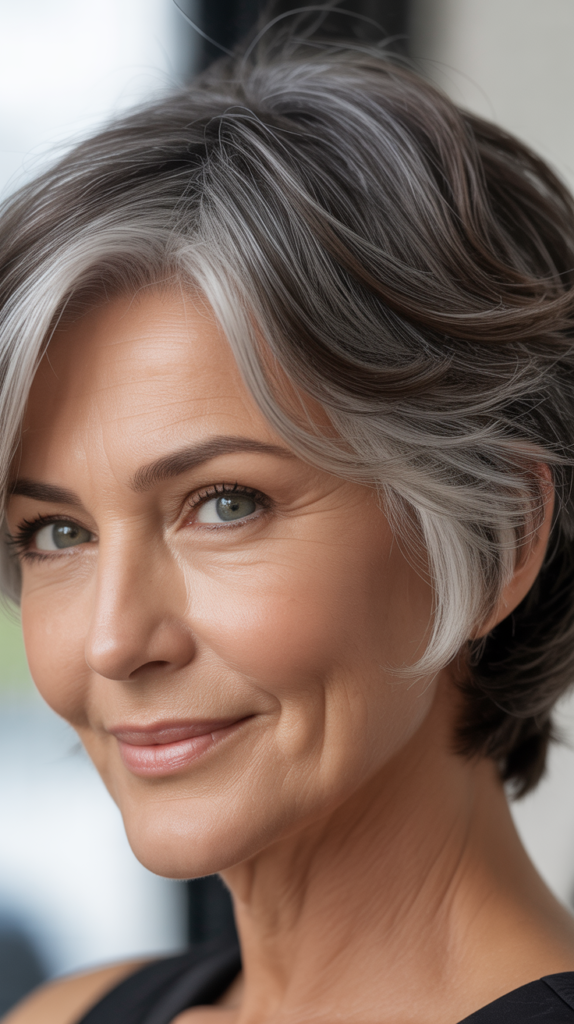
Different seasons present unique challenges for maintaining beautiful lowlighted gray hair, requiring adjusted care routines throughout the year.
Winter Care:
- Indoor heating and outdoor cold create dryness requiring intensified moisturizing treatments and heavier conditioning products.
- Static electricity in winter air benefits from anti-frizz serums and leave-in conditioners that smooth hair and enhance lowlight visibility.
- Hats and scarves can cause friction damage—line them with silk or satin to protect hair and color.
Spring Care:
- Increased humidity may require anti-humidity styling products to maintain sleek styles that showcase lowlights clearly.
- Spring cleaning includes clarifying treatments to remove winter product buildup that dulls dimensional color.
- Lighter styling products replace heavy winter formulas as temperatures warm and hair needs less moisture protection.
Summer Care:
- UV protection becomes critical—use products with SPF and wear hats to prevent sun-fading of lowlights.
- Chlorine and saltwater exposure requires protective pre-swim products and immediate post-swim cleansing and conditioning.
- More frequent washing due to sweat and outdoor activity necessitates gentle, color-safe shampoos that won’t strip lowlights.
Fall Care:
- Transitional weather allows assessment of summer damage with corrective treatments before winter.
- Cooler temperatures mean less frequent washing, helping preserve lowlight vibrancy longer between shampoos.
- Fall is ideal for refreshing lowlights before holiday seasons when photos and social events increase.
38. Lowlights for Glasses Wearers: Complementary Coloring
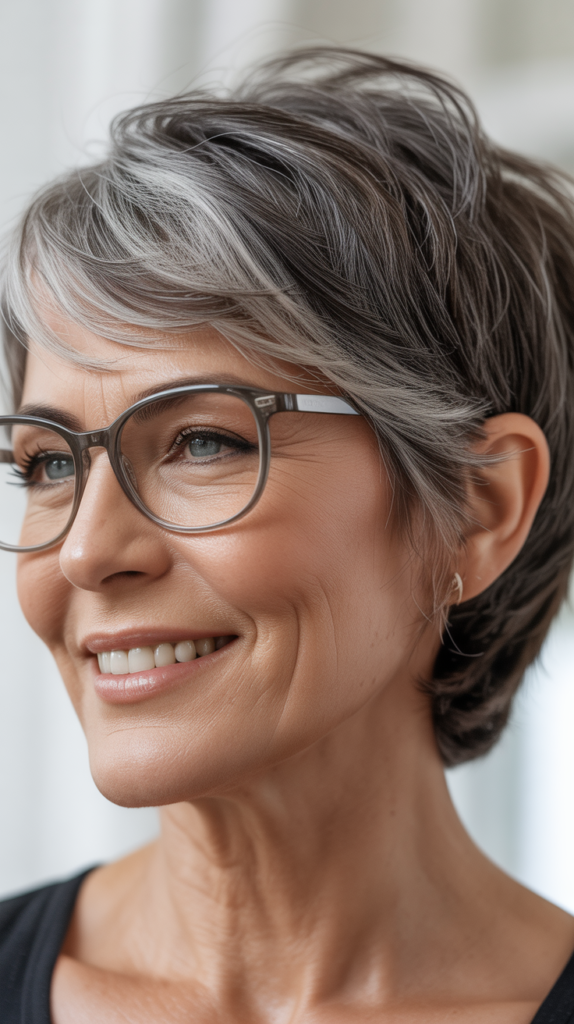
Eyeglasses interact with hair color and can influence lowlight placement decisions to ensure harmony between frames and dimensional hair coloring.
- Face-framing lowlights should consider eyeglass frame placement to avoid competing visual elements.
- Bold, dark-framed glasses pair well with contrast lowlights that echo the frame’s visual weight.
- Delicate, light-framed glasses benefit from subtler lowlight placement that doesn’t overwhelm the frames’ refinement.
- Frame color can guide lowlight shade selection—tortoiseshell frames complement warm lowlights, while black frames work with cool tones.
- Lowlights placed slightly away from where frames sit prevent color from being hidden behind eyewear.
- Metallic frame colors (gold, silver, rose gold) pair beautifully with coordinating metallic or complementary lowlight tones.
- Bold, statement glasses become the focal point, suggesting more subtle lowlight applications that enhance rather than compete.
- Frameless or rimless glasses allow maximum lowlight visibility, permitting bolder dimensional color choices.
- Seasonal eyeglass changes might inspire coordinating lowlight adjustments for a cohesive, curated appearance.
- Bringing glasses to color consultations allows your colorist to consider them in overall lowlight planning.
39. Lowlights and Makeup Coordination

The relationship between hair color and makeup creates overall aesthetic harmony. Lowlight choices should consider your typical makeup palette for the most flattering results.
- Cool-toned lowlights pair beautifully with pink, rose, mauve, and berry lip and cheek colors.
- Warm-toned lowlights harmonize with coral, peach, terracotta, and warm brown makeup shades.
- Dramatic lowlight contrast can handle bolder makeup choices, while subtle lowlights suit softer, more natural makeup.
- Gray hair with dimensional lowlights generally looks best with defined eyebrows that provide facial structure.
- Eye makeup colors can echo lowlight tones—charcoal shadow complements cool lowlights, bronze suits warm lowlights.
- Well-maintained lowlights create a polished canvas that allows you to wear less makeup overall while still looking put-together.
- Foundation and concealer should match your skin tone regardless of hair color, but lowlights can influence blush and lip color choices.
- Bold lip colors work beautifully with dimensional gray hair, especially when lowlights provide additional depth and interest.
- Makeup that enhances your natural coloring creates harmony with lowlights chosen to complement your skin tone.
- Professional makeup consultations can help identify cosmetic palettes that work best with your specific lowlight coloring.
40. Gray Hair Lowlights for Special Occasions
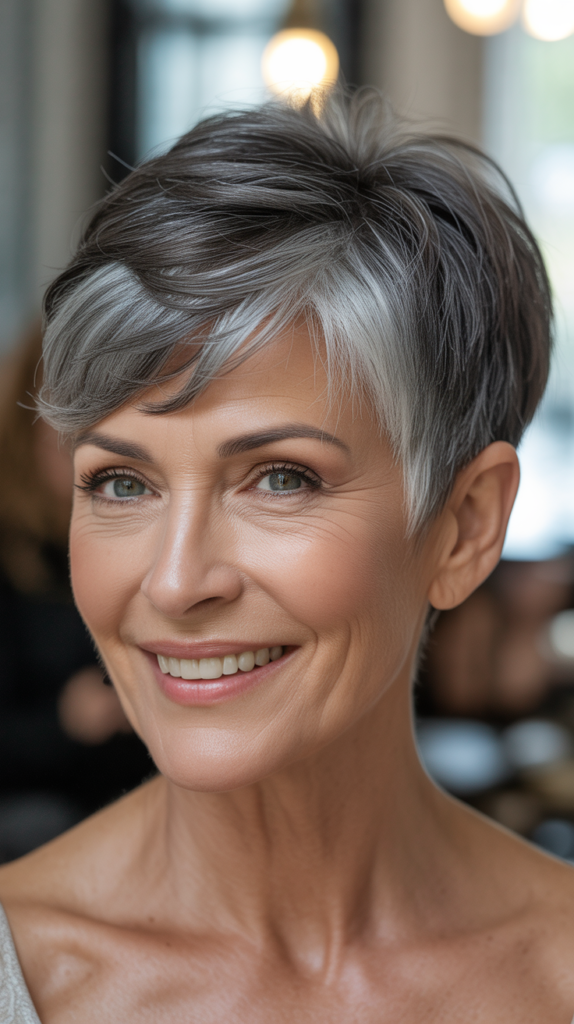
Weddings, milestone celebrations, and important events may inspire temporary lowlight enhancements or styling approaches that maximize dimensional impact for photographs and memories.
- Glossing treatments applied before special events add temporary shine and vibrancy to existing lowlights without permanent commitment.
- Strategic styling with volumizing products and texturing sprays makes lowlights more visible in photographs.
- Temporary color sprays or chalk can add extra dimensional interest for single events without permanent application.
- Professional blow-outs or styling sessions position hair to showcase lowlights at their most flattering angles.
- Evening lighting differs from daylight—certain lowlight shades photograph better in artificial light than others.
- Scheduling permanent lowlight appointments 1-2 weeks before major events allows time for any necessary adjustments.
- Updos and formal styles can be designed to showcase dimensional lowlights rather than hiding them.
- Hair accessories (clips, headbands, decorative pins) should complement rather than compete with dimensional hair coloring.
- Discussing upcoming events during color consultations allows colorists to time services for optimal appearance on important dates.
- Professional photography lighting often enhances dimensional hair coloring, making lowlights particularly photogenic for milestone events.
41. Psychology of Gray Hair and Dimensional Coloring
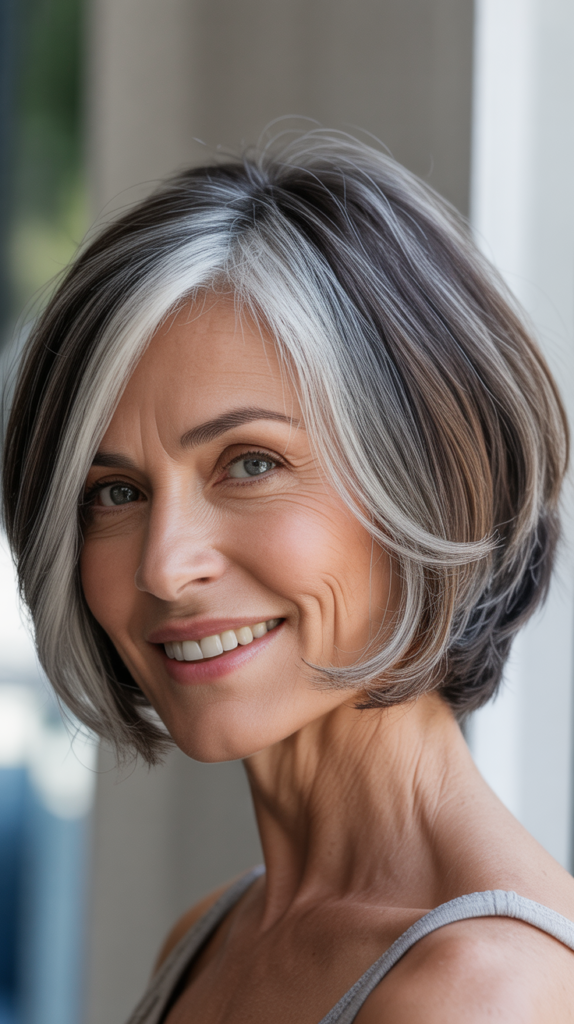
Choosing to enhance gray hair with lowlights represents more than aesthetic preference—it reflects attitudes about aging, self-expression, and personal identity.
- Enhancing gray with lowlights demonstrates embrace of natural aging while maintaining interest in personal appearance and style.
- Dimensional coloring allows women to feel polished and intentional about their look rather than simply “letting themselves go.”
- The choice to add lowlights rather than covering gray entirely represents balanced acceptance of aging with desire for enhancement.
- Confidence in appearance, including dimensional gray hair, positively impacts self-esteem and how others perceive you.
- Social research shows that well-maintained gray hair signals sophistication, wisdom, and authentic self-acceptance.
- Women who choose dimensional gray coloring often report feeling more aligned with their authentic selves than when covering gray completely.
- The growing gray-positive movement normalizes enhanced natural hair color as stylish rather than a sign of giving up on appearance.
- Personal agency in making color choices—whatever they may be—matters more than societal expectations about “appropriate” aging.
- Lowlights provide a middle ground for women transitioning from full-coverage coloring to natural gray, easing psychological adjustment.
- Positive reinforcement from others about dimensional gray hair reinforces confidence and satisfaction with the choice.
42. Cultural Considerations in Gray Hair Coloring Choices
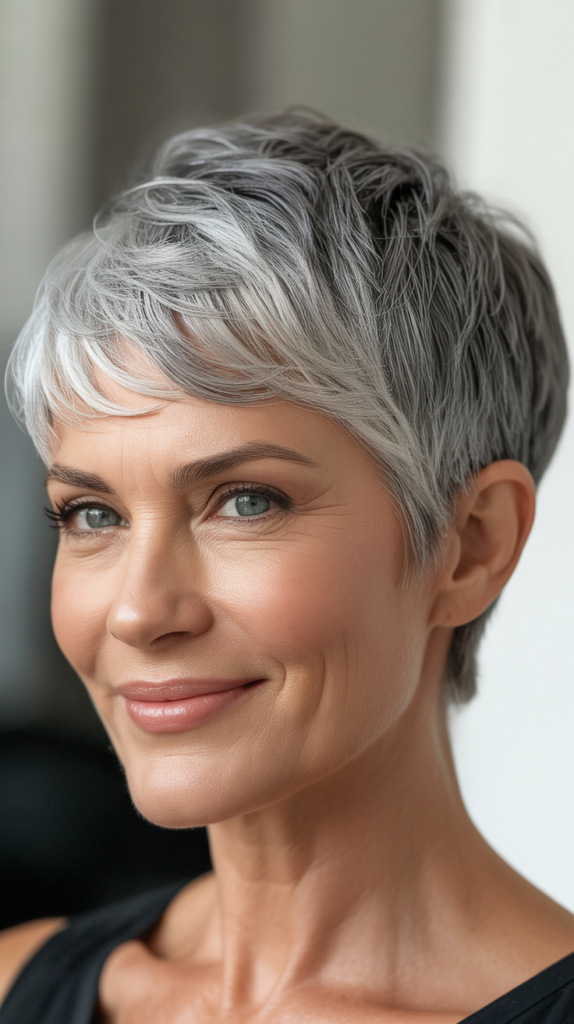
Different cultures hold varying attitudes toward gray hair and coloring choices. Understanding these perspectives helps navigate personal decisions within cultural contexts.
- Some cultures view gray hair as a symbol of wisdom and respect, making enhancement rather than coverage most appropriate.
- Other cultural contexts expect hair coloring to maintain youthful appearance, though dimensional approaches may balance tradition with modernity.
- Workplace cultures in different regions and industries vary in their acceptance of visible gray hair, even when enhanced with lowlights.
- Multigenerational family attitudes may influence individual comfort with gray hair choices, requiring navigation of differing expectations.
- Immigration and cultural blending create opportunities for hybrid approaches that honor heritage while embracing new perspectives.
- Social media and global connectivity are shifting attitudes worldwide toward greater acceptance of enhanced natural gray hair.
- Personal authenticity matters more than cultural prescriptions, though acknowledging context helps make informed choices.
- Professional colorists in diverse communities understand how to create dimensional gray looks that respect cultural values.
- Open family discussions about hair choices can bridge generational and cultural divides while respecting individual autonomy.
- Ultimately, your hair belongs to you—cultural awareness informs but shouldn’t dictate personal appearance choices.
43. Celebrity Inspiration: Gray Hair Lowlights on Public Figures

Many celebrities over 50 embrace dimensional gray hair with lowlights, providing inspiration and normalizing enhanced natural hair color as glamorous and fashionable.
- Numerous actresses, models, and public figures now showcase dimensional gray hair on red carpets and in media appearances.
- Celebrity colorists often use sophisticated lowlight techniques to create the dimensional gray looks seen on famous women.
- Social media accounts dedicated to “gray hair inspiration” provide endless examples of beautiful dimensional coloring approaches.
- Fashion industry embrace of gray-haired models in advertising campaigns validates enhanced natural hair as stylish and desirable.
- Public figures discussing their hair choices openly reduce stigma and encourage others to explore dimensional gray options.
- High-profile women maintaining dimensional gray while remaining professionally successful challenges ageist beauty standards.
- Celebrity hairstylists share techniques and approaches through social media, making expert knowledge more accessible.
- Observing how dimensional gray hair is styled for various events provides ideas for your own styling approaches.
- Remember that celebrity hair involves professional daily maintenance—realistic expectations matter for everyday women.
- Using celebrity inspiration as a starting point for consultation discussions helps communicate desired outcomes to your colorist.
44. Long-Term Hair Health Strategy with Regular Lowlights
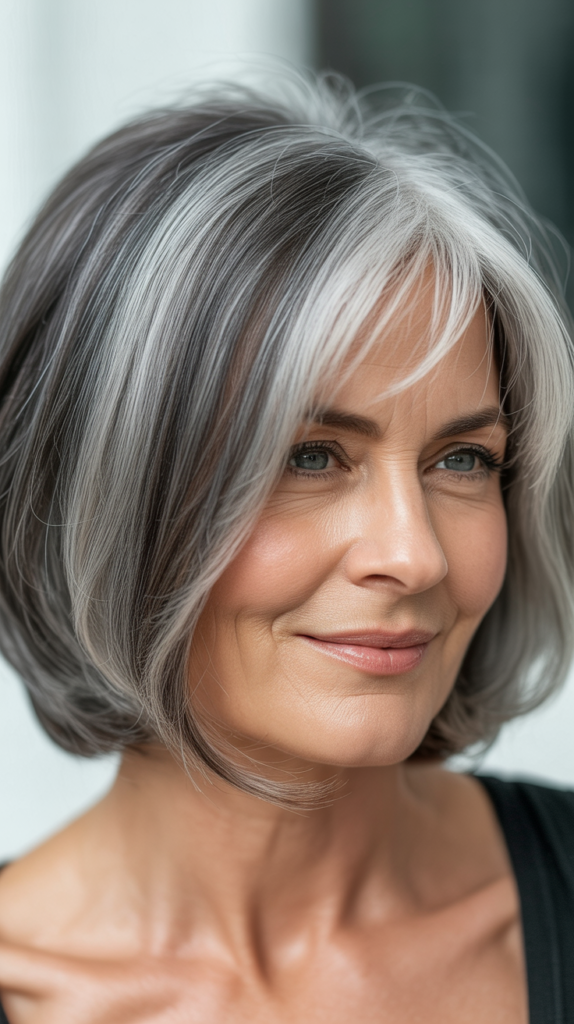
Viewing lowlights as part of a comprehensive long-term hair health strategy rather than isolated treatments ensures sustained beauty and hair integrity.
- Establishing a regular lowlight maintenance schedule with consistent timing prevents over-processing and allows hair recovery between appointments.
- Building relationships with a trusted colorist ensures continuity of care and thorough understanding of your hair’s history and needs.
- Investing in quality home care products protects your professional color investment and maintains hair health between salon visits.
- Periodic deep conditioning treatments and professional hair spa services supplement color maintenance with health-focused care.
- Monitoring hair health at each appointment allows early intervention if damage or concerns develop.
- Adjusting lowlight techniques over time accommodates changes in hair texture, density, or color as aging progresses.
- Documenting your hair journey through photos helps track what works well and what might need adjustment.
- Budgeting appropriately for quality services and products ensures you can maintain consistency rather than economizing in ways that compromise results.
- Lifestyle factors (diet, stress management, overall health) impact hair quality and should be considered alongside cosmetic treatments.
- Long-term thinking prevents reactive decisions and creates sustainable approaches to dimensional gray hair maintenance.
45. Lowlights for Different Gray Coverage Percentages
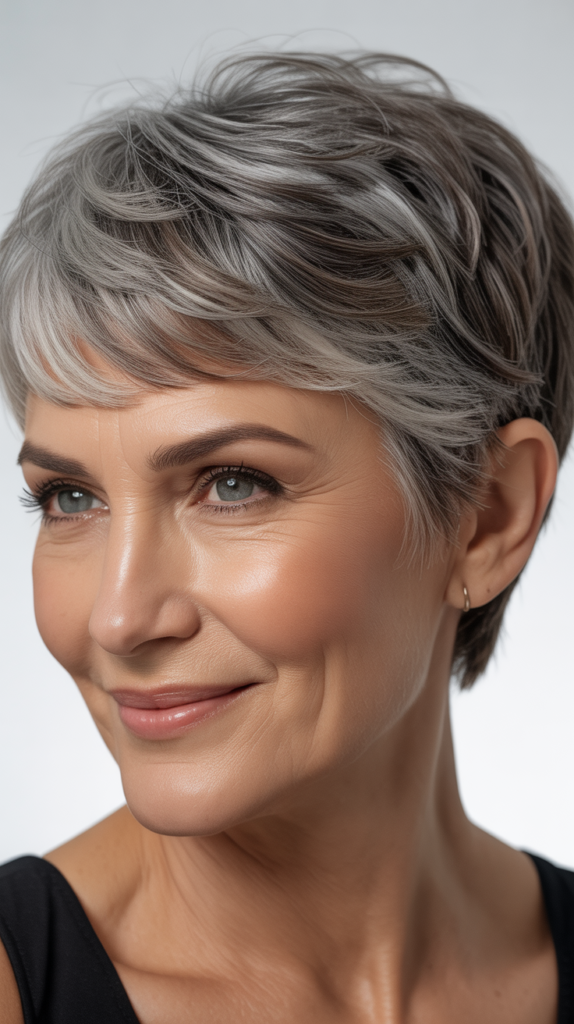
Women experience graying at different rates and extents. Lowlight approaches should be customized based on your current percentage of gray coverage.
25-50% Gray Coverage:
- Lowlights can blend with remaining pigmented hair to create unified dimensional appearance during transition.
- Matching lowlight shades to your original hair color helps the growing gray blend seamlessly as it increases.
- This stage offers maximum flexibility for experimentation with various lowlight colors and techniques.
50-75% Gray Coverage:
- Dimensional lowlights prevent the “salt and pepper” stage from appearing patchy or unkempt.
- Strategic placement creates intentional patterns rather than random gray distribution.
- This percentage often benefits most from balayage or babylight techniques that soften demarcations between gray and pigmented hair.
75-100% Gray Coverage:
- Lowlights add essential dimension to predominantly or fully gray hair that might otherwise appear flat.
- Color choices can be bolder since there’s little remaining pigmented hair to coordinate with.
- This stage allows true embrace of gray as your base color, using lowlights purely for dimensional enhancement.
- Maintenance becomes simpler as natural regrowth is fully gray and blends with the silver base between lowlight appointments.
46. Combining Lowlights with Hair Treatments and Services
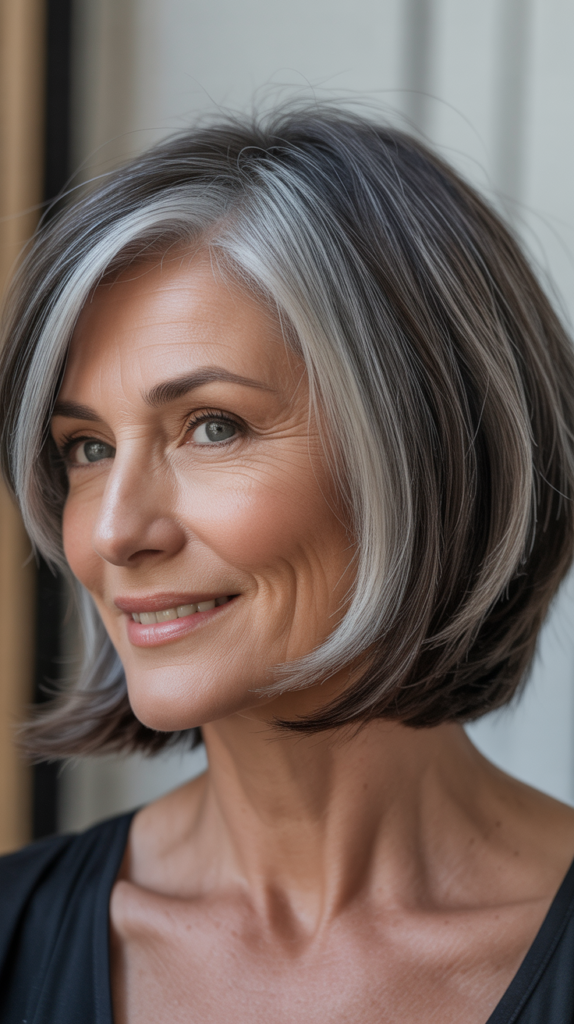
Coordinating lowlights with other hair services—cuts, treatments, and styling—ensures optimal results and efficient use of salon time and budget.
- Haircuts should typically precede color application so colorists can see the exact style they’re enhancing with lowlights.
- Deep conditioning treatments can be applied immediately after lowlight processing to restore moisture and seal color.
- Keratin treatments and lowlights should be carefully timed—consult with professionals about optimal service order to prevent issues.
- Glossing services applied over lowlights add shine and can slightly adjust tone without requiring full recolor.
- Scalp treatments improve overall hair health and can be scheduled on alternate appointments from color services.
- Brazilian blowouts and similar smoothing treatments may affect color retention and should be discussed during lowlight consultations.
- Combining services in single appointments saves time but requires longer salon sessions—schedule accordingly.
- Some treatments can interfere with color adhesion or cause fading—always inform your colorist of any recent or planned treatments.
- Bundling services often provides cost savings compared to booking each separately.
- Creating a comprehensive hair care calendar helps optimize timing of various services for best results and value.
47. Lowlights for Gray Hair with Different Undertones
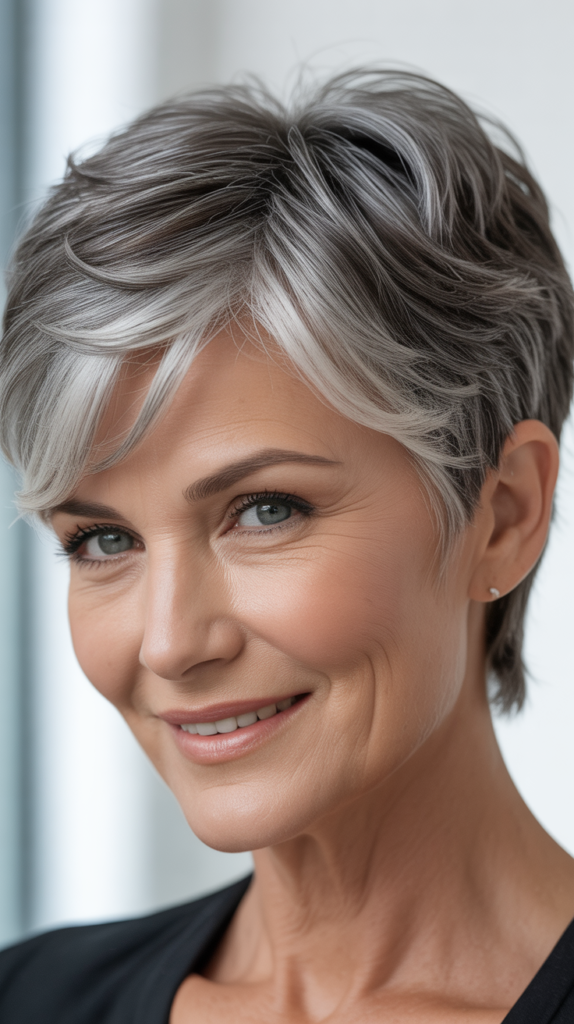
Natural gray hair varies in undertone—some women have cool silver-gray, others warm yellow-gray, and some neutral charcoal-gray. Lowlight selection should complement your specific gray undertone.
- Cool silver-gray undertones pair best with ash, charcoal, steel, or blue-toned lowlights that harmonize with the cool base.
- Warm yellow-gray undertones benefit from golden brown, caramel, or honey lowlights that enhance rather than fight the warmth.
- Neutral charcoal-gray offers maximum flexibility, working well with both warm and cool-toned lowlight options.
- Identifying your gray’s undertone involves examining hair in natural daylight and noting whether it appears more silver-white, golden-ivory, or true gray.
- Fighting against your natural gray undertone with opposing lowlight tones often creates disharmonious, unflattering results.
- Professional colorists can assess your gray’s undertone and recommend lowlight shades that will create cohesive dimensional effects.
- Some women’s gray has different undertones in different areas—customized lowlight formulas address these variations.
- Toning treatments can adjust gray undertones if you desire a different base before applying complementary lowlights.
- Embracing your natural gray undertone and selecting harmonious lowlights typically produces the most flattering, natural-looking results.
- Seasonal changes in lighting can make gray undertones appear different—choose lowlights that work across various conditions.
48. DIY Maintenance Between Professional Lowlight Appointments
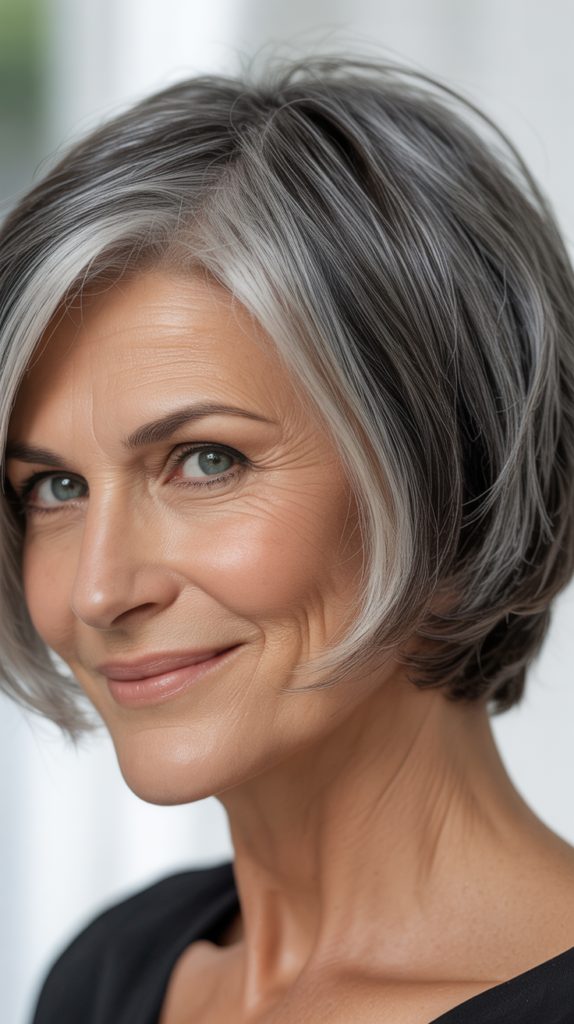
While major lowlight applications require professional expertise, certain maintenance techniques can be done at home to extend salon results and keep color looking fresh.
- Color-depositing conditioners in coordinating shades refresh lowlight vibrancy between salon visits without permanent commitment.
- Root touch-up products can temporarily darken gray regrowth to blend with lowlights until your next appointment.
- Purple or blue toning shampoos maintain cool-toned lowlights and prevent brassiness in both gray and colored sections.
- Glossing treatments designed for home use add shine and can slightly deepen color without altering dimensional placement.
- Strategic styling with texturizing products makes existing lowlights more visible when color begins fading.
- Dry shampoo extends time between washes, helping preserve lowlight vibrancy by reducing color-stripping exposure to water and shampoo.
- Touch-up application should be minimal and temporary—avoid attempting permanent color corrections at
- home, which risk creating problems requiring expensive professional correction.
- Gloss sprays and shine serums enhance the appearance of lowlights by increasing light reflection and dimensional visibility.
- Scalp care between appointments—including gentle cleansing and massage—promotes healthy hair growth and optimal color retention.
- Documenting any fading patterns or concerns with photos helps your colorist make adjustments at your next professional appointment.
- Home maintenance should supplement, not replace, regular professional services for best long-term results.
49. Lowlights and Age-Appropriate Styling
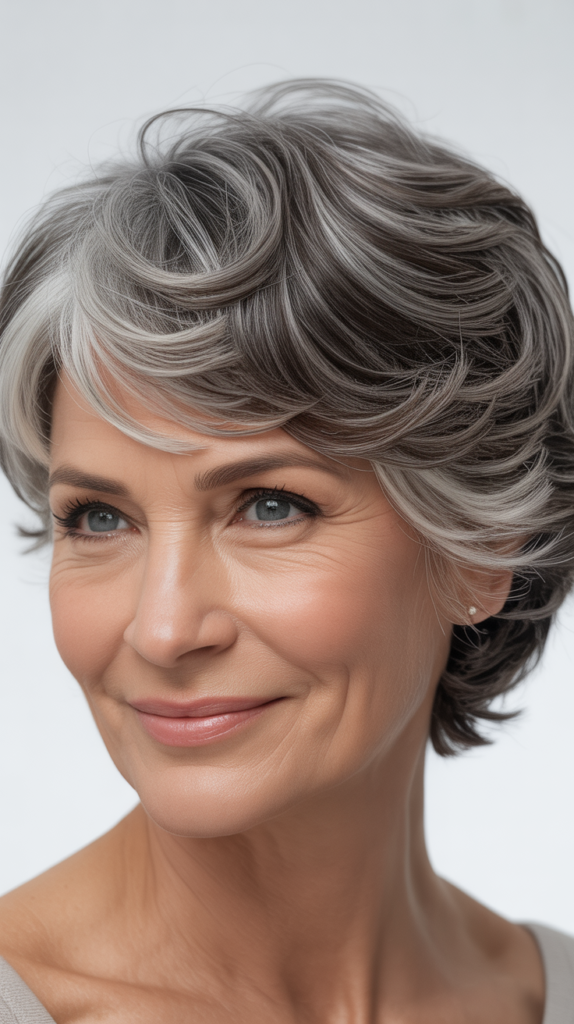
While “age-appropriate” is increasingly recognized as a limiting concept, certain styling approaches help dimensional gray hair look polished, modern, and intentionally fashionable rather than outdated.
- Modern lowlight techniques (balayage, babylights, face-framing) appear more current than traditional foil highlights with harsh lines.
- Dimensional coloring paired with updated haircuts prevents the dated appearance of unchanged styles from decades past.
- Confidence and proper styling matter more than adhering to restrictive rules about what women “should” do at certain ages.
- Current fashion and makeup coordinated with dimensional gray hair create cohesive, contemporary appearances.
- Avoiding excessive volume, stiff styles, or overly “set” looks helps lowlighted gray hair appear modern rather than matronly.
- Texture and movement—achieved through both cutting and styling—complement dimensional lowlights beautifully.
- Personal style evolution continues throughout life; your lowlight choices can reflect current preferences rather than past patterns.
- Social media and fashion blogs showcase countless modern approaches to styling dimensional gray hair at every age.
- Working with stylists who specialize in mature hair ensures techniques and recommendations suit your current hair texture and lifestyle.
- The concept of “age-appropriate” continues evolving; personal authenticity and confidence matter most in style choices.
50. Environmental Impact and Eco-Friendly Lowlight Options
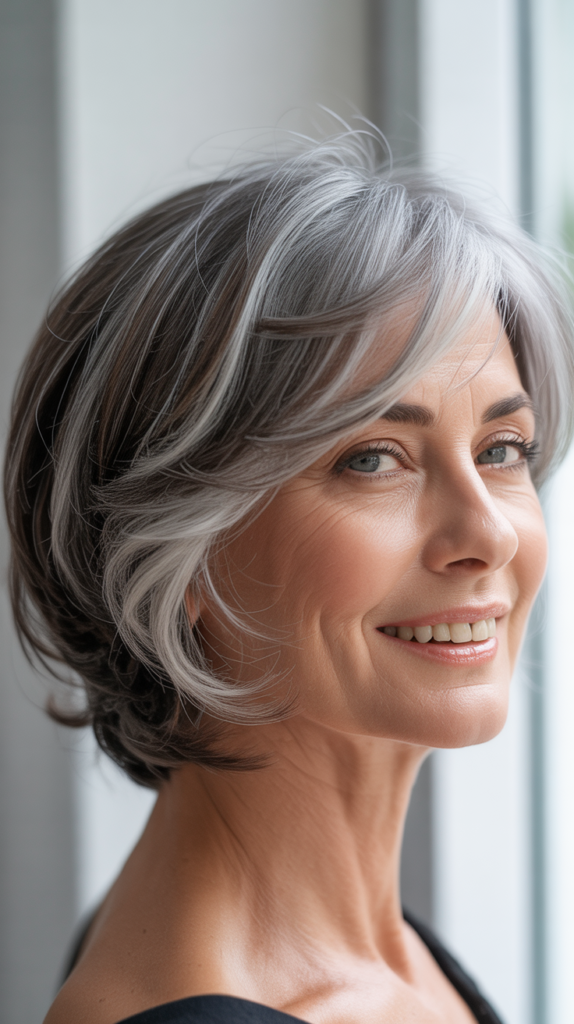
Growing awareness of environmental issues prompts many women to seek more sustainable approaches to hair coloring, including eco-friendly lowlight options.
- Ammonia-free color formulas reduce harsh chemical exposure for both clients and salon professionals while still providing dimensional lowlights.
- Plant-based and naturally-derived color options continue improving, offering viable alternatives to traditional synthetic formulas.
- Low-maintenance lowlight techniques reduce frequency of salon visits, decreasing overall chemical usage and environmental impact.
- Some salons specialize in green practices, including sustainable color products, water conservation, and recycling programs.
- Organic and natural hair care products for home maintenance align with eco-conscious values while protecting lowlight investment.
- Henna and other botanical color options can create lowlight effects, though results differ from conventional color and require specialized knowledge.
- Choosing salons with environmental certifications supports businesses prioritizing sustainable beauty practices.
- Extended wear lowlight techniques balance desire for dimensional color with minimal environmental footprint.
- Water-conscious washing routines (less frequent shampooing) benefit both environment and color retention.
- Discussing environmental concerns with colorists helps identify the most sustainable options for your specific lowlight goals.
- The beauty industry continues developing more eco-friendly color technologies as consumer demand for sustainable options increases.
51. Troubleshooting Common Lowlight Issues
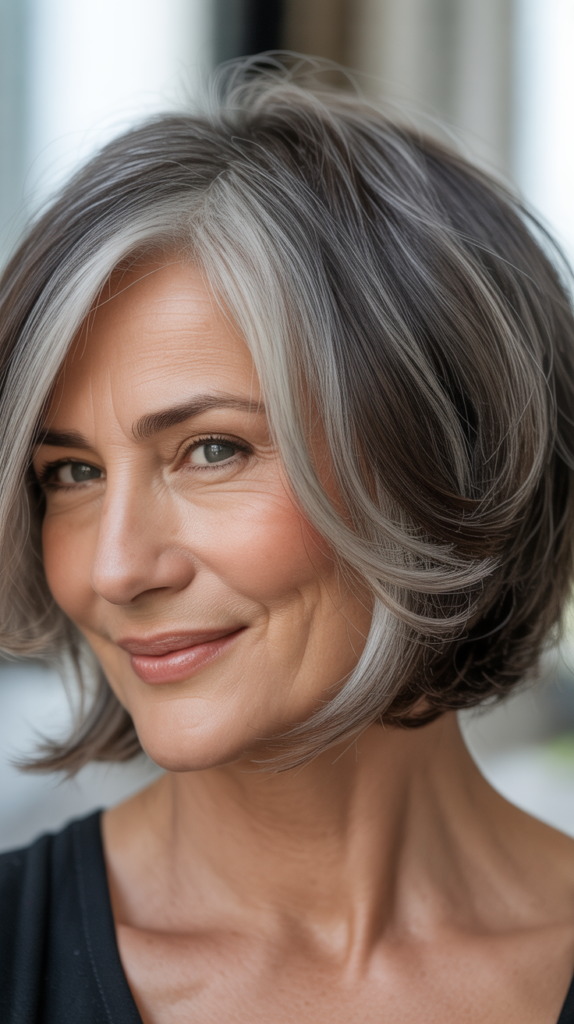
Even with professional application, certain issues occasionally arise with lowlights. Understanding common problems and solutions helps address concerns quickly and effectively.
Issue: Lowlights appear too dark or heavy
- Solution involves lightening services or adding highlights to balance the depth and restore dimensional lightness.
- Prevention requires thorough consultation about desired contrast level before initial application.
Issue: Banding or visible lines between colored and natural sections
- Solution uses blending techniques, additional color application, or balayage to soften harsh demarcations.
- Prevention involves expert application techniques and appropriate placement for your haircut and texture.
Issue: Lowlights faded to unexpected colors
- Solution requires color correction to neutralize unwanted tones and reapply proper lowlight shades.
- Prevention includes proper home care with color-safe products and protection from environmental factors.
Issue: Lowlights don’t show up or appear too subtle
- Solution involves deeper lowlight shades or more extensive placement for increased contrast and visibility.
- Prevention requires realistic expectations based on your natural gray shade and desired dimensional effect.
Issue: Patchy or uneven lowlight distribution
- Solution adds strategic sections to create balanced, cohesive dimensional appearance throughout.
- Prevention involves experienced colorists who understand proper sectioning and placement patterns.
- Always communicate concerns promptly with your colorist—most issues are correctable with professional intervention.
- Documentation with photos helps colorists understand problems and plan effective solutions.
52. Lowlights for Gray Hair in Different Lighting Conditions
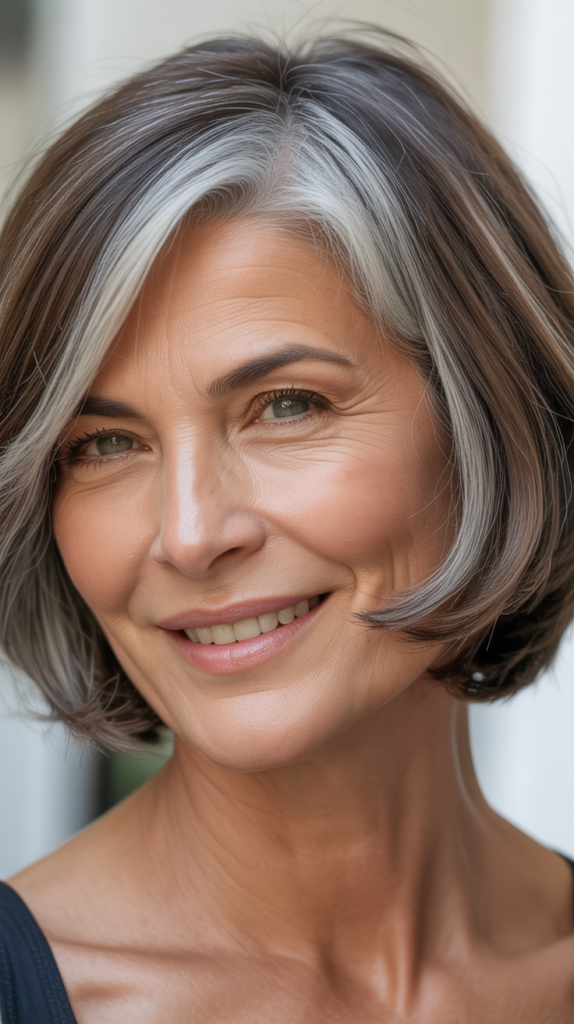
Hair color appears different under various lighting conditions. Understanding how lowlights behave in different light helps you make informed color choices and styling decisions.
- Natural daylight provides the truest color representation—lowlights appear most accurate and dimensional in outdoor sunlight.
- Fluorescent office lighting can make warm lowlights appear cooler and may wash out subtle dimensional effects.
- Warm indoor incandescent lighting enhances warm-toned lowlights while potentially making cool tones appear dull.
- Evening and artificial event lighting creates dramatic shadows that can either enhance or hide dimensional lowlights.
- Photography lighting (especially flash) often emphasizes lowlight contrast more than natural viewing conditions.
- Considering your primary environments when selecting lowlight shades ensures they appear flattering in your everyday lighting conditions.
- Metallic and reflective lowlight tones catch and reflect light beautifully regardless of lighting type.
- Matte lowlights provide consistent appearance across various lighting but may lack the luminosity of shinier applications.
- Testing lowlight samples in various lighting conditions during consultation helps predict real-world appearance.
- Proper styling and finishing products with light-reflecting properties help lowlights appear dimensional across all lighting conditions.
53. Creating Volume and Fullness with Strategic Lowlight Placement
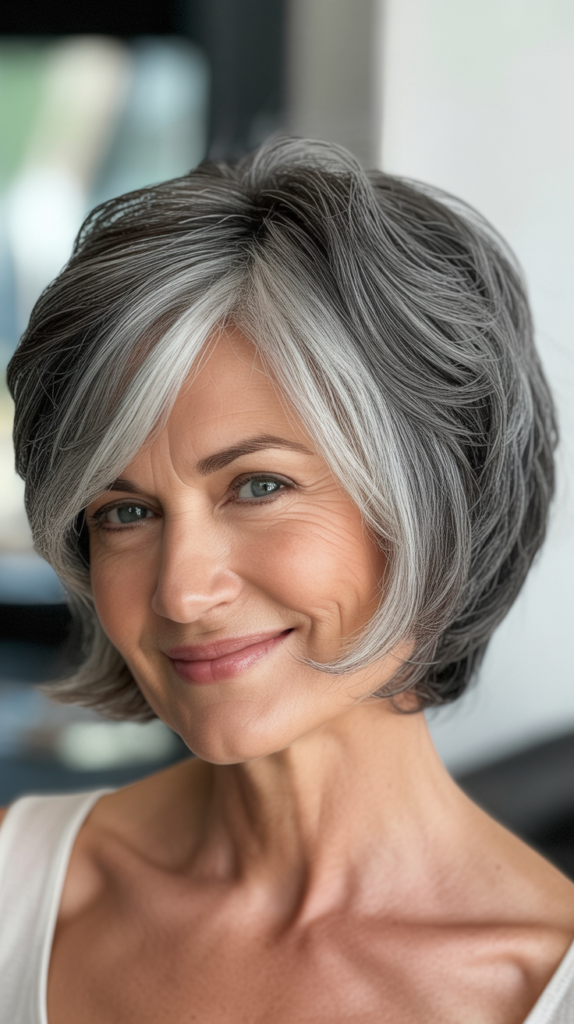
Thinning hair is a common concern for women over 50. Strategic lowlight placement can create the optical illusion of fuller, thicker hair through dimensional shadowing.
- Darker lowlights placed at the roots and underneath layers create shadows that make hair appear denser and more substantial.
- The contrast between lighter top layers and darker underneath sections creates the perception of depth and volume.
- Lowlights concentrated at the crown where thinning often occurs can minimize the appearance of sparse coverage.
- Dimensional coloring distracts the eye from areas of thinner density by creating visual interest throughout.
- Face-framing lowlights draw attention to the perimeter where hair is typically fullest, away from potentially thinner crown areas.
- Avoiding heavy all-over lowlights prevents hair from appearing weighed down; strategic placement maintains lift and movement.
- Combining lowlights with volumizing haircuts (layers, texturing) maximizes the illusion of fuller hair.
- Styling techniques that create root lift work synergistically with lowlight placement to enhance volume appearance.
- Hair density varies across the scalp; customized lowlight placement addresses specific areas of concern.
- The psychological impact of feeling your hair looks fuller often increases confidence and improves overall satisfaction with your appearance.
54. Lowlights as Part of Complete Beauty Transformation
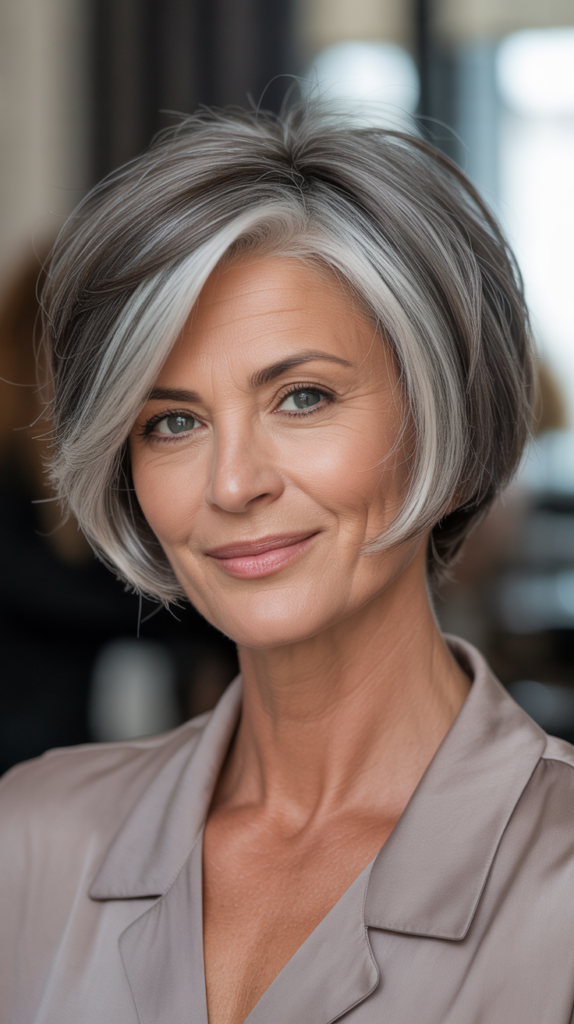
For women embracing significant style changes, lowlights can be one component of comprehensive beauty transformations that include haircuts, skincare, makeup updates, and wardrobe evolution.
- Dimensional gray hair with lowlights pairs beautifully with updated haircuts that reflect current style rather than outdated preferences.
- Coordinating makeup palettes with new lowlight tones creates cohesive, polished appearances that feel intentional and curated.
- Wardrobe colors can be selected to complement dimensional hair coloring for maximum overall aesthetic harmony.
- Skincare improvements (professional treatments, updated routines) enhance the overall impact of dimensional hair transformations.
- Eyewear updates ensure glasses complement rather than compete with new dimensional hair coloring.
- Confidence gained from comprehensive transformations often extends beyond physical appearance to other life areas.
- Working with image consultants or personal stylists helps coordinate lowlights with overall style evolution.
- Significant changes are best made gradually, allowing adjustment and refinement at each stage rather than overwhelming overnight transformation.
- Documenting transformation journeys inspires others and creates meaningful personal records of positive changes.
- Transformation motivations vary—milestone birthdays, life changes, or simply desire for renewal—all equally valid reasons for comprehensive style updates.
55. Future Innovations in Gray Hair Lowlight Technology
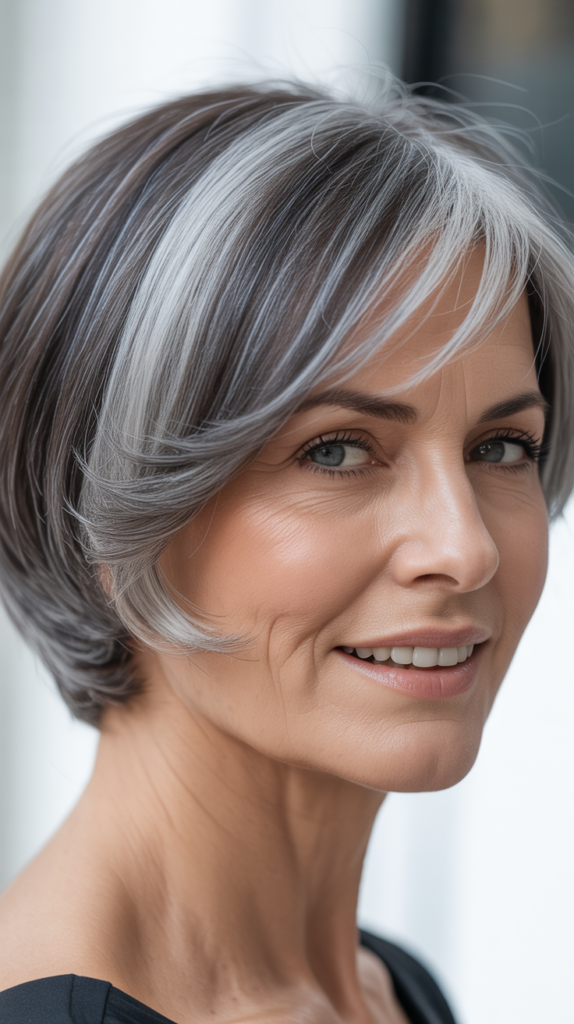
The beauty industry continuously evolves, with emerging technologies and techniques promising even better options for dimensional gray hair coloring in the coming years.
- AI-powered color matching technology helps colorists select optimal lowlight shades based on skin tone, eye color, and personal preferences.
- Virtual try-on applications allow women to preview lowlight options before committing to permanent color application.
- Improved color formulations continue enhancing longevity, reducing damage, and expanding shade options for dimensional gray hair.
- Nanotechnology in hair color promises more precise pigment delivery and longer-lasting results with less frequent applications.
- Personalized color formulas based on individual hair analysis ensure customized lowlights perfectly suited to unique hair characteristics.
- Sustainable and eco-friendly color innovations address environmental concerns while maintaining professional-quality results.
- At-home color technology improvements may eventually enable more sophisticated lowlight applications outside professional salons.
- Education platforms and online resources make expert knowledge increasingly accessible to both professionals and consumers.
- Social acceptance of gray hair continues growing, expanding market demand for dimensional enhancement options rather than full coverage.
- The future promises more choices, better technology, and greater personalization for women seeking beautiful dimensional gray hair.
- Staying informed about innovations helps you access the best available options as new techniques and technologies emerge.
Conclusion
Embracing the journey to beautiful, dimensional gray hair with lowlights represents far more than a simple color choice—it’s a celebration of authentic beauty, personal style, and confident aging.
Throughout this comprehensive exploration of 55+ Modern Short Gray Hair Lowlights Ideas for Women Over 50, we’ve discovered that gray hair offers a stunning canvas for creative, sophisticated dimensional coloring that enhances rather than hides your natural beauty.
From cool-toned charcoal and ash brown to warm caramel and innovative fashion colors, the lowlight options available today are limitless and adaptable to every personal style, face shape, skin tone, and lifestyle.
We’ve learned that strategic lowlight placement can address common concerns like thinning hair, flat color, and unwanted tones while creating the illusion of volume, movement, and youthful vibrancy.
The techniques range from subtle babylights and face-framing accents to dramatic balayage and bold contrasts, ensuring every woman can find an approach that resonates with her aesthetic vision and maintenance preferences. Proper care, quality products, professional expertise, and realistic expectations all contribute to successful dimensional gray hair that remains healthy, vibrant, and beautiful over time.
Whether you’re transitioning to gray, fully embracing your silver, or simply seeking to add depth and interest to existing gray hair, lowlights offer a modern, sophisticated solution that proves gray hair can be absolutely gorgeous. The most important takeaway is this:
your gray hair is not something to merely accept or tolerate—it’s an opportunity to create stunning, dimensional style that reflects your personality, confidence, and unique beauty at this extraordinary stage of life.