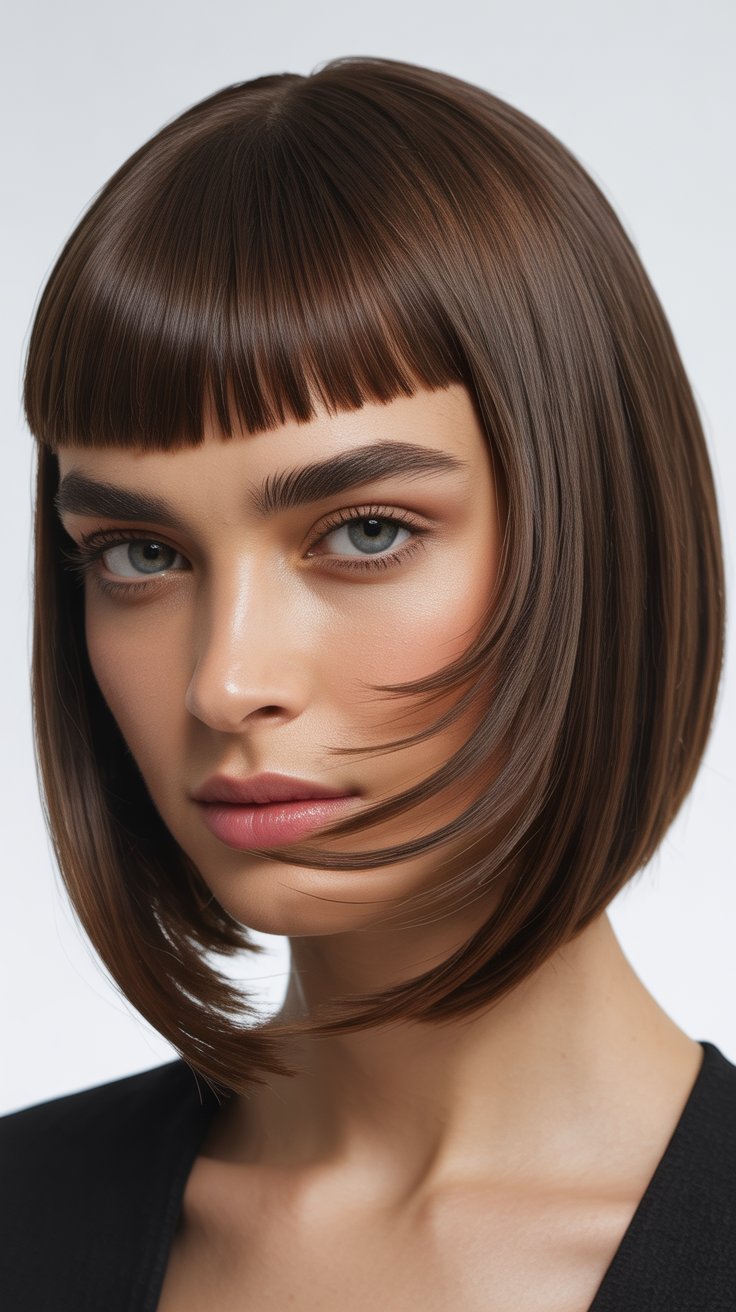
Shoulder-length hair with layers is the perfect solution for managing thick, voluminous locks while maintaining style and movement.
If you’ve been struggling with heavy, unmanageable hair that feels weighed down, or if you’re simply looking for a fresh, modern look that showcases your hair’s natural texture, you’ve come to the right place.
The 47 Best Shoulder-Length Haircuts for Thick Hair With Layers offers a comprehensive guide to transforming your thick hair into a stunning, manageable masterpiece.
From classic layered bobs to modern shaggy cuts, from face-framing styles to textured waves, this article explores every possible variation that will flatter your features, reduce bulk, and add dimension.
Whether you prefer sleek and polished or tousled and carefree, you’ll discover cutting techniques, styling methods, and maintenance tips that make thick hair work in your favor rather than against it.
Get ready to find your signature look among these expertly curated options that combine practicality with undeniable style.
1. Classic Layered Shoulder-Length Cut
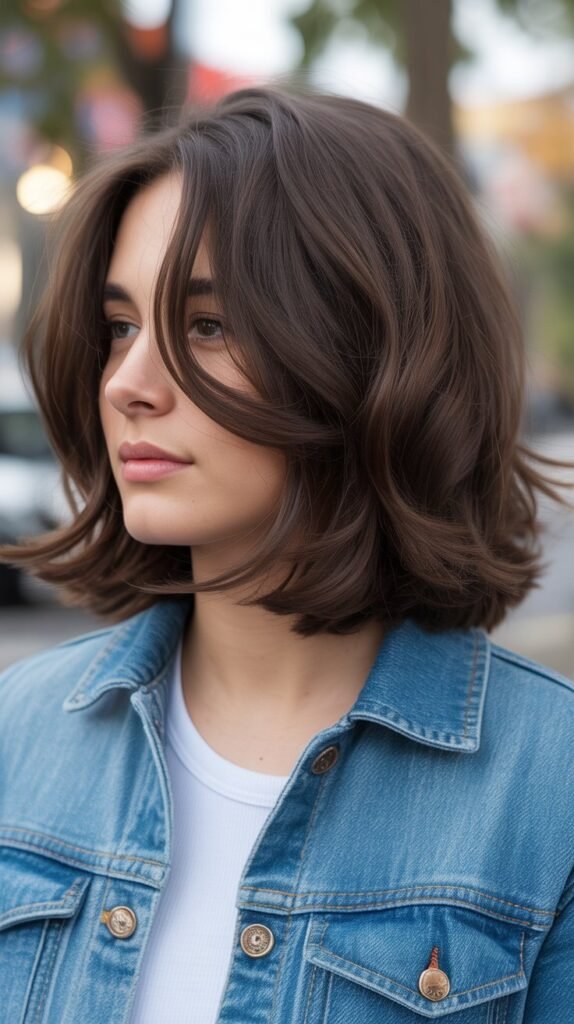
The classic layered shoulder-length cut remains a timeless choice for thick hair, providing the perfect balance between length and manageability.
This versatile style features layers that start around the chin or just below, gradually blending into the rest of the hair to create natural movement and reduce excessive bulk.
- The layers in this cut are strategically placed to remove weight from the interior of the hair while maintaining density at the ends
- This technique prevents the triangular or pyramid shape that often plagues thick hair when cut in a single length
- The classic layers work exceptionally well for those who want a polished, professional appearance that transitions easily from office to evening
- Styling this cut is remarkably simple, requiring only a round brush and blow dryer to achieve a smooth, voluminous finish
- The layers can be customized based on face shape, with shorter layers near the face for oval faces and longer layers for round faces
- This cut grows out gracefully, maintaining its shape for 8-10 weeks before requiring a trim
- For added dimension, highlights or balayage can be strategically placed through the layers to enhance the textured effect
2. Long Bob (Lob) With Soft Layers
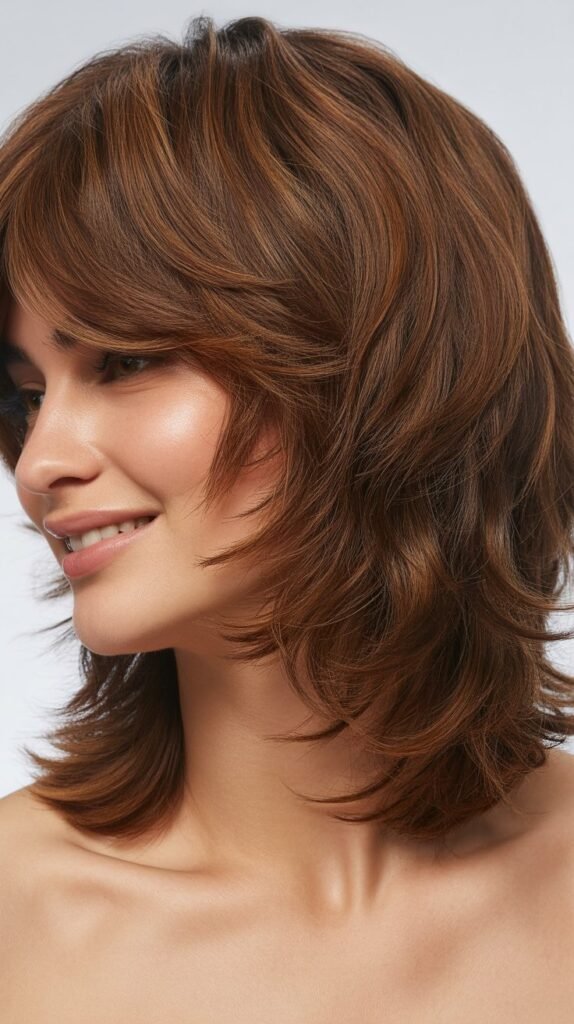
The long bob, affectionately known as the lob, has dominated the hairstyle scene for years, and when combined with soft layers, it becomes the ultimate solution for thick hair.
This cut typically falls between the collarbone and shoulders, featuring subtle layering that creates movement without sacrificing too much length.
- The lob with soft layers offers incredible versatility, allowing you to wear it straight for a sleek look or add waves for texture
- Unlike blunt bobs, the layered version prevents the bottom-heavy appearance that can make thick hair look boxy
- The soft layering technique focuses on internal layers that remove bulk without creating obvious choppy ends
- This style is particularly flattering for those with thick hair because it maintains enough weight to prevent frizz while eliminating excess heaviness
- The lob works beautifully with various textures, from straight to wavy, adapting to your natural hair pattern
- Maintenance is relatively low, requiring touch-ups every 6-8 weeks to maintain the shape and prevent split ends
- Adding face-framing layers around the front sections can enhance cheekbones and draw attention to your best features
- The style can be customized with different parting options, from center parts to deep side parts, each creating a distinct look
3. Shaggy Shoulder-Length Cut
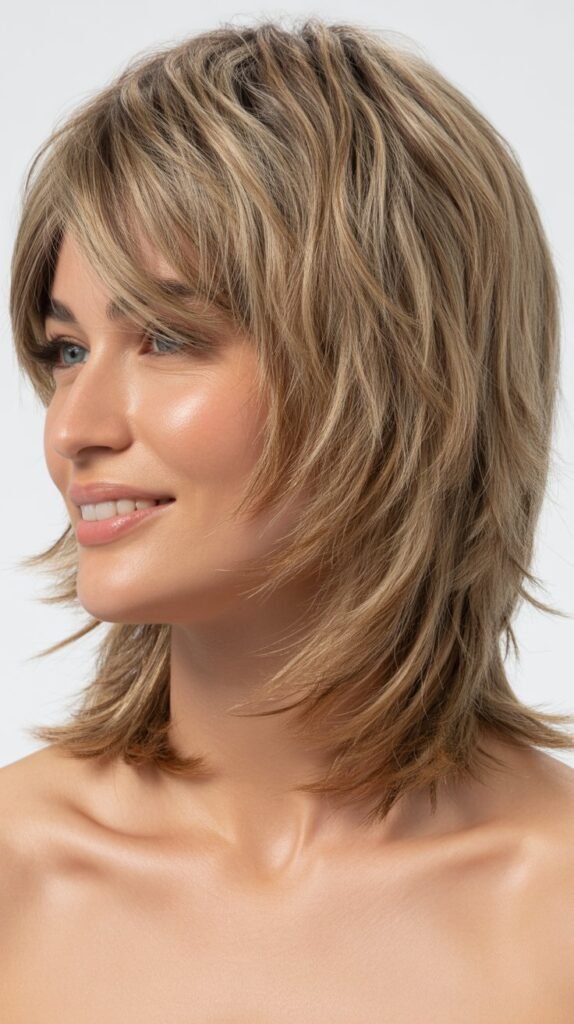
The shaggy shoulder-length cut brings a rock-and-roll edge to thick hair while effectively managing volume and adding intentional texture.
This style features choppy, disconnected layers throughout, creating a deliberately undone appearance that’s both effortless and chic.
- The shag cut utilizes razor cutting techniques to create feathery, textured ends that significantly reduce bulk
- Multiple layers at varying lengths prevent thick hair from appearing too heavy or flat against the head
- This style embraces natural texture, making it ideal for those with wavy or slightly unruly thick hair
- The choppy layers create separation between hair sections, allowing air to flow through and reducing the appearance of excessive density
- Styling a shag is intentionally relaxed, often requiring just sea salt spray and air drying or diffusing for a natural finish
- The disconnected layers mean the style grows out in an intentionally messy way, extending time between salon visits
- Bangs or fringe work exceptionally well with shag cuts, adding to the overall textured, lived-in aesthetic
- This cut is perfect for those who want a low-maintenance style that looks deliberately stylish rather than overly polished
4. Shoulder-Length Cut With Face-Framing Layers
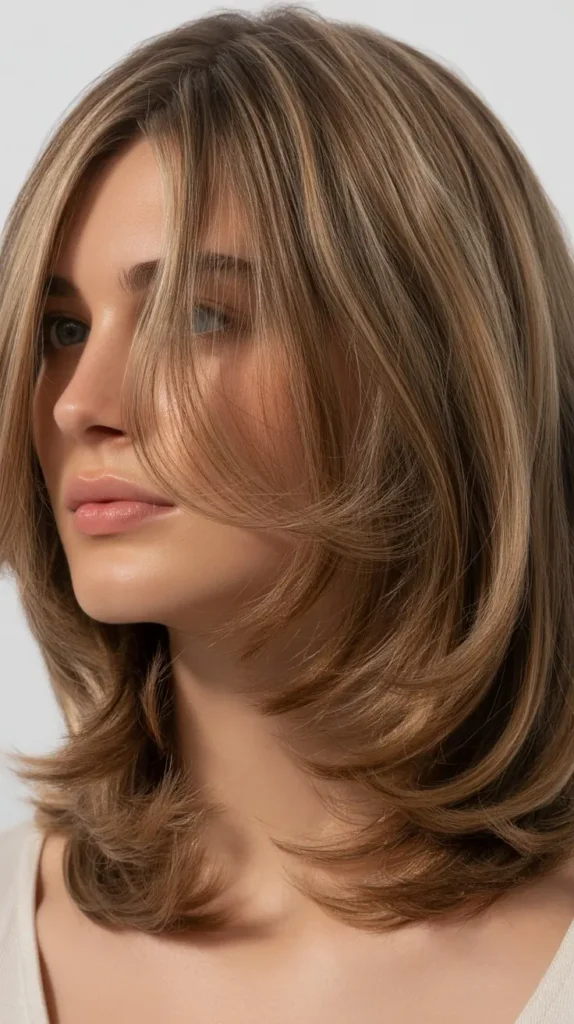
Face-framing layers transform a basic shoulder-length cut into a customized style that accentuates your best facial features while managing thick hair.
These strategic layers start around the cheekbones or jawline and gradually blend into the overall length.
- Face-framing layers draw the eye toward the center of the face, creating a flattering focus on eyes and cheekbones
- For thick hair, these layers reduce weight around the face, preventing the hair from overwhelming delicate features
- The layers can be customized to suit different face shapes: shorter layers for elongating round faces, longer layers for softening square jawlines
- This technique works particularly well when combined with balayage or highlights, as the dimensional color emphasizes the layered movement
- Styling is straightforward, with the face-framing pieces naturally falling forward with a simple blow-dry or light curling
- The graduated length from shortest at the face to longest at the back creates a flattering curtain effect
- These layers help thick hair maintain body and movement near the face while keeping length and fullness in the back
- The style adapts well to both straight and wavy textures, enhancing natural wave patterns when present
5. Shoulder-Length Cut With Blunt Ends and Internal Layers
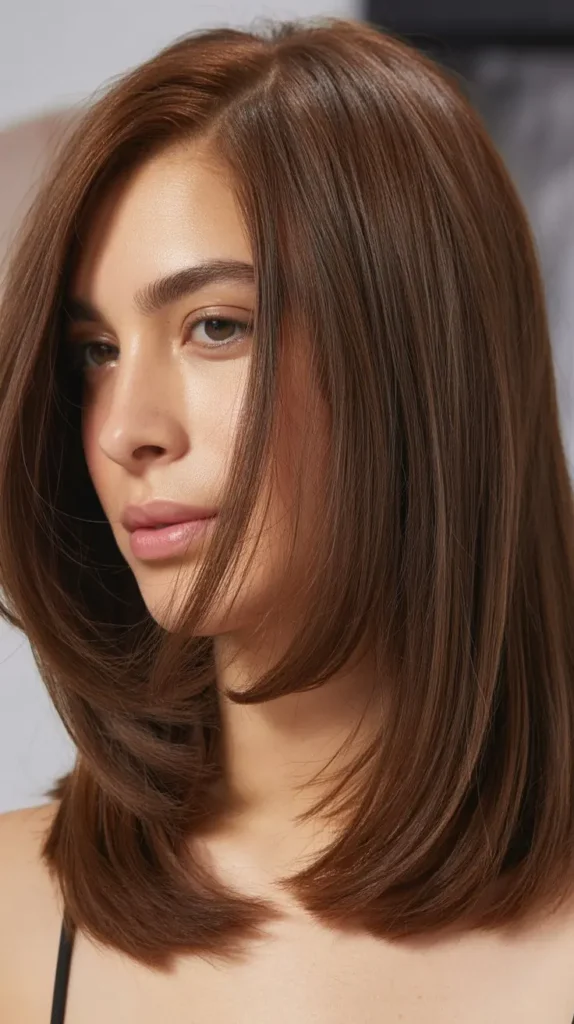
This sophisticated approach combines the clean line of blunt ends with hidden internal layers, offering the best of both worlds for thick hair.
The perimeter remains blunt for a sharp, modern look while the interior is strategically layered to remove weight.
- The blunt perimeter creates a strong, intentional line that makes a bold style statement
- Internal layering, also called invisible or ghost layering, removes bulk from within without disturbing the outer shape
- This technique is achieved by point-cutting or slide-cutting the interior sections while leaving the exterior intact
- The result is hair that appears dense and healthy at the ends while feeling lighter and more manageable
- This cut is particularly effective for very thick hair that tends to triangle-out when heavily layered
- The blunt line provides a modern, editorial quality that photographs beautifully and looks polished in professional settings
- Styling can be sleek and straight to emphasize the clean line, or slightly waved to reveal the internal texture
- Regular trims every 6-8 weeks maintain the sharp perimeter and prevent the internal layers from becoming uneven
6. Choppy Layered Shoulder-Length Cut
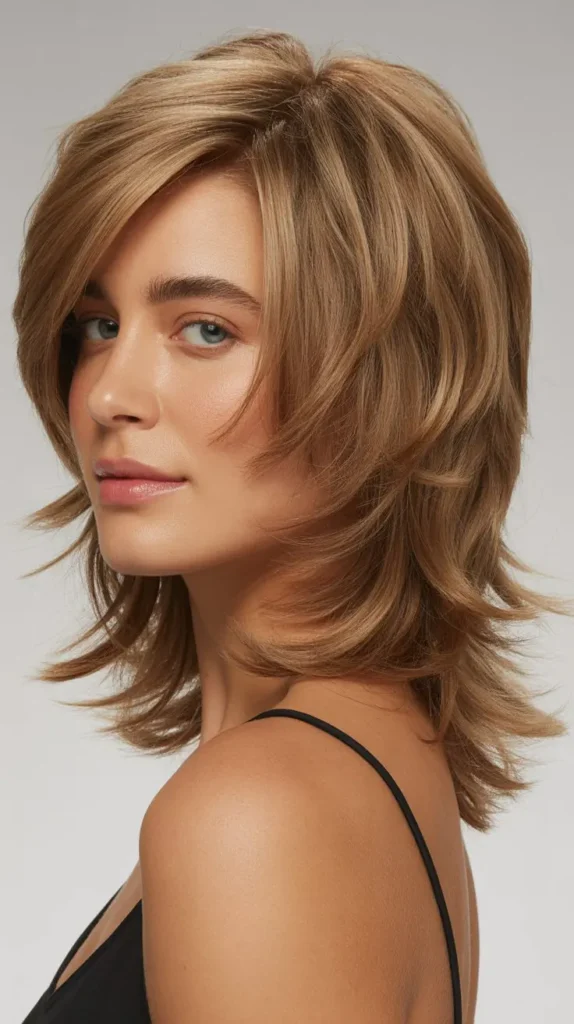
The choppy layered cut is a bold, edgy option that transforms thick hair into a statement-making style with deliberate texture and movement.
This cut features irregular, disconnected layers that create a piecey, modern appearance.
- Choppy layers are cut with point-cutting or razor techniques to create irregular, jagged ends rather than blunt, uniform ones
- This approach is particularly effective for thick hair because it breaks up density and prevents hair from clumping together
- The disconnected nature of the layers means sections of hair don’t all blend seamlessly, creating intentional separation and definition
- Styling products like texturizing paste, sea salt spray, or dry shampoo enhance the choppy effect and add grit
- This cut works exceptionally well for those with naturally straight or slightly wavy thick hair who want an edgier aesthetic
- The irregular layers catch light differently, creating natural dimension without the need for color services
- Despite its edgy appearance, the choppy cut can be styled sleeker for professional settings by using a straightener and smoothing serum
- Maintenance involves regular trims every 5-7 weeks to keep the choppy texture looking intentional rather than grown-out
7. Shoulder-Length Cut With Curtain Bangs
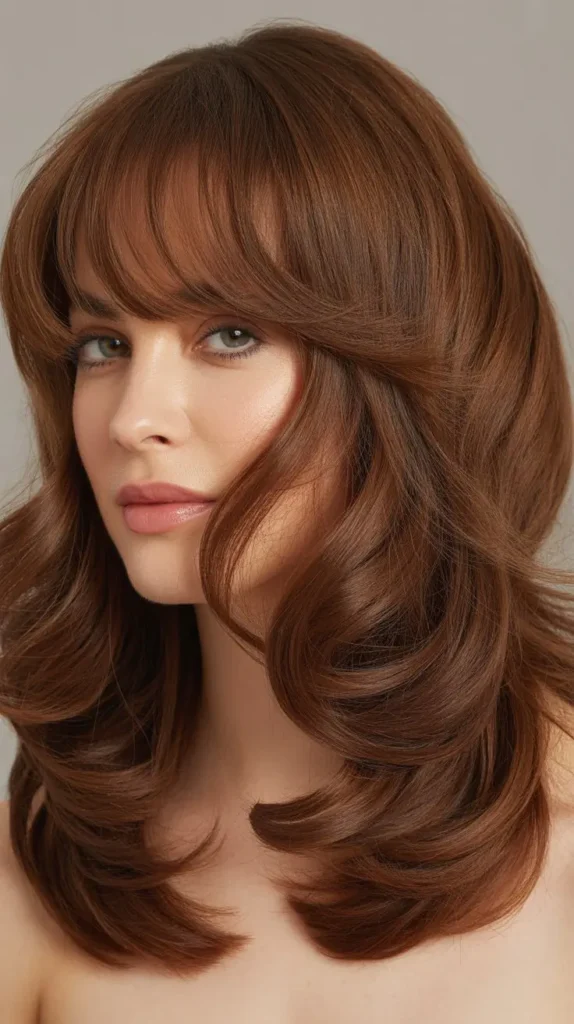
Curtain bangs paired with a shoulder-length cut create a retro-inspired, romantically soft look that beautifully complements thick hair.
The bangs part in the middle and frame both sides of the face, while the overall length features layers for movement.
- Curtain bangs are cut longer in the center (around nose length) and gradually shorter toward the sides where they blend into the face-framing layers
- For thick hair, the bangs should be properly thinned and textured to avoid looking too heavy or overwhelming the face
- The parted-in-the-middle style of curtain bangs creates an effortlessly chic, 1970s-inspired vibe
- These bangs are incredibly versatile, easily swept to the side, pinned back, or worn forward depending on your mood
- The style works with various hair textures, from straight to wavy, and actually looks better with a bit of natural texture
- Maintenance for curtain bangs is minimal compared to traditional straight-across bangs, requiring trims every 4-6 weeks
- The layers in the shoulder-length portion should start around chin level and graduate through the length to connect with the bangs
- Styling involves blow-drying the bangs away from the face using a round brush to create the characteristic outward curve
8. Textured Shoulder-Length Waves
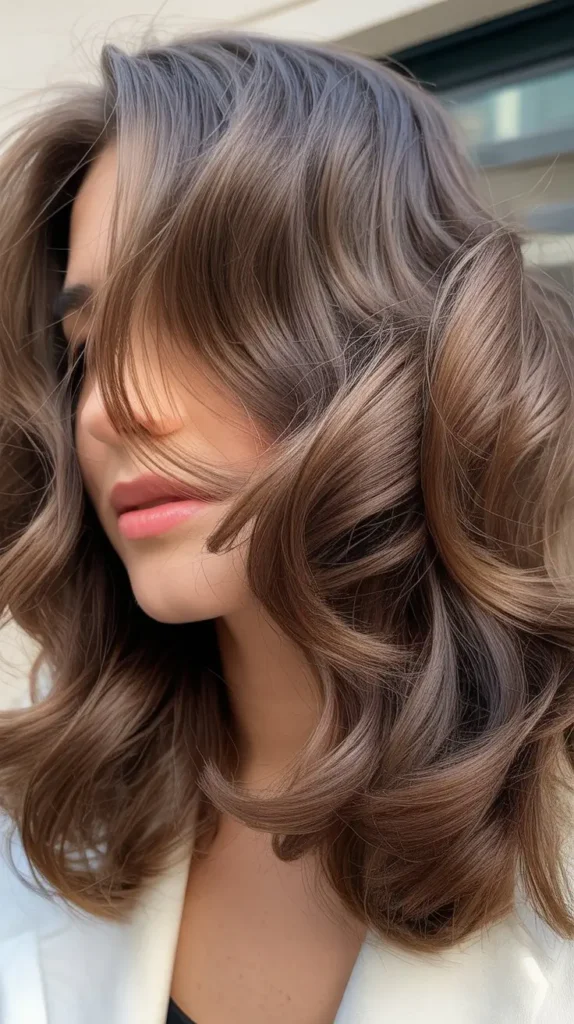
Textured shoulder-length waves showcase thick hair’s natural volume while creating a beachy, effortless appearance.
This style relies on strategic layering and styling techniques to enhance natural texture or create waves in naturally straight hair.
- Layering for textured waves should focus on removing bulk from the mid-lengths while maintaining weight at the ends for defined wave formation
- The layers prevent thick hair from appearing too triangular when styled in waves
- Waves can be created using various methods: curling wands, flat iron techniques, braiding damp hair, or sea salt spray on naturally wavy hair
- For thick hair, working in sections is essential when creating waves to ensure even heat distribution and consistent results
- The textured finish requires minimal product: a light mousse or sea salt spray for hold and a texturizing spray for separation
- This style celebrates volume rather than fighting it, making it ideal for those with naturally thick, voluminous hair
- The waves should appear undone and slightly imperfect for the most natural, modern appearance
- Regular deep conditioning treatments help maintain the health of thick hair while keeping waves smooth and frizz-free
9. Shoulder-Length Cut With V-Shape Back
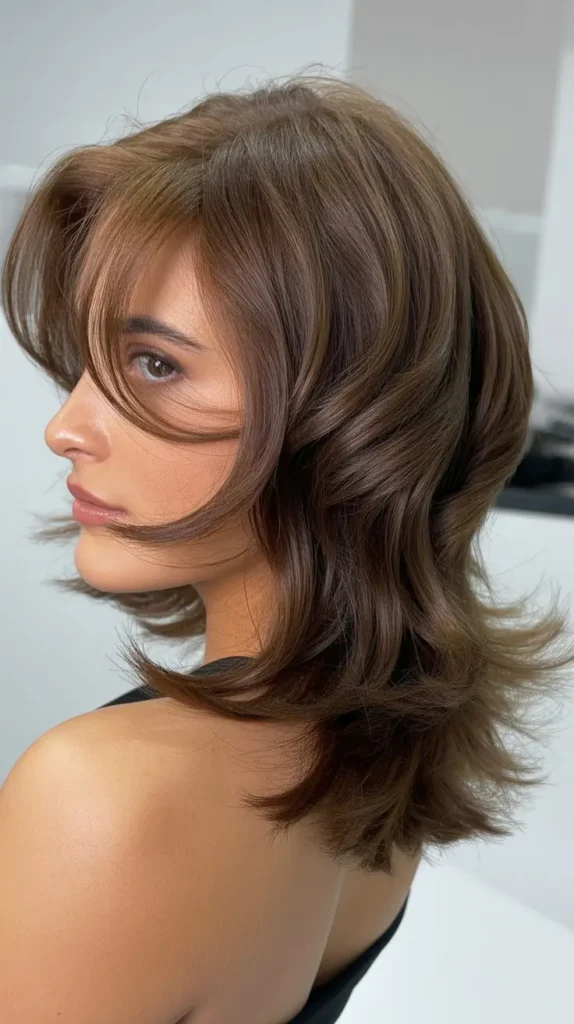
The V-shape back adds a unique architectural element to shoulder-length hair, creating a distinctive silhouette that works particularly well with thick hair.
The hair is cut to form a V-shape when viewed from behind, with the point of the V at center back.
- The V-shape is created by gradually angling the hair shorter from the center back toward the sides
- This shape naturally removes weight from thick hair while creating visual interest from all angles
- The V-shape works especially well for those with long necks, as it draws attention to this feature
- Layering within the V-shape adds additional movement and prevents the back from appearing too heavy
- When styled straight, the V-shape creates a sharp, modern line; when styled wavy, it creates a softer, romantic effect
- The angle of the V can be subtle or dramatic depending on personal preference and hair thickness
- This cut requires precision, so choosing an experienced stylist familiar with geometric cuts is essential
- The shape grows out gracefully, with the V gradually softening but remaining visible for several weeks
10. Shoulder-Length Cut With Side-Swept Bangs
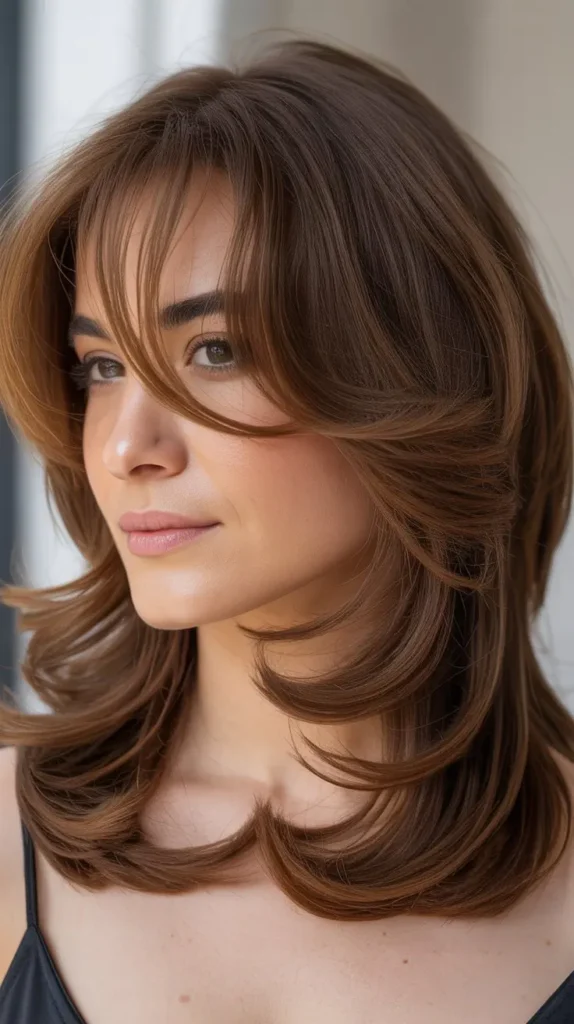
Side-swept bangs add a soft, feminine touch to shoulder-length thick hair while providing versatility in styling options.
These bangs sweep across the forehead and blend into the side layers, creating a cohesive, flowing look.
- Side-swept bangs are typically cut on an angle, starting shorter at one side and gradually lengthening toward the other
- For thick hair, proper texturizing and thinning of the bangs prevents them from appearing too bulky or heavy on the forehead
- The angle of the sweep can be customized to complement face shape: a sharper angle for round faces, a gentler angle for longer faces
- These bangs effortlessly disguise a larger forehead while drawing attention to the eyes
- Styling requires blow-drying the bangs in the direction of the sweep using a round brush for smooth results
- The bangs can be pinned back or tucked behind the ear for a different look, making them more versatile than straight bangs
- They grow out more gracefully than blunt bangs, blending into face-framing layers as they lengthen
- The shoulder-length portion should feature layers that connect seamlessly with the bangs for a cohesive overall style
11. Layered Shoulder-Length Cut With Volume at Crown

Adding volume at the crown through strategic layering transforms shoulder-length thick hair from flat to fabulous.
This technique focuses on creating shorter layers at the top of the head while maintaining length throughout the rest.
- Crown layers are typically cut 2-4 inches shorter than the overall length to create natural lift and volume
- For thick hair, these layers prevent the weight of the hair from pulling the roots flat against the scalp
- The layering technique creates a rounded, lifted silhouette rather than the flat appearance that sometimes affects thick, heavy hair
- Blow-drying with a round brush at the roots enhances the natural volume created by the crown layers
- This style works particularly well for those with thick hair that tends to lie flat despite its density
- The crown layers should be blended seamlessly into the rest of the hair to avoid a dated, mushroom-like appearance
- Adding highlights or babylights at the crown emphasizes the dimension created by the layered volume
- Regular trims every 6-8 weeks maintain the volume by preventing the crown layers from growing too long and losing their lift
12. Shoulder-Length Cut With Razored Ends
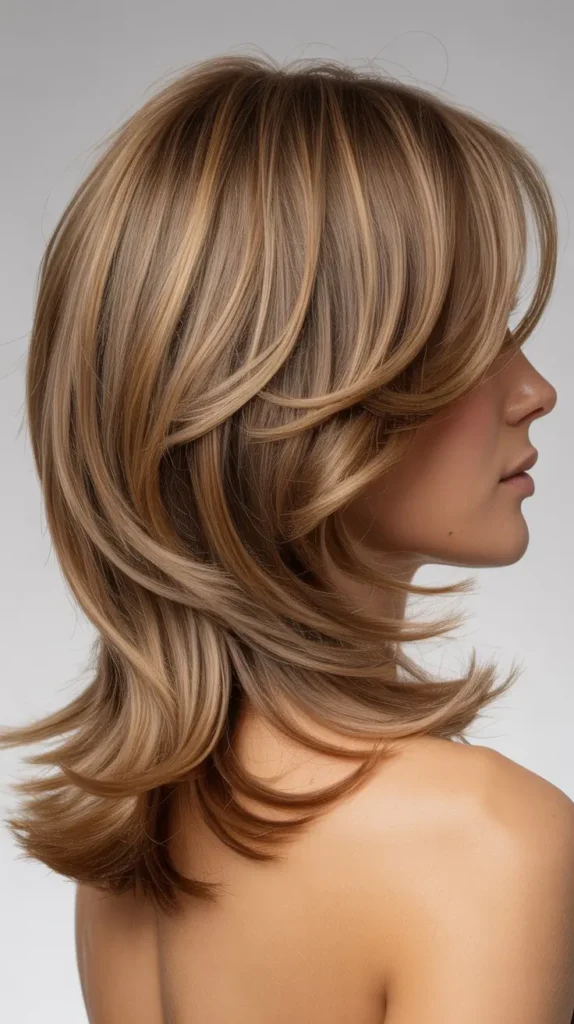
Razor cutting creates soft, feathered ends that are particularly effective for managing thick shoulder-length hair.
This technique uses a razor instead of scissors to slice through the hair, creating textured, wispy ends.
- Razor cutting removes bulk while creating a softer, more natural edge than blunt scissor cuts
- The technique involves slicing through the hair at an angle, creating tapered ends rather than blunt ones
- Razored ends are particularly beneficial for thick hair because they reduce weight without losing length
- The feathered appearance created by razor cutting helps thick hair blend and move more naturally
- This cutting method works best on healthy hair; damaged or chemically treated hair may fray with razor cutting
- Styling is effortless, as the razored ends naturally separate and create texture with minimal product
- The technique can be applied throughout the entire cut or just at the ends, depending on desired thickness reduction
- Maintenance involves regular trims every 6-7 weeks to keep the razored ends looking intentionally textured rather than damaged
13. Shoulder-Length Cut With Asymmetrical Layers
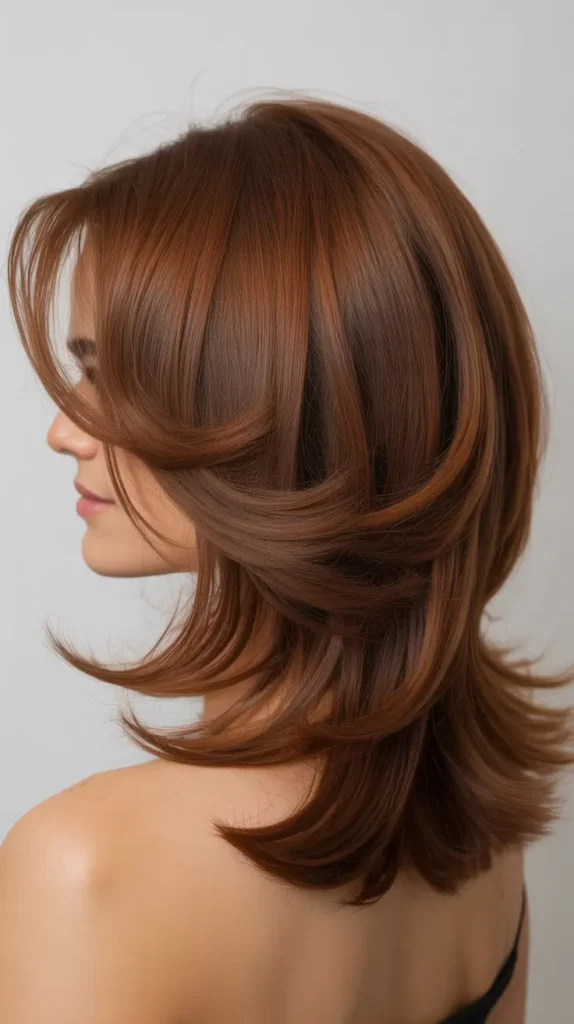
Asymmetrical layering adds an avant-garde, fashion-forward element to shoulder-length thick hair. This style features layers that are intentionally uneven, creating visual interest and a unique silhouette.
- Asymmetry can be subtle, with one side slightly shorter than the other, or dramatic, with significant length difference
- The layers on each side are cut to different lengths, creating an intentional imbalance that appears artistic rather than accidental
- This approach works exceptionally well for thick hair because the varying lengths prevent bulk from accumulating on one side
- Asymmetrical cuts draw attention and make a bold style statement, ideal for those wanting to stand out
- The style can be worn with a side part to emphasize the asymmetry or styled to minimize the difference for a more subtle look
- Maintenance requires precision cutting every 6-8 weeks to maintain the deliberate asymmetry
- The cut offers versatility in styling: sleek and straight to emphasize the geometric lines, or wavy for a softer interpretation
- Face-framing is naturally built into asymmetrical cuts, as the varying lengths create dimension around the face
14. Shoulder-Length Cut With Graduated Layers
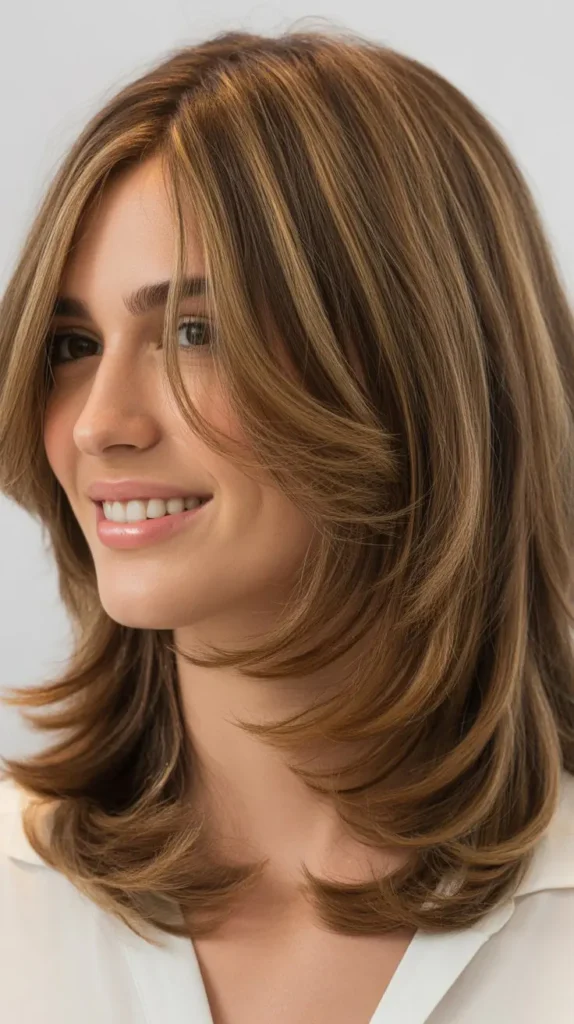
Graduated layers, also known as stacked layers, create a structured, voluminous look in shoulder-length thick hair.
This technique involves cutting the hair shorter in the back and gradually longer toward the front.
- Graduated layering creates significant volume at the back of the head by stacking layers in increasing lengths
- This technique is particularly effective for thick hair because it removes substantial weight from the nape area
- The layers are cut at a precise angle, creating a specific geometric shape rather than random layering
- The front lengths typically fall at or below the collarbone, while the back is considerably shorter
- This style requires regular maintenance every 4-6 weeks to maintain the graduated shape and prevent it from growing into a mullet
- Blow-drying requires attention to the back sections, using a round brush to enhance the volume and shape
- The graduated cut works beautifully when straightened for a sleek, polished appearance
- Adding color dimension with darker lowlights underneath and lighter highlights on top emphasizes the stacked layers
15. Shoulder-Length Cut With Soft, Rounded Layers
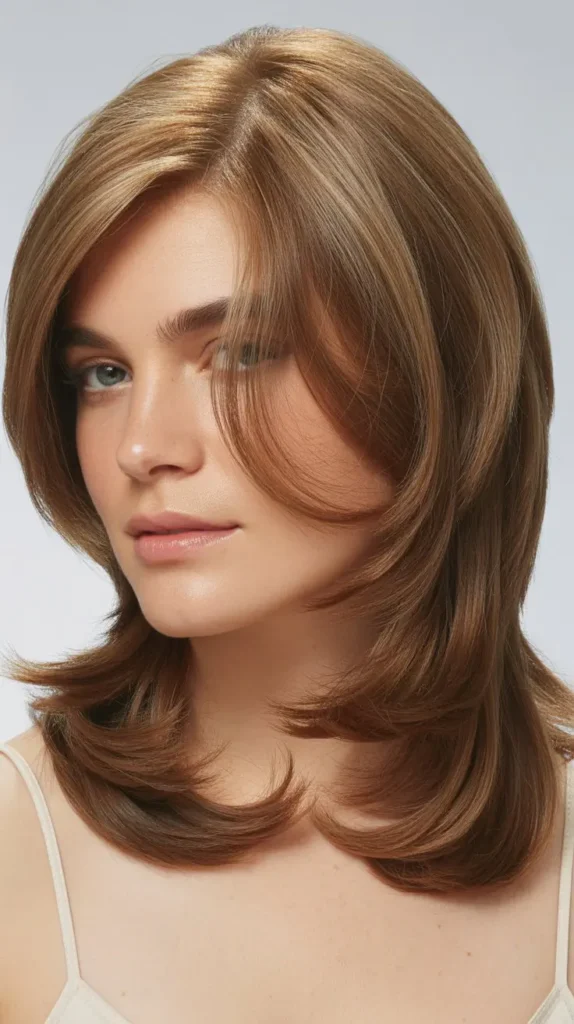
Soft, rounded layers create a gentle, feminine silhouette that flatters thick shoulder-length hair. This approach avoids harsh lines, instead creating subtle, flowing movement throughout.
- Rounded layering follows the natural curve of the head, creating a soft halo effect rather than dramatic edges
- For thick hair, this technique removes weight while maintaining a cohesive, polished appearance
- The layers are cut using a consistent, curved guideline that creates uniform roundness throughout
- This style is particularly flattering for those seeking a classic, timeless look rather than trendy or edgy
- The soft layers enhance natural texture in wavy or curly thick hair while providing movement to straight thick hair
- Styling involves blow-drying with a round brush, following the natural curve of the layers for smooth results
- The rounded shape frames the face gently without creating sharp angles or dramatic contrast
- This cut is professional and versatile, appropriate for conservative work environments while remaining stylish
16. Shoulder-Length Cut With Piece-y Layers
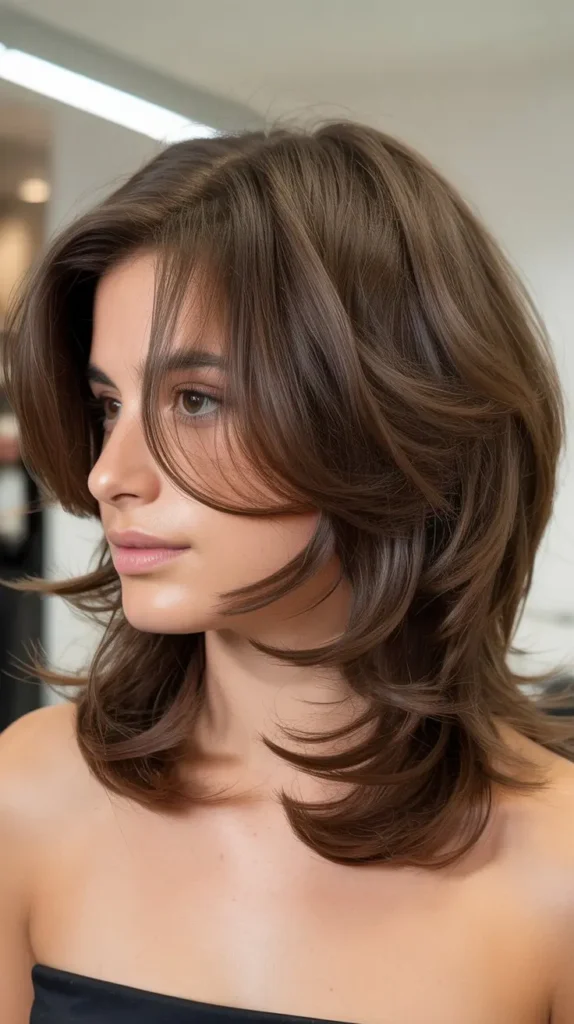
Piece-y layers create defined, separated sections throughout shoulder-length thick hair, offering a modern, textured appearance.
This style emphasizes individual hair sections rather than blended uniformity.
- Piece-y layering is achieved through point-cutting and texturizing techniques that create separation between hair sections
- The layers are cut at varying lengths throughout, creating a deliberately choppy, non-uniform appearance
- For thick hair, this technique significantly reduces bulk by creating air space between separated pieces
- Styling products like texturizing cream, pomade, or wax are essential for defining and separating the piece-y sections
- The style works exceptionally well for straight to slightly wavy thick hair, as the texture is most visible in these hair types
- This cut represents a commitment to styling, as the piece-y effect requires product and manipulation to look intentional
- The separated pieces catch light differently, creating natural dimension without color services
- Maintenance involves regular trims every 5-7 weeks to prevent the piece-y texture from becoming too grown-out and losing definition
17. Shoulder-Length Cut With Feathered Layers
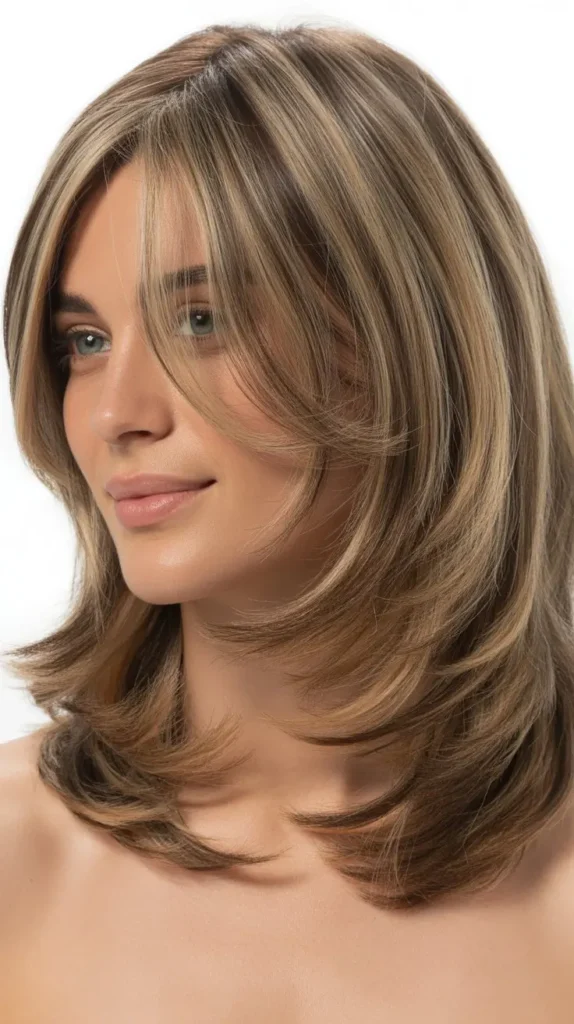
Feathered layers create a light, airy quality in thick shoulder-length hair, reminiscent of 1970s styles but updated for contemporary appeal. This technique creates soft, wispy layers that flip and move freely.
- Feathering involves cutting layers at an angle and using point-cutting or razor techniques to create tapered, lightweight ends
- The layers naturally flip outward at the ends, creating the characteristic feathered appearance
- For thick hair, feathering significantly reduces weight while maintaining length and creating movement
- This technique works best on straight to slightly wavy hair, as the feathered effect is most visible and intentional on these textures
- Blow-drying with a round brush while directing the ends outward enhances the feathered flip
- The style has a retro quality but can be modernized with contemporary coloring techniques like balayage
- Feathered layers around the face create a flattering frame that softens angular features
- This cut requires styling commitment, as the feathered ends need direction during drying to achieve the characteristic flip
18. Shoulder-Length Cut With Long Layers Only
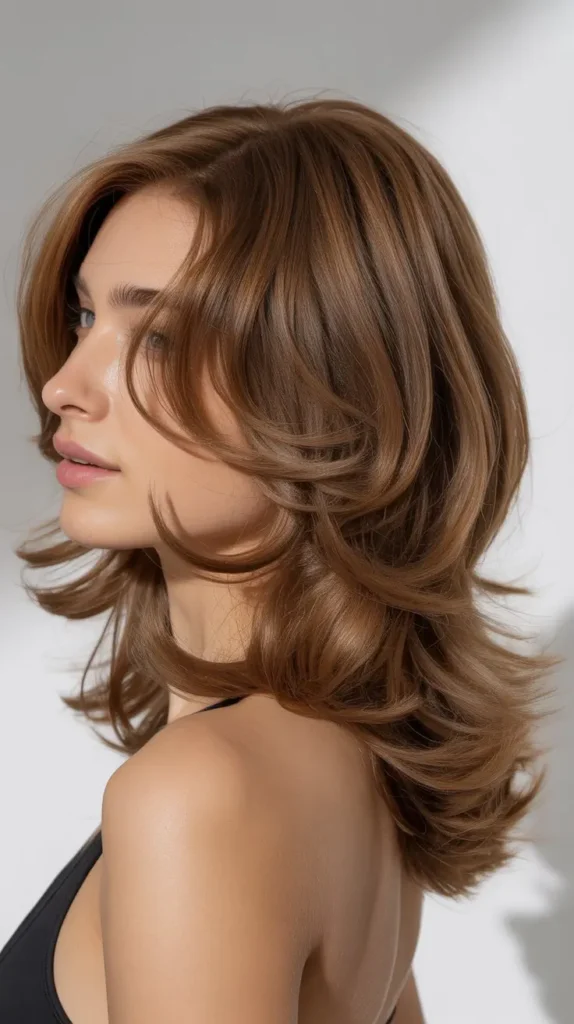
Long layers exclusively throughout shoulder-length thick hair create subtle movement without dramatic length variation. This conservative approach to layering maintains significant length while reducing bulk.
- Long layers typically begin around the collarbone or lower, creating minimal length variation throughout the cut
- This approach is ideal for those who want to keep maximum length while benefiting from some layering
- For thick hair, long layers remove interior bulk without creating too much texture or movement at the ends
- The subtle layering prevents the one-length heaviness that can weigh down thick hair
- This style works beautifully for those transitioning from very long hair who aren’t ready for dramatic layers
- Styling is straightforward, as the minimal layer variation means the hair behaves relatively uniformly
- Long layers are perfect for those who frequently wear their hair in ponytails or updos, as all the hair reaches
- The subtle nature of long layers means the cut grows out gracefully without requiring frequent trims
19. Shoulder-Length Cut With Swoopy Layers
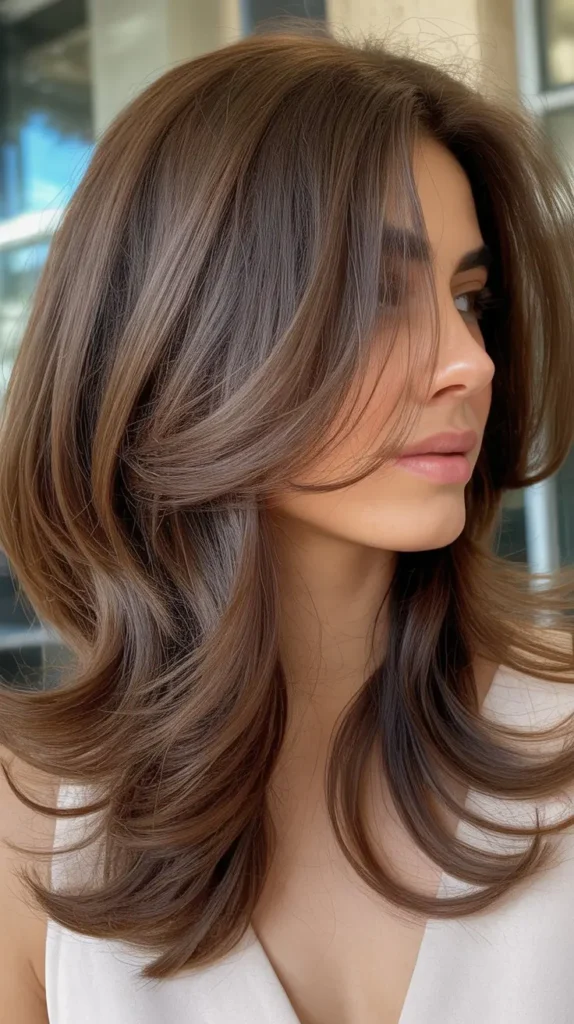
Swoopy layers create curved, flowing movement throughout shoulder-length thick hair, offering a dynamic, bouncy appearance.
These layers are cut to naturally curve inward or outward, creating the characteristic swoop.
- Swoopy layers are cut with the intention of creating curved rather than straight lines throughout the hair
- The layers typically curve inward toward the face or neck, creating a soft, face-framing effect
- For thick hair, the swoopy motion helps distribute volume more evenly rather than concentrating it at one length
- Blow-drying with a large round brush emphasizes the curved shape of the layers
- This style has a polished, intentional quality that works well in professional settings
- The swooping movement creates natural dimension as different sections of hair catch light at various angles
- Swoopy layers work particularly well with highlights or balayage that follow the curved lines of the cut
- The style maintains body and movement without appearing too edgy or undone
20. Shoulder-Length Cut With Thinned Ends
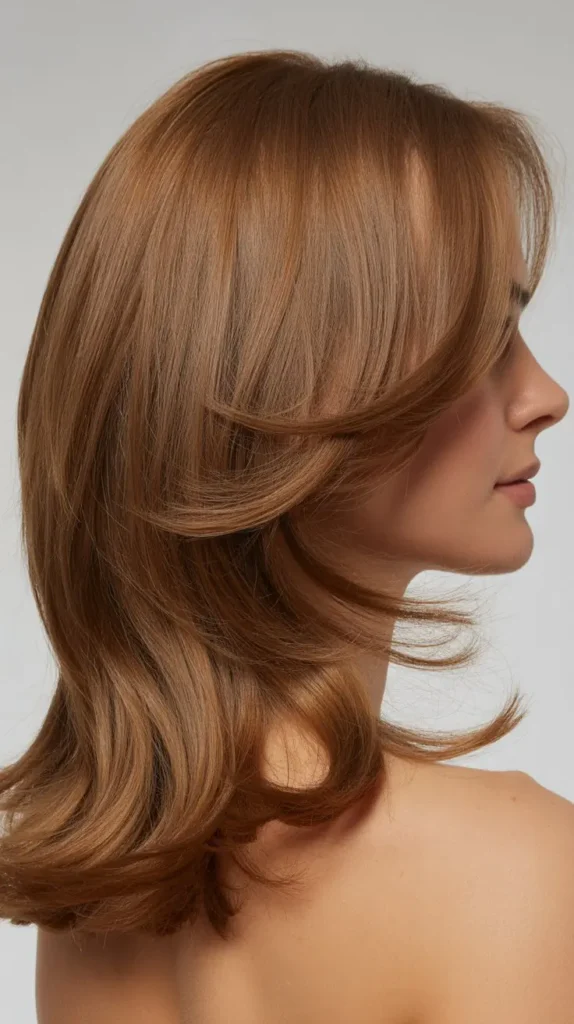
Thinning the ends of shoulder-length thick hair creates a lighter, less bulky appearance while maintaining overall length. This technique specifically targets the ends rather than layering throughout.
- Thinning is achieved using thinning shears or razor techniques specifically at the bottom few inches of hair
- This approach removes bulk from the heaviest part of thick hair without creating layered shapes throughout
- The technique is ideal for those who want to maintain a relatively uniform length while reducing weight
- Thinned ends create a softer, less blunt perimeter that moves more naturally
- For very thick hair, significant thinning may be necessary, removing up to 30-40% of the bulk at the ends
- This technique requires a skilled stylist to avoid creating visible thinned sections or choppy results
- Thinned ends reduce drying time and make styling easier by removing excess weight
- Regular maintenance every 6-8 weeks prevents the ends from becoming too thick as hair grows
21. Shoulder-Length Cut With Angled Front Pieces
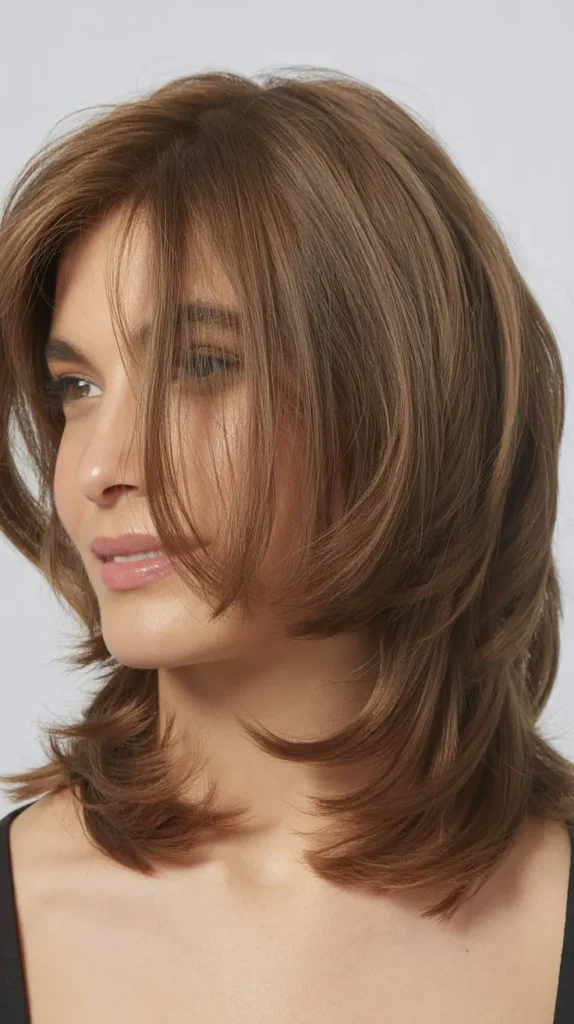
Angled front pieces add a contemporary, geometric element to shoulder-length thick hair. The hair around the face is cut on a deliberate angle, creating striking lines that frame the features.
- The front pieces are cut progressively longer from the back toward the front, creating a sharp angle
- This angle can be subtle or dramatic depending on personal preference and face shape
- For thick hair, the angled front pieces help distribute weight away from the face, preventing a heavy appearance
- The geometric lines created by angled pieces make a bold style statement and photograph beautifully
- This technique works particularly well when paired with a side part, which emphasizes the angle
- The angled pieces can be styled straight for maximum impact or waved for a softer interpretation
- This cut requires precision and should be maintained every 5-7 weeks to keep the angle sharp and intentional
- Highlights or color blocking along the angled pieces can enhance the geometric effect
22. Shoulder-Length Cut With Undone Layers
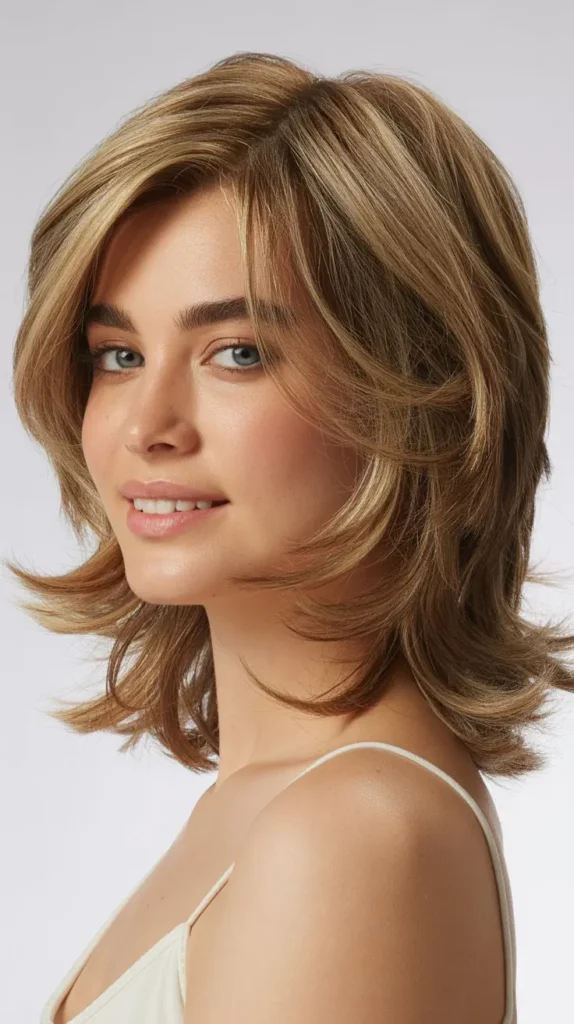
Undone layers create an intentionally imperfect, effortless appearance in shoulder-length thick hair. This style embraces irregularity and natural texture rather than polished perfection.
- Undone layering uses a combination of cutting techniques including point-cutting, slicing, and texturizing to create irregular lengths
- The layers appear unstructured and random, though they’re carefully planned to create the intentionally messy effect
- For thick hair, this approach removes significant bulk while creating a relaxed, beachy appearance
- Styling is minimal, often involving air-drying with sea salt spray or rough-drying with hands rather than brushes
- The undone aesthetic celebrates natural texture, making it ideal for those with wavy or slightly unruly thick hair
- This style looks best with a slightly textured, matte finish rather than high shine
- The intentionally imperfect nature means the cut grows out gracefully without looking grown-out
- Color dimension, particularly through balayage, enhances the undone texture by creating natural-looking variation
23. Shoulder-Length Cut With Heavy Layers
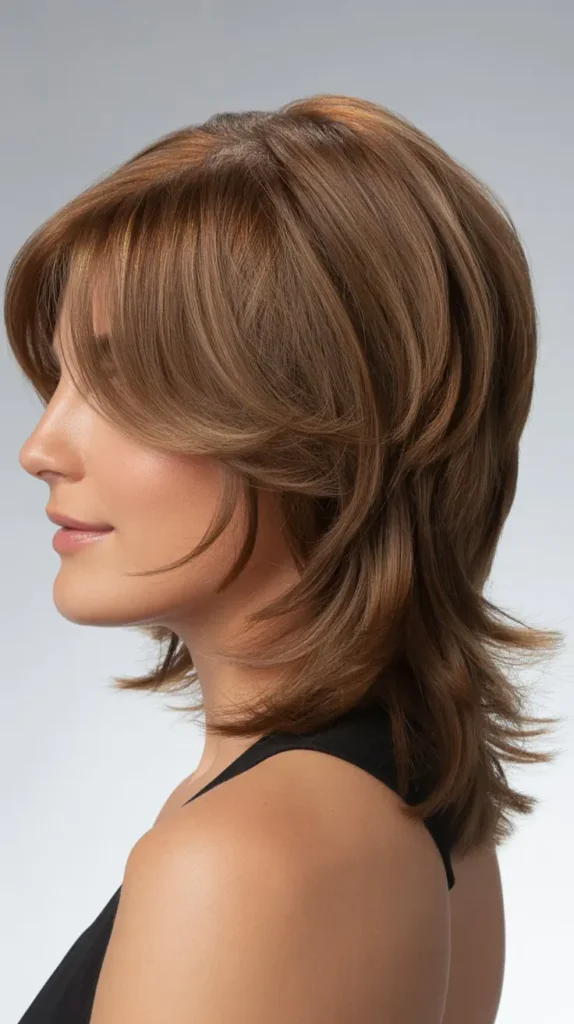
Heavy layers make a dramatic impact on shoulder-length thick hair, creating significant movement and removing substantial bulk. This approach features pronounced length variation throughout the cut.
- Heavy layering involves cutting layers that vary significantly in length, creating obvious, dramatic tiers
- The top layers may be several inches shorter than the bottom layers, creating substantial volume and movement
- For very thick hair, heavy layers are often necessary to prevent the hair from appearing too dense or heavy
- This technique creates a lot of body and shape, making it ideal for those who want voluminous styling
- The dramatic layering works particularly well with curling or waving, as each layer creates a distinct section of curl
- Blow-drying requires working in sections, as the varying lengths need individual attention for smooth results
- Heavy layers can create a retro, 1980s-inspired look or a modern, editorial appearance depending on styling
- This cut requires regular maintenance every 6-8 weeks to prevent the layers from becoming too separated or grown-out
24. Shoulder-Length Cut With Minimal Layers
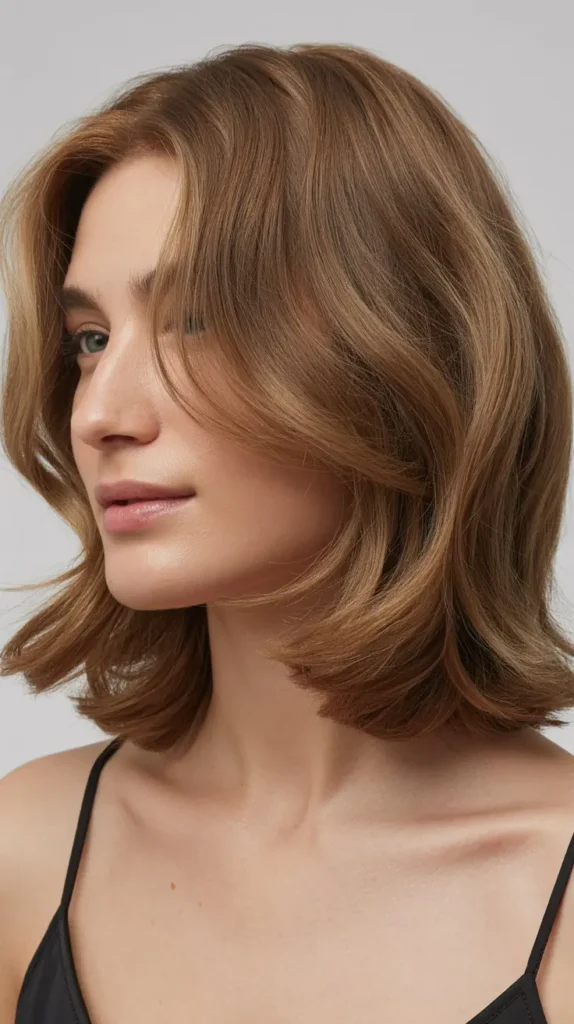
Minimal layering provides just enough movement in shoulder-length thick hair without creating dramatic length variation.
This conservative approach maintains a relatively uniform appearance while reducing some bulk.
- Minimal layers involve cutting only a few strategic layers, typically at the face and ends, while keeping most of the hair one length
- This approach is ideal for those who want the manageability of layers without losing the fullness of one-length hair
- For thick hair, minimal layering removes just enough weight to prevent the heavy, weighted-down appearance
- The style maintains enough density to create substantial ponytails and updos
- Minimal layers grow out almost imperceptibly, requiring less frequent maintenance than heavily layered cuts
- This cut works well for those growing out shorter styles who want to maintain some shape during the process
- Styling is simple, as the hair behaves relatively uniformly due to the minimal length variation
- The subtle layers can be strategically placed to address specific concerns like heavy sides or a flat crown
25. Shoulder-Length Cut With Curved Layers
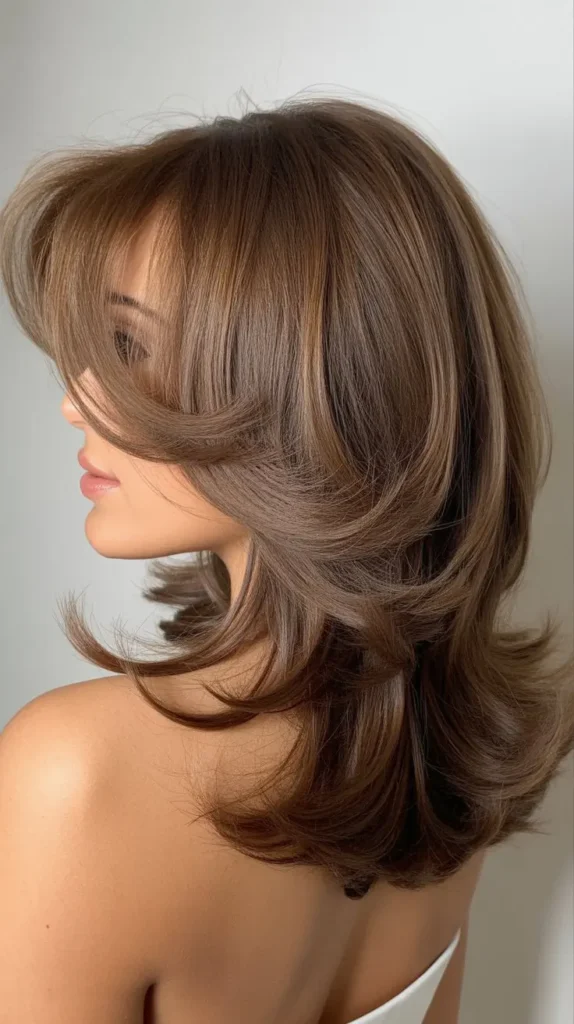
Curved layers follow the natural contours of the head, creating an elegant, flowing shape in shoulder-length thick hair. These layers create smooth, rounded lines rather than angular or choppy edges.
- Curved layering is cut following a consistent, rounded guideline that matches the shape of the head
- The technique creates a soft, feminine silhouette without harsh angles or dramatic edges
- For thick hair, curved layers distribute weight evenly, preventing flat spots or bulky areas
- This approach works beautifully for those who want a classic, timeless look that won’t appear dated
- The curved shape enhances natural movement in wavy hair and creates gentle swing in straight hair
- Blow-drying follows the natural curve of the layers, making styling intuitive and straightforward
- The rounded lines frame the face gently, flattering most face shapes without creating harsh contrasts
- This cut represents a middle ground between minimal and heavy layering, offering movement without extreme variation
26. Shoulder-Length Cut With Disconnected Layers
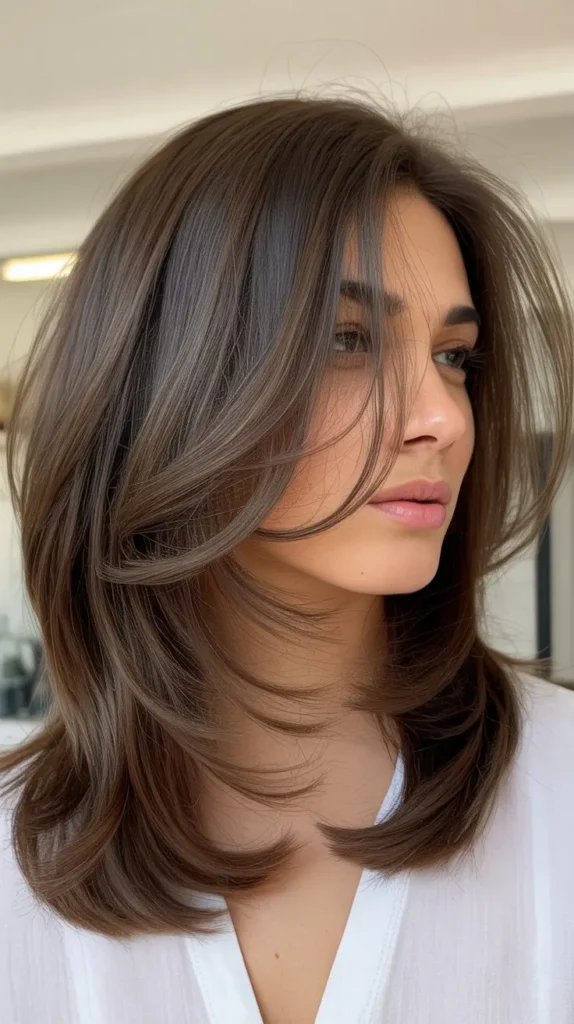
Disconnected layers create intentional gaps in length throughout shoulder-length thick hair, offering an edgy, modern aesthetic. These layers don’t blend seamlessly but instead maintain distinct separation.
- Disconnected layering intentionally avoids blending, creating obvious length differences between sections
- The technique involves cutting distinct sections at different lengths without smooth transitions between them
- For thick hair, disconnection creates significant bulk removal while making a bold style statement
- This approach creates a lot of movement and separation, with each disconnected section moving independently
- Styling can be sleek to emphasize the geometric nature of the disconnect or textured for a more rock-and-roll vibe
- The style works particularly well for those who want an avant-garde, fashion-forward appearance
- Disconnected layers require precision cutting and regular maintenance every 5-7 weeks to maintain the intentional gaps
- This cut pairs beautifully with bold color choices or creative color placement that emphasizes the disconnection
27. Shoulder-Length Cut With Tapered Layers
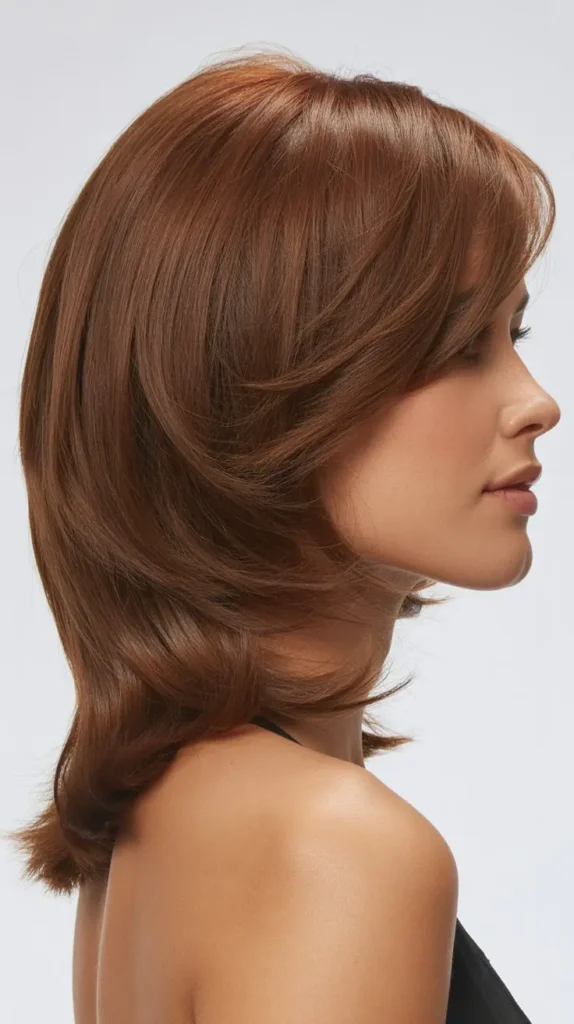
Tapered layers gradually decrease in thickness from roots to ends, creating a naturally feathered appearance in shoulder-length thick hair. This technique removes bulk while maintaining a soft, natural finish.
- Tapering involves cutting each layer so it gradually narrows from thick at the root to thin at the end
- This technique is typically achieved with razor cutting or slide cutting that removes more hair toward the ends
- For thick hair, tapering is highly effective at removing weight without creating blunt, heavy layers
- The tapered ends create a soft, natural appearance rather than harsh, blunt lines
- This approach works exceptionally well for those with thick hair that tends to flip or poof at the ends when cut bluntly
- Styling is simplified because the tapered ends naturally separate and move without excessive product
- The technique creates a lighter feel throughout the hair without sacrificing too much density at the roots
- Regular trims every 6-7 weeks maintain the tapered effect and prevent split ends on the thinned sections
28. Shoulder-Length Cut With Diagonal Forward Layers
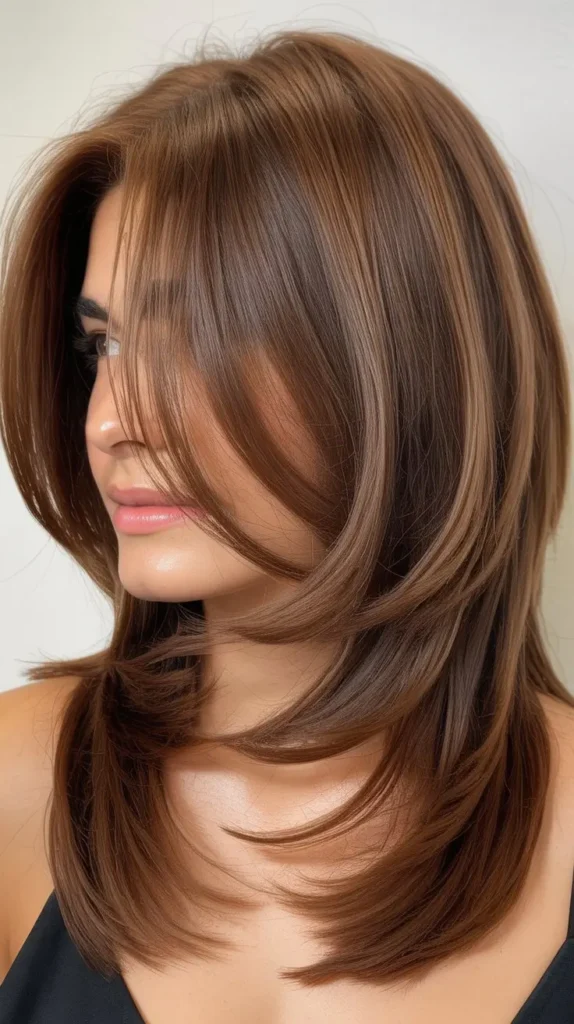
Diagonal forward layers angle toward the face, creating a dramatic, face-framing effect in shoulder-length thick hair. These layers are cut so they progressively lengthen from back to front.
- Diagonal forward layering creates the longest pieces at the front and progressively shorter lengths toward the back
- This technique draws the eye forward and creates strong face-framing that accentuates facial features
- For thick hair, the diagonal cut removes weight from the back while maintaining density at the front
- The angled layers create a modern, editorial quality that photographs beautifully from all angles
- This style works particularly well for those with thick hair who want to soften a strong jawline or angular face shape
- Styling involves blow-drying the layers forward, emphasizing the diagonal angle with a round brush
- The dramatic angle can be subtle or pronounced depending on personal preference and lifestyle
- This cut requires precision maintenance every 6-8 weeks to keep the diagonal angle sharp and intentional
29. Shoulder-Length Cut With Blended Layers
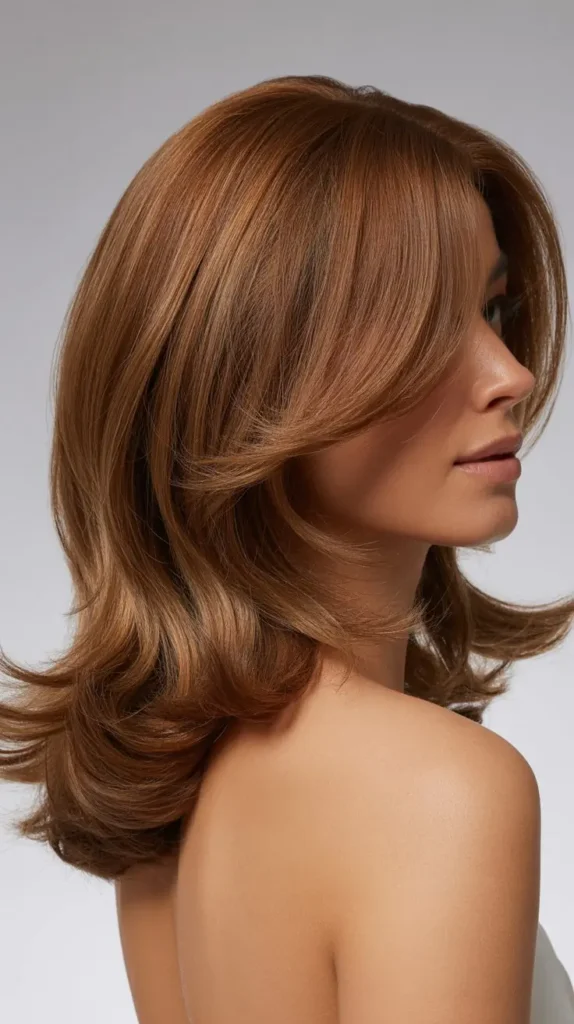
Blended layers create seamless transitions throughout shoulder-length thick hair, offering movement without obvious demarcation between lengths. This technique prioritizes smooth, flowing continuity.
- Blended layering uses careful graduation techniques to ensure no visible lines exist between different layer lengths
- The technique creates a smooth, polished appearance where layers flow naturally into one another
- For thick hair, blending prevents the choppy, separated appearance that can occur with heavily textured cuts
- This approach is ideal for those seeking a classic, professional look with subtle movement
- The seamless blending works beautifully when straightened, as no jarring length differences interrupt the smooth line
- Styling is straightforward, as the blended layers naturally fall into place with minimal manipulation
- This cut is perfect for conservative work environments where dramatic or edgy styles may be inappropriate
- Regular trims every 7-8 weeks maintain the smooth blending and prevent layers from growing into distinct, separated sections
30. Shoulder-Length Cut With Wispy Layers
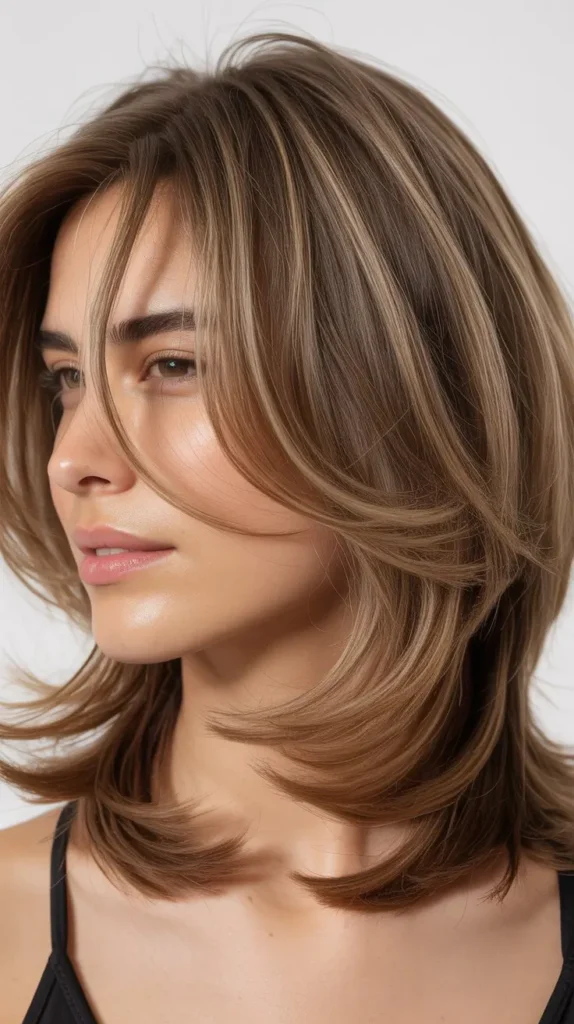
Wispy layers create delicate, feathery texture throughout shoulder-length thick hair, offering a soft, romantic appearance. These ultra-light layers remove bulk while maintaining an ethereal quality.
- Wispy layering is achieved through careful razor work and point-cutting that creates extremely fine, tapered ends
- The layers are cut to create maximum lightness, making them appear almost transparent or ethereal
- For thick hair, wispy layers significantly reduce bulk while creating a soft, feminine aesthetic
- This technique works particularly well for those wanting a romantic, delicate appearance rather than bold or edgy
- The wispy ends require gentle handling and styling, as excessive heat or product can weigh them down
- Air-drying or diffusing works beautifully with wispy layers, enhancing their natural, carefree quality
- This style pairs wonderfully with soft balayage or sun-kissed highlights that enhance the delicate texture
- Maintenance involves regular trims every 6-7 weeks to prevent the wispy ends from becoming damaged or stringy
31. Shoulder-Length Cut With Crown Layers Only
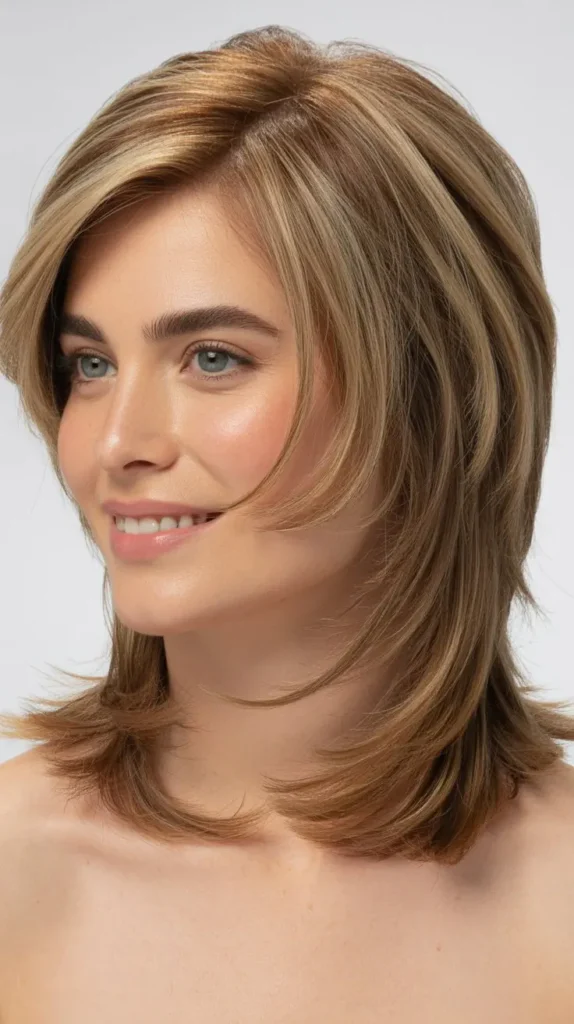
Focusing layers exclusively at the crown creates lift and volume at the top while maintaining length and weight throughout the rest of shoulder-length thick hair.
- Crown-only layering involves cutting shorter layers specifically at the top of the head while leaving the sides and back longer
- This technique addresses the common thick hair problem of flat roots despite overall volume
- The crown layers create natural lift without compromising the length needed for ponytails and updos
- For thick hair, this strategic placement removes weight where it most impacts volume
- Styling focuses on blow-drying the crown area with a round brush to maximize lift and height
- The technique is ideal for those who want volume at the top without overall heavily layered hair
- Crown layers grow out gradually, maintaining some lift even between salon visits
- This approach works well for thick hair that tends to lie flat due to its own weight
32. Shoulder-Length Cut With Uniform Layers
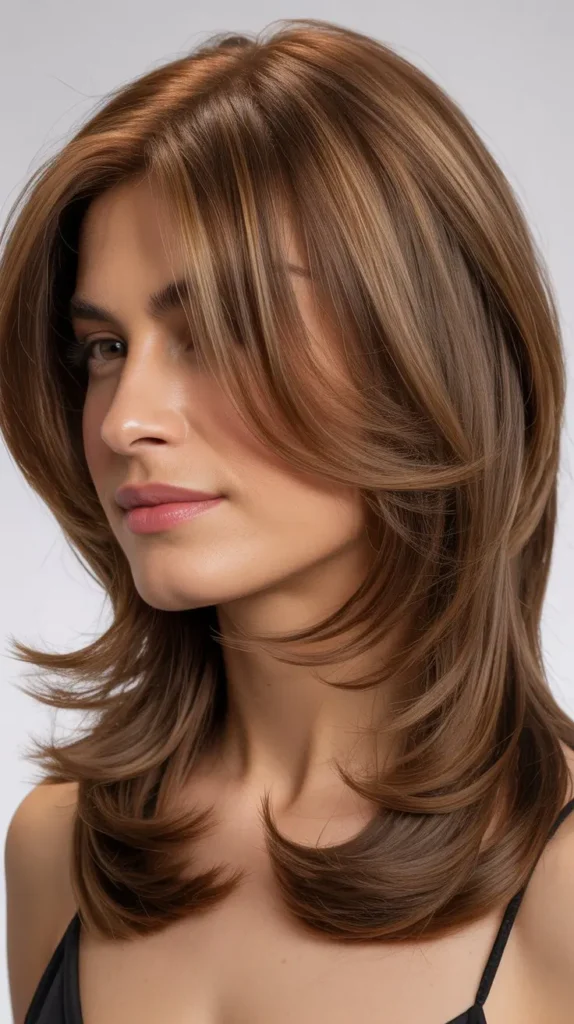
Uniform layers maintain consistent length differences throughout shoulder-length thick hair, creating predictable, balanced movement. Each layer is cut at the same distance from the previous one.
- Uniform layering creates layers that are evenly spaced, with each layer a specific, consistent distance from the next
- This precise approach creates a symmetrical, balanced appearance that’s neither random nor overly structured
- For thick hair, uniform layers distribute weight evenly, preventing any single area from appearing too heavy or light
- The consistent spacing makes styling predictable, as each layer responds similarly to heat and products
- This technique works well for those who prefer order and symmetry in their hairstyle
- Uniform layers photograph beautifully, creating clean lines and balanced proportions from all angles
- The style maintains its shape consistently throughout the growth cycle, looking intentional even when slightly grown out
- Regular maintenance every 7-8 weeks keeps the uniform spacing and prevents uneven growth from disrupting the balance
33. Shoulder-Length Cut With Stacked Layers in Back
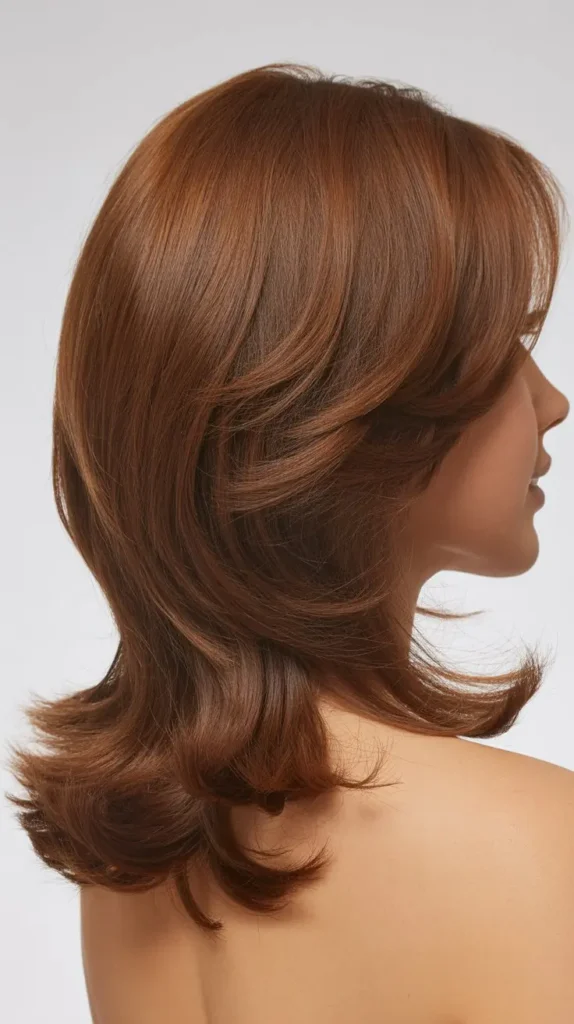
Stacked layers concentrated in the back create dramatic volume and shape while maintaining length in the front of shoulder-length thick hair.
- Stacked layering involves cutting multiple short layers in the back that stack on top of each other, creating volume
- The technique removes significant weight from the nape area while keeping front pieces long
- For thick hair, back stacking prevents the heavy, pulled-down feeling at the neck
- The stacked area requires styling with a round brush to lift and emphasize the volume
- This cut creates a distinctive silhouette with a voluminous back and sleek, longer front
- The style has a retro quality but can be modernized with contemporary styling and color techniques
- Stacked layers require regular maintenance every 5-6 weeks to prevent the back from becoming too long and losing the stack
- This technique works particularly well for thick hair with natural body and wave
34. Shoulder-Length Cut With Invisible Layers
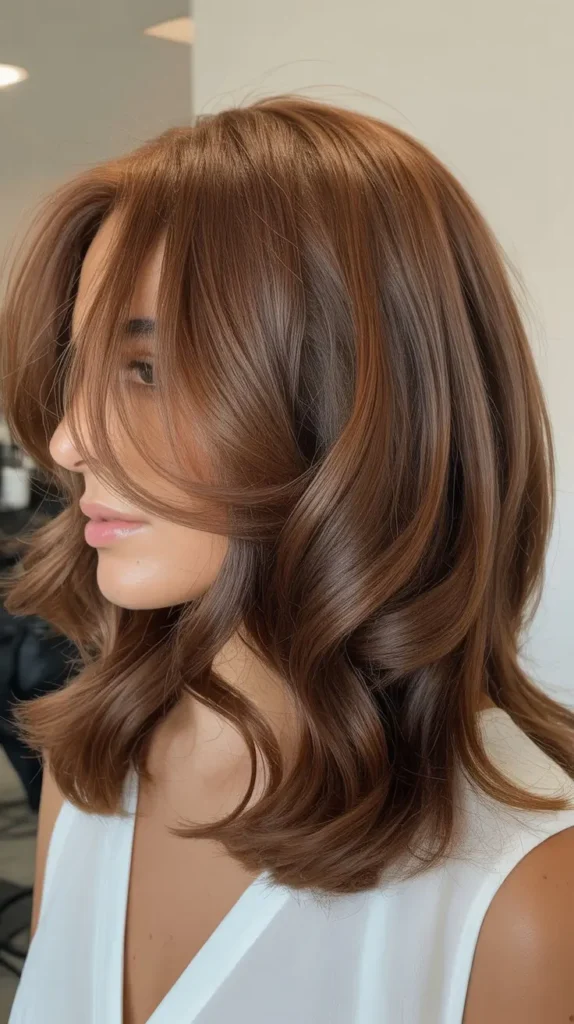
Invisible layers, also called ghost layers, remove bulk from within shoulder-length thick hair without disturbing the external appearance.
These hidden layers create lightness while maintaining a fuller look.
- Invisible layering involves cutting layers deep within the hair while leaving the surface and perimeter untouched
- The technique creates the illusion of one-length hair while actually having significant interior layering
- For very thick hair, invisible layers remove weight that causes heaviness without sacrificing density at the perimeter
- This approach is perfect for those who want the appearance of thick, full hair with the manageability of layered hair
- The internal layers create movement and body that’s visible when hair moves but not when it’s still
- Styling is simplified because the hair appears uniform despite the hidden architecture
- This cut is ideal for those growing out previous layers who want to maintain manageability during the process
- Regular trims every 7-8 weeks maintain the internal layering while keeping the exterior shape clean
35. Shoulder-Length Cut With Extreme Side Part Layers
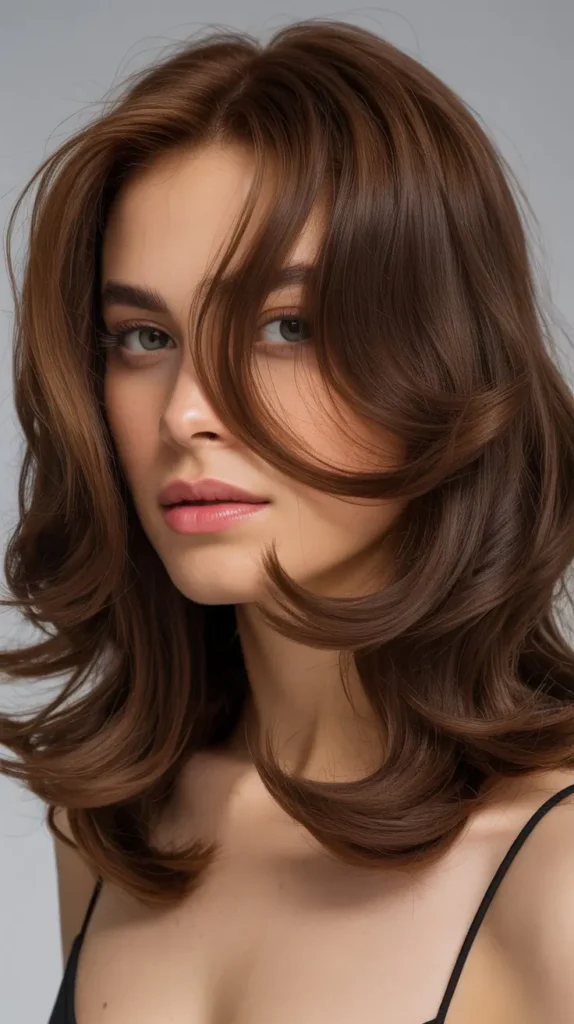
Layers designed to work specifically with an extreme side part create drama and volume on the heavier side while minimizing the lighter side in shoulder-length thick hair.
- This technique involves cutting layers that account for how hair will fall when dramatically parted to one side
- The heavier side receives more layering to prevent excessive weight, while the lighter side maintains length
- For thick hair, this asymmetrical approach to layering creates intentional volume where desired
- The extreme side part itself creates visual interest and a fashion-forward appearance
- Layers on the heavier side are cut to fall forward and frame the face when the hair is parted
- This style requires commitment to the side part, as center or opposite parting disrupts the intended design
- Blow-drying directs the hair according to the part, using clips to set the part line while drying
- The dramatic part works beautifully for special occasions and photographs, creating a glamorous, Old Hollywood effect
36. Shoulder-Length Cut With Concave Layers
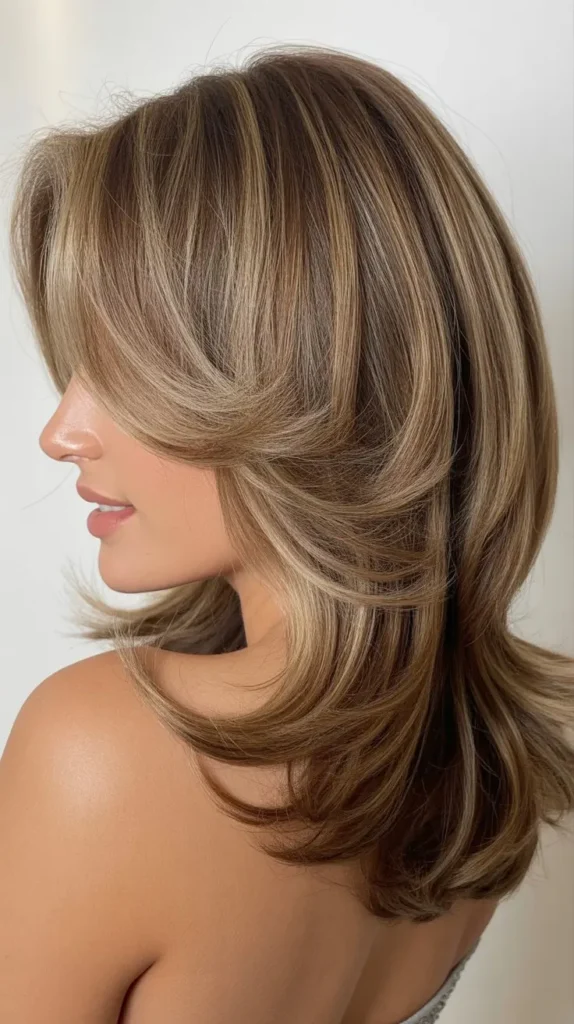
Concave layers curve inward, creating a rounded, face-hugging shape in shoulder-length thick hair. This technique makes the hair appear to wrap around the face and neck.
- Concave layering involves cutting the hair shorter at the face and progressively longer toward the back, creating an inward curve
- The technique creates a soft, feminine shape that naturally frames and accentuates facial features
- For thick hair, the concave shape distributes weight in a way that enhances natural inward movement
- Styling with a round brush directs the ends inward, following the natural curve of the cut
- This shape works beautifully for those with thick hair that naturally tends to turn under at the ends
- The concave curve creates a polished, put-together appearance that requires minimal styling effort
- This cut is particularly flattering for angular or square face shapes, as the curves soften harsh lines
- Regular trims every 6-7 weeks maintain the concave shape and prevent the back from growing too long
37. Shoulder-Length Cut With Convex Layers
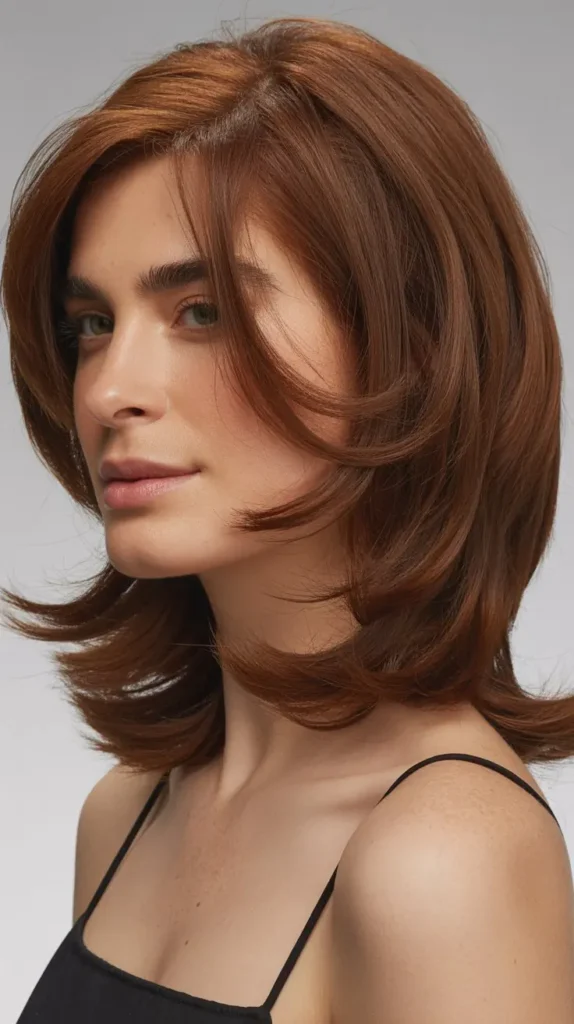
Convex layers curve outward, creating a flipped, outward-turning shape in shoulder-length thick hair. This retro-inspired technique adds playful bounce and movement.
- Convex layering involves cutting the hair to naturally flip outward at the ends, creating an outward curve
- The technique is reminiscent of 1960s flip hairstyles but can be modernized with contemporary styling
- For thick hair, the outward flip prevents the ends from appearing too heavy or dragging downward
- Styling requires blow-drying with a round brush, turning the ends outward away from the face and neck
- This playful shape creates a youthful, energetic appearance with noticeable bounce
- The convex curve works well for those wanting to add width and volume at the ends
- This style can be dramatic with a pronounced flip or subtle with just a gentle outward turn
- Regular maintenance every 6-7 weeks keeps the convex shape intentional and prevents it from growing into a shapeless look
38. Shoulder-Length Cut With Texturized Ends Only
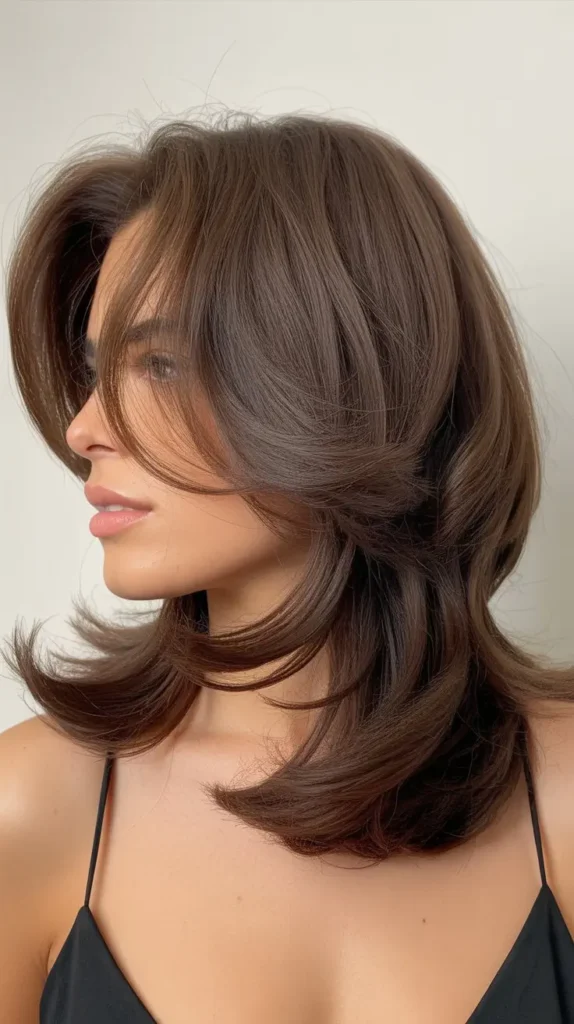
Focusing texturizing exclusively on the ends of shoulder-length thick hair creates movement at the perimeter while maintaining smooth, uniform length throughout the rest.
- End texturizing involves using point-cutting, razoring, or thinning shears specifically on the bottom few inches
- This technique removes bulk from the heaviest part of thick hair without creating layers throughout
- The textured ends create a softer, more moveable perimeter than blunt-cut ends
- For thick hair, end texturizing prevents the bottom-heavy appearance that can occur with one-length cuts
- This approach maintains maximum length while improving manageability and movement
- Styling products can enhance the textured ends, creating separation and definition
- The technique is ideal for those transitioning from one-length hair who want subtle improvement without commitment to full layering
- Regular trims every 7-8 weeks refresh the texturized ends and prevent them from appearing damaged
39. Shoulder-Length Cut With Beveled Layers
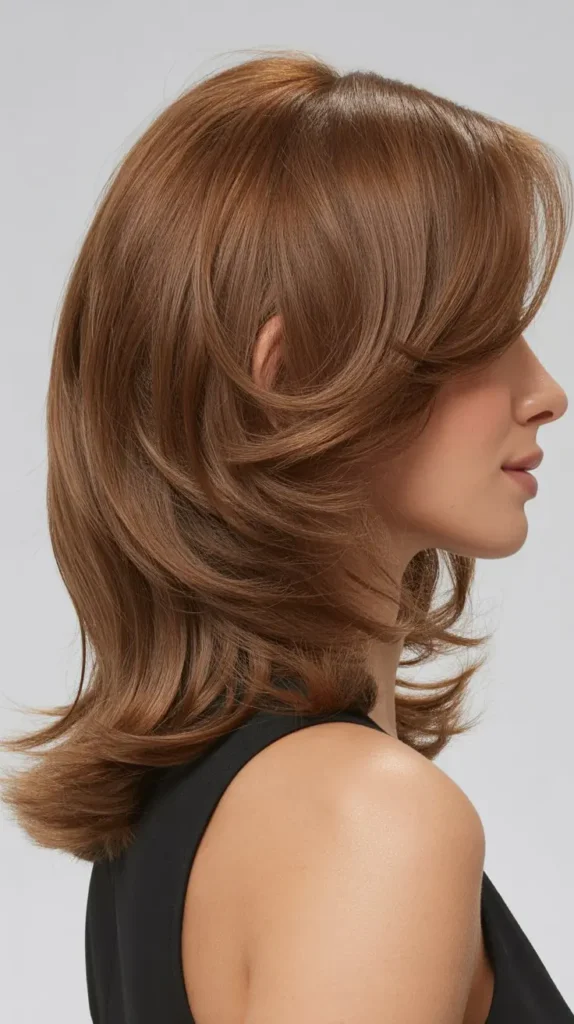
Beveled layers create angled, polished edges throughout shoulder-length thick hair, offering a sophisticated, architectural quality. This technique combines precision cutting with intentional angles.
- Beveling involves cutting layers at specific angles, creating sharp, intentional edges rather than soft, blended transitions
- The technique creates a modern, geometric aesthetic that makes a strong style statement
- For thick hair, beveled layers remove weight while creating striking visual lines
- The angled cuts work particularly well when styled straight, as the precision of the angles is most visible on sleek hair
- This style requires a skilled stylist experienced in precision cutting to achieve clean, accurate bevels
- The beveled edges can be subtle or dramatic depending on the angle chosen
- Styling emphasizes the architectural quality with smooth blow-drying and straightening
- Regular maintenance every 5-6 weeks is essential to keep the beveled edges sharp and intentional
40. Shoulder-Length Cut With Shattered Layers
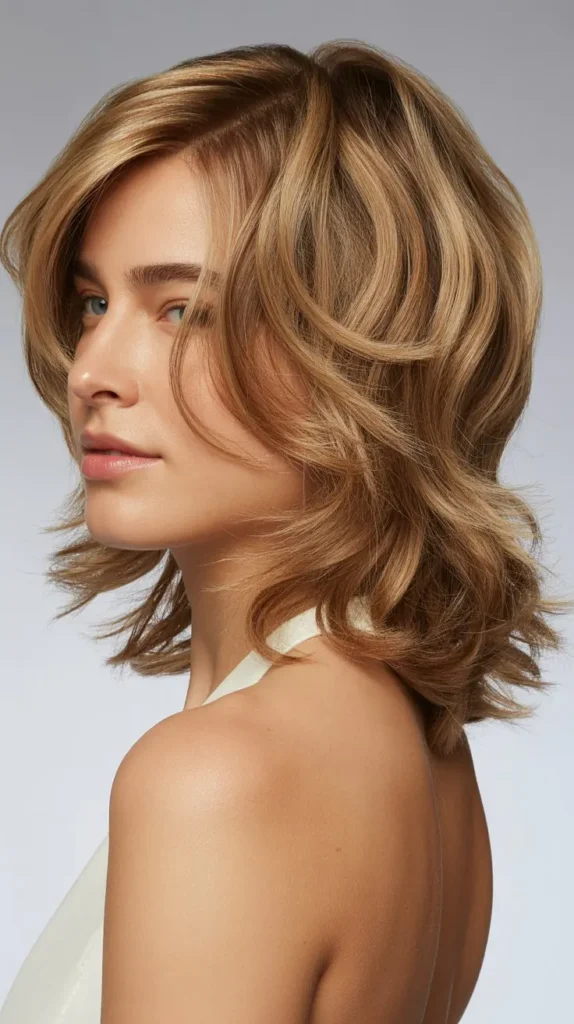
Shattered layers create a deliberately fragmented, edgy appearance in shoulder-length thick hair. This technique uses aggressive texturizing to break up the hair into separated, jagged pieces.
- Shattering involves using razors and point-cutting to create extremely irregular, broken-looking ends
- The technique creates maximum separation between hair sections, preventing thick hair from clumping together
- For thick hair, shattering dramatically reduces bulk while creating an avant-garde, fashion-forward appearance
- The fragmented quality creates a lot of movement and texture with minimal styling required
- This style works best for those who embrace edgy, unconventional aesthetics
- Texturizing products enhance the shattered effect, creating definition between the separated pieces
- The aggressive texturizing means this cut requires commitment, as growing it out into a different style takes time
- Regular trims every 5-6 weeks maintain the shattered texture and prevent it from looking overgrown rather than intentionally edgy
41. Shoulder-Length Cut With Slide-Cut Layers
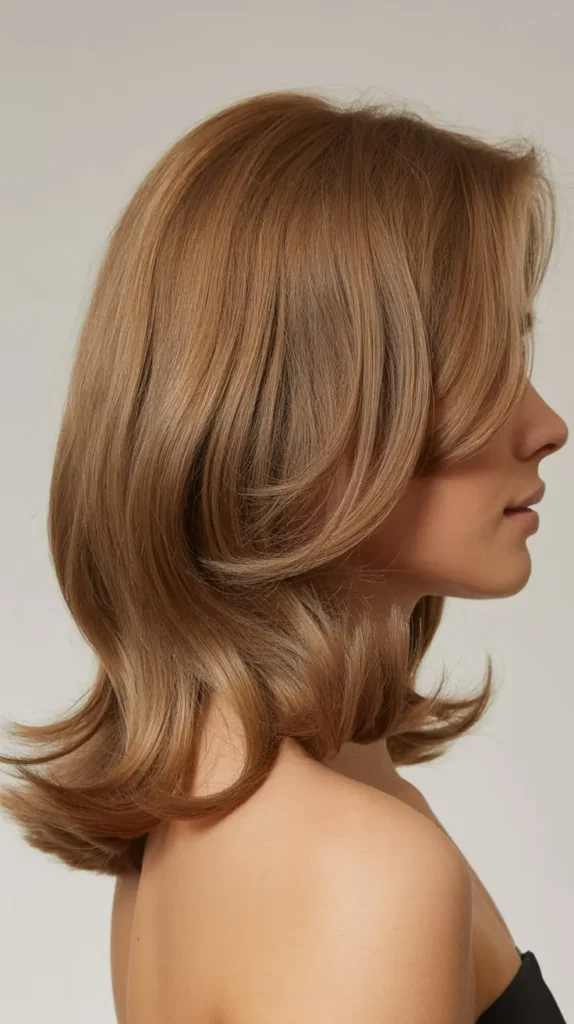
Slide-cutting creates soft, invisible layers throughout shoulder-length thick hair by sliding scissors down the hair shaft rather than cutting straight across.
This technique produces seamless, natural-looking results.
- Slide-cutting involves closing scissors while sliding them down the hair, removing weight gradually rather than all at once
- The technique creates extremely soft, natural-looking layers with no visible demarcation between lengths
- For thick hair, slide-cutting removes bulk effectively while maintaining a cohesive, flowing appearance
- The method is particularly effective for creating movement without obvious layering
- This approach works beautifully for those who want the benefits of layers without the structured appearance
- The soft results mean the cut grows out gracefully without creating awkward in-between stages
- Slide-cutting requires a skilled stylist, as the technique demands precision and experience
- Styling is effortless, as the hair naturally falls into place with the invisible architecture created by slide-cutting
42. Shoulder-Length Cut With Point-Cut Layers
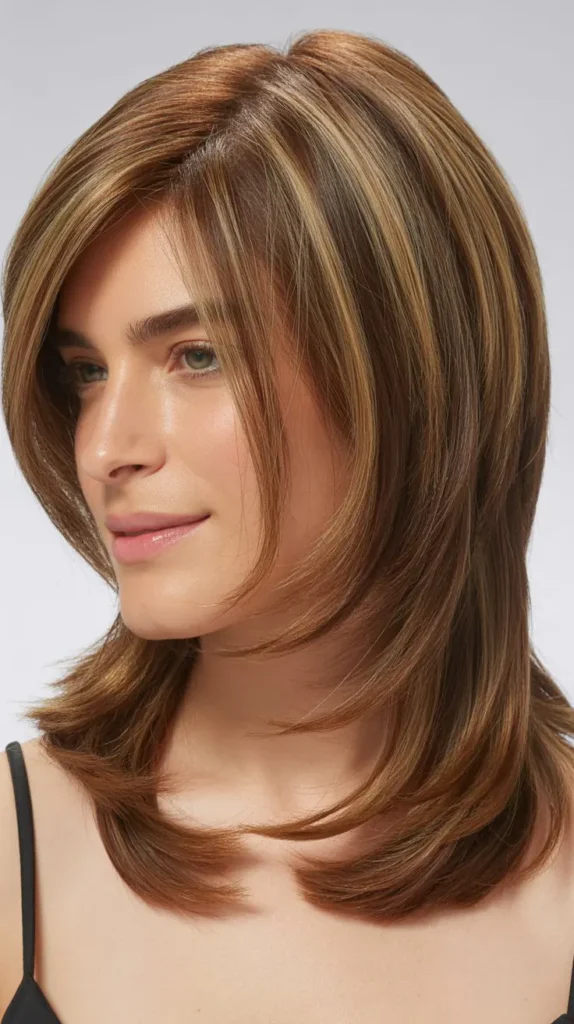
Point-cutting creates textured, irregular edges throughout shoulder-length thick hair by cutting into the hair with the tips of scissors pointed vertically. This technique softens hard lines and adds movement.
- Point-cutting involves holding scissors vertically and cutting into the hair ends at an angle, creating a jagged, textured edge
- The technique removes bulk while creating a softer, less blunt perimeter than traditional cutting
- For thick hair, point-cutting prevents heavy, blunt ends that can drag the hair down
- The irregular edges created by point-cutting catch light differently, creating natural dimension
- This method works well throughout the layers or focused at the ends, depending on desired texture
- Point-cut layers require less styling product, as the textured edges naturally separate and move
- The technique is gentler on hair than razor cutting, making it suitable for chemically treated or fragile hair
- Regular trims every 6-7 weeks maintain the point-cut texture and prevent split ends from traveling up the hair shaft
43. Shoulder-Length Cut With Sliced Layers
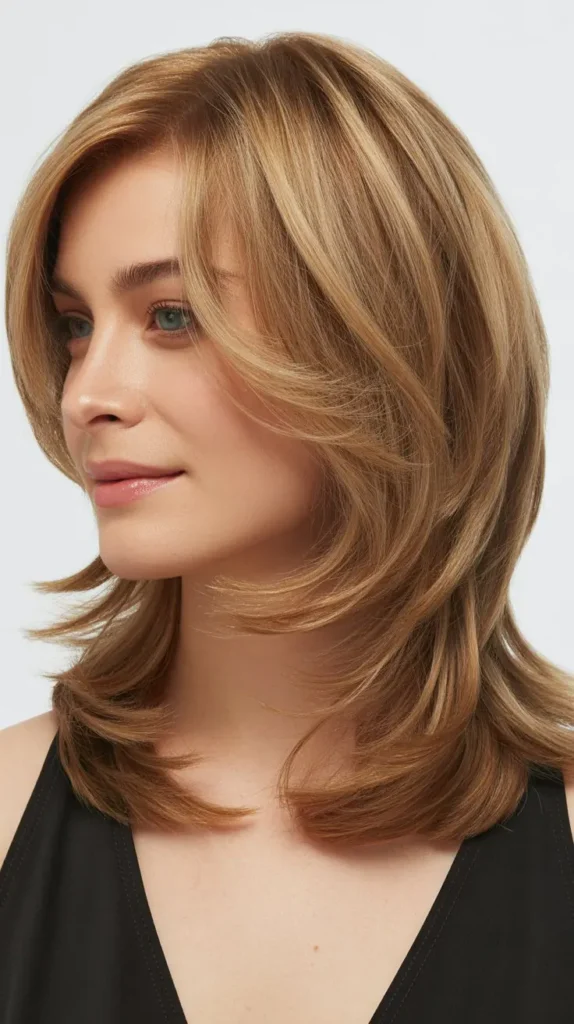
Slicing creates airy, disconnected layers in shoulder-length thick hair by cutting through sections at an angle, removing weight while maintaining length. This technique creates deliberate separation throughout.
- Slicing involves cutting through hair sections at an angle, removing interior weight without shortening the overall length significantly
- The technique creates space between hair sections, allowing light and air to pass through thick hair
- For thick hair, slicing dramatically reduces bulk while maintaining length and density at key points
- The disconnected quality creates modern, editorial-quality movement and texture
- This approach works particularly well for thick hair that tends to appear too solid or heavy
- Styling enhances the sliced texture with products that create separation and definition
- The technique can be subtle with minimal slicing or dramatic with aggressive sectioning
- Regular maintenance every 6-7 weeks refreshes the sliced sections and prevents the hair from becoming too connected as it grows
44. Shoulder-Length Cut With Layered Fringe
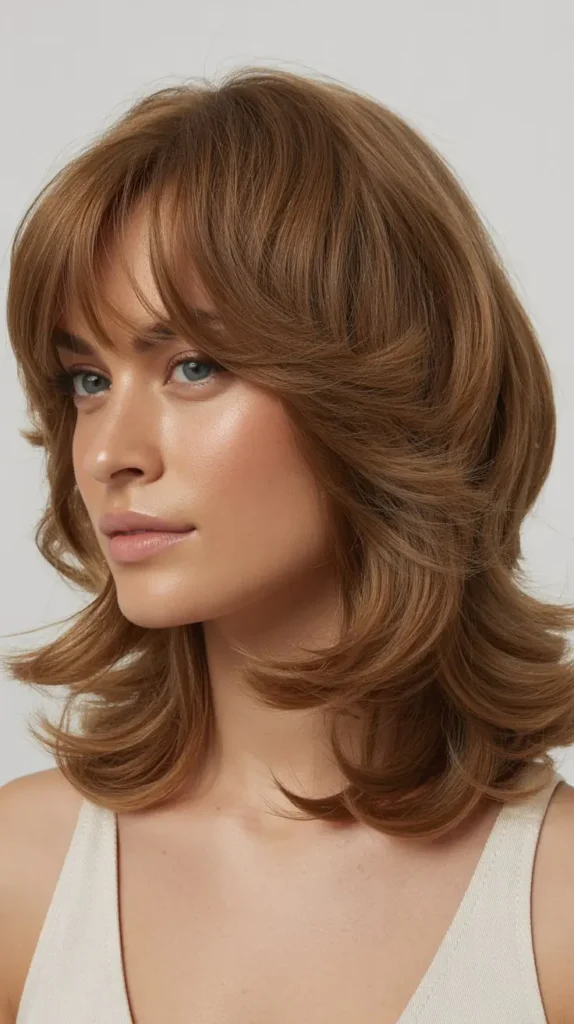
Adding a layered fringe to shoulder-length thick hair creates a youthful, fashion-forward look. The fringe itself features internal layers that prevent it from appearing too heavy or blunt.
- Layered fringe features internal layering that creates texture and movement within the bangs themselves
- The fringe layers connect seamlessly with the face-framing layers of the shoulder-length cut
- For thick hair, layering within the fringe prevents it from appearing too dense or heavy on the forehead
- The fringe can vary in length from eyebrow-grazing to eye-skimming depending on preference
- Styling the layered fringe involves blow-drying with a round brush to create volume and direction
- The textured quality of layered fringe makes it more forgiving and easier to style than blunt fringe
- This style works well for those wanting to disguise a high forehead or balance facial proportions
- Fringe maintenance requires trims every 3-4 weeks to keep the length and layering optimal
45. Shoulder-Length Cut With Balayage-Enhanced Layers
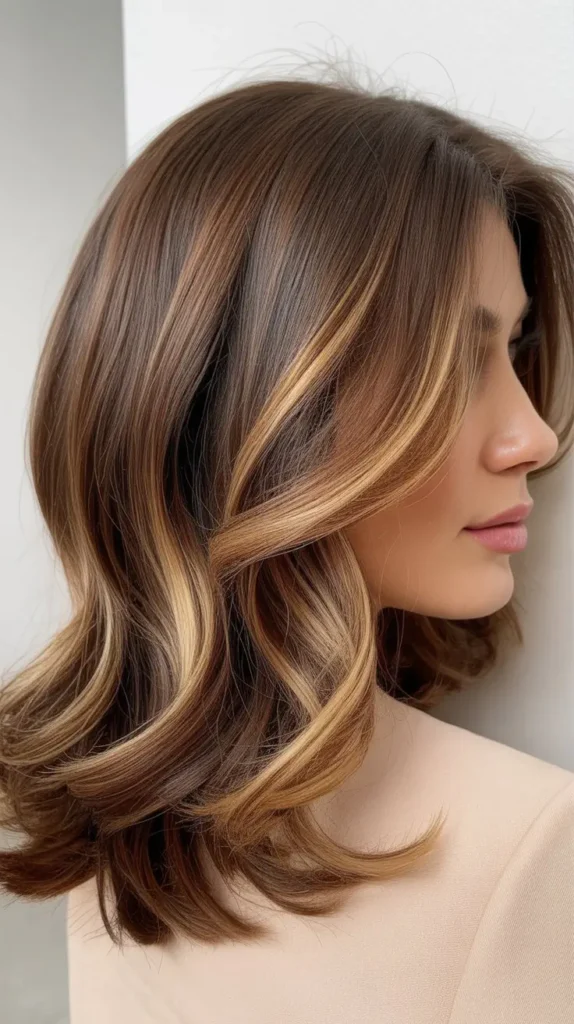
While balayage is a coloring technique, when combined with strategic layering in shoulder-length thick hair, it creates dramatic dimension and movement.
The color placement enhances the architectural structure of the layers.
- Balayage involves hand-painting highlights through the hair, creating natural-looking dimension
- When applied to layered hair, balayage can be strategically placed to emphasize the layers and create depth
- For thick hair, lighter pieces at the ends and along layers reduce the appearance of heaviness
- The color dimension makes layers more visible and creates the illusion of even more movement
- Face-framing layers can be highlighted to draw attention and create focus
- The combination of layers and balayage requires coordination between cutting and coloring for optimal results
- Maintenance involves regular haircuts every 6-8 weeks and color refreshing every 10-12 weeks
- The technique works beautifully with natural hair colors, enhancing rather than dramatically changing the base shade
46. Shoulder-Length Cut With Dry-Cut Layers
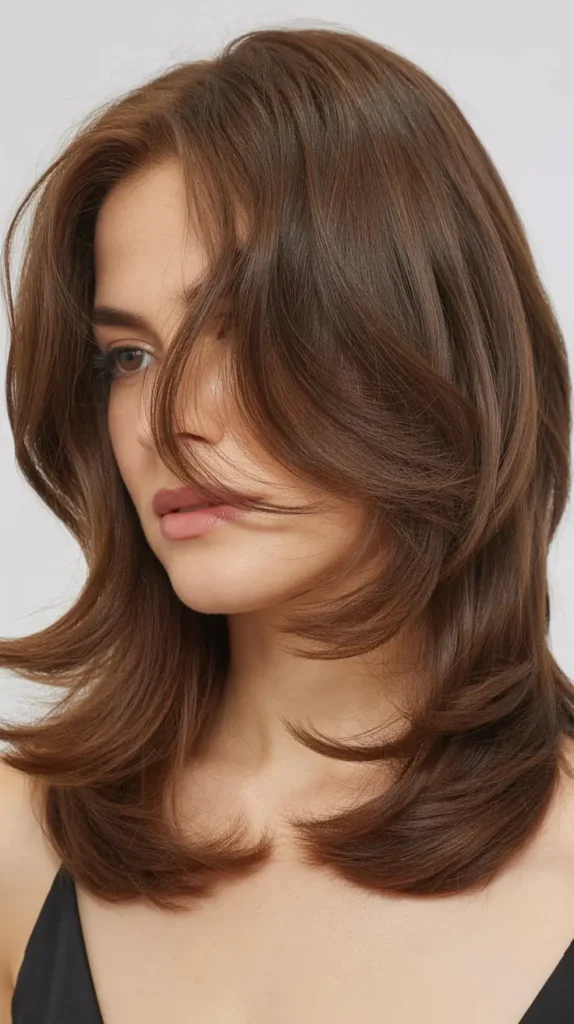
Dry-cutting involves cutting shoulder-length thick hair while it’s completely dry, allowing the stylist to see exactly how the hair naturally falls and responds. This technique creates highly customized layers.
- Dry-cutting allows stylists to see the hair’s natural texture, curl pattern, and fall before making cuts
- The technique is particularly beneficial for thick hair, as the stylist can identify and address areas of bulk precisely
- Layers are cut to work with the hair’s natural tendencies rather than against them
- For wavy or curly thick hair, dry-cutting ensures layers fall correctly when styled naturally
- The customized approach means each layer is placed specifically for the individual’s hair characteristics
- Dry-cutting typically takes longer than wet cutting but produces highly personalized results
- This method works exceptionally well for those who air-dry their hair or prefer minimal styling
- Regular dry-cut maintenance every 6-8 weeks keeps the customized shape optimal
47. Shoulder-Length Cut With Combination Layering
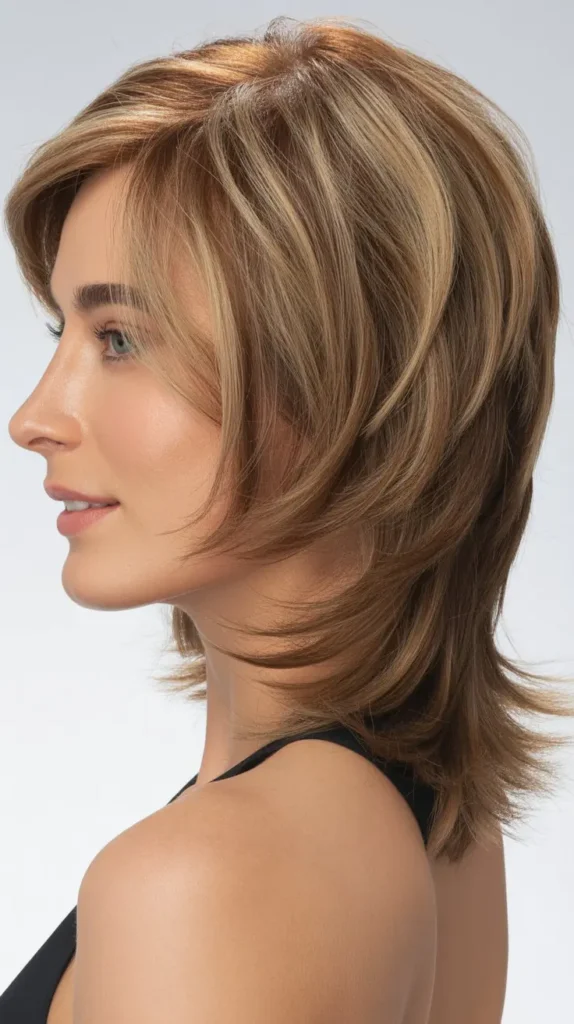
Combination layering incorporates multiple layering techniques within a single shoulder-length thick hair cut, creating a complex, multidimensional result.
This approach combines the benefits of various methods.
- Combination layering might include long layers for overall shape, face-framing pieces for definition, and texturized ends for movement
- The technique addresses multiple aspects of thick hair management simultaneously
- Different cutting methods (scissors, razors, thinning shears) are used in different sections for specific purposes
- For thick hair, combination approaches offer comprehensive bulk reduction and maximum versatility
- The stylist can customize the combination based on individual hair characteristics and desired results
- This complex approach requires an experienced stylist who understands how different techniques interact
- Styling can be simple or elaborate depending on which aspects of the combination cut you want to emphasize
- Maintenance every 6-8 weeks ensures all components of the combination cut remain balanced and intentional
Styling Products for Layered Thick Hair
- Volumizing Mousse: Apply to roots before blow-drying to enhance layer lift and body
- Texturizing Spray: Creates separation and definition in layered sections
- Smoothing Serum: Tames frizz without weighing down thick hair when used sparingly
- Sea Salt Spray: Enhances natural texture and creates beachy, undone waves in layers
- Light Hold Hairspray: Maintains style and layer definition without stiffness
- Dry Shampoo: Refreshes roots between washes and adds volume to layered crown
- Leave-In Conditioner: Provides moisture to thick hair without heaviness when formulated for thick textures
Conclusion
The 47 Best Shoulder-Length Haircuts for Thick Hair With Layers demonstrates that managing thick, voluminous hair doesn’t mean sacrificing style or settling for unflattering cuts.
From classic layered styles to modern shaggy textures, from face-framing techniques to architectural precision cuts, these options prove that thick hair is an asset waiting to be properly showcased.
Each layering technique addresses the unique challenges of thick hair while offering distinct aesthetic benefits, whether you prefer polished and professional or tousled and carefree.
The key to success lies in choosing a cut that complements your face shape, lifestyle, and natural hair texture, then working with a skilled stylist who understands how to customize layers for thick hair specifically.
With proper maintenance, the right products, and styling techniques that work with rather than against your hair’s natural tendencies, your shoulder-length layered cut will remain fresh, manageable, and absolutely stunning.
Remember that thick hair is a gift that, when cut correctly with the right layering technique, becomes the foundation for a signature style that’s uniquely and beautifully yours.
