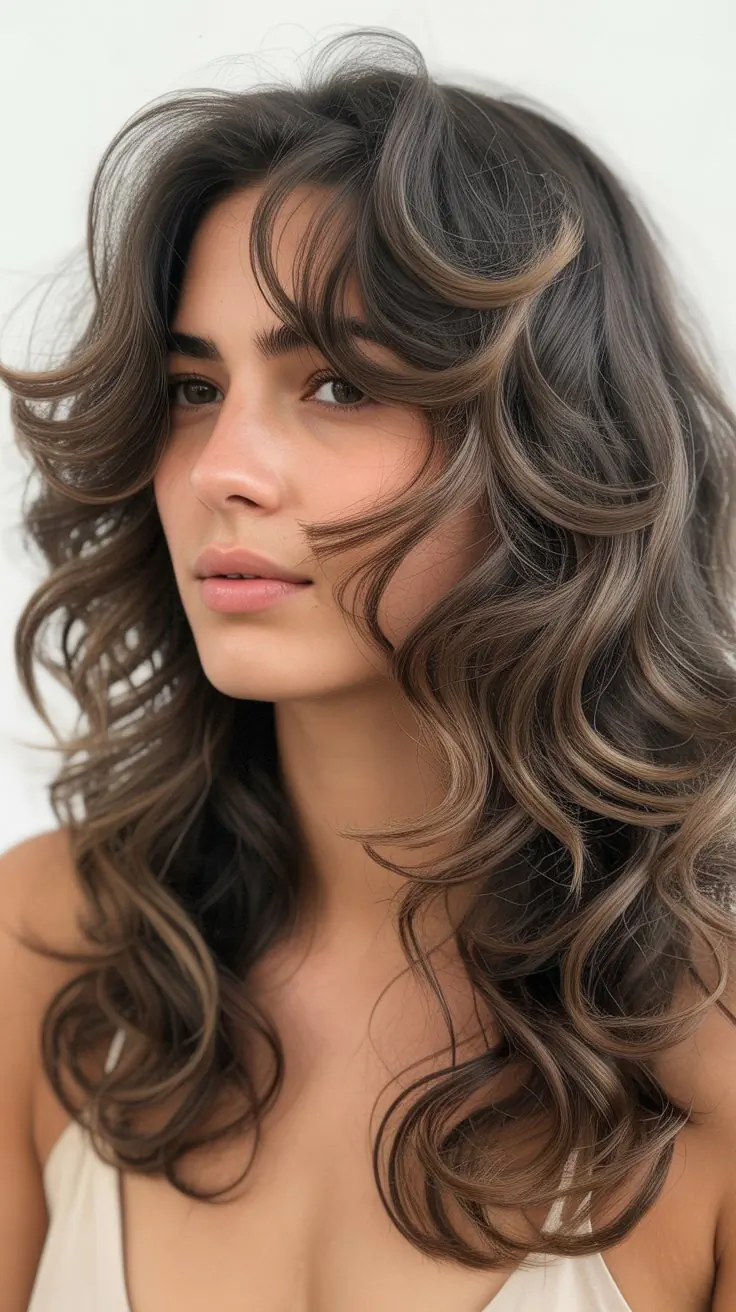
If you have thick wavy hair, you already possess a beautiful canvas that can transform into stunning styles with the right layered cuts.
Finding the perfect hairstyle that manages volume while enhancing your natural texture can feel overwhelming, but face-framing layers offer the ideal solution to tame bulk and accentuate your best features.
This comprehensive guide explores 29 Face-Framing Layered Styles for Thick Wavy Hair Everyone Loves, from shoulder-length cuts to long flowing locks, each designed to work with your hair’s natural movement rather than against it.
Whether you’re looking for low-maintenance everyday styles or glamorous looks for special occasions, these layered techniques will help you embrace your waves while keeping your thick hair manageable and stylish.
Throughout this article, you’ll discover cutting techniques, styling tips, and maintenance advice that will revolutionize how you approach your thick wavy hair, making every day a good hair day.
1. Classic Shoulder-Length Layers with Soft Face-Framing
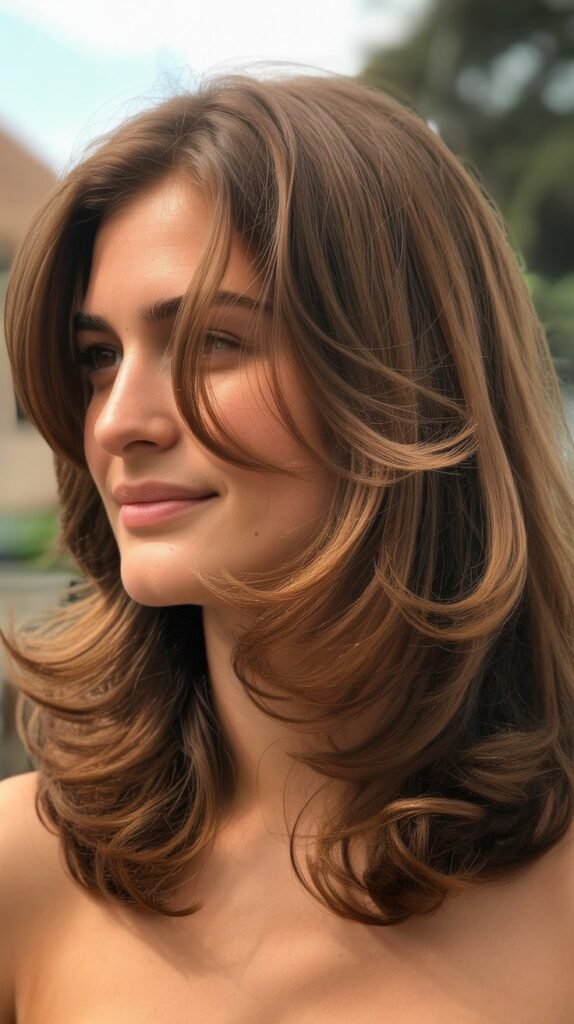
The shoulder-length cut with face-framing layers remains timeless for thick wavy hair because it removes weight while maintaining feminine elegance.
This style features shorter pieces around the face that gradually blend into longer lengths at the shoulders, creating a flattering silhouette that works for all face shapes.
- The layers begin at cheekbone or chin level and cascade down to create natural movement
- This cut reduces bulk at the ends while preserving volume at the crown
- The face-framing pieces can be styled forward or tucked behind ears for versatility
- It works exceptionally well for those transitioning from long to medium-length hair
- The shoulder length prevents the triangular shape that often plagues thick wavy hair
- Styling takes minimal effort as the waves naturally fall into place with the layers
- This cut grows out gracefully without requiring frequent salon visits
2. Long Cascading Layers with Curtain Bangs
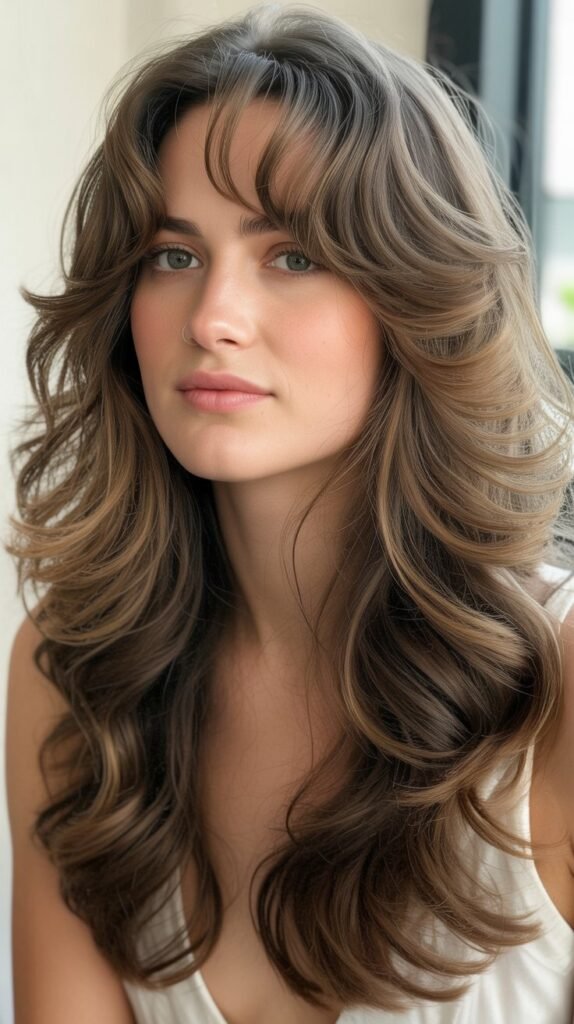
Long cascading layers combined with curtain bangs create a bohemian-chic look that’s perfect for thick wavy hair seeking drama and movement.
The curtain bangs part down the middle and frame both sides of the face while the layers throughout add dimension and reduce heaviness.
- Curtain bangs start shorter at the center and gradually lengthen toward the temples
- The cascading layers begin mid-length and continue to the ends for maximum flow
- This style prevents the bottom-heavy appearance common with thick wavy hair
- The parted bangs visually elongate round or square face shapes
- Layers are strategically placed to enhance the wave pattern rather than disrupt it
- This cut requires styling products like mousse or wave-enhancing cream for definition
- Regular trims every 8-10 weeks keep the layers fresh and prevent split ends
3. Collarbone-Length Lob with Heavy Face Framing
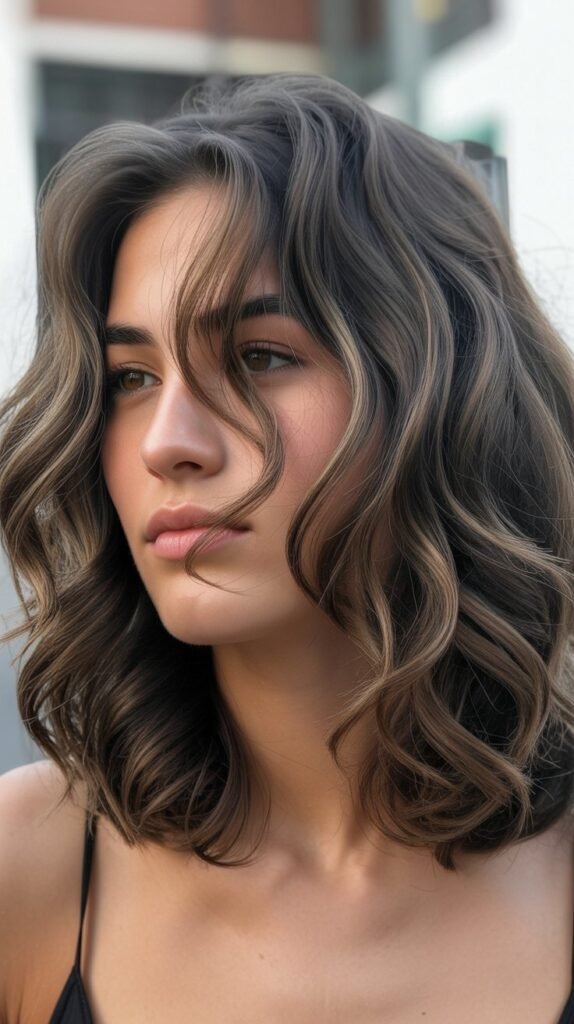
The collarbone-length lob (long bob) with heavy face-framing provides structure while maintaining the sophistication of longer hair.
This cut features dramatic shorter pieces at the front that create a striking contrast with the uniform length at the back.
- Face-framing layers can start as high as the jawline for maximum impact
- The back is kept relatively blunt to maintain thickness and fullness
- This style is ideal for those wanting to showcase defined facial features
- The collarbone length is universally flattering and easy to maintain
- Thick wavy hair holds this shape beautifully without falling flat
- The heavy face framing can be styled straight for a sleek look or wavy for texture
- This cut works particularly well for professional environments while remaining stylish
4. Shaggy Layers with Piece-y Face Framing
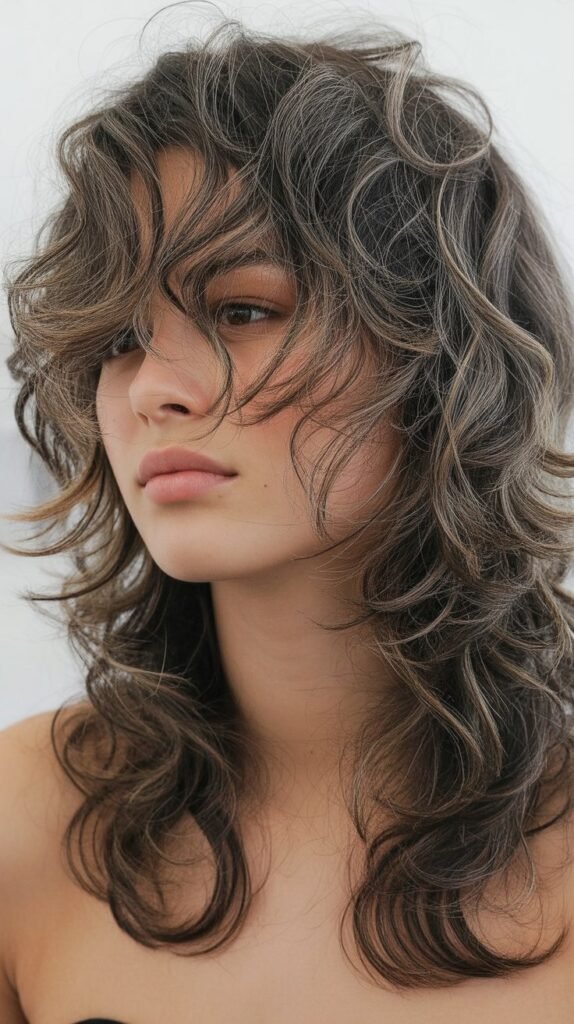
The modern shag brings edgy texture to thick wavy hair through choppy, piece-y layers that create intentional messiness.
Face-framing pieces are cut with point-cutting techniques for a feathered, lived-in appearance.
- Multiple layers throughout the hair create volume at the crown and movement at the ends
- The piece-y face framing is texturized rather than blunt for a soft, effortless look
- This style works beautifully with natural texture and requires minimal styling
- The shag technique removes significant weight, making thick hair more manageable
- Layers are distributed evenly from top to bottom for consistent texture
- This cut embraces the “undone” aesthetic popular in contemporary hairstyling
- Sea salt spray or texturizing products enhance the shaggy, piece-y effect
5. V-Cut Layers with Graduated Face Framing
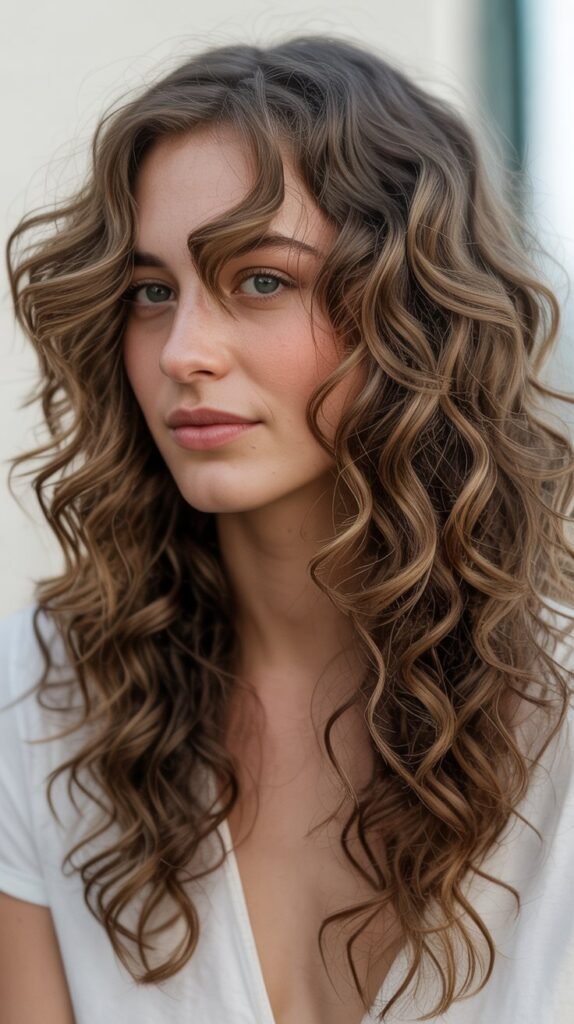
The V-cut creates a distinctive shape where hair is longest at the center back and gradually shorter toward the sides, while graduated face framing complements this silhouette.
This style offers dramatic length in back while keeping the front lighter and more face-focused.
- The V-shape is formed by cutting the back hair into a point at the center
- Face-framing layers graduate from shorter at the front to longer as they blend toward the back
- This cut maintains maximum length while removing bulk from the sides
- The V-cut enhances the natural wave pattern by following the hair’s growth direction
- It’s particularly flattering for those with longer faces or wanting to emphasize back length
- The graduated layers prevent the sides from looking heavy or triangular
- This style photographs beautifully from behind, showcasing the distinctive V-shape
6. Butterfly Layers with Delicate Face Framing
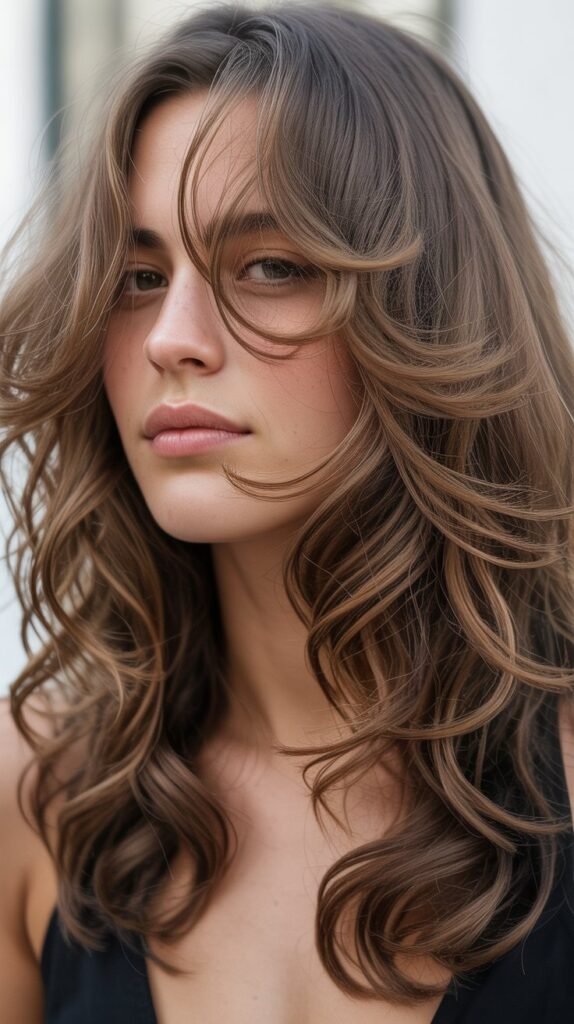
Butterfly layers feature shorter layers at the crown that create lift and volume resembling butterfly wings, paired with delicate face-framing pieces.
This technique is perfect for adding height to thick wavy hair that tends to fall flat.
- Crown layers are cut significantly shorter to create lift at the top of the head
- The layers gradually lengthen as they move toward the perimeter
- Delicate face framing consists of wispy, thin pieces that softly frame the face
- This cut is ideal for those with heavy, dense thick hair that lacks volume
- The butterfly effect creates an hourglass shape when hair is viewed from behind
- Blow-drying with a round brush at the crown enhances the lifted effect
- This style requires more styling effort but delivers dramatic volume results
7. Long Layers with Swooping Side Fringe
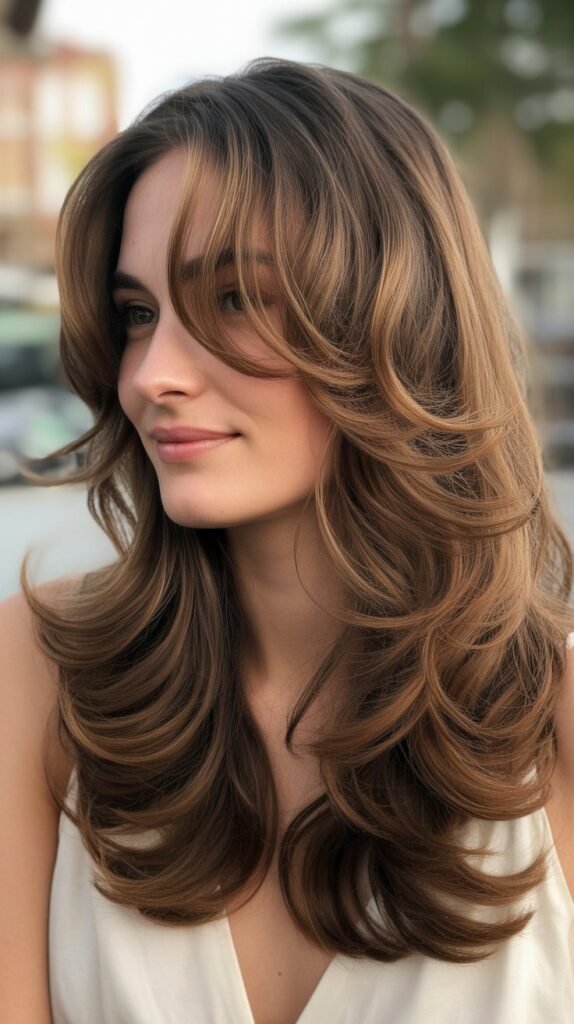
Long layers throughout paired with a swooping side fringe create an asymmetrical, romantic look for thick wavy hair.
The side fringe sweeps across the forehead and blends into face-framing layers on one side.
- The side fringe is cut on a diagonal to create a sweeping motion across the forehead
- Long layers begin below the shoulders and continue to the ends
- This style is particularly flattering for high foreheads or angular face shapes
- The asymmetry adds visual interest without requiring extreme cutting
- Thick wavy hair holds the swooping fringe well without constant restyling
- The fringe can be worn swept to either side depending on preference
- Minimal layering preserves length while adding essential movement
8. Midi-Length Layers with Rounded Face Framing
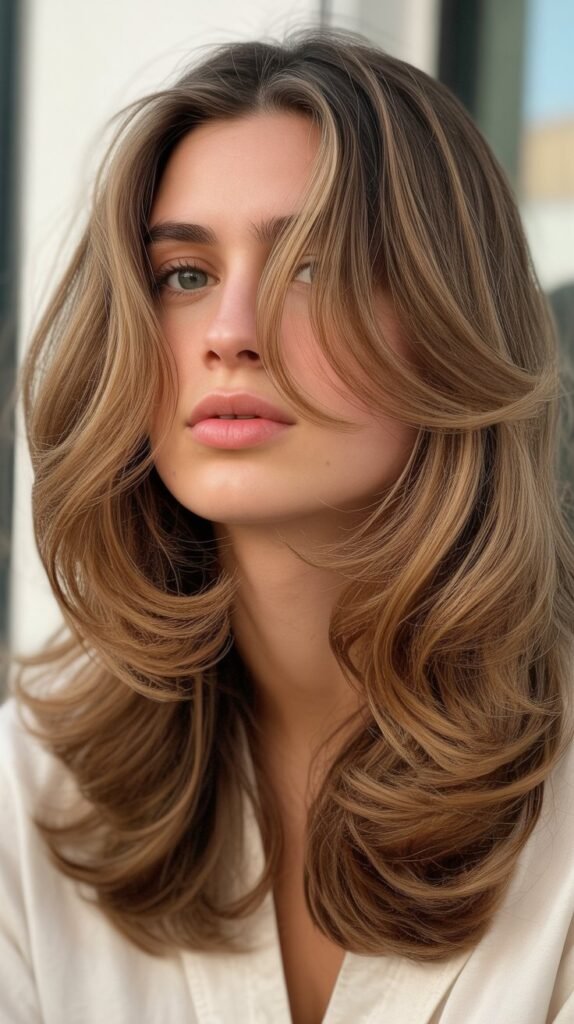
Midi-length hair falls between the shoulders and collarbone, and when combined with rounded face-framing layers, it creates a soft, approachable aesthetic.
The rounded layers gently curve around the face rather than falling straight down.
- The midi length hits at the most flattering point between shoulder and collarbone
- Face-framing layers are cut in a curved rather than straight line
- This technique softens angular features and complements round face shapes
- The rounded layers create a halo effect around the face
- Thick wavy hair naturally embraces the curved shape without extensive styling
- This cut balances professionalism with feminine softness
- The length is practical for those with active lifestyles while remaining stylish
9. Feathered Layers with Tapered Face Framing
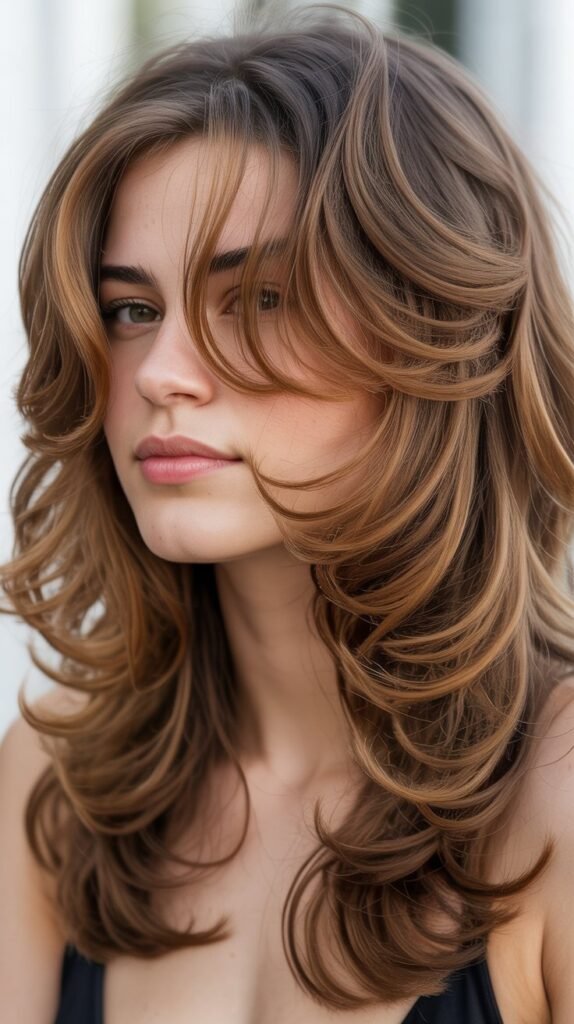
Feathered layers involve point-cutting techniques that create a light, airy texture throughout thick wavy hair, while tapered face framing gradually thins toward the ends.
This approach removes bulk while maintaining a natural, flowing appearance.
- Point-cutting creates feathered ends that blend seamlessly rather than appearing blunt
- Tapered face framing starts thicker at the root and gradually thins toward the tips
- This technique is excellent for reducing weight without sacrificing length
- The feathering enhances the hair’s natural wave pattern and movement
- It creates a softer perimeter that looks lived-in and effortless
- This cut requires a skilled stylist familiar with texturizing techniques
- Regular maintenance ensures the feathered effect doesn’t become too thin
10. Waterfall Layers with Diagonal Face Framing
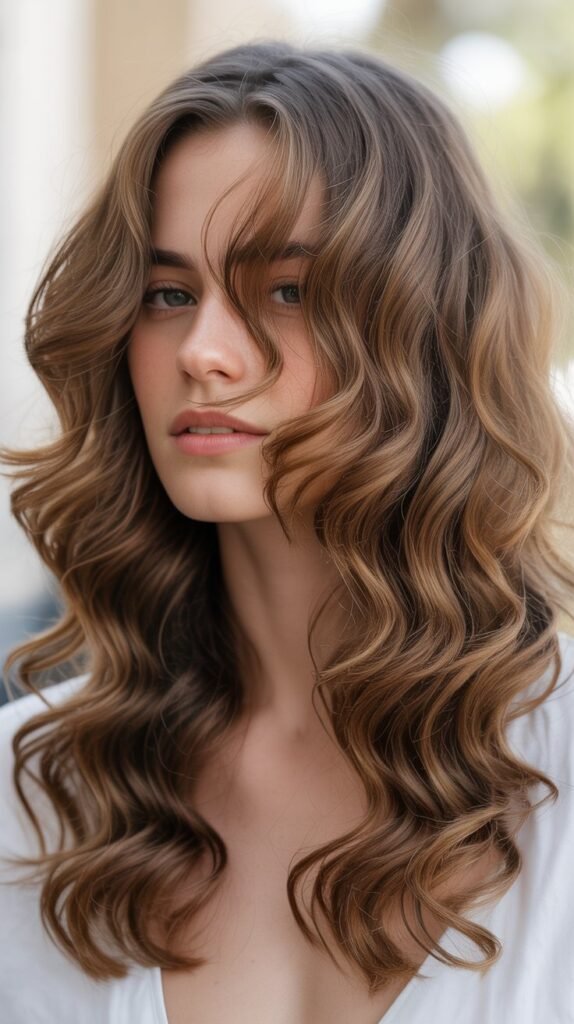
Waterfall layers cascade down the hair like water flowing over rocks, creating continuous movement from top to bottom.
Diagonal face framing angles from shorter at the front to longer as it sweeps back.
- Layers are cut at regular intervals throughout the hair length for consistent flow
- The waterfall effect creates seamless transitions between layer levels
- Diagonal face framing follows the natural jawline angle for flattering results
- This style maintains fullness while preventing the bottom-heavy look
- The continuous layering works with thick wavy hair’s natural texture
- It’s one of the most versatile cuts for various styling options
- The waterfall technique distributes weight evenly throughout the hair
11. Blunt Cut with Strategic Face-Framing Layers
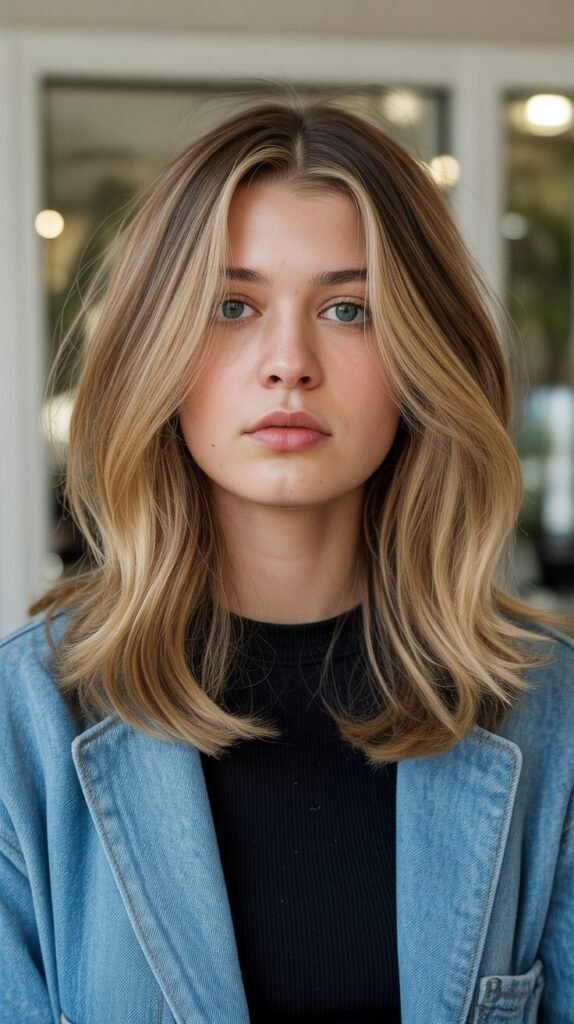
A blunt cut maintains one uniform length at the perimeter while strategic face-framing layers are added only around the face.
This approach keeps maximum thickness and weight while providing facial focus.
- The perimeter is cut straight across without internal layering
- Face-framing layers are isolated to the front sections only
- This style is ideal for those wanting to maintain length and fullness
- The contrast between blunt ends and face layers creates visual interest
- Thick wavy hair appears lush and healthy with a blunt perimeter
- The strategic layers prevent the cut from looking too heavy or severe
- Minimal layering means less frequent salon visits for maintenance
12. Layered Wolf Cut with Bold Face Framing
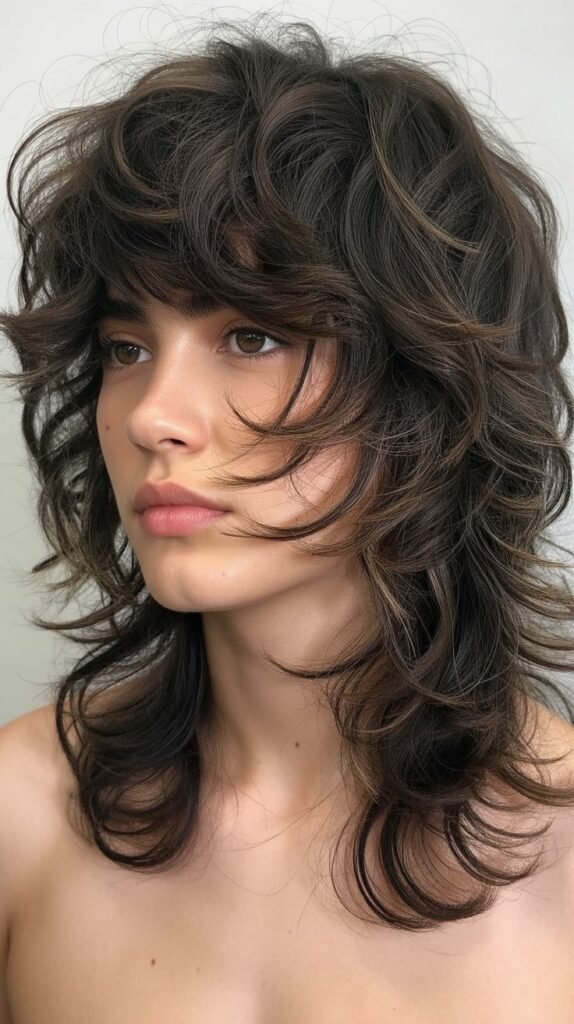
The wolf cut combines shag and mullet elements with heavily layered top sections and bold face-framing pieces.
This edgy style has surged in popularity for its ability to tame thick wavy hair while making a fashion statement.
- The top layers are cut much shorter, creating volume and texture at the crown
- Bold face framing features dramatic shorter pieces that frame the face aggressively
- The back maintains more length, creating the signature mullet-inspired silhouette
- This cut removes substantial weight, making thick hair significantly more manageable
- The wolf cut works particularly well with natural wave patterns
- It requires confident styling with texturizing products for the best results
- This style is perfect for those wanting to make a bold, trendy statement
13. U-Shape Layers with Graduated Face Framing
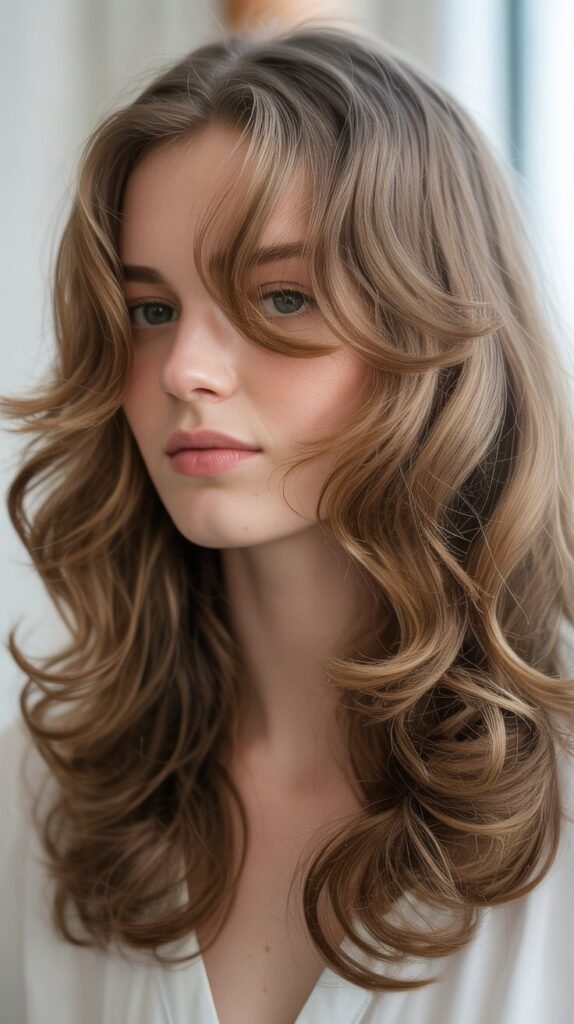
U-shape layers create a gentle curve at the perimeter where the back is longest and gradually shortens toward the front.
Graduated face framing complements this shape with layers that increase in length as they move backward.
- The U-shape maintains more length in the back while keeping sides manageable
- Face-framing graduation creates a smooth transition from short to long
- This cut is universally flattering across different face shapes
- The U-shape prevents corners or harsh lines at the perimeter
- It works beautifully with thick wavy hair’s natural body and movement
- The graduated layers blend seamlessly without visible demarcation lines
- This style offers fullness where desired while maintaining facial focus
14. Razored Layers with Wispy Face Framing
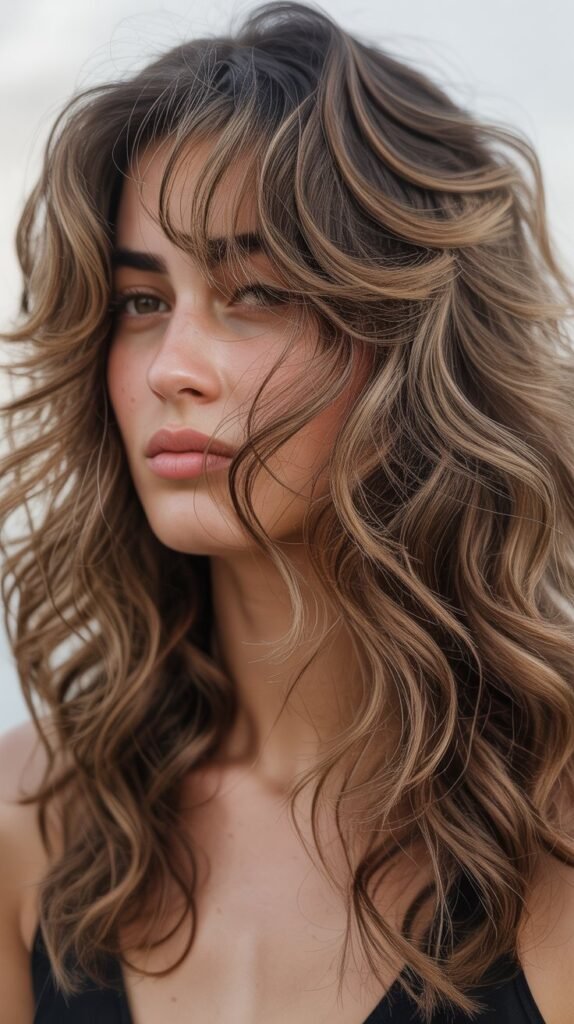
Razor cutting creates softer, more textured layers compared to scissor cutting, paired with wispy face-framing pieces for an ethereal appearance.
This technique is particularly effective for removing weight from thick wavy hair.
- The razor creates layers with feathered ends that blend naturally
- Wispy face framing consists of thin, delicate pieces that softly frame the face
- Razoring removes bulk while maintaining the appearance of thickness
- This method enhances the hair’s natural wave pattern without disrupting it
- The wispy pieces add softness around the face without heaviness
- Razored layers create more movement and texture than traditional scissor cuts
- This technique requires a stylist experienced with razor cutting to avoid damage
15. Choppy Layers with Asymmetric Face Framing
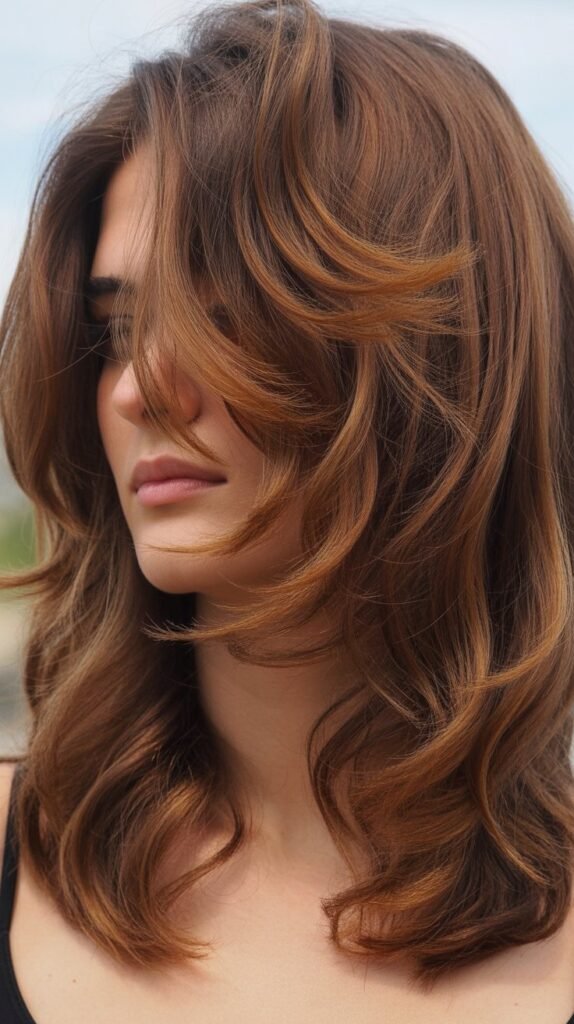
Choppy layers provide an intentionally uneven, textured look while asymmetric face framing features different lengths on each side of the face.
This bold approach creates an edgy, modern aesthetic.
- Choppy layers are cut with varying lengths for a deliberately uneven appearance
- Asymmetric face framing might be shorter on one side and longer on the other
- This style works well for those wanting to break away from traditional symmetry
- The choppy texture disguises the thickness of wavy hair effectively
- Asymmetry can be subtle or dramatic based on personal preference
- This cut requires confidence and styling products that enhance texture
- The intentional unevenness creates visual interest from every angle
16. Textured Bob with Angled Face Framing
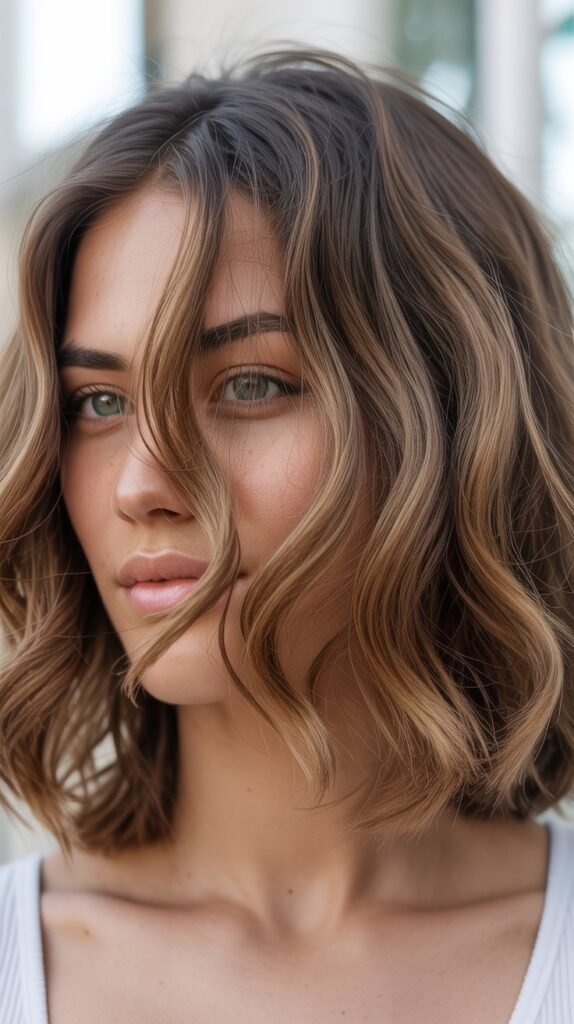
A textured bob falls above the shoulders with internal texturizing and angled face-framing layers that are shorter in back and longer in front.
This creates a modern, sophisticated look for thick wavy hair.
- The bob length typically hits between chin and shoulders
- Angled face framing creates a forward-sloping line from back to front
- Internal texturizing removes weight without affecting the overall shape
- This style is professional yet trendy, suitable for various environments
- The angle of the face framing elongates the neck and defines the jawline
- Thick wavy hair provides natural body to the bob structure
- Minimal styling is required due to the strategic cutting techniques
17. Long Layers with Micro Fringe Face Framing
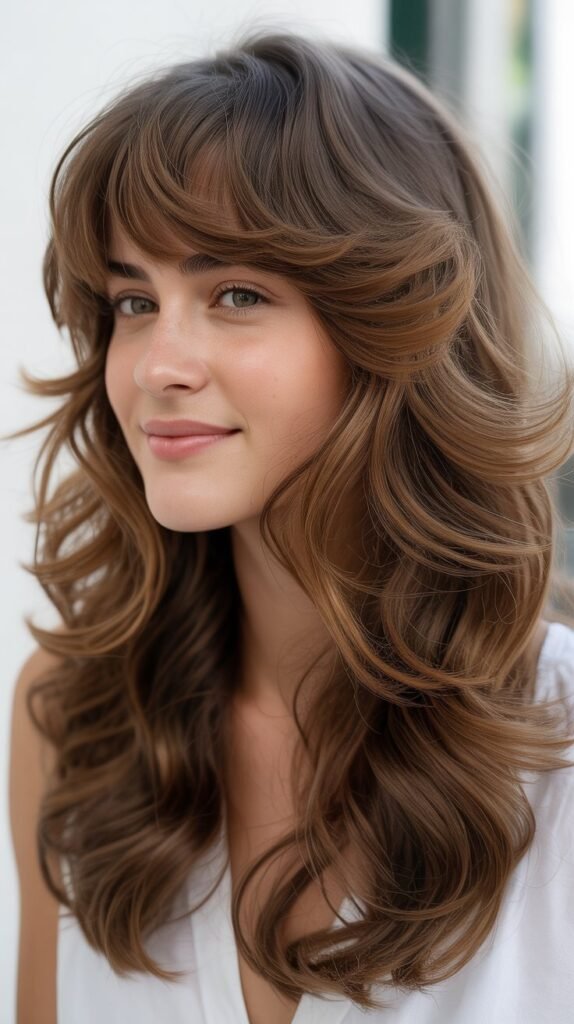
Long layers throughout the hair are combined with micro fringe face framing, where very short, fine pieces frame the face while the rest of the hair maintains length.
This creates a delicate, editorial look.
- Micro fringe consists of very short, wispy pieces that barely touch the cheekbones
- Long layers begin mid-length and continue to the ends
- This style maintains maximum length while adding interest around the face
- The micro fringe softens facial features without the commitment of full bangs
- It’s particularly effective for highlighting cheekbones and eyes
- Thick wavy hair balances the delicate fringe with substantial body
- The micro fringe requires precise cutting and regular maintenance
18. C-Cut Layers with Curved Face Framing
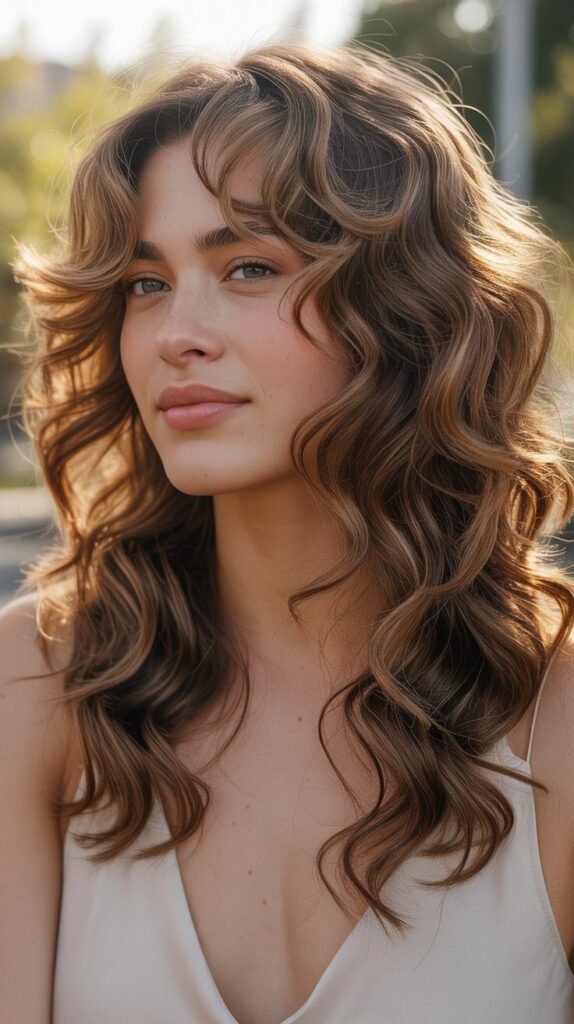
C-cut layers create a curved shape at the perimeter that curves inward, while curved face framing follows this rounded aesthetic.
This technique creates a cohesive, elegant silhouette for thick wavy hair.
- The C-cut curves the perimeter so ends curve toward the face and neck
- Curved face framing mirrors this shape around the face
- This cut is exceptionally flattering for those wanting to minimize width
- The inward curve creates a slimming effect on the face and body
- Thick wavy hair naturally embraces the curved shape without excessive styling
- The C-cut works particularly well at shoulder to mid-back length
- Blow-drying with a round brush enhances the curved effect
19. Stacked Layers with Face-Framing Ribbons
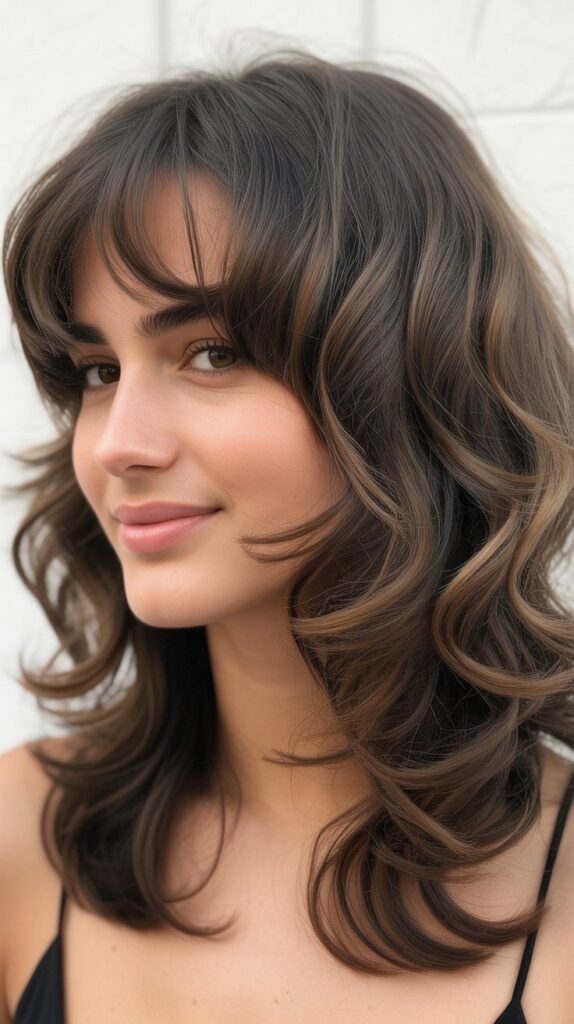
Stacked layers create volume at the back of the head through shorter, graduated layers, while face-framing ribbons are thin sections cut to frame the face.
This adds dimension and interest to thick wavy hair.
- Stacked layers at the back create lift and prevent flatness
- Face-framing ribbons are narrow sections cut shorter than surrounding hair
- This technique adds architectural interest to the overall style
- The stacked back prevents the weight of thick hair from pulling down
- Ribbons can be highlighted or colored differently for added emphasis
- This style requires more styling effort to showcase the stacking
- The combination of stacking and ribbons creates a customized, unique look
20. Layered Shag with Baby Bang Face Framing
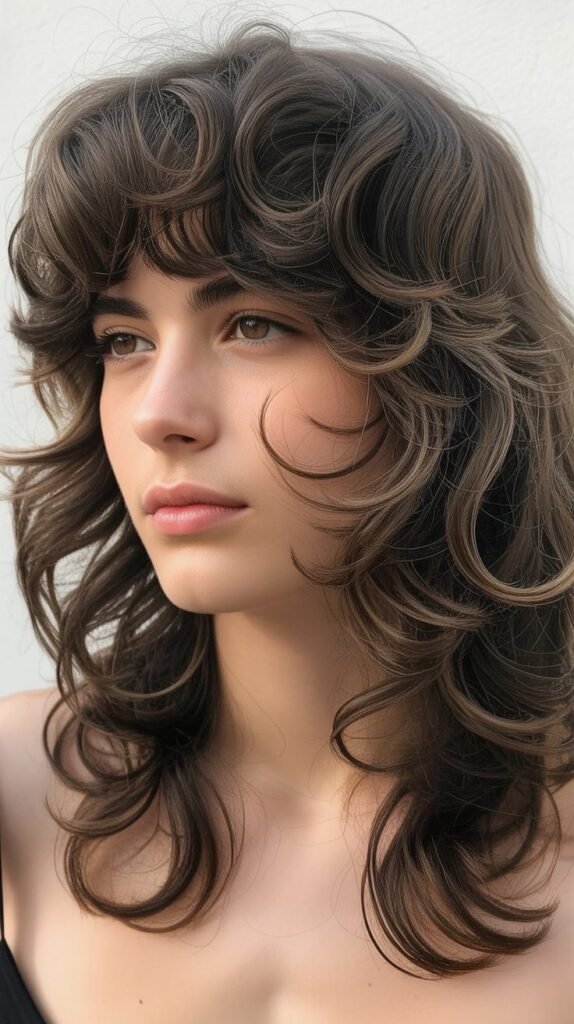
A layered shag combined with baby bangs creates a retro-inspired, edgy look.
The baby bangs are cut very short across the forehead while shag layers provide texture throughout.
- Baby bangs are cut 1-2 inches above the eyebrows
- Shag layers create volume and texture from crown to ends
- This bold style makes a strong fashion statement
- The combination works surprisingly well with thick wavy hair’s natural texture
- Baby bangs draw attention to the eyes and upper face
- This cut requires confidence and regular maintenance of the short bangs
- Texturizing products enhance the shaggy, lived-in appearance
21. Invisible Layers with Subtle Face Framing
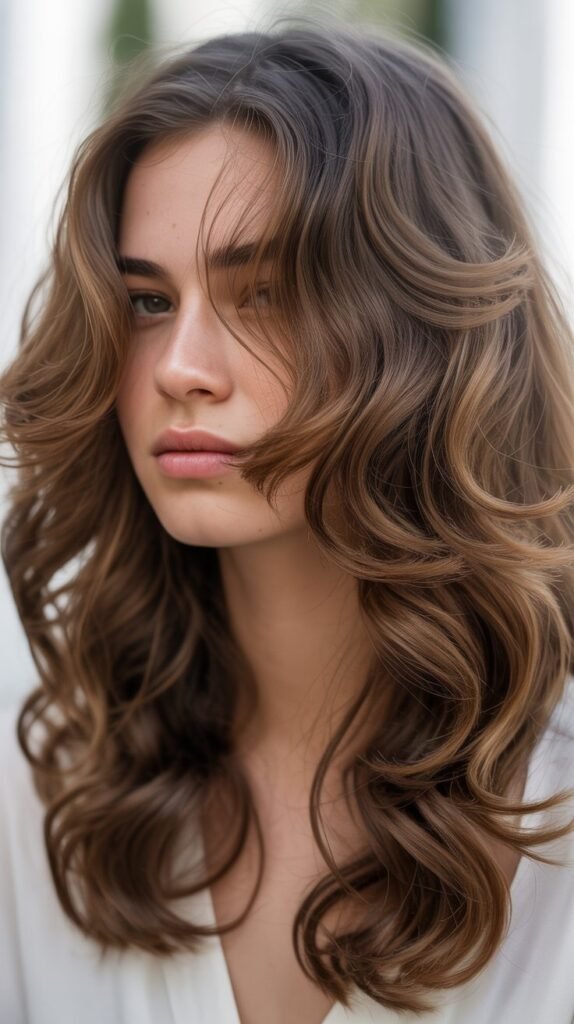
Invisible layers are cut to blend so seamlessly that no distinct layers are visible, while subtle face framing provides gentle contouring.
This technique is perfect for those wanting movement without obvious layering.
- Layers are cut with minimal graduation so transitions are imperceptible
- Subtle face framing involves slight shortening around the face
- This approach maintains the appearance of one-length hair with added movement
- It’s ideal for those who want benefits of layers without dramatic change
- Thick wavy hair appears healthy and full with invisible layering
- The subtlety makes this style appropriate for conservative environments
- Less frequent trims are needed due to seamless blending
22. Octopus Layers with Dynamic Face Framing
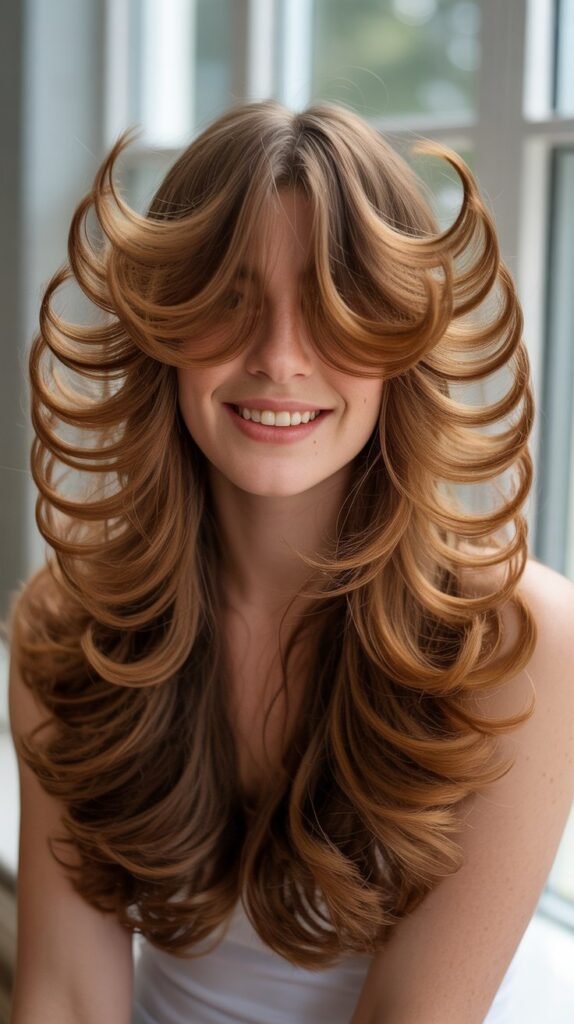
Octopus layers feature heavily layered top sections that create tentacle-like pieces, combined with dynamic face framing that moves with the hair.
This trendy cut offers maximum volume and movement.
- The top layers are cut very short, creating multiple “tentacles” of varying length
- Dynamic face framing features layers that move and shift with head movement
- This cut dramatically reduces weight in thick hair
- The octopus effect creates significant volume at the crown
- It works exceptionally well with natural wave texture
- This style requires styling products to define and separate the layers
- The dramatic layering makes a bold, contemporary statement
23. Layered Lob with Side-Swept Face Framing
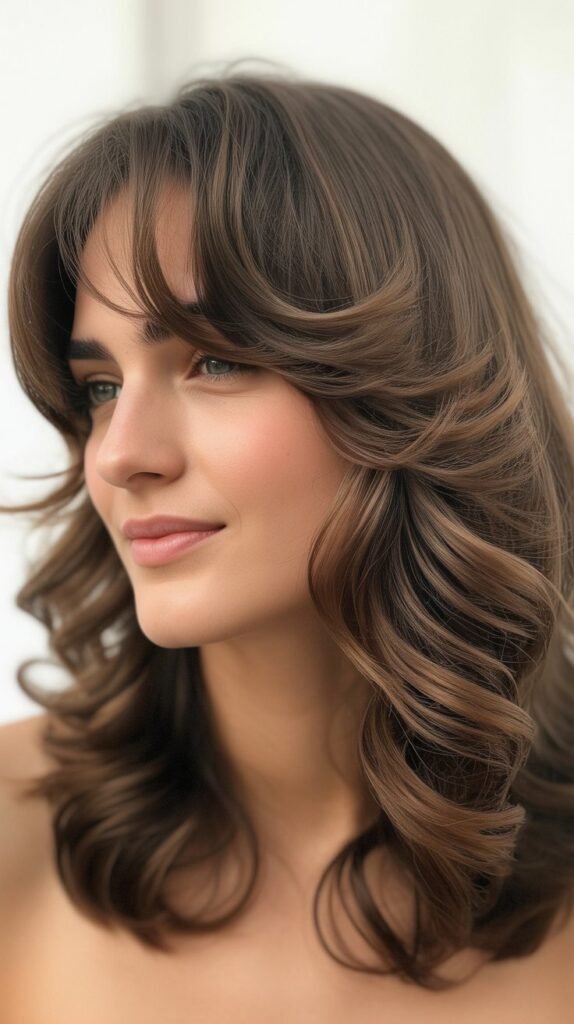
A layered lob (long bob) with side-swept face framing creates a sophisticated, polished look.
The face-framing pieces are cut to naturally sweep to one side, creating asymmetry and elegance.
- The lob length typically falls between chin and shoulder
- Side-swept framing is longer on the swept side for natural flow
- Internal layers throughout add movement without sacrificing the lob shape
- This style is incredibly versatile for professional and casual settings
- The side sweep flatters most face shapes by creating angles
- Thick wavy hair provides natural body to the lob structure
- Styling involves simply sweeping the front sections to the preferred side
24. Reverse Layers with Framing Tendrils
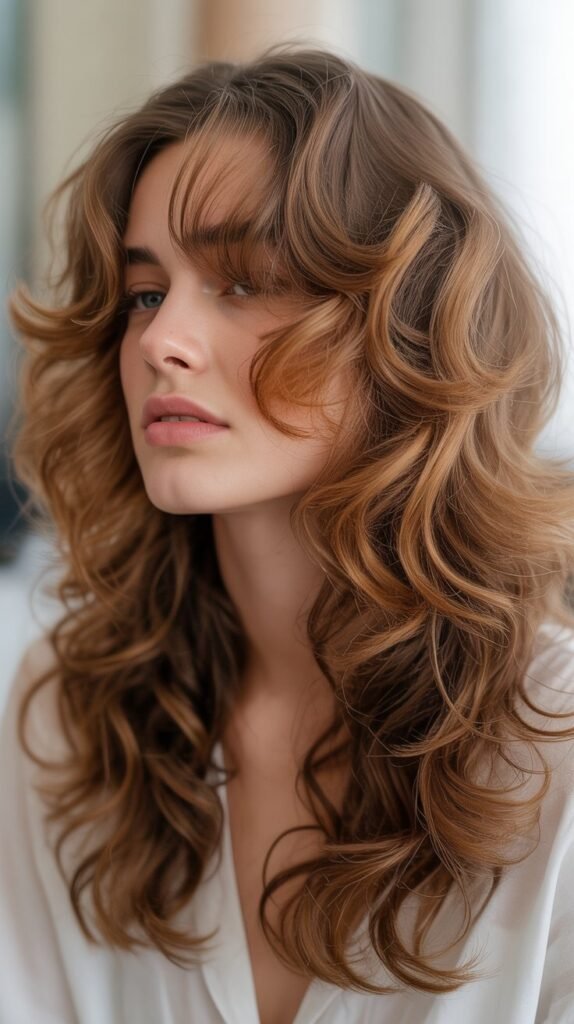
Reverse layers are shorter at the bottom and longer at the top (opposite of traditional layers), combined with delicate framing tendrils around the face.
This unusual technique creates unique volume distribution.
- Reverse layering creates lift at the ends rather than the crown
- Framing tendrils are thin, delicate pieces that spiral around the face
- This technique is ideal for those wanting volume at the perimeter
- The reverse structure works against the natural weight of thick hair
- Tendrils add romantic, feminine detail around the face
- This cut requires skilled cutting to achieve proper balance
- The unconventional approach creates a distinctive, memorable look
25. Layered Mullet with Statement Face Framing
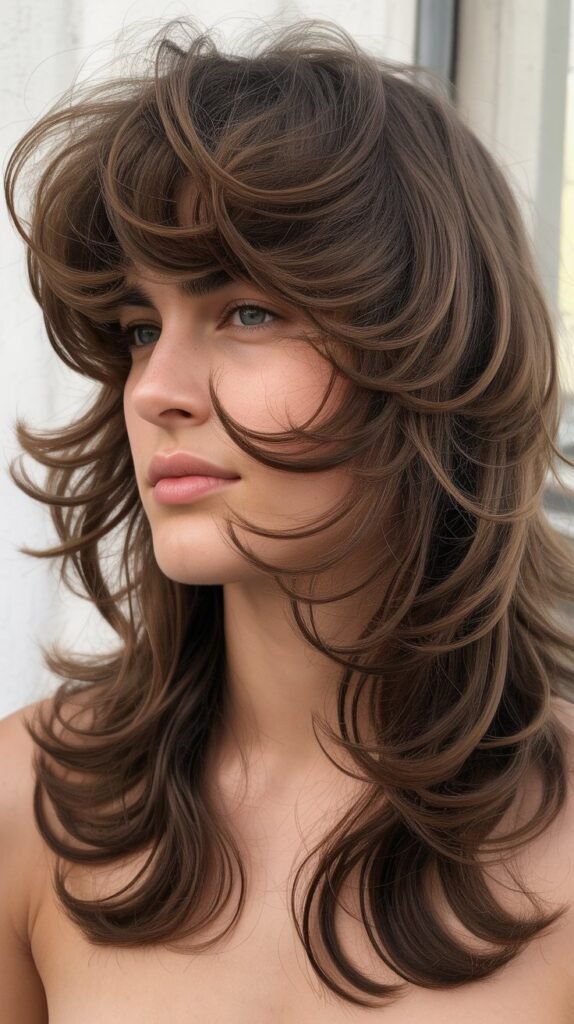
A layered mullet features short layers on top and sides with longer length in back, combined with statement face framing that draws attention.
This bold style has gained popularity for its edgy aesthetic.
- The mullet structure keeps top and sides short while maintaining back length
- Statement face framing features dramatic shorter pieces that demand attention
- This cut removes significant weight from thick hair while keeping length
- The contrast between short and long creates visual drama
- It works particularly well with thick wavy texture for body and movement
- This style requires confidence and regular maintenance of the short sections
- The mullet can be subtle or extreme based on the length differential
26. Graduated Bob with Swooping Face Framing
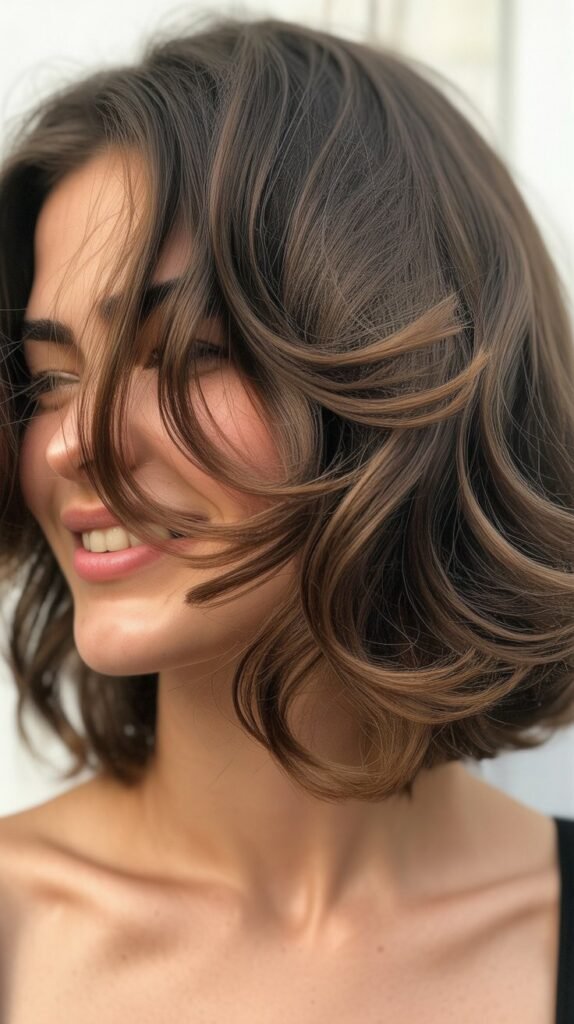
A graduated bob is shorter in the back and longer in the front, creating a forward angle, combined with swooping face framing that curves dramatically.
This sophisticated style is perfect for thick wavy hair.
- The graduation creates an angled line from short back to longer front
- Swooping face framing features pieces that curve inward toward the face
- This cut is exceptionally flattering for defining the jawline and neck
- The graduation removes weight from the back while maintaining front length
- Thick wavy hair holds the graduated structure beautifully
- The swooping framing creates movement and softness around the face
- This style works well in professional settings while remaining fashionable
27. Layered Mullet with Statement Face Framing
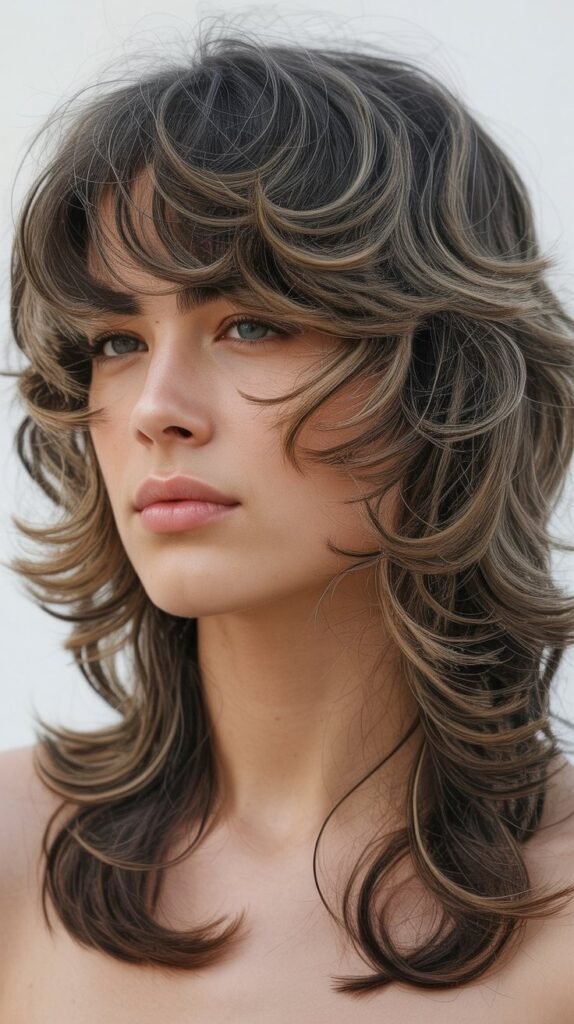
Textured layers throughout provide movement while money piece face framing features two highlighted sections that frame the face.
This combination of cutting and color creates dimension for thick wavy hair.
- Textured layers are cut with point-cutting for soft, blended ends
- Money pieces are the sections immediately framing the face, often highlighted
- This style combines strategic cutting with color for maximum impact
- The highlighted money pieces draw attention to the face and eyes
- Textured layers prevent thick hair from appearing too heavy
- The contrast between natural color and highlighted pieces adds depth
- This look requires both cutting and color maintenance
28. Long Layers with Bottleneck Fringe Face Framing
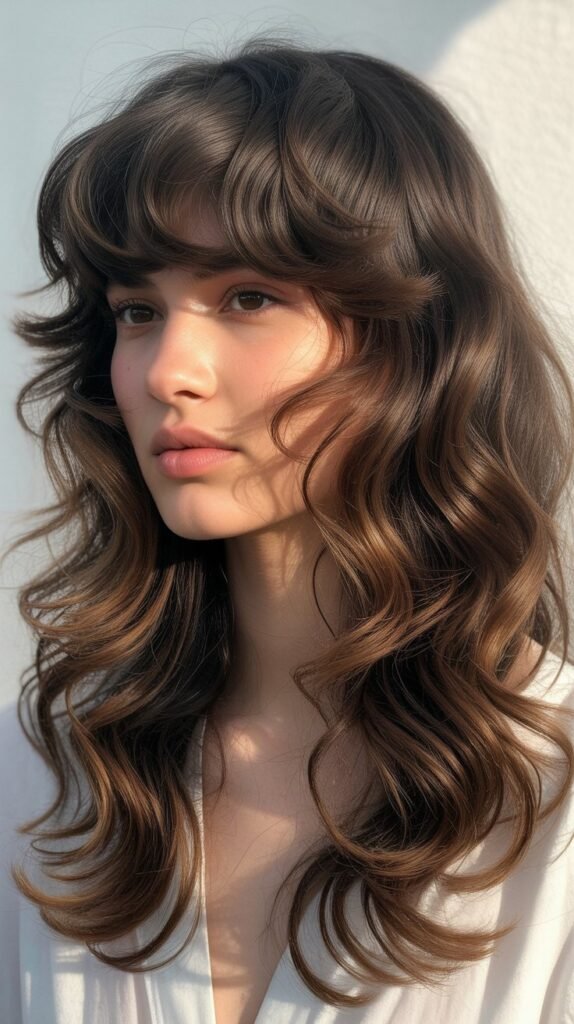
Long layers throughout are combined with bottleneck fringe face framing, where the framing pieces start narrow at the forehead and widen toward the jawline, resembling a bottleneck shape.
This creates a unique, flattering frame.
- The bottleneck shape starts with narrow pieces at the forehead
- The framing gradually widens as it moves down toward the jawline
- Long layers throughout maintain length while adding movement
- This technique creates an elongating effect on the face
- The bottleneck framing is particularly flattering for round or square faces
- Thick wavy hair provides natural body to showcase the framing shape
- The unique shape adds contemporary style to a classic long layered cut
29. Layered Pixie Grow-Out with Extended Face Framing
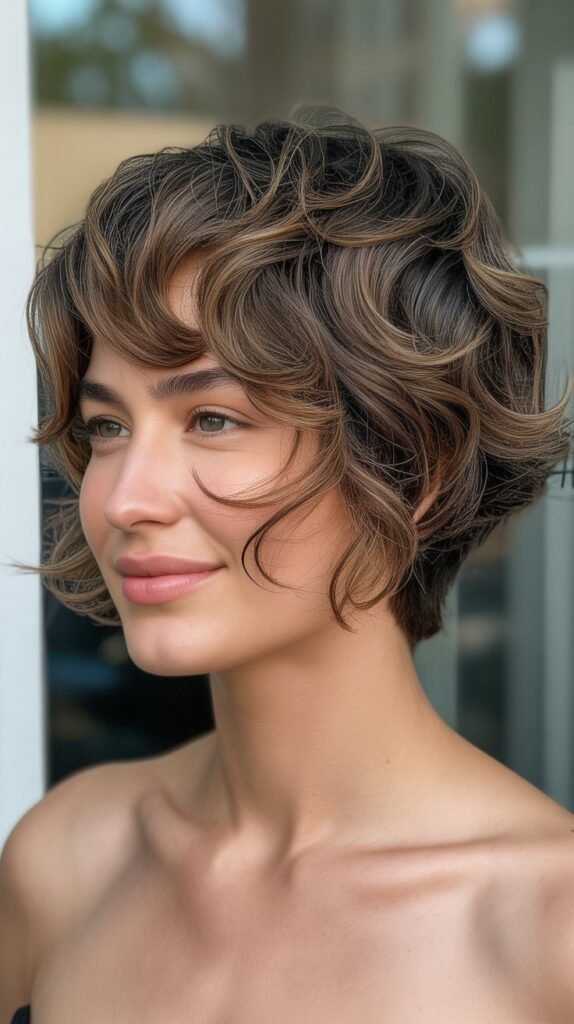
For those growing out a pixie cut, strategic layering with extended face framing helps thick wavy hair transition gracefully through awkward stages.
Extended face framing provides length to work with while the back catches up.
- Extended face framing keeps front sections longer during the grow-out process
- Layers throughout blend the varying lengths during transition
- This approach prevents the “mullet” effect during pixie grow-out
- The longer face-framing pieces can be styled or clipped back
- Thick wavy texture helps disguise uneven lengths during growth
- Regular trims shape the grow-out without removing needed length
- This transitional style can last several months as hair grows
Comparison Table: Face-Framing Layered Styles by Maintenance and Versatility
| Style | Maintenance Level | Styling Time | Versatility | Best Face Shape | Length Category |
|---|---|---|---|---|---|
| Classic Shoulder-Length Layers | Medium | 10-15 min | High | All shapes | Medium |
| Long Cascading Layers | Low | 15-20 min | High | Oval, Heart | Long |
| Collarbone Lob | Medium | 10-15 min | High | All shapes | Medium |
| Shaggy Layers | Low | 5-10 min | Medium | Oval, Heart | Medium-Long |
| V-Cut Layers | Low | 10-15 min | Medium | Heart, Diamond | Long |
| Butterfly Layers | High | 20-25 min | Medium | Round, Square | Long |
| Swooping Side Fringe | Medium | 15-20 min | High | Square, Rectangle | Long |
| Midi-Length Rounded | Medium | 10-15 min | High | Round, Oval | Medium |
| Feathered Layers | Medium | 10-15 min | High | All shapes | Medium-Long |
| Waterfall Layers | Low | 10-15 min | High | All shapes | Long |
| Wolf Cut | Medium | 15-20 min | Medium | Oval, Heart | Medium-Long |
| Textured Bob | High | 15-20 min | High | Oval, Heart | Short-Medium |
Styling Tips for Maintaining Face-Framing Layers on Thick Wavy Hair
Successfully maintaining face-framing layers on thick wavy hair requires understanding your hair’s unique needs and establishing effective routines.
The following comprehensive tips will help you keep your layers looking fresh and your waves beautifully defined between salon visits.
Essential Styling Products
- Use a lightweight leave-in conditioner to hydrate thick waves without weighing them down
- Apply curl-enhancing cream or mousse while hair is still damp for definition
- Incorporate a heat protectant spray before any thermal styling to prevent damage
- Finish with a light-hold hairspray or texture spray to maintain shape without stiffness
- Consider a smoothing serum on the face-framing pieces to control frizz in humid conditions
- Use a weekly deep conditioning mask to keep thick hair healthy and manageable
- Invest in a quality diffuser attachment for your blow dryer to enhance natural wave patterns
Cutting and Maintenance Schedule
- Schedule trims every 6-8 weeks to maintain the integrity of face-framing layers
- Ask your stylist to refresh face-framing pieces between full cuts if needed
- Consider seasonal adjustments to your cut as hair growth patterns change
- Communicate clearly with your stylist about which layers need the most attention
- Take photos of your hair at its best to show your stylist what you want to maintain
- Be consistent with the same stylist who understands your hair’s behavior
- Don’t wait until layers grow out completely before scheduling your next appointment
Nighttime and Daily Care
- Sleep on a silk or satin pillowcase to reduce friction and prevent frizz on wavy hair
- Consider pineapple-ing (loosely gathering hair on top of head) to preserve waves overnight
- Refresh face-framing pieces in the morning with a spray bottle and styling cream
- Avoid over-washing thick wavy hair; 2-3 times per week is typically sufficient
- Use a wide-tooth comb or fingers to detangle instead of brushes that disrupt wave patterns
- Apply dry shampoo to roots when needed to extend time between washes
- Protect hair from sun damage with UV-protectant products or hats during extended exposure
Common Mistakes to Avoid with Face-Framing Layers on Thick Wavy Hair
Understanding what not to do is just as important as knowing the right techniques. Avoiding these common mistakes will help you maintain beautiful, healthy face-framing layers that enhance your thick wavy hair.
- Over-thinning the hair: Excessive thinning can create frizz and remove the natural texture needed for beautiful waves
- Cutting face-framing layers too short: Extremely short face framing can stick out awkwardly on thick wavy hair instead of blending
- Using heavy products: Thick hair doesn’t need heavy oils or creams that can weigh down waves and make layers look limp
- Blow-drying without a diffuser: Regular blow-drying can create frizz and disrupt the natural wave pattern in layered sections
- Neglecting regular trims: Allowing face-framing layers to grow out too long defeats their purpose and creates an unbalanced look
- Straightening too frequently: Constant heat styling can damage the hair’s natural texture and make waves harder to achieve
- Ignoring hair health: Split ends and damage are more visible in face-framing sections that draw attention to your face
- Copying styles without considering face shape: Not all face-framing techniques flatter every face shape equally
- Using the wrong brush type: Paddle brushes and fine-tooth combs can disrupt wave patterns in layered sections
- Skipping heat protection: Face-framing pieces often receive the most heat styling and need consistent protection
The journey to finding your perfect hairstyle ends when you discover how face-framing layers can transform thick wavy hair into a manageable, stunning asset.
Throughout this exploration of 29 Face-Framing Layered Styles for Thick Wavy Hair Everyone Loves, you’ve discovered cuts ranging from classic and sophisticated to bold and contemporary, each designed to work with your hair’s natural texture while highlighting your best features.
The key to success lies in choosing a style that complements your face shape, fits your lifestyle, and matches your maintenance commitment level.
Whether you opt for the timeless elegance of shoulder-length layers, the edgy appeal of a wolf cut, or the romantic softness of long cascading layers, face-framing techniques will reduce bulk, enhance movement, and create that coveted effortless beauty that makes heads turn.
Remember that great hair starts with a skilled stylist who understands thick wavy hair, continues with proper at-home care, and flourishes with regular maintenance.
Embrace your natural texture, experiment with different styling techniques, and most importantly, choose a cut that makes you feel confident and beautiful every single day.
