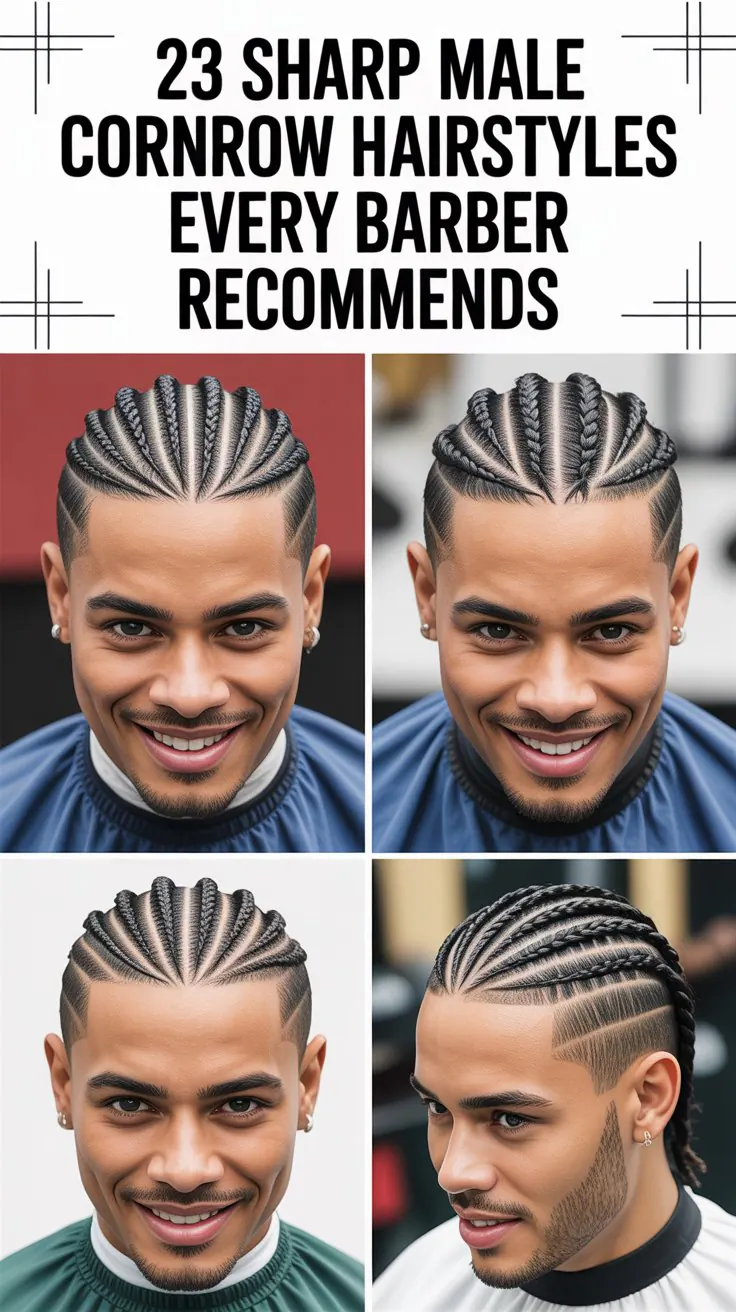
Male cornrows have evolved from traditional African braiding techniques into one of the most versatile and stylish hairstyles in modern barbering.
Whether you’re looking for a clean, professional look or something bold and artistic, cornrows offer endless possibilities for self-expression while keeping your hair neat and manageable.
This comprehensive guide explores 23 Sharp Male Cornrow Hairstyles Every Barber Recommends, covering everything from classic straight-back patterns to intricate geometric designs that showcase true craftsmanship.
You’ll discover low-maintenance styles perfect for busy lifestyles, protective braiding techniques that promote hair health, and creative patterns that make bold fashion statements.
Each style featured here comes recommended by professional barbers who understand what works best for different hair types, face shapes, and personal preferences.
We’ll walk you through traditional cornrow patterns that have stood the test of time, modern twists that incorporate fades and designs, and hybrid styles that combine braiding with other cutting-edge techniques.
Whether you’re new to cornrows or looking to switch up your current style, this article provides detailed insights into the most requested and admired cornrow hairstyles in barbershops today.
1. Classic Straight-Back Cornrows
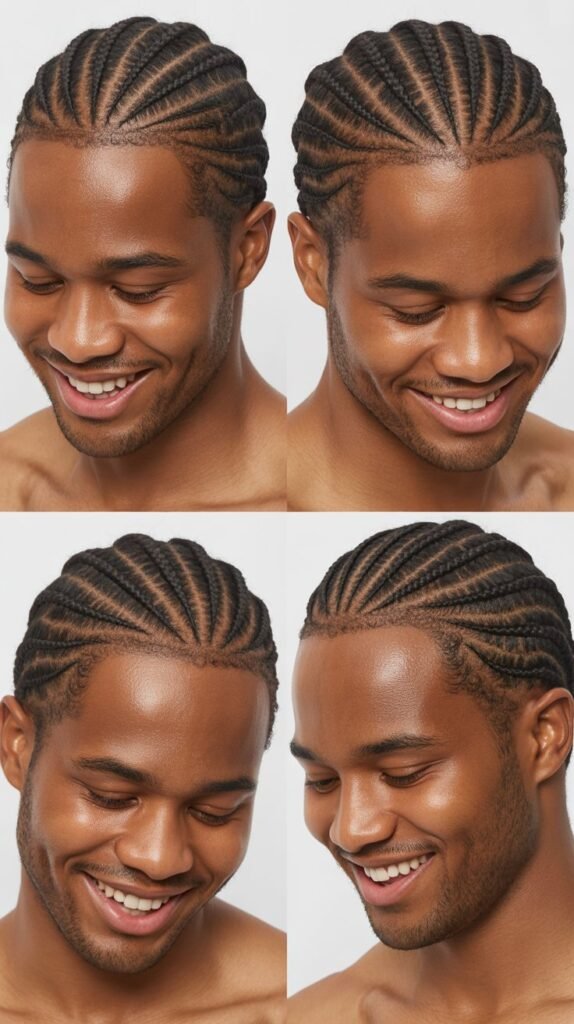
Straight-back cornrows remain the foundation of all cornrow styling and represent the most timeless approach to this braiding technique.
This style features parallel rows that run from the front hairline straight to the back of the head, creating clean lines that emphasize symmetry and precision.
- The straight-back pattern works exceptionally well for men with medium to long hair length who want a clean, uniform appearance.
- Barbers typically create between 4 to 8 rows depending on hair thickness and the desired boldness of the look.
- This style can last anywhere from 2 to 6 weeks with proper maintenance and nighttime protection.
- The versatility of straight-back cornrows makes them appropriate for both professional settings and casual environments.
- This pattern serves as an excellent protective style that reduces daily manipulation and promotes healthy hair growth.
- Men with receding hairlines often choose this style because the backward direction creates a lengthening effect on the face.
2. Cornrows with Fade
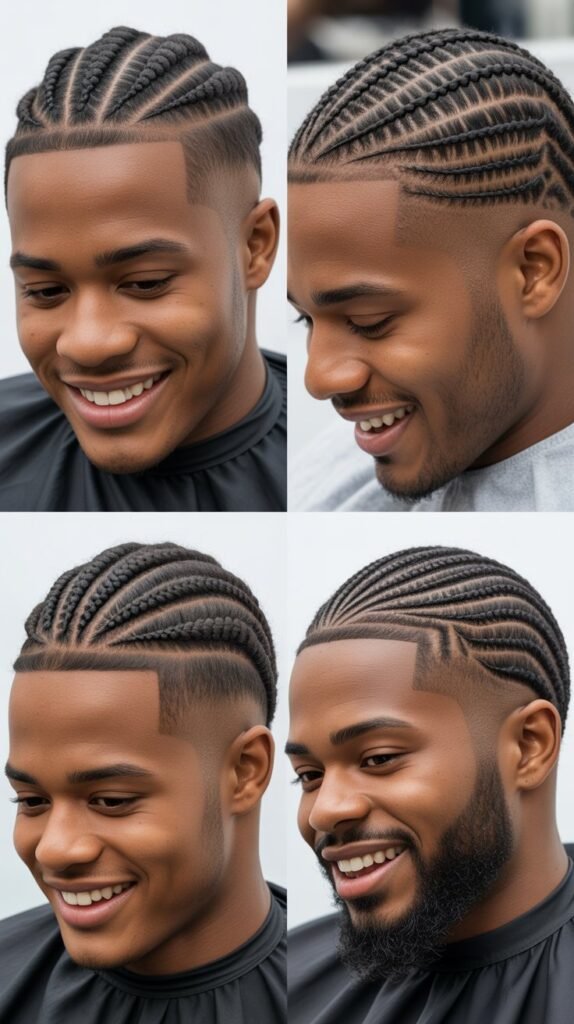
Combining cornrows with a fade creates a striking contrast that has become one of the most requested styles in contemporary barbershops.
This hybrid approach blends the textured pattern of braids with the clean, tapered look of faded sides.
- The fade can be customized as a high, mid, or low fade depending on personal preference and face shape.
- This combination reduces the bulkiness on the sides while maintaining volume and pattern on top.
- Barbers recommend this style for men who want the benefits of cornrows without the full head coverage.
- The fade portion requires touch-ups every 1-2 weeks to maintain the sharp contrast with the braided section.
- This style works particularly well for men with thick, coarse hair that holds braids securely.
- The modern aesthetic of cornrows with fade makes it popular among athletes, entertainers, and fashion-forward professionals.
- Different fade techniques such as burst fades, drop fades, or temple fades can be incorporated for added creativity.
3. Zig-Zag Cornrow Pattern
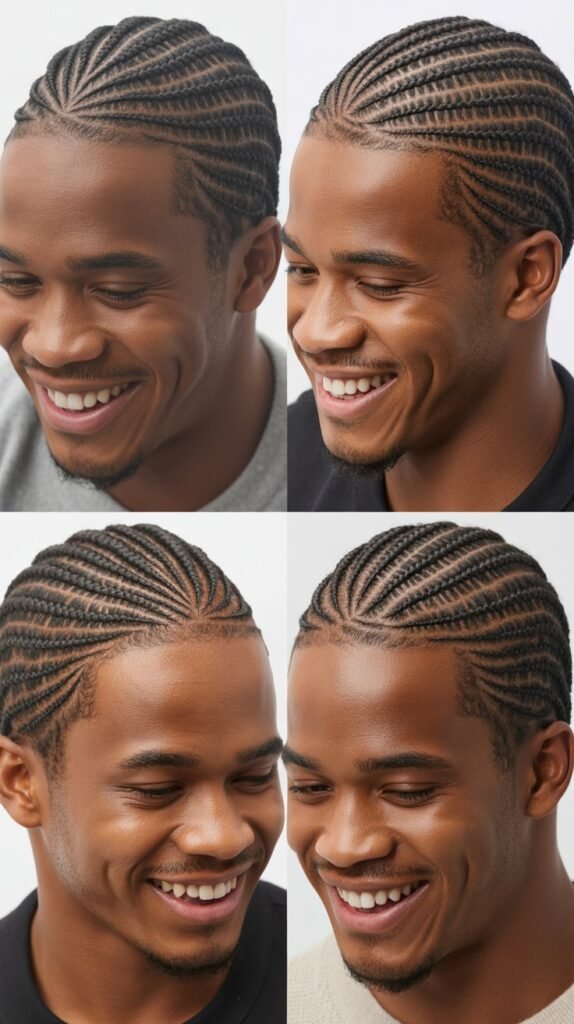
Zig-zag cornrows break away from traditional straight lines to create dynamic visual movement across the scalp.
This pattern requires advanced braiding skills and demonstrates the artistic capabilities of experienced braiders.
- The zig-zag pattern adds dimension and interest to what might otherwise be a standard cornrow style.
- This design works best on men with at least 3-4 inches of hair length for proper pattern visibility.
- Creating zig-zag cornrows takes longer than straight patterns, typically requiring 2-4 hours depending on complexity.
- The alternating directions help distribute tension more evenly across the scalp, which can be more comfortable for some wearers.
- This style makes a bold statement and is frequently chosen for special events, photoshoots, or by those in creative industries.
- Maintenance involves regular edge control application and occasional re-braiding of sections that may loosen over time.
4. Feed-In Cornrows
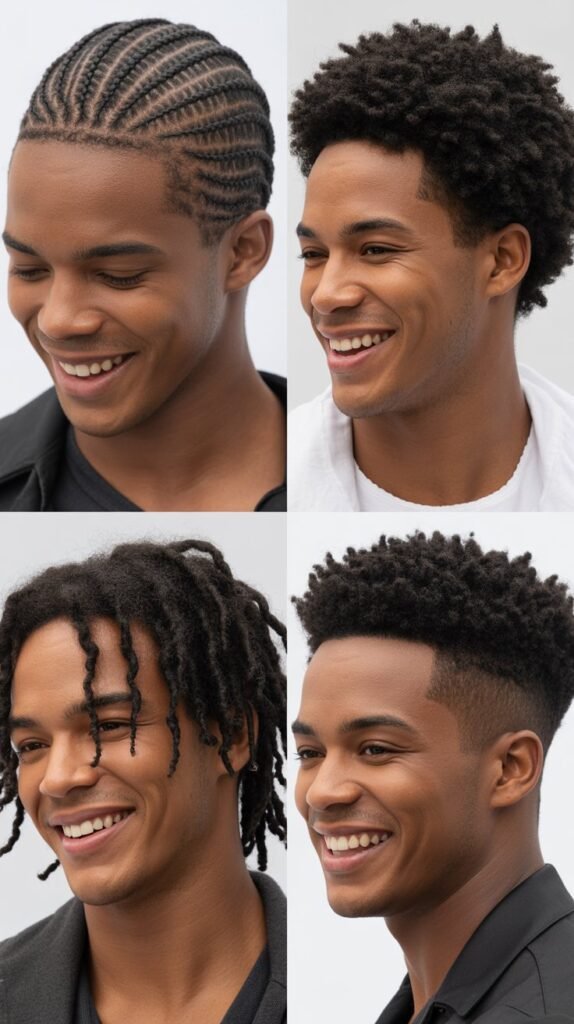
Feed-in cornrows represent a more natural-looking approach where hair is gradually added to create braids that start thin at the hairline and increase in size.
This technique reduces tension on the edges and creates a seamless, scalp-hugging appearance.
- The feed-in method is particularly beneficial for men concerned about hairline preservation and traction alopecia prevention.
- Starting with smaller sections at the front creates a more natural appearance than traditional cornrows.
- This technique allows for various thicknesses throughout the head, providing dimensional styling opportunities.
- Barbers and braiders with experience in this method can create designs that look like hair is growing naturally from the scalp.
- Feed-in cornrows typically last as long as traditional cornrows but with significantly less tension-related discomfort.
- This approach has become the gold standard for protective styling among professional braiders.
- The gradual increase technique works well when transitioning between braided and loose hair sections.
5. Triangle-Part Cornrows
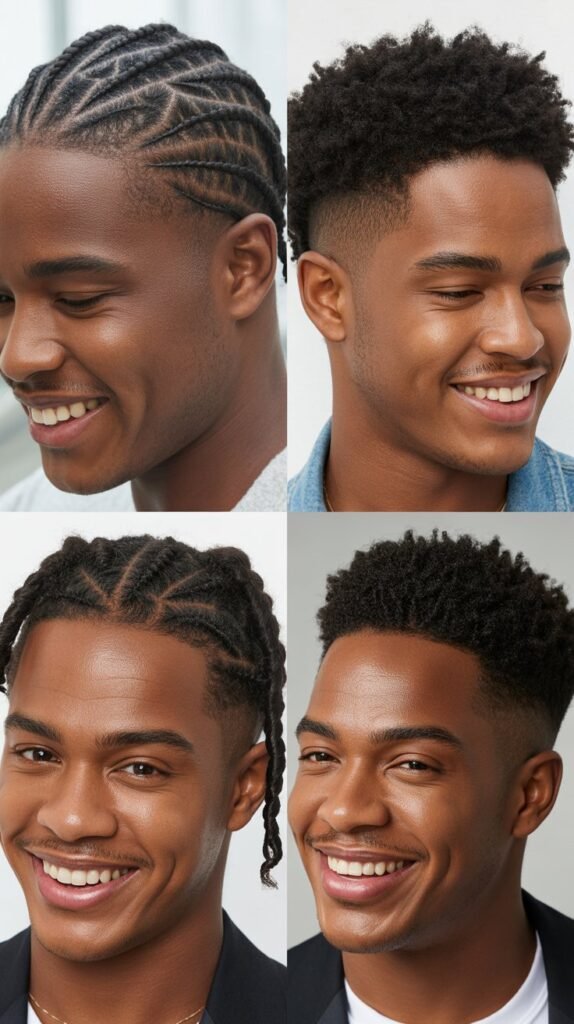
Triangle-part cornrows feature geometric sectioning where each braid originates from a triangular base rather than the traditional rectangular parting.
This creates a distinctive pattern that adds visual interest before the braiding even begins.
- The triangular parting creates a staggered, brick-like pattern that prevents straight lines across the scalp.
- This method distributes hair more evenly and can make braids appear fuller and more voluminous.
- Triangle parts work exceptionally well for men with thinner hair as they create the illusion of more density.
- The geometric precision required for this style showcases advanced braiding techniques and attention to detail.
- Each triangular section can be customized in size to create different visual effects and braid thicknesses.
- This parting method reduces the visible scalp lines that sometimes occur with traditional rectangular sections.
- Triangle-part cornrows offer versatility in styling direction, allowing for creative patterns that flow in multiple directions.
6. Cornrow Mohawk
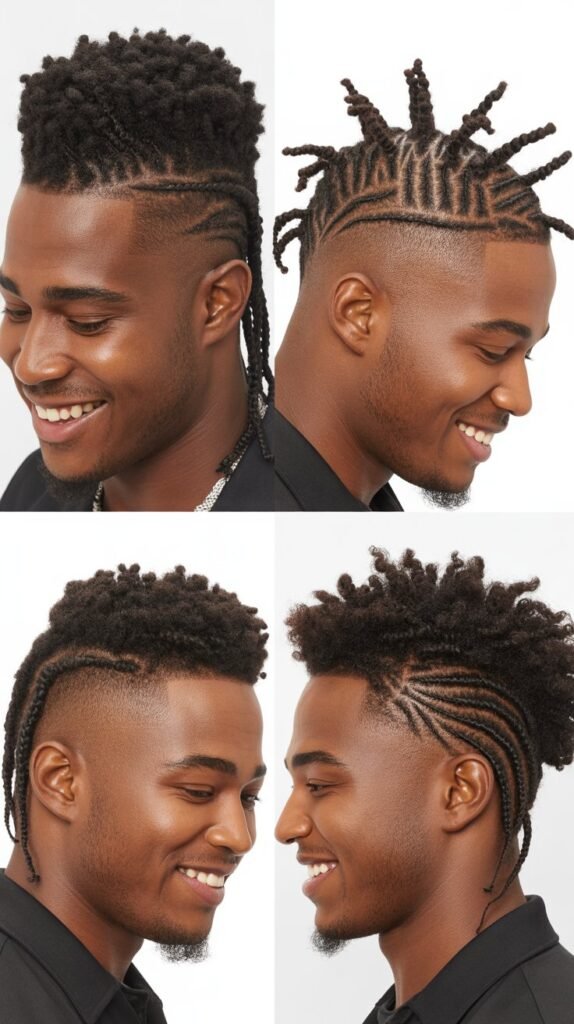
The cornrow mohawk combines the edgy appeal of a mohawk with the structure and neatness of cornrows.
This style features braids concentrated in a central strip from front to back while the sides are either faded or left with minimal hair.
- This style makes a powerful fashion statement while maintaining the protective benefits of cornrows.
- The width of the mohawk section can be adjusted from subtle (2-3 inches) to dramatic (4-6 inches) depending on preference.
- Barbers often incorporate designs or patterns into the faded sides to complement the braided center.
- The mohawk section can feature various cornrow patterns including straight-back, curved, or even criss-crossing designs.
- This style requires regular fade maintenance every 1-2 weeks but the braided portion can last 3-4 weeks.
- Men with naturally high or thick hair on top find this style particularly flattering as it emphasizes volume.
- The cornrow mohawk works well for those who want an alternative hairstyle without committing to a full head of braids.
7. Curved Cornrows
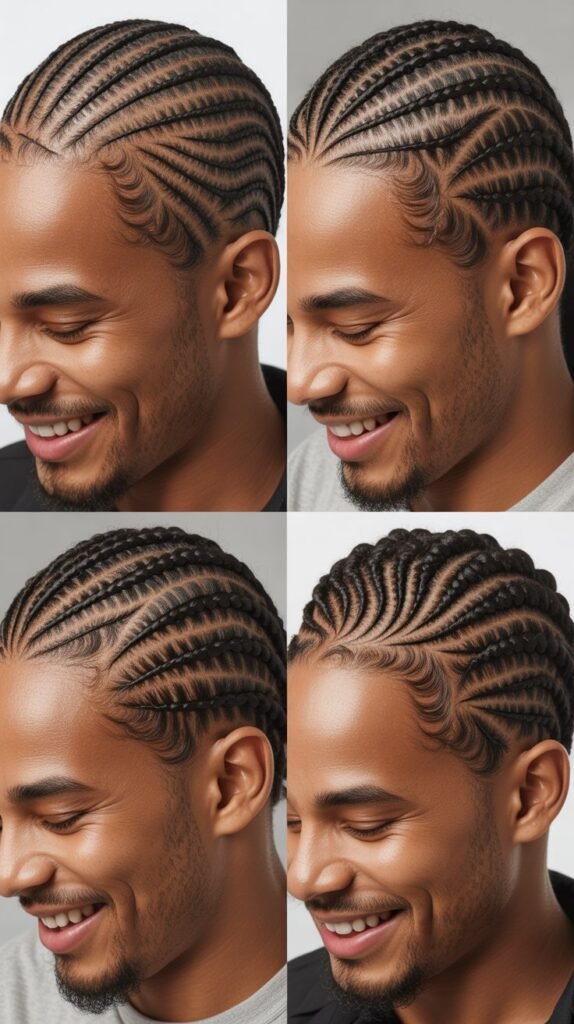
Curved cornrows follow the natural contours of the head, creating flowing lines that add softness and movement to the overall look.
These braids arc gracefully rather than following rigid straight paths.
- The curved approach creates a more organic, artistic appearance compared to geometric straight patterns.
- This style is particularly flattering for men with round or square face shapes as it adds visual length.
- Curved cornrows can be designed to flow toward a focal point, such as a side part or central design element.
- The technique requires experienced hands as maintaining consistent curve tension throughout is challenging.
- This pattern often incorporates varying braid thicknesses to enhance the flowing, dimensional effect.
- Curved cornrows complement men with longer faces by adding width perception through horizontal curves.
- The style remains distinctive without being overly bold, making it suitable for various professional environments.
8. Cornrows with Design
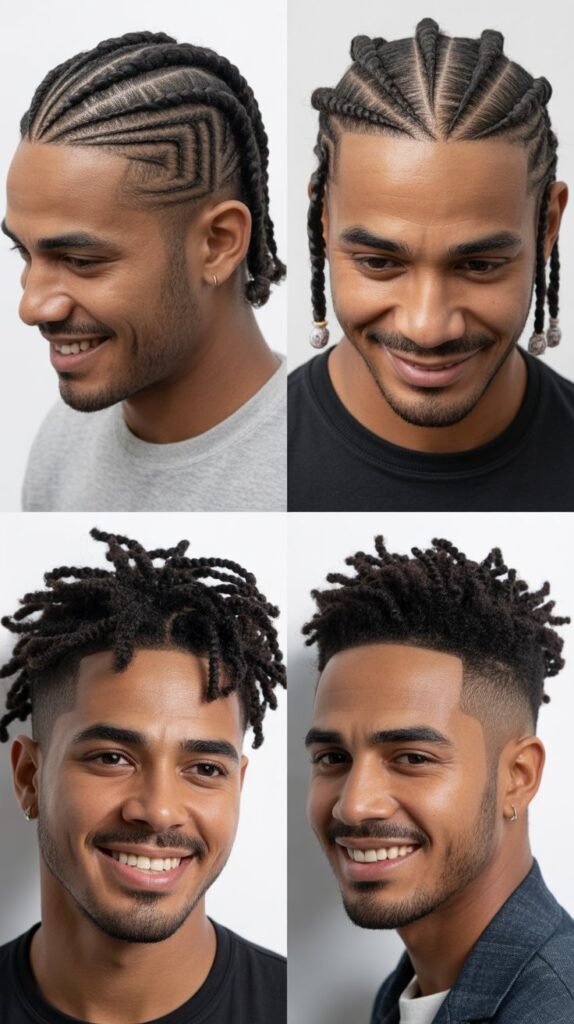
Adding shaved or carved designs to cornrow styles elevates the look from simple to statement-making.
These designs can range from subtle lines to intricate patterns and logos integrated into the braided sections.
- Design elements are typically carved into faded or short sections surrounding the cornrowed areas.
- Popular design additions include stars, lightning bolts, tribal patterns, initials, and brand logos.
- The combination of braiding texture and shaved designs creates striking visual contrast.
- These custom designs require skilled barbers who specialize in both braiding and precision clipper work.
- Design maintenance is necessary every 1-2 weeks as hair growth can blur the carved patterns.
- This style allows for seasonal updates where designs can change while maintaining the base cornrow pattern.
- Men seeking unique, personalized hairstyles frequently request cornrows with custom design elements.
9. Box Braids to Cornrows Hybrid
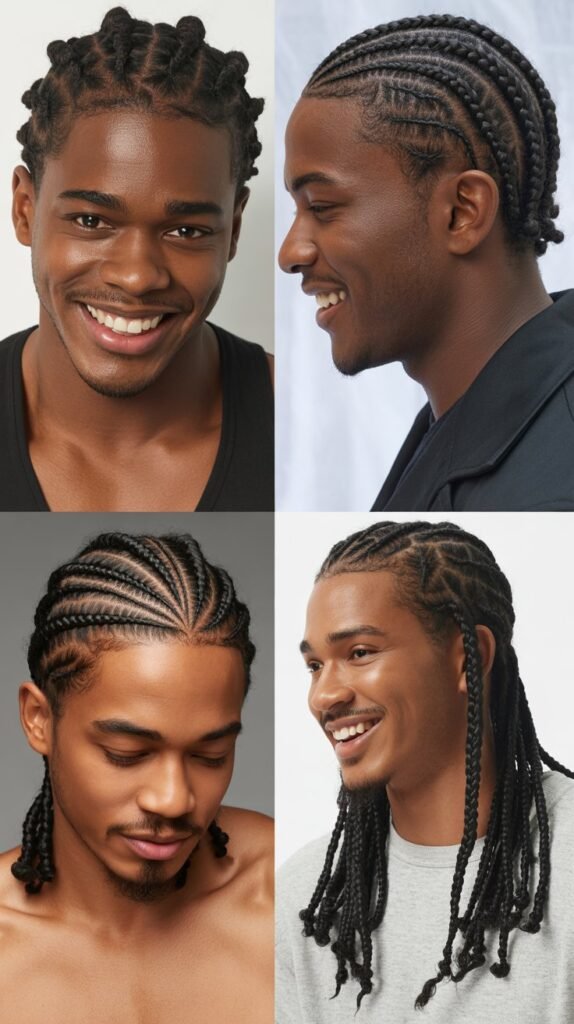
This hybrid style features cornrows at the front or crown that transition into individual box braids in the back and sides.
The combination offers styling versatility and visual interest through contrasting textures.
- The hybrid approach provides the sleek look of cornrows where most visible while offering movement with box braids.
- This style works particularly well for men with longer hair who want protective styling with flexibility.
- The cornrow section can be styled in various patterns while box braids offer length and swing.
- Installation time is extensive, typically requiring 4-6 hours depending on hair length and braid size.
- This combination distributes weight more evenly than full box braids, reducing scalp tension.
- Men can pull box braid sections into ponytails or buns while maintaining the structured cornrow base.
- The hybrid style offers longevity of 4-8 weeks with proper nighttime care and minimal manipulation.
10. Side-Part Cornrows
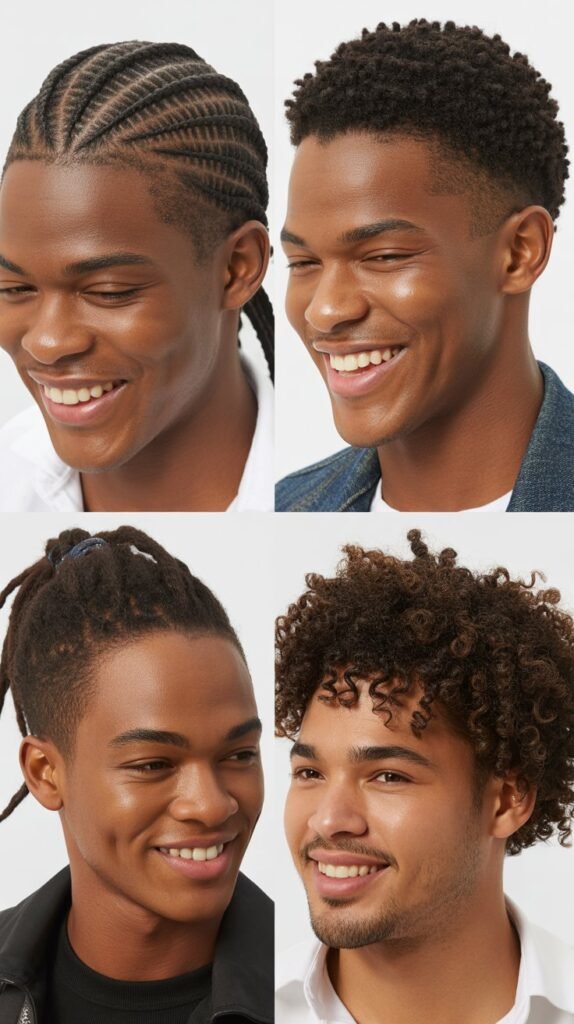
Side-part cornrows feature a distinct parting line on one side of the head with braids flowing diagonally across to the opposite side.
This asymmetrical approach adds modern sophistication to traditional cornrow styling.
- The side part creates immediate visual interest and breaks the symmetry of standard cornrow patterns.
- This style is particularly popular among professionals who want a distinctive yet polished appearance.
- The parting line can be created with precision clippers for extra definition and contrast.
- Side-part cornrows naturally complement men with asymmetrical face features or those who prefer off-center styling.
- The diagonal flow of braids elongates the face and draws attention upward.
- This pattern works well with various braid thicknesses from thin and numerous to thick and bold.
- Styling products can be applied to the part line to maintain crisp definition between sections.
11. Crown Cornrows
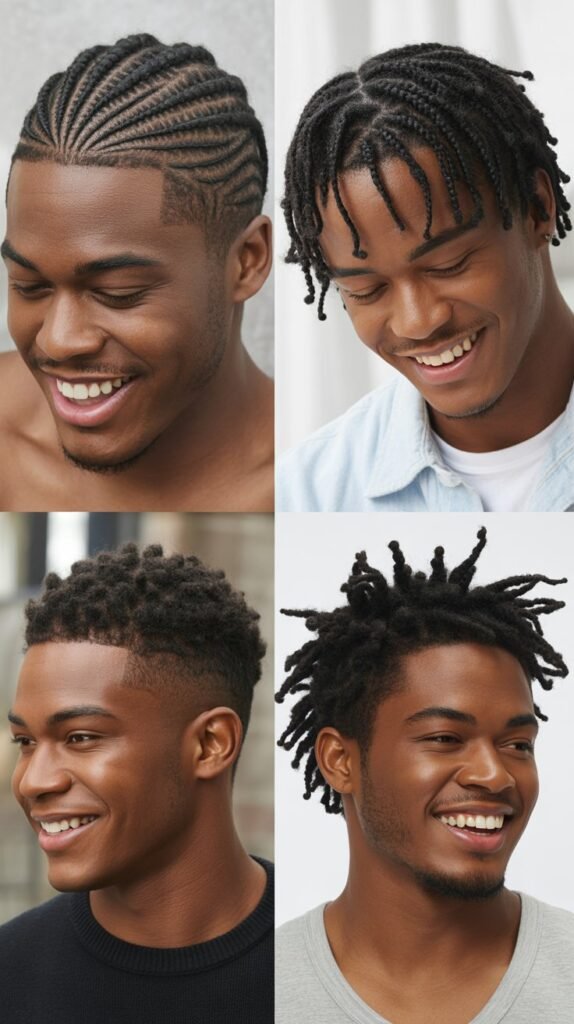
Crown cornrows radiate outward from a central point on the head, creating a circular or spiral pattern that resembles a crown.
This distinctive style requires advanced braiding expertise and careful planning.
- The crown pattern creates a focal point at the top of the head that naturally draws the eye upward.
- This style works exceptionally well for men with rounded head shapes as it enhances natural contours.
- Creating the crown requires precise sectioning to ensure braids radiate evenly from the center.
- The pattern can be designed as a tight spiral or wider radiating lines depending on desired boldness.
- Crown cornrows often incorporate varying braid thicknesses to enhance the dimensional effect.
- This style showcases the braider’s skill and is frequently requested for special occasions and photo sessions.
- Maintenance focuses on keeping the central crown area neat as this is the most visible focal point.
12. Cornrows with Twists
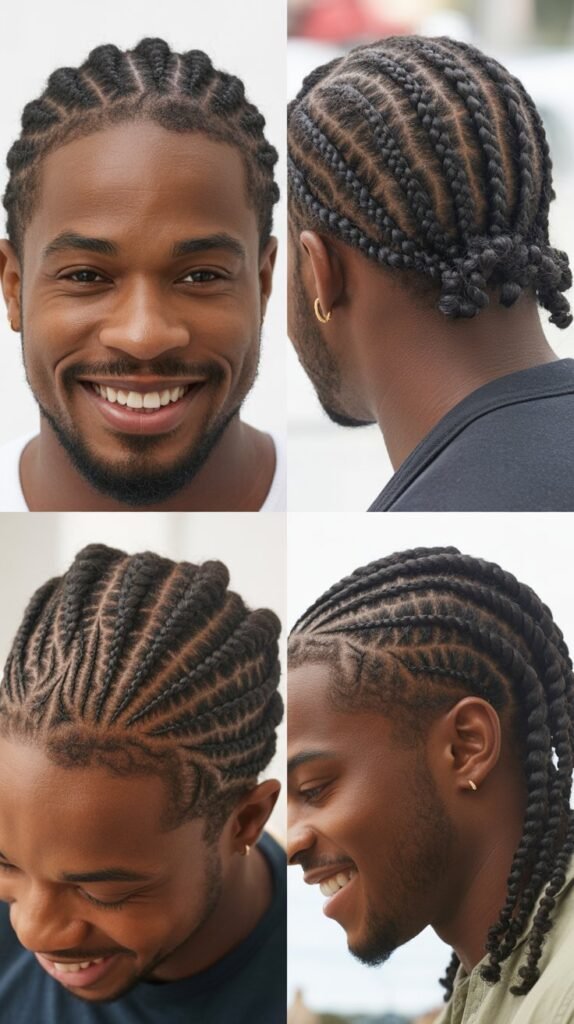
Combining cornrows with two-strand twists creates textural variety and adds volume to the overall hairstyle.
This hybrid typically features cornrows at the front or sides with twists in other sections.
- The combination provides protective styling benefits while creating visual interest through contrasting techniques.
- Twists add height and volume to sections where cornrows might lie too flat against the scalp.
- This style is particularly beneficial for men with different curl patterns throughout their head.
- Installation is generally faster than full cornrows as twists require less precision than braiding.
- The hybrid approach allows for creative styling where cornrowed sections provide structure and twisted sections offer movement.
- Men with medium to long hair find this combination particularly flattering as it showcases length while maintaining neatness.
- Both techniques are protective, making this an excellent choice for promoting healthy hair growth.
13. Thin Cornrows (Micro Cornrows)
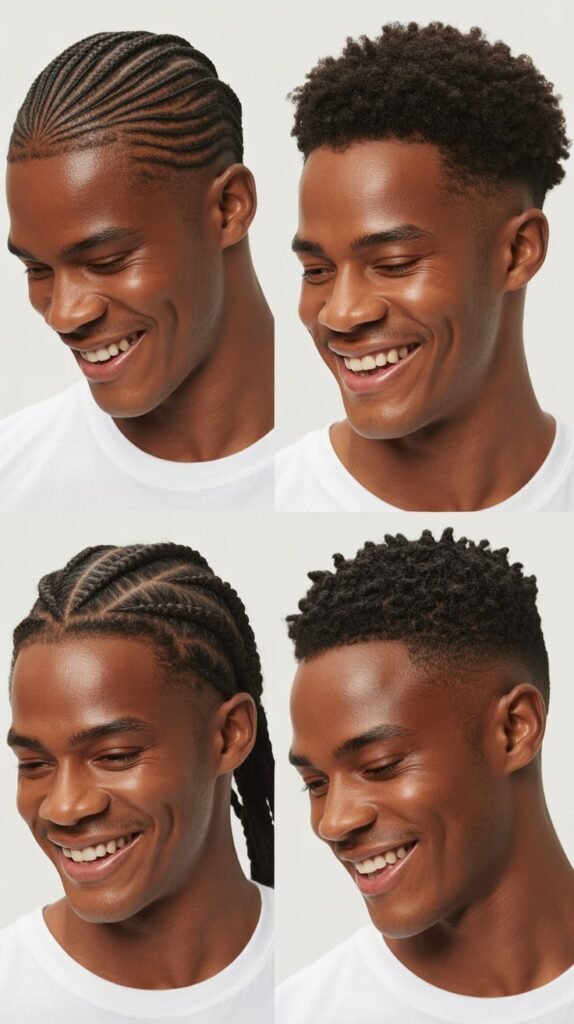
Thin cornrows, often called micro cornrows, feature numerous small braids that create an intricate, detailed appearance.
This style requires exceptional skill, patience, and time but delivers stunning visual impact.
- Micro cornrows can number anywhere from 15 to 30+ individual braids depending on hair density and desired look.
- The thin size allows for more intricate patterns and designs that wouldn’t be possible with thicker braids.
- This style typically lasts longer than standard cornrows, often remaining neat for 4-6 weeks.
- Installation time is significant, usually requiring 4-8 hours for a full head of micro cornrows.
- The lightweight nature of thin braids reduces tension on the scalp and edges.
- This style works particularly well for men with fine or thin hair as it creates the appearance of density.
- Maintenance requires careful attention to prevent individual braids from unraveling at the ends.
14. Thick Cornrows
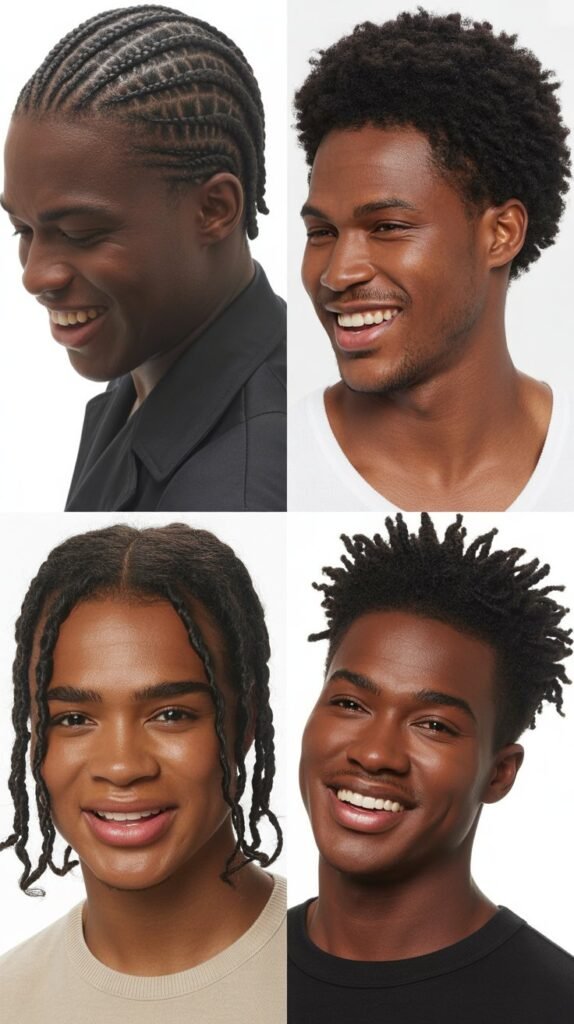
Thick cornrows feature fewer, larger braids that create a bold, masculine statement.
This approach emphasizes size and presence rather than intricate detail.
- Thick cornrows typically consist of 3-8 large braids depending on hair volume and head size.
- This style is ideal for men who want the benefits of cornrows with quicker installation time (1-2 hours).
- The larger size makes this pattern particularly popular among athletes and those with active lifestyles.
- Thick cornrows work best on men with thick, dense hair that can fill out the larger braid sections.
- The bold appearance makes a strong style statement while remaining practical and low-maintenance.
- This approach distributes weight across fewer points, which some wearers find more comfortable than numerous thin braids.
- Maintenance is straightforward as fewer braids mean less individual attention required during care routines.
15. Cornrows with Undercut
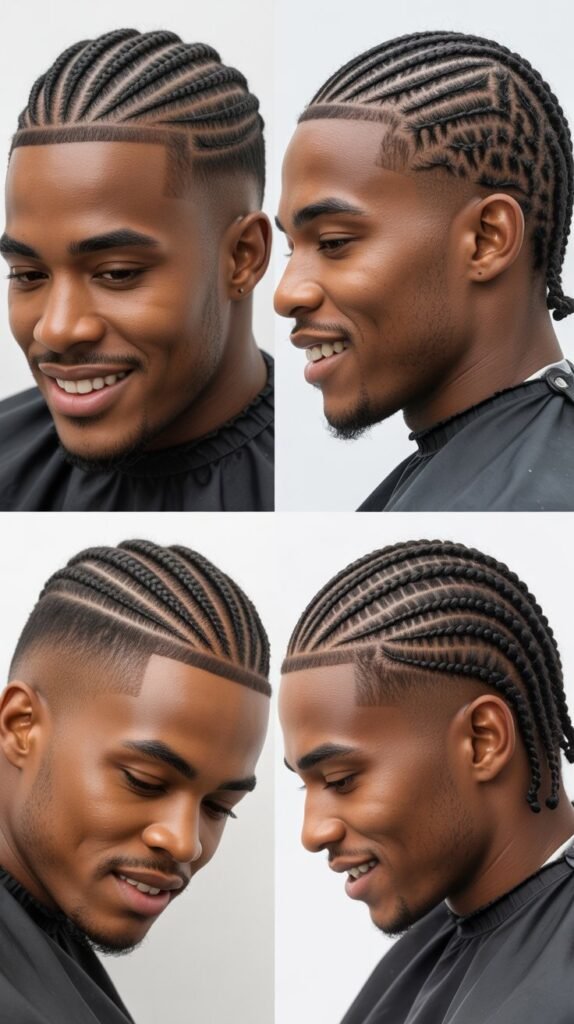
Combining cornrows with an undercut creates dramatic contrast by pairing braided sections on top with closely shaved or faded sides and back.
This contemporary style merges traditional braiding with modern barbering techniques.
- The undercut can be adjusted from subtle (one guard length difference) to extreme (several inches of contrast).
- This combination significantly reduces styling time as less hair requires braiding.
- The sharp contrast emphasizes the cornrowed section, making even simple patterns appear more striking.
- Undercuts require frequent maintenance every 1-2 weeks to maintain the clean, defined separation.
- This style provides excellent cooling benefits during hot weather while maintaining style on top.
- Men with thick, heavy hair particularly appreciate the reduced weight and volume on the sides.
- Various undercut patterns including disconnected, skin fades, or design elements can be incorporated.
16. Freestyle Cornrows
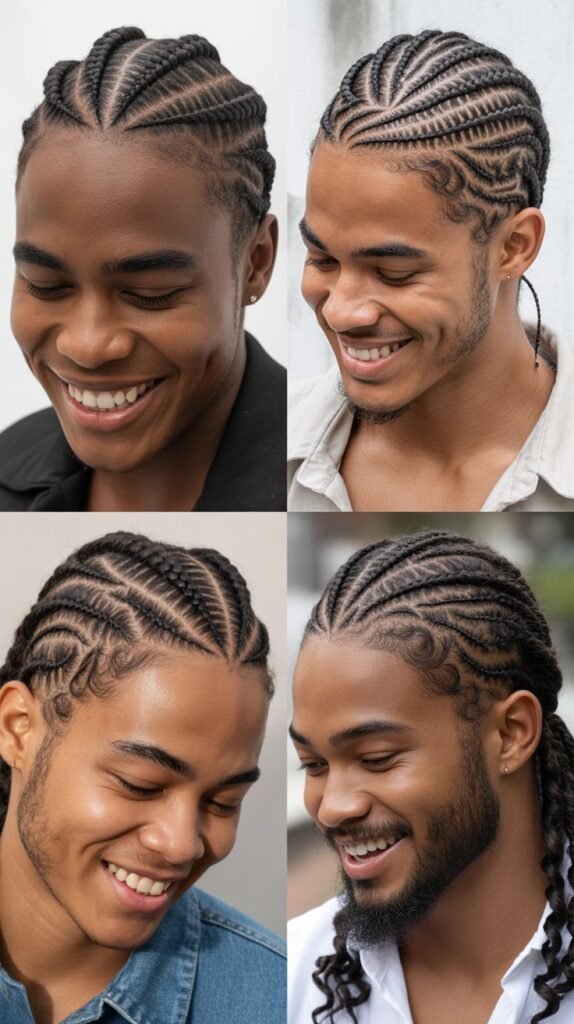
Freestyle cornrows abandon traditional parallel patterns in favor of artistic, non-uniform designs that flow in multiple directions.
This approach showcases creativity and individual expression.
- Freestyle patterns are truly custom, with each installation being unique to the individual.
- This approach allows braiders to work with natural hair growth patterns rather than against them.
- The non-uniform design often incorporates varying braid thicknesses and directional changes for artistic effect.
- Freestyle cornrows require experienced braiders who can visualize and execute complex patterns without templates.
- This style makes a bold personal statement and is rarely seen duplicated exactly on multiple people.
- The artistic nature of freestyle cornrows makes them popular for creative professionals, artists, and performers.
- Installation time varies widely (3-6 hours) depending on the complexity of the chosen freestyle design.
17. Cornrows with Man Bun
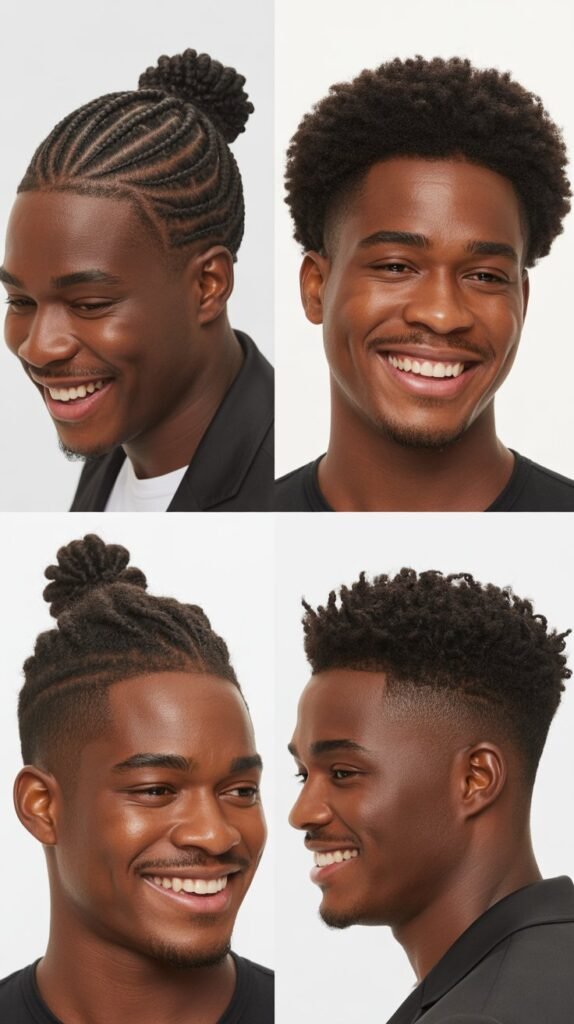
This style features cornrows that converge toward the back where longer hair is gathered into a man bun.
The combination offers sleek sides with a distinctive focal point.
- The man bun addition requires at least 6-8 inches of length in the back section for proper styling.
- Cornrows create clean lines leading toward the bun, emphasizing the style’s focal point.
- This combination works well for men transitioning to longer hair while maintaining a neat appearance.
- The style offers versatility as the bun can be worn up or released for different looks.
- Cornrowed sides reduce daily styling time while the bun portion allows for personal expression.
- This approach provides protective benefits to the front and sides while showcasing length in back.
- The man bun can be positioned high, mid, or low on the head depending on preference and hair length.
18. Cornrows with Braided Designs
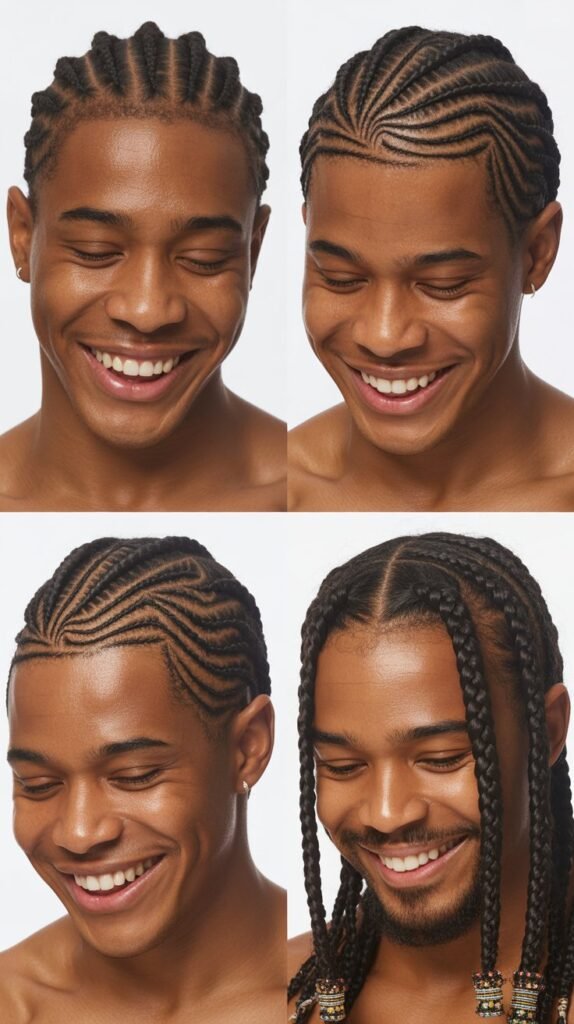
This advanced technique incorporates decorative braiding patterns within or around the cornrow structure, creating elaborate artistic compositions.
These can include Celtic knots, basket weaves, or geometric shapes formed by the braids themselves.
- Braided designs require master-level braiding skills and extensive experience with complex patterns.
- These elaborate styles can take 5-10 hours to complete depending on design intricacy.
- The designs are created by strategically crossing, weaving, or knotting sections of hair within the cornrow framework.
- This style makes exceptional statements for special events, competitions, or professional photo shoots.
- Maintenance requires careful attention as complex patterns show wear more obviously than simple cornrows.
- Men seeking truly unique, one-of-a-kind hairstyles frequently commission custom braided designs.
- The artistic value of these styles often leads to social media sharing and significant attention.
19. Diagonal Cornrows
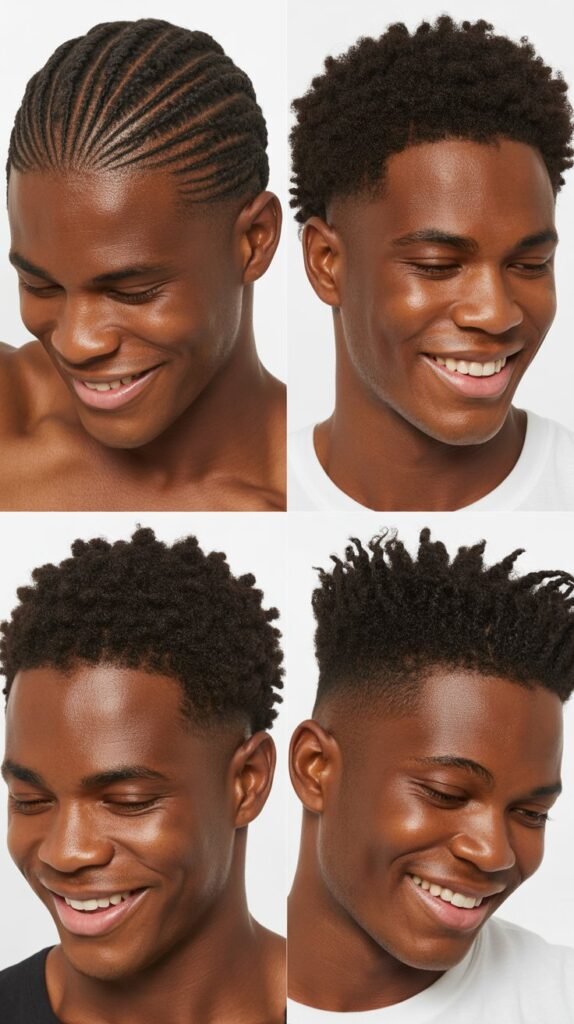
Diagonal cornrows run at angles across the head rather than straight back, creating dynamic lines that add movement and visual interest.
The angled approach flatters various face shapes differently than traditional patterns.
- Diagonal patterns can angle from front to back, side to side, or combine multiple directional flows.
- This approach is particularly flattering for men with square or angular face shapes as it softens harsh lines.
- The angled direction draws the eye across the head, creating the perception of width or length as desired.
- Diagonal cornrows can be uniform in angle or incorporate graduated changes for added complexity.
- This pattern works well when combined with fades, as the angled lines complement tapered sides.
- Installation time is comparable to straight-back cornrows (2-4 hours) despite the angular approach.
- The style remains professional enough for most work environments while offering distinctive character.
20. Cornrows to Ponytail
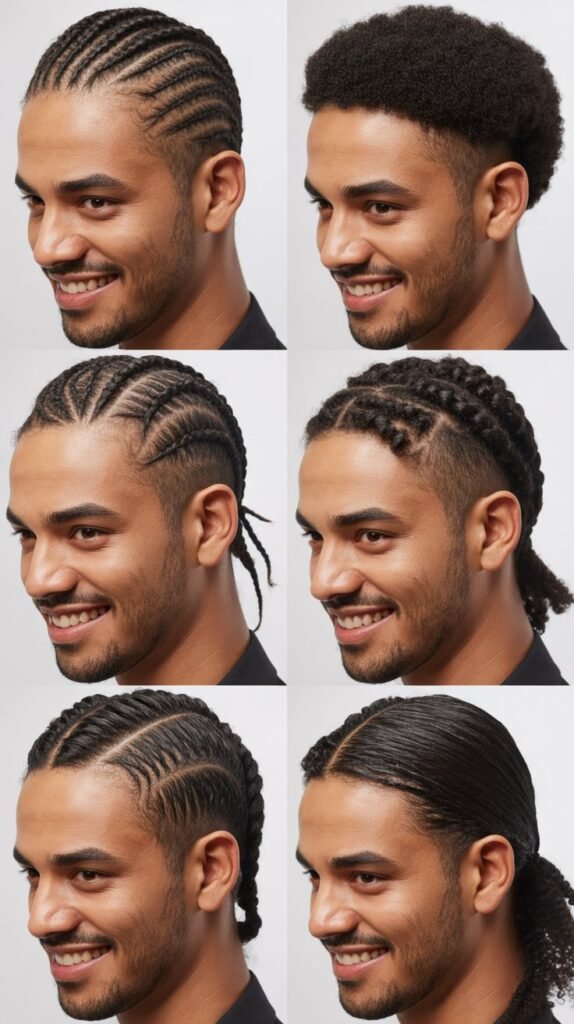
This style features cornrows that braid toward a central gathering point where loose hair forms a ponytail.
The combination provides structure at the scalp with free-flowing length at the back.
- The style requires significant length (6+ inches) to create a substantial ponytail after cornrowing.
- Cornrows can flow straight back, diagonally, or in curved patterns all leading to the ponytail gathering point.
- This approach offers styling versatility as the ponytail can be worn in various positions or styles.
- The cornrowed sections provide structure and neatness while the ponytail showcases length and texture.
- This combination is popular among men with natural hair who want protective styling without hiding their length.
- Installation time varies (2-5 hours) depending on how much of the head is cornrowed versus left loose.
- The style balances masculine structure with the softer appeal of free-flowing hair.
21. Cornrows with Hair Color
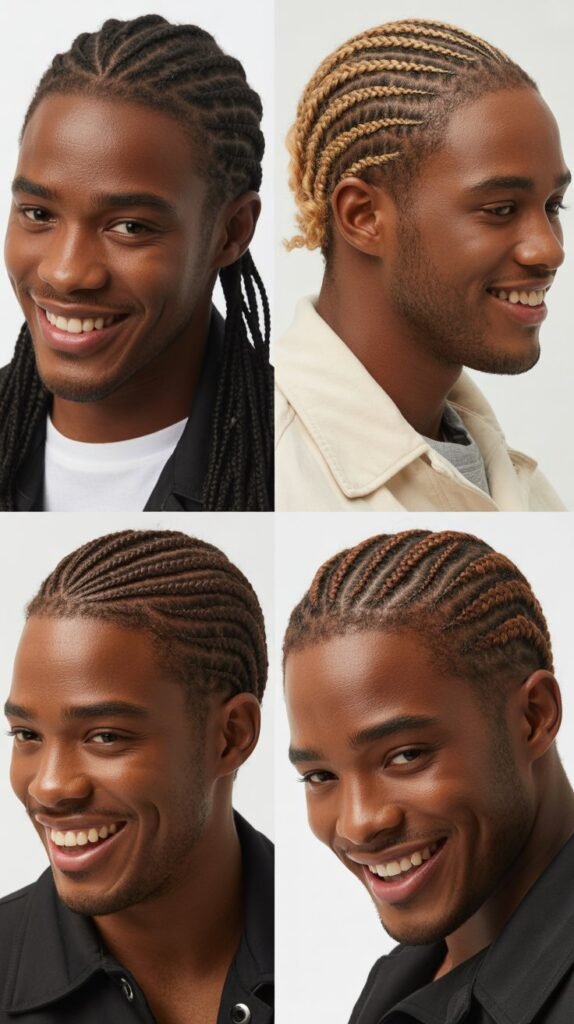
Adding color to cornrows transforms the style from classic to contemporary, with highlights, ombre effects, or bold hues creating additional visual dimension.
The braided structure showcases color in unique ways.
- Color application can be done before or after braiding depending on desired effect and hair health considerations.
- Highlights woven through cornrows create a dimensional look that emphasizes the braided texture.
- Popular color choices include natural tones (blonde, auburn, brown) and bold fashion colors (platinum, gray, burgundy).
- The raised nature of cornrows catches light differently, making colors appear more vibrant and multidimensional.
- Color maintenance requires special products to preserve vibrancy without damaging the braided structure.
- This style is particularly popular among younger men and those in creative or entertainment industries.
- Temporary color options (sprays, gels) allow for experimentation without permanent commitment.
22. Temple Fade with Cornrows
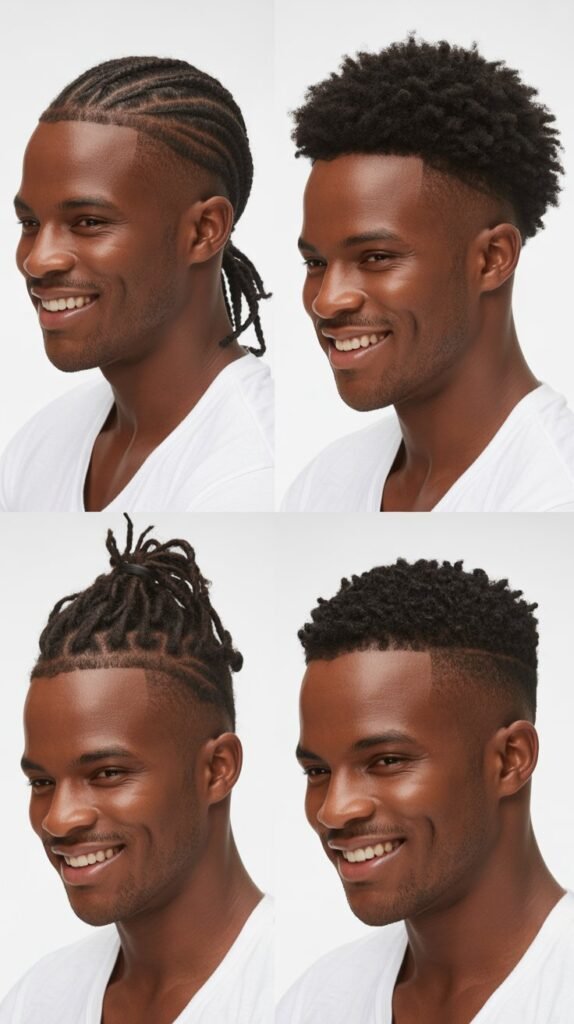
The temple fade with cornrows features crisp tapering at the temples while maintaining cornrowed patterns across the top and back.
This style emphasizes facial features and creates a clean, modern aesthetic.
- The temple fade specifically targets the area around the temples, creating sharp, defined edges.
- This technique frames the face and draws attention to facial features, particularly the eyes and cheekbones.
- The fade can be subtle (one guard length) or dramatic (skin fade) depending on preference.
- Cornrows on top can follow various patterns while the temple fade provides consistent clean definition.
- This style requires touch-ups every 1-2 weeks to maintain the sharp temple lines.
- The combination works particularly well for men with strong facial structures to emphasize.
- Temple fades create a youthful, contemporary appearance while cornrows add texture and personality.
23. Multi-Directional Cornrows
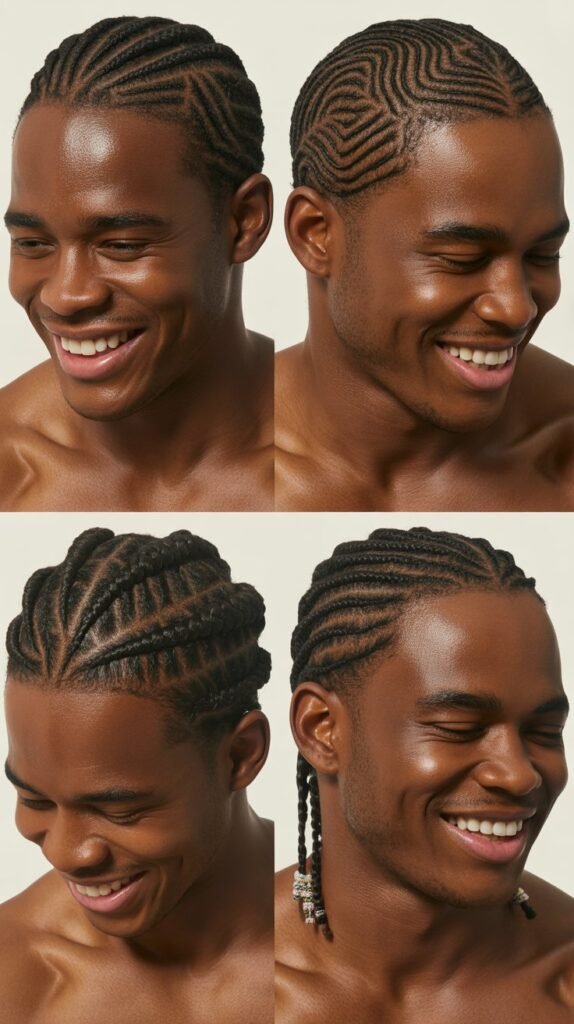
Multi-directional cornrows feature braids flowing in several different directions across the head, creating complex visual patterns.
This advanced technique combines multiple braiding directions into one cohesive design.
- This style requires expert planning to ensure different directional sections flow together harmoniously.
- Multi-directional patterns can include sections flowing forward, backward, diagonally, and curved all in one design.
- The complex visual effect makes this style highly distinctive and memorable.
- Installation time is extensive (4-8 hours) due to the technical demands of planning and executing multiple directions.
- This approach works well for men who want maximum visual impact and artistic expression.
- The varied directions help distribute tension across different areas of the scalp more evenly.
- Maintenance focuses on keeping directional transitions clean as these areas show wear first.
Comparison Table: Cornrow Style Characteristics
| Style | Installation Time | Maintenance Frequency | Best For | Skill Level Required |
|---|---|---|---|---|
| Classic Straight-Back | 2-3 hours | 3-6 weeks | All face shapes, professional settings | Intermediate |
| Cornrows with Fade | 2-4 hours | 1-2 weeks (fade touch-up) | Modern aesthetic, reduced bulk | Advanced |
| Feed-In Cornrows | 3-5 hours | 4-6 weeks | Hairline protection, natural look | Advanced |
| Cornrow Mohawk | 2-3 hours | 1-2 weeks (fade), 3-4 weeks (braids) | Bold statements, creative expression | Advanced |
| Thick Cornrows | 1-2 hours | 2-4 weeks | Quick installation, athletic lifestyles | Beginner-Intermediate |
| Micro Cornrows | 4-8 hours | 4-6 weeks | Intricate patterns, fine hair | Expert |
| Freestyle Cornrows | 3-6 hours | 3-5 weeks | Individual expression, artistic styles | Expert |
Essential Maintenance Tips
Proper maintenance ensures cornrows look fresh and protect hair health throughout their lifespan. Following professional recommendations helps maximize the protective benefits while maintaining style integrity.
- Wrap hair with a silk or satin scarf before bed to reduce friction and preserve braid neatness.
- Apply lightweight oil to the scalp every 2-3 days to prevent dryness and maintain moisture balance.
- Cleanse the scalp weekly using a gentle spray cleanser or diluted shampoo applied with a cotton pad.
- Avoid excessive manipulation or pulling on braids, which can cause tension and damage edges.
- Re-braid or touch up edges every 2-3 weeks if loosening occurs at the hairline.
- Stay hydrated and maintain a nutritious diet to support healthy hair growth beneath braids.
- Remove cornrows completely after 6-8 weeks maximum to prevent matting and allow scalp rest.
23 Sharp Male Cornrow Hairstyles Every Barber Recommends showcases the incredible versatility and artistic potential of cornrow braiding for men.
From timeless straight-back patterns that have endured for generations to contemporary hybrid styles that blend braiding with modern barbering techniques, these 23 styles demonstrate why cornrows remain a top choice among men seeking both protection and style.
Each featured style offers unique benefits, whether you prioritize quick installation, intricate artistic expression, professional appearance, or bold fashion statements.
The protective nature of cornrows makes them an excellent choice for men committed to healthy hair growth while maintaining a polished look. Professional barbers consistently recommend these styles because they combine practicality with aesthetic appeal, working beautifully across different hair textures, face shapes, and personal style preferences.
Whether you choose classic simplicity or complex artistic designs, proper installation by an experienced braider and consistent maintenance will ensure your cornrows look sharp and last their full duration.
These recommended styles represent the pinnacle of male cornrow artistry, offering options that suit every lifestyle from corporate professionals to creative artists, from athletes to fashion innovators.
