
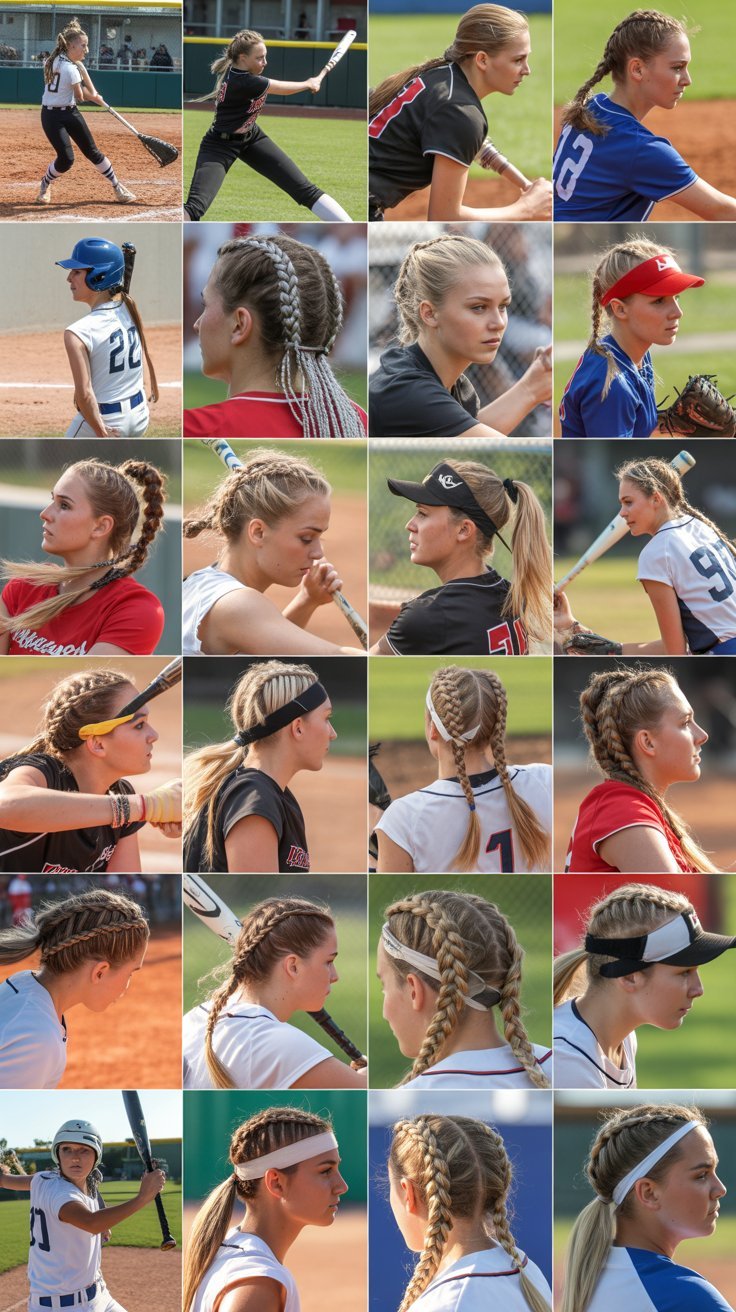
27 Braided Softball Hairstyles Built for Action is your ultimate guide to looking game-ready while keeping every strand in place through slides, swings, and sprints.
Whether you are a pitcher, catcher, or outfielder, the right hairstyle can make a real difference in your comfort and confidence on the field.
From classic cornrows to trendy boxer braids, this article walks you through 27 stunning and functional braid styles designed specifically for softball players.
You will discover styles that work for all hair types, lengths, and skill levels — from beginners to varsity athletes.
Each style has been chosen for its practicality, durability, and bold athletic look. By the end of this article, you will have everything you need to step onto the diamond with your best braid game ever.
1. Classic Two French Braids
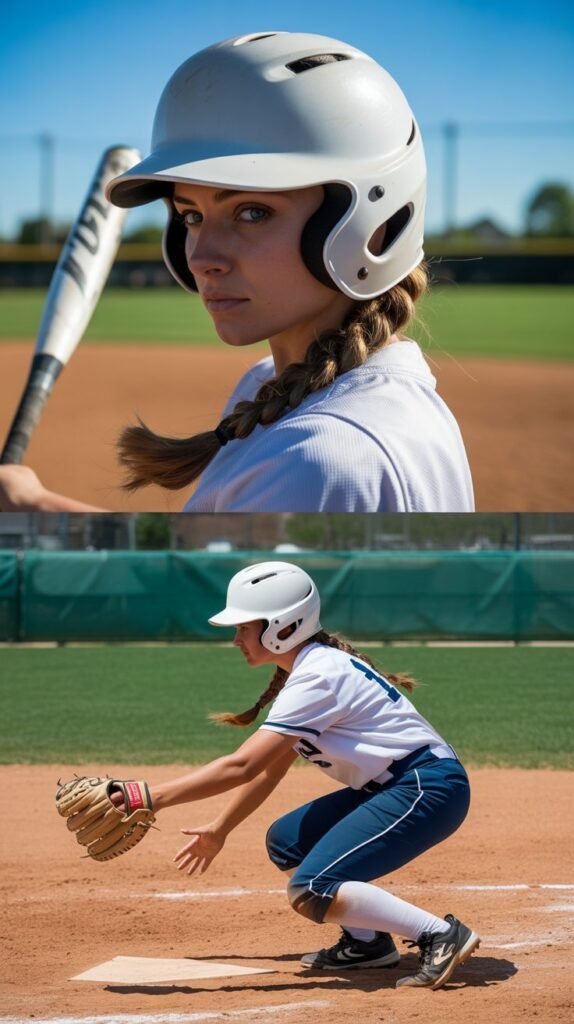
Two French braids are the gold standard of softball hairstyles, and for good reason.
They sit flat against the head, fit perfectly under a helmet, and stay put through nine full innings.
This style works for almost every hair type and length, making it one of the most universally loved looks on the diamond.
- French braids distribute hair evenly across both sides of the head, reducing pressure points under the helmet.
- The style keeps all flyaways secured, which means better visibility when tracking fly balls.
- French braids are easy to tighten with a few extra passes to ensure they last the entire game.
- Even players with layered or fine hair can achieve this look with a little gel or edge control product.
- This style pairs beautifully with a low or high bun at the nape of the neck to keep length tucked away.
2. Cornrow Braids with a High Bun
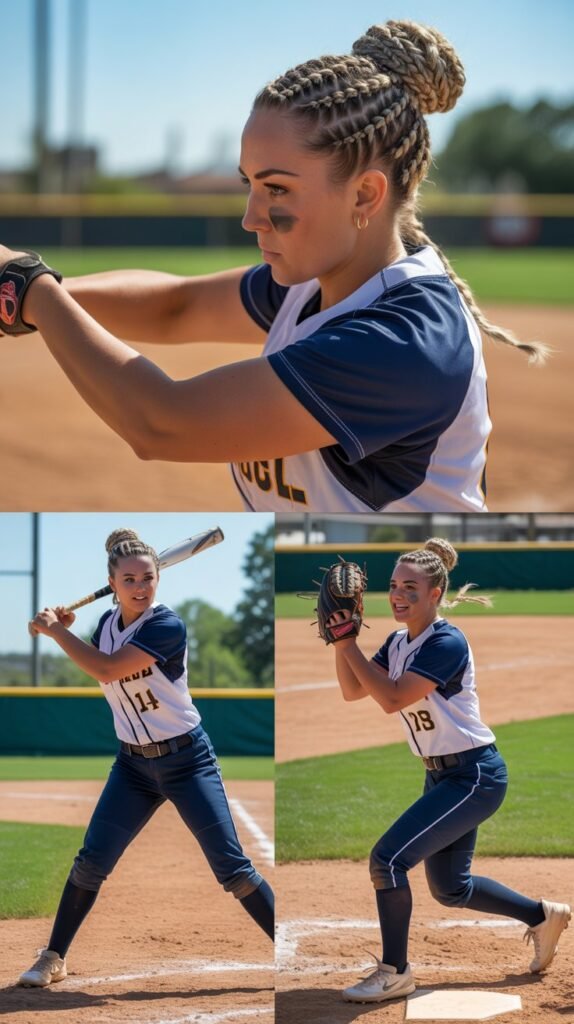
Cornrows with a high bun combine heritage styling with serious athletic function.
The cornrows hug the scalp tightly, leaving no room for hair to escape mid-game.
The bun on top clears the neckline and keeps hair away from the catcher’s mask or batting helmet with ease.
- Cornrows are one of the most secure braid styles available, making them ideal for long tournament days.
- The high bun keeps the back of the neck cool during summer games and double-headers.
- This style can be customized with different cornrow patterns — straight back, curved, or diagonal.
- Using a small amount of edge control gel helps the style stay crisp from the first pitch to the last out.
- Adding rubber bands or decorative beads in team colors gives this look a personalized, spirited finish.
3. Box Braids Ponytail
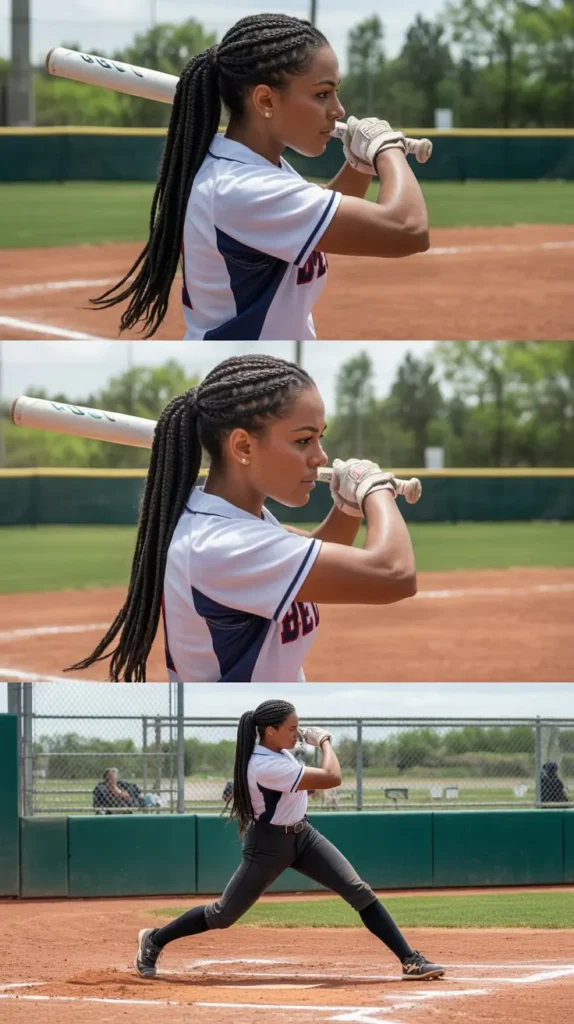
Box braids pulled into a ponytail offer a protective style that also delivers all-day hold.
This style is especially popular among players who prefer low-maintenance looks they can wear across multiple practice days.
The uniform sections of box braids also create a visually striking and team-spirited look.
- Box braids are a long-lasting protective style that reduces hair breakage from repeated helmet use.
- Pulling them into a ponytail keeps bulk off the shoulders and away from the catching glove.
- This style requires less daily touch-up than natural loose hair, making it excellent for road trips and tournaments.
- Box braids can be done in various thicknesses depending on player preference and helmet fit.
- Adding a hair tie in your team’s colors turns this practical style into a proud team statement.
4. Dutch Braid Ponytail
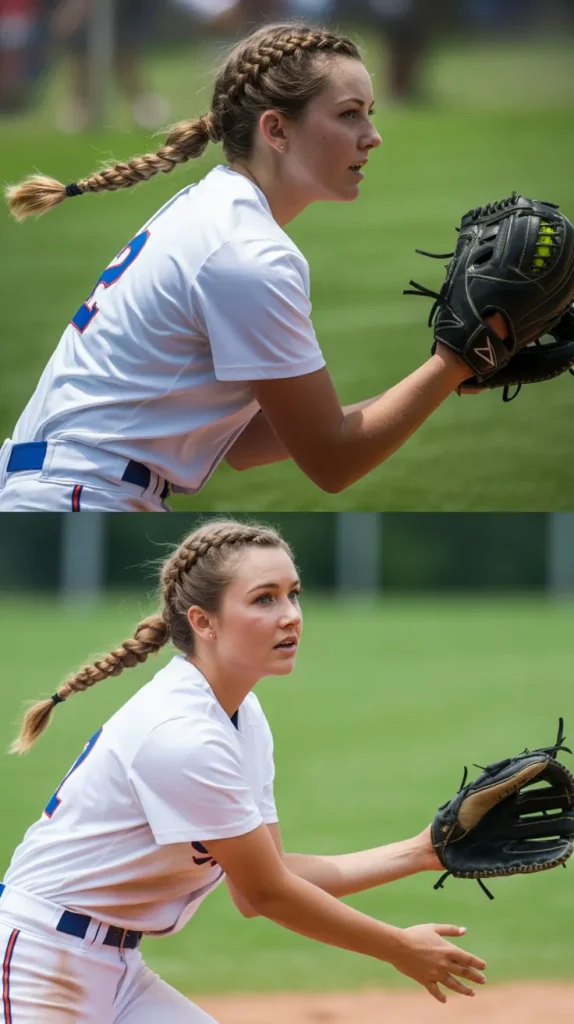
The Dutch braid ponytail raises the braid off the scalp in a beautiful three-dimensional pattern before flowing into a secure ponytail.
It combines eye-catching style with an incredibly secure hold. Players who want a little more visual flair without sacrificing function will love this option.
- The Dutch braid technique pulls sections under rather than over, creating a raised, bold braid effect.
- Starting the braid from the hairline and working toward the crown keeps hair fully secured under any helmet style.
- The ponytail extension allows long hair to be contained neatly without adding bulk to the helmet area.
- This style works best on medium to long hair but can be adapted for shorter lengths with bobby pins.
- A light misting of strong-hold hairspray after finishing will lock the style in place for extra-long game days.
5. Boxer Braids with Helmet-Ready Finish
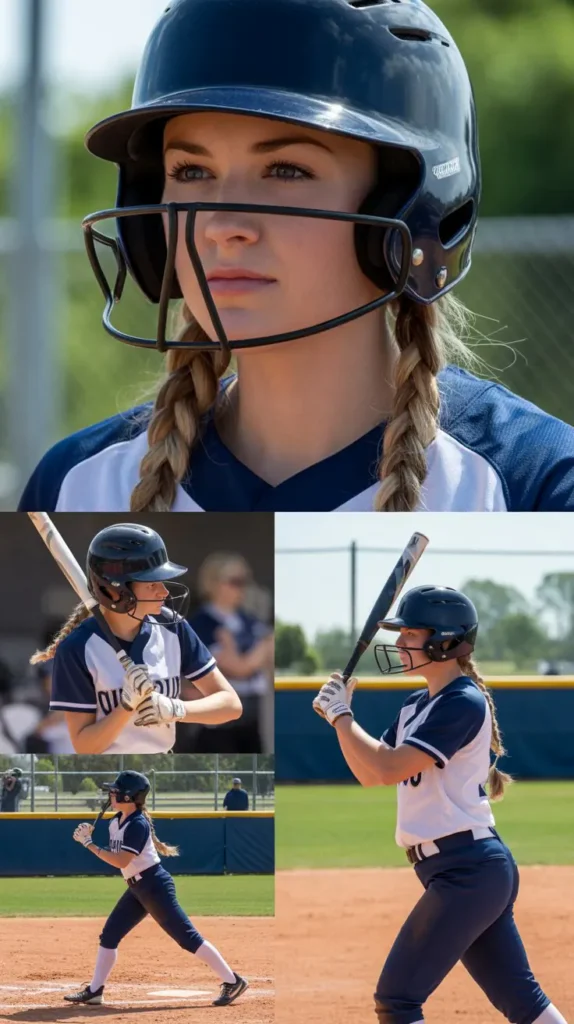
Boxer braids — also known as double Dutch braids — have become a favorite among athletes across all sports.
For softball players, they offer a secure, symmetrical style that looks clean under a helmet and stays intact through aggressive base running. This look is both bold and completely functional.
- Boxer braids are parted straight down the middle for a clean, balanced look that works under any team cap or helmet.
- Each braid runs close to the scalp, eliminating the risk of stray hairs catching in the helmet strap.
- Players can braid them tight at the roots and slightly looser at the ends to reduce scalp tension during long games.
- Finishing each braid with a secure elastic band prevents unraveling through slides and dives.
- This style has a bold athletic aesthetic that photographs beautifully in team photos and action shots.
6. Fishtail Braid Bun
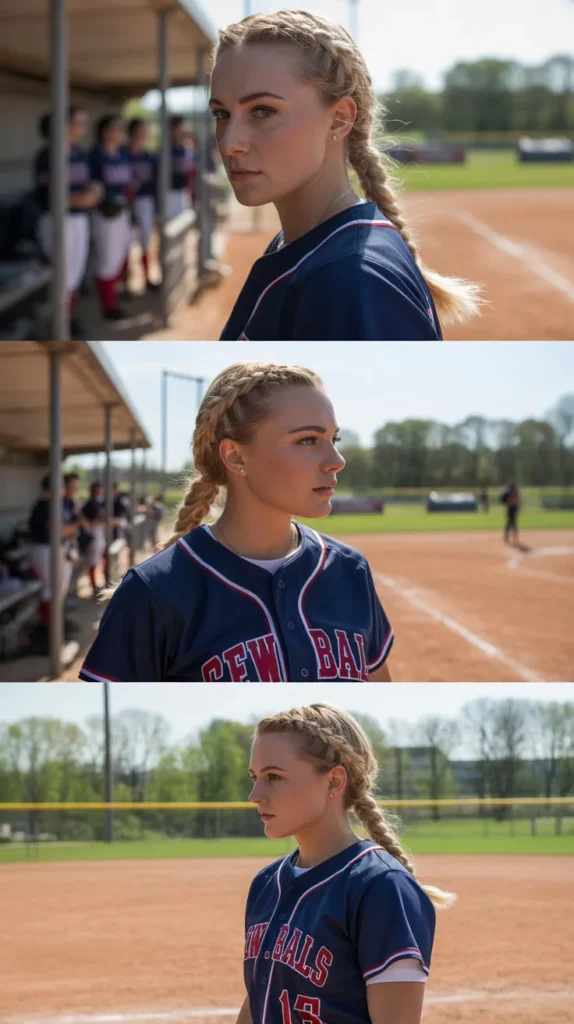
The fishtail braid bun is a creative way to blend intricate styling with secure sport performance.
The fishtail pattern creates a unique textured look that turns heads in the dugout while keeping all hair away from the face. It wraps into a bun to eliminate any dangling ends.
- Fishtail braids are created by alternating small sections from each side, producing a woven, detailed texture.
- Wrapping the finished fishtail into a bun at the base of the skull keeps it helmet-compatible.
- This style works exceptionally well on thick or wavy hair where standard braids may not hold as neatly.
- Securing the bun with multiple bobby pins ensures it will not shift during slides or sudden movements.
- Light edge serum along the braid keeps frizz under control in humid outdoor game conditions.
7. Feed-In Braids
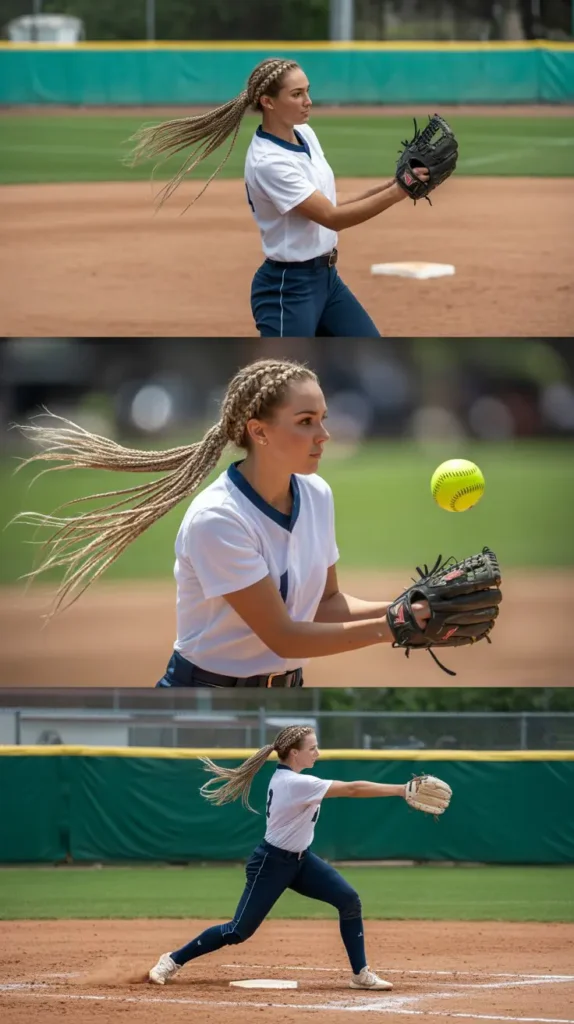
Feed-in braids offer a natural, sleek look that starts small at the hairline and gradually thickens as more hair is added.
This technique creates a smooth, low-profile result that fits beautifully under a softball helmet. The gradual volume build also makes them extremely comfortable for extended wear.
- Feed-in braids start with very little hair at the front, reducing the bumpy feel against the helmet interior.
- As the braid moves back, more hair is added, creating a natural taper that lays flat on the scalp.
- This style is gentler on the edges and hairline compared to traditional braids pulled tight from the root.
- Players with thinning edges or sensitive scalps find feed-in braids especially comfortable during long tournament weekends.
- Finishing the braids into a low bun or single ponytail completes a sleek, game-ready look.
Comparison Table: Best Braids by Hair Type
| Braid Style | Best Hair Type | Helmet Compatibility | Durability |
|---|---|---|---|
| French Braids | All types | Excellent | High |
| Cornrow + Bun | Thick/Coily | Excellent | Very High |
| Box Braids Ponytail | Coily/Natural | Good | Very High |
| Dutch Braid Ponytail | Medium/Long | Excellent | High |
| Boxer Braids | All types | Excellent | High |
| Fishtail Braid Bun | Thick/Wavy | Good | Medium |
| Feed-In Braids | Fine/Sensitive | Excellent | High |
8. Halo Braid with Braided Crown
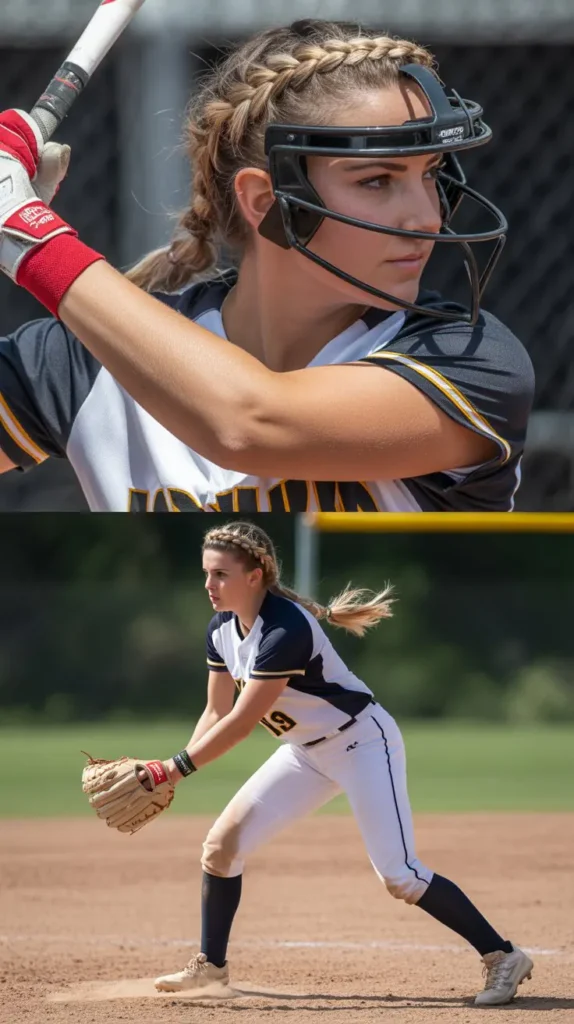
The halo braid wraps around the entire head like a crown, creating one of the most elegant yet secure softball hairstyles available.
It is particularly popular among players with longer hair who want a completely contained style.
No ends, no flyaways — just a clean, polished look from warm-up to final out.
- The halo braid is created by braiding hair around the perimeter of the head, pinning as you go.
- All hair is incorporated into the braid, eliminating any loose ends that might interfere with play.
- This style keeps hair completely off the neck, which is ideal for hot-weather doubleheaders.
- Despite its elegant appearance, the halo braid is surprisingly quick to create with a little practice.
- Thin bobby pins in a matching hair color keep the braid secured invisibly around the crown.
9. Knotless Box Braids
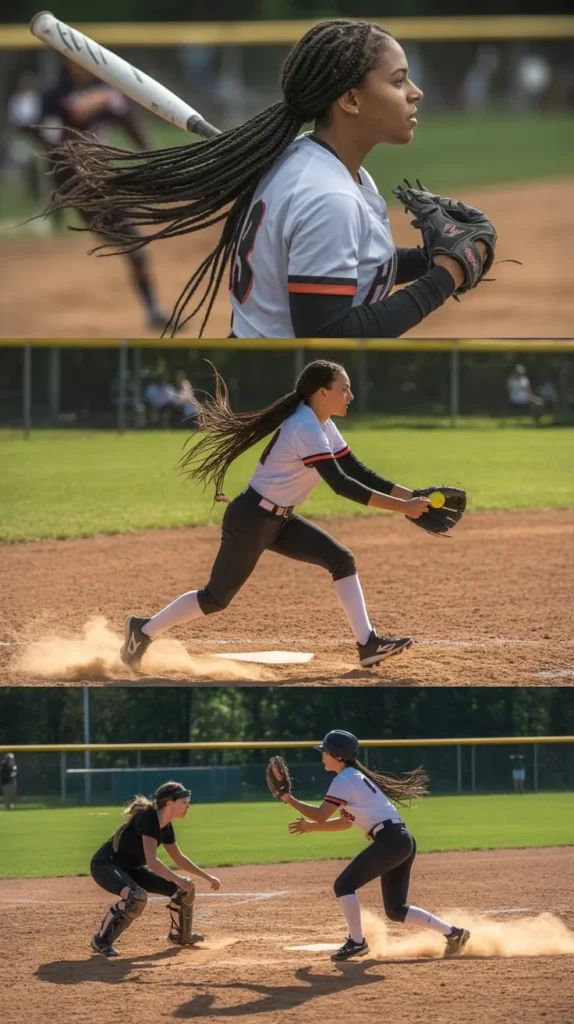
Knotless box braids are a gentler evolution of traditional box braids that start flat against the scalp for a more comfortable, natural look.
They have gained enormous popularity among athletes who wear helmets regularly because the start points are smooth, not raised.
This means no bumps, no pressure, and no discomfort during play.
- Unlike traditional box braids, knotless braids begin with your own hair and add extensions gradually.
- The absence of a knot at the root means significantly less tension, reducing headaches during long games.
- The flat start makes them sit comfortably inside any helmet model without shifting.
- Knotless box braids also last longer than knotted styles because the reduced tension minimizes breakage.
- They can be styled into a ponytail, bun, or left loose depending on the day’s activities.
10. Side French Braid
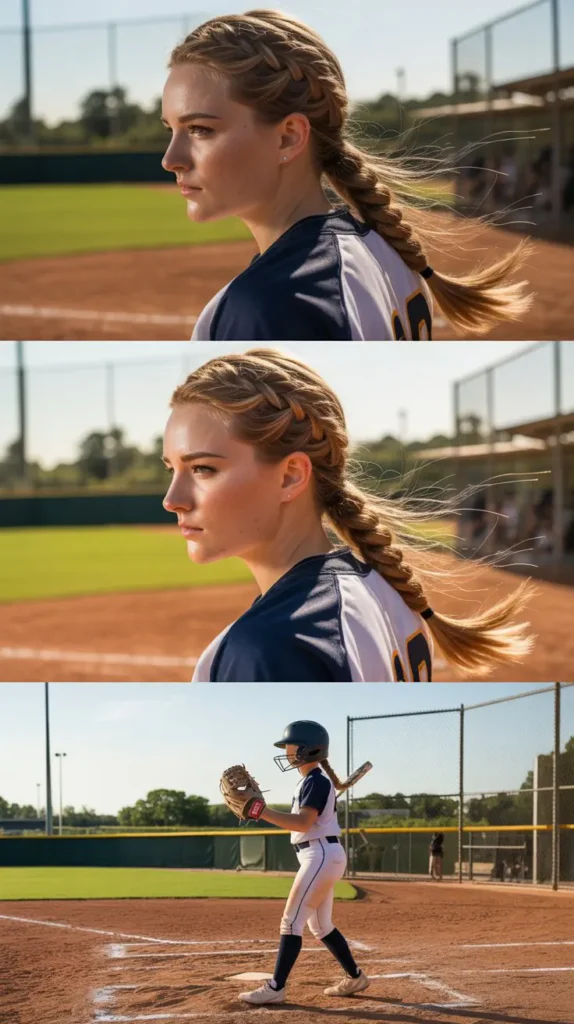
The side French braid sweeps all hair to one side in a single, elegant plait that keeps everything contained without being completely symmetrical.
This style is perfect for players who prefer a softer, slightly more relaxed aesthetic while still maintaining full sport functionality.
It works especially well with helmets that sit low on one side.
- Starting the French braid from the top side of the head creates a sweeping, dramatic effect.
- All hair is gathered and secured to one side, keeping it away from the dominant throwing arm.
- A strong elastic at the bottom prevents the braid from loosening during high-intensity plays.
- This style suits players with asymmetrical cuts or those growing out layers, as it conceals length variations.
- It can be finished with a bun or small loop at the nape to prevent the tail from slipping under the helmet.
11. Goddess Braids Pulled Back
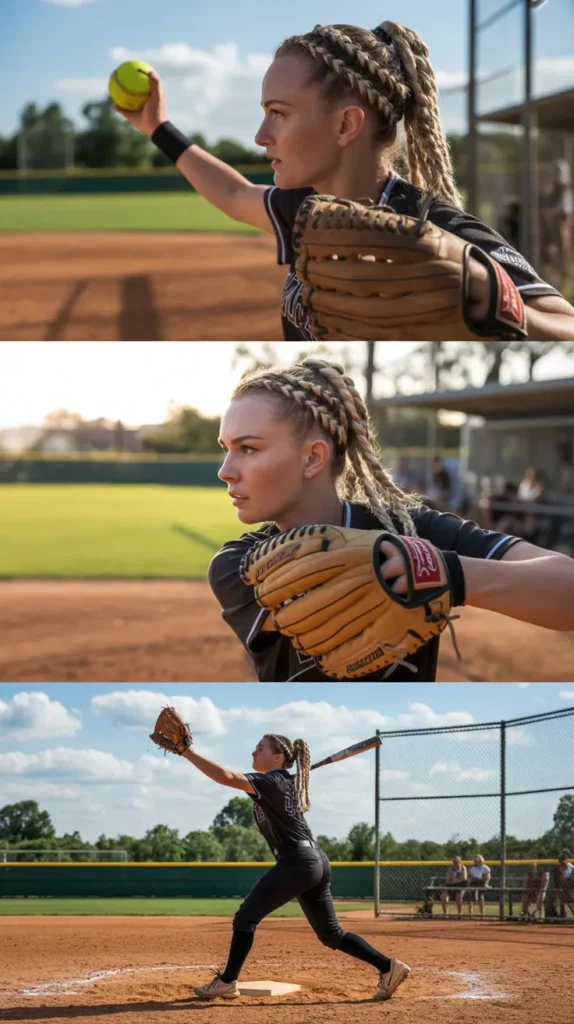
Goddess braids are large, bold, and elevated — braided above the scalp with a slightly raised, rope-like appearance.
They make a strong visual statement while keeping thick or natural hair securely held through any level of play.
Pulling them back into a bun or ponytail makes this style fully helmet-ready.
- Goddess braids are typically 2–4 large braids that cover the scalp in wide, defined sections.
- Their raised nature provides a cushioned feel inside the helmet, which some players actually prefer.
- The bold size of goddess braids means less time in the salon chair before game day.
- These braids can incorporate extensions for extra length and fullness if desired.
- Team ribbons or small elastics in school colors can be woven in for a spirited, customized finish.
12. Micro Braids Bun
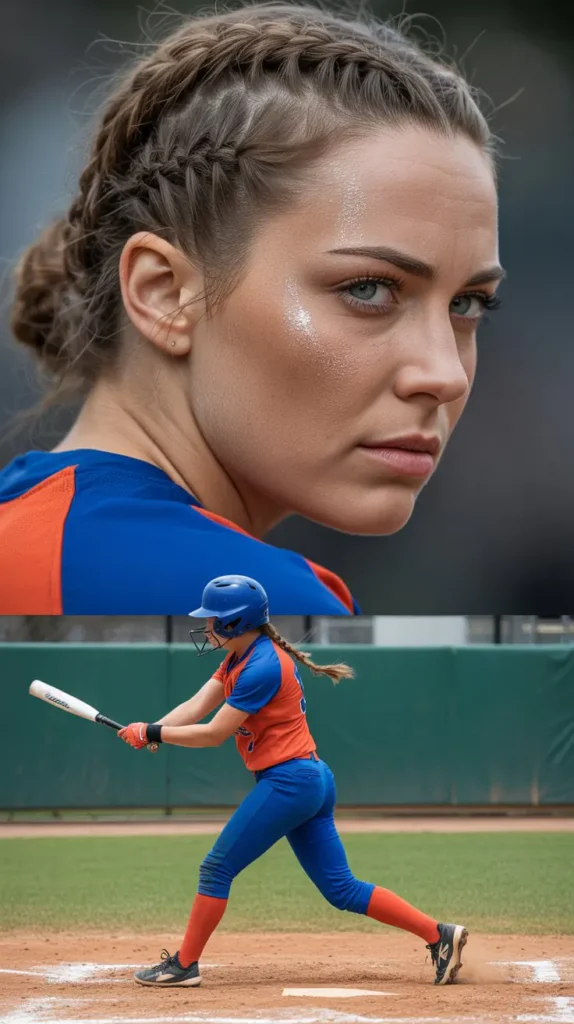
Micro braids are tiny, delicate braids that offer incredible versatility and an ultra-sleek finish.
When gathered into a bun, they create a polished, refined look that performs just as well as any bulkier braid style.
Their small size means they lie almost completely flat under any helmet.
- Micro braids are individually braided in very thin sections, creating hundreds of small, even plaits.
- When styled into a bun, they produce a smooth, glossy finish that looks professionally done.
- The small diameter of each braid means the total bun remains compact and helmet-compatible.
- Micro braids last for weeks, making them one of the most low-maintenance choices for a busy softball season.
- They can be decorated with small gold or silver beads for a stylish pre-game look.
13. Lemonade Braids
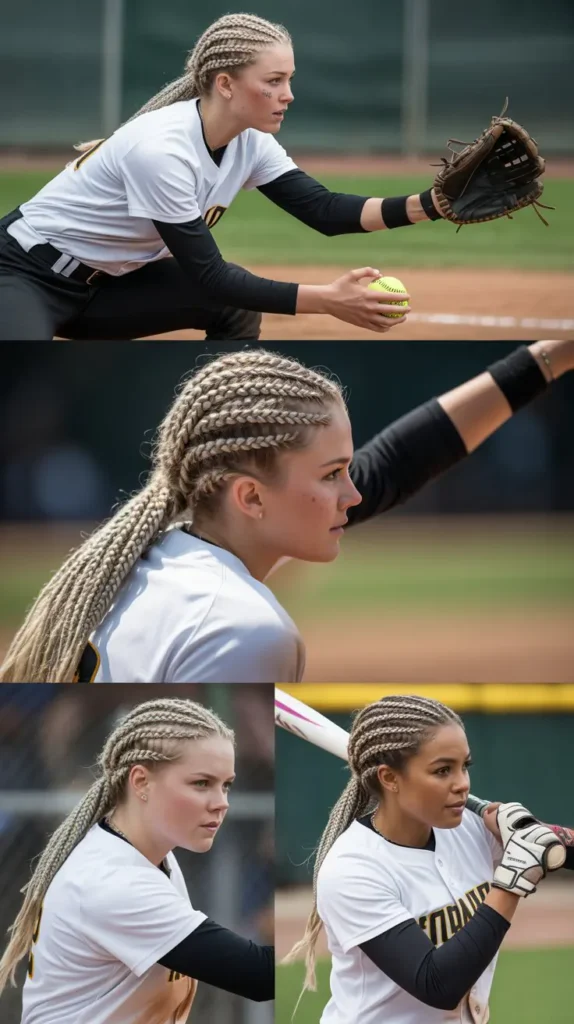
Lemonade braids run horizontally across the scalp from one side to the other, creating a sleek, side-swept style made famous in popular culture.
For softball players, these braids lie beautifully flat against the head and work perfectly beneath a cap or helmet.
Their unique direction adds a bold visual dimension to game-day looks.
- Lemonade braids are cornrowed horizontally, starting from one side of the head and ending at the opposite.
- The horizontal pattern distributes pressure evenly around the helmet, improving comfort during long games.
- This style looks especially striking with natural hair and works well on all coil patterns.
- Edge control and mousse help achieve the clean, precise lines that define lemonade braids.
- They can be finished with a side ponytail or small bun to contain any remaining length.
14. Stitch Braids
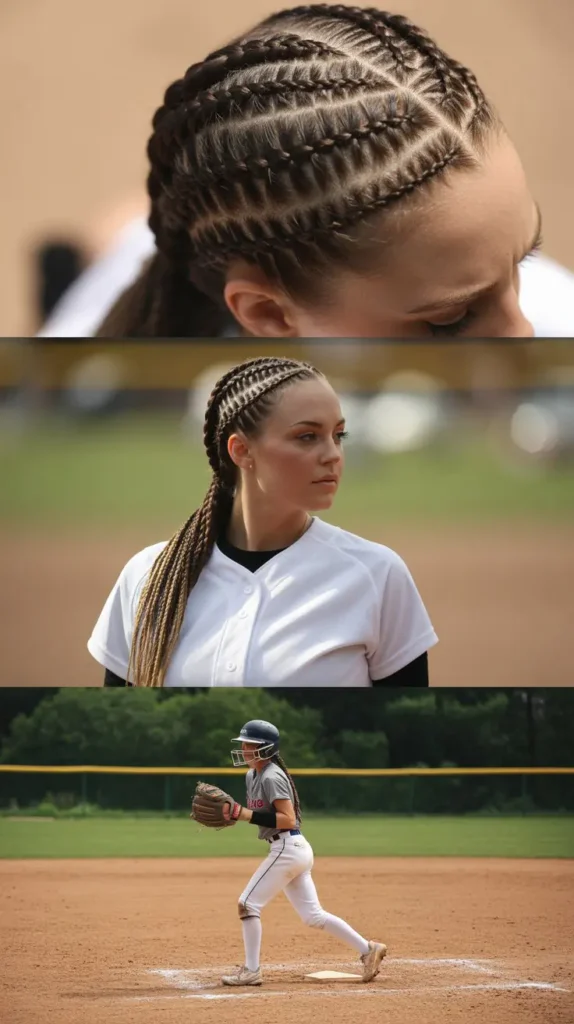
Stitch braids are a modern update to classic cornrows, featuring evenly spaced horizontal “stitch” lines across each braid that create a sharp, geometric pattern.
They are incredibly flat, extremely durable, and look phenomenal both on and off the field.
Players who love a clean, structured look will find stitch braids impossible to resist.
- The stitch effect is created by parting hair in thin horizontal lines before adding each section to the braid.
- This technique produces a precise, quilted visual pattern that stays neat throughout an entire week.
- Stitch braids lie exceptionally flat against the scalp, making them ideal for players who use close-fitting batting helmets.
- They combine well with a low bun, a high ponytail, or even a decorative braid wrap at the ends.
- Using a rat-tail comb for precise parting is the key to achieving clean, competition-ready stitch lines.
15. Waterfall Braid Pulled Up
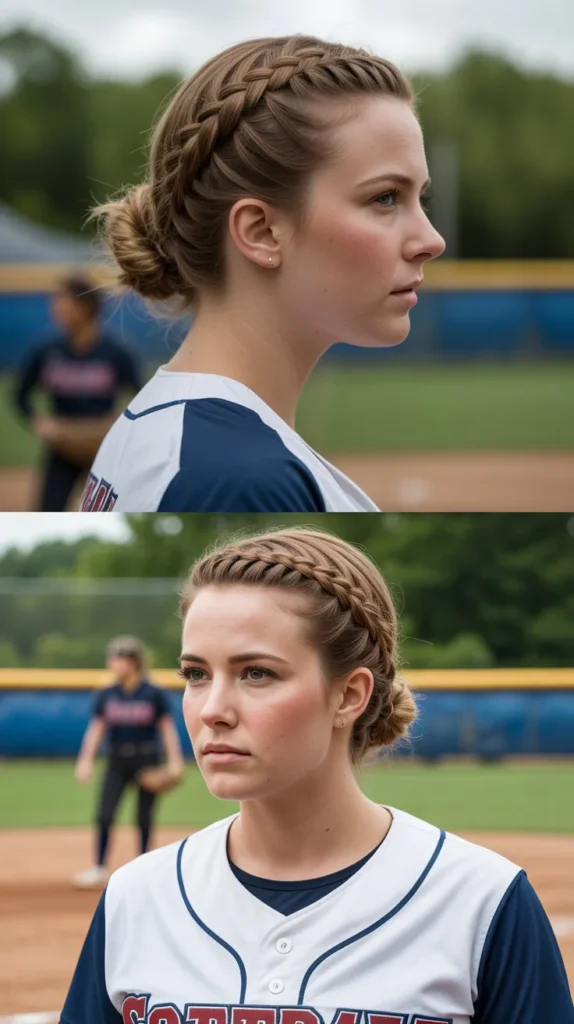
The waterfall braid is a romantic and creative style that allows sections of hair to cascade downward through the braid, creating a flowing, layered effect.
When the cascading sections are pinned up into a bun, it transforms into a completely sport-functional style.
This is a beautiful choice for championship games and team photos.
- The waterfall technique involves dropping sections through the braid rather than incorporating them fully.
- When the dropped sections are pinned or tucked into a bun, all hair is secured and helmet-ready.
- This style works best on wavy or lightly textured hair where the cascading sections hold their shape.
- Finishing spray helps the tucked sections stay in place during aggressive athletic movement.
- The waterfall braid adds a unique, intricate look that stands out in team photos and highlight reels.
16. Two Strand Twist Out Braids
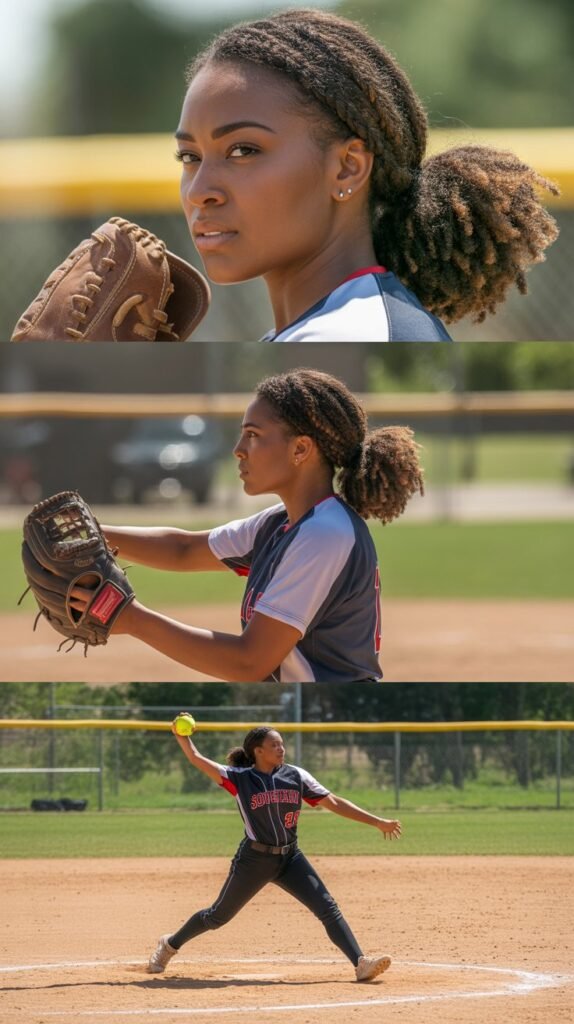
Two strand twists offer a beautiful alternative for natural hair players who want texture and hold without traditional braids.
When twisted tightly and sealed with a butter or gel, they stay secure through intense athletic activity.
They can be worn loose or pulled back depending on helmet requirements.
- Two strand twists are created by dividing a section into two pieces and wrapping them around each other.
- They work naturally with Type 3 and Type 4 hair textures, embracing the curl pattern rather than fighting it.
- Pulling all twists into a high or low bun keeps them perfectly contained within a softball helmet.
- Using a strong hold styling butter at the root keeps twists from loosening during play.
- This style celebrates natural hair texture while delivering the performance a serious player needs.
17. Braided Pigtails
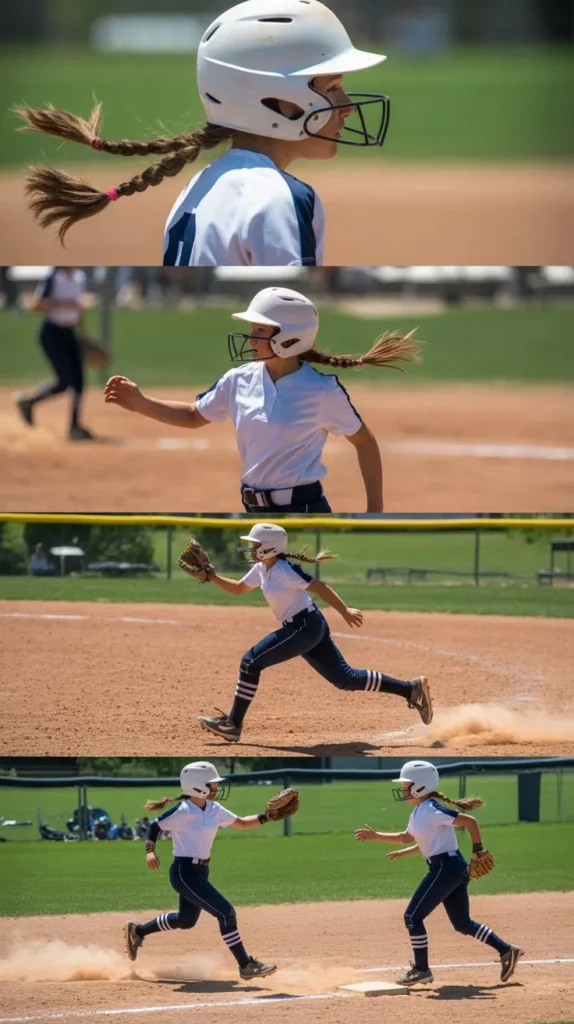
Braided pigtails are a playful, high-energy hairstyle that works especially well for younger players or anyone who wants a fun, youthful look on the field.
Two equal braids sit symmetrically on either side of the head and stay securely in place through any level of play.
This style exudes team energy and positive game-day spirit.
- Braided pigtails are created by parting hair down the center and braiding each half separately.
- Each pigtail can be a simple three-strand braid, French braid, or Dutch braid depending on preference.
- Pigtails tuck easily under the helmet without creating bulk at the crown.
- Adding foam or rubber elastics at the base of each pigtail ensures they stay firmly in place.
- Team-colored ribbons tied at the bottom of each braid add a spirited, personalized detail that players love.
18. Fulani Braids
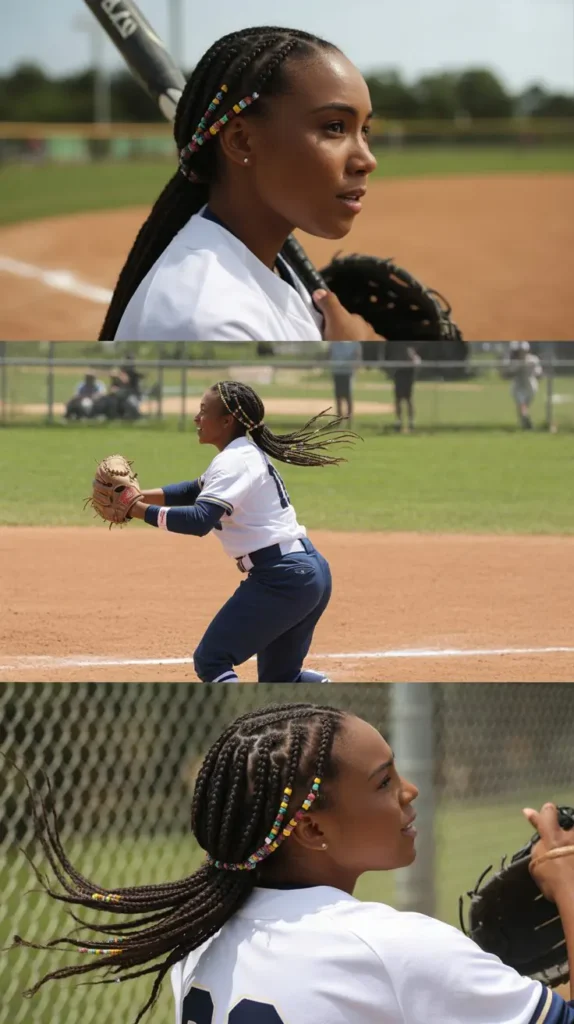
Fulani braids are a traditional West African style featuring a center cornrow with smaller braids on each side, often decorated with beads and metallic cuffs.
Adapted for sport, they offer a culturally rich and visually stunning look that also performs excellently on the field.
They honor heritage while delivering real athletic function.
- Fulani braids traditionally feature a central braid running from front to back, flanked by side braids.
- The decorative beads typical of this style can be swapped for lightweight alternatives that are helmet-safe.
- The flat, close-to-scalp nature of Fulani braids makes them comfortable under batting helmets.
- This style works beautifully on natural coily and kinky hair textures common in the softball community.
- Fulani braids can last several weeks with proper nighttime care, making them a great investment before a long season.
19. Single Braid Down the Back
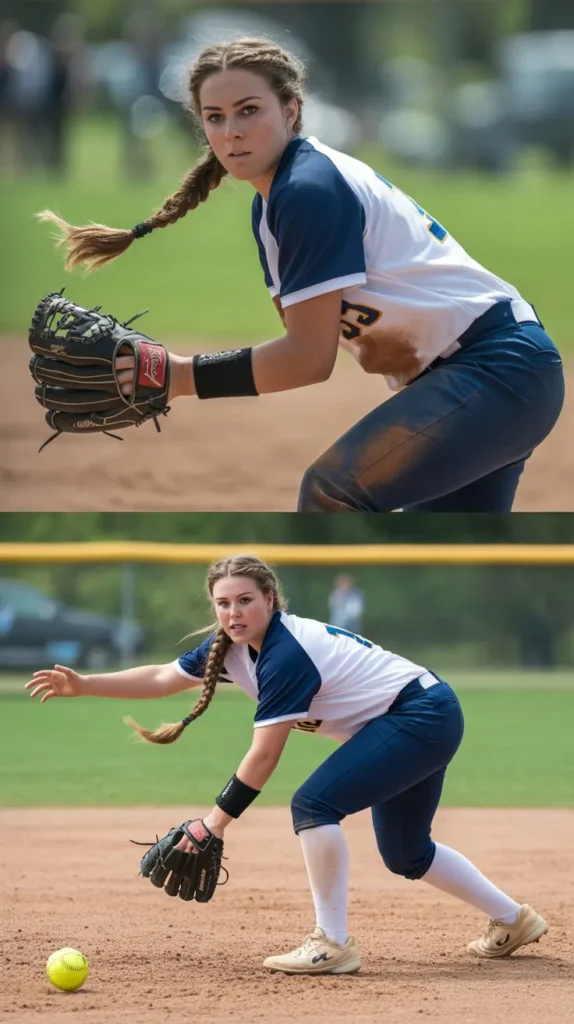
A single braid down the back is the simplest and most classic option for players with long hair.
It requires minimal products, minimal time, and delivers reliable performance across all positions.
Tucked into the back of the jersey, it becomes completely out of the way during play.
- A single three-strand braid gathers all hair into one contained plait that hangs down the back.
- Starting the braid at the nape of the neck rather than high on the head allows it to be tucked into the jersey collar.
- For extra security, a French or Dutch version of this single braid grips the scalp more firmly.
- A strong elastic at the base prevents the braid from coming undone even through the most aggressive slides.
- This style takes under five minutes to complete, making it ideal for early morning game-day prep.
20. Half-Up Braided Crown
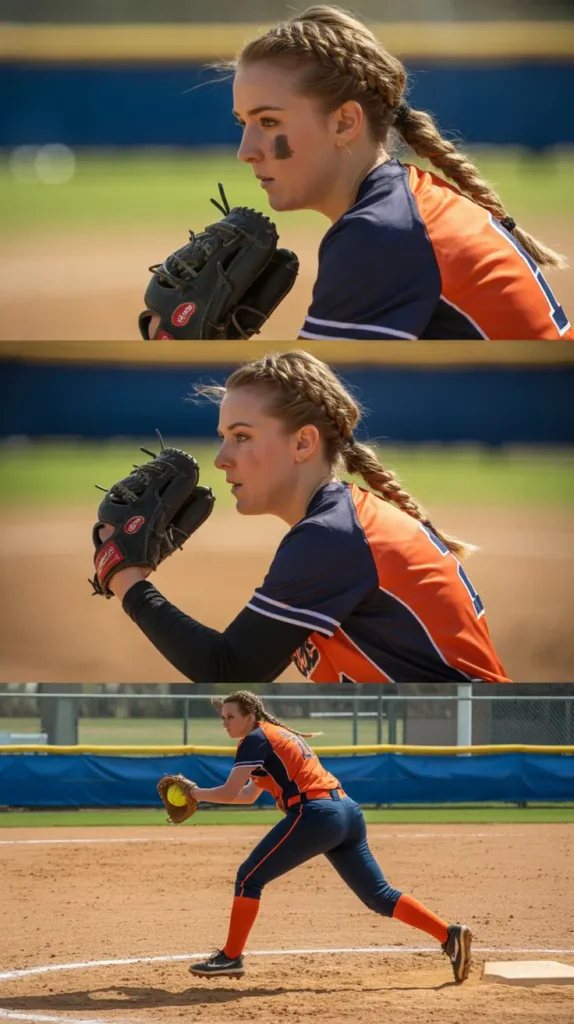
The half-up braided crown gathers the top half of the hair into a braided crown while leaving the lower sections in loose or braided waves.
For softball, the crown section keeps everything away from the face and helmet strap, while the lower sections can be tucked or further secured.
It offers a balance between athletic practicality and expressive style.
- The crown braid is formed by braiding a section from each side of the head and meeting at the center back.
- This keeps all face-framing hair away from the eyes, improving vision during pitching and fielding.
- The remaining lower hair can be tucked into a low bun or further braided for complete security.
- This style requires a medium to long hair length to achieve the crown effect successfully.
- A few strategically placed bobby pins lock the crown braid in place for a full game’s worth of play.
21. Space Buns with Braided Bases
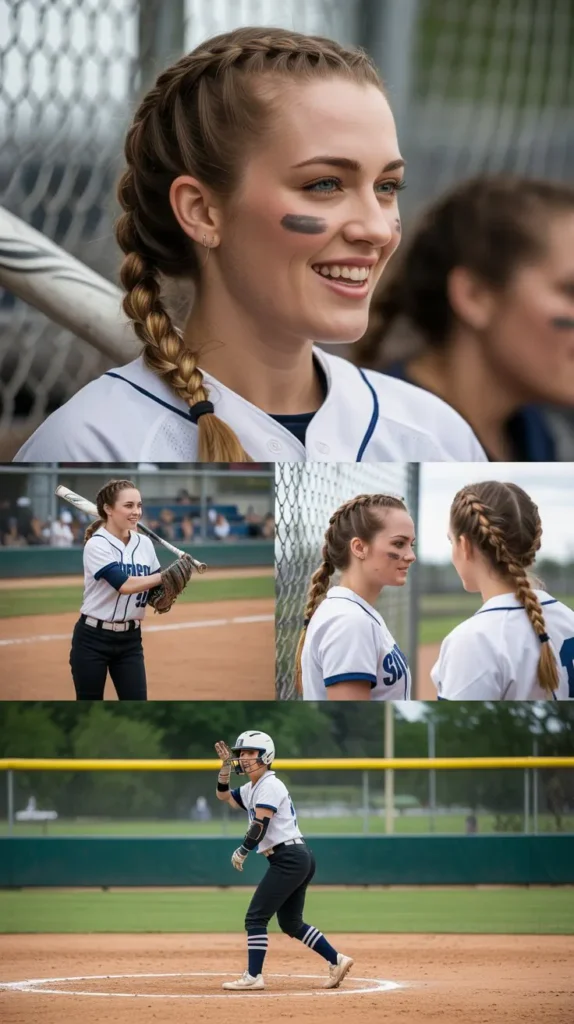
Space buns with braided bases combine a fun, bold aesthetic with real athletic function.
The braided bases create a flat foundation that sits comfortably inside the helmet, while the buns themselves keep all hair neatly bundled above the ear line.
This style has become increasingly popular at the collegiate and high school levels.
- Each space bun starts with a cornrow or flat braid base that hugs the scalp tightly.
- Hair is then wrapped around the base in a bun and secured with multiple hair ties and bobby pins.
- The buns sit above the ear, making them compatible with all standard softball helmet designs.
- This style works on medium to long hair and can be achieved on natural or straightened textures.
- Bold scrunchies or team-colored hair wraps around each bun add a fun, expressive game-day touch.
22. Crisscross Braid Updo
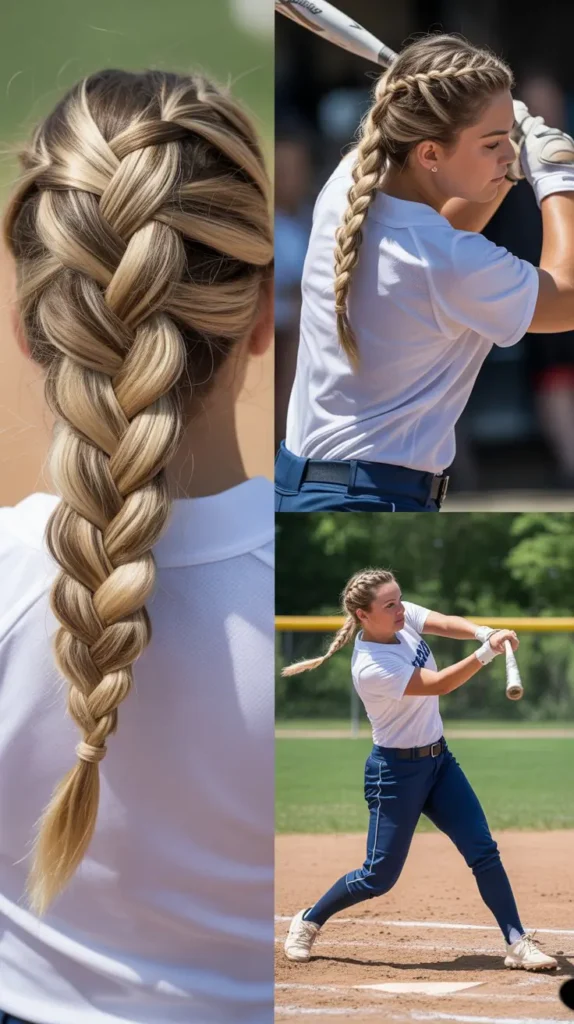
The crisscross braid updo features braids that intersect across the back of the head in a geometric, woven pattern before being secured into an updo.
This creates a visually complex style that still functions exactly like a practical athletic hairstyle.
It is especially popular for championship games where players want to look their best.
- Two or more braids are crossed over each other in the back and pinned to create the crisscross effect.
- This interweaving pattern creates additional structural stability that keeps the style from shifting mid-game.
- The updo finish ensures all hair is off the neck and collar area, improving comfort in warm conditions.
- This style can be created with French, Dutch, or flat braids depending on desired texture and volume.
- A generous application of holding spray locks the crisscross sections permanently in place.
23. Braid-Out Textured Bun
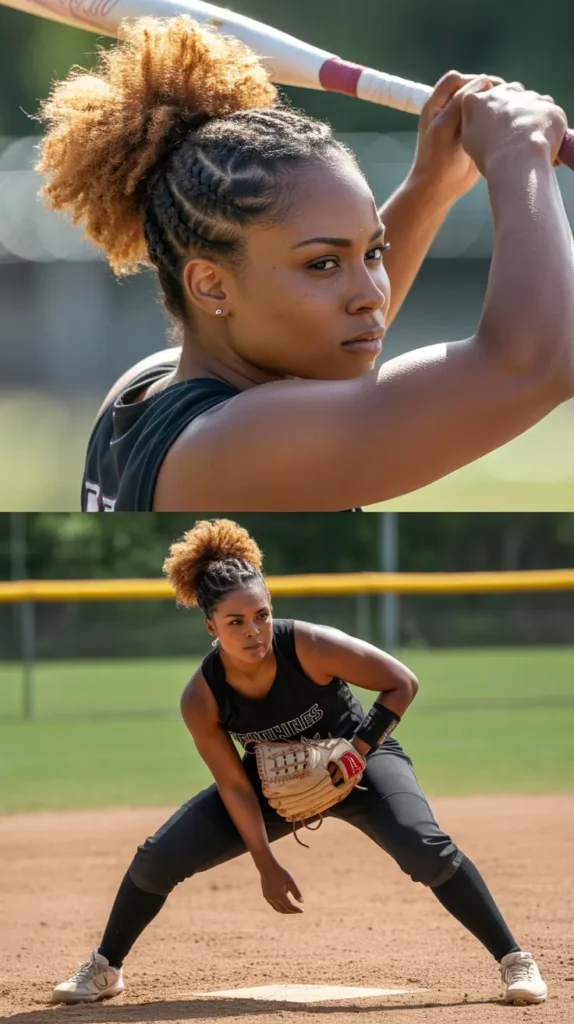
A braid-out textured bun uses overnight braids to create beautiful defined waves, which are then gathered into a bun for game day.
This is a wonderful option for players who love texture and volume while still needing full helmet compatibility.
The result is a rich, dimensional bun with beautiful wave definition.
- Hair is braided into multiple sections the night before and unraveled the morning of the game.
- The unraveled waves are immediately gathered and pinned into a secure bun before they lose definition.
- This technique works beautifully on Type 2 and Type 3 hair that holds wave patterns well.
- A little curl cream or mousse before braiding overnight intensifies the wave pattern the next morning.
- The bun can be positioned high, low, or to the side depending on helmet style and personal preference.
24. Pull-Through Braid Ponytail
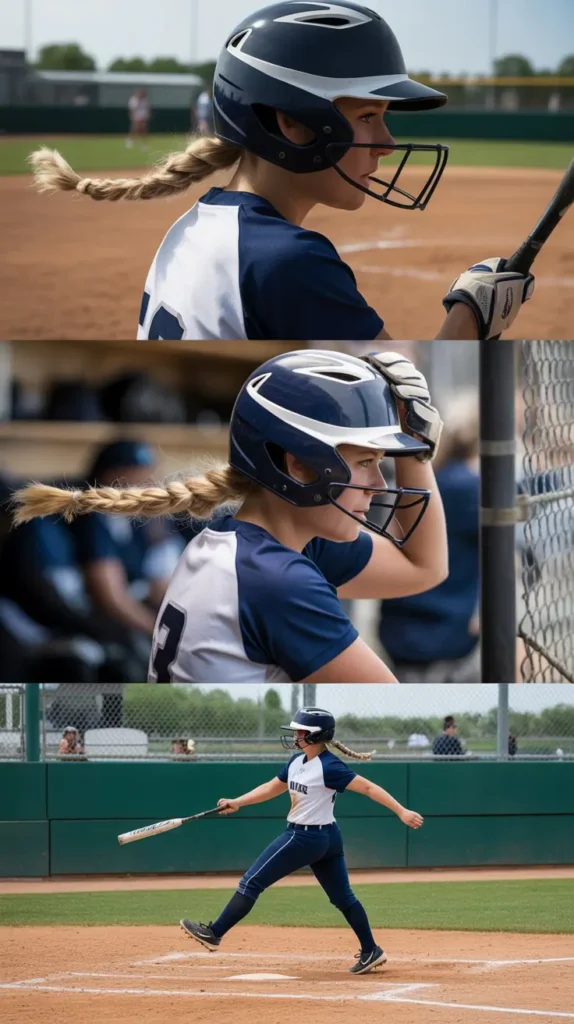
The pull-through braid creates the illusion of a thick, chunky braid without actually braiding hair in the traditional sense.
Instead, sections are looped through each other to create a full, dimensional ponytail effect. For softball players, it offers a voluminous yet secure alternative to standard braid ponytails.
- The pull-through technique involves stacking elastics down the length of the ponytail and pulling sections through.
- The result mimics the look of a large, chunky braid while being easier and faster to create.
- Because hair is not tightly braided, this style is gentler on the scalp and hair shaft.
- Gently pulling each section wider after completing the style adds volume and visual impact.
- Finishing with a strong-hold spray keeps the style intact through full nine-inning games.
25. Braided Top Knot
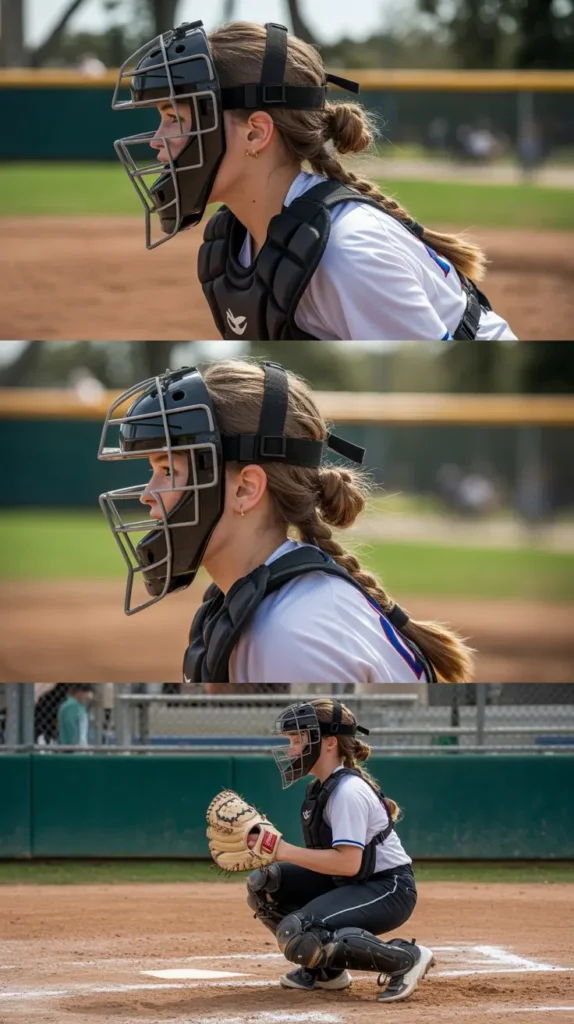
The braided top knot positions all hair at the very top of the head in a secure, high knot with a braided base.
This is one of the best styles for catchers and players who wear full-face helmets because the knot sits clear of all head gear. It is clean, cool, and completely action-ready.
- Hair is gathered at the crown and braided partway before being wrapped into a tight knot.
- The high position keeps the knot completely above the helmet line, eliminating all interference.
- Braiding the base of the knot adds structural security that a regular bun cannot provide.
- This style works on all hair lengths when combined with a small amount of extension if needed.
- A topknot is especially valued by catchers who need to put on and remove their gear quickly between innings.
26. Chunky Rope Braid
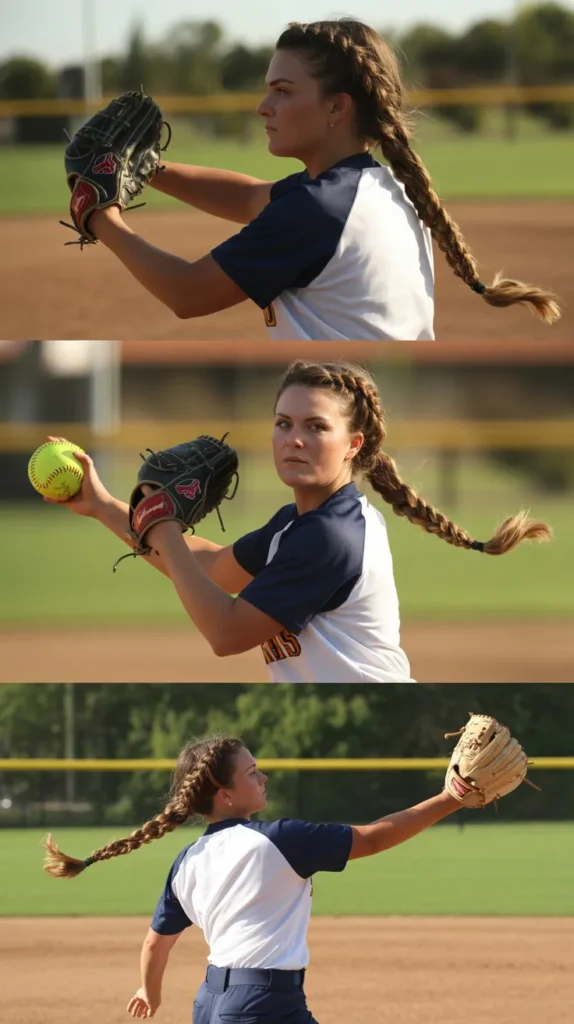
Rope braids use two sections twisted in opposite directions, creating a tight, rope-like texture that is both strong and visually striking.
A single chunky rope braid is one of the most secure and elegant hairstyles a softball player can wear.
It holds through virtually any athletic movement without needing pins or heavy products.
- Rope braids are created by dividing hair into two sections, twisting each individually, then twisting them around each other.
- The opposing twists lock into each other, creating a self-securing braid that resists unraveling.
- A single rope braid keeps all long hair in one contained, low-profile column down the back.
- This style works especially well on fine, straight hair that tends to slip out of traditional braids.
- Starting with a small amount of texture spray gives fine hair the grip it needs to hold the rope formation.
27. Tribal Braids with Beads

Tribal braids combine intricate geometric cornrow patterns with expressive accessories like beads, shells, and cuffs to create a one-of-a-kind game-day look.
These braids celebrate cultural identity while delivering outstanding athletic performance.
They are a powerful way for players to express who they are while competing at their best.
- Tribal braids are typically cornrowed in bold geometric or curved patterns across the scalp.
- Lightweight beads and accessories at the ends can be chosen in team colors for a spirited, unified look.
- The cornrow base of tribal braids lies completely flat, making them fully compatible with all helmet types.
- These braids can last two to four weeks with proper care, carrying a player through a significant portion of the season.
- Tribal braids are a proud celebration of cultural beauty and athletic strength that inspires confidence in every player who wears them.
Conclusion
From protective cornrows to stunning tribal braids with beads, 27 Braided Softball Hairstyles Built for Action has shown you that your hair can be just as powerful as your swing.
Every style featured in this article has been chosen for its ability to stay secure, fit under a helmet, and look great from the first inning to the last.
Whether you are preparing for a casual practice or a high-stakes championship game, there is a braid style on this list perfectly suited to your hair type, your personality, and your position on the field.
Great hair should never be a distraction — it should be your armor. So pick your favorite style, grab your elastic bands, and step onto that diamond knowing you are ready for anything the game throws at you.