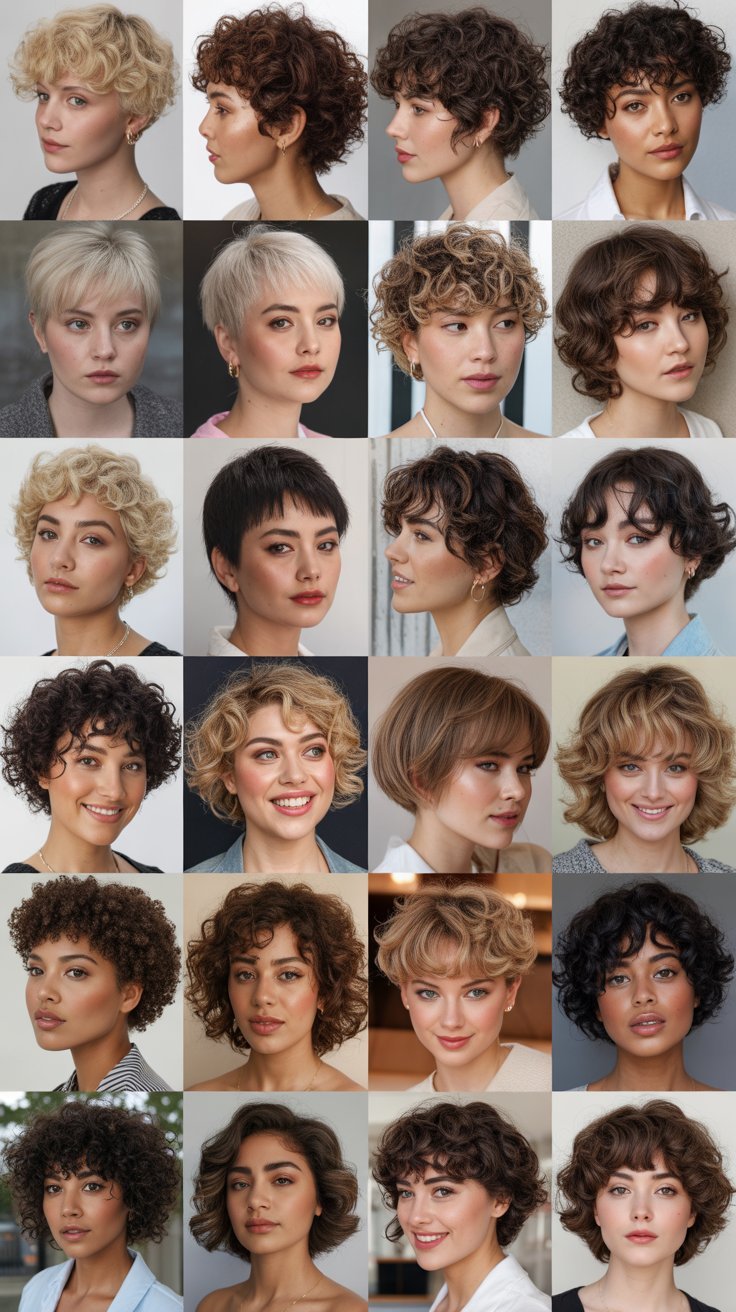
Short curly hair offers a world of styling possibilities that combine low maintenance with maximum impact.
Whether you’re blessed with natural ringlets or have embraced the curly hair journey, finding the right short haircut can transform your entire look and simplify your daily routine.
The beauty of short curly haircuts lies in their versatility—they work beautifully across all curl types, face shapes, and personal styles, from professional and polished to edgy and adventurous.
In this comprehensive guide to 27 Cool Short Curly Haircuts for a Fresh Look, we’ll explore an exciting range of cuts that celebrate your curls’ natural texture while giving you that fresh, modern appearance you’ve been craving.
You’ll discover classic styles that have stood the test of time, trendy contemporary cuts that are dominating social media, and everything in between, complete with styling tips and maintenance advice to help you make the most of your gorgeous curls.
Get ready to find your perfect short curly haircut that not only complements your features but also fits seamlessly into your lifestyle.
1. The Classic Curly Pixie Cut
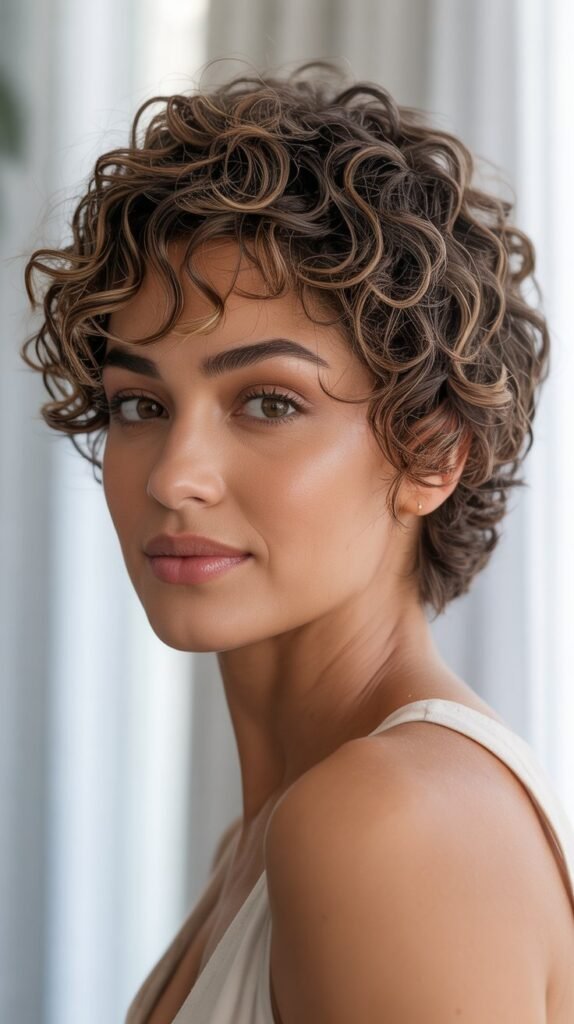
The curly pixie cut represents the ultimate in confidence and style, offering a liberating short length that showcases your natural curl pattern in its most authentic form.
This cut works exceptionally well for those with tighter curl patterns, as the shorter length reduces weight and allows curls to spring up beautifully around the face.
- The classic curly pixie typically features short sides and back with slightly more length on top, creating a balanced silhouette that frames the face perfectly.
- This style works particularly well for heart-shaped and oval faces, as the volume on top draws attention upward and creates harmonious proportions.
- Maintenance is surprisingly simple—regular trims every 4-6 weeks keep the shape intact, while daily styling requires minimal product and effort.
- The curly pixie offers excellent versatility despite its short length, allowing you to style it sleek for professional settings or encourage maximum volume for casual occasions.
- For styling, apply a curl-defining cream to damp hair and either air-dry or use a diffuser on low heat to maintain curl integrity without creating frizz.
2. Tapered Curly Cut
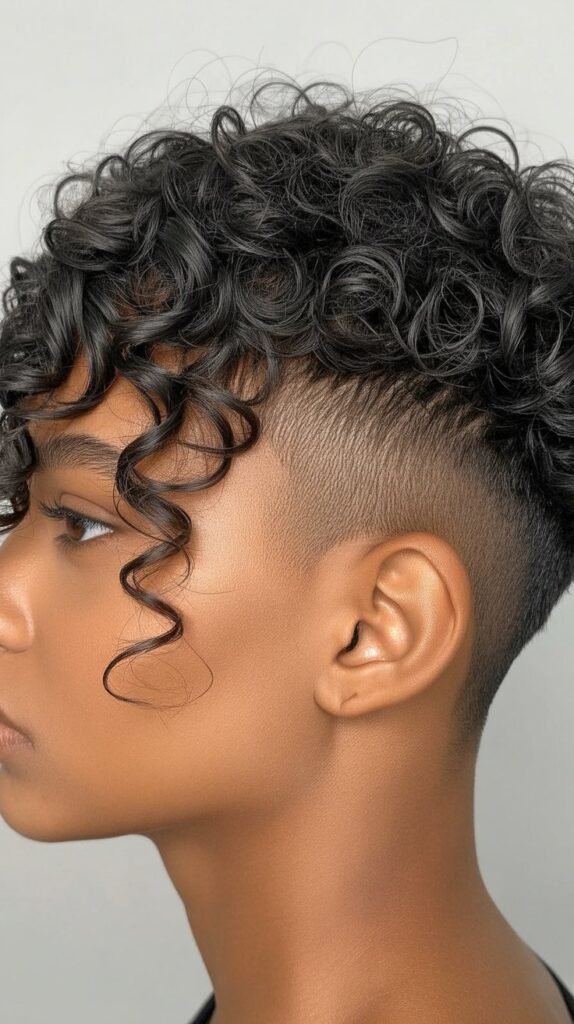
The tapered curly cut has emerged as one of the most popular short curly hairstyles, featuring gradually shortened sides and back that create a clean, sculptured appearance while maintaining fullness on top.
This modern cut bridges the gap between edgy and elegant, making it suitable for various professional and social settings.
- The taper creates a beautiful gradient effect that emphasizes your curl pattern on top while keeping the sides neat and manageable.
- This cut is particularly flattering for round and square face shapes, as the height on top elongates the face visually.
- The tapered approach reduces bulk without sacrificing the beautiful texture that makes curly hair so distinctive and appealing.
- Regular maintenance every 3-4 weeks for the tapered sections ensures the cut maintains its sharp, defined appearance.
- Styling involves applying a lightweight mousse to damp hair and scrunching upward to encourage curl formation at the crown.
3. Curly Bob with Bangs
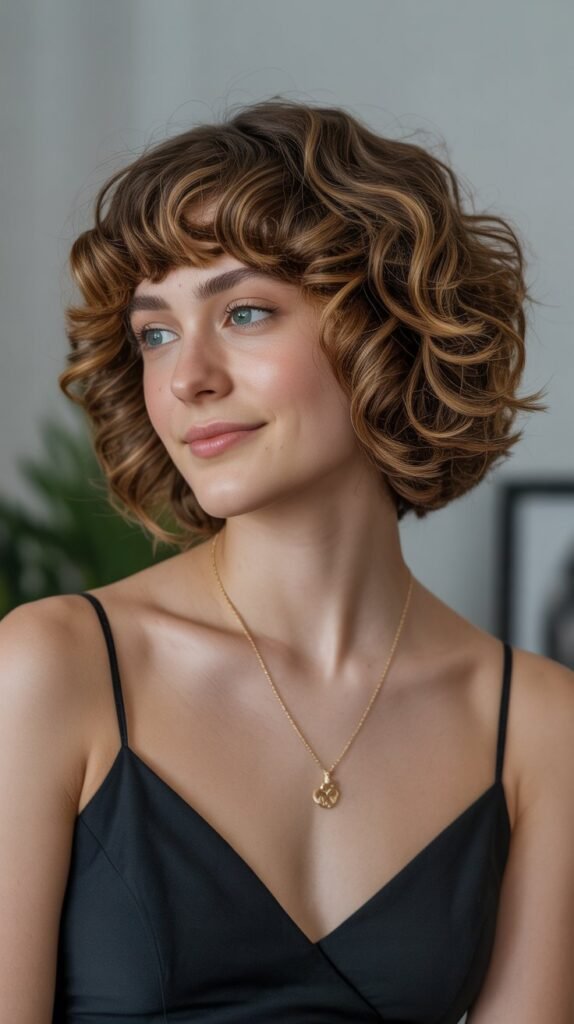
The curly bob with bangs combines two timeless elements into one stunning package that softens facial features while maintaining a playful, youthful energy.
Bangs add dimension and personality to the classic bob structure, creating visual interest that draws attention to the eyes.
- Curly bangs can be customized to suit your preference—from wispy and side-swept to full and face-framing, depending on your curl type and face shape.
- The bob length typically falls between chin and shoulder, providing enough length to showcase your curl pattern while remaining manageable.
- This style works beautifully with layering throughout to prevent the triangular shape that can occur with one-length curly cuts.
- For those with very tight curls, longer bangs that fall around eyebrow length prevent the bangs from shrinking too short when dry.
- Styling requires a curl-enhancing product applied section by section, with particular attention to the bang area to ensure they fall correctly.
4. Asymmetrical Curly Cut
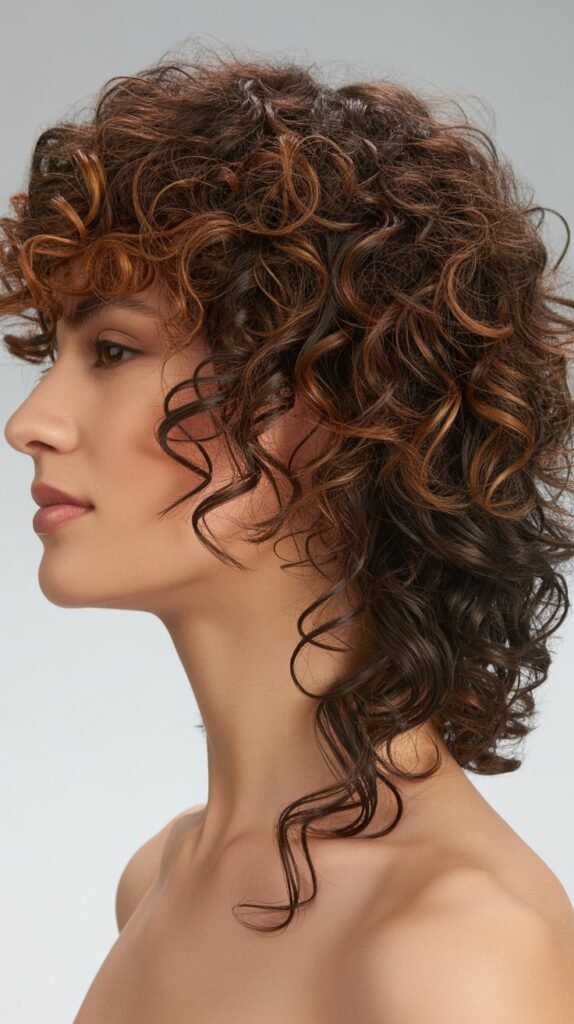
The asymmetrical curly cut breaks traditional symmetry rules to create an artistic, fashion-forward look that celebrates individuality and creative expression.
This bold choice features one side significantly shorter than the other, creating dramatic visual interest that turns heads.
- The longer side typically falls between chin and shoulder length, while the shorter side ranges from above-the-ear to temple length.
- This cut works exceptionally well for those with oval or heart-shaped faces, as it creates balance through intentional imbalance.
- The asymmetry can be subtle or extreme depending on your comfort level and lifestyle requirements.
- Curly texture actually enhances the asymmetrical effect, as the natural volume and movement add depth to the design.
- Maintenance requires commitment to regular trims on the shorter side to maintain the dramatic length difference.
- Styling involves focusing product application on the longer side to enhance curl definition and volume where it has the most impact.
5. Curly Shag Haircut
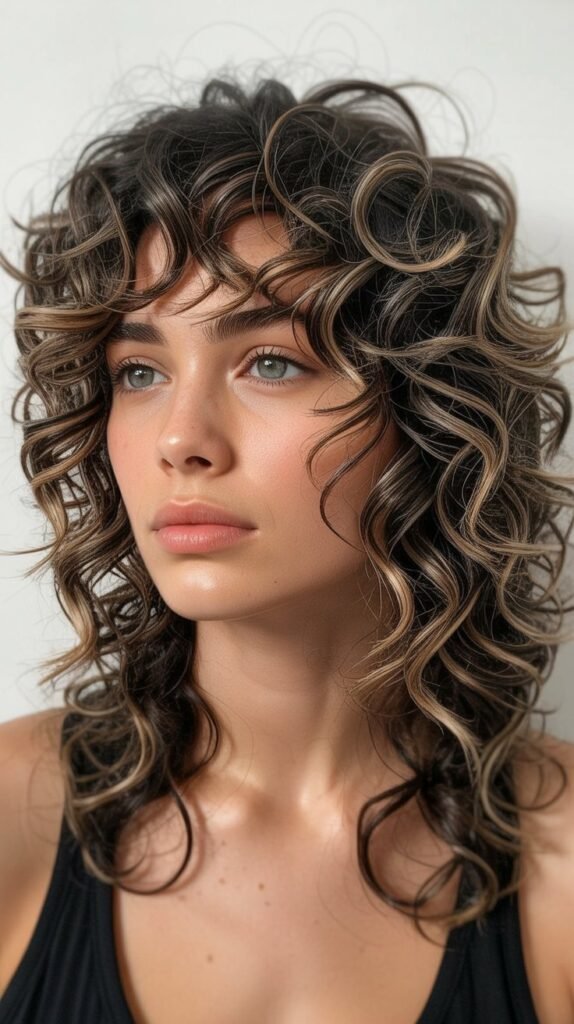
The curly shag brings 1970s-inspired texture and movement into the modern era, featuring multiple layers throughout that create a deliberately tousled, effortlessly cool appearance.
This cut celebrates the natural chaos of curly hair rather than fighting against it.
- Layers are strategically placed throughout the cut to remove weight and encourage individual curl expression at various lengths.
- The shag works beautifully with looser curl patterns (2C to 3B), as the layers can create the desired piecey, textured effect.
- This style is particularly flattering for those seeking to add volume to fine curly hair or reduce bulk in thick curly hair.
- The shag’s beauty lies in its “lived-in” appearance, meaning it actually looks better between washes when natural oils enhance curl definition.
- Minimal styling is required—simply apply a texturizing spray or sea salt spray to damp hair and scrunch for enhanced definition.
- Regular trims every 8-10 weeks maintain the layered structure without requiring frequent salon visits.
6. Curly Undercut
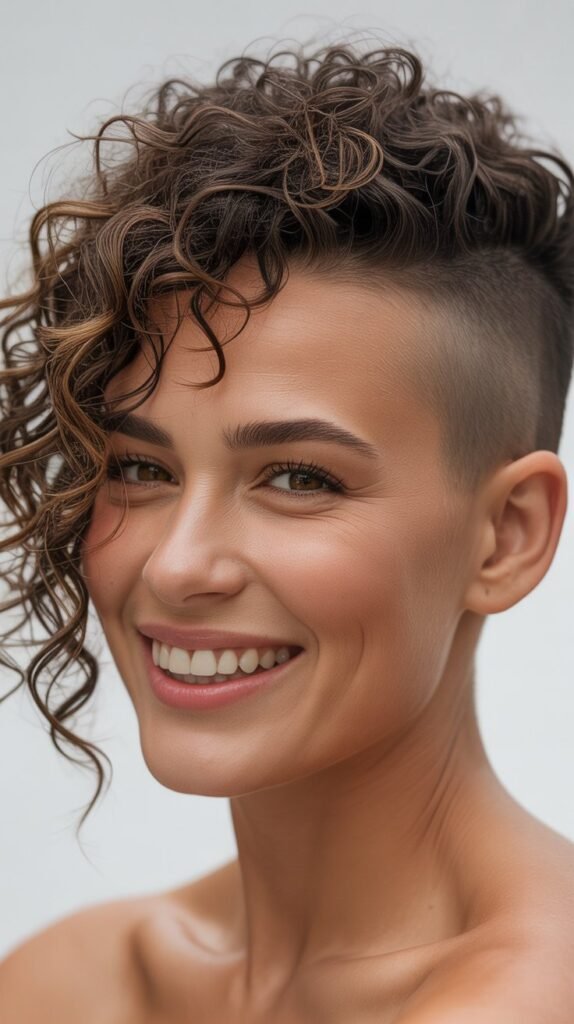
The curly undercut represents maximum contrast and edginess, featuring shaved or very closely cropped sides and back with significant length and volume maintained on top.
This dramatic style makes a powerful statement and showcases confidence.
- The undercut section can be buzzed with clippers at various guard lengths, from a close shave to about half an inch, depending on desired contrast.
- This cut significantly reduces overall hair volume, making it ideal for those with extremely thick curly hair who want a lighter, cooler option.
- The dramatic difference between the shaved sections and curly top creates striking visual impact that works particularly well in creative professional fields.
- Maintenance for the undercut section requires visits to the barber or stylist every 2-3 weeks to keep the shaved areas neat.
- The curly top can be styled in multiple ways—slicked back for a more polished look or encouraged into maximum volume for casual settings.
- For added personality, the undercut section can feature designs or patterns shaved into it.
7. Wash-and-Go Curly Cut
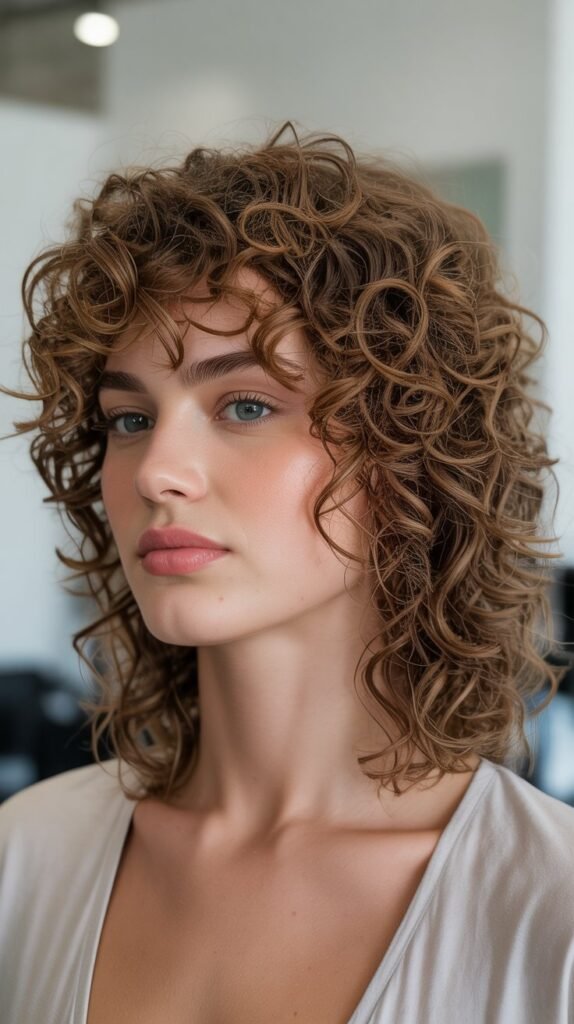
The wash-and-go curly cut is specifically designed for those who want beautiful results with absolutely minimal styling effort, featuring strategic layering and shaping that allows your natural curl pattern to shine with virtually no manipulation.
This practical cut celebrates the “less is more” philosophy.
- The cut is customized to your individual curl pattern, working with your hair’s natural tendencies rather than against them.
- Strategic layering removes bulk in the right places while maintaining enough weight to prevent excessive shrinkage or pyramid shape.
- This style works across all curl types but is particularly beneficial for those with consistent curl patterns throughout their head.
- The wash-and-go cut typically features slightly longer layers that allow curls to form their natural clumps without excessive frizz.
- Styling truly is as simple as washing, applying a leave-in conditioner and curl cream, then letting hair air-dry or diffusing briefly.
- Regular trims every 10-12 weeks maintain the shape and remove any damaged ends that could disrupt the smooth wash-and-go process.
8. Curly Fade Haircut
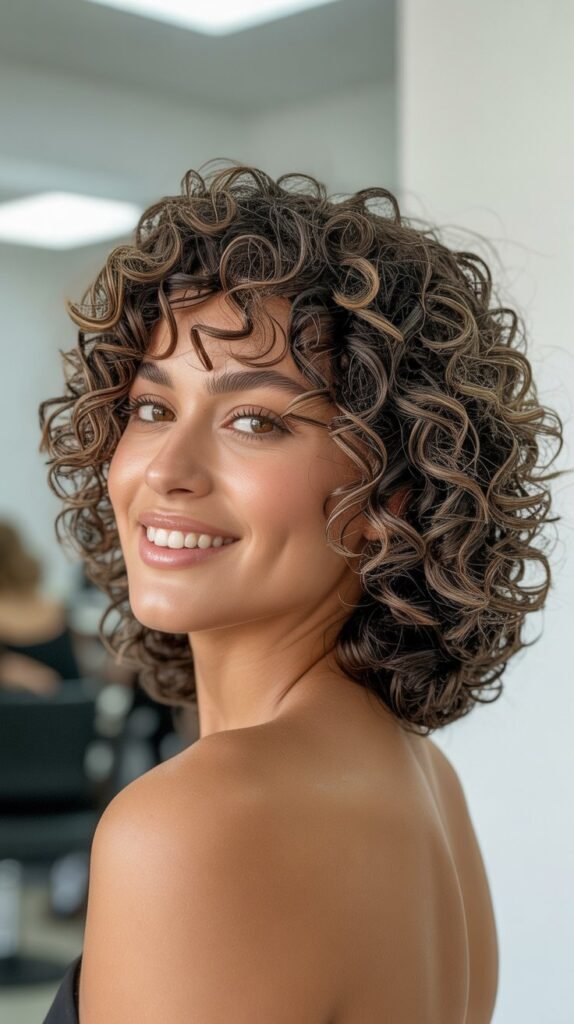
The curly fade haircut combines barbering precision with natural texture, featuring a gradual fade from very short on the sides and back to fuller length on top, creating a clean and contemporary look.
This style has become increasingly popular across all genders and represents the perfect marriage of structure and natural beauty.
- The fade can be customized as a low fade (starting near the ears), mid fade (starting at temple level), or high fade (starting well above the temples).
- This cut creates a polished, professional appearance that still celebrates natural curl texture without appearing overly conservative.
- The fade technique works particularly well with various curl types, though those with tighter coils (4A-4C) showcase the contrast most dramatically.
- Regular maintenance every 2-3 weeks keeps the fade looking sharp and prevents the grown-out appearance that can occur with this precision cut.
- Styling the top section involves applying curl cream to damp hair and either air-drying or using a diffuser to enhance natural curl formation.
- The curly fade can be customized with a hard part line or design elements for added personality.
9. Finger Coils Short Style
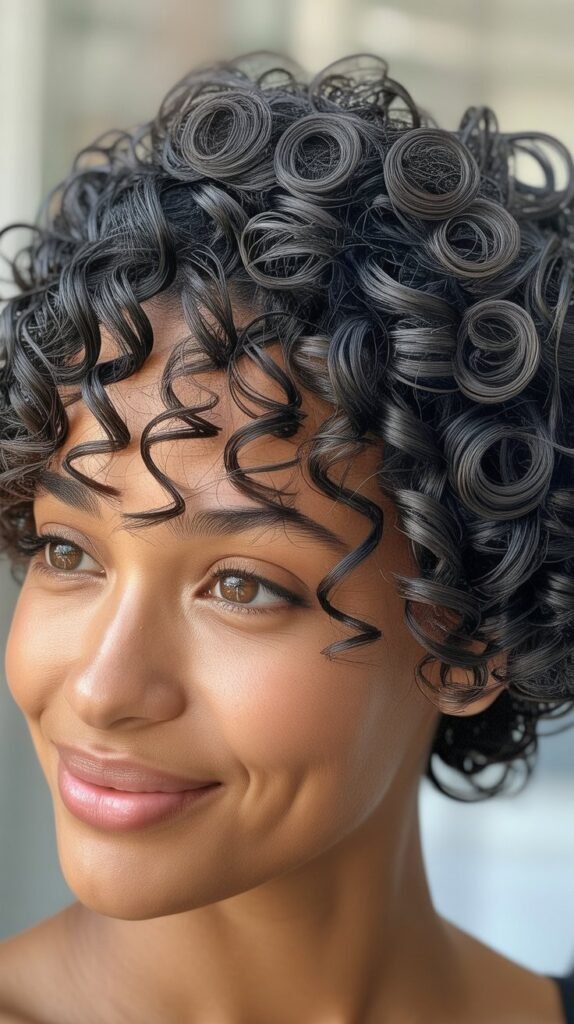
The finger coils short style transforms naturally curly or coily hair into uniform, defined spirals that create a stunning, sculptural appearance with exceptional curl definition.
While this is technically a styling technique, it works best with specific short cut shapes that support the coiling process.
- Finger coils are created by taking small sections of damp hair and twisting them around your finger until they form tight, spring-like coils.
- This style works exceptionally well with type 4 hair textures, creating defined curls where natural curl pattern might be less evident.
- The underlying haircut should feature even layering to prevent bulk and allow the coils to distribute evenly across the head.
- Finger coils can last 1-2 weeks with proper nighttime maintenance using a satin bonnet or pillowcase.
- Creating the style requires patience (2-4 hours depending on hair density) but results in stunning, long-lasting definition.
- Products used should include a strong-hold gel or styling cream to maintain coil definition throughout the wear period.
10. Curly Crop Cut
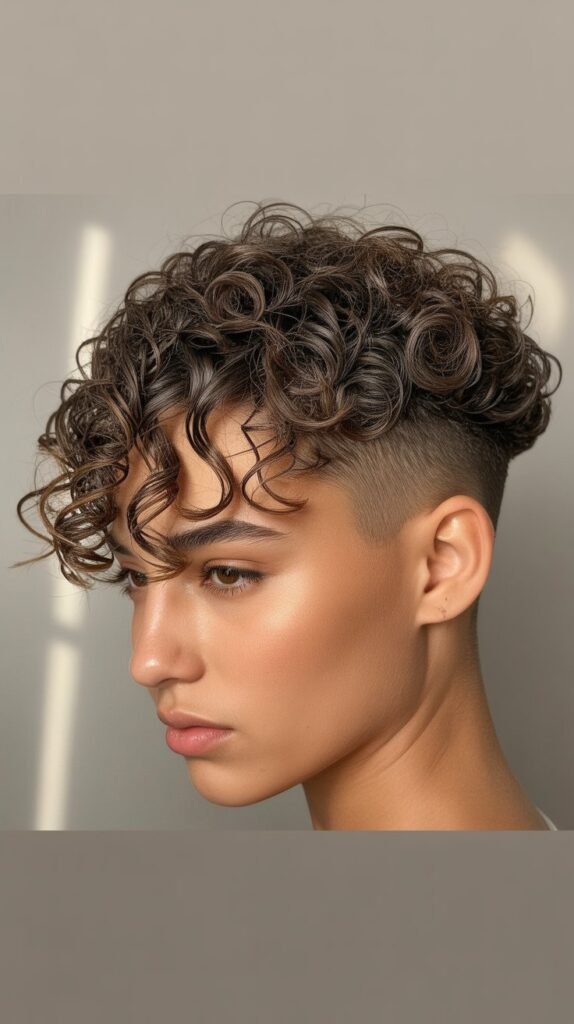
The curly crop cut features short, uniform length all around the head with slight variations to accommodate curl pattern, creating an ultra-low-maintenance style that showcases curl texture in its most natural state.
This minimalist approach has gained popularity for its simplicity and timeless appeal.
- The crop typically ranges from 1-3 inches in length, short enough to be easy but long enough to show curl formation.
- This cut works beautifully across all curl types but is particularly stunning on those with tight, springy curls that create natural volume.
- The uniform length creates a rounded, flattering silhouette that works with most face shapes, particularly oval and round faces.
- Maintenance is minimal—trims every 6-8 weeks maintain the shape, and daily styling requires only moisturizer and minimal product.
- The crop can be styled slightly differently each day depending on how curls form naturally, offering variety within consistency.
- This style is ideal for active lifestyles, hot climates, or anyone seeking maximum simplicity in their hair routine.
11. Textured Curly Lob
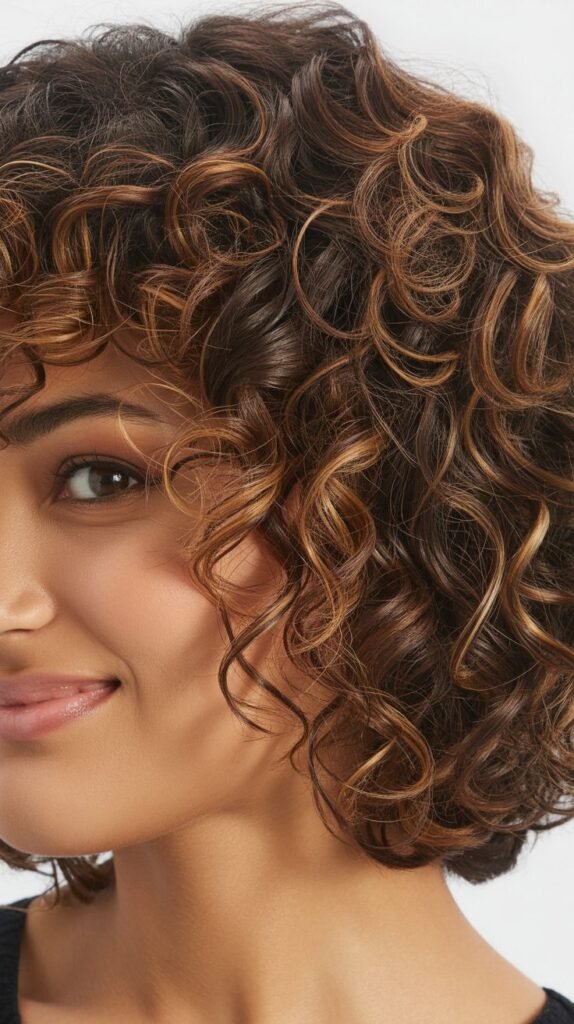
The textured curly lob (long bob) hits at the sweet spot between short and medium length, typically falling between chin and collarbone, offering styling versatility while maintaining the ease of shorter hair.
The textured approach incorporates strategic layering that enhances curl definition and prevents heaviness.
- The lob length provides enough hair to experiment with different styling options—worn down, half-up, or in a small bun or ponytail.
- Texturizing techniques remove internal bulk without creating visible layers, resulting in a softer, more natural-looking cut.
- This length works exceptionally well with wavy to medium curls (2B-3B), as these curl patterns showcase the movement beautifully.
- The curly lob flatters virtually all face shapes and can be customized with face-framing pieces to enhance specific features.
- Styling involves applying products to damp hair in sections, scrunching to encourage curl formation, and either air-drying or diffusing.
- The lob length allows for hair to be tucked behind ears for a more polished look or worn forward for a softer, romantic appearance.
12. Curly Mullet Revival
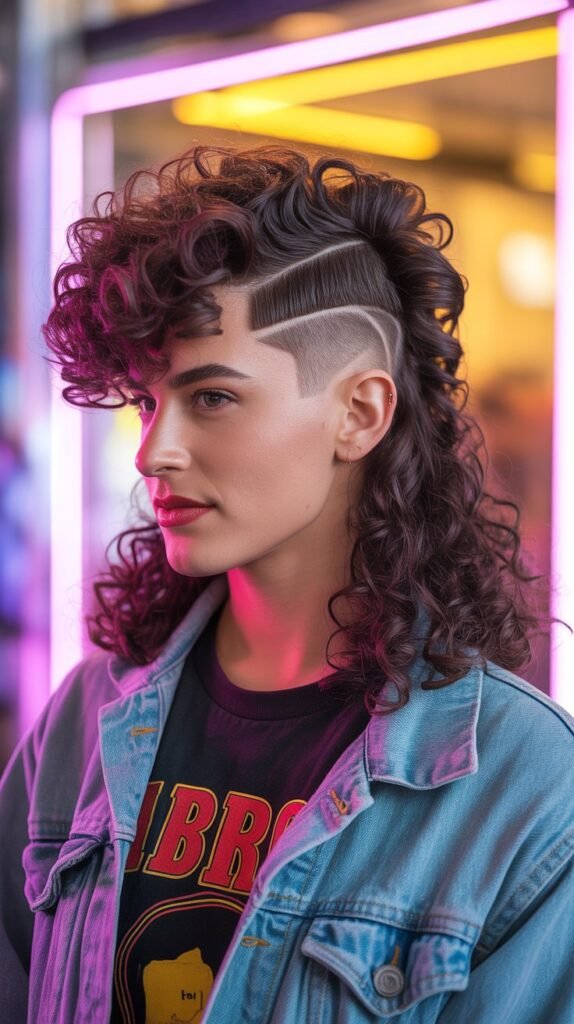
The curly mullet has made a surprising and stylish comeback, featuring shorter length through the top and sides with intentionally longer hair in the back, creating an edgy, fashion-forward statement.
The modern interpretation is more subtle and wearable than its 1980s predecessor.
- The contemporary curly mullet features a graduated difference between front and back rather than the extreme “business in front, party in back” of the original.
- Curly texture softens the mullet shape, making it appear more natural and less stark than the same cut on straight hair.
- This cut works particularly well for those with oval or diamond face shapes, as the longer back section creates interesting visual lines.
- The style requires someone comfortable with standing out, as it definitely makes a statement and attracts attention.
- Styling involves encouraging volume through the top and crown while allowing the back section to hang with defined curls.
- Regular trims every 6-8 weeks maintain the intentional length difference and keep the cut looking fresh rather than simply grown-out.
13. Curly Fringe Cut
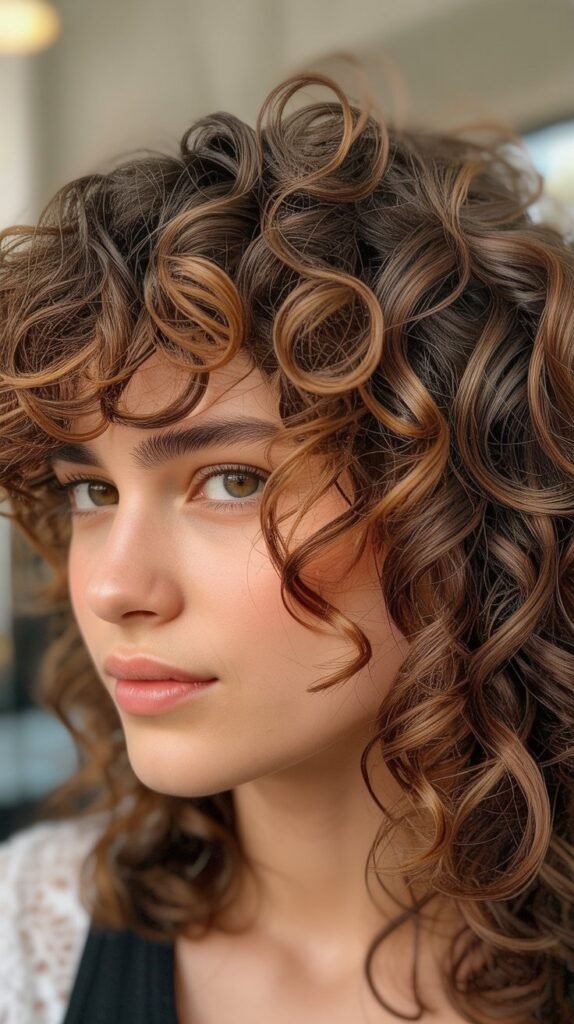
The curly fringe cut features prominent bangs that fall across the forehead, creating a youthful, playful appearance that draws attention to the eyes while the rest of the hair maintains a short, manageable length.
The fringe adds softness and personality to any short curly style.
- Curly fringe can be cut to various lengths—from eyebrow-grazing to longer side-swept versions—depending on curl type and shrinkage factor.
- The fringe works particularly well for those with high foreheads or who want to soften angular facial features.
- Behind the fringe, the hair is typically cut to a short to medium length that complements the bang section without overwhelming it.
- Shrinkage must be carefully considered when cutting curly fringe, as hair can spring up significantly shorter when dry.
- Styling the fringe requires attention—applying product specifically to this section and potentially using clips while drying to train the direction.
- The fringe can be styled in multiple ways: forward for full coverage, swept to the side for asymmetry, or pinned back when you want a different look.
14. Natural Coil Cut
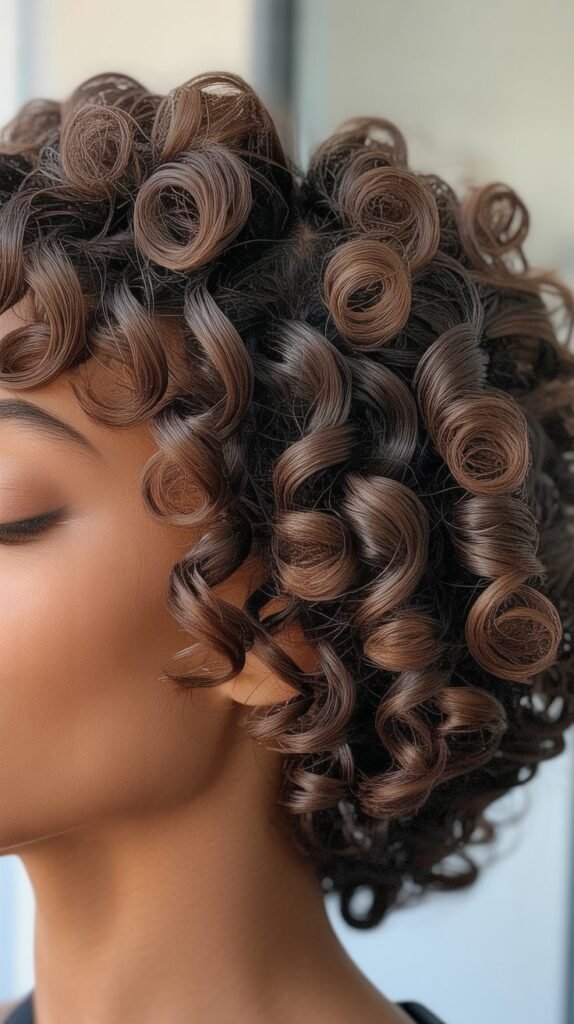
The natural coil cut is specifically designed for type 4 hair textures, celebrating the beautiful, tight coil pattern with a shape that prevents the dreaded triangle silhouette while maintaining hair health and definition.
This cut honors the natural texture without attempting to alter its essential character.
- The cut typically features more length on top with gradually shorter sides, creating shape while working with the natural coil pattern.
- Proper technique is essential—cutting coily hair requires an understanding of shrinkage, curl memory, and the unique characteristics of type 4 textures.
- This style can be worn with maximum coil definition or stretched for a different look, offering versatility within the same cut.
- Regular trims every 8-12 weeks remove split ends and maintain the shape without removing significant length.
- The natural coil cut requires finding a stylist who specializes in natural hair and understands the unique needs of coily textures.
- Styling focuses on moisture retention and coil definition using creams, butters, and oils rather than gels that can create crunch.
15. Curly Bowl Cut
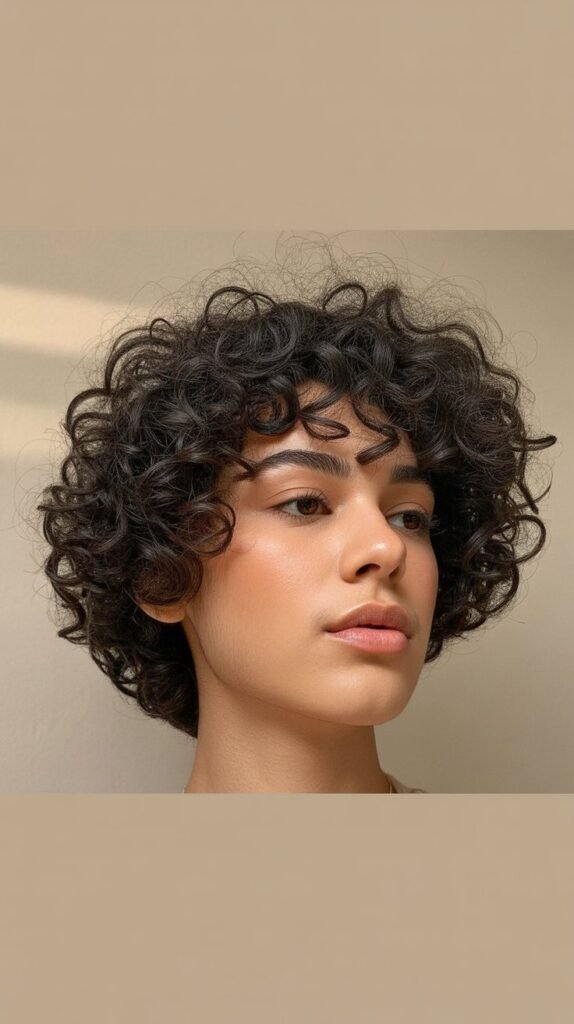
The curly bowl cut represents a modern reinterpretation of a classic shape, featuring rounded perimeter with equal length all around that creates a distinctive, fashion-forward silhouette.
When executed on curly hair, the bowl cut takes on a softer, more organic appearance than its straight-hair counterpart.
- The modern curly bowl cut features slight variations in length to accommodate curl pattern and prevent excessive roundness.
- This cut works particularly well with medium curls (2C-3B), as these curl types provide enough texture to soften the geometric shape.
- The bowl cut creates a strong style statement that works best for those with creative fields or personal style confidence.
- Face shape considerations are important—oval faces carry this cut most easily, while round faces might find it emphasizes roundness.
- Styling involves encouraging uniform curl formation all around the perimeter to maintain the characteristic bowl shape.
- The cut can be customized with subtle layering or texturizing to prevent it from appearing too heavy or solid.
16. Stacked Curly Bob
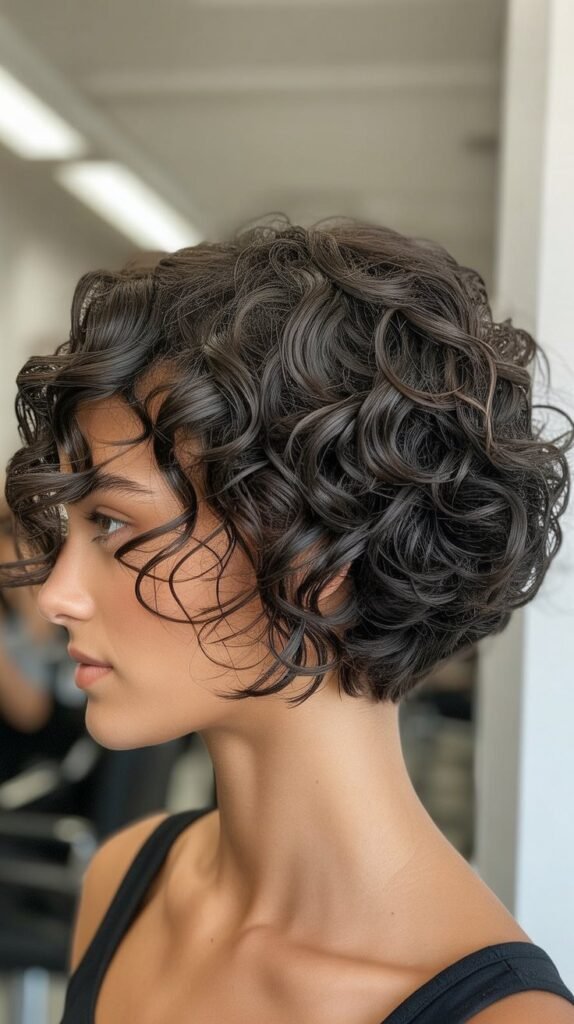
The stacked curly bob features graduated layers in the back that create volume and shape, with the back shorter than the front in a dramatic yet elegant fashion.
This architectural approach to the classic bob adds dimension and sophistication to curly hair.
- The stacking technique creates natural volume at the crown without requiring extensive styling or product.
- Longer front pieces frame the face beautifully while the shorter back prevents the heaviness that can occur with one-length curly bobs.
- This cut works excellently for those with fine to medium-textured curly hair who want to create the illusion of fuller hair.
- The stacked bob is particularly flattering for those with longer neck shapes, as it draws attention to this feature.
- Proper execution requires an experienced stylist who can create the graduated layers while respecting curl pattern and shrinkage.
- Styling involves applying product throughout and using a diffuser at the crown area to enhance the natural volume created by the stacking.
17. Twist-Out Short Style
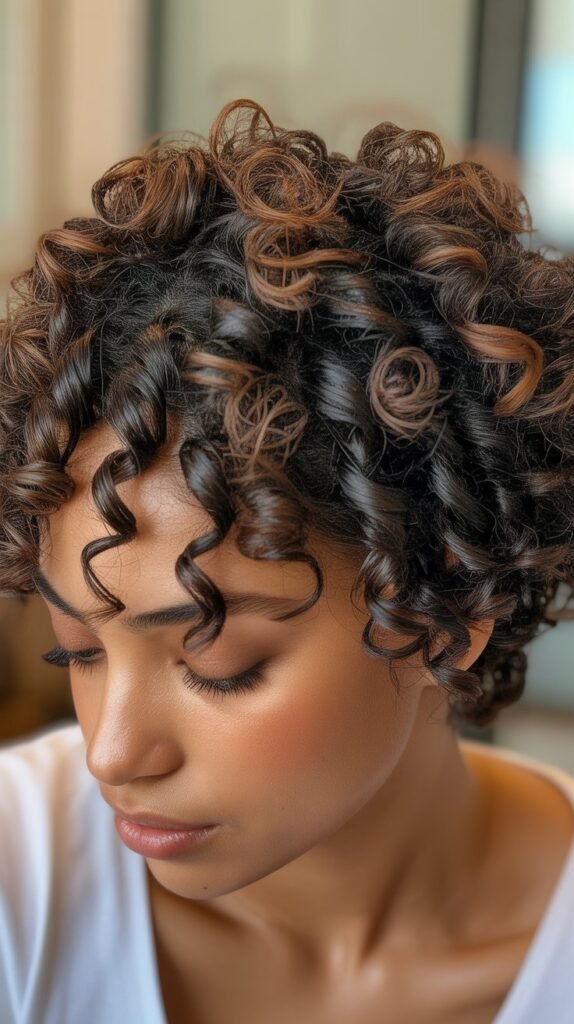
The twist-out short style utilizes a specific styling technique that creates uniform, elongated curls on short hair, resulting in defined texture with minimal frizz.
While this is primarily a styling method, it works best with cuts specifically designed to support twist-out styling.
- Two-strand twists are created on damp, product-laden hair and allowed to dry completely before being carefully unraveled.
- The resulting curl pattern is more defined and uniform than natural curls, creating a polished, intentional appearance.
- This style works across all curl types but is particularly popular with type 3 and 4 textures where it can create or enhance curl definition.
- The underlying cut should feature even length or subtle layering to allow the twist-out pattern to distribute uniformly.
- Twist-outs typically last 3-5 days with proper nighttime maintenance, making them an excellent low-manipulation protective style.
- Products should include a leave-in conditioner for moisture and a holding cream or gel for definition and longevity.
18. Curly Side Part Cut
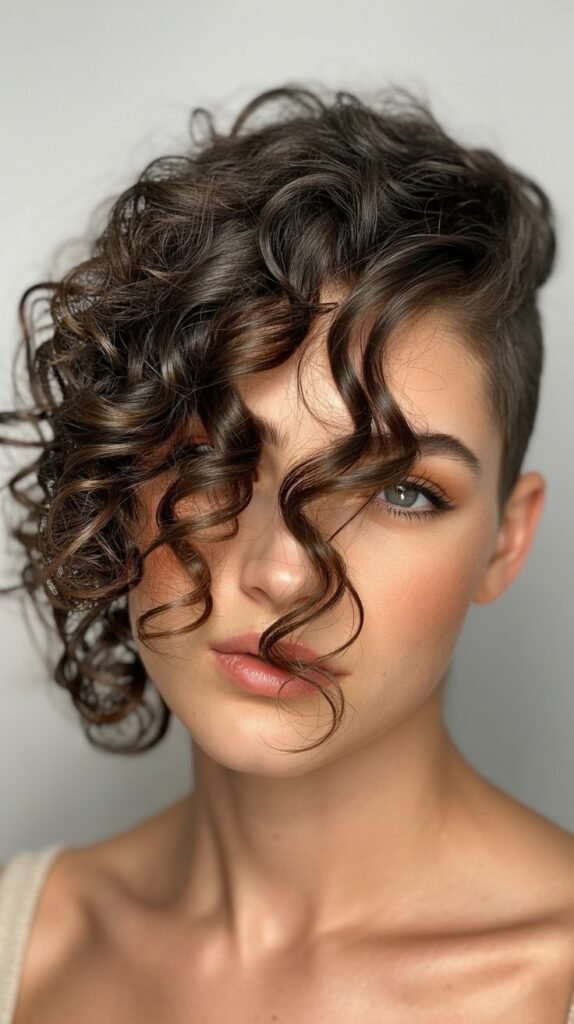
The curly side part cut features a distinct parting to one side that creates asymmetry and directs volume strategically, offering a polished, sophisticated appearance that works beautifully in professional settings.
This timeless styling approach gains new dimension when applied to curly textures.
- The deep side part creates natural volume on one side while the other side lies closer to the head, producing interesting visual balance.
- This styling works particularly well with looser curls and waves (2A-3A), as these textures can be directed more easily along the part line.
- The cut itself can be any short to medium length, with the side part being the styling element that defines the look.
- Face-framing layers on the heavier side of the part enhance the asymmetrical effect and draw attention to facial features.
- Styling requires creating the part on wet hair and using clips to hold the direction while drying to train hair to fall properly.
- The side part can be created on either side depending on your natural growth pattern and which direction is most flattering.
19. Rounded Curly Afro
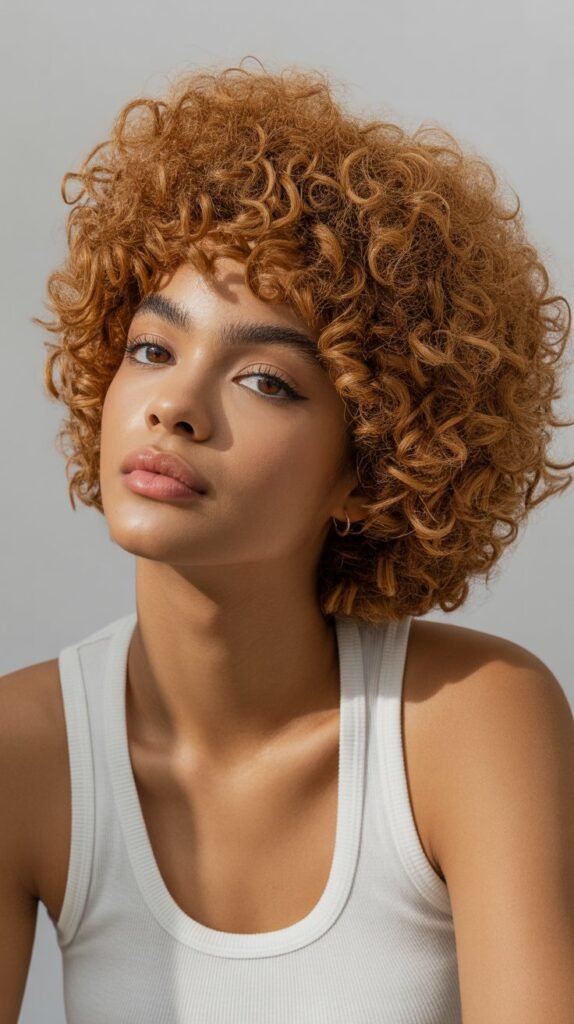
The rounded curly afro celebrates natural texture in its fullest expression, featuring evenly shaped, voluminous hair that creates a beautiful spherical silhouette.
This iconic style has been reclaimed and modernized while honoring its cultural significance and historical importance.
- The rounded shape is achieved through careful trimming that removes length evenly around the perimeter to create the signature circular silhouette.
- This style works best with type 3C-4C hair textures, where the natural density and coil pattern create the necessary volume.
- Regular maintenance every 4-6 weeks keeps the rounded shape intact and removes any irregular growth or damaged ends.
- The afro can be styled at various sizes—from a smaller, more controlled shape to a larger, more dramatic version—depending on personal preference.
- Proper care includes regular deep conditioning to maintain moisture and prevent breakage that could disrupt the uniform shape.
- Styling involves picking or fluffing the hair outward from the roots to achieve maximum volume and the desired round shape.
20. Curly Buzz Cut
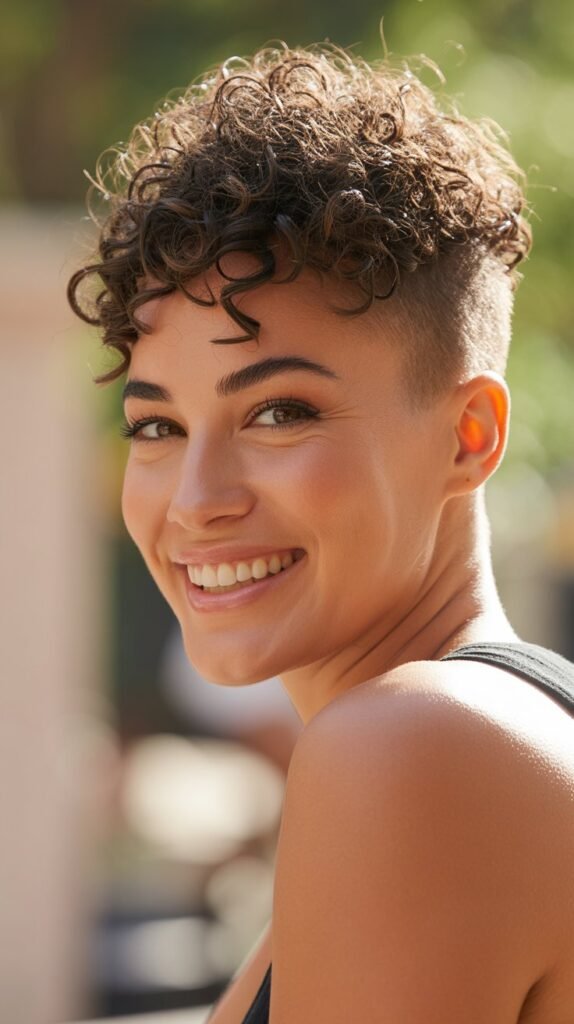
The curly buzz cut features hair clipped very short all over, typically under an inch in length, creating an ultra-low-maintenance style that showcases curl texture at its most subtle.
This bold choice emphasizes facial features and requires minimal daily attention.
- The buzz cut length can range from 1/8 inch to 3/4 inch, with longer lengths showing more curl pattern and shorter lengths creating almost peach-fuzz texture.
- This style works across all curl types and is particularly practical for those in hot climates or with active lifestyles.
- The curly buzz cut draws maximum attention to facial features, bone structure, and head shape, requiring confidence to wear successfully.
- Maintenance is simple—hair can be trimmed at home with clippers every 3-4 weeks to maintain the desired length.
- This cut is the ultimate in simplicity—no styling products or tools required, just wash and go about your day.
- Growing out from a curly buzz cut allows you to experience your curl pattern at various lengths, which can inform future cut decisions.
21. Layered Curly Pixie
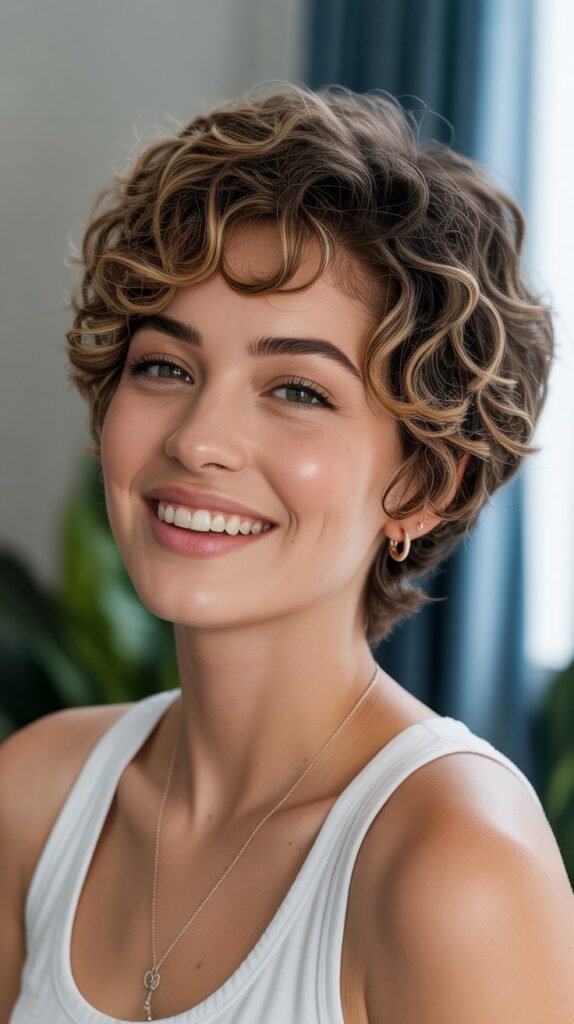
The layered curly pixie combines the short, sassy nature of the pixie cut with strategic layering that creates movement and prevents the flat appearance that can occur with one-length short cuts.
This sophisticated approach maximizes texture and dimension.
- Multiple layers throughout the cut remove bulk while creating individual curl separation that adds visual interest.
- The layering technique prevents the rounded “helmet” appearance that sometimes occurs with curly pixie cuts.
- This style works particularly well for those with medium to thick curly hair who want a short cut without excessive volume.
- The layers can be customized to emphasize certain features—longer layers near the face for softness, shorter layers at the crown for height.
- Styling involves applying product to individual sections and scrunching to encourage each layer’s curl formation.
- The layered pixie typically requires trims every 5-7 weeks to maintain the intentional layer structure and prevent grown-out appearance.
22. Curly Mohawk Style
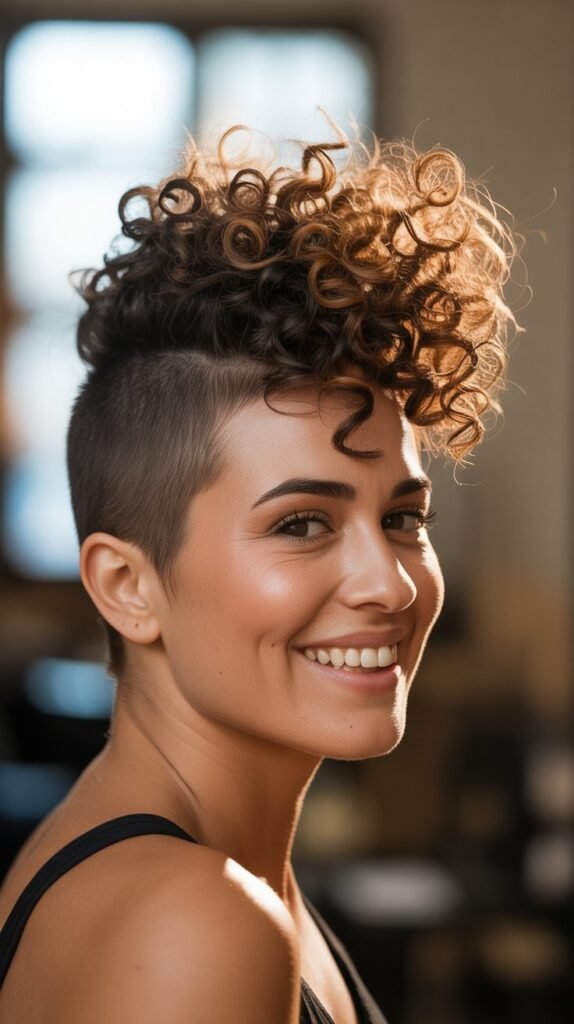
The curly mohawk style features shaved or very short sides with a strip of longer curly hair running from forehead to nape, creating a dramatic, edgy statement that celebrates both structure and natural texture.
This bold choice commands attention and showcases personality.
- The mohawk strip can vary in width from narrow (2-3 inches) to wide (4-6 inches) depending on how dramatic you want the effect.
- The sides can be buzzed to skin, faded gradually, or maintained at a short consistent length, each creating a different overall effect.
- This style works excellently with all curl types but is particularly striking with tighter curls that create maximum height and volume in the mohawk section.
- The mohawk can be styled multiple ways—maximum height for drama, swept to one side for asymmetry, or allowed to fall naturally for a softer look.
- Maintenance requires regular upkeep on the shaved sections (every 2-3 weeks) to maintain the clean contrast.
- The curly mohawk makes a powerful statement and works best for those in creative fields or with personal style confidence.
23. Soft Curly Waves Bob
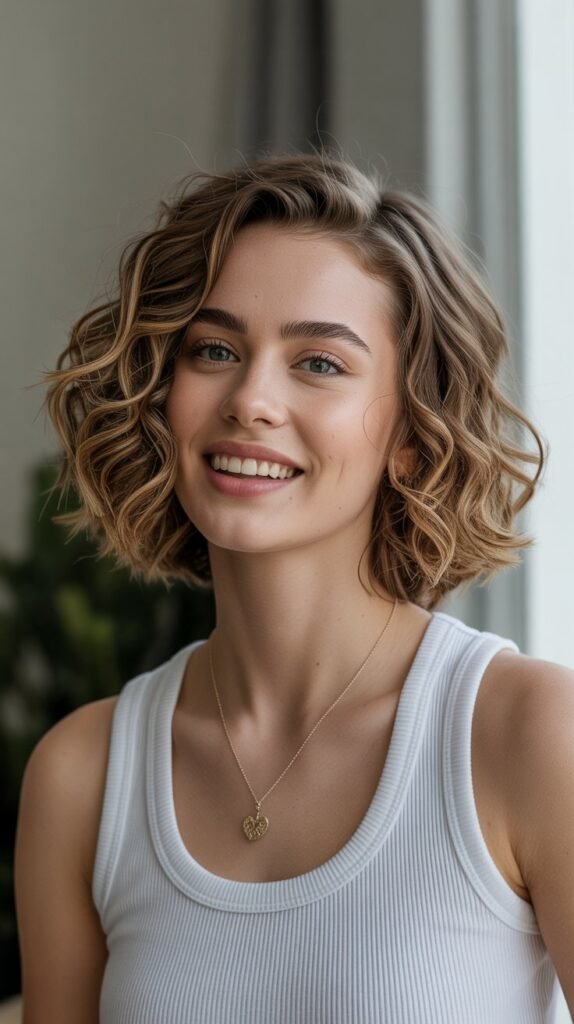
The soft curly waves bob features looser, more relaxed curls in a classic bob length, creating a romantic, feminine appearance that works beautifully in both casual and formal settings.
This style celebrates gentler curl patterns with an elegant, timeless appeal.
- This cut works ideally with type 2B-3A curl patterns, where the natural wave and curl create soft, flowing movement.
- The bob length typically falls between chin and shoulder, allowing the waves to form their natural S-pattern beautifully.
- Subtle layering throughout prevents the bottom-heavy appearance that can occur with one-length wavy bobs.
- The soft waves can be enhanced with styling techniques or toned down for a sleeker appearance, offering versatility.
- Styling involves applying lightweight products that define without weighing down the curl pattern, then air-drying or diffusing gently.
- This cut is particularly flattering for those with delicate features or who prefer a more traditionally feminine aesthetic.
24. High-Top Curly Fade
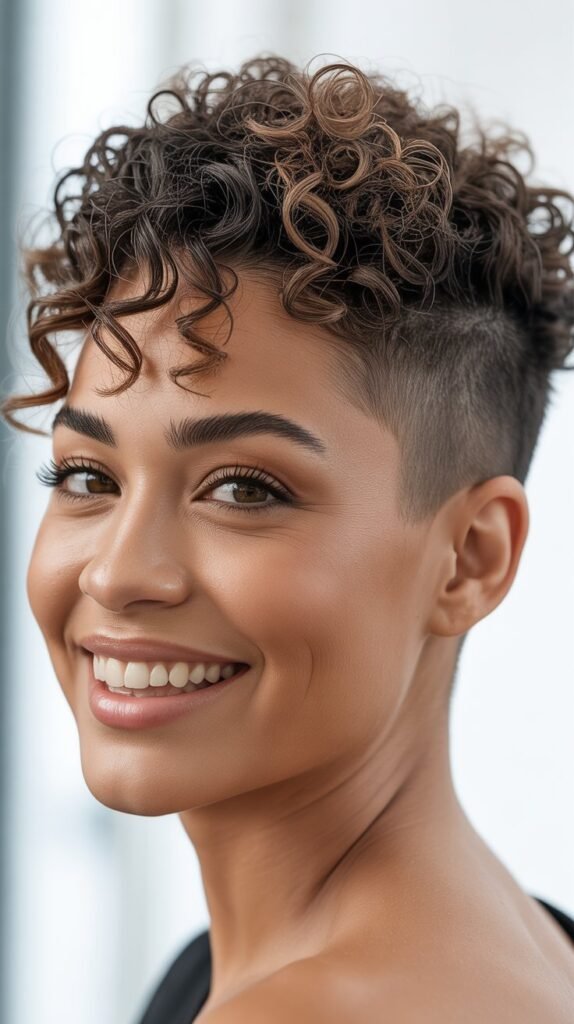
The high-top curly fade features a dramatic flat-top shape with curly texture on top and faded sides, creating a distinctive silhouette that references 1980s and 1990s hip-hop culture while feeling completely contemporary.
This architectural style requires precision cutting and makes a strong visual statement.
- The top section is grown to significant length (typically 3-6 inches) and shaped flat across the top while the sides are faded close to the skin.
- This style works best with type 3C-4C hair textures that have the density and structure to maintain the flat-top shape.
- The height of the flat top can be customized based on personal preference and hair density—higher for maximum drama, lower for easier maintenance.
- Regular maintenance is essential—the fade requires touch-ups every 2-3 weeks, and the top needs shaping every 4-6 weeks.
- Styling the top section involves using a pick to lift the hair upward and outward, then trimming to create the flat surface.
- The high-top fade celebrates natural texture while creating a structured, geometric shape that stands out in any setting.
25. Messy Curly Bob
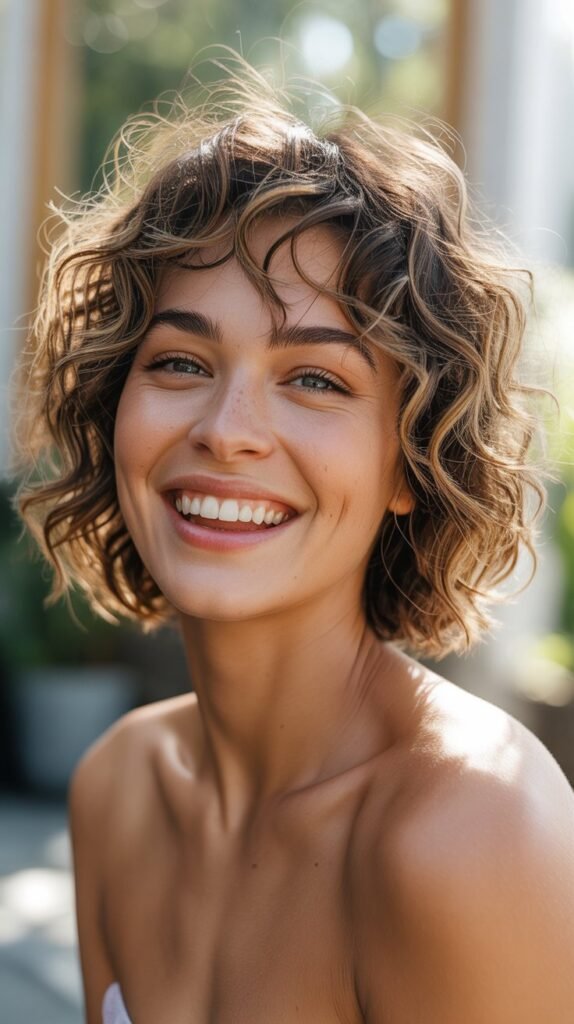
The messy curly bob embraces the “undone” aesthetic, featuring intentionally tousled curls in a bob length that creates an effortlessly chic, lived-in appearance.
This style celebrates imperfection and works beautifully for those seeking a low-maintenance yet stylish look.
- The cut features irregular layers and texturizing that create the deliberately messy appearance while preventing true unruliness.
- This style works across most curl types (2B-3C) and is particularly flattering for those with naturally voluminous hair.
- The messy bob actually improves between washes as natural oils enhance curl definition and create the desired slightly-undone texture.
- Styling is minimal—apply texturizing spray or sea salt spray to damp hair, scrunch loosely, and allow to air-dry mostly.
- The beauty of this cut is that “perfect” is not the goal—variation and imperfection are celebrated as part of the aesthetic.
- This style pairs beautifully with casual, bohemian, or artistic personal styles and requires minimal daily effort.
26. Curly Temple Fade
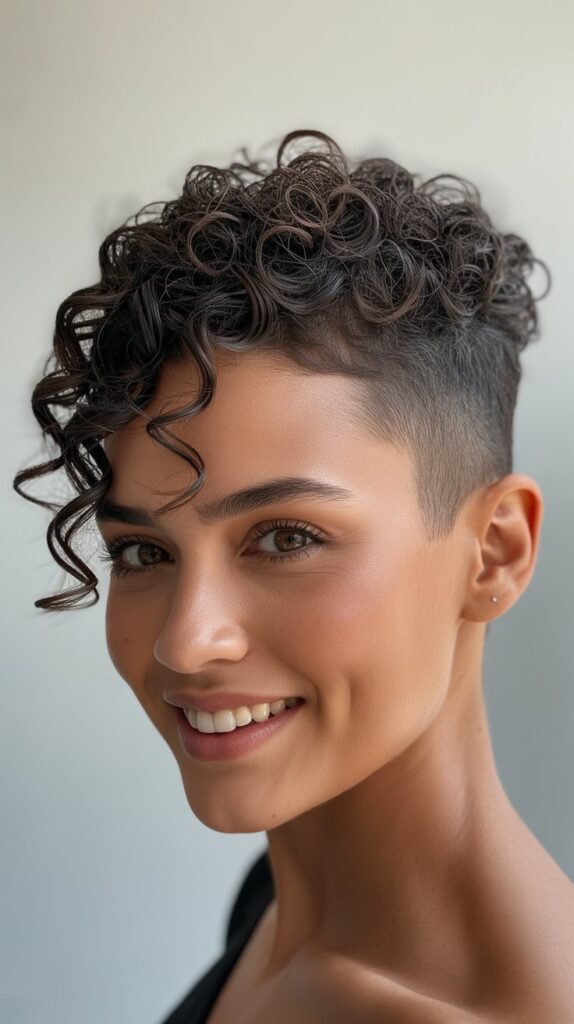
The curly temple fade features faded sides specifically concentrated at the temple area, creating a clean, sharp look that frames the face beautifully while maintaining fuller hair on top and back.
This precise cut combines barbering skill with natural texture appreciation.
- The temple fade starts just above the ears and temples, gradually transitioning from skin to full length over a short distance.
- This style creates the polished appearance of a fade while requiring less maintenance than a full fade that encompasses the entire sides and back.
- The temple fade works excellently with all curl types and is particularly popular in professional settings where a neat appearance is valued.
- The top and back sections can be styled in various ways—slicked back, curled forward, or maintained at natural volume—offering versatility.
- Maintenance requires touch-ups every 2-3 weeks to keep the temple area looking sharp and defined.
- This cut provides a perfect middle ground between completely natural and heavily styled, offering polish without excessive manipulation.
27. Voluminous Short Curly Cut
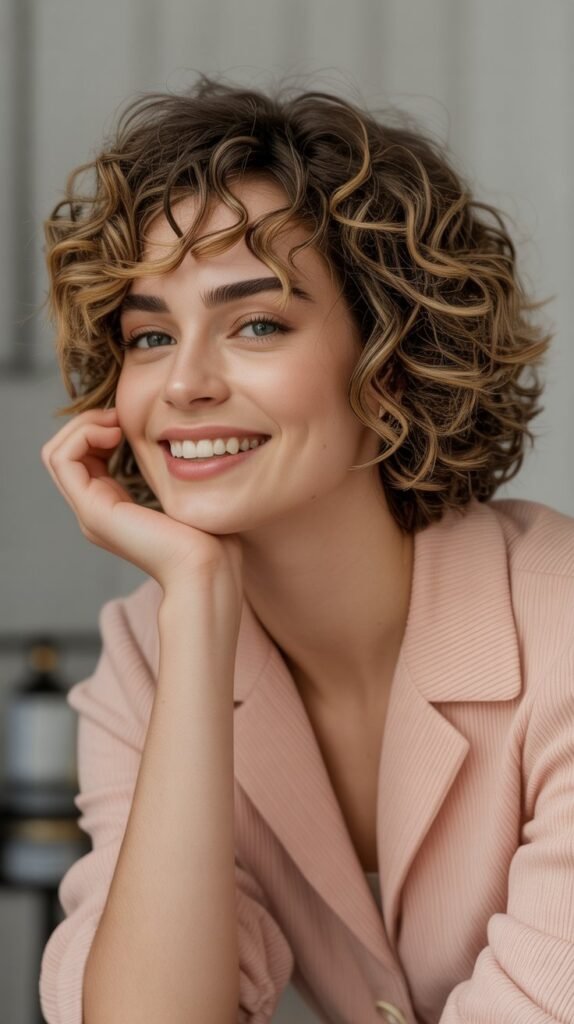
The voluminous short curly cut is specifically designed to maximize fullness and body, featuring strategic cutting techniques that encourage curls to lift and expand, creating a big, bold, beautiful appearance.
This celebration of volume works with your hair’s natural tendencies rather than fighting them.
- The cut features shorter underlayers with longer top layers, creating the illusion of even more volume than naturally exists.
- This style works particularly well for those with fine curly hair seeking to create the appearance of thicker, fuller hair.
- The volumizing effect can be concentrated at specific areas—crown for height, sides for width—based on face shape and preferences.
- Products used should include volumizing mousses and root-lifting sprays applied to damp hair before diffusing.
- The voluminous cut requires regular trims every 6-8 weeks to maintain the layer structure that creates the lift.
- Styling involves diffusing with your head upside down or to the sides to encourage maximum lift at the roots.
Common Short Curly Hair Challenges and Solutions
Understanding the unique challenges that come with short curly hair helps you maintain your fresh look with confidence and ease.
- Excessive shrinkage: Short curly hair often appears much shorter when dry than when wet, which can be surprising after a fresh cut—to manage this, discuss expected shrinkage with your stylist before cutting, and consider styles that embrace rather than fight the shrinkage factor.
- Triangle or pyramid shape: Curly hair naturally expands outward and can create an unflattering triangular silhouette—strategic layering and tapering at the sides prevents this common issue while maintaining volume where you want it.
- Frizz and lack of definition: Short curly hair can lose curl definition and become frizzy, especially in humid conditions—using curl-defining products on soaking wet hair, avoiding touching hair while drying, and sleeping on satin pillowcases all help maintain definition.
- Difficulty styling: Short length means less hair to work with, which can limit styling options—choosing a cut that works with your natural curl pattern and requires minimal manipulation creates the easiest daily routine.
- Uneven curl pattern: Different sections of hair may have different curl patterns, creating inconsistency in the overall look—customized cutting that addresses each area’s unique pattern, combined with targeted product application, creates cohesive appearance.
- Fast growth disrupting shape: Short cuts can lose their shape quickly as hair grows—scheduling regular maintenance appointments and learning simple at-home techniques for extending time between cuts helps maintain your look.
Essential Styling Tools for Short Curly Hair
Having the right tools makes styling your short curly haircut significantly easier and helps you achieve professional-looking results at home.
- Diffuser attachment: This bowl-shaped attachment for your hair dryer disperses airflow to prevent frizz while encouraging curl formation—use on low heat and low speed, cupping sections of hair in the diffuser bowl and holding for 15-20 seconds before moving to the next section.
- Wide-tooth comb: Essential for detangling curly hair without disrupting curl pattern—use only on wet, conditioner-coated hair, starting from the ends and working upward to prevent breakage.
- Microfiber towel or t-shirt: Regular terry cloth towels create friction that causes frizz—microfiber towels or old cotton t-shirts absorb water gently without roughing up the hair cuticle.
- Satin or silk pillowcase: Cotton pillowcases absorb moisture and create friction that flattens curls and causes frizz overnight—satin or silk allows hair to glide smoothly while maintaining moisture and curl pattern.
- Edge brush or toothbrush: For smoothing hairline edges and creating polished looks—apply a small amount of gel or edge control and brush gently for sleek finish at the hairline.
- Hair clips: Section clips help divide hair for product application and styling—working in sections ensures even product distribution and better curl definition throughout.
- Spray bottle: Keeping a spray bottle filled with water and leave-in conditioner allows for quick refresh styling on non-wash days—lightly mist sections that need redefinition and scrunch to reactivate curls.
Professional vs. At-Home Cutting
Understanding when to invest in professional services versus what you can safely do at home helps maintain your short curly haircut effectively while managing your budget.
Professional cutting is essential for:
- Initial major cuts or dramatic style changes that establish the foundational shape and structure of your haircut.
- Precision cuts like fades, undercuts, and architectural styles that require specific barbering or styling skills.
- Addressing multiple curl patterns or textures that need customized approaches in different areas of your head.
- Correcting previous cutting mistakes or uneven growth patterns that have developed over time.
- Consultation and education about your specific curl type, face shape, and styling needs from an experienced professional.
At-home maintenance can include:
- Trimming minor split ends or damaged pieces between professional appointments using sharp hairstyling scissors.
- Touching up faded sections with clippers if you’re comfortable and experienced with the tools and have a steady hand.
- Removing small uneven pieces that stick out awkwardly from the overall shape using the dusting technique.
- Maintaining bang length by trimming small amounts while hair is dry so you can see the true curl pattern and shrinkage.
- Regular deep conditioning treatments, clarifying washes, and general hair health maintenance that supports your cut’s longevity.
Transitioning Between Short Curly Styles
Moving from one short curly style to another requires patience and strategic planning to ensure the transition period remains stylish rather than awkward.
- Growing out a pixie or buzz cut: The most challenging transition requires patience as hair moves through several awkward length stages—regular trims to shape the growing hair, using headbands or accessories during difficult phases, and maintaining excellent hair health helps navigate this 6-12 month process successfully.
- Growing out an undercut or fade: The shaved sections grow back slowly and create a period where the cut appears uneven—you can choose to let these sections grow naturally while adjusting the rest of the cut accordingly, or continue maintaining the fade while gradually increasing the guard length over several appointments.
- Changing from asymmetrical to symmetrical: This transition is relatively straightforward—the shorter side simply needs time to catch up to the longer side, with regular trims on the longer side preventing excessive length difference during the 3-6 month growing period.
- Moving from one short style to another: Often the easiest transition—your stylist can gradually reshape your current cut into the new desired style over one or two appointments, making subtle adjustments that keep you looking polished throughout.
- Dealing with different growth rates: Hair grows at different rates in different areas, which can disrupt your cut’s shape—more frequent mini-trims focusing on faster-growing sections maintains the overall proportions between appointments.
Seasonal Considerations for Short Curly Hair
Different seasons bring unique challenges and opportunities for short curly hair, requiring adjustments to your routine and products for optimal results.
Summer considerations:
- Heat and humidity increase frizz and can cause product to feel heavy—switching to lightweight, humidity-resistant products and using anti-frizz serums helps maintain definition despite environmental challenges.
- Chlorine and salt water can damage curly hair and strip natural oils—wetting hair with clean water before swimming and applying conditioner creates a protective barrier, followed by thorough rinsing and deep conditioning after water activities.
- Sun exposure can fade color-treated hair and damage curl structure—wearing hats, using UV-protectant products, or limiting prolonged sun exposure protects hair health during summer months.
- Increased sweating requires more frequent washing—using gentle, sulfate-free cleansers and alternating between full washes and water-only rinses maintains cleanliness without over-stripping natural oils.
Winter considerations:
- Dry indoor heating and cold outdoor air remove moisture from curly hair—increasing deep conditioning frequency, using leave-in conditioners, and applying hair oils helps combat seasonal dryness.
- Static electricity becomes more problematic in dry winter air—using satin-lined hats instead of wool, avoiding synthetic fabrics, and maintaining moisture levels reduces static significantly.
- Hats can flatten short curly styles—choosing loosely fitted, satin-lined options or carrying a spray bottle for post-hat refreshing maintains your style throughout the day.
- Reduced humidity actually benefits some curl types that struggle with frizz in summer—you may be able to use lighter products or achieve better curl definition during winter months.
Color Considerations for Short Curly Haircuts
Color can enhance short curly cuts by adding dimension and visual interest, but requires special considerations for curly texture and maintenance.
- Highlights and lowlights: Dimensional color adds depth to short curly cuts and emphasizes the curl pattern beautifully—placement should follow the natural curl formation, with highlights positioned where curls naturally catch light for the most natural-looking enhancement.
- All-over color: Solid color provides dramatic transformation but requires careful maintenance as curly hair is already prone to dryness—using color-safe, moisturizing products and increasing deep conditioning frequency maintains hair health and color vibrancy.
- Balayage and ombre effects: These techniques create beautiful dimension on short curly hair, though the effect is more subtle than on straight hair due to curl pattern—the varied heights of curls create a naturally blended look that grows out gracefully.
- Vivid and fashion colors: Bold colors make striking statements on short curly cuts—temporary options like hair chalk or semi-permanent dyes allow experimentation without long-term commitment, while permanent fashion colors require significant maintenance to prevent fading.
- Gray coverage or enhancement: Many people choose to embrace natural gray in short cuts as it requires less maintenance—strategically placed highlights can blend grays gradually, or full gray enhancement with purple shampoos creates a striking silver look.
- Maintenance considerations: Short cuts require more frequent trims, which means more frequent color touch-ups if maintaining a specific look—discussing a low-maintenance color approach with your stylist prevents excessive processing and damage over time.
Finding the Right Stylist for Curly Hair
Working with a stylist who understands curly hair is essential for achieving and maintaining a beautiful short curly haircut that works with your natural texture.
- Curly hair specialization: Seek stylists who specifically advertise expertise in curly hair or natural hair textures—these professionals understand curl patterns, shrinkage factors, and cutting techniques that honor rather than fight natural texture.
- Dry cutting vs. wet cutting: Many curly hair specialists prefer cutting curls dry so they can see the natural curl pattern and how each cut will affect the final shape—ask potential stylists about their cutting approach and philosophy regarding curly hair.
- Consultation importance: A thorough consultation before cutting should include discussion of your lifestyle, styling willingness, hair history, and desired outcome—stylists who rush this process or don’t ask questions may not provide the customized approach curly hair requires.
- Portfolio review: Ask to see photos of previous curly cuts the stylist has done, specifically on curl types similar to yours—this demonstrates their experience and gives you realistic expectations for what they can achieve.
- Product recommendations: Knowledgeable curly hair stylists should be able to recommend specific products for your curl type and cut—generic recommendations suggest less specialized knowledge about the unique needs of curly hair.
- Ongoing relationship: Building a relationship with one skilled stylist means they learn your hair’s unique characteristics over time—consistency with the same stylist typically produces better results than frequently changing stylists.
- Pricing expectations: Curly hair specialists often charge premium prices that reflect their specialized training and expertise—investing in quality cuts from experienced professionals typically produces better results and actually saves money through fewer correction appointments.
Nighttime Routine for Short Curly Hair
Protecting your short curly cut while sleeping preserves your style, reduces morning styling time, and maintains hair health between washes.
- Satin or silk pillowcase: The single most important nighttime investment—these smooth fabrics prevent friction that causes frizz and maintain moisture levels that cotton pillowcases would absorb overnight.
- Pineappling technique: Gather hair loosely at the very top of your head with a satin scrunchie—this works for short curly hair that’s long enough to reach the crown, protecting curls while you sleep and maintaining volume.
- Satin bonnet or cap: For shorter cuts that can’t be pineappled, a satin bonnet protects hair from friction while maintaining curl pattern—choose a size that covers all hair without being too tight, which could create dents or flatten curls.
- Buff or headscarf: A satin or silk buff worn over hair provides protection similar to a bonnet but with a different fit that some people find more comfortable—experiment to find what works best for your sleep style and hair length.
- Refresh spray preparation: Preparing a bottle with water and leave-in conditioner before bed makes morning refreshing quick and easy—a few spritzes and scrunches can revive curls without full restyling.
- Avoiding manipulation: Resist the urge to touch, adjust, or play with curls before bed—the more you manipulate curls, the more likely they are to lose definition and require complete restyling in the morning.
Budget-Friendly Maintenance Tips
Maintaining beautiful short curly hair doesn’t require expensive products or frequent salon visits when you incorporate these cost-effective strategies.
- DIY deep conditioning treatments: Natural ingredients like coconut oil, avocado, honey, and olive oil create effective deep conditioning treatments at home—apply to damp hair, cover with a shower cap, leave for 30-60 minutes, then rinse thoroughly for salon-quality conditioning at minimal cost.
- Stretching time between cuts: Learning to do minor maintenance trimming at home extends time between professional appointments—investing in quality hair scissors and watching tutorials for basic dusting techniques can save hundreds annually.
- Multi-purpose products: Finding products that serve multiple functions reduces the number of products needed—a good leave-in conditioner can work as a detangler, moisturizer, and light styling product, simplifying your routine and reducing costs.
- DIY clarifying treatments: Apple cider vinegar rinses (1 part vinegar to 3 parts water) remove product buildup naturally—used monthly, this inexpensive treatment keeps hair clean and responsive to styling products.
- Water-only refresh: Between washes, simply wetting hair with plain water and scrunching can reactivate products still in your hair—this extends the life of each wash and reduces product consumption significantly.
- Sample sizes and travel products: Purchasing sample sizes allows you to try expensive products affordably—many high-end products are available in travel sizes that let you test effectiveness before investing in full sizes.
- Store brand alternatives: Many drugstore brands offer formulas comparable to expensive salon products—reading ingredient lists and trying affordable options often reveals budget-friendly products that work just as well as premium alternatives.
Health and Wellness for Optimal Curl Health
Beautiful short curly hair starts from the inside out, with overall health and wellness practices supporting hair quality and growth.
- Hydration importance: Drinking adequate water (approximately 8 glasses daily) maintains hair moisture from within—dehydration manifests in dry, brittle hair that’s more prone to breakage and lacks shine.
- Nutritional support: Protein-rich foods, omega-3 fatty acids, biotin, and vitamins A, C, and E all support healthy hair growth and strength—a balanced diet rich in leafy greens, nuts, fish, and lean proteins provides the nutrients curly hair needs to thrive.
- Stress management: Chronic stress can lead to hair loss and disrupted growth patterns—incorporating stress-reduction practices like exercise, meditation, or hobbies supports not only overall wellbeing but also hair health.
- Scalp health: A healthy scalp is the foundation for healthy hair growth—regular gentle massage increases blood flow to hair follicles, while maintaining cleanliness without over-washing creates optimal conditions for strong hair growth.
- Sleep quality: Adequate sleep (7-9 hours for most adults) allows the body to repair and regenerate, including hair cells—poor sleep quality can result in slower hair growth and reduced overall hair health.
- Exercise benefits: Regular physical activity increases circulation throughout the body, including to the scalp—this enhanced blood flow delivers nutrients and oxygen to hair follicles, supporting stronger, healthier hair growth.
- Limiting heat and chemical exposure: Both styling heat and chemical treatments damage curly hair’s structure—embracing natural texture and minimizing thermal styling preserves curl integrity and prevents long-term damage that compromises hair health.
Embracing Your Natural Texture
The journey to loving and maintaining short curly hair includes accepting and celebrating your unique curl pattern rather than constantly fighting against it.
- Understanding your curl type: Learning whether you have wavy (type 2), curly (type 3), or coily (type 4) hair helps you choose appropriate products and techniques—within these categories, subcategories (A, B, C) further define specific needs and characteristics.
- Working with instead of against: The most successful short curly cuts embrace natural curl direction and growth patterns—attempting to force hair into unnatural patterns creates frustration and requires excessive manipulation that damages hair over time.
- Realistic expectations: Social media often showcases highly styled, professionally photographed hair that doesn’t represent realistic daily appearance—understanding that your hair will look different from day to day and from styled photos prevents disappointment and frustration.
- Curl diversity: Even within one head of hair, multiple curl patterns often exist simultaneously—embracing this natural variation rather than fighting for uniformity creates a more authentic, sustainable relationship with your hair.
- Confidence cultivation: Short curly hair makes a statement and draws attention—developing confidence in your appearance comes from understanding that your natural texture is beautiful, not something that needs to be “fixed” or drastically altered.
- Community connection: Connecting with others who have similar curl types through online communities or local groups provides support, tips, and encouragement—sharing experiences and learning from others’ journeys helps navigate your own curl care path.
Conclusion
Finding the perfect style among these 27 Cool Short Curly Haircuts for a Fresh Look empowers you to embrace your natural texture with confidence and excitement.
Whether you’ve chosen the bold statement of a curly mohawk, the classic elegance of a curly bob, the low-maintenance simplicity of a wash-and-go cut, or any of the diverse styles explored throughout this guide, your short curly haircut should make you feel authentically yourself while simplifying your daily routine.
The key to success lies in working with your natural curl pattern rather than against it, finding a skilled stylist who understands curly hair’s unique needs, and establishing a maintenance routine that supports your hair’s health and beauty.
Remember that transitioning to short curly hair or changing between short curly styles requires patience during the adjustment period, but the freedom, versatility, and fresh appearance you’ll gain make the journey worthwhile.
As you move forward with your chosen style from these cool short curly haircuts, embrace the compliments that will surely come your way, enjoy the simplified morning routine, and most importantly, celebrate the beautiful natural texture that makes your hair uniquely yours.
Your fresh look awaits, and with the knowledge and inspiration from this comprehensive exploration of short curly cuts, you’re fully equipped to rock your curls with style, confidence, and joy.