Finding the perfect haircut for boys with curly hair can transform their entire look and boost their confidence.
Curly hair has a natural texture and volume that, when styled correctly, creates stunning and memorable hairstyles that stand out in any crowd. Whether your little one has tight coils, loose waves, or anything in between, the right cut can make daily hair management easier while showcasing those beautiful natural curls.
In this comprehensive guide to 30 Adorable Curly Haircuts for Boys, we’ll explore a diverse range of styles suitable for toddlers, young boys, and teenagers—from classic cuts that never go out of style to modern, trendy looks that are turning heads in 2025.
Each haircut option includes styling tips, maintenance advice, and considerations for different curl types, helping you choose the perfect style that matches your child’s personality, lifestyle, and hair texture. Get ready to discover fresh, creative, and manageable curly hairstyles that will have your boy looking his absolute best.
1. The Classic Curly Taper Fade
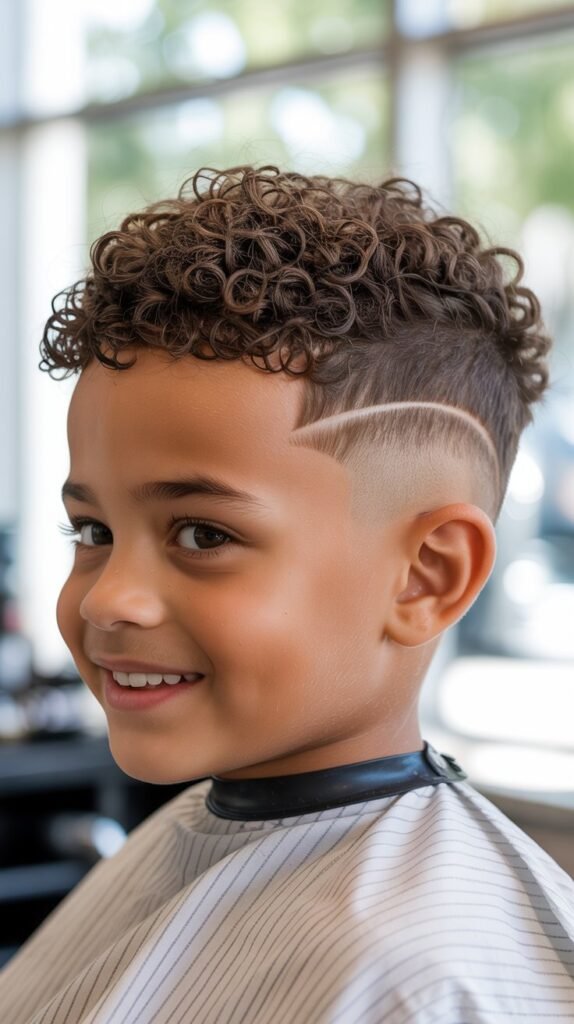
The classic curly taper fade combines the best of both worlds—structured sides with voluminous curls on top. This timeless style works exceptionally well for boys of all ages and creates a clean, polished appearance.
Key Features:
- The sides are gradually faded from longer hair at the top to shorter hair near the ears and neckline
- The top section maintains 2-4 inches of length to showcase the natural curl pattern
- This cut provides a professional yet youthful look suitable for school and special occasions
- Works beautifully with all curl types from loose waves to tight coils
Styling Tips:
- Apply a curl-defining cream to damp hair and allow curls to air dry naturally
- Use a diffuser attachment on low heat for faster drying while maintaining curl definition
- Regular trims every 3-4 weeks keep the fade looking sharp and fresh
- A light hold gel helps control frizz without making curls stiff or crunchy
2. The Curly Undercut
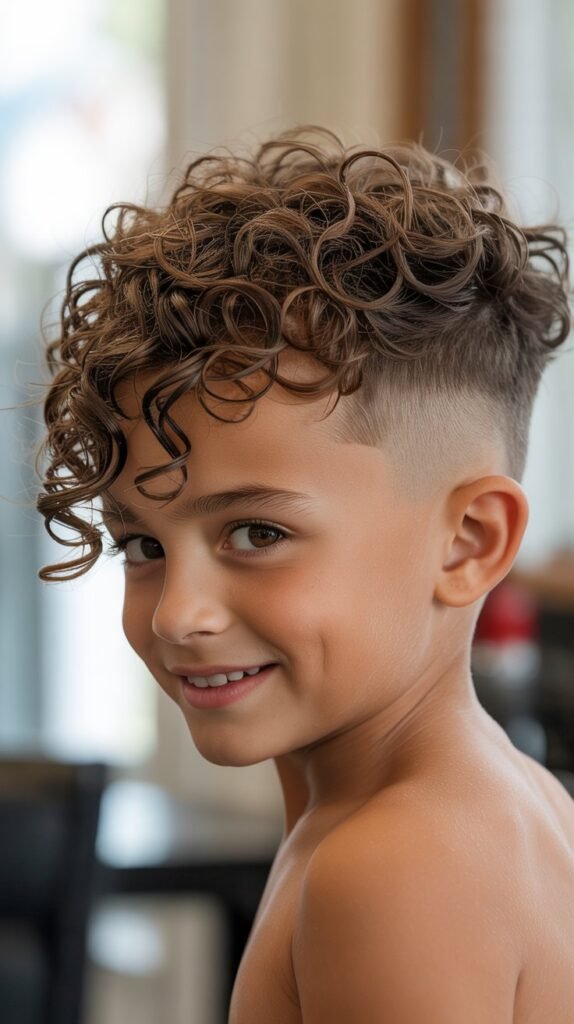
The curly undercut offers a bold, edgy style that’s gained massive popularity among boys and teenagers. This dramatic cut creates striking contrast between the disconnected sides and the curly top section.
Characteristics:
- The sides and back are cut very short (typically with clippers using a #1 or #2 guard)
- The top section is left significantly longer, usually 3-5 inches, creating a distinct separation
- This style emphasizes the natural texture and volume of curly hair on top
- The undercut can be styled forward, backward, or to the side for versatility
Maintenance Requirements:
- Requires more frequent barbershop visits every 2-3 weeks to maintain the clean undercut
- The longer top section needs regular conditioning treatments to prevent dryness
- Morning styling typically takes 5-10 minutes with the right products
- Consider using a leave-in conditioner to keep top curls healthy and defined
3. Natural Curly Afro
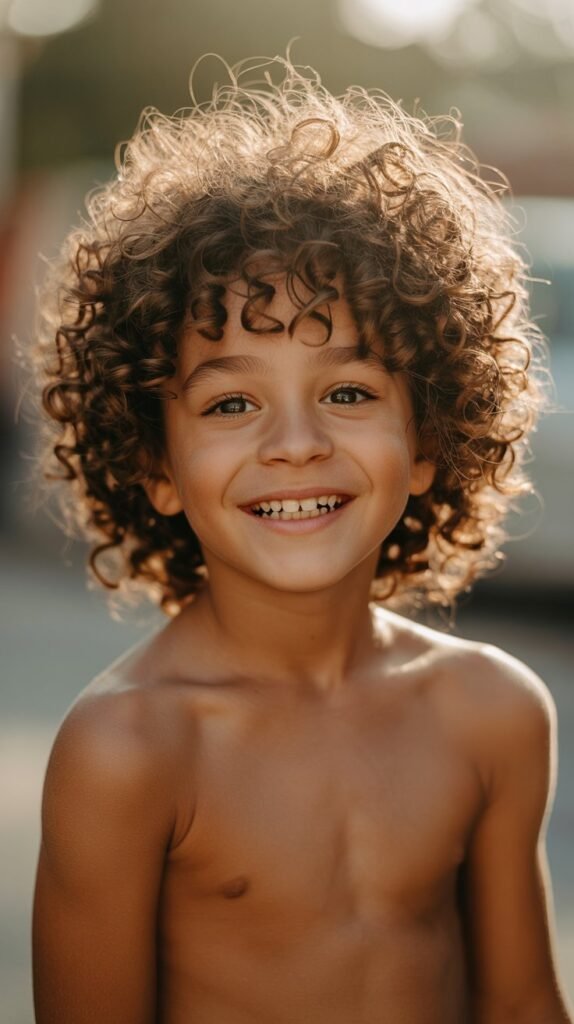
The natural curly afro celebrates the full volume and beauty of textured hair without any fading or trimming on the sides. This iconic style embraces natural curl patterns and creates a gorgeous, rounded silhouette.
Benefits:
- Requires minimal cutting and maintenance compared to faded styles
- Allows curls to grow naturally in all directions for maximum volume
- Works exceptionally well for boys with type 3c to 4c curl patterns
- Creates a confident, distinctive look that showcases cultural pride
Care Instructions:
- Regular moisturizing is essential using leave-in conditioners and natural oils
- Use a wide-tooth comb or pick to gently shape the afro without disrupting curl patterns
- Satin or silk pillowcases help prevent frizz and maintain curl definition overnight
- Shape the afro every 6-8 weeks to maintain the desired rounded silhouette
4. Curly Pompadour
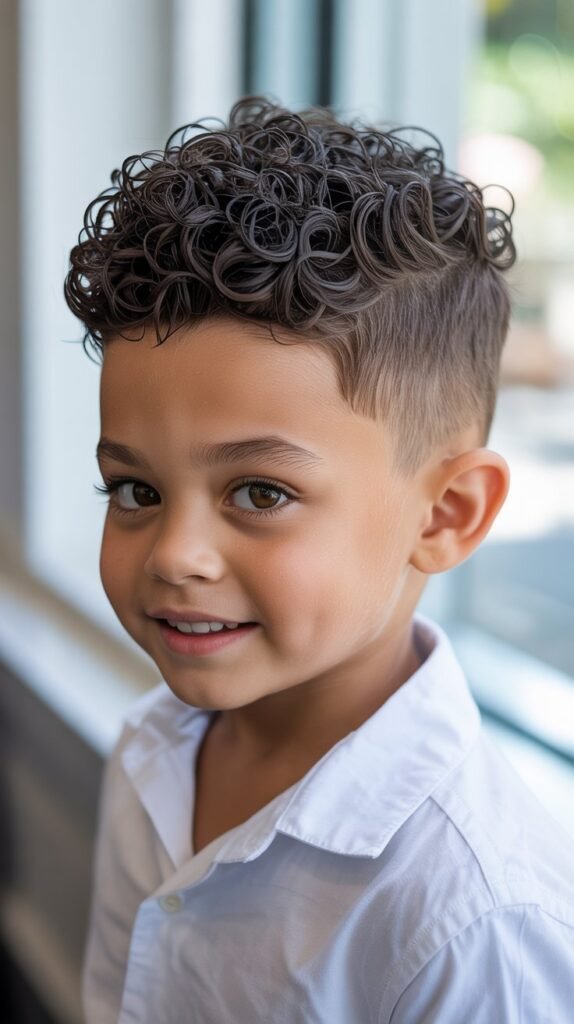
The curly pompadour brings vintage sophistication to modern curly hairstyles, creating height and drama at the front while keeping sides neat and manageable.
Styling Elements:
- Hair at the front is styled upward and backward to create volume and height
- Sides are typically faded or kept shorter to emphasize the dramatic top section
- The pompadour shape works best with medium to loose curl types (2c to 3b)
- This style adds 2-3 inches of visual height, perfect for boys who want to look taller
Application Method:
- Blow-dry hair upward and backward using a round brush to create the pompadour shape
- Apply strong-hold pomade or gel while hair is still slightly damp
- Use your fingers to push curls upward and position them in place
- Finish with a light mist of hairspray for all-day hold
5. Short Curly Crop
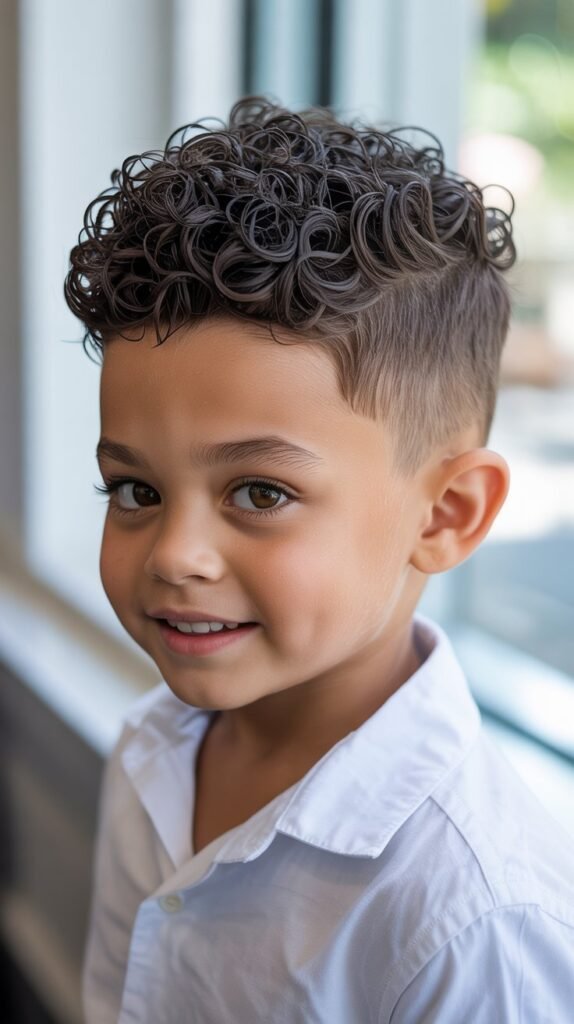
The short curly crop offers a low-maintenance, practical option that still looks incredibly stylish and age-appropriate for boys of any age.
Design Features:
- Hair is cut to approximately 1-2 inches all around the head
- Curls maintain their natural texture but in a more controlled, compact form
- The uniform length creates a neat, tidy appearance perfect for active boys
- Ideal for school settings where extremely short or dramatically long styles aren’t permitted
Advantages:
- Minimal daily styling required—simply wash and go
- Dries quickly after swimming, sports, or bathing
- Reduces tangles and knots common with longer curly hair
- Budget-friendly with haircuts needed only every 4-6 weeks
6. Curly Mohawk Fade
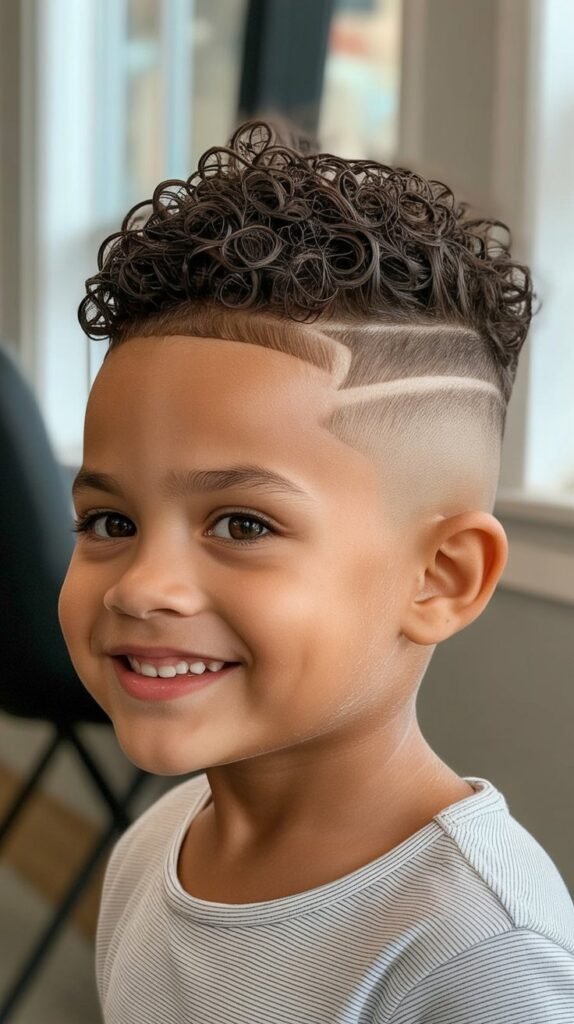
The curly mohawk fade creates an eye-catching, rebellious style that’s surprisingly versatile and can be adapted for different occasions.
Structural Details:
- A strip of curly hair runs from the forehead to the back of the head
- Sides are faded down to the skin or kept very short for maximum contrast
- The mohawk strip typically ranges from 2-4 inches wide
- Height on top can vary from subtle to dramatically tall depending on preference
Styling Variations:
- Style the mohawk strip straight up for special occasions or weekends
- Comb it to one side for a more subtle, school-appropriate look
- The natural curl texture adds dimension and interest without requiring excessive products
- Works beautifully with all ethnicities and curl types
7. Side-Swept Curly Fringe
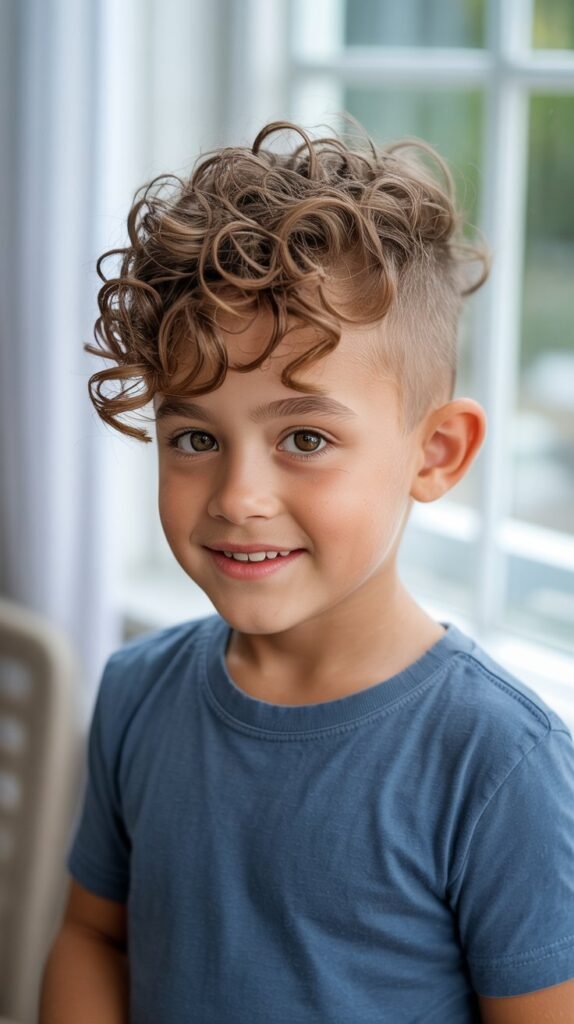
The side-swept curly fringe creates a romantic, effortlessly cool appearance that’s particularly popular among tweens and teenagers.
Key Characteristics:
- Longer curls at the front are directed to sweep across the forehead to one side
- The fringe typically covers part or all of the forehead, ending near the eyebrow
- Back and sides can be faded, tapered, or kept at medium length
- Creates an asymmetrical look that’s trendy and fashion-forward
Styling Process:
- Apply curl cream to damp hair, focusing on the front section
- Use fingers to direct curls to the desired side while hair dries
- A small amount of lightweight gel helps keep the fringe in place
- Periodically trim the fringe to prevent it from covering the eyes
8. Curly Top with Hard Part
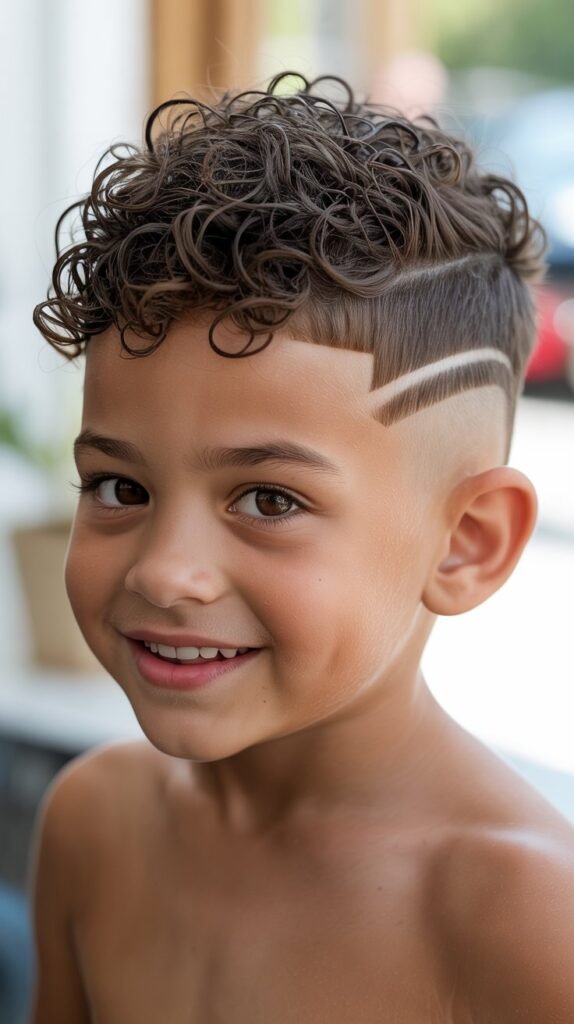
The curly top with hard part adds a sharp, defined element to curly hairstyles, creating a style that’s both structured and playful.
Design Components:
- A precise line (hard part) is shaved into the hair, usually on one side
- The line creates a clear separation between the longer curly top and shorter sides
- The hard part typically extends from the front hairline back 2-4 inches
- This detail adds sophistication and visual interest to otherwise simple cuts
Professional Execution:
- The hard part should be created by an experienced barber using clippers or a razor
- The line needs to be refreshed every 1-2 weeks as hair grows
- Position the part where hair naturally wants to separate for the most authentic look
- The contrast between the sharp line and soft curls creates striking visual appeal
9. Long Curly Shag
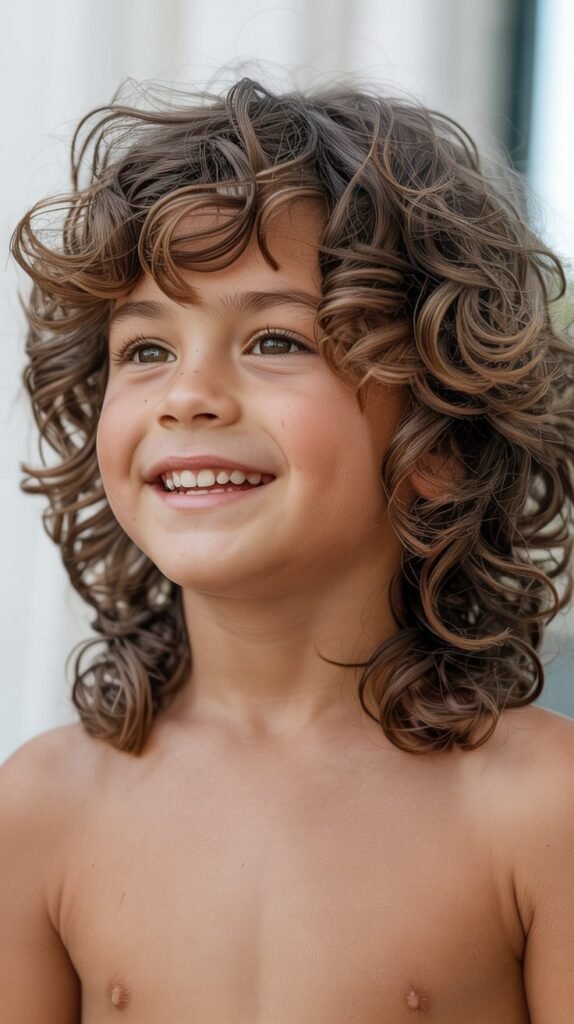
The long curly shag embraces length and movement, perfect for boys with naturally thick, voluminous curls who want to grow their hair out.
Style Characteristics:
- Hair ranges from 4-8 inches in length throughout
- Multiple layers create movement, prevent a triangular shape, and reduce bulk
- The shag works especially well with loose to medium curls (type 2b to 3a)
- Face-framing pieces can be cut shorter to highlight facial features
Layer Benefits:
- Layering removes weight from thick curly hair, allowing curls to spring up rather than hang down
- Creates dimension and texture that makes the hairstyle more dynamic
- Prevents the dreaded “pyramid head” shape common with one-length curly cuts
- Makes hair easier to manage and style despite the longer length
10. Curly Buzz Cut
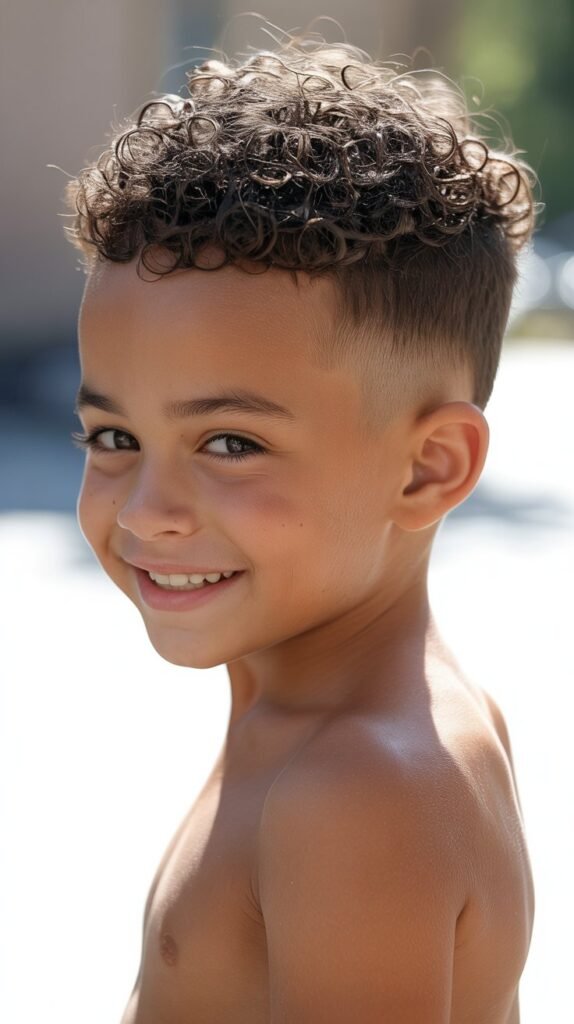
The curly buzz cut offers ultimate simplicity while still showcasing the natural curl texture in a subtle, understated way.
Cutting Specifications:
- Hair is cut very short, typically using a #3 to #5 clipper guard (3/8 to 5/8 inch)
- Even at this short length, curl pattern remains visible, creating interesting texture
- The uniform length all around requires no styling or daily maintenance
- Perfect for hot climates, athletic boys, or those who prefer ultra-low-maintenance styles
Practical Advantages:
- No products, blow-drying, or styling tools required
- Ideal for summer months, swimming, and sports activities
- Cost-effective with haircuts needed only every 3-4 weeks
- Shows off facial features and head shape without hair distraction
11. Curly Quiff
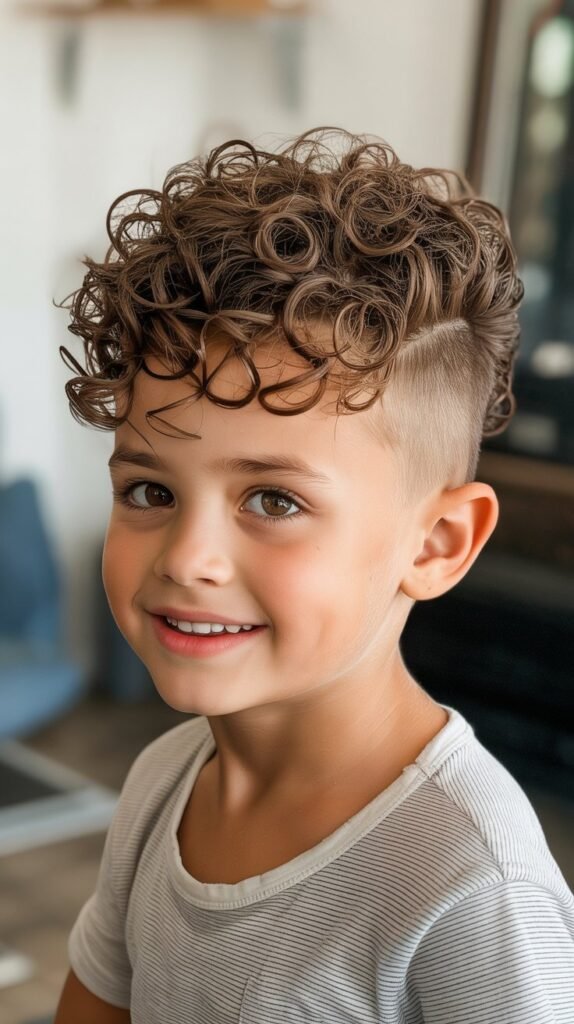
The curly quiff combines vintage inspiration with modern curl-friendly techniques, creating volume and height at the front of the hairline.
Defining Features:
- Hair at the front is styled upward and slightly backward, similar to a pompadour but less dramatic
- The quiff section typically stands 1-3 inches above the forehead
- Sides can be faded, tapered, or kept at medium length depending on preference
- Works best with medium-density curls that hold shape well
Creation Steps:
- Blow-dry the front section upward using a round brush or your fingers
- Apply volumizing mousse to damp hair before drying for extra lift
- Use pomade or styling cream to shape and define the quiff once dry
- The natural curl texture adds dimension that straight-haired quiffs can’t achieve
12. Messy Curly Top
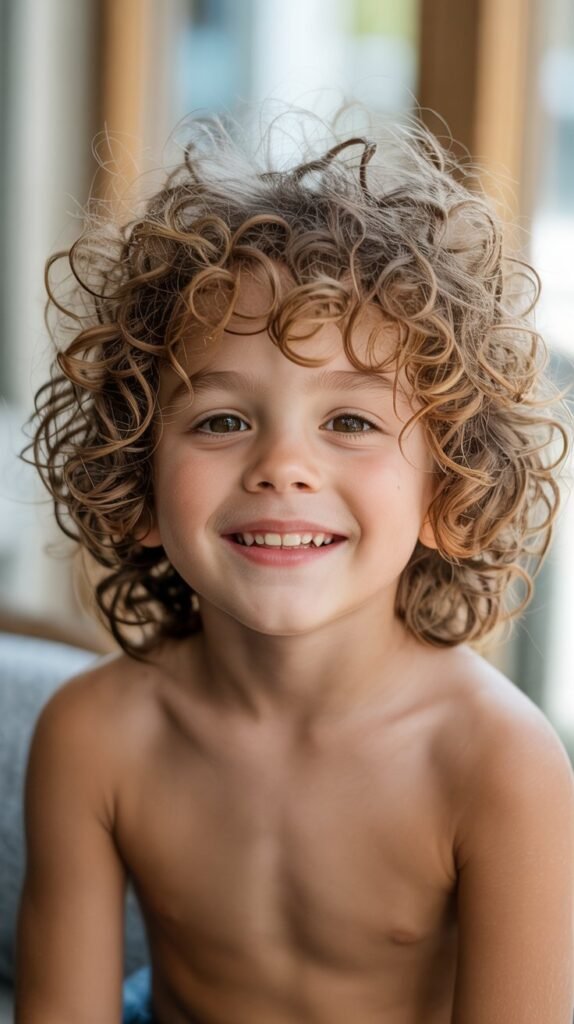
The messy curly top embraces the natural chaos and beauty of curls, creating an effortlessly cool, lived-in appearance.
Style Philosophy:
- This intentionally undone look celebrates texture over precision
- Hair on top is left longer (3-5 inches) while sides are kept shorter
- Curls are encouraged to fall naturally without extensive manipulation
- The “imperfect” appearance actually requires understanding your curl pattern well
Achieving the Look:
- Apply curl-enhancing products and scrunch hair while wet
- Allow hair to air dry or diffuse on low heat without over-touching
- Use fingers rather than combs to separate curls for a more natural finish
- Embrace frizz and flyaways as part of the authentic, casual aesthetic
13. Curly Temple Fade
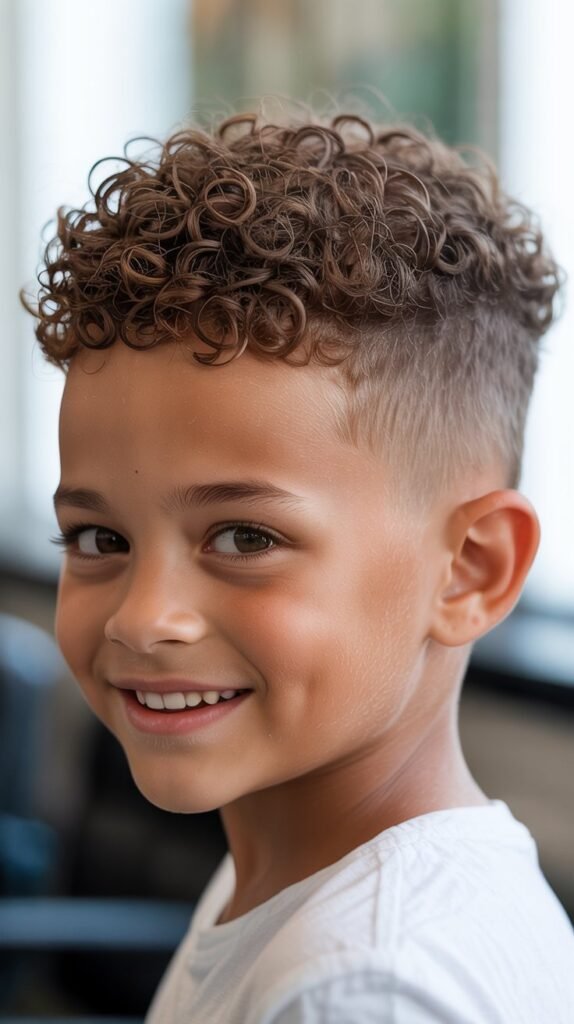
The curly temple fade focuses attention on the sides of the head, where gradual fading creates clean lines around the temples and ears.
Technical Details:
- The fade specifically targets the temple area and sides above the ears
- Back section can be faded or kept at a consistent length
- Top section maintains full curl volume, typically 3-5 inches long
- Creates a framing effect that highlights facial features
Visual Impact:
- The temple fade draws the eye upward toward the curly crown
- Clean, sharp lines around the face create a polished appearance
- Less dramatic than a full fade but still provides structure and definition
- Suitable for professional settings while remaining age-appropriate
14. Two-Strand Twist Out
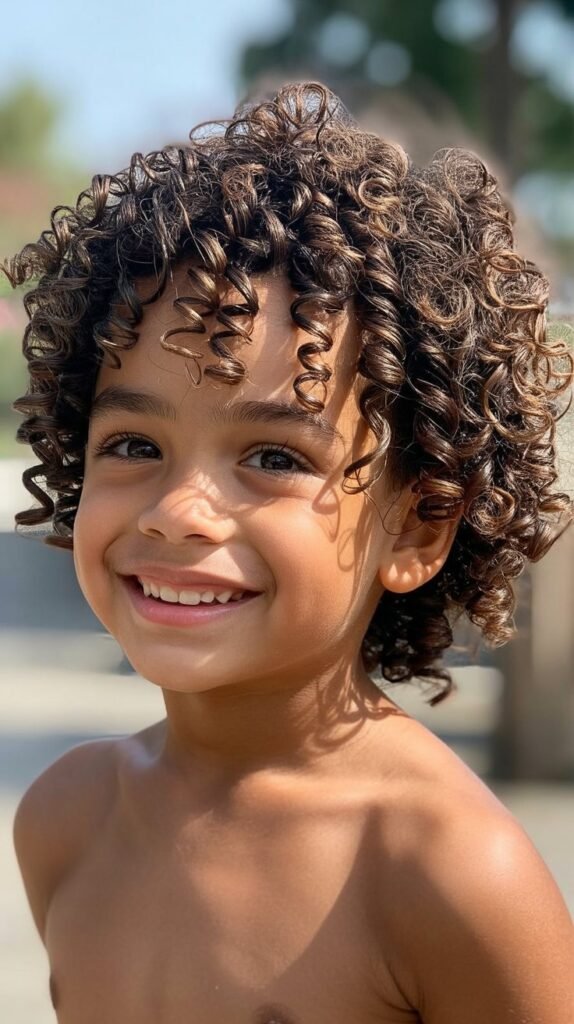
The two-strand twist out creates defined, springy curls through a protective styling technique that enhances natural texture.
Technique Overview:
- Small sections of hair are divided and twisted together in pairs
- Twists are left in overnight or for several hours, then unraveled
- The result is uniform, well-defined curls with lots of volume
- Works exceptionally well for type 3c to 4c curl patterns
Process Details:
- Apply a curl-defining cream to freshly washed, damp hair
- Divide hair into small sections (typically 1/2 to 1 inch squares)
- Twist two strands together from root to tip, allowing them to coil around each other
- Once dry, carefully unravel twists and separate curls with fingers or a pick
15. Curly Side Part
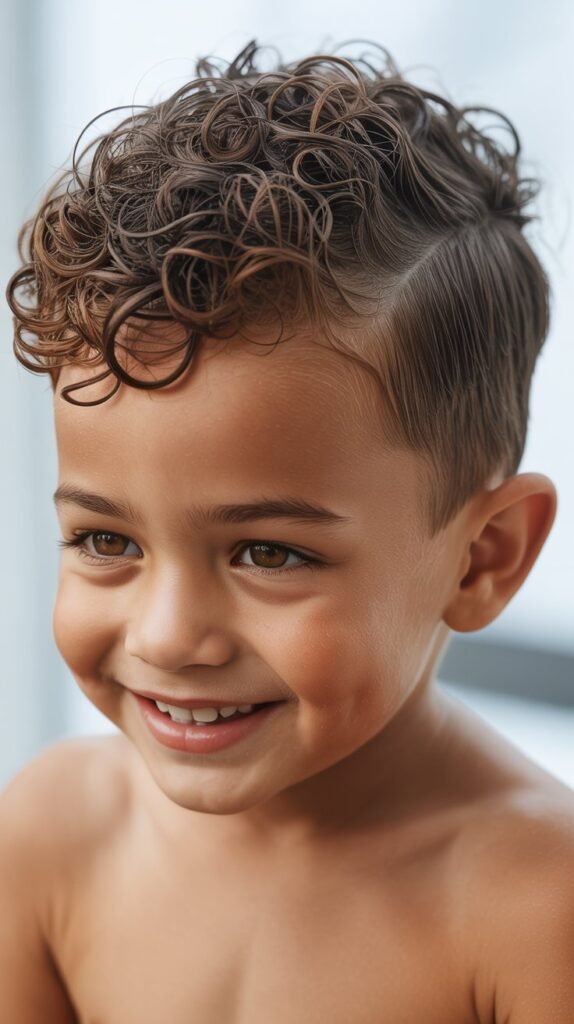
The curly side part brings classic sophistication to curly hair, creating a timeless look suitable for any formal or casual occasion.
Style Elements:
- Hair is parted deeply on one side, typically 1-2 inches from the center
- The heavier side features more volume and curl definition
- Sides can be trimmed short or left at medium length
- This versatile style works with virtually any curl type
Styling Guidelines:
- Create the part while hair is wet for the cleanest, most defined line
- Apply styling products along the part direction to encourage hair to lay properly
- The side part can be positioned where hair naturally separates for easier maintenance
- Use a light touch when combing to avoid disrupting natural curl patterns
16. Curly Faux Hawk
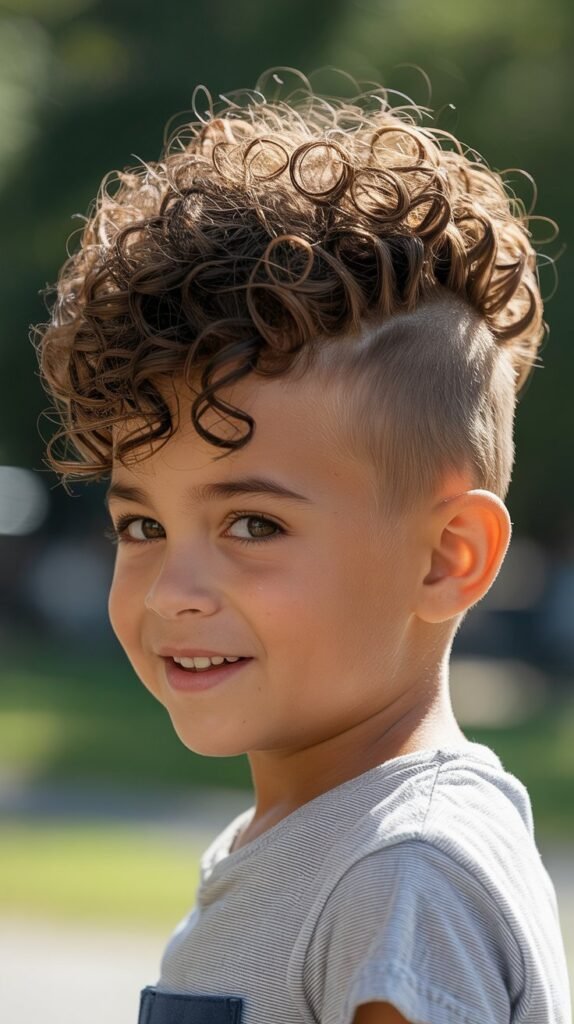
The curly faux hawk offers the edgy appearance of a mohawk without the commitment of shaving the sides completely.
Construction:
- Sides are cut significantly shorter than the center strip, but not skin-faded
- The center section creates a ridge from front to back, typically 2-4 inches tall
- Curls on top can be styled upward or allowed to fall naturally
- Less extreme than a true mohawk, making it more school-appropriate
Styling Flexibility:
- Style the center section upward for a bold weekend look
- Allow curls to relax for a subtler everyday appearance
- The natural curl texture creates the ridge effect with minimal product
- Works well for boys who want an edgy style that can be toned down when needed
17. Asymmetrical Curly Cut
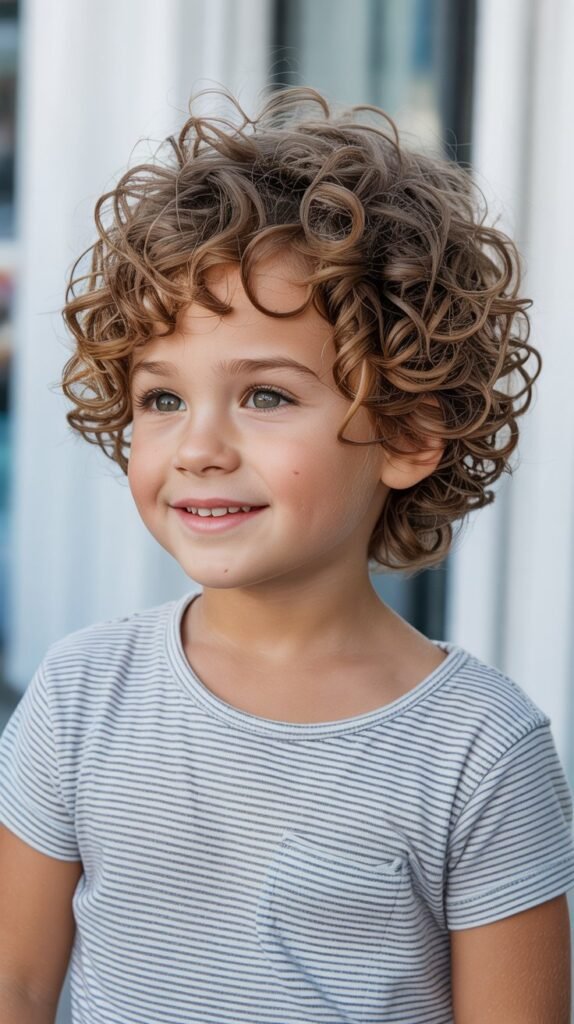
The asymmetrical curly cut creates visual interest through intentionally uneven lengths on different sides of the head.
Design Concept:
- One side is cut significantly shorter than the other, creating dramatic contrast
- The longer side typically ranges from 3-6 inches while the shorter side may be 1-2 inches
- This avant-garde style suits confident boys who enjoy standing out
- The asymmetry can be subtle or extreme depending on personal preference
Artistic Expression:
- This cut is essentially wearable art that showcases the stylist’s creativity
- The contrasting sides create a dynamic, modern aesthetic
- Natural curls enhance the asymmetry, making the difference even more striking
- Best suited for teenagers or fashion-forward families
18. Curly Caesar Cut
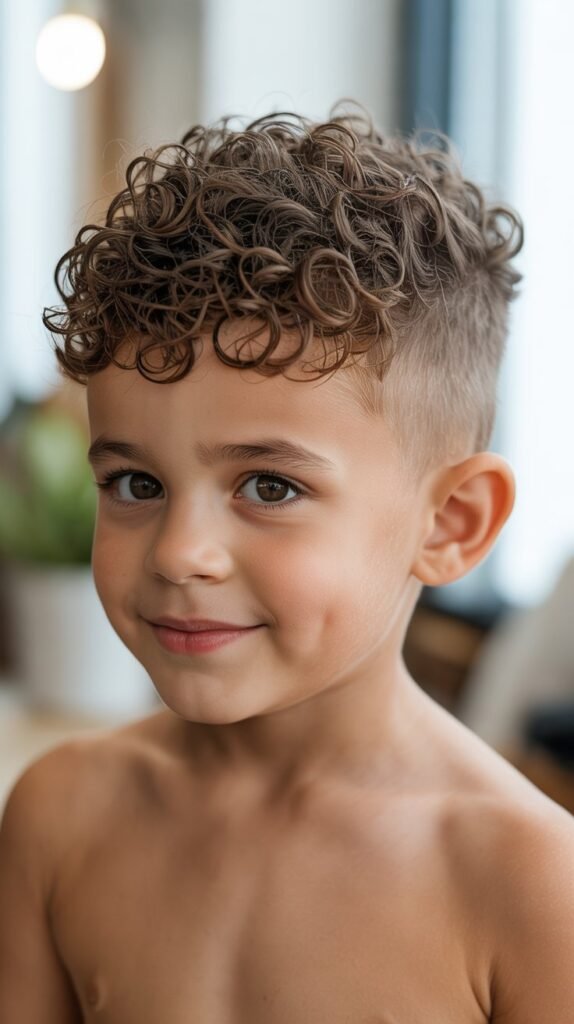
The curly Caesar cut adapts the classic Roman-inspired style for boys with textured hair, creating a short, uniform look with a small fringe.
Traditional Features:
- Hair is cut to 1-2 inches all around the head
- A short fringe at the front extends slightly onto the forehead
- The uniform length creates a neat, controlled appearance
- Originally popularized by Julius Caesar, this timeless style suits curly hair beautifully
Modern Adaptations:
- The fringe can be textured and piece-y rather than straight across
- Sides can be slightly faded while maintaining the overall Caesar shape
- Natural curls add dimension and interest to what might otherwise be a flat style
- Perfect for boys who want a classic, low-maintenance cut
19. Highlighted Curly Top
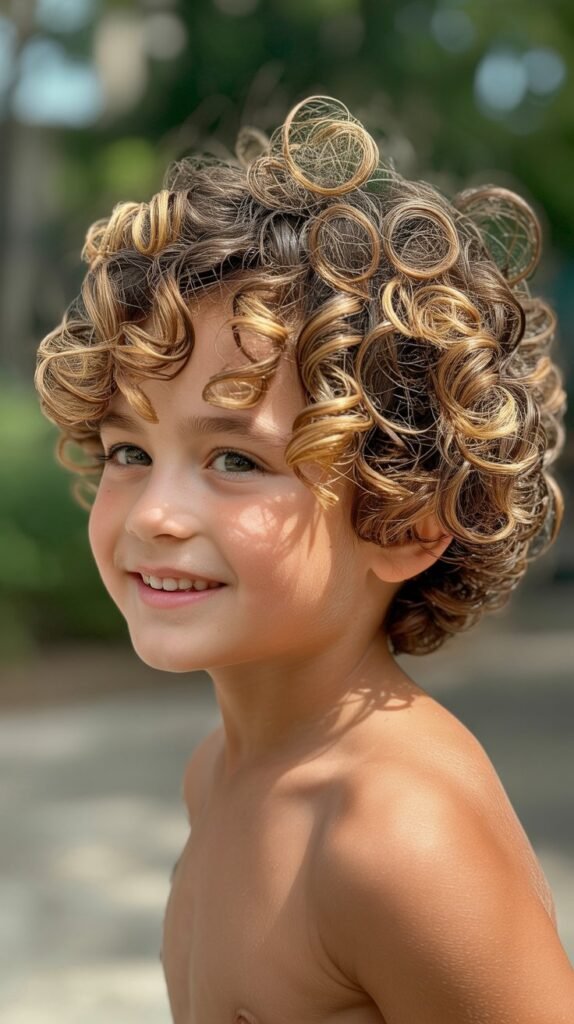
The highlighted curly top incorporates color to enhance the dimension and beauty of natural curls, creating a sun-kissed or bold appearance.
Color Considerations:
- Highlights should be professionally applied to avoid damage to curly hair
- Subtle caramel or honey tones create a natural, sun-lightened effect
- Bold colors like platinum, blue, or burgundy make dramatic fashion statements
- Color placement can emphasize curl pattern and add depth
Maintenance Requirements:
- Colored curly hair requires extra moisturizing treatments and protein masks
- Use color-safe, sulfate-free shampoos to prevent fading and dryness
- Deep conditioning treatments should be performed weekly
- Touch-ups are needed every 6-8 weeks as hair grows out
20. Curly Bowl Cut
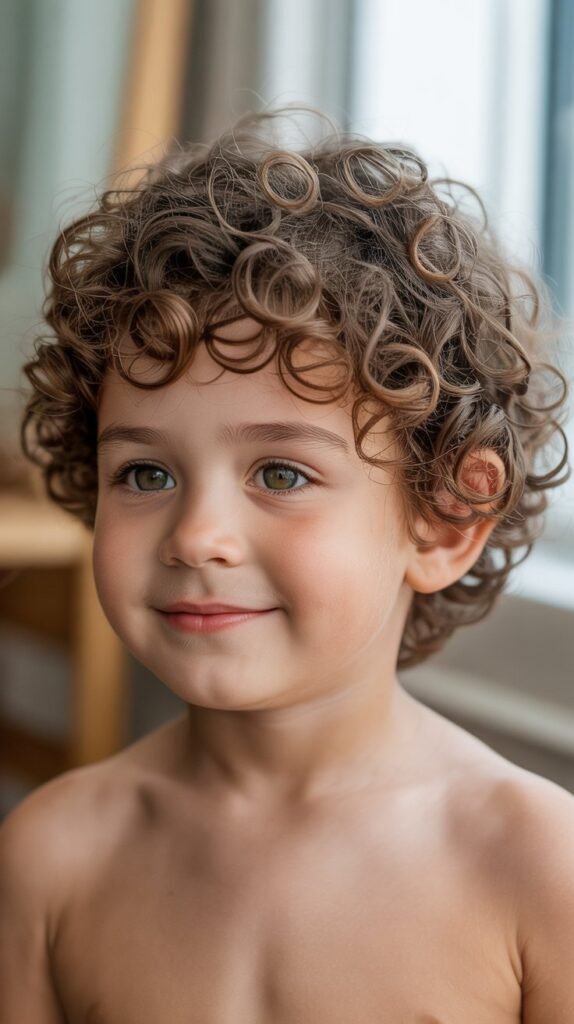
The curly bowl cut reimagines a controversial classic for the modern era, working surprisingly well when adapted for textured hair.
Contemporary Interpretation:
- Rather than the harsh, straight-across line of traditional bowl cuts, this version is textured and soft
- Hair is cut to roughly the same length all around (2-4 inches), creating a rounded silhouette
- The natural curl pattern prevents the “mushroom” effect of straight-haired bowl cuts
- Works best with medium to loose curls that create volume
Making It Modern:
- Add texture and layers to avoid a blunt, dated appearance
- Consider combining with a subtle fade at the nape and above the ears
- The curly texture naturally softens the bowl shape into something more contemporary
- This style can be surprisingly flattering on round or heart-shaped faces
21. Curly Man Bun
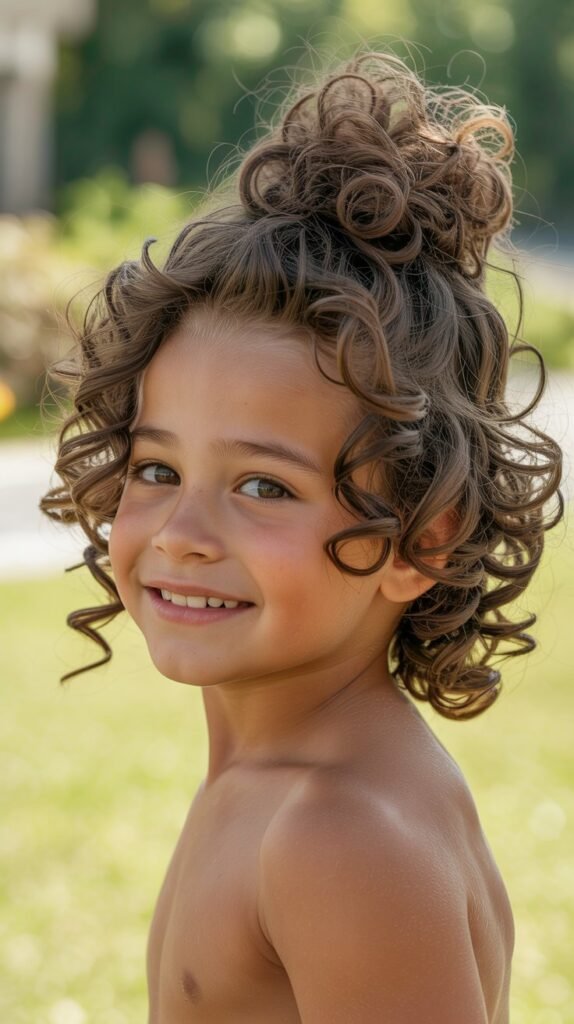
The curly man bun offers a practical and stylish option for boys with longer curls who want versatility in their styling options.
Style Requirements:
- Hair must be at least 6-8 inches long to create a proper bun
- The bun can be positioned at the crown, mid-head, or lower nape
- Sides can be grown out with the top or kept shorter for contrast
- Perfect for active boys who need hair out of their face during sports or activities
Bun Variations:
- The top knot sits high on the crown and creates a trendy, casual look
- A low bun at the nape appears more formal and sophisticated
- Half-up styles allow some curls to flow freely while securing the top section
- Loose, messy buns work well for everyday while tight buns suit athletic activities
22. Tapered Curly Afro
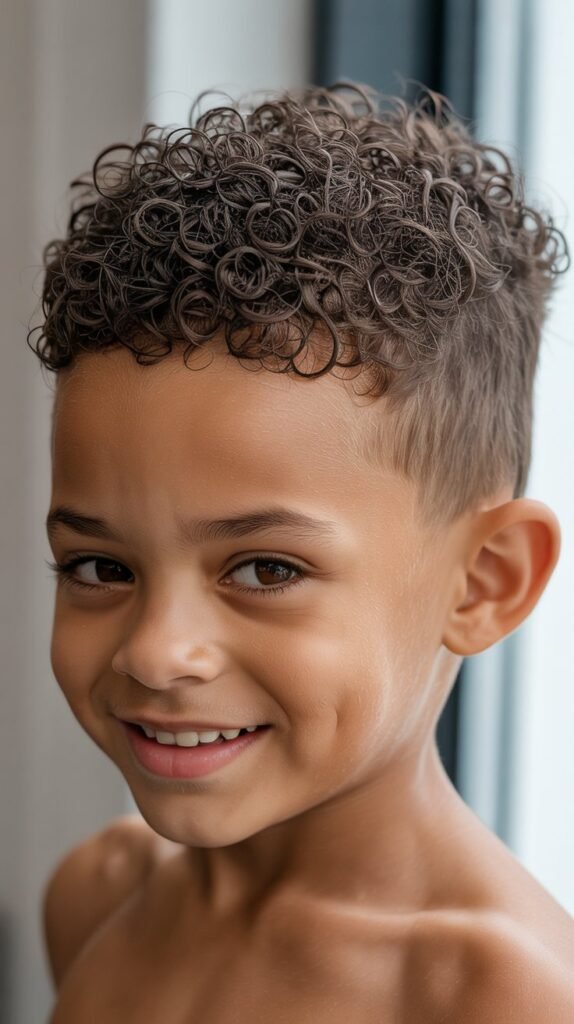
The tapered curly afro combines the volume and beauty of a natural afro with the clean lines of a taper, creating a sophisticated hybrid style.
Blended Design:
- The top maintains full afro volume, typically 3-6 inches high
- Sides and back are gradually tapered shorter, creating a rounded but structured shape
- The taper can be subtle or dramatic depending on preference
- This style flatters most face shapes while celebrating natural texture
Shaping Technique:
- Regular shaping every 4-6 weeks maintains the tapered outline
- A skilled barber uses clippers and scissors to create the gradual transition
- The top should be picked out to achieve maximum height and roundness
- Moisturizing products help define curls and prevent frizz
23. Curly Crop with Fringe
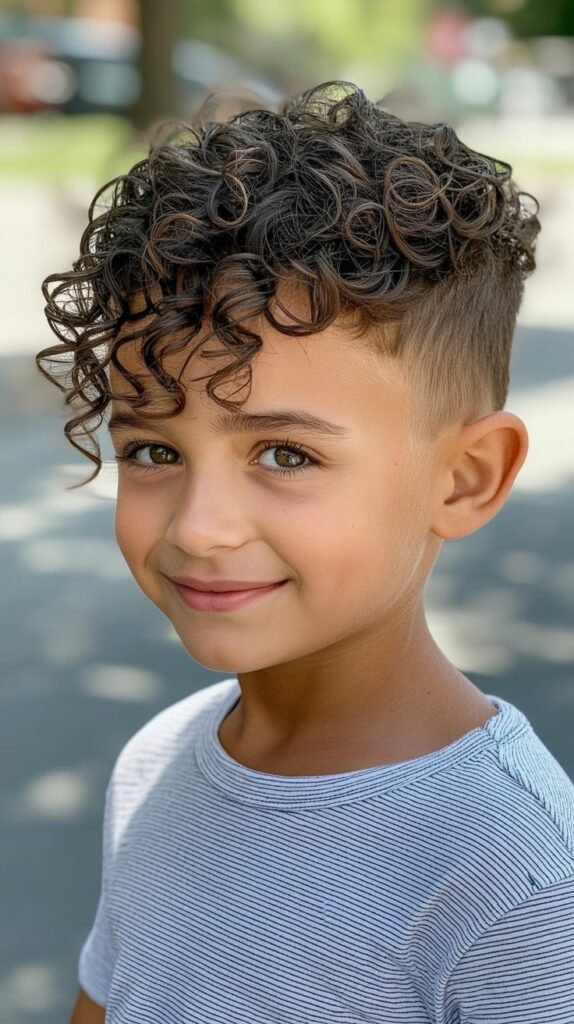
The curly crop with fringe keeps hair short overall while allowing a longer section at the front to create visual interest and frame the face.
Proportions:
- The back and sides are cut to 1-2 inches
- The front section extends 2-4 inches, falling toward or onto the forehead
- The fringe can be styled forward, to the side, or textured for a piece-y effect
- This balanced style offers manageability with a touch of personality
Versatile Styling:
- Style the fringe forward for a casual, youthful appearance
- Sweep it to the side for a more mature, sophisticated look
- Tousle it for texture when you want an edgier vibe
- The shorter back and sides dry quickly while the fringe provides styling options
24. 360 Waves with Curly Top
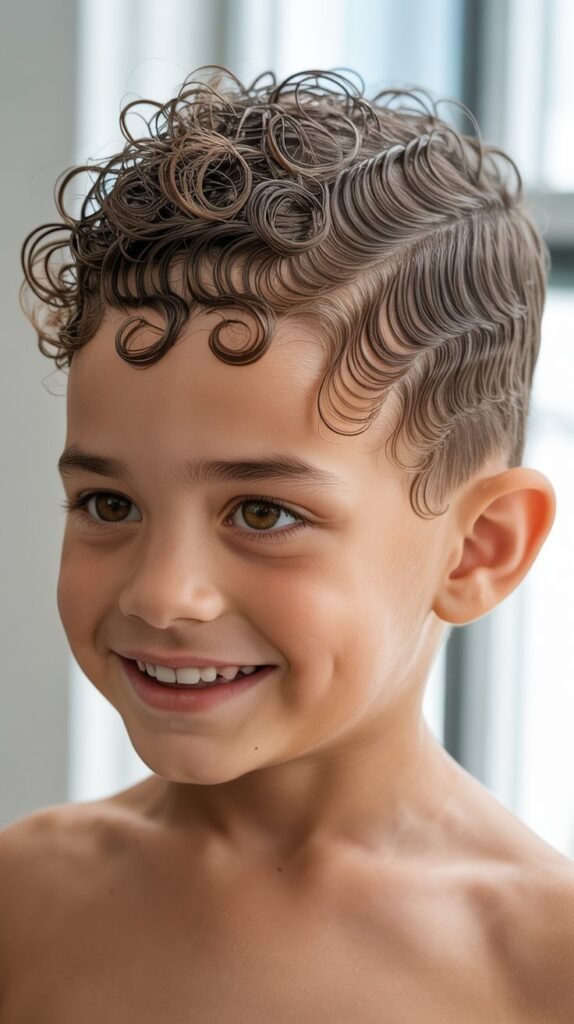
The 360 waves with curly top creates an intriguing contrast between brushed, trained waves on the sides and natural curls on top.
Dual-Texture Style:
- Sides and back feature 360 waves created through brushing and wave cream
- The top section maintains natural, free-form curls
- This combination showcases two different styling techniques in one cut
- Requires dedication to maintain the wave pattern on the sides
Wave Maintenance:
- Sides must be brushed daily with a wave brush in the correct pattern
- Wave cream and a durag or wave cap at night help set the pattern
- The natural curls on top provide contrast without additional maintenance
- This style is particularly popular in Black hair culture and communities
25. Curly Mullet
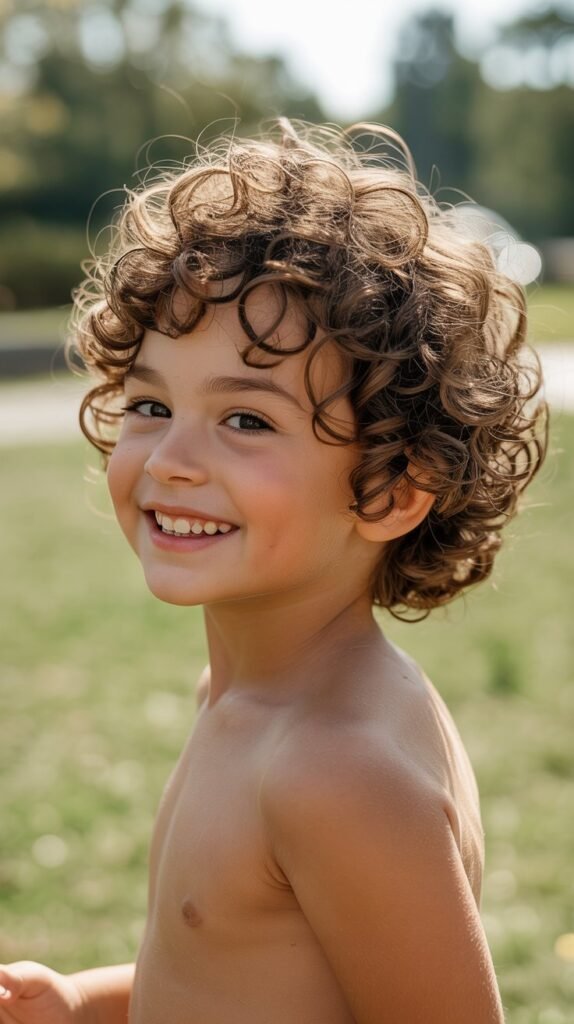
The curly mullet brings the “business in the front, party in the back” concept into the modern era with a curly twist.
Contemporary Mullet:
- The front and top sections are kept shorter or medium length
- Hair in the back extends significantly longer, typically 4-8 inches
- Natural curls soften the mullet’s dramatic silhouette
- This retro-inspired style has experienced a surprising resurgence in popularity
Modernizing the Classic:
- Add texture and layers to prevent a dated, 1980s appearance
- Consider incorporating a fade on the sides to update the look
- The curly texture creates movement and prevents the back from looking flat
- This bold choice suits confident boys with strong personal style
26. Curly High-Top Fade
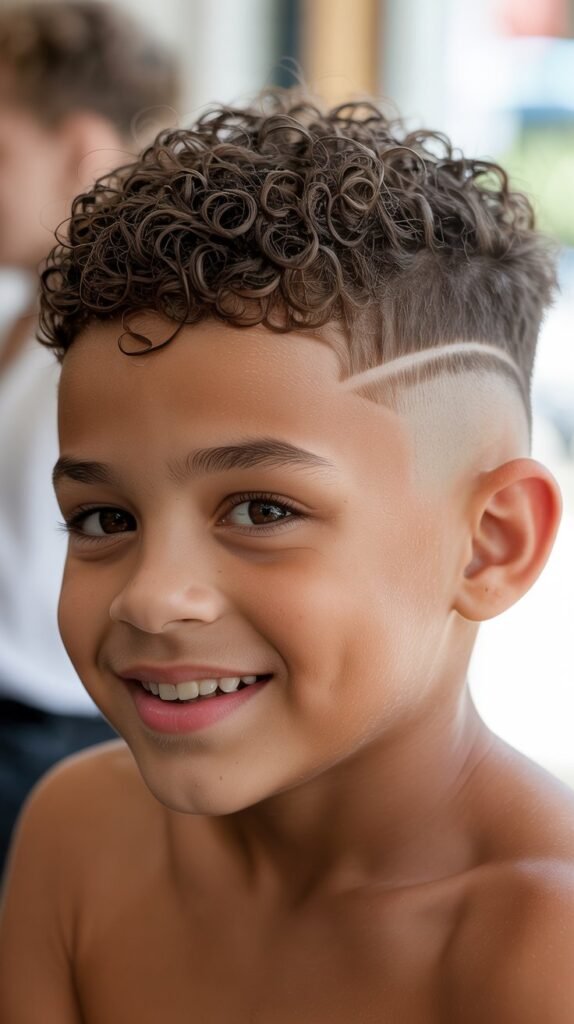
The curly high-top fade creates dramatic height on top while keeping sides and back very short, resulting in an iconic, eye-catching silhouette.
Architectural Structure:
- The top section stands 3-6 inches tall, shaped into a flat or rounded platform
- Sides are faded down to the skin or very short
- This style creates maximum vertical impact and celebrates curly texture
- Made famous in the 1980s and 90s, it remains culturally significant today
Shaping Requirements:
- Regular barbershop visits every 2-3 weeks maintain the fade and shape
- The top is picked out to achieve height and then shaped with clippers or scissors
- Can be shaped into a box (flat top) or rounded dome depending on preference
- Requires commitment to maintain but creates an unforgettable look
27. Textured Curly Frohawk
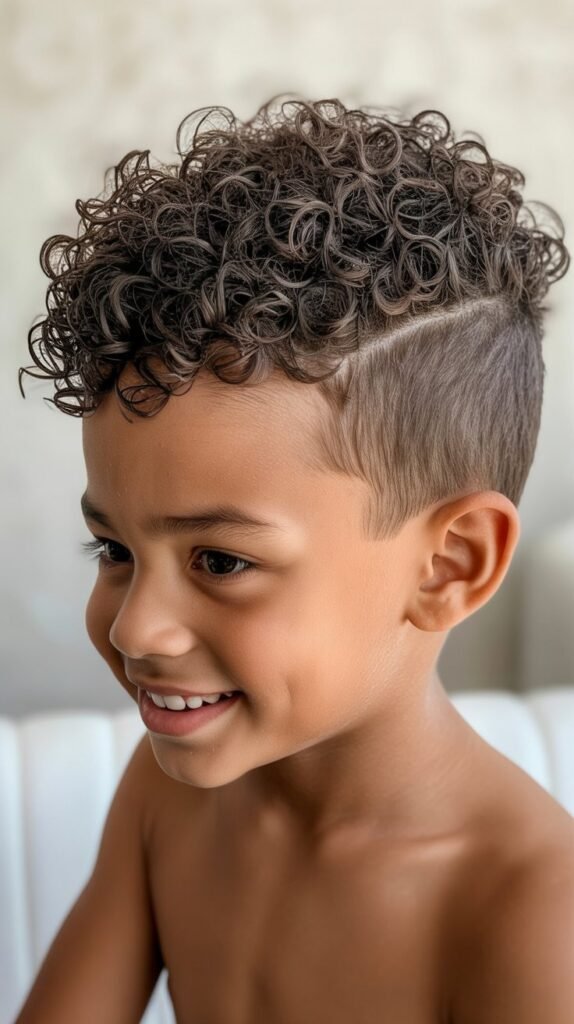
The textured curly frohawk narrows the traditional afro into a central strip, creating a mohawk-inspired look without shaving the sides.
Design Specifications:
- Hair is shaped into a strip running from front to back
- Sides are shorter but not completely faded, maintaining some texture
- The center strip typically stands 2-4 inches high
- Natural curls create the height and width of the frohawk
Styling Approach:
- Use a pick or fingers to lift and shape the center section
- Apply a strong-hold gel or cream to keep the frohawk standing upright
- Sides can be brushed down or left with some texture
- This style offers edge and personality while remaining wearable for most occasions
28. Curly Side Fade
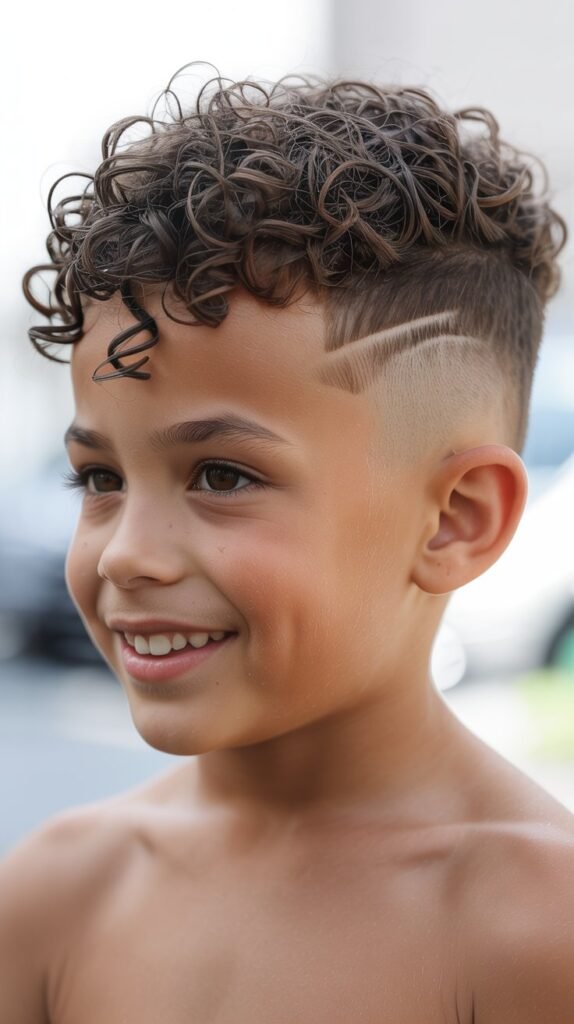
The curly side fade keeps things asymmetrical by fading only one side while leaving the other at medium length, creating deliberate imbalance.
Asymmetric Design:
- One side features a complete fade from long to short
- The opposite side maintains medium to long length
- The top section features full curly volume
- Creates a modern, editorial look perfect for fashion-forward boys
Visual Drama:
- The contrast between the two sides creates instant visual interest
- Hair can be styled toward the longer side for maximum impact
- This unconventional cut makes a strong style statement
- Works well for boys who want something truly unique
29. Wash-and-Go Curly Cut
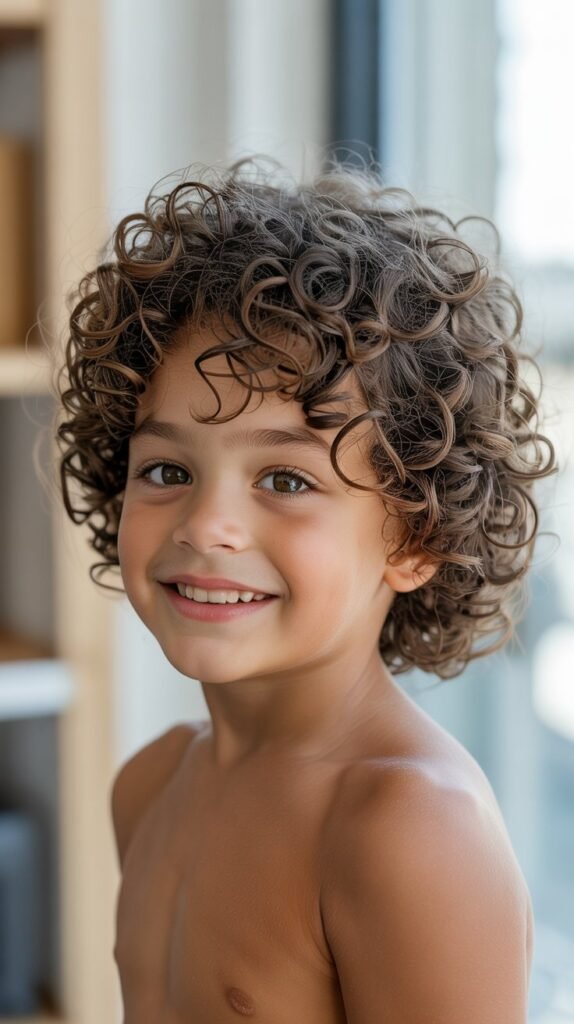
The wash-and-go curly cut is specifically designed to require minimal styling, perfect for busy mornings and active lifestyles.
Low-Maintenance Design:
- Hair is cut to a uniform 2-3 inches all around or with slight layering
- The cut works with natural curl pattern rather than against it
- Styling literally involves washing and allowing hair to air dry
- Perfect for boys (and parents!) who don’t want to spend time on daily styling
Product Simplicity:
- A leave-in conditioner is often the only product needed
- Apply to soaking wet hair, scrunch gently, and allow to air dry
- The cut should be designed so curls fall into place naturally
- Refresh on non-wash days with a water-filled spray bottle
30. Curly Burst Fade
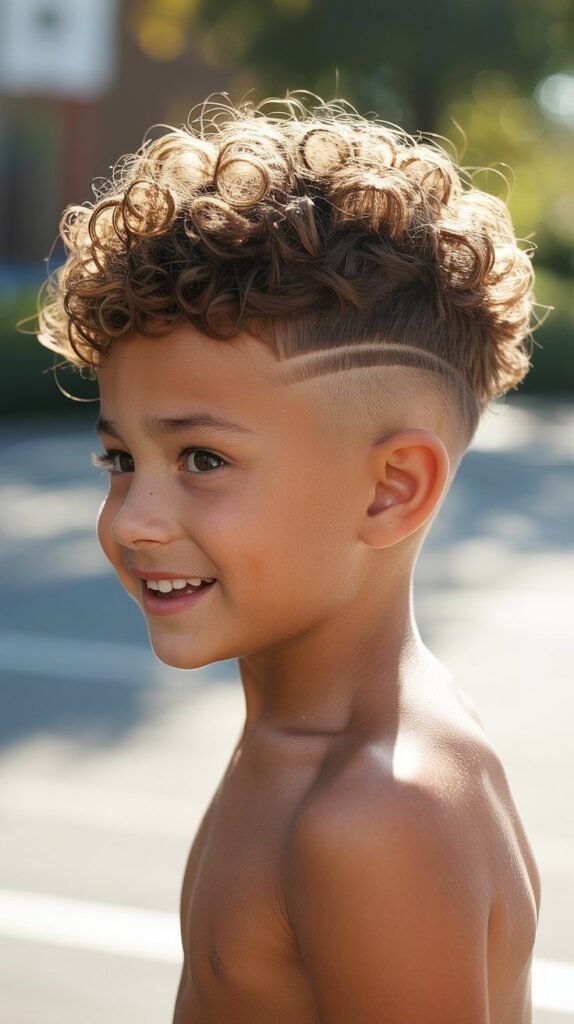
The curly burst fade creates a semicircular fade pattern around the ears, adding artistic flair to a classic curly style.
Distinctive Pattern:
- The fade curves around the ear in a burst or sunburst pattern
- Top section maintains full curly volume
- The back can be faded or kept at consistent length
- This creative fade variation adds personality and uniqueness
Technical Execution:
- Requires a skilled barber who understands fade techniques and patterns
- The burst typically extends 2-3 inches around and behind the ear
- Creates a frame-like effect that draws attention to the curly top
- Needs touch-ups every 2-3 weeks to maintain the precise burst pattern
Maintenance Tips for All Curly Haircuts
Proper maintenance ensures that any of these curly haircuts continue looking fresh, healthy, and well-defined between barbershop visits.
Daily Care Routine:
- Always use sulfate-free shampoo designed specifically for curly hair to prevent dryness
- Condition every time you wash, focusing on mid-lengths and ends
- Apply leave-in conditioner to damp hair after washing to lock in moisture
- Use a microfiber towel or t-shirt to dry hair instead of regular terry cloth towels that cause frizz
Weekly Treatments:
- Deep condition once per week to maintain curl health and prevent breakage
- Apply natural oils like coconut, jojoba, or argan oil to seal in moisture
- Gently detangle curls using a wide-tooth comb or fingers while conditioner is in hair
- Consider protein treatments every 4-6 weeks if curls seem limp or stretched out
Product Recommendations:
- Curl-defining creams help enhance natural curl pattern without crunchiness
- Light-hold gels provide definition while maintaining natural movement
- Avoid products with silicones, sulfates, or heavy alcohols that dry out curls
- Experiment with different product combinations to find what works for your child’s specific curl type
Professional Care:
- Schedule regular trims every 4-8 weeks depending on the style to maintain shape
- Find a barber or stylist who specializes in curly hair and understands different curl patterns
- Bring reference photos to appointments to clearly communicate the desired look
- Ask your stylist for personalized product and styling recommendations
Styling Products Essential for Curly Haircuts
For Definition and Hold:
- Curl creams: Provide moisture and definition without stiffness
- Gels: Offer stronger hold for styles that need to stay in place all day
- Mousses: Create volume and light hold, especially good for finer curls
- Pomades: Work well for styled looks like pompadours and quiffs
For Moisture and Health:
- Leave-in conditioners: Essential for maintaining curl hydration between washes
- Natural oils: Seal moisture and add shine without weighing curls down
- Deep conditioning masks: Weekly treatments that repair and strengthen curls
- Curl refresher sprays: Revive curls on non-wash days
Application Tips:
- Always apply products to damp or wet hair for even distribution
- Use the “praying hands” method by smoothing product between palms and down sections of hair
- Scrunch products into curls to encourage natural curl formation
- Less is more—start with a small amount and add more if needed
Choosing the Right Haircut for Your Child
Selecting from these 30 adorable curly haircuts for boys should involve consideration of several important factors beyond just appearance.
Consider Hair Characteristics:
- Curl pattern type (wavy, curly, coily, or kinky) determines which cuts will work best
- Hair density (fine, medium, or thick) affects how much volume each style will have
- Growth pattern and cowlicks should be worked with, not against, for easier styling
- Hair health and condition impact whether more or less maintenance is appropriate
Lifestyle Factors:
- Active boys involved in sports may prefer shorter, lower-maintenance cuts
- School dress codes should be considered when choosing more dramatic styles
- Time available for morning styling routines affects which cuts are practical
- Budget for regular barbershop visits varies with different cut maintenance needs
Personal Preferences:
- Let your child have input on their hairstyle to build confidence and self-expression
- Look at reference photos together from magazines, social media, or these descriptions
- Consider trying less dramatic changes first before committing to bold styles
- Remember that hair grows back, so experimenting with different looks is always possible
Face Shape Considerations:
- Round faces benefit from height on top and shorter sides to elongate
- Oval faces work well with virtually any style from this collection
- Square faces look great with softer, textured styles that balance angular features
- Heart-shaped faces pair nicely with fuller sides or fringe to balance a wider forehead
Professional Consultation:
- Schedule a consultation with a curly hair specialist before major changes
- Bring multiple reference photos showing different angles of desired styles
- Discuss realistic expectations for your child’s specific curl type and texture
- Ask about styling requirements and product recommendations before committing
Common Mistakes to Avoid with Curly Haircuts
Understanding what not to do is just as important as knowing the right techniques when maintaining curly haircuts for boys.
Cutting Errors:
- Never cut curly hair when completely dry without proper training, as curls shrink unpredictably
- Avoid cutting all one length, which creates a triangle or pyramid shape with curly hair
- Don’t use thinning shears excessively, as they can create frizz and disrupt curl patterns
- Never cut curls too short if you’re unsure, as they will appear even shorter once they dry and spring up
Product Mistakes:
- Using products with sulfates strips natural oils and causes dryness and frizz
- Over-applying heavy products weighs curls down and makes them look greasy
- Skipping leave-in conditioner leaves curls vulnerable to dryness and breakage
- Using heat styling tools without heat protectant damages the curl structure permanently
Styling Errors:
- Brushing dry curls separates the curl pattern and creates excessive frizz
- Towel-drying with rough terry cloth causes friction and frizz
- Touching curls constantly while they dry disrupts formation and creates frizz
- Going to bed with wet hair without protection can cause matting and tangling
Maintenance Oversights:
- Waiting too long between trims allows split ends to travel up the hair shaft
- Using regular pillowcases instead of satin or silk causes friction and frizz overnight
- Washing curls too frequently strips natural oils that keep them healthy
- Neglecting deep conditioning treatments leads to dry, brittle curls prone to breakage
Seasonal Considerations for Curly Haircuts
Different seasons bring unique challenges and opportunities for curly hairstyles, requiring adjustments to both cuts and care routines.
Summer Styling:
- Shorter cuts like the curly buzz cut or short curly crop help boys stay cool
- Chlorine from swimming pools can damage and discolor curls—use protective leave-in products
- Sun exposure can dry out curls, requiring increased conditioning and moisture
- Humidity may cause frizz, so anti-humidity products and protective styles help
- Lighter products work better in hot weather when heavy creams feel uncomfortable
Fall Transitions:
- Grow out summer cuts into medium-length styles as weather cools
- Adjust product routine as humidity decreases and air becomes drier
- Back-to-school cuts should balance style with school dress code requirements
- Begin increasing moisture as heating systems indoors start drying out hair
Winter Protection:
- Cold air and indoor heating create extremely dry conditions for curly hair
- Increase deep conditioning treatments to weekly or twice-weekly schedules
- Hats can cause friction and flatten curls—wear satin-lined caps when possible
- Static electricity becomes an issue—use more leave-in conditioner and oils
- Longer styles provide warmth, making them practical and functional
Spring Refresh:
- Perfect time for dramatic style changes as hair may have grown during winter
- Gradually reduce heavy moisturizing products as humidity returns
- Trim away any winter damage and refresh the shape
- Lighter layers work well as temperature increases
Cultural Significance of Curly Hairstyles
Many of these curly haircuts carry deep cultural meaning and historical significance that deserves recognition and respect.
African and African-American Hair Culture:
- The natural afro emerged as a powerful symbol during the Civil Rights Movement
- Styles like the high-top fade and 360 waves have roots in Black barbershop traditions
- Natural hair acceptance movements celebrate textured hair without chemical alteration
- These hairstyles represent cultural pride, identity, and resistance against Eurocentric beauty standards
Historical Context:
- For centuries, Black individuals faced discrimination for wearing natural hairstyles
- The CROWN Act (Creating a Respectful and Open World for Natural Hair) now protects against hair discrimination in many places
- Natural hair movements like “Black Is Beautiful” reclaimed textured hair as something to celebrate
- Understanding this history adds depth and respect when choosing and wearing these styles
Contemporary Significance:
- Allowing boys to wear their natural curls builds positive self-image and cultural connection
- These hairstyles combat narrow beauty standards and promote diversity
- Professional settings increasingly welcome natural textured hairstyles
- Social media has created communities celebrating and sharing curly hair knowledge
Respectful Appreciation:
- Recognize that some styles have specific cultural origins and meanings
- Support businesses and barbers within the communities that created these styles
- Avoid appropriating styles while understanding their cultural context
- Celebrate diversity in hair texture as part of broader conversations about representation
Age-Appropriate Style Recommendations
Different curly haircuts work better for different age groups based on lifestyle, maintenance capabilities, and social settings.
Toddlers (Ages 2-4):
- Short curly crop: Easy to maintain during messy play and frequent baths
- Wash-and-go curly cut: Minimal styling for busy parents
- Natural curly afro: Allows hair to grow naturally without frequent cuts
- Avoid complex fades that require frequent barbershop visits
Young Children (Ages 5-9):
- Classic curly taper fade: Neat for school, manageable at home
- Curly Caesar cut: Age-appropriate and low-maintenance
- Messy curly top: Fun and youthful without being too dramatic
- Short curly crop with fringe: Adds personality while staying practical
Tweens (Ages 10-12):
- Curly undercut: More style-conscious as peer opinions matter more
- Curly pompadour: Sophisticated enough for this transitional age
- Side-swept curly fringe: Trendy but still school-appropriate
- Curly top with hard part: Adds personality without being extreme
Teenagers (Ages 13-18):
- Curly mohawk fade: Bold self-expression appropriate for this age
- Curly man bun: Works for longer hair and active lifestyles
- Asymmetrical curly cut: Fashion-forward for confident teens
- Highlighted curly top: Adding color becomes an option for personal style
- Curly mullet: Retro-inspired trend appeals to this age group
DIY Maintenance Between Barber Visits
Learning basic maintenance techniques helps keep curly haircuts looking fresh between professional appointments.
Basic Trim Techniques:
- Invest in sharp hair-cutting scissors designed specifically for hair (not craft scissors)
- Only trim small amounts (1/4 inch or less) to clean up edges
- Cut curls when dry so you can see their natural shape and length
- Focus on obvious straggly pieces rather than attempting full cuts at home
Lineup and Edge-up:
- Use clippers with guards to maintain clean lines around the hairline
- Work slowly and cautiously, removing small amounts at a time
- Follow the natural hairline rather than trying to create new shapes
- Clean up the nape and around ears between appointments
Curl Reshaping:
- Refresh curls between washes using a spray bottle with water and leave-in conditioner
- Scrunch curls gently to reactivate the curl pattern
- Use a diffuser on low heat to add volume if curls are falling flat
- Apply small amounts of curl cream to specific areas that need definition
Tools to Have at Home:
- Quality clippers with multiple guard attachments
- Sharp hair-cutting scissors (not regular scissors)
- Wide-tooth comb and pick for styling curls
- Spray bottle for refreshing curls
- Diffuser attachment for blow dryer
When to See a Professional:
- Any major length changes or new styles should be done professionally
- Fades require professional expertise to execute properly
- If you’re unsure about a technique, wait for your barber
- Complex layering and texturizing should be left to trained stylists
Budget-Friendly Tips for Maintaining Curly Cuts
Keeping curly haircuts looking great doesn’t have to break the bank with these practical, cost-effective strategies.
Stretching Time Between Cuts:
- Choose styles that grow out gracefully, like natural afros or longer shag cuts
- Learn basic edge-up techniques to maintain clean lines at home
- Styles with less dramatic fades require less frequent barbershop visits
- Well-moisturized, healthy curls look better longer between trims
Product Savings:
- Many drugstore brands offer excellent curly hair products at lower prices
- DIY deep conditioning treatments using coconut oil, honey, and avocado work beautifully
- A little product goes a long way—use less than you think you need
- Multi-purpose products like leave-in conditioners reduce the number of items needed
Home Care Investments:
- Quality clippers pay for themselves after just a few home maintenance sessions
- Satin or silk pillowcases prevent damage, meaning less frequent trims for damage control
- A good diffuser attachment creates salon-quality results at home
- Wide-tooth combs last for years and prevent breakage better than fine-tooth combs
Finding Affordable Professional Services:
- Beauty schools offer discounted cuts performed by supervised students
- Some barbershops offer loyalty programs or package deals
- Mid-week appointments sometimes cost less than weekend appointments
- Ask if children’s cuts are priced lower than adult cuts
Natural Ingredient Alternatives:
- Aloe vera gel provides hold without purchasing expensive styling gels
- Coconut oil serves as both a pre-wash treatment and styling product
- Apple cider vinegar rinses clarify hair without expensive clarifying shampoos
- Flaxseed gel (made by boiling flaxseeds) creates a natural curl-defining gel
Addressing Common Curly Hair Concerns
Parents and boys often have specific concerns about managing and styling curly hair that deserve practical solutions.
Dealing with Tangles and Knots:
- Always detangle curls when wet and coated with conditioner, never when dry
- Start detangling from the ends and work your way up to the roots
- Use fingers or a wide-tooth comb, never fine-tooth combs or brushes on dry curls
- Apply detangling spray or leave-in conditioner before combing
- Consider protective hairstyles at night like loose braids or pineappling
Managing Frizz:
- Frizz is often caused by dryness, so increase moisturizing products
- Stop using towels to dry hair—switch to microfiber towels or t-shirts
- Apply products using scrunching motions rather than smoothing downward
- Sleep on satin or silk pillowcases to reduce friction overnight
- Avoid touching curls while they’re drying, which disrupts the curl pattern
Controlling Volume:
- Layering removes bulk and prevents the pyramid or triangle shape
- Heavier products like curl creams weigh down excessive volume
- Diffusing with the dryer pointing downward reduces volume
- Cutting curls slightly shorter naturally reduces overall volume
- Some volume is beautiful—embrace it rather than fighting it constantly
Preventing Dryness:
- Deep condition weekly without exception
- Use leave-in conditioner daily, not just occasionally
- Seal moisture with natural oils after applying water-based products
- Reduce washing frequency to 2-3 times per week maximum
- Drink plenty of water, as hydration starts from inside the body
Handling Different Curl Patterns on One Head:
- It’s completely normal to have multiple curl patterns on different areas
- Cut different areas to different lengths to create a uniform appearance
- Use different amounts of product in different areas as needed
- Some areas may need more moisture while others need less
- Work with the natural pattern rather than forcing uniformity
Building Confidence Through Hair
A great curly haircut does more than just look good—it can significantly impact a child’s self-esteem and self-image.
Positive Hair Identity:
- Children who feel good about their hair show increased confidence in social situations
- Allowing boys to participate in hairstyle decisions builds autonomy and self-expression
- Celebrating natural curls rather than trying to “tame” them creates positive associations
- Seeing positive representation of curly hair in media and real life matters tremendously
Combating Negative Messages:
- Unfortunately, some children receive comments suggesting their curly hair is “messy” or “unprofessional”
- Parents should actively counter these messages by celebrating their child’s natural texture
- Find role models with similar hair textures who are successful and admired
- Teach children to respond confidently to inappropriate comments about their hair
School and Social Settings:
- Some schools still have discriminatory dress codes targeting natural hairstyles
- Know your rights—many places now have legal protections for natural hair
- Advocate for your child if they face discrimination based on their hairstyle
- Connect with other parents navigating similar situations for support
Developing Hair Care Skills:
- Teaching boys to care for their own curls builds independence and responsibility
- Age-appropriate involvement in hair care routines creates ownership
- Learning proper techniques prevents frustration with “difficult” hair
- These skills last a lifetime and benefit future self-care
Celebrating Individuality:
- Every curl pattern is unique and beautiful in its own way
- Encourage your child to see their curls as a special part of their identity
- Take photos celebrating their hair journey and different styles over time
- Create positive memories and associations with hair care routines
Professional Resources and Communities
Connecting with professionals and communities specializing in curly hair provides ongoing support, education, and inspiration.
Finding the Right Barber or Stylist:
- Search specifically for “curly hair specialist” or “natural hair barber” in your area
- Read reviews mentioning specific curl types similar to your child’s hair
- Look at before-and-after photos in their portfolio or social media
- Ask friends with similar hair types for recommendations
- Schedule consultations before committing to a major cut
Online Communities:
- Facebook groups dedicated to curly hair care offer advice and product recommendations
- Instagram hashtags like #curlyhairboys and #naturalhairboys provide style inspiration
- YouTube channels feature tutorials for curly haircuts and styling techniques
- Reddit communities like r/curlyhair offer troubleshooting help and support
- TikTok has numerous content creators sharing quick curly hair tips
Educational Resources:
- Websites like NaturallyCurly.com offer articles, forums, and product reviews
- The Curly Hair Method (developed by Lorraine Massey) provides a comprehensive approach
- Many curly hair specialists offer online courses and ebooks
- Library books about textured hair care provide offline resources
- Dermatologists specializing in hair can address specific scalp or hair health concerns
Product Research:
- Curated websites focus specifically on curly hair products with detailed reviews
- Many brands offer sample sizes to test before purchasing full-size products
- Ingredient analysis websites help identify potentially harmful ingredients
- YouTube product reviews show real results on actual curly hair
- Beauty retailers sometimes offer consultation services to match products to hair needs
Conclusion
Choosing among these 30 Adorable Curly Haircuts for Boys opens up a world of possibilities for showcasing your child’s beautiful natural texture while finding a practical, manageable style that fits their lifestyle and personality.
From the timeless elegance of a classic curly taper fade to the bold statement of a curly mohawk, from the simplicity of a wash-and-go cut to the sophistication of a highlighted curly pompadour, there’s truly something for every boy, every curl type, and every preference.
Remember that the best haircut isn’t necessarily the most complicated or trendy—it’s the one that makes your child feel confident, looks age-appropriate, fits within your maintenance capabilities, and celebrates rather than fights against their natural curl pattern.
Whether you choose a low-maintenance buzz cut for an active toddler, a stylish undercut for a fashion-conscious tween, or a dramatic high-top fade for a confident teenager, the key is working with experienced professionals who understand curly hair,
maintaining proper hair health through appropriate products and techniques, and most importantly, helping your child develop a positive relationship with their beautiful, unique curls.
With the right cut, proper care, and a celebration of natural texture, curly hair becomes not a challenge to manage but a wonderful feature to showcase and embrace with pride and confidence every single day.