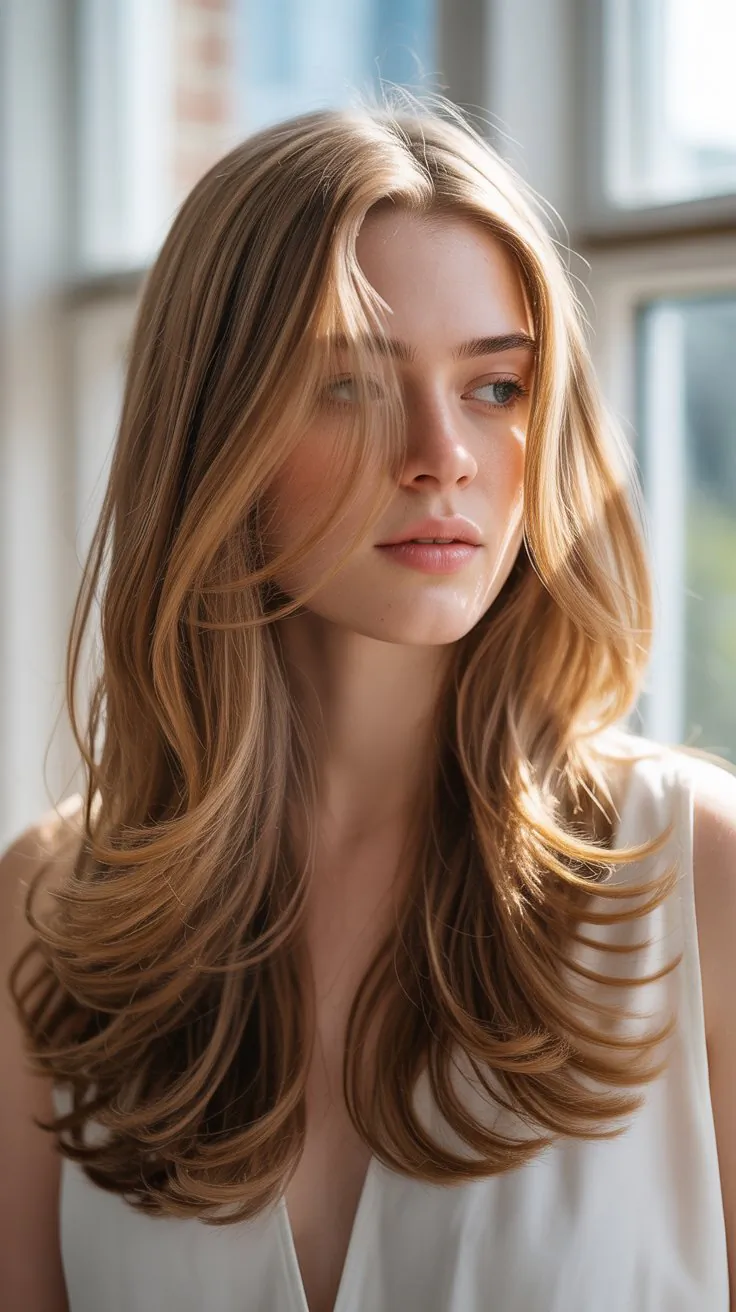
Long hair is beautiful, but sometimes it can feel heavy and one-dimensional.
That’s where front layer cuts come to the rescue, transforming your flowing locks into a dynamic, face-framing masterpiece that adds movement, dimension, and personality to your overall look.
Whether you’re seeking a subtle enhancement or a dramatic transformation, the right front layers can completely change how your hair falls and frames your features.
This comprehensive guide to 34 Perfect Front Layer Cuts for Long, Flowing Hair will walk you through everything from classic styles to modern interpretations, helping you discover the perfect layered look that complements your face shape, hair texture, and personal style.
Get ready to unlock the full potential of your long hair and find the layered cut that will make you fall in love with your locks all over again.
1. Classic Face-Framing Layers
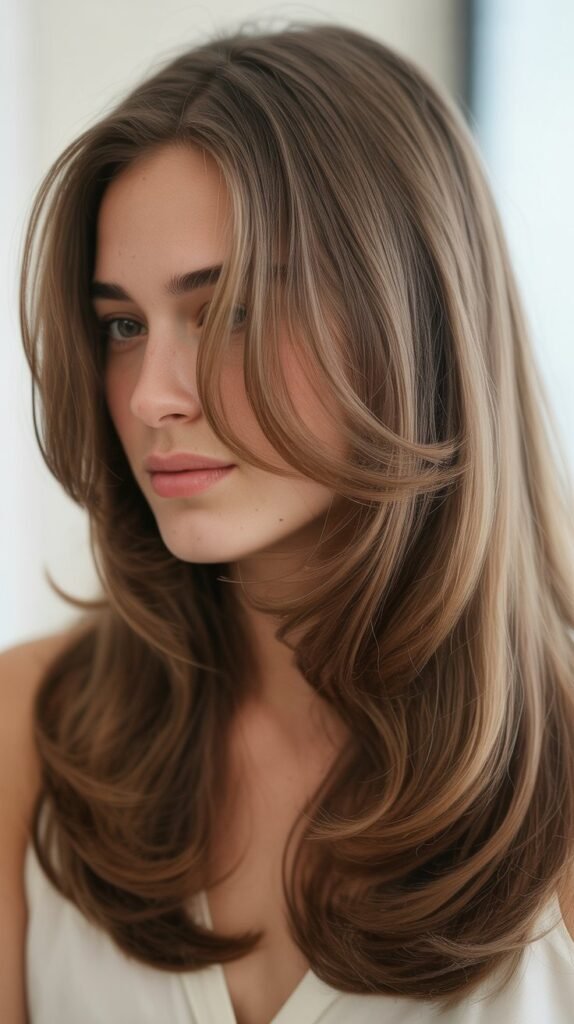
Face-framing layers are the quintessential front layer cut that never goes out of style.
These layers are strategically cut to contour your face, starting from around your cheekbones or chin and gradually blending into your length.
They create a soft, feminine look that enhances your natural features while adding movement to your hair.
- Face-framing layers work exceptionally well for all face shapes, as they can be customized to highlight your best features.
- The layers typically start at chin length or slightly below and cascade downward, creating a seamless transition.
- This cut adds dimension without sacrificing overall length, making it perfect for those who want subtle enhancement.
- Styling these layers is effortless—they naturally fall into place with minimal effort, whether you air-dry or blow-dry.
- The soft graduation creates a slimming effect around the face, making it particularly flattering for round or square face shapes.
- These layers move beautifully and catch the light, adding depth and visual interest to your hairstyle.
2. Curtain Bangs with Long Layers
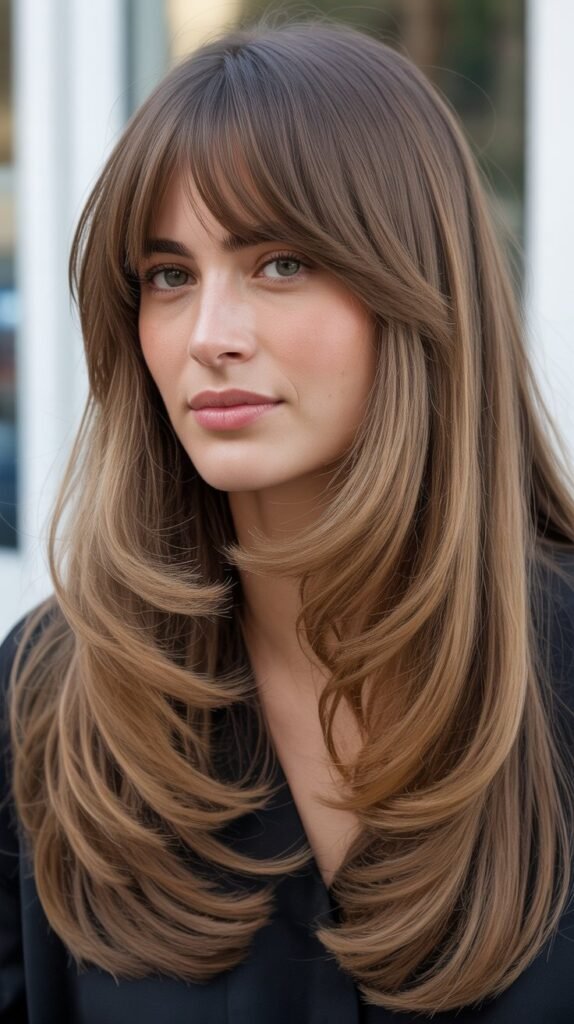
Curtain bangs combined with long layers create a effortlessly chic, 70s-inspired look that has made a major comeback.
The curtain bangs part in the middle and frame both sides of your face, while the long layers add movement throughout your length.
This combination offers the perfect balance between retro charm and modern sophistication.
- Curtain bangs typically start at eyebrow length and gradually blend into cheek-length pieces on either side.
- The layering technique creates a seamless flow from the bangs through to the rest of your hair.
- This style is incredibly versatile, working beautifully whether your hair is straight, wavy, or curly.
- The middle part creates symmetry and draws attention to your eyes and cheekbones.
- Curtain bangs require less maintenance than traditional blunt bangs and grow out gracefully.
- The layered length prevents your hair from looking too heavy or weighed down at the ends.
- This cut adds volume around the crown while maintaining beautiful movement throughout.
3. Wispy Front Layers
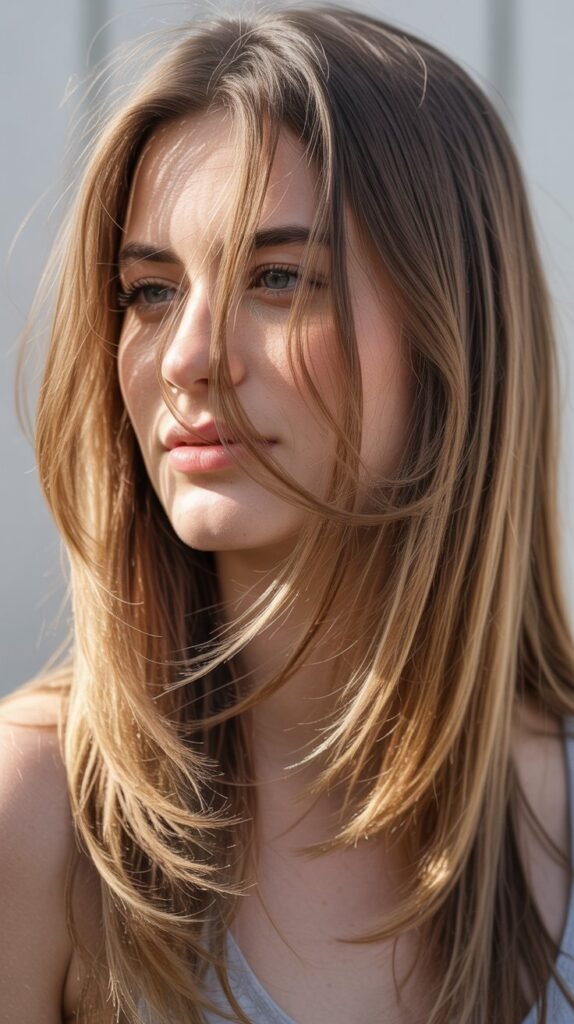
Wispy front layers are all about softness and delicacy.
These ultra-light layers are cut with texturizing techniques to create feathery, airy pieces around your face.
They’re perfect for those who want a romantic, ethereal look that adds dimension without overwhelming your features.
- Wispy layers are achieved through point-cutting and razor techniques that create soft, irregular edges.
- These layers are typically shorter and more textured than traditional face-framing layers.
- The wispy effect works especially well for fine to medium hair textures, adding the illusion of volume.
- This style creates a gentle, feminine frame that softens angular features beautifully.
- Wispy front layers blend seamlessly into longer hair, creating a natural, lived-in appearance.
- The delicate texture catches light beautifully, adding dimension and movement.
- Styling is simple—a round brush and light blow-drying enhance the wispy effect naturally.
4. Bold Choppy Layers
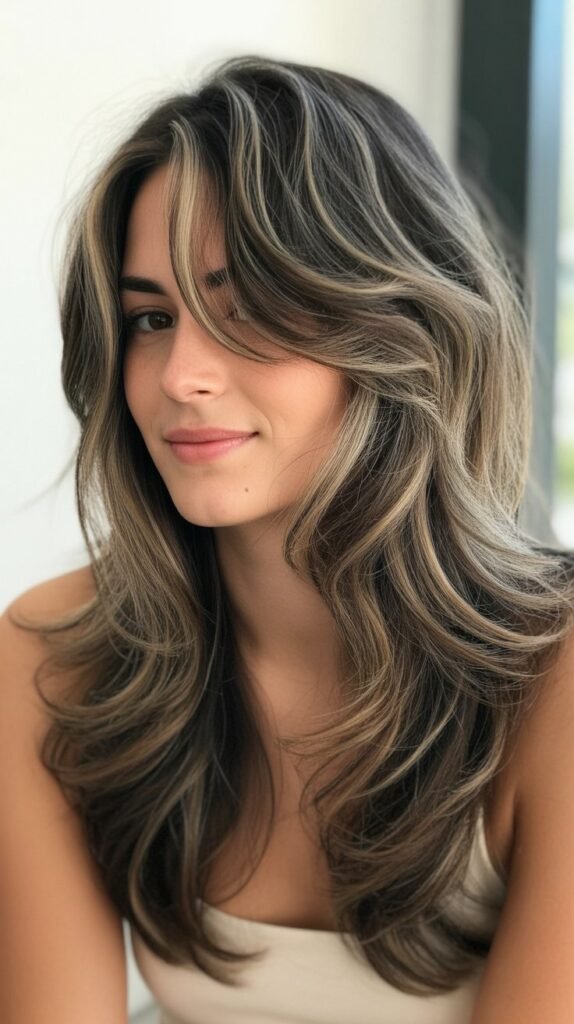
For those who want to make a statement, bold choppy layers deliver an edgy, modern aesthetic.
These layers feature more dramatic length differences and intentionally textured ends that create a piece-y, undone look.
This style is perfect for adding attitude and personality to long hair.
- Choppy layers are cut with deliberate unevenness to create separation and texture.
- The layers can start quite short at the front, sometimes even at ear length, creating striking contrast.
- This technique works beautifully for thick hair, removing bulk while adding movement.
- The choppy effect gives hair a more casual, rock-and-roll vibe compared to traditional smooth layers.
- These layers are highly versatile and can be styled sleek for sophistication or tousled for an effortless look.
- The bold variation in lengths creates interesting silhouettes and eye-catching dimension.
- Point-cutting and razor techniques are used to achieve the signature choppy texture.
5. Soft Graduated Layers
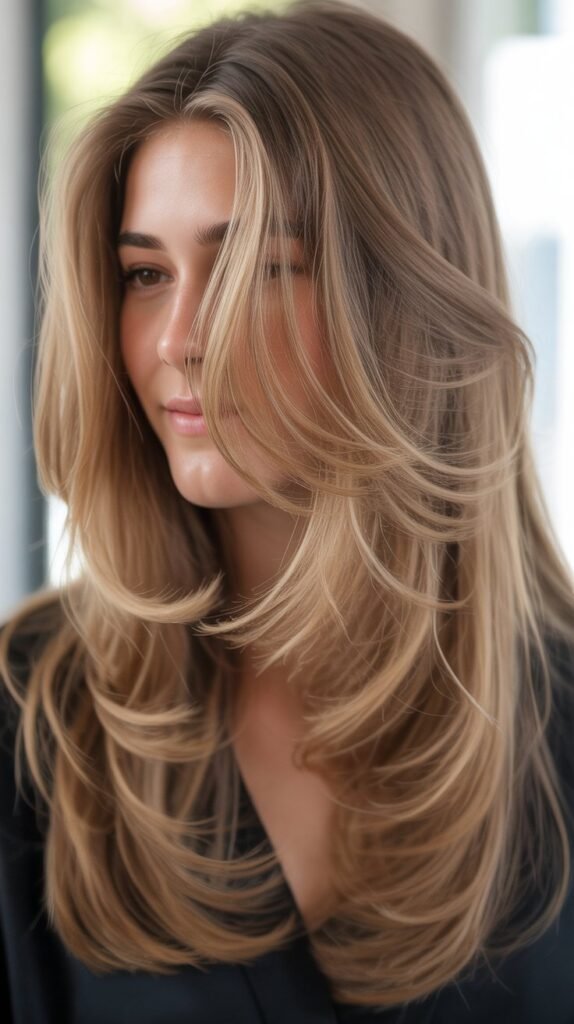
Soft graduated layers offer a subtle approach to layering that creates barely-there dimension while maintaining a cohesive, polished look.
The graduation is gentle and gradual, resulting in layers that blend so seamlessly you might not even notice where one begins and another ends.
- Graduated layers are cut at slight angles that increase progressively from the front to the back.
- This technique creates a rounded, flowing shape that moves beautifully.
- The subtle nature of these layers makes them ideal for professional settings or classic styles.
- Soft graduation adds body without creating obvious separation between layer sections.
- This cut works exceptionally well for fine hair, providing volume without sacrificing perceived thickness.
- The layers are usually no more than a few inches different in length, maintaining overall cohesion.
- This style is low-maintenance and grows out gracefully without looking unkempt.
6. Side-Swept Front Layers
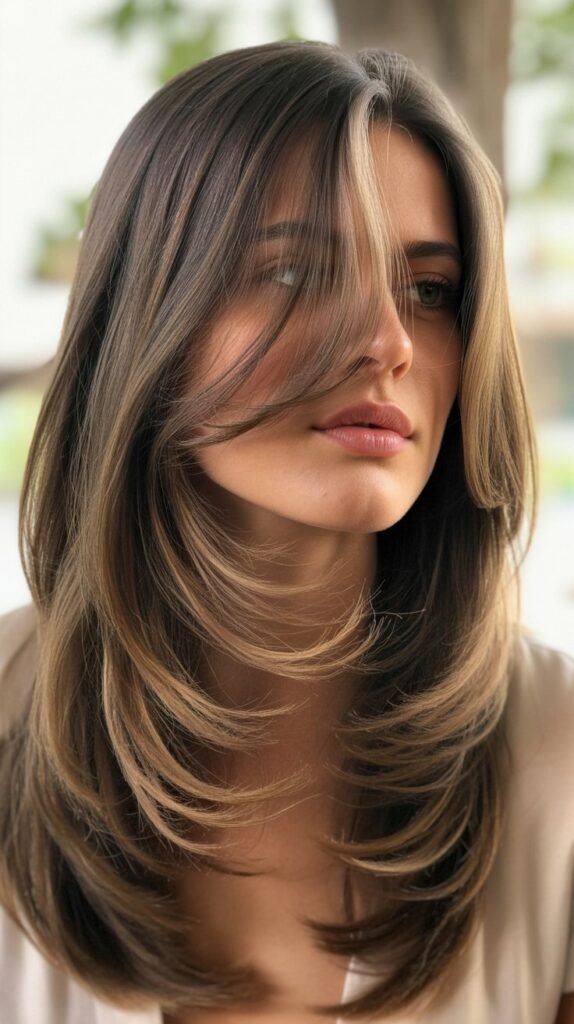
Side-swept front layers create an asymmetrical, dynamic look that adds instant glamour to long hair.
These layers are designed to fall beautifully to one side, creating a sweeping effect that draws the eye and adds drama.
This style is perfect for those who prefer a deep side part or want to create a red-carpet-worthy look.
- Side-swept layers work best with a deep side part, typically positioned above one eyebrow.
- The layers on the heavier side create a dramatic cascade that frames one side of your face.
- This style is particularly flattering for oval and heart-shaped faces.
- The asymmetry adds visual interest and can help balance facial features.
- Side-swept layers create beautiful movement when you turn your head or walk.
- This cut offers versatility—you can switch your part for different looks.
- The longer layers blend into your length while the front pieces create that signature sweeping effect.
7. Blunt Front Layers
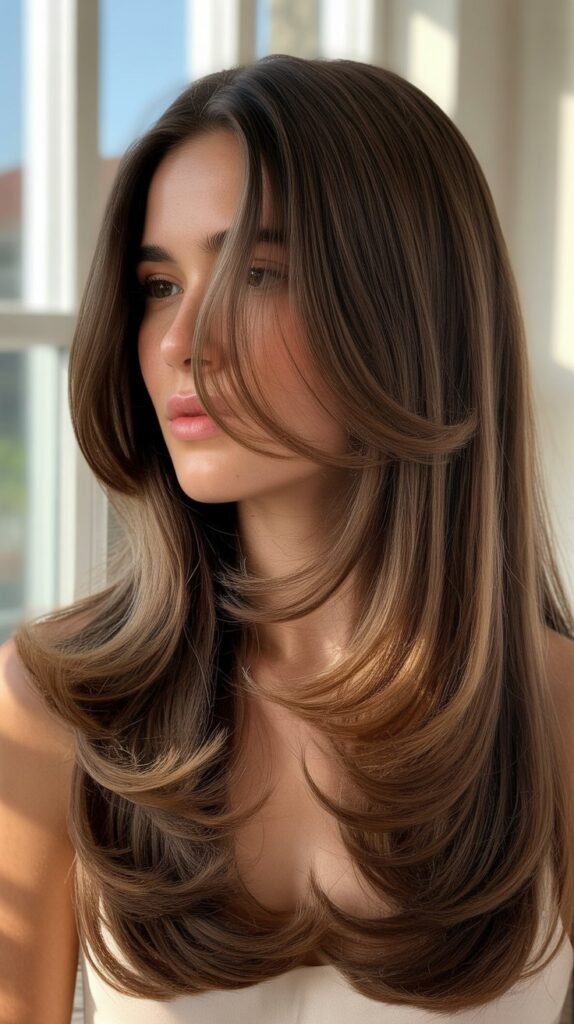
Blunt front layers combine the best of both worlds—the clean, crisp look of a blunt cut with the dimension that layering provides.
These layers are cut straight across at various lengths, creating distinct horizontal lines that add structure and definition to your style.
- Blunt layers create sharp, defined edges rather than soft, blended transitions.
- Each layer section has a clean, straight-across cut that creates a graphic effect.
- This technique works beautifully for thick, straight hair that can support the structured look.
- Blunt front layers add a modern, fashion-forward edge to traditional long hair.
- The clean lines create a polished, intentional appearance that looks highly styled.
- These layers are typically spaced further apart than traditional layering, creating distinct sections.
- Maintenance is relatively simple, requiring regular trims to keep the edges sharp and defined.
8. Feathered Front Layers
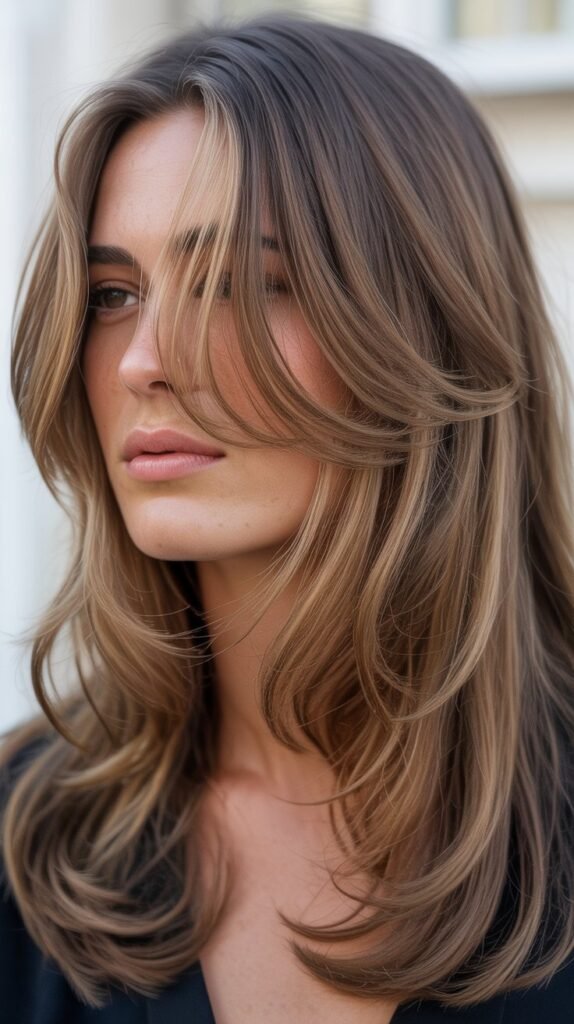
Feathered front layers bring back the glamorous, voluminous style of the 1970s and 80s with a modern twist.
This technique uses a razor or point-cutting to create soft, feather-like ends that flip outward slightly, adding bounce and movement to your hair.
- Feathering creates soft, tapered ends that naturally flip away from the face.
- This technique adds tremendous volume, particularly around the face and crown.
- Feathered layers work best with medium to thick hair that can support the voluminous style.
- The outward movement of the feathers creates a flattering, face-opening effect.
- This style can be blow-dried with a round brush to enhance the feathered effect and volume.
- Feathered front layers add a retro-glamorous quality while still feeling contemporary.
- The technique removes weight from the front sections, preventing them from falling flat.
9. V-Shaped Front Layers
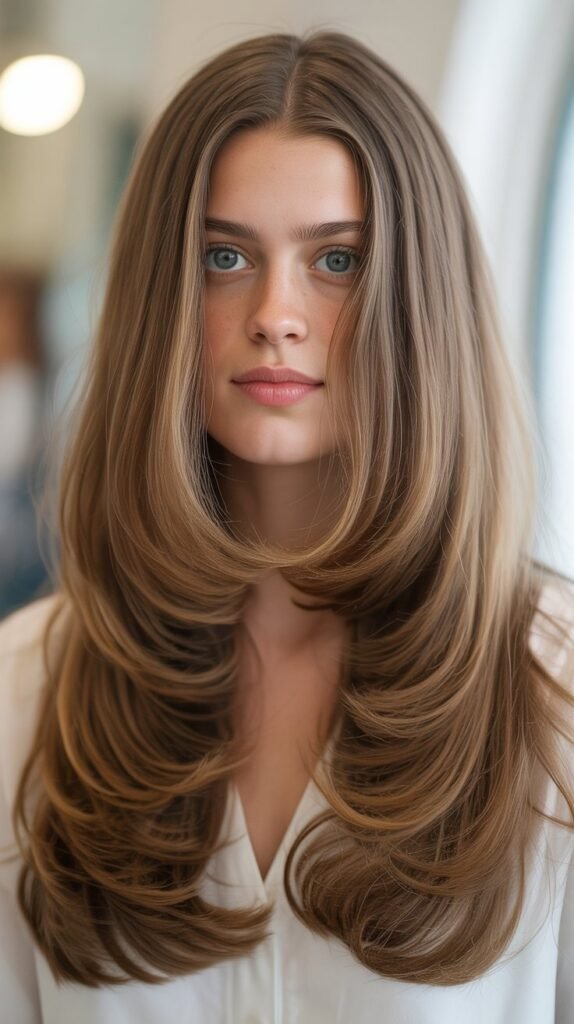
V-shaped front layers create a distinctive point at the center front of your hair, with layers forming a “V” pattern that draws the eye downward.
This geometric approach to layering adds a unique, eye-catching element to long hair while creating beautiful movement.
- The V-shape is created by cutting the front center pieces shorter and gradually increasing length toward the sides.
- This technique creates a focal point and adds interesting dimension to your overall style.
- V-shaped layers work particularly well for those with long faces, as the horizontal emphasis balances proportions.
- The pointed center creates a frame that can highlight your facial features.
- This style adds architectural interest while maintaining a feminine, flowing appearance.
- The V-shape is especially noticeable when hair is worn down and straight or with slight waves.
- The geometric precision of this cut requires regular maintenance to keep the shape intact.
10. Long Shaggy Layers
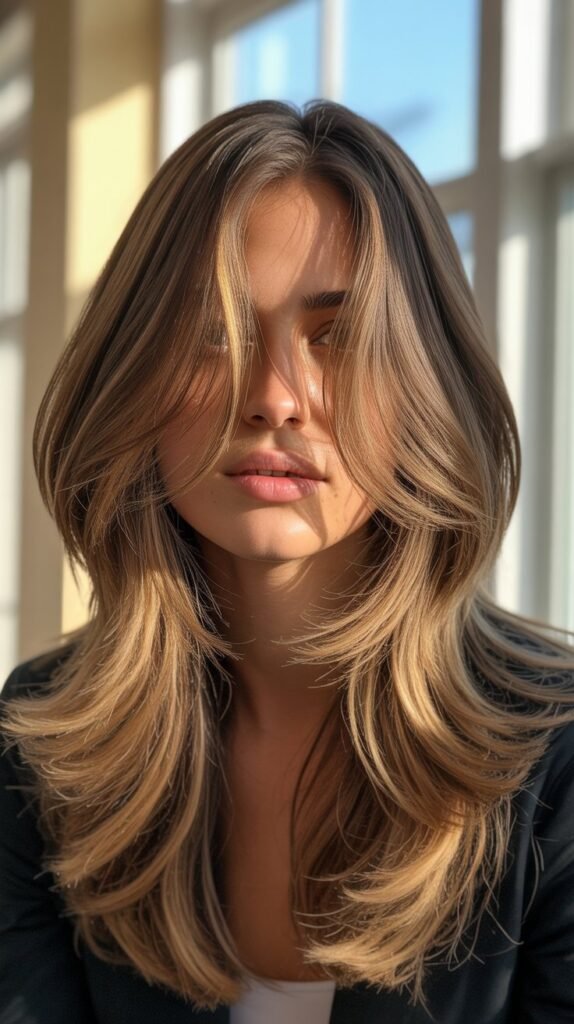
Long shaggy layers bring a effortlessly cool, bohemian vibe to lengthy locks.
This style features multiple layers of varying lengths throughout, with the front layers being just one component of an overall textured, lived-in look.
Shaggy layers create tremendous movement and work beautifully for creating that coveted “I woke up like this” aesthetic.
- Shaggy layers incorporate various cutting techniques including point-cutting, slide-cutting, and razor work.
- The layers are irregular and intentionally messy-looking, creating a relaxed, undone appearance.
- This style works exceptionally well for wavy and curly hair textures that enhance the tousled effect.
- Multiple shorter layers throughout reduce bulk and add texture from roots to ends.
- The shaggy effect creates dimension that makes hair look fuller and more voluminous.
- This cut is relatively low-maintenance, as the imperfect nature means styling doesn’t need to be precise.
- Front layers in a shag typically start around the cheekbones and are heavily textured.
11. Angled Front Layers
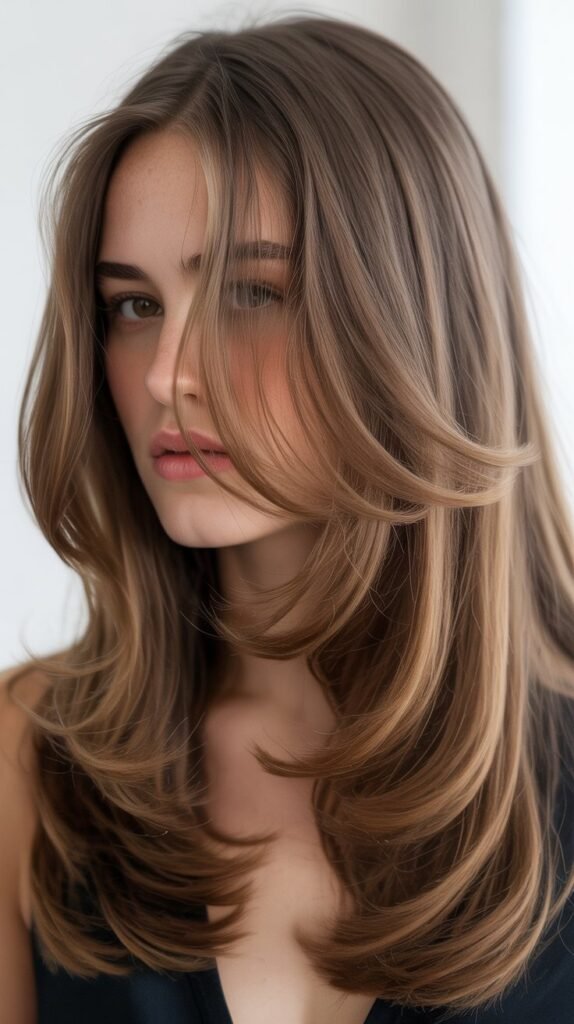
Angled front layers are cut on a diagonal, creating a sloping effect that adds sophistication and interest to long hair.
These layers gradually increase in length as they move from front to back, creating a flattering frame that works with your face’s natural contours.
- The angle creates a diagonal line that draws the eye and adds visual movement.
- Angled layers typically start shorter near the face and gradually lengthen toward the back.
- This technique is especially flattering for square and rectangular face shapes, softening angular features.
- The diagonal cut creates a slimming effect around the face and jawline.
- Angled front layers can be customized with steeper or more gradual angles depending on desired drama.
- This style works beautifully whether hair is worn straight, wavy, or curly.
- The angle adds sophistication and a polished, intentional appearance to your hairstyle.
12. Micro Layers at the Front
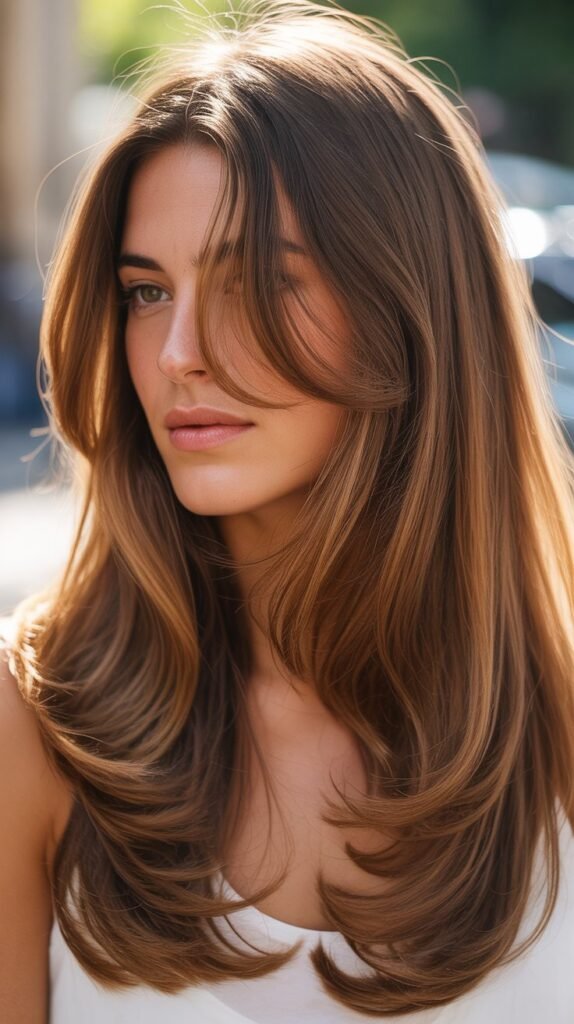
Micro layers involve creating very short, subtle layers specifically around the face and front sections.
These delicate layers add texture and dimension without dramatically changing your overall length or style, making them perfect for those who want enhancement without commitment.
- Micro layers are typically only half an inch to an inch different in length.
- These subtle variations create movement and prevent flatness around the face.
- The technique is ideal for fine hair, as it adds texture without creating obvious gaps.
- Micro layering can be focused specifically on problem areas like the temples or cheekbones.
- These layers are virtually undetectable when hair is pulled back, maintaining length appearance.
- The subtle nature makes this an excellent introduction to layering for first-timers.
- Styling is effortless as the layers naturally enhance your hair’s existing texture.
13. Asymmetrical Front Layers
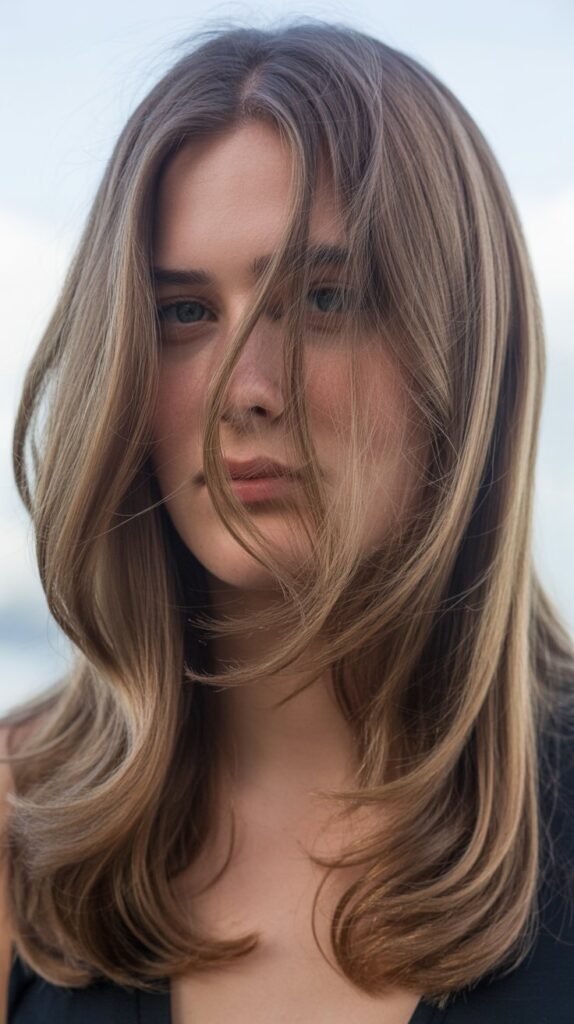
Asymmetrical front layers break from traditional symmetry, with one side intentionally cut shorter or more layered than the other.
This bold, artistic approach creates a distinctive, fashion-forward look that showcases creativity and confidence.
- Asymmetrical layering can range from subtle differences to dramatically uneven lengths.
- One side might feature heavy layering while the other remains longer and more uniform.
- This style creates visual interest and makes a strong personal style statement.
- Asymmetry can help balance facial features or draw attention to your best side.
- The contrasting lengths add dimension and create unique movement patterns.
- This cut requires confidence to wear but delivers impressive, head-turning results.
- Regular maintenance is essential to preserve the intentional asymmetry.
14. Razored Front Layers
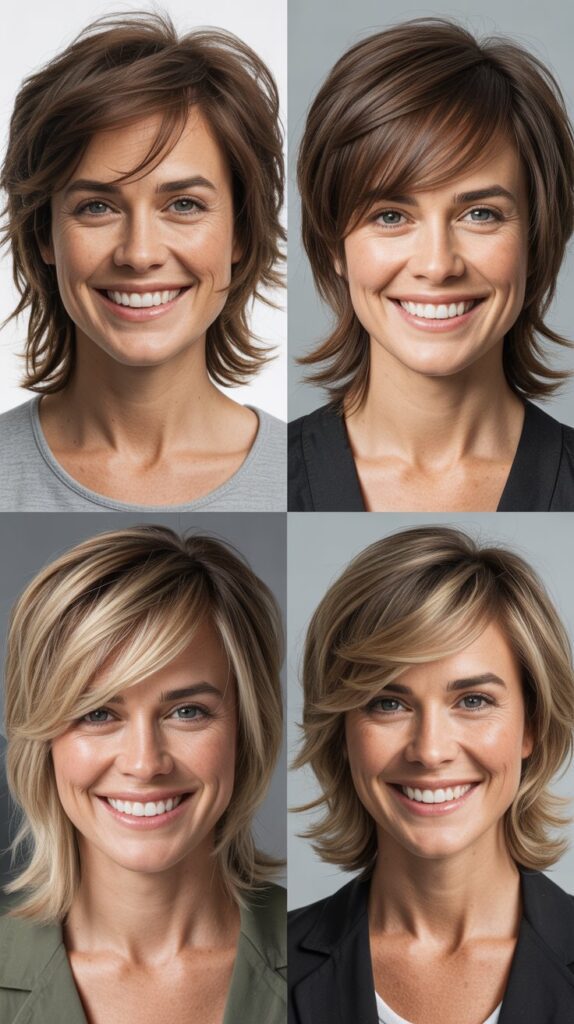
Razored front layers use a straight razor rather than scissors to create ultra-textured, piece-y layers with maximum movement.
This technique produces soft, feathered ends that create a deliberately undone, modern look with incredible dimension.
- Razor cutting creates a softer, more textured edge compared to scissor cutting.
- The technique removes bulk while adding movement and flow to the layers.
- Razored layers work best on medium to thick hair textures.
- The ends have a naturally wispy, tapered appearance that blends beautifully.
- This method creates layers that move independently, adding dynamic visual interest.
- Razored front layers are perfect for achieving that coveted beachy, tousled look.
- The technique may require more frequent trims as the ends can become too wispy over time.
15. Graduated Bob Layers in Front
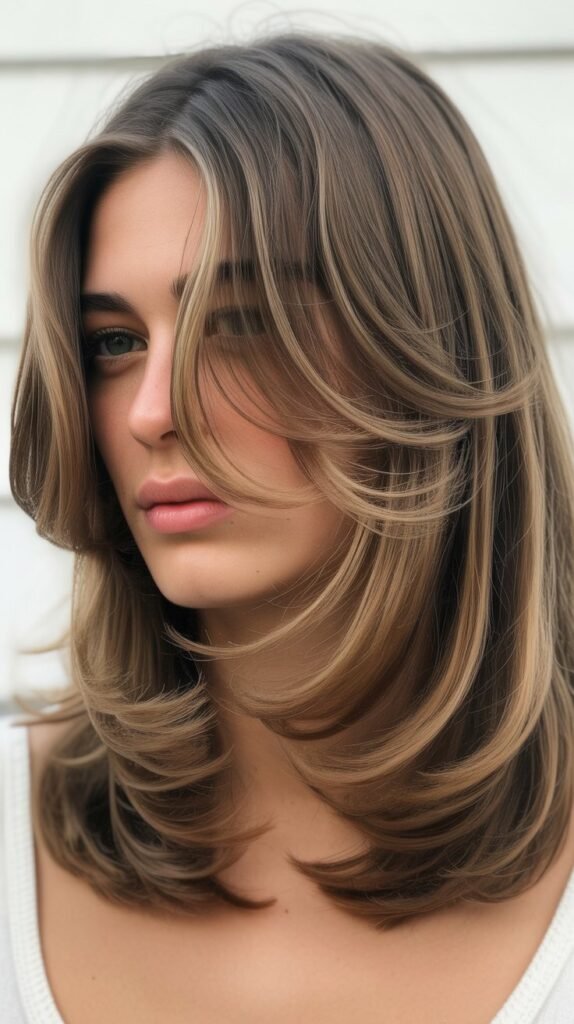
This hybrid style combines the classic graduated bob shape specifically in the front sections while maintaining long hair in the back.
The result is a unique, contemporary look that offers the best of both short and long styles, creating interesting dimension and a fashion-forward silhouette.
- The front sections are cut in a graduated bob shape, typically ranging from chin to shoulder length.
- The graduation creates a stacked, rounded shape specifically around the face.
- This technique adds volume and structure to the front while preserving length in the back.
- The contrast between shorter front layers and longer back creates a distinctive, modern look.
- This style works particularly well for fine hair, adding body where it’s most needed.
- The bob-inspired front layers frame the face beautifully while the long back provides versatility.
- Styling can emphasize either the structured front or create an overall blended appearance.
16. Textured Front Layers with Point-Cutting
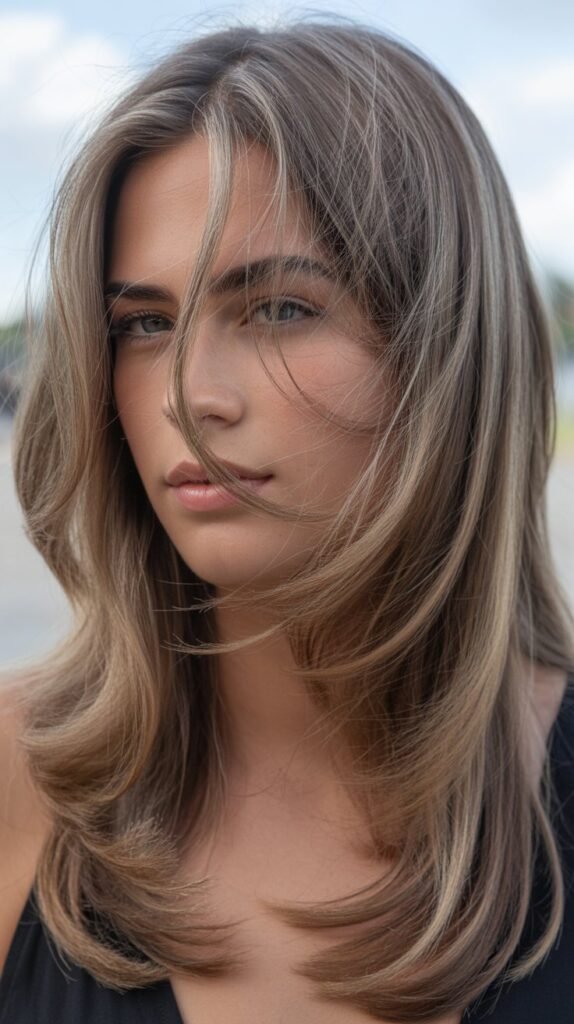
Point-cutting is a specialized technique where scissors are held vertically and cut into the hair at an angle, creating soft, textured edges.
When applied to front layers, this method produces a natural, lived-in look with beautiful movement and dimension.
- Point-cutting creates irregular, notched edges that blend seamlessly rather than creating blunt lines.
- The technique is ideal for removing bulk while maintaining length.
- Point-cut layers have a softer, more natural appearance than traditional straight-cut layers.
- This method works beautifully for all hair textures, from fine to thick.
- The textured ends catch and reflect light differently, adding depth and dimension.
- Point-cutting prevents the harsh, choppy look that can occur with conventional cutting methods.
- The technique allows for customized texturizing based on individual hair needs.
17. Long Layers with Shorter Sides
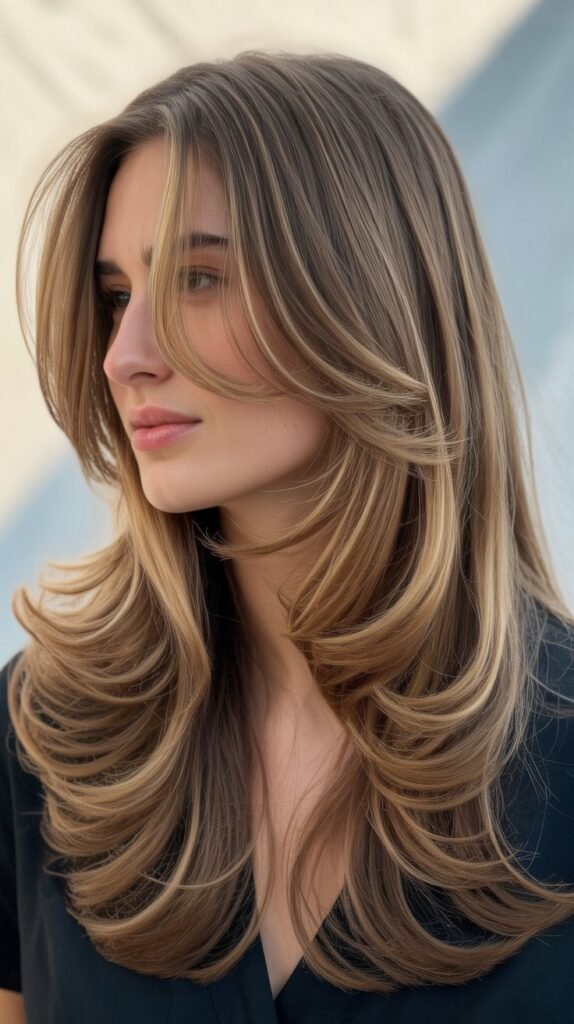
This style features overall long layers throughout the length while the side sections are cut noticeably shorter, creating a unique frame around the face.
The shorter sides add width and volume at the temples and cheekbones while the long back maintains your desired length.
- Side sections typically range from chin to shoulder length, depending on preference.
- The shorter sides create a widening effect that balances narrow or long face shapes.
- This technique adds tremendous volume and movement around the face.
- The length contrast creates interesting dimension and a contemporary silhouette.
- Shorter sides are easier to style and hold shape better than longer, heavier sections.
- This cut can be customized with varying degrees of length difference between sides and back.
- The style works beautifully for both straight and wavy hair textures.
18. Crown Layers with Face-Framing Front
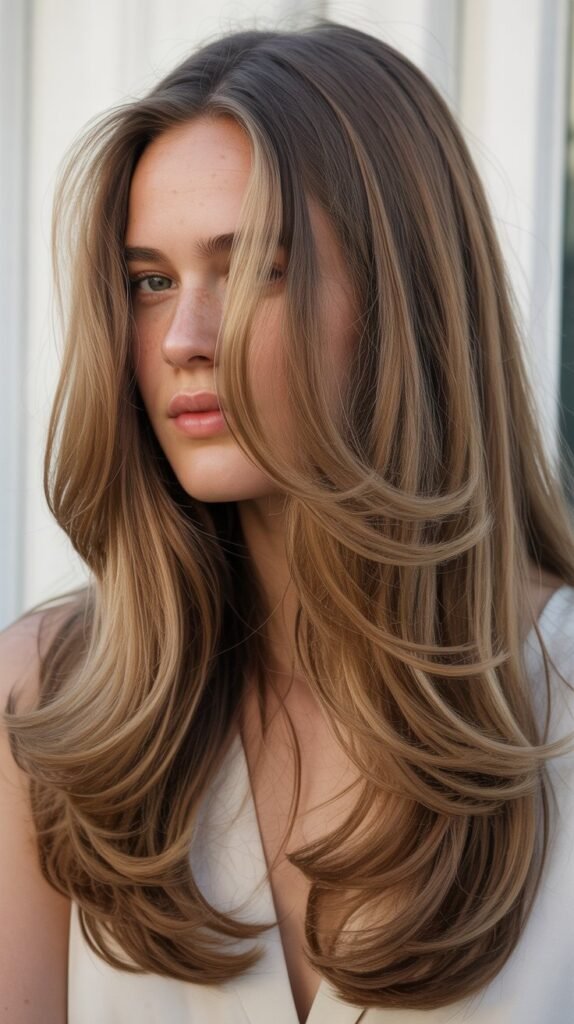
This two-part approach combines shorter layers specifically at the crown for volume with longer, face-framing layers in front.
The technique creates lift at the roots while maintaining beautiful framing around your features, resulting in a balanced, dimensional look.
- Crown layers are cut shorter to create height and prevent flatness at the top of the head.
- Face-framing front layers are longer and designed to contour the face.
- This combination addresses two common concerns—lack of volume and heavy, flat front sections.
- The crown layers add a lifted, youthful appearance to the overall style.
- Front layers remain long enough to tuck behind ears or style multiple ways.
- This technique works exceptionally well for fine or aging hair that tends to fall flat.
- The dual-layer approach creates dimension from multiple angles.
19. Butterfly Layers
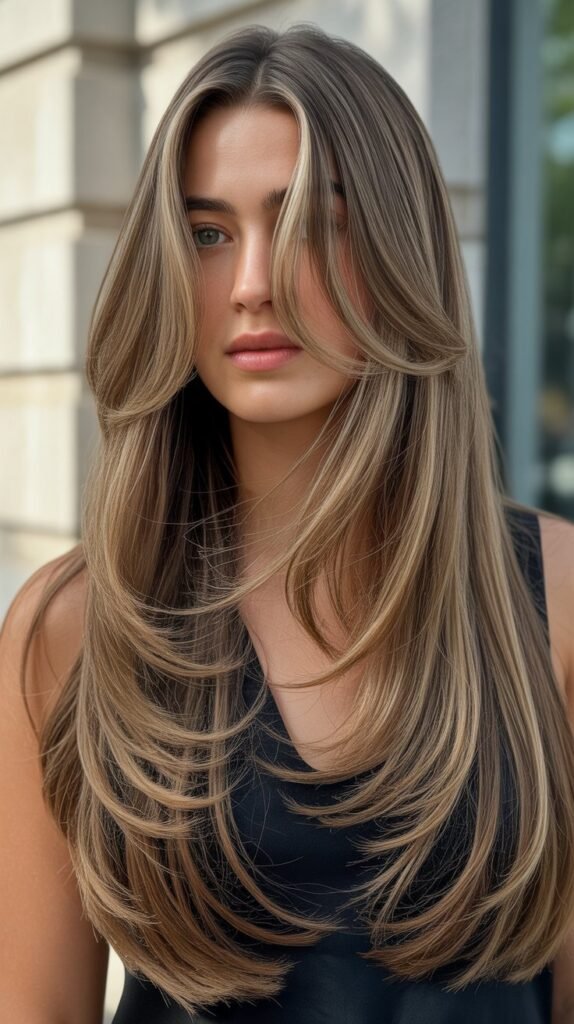
Butterfly layers create a distinctive shape reminiscent of butterfly wings, with shorter layers concentrated around the face and crown that gradually lengthen toward the ends.
This creates a silhouette that’s fuller at the top and sleeker toward the bottom, adding beautiful movement and a romantic, feminine quality.
- The technique creates maximum volume around the crown and face-framing areas.
- Layers are shortest at the top and progressively lengthen, creating a cascading effect.
- The butterfly shape is especially flattering for round and square face shapes.
- This style works beautifully for adding volume to fine or flat hair.
- The layering pattern creates a lifted, bouncy appearance with natural movement.
- Butterfly layers look stunning when styled with waves or curls that enhance the shape.
- The technique balances the proportions of long hair by adding volume where it’s most needed.
20. Piece-y Front Layers
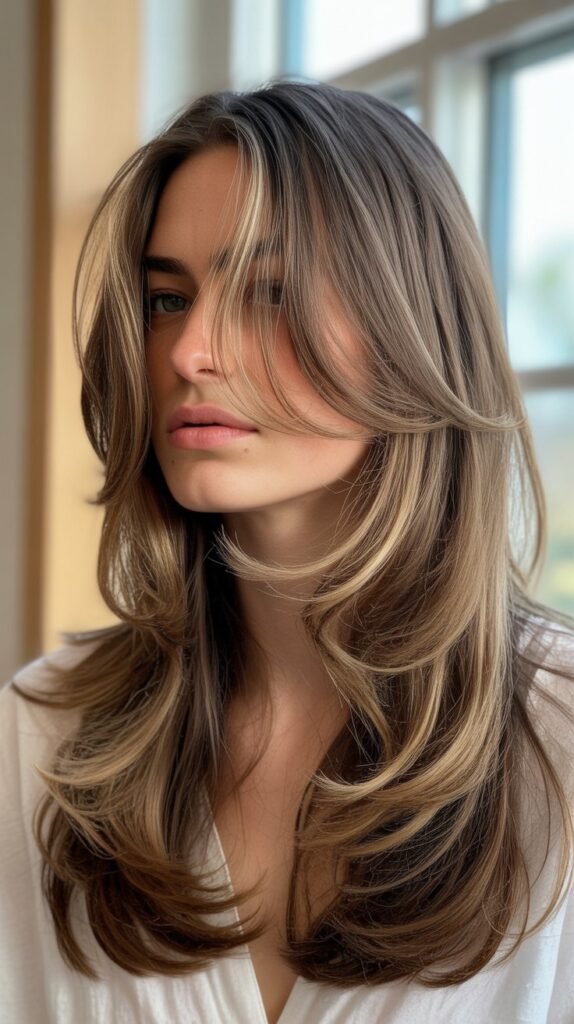
Piece-y front layers are all about creating separation and definition.
This technique uses point-cutting, texturizing, and strategic layering to create distinct, separated pieces that move independently, adding a modern, editorial quality to long hair.
- Piece-y layers feature visible separation between sections rather than seamless blending.
- The technique is achieved through extensive texturizing and thinning.
- Individual pieces can be styled to move in different directions, creating dynamic movement.
- This style works best for medium to thick hair that can support the separated structure.
- Piece-y layers add an edgy, contemporary feel to traditional long hair.
- The defined pieces create interesting texture and dimension that photographs beautifully.
- Styling products like texturizing spray or wax enhance the piece-y effect.
21. Soft Bangs Transitioning to Layers
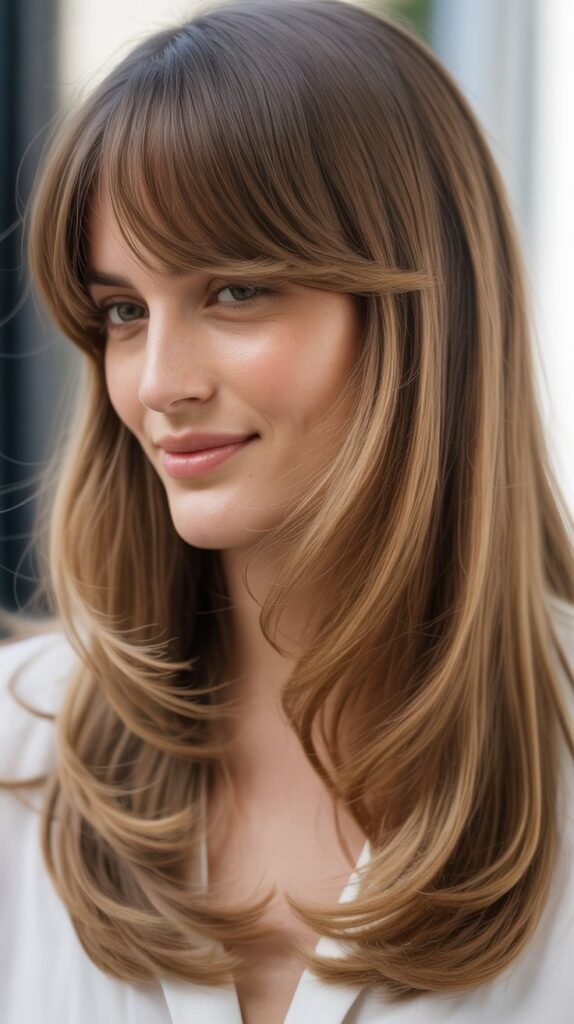
This style features soft, wispy bangs that seamlessly transition into longer face-framing layers, creating a cohesive, flowing look.
The bangs can be worn down across the forehead or swept to the sides while naturally blending into the layered sections.
- Soft bangs typically graze the eyebrows or sit just above them.
- The transition from bangs to layers is gradual with no obvious line of demarcation.
- This approach offers versatility—wear the bangs down or style them as side-swept pieces.
- The soft nature of the bangs makes them low-maintenance and easy to grow out.
- The blended transition creates a harmonious, balanced appearance.
- This style works for various face shapes and can be customized to individual features.
- Regular trims keep the bangs at the desired length while maintaining the seamless flow.
22. Internal Layers with Longer Front
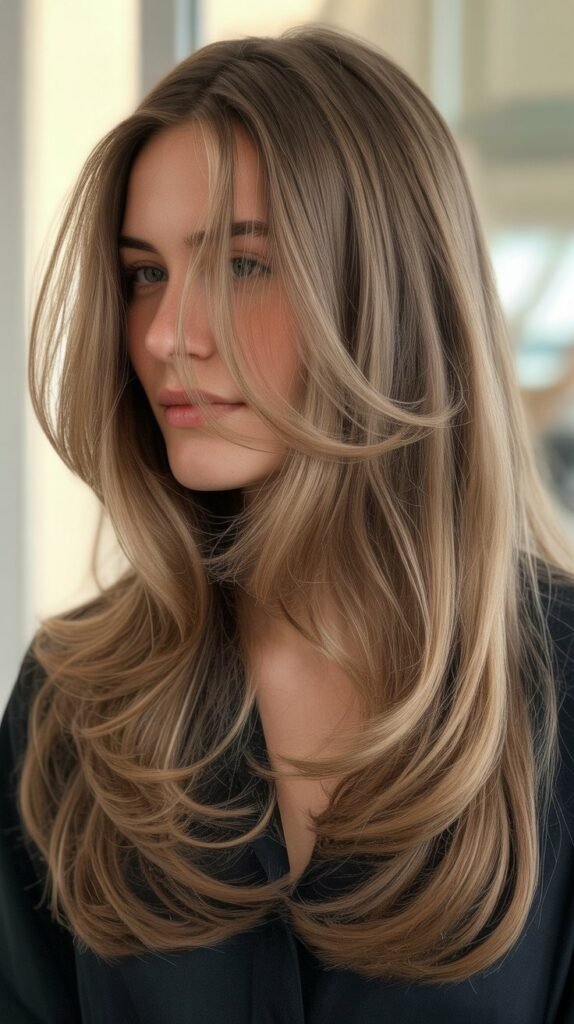
Internal layering focuses on removing weight and adding movement within the interior sections of the hair while keeping the front pieces longer and less layered.
This creates a full, dimensional look while maintaining a more uniform length around the face.
- Internal layers are cut throughout the mid-sections and back rather than concentrated at the front.
- This technique reduces bulk and prevents hair from feeling heavy without dramatically changing the face-framing shape.
- The longer front pieces create a sleek, polished frame around your features.
- Internal layering is ideal for thick hair that needs weight removal without looking overly layered.
- The technique adds movement and prevents the “triangle” shape that heavy, one-length hair can create.
- Front sections remain relatively uniform in length, providing a more conservative, classic look.
- This approach allows for versatile styling while maintaining substantial length everywhere.
23. Dramatic Length Variation Layers
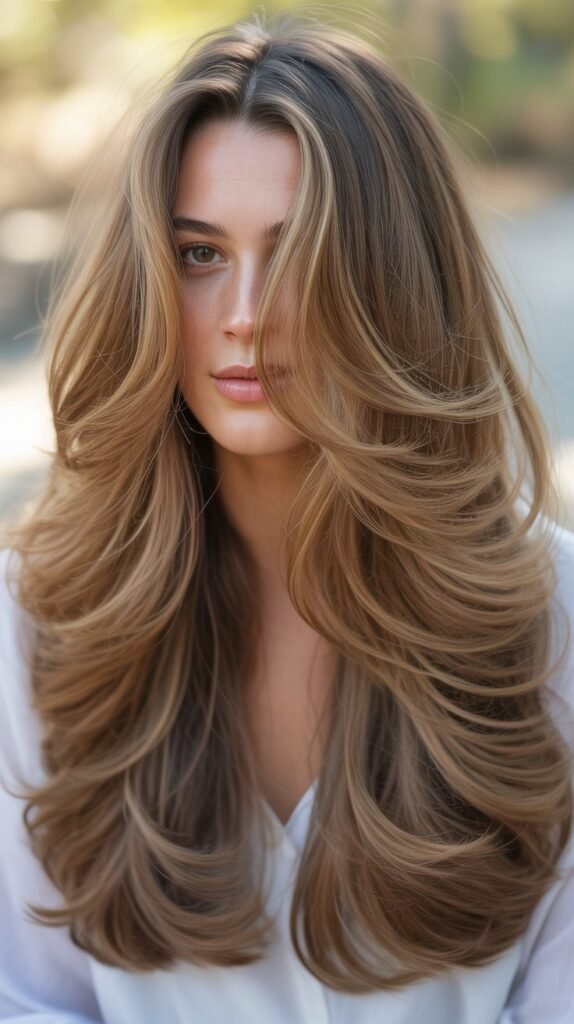
For those seeking maximum impact, dramatic length variation creates significant differences between the shortest front layers and the longest lengths.
This bold approach produces striking dimension and incredible movement, making a powerful style statement.
- The shortest front layers can start as high as the chin or even shorter.
- Length increases dramatically toward the back, creating major contrast.
- This technique works best for thick hair that can support the dramatic variation without looking sparse.
- The significant length differences create movement patterns that are highly eye-catching.
- This style requires confidence and works well for those who want a bold, fashion-forward look.
- The dramatic layers can be styled smooth for sophistication or tousled for an edgy appearance.
- Regular maintenance is crucial to keep the intentional shape and prevent an unkempt appearance.
24. Curved Front Layers
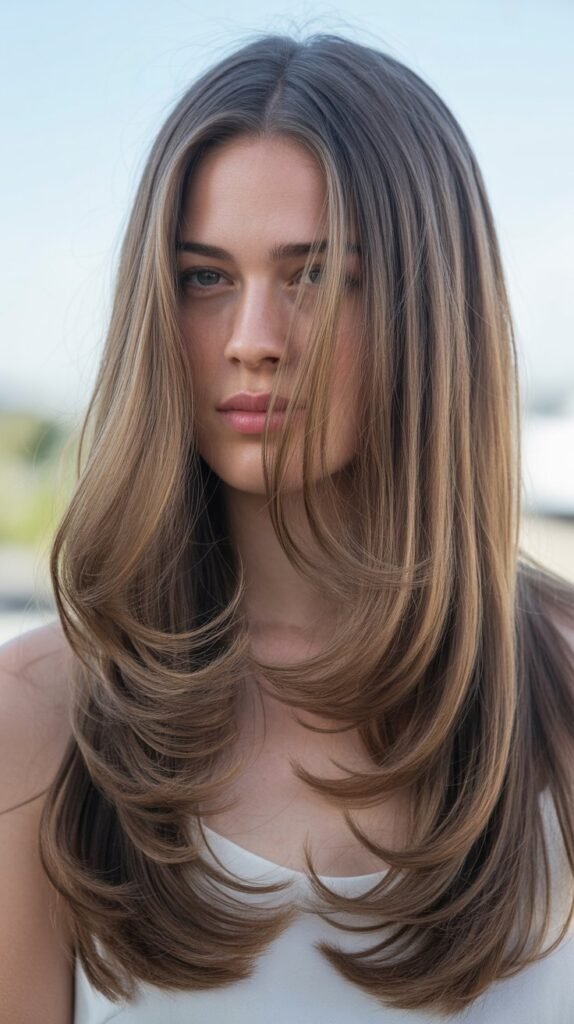
Curved front layers are cut to follow the natural curve of your face, creating a soft, rounded frame that enhances your features.
Rather than straight, angular lines, these layers form gentle arcs that provide a feminine, romantic quality.
- The layers are cut following the contours of your face shape, creating customized curves.
- This technique produces a softer, more organic look compared to straight-cut layers.
- Curved layers naturally fall into place and frame the face beautifully.
- The rounded shape is especially flattering for angular face shapes, providing softening contrast.
- This approach creates flow and movement that looks effortless and natural.
- Curved layers photograph beautifully and create graceful lines in any styling.
- The technique requires precision cutting to achieve the desired curved shape.
25. Elongated Front Layers
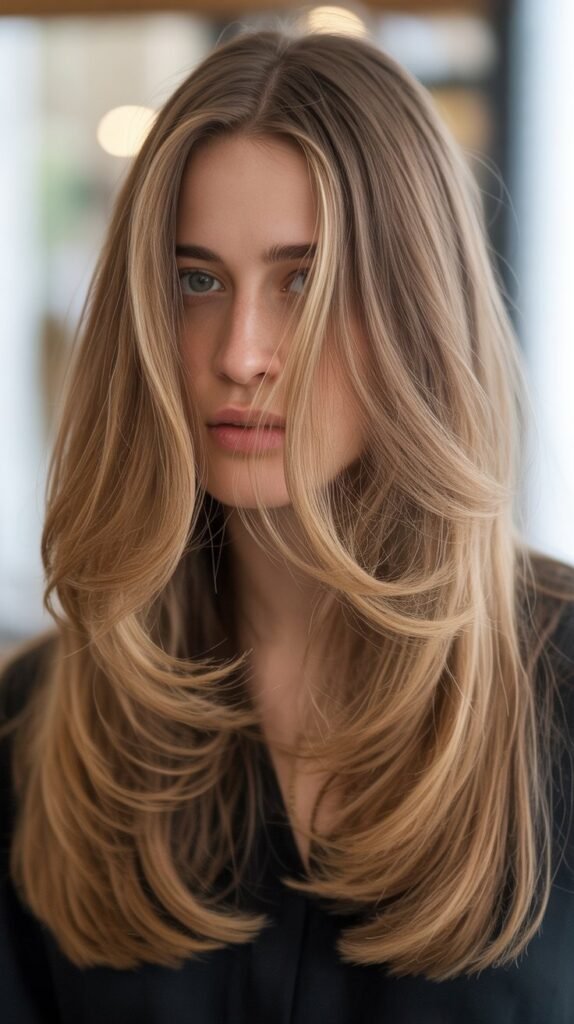
Elongated front layers start lower than traditional face-framing layers—often at collarbone or even shoulder length—creating a more subtle, conservative approach to layering.
These longer front pieces provide gentle framing without dramatic length variation.
- Elongated layers begin lower on the face, typically below the chin.
- This approach is ideal for those who want dimension without losing much length around the face.
- The subtle variation creates movement while maintaining a more uniform overall length.
- Elongated front layers are perfect for conservative or professional environments.
- This style works beautifully for those growing out shorter layers or bangs.
- The longer front pieces are versatile and easy to incorporate into various hairstyles.
- This technique maintains maximum length while still providing some layering benefits.
26. Disconnected Front Layers
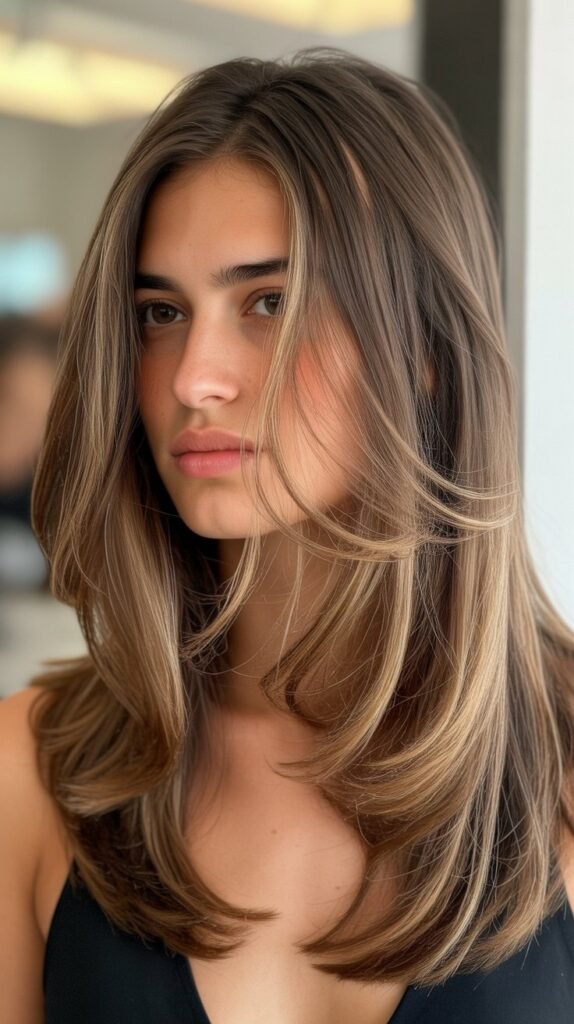
Disconnected layers feature intentional separation between layer sections, creating distinct, non-blending lengths that produce a modern, edgy aesthetic.
The disconnection creates visible gaps or jumps between lengths rather than smooth transitions.
- Disconnected layers don’t blend seamlessly—there are noticeable length differences between sections.
- This technique creates a choppy, piece-y effect that’s deliberately fragmented.
- The style works best for straight or slightly wavy hair where the disconnection is most visible.
- Disconnected front layers add an avant-garde, fashion-forward quality to long hair.
- The separation between lengths creates interesting texture and dimension.
- This approach requires regular maintenance to keep the intentional disconnection looking sharp.
- The edgy nature of this cut makes a bold personal style statement.
27. Tapered Front Layers
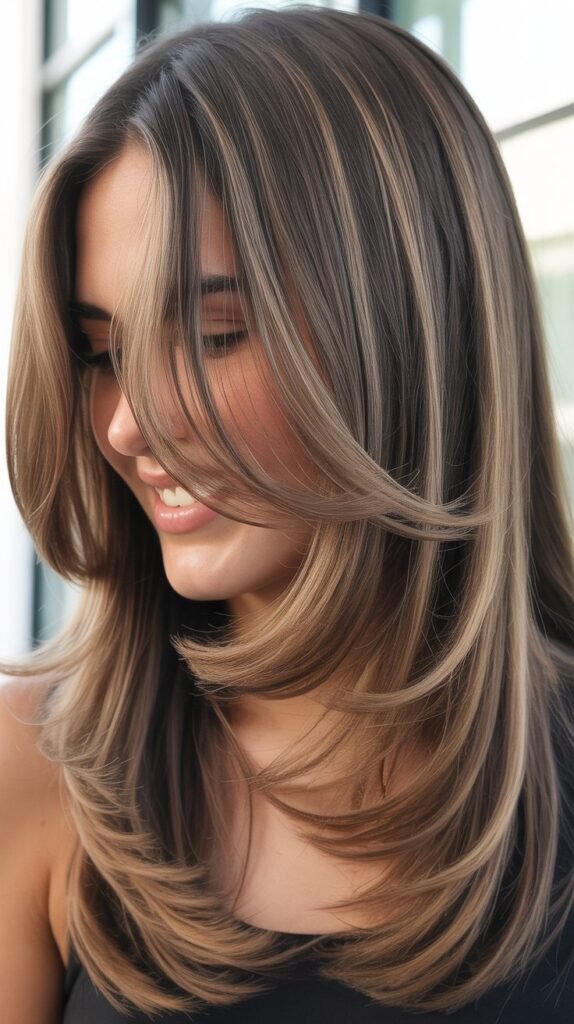
Tapered front layers gradually decrease in thickness from roots to ends, creating hair that’s fuller at the base and finer at the tips.
This technique produces soft, wispy ends that add delicacy and movement to your style.
- Tapering removes weight from the ends while maintaining density at the roots.
- The graduated thinning creates hair that moves more freely and appears lighter.
- Tapered layers have a naturally feathered appearance at the ends.
- This technique is ideal for thick hair that needs weight removal without losing length.
- The fine ends create soft, romantic movement that’s especially beautiful when styled with waves.
- Tapered front layers blend seamlessly into the rest of the hair.
- The technique prevents the blunt, heavy look that can occur with thick hair.
28. Invisible Layers in Front
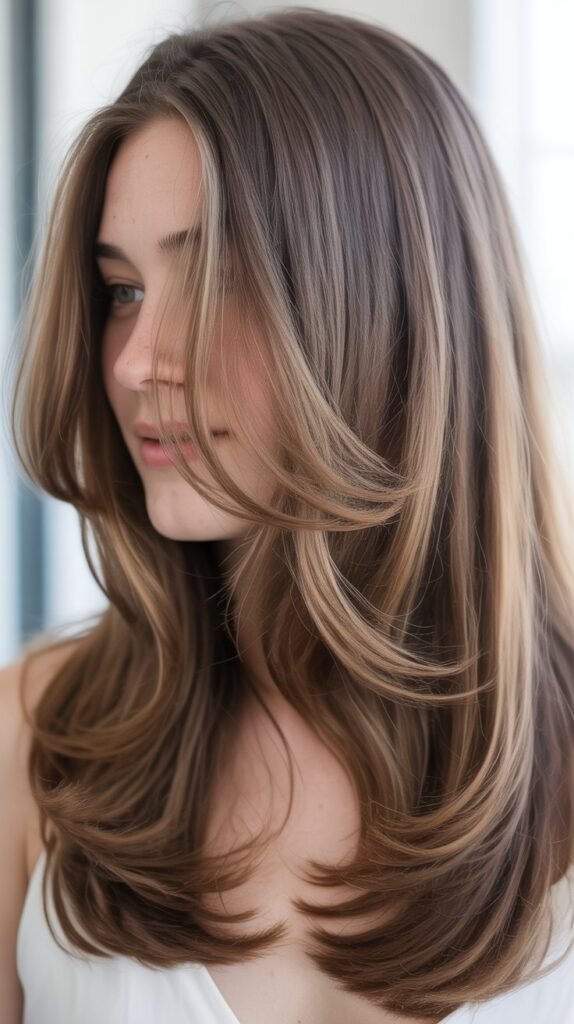
Invisible layers are so subtle and seamlessly blended that they’re barely detectable when looking at the hair, yet they provide movement, dimension, and prevent flatness.
This technique is perfect for those who want the benefits of layering without an obviously layered appearance.
- Invisible layers involve minimal length variation between sections.
- The blending is so gradual that individual layers cannot be identified.
- This approach maintains the appearance of one-length hair while adding hidden dimension.
- Invisible layering is ideal for very fine hair where obvious layers could create sparseness.
- The subtle technique prevents the triangle shape without creating visible choppy sections.
- This method provides movement and prevents flatness while maintaining maximum thickness appearance.
- The layers reveal themselves in movement rather than in static appearance.
29. Stacked Front Layers
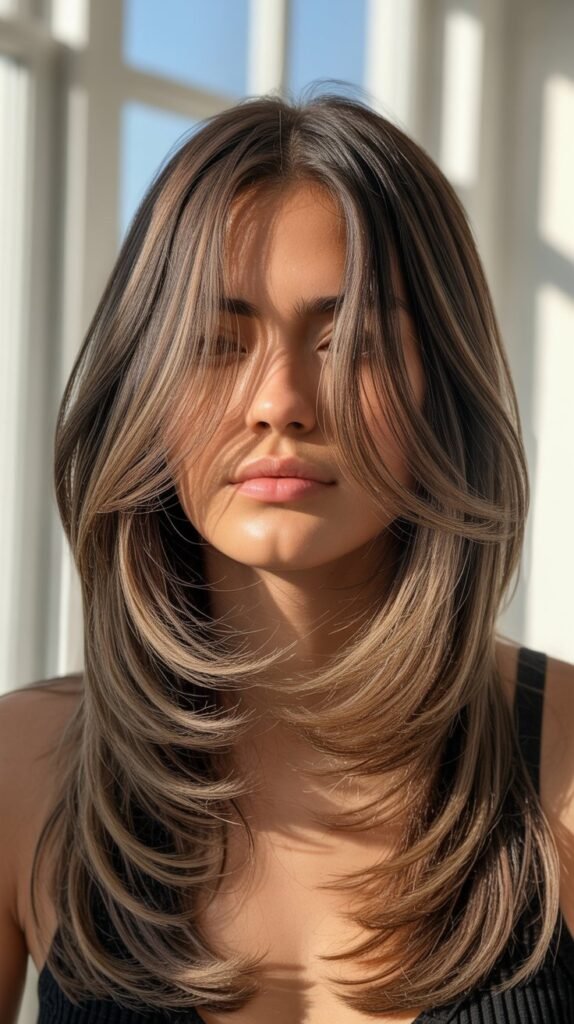
Stacked front layers create a built-up, voluminous effect specifically around the face and crown.
Multiple shorter layers are “stacked” on top of each other, creating substantial height and fullness that gradually blends into longer lengths.
- Stacked layers are concentrated in specific areas rather than distributed throughout.
- The technique creates maximum volume where the layers are concentrated.
- This approach is excellent for adding height to flat or fine hair around the face.
- Stacked front layers create a lifted, bouncy appearance that’s full of body.
- The volume from stacking creates a youthful, energetic look.
- This style requires regular trims to maintain the stacked shape and prevent flattening.
- Blow-drying with a round brush enhances the stacked effect dramatically.
30. Minimal Front Layers
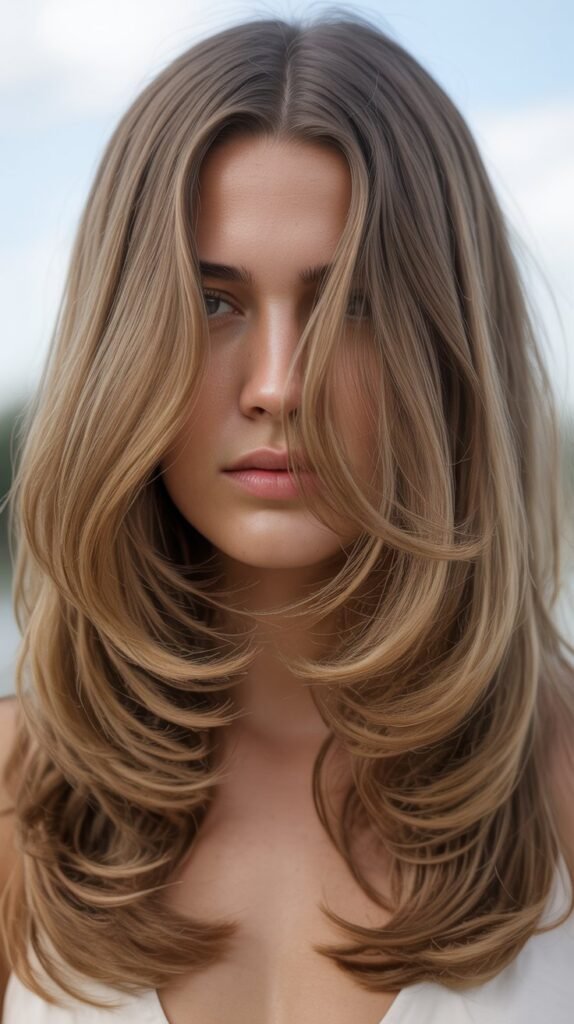
Minimal layering takes a conservative approach with just a few strategic cuts around the face to add subtle dimension without dramatically altering the overall one-length appearance.
This is perfect for those who want the versatility of long hair with just a touch of enhancement.
- Only a few select pieces are layered, typically just around the face.
- The layers are minimal in both number and length variation.
- This approach maintains maximum thickness and length throughout.
- Minimal layers are ideal for those nervous about committing to extensive layering.
- The conservative technique provides just enough movement to prevent a heavy, flat look.
- This style is easy to grow out and requires minimal maintenance.
- The subtle enhancement doesn’t limit styling options or dramatically change your appearance.
31. U-Shaped Front Layers
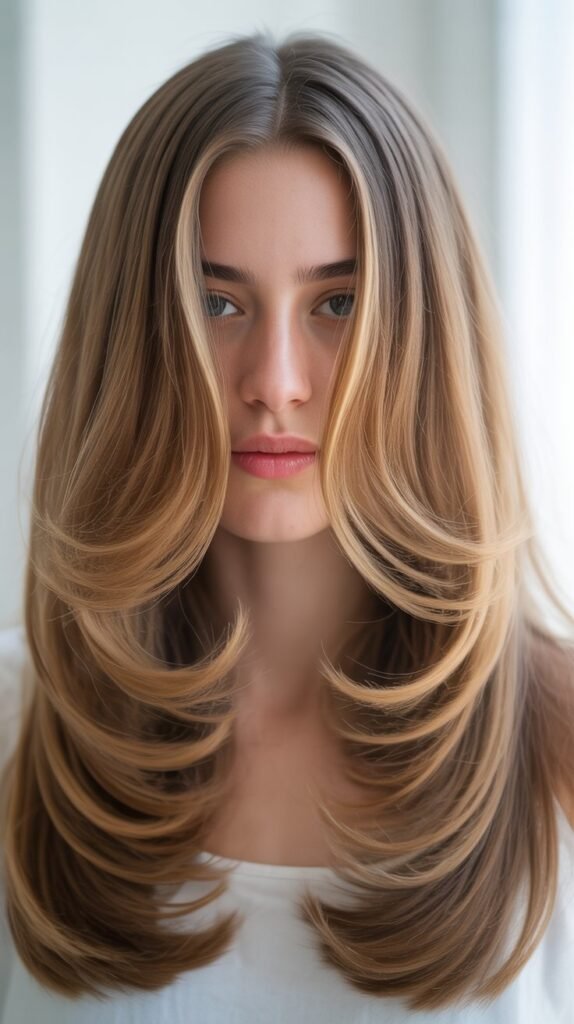
U-shaped front layers create a rounded frame around the face, with the shortest pieces in the center that gradually lengthen toward the sides.
This creates a soft, flattering arc that follows your face’s natural curves and adds a feminine touch.
- The U-shape is created by cutting the center-front pieces shorter than the side pieces.
- The rounded shape creates a gentle, flowing frame that’s universally flattering.
- This technique works beautifully for softening square or rectangular face shapes.
- The U-shaped arc draws the eye downward and creates vertical elongation.
- The shape is subtle enough for professional settings while still adding dimension.
- U-shaped layers create beautiful movement whether hair is styled straight or with waves.
- The technique provides balanced framing on both sides of the face.
32. Heavy Front Layers with Blunt Ends
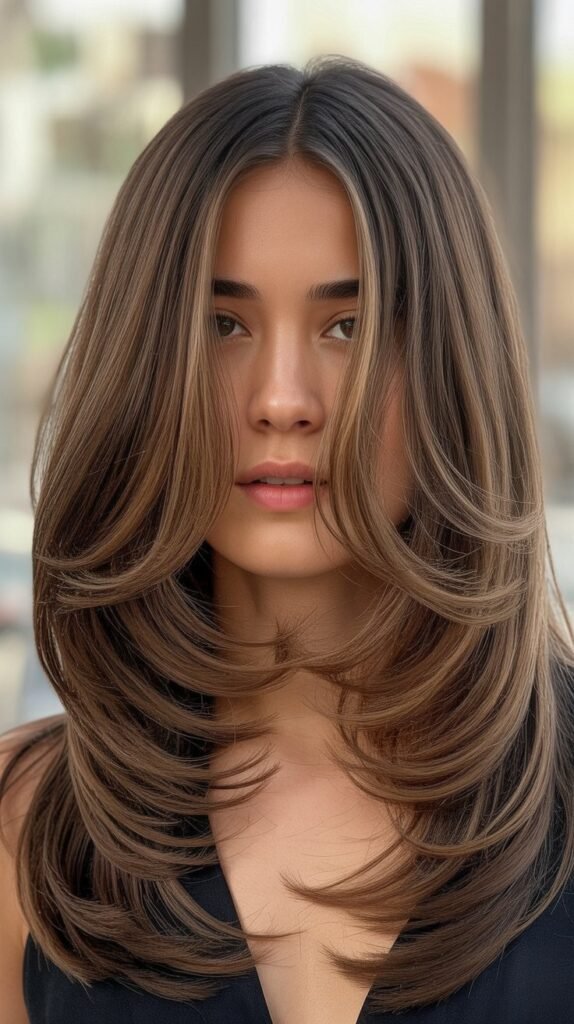
This style combines substantial layering around the face with intentionally blunt, non-textured ends.
The contrast between the layered structure and the blunt finish creates a unique, contemporary look that’s both dimensional and polished.
- Multiple layers are concentrated around the face and front sections.
- Each layer is cut straight across rather than textured or tapered.
- The blunt ends create a graphic, defined appearance.
- This technique works best for thick, healthy hair that can support the heavy, blunt look.
- The combination of layering and blunt edges creates interesting visual contrast.
- The style has a fashion-forward, editorial quality.
- Regular trims are essential to maintain the clean, blunt edges.
33. Diagonal Forward Layers
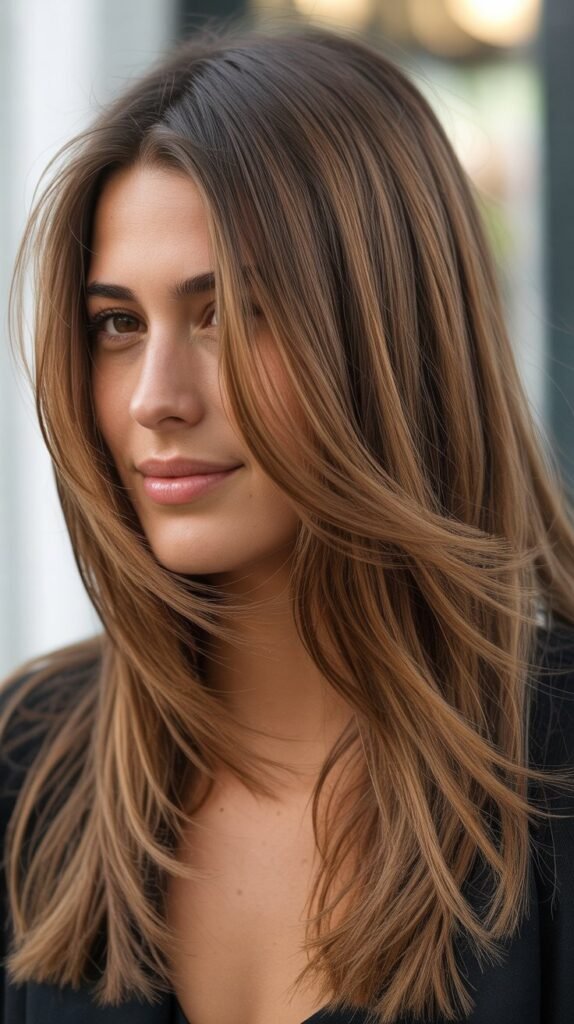
Diagonal forward layers are cut at an angle that directs hair forward toward the face rather than following the natural downward growth pattern.
This creates interesting movement and dimension, with pieces that frame the face in a unique, forward-sweeping manner.
- The diagonal angle creates hair that naturally falls forward, framing the face beautifully.
- This technique adds dimension by directing hair in a different direction than the rest of your length.
- Diagonal forward layers work particularly well for creating volume around the cheekbones and temples.
- The forward movement creates a face-framing effect that’s more pronounced than traditional layers.
- This style is excellent for adding interest to straight hair that tends to fall flat.
- The diagonal cut creates visible movement and dimension even in minimal styling.
- Forward-directed layers can help balance facial features by drawing attention where desired.
34. Textured Shattered Layers
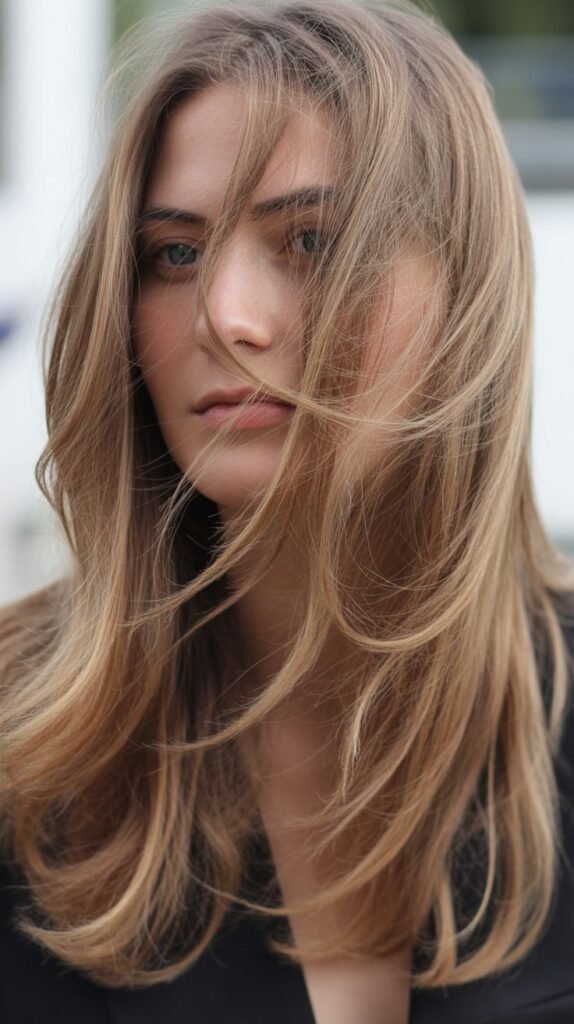
Textured shattered layers are created using aggressive texturizing techniques that produce a deliberately fragmented, piece-y appearance.
This edgy, modern approach creates maximum separation and movement, perfect for those who want a high-fashion, editorial look.
- Shattered layers are achieved through extensive razor work, point-cutting, and texturizing.
- The technique creates visible separation between individual pieces and sections.
- This style has a deliberately undone, deconstructed appearance.
- Shattered layers add tremendous texture and dimension to long hair.
- The fragmented nature creates hair that moves dynamically and catches light beautifully.
- This approach works best for medium to thick hair that can support the aggressive texturizing.
- The edgy aesthetic makes a bold style statement and works beautifully for creative individuals.
- Styling products like texturizing spray, sea salt spray, or pomade enhance the shattered effect.
Comparison Table: Front Layer Styles by Face Shape
| Face Shape | Most Flattering Front Layer Styles | Styles to Approach Carefully |
|---|---|---|
| Oval | All styles work well – classic face-framing, curtain bangs, wispy layers | None – oval faces are versatile |
| Round | Elongated front layers, V-shaped layers, angled layers | Blunt heavy layers that add width |
| Square | Soft graduated layers, curved layers, wispy front layers | Blunt layers that emphasize angles |
| Heart | Long layers with shorter sides, feathered layers, U-shaped layers | Heavy top layers that add width |
| Long/Rectangle | Long layers with shorter sides, curtain bangs, butterfly layers | Elongated layers that add length |
| Diamond | Face-framing layers, soft bangs transitioning to layers | Layers that add width at cheekbones |
Styling Tips for Maintaining Front Layers
Proper styling and maintenance are essential for keeping your front layers looking their best.
Here are expert recommendations to help you get the most out of your layered look.
- Invest in a quality round brush for blow-drying, as it helps direct front layers and create volume.
- Use heat protectant spray before any hot tool styling to prevent damage to the delicate layered ends.
- Consider texturizing products like sea salt spray or mousse to enhance the natural movement of layers.
- Schedule regular trims every 6-8 weeks to maintain the shape and prevent split ends from traveling up.
- When blow-drying front layers, direct them away from your face for volume or toward your face for a softer frame.
- Avoid heavy oils or serums on front layers as they can weigh down the lighter pieces and reduce volume.
- Use a light-hold hairspray to maintain the position of styled front layers without stiffness.
- Consider your natural part when getting layers cut, as they’ll fall most naturally when styled with your typical part.
- For wavy or curly hair, scrunch products into wet hair and allow front layers to air-dry for enhanced texture.
- Sleep with hair in a loose braid or bun to prevent front layers from becoming tangled or flattened overnight.
External Resources
For more detailed information on hair cutting techniques and styling, visit American Board of Certified Hair Colorists for professional insights and education.
To find qualified stylists who specialize in layering techniques in your area, consult Professional Beauty Association for their salon directory.
For visual inspiration and trending layer styles, explore Behance Hair Design Portfolio for professional work from stylists worldwide.
Conclusion
The world of front layer cuts offers endless possibilities for transforming your long, flowing hair into a dimensional, personalized masterpiece.
From the timeless elegance of classic face-framing layers to the bold statement of shattered textured layers, there’s a perfect style waiting for everyone.
This comprehensive guide to 34 Perfect Front Layer Cuts for Long, Flowing Hair has explored the full spectrum of options, each designed to enhance your natural beauty while adding that coveted movement and dimension.
Whether you prefer subtle, conservative enhancements or dramatic, fashion-forward transformations, the right front layers can completely revolutionize your look.
Remember that the best layered hairstyle is one that complements your face shape, works with your hair texture, and fits your lifestyle.
Consult with a skilled stylist who can assess your individual features and recommend the perfect layered approach for you.
With the right cut and proper maintenance, your long hair will have that enviable flow, bounce, and dimension that turns heads wherever you go.
Embrace the transformative power of front layers and watch your long hair reach its full potential.