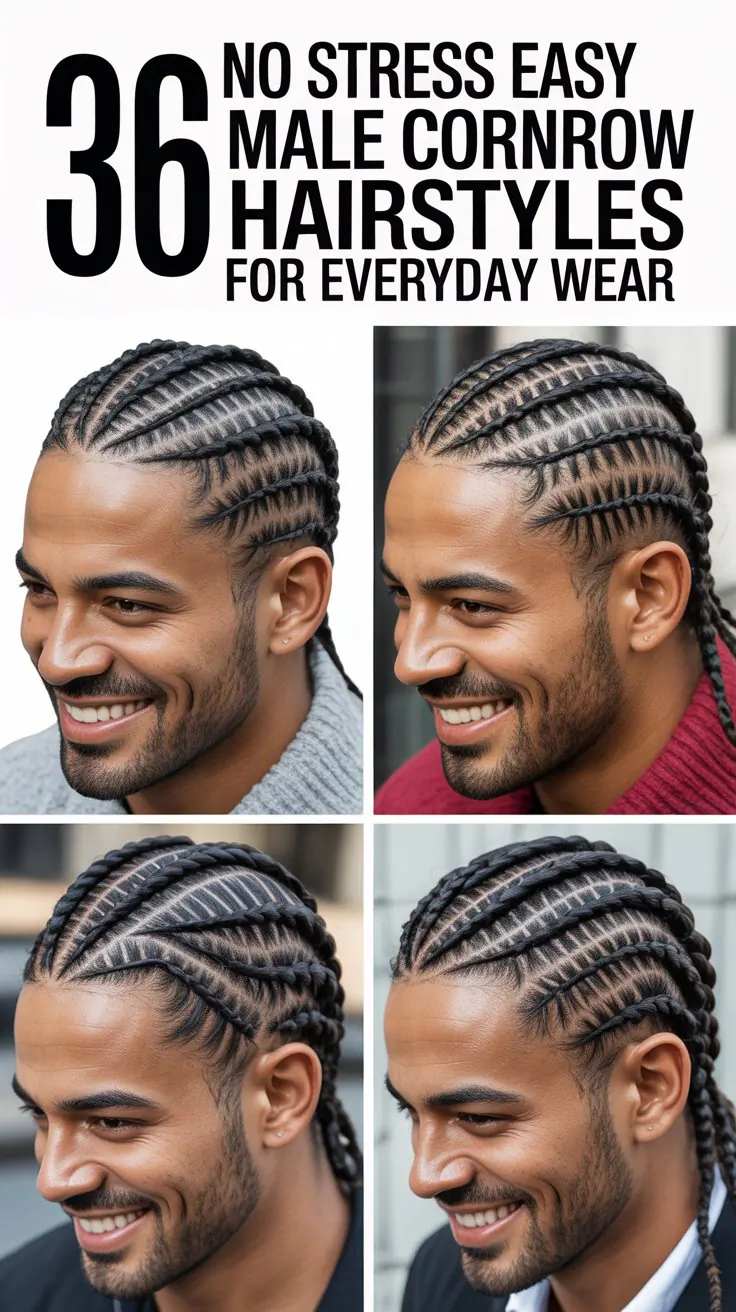
Looking for a protective hairstyle that combines style, convenience, and versatility? 36 No Stress Easy Male Cornrow Hairstyles for Everyday Wear offers you the perfect solution to transform your look without spending hours in front of the mirror.
Cornrows have evolved from traditional African braiding techniques into modern, masculine styles that suit professional environments, casual outings, and everything in between.
Whether you’re new to cornrows or seeking fresh inspiration, this comprehensive guide walks you through practical, low-maintenance designs that protect your hair while keeping you sharp and confident.
From classic straight-back patterns to creative geometric designs, you’ll discover styles that match your personality, face shape, and lifestyle needs.
This article covers essential maintenance tips, styling variations, and expert techniques to help you achieve salon-quality results at home or communicate effectively with your barber.
Get ready to explore effortless cornrow options that save time, reduce styling stress, and keep you looking polished every single day.
1. Classic Straight-Back Cornrows
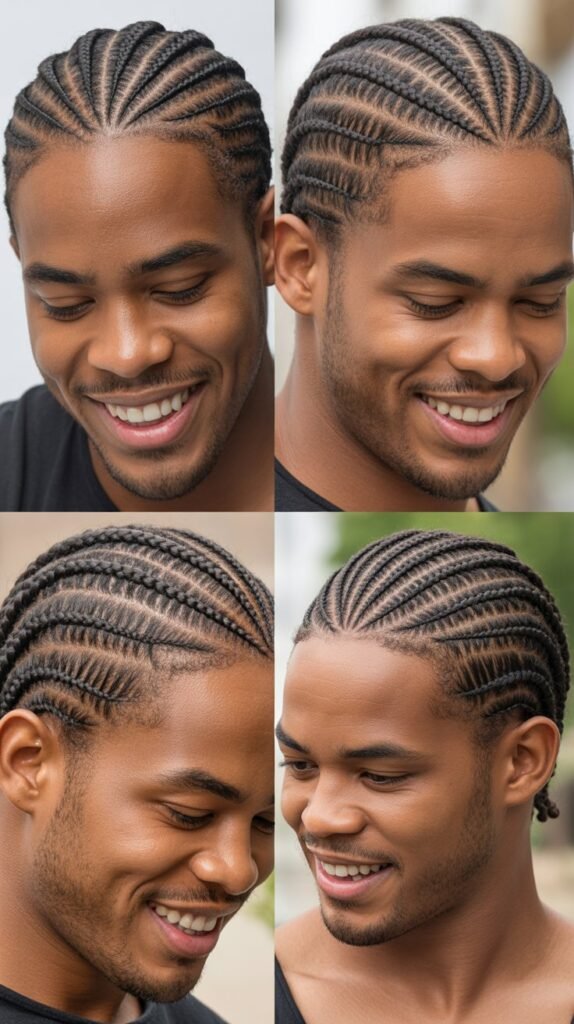
Straight-back cornrows represent the foundation of all cornrow styles and remain the most timeless choice for men seeking simplicity and elegance.
This style features parallel rows braided from the hairline straight toward the back of the head, creating clean, uniform lines that work perfectly for any occasion.
Key Features:
- Creates a sleek, polished appearance suitable for both casual and professional settings
- Requires minimal maintenance once installed properly
- Typically lasts 2-4 weeks depending on hair texture and care routine
- Works exceptionally well for men with medium to long hair length
- Provides maximum scalp protection while promoting healthy hair growth
Styling Benefits:
- Reduces daily styling time to almost zero minutes
- Eliminates the need for constant combing or brushing
- Keeps hair neat during physical activities and workouts
- Prevents tangling and breakage common with loose natural hair
- Offers a clean canvas that pairs well with fades and edge-ups
Best For:
- First-time cornrow wearers who want a simple, classic look
- Professional environments requiring neat, conservative hairstyles
- Athletes and active individuals needing low-maintenance options
- Men transitioning from relaxed to natural hair textures
2. Two-Row Simple Cornrows
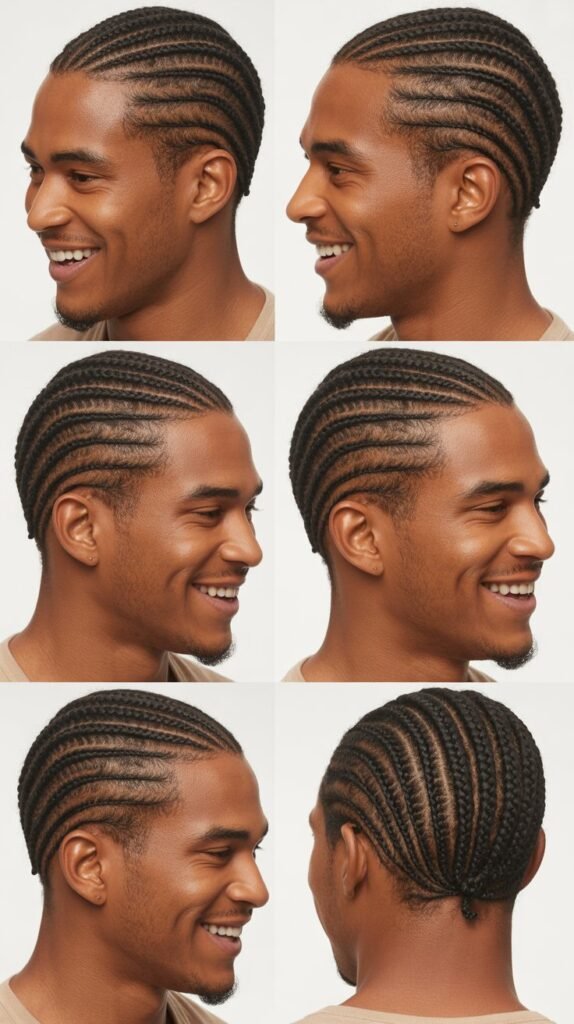
Two-row cornrows simplify the braiding process even further by dividing the hair into just two thick braids running from front to back.
This minimalist approach delivers maximum impact with minimum complexity, making it perfect for beginners or those with thicker hair density.
Installation Process:
- Part the hair down the center from forehead to nape
- Secure one section while working on the other to maintain clean division
- Begin braiding at the hairline using the traditional three-strand cornrow technique
- Maintain consistent tension throughout to ensure uniform appearance
- Seal the ends with small rubber bands or natural tucking methods
Maintenance Tips:
- Moisturize the scalp every 2-3 days with lightweight oils
- Wrap hair with a silk or satin scarf before sleeping
- Avoid excessive manipulation that could cause frizzing
- Retouch the edges after 10-14 days to maintain crispness
- Cleanse the scalp gently using diluted shampoo on a cotton pad
Durability Factors:
- Generally lasts 3-4 weeks with proper nighttime protection
- Thick braids withstand daily activities better than multiple thin rows
- Less prone to unraveling compared to styles with numerous rows
3. Feed-In Cornrows with Natural Taper
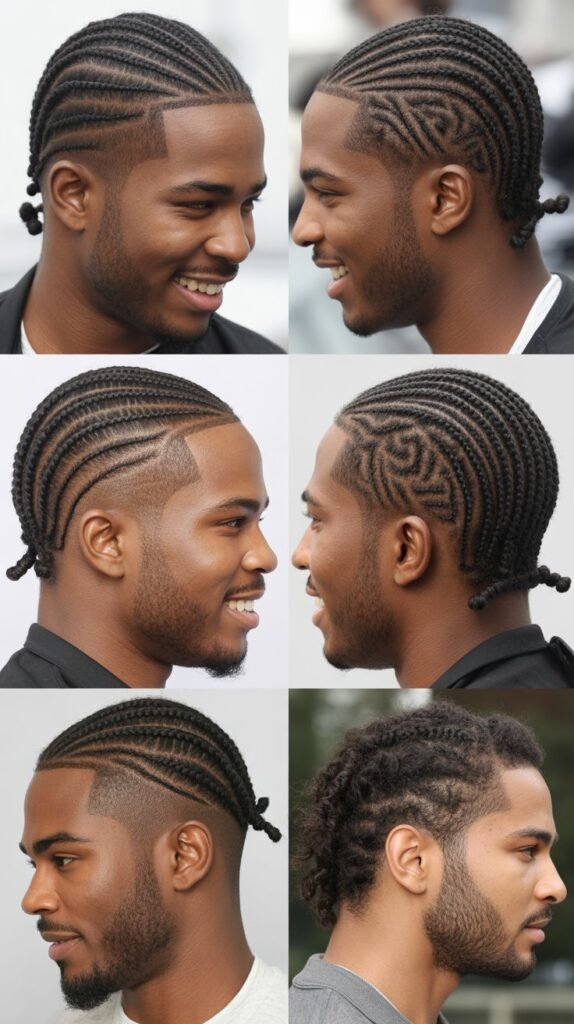
Feed-in cornrows create a gradual, natural-looking start at the hairline by adding hair incrementally as you braid backward.
This technique eliminates the bulky, obvious beginning that traditional cornrows sometimes display, resulting in a more refined and professional finish.
Technical Advantages:
- Reduces tension on the hairline, preventing traction alopecia
- Creates flatter, more scalable braids that lie smoothly against the scalp
- Allows for longer-lasting styles due to reduced stress on hair follicles
- Provides a more natural appearance than traditional starting methods
- Enables creative patterns and designs with greater flexibility
Application Method:
- Begin with a very small section of natural hair at the hairline
- Gradually incorporate additional hair from the sides as you braid backward
- Maintain consistent braid size by controlling the amount of hair added
- Ensure smooth transitions between sections for seamless appearance
- Practice patience as this technique requires more time than traditional methods
Ideal Candidates:
- Men with receding hairlines or thinning edges
- Those seeking a more mature, sophisticated cornrow appearance
- Individuals with sensitive scalps prone to tension headaches
- Anyone wanting styles that photograph well from all angles
4. Zigzag Pattern Cornrows
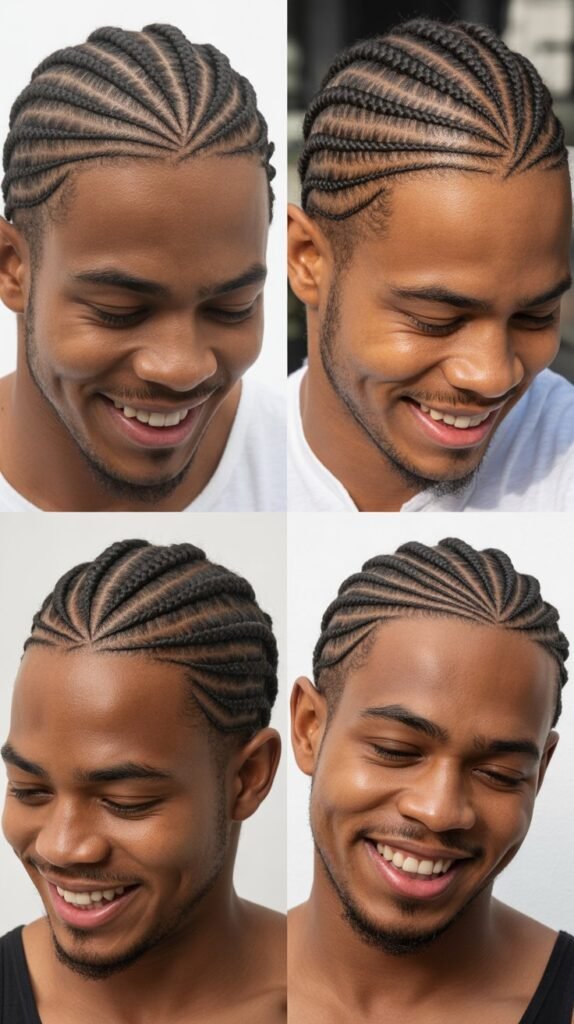
Zigzag cornrows break away from straight lines by incorporating angular patterns that add visual interest and personality to your hairstyle.
These designs showcase creativity while maintaining the protective benefits of traditional cornrows.
Design Variations:
- Sharp geometric zigzags for modern, edgy aesthetics
- Gentle wave patterns for subtle sophistication
- Asymmetrical designs that favor one side over the other
- Mixed patterns combining straight sections with zigzag accents
- Graduated zigzags that increase in intensity toward the back
Creation Technique:
- Map out the desired pattern using a rattail comb before starting
- Create angular parts by changing direction at predetermined points
- Maintain consistent braid size throughout directional changes
- Practice cornrow fundamentals before attempting complex zigzag patterns
- Consider starting with subtle waves before progressing to sharp angles
Styling Considerations:
- More complex patterns typically require professional installation
- Maintenance remains similar to straight-back styles
- Works best on hair lengths of at least 3-4 inches
- Complements modern fashion and streetwear aesthetics perfectly
5. Side-Part Cornrows
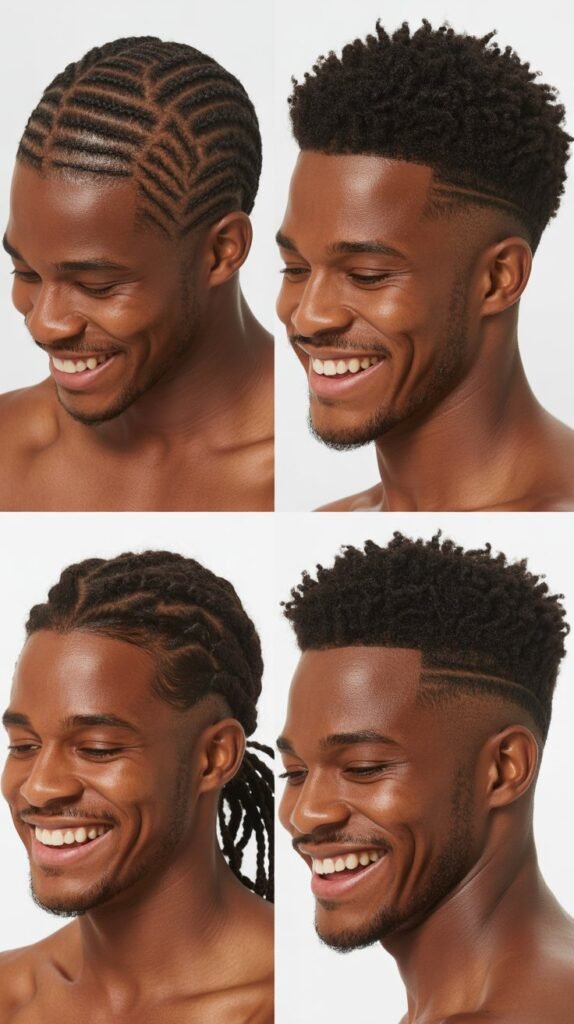
Side-part cornrows incorporate a deep side parting that angles the braids diagonally across the head, creating an asymmetrical look that adds dimension and style.
This variation offers a fresh take on classic cornrows while remaining practical for everyday wear.
Parting Guidelines:
- Create the part 1-2 inches from the center line for optimal effect
- Use the arch of the eyebrow as a guide for natural-looking placement
- Extend the part from the front hairline to the crown area
- Maintain clean, straight parting lines using the edge of a comb
- Consider the direction of natural hair growth when determining part placement
Braiding Direction:
- Angle braids from the deep part toward the opposite side
- Create 4-6 rows depending on hair thickness and desired aesthetic
- Ensure consistent angle throughout all rows for cohesive appearance
- Blend the parted section seamlessly with surrounding braids
- Finish with slightly longer rows on the heavier side for balanced proportions
Face Shape Compatibility:
- Oval faces: Works universally well with any part depth
- Round faces: Deeper parts create slimming diagonal lines
- Square faces: Soften angular features with gentler part placement
- Heart-shaped faces: Balance wider foreheads with strategic part positioning
6. Box Braids to Cornrow Combination
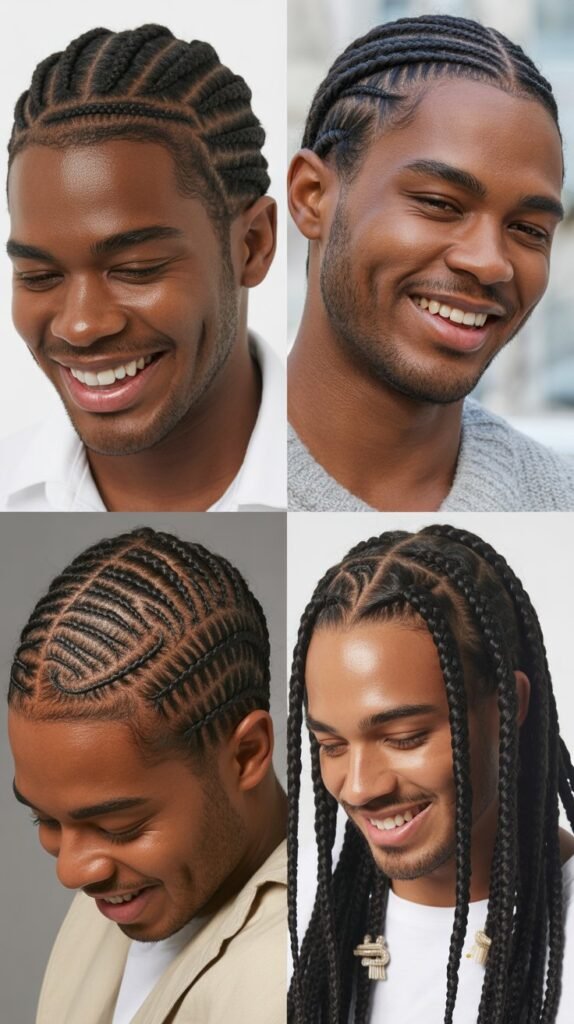
This hybrid style merges the definition of individual box braids with the sleek foundation of cornrows, creating a versatile look that offers the best of both techniques.
The top and sides feature neat cornrows while the back transitions into free-hanging box braids.
Style Breakdown:
- Front and sides: 3-5 cornrows creating a clean, tapered effect
- Crown to back: Individual box braids for movement and versatility
- Transition zone: Seamless blending where cornrows convert to box braids
- Length options: Short box braids (shoulder-length) or long (mid-back or longer)
- Thickness variation: Thin for detailed definition or chunky for bold statements
Practical Benefits:
- Combines the security of cornrows with the styling flexibility of box braids
- Allows for different looks by manipulating the box braid portion
- Creates natural volume graduation from flat to full
- Protects the hairline and edges while showcasing length in back
- Enables ponytail, bun, and half-up styling options
Maintenance Requirements:
- Treat cornrow sections and box braid sections with equal care
- Apply moisturizing spray to box braids 2-3 times weekly
- Maintain scalp health in cornrow areas with targeted oil application
- Expect 4-6 weeks of wear before requiring reinstallation
- Protect the transition area carefully to prevent premature unraveling
7. Curved Cornrows
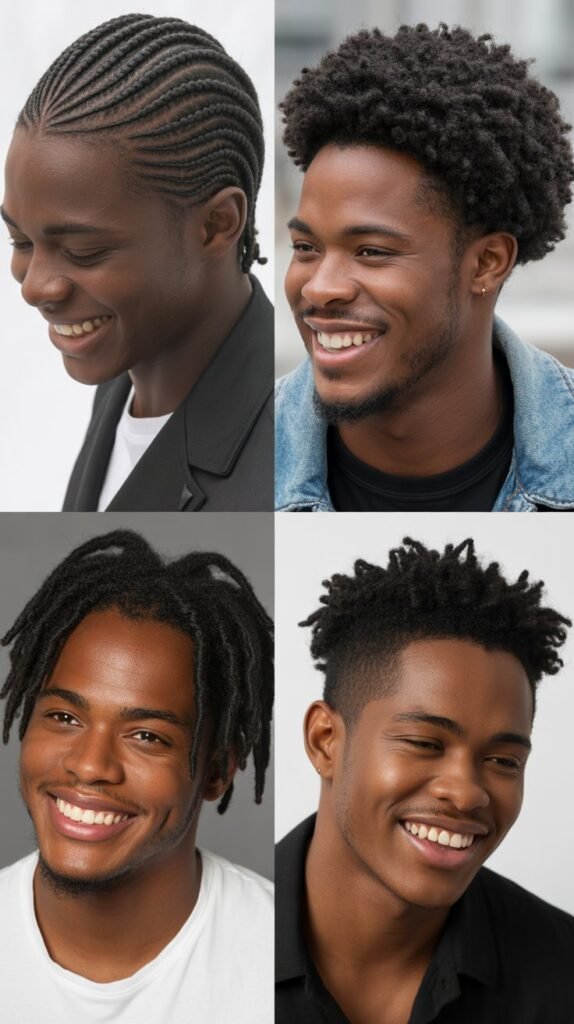
Curved cornrows follow the natural contours of the head, creating flowing, rounded patterns that add softness and dimension to the hairstyle.
These organic shapes provide an artistic alternative to rigid straight lines while maintaining protective styling benefits.
Pattern Design:
- Follow the natural shape of the skull for harmonious flow
- Create concentric curves that radiate from a central point
- Incorporate multiple curve directions for complex, layered effects
- Design asymmetrical curves for modern, artistic expressions
- Combine gentle arcs with occasional straight sections for contrast
Technical Execution:
- Requires advanced braiding skills and spatial awareness
- Map the curves using temporary markings or parts before braiding
- Adjust tension carefully around curves to prevent gaps or puckering
- Maintain even braid thickness despite directional changes
- Work methodically from one curve to the next for consistency
Aesthetic Appeal:
- Softens angular facial features with flowing lines
- Creates optical illusions of movement and depth
- Photographs exceptionally well from various angles
- Stands out in social settings while remaining professional
- Complements both casual and dressed-up attire
8. Cornrows with Shaved Sides
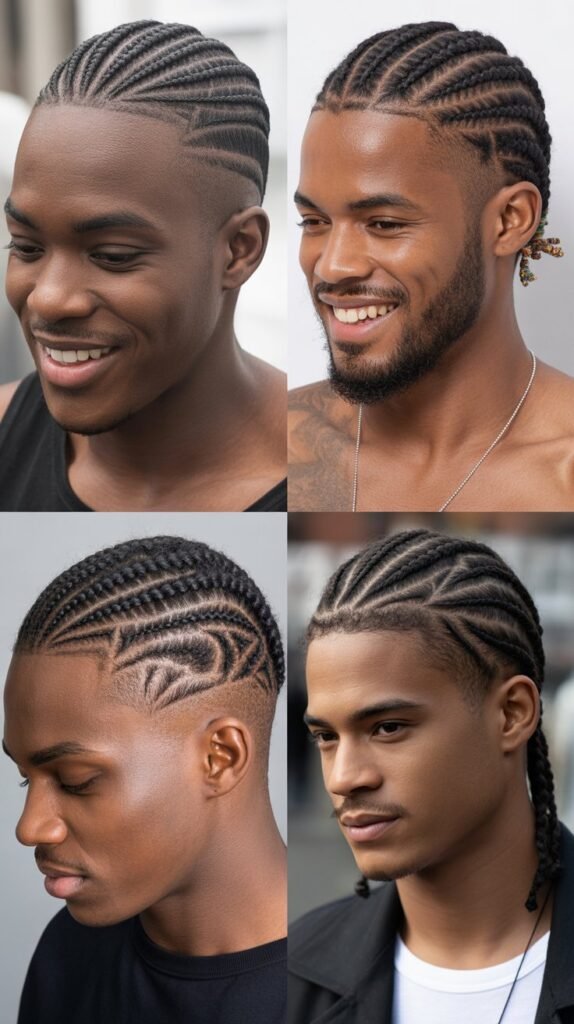
Combining cornrows with shaved or faded sides creates a striking contrast that emphasizes the braided top section.
This modern fusion style delivers an edgy, contemporary look that’s become increasingly popular in urban fashion culture.
Fade Options:
- Low fade: Gradual transition starting just above the ears
- Mid fade: Blending begins at the temple area for moderate contrast
- High fade: Dramatic difference with fade starting well above the ears
- Skin fade: Closest possible cut for maximum definition
- Taper fade: Gradual length reduction without complete shaving
Cornrow Placement:
- Concentrate braids on the top and crown areas exclusively
- Create 3-7 rows depending on head size and hair density
- Extend braids from the front hairline to the crown or beyond
- Align braid endings with the fade line for clean transitions
- Consider directional flow that complements the fade shape
Maintenance Schedule:
- Fade requires touch-ups every 7-10 days to maintain crispness
- Cornrows can last 2-3 weeks before showing significant frizz
- Coordinate fade appointments with cornrow reinstallation for efficiency
- Moisturize the shaved areas with lightweight lotions to prevent dryness
- Use edge control products to maintain sharp lineup between braids and fade
Professional Recommendations:
- Consult with a skilled barber experienced in both braiding and fading
- Bring reference photos showing the exact fade height and cornrow pattern desired
- Discuss maintenance expectations and scheduling before committing
- Consider seasonal factors (winter dryness, summer sun exposure) when choosing fade depth
9. Triangle-Part Cornrows
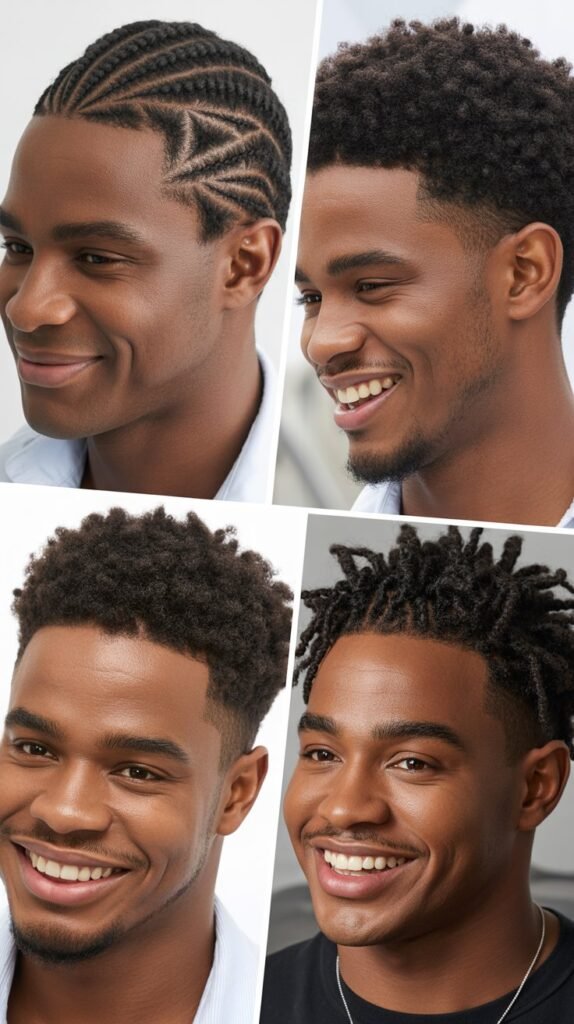
Triangle-part cornrows utilize triangular sectioning instead of traditional straight parts, creating a geometric, multidimensional appearance that adds architectural interest to the hairstyle.
This technique showcases precision and creativity simultaneously.
Parting Technique:
- Create triangular sections by connecting three points with straight lines
- Vary triangle sizes for dynamic visual rhythm
- Alternate triangle directions (point-forward, point-backward) for pattern complexity
- Maintain consistent triangle shapes throughout the style
- Use a fine-tooth comb and clips to secure sections before braiding
Braiding Approach:
- Braid each triangle section independently from base to tip
- Begin at the triangle’s widest point for stability
- Follow the natural angle of the triangle shape
- Ensure neat corners where triangular sections meet
- Seal each braid carefully to prevent unraveling
Visual Impact:
- Creates a bold, fashion-forward statement
- Catches light differently than traditional parts, adding depth
- Works particularly well for special events and photo opportunities
- Demonstrates technical skill and attention to detail
- Pairs excellently with contemporary streetwear and urban fashion
10. Horizontal Cornrows
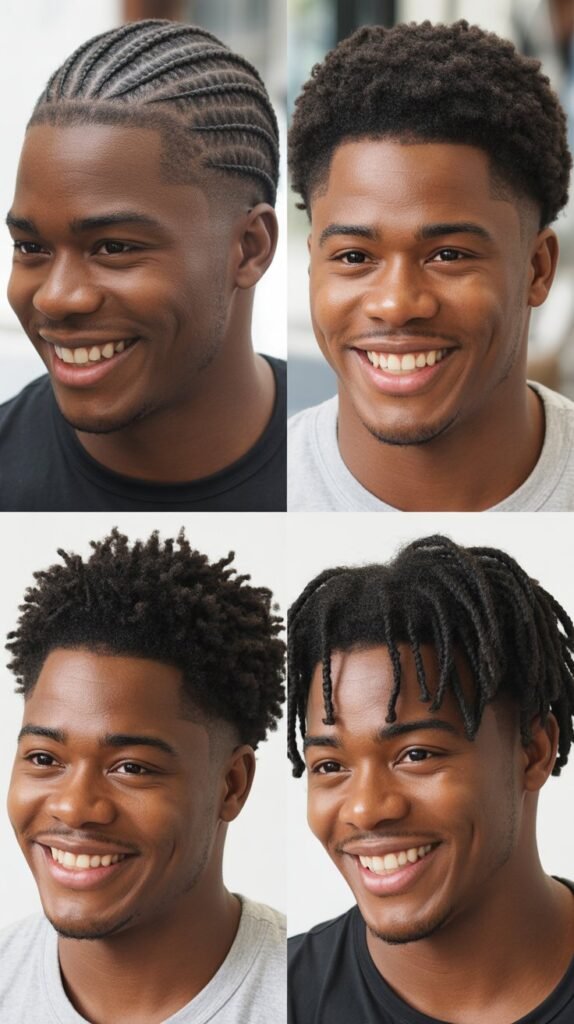
Horizontal cornrows run from ear to ear across the head rather than front to back, creating an unexpected and distinctive appearance.
This unconventional direction challenges traditional cornrow aesthetics while offering the same protective benefits.
Directional Considerations:
- Begin at the nape and work upward toward the forehead, or vice versa
- Maintain parallel lines for clean, uniform appearance
- Adjust braid tightness to accommodate the head’s curvature
- Consider natural hair growth patterns when determining starting point
- Plan for 6-10 horizontal rows depending on head size
Practical Challenges:
- Requires precise tension control due to head’s rounded shape
- May feel different than traditional cornrows during the adjustment period
- Braiding time typically extends slightly due to positioning complexity
- Self-installation proves more difficult without assistance
- Certain areas (behind ears) require extra attention to detail
Unique Benefits:
- Creates conversation-starting, memorable aesthetic
- Emphasizes facial features differently than vertical styles
- Allows for easy incorporation of design elements between rows
- Photographs dramatically, especially from profile angles
- Demonstrates individuality and willingness to experiment
11. Chunky Cornrows
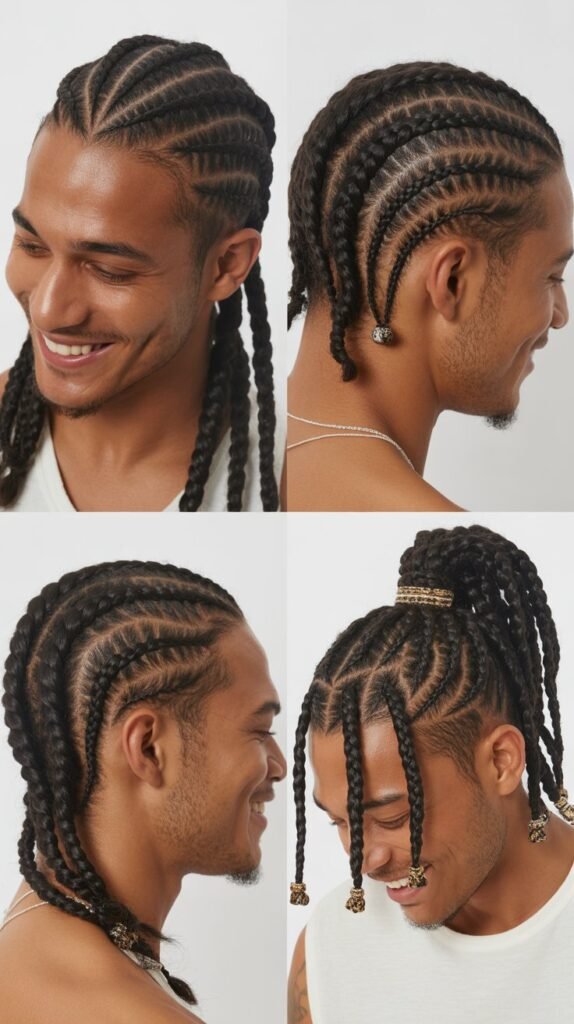
Chunky cornrows feature thicker, more substantial braids that create a bold, statement-making look.
These larger braids install faster than traditional thin cornrows while still providing protective styling benefits.
Size Specifications:
- Create 2-4 braids total for maximum chunkiness
- Each braid typically spans 2-3 inches in width
- Maintain consistent thickness from root to end
- Ensure adequate tension for security without excessive tightness
- Consider hair density when determining optimal braid count
Installation Advantages:
- Significantly reduces braiding time (30-60 minutes vs. 2-4 hours)
- Requires less technical skill than multiple thin rows
- Easier for beginners to achieve neat, professional results
- Places less tension on individual hair strands
- Simplifies the learning process for self-braiding
Style Longevity:
- Typically lasts 1-2 weeks before requiring maintenance
- Larger braids may loosen faster than thinner alternatives
- Better suited for shorter wear periods or frequent style changes
- Requires nighttime protection to extend wearability
- Works well for those who prefer changing styles regularly
12. Cornrows with Design Lines
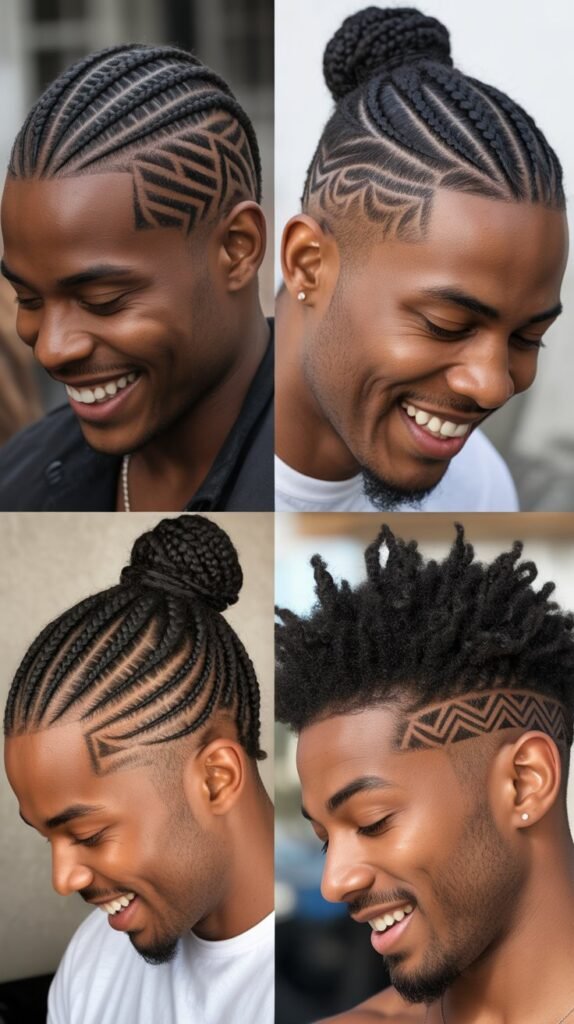
Incorporating shaved design lines between cornrows elevates the style with artistic flair.
These precise lines create negative space patterns that add complexity and visual interest without requiring braiding expertise.
Design Possibilities:
- Straight parallel lines creating striped effects
- Curved lines following the braids’ natural flow
- Geometric patterns (zigzags, diamonds, crosses)
- Asymmetrical designs for modern aesthetics
- Tribal-inspired motifs with cultural significance
Professional Execution:
- Requires a skilled barber with steady hands and artistic vision
- Lines typically measure 1-3mm in width for optimal visibility
- Depth should reveal scalp without cutting into skin
- Precision trimmers or straight razors provide cleanest results
- Design planning should occur before cornrow installation begins
Maintenance Realities:
- Design lines grow out within 5-7 days, requiring frequent touch-ups
- Coordinate appointments for both line refresh and cornrow maintenance
- Consider temporary designs for special occasions rather than everyday wear
- Higher maintenance investment may not suit budget-conscious individuals
- Designs fade gradually rather than disappearing suddenly
13. Freestyle Cornrow Patterns
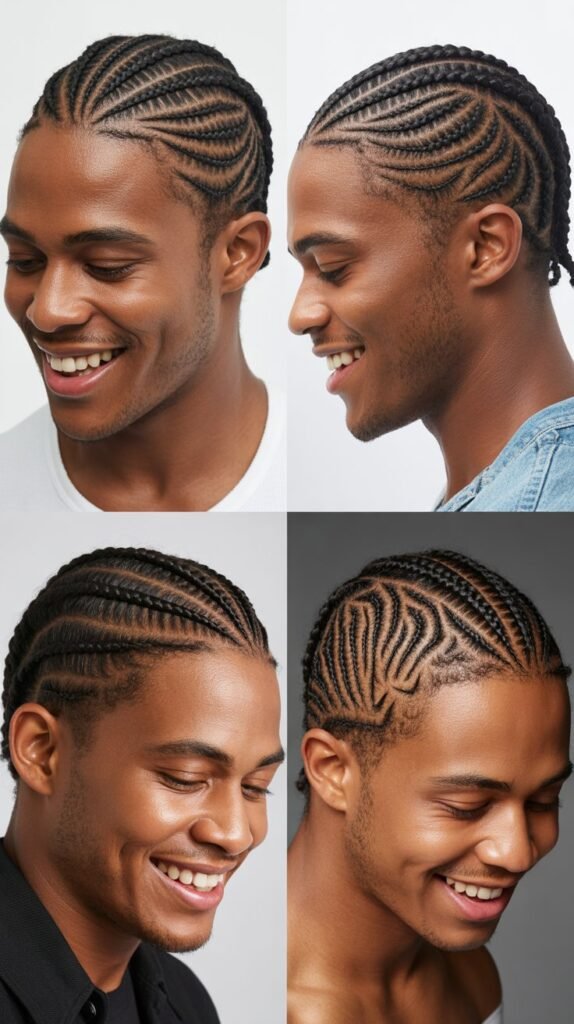
Freestyle cornrows abandon predetermined patterns in favor of organic, flowing designs that emerge naturally during the braiding process.
This approach celebrates creativity and individual expression while maintaining protective styling functionality.
Creative Freedom:
- No two freestyle patterns are identical
- Braider’s intuition guides direction and flow decisions
- Incorporates various techniques (curves, angles, size variations) spontaneously
- Allows for artistic expression and experimentation
- Creates truly personalized hairstyles impossible to replicate exactly
Collaborative Process:
- Discuss general aesthetic preferences (bold vs. subtle, symmetrical vs. asymmetrical)
- Trust the braider’s artistic judgment during execution
- Avoid micromanaging specific braid placement
- Embrace the unique results that emerge naturally
- Photograph the finished style thoroughly if you love the unrepeatable design
Best Practices:
- Choose experienced braiders comfortable with improvisation
- Allow extra time for creative exploration during installation
- Communicate deal-breakers (face-framing preferences, parting restrictions)
- Accept that exact replication won’t be possible for future appointments
- Appreciate the one-of-a-kind nature of freestyle designs
14. Micro Cornrows
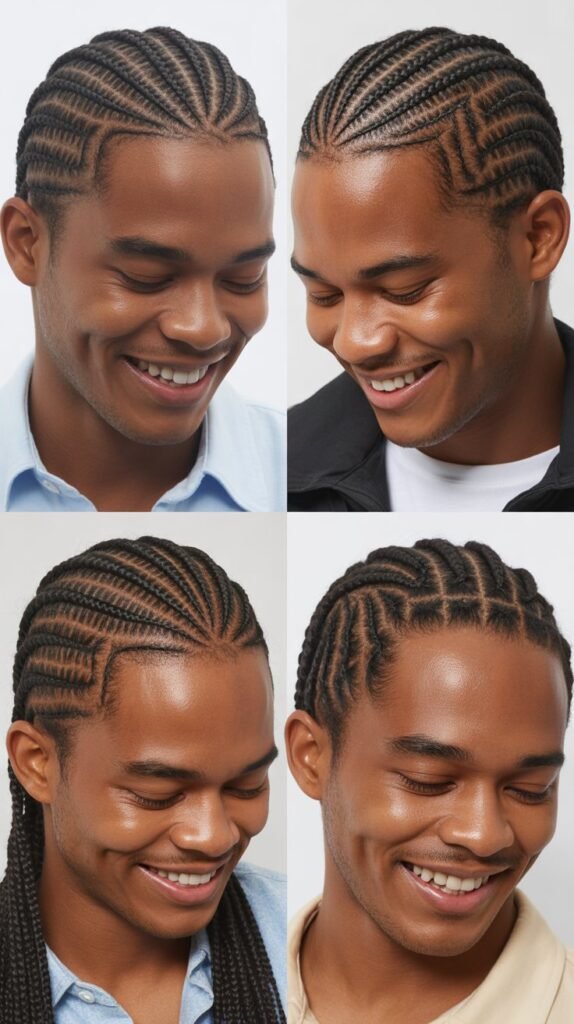
Micro cornrows feature extremely thin, delicate braids that create an intricate, detailed appearance. These tiny braids require significant time and skill but deliver unparalleled precision and sophistication.
Technical Requirements:
- Individual braids measure approximately 1/4 inch or thinner in width
- Requires 15-30+ individual rows depending on head size
- Installation time ranges from 4-8 hours for complete coverage
- Demands advanced braiding skills and exceptional patience
- Best executed by professional braiders specializing in micro techniques
Hair Length Considerations:
- Minimum length requirement: 2-3 inches for secure braiding
- Longer hair (4-6+ inches) provides easier manipulation and longer wear
- Very short hair may not maintain micro cornrows effectively
- Hair density matters more than length for micro styles
- Fine hair textures sometimes struggle with micro braid security
Durability Expectations:
- Can last 3-6 weeks with proper care and maintenance
- Thin braids may unravel faster than medium or chunky alternatives
- Requires meticulous nighttime protection (silk bonnet essential)
- Frizzing becomes more visible on micro braids
- Worth the investment for those seeking long-term protective styling
15. Cornrows into Man Bun
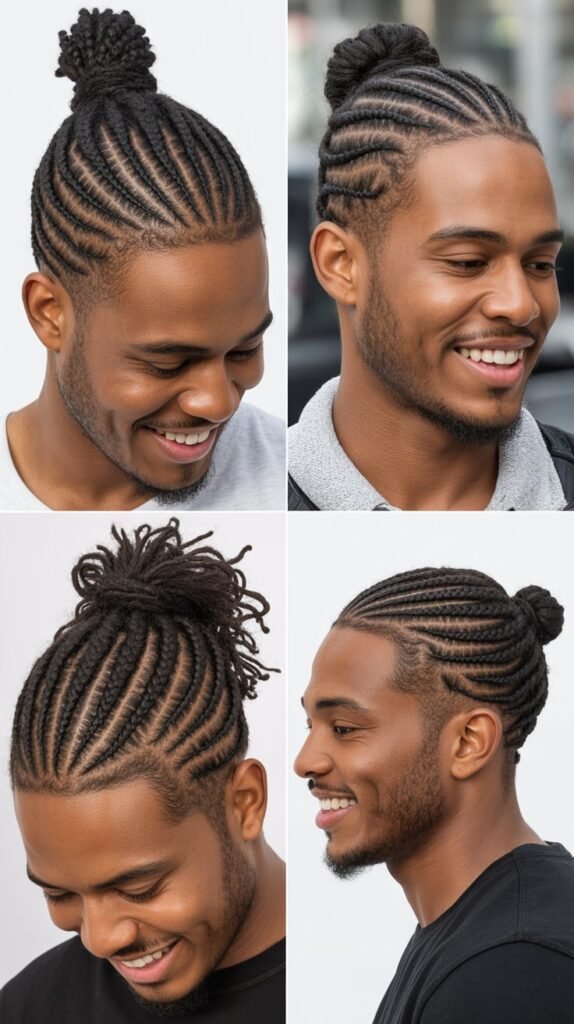
This combination style features cornrows braided toward the crown where remaining hair gathers into a man bun, creating a sleek front with dimensional volume on top.
Construction Method:
- Braid cornrows from the front and sides toward a central collection point
- Stop cornrows at the crown area, leaving 3-5 inches of loose length
- Gather loose ends with a hair elastic appropriate for textured hair
- Shape the bun according to preference (tight, loose, high, low)
- Secure flyaways with edge control or light gel
Bun Variations:
- Top knot: High placement at the crown for maximum height
- Mid-bun: Positioned at the natural curve where head meets neck
- Low bun: Placement at the nape for understated elegance
- Messy bun: Deliberately tousled for relaxed, casual appearance
- Sleek bun: Smoothed and polished for formal occasions
Length Requirements:
- Minimum 5-6 inches of hair length for functional bun creation
- 8-10+ inches allows for larger, more substantial buns
- Consider extension integration if natural length falls short
- Shorter lengths can create mini buns or topknots
16. Diagonal Cornrows
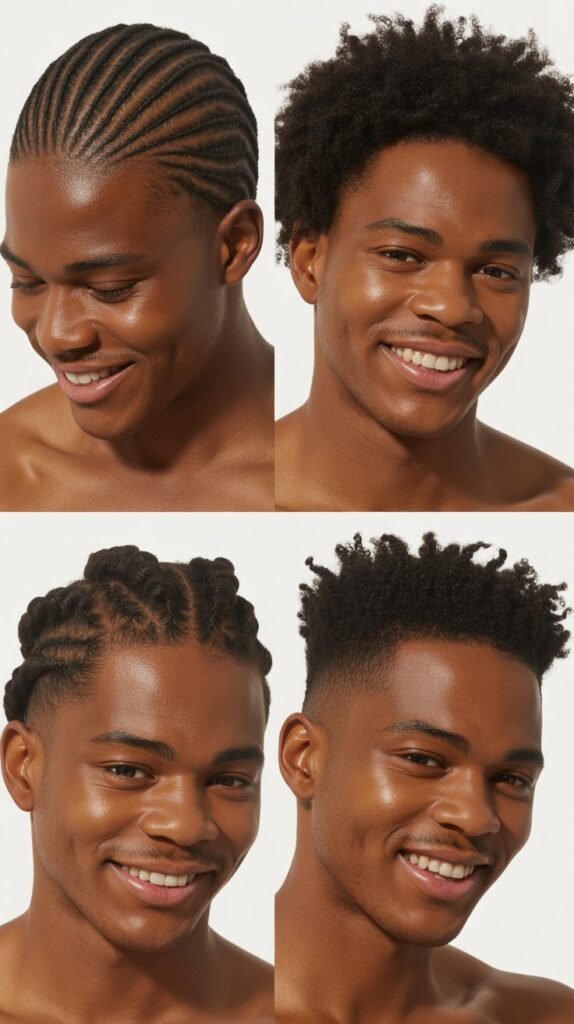
Diagonal cornrows angle across the head from one side to another, creating dynamic visual movement and emphasizing facial features differently than straight-back styles.
Angle Options:
- Shallow diagonal: Subtle 15-30 degree angle for conservative effect
- Standard diagonal: 45-degree angle for balanced visual interest
- Steep diagonal: 60-75 degree angle for dramatic, fashion-forward impact
- Front-to-back diagonal: Angles from front hairline toward opposite back corner
- Side-to-side diagonal: Runs from one ear area toward the opposite side
Directional Planning:
- Consider natural face asymmetry when choosing direction
- Angle toward the stronger side of your face for emphasis
- Account for hair growth patterns that may affect braid direction
- Plan the angle before creating any parts to ensure consistency
- Use visual guides (tape, string) during planning for accuracy
Face-Framing Benefits:
- Creates slimming effects on rounder face shapes
- Draws attention toward preferred facial features
- Adds architectural interest without complex patterns
- Photographs well from various angles
- Complements asymmetrical fashion choices
17. Cornrows with Beads
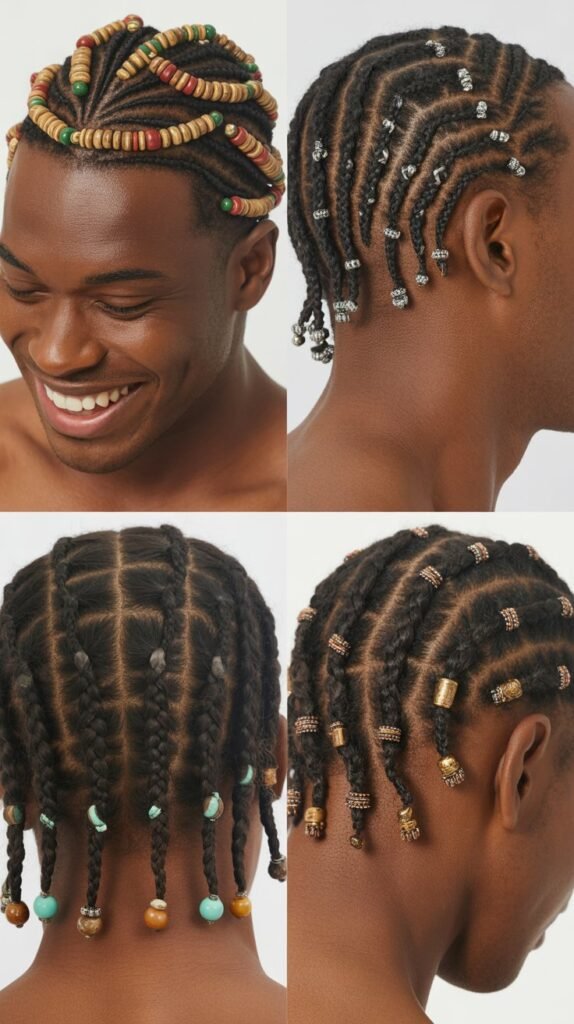
Adding beads to cornrows introduces color, texture, and cultural significance to the hairstyle. Beads serve both decorative and functional purposes, securing braid ends while creating audible and visual interest.
Bead Selection:
- Materials: Wood, metal, plastic, ceramic, or glass options
- Sizes: Small (3-5mm), medium (6-10mm), or large (11mm+) depending on preference
- Colors: Coordinate with outfits, choose cultural significance, or select personal favorites
- Designs: Plain, patterned, carved, or metallic finishes
- Opening size: Must accommodate braid thickness comfortably
Application Technique:
- Thread beads onto braids before sealing the ends
- Slide beads to desired position along the braid length
- Secure above and below with small elastics if movement is undesirable
- Create patterns (alternating colors, gradients, random placement)
- Consider weight distribution to avoid strain on hair
Cultural Considerations:
- Beads hold historical significance in many African and African diaspora cultures
- Research cultural meanings if selecting traditional patterns or colors
- Respect the heritage while making the style personally meaningful
- Understand that bead styles can represent family, status, or coming-of-age traditions
Practical Notes:
- Beads add weight; consider comfort for extended wear
- May create noise during movement (enjoyable for some, distracting for others)
- Remove beads carefully during cornrow takedown to prevent tangling
- Clean beads between uses if planning to reapply in future styles
18. S-Curve Cornrows
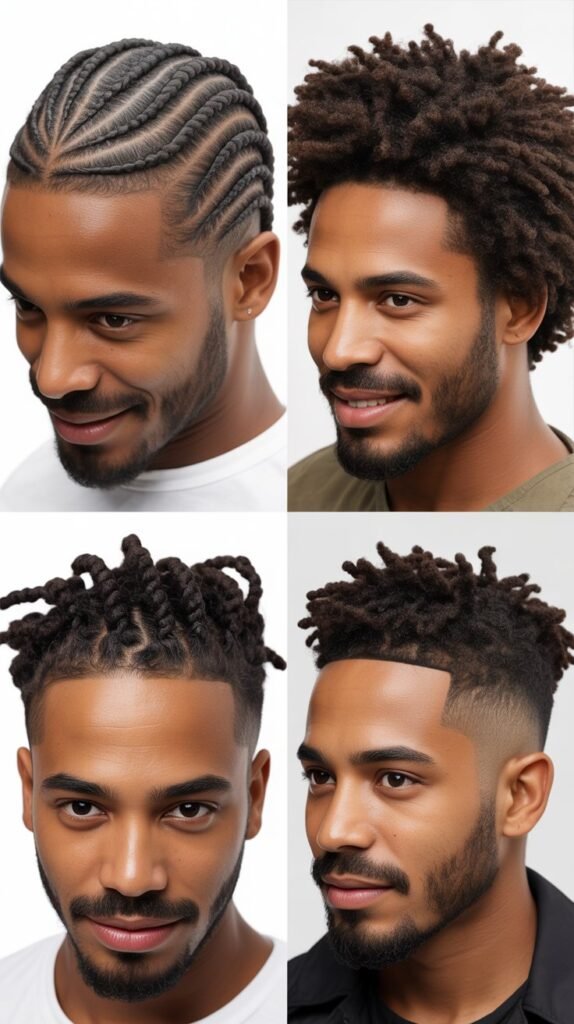
S-curve cornrows create flowing, wave-like patterns across the head by braiding in deliberate S-shaped formations.
These organic curves add femininity and softness while maintaining the protective benefits of cornrows.
Pattern Formation:
- Plan S-curves by creating wavy parting lines before braiding
- Alternate curve direction (left-right-left or right-left-right) for rhythm
- Maintain consistent curve amplitude (wave depth) throughout
- Space curves evenly for balanced, harmonious appearance
- Consider symmetrical or asymmetrical S-pattern arrangements
Execution Challenges:
- Requires intermediate to advanced braiding skills
- Tension adjustment crucial around curves to prevent gaps
- Takes longer than straight braiding due to directional changes
- Self-installation difficult without practice and spatial awareness
- Professional execution recommended for special occasions
Styling Versatility:
- Creates romantic, flowing aesthetic suitable for various occasions
- Softens angular facial features naturally
- Photographs beautifully with proper lighting showing dimension
- Can be subtle or dramatic depending on curve intensity
- Pairs well with both casual and formal attire
19. Mohawk Cornrows
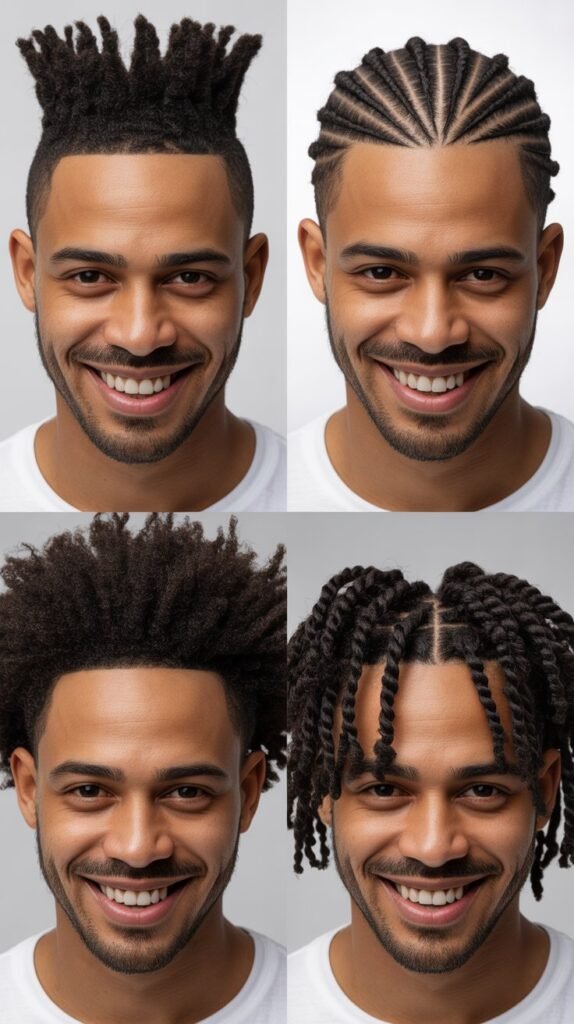
Mohawk cornrows concentrate braids along the center strip of the head while sides remain shaved or closely faded, creating an edgy, punk-inspired protective style.
Center Strip Design:
- Width options: Narrow (2-3 inches) for subtle effect, wide (4-6 inches) for bold statement
- Braid count: 1-5 cornrows depending on width and desired detail
- Direction: Straight-back, curved, or incorporating design elements
- Height: Flat against scalp or raised for dimensional effect
- Length: Extends from front hairline to nape or stops at crown
Side Treatment:
- Skin fade: Closest possible cut for maximum contrast
- Bald shave: Complete hair removal on sides
- Low fade: Gradual transition maintaining some length
- Design integration: Shaved patterns on sides complementing center braids
- Edge definition: Sharp lines separating mohawk from faded sections
Personality Expression:
- Communicates confidence and individuality boldly
- Suits creative professionals, artists, and performers
- Makes strong fashion statements in social settings
- Requires commitment to regular fade maintenance
- Not ideal for conservative professional environments
20. Cornrows with Extensions
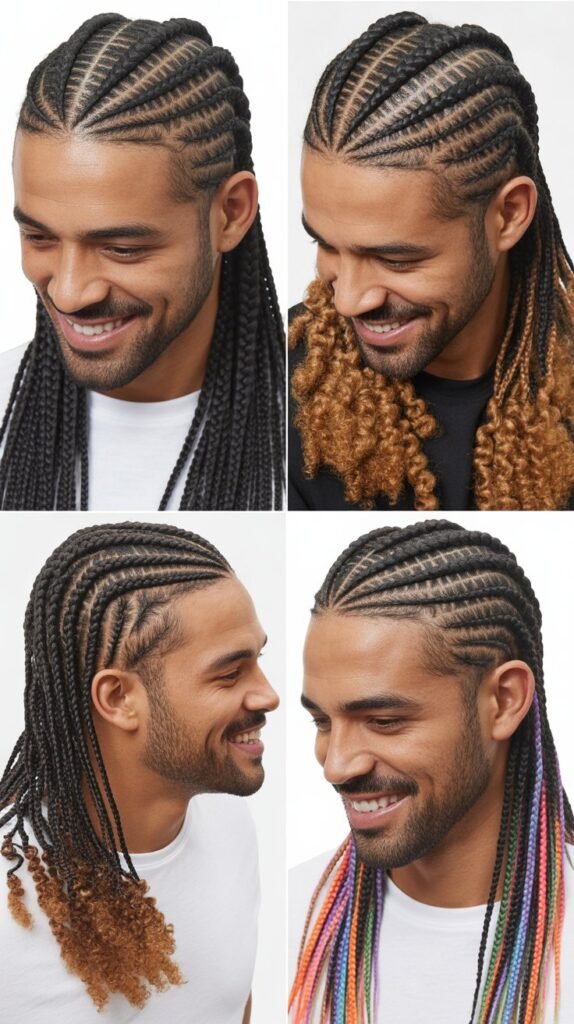
Incorporating hair extensions into cornrows adds length, volume, and color possibilities that natural hair alone may not provide. This technique expands creative options while still protecting natural hair.
Extension Types:
- Kanekalon: Synthetic, affordable, holds braids well, wide color range
- X-Pression: Premium synthetic, softer texture, more natural appearance
- Human hair: Most natural look and feel, highest cost, longest durability
- Pre-stretched: Time-saving option with reduced prep work required
- Colored extensions: Fashion colors, highlights, ombre effects
Integration Method:
- Feed-in technique: Add extension hair gradually for seamless blending
- Full integration: Combine extension and natural hair from the start
- Tip addition: Add extensions only to braid ends for length
- Highlight placement: Strategic color addition for dimension
- Matching texture: Select extensions that complement natural hair texture
Length Considerations:
- Short (shoulder-length): 12-16 inch extensions
- Medium (mid-back): 18-24 inch extensions
- Long (waist-length): 26-32+ inch extensions
- Weight distribution: Longer extensions create more scalp tension
- Lifestyle factors: Consider daily activities when selecting length
Color Exploration:
- Natural colors: Black, browns, matching natural shade
- Subtle highlights: Browns, caramels, honeys for dimension
- Bold colors: Reds, blues, purples, greens for statement looks
- Ombre effects: Gradual color transitions from dark to light
- Multi-tonal: Combining 2-3 complementary shades for depth
21. Basket Weave Cornrows
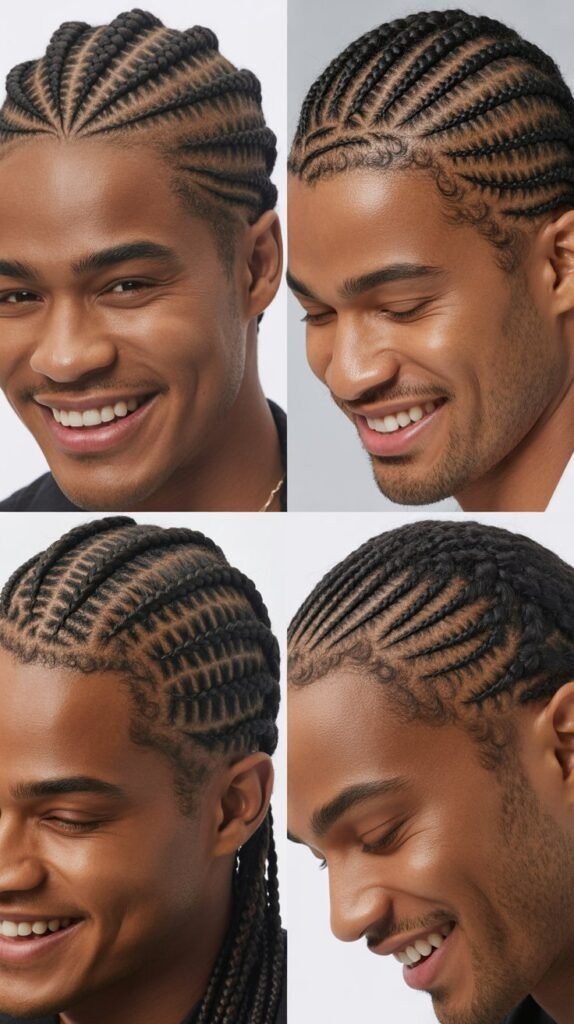
Basket weave cornrows create an interwoven appearance by crossing braids over and under each other, mimicking traditional basket weaving techniques. This complex pattern delivers striking visual texture.
Weaving Technique:
- Create initial cornrows in parallel formation
- Strategically lift and cross braids at predetermined intervals
- Tuck crossed sections under adjacent braids
- Secure crossover points to prevent unraveling
- Maintain consistent crossing pattern throughout the style
Complexity Levels:
- Simple weave: Basic over-under pattern with 2-3 braids
- Intermediate: Multiple braids creating more intricate crossovers
- Advanced: Complex patterns incorporating various weaving techniques
- Asymmetrical: One-sided weaving for modern interpretation
- Full coverage: Entire head covered in basket weave design
Professional Requirements:
- Requires expert-level braiding skills and pattern visualization
- Installation time significantly longer than standard cornrows (4-6+ hours)
- Not recommended for beginners or DIY attempts
- Finding qualified braiders may be challenging in some areas
- Higher cost justified by complexity and artistic skill involved
22. Compass Cornrows
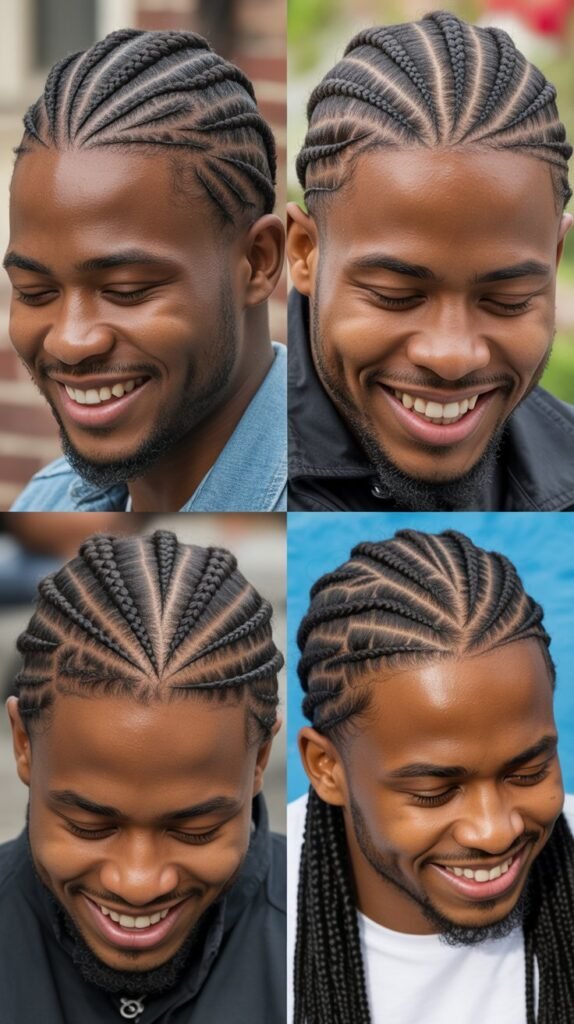
Compass cornrows radiate from a central point on the head (usually the crown) in multiple directions, resembling compass points or sun rays. This bold, geometric pattern creates a striking focal point.
Pattern Planning:
- Identify the central point (typically at natural crown whorl)
- Divide the head into equal sections radiating from center (4, 6, 8, or more)
- Create straight parts from center to perimeter like spokes
- Braid each section from center outward or perimeter inward
- Ensure symmetrical section sizes for balanced appearance
Directional Braiding:
- Center-out: Begin at crown and braid toward hairline/nape
- Perimeter-in: Start at edges and braid toward central point
- Alternating: Mix directions for varied texture and dimension
- Tension management: Crucial around the central meeting point
- Securing center: May require special techniques to prevent gaps
Visual Drama:
- Creates immediate focal point drawing attention to head shape
- Emphasizes skull structure and natural crown location
- Photographs dramatically from top angles
- Demonstrates advanced technical skill and pattern planning
- Conversation-starting design for confident individuals
23. Freeform Locs-Inspired Cornrows
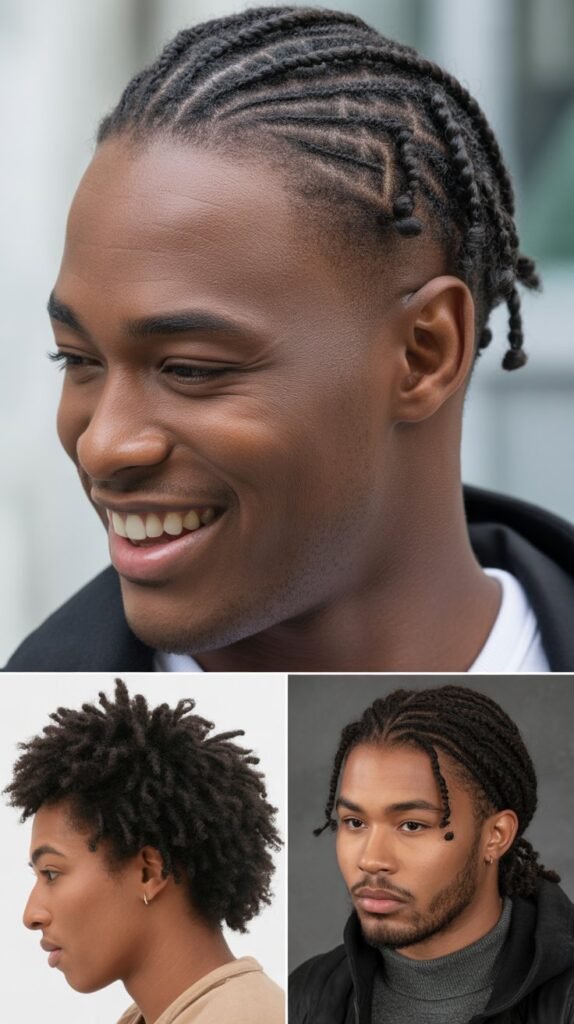
This style mimics the organic, unrestricted appearance of freeform locs while maintaining the structure of cornrows. Braids vary in size, direction, and pattern to create a naturally evolved aesthetic.
Design Philosophy:
- Embrace imperfection and natural variation
- Allow hair texture to influence braid direction and size
- Avoid rigid symmetry or perfect alignment
- Incorporate spontaneous pattern changes
- Respect natural hair growth patterns and tendencies
Technical Approach:
- Vary braid thickness throughout the head (thin, medium, thick mixed)
- Create irregular parting patterns rather than geometric precision
- Allow some braids to curve naturally without forcing straightness
- Incorporate both tight and looser braiding tension
- Let the hair’s natural characteristics guide decisions
Ideal Candidates:
- Those transitioning from locs to braided styles
- Individuals seeking low-pressure, authentic aesthetics
- People who appreciate artistic, unconventional approaches
- Men comfortable with imperfect, organic appearances
- Those prioritizing hair health over precise patterns
24. Tribal Pattern Cornrows
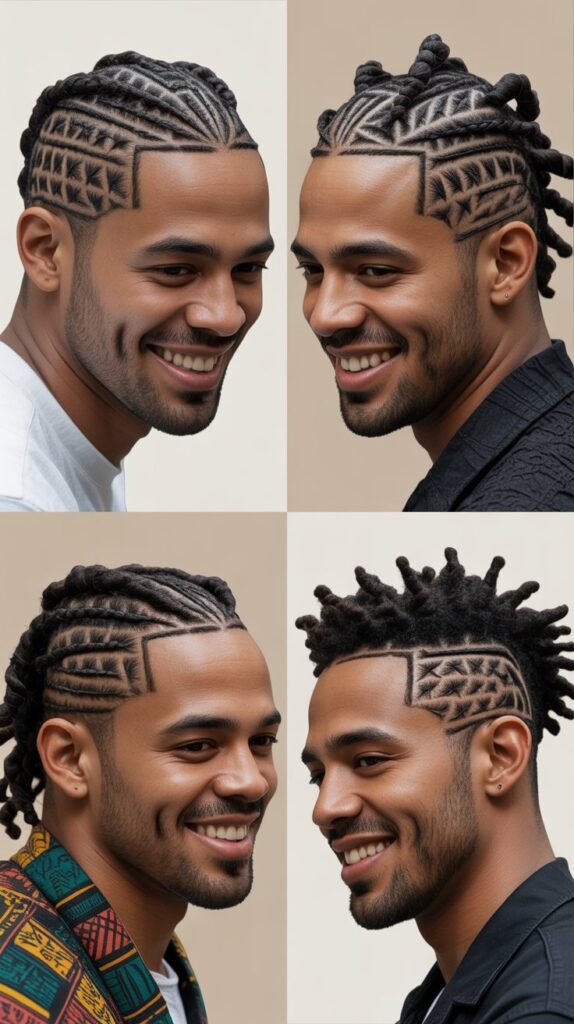
Tribal pattern cornrows incorporate designs inspired by traditional African tribal aesthetics, creating culturally meaningful styles that honor heritage while protecting hair.
Cultural Connections:
- Research specific tribal traditions for authentic inspiration
- Understand symbolic meanings behind certain patterns
- Respect cultural significance rather than appropriating designs
- Consider personal heritage when selecting patterns
- Celebrate African diaspora connections through hairstyling
Common Tribal Elements:
- Geometric shapes: Triangles, diamonds, rectangles arranged in meaningful patterns
- Symmetrical designs: Balanced patterns on both sides of the head
- Linear elements: Straight lines creating boundaries and sections
- Circular motifs: Representing unity, cycles, and continuity
- Symbolic arrangements: Patterns conveying specific cultural messages
Modern Interpretation:
- Blend traditional elements with contemporary braiding techniques
- Adapt historical patterns to suit modern head shapes and hair textures
- Combine tribal inspiration with personal creative expression
- Use as conversation starters about cultural heritage and identity
- Honor traditions while making styles individually meaningful
Execution Considerations:
- Requires skilled braider familiar with tribal design work
- Planning phase essential to map patterns before braiding begins
- May incorporate shaved design elements for enhanced definition
- Installation time extends due to pattern complexity (3-5+ hours)
- Best suited for special occasions or those deeply connected to cultural roots
25. Cornrows with Twists Combination
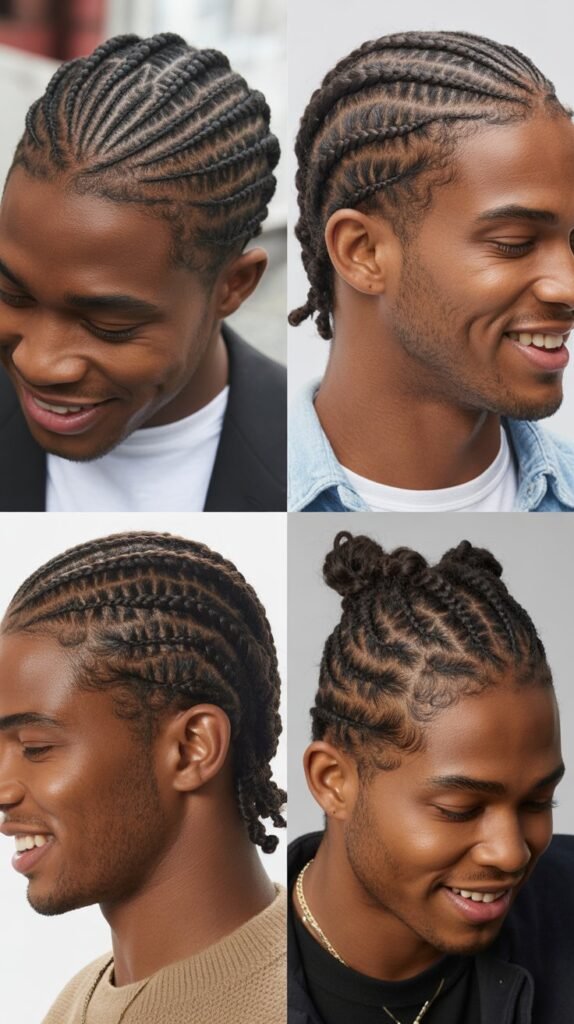
This hybrid style combines cornrows at the base with two-strand twists extending from the braids, creating textural variety and dimensional interest.
The combination offers both structure and movement.
Construction Method:
- Create cornrows from hairline to mid-scalp or crown area
- Stop cornrow braiding at the predetermined transition point
- Divide remaining loose hair into two sections
- Execute two-strand twists from transition point to ends
- Seal twist ends with oil or beeswax for hold
Transition Techniques:
- Gradual blend: Slowly reduce cornrow tightness before beginning twists
- Abrupt change: Clear definition between braided and twisted sections
- Alternating pattern: Some rows stay cornrowed while others transition to twists
- Length variation: Different transition points for dimensional effect
- Secure transition: Use small elastics if needed to prevent unraveling
Styling Flexibility:
- Twists can be styled up, down, or partially pinned
- Create twist-outs on the twisted sections for added volume
- Manipulate twists into buns, ponytails, or half-up styles
- Maintains protective benefits while allowing versatility
- Easier to refresh twisted sections between full reinstallations
Maintenance Balance:
- Cornrow sections require less frequent attention
- Twisted portions may need re-twisting after 1-2 weeks
- Overall style lasts 2-4 weeks depending on care
- Night protection essential to preserve both sections
- Moisturize regularly with focus on twisted areas
26. Jumbo Cornrows
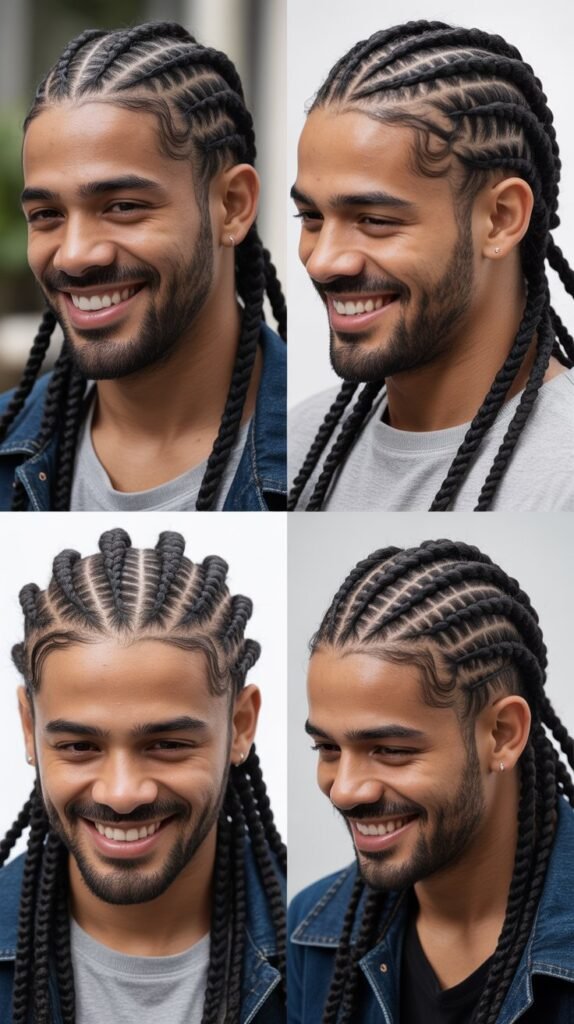
Jumbo cornrows feature extra-large braids that make bold statements while requiring minimal installation time. These oversized braids combine convenience with dramatic visual impact.
Size Specifications:
- Individual braids measure 2-4 inches in width
- Typically consists of 2-4 total braids covering entire head
- Substantially thicker than standard or chunky cornrows
- Requires dense hair or extension integration for fullness
- Creates bold, fashion-forward aesthetic
Installation Benefits:
- Extremely fast installation (20-45 minutes for complete style)
- Minimal technical skill required for neat results
- Perfect for last-minute styling needs
- Reduces physical strain on braider’s hands and arms
- Ideal for those with limited time or patience
Wear Duration:
- Generally lasts 7-14 days before becoming too loose
- Better suited for short-term protective styling
- May loosen faster than thinner alternatives due to weight
- Perfect for those who enjoy frequent style changes
- Works well for vacation or special event periods
Best Applications:
- Temporary protective styling during hair transitions
- Quick style between more elaborate installations
- Learning tool for cornrow beginners
- Active lifestyles requiring minimal daily maintenance
- Fashion-forward individuals embracing bold aesthetics
27. Zigzag Part with Straight Cornrows
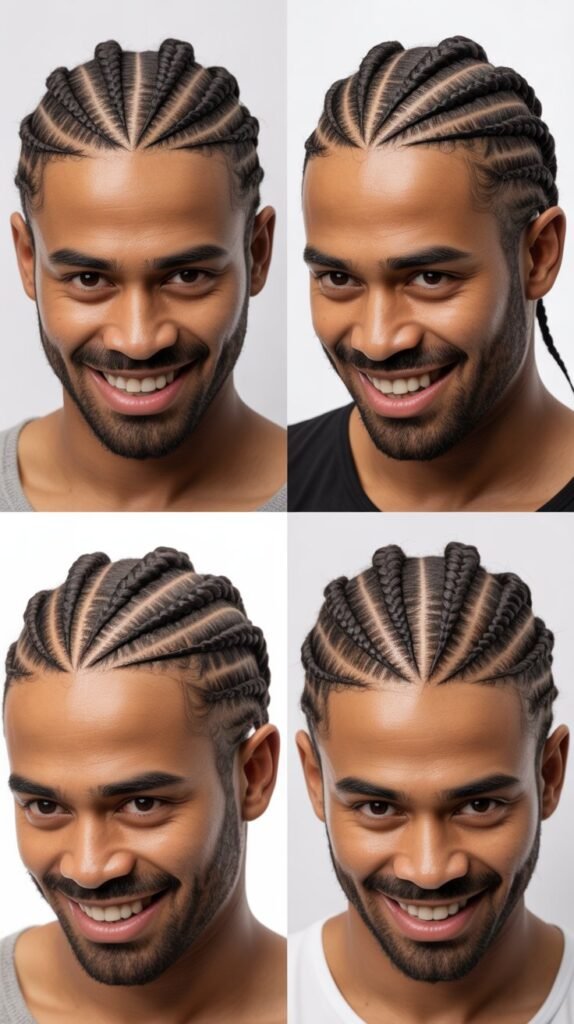
This style features zigzag parting lines with straight cornrows following the angled sections, combining geometric precision with classic braiding for visually interesting results.
Parting Design:
- Create zigzag lines using rattail comb with precision
- Maintain consistent angle amplitude throughout all zigzags
- Space zigzag patterns evenly for balanced appearance
- Can create subtle or dramatic zigzag intensity
- Plan pattern before beginning any braiding work
Braiding Execution:
- Braid straight along each zigzag-created section
- Maintain uniform braid size despite angular parts
- Ensure clean separation between adjoining sections
- Keep tension consistent for professional finish
- Cornrows remain straight while parts create visual interest
Visual Contrast:
- Juxtaposition of straight braids with angular parts creates dynamic tension
- Scalp visibility through zigzag parts adds dimensional depth
- Photographs exceptionally well from top and side angles
- Demonstrates both technical precision and creative thinking
- Suits modern, fashion-conscious individuals
28. Crown Cornrows
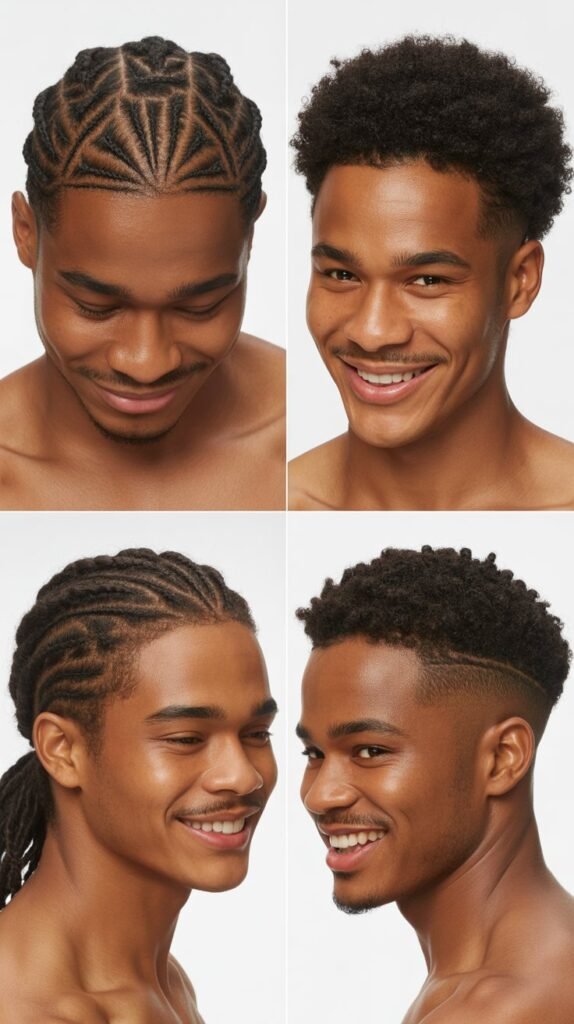
Crown cornrows concentrate braids around the perimeter of the head, leaving the crown area free or styled differently. This creates a framing effect that emphasizes facial features.
Pattern Structure:
- Braid cornrows following the natural hairline around the entire head
- Create 1-3 rows circling the perimeter concentrically
- Leave center crown area unbraided or style with alternative technique
- Maintain consistent distance from hairline throughout
- Ensure smooth curves around rounded head areas
Center Styling Options:
- Leave natural: Afro, twist-out, or wash-and-go texture
- Single braid: One large braid or twist at crown
- Top knot: Gather center hair into small bun
- Short cut: Fade or taper the crown area
- Design elements: Shaved patterns in the open space
Face-Framing Benefits:
- Draws attention directly to facial features
- Creates natural framing effect for portraits
- Emphasizes bone structure and face shape
- Keeps hair away from face during activities
- Versatile enough for various occasions
29. Cornrows with Colored Extensions
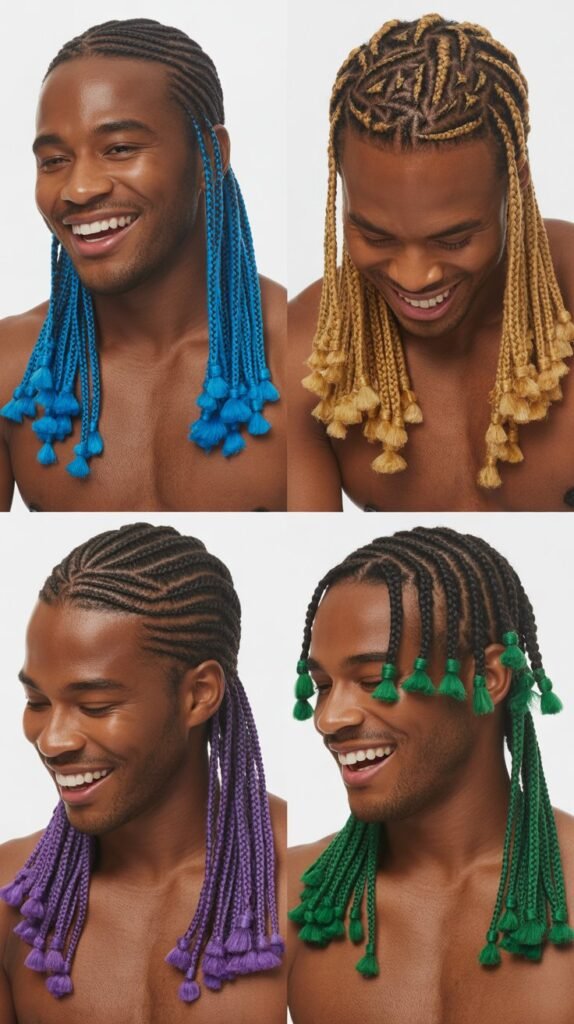
Incorporating vibrant, colored extensions into cornrows allows for dramatic color transformation without chemical processing.
This temporary approach offers creative freedom while protecting natural hair.
Color Options:
- Neon shades: Electric blue, hot pink, lime green for bold statements
- Pastels: Lavender, mint, peach for softer looks
- Metallics: Silver, gold, rose gold for luxurious effects
- Natural highlights: Caramel, honey, auburn for subtle dimension
- Ombre effects: Gradual color transitions from roots to ends
Application Methods:
- Full integration: Mix colored and natural hair throughout entire braid
- Tip coloring: Add color only to the ends of braids
- Alternating rows: Some braids natural, others colored
- Sectional coloring: Specific areas (front, sides, back) receive color
- Multi-color: Combine 2-3+ colors for rainbow or custom effects
Temporary Nature:
- No chemical damage to natural hair underneath
- Complete color removal upon braid takedown
- Experiment freely without long-term commitment
- Change colors with each new installation
- Perfect for creative expression and self-discovery
Occasion Suitability:
- Festivals and concerts: Bold, vibrant colors
- Artistic events: Creative, unconventional combinations
- Personal expression: Colors reflecting personality or mood
- Seasonal changes: Adapt colors to match seasons
- Special celebrations: Coordinate with event themes
30. Ladder Braid Cornrows
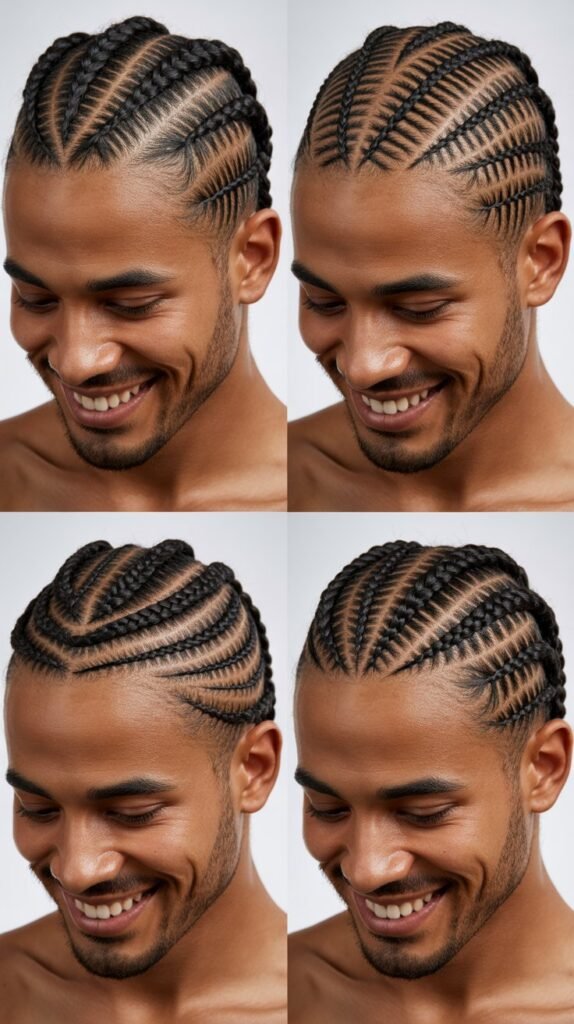
Ladder braid cornrows incorporate horizontal connections between parallel cornrows, creating a ladder-like appearance that adds architectural interest and complexity.
Construction Technique:
- Create 2-4 parallel cornrows as the foundation
- At regular intervals, add horizontal connecting braids
- Interweave connections between the main vertical rows
- Maintain consistent spacing between ladder rungs
- Secure connection points carefully to prevent loosening
Spacing Considerations:
- Close spacing (every inch): Creates dense, intricate pattern
- Medium spacing (every 2-3 inches): Balanced visibility and wearability
- Wide spacing (every 4-5 inches): Subtle accent rather than dominant feature
- Graduated spacing: Increasing or decreasing intervals for dynamic effect
- Strategic placement: Concentrate connections in visible areas
Skill Requirements:
- Advanced braiding technique requiring pattern planning
- Understanding of three-dimensional braid construction
- Steady hands and precise execution essential
- Professional installation strongly recommended
- Not suitable for self-styling or beginners
Durability Notes:
- Connection points may loosen faster than main cornrows
- Requires gentle handling to maintain integrity
- May need touch-ups every 7-10 days for optimal appearance
- Overall style lasts 2-3 weeks with careful maintenance
- Worth the effort for special occasions and photography
31. Asymmetrical Cornrows
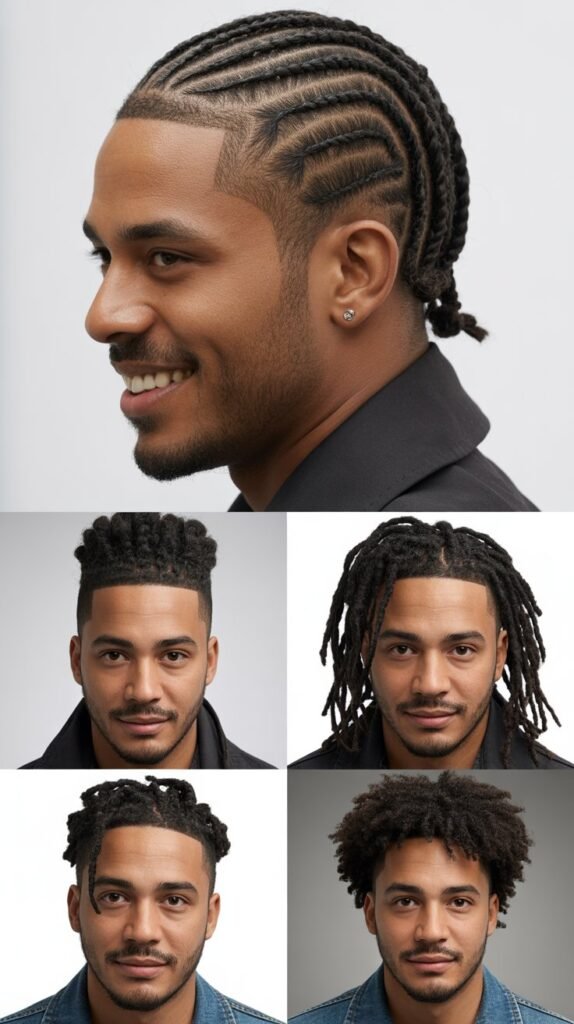
Asymmetrical cornrows intentionally create different patterns, sizes, or directions on each side of the head, embracing modern design principles that favor imbalance and visual tension.
Design Approaches:
- Different braid counts: More rows on one side than the other
- Varied directions: One side straight-back, other side diagonal or curved
- Size variation: Thin braids one side, chunky braids opposite side
- Pattern differences: Geometric designs one side, simple rows other side
- Length asymmetry: One side longer, other side shorter or faded
Modern Aesthetic:
- Reflects contemporary design trends favoring asymmetry
- Creates visual interest from multiple viewing angles
- Demonstrates confidence and individuality
- Challenges traditional symmetry expectations
- Photographs dynamically with both sides telling different stories
Styling Psychology:
- Appeals to fashion-forward, trend-conscious individuals
- Suggests creativity and willingness to take risks
- Makes strong personal statement about uniqueness
- May not suit conservative professional environments
- Perfect for artistic, creative, or entertainment industries
32. Cornrows with Undercut Design
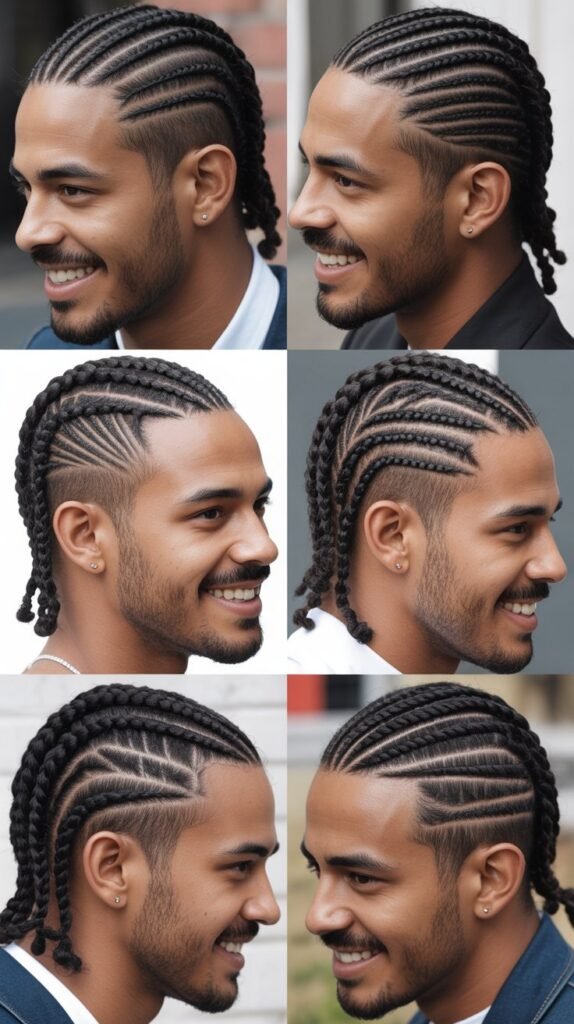
Combining cornrows on top with intricate shaved designs underneath creates a hidden element that reveals itself with specific styling or head movements.
Undercut Placement:
- Nape area: Most common, reveals when looking down or pulling hair up
- Side sections: Visible when hair is styled away from face
- Back and sides: More extensive coverage for dramatic reveals
- Temple area: Small, subtle designs near face
- Strategic positioning: Placement depends on reveal preferences
Design Possibilities:
- Geometric patterns: Lines, triangles, diamonds, grids
- Symbols: Stars, hearts, initials, meaningful icons
- Nature elements: Waves, lightning bolts, leaves
- Abstract art: Free-form creative expressions
- Tribal motifs: Cultural patterns with personal significance
Reveal Options:
- Pull hair up: Bun or ponytail exposes undercut designs
- Style away: Comb cornrows to opposite side
- Natural movement: Designs peek through during activities
- Intentional display: Specific positioning to show off artwork
- Hidden surprise: Mostly concealed for subtle sophistication
Maintenance Requirements:
- Undercut designs fade within 5-7 days
- Require frequent barber visits for refreshing
- Cornrows last standard 2-4 weeks
- Coordinate appointments for both elements
- Higher maintenance investment than simple cornrows
33. Fishbone Cornrows
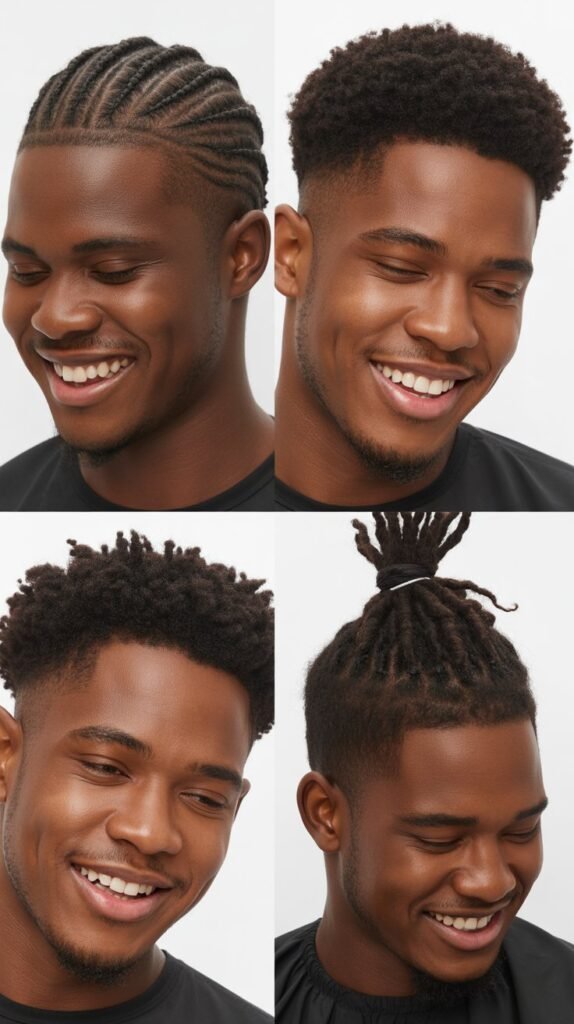
Fishbone cornrows create a herringbone or fishbone pattern by alternating the direction of hair incorporation, resulting in a distinctive zigzag appearance within each braid.
Braiding Technique:
- Incorporate hair alternately from left and right at angles
- Creates V-shaped or herringbone pattern within braid structure
- Requires modified cornrow technique with directional changes
- Produces flatter, wider braids than traditional cornrows
- Showcases advanced technical braiding skills
Visual Characteristics:
- Distinct central spine with angled sections branching outward
- Creates textural interest beyond standard cornrow appearance
- Catches light differently due to directional hair placement
- Appears more intricate and detailed than simple cornrows
- Demonstrates braiding expertise and attention to detail
Application Considerations:
- Takes longer than standard cornrows due to technique complexity
- Requires experienced braider familiar with fishbone methods
- Works best on hair with enough length for clear pattern visibility (3+ inches)
- May feel slightly different due to altered tension distribution
- Creates conversation-starting, memorable aesthetic
34. Cornrows with Temple Fade
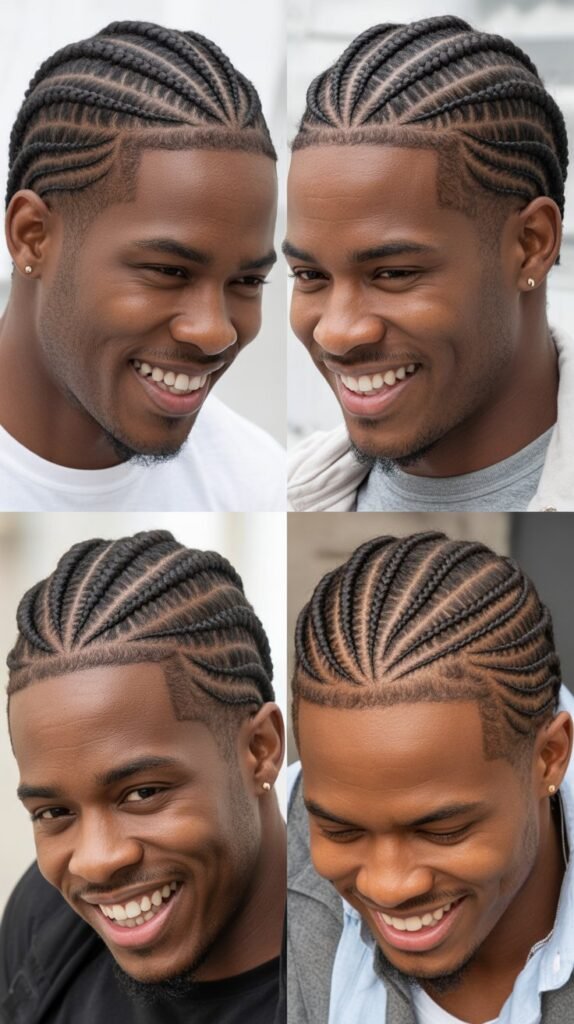
This style combines cornrows on top and back with temple fades on the sides, creating a clean, modern look that emphasizes the braided sections while keeping sides sharp and defined.
Fade Specifications:
- Temple fade: Gradual blend starting at temple area only
- Low fade: Minimal blending, maintains more length
- High fade: Dramatic contrast with fade extending upward
- Skin fade: Closest possible cut for maximum definition
- Taper integration: Smooth transition between faded and braided sections
Cornrow Placement:
- Top section: 3-7 cornrows depending on preference
- Back section: Continues cornrow pattern to nape or transitions to fade
- Side coverage: Determines where cornrows end and fade begins
- Connection points: Seamless blending where braids meet faded areas
- Style continuity: Ensuring cohesive look between different sections
Grooming Requirements:
- Fade maintenance: Touch-ups every 7-10 days
- Cornrow longevity: 2-4 weeks before reinstallation
- Lineup freshness: Weekly edge-ups for crisp appearance
- Scalp care: Moisturize both braided and faded sections appropriately
- Professional coordination: Schedule appointments efficiently
35. Cornrows with Natural Afro Top
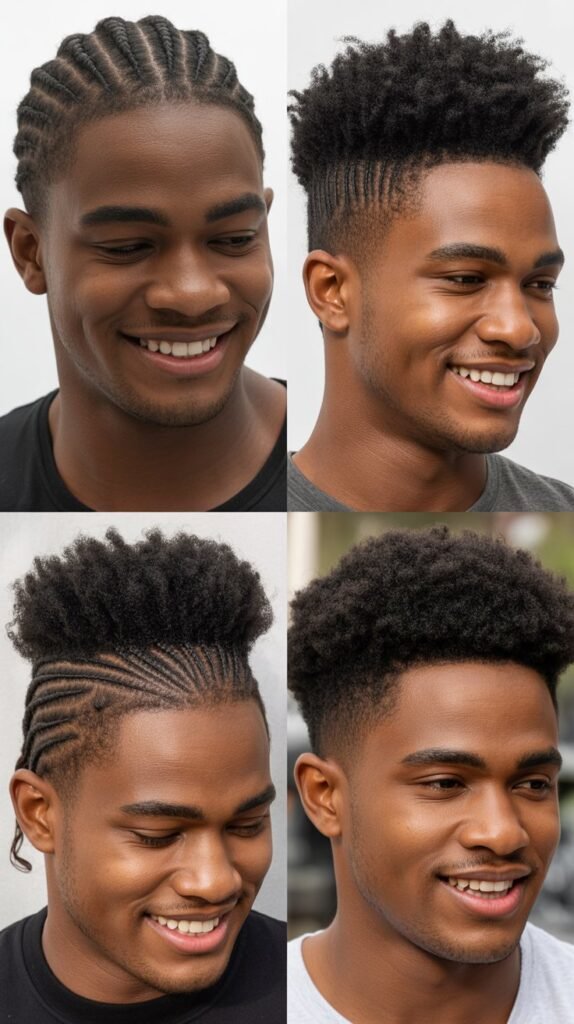
This combination style features cornrows on the sides and back while leaving the top section free to form a natural afro, creating height and volume while maintaining protective styling on most of the head.
Section Division:
- Top section: Crown area left unbraided for afro formation
- Side cornrows: 2-4 rows on each side braided toward back
- Back cornrows: 3-6 rows from nape upward
- Transition lines: Clean separation between braided and free sections
- Size proportion: Balance between afro volume and cornrow coverage
Afro Maintenance:
- Regular moisturizing: Keep afro section hydrated and defined
- Pick out: Use afro pick to create desired shape and volume
- Shape maintenance: Trim or shape afro periodically for uniformity
- Nighttime protection: Silk bonnet or pillowcase to prevent flattening
- Product application: Light gels or mousses for hold without crunchiness
Style Versatility:
- Adjust afro size through picking and shaping
- Can slick down afro portion for different looks
- Partial ponytails or buns using top section only
- Color or highlights in afro section for extra dimension
- Changes appearance dramatically based on afro styling
36. Invisible Cornrows
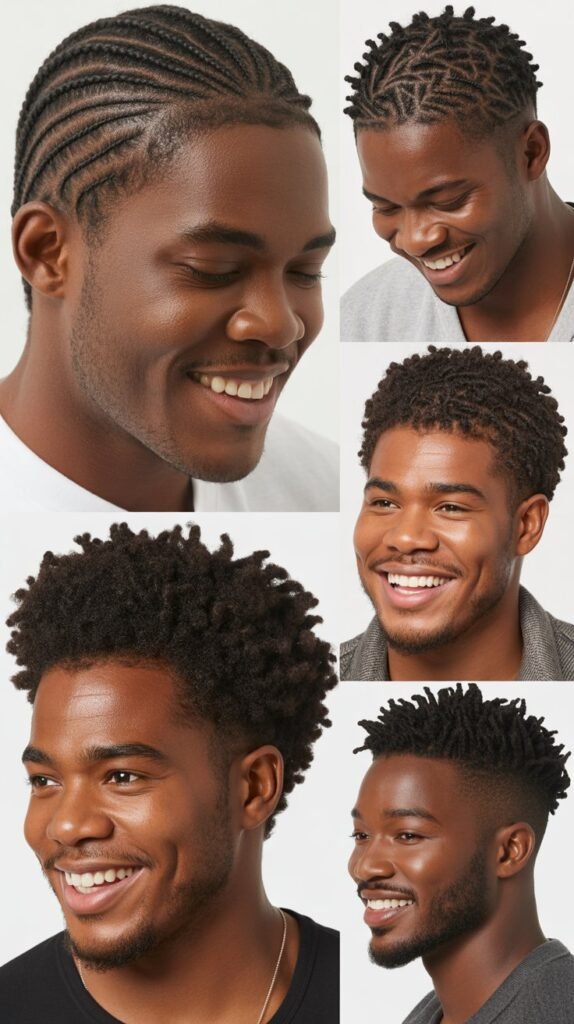
Invisible cornrows use an underhand braiding technique that tucks hair under rather than over, creating flatter braids that appear to sink into the scalp rather than sit on top of it.
Technical Distinction:
- Underhand method: Cross sections underneath rather than over top
- Flatter profile: Braids lie closer to scalp than traditional method
- Subtle appearance: Less pronounced braid visibility
- Smoother finish: Creates sleeker overall aesthetic
- Advanced technique: Requires skill and practice to execute properly
Visual Benefits:
- More understated, professional appearance
- Suitable for conservative environments requiring subtlety
- Creates clean lines without excessive dimension
- Emphasizes scalp pattern over braid texture
- Appeals to those seeking protective styling without obvious braids
Application Challenges:
- Harder to learn than traditional overhand cornrowing
- May feel awkward initially for those accustomed to standard method
- Requires consistent tension management for uniform results
- Takes slightly longer due to technique unfamiliarity
- Best executed by experienced braiders specializing in invisible method
Ideal Candidates:
- Professional settings requiring conservative grooming
- Those preferring subtle over bold styling statements
- Men with prominent scalp patterns that look attractive exposed
- Individuals seeking protective styling without obvious braids
- Anyone wanting versatile styles that photograph cleanly
Maintenance and Care Tips
Proper maintenance extends the life of your cornrows while keeping your scalp healthy and comfortable throughout the wear period.
Daily Care Routine:
- Apply lightweight oil to scalp every 2-3 days to prevent dryness
- Use spray bottle with water and leave-in conditioner mixture for moisture
- Gently massage scalp to promote blood circulation and hair health
- Avoid excessive manipulation that could cause frizzing or loosening
- Keep hands clean when touching braids to prevent product buildup
Nighttime Protection:
- Wear silk or satin bonnet to reduce friction and frizzing
- Alternatively, sleep on silk or satin pillowcase
- Ensure all braids are contained within protective covering
- Avoid sleeping with wet or damp braids
- Reposition sleeping position occasionally to prevent pressure points
Cleansing Methods:
- Use diluted shampoo applied with cotton pad or applicator bottle
- Focus on scalp rather than braids themselves
- Rinse thoroughly to prevent product buildup
- Apply light conditioner if needed for moisture
- Allow to air dry completely before covering or styling
Signs It’s Time for Removal:
- Excessive frizzing or unraveling despite maintenance efforts
- Visible new growth creating gap between scalp and braid start
- Itching or discomfort that won’t resolve with care
- Braids lasting beyond 6 weeks (risk of matting and damage)
- Desire to change style or give scalp a break
Choosing the Right Style for Your Face Shape
| Face Shape | Recommended Cornrow Styles | Styles to Avoid | Key Considerations |
|---|---|---|---|
| Oval | All styles work well, especially classic straight-back, diagonal, and freestyle patterns | No restrictions | Most versatile face shape, can experiment freely with any cornrow design |
| Round | Diagonal cornrows, side-part styles, vertical patterns, mohawk cornrows | Horizontal cornrows, styles adding width | Choose styles that create height and elongate the face vertically |
| Square | Curved cornrows, S-curves, softer patterns, side-swept designs | Harsh geometric patterns, severe straight lines | Soften angular features with flowing, curved patterns |
| Heart | Crown cornrows, styles with volume at bottom, straight-back with lower emphasis | Top-heavy designs, high volume styles | Balance wider forehead with styles emphasizing lower portions |
| Oblong | Horizontal cornrows, styles adding width, curved patterns | Long vertical styles, mohawk cornrows | Add width to balance longer face proportions |
| Diamond | Side-part cornrows, diagonal patterns, styles framing cheekbones | Styles emphasizing forehead or chin exclusively | Highlight strong cheekbones with strategic parting and direction |
Professional vs. DIY Installation
When to Choose Professional Installation:
- Complex patterns requiring advanced skills (basket weave, compass, tribal designs)
- First-time cornrow wearers unfamiliar with technique
- Styles incorporating extensions or color
- Important events requiring flawless execution
- Limited time for self-installation
- Physical limitations preventing self-reach to back of head
DIY Installation Advantages:
- Significant cost savings (professional installations range $50-$200+)
- Complete creative control over design and execution
- Flexibility to install on your own schedule
- Skill development and self-sufficiency
- Ability to make adjustments as needed
- No appointment scheduling required
Learning Resources:
- Video tutorials on reputable hair care platforms
- Practice on willing friends or family members first
- Start with simple styles before progressing to complex patterns
- Invest in proper tools (rattail comb, clips, edge control, oils)
- Join online communities for tips and troubleshooting support
- Consider taking in-person braiding workshops or classes
Cornrow History and Cultural Significance
Cornrows carry deep historical and cultural significance extending thousands of years across African civilizations and the African diaspora.
Historical Context:
- Archaeological evidence shows cornrows in Africa dating back over 5,000 years
- Ancient Ethiopian sculptures and artifacts depict intricate braided hairstyles
- Different braiding patterns indicated tribal affiliation, age, marital status, wealth, and social position
- Served practical purposes in hot climates while creating artistic expression
- Enslaved Africans maintained braiding traditions despite oppressive conditions
Cultural Evolution:
- 1960s-70s: Cornrows embraced during Black Power movement as symbols of cultural pride
- 1990s-2000s: Hip-hop culture popularized cornrows in mainstream media
- Modern era: Recognized as protective styling and cultural expression
- Ongoing discussions about cultural appreciation versus appropriation
- Increased visibility and acceptance in professional environments
Respectful Engagement:
- Understand and acknowledge the cultural origins and significance
- Learn proper terminology and techniques from authentic sources
- Support Black-owned braiding businesses and stylists
- Recognize cornrows as more than fashion trends
- Educate others about the historical and cultural importance
Conclusion
36 No Stress Easy Male Cornrow Hairstyles for Everyday Wear provides you with an extensive collection of practical, stylish options that simplify your grooming routine while protecting your natural hair.
From timeless classic straight-back cornrows to creative geometric patterns, these styles demonstrate that protective hairstyling can be both functional and fashionable.
Whether you choose professional installation or develop DIY skills, cornrows offer unmatched versatility for active lifestyles, professional environments, and personal expression.
The low-maintenance nature of these hairstyles saves valuable time while promoting healthy hair growth and reducing daily styling stress.
By selecting styles that complement your face shape, lifestyle needs, and personal aesthetic, you can confidently wear cornrows that make you feel polished and prepared for whatever the day brings.
Remember to prioritize proper maintenance, respect the cultural heritage behind these beautiful braiding traditions, and experiment with different styles until you discover your perfect everyday look.
With 36 No Stress Easy Male Cornrow Hairstyles for Everyday Wear as your comprehensive guide, you’re equipped to transform your hair routine and embrace the convenience, style, and confidence that cornrows deliver.