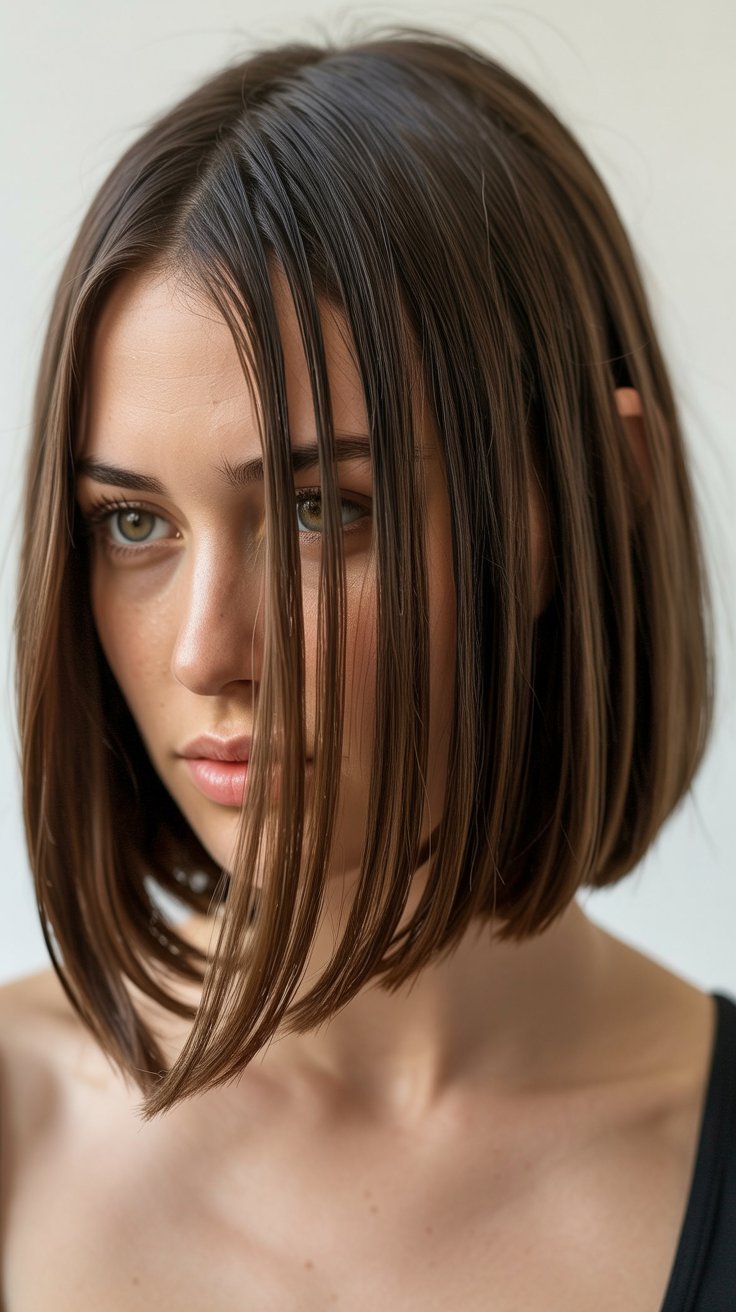
There’s something undeniably magnetic about hair that falls perfectly at your shoulders, especially when it’s enhanced with layers that gently frame your face and bring out your best features.
If you’ve been contemplating a fresh look that’s neither too short nor too long, you’re in exactly the right place. 42 Chic Mid-Length Haircuts With Soft, Face-Framing Layers explores the most flattering, versatile, and stylish options for this incredibly popular hair length.
From subtle texturizing to bold transformations, mid-length cuts with soft layers offer the perfect balance of sophistication and effortless charm.
This comprehensive guide will walk you through everything from classic bob variations to modern shag styles, textured lobs to layered cuts for different hair types, styling techniques, maintenance tips, and expert advice on choosing the perfect cut for your face shape.
Whether you have straight, wavy, curly, or thick hair, you’ll discover inspiring ideas and practical insights that will help you confidently step into your next salon appointment knowing exactly what you want.
1. The Classic Shoulder-Length Layered Bob
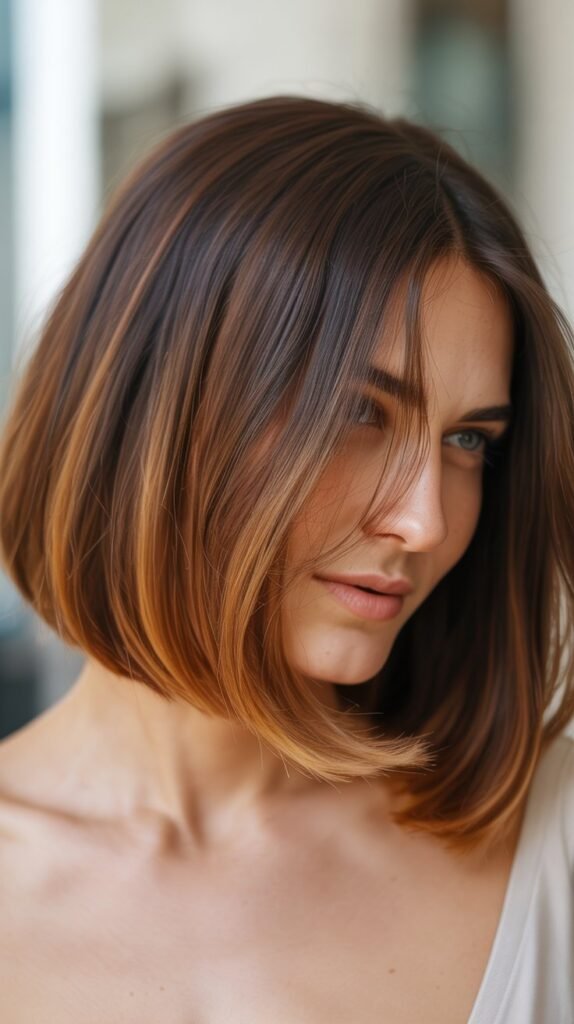
The shoulder-length layered bob remains one of the most timeless and universally flattering mid-length haircuts available today.
This style combines the sophistication of a traditional bob with the movement and dimension that layers provide, creating a look that works beautifully across all age groups and style preferences.
- The classic layered bob typically falls between the chin and shoulders, making it an ideal transition length for those growing out shorter styles or cutting longer hair.
- Soft layers are strategically placed throughout the cut to remove bulk while maintaining fullness, creating natural movement that responds beautifully to both air-drying and heat styling.
- Face-framing layers at the front can be customized to highlight your cheekbones, soften your jawline, or draw attention to your eyes depending on their placement and length.
- This versatile cut works exceptionally well with all hair textures, from pin-straight to gently wavy, and can be styled sleek and polished or tousled and textured.
- The maintenance level is relatively moderate, typically requiring trims every 6-8 weeks to maintain the shape and prevent the layers from growing out unevenly.
- Styling options range from straight and glossy using a flat iron to soft waves created with a curling wand or even effortless air-dried texture with the right products.
2. The Textured Lob With Swoopy Layers
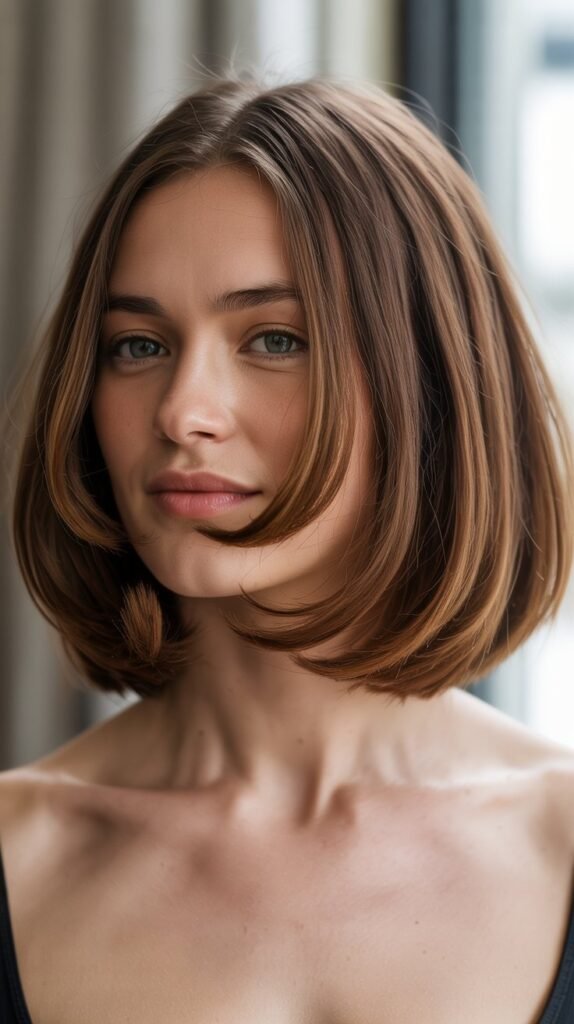
The textured lob (long bob) with swoopy layers has become a signature look for those seeking modern elegance with an undone, lived-in vibe.
This cut emphasizes natural texture while the swooping layers create beautiful movement that appears effortlessly chic.
- The lob typically extends just past the shoulders or grazes the collarbone, offering slightly more length than a traditional bob while maintaining a polished, structured silhouette.
- Swoopy layers are cut at varying lengths throughout the hair to create dimension and prevent the style from appearing too heavy or blunt.
- The texturizing technique used in this cut removes excess weight while enhancing the hair’s natural wave pattern or creating the illusion of texture in straight hair.
- This style is particularly flattering for those with oval, heart-shaped, or square face shapes as the soft layers balance facial proportions beautifully.
- Styling is remarkably low-maintenance, often requiring nothing more than a texturizing spray and some light scrunching to enhance natural waves.
- The textured lob works exceptionally well with balayage or subtle highlighting techniques that emphasize the dimensional layers.
- For a more polished look, a round brush blow-dry creates volume at the roots while the swoopy layers provide movement through the mid-lengths and ends.
3. Face-Framing Curtain Bangs With Mid-Length Layers
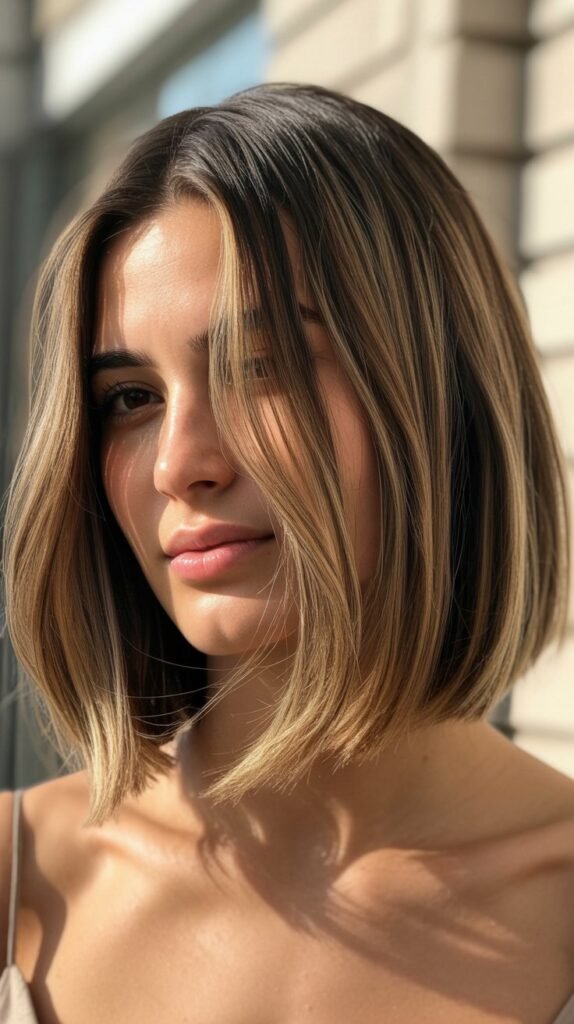
Curtain bangs paired with mid-length layered hair create an incredibly flattering, vintage-inspired look that’s experienced a major resurgence in recent years.
This combination softens facial features while adding youthful dimension to your overall style.
- Curtain bangs are parted down the middle and swept to either side of the face, typically cut to cheekbone or chin length to frame the face beautifully.
- The seamless integration between curtain bangs and face-framing layers creates a cohesive, flowing look rather than appearing as separate elements.
- This style works particularly well for softening prominent foreheads, balancing longer face shapes, or adding width to narrow faces depending on how the bangs are styled.
- The mid-length layers throughout the rest of the hair provide body and movement while preventing the style from appearing too bottom-heavy.
- Maintenance includes regular bang trims every 3-4 weeks to keep them at the ideal length, while the overall cut needs refreshing every 8-10 weeks.
- Styling curtain bangs requires minimal effort—a round brush and blow dryer or even just your fingers can create the signature swept-back shape.
- This combination is incredibly versatile for different occasions, from casual everyday looks to more sophisticated styles for formal events.
4. The Shaggy Mid-Length Cut With Choppy Layers
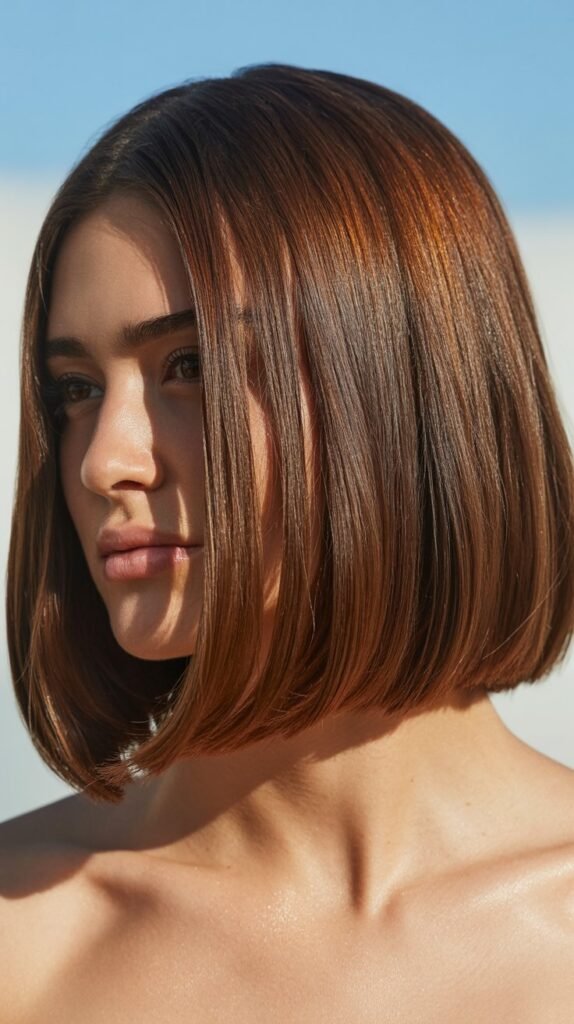
The shag haircut has evolved from its 1970s roots into a contemporary favorite that embraces texture, movement, and effortless cool.
When executed at mid-length with choppy layers, this cut delivers maximum style impact with a carefree attitude.
- Shaggy cuts feature heavily layered, often choppy pieces throughout the hair that create an intentionally undone, rock-and-roll aesthetic.
- The choppy layers are cut at varying lengths with point-cutting or razor techniques to create separation and texture rather than uniform smoothness.
- This style adds significant volume to fine or thin hair by removing weight and creating the illusion of fuller, thicker locks.
- Face-framing layers in a shag are typically shorter around the face and gradually increase in length toward the back, creating a flattering halo effect.
- The versatility of this cut allows it to be styled messy and textured for casual days or smoothed and refined for more polished occasions.
- Product selection is key for shags—texturizing sprays, sea salt sprays, and light styling creams enhance the piecey, separated look.
- Regular maintenance every 6-8 weeks keeps the layers fresh and prevents the cut from losing its distinctive shape and dimension.
5. Soft Layered Cut For Thick Hair
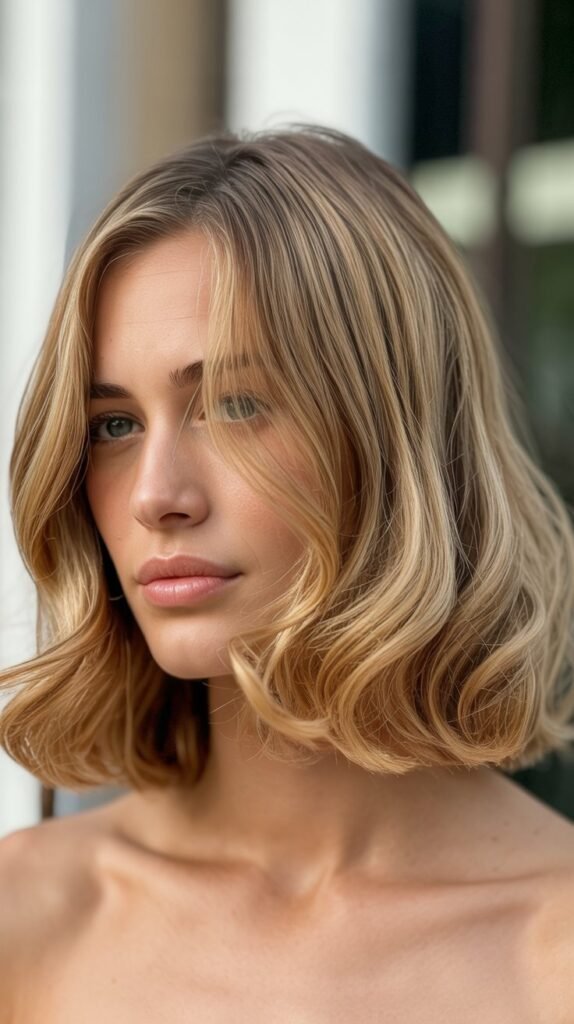
Thick hair presents unique challenges and opportunities when it comes to mid-length layered cuts, and the right approach can transform heavy, unmanageable hair into a beautifully balanced, moveable style.
Soft layers strategically placed throughout thick hair remove excess bulk while maintaining fullness where you want it.
- Internal layering techniques remove weight from the interior of thick hair without compromising the overall fullness and density.
- Face-framing layers add softness and movement around the face while the bulk of the hair maintains its natural volume and body.
- The cutting technique for thick hair often involves slide-cutting or point-cutting to create seamless blending between layers rather than harsh, visible lines.
- This approach prevents the dreaded triangle shape that thick hair often develops when improperly layered, maintaining a balanced silhouette.
- Styling products for thick, layered hair should focus on smoothing and controlling frizz while enhancing shine and movement.
- The maintenance schedule for thick hair cuts typically runs every 8-10 weeks as thick hair tends to hold its shape longer than finer textures.
- Blow-drying with a round brush or air-drying with smoothing products both work well depending on your desired finish and time availability.
6. Wispy Layered Cut For Fine Hair
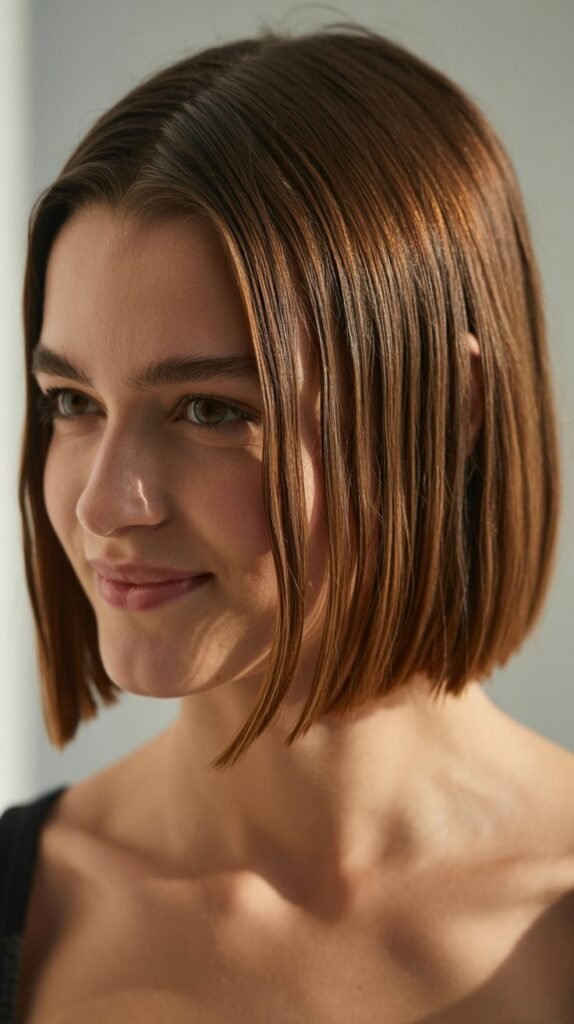
Fine hair requires a specialized layering approach that adds body and movement without removing too much precious density.
Wispy, delicate layers create the illusion of fuller hair while maintaining enough weight to prevent the style from appearing thin or stringy.
- Minimal layering concentrated at the face and ends creates movement without sacrificing the appearance of thickness that fine hair needs.
- The cutting technique focuses on long layers rather than short, choppy ones to maintain as much density as possible throughout the hair.
- Face-framing pieces are cut with precision to create soft, wispy tendrils that add dimension without creating gaps in the overall style.
- Strategic placement of layers can create the illusion of volume, particularly when combined with the right styling techniques and products.
- Volumizing products including root lifters, thickening sprays, and lightweight mousses are essential for maximizing the appearance of fullness.
- Blow-drying with the hair lifted at the roots using a round brush creates lasting volume that makes fine hair appear significantly fuller.
- Regular trims every 6-8 weeks prevent split ends that can make fine hair appear even thinner and more fragile.
7. Blunt Cut With Subtle Internal Layers
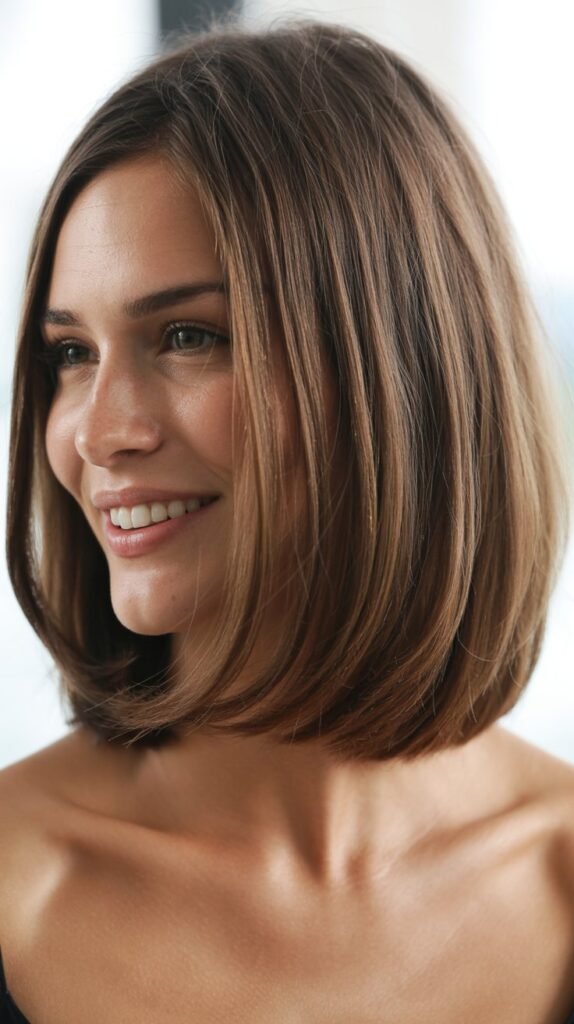
The blunt cut with subtle internal layers offers a sleek, modern aesthetic that maintains a strong perimeter line while incorporating hidden layering for movement and manageability.
This sophisticated style appeals to those who love clean lines but need the functionality of layers.
- The blunt perimeter creates a strong, definitive edge that appears thick and healthy while projecting confidence and polish.
- Internal layers are strategically placed beneath the surface, removing bulk and adding movement without disrupting the blunt exterior appearance.
- This technique works exceptionally well for all hair types but particularly shines on medium to thick hair that needs weight removal.
- The style maintains its shape beautifully between salon visits and grows out gracefully without developing awkward lengths.
- Face-framing layers can be incorporated subtly to soften the look around the face while maintaining the blunt line at the back.
- Styling is straightforward and typically involves blow-drying smooth with a paddle brush or flat ironing for ultra-sleek results.
- The maintenance schedule is flexible, with cuts needed every 8-12 weeks depending on how quickly your hair grows and how precise you want the line to remain.
8. Layered Cut With Side-Swept Bangs
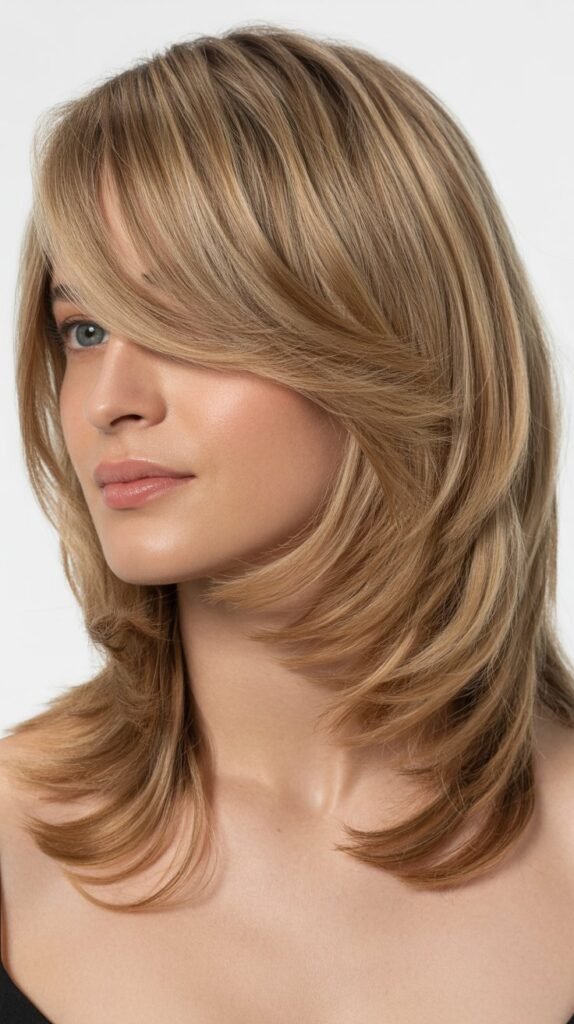
Side-swept bangs paired with mid-length layers create a feminine, versatile look that flatters virtually every face shape and adds instant sophistication to your style.
This classic combination has remained popular because it successfully balances coverage with flattery.
- Side-swept bangs are longer than traditional bangs, typically cut to eye or cheekbone length and designed to be worn swept across the forehead.
- The bangs blend seamlessly into face-framing layers, creating a cohesive flow rather than appearing as a separate element.
- This style effectively minimizes the appearance of a prominent forehead, balances asymmetrical features, or softens angular face shapes.
- The versatility of side-swept bangs allows them to be styled forward for more coverage or pinned back when you want a different look.
- Maintenance for the bangs requires trims every 3-4 weeks to keep them at the ideal length and prevent them from becoming too long.
- The mid-length layers throughout provide movement and body while the side-swept bangs add focus and frame the face beautifully.
- Styling typically involves blow-drying the bangs to the side with a round brush while the layers can be straightened, curled, or air-dried depending on preference.
9. Angled Bob With Long Face-Framing Layers
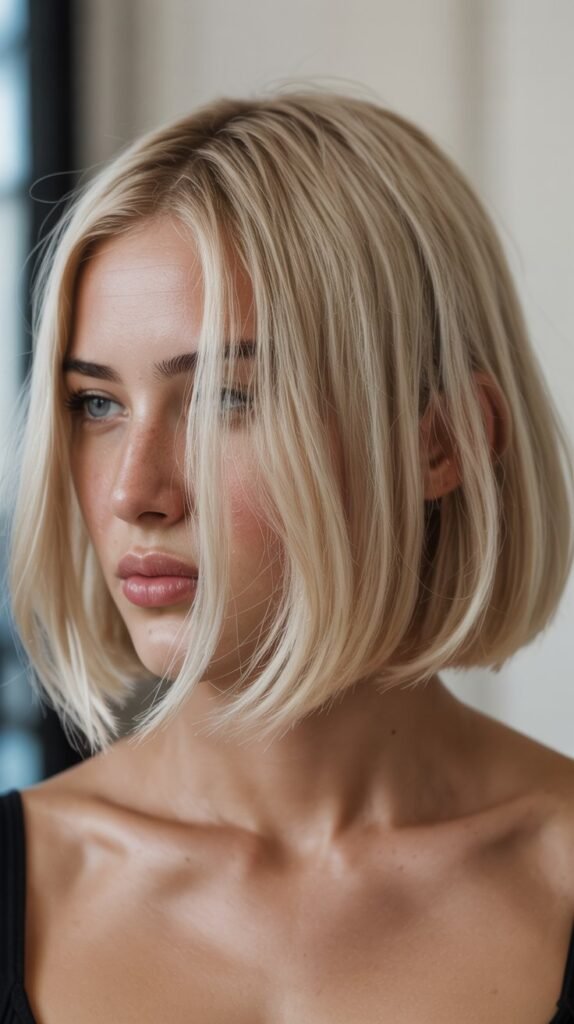
The angled bob with long face-framing layers creates a dramatic, fashion-forward look that combines geometric precision with soft, flattering contours.
This style has become a favorite among those seeking a bold yet wearable statement cut.
- The angled shape features shorter layers at the back that gradually lengthen toward the front, creating a distinctive diagonal line.
- Long face-framing pieces at the front soften the dramatic angle and draw attention to your facial features in a flattering way.
- This cut adds volume at the crown through shorter back layers while the longer front pieces elongate the neck and frame the face.
- The style works particularly well for those with straight or slightly wavy hair as the clean lines are most visible on smoother textures.
- Face shapes that benefit most from this cut include round, square, and heart-shaped faces as the diagonal line creates elongation and balance.
- Styling can range from sleek and straight to add emphasis to the angle, or with gentle waves for a softer interpretation.
- Maintenance requires regular trims every 6-8 weeks to preserve the distinctive angle and prevent the layers from growing out unevenly.
10. Layered Cut For Curly Mid-Length Hair
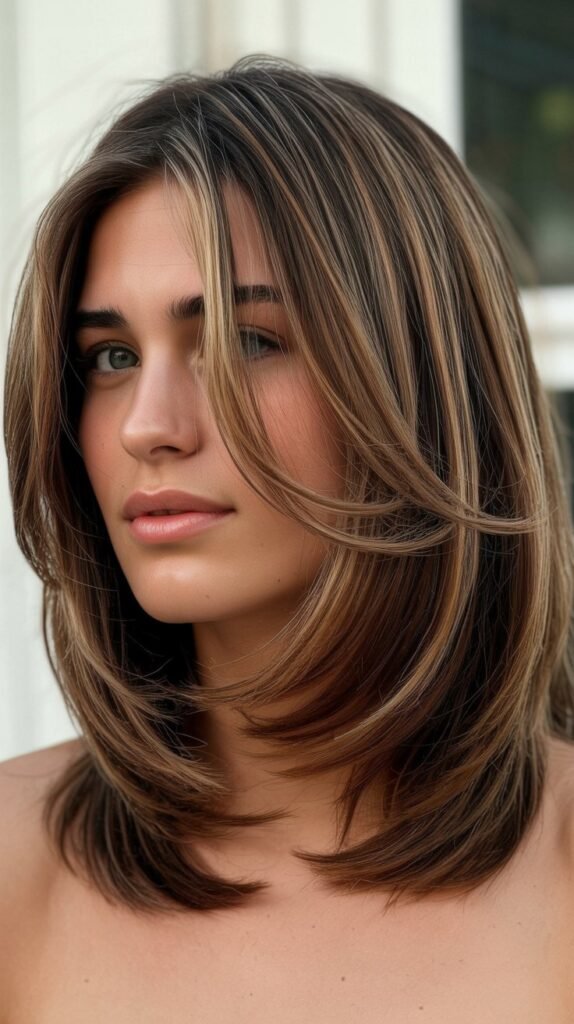
Curly hair at mid-length with properly placed layers can transform heavy, triangular shapes into beautifully balanced, bouncy styles that showcase natural curl patterns.
The key is understanding how to layer curls without creating frizz or disrupting the curl formation.
- Curly hair layering must account for shrinkage, cutting the hair dry or when styled to see exactly how the layers will fall when the curls spring up.
- Face-framing layers reduce bulk around the face while allowing curls to bounce and form their natural spiral patterns.
- The cutting technique typically involves cutting curl by curl to maintain the integrity of each spiral and prevent disrupting the curl pattern.
- Layers throughout the mid-lengths remove weight that can drag curls down while maintaining enough length to prevent excessive volume at the top.
- Product application is crucial for layered curly hair, with curl creams, gels, and leave-in conditioners defining curls while controlling frizz.
- Styling methods like plopping, diffusing, or air-drying enhance natural curl patterns while the layers create beautiful dimension and movement.
- Regular moisture treatments and deep conditioning are essential for maintaining healthy curls that showcase the layered cut beautifully.
11. Feathered Layers For Soft Movement
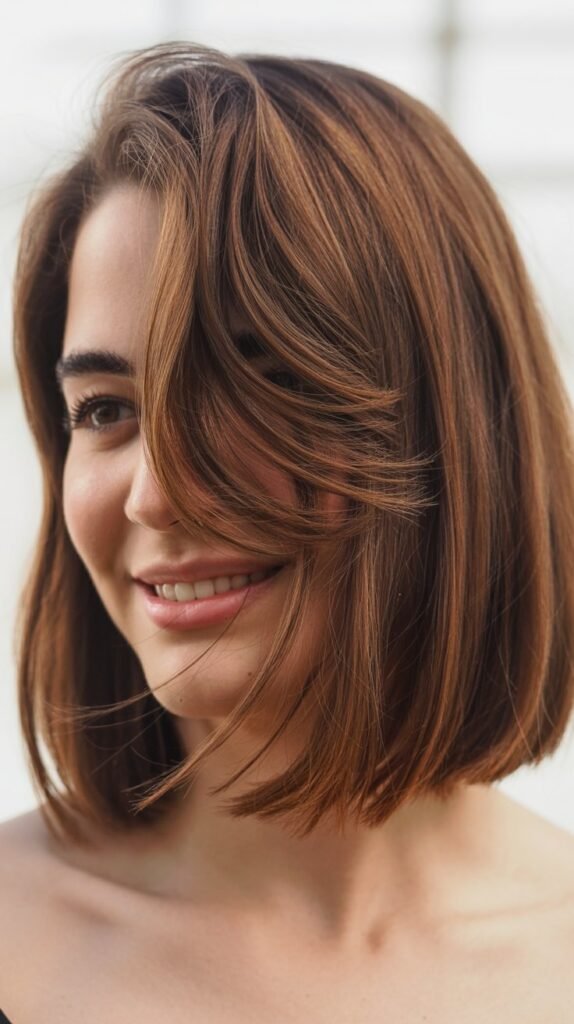
Feathered layers create soft, flowing movement that appears almost weightless and gives hair a graceful, feminine quality.
This technique involves cutting the hair with a razor or point-cutting to create wispy, tapered ends that move beautifully with minimal styling.
- The feathering technique creates layers that blend seamlessly into each other rather than creating distinct separations or visible lines.
- This approach works exceptionally well for adding movement to straight or slightly wavy hair that tends to fall flat or appear heavy.
- Face-framing feathered layers soften facial features and create a romantic, ethereal quality that’s both timeless and contemporary.
- The wispy ends created through feathering reduce bulk significantly, making this technique ideal for medium to thick hair types.
- Styling feathered layers is remarkably easy, often requiring nothing more than a blow-dry with your fingers or a round brush for added volume.
- The maintenance schedule for feathered cuts typically runs every 6-8 weeks to maintain the soft, blended appearance and prevent split ends.
- Color techniques like balayage or highlights beautifully emphasize the dimensional quality of feathered layers, making the movement even more visible.
12. Asymmetrical Mid-Length Cut With Layers
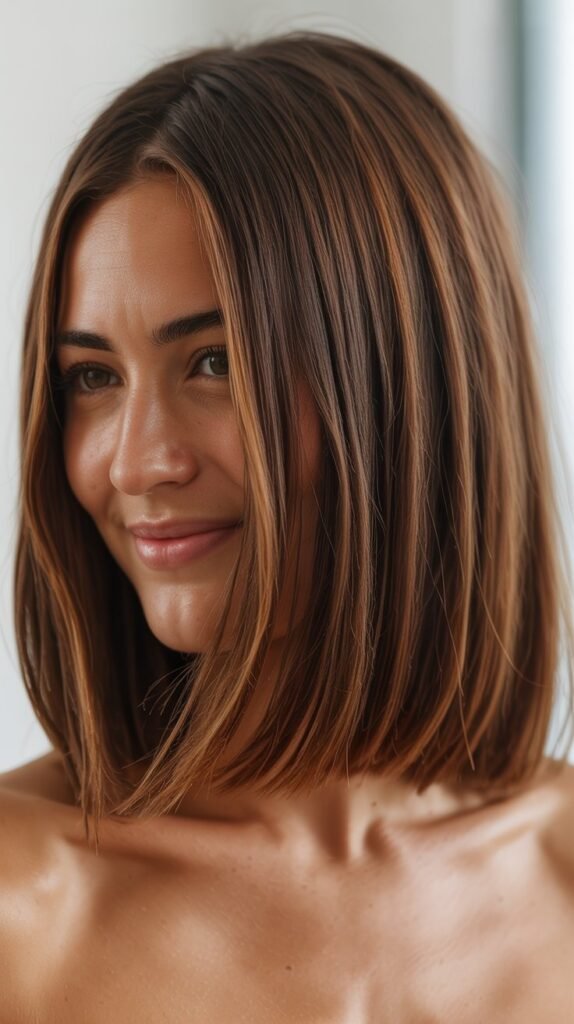
Asymmetrical cuts break traditional symmetry rules to create edgy, artistic styles that make bold statements while remaining surprisingly wearable.
When combined with soft layers, asymmetry becomes approachable and flattering rather than extreme.
- Asymmetrical cuts feature intentionally uneven lengths, typically with one side longer than the other, creating visual interest and contemporary edge.
- Soft layers integrated throughout the asymmetrical cut prevent it from appearing too harsh or dramatic while adding movement and dimension.
- This style works particularly well for those with straight or gently wavy hair as the asymmetry is most visible on smoother textures.
- Face-framing layers can be incorporated on the longer side to create balance and ensure the style flatters your features rather than overwhelms them.
- The asymmetry naturally draws attention and creates a focal point, making this an excellent choice for those wanting to make a style statement.
- Styling can emphasize the asymmetry by wearing hair sleek and straight or soften it with gentle waves that blend the different lengths.
- Maintenance for asymmetrical cuts requires commitment, with trims every 6-8 weeks essential to maintain the precise asymmetrical shape.
13. V-Shaped Layered Cut
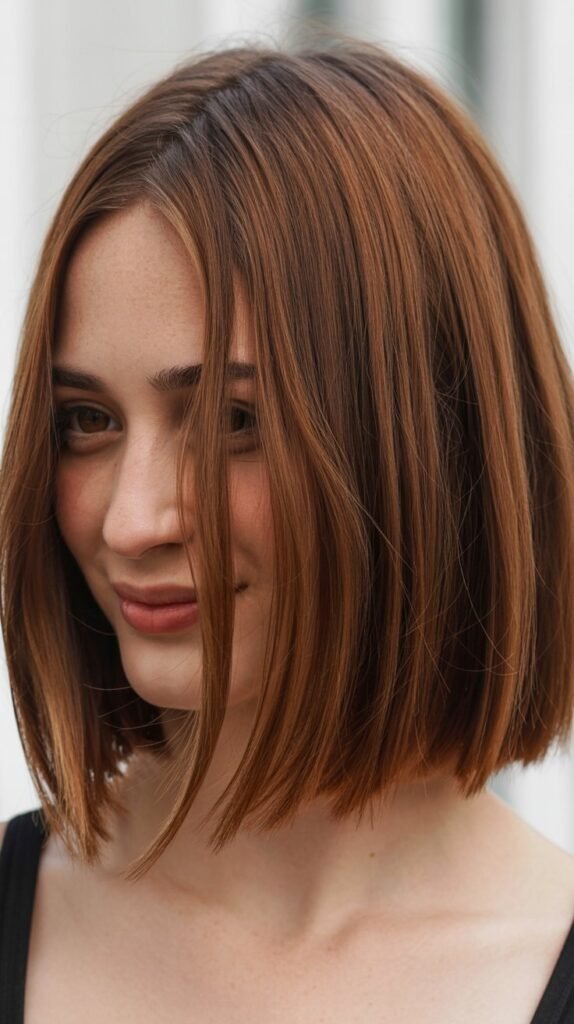
The V-shaped layered cut creates a distinctive pointed silhouette at the back that’s both eye-catching and flattering from every angle.
This shape adds interest to mid-length hair while the layers throughout provide dimension and movement.
- The V-shape is created by cutting the hair shorter at the sides and gradually lengthening toward the center back, forming a distinct point.
- Layers throughout the cut prevent the V-shape from appearing too heavy or bottom-loaded while adding body and movement to all sections.
- This cut works beautifully for those with long faces or prominent foreheads as it draws attention downward and creates horizontal visual interest.
- The V-shape is particularly flattering when hair is worn down and flowing, showcasing the distinctive pointed silhouette.
- Face-framing layers at the front balance the drama of the back, ensuring the style flatters from all angles rather than just behind.
- Styling options range from straight and sleek to emphasize the clean lines to wavy or curled to soften the geometric shape.
- Color placement can enhance the V-shape dramatically, with darker colors at the perimeter and lighter tones at the interior creating depth.
14. Graduated Layers For Volume And Shape
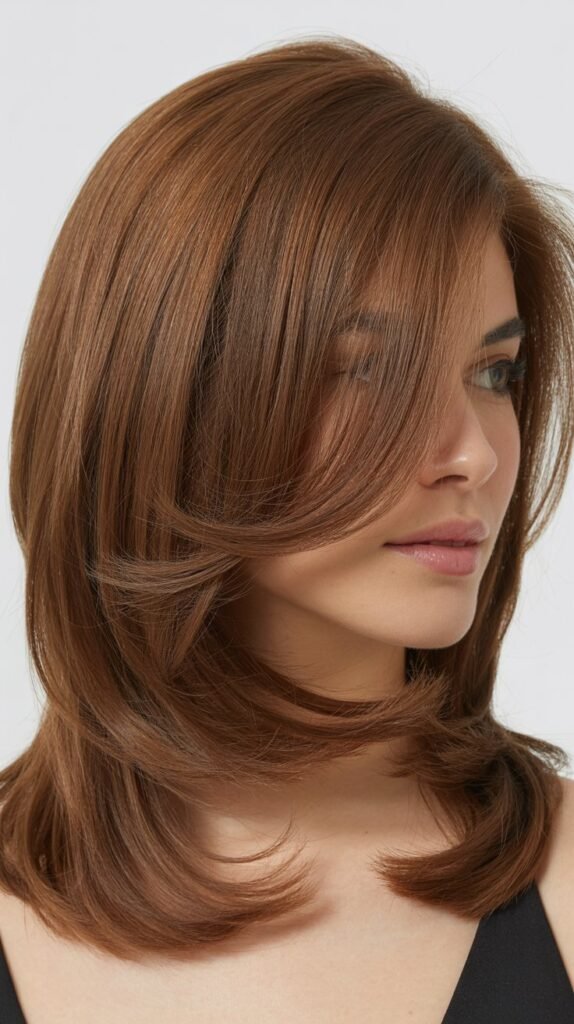
Graduated layers create a stacked effect that builds volume at the crown while maintaining length at the perimeter, resulting in a beautifully shaped silhouette with built-in body.
This technique is particularly effective for those seeking maximum impact from their mid-length cut.
- Graduated layering involves cutting shorter layers at the top and crown that progressively lengthen toward the perimeter, creating a stacked, voluminous effect.
- The technique naturally lifts hair away from the head, creating body and fullness without requiring extensive styling or product.
- This approach works exceptionally well for fine or thin hair as it creates the illusion of significantly more volume and density.
- Face-framing layers can be incorporated to soften the style and ensure it flatters facial features while maintaining the voluminous shape.
- The graduated cut maintains its shape remarkably well between salon visits, making it a practical choice for busy lifestyles.
- Styling typically involves blow-drying with a round brush to enhance the natural volume created by the layering technique.
- Maintenance should occur every 6-8 weeks to preserve the graduated shape and prevent the layers from growing out and losing their lift.
15. Long Layered Lob With Textured Ends
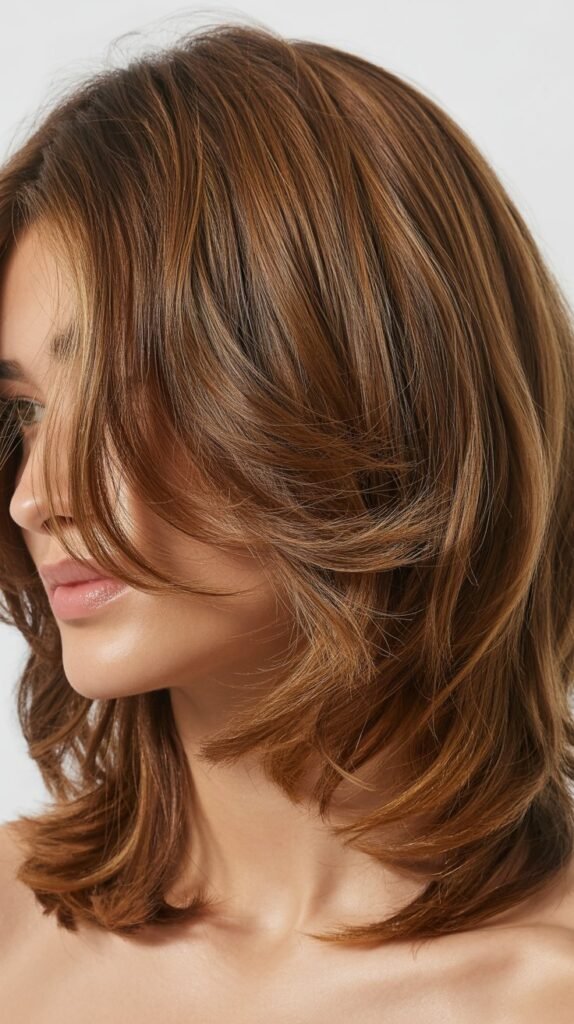
The long layered lob features extended length that hovers around the collarbone or just below with textured ends that create a modern, lived-in appearance.
This style bridges the gap between truly long hair and shorter cuts while offering maximum versatility.
- The length sits in the sweet spot where hair can still be pulled into a ponytail or bun while maintaining a fresh, manageable length.
- Long layers throughout create movement without removing too much weight, maintaining fullness while preventing the style from appearing too heavy.
- Textured ends are achieved through point-cutting or razor techniques that create separation and an intentionally undone finish.
- This style works beautifully across all hair types and textures, from straight to wavy to slightly curly, adapting to natural texture patterns.
- The longer length provides more styling versatility, allowing for updos, half-up styles, braids, and various other options beyond wearing it down.
- Face-framing pieces can be customized to your preferred length and style, from shorter wispy pieces to longer sweeping sections.
- Maintenance is relatively low compared to shorter cuts, typically requiring trims every 8-10 weeks to refresh the ends and maintain the layered shape.
16. Razor-Cut Layers For Edgy Texture
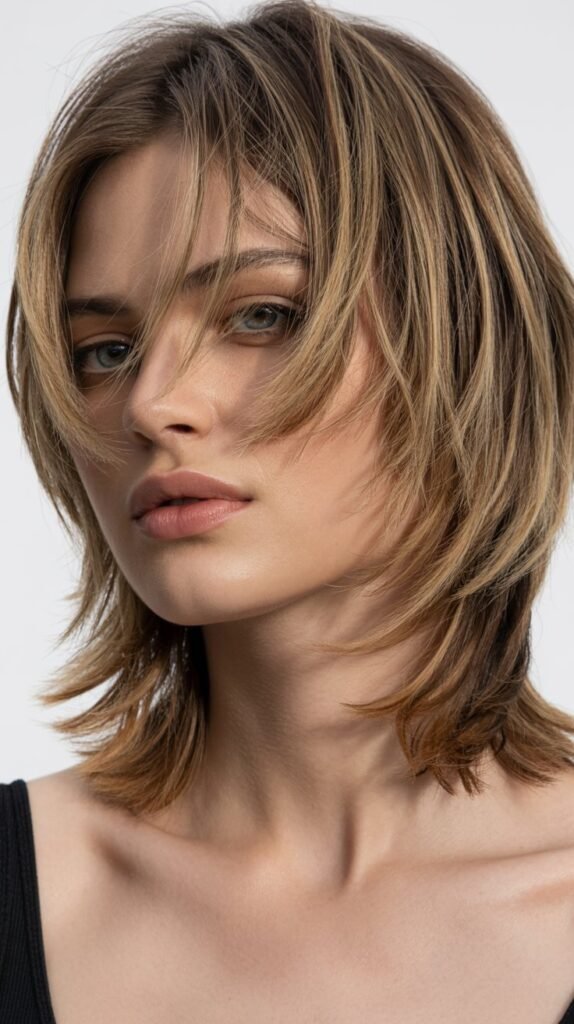
Razor-cutting creates distinctively textured layers with wispy, separated ends that deliver an edgy, modern aesthetic quite different from traditional scissor-cut layers.
This technique produces a softer, more feathered appearance that moves beautifully and requires minimal styling.
- The razor technique slices through hair at an angle, creating tapered ends that are softer and more piecey than blunt scissor cuts.
- This method removes weight while creating significant texture and movement, making it ideal for thick or heavy hair that needs lightening.
- Razor-cut layers blend seamlessly into each other, creating a cohesive flow rather than distinct layer lines or separations.
- The technique creates hair that moves more freely and has a naturally undone, effortless quality that suits casual, contemporary styles.
- Face-framing razor-cut pieces create soft, wispy tendrils that frame the face with a delicate, feminine touch.
- Styling is remarkably easy as the razor-cut texture naturally falls into place with minimal effort, often looking best with air-drying or simple blow-drying.
- One consideration is that razor-cutting can potentially cause more split ends on certain hair types, so regular trims every 6-8 weeks are important.
17. Layered Cut With Balayage Highlights
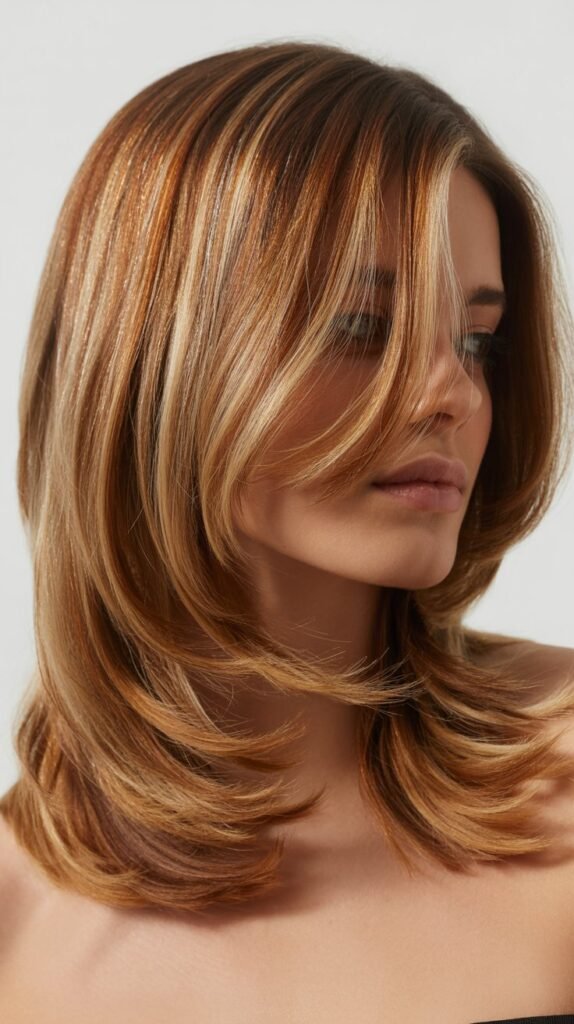
Combining strategic layering with balayage highlighting creates a dimensional, sun-kissed appearance that enhances the movement and texture created by the cut.
This powerful combination of cutting and coloring techniques delivers maximum visual impact.
- Balayage highlights are hand-painted onto hair in a sweeping motion, creating a natural-looking gradient of color that emphasizes layers beautifully.
- The highlighting technique follows the natural movement of the layers, placing lighter pieces where the sun would naturally lighten hair.
- Face-framing highlights combined with face-framing layers create a brightening effect that draws attention to your features and complexion.
- The dimensional color makes layers more visible and pronounced, creating the appearance of more movement and texture than a single-tone color would.
- This combination requires less frequent touch-ups than traditional all-over color since the grown-out roots blend naturally with the base color.
- Styling becomes even more rewarding as the highlights catch light differently throughout the layers, creating beautiful depth and dimension.
- Maintenance includes regular cuts every 8-10 weeks to maintain the layered shape and highlight touch-ups every 3-4 months depending on the contrast level desired.
18. Piece-y Layered Cut For Low-Maintenance Style
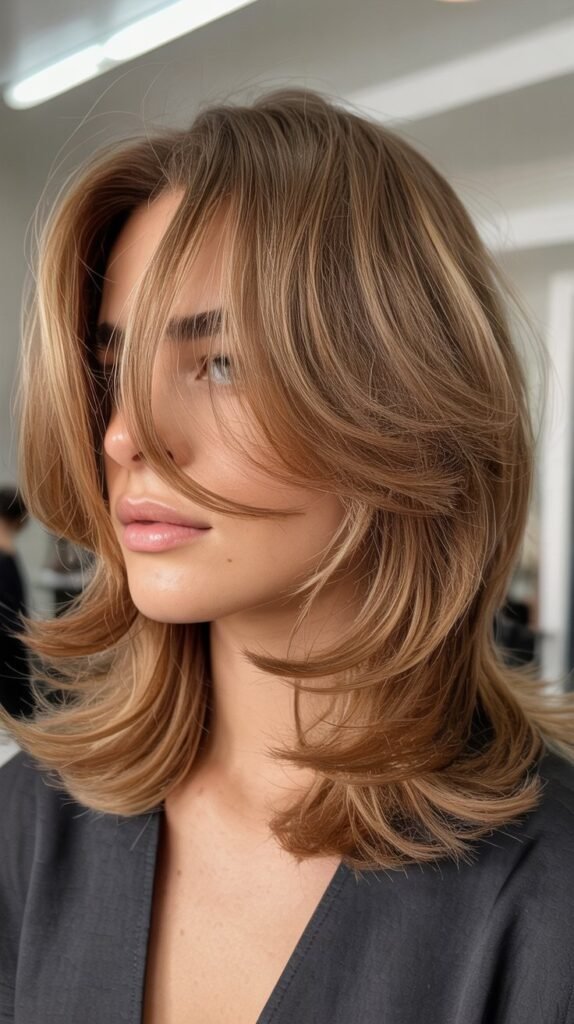
The piece-y layered cut embraces separation and texture for an intentionally undone look that’s perfect for those seeking minimal styling time with maximum style impact.
This approach creates hair that naturally falls into separated, textured pieces rather than blending smoothly.
- Piece-y layers are achieved through point-cutting, slide-cutting, or razor techniques that create separation and prevent sections from clumping together.
- The style works with your hair’s natural texture rather than fighting against it, making it ideal for those who prefer air-drying or minimal heat styling.
- Face-framing piece-y layers create soft, separated tendrils that frame the face in a casual, effortless way.
- This cut particularly suits those with naturally wavy or slightly unruly hair as it transforms potential problems into intentional style elements.
- Product selection focuses on texturizing sprays, sea salt sprays, or light styling creams that enhance separation rather than smoothing everything together.
- The maintenance schedule is flexible since the intentionally undone nature means the cut grows out gracefully without requiring frequent trims.
- Styling typically involves applying product to damp hair, scrunching or tousling with your hands, and allowing it to air-dry or diffusing gently.
19. Shoulder-Grazing Layers With Flipped Ends
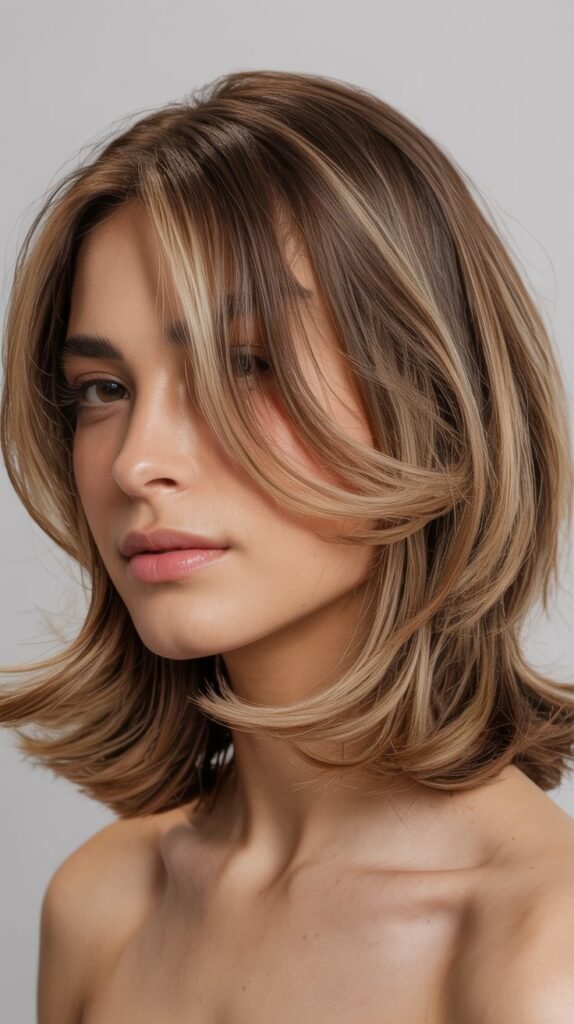
Hair that grazes the shoulders with layers and flipped ends creates a playful, retro-inspired look that’s simultaneously sophisticated and fun.
The outward flip at the ends adds personality and prevents the style from appearing too serious or severe.
- Shoulder-grazing length is universally flattering and incredibly versatile, working well for professional environments while remaining stylish and current.
- Layers throughout create movement and prevent the style from appearing too heavy or flat against the head.
- Flipped ends are achieved through blow-drying with a round brush, rolling the hair outward at the ends to create a gentle flip.
- This styling detail adds volume at the perimeter and creates a perky, youthful quality that lifts the overall appearance.
- The style works beautifully with all hair types, though straight to slightly wavy hair shows the flipped ends most prominently.
- Face-framing layers complement the flipped ends by creating additional movement around the face that mirrors the outward movement at the perimeter.
- Maintenance includes regular trims every 6-8 weeks to maintain the shoulder-grazing length and keep the ends healthy enough to flip smoothly.
20. Layered Cut For Straight Hair
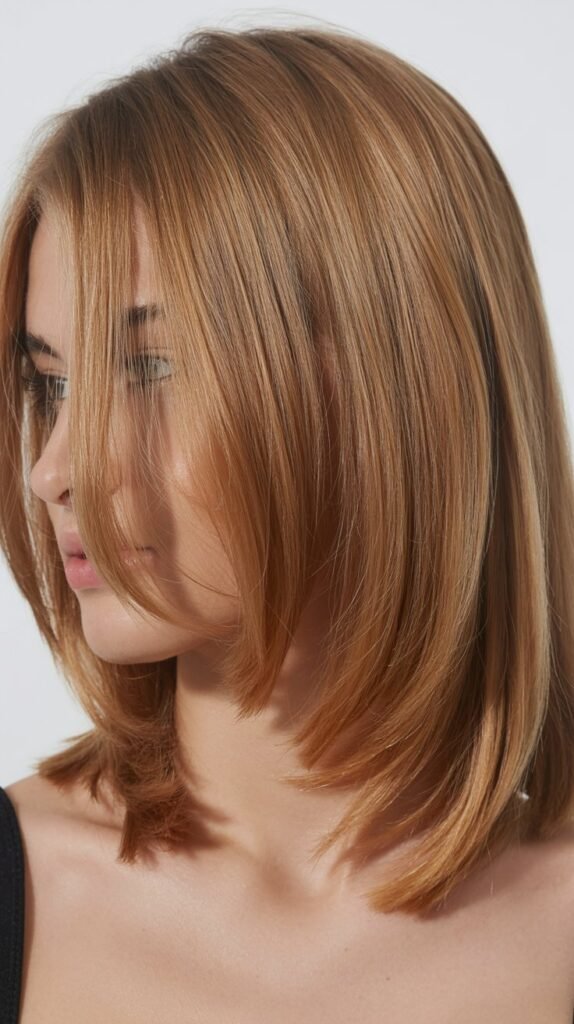
Straight hair benefits immensely from strategic layering that creates movement and dimension in hair that might otherwise fall flat and lifeless.
The right layering approach transforms stick-straight hair into a dynamic, dimensional style.
- Straight hair shows layers most clearly since there’s no curl or wave pattern to obscure the cutting lines, making precision especially important.
- Long, subtle layers work best for straight hair, creating movement without removing too much weight that could cause the style to appear thin or stringy.
- Face-framing layers add interest around the face and prevent straight hair from appearing too severe or one-dimensional.
- The cutting angle for straight hair layers is crucial—too much graduation creates unwanted volume, while too little fails to create movement.
- Styling straight layered hair can involve adding waves or curls with hot tools to emphasize the layers or keeping it sleek to showcase the precise cutting.
- Products for straight layered hair should add shine and smoothness without weighing hair down or making it appear greasy or flat.
- Maintenance is straightforward with trims every 8-10 weeks sufficient to maintain the layered shape and keep ends healthy and blunt.
21. Layered Cut For Wavy Hair
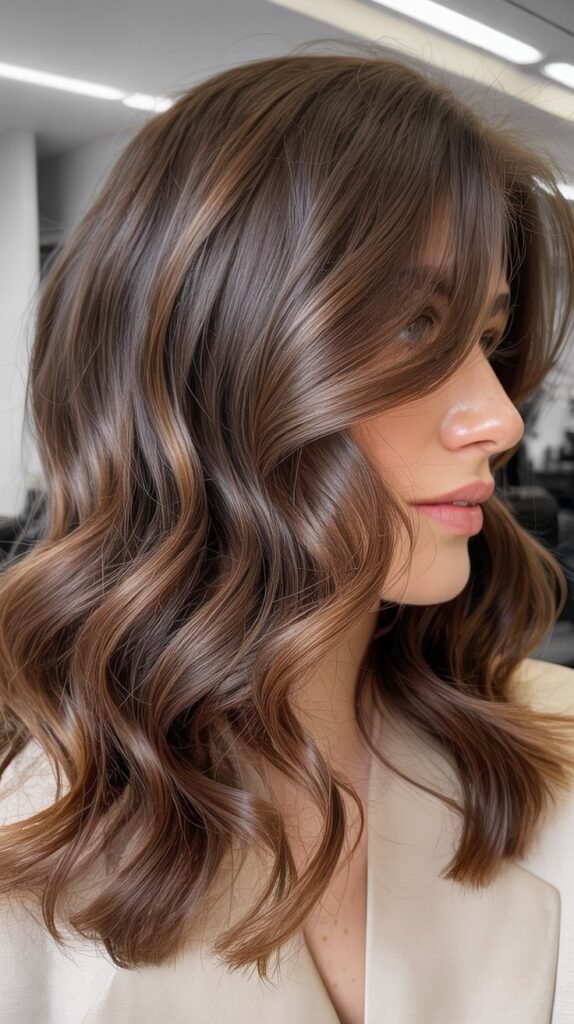
Wavy hair offers the perfect canvas for layered cuts, as the natural wave pattern beautifully showcases dimensional layering while the layers enhance and define the waves.
This harmonious combination creates effortlessly beautiful, beachy styles.
- Layers in wavy hair should follow the natural wave pattern, cutting the hair when styled so the layers work with rather than against the waves.
- The removal of weight through layering allows waves to form more defined, bouncy patterns rather than being dragged down by excess heaviness.
- Face-framing layers enhance wavy hair by creating soft, romantic tendrils that frame the face with natural movement and texture.
- Different wave patterns from loose S-waves to tighter patterns all benefit from customized layering approaches that respect the hair’s natural texture.
- Styling wavy layered hair can be as simple as air-drying with a curl-enhancing product or using a diffuser to amplify natural wave patterns.
- The layers create natural volume and body in wavy hair without requiring extensive styling time or heat tools.
- Maintenance includes trims every 8-10 weeks to maintain the layered shape and prevent split ends that can disrupt wave patterns.
22. Layered Cut With Hidden Undercut
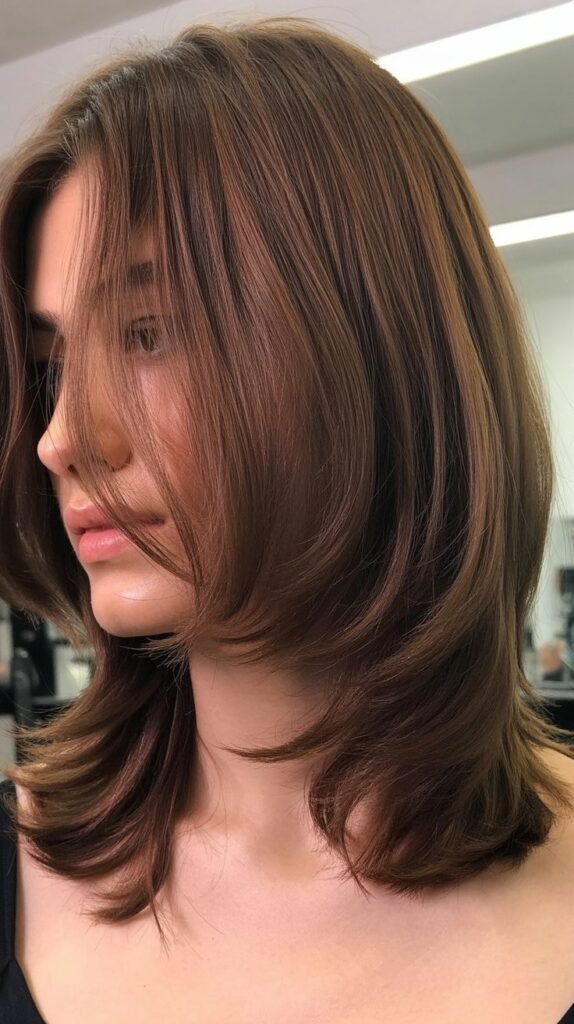
Combining visible layers with a hidden undercut creates a unique style that offers versatility, edge, and practical benefits for those with thick or heavy hair.
The undercut removes bulk invisibly while the layers provide beautiful surface texture.
- The undercut section is shaved or cut very short beneath the longer top layers, remaining hidden when hair is worn down but visible when styled up.
- This technique dramatically reduces bulk and weight in thick hair without compromising the appearance of fullness on the surface.
- Face-framing layers on top blend seamlessly with the longer hair, creating a cohesive look that doesn’t reveal the edgy undercut beneath.
- The hidden undercut provides styling versatility—wear hair down for a traditional look or pull it up to reveal the shaved section for instant edge.
- This approach significantly reduces drying time and makes thick hair more manageable while creating a unique style statement.
- The undercut section requires maintenance every 4-6 weeks to keep it short and prevent it from growing out and losing its purpose.
- Styling the longer layers can be done with any preferred method while the undercut provides cool comfort and reduced bulk.
23. Soft Graduated Bob With Face-Framing Pieces
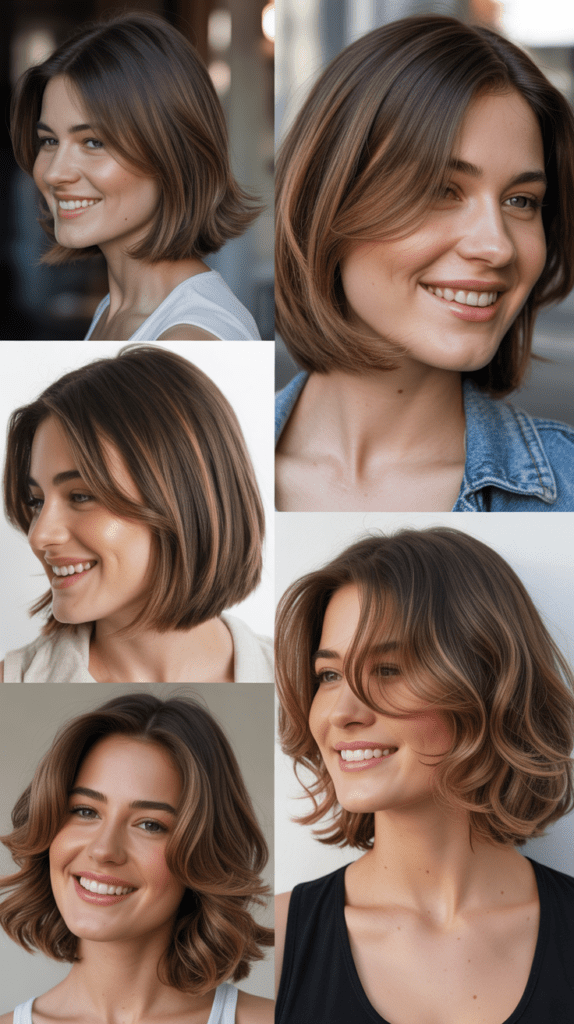
The soft graduated bob combines stacked layers at the back with longer face-framing pieces at the front for a sophisticated style that flatters almost every face shape and age.
This modern classic offers structure with femininity.
- The graduated back creates volume and lift at the crown through stacked, shorter layers that build body naturally without extensive styling.
- Face-framing pieces at the front soften the structured back and draw attention to facial features in a flattering, feminine way.
- The length difference between back and front creates visual interest and prevents the style from appearing too uniform or predictable.
- This cut is particularly flattering for round or full faces as the longer front pieces create vertical lines that elongate the face shape.
- Styling the graduated bob involves blow-drying with a round brush, focusing on creating volume at the back while smoothing the longer front sections.
- The structured nature of this cut means it maintains its shape well between appointments, making it a practical choice for busy schedules.
- Maintenance should occur every 6-8 weeks to preserve the graduation at the back and keep the face-framing pieces at the ideal length.
24. Layered Cut With Micro Bangs
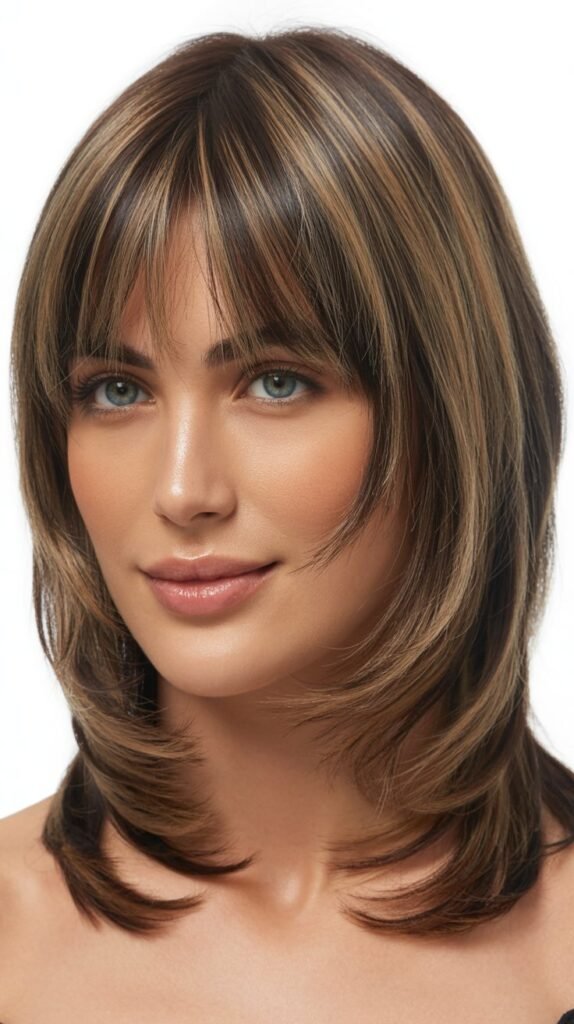
Pairing micro bangs with mid-length layers creates a bold, fashion-forward look that makes an immediate statement while remaining surprisingly wearable.
This daring combination pushes style boundaries while the layers keep it balanced.
- Micro bangs are cut very short, typically ending well above the eyebrows, creating a distinctive, edgy focal point for the entire hairstyle.
- The contrast between the short micro bangs and mid-length layered hair creates visual interest and modern appeal.
- Face-framing layers help transition from the ultra-short bangs to the longer mid-length hair, creating a cohesive rather than disjointed appearance.
- This style works best for those with small to medium foreheads as the short bangs draw significant attention to the forehead area.
- Commitment is required for micro bangs as they’re difficult to grow out gracefully and require regular maintenance every 2-3 weeks.
- Styling the layers can emphasize the contrast with the micro bangs through sleek, straight styling or soften it with gentle waves.
- The bold nature of micro bangs makes this cut ideal for those confident in their style choices and willing to embrace attention.
25. Layered Cut With Babylights
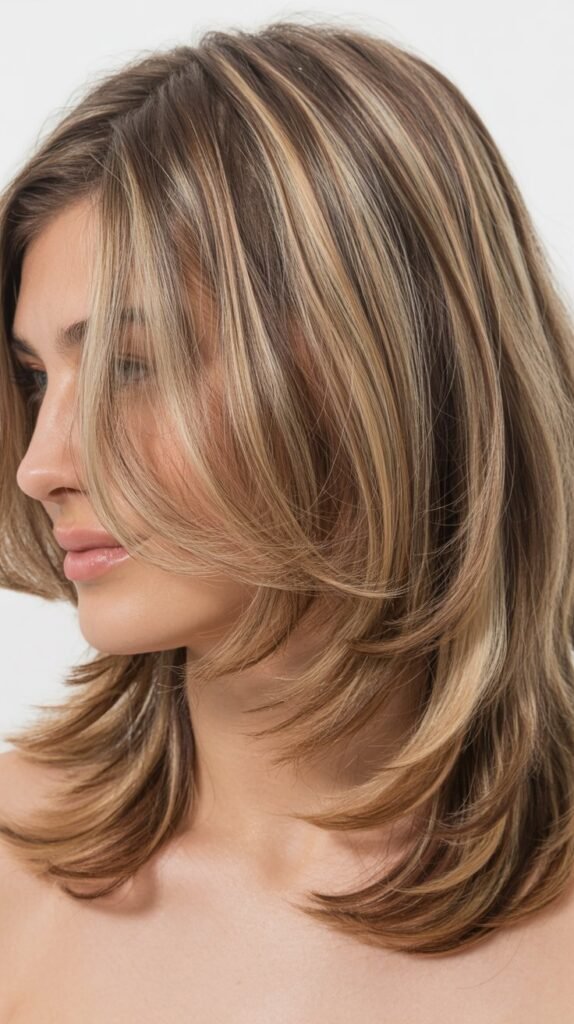
Babylights are ultra-fine, delicate highlights that mimic the natural sun-kissed dimension children often have, and when combined with layers, they create soft, luminous dimension that enhances movement beautifully.
This subtle coloring technique adds sophistication to layered cuts.
- Babylights are much finer and more delicate than traditional highlights, creating a soft, natural-looking dimension rather than obvious contrast.
- The fine highlights emphasize the movement created by layers, catching light differently throughout the cut to showcase dimension.
- This technique is particularly effective around the face where babylights combined with face-framing layers create a brightening, illuminating effect.
- The subtle nature of babylights means maintenance is less frequent than traditional highlights, typically requiring touch-ups every 3-4 months.
- Babylights work beautifully across all base colors from dark brunettes to light blondes, creating customized dimension appropriate to each starting color.
- The combination of babylights and layers creates a high-end, expensive-looking result that appears naturally sun-kissed rather than obviously colored.
- Styling layered hair with babylights in natural light showcases the dimension beautifully as the fine highlights catch and reflect light throughout the layers.
26. C-Curve Layered Bob
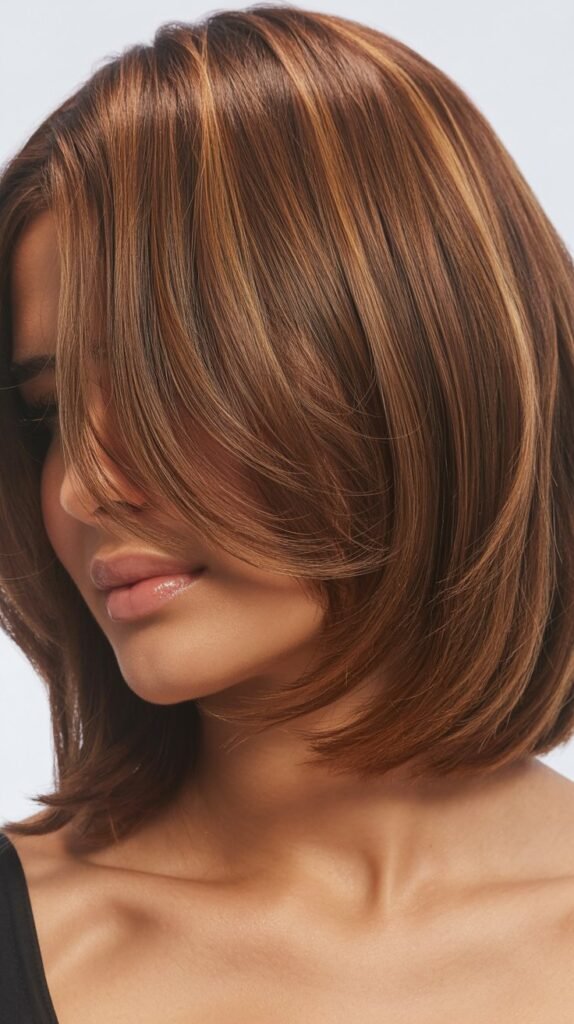
The C-curve bob features layers and styling that create a distinctive C-shaped curve as hair wraps around the face and neck, offering a polished, sophisticated silhouette.
This shape is achieved through both cutting and styling techniques.
- The C-curve is created through graduated layering and blow-drying techniques that turn the hair under in a smooth, continuous curve.
- This shape is incredibly flattering as it follows the natural contours of the head and neck while framing the face beautifully.
- Face-framing layers are essential to the C-curve bob, creating the soft wrap around the face that defines the distinctive shape.
- The style works particularly well for those with straight or slightly wavy hair as the smooth curve is most visible on sleeker textures.
- Styling requires blow-drying with a round brush, rolling the brush under as you dry to create the signature inward curve.
- The polished nature of this cut makes it ideal for professional environments while remaining stylish enough for social occasions.
- Maintenance every 6-8 weeks preserves the precise curve and prevents the layers from growing out in ways that disrupt the shape.
27. Layered Cut With Money Pieces
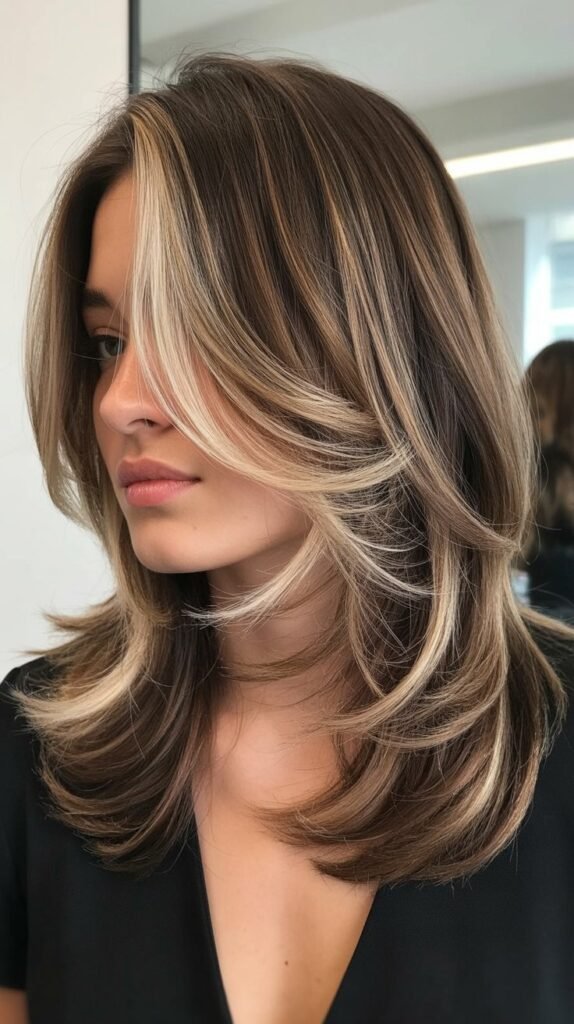
Money pieces are bold, face-framing highlights that bracket the face, and when combined with layered mid-length hair, they create instant brightness and dimension that draws attention to facial features.
This trendy coloring technique has become hugely popular for good reason.
- Money pieces are typically two chunky highlights on either side of the face, usually several shades lighter than the base color for maximum contrast and impact.
- The face-framing placement of money pieces works synergistically with face-framing layers, emphasizing both the cut and the color simultaneously.
- This technique creates a brightening effect around the face that can make you appear more youthful and vibrant without requiring all-over color.
- Money pieces work across all base colors though they’re most dramatic on darker hair where the contrast is most visible.
- The bold nature of money pieces means they require commitment to maintenance, typically needing touch-ups every 6-8 weeks to keep the contrast fresh.
- Styling layered hair with money pieces allows you to emphasize the bright face-framing sections by wearing hair forward or pull them back for a different effect.
- The combination of layers and money pieces creates a trendy, current look that’s been embraced by celebrities and style influencers worldwide.
28. Layered Cut For Straight-Across Blunt Bangs
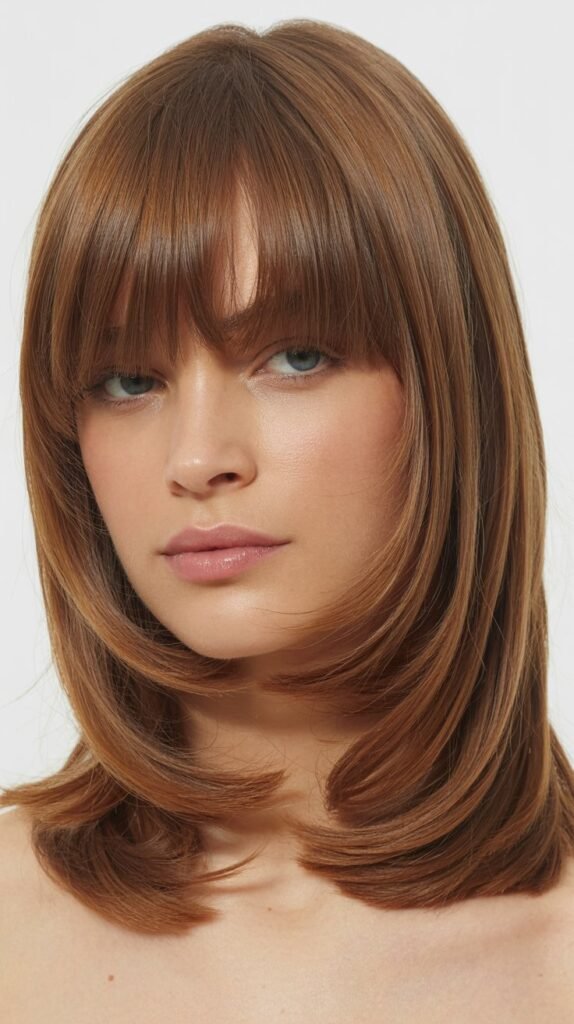
Combining straight-across blunt bangs with mid-length layers creates a striking contrast between the severe horizontal line of the bangs and the soft movement of the layers.
This combination delivers high-impact style with surprising versatility.
- Blunt bangs cut straight across create a strong horizontal line that makes a definitive style statement and draws attention to the eyes.
- The layers throughout the mid-length hair soften the overall look and prevent it from appearing too heavy or severe despite the blunt bang line.
- This combination works particularly well for those with oval or heart-shaped faces as the bangs balance facial proportions beautifully.
- Face-framing layers help transition from the blunt bang line to the longer mid-length hair, creating visual cohesion.
- Bangs maintenance is critical, requiring trims every 3-4 weeks to maintain the precise blunt line and keep them at the ideal length.
- Styling involves blow-drying the bangs straight and smooth while the layers can be styled straight for a sleek look or with texture for contrast.
- The dramatic nature of blunt bangs makes this cut best for those committed to the style as growing out blunt bangs requires patience.
29. Disconnected Layered Cut
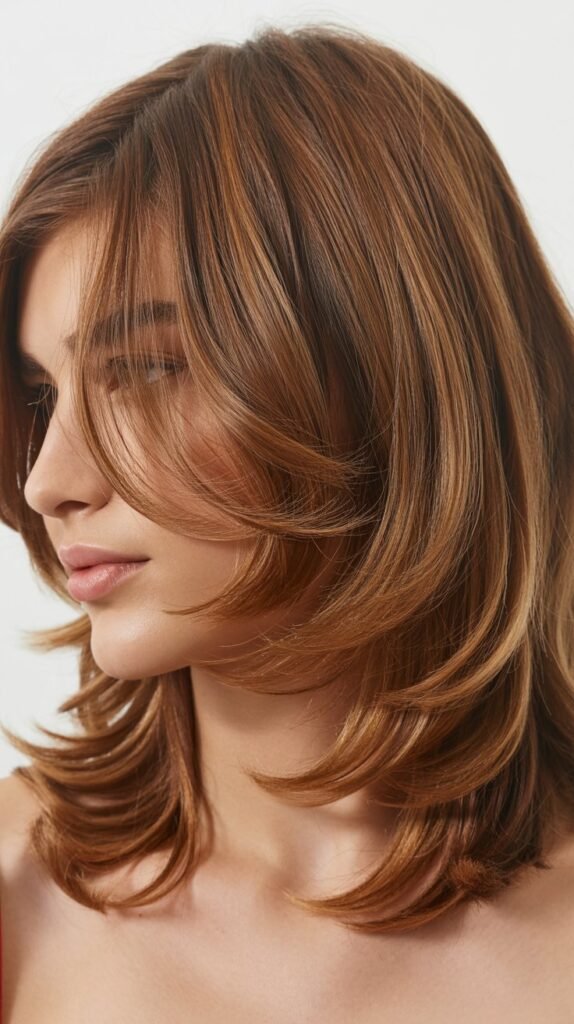
Disconnected layers feature visible separation between layer lengths rather than seamlessly blended transitions, creating an intentionally edgy, modern aesthetic.
This cutting technique produces dramatic dimension and movement with artistic appeal.
- Disconnection is created by cutting layers at significantly different lengths without blending them together, making each layer distinctly visible.
- This technique creates maximum volume and movement as the separated layers move independently rather than as a unified mass.
- Face-framing disconnected layers create bold framing that makes a definitive statement and draws significant attention to facial features.
- The style works best for those with medium to thick hair as the disconnected layers can appear too sparse on fine or thin hair.
- Styling disconnected layers often involves emphasizing the separation with texturizing products that define each layer’s edge.
- The dramatic nature of this cut makes it ideal for those seeking an artistic, fashion-forward look that stands out.
- Maintenance every 6-8 weeks is essential to preserve the intentional disconnection and prevent layers from growing together and losing their definition.
30. Layered Cut With Highlights And Lowlights
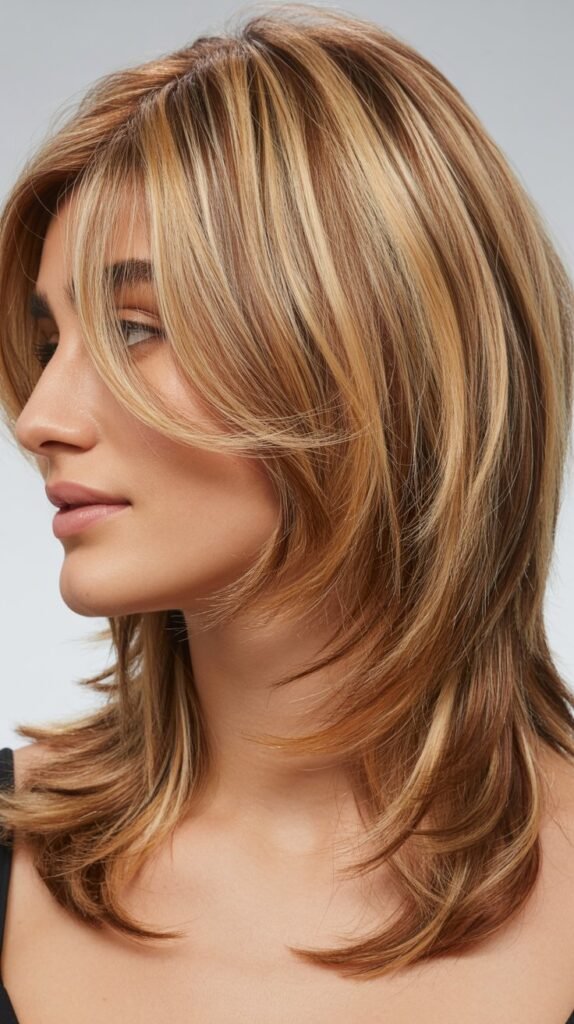
Combining both highlights and lowlights with layers creates maximum dimension that showcases the cut’s movement while adding depth and visual interest through contrasting tones.
This comprehensive coloring approach delivers luxurious, multidimensional results.
- Highlights add lighter tones throughout the hair while lowlights add deeper, richer tones, creating a multidimensional color palette.
- The combination of light and dark tones emphasizes layers dramatically, making movement and texture significantly more visible.
- Face-framing layers combined with strategically placed highlights create a brightening effect while lowlights add depth and prevent the style from appearing flat.
- This coloring technique creates a natural, sun-kissed appearance with more depth than highlights alone would provide.
- The dimensional color makes layers appear more prominent and gives the illusion of thicker, fuller hair through the play of light and shadow.
- Maintenance involves color touch-ups every 8-12 weeks depending on the contrast level and growth rate, plus regular trims to maintain the layered shape.
- Styling showcases the dimensional color beautifully as different layers catch light differently throughout the movement of the hair.
31. Layered Shag With Bangs
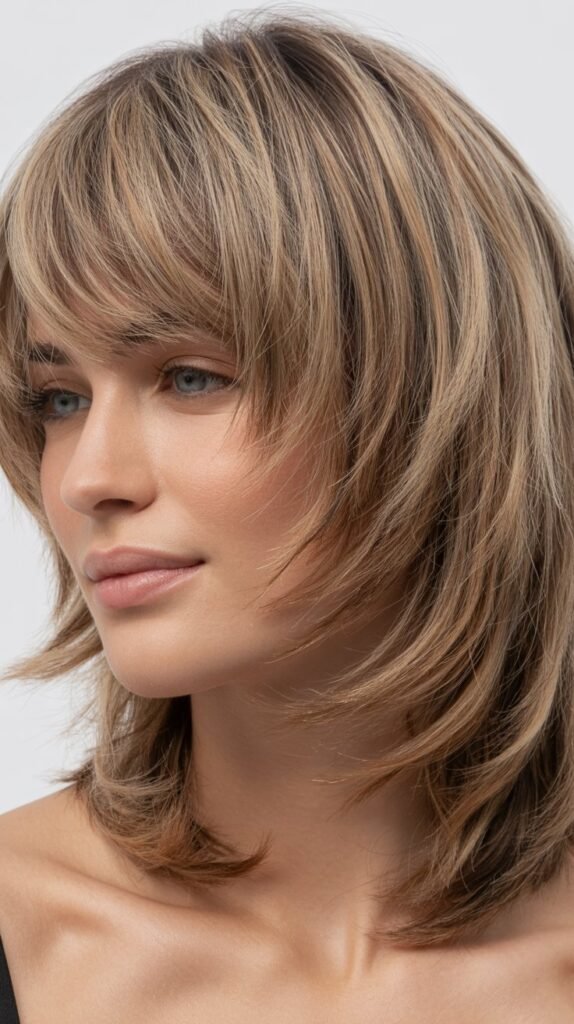
The layered shag with bangs combines the textured, rock-and-roll vibe of the shag with the face-framing appeal of bangs for a comprehensive style that’s both edgy and flattering.
This combination has seen a major resurgence in contemporary hair fashion.
- Shag layers are heavily textured and choppy throughout, creating significant movement and an intentionally undone aesthetic.
- Adding bangs to a shag frames the face and adds another dimension of texture and interest to the already dynamic cut.
- The bangs can vary from wispy and textured to fuller and blunter depending on personal preference and face shape considerations.
- This style works beautifully with natural texture, enhancing waves and creating the appearance of more volume in straight or fine hair.
- Face-framing layers in the shag blend seamlessly with the bangs, creating a cohesive, flowing style rather than separate elements.
- Styling can range from ultra-textured and messy using sea salt spray to smoother and more controlled with styling cream.
- Maintenance includes bang trims every 3-4 weeks and overall shag shape refreshes every 6-8 weeks to maintain the choppy texture.
32. Layered Cut With Root Shadow
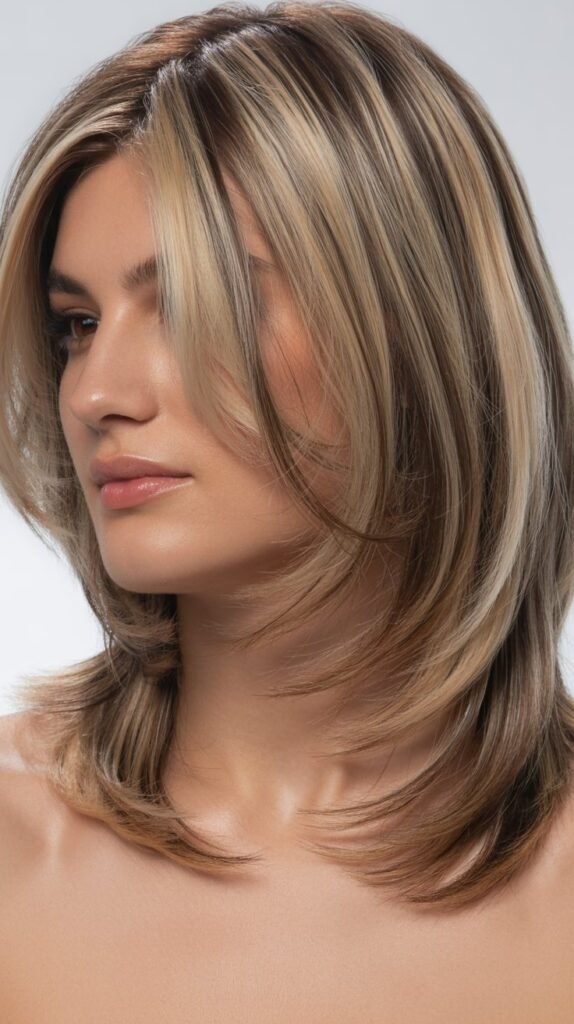
Root shadow coloring combined with layers creates a low-maintenance dimensional look where darker roots gradually blend into lighter mid-lengths and ends, with layers enhancing the color transition beautifully.
This technique offers style with minimal upkeep.
- Root shadow involves applying a darker color at the roots that gradually transitions to lighter tones, eliminating harsh regrowth lines.
- The dimensional color emphasizes layers as the graduation from dark to light is most visible where layers create movement and separation.
- This technique significantly extends time between color appointments since the intentional darker roots blend naturally as hair grows.
- Face-framing layers showcase the color transition beautifully, with the gradient from dark to light creating a brightening effect around the face.
- The combination works across all base colors from dark brunettes to platinum blondes, creating customized dimension for each starting point.
- Styling showcases the dimensional color as the layers move and catch light, highlighting the beautiful color transition throughout the cut.
- Maintenance is remarkably low for color, typically only requiring touch-ups every 3-4 months, though regular trims maintain the layered shape.
33. Layered Cut For Round Face Shapes
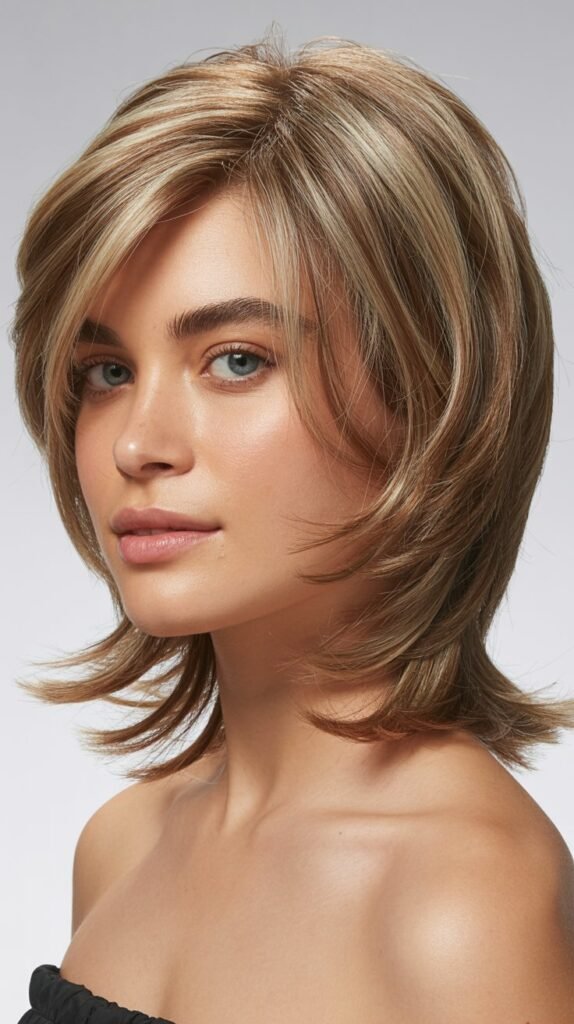
Layering for round face shapes requires strategic placement that creates the illusion of length and angularity, with face-framing layers and styling techniques that elongate rather than widen the face.
The right approach transforms round faces beautifully.
- Longer face-framing layers that start below the chin create vertical lines that elongate round faces and add definition to the jawline.
- The mid-length throughout avoids adding width at the widest part of the face, instead creating length that draws the eye vertically.
- Side parts rather than center parts help create asymmetry that breaks up the circular shape and adds flattering angles.
- Volume at the crown through layering adds height that lengthens the overall face shape and balances the width.
- Face-framing layers should avoid ending at the cheek’s widest point, instead extending longer to create more favorable proportions.
- Styling with inward or outward movement at the ends helps create angles and definition rather than emphasizing roundness.
- The overall goal is creating vertical lines and angles through layering and styling rather than horizontal lines that emphasize width.
34. Layered Cut For Square Face Shapes
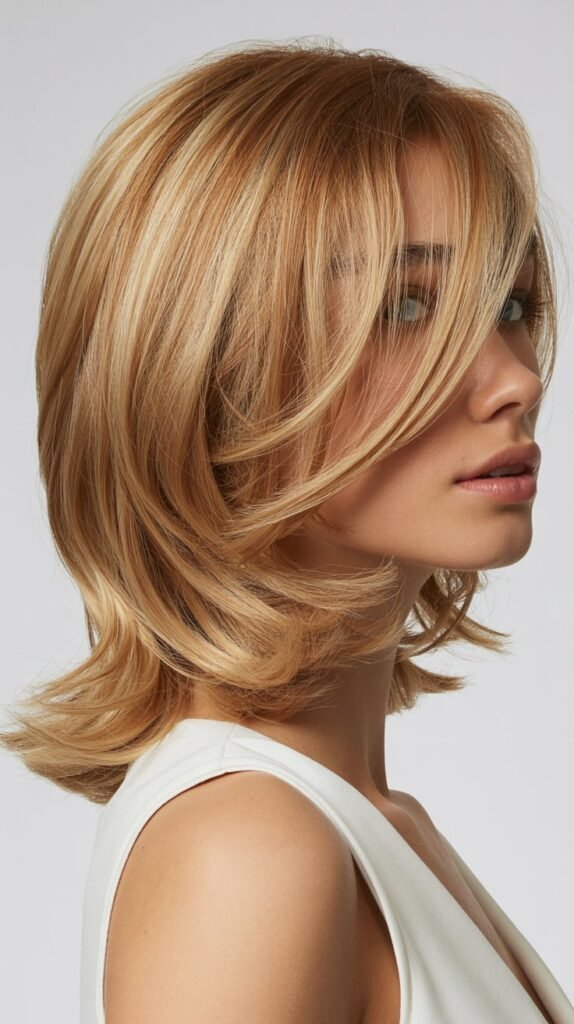
Square face shapes benefit from layering that softens angular jawlines and adds curves to balance strong, defined facial structure.
The strategic placement of layers creates harmony between the haircut and facial features.
- Soft, rounded layers around the jawline soften angular edges and create a more oval appearance that balances square proportions.
- Face-framing layers that curve around the face rather than falling straight add gentle movement that contrasts with strong jaw angles.
- The mid-length typically works best when falling past the jawline to avoid ending at the widest, most angular part of the face.
- Wispy, textured layers create softness that counterbalances the strong, defined structure of square faces beautifully.
- Side-swept or curtain bangs add softness at the forehead and help create an overall softer, more balanced facial appearance.
- Styling with soft waves or curves rather than pin-straight hair emphasizes the softening effect of the layers.
- The overall approach focuses on adding softness, curves, and movement to balance the naturally strong angular structure.
35. Layered Cut For Heart-Shaped Faces
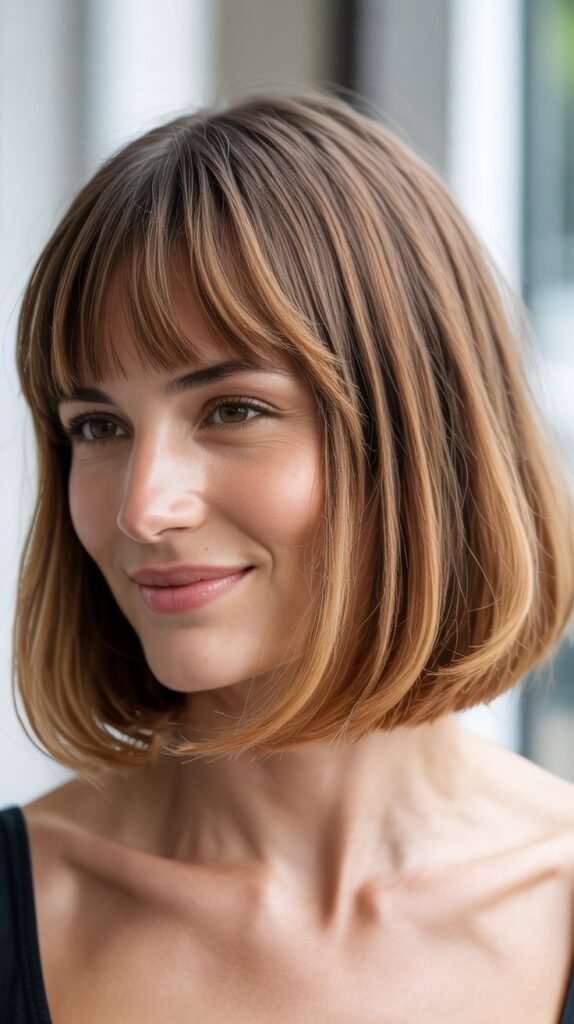
Heart-shaped faces with wider foreheads and narrower chins benefit from layering that adds width at the jawline while managing volume at the temple area.
The right layer placement creates beautiful balance and proportion.
- Layers that add volume and fullness at the jawline balance the narrower chin and create more harmonious proportions.
- Face-framing layers starting around the chin level draw attention to the lower face and add desirable width where heart-shaped faces are narrowest.
- The mid-length works particularly well for heart shapes as it naturally adds weight and presence at the jaw and shoulder area.
- Bangs or face-framing pieces around the forehead can minimize the appearance of width at the temples if desired.
- Side-swept bangs are particularly flattering for heart shapes as they add asymmetry that balances the wider forehead.
- Styling with outward movement at the ends near the jawline adds the width heart-shaped faces need for ideal proportions.
- The overall goal is creating balance by adding visual weight at the narrow chin while managing or minimizing width at the wider forehead.
36. Layered Cut For Oval Face Shapes
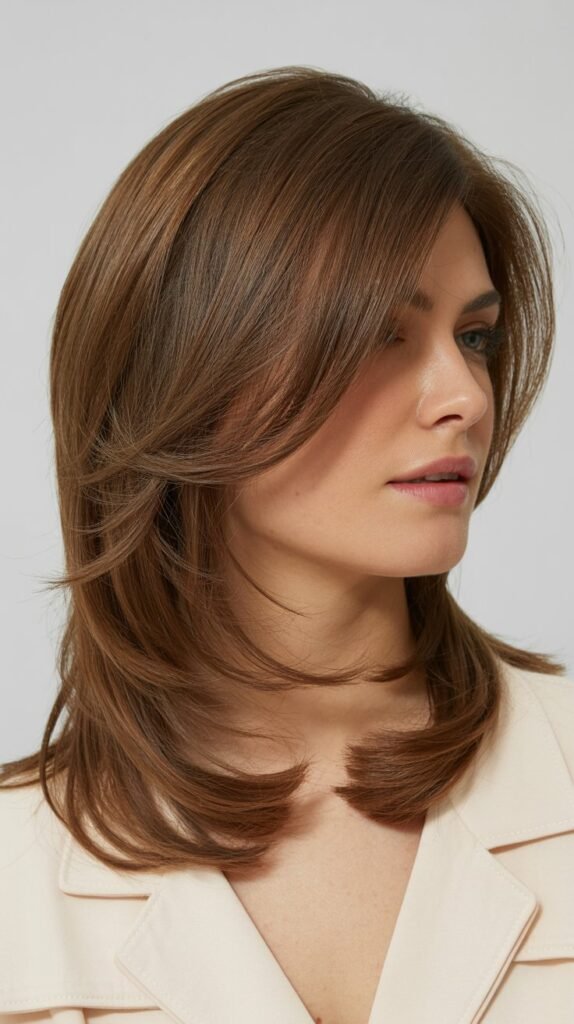
Oval face shapes are considered the most versatile and can wear virtually any mid-length layered style successfully, though certain approaches maximize the advantages this balanced face shape offers.
The options are nearly limitless.
- The balanced proportions of oval faces mean almost any layer placement and length works beautifully without creating unflattering emphasis.
- Experimentation with various bang styles from blunt to side-swept to curtain bangs all flatter oval shapes and offer opportunities for change.
- Face-framing layers can be placed at any length from very short to longer without creating proportion issues, offering maximum creative freedom.
- Both center and side parts work equally well for oval faces, allowing style choices based on personal preference rather than face-shape necessity.
- The versatility of oval shapes makes them ideal for trying trendy, experimental cuts since most styles will be flattering.
- Styling can emphasize either width or length depending on personal preference without creating unflattering proportions either way.
- The main consideration for oval faces is personal style preference and lifestyle rather than correcting or balancing facial proportions.
37. Styling Products For Layered Mid-Length Hair
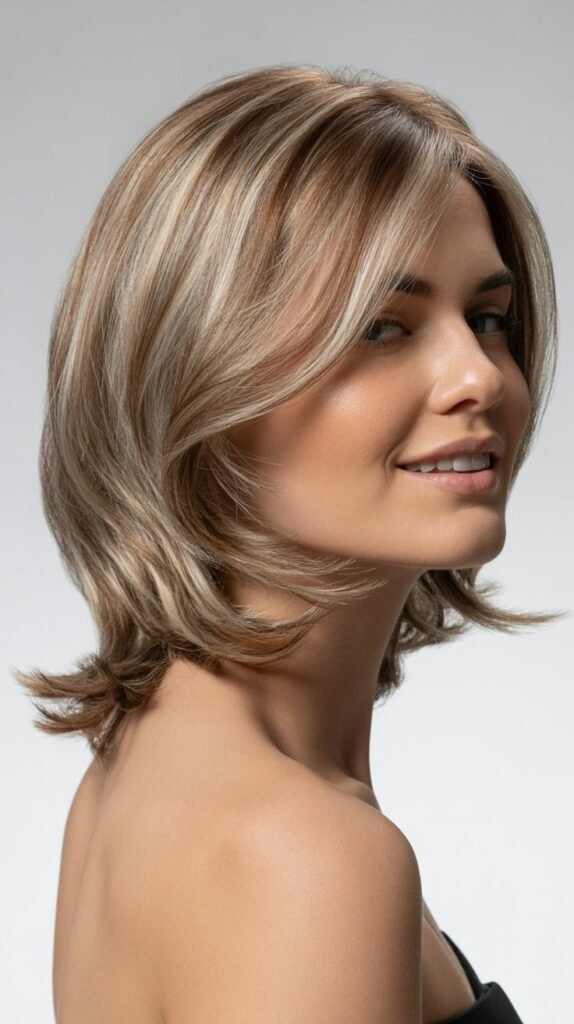
The right products make the difference between good and great when styling layered mid-length hair, enhancing the cut’s natural movement while providing hold, texture, or smoothness depending on desired results.
Understanding product purposes optimizes styling success.
- Product layering involves using multiple products with different purposes for optimal results, such as mousse for volume followed by heat protectant.
- Less is often more with styling products—start with small amounts and add more if needed rather than over-applying initially.
- Application technique matters as much as product choice—apply volumizing products at roots, smoothing products on mid-lengths and ends.
- Product selection should consider hair type, texture, and desired outcome rather than using the same products for every styling goal.
- Quality products designed for professional use typically deliver better results and last longer despite higher initial costs.
- Experimentation helps identify which products work best for your specific hair type, texture, and styling preferences.
38. Heat Styling Techniques For Layers
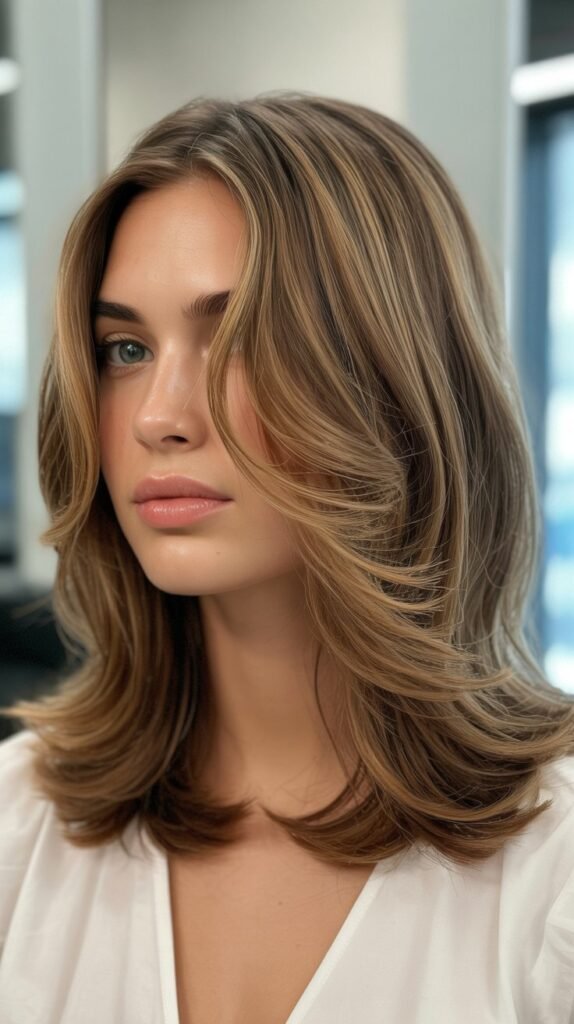
Mastering heat styling techniques specifically for layered hair ensures you can achieve salon-quality results at home, from sleek and smooth to textured and voluminous.
Different tools and methods create distinctly different effects.
- Round brush blow-drying creates volume and smooth, polished results by wrapping sections around the brush and directing heat while pulling tension.
- Flat ironing layers requires working in sections, starting underneath and moving upward, to ensure even smoothing throughout all layers.
- Curling wands and irons can emphasize layers by creating curls or waves that showcase the different lengths and create beautiful movement.
- Diffusing is ideal for wavy or curly layered hair, enhancing natural texture while the layers create dimension within the curl pattern.
- The direction you style matters—styling away from the face opens up features while styling toward the face creates a softer, more romantic effect.
- Temperature settings should match hair type—fine hair needs lower temperatures (300-350°F) while thick hair can handle higher (350-400°F).
- Sectioning is crucial for layered hair since you’re working with multiple lengths that all need attention for cohesive results.
- Finishing techniques like running a cool shot over styled hair or lightly misting with hairspray set the style and increase longevity.
39. Air-Drying Methods For Layered Hair
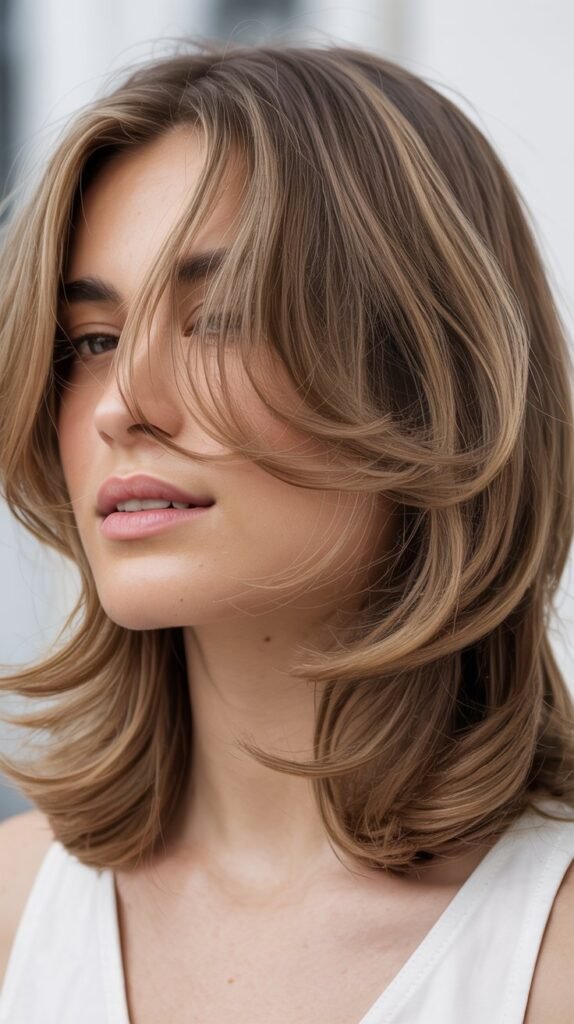
Air-drying layered mid-length hair can produce beautiful, natural-looking results when done correctly, offering a low-maintenance styling option that’s healthier for hair and perfect for busy schedules.
The right techniques enhance rather than fight natural texture.
- Product application on soaking wet hair is crucial—work in curl creams, mousses, or texturizing sprays while hair is very wet for best absorption and distribution.
- The plopping technique involves wrapping wet hair in a t-shirt or microfiber towel to encourage curl formation and reduce frizz during the drying process.
- Scrunching wet hair upward from the ends toward the roots encourages wave formation and creates volume without heat styling tools.
- The prayer hands method involves pressing product and smoothing hair between palms to distribute evenly without disrupting the natural curl pattern.
- Allowing hair to dry 70-80% naturally before touching it again prevents frizz and allows the layers to settle into their natural movement patterns.
- The “pineappling” technique for sleeping with damp hair involves loosely gathering hair at the crown to preserve shape as it finishes drying overnight.
- Touch-up techniques for fully dry hair include lightly misting and scrunching individual sections or using a diffuser briefly on problem areas.
40. Maintenance Schedule For Layered Cuts
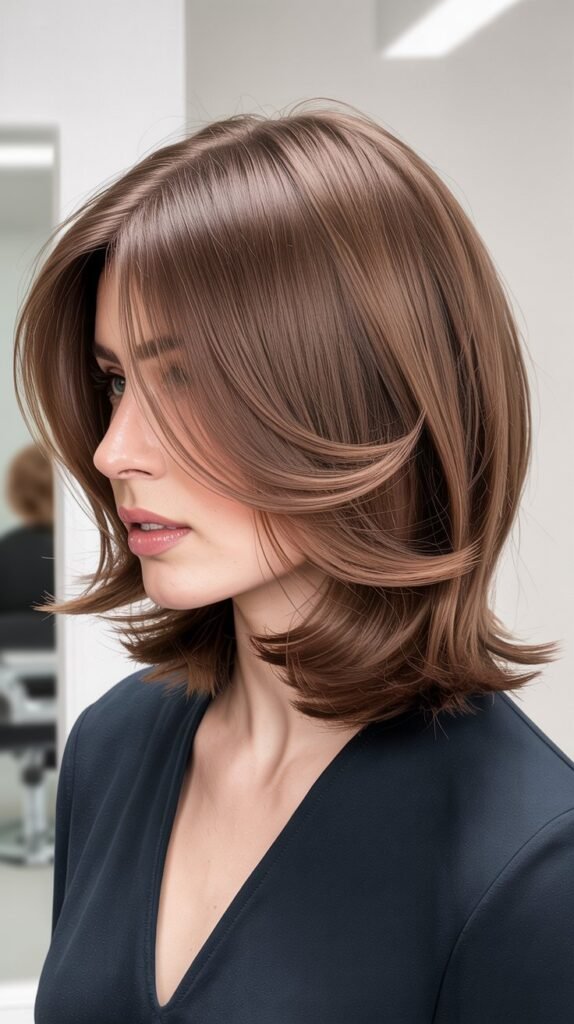
Understanding the optimal maintenance schedule for layered mid-length hair ensures your cut always looks fresh and intentional rather than grown-out and neglected.
Different cutting techniques and styling goals require varying maintenance frequencies.
- Most layered mid-length cuts benefit from trims every 6-8 weeks to maintain the intended shape and prevent layers from becoming disconnected or stringy.
- Cuts with bangs require more frequent attention, with bang trims needed every 3-4 weeks to maintain the ideal length and shape.
- Heavily layered or shag-style cuts need more frequent maintenance (every 5-6 weeks) to preserve the choppy, textured appearance that defines the style.
- More subtle, long-layered cuts can extend maintenance to 8-10 weeks since the layers blend smoothly and grow out more gracefully.
- Between major cuts, many people benefit from “dusting” appointments where just the very ends are trimmed to maintain health without changing the overall length.
- Home maintenance between salon visits includes deep conditioning treatments, heat protectant use, and gentle handling to preserve hair health and cut integrity.
- Signs that maintenance is overdue include visible split ends, layers that no longer blend smoothly, loss of intended shape, or styling difficulties that weren’t present when freshly cut.
41. Transitioning From Long To Mid-Length Layers
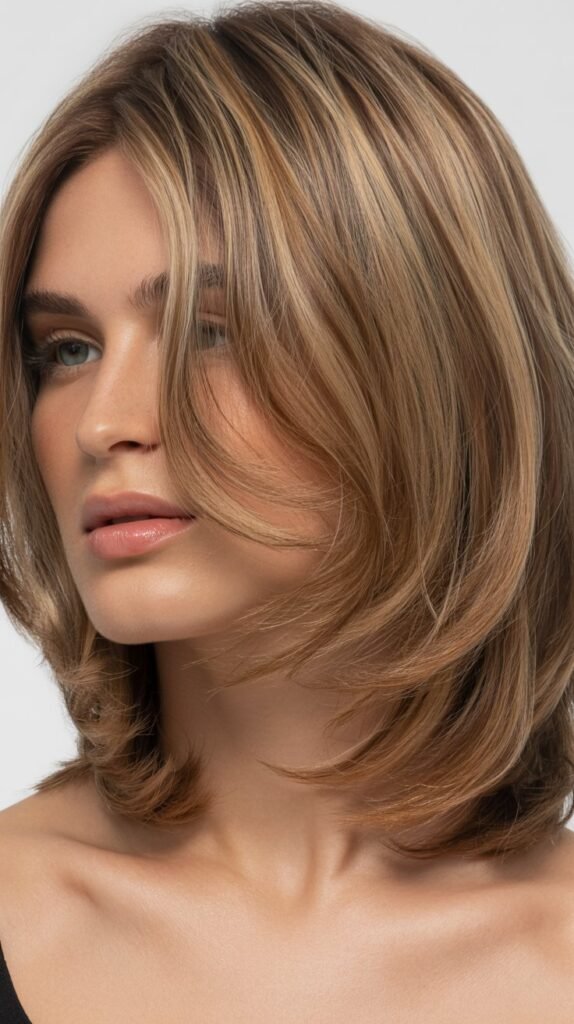
Making the decision to cut long hair to a mid-length layered style requires consideration, planning, and the right approach to ensure the transition delivers the desired result.
Understanding what to expect makes the process smoother and more satisfying.
- The psychological impact of cutting significant length should not be underestimated—consider starting with a longer mid-length and going shorter gradually if uncertain.
- Bringing reference photos to your stylist showing the exact length and layer placement you want ensures clear communication and aligned expectations.
- Understanding that mid-length hair requires different styling techniques than long hair helps you adapt your routine successfully after the cut.
- The immediate post-cut period may require experimentation to find the best styling methods and products for your new length and layers.
- Consider the season and climate when making the transition as mid-length hair behaves differently in humidity, cold, or dry conditions than long hair.
- The amount of layering should be decided based on your hair type—fine hair needs minimal layers while thick hair benefits from more dramatic layering.
- Donating cut hair to organizations that make wigs for medical patients can make the transition feel purposeful and rewarding.
- Initial styling guidance from your stylist at the time of cutting helps you learn how to style and manage your new mid-length layers at home.
42. Celebrity-Inspired Mid-Length Layered Cuts
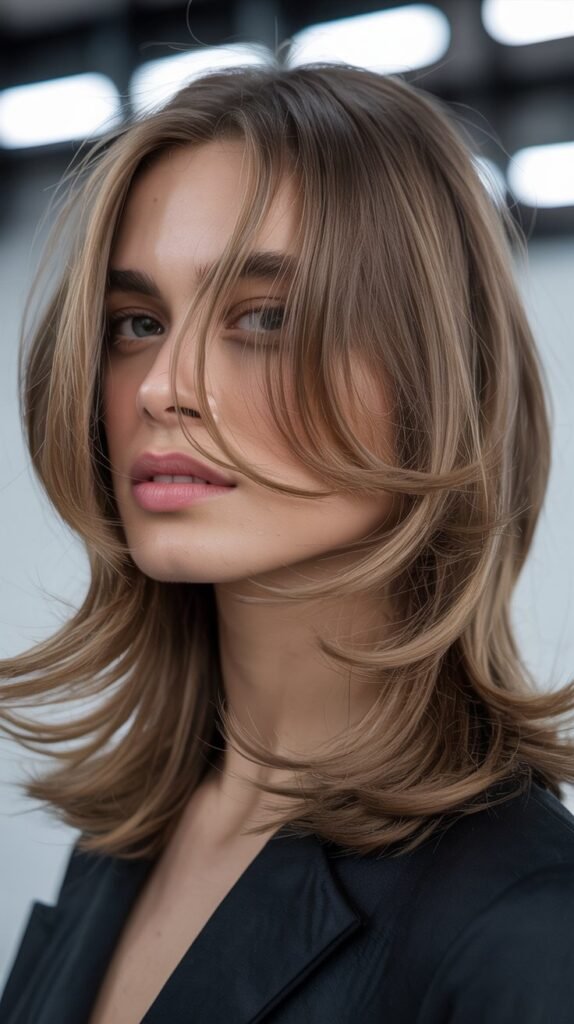
Celebrity hairstyles often set trends and provide excellent reference points for communicating desired looks to stylists, with many celebrities favoring mid-length layered cuts for their versatility and flattering qualities.
These well-photographed styles offer clear visual examples.
- Bringing celebrity photos to salon appointments provides clear visual references that eliminate confusion about desired length, layer placement, and overall aesthetic.
- Celebrity stylists often work with the best techniques and trends, meaning celebrity-inspired cuts tend to be current, flattering, and well-executed.
- Understanding that celebrity hair often involves professional daily styling helps set realistic expectations about maintenance and effort required.
- Many celebrities regularly change their mid-length layered styles, providing numerous options and variations to consider for inspiration.
- Consider your lifestyle and styling commitment when choosing celebrity-inspired cuts as professional hairstyling isn’t part of most daily routines.
- Face shape compatibility remains important even with celebrity inspiration—choose celebrity references who have similar face shapes to yours for most flattering results.
- Hair texture differences between you and the celebrity may affect how the style translates, which experienced stylists can adapt appropriately.
- Color plays a significant role in how layered cuts appear, and many celebrity looks involve professional coloring that enhances the cut’s dimension.
Conclusion
Exploring the world of mid-length haircuts reveals just how versatile, flattering, and transformative this perfect-length category truly is.
Throughout 42 Chic Mid-Length Haircuts With Soft, Face-Framing Layers, we’ve journeyed through classic cuts that stand the test of time, trendy styles that capture contemporary aesthetics, and personalized approaches tailored to specific hair types and face shapes.
From the sophisticated shoulder-length bob to the edgy shag, from subtle long layers to bold asymmetrical cuts, mid-length hair offers something for everyone regardless of age, lifestyle, or personal style preferences.
The addition of soft, face-framing layers elevates these cuts from simple to spectacular, creating movement, dimension, and that effortlessly chic quality we all desire.
Whether you’re ready for a dramatic transformation or seeking subtle refinement of your current style, the comprehensive information, styling guidance, and maintenance insights provided here equip you with everything needed to confidently pursue your ideal mid-length layered look.
Remember that the best haircut is one that makes you feel confident, beautiful, and authentically yourself—and with the endless possibilities that mid-length layers provide, that perfect cut is absolutely within your reach.
