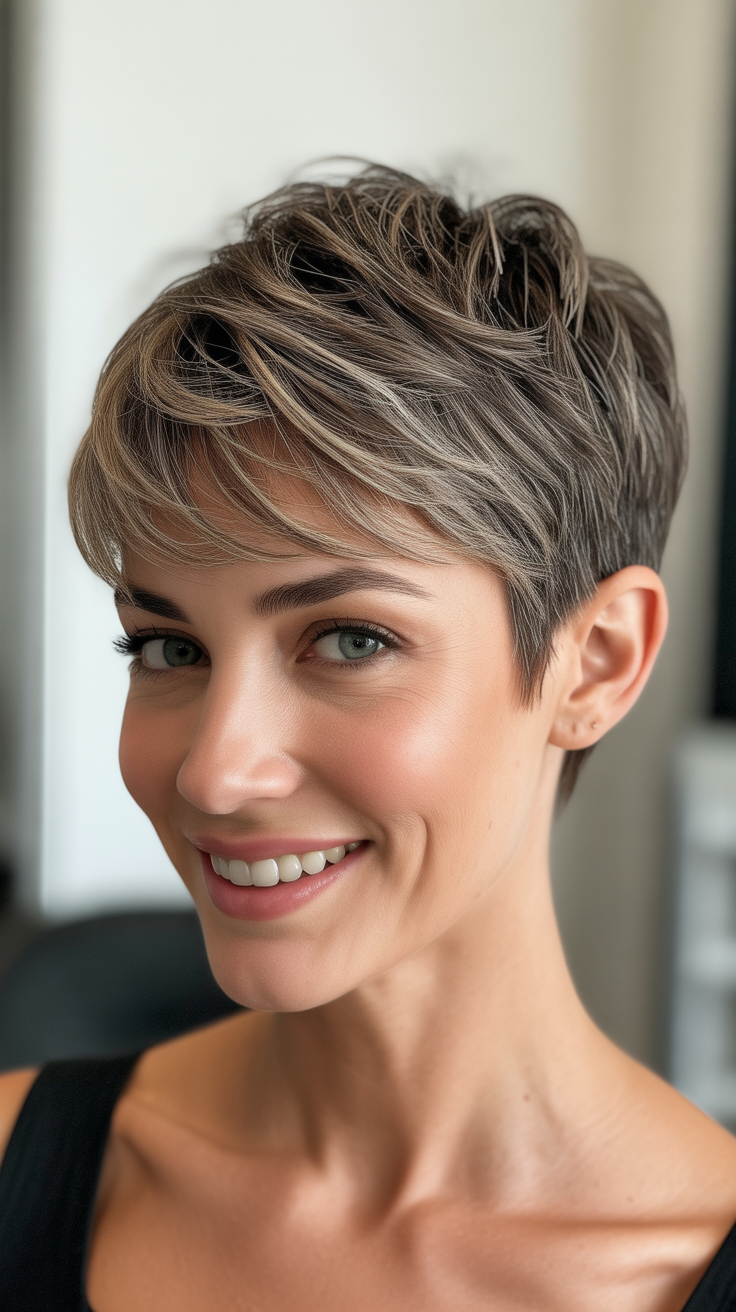
Finding the right haircut when you have fine hair can feel like searching for a needle in a haystack, but short pixie cuts offer a transformative solution that adds volume, texture, and effortless style to even the thinnest strands.
If you’ve been struggling with flat, lifeless hair that refuses to hold any shape, a well-designed pixie cut might be exactly what you need to unlock your hair’s full potential.
This comprehensive guide explores 25 perfect short pixie haircuts specifically tailored for fine hair, each one carefully selected to create the illusion of fuller, thicker locks while keeping maintenance simple and styling quick.
From textured layers that boost volume to strategic angles that frame your face beautifully, these pixie variations prove that fine hair isn’t a limitation—it’s an opportunity to showcase truly stunning short hairstyles.
Whether you’re considering your first big chop or looking to refresh your current pixie, this article on 25 Perfect Short Pixie Haircuts for Fine Hair will guide you through the most flattering styles, cutting techniques, and styling secrets that work specifically for fine-haired individuals.
1. Classic Tapered Pixie Cut
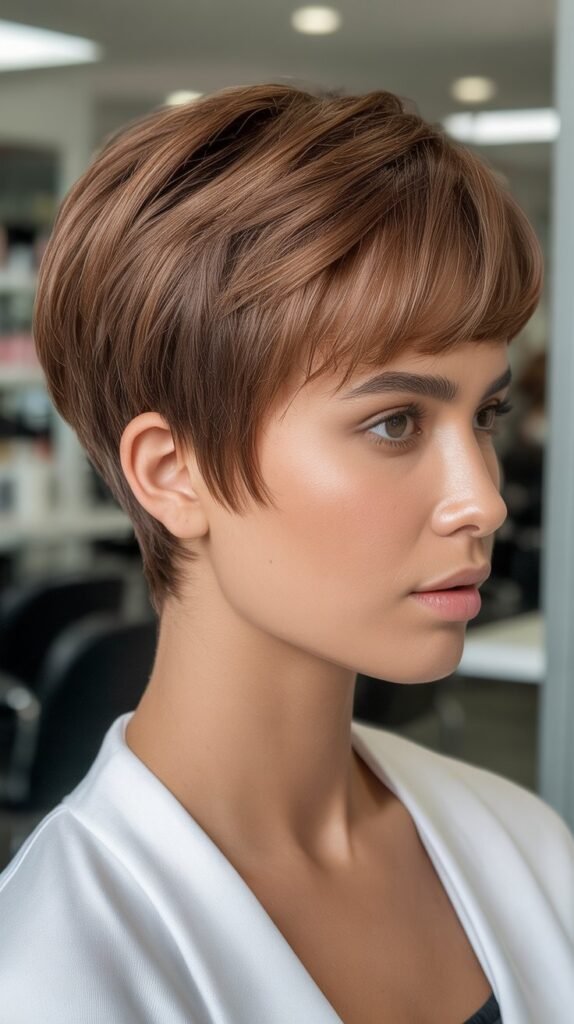
The classic tapered pixie remains one of the most universally flattering options for fine hair because it gradually reduces length from top to bottom, creating natural dimension and movement.
This timeless style works by keeping slightly more length on top while closely cropping the sides and back, which prevents fine hair from looking too thin at the ends.
- The tapered approach removes bulk from areas where fine hair tends to lie flat while preserving length where volume matters most
- Stylists typically leave 2-3 inches on top and taper down to about half an inch at the nape and around the ears
- This cut works exceptionally well for oval, heart-shaped, and diamond face shapes
- The graduation creates shadow and depth that makes fine hair appear fuller than it actually is
- Maintenance requires trims every 4-6 weeks to preserve the clean lines and shape
- According to professional hairstylists at Allure, tapered cuts are among the top recommendations for adding perceived thickness to fine hair
2. Textured Choppy Pixie
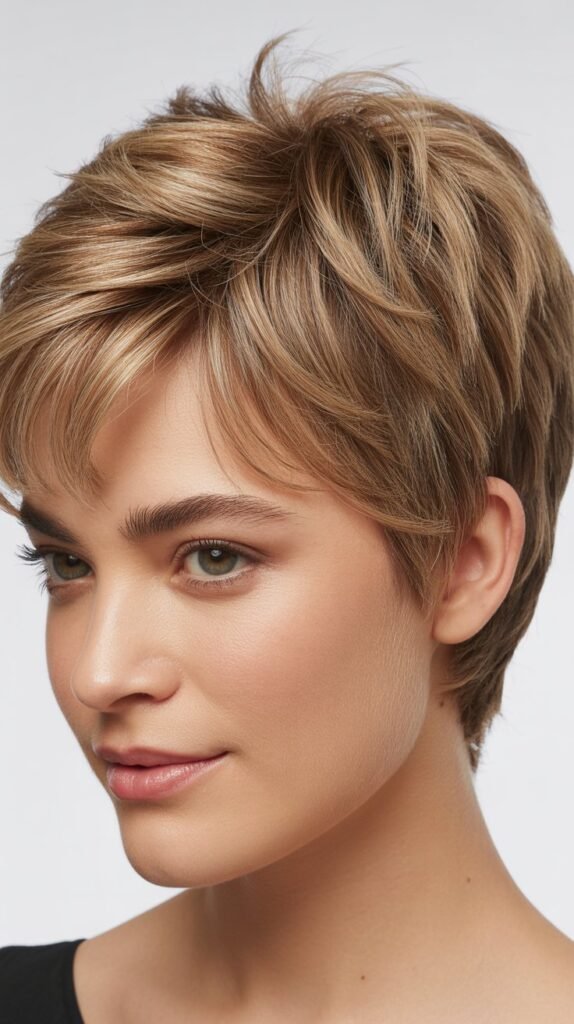
The textured choppy pixie introduces deliberate unevenness and layering throughout the cut, which disrupts the natural tendency of fine hair to clump together and fall flat.
This edgy, modern variation uses point-cutting and texturizing techniques to create separation between hair strands.
- Point-cutting involves cutting into the hair at angles rather than straight across, which creates natural texture without removing too much weight
- The choppy layers prevent fine hair from looking stringy or overly neat, giving it a lived-in, effortless appearance
- This style particularly benefits from lightweight texturizing products like dry shampoo or sea salt spray
- The irregular lengths catch light differently, creating visual interest and the illusion of density
- Women with fine hair often find this cut adds 30-40% more perceived volume compared to blunt cuts
- Styling takes only 5-10 minutes with minimal product and simple tousling with fingers
- This versatile cut transitions easily from professional settings to casual environments
3. Asymmetrical Pixie with Side Sweep
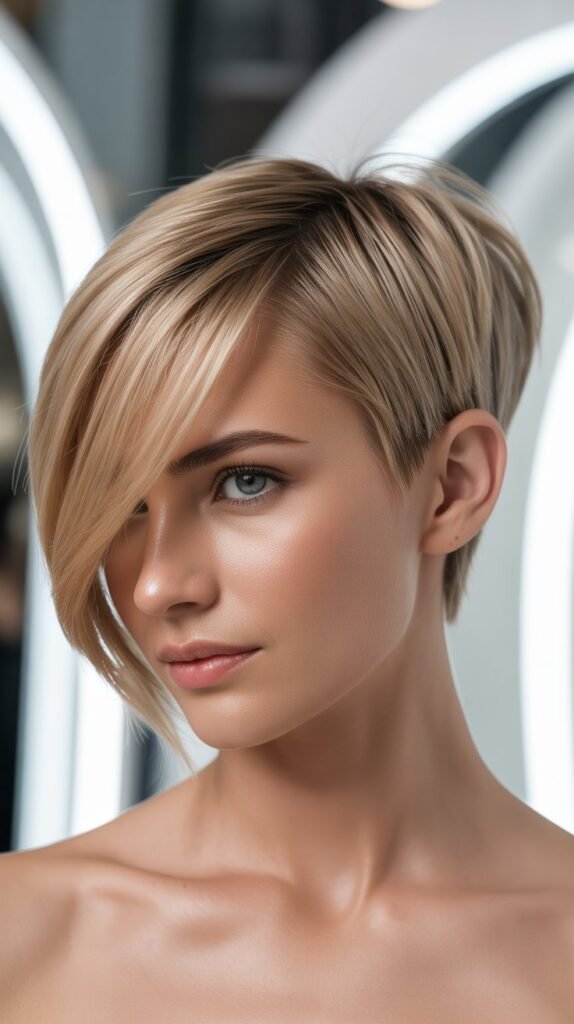
An asymmetrical pixie features intentionally uneven lengths on either side of the head, typically with one side shorter than the other, creating dramatic visual interest that distracts from fine hair texture.
The longer side sweeps across the forehead, adding sophistication and femininity to the edgy cut.
- The contrast between the short and long sides creates a focal point that draws attention away from hair density concerns
- Most asymmetrical pixies feature one side cropped close to the head (1-2 inches) while the other maintains 3-5 inches of length
- The longer section can be styled forward, to the side, or swept back depending on the occasion
- This cut particularly flatters round and square face shapes by creating vertical lines and angles
- Fine hair actually holds the asymmetrical shape better than thick hair because it’s more malleable and lightweight
- According to hair experts at Good Housekeeping, asymmetrical cuts rank among the most requested styles for women seeking bold transformations
- The style requires precise cutting skills, so choosing an experienced stylist is essential
4. Pixie with Micro Bangs
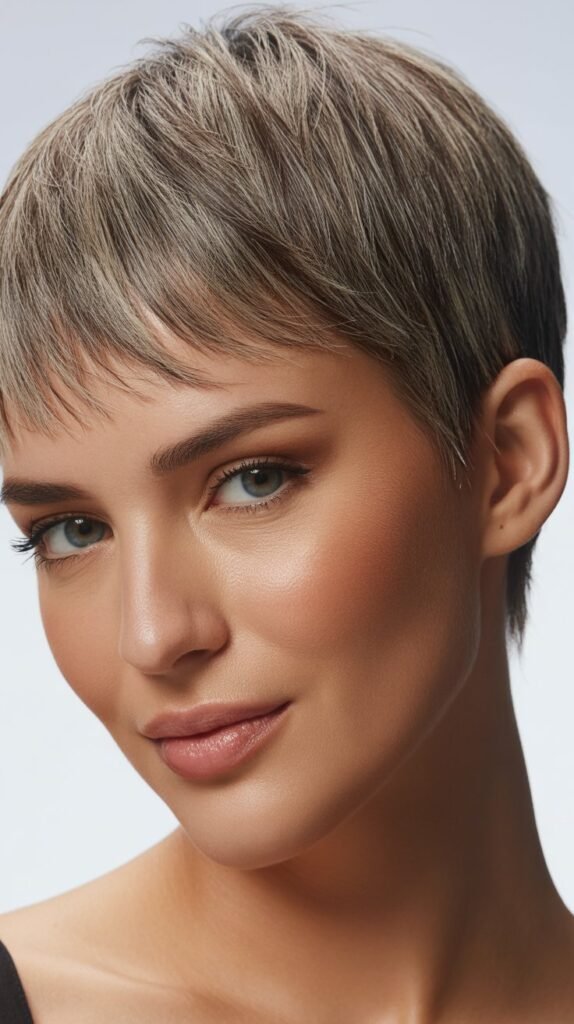
Micro bangs paired with a pixie cut create a striking, fashion-forward look that adds horizontal interest across the forehead while the short length throughout prevents fine hair from appearing weighed down. \
These ultra-short bangs typically sit well above the eyebrows, creating a bold statement.
- Micro bangs typically measure between half an inch to one inch in length, creating a dramatic frame for the face
- The abbreviated fringe draws attention to the eyes and cheekbones rather than hair texture
- This combination works especially well for fine hair because the short length throughout prevents any section from looking sparse
- Oval and heart-shaped faces carry micro bangs most successfully, though styling adjustments can make them work for other face shapes
- The look requires commitment as micro bangs take several months to grow out if you change your mind
- Styling involves minimal effort—usually just a quick blow-dry or flat iron to keep them straight
- This avant-garde style suits creative professionals, artists, and anyone seeking a distinctive, memorable appearance
5. Layered Crown Pixie
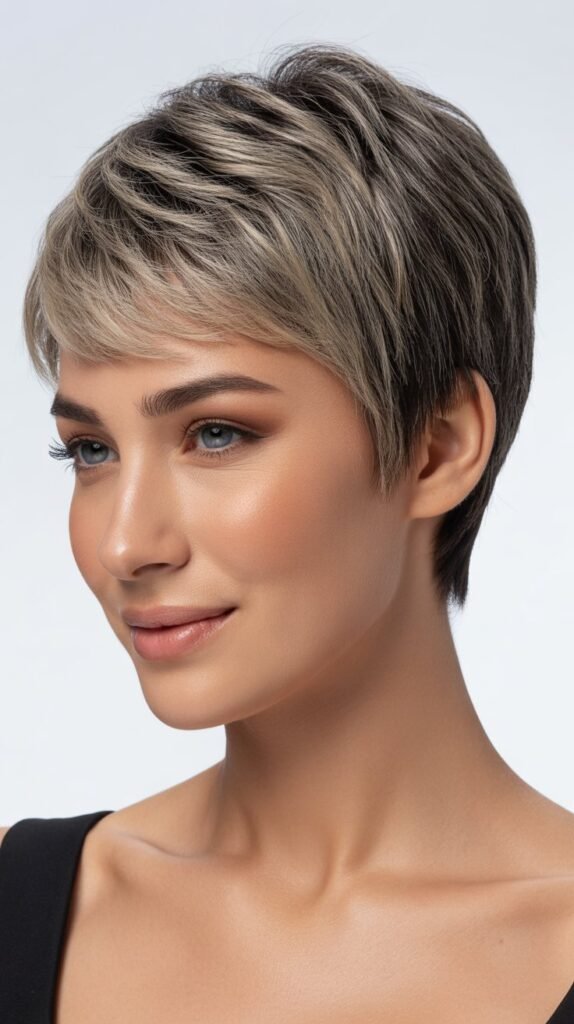
The layered crown pixie concentrates layers and volume at the top of the head while keeping sides and back shorter, creating a lifted silhouette that counteracts the natural flatness fine hair experiences at the roots.
This strategic layering technique builds height where fine hair needs it most.
- Layers are concentrated in the crown area, typically with the longest pieces measuring 3-4 inches
- The added length on top can be styled upward and forward to maximize height and visual impact
- This cut works beautifully with natural hair texture or can be enhanced with lightweight volumizing products
- The contrast between the fuller crown and tapered sides creates a balanced, proportional shape
- Women with fine hair report this style makes their hair appear up to 50% fuller when properly styled
- A round brush and blow dryer directed at the roots during styling amplifies the volume effect
- The layered crown approach particularly benefits those with naturally flat hair that resists holding volume
- Regular trims every 5-6 weeks maintain the lifted shape and prevent the crown from becoming too heavy
6. Undercut Pixie Style
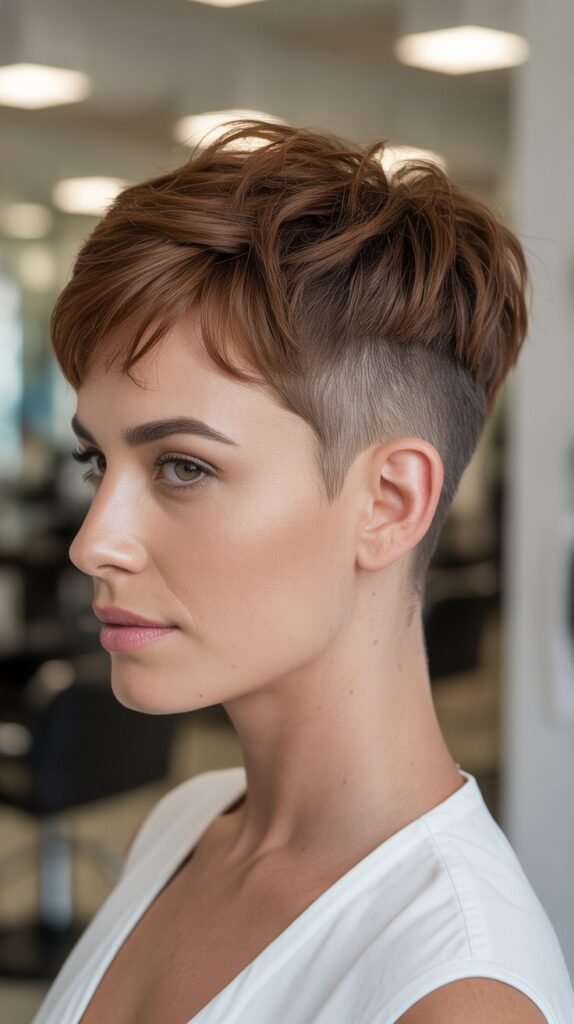
The undercut pixie features shaved or very closely cropped sections underneath while maintaining longer hair on top, creating dramatic contrast and reducing overall hair weight that can drag fine hair down.
This edgy style offers both visual impact and practical benefits for fine-haired individuals.
- The undercut removes hair from the nape, sides, or both areas, typically using clippers to create a very short (1/8 to 1/2 inch) length
- This reduction in overall hair volume allows the remaining top section to appear fuller by comparison
- Hidden undercuts can be concealed when hair is styled down but revealed when pulled back or styled up
- The style keeps the neck cooler and reduces styling time since there’s simply less hair to manage
- Fine hair benefits tremendously because the weight reduction prevents pulling that can make roots appear flatter
- Undercuts require maintenance every 3-4 weeks to keep the shaved sections looking crisp and intentional
- This bold choice works for various personal styles, from punk rock to polished professional depending on how the top section is styled
- According to trends reported by Harper’s Bazaar, undercut pixies have gained significant popularity among women seeking low-maintenance yet stylish options
7. Feathered Pixie Cut
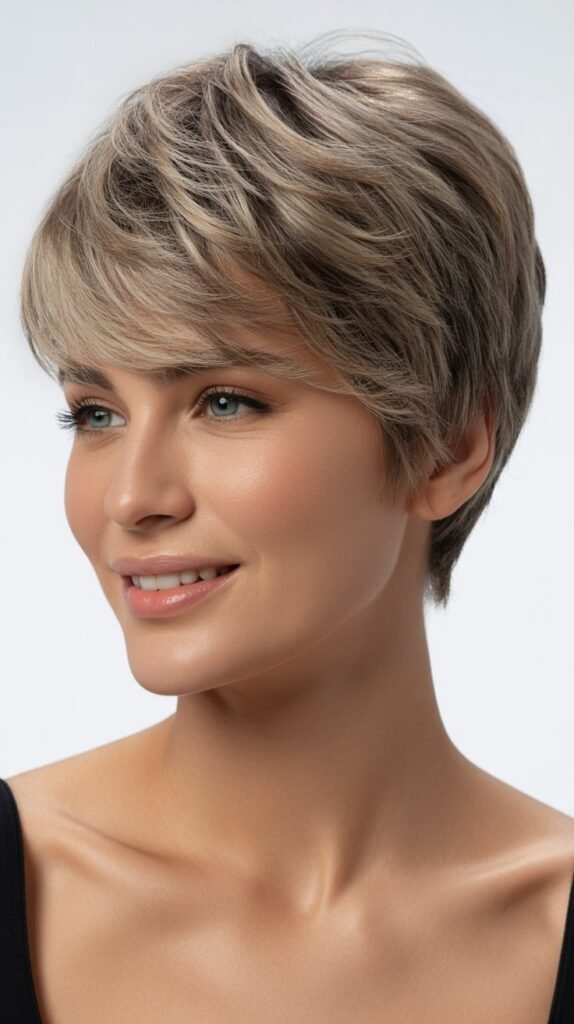
The feathered pixie incorporates soft, wispy layers that taper to fine points, mimicking the delicate structure of feathers and creating airy, lightweight texture that prevents fine hair from looking heavy or blunt.
This technique adds movement and softness to the overall silhouette.
- Feathering is achieved through razor cutting or specialized scissors that create graduated, tapered ends
- The technique removes weight from the ends while maintaining body at the roots, ideal for fine hair structure
- Each section of hair blends seamlessly into the next, creating a cohesive, flowing appearance
- The feathered approach works particularly well around the face, softening angular features
- This cut style enhances natural movement, so fine hair appears to have more life and bounce
- Minimal styling product is needed—often just a small amount of lightweight mousse or styling cream
- The feathered pixie suits nearly all face shapes due to its adaptable, customizable nature
- Women over 50 particularly favor this style as it provides sophistication without appearing overly severe
8. Pixie with Long Side Bangs
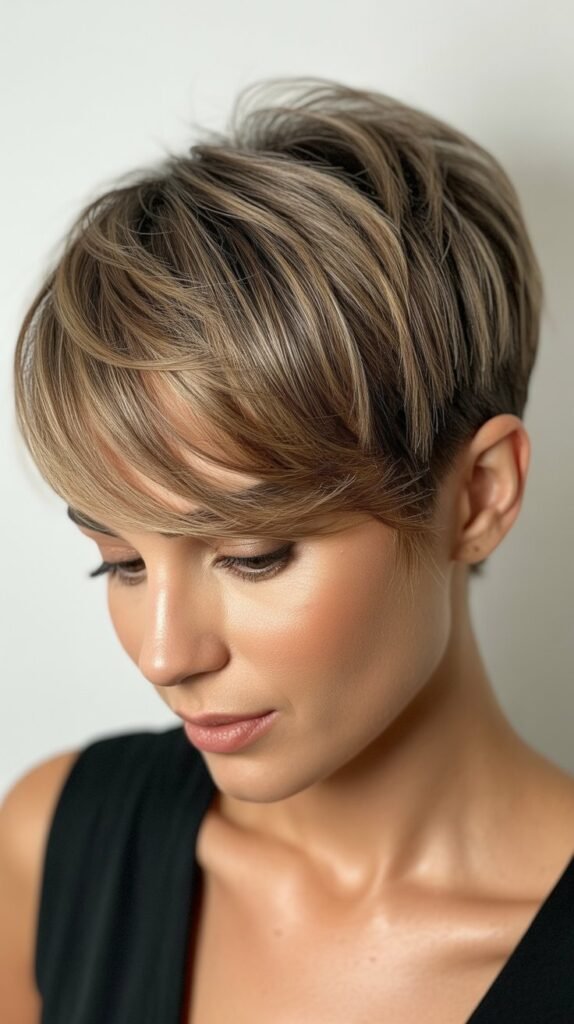
A pixie cut featuring long side bangs maintains extra length in the front that sweeps dramatically across the forehead and cheekbone area, adding femininity and versatility to the shorter overall style.
This variation provides styling options while addressing fine hair concerns through strategic layering.
- Side bangs typically range from 3-5 inches in length, significantly longer than the rest of the cut
- The extended fringe can be swept to either side, pinned back, or styled forward depending on preference
- Long bangs add versatility to the pixie, allowing for different looks without changing the overall cut
- This element particularly flatters square and rectangular face shapes by softening angular jawlines
- Fine hair holds the sweep well because it’s lightweight enough to stay in place with minimal product
- The bangs create a focal point that draws attention to eyes and away from hair texture concerns
- Styling requires just a blow dryer and round brush to create the desired sweep and bend
- This option serves as an excellent transitional style for those growing out a shorter pixie
9. Spiky Textured Pixie
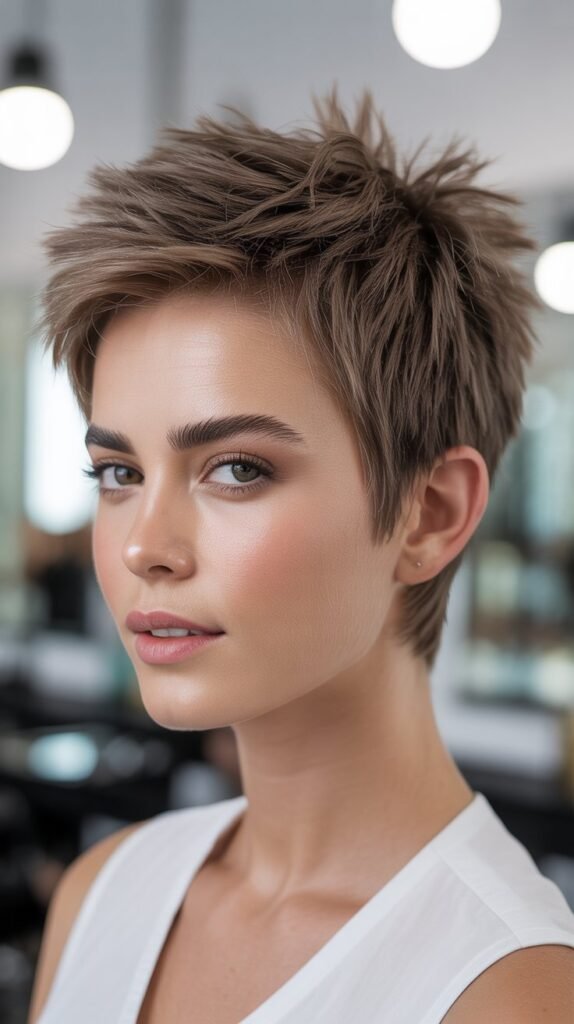
The spiky textured pixie uses short, choppy layers throughout that can be styled upward into separated, defined spikes, creating maximum volume and visual interest that counteracts the natural tendencies of fine hair to lie flat.
This energetic style exudes confidence and personality.
- The cut requires layers of varying lengths, typically 1-3 inches throughout, to create the foundation for spikes
- Styling products with strong hold like wax, pomade, or gel are essential for achieving and maintaining the spiky texture
- Fine hair actually creates more dramatic spikes than thick hair because individual strands separate more easily
- The upward styling adds significant visual height, making the style appear fuller and more voluminous
- This cut works best for oval, heart, and diamond face shapes that can balance the added volume on top
- The spiky approach suits active lifestyles since it requires no blow-drying—just product and finger styling
- Women report feeling more confident and edgy with this distinctive, attention-grabbing style
- Maintenance is relatively low between cuts, though regular trims every 6-8 weeks keep the layers balanced
10. Pixie Bob Hybrid
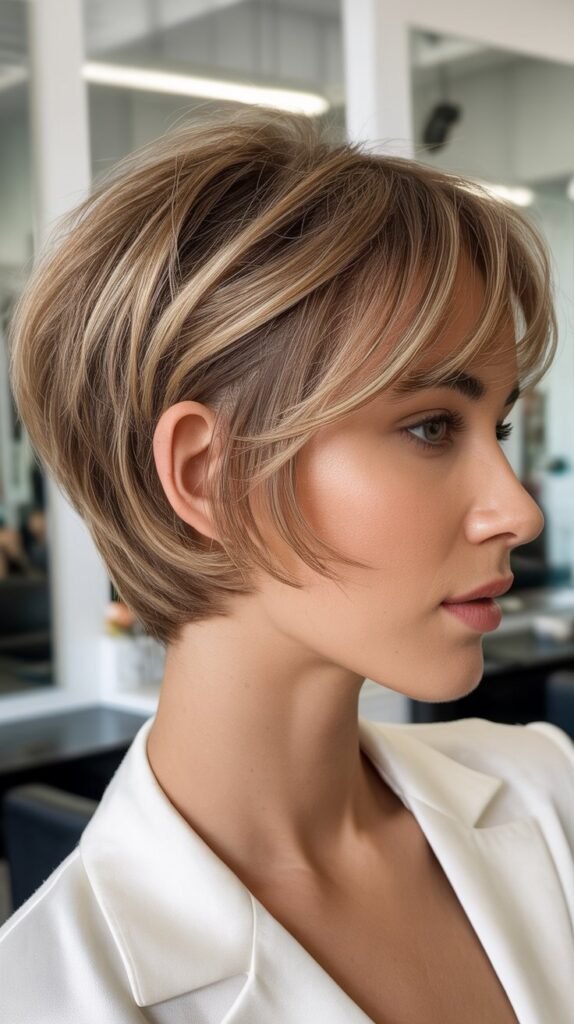
The pixie bob combines elements of both cuts, featuring pixie-style short sides and back with a longer, bob-like length on top and in front, creating a versatile style that offers coverage while maintaining the benefits of short hair for fine textures.
This hybrid approach provides the best of both worlds.
- The top section typically measures 4-6 inches while sides and back stay at 1-2 inches, creating clear distinction
- This length differential allows for tucking behind ears, creating volume on top, or styling sleeker when desired
- Fine hair benefits from the reduced weight at the sides while maintaining enough length on top to manipulate and style
- The pixie bob works exceptionally well for those hesitant to commit to a very short cut but wanting the advantages of shorter hair
- Styling versatility includes slicking back, creating texture, or achieving a more polished, smooth appearance
- This cut particularly flatters those with strong cheekbones or defined facial features to showcase
- The style bridges professional and casual environments seamlessly with appropriate styling adjustments
- According to hair trend analysis from InStyle, hybrid cuts have seen a 35% increase in popularity over recent years
11. Rounded Pixie Cut
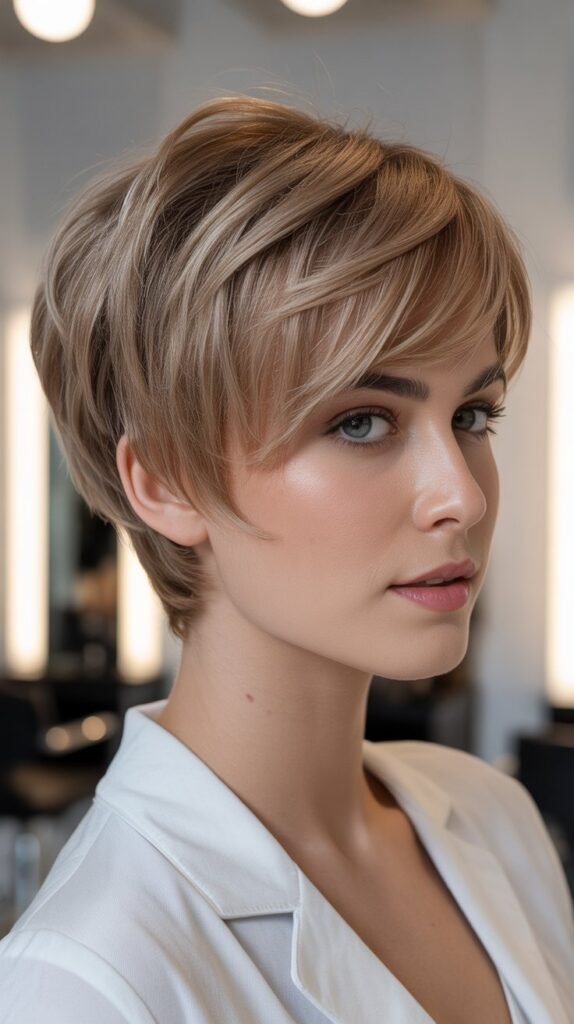
The rounded pixie follows the natural contours of the head, creating a soft, curved silhouette that adds femininity and elegance while the structured shape gives fine hair a defined form it might not achieve naturally.
This classic approach emphasizes polish and sophistication.
- The cut creates a gentle dome shape by keeping slightly more length uniformly around the head rather than severe tapering
- Graduated layers follow the head’s curve, preventing awkward spots where fine hair might separate or look thin
- This approach works beautifully for round and oval face shapes, complementing natural facial curves
- The rounded shape requires precise cutting technique to maintain symmetry and balance
- Fine hair holds this shape particularly well throughout the day without excessive product or restyling
- Blow-drying with a round brush enhances the curved silhouette and adds polish
- The style conveys professionalism and refinement, making it popular among executives and professionals
- Maintenance involves regular trims every 4-5 weeks to preserve the clean, curved lines
12. Pixie with Tapered Nape
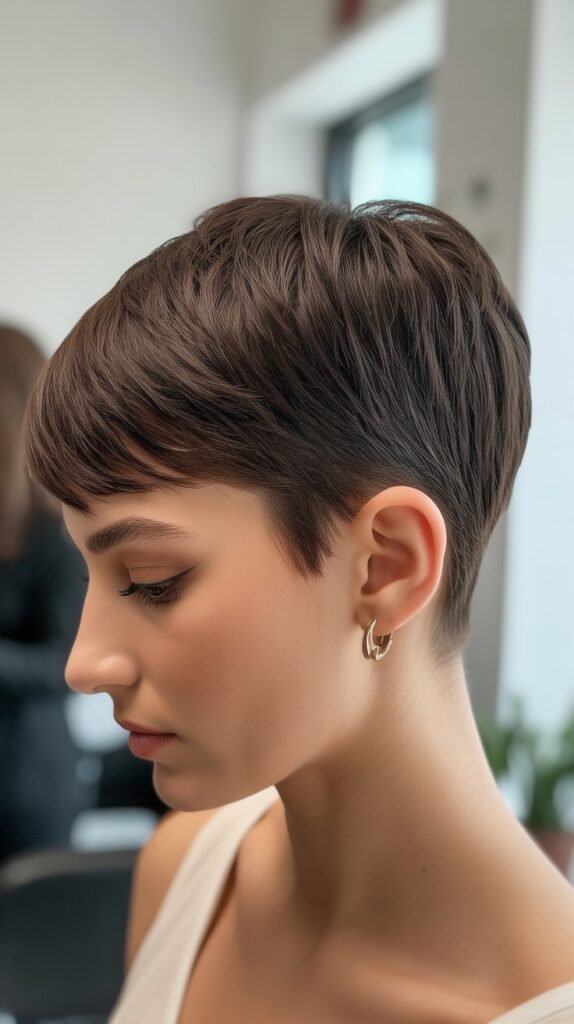
A pixie cut featuring a tapered nape gradually shortens hair at the back of the neck, creating a clean, elongating effect that showcases the neck and emphasizes vertical lines while reducing bulk where fine hair can appear straggly.
This detail-oriented approach adds sophistication to any pixie variation.
- The taper begins at the occipital bone and gradually reduces length down to the nape, often to 1/4 inch or less
- This technique creates a V-shape or soft rounded finish at the nape that appears intentional and polished
- Tapered napes prevent the dreaded “triangle” effect that can occur when fine hair grows out
- The clean lines at the neck make the style appear freshly cut even several weeks after a trim
- This detail particularly flatters those with elegant neck lines or who wear jewelry that draws attention to the neck area
- Clipper work or razor techniques achieve the smooth gradient necessary for a professional-looking taper
- The tapered nape keeps the neck area cooler and more comfortable, especially in warm weather
- Maintenance for this detail requires attention every 4-6 weeks to prevent the taper from growing out and losing definition
13. Tousled Pixie with Volume
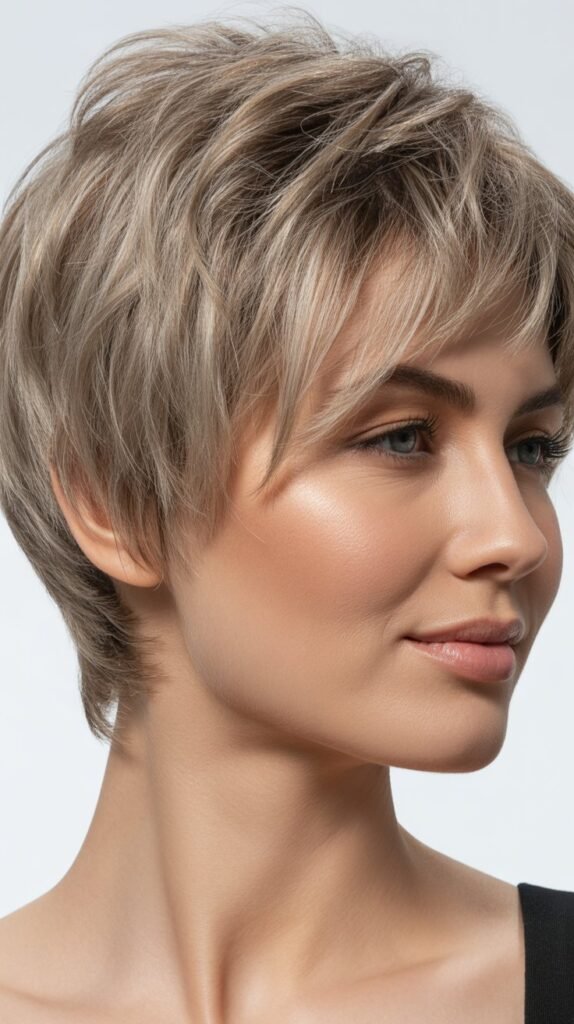
The tousled pixie embraces intentional messiness and undone texture, using layers and strategic cutting to create natural-looking volume and movement that makes fine hair appear fuller and more substantial.
This effortlessly chic style prioritizes ease and natural beauty.
- The cut incorporates varied layer lengths throughout to create multiple levels that don’t settle flat against the head
- Tousling disrupts the natural pattern fine hair tends to fall into, preventing that “too flat” appearance
- This style works with natural texture rather than against it, requiring minimal heat styling or manipulation
- Salt spray, texturizing spray, or dry shampoo enhances the tousled effect without weighing fine hair down
- The deliberately imperfect finish actually makes fine hair appear thicker because strands separate and catch light differently
- Styling involves scrunching product through damp hair and allowing it to air dry or using a diffuser
- This approach suits casual lifestyles and those who prefer a low-maintenance, wash-and-go routine
- The tousled pixie has become increasingly popular as beauty standards shift toward embracing natural texture and effortless styling
14. Pixie with Shaved Designs
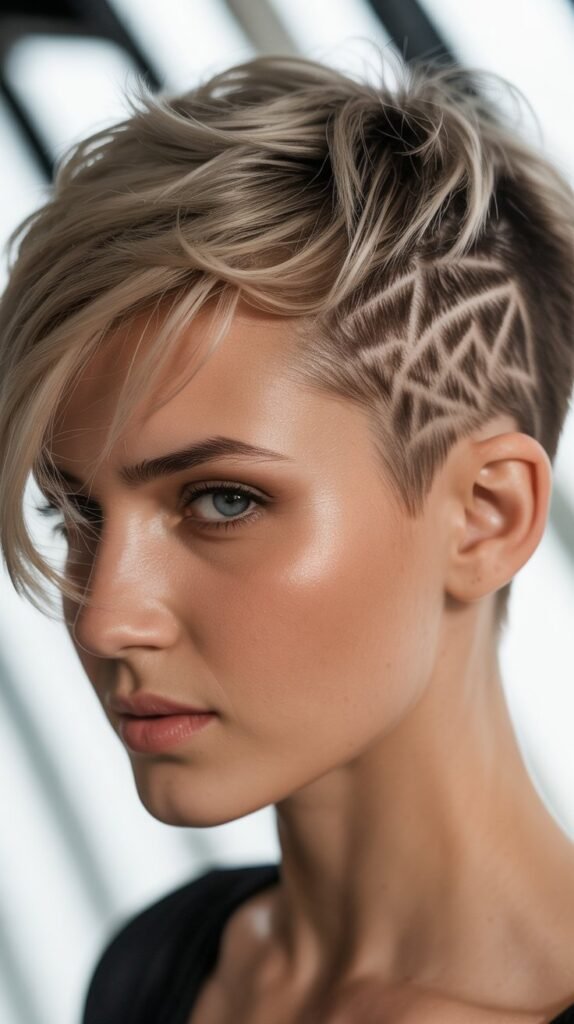
Adding shaved designs or patterns to a pixie cut creates artistic focal points in the closely cropped sections, offering personalization and visual interest that completely transforms the standard pixie into wearable art.
These designs work particularly well with fine hair since the canvas is smooth and even.
- Designs are typically shaved into the undercut sections using clippers with different guard lengths to create contrast
- Popular patterns include geometric lines, curves, stars, or more intricate artistic designs based on personal preference
- The designs add personality and uniqueness without requiring permanent changes like coloring that might damage fine hair
- Fine hair texture actually showcases shaved designs more clearly than thick hair because the scalp provides better contrast
- Designs require refresh appointments every 2-3 weeks as hair growth begins to obscure the patterns
- This creative option appeals to those seeking self-expression through their hairstyle
- The designs can be hidden under longer top sections for professional settings or revealed for casual environments
- According to beauty trend reports, shaved designs in pixie cuts have seen growing popularity particularly among younger demographics
15. Sleek Polished Pixie
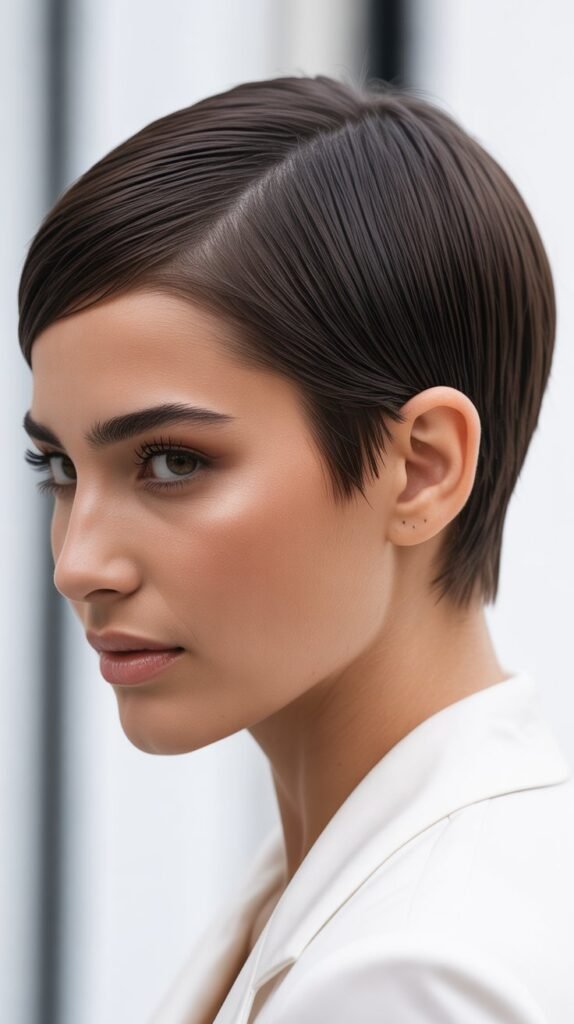
The sleek polished pixie emphasizes smoothness and shine, using precise cutting techniques and styling methods to create a refined, elegant appearance that makes fine hair look intentionally sleek rather than unintentionally flat.
This sophisticated approach focuses on immaculate finishing.
- The cut features clean lines and minimal texture, relying on precision rather than choppy layers
- Blow-drying with a paddle brush or flat ironing creates the smooth, glossy surface
- Lightweight shine serums or smoothing creams enhance the polished effect without creating greasiness
- This style particularly suits professional environments where a refined appearance is valued
- Fine hair actually achieves this sleek look more easily than thick hair, which can resist smoothing
- The polished pixie emphasizes facial features by creating a clean frame around the face
- Side parts or deep side parts add visual interest to the otherwise smooth silhouette
- Maintenance requires regular trims every 4-5 weeks to preserve the precise, intentional lines
16. Pixie with Disconnected Layers
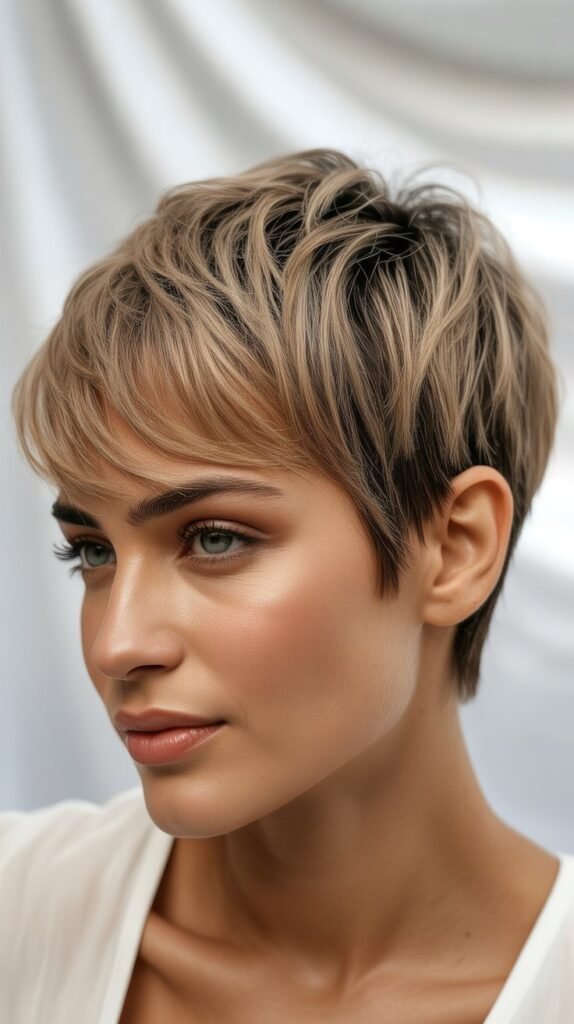
Disconnected layers in a pixie cut feature deliberate gaps between layer lengths rather than smooth transitions, creating dramatic texture and visual separation that prevents fine hair from blending together and appearing thin.
This modern technique adds edge and dimension.
- Disconnection occurs when one section of hair is significantly shorter or longer than the adjacent section without gradual blending
- This technique creates distinct levels and movement that catch light differently, making fine hair appear fuller
- The dramatic contrast between lengths adds contemporary edge and fashion-forward appeal
- Disconnected layers work particularly well in combination with undercuts or shaved sections
- Fine hair holds the disconnected shape well because there’s no weight pulling layers together
- Styling can emphasize the separation by using fingers to define individual sections with product
- This cut requires an experienced stylist who understands modern cutting techniques and can execute them precisely
- The disconnected approach suits those seeking a distinctive, artistic hairstyle rather than traditional beauty
17. Soft Wispy Pixie
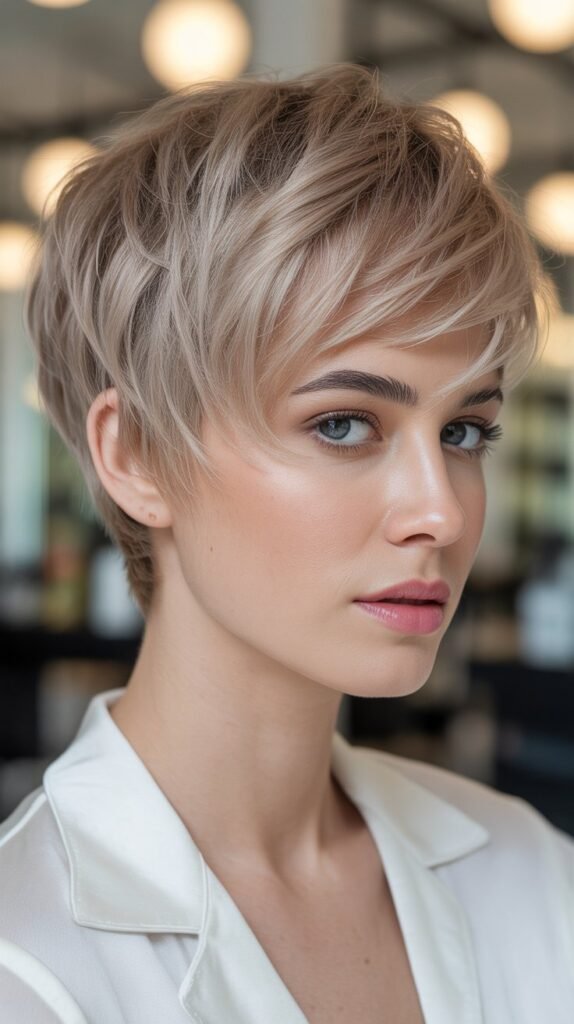
The soft wispy pixie features delicate, feathered ends throughout the cut, creating an ethereal, romantic appearance that adds femininity and gentleness to the short style while the lightweight texture prevents fine hair from appearing heavy or blunt.
This approach emphasizes softness and grace.
- Wispy ends are created using razor cutting or point-cutting techniques that taper hair to very fine points
- The delicate texture adds movement and air to the style, preventing fine hair from looking dense or weighed down
- This cut particularly suits those seeking a less edgy, more traditionally feminine short hairstyle
- The soft endings around the face create a flattering frame that suits most face shapes
- Fine hair naturally lends itself to wispy texture since the strands are already thin and lightweight
- Minimal styling product maintains the soft appearance—heavy products would counteract the airy effect
- This style appeals to women over 40 who want short hair without appearing severe or harsh
- The wispy pixie transitions beautifully from day to evening with simple styling adjustments
18. Angular Pixie Cut
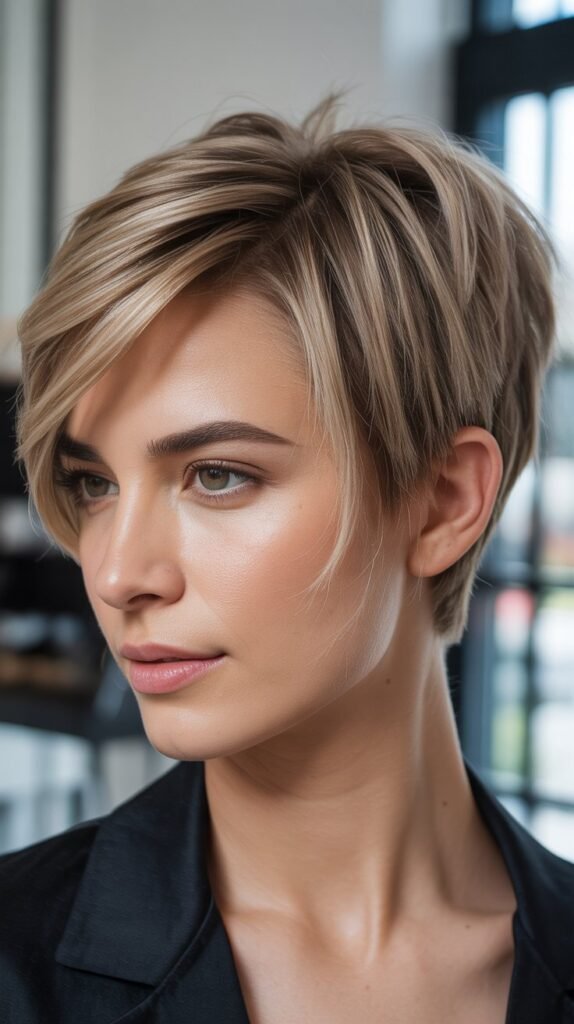
The angular pixie features sharp, defined lines and geometric shapes created through precise cutting techniques, adding structure and architectural interest that gives fine hair a deliberate, sculpted appearance.
This modern style emphasizes clean lines and intentional angles.
- Sharp angles are typically created around the face, at the nape, or in the sideburn area for maximum visual impact
- The geometric precision requires expert cutting skills and regular maintenance to preserve the defined lines
- Angular cuts particularly flatter square and rectangular face shapes by complementing natural bone structure
- Fine hair showcases sharp lines more clearly than thick hair, which can blur or soften angles
- The structured approach adds sophistication and modernity to the classic pixie silhouette
- Styling involves blow-drying sections in specific directions to emphasize the angles
- This cut works well for those in creative industries or anyone seeking a distinctive, memorable appearance
- The angular pixie has seen increased popularity in editorial and fashion photography for its striking visual impact
19. Pixie with Face-Framing Pieces
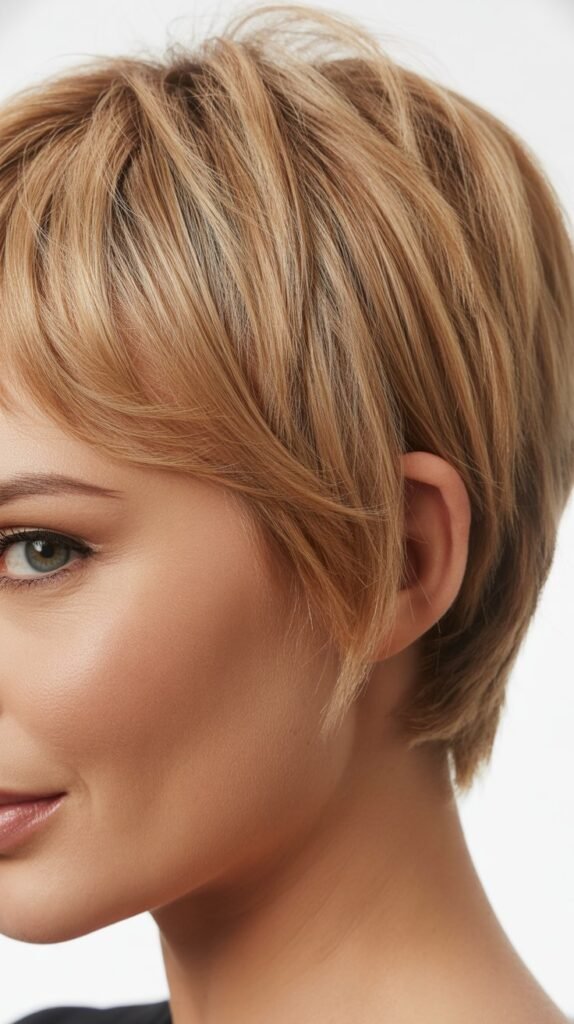
Incorporating longer face-framing pieces into a pixie cut creates softness around the face while maintaining short length throughout the rest of the cut, offering a feminine touch that balances the boldness of short hair.
These strategic longer sections add versatility and flattering dimension.
- Face-framing pieces typically range from 2-4 inches longer than the surrounding hair, creating clear contrast
- These sections can be styled forward onto the face, tucked behind ears, or swept to the side for variation
- The longer pieces add femininity and soften the overall appearance of the short cut
- Fine hair in these sections maintains movement and doesn’t become stringy since the volume is limited
- This technique particularly benefits round and square face shapes by creating vertical lines along the cheeks
- The face-framing approach serves as an excellent transition for those growing out a very short pixie
- Styling these pieces with a small round brush or flat iron adds polish and intention
- This variation offers the benefits of short hair with some of the softness associated with longer styles
20. Curly Pixie for Fine Hair
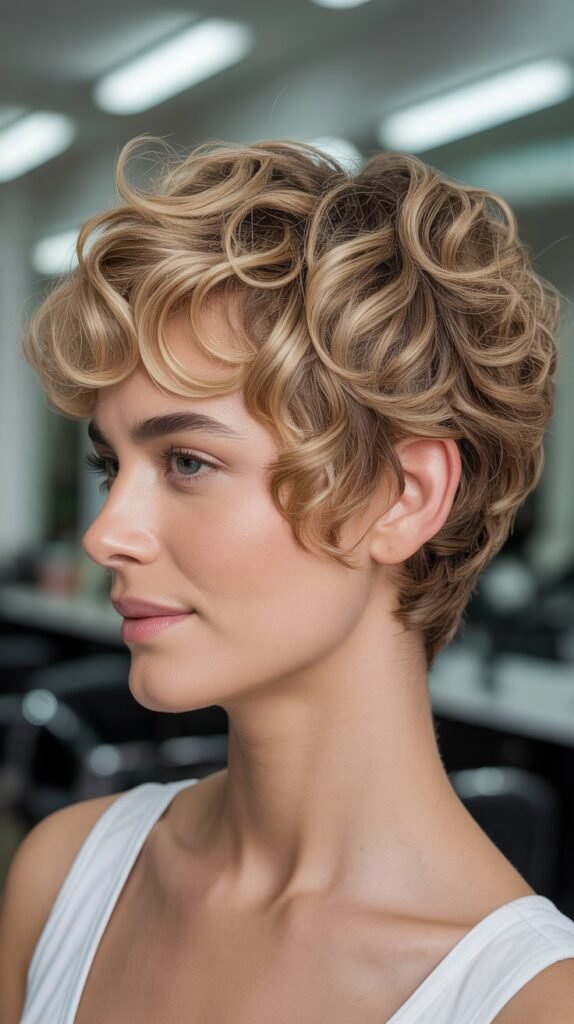
A curly pixie cut specifically designed for fine hair embraces natural curl patterns while using strategic layering to prevent excessive volume while maintaining definition and shape.
This approach celebrates natural texture rather than fighting against it.
- The cut incorporates layers that follow curl patterns, allowing curls to spring and form naturally without creating pyramid shapes
- Fine curly hair benefits from shorter length because weight reduction allows curls to form more completely
- Dry cutting techniques work best for curly pixies, allowing stylists to see how curls fall naturally
- Curl-specific products like lightweight curl creams or gels enhance definition without weighing fine curls down
- This style requires less daily manipulation than longer curly hair, reducing potential damage
- The pixie length prevents fine curly hair from becoming stringy at the ends, a common problem with longer lengths
- Natural texture provides automatic volume that fine straight hair must work to achieve
- According to curl specialists, pixie cuts can actually improve curl health by removing damaged, older growth
21. Pixie with Color Contrast
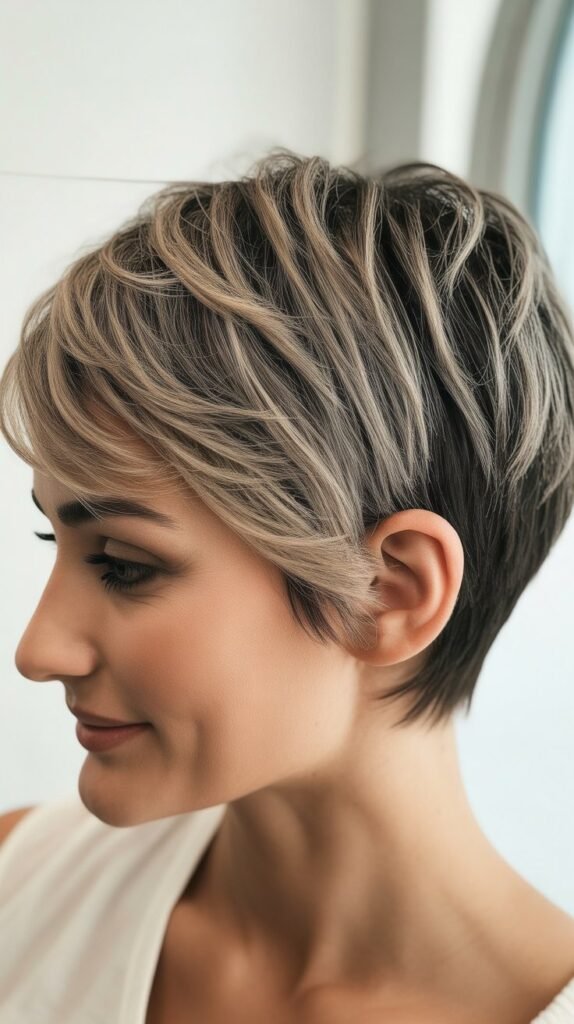
Adding strategic color contrast to a pixie cut through highlights, lowlights, or multiple tones creates dimension and depth that makes fine hair appear fuller and more textured.
The color variation tricks the eye into perceiving more volume and substance.
- Lighter pieces around the face and on top create the illusion of fullness by catching and reflecting more light
- Darker tones underneath add depth and make the lighter sections appear to lift away from the head
- Balayage techniques work particularly well on pixies, creating natural-looking dimension through hand-painted color
- Fine hair accepts color readily and often requires less processing time than thick hair
- Strategic color placement can enhance the cut’s shape and emphasize specific features
- Lower-maintenance color options like subtle highlights reduce the need for frequent touch-ups
- Color dimension makes fine hair appear to have more texture and movement even when styled simply
- Proper hair care with color-safe products maintains the dimensional effect and hair health
22. Side-Parted Pixie
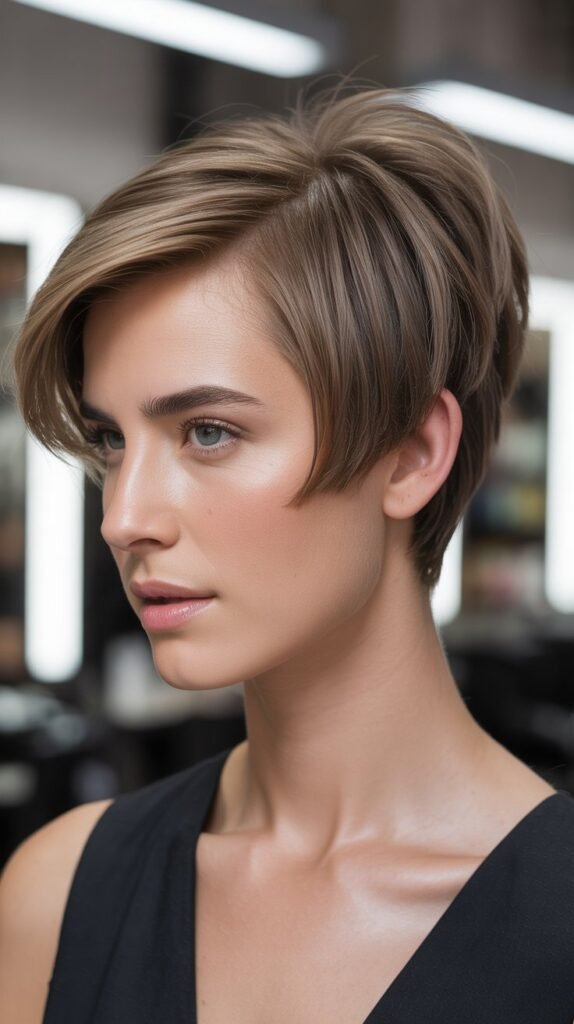
A side-parted pixie features a defined part on one side of the head rather than the center, creating asymmetry and visual interest while allowing fine hair to build volume on the fuller side.
This classic styling element adds sophistication and shapes the overall silhouette.
- The part is typically placed 1-2 inches from the center, creating an obvious distinction between sides
- Hair on the fuller side can be styled with volume and texture while the opposite side lies closer to the head
- This asymmetry flatters most face shapes by creating diagonal lines that add visual interest
- Fine hair benefits because concentrating volume on one side creates more impact than spreading it thin across the entire head
- The part can be switched periodically to prevent the hair from settling permanently in one direction
- Deep side parts create more dramatic contrast and volume than shallow parts
- Styling involves blow-drying the heavier side away from the part to maximize lift at the roots
- This versatile approach works for both professional and casual settings depending on styling finish
23. Pixie with Elongated Nape
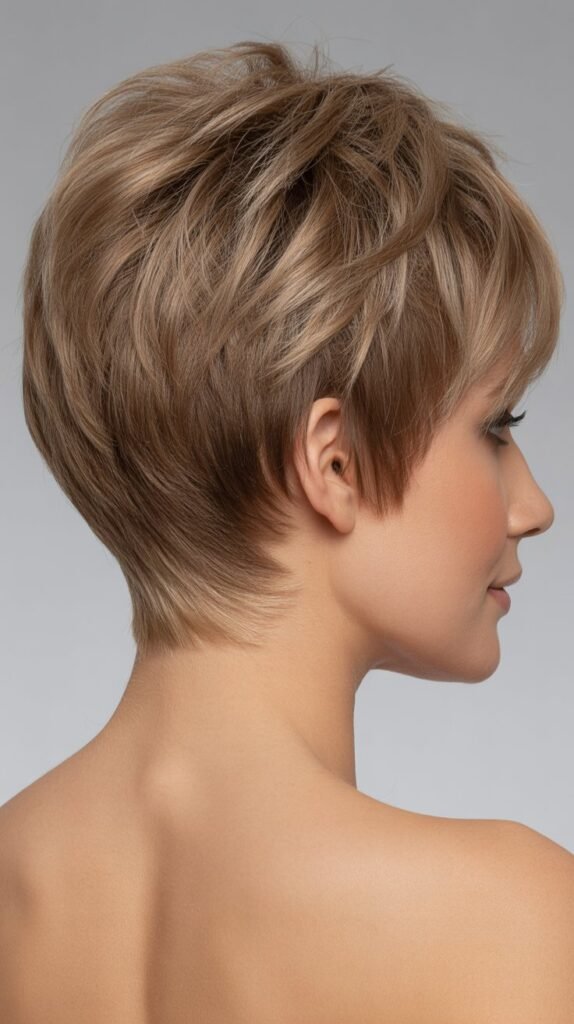
An elongated nape features intentionally longer hair at the back of the neck that tapers to a point or maintains length below the occipital bone,
creating a distinctive silhouette while the additional length adds visual interest without adding bulk where fine hair might struggle.
- The nape section typically extends 1-3 inches longer than the surrounding hair, creating a deliberate tail or point
- This detail adds uniqueness and personality to an otherwise standard pixie cut
- The elongated section can be straight, textured, or even braided depending on length and preference
- Fine hair in this area doesn’t appear stringy because the focused length creates intention rather than scattered wispy ends
- This variation particularly appeals to those who want short hair but aren’t ready to completely eliminate all length
- The elongated nape provides something to play with or tuck, offering comfort during the adjustment to short hair
- Styling the nape section differently from the rest of the cut creates contrast and visual appeal
- This option works well for those in creative fields or anyone seeking an unconventional take on the classic pixie
24. Volumized Top Pixie
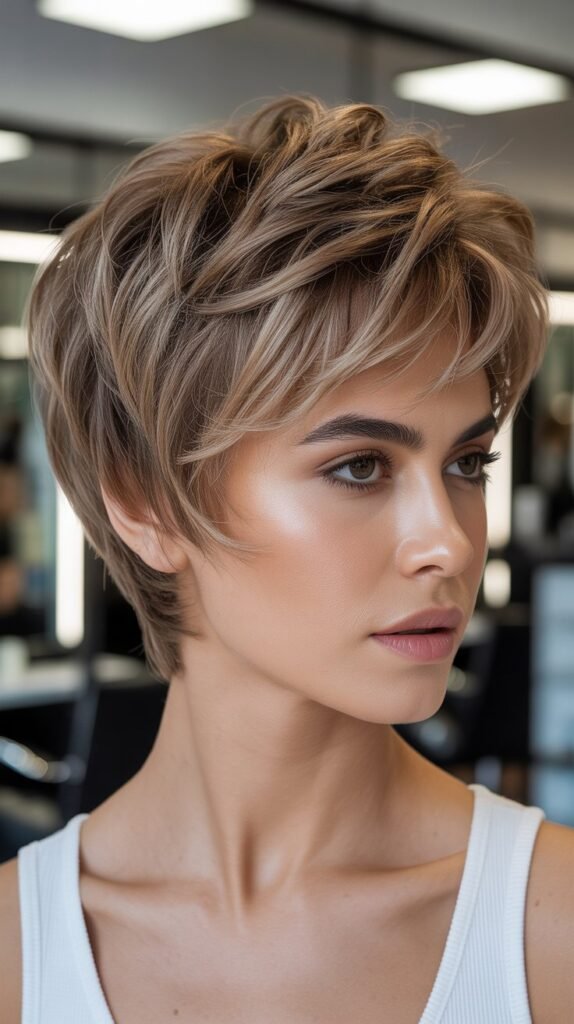
The volumized top pixie concentrates length, layers, and styling specifically at the crown and top of the head, creating maximum height and fullness where fine hair typically falls flattest.
This strategic approach directly addresses the primary challenge of fine hair through targeted cutting and styling techniques.
- The top section maintains 3-5 inches of length while sides and back stay much shorter, creating dramatic height differential
- Layers at the crown are cut to stand away from the scalp rather than lying flat against it
- Blow-drying with a round brush directed at the roots creates lift that can last throughout the day
- Volumizing products like root lifters or volumizing mousses applied at the base enhance the height effect
- This style can add 2-3 inches of perceived height, dramatically changing overall proportions
- The concentrated volume at the top balances facial features and can make the face appear more oval
- Fine hair actually achieves this lifted style more easily than heavy hair that resists standing upward
- The volumized approach requires minimal daily maintenance once the styling technique is mastered
25. Modern Shaggy Pixie
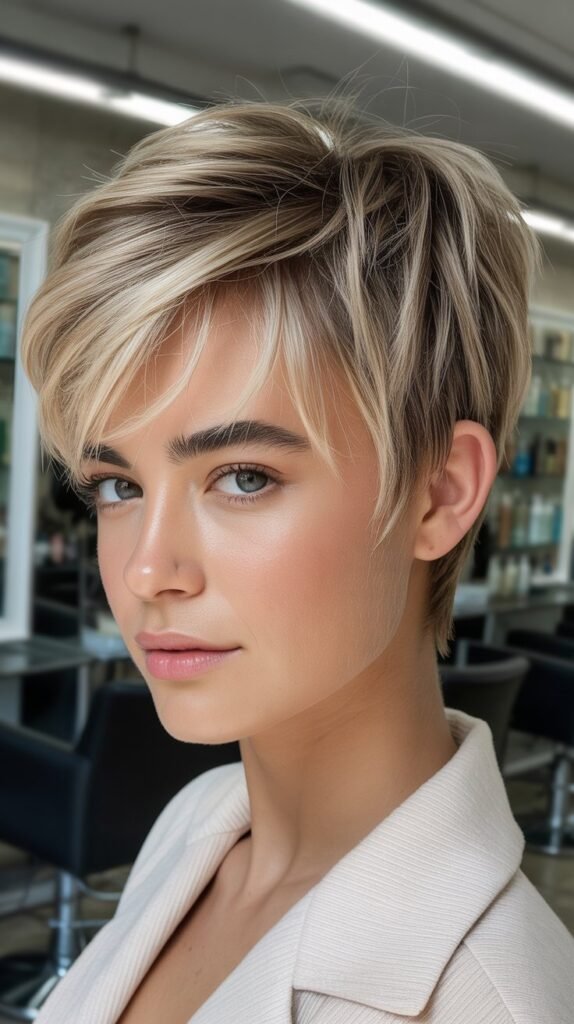
The modern shaggy pixie incorporates choppy, uneven layers throughout with textured ends and deliberate messiness, creating a contemporary, effortless appearance that adds movement and dimension to fine hair.
This style embraces imperfection and celebrates natural texture.
- The shaggy technique uses varied layer lengths throughout the head without smooth blending between levels
- Razored or point-cut ends create texture and separation that prevents fine hair from clumping together
- This low-maintenance style looks intentionally undone rather than neglected, embracing natural movement
- The modern shag works particularly well for fine hair because the choppy texture creates an illusion of fullness
- Minimal styling is required—often just air-drying with texturizing spray or light product scrunched through
- The shaggy approach suits various face shapes and can be adjusted to flatter individual features
- This style has seen resurgence in popularity as trends move toward embracing natural texture and effortless beauty
- The forgiving nature of the cut means it grows out gracefully and can go longer between trims
Conclusion
Embracing a short pixie cut when you have fine hair isn’t just about following trends—it’s about discovering a style that works with your hair’s natural characteristics rather than against them, creating volume, shape, and confidence that might have felt impossible with longer lengths.
The 25 Perfect Short Pixie Haircuts for Fine Hair showcased in this guide demonstrate that fine hair isn’t a limitation but rather an opportunity to explore versatile, flattering styles that require minimal maintenance while delivering maximum impact.
From classic tapered cuts that create timeless elegance to modern shaggy pixies that embrace contemporary aesthetics, each style offers unique benefits specifically tailored to address the challenges fine hair presents.
The key to success lies in choosing a cut that complements your face shape, lifestyle, and personal style while working with an experienced stylist who understands the specific techniques required to make fine hair appear fuller and more voluminous.
Whether you opt for bold asymmetry, soft wispy layers, or edgy undercuts, the right pixie cut can transform not just your appearance but your entire approach to hair styling, replacing frustration with confidence and lengthy styling routines with effortless, beautiful results.
Remember that fine hair’s lightweight nature is actually an advantage in short styles, allowing these cuts to hold their shape beautifully throughout the day while requiring far less product and manipulation than their longer counterparts.
As you consider your options from this comprehensive collection of 25 Perfect Short Pixie Haircuts for Fine Hair, focus on the styles that resonate with your personality and lifestyle, knowing that the perfect pixie is waiting to unlock your hair’s full potential and reveal a confident, stylish version of yourself.