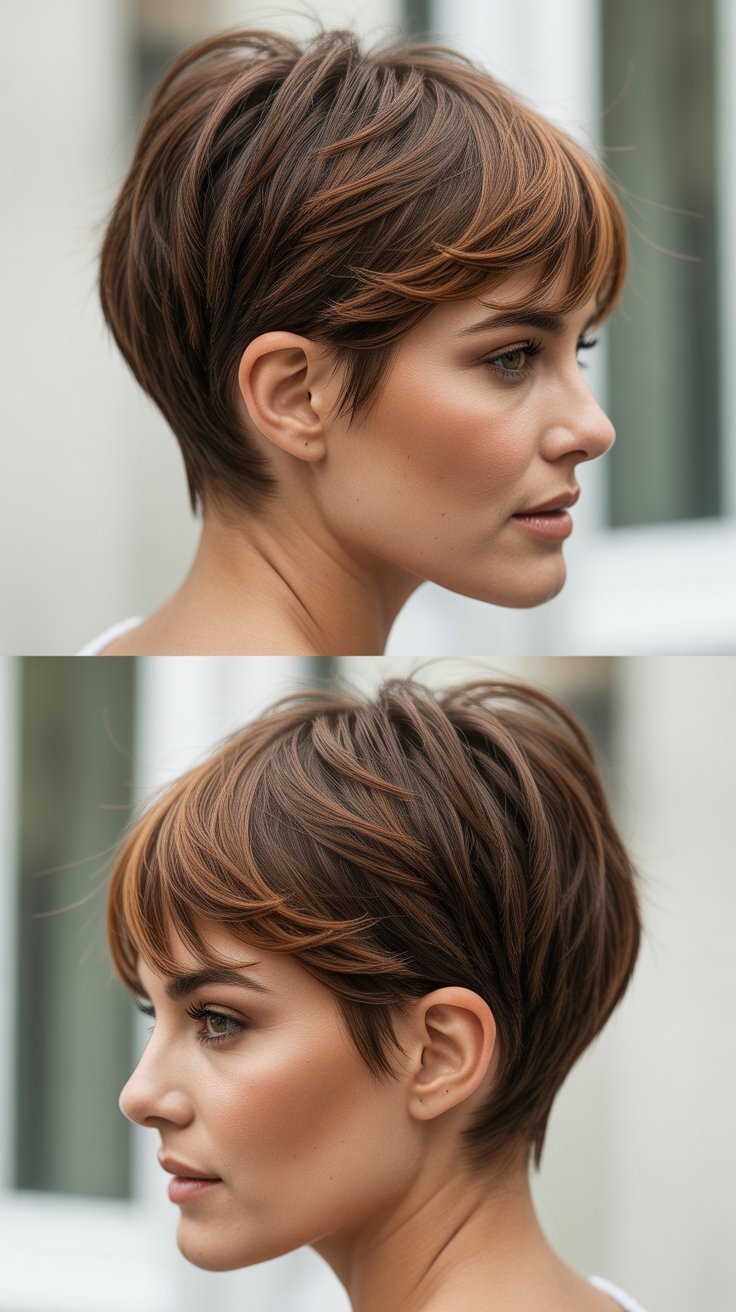
Are you ready to make a bold statement with your hair? If you’ve been dreaming of a dramatic transformation that combines elegance, edge, and effortless style, you’re in exactly the right place.
The pixie cut has evolved from a daring choice to a versatile canvas of self-expression, and very short versions offer the ultimate in low-maintenance sophistication.
Whether you’re seeking a sleek professional look, a textured masterpiece, or an asymmetrical work of art, this comprehensive guide to 30 Stunning Very Short Pixie Haircuts (Front & Back) will walk you through every angle, every texture, and every styling possibility.
From classic crops that never go out of style to modern interpretations that push boundaries, you’ll discover front and back views that reveal the complete picture of each cut, helping you visualize your next salon appointment with absolute confidence.
Get ready to explore cuts that flatter every face shape, work with every hair texture, and suit every lifestyle—because your perfect pixie is waiting in these pages.
1. Classic Short Pixie Cut
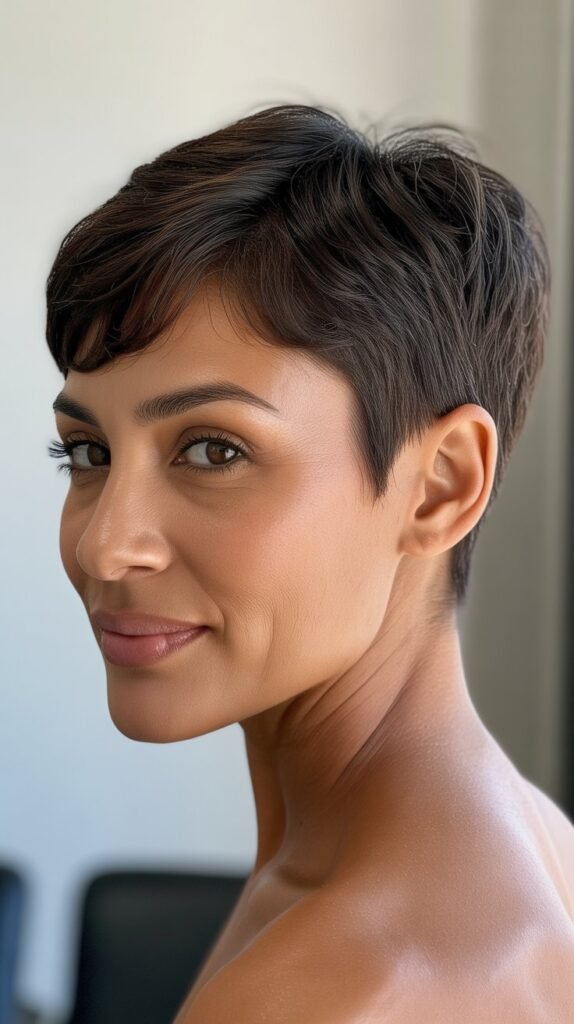
The classic short pixie cut remains timeless for good reason—it’s clean, sophisticated, and universally flattering.
This cut typically features closely cropped sides and back with slightly more length on top, creating a balanced silhouette that works beautifully for professional and casual settings alike.
Key Features:
- The sides are cut very short, usually between 1-2 inches, creating a neat and polished appearance that emphasizes facial features
- The back is tapered gradually from the crown down to the nape, ensuring a smooth transition that looks professional from every angle
- The top section maintains 2-3 inches of length, providing just enough volume to create shape without requiring extensive styling time
- This cut works exceptionally well for fine to medium hair textures as it creates the illusion of fullness and body
- Face shapes that benefit most include oval, heart, and diamond shapes, as the short sides draw attention to cheekbones and eyes
Styling Tips:
- Apply a small amount of texturizing cream to damp hair and blow-dry forward for a modern, piecey look
- Use a flat iron on the top section for sleek sophistication, or add texture spray for a more casual vibe
- Maintenance requires salon visits every 4-6 weeks to keep the shape crisp and prevent the back from becoming too heavy
2. Textured Choppy Pixie
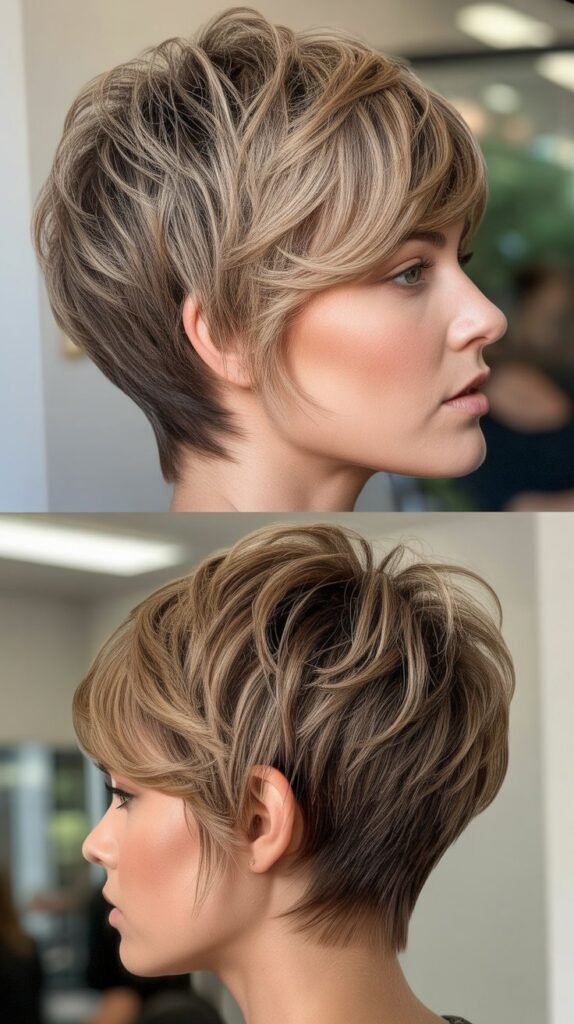
The textured choppy pixie brings an edgy, contemporary twist to the traditional cut through strategic layering and piece-y definition.
This style celebrates movement and dimension, making it perfect for those who want their hair to have personality without constant fussing.
Characteristics:
- Multiple layers throughout create depth and prevent the hair from lying flat against the head
- Razor-cut or point-cut ends produce a deliberately uneven texture that catches light beautifully
- The choppy pieces work particularly well for thick hair, as they remove bulk while adding style
- This cut typically keeps the back quite short while allowing more textured length on top and sides
- The intentional messiness of this style makes it forgiving for active lifestyles and humid climates
Best Practices:
- Work a small amount of matte pomade through dry or slightly damp hair, using fingertips to separate and define individual pieces
- Avoid brushing or combing once styled, as this destroys the intentional texture and piece-y separation
- Air-drying works wonderfully with this cut—simply scrunch with a texturizing product and let your natural texture shine through
3. Undercut Pixie
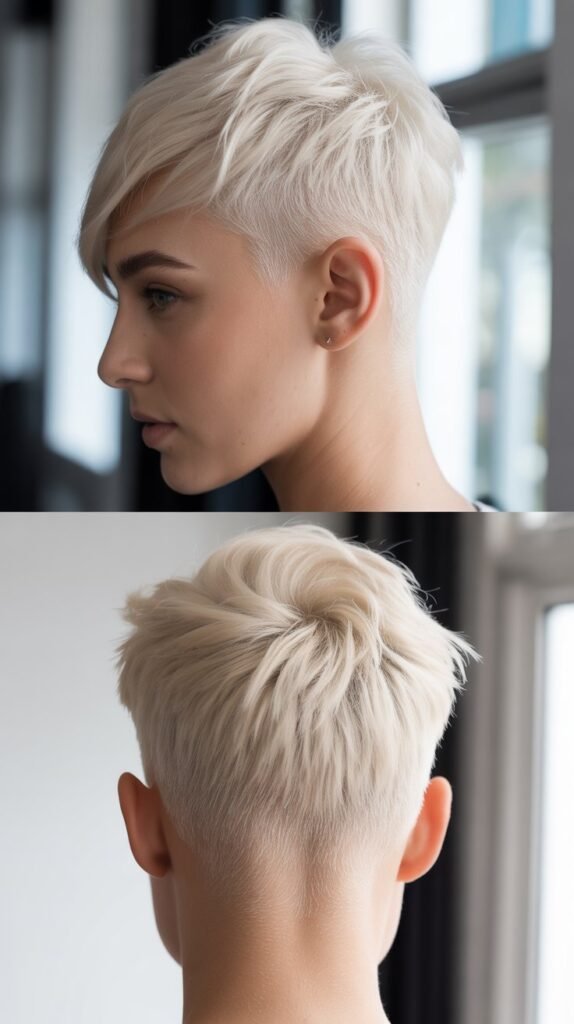
The undercut pixie makes a powerful statement by combining dramatic contrast with artistic precision.
This bold style features shaved or very closely clipped sections underneath longer hair on top, creating a stunning visual impact that’s both rebellious and refined.
Design Elements:
- The undercut section can be placed on one or both sides, or across the entire back and sides depending on desired boldness
- The shaved portion typically ranges from a #1 to #3 guard (1/8 inch to 3/8 inch), creating sharp definition against the longer top
- This technique dramatically reduces hair volume and provides excellent cooling for those in warm climates
- The longer top section can be styled in numerous ways—slicked back, swept to the side, or worn forward for versatility
- Design options include leaving the undercut plain or adding patterns, lines, or geometric shapes for extra personality
Maintenance Considerations:
- The undercut grows out quickly and requires touch-ups every 2-3 weeks to maintain the clean, sharp contrast
- Home maintenance with clippers is possible for those comfortable with DIY upkeep between salon visits
- When growing out, the undercut section goes through an awkward phase that may require creative styling or patience
4. Asymmetrical Pixie Cut
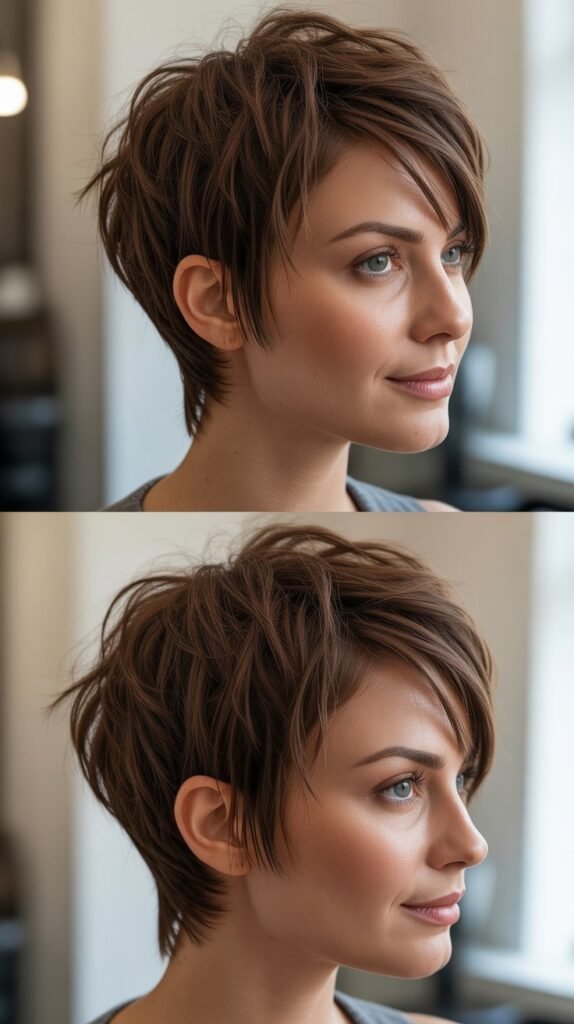
The asymmetrical pixie cut breaks traditional symmetry rules to create a dynamic, eye-catching style that’s inherently modern.
By featuring intentionally uneven lengths from side to side, this cut adds instant intrigue and allows for creative self-expression.
Defining Features:
- One side is kept noticeably shorter than the other, typically with a difference of 1-3 inches creating visible asymmetry
- The longer side can be swept across the forehead, tucked behind the ear, or styled forward depending on mood and occasion
- This cut works beautifully for those with strong jawlines or distinctive facial features they want to highlight
- The asymmetry creates natural movement and prevents the hair from looking too structured or severe
- This style particularly flatters round and square face shapes by adding angles and breaking up facial width
Styling Versatility:
- Apply volumizing mousse at the roots of the longer side and blow-dry with a round brush to enhance the dramatic difference
- Use a straightening iron on the longer section for sleek sophistication, or leave natural for casual texture
- The shorter side can be kept very tight to the head or slightly textured depending on personal preference
5. Spiky Pixie Cut
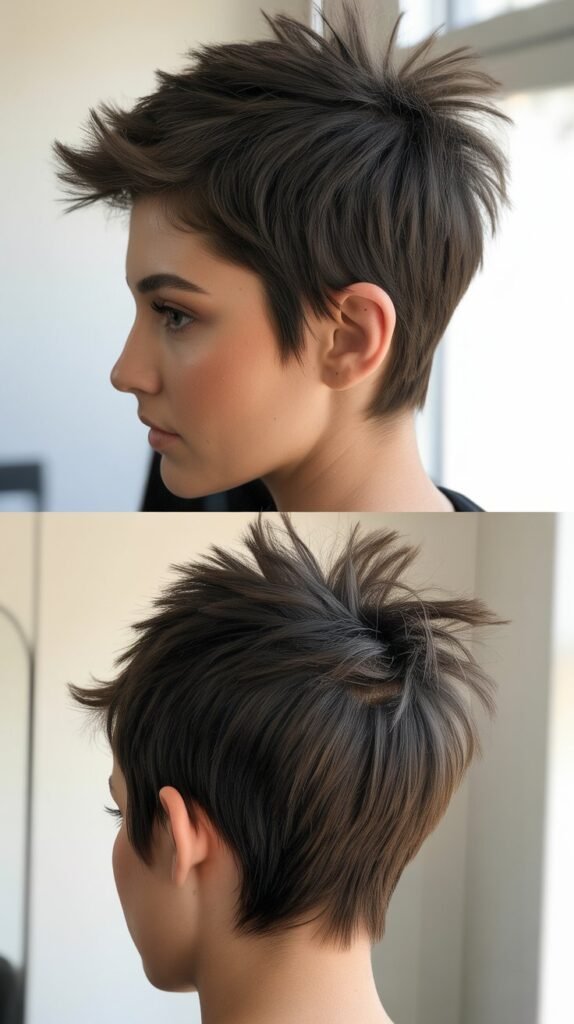
The spiky pixie cut channels rock-and-roll energy through vertical styling that defies gravity and convention.
This playful yet edgy style works for those who embrace boldness and aren’t afraid to stand out in any crowd.
Core Components:
- Hair is cut to relatively uniform short length all over, typically 1-2 inches, providing the perfect foundation for upward styling
- The ends are often point-cut to create natural separation that makes spiking easier and more defined
- This cut works best with naturally straight or slightly wavy hair that holds products well
- The spiky effect can be concentrated at the crown for height, distributed evenly, or focused at the front for face-framing drama
- Face shapes with strong bone structure, particularly oval and heart shapes, are complemented by the upward movement
Product and Technique:
- Strong-hold gel or spiking wax is essential—apply to damp hair and use fingertips to pull small sections upward while drying
- Hair dryer with a concentrator nozzle helps direct heat at the base of spikes to set them firmly in place
- For extra hold, finish with a strong-hold hairspray, spraying from underneath the spikes for maximum lift
6. Side-Swept Pixie
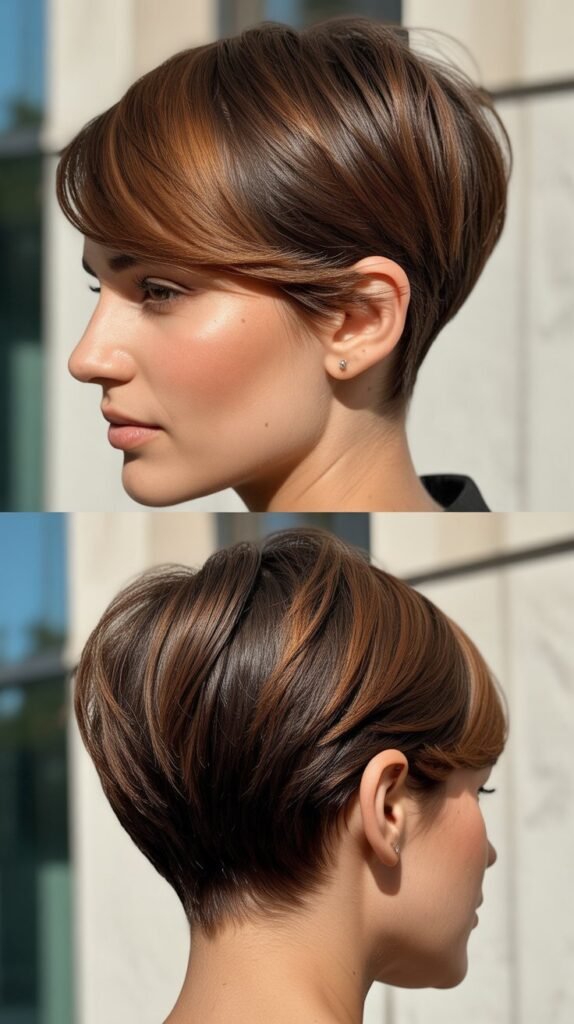
The side-swept pixie combines femininity with sophistication through elegant directional styling that softens features while maintaining a chic short length.
This versatile cut flatters virtually every face shape and transitions seamlessly from day to night.
Structural Details:
- The cut maintains slightly more length at the front and top, typically 3-4 inches, allowing for the sweeping motion across the forehead
- One side features a subtle undercut or very short length to create contrast against the longer swept section
- The back is kept neat and tapered, preventing bulk while maintaining the overall polished appearance
- Natural part lines are often eliminated or minimized to allow the hair to sweep smoothly in one direction
- This style works exceptionally well for those with naturally straight or wavy hair that can hold directional styling
Achieving the Look:
- Blow-dry the hair in the desired direction using a round brush to create smooth, controlled movement
- Apply a light styling cream before drying to prevent frizz and add shine without weighing hair down
- Finish by tucking the shorter side behind the ear to emphasize the asymmetrical sweep and showcase facial features
7. Curly Pixie Cut
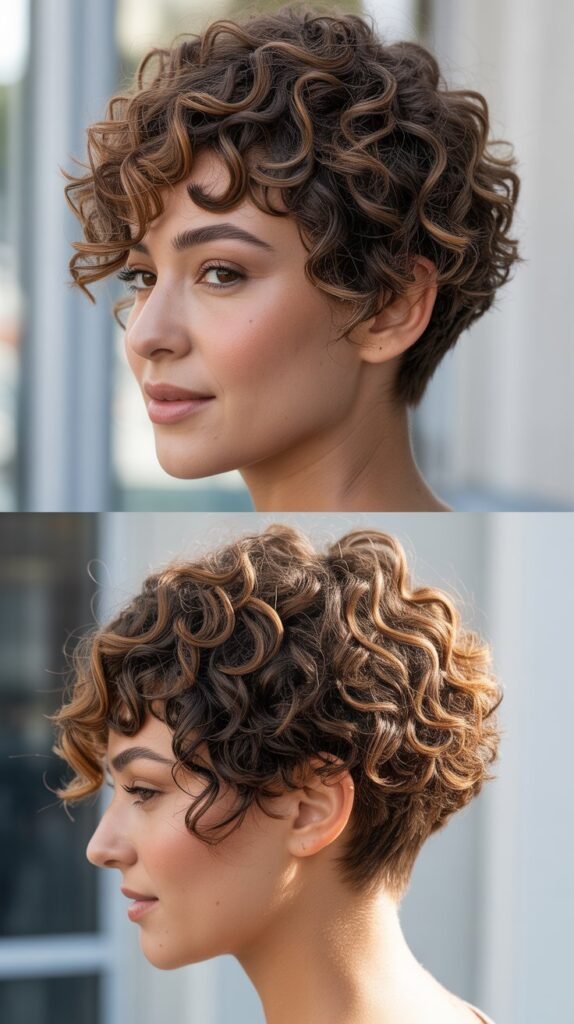
The curly pixie cut celebrates natural texture in its most liberated form, allowing curls to spring free while maintaining a structured, intentional shape.
This cut proves that short hair and curls are a match made in heaven when properly executed.
Texture Considerations:
- The cut is specifically designed to work with the natural curl pattern, whether loose waves or tight coils
- Length is typically kept to 2-4 inches depending on curl tightness, as curls shrink significantly when dry
- Layering is crucial to prevent a triangular or mushroom shape, with shorter layers at the crown and slightly longer pieces around the face
- Thinning or texturizing should be minimal, as curly hair already has natural volume and removing too much can create frizz
- This style works beautifully for round, oval, and heart-shaped faces by adding height and balancing proportions
Curl Care:
- Use sulfate-free products and avoid shampooing daily to maintain natural oils that keep curls defined and healthy
- Apply curl-defining cream to soaking wet hair, scrunch gently, and either air-dry or use a diffuser on low heat
- Sleep on a silk or satin pillowcase to minimize friction and prevent frizz from forming overnight
8. Blonde Pixie Cut
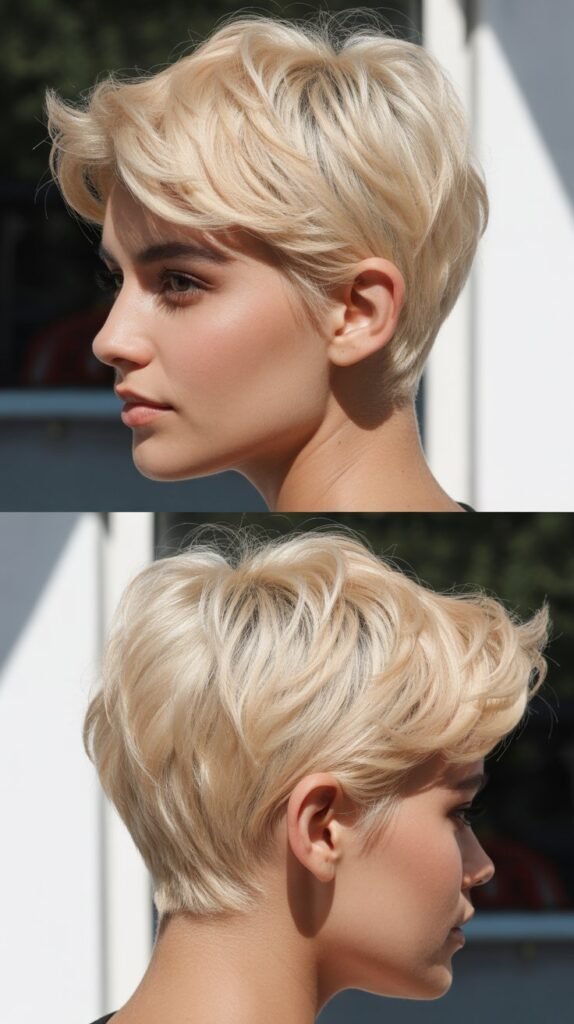
The blonde pixie cut combines the drama of short hair with the luminosity of light color, creating a striking look that catches light and turns heads.
This combination offers endless opportunities for dimension and personalization through various blonde tones.
Color Techniques:
- Platinum blonde creates the most dramatic, high-contrast look but requires significant maintenance and professional color expertise
- Warm honey and buttery blonde tones suit warmer skin undertones and provide a softer, sun-kissed appearance
- Ash and cool blonde shades complement cooler skin tones and create a modern, editorial aesthetic
- Highlights and lowlights add dimension to the short cut, preventing it from looking flat or one-dimensional
- Balayage techniques work beautifully on pixie cuts, creating natural-looking depth that grows out gracefully
Maintenance Requirements:
- Blonde hair requires purple or blue-toning shampoo used weekly to neutralize unwanted brass or yellow tones
- Deep conditioning treatments should be done every 1-2 weeks to maintain hair health and prevent breakage
- Touch-ups are typically needed every 4-6 weeks as regrowth is highly visible on short blonde cuts
9. Long Pixie Cut
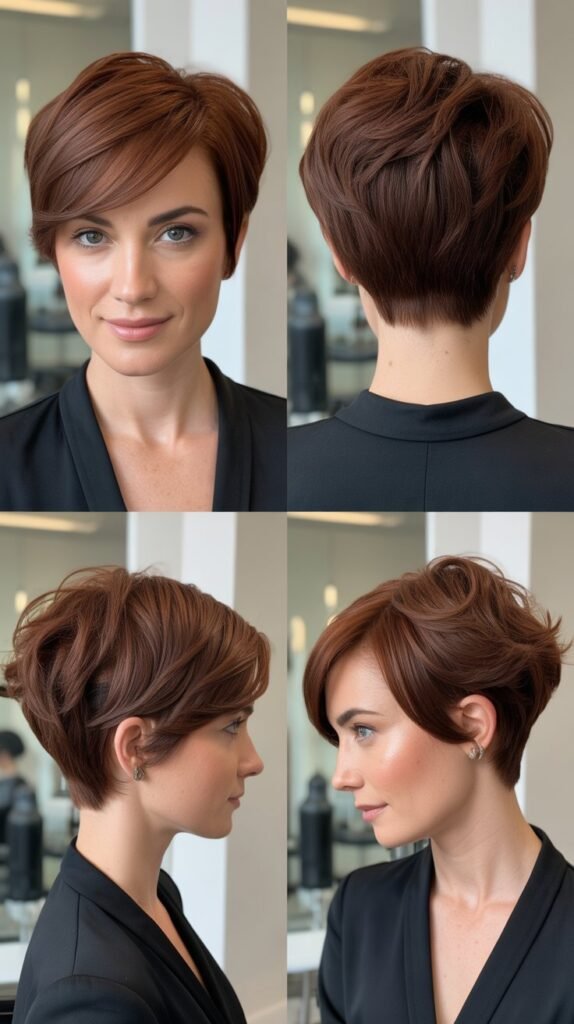
The long pixie cut bridges the gap between very short crops and bob-length styles, offering the ease of short hair with slightly more styling versatility.
This transitional length appeals to those wanting the pixie lifestyle with a bit more coverage and options.
Length Specifications:
- The top and front sections measure 4-6 inches, providing enough length to tuck behind ears or style in various directions
- Sides and back remain shorter, typically 2-3 inches, maintaining the essential pixie silhouette while avoiding bob territory
- This length allows for small ponytails or tiny buns for workouts or casual days when styling isn’t desired
- The additional length makes this cut ideal for those growing out a shorter pixie or tentatively exploring short hair
- Face-framing pieces can be left longer to soften angular features or create feminine touches
Styling Options:
- Straighten for sleek sophistication, curl with a small-barrel iron for vintage waves, or add texture for modern messiness
- Side parts, center parts, and no-part swept-back styles all work beautifully with this versatile length
- Headbands, small clips, and bobby pins become styling tools that can completely change the look within seconds
10. Pixie Cut with Bangs
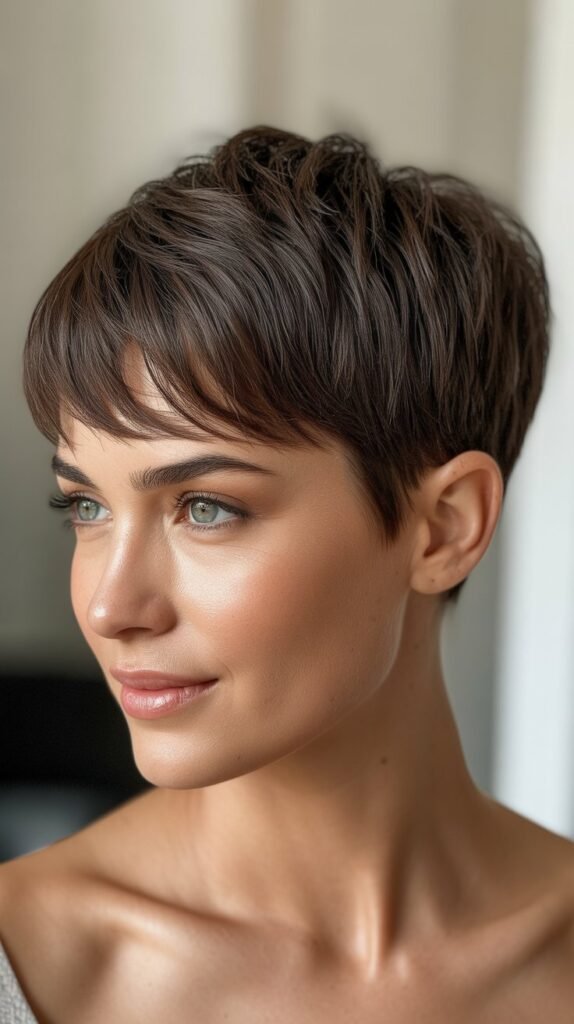
The pixie cut with bangs combines short hair with face-framing fringe, creating a youthful, playful look that draws attention to the eyes.
The bang style can dramatically change the overall vibe from sweet to edgy.
Bang Variations:
- Blunt straight-across bangs create a bold, fashion-forward statement that works particularly well with straight hair
- Side-swept bangs offer a softer, more romantic interpretation that flatters most face shapes and ages
- Textured, piece-y bangs provide an edgy, modern look that integrates seamlessly with choppy pixie styles
- Micro bangs (baby bangs) create an avant-garde aesthetic perfect for those embracing unconventional beauty
- Wispy, feathered bangs suit those wanting subtle face-framing without heavy coverage across the forehead
Bang Maintenance:
- Bangs grow quickly and may require trimming every 2-3 weeks to maintain the desired length and shape
- Daily styling is typically necessary—blow-dry with a round brush for volume or flat iron for sleekness
- Use dry shampoo between washes as bangs tend to become oily faster than the rest of the hair
11. Tapered Pixie Cut
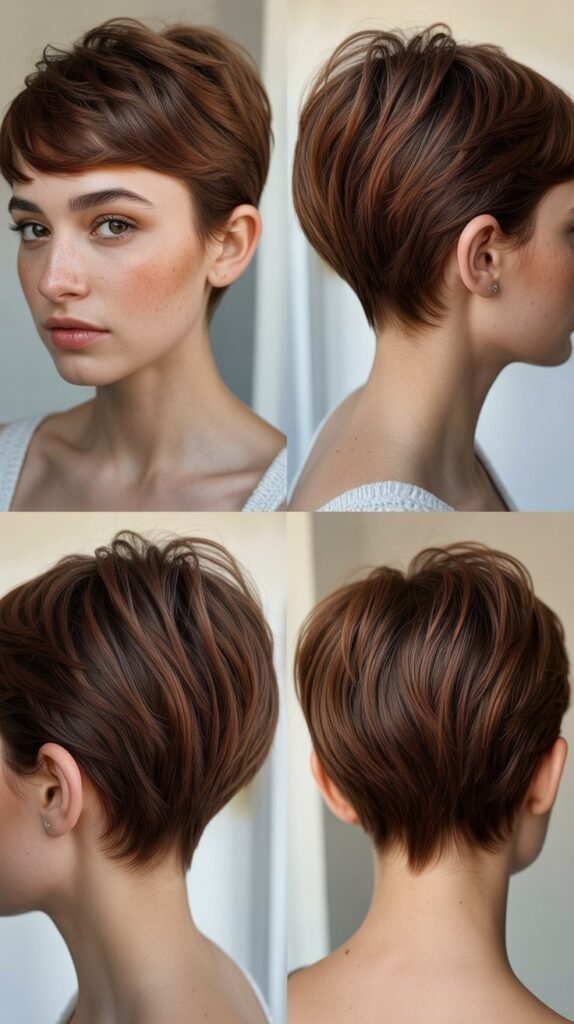
The tapered pixie cut features graduated lengths that create a sophisticated, architectural silhouette with clean lines and professional polish.
This technical cut showcases precision barbering that emphasizes neck and facial structure.
Technical Elements:
- The taper begins at the temples and continues down and around the back, gradually decreasing in length from top to bottom
- The nape area is cut extremely short, often with clippers using a #1 or #2 guard, creating a clean finished edge
- This gradual transition eliminates harsh lines while maintaining definition and structure throughout the cut
- The top retains more length, typically 2-3 inches, creating volume and shape without appearing top-heavy
- This cut particularly flatters those with elegant neck lines and defined jawlines as it draws attention to these features
Professional Appearance:
- The tapered pixie works exceptionally well in corporate and professional environments due to its polished, neat appearance
- Styling is minimal—often just a small amount of pomade smoothed through the top for definition and shine
- Regular maintenance every 3-4 weeks keeps the taper crisp and prevents the shape from losing its architectural precision
12. Shaggy Pixie Cut
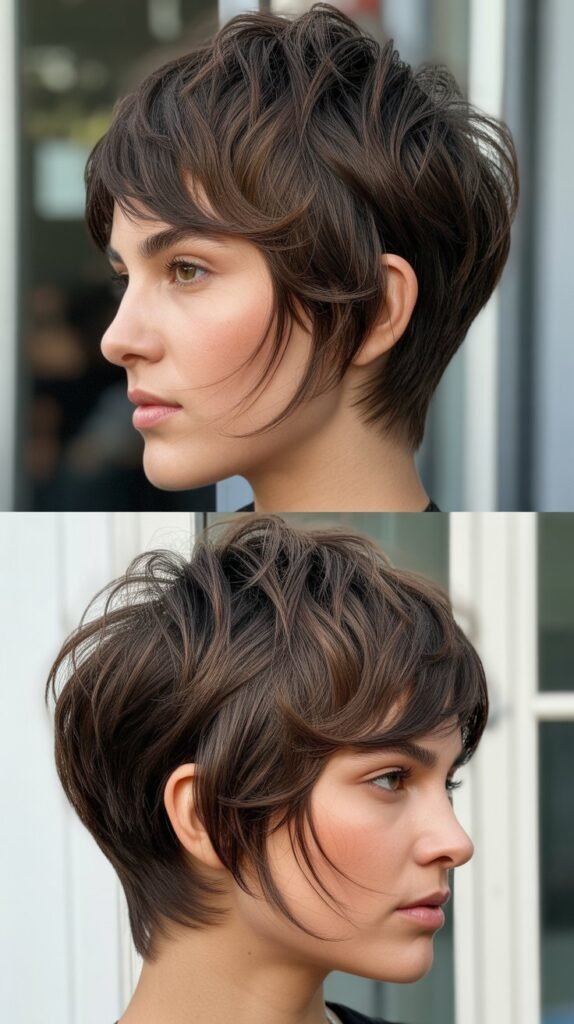
The shaggy pixie cut embraces deliberate dishevelment through layered texture that creates an effortlessly cool, lived-in appearance.
This style works beautifully for those who prefer low-maintenance looks with natural movement and character.
Layering Technique:
- Multiple short layers throughout create a sense of fullness and movement that prevents the hair from lying flat
- Razor cutting or point cutting produces irregular, feathered ends that enhance the shaggy, textured appearance
- The layers are typically concentrated at the crown and top, adding height without creating excessive volume on the sides
- This cut works particularly well for fine to medium hair textures, as it creates the illusion of thickness and density
- The overall effect is relaxed and casual, making it perfect for creative professionals and those with active lifestyles
Maintenance and Care:
- The beauty of the shaggy pixie lies in its forgiving nature—hair can air-dry naturally with minimal styling
- Apply a texturizing spray or sea salt spray to damp hair and scrunch with hands for enhanced definition
- This cut grows out gracefully, maintaining its shape and style for 6-8 weeks before requiring professional reshaping
13. Pixie Bob Hybrid
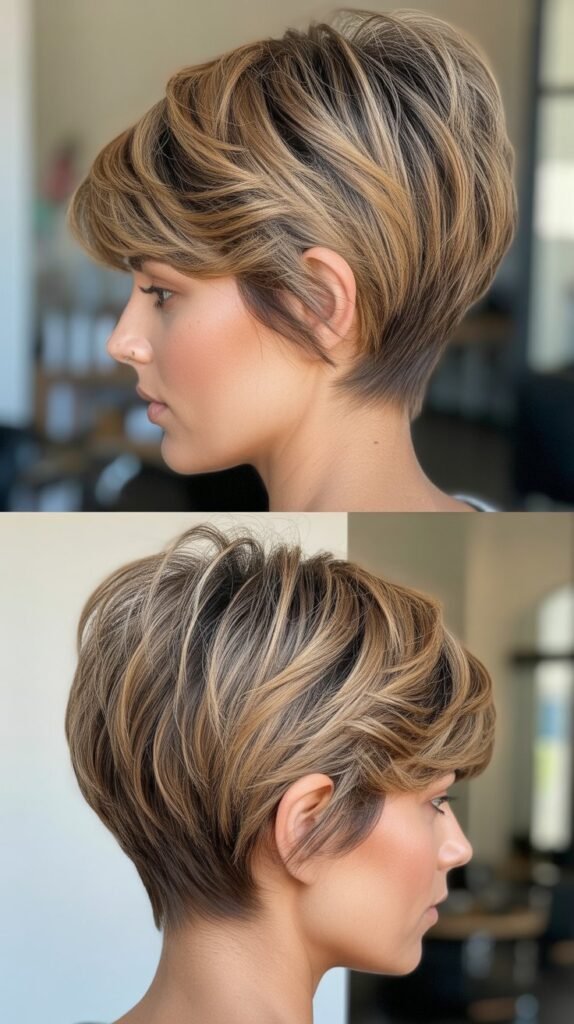
The pixie bob hybrid merges two iconic short hairstyles into one versatile cut that offers the best of both worlds.
This transitional style maintains the ease of a pixie while providing slightly more length reminiscent of a bob.
Hybrid Characteristics:
- The nape and lower back are cut in classic pixie fashion—very short and close to the head for that signature pixie feel
- The sides and front gradually increase in length, reaching 4-5 inches, creating the longer lines associated with bob cuts
- This creates an angled silhouette when viewed from the side, with hair getting progressively longer from back to front
- The longer front pieces can be worn tucked behind ears for a pixie look or left forward for bob-like styling
- This cut is ideal for those unsure about committing to an ultra-short pixie but wanting shorter hair overall
Versatility Benefits:
- The length variation allows for multiple styling options—sleek and straight, wavy and textured, or completely slicked back
- The longer front pieces can be curled with a small-barrel iron to create soft, feminine waves
- This style works well with both casual and formal occasions, adapting easily to different styling products and techniques
14. Pixie Cut for Thick Hair
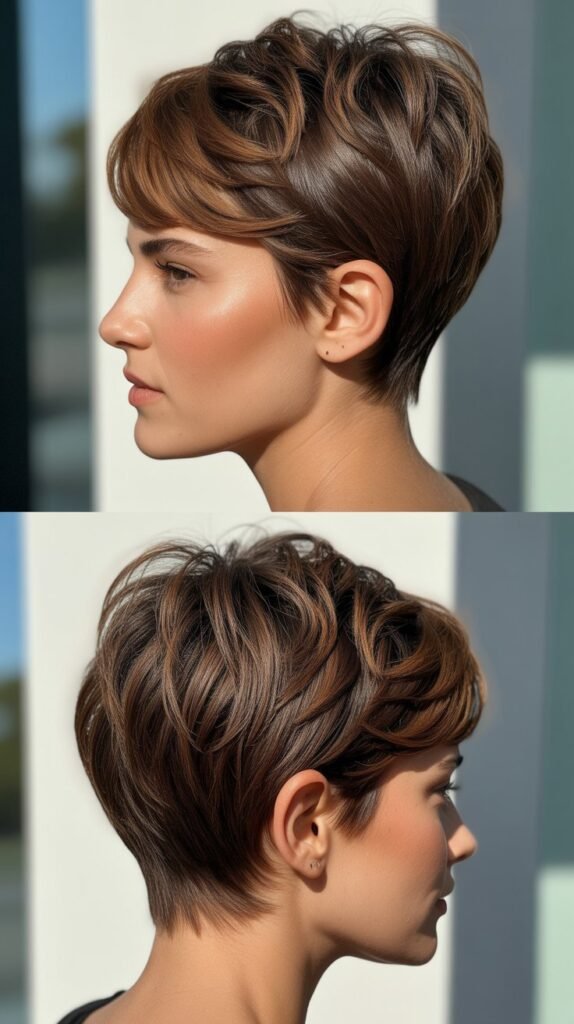
The pixie cut for thick hair requires specific cutting techniques to manage density while maintaining shape and preventing a bulky, mushroom-like appearance.
When executed properly, it transforms heavy hair into a manageable, stylish statement.
Cutting Strategies:
- Interior layering and thinning are essential to remove bulk from within the haircut without compromising the outer shape
- Texturizing shears are used strategically to reduce weight, particularly at the crown where thick hair tends to stick out
- The cut typically features shorter sides and back to minimize volume in these areas while maintaining slightly more length on top
- Point cutting the ends creates a softer, less blunt finish that prevents the hair from looking too heavy or solid
- Undercut sections can be incorporated to dramatically reduce overall density and add modern edge
Management Tips:
- Use lightweight styling products specifically formulated for thick hair to avoid weighing it down further
- Regular thinning maintenance between full cuts (every 3-4 weeks) helps manage regrowth and prevents the mushroom effect
- Blow-drying with a concentrator nozzle helps direct hair downward and smooth the cuticle for a polished appearance
15. Pixie Cut for Fine Hair
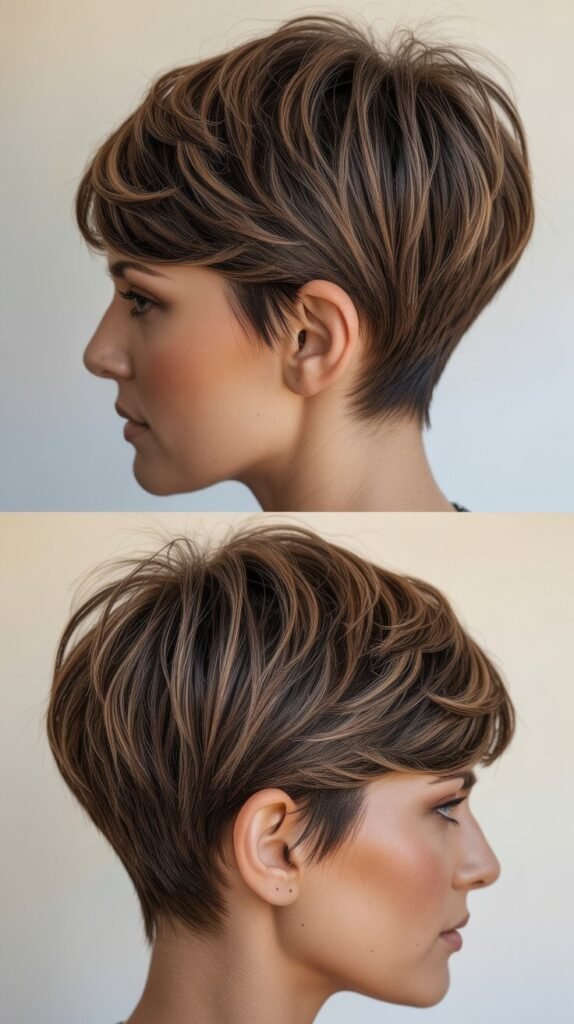
The pixie cut for fine hair employs clever cutting and styling techniques to create the illusion of fullness and body where nature provided less density.
This cut can actually make fine hair appear thicker and more substantial.
Volume-Creating Techniques:
- Blunt cutting rather than excessive layering preserves the appearance of density and prevents fine hair from looking wispy
- Strategic layers only at the crown create height and lift without removing precious hair volume from other areas
- Shorter lengths overall work better for fine hair as longer fine hair tends to lie flat and emphasize thinness
- The back and sides are kept very short, directing all attention and perceived volume to the top section
- Avoiding over-thinning or texturizing is crucial, as fine hair benefits from maintaining as much hair as possible
Styling for Fullness:
- Volumizing mousse applied at the roots before blow-drying creates lift and the appearance of more hair
- Blow-dry hair in the opposite direction from its natural fall, then flip it back for maximum root lift
- Texturizing powder or dry shampoo at the roots adds grit and separation that makes fine hair appear fuller
16. Edgy Pixie Cut
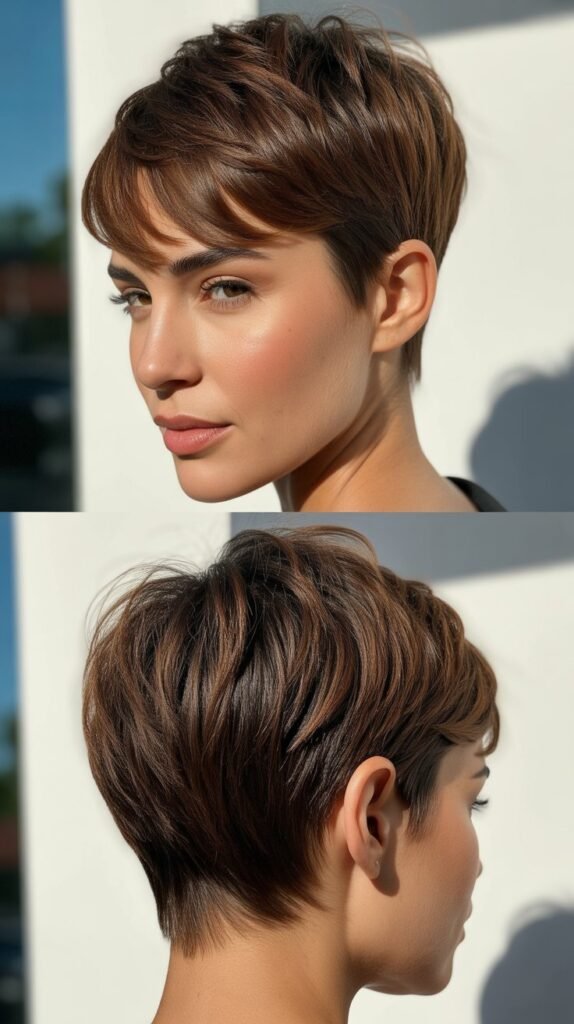
The edgy pixie cut pushes boundaries with unconventional elements that make a rebellious fashion statement.
This bold interpretation incorporates dramatic contrasts, sharp angles, and unexpected details that demand attention.
Edgy Elements:
- Extreme undercut sections, often with geometric patterns, designs, or lines shaved into the short areas
- Sharp, angular fringe that creates dramatic lines across the forehead rather than soft, blended bangs
- Asymmetrical cutting with significant length differences between sides, sometimes 3-4 inches of variation
- Disconnected layers that create intentional gaps and separation rather than smooth transitions
- The overall vibe is fashion-forward and artistic, perfect for those in creative fields or with bold personal style
Complementary Styling:
- Bold hair colors work beautifully with edgy cuts—platinum blonde, jet black, or vibrant fashion colors enhance the dramatic effect
- Strong-hold styling products like gel or pomade create defined, piece-y separation that emphasizes the edgy elements
- This cut pairs well with statement makeup, bold accessories, and fashion-forward clothing that matches its daring aesthetic
17. Pixie Cut with Shaved Side
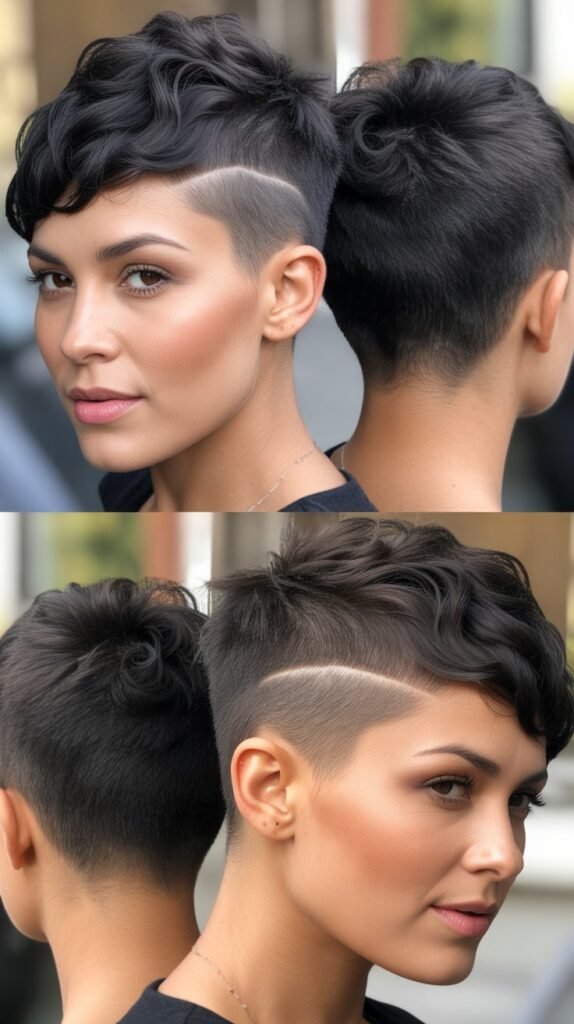
The pixie cut with shaved side creates stunning contrast through strategic placement of ultra-short sections alongside longer hair.
This asymmetrical approach offers artistic expression and practical cooling while maintaining feminine elegance.
Design Options:
- The shaved section can cover just one side, both sides, or extend around the back depending on desired boldness
- Clipper lengths range from skin-tight fades to #3 or #4 guards (3/8 inch), each creating different levels of drama
- The longer section can be worn swept across the shaved side, tucked behind the ear, or styled away for maximum contrast
- Patterns, lines, or designs can be added to the shaved section for extra artistic flair and personalization
- This cut works particularly well for those with thick hair, as it removes significant bulk while creating visual interest
Practical Considerations:
- The shaved section requires frequent maintenance every 2-3 weeks to maintain the clean, sharp appearance
- Growing out a shaved side takes patience—the awkward phase lasts several months as hair reaches longer lengths
- During summer months, the shaved section provides excellent cooling and comfort in hot, humid weather
18. Pixie Cut for Round Face
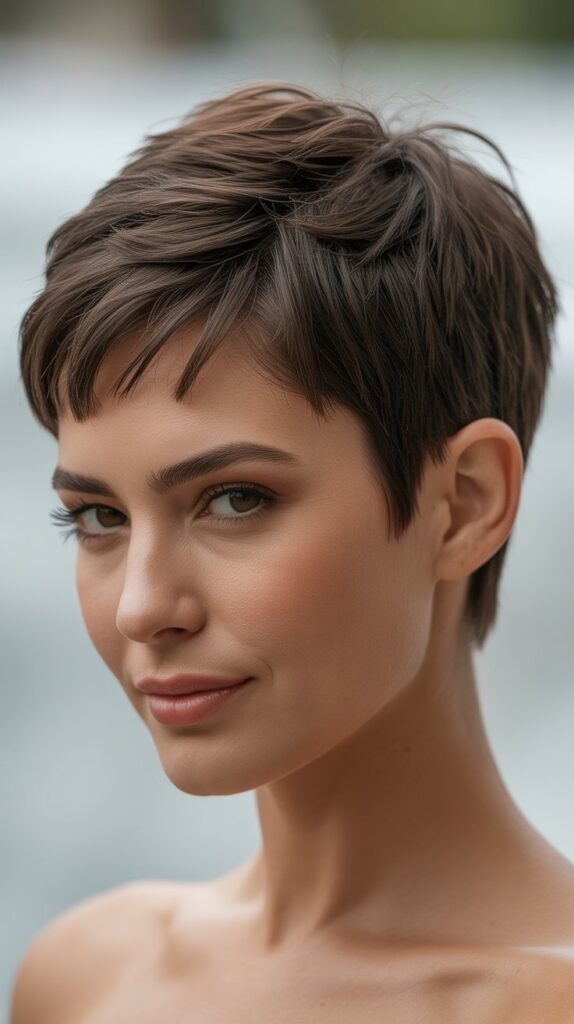
The pixie cut for round face is specifically designed to create the illusion of length and angularity, balancing facial proportions through strategic cutting that elongates and slims.
The right pixie can beautifully complement round features.
Face-Flattering Features:
- Height and volume at the crown create vertical lines that make the face appear longer and more oval
- Very short sides, sometimes with subtle undercuts, minimize width and draw the eye toward the center of the face
- Longer pieces at the top can be styled upward or swept to the side, both creating length-enhancing angles
- Asymmetrical elements break up the roundness by introducing diagonal lines that add dimension
- Side-swept bangs work better than straight-across bangs, as they create angles rather than emphasizing facial width
Styling Strategies:
- Blow-dry the top section upward and slightly back to maximize height and vertical emphasis
- Avoid styling that adds width at the sides—keep these areas smooth and close to the head
- Consider adding highlights concentrated at the crown to draw the eye upward and create the illusion of length
19. Pixie Cut for Oval Face
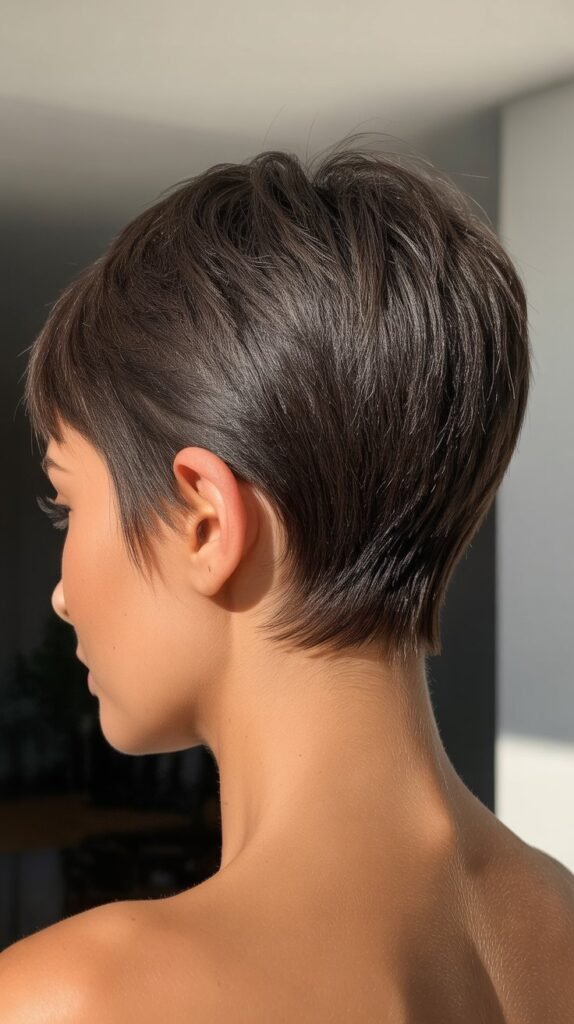
The pixie cut for oval face takes advantage of naturally balanced proportions to showcase virtually any pixie variation, as oval faces are considered the most versatile face shape.
This flexibility allows for creative exploration and personal expression.
Universal Flattery:
- Oval faces can successfully wear symmetric pixies, asymmetric cuts, undercuts, or textured styles without concern
- Both short and longer pixie variations work beautifully, as the face’s natural balance isn’t disrupted by hair length
- Straight-across bangs, side-swept fringes, or no bangs at all—every option complements oval proportions
- This face shape can pull off dramatic, edgy cuts as well as soft, feminine interpretations equally well
- The primary consideration becomes personal style preference and hair texture rather than face-flattering concerns
Experimentation Opportunities:
- Those with oval faces should feel confident trying bold color combinations and unconventional cutting techniques
- Seasonal changes in pixie style work well—longer for winter, ultra-short for summer—without worrying about proportions
- Focus can shift entirely to lifestyle needs, professional requirements, and personal aesthetic preferences
20. Pixie Cut for Square Face
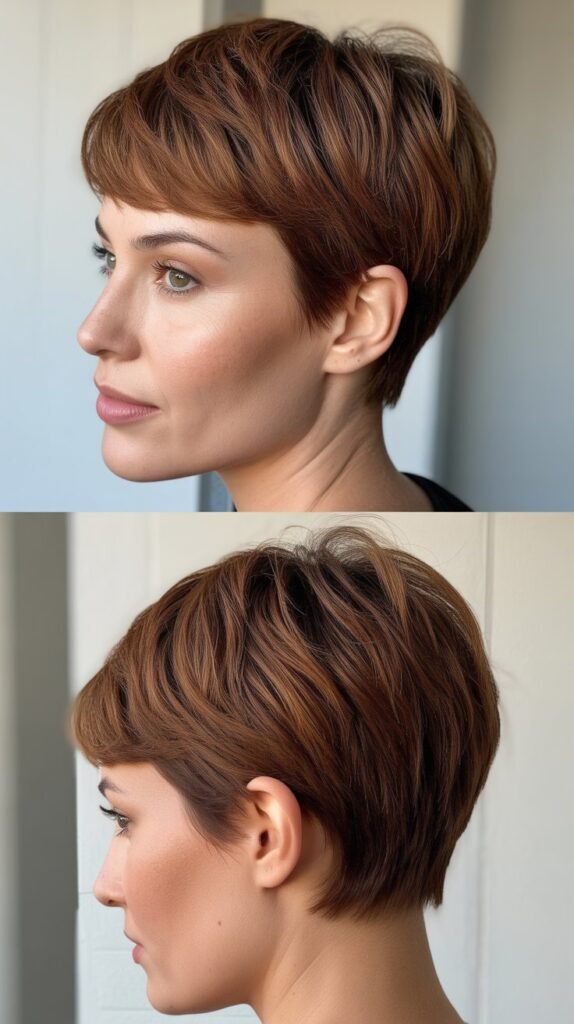
The pixie cut for square face uses softening techniques to balance strong jawlines and angular features, creating harmony between the cut’s lines and the face’s natural structure.
The goal is complementing strength with strategic softness.
Softening Strategies:
- Textured, piece-y layers soften the overall look and prevent harsh lines that echo the square jaw
- Longer pieces around the face, particularly near the ears and cheeks, help minimize the width of the jawline
- Side-swept or wispy bangs create diagonal lines that counteract the horizontal line of a strong jaw
- Avoid blunt, straight-across cuts that create additional horizontal lines and emphasize the square shape
- Gentle layering and soft edges throughout the cut prevent it from appearing too severe or structured
Complementary Elements:
- Height at the crown elongates the face slightly, balancing the width of the jaw and creating better proportions
- Asymmetrical styling draws attention away from the jaw’s angles and adds visual interest elsewhere
- Softer hair colors with dimensional highlights create movement that contrasts nicely with angular facial features
21. Messy Pixie Cut
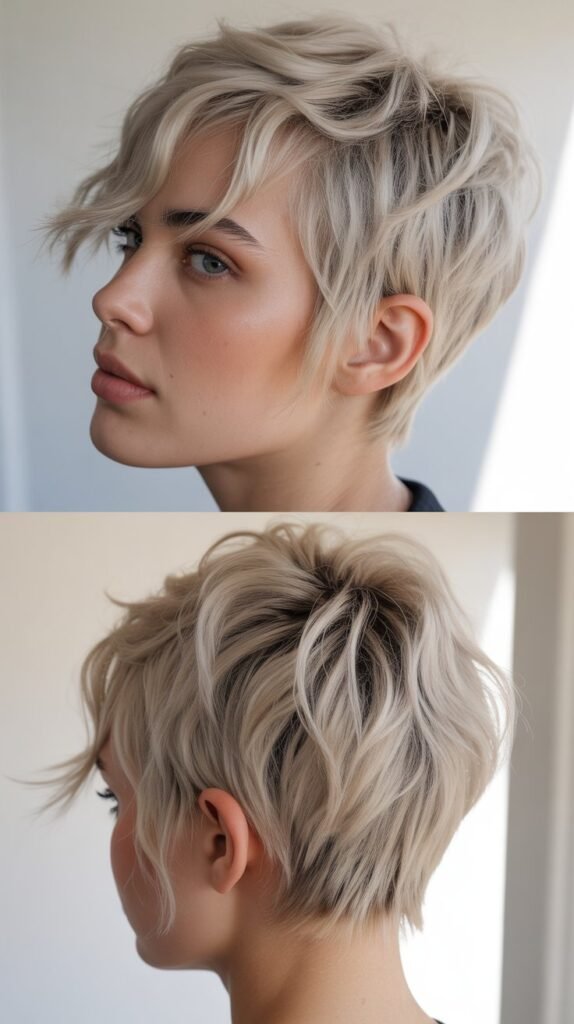
The messy pixie cut celebrates perfectly imperfect styling that looks effortlessly chic despite its apparently careless appearance.
This deliberately tousled style projects confidence and casual cool while remaining surprisingly easy to achieve.
Creating Controlled Chaos:
- The foundation requires proper layering that creates natural movement and prevents hair from lying flat
- Point-cut or razor-cut ends produce the irregular texture necessary for authentic-looking messiness
- Length variation throughout the cut allows different sections to fall in naturally disheveled ways
- The “messy” look is actually quite structured—it requires the right cut to work without looking unkempt
- This style works well for naturally wavy or slightly textured hair, though straight hair can achieve it with products
Achieving the Look:
- Apply texturizing paste or matte clay to damp hair, scrunching and tousling with fingers as it dries
- Avoid combs or brushes entirely—fingers are the only styling tools needed for authentic messy texture
- For extra definition, twist small sections around fingers and let them fall naturally for piece-y separation
22. Sleek Pixie Cut
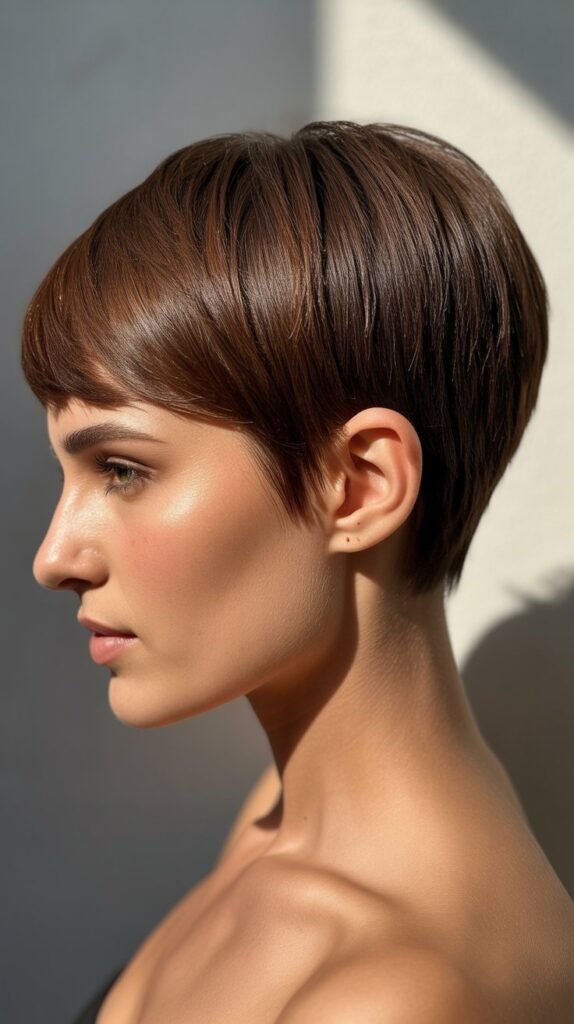
The sleek pixie cut embodies polished sophistication through smooth, controlled styling that eliminates frizz and flyaways for a refined, high-shine finish.
This elegant interpretation works beautifully for professional settings and formal occasions.
Achieving Sleekness:
- The cut itself should have clean lines and deliberate shape, as any unevenness becomes visible in sleek styling
- Hair is cut with precision rather than excessive texturizing, maintaining smooth edges that lie flat when styled
- This style works best with naturally straight hair or hair that’s been professionally straightened or smoothed
- Shorter pixies are easier to sleek than longer versions, as there’s less hair to control and smooth
- The sleek look emphasizes the cut’s architecture and shape, making quality cutting even more important
Styling Products:
- Smoothing serums or silicone-based products are essential for creating shine and controlling frizz
- Blow-dry with a paddle brush, pulling hair smooth in the desired direction while applying tension
- Flat iron small sections for extra sleekness, working from roots to ends in smooth, continuous strokes
23. Pixie Cut with Highlights
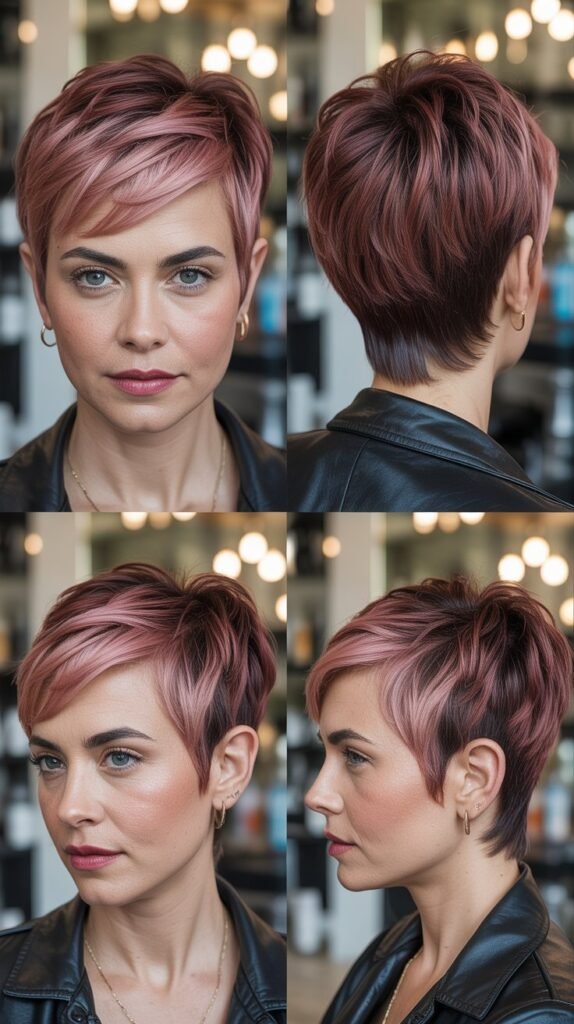
The pixie cut with highlights adds dimension, depth, and visual interest to short hair through strategic color placement that enhances the cut’s shape and texture.
Color becomes an integral design element that elevates the overall look.
Highlighting Techniques:
- Traditional foil highlights create defined streaks of lighter color that add contrast and dimension throughout the cut
- Balayage produces softer, more natural-looking highlights that blend seamlessly and grow out gracefully
- Face-framing highlights draw attention to features and create a brightening effect around the eyes and cheekbones
- Crown highlights add lift and the illusion of height by creating light contrast at the top of the head
- Chunky highlights create bold, visible contrast for those wanting more dramatic, statement-making color
Color Considerations:
- Lighter highlights should be no more than 2-3 shades lighter than the base color for natural-looking dimension
- Placement should follow the cut’s lines and layers, using highlights to emphasize the intended shape and movement
- Cooler highlights (ash, platinum) suit cooler skin tones, while warmer highlights (caramel, honey) complement warmer undertones
24. Pixie Cut with Nape Undercut
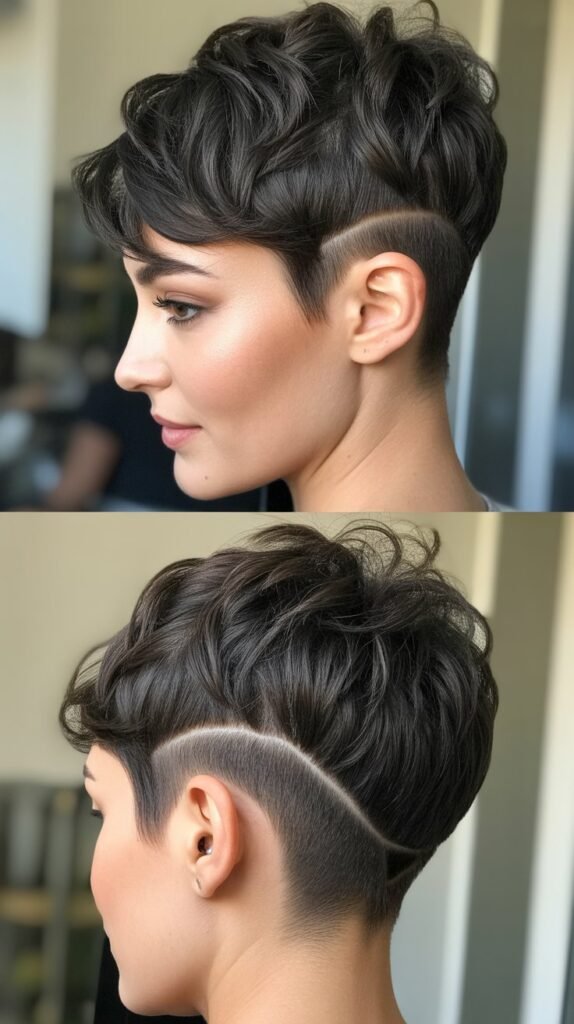
The pixie cut with nape undercut focuses dramatic shortness at the back of the neck while maintaining length elsewhere, creating a distinctive look that’s revealed when hair is pulled up or forward.
This hidden detail adds edge without full commitment.
Undercut Placement:
- The undercut is concentrated at the nape of the neck, typically extending from ear to ear across the back
- The shaved section usually measures 2-4 inches vertically, creating a significant contrast when visible
- Hair above the undercut can be styled to cover or reveal it, offering versatility in overall appearance
- This technique is less visible than side undercuts, making it suitable for conservative professional environments
- The nape undercut provides excellent cooling in summer while removing bulk from thick-haired individuals
Design Variations:
- The undercut can be left plain for subtle effect or decorated with lines, patterns, or geometric designs
- Tapered fades that gradually blend from shaved to longer hair create a softer, more integrated look
- Some opt for colored or temporary tattoos in the undercut area for festivals or special events
25. Pixie Cut for Older Women
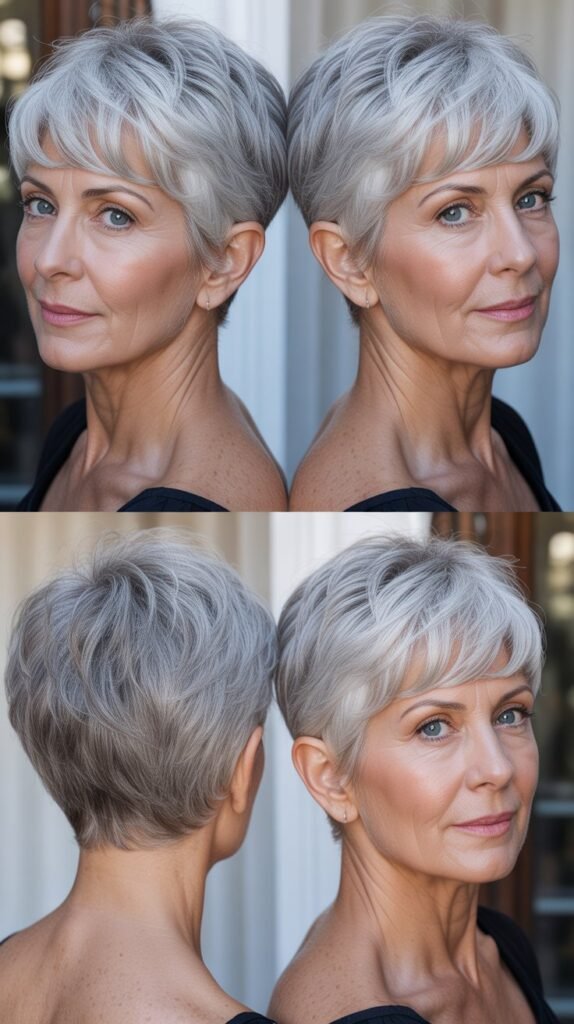
The pixie cut for older women provides age-appropriate sophistication that flatters mature features while offering low-maintenance elegance.
Properly executed, it can actually create a more youthful appearance through strategic cutting and styling.
Age-Appropriate Considerations:
- Softer, textured cuts typically flatter mature skin better than severe, blunt cuts that can appear harsh
- Slightly longer pixies with piece-y layers create movement that draws the eye away from fine lines and wrinkles
- Volume at the crown is especially important, as it lifts facial features and counteracts age-related hair thinning
- Face-framing pieces that angle toward the cheekbones provide a flattering, softening effect around the jawline
- Avoiding ultra-edgy or extreme styles ensures the cut looks sophisticated rather than trying too hard
Complementary Coloring:
- Soft highlights or subtle lowlights add dimension that creates fullness and disguises thinning hair
- Avoiding harsh, solid colors in favor of blended, multi-tonal shades creates more natural, youthful appearance
- Covering gray is optional—many women embrace natural silver or white tones which look stunning in pixie cuts
26. Pixie Cut for Black Women
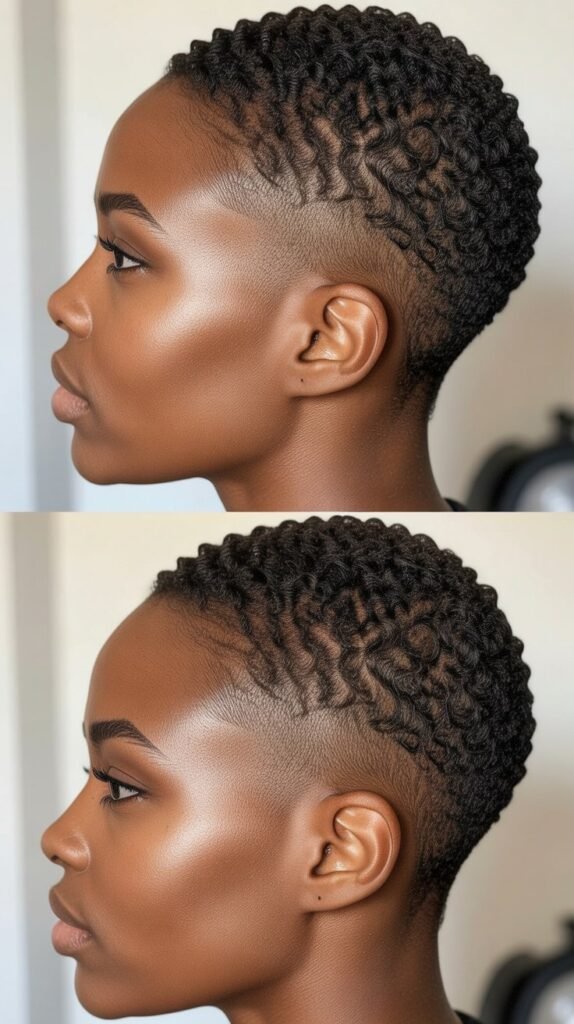
The pixie cut for Black women celebrates natural texture while accommodating the unique characteristics of African-American hair, including tighter curl patterns, density, and specific growth patterns.
Proper cutting technique is essential for successful results.
Texture-Specific Techniques:
- Cuts should be performed on natural, dry hair so the stylist can see the true curl pattern and shrinkage
- Layering must account for significant shrinkage—hair that appears 2 inches wet may shrink to less than 1 inch dry
- The cut should enhance natural curl patterns rather than fighting them, working with the hair’s texture
- Tapered sides with more length on top create flattering proportions that suit many Black women’s facial features
- TWA (Teeny Weeny Afro) styles work beautifully, celebrating natural texture in its shortest, most liberated form
Maintenance and Care:
- Moisturizing is crucial—use leave-in conditioners and natural oils to prevent dryness and breakage
- Satin or silk pillowcases and bonnets protect the hair while sleeping and maintain curl definition
- Regular trims every 4-6 weeks keep the shape fresh while promoting healthy hair growth
27. Pixie Cut with Long Bangs
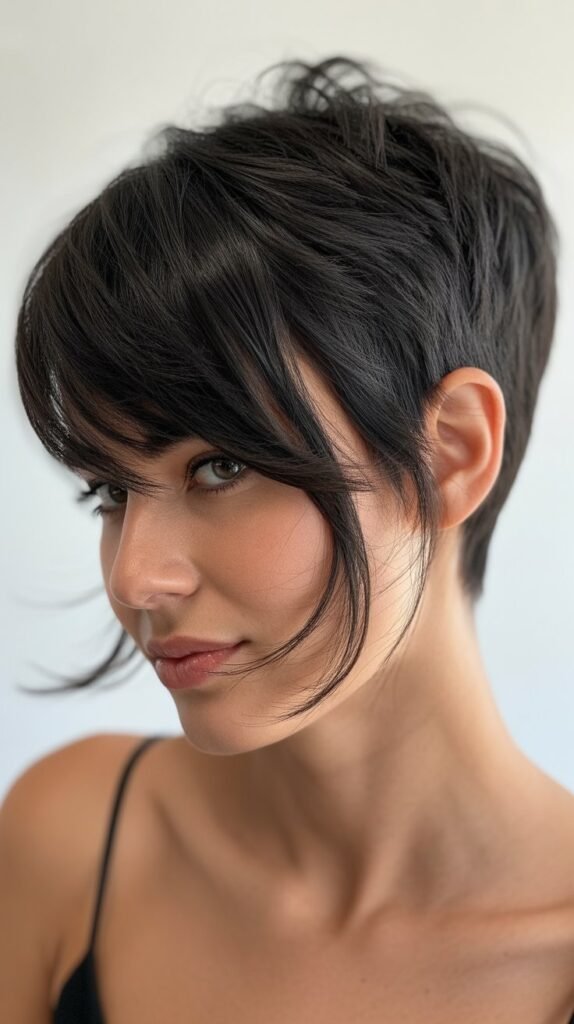
The pixie cut with long bangs combines short hair’s convenience with face-framing length that adds versatility and feminine softness.
The dramatic length contrast creates visual interest and offers multiple styling possibilities.
Bang Length and Styling:
- Long bangs typically measure 4-6 inches, reaching anywhere from mid-forehead to past the eyes
- These extended pieces can be swept to the side, pinned back, straightened forward, or curled for different looks
- The contrast between ultra-short hair at the back and sides with long frontal pieces creates modern edge
- Face shape considerations remain important—long side-swept bangs flatter most face shapes universally
- This style works particularly well for those transitioning from longer hair, as it maintains some length familiarity
Versatility Benefits:
- The long bangs can be blow-dried smooth for sleek sophistication or left natural for textured casual style
- Pinning the bangs back with decorative clips completely changes the look while keeping hair off the face
- As the cut grows out, the long bangs help bridge the awkward stages of growing into a longer style
28. Platinum Pixie Cut
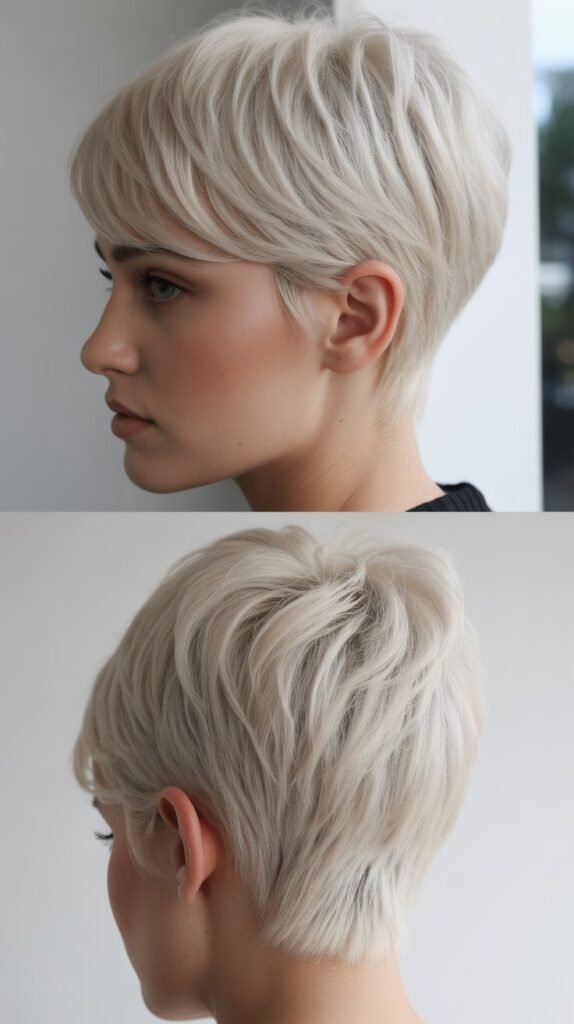
The platinum pixie cut creates maximum impact through the combination of ultra-short hair and ultra-light color, resulting in a show-stopping look that’s both edgy and elegant.
This bold choice makes a powerful statement.
Achieving Platinum:
- Platinum blonde requires multiple lightening sessions, especially for those with naturally dark hair
- Professional color expertise is absolutely essential—attempting platinum at home often results in damage and unwanted tones
- The process involves lifting hair to the palest possible blonde, then toning to remove any yellow or brassy undertones
- Hair must be in excellent condition before attempting platinum, as the process is inherently damaging
- Regular toning every 2-4 weeks maintains the icy, silvery-white color and prevents yellowing
Maintenance Commitment:
- Purple shampoo should be used 1-2 times weekly to neutralize warm tones that naturally develop
- Deep conditioning treatments are non-negotiable—platinum hair requires intensive moisture to prevent breakage
- Root touch-ups are needed every 3-4 weeks as regrowth is highly visible against the pale color
29. Pixie Cut with Fade
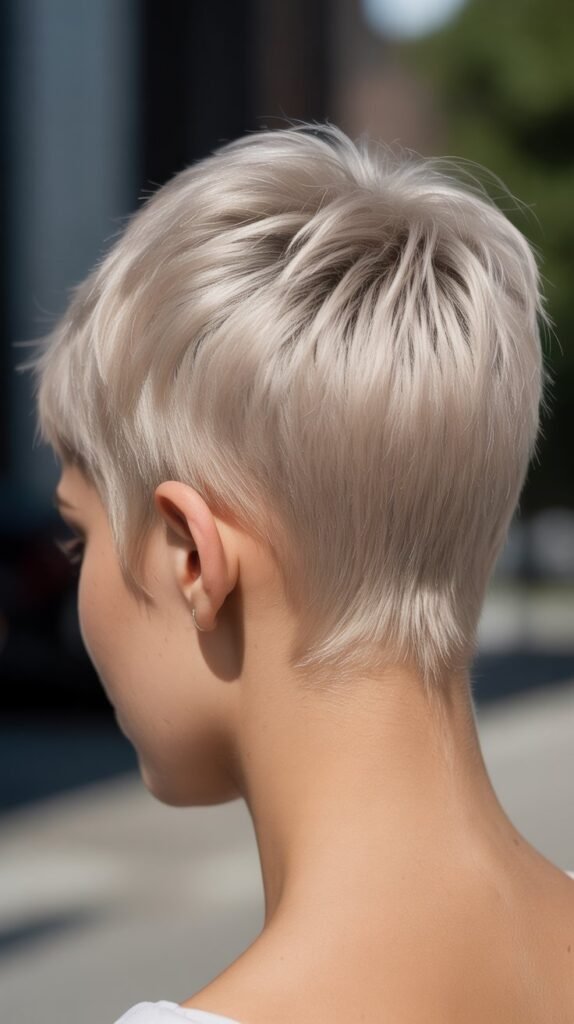
The pixie cut with fade incorporates barbering techniques that create gradual transitions from very short to longer hair, resulting in a modern, architectural style with clean, precise lines.
The fade adds professional polish and contemporary edge.
Fade Techniques:
- The fade begins at a defined point (low, mid, or high) and gradually transitions shorter toward the hairline
- Low fades start just above the ears and nape, creating subtle, conservative transitions
- High fades start at the temples and create more dramatic contrast with significant shaved sections
- Skin fades take the shortest section down to bare skin for maximum contrast and sharp definition
- The fade should blend seamlessly with no visible lines or demarcation where lengths change
Professional Execution:
- Fades require clipper expertise and are typically performed by barbers or stylists trained in barbering techniques
- Multiple clipper guards are used in progression to create smooth transitions between lengths
- The fade requires maintenance every 2-3 weeks to keep lines sharp and prevent the blend from growing out awkwardly
30. Disconnected Pixie Cut
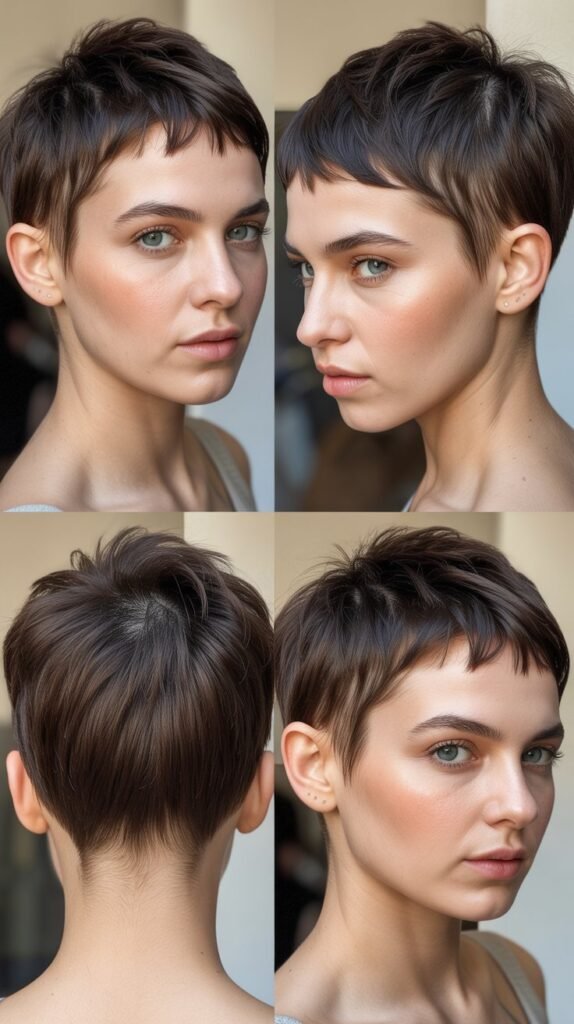
The disconnected pixie cut features intentional separation between hair sections without blended transitions, creating deliberate contrast and modern artistic expression.
This avant-garde approach challenges traditional cutting rules for striking results.
Disconnection Principles:
- Hair is cut in distinct sections with visible length differences and no gradual blending between them
- The top section often contrasts dramatically with the sides and back, sometimes differing by 3-4 inches or more
- These harsh lines create interesting shadows and dimension, emphasizing the architectural nature of the cut
- The disconnected approach works particularly well with straight hair where the separation is most visible
- This style projects confidence and fashion-forward thinking, perfect for creative industries and artistic personalities
Styling Impact:
- Products that create separation and definition work best—pomades, waxes, and gels enhance the disconnected effect
- The distinct sections can be styled in different directions, creating dynamic movement and visual interest
- This cut requires precise professional execution and regular maintenance to keep the sections clearly defined
Conclusion
From the timeless elegance of the classic crop to the daring statement of platinum and disconnected styles, these 30 Stunning Very Short Pixie Haircuts (Front & Back) demonstrate that short hair is anything but limiting.
Each variation we’ve explored offers unique benefits—whether you’re seeking low-maintenance convenience, professional polish, creative self-expression, or face-flattering proportions tailored to your specific features.
The front and back views throughout this guide have revealed the complete picture, ensuring you understand exactly how each cut looks from every angle before making your decision.
Remember that the perfect pixie considers your hair texture, face shape, lifestyle needs, and personal style preferences, transforming a simple haircut into a defining element of your identity.
Whether you choose subtle sophistication or bold drama, the pixie cut empowers you to present your most confident, authentic self to the world.
Now armed with comprehensive knowledge of styles, techniques, and maintenance requirements, you’re ready to take that exciting step into the world of very short hair—where freedom, style, and endless possibilities await with every confident snip of the scissors.