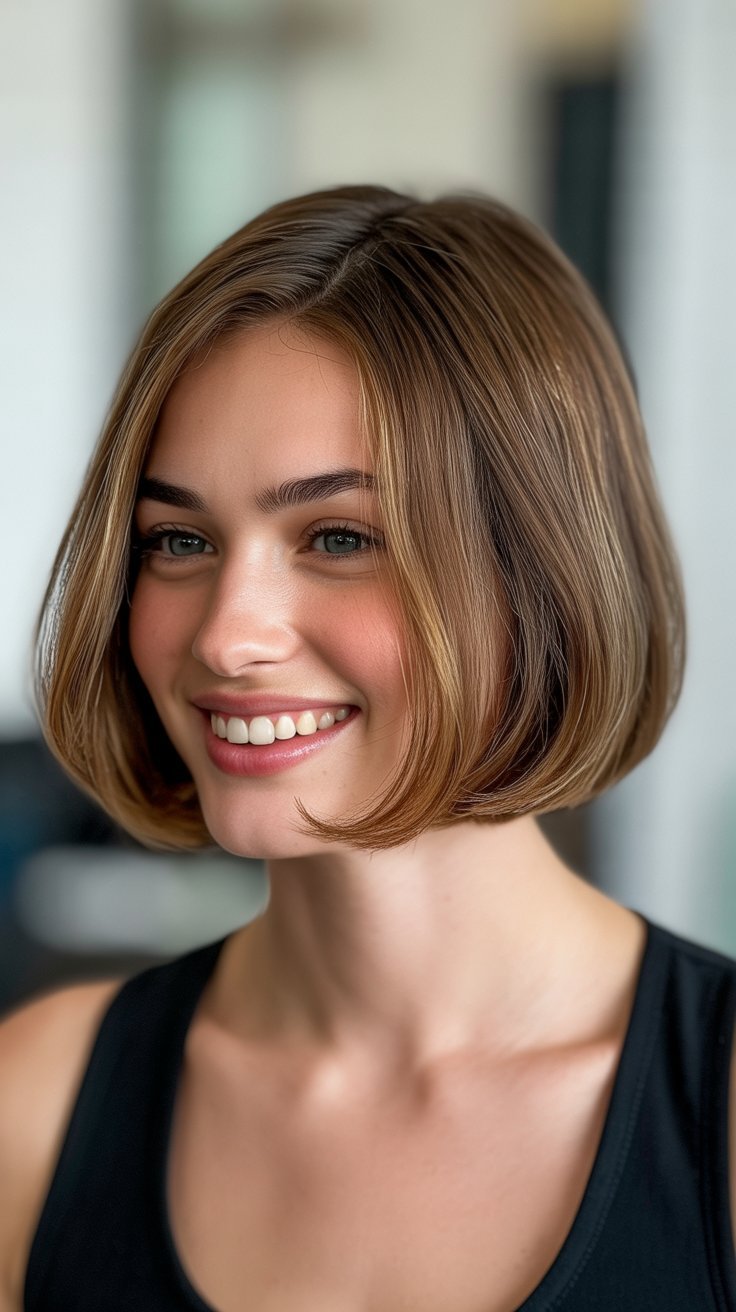
Finding the perfect haircut when you have fine hair and a round face can feel like searching for a needle in a haystack, but the right bob can completely transform your look.
The bob haircut remains one of the most versatile and flattering styles available, especially when tailored to address specific hair textures and face shapes.
If you’re wondering whether a bob can work for your fine hair and round face, the answer is a resounding yes—with the right cut, styling techniques, and expert guidance.
This comprehensive guide to 33 Chic Bob Haircuts for Fine Hair Round Face will walk you through textured layers, asymmetrical cuts, angled styles, and volume-boosting techniques that create the illusion of fuller hair while elongating your facial features.
You’ll discover which bob lengths work best, how to add dimension through highlights and lowlights, styling products that enhance fine hair without weighing it down, and maintenance tips to keep your bob looking salon-fresh.
Whether you prefer a sleek and polished look or something more tousled and casual, these carefully selected bob variations will help you find your perfect match and embrace a hairstyle that makes you feel confident and beautiful.
1. Classic Angled Bob with Side Part
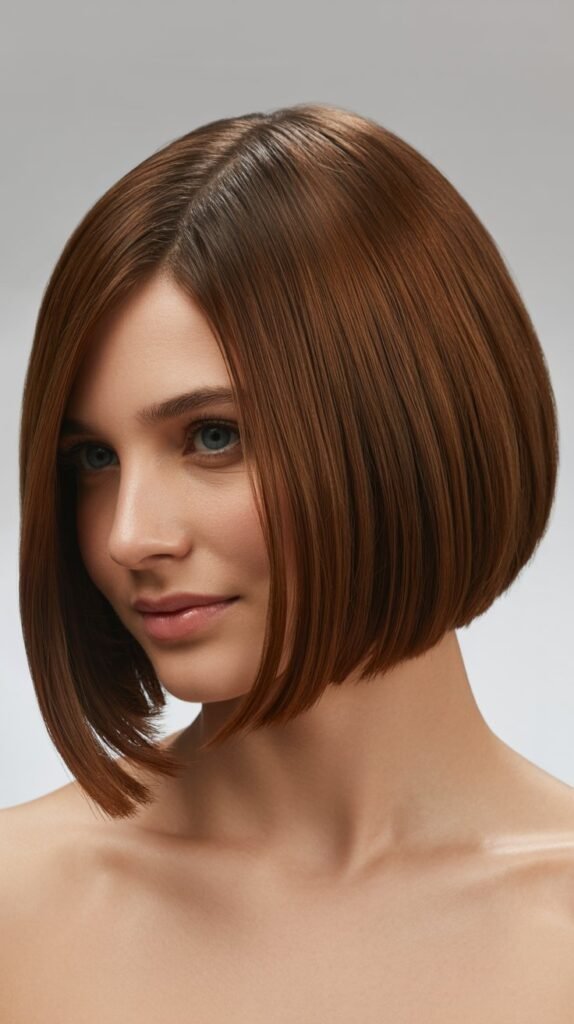
The classic angled bob with a side part creates an elegant diagonal line that naturally draws the eye downward, making it an exceptional choice for round faces seeking elongation.
- This timeless cut features hair that’s shorter in the back and gradually longer toward the front, typically ending anywhere from chin to collarbone length.
- The angle works to slim the appearance of the face by creating vertical lines rather than horizontal ones, which can make round faces appear wider.
- A deep side part adds asymmetry that breaks up the roundness of the face and creates visual interest.
- Fine hair benefits tremendously from this cut because the angle itself creates the illusion of volume and movement without requiring excessive layering that can thin out delicate strands.
- The longer front pieces frame the face beautifully and can be styled to sweep across the cheekbone, further slimming the face’s appearance.
- This style works particularly well for professional environments while remaining versatile enough for casual settings.
- Styling involves blow-drying with a round brush to create smoothness and using a flat iron to emphasize the clean lines of the angle.
2. Textured Choppy Bob
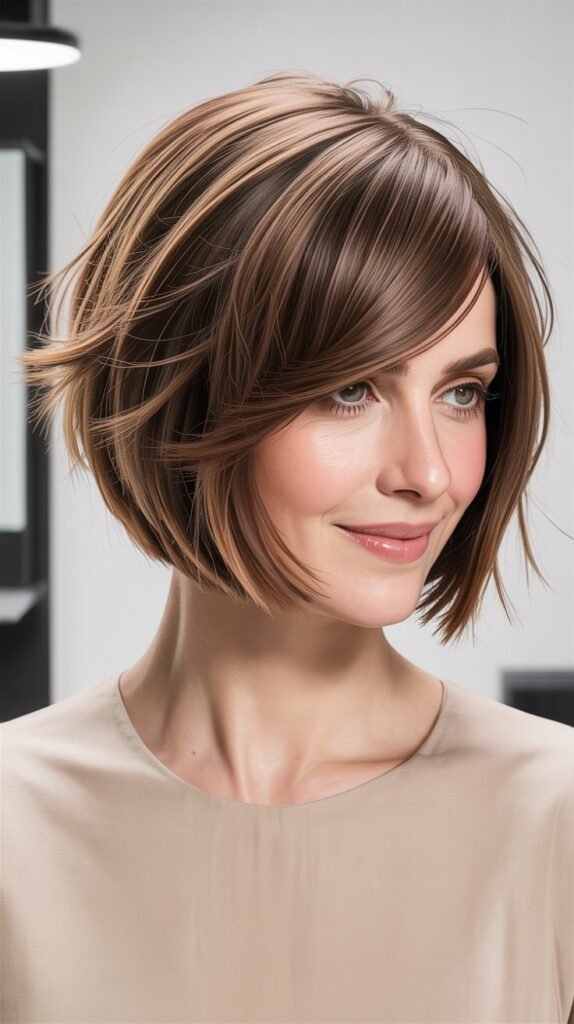
The textured choppy bob introduces deliberate, piecey layers throughout the hair that create dimension and the appearance of fuller, thicker hair.
- Choppy texture is achieved through point-cutting techniques where the stylist cuts into the hair at various angles rather than straight across.
- This irregular cutting pattern scatters light differently across the hair, making fine strands appear more voluminous and substantial.
- For round faces, the choppy pieces create visual disruption that prevents the eye from focusing solely on the face’s circular shape.
- The intentional messiness of this style embraces the natural texture of fine hair rather than fighting against it.
- Strategic layering throughout adds movement that fine hair desperately needs to avoid looking flat or lifeless.
- This bob typically falls between the jawline and shoulders, with the choppy layers preventing the blunt weight that can drag fine hair down.
- Styling products like texturizing sprays, sea salt sprays, and light mousses work exceptionally well with this cut to enhance the piecey appearance.
- The beauty of this style lies in its low-maintenance nature—it actually looks better with a slightly undone, lived-in appearance.
3. Blunt Bob with Subtle Layers
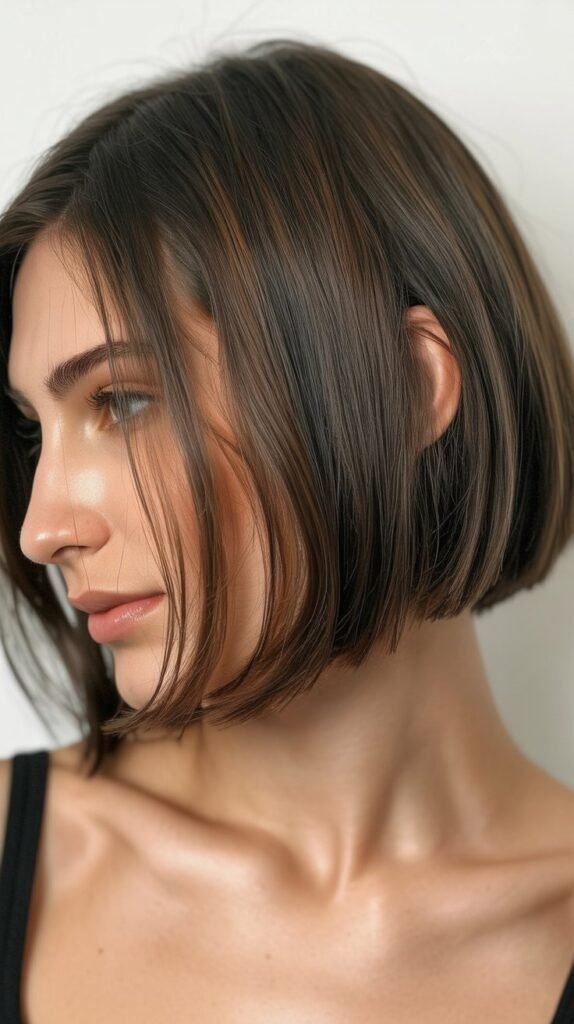
The blunt bob with subtle layers combines the thickness-creating illusion of a blunt cut with strategic internal layering that prevents fine hair from appearing too heavy or flat.
- A blunt perimeter creates the appearance of density by keeping all the hair at one uniform length, making fine hair look fuller at the ends.
- Internal layers—invisible from the outside—remove just enough bulk to allow fine hair to have movement and body without sacrificing the blunt appearance.
- This technique is particularly effective for fine hair that tends to lie flat because it creates lift at the roots while maintaining weight at the ends.
- For round faces, a blunt bob that hits just below the chin or at the collarbone creates a horizontal line that can be balanced with height at the crown.
- The key is ensuring the bob isn’t too short—a length that falls below the fullest part of the face helps elongate rather than widen.
- Styling with a large round brush during blow-drying creates volume at the roots, which is essential for this look.
- A slight bend or flip at the ends using a flat iron or curling iron adds sophistication and prevents the style from looking too severe.
4. Asymmetrical Bob
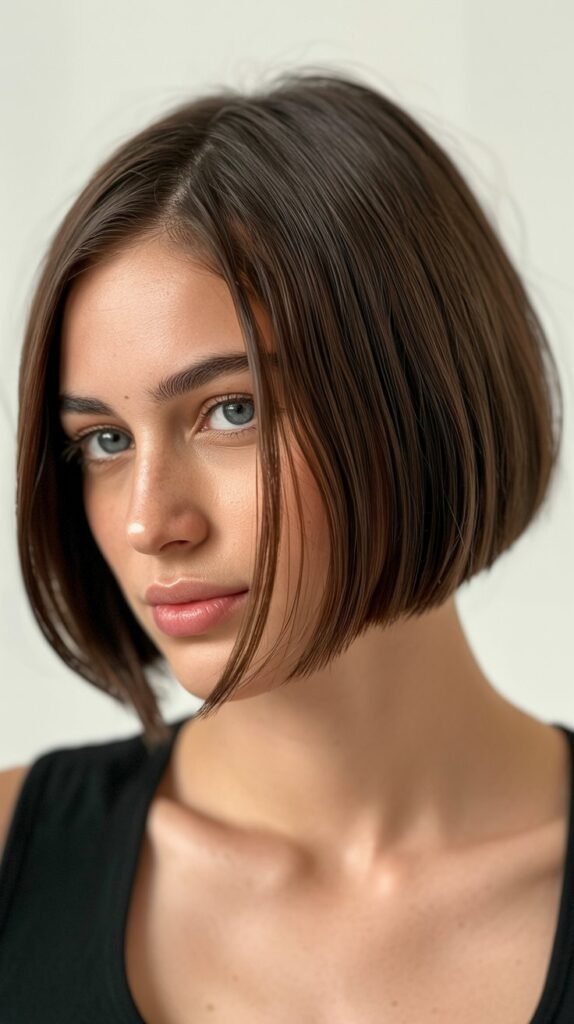
The asymmetrical bob features dramatically different lengths on each side of the head, creating a bold, modern look that’s incredibly flattering for round faces.
- One side is typically cut significantly shorter (often above the ear) while the other side extends to chin length or beyond.
- This extreme asymmetry creates a diagonal line across the face that immediately draws attention away from facial roundness.
- The dramatic difference in lengths adds edginess and personality to what might otherwise be a conventional bob.
- Fine hair actually works better for this style than thick hair because it allows the longer side to lay smoothly without excessive bulk.
- The shorter side can be styled close to the head or with texture, depending on personal preference and the occasion.
- This cut requires confidence to wear but rewards the wearer with a distinctly fashion-forward appearance.
- Maintenance involves regular trims every 4-6 weeks to maintain the precise lines that make this cut so striking.
- Styling flexibility includes slicking back the shorter side for formal events or adding texture throughout for a more casual vibe.
5. Layered Bob with Face-Framing Pieces
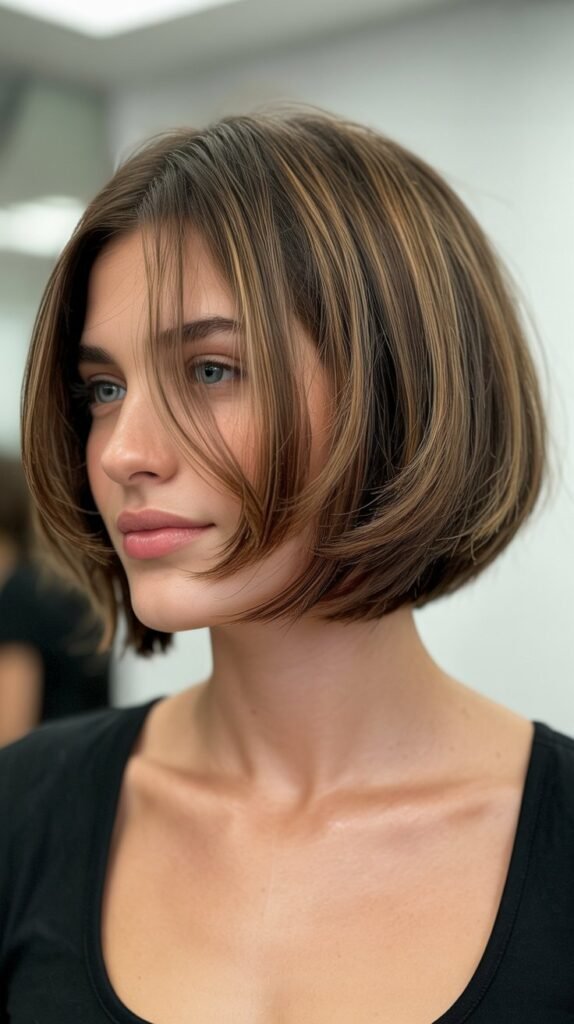
The layered bob with face-framing pieces strategically places shorter layers around the face to create a slimming effect while maintaining length and fullness throughout the rest of the cut.
- Face-framing layers are cut to fall at specific points—typically starting around the cheekbone and gradually lengthening—to create vertical lines alongside the face.
- These strategic layers draw the eye up and down rather than across, effectively lengthening the appearance of a round face.
- The layers throughout the rest of the hair add movement and dimension that fine hair needs to appear fuller.
- This cut avoids heavy, uniform layers that can thin out fine hair, instead using strategic placement to maximize volume.
- The length typically ranges from jaw to shoulder, providing enough hair to create body without overwhelming fine texture.
- Styling involves directing the face-framing pieces away from the face with a round brush or curling iron to open up the face and enhance the lengthening effect.
- Adding highlights or lowlights to these face-framing pieces can further enhance the dimensional, slimming effect.
- This versatile cut transitions easily from professional to casual settings depending on styling approach.
6. Inverted Bob
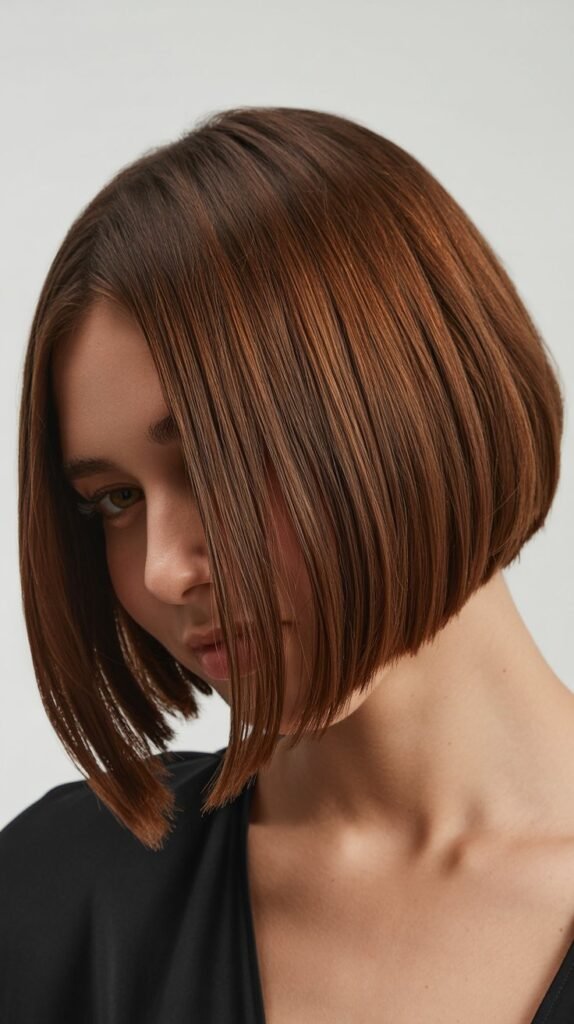
The inverted bob features stacked layers in the back that create dramatic volume and height while the front remains longer, producing a stunning silhouette that flatters round faces beautifully.
- The back is cut very short and layered in a graduated fashion, with each layer slightly longer than the one beneath it, creating a rounded, voluminous shape.
- This stacking technique builds significant height at the crown, which is crucial for balancing the proportions of a round face.
- The sides and front gradually lengthen, typically ending at chin length or just below, creating that signature inverted shape.
- For fine hair, the stacked back provides built-in volume without requiring excessive styling products or teasing.
- The longer front pieces frame and slim the face while the voluminous back draws attention to the overall style rather than face shape.
- This cut requires skilled execution—the graduation must be precise to achieve the proper stacked effect without creating unwanted bulk.
- Maintenance is slightly higher than other bobs, requiring trims every 4-5 weeks to maintain the stacked shape.
- Styling involves blow-drying the back with a round brush to emphasize the volume, while the front can be styled smooth or with a slight wave.
7. Long Bob (Lob) with Soft Waves
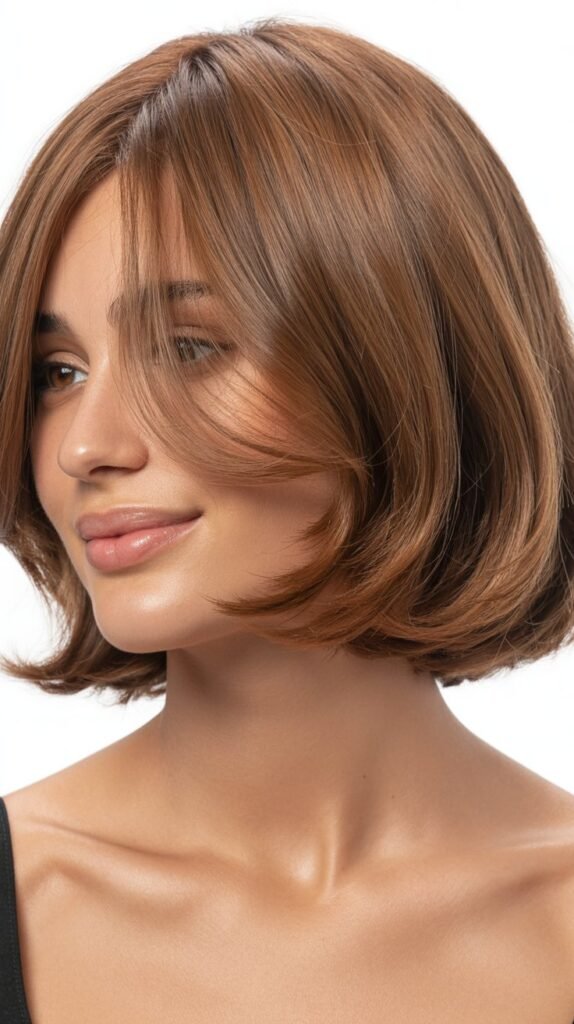
The long bob, affectionately known as the “lob,” combined with soft waves creates a romantic, effortless look that adds both length and texture to fine hair while flattering round faces.
- The lob typically falls between the chin and collarbone, providing more length than a traditional bob while maintaining the structure and ease of shorter hair.
- This length is particularly flattering for round faces because it extends past the face’s widest point, creating a lengthening effect.
- Soft waves add the appearance of volume and thickness that fine hair naturally lacks, making hair look fuller and more substantial.
- The waves should be loose and relaxed rather than tight curls, which can add width rather than length to the face.
- This style works beautifully with natural texture—those with slightly wavy fine hair can enhance their natural pattern rather than fighting it.
- Styling involves using a large-barrel curling iron or wand (1.25 to 1.5 inches) to create loose bends rather than defined curls.
- Finishing with a texturizing spray or light sea salt spray enhances the wave pattern while adding grip and body to fine strands.
- The lob’s versatility allows for wearing it straight and sleek on some days and wavy and textured on others.
8. Graduated Bob
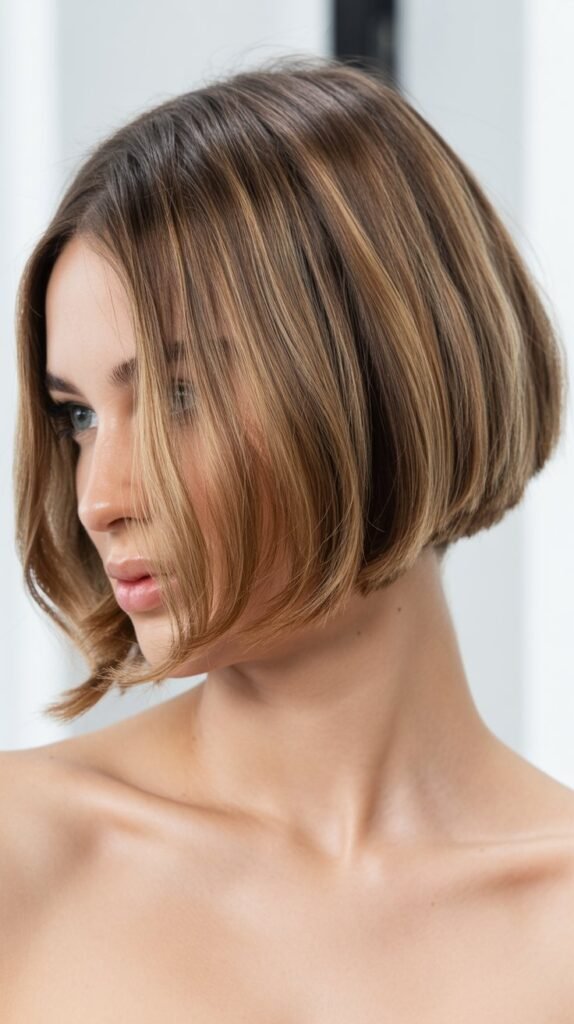
The graduated bob features layers that create a curved, wedge-like shape with shorter hair in the back and longer hair in the front, providing structure and volume ideal for fine hair.
- Unlike the inverted bob’s dramatic stacking, the graduated bob has a gentler, more rounded graduation that builds volume more subtly.
- The curved shape creates a helmet-like silhouette that actually works to add fullness where fine hair needs it most.
- For round faces, the graduation draws the eye upward and creates height that balances facial proportions.
- The longer front sections can be cut to fall at angles that specifically flatter the individual’s face shape.
- This classic cut from the 1970s has been modernized with updated finishing techniques and styling approaches.
- Fine hair holds the graduated shape well because it’s not weighted down by excessive thickness.
- Styling requires blow-drying with attention to creating volume at the crown while smoothing the sides.
- Regular trims every 5-6 weeks maintain the graduated shape and prevent the style from growing out awkwardly.
9. Bob with Curtain Bangs
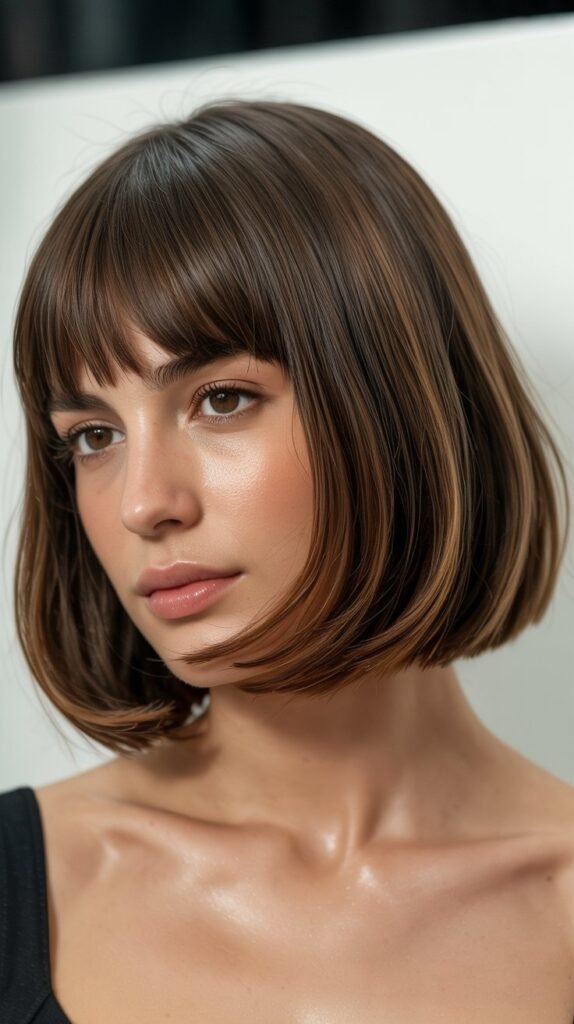
A bob paired with curtain bangs creates a perfect partnership that addresses both fine hair and round face concerns through strategic length and framing.
- Curtain bangs are parted in the middle and swept to each side of the face, creating a curtain-like effect that frames the face.
- These bangs are typically longer—grazing the cheekbones or even longer—which makes them more versatile and less committal than traditional short bangs.
- The center part of curtain bangs creates a vertical line down the center of the face, which lengthens a round face shape.
- The way the bangs sweep away from the face creates diagonal lines that slim and elongate.
- For fine hair, curtain bangs add dimension and visual interest without requiring a lot of hair or volume.
- The bob itself can be any length from chin to collarbone, but the addition of the curtain bangs transforms the entire look.
- Styling curtain bangs requires blow-drying them away from the face with a round brush, creating a soft bend that enhances their flattering shape.
- This combination is incredibly popular because it works for various hair types, face shapes, and personal styles.
10. Shaggy Bob
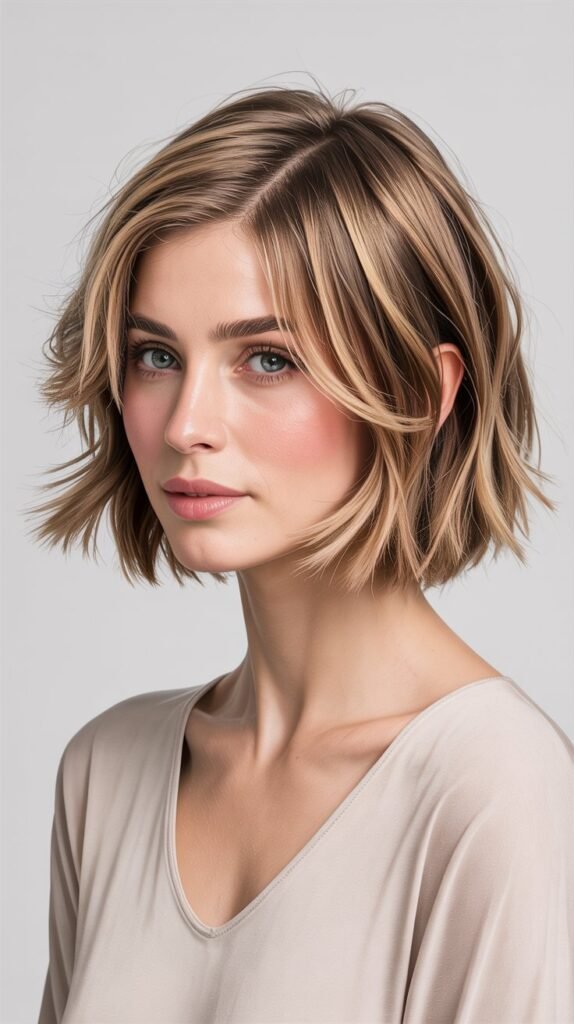
The shaggy bob incorporates multiple layers of varying lengths throughout the hair, creating a deliberately messy, rock-and-roll inspired look that’s surprisingly flattering for fine hair and round faces.
- Multiple choppy layers create texture and dimension that makes fine hair appear significantly fuller and more voluminous.
- The shag’s inherent messiness means fine hair’s tendency to fall flat actually works with the style rather than against it.
- Layers of different lengths throughout prevent any one section from becoming too heavy or dragging the style down.
- For round faces, the shaggy texture creates visual interest that distracts from face shape while the layers create vertical movement.
- This cut typically includes layers starting from the crown and continuing throughout, with some face-framing pieces that can be customized to flatter specific features.
- The beauty of a shag is that it’s meant to look a bit undone, making it perfect for those who don’t want to spend excessive time styling.
- Texturizing products are essential for this style—dry shampoo, texturizing spray, and light pomades help create the piecey, separated look.
- Modern shags are more refined than their 1970s counterparts, with more attention to creating wearable, flattering shapes.
11. Chin-Length Bob with Volume at the Crown
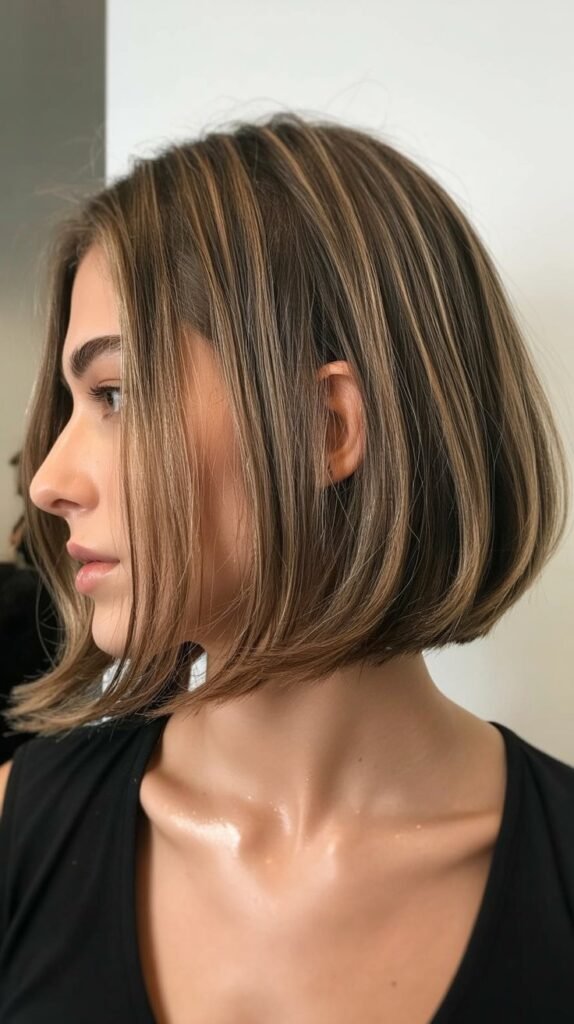
A chin-length bob styled with deliberate volume at the crown creates vertical height that balances and elongates round face shapes while giving fine hair a fuller appearance.
- The chin-length cut hits at a universally flattering point that works for most face shapes, including round faces.
- Creating height at the crown through styling techniques adds vertical dimension that counteracts facial width.
- Volume at the roots prevents fine hair from looking flat or limp, which is a common concern with this hair type.
- The lift at the crown draws attention upward rather than to the sides of the face, creating a lengthening illusion.
- This length provides enough hair to work with while being short enough to maintain body and movement.
- Styling techniques include blow-drying with the head flipped upside down, using a large round brush at the roots, or even adding strategic teasing at the crown.
- Volumizing products applied at the roots before styling—such as mousse, root lifters, or volumizing sprays—are essential for this look.
- The ends can be styled with a slight bend inward or left straight depending on preference and face shape specifics.
12. Razored Bob
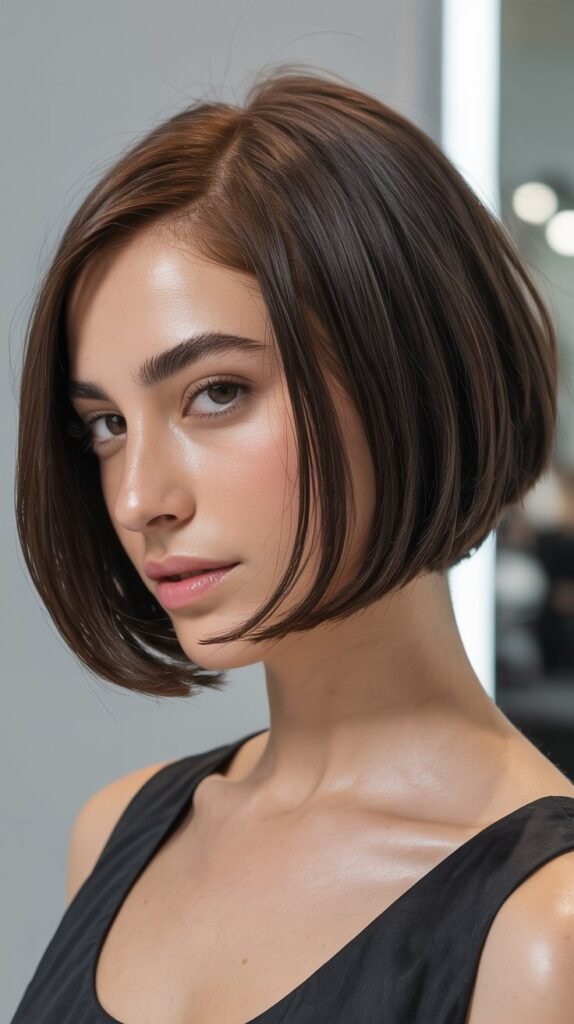
The razored bob is cut using a razor rather than scissors, creating soft, feathered ends that reduce bulk and add movement—perfect for fine hair that needs texture.
- Razor cutting produces softer, more diffused edges than scissors, which is ideal for fine hair that can look too blunt or heavy with traditional cutting methods.
- The technique removes weight without removing length, allowing fine hair to move more freely and appear less flat.
- Feathered ends create a whisper-light finish that prevents the hair from looking too severe or heavy at the bottom.
- For round faces, the softened edges create a more oval appearance rather than emphasizing width.
- This cutting technique naturally creates texture throughout the hair, reducing the need for excessive styling products.
- The razored approach works particularly well for those with straight fine hair, adding dimension to otherwise one-dimensional hair.
- Maintenance requires finding a stylist experienced with razor cutting, as the technique requires specific skills.
- Styling is minimal—the cut itself does most of the work, requiring only basic blow-drying with fingers or a brush.
13. Bob with Side-Swept Bangs
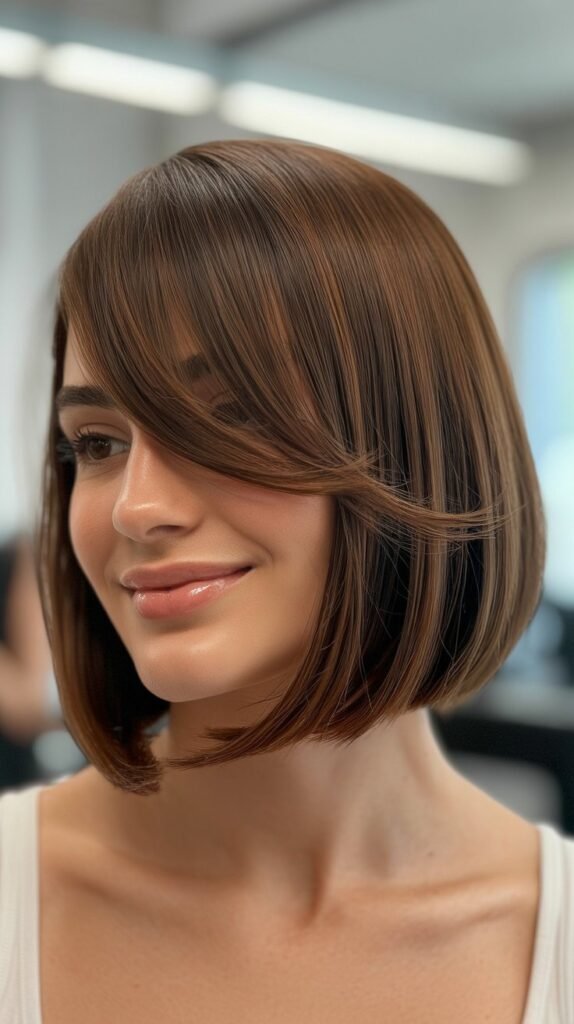
A bob paired with side-swept bangs creates asymmetry that flatters round faces while the bangs add coverage and style without overwhelming fine hair.
- Side-swept bangs are cut longer than traditional blunt bangs and swept dramatically to one side, creating a diagonal line across the forehead.
- This diagonal line creates asymmetry that breaks up the circular nature of a round face.
- The bangs require less hair than full across-the-forehead bangs, making them more suitable for fine hair that can’t afford to sacrifice much volume from the main style.
- The sweeping motion draws the eye across and down, creating a lengthening effect.
- These bangs are versatile—they can be pinned back when desired or left down for more drama.
- The bob itself can be any length, but shoulder-length or shorter works best to maintain proportion with the bangs.
- Styling requires blow-drying the bangs to the side with a round brush, potentially using a light pomade or styling cream to keep them in place.
- This combination has remained popular for decades because it’s universally flattering and easy to maintain.
14. A-Line Bob
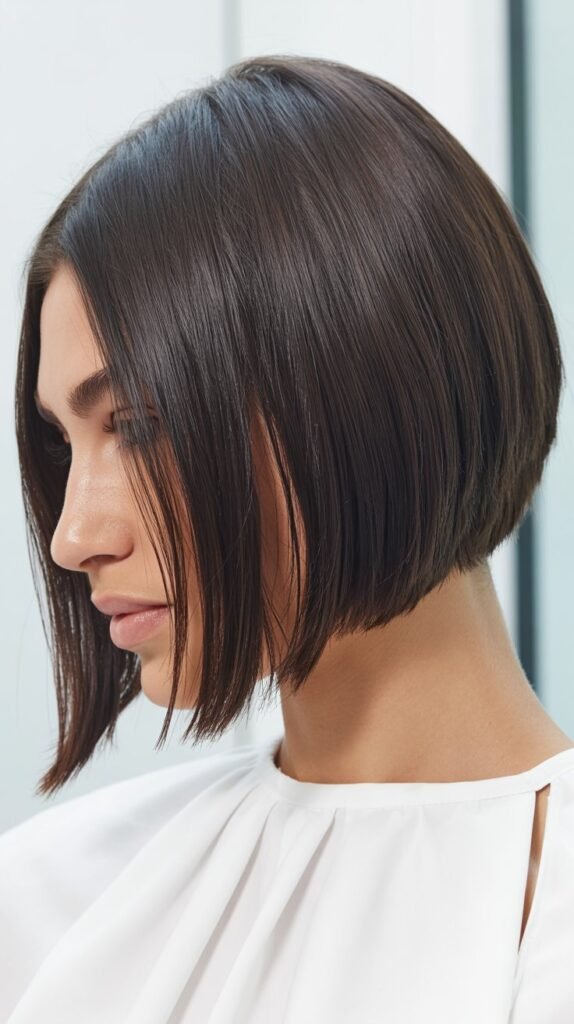
The A-line bob features a dramatic angle with hair shorter in the back and progressively longer toward the front, creating a distinctive A-shaped silhouette when viewed from the side.
- This cut creates one of the strongest diagonal lines available in bob haircuts, making it exceptionally flattering for round faces.
- The severe angle draws the eye along the jawline and downward, creating length rather than width in the face’s appearance.
- The shorter back prevents fine hair from becoming weighed down, while the longer front provides framing and style.
- The A-line typically features less graduation or stacking than an inverted bob, creating a cleaner, more modern line.
- This cut works particularly well for those with straight fine hair, as the sleek line is the style’s defining feature.
- The angle can be subtle or dramatic depending on personal preference—more conservative versions have a gentler slope, while fashion-forward versions have extreme differences between back and front.
- Styling emphasizes the clean line through blow-drying smooth and using a flat iron to enhance the precision of the cut.
- This is one of the lowest-maintenance bobs, as the cut itself creates the style without requiring extensive styling techniques.
15. Tousled Bob with Beach Waves
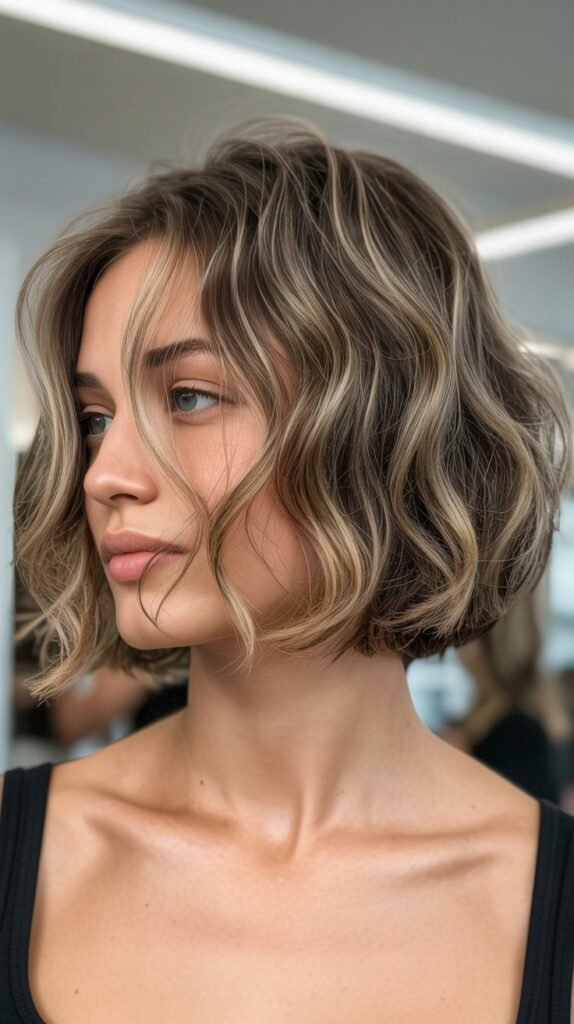
The tousled bob with beach waves combines casual, undone texture with subtle waves that add volume and movement perfect for fine hair and flattering to round faces.
- Beach waves are looser and more irregular than traditional waves, creating a natural, just-came-from-the-beach appearance.
- The tousled texture makes fine hair appear thicker and fuller by creating separation and dimension between strands.
- Random wave patterns prevent the hair from lying flat against the head, a common issue with fine straight hair.
- For round faces, the texture and waves create visual interest that draws attention to the hair rather than face shape.
- This style embraces imperfection—the waves don’t need to be uniform or perfect, which makes it accessible for those without advanced styling skills.
- Creating beach waves involves using a curling iron or wand with irregular patterns, or using salt spray on damp hair and scrunching as it dries.
- The length works best from chin to shoulder, providing enough hair to create waves without becoming too heavy.
- This effortless style works for casual settings but can be dressed up with the right outfit and accessories.
16. Stacked Bob with Undercut
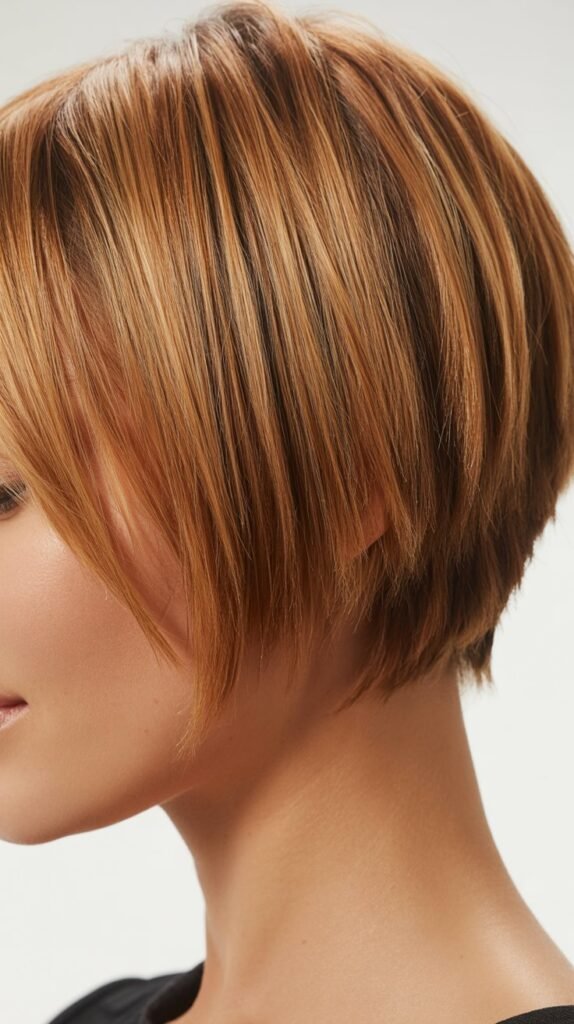
The stacked bob with an undercut removes weight from the underneath layers while maintaining length on top, creating volume and edge simultaneously.
- The undercut involves shaving or cutting very short the hair at the nape of the neck, often extending to the sides as well.
- This hidden feature removes bulk from underneath, allowing the top layers of fine hair to have more movement and lift.
- The stacked top layers create volume and shape, while the undercut prevents the bottom from becoming heavy or weighted down.
- For round faces, the volume created at the crown by the stacking helps elongate the face’s appearance.
- This edgy variation adds personality and interest while remaining professional enough for most workplaces when styled down.
- The undercut can be revealed by putting hair up or pinning back sections, creating two different looks in one cut.
- Maintenance includes regular undercut trims every 3-4 weeks to keep the shaved area neat, in addition to regular bob trims.
- Styling the top layers with volume techniques maximizes the height difference between the stacked top and shaved bottom.
17. Sleek Straight Bob with Middle Part
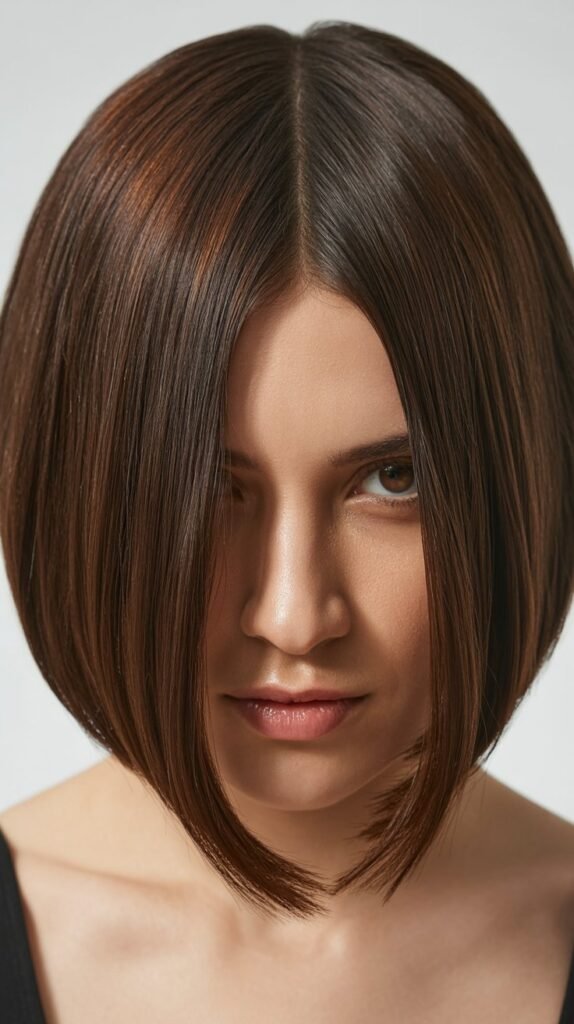
The sleek straight bob with a middle part creates a polished, sophisticated look while the center part creates a lengthening vertical line ideal for round faces.
- A middle part creates symmetry and a vertical line down the center of the face, which visually elongates round face shapes.
- The sleek, straight styling emphasizes the precision of the cut and creates a refined, put-together appearance.
- For fine hair, this styling actually works with the hair’s natural tendency to lie smooth rather than fighting it.
- The key is cutting the bob to fall at a length that flatters the specific face—typically between the jaw and collarbone for round faces.
- This classic look never goes out of style and works equally well in professional and social settings.
- Achieving the sleek look requires blow-drying smooth with a paddle brush, followed by a flat iron for extra polish.
- Shine-enhancing products like serums or glossing sprays can be applied to fine hair sparingly to add luster without weight.
- The middle part can be switched to a side part when desired, providing versatility within the same cut.
18. Curly Bob (for Naturally Textured Fine Hair)
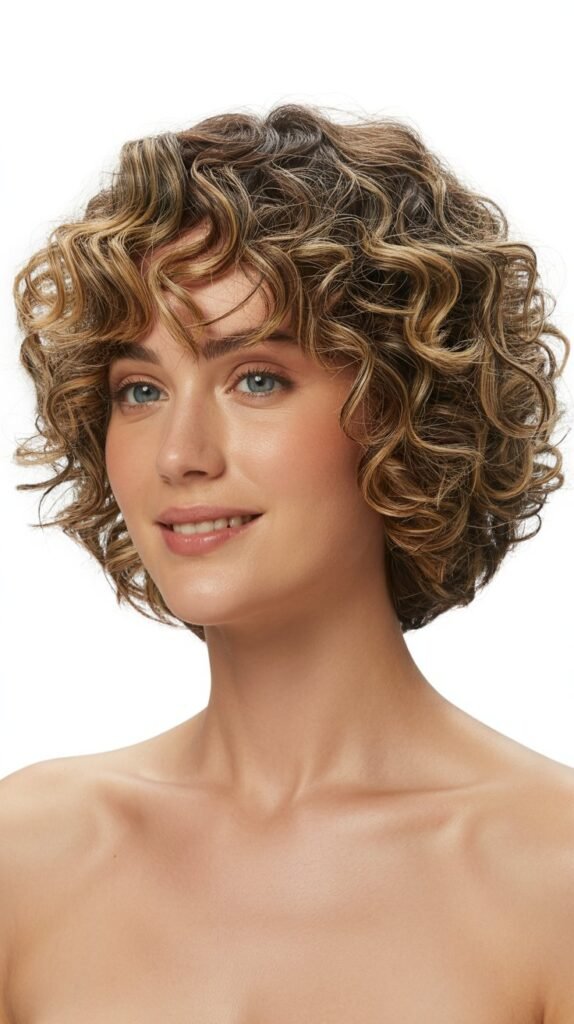
For those with naturally textured or curly fine hair, a curly bob embraces the natural pattern while providing shape and structure that flatters round faces.
- Fine hair can still have natural curl or wave patterns, and a curly bob is cut to work with rather than against this texture.
- The key is cutting the bob while the hair is dry and in its natural curly state, ensuring proper length and shape when curly.
- Layers are essential for curly fine hair to prevent a triangular or pyramid shape—strategic layering creates roundness and volume in the right places.
- For round faces, creating height at the crown through layering and styling helps elongate the face’s appearance.
- The length typically works best from chin to shoulder, as too-short curly bobs can create excessive width.
- Curl-specific products like creams, gels, and leave-in conditioners enhance the natural pattern while providing definition and reducing frizz.
- The curly bob requires different maintenance than straight bobs—regular deep conditioning and protective styling at night preserve curl health.
- This style celebrates natural texture, reducing daily styling time and heat damage.
19. Bob with Babylights or Highlights
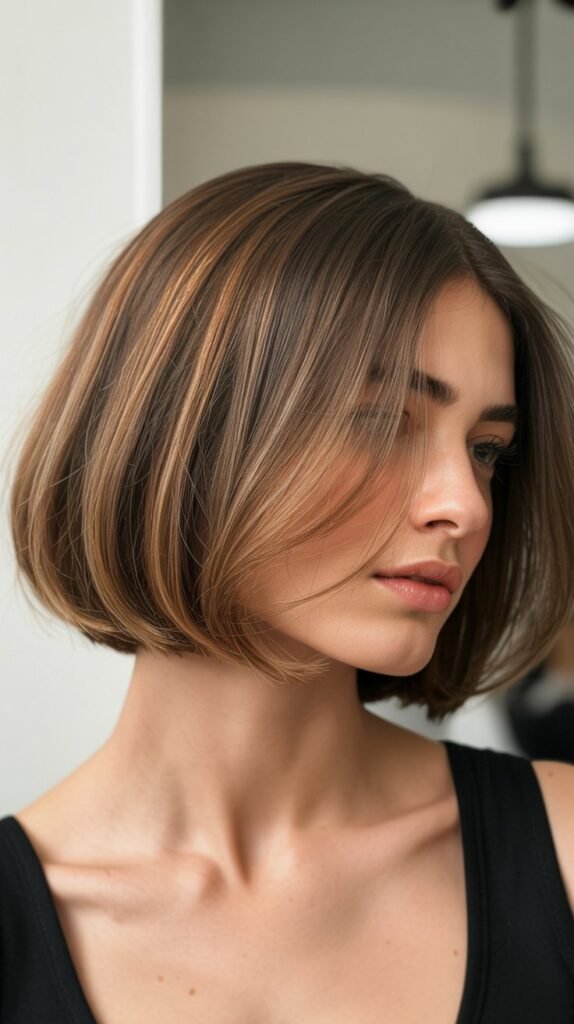
Adding babylights or highlights to a bob creates dimension and depth that makes fine hair appear fuller while strategic placement can enhance face-flattering features.
- Babylights are extremely fine, delicate highlights that mimic the natural hair color variations children have, creating subtle dimension.
- For fine hair, these delicate highlights add depth without creating harsh contrasts that can make hair appear thinner.
- Strategic placement of lighter pieces around the face creates brightness that draws light to the face and can create a face-framing effect.
- Highlights throughout the bob add dimension that creates the illusion of more hair—the play of light and shadow makes hair appear more voluminous.
- For round faces, vertical highlight placement creates vertical lines that lengthen the face’s appearance.
- The color variation prevents the bob from looking flat or one-dimensional, which can happen with solid color on fine hair.
- Lighter pieces around the face also create a brightening, face-lifting effect that’s universally flattering.
- Maintenance includes toning treatments to keep highlights from becoming brassy and regular touch-ups every 8-12 weeks.
20. Piecey Bob with Texturizing
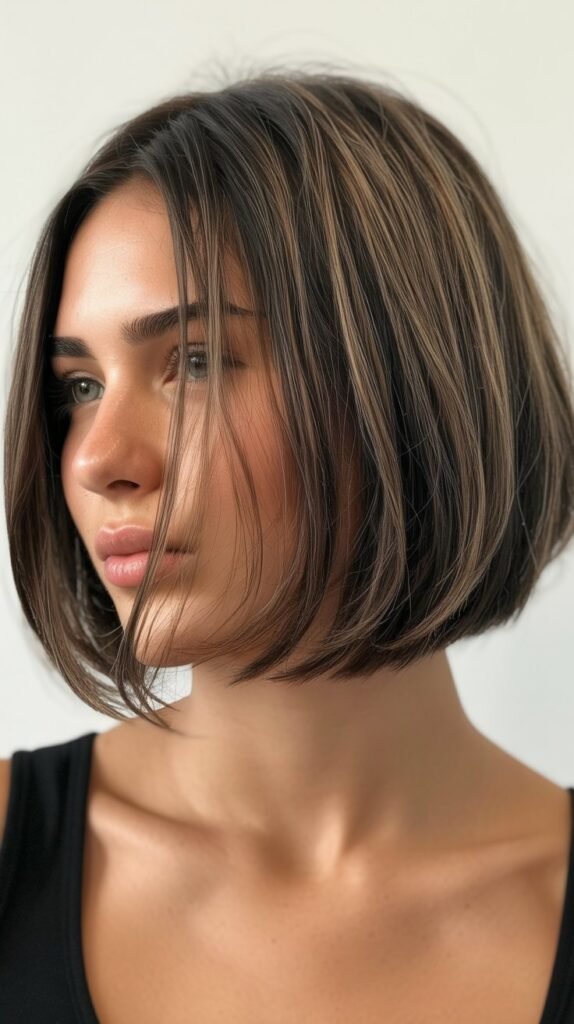
A piecey bob uses texturizing techniques and products to create defined, separated strands that add dimension and the appearance of fuller hair.
- Texturizing involves removing weight from specific sections of hair to create movement and separation rather than a uniform, solid mass.
- Point-cutting and razoring techniques during the haircut create the foundation for the piecey texture.
- Styling products—particularly texturizing sprays, pastes, and pomades—are then used to separate and define individual pieces.
- For fine hair, this separation creates the optical illusion of more hair because individual strands catch light differently.
- The defined pieces create visual interest and dimension that prevent fine hair from looking flat or lifeless.
- This style works particularly well for those with straight to slightly wavy fine hair.
- The piecey texture can be concentrated at the ends for a softer look or throughout the entire bob for more dramatic texture.
- Styling involves applying product to damp hair, blow-drying with fingers (rather than a brush) to create separation, and potentially adding more product to dry hair for definition.
21. Bob with Deep Side Part
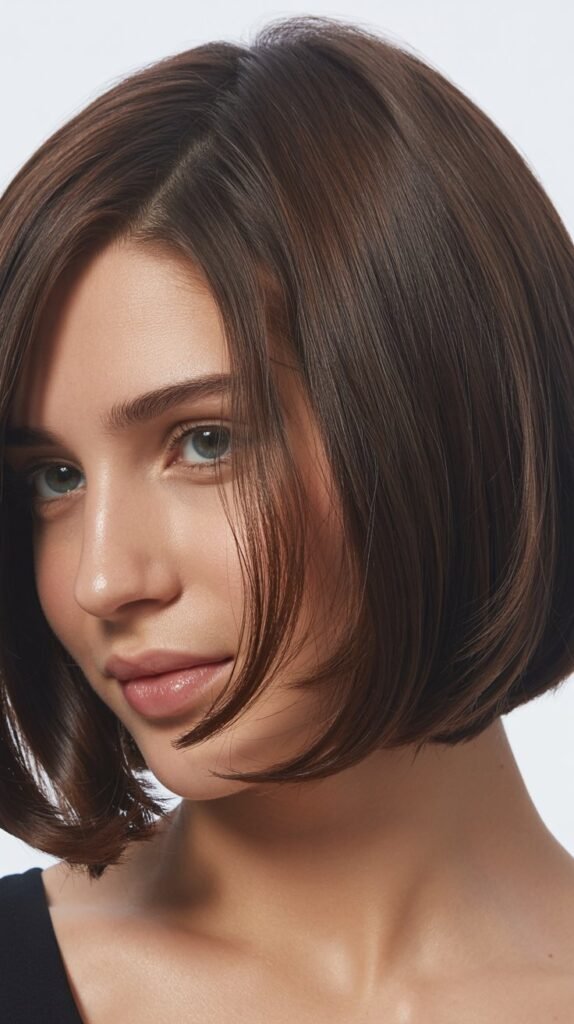
A bob styled with a deep side part creates dramatic asymmetry that flatters round faces by breaking up the face’s circular appearance.
- A deep side part is placed significantly off-center—typically 2-3 inches from the center—creating a strong diagonal line across the forehead.
- This asymmetry immediately creates visual interest that draws attention away from face shape.
- The larger section of hair adds volume on one side, which can be used strategically to balance facial features.
- For round faces, the dramatic part creates angles and lines rather than curves, counteracting the face’s natural roundness.
- Fine hair actually shows a deep side part better than thick hair, as the hair lies closer to the head and the part line is more defined.
- This styling change can be made with any bob cut, making it an instant transformation without requiring a new haircut.
- Styling involves blow-drying the hair away from the face on the larger side to emphasize volume, while the smaller side is often tucked behind the ear.
- The deep side part can be switched to the other side or to a middle part for versatility.
22. Wavy Bob with Volume
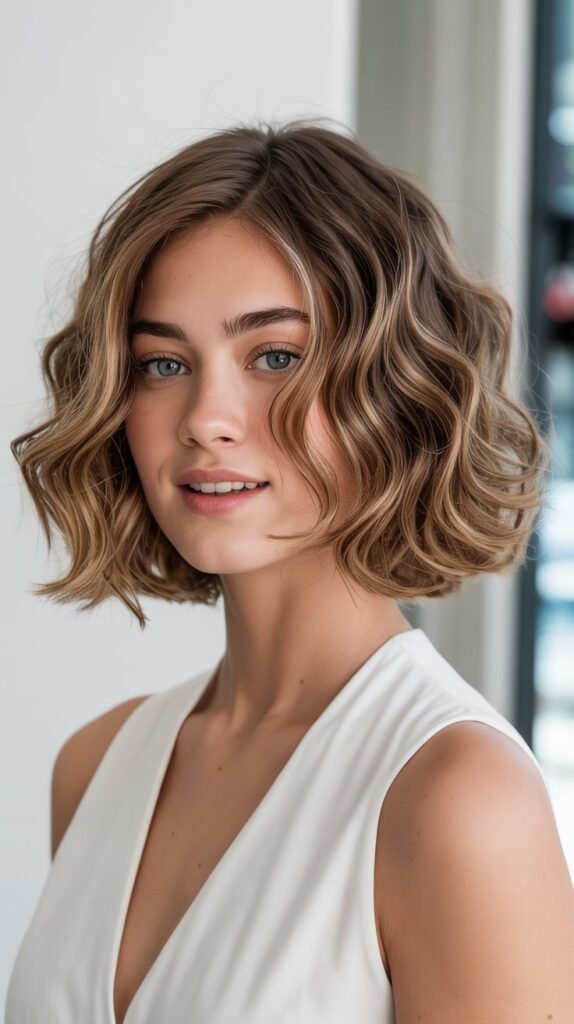
A wavy bob styled with emphasis on volume creates body and fullness that fine hair naturally lacks while the waves add texture that flatters round faces.
- Waves create bends and curves in the hair that take up more space than straight hair, instantly making fine hair appear fuller.
- Volume at the roots prevents the hair from looking flat, which is especially important for fine hair that tends to lack natural lift.
- The combination of waves and volume creates a multi-dimensional look that’s both feminine and flattering.
- For round faces, creating more volume at the crown than at the sides helps elongate the face’s appearance.
- This style works best on bobs that fall between chin and shoulder length, providing enough hair to create substantial waves.
- Creating the look involves using volumizing products at the roots, blow-drying with a round brush for lift, then using a curling iron or wand to create waves.
- Finishing products like light hairspray and texturizing spray help maintain both the volume and the wave pattern throughout the day.
- This glamorous style works beautifully for special occasions but can be achieved for everyday wear with practice.
23. Bob with Wispy Ends
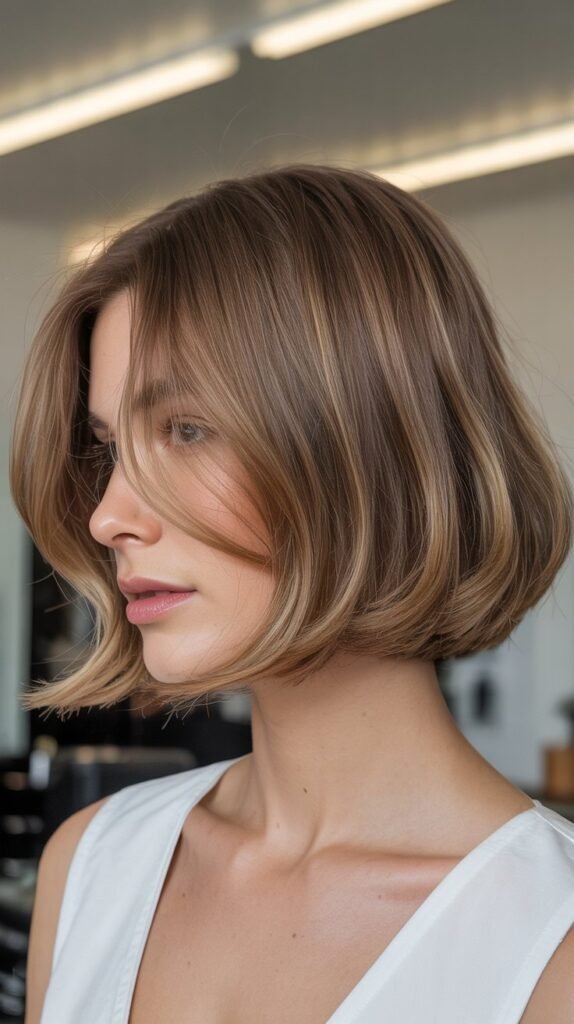
A bob cut with wispy, feathered ends creates a soft, feminine finish that reduces weight and adds movement to fine hair.
- Wispy ends are created through point-cutting or razoring techniques that thin out the ends and create soft, irregular edges.
- These delicate ends prevent the bob from looking heavy or blunt, which can weigh down fine hair.
- The feathered effect creates movement at the ends that adds life and dimension to fine hair.
- For round faces, the wispy ends create a soft, flattering frame rather than a harsh line that might emphasize width.
- This technique is particularly effective for those whose fine hair looks too thin or sparse at the ends with a blunt cut.
- The wispy ends create a more romantic, softer aesthetic compared to the precision of a blunt bob.
- Styling involves blow-drying the ends with a round brush, potentially using a light styling cream to enhance the wispy texture.
- Maintenance requires regular trims to keep the ends healthy and prevent split ends from traveling up the hair shaft.
24. Chin-Length Bob with Tucked Sides
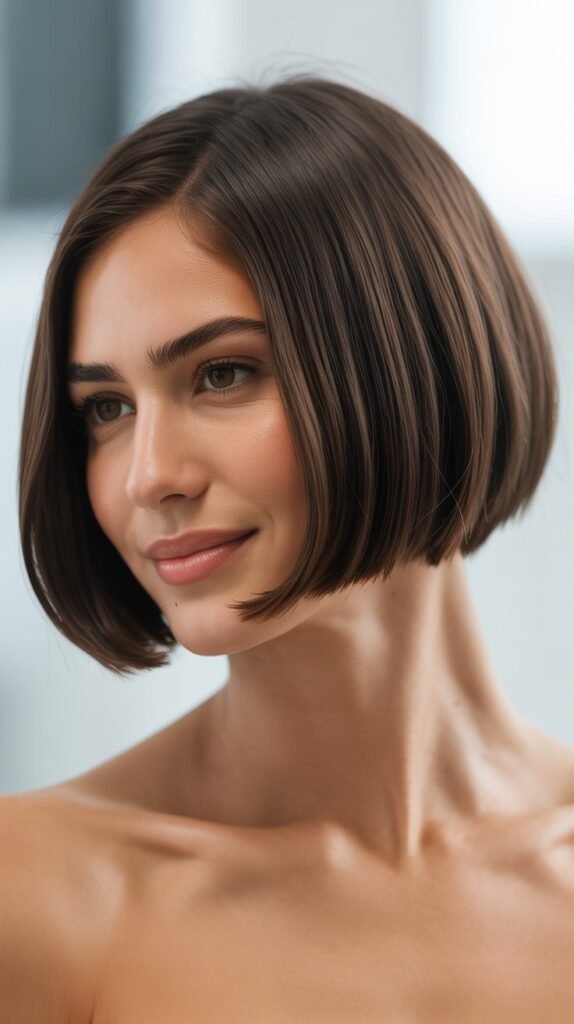
A chin-length bob styled with the sides tucked behind the ears creates a face-revealing look that’s both practical and flattering for round faces.
- Tucking the sides behind the ears removes hair from the sides of the face, which can make round faces appear slimmer.
- This styling technique creates more vertical lines along the face and exposes the jawline, both of which create a lengthening effect.
- The exposed ears and jaw create negative space that helps define facial structure.
- For fine hair, this styling prevents the common issue of the sides of the bob overwhelming the face or making it appear wider.
- The chin-length cut hits at a flattering point that works well with the tucked-back styling.
- This look can be made more permanent with strategic layering that encourages the hair to naturally fall behind the ears.
- Styling involves blow-drying the hair away from the face and using bobby pins or small clips if needed to keep the sides secure.
- This versatile style works for both casual and professional settings.
25. Blunt Lob with Center Part
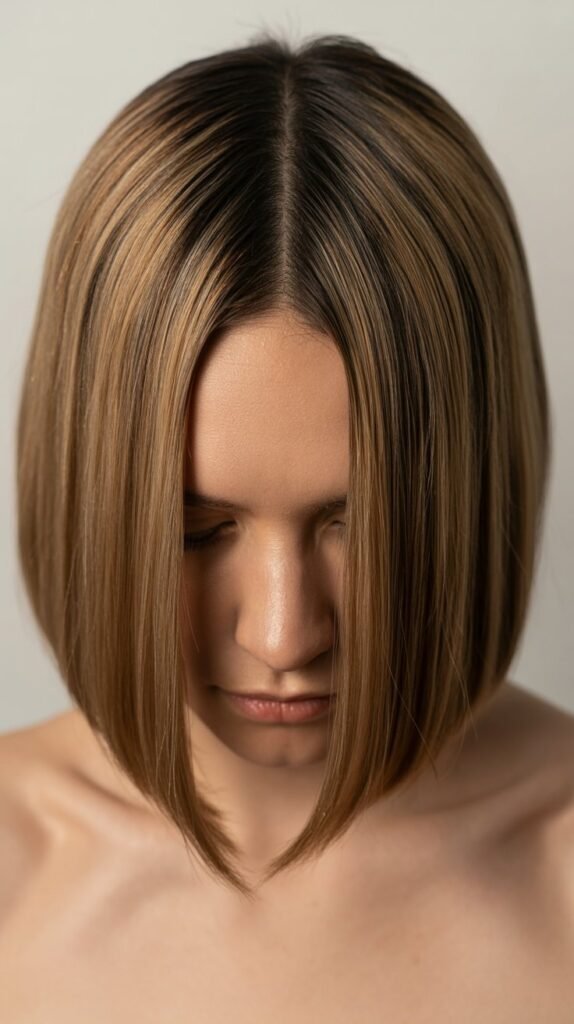
The blunt long bob (lob) paired with a center part creates a modern, fashion-forward look that flatters round faces through length and symmetry.
- The blunt cut creates maximum fullness at the ends, making fine hair appear thicker and more substantial.
- Cutting all the hair to one length prevents the thinning that can occur with excessive layering in fine hair.
- The length—typically falling between the chin and collarbone—extends past the widest part of a round face, creating a lengthening effect.
- A center part creates a vertical line down the middle of the face that elongates and creates symmetry.
- This minimalist, modern cut has become incredibly popular because it’s both stylish and relatively low-maintenance.
- For fine hair, the blunt cut prevents ends from looking wispy or thin by keeping all the hair at maximum density.
- Styling involves blow-drying smooth with a paddle brush and potentially using a flat iron to emphasize the blunt line.
- This versatile cut can be worn straight and sleek or styled with waves for different occasions.
26. Layered Bob with Flipped Ends
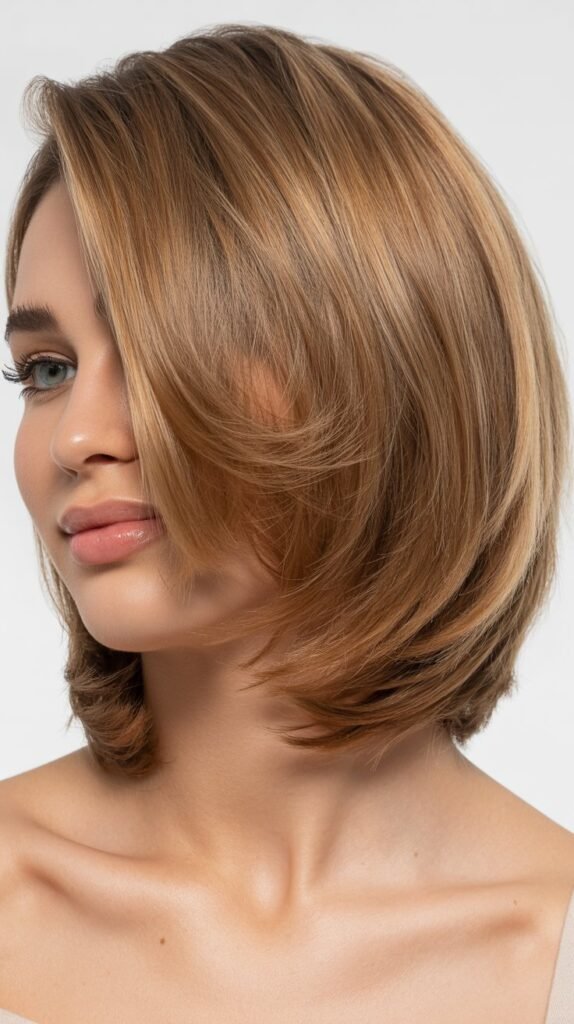
A layered bob with ends that flip outward creates a playful, retro-inspired look that adds width at the bottom rather than the sides—flattering for round faces.
- Flipped ends that turn outward create volume at the tips rather than at the sides of the face, which is key for round face shapes.
- The outward flip draws the eye down and creates a horizontal line below the face rather than at its widest point.
- Layers throughout the bob create movement and prevent fine hair from looking flat or lifeless.
- This style has a vintage, 1960s-inspired aesthetic that’s both fun and feminine.
- For fine hair, the flip creates the illusion of fuller, thicker ends than actually exist.
- Creating the flip involves blow-drying with a round brush and turning the brush outward at the ends, or using a large curling iron to create the bend.
- The style works best on bobs that fall between chin and shoulder length.
- Setting spray or light hairspray helps maintain the flip throughout the day.
27. Bob with Balayage
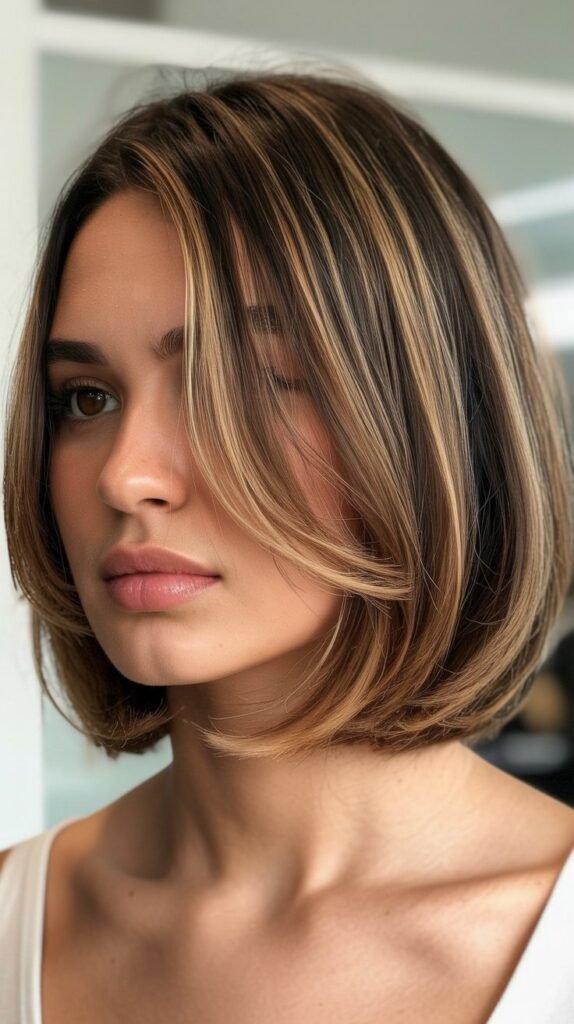
A bob enhanced with balayage coloring creates hand-painted dimension that adds depth and the illusion of volume to fine hair.
- Balayage is a freehand coloring technique that creates natural-looking, graduated highlights without harsh lines.
- The hand-painted application creates dimension that makes fine hair appear fuller and more textured.
- Lighter pieces are strategically placed to catch light and create the illusion of more hair.
- For round faces, concentrating lighter pieces around the face creates a brightening, face-framing effect that draws the eye vertically.
- The gradual color transition from darker roots to lighter ends creates depth that flat, single-process color cannot achieve on fine hair.
- Balayage requires less maintenance than traditional highlights, as the grown-out roots blend seamlessly with the darker base color.
- The technique can be subtle with just a few shades lighter or dramatic with significant contrast, depending on personal preference.
- For fine hair, balayage adds visual interest without the weight or damage that can come from all-over color processing.
- Combining balayage with any bob style instantly elevates the look and creates a more customized, high-end appearance.
28. Micro Bob
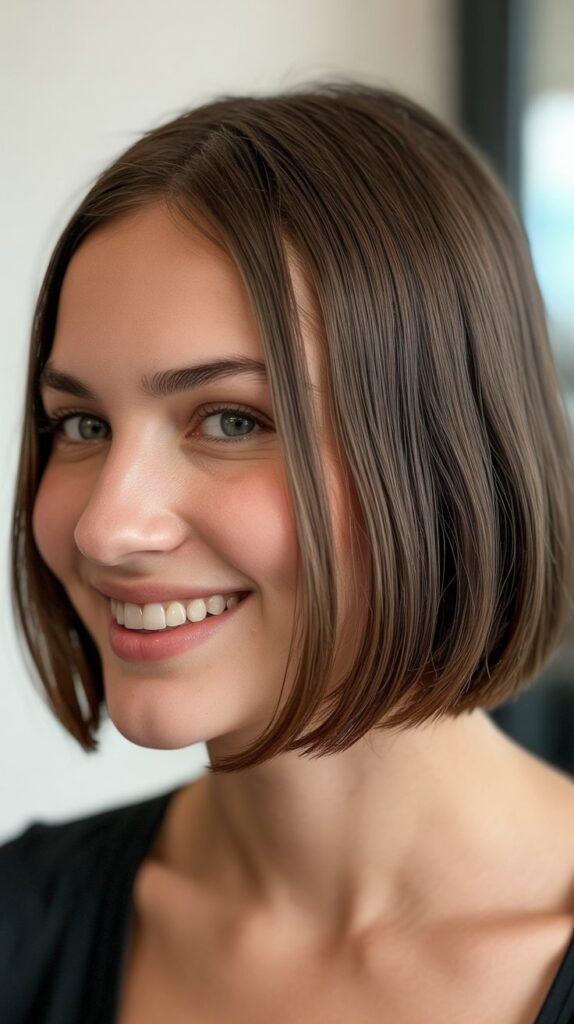
The micro bob is an ultra-short variation that sits above the chin, creating a bold, editorial look that surprisingly flatters round faces when cut correctly.
- This daring length typically falls between the earlobe and jawline, making it one of the shortest bob variations.
- For round faces, the key is ensuring the bob doesn’t end at the face’s widest point but rather above or below it.
- The dramatic shortness creates a fashion-forward statement that draws attention to the haircut itself rather than face shape.
- Fine hair actually excels in this length because there’s less weight pulling the hair down, allowing for maximum volume and body.
- The micro bob often features blunt edges or slight texturing, depending on the desired aesthetic.
- This cut requires confidence and regular maintenance—trims every 3-4 weeks are essential to maintain the precise shape.
- Styling can range from sleek and polished to textured and tousled, offering versatility despite the short length.
- Adding texture or waves to a micro bob can soften the look and make it more approachable for those hesitant about such short hair.
29. Curved Bob with Rounded Edges
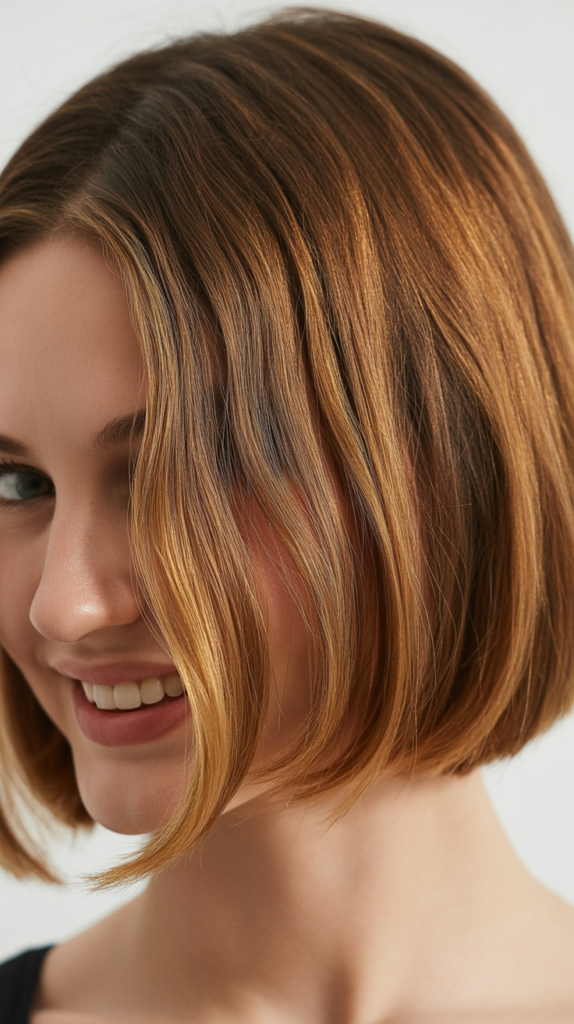
The curved bob features rounded, C-shaped edges that curve gently inward toward the face, creating a softer, more feminine alternative to straight bobs.
- The curved shape is achieved through precise cutting and styling that creates a gentle arc rather than a straight line.
- This softer silhouette is more forgiving for round faces than blunt horizontal lines, as the curve creates movement rather than stillness.
- The inward curve naturally frames the face and can be positioned to highlight the jawline or collarbone.
- For fine hair, the curve creates the illusion of fuller ends by bending the hair inward rather than allowing it to hang straight and potentially limp.
- This style combines the structure of a bob with the softness of a more romantic cut.
- Creating the curve requires blow-drying with a round brush, carefully turning the ends inward as you dry.
- The curved bob works particularly well for those who want a polished look without the severity of a completely straight bob.
- This versatile style transitions easily from professional to casual settings.
30. Bob with Undercut Design
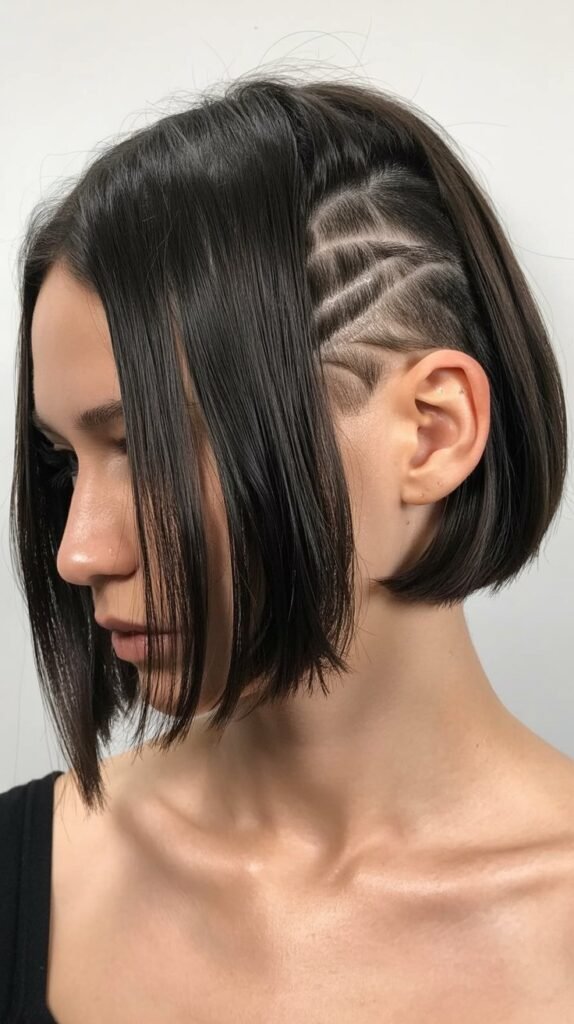
A bob featuring an undercut with shaved designs adds artistic flair and edge while removing bulk from fine hair in a creative way.
- The undercut can feature geometric patterns, lines, or even more elaborate designs shaved into the hair at the nape and sides.
- This hidden feature can be revealed by styling hair up or pinning sections back, creating a dual personality in one haircut.
- Removing hair from underneath allows the top layers of fine hair to move more freely and appear fuller.
- For round faces, the volume created on top by the removal of underneath hair helps create height and elongation.
- This edgy option allows for self-expression and creativity while maintaining a professional appearance when styled down.
- The undercut design requires regular maintenance every 2-3 weeks to keep the pattern sharp and visible.
- This style appeals to those who want something unique and are willing to commit to the maintenance required.
- Combining a classic bob silhouette with an unexpected undercut design creates interesting contrast.
31. Textured Wavy Lob
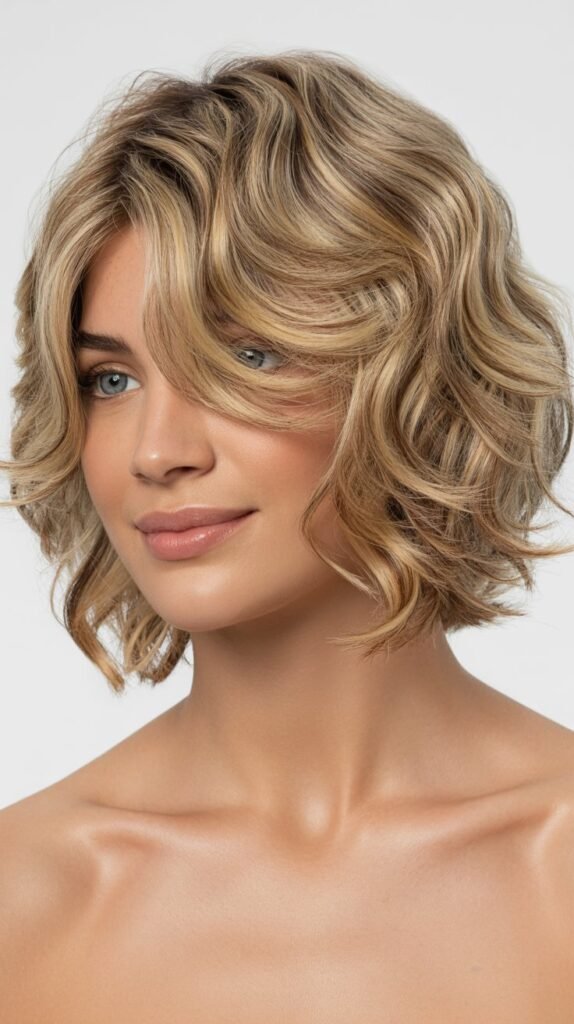
The textured wavy lob combines the length of a long bob with loose, textured waves that create movement and volume ideal for fine hair.
- Texture is key for this style—the waves should appear natural and slightly undone rather than perfectly polished.
- The combination of length (collarbone to just past) and waves creates significant volume that fine hair needs.
- Loose, irregular waves prevent the hair from lying flat against the head, a common problem with fine straight hair.
- For round faces, the length extends well past the face’s widest point while the waves create visual interest that draws attention to the hair.
- This style embraces a modern, effortless aesthetic that appears as though you naturally woke up with perfect waves.
- Creating the look involves using a curling iron or wand with varying barrel sizes to create irregular wave patterns.
- Salt spray, texturizing spray, or dry shampoo enhance the texture and add grip to fine hair.
- This low-maintenance style actually looks better slightly lived-in, making it perfect for busy lifestyles.
32. Precision Bob with Sharp Lines
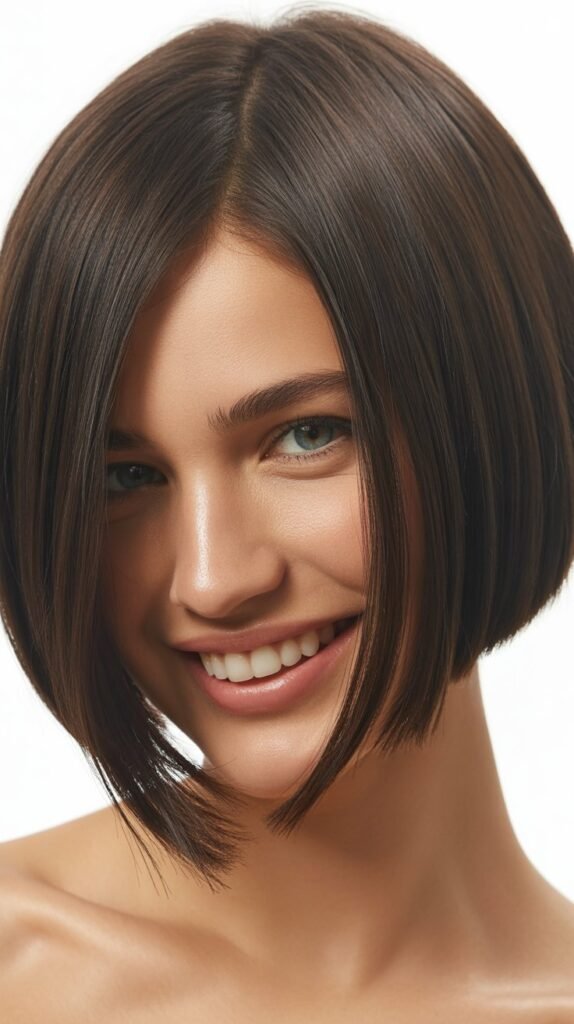
The precision bob features extremely clean, sharp lines created through meticulous cutting—a bold choice that can flatter round faces when executed at the right length.
- This geometric cut emphasizes straight, precise lines with no softening or texture—the sharpness is the style’s defining feature.
- For round faces, the key is cutting the bob at a length that creates angles—typically at the jawline or below—rather than at the face’s widest point.
- The severe precision of the cut creates a strong, confident aesthetic that makes a statement.
- Fine hair actually showcases precision cuts better than thick hair because the clean lines are more visible and achievable.
- This cut requires exceptional skill from the stylist—every hair must be cut to exact specifications for the style to work.
- Maintenance is crucial—the bob must be trimmed regularly every 4-5 weeks to maintain the precise lines.
- Styling involves blow-drying perfectly straight with a paddle brush and using a flat iron to ensure every strand is aligned.
- This high-maintenance style rewards the effort with a strikingly modern, fashion-forward appearance.
33. Layered Bob with Crown Volume
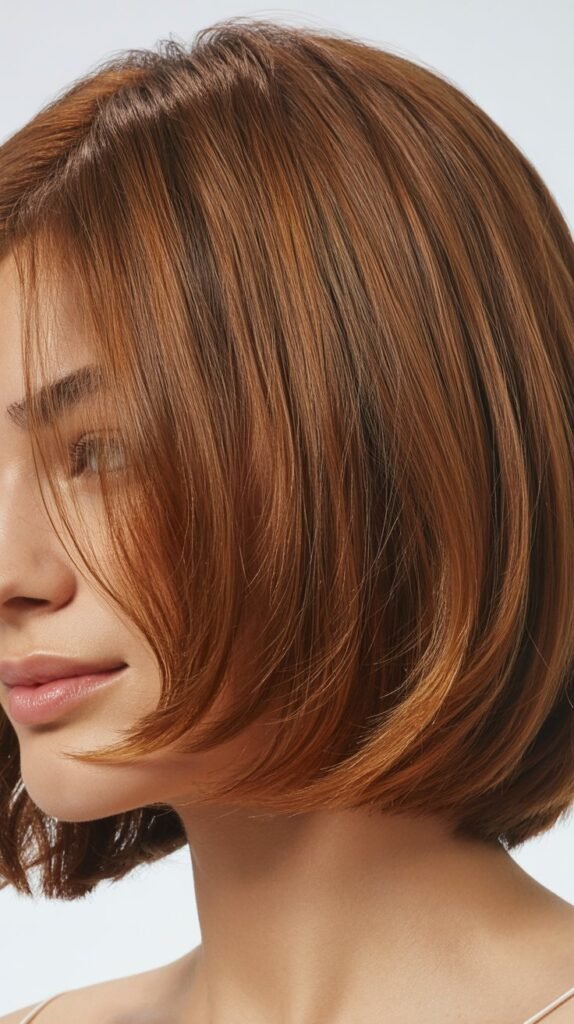
The layered bob with emphasized crown volume uses strategic layering to create maximum height at the top of the head—essential for balancing round face proportions.
- Layers are concentrated through the crown area to create lift and height that elongates the face’s appearance.
- The crown volume draws the eye upward rather than across, which is crucial for minimizing the width perception of round faces.
- Short layers at the crown provide built-in volume that fine hair desperately needs to avoid looking flat.
- The layers gradually lengthen toward the perimeter, creating a cohesive shape that maintains fullness at the ends.
- This cut essentially builds a volumizing technique into the haircut itself, reducing daily styling time.
- For fine hair, having volume at the crown prevents the common issue of hair lying flat and lifeless against the head.
- Styling involves blow-drying the crown area with a round brush, directing the hair upward and back to maximize lift.
- Root-lifting products and volumizing mousses applied at the crown before styling enhance and extend the volume.
- This flattering cut works for various bob lengths from chin to shoulder, as long as the crown volume is maintained.
Styling Tips for Fine Hair Bob Cuts
Understanding how to properly style and maintain your bob is just as important as choosing the right cut for your fine hair and round face.
- Use the right products: Lightweight mousses, volumizing sprays, and root lifters add body without weighing down fine hair, while heavy oils and thick creams should be avoided or used sparingly only on the ends.
- Blow-dry strategically: Always blow-dry hair in the opposite direction of how you want it to fall—if you want volume on the right, blow-dry toward the left—as this creates lift at the roots.
- Embrace dry shampoo: This miracle product adds texture and volume to fine hair between washes while absorbing oil that can make hair look flat and lifeless.
- Consider texturizing tools: Salt sprays, texturizing sprays, and powder products create grip and separation that make fine hair appear fuller and more substantial.
- Don’t over-wash: Fine hair may feel like it gets oily quickly, but washing too frequently strips natural oils and can actually cause overproduction, so aim for every other day or every two days.
- Use heat protectant: Fine hair is more susceptible to heat damage, so always apply a heat protectant spray before using hot tools to prevent breakage and maintain hair health.
- Get regular trims: Bob cuts require maintenance every 4-6 weeks to maintain their shape and prevent fine ends from looking wispy or damaged.
- Sleep on silk: Silk or satin pillowcases reduce friction that causes breakage and frizz in fine hair, helping your style last longer between washes.
Conclusion
The journey to finding your perfect hairstyle among these 33 Chic Bob Haircuts for Fine Hair Round Face doesn’t have to be overwhelming or frustrating.
Each of these carefully selected bob variations offers unique benefits specifically designed to address the dual challenges of fine hair texture and round face shape, proving that you absolutely can have a stunning, flattering haircut that works with your natural features rather than against them.
From the dramatic angles of an A-line bob to the soft romance of a textured wavy lob, from the edgy appeal of an undercut design to the timeless elegance of a sleek straight bob, these options demonstrate the incredible versatility of the bob haircut family.
Remember that the most important factors in choosing your ideal bob are finding a length that extends past your face’s widest point, incorporating techniques that add volume where you need it most, working with a skilled stylist who understands fine hair and face shapes, and committing to the proper styling and maintenance routine that keeps your bob looking fresh and flattering.
Your fine hair is not a limitation but simply a characteristic that requires thoughtful cutting and styling techniques, and your round face is beautiful and can be enhanced with strategic angles, lengths, and styling approaches.
Take these ideas to a trusted stylist, discuss which variations would work best with your specific hair texture and lifestyle, and embrace the transformative power of the perfect bob haircut.
With the right cut from these 33 Chic Bob Haircuts for Fine Hair Round Face and proper care, you’ll discover a hairstyle that makes you feel confident, beautiful, and authentically yourself every single day.