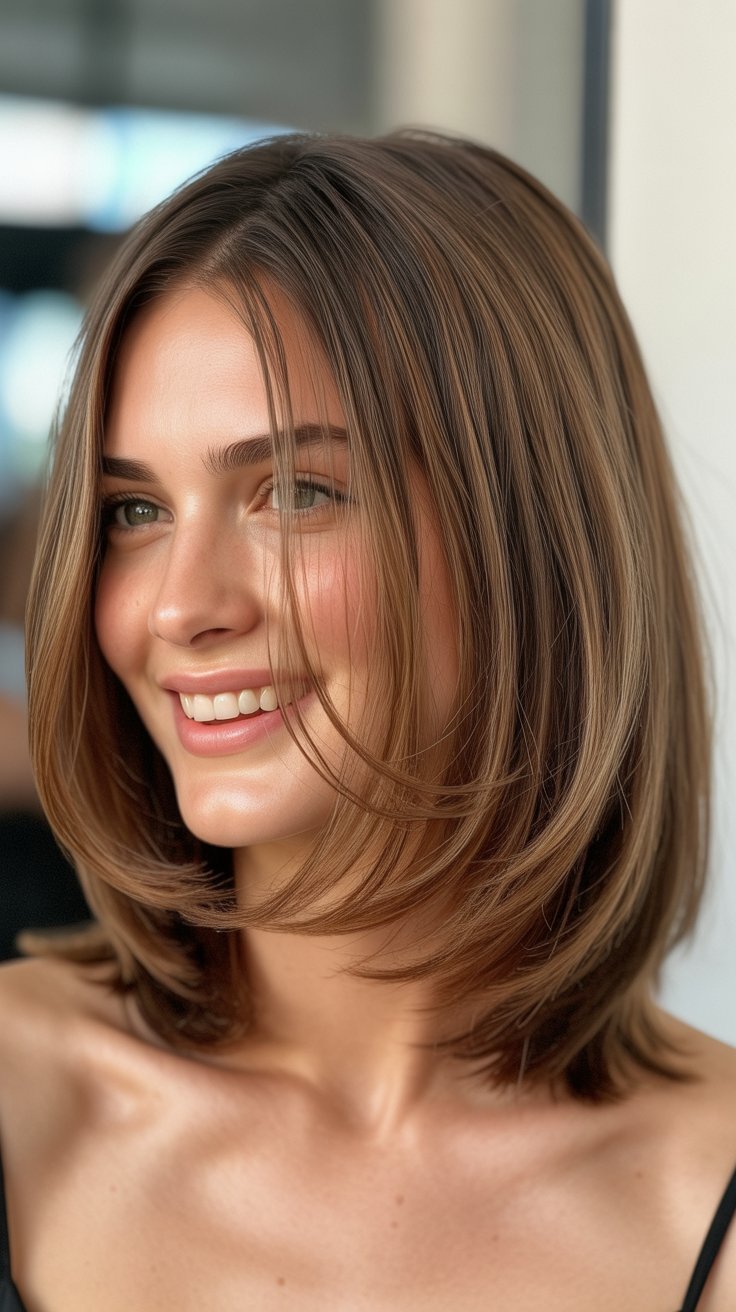
Fine hair doesn’t mean you have to compromise on style or volume when choosing a haircut.
The long bob, affectionately known as the “lob,” has emerged as one of the most flattering and versatile options for those with fine hair textures.
This article explores 27 Stylish Long Bob Haircuts for Fine Hair that will transform your look while adding the illusion of thickness, movement, and dimension.
Whether you’re seeking a dramatic change or a subtle refresh, these carefully curated long bob variations offer solutions for every face shape, lifestyle, and personal aesthetic.
From textured layers that create body to blunt cuts that maximize density, each style has been selected specifically for its ability to enhance fine hair’s natural beauty.
You’ll discover cutting techniques, styling approaches, and professional tips that will help you achieve salon-worthy results and maintain your chosen look with confidence.
1. The Classic Blunt Long Bob
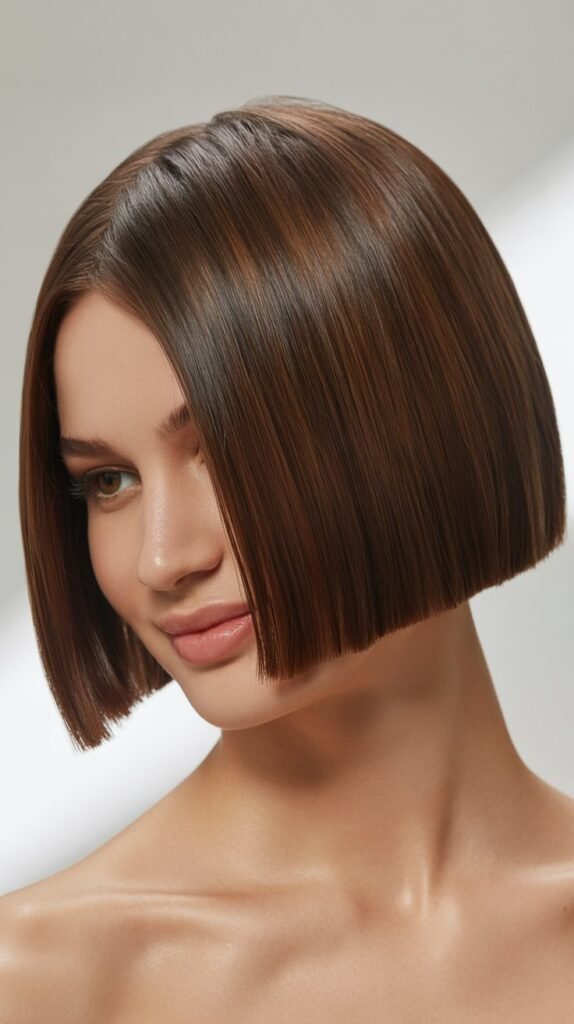
The blunt long bob is a timeless choice that creates the optical illusion of thicker, denser hair by maintaining a solid, uniform perimeter.
This cut eliminates wispy ends and instead delivers a strong, defined line that makes fine hair appear fuller and healthier.
Key Features:
- The hair is cut to one uniform length, typically between the collarbone and shoulders, without any layering or graduation.
- The blunt edge creates a visual weight at the bottom that prevents fine hair from looking thin or scraggly.
- This style works particularly well when the ends are kept sharp and regularly trimmed every 6-8 weeks.
- The absence of layers means all the hair density is concentrated at the perimeter, maximizing fullness.
Styling Tips:
- Use a round brush while blow-drying to create slight movement at the ends without losing the blunt edge.
- Apply a lightweight volumizing mousse at the roots before drying to lift the hair away from the scalp.
- Finish with a flat iron to seal the cuticle and create a sleek, polished appearance that enhances the density illusion.
- A shine serum applied sparingly to the mid-lengths and ends will reflect light and make hair appear thicker.
2. Textured Lob with Razor Cut Ends
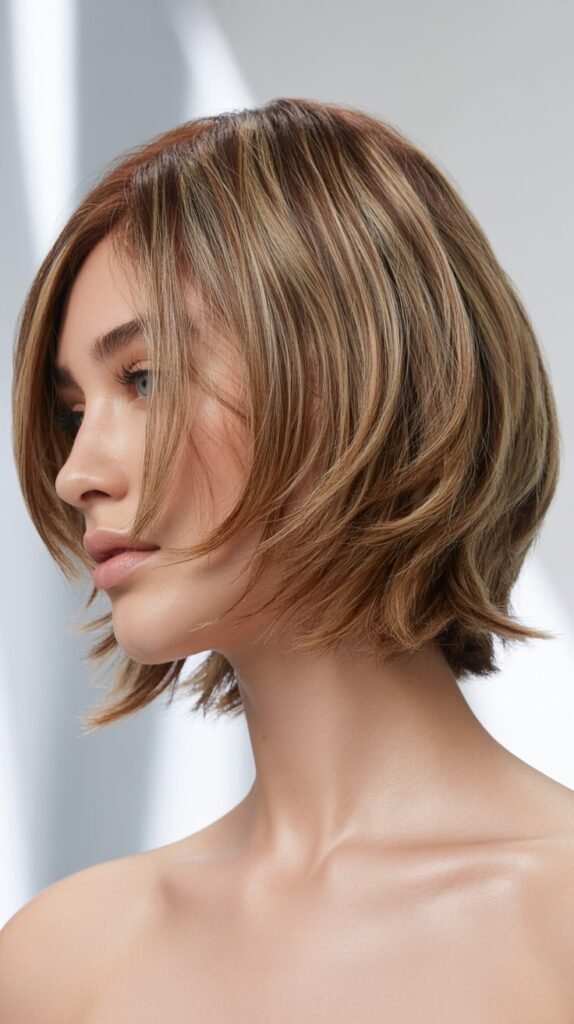
The textured lob with razor cut ends introduces deliberate irregularity to create movement and dimension that fine hair desperately needs.
This technique uses a razor instead of scissors to create softer, feathered ends that add visual interest without sacrificing volume.
Benefits for Fine Hair:
- Razor cutting creates microscopic texture along the hair shaft that helps strands separate and move independently.
- The feathered ends prevent the hair from clumping together, which can make fine hair look stringy.
- This cutting method removes weight without creating obvious layers, maintaining density while adding movement.
- The textured finish allows hair to hold styling products better, extending the life of your style.
Maintenance Considerations:
- Razor cuts require more frequent trims (every 5-7 weeks) as the ends can become frayed if left too long.
- Use a hydrating conditioner to prevent the textured ends from becoming dry or brittle.
- This style pairs beautifully with sea salt sprays that enhance the piece-y, textured appearance.
- Avoid heavy oils or serums that can weigh down fine hair and diminish the textured effect.
3. Angled Long Bob (A-Line Lob)
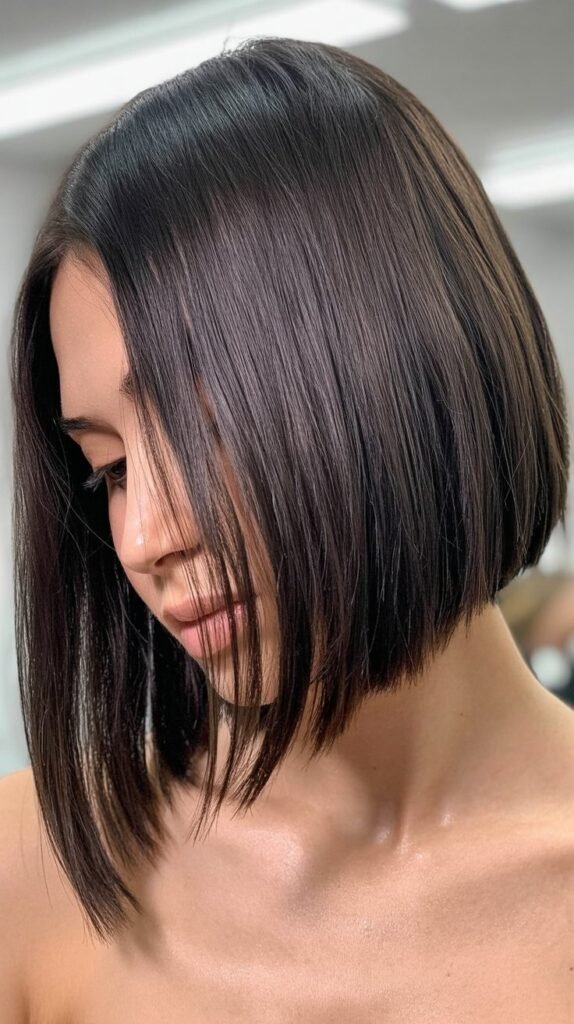
The angled long bob features hair that is shorter in the back and gradually lengthens toward the front, creating a sophisticated diagonal line that adds dimension and frames the face beautifully.
This geometric cut is particularly flattering for fine hair as it creates the illusion of volume through strategic length variation.
Design Elements:
- The back is typically cut at chin level or slightly below, while the front extends to the collarbone or beyond.
- The angle can be subtle (1-2 inches difference) or dramatic (3-4 inches difference) depending on preference.
- This cut naturally directs attention to the longer front sections, drawing the eye away from any thinness at the crown.
- The shorter back section reduces weight, allowing the crown area to appear lifted and fuller.
Face Shape Compatibility:
- Oval faces can wear any angle variation, from subtle to dramatic, with excellent results.
- Round faces benefit from a steeper angle that creates vertical lines and elongates the appearance.
- Square faces are softened by the diagonal line, which counterbalances angular jawlines.
- Heart-shaped faces find balance as the longer front sections add width at the chin level.
4. Layered Long Bob for Volume
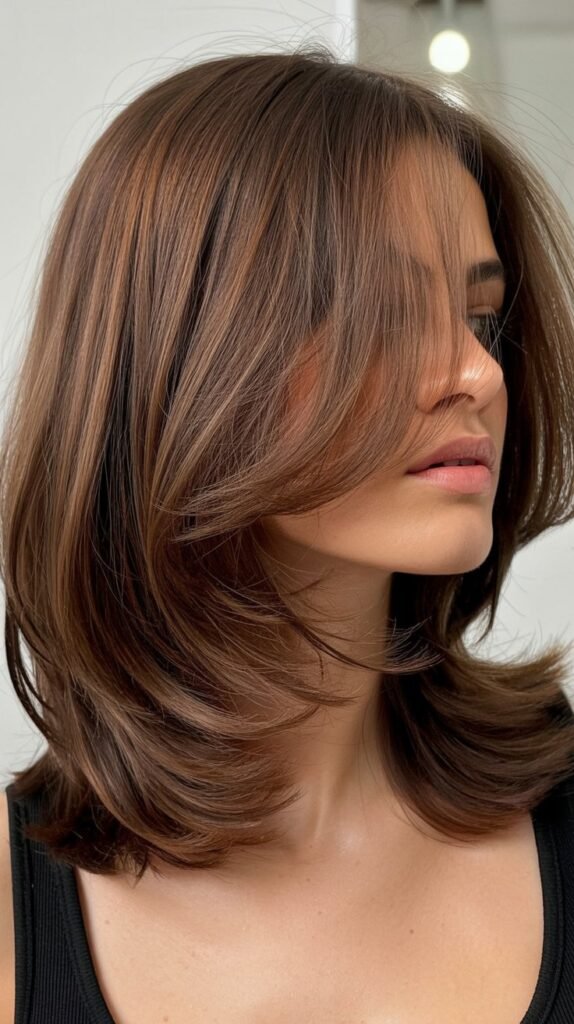
Strategic layering throughout a long bob can work wonders for fine hair when executed correctly, creating multiple levels that add body and prevent the flat, lifeless appearance that often plagues straight, thin hair.
The key is internal layering that doesn’t compromise the overall density.
Layering Strategy:
- Internal layers are cut within the hair mass rather than removing weight from the perimeter.
- The longest layer should still reach the target length (collarbone to shoulder area) to maintain fullness at the ends.
- Shorter internal layers create lift at the crown and allow hair to stack upon itself for added volume.
- The layering should be concentrated from the ears upward to avoid creating thin, wispy ends.
Volume-Boosting Techniques:
- Blow-dry with a round brush, wrapping sections around the brush and directing heat at the roots.
- Use Velcro rollers in the crown section while applying makeup to set lift and body into the style.
- Apply a root-lifting spray before drying, focusing on the areas where layers begin.
- Backcomb gently at the roots of the top layers for special occasions when extra volume is desired.
5. Side-Swept Long Bob
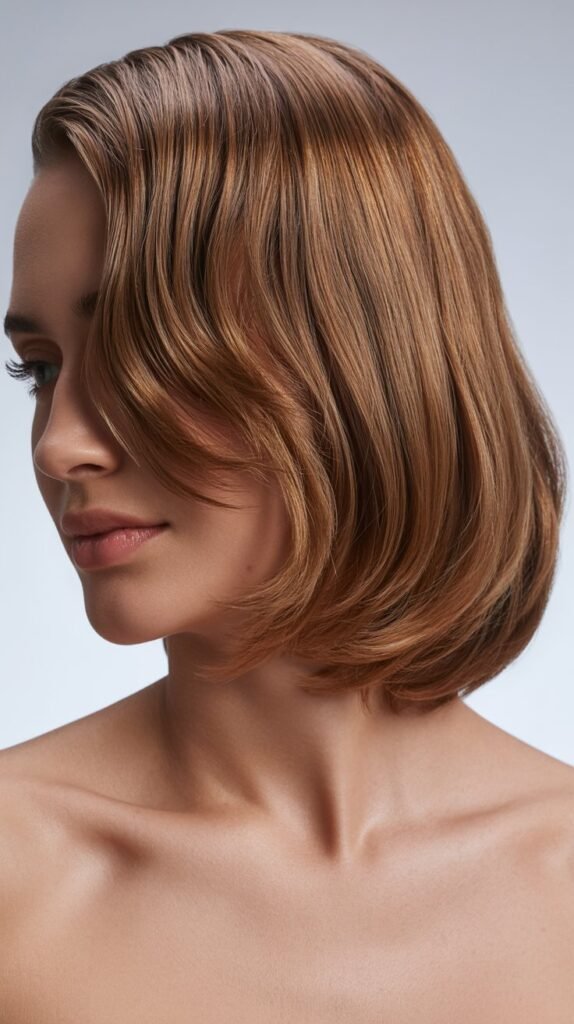
The side-swept long bob features a deep side part that creates dramatic asymmetry, instantly adding visual interest and the perception of volume to fine hair.
This styling approach works with various cut types but particularly enhances blunt or lightly layered long bobs.
Parting Techniques:
- Create the part approximately 2-3 inches from the center, aligning with the arch of the eyebrow on the heavier side.
- The deep part exposes more of the scalp on one side, but the volume of hair swooping across compensates beautifully.
- Pin the lighter side behind the ear to maintain the asymmetrical look throughout the day.
- Change the side of your part periodically to prevent the hair from developing a permanent crease.
Styling for Maximum Impact:
- Apply volumizing spray at the roots on the heavier side before blow-drying to create lift.
- Use a flat iron to create a gentle bend or wave in the hair that sweeps across the face.
- The heavier side should be styled with movement toward the face for a flattering, face-framing effect.
- Finish with a flexible hold hairspray that maintains the style without making fine hair look stiff or crunchy.
6. Long Bob with Curtain Bangs
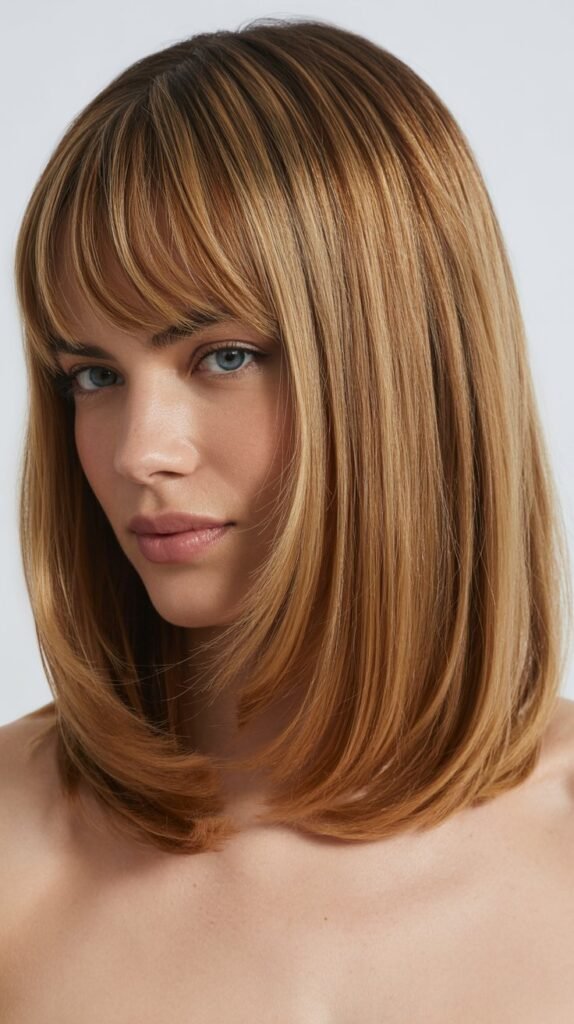
Curtain bangs paired with a long bob create a effortlessly chic combination that adds dimension and draws attention to the eyes while the lob maintains body and fullness throughout the length.
This vintage-inspired look has made a major comeback and works exceptionally well for fine hair.
Curtain Bang Characteristics:
- The bangs are parted down the middle and feathered outward to frame both sides of the face.
- They typically reach cheekbone to chin length, blending seamlessly with the rest of the lob.
- The bangs are cut with point-cutting or razor techniques to create soft, wispy texture rather than a blunt line.
- Fine hair benefits from curtain bangs as they don’t require the density that full, straight-across bangs demand.
Blending with the Long Bob:
- The bangs should gradually increase in length as they move away from the center part, creating a natural transition.
- The longest pieces of the curtain bangs typically blend into the front sections of the long bob around the chin.
- This seamless integration ensures the style looks cohesive rather than like two separate elements.
- The face-framing effect of curtain bangs draws attention forward, minimizing any thinness at the back or crown.
7. Wavy Long Bob
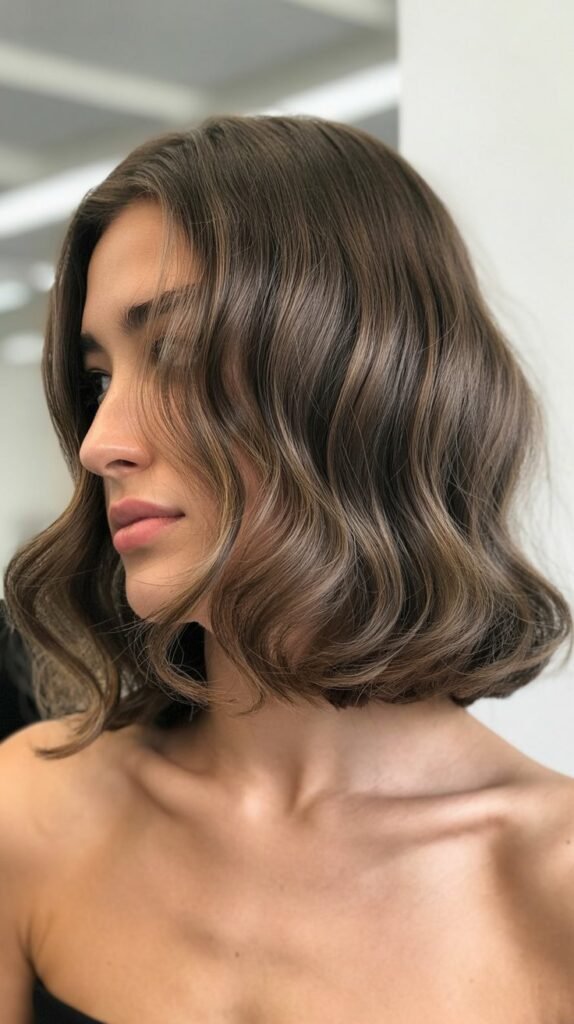
Adding waves to a long bob transforms the look from sleek and polished to relaxed and voluminous, making it an ideal styling option for fine hair that needs extra body.
The waves create the illusion of thickness by adding dimension and preventing hair from lying flat against the head.
Wave Creation Methods:
- A curling wand with a 1-inch to 1.25-inch barrel creates loose, natural-looking waves that don’t appear too tight or formal.
- Wrap sections of hair around the barrel in alternating directions for a more natural, tousled appearance.
- Flat iron waves (created by twisting the iron while pulling through the hair) offer a softer, more subtle wave pattern.
- Overnight braiding provides heat-free waves, though fine hair may need texturizing spray for the waves to hold.
Maintaining Wave Definition:
- Apply a sea salt spray or texturizing spray to damp hair before creating waves to give fine hair more grip.
- Once waves are created, resist the urge to brush them out; instead, use fingers to gently separate and shape.
- A lightweight flexible-hold hairspray preserves the waves without weighing down fine hair.
- Dry shampoo applied at the roots the next day can revive waves and add volume for extended wear.
8. Choppy Long Bob
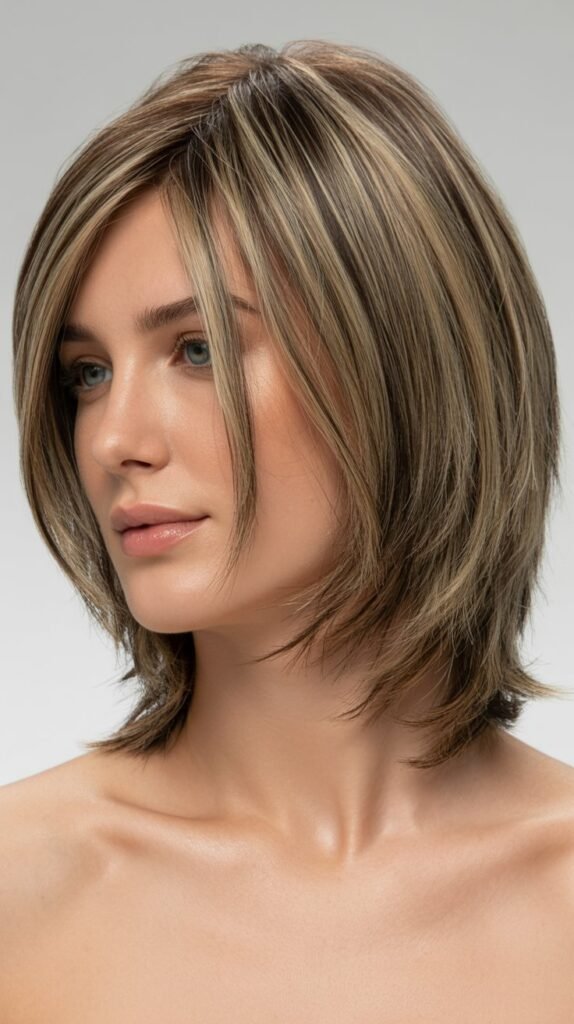
The choppy long bob features intentionally uneven, textured ends and varying lengths throughout that create an edgy, modern aesthetic while simultaneously giving fine hair the appearance of fullness through strategic irregularity.
This rebellious take on the classic lob has become a favorite among those seeking low-maintenance volume.
Cutting Technique Details:
- The stylist uses point-cutting or slide-cutting techniques to create varied lengths and remove bulk without thinning.
- Chunks of hair are cut at different lengths rather than creating a uniform line, producing a deliberately imperfect edge.
- Internal texture is added throughout the cut, not just at the ends, creating movement from roots to tips.
- The choppy effect prevents fine hair from clumping together, allowing individual pieces to move independently.
Styling the Choppy Texture:
- Apply a volumizing mousse to damp hair, scrunching it in to encourage the piece-y, separated texture.
- Air-drying works beautifully with this cut, as the choppy layers naturally fall into an attractively tousled arrangement.
- For more definition, use a flat iron to create slight bends in random directions throughout the hair.
- A matte texturizing paste applied to the ends enhances the choppy, piece-y effect and adds separation.
9. Long Bob with Balayage Highlights
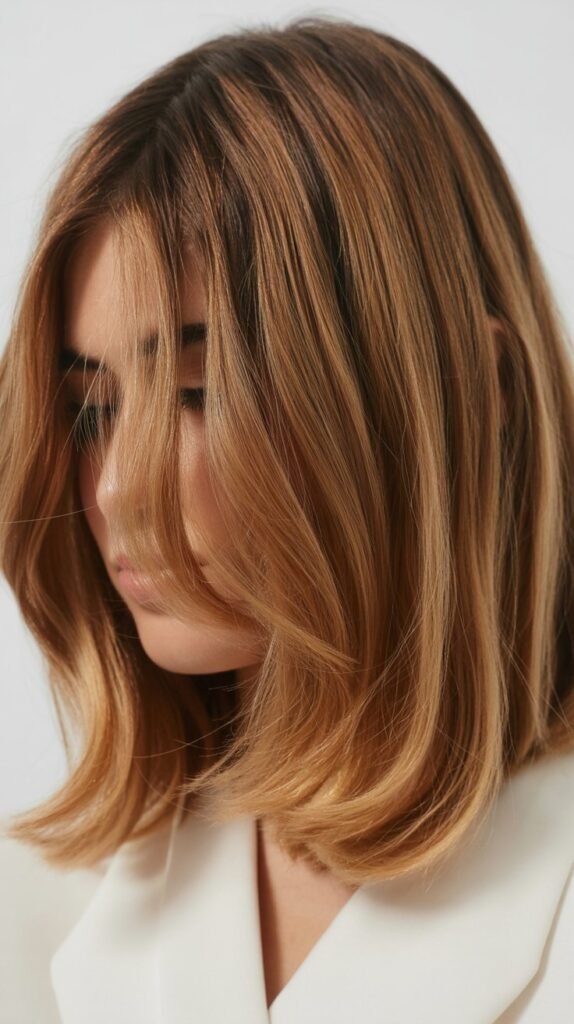
Balayage highlights painted throughout a long bob create multi-dimensional color that gives fine hair the illusion of depth and volume, as the interplay of light and dark tones tricks the eye into perceiving more thickness than actually exists.
Color Placement Strategy:
- Lighter pieces are concentrated around the face and on the top layers where they’ll be most visible and create brightness.
- The highlights are hand-painted in irregular patterns rather than traditional foil placement for a natural, sun-kissed effect.
- Finer, more delicate highlight pieces work better for fine hair than chunky, contrasting streaks that can emphasize thinness.
- The root area is left darker, creating depth that makes the crown appear fuller when compared to the lighter ends.
Color Maintenance:
- Balayage is lower maintenance than traditional highlights as the grown-out roots blend naturally with the base color.
- Purple-toning shampoos used weekly prevent blonde highlights from becoming brassy and maintain the dimensional effect.
- Refresh appointments every 3-4 months keep the highlights looking fresh without constant upkeep.
- The color dimension works synergistically with the cut to maximize the volume illusion in fine hair.
10. Asymmetrical Long Bob
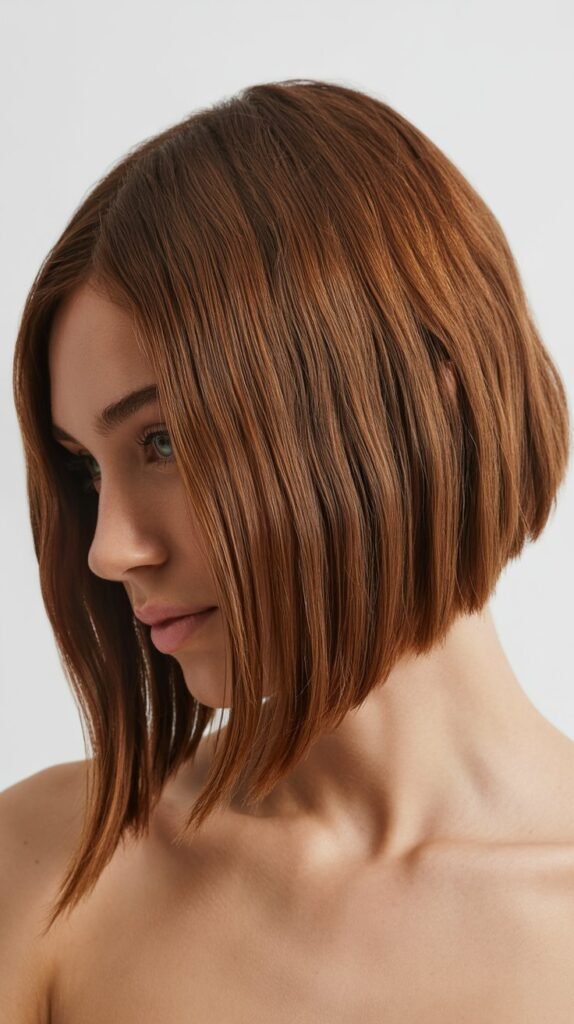
The asymmetrical long bob features one side intentionally cut longer than the other, creating a bold, contemporary statement that adds visual interest and volume through its unconventional proportions.
This daring variation challenges traditional symmetry while flattering fine hair beautifully.
Design Specifications:
- One side is typically cut 1-3 inches shorter than the other, though more dramatic differences are possible for bold personalities.
- The longer side can be swept forward to showcase the dramatic length difference and create face-framing volume.
- The shorter side often sits at or above chin length, while the longer side extends to the collarbone or beyond.
- This cut creates automatic volume as the asymmetry prevents hair from lying flat and uniform against the head.
Styling Versatility:
- The longer side can be worn forward for maximum impact or tucked behind the ear for a softer look.
- The shorter side naturally creates lift and body as the reduced length decreases weight.
- This style works equally well straight and sleek or with waves and texture for different occasions.
- The asymmetry draws attention and creates such visual interest that any thinness in the hair becomes a non-issue.
11. Long Bob with Micro Bangs
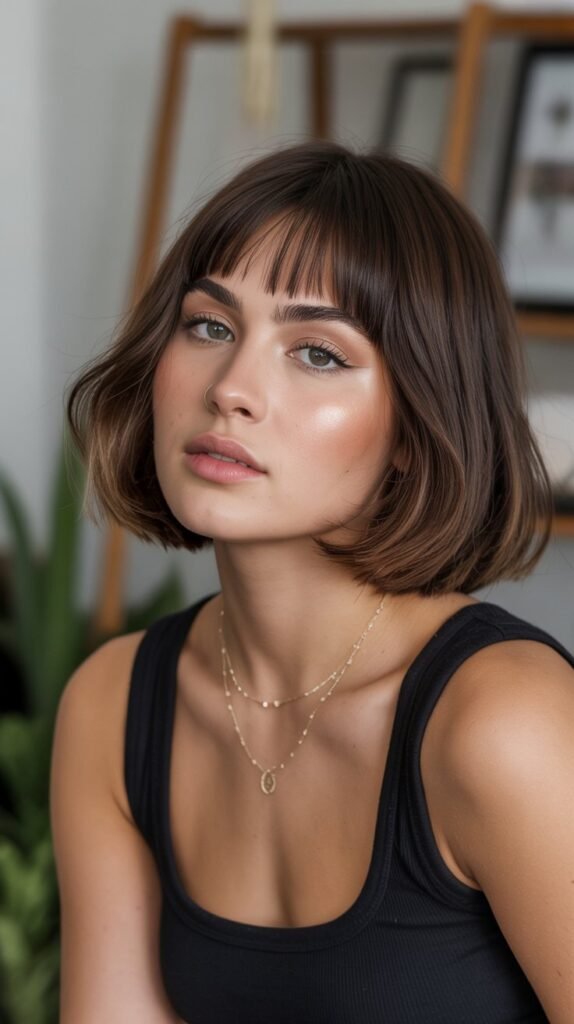
Combining a long bob with ultra-short micro bangs creates a high-fashion, editorial look that makes a powerful statement while the contrast between the short fringe and longer length draws attention away from any concerns about fine hair’s density.
Micro Bang Characteristics:
- The bangs are cut significantly shorter than traditional bangs, typically ending at mid-forehead or higher.
- They create a stark horizontal line across the forehead that becomes a focal point of the entire style.
- Fine hair actually works well for micro bangs as they don’t require much density to look intentional and striking.
- The short length means they require frequent trims every 2-3 weeks to maintain the precise micro length.
Balancing the Proportions:
- The dramatic shortness of the micro bangs creates such visual interest that the fine texture of the remaining hair becomes secondary.
- The long bob length should be kept relatively simple and sleek to let the micro bangs remain the statement element.
- This combination works best on those with oval or heart-shaped faces, as the short bangs can shorten round or long faces.
- Confidence is essential when wearing this bold style, as it definitely attracts attention and comments.
12. Graduated Long Bob
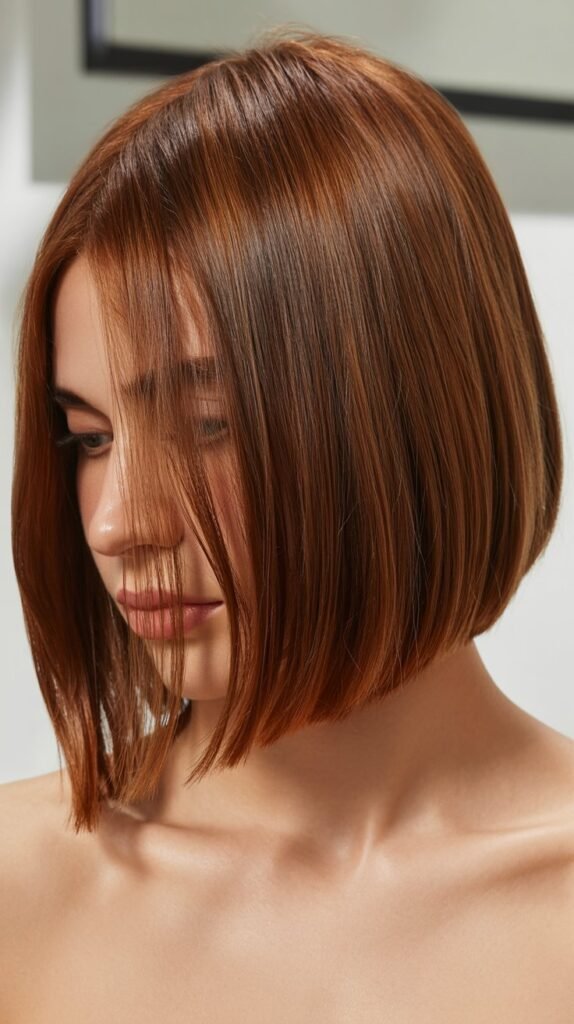
The graduated long bob features layers that are stacked in the back, creating volume and lift at the crown while the front remains longer and sleeker.
This architectural cut combines the best aspects of both short and long styles, offering fine hair maximum fullness where it’s needed most.
Structural Elements:
- The back is cut in graduated layers that stack upon one another, creating a rounded, voluminous shape at the occipital bone.
- The layers become progressively longer as they move toward the front, eliminating any abrupt transitions.
- The sides typically fall in a smooth, swooping line from the stacked back to the longer front sections.
- This structure naturally lifts fine hair at the crown, eliminating the flat, lifeless appearance that often occurs in that area.
Styling the Graduated Shape:
- The back requires blow-drying with a round brush to emphasize the curved, stacked shape and prevent it from lying flat.
- The front sections can be styled straight and sleek or with a slight bend for a softer appearance.
- This cut maintains its shape extremely well between salon visits, making it ideal for busy lifestyles.
- The graduated back creates so much natural volume that minimal styling products are needed, preventing product buildup that weighs down fine hair.
13. Long Bob with Root Shadow
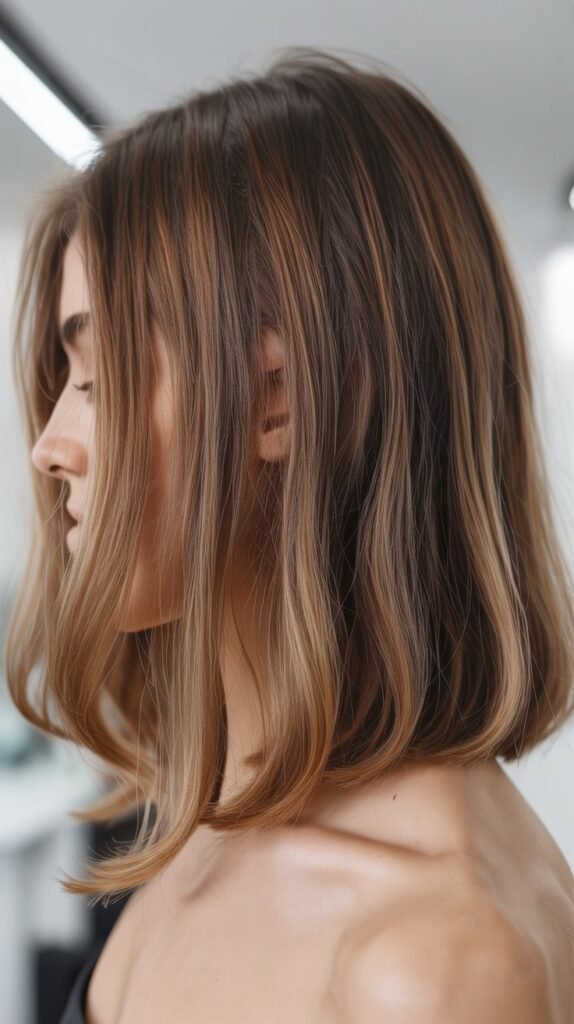
A long bob enhanced with root shadow technique features darker roots that gradually transition to lighter ends, creating dimension that makes fine hair appear fuller while also extending the time between color appointments for a practical, low-maintenance approach.
Root Shadow Benefits:
- The darker root area creates depth and makes the scalp less visible, which is particularly beneficial for fine hair where the scalp can sometimes show through.
- The gradient from dark to light creates visual dimension that tricks the eye into perceiving more texture and volume.
- This color technique requires less frequent salon visits than all-over color or traditional highlights, as regrowth blends naturally.
- The darker roots provide a visual anchor that makes the lighter ends appear even more voluminous by comparison.
Application Technique:
- The colorist applies darker color to approximately 1-3 inches of the root area, then blends it seamlessly into the lighter mid-lengths and ends.
- The shadow should be only 1-2 shades darker than the mid-length color for the most natural appearance.
- This technique works with any base color, from warm browns with caramel ends to cool ash bases with platinum tips.
- The blended shadow creates a soft, lived-in look rather than harsh lines of demarcation between colors.
14. Sleek and Straight Long Bob
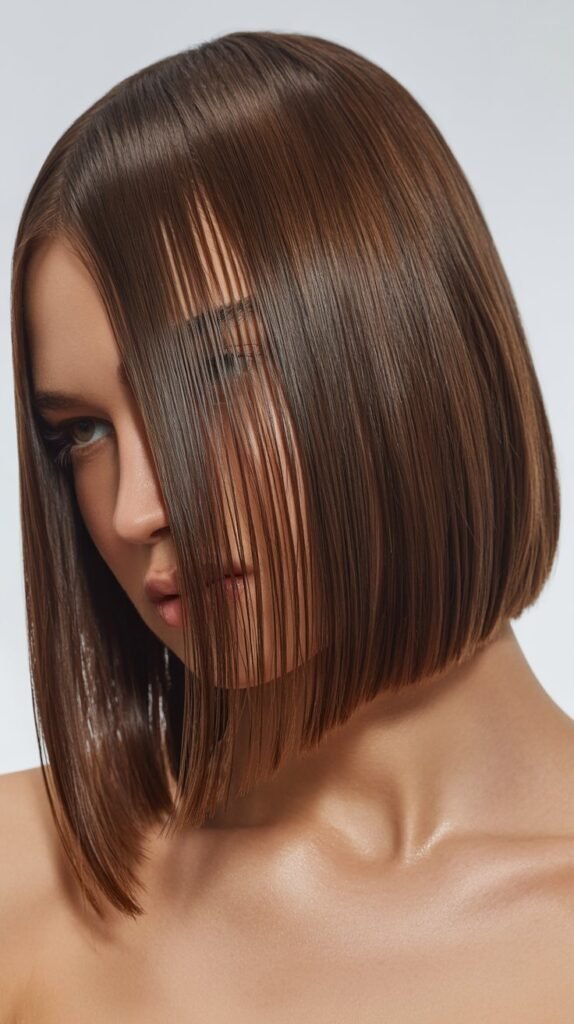
The sleek and straight long bob embraces minimalism and sophistication, relying on impeccable cut precision and glossy smoothness to make fine hair appear healthy, intentional, and surprisingly full when properly executed and maintained.
Achieving the Sleek Look:
- A high-quality flat iron with ceramic or titanium plates is essential for creating the ultra-smooth finish without excessive heat damage.
- Apply a heat protectant spray to every section before flat ironing to prevent damage and seal the cuticle for maximum shine.
- Work in small sections (no wider than the flat iron plates) and move the iron slowly through the hair for even heat distribution.
- A lightweight shine serum applied sparingly to the ends after styling amplifies the glossy, healthy appearance.
Maintaining the Style:
- This look requires daily or every-other-day washing and styling to maintain the sleek appearance, as any texture or wave compromises the look.
- Sleeping on a silk or satin pillowcase helps preserve the straight style overnight and reduces friction that causes frizz.
- Touch-ups with the flat iron on the top layers in the morning can refresh the look without completely restyling.
- While this is a higher maintenance style, the sleek simplicity makes fine hair appear intentionally minimalist rather than accidentally thin.
15. Long Bob with Face-Framing Layers
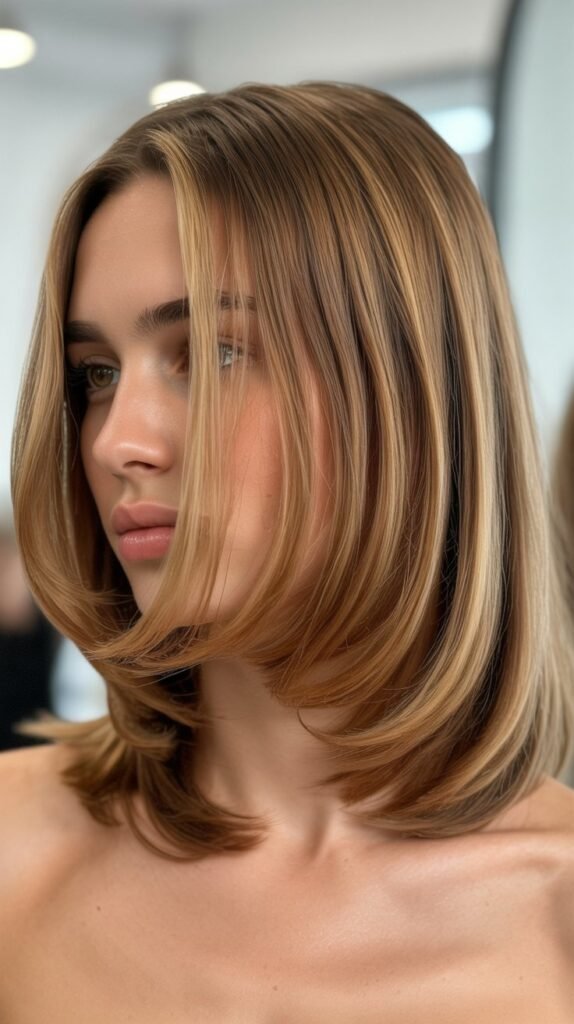
Face-framing layers cut into a long bob create a soft, flattering halo around the face that adds movement and dimension while the bulk of the hair maintains its length and fullness at the ends, making this an ideal choice for fine hair that needs strategic rather than excessive layering.
Layer Placement Strategy:
- The shortest layers typically begin at the cheekbone or chin level, depending on face shape and desired effect.
- These layers are cut only in the front sections, leaving the back and sides at the full length to preserve density.
- The layers gradually lengthen as they extend backward, creating a seamless blend rather than a choppy, disconnected appearance.
- Fine hair benefits from this selective layering approach as it adds movement where it’s most visible without removing too much overall weight.
Customization for Face Shapes:
- Round faces benefit from layers that start at chin level or below to elongate the face shape vertically.
- Square faces are softened by layers that begin at the cheekbone and create curved movement around the angular jawline.
- Long faces look more balanced with shorter face-framing layers that add width and draw the eye horizontally.
- Oval faces can experiment with various layer lengths as this balanced face shape suits almost any variation.
16. Shaggy Long Bob
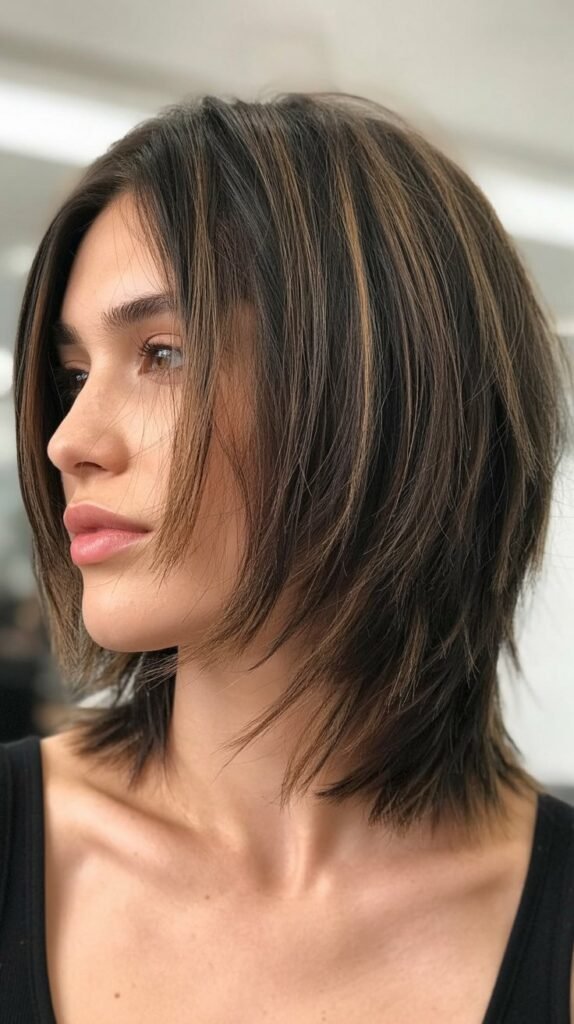
The shaggy long bob combines choppy layers, textured ends, and deliberate messiness to create a rock-
and-roll aesthetic that paradoxically makes fine hair appear fuller through its intentionally disheveled appearance and piece-y separation.
Shag Characteristics:
- Multiple layers are cut throughout the entire head, not just at specific points, creating an all-over textured effect.
- The layers are combined with point-cutting or razor techniques to create feathered, irregular ends rather than blunt lines.
- The overall effect should look effortlessly undone rather than overly styled or polished.
- Fine hair actually excels in shaggy cuts as the lighter weight allows the layers to move and separate easily without requiring product to create piece-y texture.
Styling for the Shaggy Effect:
- Apply a volumizing mousse to damp hair, then scrunch and tousle while blow-drying with a diffuser or with your hands.
- Rough-dry the hair without brushing to encourage natural texture and separation between the layers.
- Use a texturizing spray or dry shampoo to enhance the piece-y, lived-in appearance and add grit to fine hair.
- The goal is to look like you rolled out of bed with effortlessly cool hair, though achieving this “undone” look often requires deliberate styling.
17. Long Bob with Hidden Undercut
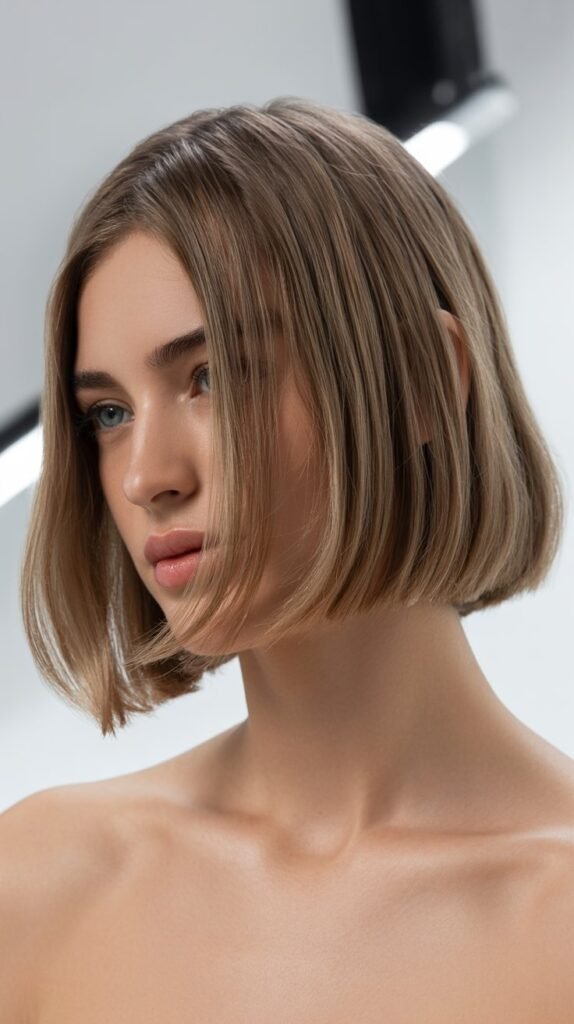
A long bob with a hidden undercut features shaved or very short hair underneath the longer top layers,
creating a secret edgy element that reduces bulk and helps fine hair on top appear fuller by comparison while offering styling versatility and relief from heat in warmer months.
Undercut Placement Options:
- The nape undercut removes hair from the back of the neck up to the occipital bone, hidden when hair is worn down but visible in updos.
- Side undercuts can be created on one or both sides, typically from the temple to behind the ear.
- The transition between the undercut and longer hair should be blended to avoid a harsh line when the hair moves.
- For fine hair, the undercut paradoxically creates the illusion of more volume on top as the remaining hair has less weight pulling it down.
Maintenance Considerations:
- Undercuts require maintenance every 3-4 weeks to keep the shaved section short and prevent awkward growing-out phases.
- The hidden nature means you can grow it out relatively discreetly if you decide you no longer want it.
- This style offers temperature regulation benefits, keeping the neck cooler in summer while the longer top hair still provides coverage in winter.
- Styling products work more effectively on the remaining hair as there’s less total hair to weigh down.
18. Long Bob with Soft Curls
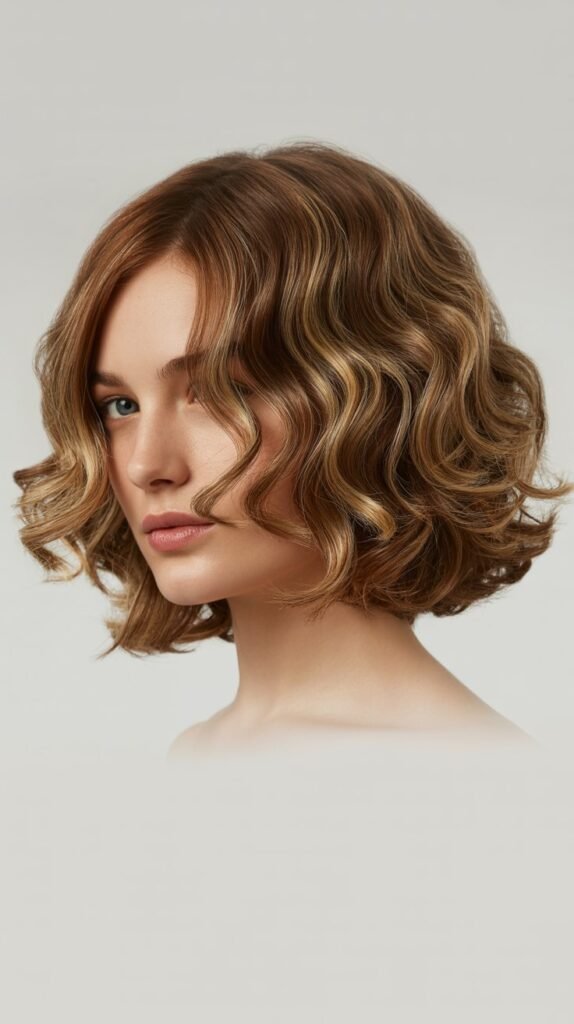
Soft curls added to a long bob create romantic, voluminous styling that transforms fine, straight hair into bouncy,
full-bodied locks that maintain their movement throughout the day when properly set and secured with the right products.
Creating Soft Curls:
- Use a 1.25-inch to 1.5-inch curling iron or wand to create curls that are loose enough to look natural rather than tight and springy.
- Curl in vertical sections, wrapping hair around the barrel away from the face for the most flattering direction.
- Allow curls to cool completely in your hand before releasing them, as this sets the curl pattern more firmly.
- For fine hair, prep with a volumizing spray and heat protectant to give the hair enough texture to hold the curls longer.
Setting the Curls:
- After curling all sections, avoid touching the hair for 5-10 minutes while the curls cool completely and set.
- Gently shake the hair at the roots to loosen the curls into soft, natural-looking waves rather than defined ringlets.
- Apply a light, flexible-hold hairspray while scrunching the curls upward to lock in the pattern without creating stiffness.
- For fine hair, less product is more—too much will weigh down the curls and cause them to fall flat quickly.
19. Long Bob with Babylights
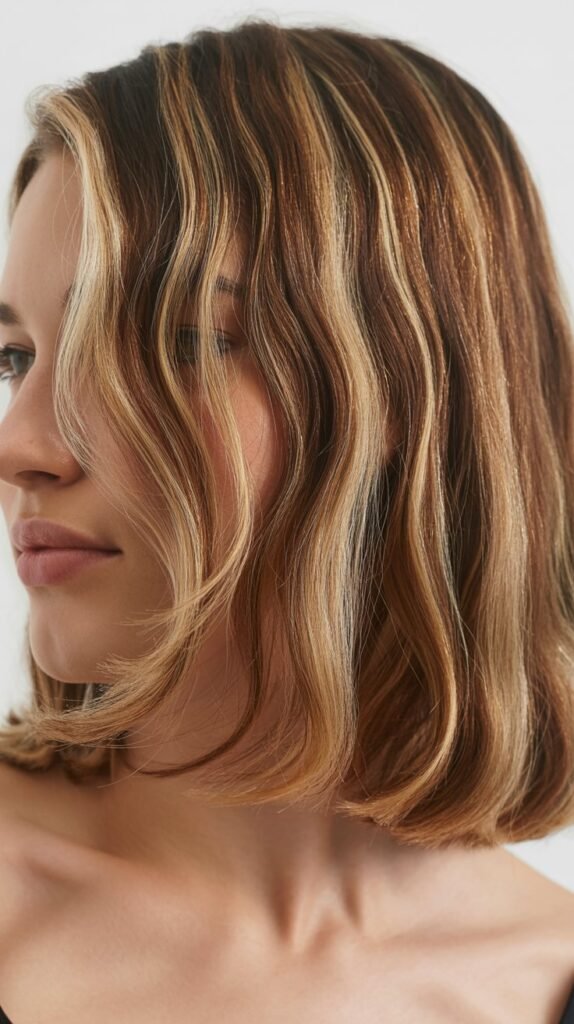
Babylights are ultra-fine, delicate highlights that mimic the natural, sun-kissed dimension seen in children’s hair, and when applied throughout a long bob,
they create subtle multi-dimensionality that makes fine hair appear fuller without the harsh contrast of traditional highlights.
Babylight Application:
- The colorist uses very thin sections of hair—much finer than traditional highlights—creating dozens of delicate lightened pieces.
- These micro-highlights are painted or placed in foils throughout the hair, with concentration on the top layers and around the face.
- The lightened pieces should be only 1-2 shades lighter than the base color for the most natural, subtle effect.
- The overall result creates softness and dimension without obvious streaks or chunks of color that can sometimes emphasize thinness in fine hair.
Advantages for Fine Hair:
- The subtle, numerous highlights create texture that tricks the eye into perceiving more density and volume.
- The delicate nature of babylights means there’s no harsh regrowth line as the highlights grow out naturally.
- The multi-tonal effect adds complexity to fine hair that might otherwise appear one-dimensional or flat.
- Maintenance appointments can be spaced 3-4 months apart as the soft, blended nature means regrowth is virtually invisible.
20. Long Bob with Deep Side Part
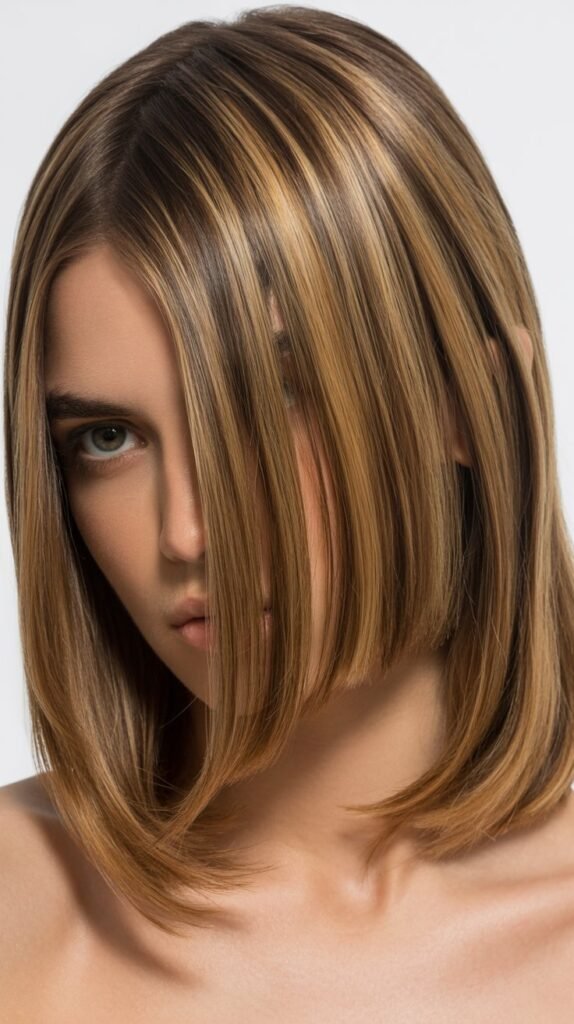
A long bob styled with a deep side part creates instant drama and volume by exposing more scalp on one side while the heavy sweep of hair on the other side creates fullness and movement that transforms fine hair from flat to fabulous with minimal effort.
Creating the Perfect Deep Part:
- Part the hair approximately 2-3 inches from the center, aligning the part with the arch of the eyebrow on the heavier side.
- Use a fine-tooth comb to create a clean, straight part line for a polished appearance.
- Apply volumizing product at the roots on both sides before blow-drying to prevent the hair from lying flat.
- The deep part should feel slightly uncomfortable at first if you typically wear a center or regular side part, but this discomfort fades quickly.
Maximizing Volume:
- Blow-dry the hair on the heavier side in the opposite direction from where it will ultimately lie, then flip it over for maximum root lift.
- Use a round brush at the roots on the heavier side to create lift and prevent the weight from pulling the hair flat.
- The lighter side can be tucked behind the ear or allowed to fall naturally forward, depending on your preference and face shape.
- Set the style with a flexible-hold hairspray, spraying more at the roots to maintain the lifted effect throughout the day.
21. Long Bob with Piecey Ends
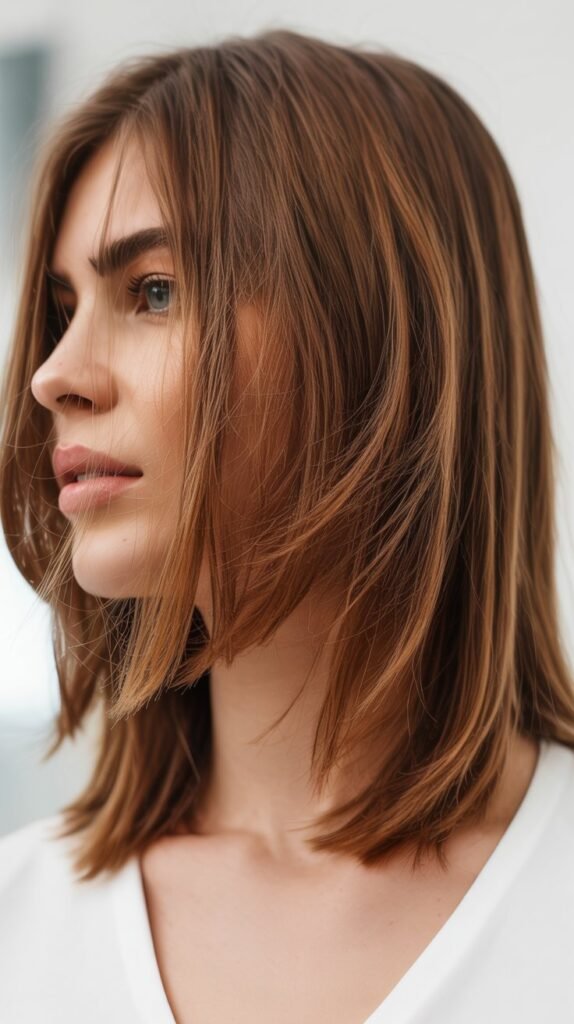
A long bob with piecey ends features intentionally separated, textured tips that create an edgy, modern aesthetic while preventing fine hair from clumping together and appearing thin or stringy at the bottom.
Creating Piecey Texture:
- The stylist uses point-cutting, slide-cutting, or razor techniques to create uneven, textured ends rather than a blunt line.
- The individual pieces should vary slightly in length and thickness to create natural-looking separation.
- Fine hair naturally wants to separate into pieces, so this cut works with rather than against the hair’s natural tendencies.
- The piecey effect is most visible on the bottom 2-3 inches of hair where the texture becomes most pronounced.
Styling Products for Definition:
- A texturizing paste or pomade applied to the ends enhances the piece-y separation and adds definition.
- Use a small amount of product (about a pea-sized amount) and work it between your palms before applying to avoid using too much.
- Apply by pinching individual pieces between your fingers and pulling downward to emphasize the separated, textured effect.
- Matte-finish products work better than shiny ones for this look, as they create a more natural, lived-in appearance rather than a slicked, overly-styled effect.
22. Long Bob with Feathered Layers
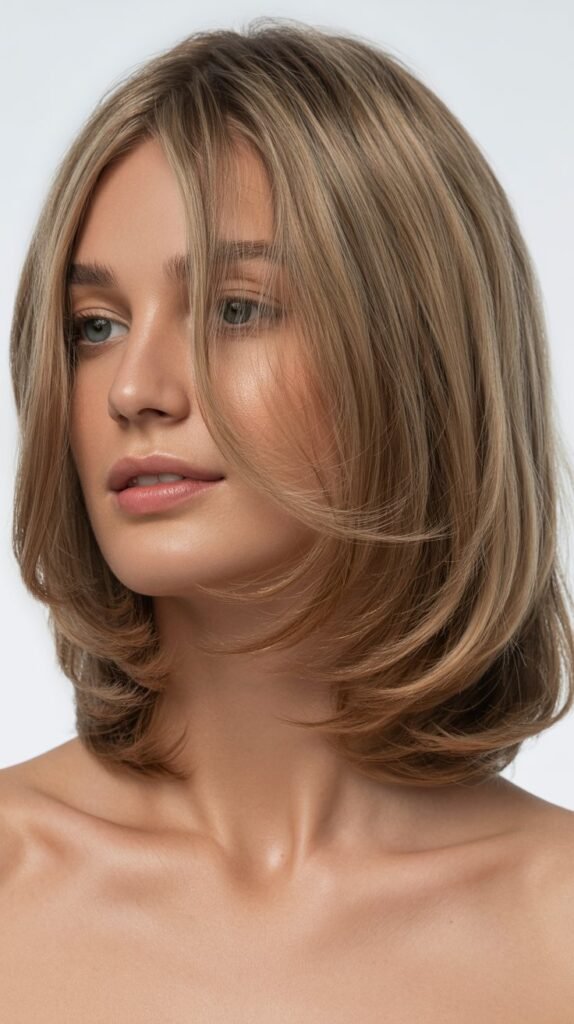
Feathered layers throughout a long bob create soft, flowing movement reminiscent of 1970s styling, but when updated with modern cutting techniques,
this approach adds volume and dimension that fine hair desperately needs while maintaining a contemporary, wearable aesthetic.
Feathering Technique:
- The stylist uses a razor or point-cutting scissors to create soft, wispy layers that taper gradually rather than creating blunt edges.
- The layers are cut at an angle so the hair feathers away from the face when styled, creating lift and movement.
- Feathering removes minimal bulk while maximizing movement, making it ideal for fine hair that can’t afford to lose density.
- The layers should blend seamlessly into each other without any obvious demarcation lines or chunky sections.
Blow-Drying for Feathered Effect:
- Use a round brush and blow-dryer to direct the layers back and away from the face as you dry.
- The brush should roll under or over (depending on desired direction) to create the soft, feathered flip at the ends.
- Concentrate on the perimeter layers that frame the face, as these are where the feathering will be most visible.
- The feathered styling creates so much movement that fine hair appears to have more body and life than it actually possesses.
23. Long Bob with Dimensional Lowlights
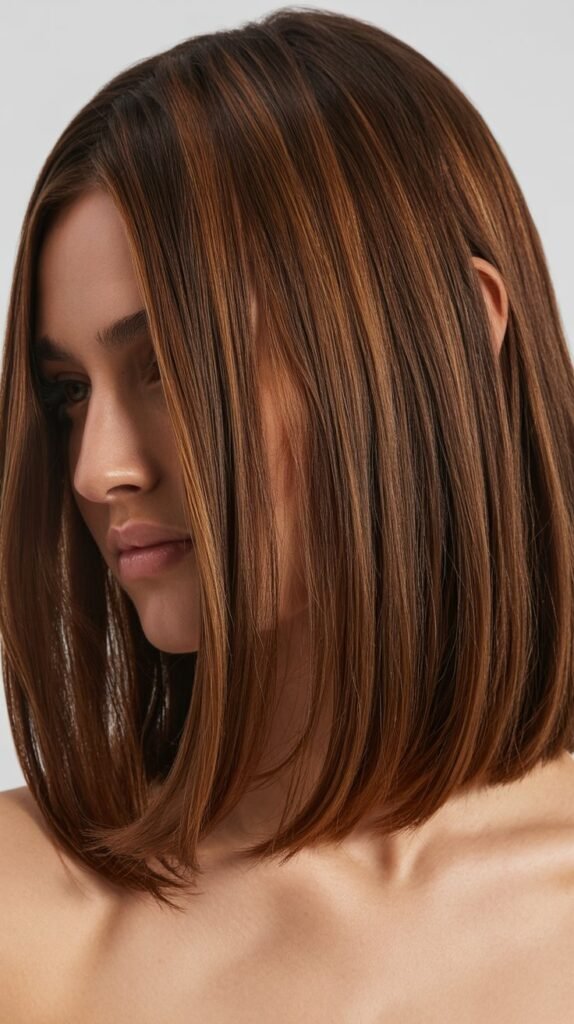
While highlights lighten and brighten, lowlights add depth by incorporating darker tones throughout a long bob, creating a multi-dimensional color palette that makes fine hair appear thicker by establishing shadows and depth that suggest texture and fullness.
Lowlight Strategy:
- Lowlights should be 1-2 shades darker than the base color to create subtle depth without harsh contrast.
- They’re typically placed in the underlayers and around the face’s perimeter to create shadow and dimension.
- The combination of natural base color, lowlights, and possibly highlights creates a tri-tonal effect that maximizes dimension.
- For fine hair, the darker tones recede visually while lighter tones advance, creating the illusion of multiple layers and greater density.
Color Placement for Maximum Effect:
- Concentrating lowlights underneath lighter top layers creates the appearance of shadow and depth beneath the more visible hair.
- Face-framing lowlights can contour the face while adding dimension to the overall style.
- The colorist should use a irregular, randomized pattern rather than uniform placement to mimic natural hair color variation.
- Lowlights require less maintenance than highlights as regrowth blends naturally and dark roots are expected rather than problematic.
24. Long Bob with Balayage Ombre
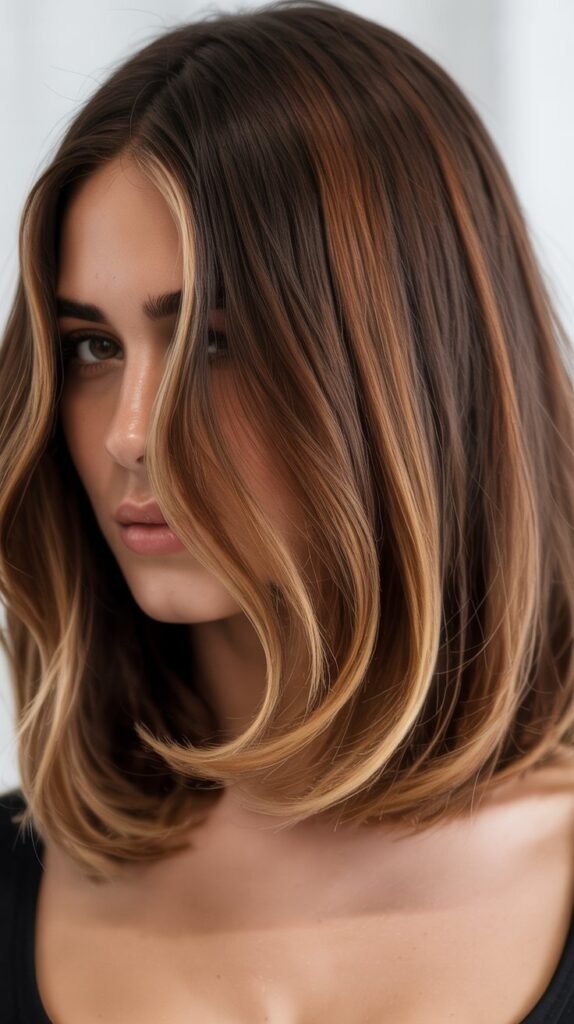
Combining balayage and ombre techniques in a long bob creates a gradual color transition from darker roots to lighter ends with the hand-painted irregularity of balayage, resulting in a dimensional, low-
maintenance color that makes fine hair appear fuller through strategic light and shadow placement.
Combined Technique Benefits:
- The ombre provides the overall color gradient from dark to light, creating depth at the roots where fine hair often shows the scalp.
- Balayage adds irregular, hand-painted highlights throughout the transition zone for a more natural, less uniform appearance.
- The darker roots create the illusion of shadow and depth, making the crown area appear fuller.
- The lighter ends catch light and appear more voluminous by comparison, creating overall balance.
Color Transition Planning:
- The transition from dark to light should begin around ear level or slightly below, allowing the roots and mid-lengths to remain dark for maximum depth.
- The balayage pieces should be concentrated more heavily as the hair approaches the ends, creating a natural sun-kissed gradient.
- The lightest color at the ends should be no more than 3-4 shades lighter than the base to maintain a cohesive, natural appearance.
- Fine hair benefits from this technique as the color complexity distracts from any concerns about density or thickness.
Maintenance Schedule:
- This color combination is extremely low-maintenance, requiring touch-ups only every 4-6 months as the grown-out roots are intentional.
- Toning appointments every 6-8 weeks keep the lighter ends from becoming brassy without requiring full color reapplication.
- Purple or blue shampoos used weekly at home extend the life of the cool tones in the lighter sections.
- The gradual nature of the color means there’s never an awkward grow-out phase where roots look unintentional.
25. Inverted Long Bob
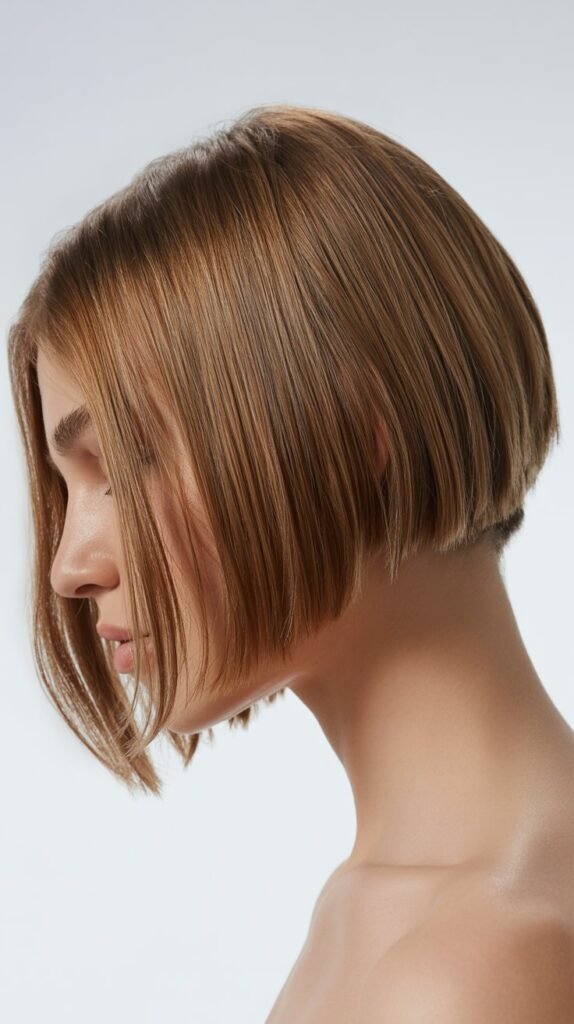
The inverted long bob features hair that is longer in the front and dramatically shorter in the back, creating an extreme angle that’s even more pronounced than the standard A-line lob.
This bold geometric cut adds instant volume to fine hair through its architectural structure and strategic weight distribution.
Structural Design:
- The back is cut quite short, often at or above the nape of the neck, creating significant lift and body in that area.
- The front sections extend to collarbone length or beyond, creating a dramatic diagonal line when viewed from the side.
- The difference between shortest and longest points can be 4-6 inches or more, depending on desired drama level.
- The stacked, graduated layers in the back create automatic volume that fine hair needs without requiring extensive styling.
Who Should Consider This Cut:
- Those seeking a dramatic, high-impact style that makes a bold statement will love this cut.
- Women with fine hair who struggle with flat crowns benefit tremendously from the natural lift the back creates.
- The inverted bob works best on those comfortable with significant back-of-head maintenance and regular trims.
- This style requires confidence as the extreme angle and short back definitely attract attention and comments.
26. Long Bob with Lived-In Texture
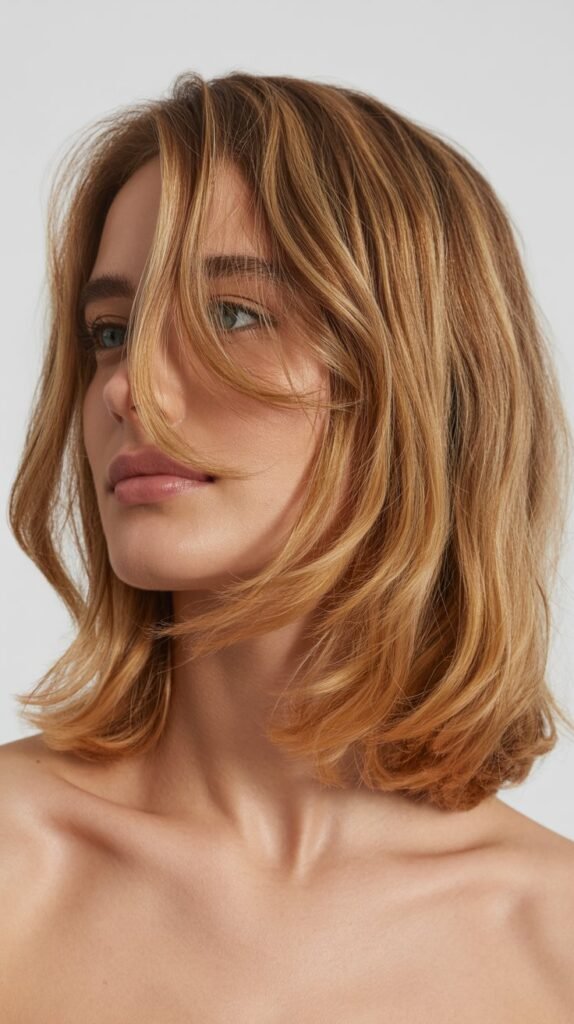
The lived-in texture long bob embraces an undone, effortless aesthetic that looks like you woke up with perfect hair,
though achieving this deliberately casual appearance requires specific cutting and styling techniques that work particularly well with fine hair’s natural tendencies.
Achieving the Lived-In Look:
- The cut incorporates soft, blended layers and textured ends that create natural movement without appearing freshly styled.
- Point-cutting and razor techniques remove weight while creating organic texture that mimics hair that’s been worn and tousled throughout the day.
- The color often includes subtle dimension through balayage or babylights that add depth without obvious highlight placement.
- Fine hair naturally falls into this effortless aesthetic more easily than thick hair, which can appear too heavy for the lived-in effect.
Styling for Effortless Appearance:
- Apply a texturizing spray to damp hair, then allow it to air-dry or rough-dry with your hands rather than using brushes.
- Avoid creating perfect, uniform curls or waves; instead, add bends and texture in random directions using a curling wand or flat iron.
- The goal is imperfection—hair that looks like it naturally falls into attractive, tousled waves rather than being deliberately styled.
- Dry shampoo and texturizing products are your best friends, adding grit and separation that enhance the lived-in aesthetic while giving fine hair more grip and body.
27. Long Bob with V-Cut Layers
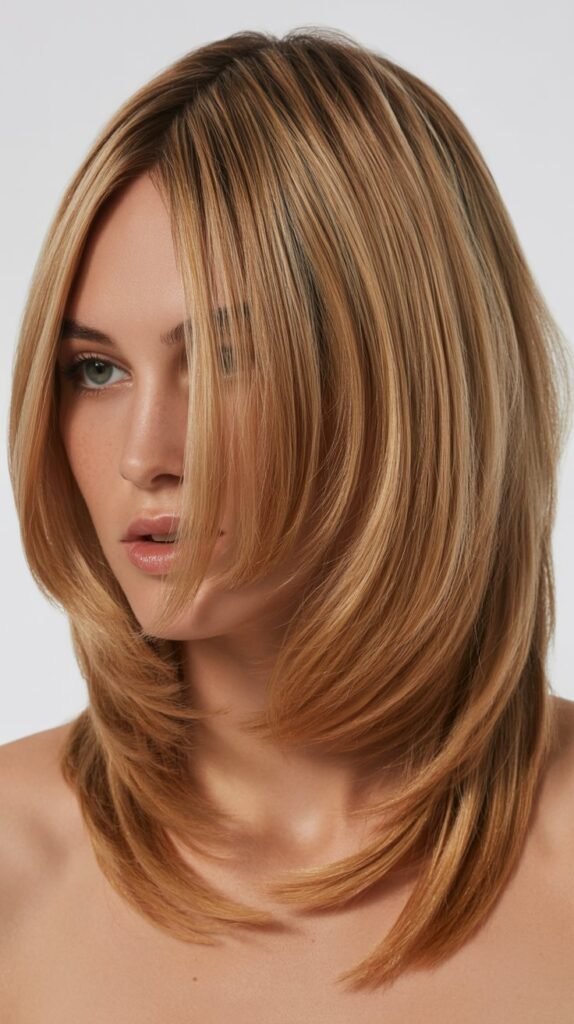
The V-cut long bob features layers that create a V-shape when viewed from behind, with the shortest point at the center back and gradually lengthening pieces extending toward the front.
This creates a flattering, face-framing effect while adding movement and dimension that benefits fine hair tremendously.
V-Cut Characteristics:
- When the hair is viewed from behind, the perimeter forms a clear V-shape with the point at the center back.
- The V can be subtle (with only an inch or two difference between center and sides) or dramatic (with 3-4 inches difference).
- This cut naturally directs the eye downward and inward, creating a slimming effect for the face and neck.
- Fine hair benefits as the layering creates movement throughout while maintaining length and density at the perimeter.
Layering Integration:
- Internal layers are often added throughout the cut to enhance movement and prevent the hair from lying flat at the crown.
- The layers should follow the V-shape, with shorter layers at the back center gradually lengthening toward the front.
- Face-framing pieces can be incorporated that blend with the V-cut structure for maximum flattering effect.
- The graduated length creates natural body and bounce that fine, unlayered hair often lacks.
Styling Versatility:
- When worn straight, the V-cut creates a sleek, polished appearance with clear geometric lines.
- Waves or curls enhance the V-shape and create even more dimension and movement throughout the style.
- Updos and ponytails showcase the V-cut beautifully, with wispy pieces framing the face when hair is pulled back.
- The V-cut works with all hair textures but particularly enhances fine hair by creating the illusion of fuller, more abundant ends.
Comparison Table: Long Bob Styles for Fine Hair
Conclusion
Finding the perfect hairstyle for fine hair can transform not just your appearance but your entire confidence level, and these 27 Stylish Long Bob Haircuts for Fine Hair offer solutions for every personality,
lifestyle, and aesthetic preference. From the classic blunt cut that maximizes density to the edgy asymmetrical style that creates drama through unconventional proportions, each variation has been specifically chosen for its ability to enhance fine hair’s natural beauty while creating the illusion of fullness and volume.
The long bob remains one of the most versatile and flattering cuts available, offering the perfect balance between short hair’s manageability and long hair’s styling versatility.
Whether you prefer the sleek sophistication of a straight lob, the romantic fullness of soft curls, or the edgy appeal of choppy layers, there’s a long bob variation that will make your fine hair look its absolute best.
Remember that the key to success with any of these styles lies in finding an experienced stylist who understands how to cut and color fine hair, maintaining regular trims to keep the shape fresh, and using the right products that add volume without weighing down your delicate strands.
With the right cut, color, and care routine, your fine hair can look every bit as full, healthy, and gorgeous as you’ve always dreamed it could be.Retry