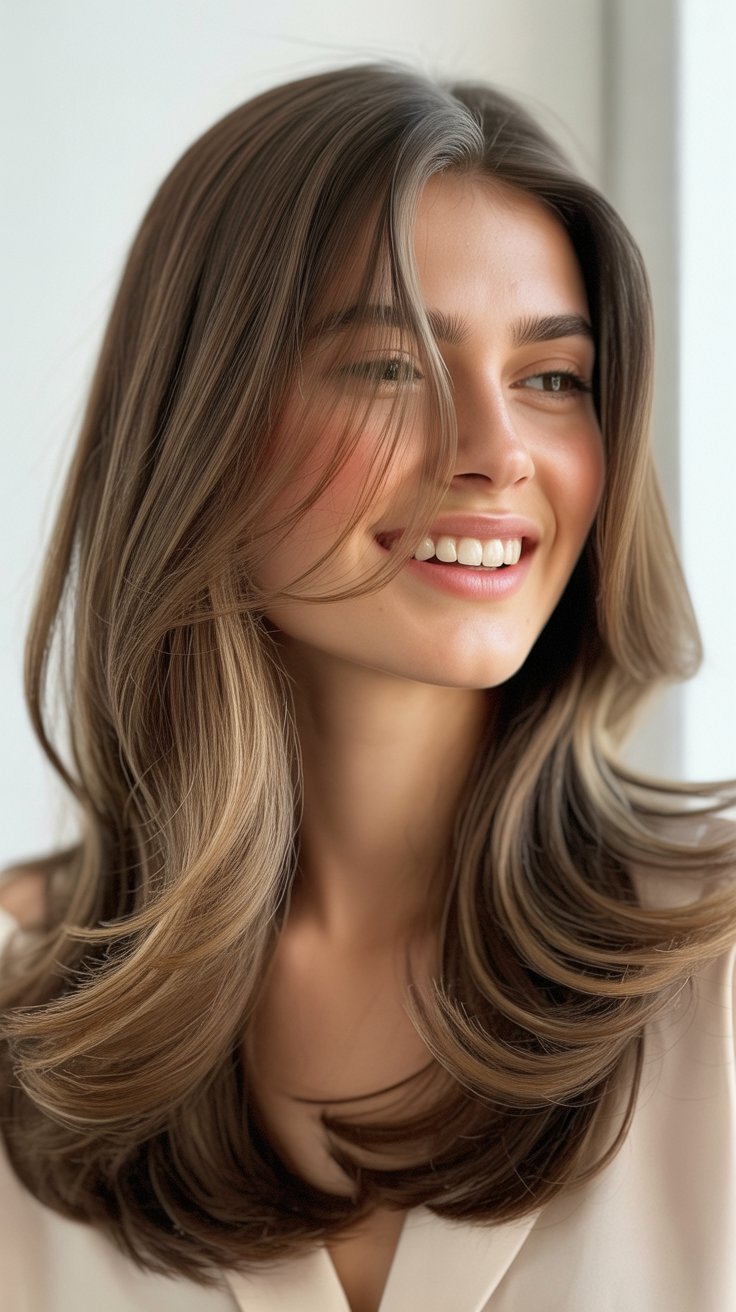
If you’re ready to breathe new life into your long locks, you’ve come to the right place.
Long hair offers endless styling possibilities, but nothing transforms your look quite like the right layered cut.
Whether you’re seeking volume, movement, or a complete style overhaul, the 30 Best Long Layered Cuts and Hairstyles for Long Hair to Refresh Your Look will guide you through the most flattering options for every face shape, hair texture, and personal style.
From subtle face-framing layers to dramatic cascading cuts, these hairstyles combine timeless elegance with modern trends.
Get ready to discover cutting techniques, styling tips, and maintenance advice that will help you achieve salon-worthy results and fall in love with your hair all over again.
1. Classic Long Layers with Face-Framing Pieces
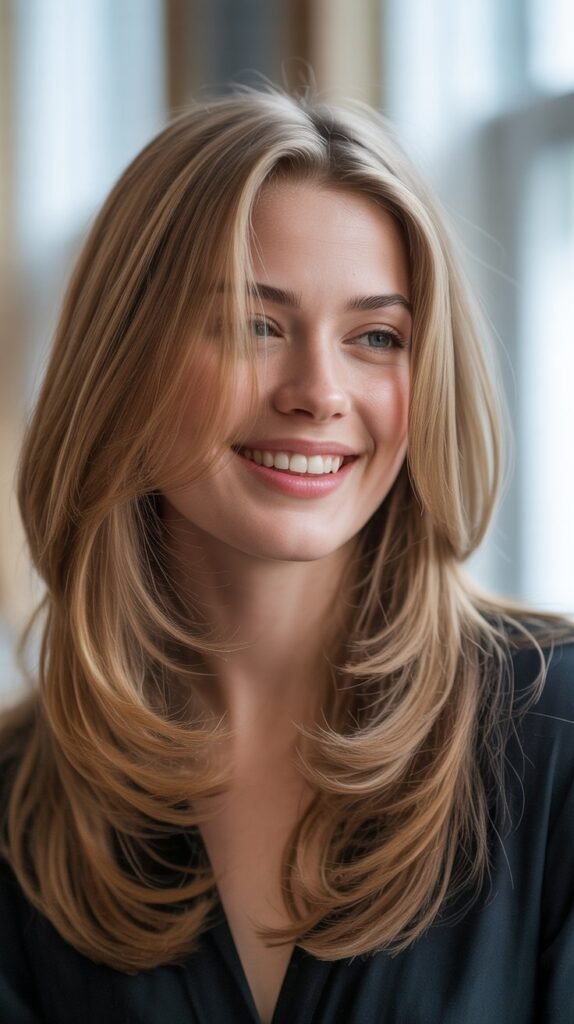
This timeless style features graduated layers throughout the length with shorter pieces around the face to highlight your features.
- The classic long layered cut remains one of the most requested styles because it flatters virtually every face shape while adding natural movement.
- Face-framing layers typically start around the cheekbone or chin area and gradually blend into longer layers throughout the hair.
- This cut works exceptionally well for those with thick hair as it removes bulk without sacrificing length.
- For fine hair, strategic layering creates the illusion of fuller, more voluminous locks.
- Styling is effortless with a round brush during blow-drying or by using a large-barrel curling iron for loose waves.
- Regular trims every 8-10 weeks maintain the shape and prevent split ends from traveling up the hair shaft.
2. Butterfly Layers for Volume and Movement
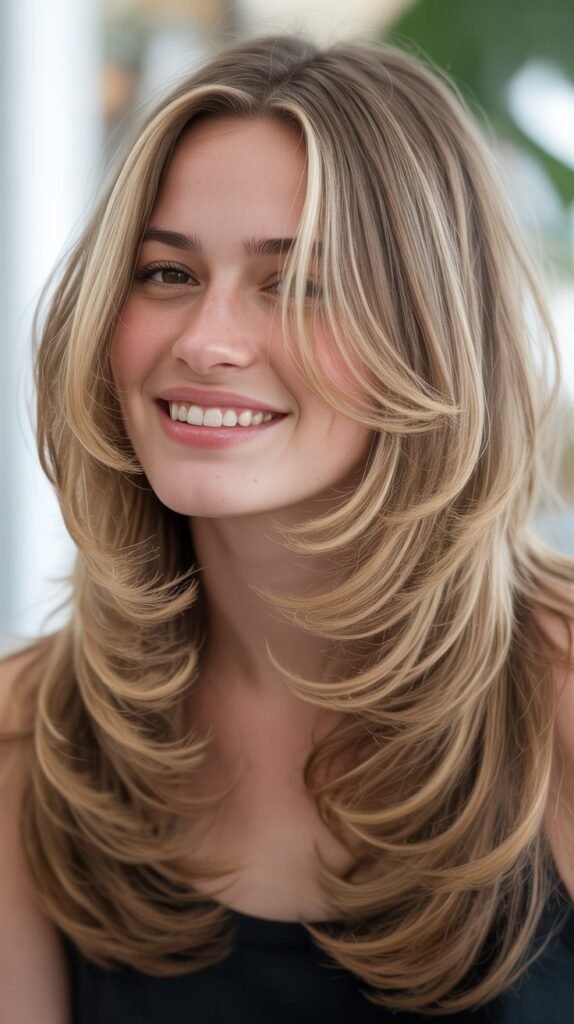
Butterfly layers feature shorter layers concentrated at the crown that gradually lengthen toward the bottom, creating a cascading butterfly wing effect.
- This trending cut originated from social media and has become a favorite for creating dramatic volume at the top while maintaining length at the bottom.
- The technique involves cutting shorter layers starting from the crown and gradually increasing length as you move down.
- Butterfly layers are particularly flattering for those with round or square face shapes as they add vertical dimension.
- This style works best on medium to thick hair textures that can support the volume at the crown.
- Styling requires blow-drying with volumizing products at the roots and using a diffuser for natural texture.
- The cut naturally creates movement when you walk or turn your head, giving hair a lively, bouncy appearance.
3. Curtain Bangs with Long Layers
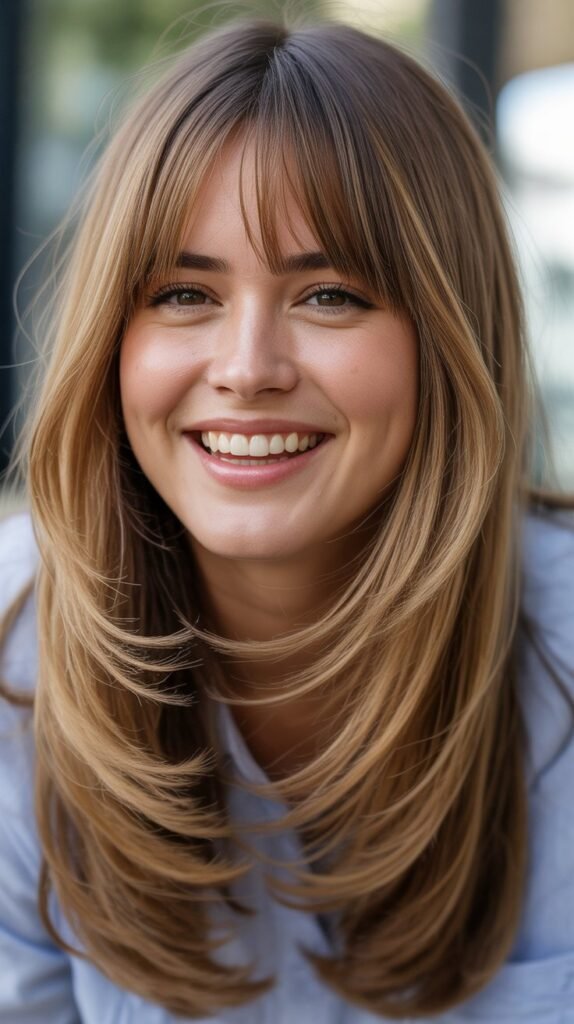
Curtain bangs paired with long layers create a soft, romantic look that frames the face beautifully while maintaining long hair length.
- Curtain bangs are parted down the middle and sweep to either side of the face, typically reaching cheekbone or chin length.
- When combined with long layers, this style creates a cohesive, flowing look that’s both retro and contemporary.
- This cut is ideal for softening angular face shapes and drawing attention to the eyes and cheekbones.
- The versatility of curtain bangs allows you to style them swept back when you want a different look.
- Maintenance involves trimming the bangs every 4-6 weeks while keeping the layers fresh every 8-10 weeks.
- Styling is simple with a round brush during blow-drying, directing the bangs away from your face on each side.
4. Long Shaggy Layers with Texture
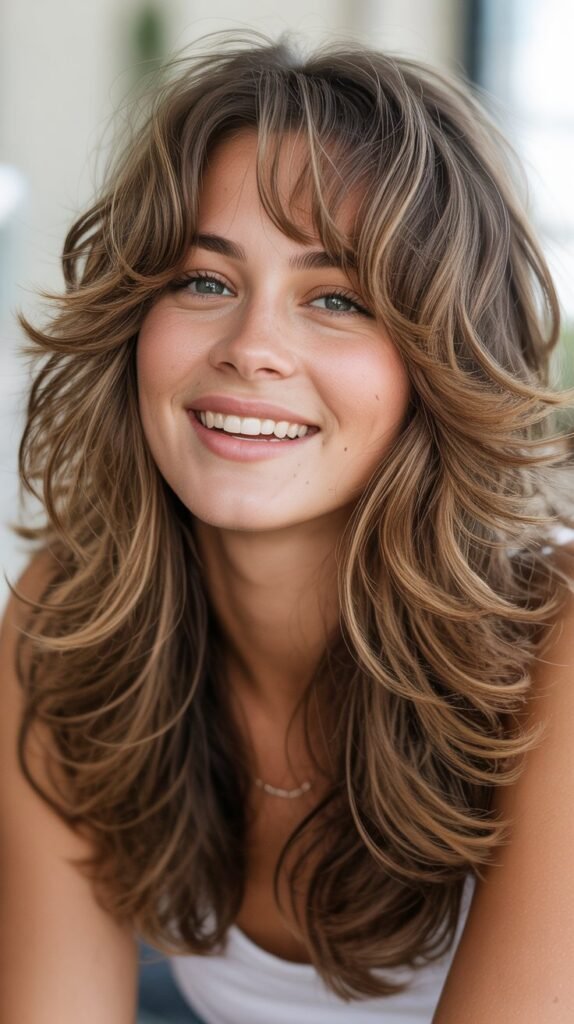
The modern shag features choppy, textured layers throughout long hair for an edgy, rock-and-roll inspired aesthetic.
- The shag cut has evolved from its 1970s origins into a contemporary style that emphasizes texture and effortless cool.
- Layers are cut at varying lengths throughout the hair to create deliberate choppiness and separation.
- This style particularly suits those with naturally wavy or slightly textured hair that enhances the shaggy effect.
- For straight hair, sea salt spray and texturizing products help achieve the piecey, undone look.
- The shag works beautifully for oval and heart-shaped faces, adding width where needed.
- Styling involves scrunching hair with texturizing cream and air-drying or using a diffuser for maximum texture.
5. V-Shaped Layers for Pointed Ends
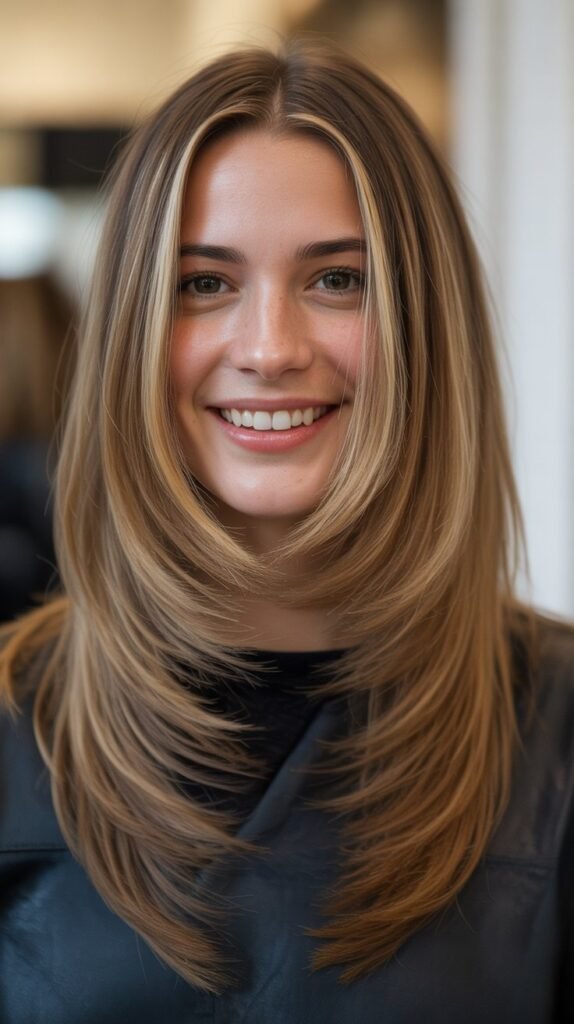
V-shaped layers create a dramatic pointed shape at the back when hair is viewed from behind, with the longest point at the center.
- This geometric cut creates a distinctive silhouette that’s both eye-catching and flattering from every angle.
- The V-shape is achieved by cutting the hair so that the center back section remains longest while sides gradually shorten.
- Layers are incorporated throughout to add dimension while maintaining the overall V-shaped outline.
- This style elongates the neck and creates a slimming effect when viewed from behind.
- It’s particularly stunning on thick, straight hair where the V-shape is most visible and defined.
- Styling is straightforward with a straightening iron to emphasize the clean lines of the cut.
6. Long Feathered Layers for Softness
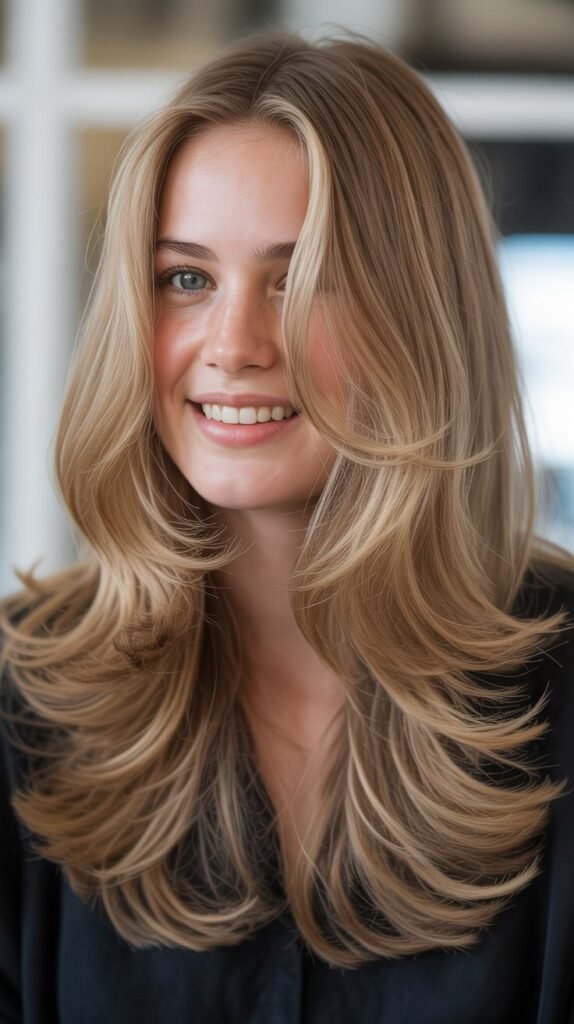
Feathered layers create soft, wispy ends that blend seamlessly throughout long hair for an airy, lightweight appearance.
- Feathering is a cutting technique that uses razor or point-cutting methods to create thin, tapered ends.
- This approach removes weight from the ends while creating soft, feathery texture that moves beautifully.
- Feathered layers work exceptionally well for fine to medium hair textures, preventing a heavy, blunt appearance.
- The technique is gentler than heavy layering and maintains more overall length throughout the hair.
- Styling involves blow-drying with a round brush, turning the ends slightly under or out for added softness.
- This cut requires less frequent maintenance as the soft ends grow out more naturally than blunt cuts.
7. Long Layers with Balayage Highlights
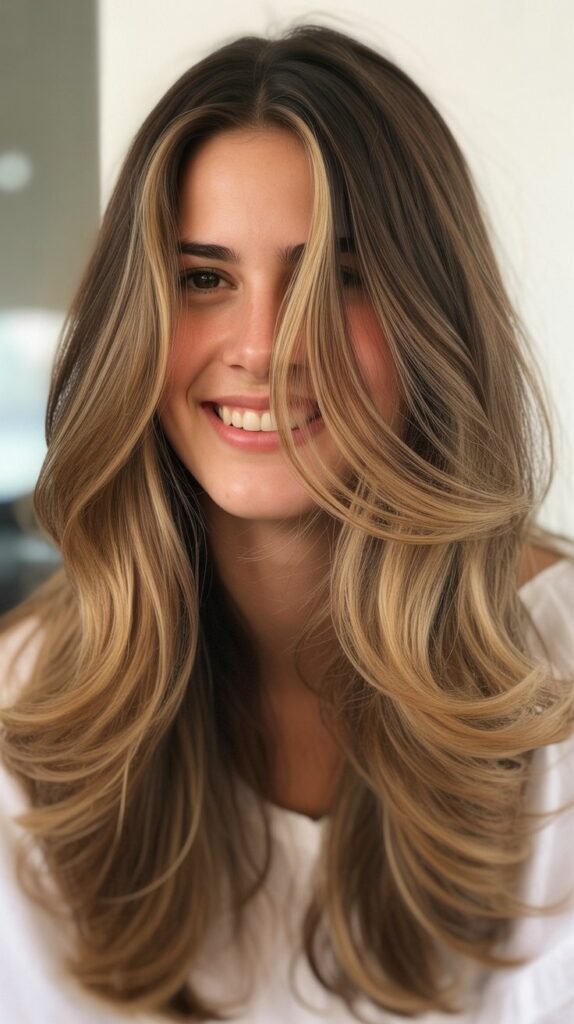
Combining long layers with balayage highlighting creates dimension that emphasizes the movement created by the cut.
- Balayage is a freehand coloring technique that paints highlights onto the hair for a natural, sun-kissed appearance.
- When paired with layers, the color placement can be strategically applied to highlight the cut’s dimension and movement.
- Lighter pieces around the face brighten the complexion and draw attention to face-framing layers.
- The combination works on all hair colors, from subtle caramel on brunettes to bright platinum on blondes.
- Maintenance for color typically requires touch-ups every 8-12 weeks, coordinating with haircut appointments.
- Styling products with UV protection help preserve color vibrancy and prevent fading from sun exposure.
8. Long Layers with Blunt Ends
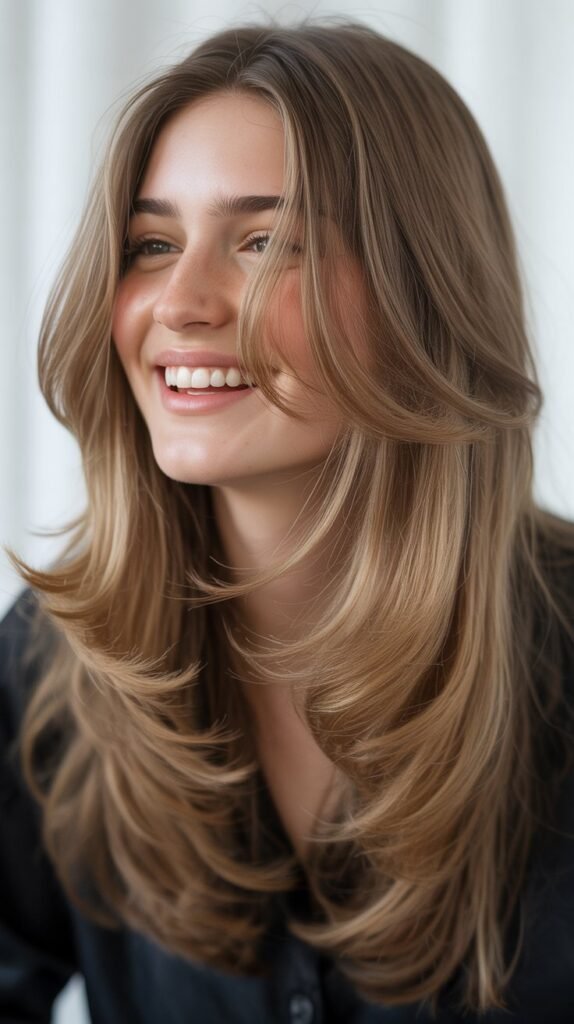
This hybrid style features layers throughout the length but maintains blunt, thick ends for a modern, polished appearance.
- Blunt ends create a fuller appearance at the bottom while internal layers provide movement and reduce bulk.
- This cut is perfect for those who want the benefits of layers without sacrificing the appearance of thickness at the ends.
- The technique involves cutting most of the hair to one length while adding layers only through the mid-lengths and crown.
- This style particularly flatters those with fine to medium hair who want to maximize the appearance of density.
- Styling requires smoothing products and a flat iron or blow-dryer to emphasize the sleek, blunt line.
- Regular trims every 6-8 weeks are essential to maintain the crisp, healthy appearance of the blunt ends.
9. Long Swoopy Layers for Movement
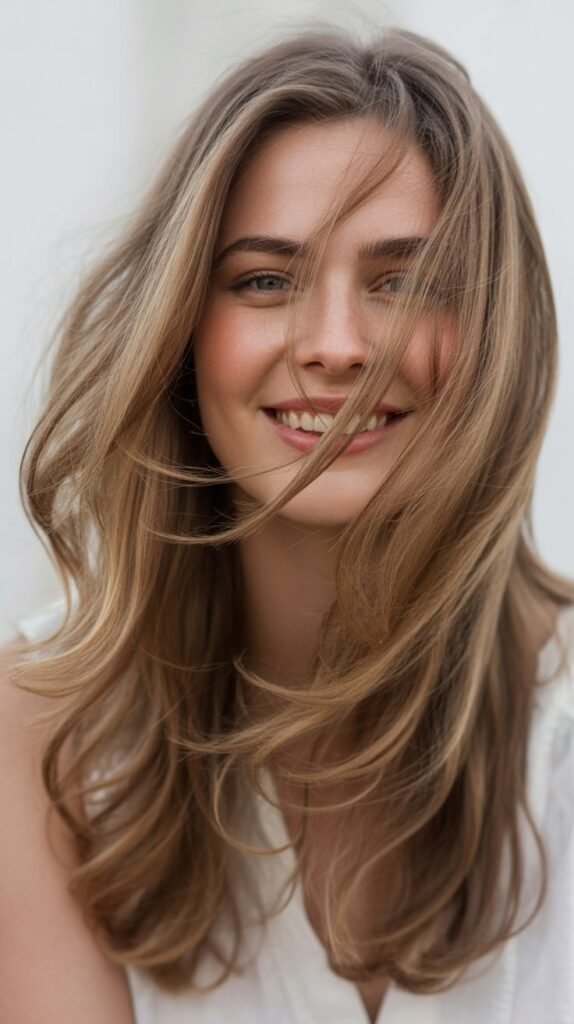
Swoopy layers create dramatic curved movements throughout long hair, with layers that sweep and flow in various directions.
- This cut emphasizes curved rather than straight lines, creating layers that arch and flow with natural body.
- Swoopy layers are achieved through specific cutting angles that encourage hair to curve inward or outward.
- The style creates exceptional movement and is ideal for those with naturally wavy or curly hair textures.
- For straight hair, styling with a curling iron using alternating curl directions enhances the swoopy effect.
- This cut adds drama and personality to long hair without requiring extreme length removal.
- The swoopy effect is most noticeable when hair is in motion, creating a lively, dynamic appearance.
10. Long Choppy Layers for Edgy Style
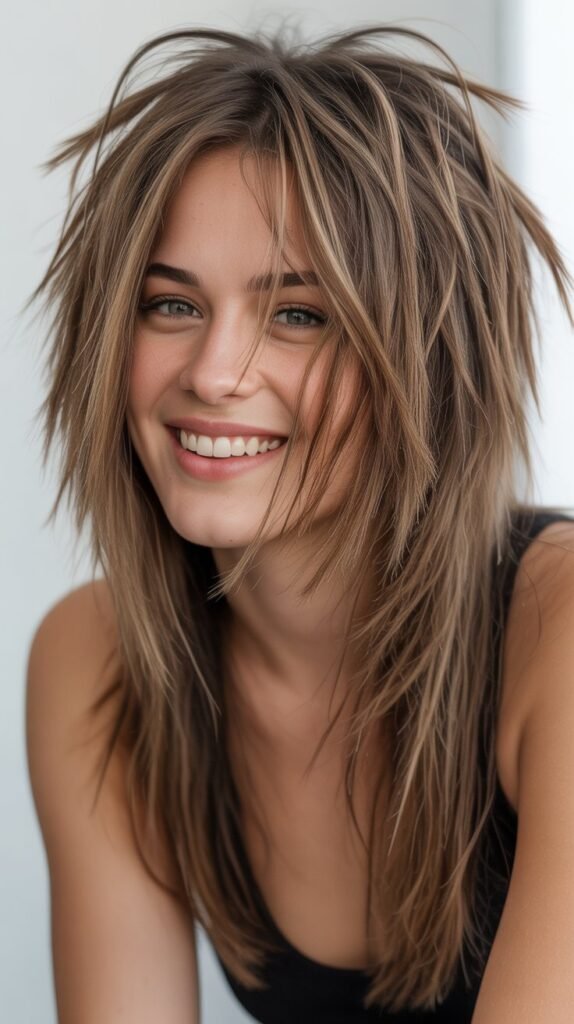
Choppy layers feature intentionally disconnected, uneven pieces throughout long hair for an edgy, modern aesthetic.
- Choppy layering uses point-cutting and slide-cutting techniques to create deliberate separation between sections.
- The result is a more textured, piecey appearance that breaks up solid, uniform hair.
- This style works beautifully for thick hair that needs weight removal and added movement.
- Choppy layers pair exceptionally well with bold hair colors or highlights that emphasize the separation.
- Styling involves using texturizing products to enhance the choppy effect and separate individual pieces.
- The edgy nature of this cut makes it popular among younger demographics and those seeking a fashion-forward look.
11. Long Razor-Cut Layers for Texture
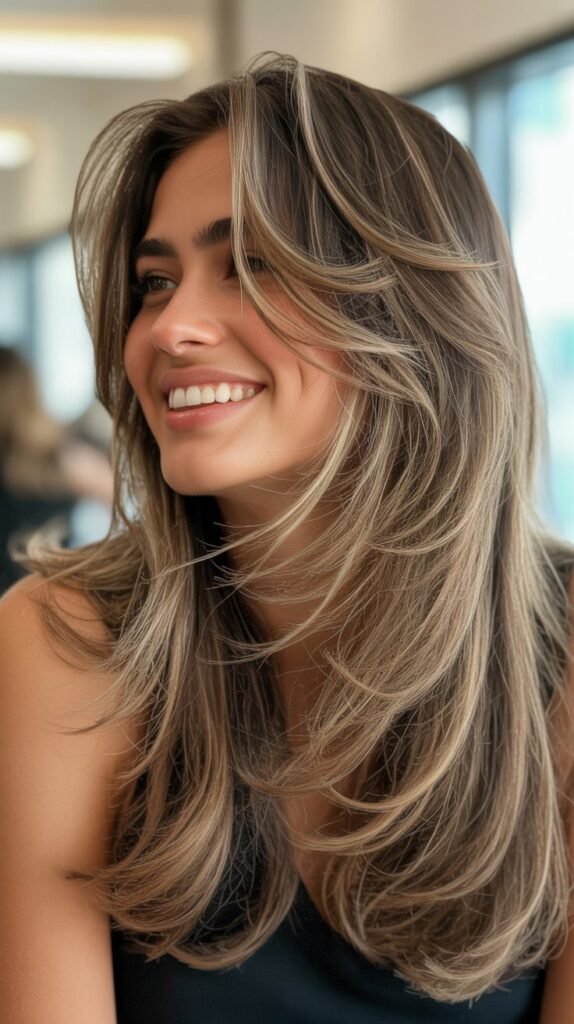
Razor cutting creates soft, textured layers with tapered ends that blend seamlessly throughout long hair.
- Razor cutting uses a razor blade instead of scissors to slice through hair, creating ultra-soft, feathered ends.
- This technique produces a lighter, airier feel to long hair while maintaining overall length.
- Razor cuts work best on medium to thick hair textures; fine hair may become too wispy with this method.
- The tapered ends created by razor cutting reflect light differently, adding natural dimension to hair color.
- Styling is effortless as the cut naturally encourages movement and texture with minimal product use.
- Razor-cut hair requires slightly more frequent trims to prevent the tapered ends from becoming damaged.
12. Long Layers with Side-Swept Bangs
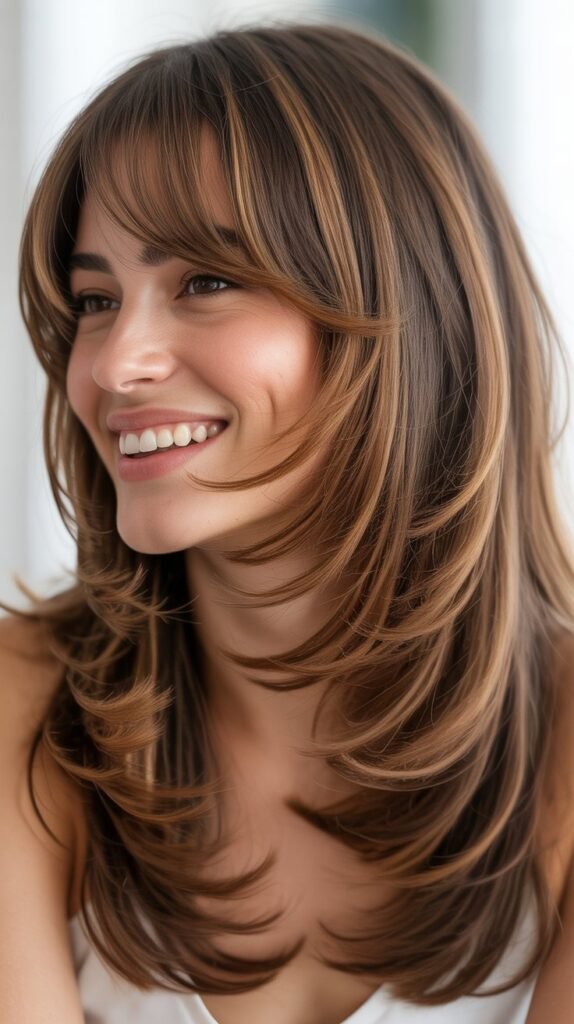
Side-swept bangs combined with long layers create an asymmetrical, face-framing look that’s both sophisticated and youthful.
- Side-swept bangs are cut on an angle and swept across the forehead, typically reaching the eyebrow or cheek area.
- This bang style softens the forehead and creates asymmetrical interest when paired with long layers.
- The combination is particularly flattering for square or rectangular face shapes, softening angular features.
- Side-swept bangs offer versatility as they can be pinned back or tucked behind the ear for different looks.
- Styling requires blow-drying the bangs with a round brush, directing them across the forehead in your desired direction.
- Bang maintenance includes trimming every 3-4 weeks to keep them at the optimal length.
13. Long Boho Layers with Waves
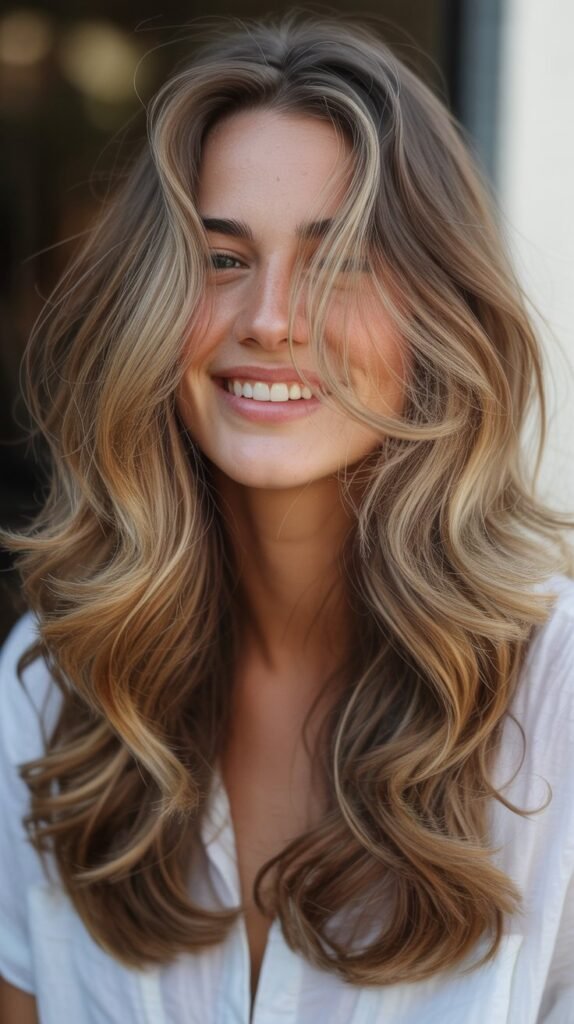
Bohemian-inspired layers feature relaxed, free-flowing cuts paired with loose, textured waves for an effortless, romantic aesthetic.
- Boho layers prioritize natural texture and effortless movement over precise, structured cutting.
- Layers are typically longer and less dramatic, creating subtle rather than obvious dimension.
- This style embraces natural hair texture and looks best when styled with minimal heat and products.
- Loose waves are achieved through braiding damp hair overnight or using a large-barrel curling wand.
- The bohemian aesthetic pairs beautifully with natural-looking balayage or sun-kissed highlights.
- This low-maintenance style is ideal for those seeking a relaxed, easy-going approach to long hair.
14. Long Layers with Graduated Bottom
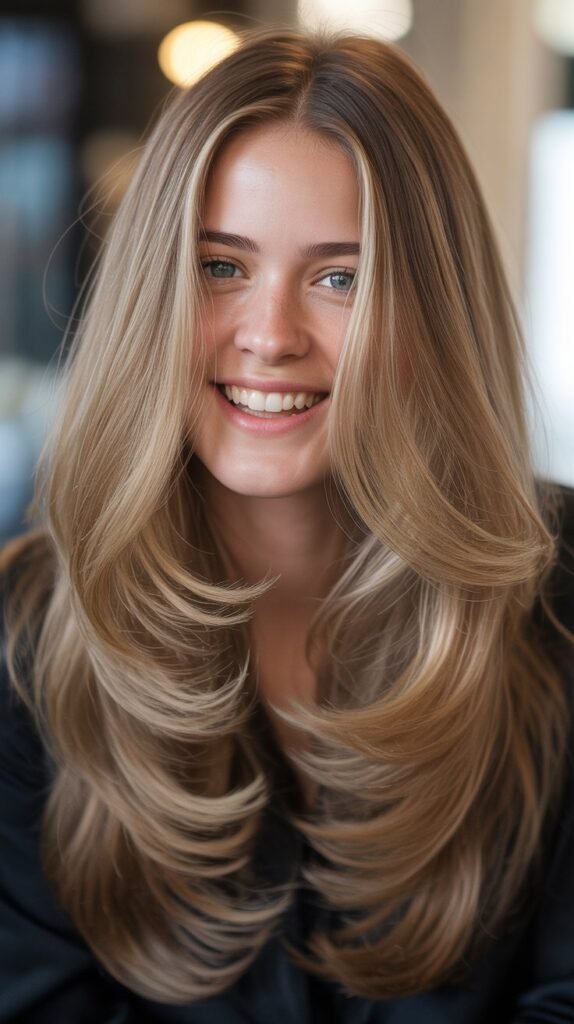
Graduated layers at the bottom create stacked weight with shorter layers underneath and longer layers on top for added fullness.
- Graduation refers to cutting shorter layers underneath longer ones, creating built-in volume and shape.
- This technique is particularly effective for fine hair that lacks natural body at the ends.
- The graduated bottom prevents long hair from appearing flat or stringy by building weight at specific points.
- Layers throughout the length blend seamlessly into the graduated section for a cohesive look.
- Styling with a round brush during blow-drying emphasizes the fullness created by the graduation.
- This cut maintains a polished appearance even as it grows out, requiring trims every 8-10 weeks.
15. Long Layers with Undercut
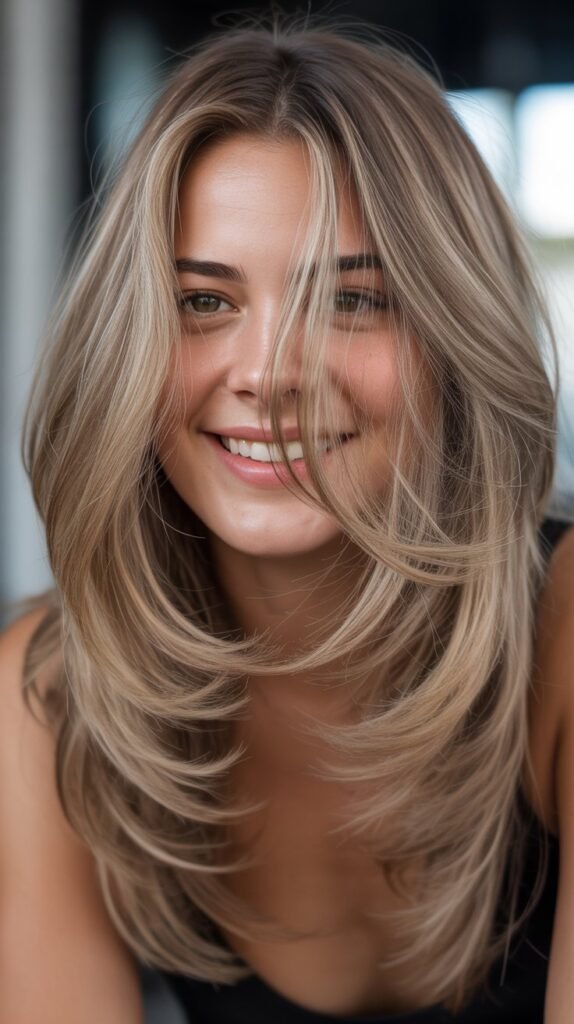
An undercut section hidden beneath the top layers reduces bulk and creates edgy contrast while maintaining long hair on top.
- The undercut involves shaving or cutting very short a section of hair underneath, typically at the nape or sides.
- When hair is down, long layers cover the undercut completely; when pulled up, it creates dramatic reveal.
- This hybrid style is perfect for thick-haired individuals who want to reduce weight without losing length.
- Undercuts provide natural cooling in hot weather and reduce styling time by decreasing overall hair volume.
- Maintenance requires regular trimming of the undercut section every 4-6 weeks to keep it defined.
- This bold choice offers versatility and can be grown out gradually if you change your mind.
16. Long Layers with Straight-Across Bangs
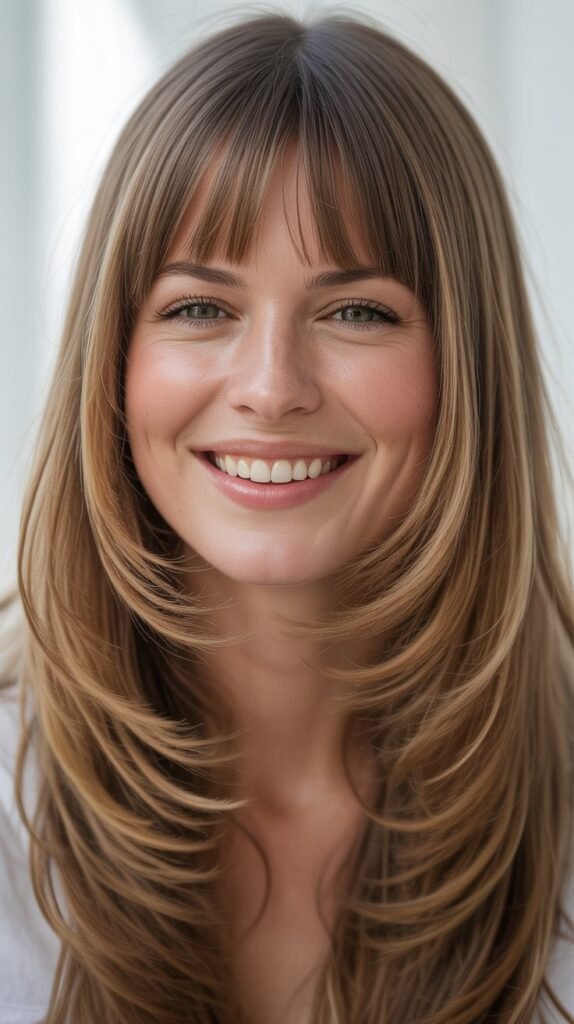
Full, straight-across bangs paired with long layers create a striking, high-fashion look with strong horizontal lines.
- Straight-across bangs cut in a horizontal line across the forehead create a bold, statement-making frame for the face.
- When combined with long layers, this creates beautiful contrast between the structured bangs and flowing length.
- This style draws significant attention to the eyes and works best for those with oval or heart-shaped faces.
- The commitment level is higher as straight bangs require frequent trimming every 2-3 weeks to maintain length.
- Styling involves blow-drying bangs straight with a flat paddle brush or straightening iron for crisp lines.
- This look has experienced cyclical popularity and is currently trending in high-fashion and editorial circles.
17. Long Angled Layers for Dimension
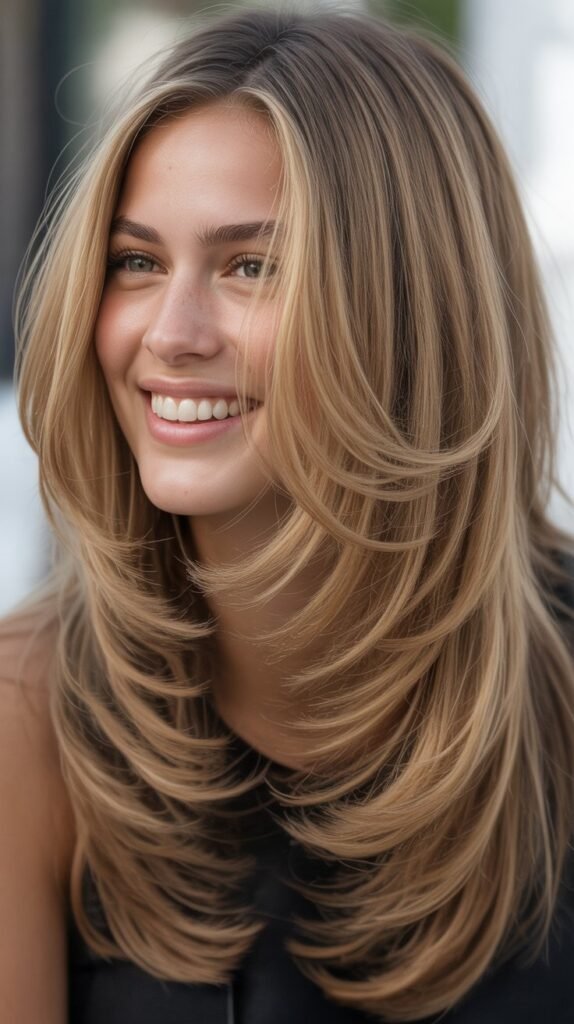
Angled layers are cut at specific diagonal angles rather than straight across, creating dimensional depth throughout long hair.
- Angled layering creates more dramatic transitions between lengths compared to traditional horizontal layering.
- The technique involves holding sections of hair at various angles before cutting, producing customized dimension.
- This approach allows stylists to create specific shaping around the face and throughout the lengths.
- Angled layers work exceptionally well for adding movement to straight hair that tends to lie flat.
- The dimensional effect is enhanced by hair color that includes highlights or lowlights.
- Styling flexibility allows for both straight and wavy looks, each emphasizing different aspects of the cut.
18. Long Layers with Micro Bangs
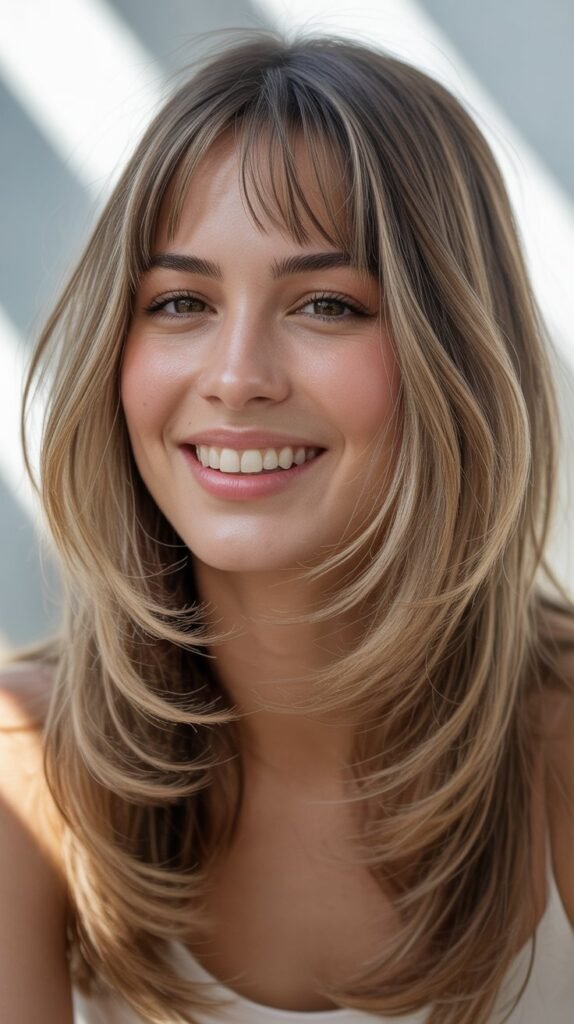
Micro bangs (baby bangs) combined with long layers create an avant-garde, high-fashion statement look.
- Micro bangs are cut significantly shorter than traditional bangs, typically falling mid-forehead or higher.
- This daring bang style creates maximum contrast when paired with long, flowing layers.
- The look is bold and fashion-forward, appealing to those confident in making a strong style statement.
- Micro bangs emphasize facial features, particularly eyes and cheekbones, while drawing focus to the forehead.
- This style works best for those with smaller foreheads and oval or heart-shaped faces.
- Maintenance is intensive, requiring professional trims every 2-3 weeks to maintain the precise micro length.
19. Long Layers with Invisible Layers
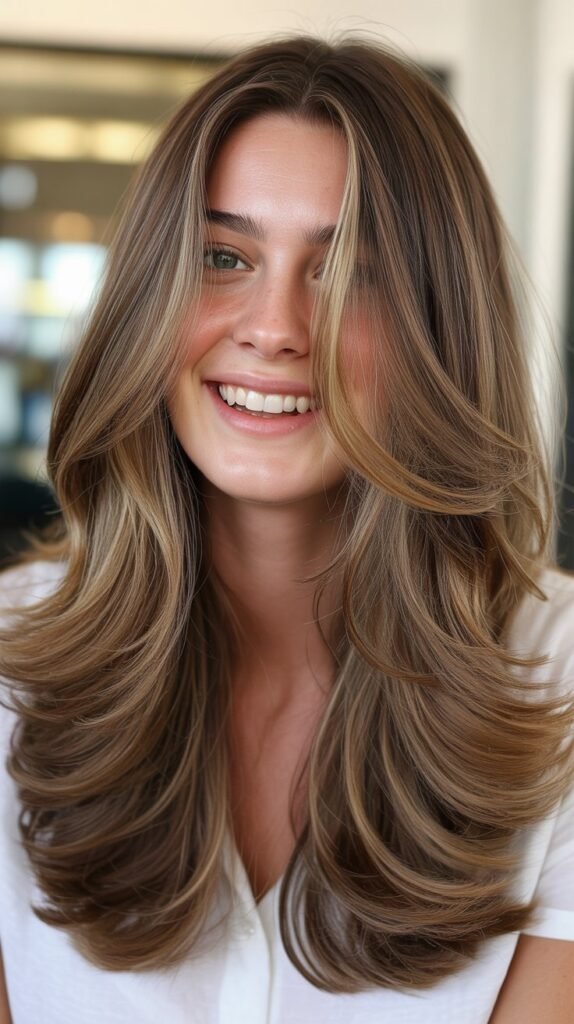
Invisible layers are subtle, seamlessly blended cuts that add movement without obvious layering lines.
- This technique creates internal layers that remove weight and add movement without visible demarcation lines.
- Invisible layering is achieved through slide cutting, point cutting, and careful blending throughout the hair.
- The result appears natural and effortless, as if the hair simply grows with perfect movement and body.
- This approach is ideal for those who want the benefits of layering without a dramatically layered appearance.
- All hair types benefit from invisible layers, particularly thick hair that needs weight removal.
- Styling is uncomplicated as the layers work with your hair’s natural texture rather than requiring specific styling.
20. Long Layers with Money Pieces
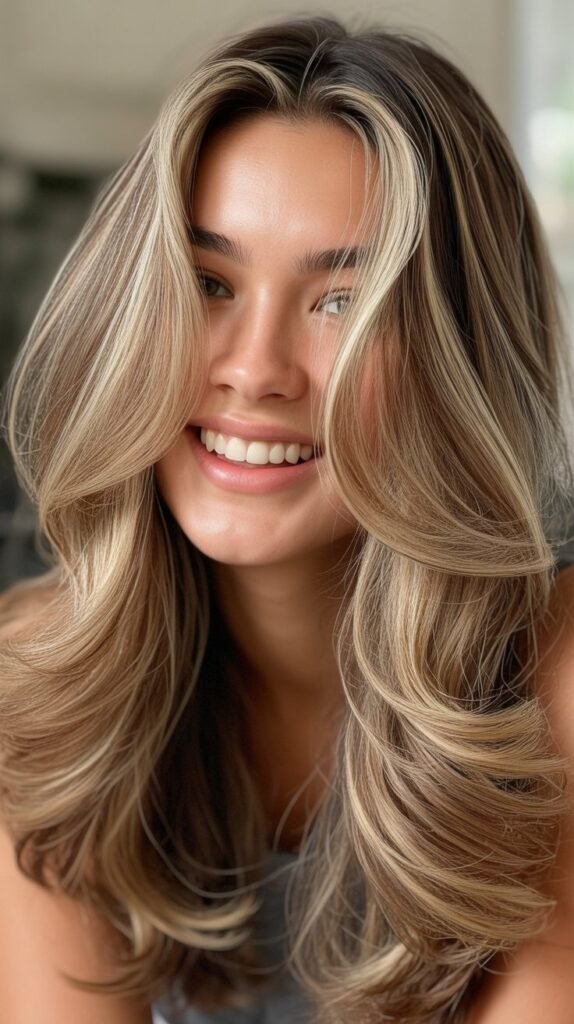
Money pieces are bright face-framing highlights combined with long layers for a dimension-enhancing, brightening effect.
- Money pieces refer to thick highlights placed at the front sections of hair that frame the face.
- These highly visible highlights earned their name because they provide maximum impact for your color investment.
- When paired with long layers, money pieces emphasize face-framing sections and create beautiful dimension.
- The contrast between bright highlights and base color is most dramatic, typically 3-5 shades lighter.
- This trend works on all base colors from deep black to light blonde, adapted to individual coloring.
- Maintenance includes toning every 4-6 weeks and root touch-ups every 8-12 weeks depending on base color.
21. Long Layers with Wispy Ends
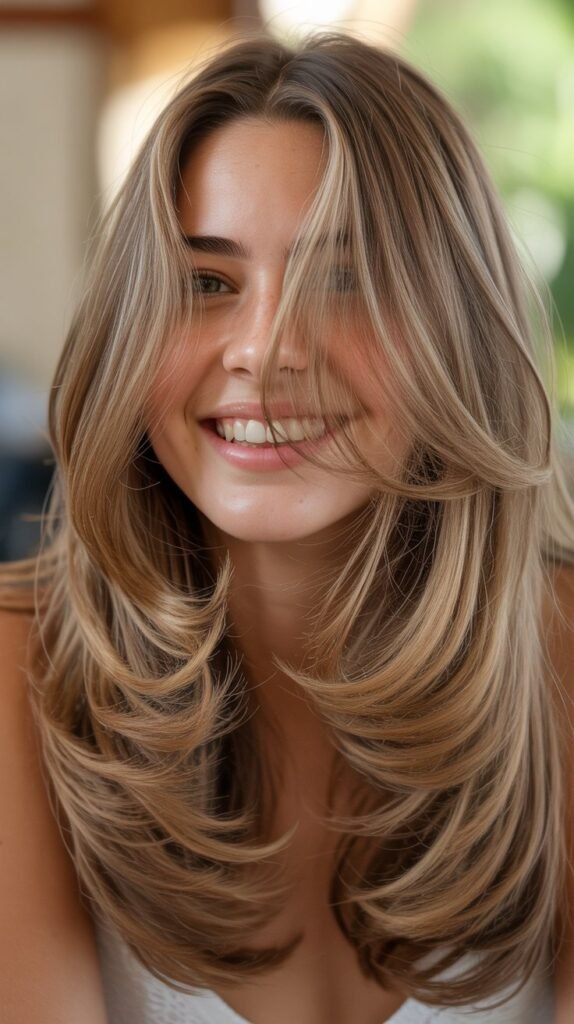
Wispy end layering creates delicate, fine-textured ends throughout long hair for an ethereal, lightweight appearance.
- Wispy ends are created through point cutting and thinning techniques that reduce bulk at the very ends.
- This creates a soft, almost transparent quality to the hair ends while maintaining length throughout.
- The technique works beautifully for thick hair that can become heavy and shapeless without texturizing.
- For fine hair, wispy ends should be created sparingly to avoid making hair appear too thin.
- Styling involves minimal product use to maintain the delicate, airy quality of the wispy texture.
- This feminine, romantic finish pairs well with both straight and gently waved styling.
22. Long Layers with Crown Volume
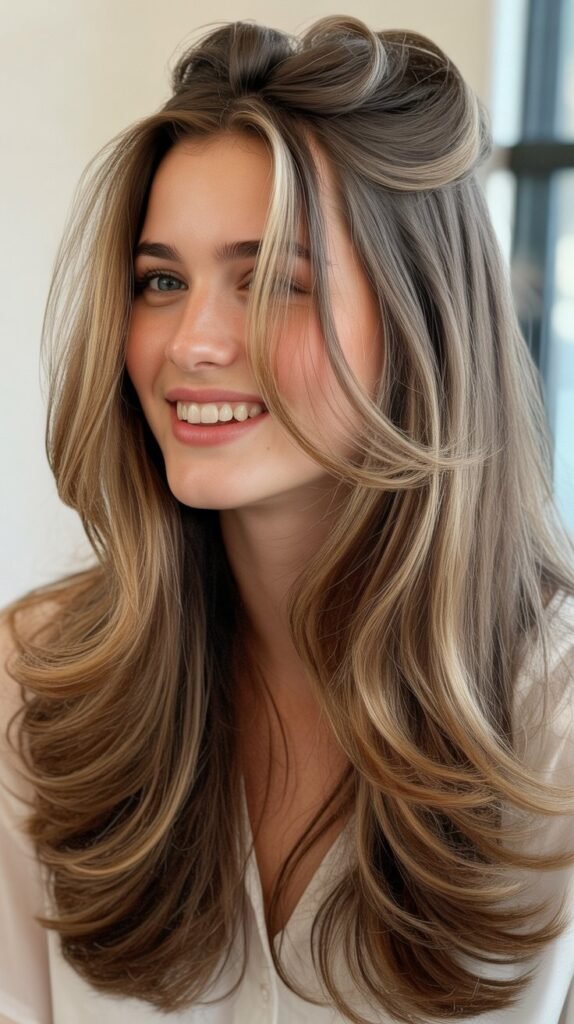
Crown-focused layering concentrates shorter layers at the top of the head to create lift and volume where hair naturally lies flat.
- Shorter layers cut specifically at the crown area create natural lift and prevent flat-top appearance.
- This technique is essential for fine-haired individuals who struggle with volume at the roots.
- Crown layers typically start 2-4 inches from the scalp and gradually blend into longer lengths.
- The volumizing effect is enhanced by blow-drying with a round brush or using velcro rollers at the crown.
- This cut creates more balanced proportions, particularly flattering for those with longer face shapes.
- Regular trims maintain the crown layers at optimal length for maximum lifting effect.
23. Long Asymmetrical Layers
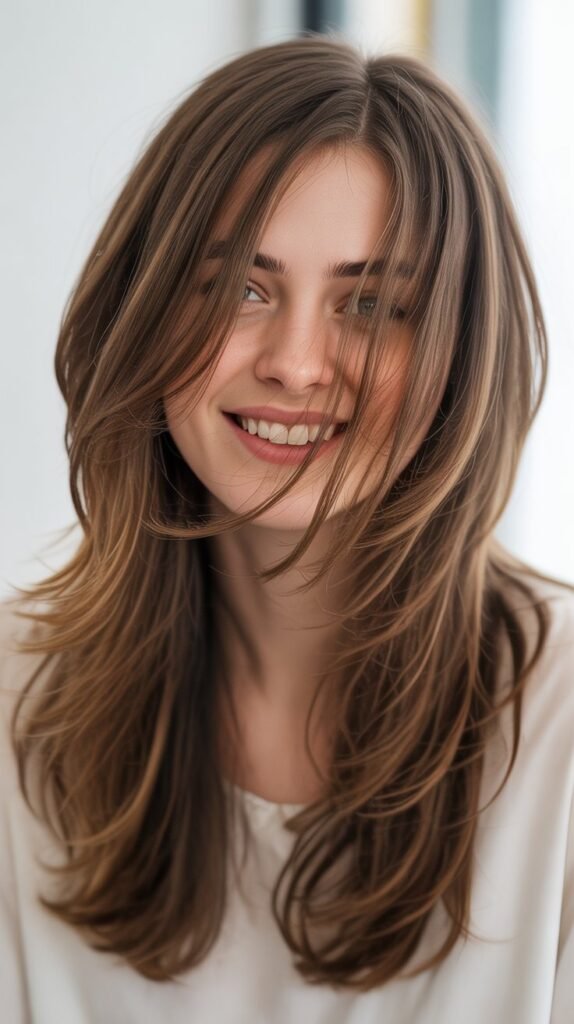
Asymmetrical layering creates intentionally uneven lengths on different sides of the head for an artistic, modern look.
- Asymmetry involves cutting one side of the hair shorter or at different layer lengths than the other side.
- This creates visual interest and movement, breaking away from traditional symmetrical hairstyling.
- The asymmetrical effect can be subtle with slight length differences or dramatic with significant variation.
- This style particularly suits those with strong personal style who appreciate artistic, unconventional approaches.
- Asymmetrical cuts often incorporate angles and geometric elements for additional dimension.
- Styling can emphasize the asymmetry by parting hair to the shorter side or tucking one side behind the ear.
24. Long Layers with Internal Layering Only
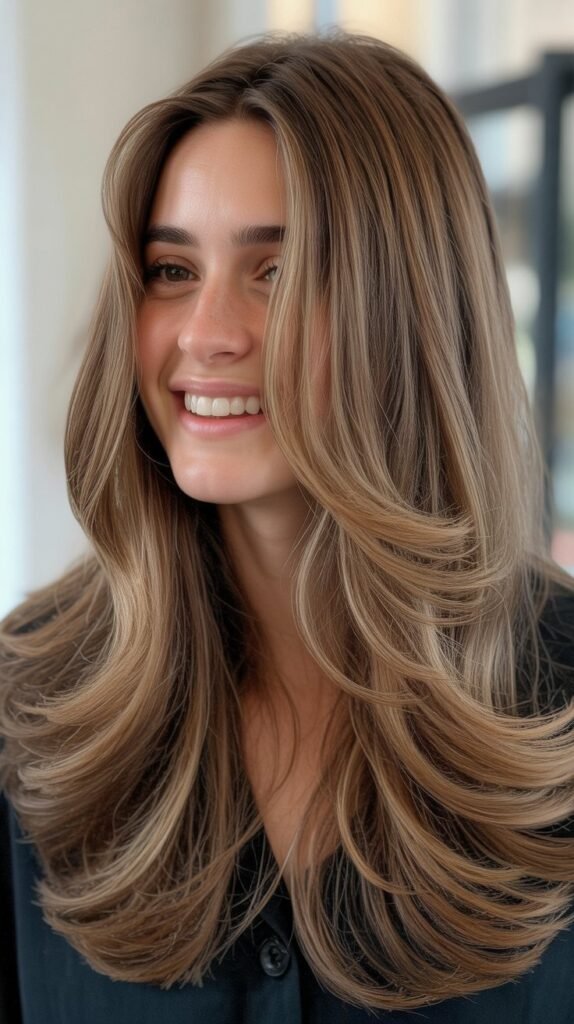
Internal layering removes weight from inside the hair while keeping the outer perimeter at one length for a sleek outline.
- This technique creates layers only within the interior of the hair, leaving the exterior shell intact.
- The result is reduced bulk and added movement while maintaining a sleek, uniform appearance when viewed externally.
- Internal layering is perfect for thick hair that feels heavy but where the individual wants to preserve length appearance.
- The technique provides the benefits of layers without the obviously layered look.
- Styling is versatile as the outer perimeter can be worn straight for polish or curled for volume.
- This low-maintenance approach grows out beautifully without requiring frequent trims to maintain shape.
25. Long Layers with Beveled Ends
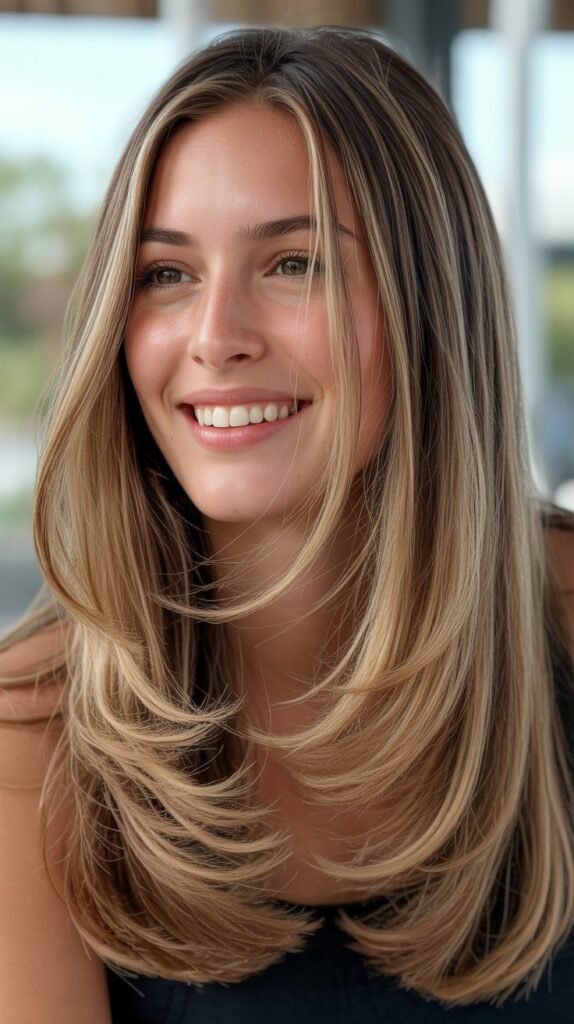
Beveled ends feature layers cut at slight angles to create soft, rounded edges rather than blunt horizontal lines.
- Beveling involves cutting hair at a slight angle to create curved, rounded edges rather than straight lines.
- This technique softens the overall appearance of layers and creates more natural-looking transitions.
- Beveled ends reflect light differently than blunt ends, adding subtle dimension and shine.
- The rounded effect is particularly flattering when hair is styled wavy or curly, following natural texture.
- This finishing technique works on all hair lengths and types, providing polish without harsh lines.
- Maintenance is similar to standard layering with trims every 8-10 weeks to maintain shape and beveling.
26. Long Layers with Disconnected Sections
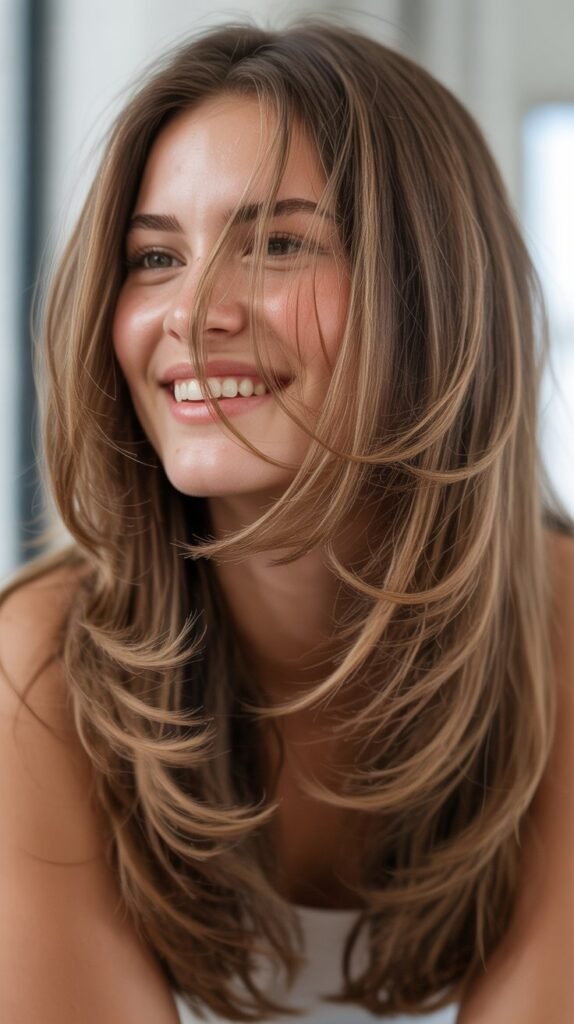
Disconnected layering creates obvious separation between different lengths for intentional, edgy contrast.
- Disconnection refers to creating layers that don’t blend smoothly but instead show clear distinction between lengths.
- This technique is deliberately choppy and creates strong visual impact with defined separation.
- Disconnected sections work beautifully with bold color blocking or contrasting highlights that emphasize the separation.
- The style appeals to those seeking edgy, fashion-forward looks rather than traditional blended layers.
- Styling involves using texturizing products that enhance separation and prevent sections from blending together.
- This bold cut requires commitment and works best for those with strong personal style aesthetics.
27. Long Layers with Tapered Ends
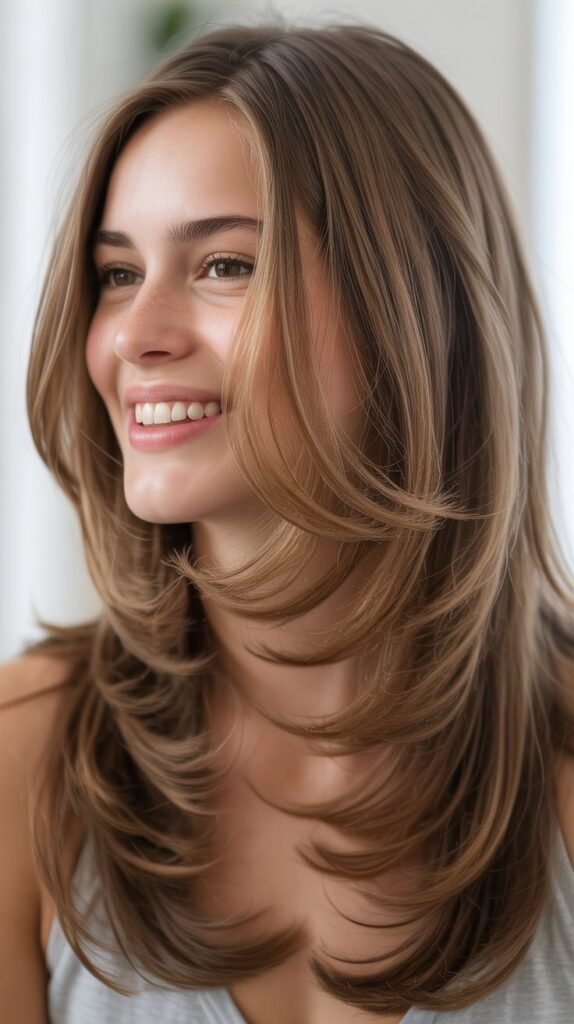
Tapered layers gradually thin out toward the ends, creating pencil-point tips rather than blunt edges throughout the hair.
- Tapering involves cutting hair so the ends gradually become thinner rather than remaining full thickness.
- This creates a lighter, more natural appearance that mimics how hair naturally grows and tapers.
- Point cutting is the primary technique used to achieve properly tapered ends throughout layers.
- Tapered ends move more freely than blunt ends, creating enhanced flow and movement.
- This approach is ideal for thick hair that can appear bulky with blunt edges.
- Styling is effortless as tapered ends naturally separate and create texture with minimal product.
28. Long Layers with Mid-Length Focus
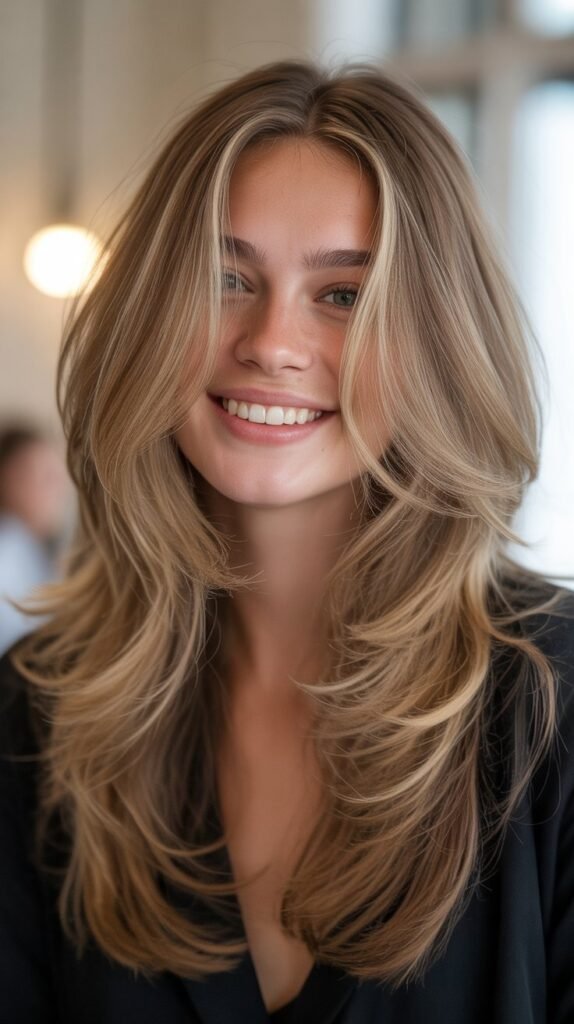
Mid-length focused layering concentrates the most dramatic layers around ear-to-shoulder level while keeping top and bottom longer.
- This technique creates maximum volume and movement in the middle section of long hair.
- Shorter layers around the ear-to-shoulder area add body where long hair often lies flat against the torso.
- The top remains relatively long to maintain overall length appearance while bottom layers preserve length.
- This creates an hourglass shape to the hair silhouette, widening at the middle and tapering at top and bottom.
- Mid-length focus is excellent for those with long necks or narrow shoulders who want to create width.
- Styling involves adding volume specifically at mid-lengths using volumizing products and round-brush blow-drying.
29. Long Layers with Bottom Weight
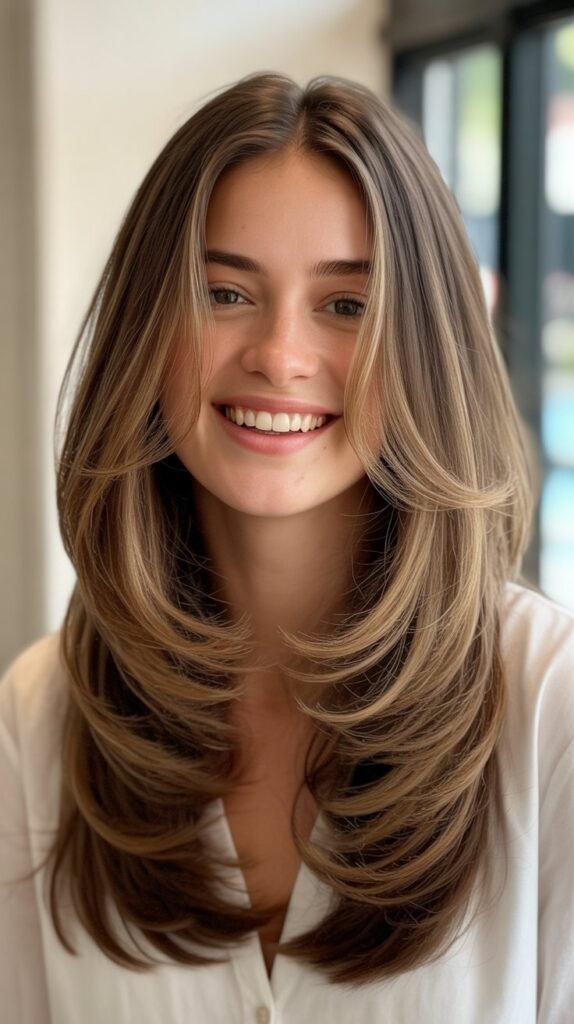
Bottom-weight layering keeps the most bulk and heaviness at the ends while creating light, feathery layers throughout the length.
- This approach preserves maximum thickness at the bottom of long hair while reducing weight internally.
- Light internal layers provide movement without sacrificing the appearance of full, thick ends.
- Bottom-weight layering is ideal for fine hair where maintaining end thickness is a priority.
- The technique creates a triangular silhouette that’s wider at the bottom than at the crown.
- Styling emphasizes the full ends through blow-drying with a round brush turned under at the ends.
- This cut maintains a polished, healthy appearance as the thick ends resist the stringy look of thin ends.
30. Long Layers with Customized Face-Framing
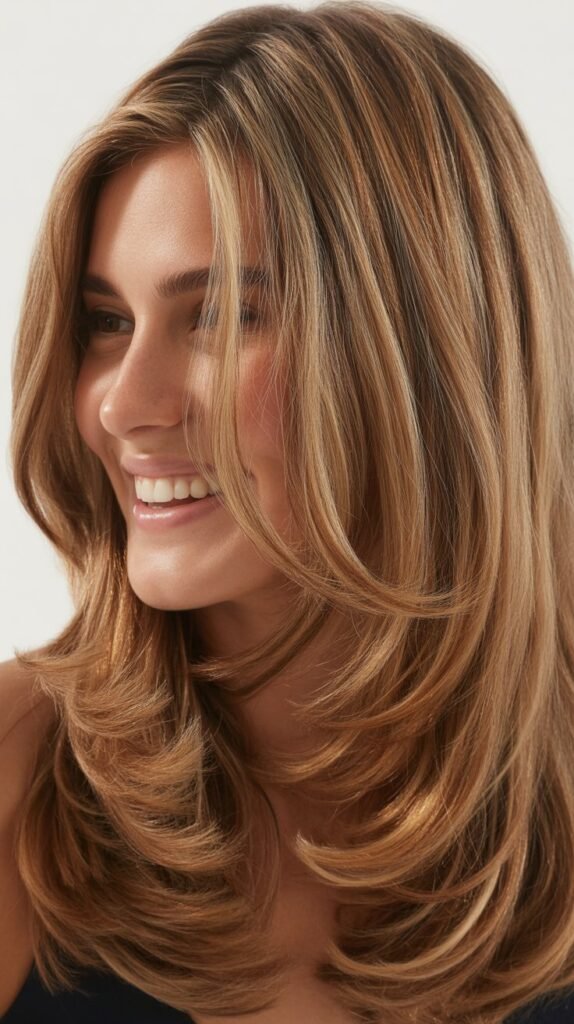
Personalized face-framing layers are cut specifically to complement individual face shapes and feature emphasis.
- Customized face-framing considers individual facial proportions, features, and bone structure when determining layer placement.
- Layers may start at cheekbones, jawline, or chin depending on what’s most flattering for your specific face.
- A skilled stylist analyzes face shape, feature size, and proportions before determining optimal layer starting points.
- This personalized approach creates the most flattering results as it’s designed specifically for you.
- Face-framing layers can be adjusted to emphasize best features like eyes or cheekbones while softening other areas.
- Professional consultation ensures layers are placed to achieve your specific goals rather than following one-size-fits-all trends.
Styling Products Essential for Long Layered Hair
- Volumizing mousse creates lift at roots and enhances body in layers without weighing hair down.
- Heat protectant spray shields hair from damage when blow-drying, curling, or straightening layered styles.
- Texturizing spray adds piecey separation and definition to layers for enhanced movement and dimension.
- Lightweight serum smooths frizz and adds shine to layers without making hair appear greasy or flat.
- Dry shampoo extends time between washes while adding volume and texture to roots in layered cuts.
- Flexible-hold hairspray maintains style and movement in layers without creating stiff, crunchy texture.
Finding the perfect long layered cut can completely transform your appearance and how you feel about your hair.
The 30 Best Long Layered Cuts and Hairstyles for Long Hair to Refresh Your Look offers something for everyone, whether you prefer subtle sophistication or bold, statement-making styles.
Remember that the best layered haircut considers your face shape, hair texture, lifestyle, and personal style preferences.
Consulting with a skilled stylist who can assess your individual needs ensures you’ll achieve results that not only look beautiful but also work with your natural hair characteristics and daily routine.
With proper maintenance, quality products, and the right cutting technique, your long layered hair will remain healthy, vibrant, and effortlessly stunning.
Take inspiration from these diverse options, communicate clearly with your stylist, and get ready to fall in love with your refreshed look.
