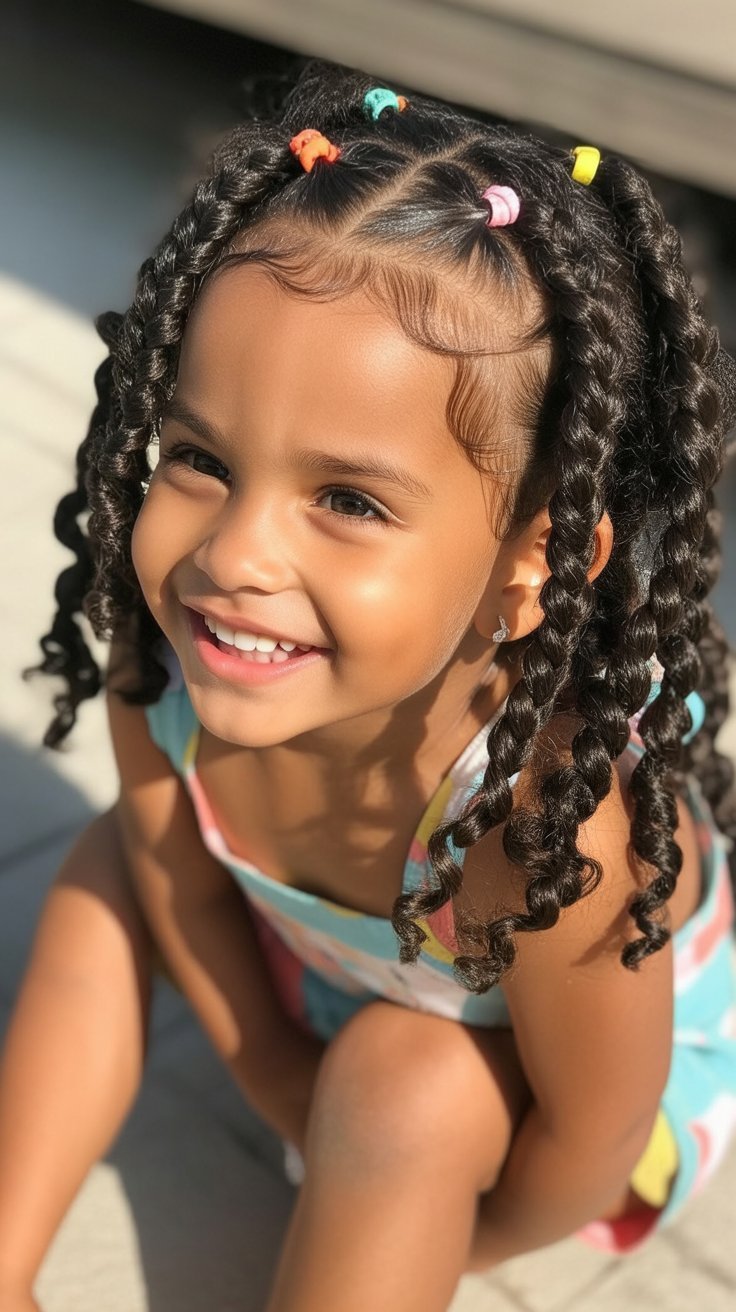
Natural hair is a crown of beauty, and braided hairstyles offer the perfect combination of protection, style, and creativity for children.
Parents and caregivers constantly seek hairstyles that are not only visually appealing but also promote healthy hair growth while being practical for active kids.
This comprehensive guide to 27 Adorable Braided Hairstyles for Kids with Natural Hair will walk you through classic protective styles, trendy modern looks, and timeless designs that work for various occasions—from school days to special celebrations.
Each hairstyle featured includes styling insights, maintenance tips, and creative variations to help you discover the perfect braided look for your little one.
Whether you’re a parent learning to braid for the first time or an experienced stylist seeking fresh inspiration, these adorable options will transform your child’s natural hair into stunning works of art while keeping it protected and healthy.
1. Classic Box Braids

Box braids remain one of the most beloved protective styles for children with natural hair, offering durability and versatility that can last for weeks with proper care.
This timeless style divides the hair into square-shaped sections, creating clean, uniform braids that can be styled in countless ways.
Benefits and Styling Options:
- Box braids provide excellent protection by keeping hair tucked away from environmental stressors and excessive manipulation.
- The style typically lasts between 4-8 weeks, making it ideal for busy parents and active children.
- Children can wear box braids down, in ponytails, buns, or half-up styles for variety throughout the wear period.
- The braids can be accessorized with beads, cuffs, or colorful hair ties to match different outfits and occasions.
Maintenance Requirements:
- Moisturize the scalp every 2-3 days using a light oil or leave-in conditioner spray to prevent dryness.
- Sleep with a satin or silk bonnet to reduce frizz and preserve the style’s neatness.
- Wash the braids gently every 1-2 weeks using diluted shampoo in an applicator bottle, focusing on the scalp.
- Keep the braids neat by smoothing edges with a light gel and avoiding excessive pulling or tension.
2. Cornrows with Beads

Cornrows are traditional braids that lie flat against the scalp, creating beautiful patterns and designs that showcase both cultural heritage and artistic expression.
Adding beads to cornrows brings playful charm and personality that children absolutely love.
Design Possibilities:
- Straight-back cornrows offer a simple, classic look that’s perfect for school and everyday activities.
- Curved or zigzag patterns create visual interest and can be customized to the child’s preference.
- Side-swept cornrows provide an elegant asymmetrical style that works beautifully for special occasions.
- Geometric designs including hearts, stars, or swirls can be incorporated for truly unique looks.
Bead Selection and Placement:
- Wooden beads are lightweight and come in various colors, making them ideal for children’s tender scalps.
- Plastic pony beads offer affordability and endless color combinations to match any outfit.
- Place beads at the ends of cornrows for a classic look, or space them throughout the length for extra flair.
- Limit the number of beads to prevent excessive weight that could cause discomfort or tension.
3. Two-Strand Twists
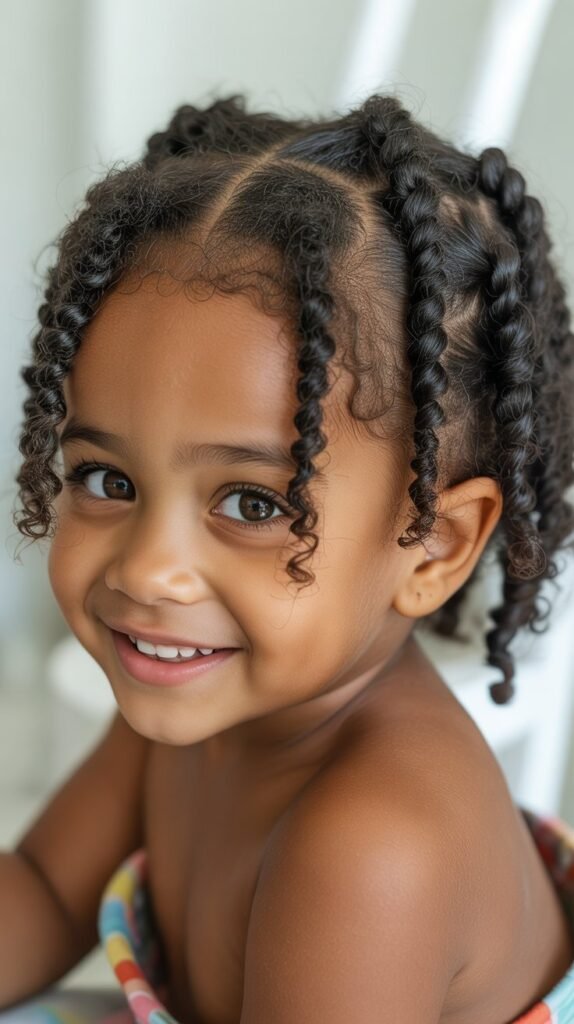
Two-strand twists are a gentler alternative to traditional braids, making them excellent for younger children or those with more delicate hair textures.
This style involves twisting two sections of hair around each other, creating rope-like strands that are both beautiful and protective.
Installation Process:
- Start with freshly washed and conditioned hair to ensure proper moisture and manageability.
- Apply a twisting cream or butter to each section before twisting to provide hold and definition.
- Keep sections small to medium-sized for longevity, as larger twists may unravel more quickly.
- Twist in a consistent direction throughout the entire head for a uniform, polished appearance.
Versatility and Styling:
- Two-strand twists can be worn as-is for a textured, voluminous look that showcases natural hair beauty.
- Unravel the twists after a few days to create gorgeous twist-out curls for special occasions.
- Style twists into updos, ponytails, or side-swept looks for different appearances throughout the wear period.
- The style typically lasts 1-3 weeks depending on hair texture and maintenance routine.
4. Fulani Braids

Fulani braids, inspired by the Fulani people of West Africa, feature distinctive center cornrows with braided sides and often include decorative beads and cowrie shells.
This culturally significant style combines cornrows with individual braids, creating a stunning hybrid look.
Signature Elements:
- A central cornrow or series of cornrows typically run from the front hairline to the back of the head.
- Side cornrows frame the face and often curve around the head in elegant patterns.
- Individual braids hang freely at the sides and back, providing movement and flow.
- Traditional adornments like cowrie shells, gold cuffs, or beads add authentic cultural flair.
Styling Considerations:
- This style works best on children with at least shoulder-length hair for optimal braid length.
- The installation time ranges from 3-5 hours depending on the complexity of the design.
- Fulani braids last approximately 4-6 weeks with proper maintenance and care.
- The style requires careful edge management to prevent tension and maintain hair health.
5. Halo Braid Crown

The halo braid crown creates an angelic appearance by wrapping a braid around the entire head like a crown, making it perfect for flower girls, special events, or any occasion requiring an elegant updo.
This style keeps hair completely secured while looking absolutely regal.
Creation Technique:
- Begin by creating two large sections of hair, typically divided down the middle or with a side part.
- Braid each section separately, then wrap them around the head in opposite directions to form the crown.
- Secure the braids with bobby pins or small elastics hidden underneath the braid layers.
- Smooth any flyaways with edge control or light gel for a polished, neat finish.
Occasions and Variations:
- The halo braid works beautifully for weddings, birthday parties, holiday celebrations, and formal photographs.
- Add fresh or artificial flowers woven into the braid for a whimsical, nature-inspired touch.
- Incorporate ribbon threaded through the braid for additional color and texture.
- Leave the center section loose for a half-up style, or secure all hair for complete protection.
6. Jumbo Braids
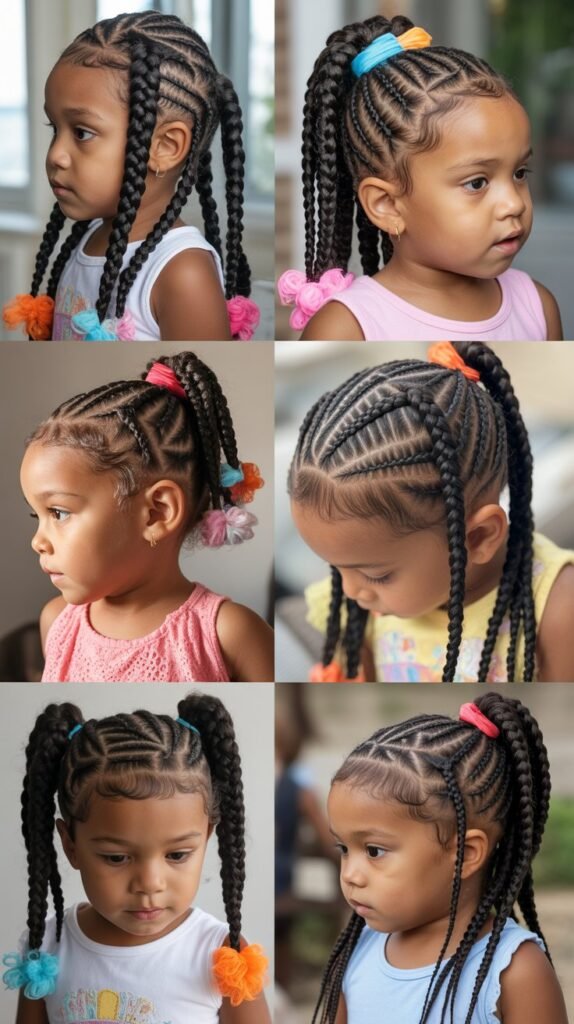
Jumbo braids use thicker sections of hair to create larger, statement-making braids that install faster than smaller styles while still providing excellent protection.
This bold style is perfect for children who want a dramatic look without spending excessive time in the styling chair.
Installation Benefits:
- Jumbo braids typically require only 2-4 hours to complete, significantly less than micro or small braids.
- The larger sections mean fewer individual braids to maintain, simplifying the care routine.
- This style works well for children with thicker hair textures that can support the larger braid size.
- Jumbo braids typically last 3-5 weeks before requiring removal or redoing.
Styling and Care:
- Keep the number of jumbo braids between 6-20 depending on desired thickness and head size.
- Avoid making braids too heavy, as excessive weight can cause discomfort and tension on young scalps.
- Style jumbo braids in high ponytails, space buns, or side sweeps for quick daily variations.
- Refresh the style by dipping braid ends in hot water to reseal and smooth any frizzing.
7. Ghana Braids (Banana Cornrows)

Ghana braids, also known as banana cornrows or Cherokee cornrows, start thin at the hairline and gradually increase in thickness as they extend toward the back of the head.
This distinctive tapered appearance creates visual drama and showcases advanced braiding technique.
Characteristic Features:
- The braids begin with the natural hair at the roots and gradually incorporate extensions for added thickness.
- Extensions are fed into the braid progressively, creating the signature thick-to-thin gradient effect.
- Ghana braids typically follow curved or straight patterns along the scalp for various design options.
- The style provides excellent scalp protection while allowing the scalp to breathe between braids.
Design Options:
- Straight-back Ghana braids create a sleek, streamlined look perfect for athletic activities.
- Side-swept designs add feminine elegance and work beautifully for special occasions.
- Circular or spiral patterns showcase creative artistry and individual expression.
- Combine thick and thin Ghana braids in alternating patterns for unique visual contrast.
8. Triangle Box Braids

Triangle box braids offer a creative twist on traditional box braids by sectioning the hair into triangular parts instead of squares.
This geometric approach creates clean, precise lines that add an artistic element to a classic protective style.
Sectioning Technique:
- Create triangular sections by parting the hair in diagonal lines that intersect to form triangle shapes.
- Ensure triangles are relatively uniform in size for a neat, organized appearance.
- The triangular base is visible at the scalp, adding geometric visual interest to the overall style.
- This sectioning method works with both natural hair braids and styles incorporating extensions.
Style Advantages:
- Triangle sections can make the scalp more visible, which helps with easier moisturizing and maintenance.
- The geometric pattern adds modern flair to a traditional braiding style.
- Triangle box braids can be any length and thickness based on personal preference.
- The style lasts just as long as traditional box braids, typically 4-8 weeks with proper care.
9. Lemonade Braids

Lemonade braids feature long, side-swept cornrows that cascade to one side of the head, creating a sleek, modern look popularized by contemporary culture.
This asymmetrical style is both fashionable and functional, offering face-framing beauty.
Styling Characteristics:
- All cornrows are directed to sweep toward one side, creating dramatic asymmetry.
- The braids can be uniform in size or vary from thin to thick for added dimension.
- Lemonade braids typically extend the full length of the head from front to back.
- The style works beautifully with or without hair extensions depending on desired length.
Maintenance and Duration:
- This style generally lasts 4-6 weeks when properly maintained with regular moisturizing.
- Sleep on a satin pillowcase or wear a bonnet to preserve the side-swept direction.
- Refresh edges weekly with a light edge control product to maintain the sleek appearance.
- The concentrated weight on one side requires occasional breaks to prevent tension on that area.
10. Criss-Cross Cornrows
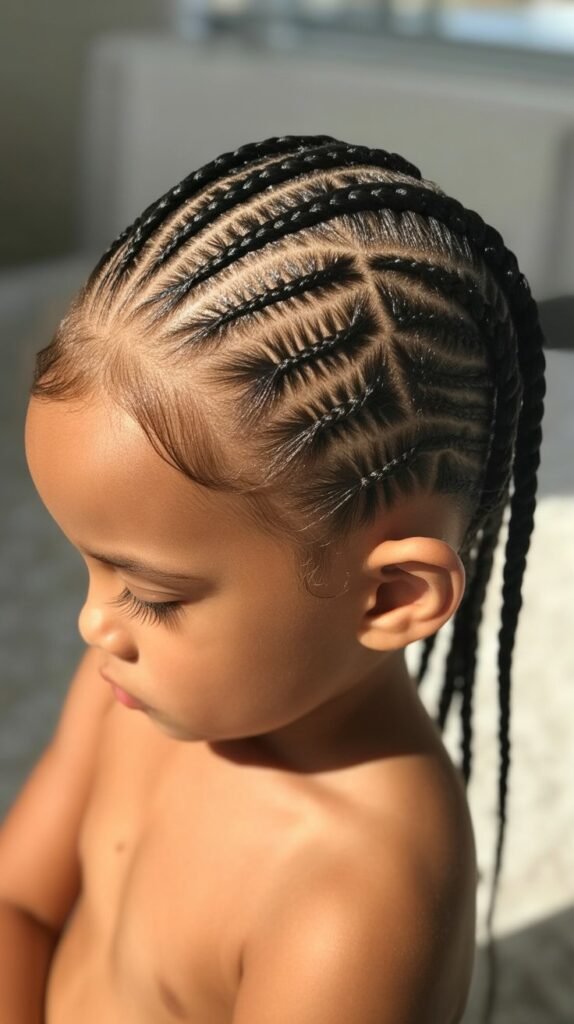
Criss-cross cornrows create stunning visual patterns by braiding sections that weave over and under each other, forming intricate designs that transform the scalp into a canvas.
This artistic style showcases braiding skill while providing excellent protection.
Pattern Possibilities:
- Simple criss-cross patterns involve two cornrows that intersect once or twice across the head.
- Complex designs can include multiple intersections creating lattice or basket-weave effects.
- The criss-cross technique works with straight, curved, or diagonal cornrow directions.
- Patterns can be symmetrical for balanced elegance or asymmetrical for modern artistic appeal.
Installation Process:
- Plan the design carefully before beginning to ensure proper section placement and intersection points.
- Braid the base cornrows first, then carefully weave subsequent cornrows through the existing ones.
- The installation requires patience and skill, typically taking 2-4 hours depending on complexity.
- Secure all cornrow ends properly to prevent unraveling, especially at intersection points.
11. Butterfly Braids
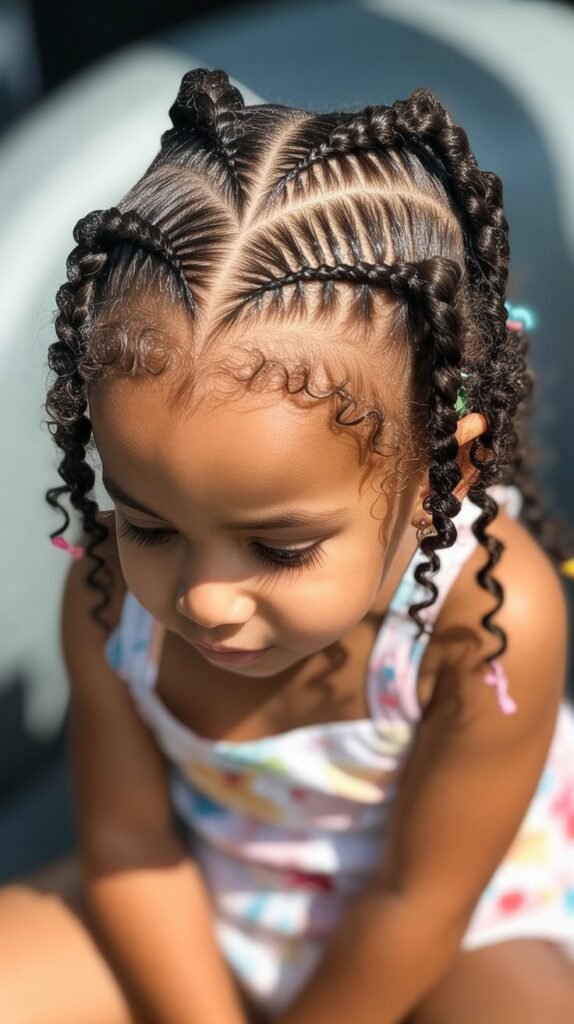
Butterfly braids are characterized by their voluminous, fluffy appearance created by pulling and fluffing out sections of box braids or twists.
This trendy style adds dramatic volume and a carefree, playful vibe perfect for fashion-forward children.
Creation Method:
- Start with traditional box braids or two-strand twists as the foundation.
- Gently pull and separate the edges of each braid or twist to create width and volume.
- Focus on the mid-lengths and ends while leaving the roots intact for scalp protection.
- The result is a fuller, cloud-like appearance that resembles butterfly wings.
Styling Tips:
- Butterfly braids work best on children comfortable with a more voluminous, statement hairstyle.
- The style requires more frequent moisturizing due to increased hair exposure.
- Sleep with a loose bonnet or scarf to maintain volume while preventing excessive frizz.
- This look typically lasts 2-4 weeks as the fluffed texture may require refreshing sooner than traditional braids.
12. Feed-in Braids

Feed-in braids create a natural-looking style by gradually adding small amounts of extension hair as the braid progresses, resulting in less tension at the roots and a more seamless blend.
This technique is healthier for children’s delicate hairlines and scalps.
Technique Benefits:
- The gradual feed-in method significantly reduces tension and pulling at the hairline compared to traditional cornrowing with extensions.
- The braids start with only natural hair at the roots, creating a more natural and less bulky appearance.
- This technique allows for longer-lasting styles without compromising hair health or causing breakage.
- Feed-in braids can be styled in any pattern including straight-back, curved, or designed cornrows.
Application Process:
- Begin each braid with a small section of natural hair at the root.
- Add tiny amounts of extension hair into the braid at regular intervals as you progress.
- The gradual addition creates braids that thicken naturally from root to end.
- This method requires more skill and time but produces superior results for hair health.
13. Bubble Braids
Bubble braids create a playful, segmented appearance by securing hair at intervals along ponytails or braids, then gently pulling each section to create rounded “bubbles.
” This whimsical style is quick to create and perfect for young children.
Creation Steps:
- Start with one or multiple ponytails secured at various points on the head.
- Add small elastic bands down the length of each ponytail at regular intervals (typically 2-3 inches apart).
- Gently pull and fluff each section between elastics to create rounded bubble shapes.
- The result is a fun, dimensional look that resembles a chain of bubbles.
Styling Variations:
- Create two bubble braids on either side of the head for a classic, youthful appearance.
- Make a single high bubble ponytail for a simple everyday style.
- Use colorful elastics to match outfits or create rainbow effects along the bubbles.
- This style works on natural hair without extensions and can be completed in under 15 minutes.
14. Mohawk Braids

Mohawk braids create an edgy, bold statement by concentrating braids or cornrows in a raised center strip while keeping the sides either flat, braided, or shaved.
This daring style appeals to children who love standing out with confident, modern looks.
Design Elements:
- The center section features raised cornrows, box braids, or twisted hair creating height and volume.
- Side sections can be cornrowed flat, left natural and slicked down, or kept very short.
- The mohawk width can vary from narrow (2-3 inches) to wide (4-6 inches) based on preference.
- Add braids in the mohawk section vertically for extra dimension and visual interest.
Styling Options:
- Style the mohawk section up and back for maximum height and drama.
- Create a fanned mohawk by spreading the braids outward at the crown.
- Add colorful extensions or temporary color to the mohawk section for extra pop.
- This style typically lasts 2-4 weeks depending on the specific braiding technique used.
15. Zigzag Part Braids

Zigzag part braids add creative flair to any braided style by replacing straight center parts with dramatic zigzag patterns.
This simple modification transforms ordinary braids into eye-catching designs that showcase attention to detail.
Parting Technique:
- Use a rat-tail comb to create sharp zigzag patterns when sectioning hair before braiding.
- The zigzag can be subtle with small peaks or dramatic with large angular movements.
- This technique works with box braids, cornrows, two-strand twists, or any parted braiding style.
- Plan the zigzag direction carefully to ensure symmetry and visual balance.
Design Applications:
- Create a center zigzag part dividing the head into two sections for braids or twists.
- Incorporate multiple zigzag parts throughout the head for an all-over geometric effect.
- Combine zigzag parts with straight parts to create mixed-pattern visual interest.
- The parting design remains visible throughout the style’s wear period, providing lasting artistic detail.
16. Heart-Shaped Braided Design
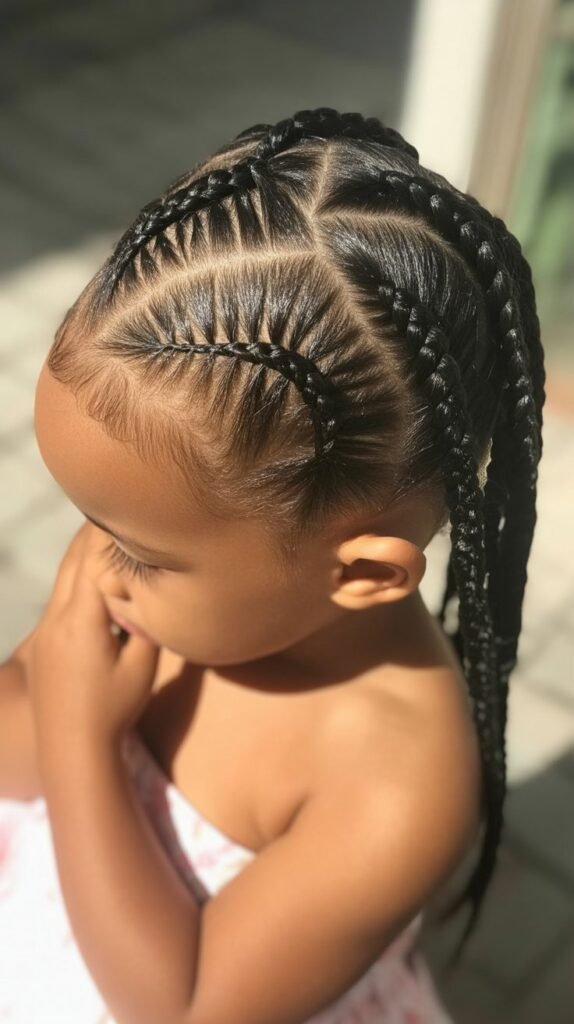
Heart-shaped braided designs use cornrows or flat twists to create heart patterns on the scalp, expressing love and sweetness through hairstyling artistry.
This romantic style is perfect for Valentine’s Day, special occasions, or children who simply love hearts.
Pattern Creation:
- Plan the heart placement carefully, typically at the crown or side of the head for maximum visibility.
- Create the heart outline using cornrows that curve to form the rounded top and pointed bottom.
- Fill the interior of the heart with additional cornrows, flat twists, or leave the space open with styled natural hair.
- The remaining hair can be styled in various ways including ponytails, loose braids, or additional cornrows.
Occasion Suitability:
- Heart designs work beautifully for Valentine’s Day celebrations and parties.
- This style suits birthday photoshoots, family portraits, and other special memories.
- The design typically lasts 1-2 weeks before requiring restyling or refreshing.
- Combine hearts with other patterns like stars or flowers for multi-design artistry.
17. Stitch Braids

Stitch braids create a distinctive horizontal pattern along each cornrow by using a specific braiding technique that produces visible “stitch” marks.
This modern style offers a fresh take on traditional cornrows with added visual texture and definition.
Technique Characteristics:
- The braider uses a specific pulling and tension method to create horizontal indentations along each cornrow.
- The stitches appear as evenly spaced ridges or lines perpendicular to the braid direction.
- This technique requires precision and consistency to achieve uniform stitching throughout all braids.
- Stitch braids typically lie very flat against the scalp with crisp, clean lines.
Styling Considerations:
- The style works best with feed-in extensions for a sleek, extended length.
- Stitch braids can follow any pattern including straight-back, curved, or side-swept designs.
- The detailed stitching adds approximately 30-60 minutes to the installation time.
- This style typically lasts 4-6 weeks with proper edge maintenance and moisturizing.
18. Braided Ponytail Styles

Braided ponytails combine the elegance of gathered hair with the protection and beauty of braiding, creating versatile styles perfect for active children.
These looks keep hair completely secured while offering endless creative possibilities.
Ponytail Variations:
- High braided ponytails create a youthful, energetic appearance perfect for sports and play.
- Low braided ponytails offer sophistication suitable for school and formal occasions.
- Side ponytails provide asymmetrical charm and playful personality.
- Double ponytails (pigtails) deliver classic cuteness that never goes out of style.
Braiding Options:
- Gather natural hair or box braids into a ponytail, then create one large braid from the ponytail.
- Install cornrows leading back to a high point, then leave the remaining hair in box braids or twists.
- Create a braided base leading to the ponytail position for added scalp protection.
- Wrap a single braid around the ponytail base to conceal the elastic for a polished finish.
19. Tribal Braids

Tribal braids showcase various traditional African braiding patterns and techniques, celebrating cultural heritage while providing versatile protective styling.
These braids often combine different sizes, directions, and patterns in one cohesive design.
Cultural Elements:
- Tribal braids may incorporate patterns inspired by various African cultures and traditions.
- The styles often mix different braiding techniques including cornrows, individual braids, and twists.
- Traditional adornments like cowrie shells, beads, thread wrapping, and metal cuffs enhance the cultural aesthetic.
- Each tribal pattern carries historical significance and connects modern styling to ancestral traditions.
Design Features:
- Tribal braids often feature intricate scalp designs with geometric patterns and curves.
- The braids may vary in thickness throughout the head, creating intentional contrast and visual interest.
- Styles typically include both scalp-hugging cornrows and hanging individual braids.
- Installation time varies from 4-8 hours depending on the complexity of the chosen tribal design.
20. Rope Twist Braids
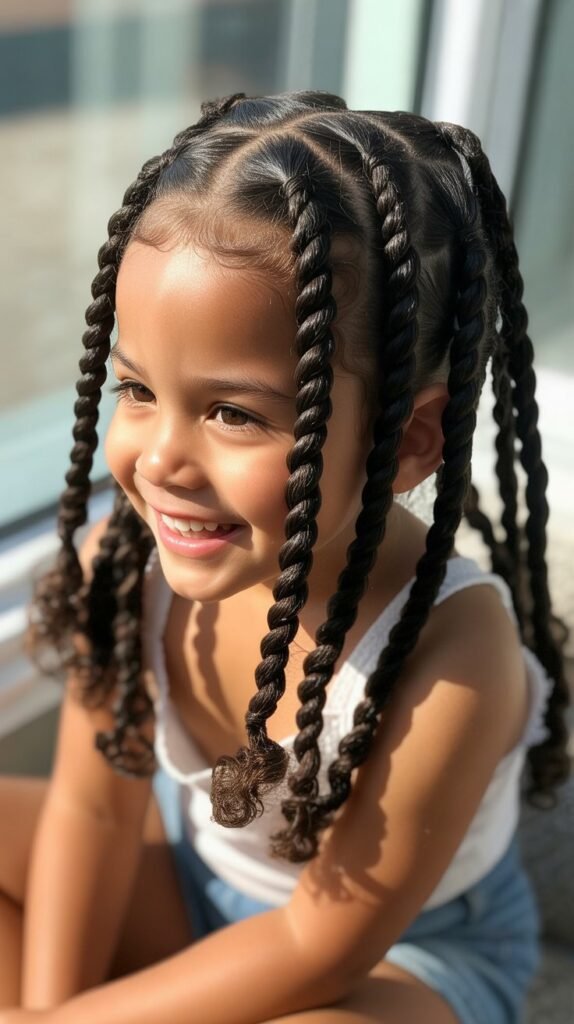
Rope twist braids combine the two-strand twist technique with a tighter, more structured approach that creates rope-like strands with increased definition and hold.
This style offers durability while maintaining a softer appearance than traditional three-strand braids.
Twisting Technique:
- Divide hair into two equal sections and twist each section individually in the same direction.
- Wrap the two twisted sections around each other in the opposite direction to create the rope effect.
- The opposing twist directions create tension that helps the style hold longer.
- Apply twisting cream or gel to each section for enhanced definition and lasting power.
Style Benefits:
- Rope twists are gentler on children’s hair than tight three-strand braiding.
- The technique works beautifully on various hair textures and lengths.
- These twists can be installed throughout the head or used as accents within other styles.
- The style typically lasts 2-4 weeks and can be unraveled for twist-out curls.
21. Knotless Braids
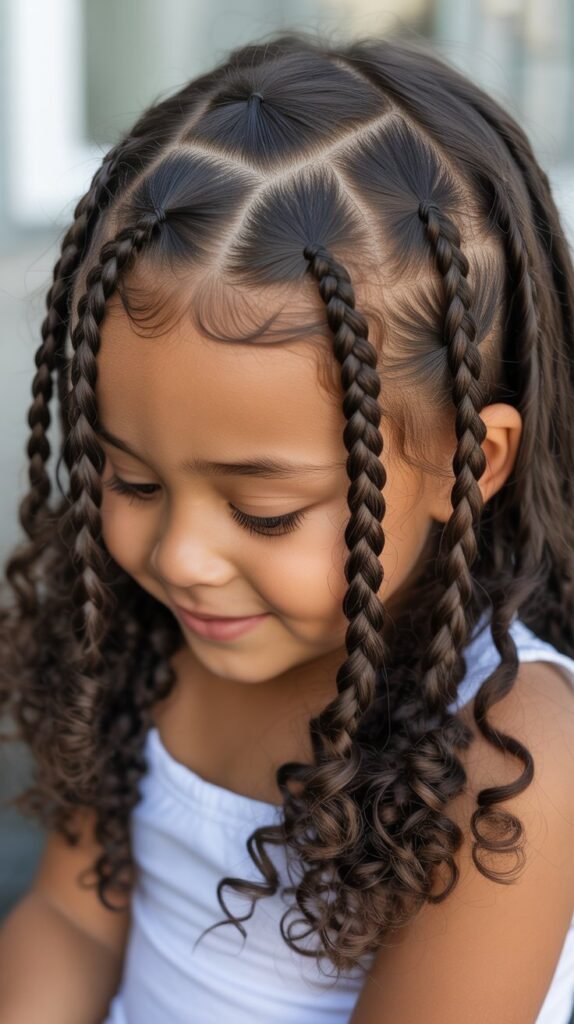
Knotless braids have revolutionized protective styling by eliminating the traditional knot at the base of each braid, significantly reducing tension and promoting healthier hair growth.
This gentler technique starts with natural hair and gradually feeds in extensions.
Technique Advantages:
- The absence of a base knot dramatically reduces tension on the scalp and hairline.
- Children experience less discomfort during installation and while wearing the style.
- The gradual feed-in method creates a more natural appearance at the roots.
- Knotless braids typically cause less breakage and edge damage compared to traditional box braids.
Installation Details:
- The braider begins with natural hair only, creating small braids without adding extension bulk at the root.
- Extension hair is gradually incorporated as the braid progresses down the length.
- Installation takes longer than traditional braids, typically 6-10 hours depending on size and length.
- The style lasts 6-8 weeks with proper maintenance, often longer than traditional braided styles.
22. Side-Swept Cornrows
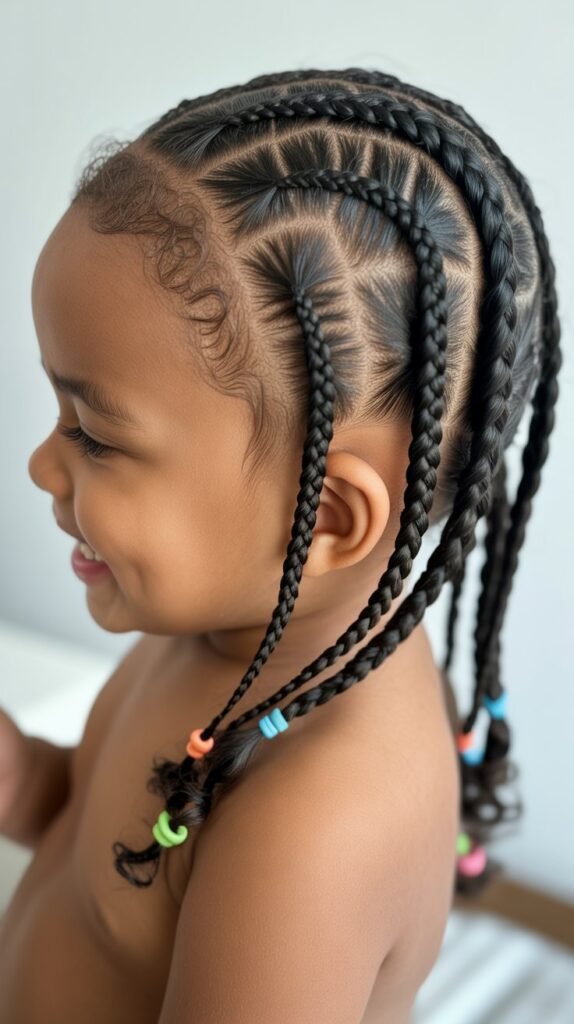
Side-swept cornrows create elegant asymmetry by directing all braids to cascade toward one side of the head, framing the face beautifully and offering a sophisticated yet youthful appearance.
This versatile style suits both casual and formal occasions.
Design Layout:
- All cornrows begin at various points and angle toward one side, typically the left or right.
- Braids can curve gently or follow more dramatic diagonal lines depending on desired effect.
- The swept side can be worn over the shoulder or pinned behind the ear for different looks.
- This style creates natural volume and dimension through the directional braiding pattern.
Styling Versatility:
- Switch the swept direction between wears to distribute tension evenly across the scalp.
- Add decorative pins, clips, or accessories on the swept side for special occasions.
- Tuck the braids into elegant updos or buns for formal events and celebrations.
- The style typically lasts 3-5 weeks with regular moisturizing and edge maintenance.
23. Passion Twists
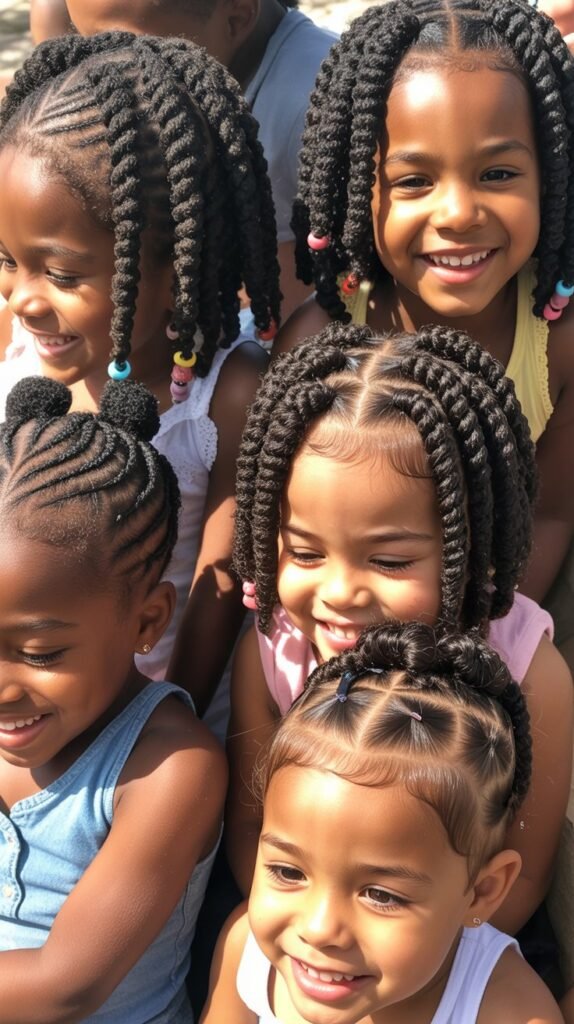
Passion twists are a trendy protective style featuring spring-like, curly twists created using water-wave or bohemian curl crochet hair.
This lightweight style offers volume, movement, and a carefree aesthetic perfect for fashion-conscious children.
Installation Method:
- The style typically uses the crochet method, installing pre-twisted or pre-curled hair onto cornrowed bases.
- Hair is secured to cornrows using a crochet needle, making installation faster than individual twisting methods.
- The result is bouncy, textured twists with natural-looking curl patterns throughout the length.
- Installation typically takes 3-5 hours depending on the desired fullness and length.
Style Characteristics:
- Passion twists are lightweight despite their voluminous appearance, making them comfortable for children.
- The curly texture adds playful movement and dimension that enhances natural beauty.
- This style works well for children with any hair length as the crochet method adds instant length.
- Passion twists typically last 6-8 weeks with proper nighttime protection and moisturizing.
24. Four-Strand Braids
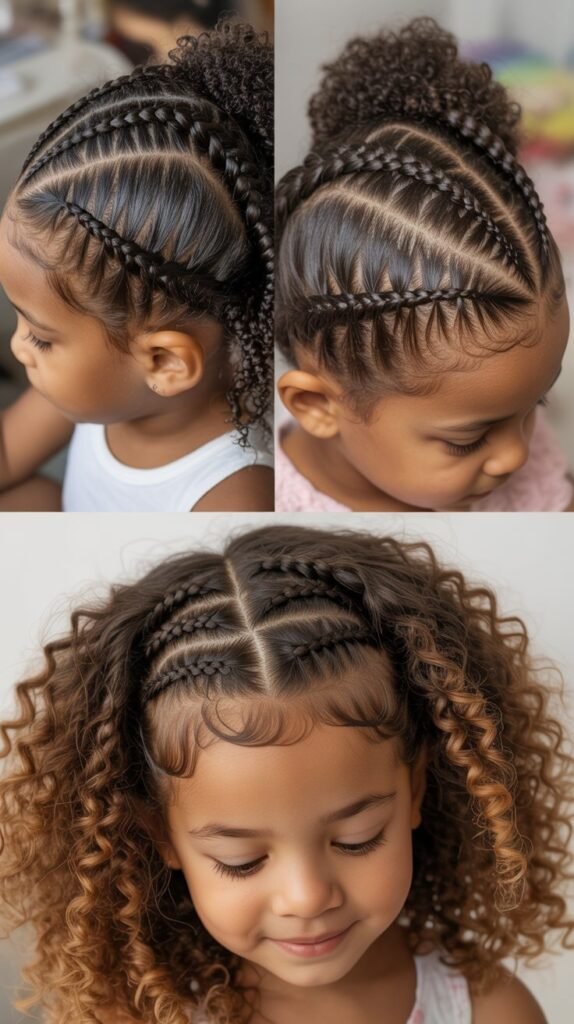
Four-strand braids create intricate, dimensional plaits by weaving four sections of hair instead of the traditional three, resulting in wider, more textured braids with beautiful geometric patterns.
This advanced technique adds special elegance to hairstyling.
Braiding Technique:
- Divide hair into four equal sections instead of the traditional three.
- Follow a specific over-under weaving pattern that alternates throughout the braid length.
- The technique requires practice and coordination but produces stunning visual results.
- Four-strand braids appear fuller and more complex than traditional three-strand braids.
Application Options:
- Use four-strand technique for single statement braids like side braids or ponytail braids.
- Create multiple four-strand braids throughout the head for an all-over intricate look.
- Combine four-strand braids with three-strand braids for textural contrast.
- This technique works beautifully for special occasions requiring extra-special hairstyling.
25. Braided Space Buns

Braided space buns combine playful double buns with braiding techniques, creating an adorable, youthful style perfect for creative children who love fun, eye-catching looks.
This trendy style keeps all hair secured while delivering maximum cuteness.
Creation Process:
- Part hair down the center creating two equal sections on either side of the head.
- Create cornrows, box braids, or twists from the hairline back to the crown on each side.
- Gather the braided sections into two high ponytails positioned symmetrically on the head.
- Twist or wrap each ponytail around its base to form rounded bun shapes, securing with elastics and bobby pins.
Styling Variations:
- Create messy, relaxed buns for a casual, playful everyday appearance.
- Form tight, neat buns for more polished, formal occasions and events.
- Leave some braids loose around the face for a softer, face-framing effect.
- Add colorful scrunchies, bows, or accessories to enhance the playful aesthetic.
26. Micro Braids
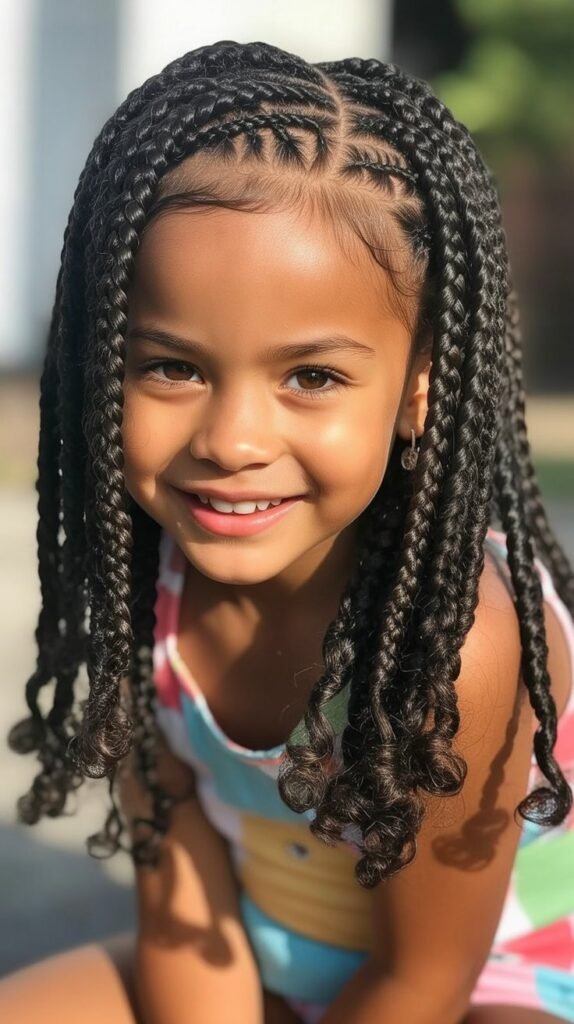
Micro braids are extremely thin, delicate braids that create a full, flowing appearance with incredible versatility and extended wear time.
These tiny braids offer maximum styling flexibility while providing excellent hair protection for patient children.
Installation Details:
- Each micro braid is significantly thinner than regular box braids, typically pencil-width or smaller.
- The entire head can contain 200-500 individual micro braids depending on hair density and desired fullness.
- Installation is time-intensive, often requiring 8-12 hours or multiple sessions to complete.
- The tiny size allows for incredibly versatile styling options throughout the wear period.
Benefits and Considerations:
- Micro braids can be styled in countless ways including ponytails, buns, half-up styles, and elaborate updos.
- The style lasts 2-3 months with proper maintenance, making it ideal for long-term protective styling.
- Removal must be done carefully to prevent breakage, typically taking 2-4 hours.
- This style requires patience during installation, making it better suited for older children who can sit comfortably for extended periods.
27. Mixed Braid Sizes
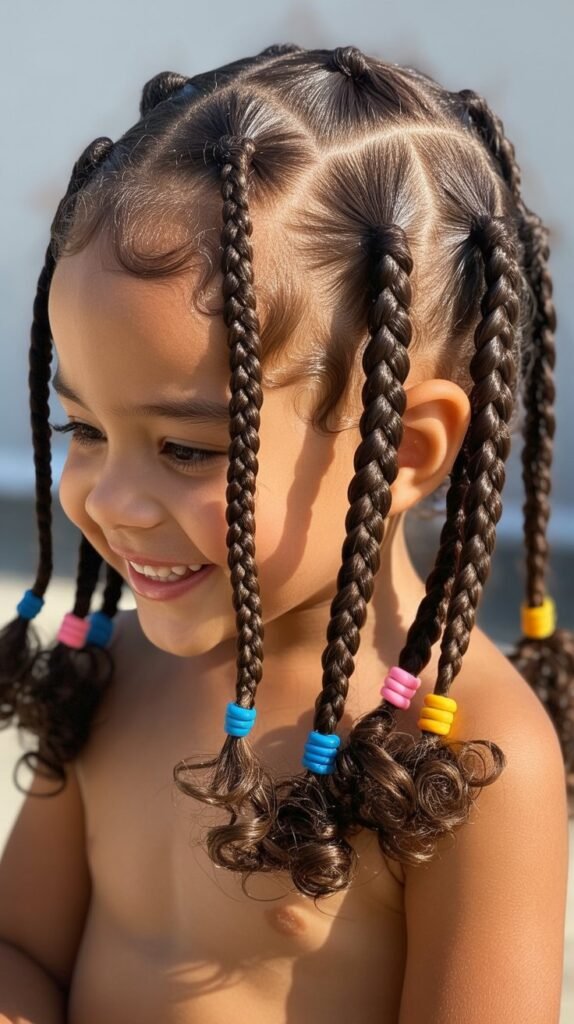
Mixed braid sizes create visual interest and texture by intentionally varying braid thickness throughout a single hairstyle.
This creative approach combines thin, medium, and thick braids in artistic patterns that showcase dimension and individual style.
Design Approach:
- Alternate between thin and thick braids in patterns across the head for intentional contrast.
- Use larger braids in the center or top sections where they’re most visible as focal points.
- Incorporate smaller braids around the hairline and edges for delicate framing.
- The mixed sizes create depth and prevent the flat, uniform appearance of single-size braiding.
Creative Applications:
- Combine different braid sizes with various braiding techniques like cornrows and box braids together.
- Create symmetrical patterns with matched sizes on each side for balanced design.
- Develop asymmetrical arrangements for modern, artistic expressions of personal style.
- This approach works with both natural hair braids and styles incorporating extensions for added length.
Maintenance Considerations:
- Different braid sizes may experience varying levels of frizzing and wear over time.
- Thicker braids typically last longer than thinner ones, so plan for touch-ups on smaller sections.
- Moisturize all braid sizes equally to ensure consistent hair health throughout the style.
- The mixed approach typically lasts 4-6 weeks depending on the specific size combinations used.
Maintenance Tips for All Braided Styles
Proper maintenance is essential for keeping braided hairstyles looking fresh, protecting the natural hair underneath, and promoting healthy hair growth.
Following consistent care routines ensures that braided styles last their full duration while maintaining hair health.
Daily and Weekly Care Routine
Moisturizing Schedule:
- Apply a light oil or leave-in conditioner spray to the scalp every 2-3 days to prevent dryness and itching.
- Focus moisture application on the scalp and roots rather than saturating the braids themselves.
- Use water-based moisturizers that won’t cause buildup or weigh down the braids.
- Massage the scalp gently while moisturizing to stimulate blood circulation and promote healthy growth.
Nighttime Protection:
- Cover braids with a satin or silk bonnet every night to reduce friction and preserve style neatness.
- Alternatively, sleep on satin or silk pillowcases if bonnets are uncomfortable for your child.
- For longer braids, gather them loosely at the top or side before covering to prevent tangling.
- Never sleep with braids down on cotton pillowcases as this causes excessive frizzing and dryness.
Washing Braided Hair
Cleansing Technique:
- Wash braids every 1-2 weeks using diluted shampoo in an applicator bottle for precise application.
- Focus the shampoo on the scalp, gently massaging between the braids without disturbing the style.
- Rinse thoroughly with lukewarm water, ensuring all product is removed to prevent buildup.
- Allow braids to air dry completely or use a hooded dryer on a cool setting to speed the process.
Product Selection:
- Choose sulfate-free shampoos that cleanse without stripping natural oils.
- Consider using dry shampoo between washes to absorb excess oil and refresh the scalp.
- Avoid heavy conditioners directly on braids as they can cause slippage and unraveling.
- Use clarifying shampoo once during the style’s wear period to remove any product buildup.
Edge and Scalp Care
Protecting the Hairline:
- Avoid excessive tension on edges and hairline to prevent traction alopecia and breakage.
- Smooth edges with light gel or edge control rather than pulling them tightly into styles.
- Give edges regular breaks between braided styles by wearing loose, low-tension hairstyles.
- Massage edges nightly with nourishing oils like castor oil to promote strength and growth.
Addressing Scalp Issues:
- If itching occurs, use witch hazel or tea tree oil diluted with water to soothe the scalp.
- Never scratch the scalp aggressively; instead, tap gently or use a pointed applicator bottle.
- Monitor for signs of product buildup, excessive dryness, or irritation requiring style removal.
- Maintain proper scalp hygiene to prevent conditions that could damage the natural hair underneath.
Removal Best Practices:
- Never keep braids in longer than recommended as this can cause matting and severe tangling.
- Remove braids carefully, unraveling from the ends upward to minimize breakage.
- Apply oil or conditioner while removing to add slip and ease the unraveling process.
- Detangle gently after removal using a wide-tooth comb, working from ends to roots.
Post-Removal Care:
- Deep condition the hair immediately after removing braids to restore moisture and elasticity.
- Trim any damaged ends to maintain hair health and prevent split ends from traveling upward.
- Allow hair to rest for at least 1-2 weeks between long-term protective styles when possible.
- Perform protein treatments if hair feels weak or overly elastic after removing braids.
Choosing the Right Braid Style for Your Child
Selecting the perfect braided hairstyle involves considering multiple factors including your child’s age, activity level, hair characteristics, and personal preferences.
Making informed choices ensures both aesthetic satisfaction and optimal hair health.
Age-Appropriate Selections
Toddlers and Preschoolers (Ages 2-5):
- Opt for simpler styles that require less installation time like large twists or basic cornrows.
- Choose lightweight options that won’t burden their tender scalps or cause discomfort.
- Avoid styles requiring extended sitting periods as young children have limited patience.
- Consider styles lasting 1-2 weeks to accommodate their rapidly growing hair and active lifestyles.
School-Age Children (Ages 6-12):
- Select durable styles that withstand playground activities, sports, and daily school routines.
- Involve children in style selection to encourage positive relationships with their natural hair.
- Balance protective benefits with age-appropriate aesthetics that build confidence.
- Choose styles lasting 3-6 weeks to reduce styling frequency during busy school schedules.
Teenagers (Ages 13+):
- Honor their developing personal style preferences and current fashion trends.
- Discuss maintenance responsibilities and ensure they can care for chosen styles independently.
- Consider more complex, time-intensive styles as they can sit comfortably for longer periods.
- Support their experimentation with various looks as they explore self-expression through hairstyling.
Hair Texture and Length Considerations
Hair Texture Matching:
- Fine or delicate textures benefit from lighter styles like two-strand twists or knotless braids.
- Thick, coarse textures can support heavier styles including jumbo braids and extensive cornrow patterns.
- Loose curl patterns may require more frequent moisturizing within braided styles.
- Tighter curl patterns often hold braided styles longer with less slippage and unraveling.
Length Requirements:
- Shorter hair (1-3 inches) works well with cornrows, flat twists, and basic protective styles.
- Medium length (4-6 inches) accommodates most braiding styles with or without extensions.
- Longer hair (7+ inches) offers maximum versatility for all braiding techniques and designs.
- Consider extensions to add length and fullness for styles requiring more hair volume.
Activity Level Assessment
High-Activity Children:
- Select secure styles that stay neat through sports, dancing, swimming, and vigorous play.
- Avoid overly elaborate designs with many accessories that could come loose during activities.
- Choose styles that can be easily covered with hats, helmets, or other protective sports gear.
- Prioritize durability and low-maintenance options that don’t require frequent touch-ups.
Calmer, Less Active Children:
- Explore more delicate, intricate designs that showcase artistic braiding techniques.
- Consider styles with more embellishments and accessories for enhanced visual appeal.
- Select options that may require gentler handling and more careful daily maintenance.
- Balance aesthetic desires with practical considerations for their daily routines.
Seasonal Considerations
Summer Styles:
- Choose styles that keep hair completely off the neck and shoulders for cooling comfort.
- Select water-resistant options if swimming and water activities are planned.
- Opt for lighter braiding techniques that won’t cause excessive scalp sweating.
- Consider styles with easy access to the scalp for regular sunscreen application on parts.
Winter Styles:
- Focus on protective styles that shield hair from harsh cold weather and dry indoor heating.
- Select fuller styles that provide additional warmth and insulation.
- Choose options that fit comfortably under winter hats, hoods, and scarves.
- Prioritize styles requiring less manipulation during cold months when hair is more brittle.
Benefits of Braided Hairstyles for Natural Hair
Braided hairstyles offer numerous advantages beyond their visual appeal, providing practical benefits that support healthy hair growth and development in children.
Understanding these benefits helps parents make informed styling decisions.
Hair Protection and Growth
Reduced Manipulation:
- Braided styles keep hair in a set position, minimizing daily combing, brushing, and styling stress.
- Less manipulation means fewer opportunities for breakage, particularly at fragile areas like edges and ends.
- The protective nature allows hair to grow without interference from constant styling.
- Children’s hair experiences less mechanical damage from styling tools and accessories.
Length Retention:
- Protective braiding keeps ends tucked away and shielded from environmental damage.
- The reduced exposure to friction, heat, and weather elements promotes length retention.
- Braids prevent split ends from traveling upward and causing more extensive damage.
- Many parents notice significant growth after consistent protective styling routines.
Moisture Retention:
- Braided styles help seal in moisture applied during installation and maintenance.
- The hair structure remains protected from moisture-stripping elements like wind and sun.
- Regular moisturizing routines become simpler with easy access to the scalp between braids.
- Natural oils distribute more effectively along the hair shaft within protective styles.
Time-Saving Convenience
Morning Routine Simplification:
- Braided styles eliminate daily styling battles, reducing morning stress for busy families.
- Children can wake up with their hair already styled and ready for school activities.
- Parents save significant time not having to detangle, style, and perfect hair each morning.
- The extra time allows for more relaxed mornings and better preparation for the day.
Extended Wear Duration:
- Most braided styles last weeks rather than days, providing excellent return on installation time.
- Families need fewer salon visits or home styling sessions compared to daily styling routines.
- The longevity makes braided styles cost-effective despite higher initial time or financial investment.
- Children enjoy consistent, neat appearances without constant styling interruptions.
Building Hair Care Skills and Confidence
Cultural Connection:
- Braided styles celebrate African heritage and cultural traditions passed through generations.
- Children develop pride in their natural hair texture and its versatile styling possibilities.
- Learning about different braiding traditions builds cultural awareness and appreciation.
- These styles counter negative messaging about natural hair textures in broader society.
Self-Esteem Development:
- Beautiful, well-maintained braids help children feel confident and attractive.
- The variety of styles allows for creative self-expression and individuality.
- Compliments and positive attention reinforce healthy relationships with their natural hair.
- Children learn that their natural texture is beautiful and worthy of celebration.
Independence and Responsibility:
- As children age, they learn to maintain their braided styles through moisturizing and protection.
- They develop understanding of proper hair care practices that will benefit them lifelong.
- Older children and teens can eventually learn basic braiding skills themselves.
- The care routines teach responsibility and self-care habits extending beyond hairstyling.
Professional vs. DIY Braiding
Deciding whether to seek professional braiding services or learn to braid at home involves weighing various factors including skill level, time availability, budget, and desired complexity.
Both approaches offer distinct advantages for different family situations.
When to Choose Professional Braiding
Complex Design Requirements:
- Intricate patterns like tribal braids, stitch braids, or elaborate cornrow designs benefit from professional expertise.
- Advanced techniques including knotless braids and feed-in methods require specialized skills and practice.
- Symmetrical designs and precise patterns achieve better results with experienced braiders.
- First-time installations of new styles often benefit from professional guidance and execution.
Time Constraints:
- Professional braiders work significantly faster than beginners, completing styles in less time.
- Busy families with limited availability benefit from efficient professional installation.
- Working parents may prefer paying for professional services rather than spending hours learning techniques.
- The time saved can be valuable for families juggling multiple children and responsibilities.
Special Occasions:
- Important events like weddings, parties, and photo sessions warrant professional-quality results.
- Experienced braiders ensure styles look polished and last through entire events without issues.
- Professional stylists can recommend appropriate styles for specific occasions and outfits.
- The investment ensures confidence that the hairstyle will meet expectations for important moments.
Benefits of Learning DIY Braiding
Cost Savings:
- Learning to braid at home eliminates recurring salon costs for regular style installations.
- Initial investment in quality products and tools pays for itself after just a few styling sessions.
- Long-term savings become significant for families with multiple children requiring regular braiding.
- The skills remain useful throughout the child’s entire life, providing lasting value.
Bonding Opportunities:
- Braiding sessions create quality one-on-one time between parent and child.
- The focused attention helps children feel valued and cared for beyond just hairstyling.
- Conversations during braiding sessions strengthen relationships and open communication.
- The shared experience creates positive memories associated with hair care routines.
Flexibility and Convenience:
- Home braiding allows styling on your own schedule without appointment constraints.
- Quick touch-ups and repairs can be done immediately rather than waiting for salon availability.
- Children can wear comfortable clothes and take breaks as needed during longer sessions.
- The convenience of home styling accommodates children with sensory sensitivities or anxiety about salons.
Getting Started with DIY Braiding
Essential Tools and Products:
- Rat-tail comb for precise parting and sectioning.
- Wide-tooth comb for gentle detangling before braiding.
- Hair clips or elastics to secure sections while working.
- Edge control or light gel for smoothing and holding braids.
- Moisturizing leave-in conditioner and natural oils for hair prep.
- Bobby pins for securing cornrow ends and creating updos.
Learning Resources:
- Video tutorials on platforms like YouTube offer step-by-step visual guidance for various techniques.
- Online braiding courses provide structured learning paths from basic to advanced skills.
- Social media platforms showcase inspiration and tips from experienced braiders worldwide.
- Practice on mannequin heads before working on your child’s hair to build confidence and skill.
Skill Development Timeline:
- Basic cornrows and simple braiding techniques typically take 2-4 weeks of regular practice to master.
- Intermediate skills like box braids and two-strand twists develop within 1-3 months of consistent practice.
- Advanced techniques including knotless braids and intricate designs may require 6-12 months to perfect.
- Patience and persistence are essential as braiding speed and quality improve with experience.
Addressing Common Concerns and Challenges
Parents often encounter specific challenges and concerns when implementing braided hairstyles for their children.
Understanding solutions to common issues ensures positive experiences and optimal results.
Dealing with Tender-Headed Children
Pain Prevention Strategies:
- Choose techniques naturally causing less tension like knotless braids, feed-in braids, or two-strand twists.
- Take breaks during installation, allowing children to rest, stretch, and refocus their attention.
- Apply numbing spray or cooling gel to the scalp before braiding to reduce sensitivity.
- Ensure braids are not too tight by checking that you can comfortably slide a finger under the braid at the root.
Distraction Techniques:
- Allow children to watch favorite shows, movies, or videos during braiding sessions.
- Provide special treats, snacks, or activities reserved exclusively for braiding time.
- Break longer sessions into multiple shorter appointments spread across days.
- Praise cooperation and progress frequently to maintain positive associations with the process.
Managing Allergic Reactions and Sensitivities
Product Safety:
- Perform patch tests on new products 24-48 hours before full application.
- Choose hypoallergenic, fragrance-free products designed for sensitive skin.
- Read ingredient labels carefully, avoiding known allergens and irritants.
- Consult with dermatologists if your child has known scalp sensitivities or conditions.
Extension Hair Considerations:
- Some children react to synthetic extension fibers, requiring human hair alternatives.
- Pre-treat synthetic hair by washing it before installation to remove coating chemicals.
- Consider shorter wear periods if irritation develops despite product adjustments.
- Monitor the scalp regularly for signs of reaction including redness, bumps, or excessive itching.
Preventing and Addressing Traction Alopecia
Tension Management:
- Avoid styles that pull excessively on edges, hairline, and crown areas.
- Rotate braiding patterns and directions to distribute tension across different scalp areas.
- Take regular breaks between protective styles, allowing hair to rest and recover.
- Choose gentler installation techniques prioritizing hair health over style longevity.
Warning Signs:
- Monitor for hair loss, thinning, or bald patches particularly around the hairline and temples.
- Watch for red bumps, soreness, or persistent pain indicating excessive tension.
- Notice if edges appear shorter or thinner compared to before starting protective styling.
- Take immediate action by removing styles and resting hair if warning signs appear.
Recovery and Prevention:
- Massage affected areas nightly with growth-promoting oils like castor or peppermint oil.
- Avoid tight styles on compromised areas, allowing them to rest and recover completely.
- Consult with dermatologists or trichologists for persistent hair loss concerns.
- Prioritize hair health over aesthetics, choosing gentler styles that protect rather than damage.
Handling Social and School Situations
Dress Code Compliance:
- Review school policies regarding hairstyles, colors, and accessories before installation.
- Choose conservative, neat styles for schools with stricter appearance guidelines.
- Advocate respectfully if policies unfairly target or discriminate against natural hair textures and styles.
- Educate school administrators about cultural significance and protective nature of braided styles.
Addressing Unwanted Attention:
- Prepare children with confident responses to questions or comments about their hair.
- Teach them that their hair is beautiful and they don’t owe explanations to everyone.
- Report any bullying or discriminatory treatment to teachers and administrators immediately.
- Build confidence through positive reinforcement and celebration of their natural beauty.
Conclusion
The journey through these 27 Adorable Braided Hairstyles for Kids with Natural Hair reveals the incredible versatility, beauty, and practicality of protective braiding for children.
From classic box braids and cornrows to trendy styles like passion twists and butterfly braids, each option offers unique benefits tailored to different needs, preferences, and lifestyles.
These styles celebrate the natural texture and beauty of children’s hair while providing essential protection that promotes healthy growth and length retention.
Beyond the aesthetic appeal, braided hairstyles create opportunities for cultural connection, family bonding, and the development of confidence in children as they learn to embrace and celebrate their natural hair.
Whether you choose to visit professional braiders or embark on learning these techniques yourself, the investment in your child’s hair care routine pays dividends through simplified mornings, reduced daily manipulation, and the joy of seeing your child shine with confidence in beautiful, well-maintained braids.
Remember that the best hairstyle is one that balances beauty, comfort, and hair health while making your child feel special, valued, and proud of their natural crown.
As you explore these styling options, prioritize your child’s comfort and hair health above all else, ensuring that each braided style contributes positively to their self-image and relationship with their beautiful natural hair.