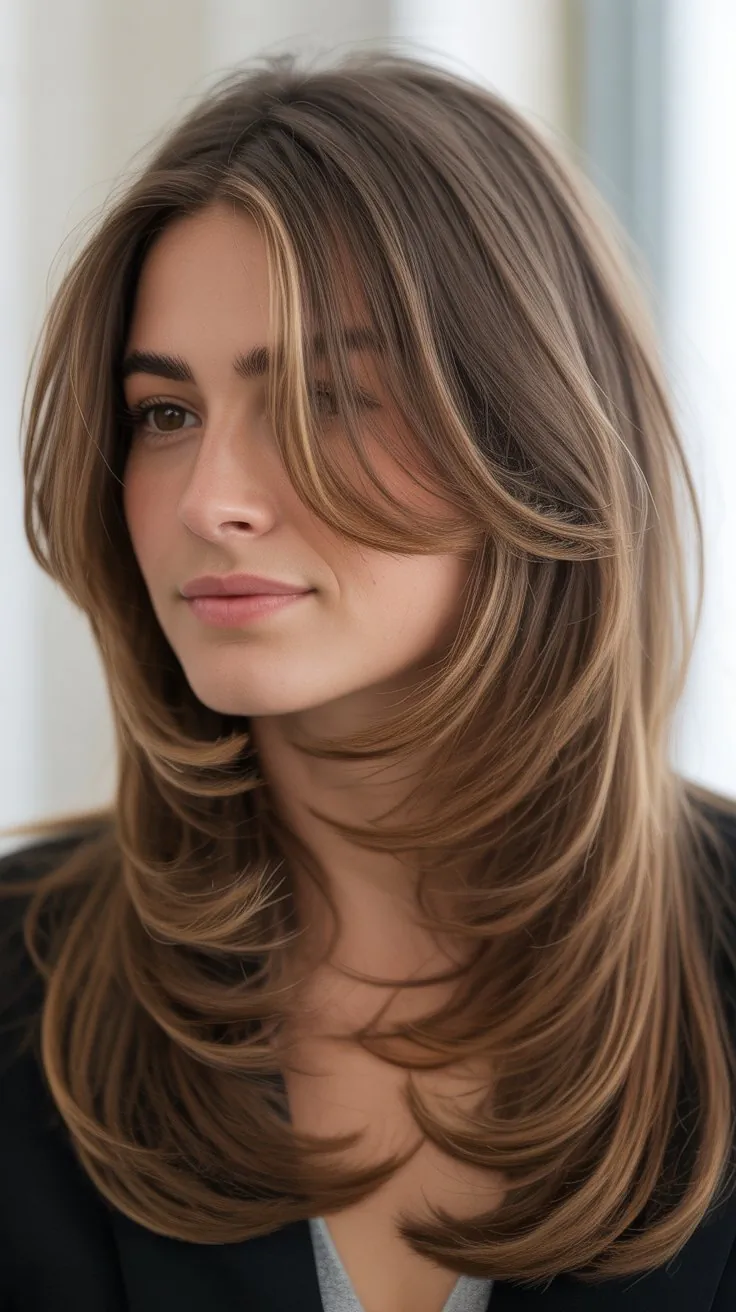
Long hair doesn’t have to feel heavy or one-dimensional.
When you’re ready to transform your length into something more dynamic and face-flattering, layered cuts offer the perfect solution.
The right layering technique can soften your features, add movement to lifeless strands, and create dimension that catches light beautifully.
Whether you’re dealing with thick hair that needs weight removal or fine hair that craves volume, strategic layers work magic.
This comprehensive guide to 27 Chic Long Layered Cuts for a Softer Front Look explores every style possibility from subtle face-framing pieces to dramatic cascading layers.
You’ll discover how different cutting techniques affect your overall appearance, which styles complement various face shapes, and how to communicate your vision to your stylist.
From curtain bangs paired with long layers to modern shag interpretations and classic feathered looks, each option presents a unique way to enhance your natural beauty while maintaining your cherished length.
Get ready to find the layered cut that transforms your hair from ordinary to extraordinary.
1. Face-Framing Layers with Middle Part
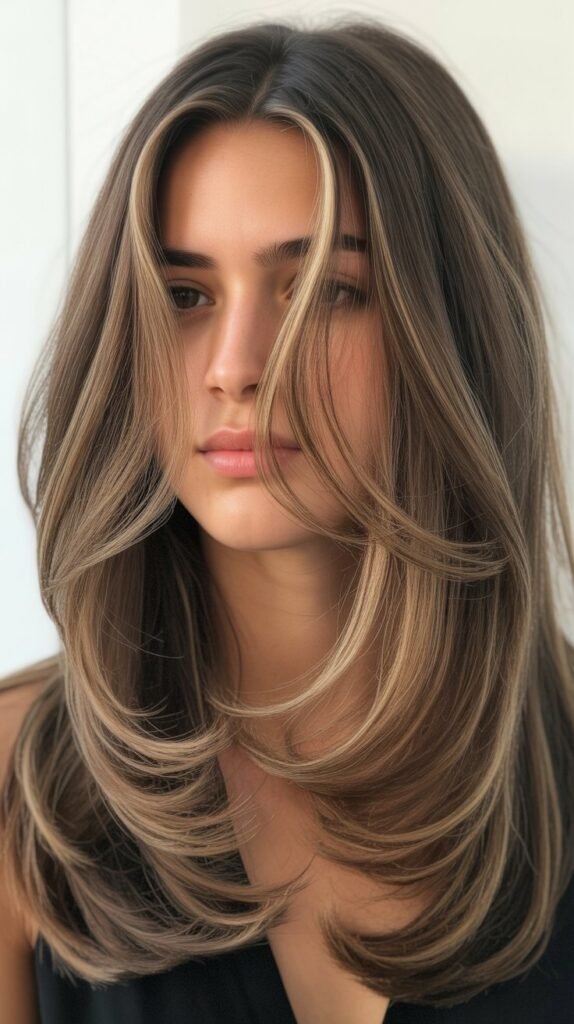
Face-framing layers concentrate shorter pieces around your face while keeping the back length intact.
This technique draws attention to your eyes and cheekbones while creating a softer, more approachable appearance.
- Face-framing layers typically start at chin or cheekbone level and gradually blend into longer lengths.
- The middle part creates symmetry that works exceptionally well for oval and heart-shaped faces.
- These layers add movement without sacrificing overall length or requiring extensive maintenance.
- Styling becomes effortless as the layers naturally fall forward to softly frame your features.
- This cut works beautifully on all hair textures from straight to wavy to curly patterns.
2. Curtain Bangs with Long Layers
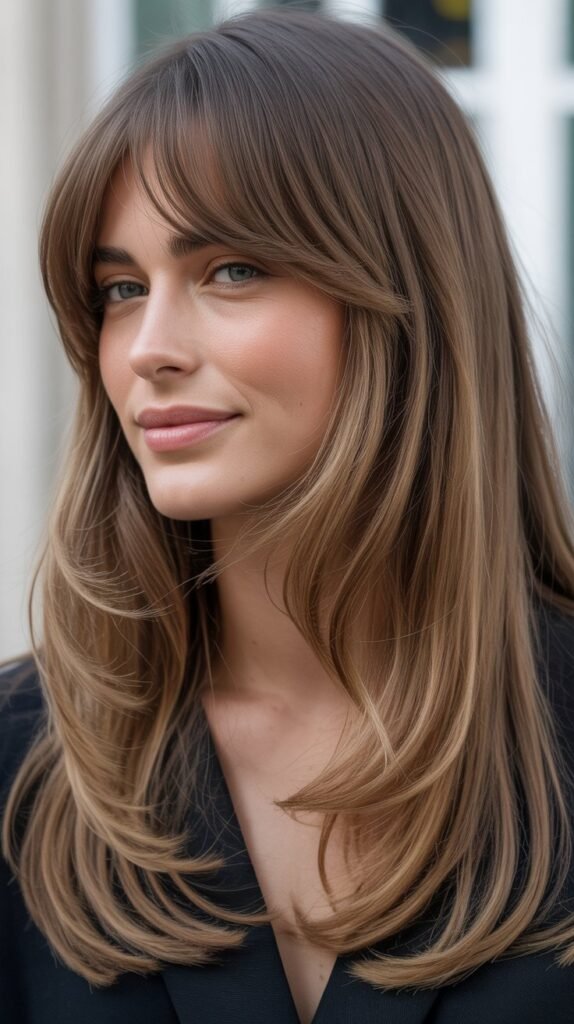
Curtain bangs paired with long layers deliver a romantic, effortless vibe that’s currently trending across all age groups.
The bangs part down the middle and sweep to each side, creating a soft frame.
- Curtain bangs typically graze the cheekbones or eyelashes, creating a flattering focal point.
- The combination works to elongate round faces while softening angular jawlines.
- Long layers beneath add body and prevent the style from looking bottom-heavy.
- This style requires minimal morning effort as the bangs naturally fall into place with simple blow-drying.
- Regular trims every six to eight weeks keep the bangs at the optimal length.
3. Cascading Layers for Volume
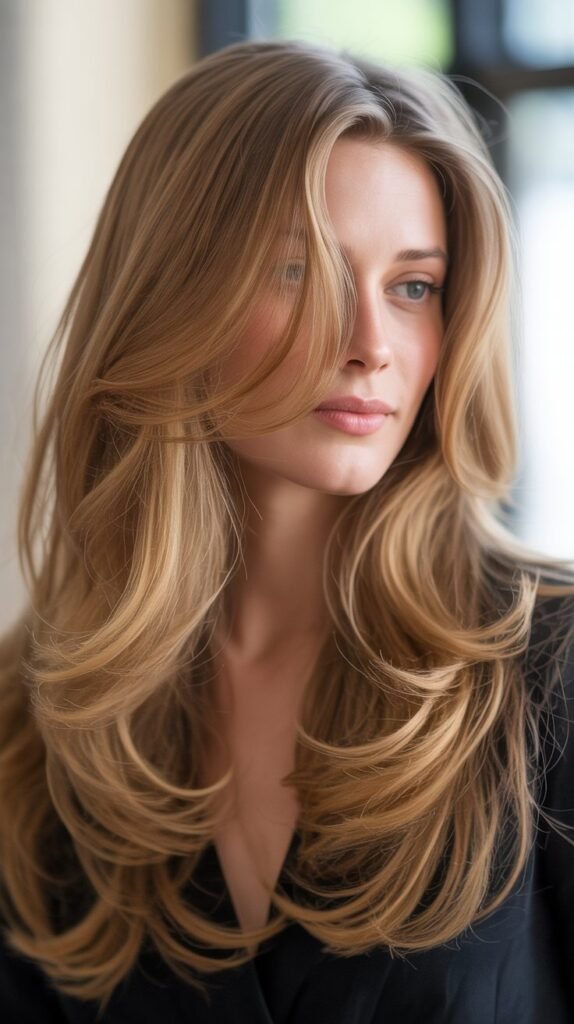
Cascading layers involve cutting multiple distinct levels throughout the hair length, creating a waterfall effect. This technique adds significant volume and dimension to hair that appears flat or lifeless.
- The layers start shorter at the crown and progressively lengthen toward the ends.
- This structure creates natural lift at the roots without requiring excessive product use.
- Cascading layers work exceptionally well for thick hair by removing bulk and weight.
- The dimensional appearance makes fine hair look substantially fuller and more abundant.
- Styling products like volumizing mousse enhance the layered effect beautifully.
4. Subtle Long Layers with Deep Side Part
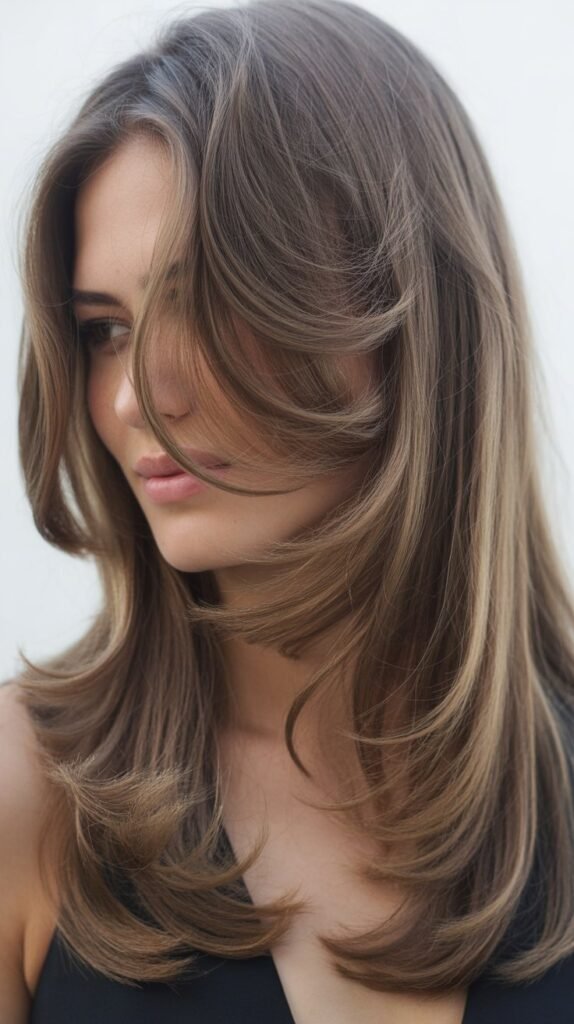
Subtle long layers provide dimension without dramatic length variation, perfect for those wanting a conservative change. The deep side part adds asymmetry that modernizes the classic long hair look.
- Layers begin several inches below the shortest point and blend seamlessly into the length.
- The deep side part creates volume on one side while the other sweeps elegantly across.
- This approach suits professional environments where dramatic styles might feel inappropriate.
- Maintenance remains minimal as the subtle layering grows out gracefully without obvious demarcation lines.
- The style flatters square and rectangular face shapes by softening angular features.
5. Feathered Layers for Movement
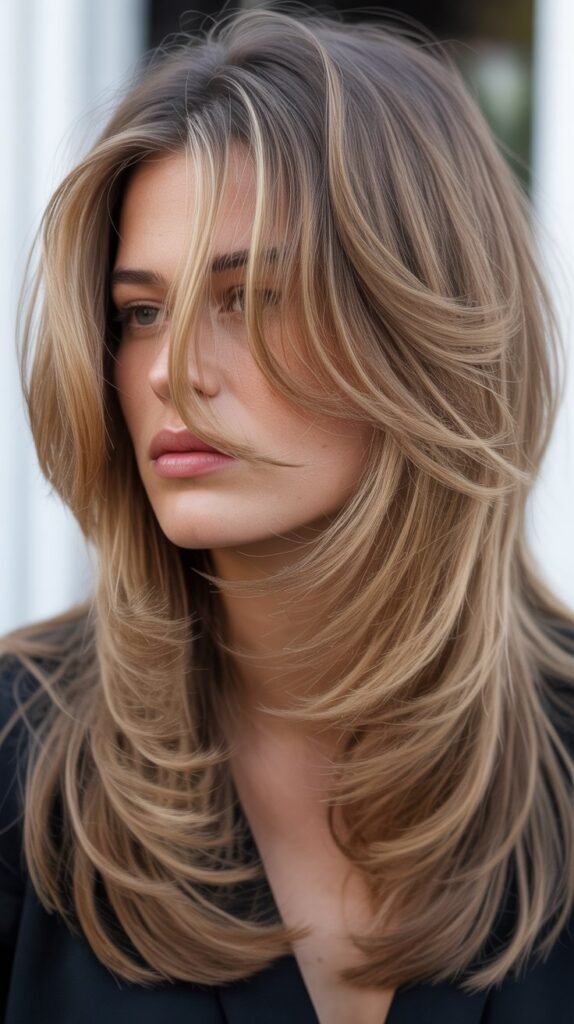
Feathered layers incorporate a razor or point-cutting technique that creates soft, wispy ends. This method produces incredible movement and a lighter feel throughout the hair.
- The feathering technique removes weight from the ends while creating texture and separation.
- Hair moves more freely and bounces naturally when walking or turning your head.
- This style particularly benefits thick, coarse hair that tends to feel heavy.
- The wispy ends create a softer, more romantic appearance than blunt-cut layers.
- Regular conditioning treatments maintain the delicate ends and prevent splitting.
6. V-Shaped Layers for Back Interest
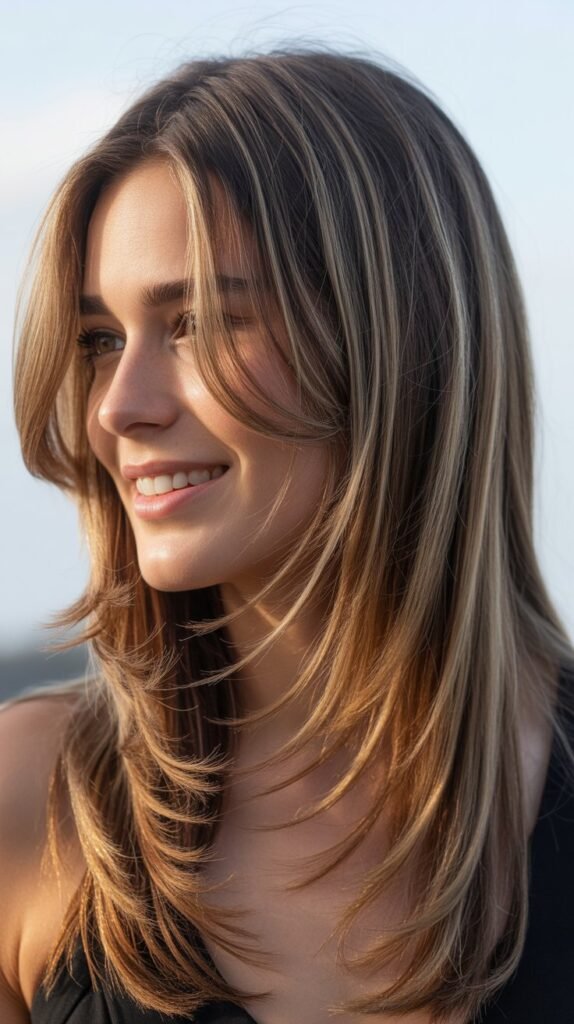
V-shaped layers create a distinctive pointed shape at the back when hair is viewed from behind. The layers gradually angle downward from the sides to the center back.
- This cutting technique maintains maximum length at the center back while removing bulk.
- The V-shape creates visual interest and prevents hair from appearing shapeless or triangular.
- Front layers frame the face while the back creates a dramatic, elegant silhouette.
- The style works beautifully for special occasions, weddings, and formal events.
- Straightening irons or blow-drying emphasize the V-shape structure effectively.
7. Choppy Layers for Edgy Texture
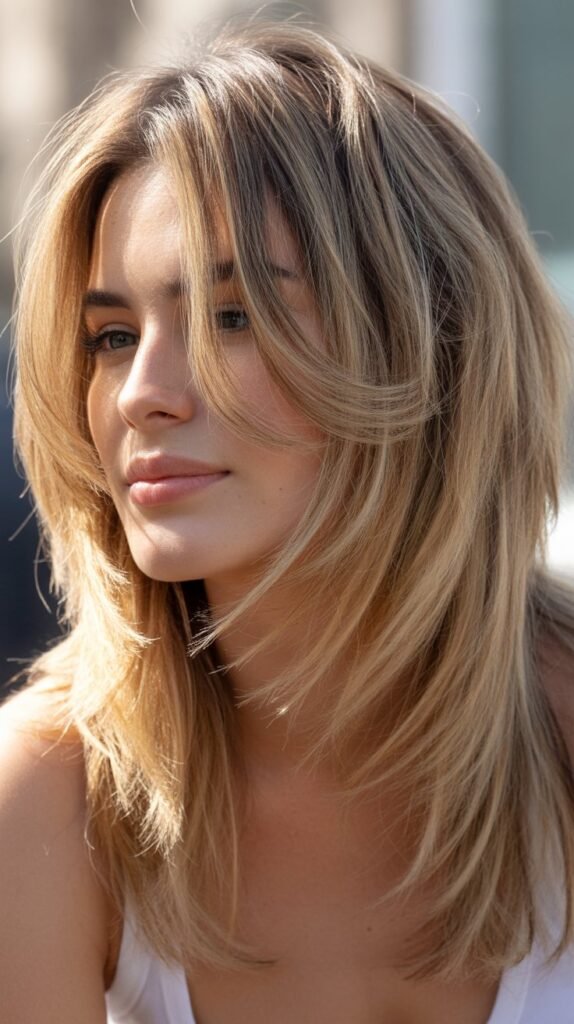
Choppy layers use intentionally uneven cutting to create an edgy, modern aesthetic. This technique delivers significant texture and a more rebellious appearance than traditional layering.
- The uneven cutting creates distinct separation between sections rather than smooth blending.
- Choppy layers work exceptionally well for creating that effortless, undone look.
- This style suits straight to slightly wavy hair textures best for maximum impact.
- Texturizing products like sea salt spray or dry texture spray enhance the choppy effect.
- The edgy appearance works for creative professionals and those wanting a fashion-forward look.
8. Butterfly Layers for Width and Body
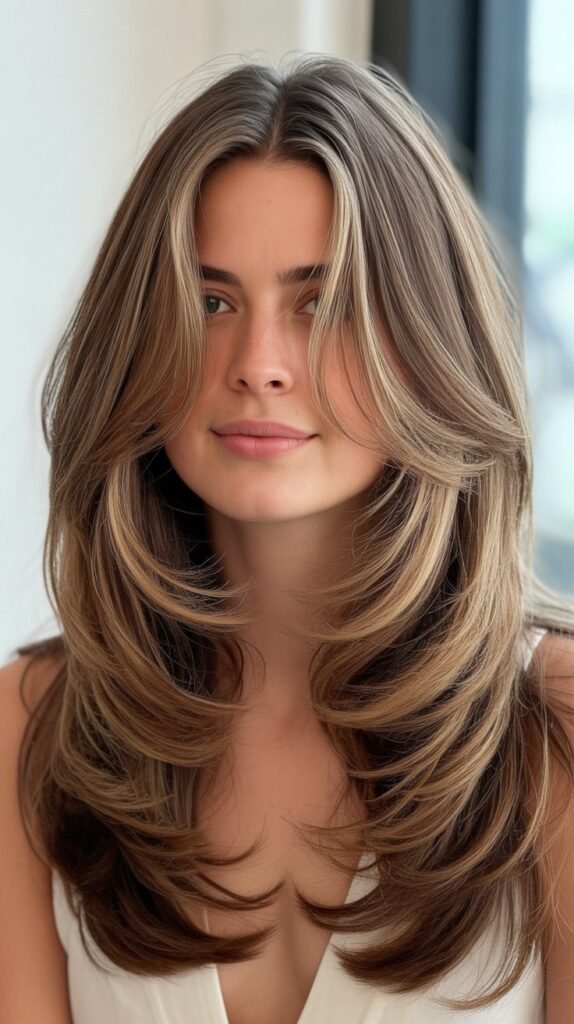
Butterfly layers concentrate shorter layers around the crown and face while maintaining length elsewhere. This creates a “butterfly wing” effect that adds width and body to the upper portion.
- The technique involves cutting shorter layers that start at the crown and extend outward.
- Butterfly layers create beautiful volume for fine or thin hair types needing body.
- The width at the top balances out wider hips or bottom-heavy body proportions.
- This style became popular through social media and remains highly requested in salons.
- Blow-drying with a round brush maximizes the volumizing effect of butterfly layers.
9. Soft Graduated Layers
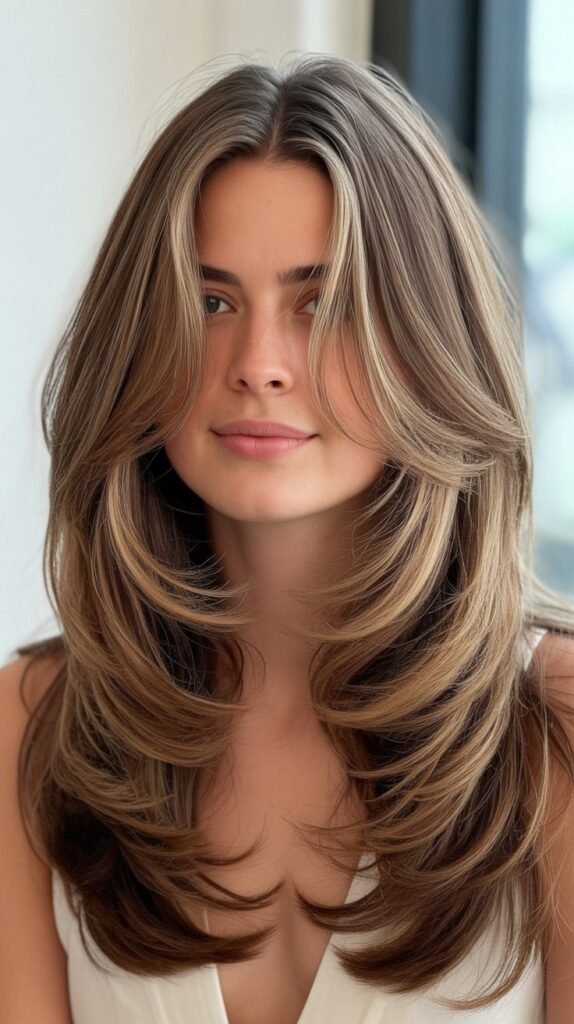
Soft graduated layers feature gentle progression from shorter to longer lengths without dramatic steps. This creates a harmonious, flowing appearance that suits conservative preferences.
- The graduation occurs so gradually that individual layers aren’t distinctly visible.
- This technique creates dimension while maintaining a polished, sophisticated appearance.
- Soft graduated layers suit all face shapes as the subtlety adapts to any feature set.
- The style grows out beautifully without requiring frequent maintenance appointments.
- Hair appears healthier as the graduated structure prevents that stringy, thin-ended look.
10. Long Shag with Layered Fringe
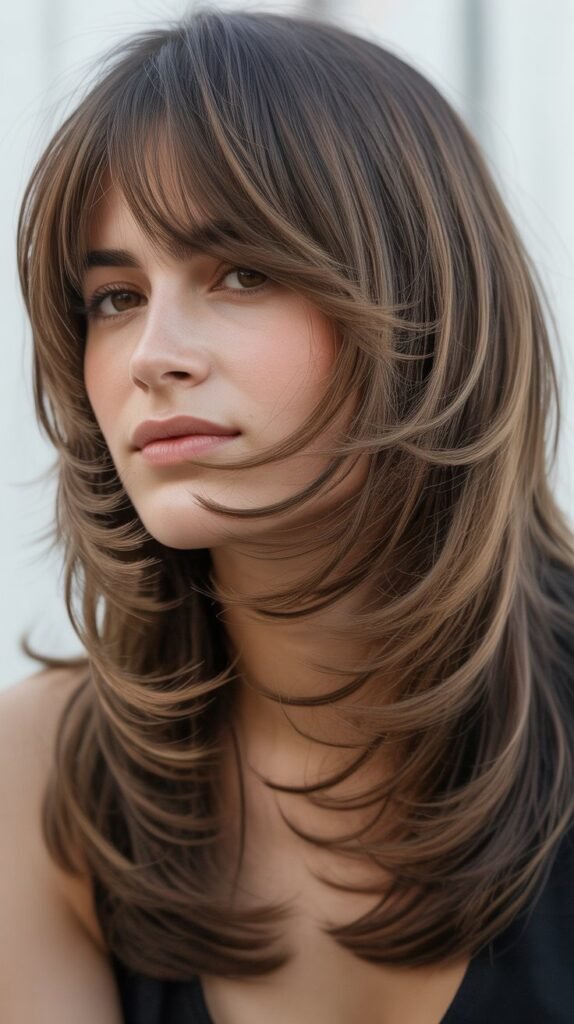
The long shag combines multiple layering techniques with textured fringe for a bohemian, carefree vibe. This modern interpretation of the classic shag works beautifully on long hair.
- Layers throughout create significant texture while the fringe adds face-framing softness.
- The shag technique works particularly well for creating volume in fine hair.
- This style embraces natural texture rather than fighting against it.
- Morning styling becomes quick as the shag looks best with minimal effort.
- The bohemian aesthetic pairs well with casual, creative, or artistic personal styles.
11. Razored Layers for Sleek Texture
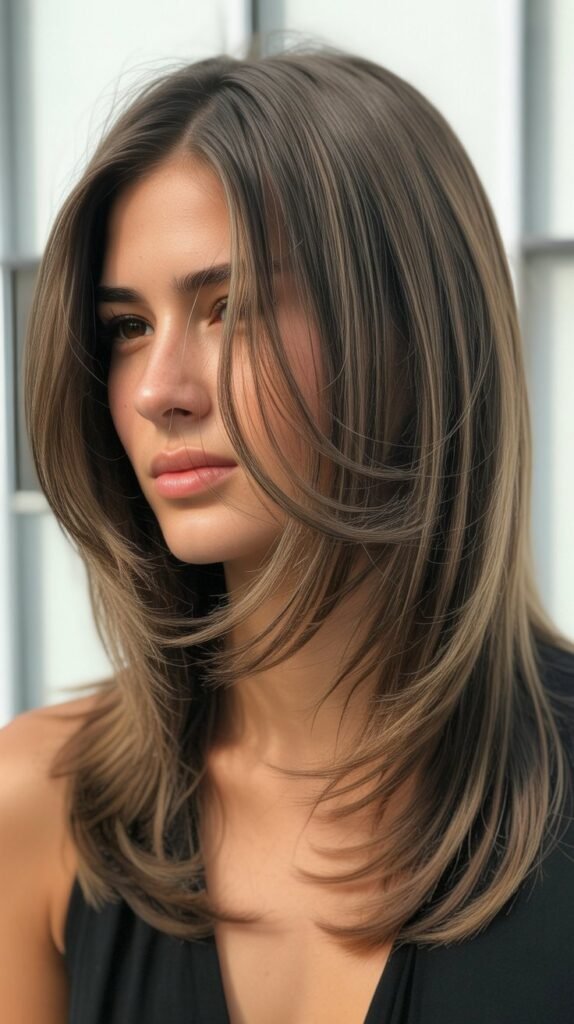
Razored layers use a straight razor instead of scissors to create ultra-thin, sleek ends. This technique produces a different texture than traditional cutting methods.
- The razor creates feathered ends that lie flatter and smoother than scissor-cut layers.
- This method works exceptionally well for removing bulk from thick, coarse hair types.
- Razored layers create a more modern, editorial appearance than conventional layering.
- The technique requires a skilled stylist experienced with razor cutting to avoid damage.
- Regular deep conditioning maintains the delicate razored ends in optimal condition.
12. Asymmetrical Layers for Modern Edge
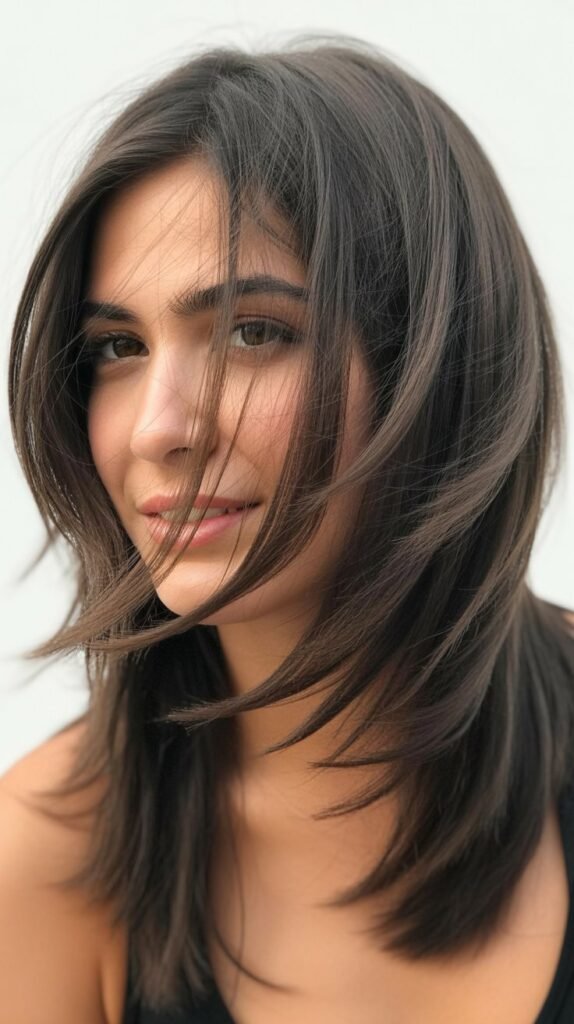
Asymmetrical layers feature intentionally uneven lengths on each side of the head. This creates visual interest and a contemporary, fashion-forward appearance.
- One side typically features shorter layers while the other maintains more length.
- The asymmetry draws attention and creates a bold, confident statement.
- This style particularly flatters those with asymmetrical facial features by creating balance.
- Styling flexibility allows wearing hair to either side or switching the part position.
- The modern edge works well for fashion industry professionals and creative individuals.
13. Blended Layers for Natural Flow
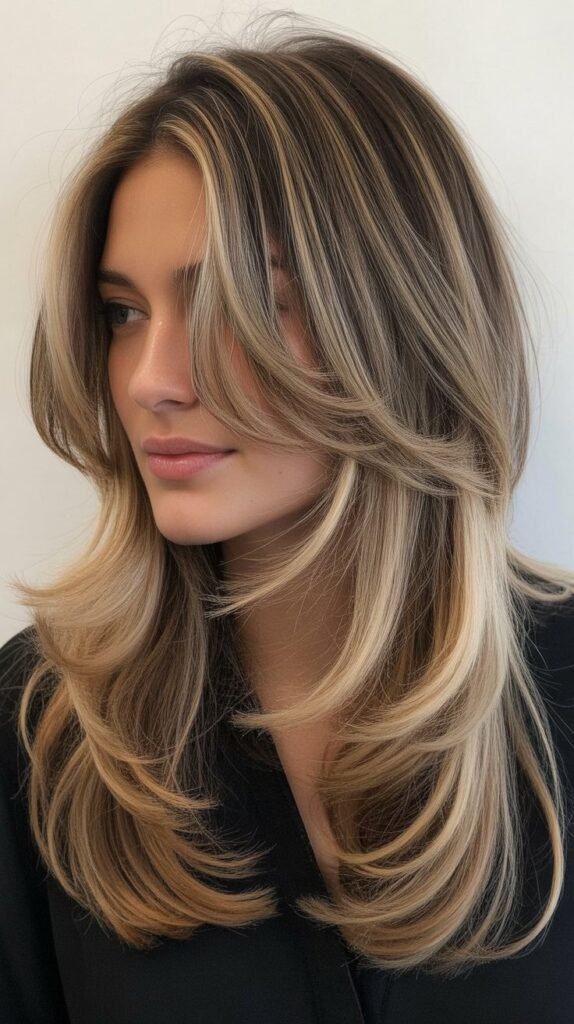
Blended layers incorporate seamless transitions between different lengths, creating a natural, effortless appearance. The blending technique ensures no harsh lines or obvious steps.
- Professional blending techniques create smooth progressions that look untouched by scissors.
- This approach suits those wanting dimension without obviously “cut” looking hair.
- Blended layers complement natural wave patterns and enhance existing texture beautifully.
- The seamless nature means less obvious grow-out phases between salon appointments.
- All hair types benefit from proper blending techniques for a polished result.
14. Textured Layers with Bangs
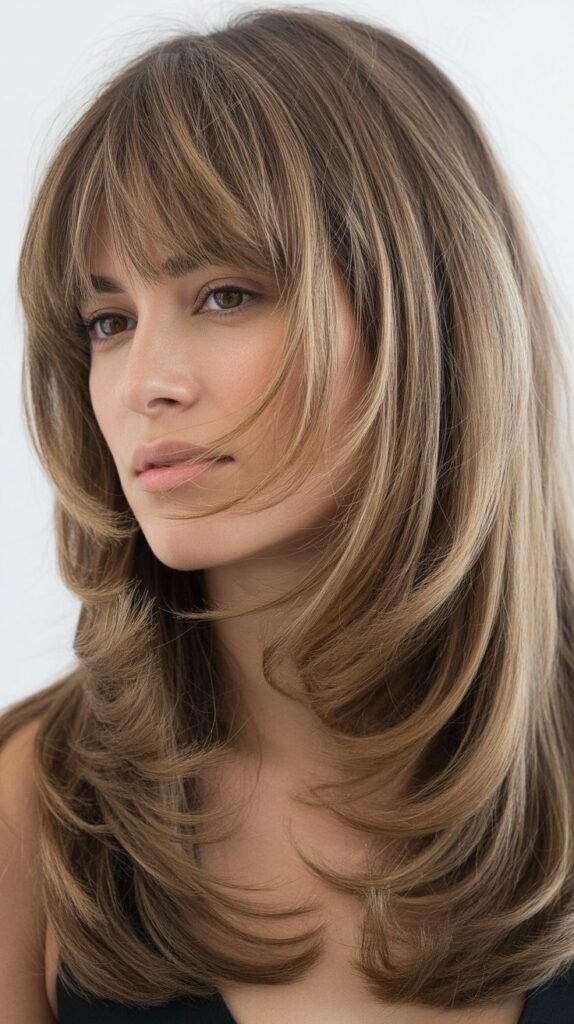
Textured layers throughout combined with full bangs create a youthful, energetic appearance. The texturing technique adds piece-y separation and dimensional interest.
- Texturing methods include point cutting, slide cutting, or razor techniques for separation.
- Full bangs across the forehead create a bold frame that highlights the eyes.
- The combination works to minimize a prominent forehead or balance facial proportions.
- Styling requires blow-drying the bangs and using texturizing products throughout lengths.
- This youthful style appeals to those wanting a fun, approachable appearance.
15. Stacked Back Layers
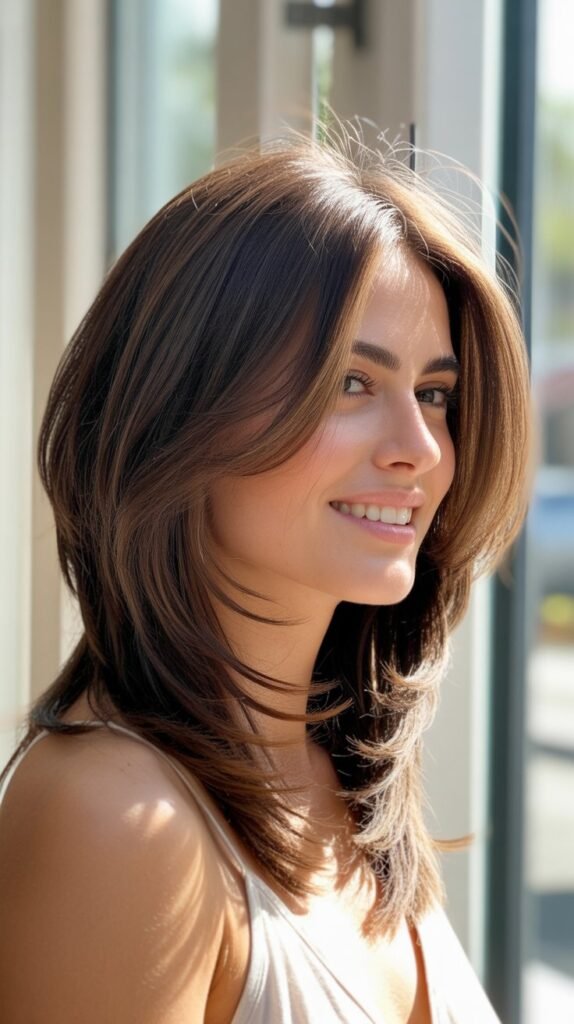
Stacked back layers concentrate shorter pieces at the back crown area, creating volume and lift where hair often falls flat. The front maintains longer face-framing pieces.
- The stacking technique builds layers progressively shorter as they reach the crown.
- This creates significant lift and prevents that flat, lifeless appearance at the back.
- Stacked layers work particularly well for fine hair needing volume and body.
- The technique requires regular maintenance as grow-out affects the stacked structure.
- Blow-drying with a round brush emphasizes the volume created by stacking.
16. Disconnected Layers for Drama
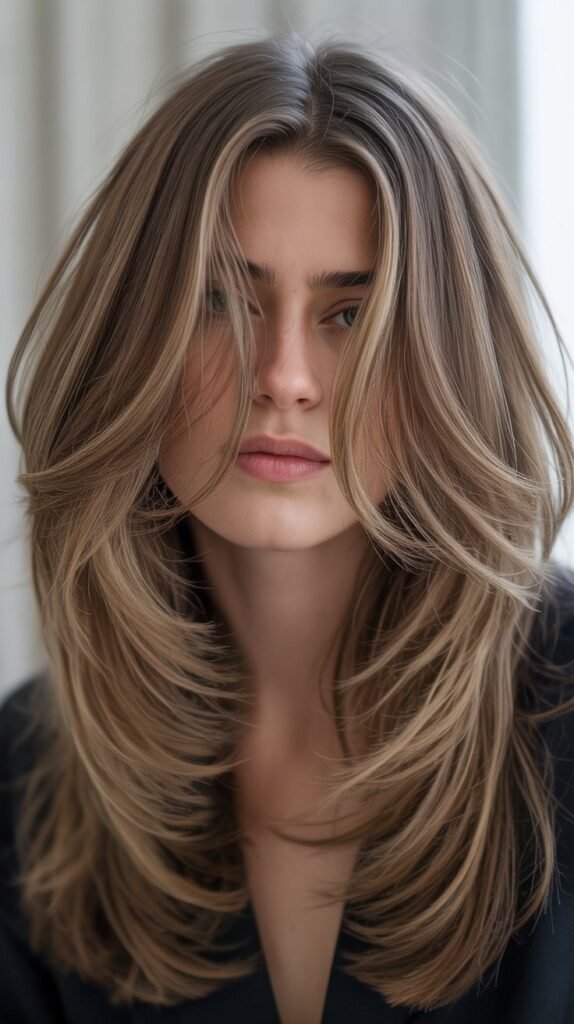
Disconnected layers feature intentional gaps between layer lengths rather than smooth transitions. This creates a dramatic, high-fashion editorial appearance.
- The disconnection creates distinct sections that move independently from each other.
- This technique delivers maximum drama and visual impact for bold personalities.
- Disconnected layers work best on medium to thick hair densities for proper structure.
- Styling emphasizes the separation using products that create definition and hold.
- The high-fashion appearance suits creative industries and fashion-forward individuals.
17. Wispy Face-Framing with Long Lengths
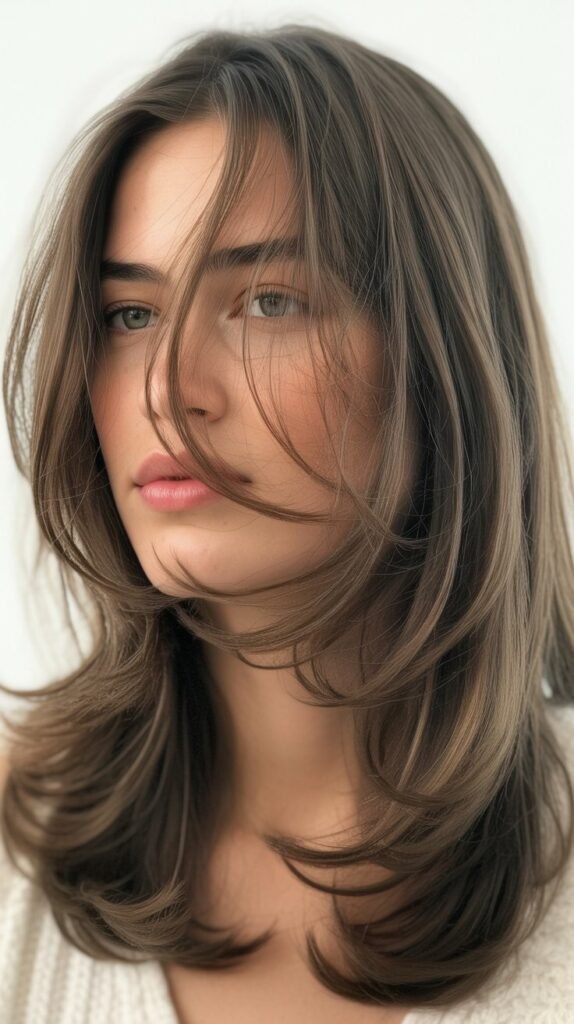
Wispy face-framing pieces combine delicate, thin layers around the face with substantial length throughout the rest. This creates a soft, feminine, and romantic aesthetic.
- The wispy pieces are cut thinner and more delicate than traditional face-framing layers.
- This creates an ultra-soft appearance that enhances feminine features beautifully.
- The contrast between wispy front and full back creates interesting dimension.
- Minimal styling effort is required as the wispy pieces naturally frame softly.
- This style suits those with delicate facial features or wanting a gentle look.
18. Layered with Curtain Fringe
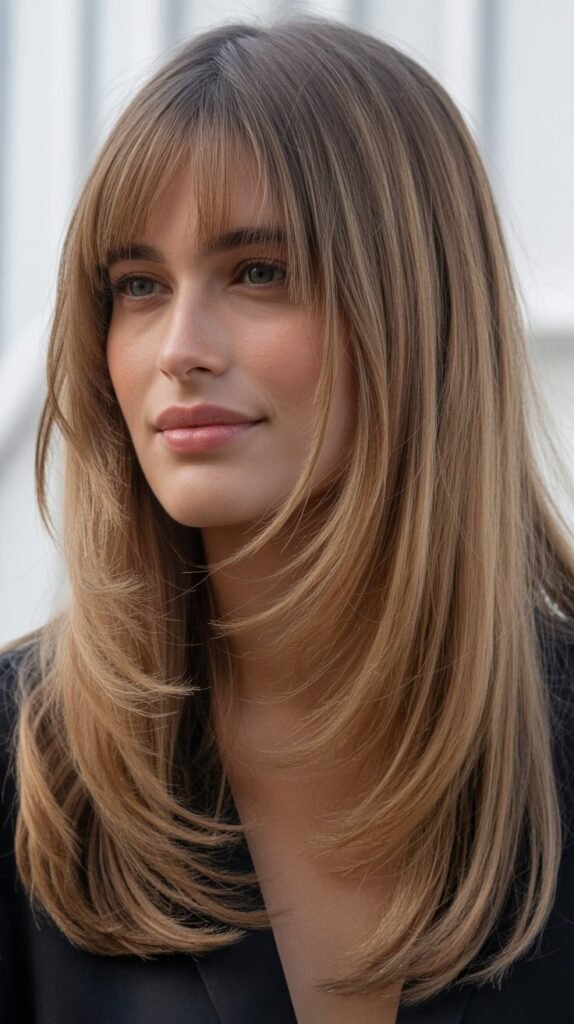
Layered cuts paired with curtain fringe (longer than bangs) create versatility and face-framing softness. The fringe parts in the middle and sweeps gracefully to each side.
- Curtain fringe typically reaches nose-length or longer, allowing styling flexibility.
- The longer fringe can be swept back or worn forward depending on preference.
- Layers throughout prevent bottom-heaviness and add movement to the overall style.
- This combination flatters most face shapes by creating soft, adjustable framing.
- Growing out curtain fringe becomes easier than traditional bangs due to the length.
19. U-Shaped Layers for Fullness
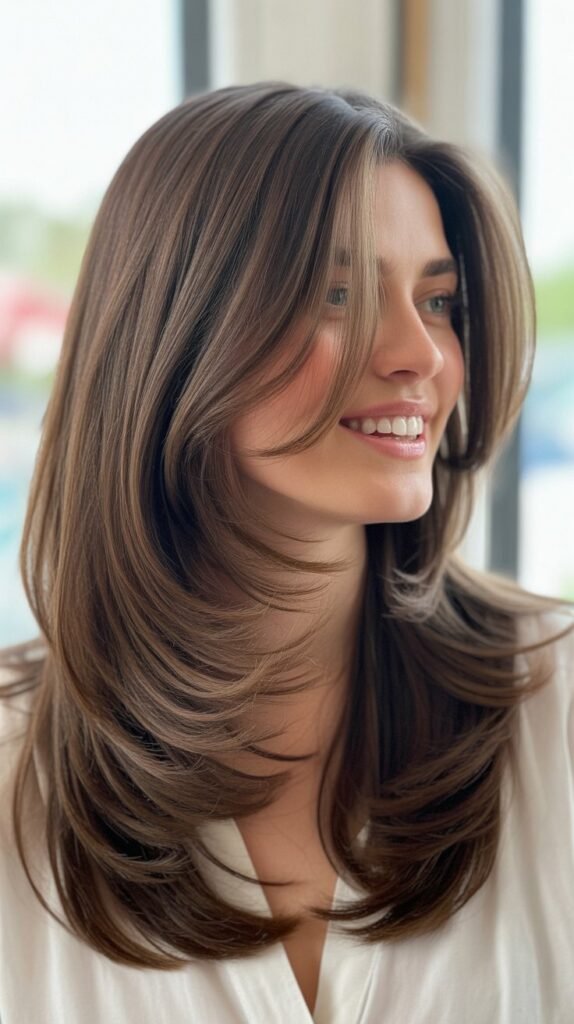
U-shaped layers create a rounded, fuller appearance when viewed from behind. The layers curve gently around the perimeter rather than forming sharp points or straight lines.
- The U-shape maintains fullness throughout while removing weight for movement.
- This cutting pattern prevents hair from appearing thin or stringy at the ends.
- The rounded shape creates a softer, more feminine silhouette than V-shaped layers.
- U-shaped layers work beautifully for creating that healthy, thick-looking appearance.
- The fullness at the perimeter suits those with naturally thick hair wanting to showcase it.
20. Piece-y Layers for Separation
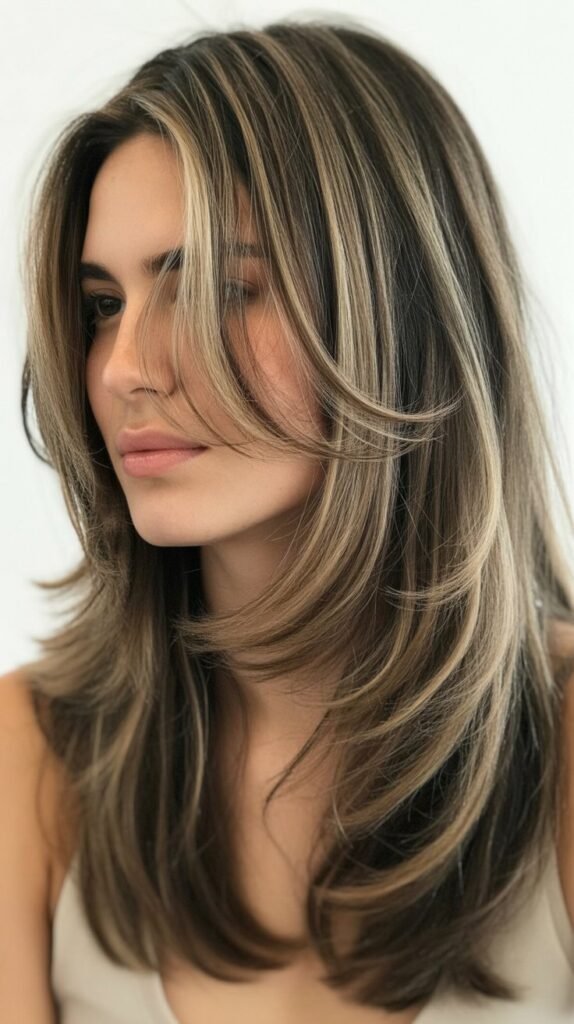
Piece-y layers use cutting techniques that create distinct separation and texture throughout. This modern approach delivers an effortlessly cool, undone appearance.
- Cutting methods include point cutting and slide cutting to create piece-y ends.
- The separation creates a more casual, relaxed vibe than polished smooth layers.
- This style works exceptionally well for straight to slightly wavy hair textures.
- Styling products like texturizing cream or paste enhance the piece-y separation.
- The undone appearance suits casual lifestyles and those preferring low-maintenance styling.
21. Internal Layers for Hidden Volume
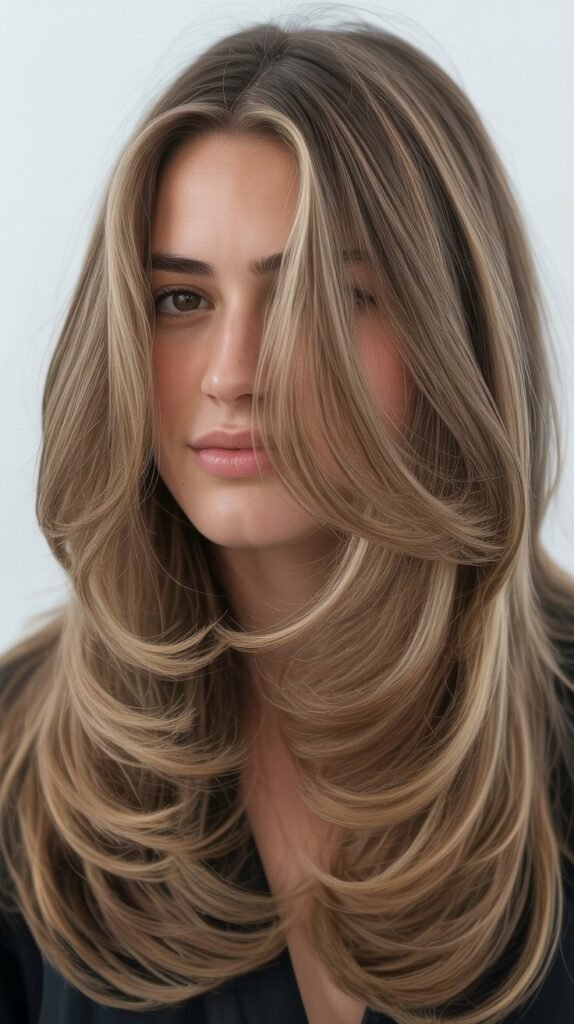
Internal layers cut beneath the top surface layer add hidden volume and movement without affecting the overall outline. This technique creates body while maintaining a smooth exterior.
- Internal layering removes weight from underneath while keeping the top layer intact.
- This creates lift and prevents hair from lying flat against the head.
- The technique particularly benefits thick hair by reducing bulk without losing length.
- External appearance remains polished while internal structure provides movement.
- Blow-drying reveals the hidden volume as hair gains bounce and body.
22. Long Layers with Side-Swept Bangs
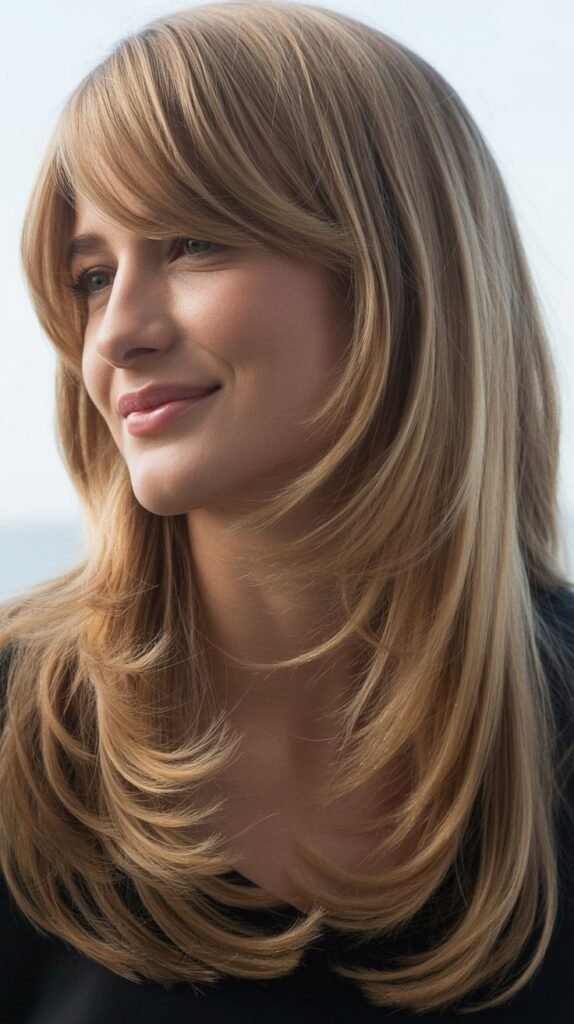
Long layers throughout combined with side-swept bangs create a universally flattering, timeless style. The bangs sweep diagonally across the forehead for soft framing.
- Side-swept bangs work to soften angular features and balance facial proportions.
- The diagonal line created by swept bangs elongates the face visually.
- Long layers add dimension and movement while maintaining substantial length.
- This classic combination suits all ages and professional environments beautifully.
- Styling requires blow-drying bangs to the side while layers air-dry naturally.
23. Graduated Layers with Blunt Ends
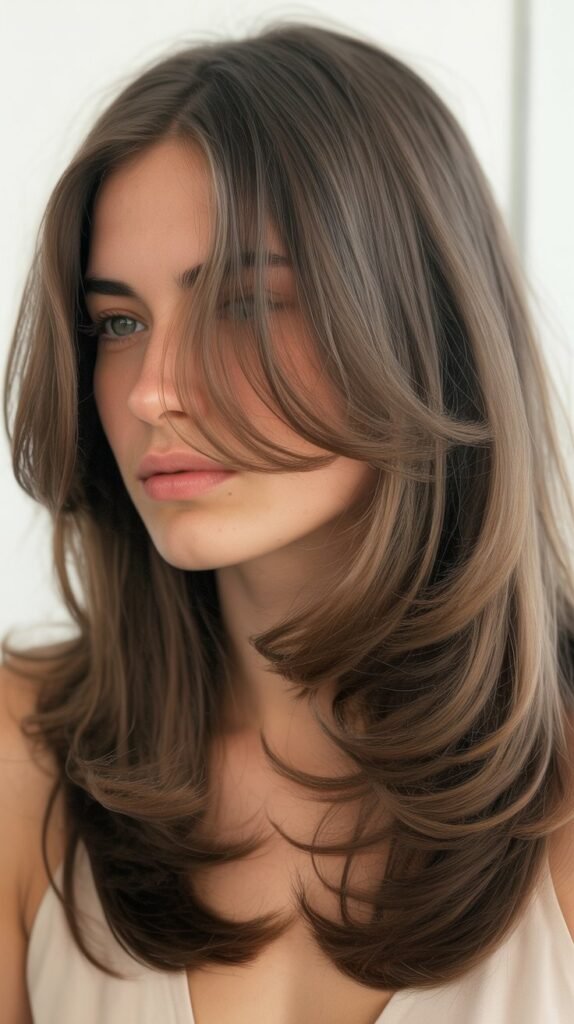
Graduated layers with blunt ends combine dimensional layering throughout with a straight, blunt perimeter. This creates interesting contrast between movement and structure.
- The blunt perimeter creates a strong, definitive line while layers add dimension above.
- This combination delivers both softness and structure in one cohesive style.
- Graduated blunt layers work particularly well on thick hair needing shape definition.
- The blunt ends make hair appear thicker and healthier at the perimeter.
- Regular trims maintain the blunt line while layers grow out gracefully between appointments.
24. Layered with Micro Fringe

Layered cuts paired with micro (baby) bangs create an edgy, fashion-forward statement. The ultra-short fringe contrasts dramatically with the long layered lengths.
- Micro fringe typically sits above the eyebrows, creating a bold focal point.
- The contrast between short bangs and long layers delivers maximum visual impact.
- This daring style suits confident personalities comfortable with attention-grabbing looks.
- Maintenance requires frequent bang trims to keep the micro length optimal.
- The edgy aesthetic works for creative industries, fashion, and artistic professions.
25. Soft Layers with Center Part Curtains
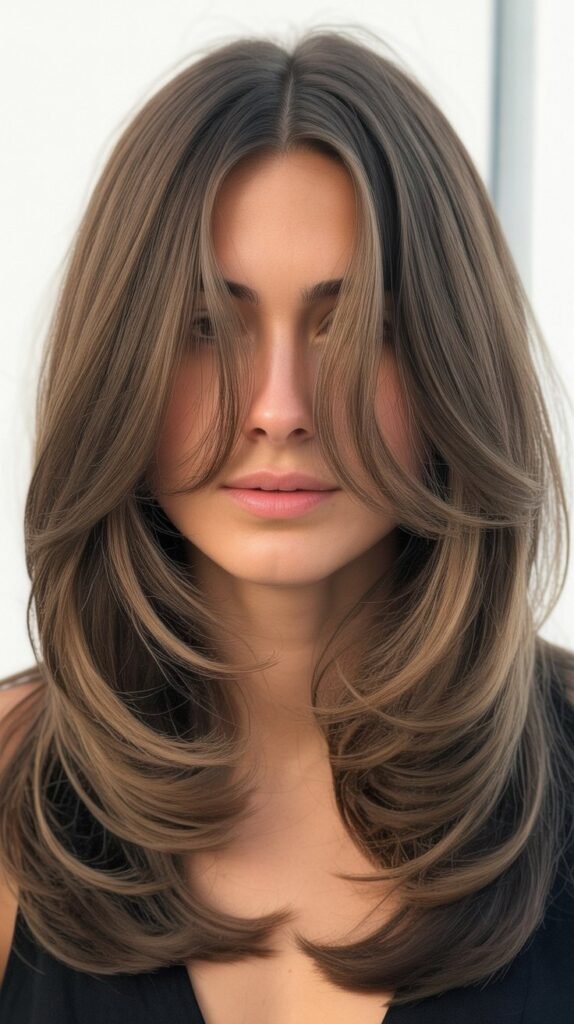
Soft layers throughout combined with center-parted curtain pieces create a balanced, symmetrical frame. This delivers a polished yet relaxed appearance suitable for various occasions.
- Center-parted curtain pieces frame both sides of the face equally and elegantly.
- Soft layers throughout prevent bottom-heaviness and add flowing movement.
- This combination flatters oval and heart-shaped faces particularly well.
- Styling remains simple as the center part and layers naturally fall into place.
- The symmetry creates a harmonious, balanced appearance that reads as polished.
26. Layered with Face-Framing Highlights
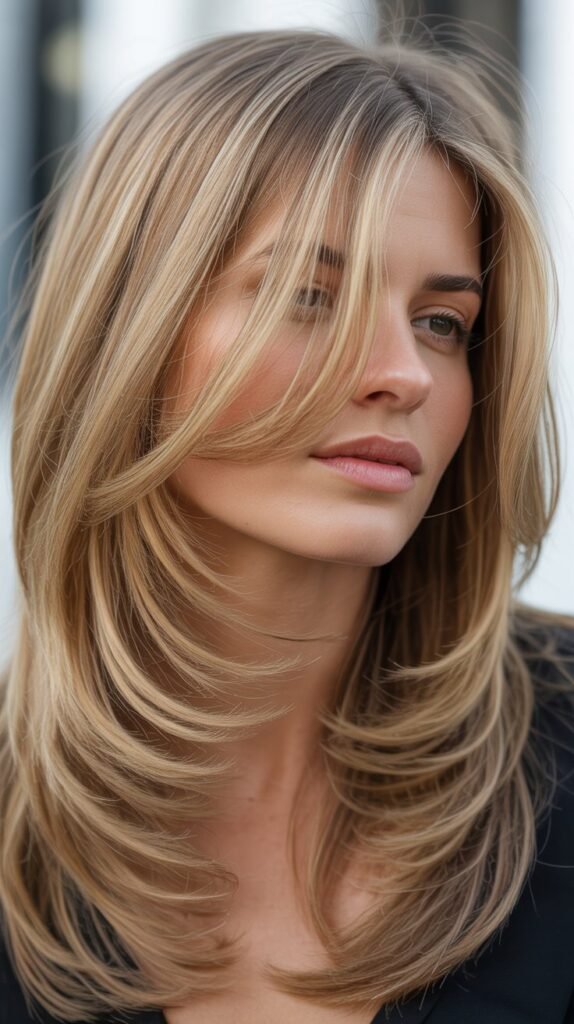
Layered cuts enhanced with face-framing highlights add dimension through both cutting and coloring techniques. The highlights emphasize the layer placement and add brightness.
- Strategic highlight placement follows the layer pattern to enhance dimensional appearance.
- Lighter pieces around the face brighten complexion and draw attention to features.
- The combination of cutting and coloring creates maximum impact and interest.
- Face-framing highlights require less maintenance than all-over color techniques.
- This approach suits those wanting a complete transformation beyond just cutting.
| Technique | Best For | Maintenance Level |
|---|---|---|
| Face-Framing Layers | All face shapes | Low |
| Curtain Bangs | Round, square faces | Medium |
| Cascading Layers | Flat, lifeless hair | Low |
| Butterfly Layers | Fine, thin hair | Medium |
| Long Shag | Natural texture | Low |
27. Internal Layers for Hidden Volume
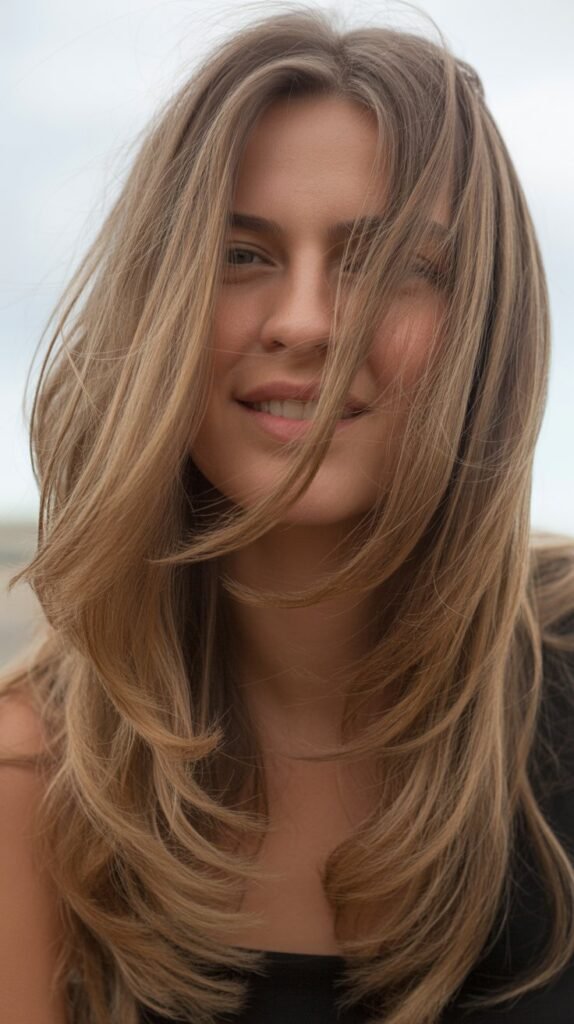
Heavily layered cuts incorporate numerous layers throughout all sections, creating maximum movement and dimension. This delivers the most dramatic transformation from one-length hair.
- Multiple layers starting at various points create exceptional movement and bounce.
- This technique works beautifully for removing significant weight from thick hair.
- The extensive layering adds substantial volume and body to fine hair types.
- Styling becomes easier as layers naturally fall into place with minimal effort.
- The dramatic transformation suits those ready for significant change while keeping length.
- Regular conditioning treatments maintain healthy ends throughout the heavily layered structure.
- This style embraces movement and works for active lifestyles requiring low-maintenance hair.
Conclusion
Discovering the perfect cut among these 27 Chic Long Layered Cuts for a Softer Front Look can completely transform your appearance and daily styling routine.
Long layered hair offers incredible versatility, allowing you to maintain your cherished length while gaining dimension, movement, and face-flattering softness.
Whether you’re drawn to subtle face-framing pieces, dramatic cascading layers, or edgy choppy textures, there’s a layered style that matches your personality, lifestyle, and hair type.
The key to success lies in communicating clearly with your stylist about your desired outcome, bringing reference photos, and discussing maintenance requirements before committing to a cut.
Remember that the right layers can minimize styling time, add volume where needed, remove unwanted bulk, and enhance your natural features beautifully.
Consider your face shape, hair texture, density, and daily styling commitment when choosing from these options.
With proper care, regular trims, and appropriate styling products, your layered cut will continue looking fresh and flattering between salon visits.
Embrace the transformative power of layers and enjoy the soft, dimensional, and effortlessly beautiful long hair you’ve always wanted.