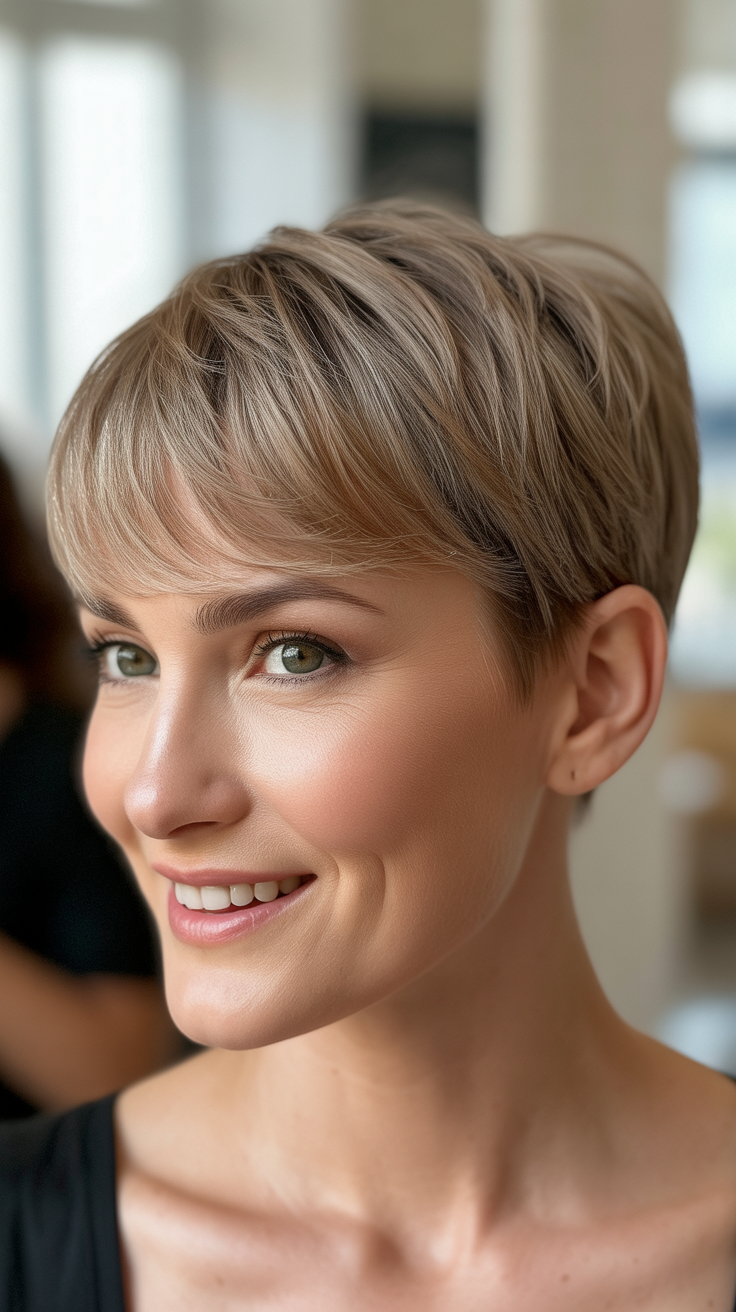
Finding the perfect hairstyle when you have thin, fine hair can feel like an impossible challenge, but the right pixie cut can completely transform your look and confidence.
Short pixie haircuts are actually one of the most flattering and volumizing options for those with delicate hair textures, creating the illusion of thickness while offering effortless style and easy maintenance.
This comprehensive guide explores 32 Beautiful Short Pixie Haircuts for Thin Fine Hair, covering everything from classic tapered cuts to modern textured styles, styling techniques, maintenance tips, and expert advice to help you choose the perfect pixie that will make your fine hair look fuller, healthier, and absolutely stunning.
Whether you’re considering your first big chop or looking to refresh your current pixie, you’ll discover inspiring options, practical styling solutions, and professional insights that prove thin hair is no barrier to achieving a gorgeous, head-turning short hairstyle.
1. Classic Tapered Pixie Cut
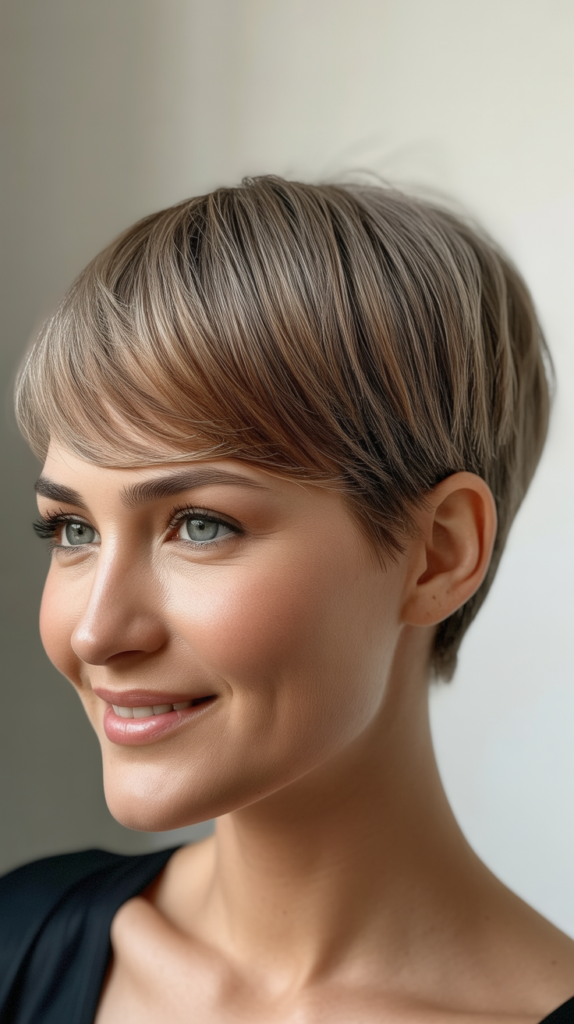
The classic tapered pixie serves as the foundation for countless variations and remains timelessly elegant for fine hair types.
This style features gradually shortened sides and back with slightly more length on top, creating natural volume and movement.
The tapering technique removes bulk at the bottom while maintaining fullness where it matters most, making thin hair appear thicker and more dynamic.
Key Features:
- Gradual length transition from crown to nape
- Short sides (typically 1-2 inches)
- Longer top section (2-4 inches)
- Subtle texture throughout
- Clean, polished appearance
Why It Works for Thin Hair:
- The tapered sides create contrast that makes the top appear fuller
- Less weight at the bottom prevents hair from falling flat
- Strategic layering adds dimension without removing too much density
- The shape naturally lifts away from the scalp
- Requires minimal styling product to maintain volume
Styling Tips:
- Apply volumizing mousse to damp hair at the roots
- Blow-dry with a round brush, lifting sections away from the scalp
- Use your fingers to direct hair forward and upward
- Finish with a light-hold hairspray to maintain lift without weighing hair down
- Consider a texturizing spray for added grip and fullness
2. Textured Choppy Pixie
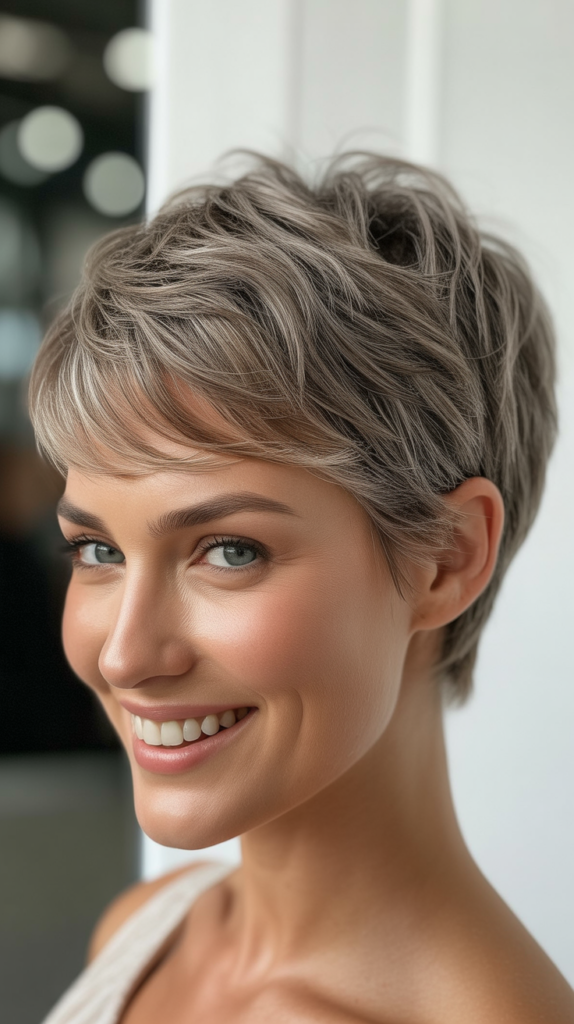
The textured choppy pixie introduces deliberate unevenness and piecey layers that create the illusion of substantial thickness.
This edgier variation relies on point-cutting and razor techniques to produce jagged ends and varied lengths throughout.
The intentionally messy aesthetic disguises the natural thinness of fine hair while delivering contemporary, fashion-forward appeal.
Cutting Technique:
- Point-cutting throughout to create textured ends
- Razor work for soft, feathered pieces
- Irregular layer placement for organic movement
- Varied lengths that don’t follow uniform patterns
- Strategic thinning only where absolutely necessary
Styling for Maximum Impact:
- Work a small amount of texturizing paste through damp hair
- Rough-dry with fingers, scrunching and lifting randomly
- Use a flat iron to create piecey separation by twisting small sections
- Apply dry texture spray for gritty, matte finish
- Intentionally create asymmetry and imperfection
Best Face Shapes:
- Oval faces can carry this style beautifully
- Heart-shaped faces benefit from the added width at the crown
- Square faces are softened by the textured, irregular perimeter
- Round faces should request extra height at the crown
3. Side-Swept Pixie with Long Bangs
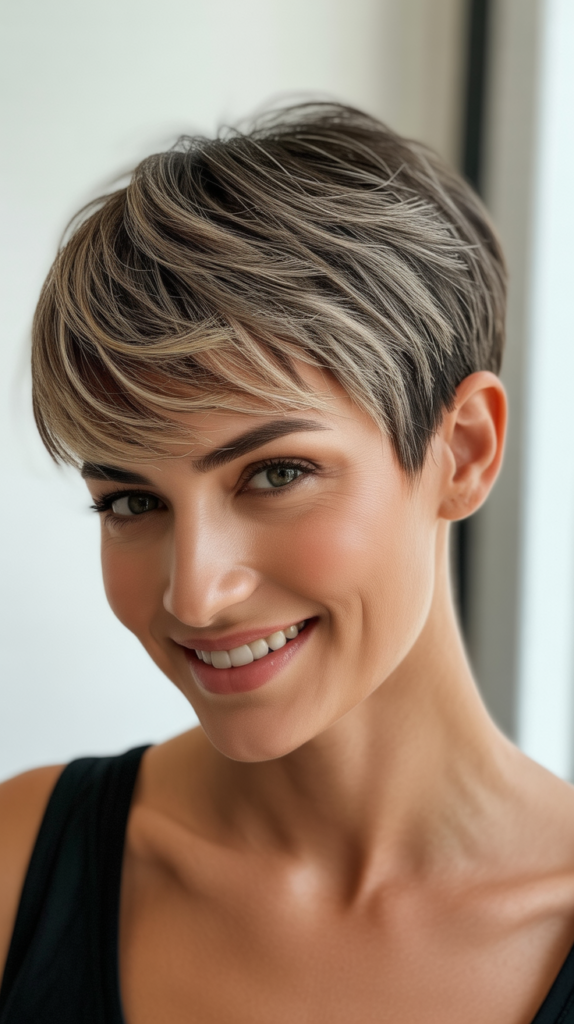
A side-swept pixie with elongated bangs offers versatility and femininity while addressing volume concerns common with fine hair.
The longer fringe creates a focal point that draws attention while the asymmetrical styling naturally generates lift and movement.
This style works exceptionally well for those transitioning to shorter hair or wanting softness around the face.
Bang Length Options:
- Eyebrow-grazing for subtle drama
- Eye-length for maximum versatility
- Cheekbone-length for bold asymmetry
- Gradually blended into shorter sides
- Can be worn swept across or pushed back
Volume-Building Strategies:
- The weight of longer bangs pulls hair away from the scalp at the roots
- Side-parting creates automatic lift on the heavier side
- The contrast between long and short sections adds dimension
- Styling bangs in the opposite direction adds fullness
- Blow-drying bangs forward then sweeping aside locks in volume
Maintenance Considerations:
- Bangs require trimming every 3-4 weeks
- Daily styling takes 5-10 minutes
- Works with natural texture or can be smoothed
- Grows out gracefully with strategic trims
- Can be pinned back for different looks
4. Undercut Pixie for Fine Hair
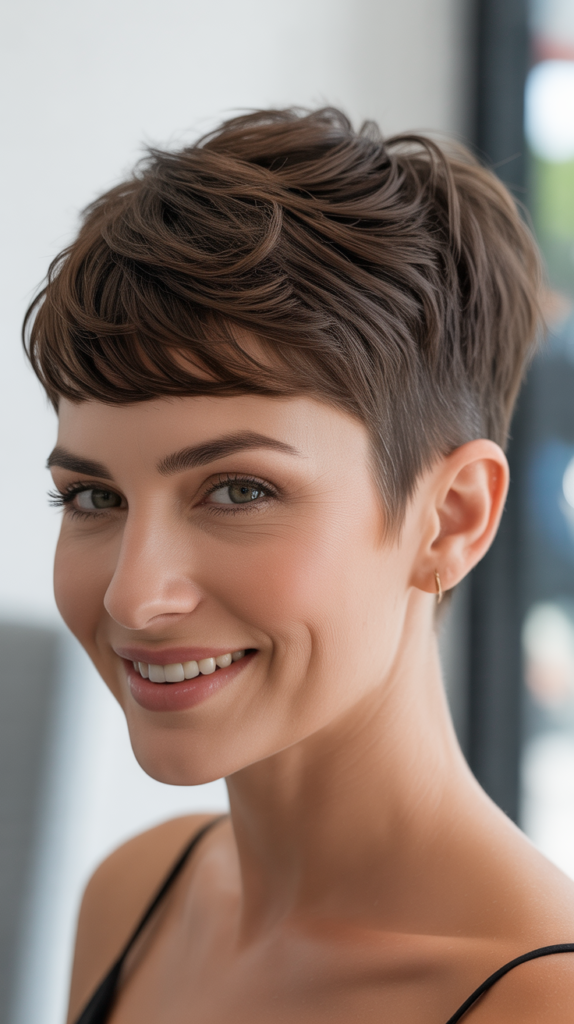
The undercut pixie creates dramatic contrast by buzzing or closely cropping the sides and back while leaving substantial length on top.
This bold approach actually benefits thin hair by removing competing weight and allowing the longer sections to achieve maximum volume and presence.
The stark difference between shaved and longer areas creates the illusion of thickness where it remains.
Undercut Variations:
- Full sides and back undercut for maximum contrast
- Partial undercut on one side only for asymmetry
- Patterned or designed undercuts for artistic flair
- Graduated undercut that fades into longer hair
- Subtle undercut hidden beneath longer layers
Top Section Styling:
- The concentrated length on top can be swept in any direction
- Pompadour styling creates impressive height
- Slicked-back looks appear fuller with the contrast
- Tousled, messy styling works beautifully
- Can experiment with temporary color on the longer sections
Growing Out Considerations:
- Undercut requires maintenance every 2-4 weeks
- Top section can grow freely while keeping sides short
- Eventually blends into a longer pixie if desired
- The grow-out phase offers evolving style options
- Can maintain the undercut indefinitely or let it fill in
5. Pixie with Micro Bangs
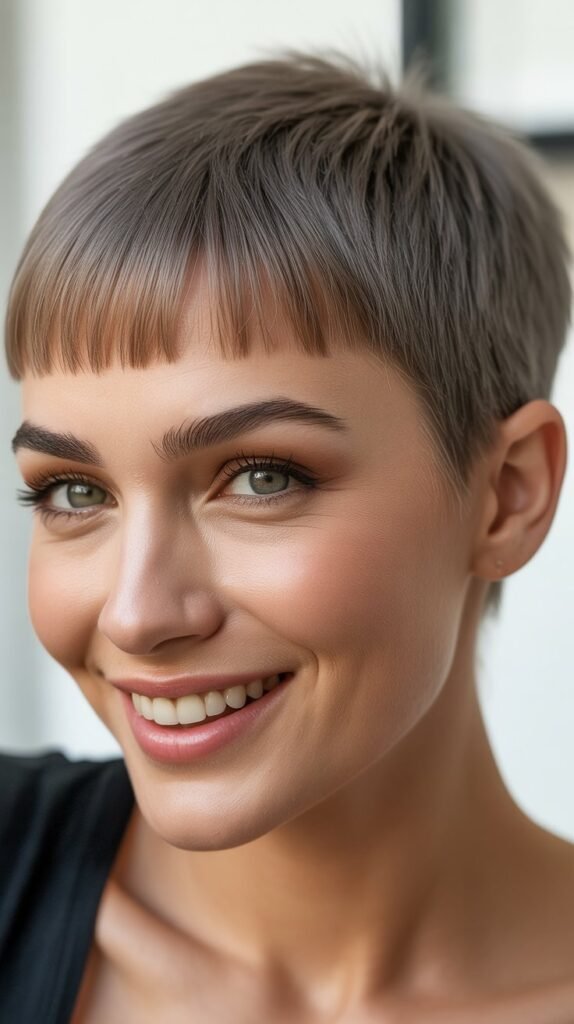
Micro bangs paired with a pixie cut create a striking, fashion-forward statement while cleverly managing fine hair concerns.
These ultra-short, blunt-cut bangs sit well above the eyebrows and draw attention to the eyes, while the short overall length prevents thin hair from appearing limp or stringy.
This bold combination works surprisingly well for adding personality to delicate hair textures.
Micro Bang Characteristics:
- Cut straight across, typically mid-forehead or higher
- Blunt, heavy appearance despite fine hair texture
- Can be slightly textured or completely straight
- Usually 1-1.5 inches in length
- Makes a bold visual statement
Pairing with Pixie Lengths:
- Works with very short, cropped pixies for cohesive proportions
- Complements slightly longer, textured pixies for contrast
- Can be combined with undercut styles
- Looks striking with slicked-back or forward-styled pixies
- Maintains balance with tapered or layered cuts
Commitment Level:
- Micro bangs are a significant style statement
- Requires confidence and willingness to embrace attention
- Growing out takes several months
- Needs precise trimming every 2-3 weeks
- Works best for those who enjoy bold, trendy looks
6. Feathered Pixie Cut
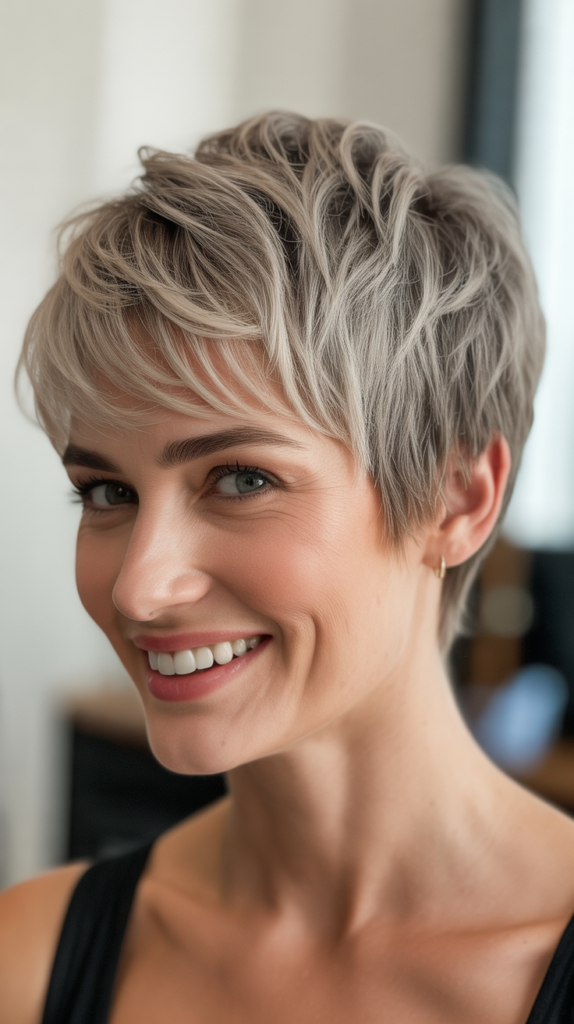
The feathered pixie incorporates soft, wispy layers that create airiness and movement perfectly suited to fine hair.
This technique involves cutting layers that flick outward or upward at the ends, generating texture and the appearance of volume without requiring thick hair density.
The feathering softens the overall look while maximizing the natural lightness of thin strands.
Feathering Technique Benefits:
- Creates separation between strands for fuller appearance
- The outward flicking motion adds width and dimension
- Softens facial features with gentle, flowing lines
- Allows light to catch individual pieces for enhanced texture
- Works with natural hair movement rather than against it
Ideal Layer Placement:
- Concentrated feathering around the crown for height
- Softer, shorter layers near the face for framing
- Longer, more subtle feathering at the back
- Graduated lengths that create cascading effect
- Strategic point-cutting at the ends for ultimate softness
Daily Styling Routine:
- Apply lightweight mousse to damp hair
- Blow-dry while lifting and directing layers outward
- Use a small round brush on face-framing pieces
- Finish with fingers, gently separating and fluffing layers
- Minimal product needed due to natural movement
7. Asymmetrical Pixie Cut
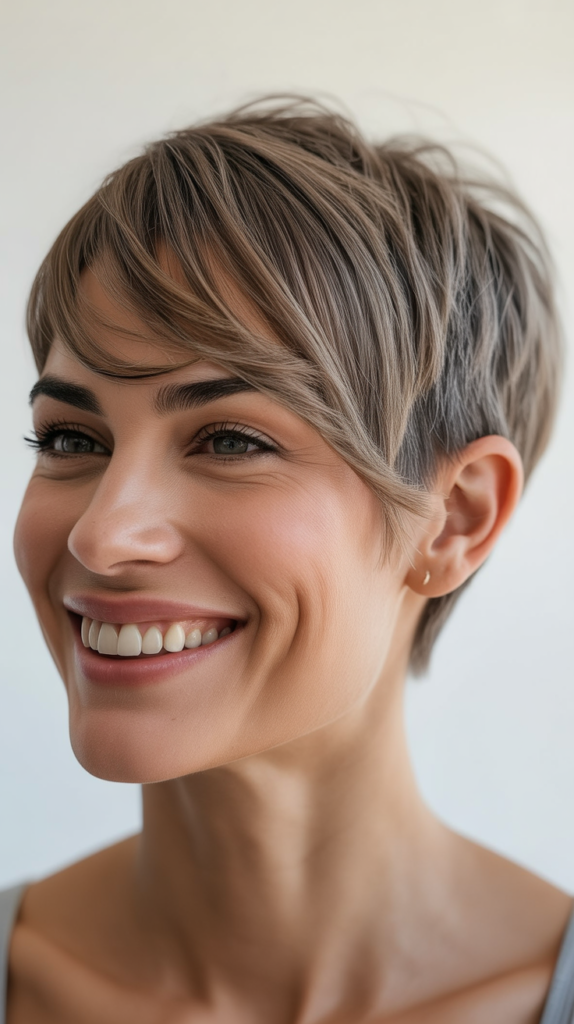
Asymmetrical pixies feature intentionally uneven lengths between the two sides of the head, creating visual interest and dynamic angles.
This imbalance actually helps thin hair by concentrating fullness on one side while the contrast makes the overall style appear more substantial.
The modern, edgy aesthetic disguises any natural lack of volume through strategic design.
Asymmetry Options:
- One side buzzed or very short, other side longer to chin-length
- Subtle asymmetry with 1-2 inch difference between sides
- Diagonal lines that sweep across the head
- Longer bangs on one side that taper to short on the other
- Back can remain symmetrical or also feature uneven lengths
Visual Effects:
- Creates the illusion of more hair through clever design
- The eye focuses on the style rather than hair density
- Angles and lines add structure that fine hair often lacks
- Can be styled toward either side depending on mood
- Frames the face uniquely from different viewing angles
Personality and Lifestyle:
- Best for confident individuals who embrace attention
- Requires professional styling expertise for proper execution
- More high-maintenance than symmetrical pixies
- Grows out with distinctive intermediate phases
- Makes a strong personal style statement
8. Pixie with Tapered Nape

A pixie featuring a precisely tapered nape creates clean lines and emphasizes the neck while building volume on top where thin hair needs it most.
The gradual shortening at the hairline allows for a polished finish that prevents the blunt, heavy look that can weigh down fine hair.
This detail-oriented approach refines the entire silhouette.
Tapering Methods:
- Clipper work creating gradual fade at the nape
- Scissor-over-comb technique for soft blending
- Can taper into a V-shape, rounded shape, or straight line
- Baby hairs at the hairline carefully shaped or removed
- Blends seamlessly into slightly longer back sections
Aesthetic Advantages:
- Creates elongated appearance of the neck
- Adds sophistication and refinement to the cut
- Prevents the “mushroom” effect sometimes seen with fine hair
- Makes the overall style appear professionally maintained
- Balances proportions when top sections have volume
Maintenance Requirements:
- Nape grows quickly and requires touchups every 3-4 weeks
- Between appointments, the taper can look slightly grown out
- Some choose to maintain this area at home with guidance
- Professional shaping ensures clean, even results
- Worth the upkeep for the polished appearance
9. Spiky Textured Pixie
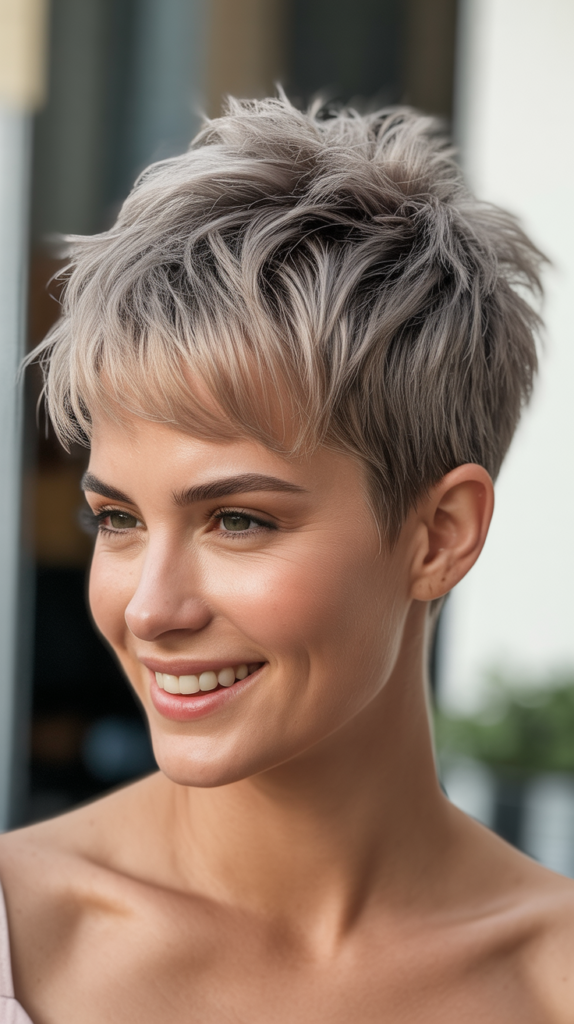
The spiky textured pixie embraces height and separation to combat the flatness often associated with fine hair.
By cutting uniform layers throughout and styling vertically, this cut maximizes volume while the spiky texture creates the impression of density.
The playful, youthful aesthetic works across age groups when executed with appropriate sophistication.
Creating Effective Spikes:
- Layers should be relatively uniform in length for consistency
- Point-cutting creates texture that holds product better
- Shorter overall length (1-2 inches) achieves strongest spikes
- Longer sections can create softer, more piece-y spikes
- The crown area typically features the most prominent spikes
Product Selection:
- Strong-hold styling wax or pomade for defined spikes
- Lightweight gel for fine hair that won’t weigh down
- Texturizing spray as a base for added grip
- Matte finish products for modern, natural-looking spikes
- Avoid heavy, greasy products that flatten thin hair
Styling Technique:
- Start with slightly damp hair for easier manipulation
- Work product between palms, then apply to hair
- Use fingertips to pull small sections upward
- Twist slightly at the tips for pointed ends
- Allow to air dry or use diffuser for hold
10. Pixie Bob Hybrid
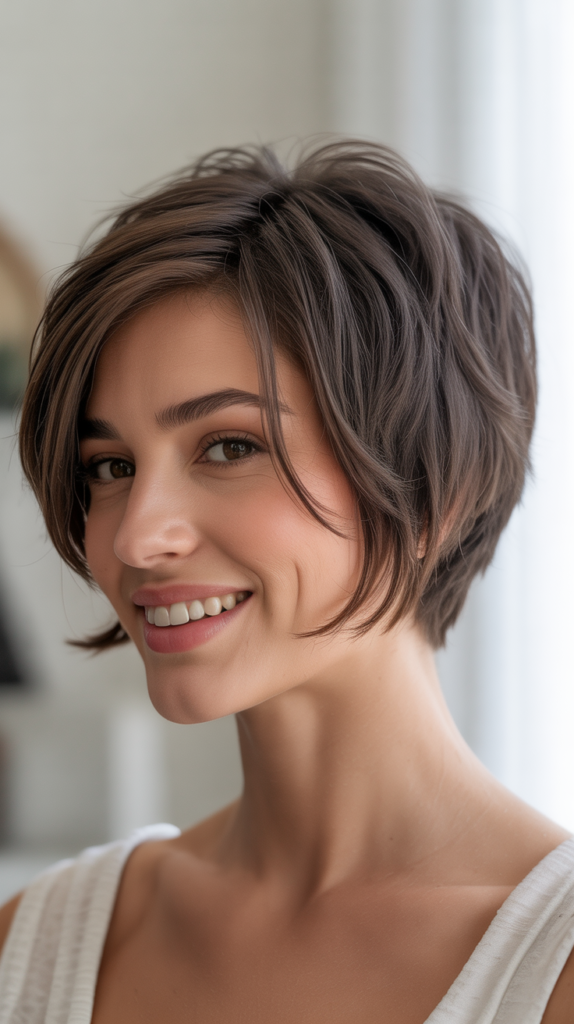
The pixie bob hybrid merges the shortness of a pixie with the slightly longer proportions of a bob, creating a versatile middle ground.
This style typically maintains more length overall, especially around the perimeter, while incorporating pixie-like layers and texture throughout.
For fine hair, this combination offers the volume benefits of a pixie while retaining enough length for varied styling.
Length Specifications:
- Top sections: 3-5 inches
- Sides: 2-4 inches
- Back: Can taper shorter or maintain bob length
- Overall perimeter longer than traditional pixie
- Maintains some sweeping, bob-like lines
Versatility Benefits:
- Can be styled sleek like a bob or textured like a pixie
- Offers more styling options than very short pixies
- Easier transition for those nervous about going too short
- Still short enough to provide volume benefits
- Can tuck behind ears or let frame the face
Who Should Consider This:
- Those wanting pixie benefits without extreme shortness
- People transitioning from longer styles gradually
- Anyone who enjoys styling versatility
- Those with fine hair who want options between cuts
- Individuals with professional environments requiring subtlety
11. Crown-Focused Volume Pixie
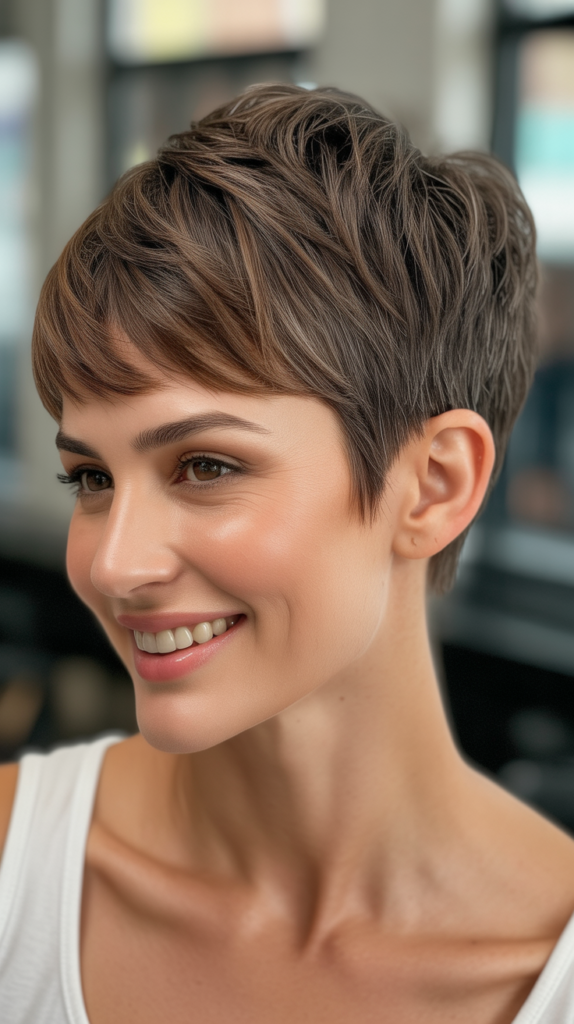
A crown-focused volume pixie strategically concentrates length and layers at the top of the head while keeping sides and back very short.
This architectural approach builds height where fine hair struggles most, creating dramatic lift and the appearance of substantial thickness.
The science of this cut lies in removing competing weight and allowing gravity to work in your favor.
Strategic Cutting:
- Crown area maintains 3-5 inches of length
- Sides cut to 1 inch or shorter
- Back similarly short to eliminate weight
- Graduated layers within the crown for internal volume
- Face-framing pieces can vary based on preference
The Physics of Volume:
- Short sides remove lateral weight that pulls hair down
- Concentrated length at crown stands upward naturally
- Less overall hair means less weight pulling down
- Strategic layers create air pockets between strands
- The contrast itself creates the illusion of fullness
Blow-Drying for Maximum Height:
- Begin drying at the roots while head is flipped upside down
- Use a round brush to lift crown sections perpendicular to the scalp
- Apply heat at the root, not just the ends
- Cool shot to set volume before releasing brush
- Finish by gently backcombing at the roots if needed
12. Soft Rounded Pixie
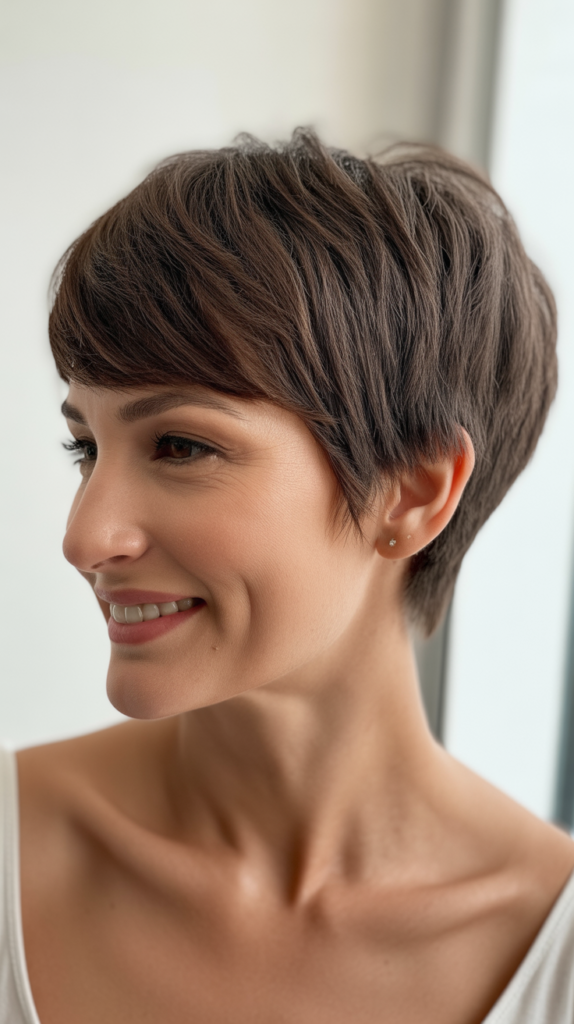
The soft rounded pixie follows the natural curve of the head, creating a gentle, feminine silhouette particularly flattering for fine hair.
Unlike angular cuts, this style embraces curved lines and soft edges that enhance delicate features while the rounded shape actually creates the perception of fullness through clever geometry.
The result is timeless elegance with surprising volume.
Curved Architecture:
- Follows the head’s shape from crown to nape
- No harsh angles or dramatic length changes
- Gradual transitions create seamless flow
- Perimeter forms a soft halo around the head
- Internal layers add body without disrupting curves
Why Curves Create Volume:
- Rounded shapes appear fuller than flat or angular ones
- The continuous curve catches light uniformly
- Visual weight appears distributed throughout
- Softness disguises thin density
- The eye perceives wholeness and abundance
Ideal Candidates:
- Those seeking classic, timeless styles
- People with naturally rounded head shapes
- Anyone wanting low-maintenance femininity
- Those who prefer softer, less edgy aesthetics
- Works across all age groups beautifully
13. Pixie with Longer Nape
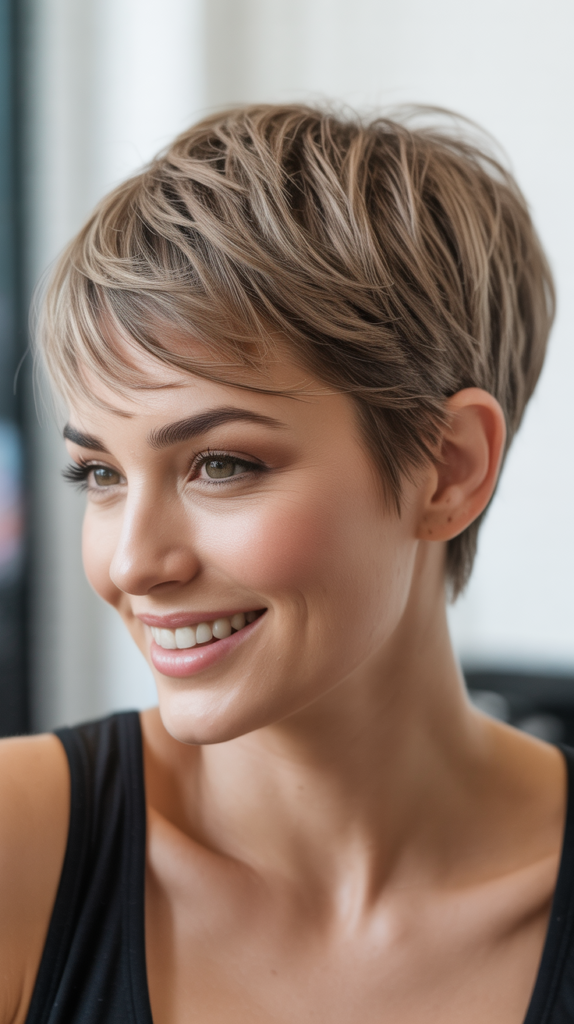
A pixie with longer nape defies convention by maintaining extra length at the back while keeping the front and sides short.
This unexpected twist adds visual interest and can actually help balance thin hair by creating texture and movement at the back.
The longer nape prevents the style from feeling too severe while offering unique styling possibilities.
Nape Length Variations:
- Tapered to the hairline but maintains 1-2 inches
- Extends into a small tail or point
- Wispy, textured ends for movement
- Can reach collar length while front remains short
- Sometimes styled or left to naturally fall
Styling the Longer Nape:
- Can be curled for added texture and body
- Straightened for sleek contrast with shorter sections
- Braided for special occasions
- Left natural and piece-y for casual looks
- Provides something to “play with” unlike ultra-short backs
Balance Considerations:
- The longer nape shouldn’t overpower the front sections
- Works best when front is confidently short
- Creates intentional asymmetry in the overall design
- Adds personality without requiring bold colors or extreme cuts
- Offers conversation-starting uniqueness
14. Slicked-Back Pixie
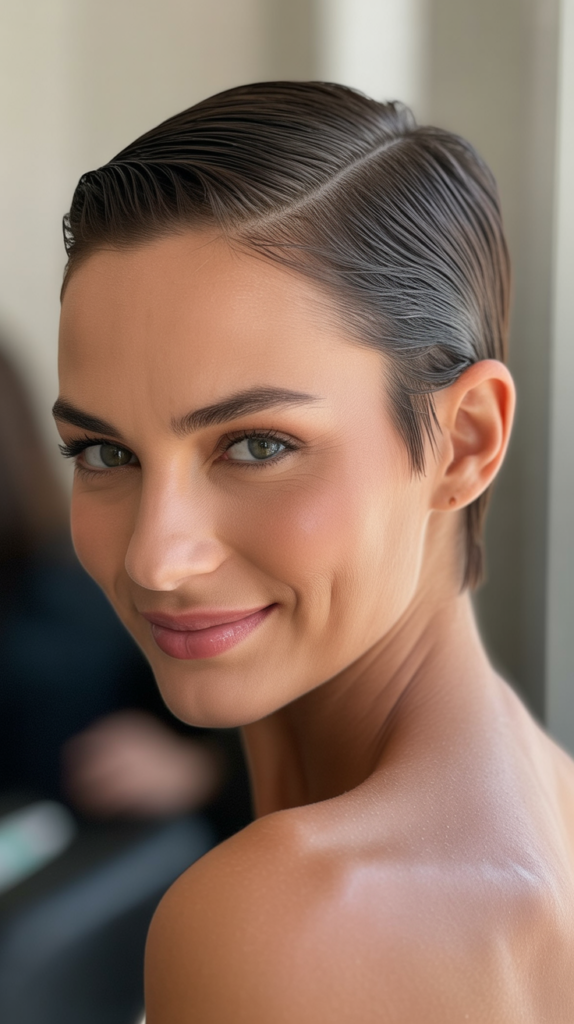
The slicked-back pixie pulls hair away from the face and directs it backward, creating a sophisticated, polished appearance.
For fine hair, this styling approach actually enhances texture and creates the illusion of thickness when executed properly with the right products.
The sleek aesthetic works for professional settings while the technique adds unexpected body.
Achieving the Look:
- Start with damp, towel-dried hair
- Apply styling gel or pomade with strong hold
- Use a fine-toothed comb to direct hair straight back
- Can create a side part or go straight back from forehead
- Allow to air dry or use blow-dryer on low while combing back
Products That Work:
- Lightweight gel that won’t flake on fine hair
- Pomades with medium shine for modern appearance
- Avoid heavy waxes that make thin hair look greasy
- Setting spray to lock the style in place
- Optional texturizing spray at the roots before slicking
When to Wear This Style:
- Professional meetings and formal events
- When you want a change from textured styling
- Hot, humid weather when texture is difficult
- Evening occasions requiring sophistication
- As a sleek alternative to daily casual styling
15. Disconnected Pixie Cut
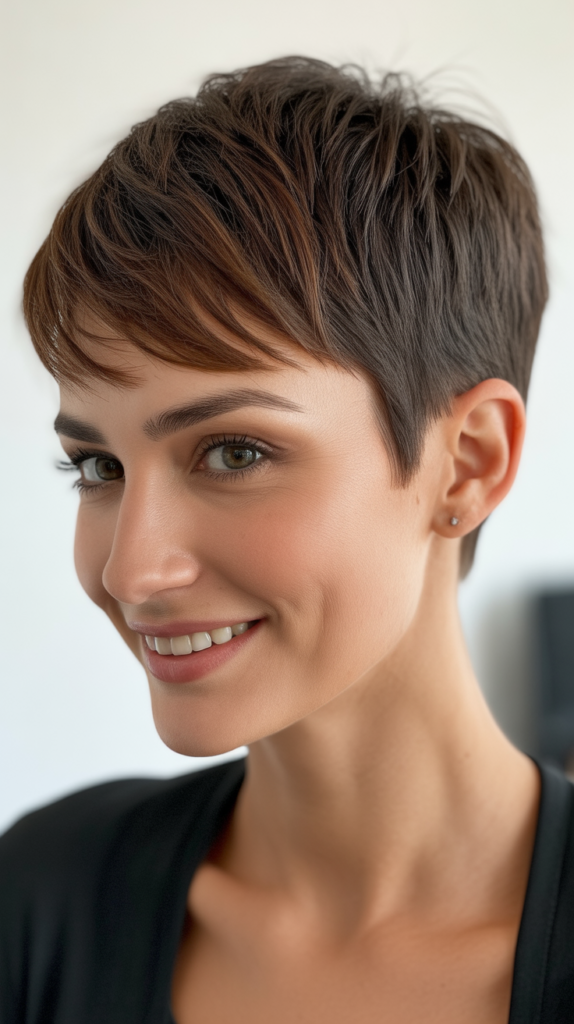
A disconnected pixie features distinct separation between different sections, with length and texture dramatically changing rather than blending smoothly.
This avant-garde approach creates bold visual interest that distracts from hair density while the contrasting sections actually make thin hair appear more substantial through clever design.
The modern aesthetic appeals to fashion-forward individuals.
Disconnection Techniques:
- Top section maintains significant length (3-5 inches)
- Sides cut very short without gradual blending
- Abrupt transitions between sections
- Can include undercut elements
- Pieces may be separated by visible lines or gaps
Creating Fullness Through Contrast:
- The stark difference makes the longer section appear thicker
- Short sides provide no competing volume
- The eye focuses on the abundance where length remains
- Strategic disconnection creates architectural interest
- Less overall hair but more perceived impact
Maintenance Reality:
- Requires frequent trims to maintain distinct sections
- Grows out with intentionally messy intermediate stages
- Home maintenance is challenging without professional skill
- Best maintained every 4-6 weeks
- Consider the commitment before choosing this cut
16. Pixie with Face-Framing Layers
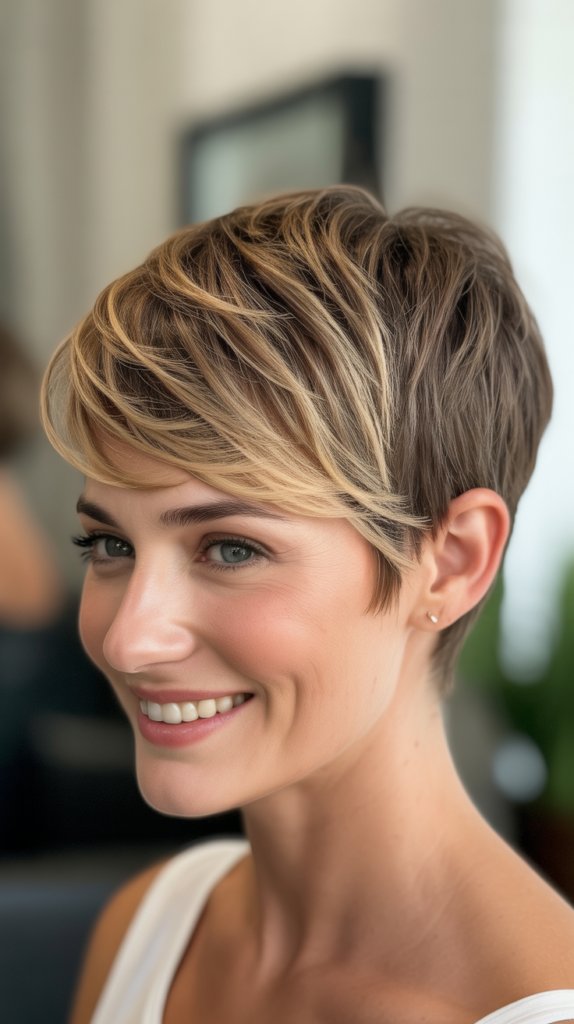
Face-framing layers in a pixie cut strategically place longer, angled pieces around the face while keeping the overall style short.
These flattering layers draw attention to facial features while adding movement and dimension that benefits fine hair.
The longer face-framing sections create the perception of more substantial hair through clever placement.
Layer Placement Strategy:
- Longest pieces typically at cheekbone or jaw level
- Gradually shorter as they blend into the rest of the cut
- Can angle forward or sweep backward
- Usually point-cut for soft, feathered ends
- Framing on one or both sides depending on preference
Face-Shaping Benefits:
- Longer layers soften angular facial features
- Draw attention to eyes and cheekbones
- Create vertical lines that elongate round faces
- Add femininity to very short pixies
- Provide styling versatility that ultra-short cuts lack
Styling Variations:
- Swept forward for fuller, more dramatic framing
- Tucked behind ears for a cleaner look
- Curled slightly under or outward
- Straightened and piece-y for modern edge
- Can be temporarily pinned back when desired
17. Tousled Pixie with Movement
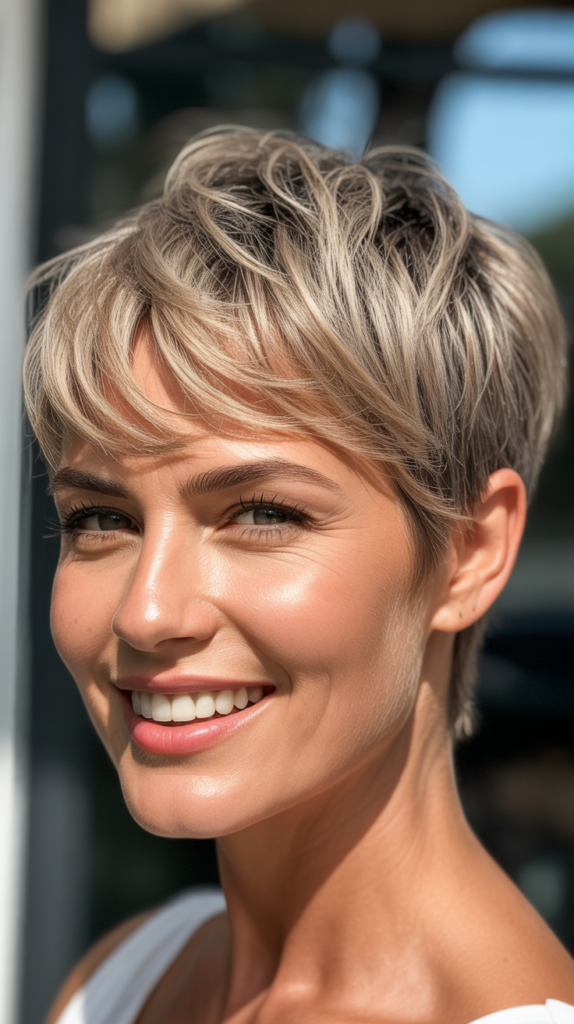
The tousled pixie embraces natural texture and deliberate dishevelment to create an effortlessly chic appearance.
This styling approach actually disguises the thinness of fine hair by creating the appearance of abundant texture and fullness through strategic product use and styling techniques.
The lived-in aesthetic reduces styling time while maximizing volume.
Achieving Perfect Tousle:
- Begin with sea salt spray or texturizing spray on damp hair
- Scrunch hair while blow-drying with a diffuser
- Use fingers (never a brush) to style and separate
- Apply small amounts of texturizing paste to create piece-y definition
- Intentionally create irregularity and “imperfection”
The Illusion of Thickness:
- Tousled texture creates air pockets between strands
- Irregular movement catches light differently, suggesting depth
- The messy aesthetic prevents fine hair from lying flat
- Separation between pieces creates the appearance of more hair
- Matte finish from texturizing products adds grit and grip
Best Product Combinations:
- Sea salt spray + lightweight mousse for foundation
- Texturizing paste + dry shampoo for definition
- Beach wave spray + powder spray for maximum grit
- Avoid smoothing serums that flatten the tousle
- Matte pomade for piece-y definition without shine
18. Pixie with Shaved Design
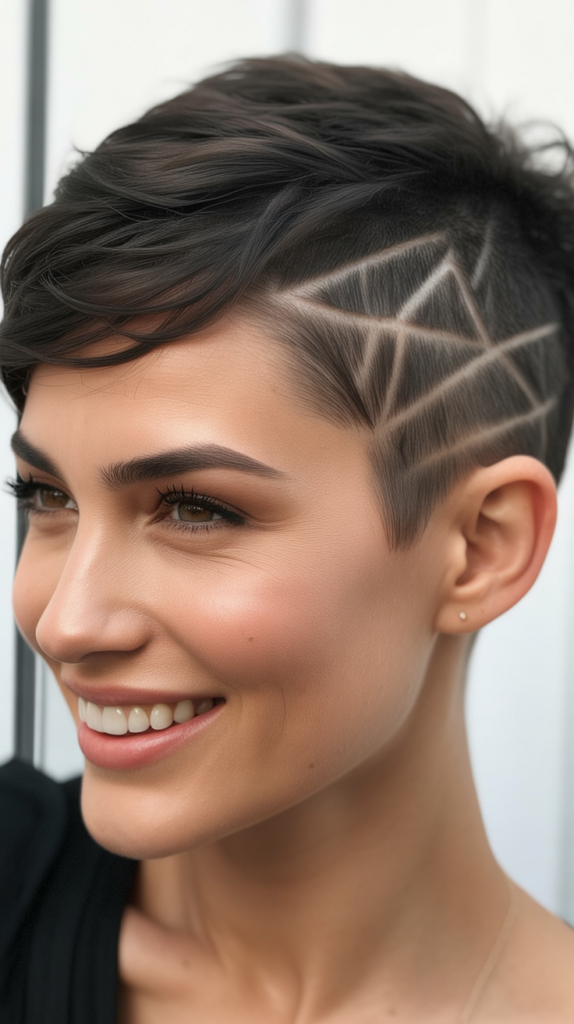
A pixie with shaved design incorporates patterns, lines, or artistic elements into the cut areas, creating personalized artwork on the scalp.
While this bold choice makes a statement, it also strategically benefits fine hair by removing bulk in designed areas while leaving fullness where desired.
The visual interest completely redirects attention from hair density to creative expression.
Popular Design Options:
- Simple straight lines at various angles
- Geometric patterns (triangles, diamonds, etc.)
- Curved, wave-like designs
- Stars, hearts, or other symbols
- Custom designs reflecting personal interests
Practical Considerations:
- Designs require refreshing every 1-2 weeks
- Hair grows through designs, blurring lines
- Best placed on sides or back where visible
- Can be hidden under longer top sections when desired
- Temporary artistic expression that grows out
Who Rocks This Look:
- Creative individuals in artistic fields
- Those wanting maximum personalization
- People comfortable with regular maintenance
- Anyone seeking conversation-starting style
- Works across age groups with appropriate design choices
19. Wispy Pixie Cut
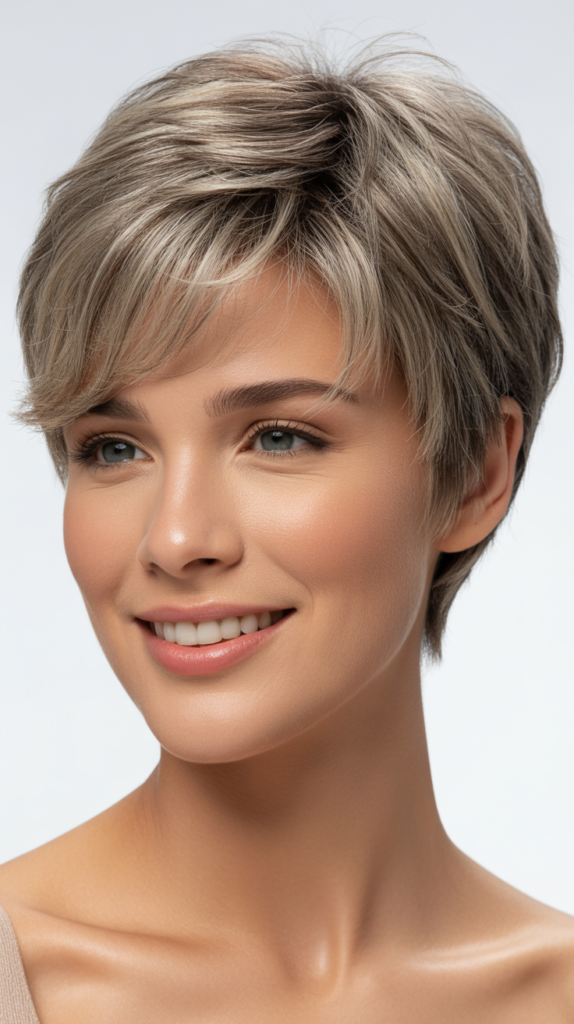
The wispy pixie utilizes ultra-fine, delicate pieces and soft texture to create an ethereal, romantic appearance.
Ironically, this style perfectly suits fine hair because it works with the natural delicacy of thin strands rather than fighting against them.
The soft, airy aesthetic celebrates lightweight texture while strategic layering prevents flatness.
Creating Wispy Texture:
- Razor cutting for ultimate softness and irregular ends
- Point-cutting throughout for feathered edges
- Thinning shears used sparingly and strategically
- Varied length throughout rather than uniform layers
- Pieces cut at different angles for organic movement
Styling for Airiness:
- Lightweight products only (heavy products destroy the wisp)
- Blow-dry on low heat with fingers gently separating
- Let some areas air-dry for natural texture
- Minimal product at the roots to avoid weighing down
- Embrace natural texture rather than forcing smoothness
The Beauty of Delicacy:
- Celebrates the natural fineness of the hair
- Creates feminine, soft silhouette
- Moves beautifully with any air movement
- Catches light in multiple ways for dimension
- Lower maintenance than heavily styled pixies
20. Pixie with Deep Side Part
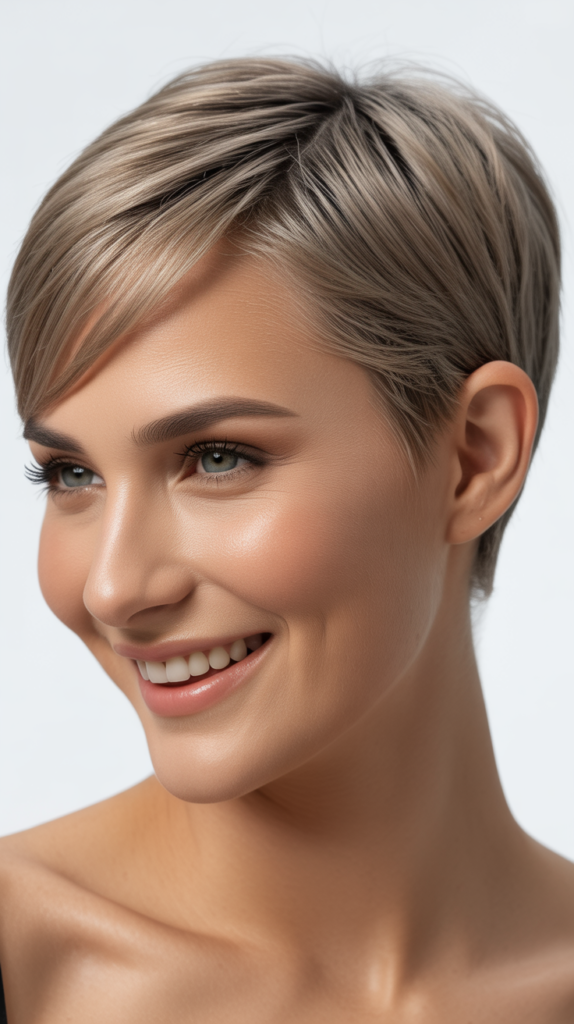
A deep side part in a pixie cut creates instant volume and drama by directing most of the hair to one side.
This simple technique dramatically enhances the appearance of fullness in fine hair by concentrating visual weight asymmetrically while the exposed scalp on the lighter side creates contrast.
The versatile styling option works with virtually any pixie length.
Creating the Perfect Deep Part:
- Position part 2-3 inches from center, closer to one side
- Can use a tail comb for precision or fingers for softness
- Blow-dry immediately after creating part to set direction
- Heavier side should be styled with lift at the roots
- Lighter side can be slicked down or slightly textured
Volume Amplification:
- All the hair weight on one side creates dramatic fullness
- Root lift on the heavier side adds impressive height
- The contrast between sides makes the full side appear thicker
- Can be switched to the opposite side for different volume patterns
- Works even with minimal product when properly dried
Styling Versatility:
- Can be switched from left to right
- Occasionally center-parted for completely different look
- The heavier side can sweep across forehead like bangs
- Compatible with all texture types from sleek to tousled
- Instantly changes the look without cutting
21. Graduated Pixie Bob
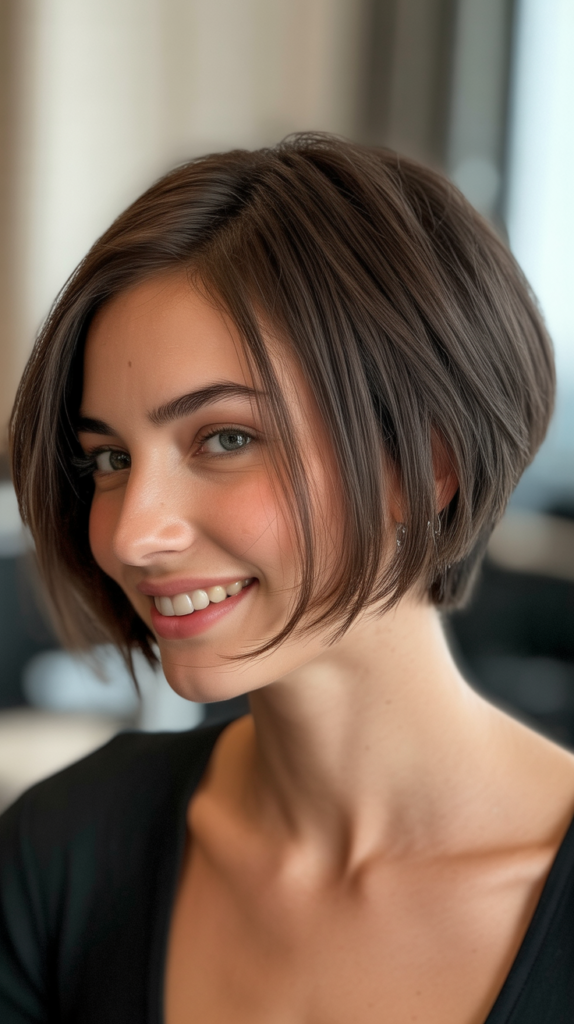
The graduated pixie bob features stacked layers at the back that create volume and fullness while the front maintains slightly longer, angled pieces.
This dimensional cut builds body specifically where fine hair tends to fall flat while the graduation technique removes weight that could drag hair down.
The sophisticated style suits professional environments while offering modern appeal.
Graduation Technique:
- Back sections cut progressively shorter toward the nape
- Creates a stacked, rounded shape at the crown
- Front sections angle longer toward the face
- Graduated layers build upon each other for volume
- The stacking creates built-in lift without teasing
Why Graduation Works:
- The stacked layers naturally push upward against each other
- Weight is distributed to create optimal fullness
- The rounded back shape gives the impression of abundant hair
- Front lengths provide styling versatility
- The technique has been proven effective for decades
Professional Appeal:
- Clean, polished appearance suitable for corporate settings
- Sophisticated without being trendy or edgy
- Easy to maintain and style quickly
- Ages beautifully across different life stages
- Can be dressed up or down depending on styling
22. Pixie with Curtain Bangs
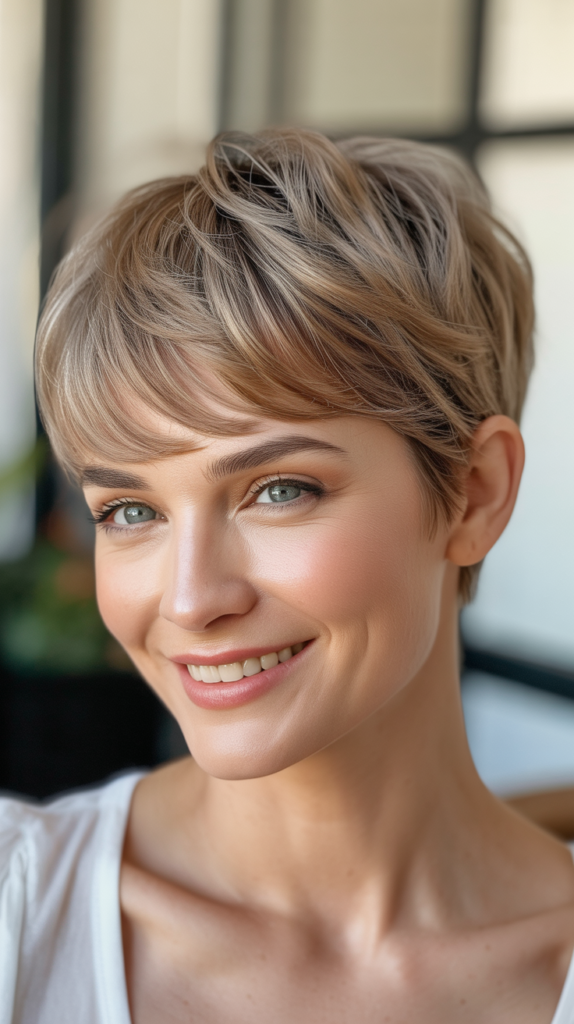
Curtain bangs in a pixie cut part down the center and sweep to each side, framing the face beautifully.
These softer, longer bangs add femininity to short cuts while the parted style creates natural lift at the roots that benefits fine hair.
The trending technique modernizes the pixie while providing styling flexibility and face-framing softness.
Curtain Bang Specifications:
- Part naturally down the center of the forehead
- Sweep to each side, framing the face
- Can range from eyebrow length to cheekbone length
- Usually slightly longer than traditional full bangs
- Blend into the shorter sides of the pixie cut
Styling the Curtain:
- Blow-dry bangs while directing each side outward with a round brush
- The natural part creates automatic root volume
- Can be styled more dramatic or subtle depending on product
- Sometimes curl slightly under at the ends for softness
- Low-maintenance as they grow out gracefully
Face-Framing Benefits:
- Softens the severity of very short sides
- Draws attention to eyes and center of face
- Adds feminine movement to masculine-leaning cuts
- Versatile enough to pin back when desired
- Creates the illusion of more hair in the front
23. Blunt Cut Pixie
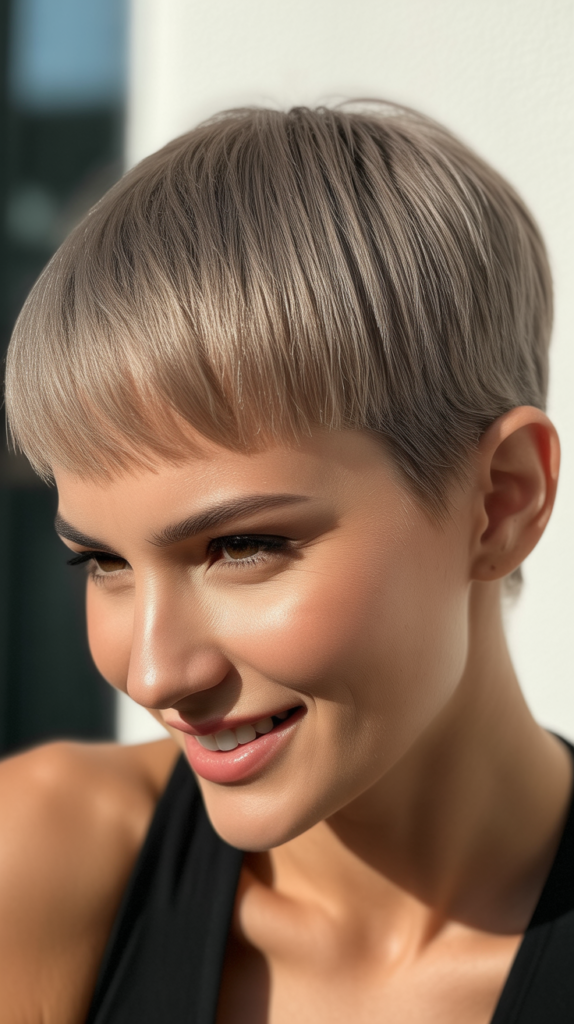
A blunt cut pixie features relatively uniform length without layers, creating a smooth, geometric appearance.
While counterintuitive for fine hair, a well-executed blunt pixie can actually make thin hair appear thicker by maintaining maximum density throughout.
The weight and blunt line create visual fullness that heavily layered cuts sometimes sacrifice.
Blunt Cutting Approach:
- Minimal to no layering throughout the cut
- Perimeter cut in a straight, even line
- All hair maintains relatively similar length
- Weight is preserved rather than removed
- Creates strong, defined shape
The Thickness Illusion:
- More hair at the ends creates the appearance of density
- The blunt line looks intentionally thick and full
- Light hits the smooth surface uniformly
- No wispy, thin ends that reveal fine texture
- The solid shape appears purposefully substantial
Maintenance Requirements:
- Requires precise cutting technique for even results
- Grows out less gracefully than layered cuts
- Needs regular trims to maintain blunt line
- Can begin to look unkempt if not maintained
- Best maintained every 4-5 weeks
24. Voluminous Crown Pixie
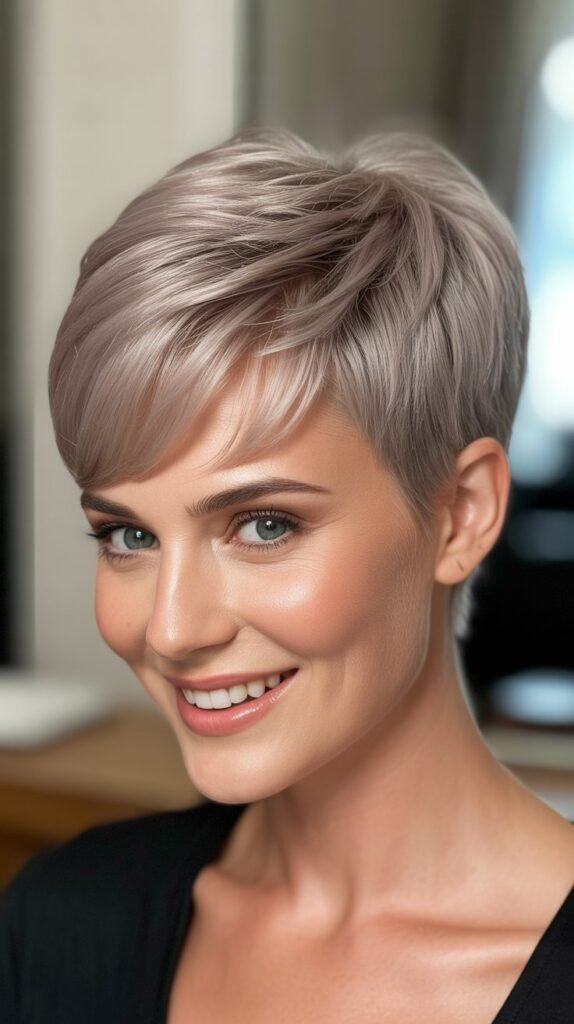
The voluminous crown pixie prioritizes extreme height and fullness at the top of the head, creating a dramatic silhouette.
For fine hair, this style represents the ultimate volume solution by concentrating all length and effort where it makes the most visual impact.
The architectural approach relies on strategic cutting, styling, and product selection.
Building Maximum Height:
- Crown section maintains 4-6 inches of length
- Everything else cut very short for contrast
- Internal layers within crown create support structure
- The perimeter of crown section should be blended, not blunt
- Graduated layers stack to push hair upward
Styling for Sky-High Volume:
- Begin with volumizing mousse on damp hair
- Blow-dry crown section straight upward with a large round brush
- Apply heat directly at roots for maximum lift
- Use Velcro rollers on top while hair cools
- Finish with strong-hold hairspray and optional light backcombing
Product Must-Haves:
- Volumizing mousse for foundation
- Root-lifting spray for targeted boost
- Strong-hold hairspray that doesn’t weigh down
- Dry texture spray for additional grip
- Optional volumizing powder at the roots
25. Pixie with Razored Edges
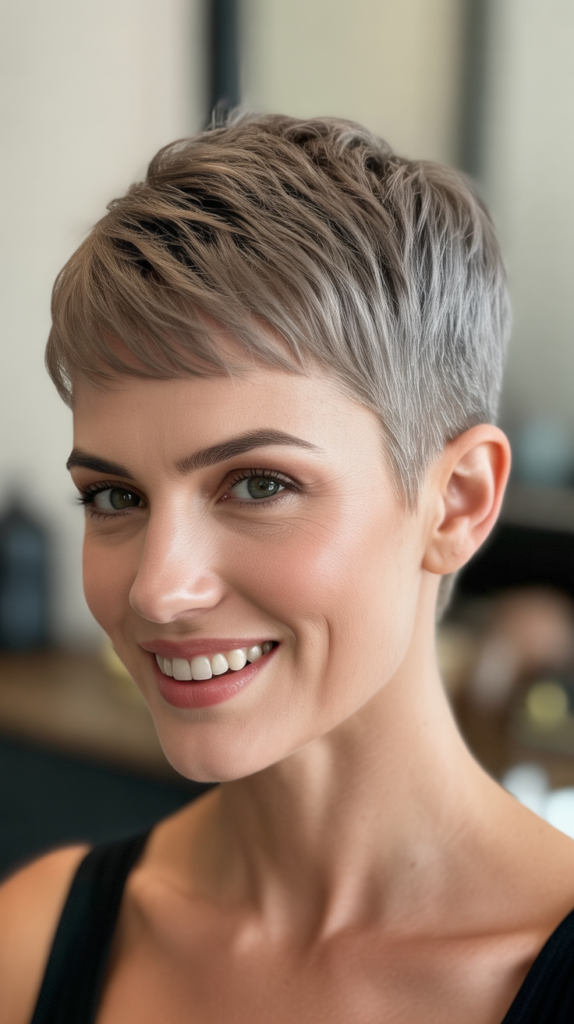
A pixie with razored edges uses razor-cutting techniques to create soft, textured ends throughout the style.
The razor produces wispy, irregular points that add dimension and the appearance of thickness to fine hair.
This technique enhances movement while creating the visual impression of abundant texture through strategic edge work.
Razor Cutting Benefits:
- Creates softer edges than scissor cutting
- Produces irregular, natural-looking ends
- Thins hair minimally while maximizing texture
- Allows hair to lie more naturally
- Enhances movement and flow
Why It Works for Fine Hair:
- The varied edge lengths create dimension
- Soft ends are more forgiving than blunt cuts on thin hair
- The wispy texture disguises lack of density
- Light catches the irregular surfaces differently
- Creates the perception of abundance through variety
Maintenance Considerations:
- Razored edges can grow out somewhat shaggy
- Requires refreshing every 5-6 weeks
- Some razored styles can appear too wispy if overdone
- Works best with skilled stylists experienced in razor work
- May need occasional scissor trims to maintain shape
26. Sleek Pixie with Shine
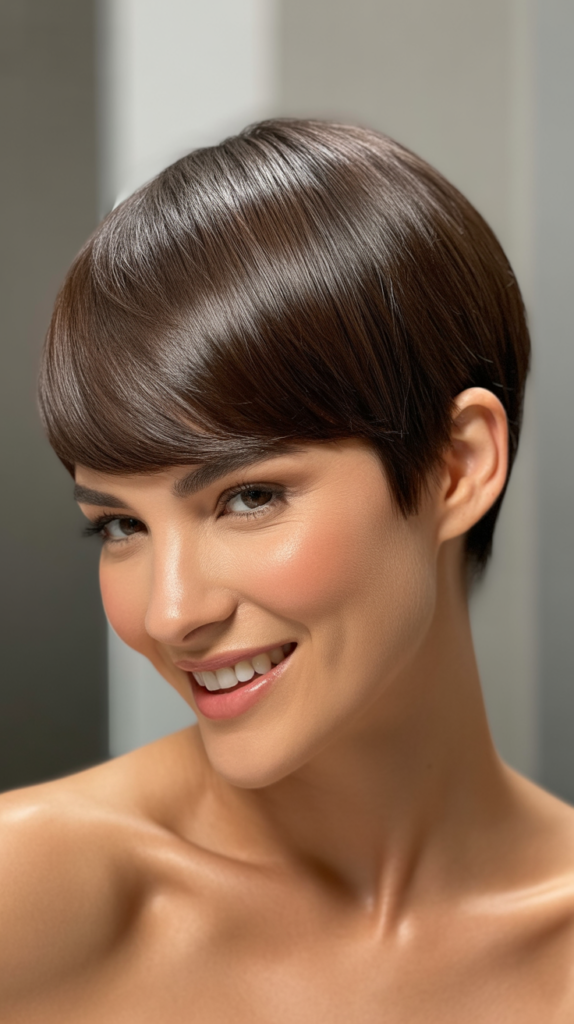
The sleek, shiny pixie embraces smoothness and light-reflective polish rather than texture.
For fine hair, this approach can be flattering when properly executed because the shine creates the illusion of healthy, abundant hair.
Strategic product selection and styling techniques prevent the flat appearance often associated with sleek styles on thin hair.
Achieving Healthy Shine:
- Begin with shine-enhancing shampoo and conditioner
- Apply smoothing serum or oil to damp hair (sparingly)
- Blow-dry smooth with a paddle brush
- Flat iron on low heat for additional sleekness
- Finish with shine spray for maximum reflectivity
Preventing Flatness:
- Despite the sleek look, maintain volume at roots
- Use a root-lifting product before smoothing lengths
- The shine draws light and creates dimension
- Sleek doesn’t mean flat against the head
- Strategic blow-drying creates lift even in sleek styles
Product Selection:
- Lightweight shine serums that don’t make hair greasy
- Silicone-based products for slip and reflection
- Avoid heavy oils that weigh down fine hair
- Use shine spray as finishing product, not during styling
- Heat protectant with shine-enhancing properties
27. Pixie with Fringe Detail
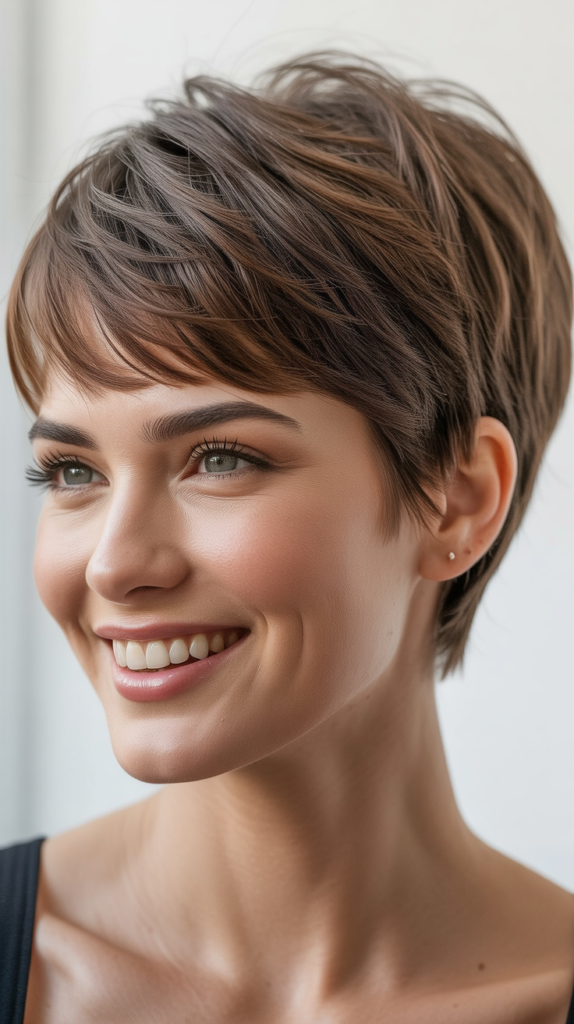
A pixie with fringe detail features intentional, styled pieces around the hairline and throughout the cut that create visual interest.
These strategic wisps and tendrils add softness and dimension while disguising the thinness of fine hair through deliberate texture.
The detailed approach elevates a simple pixie into an artfully crafted style.
Types of Fringe Details:
- Baby hairs deliberately styled at temples
- Wispy pieces at the nape
- Intentional shorter pieces throughout for texture
- Face-framing tendrils of varying lengths
- Strategic placement of piece-y sections
Creating the Details:
- Some fringe details are cut in, others are styled
- Point-cutting creates soft, detail-friendly ends
- Styling products help manipulate fine pieces
- Flat iron can be used to create texture in details
- Fingers are better than brushes for detail work
The Impact:
- Adds artistry and intentionality to the cut
- Makes fine hair appear more interesting and textured
- Creates the impression of carefully crafted abundance
- Softens harsh lines while adding visual complexity
- Shows attention to detail in styling
28. Androgynous Pixie Cut
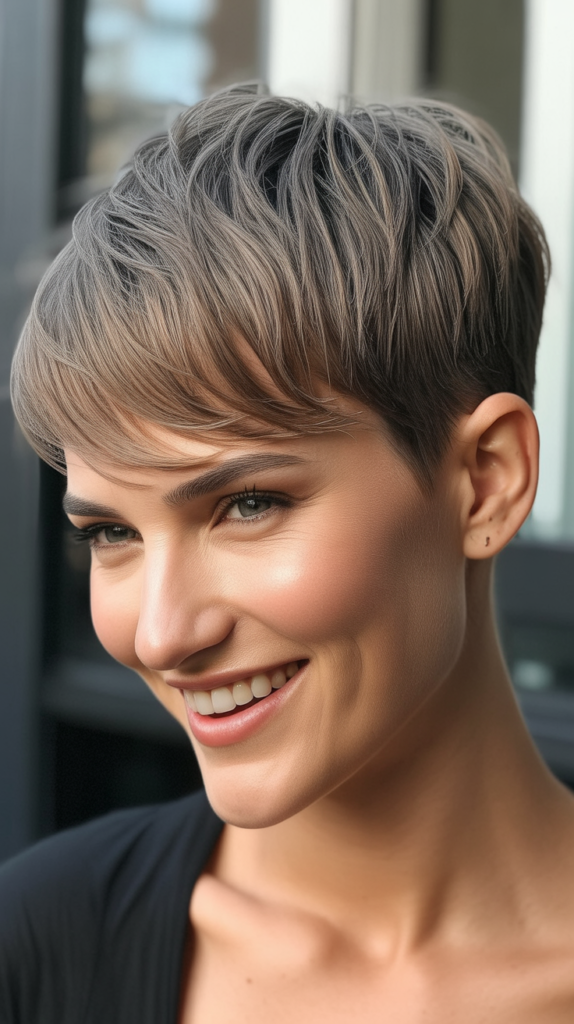
The androgynous pixie embraces gender-neutral aesthetics with clean lines, balanced proportions, and minimal styling.
This confident approach works beautifully for fine hair because it removes gendered expectations of thickness and fullness, celebrating the natural texture and clean silhouette.
The modern aesthetic appeals to minimalists and those seeking low-maintenance sophistication.
Androgynous Characteristics:
- Relatively uniform length throughout (1-3 inches)
- Minimal or no traditionally “feminine” details
- Clean, geometric lines
- Natural styling without excessive product
- Focus on cut quality rather than styling tricks
Who Chooses This Style:
- Those embracing gender fluidity or non-binary identity
- Minimalists who appreciate simplicity
- People wanting extremely low-maintenance hair
- Anyone seeking clean, modern aesthetics
- Those confident in their natural features
The Low-Maintenance Appeal:
- Often requires nothing more than washing and air-drying
- Cut quality does all the work
- Minimal product needed
- Quick getting-ready routine
- Embraces natural texture and fine quality
29. Pixie with Color Dimension
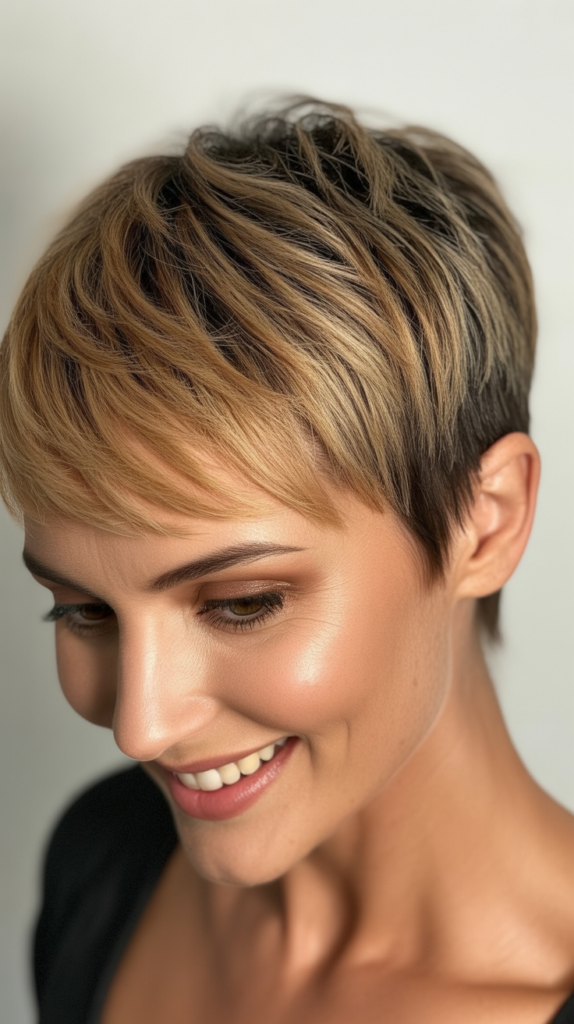
Adding color dimension to a pixie cut through highlights, lowlights, or balayage creates depth that significantly enhances the appearance of fullness in fine hair.
Strategic color placement can visually thicken thin hair by creating shadows and light that suggest dimension.
The artistic approach transforms a simple cut into a multidimensional style.
Color Techniques for Volume:
- Highlights at the crown create the illusion of height
- Lowlights at the sides add depth and shadows
- Balayage creates natural-looking dimension
- Babylights add subtle texture throughout
- Color placement following the cut’s architecture
Recommended Color Strategies:
- Stay within 2-3 shades of natural color for subtlety
- Place lighter pieces where you want to draw attention
- Darker underneath creates the illusion of depth and thickness
- Face-framing highlights brighten and add interest
- All-over color can also create uniform fullness
Maintenance Considerations:
- Color requires regular maintenance every 4-8 weeks
- Fine hair may be more susceptible to damage
- Use color-safe, strengthening products
- Consider glossing treatments to maintain vibrancy
- Balayage grows out more gracefully than traditional highlights
30. Textured Pixie with Pompadour
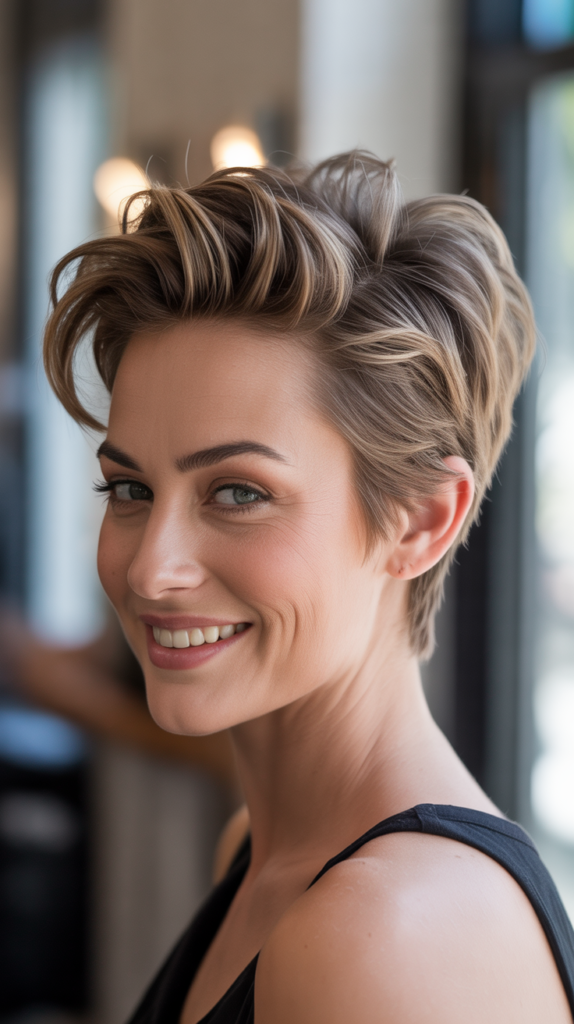
A textured pixie with pompadour styling features volume swept upward and backward at the front, creating a dramatic focal point.
This retro-inspired technique provides maximum height for fine hair while the pompadour itself becomes a statement element.
The style successfully combines vintage glamour with modern texture for impressive results.
Creating the Pompadour:
- Front section should be 3-4 inches minimum
- Blow-dry upward and backward with round brush
- Use strong-hold product for structure
- Back-comb lightly at roots for support
- Smooth over the teased section for polished appearance
Volume Techniques:
- The pompadour naturally creates dramatic height
- Can be subtle or extremely dramatic based on preference
- Works with textured or smooth finishes
- Sides typically kept very short for contrast
- Back can be tapered or slightly longer
Style Versatility:
- Can be worn sleek for formal occasions
- Textured for casual, edgy looks
- Height can be adjusted day to day
- Compatible with various face shapes
- Ages surprisingly well across demographics
31. Soft Pixie with Curved Bangs
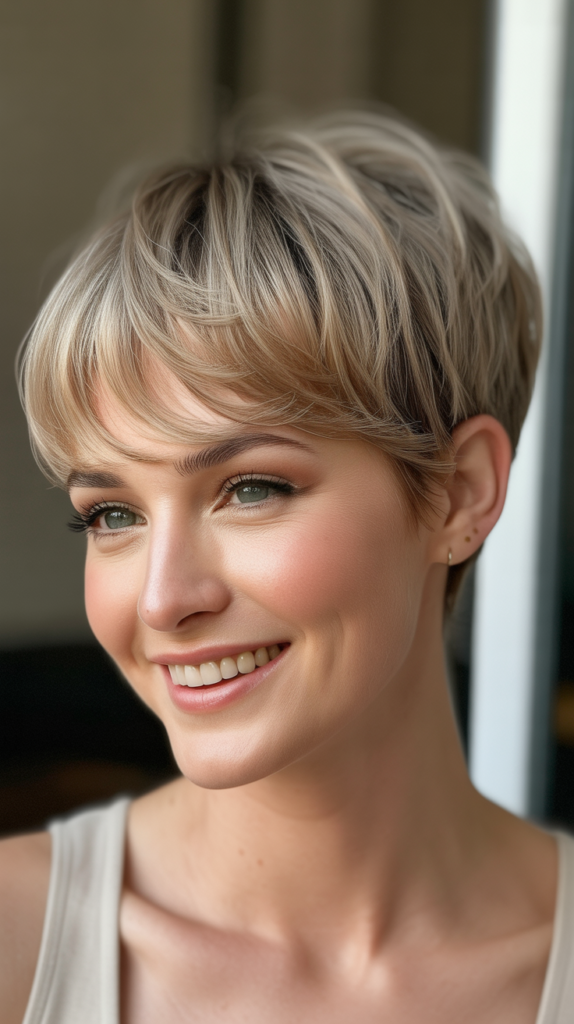
A soft pixie with curved bangs features a gentle arc of bangs that follows the natural curve of the forehead.
This feminine detail softens the overall appearance while the curved line creates visual interest and movement that benefits fine hair.
The style offers a romantic alternative to straight or side-swept bangs while maintaining pixie practicality.
Curved Bang Design:
- Follows the natural curve of the brow bone
- Can be subtle or dramatically arched
- Usually cut longer in the center, shorter at sides
- Blends into face-framing sections
- Creates softer appearance than straight-across bangs
Styling the Curve:
- Round brush pulled forward and curved down while blow-drying
- Can be flat-ironed in a curved motion
- Requires less precision than straight bangs
- Grows out more gracefully due to curved shape
- Works with both textured and smooth styling
Feminine Softness:
- Curves are inherently softer than straight lines
- Adds gentle movement to the style
- Frames the face in a flattering arc
- Creates vintage-inspired femininity
- Balances the shortness of a pixie with delicate details
32. Lived-In Textured Pixie
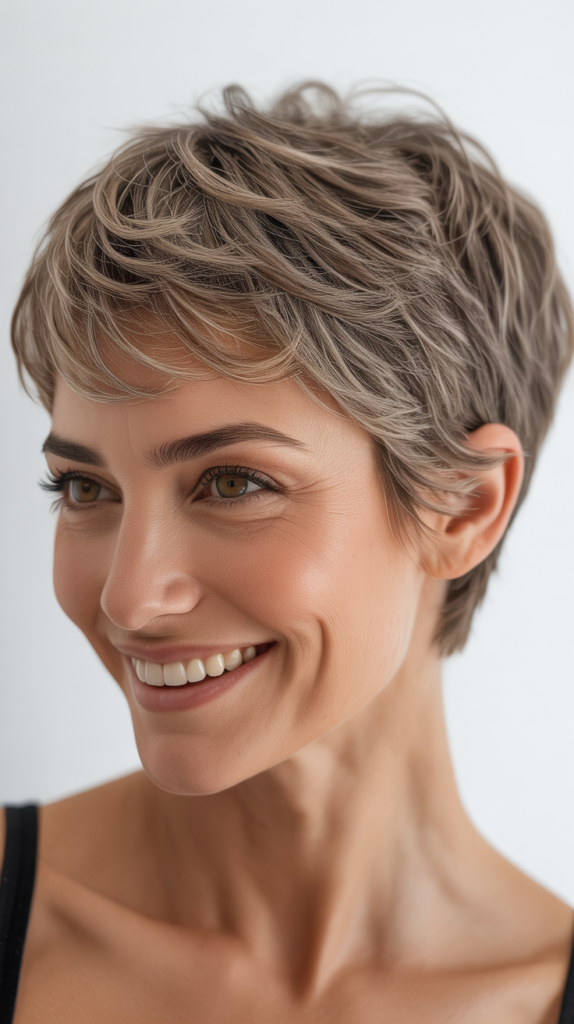
The lived-in textured pixie embraces natural growth patterns and effortless styling that looks intentionally undone.
This low-maintenance approach celebrates the natural movement of fine hair while strategic cutting ensures the “undone” look appears intentional rather than neglected.
The style resonates with modern preferences for natural, achievable beauty.
Lived-In Characteristics:
- Cut follows natural growth patterns
- Minimal styling required
- Embraces slight irregularity
- Appears to have grown out slightly even when fresh
- Natural texture is celebrated, not controlled
The Effortless Technique:
- Air-drying is often sufficient
- Minimal product for hold and separation
- Finger-styling rather than brushes or combs
- Embraces imperfection as intentional
- Works with, not against, natural hair behavior
Why It Works:
- Reduces daily styling time significantly
- Fine hair often looks more textured when lived-in
- The slightly undone look is currently on-trend
- Requires less frequent salon visits
- Celebrates authenticity and natural beauty
Professional Maintenance Tips
Regular maintenance keeps your pixie cut looking fresh and voluminous.
Schedule appointments every 4-6 weeks to maintain shape and prevent fine hair from appearing limp as it grows. Between salon visits, use quality styling products specifically formulated for fine hair that won’t weigh down your style.
Communicate clearly with your stylist about your daily styling routine and any challenges you face, as they can adjust the cut to work better with your lifestyle.
Consider periodic deep conditioning treatments to maintain hair health without adding heavy buildup.
Professional styling education during your appointment can help you recreate salon results at home.
Common Mistakes to Avoid
Many people with fine hair make critical styling mistakes that reduce volume and highlight thinness.
Using too much product is the number one culprit, as fine strands become quickly overwhelmed and flattened.
Avoid heavy conditioners on the roots and focus on ends only. Over-washing can strip natural oils that provide body and texture, so consider washing every other day or using dry shampoo between washes.
Never skip heat protectant when using styling tools, as damaged fine hair appears even thinner. Avoid blunt, one-length cuts without texture, as these can make fine hair look flat and lifeless.
Don’t be afraid to embrace texture and movement rather than fighting for perfectly smooth styles that highlight lack of density.
Conclusion
The journey to finding your perfect style among these 32 Beautiful Short Pixie Haircuts for Thin Fine Hair opens up a world of possibilities that celebrate rather than hide your natural hair texture.
From classic tapered cuts to bold asymmetrical designs, each style offers unique advantages for creating the illusion of fullness while providing easy maintenance and timeless appeal.
The right pixie cut transforms fine hair from a styling challenge into a distinctive asset, proving that thickness isn’t a prerequisite for stunning short hairstyles.
With proper cutting techniques, strategic product selection, and confident styling, fine hair can achieve remarkable volume, texture, and beauty in a pixie cut that turns heads and boosts confidence every single day.