
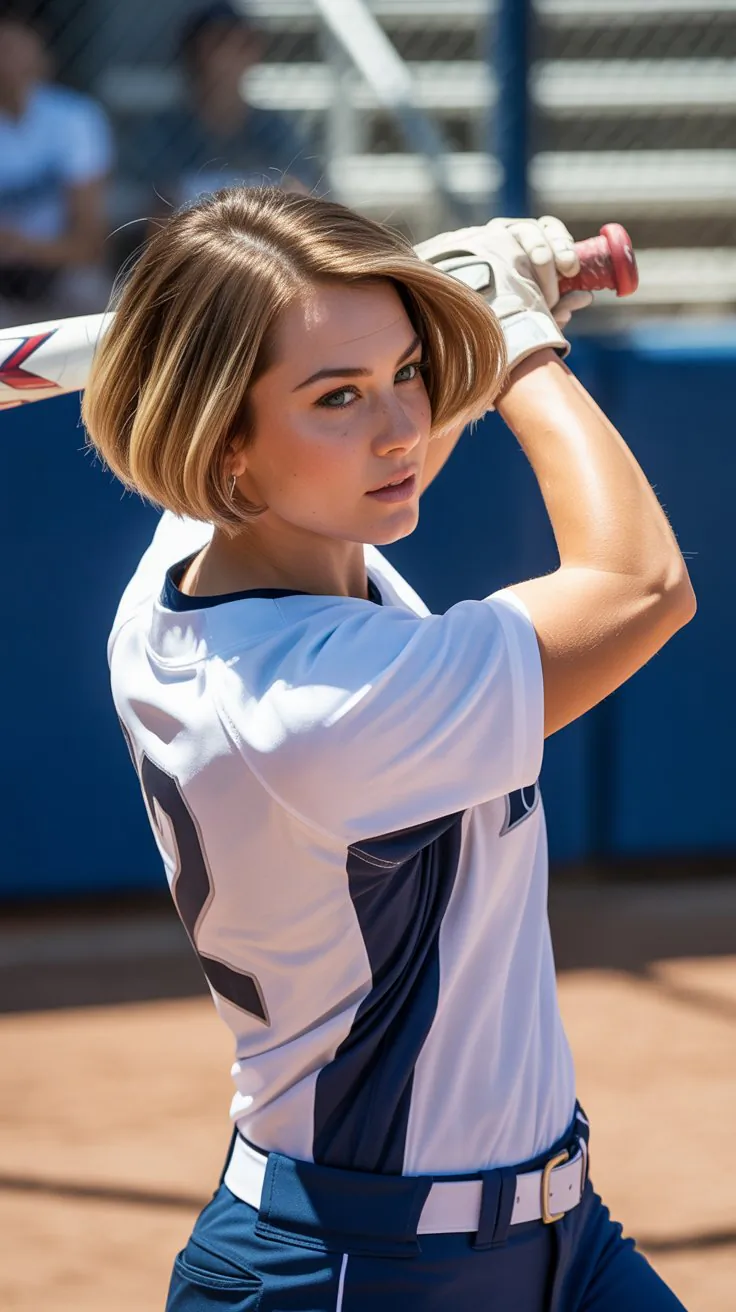
If you play softball with short hair, you already know the struggle — wind, sweat, and a helmet that wrecks everything you worked for that morning.
But here is the good news: 36 Short Hair Softball Styles That Actually Hold is exactly what you have been searching for.
This article is a complete, practical guide packed with tested styles, expert tips, and real solutions for every short hair type on the field.
Whether you have a pixie cut, a bob, or anything in between, you will find styles here that stay put from the first pitch to the final out.
From quick game-day fixes to styles that survive a double-header, this guide covers it all — including the right products, accessories, and techniques that make short hair work hard on the diamond.
Get ready to feel confident, comfortable, and game-ready every single time you step up to the plate.
1. The Classic Low Bun Tuck
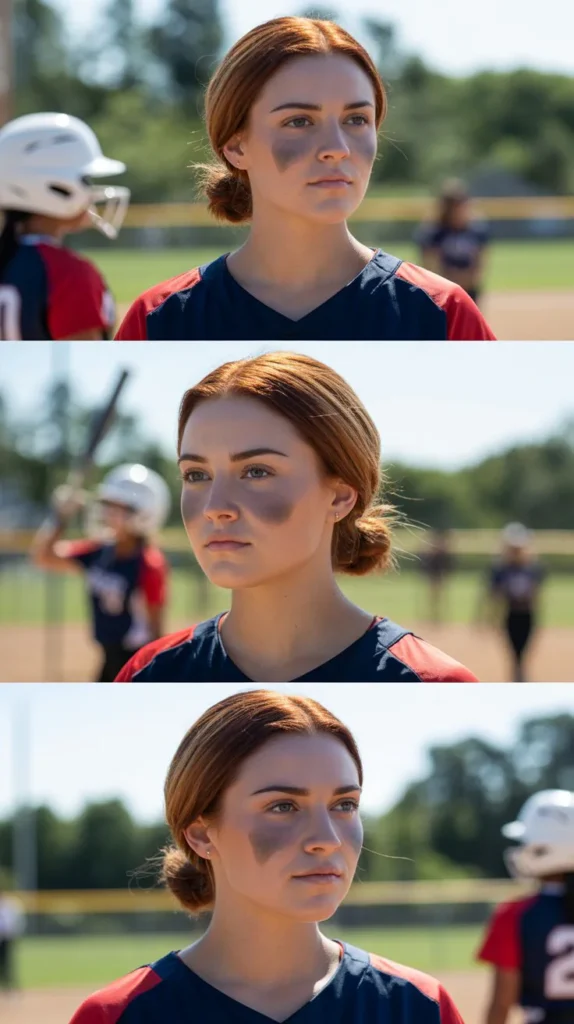
The low bun tuck is one of the most reliable go-to styles for short hair players who need a clean, secure fit under a helmet.
It works especially well for longer short hair like chin-length bobs and lobs. This style keeps hair off the neck and face while staying completely flat under headgear.
- Gather all your hair at the nape of your neck and twist it into a tight, compact bun.
- Use bobby pins in a criss-cross pattern to lock the bun firmly in place.
- Apply a light-hold gel around the hairline to tame flyaways before putting on your helmet.
- A small hair tie wrapped twice around the base of the bun adds extra security during intense plays.
- Finish with a sweat-resistant hairspray to keep everything locked through the full game.
2. Bobby Pin Grid Method
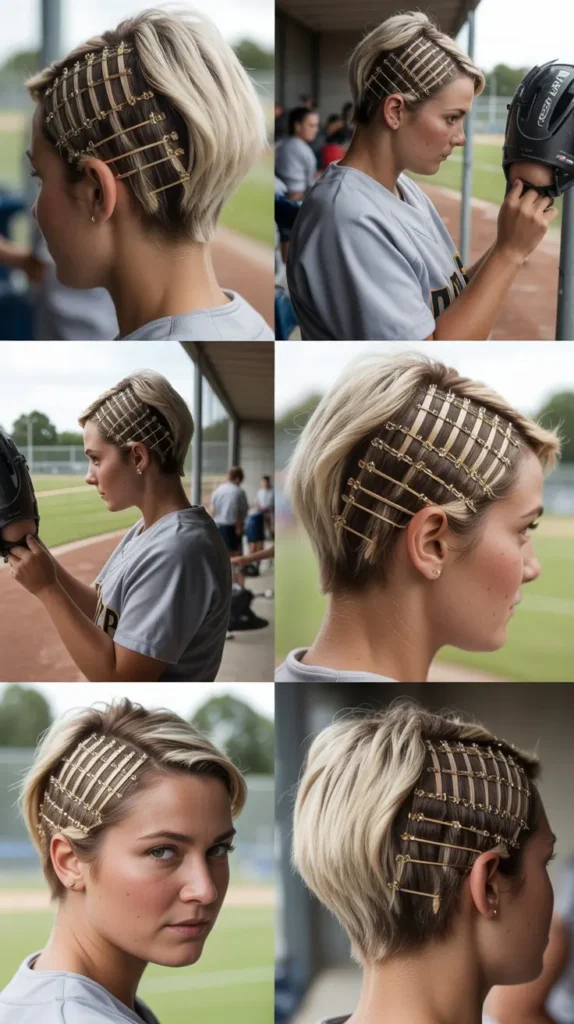
The bobby pin grid method is a game-changer for players with very short hair that seems impossible to style and secure.
Instead of using just one or two pins, this technique uses a grid-like pattern to distribute hold evenly across the hair.
It is ideal for pixie cuts and tapered styles that do not have enough length for ties or bands.
- Section your hair into small, manageable parts starting from the front hairline.
- Slide the first bobby pin horizontally across a section, then cross a second pin vertically over it to form an X shape.
- Repeat this X pattern across the top and sides of your head to create a full grid of hold.
- Use bronze or dark-toned pins that match your hair color for a neat, barely-there look.
- Set the entire style with a firm-hold spray designed for active, sweat-prone environments.
3. Headband Wrap and Tuck
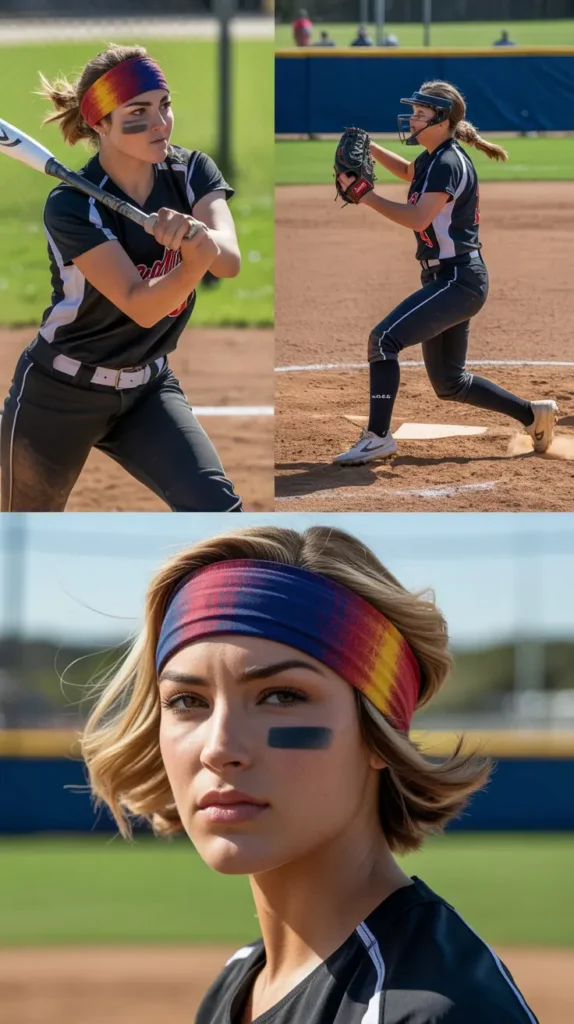
The headband wrap and tuck is both a style and a functional solution rolled into one effortless look.
A wide athletic headband can control short layers, suppress flyaways, and add a polished appearance on the field.
This method works beautifully for wavy or textured short hair that tends to puff up in humid game-day weather.
- Choose a wide, silicone-lined athletic headband that grips hair without slipping during movement.
- Place the headband about one inch back from your hairline and press it firmly down.
- Tuck any shorter layers or side pieces underneath the band to keep them flat and controlled.
- For extra hold, apply a small amount of edge control or pomade along the hairline before placing the band.
- Pair with a sweat-wicking band underneath your helmet to prevent the headband from shifting mid-game.
4. Flat Twist Crown
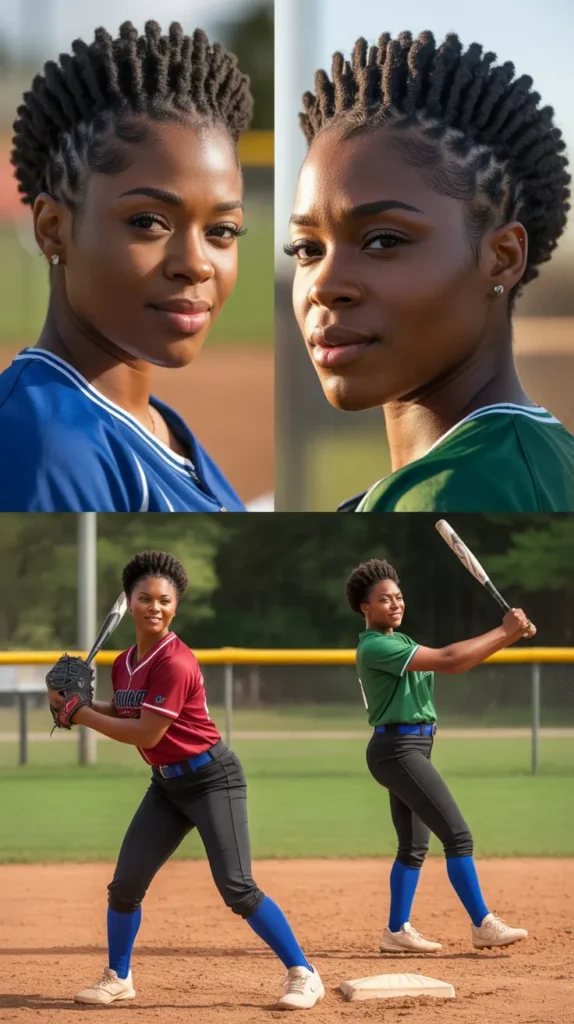
The flat twist crown is a stunning yet athletic style that keeps every strand tight and controlled during play.
It works exceptionally well for players with natural or textured short hair who need maximum hold without sacrificing style.
Two flat twists meeting at the center create a crown-like effect that sits perfectly under a helmet.
- Start with freshly moisturized or light-product-coated hair to make twisting easier and more defined.
- Part your hair down the middle from forehead to nape and begin a flat twist on one side, working from the front toward the back.
- Repeat the same flat twist on the opposite side, directing both twists toward the center back of your head.
- Secure the ends where they meet with small clear elastics or bobby pins.
- Smooth any edges with a soft toothbrush and edge gel for a clean, competition-ready finish.
5. Sleek Side Sweep
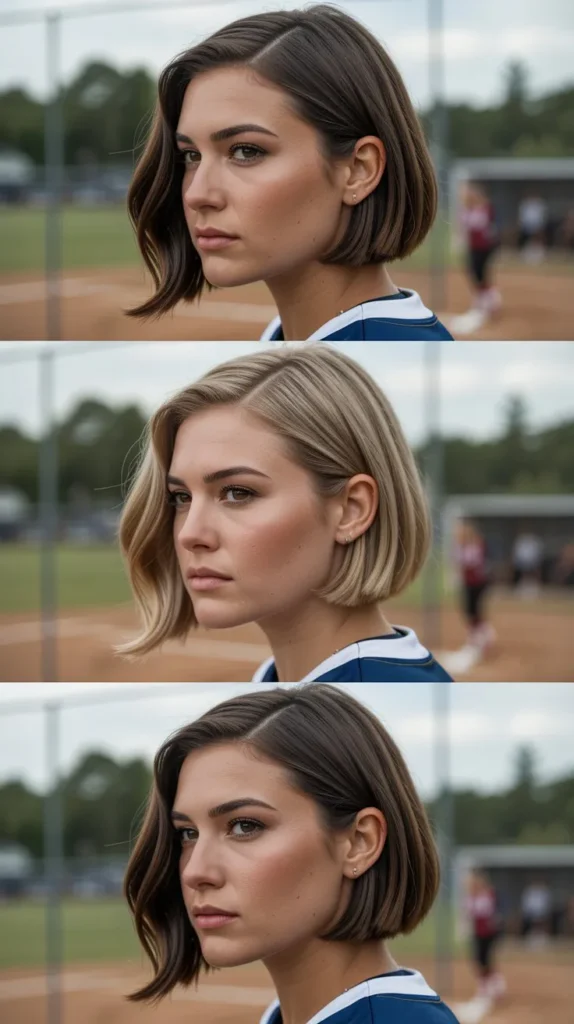
The sleek side sweep is a sophisticated short hair style that is surprisingly secure during athletic activity when done correctly.
It works best for straight or fine short hair like an A-line bob or side-parted pixie.
With the right products, this style stays smooth and swept to one side throughout the entire game.
- Apply a pea-sized amount of smoothing serum or cream to damp hair before blow-drying it sleek.
- Use a round brush to direct all hair to one side while drying to set the shape into the hair.
- Secure the swept-back side with two to three bobby pins hidden behind the ear.
- Use a strong-hold pomade to press any shorter layers flat against the head on the opposite side.
- Finish with a medium-hold hairspray and let it fully dry before putting your helmet on.
6. Cornrow Base Layer
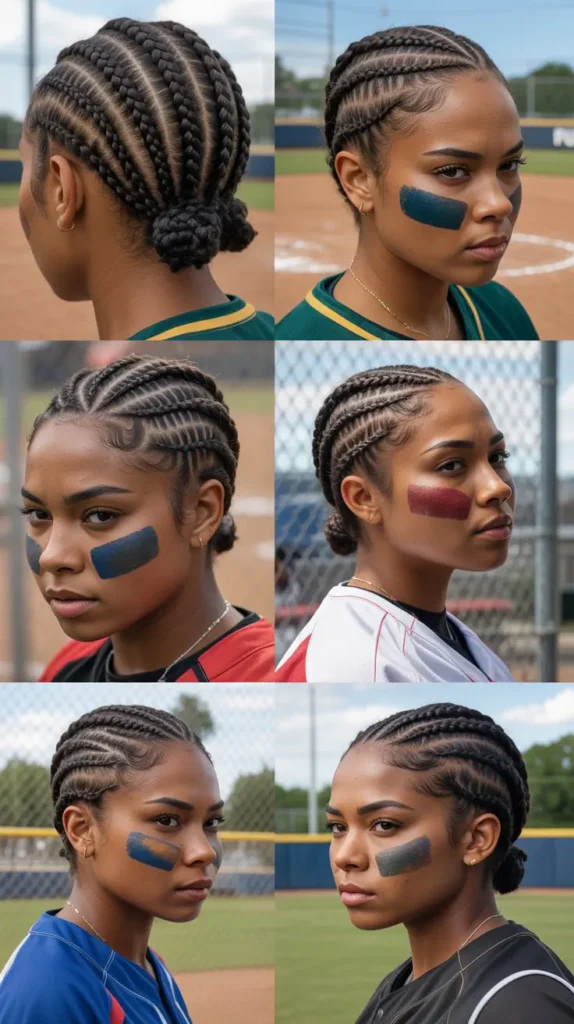
Cornrows create one of the flattest, most secure base styles possible for wearing under a softball helmet.
This style is ideal for players with natural, coily, or thick short hair that tends to bunch or slip under headgear.
A simple two to four cornrow pattern hugs the scalp tightly and maintains its shape for the entire game.
- Divide clean, detangled hair into two to four even sections from front to back using a rat-tail comb.
- Braid each section into a tight cornrow starting at the front hairline and working straight back.
- Keep tension consistent throughout each row to prevent loosening during physical activity.
- Secure each end with a small, snag-free rubber band designed for natural hair.
- Finish with a light oil sheen spray to add shine while keeping the scalp comfortable under a helmet.
7. Twisted Puff with Pins
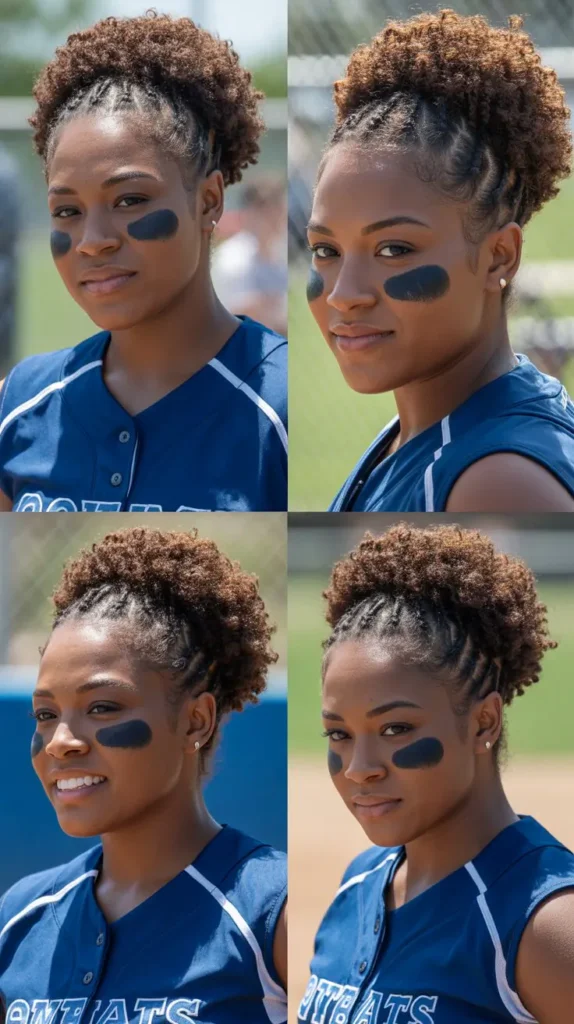
The twisted puff with pins is a fun, youthful style that keeps short natural hair fully contained and bounce-free during active play.
It combines a small puff at the crown with pinned-down sides for a balanced, tidy look.
Players with TWA (teeny weeny afro) and short coily hair will love how this style performs under pressure.
- Use a wide-tooth comb to gather the center section of your hair upward into a small puff shape.
- Secure the puff with a soft elastic band, being careful not to pull too tightly at the roots.
- Twist the side sections and pin them flat against the sides of the head using bobby pins.
- Smooth down the edges with a small amount of flaxseed gel or aloe vera gel for a clean finish.
- Set with a light-hold natural hair spray that does not leave white residue on darker hair tones.
8. The Helmet-Friendly Pixie Prep
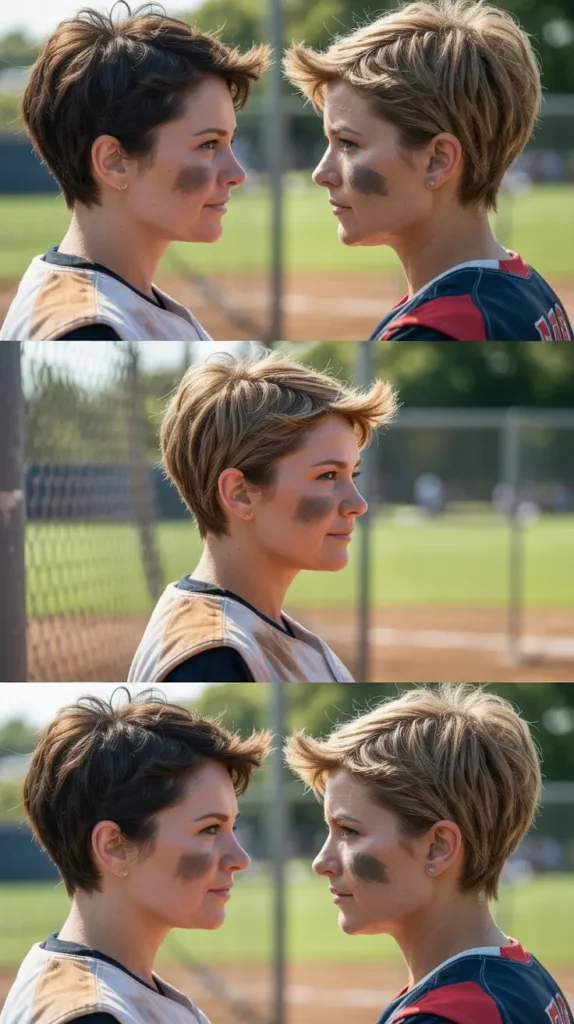
Pixie cuts need just a little intentional styling to survive a full game inside a softball helmet.
This technique focuses on prepping the pixie specifically for helmet wear so it does not flatten, shift, or look disheveled when the helmet comes off.
With the right products and placement, a pixie can look great from warm-ups to post-game celebration.
- Apply a volumizing mousse to the roots and dry hair completely before heading to the field.
- Use a firm-hold wax or clay on the top and sides to mold the shape and keep it locked in place.
- Flatten the back and sides with a fine-tooth comb to create a helmet-compatible base.
- Before putting on the helmet, tuck a sweat-absorbing liner inside to protect your style from moisture.
- After removing your helmet, use your fingers to gently reshape the top section back to its original form.
9. Double Dutch Micro Braids
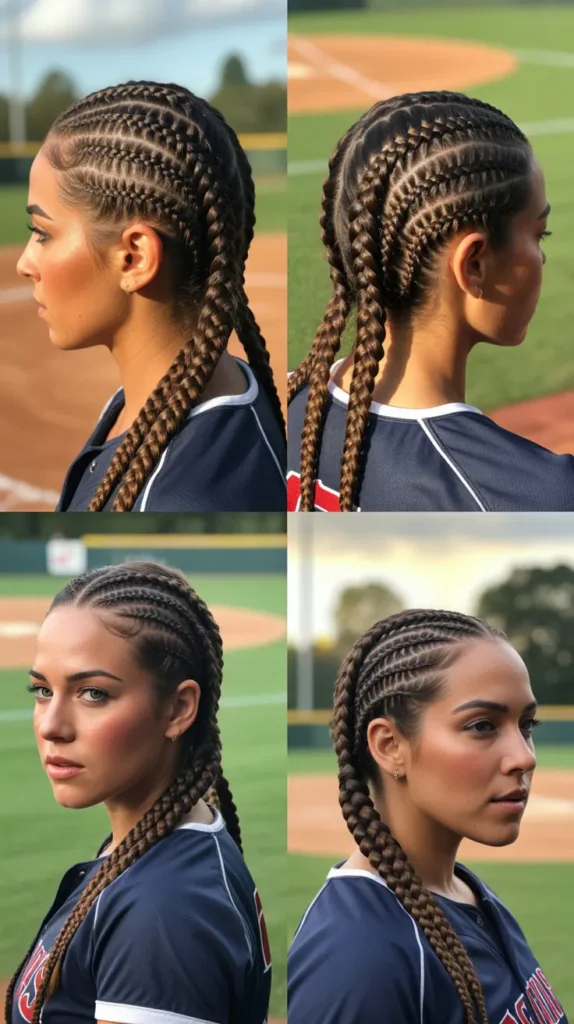
Double Dutch micro braids offer superior hold and an incredibly flat profile that is perfect for helmet sports like softball.
This style works for all hair textures and keeps even the most stubborn short layers fully contained.
Two symmetrical braids running down both sides of the head create an even, balanced look.
- Part hair cleanly down the center from forehead to nape using a rat-tail comb and a fine line of edge control.
- Begin a Dutch braid (underhand braid) on one side, adding small sections of hair as you work from front to back.
- Keep each added section small and the tension consistent to create a neat, tight braid that lies flat.
- Repeat the exact same process on the other side to create a symmetrical double braid.
- Secure each braid at the end with a small clear elastic and tuck any remaining tail under with a bobby pin.
10. Gel-Slicked Back Look
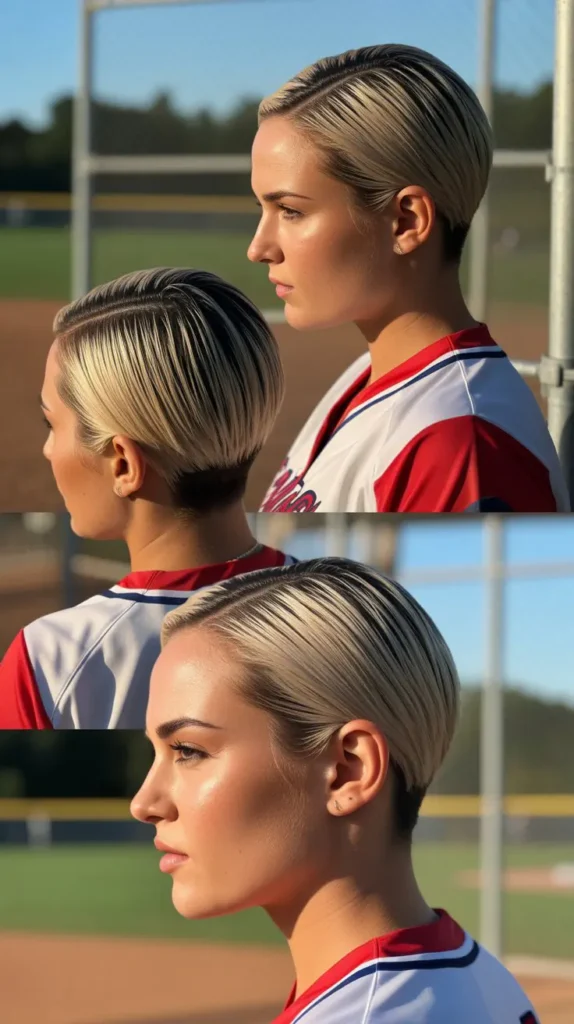
The gel-slicked back look is a clean, sporty style that works beautifully for short hair players who want zero distraction during play.
Every strand is directed backward and locked in place with firm-hold gel, creating a smooth, aerodynamic finish.
This style is especially popular among players with straight, fine, or slightly wavy short hair.
- Start with slightly damp hair and apply a generous amount of firm-hold gel evenly throughout.
- Use a wide-tooth comb to direct all hair straight back away from the face.
- Follow with a fine-tooth comb to smooth out any lines or ridges in the gel application.
- Secure any loose sections around the ears or nape with bobby pins pressed flat against the head.
- Allow the gel to fully air-dry or use a blow dryer on cool setting to lock the style in place quickly.
11. Braided Headband Style
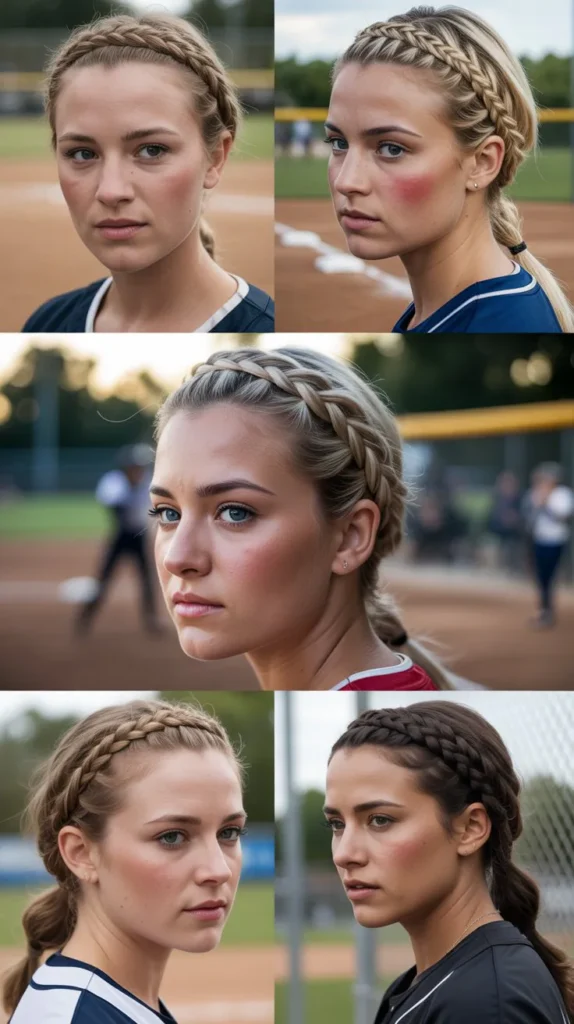
The braided headband style turns a simple braid into a functional hair accessory that doubles as a headband.
It frames the face beautifully while keeping all front and side layers under control during intense athletic activity.
This style is ideal for players with chin-length bobs or short layers that are just long enough to braid.
- Take a one-inch section of hair from just behind one ear and begin a simple three-strand braid.
- Work the braid across the top of the head following the natural hairline like a headband.
- Once the braid reaches the other ear, secure it with a small clear elastic.
- Pin the braid flat using bobby pins placed discreetly along its length to prevent lifting.
- Apply a small amount of strong-hold hairspray to the braid to keep it smooth and frizz-free.
12. The Tuck and Roll Bob
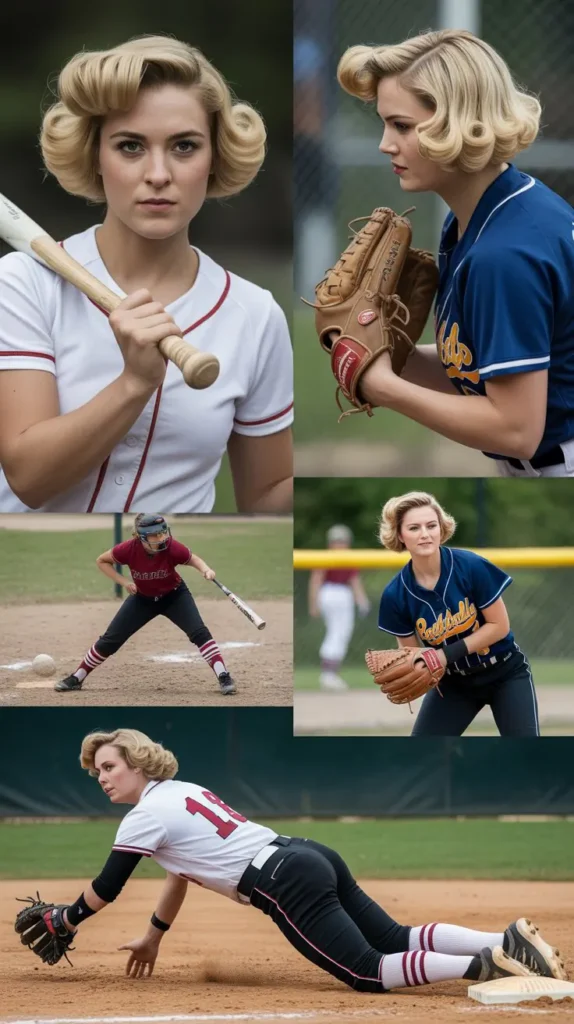
The tuck and roll is a clever technique that transforms a short bob into a fully secured, helmet-compatible style in under five minutes.
Rolling the ends of the bob upward and tucking them under eliminates the dangling pieces that catch inside helmet padding.
It is clean, fast, and completely practical for game day.
- Apply a light styling cream to the ends of your bob to add grip and make rolling easier.
- Take small sections of hair at the ends and roll them inward toward the scalp.
- Pin each rolled section against the head with bobby pins pointing in opposite directions for maximum hold.
- Work your way around the entire perimeter of the bob until all ends are tucked and secured.
- Finish with a firm-hold spray to freeze the tuck in place for the duration of the game.
13. French Braid Mohawk
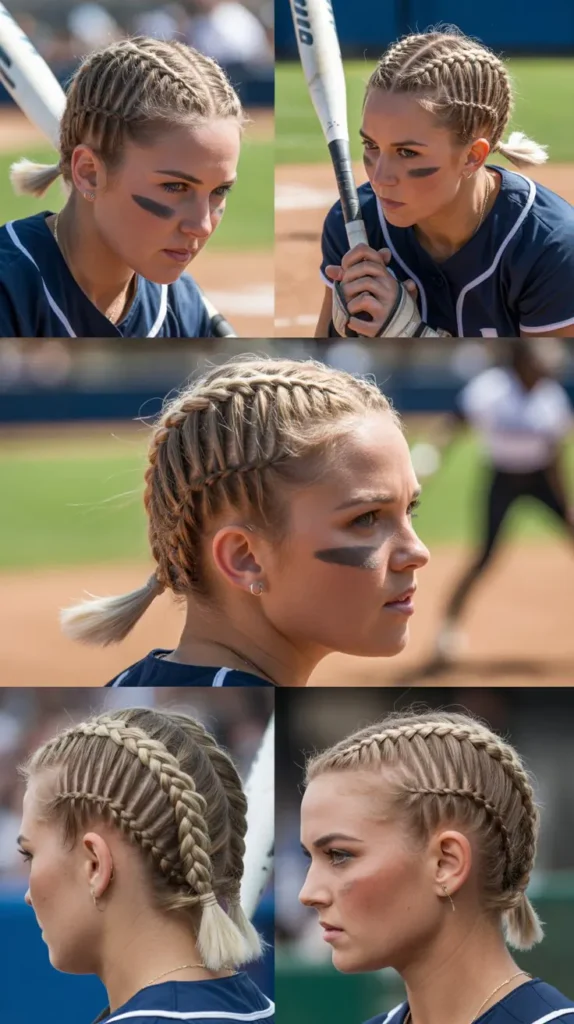
The French braid mohawk is a bold, high-energy style that keeps short hair completely flat and secured while making a statement on the field.
A single French braid running from the front hairline to the nape of the neck creates a structured, sporty look.
This style works for medium-short hair lengths that have enough grip to hold a braid.
- Gather a section of hair at the very front center of your head and begin a French braid using three strands.
- Add small sections of hair from both sides as you work the braid straight down the center of the head.
- Keep tension firm and consistent throughout the entire braid to ensure it lies flat and does not loosen.
- Secure the braid at the nape with a small elastic and tuck any short tail up and under with a bobby pin.
- Set with a strong-hold spray and a light finger-press along the sides to flatten any loose pieces.
14. Moisture-Wicking Bandana Base
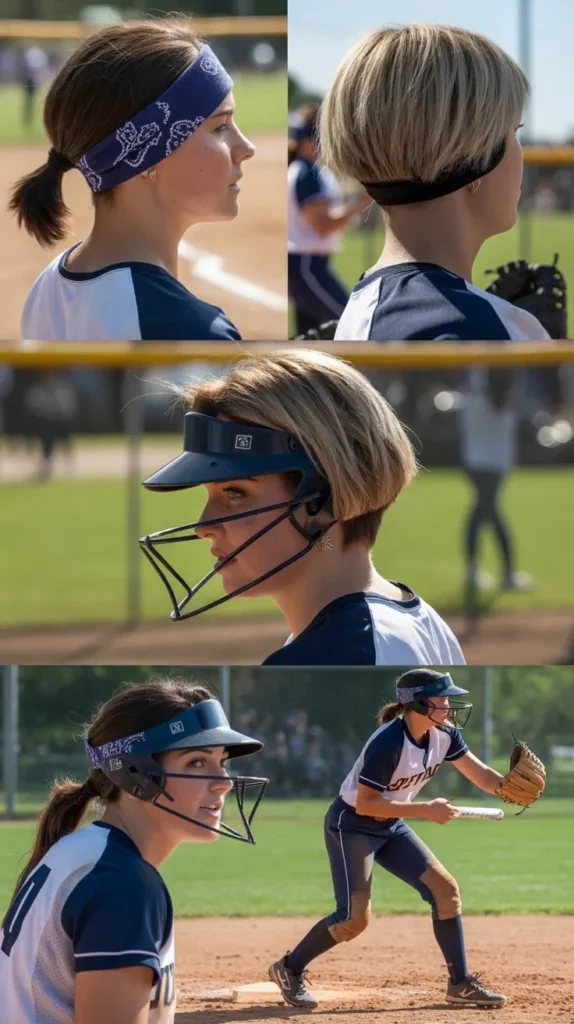
Using a moisture-wicking bandana as a base layer before styling is a smart strategy that protects both your hair and your style from sweat damage.
The bandana absorbs moisture at the scalp before it reaches your hair, keeping products effective longer and preventing frizz.
This method pairs well with almost every other style on this list.
- Choose a thin, moisture-wicking athletic bandana or skull cap in a color that matches your team.
- Fold the bandana into a two-inch strip and place it along your hairline, tying it snugly at the back.
- Style your hair over the bandana using whatever method you prefer — slicked back, braided, or tucked.
- The bandana acts as an absorbent barrier so sweat does not travel down into your styled layers.
- Reposition the bandana if needed at half-time to keep it flat and comfortable under your helmet.
15. Pin Curl Set
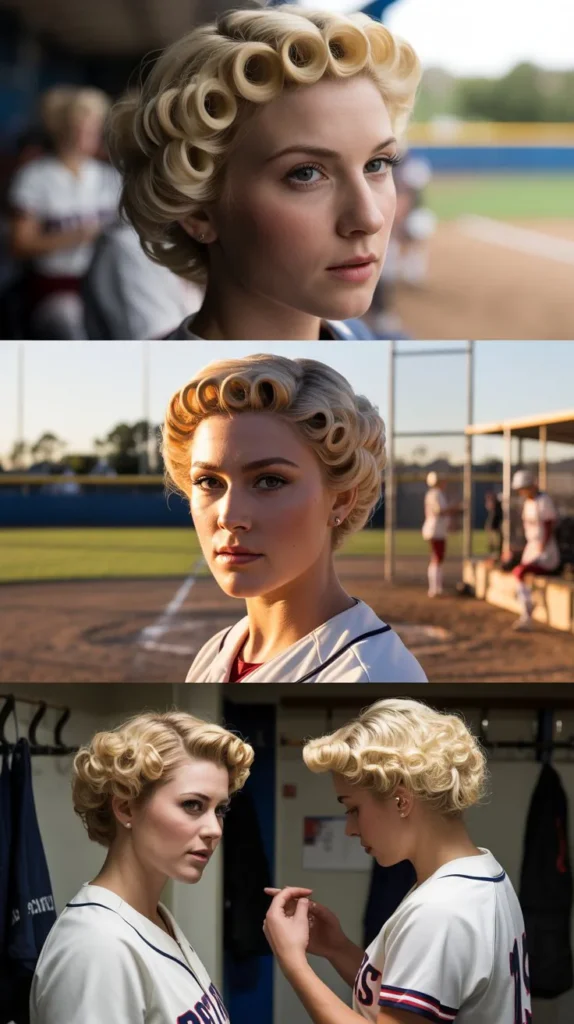
Pin curls are a classic technique that provides incredible hold for short wavy or curly hair without needing extensions or complex tools.
By wrapping small sections into flat coils and pinning them against the head, you create a tight, defined look that fits cleanly under a helmet.
This style also looks polished and intentional when the helmet comes off.
- Mist damp hair lightly with a curl-setting spray or mousse for better definition and hold.
- Take a one-inch section of hair, wrap it into a small flat coil against the scalp, and pin it with a bobby pin.
- Continue working in rows across your entire head, keeping each pin curl the same size for uniformity.
- Allow hair to fully dry with the pin curls in place — this can be done the night before a game.
- Remove pins carefully to reveal defined, compact curls that stay close to the head all day.
16. Side Cornrow with Edge Laid Look
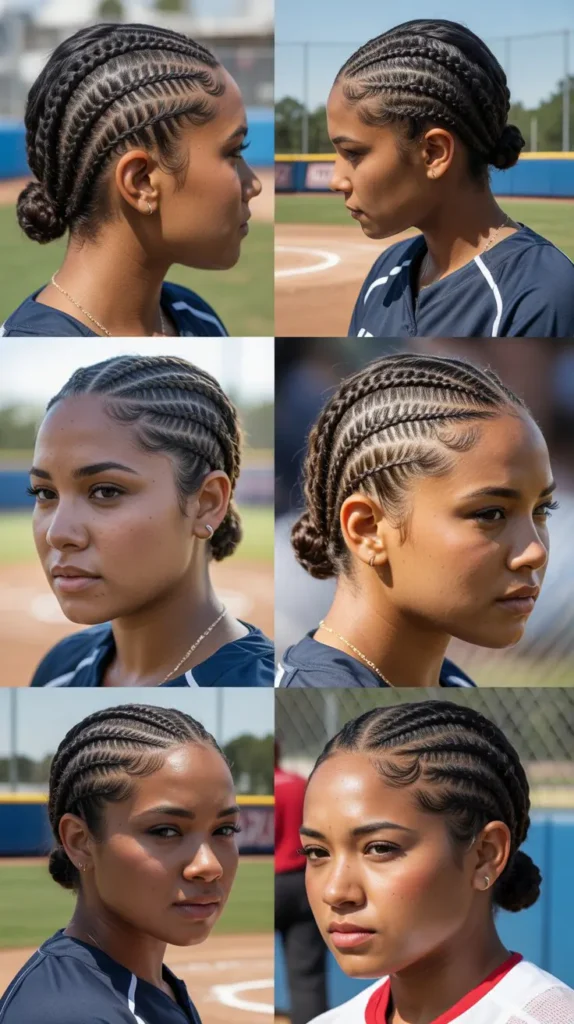
The side cornrow with laid edges is a sleek, intentional style that combines the security of cornrows with the polished finish of perfectly styled edges.
This look keeps everything secure during play while looking crisp and put-together for team photos. It is especially popular among players with natural or relaxed short hair.
- Cornrow all hair in neat rows directed toward one side of the head using firm, even tension.
- Once cornrows are complete, apply a small amount of edge control gel to the baby hairs along the hairline.
- Use a soft-bristle toothbrush or edge brush to lay and shape the baby hairs into smooth swirls or waves.
- Allow the edges to fully dry before putting on your helmet to prevent smearing or shifting.
- Touch up edges after the game with a small amount of fresh edge control for an after-game polished look.
17. Two-Strand Twist Out Prep
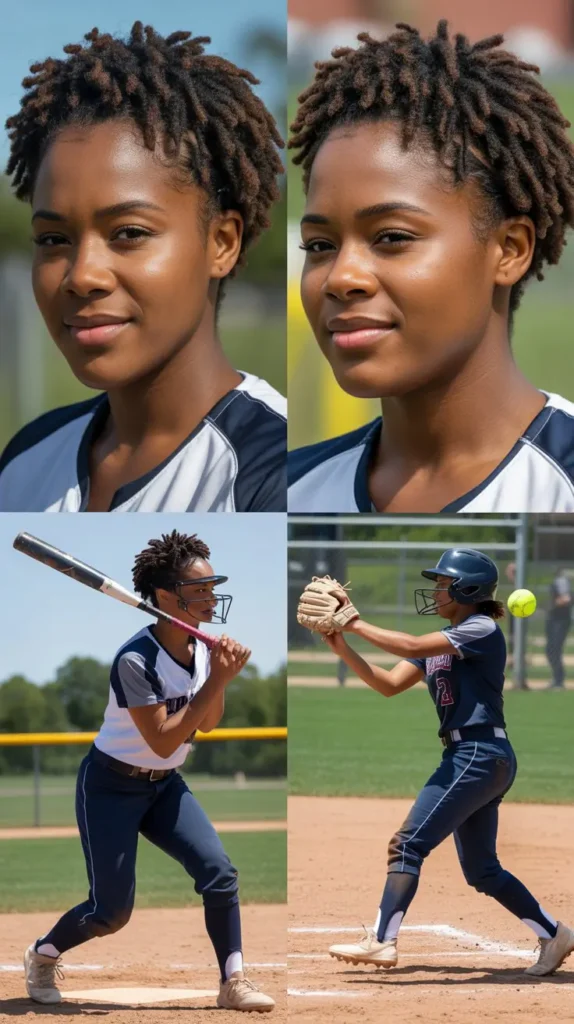
A twist out on short natural hair creates beautifully defined coils that actually hold their shape under a helmet better than loose styles.
The key is doing the twist out one day before game day so the curls are fully set and compact. This approach gives you a style that looks intentional and stays beautiful for the entire game.
| Step | Action | Product Needed |
|---|---|---|
| 1 | Wash and condition hair | Moisturizing shampoo + deep conditioner |
| 2 | Apply twisting cream | Medium-hold twist cream |
| 3 | Two-strand twist all hair | None |
| 4 | Allow to fully dry overnight | Satin bonnet |
| 5 | Unravel gently in the morning | Light oil for shine |
| 6 | Shape and pin any loose pieces | Bobby pins + light spray |
18. Elastic Band Method
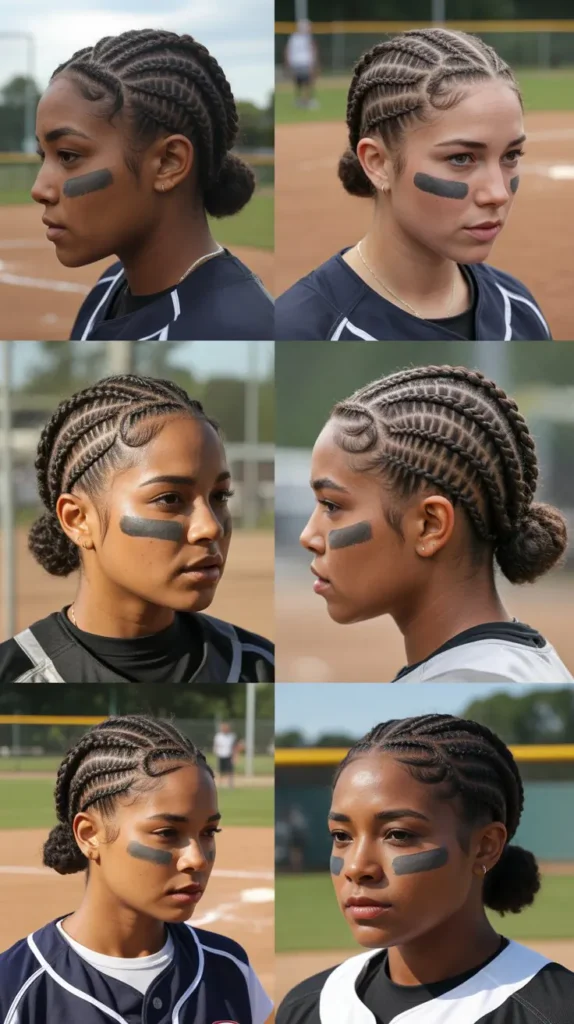
The elastic band method is a trending technique in the natural hair community that creates a structured, scalp-hugging style ideal for athletic activity.
Multiple small elastic bands are placed in rows across the head, compressing the hair flat against the scalp.
The result is a style that is completely flat, fully secured, and surprisingly stylish.
- Apply a generous amount of moisturizing gel to clean, freshly washed hair.
- Place small elastic bands in rows starting from the front hairline and working backward.
- Space each band about half an inch apart and stretch them firmly but not so tight as to cause tension or breakage.
- Continue adding bands all the way to the nape to create a full scalp-hugging pattern.
- Smooth any visible sections between bands with a boar bristle brush for a sleek, finished look.
19. Bantu Knots
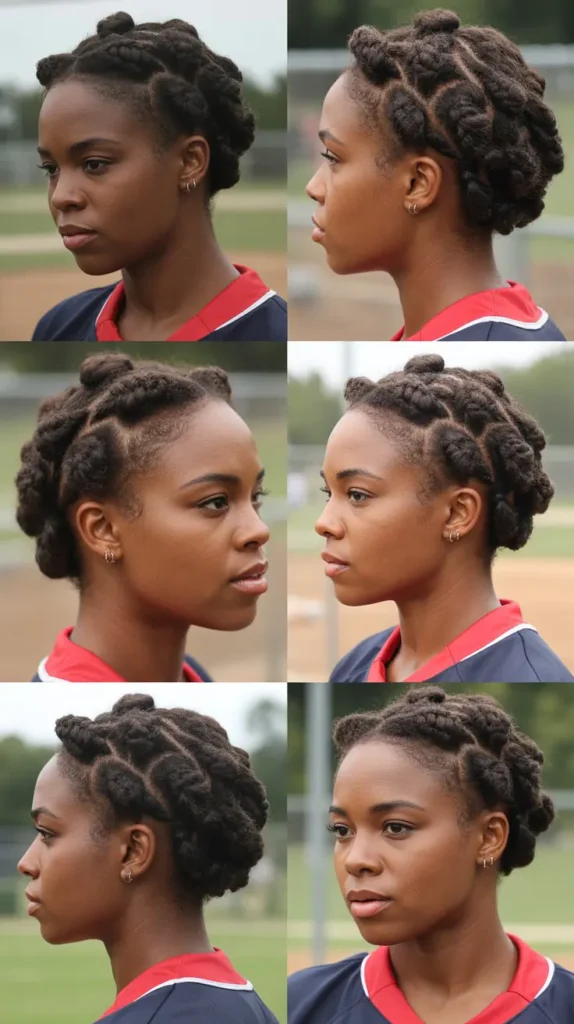
Bantu knots are a traditional African hairstyle that doubles as a practical athletic style for short natural hair.
Each small knot sits flat against the scalp and creates zero bulk under a helmet.
When done correctly, bantu knots stay in place through an entire doubleheader with no touch-ups needed.
- Section damp hair into small, even square or triangular parts using a rat-tail comb.
- Apply a small amount of twist cream or butter to each section before twisting.
- Twist each section tightly from root to tip, then coil the twisted section around its own base.
- Tuck the end underneath the knot and secure with a bobby pin if needed for extra hold.
- Mist all completed knots lightly with water or a holding spray to encourage them to set firmly.
20. Faux Hawk Braid
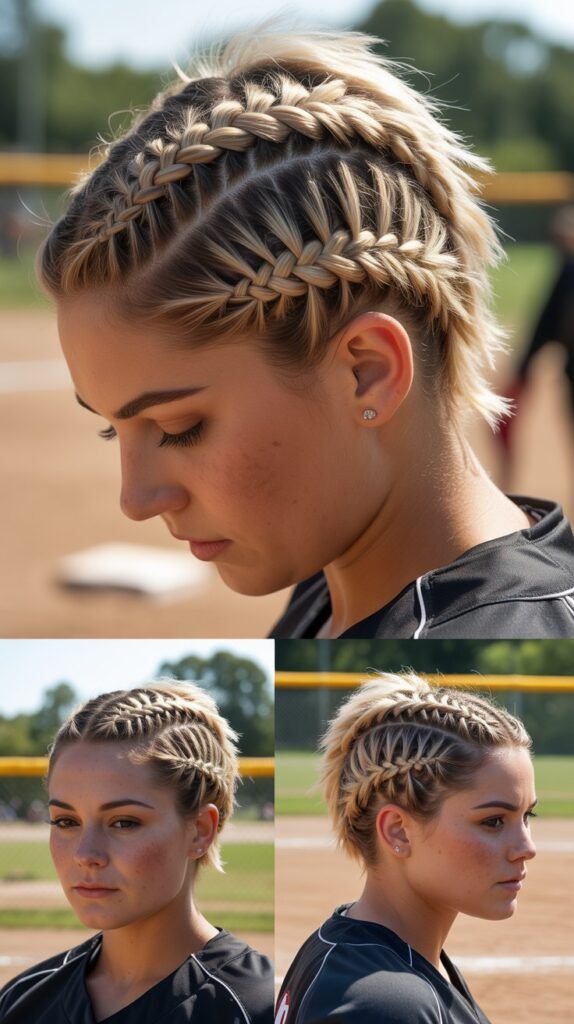
The faux hawk braid brings edge and attitude to game-day hair while keeping everything perfectly secured.
Two side braids directed toward the center create a raised, mohawk-like effect that is fully flat and helmet-compatible.
This style is a favorite among players who want a style that stands out in the dugout.
- Part the hair into three sections — two sides and a center strip running from forehead to nape.
- Dutch braid each side section, directing the braid toward the center of the head.
- Where the two side braids meet in the center, pin them flat against the head using interlocking bobby pins.
- Leave the center section loose and brush it upward slightly to create the faux hawk effect.
- Set everything in place with a firm-hold spray for lasting hold throughout the game.
21. Halo Braid Variation
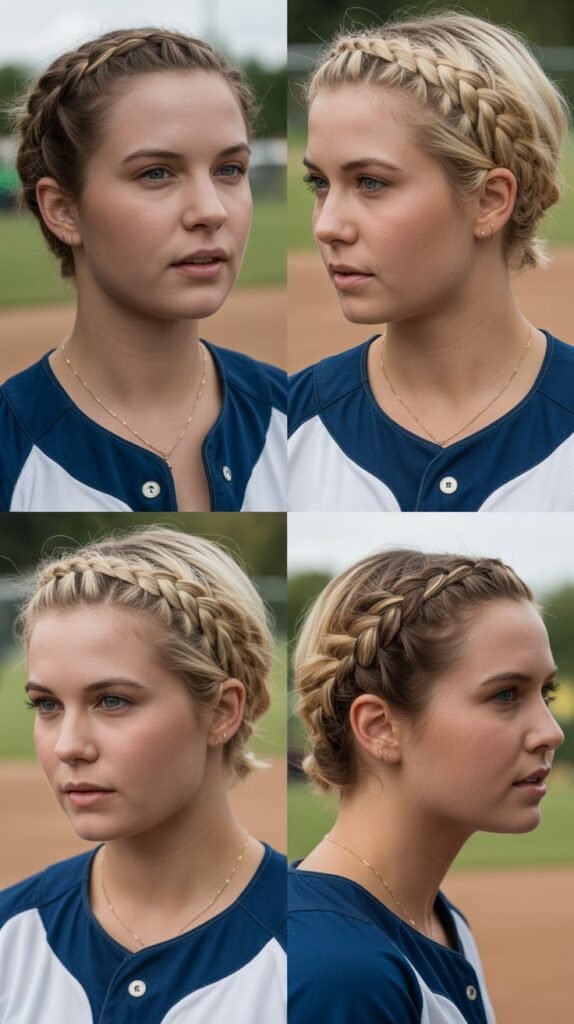
A halo braid variation adapted for short hair creates a crown-like effect while keeping all layers flat and secure.
Even players with shorter hair can achieve a partial halo by using the sections they have and anchoring the braid lower on the head.
It is elegant, athletic, and surprisingly long-lasting under helmet conditions.
- Identify the longest sections of your short hair and plan your braid path accordingly.
- Begin a French or Dutch braid starting just above one ear, hugging the hairline closely.
- Work the braid horizontally around the head, adding small hair sections as you move.
- When you run out of length, secure the braid and tuck the tail under using bobby pins.
- Pin the entire braid against the scalp using additional pins along its length to prevent lifting inside the helmet.
22. Zigzag Part Flat Twists
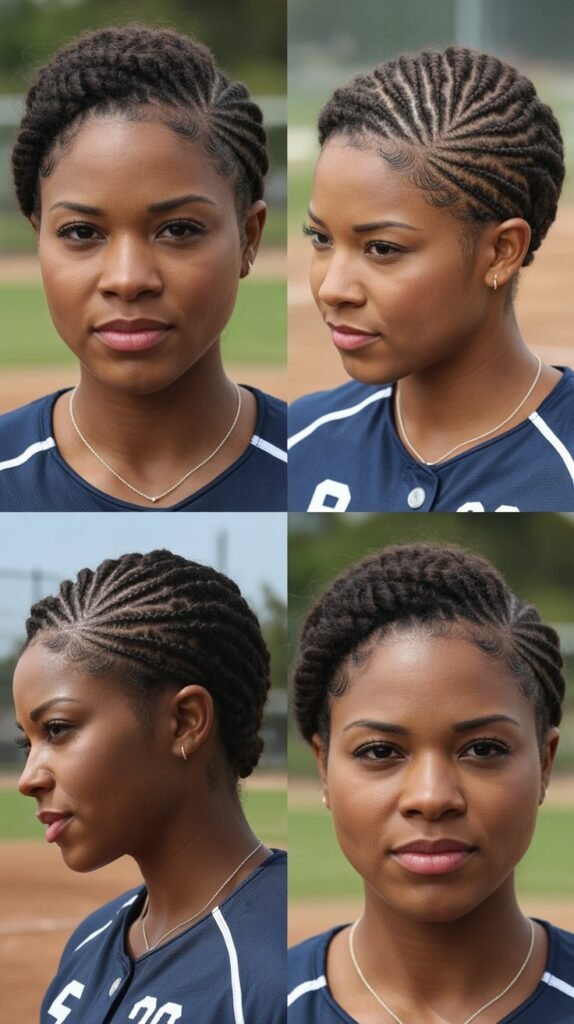
Zigzag-parted flat twists add creative visual interest while providing a fully functional athletic style for short natural hair.
The zigzag part creates a more dynamic, intentional pattern compared to straight-line twists. This style stays exceptionally flat and secure under a softball helmet.
- Use a rat-tail comb to create a dramatic zigzag part from the front of the head to the back.
- Begin a flat twist on each section created by the zigzag, working from front to back.
- Keep each twist tight and close to the scalp for maximum flatness and helmet compatibility.
- Secure all ends with small clear elastics and tuck them under if they are short enough.
- Moisturize the scalp lightly with a non-greasy oil to prevent discomfort during extended wear.
23. Box Braid Mini Style
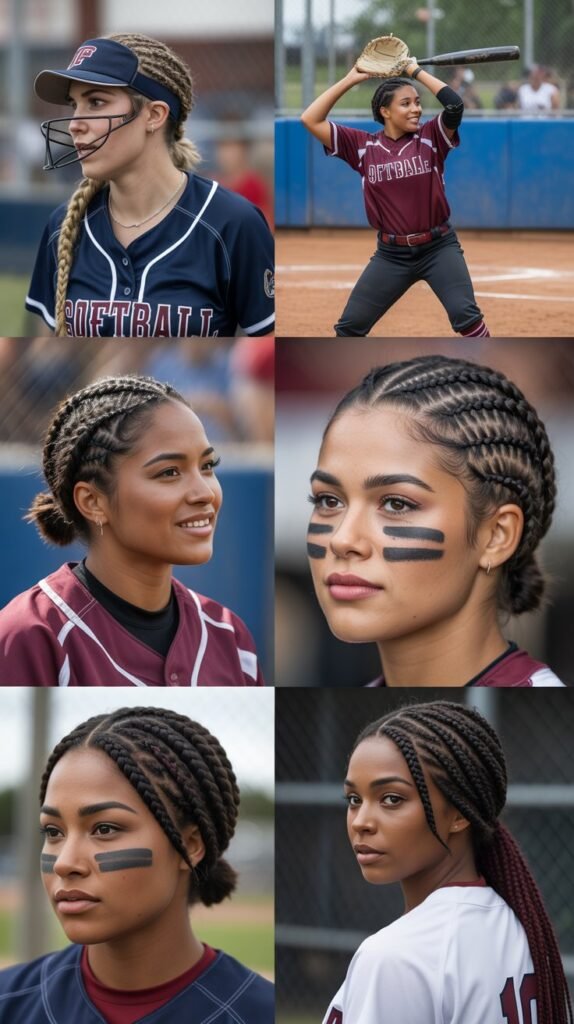
Mini box braids on short hair create a stunning, low-maintenance style that holds its form through any athletic activity.
Even with shorter hair, box braids can be achieved with small sections and a skilled hand.
This protective style also keeps natural hair moisturized and undisturbed during the entire softball season.
- Section clean, moisturized hair into small, uniform box-shaped parts using a rat-tail comb.
- Apply braid cream or gel to each section before braiding to add grip and definition.
- Braid each section tightly from root to tip using a three-strand method.
- Secure each braid at the tip with a small rubber band to prevent unraveling.
- For extra length and style variation, small amounts of braiding hair can be added at the root of each section.
24. The Sleek Undercut Style
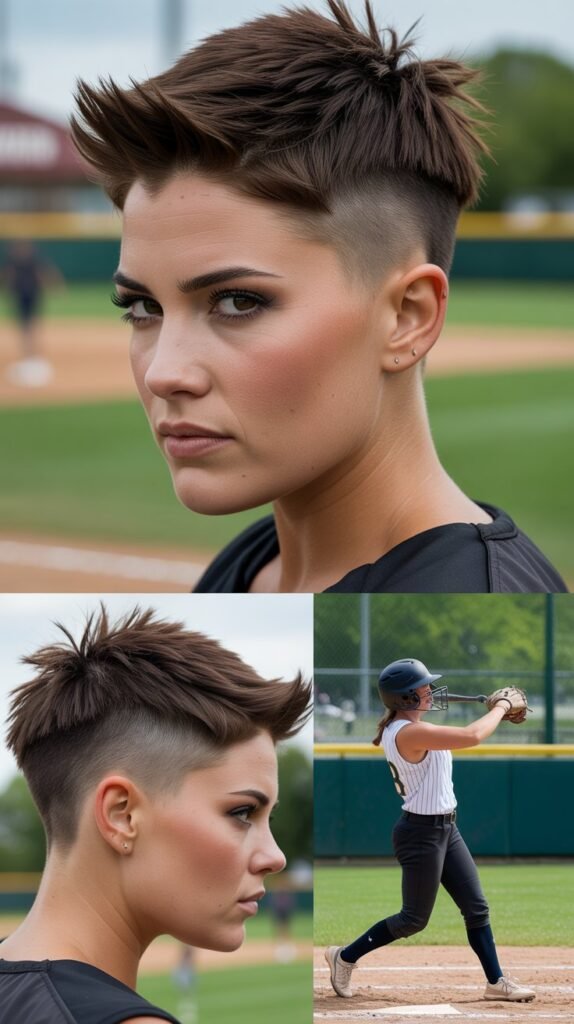
The undercut is a hairstyle where the sides and back are cut very short while the top retains more length — making it one of the most naturally helmet-friendly cuts a softball player can have.
With minimal styling, the undercut sits clean and flat under a helmet while still looking sharp and stylish.
This is a great style for players who want low daily maintenance with high-performance results.
- Apply a light-hold clay or matte paste to the top section of the undercut and style as desired.
- The short sides need no styling — simply smooth them down with your hand or a soft brush.
- Secure any longer top sections that may fall forward using one or two hidden bobby pins.
- The natural structure of the undercut already creates a flat-sided profile that works well under headgear.
- After the game, simply reshape the top with your fingers for an instant off-field transition look.
25. Braided Crown with Elastic Support
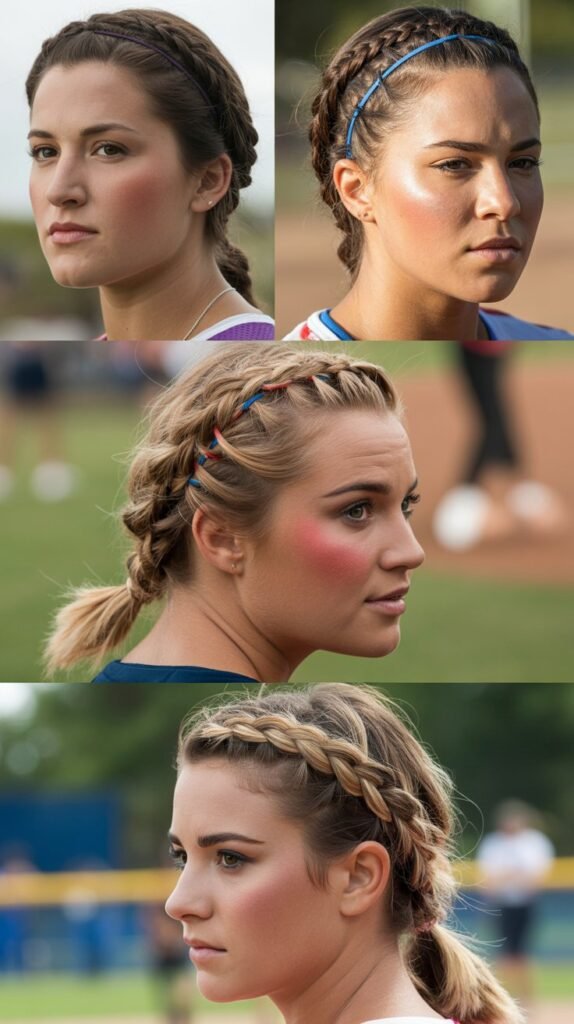
Adding elastic band support beneath a braided crown gives this style the extra staying power it needs to last through a full game.
The elastics create an anchor layer that prevents the braid from shifting inside the helmet. This technique is particularly helpful for players with very smooth or fine short hair that tends to slip.
- Apply a non-slip styling gel to all hair before beginning any braiding work.
- Place two thin elastic bands horizontally across the head — one at the front and one slightly behind it.
- Begin braiding over and around these elastic anchors, incorporating them invisibly into the braid.
- The elastics inside the braid create friction points that prevent the style from sliding.
- Finish with a strong-hold spray misted over the entire finished style.
26. Textured Puff with Sweatband
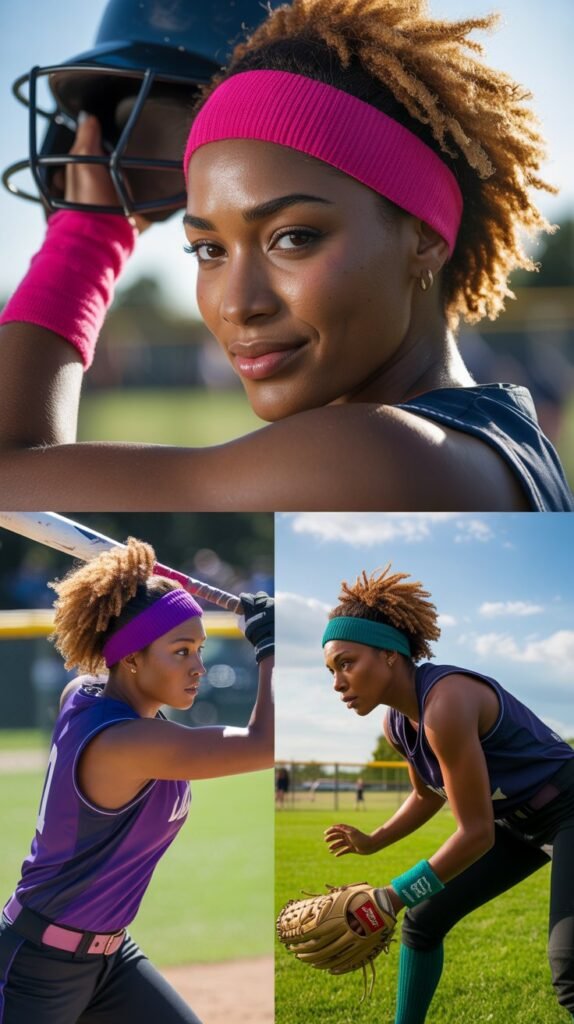
The textured puff with a sweatband is one of the quickest game-ready styles for short natural hair.
A sweatband serves double duty — it absorbs moisture and holds the edges of the puff in place during fast movement.
This style takes under three minutes to create and looks great in the dugout and on the field.
- Apply a curl-activating cream to dry or damp hair to define the texture before shaping the puff.
- Use your fingers to gather and fluff all hair upward into a rounded puff shape at the crown.
- Place a wide athletic sweatband around the perimeter of the puff to hold it in place.
- Smooth the edges and perimeter hair under the band using a small amount of gel or edge control.
- For added security, place two bobby pins underneath the sweatband at the sides of the head.
27. Low Profile Locs Style
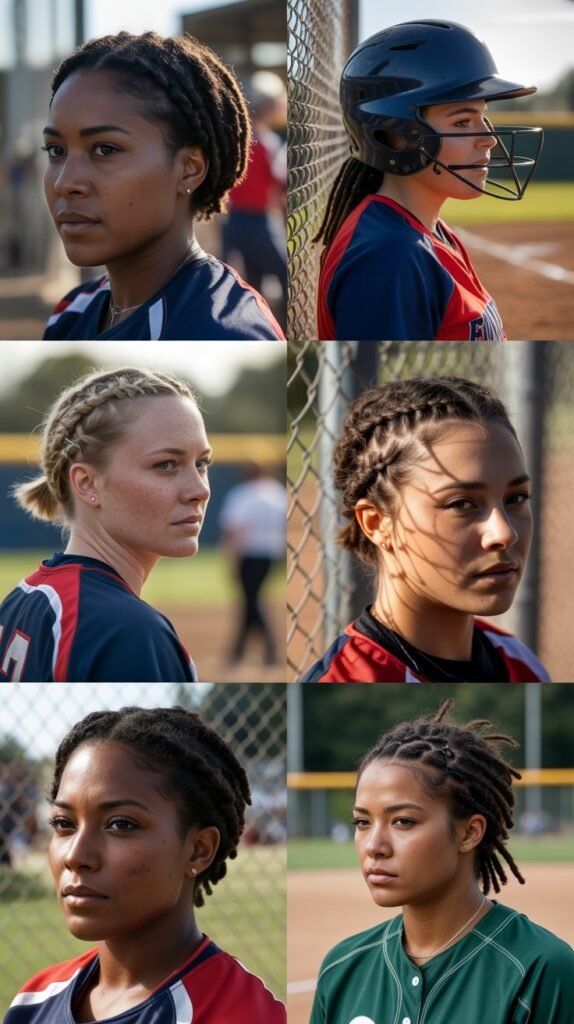
Players with short starter locs or established short locs have a natural advantage when it comes to game-day hairstyling — locs already hold their form under pressure.
A low-profile locs style simply organizes and flattens the locs for the most helmet-compatible fit. This approach requires minimal product and zero complex technique.
- Use a light loc butter or oil to refresh and smooth each loc before styling.
- Lay all locs flat against the scalp by directing them backward and pinning any stray pieces down.
- For locs with more length, gather them all at the nape and secure with a soft hair tie.
- Apply a small amount of gel along the hairline to keep baby locs or new growth flat.
- After the game, simply shake out your locs and go — they naturally reshape without much effort.
28. Cornrow and Bun Combo
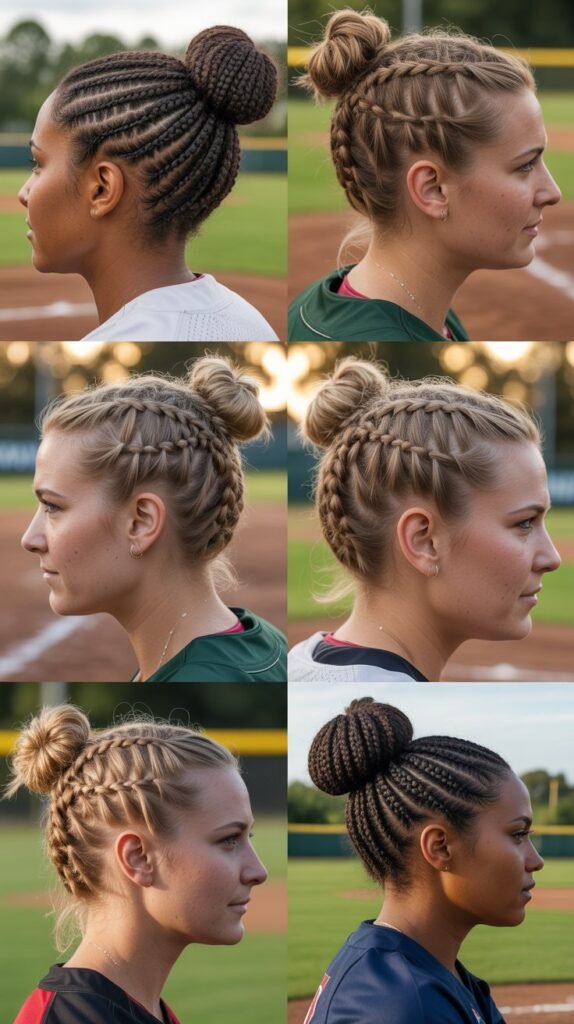
Combining cornrows in the front with a small bun at the back creates a hybrid style that offers the security of braids with the versatility of an updo.
This is a great option for players whose hair is transitioning in length or who have uneven sections that are difficult to style consistently.
The contrast between the flat front and bundled back also looks extremely polished.
- Cornrow the front half of the hair from the front hairline backward using two to four neat rows.
- Gather the remaining hair at the back into a small, tight bun and secure it with a hair tie.
- Reinforce the bun with bobby pins placed in an X pattern around its base.
- Smooth the transition area between the cornrows and the bun with a light edge gel.
- Mist the entire completed style with a sweat-resistant finishing spray.
29. Twisted Bantu Puff Hybrid
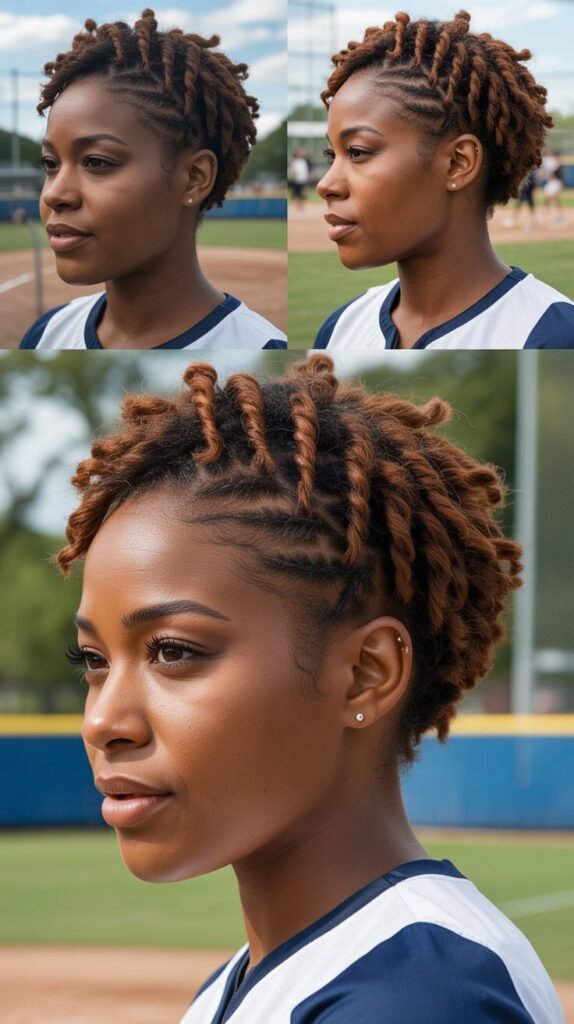
The twisted bantu puff hybrid merges the volume of a puff with the security of bantu knots around the perimeter to create a completely unique and highly functional game-day style.
The knots around the edges keep the hair flat where it matters most — right at the helmet line — while the puff adds a fun focal point at the crown.
- Part the perimeter of your hair into small sections and create tight bantu knots all around the edges.
- Leave the top center section untwisted and gather it into a small puff using a soft elastic.
- Make sure all perimeter knots are flat and sitting close to the scalp for helmet compatibility.
- Apply a light-hold gel to the entire style to encourage the bantu knots to remain set.
- Touch up the center puff with a pick or afro comb to maintain volume after removing the helmet.
30. Finger Wave Set
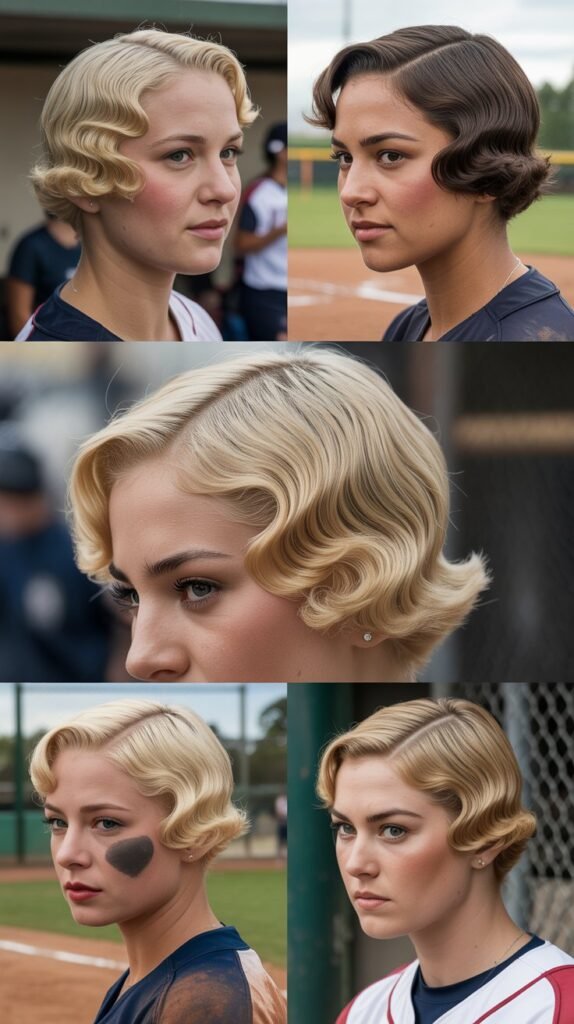
Finger waves are a timeless style that creates a beautiful, sculpted look while keeping short hair firmly compressed against the head.
This is an ideal choice for players with fine, straight, or slightly wavy short hair who want their helmet-on style to still look great when the helmet comes off.
Finger waves were made for staying power.
- Apply a strong-hold wave gel or setting lotion generously to clean, damp hair.
- Use your fingers and a fine-tooth comb to push hair into alternating S-shaped wave patterns.
- Secure each wave with metal wave clips or bobby pins placed along the peak of each wave.
- Allow the style to fully dry under a hair dryer hood or naturally — patience is key here.
- Remove clips carefully and smooth any frizz with a lightly oiled fingertip for a glossy, defined finish.
31. Pineapple Pin-Up
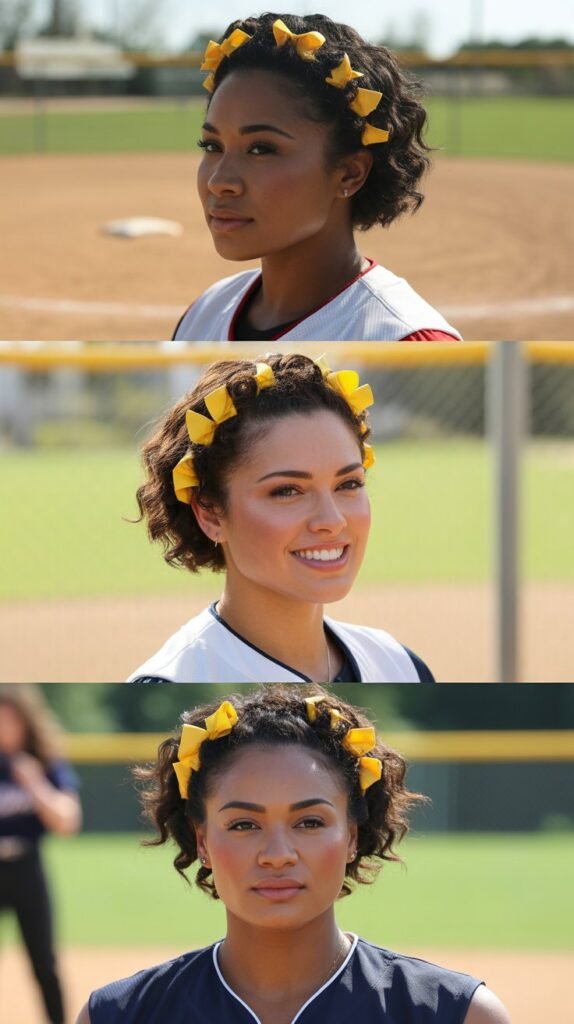
The pineapple pin-up adapts the classic natural hair pineapple method for short hair, pulling all curls or coils toward the very top front of the head and pinning them upright.
This keeps the natural texture intact while creating a completely flat helmet profile around the back and sides. It is a surprisingly secure style that takes less than two minutes to create.
- Apply a small amount of leave-in conditioner or curl cream to refresh your natural texture.
- Use your hands to gather all hair forward and upward toward the very front top of your head.
- Secure the gathered hair with a soft, snag-free elastic placed loosely enough to protect the curls.
- Pin any stray sections at the sides or nape flat against the head with small bobby pins.
- After removing the helmet, the pineapple bounces right back into its original shape with minimal adjustment.
32. Fade with Sculptured Top
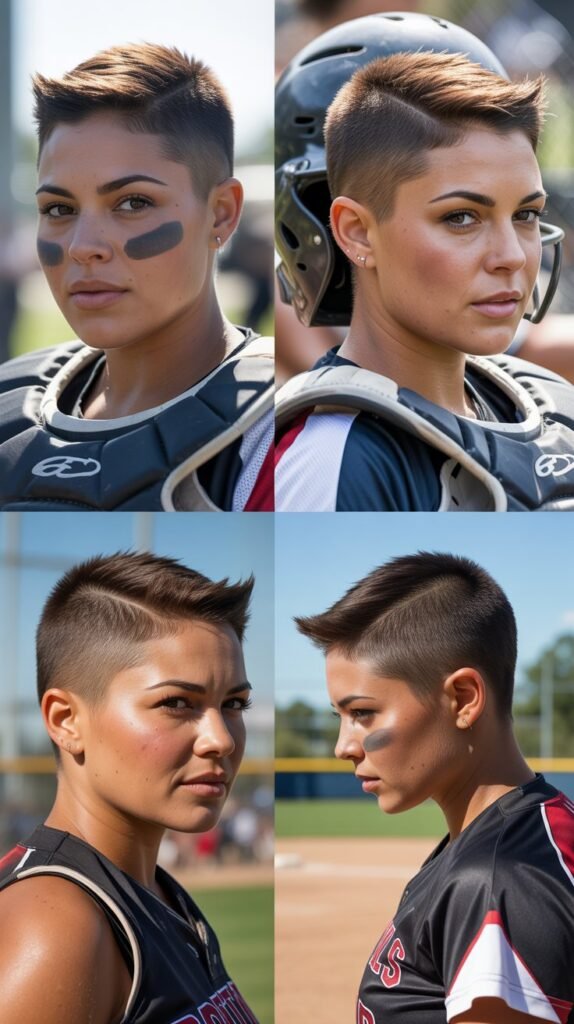
Players with short tapered fades have an enormous built-in advantage for helmet sports — the sides and back are already near-zero, making them completely non-issue under headgear.
All styling focus goes to the top section, which can be sculpted and shaped to fit neatly inside a helmet.
This is arguably the most low-maintenance and helmet-compatible style on the entire list.
- Apply a small amount of firm-hold wax or defining cream to just the top section of the fade.
- Shape the top into your desired style — a slick-back, a defined curl pattern, or a textured twist-out.
- The faded sides require no product or styling, saving significant time on game day.
- Carry a small travel-size container of your chosen styling product in your equipment bag for quick touch-ups.
- After removing your helmet, a quick hand-shape of the top section is all that is needed to restore the style.
33. Stitch Braid Design
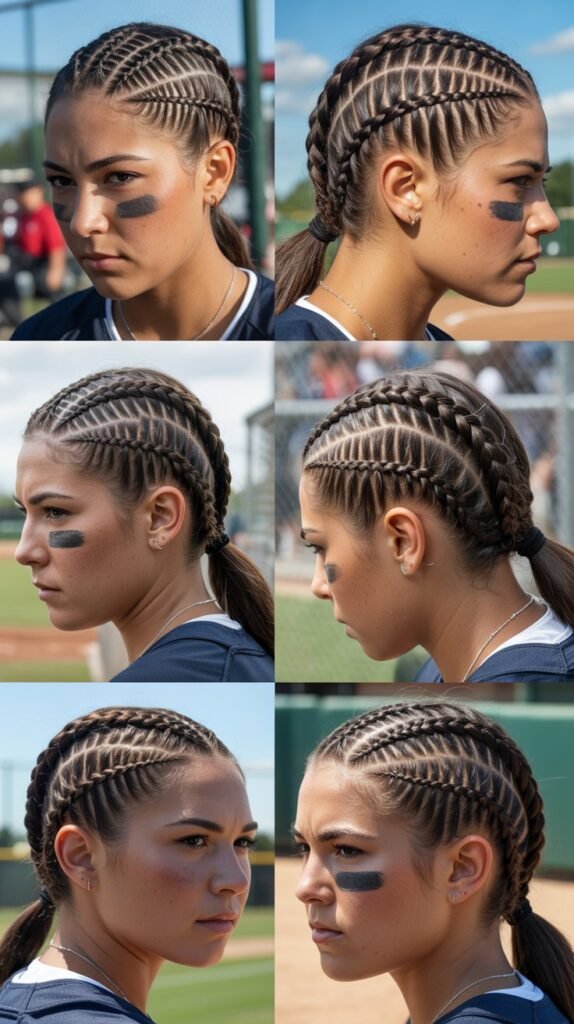
Stitch braids feature a feed-in technique that creates precise, evenly spaced rows with crisp, clean lines.
This style lies extremely flat against the scalp and offers one of the most secure foundations available for wearing under a softball helmet.
The clean lines add a sharp, stylish aesthetic that reads as intentional and athletic.
- Book a professional braider for stitch braids or practice the feed-in technique to master the precise parting required.
- Work in small, even sections, adding tiny amounts of braiding hair at each stitch to build thickness gradually.
- Keep all braids traveling in the same direction — typically straight back — for maximum flatness.
- Seal each braid tip with a small rubber band and dip in hot water if using synthetic hair to prevent unraveling.
- Moisturize the scalp with a lightweight braid spray to keep the scalp comfortable during long games.
34. Knotless Box Braid Micro Style
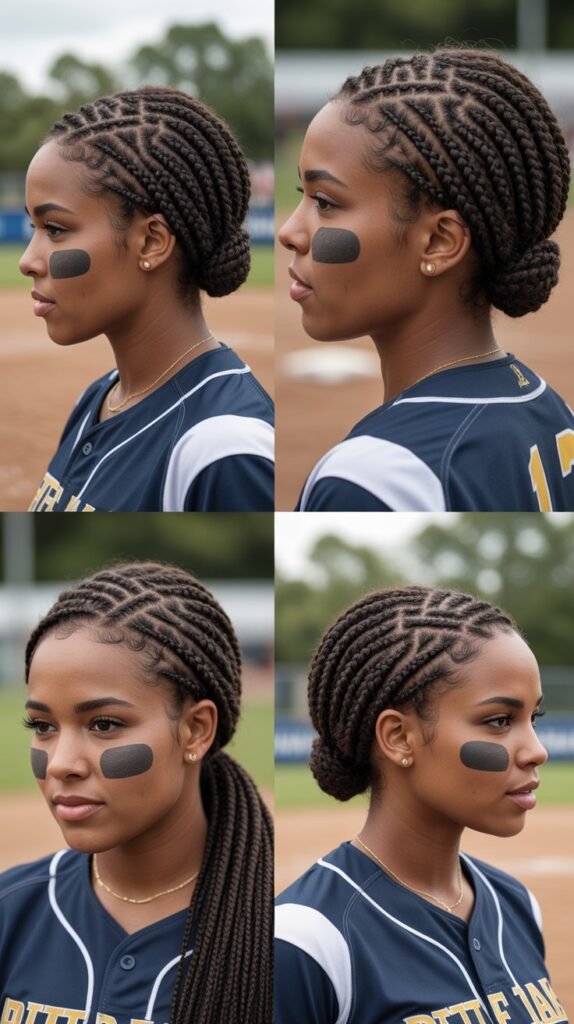
Knotless micro box braids are a gentler, lighter alternative to traditional box braids, making them more comfortable for long days in a helmet.
The absence of a traditional knot at the root means less scalp tension and less bulk right where the helmet rim sits. This style is protective, beautiful, and completely game-day ready.
- Part hair into very small, uniform sections and begin each braid with your own hair before gradually adding extension hair.
- Feed in braiding hair in thin, flat strips rather than large bulky bundles to keep the root area as flat as possible.
- Keep braid length short — ending at the nape of the neck or just below the ear is ideal for softball players.
- After braiding, dip the ends in hot water to seal and prevent fraying or unraveling.
- Maintain the style between games with a light braid spray and a satin-lined helmet liner.
35. Swoop Bang with Flat Back
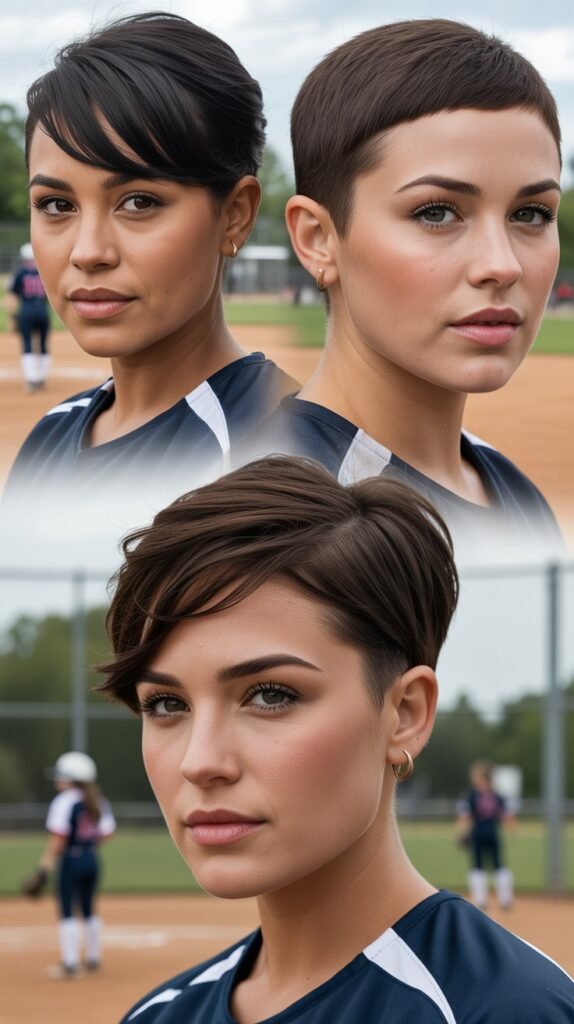
The swoop bang with a flat back is a chic, fashion-forward style that controls short hair on both the front and back without sacrificing style.
A deep side swoop at the front is pinned securely while the back is pressed completely flat. This works beautifully for players with straight or wavy short bobs and inverted cuts.
- Apply a straightening serum or blow-dry cream to damp hair for a smooth, flat base.
- Blow-dry the entire head smooth, directing the front section into a deep side swoop over one eye.
- Secure the swoop firmly with three to four bobby pins pressed flat and hidden beneath the top layer.
- Use a flat iron on a medium heat setting to press the back sections completely flat against the head.
- Set the entire look with a firm-hold hairspray and allow it to cool and set fully before putting on the helmet.
36. The Game-Day Wash-and-Go
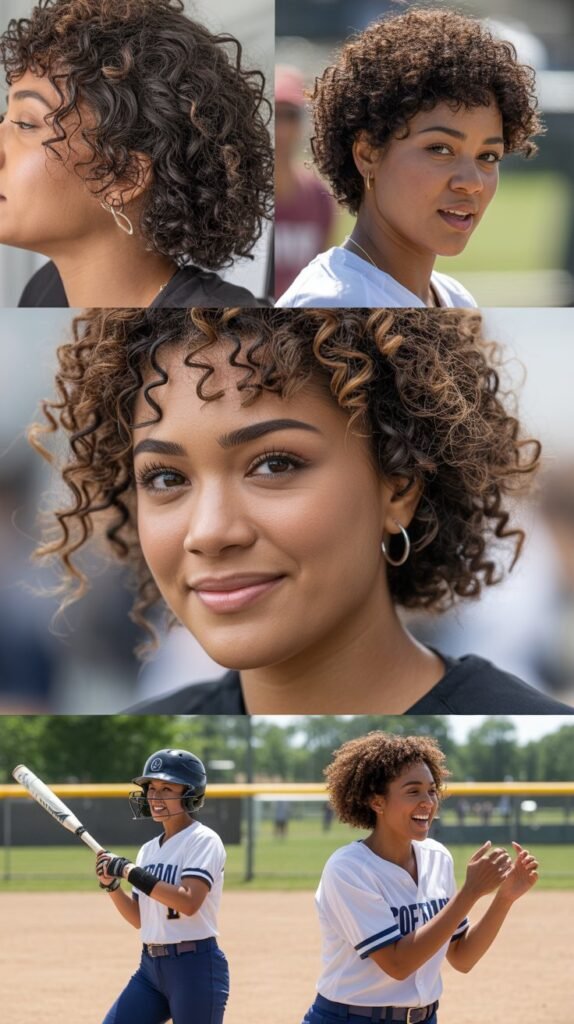
The game-day wash-and-go is the ultimate minimal-effort, maximum-reward style for natural short hair players.
Applied correctly, a wash-and-go creates defined, compact curls that spring right back after being compressed by a helmet.
The secret is using the right curl-defining products in the right layering order.
- Wash hair with a sulfate-free cleanser and follow with a lightweight moisturizing conditioner.
- Apply a leave-in conditioner to soaking wet hair and distribute evenly with finger detangling.
- Layer a curl cream over the leave-in, then seal with a defining gel for a triple-layer hold system.
- Scrunch sections of hair upward to encourage curl formation and add extra definition.
- Allow hair to fully dry before playing — putting a helmet on wet curl product leads to frizz, not definition.
Quick Style Selection Guide
| Hair Type | Best Styles from This List | Hold Level |
|---|---|---|
| Straight / Fine | Gel Slick Back, Swoop Bang, Finger Waves | ⭐⭐⭐⭐⭐ |
| Wavy / Textured | Braided Headband, Tuck and Roll, Bobby Pin Grid | ⭐⭐⭐⭐ |
| Natural / Coily | Cornrows, Bantu Knots, Wash-and-Go, Elastic Band | ⭐⭐⭐⭐⭐ |
| Locs | Low Profile Locs Style | ⭐⭐⭐⭐⭐ |
| Transitioning | Cornrow and Bun Combo, Twisted Puff | ⭐⭐⭐⭐ |
| Pixie / Fade | Helmet-Friendly Pixie Prep, Sculptured Fade | ⭐⭐⭐⭐⭐ |
Conclusion
Finding the right style does not have to be a pregame stressor when you have the right guide in your corner.
36 Short Hair Softball Styles That Actually Hold has walked you through every type of short hair — natural, straight, wavy, loc’d, braided, and everything in between — with real, tested techniques that genuinely work on the field.
From quick three-minute solutions to longer-lasting protective styles that carry you through the whole season, every style here was chosen with one goal in mind: keeping your hair completely out of your way so you can focus entirely on your game.
Pair the right style with the right products, add a sweat-wicking layer when needed, and you are set.
Step up to the plate with confidence, knowing your hair is just as game-ready as you are.