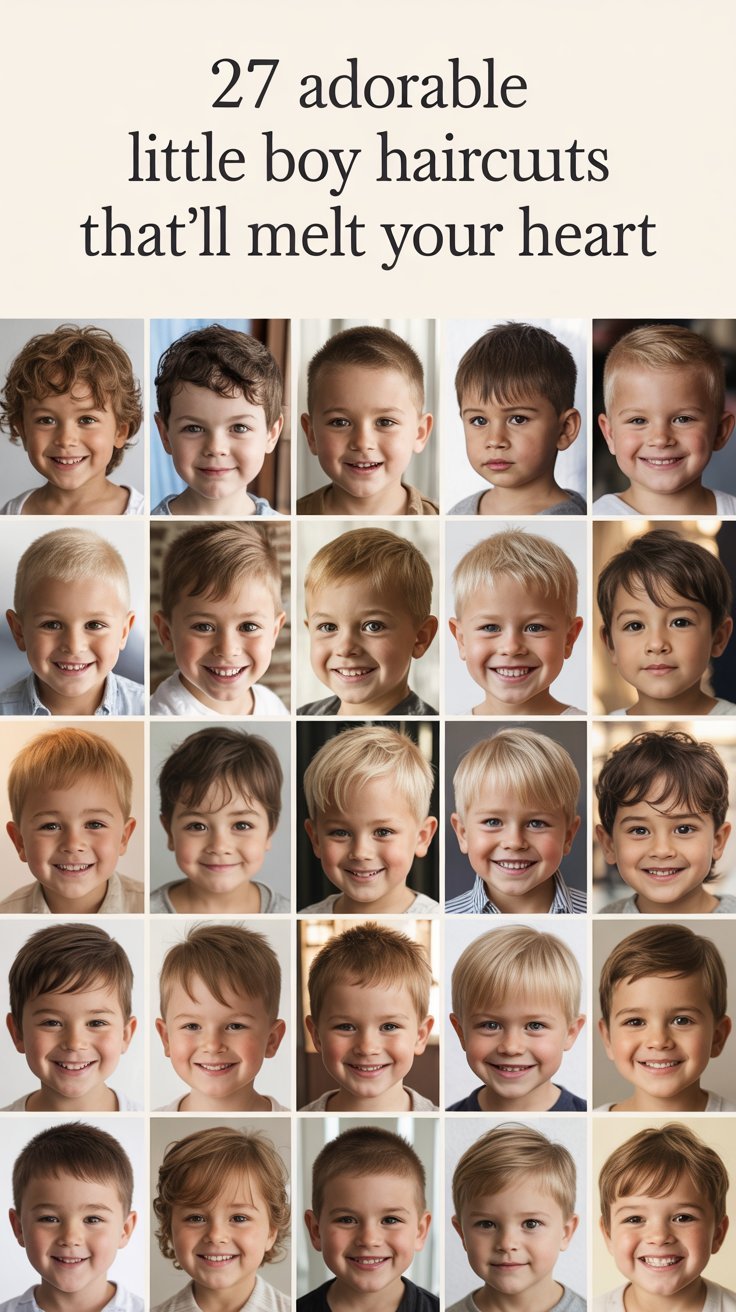
Finding the perfect haircut for your little boy can transform his entire look and boost his confidence in ways you never imagined.
Whether you’re preparing for school photos, a special occasion, or simply want to refresh his style, the right haircut makes all the difference in how your child presents himself to the world.
27 Adorable Little Boy Haircuts That’ll Melt Your Heart brings you a comprehensive collection of the most charming, practical, and age-appropriate hairstyles that work for every hair type, face shape, and personality.
From classic cuts that never go out of style to trendy modern looks that’ll have other parents asking for your stylist’s number, this guide covers timeless favorites like the crew cut and side part, along with contemporary styles featuring textured crops, faux hawks, and playful designs.
You’ll discover low-maintenance options for busy mornings, special occasion styles for memorable events, and creative cuts that let your little one’s personality shine through.
Each hairstyle includes styling tips, maintenance advice, and practical considerations to help you choose the perfect look that suits your child’s lifestyle, hair texture, and your family’s routine.
Get ready to explore haircuts for toddlers taking their first salon visit, preschoolers developing their own preferences, and elementary-aged boys who want to express their growing independence through their appearance.
1. The Classic Crew Cut
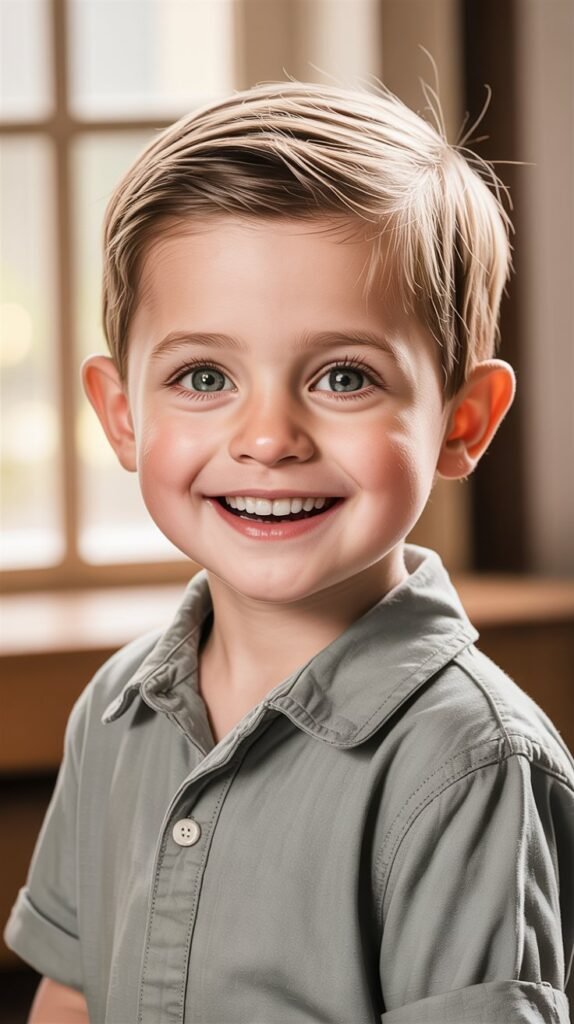
The crew cut remains one of the most beloved and practical haircuts for little boys, combining military-inspired precision with effortless everyday wearability.
This timeless style features short hair on the sides and back with slightly longer hair on top, creating a clean and polished appearance that works for virtually any occasion.
Why Parents Love This Cut
- The crew cut requires minimal styling time in the morning, making it perfect for busy families with hectic schedules.
- This haircut stays neat and tidy for weeks, reducing the frequency of salon visits and saving money over time.
- The short length keeps boys cool and comfortable during hot summer months and active play sessions.
- It works exceptionally well for sports and physical activities, as hair stays out of the face during running, swimming, or playing.
- The clean appearance meets school dress codes and looks appropriate for formal events like weddings or family portraits.
Styling and Maintenance Tips
- Ask your barber for a number 3 or 4 guard on the sides and back, with scissors used to blend the top section.
- The top should be approximately one to two inches long, providing just enough length for a slight texture without requiring products.
- For special occasions, apply a small amount of lightweight styling cream to add definition and a polished finish.
- Regular trims every 4-6 weeks maintain the shape and prevent the sides from growing out unevenly.
- This cut works best for boys with straight to wavy hair, though it can be adapted for various hair textures with proper cutting techniques.
2. The Textured Crop
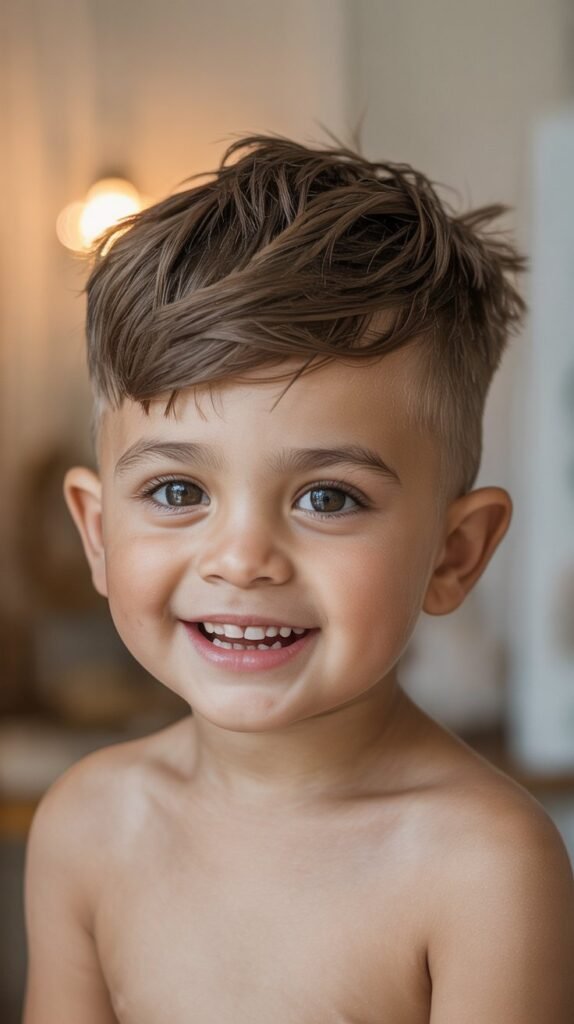
The textured crop has emerged as a modern favorite, offering a stylish alternative to traditional boys’ haircuts with its choppy, piece-y finish.
This contemporary style features short sides with a longer, textured top that creates movement and dimension, giving little boys a fashionable edge while remaining age-appropriate.
Understanding the Textured Crop Appeal
- This haircut provides a trendy, fashion-forward look that makes little boys feel confident and stylish among their peers.
- The textured top adds volume and interest to fine or thin hair, making it appear fuller and thicker than it actually is.
- Unlike perfectly uniform cuts, the textured crop embraces natural movement and doesn’t require precise styling to look good.
- The versatility of this style allows it to be worn messy for casual days or styled more neatly for formal occasions.
- It works particularly well for boys who are starting to develop their own sense of style and want something more distinctive.
Creating and Maintaining the Look
- Your stylist should use point-cutting or texturizing techniques on top to create the choppy, separated pieces that define this style.
- The sides typically feature a fade or taper, gradually transitioning from very short at the bottom to slightly longer where they meet the top.
- A small amount of matte clay or texturizing paste helps define the pieces and adds hold without making hair look stiff or greasy.
- Work the product through damp hair with your fingers, then either let it air dry for a natural finish or use a blow dryer for more volume.
- This cut needs refreshing every 4-5 weeks to maintain the textured shape and keep the fade looking crisp and clean.
3. The Side Part Classic
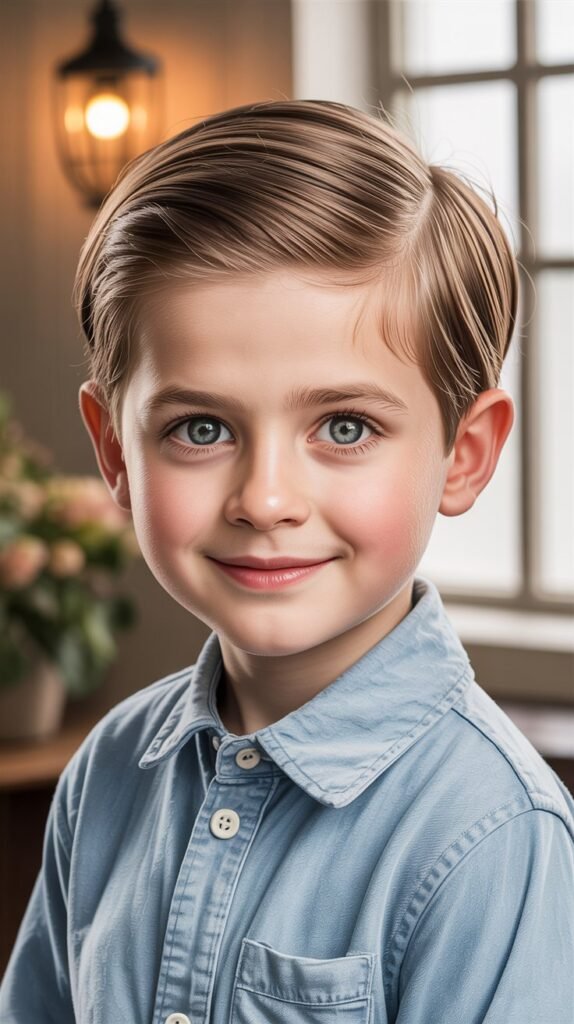
The side part represents timeless elegance for little boys, channeling a sophisticated and gentlemanly appearance that never goes out of fashion.
This classic style features a distinct parting line on one side of the head, with hair combed neatly across, creating a polished and refined look that’s been beloved for generations.
The Enduring Charm of the Side Part
- This haircut exudes a mature, put-together appearance that makes little boys look neat and well-groomed for any situation.
- The defined part creates structure and organization in the hairstyle, appealing to parents who prefer traditional, classic looks.
- It photographs beautifully, making it an excellent choice for school pictures, holiday cards, and special family occasions.
- The side part works across multiple hair types and textures, from straight and fine to thick and wavy hair.
- This style teaches young boys about grooming routines and taking pride in their appearance from an early age.
Achieving the Perfect Side Part
- Have your barber create a hard part using clippers for a sharp, defined line that stays visible even as hair grows.
- The sides should be kept relatively short using a number 2 or 3 guard, while the top maintains enough length to comb over smoothly.
- Apply a lightweight pomade or styling cream to damp hair, then use a fine-tooth comb to sweep hair from the part across the head.
- For boys with stubborn hair that won’t hold the part, blow-drying in the desired direction while hair is damp helps set the style.
- Touch up the part line every 3-4 weeks to keep it looking crisp, though the overall cut can last 5-6 weeks between full trims.
4. The Faux Hawk
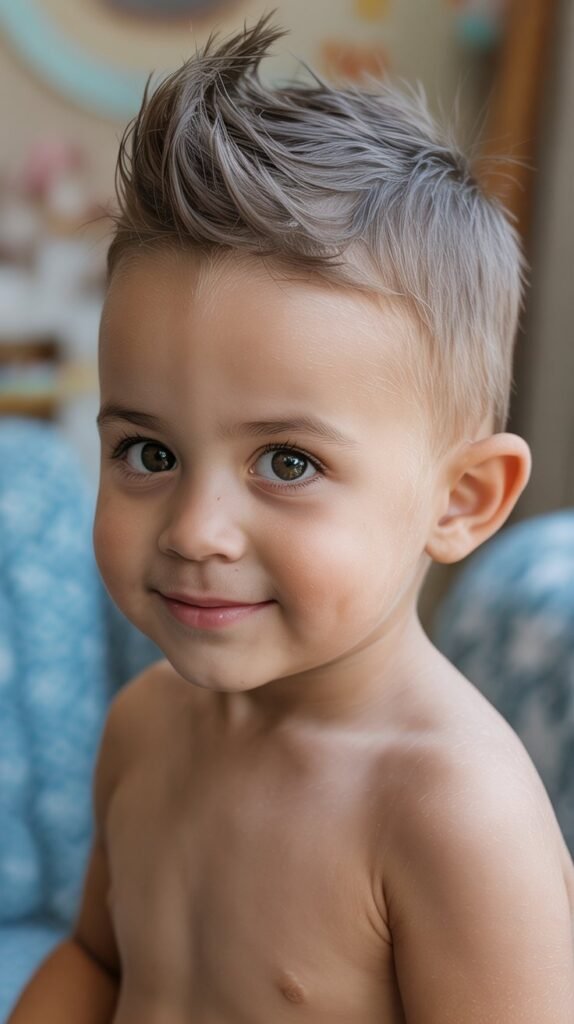
The faux hawk brings an edgy, playful energy to little boys’ hairstyles without the commitment or extremeness of an actual mohawk.
This fun style features shorter sides with a strip of longer hair running down the center of the head, creating a subtle ridge that can be styled up for special occasions or worn flat for everyday activities.
Why Boys Love the Faux Hawk
- This haircut makes little boys feel cool and trendy, giving them a sense of confidence and self-expression through their appearance.
- The faux hawk offers versatility that other styles don’t provide, allowing boys to style it up for fun or wear it flat for school.
- It creates a bold statement without being too extreme, striking the perfect balance between edgy and age-appropriate.
- Boys with naturally thick hair particularly benefit from this cut, as the density helps the center section stand up more easily.
- The fun factor of this style makes haircut time more exciting for children who might otherwise resist sitting still in the salon chair.
Styling Your Little One’s Faux Hawk
- The sides should be cut much shorter than the top, typically using a number 2 or 3 guard to create contrast with the center strip.
- The center section needs to be at least 2-3 inches long to stand up properly when styled, though exact length depends on hair texture.
- Use a strong-hold gel or styling paste on damp hair, then push the center section upward and slightly forward with your fingers.
- A blow dryer on medium heat helps set the style and adds extra lift to the center section for a more dramatic effect.
- Plan for trims every 4-5 weeks to maintain the shape, as the sides need to stay short to keep the faux hawk effect visible.
5. The Buzz Cut
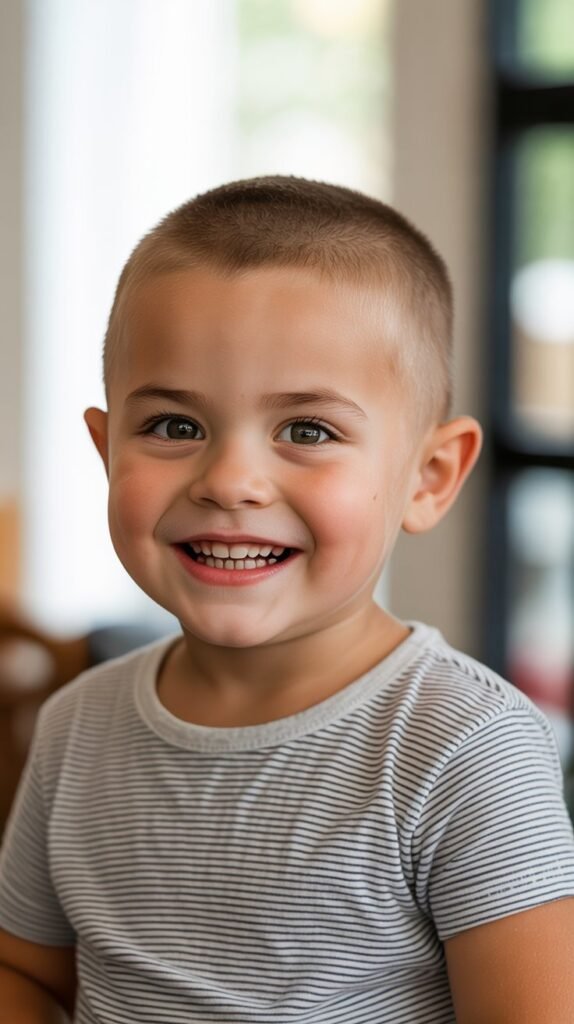
The buzz cut represents the ultimate in low-maintenance convenience, featuring uniformly short hair all over the head that requires virtually no styling effort.
This practical choice has remained popular for decades due to its simplicity, cleanliness, and ability to keep boys comfortable in all weather conditions.
Benefits of the Buzz Cut
- This haircut eliminates morning styling routines entirely, allowing families to save precious time during busy school day mornings.
- The uniform short length keeps boys incredibly cool during summer months and prevents overheating during sports and outdoor play.
- Hair maintenance becomes remarkably simple, as there’s no need for brushing, combing, or worrying about tangles and knots.
- The buzz cut is highly economical, as it can be done at home with clippers and only needs refreshing every 3-4 weeks.
- This style works beautifully for boys with any hair texture, from straight to curly, and looks equally good on all face shapes.
Buzz Cut Considerations and Variations
- Different guard lengths create varying buzz cut looks, from the very short number 1 guard to the slightly longer number 4.
- A number 2 or 3 guard typically provides the best balance between short length and enough coverage to look intentional rather than shaved.
- For boys with sensitive scalps or who get cold easily, slightly longer guards provide more warmth and protection from the sun.
- Some parents add variety by creating a simple fade on the sides, keeping the top slightly longer than the sides and back.
- While incredibly practical, consider your child’s head shape and ear prominence, as very short cuts reveal these features completely.
6. The Curly Top with Fade
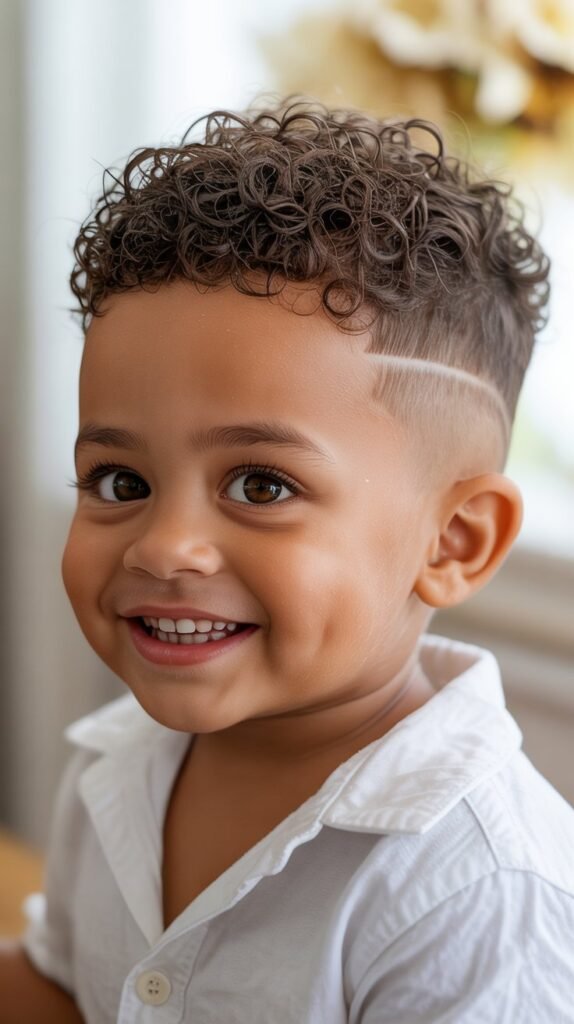
Little boys with naturally curly hair can showcase their beautiful texture with a curly top fade that celebrates their natural curl pattern.
This stylish cut keeps the sides and back short and clean while allowing the curls on top to flourish with volume and personality, creating a look that’s both modern and manageable.
Embracing Natural Curls
- This haircut works with your child’s natural texture rather than fighting against it, reducing daily styling frustration for both parent and child.
- The fade on the sides creates a clean, polished contrast that makes the curly top look intentional and styled rather than unkempt.
- Curls on top provide natural volume and dimension that straight-haired boys can only achieve with products and styling tools.
- This style allows boys with curly hair to feel proud of their natural texture instead of wishing their hair was different.
- The combination of short sides and longer top makes maintenance easier, as you’re only managing curls in the top section.
Caring for Curly Hair Cuts
- Use a moisturizing shampoo and conditioner specifically designed for curly hair to keep curls soft, defined, and frizz-free.
- Apply a curl-defining cream or leave-in conditioner to damp hair, scrunching it upward to encourage curl formation without brushing.
- Never brush curly hair when dry, as this breaks up the curl pattern and creates frizz; use fingers or a wide-tooth comb on wet hair only.
- The fade should be touched up every 3-4 weeks to maintain the clean contrast, while the curly top can grow longer between cuts.
- Consider co-washing (washing with conditioner only) between regular shampoos to maintain moisture without stripping natural oils that curls need.
7. The Long on Top, Short on Sides
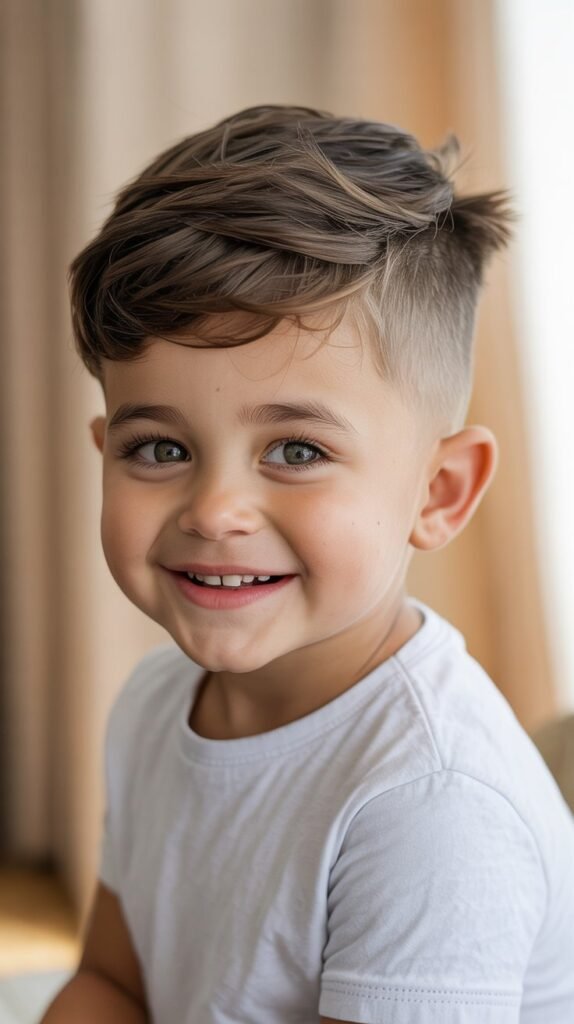
This versatile haircut combines the best of both worlds, featuring substantial length on top for styling options while keeping the sides and back short and manageable.
The dramatic contrast creates a modern, fashionable silhouette that works for boys who want more styling flexibility without committing to long hair all over.
Advantages of This Versatile Style
- The longer top section provides numerous styling options, from slicked back to messy and textured to swept to the side.
- This cut grows out gracefully, looking intentional even as it gets longer between salon visits compared to more structured styles.
- Boys can experiment with different looks using the same haircut, helping them develop their personal style preferences over time.
- The short sides keep the overall style looking neat and prevent the “growing out” phase from looking unkempt or messy.
- This style works particularly well for boys with straight or wavy hair that can be manipulated into different shapes and directions.
Styling and Product Recommendations
- The top section typically ranges from 3-5 inches in length, providing enough hair to style without becoming difficult to manage.
- Use a blow dryer to add volume and direction, lifting hair up at the roots while drying to create height and movement.
- Lightweight styling products like mousses or creams work best, as heavy pomades can weigh down the longer hair and make it look flat.
- For a textured, messy look, work a small amount of clay or paste through damp hair and use your fingers to create piece-y separation.
- Regular trims every 5-6 weeks maintain the length balance, with the sides needing more frequent attention than the top section.
8. The Bowl Cut Modernized
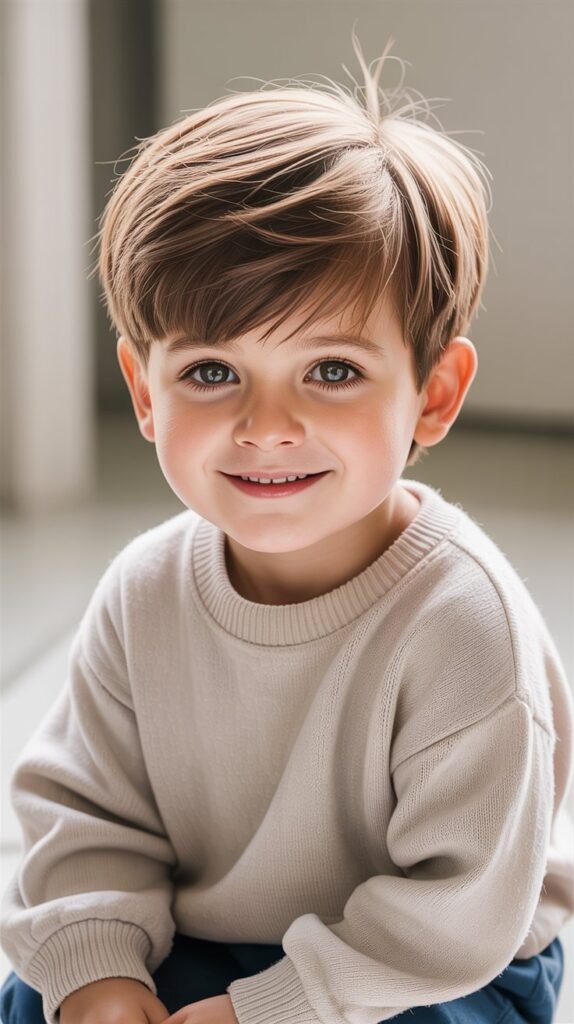
The classic bowl cut has undergone a contemporary transformation, evolving from its dated predecessor into a stylish, rounded shape with modern texturing and blending techniques.
Today’s version features softer edges, subtle layering, and a more natural finish that gives little boys a distinctive look without the harsh, obvious line of traditional bowl cuts.
The Modern Bowl Cut Renaissance
- Contemporary cutting techniques have transformed the bowl cut into a fashion-forward style that’s appearing on runways and in children’s fashion editorials.
- The softened edges and subtle texturing make this cut look intentional and stylish rather than dated or like mom cut it at home.
- This haircut works exceptionally well for boys with straight, thick hair that naturally falls into place without much styling effort.
- The rounded shape frames the face beautifully, drawing attention to facial features and creating a sweet, youthful appearance.
- Unlike many trendy cuts, the modern bowl cut has a distinctive, recognizable silhouette that sets your child apart from cookie-cutter styles.
Achieving the Modern Version
- The key difference from old-school bowl cuts is the blending at the sides and back, creating a gradual transition rather than a harsh line.
- Hair should be point-cut rather than blunt-cut to create texture and movement throughout, preventing the helmet-like appearance of traditional versions.
- The length typically falls somewhere between the eyebrows and mid-ear, creating a soft frame around the face without obstructing vision.
- A small amount of lightweight styling cream helps define the shape and adds a subtle polish without making hair look greasy or heavy.
- This cut requires skilled execution, so seek out a stylist experienced in modern cutting techniques rather than attempting it at home.
9. The Spiky Style
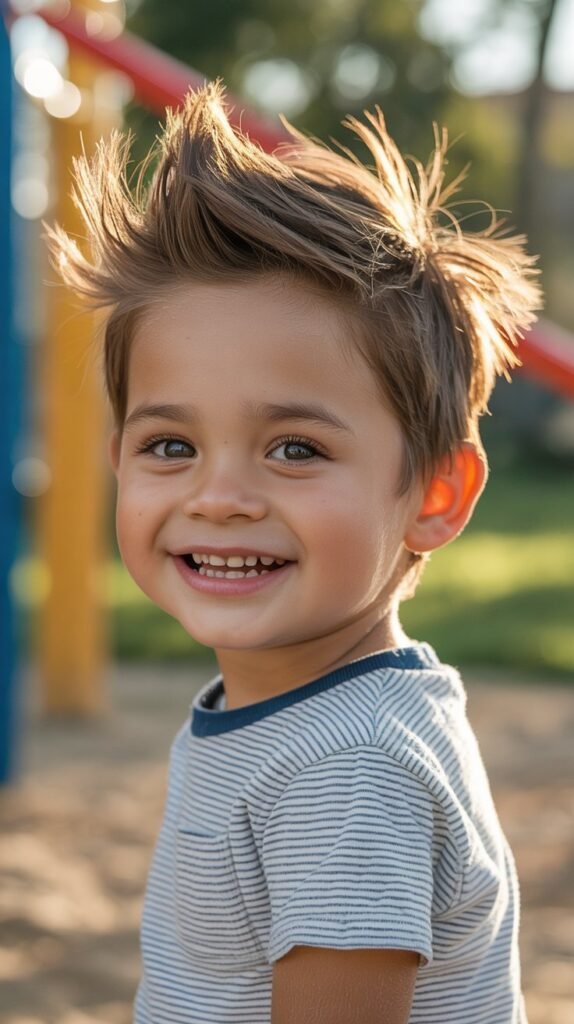
The spiky hairstyle remains a perennial favorite among energetic little boys who want a fun, dynamic look that matches their active personalities.
This playful style features short to medium-length hair on top that’s styled upward into spikes of varying heights, creating a textured, three-dimensional appearance that’s both cute and cool.
Why Spikes Never Go Out of Style
- This fun haircut allows boys to express their playful, energetic personalities through their appearance in an age-appropriate way.
- Spikes create the illusion of thicker, fuller hair, making them an excellent choice for boys with fine or thin hair texture.
- The style is remarkably versatile, working well for casual everyday wear as well as special occasions when styled with more care.
- Boys love the “cool factor” of spikes, and styling their hair becomes a fun part of their morning routine rather than a chore.
- Unlike some trendy styles that look sloppy when not perfectly maintained, slightly messy spikes still look intentional and stylish.
Creating and Maintaining Spiky Hair
- The ideal length for spiky hair ranges from 1.5 to 3 inches on top, with sides kept shorter to create contrast and emphasis.
- Strong-hold gel or styling paste is essential for keeping spikes standing upright throughout the day without drooping or falling flat.
- Apply product to damp (not wet) hair, then use your fingertips to pull small sections upward, twisting slightly for definition.
- For longer-lasting spikes, blow-dry hair while holding sections upward to set the direction before the product fully dries.
- The sides should be trimmed every 3-4 weeks to maintain the contrast, while the top can be trimmed every 5-6 weeks depending on desired length.
10. The Slicked Back Look
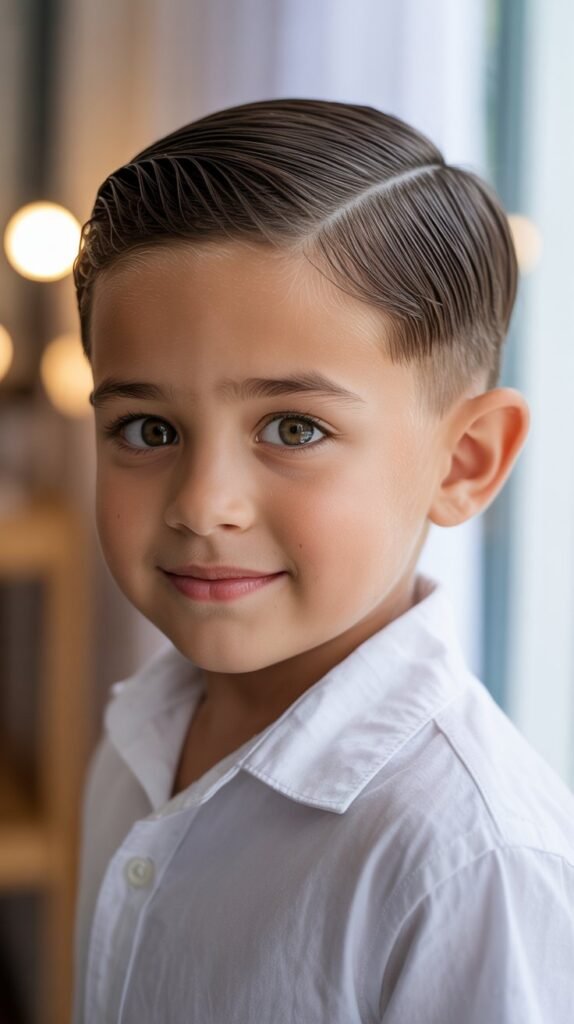
The slicked back hairstyle brings sophistication and polish to little boys’ grooming, creating a refined appearance that’s perfect for formal occasions and special events.
This elegant style sweeps all the hair on top backward and away from the face, using product to create a smooth, sleek finish that looks mature and well-groomed beyond a child’s years.
The Appeal of Slicked Back Sophistication
- This hairstyle transforms little boys into miniature gentlemen, perfect for weddings, holiday photos, and other formal family occasions.
- The sleek appearance keeps hair completely out of the face, making it practical for boys who find hair in their eyes distracting or annoying.
- Slicked back hair photographs beautifully, creating a timeless look in pictures that won’t appear dated years later when looking back at photos.
- This style works across various hair types, from straight and fine to thick and wavy, as long as hair has sufficient length on top.
- Boys who wear this style often receive compliments from adults, boosting their confidence and teaching them about appropriate grooming for different occasions.
Achieving the Slicked Back Style
- Hair on top needs to be at least 3-4 inches long to slick back effectively, while sides can be kept short or left slightly longer depending on preference.
- Medium to strong-hold pomade provides the best control for slicking hair back while adding shine for a polished, finished appearance.
- Apply pomade to damp hair, using a fine-tooth comb to sweep all hair backward from the hairline toward the crown in smooth, even strokes.
- For boys with cowlicks or stubborn growth patterns, blow-drying hair backward before applying product helps train hair in the desired direction.
- Touch up throughout the day if needed by smoothing hair with your hands, and use a small amount of water to reactivate the product.
11. The Undercut
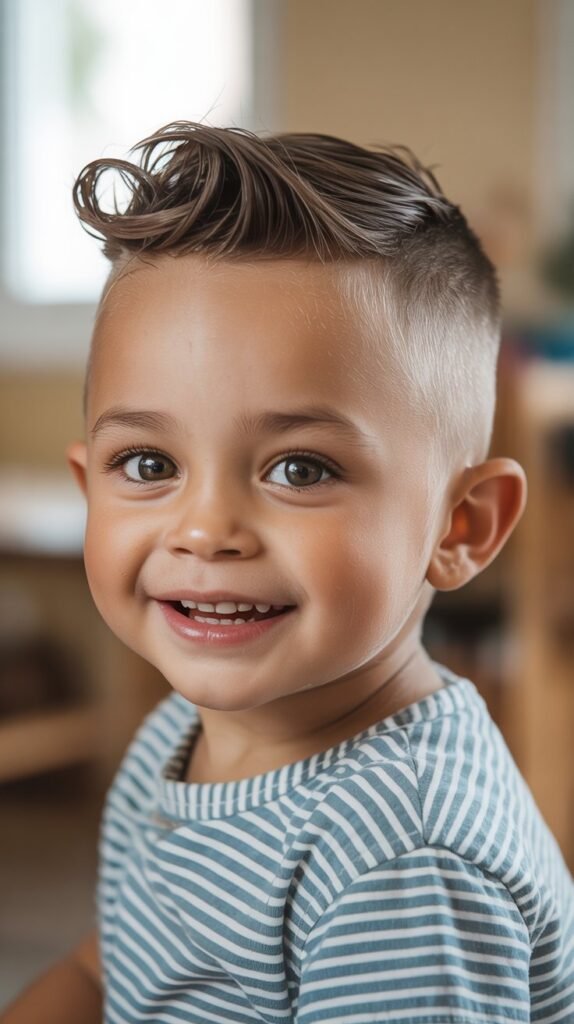
The undercut creates a bold, distinctive look featuring a dramatic contrast between very short sides and back with substantially longer hair on top.
This edgy style has moved from adult fashion into children’s haircuts, offering a modern, statement-making option for boys who want something that stands out from traditional cuts.
Understanding the Undercut Appeal
- The dramatic length contrast makes this haircut immediately noticeable and distinctive, setting your child apart from more common styles.
- This cut provides maximum styling versatility on top while keeping maintenance minimal on the sides due to the short length.
- The clean, sharp line where the undercut meets the longer hair creates a precise, intentional look that appears professionally styled.
- For boys with thick, heavy hair, removing bulk from the sides makes hair more manageable and comfortable, especially in warm weather.
- The undercut works particularly well for boys with strong personal style preferences who want their appearance to reflect their individuality.
Undercut Maintenance and Styling
- The sides and back are typically clippered very short, often using a number 1 or 2 guard, creating a stark contrast with the top section.
- The top section can be styled in numerous ways: slicked back, swept to the side, styled forward, or left naturally textured depending on the occasion.
- The disconnected line where short meets long requires precise cutting skills, so choose an experienced barber familiar with this technique.
- Plan for frequent trims every 2-3 weeks on the sides to maintain the clean, short length and prevent the dramatic contrast from disappearing.
- Use styling products that match your desired look for the top section, from strong-hold gel for structured styles to lightweight cream for natural texture.
12. The Fringe/Bangs Cut

The fringe or bangs cut features longer hair in the front that falls across the forehead, creating a youthful, playful appearance that many parents find absolutely adorable.
This style can range from straight-across bangs to longer, side-swept fringes, offering various interpretations that work with different face shapes and hair textures.
Why Fringe Cuts Remain Popular
- Bangs frame the face beautifully, drawing attention to a child’s eyes and creating an sweet, innocent appearance that parents cherish.
- This style provides excellent coverage for boys who are self-conscious about their foreheads or have birthmarks they prefer to keep covered.
- The fringe adds a soft, youthful quality to the overall look that’s particularly suitable for younger boys in preschool and early elementary years.
- This cut works exceptionally well with boys who have straight to wavy hair that naturally falls forward without requiring excessive styling.
- Longer fringes can be swept to the side for variety, giving boys options to change their look without actually getting a new haircut.
Fringe Styling and Maintenance
- The fringe typically ranges from just above the eyebrows to partially covering them, long enough to be noticeable but short enough not to obstruct vision.
- Cut bangs while hair is dry to ensure accurate length, as wet hair appears longer and will spring up shorter when it dries.
- For a softer, more modern look, point-cut the fringe rather than cutting straight across, creating texture and preventing a blunt, harsh line.
- A tiny amount of lightweight cream or styling paste helps piece out the fringe and prevents it from clumping together into a single chunk.
- Fringe grows quickly and can become annoying when it gets in the eyes, so plan for trims every 3-4 weeks to maintain the appropriate length.
13. The Military High and Tight

The high and tight brings military precision and structure to little boys’ haircuts, featuring extremely short sides and back with a small amount of slightly longer hair on the very top of the head.
This ultra-low-maintenance style creates a clean, disciplined appearance that appeals to parents who prefer traditional, no-nonsense grooming.
Benefits of the High and Tight
- This haircut requires essentially zero styling time or effort, making it ideal for families with hectic morning routines or multiple children.
- The extremely short length keeps boys maximally cool during hot weather and is particularly appreciated by young athletes in summer sports.
- Hair stays completely out of the face and eyes, never causing distractions during school, reading, or other activities requiring focus.
- The military-inspired precision appeals to boys interested in armed services, superheroes, or anything related to discipline and structure.
- This cut costs less than more complex styles and can often be maintained at home with clippers, providing significant long-term savings.
Executing the High and Tight
- The sides and back are cut extremely short, typically using a number 0 or 1 guard, creating an almost shaved appearance.
- The top section uses a slightly longer guard, usually number 2 or 3, and is confined to a small oval area on the crown of the head.
- The transition between the short sides and slightly longer top should be crisp and defined rather than gradually blended for the true military look.
- This cut requires no products or styling tools whatsoever, though some families apply light moisturizer to prevent dry scalp from showing through short hair.
- Touch-ups are needed every 2-3 weeks to maintain the sharp, clean lines that define this style, but these can easily be done at home.
14. The Shaggy Surfer Cut

The shaggy surfer cut embraces a relaxed, carefree aesthetic with longer, layered hair that has a tousled, just-came-from-the-beach appearance.
This laid-back style works beautifully for boys with naturally wavy or slightly curly hair, creating an effortlessly cool look that requires minimal styling while still appearing intentional and fashionable.
The Carefree Surfer Style
- This haircut celebrates natural texture and movement, making it perfect for boys with wavy or curly hair who look best when their natural pattern is enhanced.
- The longer length provides warmth during cooler months while still allowing hair to air-dry quickly and comfortably in summer.
- This style has a cool, laid-back vibe that appeals to boys who prefer relaxed, casual aesthetics over more structured or formal appearances.
- The shaggy cut works particularly well for creative, artistic children whose personalities are better expressed through less conventional styles.
- Parents appreciate that this cut looks good even when it’s a bit overdue for a trim, growing out gracefully without obvious awkward phases.
Creating and Maintaining the Shaggy Look
- The cut should feature multiple layers throughout to create movement and prevent hair from looking heavy or triangular as it grows longer.
- Overall length typically ranges from 3-5 inches depending on hair texture, with slightly shorter layers around the face for practicality.
- Ask your stylist to use point-cutting and razor techniques that create soft, piece-y edges rather than blunt, heavy lines.
- Sea salt spray enhances the beachy texture and adds volume without making hair feel stiff or look overly styled.
- This cut needs trimming every 6-8 weeks to remove dead ends and maintain the layered shape, though it tolerates longer periods between cuts better than more structured styles.
15. The Comb Over
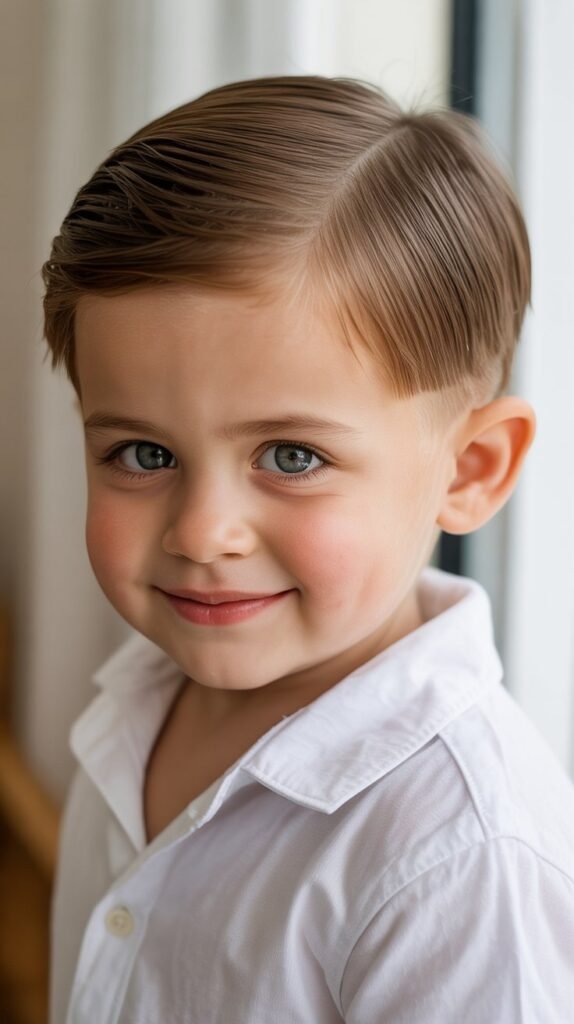
The comb over brings a classic, vintage-inspired charm to little boys, featuring hair swept smoothly from one side of the head to the other with a defined part.
This sophisticated style nods to old Hollywood glamour while remaining perfectly appropriate and adorable for modern children, especially when paired with contemporary cutting techniques.
The Timeless Comb Over
- This haircut creates an instantly polished, well-groomed appearance that’s appropriate for any setting from casual to formal.
- The comb over teaches boys about grooming routines and personal presentation, instilling pride in their appearance from a young age.
- This style photographs exceptionally well, creating clean, classic images that look timeless rather than trendy in family photos and portraits.
- The defined structure of the comb over works well for boys with straight to slightly wavy hair that lies relatively flat when combed.
- Parents love this style for its neat, controlled appearance that helps boys look put-together even on chaotic morning routines.
Perfecting the Comb Over
- The part should be placed approximately one to two inches from the side of the head, creating enough hair to comb over without looking unbalanced.
- Sides and back are kept short using clippers with a number 2 or 3 guard, while the top maintains 2-3 inches of length for combing.
- Apply lightweight pomade or styling cream to damp hair, then use a fine-tooth comb to sweep hair across from the part in smooth strokes.
- A blow dryer can set the style more permanently, directing hair in the desired direction while it dries to train the hair pattern.
- The comb over requires daily styling to look its best, but once boys learn the technique, they can often manage it themselves relatively quickly.
16. The Taper Fade
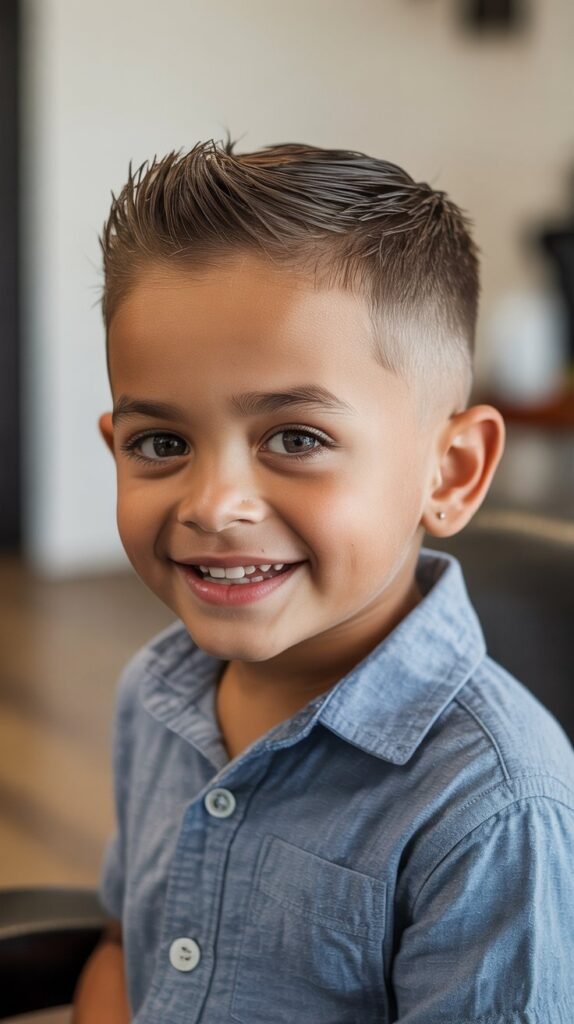
The taper fade has become one of the most requested styles in children’s barbershops, featuring gradually decreasing hair length from the top down to the skin on the sides and back.
This modern, clean-cut style creates a sophisticated gradient effect that looks professionally styled while offering the practicality of very short sides.
Understanding Taper Fade Varieties
- The low fade starts the gradual transition near the bottom of the head, creating a subtle, conservative gradient that works for any setting.
- The mid fade begins the transition around the middle of the sides, offering a balanced look that’s noticeable without being dramatic.
- The high fade starts the transition higher up, creating a more dramatic contrast and modern appearance that makes a bold statement.
- Skin fades go all the way down to bare skin at the bottom, while taper fades leave a short shadow of hair without reaching skin level.
- The versatility of fades allows customization to match your child’s face shape, hair texture, and personal style preferences perfectly.
Fade Maintenance and Care
- Taper fades require skilled execution with clippers and proper blending techniques, so choose an experienced barber for best results.
- The longer hair on top can be styled in various ways, from slicked back to textured to swept sideways depending on your preferences.
- Fades grow out relatively quickly and lose their crisp appearance within 2-3 weeks, requiring more frequent barbershop visits than other styles.
- The maintenance schedule can be extended slightly by having your barber clipper the sides and back only between full haircuts.
- This style works for all hair textures, though the blending technique must be adjusted for different curl patterns to achieve smooth transitions.
17. The Pompadour
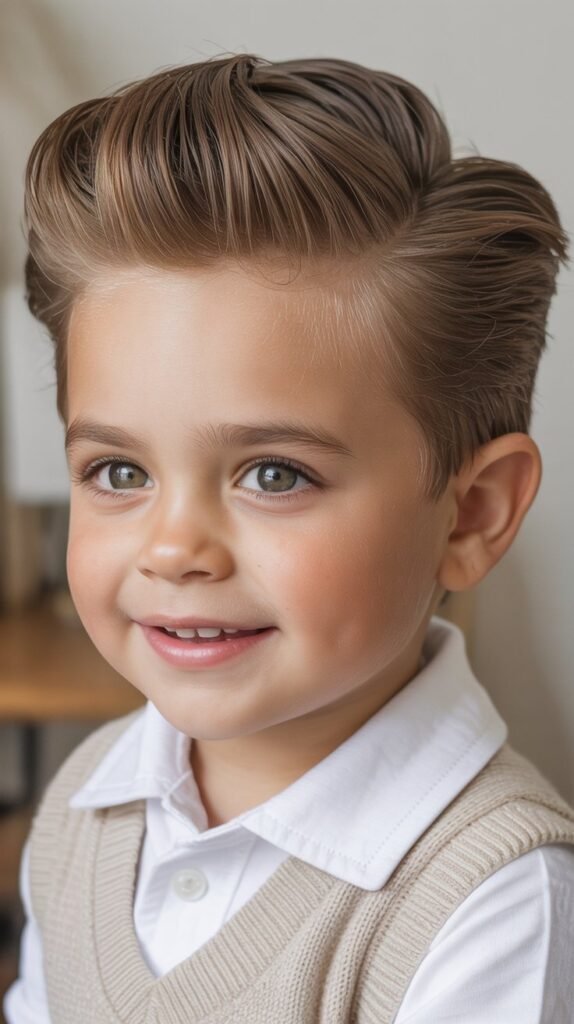
The pompadour creates a dramatic, vintage-inspired statement with substantial height and volume on top, sweeping hair upward and backward from the forehead.
This bold style brings classic men’s grooming into the realm of children’s haircuts, giving little boys a distinctive, memorable look that commands attention and exudes confidence.
The Pompadour’s Bold Appeal
- This eye-catching style makes little boys feel special and confident, as the dramatic height creates a memorable, standout appearance.
- The pompadour works beautifully for formal occasions like weddings and holidays, creating a polished, special-event worthy look.
- Boys with naturally thick hair can achieve impressive height and volume that makes this style particularly striking and dramatic.
- This haircut teaches boys about different styling techniques and the transformative power of proper hair care and product use.
- The pompadour has a timeless, retro-cool quality that references classic style icons while still feeling fresh and contemporary.
Styling the Pompadour
- This style requires substantial length on top, typically 3-5 inches, to create the signature height and volume that defines the pompadour.
- The sides should be kept significantly shorter, usually with a fade or taper, to emphasize the dramatic height difference with the top section.
- Strong-hold pomade or styling gel is essential, as the weight of the hair pulled upward requires serious hold to maintain throughout the day.
- Blow-dry hair upward and backward while it’s damp, using a round brush to create lift at the roots and smooth the hair into shape.
- This style requires daily styling and isn’t ideal for super-active boys who will be roughhousing, swimming, or doing activities that will collapse the pompadour.
18. The Caesar Cut
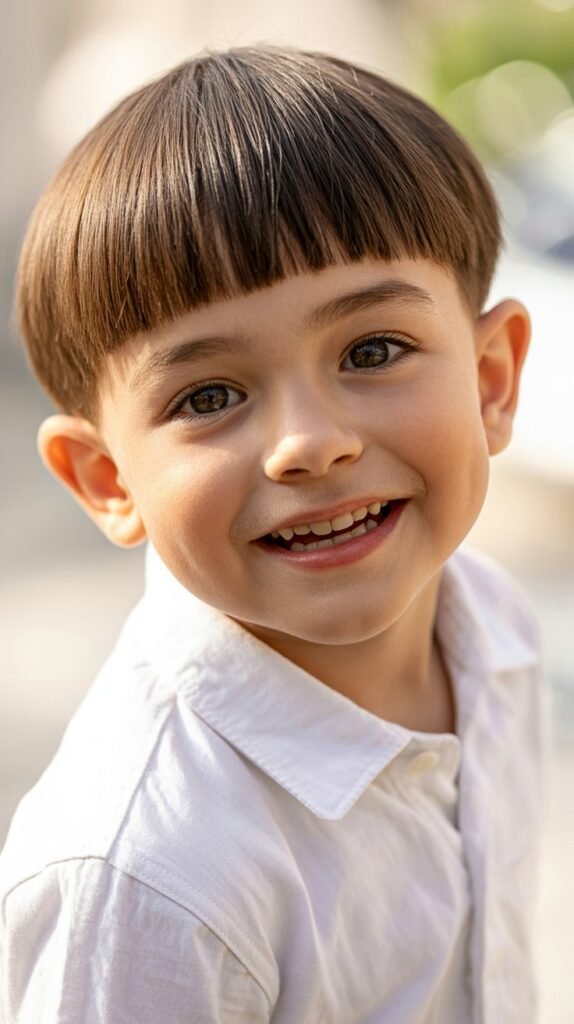
The Caesar cut features short hair all around with a small, textured fringe brushed forward across the forehead, creating a neat, uniform appearance with Roman-inspired classical appeal.
This practical style works exceptionally well for boys with thinning hair or receding hairlines (rare in children but possible), as the forward-brushed fringe provides coverage and the illusion of fuller hair.
Benefits of the Caesar Cut
- This style offers extreme low-maintenance convenience, requiring only a quick brush forward in the morning without products or complex styling.
- The uniform length all around creates a balanced, harmonious appearance that suits virtually any face shape without emphasizing specific features.
- The forward fringe keeps hair out of eyes while still providing some coverage across the forehead for boys who prefer not to have it completely exposed.
- This cut works beautifully for boys with straight hair that naturally wants to lie flat rather than stand up or sweep to the side.
- The simple, unpretentious nature of the Caesar cut appeals to no-fuss families who want their sons to look neat without elaborate grooming routines.
Creating the Caesar Cut
- Hair should be cut to a relatively uniform length all over, typically 1-2 inches, creating consistency without the severity of a buzz cut.
- The fringe is slightly textured using point-cutting techniques to create a soft, piece-y edge rather than a harsh blunt line across the forehead.
- Use your fingers or a brush to sweep the fringe forward and slightly downward, covering the top portion of the forehead naturally.
- A tiny amount of lightweight styling cream helps define the texture in the fringe and prevents it from looking too blunt or heavy.
- This cut requires minimal maintenance between salon visits and can easily last 5-6 weeks before needing a trim to maintain the shape.
19. The Ivy League Cut
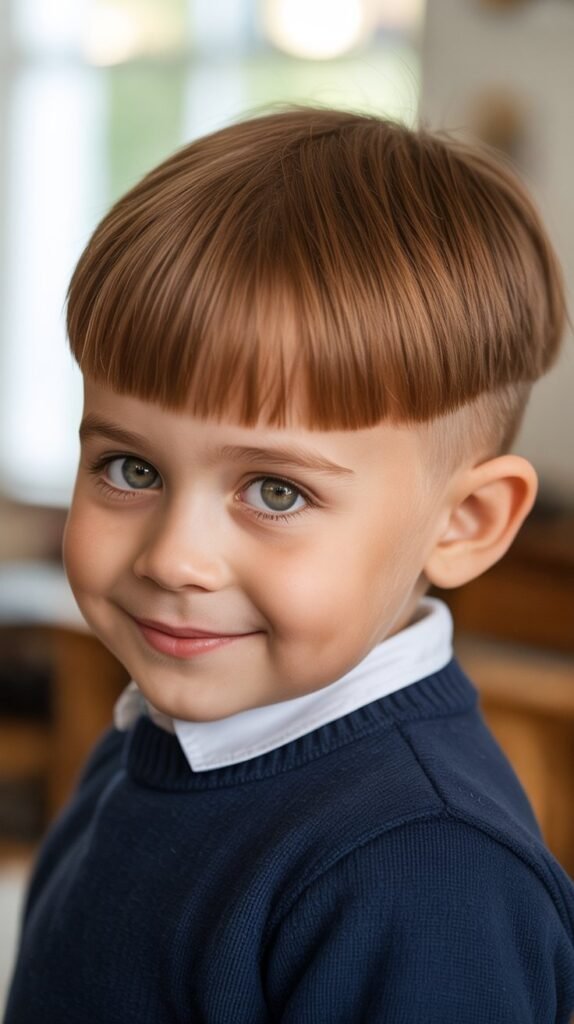
The Ivy League cut represents preppy sophistication, featuring short sides and back with enough length on top to create a neat side part and comb over.
This refined style bridges the gap between a crew cut and longer styles, offering the best of both worlds with its clean-cut appearance and subtle styling options that work for academic and athletic settings alike.
The Preppy Ivy League Appeal
- This haircut embodies classic American style and tradition, perfect for families who appreciate timeless, conservative grooming standards.
- The slightly longer length on top provides more styling versatility than a standard crew cut while remaining just as practical and easy to maintain.
- This style looks equally appropriate for school, sports practices, formal events, and casual family outings without requiring any adjustments.
- The Ivy League cut works particularly well for boys with straight to slightly wavy hair that cooperates when combed into place.
- Parents appreciate the clean, academic appearance that suggests discipline and attention to detail without being overly formal or stuffy.
Mastering the Ivy League Style
- The sides and back are typically cut with a number 3 or 4 guard, keeping them short but not as severe as a crew cut.
- The top section maintains approximately 1.5 to 2.5 inches of length, enough to create a subtle part and comb hair to the side smoothly.
- Apply a small amount of lightweight pomade or styling cream to achieve the polished finish without making hair look greasy or overly product-heavy.
- Use a comb to create a neat side part and sweep hair from the part across the top, smoothing it into place with gentle strokes.
- This cut holds its shape well for 4-5 weeks, making it economical and practical for busy families who can’t visit the barber constantly.
20. The Mullet (Modern Version)
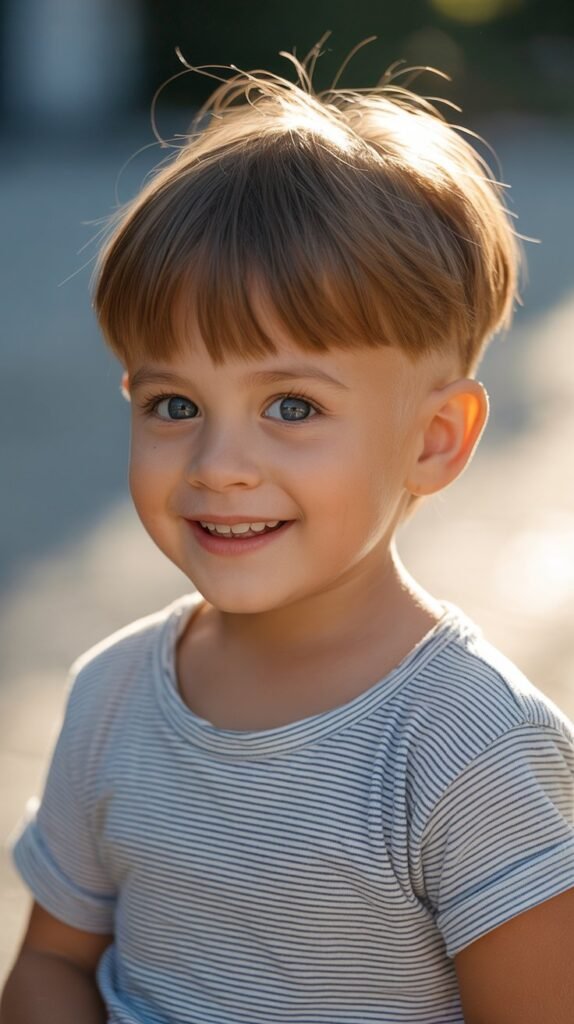
The modern mullet has experienced an unexpected renaissance, featuring shorter hair on top and sides with dramatically longer hair in the back.
Today’s version is more refined than the 1980s stereotype, with proper blending and contemporary cutting techniques that make this unconventional style surprisingly stylish and age-appropriate when executed correctly.
The Mullet’s Unexpected Revival
- This bold, unconventional choice allows boys to express their individuality and stand out from the crowd with a truly distinctive hairstyle.
- The modern version incorporates proper blending and texturing that prevents the harsh, dated appearance of traditional mullets from decades past.
- Boys who love this style often have confident, outgoing personalities that match the daring nature of the haircut itself.
- The longer back section can be especially appealing to boys who want long hair but whose parents prefer shorter hair on top and around the face.
- This style has gained popularity among young athletes and musicians, giving it a cool, rebellious edge that appeals to trend-conscious children.
Creating the Contemporary Mullet
- The top and sides should be cut to a moderate length, typically 2-3 inches, avoiding the extremely short contrast of vintage mullets.
- The back section gradually increases in length, reaching anywhere from chin-length to shoulder-length depending on preferences and commitment level.
- Proper layering and texturing throughout prevents the mullet from looking like two separate haircuts awkwardly attached to the same head.
- The transition zones between shorter and longer sections must be carefully blended to create a cohesive, intentional appearance rather than an obvious dividing line.
- This style requires regular trims on the top and sides every 4-5 weeks while allowing the back to grow to desired length over several months.
21. The Angular Fringe
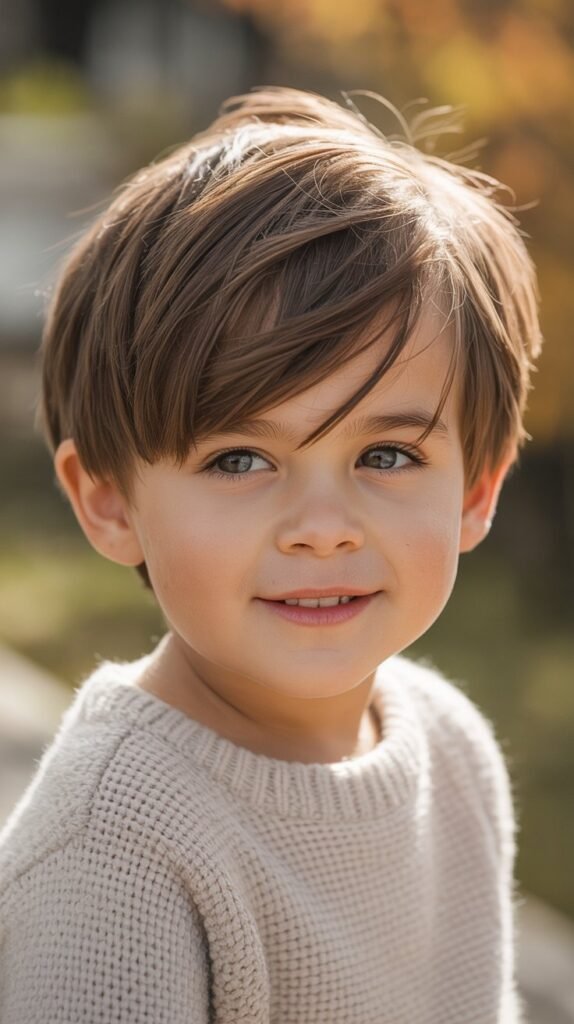
The angular fringe features longer hair in front cut at a diagonal angle, sweeping across the forehead from one side to the other in a dramatic, geometric line.
This modern, fashion-forward style adds visual interest and dimension to little boys’ haircuts, creating an edgy yet age-appropriate look that’s particularly popular in contemporary children’s fashion.
Why the Angular Fringe Stands Out
- The diagonal line creates visual movement and interest that makes this style more dynamic and exciting than straight-across bangs.
- This cut works exceptionally well for boys with asymmetrical features, as the angled line can balance and complement natural face structure.
- The fashion-forward appearance appeals to style-conscious families who want their children to have contemporary, trend-aware looks.
- The angular fringe can be styled in multiple ways, swept to the side for one look or brushed forward for another depending on the occasion.
- This distinctive style photographs beautifully, creating interesting angles and lines in pictures that add visual sophistication to portraits.
Achieving the Angular Fringe
- The fringe should be longest on one side of the forehead and gradually decrease in length as it moves across toward the opposite side.
- The angle should be subtle enough to look natural rather than dramatically severe, typically following the natural line of the eyebrows.
- The rest of the haircut usually features shorter sides and back to emphasize the angular fringe and prevent the overall look from becoming too heavy.
- Use a lightweight styling cream to enhance the angle and keep hair lying in the correct direction without making it look stiff or unnatural.
- This cut requires precise execution, so bring reference photos to your stylist and ensure they understand the exact angle and length you’re envisioning.
22. The Disconnected Undercut
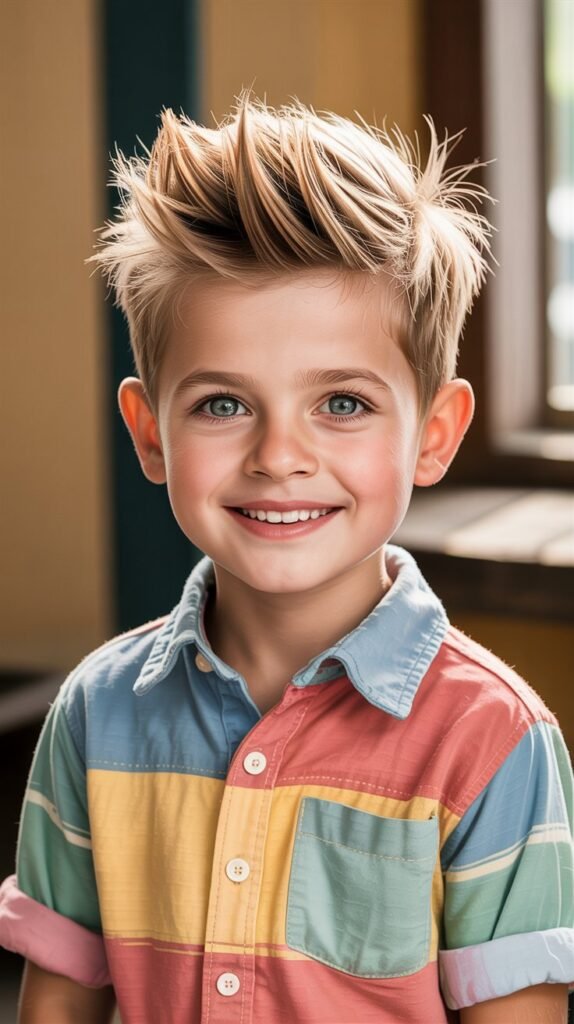
The disconnected undercut takes the traditional undercut further by eliminating any blending between the short sides and longer top, creating a stark, intentional line where the two sections meet.
This ultra-modern style makes a bold statement with its dramatic contrast and architectural quality, perfect for boys who want a haircut that truly stands out from conventional options.
The Drama of Disconnection
- The obvious demarcation line between sections creates an architectural, almost graphic quality that looks deliberately stylish and fashion-forward.
- This style offers maximum versatility on top, as the longer section can be styled numerous ways without affecting the clean, short sides.
- The dramatic contrast works particularly well for boys with thick, dense hair that can support the weight and volume of the longer top section.
- This bold choice appeals to confident, outgoing boys who enjoy attention and want their appearance to reflect their strong personalities.
- The disconnected nature actually makes this cut easier to maintain at home, as parents can trim the sides without worrying about blending techniques.
Maintaining the Disconnected Look
- The sides and back are typically cut to a number 1 or 2 guard length, creating an almost shaved appearance that contrasts sharply with the top.
- The top section should maintain at least 3-4 inches of length to emphasize the disconnect and provide sufficient hair for various styling options.
- The line where short meets long should be precisely executed at a consistent height all around the head for a clean, intentional appearance.
- Style the top section according to preference: slicked back, textured and messy, swept to the side, or styled forward over the forehead.
- Plan for frequent maintenance on the sides every 2-3 weeks to preserve the dramatic contrast, while the top can go longer between trims.
23. The Side Swept Style
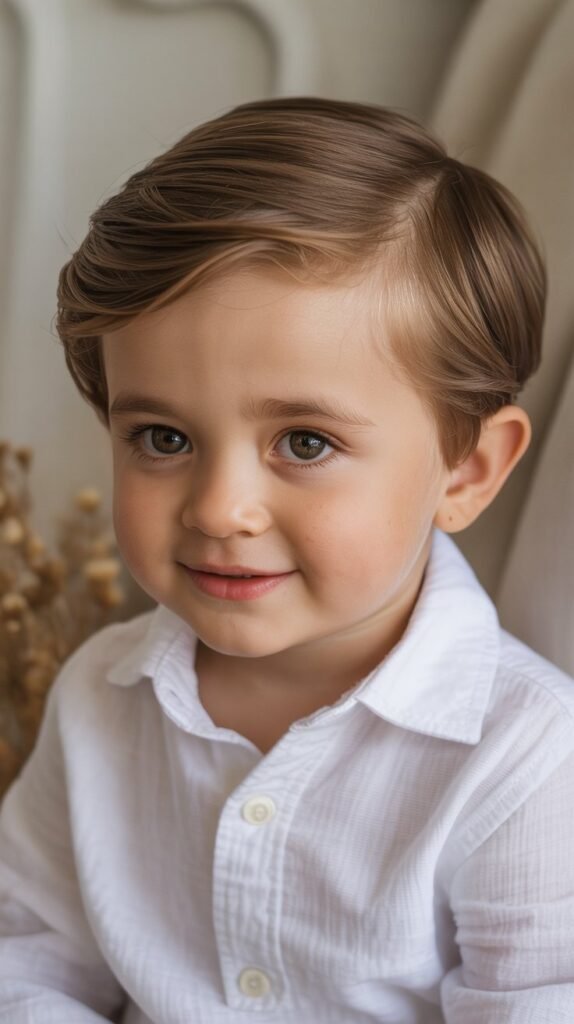
The side swept style features all the hair brushed dramatically to one side of the head, creating an elegant, flowing appearance with romantic, windswept appeal.
This graceful look works beautifully for boys with straight to wavy hair that’s long enough to sweep across, offering a softer, more artistic alternative to more structured, traditional boys’ haircuts.
The Elegance of Side Swept Hair
- This style creates a soft, gentle appearance that many parents find particularly sweet and endearing on younger boys.
- The sweeping motion adds graceful movement to the haircut, making it appear dynamic rather than static even when the child is standing still.
- This cut works exceptionally well for boys with naturally straight or slightly wavy hair that wants to fall to one side already.
- The side swept style offers a refined alternative for parents who want their sons to have longer hair without the maintenance of truly long styles.
- This look photographs beautifully, creating soft, romantic images perfect for professional portraits and special occasion photos.
Creating the Side Swept Look
- Hair needs to be long enough to sweep across the head, typically requiring at least 3-4 inches of length throughout the top and sides.
- The cut should include subtle layers to prevent hair from looking too heavy or flat as it sweeps across in one direction.
- A deep side part helps initiate the sweep, positioning the part low on one side so most of the hair can flow dramatically across.
- Lightweight mousse or styling cream provides hold without stiffness, allowing hair to maintain its swept position while still moving naturally.
- Blow-dry hair in the desired direction while it’s damp to train the hair pattern and make the swept style last throughout the day.
24. The Textured Quiff
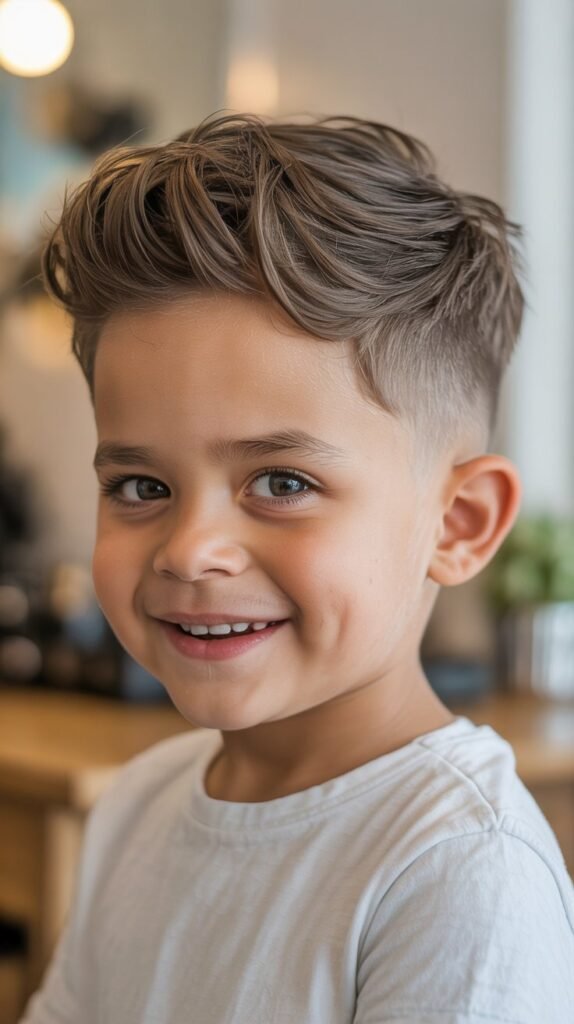
The textured quiff combines height, volume, and piece-y texture to create a modern, dimensional style with plenty of personality.
This contemporary look features shorter sides with a longer top section that’s styled upward and slightly backward, incorporating texture and separation that prevents it from looking too formal or perfectly coiffed.
The Modern Quiff Appeal
- This style perfectly balances trendy and timeless, incorporating current fashion trends while maintaining classic elements that won’t look dated quickly.
- The height and volume create visual interest and make boys appear slightly taller, which many children appreciate as they grow.
- The textured, piece-y finish gives the quiff a relaxed, approachable quality that doesn’t look overly formal or stiff like perfectly smooth styles.
- This cut works beautifully for boys with naturally thick hair, as the density helps achieve and maintain the volume this style requires.
- The quiff offers enough styling flexibility to dress up for special occasions or dress down for casual everyday wear depending on product and technique.
Styling the Textured Quiff
- The top section needs approximately 3-4 inches of length to create the upward and backward sweep that defines the quiff shape.
- Sides should be significantly shorter, typically featuring a fade or taper that emphasizes the volume and height on top through contrast.
- Apply a strong-hold matte paste or clay to damp hair, working it through thoroughly from roots to ends for even distribution.
- Use your fingers to push hair upward and slightly backward, separating it into distinct pieces rather than smoothing it into one unified shape.
- A blow dryer adds extra volume and helps set the style, directing air upward at the roots while styling with your free hand.
25. The French Crop
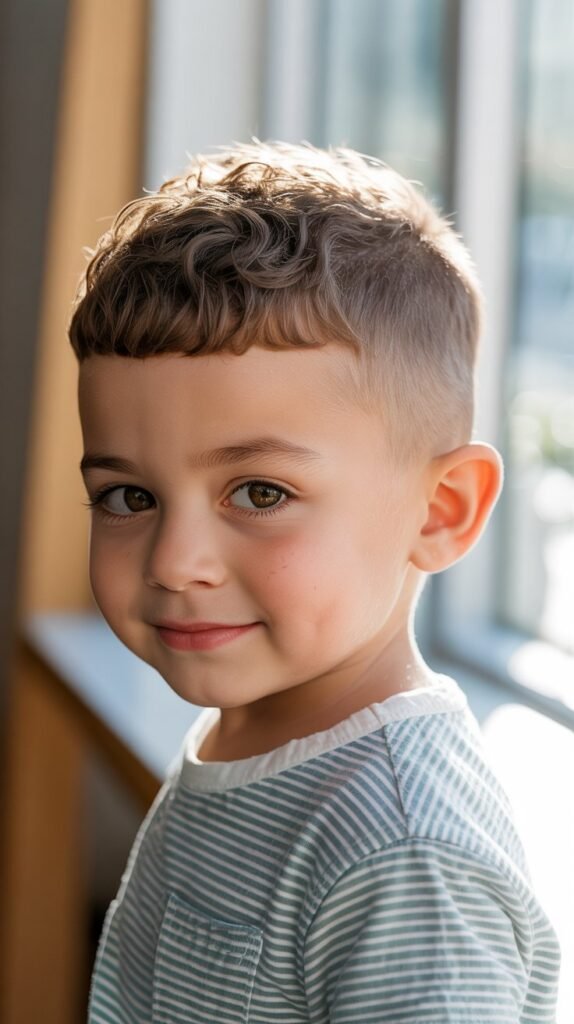
The French crop features a short, blunt fringe across the forehead combined with a textured top and shorter sides, creating a distinctly European aesthetic.
This sophisticated style has gained popularity worldwide for its clean lines, easy maintenance, and ability to work with various hair textures while maintaining a polished, fashion-conscious appearance.
The French Crop’s Sophisticated Edge
- This cut embodies European fashion sensibility, offering a more refined and cultured alternative to typical American children’s haircuts.
- The short, horizontal fringe creates a strong, geometric element that adds structure and visual interest to the overall style.
- This style works exceptionally well for boys with straight to slightly wavy hair that naturally falls forward without excessive cowlicks.
- The French crop requires minimal daily styling, making it practical for busy mornings while still looking intentionally fashionable and put-together.
- The clean lines and structured appearance appeal to parents who appreciate minimalist, modern design aesthetics in all aspects of life.
Executing the French Crop
- The defining feature is the short fringe cut straight across, typically landing just above the eyebrows in a blunt, horizontal line.
- The top section is kept relatively short, usually 1-2 inches, with texturizing techniques creating movement and preventing heaviness.
- Sides and back feature a taper or fade that’s shorter than the top but not dramatically so, maintaining proportion and balance.
- Minimal product is needed, just a small amount of matte paste or clay worked through the top section to enhance texture and definition.
- The fringe should be trimmed every 3-4 weeks to maintain the clean line, while the rest of the cut can last 5-6 weeks between full trims.
26. The Mohawk (Faux or Real)
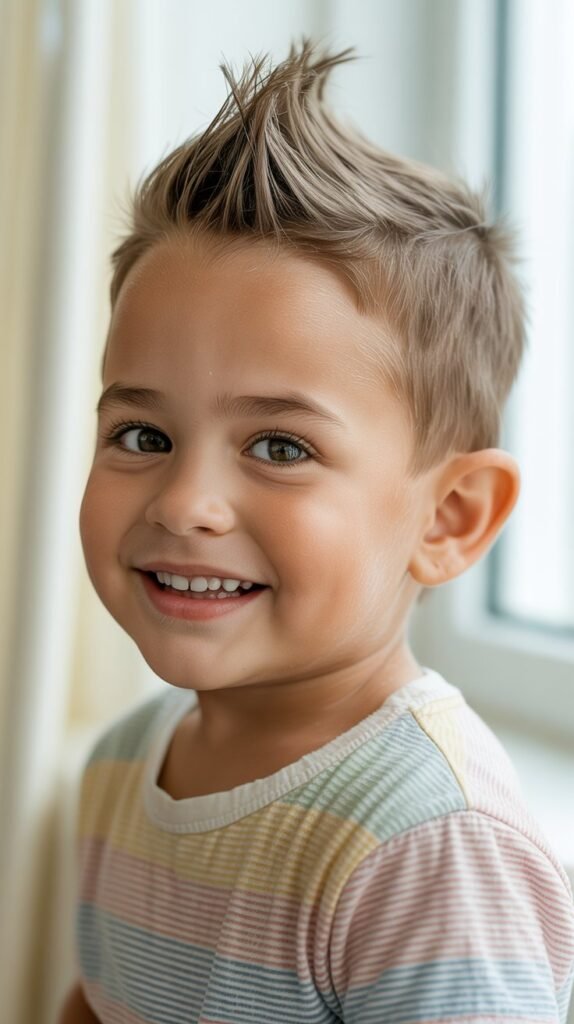
The mohawk makes a bold statement with a strip of hair running down the center of the head while the sides are cut very short or shaved completely.
Available in both full mohawk and faux mohawk (fauxhawk) versions, this edgy style lets boys express their rebellious side while remaining age-appropriate and surprisingly versatile for different occasions.
The Mohawk’s Bold Statement
- This daring haircut allows boys to express confidence, individuality, and a fearless approach to personal style from a young age.
- The dramatic contrast between the center strip and shaved sides creates an unmistakable, memorable appearance that commands attention.
- Despite its edgy reputation, the mohawk can be styled conservatively (laying flat) for school and dramatically (spiked up) for weekends and special events.
- This style works particularly well for boys with naturally thick, coarse hair that holds its shape when styled upward without constant product reapplication.
- The mohawk appeals to boys interested in punk rock music, skateboarding, alternative sports, and countercultural aesthetics in general.
Creating and Maintaining the Mohawk
- The center strip typically ranges from 1-3 inches wide, running from the hairline to the crown or all the way to the nape of the neck.
- Sides can be shaved completely smooth with a razor for a true mohawk, or cut very short with clippers for a more moderate version.
- The center section needs to be at least 2-4 inches long to stand upward effectively, with longer lengths creating more dramatic height when styled.
- Strong-hold gel or styling paste is essential for keeping the mohawk standing tall, applied generously to damp hair before styling upward.
- Maintenance requires shaving or clippering the sides every 1-2 weeks to maintain the stark contrast, while the center can be trimmed every 4-6 weeks.
27. The Natural Afro
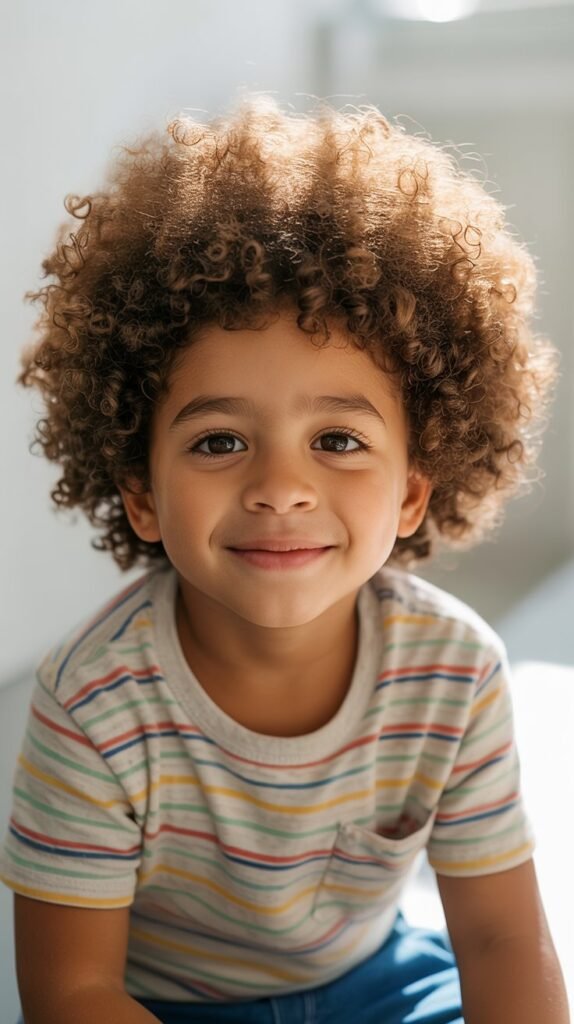
The natural afro celebrates the beauty of tightly coiled hair, allowing it to grow outward in its natural pattern to create a full, rounded halo of texture around the head.
This proud, culturally significant style embraces natural hair texture rather than fighting against it, teaching boys to love and appreciate their hair exactly as it grows from their scalp.
Celebrating Natural Hair Texture
- The afro represents cultural pride and self-acceptance, teaching boys that their natural hair is beautiful and doesn’t need alteration to be attractive.
- This style protects hair from damage caused by excessive manipulation, heat styling, and chemical treatments that can harm developing hair follicles.
- The full, rounded shape creates a distinctive silhouette that’s immediately recognizable and celebrates the unique beauty of coily hair textures.
- Afros offer versatility through picking, shaping, and styling techniques that allow different looks without cutting or chemically altering the hair.
- This natural approach to hair care teaches boys important lessons about self-love, cultural heritage, and embracing their authentic selves from childhood.
Caring for Natural Afro Hair
- Moisture is absolutely critical for healthy afro hair, requiring deep conditioning treatments weekly and daily moisturizer application to prevent dryness and breakage.
- Use a wide-tooth comb or afro pick on dry hair to gently lift and shape the afro without disrupting the curl pattern or causing frizz.
- Trim the afro periodically to maintain a rounded shape and remove any split ends, but avoid over-trimming which will prevent the hair from achieving desired fullness.
- Protect hair at night with a satin or silk bonnet or pillowcase to prevent friction damage and moisture loss that causes dryness.
- Avoid harsh shampoos that strip natural oils, instead co-washing with conditioner or using sulfate-free cleansers designed specifically for curly hair textures.
Conclusion
Choosing from these 27 Adorable Little Boy Haircuts That’ll Melt Your Heart means finding the perfect balance between your child’s personality, your family’s lifestyle, and practical maintenance considerations.
Each style offers unique benefits, from ultra-low-maintenance buzz cuts that save precious morning minutes to sophisticated pompadours perfect for special occasions that create lasting memories in photographs.
The key to selecting the right haircut lies in considering your child’s hair texture, face shape, activity level, and emerging personal preferences as they develop their own sense of style.
Remember that hair grows back, so don’t be afraid to experiment with different looks as your son grows and his interests evolve over the years.
Consult with an experienced children’s barber or stylist who can assess your child’s specific hair characteristics and recommend cuts that will work with rather than against his natural texture and growth patterns.
Whether you choose a timeless classic like the crew cut or side part, embrace natural texture with an afro or curly top, or venture into more contemporary territory with undercuts and textured crops, the right haircut will boost your little boy’s confidence and make him feel handsome and special.
These adorable styles prove that boys’ haircuts offer just as much variety, creativity, and style potential as any other aspect of children’s fashion and personal expression.