
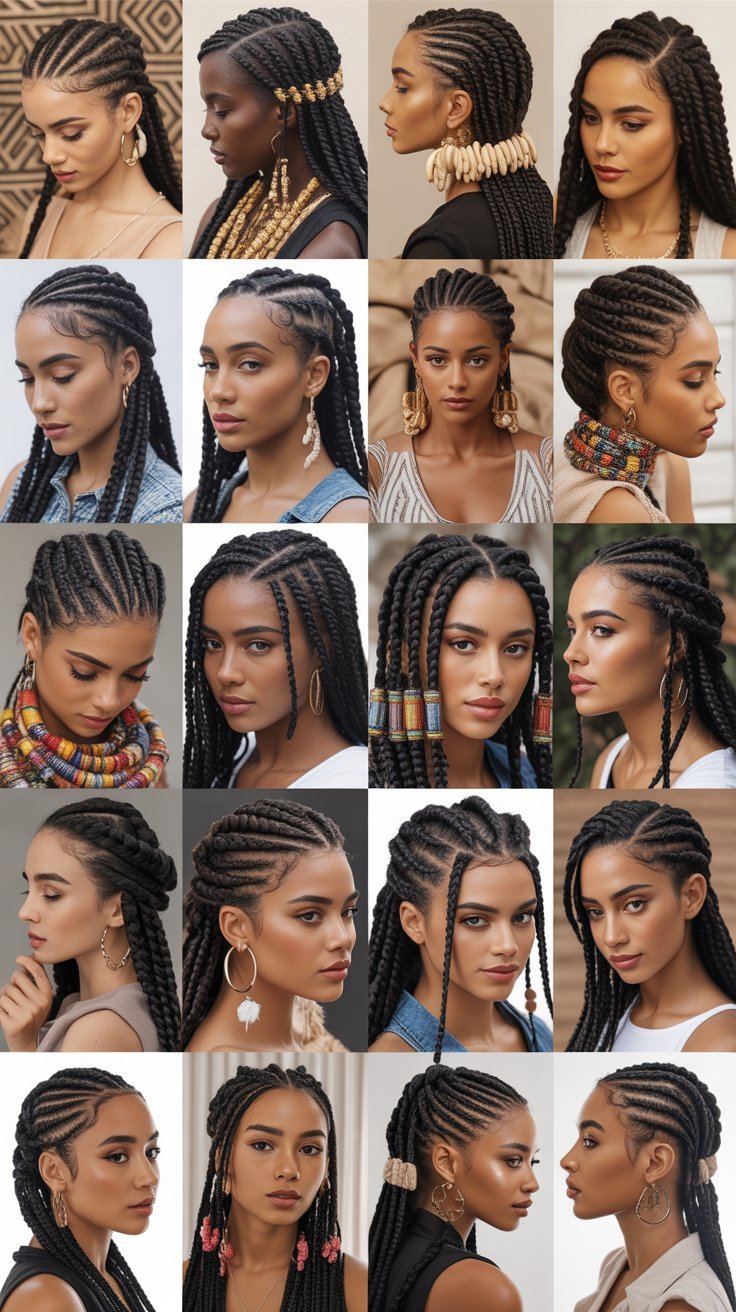
Fulani braids have emerged as one of the most captivating and culturally rich hairstyles in African hair artistry, blending traditional West African heritage with contemporary fashion sensibilities.
Originating from the Fulani people of the Sahel region, these distinctive braids are characterized by their signature cornrows braided to the sides or back, adorned with beads, cowrie shells, and decorative accessories that create a stunning visual statement.
In this comprehensive guide to 27 Stylish Fulani Braided Hairstyles for Black Women, we’ll explore everything from classic center-braided styles to modern asymmetrical designs, helping you discover protective styling options that celebrate cultural authenticity while keeping your natural hair healthy and beautiful.
Whether you’re seeking an elegant look for special occasions or a practical everyday style that turns heads, these versatile Fulani braided variations offer endless possibilities for self-expression.
You’ll learn about styling techniques, maintenance tips, face-flattering designs, and creative ways to personalize each look with accessories that reflect your unique personality and style preferences.
1. Classic Center-Braid Fulani Style

The classic center-braid Fulani style represents the most traditional and recognizable version of this iconic hairstyle, featuring a prominent cornrow braid running straight down the middle of the head from the hairline to the nape.
This timeless design serves as the foundation for understanding Fulani braiding techniques and cultural significance.
Key Features:
- The central braid typically starts thin at the forehead and gradually increases in thickness as it progresses toward the back of the head, creating a natural tapered effect.
- Side sections are usually braided into thin to medium cornrows that curve backward, framing the face beautifully while directing attention to the dramatic center braid.
- Traditional beading is placed strategically along the central braid, with gold or silver cuffs and cowrie shells creating rhythmic patterns that catch light with every movement.
- The remaining hair can be styled into individual box braids or left in cornrows, depending on personal preference and desired overall aesthetic.
Styling Tips:
- Apply a lightweight oil or braid spray to your natural hair before installation to ensure moisture retention throughout the wear period.
- Request that your braider keeps the tension moderate rather than extremely tight to prevent traction alopecia and hairline damage.
- Consider the placement and weight of beads carefully, distributing them evenly to avoid strain on any single section of hair.
2. Asymmetrical Fulani Braids
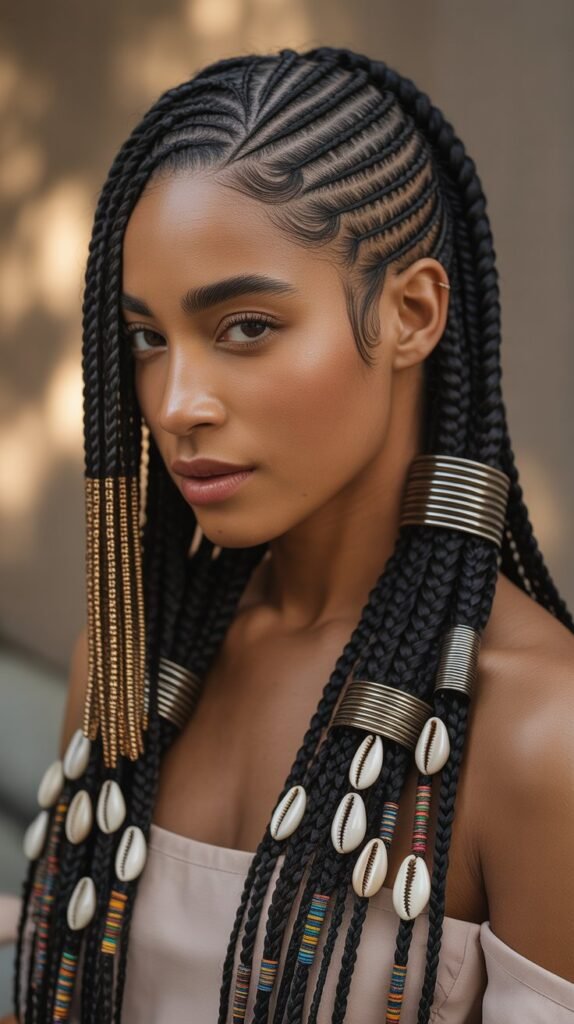
Asymmetrical Fulani braids introduce a contemporary twist to traditional styling by intentionally creating uneven or off-center designs that add modern edge and visual interest.
This approach appeals to women who want to honor cultural heritage while embracing bold, fashion-forward aesthetics.
Design Elements:
- One side of the head features more prominent or numerous braids while the other side displays a contrasting pattern or thickness, creating deliberate imbalance.
- The central braid may be positioned off-center rather than perfectly aligned with the nose bridge, offering a unique focal point.
- Asymmetrical parting patterns can incorporate geometric shapes, curved lines, or zigzag sections that challenge conventional symmetry.
- Color placement in asymmetrical designs can emphasize the intentional unevenness, with highlights or ombre effects concentrated on one side.
Benefits:
- This style works exceptionally well for women with facial asymmetry, as strategic braid placement can create balance and harmony.
- The unconventional design makes a powerful fashion statement at events, photoshoots, or social gatherings where standing out is desired.
- Asymmetrical patterns offer more versatility in how you wear your hair daily, allowing different styling options depending on which side you feature prominently.
3. Fulani Braids with Triangle Parts

Triangle parting creates distinctive geometric sections across the scalp before braiding begins, adding architectural precision and visual complexity to traditional Fulani styles.
This technique transforms the scalp into a canvas for artistic expression.
Technical Approach:
- Hair is sectioned into triangular shapes rather than traditional square or rectangular parts, creating a honeycomb or tessellated pattern across the scalp.
- Each triangular section is braided from its point, resulting in braids that naturally fan out in different directions for dimensional fullness.
- The central Fulani braid typically bisects several triangular sections, maintaining traditional elements while incorporating geometric innovation.
- Triangle parts work especially well with both thin and thick braids, offering flexibility in overall density and volume.
Advantages:
- The geometric parting remains visible even after braids are installed, providing an additional layer of design interest when hair is styled up or back.
- Triangle sections distribute tension more evenly across the scalp compared to traditional square parts, potentially reducing stress on hair follicles.
- This parting method allows for more natural movement and bounce in the finished braids since they originate from varied angles.
- When it’s time to remove the braids, triangle parts make it easier to work in sections without confusion or overlap.
4. Fulani Braids with Bangs

Adding bangs or fringe to Fulani braids softens facial features and creates a youthful, playful aesthetic while maintaining the style’s cultural authenticity.
This variation offers face-framing versatility that appeals to women seeking both coverage and style.
Styling Variations:
- Braided bangs can be created using micro cornrows that extend forward over the forehead before curving back, maintaining consistency with the overall braided look.
- Loose braided extensions can be left to hang as fringe, creating movement and texture that contrasts with the structured cornrows.
- Side-swept bangs angle across the forehead diagonally, working particularly well with asymmetrical Fulani designs.
- Curly or wavy bang pieces can be incorporated using different hair textures, adding dimension and visual interest to the front sections.
Face-Shape Considerations:
- Round faces benefit from longer, side-swept bangs that create vertical lines and elongate facial proportions.
- Heart-shaped faces look stunning with fuller, straight-across bangs that balance a wider forehead with a narrower chin.
- Square face shapes are softened by wispy, textured bangs that break up angular jawlines and add feminine curves.
- Oval faces have the versatility to experiment with any bang style, from blunt cuts to feathered pieces.
5. Jumbo Fulani Braids

Jumbo Fulani braids utilize thick, chunky braids that make a bold statement while significantly reducing installation time compared to finer braiding options.
This style appeals to women seeking dramatic impact with lower time investment.
Characteristics:
- Each braid section is substantially thicker than traditional Fulani braids, typically ranging from one to two inches in width at the base.
- Fewer total braids are needed to complete the style, usually between 10 to 20 braids depending on head size and desired coverage.
- The central signature braid becomes even more prominent and eye-catching when executed in jumbo proportions.
- Jumbo braids work beautifully with larger, statement-making beads and accessories that complement the bold scale.
Practical Benefits:
- Installation time is reduced by 50-70% compared to medium or micro Fulani braids, making this an excellent choice for busy lifestyles.
- The style requires less synthetic hair, potentially reducing both cost and weight on your natural hair and scalp.
- Jumbo braids are generally easier to maintain and refresh, as there are fewer individual pieces to manage during cleansing and conditioning.
- This thickness provides substantial protection for natural hair while still allowing the scalp to breathe adequately.
6. Micro Fulani Braids
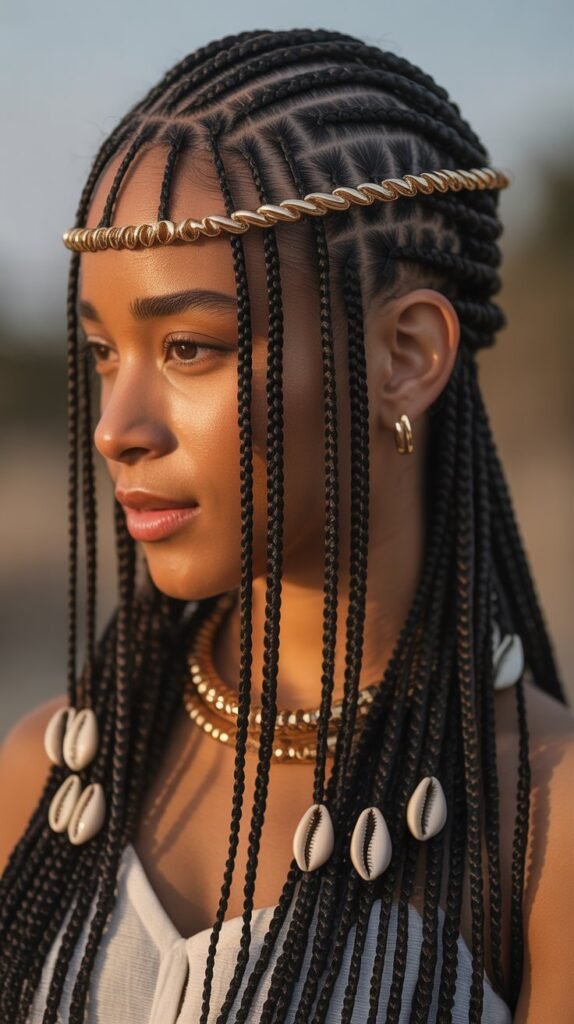
Micro Fulani braids represent the opposite end of the spectrum, featuring extremely thin, delicate braids that create intricate, detailed patterns across the scalp.
This refined approach requires patience and skilled braiding technique but delivers stunning, long-lasting results.
Technical Specifications:
- Individual braids measure approximately pencil-lead thickness or smaller, creating dozens to over a hundred separate braids across the entire head.
- The precision required for micro braiding ensures each section is uniform, contributing to an overall polished and sophisticated appearance.
- Micro braids typically last longer than thicker variations because there’s less weight pulling on each braid, reducing the tendency for frizz and unraveling.
- The delicate nature allows for incredibly versatile styling options, from high buns to elaborate updos that showcase the intricate braiding work.
Considerations:
- Installation time for micro Fulani braids can extend from 6 to 12 hours depending on hair length and desired braid density, requiring significant time commitment.
- The thin sections require gentle handling during the braiding process to avoid excessive tension that could damage fine natural hair.
- Micro braids demand meticulous maintenance, including regular moisturizing and careful cleansing to prevent buildup between the numerous tight sections.
- This style showcases the braider’s skill level and artistry, so selecting an experienced professional is essential for optimal results.
7. Fulani Braids with Colored Extensions

Incorporating colored extensions into Fulani braids allows for creative self-expression and trend-forward styling without the commitment or damage of chemical hair coloring.
This variation has become increasingly popular across social media platforms and red carpet events.
Color Options:
- Ombre effects transition from natural black or brown roots to vibrant ends in colors like burgundy, purple, blue, or blonde, creating gradient beauty.
- Highlighting techniques weave colored strands throughout natural-toned braids, adding dimension and depth that mimics professional balayage.
- Bold, solid colors transform the entire braid from root to tip, making powerful fashion statements in shades like fire-engine red, platinum blonde, or electric blue.
- Pastel hues including rose gold, lavender, mint green, and baby pink offer softer, romantic alternatives for those preferring subtle color enhancement.
Color Combination Suggestions:
- Black base with honey blonde tips creates a classic, sophisticated ombre that complements most skin tones.
- Dark brown roots transitioning to copper or auburn ends provide warmth and richness particularly flattering on deeper complexions.
- Natural black hair with strategic burgundy or wine-colored highlights adds depth without overwhelming the overall aesthetic.
- For the adventurous, rainbow braids incorporating multiple colors can create festival-ready, artistic expressions of personality.
8. Half-Up Half-Down Fulani Style

The half-up half-down Fulani style combines the structure of traditional cornrows with the flowing freedom of loose braids, creating a balanced look that’s both practical and beautiful.
This versatile approach works for casual daily wear and elegant evening occasions.
Styling Method:
- The front and crown sections feature signature Fulani cornrows including the characteristic center braid, providing the recognizable traditional elements.
- Braids from the mid-scalp backward are left loose and flowing, allowing them to cascade down the back and over the shoulders.
- The transition point between cornrows and loose braids can be accented with a decorative hair cuff, beaded band, or wrapped thread.
- This style can be adjusted daily, with loose braids pulled into ponytails, buns, or left completely free depending on activities and preferences.
Versatility:
- The half-up portion keeps hair away from the face during work, exercise, or daily tasks while maintaining a polished appearance.
- Loose braids in the back provide styling flexibility, allowing you to change your look without reinstalling the entire hairstyle.
- This combination offers the protective benefits of cornrows at the hairline and crown while giving the remaining hair freedom to move naturally.
- The style photographs beautifully from all angles, making it popular for events, photoshoots, and social occasions.
9. Fulani Braids with Curly Ends
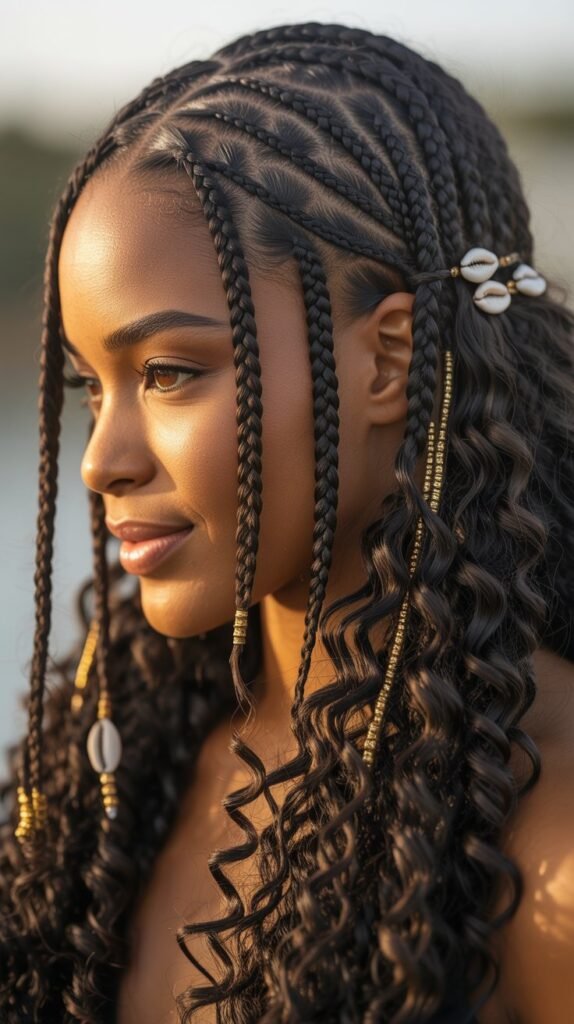
Adding curly ends to Fulani braids introduces texture, volume, and movement that creates a romantic, bohemian aesthetic.
This style combines the sleek structure of braids with the softness of curls for dimensional beauty.
Creating Curly Ends:
- Hot water is poured over synthetic braid ends to set curls, or pre-curled braiding hair is used during installation for immediate results.
- Perm rods, flexi-rods, or curling wands can be applied to straight braid ends after installation to create customized curl patterns.
- The length of straight braid before curls begin can be adjusted, with some styles featuring curls starting mid-length while others keep braids sleek until the very ends.
- Curl size varies from tight ringlets to loose waves, each creating distinctly different overall effects and volume levels.
Styling Advantages:
- Curly ends add significant volume and fullness without requiring additional braiding hair or extended installation time.
- The texture contrast between sleek cornrows and voluminous curls creates visual interest and dynamic movement with every turn.
- Curls can be refreshed or restyled throughout the wear period, allowing you to change your look without removing the braids.
- This variation tends to appear more casual and approachable compared to straight-ended braids, making it ideal for everyday wear.
10. Fulani Braids in a High Bun

Styling Fulani braids into a high bun creates an elegant, sophisticated look that’s perfect for formal events, professional settings, or when you want to showcase your facial features and neck.
This updo variation maintains the distinctive Fulani elements while creating vertical height.
Bun Variations:
- A classic top knot gathers all braids at the crown, twisting or wrapping them into a secure, neat circular bun that sits prominently at the head’s highest point.
- Braided bun techniques involve creating additional braids from the loose sections before wrapping them, adding texture and interest to the finished updo.
- Messy or deconstructed buns intentionally leave some braids loose or protruding for a casual, effortless aesthetic that still appears polished.
- Double buns place two smaller buns on either side of the center braid, creating a playful, youthful style popularized by contemporary fashion trends.
Execution Tips:
- Use elastic hair ties specifically designed for braids to avoid slippage while preventing excessive tension that could cause breakage.
- Bobby pins should be inserted through the base of braids rather than around them to ensure secure hold without visible hardware.
- Leave the signature center cornrows visible at the front while gathering only the back and side braids into the bun for traditional Fulani recognition.
- Wrap a decorative scarf, ribbon, or beaded cord around the bun base to add color, texture, and personal style expression.
11. Side-Swept Fulani Braids

Side-swept Fulani braids redirect the traditional back-flowing pattern to cascade over one shoulder, creating asymmetrical elegance and old Hollywood glamour.
This styling approach flatters most face shapes while maintaining the protective benefits of braided hair.
Styling Technique:
- After installation, all braids are gathered and draped over either the left or right shoulder, leaving the opposite side of the neck exposed.
- The center Fulani braid can curve diagonally rather than straight back, following the directional flow of the side-swept design.
- Strategic pinning secures braids behind one ear while allowing full volume and length to display prominently on the chosen side.
- This style works with all braid lengths, from shoulder-grazing to waist-length, with longer braids creating more dramatic sweeping effects.
Occasions and Benefits:
- Red carpet events and formal photography benefit from the elegant, camera-ready nature of side-swept styling that photographs beautifully from multiple angles.
- Professional environments appreciate the polished, put-together appearance while the style remains comfortable for all-day wear.
- The asymmetrical weight distribution provides welcome relief for necks and shoulders compared to center-back positioning of heavy braids.
- Evening dates and romantic occasions are enhanced by the soft, feminine quality of braids cascading over one shoulder.
12. Fulani Braids with Beads
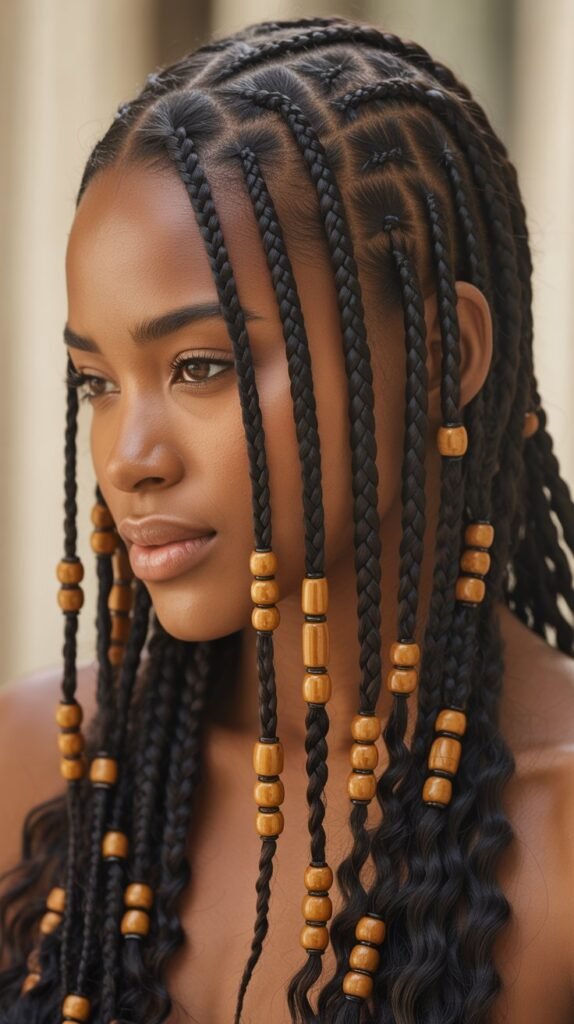
Beads represent one of the most iconic and traditional elements of Fulani braiding, adding cultural authenticity, personal style, and rhythmic sound to the hairstyle.
The art of bead selection and placement significantly impacts the overall aesthetic.
Bead Types and Materials:
- Wooden beads offer natural, earthy aesthetics that work beautifully with bohemian and Afrocentric styling preferences, available in various sizes and natural wood tones.
- Metallic beads in gold, silver, copper, or bronze create shine and glamour, catching light with movement and adding luxurious elements to the style.
- Plastic beads provide lightweight, affordable options in countless colors and designs, ideal for creating vibrant, playful looks without significant cost.
- Cowrie shells hold deep cultural significance in West African traditions, representing wealth and feminine power while adding authentic traditional elements.
Placement Strategies:
- Uniform spacing creates ordered, symmetrical patterns along braid lengths, offering clean, organized visual appeal.
- Random placement appears more casual and bohemian, with beads scattered throughout braids at varying intervals and heights.
- Concentrated beading at ends weighs down braids for smoother hanging and more movement while keeping the crown area lighter.
- Decorative patterns can spell names, create color gradients, or alternate materials for artistic expression and personalization.
13. Tribal Fulani Braids

Tribal Fulani braids embrace and amplify traditional African aesthetic elements, incorporating multiple cultural references including elaborate beading, threading, and accessories.
This style celebrates heritage while creating visually stunning, conversation-starting looks.
Traditional Elements:
- Hair threading using black, gold, or colored thread wraps sections of braids from root to tip, creating textured, decorated segments between beaded areas.
- Multiple cornrow patterns intersect and layer across the scalp, creating complex geometric designs that reference traditional African hairstyling techniques.
- Abundant accessories including shells, metal cuffs, bone beads, and leather wraps are incorporated throughout the style for authentic cultural representation.
- Natural hair colors are often preferred to maintain traditional aesthetics, though subtle highlights can be incorporated without losing cultural authenticity.
Cultural Significance:
- These styles honor the Fulani people’s nomadic heritage and their centuries-old traditions of intricate hair artistry and personal adornment.
- Different bead colors and materials historically indicated various aspects of identity including marital status, age, and tribal affiliation.
- The elaborate nature of tribal Fulani braids demonstrates the time investment and community bonding that occurs during traditional braiding sessions.
- Wearing these styles with knowledge and respect for their origins helps preserve and celebrate important African cultural practices.
14. Fulani Braids with Shaved Sides
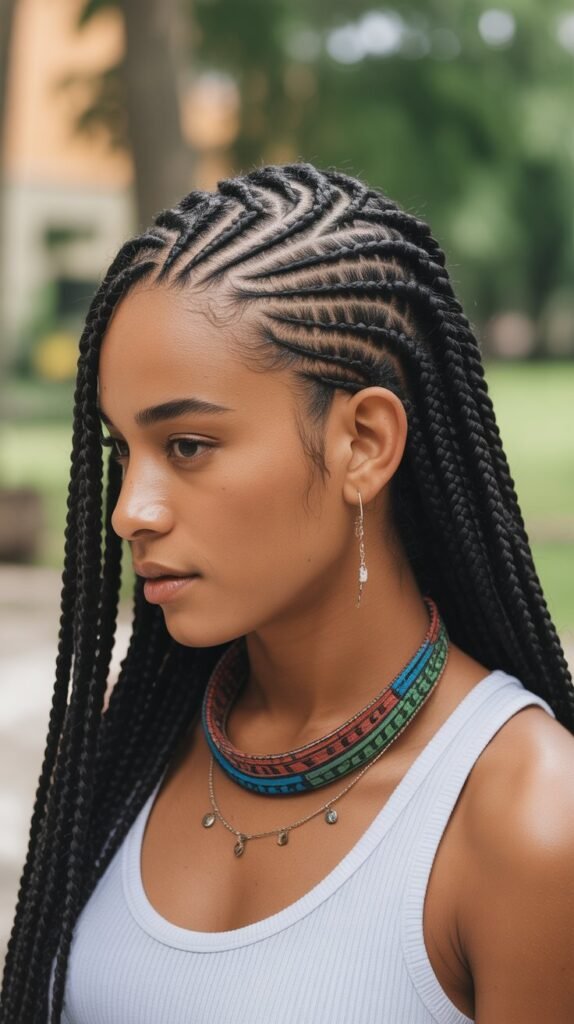
Combining Fulani braids with shaved or undercut sides creates an edgy, contemporary look that juxtaposes traditional braiding with modern hair cutting techniques.
This bold style appeals to fashion-forward women seeking dramatic contrast.
Design Approaches:
- One side is shaved while the opposite side features full Fulani braiding, creating stark asymmetry and maximizing visual impact.
- Both sides are undercut with the top and center sections maintaining traditional Fulani cornrows and braids, creating a mohawk-inspired silhouette.
- Shaved sections can incorporate designs such as geometric patterns, lines, symbols, or faded gradients that add another artistic dimension.
- The length of remaining hair on shaved sections varies from completely bald to short fade, each creating different contrast levels with the braided portions.
Maintenance Considerations:
- Shaved sections require regular maintenance every 2-4 weeks to maintain clean lines and prevent uneven growth from diminishing the style’s impact.
- This combination offers cooling relief during hot weather while still providing the protective benefits of braids on the remaining hair.
- Growing out shaved sections requires patience and transitional styling as short hair lengthens, eventually allowing for full braiding again if desired.
- Bold makeup and statement accessories complement the dramatic nature of this hairstyle, creating cohesive, fashion-forward overall looks.
15. Fulani Braids Ponytail

The Fulani braids ponytail combines the protective styling of cornrows at the front with the versatility of a gathered ponytail at the back.
This practical yet stylish option works for active lifestyles while maintaining elegant aesthetics.
Ponytail Variations:
- High ponytails positioned at the crown create youthful, energetic looks that elongate the neck and showcase facial features prominently.
- Mid-level ponytails sit at the occipital bone, offering classic, timeless styling that works for professional and casual settings alike.
- Low ponytails gather braids at the nape, creating sophisticated, elegant looks particularly suitable for formal occasions and mature styling preferences.
- Side ponytails position all braids over one shoulder at ear level, combining asymmetrical interest with practical hair management.
Styling Enhancements:
- Wrap a section of braids around the elastic base to conceal the hair tie and create seamless, polished finishing.
- Add decorative hair cuffs, ribbons, or scarves at the ponytail base to introduce color, texture, and personal style elements.
- Curl or wave the ponytail ends for added volume and romantic texture that contrasts with sleek cornrow sections.
- Vary the ponytail height daily to change your look without reinstalling braids, maximizing versatility throughout the wear period.
16. Fulani Braids with Gold Thread

Incorporating gold thread throughout Fulani braids adds luxurious shimmer and rich color that elevates the style from everyday protective styling to statement-making artistry.
This technique has gained significant popularity for special occasions and events.
Threading Techniques:
- Gold thread is braided directly into individual braids during installation, creating continuous metallic shimmer from root to tip throughout the hairstyle.
- Wrap method involves winding gold thread around completed braids in spiral patterns, creating textured, dimensional metallic accents.
- Strategic placement focuses gold thread on signature elements like the center braid or front cornrows, leaving other sections natural for balanced contrast.
- Multiple thread colors can be combined, such as gold paired with copper or rose gold, creating rich, multidimensional metallic effects.
Visual Impact:
- The metallic shimmer catches natural and artificial light beautifully, ensuring your hairstyle photographs gorgeously in all lighting conditions.
- Gold thread creates luxury associations and elevates perceived style sophistication, making it ideal for weddings, galas, and high-profile events.
- The thread adds minimal weight while providing maximum visual impact, offering decoration without the heaviness of extensive beading.
- Removal is straightforward as thread can be unwound or cut away without affecting the integrity of the braids themselves.
17. Bob-Length Fulani Braids
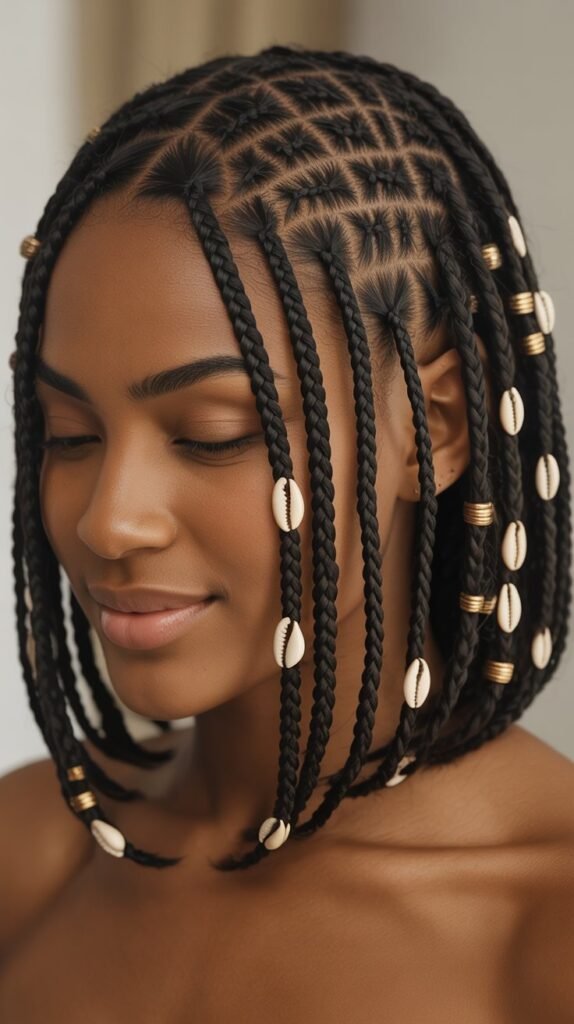
Bob-length Fulani braids offer a chic, manageable alternative to longer styles while maintaining all the distinctive elements of traditional Fulani braiding.
This shorter length appeals to women seeking low-maintenance protective styling without extensive length commitment.
Length Specifications:
- Classic bob length typically ends between the jawline and shoulders, creating a neat, professional silhouette that frames the face beautifully.
- Angled bobs feature slightly longer braids in front that gradually shorten toward the back, creating dynamic, contemporary styling with built-in face-framing.
- Blunt-cut bobs maintain uniform length throughout for clean, modern aesthetics that photograph crisply and maintain sharp lines.
- The signature center Fulani braid remains visible and prominent even at shorter lengths, preserving traditional recognition elements.
Practical Advantages:
- Installation time is significantly reduced compared to longer braids, typically requiring 4-6 hours instead of 8-12 hours for extended lengths.
- Less synthetic hair is needed, reducing both cost and weight on the scalp while still providing full protective coverage.
- Maintenance is simplified with shorter braids being easier to wash, dry, and refresh throughout the wearing period.
- Professional environments often favor bob-length styles as they appear polished and neat without the perceived casualness of longer protective styles.
18. Waist-Length Fulani Braids

Waist-length Fulani braids make a dramatic, show-stopping statement with their impressive length that demonstrates commitment to protective styling and celebrates the beauty of extended African-inspired braiding traditions.
Installation Considerations:
- Extended length requires significantly more braiding hair, typically 7-10 packs depending on desired thickness and hair texture.
- Installation time extends to 10-15 hours or more, often requiring multiple sessions or extremely patient sitting tolerance.
- The additional weight from length and hair volume must be considered, as it can cause tension on the scalp and hairline if not properly distributed.
- Skilled braiders experienced with long installations are essential to ensure even tension, neat finishing, and comfortable wear throughout the style’s lifespan.
Styling Possibilities:
- The dramatic length allows for elaborate updos including braided crowns, multi-layer buns, and intricate wrapping styles impossible with shorter lengths.
- Wearing the braids loose creates a powerful, regal presence that commands attention in any setting.
- Length enables creative styling with half-up arrangements where substantial length remains flowing even with top sections secured.
- Photo opportunities are maximized as the impressive length creates movement and drama in every shot.
Care Requirements:
- Sleeping with waist-length braids requires careful management, ideally in a high bun or braid to prevent tangling and excessive tension while lying down.
- Cleansing becomes more time-intensive as ensuring shampoo reaches the scalp and thoroughly rinsing through extensive length requires patience and methodology.
- The weight may necessitate more frequent tightening appointments or earlier removal compared to shorter styles to prevent excessive new growth at roots.
19. Fulani Braids with Cornrow Design
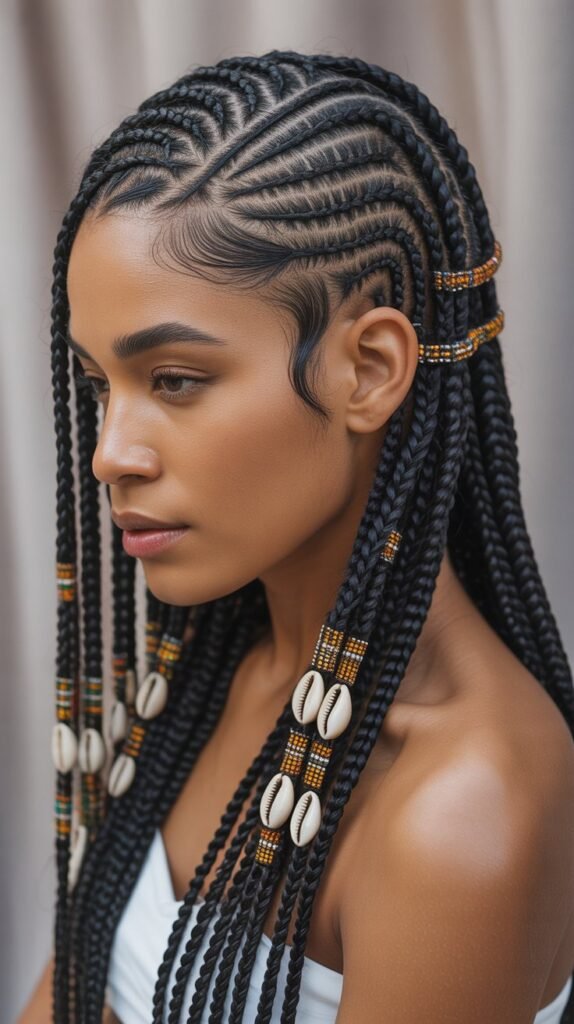
Incorporating elaborate cornrow designs into Fulani braiding creates artistic scalp patterns that transform the head into a canvas for geometric creativity.
This variation emphasizes the braider’s skill while celebrating African hair artistry traditions.
Design Patterns:
- Geometric shapes including triangles, diamonds, circles, and hexagons create mathematical precision and visual interest across the visible scalp areas.
- Curved designs featuring swirls, waves, and flowing lines introduce organic movement that contrasts with the straight lines of traditional cornrows.
- Tribal-inspired patterns reference specific African cultural symbols and motifs, adding deeper meaning and cultural connection to the styling.
- Personalized designs can incorporate initials, symbols meaningful to the wearer, or abstract artistic expressions unique to individual creativity.
Technical Execution:
- Precision parting is essential before braiding begins, as the sectioning creates the foundation for visible design patterns.
- Thin cornrows typically showcase designs better than thick braids, as finer lines create clearer pattern definition and detail.
- Contrasting braid directions can enhance design visibility, with some sections braiding forward while others braid backward to create dimension.
- The designs remain most visible when hair is styled up or back, making this variation ideal for updos and ponytails that showcase the artistic scalp work.
20. Fulani Braids with Hair Cuffs
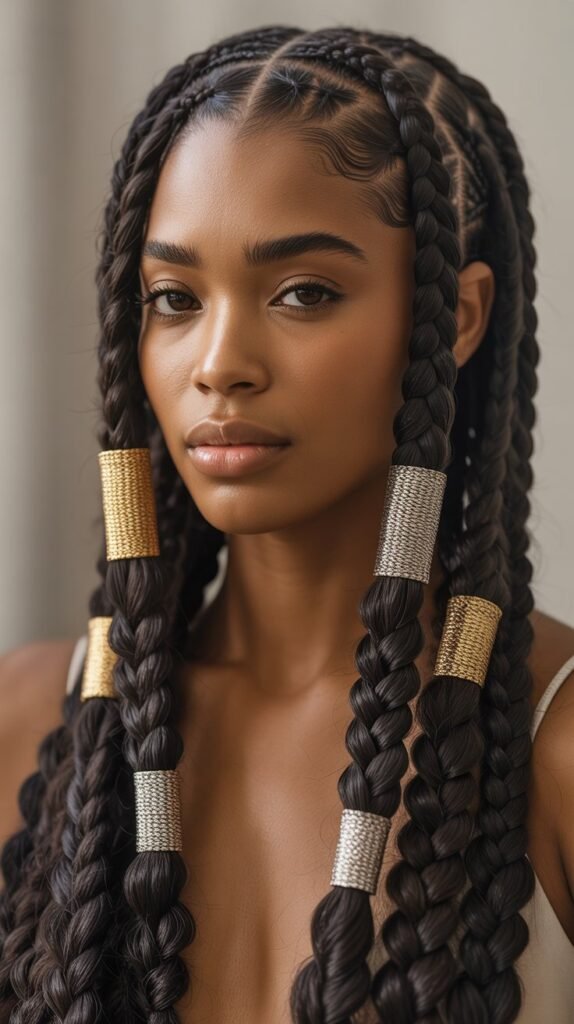
Hair cuffs add metallic glamour and adjustable decoration to Fulani braids, offering a less permanent alternative to beading while still providing shine, style, and cultural authenticity.
These accessories have become increasingly popular for their versatility.
Cuff Styles:
- Individual metal cuffs slide onto single braids, available in various widths from delicate thin rings to substantial wide bands.
- Spiral cuffs wrap around braids in coiled designs, catching light from multiple angles and creating dynamic visual interest.
- Decorative cuffs feature engravings, cut-out patterns, or embellishments like small crystals or cultural symbols for enhanced detail.
- Sets of matching cuffs can be distributed throughout the style for cohesive aesthetics, or mixed metals can be combined for eclectic, bohemian appeal.
Application Benefits:
- Unlike permanent beading, cuffs can be easily moved, removed, or repositioned throughout the wearing period to refresh your look.
- The clips or sliding mechanisms allow for quick styling changes without braider assistance or time-consuming reinstallation.
- Cuffs add minimal weight compared to extensive beading while still providing substantial visual impact and decorative interest.
- Various metal finishes including gold, silver, copper, and rose gold can be selected to complement skin undertones and personal jewelry preferences.
21. Twisted Fulani Braids
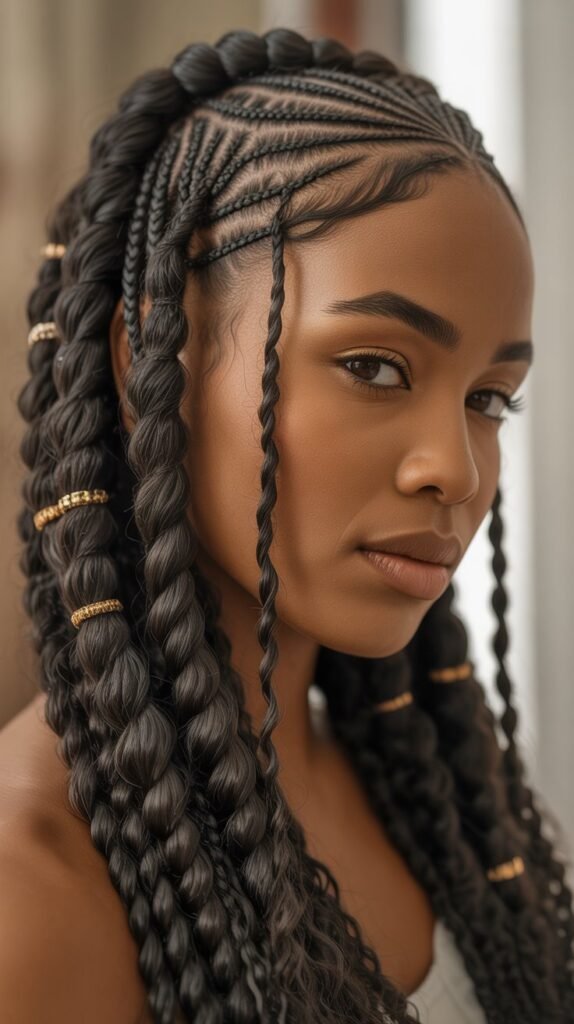
Twisted Fulani braids replace traditional three-strand braiding with two-strand rope twists, creating a softer texture and slightly different aesthetic while maintaining the characteristic Fulani styling elements.
This variation offers an alternative for those seeking gentler tension on natural hair.
Twisting Techniques:
- Two-strand twists are created by dividing each section into two parts and wrapping them around each other continuously from root to tip.
- The center signature braid can remain a traditional cornrow while side sections utilize twisting, creating textural contrast and maintaining recognition.
- Twists typically appear fuller and more textured than sleek three-strand braids, offering enhanced volume without additional hair.
- The rope-like appearance of twists creates distinctive visual appeal that photographs beautifully with natural texture and dimension.
Advantages:
- Many naturals find twisting creates less tension on the scalp compared to tight braiding, potentially reducing the risk of traction alopecia.
- Installation can be quicker than intricate braiding as the two-strand technique requires fewer complex movements per section.
- Twists hold moisture better than tightly braided styles, making it easier to keep natural hair hydrated throughout the protective styling period.
- The style can be more easily unraveled for regular deep conditioning treatments without completely removing the protective style.
22. Fulani Braids with Accessories

Beyond traditional beads and cuffs, modern Fulani braiding embraces diverse accessories including ribbons, flowers, chains, and decorative pins that personalize the style and adapt it for various occasions and aesthetic preferences.
Accessory Options:
- Colorful ribbons woven through braids or wrapped around ponytails add softness, color, and feminine details perfect for romantic or playful styling.
- Fresh or artificial flowers tucked into updos or adorning the crown create natural beauty ideal for weddings, spring events, and garden parties.
- Delicate chains draped between braids or connecting hair cuffs introduce edgy, contemporary elements that work beautifully for evening events and fashion-forward looks.
- Decorative hairpins with pearls, crystals, or cultural symbols can be strategically placed to secure styles while adding sparkle and elegance.
- Silk or satin scarves wrapped around the base of ponytails or woven through braids provide luxurious texture and protect edges while sleeping.
Styling by Occasion:
- Professional settings benefit from minimal, sophisticated accessories like subtle gold cuffs or simple hair ties in neutral colors that maintain workplace appropriateness.
- Festival and concert environments welcome bold, colorful, maximalist accessory combinations including multiple chains, bright ribbons, and statement pieces.
- Bridal styling incorporates white or ivory pearls, delicate flowers, and elegant metallic accessories that complement wedding aesthetics and photography.
- Casual everyday wear can rotate different accessories to refresh the look without reinstalling braids, maximizing styling versatility throughout the wear period.
23. Fulani Braids with Middle Part

The middle part variation of Fulani braids creates symmetrical elegance by dividing the hair precisely down the center before braiding, offering a balanced, face-framing approach that differs from the traditional single center braid aesthetic.
Styling Characteristics:
- Hair is parted straight down the middle from forehead to nape, creating two equal sections that are braided in mirrored patterns on each side.
- Cornrows on each side typically curve backward from the center part, framing the face symmetrically and drawing attention to facial features.
- The traditional single center braid is replaced with symmetrical designs on both sides, though some variations maintain a thin center cornrow along the part line.
- This style emphasizes facial symmetry and works particularly well for oval, heart-shaped, and diamond face shapes.
Versatility:
- The symmetrical styling photographs beautifully straight-on, making it ideal for professional headshots, social media portraits, and formal photography.
- Both sides can be styled identically for uniform aesthetics, or intentionally varied for creative asymmetrical interest despite the centered part.
- Face-framing cornrows can be left loose at the front while back sections are gathered into ponytails or buns, offering multiple styling options.
- The middle part creates a lengthening effect that can make round faces appear more oval and balance wider foreheads.
24. Fulani Braids with Zigzag Parts

Zigzag parting adds playful, dynamic energy to Fulani braids by creating angular, back-and-forth sectioning patterns that contrast beautifully with the smooth lines of completed braids.
This technique appeals to those seeking creative, eye-catching scalp designs.
Parting Techniques:
- Zigzag parts are created using the tail of a rat-tail comb to section hair in sharp, angular patterns rather than straight lines.
- The width and depth of zigzag angles can vary from subtle, small zigs to dramatic, wide angular patterns depending on desired visibility and impact.
- Multiple zigzag parts can run parallel across the head, creating repetitive geometric patterns that add complexity to the overall design.
- The center Fulani braid can follow a zigzag path rather than running straight, creating a distinctive focal point that demands attention.
Visual Effects:
- Zigzag parts remain visible even after braiding is complete, adding an additional design layer that enhances the overall artistic presentation.
- The angular patterns create optical illusions of movement and dimension across the scalp, making static braids appear more dynamic.
- This parting style works exceptionally well for social media content and photography, as the geometric patterns translate beautifully in images.
- Children and teenagers particularly enjoy zigzag parts for their fun, playful aesthetic that stands out among traditional braiding styles.
25. Fulani Braids with Feed-In Technique

The feed-in technique creates more natural-looking, less bulky Fulani braids by gradually adding extension hair as the braid progresses rather than starting with full thickness at the root.
This method has become the gold standard for protective styling.
Technical Approach:
- Braiding begins with only the natural hair at the root, creating thin, flat beginnings that place minimal tension on the hairline and edges.
- Small amounts of extension hair are methodically added with each braid rotation, gradually building thickness and length as the braid progresses away from the scalp.
- The result is a seamless, tapered appearance that looks more like natural hair growing from the scalp rather than obviously attached extensions.
- Feed-in technique requires more skill and time from the braider but produces superior results in terms of natural appearance and hair health.
Health Benefits:
- Reduced tension at the hairline significantly decreases the risk of traction alopecia and edge damage, particularly important for maintaining healthy hair growth.
- The lighter weight at the root means less pulling on follicles, creating more comfortable wear especially during the first few days after installation.
- Natural hairlines remain visible and appear more authentic since bulky extension starts don’t create obvious demarcation lines between real and synthetic hair.
- This technique extends the lifespan of the style as there’s less weight pulling braids loose and creating frizz at the roots.
26. Fulani Braids with Shaved Nape

Shaving or closely trimming the nape creates a clean, refined undercut that adds contemporary edge to traditional Fulani braiding while providing cooling relief and reducing maintenance in a frequently sweaty area.
Design Elements:
- The nape area from the occipital bone downward is shaved close to the skin or cut very short, creating a crisp line of demarcation with the braided sections above.
- Fulani braids end at the undercut line or are pinned up to showcase the shaved section, making the design feature visible rather than hidden.
- The shaved nape can incorporate designs, patterns, or remain cleanly buzzed depending on personal preference and maintenance commitment.
- This variation works particularly well with updo styling as the shaved nape creates built-in definition and reduces bulk at the neck.
Practical Benefits:
- Removing hair from the nape provides significant cooling during hot weather and intense physical activity, improving comfort during workouts and summer months.
- The area tends to experience more sweating and friction against clothing, so reducing hair here can minimize irritation and product buildup.
- Maintenance of the shaved section requires regular touch-ups every 2-3 weeks to maintain clean lines, though this is typically quick and inexpensive.
- The edgy aesthetic appeals to those wanting to combine protective styling with contemporary, fashion-forward hair trends.
27. Fulani Braids with Crown Halo

The crown halo style positions Fulani braids in a circular arrangement around the head like a crown, creating regal, elegant aesthetics perfect for formal occasions, bridal styling, and when you want to feel like royalty.
Styling Method:
- Braids are wrapped, pinned, or arranged in circular patterns around the crown area, either as a single thick halo or multiple layered circles.
- The signature center braid can be incorporated into the halo design or left to trail down the back as a contrasting element.
- Loose braids not included in the halo arrangement can cascade down or be tucked underneath for a fully upswept look that exposes the neck and shoulders.
- Accessories like flowers, pearls, or metallic accents woven through the halo enhance the crown-like appearance and add sparkle.
Occasions and Impact:
- Weddings, whether as a bride or guest, benefit from the timeless elegance and romantic sophistication of halo styling that photographs beautifully.
- Cultural celebrations and festivals honor African heritage while the crown symbolism celebrates personal pride and cultural connection.
- Formal galas, proms, and black-tie events find the halo perfectly appropriate for dressy attire and sophisticated environments.
- The style creates instant height and elongates the silhouette, making wearers appear taller and carrying themselves with enhanced confidence.
Maintenance Tips for Fulani Braids
Proper maintenance ensures your Fulani braids remain beautiful, protect your natural hair effectively, and last as long as possible without causing damage.
Following these guidelines helps maximize your investment in time and money.
Cleansing Routine
- Dilute sulfate-free shampoo with water in a spray bottle to create a gentle cleansing solution that reaches the scalp without requiring vigorous scrubbing.
- Focus application on the scalp and roots where oils, sweat, and product buildup accumulate, gently massaging with fingertips to stimulate circulation and remove debris.
- Rinse thoroughly by running water in the direction of the braids from root to tip, ensuring all shampoo is removed to prevent residue and itching.
- Cleanse every 7-10 days for most people, though those with oilier scalps or who exercise frequently may need to wash every 5-7 days.
Moisturizing Strategy
- Apply lightweight oils like jojoba, argan, or grapeseed oil directly to the scalp every 2-3 days to prevent dryness and maintain healthy sebum production.
- Spray a water-based braid spray or diluted leave-in conditioner along the length of braids to keep synthetic and natural hair hydrated without causing buildup.
- Focus moisture application on the exposed parts of natural hair near the roots and any areas that feel dry or produce flaking.
- Avoid heavy creams and butters that can cause white residue, buildup between braids, and attract dirt that dulls the style’s appearance.
Nighttime Protection
- Cover braids completely with a satin or silk bonnet that’s large enough to accommodate the full volume without compressing or flattening the style.
- Alternatively, sleep on satin or silk pillowcases to reduce friction that causes frizz, though a bonnet provides superior protection for the entire style.
- Gather long braids into a loose, high bun or ponytail before covering to prevent tangling and reduce tension on the nape area during sleep.
- Never sleep with wet or damp braids as this promotes mildew growth and can cause unpleasant odors that are difficult to eliminate.
Duration Guidelines
- Plan to keep Fulani braids installed for 4-8 weeks maximum, depending on your hair growth rate and how quickly new growth creates looseness at the roots.
- Remove braids sooner if you notice excessive itching that doesn’t resolve with cleansing, thinning edges, or significant loosening that affects the style’s appearance.
- Schedule a professional removal or set aside several hours for careful at-home removal, never rushing the process as hasty removal causes unnecessary breakage.
- Allow natural hair to rest for at least 1-2 weeks between protective styles to restore moisture, assess hair health, and perform deep conditioning treatments.
Common Mistakes to Avoid
Understanding what not to do is just as important as knowing proper care techniques when maintaining Fulani braids and protecting your natural hair health.
Installation Errors:
- Braiding too tightly causes immediate discomfort, prolonged tension that damages follicles, and can lead to permanent hairline recession and traction alopecia.
- Using poor quality synthetic hair may save money initially but results in premature frizzing, tangling, and a cheaper overall appearance that doesn’t last.
- Rushing through installation compromises the neatness, uniformity, and longevity of the style, making it worth investing time for quality results.
- Neglecting to seal braid ends properly causes unraveling and frizz that requires early removal or constant maintenance to manage.
Maintenance Mistakes:
- Over-manipulating braids by constantly restyling, pulling, or touching them accelerates frizz and loosening, reducing the style’s lifespan significantly.
- Allowing excessive product buildup by applying too many oils, sprays, or creams creates dull, heavy braids that attract dirt and look unkempt.
- Ignoring your natural hair’s needs beneath the braids leads to dryness, breakage, and setbacks in hair growth and health goals.
- Keeping braids installed too long past the 8-week maximum causes severe matting at roots, excessive breakage during removal, and potential loc formation.
Choosing the Right Braider
Selecting a skilled, experienced braider is crucial for achieving beautiful Fulani braids that protect rather than damage your natural hair.
Quality installation makes all the difference in your satisfaction and hair health.
Qualification Indicators:
- Review portfolios showing multiple Fulani braid styles on different hair types to assess versatility, neatness, and consistency in the braider’s work.
- Read reviews specifically mentioning tension levels, as comfortable braiding that doesn’t cause pain or headaches indicates proper technique and consideration.
- Ask about experience specifically with Fulani styles rather than just general braiding, as the distinctive elements require specific knowledge and practice.
- Verify that the braider understands feed-in techniques and can explain their approach to minimizing tension and protecting edges.
Consultation Questions:
- “How long have you been doing Fulani braids specifically?” helps establish their experience level with this particular style.
- “What type of hair do you recommend and how much will I need?” provides insight into their knowledge and helps you budget appropriately.
- “How do you ensure the braids aren’t too tight?” reveals their awareness of and commitment to healthy braiding practices.
- “How long will installation take?” gives you realistic expectations and helps you plan your schedule accordingly.
Red Flags:
- Extreme pain during installation is never acceptable and indicates dangerous tension levels that will damage your hair.
- Rushing through the style or frequently checking their phone suggests lack of focus that results in sloppy, inconsistent work.
- Inability to answer questions about hair care, maintenance, or removal indicates insufficient knowledge to properly care for your hair health.
- Significantly lower prices than market rates often reflect inexperience, poor quality hair, or rushed work that saves time at your hair’s expense.
Cost Considerations
Understanding the financial investment required for Fulani braids helps with budgeting and ensures you receive quality service worth the price.
Installation Costs:
- Basic Fulani braids typically range from $150-$300 depending on geographic location, braider experience, and style complexity.
- Intricate designs with elaborate parting patterns, extensive threading, or custom elements can cost $300-$500 or more for specialist work.
- Length significantly impacts price, with waist-length installations costing 50-100% more than shoulder-length styles due to time and hair quantity.
- Celebrity or highly sought-after braiders command premium prices often exceeding $500, though their expertise and artistic vision may justify the investment.
Additional Expenses:
- Synthetic braiding hair costs $5-$15 per pack, with most Fulani styles requiring 5-8 packs depending on thickness and length preferences.
- Accessories including beads, cuffs, and thread add $10-$50 to total costs depending on material quality and quantity desired.
- Maintenance products like braid spray, edge control, and scalp oil total approximately $20-$40 for supplies lasting multiple installations.
- Professional removal services cost $50-$100 if you prefer expert assistance rather than removing braids yourself at home.
Value Assessment:
- Calculate cost per day of wear by dividing total expenses by the number of days you’ll keep the braids installed for realistic budgeting.
- Quality installation lasting 6-8 weeks provides better value than cheaper work requiring early removal after 3-4 weeks due to poor technique.
- Consider time saved on daily hair styling over the wearing period, as protective styles significantly reduce morning routine time investment.
- Factor in hair health benefits, as proper protective styling can accelerate growth and reduce damage compared to daily heat styling and manipulation.
Conclusion
The journey through these 27 Stylish Fulani Braided Hairstyles for Black Women reveals the incredible versatility, cultural richness, and protective benefits of this timeless African braiding tradition.
From classic center-braid designs that honor centuries of Fulani heritage to contemporary variations incorporating shaved sections, colored extensions, and elaborate accessories, these styles offer something beautiful for every woman’s unique personality and lifestyle needs.
The protective nature of Fulani braids supports natural hair health while providing weeks of low-maintenance styling that never compromises on elegance or cultural authenticity.
Whether you choose micro braids for intricate detail, jumbo braids for bold statement-making, or anything in between, the key to success lies in selecting a skilled braider, maintaining proper care routines, and wearing your chosen style with confidence and pride.
These hairstyles transcend mere fashion trends to represent powerful connections to African ancestry, artistic expression, and the ongoing celebration of Black beauty in all its magnificent forms.
As you embark on your Fulani braiding journey, remember that each bead, each cornrow, and each carefully placed accessory tells a story of cultural continuity, personal style, and the beautiful diversity that makes protective styling such a meaningful and transformative experience for Black women worldwide.