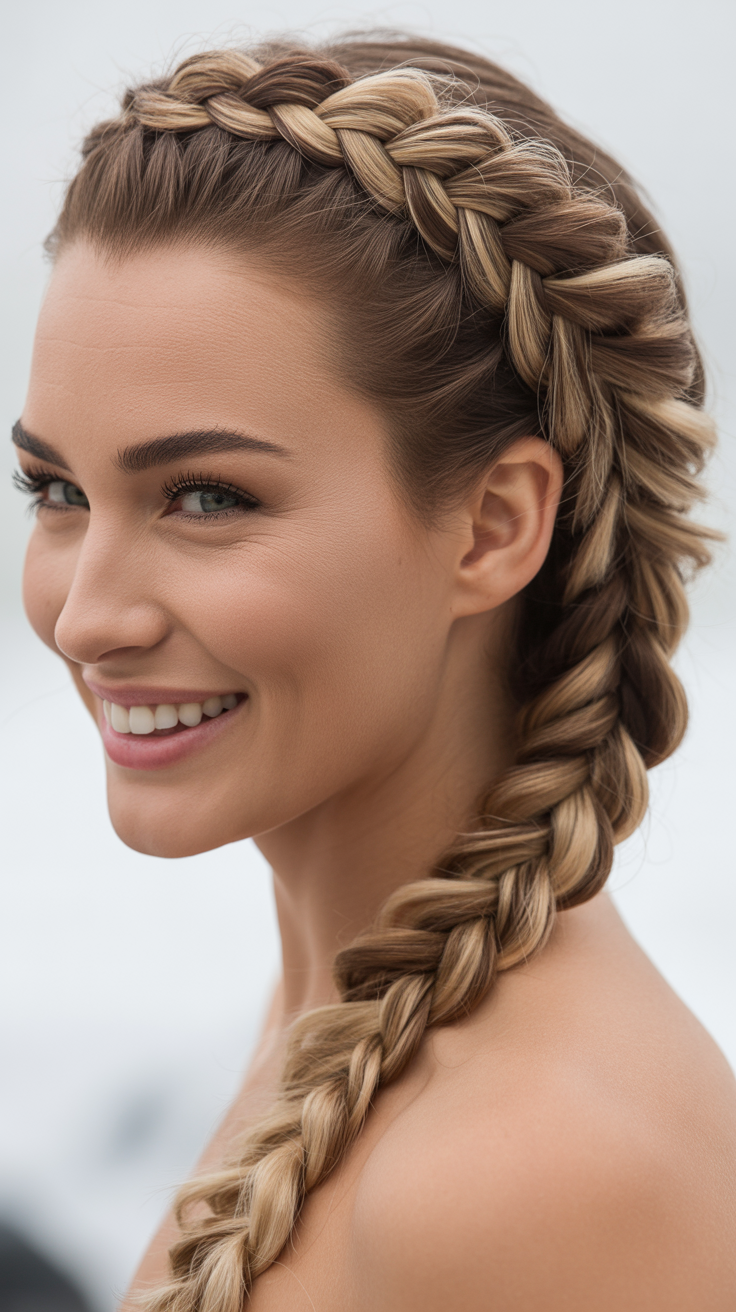
Long hair opens up a world of styling possibilities, and braided hairstyles remain one of the most versatile and timeless options for every occasion.
Whether you’re preparing for a casual day out, a romantic date, a professional meeting, or a special celebration, braids offer the perfect blend of elegance, practicality, and creativity.
This comprehensive guide to 30 Beautiful Easy Braided Hairstyles for Long Hair to Try This Season will walk you through stunning braid variations that range from classic three-strand plaits to intricate bohemian designs.
You’ll discover step-by-step techniques, styling tips, maintenance advice, and creative ways to personalize each look to match your unique style.
From simple everyday braids that take mere minutes to master, to show-stopping styles that make a statement, this collection ensures you’ll never run out of fresh ideas for your long locks.
Get ready to transform your hair routine with these beautiful, achievable braided hairstyles that celebrate the beauty and versatility of long hair.
1. Classic Three-Strand Braid

The three-strand braid is the foundation of all braiding techniques and remains a timeless favorite for its simplicity and elegance.
This fundamental style serves as the building block for more complex braided hairstyles, making it essential to master.
Perfect for beginners and experienced stylists alike, the classic three-strand braid works beautifully for any occasion, from casual outings to formal events.
How to Create:
- Brush your hair thoroughly to remove all tangles and create a smooth base for braiding.
- Divide your hair into three equal sections at the nape of your neck, holding the left section in your left hand, the right in your right hand, and letting the middle section rest.
- Cross the right section over the middle section, so the right section becomes the new middle.
- Cross the left section over the new middle section, alternating this pattern consistently.
- Continue this over-under pattern until you reach the desired length, maintaining even tension throughout.
- Secure the end with a hair elastic and gently pull on the braid edges to add volume and texture.
Styling Tips:
- Apply a light texturizing spray before braiding to add grip and prevent slippery hair from unraveling.
- For a more relaxed, bohemian look, pancake the braid by gently pulling apart each section after securing the elastic.
- Position the braid at different angles—center back, side-swept, or low—to create various aesthetic effects.
2. French Braid

The French braid, also known as a French plait, is a sophisticated braiding technique that incorporates hair gradually from the sides as you work down the head.
This elegant style keeps hair secure and neat while creating a beautiful woven appearance that lies flat against the scalp.
The French braid has been a staple hairstyle for decades and continues to be favored for its polished, put-together look.
Step-by-Step Guide:
- Start with brushed, tangle-free hair and take a triangular section from the crown of your head.
- Divide this section into three equal strands and begin with one cross of a regular three-strand braid.
- Before crossing the right strand over the middle, gather a small section of hair from the right side of your head and add it to the right strand.
- Cross this combined section over the middle, then repeat on the left side by adding hair before crossing over.
- Continue this pattern of adding hair from alternating sides with each cross, working your way down the head.
- Once you’ve incorporated all the loose hair, finish with a regular three-strand braid and secure with an elastic.
Best Occasions:
- Professional work environments where a polished appearance is essential.
- Athletic activities and workouts where you need hair completely secured and out of the face.
- Formal events and weddings, either as a standalone style or incorporated into updos.
3. Dutch Braid (Reverse French Braid)

The Dutch braid creates a raised, three-dimensional effect by braiding sections under rather than over, making the braid appear to sit on top of the hair.
This technique, sometimes called an inside-out or reverse French braid, adds dramatic visual interest and works exceptionally well for thick, long hair.
The Dutch braid has gained immense popularity in recent years for its bold, statement-making appearance.
Technique Breakdown:
- Begin by sectioning a triangular portion of hair at the crown and dividing it into three equal strands.
- Cross the right strand under the middle strand instead of over it, making this the key difference from French braiding.
- Cross the left strand under the new middle strand, establishing the under-pattern that creates the raised effect.
- Add small sections of hair from the sides before each under-cross, just as you would in a French braid.
- Maintain consistent tension and keep the braid tight to achieve the prominent raised appearance.
- Complete the braid down to the ends and secure, then gently pancake for added dimension and texture.
Styling Variations:
- Create a single center Dutch braid for a bold, athletic look that showcases the technique’s dimensional quality.
- Try double Dutch braids (also called boxer braids) for a trendy, youthful style perfect for festivals and casual outings.
- Incorporate the Dutch braid into a crown around your head for a romantic, fairy-tale inspired updo.
4. Fishtail Braid

The fishtail braid delivers an intricate, woven appearance that belies its surprisingly simple two-strand technique.
This bohemian-inspired style creates a delicate, textured look that works beautifully for both casual and dressy occasions.
Despite its complex appearance, the fishtail braid requires only basic braiding skills and becomes easier with practice.
Easy Instructions:
- Divide all your hair into two large, equal sections instead of the traditional three.
- Take a thin strand from the outer edge of the left section and cross it over to join the right section.
- Take a thin strand from the outer edge of the right section and cross it over to join the left section.
- Continue alternating sides, always taking thin pieces from the outer edges and crossing them to the opposite section.
- The thinner the strands you select, the more intricate and detailed your fishtail pattern will appear.
- Secure at the end and gently pull apart the braid to create a fuller, more textured bohemian effect.
Enhancing the Look:
- Spray your hair with dry shampoo or texturizing spray before braiding to add grip and texture.
- Leave some face-framing pieces loose at the front for a softer, more romantic aesthetic.
- Accessorize with small flowers, decorative pins, or ribbon woven through the braid for special occasions.
5. Rope Braid (Twist Braid)

The rope braid offers a sleek, spiral effect created by twisting two sections of hair around each other.
This underrated technique provides a sophisticated alternative to traditional braids and works exceptionally well for creating elegant updos and ponytails.
The rope braid is one of the quickest braiding methods, making it perfect for busy mornings when you need a polished look fast.
Quick Method:
- Gather your hair into a ponytail and secure with an elastic at your desired height.
- Divide the ponytail into two equal sections, holding one in each hand.
- Twist both sections clockwise (in the same direction) until they’re tightly twisted from root to tip.
- Wrap the two twisted sections around each other in a counterclockwise direction, creating the rope effect.
- The opposing directions of individual twists and the wrap create tension that holds the braid together.
- Secure the end with an elastic and apply a light hairspray to prevent unraveling throughout the day.
Pro Tips:
- Ensure both sections are twisted in the same direction before wrapping them together for a neat, defined rope appearance.
- Work with slightly damp hair or apply a smoothing serum for a sleeker, more polished rope braid.
- Create multiple smaller rope braids throughout your hair for an interesting textured style with bohemian appeal.
6. Waterfall Braid

The waterfall braid creates a cascading effect where strands of hair fall through the braid like a flowing waterfall.
This romantic, ethereal style combines the structure of a French braid with flowing loose hair, making it perfect for special occasions and dates.
The waterfall braid works beautifully as a half-up style that showcases both braided artistry and the natural beauty of long, flowing locks.
Creating the Cascade:
- Begin with a small section of hair near your temple, dividing it into three strands as you would for a regular braid.
- Cross the back strand over the middle, then cross the front strand over the new middle.
- Drop the back strand completely, letting it fall and become part of the loose hair flowing down.
- Pick up a new section of hair from behind to replace the dropped strand and add it to your braid.
- Cross this new section over the middle, then cross the front strand over, and drop the back strand again.
- Continue this pattern of dropping and replacing strands as you work around the head to the opposite side.
Styling Ideas:
- Curl the loose hair that flows through the waterfall for added texture and romantic volume.
- Create a waterfall braid on both sides of your head, meeting at the back for a crown effect.
- Add small flowers, pearls, or decorative pins along the braid for wedding or prom styling.
7. Crown Braid (Halo Braid)

The crown braid encircles the head like a royal crown or halo, creating an elegant, regal appearance perfect for formal occasions.
This stunning style can be achieved through various techniques, including braiding around the head or creating two braids that wrap around.
The crown braid has become increasingly popular for weddings, proms, and other special events due to its sophisticated, princess-like quality.
Braiding Around Your Head:
- Part your hair down the middle or on one side, depending on your preferred crown braid style.
- Begin a Dutch or French braid at one ear, working along the hairline toward the back of your head.
- Continue braiding around the entire circumference of your head, incorporating all the hair along the hairline as you go.
- When you complete the circle and return to your starting point, finish with a regular braid.
- Tuck the braid end underneath the crown and secure it with bobby pins that match your hair color.
- Pull gently on the braid to create fullness and adjust any sections that need more volume or coverage.
Alternative Method:
- Create two regular braids on either side of a center part, braiding all the way to the ends.
- Wrap one braid over the top of your head like a headband and secure with pins.
- Wrap the second braid over the first, creating a layered crown effect, and tuck the ends underneath.
8. Side Braid

The side braid brings asymmetrical elegance to long hair by sweeping all hair to one side and creating a braid that drapes over the shoulder.
This versatile style ranges from casual and bohemian to sleek and sophisticated depending on how you execute and finish the braid.
The side braid flatters most face shapes and provides a fresh alternative to center-back braiding.
Creating Perfect Side Placement:
- Brush all your hair to one side, choosing the side that naturally falls more easily or that complements your face shape.
- Secure the hair temporarily with one hand at the shoulder while you prepare to braid with the other.
- Choose your preferred braiding technique—three-strand, fishtail, or rope—based on the look you want to achieve.
- Begin braiding at the nape of your neck on the chosen side, keeping the braid positioned over your shoulder.
- Maintain the side position throughout braiding by periodically adjusting the hair to ensure it doesn’t slip backward.
- Secure the end and style according to your preference, leaving it sleek or pulling it apart for texture.
Versatility Options:
- Combine the side braid with curled or waved hair at the crown for added volume and romance.
- Incorporate small braids or twists into the larger side braid for dimensional interest.
- Wrap a decorative ribbon, chain, or scarf around the base of the side braid for accessorized flair.
9. Pull-Through Braid

The pull-through braid creates the illusion of an incredibly voluminous, intricate braid without actually requiring traditional braiding techniques.
This creative style uses a series of ponytails that are split, pulled through, and flipped to create a stunning braided effect.
Perfect for those who struggle with coordination in traditional braiding, the pull-through braid delivers maximum impact with minimal technical skill.
Step-by-Step Creation:
- Create a ponytail at the crown of your head and secure it with a clear elastic band.
- Make a second ponytail directly below the first, leaving about two inches of space between them.
- Split the first ponytail into two equal sections and bring them around the sides of the second ponytail.
- Create a third ponytail that includes the two split sections from the first ponytail plus new hair from below.
- Split the second ponytail in half and bring those sections around the third ponytail in the same manner.
- Continue this pattern of creating ponytails, splitting previous ones, and combining sections until you reach the nape of your neck.
- Gently pull apart each ponytail section to create massive volume and the appearance of an elaborate braid.
Visual Impact Tips:
- Use clear elastics to make them invisible and maintain the seamless braided illusion throughout the style.
- Tease each ponytail section before pulling it apart to create even more dramatic volume and fullness.
- This style works exceptionally well on hair with highlights or balayage, as the dimensional color enhances the intricate appearance.
10. Four-Strand Braid

The four-strand braid introduces an additional level of complexity and visual interest compared to the standard three-strand technique.
This intricate braid creates a unique woven pattern with a flat, ribbon-like appearance that stands out from more common braiding styles.
While the four-strand braid requires more concentration and practice, the stunning result makes the effort worthwhile for special occasions.
Mastering the Pattern:
- Divide your hair into four equal sections and number them 1, 2, 3, and 4 from left to right to track the pattern.
- Cross section 1 under section 2, then cross section 4 under section 3 to begin establishing the pattern.
- Cross section 2 under section 3, bringing sections from the outer edges toward the center.
- Repeat the pattern: outer left under its neighbor, outer right under its neighbor, then the two middle sections under each other.
- Maintain consistent tension and rhythm throughout the braiding process to create an even, professional appearance.
- Practice this pattern several times to build muscle memory, as the four-strand technique becomes significantly easier with repetition.
When to Choose This Style:
- Special events where you want a unique braid that distinguishes you from standard three-strand styles.
- Photography sessions or occasions where intricate hair detail will be captured and appreciated.
- When you have extra time to invest in a more complex style that creates lasting impact.
11. Braided Ponytail

The braided ponytail combines the convenience of a ponytail with the elegance of braided styling, creating a sophisticated yet practical hairstyle.
This versatile look works for everything from gym sessions to evening events, depending on how you execute and accessorize it.
The braided ponytail keeps long hair securely contained while adding visual interest that elevates a simple ponytail into something special.
Basic Construction:
- Gather your hair into a ponytail at your desired height—high for athletic styles, mid-level for casual, or low for elegance.
- Secure the ponytail with a strong elastic that can hold the weight of your long hair throughout the day.
- Choose any braiding technique for the length of the ponytail: three-strand for classic appeal, fishtail for bohemian texture, or rope for sleek sophistication.
- Begin braiding from just below the elastic and continue down the entire length of the ponytail.
- Secure the end of the braid with another elastic and gently pull apart sections to add volume and dimension.
- Wrap a small section of hair around the base elastic to conceal it and add a polished finishing touch.
Enhancement Variations:
- Incorporate small braids into the ponytail before gathering it to add textured detail throughout the style.
- Create a Dutch or French braid leading into the ponytail for a sporty, edgy appearance.
- Position multiple smaller braids within a large ponytail for dimensional, festival-worthy styling.
12. Milkmaid Braid

The milkmaid braid, also called a milkmaid crown, creates a charming, vintage-inspired look by wrapping braids over the top of the head.
This sweet, romantic style evokes pastoral simplicity while providing a practical solution for hot weather or formal occasions.
The milkmaid braid has experienced renewed popularity due to its flattering, face-framing effect and its ability to work with various hair textures.
Creating the Look:
- Part your hair down the center, creating two equal sections that will become individual braids.
- Braid each section completely down to the ends using your preferred technique, typically three-strand or Dutch braids.
- Bring one braid up and over the top of your head like a headband, positioning it about an inch back from your hairline.
- Secure this first braid with bobby pins along its length, making sure it feels stable and secure.
- Bring the second braid over the top, slightly behind or overlapping the first braid for a fuller appearance.
- Tuck both braid ends underneath the opposite braid and secure all loose ends with pins that match your hair color.
- Pull gently on the braids to loosen them slightly and create a softer, more romantic effect.
Styling Considerations:
- This style works beautifully for summer events, garden parties, and outdoor weddings where hair needs to stay off the face.
- Add small flowers, baby’s breath, or decorative pins throughout the braids for enhanced feminine appeal.
- Combine with soft, wispy bangs or face-framing pieces for a less severe, more approachable look.
13. Boxer Braids (Double Dutch Braids)

Boxer braids, consisting of two Dutch braids running parallel down the head, have become an iconic athletic and street-style look.
These tight, raised braids originated in athletic communities where secure, long-lasting hairstyles are essential, but they’ve transcended sports to become a mainstream fashion statement.
Boxer braids keep hair completely contained while creating a bold, confident aesthetic.
Technique for Two Braids:
- Create a clean center part from your forehead all the way down to the nape of your neck, dividing hair into two equal sections.
- Clip one section away to keep it separate while you work on the first boxer braid.
- Begin a Dutch braid at the hairline on one side, starting with a small triangular section and braiding under rather than over.
- Continue the Dutch braid technique straight down the head, keeping it tight and close to the scalp for the signature athletic look.
- Complete the first braid all the way to the ends and secure it with a strong elastic designed for athletic activity.
- Repeat the exact same process on the second side, ensuring both braids are positioned symmetrically and at matching tensions.
Maintaining the Style:
- Use edge control or strong-hold gel at the hairline to smooth baby hairs and create a sleek, polished start to each braid.
- Apply dry shampoo the night before braiding to add texture and grip that helps the braids hold longer.
- Sleep with a silk or satin bonnet or pillowcase to prevent frizz and extend the life of your boxer braids for several days.
14. Bubble Braid

The bubble braid creates a playful, dimensional effect using a series of elastics spaced along a ponytail, with each section gently pulled apart to form “bubbles.
” This trendy, fun style has gained massive popularity on social media for its eye-catching appearance and surprising ease of creation.
The bubble braid works beautifully for festivals, parties, and casual outings where you want to make a style statement.
Creating Perfect Bubbles:
- Gather your hair into a ponytail at your desired position—high ponytails create a fun, youthful look while low ones appear more sophisticated.
- Secure the base with a strong elastic, then add another elastic about two to three inches down the ponytail length.
- Gently pull apart the hair between the two elastics, tugging outward from the sides to create a rounded bubble shape.
- Add another elastic two to three inches below the second one and repeat the pulling process to form another bubble.
- Continue this pattern down the entire length of your ponytail, spacing elastics evenly and creating uniform bubbles.
- Ensure all bubbles are roughly the same size for a cohesive, intentional appearance rather than random placement.
Styling Enhancements:
- Use colorful or decorative elastics that complement your outfit for added visual interest and personality.
- Wrap small sections of hair around each elastic before pulling out the bubbles to conceal the bands.
- Create multiple bubble braids throughout your hair for a unique, textured overall style with maximum impact.
15. Ladder Braid

The ladder braid features a central braid with horizontal “rungs” created by strategic strand placement, resembling an actual ladder.
This intricate-looking style combines elements of various braiding techniques to create a unique, architectural appearance.
The ladder braid makes a stunning statement for special occasions when you want a conversation-starting hairstyle that showcases technical skill.
Building the Ladder:
- Section off a strip of hair down the center of your head, from forehead to crown, and clip the rest away.
- Divide this section into three strands and begin a regular three-strand braid, but leave out thin sections on each side.
- These left-out sections will become the ladder rungs, so ensure they’re thin and consistent in size.
- After a few crosses of the central braid, take one of the previously left-out sections and weave it horizontally across the braid.
- Incorporate this horizontal section into the opposite side of the braid, creating the appearance of a rung.
- Continue braiding the center section while periodically adding ladder rungs from alternating sides at regular intervals.
Advanced Tips:
- Mark where you want your ladder rungs before beginning to ensure even spacing and a balanced final appearance.
- Use small clips to temporarily hold the left-out sections while you work on the central braid between rungs.
- This style requires practice and patience, so attempt it multiple times before debuting it for an important event.
16. Infinity Braid (Figure-Eight Braid)

The infinity braid creates a mesmerizing figure-eight pattern that appears incredibly complex but follows a learnable technique.
This mathematical-inspired braid uses four strands woven in a specific pattern to create continuous loops that resemble the infinity symbol.
The infinity braid makes a stunning statement piece that draws attention and admiration for its intricate appearance.
Weaving the Pattern:
- Divide your hair into four equal sections and position them so you can easily track which strand goes where.
- Hold the two outer sections in your hands and let the two center sections rest between your fingers for control.
- Bring the far-right section over its adjacent section, then under the next section, creating an over-under pattern.
- Bring the far-left section over its adjacent section, then under the next section, mirroring the first movement.
- Continue alternating sides with this over-under-over-under pattern to create the figure-eight weaving.
- Maintain consistent tension and rhythm to ensure the infinity symbols are uniform and clearly visible throughout the braid.
Mastering the Technique:
- Practice with four ribbons or thick yarns in different colors before attempting with your actual hair.
- Watch your hands in a mirror while learning the pattern to build visual memory of the movements.
- Start with hair that has some texture or apply product for grip, as slippery hair makes this complex braid more challenging.
17. Snake Braid

The snake braid creates an S-curved, serpentine path down the head using Dutch braiding technique while strategically changing direction.
This eye-catching style adds dimension and visual interest by breaking away from straight vertical braiding patterns.
The snake braid works wonderfully for those seeking an edgy, unique look that stands out in photographs and turns heads.
Creating the Curve:
- Begin a Dutch braid at the temple on one side of your head, starting with a small section as you would for any Dutch braid.
- Braid in a curved line toward the opposite side of your head rather than straight down, gradually incorporating hair from that direction.
- When you reach about midway across the back of your head, begin curving the braid back toward the original side.
- Continue this S-curve pattern, braiding back and forth across the back of your head in a snake-like path.
- The key is to gradually add more hair from the direction you’re heading to create smooth curves rather than sharp angles.
- Finish the braid when you’ve created your desired number of curves or have incorporated all available hair.
Design Considerations:
- Plan your snake pattern before starting—decide how many curves you want and how dramatic they should be.
- This style works best when you can see the back of your head in a mirror, so use a handheld mirror in addition to a wall mirror.
- Accessorize the curves with decorative pins or small jeweled clips to emphasize the serpentine path.
18. Mermaid Braid

The mermaid braid combines multiple braiding techniques—typically incorporating elements of French braids, fishtails, and pull-through techniques—to create an ethereal, ocean-inspired look.
This romantic, textured style evokes the mystical beauty of mythical sea creatures and works perfectly for beach events, summer gatherings, or any occasion where you want to channel aquatic elegance.
The mermaid braid celebrates loose, flowing texture and dimensional styling.
Building the Fantasy:
- Begin with textured, slightly wavy hair achieved through overnight braiding, curling, or natural wave pattern.
- Create a French or Dutch braid starting at the crown, but keep it quite loose rather than tight to the scalp.
- After a few inches, transition into a fishtail braid for the middle section, maintaining the loose, textured approach.
- Incorporate small, thin braids from the sides into the main braid as you work down for added dimensional detail.
- Pancake the braid aggressively, pulling apart each section to create maximum volume and that signature messy-textured appearance.
- Leave the bottom few inches unbraided or switch to a different technique for a varied, organic finish.
Achieving the Aesthetic:
- Use sea salt spray or texturizing products to enhance the beachy, lived-in quality of the mermaid braid.
- Weave in ribbons, chains, shells, or pearls throughout the braid for authentic oceanic embellishment.
- Allow plenty of face-framing pieces and wispy sections to escape the braid for a soft, romantic effect.
19. Twist-Braid Combo

The twist-braid combination style merges simple twists with traditional braiding techniques to create dimensional, textured looks that offer the best of both worlds.
This versatile approach allows for creative expression and works particularly well for those who find pure braiding challenging or want to add variety to standard braid styles.
The twist-braid combo can be adapted to suit any occasion from casual to formal.
Blending Techniques:
- Section your hair into multiple parts depending on your desired final style—typically two to four sections work best.
- Create rope twists (two-strand twists) in some sections by twisting two pieces of hair around each other.
- Create traditional three-strand or fishtail braids in other sections for contrast and variety.
- Combine the twisted and braided sections together by wrapping them around each other or joining them into a single larger braid.
- Secure all sections together at the bottom and pull apart both the twists and braids to create cohesive texture throughout.
- Experiment with different combinations—braids leading into twists, twists wrapping around braids, or alternating techniques down the length.
Creative Applications:
- Frame your face with small twists on each side that feed into a larger central braid for a bohemian half-up style.
- Create twisted sections that wrap around a ponytail, then braid the ponytail itself for a detailed, layered appearance.
- Alternate between twisted and braided sections in a single hairstyle for stripe-like visual interest and texture.
20. Accent Braid with Loose Hair

The accent braid incorporates one or more small braids into otherwise loose, flowing hair, creating subtle detail without fully committing to a braided style.
This minimalist approach adds just enough interest to elevate your look from simple to styled while maintaining the movement and versatility of loose hair.
Accent braids work beautifully for everyday wear and can be positioned anywhere for different effects.
Strategic Placement:
- Create one or two thin braids along your hairline, framing your face like a delicate headband while the rest flows freely.
- Add small braids at your temples that sweep back into loose hair, creating a romantic, face-framing effect.
- Place accent braids randomly throughout loose hair for a bohemian, carefree appearance with unexpected detail.
- Create a single braid from one side, sweeping it across the back of your head to pin on the opposite side, forming a braided headband with loose hair flowing beneath.
- Position multiple tiny braids in a cluster on one side for an asymmetrical, fashion-forward accent.
Styling the Combination:
- Curl or wave the loose hair to create texture contrast with the sleek, structured accent braids.
- Use different braiding techniques for various accent braids within the same style—mix three-strand, fishtail, and rope braids for variety.
- Add beads, rings, or decorative cuffs specifically to the accent braids to draw attention to these detailed elements.
21. Braided Updo

The braided updo elegantly incorporates braiding techniques into sophisticated updos, perfect for formal events, weddings, and professional settings.
This category encompasses numerous styles that use braids as structural elements or decorative features within the overall updo design.
Braided updos combine the practicality of secured hair with the artistry of intricate braiding.
Creating Structured Elegance:
- Begin by sectioning your hair according to your chosen updo design—consider where braids will be featured and where hair will be gathered.
- Create one or more braids in strategic locations—along the sides, across the crown, or starting from the nape.
- Gather remaining hair into a bun, chignon, or twist at the back or top of your head, securing it with pins.
- Wrap braids around the base of the updo, we
ave them through the bun, or position them as decorative crown elements depending on your design.
- Secure all braided sections with bobby pins that match your hair color, ensuring the entire structure feels stable and secure.
- Pull gently on the braids and the updo sections to create texture and fullness, then set with hairspray.
Popular Updo Variations:
- Create a low braided bun by forming a loose fishtail braid, wrapping it into a circular bun shape, and pinning it securely at the nape.
- Design a braided crown updo by Dutch braiding around the hairline and gathering remaining hair into a twisted bun at the back.
- Construct a braided chignon by creating multiple small braids that you twist together and pin into an elegant low bun.
- Form a high braided bun by pulling hair into a high ponytail, braiding it completely, then wrapping the braid around itself.
22. Viking Braid

The Viking braid draws inspiration from Norse warrior aesthetics, featuring bold, often multiple braids with an edgy, powerful appearance.
This style typically incorporates shaved or undercut sides with prominent braids on top, though variations exist for those who prefer to keep their full length.
The Viking braid has gained popularity through historical dramas and represents strength, heritage, and fierce beauty.
Warrior-Inspired Styling:
- Section the hair on top of your head in a mohawk-like strip from forehead to crown, leaving sides smooth or incorporating small braids.
- Create one thick Dutch braid down the center of this top section for a bold, raised statement braid.
- Alternatively, form multiple smaller braids in parallel rows down the top section for intricate Nordic-inspired detail.
- Incorporate small beads, metal rings, or leather cord wraps throughout the braids for authentic warrior embellishment.
- Keep the sides sleek and tight to the head, or add thin cornrow-style braids along the sides for additional detail.
- Finish braids at varying lengths or gather them together at the back for a unified warrior ponytail effect.
Authentic Details:
- Use metal cuffs or rings specifically designed for hair to create the appearance of traditional Norse adornment.
- Consider adding temporary hair chalk or color to sections of the braids for battle-ready, dramatic effect.
- Keep the overall aesthetic bold and slightly messy rather than overly polished for that authentic warrior appearance.
23. Braided Half-Up Half-Down

The braided half-up half-down style perfectly balances secured hair with flowing length, incorporating braids into the top portion while leaving the bottom loose.
This versatile style works for virtually any occasion and face shape, offering practical hair management without sacrificing the beauty of long, flowing locks.
The braided half-up half-down approach can be adapted from casual to formal with simple adjustments.
Building the Style:
- Section the top half of your hair from temple to temple, gathering approximately the top third to half of your total hair volume.
- Choose your braiding technique for this top section—French braid leading back, Dutch braids on each side, or multiple small braids.
- Create your chosen braid or braids in the top section, working from the hairline toward the crown area.
- Secure the braided section at the back of your head with a clear elastic or decorative hair tie.
- Leave the bottom half of your hair completely loose, or add curl, waves, or texture for enhanced visual interest.
- Gently pull apart the braids in the top section to create volume and soften the overall appearance.
Customization Options:
- Incorporate a waterfall braid across the top for a romantic, flowing effect that blends seamlessly with loose hair.
- Create small accent braids on each side that join in the back, leaving the crown area smooth and voluminous.
- Add a braided section as a “headband” across the top while leaving both the crown and length flowing freely.
24. Pretzel Braid

The pretzel braid creates a unique looped, twisted pattern that resembles an actual pretzel when viewed from the back.
This creative, playful style uses strategic folding and weaving techniques to achieve its distinctive shape.
The pretzel braid makes an excellent conversation starter and works wonderfully for casual outings, festivals, or any occasion where you want a fun, unexpected hairstyle.
Forming the Pretzel:
- Create a regular three-strand braid starting from the top of your head and continuing down several inches before securing temporarily with a clip.
- Form a loop by bringing the braid back up toward your head and pinning it to create the first curve of the pretzel shape.
- Continue braiding the remaining length, then bring this section through and around the first loop in a pretzel-like pattern.
- Secure the second loop and any remaining length with bobby pins, tucking ends underneath to hide them completely.
- Adjust the loops to ensure they’re even and the pretzel shape is clearly defined and symmetrical.
- Add extra pins anywhere the structure feels loose or unstable to ensure the style lasts throughout the day.
Creative Variations:
- Position the pretzel braid low at the nape for a unique bun alternative with an unexpected twist.
- Create a side pretzel braid that sits on one shoulder for asymmetrical, fashion-forward styling.
- Use ribbon or decorative cord woven through the braid before forming the pretzel for added visual interest and color.
25. Bohemian Multiple Braids

The bohemian multiple braids style features several braids of varying sizes throughout loose or partially loose hair, creating a relaxed, free-spirited aesthetic.
This effortlessly cool look combines the structure of braids with the movement of flowing hair, perfect for festivals, beach days, and casual summer styling.
The beauty of bohemian multiple braids lies in their intentional imperfection and casual placement.
Creating Boho Texture:
- Begin with textured hair—either naturally wavy, enhanced with sea salt spray, or achieved through overnight braiding.
- Section off random areas of hair throughout your head, varying the size of sections from thin to medium width.
- Create different types of braids in these sections—mix three-strand, fishtail, rope, and even four-strand braids for variety.
- Leave some braids tight and structured while making others loose and heavily pancaked for dimensional contrast.
- Position braids at different locations—some framing the face, others at the crown, a few near the nape for all-over bohemian appeal.
- Leave the majority of your hair loose and flowing between and around the braids for that signature boho aesthetic.
Bohemian Enhancements:
- Weave small beads, feathers, shells, or metal cuffs into various braids for festival-ready embellishment.
- Wrap thin leather cords or embroidery thread around select braids for colorful, artisanal detail.
- Add flowers—either real or high-quality faux—tucked into braids or pinned throughout the loose sections.
- Keep the overall look intentionally messy and lived-in rather than overly styled or perfect.
26. Zipper Braid

The zipper braid creates a striking visual effect that resembles an actual zipper running down the back of the head.
This optical illusion braid uses a specialized technique where small sections are woven through a central braid to create the appearance of zipper teeth.
The zipper braid requires patience and precision but delivers a truly unique result that photographs beautifully.
Constructing the Zipper:
- Create a center Dutch braid down the back of your head, keeping it tight and raised for the zipper’s central structure.
- Leave out small, thin sections of hair on alternating sides as you braid, spacing them evenly like zipper teeth.
- After completing several inches of the Dutch braid with sections left out, begin threading the left-out sections through the braid.
- Take the first left-out section from one side and thread it under and through the Dutch braid to the opposite side.
- Continue alternating sides, threading each left-out section through the braid to create the interlocking zipper tooth appearance.
- Maintain consistent spacing and tension throughout to ensure the zipper effect is clean and clearly visible.
Technical Tips:
- Use a fine-tooth comb to create precise, even sections for the left-out pieces that will become zipper teeth.
- Consider using small elastics or clips to temporarily hold the left-out sections while you work on the central braid.
- This intricate style works best on freshly washed hair with some product for grip and control.
27. Braided Bun

The braided bun combines the elegance of a bun with the intricate detail of braiding, creating a sophisticated style perfect for formal occasions.
This versatile category includes numerous approaches—from braiding hair before forming the bun, to creating a bun and wrapping braids around it, to constructing the bun entirely from braided sections.
The braided bun offers endless possibilities for creativity while maintaining a polished appearance.
Classic Approach:
- Gather your hair into a ponytail at your desired bun height—low for elegant sophistication, high for youthful drama.
- Braid the entire ponytail using your preferred technique, securing the end with a small elastic.
- Wrap the braided ponytail around the base in a spiral, creating a circular bun shape from the coiled braid.
- Secure the bun with bobby pins inserted through the braid and into the base, ensuring stability.
- Tuck the end of the braid underneath the bun and pin securely so no elastic or loose ends are visible.
- Gently pull on the outer edges of the coiled braid to create fullness and texture in the finished bun.
Alternative Methods:
- Create multiple small braids from a ponytail, then twist them together and wrap into a textured, dimensional bun.
- Form a messy bun first, then wrap small accent braids around the outside for decorative detail.
- Braid sections before gathering into a ponytail, creating a bun that shows braided texture throughout its structure.
28. Celtic Knot Braid

The Celtic knot braid recreates the intricate, interwoven patterns found in traditional Celtic artwork through hair braiding techniques.
This complex, artistic style creates loops and woven sections that form continuous knot patterns reminiscent of ancient Celtic designs.
The Celtic knot braid serves as a true statement piece, perfect for those who appreciate historical artistry and want to showcase advanced braiding skills.
Weaving the Knot:
- Section your hair and create initial braids that will serve as the strands you’ll weave into knot patterns.
- Form loops with braided sections by pinning them to your head in circular or infinity-style shapes.
- Weave additional braided sections through and around these loops, following Celtic knot design principles of continuous, interlocking paths.
- Use photos of actual Celtic knots as reference to guide your weaving pattern and ensure authentic-looking results.
- Secure each loop and weaving point with small bobby pins that match your hair color for invisible support.
- Continue building the pattern until you’ve created a cohesive Celtic knot design on your head.
Design Planning:
- Sketch your desired Celtic knot pattern on paper before attempting it with hair to visualize the structure.
- Start with simpler Celtic knot designs before progressing to more complex, multi-loop patterns.
- Consider creating a Celtic knot accent piece rather than a full-head style for your first attempts.
29. Stacked Braids

Stacked braids feature multiple braids layered on top of each other, creating a three-dimensional, architectural effect.
This contemporary style plays with depth and dimension, with braids positioned at different levels to create visual interest and texture.
Stacked braids work beautifully for editorial looks, photo shoots, and fashion-forward occasions where you want to make a bold statement.
Building Layers:
- Begin with the bottom-most braid, creating a Dutch braid that sits close to the nape of your neck.
- Section off the hair above this first braid and create a second braid slightly higher on your head.
- Continue creating braids in horizontal layers, moving up the back of your head with each new braid.
- Each braid should be a Dutch braid to ensure it sits raised on top of the hair below it rather than sinking into it.
- Maintain consistent thickness across all braids for a uniform stacked appearance with clean lines.
- Secure each braid individually, then arrange the ends into a ponytail or let them flow loosely depending on your desired finish.
Styling Considerations:
- This style works best with thick, long hair that provides enough volume for multiple substantial braids.
- Use strong-hold gel or mousse at each section to keep braids defined and prevent them from blending together.
- The contrast between braids is enhanced on hair with highlights or dimensional color that emphasizes each layer.
30. Lace Braid

The lace braid creates a delicate, intricate appearance by adding hair to only one side of the braid rather than both sides like a French braid.
This technique creates a beautiful, ribbon-like effect that appears to “lace” along the head.
The lace braid works exceptionally well as an accent along the hairline or as a decorative element in half-up styles, offering refined elegance.
Creating the Lace Effect:
- Begin with a small three-strand braid near your hairline or wherever you want the lace braid to start.
- As you braid, add small sections of hair only from the side closest to your hairline or scalp.
- Do not add any hair from the opposite side—this is the key difference that creates the lace ribbon appearance.
- Continue this pattern of adding hair from one side only, maintaining even tension and consistent section sizes.
- The side with added hair will appear full and attached to the head, while the opposite side creates the delicate lace edge.
- This technique works beautifully for braids that follow the hairline, curve around the head, or accent half-up styles.
Application Ideas:
- Create a lace braid along your hairline from temple to temple for a natural-looking braided headband effect.
- Use a lace braid to secure hair back from one side of your face in a romantic, asymmetrical style.
- Incorporate lace braids into updos as delicate decorative elements that add refinement without bulk.
- Position a lace braid around a bun or ponytail base for an elegant finishing touch.
Maintenance Tips for Braided Hairstyles
Proper maintenance ensures your braided hairstyles look fresh, last longer, and keep your hair healthy throughout the styling period.
Before Braiding:
- Start with clean, conditioned hair to ensure a smooth braiding process and fresh appearance.
- Apply a leave-in conditioner or light oil to add moisture and prevent breakage during the braiding and wearing process.
- Detangle thoroughly using a wide-tooth comb, working from ends to roots to eliminate all knots before beginning.
- Consider your hair’s texture and moisture level—slightly textured or day-old hair often holds braids better than freshly washed, slippery hair.
During Wear:
- Sleep with a silk or satin pillowcase or wear a protective bonnet to minimize frizz and preserve the braid structure overnight.
- Apply edge control or smoothing gel to any flyaways that appear around the hairline or throughout the braids.
- Avoid touching or playing with your braids excessively, as this can cause frizz and loosen the structure prematurely.
- Use a light hairspray when needed to keep braids in place, but avoid overuse that can lead to product buildup.
After Removal:
- Gently unravel braids from bottom to top, never yanking or rushing the process to prevent unnecessary breakage.
- Use your fingers to gently separate hair rather than immediately brushing, which can cause breakage on hair that’s been in a fixed position.
- Wash and deep condition your hair to restore moisture and remove any product buildup from styling.
- Give your hair a break between intensive braiding sessions to prevent tension damage and promote healthy growth.
Hair Care for Long Hair
Maintaining healthy long hair is essential for creating beautiful braided styles that look polished and hold well.
Regular Maintenance:
- Trim your hair every 8-12 weeks to prevent split ends from traveling up the hair shaft and causing more damage.
- Use a deep conditioning treatment weekly to maintain moisture, elasticity, and strength throughout your long length.
- Minimize heat styling and always use heat protectant products when hot tools are necessary for your hair routine.
- Detangle gently using appropriate tools—wide-tooth combs for wet hair, gentle brushes for dry hair—to minimize breakage.
Product Recommendations:
- Invest in sulfate-free shampoo and conditioner specifically formulated for long or damaged hair to preserve natural oils.
- Use leave-in conditioner or hair oil on the mid-lengths and ends where hair is oldest and most prone to dryness.
- Keep dry shampoo on hand for extending time between washes while maintaining fresh-looking braids.
- Stock edge control or smoothing gel for sleek braids, and texturizing spray for more relaxed, bohemian styles.
Protective Practices:
- Avoid sleeping with hair loose and tangled by using loose braids, buns, or protective bonnets during sleep.
- Protect hair from environmental damage with UV-protective products in summer and moisturizing treatments in winter.
- Be mindful of how tightly you braid—overly tight braiding can lead to traction alopecia and hair loss over time.
- Rotate your braiding styles and positions to avoid putting repeated stress on the same areas of your scalp.
Accessories for Braided Hairstyles
The right accessories can elevate any braided hairstyle from simple to stunning, adding personality and visual interest.
Essential Accessories:
- Clear elastics that disappear into any hair color, perfect for securing braids without visible bands.
- Bobby pins in multiple colors to match various hair shades, essential for securing complex braided styles.
- Decorative hair cuffs, rings, or beads that slide onto braids to add metallic or colorful accents.
- Ribbons in various widths and colors that can be woven through braids for special occasions or festival looks.
Special Occasion Additions:
- Fresh or high-quality faux flowers that can be pinned throughout braids for romantic, garden-party aesthetics.
- Jeweled pins and clips that catch light beautifully and add glamorous sparkle to formal braided updos.
- Delicate chains or hair jewelry designed specifically to drape along braids for editorial, fashion-forward styling.
- Pearls—either individual ones threaded onto braids or pearl-adorned pins—for classic, bridal elegance.
Application Tips:
- Place accessories strategically at braid intersections, along the braid length, or at the base for different effects.
- Mix metals and colors thoughtfully to create cohesive looks rather than randomly adding every accessory you own.
- Consider the occasion and overall aesthetic when choosing accessories—subtle for professional settings, bold for festivals and parties.
Common Braiding Mistakes to Avoid
Understanding common pitfalls helps you create more polished, long-lasting braided hairstyles.
Technical Errors:
- Braiding hair that’s too slippery or freshly washed, which causes braids to loosen and fall apart quickly throughout the day.
- Using inconsistent tension throughout the braid, resulting in sections that are too tight alternating with sections that are too loose.
- Adding uneven amounts of hair when creating French or Dutch braids, leading to lopsided or asymmetrical results.
- Rushing through the braiding process, which typically results in messy execution and braids that don’t hold properly.
- Forgetting to secure the braid properly at the end, causing it to unravel after all your hard work.
Preparation Issues:
- Skipping the detangling step before beginning, which creates snags, breakage, and uneven texture throughout the braid.
- Attempting complex braids without sufficient practice on easier techniques, leading to frustration and poor results.
- Not using a mirror setup that allows you to see the back of your head clearly during the braiding process.
- Working with sections that are too large or too small for the chosen braiding technique and desired outcome.
Health Concerns:
- Braiding too tightly, especially near the hairline, which can cause headaches and lead to traction alopecia over time.
- Leaving braids in too long without giving your hair and scalp a break between intensive styling sessions.
- Using poor-quality elastics that break hair or metal accessories with rough edges that cause damage.
- Neglecting scalp care while wearing braids for extended periods, leading to buildup and potential irritation.
Braiding for Different Hair Types
Different hair textures require adapted techniques and considerations for successful braiding.
Fine or Thin Hair:
- Create texture before braiding using dry shampoo, texturizing spray, or light teasing to add grip and volume.
- Pancake braids generously to create the illusion of fuller, thicker hair and more substantial braids.
- Choose braiding styles that create volume, like pull-through braids or heavily textured bohemian styles.
- Avoid braiding wet fine hair, as it can lead to breakage when the hair is in its most fragile state.
Thick or Coarse Hair:
- Section hair thoroughly and work with smaller, more manageable portions when creating complex braiding styles.
- Use strong elastics specifically designed for thick hair to ensure braids stay secure throughout wear.
- Apply smoothing products to tame frizz and create sleeker braids if that’s your desired aesthetic.
- Expect braiding to take longer due to the hair volume, and plan accordingly when choosing styles.
Curly or Textured Hair:
- Decide whether to braid on stretched hair or natural curls based on your desired outcome and hair health priorities.
- Use moisturizing products before braiding to prevent dryness and maintain curl pattern health.
- Consider protective braiding styles that minimize manipulation and support hair health goals.
- Embrace texture in your braided styles rather than fighting against your natural curl pattern.
Color-Treated or Damaged Hair:
- Focus on hair health first, ensuring proper moisture and protein balance before attempting complex braiding.
- Avoid overly tight braiding that could stress already compromised hair and cause additional breakage.
- Use nourishing products before, during, and after braiding to maintain hair integrity throughout styling.
- Choose braiding styles that are gentler and can be removed easily without excessive manipulation.
Conclusion
Braided hairstyles for long hair offer unlimited creative possibilities that combine beauty, practicality, and personal expression in ways few other styling techniques can match.
This comprehensive guide to 30 Beautiful Easy Braided Hairstyles for Long Hair to Try This Season has equipped you with the knowledge, techniques, and inspiration needed to transform your long locks into stunning braided creations for any occasion.
From mastering fundamental three-strand braids to executing intricate Celtic knots and dimensional stacked braids, you now have a complete repertoire of styles at your fingertips.
Remember that braiding is a skill that improves dramatically with practice, so don’t be discouraged if your first attempts don’t match your vision perfectly.
Each braid you create builds muscle memory, improves your technique, and brings you closer to effortless execution of even the most complex styles.
Whether you’re seeking practical everyday solutions, romantic date-night looks, professional polish, or show-stopping formal styles, these braided hairstyles celebrate the versatility and beauty of long hair while keeping it healthy, manageable, and absolutely gorgeous.