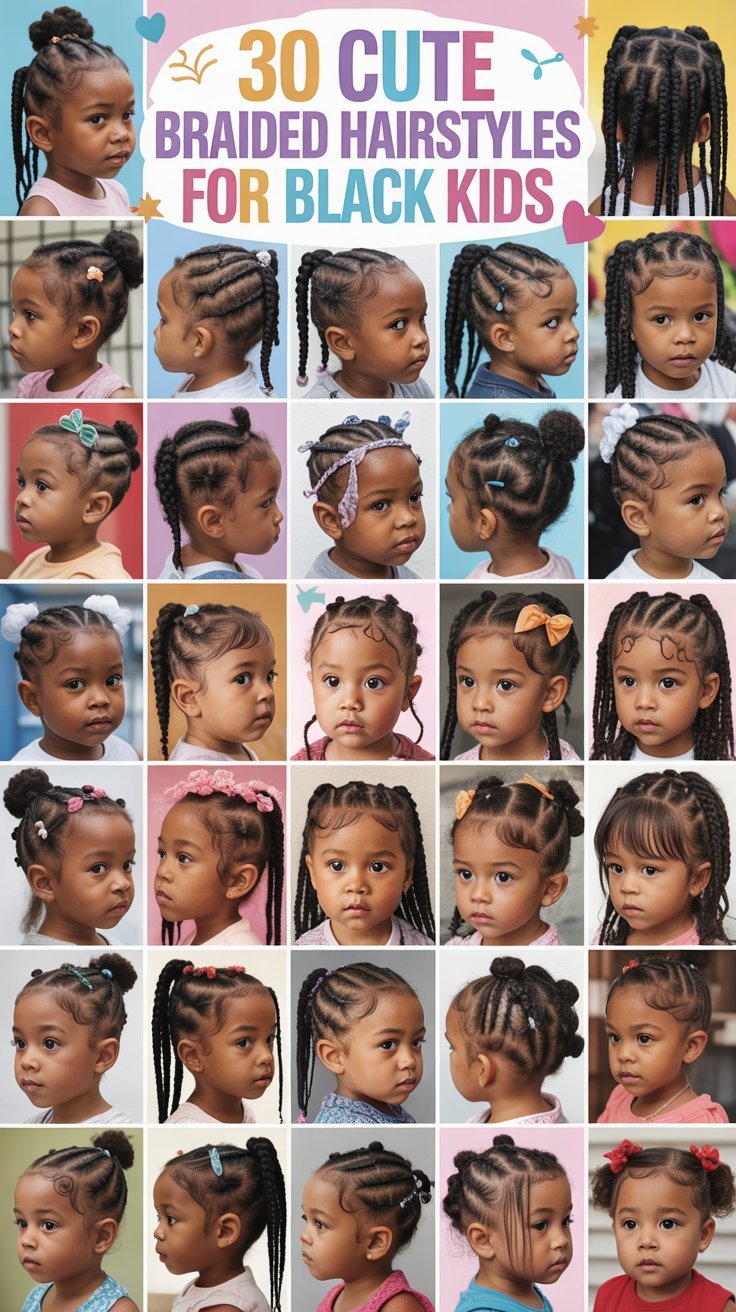
When it comes to styling your child’s hair, braids offer the perfect combination of beauty, practicality, and protection.
Black children’s hair is naturally versatile and textured, making it ideal for countless braiding styles that keep hair healthy while looking adorable.
Whether you’re preparing for school, a special occasion, or simply want a low-maintenance style that lasts, braided hairstyles provide endless creative possibilities.
This comprehensive guide to 30 Cute Braided Hairstyles for Black Kids will walk you through classic favorites, trendy modern looks, and protective styles that celebrate your child’s natural hair texture while keeping maintenance simple and age-appropriate.
1. Classic Cornrows

Cornrows remain one of the most timeless and versatile braided styles for black children, offering both protective benefits and lasting durability.
This style involves braiding hair tightly against the scalp in straight lines or creative patterns that can last for weeks with proper care.
Why Choose Cornrows
- Cornrows provide excellent protection for natural hair by keeping strands secure and minimizing manipulation.
- The style can last anywhere from two to six weeks depending on hair texture and maintenance routine.
- Children can participate in sports, swimming, and active play without worrying about hair damage.
- Cornrows work beautifully on all hair lengths, from short to long.
- The tight braiding technique reduces tangling and makes morning routines significantly faster.
Styling Variations
- Straight-back cornrows create a clean, classic look that works for both boys and girls.
- Curved or zigzag patterns add artistic flair and personality to the traditional style.
- Side-swept cornrows offer an asymmetrical, modern twist on the conventional design.
- Cornrows can be combined with beads, cuffs, or colorful threads for festive occasions.
- The size of each braid can vary from thin pencil braids to thicker, more prominent rows.
Maintenance Tips
- Apply a light oil or moisturizer to the scalp every few days to prevent dryness.
- Wrap hair with a silk or satin scarf at bedtime to maintain neatness and reduce frizz.
- Avoid keeping cornrows in for longer than six weeks to prevent matting and hair damage.
- Gently cleanse the scalp with diluted shampoo using a spray bottle when needed.
- Watch for signs of tension or discomfort, as braids should never be painful or cause hair loss.
2. Box Braids

Box braids are individual plaits sectioned into small square-shaped parts, creating a distinctive geometric pattern across the scalp.
This popular protective style offers incredible versatility and can be worn in countless ways while promoting healthy hair growth.
Benefits of Box Braids
- Box braids give hair a break from daily manipulation, reducing breakage and promoting length retention.
- The style typically lasts four to eight weeks with proper maintenance and care.
- Children can style box braids in ponytails, buns, half-up styles, or wear them down freely.
- Adding synthetic hair creates fuller, longer braids for children who want more dramatic looks.
- The individual braid structure makes it easier to cleanse the scalp compared to other styles.
Length and Thickness Options
- Short box braids (shoulder-length) are lighter and easier for younger children to manage.
- Medium-length braids (mid-back) offer versatility without excessive weight on the scalp.
- Long box braids create a dramatic, flowing effect but require more maintenance time.
- Thin box braids provide a delicate, intricate appearance with hundreds of small plaits.
- Thick box braids install faster, create less tension, and work well for tender-headed children.
Adding Personality
- Colorful synthetic hair extensions in vibrant hues create fun, eye-catching looks for special occasions.
- Beads, cowrie shells, or decorative cuffs can be added to braid ends for cultural expression.
- Mixing different braid thicknesses throughout the head creates unique textural interest.
- Ombre or two-toned extensions add dimension and modern styling flair.
- Gold or silver thread wrapped around braids creates an elegant, sophisticated appearance.
3. Goddess Braids

Goddess braids are larger, thicker cornrows that create a bold, regal appearance reminiscent of ancient African royalty.
These statement braids work beautifully for children who want a protective style with maximum visual impact and minimal installation time.
Characteristics of Goddess Braids
- Goddess braids are significantly thicker than regular cornrows, typically ranging from four to eight braids total.
- The chunky size reduces installation time compared to smaller braiding styles.
- This style works exceptionally well for children with thick, dense hair textures.
- Goddess braids can incorporate curly or wavy extensions for a softer, more romantic look.
- The braids sit prominently on the scalp, creating beautiful sculptural effects.
Popular Goddess Braid Patterns
- Two large braids running straight back create a simple yet striking appearance.
- A crown or halo pattern frames the face beautifully for formal occasions.
- Side-swept goddess braids add asymmetrical interest and modern styling appeal.
- Zigzag or curved patterns showcase artistic braiding techniques and creativity.
- Combining goddess braids with loose hair creates stunning half-braided styles.
Ideal Occasions
- Goddess braids work perfectly for weddings, recitals, or other special celebrations.
- The style holds up well during active play, sports practices, and school activities.
- Photo shoots and holiday gatherings are enhanced by this photogenic braiding style.
- Cultural events and festivals celebrating African heritage pair beautifully with goddess braids.
- The impressive appearance makes children feel confident and proud of their natural hair.
4. Feed-In Braids

Feed-in braids utilize a gradual hair-adding technique that creates natural-looking cornrows with reduced tension at the hairline.
This modern braiding method is gentler on children’s delicate edges while producing sleek, professional results.
The Feed-In Technique Explained
- Hair extensions are gradually incorporated into each braid rather than added all at once at the root.
- This method distributes weight more evenly, reducing stress on the scalp and hairline.
- Feed-in braids create a more natural gradient effect from thin roots to fuller braids.
- The technique requires advanced braiding skills and typically takes longer than traditional methods.
- Children with fine or fragile hairlines particularly benefit from this protective approach.
Styling Advantages
- Feed-in braids appear more natural and less bulky at the hairline than traditional extension methods.
- The graduated thickness creates visually appealing dimension and professional polish.
- Various patterns including straight-back, curved, and tribal designs work with this technique.
- The lighter root area reduces pulling and tension-related headaches common with heavy braids.
- Feed-in braids typically last three to six weeks with proper maintenance routines.
Hair Health Considerations
- Always ensure the braider doesn’t pull too tightly, especially near the delicate hairline area.
- Monitor the scalp for signs of irritation, redness, or excessive tension during installation.
- Give hair adequate rest periods between braided styles to prevent traction alopecia.
- Use moisturizing products specifically designed for children’s hair to maintain scalp health.
- Consider starting with shorter wear time for first-time braiders to assess scalp tolerance.
5. Triangle Box Braids

Triangle box braids feature triangular-shaped partings instead of traditional square sections, creating geometric visual interest across the scalp.
This variation on classic box braids offers a fresh, modern take on a beloved protective style.
Unique Visual Appeal
- The triangular parting pattern creates striking geometric designs that stand out from traditional styles.
- This sectioning method distributes hair more evenly, potentially reducing tension on certain scalp areas.
- Triangle patterns become especially visible when hair is styled up in ponytails or buns.
- The distinctive partings add artistic flair without requiring additional styling time.
- Photographers and style enthusiasts particularly appreciate the mathematical precision of triangle sections.
Installation Considerations
- Triangle box braids typically take the same amount of time as regular box braids to install.
- Skilled braiders can create uniform triangular sections that showcase their technical expertise.
- The parting pattern works with various braid sizes from thin to thick.
- Children may need to sit slightly longer as the braider carefully creates each triangular section.
- Using a rattail comb ensures clean, precise lines between each triangular partition.
Complementary Styling Options
- Adding beads or cuffs to braid ends creates colorful accents against the geometric base.
- High ponytails showcase the triangular pattern beautifully from all angles.
- Space buns or double buns create playful looks while highlighting the unique partings.
- Leaving some braids down while pinning others up creates interesting textural combinations.
- The triangular sections photograph exceptionally well for school pictures and family portraits.
6. Fulani Braids
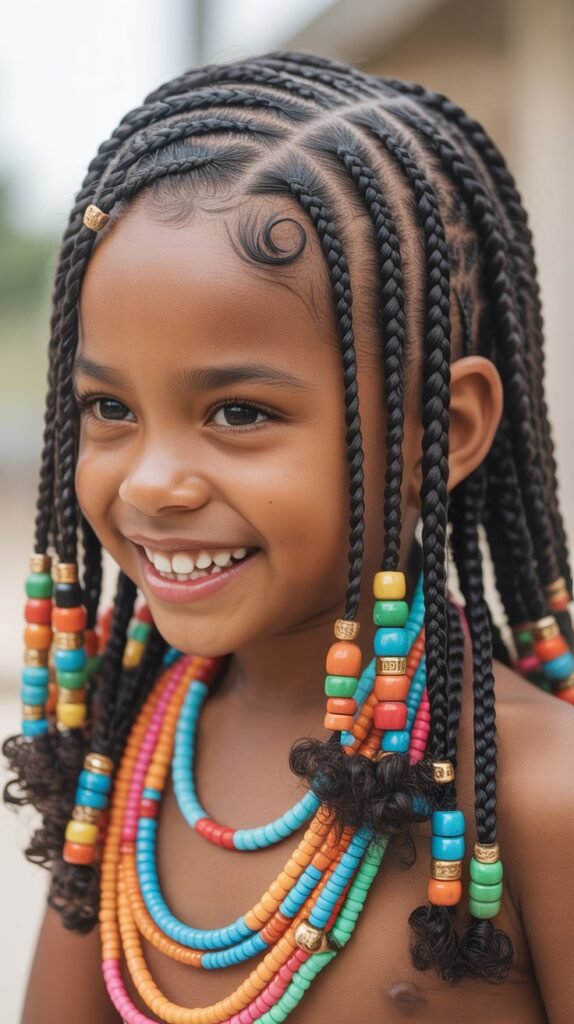
Fulani braids draw inspiration from the Fulani people of West Africa, featuring distinctive cornrows with a central braid running down the middle and side braids adorned with beads or cowrie shells.
This culturally significant style beautifully connects children to their African heritage.
Cultural Significance
- Fulani braids honor the rich hairstyling traditions of the Fulani ethnic group across West Africa.
- The style traditionally includes specific braid placements and decorative elements with cultural meaning.
- Wearing Fulani braids helps children learn about and connect with African cultural heritage.
- The distinctive pattern has been passed down through generations, maintaining cultural continuity.
- Modern interpretations blend traditional elements with contemporary styling preferences.
Traditional Fulani Braid Elements
- A single cornrow or braid runs from the front hairline straight back through the center.
- Thin cornrows are braided along the sides of the head, often curving toward the back.
- The remaining hair is typically styled in individual braids or left in an afro-textured state.
- Cowrie shells, beads, or gold ornaments are woven into braids for authentic decoration.
- The style often features braids of varying thicknesses creating visual contrast and interest.
Modern Adaptations for Children
- Some parents simplify the style by using fewer decorative elements for everyday wear.
- Colored beads replace traditional ornaments for a playful, child-friendly appearance.
- The basic braid pattern remains while allowing creative freedom in decoration choices.
- Combining Fulani elements with box braids creates fusion styles honoring multiple traditions.
- The style works beautifully for cultural celebrations, heritage months, and educational presentations.
7. Lemonade Braids
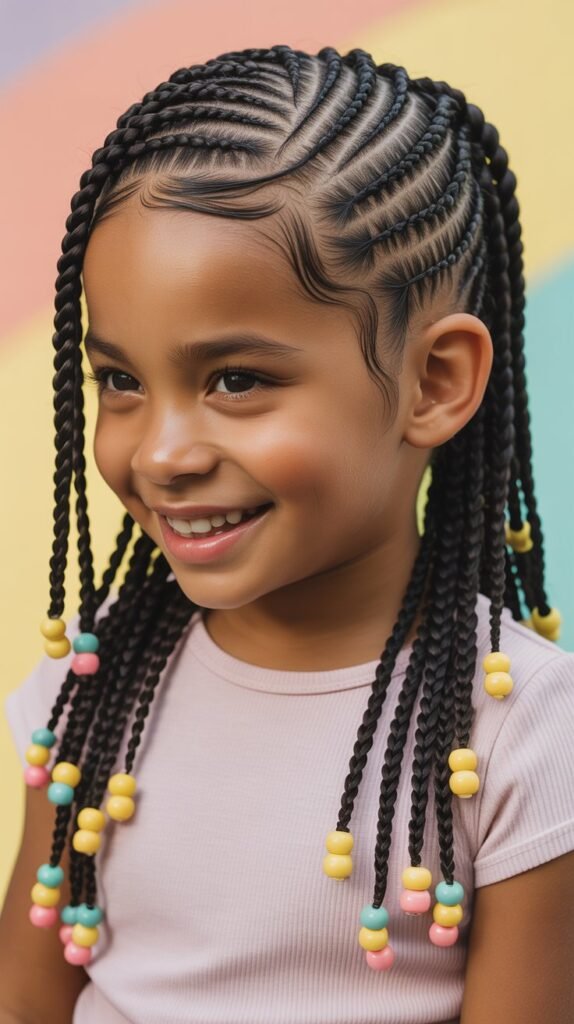
Lemonade braids feature sleek cornrows swept to one side, creating an asymmetrical, fashion-forward look popularized by contemporary style icons.
This trendy variation offers children a modern, stylish protective option that feels current and age-appropriate.
Style Characteristics
- All cornrows are braided diagonally or at an angle, flowing toward one side of the head.
- The asymmetrical design creates visual drama and contemporary styling appeal.
- Lemonade braids work with various cornrow thicknesses from thin to medium-sized.
- The style typically features very neat, precise parts for a polished appearance.
- Extensions can be added for extra length and fullness if desired.
Versatility and Styling
- Children can flip the braids to either side depending on outfit or mood preferences.
- The one-sided style keeps hair completely off the face for sports and active play.
- Adding a few colored braids or highlights creates personalized flair within the style.
- The braids can be gathered into a side ponytail for additional styling versatility.
- Decorative clips, pins, or headbands complement the asymmetrical design beautifully.
Maintenance and Duration
- Lemonade braids typically last three to six weeks with proper nighttime protection.
- The side-swept nature makes it easier to apply scalp oil and moisturizers between braids.
- Edge control products help maintain the sleek appearance at the hairline.
- Sleeping on a satin pillowcase or wearing a bonnet prevents frizzing and maintains neatness.
- Touch-ups around the hairline may be needed after three to four weeks of wear.
8. Halo Braid

The halo braid creates a crown-like effect by braiding hair in a circular pattern around the head’s perimeter.
This elegant, princess-worthy style is perfect for special occasions while remaining practical enough for everyday wear.
Creating the Halo Effect
- Hair is braided in a continuous circle around the head, resembling a crown or halo.
- The braid can be created using the child’s natural hair alone or with added extensions for fullness.
- Dutch braiding (braiding under rather than over) makes the halo appear more prominent and three-dimensional.
- The style works best on medium to long hair lengths for complete crown coverage.
- Skilled braiders can incorporate multiple circular braids for more intricate halo designs.
Perfect Occasions
- Weddings, flower girl duties, and formal celebrations are enhanced by this regal style.
- School picture day receives extra polish with a neat, photogenic halo braid.
- Holiday gatherings and religious ceremonies pair beautifully with the angelic appearance.
- Birthday parties and special outings make children feel like royalty with crown-like braids.
- Cultural performances and dance recitals showcase the style’s elegant simplicity.
Variations and Embellishments
- Fresh flowers tucked into the braid create a natural, bohemian aesthetic for outdoor events.
- Ribbon woven through the braid adds color and coordinates with specific outfits.
- Small decorative pins or jeweled clips provide sparkle for evening celebrations.
- A single halo can be combined with loose curls underneath for dimensional styling.
- Double or triple halo braids create more elaborate, textured crown effects.
9. Twist and Braid Combination

Combining two-strand twists with traditional three-strand braids creates visually interesting textural contrast within a single protective style.
This hybrid approach offers children variety and dimension while maintaining hair health.
Why Mix Techniques
- Combining twists and braids prevents style monotony while using protective techniques throughout.
- The different textures create visual interest and dimension that photographs beautifully.
- Children enjoy the uniqueness of having multiple techniques in one cohesive style.
- Mixing methods can reduce installation time compared to all-over detailed braiding.
- The contrasting textures showcase a braider’s skill and artistic creativity.
Pattern Possibilities
- Alternating rows of twists and braids create stripe-like patterns across the scalp.
- Braiding the front sections while twisting the back combines neatness with faster installation.
- Creating a geometric pattern with braids in specific sections and twists filling other areas.
- Twisting the sides while braiding the top or crown area creates dimensional interest.
- Random placement of each technique throughout the head creates an organic, artistic appearance.
Maintenance Benefits
- Twists typically require less tension than braids, reducing stress on sensitive scalp areas.
- The combination style allows for easier access to the scalp for moisturizing and cleansing.
- If one section becomes loose, the other technique holds the overall style together.
- Children experience variety in how their hair feels and moves with mixed textures.
- The hybrid approach can extend the overall wear time of the protective style.
10. Braided Ponytail

A braided ponytail gathers all the hair into one elevated point secured with a band, then braids the ponytail length into one large plait or multiple smaller braids.
This classic style combines the practicality of a ponytail with the protective benefits of braiding.
Style Versatility
- Ponytail height can vary from low nape placement to high crown positioning depending on preference.
- The ponytail can be braided as a single thick plait or divided into multiple smaller braids.
- Adding extensions to the ponytail creates impressive length and fullness for dramatic effect.
- Wrapping a small section of hair around the elastic conceals the band for polished finishing.
- Side-positioned ponytails offer asymmetrical styling alternatives to centered placement.
Practical Advantages
- Braided ponytails keep hair completely secure during sports, dance, and physical activities.
- The style prevents hair from falling into the child’s face during school or playtime.
- Installation is relatively quick compared to all-over braiding or intricate cornrow patterns.
- Children can easily sleep comfortably without the ponytail interfering with rest.
- The style adapts easily from casual daywear to dressier occasions with simple accessory additions.
Creative Enhancements
- Colorful elastics, scrunchies, or decorative bands add personality at the ponytail base.
- Weaving ribbons through the braid creates festive, coordinated looks for special events.
- Adding beads or cuffs along the braided length provides movement and visual interest.
- Creating a bubble ponytail effect before braiding adds dimensional texture throughout.
- Wrapping the braid into a bun at the end creates an elegant updo variation.
11. Mohawk Braids

Mohawk braids feature cornrows or individual braids along the sides of the head with a raised, prominent center section creating a faux mohawk appearance.
This bold, edgy style appeals to children who want to express confident, unique personalities.
Creating the Mohawk Effect
- The sides of the head are braided flat against the scalp using tight cornrows or small braids.
- The center strip from forehead to nape is left unbraided or styled upward for height.
- The central section can feature individual braids, twists, or an afro-textured puff.
- Extensions can be added to the middle section for more dramatic height and volume.
- The width of the center mohawk strip can vary based on personal style preferences.
Style Variations
- A braided mohawk uses three-strand braids in the center section styled upward with gel or mousse.
- Twist mohawks replace braids with two-strand twists for softer, more romantic texture.
- Curly mohawks leave the center section in natural coils or curls for organic volume.
- Rainbow mohawks incorporate vibrant colored extensions in the raised center section.
- Faux hawk variations create the illusion of a mohawk without actually shaving any hair.
Personality Expression
- Mohawk styles appeal to creative, confident children who enjoy standing out from crowds.
- The bold look works wonderfully for themed parties, costume events, or creative photos.
- Children involved in performing arts or entertainment often gravitate toward distinctive mohawk styles.
- The style teaches children that hair is a form of self-expression and artistic creativity.
- Despite the edgy appearance, mohawk braids remain protective and beneficial for hair health.
12. Zigzag Part Braids

Zigzag part braids feature dramatic, angular partings creating sharp geometric patterns across the scalp rather than straight traditional lines.
This creative styling technique transforms simple braids into eye-catching artistic statements.
Creating Zigzag Patterns
- A rattail comb is used to create sharp, angular parts forming Z or lightning bolt shapes.
- The zigzag pattern can run vertically, horizontally, or diagonally across the scalp.
- Precision and steady hands are essential for creating clean, symmetrical zigzag lines.
- The partings themselves become the artistic focus, making even simple braids look intricate.
- Multiple zigzag patterns can be incorporated throughout different sections of the head.
Visual Impact
- Zigzag parts photograph exceptionally well, creating striking images for social media or portfolios.
- The geometric precision showcases a braider’s technical skill and artistic attention to detail.
- Children enjoy the unique appearance that sets their style apart from traditional straight parts.
- The angular lines create optical illusions and movement even when hair remains stationary.
- Zigzag patterns work beautifully with any braid size from micro braids to goddess braids.
Styling Considerations
- Creating zigzag parts typically adds fifteen to thirty minutes to the overall braiding time.
- The dramatic partings work best on recently washed hair that can be easily manipulated.
- Using a light holding gel during parting helps maintain the sharp, clean lines.
- The zigzag effect gradually softens as hair grows and braids age over time.
- Touch-ups or redoing the style may be needed sooner than with traditional straight parts.
13. Beaded Braids

Beaded braids incorporate decorative beads throughout individual braids or at specific points, creating colorful, playful embellishments that celebrate childhood joy.
This classic styling approach has deep roots in African and African-American hair traditions.
Bead Selection and Safety
- Plastic pony beads in assorted colors are the most popular choice for children’s hair.
- Wooden beads offer a natural, earthy aesthetic with lightweight comfort.
- Metal beads or cuffs create more sophisticated, grown-up styling for older children.
- Always ensure beads are large enough to prevent choking hazards for younger children.
- Bead holes must be appropriately sized to fit snugly on braids without sliding excessively.
Placement Strategies
- Beads can be placed at the very ends of braids, secured with small elastics.
- Spacing beads evenly along each braid’s length creates uniform, rhythmic patterns.
- Concentrating beads near the ends adds weight that helps braids hang straight and neat.
- Random, organic bead placement creates playful, carefree styling effects.
- Color-coordinating beads with outfits creates polished, put-together appearances for special occasions.
Cultural Significance
- Beaded braids have been worn by African children for centuries, representing cultural identity.
- Different bead colors and patterns historically conveyed information about family, status, or region.
- The gentle clicking sound of beads moving creates a distinctive auditory element.
- Teaching children about the cultural history of beaded braids promotes heritage appreciation.
- Modern beaded styles honor tradition while allowing contemporary creative expression.
14. Jumbo Braids

Jumbo braids are oversized individual plaits that make bold statements with minimal installation time.
These dramatically thick braids work beautifully for children who want impressive styles without spending hours in the braiding chair.
Size and Scale
- Jumbo braids typically range from 1 to 2 inches in thickness, much larger than standard braids.
- The total number of jumbo braids on a head usually ranges from 12 to 30 depending on desired fullness.
- Installation time is significantly reduced compared to medium or micro braiding techniques.
- The substantial thickness creates dramatic visual impact with relatively simple execution.
- Extensions are almost always used to achieve the desired fullness and length in jumbo styles.
Weight Considerations
- While installation is quicker, jumbo braids can feel heavy, especially with long extensions added.
- Children with sensitive scalps or fine hair may find the weight uncomfortable over time.
- Limiting the braid length helps reduce overall weight while maintaining the jumbo aesthetic.
- Taking breaks from jumbo styles prevents excessive tension on the scalp and hairline.
- Ensuring braids aren’t pulled too tight during installation is crucial for comfort.
Styling Possibilities
- Jumbo braids can be styled in high ponytails, creating impressive fountain-like effects.
- Half-up, half-down styles showcase the braid thickness while keeping hair manageable.
- Side-swept jumbo braids create asymmetrical, fashion-forward appearances.
- Color combinations and ombre effects are particularly striking on thick jumbo braids.
- The substantial size makes each braid a statement piece requiring minimal additional styling.
15. Micro Braids
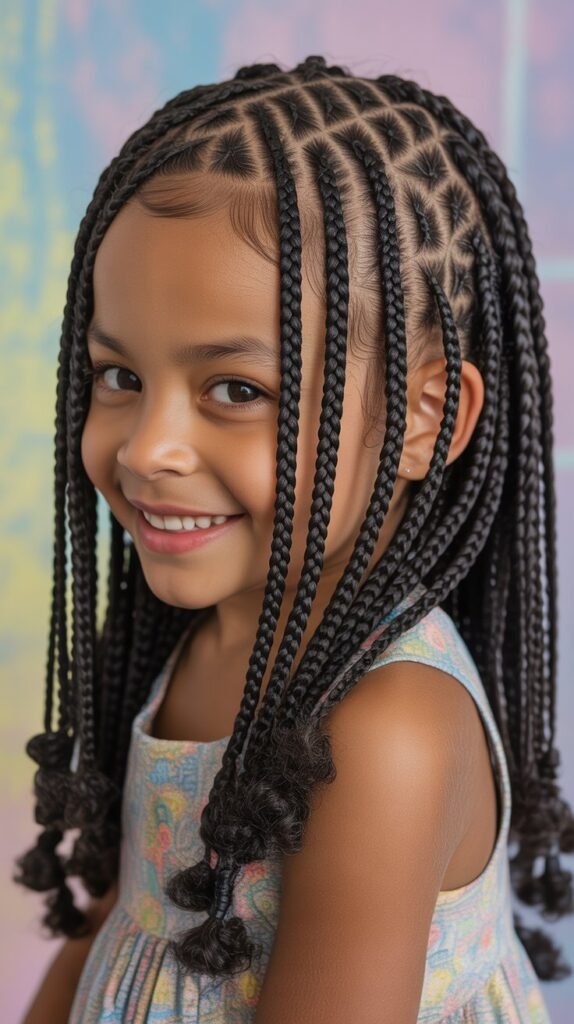
Micro braids are extremely thin, pencil-sized or smaller plaits that create intricate, detailed protective styles requiring significant time investment.
These delicate braids offer maximum versatility and can be styled countless ways once installation is complete.
Installation Requirements
- Micro braiding typically takes 8 to 12 hours or multiple sessions to complete depending on hair length.
- The tiny braid size requires exceptional skill, patience, and precision from the braider.
- Children must be able to sit still for extended periods, making this style better for older kids.
- Entertainment such as movies, tablets, or books helps pass the lengthy installation time.
- The time investment is offset by the style’s longevity of six to eight weeks or longer.
Styling Flexibility
- Micro braids can be styled exactly like loose hair into any ponytail, bun, or updo configuration.
- The tiny size creates beautiful flowing movement similar to natural loose hair.
- Intricate updos, braided patterns within the micro braids, and elaborate styles become possible.
- Children can experiment with different looks daily without re-braiding or major manipulation.
- The versatility makes micro braids popular for children involved in performances or pageants.
Hair Health Concerns
- Extremely tight micro braids can cause traction alopecia if not installed with proper tension.
- The small size may pull more on individual hair strands compared to thicker braiding options.
- Regular moisturizing is essential as the dense braid coverage can make accessing the scalp challenging.
- Extended wear beyond eight weeks can lead to matting, tangling, and difficult removal.
- Proper removal with patience and conditioner is crucial to prevent breakage after long wear periods.
16. Braided Bun

Braided buns combine the protective benefits of braiding with the elegant, polished appearance of an updo.
This versatile style works beautifully for both casual everyday wear and formal special occasions.
Bun Placement Options
- High crown buns create ballet-inspired, elegant appearances perfect for dance or formal events.
- Low nape buns offer sophisticated, mature styling that keeps hair completely secured.
- Side-positioned buns create asymmetrical interest with playful, modern appeal.
- Double buns (space buns) offer youthful, trendy styling that children often request.
- Braided top knots position the bun at the very top of the head for maximum height.
Creating the Braided Bun
- Hair is first sectioned and braided using cornrows, box braids, or individual plaits.
- Once braiding is complete, all braids are gathered to the desired bun position.
- The braids are twisted, coiled, or wrapped around the base and secured with pins or elastics.
- Edge control or gel smooths baby hairs and flyaways for polished finishing.
- Decorative elements like flowers, pins, or jeweled accessories enhance the bun’s appearance.
Practical Benefits
- Braided buns keep hair completely contained during athletic activities and sports.
- The secure style withstands active play, rough-and-tumble activities, and energetic movement.
- Sleeping comfort is improved with hair elevated and secured away from the neck.
- The neat appearance maintains itself with minimal daily maintenance or touching up.
- Braided buns work excellently under wigs, hats, or costume pieces for performances.
17. Side Braids

Side braids feature one or more braids positioned along the side of the head, creating asymmetrical, casual styling that’s both practical and adorable.
This simple yet charming approach works for various ages and hair lengths.
Simple Side Braid Styles
- Two thick braids, one on each side of the head, create a classic, timeless appearance.
- A single side braid swept over one shoulder offers romantic, storybook charm.
- Multiple thin braids along one side while leaving the other side loose creates dimensional interest.
- Braiding just the front sections while leaving the back natural provides face-framing definition.
- Side braids can incorporate twists, fishtail techniques, or traditional three-strand methods.
Everyday Practicality
- Side braids are quick to install, typically requiring only 10 to 30 minutes total time.
- The style keeps hair from falling into the child’s face during meals, homework, or play.
- Side braids work beautifully as a transitional style between wash days or more elaborate styles.
- Children can easily sleep comfortably without braids interfering with pillow positioning.
- The simplicity makes side braids perfect for busy mornings and last-minute styling needs.
Styling Accessories
- Colorful ribbons woven through side braids create festive, coordinated appearances.
- Small flowers or decorative clips at the braid ends add feminine, delicate touches.
- Wrapping elastics in matching colors to outfits creates polished, intentional styling.
- Beads in school colors work perfectly for spirit days or athletic events.
- Simple elastics in neutral colors keep the focus on the braids themselves for understated elegance.
18. Criss-Cross Braids
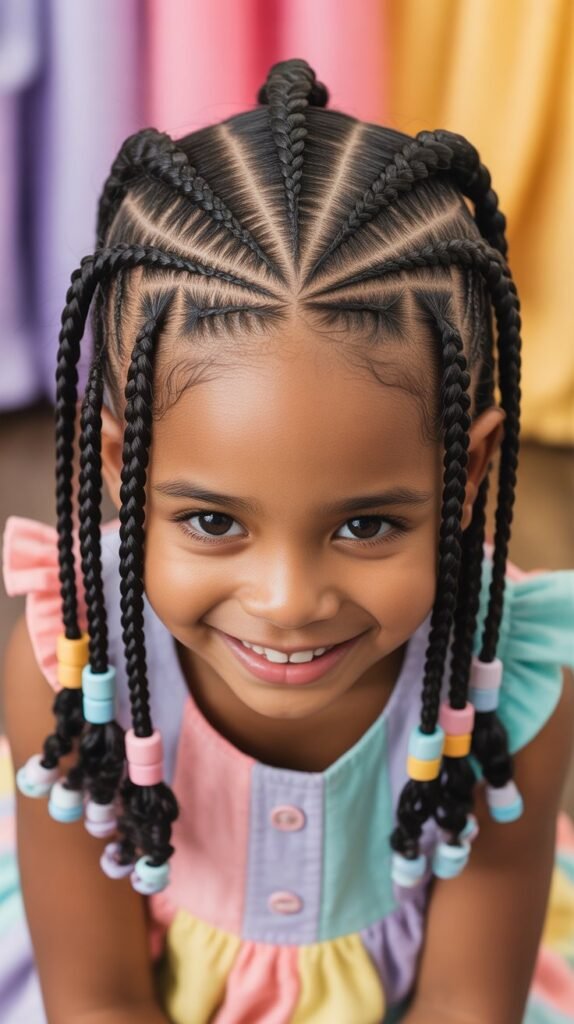
Criss-cross braids feature cornrows or individual braids that intersect and overlap, creating woven, basket-like patterns across the scalp.
This intricate technique showcases advanced braiding artistry while delivering stunning visual results.
Pattern Complexity
- Criss-cross designs require careful planning before braiding begins to achieve symmetrical results.
- Braids may alternate going over and under each other, mimicking woven textile patterns.
- The intersecting points create dimensional raised effects that add depth and texture.
- Geometric patterns including diamonds, triangles, or squares emerge from the criss-cross technique.
- Skilled braiders can incorporate multiple directional changes throughout the design.
Installation Process
- Creating criss-cross patterns typically adds 30 minutes to an hour to standard braiding time.
- The braider must carefully feed hair from one braid into another at intersection points.
- Precision in tension ensures the criss-cross points remain secure without pulling uncomfortably.
- Some designs require temporary clips or pins to hold sections while other braids are completed.
- The final result showcases the braider’s technical skill and artistic vision.
Visual Drama
- Criss-cross patterns photograph exceptionally well, creating striking portfolio or social media images.
- The intricate design makes even simple braiding appear elaborate and highly skilled.
- Children receive numerous compliments on the unique, eye-catching appearance.
- The woven effect creates movement and texture even when hair remains completely still.
- Criss-cross braids work beautifully for special occasions requiring memorable, impressive styling.
19. Heart-Shaped Braids
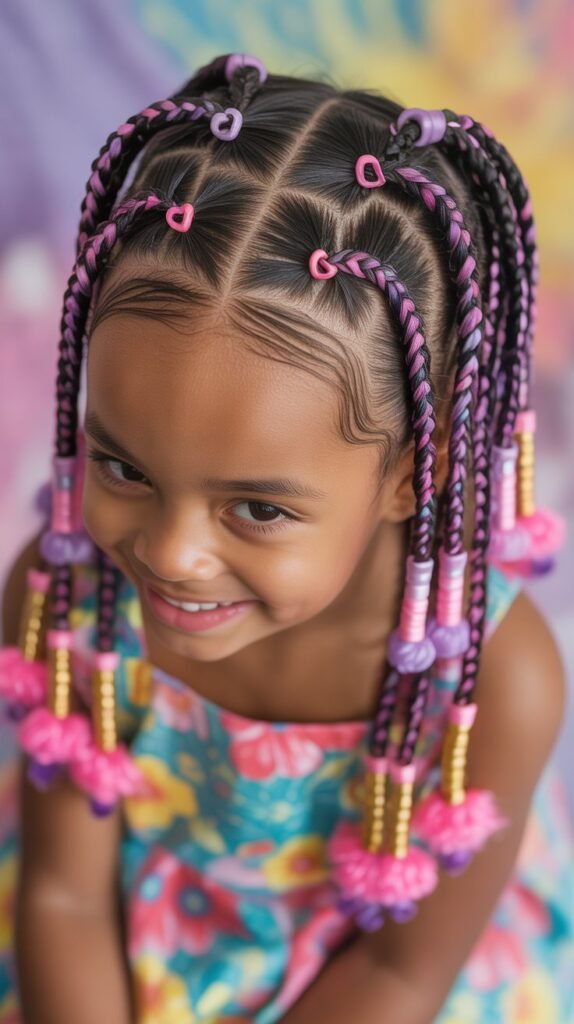
Heart-shaped braids use strategic cornrow placement to create heart designs on the scalp, typically positioned at the crown or sides.
This sweet, romantic styling choice is perfect for Valentine’s Day, special celebrations, or expressing affection.
Creating Heart Designs
- The braider maps out the heart shape before beginning, marking the outline lightly if needed.
- Two cornrows start at the top center point, curving outward and down to form the heart’s humps.
- The braids gradually curve inward at the bottom, meeting at a point to complete the heart shape.
- The negative space (unbraided area) inside the heart can be left natural or filled with smaller braids.
- Multiple smaller hearts can be created throughout the head for repeated pattern effects.
Romantic Occasions
- Valentine’s Day celebrations are enhanced by heart-shaped braid designs showing holiday spirit.
- Birthday parties with princess or fairy tale themes pair beautifully with romantic heart patterns.
- Mother-daughter matching heart braids create adorable coordinated looks for special outings.
- School spirit days or charity events supporting love-themed causes work well with heart designs.
- Portrait photography sessions capture the sweet, innocent charm of childhood with heart braids.
Variations and Additions
- Using red or pink extensions inside the heart shape creates dimensional color effects.
- Adding small gems, rhinestones, or glitter at strategic points embellishes the heart design.
- Creating a large central heart with smaller hearts surrounding it multiplies the romantic impact.
- Combining heart shapes with other geometric designs creates eclectic artistic patterns.
- The heart can be left as negative space or filled with contrasting braid techniques for variety.
20. Tribal Braids

Tribal braids draw inspiration from traditional African braiding techniques, featuring intricate patterns, symbolic designs, and cultural elements that connect children to their ancestral heritage.
These meaningful styles celebrate African identity while providing excellent hair protection.
Cultural Heritage Elements
- Tribal braiding patterns have been passed down through African generations for centuries.
- Different regions and ethnic groups developed distinctive braiding styles with specific meanings.
- The patterns often conveyed information about age, marital status, wealth, or tribal affiliation.
- Modern tribal braids honor these traditions while adapting them for contemporary children.
- Learning about tribal braiding history teaches children to appreciate their cultural roots.
Pattern Characteristics
- Tribal braids often feature curved, flowing lines rather than straight geometric patterns.
- The designs may incorporate symbolic shapes representing nature, spirituality, or community values.
- Feed-in techniques are commonly used to create smooth, natural-looking tribal patterns.
- Asymmetrical designs and unconventional part placements distinguish tribal from mainstream styles.
- The braids themselves may vary in thickness throughout the design for dimensional effect.
Educational Opportunities
- Wearing tribal braids opens conversations about African history and cultural traditions.
- Parents can research specific tribal patterns and share their meanings with children.
- Cultural events, heritage months, and educational presentations are enhanced by authentic tribal styling.
- Children develop pride in their ancestry and appreciation for African artistic contributions.
- Tribal braids can be paired with traditional African clothing for complete cultural expression.
21. Knotless Braids

Knotless braids are a modern technique where extensions are gradually fed into the braid from the start, eliminating the bulky knot at the root.
This innovative method creates more natural-looking braids with significantly less tension on children’s delicate scalps.
The Knotless Advantage
- Knotless braids eliminate the traditional knot where extensions are attached, reducing weight at the root.
- The gradual feeding technique distributes tension more evenly throughout each braid.
- Children experience less discomfort during installation compared to traditional knotted methods.
- The natural-looking roots create the illusion that braids grow directly from the scalp.
- Knotless braids are gentler on edges and hairlines, preventing traction-related damage.
Installation Differences
- Knotless braiding typically takes longer than traditional methods due to the gradual feeding technique.
- Braiders must possess advanced skills to maintain consistent braid size while adding hair incrementally.
- The technique works with various braid sizes from small to jumbo dimensions.
- Using pre-stretched braiding hair creates smoother, more uniform knotless results.
- Despite longer installation time, the comfort benefits make knotless braids worthwhile for tender-headed children.
Longevity and Maintenance
- Knotless braids typically last four to six weeks with proper care and maintenance.
- The lighter root area may show new growth more noticeably than traditional knotted braids.
- Regular moisturizing and scalp care are easier to perform with the flat, smooth root area.
- The reduced tension means knotless braids can be worn comfortably for their entire duration.
- Children report fewer headaches and less soreness with knotless versus traditional methods.
22. Stitch Braids
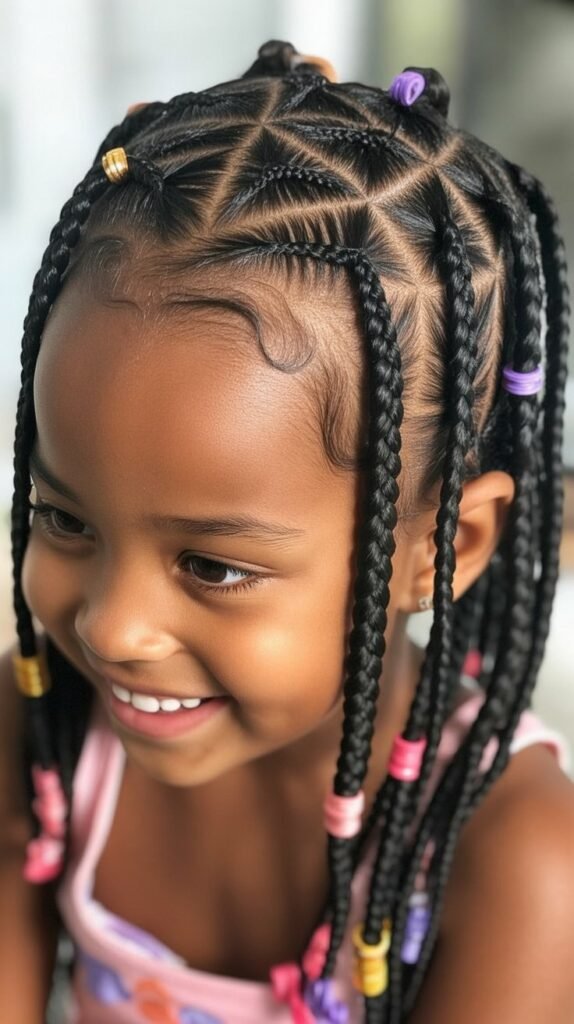
Stitch braids create a distinctive raised, rope-like appearance through a specialized feeding technique that produces horizontal “stitches” along each cornrow.
This trendy style offers clean, precise lines with impressive three-dimensional texture.
Stitch Technique Explained
- Hair is fed into the braid horizontally rather than vertically, creating distinct horizontal sections.
- Each “stitch” appears as a raised horizontal band across the cornrow’s length.
- The technique requires advanced braiding skills and steady, precise hand movements.
- Stitch braids are typically installed using the feed-in method for smooth, knotless roots.
- The resulting texture resembles actual stitching or braided rope, creating unique visual appeal.
Contemporary Styling Appeal
- Stitch braids represent one of the newest trends in protective braiding techniques.
- The style has gained popularity through social media platforms showcasing impressive precision.
- The clean, uniform appearance photographs exceptionally well for online sharing.
- Children who want the latest trending styles often request stitch braids specifically.
- The distinctive texture sets stitch braids apart from traditional smooth cornrow styles.
Installation Considerations
- Creating stitch braids takes significantly longer than standard cornrow installation.
- The precise technique requires an experienced braider familiar with this specific method.
- Not all braiders offer stitch braids, so researching local stylists may be necessary.
- The intricate work typically commands higher pricing than basic cornrow styles.
- Results are worth the investment, with neat, impressive styles lasting three to six weeks.
23. Braided Pigtails

Braided pigtails feature two symmetrical braids or sections positioned on either side of the head, creating a classic, youthful appearance beloved across generations.
This timeless style works for children of all ages and countless occasions.
Pigtail Variations
- High pigtails positioned near the crown create energetic, playful appearances perfect for young children.
- Low pigtails placed near the nape offer more mature, subdued styling for older kids.
- Each pigtail section can be braided into single large plaits or multiple smaller braids.
- Combining cornrows feeding into pigtails creates sophisticated takes on the classic style.
- Asymmetrical pigtails placed at different heights add modern, quirky appeal.
Everyday Practicality
- Pigtails are among the quickest braided styles to create, perfect for busy mornings.
- The symmetrical style keeps hair organized and prevents tangling throughout active days.
- Children can easily manage pigtails themselves, promoting independence in hair care.
- The style works beautifully for school, sports, play dates, and casual family outings.
- Pigtails withstand rough play, outdoor activities, and energetic movement without falling apart.
Decorative Enhancements
- Colorful elastics, scrunchies, or ribbons at the pigtail base add personality and flair.
- Matching ribbons to outfit colors creates coordinated, polished appearances.
- Beads, bows, or decorative clips transform simple pigtails into special occasion styles.
- Wrapped elastics in contrasting colors create bold, eye-catching accent points.
- Fresh flowers or artificial blooms create whimsical, nature-inspired pigtail embellishments.
24. Basket Weave Braids

Basket weave braids create intricate woven patterns on the scalp that mimic actual basket weaving techniques.
This artistic approach showcases exceptional braiding skill while producing stunning, conversation-starting results.
Weaving Technique
- Cornrows are braided in opposite directions, then woven over and under each other systematically.
- The braider must carefully plan the pattern before beginning to ensure proper weave alignment.
- Some hair from one braid is incorporated into adjacent braids at weaving intersection points.
- The over-under pattern creates authentic woven textile appearances on the scalp.
- Tension must be carefully balanced to create secure weaves without uncomfortable pulling.
Pattern Complexity Levels
- Simple basket weaves use two or three cornrows creating basic over-under patterns.
- Intermediate designs incorporate four to six braids with more complex weaving sequences.
- Advanced basket weaves feature intricate multi-directional patterns with numerous intersection points.
- The complexity level should match the child’s patience and ability to sit still during installation.
- Even simple basket weaves create impressive visual impact with relatively straightforward execution.
Artistic Impact
- Basket weave patterns transform the scalp into a canvas for textile-inspired art.
- The dimensional quality creates shadows and depth that enhance the woven effect.
- Photography enthusiasts particularly appreciate the geometric precision and artistic complexity.
- Children receive numerous compliments and questions about the intricate design process.
- The style works beautifully for cultural celebrations, performances, or special presentations.
25. Ghana Braids

Ghana braids, also known as banana braids or Cherokee cornrows, start thin at the hairline and gradually thicken toward the back of the head.
This traditional West African style creates beautiful gradient effects with cultural significance.
Traditional Technique
- Ghana braids originated in West Africa and have been worn for generations.
- The braiding starts with small sections at the hairline using only natural hair.
- Extensions are gradually added as the braid progresses backward, creating increasing thickness.
- The technique naturally creates less tension at the delicate frontal hairline.
- The graduated thickness produces distinctive, easily recognizable styling.
Size Variations
- Thin Ghana braids use minimal extension additions for subtle gradient effects.
- Medium Ghana braids represent the most common and traditional thickness approach.
- Jumbo Ghana braids create dramatic size differences from root to end.
- The number of braids can range from four large braids to twelve or more thinner ones.
- Braid quantity affects both installation time and overall visual impact.
Cultural Connection
- Ghana braids honor West African hairstyling traditions and cultural heritage.
- The style’s name acknowledges its geographical and cultural origins.
- Wearing Ghana braids teaches children about African history and traditional beauty practices.
- Modern interpretations maintain traditional techniques while allowing personal creative expression.
- The style works beautifully for cultural events, heritage celebrations, and educational purposes.
26. Braided Crown with Loose Hair
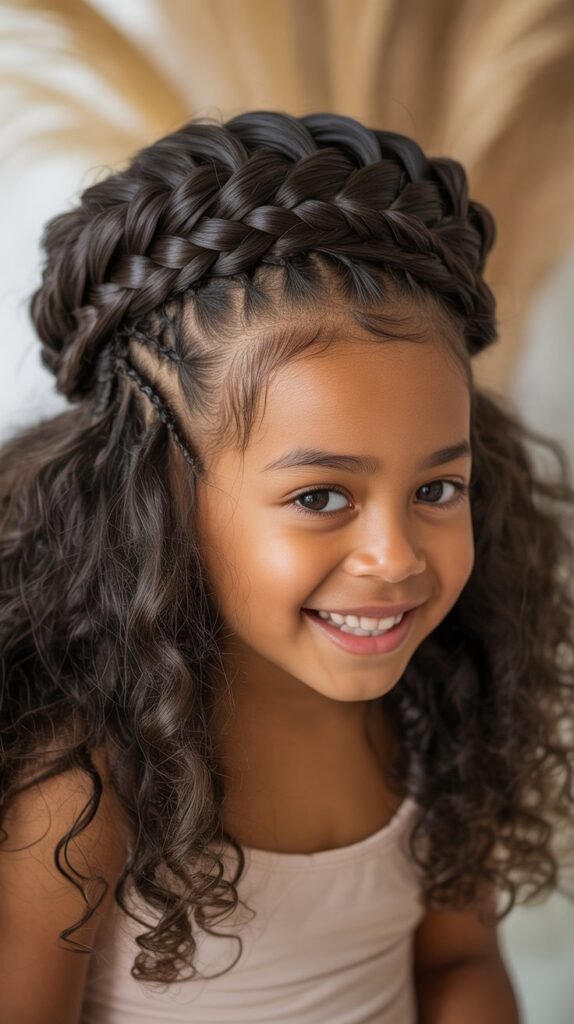
This hybrid style combines a braided crown circling the head’s perimeter with natural loose hair flowing from the center.
The combination offers protective benefits for edges while showcasing natural texture and volume.
Style Construction
- A single braid or multiple cornrows circle the head following the natural hairline.
- The crown section can be created using Dutch braiding, French braiding, or simple three-strand methods.
- Hair in the center area remains loose, natural, or can be styled in twists or curls.
- The crown typically starts at one temple, travels around the back, and ends at the opposite temple.
- Bobby pins or small elastics secure the crown ends, often concealed under loose hair.
Protective Benefits
- The braided crown protects the fragile hairline area while allowing the hair body to remain free.
- Children can enjoy their natural texture without completely committing to an all-over protective style.
- The loose center section is easily accessible for moisturizing, cleansing, and maintenance.
- Styling versatility allows the loose hair to be worn in various textures and states.
- The partial protection makes this style ideal for transitioning between fully protective and loose styles.
Styling Flexibility
- The loose center can be left in natural coils, stretched into a puff, or defined with products.
- Twist-outs or braid-outs on the loose section create additional texture and definition.
- Fresh or artificial flowers tucked into the crown create fairy-tale, bohemian aesthetics.
- Ribbons woven through the crown braid add color and coordinate with special outfits.
- The style easily transitions from casual daywear to formal occasions with simple adjustments.
27. Alphabet or Number Braids

Alphabet or number braids use strategic cornrow placement to create letters, numbers, or simple words visible on the scalp.
This playful, personalized approach allows children to literally wear their names, ages, or favorite symbols.
Design Planning
- The desired letter or number is mapped on the scalp before braiding begins.
- Simple block letters work best, while cursive or elaborate fonts prove more challenging.
- The design can be positioned anywhere on the head, with the crown being most visible.
- Surrounding braids are styled to complement and frame the letter or number design.
- Negative space (unbraided areas) often forms the actual letter shape with braids creating the background.
Popular Design Choices
- Children’s ages create perfect designs for birthday celebrations and special milestones.
- First name initials provide personalized, identity-affirming styling choices.
- Lucky numbers or jersey numbers work wonderfully for sports-enthusiastic children.
- Simple words like “LOVE” or “STAR” can be spelled across the scalp in cornrows.
- Combining letters with decorative elements like hearts or stars creates complex artistic designs.
Special Occasion Styling
- Birthday parties are enhanced by age numbers prominently displayed in braid patterns.
- School spirit events can feature mascot initials or graduation years in cornrows.
- Cultural celebrations might incorporate symbolic letters or numbers with heritage significance.
- Photo shoots and social media content benefit from eye-catching, unique personalized braiding.
- Children feel special and celebrated with custom designs created specifically for them.
28. Pulled-Through Braids
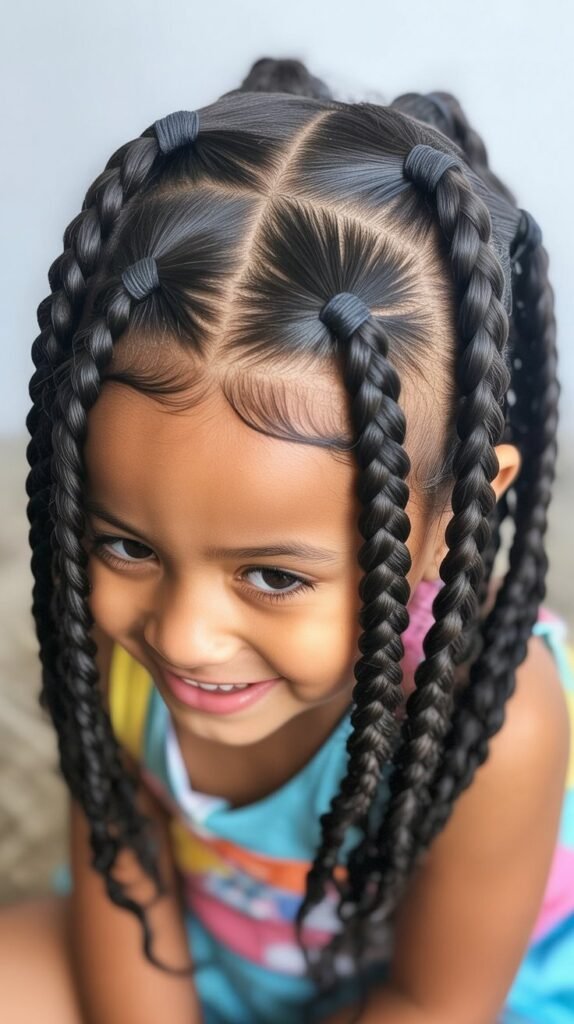
Pulled-through braids create the illusion of large, voluminous braids without traditional three-strand braiding.
This innovative technique produces impressive, full-bodied results perfect for special occasions or photography.
Technique Explanation
- Hair is sectioned into a high ponytail and secured with a strong elastic band.
- The ponytail is divided into two sections, with a small piece from the top separated.
- Small sections are pulled through openings created between elastics, building downward.
- Each section is secured with another elastic before pulling through the next section.
- The process repeats down the ponytail length, creating stacked, voluminous segments.
Visual Drama
- Pulled-through braids appear much fuller and more voluminous than traditional three-strand braids.
- The technique creates rope-like texture with impressive dimensional quality.
- Each pulled-through section can be gently loosened to increase fullness and width.
- The dramatic appearance photographs beautifully for special events and formal portraits.
- Children enjoy the princess-like, fairy-tale quality of the impressive finished style.
Practical Considerations
- Pulled-through braids work best for special occasions rather than everyday wear.
- The multiple elastics throughout can be challenging to remove without patient careful work.
- The style typically lasts one to three days before elastics shift or sections loosen.
- Using snag-free elastics minimizes hair damage during both styling and removal.
- The technique works on various hair lengths, though longer hair produces more dramatic results.
29. Rope Braids

Rope braids, also called twist braids, use two sections twisted together rather than the traditional three-strand braiding method.
This simple yet effective technique creates uniform, rope-like texture with slightly faster installation than conventional braiding.
Rope Twist Technique
- Hair is divided into two equal sections rather than the traditional three strands.
- Each section is twisted clockwise (or counterclockwise) while simultaneously wrapping around each other.
- The consistent twisting creates uniform spiral patterns resembling actual rope texture.
- Rope braids can be installed as individual hanging braids or cornrowed against the scalp.
- The technique is slightly faster than three-strand braiding while producing similar protective benefits.
Styling Applications
- Individual rope twists create protective styles similar to box braids with different texture.
- Rope cornrows offer alternatives to traditional three-strand cornrows with unique visual appeal.
- Combining rope twists with traditional braids creates textural contrast in mixed styles.
- Rope braids can be styled into ponytails, buns, or any updo configuration.
- The uniform texture creates clean, polished appearances perfect for formal occasions.
Advantages for Children
- The two-strand technique is often easier for children learning to braid their own hair.
- Rope braids install slightly faster than traditional three-strand methods, reducing sitting time.
- The twisting motion creates secure braids less likely to unravel during active play.
- Extensions integrate smoothly into rope braids for added length and fullness.
- The distinctive texture offers variety without dramatically changing the basic braiding concept.
30. Mixed Braid Sizes

Mixed braid sizes intentionally combine various thicknesses throughout a single style, creating dimensional interest and artistic flair.
This eclectic approach showcases creativity while maintaining the protective benefits of braiding.
Design Philosophy
- Deliberately mixing braid sizes creates organic, artistic appearances rather than uniform symmetry.
- The varied dimensions add visual texture and movement throughout the style.
- Thicker braids can be strategically placed to reduce overall installation time.
- Thinner braids in visible areas showcase intricate detail work and precision.
- The eclectic approach celebrates individuality and creative self-expression through hair.
Strategic Placement
- Larger braids at the back reduce time spent on less visible areas.
- Smaller braids frame the face, providing delicate, flattering detail work.
- Random size mixing throughout creates organic, natural-looking variation.
- Geometric patterns using different sizes create intentional artistic designs.
- The crown area might feature medium braids while sides showcase thin precision braids.
Creative Freedom
- Mixed sizes allow braiders to showcase multiple techniques within single styles.
- Children who want both thin and thick braid aesthetics can enjoy both simultaneously.
- The varied dimensions create interest that photographs beautifully from multiple angles.
- Parents can request mixed sizes to balance installation time with desired detail level.
- The approach teaches children that perfection isn’t necessary for beautiful, artistic results.
Conclusion
From timeless cornrows to innovative knotless techniques, this comprehensive guide to 30 Cute Braided Hairstyles for Black Kids demonstrates the incredible versatility and beauty of protective braiding styles.
Each style offers unique benefits, whether you prioritize quick installation, long-lasting wear, cultural significance, or creative expression.
Remember that the best braided hairstyle is one that makes your child feel confident, comfortable, and celebrated while keeping their natural hair healthy and protected.
By exploring these diverse options, you’re not just styling hair—you’re honoring heritage, building confidence, and creating lasting memories.
Choose styles that match your child’s personality, lifestyle, and hair health needs, and don’t hesitate to add personal creative touches that make each look uniquely theirs.
With proper care, any of these 30 Cute Braided Hairstyles for Black Kids will keep your child looking beautiful while protecting their precious natural texture for healthy growth and development.