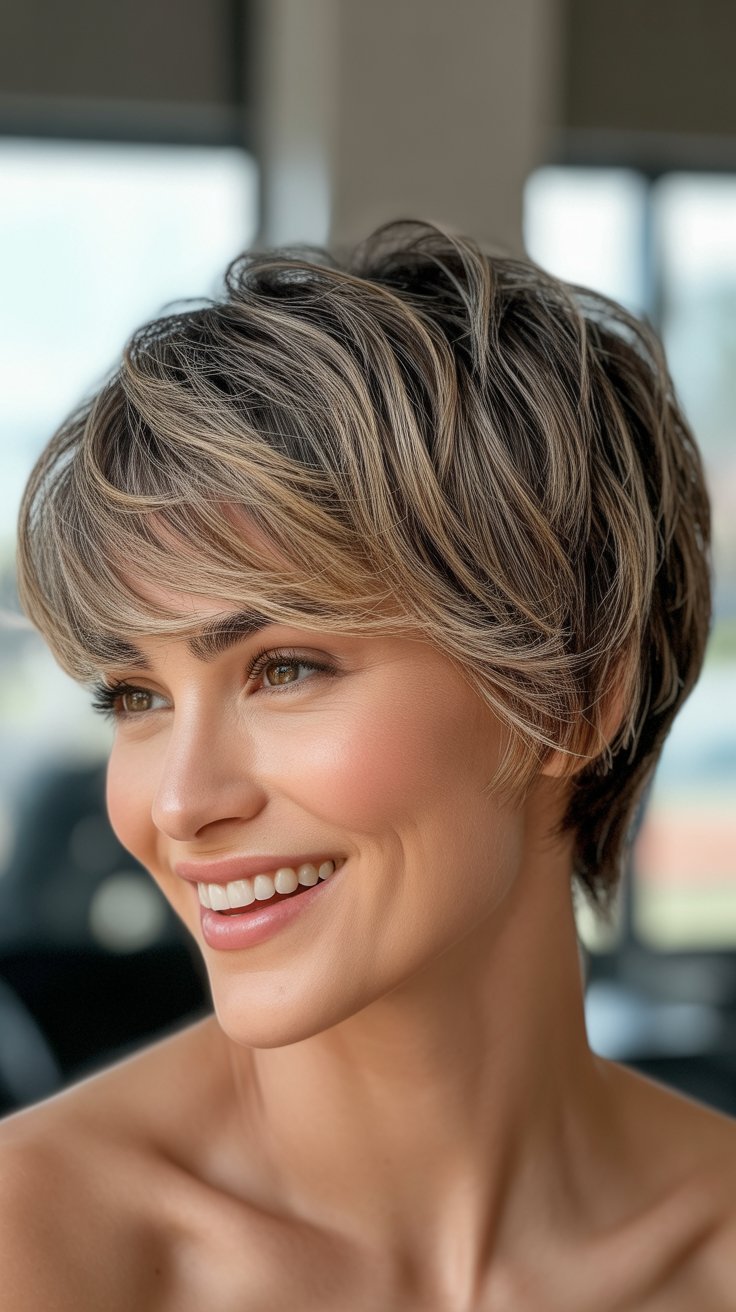
Short textured layered hairstyles have revolutionized modern hair fashion, offering the perfect blend of sophistication, manageability, and versatility for women seeking effortless elegance.
Whether you’re looking to add volume to fine hair, reduce bulk from thick locks, or simply refresh your appearance with a contemporary cut, textured layers provide the dynamic movement and dimension that flat, one-length styles simply cannot achieve.
This comprehensive guide to 26 Stylish Short Textured Layered Hairstyles explores a diverse range of cuts that work beautifully across all face shapes, hair types, and personal styles—from the edgy pixie with choppy layers to the sophisticated textured bob that frames your features perfectly.
Each style presented here offers unique benefits, whether you’re a busy professional needing a low-maintenance look, a fashion-forward trendsetter wanting to make a statement, or someone seeking a transformative change that enhances your natural beauty.
The beauty of short textured layers lies in their adaptability: they can be styled sleek and polished for professional settings or tousled and casual for everyday wear, giving you multiple looks from a single cut.
Throughout this article, you’ll discover styling techniques, maintenance tips, and professional insights that will help you choose the perfect short layered hairstyle and keep it looking salon-fresh between appointments.
1. Choppy Pixie Cut with Textured Layers
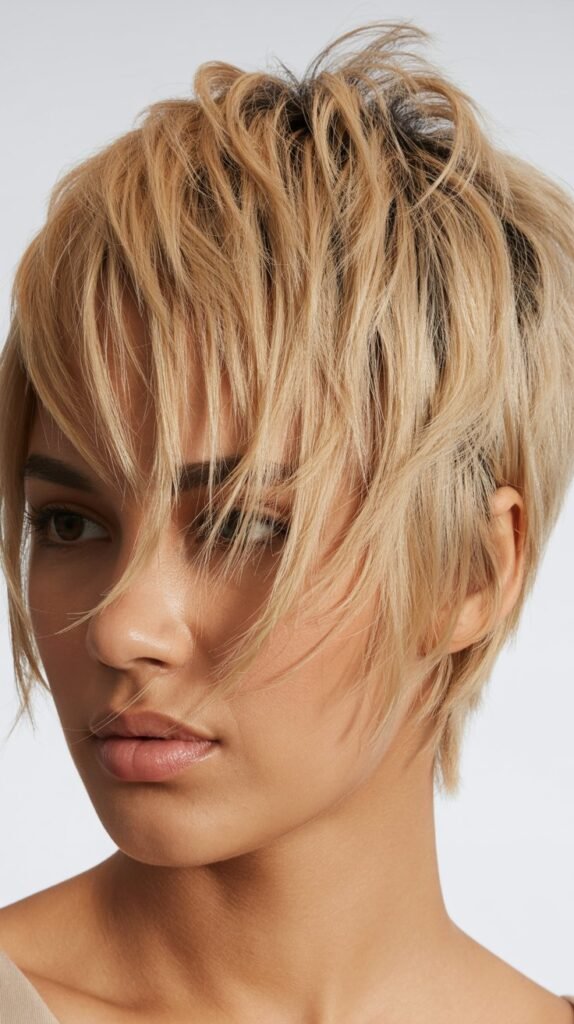
The choppy pixie cut represents the epitome of bold, confident styling for women ready to embrace minimal maintenance with maximum impact.
This cut features strategically placed layers throughout the crown and sides that create an intentionally uneven, piece-y texture that moves beautifully with every turn of your head.
Key Features:
- The crown area is cut with varying lengths to create natural lift and volume that eliminates the need for excessive styling products.
- Choppy ends throughout the cut prevent the hair from lying flat, giving the illusion of thicker, more abundant hair.
- The nape is typically kept very short for a clean, defined silhouette that emphasizes the neck and jawline.
- Texturizing techniques like point cutting and razor work create separation between hair strands for that coveted piece-y effect.
Styling Tips:
- Apply a small amount of texturizing paste to damp hair and work it through with your fingers for a natural, undone look.
- Blow-dry while using your hands to direct hair in different directions, creating intentional disarray.
- For added definition, use a small flat iron to create slight bends in random sections throughout the pixie.
- Finish with a light-hold hairspray to maintain the texture without making hair stiff or crunchy.
2. Textured Bob with Shaggy Layers
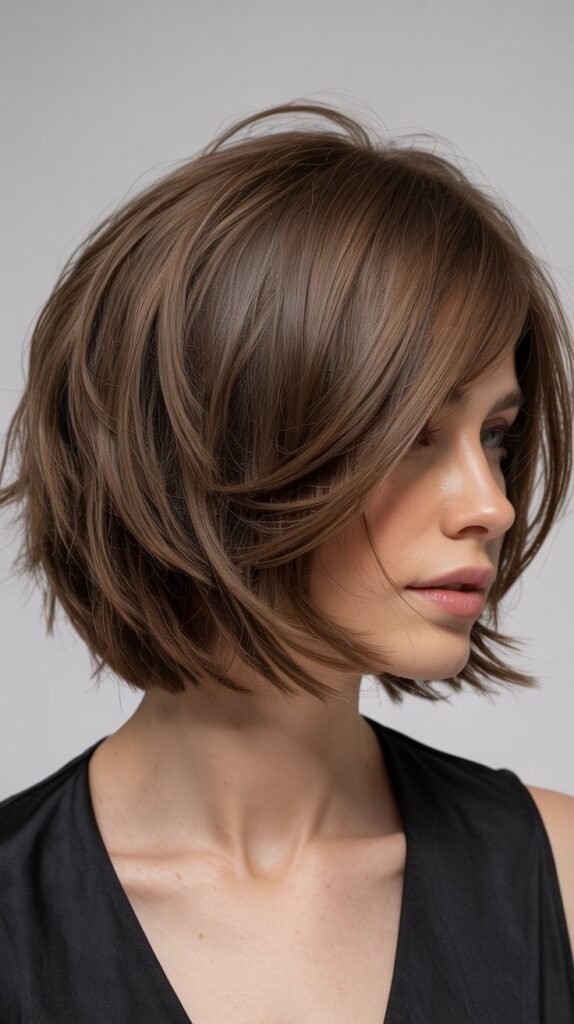
The textured bob with shaggy layers brings 1970s-inspired cool into the contemporary era, combining the classic bob length with modern layering techniques that create effortless movement.
This style works exceptionally well for women with medium to thick hair density who want to reduce weight while maintaining length at the perimeter.
Key Features:
- The length typically falls between chin and shoulder level, creating a versatile canvas for layering.
- Interior layers are cut shorter than the perimeter, creating invisible support that adds body throughout.
- Shaggy, feathered ends replace the traditional blunt cut, softening the overall appearance.
- Face-framing layers around the front enhance cheekbones and draw attention to the eyes.
Styling Variations:
- Blow-dry with a round brush for a polished, voluminous finish suitable for professional environments.
- Air-dry with sea salt spray for an effortless, beachy texture that looks casually chic.
- Straighten the ends while keeping texture at the roots for a sleek-meets-edgy contrast.
- Add loose waves with a curling wand to amplify the shaggy texture and create romantic volume.
3. Asymmetrical Layered Pixie
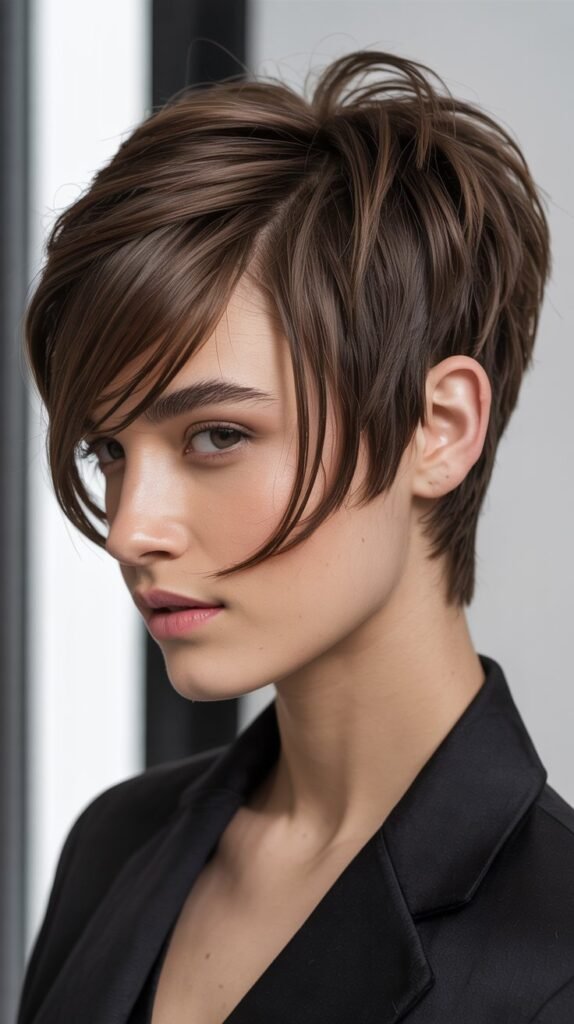
The asymmetrical layered pixie challenges conventional symmetry by featuring distinctly different lengths on each side of the head, creating a striking, avant-garde appearance.
This bold style makes a powerful fashion statement while offering surprising versatility in how it can be worn and styled.
Key Features:
- One side is cut significantly shorter than the other, typically with a difference of 2-4 inches.
- The longer side features multiple layers that create texture and prevent the weight from pulling the style down.
- The shorter side often incorporates an undercut or very close crop that emphasizes the contrast.
- The back transitions smoothly between the two sides, creating a cohesive overall shape.
Best Face Shapes:
- Oval faces can wear this style effortlessly as the asymmetry adds interest without overwhelming features.
- Round faces benefit from the vertical lines created by the style, which provide slimming effects.
- Heart-shaped faces find balance as the longer side counteracts a wider forehead.
- Square faces are softened by the diagonal lines and varied lengths throughout the cut.
4. Feathered Layers on Short Hair
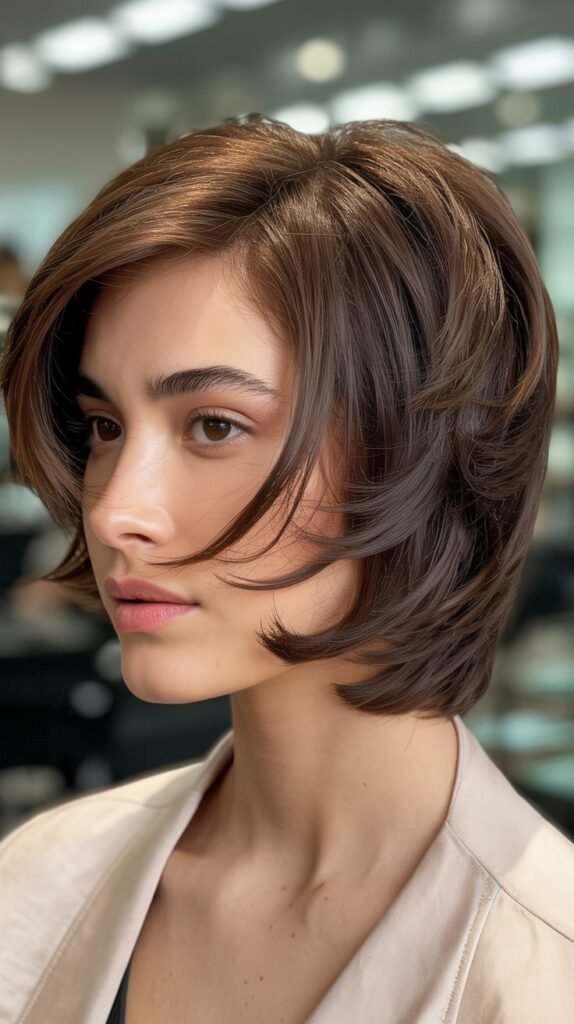
Feathered layers on short hair evoke timeless elegance with a modern twist, using delicate layering techniques that create soft, wispy ends reminiscent of feathers.
This technique works beautifully for creating movement in fine to medium hair textures without removing too much density.
Key Features:
- Layers are cut using point-cutting or slide-cutting techniques that create tapered, feather-like ends.
- The layering is distributed evenly throughout the head rather than concentrated in specific areas.
- Ends are intentionally thinned to create separation and prevent a heavy, blunt appearance.
- The overall shape maintains a rounded silhouette that flatters most face shapes.
Maintenance Requirements:
- Regular trims every 4-6 weeks are essential to maintain the delicate feathered ends and prevent splitting.
- Use lightweight conditioning products to avoid weighing down the fine texture of the feathered layers.
- Avoid heavy oils or serums that can make the feathered ends clump together and lose definition.
- Protect hair from heat damage with a quality thermal protectant, as damaged ends compromise the feathered effect.
5. Curly Pixie with Textured Layers
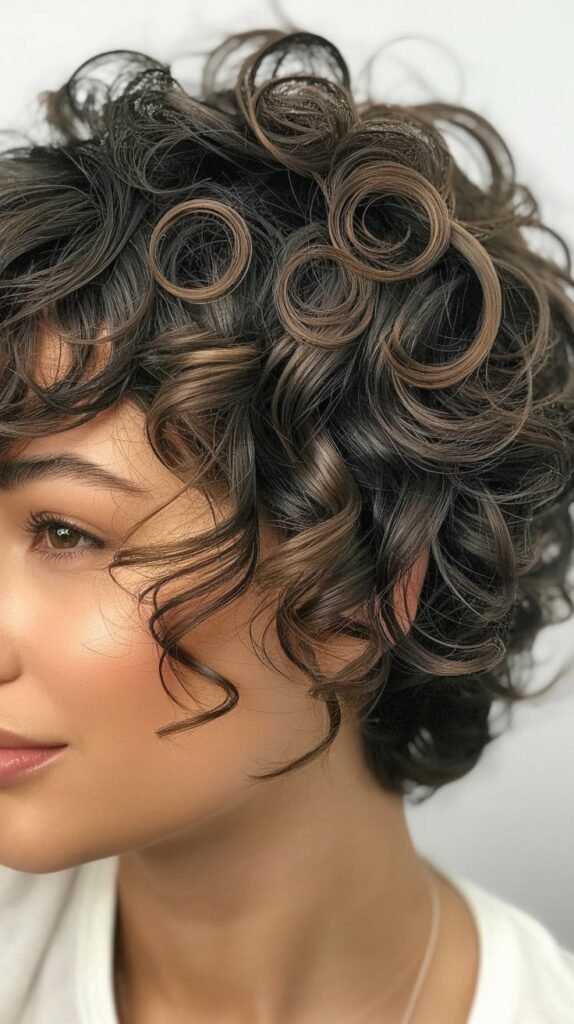
The curly pixie with textured layers celebrates natural curl patterns while providing structure and shape that prevents the dreaded “triangle effect” common in short curly cuts.
This style requires a stylist experienced in cutting curly hair, as the technique differs significantly from cutting straight hair.
Key Features:
- Layers are cut while hair is dry and in its natural curly state to ensure accurate length and shape.
- The interior is lightened strategically to remove bulk without disturbing the curl pattern.
- Face-framing pieces are left slightly longer to create balance and soften facial features.
- The back and sides are tapered to create a rounded silhouette that showcases the curls at the crown.
Curl-Specific Styling:
- Apply curl-defining cream to soaking wet hair immediately after washing for maximum definition.
- Scrunch hair gently while drying to encourage curl formation without creating frizz.
- Diffuse on low heat and speed settings to dry curls without disrupting their natural pattern.
- Refresh between washes with a mixture of water and leave-in conditioner in a spray bottle.
- Avoid touching or manipulating curls once they’re dry to prevent frizz and maintain definition.
6. Razor-Cut Textured Crop
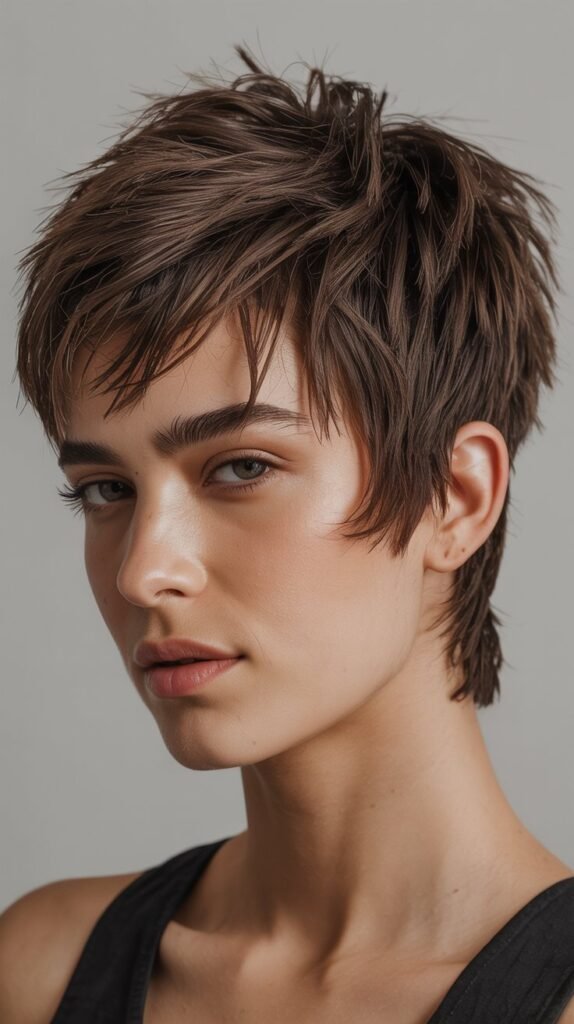
The razor-cut textured crop utilizes a straight razor rather than scissors to create ultra-fine, wispy layers that provide incredible movement and a distinctly modern edge.
This cutting technique produces softer, more diffused layers compared to scissor-cut styles, resulting in a beautifully lived-in appearance.
Key Features:
- The razor creates microscopic texture along each strand, leading to exceptional movement and separation.
- Layers blend seamlessly into one another without visible lines or weight accumulation.
- The overall length typically ranges from 1-3 inches, keeping maintenance minimal.
- The cut naturally dries with texture, reducing daily styling time significantly.
Advantages of Razor Cutting:
- Creates softer edges compared to scissor cuts, which is ideal for transitioning between lengths.
- Removes weight without creating harsh lines or steps in the hair.
- Produces a naturally tousled appearance that requires minimal styling product.
- Works exceptionally well on thick, coarse hair that needs substantial weight removal.
Considerations:
- Not recommended for very fine or fragile hair, as razor cutting can increase breakage.
- Requires a highly skilled stylist experienced in razor techniques for optimal results.
- May increase styling time for those who prefer sleek, smooth looks rather than textured finishes.
7. Layered Undercut Bob
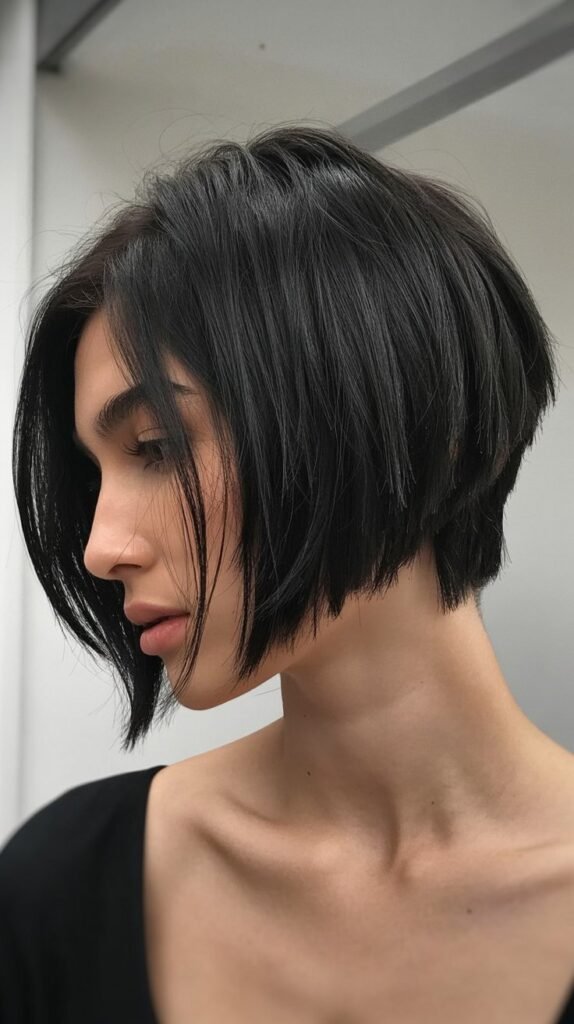
The layered undercut bob combines edgy rebellion with sophisticated styling by hiding a shaved or closely cropped section beneath longer layers on top.
This hybrid style offers dramatic versatility—wear your hair down for a classic bob appearance or style it up to reveal the hidden undercut for instant edge.
Key Features:
- The undercut section typically encompasses the nape and lower sides, shaved to 1/8 to 1/2 inch length.
- Top layers range from 3-6 inches, providing adequate coverage for the undercut when desired.
- Textured layers throughout the top section create movement and prevent a helmet-like appearance.
- The transition between the undercut and longer layers is carefully blended for a cohesive look.
Styling Options:
- Wear hair down and styled normally for professional settings where the undercut remains hidden.
- Pull hair into a small ponytail or top knot to dramatically reveal the undercut design.
- Add patterns or designs to the undercut section for additional personalization and artistic expression.
- Style the longer layers sleek and straight for high contrast with the buzzed undercut.
Maintenance Schedule:
- The undercut requires touch-ups every 2-3 weeks to maintain crispness and prevent grown-out fuzziness.
- The longer layers should be trimmed every 6-8 weeks to maintain shape and health.
- Consider maintaining the undercut yourself with quality clippers between salon visits.
8. Tousled Textured Lob (Long Bob)
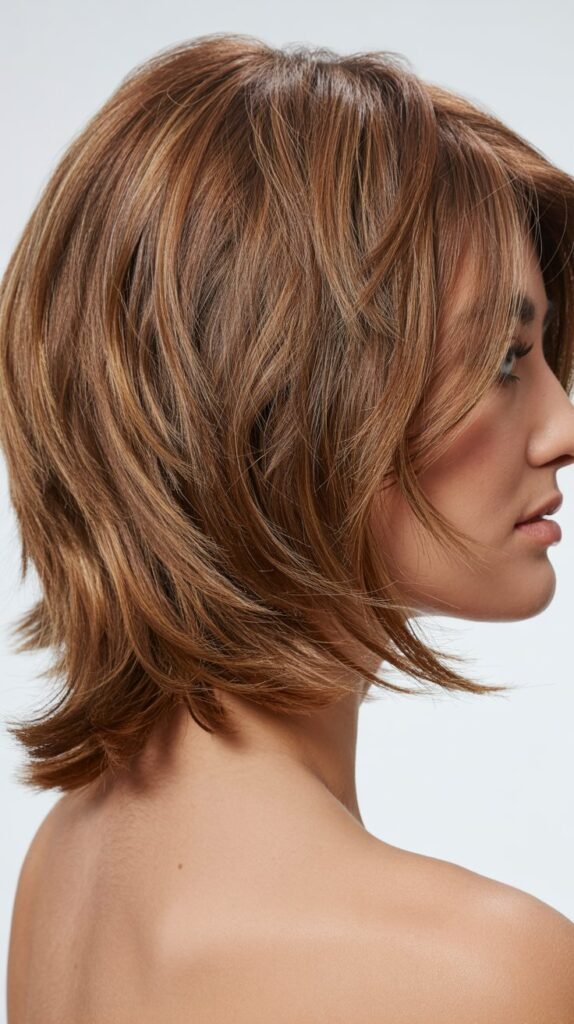
The tousled textured lob represents the longer end of short hairstyles, falling just above or at shoulder length with abundant layers that create effortless, beachy texture.
This style bridges the gap between short and medium-length hair, offering versatility for those not ready to commit to a drastic short cut.
Key Features:
- Length ranges from collarbone to shoulder, providing options for updos and half-up styles.
- Multiple layer lengths throughout create dimension and prevent the hair from appearing flat or lifeless.
- Ends are intentionally imperfect and piece-y rather than blunt and uniform.
- Face-framing layers begin at cheekbone level, creating a flattering frame for all face shapes.
Styling for Different Occasions:
- For professional settings, blow-dry smooth with a round brush and add subtle waves with a large-barrel curling iron.
- For casual everyday wear, apply texturizing spray to damp hair and air-dry for natural, undone texture.
- For evening events, create loose, tousled waves and add shine serum for a polished yet relaxed appearance.
- For athletic activities, pull into a low ponytail or messy bun with face-framing pieces left out.
9. Stacked Layered Bob with Texture
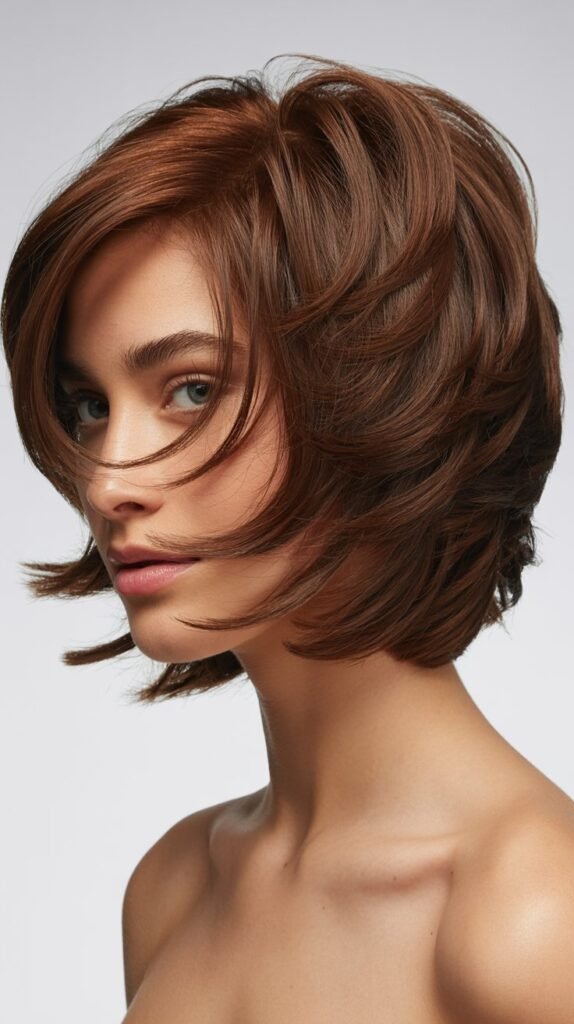
The stacked layered bob with texture features graduated layers that are shorter in the back and longer in the front, creating dramatic angles and substantial volume at the crown.
This style provides lift and fullness where it’s needed most while maintaining sleek, elongating lines around the face.
Key Features:
- The back is heavily layered and stacked to create rounded volume and height at the occipital bone.
- The sides gradually become longer as they approach the front, creating an angled profile.
- Front pieces typically reach chin length or slightly longer, framing the face beautifully.
- Texturizing throughout prevents the stacked back from appearing too solid or heavy.
Volume-Boosting Techniques:
- Blow-dry the back section while lifting at the roots with a round brush to maximize the stacked effect.
- Apply volumizing mousse to damp hair before styling for enhanced lift and hold.
- Tease the crown area lightly for special occasions when extra drama is desired.
- Use a flat iron to create slight bends in the back layers, which amplifies the dimensional appearance.
10. Textured Pixie with Long Bangs
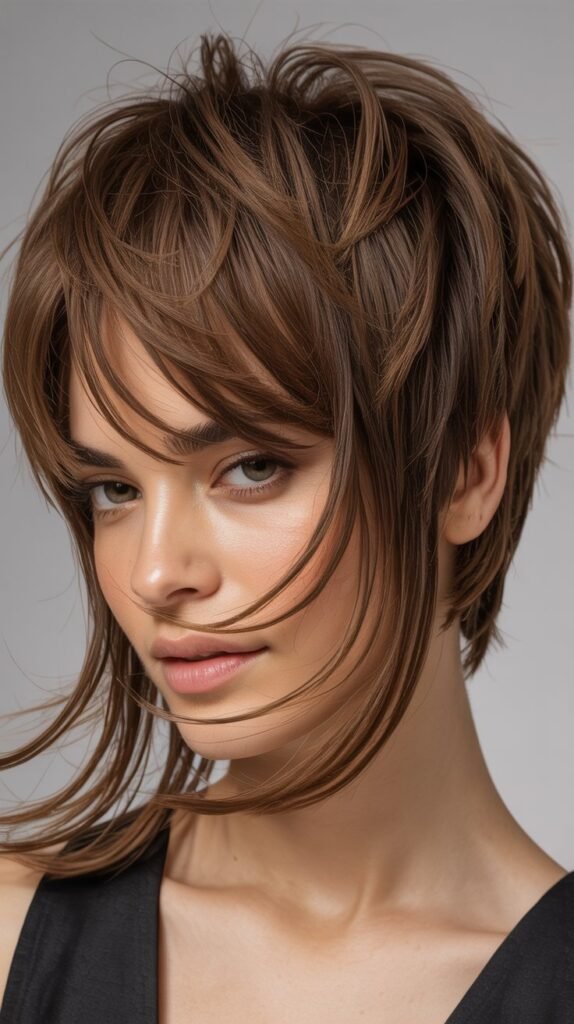
The textured pixie with long bangs softens the dramatic nature of a pixie cut by incorporating extended fringe that can be styled in multiple ways.
The longer bangs provide versatility and balance, making this an ideal transitional style for those new to short hair.
Key Features:
- The fringe extends from 3-5 inches, reaching the eyebrows or slightly beyond.
- Back and sides are cropped short (1-2 inches), creating contrast with the longer front section.
- Textured layers throughout the bangs prevent them from lying flat or appearing too heavy.
- The overall silhouette creates an oval shape that flatters round and square face shapes particularly well.
Bang Styling Options:
- Sweep bangs to the side and pin with a small clip for a retro-inspired look.
- Style bangs straight down and piece them out with pomade for an edgy, fashion-forward appearance.
- Blow-dry bangs upward and back for volume and a dramatic pompadour effect.
- Curl bangs under slightly for a softer, more feminine interpretation of the pixie cut.
11. Messy Textured Shag
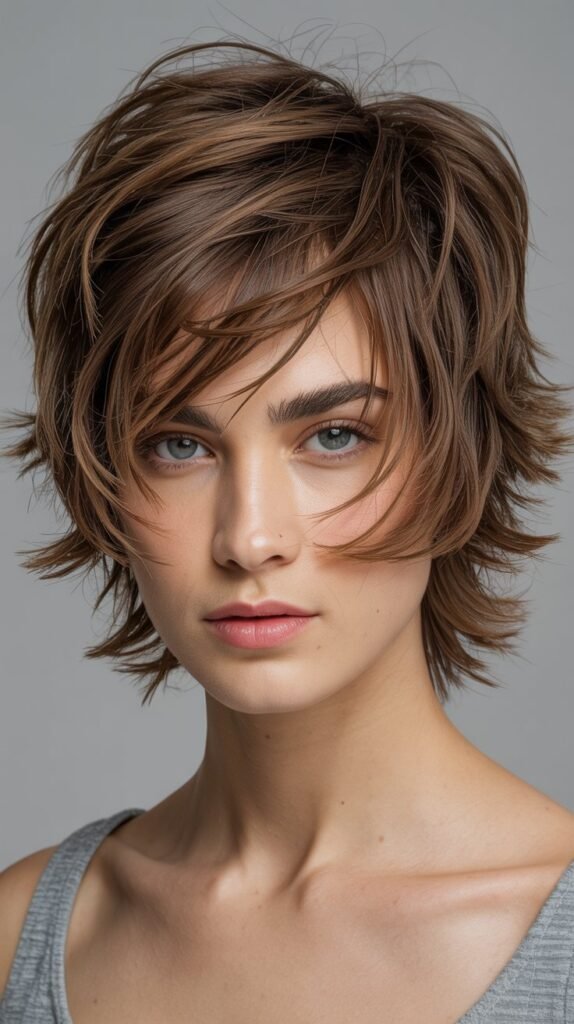
The messy textured shag embraces intentional dishevelment with heavily layered cuts that create maximum movement and a carefree, rock-and-roll vibe.
This style works beautifully for those who prefer minimal styling time and appreciate an effortlessly cool aesthetic.
Key Features:
- Abundant layers throughout all sections of the head create a choppy, disconnected appearance.
- Varying lengths create natural texture without requiring hot tools or extensive product use.
- Bangs are often incorporated, cut in a piece-y, textured manner that blends with the overall shaggy aesthetic.
- The perimeter is intentionally uneven and jagged rather than neat and uniform.
Ideal Hair Types:
- Medium to thick hair density carries this style best, as fine hair may appear too thin and sparse.
- Straight to wavy textures showcase the layering most effectively, while creating natural separation.
- Slight natural wave enhances the messy aesthetic without requiring additional styling effort.
Product Recommendations:
- Texturizing spray provides hold without stiffness, maintaining the natural, undone appearance.
- Dry shampoo adds volume at the roots while enhancing the slightly gritty texture.
- Lightweight pomade defines individual pieces without creating a wet or greasy appearance.
12. Graduated Layers on Short Hair
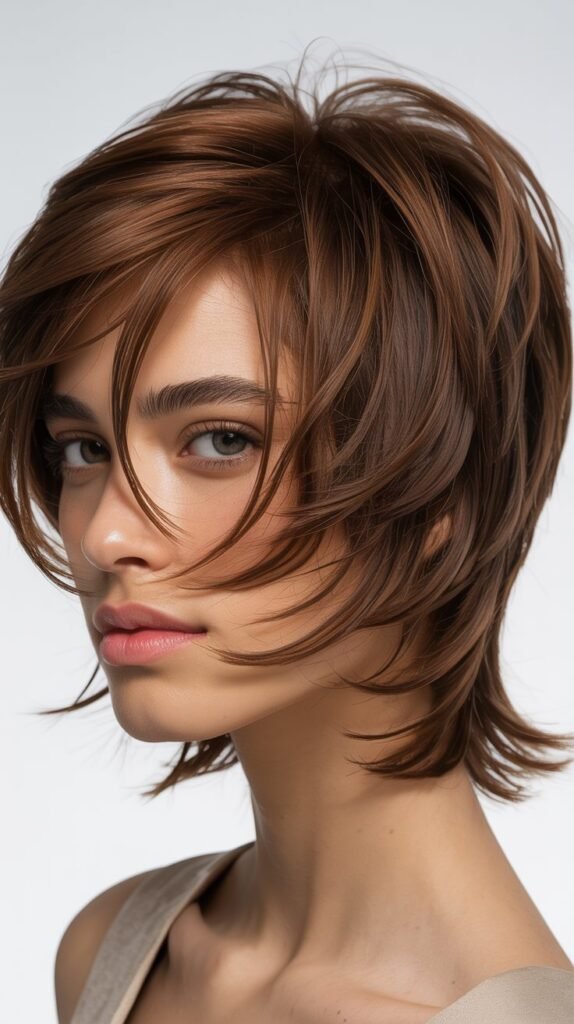
Graduated layers on short hair feature systematic layering where each layer is precisely cut shorter than the one beneath it, creating stacked dimension and architectural structure.
This technical cutting approach produces reliable volume and shape that requires minimal styling to look polished.
Key Features:
- Layers are cut at specific angles and elevations to create the desired graduated effect.
- The shortest layers typically appear at the crown, gradually becoming longer toward the perimeter.
- Weight distribution is carefully controlled to create fullness in targeted areas.
- The overall shape is rounded and feminine, following the natural curve of the head.
Technical Styling:
- Blow-dry each section while following the direction of the layers with a round brush.
- Use a directional nozzle on your hairdryer to smooth the cuticle and enhance shine.
- Apply a smoothing serum to damp hair before drying to reduce frizz and increase polish.
- Finish with a light mist of flexible-hold hairspray to maintain the shape without stiffness.
Professional Insights:
- This cut requires precision and expertise, so choose a stylist experienced in graduation techniques.
- Regular maintenance every 5-6 weeks is crucial to maintain the architectural shape and prevent grown-out messiness.
- Graduated layers work exceptionally well for fine hair, creating the illusion of significantly more density.
13. Textured French Crop
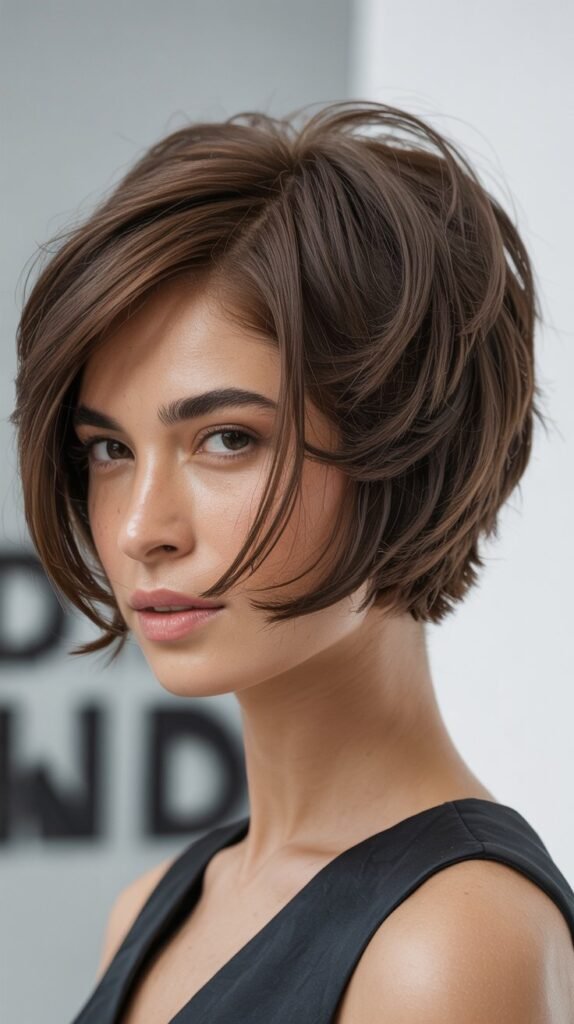
The textured French crop borrows inspiration from classic men’s styling while incorporating feminine touches through texturizing and softer lines.
This androgynous style features a short back and sides with slightly longer length on top that’s styled forward toward the forehead.
Key Features:
- The top section ranges from 1-3 inches, providing enough length for styling versatility.
- Back and sides are cropped close (typically 1/4 to 1/2 inch), creating clean, defined edges.
- The fringe is cut bluntly across the forehead or slightly textured for a softer appearance.
- Textured layers on top prevent the style from appearing too masculine or military-inspired.
Styling Techniques:
- Apply a small amount of matte clay to damp hair and work it through evenly.
- Use your fingers to push hair forward toward the forehead while blow-drying.
- Create slight texture by manipulating individual pieces with your fingertips.
- Allow the style to air-dry for a more natural, lived-in finish.
14. Layered Pixie with Tapered Nape
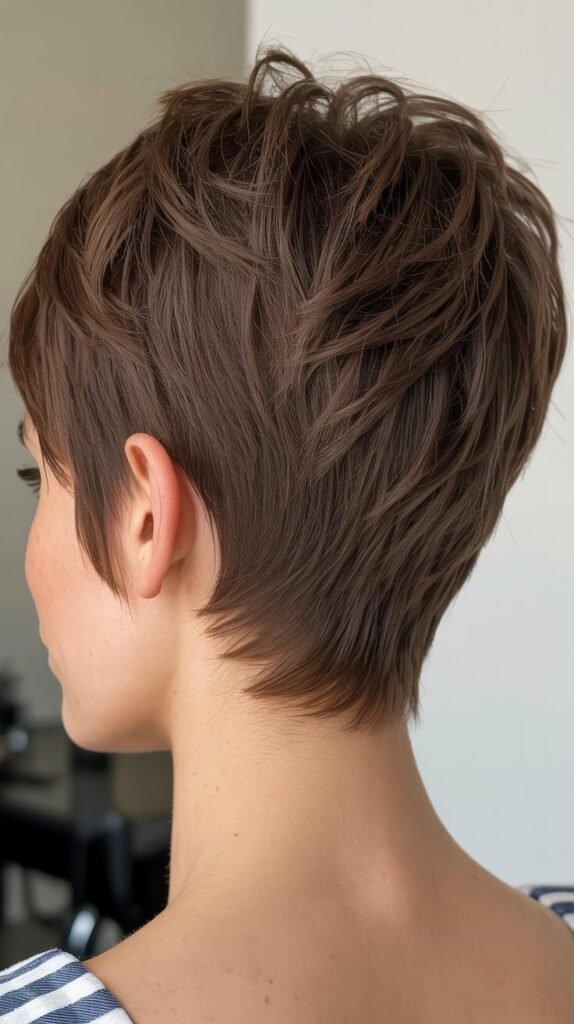
The layered pixie with tapered nape combines classic pixie styling with a gradually shortened back that creates a sleek, elongated silhouette.
The tapering technique removes weight and bulk from the nape area while maintaining feminine softness through carefully placed layers.
Key Features:
- The nape gradually becomes shorter as it approaches the hairline, creating a V-shape or rounded taper.
- Crown layers provide volume and height that balance the shortened nape.
- Sides are typically cut shorter than the top but longer than the nape for proportional harmony.
- Face-framing pieces around the ears and temples soften the overall appearance.
Benefits of Tapering:
- Creates a clean, polished appearance that looks professional and well-maintained.
- Eliminates the “duck tail” effect that can occur when nape hair grows out between cuts.
- Provides a lightweight, cool feeling that’s ideal for warm climates or active lifestyles.
- Emphasizes the neck and jawline, drawing attention to these features.
15. Textured Bowl Cut with Modern Layers
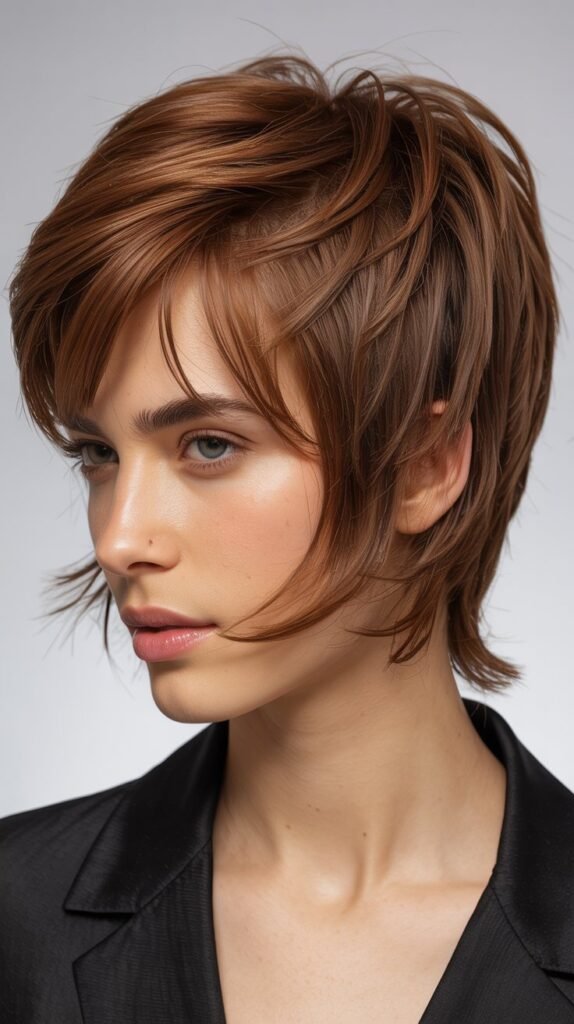
The textured bowl cut with modern layers reinvents a historically controversial style by incorporating contemporary layering techniques that eliminate the harsh, rigid lines of traditional bowl cuts.
This updated version creates a fashion-forward, editorial appearance while maintaining the distinctive rounded silhouette.
Key Features:
- The perimeter follows a rounded shape around the head but is softened with texturizing rather than cut bluntly.
- Interior layers create movement and dimension, preventing the solid, heavy appearance of classic bowl cuts.
- The fringe is typically cut to eyebrow level or slightly above, integrated seamlessly with the sides.
- Piece-y ends and strategic texturizing make the style wearable and contemporary.
Styling for Wearability:
- Use a round brush while blow-drying to add bend and movement to the rounded perimeter.
- Apply texturizing cream to piece out the ends and break up any remaining bowl-like appearance.
- Create slight separation throughout using your fingers rather than combing smooth.
- Consider adding subtle highlights or lowlights to enhance dimension and depth.
16. Choppy Layered Bob with Blunt Edges
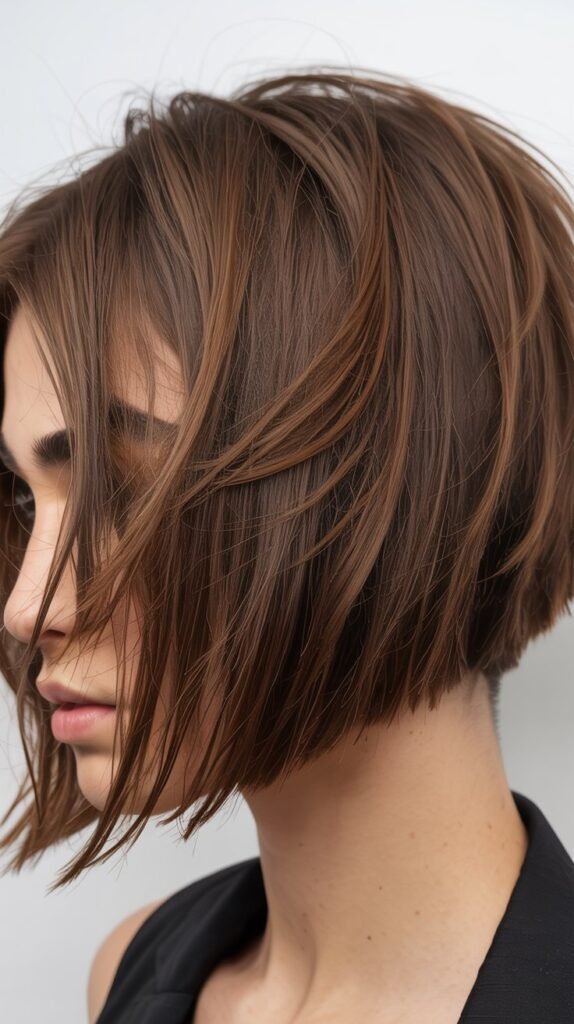
The choppy layered bob with blunt edges juxtaposes contradictory elements—structured bluntness at the perimeter combined with intentionally messy, disconnected interior layers.
This contrast creates visual interest and modern edge while maintaining a wearable, everyday style.
Key Features:
- The perimeter is cut straight across in a blunt line for graphic impact and visual weight.
- Interior layers are heavily textured and disconnected, creating separation and movement.
- Length typically falls between chin and shoulder, with the exact placement depending on personal preference.
- Face-framing pieces are often incorporated, connecting to the blunt perimeter through choppy graduation.
Styling Contrast:
- Straighten the ends to emphasize the blunt perimeter while leaving the interior tousled and textured.
- Add waves throughout for a softer, more romantic interpretation that minimizes the blunt edge.
- Style sleek and smooth for high-contrast between the intentionally choppy layers and polished finish.
- Use your fingers to piece out the ends and create separation that showcases both the blunt cut and interior texture.
17. Wispy Layered Pixie
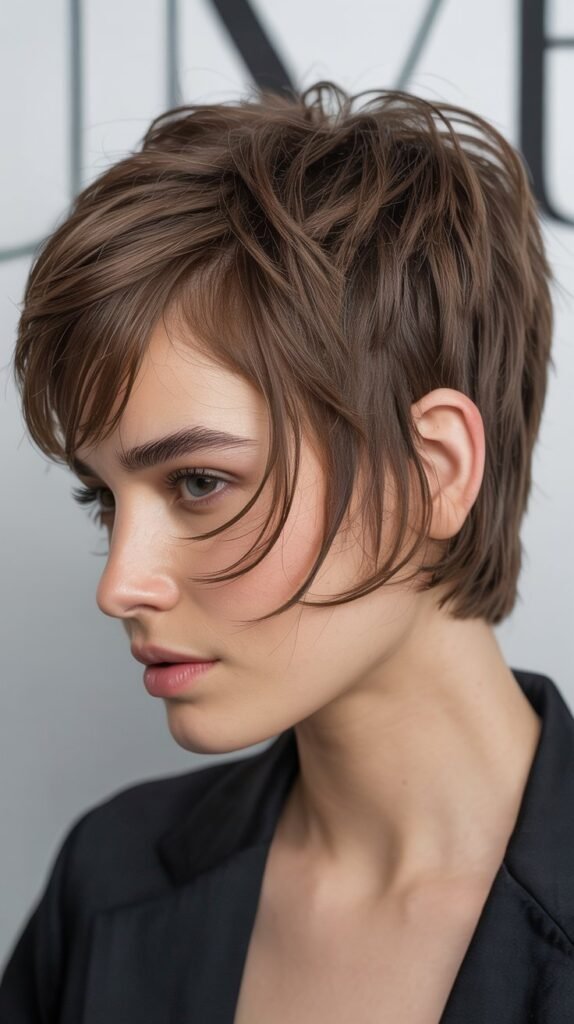
The wispy layered pixie features ultra-fine, delicate layers throughout that create an ethereal, feather-light appearance.
This style works particularly well for fine hair textures, as it embraces the natural delicacy rather than fighting against it to create false thickness.
Key Features:
- Layers are cut using point-cutting and slicing techniques that create whisper-thin ends.
- The overall length remains quite short (1-2 inches) to maintain the pixie classification while providing enough length for texture.
- Edges are intentionally wispy and soft rather than blunt or defined.
- The silhouette is rounded and feminine, with particular attention to softening around the face.
Maintenance for Fine Hair:
- Wash hair every 2-3 days to prevent over-stripping natural oils that provide essential body and texture.
- Use volumizing products rather than heavy moisturizing formulas that weigh down fine strands.
- Avoid over-handling or touching hair throughout the day, which can make fine hair appear greasy and flat.
- Schedule regular trims every 4-5 weeks to maintain the delicate wispy ends and prevent damage.
18. Textured A-Line Bob
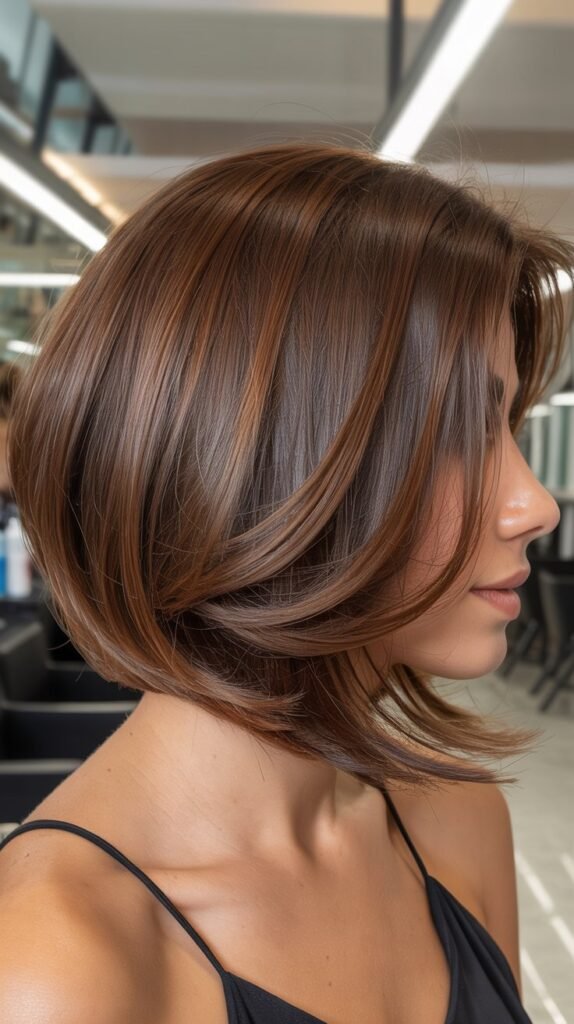
The textured A-line bob features a longer front and shorter back, creating a diagonal line when viewed from the side that adds sophistication and dimension.
The addition of texturized layers throughout modernizes this classic cut and prevents it from appearing too corporate or dated.
Key Features:
- Front pieces typically extend to collarbone or shoulder level while the back sits at nape length or higher.
- The angle creates a slimming effect along the jawline and draws the eye forward.
- Textured layers prevent the weight line from being too severe or harsh.
- Graduation in the back creates stacked volume while maintaining the angled silhouette.
Face-Framing Benefits:
- Longer front pieces create vertical lines that elongate round faces and minimize width.
- The angle draws attention to the jawline and cheekbones, highlighting these features.
- Strategic face-framing layers can be customized to balance individual facial proportions.
- The style creates a slenderizing effect when hair is worn down and tucked behind the ears.
19. Layered Crop with Side Part
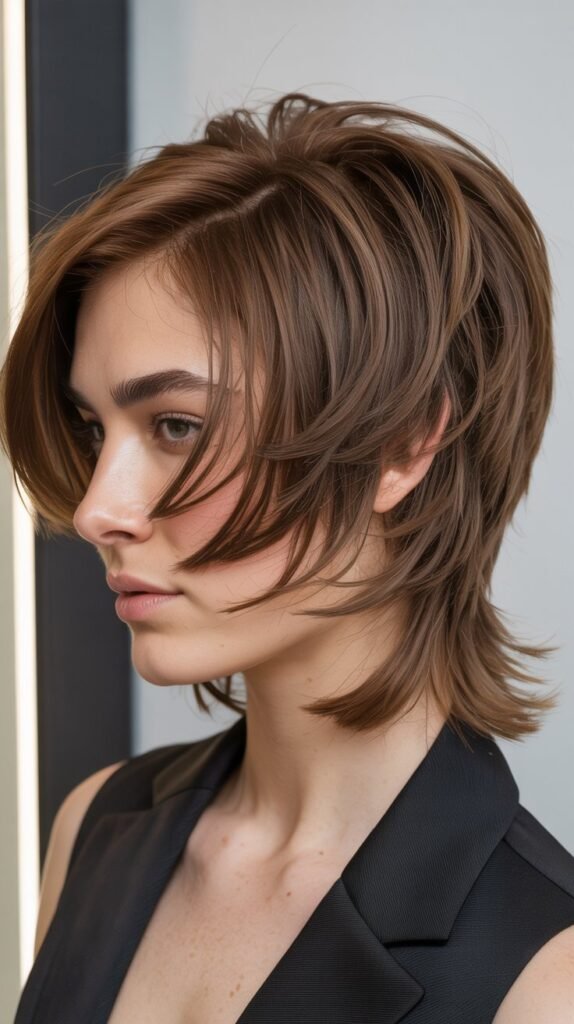
The layered crop with side part combines classic, timeless styling with modern texturizing techniques that create contemporary appeal.
The deep side part adds sophistication and polish while the layered crop provides casual wearability and low maintenance.
Key Features:
- The part is placed far to one side, typically at or past the outer edge of the eyebrow.
- Hair on the heavier side is slightly longer, creating volume and drama.
- The opposite side is often swept back and secured behind the ear for sleek contrast.
- Layers throughout create texture and prevent the heavier side from lying flat.
Styling the Side Part:
- Apply styling product to damp hair, then create your part with a fine-tooth comb for precision.
- Blow-dry the heavier side while directing hair away from the part with a round brush.
- Use a flat iron to create slight bends and waves throughout the longer side for additional texture.
- Secure the shorter side behind your ear with bobby pins or leave it loose for a softer appearance.
20. Textured Layered Mohawk
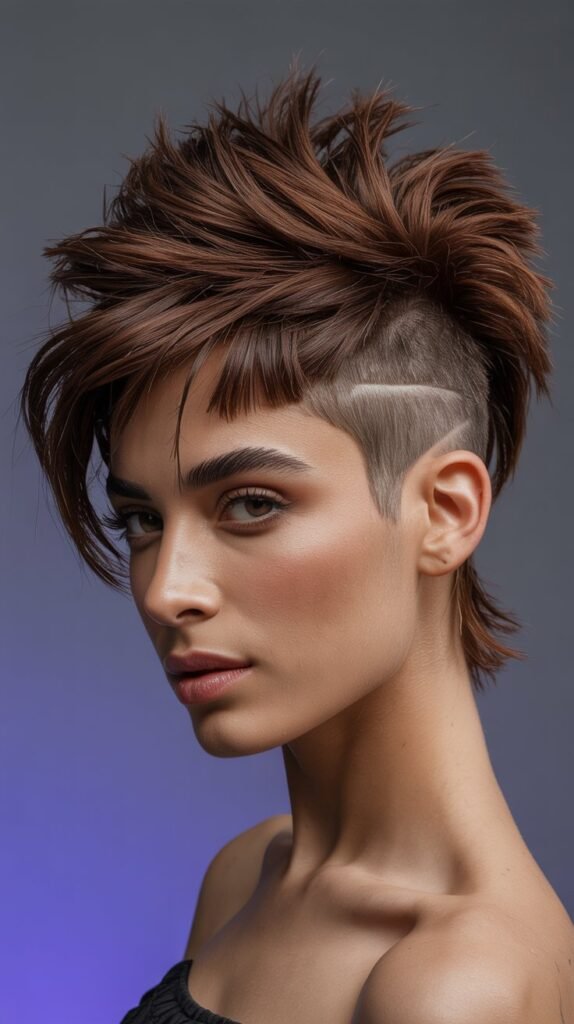
The textured layered mohawk creates drama through extreme contrast between very short or shaved sides and a textured strip of longer hair along the center of the head.
This bold style makes a powerful statement while offering surprising styling versatility depending on how the center section is manipulated.
Key Features:
- The center section ranges from 2-5 inches in length, depending on desired drama and styling preferences.
- Sides are either closely shaved or cut extremely short (typically 1/8 to 1/4 inch).
- Multiple layers within the center section create texture and prevent the mohawk from appearing too rigid.
- The width of the center section can be customized from subtle to dramatic based on personal preference.
Styling Variations:
- Style the center section upward and spiky for maximum punk-rock impact using strong-hold gel or pomade.
- Sweep the center section to one side for a dramatic side-swept appearance that’s surprisingly wearable.
- Leave the center section down and textured for a softer interpretation that minimizes the mohawk effect.
- Slick the center section straight back for a sleek, retro-inspired rockabilly aesthetic.
21. Soft Layered Bob with Curtain Bangs
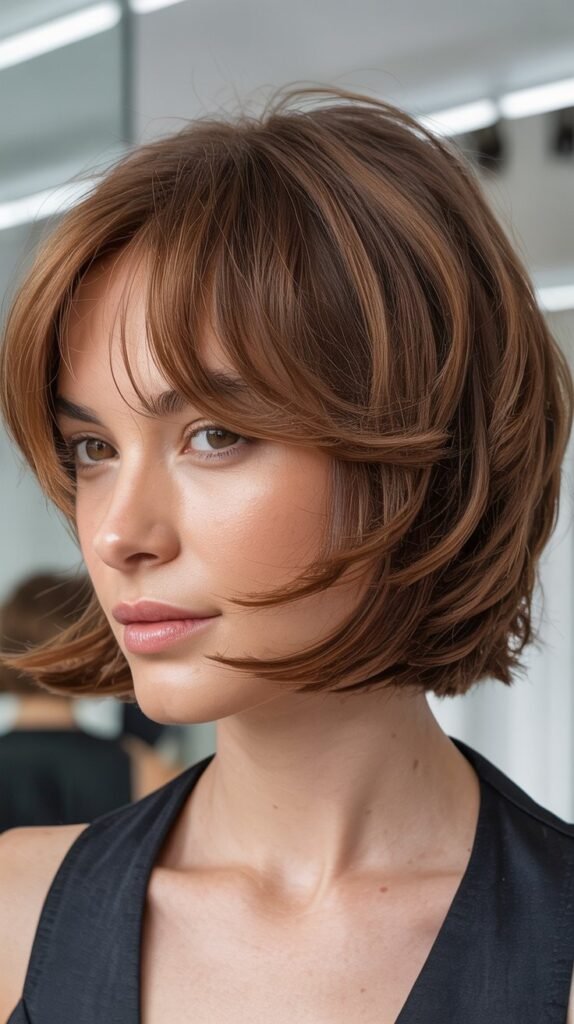
The soft layered bob with curtain bangs pairs timeless bob styling with the currently trending curtain bang framing that parts down the center and sweeps to each side.
This combination creates a flattering, feminine frame that works beautifully across various face shapes and ages.
Key Features:
- The bob length typically falls between chin and shoulder level, providing versatile styling options.
- Curtain bangs are longest at the center (around bridge of the nose) and shorter at the outer corners.
- Soft layers throughout the perimeter create movement without excessive volume or texture.
- The overall effect is romantic and effortlessly chic rather than edgy or dramatic.
Curtain Bang Maintenance:
- Trim curtain bangs every 3-4 weeks to maintain the proper length and shape.
- Blow-dry bangs while rolling them away from the center part using a round brush.
- Apply a small amount of lightweight serum to the bangs to prevent frizz and add shine.
- Avoid applying heavy products to the bangs, which can make them appear greasy and separated.
22. Textured Pixie with Undercut Design
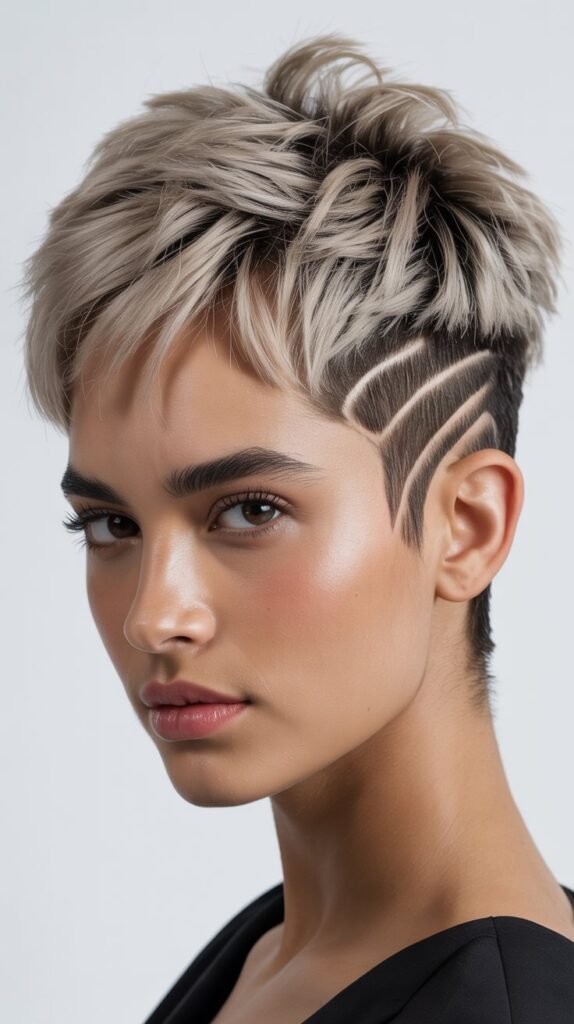
The textured pixie with undercut design elevates standard pixie styling by incorporating artistic patterns or designs shaved into the undercut section.
This combination allows for creative expression while maintaining a professional appearance when the longer top layers are styled down.
Key Features:
- The undercut section features geometric patterns, lines, or artistic designs created with clippers.
- Top layers are cut with abundant texture and sufficient length to cover the design when desired.
- The contrast between the artistic undercut and textured top creates dimensional interest.
- Designs can be changed or updated every few weeks as the undercut grows out and requires maintenance.
Popular Design Options:
- Geometric lines creating triangles, diamonds, or abstract patterns appeal to those seeking modern minimalism.
- Floral or nature-inspired designs offer a softer, more feminine interpretation of the undercut trend.
- Tribal or cultural patterns allow for personal expression and connection to heritage.
- Simple linear patterns provide subtle interest without overwhelming the overall style.
23. Tousled Textured Crop with Micro Bangs
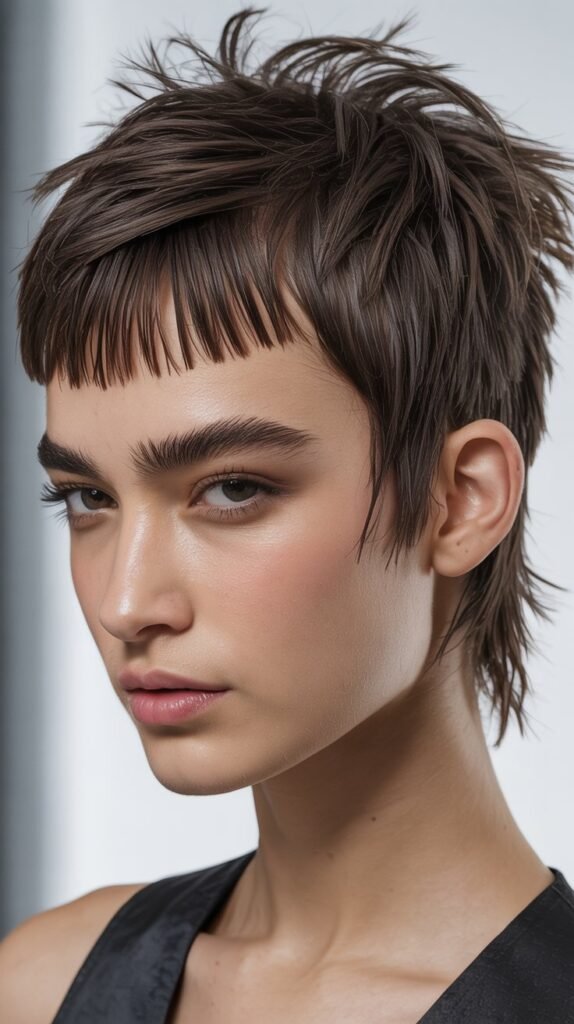
The tousled textured crop with micro bangs pairs an easy, undone crop with daringly short, blunt-cut bangs that create instant fashion-forward impact.
This combination requires confidence but delivers unparalleled style that stands out in any crowd.
Key Features:
- Micro bangs are cut to mid-forehead or higher, creating a dramatic, editorial appearance.
- The crop section features abundant texture through point-cutting and razor work.
- Overall length ranges from 1-3 inches, keeping maintenance minimal and styling simple.
- The contrast between the structured micro bangs and tousled crop creates visual interest.
Styling the Micro Bangs:
- Blow-dry micro bangs straight down using a flat paddle brush for sleek precision.
- Apply a tiny amount of pomade or wax to keep micro bangs perfectly in place throughout the day.
- Avoid adding product to the rest of the hair, which should maintain a tousled, natural texture.
- Consider the commitment carefully, as micro bangs take several months to grow out if you change your mind.
24. Layered Bob with Balayage Highlights
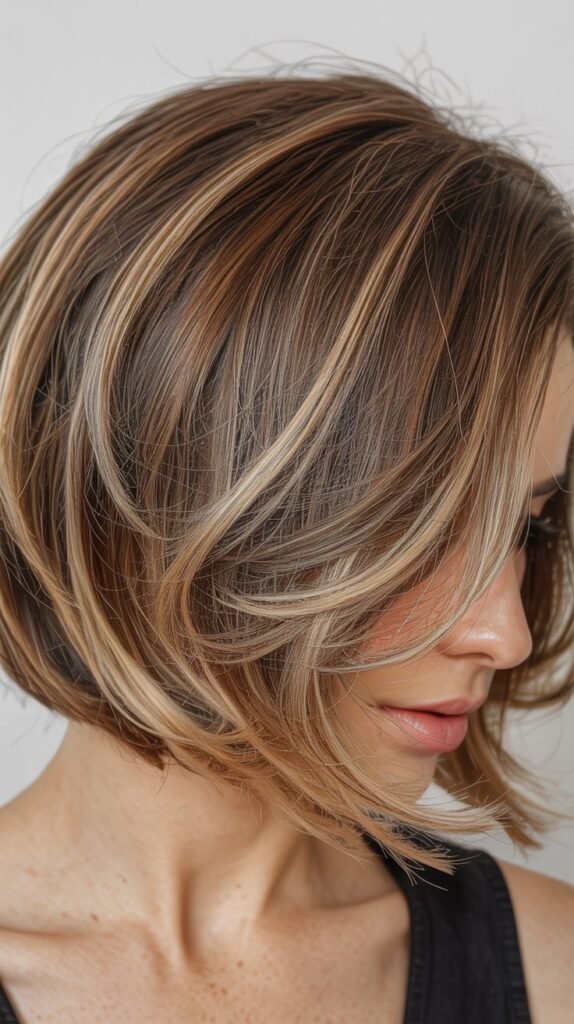
The layered bob with balayage highlights combines dimensional color with textured layering to create depth, movement, and visual interest.
The hand-painted highlighting technique enhances the layers by creating light and shadow that emphasizes dimension.
Key Features:
- Layers throughout the bob create movement that showcases the dimensional color placement.
- Balayage highlights are painted strategically to enhance face-framing pieces and add depth throughout.
- The color gradually transitions from darker roots to lighter ends, creating natural-looking dimension.
- The combination of layering and color creates the appearance of significantly more thickness and volume.
Color Placement Strategy:
- Lighter pieces around the face brighten complexion and draw attention to facial features.
- Highlights concentrated on the top layers create the illusion of sun-kissed natural lightening.
- Darker underlayers provide depth and prevent the color from appearing flat or one-dimensional.
- The hand-painted application ensures a soft, blended transition without harsh lines.
25. Short Textured Mullet
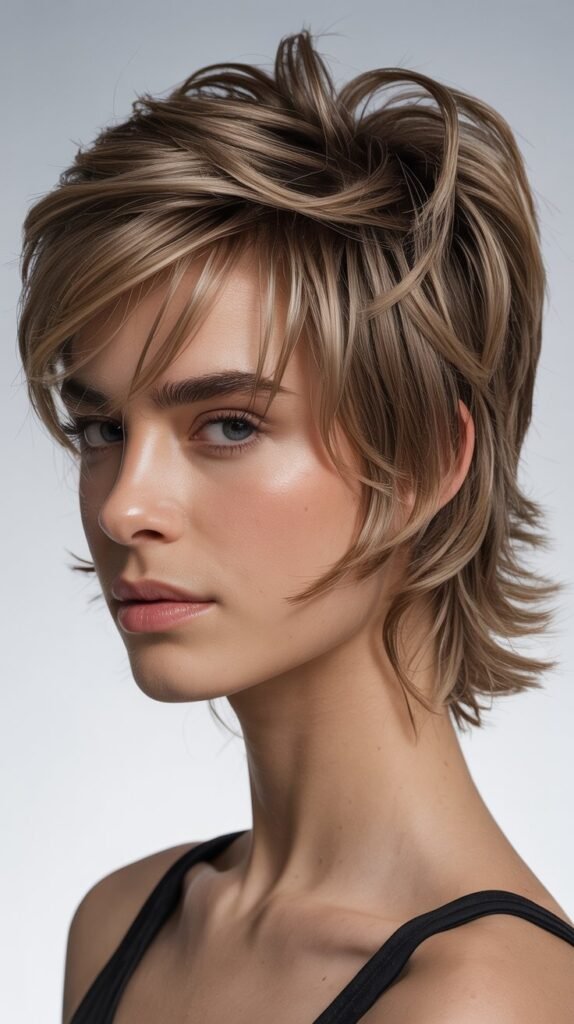
The short textured mullet resurrects a controversial retro style by modernizing it with contemporary texturizing, better proportions, and stylish finishing.
When executed properly, this style creates edgy, fashion-forward appeal that’s currently trending among style-conscious individuals.
Key Features:
- The front and sides are cut short (1-3 inches) with textured layers for modern wearability.
- The back extends longer than traditional short cuts but remains moderate (3-5 inches) rather than extreme.
- Heavily textured layers throughout prevent the style from appearing dated or costume-like.
- The transition between shorter front and longer back is carefully blended for cohesiveness.
Modern Mullet Styling:
- Add waves or curls throughout to create a softer, more feminine interpretation.
- Style the front sections forward and piece them out for edgy, punk-inspired appeal.
- Slick the sides back while leaving the front and back textured for interesting contrast.
- Embrace the intentional disconnection between sections rather than trying to blend too seamlessly.
26. Voluminous Textured Pixie
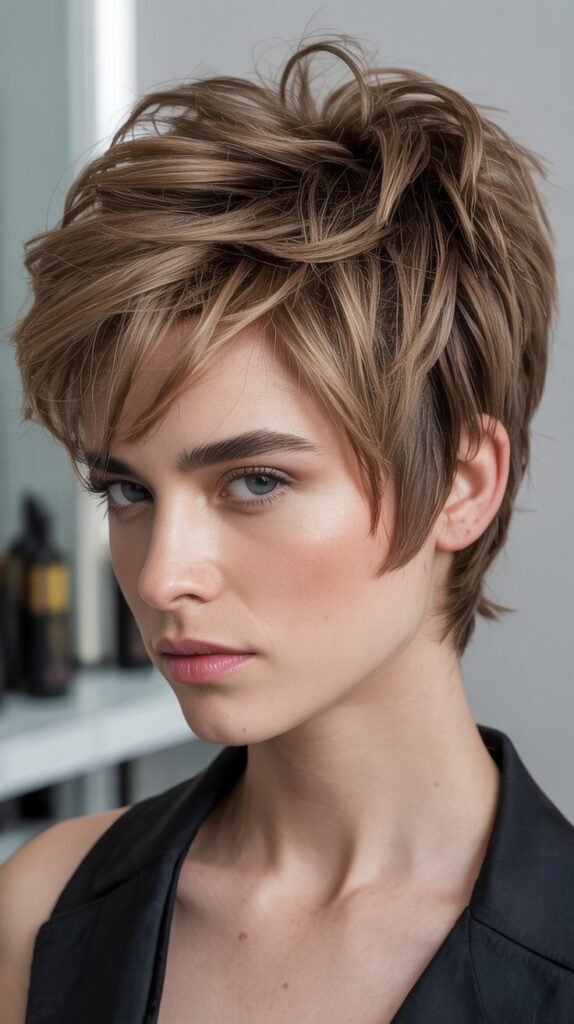
The voluminous textured pixie maximizes height and fullness at the crown while maintaining the classic short length of a pixie cut.
This style works beautifully for fine hair that needs the illusion of thickness or for anyone seeking dramatic lift and presence in their hairstyle.
Key Features:
- Crown layers are cut shortest to create maximum lift when styled upward and back.
- Sides and back are cut longer than the crown, providing contrast that emphasizes the volume on top.
- Texturizing throughout creates separation and prevents the crown from appearing like a solid mass.
- The overall silhouette is intentionally exaggerated and dramatic rather than subtle.
Volume-Creating Techniques:
- Apply volumizing mousse generously to damp hair, focusing on the roots at the crown.
- Blow-dry while lifting sections straight up from the scalp using a round brush.
- Backcomb or tease the crown area lightly for additional height and drama.
- Finish with strong-hold hairspray to maintain the volume throughout the day.
- Consider root-lifting products or volumizing powder for extra lift at the scalp.
Essential Styling Products for Textured Layered Hairstyles
Texturizing Products:
- Sea salt spray creates beachy, tousled texture while adding grip and separation to fine hair.
- Texturizing paste provides piecey definition and hold without creating stiffness or crunchiness.
- Dry texture spray adds instant grit and volume while absorbing excess oil between washes.
- Styling powder lifts roots and creates instant volume with a matte, natural finish.
Heat Styling Products:
- Thermal protection spray prevents damage from blow dryers, flat irons, and curling tools.
- Heat-activated volumizing spray provides lift and body while protecting from heat damage.
- Smoothing serum controls frizz and adds shine when using hot tools for sleek finishes.
Finishing Products:
- Flexible-hold hairspray maintains style without creating stiffness or preventing movement.
- Shine spray adds gloss and luminosity to finished styles for a polished appearance.
- Pomade or wax defines individual pieces and creates separation for textured, piece-y looks.
Maintenance Tips for Short Textured Layered Hairstyles
Regular Trimming Schedule:
- Short textured styles require more frequent trims than longer hair to maintain their shape and integrity.
- Schedule appointments every 4-6 weeks to prevent the style from growing out and losing its intended structure.
- Maintain relationships with experienced stylists who understand your specific cut and how to preserve it.
- Consider learning basic maintenance techniques to extend time between professional trims.
Washing and Conditioning:
- Wash short hair every 2-3 days rather than daily to prevent over-stripping natural protective oils.
- Use lightweight, volumizing shampoos and conditioners that won’t weigh down short layered styles.
- Apply conditioner only to the ends rather than the roots to maintain volume and prevent greasiness.
- Incorporate clarifying shampoo once weekly to remove product buildup that can make short hair appear flat.
Nighttime Protection:
- Sleep on silk or satin pillowcases to reduce friction that creates frizz and disrupts styled texture.
- Refresh styles in the morning with water or dry shampoo rather than washing and restyling daily.
- Consider wearing a silk sleep cap or bonnet to preserve styles, especially on textured or curly hair.
Choosing the Right Short Textured Layered Style
Consider Your Lifestyle:
- Busy professionals should choose low-maintenance styles like choppy pixies or messy shags that look great with minimal styling.
- Active individuals benefit from very short crops or pixies that dry quickly and require minimal product.
- Fashion-forward trendsetters can experiment with bold choices like mohawks, undercuts, or asymmetrical cuts.
Assess Your Hair Characteristics:
- Fine hair benefits from styles with graduated layers or volumizing techniques that create the illusion of thickness.
- Thick, coarse hair works well with heavy texturizing like shags, razor cuts, or layered undercut bobs.
- Curly hair requires dry cutting techniques and styles specifically designed to showcase natural curl patterns.
- Straight hair shows off precision cuts, clean lines, and architectural shapes most effectively.
Match to Face Shape:
- Oval faces are versatile and can wear virtually any short textured layered style successfully.
- Round faces benefit from styles with height at the crown and length that extends past the widest part of the face.
- Square faces are softened by asymmetrical cuts, side parts, and face-framing layers.
- Heart-shaped faces find balance with styles that add width at the jawline and incorporate curtain bangs or side-swept fringe.
Conclusion
The journey through these 26 Stylish Short Textured Layered Hairstyles reveals the remarkable versatility, sophistication, and transformative power that short hair with textured layers can provide to women of all ages, face shapes, and personal styles.
From the boldly dramatic textured mohawk and asymmetrical pixie to the softly romantic layered bob with curtain bangs and the effortlessly chic tousled lob, each style offers unique benefits tailored to different lifestyles, hair textures, and aesthetic preferences.
The beauty of short textured layered hairstyles lies not only in their stunning visual impact but also in their practical advantages—reduced styling time, lower maintenance requirements, and the freedom to experiment with different looks using the same foundational cut.
Whether you’re drawn to the edgy rebellion of undercut designs, the timeless elegance of feathered layers, the contemporary cool of a textured French crop, or the voluminous drama of a stacked bob, there’s a perfect short textured layered style waiting to enhance your natural beauty and express your individual personality.
Armed with the styling techniques, maintenance tips, and professional insights shared throughout this comprehensive guide, you’re now equipped to confidently choose, maintain, and style a short textured layered hairstyle that will make you look and feel absolutely spectacular every single day.
Remember that the best hairstyle is one that makes you feel confident, comfortable, and authentically yourself—so embrace the transformative power of short textured layers and enjoy the compliments, convenience, and creative possibilities that come with your stunning new look.