
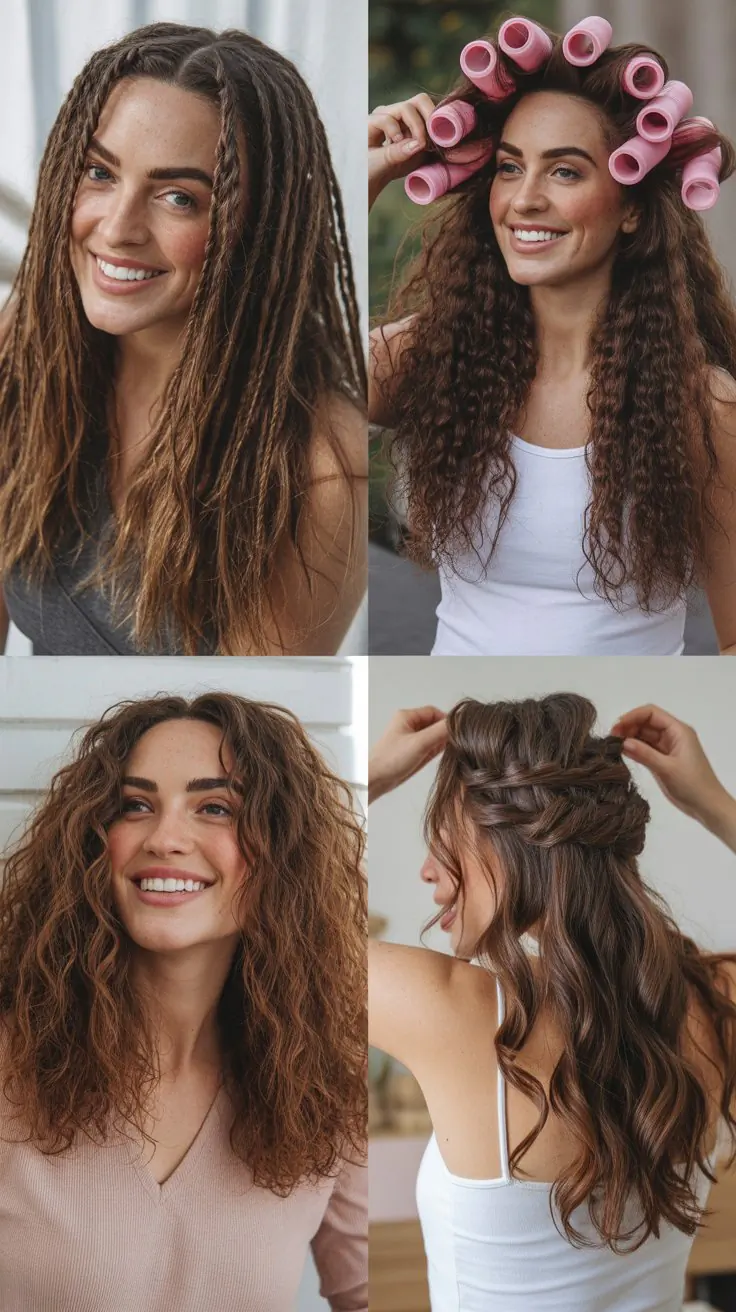
If you’ve been struggling to find the perfect wavy hairstyles that work with your thick hair without spending hours with hot tools, you’re about to discover a game-changing collection of techniques.
The journey to gorgeous, heat-free waves doesn’t have to be complicated or time-consuming, especially when you understand which methods work best for your hair density and texture.
This comprehensive guide will walk you through 36 proven heatless wavy hairstyles specifically designed for thick hair, covering everything from overnight methods and quick styling tricks to product recommendations and maintenance tips that actually deliver results.
Whether you’re looking to protect your hair from heat damage, simplify your morning routine, or simply explore new styling options, these 36 Heatless Wavy Hairstyles for Thick Hair That Save Time will transform how you approach your daily hair care while giving you the beautiful, effortless waves you’ve always wanted.
1. Understanding Your Thick Hair Type
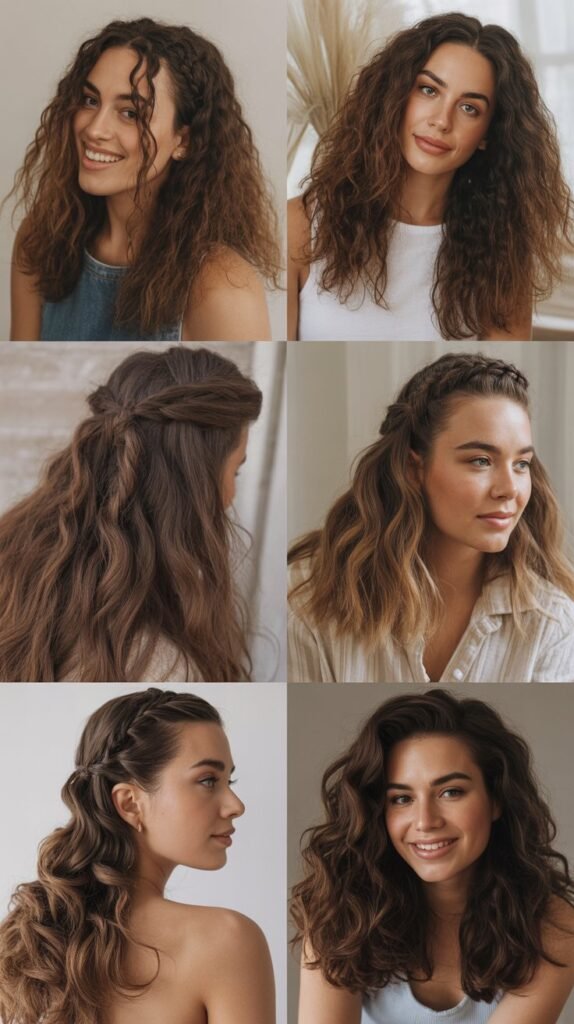
Before diving into specific heatless wavy hairstyles, understanding your thick hair’s unique characteristics will help you choose the most effective methods.
Thick hair has more density and individual strand count than fine or medium hair, which means it requires different techniques and longer setting times to achieve lasting waves.
- Thick hair typically has 150,000 or more individual strands on the scalp, compared to 100,000 for average hair density.
- The weight of thick hair can pull out waves faster, requiring stronger setting methods or overnight techniques.
- Your hair’s porosity level affects how well it holds styles, with low porosity thick hair needing more moisture and longer drying times.
- Coarse thick hair has larger strand diameter and requires different products than fine thick hair, which has high density but thinner individual strands.
- Understanding whether your thick hair is straight, wavy, or curly naturally will help you select complementary heatless methods.
- Thick hair often takes 6-8 hours or longer to air dry completely, making overnight styling methods particularly practical.
2. Essential Products for Heatless Waves on Thick Hair
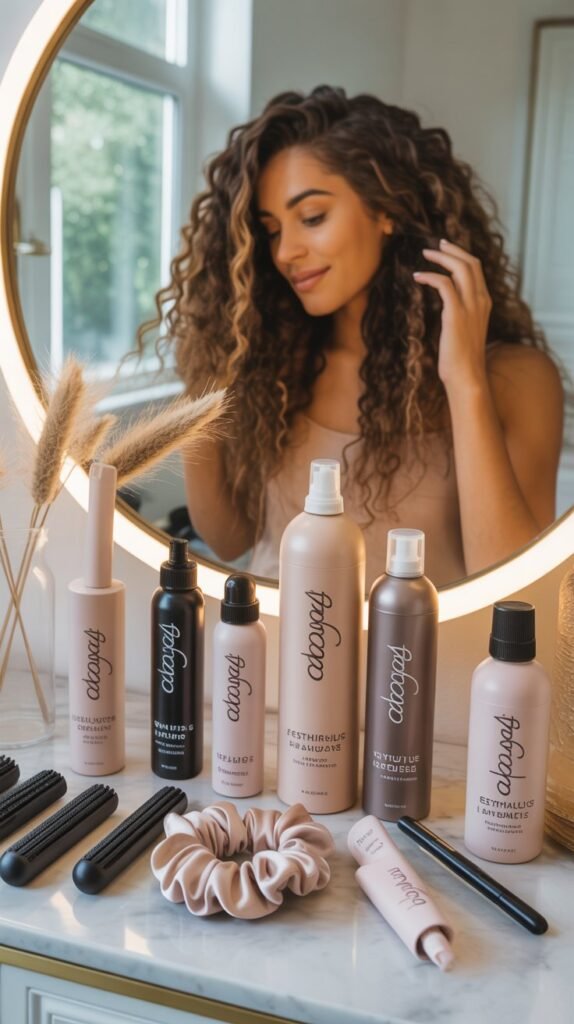
The right products make a significant difference in achieving and maintaining heatless waves in thick hair.
These foundational items will enhance your results regardless of which styling method you choose.
- Mousse formulas provide lightweight hold without weighing down thick hair, and work exceptionally well when applied to damp hair before styling.
- Sea salt sprays add texture and enhance natural wave patterns, helping thick hair hold its shape throughout the day.
- Leave-in conditioners prevent frizz and add moisture, which is essential since many heatless methods require damp or wet hair.
- Gel products offer stronger hold for thick hair that tends to drop waves quickly, especially when applied in small sections.
- Lightweight oils or serums seal moisture and add shine without creating greasiness on thick hair.
- Dry shampoo extends the life of your waves by absorbing excess oil at the roots while maintaining texture.
- Setting sprays lock in your waves once you remove your heatless styling tools, providing all-day hold.
- Microfiber towels or t-shirts reduce frizz when drying thick hair before applying heatless styling methods.
3. Braiding Methods for Overnight Waves
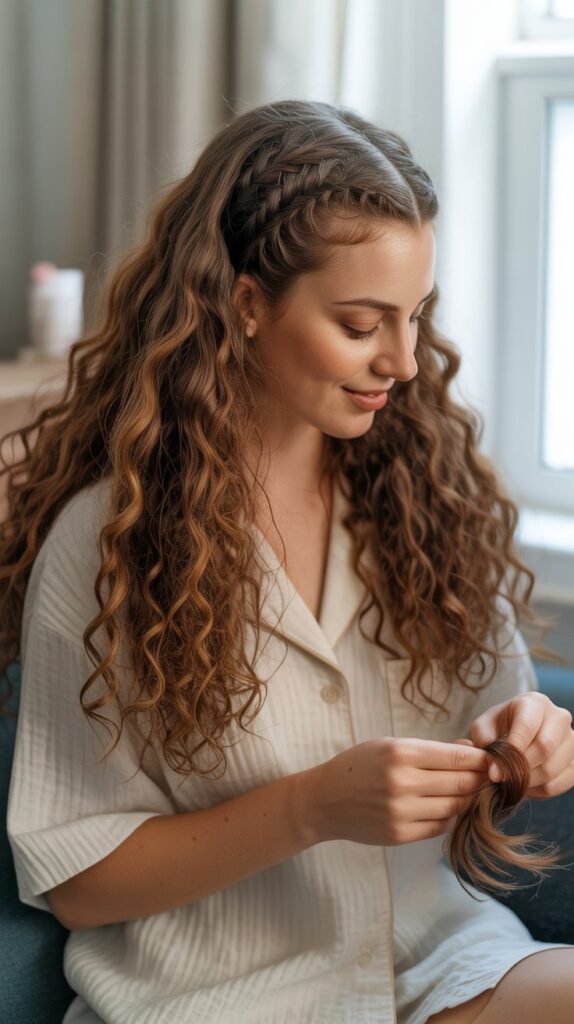
Braiding remains one of the most reliable and time-tested methods for creating heatless waves in thick hair.
These techniques work while you sleep, saving valuable time in your morning routine.
- Classic three-strand braids create uniform waves throughout your hair, with tighter braids producing more defined waves and looser braids creating softer results.
- Dutch braids (inside-out braids) create more volume at the roots and produce waves that start higher up on the head.
- French braids offer similar benefits to Dutch braids but lie flatter against the scalp, creating waves with less root lift.
- Rope braids (two-strand twists) generate spiral-like waves with a different texture than traditional three-strand braids.
- Multiple smaller braids throughout your thick hair create more uniform, crimped waves with significant volume.
- One or two large braids work well for looser, beachy waves that look more natural and relaxed.
- Starting braids on damp hair (not soaking wet) ensures they dry completely overnight and hold better.
- Securing braids with silk or satin scrunchies prevents creases and reduces breakage on thick hair.
- Applying a small amount of mousse or styling cream before braiding enhances wave definition and longevity.
- Loosely braiding the last few inches prevents the crimp line that elastic bands can create at the ends.
4. Twist and Pin Techniques

Twisting and pinning sections of thick hair creates beautiful waves without any special tools.
These methods are particularly effective for thick hair because they work with your hair’s natural weight and density.
- Divide damp thick hair into 4-6 large sections and twist each section tightly from root to tip before coiling into a bun.
- Secure each twisted bun with bobby pins or hair clips, ensuring the pins don’t create dents in your waves.
- The Bantu knot method involves twisting smaller sections and wrapping them into tight knots secured close to the scalp.
- For looser waves, create larger sections and twist them less tightly before pinning.
- Twisting hair away from your face on both sides creates more flattering, face-framing waves.
- Pin curls set on damp hair and left overnight produce vintage-inspired waves with significant volume.
- Using curl clips or duckbill clips to set the roots while twists dry adds extra lift at the crown.
- Alternating the direction of twists (some clockwise, some counterclockwise) creates a more natural, varied wave pattern.
- Waiting until hair is 70-80% dry before twisting and pinning helps thick hair dry completely overnight.
5. Foam Roller and Sponge Roller Waves
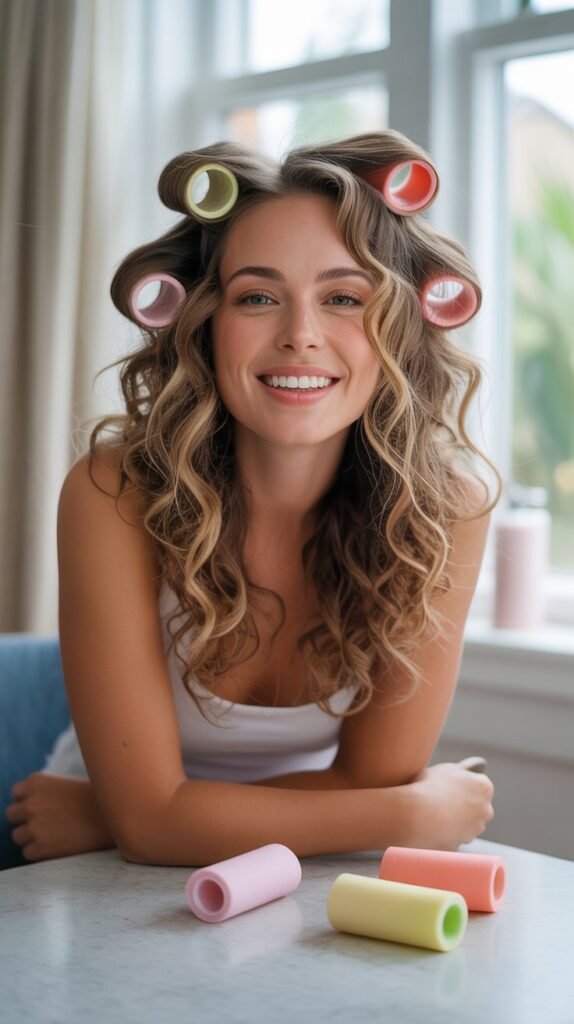
Foam and sponge rollers offer one of the most comfortable overnight options for thick hair, creating consistent waves from root to tip without the discomfort of hard plastic rollers.
- Foam rollers come in various diameters, with larger rollers (1.5-2 inches) creating looser waves ideal for thick hair.
- Sponge rollers are softer and more comfortable for sleeping, making them perfect for overnight styling.
- Rolling sections of damp thick hair around foam rollers from ends to roots creates even waves throughout each section.
- Securing rollers with the attached clips or ties prevents them from unraveling while you sleep.
- Using approximately 12-20 rollers ensures complete coverage for thick hair without missing sections.
- Applying a setting lotion or mousse before rolling enhances hold and definition in thick hair.
- Sleeping on a silk or satin pillowcase prevents frizz and helps foam rollers stay in place overnight.
- Removing rollers gently in the morning by unrolling rather than pulling prevents disrupting the wave pattern.
- Allowing hair to cool for 5-10 minutes after removing rollers helps waves set more permanently.
- Separating waves with your fingers rather than brushing maintains definition while adding volume.
6. Heatless Curling Rod Methods
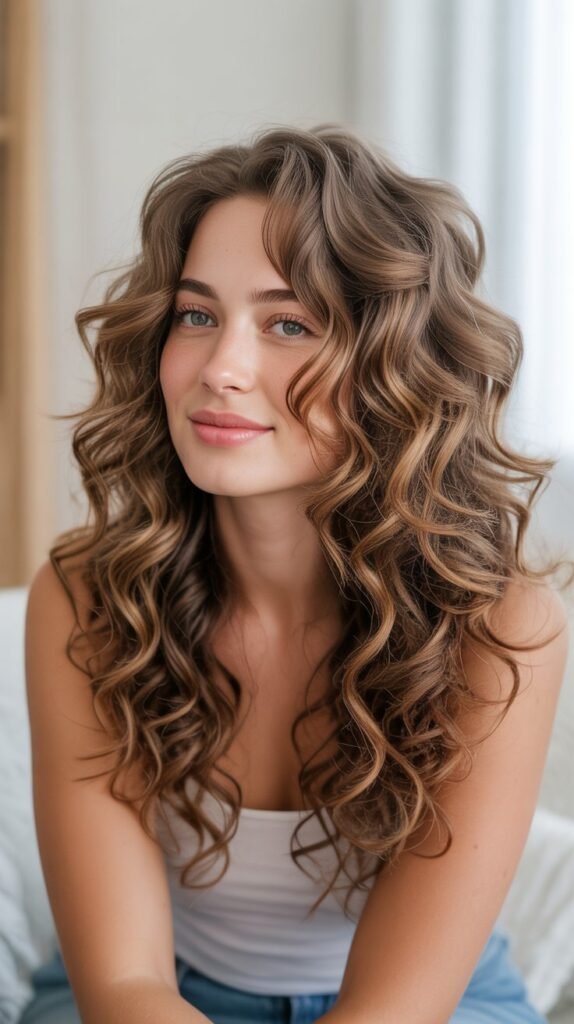
Heatless curling rods have gained massive popularity for creating perfect waves without heat damage. These flexible rods work exceptionally well on thick hair when used correctly.
- The popular heatless curling rod headband wraps around the head with hair wound around it, creating uniform waves on both sides.
- Starting with damp (not wet) hair ensures thick hair dries completely during the 6-8 hour setting time.
- Dividing hair into two equal sections and wrapping each side around the rod from front to back creates balanced waves.
- Securing the ends with small elastics or clips prevents unwrapping while you sleep or go about your day.
- The rod’s position matters—placing it further back on your head creates waves that start lower, while positioning it at the crown creates waves from the roots.
- Silk or satin-covered rods reduce frizz and are more comfortable for overnight wear than standard fabric versions.
- Removing the rod by gently unwinding hair in the opposite direction of wrapping preserves wave integrity.
- This method works particularly well on thick hair because the hair’s weight actually helps create more defined waves as it pulls down slightly.
- Adding a light styling cream or wave-enhancing product before wrapping increases hold and definition.
7. Sock Bun Wave Method

The sock bun method transforms an ordinary sock into a heatless styling tool that creates beautiful waves, particularly effective for thick hair due to the sock’s flexibility and softness.
- Cut the toe section off a clean, long sock and roll it into a donut shape to create your heatless curling tool.
- Pull damp hair into a high ponytail and thread the ends through the sock donut positioned at the ponytail base.
- Roll the sock down toward your head, wrapping all your hair around it evenly to create a bun.
- Secure the sock bun with bobby pins if needed, though thick hair often holds the sock in place naturally.
- This method creates waves that are tighter near the ends and looser near the roots for a natural gradient effect.
- Using a larger sock (like a knee-high sock) works better for thick hair than a standard ankle sock.
- The sock bun can be worn during the day as a stylish updo while simultaneously setting your waves.
- Leaving the sock bun in for at least 6-8 hours ensures thick hair dries completely and waves set properly.
- Carefully unrolling the sock bun and removing it gently prevents disrupting the wave pattern.
- Flipping your head upside down and shaking waves gently adds volume and separates waves naturally.
8. Flexi Rod Waves for Volume

Flexi rods are bendable styling tools that create bouncy, voluminous waves perfect for thick hair that needs extra body and movement.
- Flexi rods come in multiple sizes, with medium to large sizes (3/4 inch to 1 inch diameter) working best for waves rather than tight curls on thick hair.
- Rolling small sections of damp hair around each flexi rod from ends to roots ensures even wave distribution.
- Bending the flexible ends of each rod secures it in place without clips or pins that might create dents.
- Using 15-25 flexi rods provides complete coverage for thick hair, depending on your hair’s length and density.
- Rolling sections in different directions creates a more natural, tousled wave pattern with varied movement.
- Sleeping on flexi rods is comfortable due to their flexible, cushioned construction compared to hard plastic rollers.
- Applying a curl-enhancing cream or mousse before rolling increases wave definition and longevity.
- Allowing hair to dry completely (usually 8-10 hours for thick hair) before removing rods is crucial for lasting results.
- Removing flexi rods by unbending and gently sliding them out preserves the wave shape without frizz.
- The resulting waves have significant bounce and volume, lasting 2-3 days on thick hair with proper maintenance.
9. Headband Wave Technique

The headband wave technique uses a simple elastic headband to create effortless waves, working particularly well on thick hair due to its simplicity and effectiveness.
- Choose a stretchy fabric headband that fits comfortably around your head without being too tight.
- Place the headband around your head like a crown, positioning it about an inch back from your hairline.
- Take small sections of damp hair and wrap them up and over the headband, tucking the ends under.
- Continue wrapping sections around the headband from front to back on both sides until all hair is secured.
- The tightness of wrapping determines wave definition—tighter wrapping creates more defined waves, while looser wrapping produces softer results.
- This method works well as a daytime protective style that simultaneously creates waves while looking presentable.
- Thick hair typically requires 6-8 hours for complete drying and wave setting with this method.
- Using a fabric-covered headband prevents the material from absorbing moisture from your damp hair.
- Carefully unwrapping sections in reverse order (from back to front) maintains wave integrity.
- This technique creates face-framing waves that start relatively high on the head, flattering most face shapes.
10. Paper Towel Curls Method

The paper towel method creates heatless waves using an inexpensive household item, proving particularly effective for thick hair because paper towels grip hair well without slipping.
- Cut paper towels into strips approximately 2 inches wide and 8-10 inches long for thick hair.
- Take small sections of damp hair (about 1 inch wide) and place the mid-section on a paper towel strip.
- Roll the hair around the paper towel from ends to roots, creating a spiral curl.
- Tie the ends of the paper towel strip together to secure the rolled section without clips or pins.
- Using 20-30 paper towel strips ensures complete coverage for thick, long hair.
- This method is exceptionally gentle on hair since paper towels are soft and don’t pull or snag.
- The absorbent nature of paper towels actually helps thick hair dry faster than some other heatless methods.
- Sleeping on paper towel curls is comfortable due to their soft, cushioned texture.
- Removing paper towels by untying and gently unrolling preserves the curl-wave pattern perfectly.
- The resulting waves have a natural, textured appearance with significant volume and movement.
11. Plopping Method for Natural Waves

Plopping is a technique that enhances natural wave patterns in thick hair by using a t-shirt or microfiber towel to encourage curl formation without disrupting the hair’s natural texture.
- Start with freshly washed, dripping wet thick hair that has styling products already applied.
- Lay a large cotton t-shirt or microfiber towel flat on a surface with the sleeves closest to you.
- Flip your head upside down and lower your hair into the center of the t-shirt, allowing it to pile on top of your head naturally.
- Wrap the back of the t-shirt over your head toward your forehead, then twist the sleeves together at the nape of your neck.
- Bring the twisted sleeves up and over to the back of your head, tying them securely to hold everything in place.
- The plopping technique works by holding waves in their natural formation without the weight of water pulling them straight.
- Leaving thick hair plopped for 20-45 minutes (not too long) prevents over-drying while encouraging wave formation.
- This method works best on thick hair that has natural wave tendencies rather than completely straight thick hair.
- Combining plopping with other techniques (like diffusing afterward or sleeping in braids) enhances results.
- The gentle nature of plopping makes it ideal for daily use without causing damage or stress to thick hair.
12. Straw Wave Method

The straw wave method creates unique, textured waves using regular drinking straws, offering thick hair a distinctive wave pattern that’s both quirky and beautiful.
- Use regular plastic or paper drinking straws, needing approximately 30-50 straws for complete thick hair coverage.
- Take very small sections of damp hair (about half an inch wide) and wrap them around each straw from ends to roots.
- Secure each wrapped straw by bending a bobby pin over both ends or using small elastics.
- The small diameter of straws creates tighter, more crimped waves with significant texture and volume.
- This method takes considerable time to set up but creates unique, long-lasting waves on thick hair.
- Using larger-diameter bubble tea straws creates slightly looser waves while still maintaining the textured effect.
- Sleeping on straw curls requires careful positioning or doing this method during a day at home.
- Thick hair typically needs 6-8 hours with straws for complete drying and wave setting.
- Removing straws carefully by unrolling hair prevents breakage and maintains the wave pattern.
- The resulting waves have a distinct, modern texture that works well for editorial or fashion-forward looks.
13. Silk Scarf Wave Technique
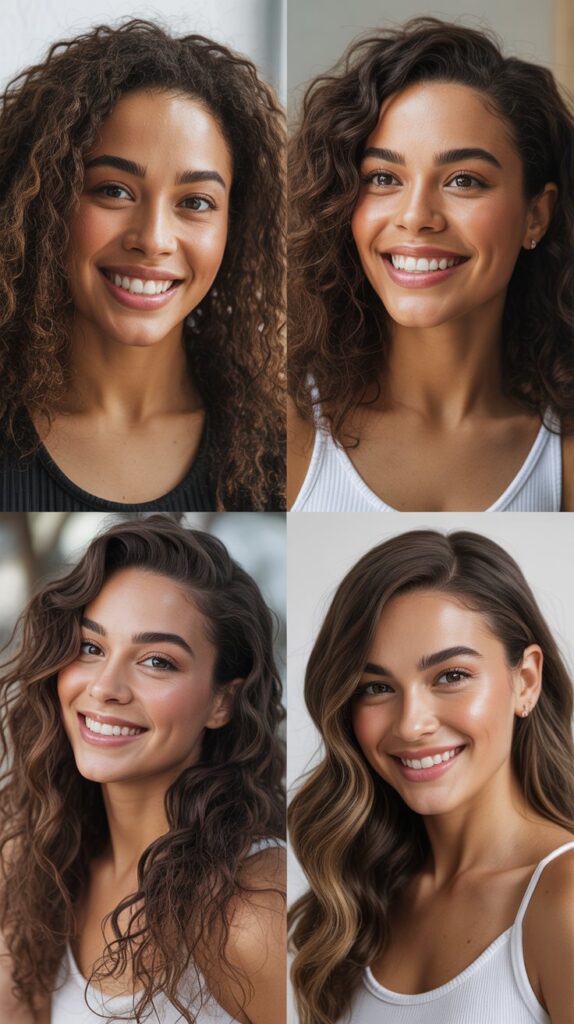
Using silk or satin scarves to create waves protects thick hair from frizz while setting beautiful, soft waves overnight.
- Choose long silk or satin scarves (at least 40 inches) in various widths depending on desired wave size.
- Divide damp thick hair into 4-8 sections depending on hair length and desired wave pattern.
- Place each section at the center of a scarf and roll hair around the scarf from ends to roots.
- Tie the scarf ends together at your scalp to secure without clips or elastics that create dents.
- The smooth texture of silk or satin reduces friction, preventing frizz formation on thick hair.
- This method doubles as a protective nighttime style that maintains hair health while creating waves.
- Using wider scarves (3-4 inches) creates looser, more relaxed waves perfect for professional settings.
- Narrower scarves (1-2 inches) produce more defined, tighter waves with increased volume.
- Thick hair benefits particularly from this method because silk doesn’t absorb moisture like cotton alternatives.
- Removing scarves by untying and gently unrolling reveals smooth, frizz-free waves with natural shine.
14. Bathrobe Tie Wave Method
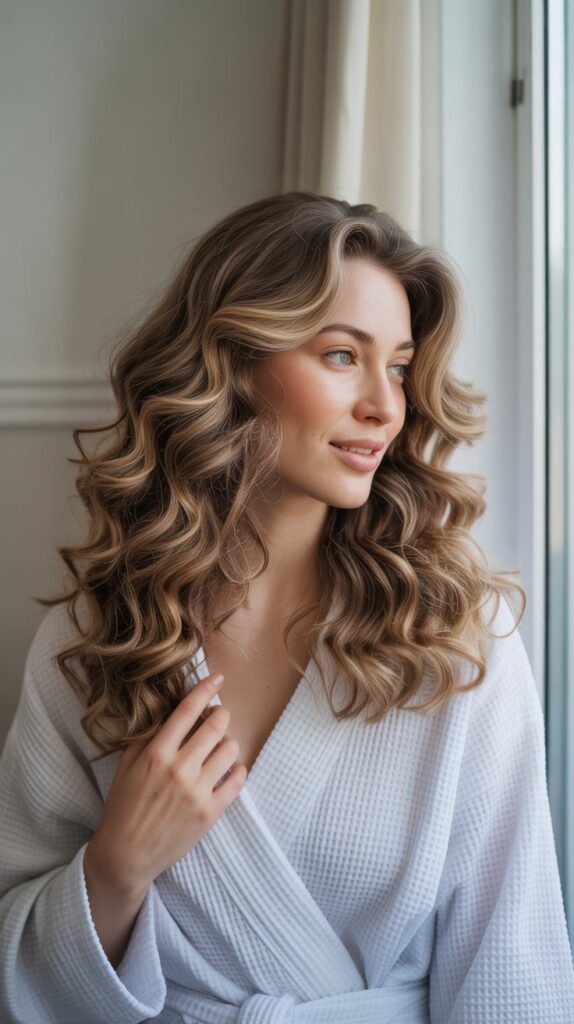
The bathrobe tie method repurposes bathrobe belts into effective heatless curling tools, creating gorgeous waves on thick hair with minimal investment.
- Use clean bathrobe ties or similar soft, long fabric strips approximately 1-2 inches wide and 40+ inches long.
- Position the bathrobe tie across the top of your head like a headband with equal lengths hanging on each side.
- Take sections of damp hair and wrap them around one side of the tie, working from front to back.
- Repeat the wrapping process on the other side, ensuring all hair is evenly distributed around both ties.
- Tie the two ends together at the nape of your neck or under your chin to secure everything in place.
- This method creates waves that are particularly natural-looking and soft, ideal for everyday wear.
- The thick, cushioned nature of bathrobe ties makes overnight wear comfortable for side and back sleepers.
- Leaving hair wrapped for 6-8 hours ensures complete drying for thick hair and proper wave setting.
- Carefully unwrapping hair in the morning and gently separating waves creates effortless, voluminous results.
- This technique works exceptionally well on thick hair because the bathrobe tie’s width accommodates more hair per section.
15. Pin Curl Vintage Waves
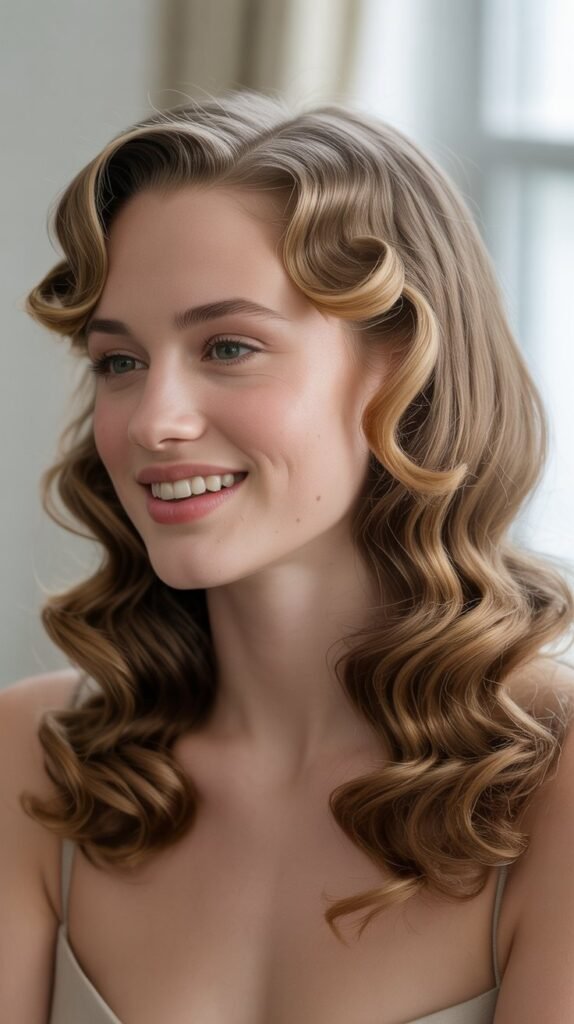
Pin curls create classic vintage waves that work beautifully on thick hair, offering precise control over wave placement and pattern.
- Work with damp (not wet) thick hair that has setting lotion or mousse applied throughout.
- Take small sections of hair (about 1 inch wide) and wrap them around two fingers to form flat circles.
- Slide the coiled section off your fingers and pin it flat against your scalp using bobby pins or duckbill clips.
- Create rows of pin curls throughout your head, alternating curl direction for a more natural final result.
- Using larger sections creates looser vintage waves, while smaller sections produce tighter, more defined curls.
- Pin curls set on thick hair typically need 6-8 hours to dry completely and set properly.
- Setting pin curls in different patterns (diagonal rows, brick-lay pattern) creates varied wave effects.
- Using duckbill clips instead of bobby pins prevents denting and holds thick hair sections more securely.
- Sleeping on pin curls requires a silk or satin cap to protect them overnight without flattening.
- Removing pins carefully and brushing through with a paddle brush creates glamorous vintage waves with impressive body.
16. Quick Morning Wave Refresh Methods

These quick techniques revive and refresh heatless waves when you don’t have time to start from scratch, perfect for thick hair on busy mornings.
- Lightly dampen hair with a spray bottle of water mixed with a small amount of leave-in conditioner.
- Twist large sections of hair and clip them at your scalp for 15-20 minutes while you complete your morning routine.
- Apply a refreshing spray or sea salt spray to reactivate products from the previous day’s styling.
- Use your fingers to scrunch waves upward while hair is still slightly damp to restore definition.
- Flip your head upside down and gently shake at the roots to restore volume that may have flattened overnight.
- Braid large sections of hair for just 10-15 minutes to add fresh wave definition to specific areas.
- Apply a small amount of lightweight mousse or foam to areas that have lost their wave pattern.
- Use a sock or scrunchie to create a quick top-knot for 20 minutes, which adds volume and refreshes waves simultaneously.
- Diffusing on cool setting (which is technically heat-free air) for just 2-3 minutes can help reactivate wave memory in thick hair.
- These quick methods work best on second or third-day hair that still has some wave structure remaining.
17. Best Sleeping Techniques for Maintaining Heatless Waves

Preserving your heatless waves overnight extends their lifespan and reduces styling time, especially important for thick hair that requires more effort to style.
- Pineappling (high, loose ponytail on top of head) maintains wave integrity while preventing crushing during sleep.
- Use silk or satin scrunchies rather than elastic bands to secure hair without creating dents or creases.
- Sleeping on a silk or satin pillowcase significantly reduces friction that causes frizz in thick hair.
- Wrapping hair loosely in a silk or satin bonnet protects waves completely while preventing them from tangling.
- Creating two loose braids instead of sleeping with hair completely loose preserves waves while adding extra texture.
- Placing a silk or satin scarf under your head covers works as an alternative if you don’t have a silk pillowcase.
- Refreshing waves lightly with water or spray before bed helps them reset overnight with your sleeping method.
- Avoiding sleeping with wet or damp hair prevents odd bends and unnatural wave patterns from forming overnight.
- Back sleeping is ideal for preserving waves, while side sleepers should use the pineapple method to protect their style.
- Applying a small amount of leave-in conditioner before bed keeps thick hair moisturized and prevents overnight dryness that causes frizz.
18. Combining Multiple Heatless Techniques

Layering different heatless methods creates more complex, interesting wave patterns on thick hair while maximizing results.
- Combining the plopping method followed by braiding enhances natural wave texture while adding more defined waves.
- Using flexi rods on the bottom layers and braids on the top layers creates varied wave patterns with maximum volume.
- Applying the headband method on the crown section while braiding the bottom sections creates waves that start high with more definition at the ends.
- Twisting hair into buns at the roots while setting ends with foam rollers produces volume at the crown with tighter waves at the ends.
- Creating pin curls in the front sections for face-framing waves while using a curling rod on the remaining hair offers precise control.
- Using different sized foam rollers throughout your head (larger at crown, smaller at ends) creates professional, graduated waves.
- Alternating between different braiding techniques in various sections adds visual interest and prevents uniformity.
- Thick hair particularly benefits from combination methods because it can handle multiple techniques without being overwhelmed.
- Experimenting with technique combinations helps you discover custom looks that perfectly suit your thick hair type.
- Taking notes on which combinations work best helps you recreate your favorite results consistently.
19. Heatless Beach Waves

Beach waves remain one of the most sought-after styles, and thick hair can achieve this effortless, tousled look completely without heat using specific methods.
- Apply a sea salt spray to damp thick hair, scrunching it upward from ends to roots to encourage natural texture.
- Create 4-6 loose braids in damp hair and sleep on them overnight for relaxed, undone beach waves.
- Twisting thick hair into two large rope braids produces softer, more flowing beach waves than traditional three-strand braids.
- Using a headband method with looser, larger sections wrapped creates the relaxed appearance characteristic of beach waves.
- Applying a texturizing spray before using any heatless method enhances the piecey, separated look of beach waves.
- Avoiding brushing after removing your heatless styling tools maintains the tousled, imperfect beach wave aesthetic.
- Adding a small amount of lightweight oil or serum to ends creates the slightly piece-y separation typical of beach waves.
- Creating uneven sections when styling (rather than perfectly uniform sections) contributes to the organic beach wave appearance.
- Scrunching a small amount of mousse through finished waves adds texture without making them stiff or crunchy.
- Beach waves on thick hair typically last 2-3 days with proper nighttime maintenance, making them ideal for busy schedules.
20. Defined Wave Techniques
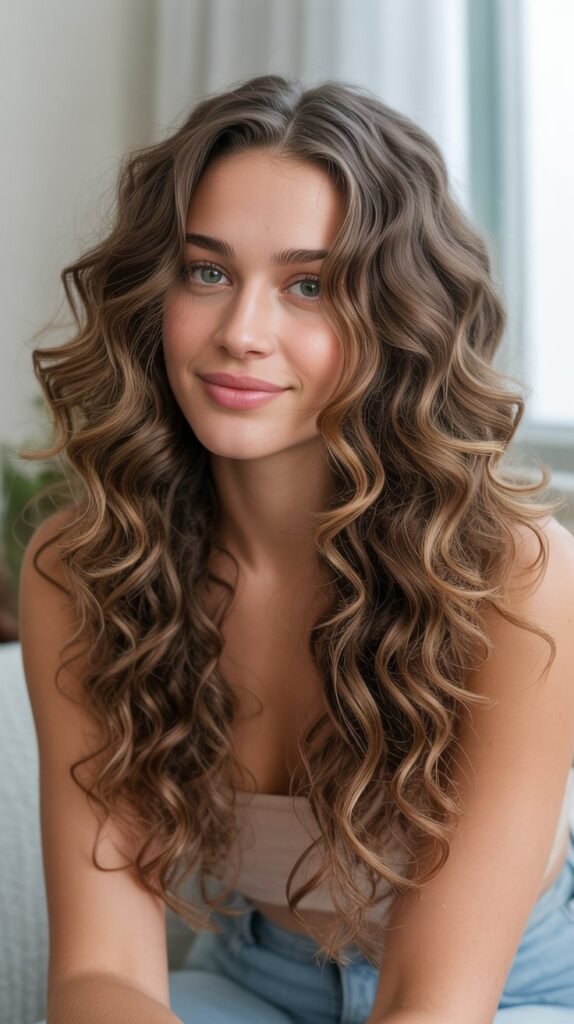
Some occasions call for more polished, defined waves rather than relaxed styles, and thick hair can achieve these sophisticated looks without heat tools.
- Using smaller sections (half-inch to one inch) when applying any heatless method creates more defined, uniform waves.
- Flexi rods or foam rollers in medium sizes produce the most consistent, defined waves on thick hair.
- Applying curl-enhancing cream or strong-hold mousse before setting ensures waves maintain definition throughout the day.
- Rolling or wrapping hair very tightly around your chosen tool creates sharper, more precise waves.
- Avoiding touching or separating waves after removing tools preserves their defined appearance.
- Using a diffuser on cool setting after removing heatless tools can help set defined waves without heat damage.
- Pin curls set in uniform rows create exceptionally defined, Hollywood-style waves when brushed through gently.
- Spraying each section with a light setting spray before rolling helps thick hair hold defined waves longer.
- Allowing thick hair to dry 100% before removing tools is crucial for maintaining definition throughout the day.
- These defined waves work beautifully for formal events, professional settings, or anytime you want a polished appearance.
21. Caring for Thick Hair Between Styling

Maintaining healthy thick hair between heatless styling sessions ensures your hair stays strong, shiny, and responsive to styling efforts.
- Deep conditioning treatments once weekly replenish moisture that thick hair needs to maintain elasticity and wave retention.
- Using a wide-tooth comb on damp hair prevents breakage while detangling thick hair before styling.
- Trimming ends every 8-10 weeks removes damage that can make thick hair appear dull and prevent even wave formation.
- Applying leave-in conditioner daily keeps thick hair hydrated without requiring daily washing that can strip natural oils.
- Protein treatments every 4-6 weeks strengthen thick hair that may be prone to stretching and losing wave definition.
- Avoiding harsh sulfates in shampoos prevents dryness that makes thick hair resistant to holding heatless waves.
- Using lukewarm or cool water for final rinses seals hair cuticles, enhancing shine and making waves appear more defined.
- Protecting hair from sun damage with UV-protective products prevents dryness that affects wave retention in thick hair.
- Staying hydrated and maintaining a balanced diet supports hair health from the inside out, improving styling results.
- Giving hair occasional breaks from styling (even heatless styling) allows it to rest and recover, maintaining long-term health.
22. Troubleshooting Common Issues
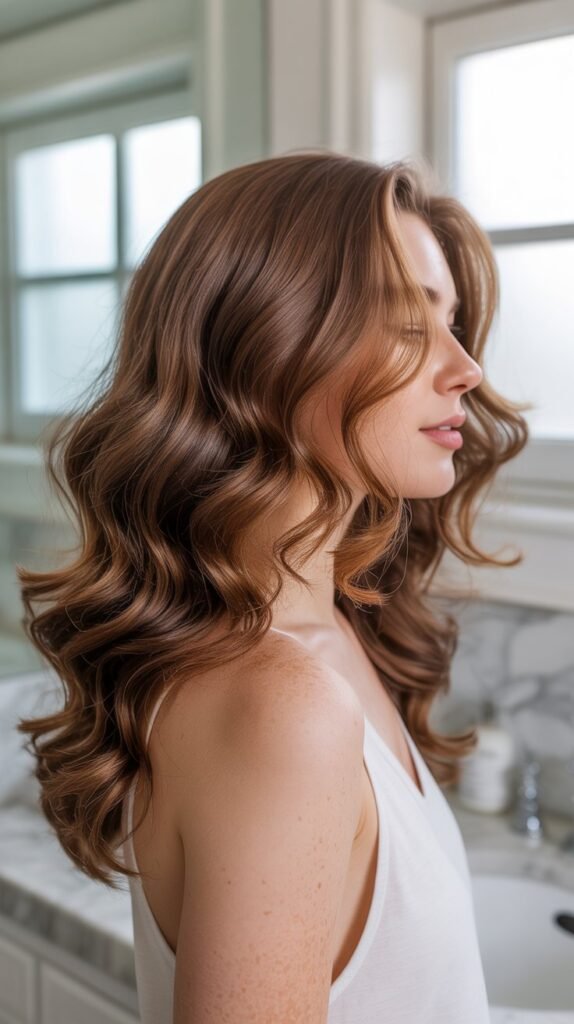
Even with the best techniques, thick hair can present challenges when creating heatless waves, and knowing how to address these issues saves time and frustration.
- Waves falling flat: Apply stronger hold products, ensure hair is completely dry before removing tools, or try smaller sections for better hold.
- Frizz and flyaways: Use silk or satin materials, apply anti-frizz serum before styling, and ensure hair isn’t too dry when beginning heatless methods.
- Uneven wave patterns: Check that sections are uniform in size, apply products evenly throughout hair, and ensure consistent tension when wrapping or rolling.
- Hair not drying overnight: Start with damp (not soaking wet) hair, use a microfiber towel to remove excess water, or try methods that allow more air circulation.
- Creases from elastics or clips: Switch to silk scrunchies, use spin pins instead of bobby pins, or try methods that don’t require securing hardware.
- Waves starting too low on head: Position tools higher toward the crown, ensure you’re wrapping from roots rather than starting mid-shaft.
- Lack of volume: Try combination methods that include root-lifting techniques, flip head upside down when removing tools, or use volumizing products at roots.
- Waves too tight: Use larger sections, choose bigger diameter tools, or wrap hair more loosely around styling implements.
- Results not lasting: Increase hold product strength, ensure hair is 100% dry before tool removal, or try setting spray as a finishing step.
- Discomfort while sleeping: Opt for softer materials like foam rollers or fabric methods rather than hard plastic tools.
23. Seasonal Adjustments for Heatless Waves
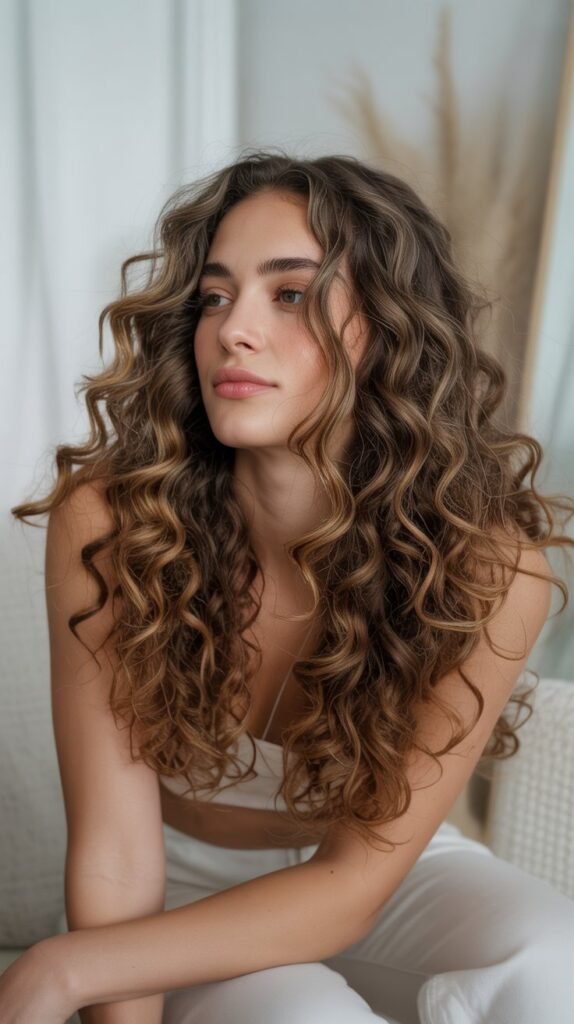
Different seasons affect how thick hair responds to heatless styling, requiring adjustments to maintain consistent results year-round.
- Summer humidity: Use anti-humidity products, stronger hold gels, and may need to refresh waves mid-day with dry shampoo and scrunching.
- Summer sun exposure: Apply UV-protective sprays before styling to prevent damage that affects wave retention in thick hair.
- Summer swimming: Wet hair before entering pool or ocean, apply leave-in conditioner as a barrier, and reinstall heatless methods after swimming.
- Winter dryness: Increase moisture with weekly deep conditioning, use heavier leave-in products, and consider humidifiers in sleeping areas.
- Winter static: Apply anti-static sprays, use ionic brushes, and incorporate more conditioning products into your routine.
- Fall transition: Adjust product weight as humidity changes, potentially using lighter products than summer but heavier than winter.
- Spring weather: Prepare for unpredictable weather with setting sprays and anti-frizz products ready for sudden humidity changes.
- Cold weather protection: Wear silk-lined hats or loosely gather hair to prevent wind damage that disrupts wave patterns.
- Hot weather advantages: Thick hair actually dries faster in warm weather, reducing time needed for heatless methods to set.
- Year-round consistency: Keep a seasonal hair journal noting which products and techniques work best during different times of year.
24. Time-Saving Tips for Busy Schedules

Making heatless waves work with a busy lifestyle requires strategic planning and efficient techniques, especially important for thick hair that typically requires longer styling times.
- Prep hair during evening activities like watching TV by applying products and heatless tools while relaxing.
- Create a styling station with all products and tools organized together to eliminate searching time.
- Choose methods compatible with your sleep position to avoid mid-night adjustments that disrupt both sleep and styling.
- Apply heatless styling on wash day so hair is appropriately damp without requiring additional wetting time.
- Master 2-3 favorite techniques rather than constantly trying new methods to achieve consistent, quick results.
- Use day-time friendly methods like headband waves or sock buns that style hair while looking presentable in public.
- Prep multiple tools at once (like setting out all foam rollers or preparing several scarves) before beginning styling.
- Set a phone timer to know exactly when hair needs to be unwrapped rather than constantly checking.
- Combine styling with morning routine tasks by removing tools while coffee brews or during other waiting periods.
- Batch-prep by creating waves on Sunday that last through midweek, reserving complex styling for days off.
- Keep dry shampoo and wave-refreshing spray easily accessible for quick touch-ups that extend style life.
- Choose styles based on your schedule—overnight methods for workdays, quick braids for errands days.
25. Product Application Techniques

How you apply products to thick hair significantly impacts the success of heatless wave methods, with proper distribution being key to achieving even results.
- Divide damp hair into 4-6 sections before applying products to ensure even distribution throughout thick hair’s density.
- Apply mousse by squeezing product into your palm, rubbing hands together, then raking through sections from roots to ends.
- Use a spray bottle to apply diluted leave-in conditioner or styling products for more even coverage on thick hair.
- Focus stronger hold products on areas that tend to fall flat quickly, typically the crown and around the face.
- Apply heavier, moisturizing products primarily to mid-lengths and ends where thick hair tends to be drier.
- Use a praying hands method (smoothing product between palms along hair sections) to reduce frizz during application.
- Scrunch products upward into thick hair rather than pulling downward to encourage natural wave formation.
- Layer products in the correct order: leave-in conditioner first, then styling products, finishing with oils or serums.
- Less is more initially—start with small amounts and add more only if needed to avoid weighing down thick hair.
- Emulsify products between hands before application creates better distribution and prevents clumping on thick hair.
26. Heatless Waves for Different Thick Hair Lengths

Thick hair at different lengths requires adapted techniques for optimal heatless wave results, as what works for long thick hair may not suit shorter thick hair.
- Short thick hair (chin to shoulder): Use smaller flexi rods or pin curls, as longer methods like curling rod headbands may not provide enough hair to wrap effectively.
- Short thick hair benefits: Dries faster overnight, requires fewer products, and holds waves longer due to less weight pulling them down.
- Medium thick hair (shoulder to mid-back): Has the most versatility, working well with nearly all heatless methods from braids to rollers.
- Medium thick hair considerations: May need 2-3 braids instead of one, or 15-20 rollers instead of 10, to account for hair density.
- Long thick hair (mid-back and beyond): Requires patience as drying time extends to 8-10 hours or more for complete wave setting.
- Long thick hair strategies: Focus on overnight methods since daytime styling rarely allows sufficient drying time, or start with hair 70% air-dried.
- Long thick hair modifications: May need extra-long wrapping materials like extended scarves or doubled bathrobe ties.
- Very long thick hair (waist length or longer): Combination methods work best, like braiding top sections while setting ends with rollers.
- Shorter layers in thick hair: Create dimension by using different sized tools on various layers for graduated wave patterns.
- Regardless of length: Thick hair at any length benefits from proper sectioning to ensure every part receives equal attention and styling.
27. Creating Volume at the Roots
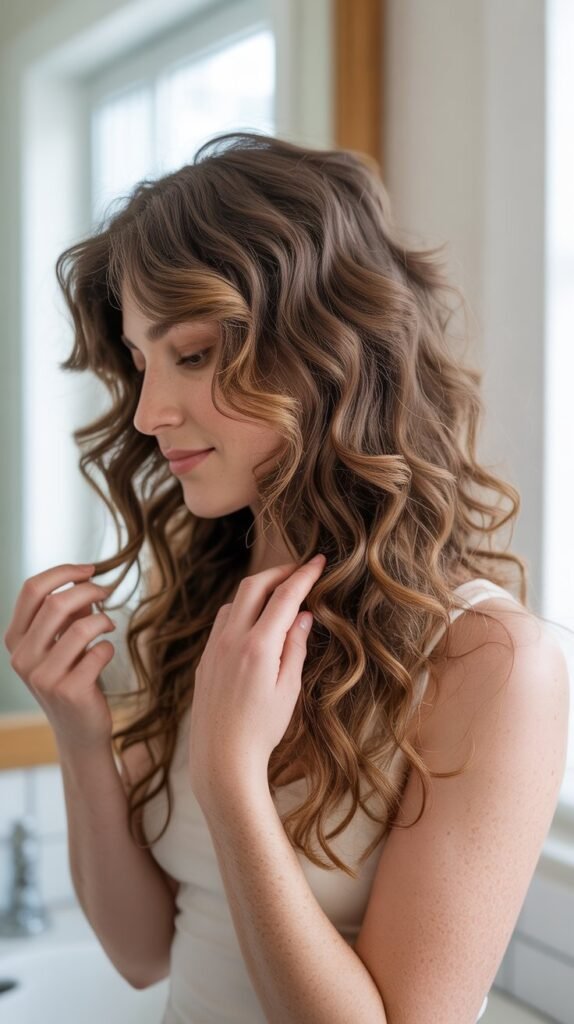
Thick hair often lies flat at the roots despite abundant density, requiring specific heatless techniques to create lift and volume alongside waves.
- Use duckbill clips at the roots while hair dries to create lift without disrupting the wave pattern in the lengths.
- Position foam rollers or flexi rods as close to the scalp as possible when rolling sections for root-to-tip waves.
- Create pin curls specifically at the crown area directed away from the face for maximum root volume.
- Apply volumizing mousse or root-lifting spray directly at the scalp before installing heatless methods.
- Section hair in a brick-lay pattern (offsetting rows like bricks in a wall) rather than straight rows for more volume.
- Dry hair upside down for the first few hours of the heatless setting process if possible to encourage root lift.
- Flip sections in alternating directions when setting to prevent hair from all falling in the same flat direction.
- Tease roots gently after removing heatless styling tools, then smooth the surface without disturbing the teasing underneath.
- Use a wide-tooth comb to lift roots away from the scalp after waves are set for additional volume.
- Combining root clips with any heatless wave method creates maximum lift while still developing beautiful wave patterns.
28. Heatless Waves for Different Occasions

Adapting your heatless wave style to match various occasions ensures you always look appropriate while maintaining your heat-free routine.
- Professional/office settings: Choose defined, polished waves using flexi rods or pin curls with smoothing products for a refined appearance.
- Casual daily wear: Relaxed beach waves from simple braids or headband methods with minimal product provide effortless everyday style.
- Formal events: Vintage pin curl waves brushed smooth or structured rollers waves with strong-hold products create elegant formal looks.
- Athletic activities: Secure waves in a high ponytail or braid before workouts to maintain wave pattern while keeping hair functional.
- Date nights: Romantic, soft waves from sock buns or bathrobe tie methods with touchable, flexible hold look effortlessly beautiful.
- Job interviews: Conservative, well-groomed waves that start lower on the head rather than at roots appear more professional.
- Outdoor events: Use strong hold and anti-humidity products with any heatless method to withstand environmental factors.
- Travel: Quick, simple methods like braids or headband waves work best since they’re easy to install without many tools.
- Photography/special occasions: Defined, uniform waves from flexi rods or foam rollers photograph beautifully and maintain consistency all day.
- Weekend casual: Experiment with creative combination methods or trendy styles since you have flexibility if results aren’t perfect.
29. Budget-Friendly Heatless Wave Options

Creating beautiful heatless waves on thick hair doesn’t require expensive products or tools, with many effective options costing little or nothing.
- Paper towels, old t-shirts, and socks create effective styling tools at essentially zero cost using items already in your home.
- Bobby pins and hair elastics purchased in bulk provide securing options for just a few dollars.
- DIY sea salt spray (water, sea salt, conditioner) costs pennies to make versus purchasing expensive texturizing sprays.
- Drug store foam rollers work identically to expensive salon versions at a fraction of the price.
- Basic headbands from dollar stores function perfectly for headband wave methods without costly specialty options.
- Making your own flaxseed gel provides strong hold naturally for under two dollars per batch.
- Purchasing fabric remnants from craft stores creates dozens of fabric strips for wrapping methods inexpensively.
- Using regular drinking straws repurposes items you may already have for unique wave patterns at no additional cost.
- Microfiber towels from discount stores work as well as expensive hair towels for plopping and drying.
- Building your heatless wave routine gradually prevents overwhelming upfront costs while determining which methods work best for your thick hair.
- Many successful heatless wave routines cost under twenty dollars total to start, with no ongoing costs.
30. Advanced Heatless Wave Patterns
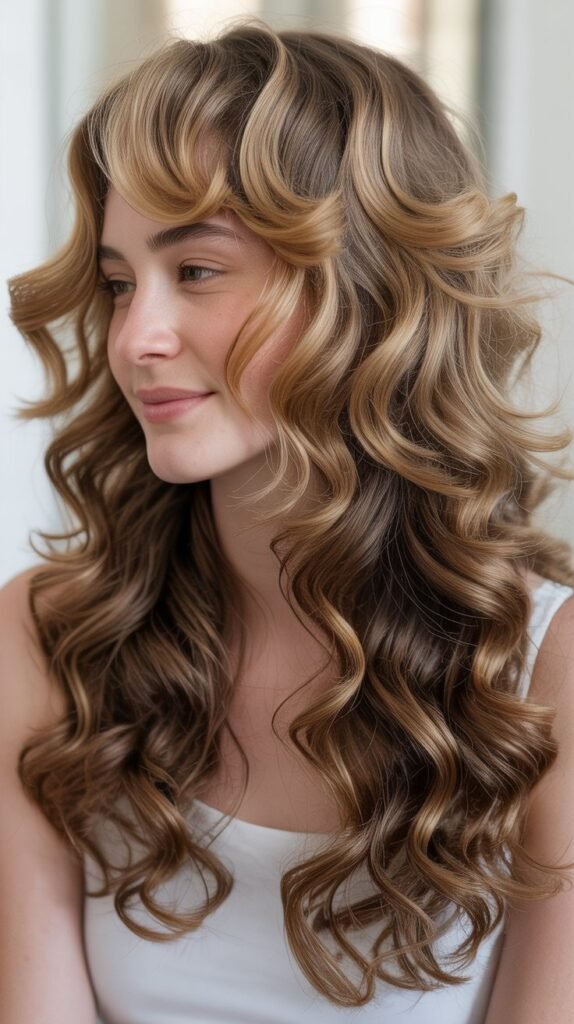
Once you’ve mastered basic heatless waves, creating more complex wave patterns adds sophistication and customization to your thick hair styling repertoire.
- Alternating wave sizes: Use different sized rollers or sections throughout your head for natural-looking, varied texture that mimics professional styling.
- Directional patterns: Strategically rolling sections toward or away from your face creates face-framing effects and adds dimension.
- Spiral patterns: Wrapping hair in a spiral motion around tools rather than flat rolling creates corkscrew-style waves with unique movement.
- Horizontal vs. vertical setting: Rolling sections horizontally creates waves that bounce outward, while vertical rolling produces waves that flow downward.
- Brick-lay sectioning: Offsetting row positions creates volume and prevents visible parting lines in wave patterns.
- Graduated tension: Wrapping tighter at roots and looser at ends creates natural-looking wave graduation from defined to relaxed.
- Multi-directional twist-outs: Twisting some sections clockwise and others counterclockwise creates textured, dimensional waves.
- Combination sizes: Using large sections on top layers for loose waves and smaller sections underneath for definition adds depth.
- Strategic placement: Creating tighter waves in specific zones (like around the face) while leaving other areas looser provides intentional styling.
- Experimenting with advanced patterns helps you develop signature looks that showcase your thick hair beautifully.
31. Maintaining Hair Health While Heat-Free

Transitioning to heatless waves improves hair health, but proper maintenance ensures your thick hair stays strong, shiny, and resilient throughout your heat-free journey.
- Regular clarifying treatments (once monthly) remove product buildup that accumulates from frequent styling product use in heatless methods.
- Alternating between protein and moisture treatments addresses thick hair’s tendency toward both breakage and dryness.
- Protecting hair during physical activities prevents mechanical damage that can undo the benefits of avoiding heat.
- Monitoring hair’s response to products and adjusting routines prevents over-conditioning or under-moisturizing thick hair.
- Taking biotin or hair-supporting supplements can enhance hair strength from within, improving styling results.
- Massaging scalp regularly stimulates blood flow, promoting healthy hair growth that looks better in all styling methods.
- Using pillowcase protectors and gentle hair accessories prevents snags and breakage during the extended periods thick hair needs for setting.
- Tracking hair health improvements over months provides motivation and helps you identify which practices benefit your specific thick hair type.
- Avoiding unnecessary manipulation between styling sessions gives hair time to recover and maintain strength.
- Embracing your natural texture on some days reduces styling frequency even further, maximizing hair health benefits.
- Periodic professional trims remove any damage before it travels up the hair shaft, maintaining hair integrity.
32. Customizing Heatless Methods for Your Hair
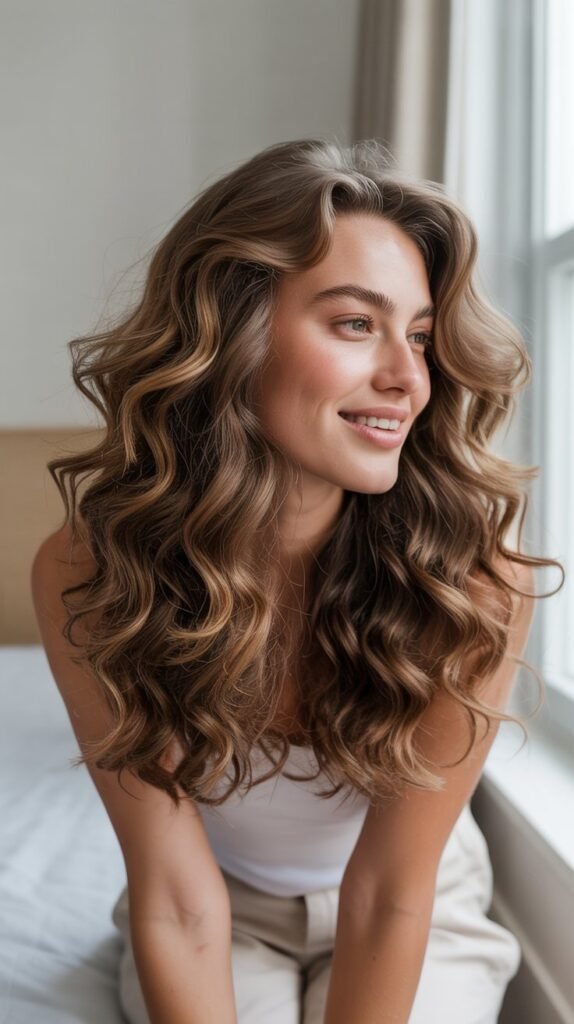
Personalizing heatless wave techniques to match your specific thick hair characteristics ensures optimal results and develops your signature styling approach.
- Experimenting with dampness levels (70% dry vs 90% dry) determines ideal moisture for your thick hair’s setting time.
- Testing various product combinations helps you discover which formulas work synergistically for your hair’s porosity and texture.
- Trying tools in different sizes identifies which diameters create your preferred wave pattern on thick hair.
- Adjusting section sizes based on your hair’s response creates consistent results tailored to your density.
- Timing experiments determine whether your thick hair needs 6, 8, or 10+ hours for complete drying and setting.
- Keeping a styling journal tracks which methods, products, and timing work best for different occasions and outcomes.
- Photography documenting various results helps you visually compare techniques and identify favorites.
- Seeking inspiration from others with similar thick hair types provides ideas while understanding results may differ on your unique hair.
- Being patient during the learning curve allows you to master techniques rather than abandoning them prematurely.
- Celebrating small improvements rather than expecting perfect results immediately encourages continuation and skill development.
33. Dealing with Different Thick Hair Textures
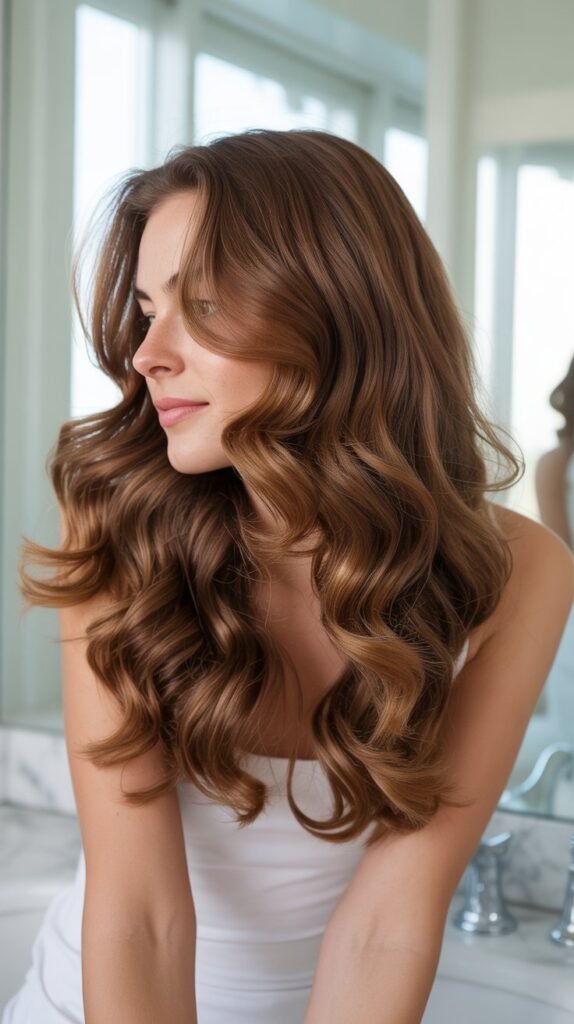
Thick hair encompasses various textures from straight to coily, with each texture requiring adapted heatless wave approaches for success.
- Thick straight hair (1a-1c): Requires stronger hold products and tighter wrapping/rolling since it naturally resists wave formation.
- Thick straight hair strategies: Damper hair when setting, longer setting times, and may benefit from slight heat on cool setting to activate products.
- Thick wavy hair (2a-2c): Works beautifully with most heatless methods since it’s enhancing existing wave patterns rather than creating them from scratch.
- Thick wavy hair advantages: Requires less product, shorter setting times, and waves typically last longer on this texture.
- Thick curly hair (3a-3c): Focus on elongating curls into waves using methods like twist-outs, braiding, or banding rather than tight rolling.
- Thick curly hair considerations: Moisture is crucial, and techniques should work with natural curl pattern rather than fighting it.
- Thick coily hair (4a-4c): Requires maximum moisture, protective methods, and techniques that stretch rather than create new patterns.
- Thick coily hair success: Banding, African threading, or large braids create wave-like stretched patterns while maintaining hair health.
- Mixed texture thick hair: Section hair by texture, applying different methods to different zones based on their natural patterns.
- Understanding your texture within the “thick hair” category dramatically improves heatless wave success rates.
34. Heatless Waves and Hair Color Considerations

Color-treated thick hair requires special considerations when creating heatless waves to maintain both color vibrancy and hair health.
- Avoiding heat damage becomes even more critical for color-treated thick hair, making heatless methods ideal for maintaining color longevity.
- Using color-safe, sulfate-free products prevents premature fading while styling heatless waves on thick colored hair.
- Bleached or highlighted thick hair may be more fragile, requiring gentler methods like fabric wrapping rather than tight rolling.
- Adding purple shampoo or color-depositing treatments to your routine maintains color while pursuing heatless waves.
- Color-treated thick hair often has altered porosity, potentially requiring adjustments to product strength and application timing.
- Protective methods like silk or satin materials become non-negotiable for preventing mechanical damage to compromised colored hair.
- Scheduling heatless styling around color appointments (avoiding tight styling immediately after coloring) protects investment in color services.
- Deep conditioning becomes more frequent (weekly rather than bi-weekly) for color-treated thick hair pursuing heatless waves.
- Certain heatless methods like plopping work particularly well on color-treated wavy/curly thick hair by minimizing manipulation.
- Sun protection products prevent both color fading and hair damage when wearing heatless waves outdoors.
35. Social Media and Heatless Wave Inspiration
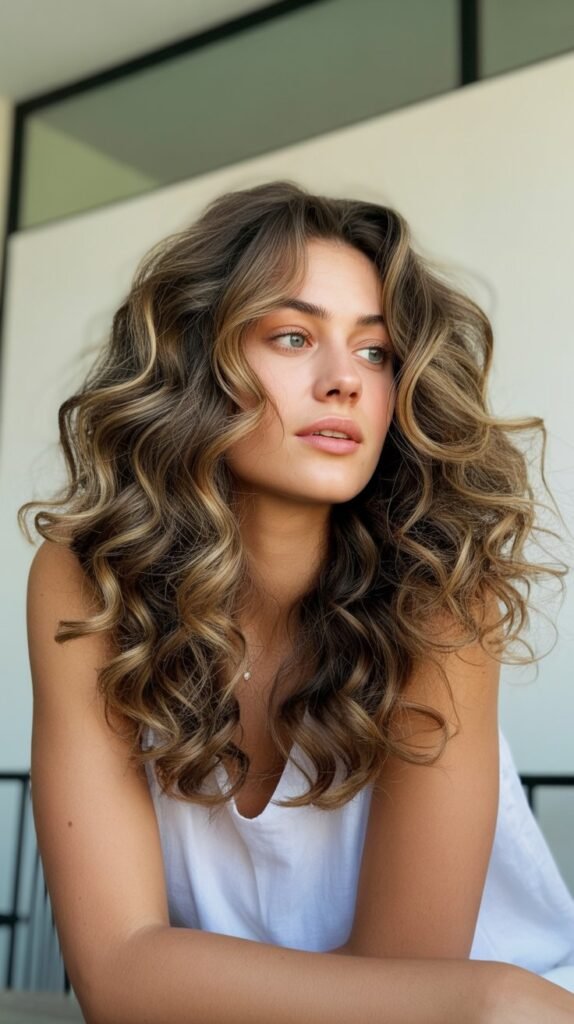
Learning from the online community accelerates your heatless wave journey, providing inspiration, tutorials, and solutions for thick hair challenges.
- Following hashtags like #heatlesswaves, #heatlesscurls, and #thickhair on Instagram provides daily inspiration and technique demonstrations.
- YouTube channels dedicated to thick hair offer detailed tutorials showing complete processes from start to finish.
- TikTok’s short-form content makes trying new techniques accessible with quick, digestible instructions perfect for busy schedules.
- Pinterest boards curated around heatless waves create visual reference libraries for techniques, products, and results.
- Engaging with online communities through comments and questions connects you with others facing similar thick hair challenges.
- Following specific influencers who have similar thick hair type provides realistic expectations and adapted techniques.
- Saving favorite tutorials and posts creates a personalized reference library for trying new methods.
- Participating in challenges or trends keeps your heatless wave journey fun and exploratory rather than routine.
- Sharing your own results and experiences contributes to the community while documenting your progress.
- Being discerning about techniques shown online—not everything works for every thick hair type—prevents frustration from unrealistic expectations.
- Balancing online inspiration with personal experimentation helps you develop authentic techniques that work for your lifestyle.
36. Long-Term Benefits of Heatless Styling

Committing to heatless waves for thick hair provides substantial long-term benefits that extend far beyond simply avoiding heat damage.
- Hair strength noticeably improves over 3-6 months without regular heat exposure, with reduced breakage and split ends.
- Natural shine returns as heat damage reverses and hair cuticles remain sealed and smooth from gentler styling methods.
- Elasticity improves, allowing hair to stretch without breaking and bounce back more readily, enhancing wave retention.
- Time savings accumulate significantly—ten minutes saved daily equals over 60 hours annually freed for other activities.
- Financial benefits become apparent through reduced electricity costs, eliminated tool replacement, fewer hair repair products, and less frequent salon damage treatments.
- Environmental impact lessens through reduced energy consumption and potentially fewer chemical treatments needed to repair damage.
- Hair grows healthier from ends to roots as new growth emerges undamaged and existing hair gradually improves.
- Styling confidence increases as you master techniques and understand your hair’s responses to various methods.
- Versatility expands as healthy hair responds better to all styling methods, not just heatless waves.
- Overall hair quality transformation becomes visible in photographs comparing your thick hair at the journey’s start versus months later.
- The positive feedback loop of seeing results motivates continued commitment to heatless methods and hair health.
Mastering heatless waves for thick hair opens up a world of styling possibilities while prioritizing hair health and saving valuable time.
Throughout this guide to 36 Heatless Wavy Hairstyles for Thick Hair That Save Time, you’ve discovered techniques ranging from simple overnight braids to advanced pattern combinations, all designed to work with your hair’s natural density and texture.
The journey toward heat-free styling may require initial experimentation and patience, but the long-term benefits of stronger, healthier, more vibrant thick hair make every effort worthwhile.
Remember that finding your perfect heatless wave routine is a personal process that combines understanding your specific hair characteristics, experimenting with different methods, and remaining patient as your hair health improves.
Whether you choose the convenience of overnight foam rollers, the simplicity of braiding methods, or the precision of pin curls, you now have the knowledge and tools to create beautiful waves without compromising your hair’s integrity.
Start with one or two techniques that resonate with your lifestyle, master them completely, then gradually expand your repertoire as you discover what works best for your unique thick hair.
Your heat-free wave journey begins now, and the gorgeous, healthy results await.
