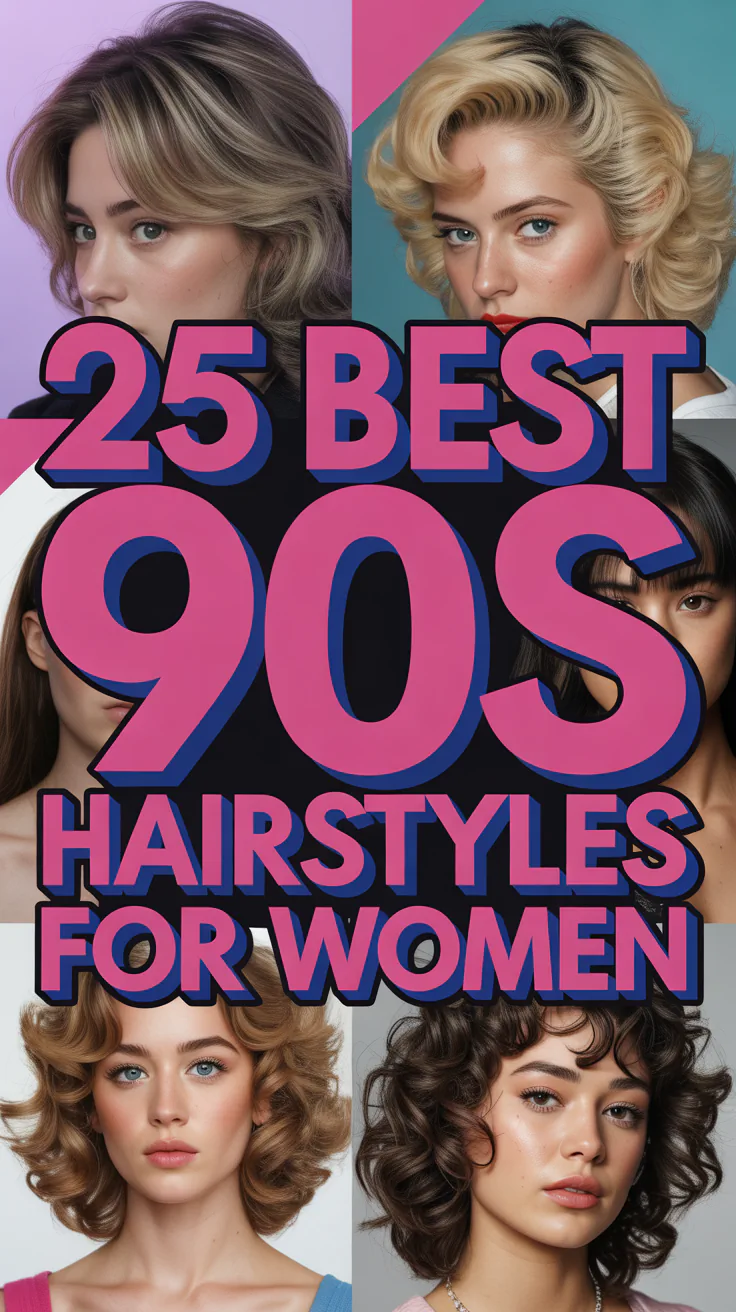
The 1990s was a groundbreaking decade for women’s hairstyles, blending grunge rebellion with polished sophistication in ways that continue to influence modern trends.
From Rachel Green’s iconic layers to Gwen Stefani’s bold punk aesthetics, the era gave us some of the most memorable and versatile looks in fashion history.
Whether you’re feeling nostalgic for your own 90s youth or discovering these styles for the first time, the decade’s hairstyles offer something for every personality and hair type.
This comprehensive guide explores 25 BEST 90s Hairstyles for Women, covering everything from face-framing highlights to butterfly clips, zigzag parts to sleek bobs, helping you understand how to recreate these timeless looks for today’s world.
Get ready to journey through crimped textures, scrunchie updos, and the quintessential straight-ironed perfection that defined a generation’s approach to beauty and self-expression.
1. The Rachel Cut

The Rachel haircut became a cultural phenomenon after Jennifer Aniston debuted this layered, face-framing style on the hit TV show Friends in 1994.
Key Features:
- The cut typically falls between chin and shoulder length with heavily layered sections throughout
- Characterized by face-framing pieces that flip outward rather than under, creating volume and movement
- Requires significant styling with a round brush and blow dryer to achieve the signature outward flip
- Works best on medium to thick hair textures that can hold volume and shape throughout the day
Styling Requirements:
- A large round brush is essential for wrapping sections of hair while blow-drying to create the outward bend
- Volumizing mousse applied to damp hair helps achieve the lift and body characteristic of this style
- The ends need to be directed away from the face using the brush, creating that distinctive 90s flip
- Regular trims every 6-8 weeks maintain the layered shape and prevent the style from losing its structure
Modern Adaptation:
- Contemporary versions tend to be less heavily layered, offering a softer, more wearable interpretation
- Today’s stylists often incorporate balayage techniques rather than chunky highlights for a more natural look
- The modern Rachel works well with air-dried texture, making it more low-maintenance than the original
- This cut suits oval, heart, and diamond face shapes particularly well due to its face-framing properties
2. Zigzag Parts

The zigzag part was a playful styling technique that added edge and personality to any hairstyle during the 90s era.
Creating the Look:
- A rattail comb is the essential tool for creating precise, even zigzag patterns along the scalp
- Start at the hairline and work backward, alternating the comb’s direction to create sharp angles
- The width and depth of the zigzag can be customized from subtle waves to dramatic sharp points
- Works on all hair types, though it shows most prominently on straight to wavy hair textures
Styling Variations:
- Side zigzag parts create asymmetrical looks that were especially popular in the mid-90s
- Multiple zigzag sections can be incorporated throughout the hair for an even bolder statement
- Combining zigzag parts with colorful hair accessories like butterfly clips amplifies the 90s vibe
- The technique works equally well on updos, ponytails, and loose hairstyles
Practical Tips:
- Applying a light gel or styling cream before creating the part helps maintain the zigzag shape longer
- The style tends to relax throughout the day, so touch-ups with the comb may be necessary
- Zigzag parts photograph exceptionally well, making them perfect for special occasions or photoshoots
- This trend has made a significant comeback in recent years on social media platforms and fashion runways
3. Butterfly Clips

Butterfly clips were the quintessential 90s hair accessory, transforming simple hairstyles into colorful, eye-catching statements.
The Trend Explained:
- These spring-loaded clips came in metallic finishes, translucent plastics, and an array of bright colors
- Typically worn in clusters of three to ten clips scattered randomly throughout the hair
- The clips served both functional purposes (holding back sections) and purely decorative roles
- Mixing different sizes and colors of butterfly clips was considered the height of 90s fashion
Styling Applications:
- Perfect for creating half-up styles by clipping back the top section of hair with multiple clips
- Often used to pin back face-framing pieces while leaving the majority of hair down
- Effective for creating small twisted sections secured with individual clips throughout the hair
- The clips work on all hair lengths from pixie cuts to long flowing locks
Cultural Impact:
- Butterfly clips represented the playful, experimental spirit of 90s youth fashion
- They were accessible and affordable, making them popular across all socioeconomic groups
- The trend appeared everywhere from school hallways to red carpet events throughout the decade
- Modern revivals have appeared in recent fashion collections, proving their enduring appeal
4. Crimped Hair

Crimping created a distinctive zigzag texture that added dramatic volume and a bold statement to 90s hairstyles.
Technique and Tools:
- A crimping iron with heated zigzag-patterned plates presses small sections of hair to create the texture
- The process requires working in thin sections from roots to ends for even, consistent results
- Heat protectant spray is absolutely essential to prevent damage from the high temperatures required
- Crimping typically takes 45-90 minutes depending on hair length and thickness
Styling Options:
- Full-head crimping creates maximum volume and the most dramatic 90s-authentic appearance
- Partial crimping on just the roots adds lift and body without the full textured effect
- Crimping only the underlayers while leaving the top smooth creates hidden volume and interest
- Combining crimped and straight sections produces dimensional, editorial-worthy styles
Hair Care Considerations:
- Crimped hair becomes extremely voluminous, sometimes tripling in apparent thickness
- The style requires strong-hold hairspray to maintain the texture throughout the day
- Crimping can be damaging with repeated use, so limiting frequency protects hair health
- The texture makes hair prone to tangling, requiring gentle detangling with wide-tooth combs
5. Space Buns

Space buns channeled both Princess Leia and 90s rave culture, creating a fun, youthful double-bun style.
Construction Method:
- Part hair down the center from forehead to nape, creating two equal sections
- Gather each section into a high ponytail positioned above and slightly behind the ears
- Twist each ponytail and wrap it around its base, securing with bobby pins and elastic bands
- The buns can be tight and neat or messy and loose depending on the desired aesthetic
Style Variations:
- Mini space buns sit closer to the top of the head for a more subtle, modern interpretation
- Half-up space buns leave the bottom section of hair down while only the top is bunned
- Braided space buns incorporate braiding before wrapping the hair into bun shapes
- Adding glitter, ribbons, or scrunchies to the buns amplifies the 90s festival aesthetic
Practical Benefits:
- Space buns keep hair completely off the face and neck, perfect for physical activities or hot weather
- The style works on various hair lengths, though shoulder-length or longer provides fuller buns
- They’re quick to create once you master the technique, taking just 5-10 minutes
- Space buns suit casual, athletic, and even festival or party settings with appropriate accessories
6. Straight and Sleek

Pin-straight, ultra-sleek hair became a 90s status symbol, representing polished sophistication and modern minimalism.
Achieving the Look:
- A high-quality flat iron with ceramic or titanium plates is essential for achieving glass-like smoothness
- Hair must be completely dry before flat ironing to prevent heat damage and maximize smoothness
- Work in small sections, passing the flat iron slowly from roots to ends in single, smooth strokes
- Heat protectant products are non-negotiable for maintaining hair health with frequent straightening
Product Recommendations:
- Smoothing serums applied to damp hair before blow-drying create a foundation for sleekness
- Anti-frizz creams help control flyaways in humid conditions that threaten the smooth finish
- Finishing shine sprays add the glossy, reflective quality that defined 90s straight hair
- Leave-in treatments provide ongoing protection and moisture to prevent heat damage
Maintenance Tips:
- Sleeping on silk or satin pillowcases helps maintain smoothness overnight
- Touch-ups with the flat iron on day two or three extend the style without full re-styling
- Weekly deep conditioning treatments restore moisture stripped away by heat styling
- The look works best on naturally straight to wavy hair, though all textures can achieve it with proper tools
7. Chunky Highlights

Chunky highlights involved thick, contrasting streaks of color that created bold, dimensional looks throughout the 90s.
Color Technique:
- Stylists selected thick sections of hair, often a half-inch to inch wide, for bleaching or coloring
- The highlights were typically placed around the face and on top layers for maximum visibility
- Contrast was key, with blonde highlights on dark hair being the most popular combination
- The application intentionally lacked the seamless blending techniques used in modern coloring
Popular Color Combinations:
- Platinum blonde streaks on dark brown or black hair created the most dramatic 90s look
- Caramel or honey highlights on light to medium brown hair offered a softer interpretation
- Red or burgundy chunks added to brown hair provided an edgier, alternative aesthetic
- Some bold individuals mixed multiple highlight colors for an even more statement-making style
Maintenance Requirements:
- Root touch-ups are needed every 6-8 weeks as the natural hair color grows out
- Purple-toning shampoos prevent blonde highlights from developing brassy, yellow tones
- Deep conditioning treatments are essential to combat the drying effects of bleaching
- The grow-out can be harsh and obvious, requiring commitment to regular salon visits
8. Scrunched Curls

Scrunching created the perfectly imperfect, texturized curls that epitomized the casual-yet-styled 90s aesthetic.
Styling Process:
- Apply curl-enhancing mousse or gel to soaking-wet hair immediately after washing
- Flip head upside down and scrunch sections of hair upward toward the scalp repeatedly
- Allow hair to air dry completely or use a diffuser attachment on a hair dryer for faster results
- Avoid touching hair while drying to prevent frizz and maintain curl definition
Product Selection:
- Strong-hold mousses provide the structure needed for long-lasting scrunched curls
- Curl-defining gels offer more control and definition but can create crunchy textures
- Sea salt sprays enhance natural texture and add the coveted beachy, lived-in appearance
- Leave-in conditioners maintain moisture and prevent the frizz that plagues curly styles
Best Practices:
- The technique works best on naturally wavy to curly hair types
- Straight hair can achieve the look with the help of braiding overnight or using curl-creating products
- Layered haircuts maximize the volume and movement of scrunched curls
- Second-day curls can be refreshed by wetting hands and scrunching with a light styling product
9. The Bob

The 90s bob was sharp, clean, and versatile, ranging from chin-length blunt cuts to stacked, angled variations.
Style Characteristics:
- The classic 90s bob typically falls between jaw and shoulder length with a blunt, even hemline
- Many variations incorporated slight stacking or graduation at the back for added volume
- The style was often worn with a strong center or deep side part
- Texture ranged from perfectly straight and sleek to slightly wavy and tousled
Face-Framing Variations:
- The A-line bob featured longer front pieces that angled toward the face from a shorter back
- Inverted bobs had dramatic stacking at the nape, creating a graduated silhouette
- Asymmetrical versions featured one side longer than the other for an edgy, modern look
- Adding face-framing layers softened the style while maintaining the bob’s essential structure
Maintenance and Versatility:
- Bobs require regular trims every 4-6 weeks to maintain their clean shape and prevent shapelessness
- The style can be worn sleek and straight, wavy and textured, or curled for different occasions
- Shorter bobs work best on fine to medium hair, while longer versions suit all hair types
- The bob flatters most face shapes when customized with appropriate length and angle adjustments
10. Headbands and Hair Wraps

Headbands and fabric hair wraps added color, pattern, and personality to 90s hairstyles with minimal effort.
Accessory Types:
- Wide fabric headbands worn across the forehead created the iconic 90s bohemian or grunge look
- Skinny elastic headbands pushed hair back while adding subtle color or sparkle
- Thick velvet or satin headbands offered a more polished, preppy interpretation
- Bandanas folded and tied around the head provided a casual, sporty vibe
Styling Applications:
- Headbands worn with loose, flowing hair created effortlessly chic everyday styles
- Combining headbands with high ponytails or buns added dimension to simple updos
- Layering multiple thin headbands created visual interest and a bold statement
- Hair wraps could be integrated into braids or twisted styles for bohemian flair
Fashion Integration:
- Accessory choice often reflected overall style, from grunge flannel to pop princess sparkle
- Matching headbands to outfit colors created cohesive, intentional looks
- The accessories required no special styling skills, making trendy looks accessible to everyone
- Modern iterations of these accessories appear regularly in contemporary fashion collections
11. Pigtails

Pigtails evolved from childhood staple to fashion statement during the 90s, embraced by pop stars and everyday women alike.
Styling Variations:
- High pigtails positioned at or above ear level created the youthful, energetic look popularized by pop icons
- Low pigtails at the nape offered a more understated, casual interpretation
- Braided pigtails combined two classic styles for added texture and interest
- Twisted pigtails provided an alternative to braiding while still adding dimension
Height and Placement:
- The placement dramatically affects the overall vibe, from childlike innocence to ironic sophistication
- Symmetry was typically emphasized, with both pigtails at exactly the same height and position
- Some wore pigtails loose and flowing while others added crimping or curling for volume
- Face-framing pieces left out around the hairline softened the look
Accessory Enhancement:
- Scrunchies in bright colors or patterns were the go-to pigtail securing method
- Ribbons tied in bows added a sweet, feminine touch to the style
- Colored elastics coordinated with outfits for a put-together appearance
- Adding butterfly clips or other accessories along the pigtails increased the 90s authenticity
12. Wet Look Gel

The wet look involved using copious amounts of gel to create the appearance of perpetually damp, ultra-shiny hair.
Application Technique:
- Strong-hold gel is applied generously to damp, clean hair from roots to ends
- Hair is then combed straight back from the face or styled in the desired direction
- The key is using enough product to maintain the wet appearance as hair dries
- Some versions involved slicking hair into tight ponytails or buns while maintaining the wet sheen
Product Requirements:
- Ultra-hold gels with high shine factors were essential for authentic 90s wet looks
- Some products specifically marketed as “wet look” gels provided extra glossiness
- The style required significant product, often several palmfuls for medium to long hair
- Setting sprays helped seal in the wet appearance and prevent flaking or dulling
Style Considerations:
- The wet look worked particularly well for slicked-back styles showcasing strong facial features
- It was popular in both casual street fashion and high-fashion editorial contexts
- The heavy product could make hair feel stiff and crunchy, uncomfortable for all-day wear
- Modern interpretations use lighter products that provide shine without the heavy, wet appearance
13. Mini Buns

Mini buns, also known as top knots, positioned small buns high on the head for a playful, youthful appearance.
Creating the Style:
- Gather hair into a high ponytail at the crown or slightly forward on the top of the head
- Twist the ponytail and wrap it around its base, securing with bobby pins
- The bun should be relatively small and tight rather than large and voluminous
- Intentionally pulling out a few face-framing pieces adds to the effortlessly cool vibe
Placement Variations:
- Center top knots sit directly on the crown, creating a balanced, symmetrical look
- Forward placement toward the forehead creates a more dramatic, fashion-forward statement
- Double mini buns combine the style with space buns for ultimate 90s nostalgia
- Slightly messy, undone mini buns appeared more casual than perfectly sculpted versions
Practical Applications:
- Mini buns effectively kept hair off the face during workouts, casual hangouts, or hot weather
- The style took just minutes to create, making it perfect for rushed mornings
- It worked on various hair lengths, though shoulder-length or longer created fuller buns
- The look suited casual settings but could be dressed up with the right accessories and outfit
14. Face-Framing Layers

Face-framing layers carved around the face created dimension, movement, and a softening effect on facial features.
Layer Construction:
- Layers begin shorter around the face, typically starting at cheekbone or chin length
- The layers gradually lengthen as they move toward the back of the head
- The technique adds movement and prevents the heavy, blunt appearance of one-length hair
- Strategic layering can emphasize or de-emphasize facial features based on placement
Styling Techniques:
- Blow-drying with a round brush curls the layers under or away from the face
- Flat ironing creates sleeker, more modern interpretations of face-framing layers
- Adding wave or curl to layered hair maximizes movement and dimension
- The layers naturally fall to highlight cheekbones and jawlines when styled properly
Customization Options:
- Longer face-framing layers starting at chin level suit those wanting subtle change
- Shorter, more dramatic layers beginning at cheekbone height create bolder statements
- The number and thickness of layers can be adjusted based on hair density and desired effect
- Face-framing layers work with all overall lengths from long hair to bob cuts
15. Scrunchie Updos

Scrunchies transformed simple updos into quintessentially 90s statements, adding volume, color, and texture to ponytails and buns.
Scrunchie Selection:
- Velvet scrunchies were particularly popular, adding luxurious texture to hairstyles
- Oversized scrunchies created more volume and visual impact than standard versions
- Matching scrunchies to outfits demonstrated attention to detail and fashion consciousness
- Mixing patterns and colors made personal style statements
Updo Variations:
- High ponytails with scrunchies created perky, youthful looks popularized by pop culture icons
- Low ponytails with scrunchies offered more sophisticated, understated alternatives
- Messy buns secured with scrunchies achieved the effortless, undone aesthetic
- Half-up styles used scrunchies to secure top sections while leaving bottom layers flowing
Styling Impact:
- Scrunchies added volume to the base of ponytails, making them appear fuller and more substantial
- The fabric prevented the creasing and breakage associated with regular elastic hair ties
- Multiple scrunchies could be stacked on a single ponytail for extra drama
- The accessories worked on all hair types, textures, and lengths
16. Chunky Braids

Chunky braids featured thick, loosely woven plaits that created casual, bohemian-inspired 90s looks.
Braiding Techniques:
- Loosely woven three-strand braids created the relaxed, chunky appearance
- Taking larger sections of hair for each strand produced thicker, more substantial braids
- Intentionally leaving the braid slightly messy added to the casual, undone vibe
- The braids were often secured with scrunchies or colorful elastics rather than thin bands
Style Applications:
- Single chunky braids down the back created simple, low-maintenance everyday styles
- Double braids or pigtail braids offered a more playful interpretation
- Side braids swept over one shoulder provided asymmetrical, romantic looks
- Incorporating chunky braids into half-up styles added texture and interest
Enhancement Options:
- Weaving ribbons or fabric strips through braids added color and personality
- Pancaking (gently pulling braid sections wider) increased volume and emphasized the chunky quality
- Adding temporary color to braided sections created dimensional, artistic effects
- Combining braids with other 90s elements like butterfly clips maximized period authenticity
17. The Pixie Cut

The 90s pixie was edgy, low-maintenance, and empowering, representing a bold departure from longer, traditionally feminine styles.
Cut Characteristics:
- Hair is cropped short all over, typically between one to three inches in length
- The nape and sides may be cut even shorter, creating graduated or undercut effects
- Longer sections on top allow for various styling options from sleek to textured
- Bangs or longer front pieces add softness and femininity to the cropped style
Styling Versatility:
- Pixies can be slicked back with gel for the wet look popularized in 90s fashion
- Texturizing products create piecey, messy styles that emphasize individual strands
- Smoothing with pomade achieves polished, professional appearances
- Minimal styling allows the cut itself to make the statement
Practical Considerations:
- Pixie cuts require frequent trims every 4-6 weeks to maintain their shape
- The style dramatically reduces styling time, often requiring just minutes in the morning
- Growing out a pixie can be challenging, passing through awkward intermediate lengths
- The cut flatters oval, heart, and angular face shapes while showcasing facial features
18. Side Parts with Volume

Deep side parts combined with volumized styling created dramatic, asymmetrical looks that defined 90s glamour.
Creating Volume:
- Part hair deeply to one side, typically positioning the part above the arch of one eyebrow
- Tease or backcomb hair at the crown and on the heavier side of the part for lift
- Blow-dry with a round brush, directing hair up and over to maximize height
- Set the volume with strong-hold hairspray to maintain the dramatic effect
Styling Variations:
- The heavier side can be worn smooth and sleek or curled and voluminous
- Some versions swept all hair to one side, exposing one ear completely
- Combining side parts with other 90s elements like wet-look gel intensified the drama
- Face-framing layers on the heavier side added dimension and movement
Event Appropriateness:
- This high-impact style was popular for formal events, proms, and special occasions
- The dramatic asymmetry photographed beautifully, making it red-carpet appropriate
- For everyday wear, more subtle variations with less extreme parts and volume were common
- The style worked particularly well on medium to long hair with enough length to sweep dramatically
19. Tendrils and Updos

Tendrils were thin, curled pieces deliberately left out of updos to frame the face and soften formal hairstyles.
Tendril Placement:
- Two to four thin sections are left out at the temples before creating the updo
- Additional pieces at the nape can be left loose for a romantic, soft effect
- The tendrils are typically curled with a small-barrel curling iron for maximum definition
- Strategic placement depends on face shape and which features to emphasize or soften
Updo Styles:
- French twists were popular base styles for tendril-enhanced formal looks
- High buns and chignons provided elegant foundations for face-framing pieces
- Braided updos combined multiple 90s trends when paired with tendrils
- Half-up styles could incorporate tendrils for a semi-formal interpretation
Occasion Styling:
- Tendrils and updos were quintessential prom and wedding hairstyles throughout the 90s
- The combination bridged casual and formal, making updos less severe and more approachable
- Adding accessories like decorative pins or headbands enhanced special-occasion appeal
- The softening effect of tendrils made the style flattering across various face shapes
20. Colored Hair Extensions

Temporary colored extensions allowed experimentation with bold hues without permanent commitment during the 90s era.
Extension Types:
- Clip-in colored pieces attached temporarily and could be removed at day’s end
- Crimped synthetic extensions added both color and texture simultaneously
- Thin strand extensions in neon colors created subtle pops of brightness
- Chunkier colored pieces made bold, dramatic statements
Popular Colors:
- Neon pink, blue, and green were favorites among the alternative and grunge crowds
- Metallic silver and purple appealed to those embracing futuristic or gothic aesthetics
- Natural-looking highlights in blonde or red offered less dramatic options
- Rainbow combinations mixed multiple colors for maximum visual impact
Application and Care:
- Most extensions clipped into existing hair near the roots, requiring no professional installation
- The temporary nature allowed experimentation without damaging natural hair with chemicals
- Extensions could be styled with heat tools just like natural hair in many cases
- Removal was simple, leaving no residue or commitment beyond the wearing period
21. The Shag

The 90s shag featured heavily layered, textured cuts that created rock-and-roll edge and effortless cool.
Cut Characteristics:
- Layers are cut throughout the entire head, creating maximum texture and movement
- The layers range from very short at the crown to longer at the bottom
- Choppy, irregular layering creates the signature “shaggy” appearance
- Bangs are often incorporated, typically wispy or piece-y rather than blunt
Styling Approaches:
- Air-drying with texturizing products enhances the natural, undone quality
- Rough-drying with hands creates intentionally messy, rock-star styling
- Minimal product allows the cut itself to provide the texture and interest
- Adding wave or curl amplifies the shag’s inherent volume and dimension
Hair Type Considerations:
- The shag works exceptionally well on naturally wavy or straight hair
- Fine hair gains apparent thickness and body from the heavy layering
- Thick hair is thinned and made more manageable by removing bulk through layers
- The style requires regular trims to maintain the shaggy texture and prevent growing shapeless
22. Headband Braids

Headband braids created the illusion of a braided accessory while incorporating hair itself into the design.
Creation Method:
- A Dutch or French braid is created along the hairline from one ear to the other
- The braid sits where a headband would naturally rest, slightly back from the hairline
- The remaining hair is left loose, creating the accessory illusion
- Bobby pins secure the braid ends behind the ears for a seamless finish
Variations:
- Single braids across the front create the classic headband effect
- Multiple thin braids parallel to each other intensify the bohemian vibe
- Combining headband braids with loose curls or waves maximizes romantic appeal
- Half-up styles can incorporate headband braids in the top section
Styling Benefits:
- The braid keeps face-framing hair secured without actual headband discomfort
- It works on all hair lengths from shoulder-length to very long
- The style photographs beautifully and was popular for special occasions
- Learning the technique takes practice but provides an impressive, intricate-looking result
23. High Ponytails

Sky-high ponytails positioned at the crown created youthful, energetic looks that epitomized 90s pop culture.
Achieving Maximum Height:
- Flip head upside down while gathering hair to naturally lift all hair to the crown
- Secure the ponytail at the very top of the head rather than at the back
- Teasing the ponytail itself adds volume and prevents it from looking flat
- Wrapping a small section of hair around the elastic conceals it and provides polish
Volume Enhancement:
- Backcombing at the crown before creating the ponytail adds height at the base
- Hair extensions or padding can be incorporated for fuller, more dramatic ponytails
- Curling or waving the ponytail adds dimension and prevents lank, flat appearance
- Using volumizing products at the roots maintains lift throughout wear
Style Variations:
- Sleek high ponytails combine the style with straight, polished hair
- Curly or wavy high ponytails create more casual, playful interpretations
- Multiple elastics down the length create bubble ponytails, another 90s favorite
- Half ponytails leave the bottom section down while pulling only the top into a high pony
24. Wispy Bangs

Wispy, piece-y bangs offered a softer alternative to blunt cuts, framing faces with delicate, feathered texture.
Cutting Technique:
- Bangs are cut with texturizing or thinning techniques rather than blunt cuts
- The ends are intentionally uneven and piece-y, creating the wispy effect
- Length typically falls between eyebrows and eyelashes for optimal face-framing
- Point-cutting techniques create the feathered, separated pieces
Styling Methods:
- Blow-drying with a round brush creates slight bends and prevents flat, limp bangs
- Minimal product keeps the wispy quality intact without creating clumps or heaviness
- Some versions are styled straight while others incorporate slight curl or wave
- The bangs naturally separate into individual pieces rather than forming a solid curtain
Maintenance Requirements:
- Bangs require trimming every 2-3 weeks to maintain optimal length
- Daily styling is necessary to prevent cowlicks or odd angles from sleeping
- The wispy quality makes them slightly more forgiving than blunt bangs
- Face shape consideration is crucial, as bangs can shorten or widen face appearance
25. Two-Tone Hair

Contrasting colors, creating bold, artistic statements that pushed 90s hair boundaries.
Color Combinations:
- Blonde on top with dark underneath created the most popular two-tone combination
- Black and red combinations appealed to those embracing gothic or punk aesthetics
- Pastel colors paired with natural tones offered softer, more whimsical interpretations
- Neon colors combined with black provided maximum contrast and visual impact
Application Methods:
- The color divide was typically horizontal, separating top layers from underneath sections
- Some versions featured vertical splits, with one side of the head in each color
- The demarcation line was intentionally stark rather than blended, emphasizing the contrast
- Professional application was recommended due to the precision required for clean color blocking
Styling Considerations:
- Wearing hair down displayed both colors simultaneously for full effect
- Updos revealed hidden underneath colors, creating surprise elements
- The dramatic coloring made the hairstyle itself the focal point of any look
- Maintenance required regular touch-ups to prevent fading and maintain the sharp color distinction
Cultural Impact:
- Two-tone hair represented rebellion against natural-looking color trends
- It signaled membership in alternative, punk, or rave subcultures
- The style required confidence and commitment to such a bold, attention-grabbing look
- Modern versions have become more mainstream, appearing in fashion magazines and on runways
Tips for Recreating 90s Hairstyles Today
Modern adaptations of these classic 90s styles can be achieved with contemporary products and updated techniques.
Product Innovations:
- Today’s heat protectants are far superior to 90s versions, preventing damage from straightening and crimping
- Modern texturizing sprays create the piecey, separated looks without the crunch of 90s gels
- Temporary hair color options are more sophisticated, offering vibrant results that wash out cleanly
- Lightweight styling products provide hold without the stiff, helmet-like results common in the 90s
Tool Advancements:
- Ceramic and titanium flat irons heat more evenly and cause less damage than older metal plates
- Professional-grade crimping irons now include temperature controls for safer styling
- High-quality blow dryers with multiple heat settings reduce heat damage during styling
- Round brushes with ceramic cores distribute heat evenly for better results
Modernization Strategies:
- Combine 90s elements with current trends rather than copying looks exactly
- Use more subtle versions of dramatic styles for workplace-appropriate interpretations
- Incorporate modern coloring techniques like balayage into 90s-inspired highlight patterns
- Balance bold 90s hair with contemporary makeup and fashion for cohesive styling
Frequently Asked Questions About 90s Hairstyles
What hair products were essential in the 90s?
- Strong-hold hair gel was the foundation of many 90s styles, particularly wet looks and slicked-back hair
- Volumizing mousse created the lift and body characteristic of styles like The Rachel and high ponytails
- Super-strong hairspray kept styles locked in place throughout the day
- Hair crimpers and flat irons were the must-have tools for achieving authentic 90s textures
Which 90s hairstyles work best for different hair types?
- Fine hair benefits from layered cuts like The Rachel, shags, and crimping for added volume
- Thick hair looks excellent with sleek styles, bobs, and chunky highlights that showcase density
- Curly hair naturally achieves scrunched curl looks and can rock space buns and chunky braids
- Straight hair is ideal for sleek styles, blunt bobs, and geometric cuts with clean lines
How can I protect my hair while recreating 90s styles?
- Always apply heat protectant spray before using flat irons, crimpers, or blow dryers
- Limit heat styling frequency to prevent cumulative damage to hair structure
- Deep condition weekly to restore moisture stripped by styling products and heat
- Use the lowest effective heat setting on tools rather than maximum temperatures
- Consider temporary methods like clip-in extensions instead of permanent chemical processes
Are 90s hairstyles coming back in fashion?
- Many 90s styles have experienced significant revivals on social media platforms and fashion runways
- Contemporary versions tend to be more refined and wearable than the original extreme interpretations
- Celebrities and influencers frequently reference 90s hair trends in their styling choices
- The cyclical nature of fashion means 90s aesthetics remain relevant to new generations
Conclusion
The 25 BEST 90s Hairstyles for Women represent a decade of fearless experimentation, cultural diversity, and self-expression that continues to inspire modern hair trends.
From The Rachel’s face-framing layers that defined television glamour to the rebellious edge of two-tone color blocking, these styles captured the spirit of a generation refusing to conform to a single beauty standard.
Whether you’re drawn to the polished sophistication of sleek, straight styles or the playful energy of butterfly clips and space buns, the 90s offered something for every personality and lifestyle.
These looks remind us that hair is more than just strands—it’s a canvas for creativity, a statement of identity, and a reflection of the times we live in.
The enduring appeal of these styles proves that great hair transcends decades, and the best elements of 90s fashion continue to evolve and inspire contemporary trends.
As you explore recreating these iconic looks, remember that the true spirit of 90s hair was about confidence, individuality, and having fun with your personal style.