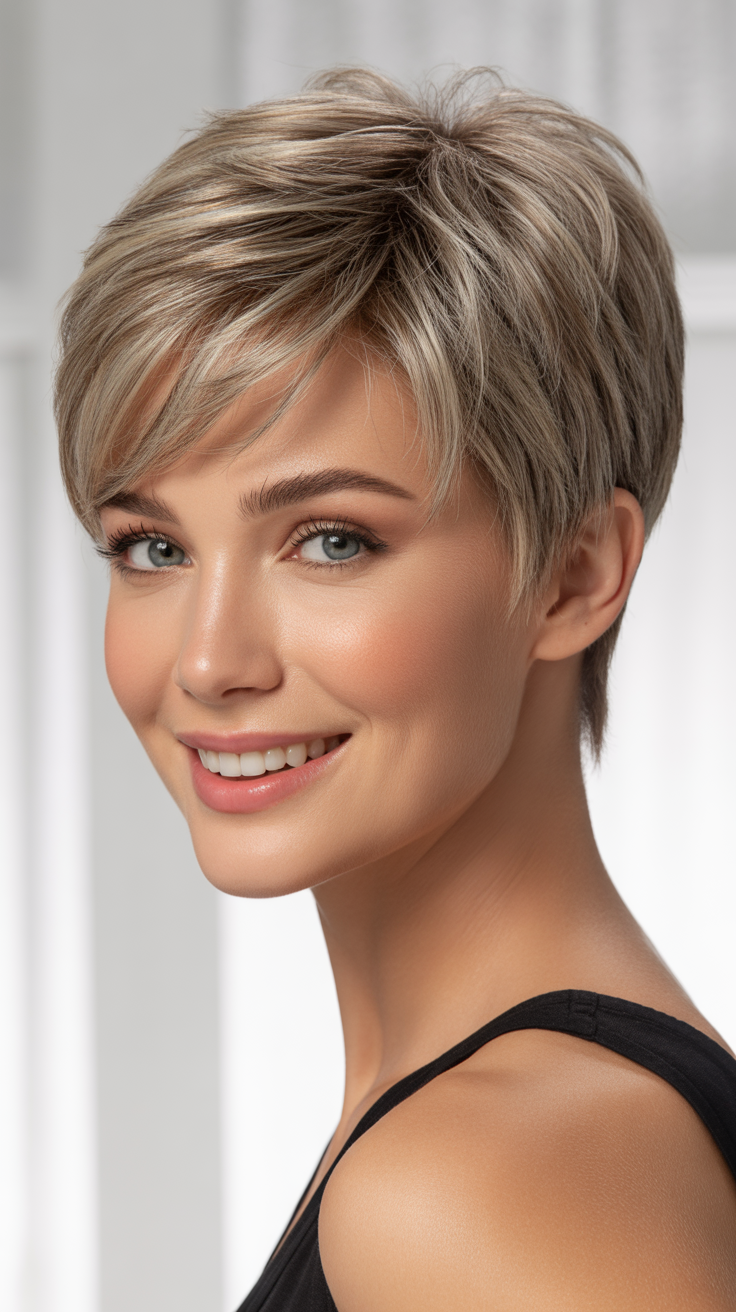
If you have fine, flat hair and dream of a style that adds volume, texture, and effortless sophistication, very short pixie haircuts might be your ultimate solution.
These bold, liberating cuts are specifically designed to breathe life into thin strands, creating the illusion of thickness and movement that longer styles often fail to deliver.
Women with fine hair often struggle with limp, lifeless locks that refuse to hold volume, but the right pixie cut can transform your entire look by removing weight and encouraging natural lift at the roots.
This comprehensive guide explores 33 Top Very Short Pixie Haircuts for Fine Flat Hair, each carefully selected to maximize volume, enhance facial features, and simplify your daily styling routine.
From textured crops to tapered styles, from asymmetrical designs to classic cuts with modern twists, you’ll discover proven techniques, styling secrets, and expert insights that will help you choose the perfect pixie for your unique hair type and face shape.
Whether you’re considering your first major chop or looking to refresh your current short style, these options will inspire confidence and show you exactly how very short pixie cuts can revolutionize fine, flat hair into a stunning, head-turning statement.
1. Classic Tapered Pixie with Side-Swept Bangs
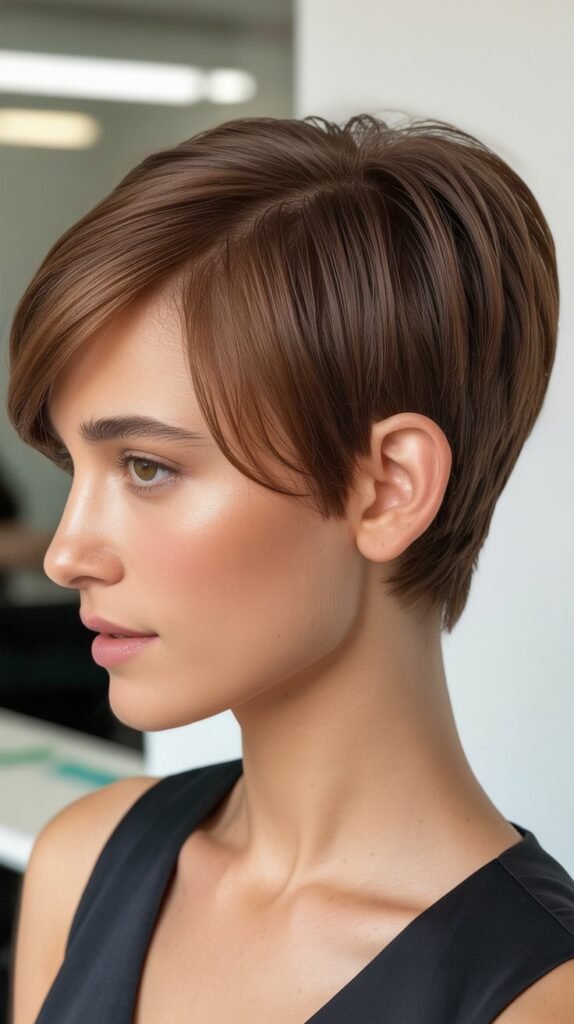
The classic tapered pixie with side-swept bangs remains a timeless choice that brings instant dimension to fine, flat hair through strategic layering and directional styling.
This cut features graduated lengths that are shorter at the nape and sides while maintaining slightly more length on top, creating a natural lift that fine hair desperately needs.
- The tapered sides eliminate bulk at the heaviest parts of the hair, allowing the top section to appear fuller by contrast.
- Side-swept bangs draw attention across the face horizontally, creating width and balance for various face shapes.
- This style works exceptionally well for oval, heart, and diamond face shapes by softening angular features.
- The graduation technique involves cutting hair at increasing lengths from bottom to top, which builds in automatic volume.
- Fine hair benefits from the removal of weight at the ends, preventing the dragged-down appearance common with longer styles.
- Styling requires minimal product—a lightweight mousse at the roots and a small amount of texturizing cream through the lengths.
- The side-swept fringe can be adjusted in length to complement your forehead height and eyebrow shape.
- Regular trims every 4-6 weeks maintain the precise shape and prevent the style from growing out awkwardly.
2. Textured Crop Pixie
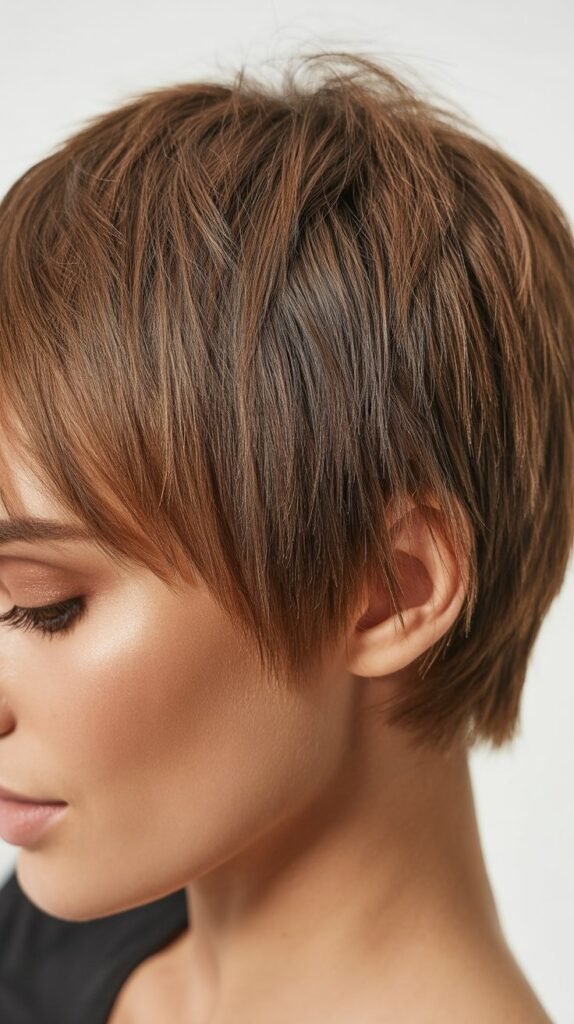
The textured crop pixie revolutionizes fine hair by introducing deliberate, choppy layers that create the appearance of density and movement throughout the entire head.
This contemporary cut focuses on creating separation between hair sections rather than smooth, blended layers.
- Point-cutting techniques are used to create irregular, textured ends that prevent hair from lying flat against the scalp.
- The choppy nature of the cut scatters light differently across the hair surface, creating visual thickness.
- This style typically features slightly longer pieces on top (1.5-2 inches) with tighter sides and back.
- Texturizing shears or razors are essential tools for achieving the proper separation and movement in fine strands.
- The disheveled, purposefully messy aesthetic actually requires less daily styling than more structured cuts.
- A small amount of dry texturizing spray or powder at the roots provides immediate lift without weighing hair down.
- The crop works particularly well for round and square face shapes by adding height that elongates facial proportions.
- This cut embraces natural hair patterns rather than fighting them, making it ideal for women with slight waves or cowlicks.
3. Undercut Pixie with Volume on Top
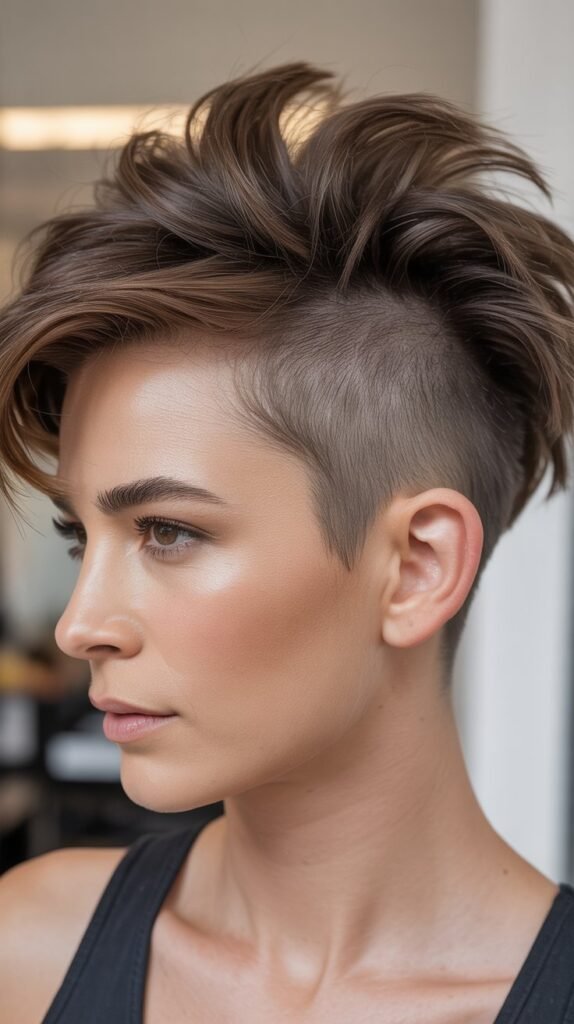
The undercut pixie combines dramatic contrast with practical volume-boosting benefits, featuring closely shaved or buzzed sides and back with substantially longer hair on top.
This bold style removes the maximum amount of weight from fine hair while concentrating length where it creates the most impact.
- The undercut section can range from a #2 guard (1/4 inch) to a #4 guard (1/2 inch) depending on your comfort level with short hair.
- Removing hair from the sides and back eliminates the areas where fine hair tends to look thinnest and most lifeless.
- The top section, measuring 2-4 inches, can be styled in multiple directions for versatile looks throughout the week.
- This dramatic contrast creates an optical illusion of thickness by emphasizing the longer top portion.
- Maintenance involves touching up the undercut every 2-3 weeks while the top can go longer between trims.
- Styling options include slicking the top back, creating a faux hawk, or adding texture for a messy, editorial look.
- The undercut provides relief during hot weather by removing hair that would otherwise trap heat against the scalp.
- This style makes a bold statement and works best for women confident with edgy, fashion-forward aesthetics.
4. Asymmetrical Pixie Cut
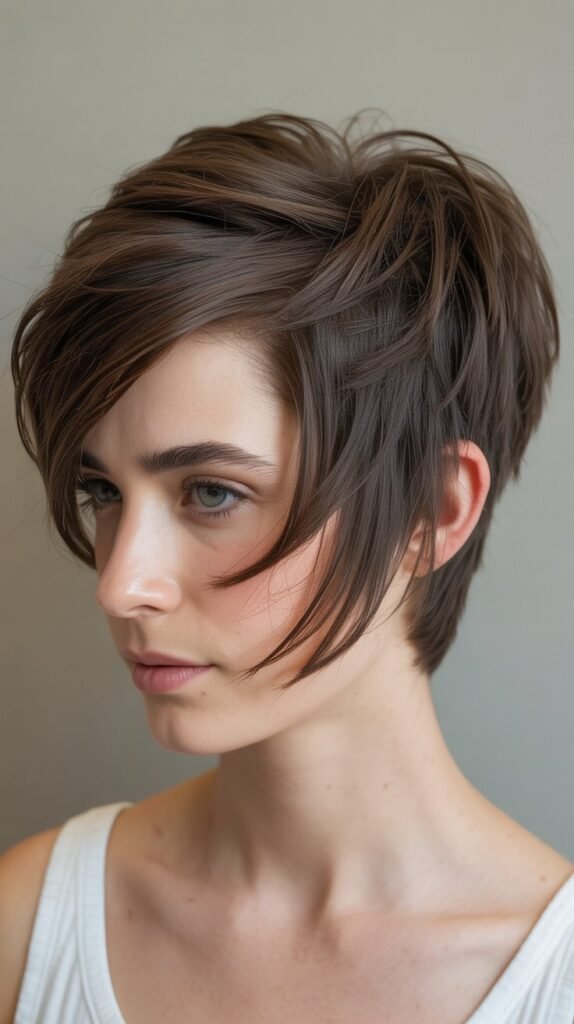
The asymmetrical pixie introduces intentional imbalance that draws the eye across the face, creating interest and the perception of fullness through strategic length placement.
One side features noticeably shorter hair while the opposite side maintains longer pieces that can be styled forward or tucked behind the ear.
- The longer side typically measures 2-4 inches while the shorter side ranges from 1-2 inches, creating obvious contrast.
- This asymmetry naturally directs attention and creates movement, which is particularly beneficial for fine, static-prone hair.
- The uneven lengths prevent hair from settling into the flat, uniform appearance that plagues many cuts on fine hair.
- Asymmetrical styles work beautifully for women with strong facial features they want to highlight or soften.
- The longer side can be swept across the forehead to create flattering dimension for high foreheads or prominent brow bones.
- Styling involves using a small round brush to direct the longer section while the shorter side can be left natural or slightly tousled.
- This cut particularly complements square and rectangular face shapes by breaking up harsh horizontal lines.
- The dramatic difference in lengths ensures your hair always looks intentionally styled rather than neglected or grown-out.
5. Feathered Pixie with Wispy Ends
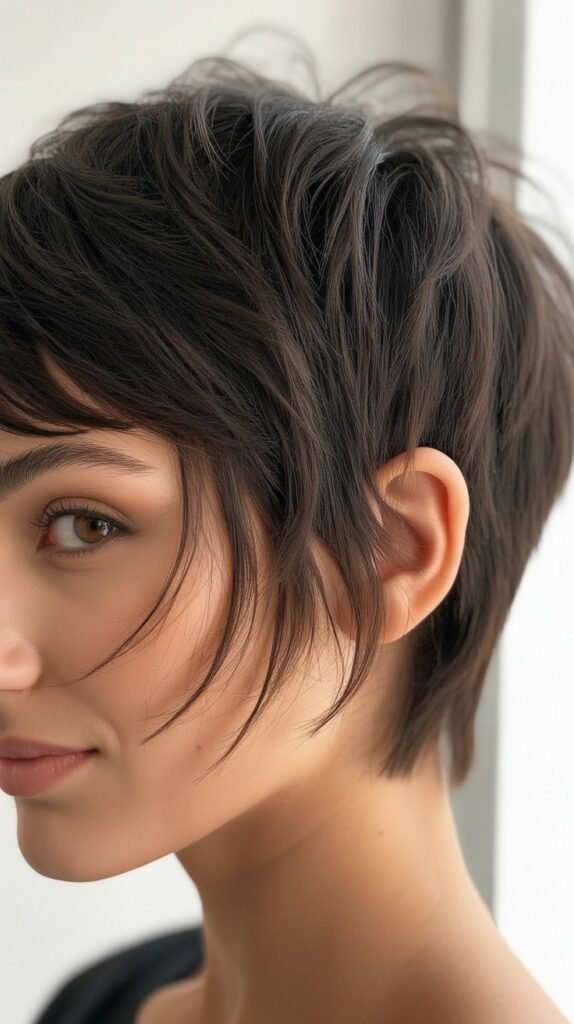
The feathered pixie brings softness and delicate movement to fine hair through razor-cut or point-cut techniques that create thin, wispy ends throughout the style.
This approach maximizes the natural lightness of fine hair rather than trying to disguise it.
- Feathering involves cutting hair at an angle to create tapered, feather-like ends that move independently.
- The technique removes just the right amount of weight while maintaining enough hair to create volume at the roots.
- Wispy ends catch light beautifully, creating dimension and the appearance of more hair than actually exists.
- This cut works exceptionally well for women with naturally straight fine hair that lacks body.
- The softness of feathered layers complements delicate facial features and creates a romantic, feminine aesthetic.
- Styling requires blow-drying with fingers rather than brushes to maintain the separated, airy quality of the cut.
- A lightweight finishing spray helps hold the feathered texture without creating stiffness or weighing hair down.
- The feathered approach works across all face shapes but particularly enhances round faces by adding length perception.
6. Spiky Pixie Cut
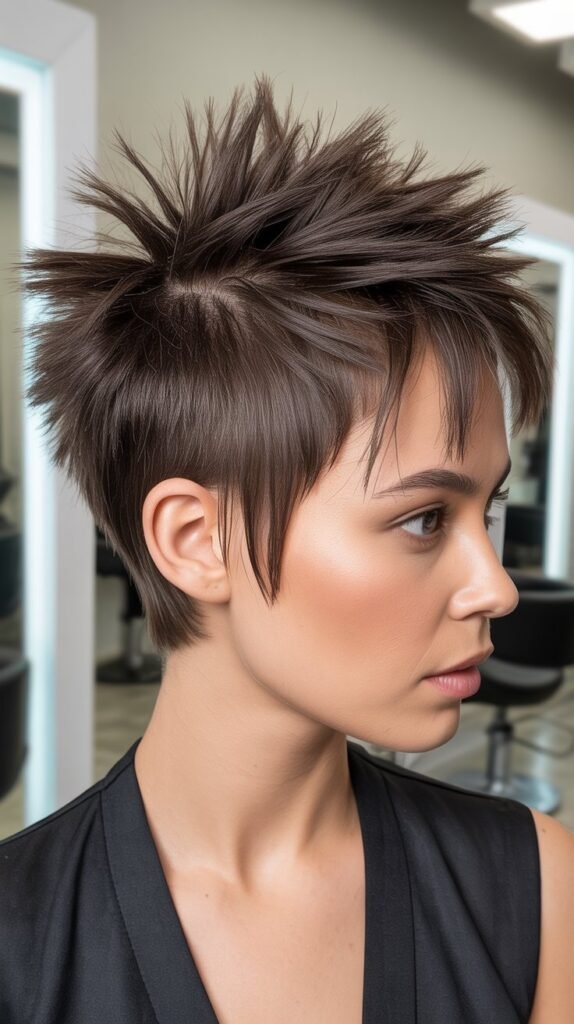
The spiky pixie embraces texture and dimension by cutting hair to uniform shorter lengths that can be manipulated upward and outward, creating maximum volume and a playful, youthful appearance.
This style celebrates the freedom of very short hair while solving the flatness issue inherent to fine strands.
- Hair is typically cut to 1-2 inches all over, providing enough length to create spikes but short enough to maintain shape.
- The uniform length ensures consistent volume across the entire head rather than isolated areas.
- Spikes are created using strong-hold products like gel, pomade, or styling paste applied to damp hair.
- The upward direction of styled hair creates immediate lift at the roots, solving the flat-hair problem instantly.
- This style requires daily styling but takes only 5-10 minutes with the right products and techniques.
- The spiky texture adds visual interest and personality, making it ideal for creative or expressive individuals.
- Regular trimming every 3-4 weeks maintains the proper length for spike formation.
- This cut works particularly well for heart and oval face shapes by adding width at the crown area.
7. Pixie with Long Front Pieces
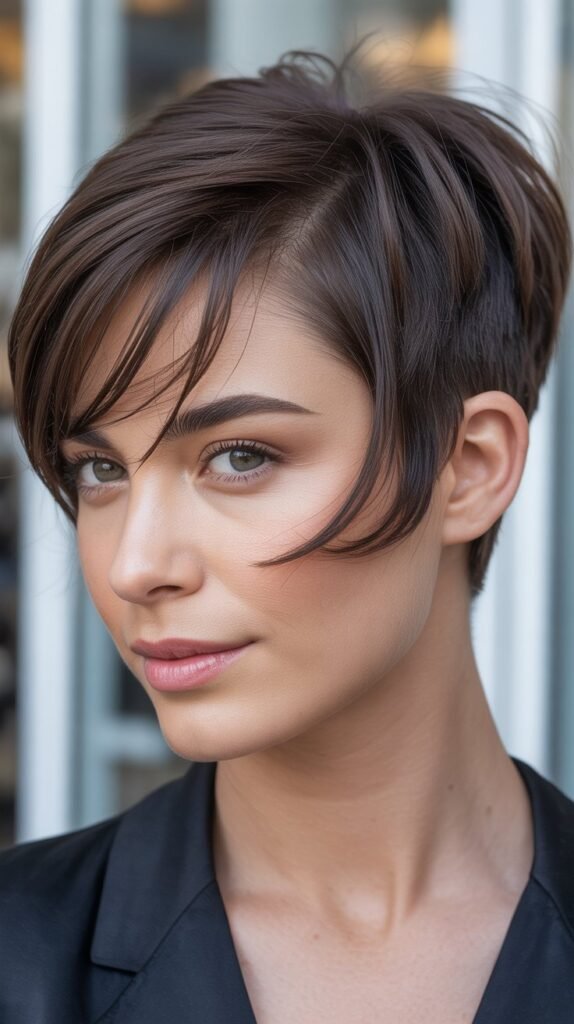
The pixie with long front pieces combines the practical benefits of a very short back and sides with the femininity and styling versatility of longer bangs or forward sections.
This hybrid approach offers the best of both worlds for women transitioning to very short hair.
- The front pieces typically measure 3-5 inches while the back and sides stay under 2 inches, creating dramatic contrast.
- Longer front sections can be styled forward, swept to the side, or even curled for special occasions.
- This length distribution removes weight where fine hair looks thinnest while maintaining feminine styling options.
- The longer front pieces frame the face beautifully, drawing attention to eyes and cheekbones.
- This style works exceptionally well for women with fine hair who aren’t ready to commit to ultra-short hair all over.
- Styling involves blow-drying the longer pieces with a small round brush while the shorter sections can air-dry.
- The versatility of this cut allows for both polished, professional looks and casual, tousled styles.
- Face shape compatibility is excellent, with adjustable front lengths to complement any facial structure.
8. Buzzed Pixie Cut
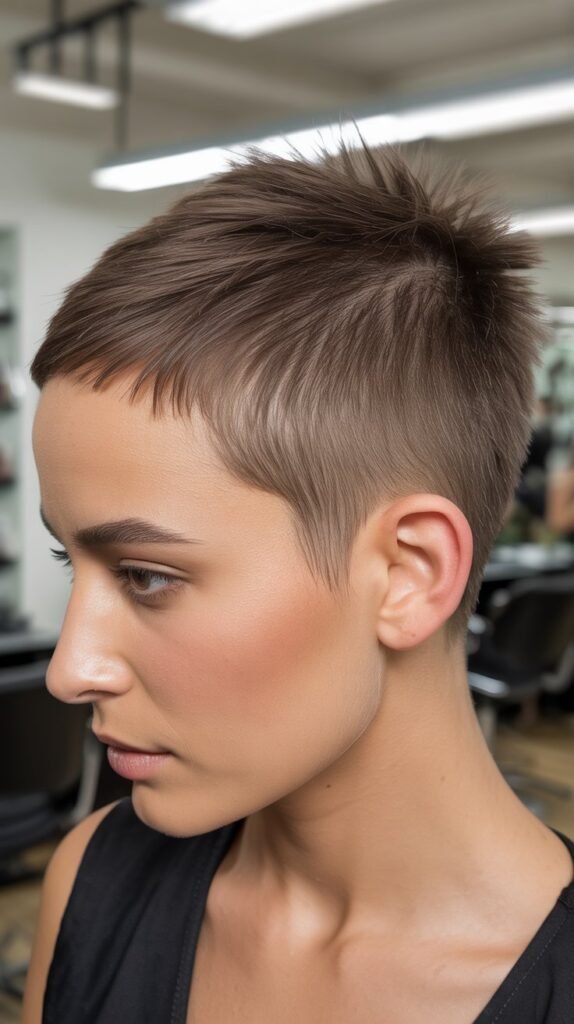
The buzzed pixie represents the ultimate liberation from fine, flat hair struggles by removing nearly all hair length and creating an ultra-low-maintenance, bold aesthetic.
This fearless cut uses clippers to achieve uniformly short hair across the entire head.
- Clipper guards typically range from #3 (3/8 inch) to #6 (3/4 inch) depending on desired length and comfort level.
- This cut completely eliminates the volume problem by removing the hair that would lie flat in the first place.
- The buzzed pixie draws maximum attention to facial features, bone structure, and personal style rather than hair.
- Maintenance is minimal—most women touch up the buzz every 3-4 weeks to maintain consistent length.
- This style works best for women with well-proportioned facial features and confidence in their natural beauty.
- The buzzed cut offers unparalleled ease in daily life—no styling products, tools, or time required.
- Growing out a buzzed pixie allows you to experiment with different lengths and styles as hair returns.
- Face shape considerations become less critical with buzzed cuts, though oval faces typically carry this style most easily.
9. Layered Crown Pixie
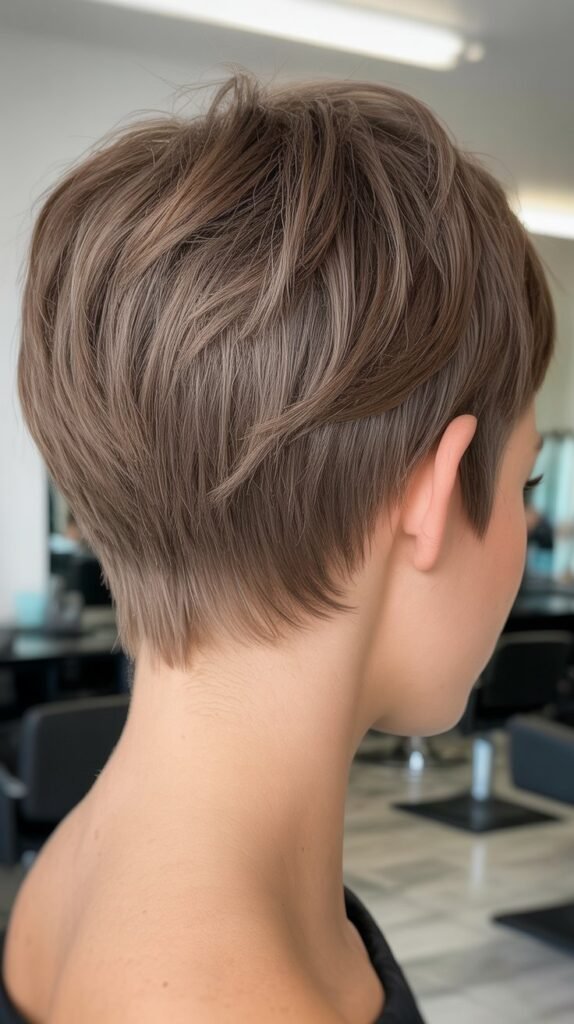
The layered crown pixie strategically concentrates layers and length at the top of the head while keeping sides and back shorter, creating a crown-like effect that adds height and volume exactly where fine hair needs it most.
This architectural approach to cutting builds in lift that requires minimal styling effort.
- The crown area features graduated layers that stack on each other, creating built-in lift through the cutting technique alone.
- Shorter underlayers provide support for slightly longer top layers, preventing collapse at the roots.
- This structural approach to layering works with gravity rather than against it, making styling easier.
- The concentrated volume at the crown elongates the face, making it particularly flattering for round or square face shapes.
- Styling involves blow-drying the crown area in an upward direction while sides can be left to air-dry.
- A volumizing mousse applied specifically to the crown layers amplifies the lift created by the cut itself.
- The contrast between the fuller crown and shorter sides creates dimension that fine hair typically lacks.
- Regular maintenance trims focus on preserving the graduated layers that provide the volume-boosting architecture.
10. Side-Parted Pixie
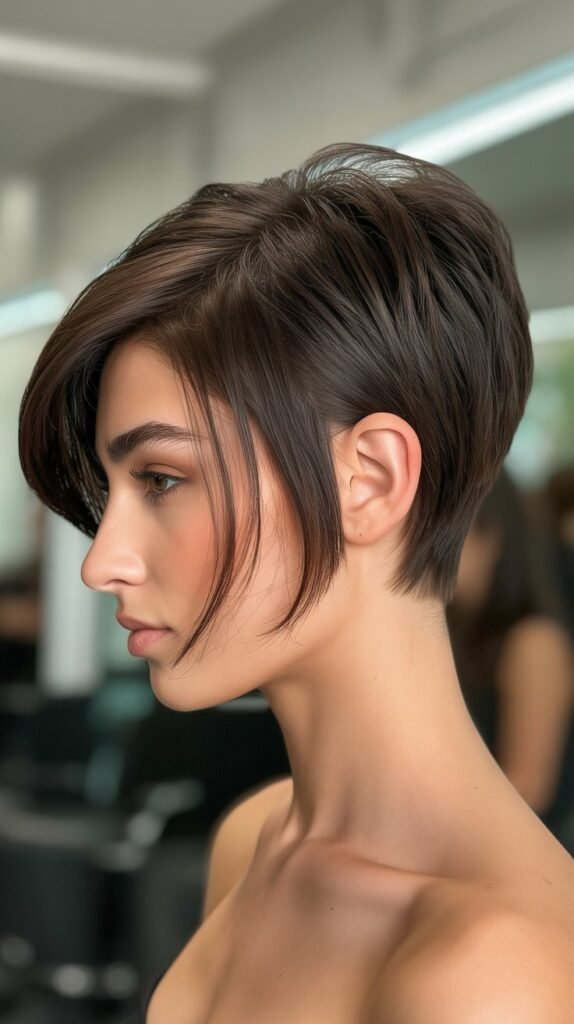
The side-parted pixie uses the simple technique of off-center parting to create asymmetrical volume and movement, instantly adding dimension to fine, flat hair.
The deep side part creates two distinct sections with different purposes and visual weight.
- The part is typically placed 1-2 inches from the natural center part, creating obvious asymmetry.
- The heavier side of the part contains more hair, which can be styled forward or swept across the forehead.
- The lighter side remains closer to the head, creating flattering contrast and the appearance of more volume overall.
- This parting technique works with any pixie cut variation, adding instant interest to even the simplest styles.
- Changing the part location allows you to refresh your look without cutting your hair differently.
- Styling involves blow-drying the heavier side up and over while directing the lighter side back or tucking behind the ear.
- The side part draws attention diagonally across the face, creating flattering lines for nearly all face shapes.
- Product application should focus on the roots of the heavier section to maintain lift throughout the day.
11. Slicked-Back Pixie
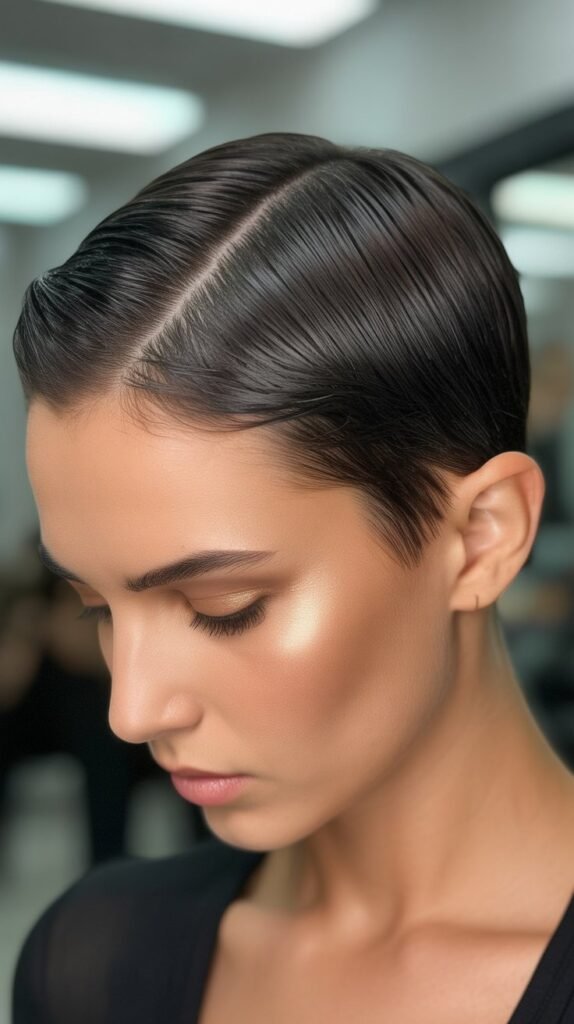
The slicked-back pixie takes fine hair and transforms it into a sleek, polished statement by embracing its natural tendency to lie flat and turning it into a sophisticated, intentional style.
This look requires slightly more length on top (2-3 inches) to achieve the desired sweep-back effect.
- Hair is directed backward from the forehead toward the crown, creating a smooth, unbroken line.
- Gel, pomade, or styling cream provides the hold and shine necessary for this polished aesthetic.
- The slicked-back style exposes the entire face, emphasizing bone structure and creating a bold, confident appearance.
- This look transitions beautifully from professional daytime settings to elegant evening events.
- Fine hair actually performs better with this style than thick hair, as it creates a sleek line without bulk.
- The sides and back remain very short, ensuring all attention focuses on the styled-back top section.
- A strong-hold hairspray locks the style in place, preventing fine hair from falling forward throughout the day.
- This sophisticated look works exceptionally well for oval, heart, and diamond face shapes.
12. Pixie with Shaved Nape Design
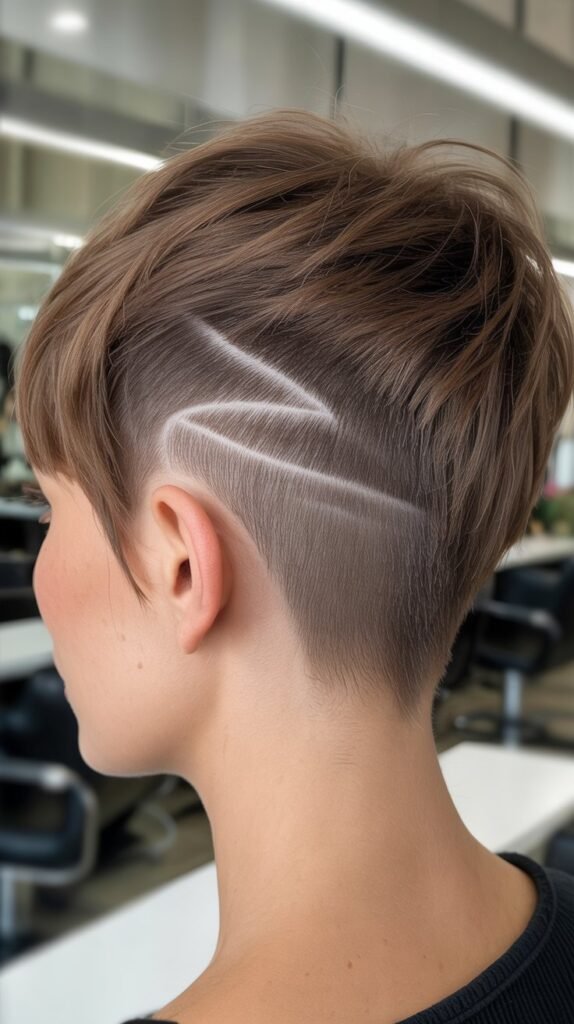
The pixie with shaved nape design adds artistic interest and personality to a very short cut by incorporating patterns, lines, or designs into the closely shaved neck area.
This creative approach makes a unique statement while maintaining all the practical benefits of a very short pixie.
- Nape designs are created using fine clippers or trimmers to etch patterns into very short hair (typically #1 or #2 guard length).
- Common design options include geometric lines, stars, waves, or abstract patterns that reflect personal style.
- The design adds visual interest to an area typically hidden from the wearer’s own view but visible to others.
- This customization option makes each pixie cut unique and allows for personal expression through hair art.
- Designs require touch-ups every 2-3 weeks as hair grows, or they can be allowed to fade naturally for evolving looks.
- The shaved nape keeps the neck cool and comfortable while adding an unexpected element of style.
- This option particularly appeals to women who want edgy, contemporary aesthetics in their appearance.
- The design doesn’t affect the volume or texture benefits the pixie provides for fine hair.
13. Textured Fringe Pixie
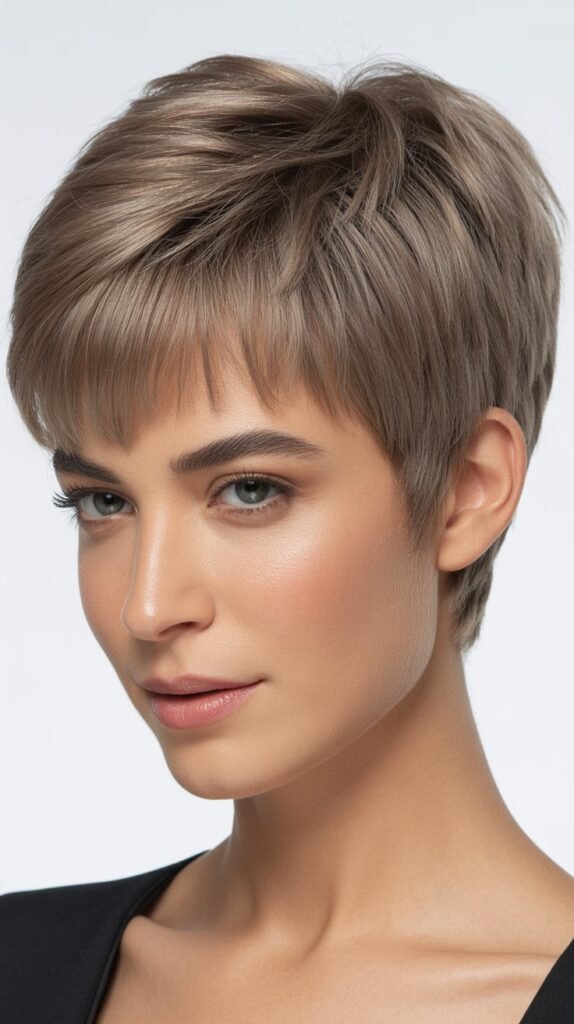
The textured fringe pixie features intentionally choppy, piece-y bangs that fall across the forehead, creating movement, dimension, and a youthful vibe that complements the short overall length.
The fringe adds softness and frames the face while the shortened back and sides maintain volume.
- The fringe is cut using point-cutting or razor techniques to create separation rather than a blunt, heavy line.
- Individual pieces of varying lengths prevent the fringe from lying flat against the forehead, creating natural texture.
- This textured approach works beautifully with fine hair, as it doesn’t require thickness to achieve the desired effect.
- The fringe can be styled forward, swept to the side, or even pushed upward for versatile daily looks.
- Length typically ranges from eyebrow-grazing to just above the eyes, depending on face shape and preference.
- Texturizing products enhance the piece-y quality and help individual sections maintain separation.
- The fringe softens angular face shapes and balances high or prominent foreheads.
- Regular fringe trims between full haircuts keep the texture fresh and prevent the fringe from becoming too heavy.
14. Graduated Bob-Pixie Hybrid
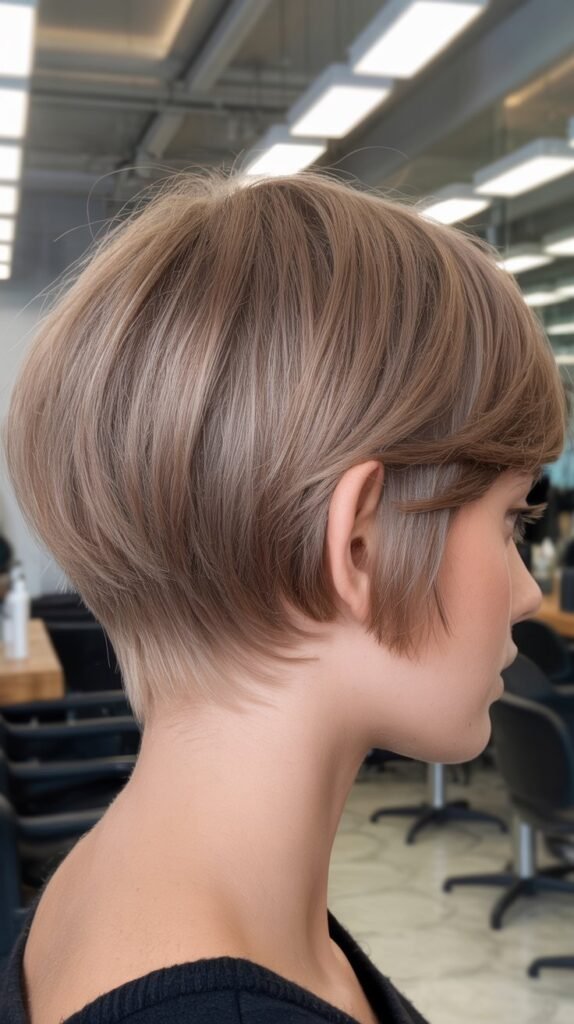
The graduated bob-pixie hybrid bridges the gap between a traditional pixie and a short bob, featuring slightly longer lengths overall with graduated stacking at the back that creates volume and shape.
This transitional style offers more versatility than an ultra-short pixie while still addressing fine hair concerns.
- The back features stacked layers that graduate from very short at the nape to longer toward the crown.
- Overall length is typically 2-4 inches, longer than a traditional pixie but significantly shorter than a typical bob.
- This graduated stacking creates automatic lift at the back of the head, preventing flat, lifeless appearance.
- The sides can be cut to various lengths, allowing customization based on face shape and styling preference.
- This hybrid style works exceptionally well for women transitioning from longer hair to very short styles.
- Styling versatility allows for both sleek, polished looks and tousled, casual aesthetics.
- The graduated back provides structure and shape even when hair is air-dried without products.
- This cut flatters nearly all face shapes due to its adjustable proportions and balanced silhouette.
15. Micro Fringe Pixie
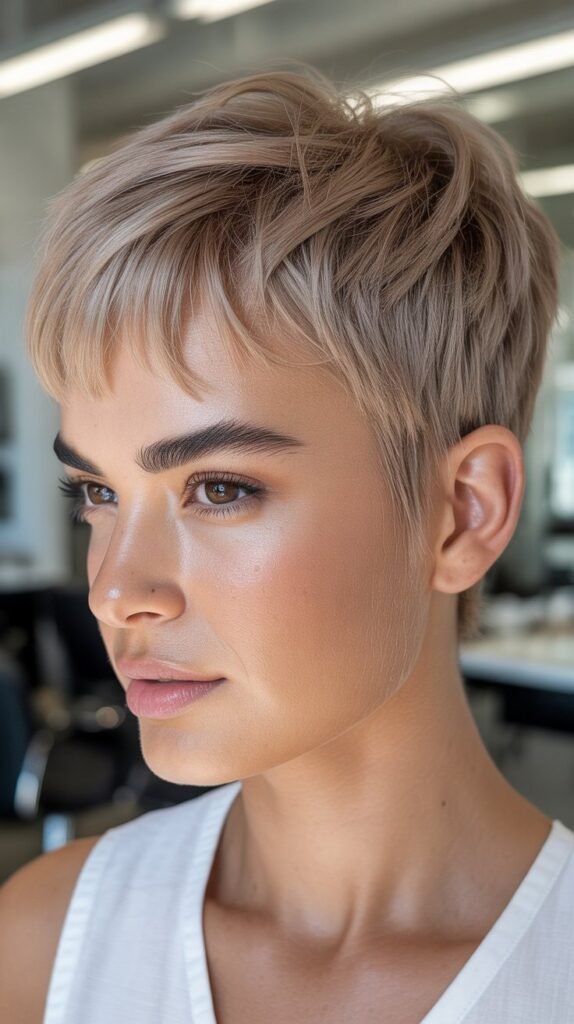
The micro fringe pixie features an ultra-short, baby bang that sits well above the eyebrows, creating a bold, editorial look that pairs dramatically with the very short lengths of a pixie cut.
This unconventional fringe choice adds instant personality and modern edge to fine hair.
- The micro fringe typically measures 1-2 inches in length, sitting mid-forehead or higher.
- This bold fringe choice draws attention to the eyes and eyebrows, emphasizing upper facial features.
- The unexpected fringe length creates visual interest and a fashion-forward aesthetic.
- Fine hair actually works better for micro fringes than thick hair, as it creates a delicate rather than heavy appearance.
- The short fringe requires less styling attention than longer bangs, as it naturally falls into place.
- This look pairs well with the rest of the pixie cut in various textures—smooth, spiky, or tousled.
- The micro fringe works best for oval, heart, and diamond face shapes with proportionate foreheads.
- Regular fringe maintenance every 2-3 weeks keeps the micro length intentional rather than grown-out.
16. Rounded Pixie Cut
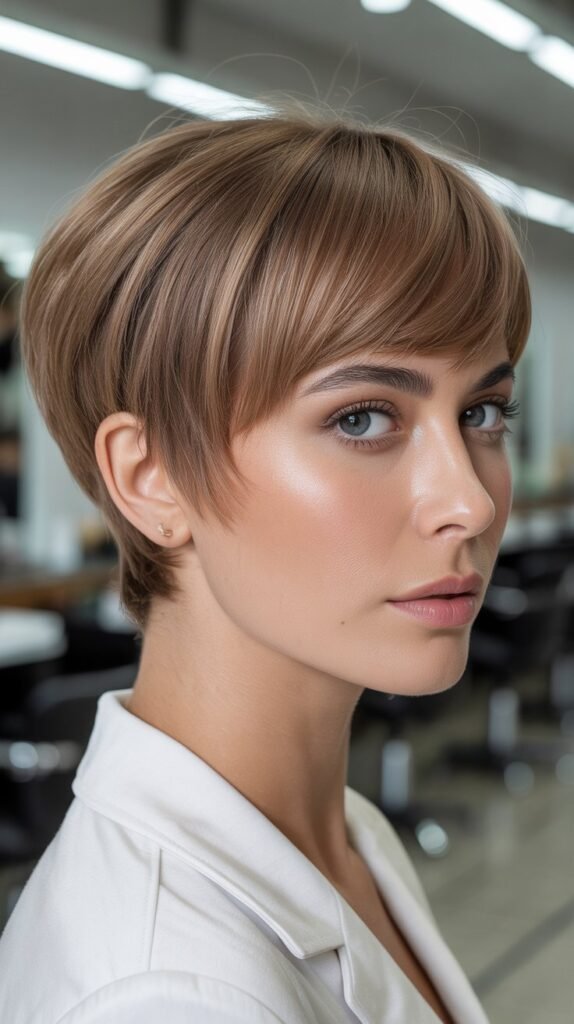
The rounded pixie features curved shaping around the head that creates a soft, feminine silhouette while maintaining the volume benefits of very short hair.
This approach to cutting emphasizes smooth, rounded lines rather than angular or choppy textures.
- The cut creates a cap-like shape that follows the natural curve of the skull, providing structure and form.
- Graduated layers blend smoothly into each other rather than creating obvious separation or texture.
- This rounded approach adds width at the sides of the head, which can balance narrow or long face shapes.
- The smooth finish works beautifully for professional settings where polished appearance is important.
- Blow-drying with a round brush maintains the curved silhouette and enhances the volume-creating shape.
- The rounded pixie offers a more classic, timeless aesthetic compared to edgier, textured variations.
- This cut requires precise sectioning and cutting technique to achieve the perfect rounded proportion.
- Fine hair benefits from the built-in volume created by the rounded shape’s natural lift away from the head.
17. Pixie with Tapered Sideburns
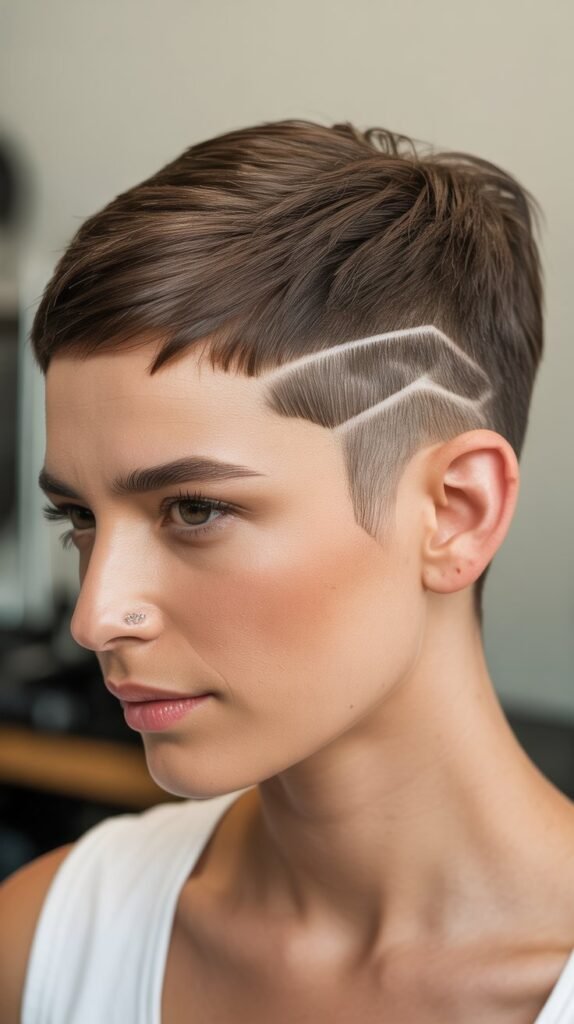
The pixie with tapered sideburns extends the haircut to include shaped, deliberate sideburns that frame the face and create additional points of interest.
This detail-oriented approach adds sophistication and can be customized to complement individual face shapes.
- Sideburns are cut to specific lengths and shapes—pointed, squared, or softly tapered—based on facial structure.
- The deliberate inclusion of sideburns adds a polished, finished quality to the overall cut.
- Longer, tapered sideburns can soften angular jaw lines and balance wider cheekbones.
- Shorter, more angular sideburns create structure and definition for rounder face shapes.
- The sideburn area is typically kept at 1-2 inches, longer than the surrounding hair at the temples.
- This detail demonstrates intentional styling choices rather than accidental or neglected hair growth.
- Maintenance involves trimming the sideburns to maintain their shape and proportion with each full haircut.
- The sideburns can be styled forward toward the face or backward toward the ears depending on desired effect.
18. Voluminous Top Pixie
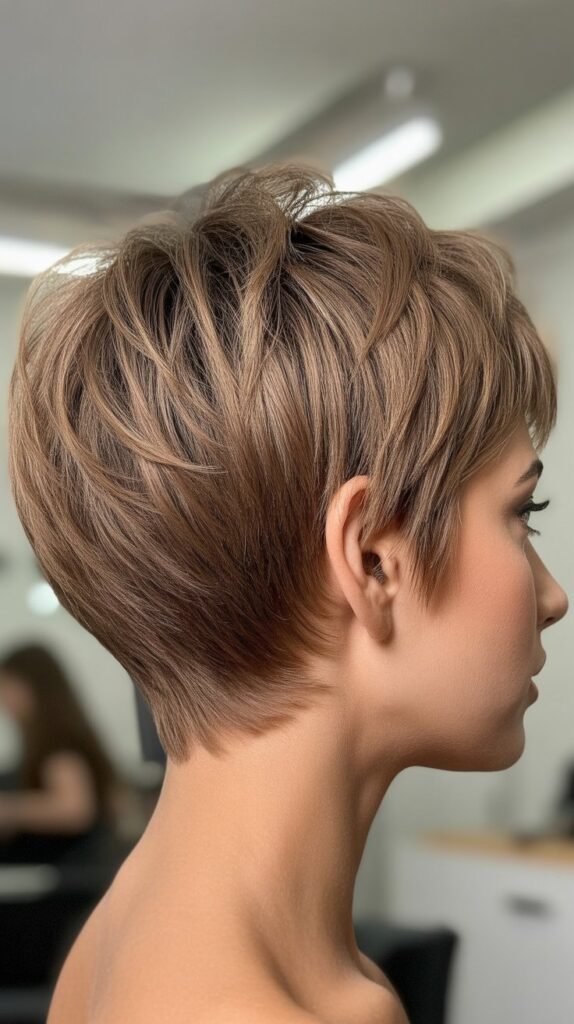
The voluminous top pixie concentrates maximum length and layering at the crown and top sections while keeping sides and back minimal, creating dramatic height that’s particularly beneficial for fine, flat hair.
This architectural approach builds lift directly into the cut.
- Top section hair measures 3-5 inches while sides and back stay under 1 inch, creating extreme contrast.
- Multiple layers within the top section prevent weight from pulling hair down flat against the head.
- This dramatic volume changes face proportions, elongating round or square faces significantly.
- Styling involves blow-drying the top section upward and slightly forward to maximize height.
- Volumizing products, teasing, or backcombing can further enhance the built-in lift.
- The high-volume aesthetic makes a bold statement and requires confidence to carry successfully.
- This cut works particularly well for women with naturally straight fine hair that lacks any wave pattern.
- The volume focus draws attention upward, emphasizing eyes and upper facial features.
19. Disheveled Bedhead Pixie
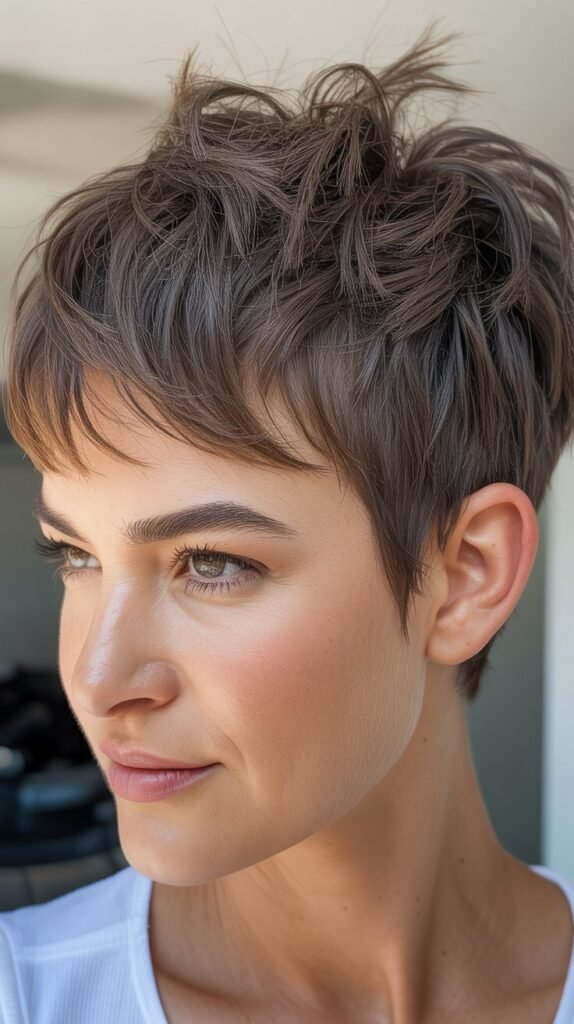
The disheveled bedhead pixie embraces intentional messiness and relaxed texture, creating an effortlessly cool aesthetic that requires minimal styling while still looking intentional.
This approach to pixie cutting incorporates irregular lengths and choppy textures throughout.
- Hair is cut at varying lengths throughout to create natural-looking irregularity and prevent uniformity.
- The disheveled look actually requires strategic cutting to achieve—random hair growth wouldn’t create this aesthetic.
- Texturizing products enhance the piece-y, separated quality without creating stiffness or obvious product buildup.
- This style celebrates the natural movement and direction of fine hair rather than forcing it into structured patterns.
- Minimal daily styling is required—finger-styling with small amounts of product creates the desired effect.
- The relaxed, undone appearance projects confidence and modern, fashion-forward sensibility.
- This cut works across all face shapes as the irregular texture creates balance rather than emphasizing any single feature.
- The bedhead pixie offers relief from the pressure of perfectly polished hair while still looking intentionally styled.
20. Pixie with Razor-Cut Edges
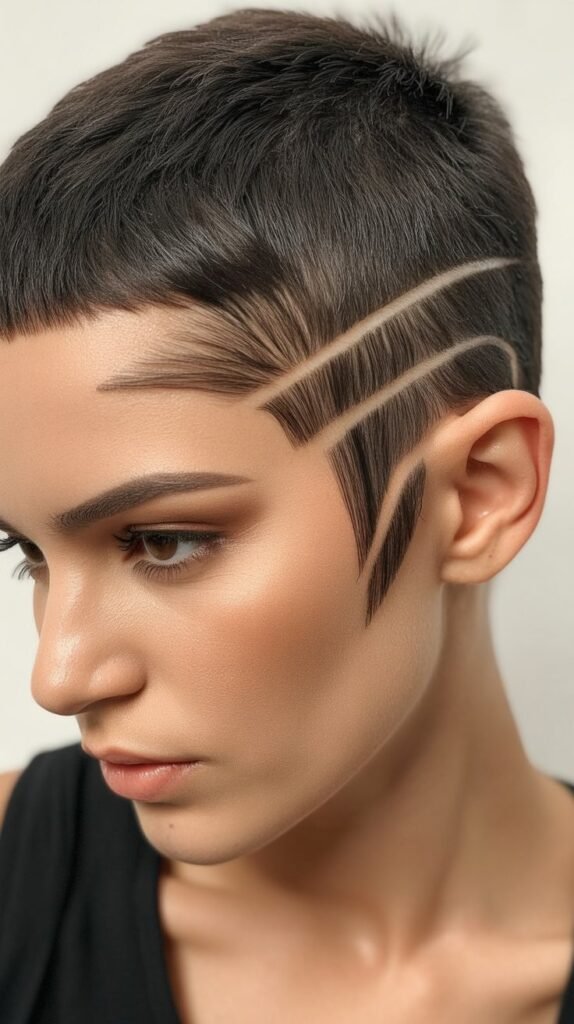
The pixie with razor-cut edges uses a straight razor instead of scissors to create the cut, resulting in softer, more textured edges throughout the style.
This cutting technique produces particularly beneficial results for fine hair by creating natural-looking texture.
- Razor cutting creates tapered ends rather than blunt lines, allowing hair to move more freely and naturally.
- The softer edges prevent fine hair from looking sparse or choppy at the ends.
- This technique removes weight more gradually than scissors, maintaining more hair while still creating lift.
- Razor-cut hair tends to lie in more natural, flowing patterns rather than rigid, structured shapes.
- The resulting texture requires less product to create movement and visual interest.
- This cutting method works especially well for women with naturally straight fine hair lacking natural texture.
- Stylists must use extremely sharp razors to prevent damage or splitting of fine hair strands.
- The soft, feathered appearance complements feminine styling preferences and creates delicate visual effects.
21. Angular Pixie Cut
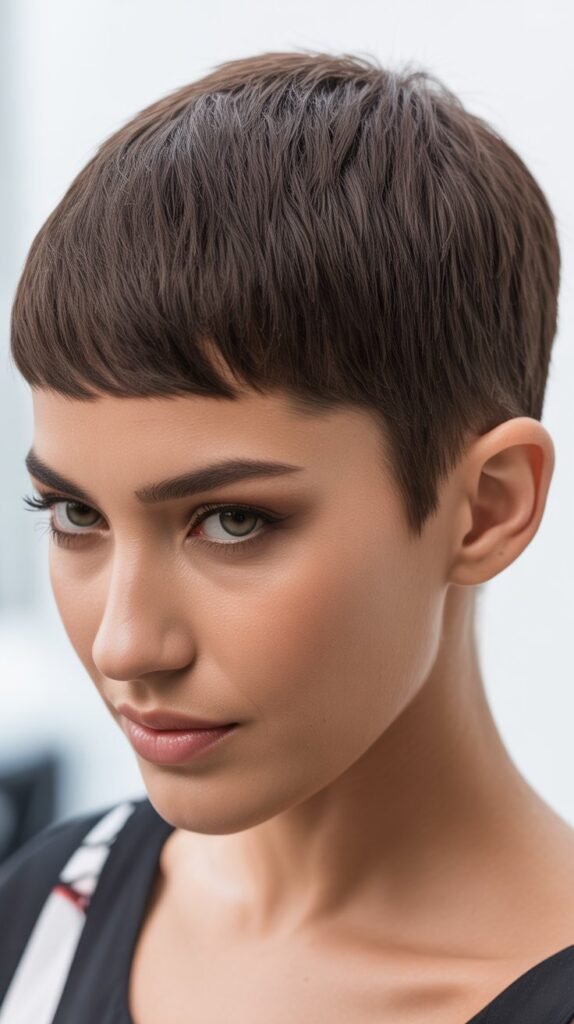
The angular pixie incorporates distinct geometric lines and sharp angles into the cut, creating a structured, modern aesthetic with clean edges and precise shaping.
This architectural approach to cutting creates visual interest through deliberate lines rather than soft textures.
- Strong diagonal or vertical lines are cut into the hair to create obvious angular elements.
- The precision of angular cuts requires expert cutting skills and regular maintenance to preserve sharp lines.
- Angular elements often appear at the sides, creating dramatic lines from front to back or across the face.
- This structured approach works particularly well for square or angular face shapes, echoing and enhancing facial geometry.
- The clean lines and geometric precision project confidence, sophistication, and modern sensibility.
- Styling maintains the angular lines through blow-drying that follows the direction of cut lines.
- Strong-hold products keep the angular shape in place throughout the day without movement that would blur the lines.
- This cut makes a bold statement and appeals to women who appreciate contemporary, fashion-forward aesthetics.
22. Pixie with Curled Front Section
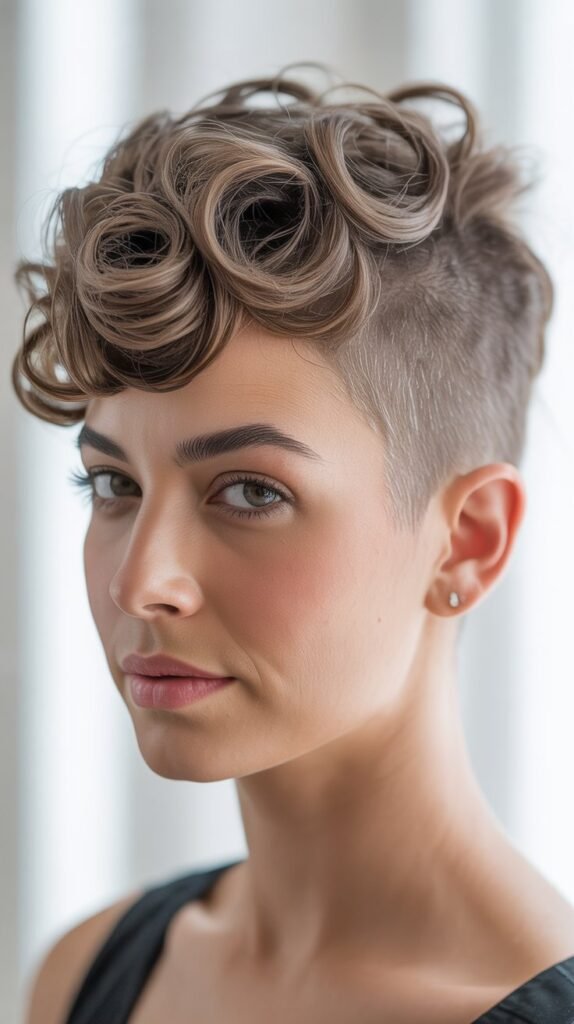
The pixie with curled front section uses slightly longer hair at the front that can be curled or waved, adding softness and vintage charm to an otherwise very short cut.
This hybrid approach combines modern pixie benefits with classic feminine styling elements.
- The front section measures 2-4 inches, long enough to hold a curl when styled with heat tools or rollers.
- Curling or waving the front pieces creates volume and texture that fine hair typically lacks.
- This style references vintage fashion aesthetics while remaining contemporary through the short back and sides.
- The curled section can be positioned across the forehead, swept to one side, or styled upward depending on preference.
- Heat protectant products are essential when using curling tools on fine hair to prevent damage.
- The curl adds softness and femininity that balances the boldness of very short hair elsewhere.
- This versatile style allows for both curled formal looks and straight casual styling depending on the occasion.
- The curled front works particularly well for women with oval, heart, or diamond face shapes.
23. Platinum Blonde Pixie
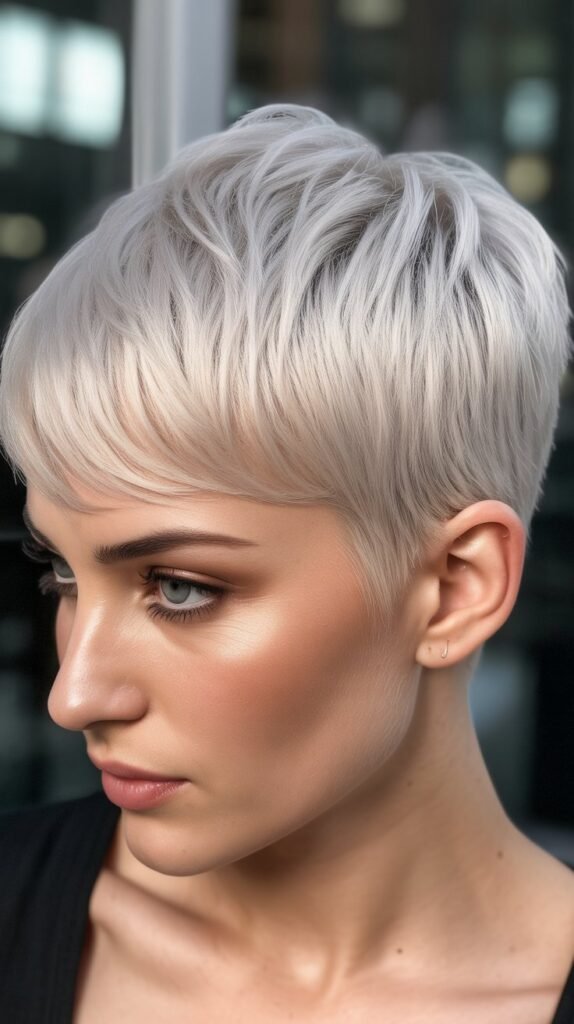
The platinum blonde pixie combines the volume benefits of a very short cut with the light-reflecting properties of platinum blonde color, creating maximum visual impact and the appearance of thicker hair.
The ultra-light color enhances fine hair’s appearance dramatically.
- Platinum blonde color reflects significantly more light than darker shades, creating dimension and visual fullness.
- The color contrast between hair and scalp becomes less obvious with platinum shades, making fine hair appear denser.
- Achieving platinum blonde typically requires professional bleaching, especially when starting from darker natural colors.
- Fine hair processes to platinum more easily than thick hair due to thinner strand diameter.
- Maintenance includes purple-toned shampoos and conditioners to prevent yellow or brassy tones.
- The dramatic color change complements the bold statement of a very short pixie cut.
- Platinum blonde works across most skin tones when proper undertones (cool, warm, or neutral) are selected.
- Color maintenance requires touch-ups every 4-6 weeks to address root growth and maintain vibrancy.
24. Disconnected Pixie
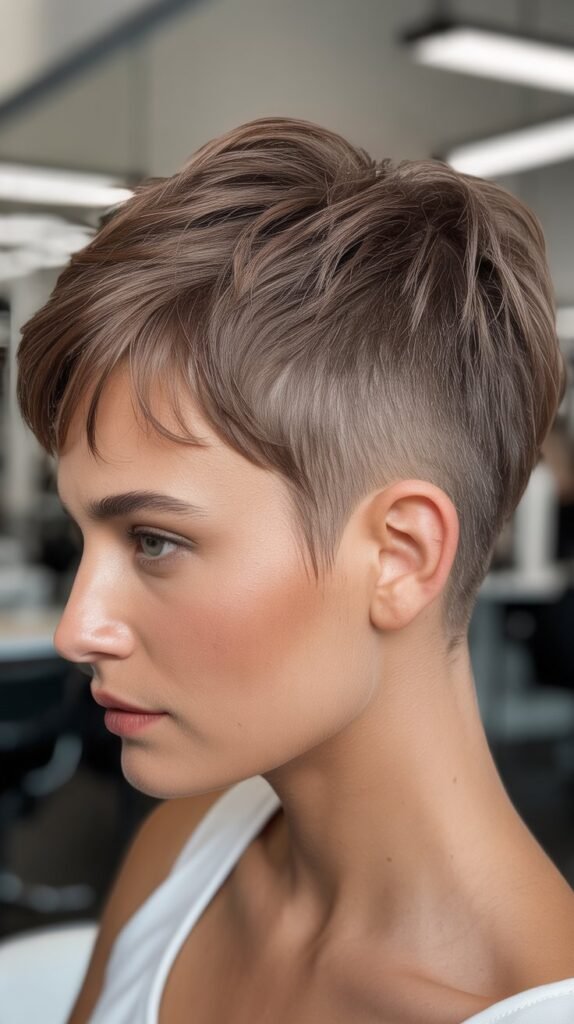
The disconnected pixie features obvious, intentional separation between different sections of the cut—no blending or gradual transitions between lengths.
This creates a dramatic, fashion-forward aesthetic with distinct contrasting sections.
- The disconnection typically occurs between the longer top section and shorter sides, creating a visible “shelf” or line.
- No graduation or tapering connects these sections—the length change is abrupt and intentional.
- This extreme contrast creates significant visual interest and a bold, editorial appearance.
- The disconnected style works exceptionally well with fine hair by removing weight while maintaining strategic length.
- Styling options include slicking the top section back, pushing it forward, or creating textured volume.
- The obvious disconnection requires precise cutting and looks best when maintained with regular trims.
- This cut makes a strong style statement and works best for women comfortable with attention-getting hair.
- Face shape compatibility is good across most structures, though oval faces carry this dramatic style most easily.
25. Soft Mohawk Pixie
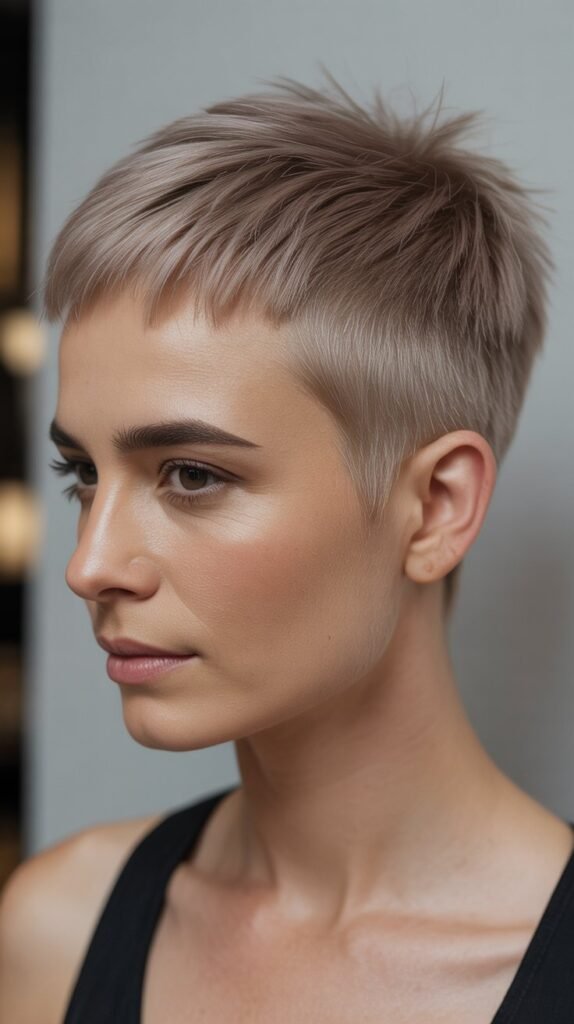
The soft mohawk pixie creates a subtle ridge of slightly longer hair from front to back along the center of the head while keeping sides very short, providing a toned-down interpretation of mohawk aesthetics that’s wearable in professional settings.
- The center section measures 2-3 inches while sides stay at 1 inch or shorter, creating noticeable but not extreme height difference.
- The longer center strip can be styled upward for emphasis or left to fall naturally for a subtler effect.
- This style adds significant height at the crown, elongating the face and creating vertical interest.
- Fine hair benefits from this design as the concentrated length at the center appears fuller than distributed length would.
- Styling involves applying product to the center section and directing it upward or slightly forward.
- The soft mohawk offers edginess without the commitment or professional limitations of a true mohawk.
- This cut works particularly well for round or square faces by adding vertical dimension.
- The style can be adjusted in intensity—more dramatic for weekends, subtler for professional settings.
26. Pixie with Shaved Side Panels
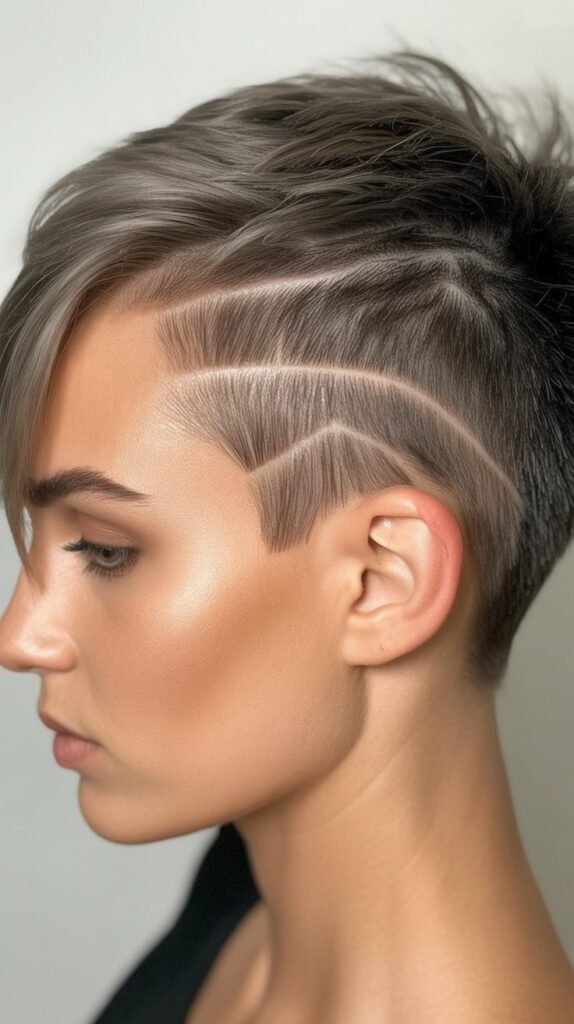
The pixie with shaved side panels takes the undercut concept further by creating distinct sections of shaved hair at the sides, separated by slightly longer hair above.
This creates pattern and visual interest through negative space and contrast.
- Shaved panels are created using fine clippers or trimmers to create precise lines and sections.
- The panels can be horizontal stripes, vertical sections, or geometric shapes based on personal preference.
- Hair above and between shaved sections remains longer, creating distinct contrast and pattern.
- This detailed cutting approach adds significant visual interest without requiring color or extensive styling.
- The shaved panels keep the sides cool and comfortable while creating an artistic, customized look.
- Maintenance involves refreshing the shaved sections every 2-3 weeks to maintain clean lines.
- This style appeals to women who want unique, personalized elements in their hair rather than standard cuts.
- The panels can be positioned to complement face shape—higher panels for round faces, lower for longer faces.
27. Tousled Pixie with Movement
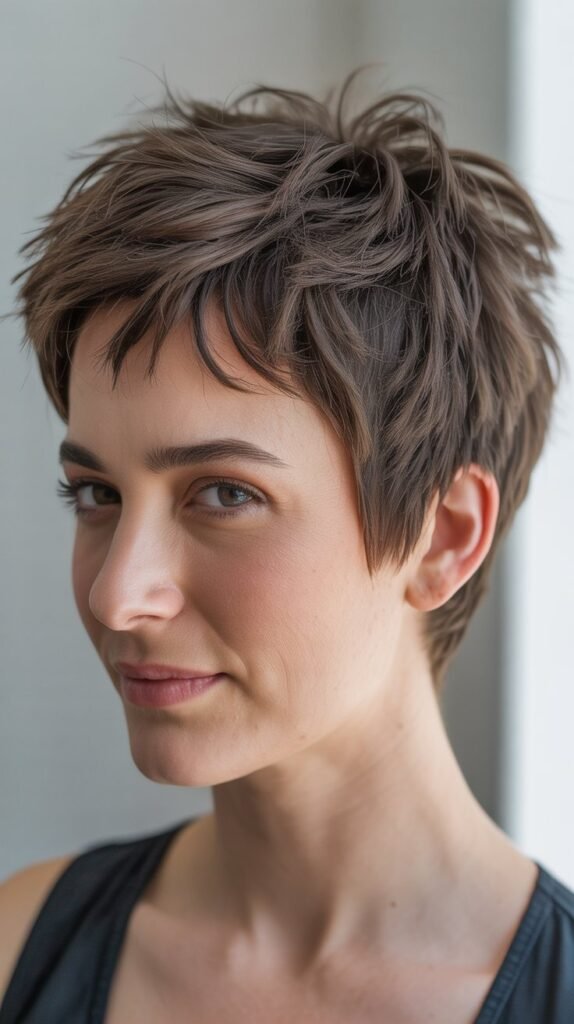
The tousled pixie with movement emphasizes relaxed, wind-blown texture and multi-directional styling that creates the illusion of thickness through strategic chaos.
This cut incorporates irregular layers and choppy textures specifically designed to move freely.
- Layers are cut at various angles and lengths to encourage multi-directional movement rather than uniform flow.
- The tousled aesthetic creates separation between hair sections, which makes fine hair appear more voluminous.
- Styling involves scrunching product through hair and allowing natural drying patterns to emerge.
- This relaxed approach to styling reduces daily time investment while maintaining an intentional, styled appearance.
- The movement and texture distract from the fineness of individual strands by creating visual complexity.
- Lightweight styling creams or sea salt sprays enhance natural texture without weighing hair down.
- This cut works beautifully for women with natural wave or slight texture in their fine hair.
- The tousled style projects a relaxed, confident aesthetic that appears effortless despite strategic cutting.
28. Defined Part Pixie
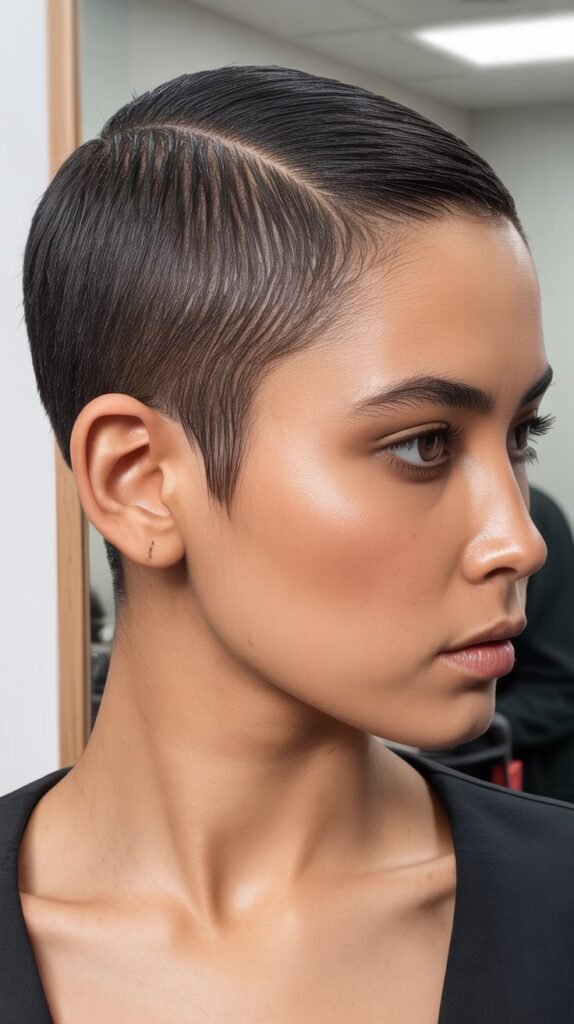
The defined part pixie uses a clearly marked, precise part line as a central design element, creating structure and organization that fine hair often lacks.
The sharp part becomes a styling feature rather than just a functional necessity.
- The part is created using the tail of a comb or razor for extreme precision and clean edges.
- Strong-hold gel or pomade can be applied along the part line to maintain its sharpness throughout the day.
- The defined part creates organization and structure that prevents fine hair from looking messy or unkempt.
- Part placement can be adjusted—center, side, or zigzag—to create different aesthetic effects.
- This styling element adds visual interest without requiring additional cutting or color services.
- The precise part works particularly well for sleek, polished styling approaches.
- Changing part location allows you to refresh your look without making permanent changes to the cut.
- This detail-oriented approach complements professional environments and formal occasions.
29. Layered Nape Pixie
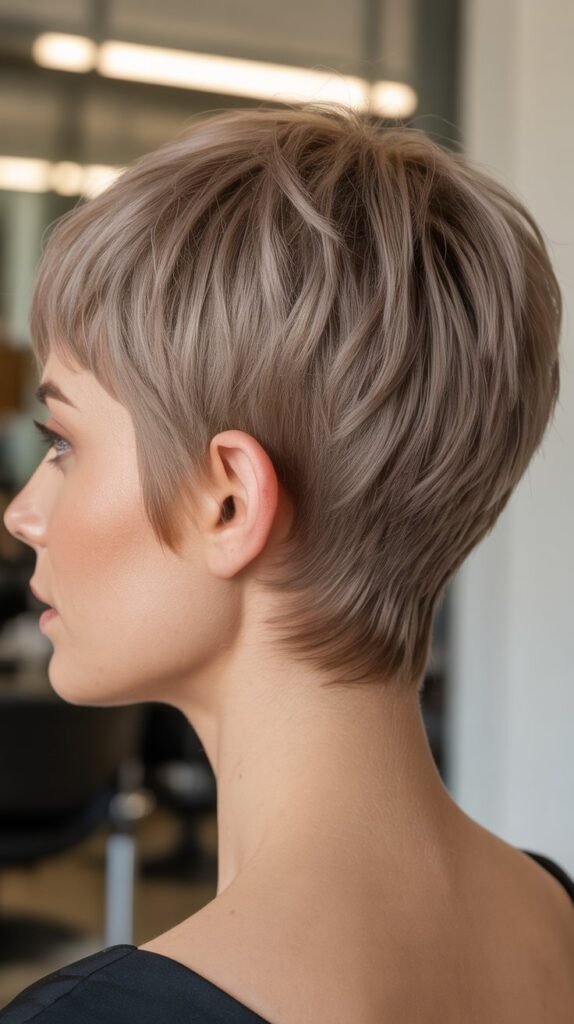
The layered nape pixie features concentrated layering at the back of the neck, creating texture and interest in an area typically kept uniform.
This approach adds dimension to the back view while maintaining shorter, simpler styling at the front and sides.
- Multiple short layers at the nape create feathered, textured appearance rather than a blunt, uniform line.
- The layered nape adds softness and femininity to the back of the cut, which is often visible to others.
- This technique removes weight at the neck while creating visual interest through varied lengths.
- The layered approach prevents the blunt, heavy appearance that single-length napes can create.
- Fine hair benefits from this texture as the layers create the appearance of density at the nape.
- Styling the nape involves finger-styling or light texturizing product to enhance the layered quality.
- The textured nape works across all face shapes as it affects the back view rather than face-framing elements.
- Regular trims maintain the layered texture and prevent the nape from growing into a uniform length.
30. Pixie with Ear-Tucking Design
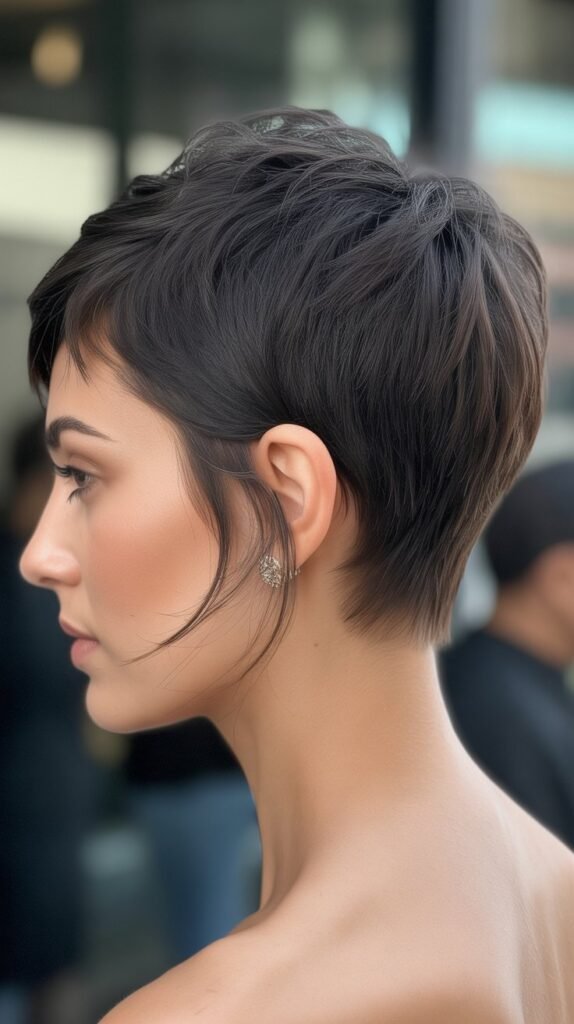
The pixie with ear-tucking design is specifically cut with one or both sides long enough to tuck behind the ears, creating asymmetry and styling versatility.
This approach allows for different looks based on whether hair is worn tucked or untucked.
- One or both sides feature hair measuring 2-3 inches, sufficient length to tuck securely behind the ears.
- The ear-tucking option creates instant asymmetry and exposes the ear and jaw line when desired.
- This styling flexibility allows for adjustments based on outfit, occasion, or personal mood.
- Fine hair actually holds better behind the ears than thick hair, which tends to fall out of tucked position.
- The tucked side exposes the face more fully, emphasizing facial features and jewelry.
- Untucking provides more coverage and a softer, less exposed appearance when preferred.
- This cut works particularly well for women who want styling options without changing the actual haircut.
- The ear-tucking design complements oval, heart, and diamond face shapes by creating adjustable balance.
31. High-Fade Pixie
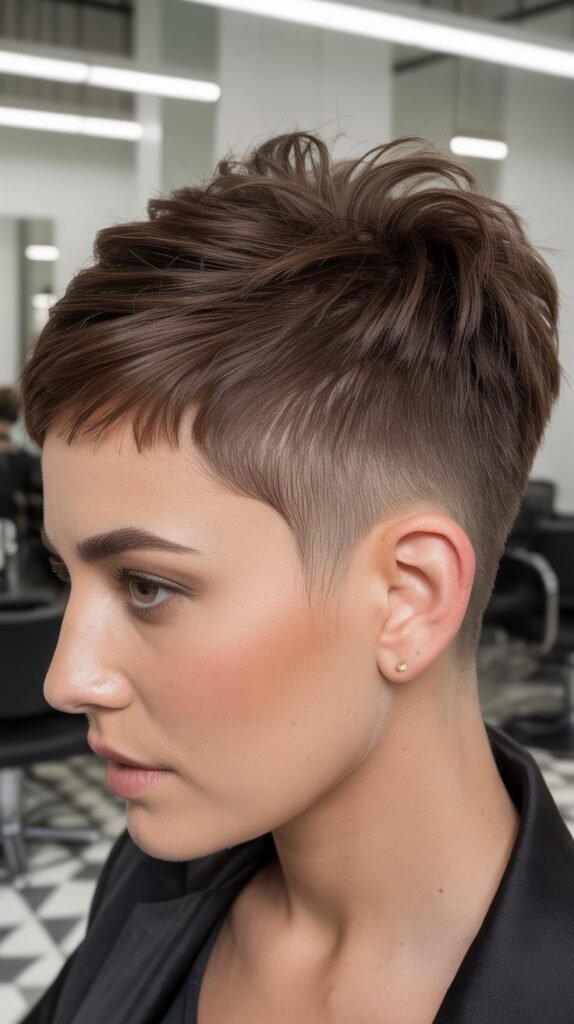
The high-fade pixie incorporates barbering techniques with a gradual fade starting high on the sides and back, creating a contemporary, gender-neutral aesthetic.
The fade creates a smooth transition from very short hair to slightly longer top sections.
- The fade begins at or above the temple area, creating significant contrast between lowest and highest points.
- Multiple clipper guard sizes create the gradual transition—typically progressing from skin or #1 guard to #3 or #4.
- The high fade removes maximum weight from the sides, emphasizing the longer top section dramatically.
- This technique creates clean, precise edges that project polished, contemporary aesthetics.
- Fade maintenance requires touch-ups every 2-3 weeks to maintain the gradual transition and clean lines.
- The high-fade approach works exceptionally well with fine hair by creating obvious contrast and dimension.
- This style bridges traditional women’s cuts and modern unisex barbering approaches.
- Face shape compatibility is excellent, particularly for round and square faces that benefit from the vertical emphasis.
32. Pixie with Temple Detail
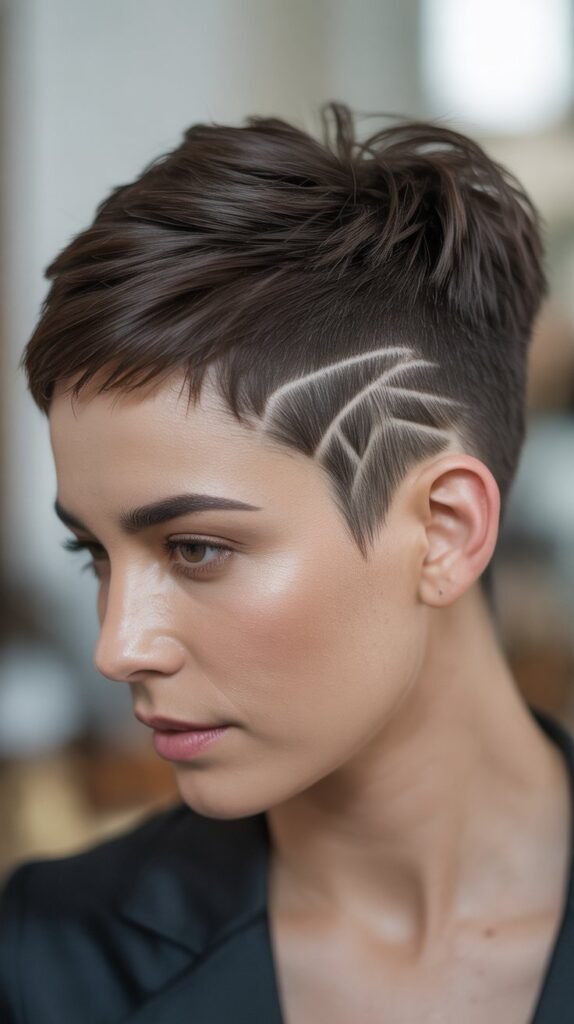
The pixie with temple detail incorporates shaved designs, patterns, or deliberate lines at the temple areas, creating focal points that draw attention and add personalized artistic elements.
This customization makes each cut unique and expressive.
- Temple details are created using fine trimmers or etching tools to carve patterns into closely shaved hair.
- Common designs include lines, geometric shapes, stars, or abstract artistic elements reflecting personal style.
- The temple location makes these details visible primarily from side views, creating surprise elements.
- Fine hair works well for temple details as the designs appear clean and precise against shorter lengths.
- Details require refreshing every 2-3 weeks to maintain clean lines as hair grows.
- The artistic temple elements add significant visual interest without affecting the overall cut structure.
- This customization option appeals to women who want unique, personalized expression through their hair.
- The temple details can be changed or removed entirely, allowing for evolving personal style expression.
33. Natural Texture Pixie
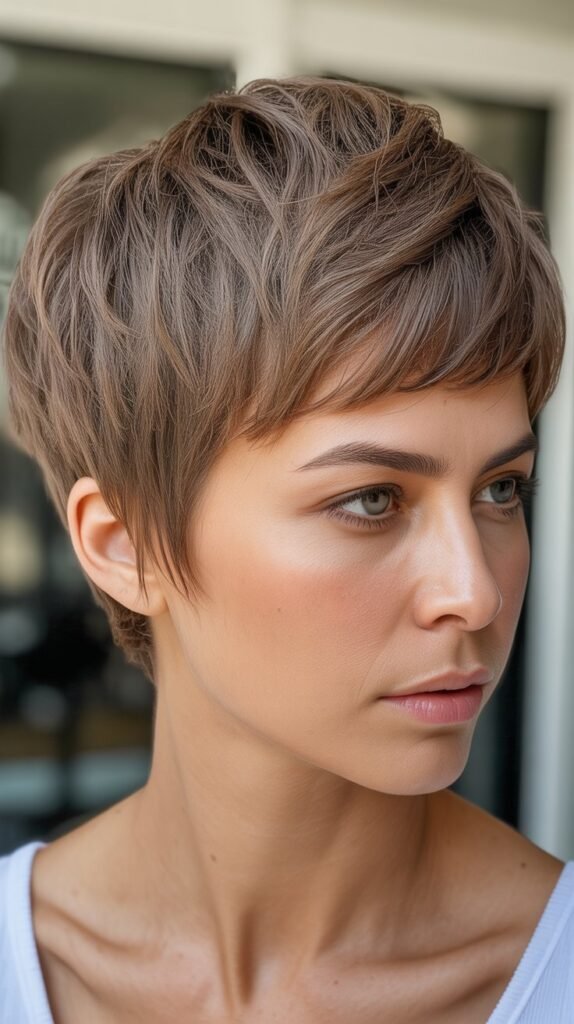
The natural texture pixie is specifically designed to work with fine hair’s natural growth patterns, wave tendencies, and texture rather than fighting against them.
This approach celebrates the authentic character of your hair while maintaining the volume benefits of very short length.
- The cut follows natural growth patterns including cowlicks, whorls, and directional growth rather than imposing artificial patterns.
- Slight natural waves or texture in fine hair are enhanced rather than straightened or suppressed through the cut.
- Minimal styling is required as the cut works with hair’s natural tendencies rather than against them.
- This approach reduces daily frustration and styling time by eliminating the fight against natural hair behavior.
- Fine hair’s authentic texture—whether straight, slightly wavy, or with natural movement—becomes the style’s foundation.
- Product needs are minimal, focusing on enhancing rather than changing natural characteristics.
- The natural texture approach creates the most sustainable, easy-to-maintain pixie cut option.
- This cut celebrates authenticity and individual hair character rather than imposing standardized styling expectations.
Styling Tips and Maintenance Guide
Maintaining your very short pixie cut for fine, flat hair requires specific knowledge about products, techniques, and regular upkeep to keep your style looking its best.
- Volumizing mousses applied to damp roots provide lift without weighing fine hair down.
- Dry texturizing sprays or powders add grip and volume to fine hair that tends to slip and fall flat.
- Lightweight styling creams define texture without creating heaviness or greasy appearance.
- Heat protectant sprays are essential when using blow dryers or hot tools on fine, delicate strands.
- Clarifying shampoos used weekly prevent product buildup that weighs fine hair down.
- Round brushes during blow-drying create lift at roots and direct hair away from the scalp.
- Diffuser attachments on blow dryers enhance natural texture while adding volume.
- Sleeping on silk or satin pillowcases reduces friction damage and preserves style overnight.
- Root-lifting sprays provide targeted volume where fine hair needs it most.
- Finishing sprays with flexible hold maintain style without creating stiffness or crunchiness.
Conclusion
The journey through these 33 Top Very Short Pixie Haircuts for Fine Flat Hair reveals that having fine, flat hair is not a limitation but an opportunity to embrace bold, liberating styles that actually work better on your hair type than on thicker textures.
Very short pixie cuts solve the fundamental challenges of fine hair—lack of volume, limp appearance, and difficulty holding styles—by strategically removing weight and creating built-in lift through expert cutting techniques.
Whether you’re drawn to the classic elegance of a tapered pixie with side-swept bangs, the bold statement of an undercut with volume on top, the artistic expression of shaved designs, or the natural authenticity of a texture-embracing cut, there’s a perfect pixie variation waiting to transform your relationship with your hair.
These styles offer not just aesthetic benefits but practical advantages: reduced styling time, minimal product needs, cooler comfort, and the confidence that comes from a intentional, well-executed haircut.
Fine hair becomes your greatest asset when cut into a very short pixie, as it creates the clean lines, sharp edges, and precise shapes that thicker hair cannot achieve with the same clarity.
Remember that the right pixie cut for your fine, flat hair depends on your face shape, lifestyle, personal style, and willingness to embrace the maintenance schedule these precision cuts require—but the rewards of finally having hair that works with you rather than against you make the commitment absolutely worthwhile.