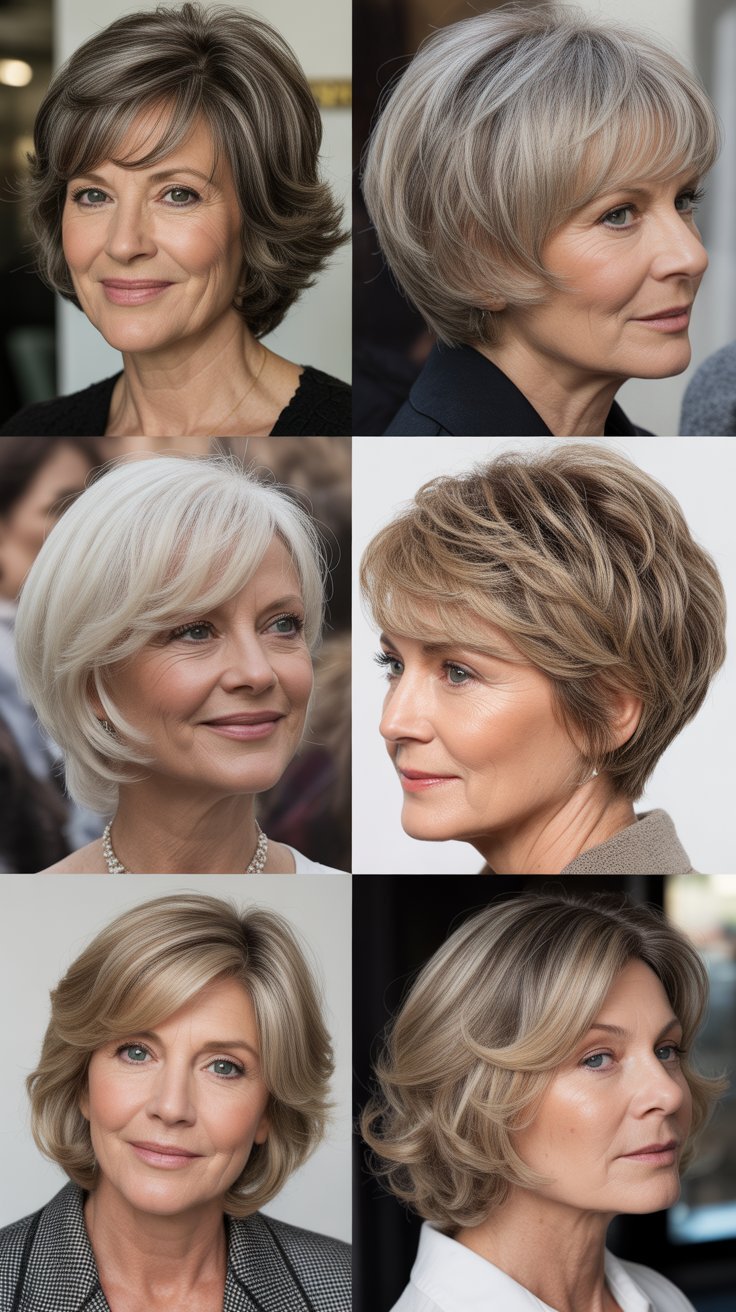
Finding the perfect hairstyle after 60 can feel like discovering a secret that transforms not just your appearance, but your entire outlook.
If you have fine straight hair, you might have spent years believing your styling options are limited, but the truth is far more exciting.
This comprehensive guide explores 29 elegant short hairstyles for women over 60 with fine straight hair, focusing on medium-length picks that offer the perfect balance between manageability and style.
You’ll discover cuts that add volume where you need it most, styles that require minimal maintenance yet deliver maximum impact, and expert techniques to make your fine hair look fuller and more vibrant.
Whether you’re looking for a dramatic change or a subtle refresh, these carefully curated hairstyles will help you embrace this beautiful chapter with confidence and grace.
Each style has been selected specifically for its ability to work with the natural texture of fine straight hair while complementing the mature woman’s sophisticated aesthetic.
1. The Classic Blunt Bob
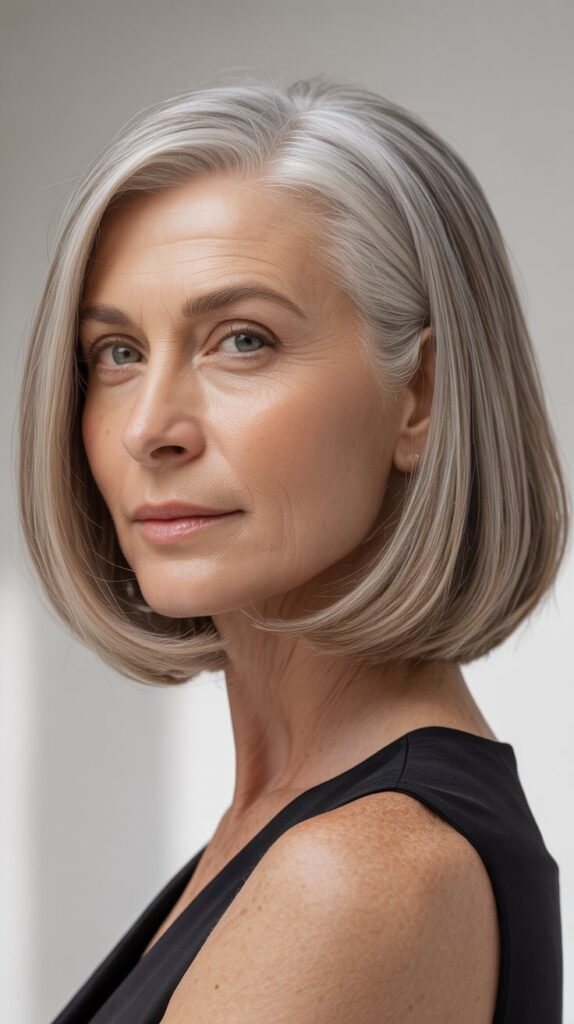
The blunt bob remains one of the most elegant and timeless choices for women over 60, especially those with fine straight hair seeking a polished, sophisticated look.
Why This Works for Fine Straight Hair:
- The blunt cut creates an optical illusion of thickness by eliminating wispy, tapered ends that make fine hair look sparse
- Sharp horizontal lines add weight to the bottom portion of the hair, making the overall style appear fuller and more substantial
- This cut eliminates the need for excessive layering, which can sometimes thin out already fine hair
- The geometric precision of a blunt bob provides structure that fine, straight hair naturally maintains without requiring heavy styling products
Styling Tips:
- Apply a volumizing mousse to damp hair before blow-drying to create lift at the roots without weighing down the ends
- Use a flat iron to enhance the sleekness and create perfectly straight lines that emphasize the blunt cut
- Keep the length between chin and shoulder level for the most flattering proportions on mature faces
- Schedule trims every 6-8 weeks to maintain the sharp edge that makes this style work
Best Face Shapes:
- Oval faces carry this style effortlessly with any variation of length
- Round faces benefit from a slightly longer version that falls below the chin to create elongation
- Square faces look stunning with a chin-length blunt bob that softens angular jawlines
- Heart-shaped faces should opt for a collarbone-length version to balance wider foreheads
2. Layered Lob with Side Part
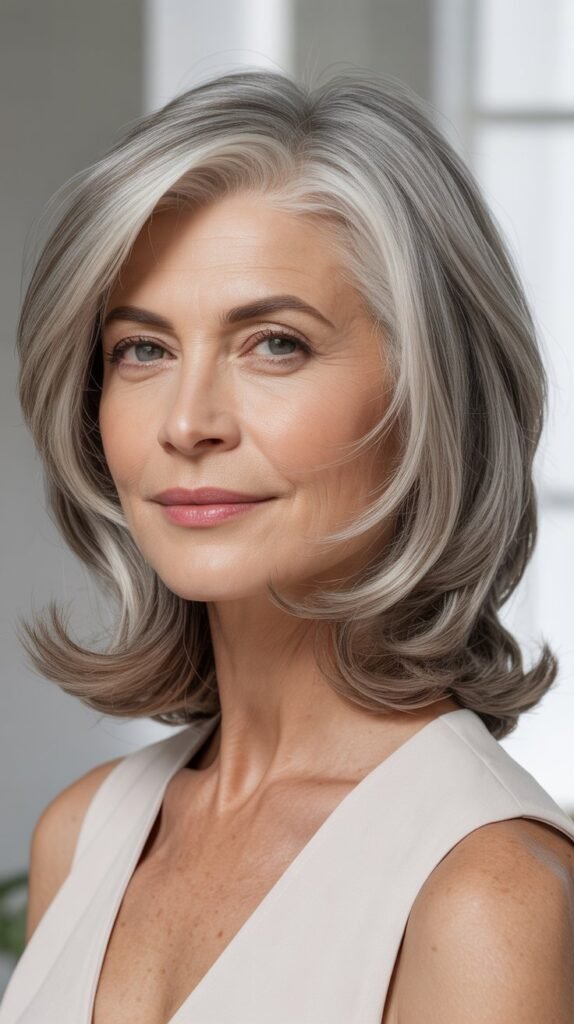
The layered lob combines the sophistication of a bob with the versatility of longer length, creating movement and dimension that fine straight hair desperately needs.
Understanding the Layered Lob:
- The “lob” or long bob typically falls between the chin and collarbone, offering more styling versatility than shorter bobs
- Strategic layering throughout adds movement without creating the stringy appearance that heavy layering can cause in fine hair
- A deep side part creates asymmetry that naturally adds volume on the fuller side while creating elegant sweep on the other
- This style works beautifully for transitioning from longer hair without committing to a dramatically short cut
Volume-Building Techniques:
- Layer the crown area subtly to create height and prevent the flat-top appearance common with fine hair
- Keep layers longer rather than choppy to maintain fullness while still achieving movement
- The side part should be positioned where your hair naturally wants to fall for easier daily styling
- Use a root-lifting spray specifically designed for fine hair before blow-drying
Maintenance Requirements:
- This style requires trimming every 8-10 weeks to maintain the shape and prevent split ends from traveling up the hair shaft
- Layers need periodic adjustment to keep them blending seamlessly throughout the cut
- Color highlights or lowlights can enhance the dimensional appearance created by layering
- Daily styling takes approximately 15-20 minutes with proper technique and tools
3. Textured Pixie with Side-Swept Bangs
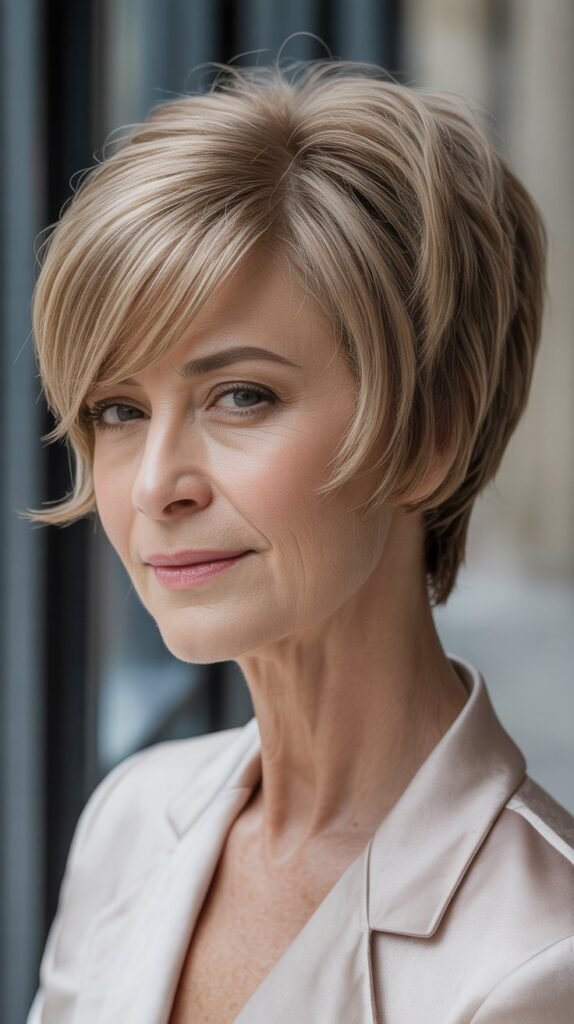
The textured pixie offers liberation from daily styling while providing a youthful, contemporary appearance that defies age stereotypes.
Why Pixies Work for Mature Women:
- Short hair eliminates the weight that pulls fine hair flat against the scalp, allowing natural volume to emerge
- Less hair means healthier hair, as nutrients from the scalp don’t need to travel as far down the hair shaft
- The dramatic change often provides a psychological boost, signaling confidence and a willingness to embrace change
- Maintenance becomes significantly easier, reducing daily styling time and product requirements
Achieving the Perfect Texture:
- Point-cutting techniques create soft, feathered ends rather than blunt lines that can look harsh on fine hair
- Razoring through the mid-lengths adds choppy texture that creates the illusion of thickness
- Leave slightly more length on top to allow for various styling options and prevent the style from looking too severe
- The side-swept bangs soften the face and draw attention to the eyes
Styling for Different Occasions:
- For casual days, simply tousle with fingers and a small amount of texturizing paste for an effortlessly chic look
- For formal events, smooth the sides with a small amount of pomade and add height to the crown area
- The side-swept bangs can be styled forward for a soft, feminine appearance or swept back for a more dramatic look
- Use a lightweight hairspray to maintain the style without creating stiffness or crunchiness
4. Asymmetrical Bob with Longer Front
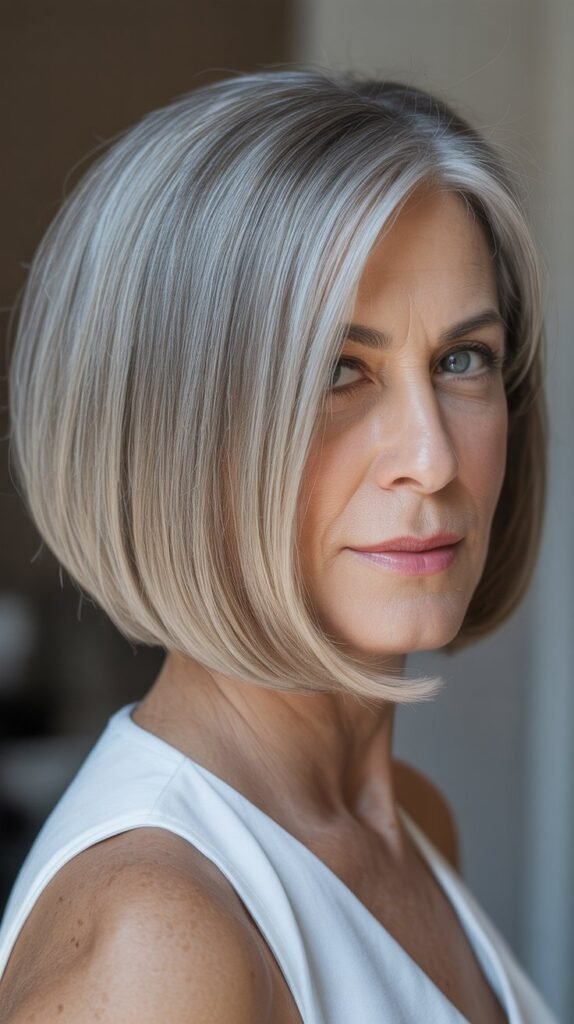
The asymmetrical bob makes a bold statement while strategically addressing the specific challenges of fine straight hair through clever architectural design.
The Architecture of Asymmetry:
- One side is cut intentionally shorter than the other, creating visual interest that distracts from hair density concerns
- The longer front sections frame the face beautifully, drawing attention to facial features rather than hair thickness
- This style requires confidence but rewards the wearer with a distinctly modern, fashion-forward appearance
- The geometric nature of the cut provides built-in structure that fine hair maintains easily
Customizing the Angle:
- A subtle asymmetry with only 1-2 inches of difference offers a contemporary update to a classic bob without being too dramatic
- More dramatic versions with 3-4 inches of difference create a striking, editorial appearance perfect for bold personalities
- The shorter side is typically positioned in the back or on the side where hair naturally parts
- Length on the longer side can extend from chin-length to collarbone-length depending on personal preference
Daily Styling Approach:
- This cut is remarkably easy to style because the asymmetry itself provides all the visual interest needed
- Simply blow-dry with a round brush, directing the longer side forward to emphasize the angle
- The shorter side can be tucked behind the ear for an even more dramatic effect
- Minimal product is required, making this ideal for women who prefer low-maintenance styling
5. Graduated Bob with Stacked Back
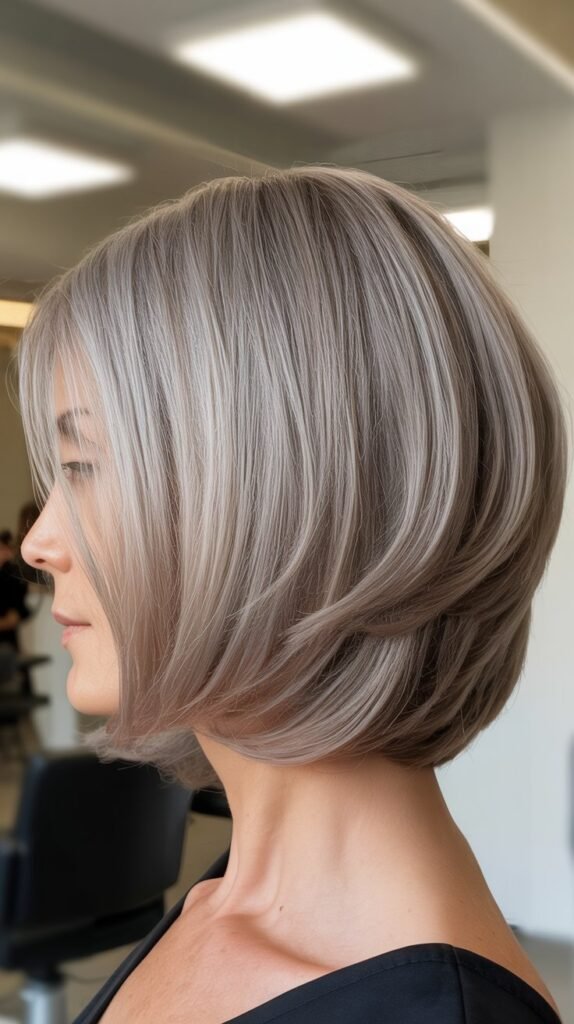
The graduated bob creates spectacular volume at the crown through precise cutting techniques that build height where fine hair needs it most.
Understanding Graduation and Stacking:
- Graduation refers to cutting the hair at an angle so the back is shorter than the front, creating a sloped silhouette
- Stacking involves creating layers in the back that build upon each other, generating maximum volume and body
- This technique literally constructs height into the hairstyle, eliminating the flat appearance common with fine hair
- The front sections remain longer, providing face-framing softness while the back delivers dramatic volume
Technical Execution:
- The nape area is cut quite short, sometimes as short as ½ inch, to create the foundation for stacking
- Each subsequent layer is cut slightly longer, creating a rounded, voluminous shape at the back of the head
- The front sections typically fall between chin and shoulder length for optimal balance
- Point-cutting the perimeter prevents harsh lines and creates a softer, more blended finish
Ideal Candidates:
- Women with very fine, flat hair who struggle to achieve volume benefit tremendously from this architectural approach
- Those with naturally straight hair find this style easier to maintain than women with wavy or curly textures
- Petite women often love how this style adds height and presence to their overall silhouette
- Active women appreciate how the short back stays neat and doesn’t interfere with sports or outdoor activities
6. Sleek Center-Parted Bob
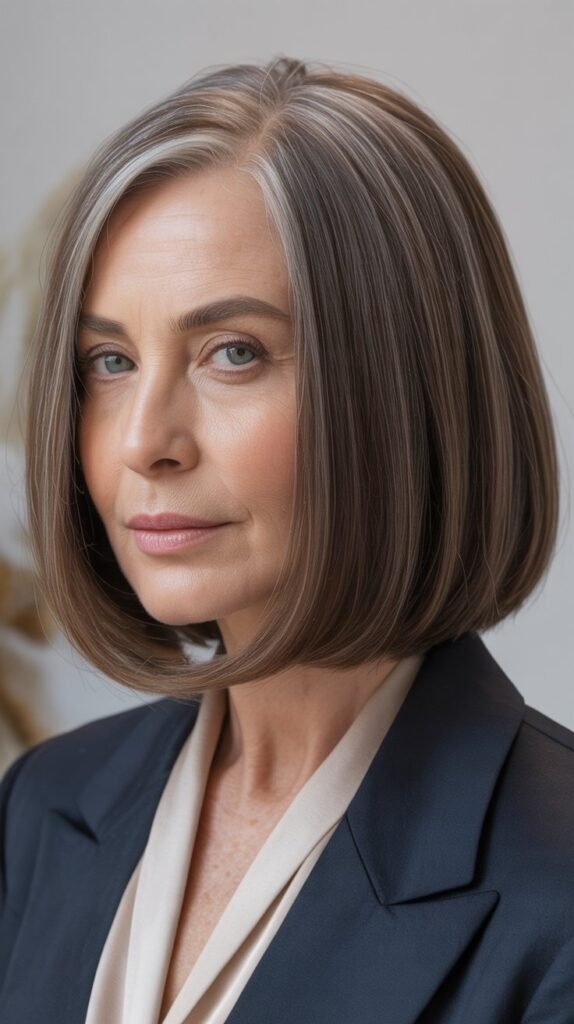
The sleek center-parted bob exudes modern sophistication and works beautifully for women who embrace their naturally straight hair texture.
The Power of Symmetry:
- A center part creates perfect symmetry that conveys confidence and a sense of balanced beauty
- This style works best on faces that are relatively symmetrical themselves, as it draws attention to facial proportions
- The sleekness of the style makes hair appear denser and healthier by reflecting light uniformly
- Fine straight hair is actually ideal for this look, as it naturally achieves the smooth finish this style requires
Achieving Maximum Sleekness:
- Use a smoothing shampoo and conditioner specifically formulated to enhance shine and reduce any minimal frizz
- Apply a heat protectant spray before blow-drying, as achieving sleekness requires heat styling
- Blow-dry hair completely smooth using a paddle brush, directing all hair downward to encourage that sleek line
- Finish with a flat iron on low to medium heat, working in small sections for maximum smoothness
Product Recommendations:
- A lightweight shine serum adds glossiness without making fine hair look greasy or weighed down
- Avoid heavy oils or creams that can make fine hair appear limp and lifeless
- A light-hold hairspray maintains the style while preserving movement and touchable softness
- Dry shampoo between washes helps maintain volume at the roots while absorbing excess oil
7. Tousled Shag with Wispy Layers
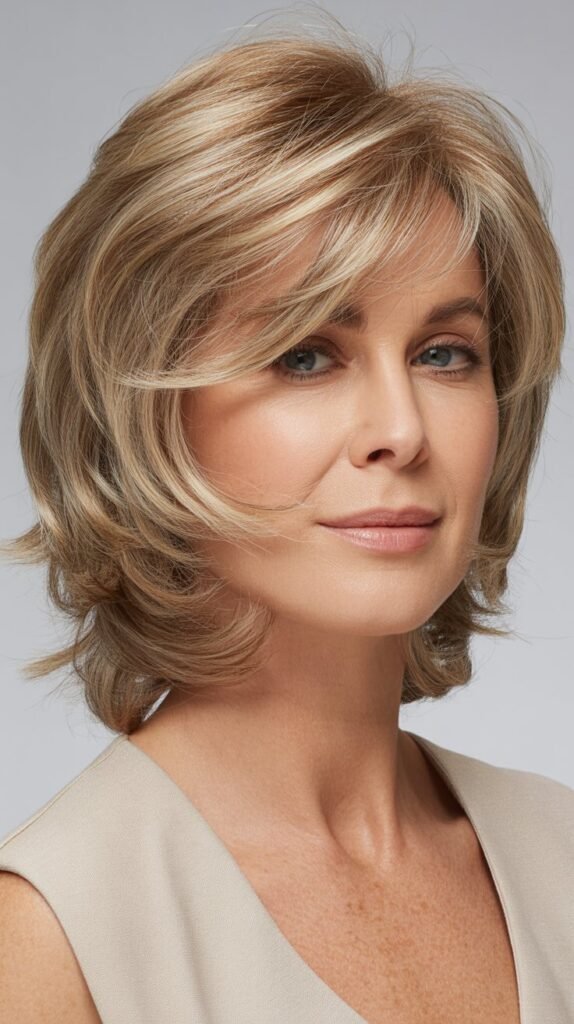
The modern shag brings a relaxed, effortlessly cool vibe that contradicts any stereotypes about “age-appropriate” hairstyles.
Reinventing the Classic Shag:
- Today’s shag is more refined than its 1970s predecessor, with strategic layering that creates texture without excessive volume
- Wispy layers are cut throughout the head at various lengths to create a piecey, separated appearance
- This style embraces a slightly messy, undone aesthetic that’s perfect for women who want to look effortless
- The movement created by layers helps fine hair appear fuller by preventing it from clumping together
Layering Strategy:
- Shorter layers at the crown create lift and volume where fine hair typically falls flat
- Mid-length layers through the sides add movement and prevent the triangular shape that uniform-length hair can create
- Longer layers at the bottom maintain some weight and fullness at the perimeter
- Face-framing layers are cut to complement individual facial features, with variations depending on face shape
Styling for the Tousled Effect:
- Apply a sea salt spray or texturizing spray to damp hair for that piecey, separated look
- Scrunch hair while blow-drying with a diffuser attachment to enhance natural texture
- Use fingers rather than a brush to style, maintaining that intentionally imperfect appearance
- A small amount of texturizing paste or clay worked through the ends adds definition without stiffness
8. Angled Bob with Razored Ends
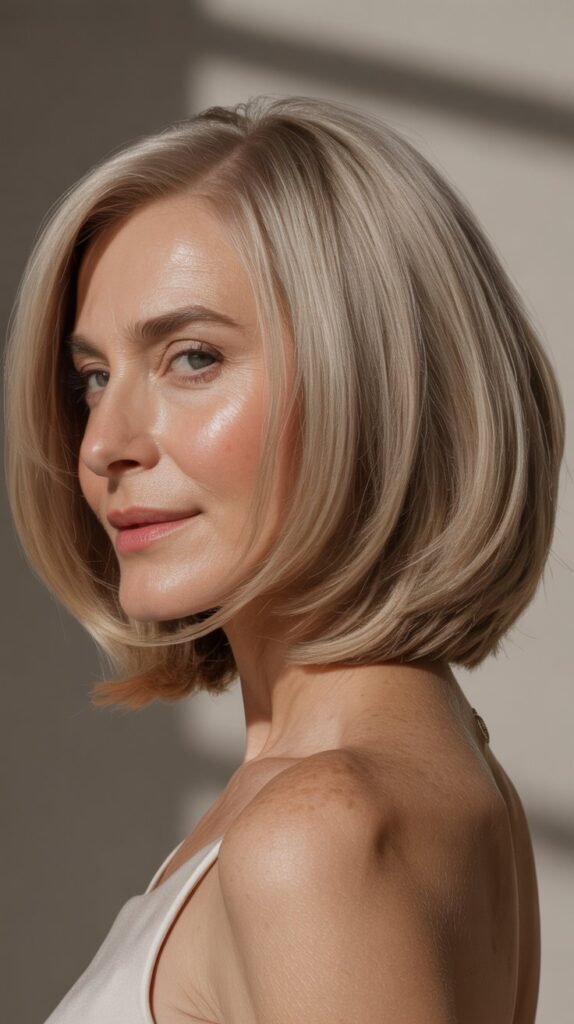
The angled bob with razored ends combines sharp geometry with soft texture, creating a style that’s both structured and movement-filled.
Razoring Techniques Explained:
- A razor is used instead of scissors to cut the hair, creating softer, more feathered ends
- This technique removes weight from the ends without creating harsh blunt lines
- Razoring encourages hair to separate into individual strands rather than forming a solid mass
- The result is movement and texture that makes fine hair appear significantly fuller
The Angled Advantage:
- Hair is cut at an angle so the front sections are noticeably longer than the back
- This creates a slimming effect on the face by drawing the eye downward along the diagonal line
- The angle adds visual interest and a contemporary edge to what might otherwise be a conventional bob
- Women with round or square faces particularly benefit from the elongating effect of the angle
Maintenance Considerations:
- Razored ends need more frequent trimming than scissor-cut hair, approximately every 6-7 weeks
- The soft ends can become wispy and lose their defined texture if allowed to grow too long
- Regular deep conditioning treatments help maintain hair health, as razoring can be slightly more damaging than scissor cutting
- Touch-ups between salon visits can be done at home with professional-quality razor tools if you’re comfortable
9. Choppy Layered Cut with Texture
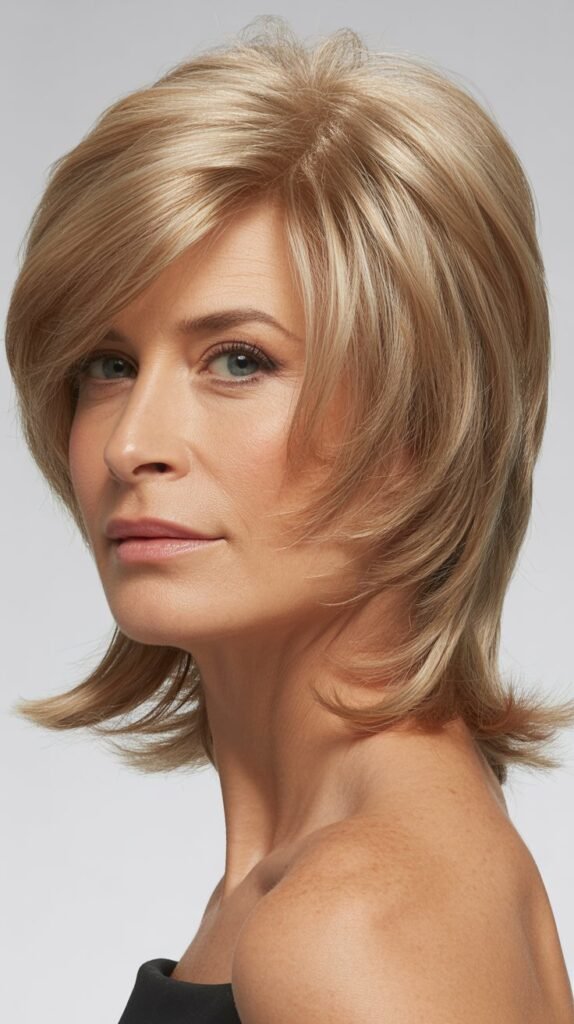
The choppy layered cut embraces deliberate imperfection, creating a youthful, contemporary style that adds significant volume to fine hair.
Defining “Choppy” Layers:
- Choppy layers are intentionally uneven and disconnected rather than smoothly blended
- This creates negative space between hair sections, allowing light to pass through and making hair appear less dense in a positive way
- The irregular lengths prevent fine hair from lying too flat and create natural separation
- This style works particularly well for women who want a more casual, less structured appearance
Creating Maximum Texture:
- Point-cutting throughout creates irregular ends that don’t align, preventing a solid, heavy line
- Layers are cut at varying lengths throughout the head rather than following a predictable pattern
- The crown area receives shorter, choppy layers that stand away from the head, creating height
- Face-framing pieces are cut at strategic lengths to highlight cheekbones and jawline
Product Selection:
- Texturizing sprays are essential for this style, helping to separate hair into distinct pieces
- Lightweight pomades or waxes worked through the ends enhance the choppy, piecey effect
- Volumizing powder applied at the roots creates lift without adding weight to the lengths
- Avoid smoothing serums or heavy creams that would counteract the intentionally textured appearance
10. Rounded Bob with Curved Under
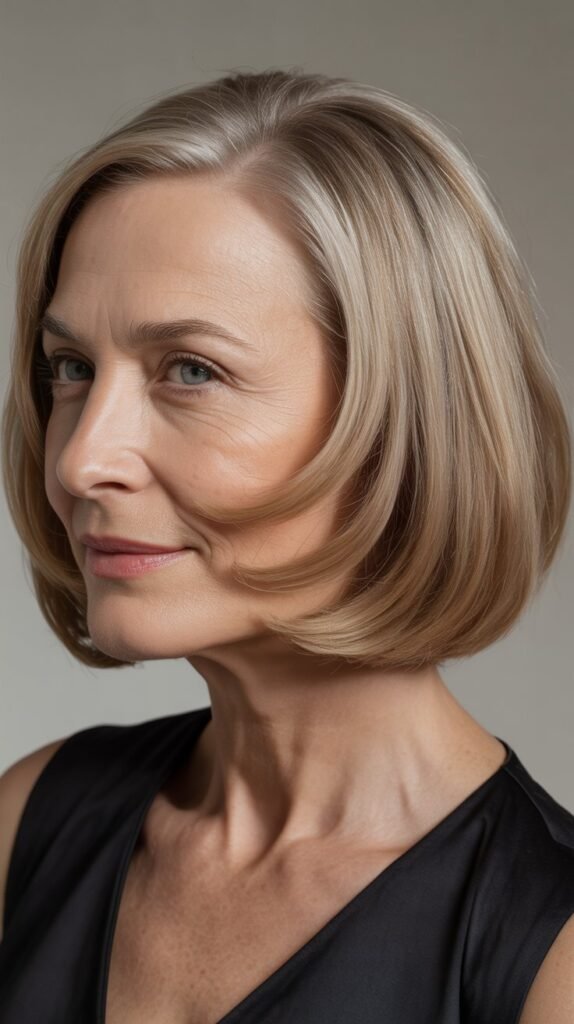
The rounded bob creates a soft, feminine silhouette that’s particularly flattering for women seeking a polished yet gentle appearance.
The Curved Under Technique:
- Hair is cut in a rounded shape and styled to curve gently under at the ends rather than flipping out or remaining straight
- This creates a classic, timeless look that has remained popular across decades
- The curved-under style adds subtle volume at the ends while maintaining a neat, controlled appearance
- Fine straight hair holds this shape beautifully when properly blow-dried and set
Blow-Drying Method:
- Use a round brush sized appropriately for your hair length (larger for longer bobs, smaller for shorter versions)
- Wrap sections of hair around the brush and direct heat from the blow dryer downward and under
- Hold each section on the brush for a few seconds after heat is applied to allow the hair to cool in the curved position
- Work systematically around the head, ensuring all sections receive equal attention for uniform curves
When to Choose This Style:
- Professional women who need a polished, office-appropriate hairstyle appreciate the refined appearance
- Those seeking a more conservative, traditional look that still feels current find this style perfect
- Women with heart-shaped or diamond-shaped faces benefit from how the curves soften facial angles
- This style works beautifully for formal occasions and photographs due to its classic elegance
11. Feathered Layers with Flipped Ends
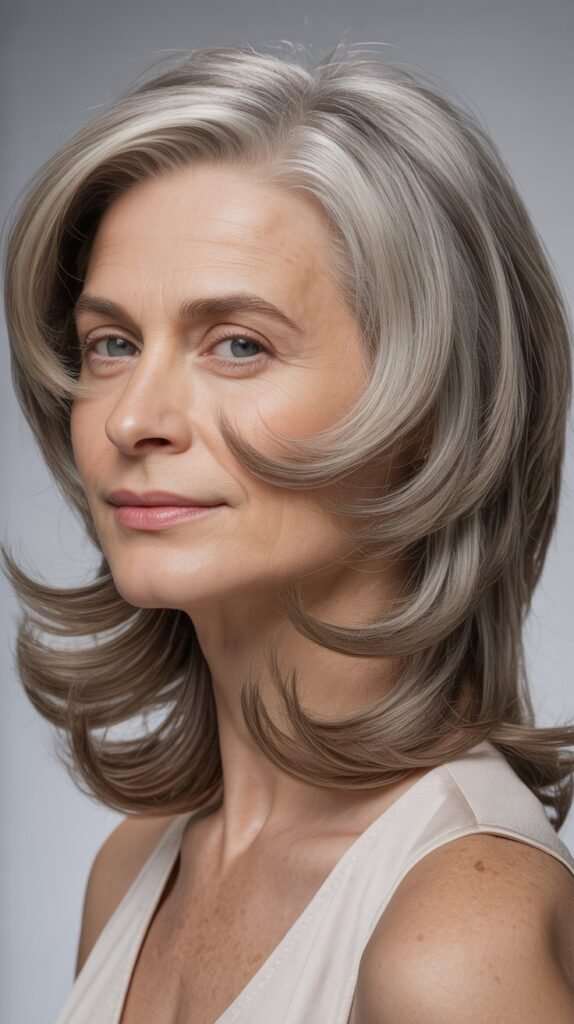
Feathered layers with flipped ends create a bouncy, youthful appearance that adds life and movement to fine straight hair.
Feathering Technique:
- Feathering involves cutting hair at an angle to create soft, wispy edges that blend seamlessly
- The technique originated in the 1970s but has been modernized with more subtle application
- Layers are feathered back away from the face, creating a wind-blown effect even when hair is static
- This approach adds significant movement to fine hair without removing too much weight
Creating the Flipped Ends:
- Ends are blown dry or curled outward rather than under, creating a flirty, energetic appearance
- A medium-sized round brush is ideal for creating flips at the ends during blow-drying
- The flip can be subtle or more pronounced depending on personal preference and occasion
- This style looks particularly fresh and youthful, defying any notion that mature women should stick to severe styles
Face-Framing Benefits:
- Flipped ends draw attention away from the hairline and toward the face, highlighting facial features
- The outward movement creates width that balances narrow faces and long face shapes
- Feathering around the face softens any harsh angles and creates a flattering frame
- This style works beautifully with highlights or lowlights that enhance the dimensional appearance
12. Straight-Across Micro Bob
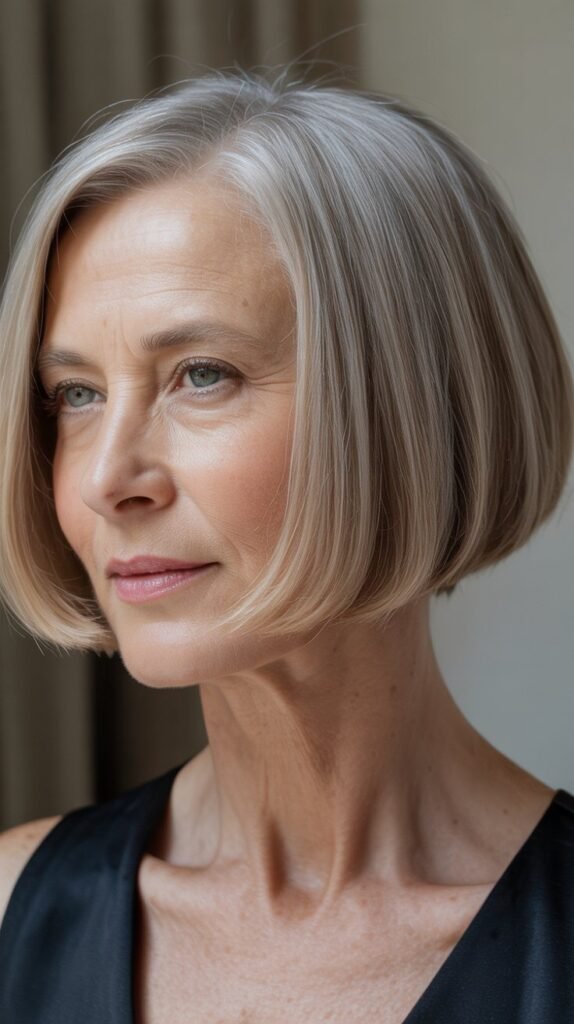
The straight-across micro bob makes a bold statement, offering a striking, fashion-forward option for confident women who embrace dramatic style.
Understanding the Micro Bob:
- The micro bob typically falls above the chin, sometimes as short as mid-ear to the top of the ears
- Cut completely straight across, it creates a severe, geometric line that’s undeniably modern
- This ultra-short length eliminates weight entirely, allowing fine hair to achieve maximum volume
- The style requires confidence as it draws significant attention and makes a definite statement
Best Candidates:
- Women with strong facial features can carry this dramatic style particularly well
- Those with petite frames find the micro bob doesn’t overwhelm their proportions
- Confident individuals who enjoy standing out and making fashion statements thrive with this cut
- People with very fine hair often discover this is the only length that truly makes their hair look full
Styling Requirements:
- The precision cut requires minimal styling—simply blow-dry smooth or add slight texture with fingers
- Products should be lightweight to avoid weighing down the ultra-short length
- The geometric line must be maintained with frequent trims every 4-6 weeks
- This style can be dressed up or down depending on how it’s finished and what you wear with it
13. Side-Swept Bangs with Shoulder-Length Cut
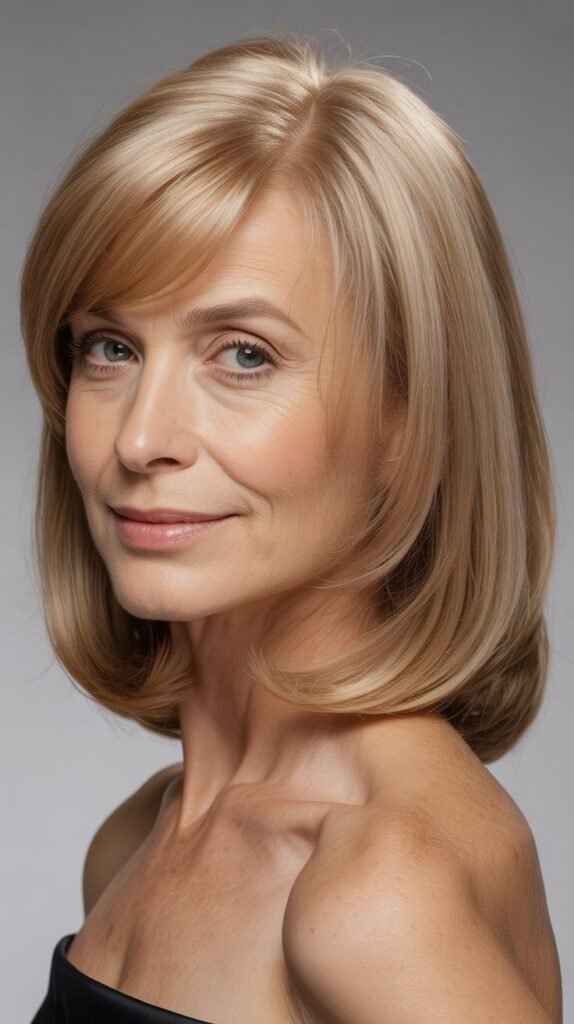
Side-swept bangs combined with a shoulder-length cut create a universally flattering style that addresses multiple concerns simultaneously.
The Magic of Side-Swept Bangs:
- Bangs swept to one side create asymmetry that naturally adds volume and visual interest
- They cleverly conceal forehead lines while drawing attention to the eyes
- Side-swept bangs are more forgiving than straight-across bangs and easier to blend as they grow
- The diagonal line created by swept bangs is universally flattering across all face shapes
Shoulder-Length Benefits:
- This length is long enough to pull back for exercise or hot days but short enough to feel manageable
- Shoulder-length hair maintains more weight than shorter cuts, which can benefit some fine hair types
- The length provides versatility for styling—you can wear it straight, add waves, or pull it into a low ponytail
- It strikes an ideal balance for women transitioning from long hair who aren’t ready for very short cuts
Integration Techniques:
- Bangs should be cut long enough to sweep across the forehead rather than hanging straight down
- The transition from bangs to the rest of the hair should be gradual, with intermediate layers creating seamless blending
- Blow-dry bangs with a round brush, directing them across the forehead and to the preferred side
- A small amount of lightweight pomade helps keep bangs in place without looking stiff or greasy
14. Layered Crown with Sleek Sides
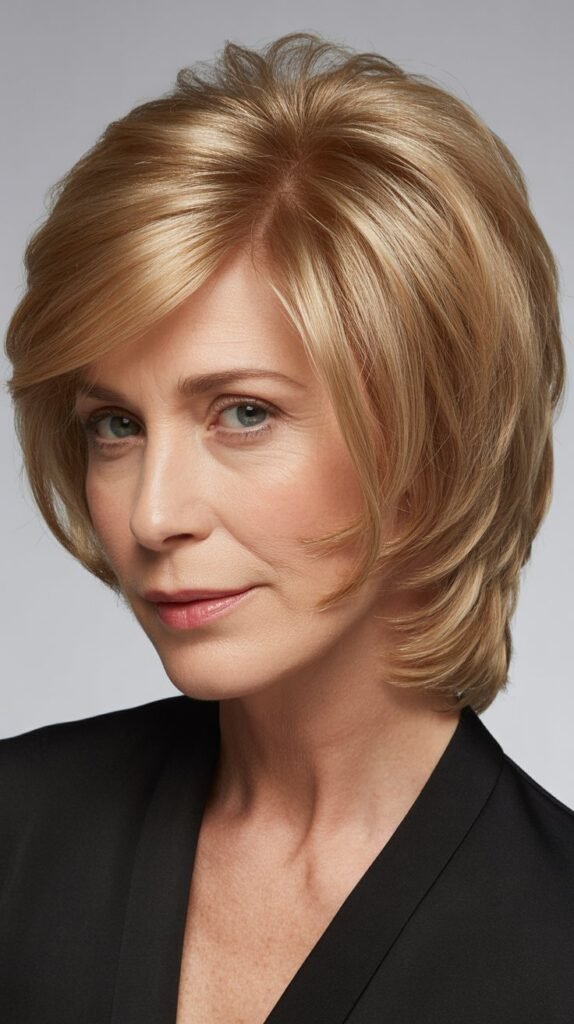
The layered crown with sleek sides creates a perfect balance between volume where you need it and sleekness where you want it.
Strategic Volume Placement:
- Shorter layers concentrated at the crown create lift at the highest point of the head
- The sides are kept longer and styled smooth, creating a sleek, elegant line
- This creates an aesthetically pleasing proportion and prevents the style from looking top-heavy
- The contrast between textured crown and smooth sides adds dimensional interest
Cutting the Crown Layers:
- Crown layers are typically cut 2-3 inches shorter than the rest of the hair
- Layers are cut in a circular pattern radiating from the crown to ensure even lift all around
- The transition from short crown layers to longer side sections should be gradual to avoid obvious demarcation lines
- Point-cutting the crown layers prevents them from sticking straight up and encourages soft, natural volume
Achieving Sleek Sides:
- Apply smoothing cream specifically to the sides before blow-drying
- Use a paddle brush to direct sides straight down and back, creating sleekness
- A flat iron on the sides ensures perfect smoothness and eliminates any remaining texture
- The contrast in texture between crown and sides should be deliberate and noticeable for this style to work effectively
15. Curtain Bangs with Medium Bob
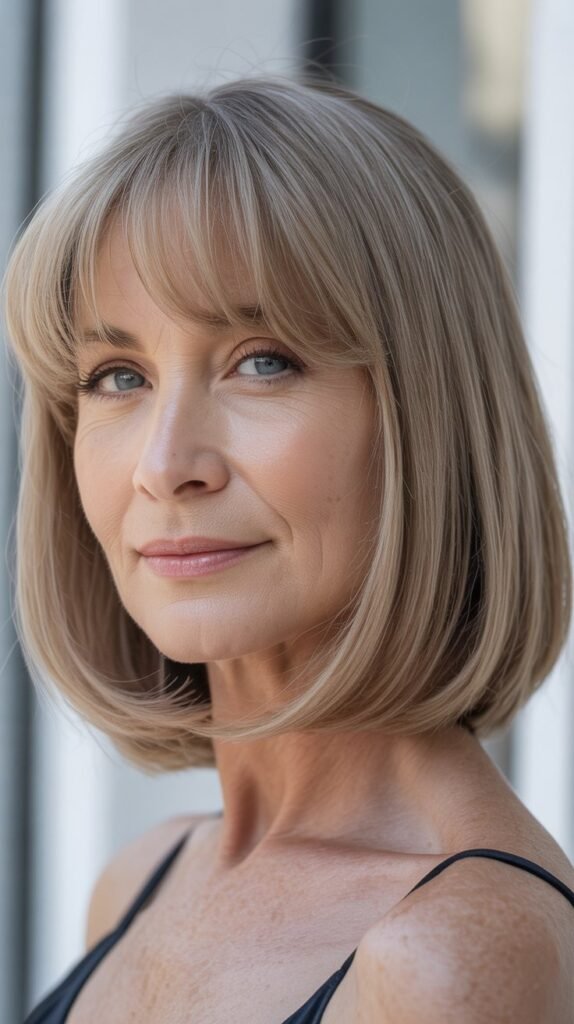
Curtain bangs paired with a medium bob create a soft, romantic look that’s experienced a major resurgence in popularity across all age groups.
Defining Curtain Bangs:
- Curtain bangs are parted down the center and swept to each side, framing the face like open curtains
- They’re typically cut shorter in the center and gradually become longer toward the sides
- This creates a flattering oval frame around the face that suits virtually all face shapes
- Curtain bangs are more versatile than traditional bangs because they can be worn in multiple ways
Length and Proportion:
- The shortest point (at the center part) typically falls between the eyebrows and eyelashes
- Side lengths extend to cheekbone or jaw level, creating a sweeping line
- The medium bob body of the haircut usually falls between chin and shoulder length
- Proportions should be customized based on face length and personal preference
Styling Versatility:
- Blow-dry with a round brush, curving bangs away from the face on each side
- For a sleeker look, use a flat iron to create smooth, straight curtains
- Bangs can be pinned back or tucked behind ears when you want a different look
- The style grows out gracefully, requiring less frequent maintenance than blunt-cut bangs
16. Piecey Textured Bob
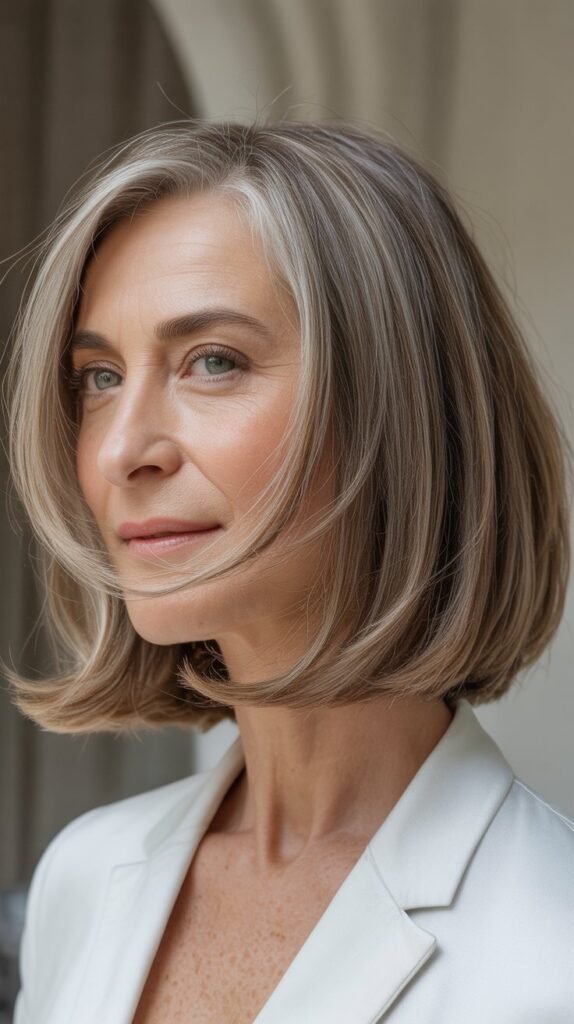
The piecey textured bob creates separation and definition that makes fine hair appear substantially thicker through strategic cutting and styling.
Creating Piecey Texture:
- Hair is cut using a combination of point-cutting and slide-cutting techniques that create irregular ends
- These irregular ends don’t align with each other, causing hair to separate into distinct pieces
- Texturizing products are then used to enhance and define these individual pieces
- The result is a style that looks deliberately styled yet effortlessly casual
Cutting Techniques:
- Point-cutting involves cutting into the hair at an angle rather than straight across, creating soft, varied ends
- Slide-cutting uses scissors or razors to remove weight while maintaining length
- The perimeter can be left slightly heavier while interior layers are texturized for optimal fullness
- A skilled stylist will customize the amount of texturizing based on your specific hair density
Product Application:
- Start with a volumizing spray on damp hair to create foundation for texture
- Work a small amount of texturizing paste or clay through mid-lengths and ends with fingers
- Separate hair into individual pieces by pinching small sections between fingers
- Finish with a flexible-hold texturizing spray that maintains the piecey appearance without stiffness
17. Soft Undercut with Longer Top
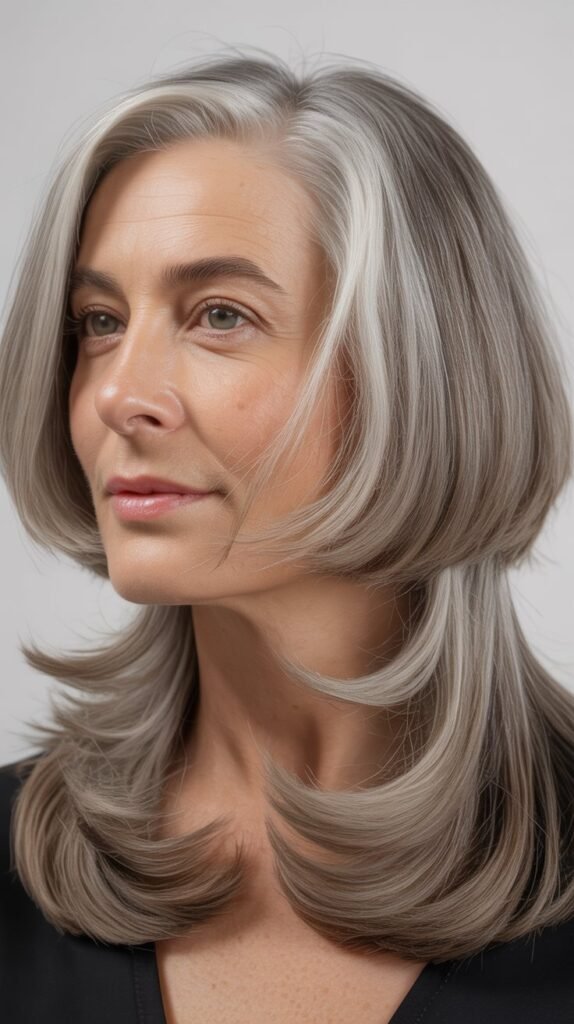
The soft undercut provides an edgy contemporary option that solves multiple challenges for women with fine straight hair.
Understanding the Undercut:
- The undercut involves cutting the hair underneath (typically at the nape and/or sides) very short or shaving it
- The longer top section covers the undercut, so it can be subtle or revealed depending on styling
- This removes significant weight from underneath, allowing the top sections to achieve much more volume
- It’s a surprisingly practical option that reduces styling time and keeps the neck area cool
Soft vs. Hard Undercuts:
- A soft undercut uses clippers to cut hair very short (typically 1/4 to 1/2 inch) rather than shaving to the skin
- This creates a less extreme contrast between the undercut section and the longer top
- The soft approach is generally more flattering for mature women and easier to grow out if desired
- Hard undercuts (shaved to skin) make a bolder statement but require more frequent maintenance
Styling Options:
- Wear hair down to completely conceal the undercut for a professional appearance
- Pull hair up or back to reveal the undercut for a dramatic, edgy look
- The reduced weight allows the top section to be styled with significantly more volume and body
- Many women appreciate how much faster hair dries with less overall hair to manage
18. Chin-Length Bob with Subtle Graduation
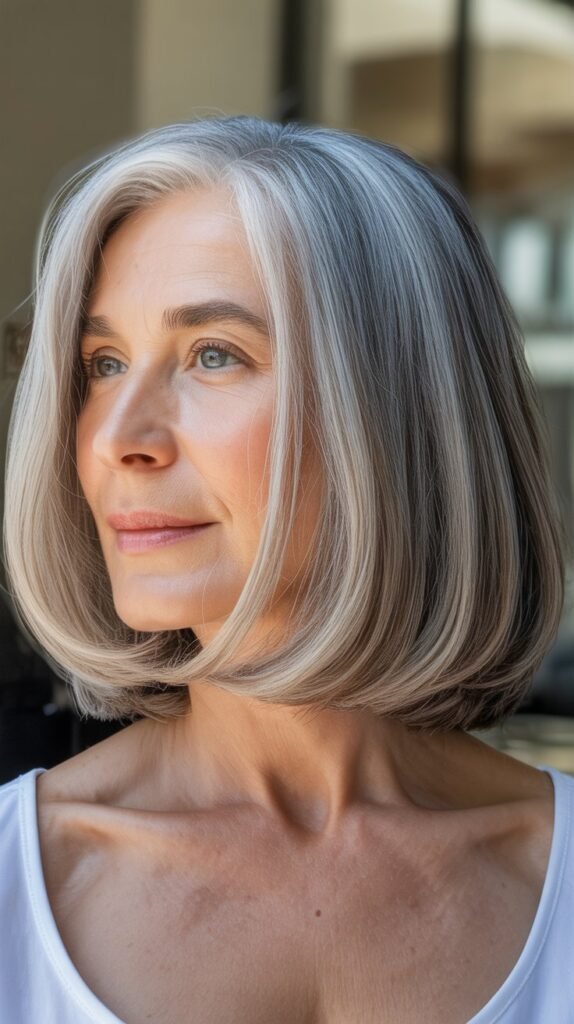
The chin-length bob with subtle graduation offers a refined, classic option that enhances fine hair through precise architectural cutting.
Subtle Graduation Explained:
- Graduation refers to hair that is cut slightly shorter in the back than the front, creating a gentle slope
- Subtle graduation features only a small difference in length (typically 1-2 inches) for a refined rather than dramatic effect
- This technique naturally lifts the back of the hair away from the neck while maintaining length around the face
- The graduation is often invisible when viewing from the front but creates noticeable volume when viewed from the side or back
Chin-Length Considerations:
- Chin-length is universally flattering because it doesn’t emphasize either a long or short neck
- This length frames the face beautifully without interfering with earrings or eyeglasses
- It’s professional and polished enough for any work environment
- The length is easy to maintain and style on a daily basis with minimal time investment
Volume Creation:
- The back being shorter than the front naturally prevents hair from lying completely flat
- The graduation creates internal support structure, with each layer building upon the one beneath it
- This is one of the most reliable methods for creating volume in fine straight hair without teasing or excessive product
- A simple blow-dry with a round brush is typically all that’s needed to maintain the shape
19. Tapered Pixie with Longer Fringe
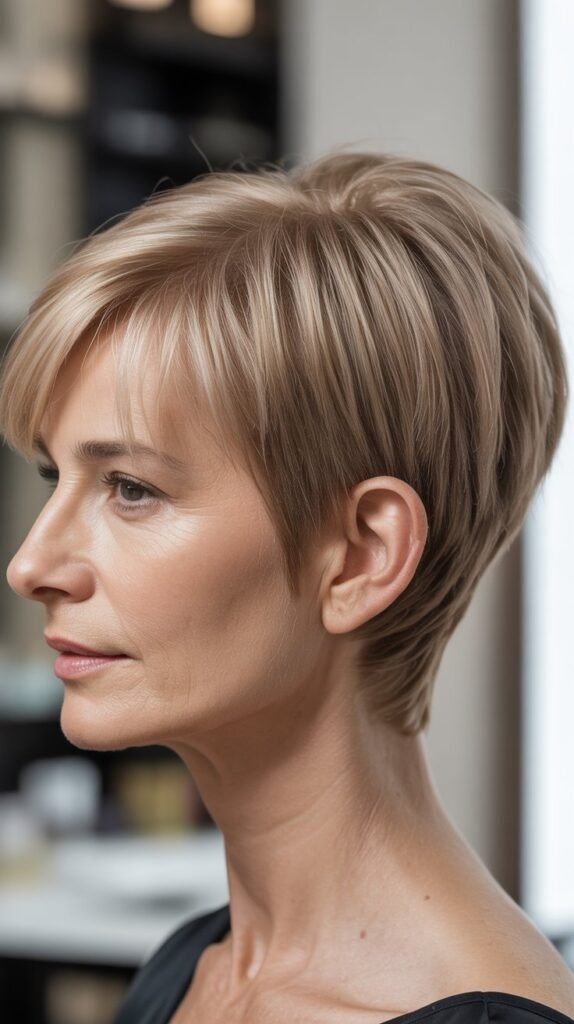
The tapered pixie with longer fringe offers a contemporary twist on the classic pixie, providing styling versatility and face-framing softness.
Tapering Technique:
- Tapering involves gradually cutting hair shorter as you move down toward the hairline at the neck and ears
- This creates a seamless, blended transition from longer hair on top to very short hair at the edges
- The tapered approach prevents harsh lines and creates a more sophisticated, finished appearance
- It’s less severe than clippered sides while still providing definition and shape
The Longer Fringe Advantage:
- Leaving the fringe (front) section longer than the rest of the pixie creates styling versatility
- The longer fringe can be swept to the side, forward, or even styled upward for different looks
- This length variation adds visual interest and prevents the style from looking too uniform or severe
- The fringe softens the overall appearance and draws attention to the eyes and cheekbones
Customization Options:
- Fringe can range from eyebrow-length to chin-length depending on preference and face shape
- The degree of tapering can be adjusted from very subtle to quite dramatic
- Women with glasses often prefer slightly longer fringes that don’t compete with frames
- This style can be made more textured and piecey or kept sleek and smooth depending on styling approach
20. Collarbone-Length Cut with Face-Framing Layers
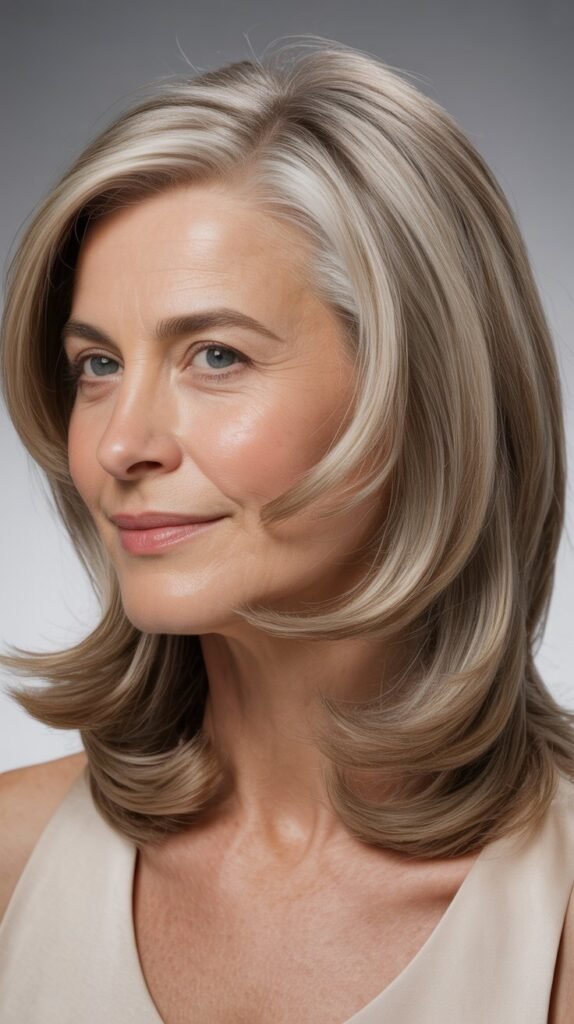
The collarbone-length cut with face-framing layers provides maximum versatility while strategically adding dimension exactly where it’s most flattering.
Optimal Length Benefits:
- Collarbone-length is long enough to gather into a small ponytail or updo when desired
- This length maintains weight and presence without the challenges of longer hair at this stage of life
- It’s professional, sophisticated, and appropriate for any setting or occasion
- The length provides styling versatility that shorter cuts simply cannot offer
Face-Framing Layer Placement:
- Layers begin around the chin or jaw area and continue downward to create a graduated frame
- The shortest face-framing pieces should be strategically cut to highlight your best features
- These layers should be long enough to tuck behind ears when desired but short enough to provide visible framing when worn forward
- The transition from face-framing layers to the rest of the hair should be seamless and gradual
Styling Approaches:
- For a sleek look, blow-dry layers smooth with a paddle brush and finish with a flat iron
- For added volume, use a large round brush to add slight curve to the face-framing layers
- The layers can be worn forward to frame the face or swept back for a more dramatic cheekbone emphasis
- This style looks equally appropriate worn straight, with soft waves, or pulled partially back
21. Rounded Pixie with Volume on Top
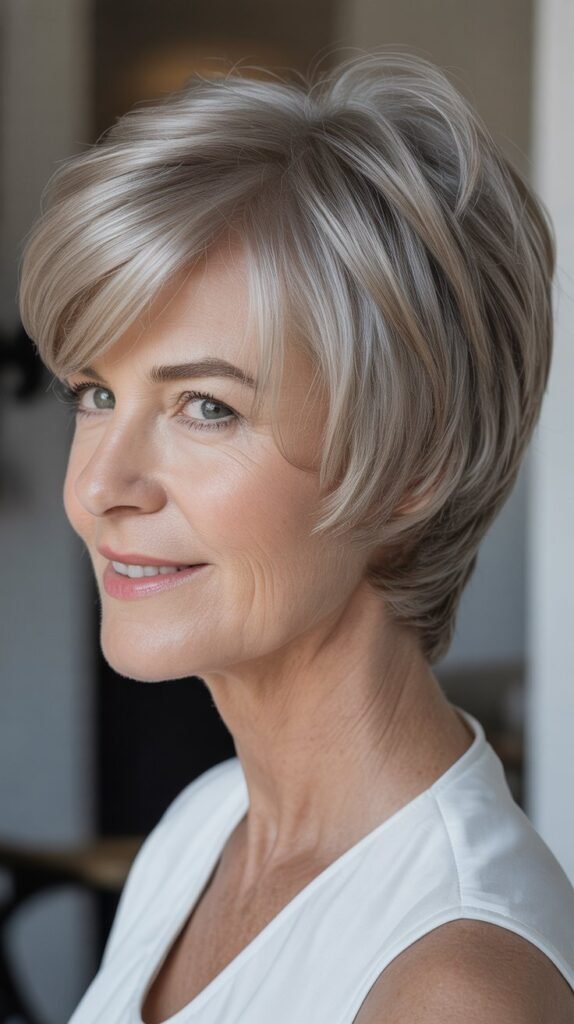
The rounded pixie creates a soft, feminine silhouette that challenges any notion that pixie cuts are too harsh or masculine for mature women.
Creating the Rounded Shape:
- Hair is cut in a curved pattern following the natural shape of the head rather than in angular lines
- The crown area is left longer and cut with layers to create lift and roundness
- Sides and back are cut shorter but follow a curved rather than straight line
- This creates a soft, helmet-like shape that’s highly flattering and feminine
Volume at the Crown:
- Layers at the crown are cut progressively shorter toward the top, creating natural lift
- The rounded shape at the crown adds height that elongates the face and balances facial proportions
- Fine hair actually excels at creating this rounded shape because it’s not heavy enough to collapse the structure
- The volume should be proportional to your overall frame and head size to avoid looking top-heavy
Maintenance and Styling:
- This style requires trims every 5-6 weeks to maintain the precise rounded shape
- Styling involves blow-drying with a small round brush, directing hair upward and back at the crown
- A small amount of volumizing mousse applied at the roots helps maintain lift throughout the day
- The sides should be kept smooth to emphasize the contrast with the volumized crown
22. Jaw-Length Bob with Beveled Edges
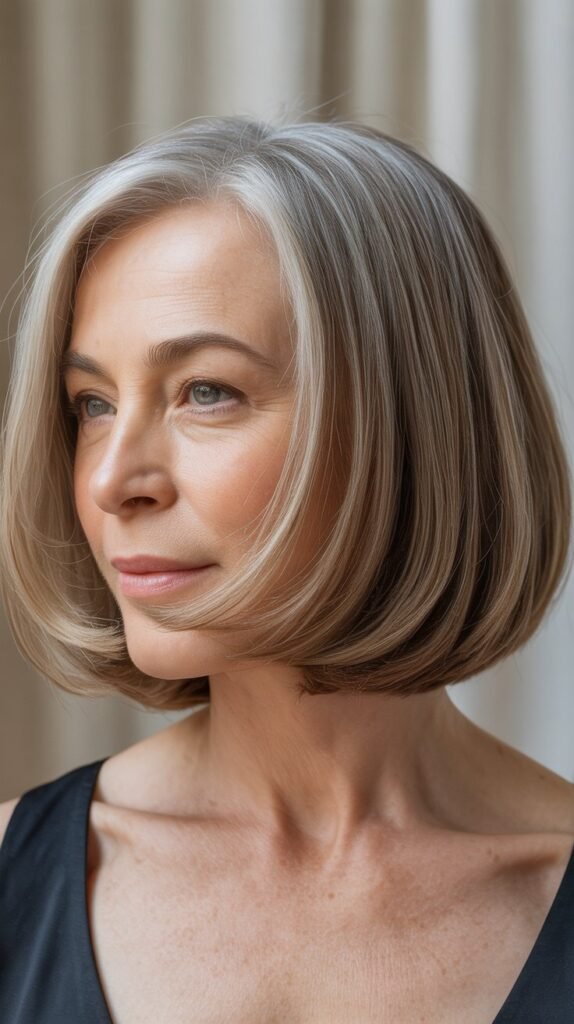
The jaw-length bob with beveled edges provides a modern update to the classic bob through edge-softening techniques that enhance fine hair beautifully.
Beveling Technique:
- Beveling involves cutting the hair at a slight angle at the perimeter, creating soft, rounded edges rather than blunt lines
- This technique removes harsh lines while maintaining the appearance of fullness at the ends
- The beveled edge creates a more polished, finished appearance than a completely blunt cut
- It’s particularly flattering for fine hair because it softens without thinning
Jaw-Length Precision:
- Cutting precisely at jaw length creates a strong horizontal line that draws attention to the jawline and cheekbones
- This length works beautifully for women with defined bone structure who want to emphasize it
- The style sits perfectly above the shoulders, eliminating any awkward length issues
- It’s formal enough for professional settings yet casual enough for everyday wear
Edge Maintenance:
- Beveled edges need regular trimming to maintain their soft, rounded appearance
- The technique can be applied to straight-across cuts or angled cuts with equal success
- Point-cutting along the beveled edge adds additional softness and prevents harsh lines from forming
- Between salon visits, smoothing the ends with a flat iron helps maintain the polished appearance
23. Layered Crop with Textured Ends
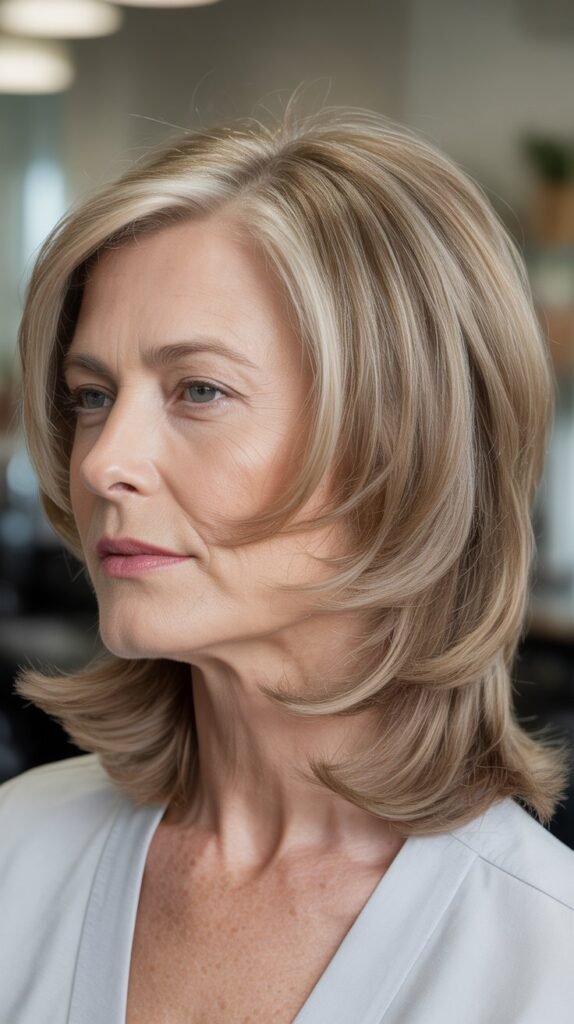
The layered crop offers a wash-and-go solution that still looks intentionally styled, perfect for active women seeking minimal maintenance.
Defining the Crop:
- A crop is a very short haircut, typically with hair no longer than 2-3 inches anywhere on the head
- Multiple layers throughout create texture and prevent the flat appearance that ultra-short hair can sometimes have
- Despite being very short, strategic layering ensures the style has movement and dimension
- This is ideal for women ready to fully embrace short hair and minimize daily styling time
Texturizing the Ends:
- Point-cutting creates soft, irregular ends that add movement to the crop
- Razoring can be used selectively to thin out areas where hair might be too bulky
- The textured ends create separation that makes fine hair appear fuller and more substantial
- This technique prevents the style from looking too severe or military-inspired
The Wash-and-Go Factor:
- After shampooing, most women can simply towel-dry and add a small amount of product
- The layered structure ensures the hair falls into place naturally without extensive styling
- A quick tousle with fingers while drying is often sufficient to achieve the desired look
- This style is perfect for women who swim, exercise frequently, or simply prefer not to spend time on hair
24. Side-Parted Bob with Subtle Wave
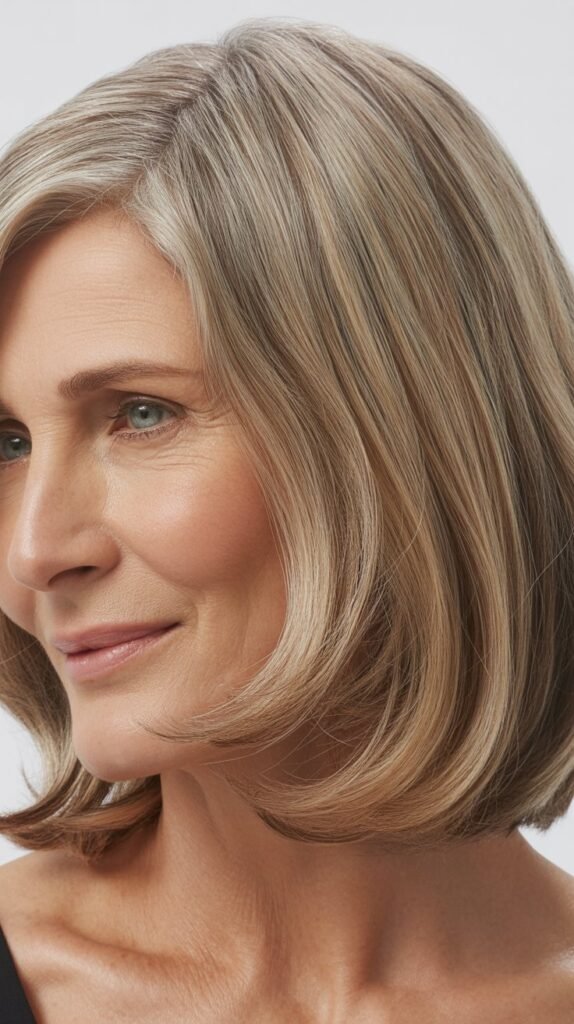
The side-parted bob with subtle wave combines structure with softness, creating a style that feels both polished and relaxed.
Creating Subtle Waves in Straight Hair:
- Subtle waves add dimension and volume without looking overly styled or artificial
- Use a large-barrel curling iron (1.5-2 inches) to create soft, loose waves rather than tight curls
- Alternate the direction of curls as you work around the head for a more natural, dimensional appearance
- Brush through the waves gently with fingers (not a brush) to soften and blend them
Side Part Positioning:
- A deep side part typically falls 2-3 inches from center, creating noticeable asymmetry
- Position the part on the side where hair naturally wants to fall for easier styling and longer-lasting hold
- The heavier side provides volume and drama while the lighter side can be tucked behind the ear
- Changing your part occasionally can prevent hair from thinning along the part line
Product Selection for Hold:
- Use a heat protectant spray before curling to prevent damage from styling tools
- A lightweight mousse applied before curling helps waves hold their shape in straight hair
- Finish with a flexible-hold hairspray that maintains waves without creating stiffness
- Avoid heavy products that will weigh down the waves and make fine hair look limp
25. Elongated Pixie with Disconnected Layers
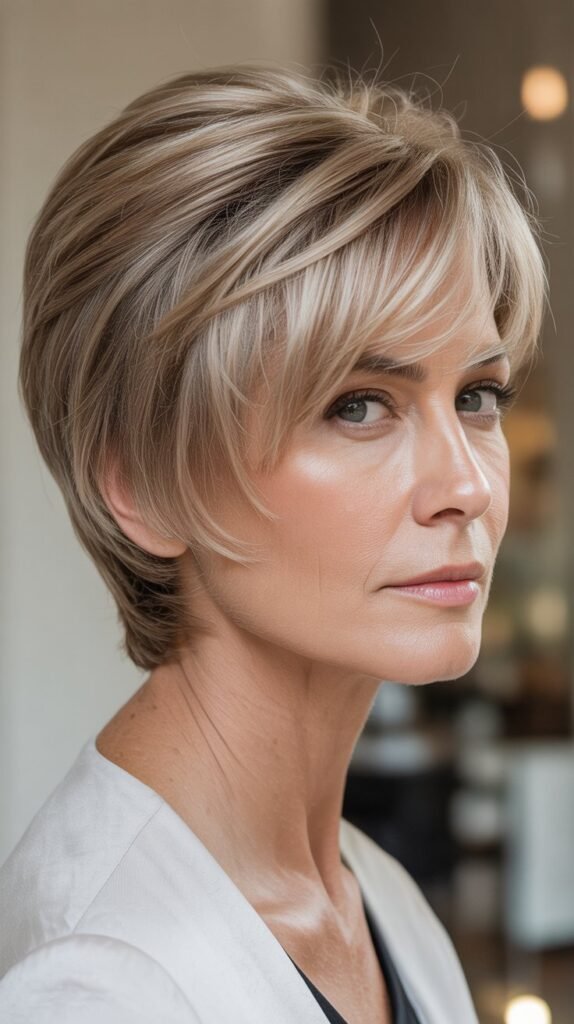
The elongated pixie with disconnected layers creates an editorial, fashion-forward appearance that’s surprisingly wearable for everyday life.
Understanding Disconnection:
- Disconnected layers are intentionally unblended, creating visible gaps and distinctions between different hair sections
- This technique creates dramatic texture and movement that traditional blended layers cannot achieve
- The deliberate separation prevents fine hair from looking too uniform or flat
- It’s a contemporary cutting approach that adds edge and personality to the classic pixie
Elongated Pixie Length:
- An elongated pixie features some sections (usually on top or in front) that are notably longer than a traditional pixie
- These longer sections might extend to 3-4 inches while shorter sections remain 1-2 inches
- The length variation creates styling versatility within a very short cut
- Women transitioning from longer hair to a pixie often appreciate starting with an elongated version
Styling the Disconnection:
- The disconnected sections should be styled to emphasize their separation rather than attempting to blend them
- Longer sections can be swept forward, back, or to the side depending on preference
- Texturizing products help define and separate the disconnected layers
- This style requires confidence and a willingness to embrace a distinctly modern, non-traditional aesthetic
26. Classic Bob with Added Lowlights
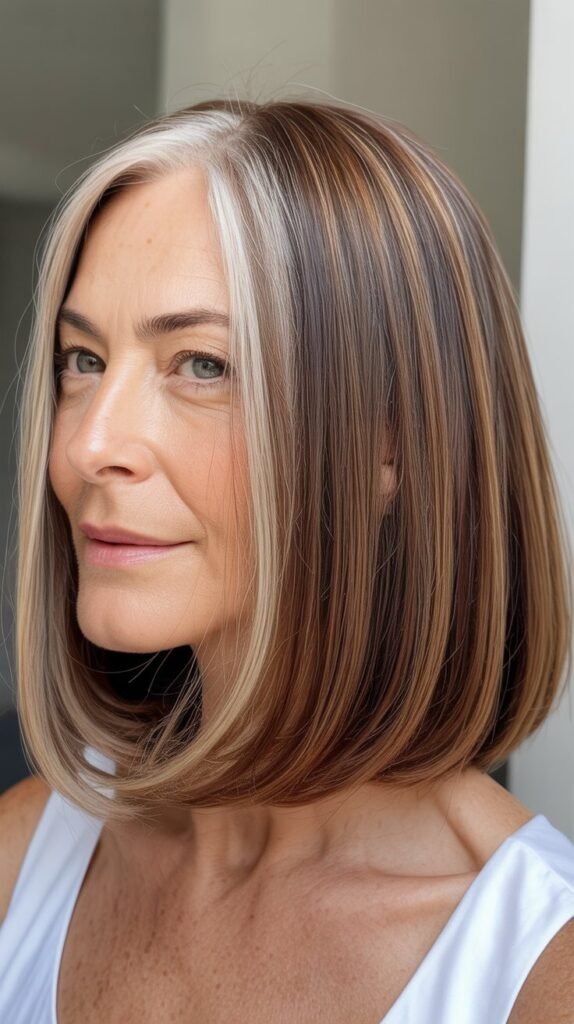
The classic bob with added lowlights demonstrates how strategic color placement can dramatically enhance the appearance of fine straight hair.
Lowlights vs. Highlights:
- Lowlights are strands of hair colored darker than the base color, while highlights are lighter
- For mature women with graying hair, lowlights add depth and dimension that can make hair appear thicker
- The darker strands create shadows and the illusion of depth beneath lighter surface hair
- Lowlights are generally more subtle and natural-looking than highlights, requiring less maintenance
Placement Strategy:
- Lowlights should be placed strategically underneath and around the perimeter of the cut
- This creates the appearance of shadow and depth that makes hair look fuller
- Face-framing pieces are typically left lighter to brighten and flatter the complexion
- The colorist should use multiple shades rather than a single color for the most natural effect
Maintenance Requirements:
- Lowlights grow out more gracefully than highlights because darker roots are less noticeable
- Touch-ups are typically needed every 10-12 weeks rather than the 6-8 weeks required for highlights
- Using color-safe shampoo and conditioner helps maintain the richness of lowlight colors
- The dimensional color makes styling more forgiving because the color itself creates visual interest
27. Wispy Bangs with Shoulder-Grazing Length
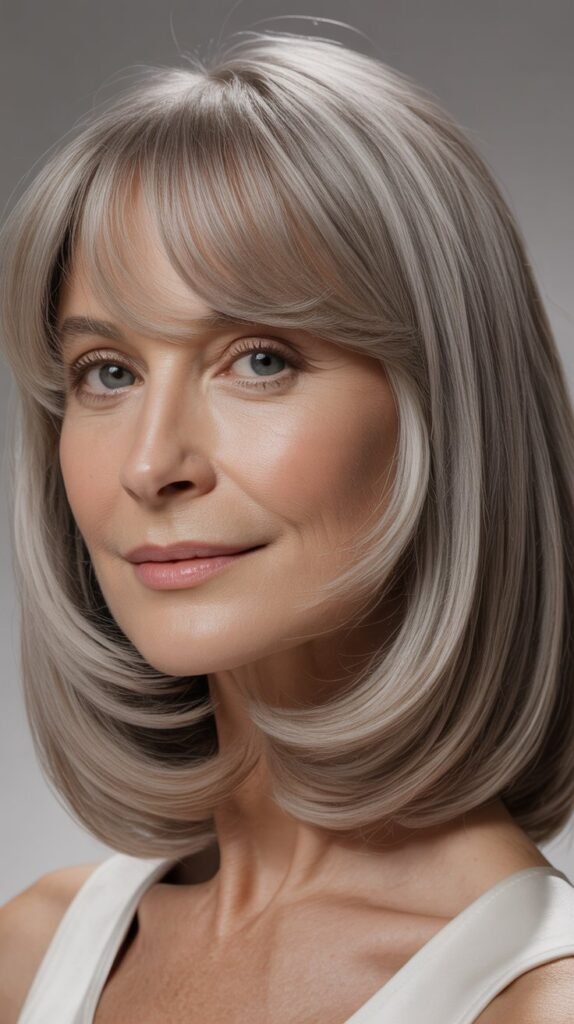
Wispy bangs with shoulder-grazing length create a soft, romantic appearance that beautifully flatters mature women seeking a gentle, feminine style.
Creating Wispy Bangs:
- Wispy bangs are cut with point-cutting and texturizing techniques that create soft, feathery ends
- They’re typically cut thinner than traditional bangs, allowing skin to show through slightly
- This delicate approach is particularly flattering for mature skin and doesn’t overwhelm delicate features
- Wispy bangs are more forgiving if they’re cut slightly too short because their feathery nature makes length less critical
Shoulder-Grazing Benefits:
- Hair that just touches or grazes the shoulders provides versatility without excessive length
- This length can be worn down, pulled into a small ponytail, or twisted into a casual updo
- It’s long enough to feel feminine and substantial but short enough to be manageable
- The length maintains movement and sway that gives life to fine straight hair
Styling for Softness:
- Blow-dry bangs with a small round brush, directing them forward and slightly to the side
- Use a medium-sized round brush on the body of the hair to create gentle movement
- A small amount of smoothing cream prevents frizz while maintaining the soft, touchable texture
- The overall goal is to look naturally beautiful rather than heavily styled
28. Inverted Bob with Nape Exposure
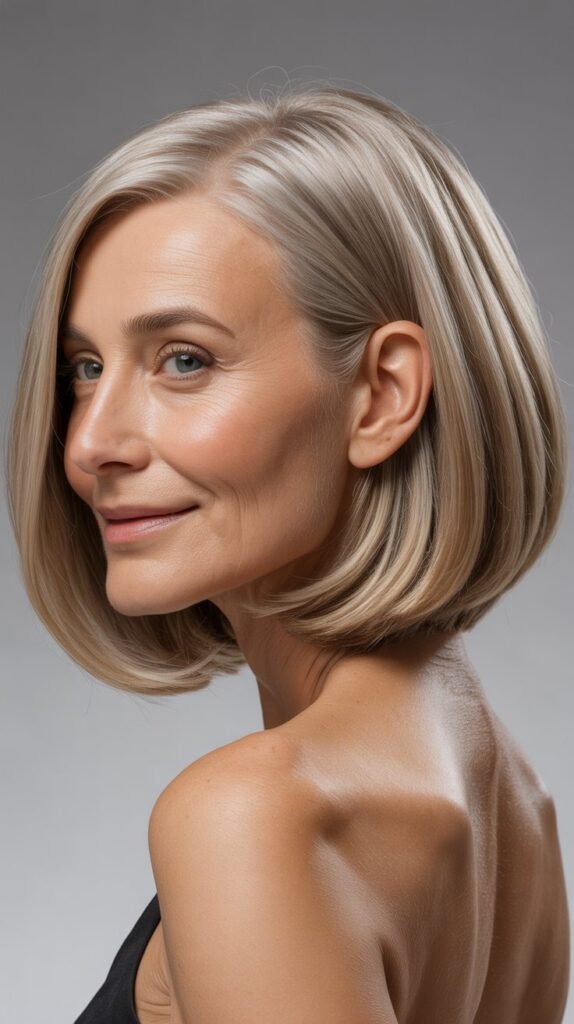
The inverted bob makes a bold architectural statement while providing practical benefits for fine straight hair through strategic weight distribution.
Inverted Bob Structure:
- An inverted bob features a very short, sometimes undercut, nape with dramatically longer front sections
- The angle from back to front is steep, creating a striking silhouette when viewed from the side
- The short back eliminates weight and allows the front sections to achieve maximum volume
- This is one of the most dramatic bob variations and makes a definite fashion statement
Nape Exposure Benefits:
- Exposing the nape keeps the neck cool and comfortable, especially in warm weather
- It creates a youthful, contemporary appearance that defies age stereotypes
- The short nape requires minimal maintenance and dries almost instantly after washing
- Many women appreciate the liberation of having less hair to manage in the back
Front Section Styling:
- Front sections can range from chin-length to collarbone-length depending on personal preference
- The longer front provides face-framing softness that balances the severely short back
- Styling involves blow-drying front sections smooth or adding slight curve with a round brush
- The dramatic angle itself provides all the interest needed, so minimal additional styling is required
29. Layered Bob with Piece-y Fringe
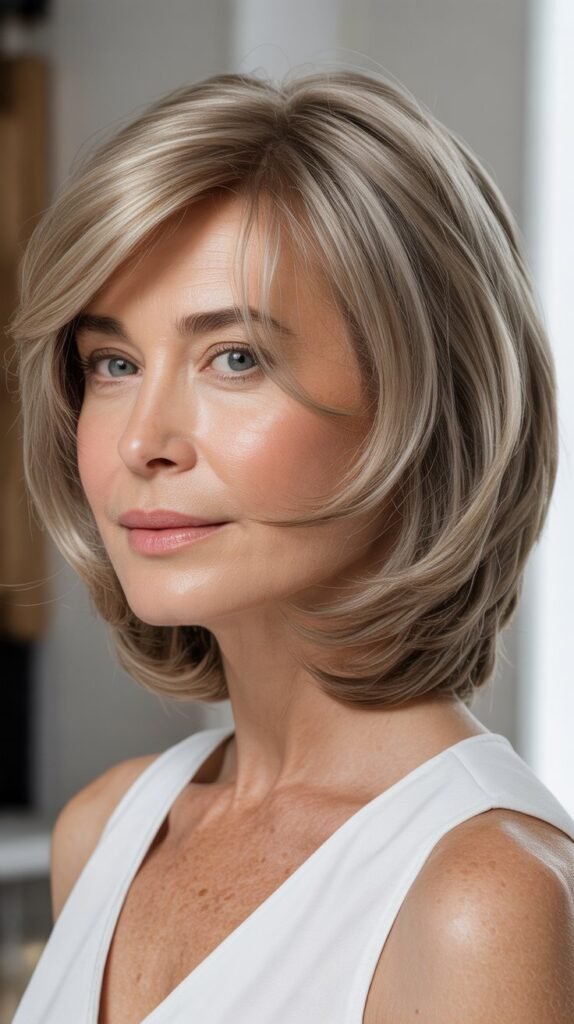
The layered bob with piece-y fringe combines two powerful techniques—layering for volume and texturized fringe for face-framing softness.
Piece-y Fringe Creation:
- Fringe sections are cut with heavy texturizing to create separated, individual pieces rather than a solid bang line
- Point-cutting and razoring break up the fringe into distinct strands that can be styled separately
- This modern approach to bangs is less severe and more forgiving than traditional blunt bangs
- The separated pieces move naturally and require minimal styling to look intentional
Layering Throughout:
- Layers are cut throughout the bob, not just at the crown, to create all-over movement
- Shorter layers at the crown provide lift while longer layers at the perimeter maintain fullness
- The layering prevents the bob from looking too heavy or triangular
- Fine hair benefits tremendously from this approach because layers prevent flat, lifeless appearance
Integrated Styling:
- The fringe should blend seamlessly with the rest of the layered bob rather than looking like a separate element
- Style by applying texturizing spray to damp hair before blow-drying
- Use fingers to separate and define fringe pieces while directing them forward and slightly to the sides
- The overall effect should be textured and piece-y throughout, not just at the fringe
Maintenance Schedule for Short to Medium Hairstyles
Every 4-6 Weeks: Very short cuts (pixies, crops, micro bobs) that need shape maintenance
Every 6-8 Weeks: Classic bobs, layered cuts, styles with bangs requiring frequent trims
Every 8-10 Weeks: Medium-length cuts, lobs, and styles with less precise shaping requirements
Regular Upkeep: Deep conditioning treatments every 2-3 weeks to maintain hair health
Color Considerations for Fine Hair
- Highlights: Create dimension and make hair appear fuller by adding multiple tones
- Lowlights: Add depth and shadow that makes hair look thicker and more substantial
- Balayage: Hand-painted color creates natural-looking dimension with less obvious regrowth
- Single-Process Color: Can add shine and uniform color but may make fine hair look thinner if too dark
- Gray Blending: Strategic color placement can soften the transition to natural gray
Essential Tools for Styling Fine Straight Hair
- Round Brush: Multiple sizes for different hair lengths and desired effects
- Paddle Brush: For smoothing and creating sleek styles
- High-Quality Blow Dryer: Preferably with multiple heat and speed settings
- Flat Iron: For sleekness and straightening, but use on low to medium heat
- Large-Barrel Curling Iron: For creating soft waves and movement when desired
- Texturizing Shears: For at-home touch-ups between salon visits (use cautiously)
Conclusion
Embracing 29 elegant short hairstyles for women over 60 with fine straight hair reveals that this stage of life offers more styling possibilities than ever before.
The medium-length picks explored throughout this guide demonstrate that fine hair doesn’t mean limited options—instead, it simply means choosing styles that work with your hair’s natural characteristics rather than against them.
From the timeless elegance of a blunt bob to the contemporary edge of a textured shag, each style offers unique benefits that address specific challenges while highlighting your best features.
The key takeaway is understanding that strategic cutting techniques, proper product selection, and appropriate styling methods can transform fine straight hair into a stunning asset.
Whether you prefer the low-maintenance ease of a pixie cut or the versatility of a shoulder-length style with face-framing layers, there’s a perfect option waiting for you among these 29 elegant selections.
Remember that the best hairstyle is one that makes you feel confident, beautiful, and authentically yourself—age is simply a number, and your hair can be just as vibrant and stylish as you feel inside.