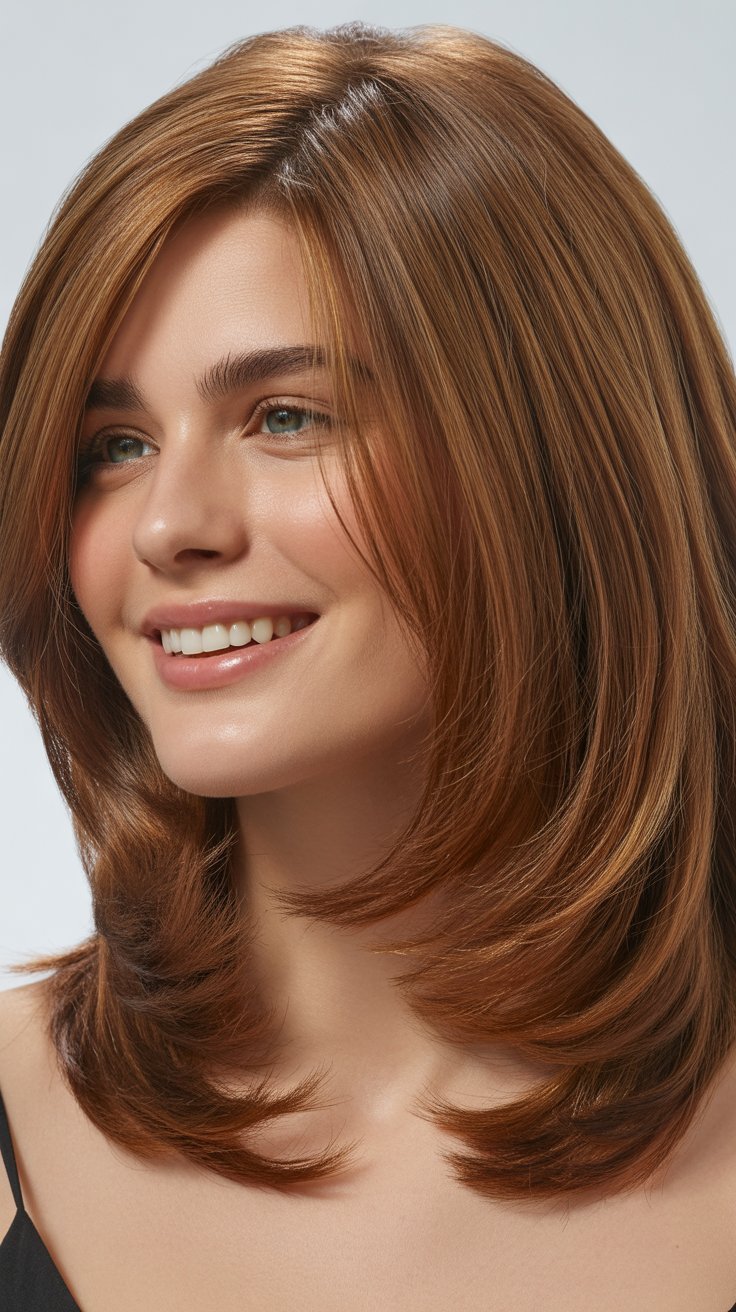
If you’re blessed with thick hair, you know it comes with both advantages and challenges.
Finding the perfect haircut that manages volume, enhances texture, and suits your lifestyle can transform your entire look.
This comprehensive guide to 51 Best Haircuts for Thick Hair (Layered, Medium, Shoulder-Length) will help you discover styles that work with your hair’s natural density rather than against it.
From classic layers that remove bulk to modern shoulder-length cuts that showcase movement, we’ve compiled expert-approved haircuts that flatter thick hair beautifully.
Whether you’re looking to add shape, reduce weight, or simply refresh your current style, this article covers everything from short pixies to flowing long layers, textured bobs to face-framing cuts.
Each haircut option includes styling insights and practical tips to help you maintain gorgeous, manageable thick hair every day.
1. Classic Long Layers
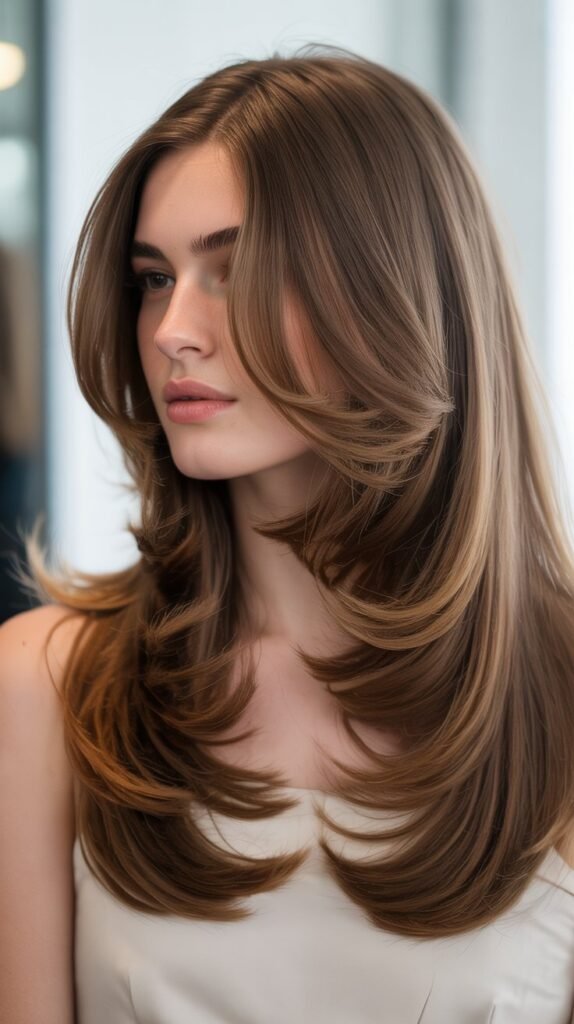
Long layers are the foundation of thick hair management, creating movement while maintaining length.
This timeless cut distributes weight evenly throughout your hair, preventing the bottom-heavy triangle shape that thick hair often creates.
Layers start several inches below the chin and cascade downward, offering versatility for both straight and wavy textures.
Key Benefits:
- Reduces bulk without sacrificing length
- Creates natural movement and flow
- Works with all face shapes
- Easy to style with minimal products
Styling Tips:
- Use a round brush while blow-drying for added volume at the roots
- Apply smoothing serum to mid-lengths and ends
- Consider getting layers refreshed every 8-10 weeks
Best For:
- Those wanting to keep length while managing volume
- Straight to wavy hair textures
- Professional environments requiring polished looks
2. Shoulder-Length Shag
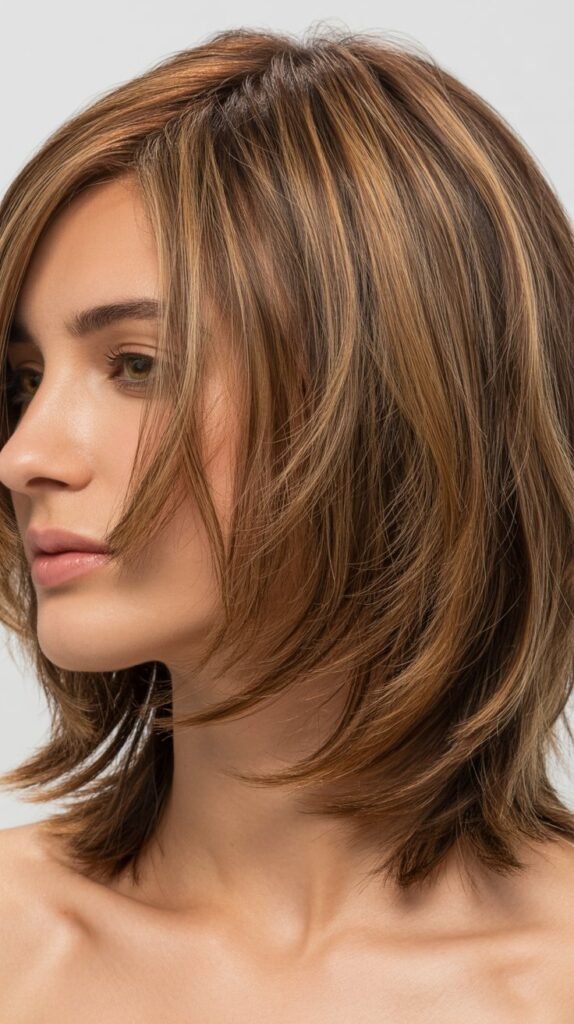
The modern shag brings 70s-inspired texture to shoulder-length thick hair with choppy layers and feathered ends.
This cut creates deliberate dishevelment that works beautifully with thick hair’s natural body, offering an effortlessly cool vibe that’s surprisingly low-maintenance.
Characteristics:
- Shorter layers around the crown for volume
- Longer pieces framing the face
- Textured, piece-y ends
- Works exceptionally well with natural waves
Maintenance:
- Requires cutting every 6-8 weeks to maintain shape
- Air-drying enhances the casual texture
- Sea salt spray amplifies the lived-in look
- Minimal heat styling needed
Ideal Candidates:
- Those seeking a relaxed, bohemian aesthetic
- Wavy to curly thick hair types
- Active lifestyles requiring wash-and-go styles
3. Blunt Bob with Internal Layers
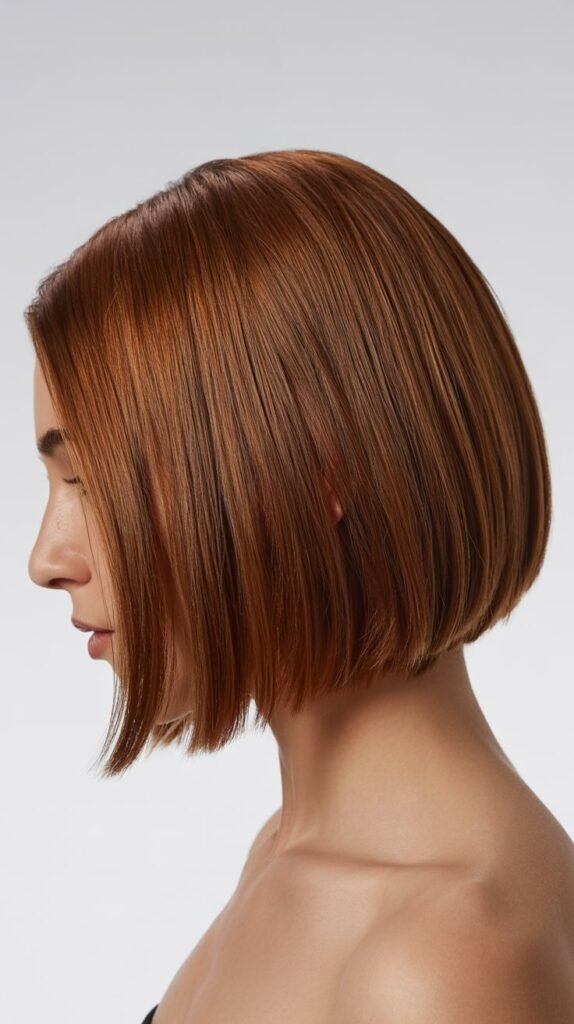
A blunt bob appears solid from the outside while hiding internal layers that remove excess weight.
This sophisticated cut maintains a clean perimeter while the hidden layers prevent thickness from creating a boxy shape, offering the best of both structured and manageable styling.
Design Elements:
- Blunt exterior line at jaw or chin level
- Invisible internal layers removing bulk
- Precise cutting technique required
- Sharp, modern silhouette
Advantages:
- Professional and polished appearance
- Reduces styling time significantly
- Makes thick hair appear intentionally full rather than unruly
- Versatile for straight hair types
Care Requirements:
- Trim every 5-6 weeks to maintain blunt edge
- Use straightening products for sleek finish
- Blow-dry with paddle brush for smooth results
4. Textured Lob (Long Bob)
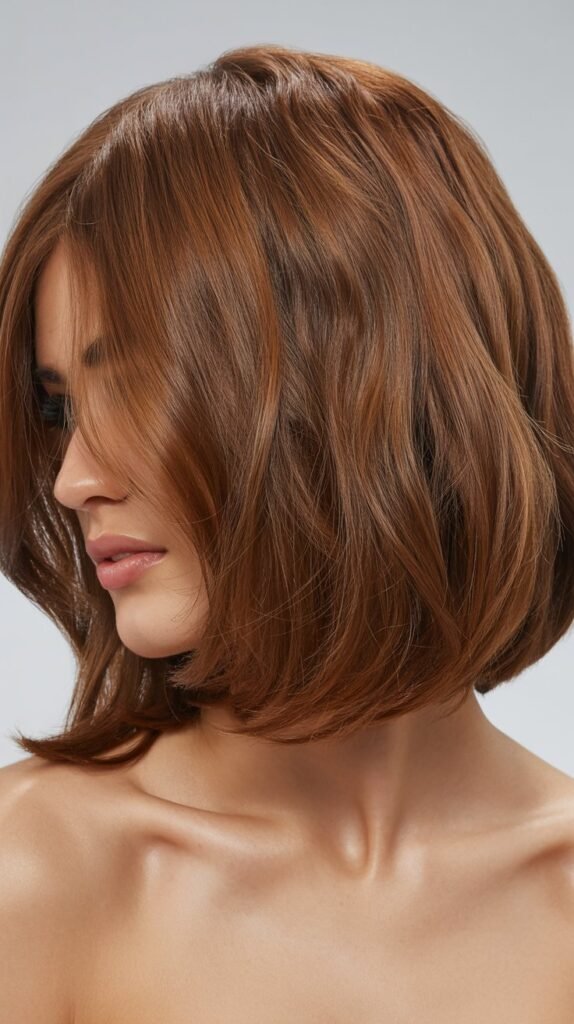
The lob continues to dominate as one of the most flattering cuts for thick hair, sitting between chin and collarbone.
Adding texture through point-cutting and razor techniques transforms this classic into a modern, movement-filled style that manages thick hair beautifully.
Technical Details:
- Length typically between 12-14 inches
- Point-cut or razor-cut ends for softness
- Slight graduation or one-length options
- Can incorporate face-framing layers
Styling Versatility:
- Wear straight for polished elegance
- Add waves for casual texture
- Pull back into low ponytails or buns
- Half-up styles showcase the cut’s dimension
Why It Works:
- Removes weight from ends without dramatic shortening
- Complements all face shapes with proper customization
- Professional yet trendy
- Grows out gracefully
5. Layered Pixie Cut
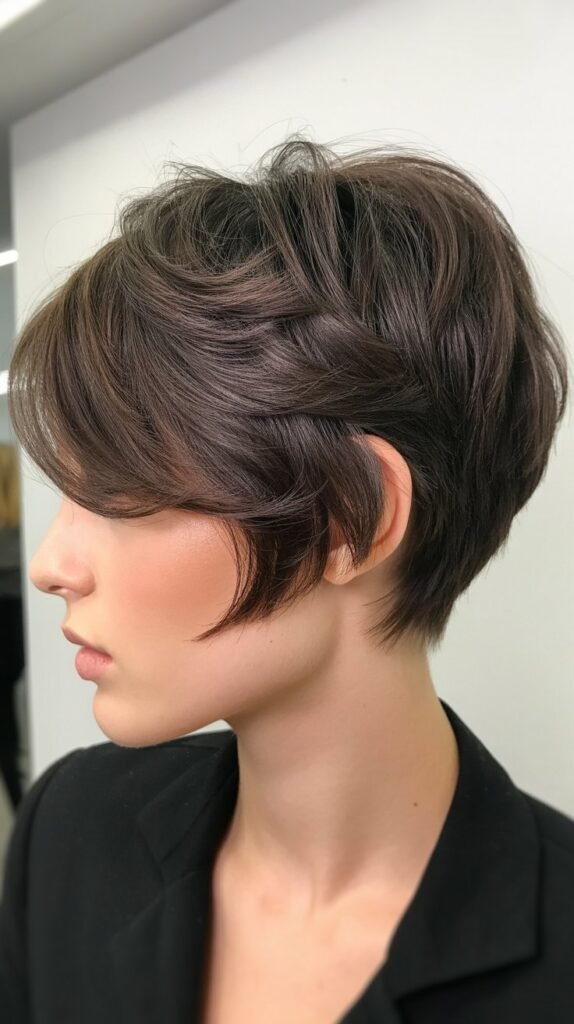
For those ready to embrace short hair, a layered pixie removes maximum weight while showcasing thick hair’s natural texture.
This bold cut requires confidence but delivers unmatched ease and style, with layers adding dimension that prevents thick hair from looking heavy.
Cut Specifications:
- Short sides and back (1-3 inches)
- Longer top section (3-5 inches) for styling flexibility
- Graduated layers throughout
- Textured rather than blunt edges
Personality Match:
- Adventurous and low-maintenance individuals
- Those with strong facial features to showcase
- Active lifestyles or hot climates
- Professional environments accepting of short hair
Daily Routine:
- 5-minute styling maximum
- Finger-style with lightweight pomade or wax
- Monthly trims maintain shape
- Grows into other short styles naturally
6. Face-Framing Layers
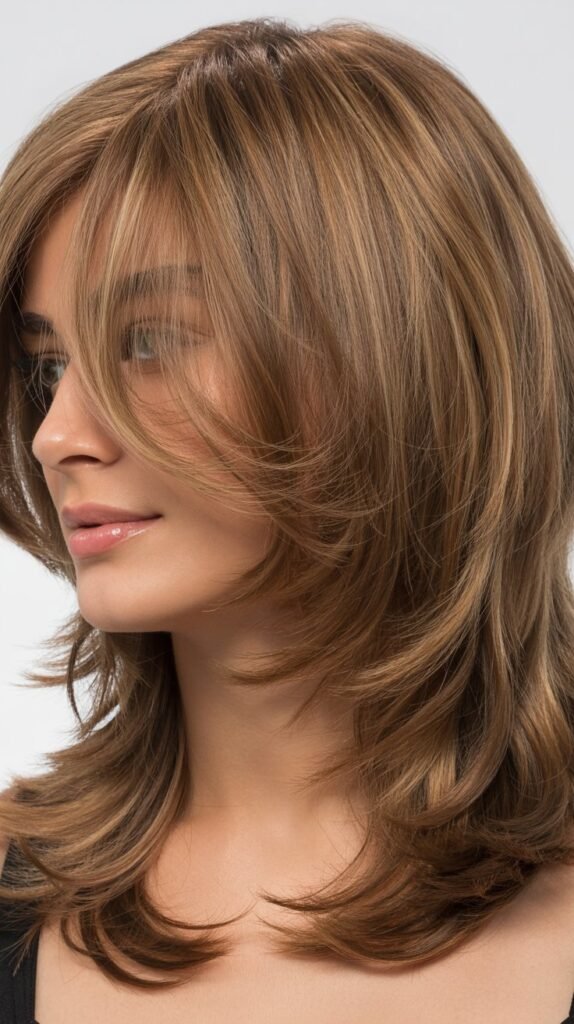
Face-framing layers concentrate shorter pieces around the face while keeping length in back, creating a flattering focal point.
This technique works exceptionally well for thick hair because it removes weight precisely where it’s most visible, enhancing facial features without requiring an overall dramatic cut.
Placement Strategy:
- Shortest layers typically start at cheekbone or chin
- Gradually blend into longer lengths
- Angled or curved framing depending on face shape
- Can be subtle or dramatic based on preference
Benefits:
- Highlights cheekbones and jawline
- Softens angular face shapes
- Adds dimension without losing length
- Easy to style forward or tucked behind ears
Customization:
- Round faces: Longer, angled layers
- Square faces: Soft, curved layers
- Oval faces: Most flexible with layer placement
- Heart-shaped faces: Chin-length frames balance proportions
7. V-Cut Layers
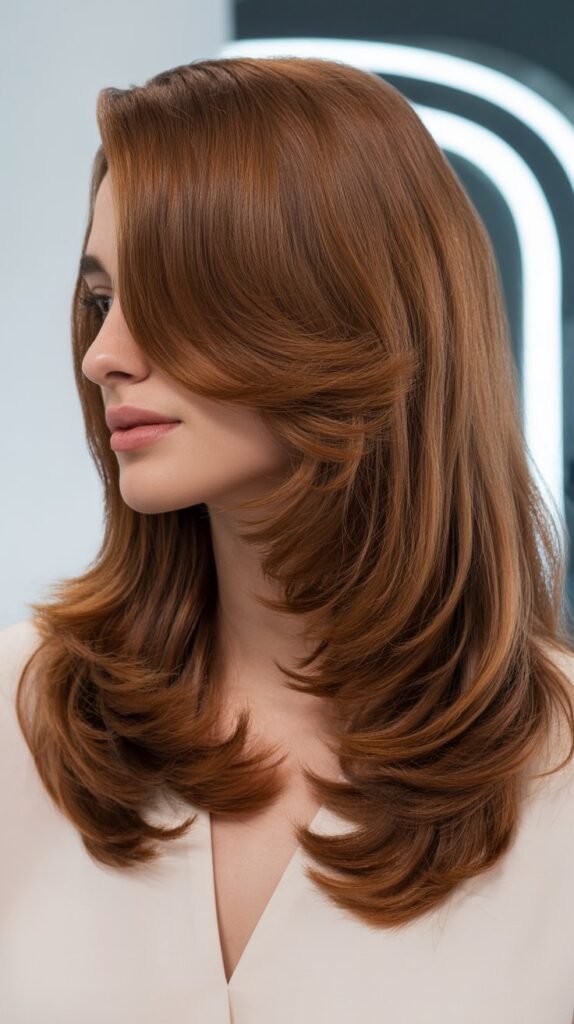
A V-cut creates a distinctive pointed shape at the back, with layers forming a V when hair falls naturally.
This dramatic layering technique is perfect for thick hair as it creates maximum movement and removes substantial weight while maintaining an eye-catching silhouette.
Structural Design:
- Layers graduate in V-formation at back
- Shortest point at center back, longer at sides
- Creates significant dimension and texture
- Emphasizes length while reducing bulk
Visual Impact:
- Stunning from behind, especially in ponytails
- Adds interest to long thick hair
- Creates natural body and bounce
- Highlights hair’s movement when walking
Maintenance Approach:
- Requires precise cutting technique
- Best maintained every 10-12 weeks
- Show your stylist reference photos for desired V-depth
- Works best with straight to slightly wavy textures
8. Asymmetrical Bob
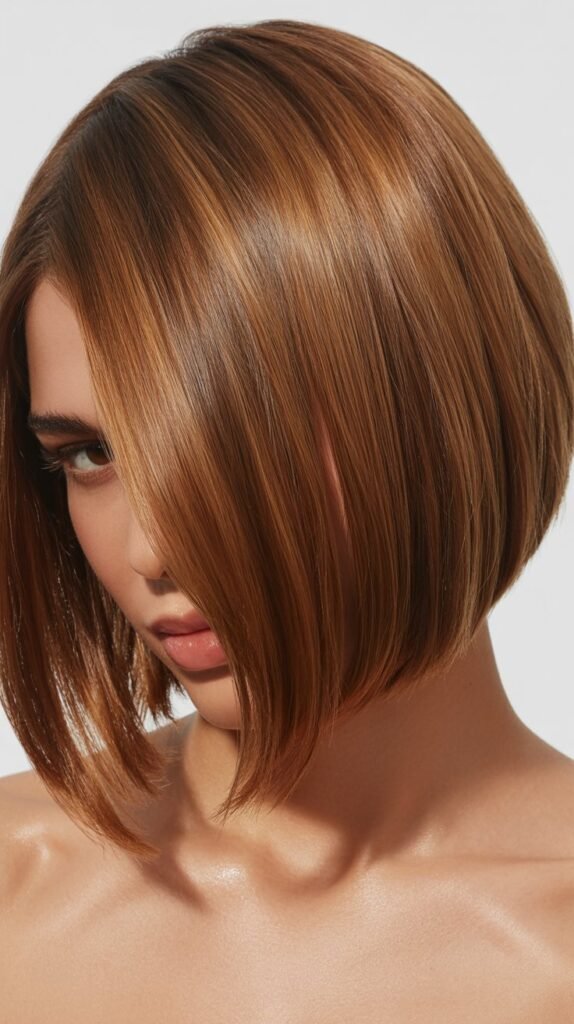
An asymmetrical bob features intentionally uneven lengths, with one side shorter than the other.
This edgy, modern cut is particularly effective for thick hair because the variation in length naturally removes weight while creating a bold, fashion-forward statement.
Design Features:
- Dramatic or subtle length difference between sides
- Can range from 1-4 inches of asymmetry
- Often incorporates undercut on shorter side
- Sharp, angular lines emphasize the contrast
Style Profile:
- Fashion-forward and contemporary
- Requires commitment to regular maintenance
- Makes a strong personal statement
- Ideal for creative professional environments
Practical Considerations:
- Part determines which side showcases more hair
- Shorter side may require more frequent trims
- Growing out requires patience or transitional cuts
- Not suitable for those wanting uniform styling options
9. Butterfly Layers
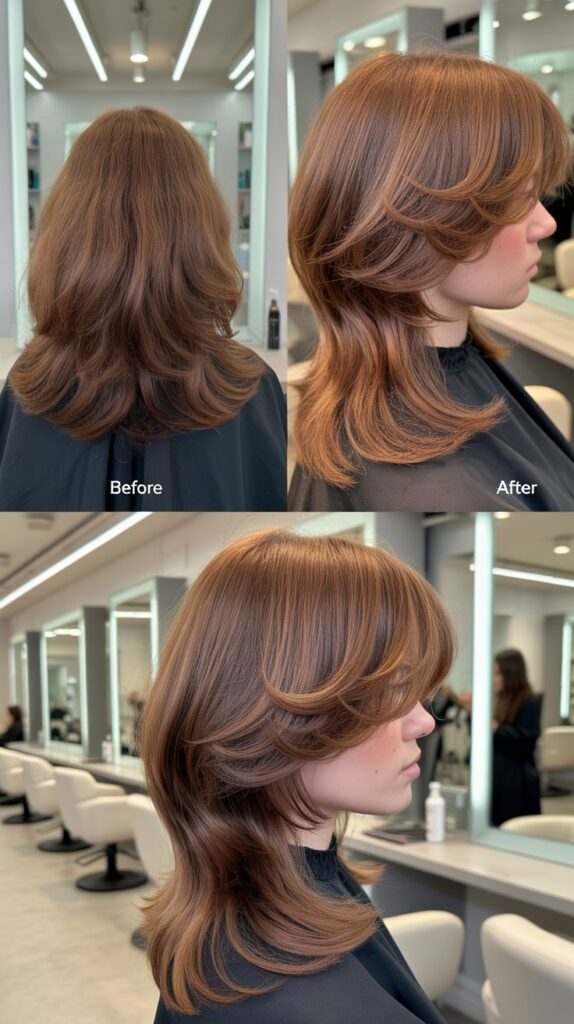
Butterfly layers, a trending technique, create a distinctive shape resembling butterfly wings when hair is parted in the middle.
This method focuses layers around the face and crown, leaving length and weight at the bottom, perfect for thick hair seeking dimension without losing fullness.
Technique Breakdown:
- Shorter layers concentrated at crown and face
- Creates horizontal volume across cheekbone area
- Maintains length and density at ends
- Best achieved with precise elevation cutting
Why It’s Trending:
- Viral on social media for dramatic before-and-after transformations
- Adds volume where needed most
- Frames face beautifully
- Works with various hair textures
Styling Requirements:
- Blow-dry with round brush at crown for lift
- Natural texture looks great with this cut
- Can straighten or curl based on occasion
- Minimal product needed
10. Chin-Length Bob with Bangs
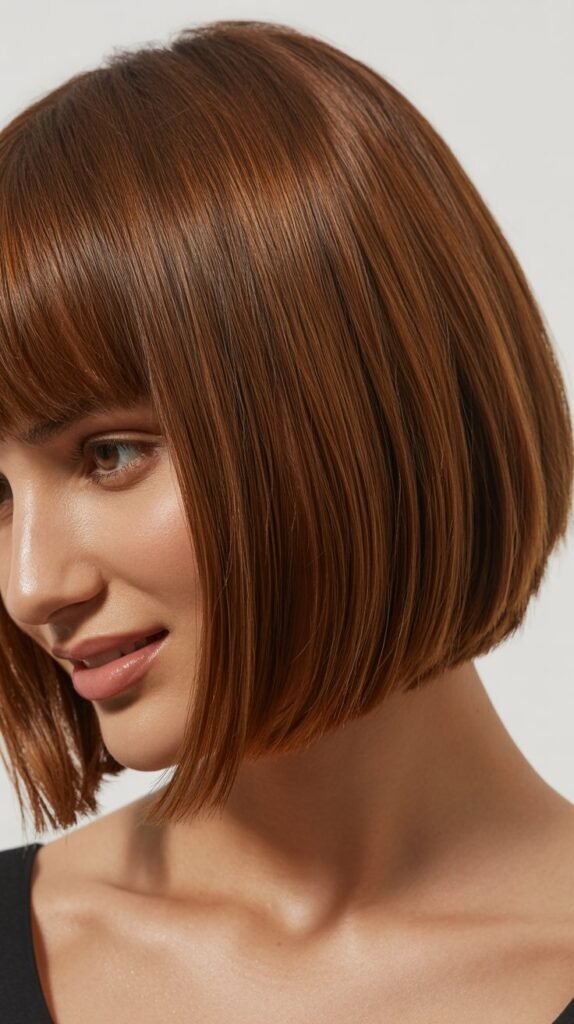
A chin-length bob paired with bangs creates a classic, sophisticated look that manages thick hair through strategic length and fringe.
The combination balances facial proportions while the shorter overall length significantly reduces thick hair’s weight.
Component Parts:
- Bob ending at chin level
- Bangs ranging from blunt to side-swept
- Can be one-length or slightly angled
- Internal layers optional for weight removal
Bang Options:
- Blunt bangs: Bold, statement-making
- Side-swept bangs: Softer, more versatile
- Curtain bangs: On-trend, face-framing
- Wispy bangs: Light, textured option
Styling Time:
- Requires daily styling of bangs
- Bob itself low-maintenance
- 10-15 minutes typical styling time
- Works well with thick hair’s natural body
11. Graduated Bob
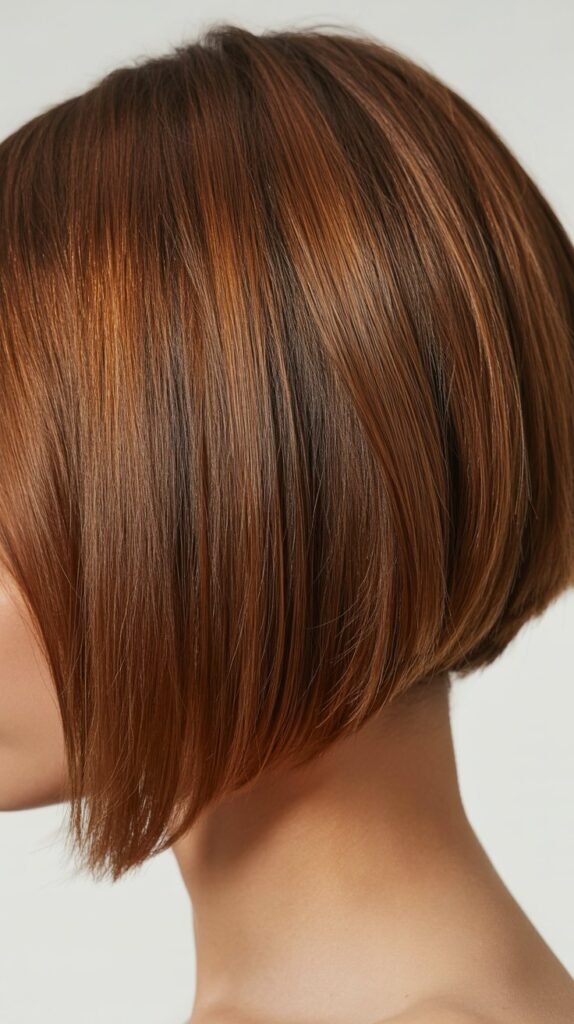
A graduated bob, also called a stacked bob, is shorter in back and angles longer toward the front.
This architectural cut is exceptional for thick hair as the graduation naturally thins the heaviest section while creating volume and shape at the crown.
Structural Elements:
- Dramatic or subtle stacking at nape
- Gradual lengthening toward face
- Creates dome shape at back
- Often exposes nape beautifully
Technical Advantages:
- Removes maximum weight from back
- Creates built-in volume without styling
- Flatters most face shapes
- Makes thick hair manageable
Maintenance Needs:
- Requires cutting every 4-6 weeks
- Back section grows out first
- Consider maintenance commitment before choosing
- Professional cutting technique essential
12. Long Layered Shag
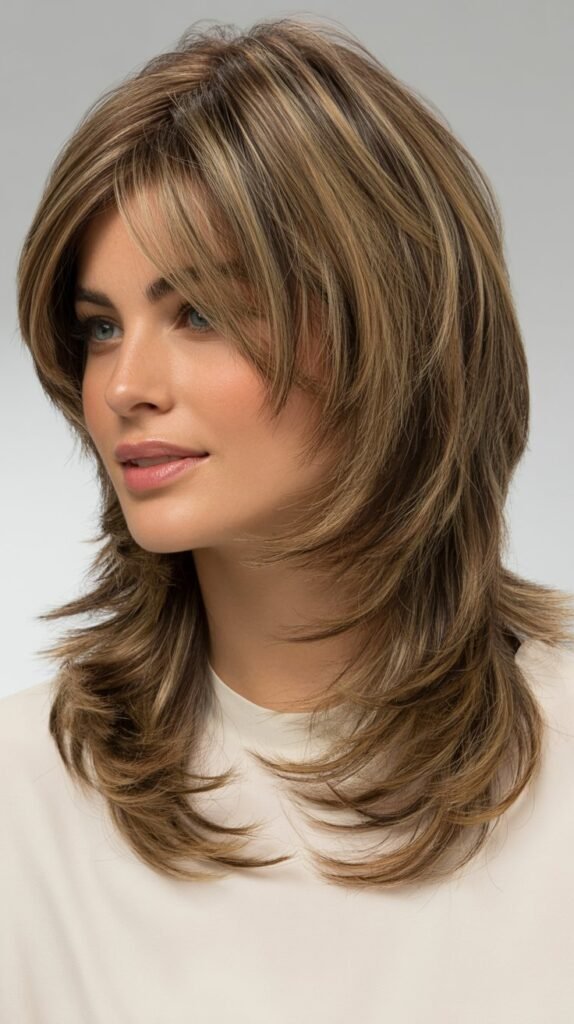
Combining the length many thick-haired individuals love with the texture of a shag, this cut layers throughout the entire head while maintaining substantial length.
It’s perfect for those wanting to keep long hair while adding movement and reducing overwhelming thickness.
Layer Distribution:
- Layers begin at shoulder level or below
- Maintains length at perimeter
- Shorter pieces throughout add dimension
- Choppy, textured rather than smooth blended
Aesthetic Appeal:
- Bohemian, free-spirited vibe
- Effortlessly cool appearance
- Enhances natural texture beautifully
- Suits casual lifestyle and fashion
Product Recommendations:
- Texturizing spray for piece-y definition
- Lightweight leave-in conditioner
- Avoid heavy products that weigh down layers
- Dry shampoo maintains volume between washes
13. Collarbone Graze Cut
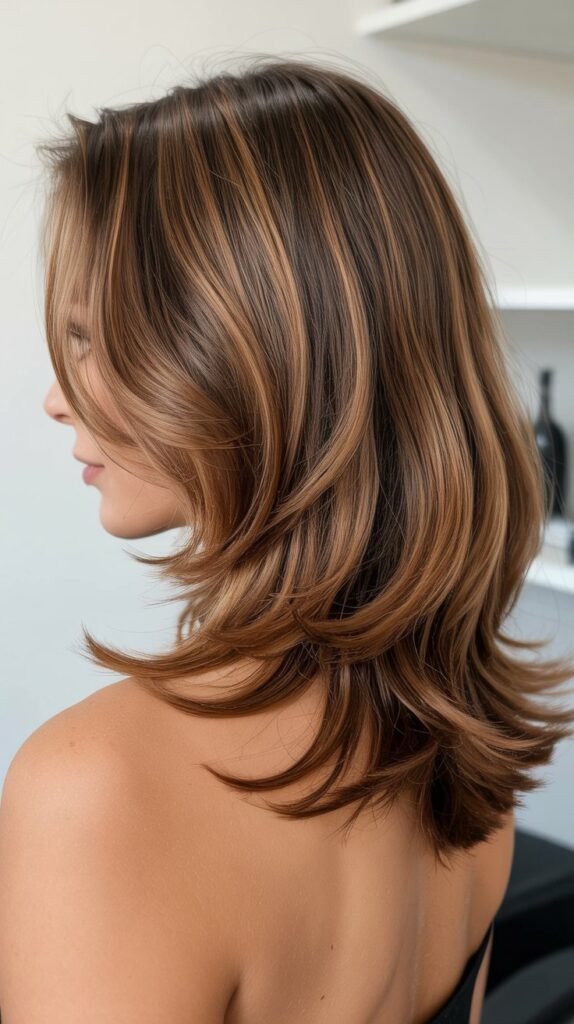
This precise length sits right at the collarbone, offering the perfect middle ground for thick hair.
It’s short enough to feel light and manageable but long enough to pull back when desired, making it one of the most practical lengths for thick hair.
Length Specifications:
- Ends fall between shoulder and collarbone
- Typically 14-16 inches from crown
- Can be one-length or subtly layered
- Provides maximum versatility
Practical Benefits:
- Easy to style in multiple ways
- Professional appearance maintained
- Can be worn down or in updos
- Reduces weight compared to longer styles
Styling Possibilities:
- Sleek straight with paddle brush
- Loose waves with large barrel curler
- Low ponytail or bun
- Half-up styles showcase length
14. Razor-Cut Layers
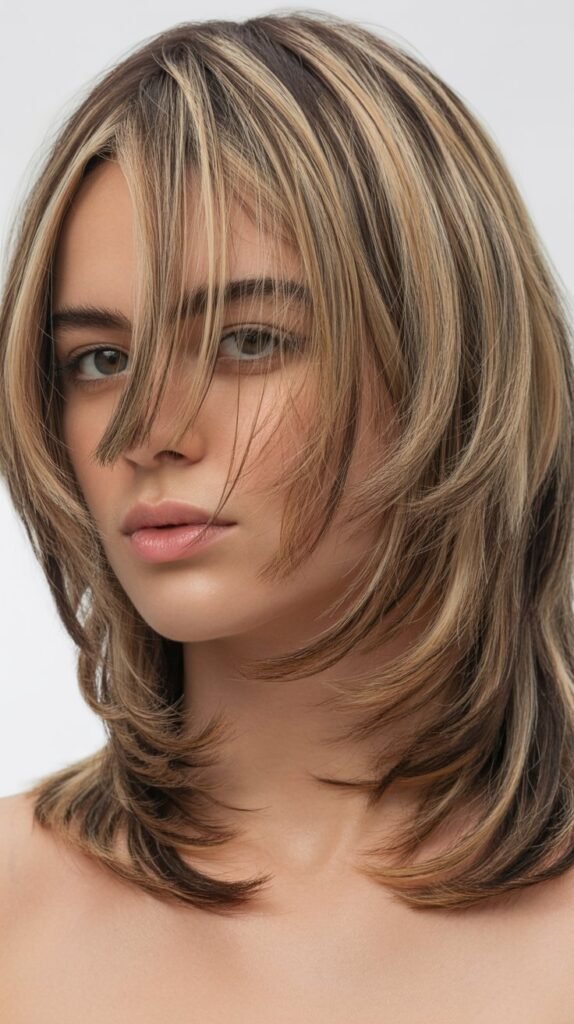
Razor cutting creates softer, more textured layers than traditional scissors, ideal for thick hair needing movement without harsh lines.
The razor technique thins ends while creating wispy, feathered layers that reduce bulk while maintaining a soft, feminine appearance.
Technique Details:
- Stylist uses razor instead of shears
- Creates point-cut effect throughout
- Produces softer, less blunt edges
- Naturally thins thick hair
Textural Results:
- Feathered, piece-y appearance
- Enhanced natural movement
- Lighter feeling ends
- Blends layers seamlessly
Considerations:
- Best for straight to wavy hair
- May cause frizz in very curly thick hair
- Requires skilled stylist familiar with technique
- Grows out more naturally than scissor cuts
15. Curtain Bangs with Layers
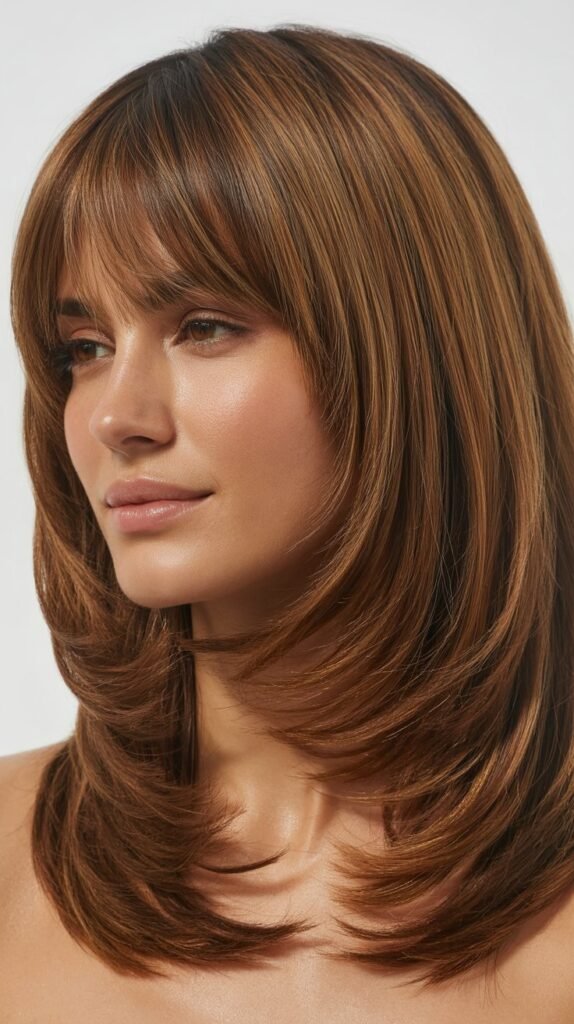
Curtain bangs part in the middle and frame the face like curtains, paired with layers throughout.
This combination is particularly flattering for thick hair as it adds dimension around the face while overall layers manage volume throughout the length.
Bang Characteristics:
- Part naturally in center
- Shorter in middle, longer at sides
- Blend seamlessly into face-framing layers
- Versatile styling options
Why They Work:
- Soften all face shapes
- Easy to style or grow out
- On-trend yet timeless
- Work with thick hair’s natural body
Styling Guide:
- Round brush blow-dry for volume
- Can wear straight or wavy
- Tuck behind ears for different look
- Minimal styling products needed
16. Choppy Midi Cut
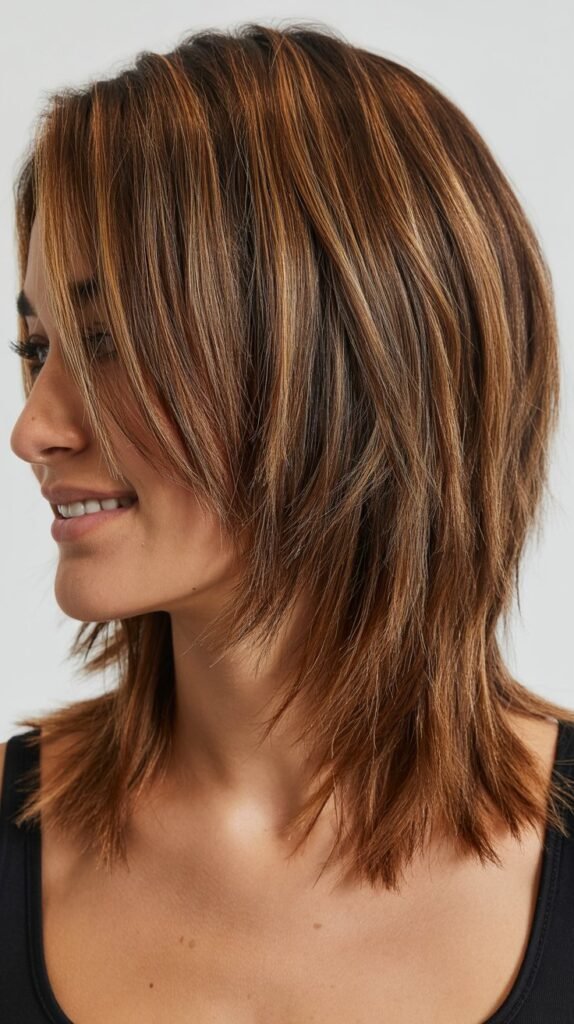
The midi length (between shoulder and mid-back) with choppy, textured layers creates an edgy, modern look.
This cut removes substantial weight from thick hair through disconnected layers while maintaining enough length for styling versatility.
Design Philosophy:
- Intentionally uneven, textured layers
- Creates piece-y, separated strands
- Modern, fashion-forward aesthetic
- Embraces natural texture
Layer Pattern:
- Varied lengths throughout create dimension
- No smooth graduation
- Textured ends rather than blunt
- Point-cutting technique essential
Best Suited For:
- Those seeking contemporary, edgy styles
- Natural texture from wavy to curly
- Low-maintenance styling preferences
- Fashion-conscious individuals
17. Wispy Layered Cut
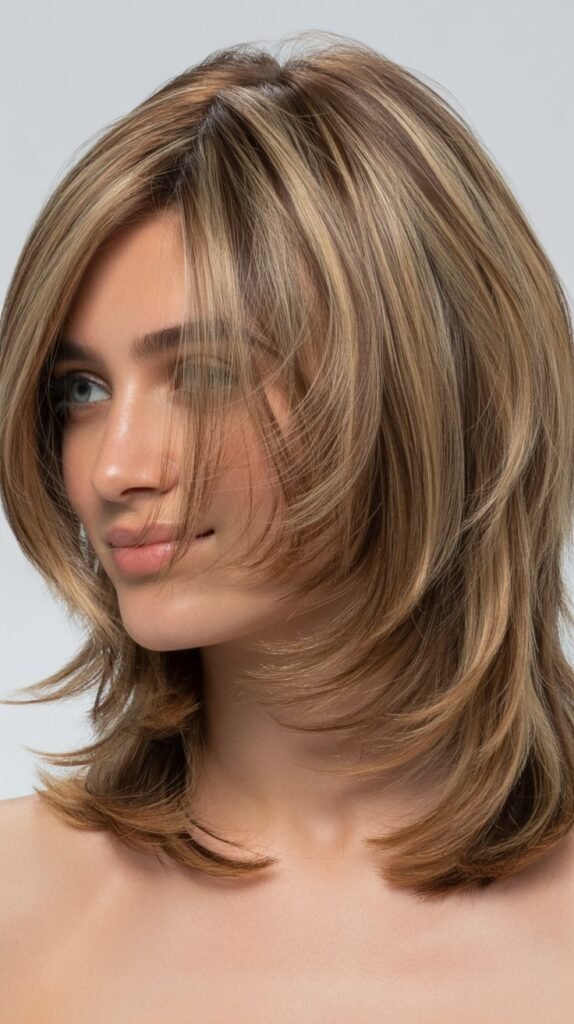
Wispy layers create softness and femininity through delicate, thinned ends.
For thick hair, this technique provides texture and reduces weight while maintaining a soft, romantic appearance rather than bold or edgy styling.
Technical Approach:
- Point-cutting or razor techniques
- Creates feathered, airy ends
- Subtle rather than dramatic layers
- Focuses on softening thick hair’s density
Aesthetic Outcome:
- Romantic and feminine
- Gentle, flowing movement
- Reduces harsh lines
- Enhances natural grace
Ideal For:
- Romantic personal style
- Professional environments
- Those preferring subtle changes
- Straight to wavy hair types
18. Side-Parted Long Layers
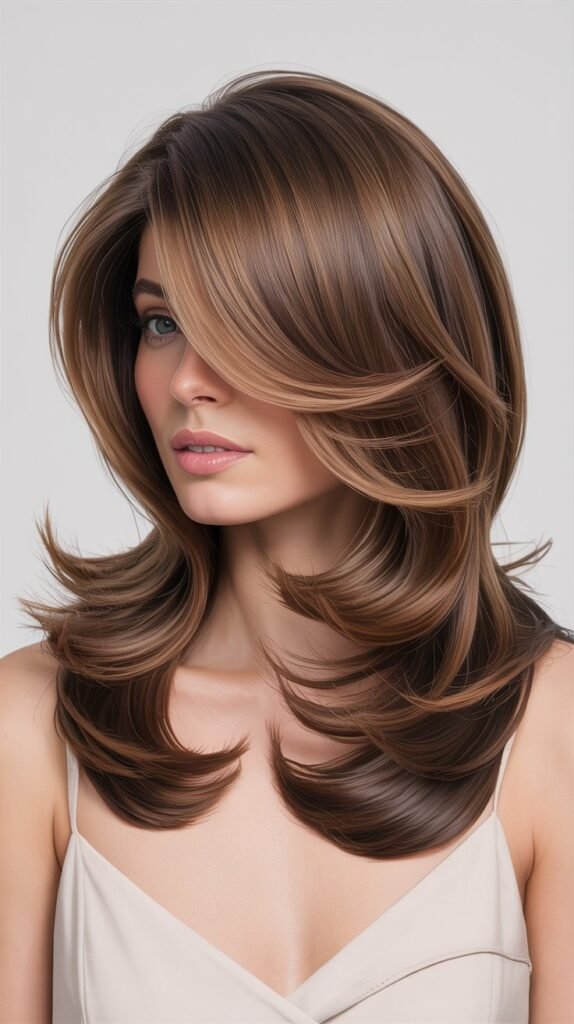
A deep side part combined with long layers creates asymmetry and volume, perfect for thick hair.
This styling approach changes the entire look of layered hair by emphasizing one side, creating built-in volume and sophisticated styling.
Parting Strategy:
- Part 2-3 inches from center
- Creates volume on heavier side
- Showcases layers differently than center part
- Changes face shape perception
Volume Creation:
- Heavier side naturally lifts at crown
- Layers cascade elegantly
- Creates Hollywood glamour effect
- Works beautifully for formal occasions
Maintenance:
- Train hair to part consistently
- Use clips while drying to set part
- Works with existing long layers
- No cutting required, just styling change
19. Undercut Bob
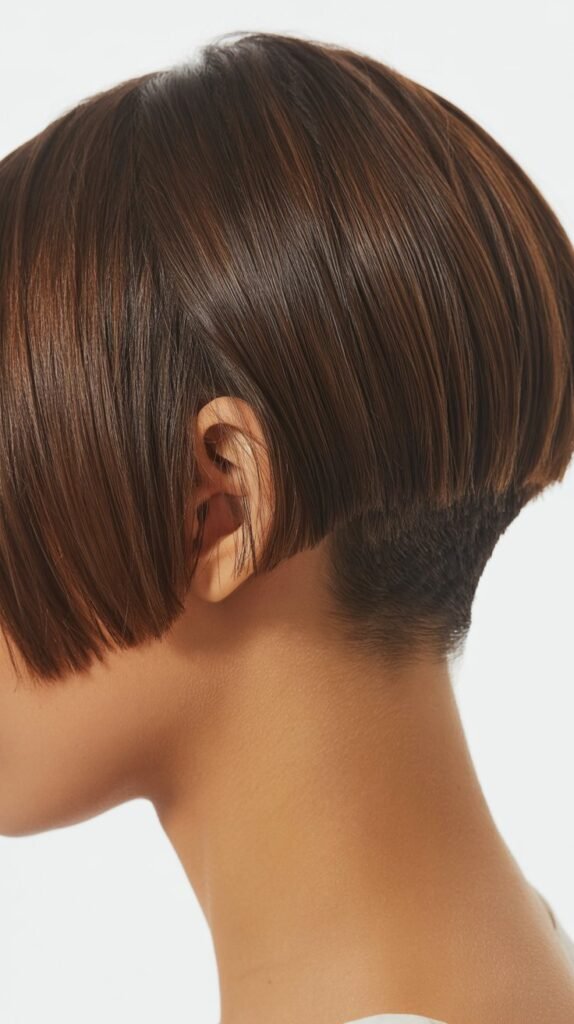
An undercut bob combines a classic bob with shaved or very short hair underneath.
For thick hair, this creates dramatic weight removal while maintaining a bob’s appearance from the front, offering coolness in hot weather and bold style impact.
Design Components:
- Traditional bob length on top section
- Shaved or closely cropped underneath
- Hidden when hair is down
- Revealed when hair is up or styled
Practical Benefits:
- Removes weight where it’s heaviest
- Cooler in hot climates
- Reduces drying time significantly
- Makes updos easier and neater
Commitment Level:
- Requires regular maintenance of undercut
- Growing out takes significant time
- Bold style statement when visible
- Consider workplace appropriateness
20. Feathered Layers
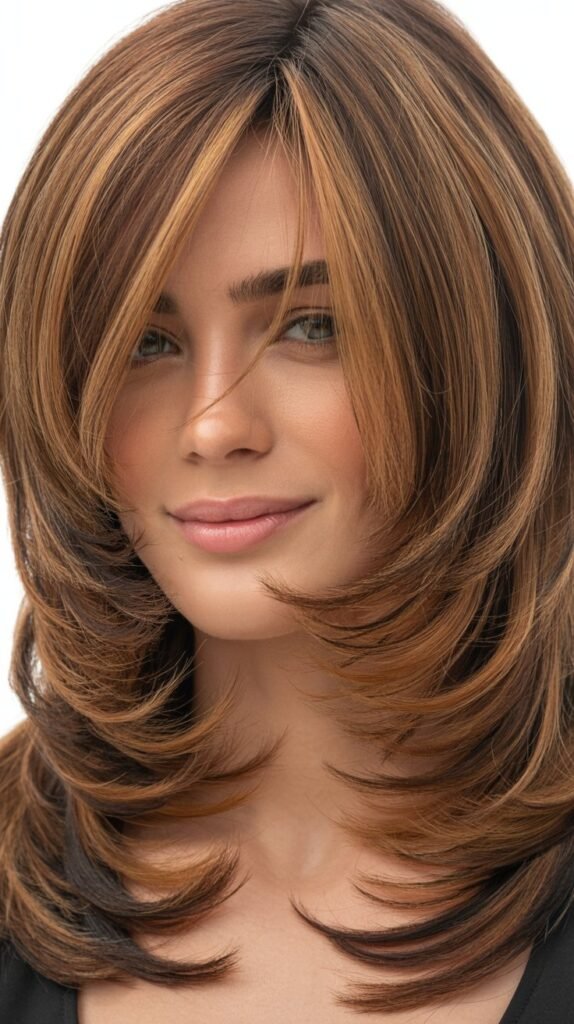
Feathered layers create lightness and movement through delicate cutting techniques that thin the hair shaft while creating texture.
This retro-inspired technique works beautifully on thick hair, creating the appearance of naturally lighter, more manageable locks.
Cutting Technique:
- Point-cutting at angles
- Creates feather-like texture
- Thins individual strands
- Produces airy, separated ends
Visual Result:
- 70s-inspired aesthetic updated for modern wear
- Piece-y, separated strands
- Enhanced movement and bounce
- Reduced bulk appearance
Styling Approach:
- Air-dry for natural texture
- Light mousse enhances feathering
- Blow-dry with fingers for casual look
- Minimal effort required
21. Textured Crop
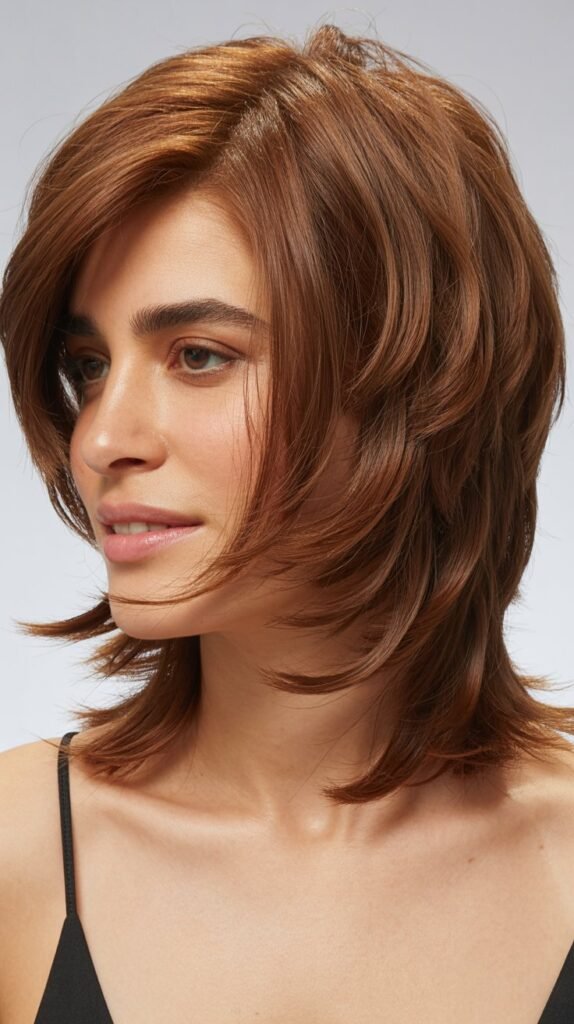
A textured crop is a short, layered cut with choppy, piece-y styling throughout.
Perfect for thick hair, this cut removes maximum weight while creating an ultra-modern, low-maintenance style that’s both edgy and professional.
Cut Specifications:
- Short overall length (2-4 inches)
- Textured throughout with varying lengths
- Longer top section for styling
- Tapered or faded sides optional
Lifestyle Match:
- Extremely low maintenance
- Wash-and-go capability
- Professional or creative environments
- Active lifestyles
Styling Products:
- Lightweight pomade or wax
- Texture spray for definition
- Minimal product needed
- 2-minute daily styling maximum
22. Curved Layers
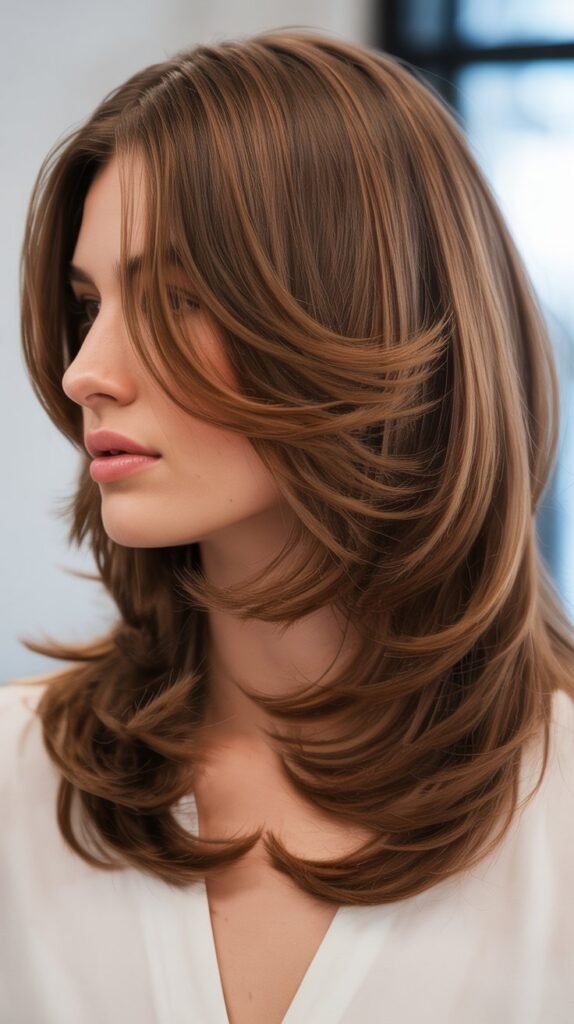
Curved layers follow the head’s natural shape, creating a rounded, dimensional look.
Unlike angled or V-shaped layers, curved layers produce a softer silhouette that’s particularly flattering for thick hair seeking a polished, feminine appearance.
Structural Design:
- Layers follow head’s curvature
- Creates rounded, dimensional shape
- Softer than angular cutting
- Maintains fullness while adding movement
Benefits:
- Flattering to round face shapes
- Creates elegant, classic silhouette
- Professional and polished
- Timeless rather than trendy
Best Application:
- Medium to long thick hair
- Straight to wavy textures
- Professional environments
- Classic personal style
23. Bixie Cut
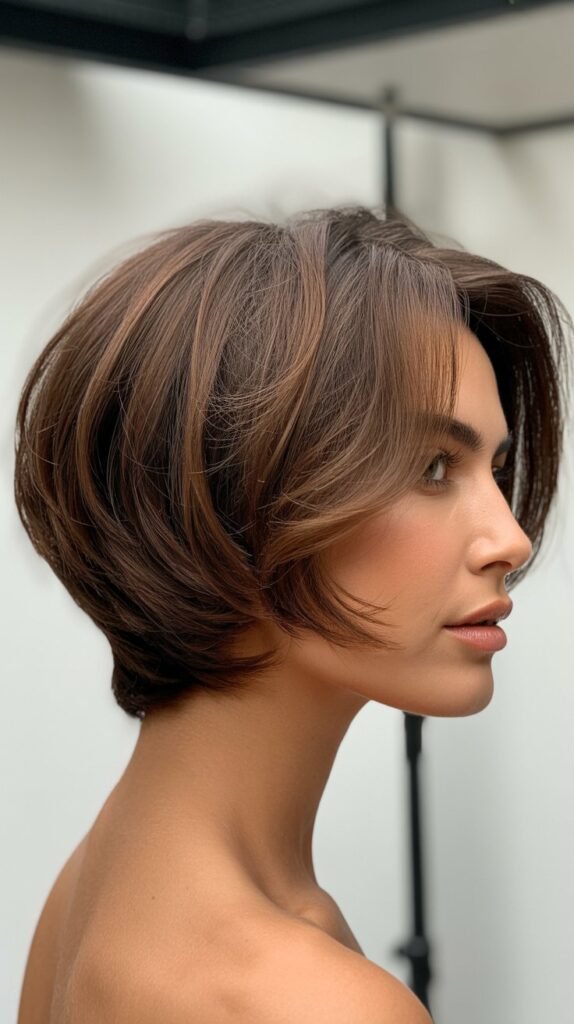
The bixie combines elements of bob and pixie cuts, creating a short style with varied lengths.
This hybrid cut is perfect for thick hair, removing substantial weight while maintaining more length than a traditional pixie, offering versatility without the commitment of very short hair.
Hybrid Elements:
- Pixie-length sides and back
- Bob-length top and front sections
- Textured and piece-y throughout
- Combines benefits of both cuts
Versatility:
- More styling options than traditional pixie
- Can tuck behind ears or style forward
- Grows out more gracefully
- Transition cut between lengths
Maintenance:
- Requires cutting every 5-7 weeks
- Quick daily styling (5-10 minutes)
- Minimal product needed
- Professional cutting technique important
24. Blunt Cut with Face-Framing
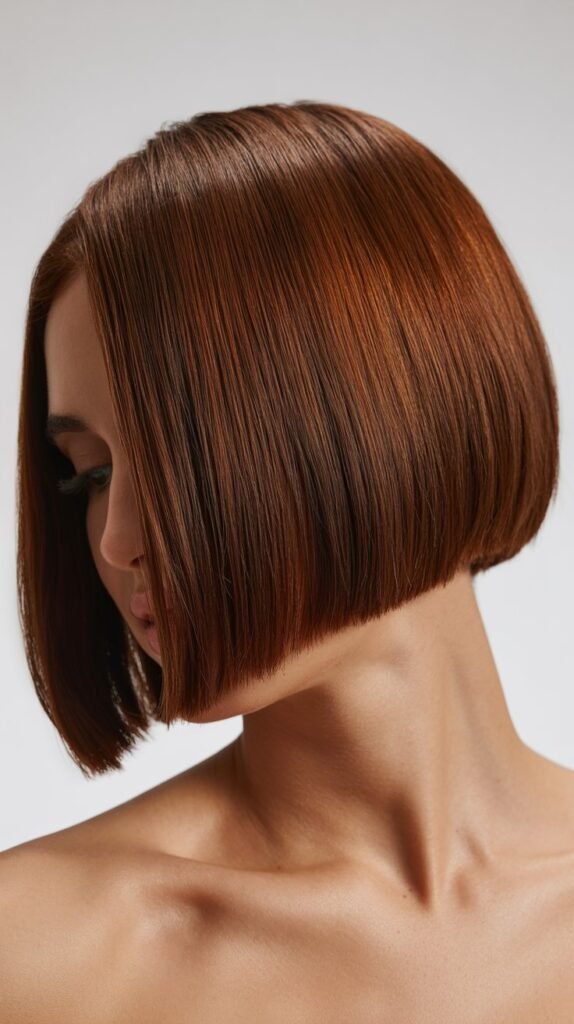
A blunt, one-length cut paired with face-framing layers offers structure with softness.
The blunt perimeter maintains thick hair’s fullness while face-framing layers add dimension where it matters most, creating a balanced, polished look.
Design Balance:
- Blunt line at one consistent length
- Shorter layers only around face
- Maintains weight and fullness
- Strategic dimension without overall layering
Advantages:
- Shows off thick hair’s fullness intentionally
- Face-framing softens the look
- Low-maintenance length retention
- Professional appearance
Ideal Length:
- Works at any length from bob to long
- Most popular at shoulder to mid-back
- Collarbone length particularly flattering
- Consider face shape for optimal length
25. Shattered Layers
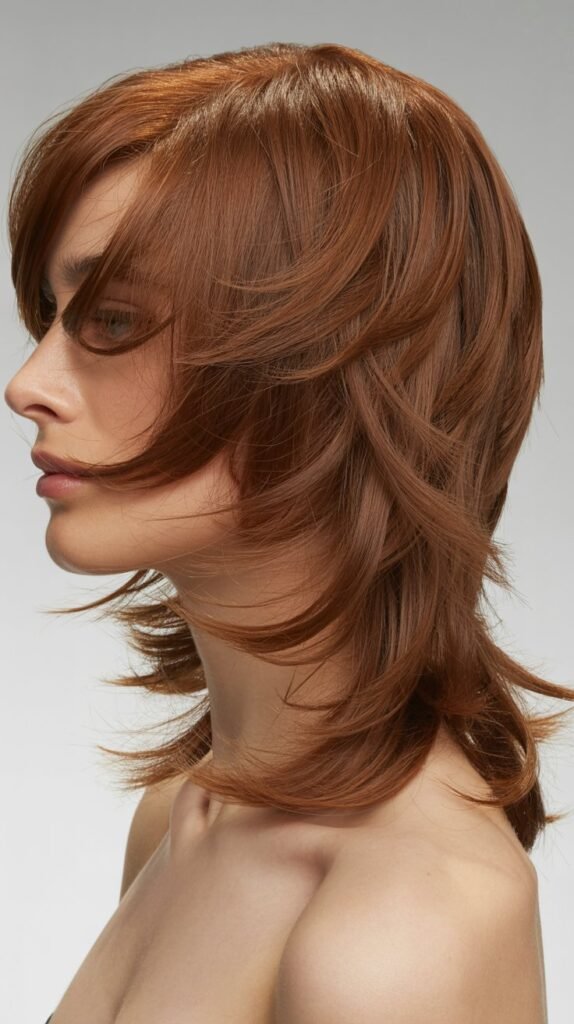
Shattered layers use aggressive point-cutting to create extreme texture and separation.
This technique is excellent for thick hair needing maximum weight removal with a bold, contemporary result that embraces texture and movement.
Cutting Method:
- Deep point-cutting throughout
- Creates intentional disconnection
- Produces piece-y, separated look
- Maximum texturizing effect
Visual Impact:
- Edgy, modern aesthetic
- Emphasizes individual strands
- Reduces bulk dramatically
- Movement-focused styling
Maintenance:
- Requires skilled stylist
- Regular trims maintain texture
- Grows out gradually
- Low daily styling effort
26. A-Line Bob
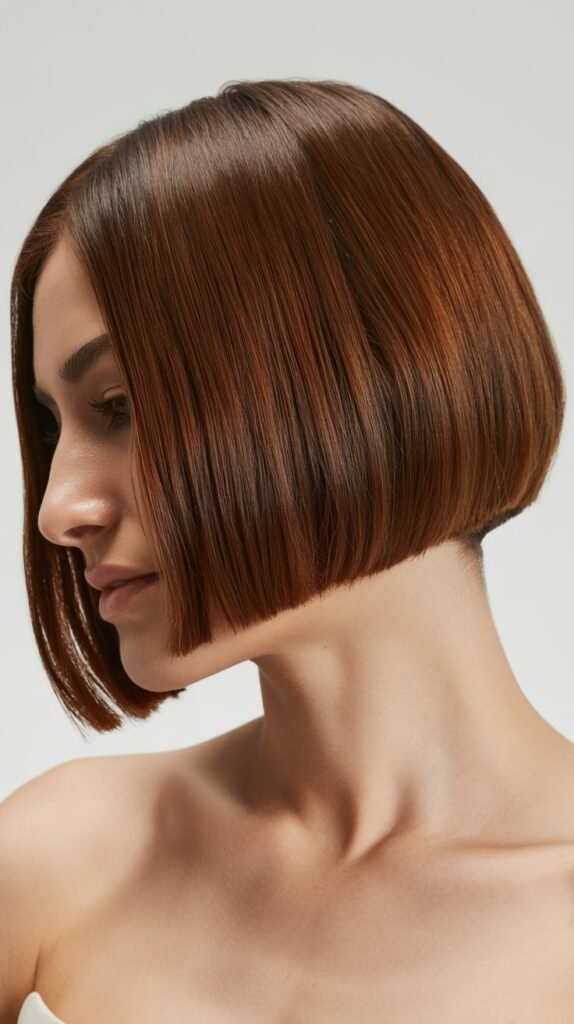
An A-line bob angles from shorter in back to longer in front, creating a sophisticated silhouette.
This classic cut works wonderfully for thick hair because the graduation naturally removes weight from the back while the longer front frames the face beautifully.
Angle Specifications:
- Back length typically chin-level or shorter
- Front pieces can reach collarbone or below
- Creates elegant forward angle
- Precision cutting essential
Face Flattering:
- Elongates round faces
- Softens square jawlines
- Draws eye downward and forward
- Creates vertical lines that slim
Styling Simplicity:
- Naturally falls into place
- Straightening enhances angle
- 10-minute daily routine
- Works with thick hair’s natural body
27. Micro Layers
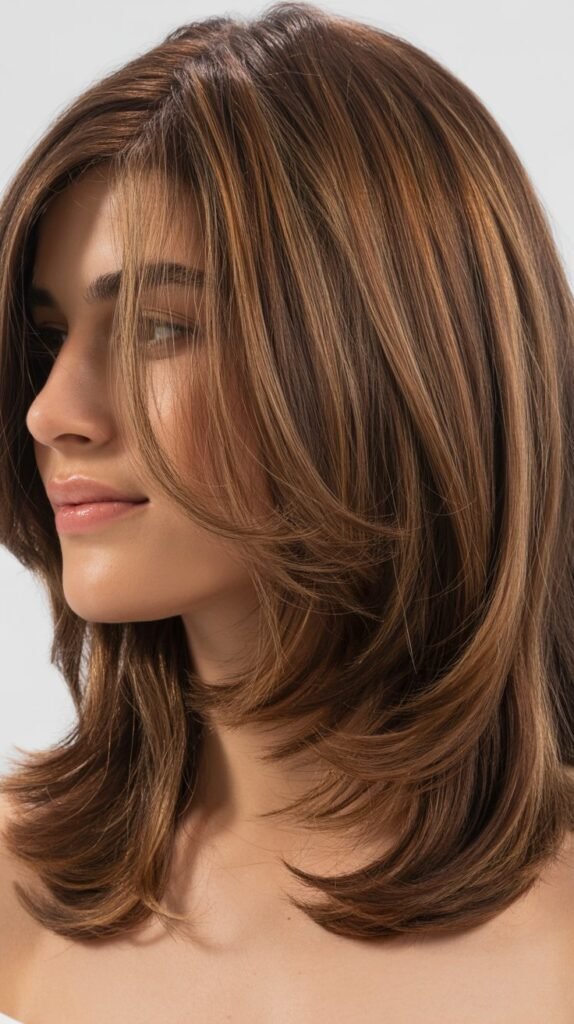
Micro layers involve subtle, small-scale layering throughout thick hair.
Unlike dramatic layers, these create gentle movement and reduced weight through minimal cutting, perfect for those wanting manageable thick hair without obvious layering.
Technique Details:
- Layers differ by only 1-2 inches
- Subtle graduation throughout
- Maintains overall length appearance
- Reduces internal weight
Why Choose Micro Layers:
- Conservative change with significant impact
- Maintains thick hair’s fullness
- Adds just enough movement
- Grows out seamlessly
Best Candidates:
- First-time layer recipients
- Those uncertain about dramatic change
- Professional environments requiring conservative style
- Straight to slightly wavy textures
28. Shoulder-Skimming Blunt Cut
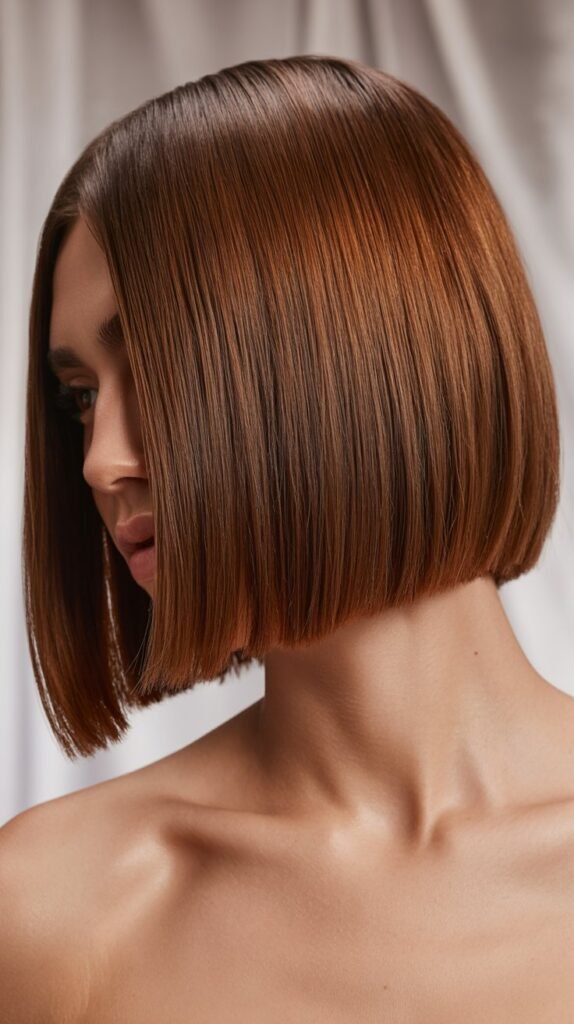
A blunt cut that just touches the shoulders provides a precise, polished look.
This length is particularly practical for thick hair, being short enough to reduce weight significantly while long enough for versatile styling options including updos.
Length Benefits:
- Perfect balance of short and long
- Reduces weight compared to longer styles
- Professional appearance
- Versatile styling potential
Styling Options:
- Wear sleek and straight
- Add waves for texture
- Pull into ponytails or buns
- Half-up styles work well
Maintenance:
- Trim every 6-8 weeks to maintain blunt edge
- Relatively low-maintenance length
- Grows into longer styles naturally
- Consider as transition length
29. Disconnected Layers
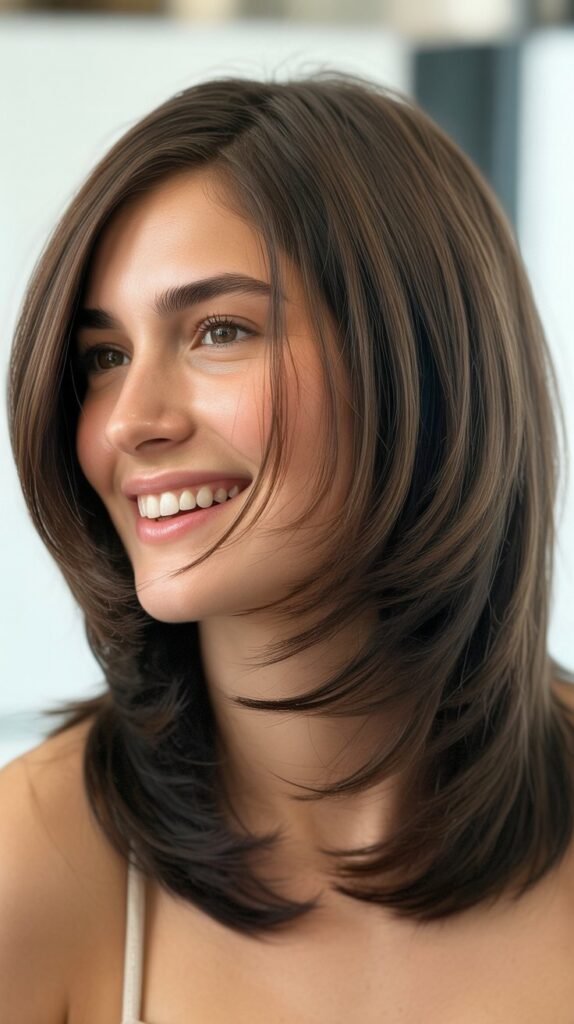
Disconnected layers feature distinct separation between layer sections rather than smooth blending.
This contemporary technique creates dramatic dimension in thick hair, with visible differences between lengths producing texture and reducing weight.
Design Approach:
- Intentional gaps between layer lengths
- No gradual blending
- Creates textured, piece-y appearance
- Modern, fashion-forward result
Technical Requirements:
- Requires experienced stylist
- Precise sectioning essential
- Regular maintenance needed
- Works best with professional styling initially
Style Impact:
- Bold, statement-making
- Embraces texture
- Reduces thick hair’s weight dramatically
- Contemporary aesthetic
30. Soft Layered Lob
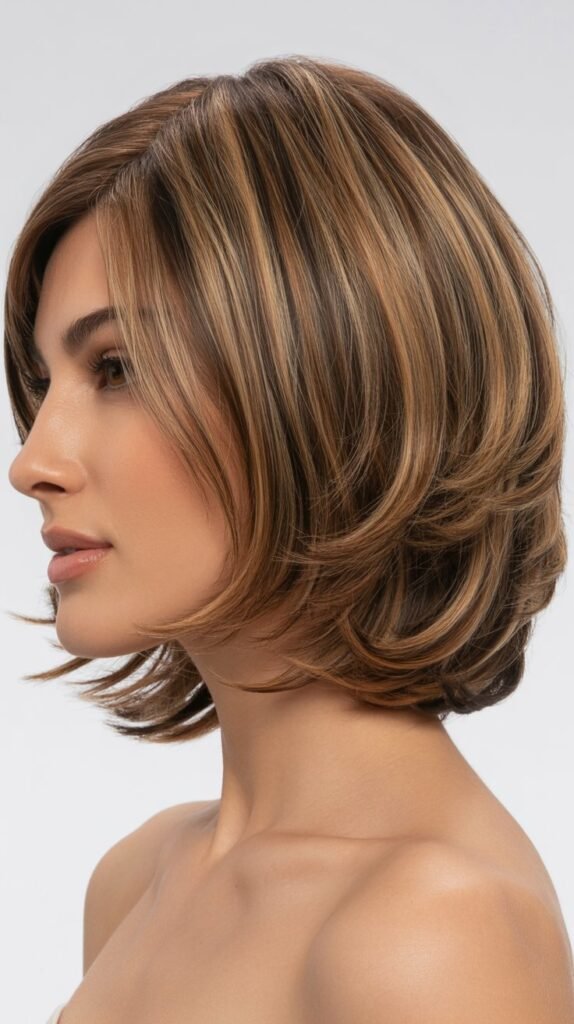
A lob with soft, blended layers creates an approachable, feminine style.
The gentle layering reduces thick hair’s weight without dramatic cutting, maintaining a classic, timeless appearance that works in any professional or casual setting.
Layer Characteristics:
- Subtle, well-blended layers
- Soft rather than choppy
- Maintains smooth appearance
- Gentle movement without drama
Universal Appeal:
- Flatters all face shapes
- Works in conservative environments
- Timeless rather than trendy
- Easy to style and maintain
Styling Ease:
- Air-dry for natural look
- Straighten for polish
- Curl for special occasions
- 10-15 minute daily routine
31. Layered Lob with Balayage
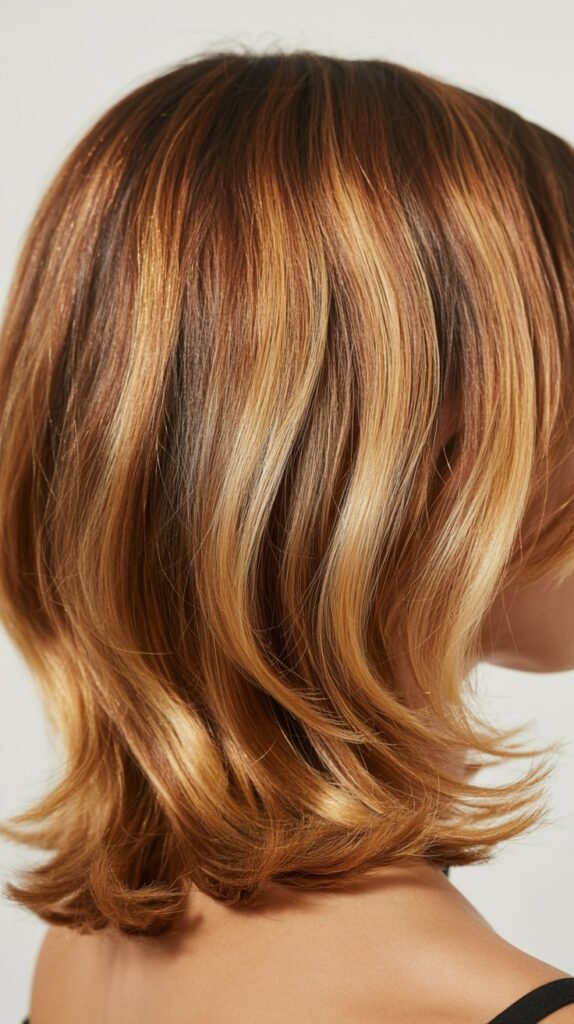
Combining a layered lob with balayage color creates dimension through both cut and color.
While the article focuses on cuts, this pairing is worth noting as the layers enhance color placement, and both work together to make thick hair appear lighter and more dimensional.
Synergy Benefits:
- Layers showcase color dimension
- Color highlights layer placement
- Creates illusion of lighter, more manageable hair
- Both reduce visual weight
Layer Placement:
- Coordinates with color placement
- Face-framing layers enhanced by lighter tones
- Dimension maximized through combined techniques
- Consult colorist and stylist together
Maintenance:
- Color and cut refreshes can align
- Growing out more graceful with both
- Consider full salon visit planning
32. Italian Bob
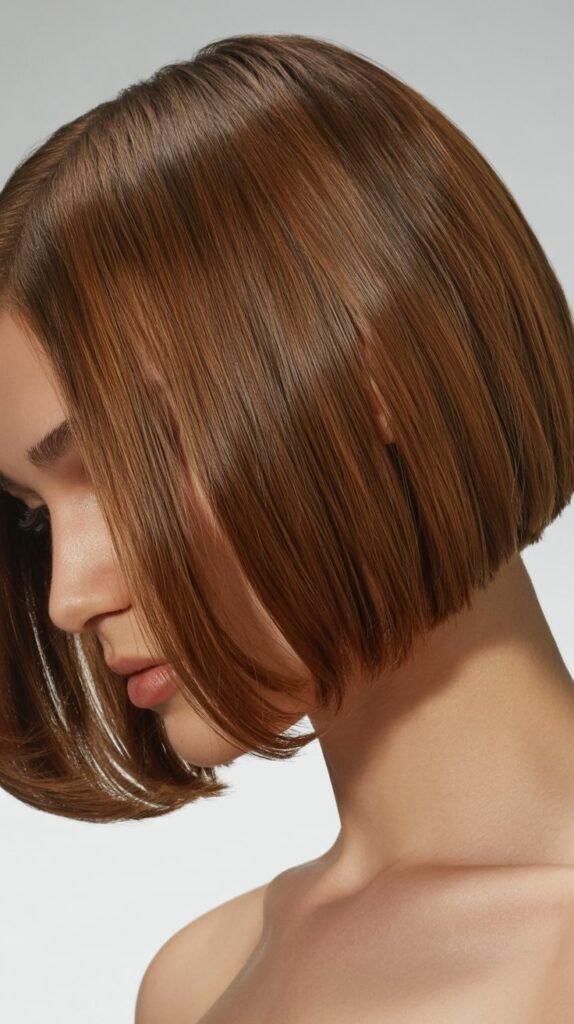
The Italian bob features a slightly shorter length (jaw to chin) with subtle layers and often curtain bangs.
This European-inspired cut has gained popularity for thick hair management, offering a chic, slightly undone aesthetic that’s both practical and stylish.
Defining Features:
- Shorter bob length at jaw or above
- Slightly textured rather than perfectly blunt
- Often includes curtain or side bangs
- Embraces natural texture
European Aesthetic:
- Effortlessly chic appearance
- Embraces natural texture and movement
- Less precise than traditional bobs
- Sophisticated casual style
Styling Philosophy:
- Minimal styling effort
- Natural texture celebrated
- Looks intentional when slightly undone
- Low-maintenance elegance
33. Crown Layers
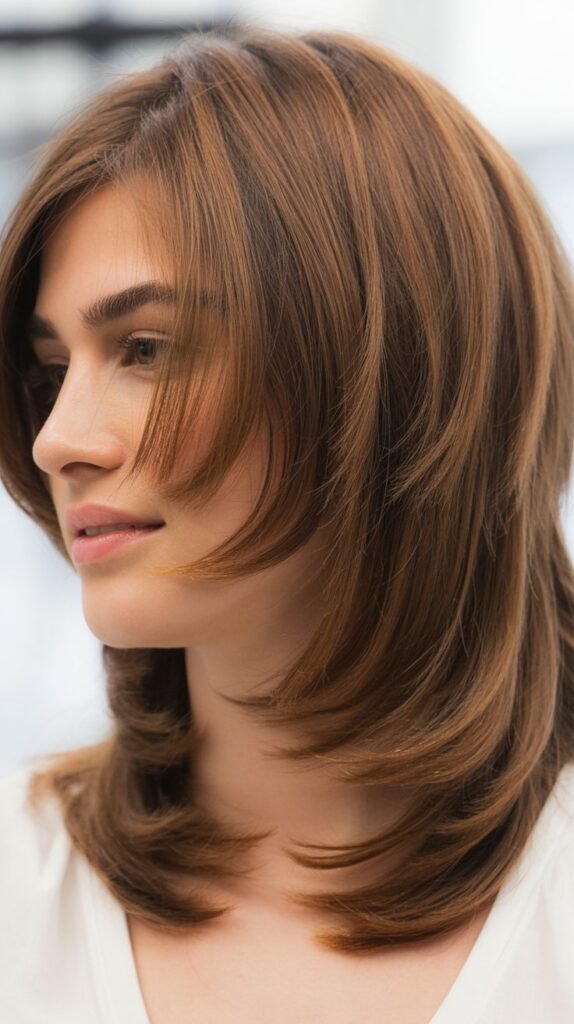
Crown layers focus weight removal and dimension at the top of the head, creating lift and volume.
For thick hair that can appear flat at roots despite overall density, crown layers provide height while managing bulk throughout.
Strategic Placement:
- Shorter layers concentrated at crown area
- Gradually blend to longer lengths
- Creates natural lift at roots
- Reduces top-heavy appearance
Volume Benefits:
- Eliminates flat-top look
- Creates natural height without teasing
- Makes styling easier
- Reduces need for volumizing products
Works Best With:
- Medium to long thick hair
- Those struggling with root flatness
- Fine-textured but thick density hair
- All face shapes benefit
34. Razored Bob
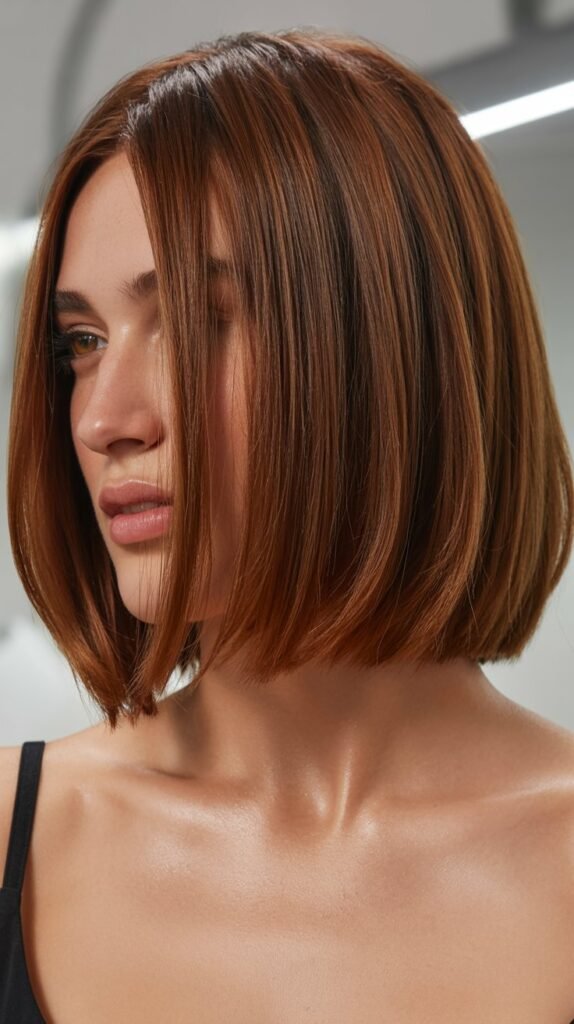
A razored bob uses razor techniques throughout the cut, creating softness and texture.
This approach is particularly effective for thick hair as the razor naturally thins while cutting, producing a lighter, more moveable result than scissors alone.
Razor Advantages:
- Simultaneously cuts and thins
- Creates softer, feathered edges
- Reduces bulk throughout
- Natural-looking texture
Textural Results:
- Piece-y, separated ends
- Enhanced natural movement
- Lighter feeling overall
- Effortless style appearance
Important Considerations:
- Requires skilled razor technique
- May not suit very curly thick hair
- Creates softer grow-out
- Different maintenance than scissor cuts
35. Layered Pixie Bob
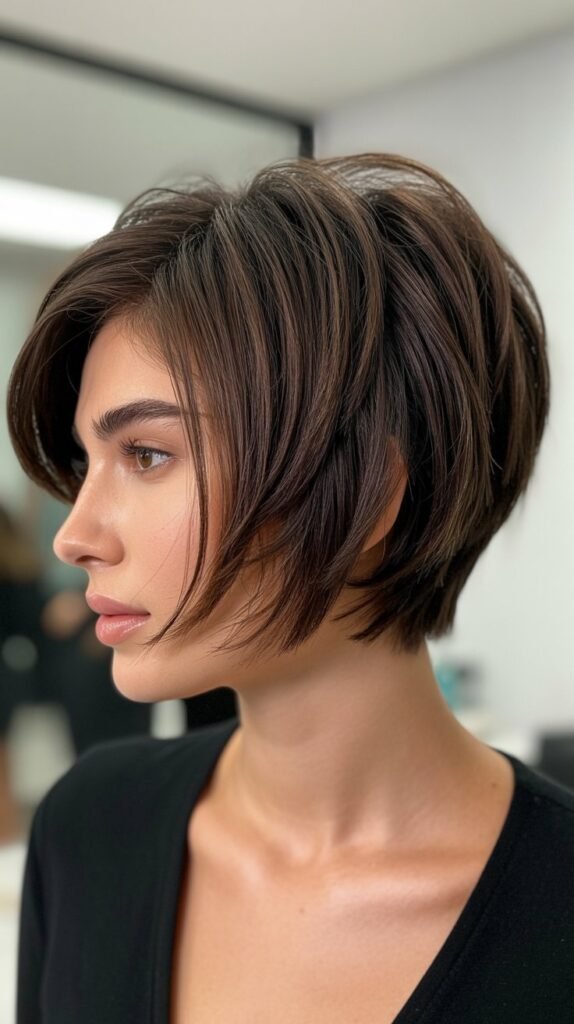
A hybrid between pixie and bob, this cut keeps length in front while going shorter in back.
Perfect for thick hair, it removes substantial weight while maintaining enough length for varied styling, offering the best of both worlds.
Hybrid Design:
- Short pixie-length back and sides
- Longer bob-length front sections
- Creates dramatic contrast
- Maximum weight removal with styling length
Versatility:
- Style forward for bob appearance
- Tuck behind ears for different look
- More options than traditional pixie
- Easier transition between short styles
Maintenance:
- Back requires frequent trimming
- Front grows longer naturally
- Can evolve into full bob over time
- 5-7 week cutting schedule
36. Piece-y Shoulder-Length Cut
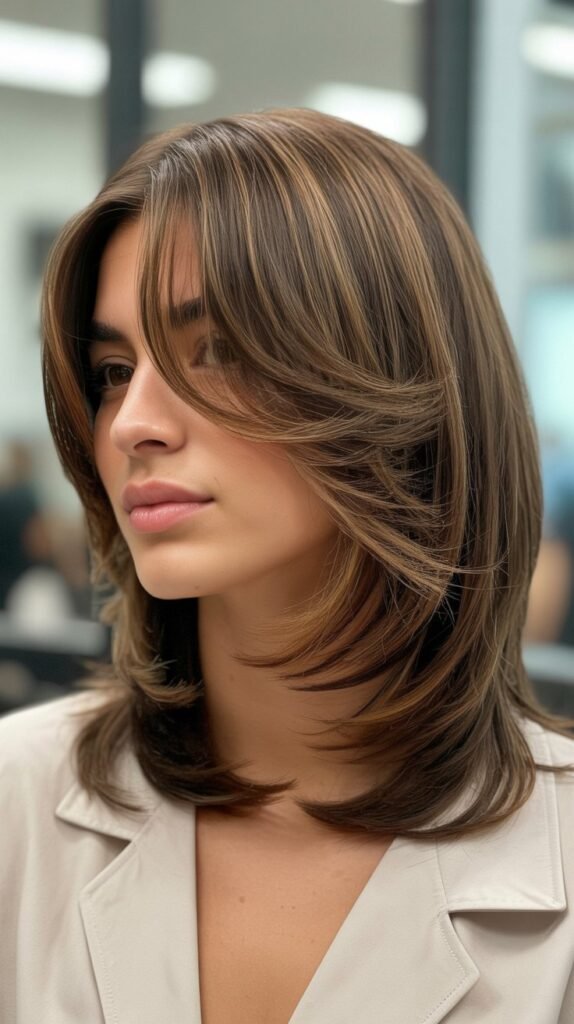
A shoulder-length cut with piece-y, textured ends creates casual, modern styling.
The textured cutting technique removes weight from thick hair while creating separated, defined pieces that move independently for enhanced dimension.
Texturizing Technique:
- Point-cutting throughout ends
- Creates separation and definition
- Individual pieces move independently
- Reduces blunt weight line
Casual Aesthetic:
- Effortlessly undone appearance
- Beach-inspired texture
- Low-maintenance styling
- Contemporary and relaxed
Styling Products:
- Sea salt spray for texture
- Texturizing paste for definition
- Dry shampoo for volume
- Light hold hairspray to finish
37. Layered Cut with Side Bangs
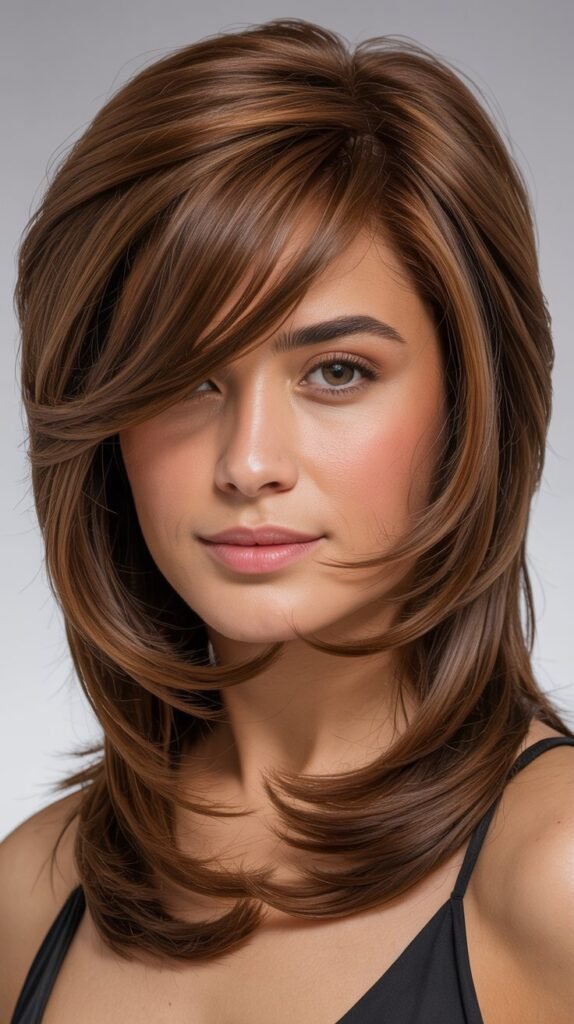
Combining layers throughout with side-swept bangs creates a balanced, flattering style.
The side bangs soften the face while layers manage thick hair’s volume, offering a feminine, versatile look suitable for professional and casual settings.
Component Balance:
- Layers distributed throughout length
- Side bangs sweep across forehead
- Both elements work together
- Creates cohesive overall style
Bang Styling:
- Sweep to either side based on part
- Can grow into face-framing layers
- Easy to style with round brush
- Versatile for different occasions
Face Framing:
- Softens angular features
- Balances face proportions
- Draws attention to eyes
- Flattering for most face shapes
38. Modern Mullet
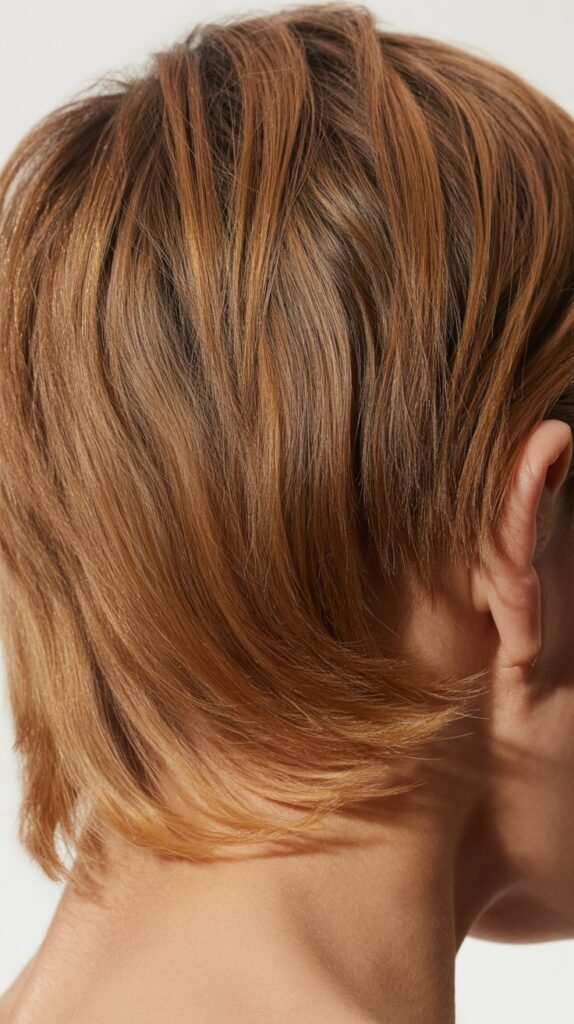
The modern mullet features shorter top and sides with longer back, reimagined for contemporary styling.
This bold cut manages thick hair through dramatic layering and length variation, creating an edgy, fashion-forward statement.
Contemporary Update:
- Softer than traditional mullet
- Blended rather than harsh transitions
- Fashion-focused rather than retro
- Textured throughout
Layer Distribution:
- Short crown and side sections
- Significantly longer back
- Textured ends prevent heaviness
- Creates distinctive silhouette
Style Personality:
- Bold and confident
- Fashion-forward individuals
- Creative professional environments
- Requires confidence to wear
39. Tapered Ends with Layers
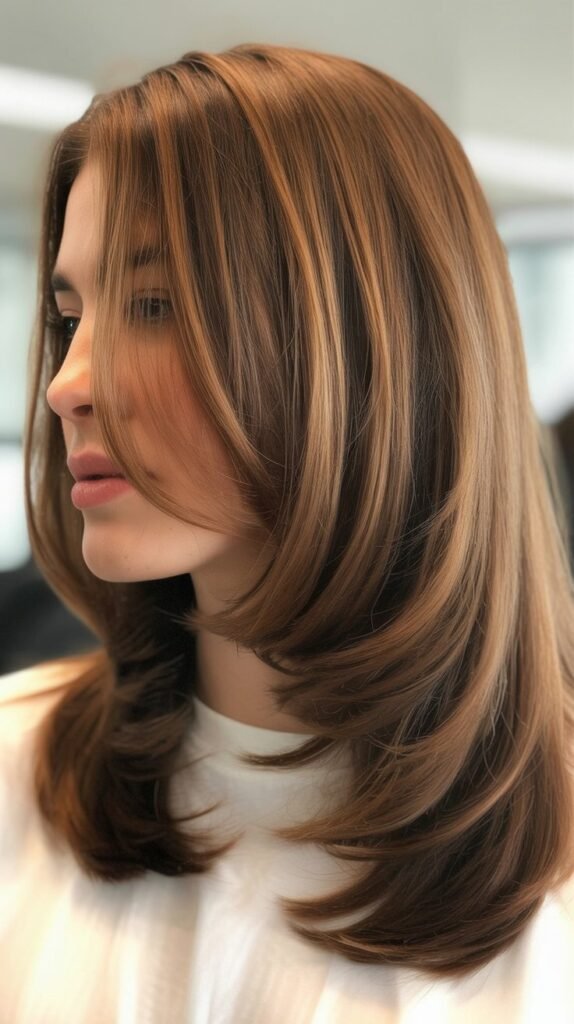
Tapered ends gradually thin toward the bottom, combined with layers throughout.
This technique is excellent for thick hair as it removes weight precisely where hair is heaviest while layers add movement throughout the length.
Tapering Method:
- Gradual thinning toward ends
- Creates feathered, lighter tips
- Prevents blunt weight line
- Enhances natural movement
Benefits for Thick Hair:
- Reduces end heaviness
- Makes hair appear lighter
- Easier to style and manage
- Natural-looking result
Maintenance:
- Taper grows out naturally
- Refreshing every 8-10 weeks recommended
- Works with various base lengths
- Professional technique important
40. Inverted Bob
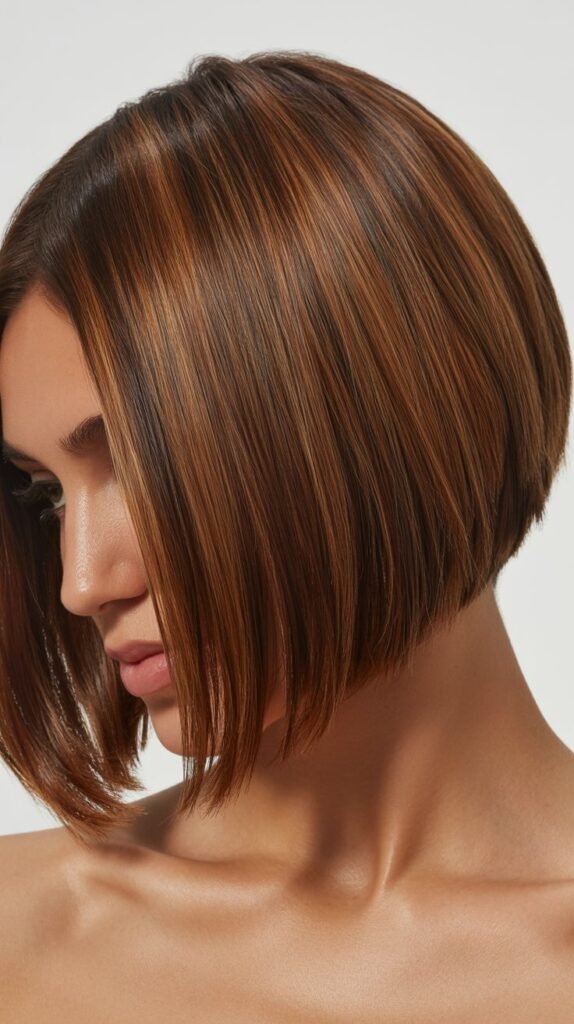
An inverted bob is shorter in back, dramatically angling longer toward front.
This architectural cut removes maximum weight from thick hair’s back while creating striking dimension and shape, offering bold style with practical benefits.
Structural Design:
- Very short back (often stacked)
- Angles sharply to longer front
- Dramatic length difference
- Creates strong silhouette
Visual Drama:
- Eye-catching from all angles
- Showcases neck and jawline
- Modern and sophisticated
- Makes strong style statement
Practical Aspects:
- Removes weight where it’s heaviest
- Back stays cooler
- Requires commitment to maintenance
- Bold change from traditional styles
41. Textured Ends Only
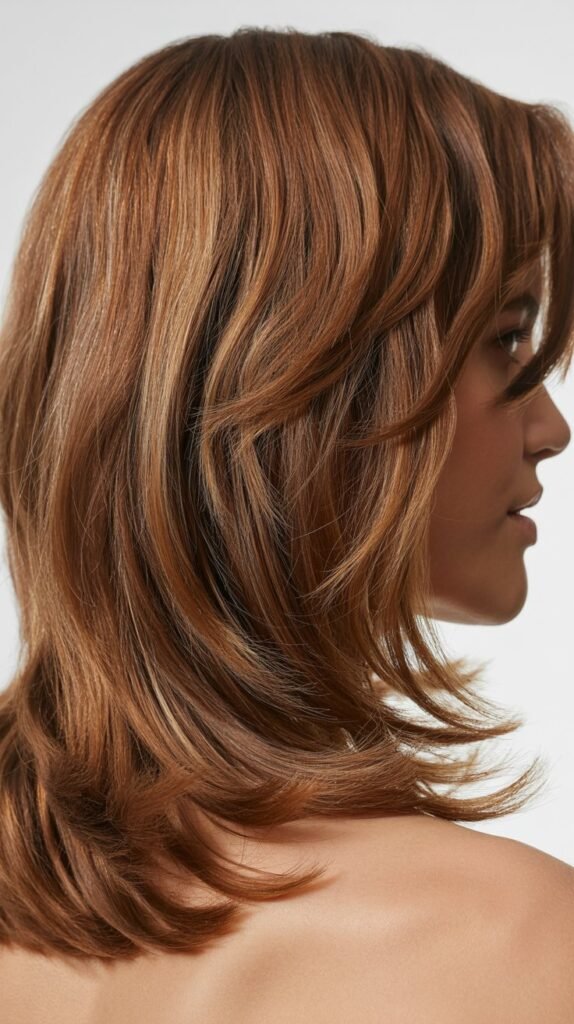
A cut focusing texture solely at the ends while keeping length one-level creates subtle management of thick hair.
This conservative approach removes weight from the bottom without dramatic layering, perfect for those wanting minimal change with maximum impact.
Technique Focus:
- Length remains consistent
- Texturizing concentrated at last 2-3 inches
- Point-cutting or razor work on ends only
- Maintains overall fullness
Subtle Impact:
- No obvious layers
- Reduced end weight
- Enhanced movement
- Natural appearance
Ideal For:
- First-time thick hair management
- Those wanting to maintain length appearance
- Conservative change preference
- All hair textures
42. Long Layers with Shortest at Shoulder
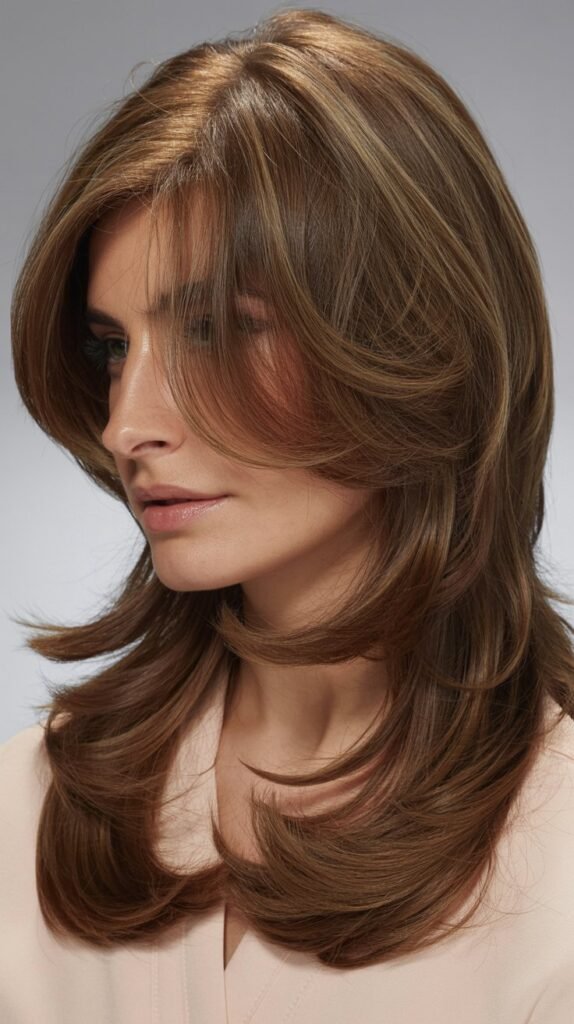
Long layers beginning at shoulder level create movement while preserving maximum length.
This specific layer placement works well for thick hair by distributing weight from shoulder level down, creating natural flow without losing long hair’s drama.
Layer Strategy:
- Shortest layers start at shoulders
- Gradually lengthen to ends
- Maintains substantial length
- Creates cascading effect
Length Preservation:
- Keeps hair looking long
- Reduces weight without sacrificing length
- Creates movement where visible
- Back length remains impressive
Styling Benefit:
- Layers visible when hair is down
- Length still allows updos
- Best of both worlds approach
- Natural body and bounce
43. Dimensional Bob
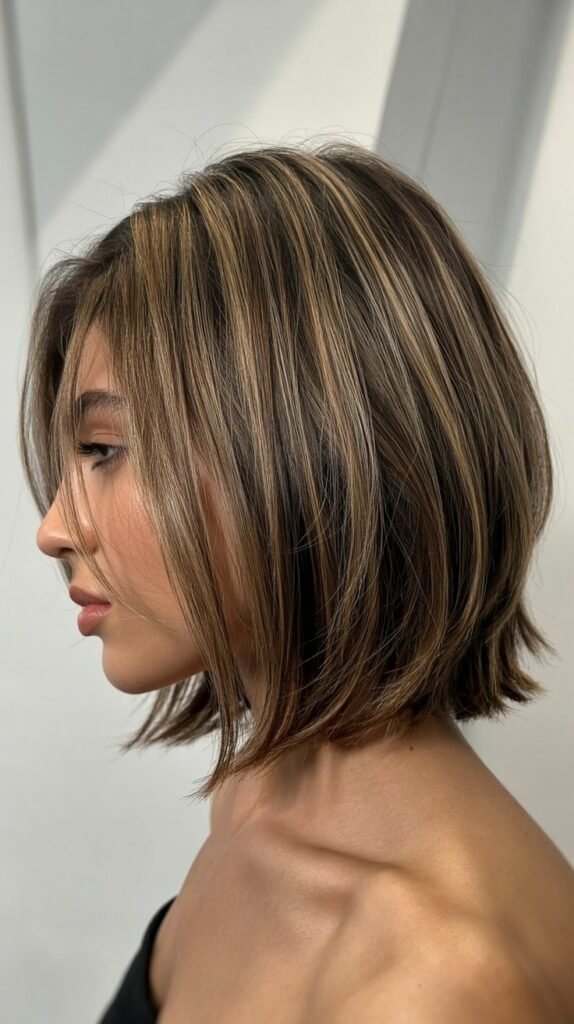
A dimensional bob incorporates varied cutting techniques to create depth and interest.
Through combination of layering, texturizing, and possibly subtle length variation, this cut makes thick hair appear lighter while maintaining bob structure.
Dimension Creation:
- Multiple cutting techniques combined
- Internal layers for weight removal
- Surface texturizing for movement
- Possible subtle asymmetry
Visual Interest:
- Not one-dimensional or flat
- Catches light differently throughout
- Appears to have natural highlights
- Movement from all angles
Technique Combination:
- Blending scissors and razor work
- Point-cutting for texture
- Internal thinning for weight control
- Precision perimeter line
44. Graduated Layers
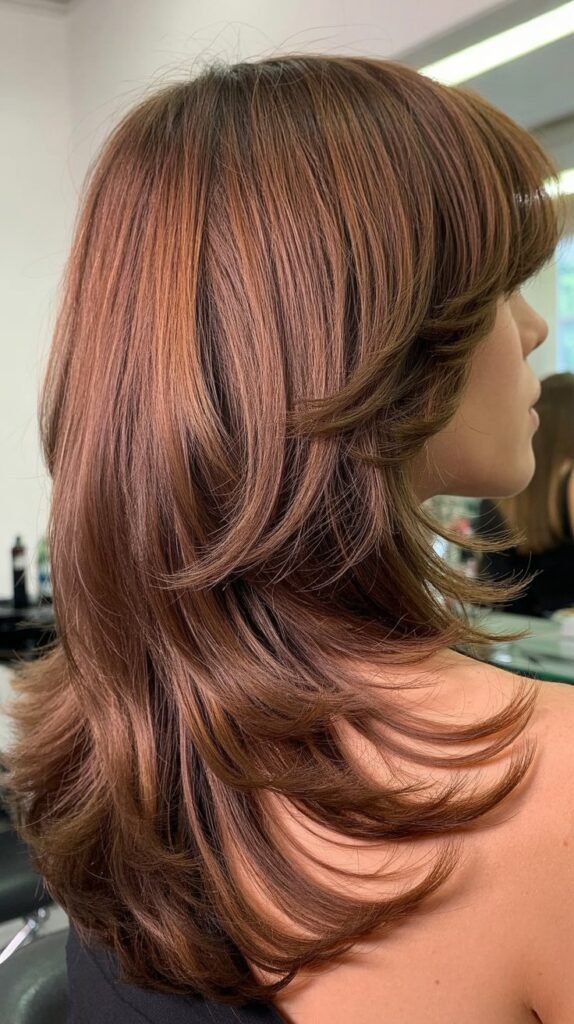
Graduated layers create smooth transitions from short to long throughout the head.
This classic technique manages thick hair through systematic weight distribution, with each layer serving a purpose in creating shape and movement.
Graduation Method:
- Systematic length increases
- Smooth transitions between sections
- Creates rounded or angled shape
- Mathematical precision in cutting
Shape Control:
- Determines overall silhouette
- Can create volume or reduce it
- Face-shape specific customization
- Professional cutting essential
Classic Appeal:
- Timeless technique
- Proven effectiveness
- Works with most textures
- Versatile styling options
45. Wolf Cut
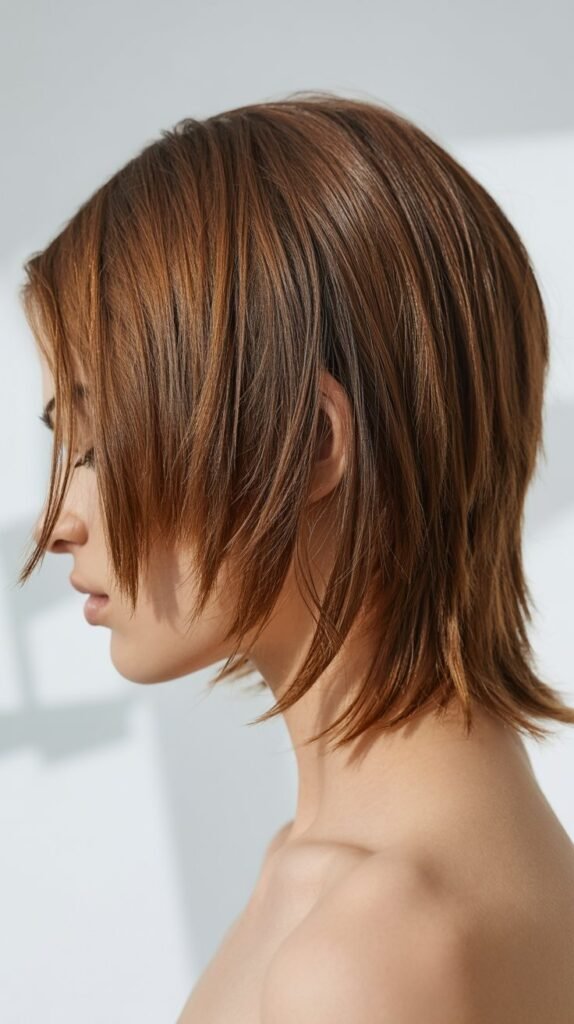
The wolf cut combines shag and mullet elements, featuring heavy layers at top with length at bottom.
This trending cut manages thick hair through dramatic layering that creates volume at crown while removing weight, offering an edgy, contemporary style.
Defining Characteristics:
- Heavy, choppy top layers
- Longer bottom section
- Dramatic contrast between sections
- Shag-meets-mullet aesthetic
Trend Appeal:
- Viral on social media
- Fashion-forward and edgy
- Embraces natural texture
- Makes bold statement
Maintenance:
- Regular trims maintain shape
- Top layers grow quickly
- Can evolve into other styles
- Best with professional cutting
46. Blunt Midi Length
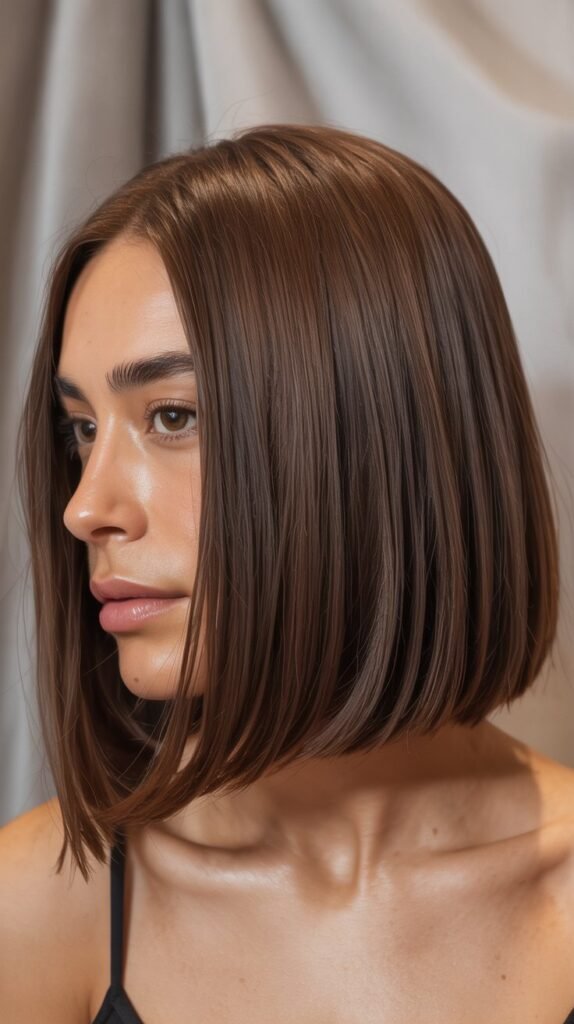
A blunt, one-length cut at midi length (between shoulder and mid-back) showcases thick hair’s fullness intentionally.
Rather than reducing volume, this cut celebrates it while the practical length keeps hair manageable and professional.
Length Benefits:
- Long enough for styling versatility
- Short enough for daily manageability
- Professional appearance
- Celebrates thick hair’s fullness
Blunt Advantages:
- Shows off hair’s density as asset
- Strong, confident silhouette
- Requires minimal styling
- Makes intentional statement
Styling Simplicity:
- Naturally falls into place
- Straighten for sleek look
- Add waves for texture
- Low daily maintenance
47. Layered Ends with Blunt Interior
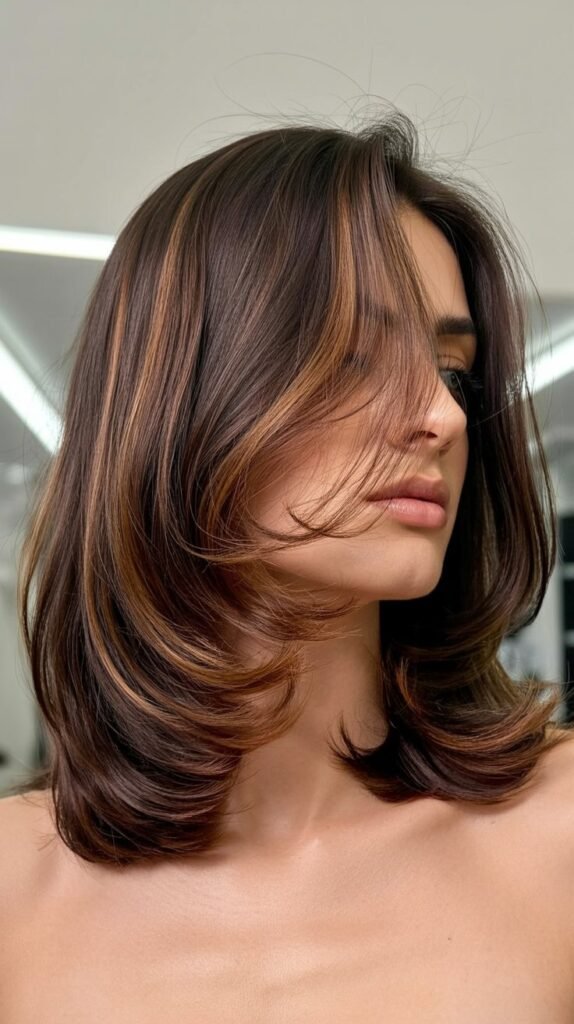
This technique keeps interior hair blunt and full while adding layers only at the ends.
It maintains thick hair’s volume and body while creating movement at the perimeter, offering a unique approach to managing density.
Structural Approach:
- Blunt cutting through mid-lengths
- Layers concentrated at last few inches
- Maintains interior fullness
- Creates movement at ends only
Visual Balance:
- Fullness throughout body
- Movement and lightness at ends
- Best of both approaches
- Unique dimensional quality
Best Application:
- Those wanting to keep volume
- Medium to long lengths
- Thick hair that tends toward flatness
- Conservative texture addition
48. Asymmetrical Lob
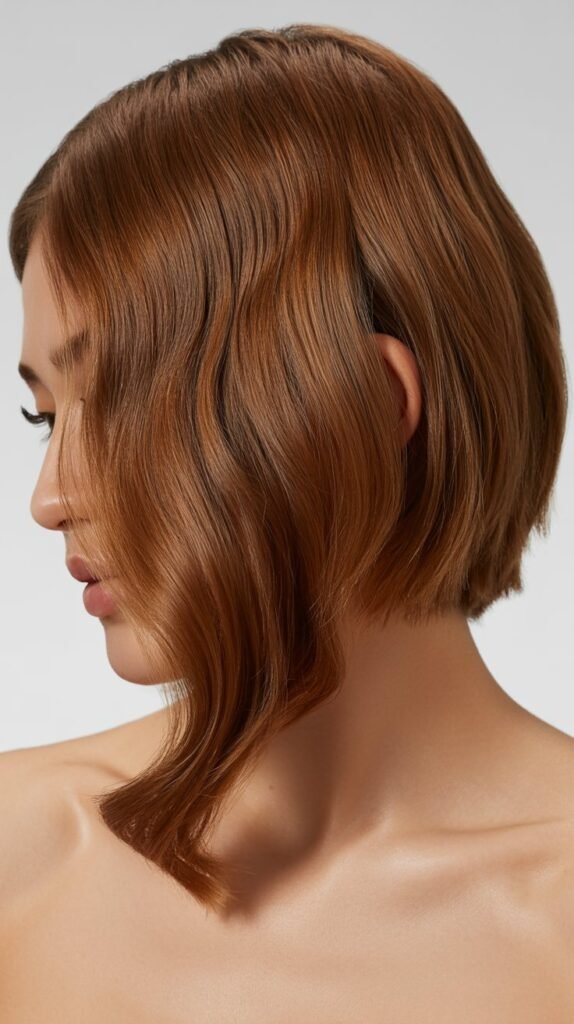
An asymmetrical lob features intentional length differences at lob length, creating modern edge.
This cut manages thick hair through varied lengths while maintaining practical lob dimensions, offering style and manageability combined.
Design Elements:
- Lob length base (collarbone area)
- Intentional asymmetry
- Can be subtle or dramatic
- Modern, fashion-forward
Length Variation:
- Typically 1-3 inch difference
- One side tucks behind ear easily
- Creates interesting styling options
- Flatters most face shapes
Styling Versatility:
- Can emphasize or minimize asymmetry
- Part placement affects appearance
- Works straight or wavy
- Professional yet contemporary
49. Stacked Layers
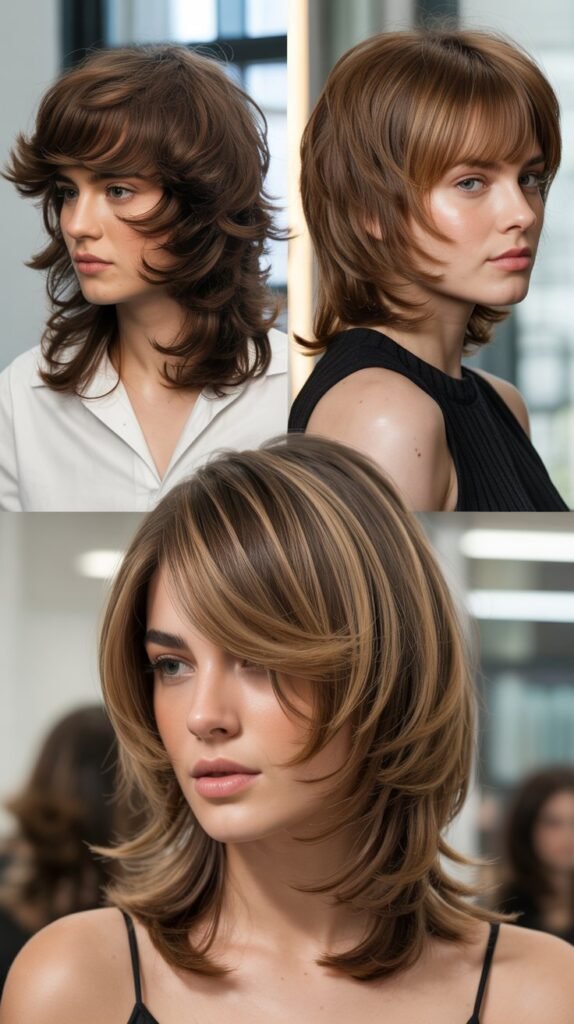
Stacked layers create built-in volume at the crown through shorter graduated layers that stack upon each other.
This technique is particularly effective for thick hair as it removes weight while creating natural lift and shape.
Stacking Technique:
- Graduated short layers at crown
- Each layer slightly longer than previous
- Creates dome or rounded shape
- Built-in volume without styling
Volume Creation:
- Natural lift at crown area
- Reduces need for styling products
- Creates shape automatically
- Particularly effective for fine-textured thick hair
Maintenance Needs:
- Frequent trims maintain stacking
- Grows out into different shape
- Consider commitment before choosing
- Professional cutting technique essential
50. Minimal Layers
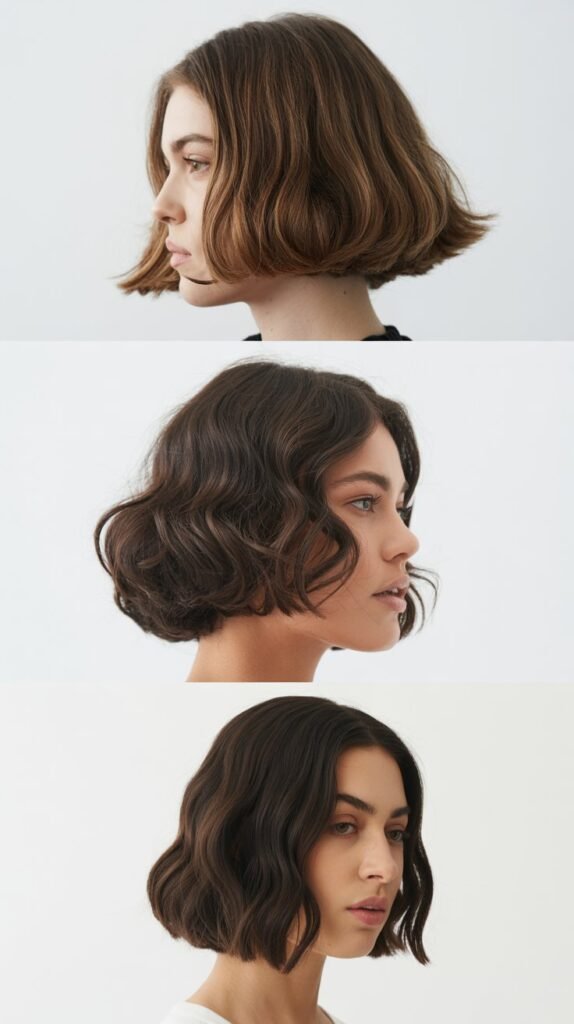
Minimal layers involve very subtle layering throughout thick hair, creating barely noticeable graduation.
This conservative approach removes just enough weight to make thick hair more manageable without obvious cutting, perfect for those wanting natural results.
Subtle Approach:
- Very slight length variations
- Natural appearance maintained
- Weight reduction without obvious layers
- Conservative change
Who Should Choose:
- First-time layer attempts
- Very conservative style preferences
- Professional environments requiring traditional appearance
- Those uncertain about layering
Benefits:
- Makes thick hair slightly more manageable
- No dramatic change in appearance
- Grows out seamlessly
- Can increase layer intensity later
51. Customized Combination Cut
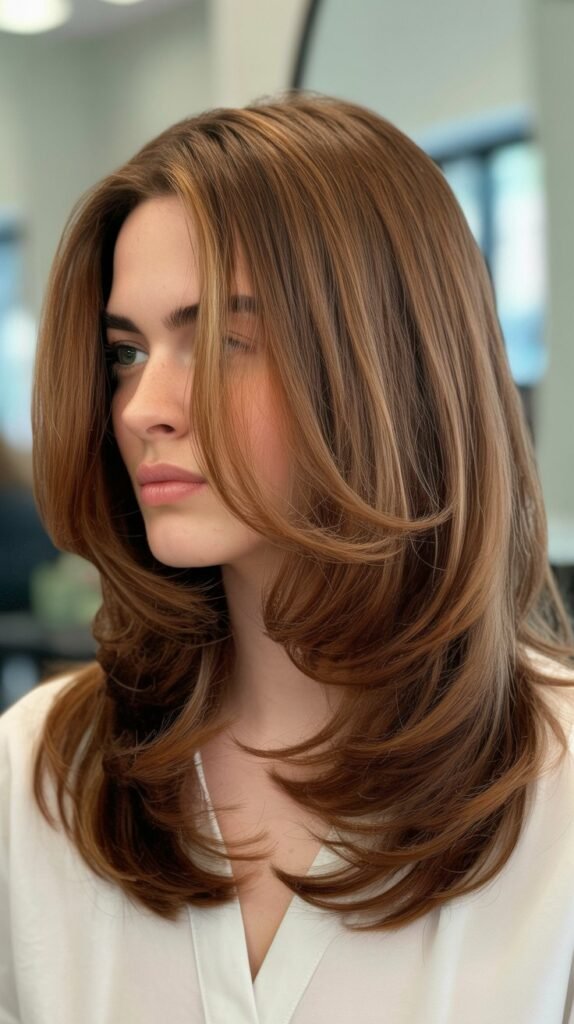
The ultimate solution for thick hair involves combining multiple techniques based on individual needs.
A skilled stylist assesses face shape, hair texture, lifestyle, and preferences to create a unique cut incorporating elements from various styles for personalized results.
Personalization Factors:
- Face shape considerations
- Hair texture and density patterns
- Lifestyle and styling time available
- Personal style preferences
- Professional requirements
Technique Combination:
- May include multiple layer types
- Various texturizing methods
- Strategic length placement
- Customized to individual hair behavior
Consultation Importance:
- Detailed discussion with stylist essential
- Bring reference photos
- Discuss daily routine honestly
- Consider maintenance commitment
Ongoing Refinement:
- First cut establishes foundation
- Subsequent visits refine and adjust
- Communication ensures satisfaction
- Evolves with changing needs
Styling Tips for Thick Hair
General Guidelines:
- Always use heat protectant before styling with hot tools
- Invest in quality hair dryer with multiple heat settings
- Section hair during styling for better control
- Use lightweight products to avoid weighing down hair
- Regular deep conditioning treatments maintain hair health
Product Recommendations:
- Smoothing serums for frizz control
- Texturizing sprays for piece-y definition
- Volumizing mousse for root lift
- Dry shampoo extends time between washes
- Leave-in conditioner for moisture without weight
Tools to Consider:
- Wide-tooth comb for detangling
- Paddle brush for smoothing
- Round brush for volume
- Diffuser attachment for natural texture
- Quality flat iron or curling wand
Maintenance Schedule for Thick Hair Cuts
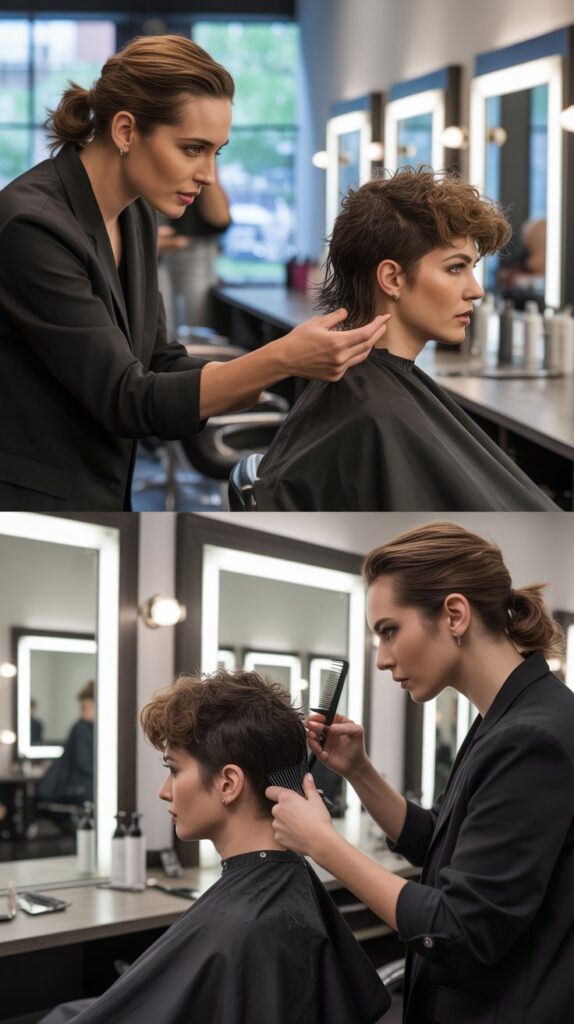
Short Cuts (Pixies, Crops, Short Bobs):
- Trim every 4-6 weeks
- Shape maintenance critical
- Grows out quickly
- Regular appointments essential
Medium Cuts (Lobs, Shoulder-Length):
- Trim every 6-8 weeks
- Balances maintenance and growth
- Most popular schedule
- Allows some length variation
Long Cuts (Layers, Long Bobs):
- Trim every 8-12 weeks
- Focuses on layer refresh
- Length preservation possible
- Can extend if growing out
Professional Consultation Tips
Before Your Appointment:
- Collect reference photos showing desired style
- Note what you dislike about current cut
- Consider your daily styling routine honestly
- Research your stylist’s experience with thick hair
During Consultation:
- Show all reference photos
- Discuss lifestyle and time constraints
- Be honest about styling skills
- Ask about maintenance requirements
- Inquire about growing-out process
Questions to Ask:
- How often will this cut need trimming?
- What products do you recommend?
- Can you show me how to style this?
- How will this grow out?
- Will this work with my natural texture?
Conclusion
Managing thick hair becomes effortless when you choose the right haircut for your individual needs, lifestyle, and personal style.
This comprehensive guide to 51 Best Haircuts for Thick Hair (Layered, Medium, Shoulder-Length) demonstrates that thick hair is truly a blessing when paired with the proper cut.
From dramatic pixies that remove maximum weight to flowing long layers that enhance natural movement, each style offers unique benefits for managing density while showcasing your hair’s natural beauty.
The key to success lies in understanding your face shape, considering maintenance commitments, and working with a skilled stylist who appreciates thick hair’s unique characteristics.
Whether you prefer the edgy sophistication of an asymmetrical bob, the timeless elegance of classic layers, or the contemporary appeal of a textured lob, there’s a perfect cut waiting to transform your thick hair from overwhelming to absolutely stunning.
Remember that the best haircut for you balances aesthetic goals with practical realities, creating a style you’ll love living with every single day.
Take these ideas to your next salon appointment, communicate clearly with your stylist, and embrace the confidence that comes with a haircut designed specifically for your beautiful, thick hair.
