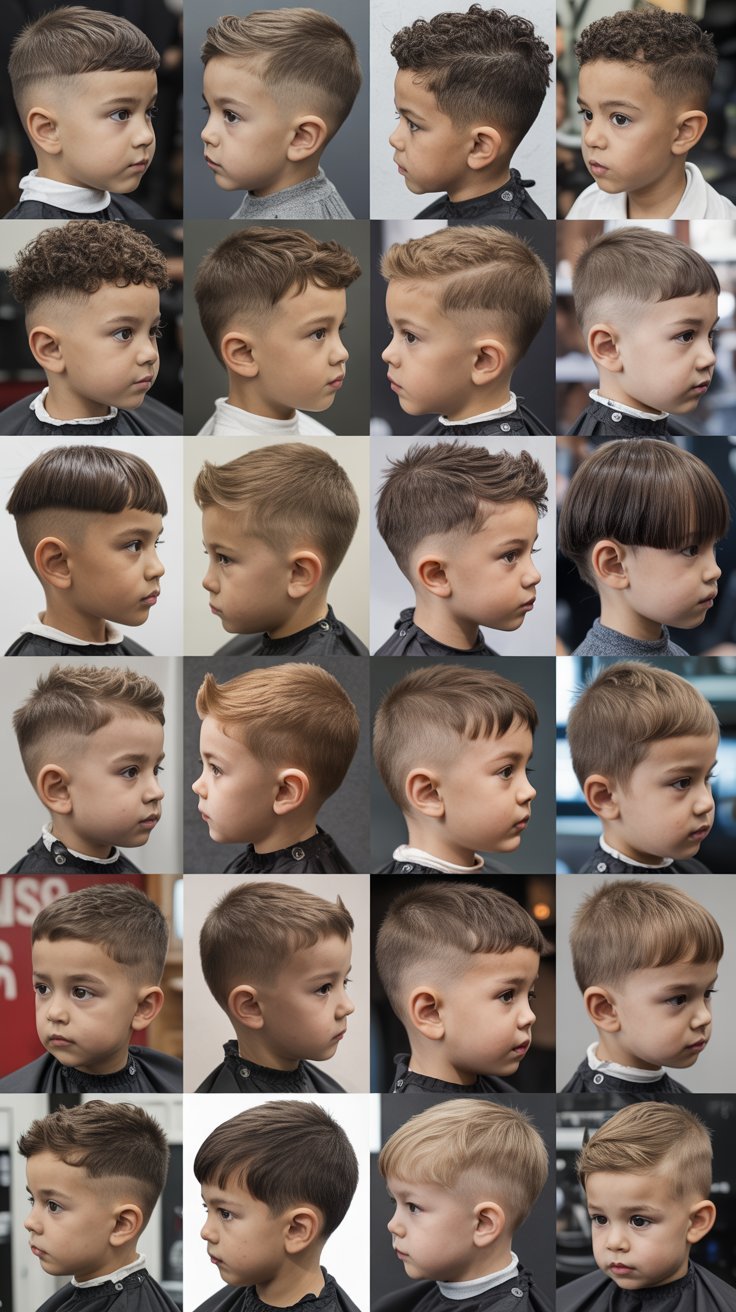
Finding the perfect haircut for your little boy can transform his entire appearance and boost his confidence in ways you might not expect.
The world of children’s hairstyling has evolved tremendously, with short fades becoming one of the most requested styles in barbershops across the globe.
This article explores 25 Cool Little Boy Haircuts with Short Fades for a Sharp Look, offering you a comprehensive guide to modern, stylish, and age-appropriate options that will make your child stand out.
Whether you’re preparing for a special occasion, the new school year, or simply want to refresh your son’s look, these fade haircuts combine practicality with undeniable style.
From classic cuts to trendy variations, you’ll discover detailed descriptions, styling tips, and maintenance advice that will help you choose the ideal haircut for your little one’s face shape, hair texture, and personality.
Each style has been carefully selected to ensure it’s not only fashionable but also easy to maintain for busy parents and active kids.
1. Classic Low Fade with Side Part

The classic low fade with side part represents timeless elegance that works beautifully for boys of all ages.
This sophisticated style creates a clean, polished appearance that’s perfect for both casual outings and formal events.
Key Features:
- The fade begins just above the ears and gradually blends into longer hair on top
- A defined side part adds structure and refinement to the overall look
- The contrast between the faded sides and longer top creates visual interest
- This style works exceptionally well for boys with straight to wavy hair textures
Styling Requirements:
- Apply a small amount of lightweight pomade or styling cream to damp hair
- Use a fine-toothed comb to create a sharp, clean part on either side
- Comb the top section over to one side, following the natural direction of the part
- The style typically requires maintenance every 2-3 weeks to keep the fade looking fresh
Best Suited For:
- Boys with oval, round, or square face shapes
- School settings where a neat, professional appearance is valued
- Children who are comfortable with regular barber visits
- Parents who want a versatile style that transitions from casual to dressy occasions
2. High Fade with Textured Top

The high fade with textured top delivers a bold, contemporary look that showcases confidence and modern style sensibilities.
This cut makes a strong statement while remaining age-appropriate and manageable.
Distinctive Characteristics:
- The fade starts much higher on the head, typically around the temples
- The top features deliberate texture and movement rather than being slicked down
- This creates a striking contrast that draws attention to the face
- The textured top allows for natural volume and dimension
Maintenance and Styling:
- Work a texturizing paste or clay through towel-dried hair
- Use fingers rather than a comb to create separation and natural-looking texture
- The style can be worn messy for a casual look or more refined for special occasions
- Requires visits to the barber every 2-4 weeks depending on hair growth rate
Ideal Candidates:
- Boys with thick or medium-density hair that can hold texture
- Active children who need a style that looks good with minimal morning effort
- Kids with strong, defined facial features that are complemented by the high contrast
- Families looking for a modern, trendy option with personality
3. Mid Fade with Curly Top

The mid fade with curly top celebrates natural curl patterns while maintaining clean, sharp sides.
This style is perfect for boys with naturally curly or coily hair who want a modern look.
Design Elements:
- The fade begins at the middle of the sides, creating balance between high and low fades
- Natural curls on top are left longer to showcase their beautiful texture
- The gradual transition from faded sides to curly top creates harmonious proportions
- This cut respects and enhances natural hair texture rather than fighting against it
Care Instructions:
- Apply a curl-defining cream or leave-in conditioner to wet hair
- Allow curls to air-dry or use a diffuser attachment on low heat
- Refresh curls between washes with a spray bottle of water and light product
- The fade should be maintained every 2-3 weeks, but the curly top can grow longer
Perfect For:
- Boys with naturally curly, coily, or kinky hair textures
- Children whose parents want to embrace and celebrate natural hair
- Active kids who need a low-maintenance style that still looks polished
- Any face shape, as the curls add softness and the fade adds structure
4. Skin Fade with Hard Part
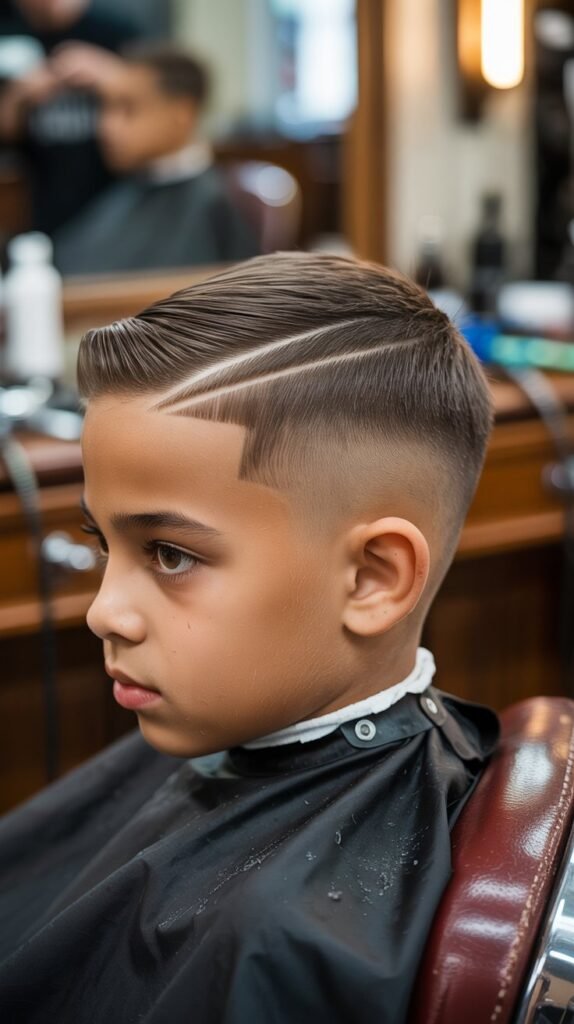
The skin fade with hard part represents one of the sharpest, most defined looks available in modern barbering.
This style features extreme contrast and geometric precision.
Signature Features:
- The fade goes down to the skin, creating a completely bald appearance at the bottom
- A hard part is shaved into the hair with clippers, creating a surgical line
- The top can be styled in various ways while maintaining the dramatic side contrast
- This cut showcases exceptional barbering skill and attention to detail
Styling Approach:
- The hard part requires no daily maintenance as it’s shaved into the scalp
- Style the top according to preference—slicked back, textured, or combed over
- Use a light to medium hold product depending on desired finish
- The skin fade grows out quickly, requiring maintenance every 1-2 weeks
Recommended For:
- Boys who want a bold, standout style with maximum impact
- Children comfortable with frequent barber appointments
- Kids with straight to wavy hair that can be styled versatile on top
- Special occasions, photoshoots, or when making a strong style statement
5. Taper Fade with Fringe
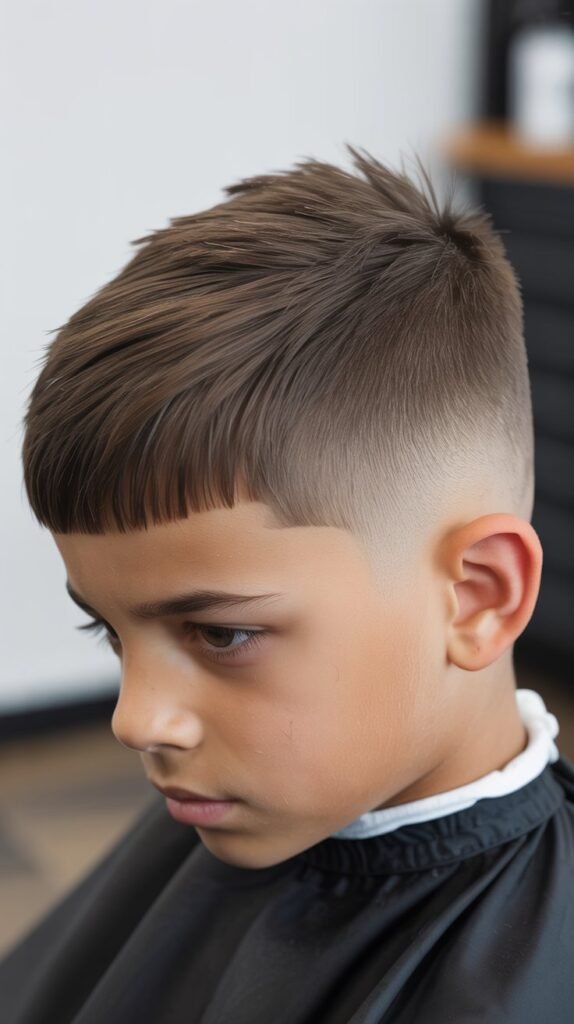
The taper fade with fringe offers a youthful, modern aesthetic that’s become increasingly popular among young boys.
This style balances edge with approachability.
Defining Attributes:
- A gradual taper fade on the sides rather than an abrupt transition
- The fringe (bangs) is left longer and typically sweeps forward or to the side
- This creates a softer, more casual appearance compared to slicked-back styles
- The fringe adds movement and personality to the overall look
Daily Styling:
- Apply a small amount of styling cream or light wax to damp hair
- Blow-dry the fringe forward while using fingers to direct the flow
- The fringe can be worn straight down, swept to the side, or slightly tousled
- Maintenance appointments recommended every 3-4 weeks
Best Matches:
- Boys with straight or slightly wavy hair that naturally falls forward
- Children with longer faces, as the fringe helps balance facial proportions
- Kids who prefer a more casual, relaxed style over formal appearances
- Active youngsters who need a style that looks good even after playing
6. Drop Fade with Mohawk
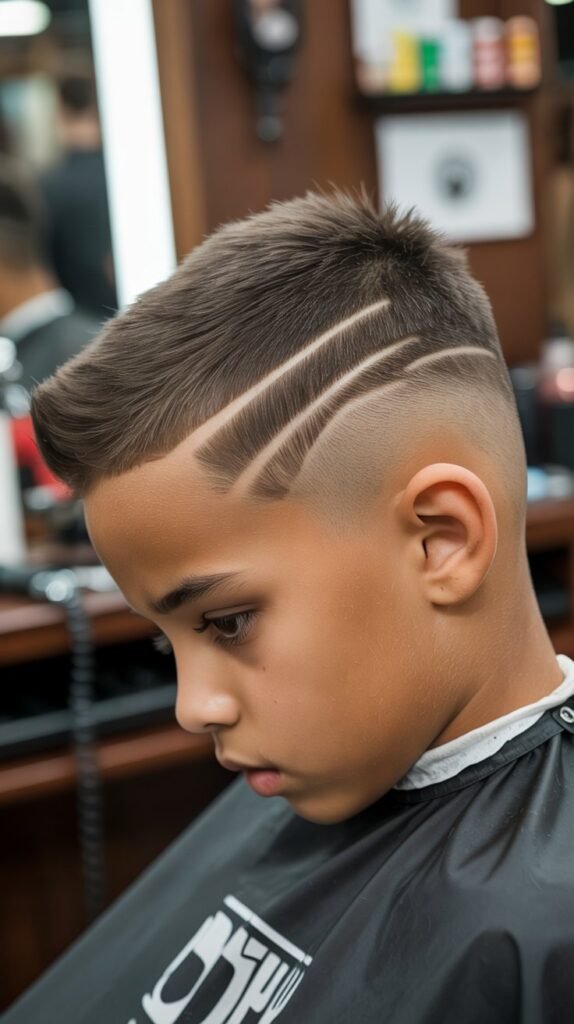
The drop fade with mohawk brings edgy style to children’s haircuts while remaining playful and age-appropriate.
This bold choice makes a confident statement.
Core Components:
- The drop fade curves down behind the ears, following the natural head shape
- Hair on top is styled upward and centered, creating a mohawk effect
- The width and height of the mohawk can be adjusted for different intensity levels
- This style combines rebellious aesthetics with clean, polished execution
Styling Process:
- Apply a strong-hold gel or pomade to towel-dried hair
- Use a blow dryer and your hands to lift hair upward from the roots
- Direct all top hair toward the center, creating the mohawk ridge
- Set with hairspray for all-day hold, especially for active children
Suited For:
- Boys with outgoing personalities who enjoy standing out
- Children with thick hair that can support the upward styling
- Kids involved in creative activities, sports, or performance arts
- Parents who encourage individual expression and unique style choices
7. Bald Fade with Slick Back
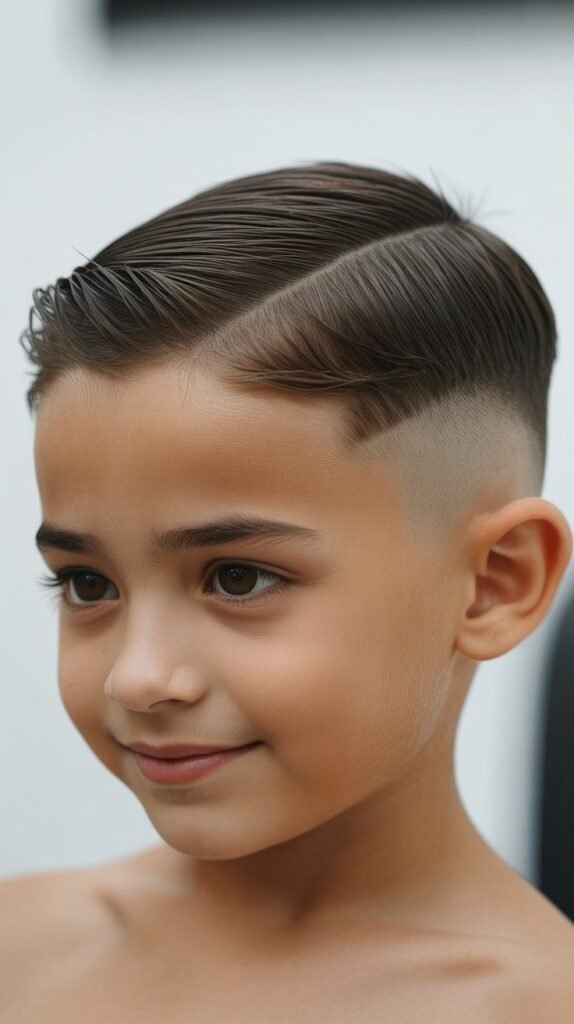
The bald fade with slick back exudes sophistication and maturity while maintaining appropriateness for young boys.
This refined style works beautifully for formal settings.
Distinguishing Elements:
- The fade goes completely bald on the sides and back, creating maximum contrast
- Top hair is combed straight back from the forehead in a smooth, sleek manner
- This creates a very clean, professional appearance with strong lines
- The style elongates the face and showcases facial features prominently
Styling Technique:
- Start with damp, freshly washed hair for best results
- Apply a medium to high-shine pomade evenly through the top section
- Use a fine-toothed comb to sweep all hair straight back from the hairline
- Smooth down any flyaways and ensure even distribution of product
Optimal For:
- Formal events such as weddings, graduations, or family portraits
- Boys with naturally straight or easily managed hair
- Children with oval or rectangular face shapes
- Situations requiring a polished, put-together appearance
8. Low Taper with Natural Texture
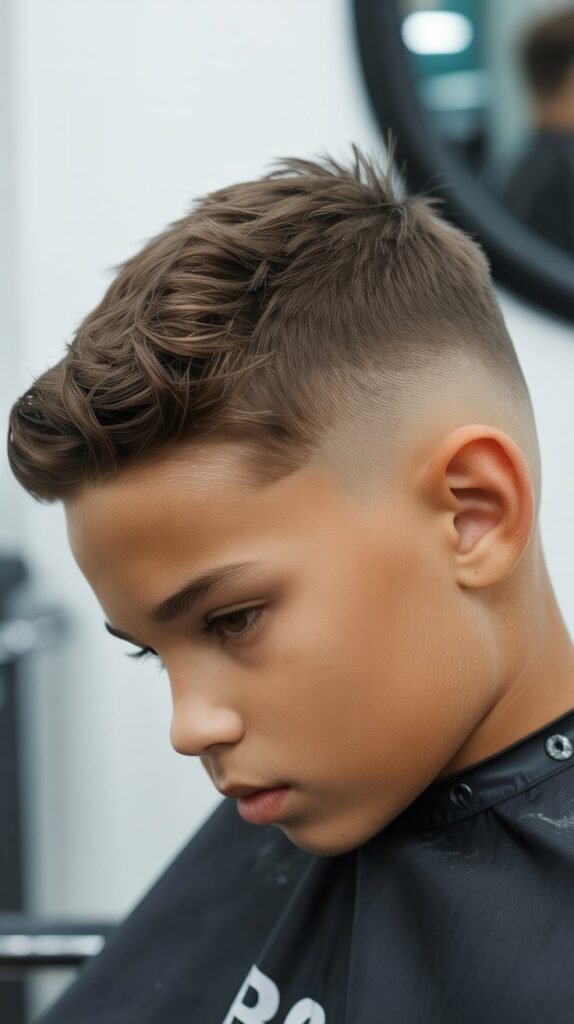
The low taper with natural texture embraces a boy’s inherent hair characteristics while adding modern structure.
This effortless style celebrates authenticity.
Fundamental Features:
- A subtle, gradual taper starts low on the sides, barely noticeable at first glance
- The top retains significant length and is styled to enhance natural texture
- This approach minimizes the contrast between sides and top for a cohesive look
- The style works with hair’s natural tendencies rather than forcing artificial patterns
Maintenance Requirements:
- Simply tousle towel-dried hair with fingers and a small amount of product
- Allow hair to air-dry in its natural pattern for the most authentic look
- Minimal styling time makes this perfect for busy mornings
- Barber visits can be spaced 4-6 weeks apart due to the gradual nature of the taper
Ideal Selection For:
- Boys with wavy, curly, or textured hair patterns
- Parents seeking low-maintenance options that still look intentional
- Children who resist extensive morning grooming routines
- Casual everyday wear that maintains a polished appearance
9. Temple Fade with Design
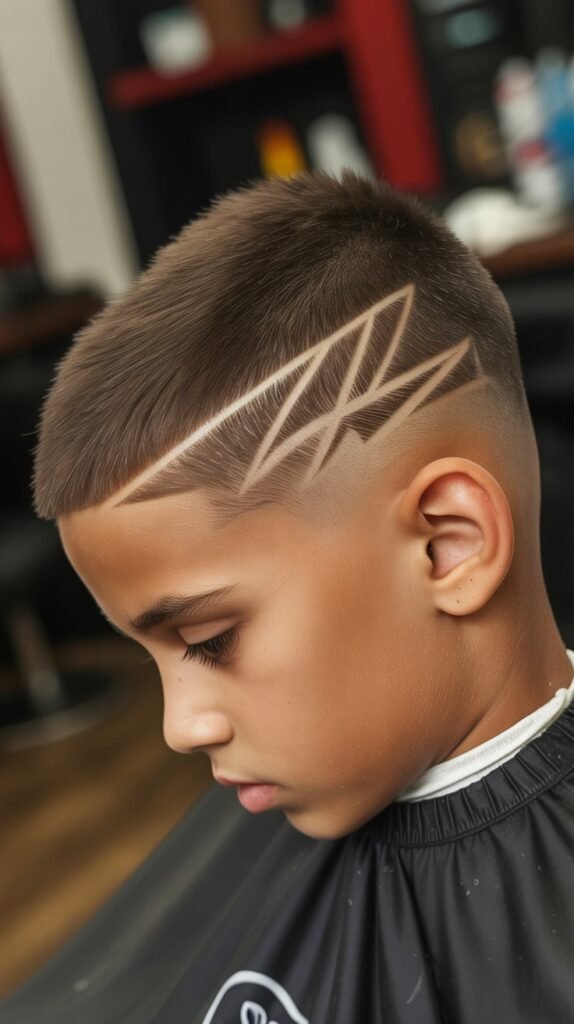
The temple fade with design incorporates artistic elements into a functional haircut, creating wearable art.
This style allows for personal expression through custom designs.
Creative Characteristics:
- The fade focuses primarily on the temple areas, keeping other sections fuller
- Designs or patterns are shaved into the faded sections using precision clippers
- Common designs include lines, geometric shapes, lightning bolts, or custom logos
- The artistic element adds individuality while maintaining professional appearance
Design Considerations:
- Consult with your barber about age-appropriate design options
- Simple designs last longer and remain visible as hair grows
- The design typically needs refreshing every 1-2 weeks to stay crisp
- Top hair can be styled in various ways to complement the side design
Perfect Choice For:
- Boys who want to express creativity and individuality
- Children interested in sports, gaming, or specific hobbies that could inspire designs
- Kids who enjoy attention and starting conversations about their style
- Special occasions or periods like summer when more experimental styles are welcome
10. Burst Fade with Faux Hawk
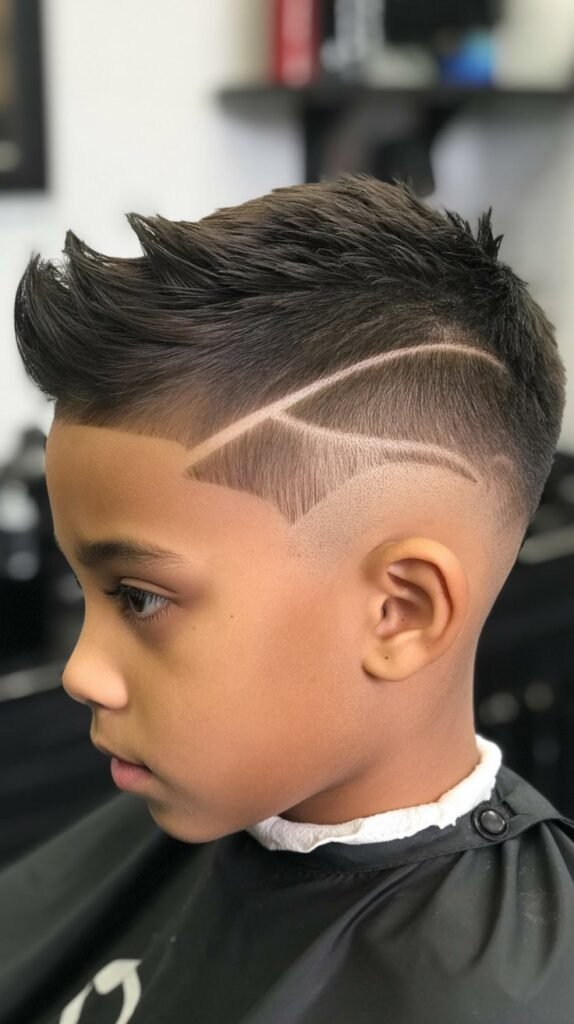
The burst fade with faux hawk combines circular fade patterns with upward-styled hair for a dynamic, energetic appearance.
This modern style offers remarkable visual impact.
Structural Elements:
- The burst fade radiates in a circular pattern around the ears
- Top hair is styled upward and slightly forward, mimicking a mohawk
- Unlike a true mohawk, hair isn’t extremely short on the sides—just faded
- The circular fade pattern creates a unique, eye-catching effect
Styling Method:
- Apply styling gel or pomade to damp hair, focusing on the top section
- Use a blow dryer with a concentrator nozzle to lift hair upward
- Style the center section higher than the sides for the faux hawk effect
- Finish with light hairspray to maintain lift throughout the day
Recommended For:
- Boys with medium to thick hair density
- Children who enjoy trendy, contemporary styles
- Kids with round or square face shapes that benefit from added height
- Active youngsters whose personality matches the energetic style
11. Shadow Fade with Side Swept Hair

The shadow fade with side swept hair provides subtle sophistication through gentle transitions and flowing movement.
This understated style offers elegance without ostentation.
Characteristic Details:
- The shadow fade creates barely visible gradation, like a shadow rather than stark contrast
- Top hair is left at medium length and swept to one side naturally
- This style appears effortless and works well for conservative settings
- The gentle fade suits boys who prefer subtlety over dramatic changes
Application Process:
- Work a lightweight styling cream through slightly damp hair
- Use your hands or a soft brush to sweep hair to the preferred side
- The style should look natural and slightly undone rather than rigidly styled
- Maintenance needed every 3-4 weeks to preserve the shadow effect
Excellent For:
- School environments with strict grooming policies
- Boys who prefer classic, timeless styles over trends
- Children with fine to medium hair texture
- Situations requiring a conservative yet current appearance
12. High and Tight Fade
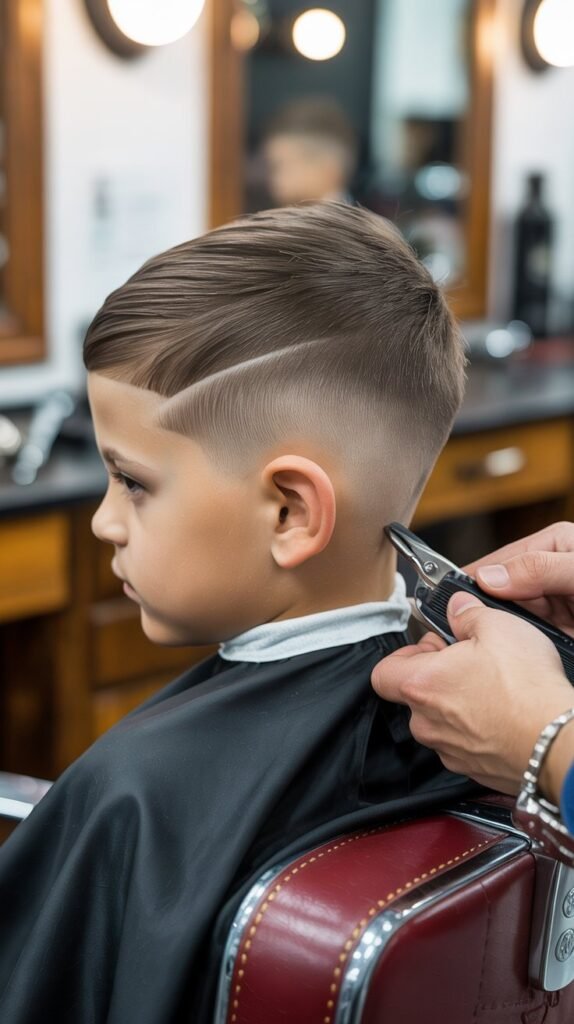
The high and tight fade borrows inspiration from military cuts, offering maximum practicality with sharp, clean lines.
This no-nonsense style prioritizes function and ease.
Core Features:
- Hair is cut very short or bald on the sides and back
- The top is kept relatively short, typically under two inches
- The high contrast creates a bold, structured appearance
- This is one of the lowest-maintenance options available
Care and Styling:
- Minimal styling required due to the short length throughout
- A small amount of light pomade can add slight texture if desired
- The cut grows out evenly, maintaining decent appearance between cuts
- Barber visits recommended every 2-3 weeks for optimal sharpness
Best Suited For:
- Boys involved in sports, especially swimming or contact sports
- Children who resist daily hair care routines
- Hot climates where shorter hair provides comfort
- Parents seeking the ultimate low-maintenance option
13. Undercut Fade with Long Top
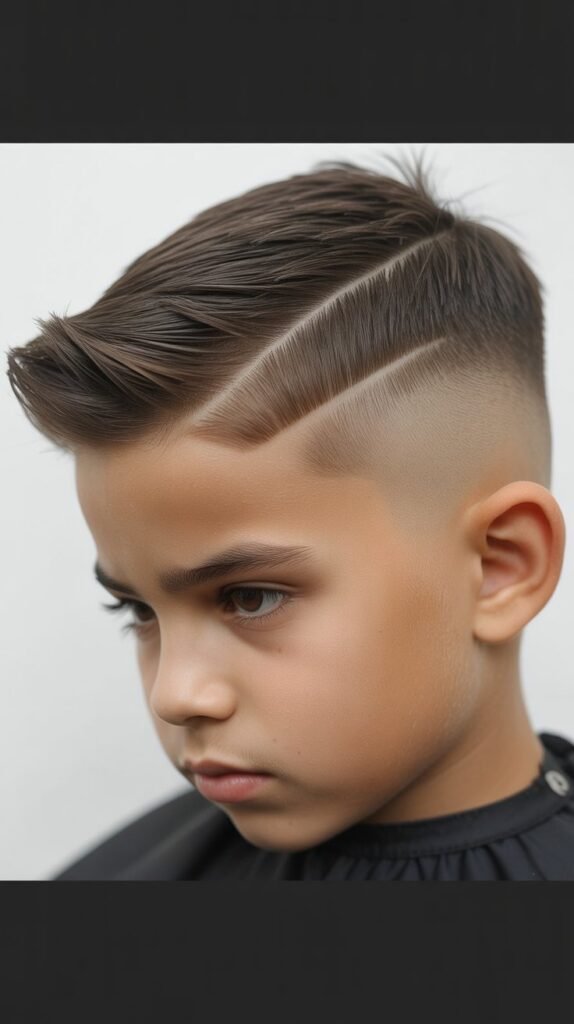
The undercut fade with long top offers dramatic length contrast, allowing for versatile styling options.
This modern classic provides flexibility for various looks.
Defining Characteristics:
- A clear distinction exists between short faded sides and significantly longer top
- The top length typically ranges from 3 to 5 inches or even longer
- This pronounced contrast creates multiple styling possibilities
- The undercut can be combined with various fade types for customization
Styling Versatility:
- Slick the top back for formal occasions using pomade
- Tousle and texture for casual, everyday wear with styling cream
- Sweep to the side for a classic, refined appearance
- Push forward into a fringe for a youthful, trendy look
Ideal Candidates:
- Boys who enjoy changing their hairstyle without cutting it
- Children with thick hair that can support various styling techniques
- Kids who are fashion-conscious and style-aware
- Situations requiring adaptability between casual and formal appearances
14. Crew Cut with Low Fade
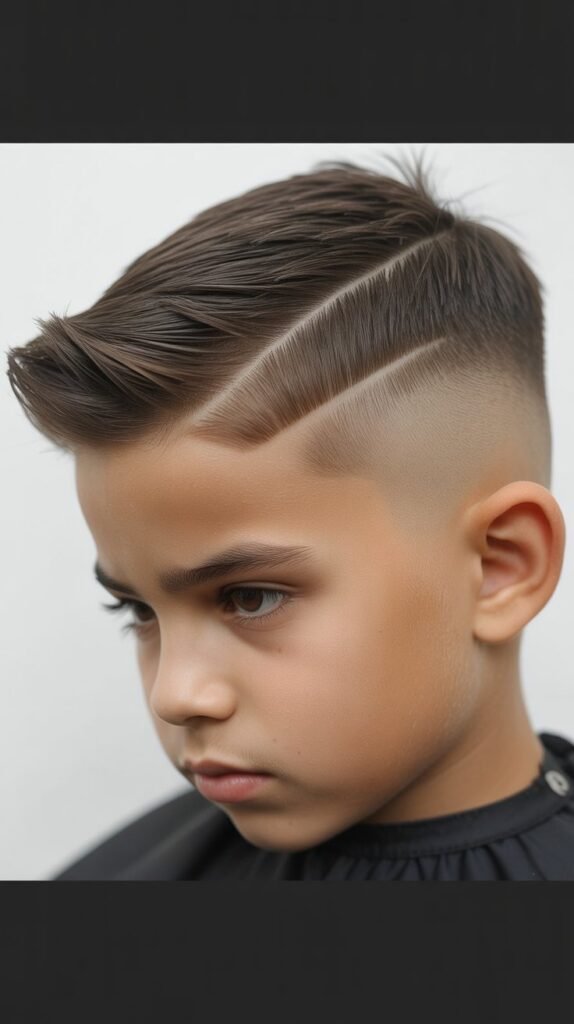
The crew cut with low fade represents American classic styling adapted with modern fade techniques.
This timeless option never goes out of style.
Traditional Elements:
- Hair on top is cut short but with slight variation in length, longer at the front
- The low fade on sides creates contemporary edge to a classic cut
- The overall appearance is clean, neat, and universally acceptable
- This style has remained popular for decades due to its practicality
Maintenance Approach:
- Virtually no daily styling required beyond a quick comb-through
- Can be left to air-dry naturally after washing
- Maintains neat appearance even as it grows out
- Barber appointments recommended every 3-4 weeks
Perfect Match For:
- Boys in conservative schools or family environments
- Athletes who need functional, out-of-the-way hair
- Children who prefer traditional over trendy styles
- Hot weather or active lifestyles requiring minimal hair maintenance
15. Pompadour Fade
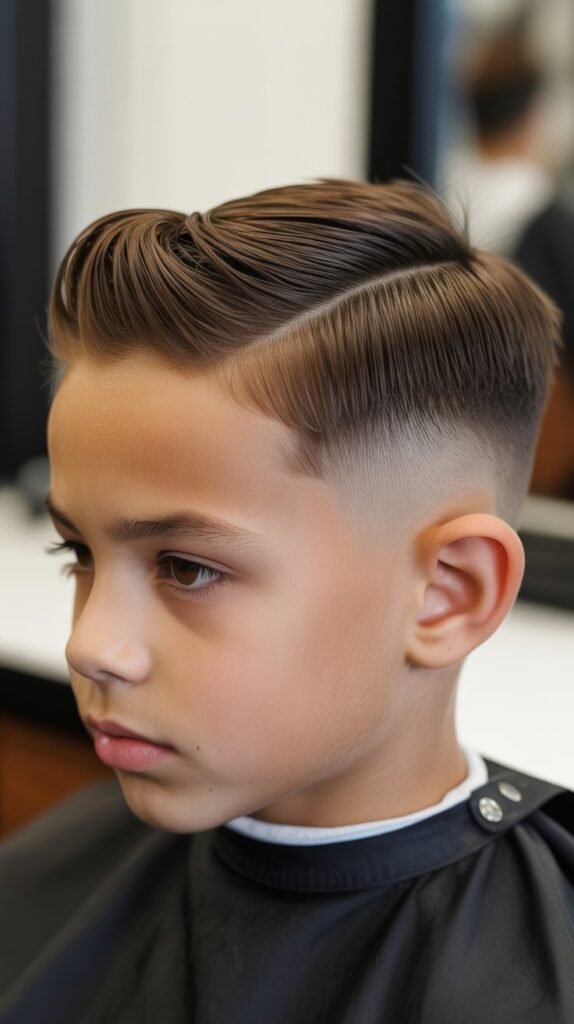
The pompadour fade brings vintage glamour to modern children’s hairstyling, creating volume and height at the front.
This retro-inspired style makes a sophisticated statement.
Signature Attributes:
- Front hair is styled upward and back, creating significant volume and height
- The fade on sides provides contemporary contrast to the classic pompadour shape
- This style requires adequate length on top, typically 3-4 inches minimum
- The elevated front creates a dramatic, eye-catching profile
Styling Instructions:
- Apply volumizing mousse or pre-styler to damp hair before blow-drying
- Use a round brush while blow-drying to create lift at the roots
- Apply pomade to dry hair and use a comb to shape the pompadour
- Set with medium-hold hairspray to maintain volume throughout the day
Recommended For:
- Special occasions such as school dances, parties, or family events
- Boys who enjoy vintage aesthetics and classic Hollywood style
- Children with parents who have time to help with morning styling
- Kids with thick, strong hair that can support the voluminous style
16. Caesar Cut with Fade
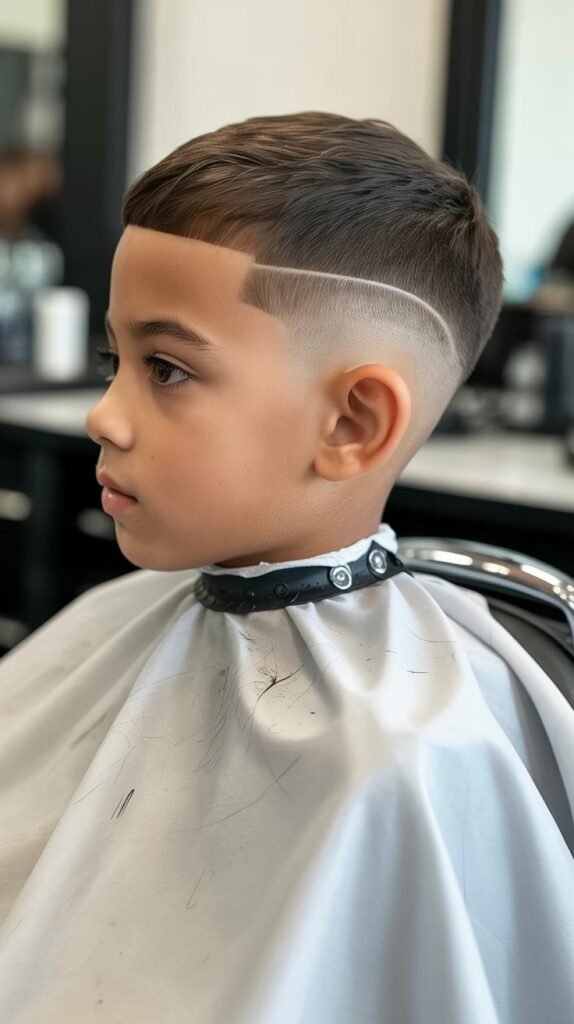
The Caesar cut with fade combines ancient Roman inspiration with modern barbering techniques.
This forward-swept style offers distinctiveness with historical roots.
Defining Features:
- Hair on top is cut to uniform short length and brushed forward
- A short, horizontal fringe across the forehead is the style’s signature element
- The fade on sides and back adds contemporary dimension to the classic cut
- This creates a distinctive, recognizable profile from any angle
Daily Care:
- Brush or comb all hair forward toward the forehead after washing
- A small amount of light product can add slight texture and control
- The style naturally falls into place, requiring minimal effort
- Touch-ups needed every 3-4 weeks to maintain the precise fringe line
Ideal For:
- Boys with naturally straight hair that easily lies forward
- Children with receding or higher foreheads that benefit from coverage
- Kids who want a unique style that’s different from their peers
- Parents seeking something low-maintenance yet distinctive
17. Comb Over Fade with Part
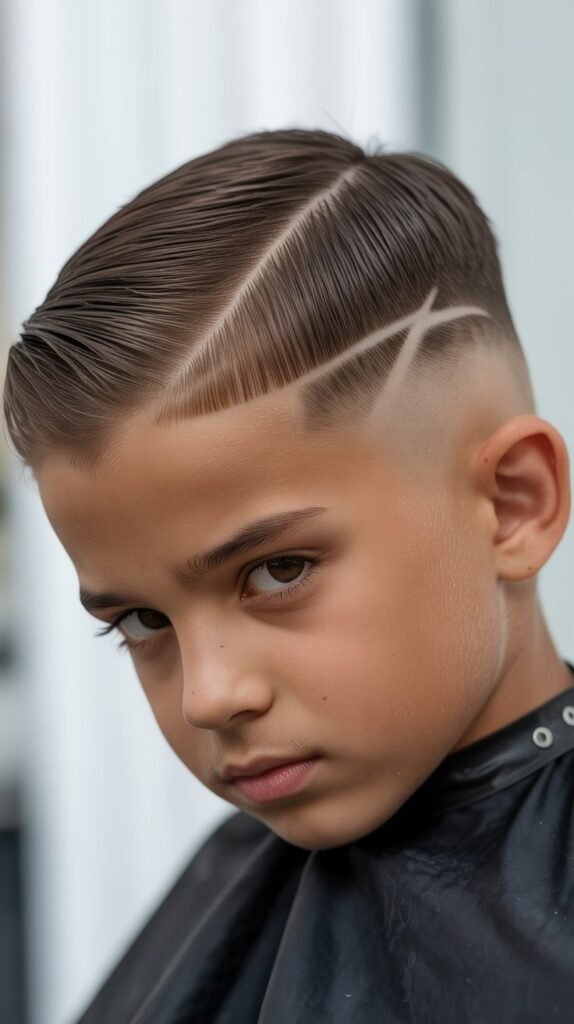
The comb over fade with part delivers sophisticated styling that appears mature beyond the child’s years.
This polished look works exceptionally well for formal settings.
Core Components:
- Hair is parted distinctly on one side and combed over to the opposite side
- The fade creates clean sides that enhance the swept-over top section
- The comb over adds volume on one side while lying flat on the other
- A defined part line creates structure and intentionality
Styling Process:
- Create a clean part on the desired side using a fine-toothed comb
- Apply styling product evenly through the top section
- Comb hair over to the opposite side, following the direction of the part
- Smooth everything down for a polished finish or leave slightly textured
Optimal Selection For:
- Formal events requiring sophisticated appearance
- Boys who want to look older and more mature
- Children with straight to wavy hair that responds well to combing
- School photos, special occasions, or important family gatherings
18. Flat Top with Fade
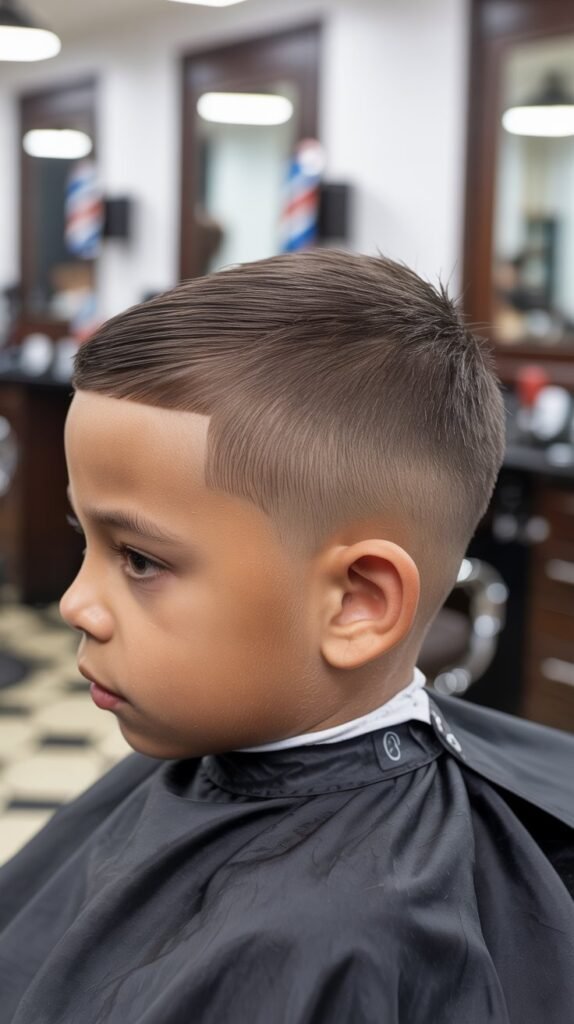
The flat top with fade resurrects an iconic style from the 1990s with modern execution.
This geometric, architectural cut makes a bold retro statement.
Structural Elements:
- Hair on top is cut to stand upright and form a flat, horizontal plane
- The sides feature a fade that enhances the geometric quality of the top
- Achieving the flat surface requires specific cutting techniques and maintenance
- The angular, sculptural quality creates immediate visual impact
Maintenance Requirements:
- Regular trimming every 2-3 weeks is essential to maintain the flat surface
- Daily styling with strong-hold gel or pomade is necessary to keep hair upright
- A blow dryer and flat-top comb may be needed to achieve proper height
- This style requires commitment and regular barber visits
Best Suited For:
- Boys who enjoy retro styles and vintage aesthetics
- Children with thick, coarse hair that naturally stands up well
- Kids with square or rectangular face shapes complemented by angular lines
- Special themed events, photo shoots, or when making a nostalgic statement
19. Afro Taper Fade

The afro taper fade celebrates natural African hair texture while incorporating modern fade techniques.
This style honors cultural heritage with contemporary flair.
Key Characteristics:
- Natural afro texture is maintained on top in a rounded, voluminous shape
- A gradual taper fade on the sides creates definition and structure
- The rounded afro top contrasts beautifully with the faded sides
- This style showcases and celebrates natural hair in its authentic state
Care and Styling:
- Use moisturizing products designed for natural African hair textures
- Pick out the afro with an afro pick to create the desired rounded shape
- Keep hair moisturized with leave-in conditioners and natural oils
- The fade portion requires maintenance every 2-3 weeks
Perfect For:
- Boys with natural African, Afro-Caribbean, or textured hair
- Children whose families prioritize natural hair acceptance and celebration
- Kids who want a style that’s both culturally significant and trendy
- Any face shape, as the rounded top and tapered sides create balance
20. Spiky Hair with Mid Fade
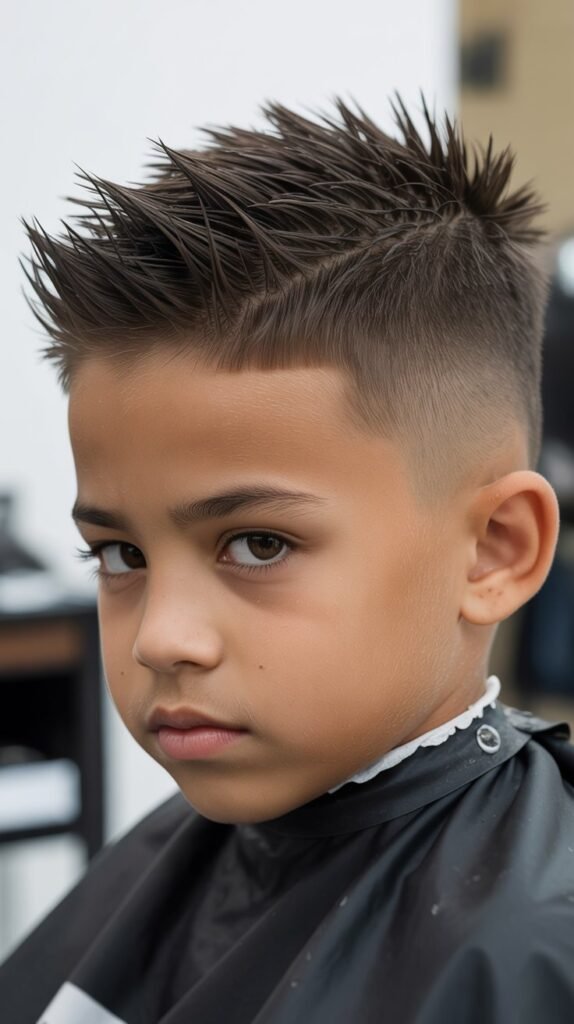
Spiky hair with mid fade brings playful energy to children’s hairstyles through upward texture and movement.
This fun style captures youthful exuberance perfectly.
Distinctive Features:
- Hair on top is cut in layers and styled upward into individual spikes
- The mid fade provides clean sides that don’t compete with the textured top
- Spike height and thickness can be varied for different intensity levels
- This creates a fun, energetic appearance perfect for active children
Styling Instructions:
- Apply strong-hold gel or spike-specific styling product to towel-dried hair
- Use fingers to lift and separate hair into individual spikes
- Twist and pull upward on each spike to create definition
- Set with hairspray for long-lasting hold during play and activities
Ideal For:
- Young boys who enjoy playful, fun hairstyles
- Children with straight to wavy hair that holds spikes well
- Kids with outgoing, energetic personalities
- Casual settings, parties, or everyday wear
21. Quiff with High Fade
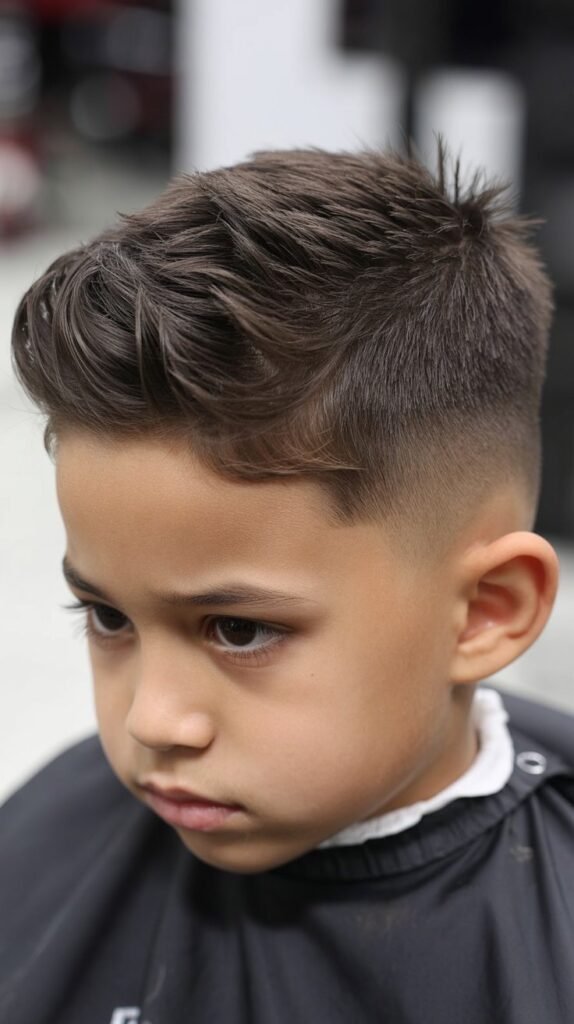
The quiff with high fade merges vintage rockabilly aesthetics with contemporary fade techniques.
This stylish option offers height, volume, and sophisticated edge.
Defining Characteristics:
- Front hair is styled upward and slightly back, similar to a pompadour but with more forward volume
- The high fade creates dramatic contrast and draws attention to the styled top
- The quiff adds height and elongates the face
- This style bridges classic and contemporary aesthetics beautifully
Styling Process:
- Apply volumizing product to damp hair, focusing on the front section
- Blow-dry while lifting hair upward and forward with a brush
- Apply pomade or wax to create shape and definition in the quiff
- The back and sides of the top can be styled back or left slightly messy
Recommended For:
- Boys who appreciate fashionable, trendy hairstyles
- Children with medium to thick hair that can support volume
- Kids with longer faces, as the horizontal quiff helps balance proportions
- Style-conscious families who follow current grooming trends
22. Messy Top with Taper Fade
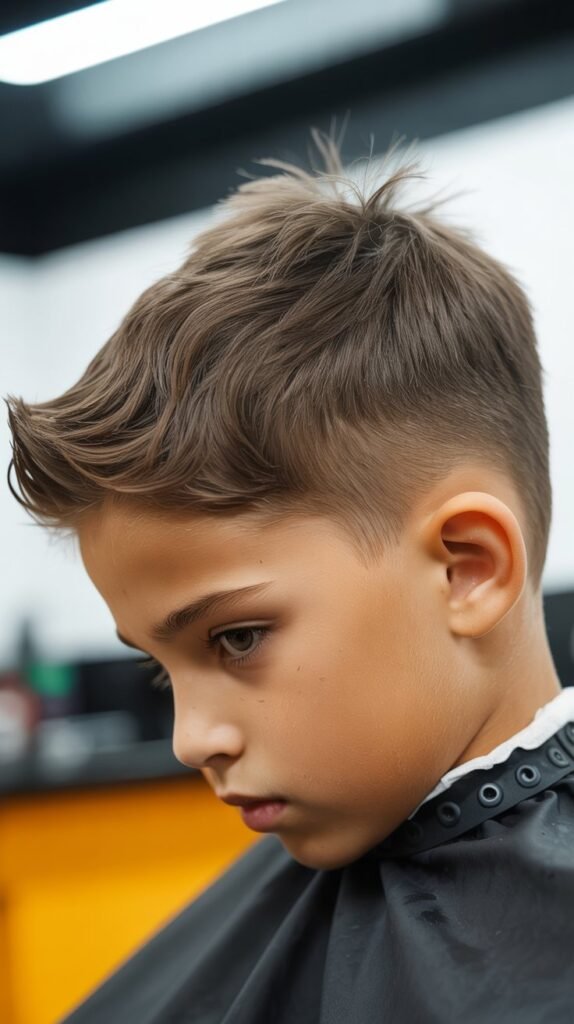
The messy top with taper fade embraces controlled chaos, creating an effortlessly cool appearance.
This intentionally disheveled style radiates casual confidence.
Core Elements:
- The top is left longer and styled to appear naturally messy and textured
- A gradual taper fade keeps the sides clean despite the messy top
- The contrast between tidy sides and messy top creates appealing tension
- This style looks great without appearing overly styled or fussy
Daily Styling:
- Work a matte-finish texturizing product through towel-dried hair
- Use fingers to tousle and create separation and piecey texture
- The style should look naturally messy, not carefully arranged
- Minimal time investment makes this perfect for rushed mornings
Best Matches:
- Boys who prefer relaxed, casual aesthetics
- Children with naturally wavy or slightly unruly hair
- Kids who resist structured, formal styling
- Everyday wear, casual outings, and laid-back environments
23. V-Shape Fade with Longer Length
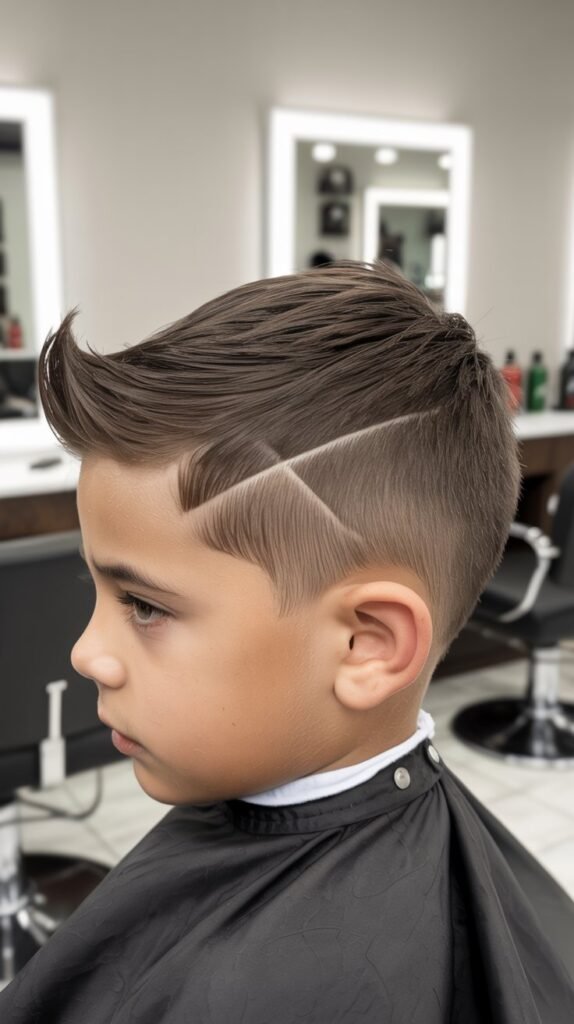
The V-shape fade with longer length creates distinctive geometry at the back of the head while allowing versatility on top.
This unique style offers something different from standard fades.
Unique Features:
- The fade forms a V-shape or point at the back of the neck
- This creates visual interest from behind while maintaining clean sides
- Top length can be substantial, allowing for various styling options
- The geometric pattern adds artistic element to a functional haircut
Styling Options:
- The longer top can be worn slicked back, textured, or in a fringe style
- Styling flexibility means the look can change day to day
- Focus on the distinctive back shape that sets this apart
- Maintenance every 2-3 weeks keeps the V-shape crisp and defined
Ideal For:
- Boys who want something unique without being too extreme
- Children who enjoy geometric patterns and precise lines
- Kids with various hair textures, as the V-shape works with most types
- Situations where a distinctive but appropriate style is desired
24. Ivy League with Low Fade
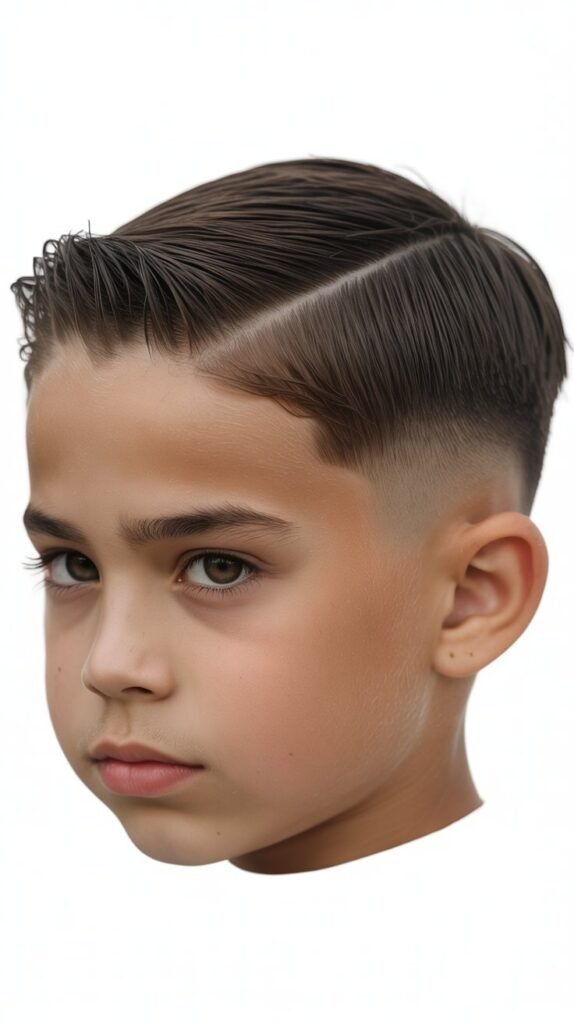
The Ivy League with low fade represents collegiate sophistication adapted for young boys.
This refined style conveys intelligence and classic taste.
Traditional Features:
- Similar to a crew cut but with more length on top, especially at the front
- The low fade adds modern edge to this traditionally preppy style
- Front hair can be styled to the side or slightly back
- The overall appearance is neat, conservative, and timeless
Styling Approach:
- Apply a small amount of classic pomade or styling cream
- Comb or brush hair to the side or slightly back from the forehead
- The style maintains neat appearance with minimal daily effort
- Natural hair movement is acceptable, enhancing the classic aesthetic
Perfect For:
- Boys in private schools or conservative educational settings
- Children from families who value traditional, classic styling
- Kids who participate in academic clubs or formal school activities
- Situations requiring polished appearance without trendy elements
25. Faux Hawk Fade with Colored Tips

The faux hawk fade with colored tips pushes creative boundaries by adding temporary color to a trendy cut. This adventurous style allows personal expression.
Creative Elements:
- The faux hawk structure creates upward-styled hair in the center
- Fade on sides keeps the look grounded despite the bold top
- Colored tips add personality and can be changed or removed
- This combines structural styling with optional color experimentation
Implementation Considerations:
- Use temporary hair color, chalk, or washable dyes appropriate for children
- Colors can match favorite sports teams, holidays, or personal preferences
- The style works with or without color, offering flexibility
- Discuss with your child about appropriate settings for colored hair
Best Suited For:
- Boys who enjoy expressing creativity through appearance
- Special occasions like birthdays, summer break, or costume events
- Children with understanding schools or homeschool situations
- Kids who want something memorable and photogenic
Professional Styling Tips from Experienced Barbers
Finding the right barber who specializes in children’s cuts is crucial for achieving these sophisticated fade styles.
Look for barbershops that advertise experience with kids and maintain a welcoming, patient atmosphere for younger clients.
Communication with Your Barber:
- Bring reference photos showing multiple angles of the desired style
- Discuss your child’s hair texture, growth patterns, and any cowlicks
- Ask about realistic maintenance expectations before committing to a style
- Build a relationship with one barber who learns your child’s hair over time
Understanding Hair Growth Patterns:
- Different areas of the head grow at varying rates, affecting how cuts grow out
- Cowlicks and whorls influence how hair naturally falls and should be considered
- Hair texture determines which styles will hold best and look most natural
- Face shape affects which cuts will be most flattering and proportionate
Product Recommendations:
- Water-based pomades wash out easily and don’t build up in fine hair
- Matte-finish products create natural-looking texture without shine
- Light-hold products work better for children’s finer hair texture
- Always use products specifically designed for children when possible
For more detailed information on children’s hair care, visit specialized grooming resources or consult with pediatric dermatologists about appropriate products.
Age-Appropriate Considerations for Different Styles
Not every fade style suits every age group, and considering developmental appropriateness ensures your child feels confident rather than costume-like in their haircut.
Toddlers and Preschool (Ages 2-5):
- Simpler styles with less dramatic contrast work best
- Consider the child’s ability to sit still during longer barber sessions
- Avoid styles requiring extensive daily maintenance and styling
- Focus on comfortable, practical cuts that work with active play
Elementary School (Ages 6-10):
- More defined fades become appropriate as hair thickens
- Children can begin to express style preferences at this age
- Consider school dress codes and community standards
- Balance trendy elements with age appropriate presentation
Pre-Teen and Middle School (Ages 11-13):
- Most fade styles become fully appropriate at this developmental stage
- Children have stronger opinions about personal style and self-expression
- Peer influence increases, making trendy styles more socially important
- Consider upcoming school events, sports seasons, or special occasions
Maintenance Schedule and Cost Considerations
Understanding the financial and time commitment required for fade haircuts helps families make informed decisions about which styles work within their lifestyle and budget.
Typical Barber Visit Frequency:
- Skin fades and high fades: Every 1-2 weeks for optimal appearance
- Mid fades and drop fades: Every 2-3 weeks to maintain definition
- Low fades and taper fades: Every 3-4 weeks for adequate maintenance
- Shadow fades and longer styles: Every 4-6 weeks depending on growth rate
Average Cost Breakdown:
- Children’s fade haircuts typically range from $15-40 depending on location
- Specialty designs or intricate patterns may add $5-15 to the base price
- Urban areas and high-end barbershops command premium pricing
- Building relationships with barbers sometimes results in loyalty discounts
Time Investment:
- Standard fade appointments take 20-45 minutes depending on complexity
- First visits often take longer as the barber learns the child’s hair
- Adding designs or special details extends appointment time
- Consider scheduling during less busy hours to ensure adequate attention
Money-Saving Strategies:
- Learning basic fade maintenance can extend time between professional cuts
- Some barbershops offer discount packages for regular appointments
- Training older children to communicate directly with barbers reduces revision needs
- Choosing styles with longer intervals between cuts reduces annual costs
Tools and Products for Home Maintenance
While professional barber visits remain essential, maintaining fade haircuts between appointments extends their fresh appearance and can save money over time.
Essential Home Grooming Tools:
- Quality clippers with multiple guard attachments for touch-ups
- Fine-toothed combs for styling and part creation
- Soft-bristle brush for distributing natural oils and styling
- Spray bottle for dampening hair before styling
- Handheld mirror for checking the back and sides
Recommended Styling Products:
- Lightweight pomade for sleek, polished styles (water-based formulas preferred)
- Texturizing paste or clay for messy, natural looks
- Styling gel for spikes or structured styles requiring strong hold
- Leave-in conditioner for curly or textured hair types
- Matte finish products for natural appearance without shine
Between-Visit Touch-Up Techniques:
- Clean up the neckline with clippers to maintain crisp appearance
- Trim around the ears carefully if hair grows quickly in that area
- Use edging tools to maintain sharp part lines if applicable
- Regular washing and conditioning keeps the style looking fresh
Safety Considerations:
- Always supervise children when using clippers or sharp tools
- Start with longer guard settings and work down gradually to avoid mistakes
- Professional barbers should handle intricate fade work and blending
- If unsure about home maintenance, wait for professional appointments
Choosing the Right Fade for Your Child’s Face Shape
Face shape significantly influences which fade styles will be most flattering, creating balance and enhancing natural features rather than creating disproportion.
Round Face Shapes:
- High fades and pompadours add vertical height, elongating the face
- Avoid styles that add width at the sides, which emphasizes roundness
- Textured tops with volume create the illusion of length
- Faux hawks and mohawk-inspired styles work particularly well
Oval Face Shapes:
- Most versatile face shape that suits virtually any fade style
- Classic styles like crew cuts and Ivy League cuts look particularly balanced
- Both high and low fades work equally well
- Experiment with various styles since most will be flattering
Square Face Shapes:
- Softer, textured styles help balance angular jawlines
- Side-swept styles create diagonal lines that soften square features
- Avoid styles with too much geometric precision that emphasize angularity
- Longer tops with movement add softness to strong facial structure
Rectangular/Oblong Face Shapes:
- Styles with forward fringe help shorten the appearance of length
- Avoid excessive height on top which further elongates the face
- Side parts and horizontal styling elements create width
- Caesar cuts and styles with bangs work exceptionally well
Heart-Shaped Face Shapes:
- Wider at forehead and narrower at chin benefits from balanced styles
- Medium-length tops prevent too much volume at the crown
- Side-swept styles create diagonal interest
- Avoid styles that add excessive width at the top of the head
Hair Texture Compatibility Guide
Different hair textures respond to fade styles in unique ways, and understanding your child’s specific hair type ensures realistic expectations and successful results.
Straight Hair:
- Holds sleek, polished styles exceptionally well
- Shows fade lines and transitions very clearly
- Can be styled in virtually any direction with proper products
- May lack natural volume, requiring styling techniques to add height
- Works perfectly for slick backs, comb overs, and side parts
Wavy Hair:
- Offers natural texture and movement that enhances many fade styles
- Provides built-in volume without extensive styling
- Works beautifully with messy, textured looks
- Can be straightened for formal occasions or left natural for casual wear
- Ideal for textured crops, side-swept styles, and natural-looking finishes
Curly Hair:
- Creates beautiful contrast with clean, faded sides
- Natural curl patterns on top become the focal point
- Requires moisture-rich products to prevent dryness
- Fades need regular maintenance as curly hair texture can obscure clean lines
- Perfect for curl-focused styles, mid fades, and natural texture celebrations
Coily/Kinky Hair:
- Benefits from fades that showcase the beautiful texture on top
- Requires specialized care products designed for textured hair
- Regular moisturizing is essential to maintain hair health
- Barbers experienced with textured hair provide best results
- Ideal for afro tapers, burst fades, and designs that highlight natural texture
Fine/Thin Hair:
- Benefits from cuts that create the illusion of thickness
- Avoid overly short styles that reveal the scalp too much
- Textured styles with layers add dimension and fullness
- Low to medium fades work better than high fades or skin fades
- Products should be lightweight to avoid weighing down hair
Thick/Coarse Hair:
- Can support virtually any fade style with proper cutting technique
- Holds volume and structure naturally
- May require more product for control and styling
- Regular thinning helps prevent bulk and creates better shape
- Perfect for pompadours, quiffs, and styles requiring substantial volume
Seasonal Considerations for Fade Haircuts
Different seasons present unique challenges and opportunities for fade hairstyles, and timing haircuts strategically can maximize comfort and appearance.
Summer Fade Strategies:
- Shorter fades and higher fades provide maximum cooling during hot weather
- Skin fades and high-and-tight styles keep boys comfortable during outdoor play
- Swimming and water activities are easier with shorter overall length
- Sun protection becomes important for exposed scalp areas
- This is the ideal season for more experimental styles and bold choices
Fall/Back-to-School Timing:
- Schedule a fresh fade just before school starts for a sharp first impression
- Consider school dress codes when selecting styles for the academic year
- Establish a maintenance schedule that aligns with the school routine
- Fall weather allows for medium-length styles that work indoors and outdoors
- Team photos and school events may influence style choices
Winter Fade Adjustments:
- Longer tops provide some warmth while maintaining faded sides
- Hats and winter accessories should be considered in style selection
- Indoor heating can dry out hair, requiring extra conditioning
- Holiday events and family photos often influence style decisions
- Less sweating and outdoor activity means styles stay fresh longer
Spring Transition Styles:
- Gradually shorter cuts transition from winter to summer comfort levels
- Spring sports seasons may influence practical style choices
- End-of-year events like graduations or recitals warrant fresh cuts
- Allergy season means less hair touching the face can reduce irritation
- Perfect time to try new styles before summer experimentation begins
Addressing Common Fade Haircut Concerns
Parents often have questions and concerns about fade haircuts for their children, and addressing these proactively helps make informed decisions.
“Will fade haircuts damage my child’s hair?”
- Professional fade haircuts do not damage hair when performed correctly
- Clippers cut hair cleanly without affecting the follicle or future growth
- Regular trims actually promote healthier-looking hair by removing split ends
- Proper hair care between cuts maintains hair health regardless of style
- Choose experienced barbers who understand children’s hair specifically
“How do I handle negative reactions from family members?”
- Remember that your child’s appearance is ultimately your family’s decision
- Modern fade styles are widely accepted in most communities and settings
- Explain that these are professional, age-appropriate haircuts, not radical changes
- Hair grows back, allowing for style adjustments if needed
- Your child’s confidence and happiness should be the priority consideration
“What if my child’s school has strict grooming policies?”
- Review the school’s dress code handbook before scheduling a dramatic cut
- Conservative fade styles like low fades and tapers typically meet most standards
- Communicate with school administrators if policies seem unclear
- Avoid designs, extreme heights, or colored elements in strict environments
- Many schools differentiate between neat, professional fades and disruptive styles
“My child can’t sit still during haircuts—what should I do?”
- Gradually build up tolerance through shorter, more frequent visits
- Bring tablets, phones, or favorite toys to occupy during the appointment
- Schedule appointments when your child is well-rested and fed
- Consider barbers who specialize in children and use distraction techniques
- Start with simpler cuts before progressing to more time-intensive fade styles
“How do I know if a barber is skilled with children’s fades?”
- Ask to see portfolio photos of children’s cuts the barber has completed
- Read online reviews specifically mentioning children’s haircuts
- Observe how the barber interacts with child clients during your consultation
- Skilled children’s barbers are patient, communicative, and make kids comfortable
- Word-of-mouth recommendations from other parents are invaluable
Cultural Significance of Fade Haircuts
Fade haircuts carry cultural significance in various communities, and understanding this context enriches appreciation for these styles beyond pure aesthetics.
Hip-Hop and Urban Culture Influence:
- Fade haircuts gained prominence in African-American communities during the 1980s and 1990s
- These styles represented self-expression, creativity, and cultural identity
- The precision and artistry involved in fades became a point of community pride
- Modern fade popularity traces directly to these cultural origins
- Recognizing this history shows respect for the style’s roots
Military Heritage:
- Many fade variations derive from military regulations requiring short, neat hair
- The high-and-tight and other structured fades have military origins
- These styles represented discipline, uniformity, and professionalism
- Adapted for civilian use, they retain associations with structure and order
- Understanding this context helps appreciate the style’s functional origins
Barbering as Art Form:
- Fade haircuts showcase barber skill, precision, and artistic vision
- The gradual blending required demonstrates technical expertise
- Master barbers view fades as canvas for creative expression
- This elevates haircuts from basic grooming to artistic craft
- Supporting skilled barbers supports an artistic tradition
Modern Global Appeal:
- Fade haircuts have transcended cultural boundaries to become globally popular
- Social media has accelerated the spread of fade styles worldwide
- International barber competitions showcase fade techniques as artistic achievements
- The style represents a fusion of tradition, skill, and contemporary fashion
- This universal appeal makes fades accessible across diverse communities
Teaching Your Child About Hair Care Responsibility
As children grow, fade haircuts provide opportunities to teach grooming responsibility and self-care habits that extend beyond childhood.
Age-Appropriate Responsibilities:
- Young children (5-7): Learning to sit still during cuts and communicate preferences
- Middle childhood (8-10): Beginning to help with basic styling and product application
- Pre-teens (11-13): Taking primary responsibility for daily styling and maintenance
- Involving children appropriately builds confidence and life skills
Daily Hair Care Routines:
- Establish consistent morning routines that include hair styling time
- Teach proper product amounts to avoid using too much or too little
- Demonstrate technique rather than just doing it for them
- Allow natural consequences of skipped styling to reinforce importance
- Praise effort and improvement rather than perfection
Communication Skills Development:
- Encourage children to describe what they want to their barber directly
- Teach proper terminology for haircut elements (fade, taper, part, texture)
- Practice speaking up if something isn’t right during or after the cut
- This builds confidence in professional interactions beyond just haircuts
- Learning to advocate for personal preferences is valuable life skill
Financial Literacy Connections:
- Discuss the cost of haircuts and products as age-appropriate
- Older children might contribute to haircut costs through chores or allowances
- This teaches budgeting, planning, and understanding value of services
- Comparing costs of different maintenance schedules builds math skills
- Understanding that appearance choices have financial implications is practical education
Troubleshooting Common Fade Issues
Even with skilled barbers and proper care, fade haircuts occasionally present challenges that require problem-solving and adjustment.
Uneven Fade Lines:
- Sometimes fades appear uneven due to natural head shape variations
- Hair growth patterns can create illusions of unevenness
- Return to your barber within a few days if truly uneven for complimentary adjustments
- Most reputable barbershops guarantee their work and will fix issues
- Take photos in good lighting to objectively assess whether adjustment is needed
Fade Growing Out Awkwardly:
- All fades eventually grow out and lose their crisp definition
- Scheduled maintenance prevents the awkward in-between stage
- Between appointments, focus styling attention on the top section
- Wearing hats during the awkward phase can bridge to the next appointment
- Consider slightly longer intervals between cuts to determine optimal timing
Scalp Irritation or Razor Bumps:
- Some children experience sensitivity to clipper blades or shaving
- Apply alcohol-free aftershave or soothing lotion after cuts
- Ensure barber uses clean, sharp blades to minimize irritation
- Exfoliating gently before appointments can prevent ingrown hairs
- If irritation persists, consult a dermatologist about sensitive skin solutions
Style Not Looking Like Reference Photo:
- Hair texture and growth patterns affect how styles translate from photos
- Models in reference photos often have professional styling and photography
- Realistic expectations account for differences in hair type and face shape
- Communication gaps between expectation and execution can be addressed
- Bring multiple reference photos showing different angles for clarity
Child Dislikes the Haircut:
- Give it a few days before making drastic changes—initial reactions fade
- Ask specifically what they dislike to understand if it’s fixable
- Minor adjustments often resolve concerns without completely redoing the cut
- Use this as teaching moment about communication and expressing preferences
- Remember that hair grows back and mistakes are temporary learning experiences
Instagram and Social Media Inspiration
Social media platforms have revolutionized how parents and children discover and share fade haircut inspiration, creating global communities around barbering excellence.
Finding Quality Inspiration:
- Search hashtags like #boysfade, #kidsfade, or #littlemanfade for current styles
- Follow professional barbers who specialize in children’s cuts
- Instagram showcases before-and-after transformations that demonstrate possibilities
- Pinterest boards allow saving and organizing favorite style ideas
- YouTube tutorials show styling techniques parents can learn and replicate
Communicating with Your Barber:
- Save or screenshot favorite styles to show during consultations
- Follow your barber on social media to see their portfolio
- Tag or share photos your barber posts of successful cuts
- Engage with barber content to stay current on trending styles
- Many barbers offer online booking through social media platforms
Managing Unrealistic Expectations:
- Remember that professional photos often include optimal lighting and styling
- Models may have ideal hair texture or thickness not representative of all children
- Photo editing and filters can create appearances difficult to replicate in reality
- Use inspiration photos as starting points, not exact blueprints
- Trust your barber’s professional assessment of what’s achievable with your child’s hair
Privacy Considerations:
- Consider carefully before posting children’s photos publicly on social media
- Adjust privacy settings to control who can view and share images
- Some parents prefer sharing with close friends and family only
- Obtain your child’s permission before posting their photos as they mature
- Be mindful that digital content can persist long-term
Special Occasions and Event-Ready Fade Styles
Certain life events call for particularly sharp, polished fade haircuts that photograph well and create lasting positive impressions.
School Picture Day:
- Schedule haircuts 3-5 days before photos for optimal freshness without rawness
- Classic, timeless styles photograph better than trendy extremes
- Ensure the fade is crisp and clean with no obvious grow-out
- Practice styling the night before to ensure the morning routine works smoothly
- Bring styling products to school for touch-ups before photo time
Sports Team Photos:
- Coordinate with team photo schedules when booking haircut appointments
- Athletic teams often prefer neat, uniform appearances for official photos
- Consider team colors when deciding on any design or pattern elements
- Shorter styles generally photograph better in group sports photos
- Schedule far enough in advance to allow adjustment if needed
Family Weddings:
- Discuss the wedding’s formality level when choosing fade style
- Coordinate timing so the cut looks fresh on the event day
- More conservative styles often suit formal wedding settings better
- Practice with styling products beforehand to ensure wedding day success
- Consider how the style will look in photographs that last forever
Religious Ceremonies:
- First communions, bar mitzvahs, confirmations warrant special attention to appearance
- Cultural and religious context may influence appropriate style choices
- Schedule appointments with enough lead time for any necessary adjustments
- These milestone events justify investing in premium barber services
- The symbolism of these events makes polished appearance particularly meaningful
Holiday Gatherings:
- Major holidays often include extended family photos and gatherings
- Fresh fade haircuts show respect and care for family occasions
- Seasonal considerations (Christmas, Thanksgiving, etc.) influence scheduling
- Multiple family events may warrant strategically timed appointments
- Looking sharp builds children’s confidence in social situations
The Psychology of Appearance and Children’s Confidence
Understanding how haircuts affect children’s self-perception helps parents appreciate that these decisions extend beyond mere aesthetics into psychological development.
Building Self-Esteem:
- Children who feel they look good demonstrate increased confidence in various settings
- Positive reactions from peers and adults reinforce positive self-image
- Taking pride in appearance teaches self-respect and self-care values
- Age-appropriate attention to grooming builds healthy relationship with personal presentation
- Feeling “sharp” or “cool” can positively influence behavior and social interactions
Peer Acceptance and Social Dynamics:
- Appearance plays a role in childhood social acceptance, whether ideal or not
- Current, stylish haircuts can ease social transitions and peer integration
- Standing out positively versus negatively depends partly on presentation
- Children notice and discuss each other’s haircuts, especially after breaks
- Fitting in while expressing individuality represents a delicate balance
Personal Agency and Choice:
- Allowing age-appropriate input in haircut decisions builds autonomy
- Children who participate in appearance decisions develop stronger self-identity
- Learning to express preferences and make choices is crucial developmental skill
- Experiencing consequences of choices (both positive and negative) builds wisdom
- Balance parental guidance with child preference according to developmental stage
Gender Expression and Identity:
- Haircuts represent one avenue for children to explore and express gender identity
- Modern fade styles have become increasingly gender-neutral and versatile
- Supporting children’s authentic self-expression through appearance choices matters
- Avoid imposing rigid gender expectations on hairstyle choices
- Professional barbershops should welcome and serve all children equally
Body Image Foundations:
- Positive grooming experiences create healthy relationships with personal appearance
- Teaching that appearance matters without defining self-worth is crucial balance
- Emphasizing hygiene, care, and appropriate presentation over perfection
- Avoiding excessive focus on appearance that creates anxiety or obsession
- Modeling healthy attitudes toward grooming and self-care yourself
Conclusion
The journey through these 25 Cool Little Boy Haircuts with Short Fades for a Sharp Look reveals that modern children’s hairstyling offers remarkable variety, creativity, and sophistication.
From the timeless elegance of classic low fades to the bold statement of high fades with textured tops, from the cultural celebration of afro taper fades to the playful energy of spiky styles, there truly exists a perfect fade haircut for every young boy’s personality, hair texture, and lifestyle.
These styles transcend mere haircuts to become expressions of identity, confidence, and care that can positively influence how children see themselves and navigate their social worlds.
As you consider which fade style best suits your child, remember that the most important factors include his comfort, your family’s maintenance capacity, and the joy he experiences when seeing his reflection.
Whether you choose a conservative crew cut with low fade for school days or experiment with bolder designs during summer vacation, you’re not just selecting a haircut—you’re participating in a grooming tradition that builds confidence, teaches responsibility, and creates memories that last well beyond the time hair takes to grow back.
The right fade haircut can truly give your little boy that sharp, polished look that helps him feel ready to take on the world, one confident step at a time.